This is a tectonic and world-changing event, carried out by thousands of people supported by hundreds of thousands of people, as well as by movements, states and regimes. Not condemning it is supporting it. And the results are inevitable. Because of the horror that these people have inflicted on the world, an even darker night is to come before we will see the light.
A is my friend. He is a Burmese expatriate from Myanmar living in Europe. He is an academic, an educated and friendly person, and a veteran human rights activist. As a journalist who writes, among other things, about countries where acts of genocide, ethnic cleansing and human rights violations take place, I consult with various experts. A is one of them. This is the letter I sent him last week.
Hello, A. I am writing in response to your letter regarding the “colonial character and genocidal policy of Israel.” As you can imagine, I am quite busy these days, and as someone who is far away from his family in Israel, I am distracted. I am responding to you despite all this, mainly because your words opened with a reference to Auschwitz, a place where many of my family members were murdered about 80 years ago.
According to you, Israel is using the Holocaust as a “blank check” to justify the imprisonment, bombing and starvation of 2.3 million Palestinians in Gaza, almost half of whom are children. "In these circumstances, 'never again' is a hollow phrase," you write. “It becomes a call for uncontrolled violence, battle cries and a campaign of revenge and extermination." In the past and under different circumstances, I must admit that I might have agreed with you.
A, you must remember that we got to know each other after several occasions when you very generously shared with me your expertise, knowledge and experience regarding Myanmar. When I first contacted you, I wrote that as a journalist working in a free country, I felt obliged to tell the story of the victims of atrocities there – amongst others, the Rohingya people other minorities who have been suffering from genocidal policies for years since the military coup in 2021.
Since I am not an expert myself, I reached out to you, just as I reached out to many other experts, witnesses and human rights activists who could shed light on other places I wrote about, such as China, Ethiopia, Syria, Iran, Mexico, Belarus and Iraq.
This is an important point. As you know, there are complicated conflicts in many of these places about which there are different opinions. Still, my feeling was that we shared a real commitment to expose and fight certain types of acts which cannot be excused under any circumstances, regardless of the different narratives that explain the conflict. I mean the kind of actions that cannot be permitted even if there is no agreement on the history of the conflict or even on the identity of those responsible for it.
These actions include those that took place in Rakhine province in Myanmar, which I wrote about with your kind help. The barbaric murder, torture and rape of innocents that happened in your country is inexcusable. Political, ethnic, religious or demographic claims simply cannot justify throwing babies into fire, torturing children to death in front of their parents, and the mass rape of women before their execution. I thought we agreed on that.
This week, I received a long email from you, Dr. A. Extremely long. Long enough to clarify your words or even to add something along the lines of: "despite all this, of course I condemn [Hamas’ actions],” or even "despite the absolute truth of the Palestinian claims and genocidal policy of Israel, I do not justify killing civilians."
But there was none of that. Somehow, your post references 100 years of conflict prior to October 7 (including explanations using maps, cartoons, pictures, and quotes). And there is a reference to the days after October 7.
But the day itself, when over a thousand people, most of them civilians, were brutally murdered and over 200 people, again most of them civilians, were kidnapped, was completely absent. And it's strange given the fact that, as I recall, we share an interest in cases of throwing babies into fire, torturing children to death in front of their parents, and the mass rape of women before their execution. Yes, to make the point clear to a person from your background, for one historical moment, Israel's Gaza envelope region became Myanmar's Rakhine.
A, since I received your message, I have been trying to understand why you do not recognize October 7th. I understand your opinion about the essence of Zionism and the essence of Israel. I don't agree with it, but I understand your point. Still, there's that little matter of “under all circumstances.” Perhaps there is a certain type of fascist, fundamentalist, racist, and violent organization that, against your usual leftist positions, you actually do support.
But if so, what are the criteria? Is it because they are jihadists? Is it a matter of religion? Or that according to the accepted code of the post-colonialist discourse, the "natives" have certain Jew-killing privileges because of the many years of oppression they have endured? Oppression, which, as you know, I have never denied.
And maybe you are one of those who do not believe the photos, the direct testimonies of survivors, the explicit confessions of the attackers and the unwatchable and undeniable videos. Do all these not meet your strict standards? Strange, because we never applied such strict standards when I wrote about Myanmar.
Do you think it's all a conspiracy of Western governments spreading fake news? Is it all the settlers’ lies, supported by American imperialists? Are you really not affected by the testimonies of Israeli women, children and elders, many of whom, by the way, are peace activists who built their homes in socialist communes that are not in any way located in the West Bank or in any way disputed. Unless the very existence of Israel is disputed, a position I assume you hold since you treat Israel as a settler and colonialist entity.
And maybe I didn't understand what you meant. In this case, perhaps in the future, we can discuss the true nature of Israel. As you know from our previous correspondence, I never supported Netanyahu, I have always believed in compromise with the Palestinians and I am absolutely against any kind of war crime, including against civilians in Gaza. You also know that I am a social democrat and a person who is aware of the climate crisis and the hardships of the "global south.” But wait, here I am, once again falling into this trap. If I were not all of these things, if I were a Netanyahu supporter or a settler in the West Bank, would my massacre and that of my family members be justified?
Again, there's that "under all circumstances" nuisance. Even if the Jews were like the French in Algiers, and they are not, deliberate murder of innocents is always evil and mass murder is absolute evil. Among us Jews, even complete secularists like me sometimes recite from the ancient texts: “I have set before you today the heavens and the earth, life and death; I have set before you the blessing and the curse. Choose life, for your lives and for your descendants,” as it is written in the book that you call the Old Testament. Do you understand A? You chose life – without “buts” and without “maybes.” This is why I always opposed my own people murdering other innocent people. And you know what, I'm angry at myself for not resisting enough.
***
And so for the record, I want to mention that I believe that Jews, not just Palestinians, also have rights in the place where I was born. They have personal, social and national rights and they also have responsibilities that are well described in the Declaration of Independence of their country, our country, which was founded 75 years ago. You don't acknowledge that, which is probably the real reason you didn't mention October 7th in your message. If "Palestine will be free from the river to the sea," as they are now shouting in the streets near my house in Europe, the events of October 7th are probably not an accident in your eyes. They are the first step in the plan.
"Free from the river to the sea” means without the people who are living there now. This is not the two-state solution, nor a partition plan, nor a federation. I think with your education, you know exactly what it means. But in case it's not clear enough, I'll say it explicitly: Hamas is the genocidal wing of the Palestinian national movement, and it turns out that it has quite a few supporters. My friends say that such views stem from antisemitism, but I don't know what is hidden in a person's heart. How much darkness, how much hatred.
I also don't know what is hidden in your heart. But I know that October 7th was not another attack, another battle, another chapter in the bloody history of the Middle East. It cannot be solved with sentences like "I cannot be expected to condemn every action taken by the weak and oppressed.” This is a tectonic and world-changing event, carried out by thousands of people supported by hundreds of thousands of people, as well as by movements, states and regimes. Not condemning it is supporting it. And the results are inevitable. Because of the horror that these people have inflicted on the world, an even darker night is to come before we will see the light.
***
And so, as a wise man wrote during the World War II, you and I now stand on two sides. "My opinion is clear about your motives,” he wrote, “and you would do well to speculate on my motives.” And he added: "I have one more thing left to say to you, and let it be the last. I want to tell you how in the past we were so similar and today we are enemies. How could I have stood by your side, and and why everything between us is over now.”
And that's the thing. In Xinjiang and Syria, in Tigray and Iran, in Myanmar and Israel, acts like those committed by Hamas are not only the absolute lowest of what the human race is capable of. They also redefine the lines. If they do not fill a person's heart with unconditional anger and disgust, they place him outside the legitimate discussion of civilized people. If you can only find room in your heart for the pain of one side, that's your problem. But with your permission, I think I'll find myself a different expert on Myanmar.
Before I finish, I will ask just one last thing. Do me a favor – next time, please refrain from referring to Auschwitz. Not because I have a monopoly on the memory of the Holocaust or the memory of the victims. But because when it comes to the 1940s, those people on whose behalf you are currently campaigning, they tend to be something different than you imagine. When you remove the appearances of European leftist movements, those people tend to be supporters of the side that built Auschwitz, not of those led there to their deaths.
in a global context, the demonstrations in Israel are not only about the reasonableness standard, the standing of the attorney general, or legal advisers in government ministries. They’re an eruption triggered by the actual grave dangers: ignorance, racism, ultranationalism, and unfettered governmental power. They’re about liberalism and solidarity, education and culture, and the Israeli Declaration of Independence’s “freedom, justice and peace” and “complete equality of social and political rights to all its inhabitants.”
Over the past several months, numerous essays comparing Israel with other countries have appeared in this newspaper. It started with the obvious comparison to the illiberal democracies in Europe, voicing fears that the country is turning into Hungary or Poland. The comparisons then moved on to Turkey; some interesting exegeses followed about similarities to Afghanistan, Tunisia, the United Arab Emirates, and even Margaret Atwood’s fictional Republic of Gilead. Comparing Israel to other countries always leads to criticism because there is not – and cannot be – absolute congruity. It is a valuable thought experiment, however. Even if Israel doesn’t become a dictatorship, looking outward broadens and expands the debate.
I’ve written in recent years about human rights violations, murderous dictatorships, and ethnic cleansing contain good examples of countries for comparison. They illustrate what can happen in countries without a separation of powers, freedom of the press, and independent courts. I had one conversation with Sviatlana Tsikhanouskaya, who challenged Belarusian President Alexander Lukashenko in the country’s last election. Our talk showed that the mere existence of elections does not guarantee democracy.
Although Lukashenko officially defeated her, the world knew the election was fraudulent. After Tsikhanouskaya filed a complaint with the country’s central election commission, the authorities detained her for several hours. She told me the security services then escorted her to the Lithuanian border. After she crossed it, footage reminiscent of a hostage video was released, in which she asked Belarusians to stop demonstrating and accept Lukashenko’s victory.
The stories of three demonstrators who managed to leave reflect what happened to those who defied the request. Valery was viciously beaten, his wrists restrained so tightly he couldn’t feel his hands. Vyacheslav was stripped to his underwear, stuffed into a holding cell with dozens of people, and starved for four days until his trial, which lasted six minutes. Alexey saw people with broken ribs and guards beating a man to death. None of the three men was a political activist. They were a software engineer, an art professor, and the owner of a technology company. They never imagined that they would end up in this kind of situation.
The brutality of the Belarusian police is one example of what happens when the criminal justice system is not answerable to an independent civil authority committed to protecting human rights. There are some citizens in China whom its government wants to eliminate. A network of “psychiatric prisons” has been established for this purpose, where people without mental illness are forcibly admitted after being abducted and having their phones confiscated.
They’re locked in rooms with mentally ill patients, where they’re given psychiatric drugs and electroshock “therapy” while fully conscious. If they resist, they’re tied to a bed, sometimes for an entire night. This is nothing compared to what’s happening in the remote northwestern Xinjiang region, where various ethnic minorities live. Reeducation camps established there combine indoctrination, torture, and medical experiments.
I haven’t mentioned these examples because of any similarity to Israel. I’ve mentioned them because conversations with people who survived and escaped these hells reveal a notable point: how quickly things turned upside down. The survivors were once teachers, physicians, and civil servants who lived entirely everyday lives. Then began the riots, terror attacks, and “lack of governance” – and with them, accusations of extremism, factionalism, and terrorism. Next came the arrival of someone who could “create order,” and order was indeed created.
First, the textbooks were replaced, and newspapers were closed. Afterward came the checkpoints, the facial recognition cameras, and restrictions on technology. Finally, passports were seized, and the borders were closed. The camps appeared then, too. Solely for reeducation, of course. It’s unlikely that Israel would act with such determination and efficiency even against the Palestinians, but this is an important lesson about a government with no oversight – and how quickly the water heats around unaware frogs.
There’s another element that must be considered: dehumanization. Last year, a young Yazidi woman named Leila told me about how she was bought and sold several times by members of ISIS, who abused her for months. She was just one victim of the trafficking of women and organized rape that became a feature of the Syrian Civil War. A few months before that, a young Kurdish man named Bejan told me about a Turkish attack on civilians in northern Syria, the product of decades of dehumanizing the Kurds.
He said he saw many dead and wounded, most full of shrapnel or missing limbs. “The thing that’s hardest to forget,” he said, “was a girl, about 8 years old, who was sitting by her dead brother, trying to wake him up.” Testimonies from Ethiopia’s Tigray Province and the mass slaughter of the Rohingya in Myanmar show to what depths it’s possible to descend: gang rape, execution by gunfire or machete, drowning babies, setting villages on fire along with their inhabitants. These occurred in the second decade of the 21st century. Nothing even close is happening in Israel, but the processes of dehumanization begin long before the overt violence in those countries.
Horrifically enough, the murderers in Myanmar, Ethiopia, and Syria don’t see themselves as grim reapers. On the contrary: in many cases, they’re ordinary people who have convinced themselves they’re the victims. Society disintegrated and descended into violent chaos with the help of racist and ultranationalist ideologies, narratives based on political interests, and social media algorithms.
Some will argue that these are examples from countries that lack a democratic tradition, and no comparison can be made – but the truth is that Israel also lacks a centuries-old parliament or generations of a democratic culture. While it’s neither a Soviet republic nor a failed state in Africa, it’s a young and vulnerable democracy possessing a formidable military, a significant minority population, and the occupation of another nation. These are not starting conditions that provide strong resilience.
That’s why, when looking at the demonstrations in Israel in a global context, you can see that they’re not about the reasonableness standard, the standing of the attorney general, or legal advisers in government ministries. They’re an eruption triggered by the actual grave dangers: ignorance, racism, ultranationalism, and unfettered governmental power. They’re about liberalism and solidarity, education and culture, and the Israeli Declaration of Independence’s “freedom, justice and peace” and “complete equality of social and political rights to all its inhabitants.” The demonstrations are against a choice to break from the enlightened world and walk with eyes wide shut toward countries to which only Israel is willing to sell arms, cyber technology, and “security consulting.” If Israel doesn’t come to its senses, it could follow in their footsteps very soon.
The kidnapping last month of Guo Yan, a descendant of the ancient Jewish community in Kaifeng, is a disturbing new chapter in the annals of a tiny community that existed under the radar for a thousand years – until now
In mid-April, Noam Urbach received a worrying letter by email. “I am Guo Yan, a descendant of the Jews of Kaifeng,” the letter began. “Seven days ago, on April 7, 2023, in the evening, I was abducted by a number of men as I was walking in the street, and was forced into a car in which there were two men wearing civilian clothes who did not present identification documents. They claimed they were government employees. After driving several hours far from the city, I was taken to a hotel room under guard. Not having my mobile phone with me when I was kidnapped, I asked to use a phone in order to inform my family, so that my sudden disappearance would not make then anxious, but they wouldn’t let me.
“After five days, I was driven back to Kaifeng and taken to an empty room, where I was interrogated by four men. One of them was wearing a police uniform and claimed he was a police officer. They recorded the entire conversation. At no stage did they state the reason for abducting me or claim that I had violated any law or regulation. I was released after the interrogation.”
Urbach, a China scholar and commentator on Chinese affairs who has spent many years studying the history of China’s Jews, was only one of the people who saw the letter – which was sent to a group of Jewish activists who are connected with the U.S.-based Sino-Judaic Institute, which maintains ties with the descendants of the historic Jewish community in Kaifeng. The city, which is in Henan Province in central China and has a population of about 5 million, was in the past the country’s capital. It’s also known as the only place where an active Jewish community existed in imperial China.
Why was Guo disappeared for five days? Why did a large number of government agents wander about the vicinity of the building where she lives while she was gone? The abductors didn’t explain, but Guo, who also uses the Hebrew name Esther, has a theory. On the days she was absent, the Polish ambassador to China visited Kaifeng. Guo is certain that the two events are connected: that the authorities removed her from the city as a preventive measure, so that she would not be there should the ambassador request to meet her or other descendants of the Jews of Kaifeng. “I was held as a captive not because of something I did,” she wrote, “but because someone wanted to meet with me.”
That might sound paranoid to those unfamiliar with the background. In the past few years, the Chinese government has taken a hard line against ethnic and religious minorities across the country. From the Buddhists in Tibet to the Muslim minorities in Xinjiang and the Christians in the east of the country, the authorities object to every manifestation of religion that is not authorized by the government. This persecution has also affected the tiny Jewish community of Kaifeng. Urbach terms this a policy of “total totalitarianism,” which reaches down to the lowest resolution: persecution of every expression of religious life, however small and local.
Guo, who is in her early 40s, can be said to represent that small, local level. She is a significant figure among the descendants of Kaifeng’s Jews – indeed, Urbach has written about her activity in his academic work and she has spoken to Western journalists in the past. “She stood out especially because of her unique stance,” Urbach says. “Instead of focusing on hopes of immigrating to Israel or the United States, she advocated the reconstruction of the unique Jewishness that existed in Kaifeng.”
Guo’s home is adjacent to the site where the historic synagogue in Kaifeng once stood. The ancient structure was demolished in the 19th century, but the family preserved objects associated with the Jewish community. Today, Guo maintains a private, unofficial museum at the site that is devoted to the city’s Jewish heritage. These days, the authorities prohibit the public display of anything identified with Jewishness, and as such they are opposed to the use of the venue as a historical or religious site.
Although Guo is fearful for her fate, she is no longer reluctant to go public. After all, the authorities know who she is, and international exposure might make it more difficult for them to persecute her. In an interview with Haaretz earlier this month, she agreed to talk about the abduction. She requested that we communicate by email, as her mobile phone is under surveillance by the powers that be, she says. She responded to questions in English with answers in Chinese, which have been translated here.
“I was born in 1980,” she wrote, by way of background. “My mother is a descendant of the Kaifeng Jews; her father was born to a Jewish father.” She attached a photograph from 1906 of her great-great grandfather standing next to a stone tablet from the year 1679. In the past the stone stood next to her house, near the synagogue site, but it is now apparently in the possession of the municipal museum of Kaifeng and is not on display. “In the year of my birth there was a reform that allowed foreigners to enter China,” she adds. “The appearance of foreigners from all over the world in Kaifeng, among them Jews, led me to infer from what my parents, my neighbors and visitors said, that I am Jewish.”
Guo is devoting her life to documenting Jewish history and culture in Kaifeng. “If there are visitors who want to learn about the culture or history of Kaifeng’s Jews, they are invited to contact me.” She says she is not connected to any organization or religion, does not cooperate with organizations and activists in China or elsewhere, nor, she adds, is there any element of extremism in her work, as the authorities are liable to allege. “I am only telling about history,” she says. “The interpretation – extreme or not extreme – is in the eyes of the beholder.”
The recent incident was unusual, she says, but it wasn’t the first time she was harassed. “I am frequently harassed,” she notes. “In some cases they removed and wrecked informative signs outside my home that advertised my research activity and ways to contact me. In one case, when I held a reception in my apartment, cameras and inspectors showed up below the building. When my mother came to visit me, I was detained and asked what she wanted.” She adds that people who identified themselves as government officials have knocked on her door many times and said they wanted to talk to her. They also informed her that her telephone was being monitored.
Do you expect help of any sort from Israel or from the world Jewish community?
“No, I don’t expect help, because the descendants of the Kaifeng Jews are not recognized as Israelis (or Jews) by the government of Israel or the government of China. I have only a Chinese ID card. What I went through is the result of the Chinese government’s conception that Jewish history and culture are not an appropriate subject for the Jewish descendants to tell foreign visitors about.”
Have you considered leaving China?
“I want to learn about the development of Jewish culture in Kaifeng. Leaving Kaifeng would mean giving up that work. I can’t just give up the work because of danger. They might hope that I will give up and leave, but I do not want to leave, at least not at this stage.”
Esther in her showroom, ca 2010
Indeed, the city’s Jewish community is a riveting and extraordinary slice of history. “It’s actually the only Jewish community that is documented in China,” Urbach says. “There are modern communities, like the Baghdadi Jews in Shanghai, the Russian Jews in Harbin, and afterward also Yekkes [German-speaking Jews] and other Holocaust refugees, but that is a completely different subject. There is no connection between the descendants of the Kaifeng Jews and communities of foreign Jews who live in China. In fact, the foreign communities are forbidden to take part in Jewish activities with Chinese citizens – including the descendants of the Kaifeng Jews – because Judaism is not officially recognized in China and is effectively legitimate only for foreigners.”
Students of the subject think that the community’s first members were Persian-speaking merchants who apparently arrived via the Silk Route between the 10th and 12th centuries C.E. According to the earliest stone tablet that has been found, from 1489, a synagogue – the only one known ever to have existed in China – was inaugurated in the year 1163, so it’s likely that this was when the merchants coalesced into a community. Once established there, Urbach notes, they also underwent a process of Sinicization.
“They created a kind of syncretism of Jewish elements – such as the use of Hebrew, at least in writing – with the Chinese language. For example, there are stone tablets on which a Chinese text has been engraved that vaguely tells the biblical story, from Noah and Abraham to Moshe and even Ezra, but it’s mixed with Chinese mythological figures and the discourse bears distinctly Confucian features. There were also rituals that were unique to the Kaifeng Jews. The synagogue was managed in large measure like a Confucian temple and included ancestor worship.”
The community’s existence became known to the Western world only hundreds of years later. “The community was discovered by chance in 1605 by the Jesuit Matteo Ricci, who is known as the first missionary in China,” Urbach relates. “The Jesuits visited Kaifeng several times, documented what they knew about the community and sent the information to Europe. It’s a fascinating history, and it has moved a great many people, Jews and Christians alike, from that time to the present. For no few Jewish Sinologists, China is ostensibly a foreign and remote area of study, yet suddenly a Jewish connection is revealed.”
The encounter with the Kaifeng community was meaningful for Urbach, too. “In 1999, I was in Kaifeng as a student for half a year,” he says. “I didn’t find a functioning Jewish community when I was there, but I discovered the immense importance of the story of the local Jewish community for the city, as well as the tension and sensitivity around the question of its existence. I’ve been back to visit a few times, the last was in 2018.”
Urbach is currently writing his doctoral dissertation on the subject of Christian influences on the Kaifeng Jewish community. He spent two years as a researcher and a teacher of Hebrew and Talmud at what was the first center of its kind in China for the study of Judaism at Shandong University in eastern China. For more than a decade Urbach taught Chinese at universities in Israel and helped Yad Vashem in Jerusalem in translation of texts, films and other Holocaust related material into Chinese for Yad Vashem – The World Holocaust Remembrance Center. Parallel to his academic research, he also collected material for a documentary film about the Jewish community in Kaifeng. However, fearing for the consequences for the descendants of the Kaifeng Jews who took part in the filming, he decided to shelve the project for the time being.
Urbach says that research estimates that the community reached its peak size at the beginning of the 17th century, toward the end of the Ming Dynasty, totaling a few thousand individuals. The members of the community didn’t speak Hebrew, but there are testimonies to the effect that at least the elders of the community could read the Torah in Hebrew. According to Urbach, not much is known about the community’s observance of the Jewish festivals. “It’s thought that they practiced circumcision, but the custom wasn’t preserved beyond the beginning of the nineteenth century,” he says. “They also observed Shabbat in some way and held prayers.”
During prayer service, the male congregants customarily wore a tallit-like headdress. One of the Jesuit priests who visited the community related that a blue kippa set them apart from their Muslim-Chinese neighbors, who wore white head coverings, and so the Jews were known as “blue-capped Muslims.” In the past the community was also known as the “sinew-plucking sect” – an apparent reference to the ban on eating the “gid hanasheh” (the sciatic nerve) of animals, thereby differentiating their laws of kashrut from the dietary laws of their Muslim neighbors.
If we leap ahead in time, in the 19th century, there was no longer a real community in Kaifeng.
“True, according to documentation by the British, who arrived in 1850, they found the synagogue with the books and some inscriptions intact, but the community was sparse, and lacking in vitality. The British envoys succeeded in buying some of the objects in the synagogue, including Torah scrolls and also a genealogical book that documented all the deceased of the community over a certain period in the 17th century. It’s the only document anywhere that combines Hebrew and Chinese, and it attests to a religious existence that combined the two languages.”
At the beginning of the 20th century, Urbach relates, an Anglican bishop who lived in the city tried to bring together the community’s members, but to no avail. Despite this, there was always an awareness that there were descendants of Jews living in the city. “By the 20th century,” he says, “they already knew that they were part of a well-known community called ‘Yuotai’ – Jews.”
After the 1949 revolution, there was a process of registering China’s official minorities. Were the Jews recognized by the authorities as an ethnic minority?
“There is documentation to the effect that the local government in Kaifeng sent representatives of the descendants of the Jews to Beijing in order to be recognized as an official minority, apparently out of the understanding that there was a world Jewish community and a Jewish state, and because there are descendants of such a community here, too, it should be given recognition. The delegation met with the prime minister, but it was decided not to recognize them as a minority. At the same time, it’s recorded by government officials that their rights should be preserved and they should not be subjects of discrimination. It was simply a small group and didn’t really exist as a [functioning] community.”
After the death of Mao Zedong, when China began opening up to the world, a number of processes took place concurrently. “There was enthusiasm at the discovery of the community’s descendants, but it was a romantic enthusiasm, both on the part of Jews in the West and on the part of Christians as well,” Urbach relates. “There was curiosity that led to visits by individuals and groups that came to Kaifeng in order to discover the Chinese Jews. City authorities responded to that interest from outside. That led to a program to revive a physical presence of Jewish history in Kaifeng.
“Following the opening of the Israeli embassy in Beijing, in 1992, the feeling in the local government was that the preservation of Kaifeng’s Jewish heritage had been given the go-ahead. A plan to rebuild the synagogue at the original site and in its historic form was quickly approved, this time as a museum of the history of the local Jews and rather than a functioning house of worship. In addition, a society for the research of Chinese Jewry was established in Kaifeng, and local authorities recognized the descendants of the Jewish community as Jews on a semi-official basis. These developments also stirred hopes among both local descendants and enthusiasts from abroad for the community’s revival. At the same time, some of the descendants also harbored the hope that immigration to Israel would be possible.
But in the mid-1990s, all these plans came to an abrupt halt. The research society was shut down, as was the office that was in charge of establishing the museum, and the registration of any local residents as Jews was erased. Urbach says: “Apparently the central government realized that something was happening in Kaifeng that was liable to give rise to a sentiment of religious revival. They decided that it must be nipped in the bud.”
The government homed in on the person who was perceived as the leader of the Jews’ descendants, a professor from Beijing who headed the society for the study of Jewish history and culture in Kaifeng and who had also visited Israel. “Having become a representative figure of the community, he was forced to leave Kaifeng, was pensioned off early from the National Academy of Social Sciences and was silenced. He was placed under house arrest, and to a certain degree remains under house arrest to this day,” Urbach says. “I visited him in his home and found a cowed, defeated man.”
Photo: Noam Urbach
According to Urbach, at the time there was no active Jewish community in Kaifeng, but there were potentially hundreds or even thousands of descendants who might identify themselves as Jews given the right conditions. Most of them were not actively engaged with questions of their Jewish identity, but there were always a few dozen activists who did deal with the subject. They were in contact with the foreign visitors, requested support from the authorities and from abroad, and some said they wanted to immigrate to Israel.
At the end of the 1990s there was in fact a small aliya (after official conversion), and during the 2000s there was something of another Jewish awakening, which the authorities chose to ignore. “People organized to mark Shabbat and Jewish festivals at a community level,” Urbach says, “and two unofficial study centers were opened in rented apartments with foreign teachers and foreign financing.”
Who was behind all that?
“The Sino-Judaic Institute in the United States and the Jerusalem-based Shavei Israel organization, which succeeded Amishav [an organization that maintained ties with groups connected with the Jewish people that were not under the purview of the Jewish Agency, such as the Bnei Menashe in India and the descendants of the anusim, who were forced to abandon Judaism]. There was also support from Christian groups.”
What is Israel’s position in this?
“The approach in Israel, at least in the diplomatic context, was to see it as an historic symbol of friendship between the nations. China too had an interest in promoting this message: an ancient Jewish community, a thousand years old, that had never suffered antisemitism. It’s a slogan that both sides, and especially the Chinese, liked, and still do.”
Urbach also offers an illustration of the complex relations between Israel and the descendants of the Kaifeng community, who are not considered Jews by the Chief Rabbinate. “Israel’s first ambassador to Beijing, Zev Sufott, decided that his initial official visit as ambassador outside the capital would be to Kaifeng. He sought to carry out a historic gesture by the government of Israel toward China, and it was actually his Chinese hosts who introduced him to the community’s descendants. I interviewed him for my research, and he told me that it was plain to him that the descendants of the Jews whom he met ‘are Jews like I am Chinese.’”
The final stage in the story of the Kaifeng community began with the rise to power of the current president of China, Xi Jinping, a hardliner when it comes to ethnic and religious minorities. “In the middle of the past decade, there was a clear change for the worse in the attitude toward the descendants of the Kaifeng Jews,” Urbach notes. “The change is related to the Chinese policy that opposes any manifestation of religion that goes outside the official organizations which are supervised by the Communist Party. However, in my opinion there is also a specific apprehension about importing a Jewish-Muslim conflict into China, given that in the old part of Kaifeng there is also a significant Muslim-Chinese population.”
According to Urbach, “It actually started with an optimistic report in The New York Times, possibly too optimistic, about a Passover seder held in Kaifeng in 2015. The report drew attention in Beijing and angered the authorities. Afterward the two Jewish study centers were shut down. One of the families of the descendants arrived in New York and requested political asylum on the grounds of religious persecution. The request was apparently granted.
“After that event, the authorities began cracking down, and prohibited any public manifestation of Jewish historic existence in Kaifeng. A stone monument that had been installed outside the historic synagogue a few years earlier by the authorities themselves was suddenly removed. The municipal museum, which had an entire wing devoted to the city’s Jewish history, was shut down in order to construct a new building. When the new museum opened, in 2018, there was no longer a trace of the Jewish wing and no mention whatsoever of the Jewish past. They simply erased the Jewish history that was unique to the city. Instead of taking pride in the historic stone tablets, they are hiding them.”
In the same year, according to Anson Laytner, the president of the Sino-Judaic Institute, Jewish communal gatherings were barred and an SJI teacher was expelled from Kaifeng. The national authorities, he tells Haaretz, “are attempting to obliterate all traces of Jewish life in Kaifeng, present and past, not as a result of antisemitism, but as an extension or consequence of the government’s campaign against non-unauthorized religions. Judaism,” he explains, “despite a 1,000-year history in China, is not an authorized religion, nor are Jews a recognized ethnic minority.”
Laytner adds, “If Israel were to express its concern in a non-confrontational, friendly way, China might be inclined to find an internal resolution to its ‘Jewish problem’ by talking with the Kaifeng Jewish descendants.”
In the meantime, Urbach discerns extreme caution also among Chinese academics, who are afraid to address the subject of Chinese Jews. A case in point, he says, is a study by a Chinese anthropologist who investigated the story of the two dozen or so Jewish descendants from Kaifeng who underwent conversion to Judaism and immigrated to Israel. Her study included an analysis of their complex identity. But in complete contrast to academic custom, her article, which was published in English in a scientific journal last September, appeared under a pseudonym.
“After looking into the subject, we know almost for certain who wrote the article,” Urbach says. “She is a Chinese research student who learned Hebrew in Beijing and did the research within the framework of M.A. studies at a prestigious university in England. But she has since returned to China, and it was apparently made clear to her that publishing the article in her own name was liable to be harmful to her.”
There was hope that in this period, with China reopening after Covid, the government would show renewed acceptance of Kaifeng Jews or at least ignore the community’s barely noticeable activity, as it had in the past. “But events such as the abduction [of Guo] and the publication of an article under a false name are a clear indication that things are moving in the opposite direction,” Urbach says.
Guo, for her part, says she will continue with her work, but that she is genuinely concerned for her safety. “What will happen the next time a foreign visitor wants to talk with me about the Jewish community?” she wrote in last month’s letter. “Suddenly, I will be abducted again. And if I resist strongly, maybe the abductors will decide simply to solve the problem once and for all. It might be, say, that a drunk truck driver will run me over the next time I’m out in the street. Therefore, while I am still able to speak out, I am writing this and trying to send it to you.”
The letter ends by cautioning the letter’s readers not to call her, because, she says, her cell phone is under government surveillance. “Your reply will only bring you unnecessary troubles,” she notes, and sums up: “I am sending you [this information] not to ask for help or a response from anyone, but simply to complete my work: to document and tell the history.”
The academic boycott of Chinese doctors is a very significant pressure tactic,' says Israeli author of International Society for Heart & Lung Transplantation’s declaration of boycott against China.
After years of receiving reports about thousands of transplant operations being carried out in China contrary to the rules of medical ethics, this June the International Society for Heart & Lung Transplantation issued a declaration acknowledging that China executes prisoners in order to harvest their organs for transplantation.
As a result, doctors from China will no longer be able to publish their research in the society’s prestigious medical journal or to present the results of their work at its annual conference. Practically speaking, the decision amounts to the imposition of an academic boycott on Chinese researchers and surgeons who deal with heart and lung transplants, keeping them out of the international transplantation community.
The organization’s statement explains that there is an accepted ethical framework for organ transplantation, and in particular for heart and lung transplantation. This framework consists of several rules, including that the source of the organ can only be a donation – not through coercion, and not through buying and selling.
Medical ethics also require that the process be conducted transparently, under regulation and subject to national and international oversight. In light of all this, and based on the UN Declaration of Human Rights, the Declaration of Helsinki (regarding medical experiments on humans), the Declaration of Istanbul (regarding organ trafficking and “transplant tourism”) and the World Medical Association’s statement on the transplantation of organs and tissues, the international group is explicitly instructing its members not to cooperate with surgeons and researchers who took part or are liable to take part in “transplantation crimes” such as harvesting organs from condemned prisoners or organ trafficking.
The declaration was issued in wake of a study published in April of this year, which found proof that from 1980 to 2015, China made frequent use of vital organs that were harvested from people who were executed for this purpose. Thus the Chinese authorities and medical establishment violated the most important ethical rule regarding transplantation – the Dead Donor Rule, which forbids the donation of vital organs from living donors and causing a person’s death in order to harvest their organs.
The study also found that Chinese doctors essentially participated in executions. It proves the allegations that have been made against China for many years by human rights activists and investigative journalists, as well as an international tribunal headed by British jurist Sir Geoffrey Nice, which found that “the Chinese campaign of forcible organ harvesting from innocent victims is a crime against humanity and one of the gravest atrocities of the modern age.”
Among the main victims of this practice were members of the Falun Gong, a spiritual movement that was outlawed in China 20 years ago and which faces persecution from the authorities. In recent years, the list of victims has also included the ethnic minorities in Xinjiang Province in northwest China, particularly the Uyghur minority.
The organs harvested from executed victims are allegedly sold to wealthy Chinese in need of a transplant as well as to “transplant tourists” from other countries, who can find information about transplants in China in advertisements that appear in English, Russian and Arabic on the websites of Chinese hospitals.
A website for an agency from Tianjin that offers foreigners transplants in China.Credit: Screenshot
The authors of the April study were Matthew Robertson, a doctoral candidate at the School for Politics and International Relations at Australian National University in Canberra, and Prof. Jacob (Jay) Lavee, who is also the senior author of the ISHLT declaration on Chinese organ transplantation. Lavi is a medical consultant to the Sheba Medical Center administration and a member of the transplantation organization’s ethics committee. He established and formerly ran the heart transplant unit at Sheba and served as president of the Israel Transplantation Society.
“The academic boycott of Chinese doctors is a very significant pressure tactic that has previously shown that it can bring about change,” Lavee says, noting that a similar academic boycott of China by international transplantation societies was lifted in 2015 following China’s announcement of the reform of its transplantation system.
“We know that the Chinese did institute a reform, but they also still continue with the organ trafficking and the use of organs from executed prisoners,” Lavee says. He says he hopes that the new declaration will pave the way for other international societies to follow suit. “I’m not so naïve as to think that the desired change in China will come solely from the medical community. If diplomatic sanctions at the level of international relations are not added to the academic pressure, there won’t be any change.”
Prof. Jacob (Jay) Lavee, who is also the senior author of the ISHLT declaration on Chinese organ transplantation. Photo: Tomer Applebaum
The ISHLT is a professional and interdisciplinary international organization whose mission statement says it is “dedicated to improving the care of patients with advanced heart or lung disease through transplantation, mechanical support and innovative therapies via research, education and advocacy.” It has approximately 3,000 members in 50 countries. For years Lavee has been involved in the subject of the medical ethics of transplantation in China and other countries. In 2008, he helped author the Israeli legislation preventing insurance companies and health maintenance organizations from funding transplants for Israelis in countries that engage in organ trafficking.
Lavee says that pressure was exerted on the ISHLT leadership to get it to back off of the boycott. But despite the pressure, the society issued its declaration and became the first international medical society to impose a new boycott on the Chinese medical establishment.
“Practically speaking, doctors’ academic advancement is dependent upon their ability to publish in scientific journals and present at conferences. Now those possibilities are blocked to the Chinese and I hope that this pressure will bring about an end to the criminal use of the organs of condemned prisoners,” Lavee says.
Between 1980 and at least until 2015 China has violated two core values of medical ethics regarding organ transplants, according to a new research by Matthew P. Robertson and Israeli Prof. Jacob Lavee ■ The Chinese embassy in Israel: 'Some countries and anti-China forces have been hyping up lies and distorting facts on organ transplantation in order to smear China.'
The organ transplant industry in China has a dark, hidden and often illegal side, some foreign experts have claimed in recent years. According to these experts, Chinese authorities murder prisoners in “reeducation camps” to harvest their organs and sell them for transplant for high prices to local and foreign customers.
In 2019, an international tribunal headed by the British barrister Geoffrey Nice published a report on organ transplants in China. It was based on months of discussions, presentation of evidence and analysis of findings, calling these acts crimes against humanity and “one of the worst atrocities committed” in modern times.
Ethan Gutmann, a researcher and human rights activist, told Haaretz in late 2020 that some 15 million members of minorities in the Xinjiang province, including Uighur Muslims, underwent medical examinations essential to check matches of organs for transplant. He said over a million of those tested were in prison camps. “This is not sporadic,” he said, adding that China has “created a policy of ethnic cleansing – a potentially very profitable one.”
Gutmann estimated that China murders at least 25,000 people each year in Xinjiang for their organs. He described fast tracks to move the organs in local airports, and crematoria built to dispose of the bodies. Customers for organs these days, he said, are mainly wealthy Chinese. However, he noted, there are also “organ tourists.” They included Japanese, South Koreans and Muslims from the Gulf States who prefer “halal organs” taken from Muslims like the Uighurs, he said.
But despite the extensive evidence on organ trafficking in China, no “smoking gun” has been found yet in the form of official documents that could prove the state is behind the illegal, immoral and profitable industry. Until now, apparently.
‘The smoking gun’
China has violated two core values of medical ethics regarding organ transplants, according to an article published on Monday in the American Journal of Transplantation – the leading scientific journal in the world on transplants. Analyzing data between 1980 and 2015, the researchers concluded that the Chinese have routinely violated the Dead Donor Rule, which prohibits harvesting an essential organ from a living person and prohibits causing the death of donors to harvest their organ.
The 71 papers proving that organs were harvested before the subject’s death were spread out over a period of 35 years and came from 56 different hospitals in 33 cities and 15 provinces
The authors, Mathew Robertson, a doctoral student in politics and international relations at the Australian National University in Canberra, and Prof. Jacob (Jay) Lavee, also claim that the Chinese have violated the prohibition on the participation of physicians in the executions of prisoners.
Professor Lavee is a medical advisor on risk management for Sheba Medical Center and a member of the board of ethics of the International Society for Heart and Lung Transplantation. He set up and managed Sheba’s heart transplantation unit and served as the president of the Israeli Transplantation Society. He told Haaretz that the research he conducted with his Australian colleague found the previously missing “smoking gun” on illegal transplants in China. “Until now, there was a lot of circumstantial evidence,” Lavee said. “However, our research provides for the first time testimonies by people involved in their own language.”
According to the dead donor rule, it is prohibited to cause death by procuring organs. Lavee and Robertson’s research checked whether Chinese doctors determined brain death as required before conducting operations to procure organs. “In order to determine that a subject is brain dead, the subject must unequivocally have no independent breathing capabilities,” Lavee said. “The test is done by cutting the subject off from artificial ventilation provided via intubation through the trachea. After cutting off ventilation, the doctors wait to see whether the patient is breathing independently. They also check CO2 levels in the subject’s blood.”
If the doctors have not observed spontaneous breathing, Lavee explained, they can determine that the subject has no breathing reflex and rule that the subject is brain dead and therefore proclaim the person dead. “The medical establishment accepts this standard worldwide,” he says. “Chinese medical literature also accepts this procedure for determining brain death, even though China lacks an explicit law governing brain death.”
For their research, Lavee and Robertson scoured a database of over 120,000 papers in Chinese that deal with organ transplants. They then filtered out 2,800 articles dealing with heart and lung transplants and searched in the text for sentences that describe intubation into the windpipe of the deceased that was conducted only after determination of brain death or after the beginning of an operation to procure organs.
“Finding such a description proves that a test to determine cessation of breathing was not conducted,” Lavee said. It indicates that “the patient was not ventilated until that moment and breathed independently until the beginning of the organ harvesting operation and thus was not brain dead,” Lavee noted. “In 310 papers we found sentences that describe problems in determining the death of the donor. There was no clear and unequivocal testimony that ventilation was commenced after the start of the operation. But in 71 other papers, we found clear and unequivocal proof that brain death was not determined before the organ harvesting operation commenced.”
The 71 papers proving that organs were harvested before the subject’s death were spread out over a period of 35 years and came from 56 different hospitals in 33 cities and 15 provinces. “This spread,” explained Lavee, “proves that this is not an isolated or temporary problem. It must be a policy.”
Organ donation is only possible in the event of brain death because this condition provides a limited window of opportunity to preserve organ function artificially. In this time window, organ procurement surgery is performed because the organs will stop functioning after that and body systems will collapse.
Inadvertent admission
A website for an agency from Tianjin that offers foreigners transplants in China.Credit: Screenshot
Lavee said the “incriminating sentences” found in 71 papers were no more than a line or two within papers dealing with methodology. “The sentences show time after time that the organ ‘donor’ was ventilated only after the surgical procedure commenced, or was ventilated only with a mask – proof that the ‘donor’ had been breathing independently, without ventilation, up until the operation,” he explained.
Lavee and Robertson don’t know whether or not the dead donor rule was honored in procedures mentioned in papers in which they could not determine a definite problem. The reason, they said, is that the authors of those papers did not detail the organ procurement procedure or note at what stage the person undergoing surgery was ventilated. They insist there is no other possible explanation for the findings in the 71 papers. “Our article was checked with a fine-tooth comb by the American Journal of Transplantation’s editorial board,” Lavee said. “Four external reviewers and three editors went over our article very carefully and none of them held up its publication. There is no other way to explain our findings.”
The mountains of papers the two researchers scanned did not state the identity of the ‘organ donors’ or whether they were prisoners. Lavee and Robertson said however that the Chinese have provided that information in the past. “The Chinese themselves admitted in 2007 that 95 percent of the organs for transplantation came from prisoners,” Lavee said. “The person who admitted this, Dr. Huang Jiefu, is in charge of transplantations in China. He has served as deputy health minister. He currently serves as the deputy head of the transplantation committee at the World Health Organization, where China has great influence. We explain in the paper’s introduction why it is clear that all the subjects undergoing surgery described in the papers had to be prisoners. There was no alternative voluntary organ donor system during the time in question.”
“The unique discovery of our research,” says Lavee, “is the fact that the authors of those 71 papers, admit, without having intended to, that the organ procurement procedure was in fact the cause of death of the subjects in surgery as it was conducted prior to brain death.” According to Robertson an additional important finding of the study is the “exposure of the involvement of physicians in the medical execution of prisoners. The data proves that there has been a very close connection, over decades, between the security apparatuses and the medical establishment in China,” Robertson said.
Matthew Robertson, Photo: ANU
Robertson and Lavee rejected in their paper the claim by Chinese transplantation authorities that physicians were not involved in executions. “Our data contradicts this claim through their own words, in officially published papers,” Robertson said. Besides their paper, there are reports of events in Xinjiang while the number of organ transplantation centers in China is growing. Researchers fear massive trade in human organs is going on in China, with prisoners executed to provide the organs.
תקווה מהבד :Jacob Lavee, Photo
‘Just a few weeks wait’
Nobody knows for certain just how many organ transplants are conducted every year in China. “The figure that we note in our paper – that some 50,000 organ transplants will be conducted in China in 2023 – is quoted from public Chinese statements,” Lavee said.
“We write in the paper that Chinese hospitals advertise waiting times of just a few weeks for organ transplants – compared with months and years in the West. The Chinese continue to advertise the sale of organs to transplant tourists on the internet in English, Russian and Arabic.” Lavee noted that these ads do not state the origin of the organs. Rather, they show that organ transplant tourism is ongoing, and that livers, hearts and lungs are offered to potential customers with a wait time of just two-to-three weeks.
The Chinese claim that they ceased using organs from prisoners in 2015. Indeed, Lavee and Robertson found no evidence in the papers they scanned that organ harvesting prior to determination of brain death has taken place since then. The big question is whether the Chinese have conducted reforms and corrected the system or whether they are just covering their tracks better.
“We can’t say whether the reason is that the situation has indeed improved because of international pressure, or if is possible that there has been no real change, just a change in what is published,” said Lavee. “However, I would like to be fair to the Chinese. I have no doubt that in recent years there have been reforms and increased use of perfectly legitimate organs. We wrote this in our paper. What we claim at the same time is that the previous criminal activities continue and we have no way of knowing their scope.”
Lavee and Robertson said that China is the only country in the world that exploits organs from executed prisoners for transplants. Taiwan was the only other example, but it ceased doing so over a decade ago. In other countries, it is forbidden to even ask death row prisoners for their consent to donate organs. There was one exception in the United States, where a death row prisoner was allowed to donate a kidney to a first-degree relative,” explained Lavee.
One wonders why the Chinese didn’t hide the practice if they knew it was prohibited in the rest of the world. Lavee noted that papers he and Robertson scanned in their research were written in Chinese. The doctors who wrote them probably never imagined that one day someone would go through them and search for incriminating phrases. “These sentences do not appear in papers from China published in English,” Lavee pointed out. “If they had appeared there, not one editor of a medical journal in the West would have approved them for publication.”
Prof. Lavee became interested in the topic of organ transplants in China after being stunned when learning that one of his patients had undergone a heart transplant there. He heard the whole process took only two weeks. “There have been many such stories in the past. I was not the only one to expose them,” Lavee said. “There is no doubt the Chinese have become far more aware of the issue in recent years. They claim, at least outwardly, they have put a stop to transplants tourism. I know for certain that not one Israeli patient has traveled to China since 2008, and that is the situation in many other Western countries. But we do know from unofficial sources that there is transplant tourism to China from Persian Gulf countries, among them Saudi Arabia.”
The Israeli researcher does not know why doctors in Saudi Arabia or other countries don’t report this immoral practice, but he has no doubt about what the right thing to do is. “As the son of a Holocaust survivor who was in a Nazi concentration camp, I can not stand aside and remain silent when my professional colleagues, Chinese transplant surgeons, have for years been partners to a crime against humanity by cooperating with the authorities and serving as the operational arm for mass executions,” he says.
The Chinese embassy in Israel responded:
“Some countries and anti-China forces have been hyping up lies and distorting facts on organ transplantation in order to smear China. The Chinese side firmly opposes such acts. If the study you mentioned is based on anti-China rumors, we hope Haaretz, as an influential media outlet, could view the facts and truth objectively, avoid being misled by false arguments, and refrain from providing a platform for spreading lies and rumors about China.
The Chinese government has always followed the guidelines of the World Health Organization (WHO) on human organ transplantation, and has further strengthened the administration of organ transplantation in recent years. On 21 March 2007, China’s State Council adopted and enacted the Regulation on Human Organ Transplantation, stipulating that the donation of human organ shall be voluntary and free of any monetary payment or other reward of monetary value, that human organ trafficking shall be prohibited, and that human organs used by medical institutions for transplantation shall be obtained with the written consent of the donors. The transplantation shall also be prohibited if the donors and their next to kin don’t give their consent, and if the donated organs fail to meet medical criteria. On 3 December 2014, the Chinese government declared that donations from citizens shall be the only legal source for organ transplantation. China banned transplants of organs donated from executed prisoners on 1 January 2015. In accordance with relevant laws, China launched an organ transplant donation system for citizens to meet medical treatment needs, which has been welcomed by the Chinese people. The progress China made in organ transplantation has also been recognized by the international community. While some anti-China forces fabricate and spread rumors on China’s organ transplantation, their true, malicious intentions are becoming increasingly clear to and rejected by the international community”.
The brutal Russian invasion of Ukraine shocked the world and rightly so. But what about Ethiopia, China, Yemen, Syria and Myanmar, countries in which atrocities which are no less serious are being committed? Why is the world not holding its breath, opening its heart and swiftly reacting for them too?
STOCKHOLM — Last week U.S. Secretary of State, Anthony Blinken, declared that the United States recognizes that the Myanmar military has committed genocide and crimes against humanity against the country’s Rohingya minority. The murder of thousands and deportation of hundreds of thousands was mostly committed in 2016-2017, but according to Blinken, the troubling situation in Myanmar continues to this day, after the military seized power in 2021. Blinken spoke of “widespread and systematic” attacks and atrocities committed with the clear intent to annihilate.
This is the eighth case since the Holocaust in which the United States recognizes a genocide. The previous were the Armenian genocide during World War I, the murder of Kurds in Iraq, the genocides in Bosnia, in Rwanda, and in Darfur, the murder of the Yazidis and other minorities by the Islamic State, and the genocide in Xinjiang, China, against Uyghurs and other minorities. In his speech, Blinken described the process preceding the murders – discrimination, stripping of rights and citizenship, incitement, imprisonment and deportation. He further went on to detail some of the atrocities – rape, executions, destruction of villages, children burned alive or trampled underfoot by soldiers, and boats sunk with families aboard.
Despite the importance of the U.S. declaration, it is not a necessarily a call for sanctions, nor does it come with an automatic international alignment against the regime in Myanmar. All this stands in sharp contrast to the U.S. attitude toward Russia following its attack on Ukraine. It may be hard to admit, but Ukraine gets a lot more attention than countries where the suffering, devastation and death toll are no smaller. Those imprisoned and tortured in camps in Xinjiang, the ethnic groups slaughtering each other in Ethiopia, and those doing the same even closer to Israel’s border – none of these affairs have made the world hold its breath, open its heart, or change its agenda.
Why, then, does the Myanmar genocide fail to produce headlines and reactions as strong as those sparked by the brutal invasion of Ukraine? It’s not because it it's over. The regime in Myanmar continues to oppress its people and imprison its critics. It is also hard to explain the indifference by geo-political considerations. While the effects of the Ukraine war could be disastrous, what’s happening in Myanmar isn’t a small, localized conflict either. The Russians sell weapons to the regime. The Chinese, who do so as well, share a border with Myanmar, and have massive investments there. Not far from the border, in Bangladesh, hundreds of thousands of Rohingya populate the world’s largest refugee camp. International institutions, organizations, and courts are also involved in the conflict. Myanmar may not have nuclear weapons, but it is a larger and more populous country than Ukraine, located in a strategic area between India and China. One would have to be blind or disingenuous not to recognize the simple truth behind the world’s silence and indifference.
After all, it's quite natural. The Rohingya, the Uighurs, and the Tigrayans are not like us. They are distant, alien, and most of us know very little about them. Unlike the Ukrainian refugees on the news, they carry colorful wheeled suitcases with them, not rag bundles. They sit en-route to the border in Mazdas and Toyotas, not on donkeys or in rickety boats. They’re the ones wearing H&M clothes, not those manufacturing them. They are the people for whom Hungary and Poland throw their gates open, not those for whom these countries erect barbed-wire fences and station armed soldiers. It’s very human, and therefore we can, and should, admit: The Ukrainians resemble Europeans, and that's at least one reason that Europeans have opened their hearts. Nor is moral preaching called for. Human empathy is differential. Our emotional connection to our family, our tribe, and our people is an integral part of our civilization. It is a survival tool and a source of beauty and cultural richness, not just an excuse for indifference.
Yet there is also no need to make an ideology of it. We are allowed, are able, and should do for those who are different from us, for those who are foreign and distant, and this is no mere slogan. Here are two examples:
Blinken chose to recognize the genocide in Myanmar at the Holocaust Museum in Washington, of all places, because denial is an integral part of any genocide. The purpose of the denial is not just concealment of the crime, but also denial of the very existence of the annihilated group. That is why recognizing a genocide is not only necessary to rescue or punishment – it is an act of redemption and of struggle against the murderers.
-The book “The Voice of Thy Brother’s Blood” (Dror Lanefesh Press), an anthology of poetry by victims of genocide, including those in Myanmar, was recently published in Hebrew. The book, which also includes “The Poem of the Murdered Jewish People” by Yitzhak Katzenelson, shows that even when our sympathy is turned first to Jews and Israelis, we can also hear the poetry of others, teach it in schools, read it at ceremonies, and thus aid the victims and fight the murderers by, in a way, bringing the dead back to existence.
No less important: Decent people must ask themselves what part their country plays in the misfortune of others. In the case of Israel and Myanmar, the answer is clear. The Myanmar military is equipped, among others, by Israeli weapons, which it continued purchasing until at least 2018. Because it's so obvious, it may be unnecessary to mention the tragic aspect of the Jewish state exporting arms that assist in a genocide. But it is, however, necessary to fight this phenomenon. Israeli NGO "YANSHUF – Arms Exports: Transparency and Oversight" does just that, promoting legislation against weapons exports to homicidal regimes. Israel is one of the world’s largest weapons exporters. It is not a signatory on the Arms Trade Treaty, and it sells weapons to murderous regimes as well. We should support YANSHUF’s struggle to promote legislation on the subject and by this help prevent the next genocide.
One after another they took the witness stand, and in soft voices described what they endured in the camps China has built to incarcerate its Muslim citizens. A report from the tribunal that convened in London to decide one question: Is genocide being perpetrated against the Uyghur people?
David Stavrou, LONDON – “It was one of the darkest, most tragic days of my life,” the witness stated, referring to her arrest in March 2018. “There were already four big buses at the gate when I arrived. Some people had children, and police officers took the children away by force and took them to another bus to be sent somewhere else. As soon as you enter, there are two armed guards standing on the left and right. They have a machine that scans people. In another room, there were two police officers who searched everyone, and they ripped off all their clothes. An old woman was standing in front of me, about 70 years old. They tore off her skirt, leaving only her underwear. She tried to cover her breasts, the policeman did not allow her to do that… Her hijab was also viciously ripped off. I can’t forget that scene to this day. I didn’t have time to take my earrings off, they pulled them off so viciously that my ears started bleeding.”
The speaker was Tursunay Ziyawudun, 43. She gave her testimony last June before a people’s tribunal in London that was established to investigate the policy that the Chinese regime has been carrying out for years against citizens of the Uyghur minority in the region of Xinjiang. Ziyawudun’s account of her imprisonment makes for unbearable reading. She talked about female prisoners disappearing at night, some of whom did not return; about injections and pills that she and the other inmates were given regularly, which caused the disruption of the menstrual cycle, hallucinations and general confusion. There were also cases of brutal violence and rape by police. “I have no words to describe the inhuman cruelty of the violence,” she testified, adding, “I was raped by three of them together. I remember it very clearly. I can’t cry and I can’t die, I must see them pay for this. I am already a walking corpse, my soul and heart are dead.”
The descriptions of these atrocities, recounted time and again by the hundreds of witnesses who shared their stories, either in writing or in appearances before the tribunal are consistent with the allegations that have been voiced against China for some years. Human rights organizations and Western parliaments maintain that the Chinese regime is committing serious crimes against Uyghurs and members of other Muslim minorities in Xinjiang, in the country’s northwest. According to the allegations, the Chinese have coercively incarcerated more than a million persons under harsh conditions in “reeducation” camps, where they have subjected them to medical experiments, brainwashing, torture and rape. In addition, the Chinese leadership is accused of subjecting the population in the region to forced labor, of attempting to destroy the Uyghur culture and language, and of effectively turning the area as a whole into a vast prison, which it monitors with the aid of advanced technologies. And beyond even these outrages, human rights activists allege that the regime is also carrying out coerced abortions, separating children from their parents and murdering prisoners in order to harvest their organs.
Nonetheless, China is not paying a price of any sort. No international court is conducting proceedings against Beijing, the United Nations Security Council has not condemned its government, most countries continue to maintain normal diplomatic relations with China, and corporations worldwide haven’t stopped doing business with the regime. The Chinese, for their part, lash out against anyone who raises the subject, claiming that it is China that is being subjected to a campaign of vilification and fabricated propaganda, the aim of which is to harm the country.
The reasonable individual in the West, then, confronts a dilemma: Is this a case of a political campaign being waged against China through a cynical use of the suspicions often harbored about Beijing? Or are we witnessing a crime of historic dimensions to which the international community is responding with incomprehensible indifference? The organizers of the Uyghur Tribunal, an extraordinary civilian procedure, are out to discover the truth once and for all. The tribunal is intended to address the following questions: Is China perpetrating a crime against humanity, and have the Uyghur people become the victim of genocide?
These serious accusations against China are being addressed not in the International Criminal Court in The Hague or at the United Nations in New York, but in a medium-size auditorium in London. The tribunal held two four-day hearings this year, in June and in September, and plans to present its conclusions in December. The witnesses who testified before it are individuals who succeeded in escaping from China – and in overcoming their fear that it will avenge their testimony by harming their relatives. The only wish many of them have, it was clear in the London hall, was for their voice to be heard. They gave their testimony only after deciding that silence was no longer an option. Many stated that they had decided to speak, or cry out, for the sake of their spouses, their siblings or their parents, and the sake of their people in general. They spoke quietly and with restraint, but effectively were shouting for help: Save my sister, my father, my mother – save my people.
An additional tragic element hovered over the scene. In contrast to the witnesses’ expectations, the whole world was not watching. Even the hall itself was not full. Most of the September sessions were attended by about 50 people, most of them activists, experts or family members. There were few journalists or television cameras. Although the tribunal received a modicum of British and international media coverage, it vanished quickly in the shadow of the events in Afghanistan, and the ongoing pandemic and climate crises. There are simply not enough foreign news slots available.
Still, the witnesses seemed to have realistic expectations from the tribunal. “China is not a member of the ICC in The Hague, so it’s impossible to obtain justice for the Uyghurs,” Nyrole Elimä, 36, from Xinjiang, who now lives in Sweden, told Haaretz. “We are not like Israel, which was able to bring Eichmann to trial by itself. We will never have that [possibility], our genocide has no court, so when the most respected jurist in Britain and the professors and PhDs of the panel arrived, I wanted to tell them our story.”
Elimä was referring to Sir Geoffrey Nice, a barrister and former professor of law who led the prosecution of Slobodan Milošević, former president of Serbia, at the UN’s International Criminal Tribunal for the former Yugoslavia, in the years 1998-2006, and decided to take on this mission as well. The other eight members of the tribunal are British public figures from a range of fields (and not necessarily China experts) – law, medicine, business, human rights, education and culture – who have committed to maintain an impartial procedure. Also involved are researchers, interpreters and advisers who have been collecting testimony and other materials for more than a year. The tribunal has amassed hundreds of thousands of pages on the subject, including the stories of some 500 witnesses and explanations by about 100 experts from various fields. As such, it has become the repository of the most significant body of knowledge in the world on this subject.
Nevertheless, the tribunal, which was established as a private initiative and is funded entirely by donations, has no standing in international law and no powers of enforcement. It cannot arrest suspects, impose sanctions or punish anyone. All that its members can do is to strive to uncover the truth, in the hope that the international community will be ready to listen and to act accordingly. And there is another crucial difference between this tribunal and others like it. In contrast to the international proceedings conducted in the wake of World War II, and following the Yugoslavia conflicts and the genocide in Rwanda – the Uyghur Tribunal is being held in real time. The alleged crimes it is supposed to examine continue to be committed, even as the tribunal meets. This fact lends its work a sense of urgency and deep responsibility, even if not legal force.
,The Uyghur Tribunal, The September Hearings, Church House, London
‘Separatism, terrorism, extremism’
More than 25 million people live in the Xinjiang Uyghur Autonomous Region, as it is officially called. Of them about 40 percent are Han Chinese, the country’s largest, and dominant, ethnic group. The others are members of ethnic minorities, of which the Uyghur is the largest. In recent decades, the region, which today remains autonomous only in name, has undergone an industrialization process in the wake of massive investments by the regime, which also moved large numbers of Han Chinese into the region. These changes generated tension between the local population and the central government and led to separatist activity by groups of Uyghurs, including a number of terrorist attacks. In 2014, the regime declared a war against “separatism, terrorism and extremism” in the region. The conflict grew more acute in 2017, when the government’s representative in the region was replaced. The new Communist Party Committee Secretary of Xinjiang, Chen Quanguo, who for years had been in charge of suppressing the protest movement in Tibet, intensified the policing, monitoring and supervision of the local population.
Some of the witnesses who spoke to the tribunal described the radicalization of the regime’s actions vis-a-vis the population: the systematic destruction of mosques across the region, the demolition of Uyghur neighborhoods and villages under the guise of a war on poverty, and the forced transfer of the population to new neighborhoods in the cities, where they live under strict governmental surveillance, and are forced to work in factories. In the course of just a few years, the entire region became a police state. “I couldn’t recognize my native village,” said a Kazakhstan citizen who was born in Xinjiang and visited his relatives in 2017. “My family was afraid to talk to me.”
As the oppression in Xinjiang has become more acute, it has become dramatically more difficult to obtain firsthand information about developments on the ground. Reliable journalistic reporting from the region has been effectively nonexistent for some years. Any member of the press entering the region gets to see only what the authorities want to show them, so information flows from very limited sources: witnesses who manage to escape from the country, analyses of satellite images, information that appears (sometimes by mistake or inadvertently) in the local media, and leaked official documents that reach the Western media. Thus the broad mosaic of testimonies voiced in the tribunal is highly exceptional. The grimmest of them come from the men and women who were incarcerated in “reeducation” camps.
Many of the women who were imprisoned testified about being raped, about being forced to take medications and about medical examinations whose purpose was unstated. One of them is Gulbahar Jelilova, 57, who was imprisoned for 15 months on a charge of engaging in terrorist activity. She told about interrogations in which she was tied to a chair for 24 hours, during which, whenever she fell asleep, she would be awakened with an electric shock. When she refused to sign a confession, she was raped. “There was only one bed in the room with a bedcover and a table and chair,” Jelilova related in her testimony (given in Uyghur and translated into English by the tribunal). “They asked me to sit on the chair and they chained me to it. There were three people, one on computer, one translating and one interrogating. They asked me again to sign. I refused and said I need a lawyer. They said I had to sign it to get my freedom. One of the Chinese men removed his trousers and approached me and tried to put his penis in my mouth. I said, ‘Don’t you have a sister and mother?’… The other Chinese man was beating me.”
She also told the tribunal about the fates of some of the other women she was incarcerated with: mothers who gave birth in the camp and had their newborns taken from them, women whose arms were bound to their legs for extended periods, so that they could not stand erect, others who were taken to the “dark room” – a cage of one meter by one meter, beneath which water flows and where it is impossible to stand up. So crowded were the cells, Jelilova said, that the inmates were forced to sleep in shifts, because there wasn’t enough room for all of them to lie down at the same time. They had to relieve themselves standing up and with cameras constantly trained on them. Like many other witnesses, she too noted the meager food and moldy bread, and the effort at brainwashing by having to sing songs of praise to the party for hours on end.
“We were made to say things like ‘I love China’ or ‘I love [Chinese President] Xi Jinping,’” stated Gulzire Awulqanqizi, 42, from the city of Ghulja in Xinjiang, who spent time in four different camps in 2017 and 2018. “We had to write down everything, our feelings and our gratitude toward Xi Jinping. Once every week they would mark our writings, and they would tell us that if we failed to pass, we would be kept inside the camp our whole life.” She too was forced to take pills and endure inoculations that affected her cognitive abilities and disrupted her menstrual cycle. She was interrogated 19 times, beaten and forced to eat pork, which is forbidden to her as a Muslim. In some cases, she related, inmates were made to burn copies of the Koran.
In one of the camps, she was forced to carry out a particularly onerous task. “My duty was to sit next to the curtain, then when [a member of the] staff comes in with a woman, she writes her name in Chinese and I take her fingerprints, I help her take her clothes off, but not the clothing below the waist. I also had to restrain her hands with chains. I was not allowed to talk to her. Then a man enters the room, and I go sit silently next to the door, outside the room. When the man leaves the room, I take the woman for a shower. There was nothing I could do, I was forced… I would go on to do this task for six months.”
Abdusalem Muhammad, 44, related that when he and other men arrived in their camp, they were stripped naked and thrust into a small, freezing-cold cell. Sixteen men, handcuffed together in pairs, were thrust into a space of 2.5 square meters (27 sq. ft.), in which there wasn’t enough room to sleep. “There was no cover for the bucket which we used as a toilet. We had to smell from the bucket day and night, so we had runny noses or nasal infections,” he testified. He stated that the inmates were required to memorize Chinese poetry that ran on over many pages, and that those whose who failed to commit them to memory were punished. The punishments included savage beatings, sleep and food deprivation, and interrogations that lasted more than 48 hours. In one camp, to which Muhammad was sent in 2015, the prisoners were taken for cruel runs. “They called it a kind of exercise but it was another form of torture,” he told the tribunal. “There were 70-year-old ladies, they could not run, even walking was difficult for them, and sometimes they fell or tripped. At that moment, the police officers started to beat or kick [them], so they stood up and ran again.”
One witness said he saw a prisoner beaten to death; another related that in the middle of winter he was thrown handcuffed into a narrow, deep pit where he had water poured on him until he lost consciousness; and another spoke about unexplained blood tests he was forced to undergo. A key witness during the June sessions was a Chinese man who had served as a policeman in Xinjiang before leaving China in 2020. The police officer, Wang Leizhan, now lives in Germany. His testimony, in which he talked about the orders he was compelled to carry out, completes sections of the puzzle. He stated that he was one of 150,000 police officers who were recruited to work in the region and who received training in the political reeducation (he called it “brainwashing”) of the Uyghur population. Police barriers were placed every 500 meters in city streets, and in rural areas even every 200 meters. “All Uyghurs residents in Xinjiang had to provide the Chinese government with DNA samples, to enable continual monitoring of Uyghurs,” he related. “We arrested around 300,000 Uyghurs [because] they might have had a knife at home or because they were exposing their cultural identity, or they were somehow considered to have a different ideology. In some villages in Xinjiang, the whole population of a village was taken to the concentration camps.”
Leizhan testified that he saw prisoners being tortured. Before his eyes, prisoners were made to go down on their knees and were beaten, heads covered with a plastic bag and arms and legs bound, while a pipe funneled water into their mouth. He also witnessed torture by means of electric shocks administered to the genitals, saw hammers being used to break legs and also men being stripped and placed in freezing water, and he recounted how inmates were starved.
Another bit of information provided by the former police officer is especially important: “The children of many adults in the concentration camps have been taken into state orphanages, where they have been assimilated into Han Chinese culture.” Indeed, it emerges from testimony that the Chinese regime is pursuing a particularly brutal policy with regard to Uyghur children. This involves not only the separation of children from their parents but also coerced abortions. “My wife was pregnant for six months and the fetus was ripped out of her body,” Baqitali Nur said in a choking voice.
Rahima Mohammed Nuri, a nurse who worked in a maternity ward where she focused on abortion procedures, provided context for Nur’s account. In her testimony, which she delivered from Turkey, she confirmed that the regime does in fact carry out forced abortions on women, even if they are in advanced stages of pregnancy. A panel member asked whether there were cases in which pregnancy was terminated in the sixth or seventh month and viable living fetuses were delivered. Nuri replied in the affirmative, but added that the mothers received an injection before the infant emerged, so these infants died within 72 hours of birth.
What happens in the hall in London during the moments when testimony is given about the death of an infant or about gang rape? Not much, in fact. There is no sense of dramatic climax: the statements are translated, the social-media people post tweets, some people gape at the witness, others close their eyes. The floor is turned over to the next witness.
Long arm of the regime
It’s difficult to overstate the degree of courage shown by those who came here to tell their story. “I had a panic attack before I took the floor to speak,” says Nyrole Elimä; she was testifying in the name of her cousin, Mayila Yakufu, who was arrested when she tried to transfer money to her parents, who live in Australia. Yakufu was sent to a reeducation camp, where she was later hospitalized, and is currently incarcerated on a charge of financing terrorist activity. “While testifying,” Elimä recalled later, “ I didn’t turn my head, because I was afraid. I know that the Chinese government is checking all the time, I knew they were watching me and I felt as though they were standing next to me. But they left me no choice.”
The fear of the long arm of the Chinese regime is well founded, and even those who managed to flee to the West have cause for apprehension. Omer Rozi, who escaped from Xinjiang after being arrested and tortured, has lived in Norway for some years. “In January 2017,” by which time he was in Norway, “I got a call without a number displayed,” he testified. “I was told on the phone that I would meet my brother and sister. Then they hung up right away. Right after the phone hung up, I got a video call on WeChat. When I opened the WeChat video call my brother and sister were hanging. The police on the video call gave me four conditions [for their release].” The conditions included not approaching anyone else in the Uyghur diaspora and not donating to Uyghur organizations in Turkey. “The last thing I heard was my brother and sister screaming before they hung up. I have not heard anything since then.”
Similarly, Mehray Mezensof, 27, who testified via video link from Australia, related how fearful she was for the fate of her husband, from whom she hadn’t heard for more than a year. “He lives in constant fear,” she says, “always looking over his shoulder.” Relatives understood that he was sentenced to 25 years in prison.
“The witnesses who are speaking here are very strong,” I am told by Rahima Mahmut, a Uyghur activist who is assisting the tribunal as an interpreter. “But not everyone can be like that. Not everyone is able to speak, not even in front of the family. That is very common. Like many of the survivors of World War II, who didn’t tell anything.” Some witnesses who appeared before the tribunal received threatening calls from Chinese persons, and relatives begged them not to testify. She says she understands those who opted to be silent. Mahmut too has family in Xinjiang, including nine siblings. The last time she spoke with any of them was in 2017. They stopped answering and she stopped calling. She was afraid that getting calls from abroad might land them in danger. But she admits that she too was afraid to discover the truth. In one of the last conversations, she relates, one of her brothers told her, “Leave us in God’s hands.”
The Chinese are undertaking “far-reaching and relentless campaigns to silence, intimidate, harass and slander witness testimonies,” testified Laura Harth, from the human rights organization Safeguard Defenders. The Chinese authorities work on two planes, she says: by issuing international arrest warrants and launching judicial proceedings against Uyghurs in exile who could potential speak out about their experiences, and by threatening their families and other loved ones in China. Harth provided the tribunal with examples of cases in which people who told their stories in the West were accused of embezzlement, cheating on their partners, rape, drug abuse and abandoning their families.
China, which initially denied the existence of the camps, effectively replaced its policy of sweeping denial with a campaign to reshape the discourse. According to Beijing, the camps are used to combat religious extremism and also for professional training, and their residents have chosen to be there of their own free will. At some point the authorities claimed that the camps have served their purpose and the prisoners were released. A series of videos disseminated in China show survivors of camps heaping praise on the process they underwent. In other clips, relatives of witnesses condemn and deny the remarks of their family members. The same phrases are heard over and over in the videos by different families in different places, as if they were speaking from a script.
It turns out that even the expert witnesses, whether Chinese or not, who testified before the tribunal are taking a risk and that many of them suffer ongoing harassment. Muetter Iliqud, an Uyghur researcher in a project that documents the disappearance of Uyghurs, relates that in the days ahead of her presentation to the tribunal, many attempts were made to hack her Instagram, Facebook and WhatsApp accounts, and that she and her mother received phone calls from unidentified numbers. Recently her computer stopped working.
Julie Millsap, an American activist who testified about what is being done to Uyghur children, also showed me screenshots of anonymous Instagram, Twitter and Facebook accounts that harassed her. The accounts shared faked photographs of her supposedly cheating on her partner, with the caption, “We’ll show this to your husband.” The images, which were in fact sent to her husband, were also spammed on the Uyghur Congress livestream chat during her testimony to the tribunal.
‘Stepping into the future’
The dozens of professional experts who testified at the hearings – scholars, civil society activists, jurists and investigative reporters – rounded off the picture drawn by camp survivors and revealed snippets of information about what’s going on in one of the world’s most secretive regions. The American journalist Geoffrey Cain, who visited Xinjiang and conducted many interviews in the reporting for his recently published book “The Perfect Police State: An Undercover Odyssey into China’s Terrifying Surveillance Dystopia of the Future,” described an environment that might have been drawn from a work of science fiction. “When I visited North Korea, I felt like I was stepping into the past,” he said, “but when I got to Xinjiang I felt I was stepping into the future.”
Cain related that beyond the familiar means for gathering information about residents – such as the use of spies, interrogations and psychological pressure – the Chinese regime also employs an advanced technological system that collects vast amounts of information about each of the region’s inhabitants. This includes shopping and consumption habits, web surfing, downloaded apps, police and court reports, employment data, physical features, images from street cameras, information from gas stations, roadblocks and schools, and checks of digital calendars and of people’s whereabouts. This immense quantity of data, which is accumulated in part with the help of new systems of face and voice recognition, is forwarded directly to local authorities, who use it in order to decide, among other questions, whom to send to the camps.
The face-recognition technology is used in the service of the regime, but is developed by the Chinese high-tech industry. Another American researcher, Conor Healy, testified that the Chinese tech company Huawei took part in developing the “Uyghur alarm,” a monitoring system that identifies and classifies faces of passersby as Han or Uyghur. Three years ago, the company sought to patent the technology. According to this testimony, other merchandising firms, such as the cloud service of Alibaba and the surveillance giant Tiandy Technologies, are also engaged in ethnic recognition. Another Tiandy product is a “smart interrogation table,” which includes a touch screen, an electronic display of evidence and a system for recording interrogations – everything that’s needed to streamline the questioning of masses of detainees.
Tiandy Technologies’ “smart interrogation table,” offering everything needed to streamline the questioning of masses of detainees.Credit: IPVM
Illiqud, who works for the Uyghur Transitional Justice Database, who was not deterred from testifying despite the harassment of the Chinese regime, presented a comprehensive report about the incarceration situation in the country. Based on interviews, leaked policy documents, photographs and satellite images, the report details the types of camps, their location, size and number. According to the data she collected, there are several types of camps: for reeducation, incarceration, pretrial detention and work camps, the latter of which are like forced-labor farms. The report states that at least 1,347,000 persons were imprisoned in the reeducation camps [according to data which is collected since 2018], at least 422,000 were incarcerated in prisons, 486,000 in pretrial detention centers and 76,000 in work camps.
Ebrakit Otarbay, 48, was an inmate in one such work camp. He was sent to sew in a textile factory, where, he related, the conditions were a slight improvement over those in the reeducation camp. The food was better, though to get a meal the workers had to sing propaganda songs praising the communist regime. Cameras filmed them throughout their working day. His testimony reveals something of the way in which forced laborers in these camps become a chain in the global fashion industry. A report issued last year showed how big fashion firms in the West that employ local Chinese firms, are actually enjoying the products of forced labor.
“Normally they do not show us the brand of the clothes,” Otarbay testified. “The clothing brand was stitched by their own people. Once they showed us a brand, it was a small towel used by Nanhang [a Chinese airline] in China. Later, they scolded us for putting on the wrong brand [i.e., label] and asked us to remove them. Then we had meetings for a whole day saying that these things should not be told anywhere else. There were cameras watching us while we were working. We have not seen [the names of] any brands since that incident. We sewed pants in addition to making pants belts. Each of us used to sew different parts. One person sews pockets, another person sews the back and another one sews other parts.” Asked by a member of the tribunal whether he was paid for his work, Otarbay laughed.
‘Interested parties’
The tribunal’s work generally proceeded tranquilly, apart from isolated interference from the Chinese. During the September hearings, for example, the Chinese ambassador to Britain held a press conference in which he accused the tribunal of lying and claimed it was conducting a “pseudo-trial” and a “political manipulation aimed at discrediting China.” The ambassador also asked the British government to prevent the continuation of this “malicious behavior.” London did nothing, and as often happens, the Chinese outburst got the tribunal a few more headlines.
But what if there’s some truth to the Chinese claims? After all, if there is no official Chinese representative here, what makes the tribunal a proper judicial process? If there is no one to reply to the accusations, and if the tribunal lacks concrete authority, what meaning does it have? The most suitable person to respond to these questions, which challenge the very existence of the procedure, is the person who heads it: Sir Geoffrey Nice. In the middle of the third day of the proceedings I spoke to him in a side room off the main hall.
“The people who gathered here have no interest in the result, no special interest in the Uyghur people and no intention of making recommendations,” Sir Geoffrey said about the tribunal he established. “Our only wish is to answer a question that is not being asked by national or international bodies. We are ordinary non-specialist representatives of the general public who are investigating a subject that is not being discussed anywhere else, with the best means at the public’s disposal.”
He added, “For your readers, I am certain it will be easy to understand, without making excessive use of the example of Nazi Germany, that there were times at the end of the 1930s when information that could have been open to the public was concealed from the public by governments, by the media and even by the public’s disinclination to know. Proceedings of this sort, had they been carried out then, could perhaps have served a very good cause.”
For the sake of the historical perspective, is what you are hearing here similar to the information which might have been used to prevent the Holocaust of European Jewry?
“In a certain sense, yes. There’s no point in suggesting that comparisons close to the Holocaust can be made when, in truth, they can’t. For example, evidence about the suffering of the Uyghurs does not at present include evidence of mass killings. But when there is a failure to reveal something in time, or a lack of determination to know, or an attempt to conceal things from citizens, a procedure like a public tribunal has great value. What has changed since World War II, and even then only slowly, is that the world’s citizens are less willing to agree to silence for political reasons and are ready, perhaps, to take more part in procedures such as these and also to respect their results. The first procedure of this kind – the public tribunal on Vietnam of Lord Russell and Sartre [the British philosopher Bertrand Russell and the French philosopher Jean-Paul Sartre, in 1967] – attracted very little attention and did not have significant results. Things have progressed since then, not least because the United Nations created international criminal tribunals in the 1990s – for Rwanda and the former Yugoslavia – and the term ‘genocide’ entered into general use after not having been in use for a long time.”
Nice, who has taken part in three previous public tribunals, also addresses the question of the objectivity of the whole procedure and of the witnesses in particular. “I am not worried,” he says, “for the same reason that I was not worried that the Nazi hunters were almost always Jews. Would it be preferable, from the viewpoint of visibility, for the experts not to be affiliated with organizations of one kind or another? Possibly. Will we ever have experts of that kind? Probably not. It’s likely that a person who researches the suffering of a group will belong to that group or possess a strong interest in that group. I am quite sure that you will find that those who led the formal proceedings after the Nuremberg trials, as with the Eichmann trial, were all interested parties – and why not, actually?”
Do you think that a formal legal proceeding will ever be launched against China in regard to the Uyghurs?
“No one expected that the leaders of states would come to international judicial proceedings. No one expected that Burma would be taken to an international court, but then The Gambia arrived on the scene and changed that with creative legal thinking. [In 2019, the African country of The Gambia filed a case against Myanmar in the International Court of Justice over the latter’s treatment of its Rohingya population.] Of course, China is a country of vast power which wields influence over its neighbors, over other countries and over bodies such as the [UN’s] Human Rights Council, so that quite a bit of optimism is needed [to believe we will] see an international judicial proceeding actually happen. But things change. Even though there is no great likelihood of something parallel to the fall of the Berlin Wall and to the seizure and execution of [Romania’s] President Ceausescu, those things do happen. And the best way to make them happen is to do everything possible to bring the truth to light.”
The uncovering of the truth is also the ideal that is driving Aldo Zammit Borda, who heads the tribunal’s research and investigation unit. “People ask what is the point of people’s tribunals that possess no formal power or authority to punish,” says Dr. Zammit Borda, an associate professor in international law at City, University of London. “Speaking generally, as we have seen throughout history, there are countries that have great power, and their power can potentially be used not only to commit crimes within their area of jurisdiction, but also to shape the narrative about those crimes. They can forbid discussions in international bodies, so that the victims of these crimes suffer twice – once from the crime itself and a second time from the silencing of the crime, from the denial of its existence. A people’s tribunal conducting public hearings, even if it has no formal authority, is able in large measure to change and challenge that narrative. In cases where avenues for formal justice have been blocked, in the end, the victims have to choose between a tribunal like this, with the limited justice it can provide, or silence.”
But will revelation of the truth and reshaping of the narrative satisfy the witnesses who are appearing here? I ask Abduweli Ayup, an Uyghur intellectual who went through a number of camps in Xinjiang and now lives in Norway, how he felt when he stood before the members of the tribunal and told his story. “I felt that I was carrying tremendous responsibility,” he replies. “This is the place where it will be decided whether genocide is happening or not. This is a human issue, a world issue. I was afraid, but millions of people are in concentration camps and I am speaking on their behalf. I am not one person who is speaking, these are millions who are speaking. The question us: Who is listening? Who will take action?”
Ayup says he was disappointed when he saw that there were only about 50 people in the hall, when he appeared before the tribunal in June, but then recalled that millions more were watching and listening. He’s probably being overoptimistic. There was indeed live coverage of the hearings online, and there were people physically present who simply came in order to listen and to help, but they were few in number. One was Jonathan Gibson, a local, kippa-wearing 18-year-old who founded an interfaith organization called “Burst the Bubble UK.” He turned up at the hearings with several other youngsters who, together with him, organize campaigns against such wrongs as religious persecution and modern slavery. They came to support the Uyghurs’ struggle. I also spoke with Julia Granville, who came as part of a collective of psychotherapists who help witnesses process the brutal experiences they have undergone and support them through their testimonies. And occasionally people showed up who were simply curious, having heard about the issue on the news. But that’s it, more or less.
In December, the tribunal will reassemble at the Church House conference center in Westminster to inform the world of its judgment regarding whether crimes against humanity are being perpetrated in Xinjiang and whether the Chinese regime is implementing genocide against the Uyghurs. Provided, of course, that the world wants to know.
Outside the building, life goes on normally. At the entrance to the Underground station, a few dozen anti-vaxxers are demonstrating against the coronavirus vaccines. “Even one death is too many,” one of the signs says. Next to the statue of Churchill, a small man with a large bullhorn reminds passersby not to forget Jesus. Someone else, long-haired and unshaven, is demonstrating against the use of plastic bottles, and on the lawn between Parliament and Westminster Abbey a group of hunger strikers are protesting the Taliban takeover in Afghanistan. They’re of different backgrounds, ages, genders and nationalities, but they’re all intermingling, and they all have one thing in common: No one is turning around to check for the enemy behind their back.
No less important than recognizing a genocide: fighting the current one
President Biden's recognition of the Armenian Genocide is an important step in the struggle against mass atrocities – genocide, ethnic cleansing, crimes against humanity and war crimes. But it's far from being enough and it won't do much for those who are being persecuted, discriminated against and murdered in places like the Chinese Xinjiang province, the Tigray region in Ethiopia and Myanmar.
About a week before the outbreak of World War II Adolf Hitler met with his army commanders at his Bavarian Alps headquarters. At this meeting he spoke about exterminating the Poles by mercilessly killing men, women and children. There are some who say that this speech also included the rhetorical question: “Who, after all, speaks today of the annihilation of the Armenians?’’
That statement has served as a warning and an illustration of the famous saying, “Those who cannot remember the past are condemned to repeat it.” But that’s only one reason why it’s important. Another one is that the denial of a genocide is a part of genocide itself. It conceals the crime, exonerates the murderers and erases the victims’ existence as a group.
For those reasons, last week, many praised the U.S. president for recognizing the Armenian genocide and criticized other countries, including Israel, for not doing so because of political and economic interests. As justified as the criticism may be, and as positive as the declaration by President Biden is, we should recall that despite the importance of historical memory, there are other forces that shape the present and the future. Recognition of a genocide that took place over 100 years ago is only the first step in a long journey.
This journey passes through places like Xinjiang in northwest China, the Tigray region in Ethiopia and Myanmar. In China, members of ethnic minorities such as the Uighurs are being sent to “reeducation” camps, in which the prisoners are held without trial in grueling conditions and suffer from cruel indoctrination, torture and rape. In addition to the camps, testimonies, leaked documents, satellite photos and media reports reveal a series of other steps against the population in Xinjiang: forced labor, tight surveillance, separating children from their parents and a ban on practicing Islam. There is also evidence of medical experiments, organ harvesting and forced sterilization, all almost without intervention by the international community.
In Ethiopia’s Tigray region and in Myanmar local longstanding ethnic conflicts include horrific reports. News from Tigray in the last few months included acts of slaughter, looting, uprooting the population, deliberate starvation by burning crops, and widespread rape. In this round of the conflict the perpetrators are the Ethiopian government with the assistance of forces from Eritrea and Amharic militias. In Myanmar the second half of the previous decade saw tens of thousands of Rohingya people murdered, and hundreds of thousands persecuted and expelled. Testimonies revealed horrific acts such as setting entire villages on fire and throwing their residents into the flames, acts of gang rape, and tossing infants into the river. Since the military coup in February, the situation of the Rohingya may deteriorate even further.
The sad truth is that in the short term, the recognition of the Armenian genocide won’t help the victims in China, Ethiopia and Myanmar. History teaches that acts of genocide were not prevented in Rwanda, Kosovo, Darfur or Syria in the 1990s and 2000s despite the universal recognition of the most comprehensive genocide in history – the Holocaust. Nor did they take place due to a failure to recognize the Armenian genocide. Recognition is necessary for prevention, but it’s insufficient. In order to combat present and future genocides at least three additional elements are needed: facts, limits and institutions.
There’s a great deal of discussion about media and public discourse in the 21st century suffering from relativization and multiple narratives. In addition, some of the conflicts that lead to genocide are complex and hard to understand. The terrible result is that the murderers can always paint a picture in which they themselves are the victims. That is how reports are published, based on partial truths, maintaining that the Uighurs are fundamentalists and terrorists, the Rohingya are Muslim invaders and the Tigrayans themselves carried out acts of ethnic cleansing. Only undisputed facts and a wide context can counter the abundance of opinions and propaganda.
But facts aren’t enough. “They shall understand that a limit, under the sun, shall curb them all,” wrote Albert Camus in “The Rebel.” “Each tells the other that he is not God” (translated by Anthony Bower). In a world where Authoritarian leaders and their regimes aim to achieve absolute power, recognition of the past and understanding the present must lead to placing limitations. Wars will probably continue to accompany mankind for years to come. We must recognize that and place clear limitations on them.
This isn’t new – international treaties, institutions, courts and tribunals have tried for decades to place limitations and prevent genocide, ethnic cleansing, war crimes and crimes against humanity. The situation of these institutions has never been worse, but even if they suffer from weakness, political biases and corruption, in the absence of a world power that is committed to putting an end to acts of horror, and is capable of doing so, the international institutions must recognize the past, discover present facts and place limitations. Nothing else will prevent the next genocide.
China experts and activists claim that the repression of minorities in Xinjiang has escalated in recent years, with thousands of Uighur Muslims in ‘reeducation camps’ being murdered and their organs harvested for wealthy Chinese and foreign patients. The Chinese deny all such allegations.
“The interrogation started at 9 P.M. and ended around noon the next day. The five officers didn’t hit me, but there was a sixth man and he beat me and threatened me. ‘I’ll remove your organs,’ he said, ‘and burn what’s left of your body.’”
This is what Huiqiong Liu told Haaretz recently in a video call from her home in Europe. Liu was arrested at her Beijing home in 2001 when she was 29 years old, and taken for “reeducation through labor” as part of the Chinese government’s battle with Falun Gong – the spiritual movement that has been persecuted by the authorities since the late 1990s.
Liu was in the camp for about 18 months, and was imprisoned again between 2005 and 2007. She says that during her first imprisonment, she was taken to a hospital for tests. “I told [a doctor] I have a heart problem, but she said my heart is fine. I asked if they’re planning to take it away from me, and the doctor said: ‘That will be decided by someone at a higher level.’” Liu decided to go on hunger strike. Eight days later, she weighed just 88 pounds (40 kilograms) and the doctors decided that her organs were no longer viable.
Liu says she also underwent blood tests, blood pressure tests, X-rays and ECGs during her incarceration. “Sometimes they would take us to a hospital; other times, a large vehicle full of medical equipment would come to the camp and the checkups would be done in it,” Liu recalls. “They gave us all numbers and the doctors would follow-up on our situation. The doctors only knew the numbers, not our names. Sometimes they would ask for a specific number to be taken to the hospital. Those people never came back.”
Liu says she has another vital piece of evidence: “Before I was taken to the hospital during my first arrest, they gave me a form to sign with my fingerprints,” she recounts. “The form was already filled out but the name and address on it wasn’t mine, it was a name I didn’t recognize. I didn’t want to sign, but they made me do so anyway. They didn’t let me see what it was I was signing, but when I asked other women who were arrested with me, one of them – a woman who was sentenced to death – told me it was a consent form, saying I’m willing to donate my organs after I die.”
‘Harvesting never left’
In recent decades, alongside China’s rising political and economic power, reports have also surfaced of human rights violations and methodical oppression of minorities and opponents of the regime.
During this time, the Chinese authorities have been accused of torture, executions and organ harvesting from tens of thousands of Falun Gong practitioners and selling the organs to patients in need of transplants. Repression, ethnic cleansing and even genocide of minorities living in the Xinjiang province, northwestern China, has also been alleged.
According to numerous testimonies, minority groups – the largest of whom are the Uighur (aka Uyghur) Muslims, who number some 12 million – are suffering restrictions on their rights and liberties, surveillance and privacy invasions, separation of children from parents and forced abortions. It is believed that more than 1 million members of minority groups in Xinjiang are now in “reeducation camps,” which combine violent indoctrination with forced labor, rape and torture.
A number of international researchers and human rights activists say the oppression of minorities in Xinjiang has only grown worse, and that some prisoners are being murdered and their organs harvested.
Ethan Gutmann, an independent researcher who’s considered a world expert on this issue, unequivocally believes the practice is occurring. “Harvesting never left Xinjiang, it just took a vacation,” he tells Haaretz. “The Chinese Communist Party [CCP] first experimented with the live organ harvesting of death row criminals on the execution grounds of Xinjiang as early as 1994. By 1997, surgeons were extracting livers and kidneys from Uighur political and religious prisoners for high-ranking CCP cadres – small-scale, but it set a precedent.
“The explosion in transplant activity that followed and the use of surgeons as executioners?” he asks rhetorically. “This was fueled by Falun Gong organs. Now China appears to be running out of young and healthy Falun Gong, and, like ‘a dog returning to its vomit,’ the party’s killing machine has returned to Xinjiang.”
Gutmann, 62, authored the 2014 book “The Slaughter: Mass Killings, Organ Harvesting, and China’s Secret Solution to Its Dissident Problem,” is co-founder of the International Coalition to End Transplant Abuse in China (ETAC), a China Studies research fellow at the Victims of Communism Memorial Foundation (VOC) and was nominated for the Nobel Peace Prize in 2017.
Ethan Gutmann Photo: Simon Gross
The executions and organ harvesting are not sporadic or local, he says. “China’s transplant volume is 60,000 to 100,000 transplants per year. Beijing has no intention of dismantling its vast transplant infrastructure. Over 15 million Uighurs, Kazakhs, Kyrgyz and Hui have been blood tested, compatible with tissue matching. Over 1 million are in camps. So yes, the CCP has created a policy of ethnic cleansing – a potentially very profitable one,” the American scholar asserts.
Matthew Robertson is anothe research fellow at the VOC and a doctoral student at Australian National University, Canberra. He told Haaretz that while China claims to be performing over 20,000 transplants annually, sourced exclusively from voluntary donors, the figures appear to have been falsified, since they conform “extraordinarily closely to a simple mathematical function, and because of numerous artefacts throughout the data sets that are indicative or otherwise inexplicable except for human manipulation.”
According to Robertson, there’s a direct connection between the mass incarceration of Uighurs in Xinjiang and the rise in organ transplants. “Over the last couple of years – during the same period organ transplants from ‘volunteers’ are claimed to have grown rapidly – over a million Uighurs have been incarcerated in detention camps and prisons,” he says.
At the same time, he adds, “reports have emerged of Uighurs being subjected to blood tests and other medical examinations consistent with those required to assess organ health, which is a prerequisite for organ matching and transplantation. There’s a history of the use of prisoners, including non-death row prisoners, for their organs. So in the end, it’s very much about where the burden of proof should reside,” Robertson says.
Robertson and Gutmann aren’t the only ones to suspect the Chinese regime. An international tribunal based in London and headed by leading British human rights prosecutor Sir Geoffrey Nice published a report last year declaring that China’s campaign of forced organ harvesting against innocent victims was a “crime against humanity,” constituting one of the world’s “worst atrocities committed” in modern times.
Like the tribunal, law-makers and politicians in countries such as Canada, The US and the UK have begun to shed a light on China's Xinjiang policies, as well as Uighur leaders abroad who are trying to raise awareness. Dolkun Isa, President of the World Uyghur Congress, said: "We have real fears that the Chinese government may be cremating the bodies of detainees to hide evidence of torture, execution, and organ harvesting. We are also deeply disturbed by reports of the Chinese authorities collecting blood samples from the entire Uighur population in East Turkestan (Xinjiang), and establishing a DNA database from these samples. We do not know its purpose. But it could be used to match prisoners’ organs with patients who need transplants".
According to Rushan Abbas, the founder and executive director of "Campaign for Uyghurs", China has established “organ farms,” where millions of people are forced to undergo DNA testing and are “prepped for slaughter”, she said in a 2019 speech, “In the beginning of the Holocaust, countries around the world continued to do business with Germany, enabling their economies while millions of innocent people were being attained and held in concentration camps,” she added, “I don’t know what it takes to get the attention of world leaders for action. Don’t let it come to mass executions and gas chambers.”
Xinjiang Camp, photo: Ng Han Guan/AP
‘Something wild’
In the 1990s, Envar Tohti was a young surgeon in a hospital north of the city of Ürümqi, the capital of Xinjiang. He tells Haaretz that in 1995, two senior surgeons asked him if he “wanted to do something wild.” In a phone interview from his home in London, Tohti recounts: “They asked me to pick up the largest mobile operation kit and bring assistants, nurses and anesthesiologists to the hospital gate at 9:30 the next morning and join an ambulance, which was in fact just a van with a bed in it.
“The next morning, we assembled at the gate and the chief surgeons told us to follow them in a convey. We drove toward our branch hospital in the western mountain district, but halfway through our journey, we turned left and our driver said we were going to the western mountain execution ground.”
At that moment, he says, “I felt chilly even in the hot summer.” There was a hill at the site, Tohti recalls, and the surgeons told him “to wait there, ‘and come around when you hear gun shots.’ I was scared, wondering why we were here.”
Tohti says he then heard gunshots. “We jumped into the van and drove toward the entrance to the field. There were between 10 to 20 corpses. They had shaved heads and were dressed in prison uniform. Their foreheads were blown up. They were shot in the back of the head. A police officer – I think he was one of the executioners – shouted at us: ‘The one on the far right is yours.’ I was confused. I moved to the location and our surgeons held me and told me: ‘Hurry up, extract the liver and two kidneys.’”
Tohti says he did as he was told. “I turned into a robot trained to carry out its duty,” he says. “The officers and my assistants put the body on the bed already inside the van. The victim was a man in his 30s.”
The senior surgeons apparently kept an eye on Tohti and when he asked to administer anesthesia, he was told there was no need because the man was already dead. “So I started my insertion, a cut designed as an upside-down ‘T’ shape to expose internal organs as wide as possible. My scalpel found its way cutting his skin. Blood could be seen, which implies that his heart was still pumping blood. He was alive! My chief surgeon whispered to me: ‘Hurry up!’”
The operation took some 30 to 40 minutes. When it ended, Tohti says, “The chief surgeons happily put the organs into a weird-looking box and said ‘OK, now take your team back to hospital. And remember – nothing happened here today.’ This was a command. No one talked about it ever since.” The events Tohti recounted happened 25 years ago. But researchers say the situation in Xinjiang has grown much worse since then.
‘Like a monkey’
Abduweli Ayup, 46, is a linguist who now dedicates his life to the education and preservation of the Uighur language and culture, and lives in Europe. He was arrested in August 2013 and incarcerated for 15 months at three different prisons in Ürümqi. Though it’s widely claimed that the “reeducation camps” were only established in 2017, Ayup says the prisons in Xinjiang were operating the same way for years beforehand. “They were at the same places, the same conditions, the same uniform and the same rules,” he tells Haaretz, adding that when he was arrested in his hometown of Kashgar he was gang-raped by other prisoners who were ordered to do so by Chinese officers.
Ayup says that in the first prison, he was the “victim of a cruel prison hierarchy orchestrated by the regime.” There were 17 prisoners in his cell, he says, explaining that he was one of the 12 “low-status” political prisoners forced to wear a yellow uniform. “There was no room for us on the beds, so we slept on the floor close to the toilet, which was a bucket covering a hole in the floor exposed to all. When we slept, the other prisoners’ pee drops fell on us,” he says.
The higher-status prisoners were drug dealers and murderers, Ayup reports. “One was in charge and he could decide to violently punish the others; another would execute the punishments, while a third and a fourth would guard and document them.” He says he witnessed and suffered countless acts of violence, humiliation, torture and sexual abuse.
Abdewali Ayup photo: Issa Shaker
With lights on 24/7, cameras on the ceiling, a never-ending stench from the toilets and a strict schedule of indoctrination, this was just the first of the three camps where Ayup was imprisoned.
In the second prison, he had an encounter he will never forget. “A man called Abdul Rahman was brought into the cell,” he says. “He was a political prisoner too, accused of separatism. I was shocked because he had a red uniform – the uniform of the people who are sentenced to death. His legs were chained and one of his hands was chained to his legs. Someone told me he has been held like that for two years. He slept in our cell, and I couldn’t sleep that night. The next morning, he requested that after his death his body be cleansed according to Uighur tradition, but the guards refused. When his arms and legs were finally freed, he couldn’t stand up so he had to walk with his hands. Like a monkey.”
Ayup says that later, when he was finally released and fled to Turkey, he met Abdul Rahman’s wife and a couple of his friends. “His wife said that after the execution, the family was notified but she was only allowed to see his face, not his body,” he recounts. “The family was not allowed to wash the body and they were allowed to visit the grave only a month after the execution.
“Even then, they were told that they were not allowed to plant a flower in the soil beside the grave, as is customary in Uighur tradition, for at least a year,” Ayup continues. “The family were told by workers at the ‘burial administration’ that organs are usually removed from executed prisoners, and that’s why families are not allowed to see the bodies.”
This part of Ayup's account matches the account of Jiang Li whose father was arrested as a Falun Gong practitioner in 2008 and sent to a labor camp in Chongquing in central China. In January 2009, a day after Li visited him and found him healthy, the family was notified that he had died.
"After my father died in prison", says Li, "we were allowed to go and see him. We were only allowed to see the head, not the body. We were not allowed to enter the room with cell phones or cameras. After a physical search, my sister entered first. They opened the refrigerator where they kept the body and opened it just enough to see the head. My sister touched the head and felt it was still warm. She shouted 'he's alive!' and we immediately ran inside, we were able to take out the body and touch the chest. It was still warm. Then about 10 policemen ran in and pulled us out. My sister tried to revive my father but she was pushed away. The whole thing only took five minutes and we never saw our father again".
Top secret files
Dr. Alim (not his real name) worked as a physician at the university hospital in Ürümqi for a decade, before leaving China. “In 2016,” he tells Haaretz, “a new department was opened at the hospital. It was a liver transplantation coordinating department and the department head’s office was close to mine.”
When the department head was out, Alim says, “some of the patients who came to see him stepped over to my office and we sometimes chatted. These were wealthy people, they weren’t local – I remember some of them being from Shanghai, Beijing and even South Korea. When I asked them what they were doing here, they said they were patients in need of a liver transplant and that it took 24 hours between the time they had their checkup and DNA test until a matching organ was found for them.” (The waiting period in most countries is at least a few months.)
Alim says he recalled at least two instances in which he came across files of transplant patients. “In one case, all the information about the person who received the liver was in place – name, age, medical status, and so on,” he recalls. “But in the file of the so-called donor, there was no identifying information and instead of a name there was just ‘XXX.’”
According to Alim, all of the transplant files at the hospital were kept secret and most of the doctors were not given access to them. “In another case, I noticed there was a name on a consent form – but the name didn’t match the name of the person who signed the form. Medical forms don’t include prices, but it was common knowledge that a liver costs a minimum of 100,000 RMB [about $15,000].”
The Uighur doctor also believes there’s a connection between what’s happening in Xinjiang and the hospital transplants. “Many Uighurs disappeared after the massacre of July 5,” he says, referring to violent clashes between rival Uighur and Han Chinese protesters in Ürümqi in 2009, which resulted in hundreds of deaths and injuries.
“Since then, the number of transplants at my hospital grew dramatically,” Alim says. “In 2007-08, there were about 60 to 70 transplants a year. I first saw patients from outside of Ürümqi in 2009, and since then it was around 200 transplants a year. The new coordinating department finally opened in 2016. That was also when I remember all Uighurs in Ürümqi being summoned to local clinics, in order to provide blood and DNA samples and medical data.”
In response to questions for this story, the Chinese Embassy in Israel told Haaretz: “Vocational education and training centers operate legally, and citizen donations are the only legal source for organ transplants,” in China.
A 2014 Chinese hospital add which has since disappeared from the internet.
Constructing crematoria
Gutmann wanted to look more deeply into claims of organ harvesting in Xinjiang, so he went to Kazakhstan earlier this year and looked for people who had been released from the “reeducation camps.” Once there, he says he drove around in an old car and refrained from using the internet or electronic devices that could reveal his identity.
“I disappeared, and this gave me the freedom to do confidential interviews with witnesses who still had family in the camps,” he says. Gutmann spoke with approximately two dozen people, who all indicated a clear pattern. “Every year, about 2.5 to 5 percent of healthy individuals in the camps simply disappear in the middle of the night. On average, they’re 28 – Beijing’s preferred age for harvesting.” This, he says, explains the “health checks” that Uighurs undergo in Xinjiang.
Gutmann believes at least 25,000 people are murdered every year in Xinjiang and their organs harvested. To streamline the process, he says, the Chinese created “fast lanes” for the movement of human organs in local airports, while crematoria have recently been constructed throughout the province.
One of these was discovered by chance thanks to a job ad in a local Ürümqi newspaper, seeking 50 security guards for work at a crematorium, on a salary of about $1,200 a month – “a small fortune in that part of the world,” Gutmann says. “I don’t know about you, but the presence of 50 security guards in a single crematorium sends a chill up my spine,” he adds.
The majority of the clients for these organs are wealthy Chinese people, according to Gutmann. But the big profit margins come from medical tourists: Japanese, South Koreans, Germans – and Muslims from the Gulf states. “The theory is that they have a preference for organs taken from people who don’t eat pork,” he explains.
Gutmann says the Chinese themselves have admitted that until 2015, they harvested organs from death row prisoners after execution, though they never released precise numbers or admitted that these were political prisoners. He adds that the Chinese have taken advantage of their power on the world stage to silence criticism, and that international institutions such as the World Health Organization chose in 2016 to present the Chinese transplant industry as a case of successful reform.
The problem, Gutmann concludes, is that “they never saw the human rights catastrophe in Xinjiang coming. Now they’re left in an indefensible position.” Anyhow, the researcher says, the phenomenon of organ harvesting is known, but the Chinese have extensive influence in the international medical establishment. Only a handful of doctors and physicians came out as opposers to these Chinese practices, one of them being the Israeli Dr. Jacob Lavee, Director of Sheba's Heart Transplantation Unit, who was the force behind the Israeli transplant law which blocks "organ transplant tourism" from Israel to China.
“Every major media that I can think of in the West has reported on this crime during the last four years,” he says. “Not on the front page perhaps, but as I’m sure your readers are aware, The New York Times didn’t put the Holocaust on the front page until after 1945 either.”
China's Embassy in Israel's responce:
Firstly, regarding the Vocational Education and Training Centers. From 1990 to 2016, separatists, religious extremists and terrorists have plotted and carried out several thousand violent terrorist attacks in Xinjiang. Many innocent people were killed and several hundred police officers died while performing their duty. Terrorism and extremism are the common scourge confronting the humanity. It is for the purpose of counter-terrorism, deradicalization and saving those who were deceived by extremist ideas that Vocational Education and Training Centers were built in China, and their operation has always been in strict accordance with the law. In essence, the Education and Training Centers are no different from the deradicalization centers in many countries around the world, and they do not target any specific region, ethnicity and religion.
The Vocational Education and Training Centers fully protect the personal dignity and freedom of trainees in accordance with the basic principles of the Chinese Constitution and the laws on respecting and protecting human rights. These Centers are education and training institutions that deliver the curriculum including standard spoken and written Chinese, laws and regulations, vocational skills, and deradicalization. Trainees can have home visits, ask for leave to attend to private affairs and have freedom of communication. The relatives of the trainees are fully aware of their training through telephone or video chat as well as visiting the trainees.
The number of people participating in Vocational Education and Training programs is not fixed, some in and some out from time to time. It is purely fabricated and baseless to say that there are “around one million or even two million trainees” by some media. Vocational Education and Training centers are special efforts in special times. By the end of 2019, all the trainees of the Vocational Education and Training Centers have reached the training requirements and graduated. Most of them have obtained vocational qualification certificates or vocational skill level certificates and found decent jobs.
In the future, Xinjiang will provide regular and open educational training programs to meet the needs of local people to improve their skills, based on principles of respect for their will, independent decision, categorized training programs and freedom to join or leave.
Secondly, regarding the question about organ transplantation. The Chinese government has consistently followed the WHO guidelines on human organ transplantation. In recent years China has further strengthened the management of organ transplantation. In 2007, the State Council of China promulgated and implemented the Regulations on Human Organ Transplantation, which stipulates that organ donation should follow the principle of being voluntary and for free. The sale of human organs is strictly prohibited in China. Since January 1st 2015, the use of death row prisoners’ organs as a source for transplantation has been completely banned and citizen donation is the only legal source for organ transplantation.
Last but not least, I would like to emphasize that some international forces with ulterior motives have fabricated some lies distorting facts, smeared and attacked China’s policy of governing Xinjiang, in an attempt to contain China’s development. We hope our Israeli friends keep your eyes open and not be deceived by those lies.
Rape, torture and human experiments. Sayragul Sauytbay offers firsthand testimony from a Xinjiang 'reeducation' camp
David Stavrou, STOCKHOLM – Twenty prisoners live in one small room. They are handcuffed, their heads shaved, every move is monitored by ceiling cameras. A bucket in the corner of the room is their toilet. The daily routine begins at 6 A.M. They are learning Chinese, memorizing propaganda songs and confessing to invented sins. They range in age from teenagers to elderly. Their meals are meager: cloudy soup and a slice of bread.
Torture – metal nails, fingernails pulled out, electric shocks – takes place in the “black room.” Punishment is a constant. The prisoners are forced to take pills and get injections. It’s for disease prevention, the staff tell them, but in reality they are the human subjects of medical experiments. Many of the inmates suffer from cognitive decline. Some of the men become sterile. Women are routinely raped.
Such is life in China’s reeducation camps, as reported in rare testimony provided by Sayragul Sauytbay (pronounced: Say-ra-gul Saut-bay, as in “bye”), a teacher who escaped from China and was granted asylum in Sweden. Few prisoners have succeeded in getting out of the camps and telling their story. Sauytbay’s testimony is even more extraordinary, because during her incarceration she was compelled to be a teacher in the camp. China wants to market its camps to the world as places of educational programs and vocational retraining, but Sauytbay is one of the few people who can offer credible, firsthand testimony about what really goes on in the camps.
I met with Sauytbay three times, once in a meeting arranged by a Swedish Uyghur association and twice, after she agreed to tell her story to Haaretz, in personal interviews that took place in Stockholm and lasted several hours, all together. Sauytbay spoke only Kazakh, and so we communicated via a translator, but it was apparent that she spoke in a credible way. During most of the time we spoke, she was composed, but at the height of her recounting of the horror, tears welled up in her eyes. Much of what she said corroborated previous testimony by prisoners who had fled to the West. Sweden granted her asylum, because in the wake of her testimony, extradition to China would have placed her in mortal danger.
She is 43, a Muslim of Kazakh descent, who grew up in Mongolküre county, near the China-Kazakh border. Like hundreds of thousands of others, most of them Uyghurs, a minority ethnic Turkic group, she too fell victim to China’s suppression of every sign of an isolationist thrust in the northwest province of Xinjiang. A large number of camps have been established in that region over the past two years, as part of the regime’s struggle against what it terms the “Three Evils”: terrorism, separatism and extremism. According to Western estimates, between one and two million of the province’s residents have been incarcerated in camps during Beijing’s campaign of oppression.
As a young woman, Sauytbay completed medical studies and worked in a hospital. Subsequently she turned to education and was employed in the service of the state, in charge of five preschools. Even though she was in a settled situation, she and her husband had planned for years to leave China with their two children and move to neighboring Kazakhstan. But the plan encountered delays, and in 2014 the authorities began collecting the passports of civil servants, Sauytbay’s among them. Two years later, just before passports from the entire population were confiscated, her husband was able to leave the country with the children. Sauytbay hoped to join them in Kazakhstan as soon as she received an exit visa, but it never arrived.
“At the end of 2016, the police began arresting people at night, secretly,” Sauytbay related. “It was a socially and politically uncertain period. Cameras appeared in every public space; the security forces stepped up their presence. At one stage, DNA samples were taken from all members of minorities in the region and our telephone SIM cards were taken from us. One day, we were invited to a meeting of senior civil servants. There were perhaps 180 people there, employees in hospitals and schools. Police officers, reading from a document, announced that reeducation centers for the population were going to open soon, in order to stabilize the situation in the region.”
By stabilization, the Chinese were referring to what they perceived as a prolonged separatist struggle waged by the Uyghur minority. Terrorist attacks were perpetrated in the province as far back as the 1990s and the early 2000s. Following a series of suicide attacks between 2014 and 2016, Beijing launched a tough, no-holds-barred policy.
“In January 2017, they started to take people who had relatives abroad,” Sauytbay says. “They came to my house at night, put a black sack on my head and brought me to a place that looked like a jail. I was interrogated by police officers, who wanted to know where my husband and children were, and why they had gone to Kazakhstan. At the end of the interrogation I was ordered to tell my husband to come home, and I was forbidden to talk about the interrogation.”
Sauytbay had heard that in similar cases, people who returned to China had been arrested immediately and sent to a camp. With that in mind, she broke off contacts with her husband and children after her release. Time passed and the family did not return, but the authorities did not let up. She was repeatedly taken in for nocturnal interrogations and falsely accused of various offenses.
“I had to be strong,” she says. “Every day when I woke up, I thanked God that I was still alive.”
The turning point came in late 2017: “In November 2017, I was ordered to report to an address in the city’s suburbs, to leave a message at a phone number I had been given and to wait for the police.” After Sauytbay arrived at the designated place and left the message, four armed men in uniform arrived, again covered her head and bundled her into a vehicle. After an hour’s journey, she arrived in an unfamiliar place that she soon learned was a “reeducation” camp, which would become her prison in the months that followed. She was told she had been brought there in order to teach Chinese and was immediately made to sign a document that set forth her duties and the camp’s rules.
“I was very much afraid to sign,” Sauytbay recalls. “It said there that if I did not fulfill my task, or if I did not obey the rules, I would get the death penalty. The document stated that it was forbidden to speak with the prisoners, forbidden to laugh, forbidden to cry and forbidden to answer questions from anyone. I signed because I had no choice, and then I received a uniform and was taken to a tiny bedroom with a concrete bed and a thin plastic mattress. There were five cameras on the ceiling – one in each corner and another one in the middle.”
The other inmates, those who weren’t burdened with teaching duties, endured more stringent conditions. “There were almost 20 people in a room of 16 square meters [172 sq. ft.],” she says. “There were cameras in their rooms, too, and also in the corridor. Each room had a plastic bucket for a toilet. Every prisoner was given two minutes a day to use the toilet, and the bucket was emptied only once a day. If it filled up, you had to wait until the next day. The prisoners wore uniforms and their heads were shaved. Their hands and feet were shackled all day, except when they had to write. Even in sleep they were shackled, and they were required to sleep on their right side – anyone who turned over was punished.”
Sauytbay had to teach the prisoners – who were Uyghur or Kazakh speakers – Chinese and Communist Party propaganda songs. She was with them throughout the day. The daily routine began at 6 A.M. Chinese instruction took place after a paltry breakfast, followed by repetition and rote learning. There were specified hours for learning propaganda songs and reciting slogans from posters: “I love China,” “Thank you to the Communist Party,” “I am Chinese” and “I love Xi Jinping” – China’s president.
The afternoon and evening hours were devoted to confessions of crimes and moral offenses. “Between 4 and 6 P.M. the pupils had to think about their sins. Almost everything could be considered a sin, from observing religious practices and not knowing the Chinese language or culture, to immoral behavior. Inmates who did not think of sins that were severe enough or didn’t make up something were punished.”
After supper, they would continue dealing with their sins. “When the pupils finished eating they were required to stand facing the wall with their hands raised and think about their crimes again. At 10 o’clock, they had two hours for writing down their sins and handing in the pages to those in charge. The daily routine actually went on until midnight, and sometimes the prisoners were assigned guard duty at night. The others could sleep from midnight until six.”
Sauytbay estimates that there were about 2,500 inmates in the camp. The oldest person she met was a woman of 84; the youngest, a boy of 13. “There were schoolchildren and workers, businessmen and writers, nurses and doctors, artists and simple peasants who had never been to the city.”
Do you know which camp you were in?
Sauytbay: “I have no idea where the camp was located. During my time there, I was not allowed to leave the grounds even once. I think it was a new building, because it had a great deal of exposed concrete. The rooms were cold. Having connections with others was forbidden. Men and women were separated in the living spaces, but during the day they studied together. In any case, there were police who supervised everything everywhere.”
What did you eat?
“There were three meals a day. All the meals included watery rice soup or vegetable soup and a small slice of Chinese bread. Meat was served on Fridays, but it was pork. The inmates were compelled to eat it, even if they were religiously observant and did not eat pork. Refusal brought punishment. The food was bad, there weren’t enough hours for sleep and the hygiene was atrocious. The result of it all was that the inmates turned into bodies without a soul.”
Sins and abortions
The camp’s commanders set aside a room for torture, Sauytbay relates, which the inmates dubbed the “black room” because it was forbidden to talk about it explicitly. “There were all kinds of tortures there. Some prisoners were hung on the wall and beaten with electrified truncheons. There were prisoners who were made to sit on a chair of nails. I saw people return from that room covered in blood. Some came back without fingernails.”
Why were people tortured?
“They would punish inmates for everything. Anyone who didn’t follow the rules was punished. Those who didn’t learn Chinese properly or who didn’t sing the songs were also punished.”
And everyday things like these were punished with torture?
“I will give you an example. There was an old woman in the camp who had been a shepherd before she was arrested. She was taken to the camp because she was accused of speaking with someone from abroad by phone. This was a woman who not only did not have a phone, she didn’t even know how to use one. On the page of sins the inmates were forced to fill out, she wrote that the call she had been accused of making never took place. In response she was immediately punished. I saw her when she returned. She was covered with blood, she had no fingernails and her skin was flayed.”
On one occasion, Sauytbay herself was punished. “One night, about 70 new prisoners were brought to the camp,” she recalls. “One of them was an elderly Kazakh woman who hadn’t even had time to take her shoes. She spotted me as being Kazakh and asked for my help. She begged me to get her out of there and she embraced me. I did not reciprocate her embrace, but I was punished anyway. I was beaten and deprived of food for two days.”
Sauytbay says she witnessed medical procedures being carried out on inmates with no justification. She thinks it was done as part of human experiments that were carried out in the camp systematically. “The inmates would be given pills or injections. They were told it was to prevent diseases, but the nurses told me secretly that the pills were dangerous and that I should not take them.”
What happened to those who did take them?
“The pills had different kinds of effects. Some prisoners were cognitively weakened. Women stopped getting their period and men became sterile.” (That, at least, was a widely circulated rumor.)
On the other hand, when inmates were really sick, they didn’t get the medical care they needed. Sauytbay remembers one young woman, a diabetic, who had been a nurse before her arrest. “Her diabetes became more and more acute. She no longer was strong enough to stand. She wasn’t even able to eat. That woman did not get any help or treatment. There was another woman who had undergone brain surgery before her arrest. Even though she had a prescription for pills, she was not permitted to take them.”
The fate of the women in the camp was particularly harsh, Sauytbay notes: “On an everyday basis the policemen took the pretty girls with them, and they didn’t come back to the rooms all night. The police had unlimited power. They could take whoever they wanted. There were also cases of gang rape. In one of the classes I taught, one of those victims entered half an hour after the start of the lesson. The police ordered her to sit down, but she just couldn’t do it, so they took her to the black room for punishment.”
Tears stream down Sauytbay’s face when she tells the grimmest story from her time in the camp. “One day, the police told us they were going to check to see whether our reeducation was succeeding, whether we were developing properly. They took 200 inmates outside, men and women, and told one of the women to confess her sins. She stood before us and declared that she had been a bad person, but now that she had learned Chinese she had become a better person. When she was done speaking, the policemen ordered her to disrobe and simply raped her one after the other, in front of everyone. While they were raping her they checked to see how we were reacting. People who turned their head or closed their eyes, and those who looked angry or shocked, were taken away and we never saw them again. It was awful. I will never forget the feeling of helplessness, of not being able to help her. After that happened, it was hard for me to sleep at night.”
Testimony from others incarcerated in Chinese camps are similar to Sauytbay’s account: the abduction with a black sack over the head, life in shackles, and medications that cause cognitive decline and sterility. Sauytbay’s accounts of sexual assaults has recently been significantly reinforced by accounts from other former inmates of camps in Xinjiang published by The Washington Post and The Independent, in London. A number of women stated that they were raped, others described coerced abortions and the forced insertion of contraceptive devices.
Ruqiye Perhat, a 30-year-old Uyghur woman who was held in camps for four years and now lives in Turkey, related that she was raped a number of times by guards and became pregnant twice, with both pregnancies forcibly aborted. “Any woman or man under age 35 was raped and sexually abused,” she told the Post.
Gulzira Auelkhan, a woman of 40 who was incarcerated in camps for a year and a half, told the Post that guards would enter “and put bags on the heads of the ones they wanted.” A Kazakh guard managed to smuggle out a letter in which he related where the rapes at his Xinjiang camp took place: “There are two tables in the kitchen, one for snacks and liquor, and the other for ‘doing things,’” he wrote.
Journalist Ben Mauk, who has written on China for The New York Times Magazine and others, investigated the camps in Xinjiang and published a piece in The Believer magazine containing the accounts of former prisoners. One is Zharkynbek Otan, 32, who was held in a camp for eight months. “At the camp, they took our clothing away,” Otan said. “They gave us a camp uniform and administered a shot they said was to protect us against the flu and AIDS. I don’t know if it’s true, but it hurt for a few days.”
Otan added that since then he has been impotent and prone to memory lapses. He described the camp he was in as a huge building surrounded by a fence, where activity was monitored by cameras that hung in every corner: “You could be punished for anything: for eating too slowly, for taking too long on the toilet. They would beat us. They would shout at us. So we always kept our heads down.”
Thirty-nine-year-old Orynbek Koksebek, who was incarcerated in a camp for four months, told Mauk, “They took me into the yard outside the building. It was December and cold. There was a hole in the yard. It was taller than a man. If you don’t understand, they said, we’ll make you understand. Then they put me in the hole. They brought a bucket of cold water and poured it on me. They had cuffed my hands… I lost consciousness.” Koksebek also told about roll calls held twice a day in which the prisoners, their heads shaven, were counted “the way you count your animals in your pasture.”
A 31-year-old woman, Shakhidyam Memanova, described the Chinese regime of fear and terror in Xinjiang thus: “They were stopping cars at every corner, checking our phones, coming into our homes to count the number of people inside… People getting detained for having photos of Turkish movie stars on their phones, new mothers separated from their babies and forced to work in factories like slaves.” Later in her testimony she added that children were being interrogated at school about whether their parents prayed, and that there were prohibitions on head coverings and possessing a Koran.
Curtain of secrecy
The Xinjiang region in northwestern China is a very large. Spanning an area larger than France, Spain and Germany combined, it is home to more than 20 million people. About 40 percent of the population is Han Chinese, China’s ethnic majority, but the majority in Xinjiang are ethnic minorities, mostly Turkic Muslim groups. The largest of these is the Uyghurs, who constitute about half the region’s population; other ethnic groups include Kazakhs, Kyrgyz and others.
Xinjiang became part of the People’s Republic of China in 1949 and received an autonomous status. In recent decades, the region has experienced dramatic social, political and economic changes. Formerly a traditional agricultural area, Xinjiang is now undergoing rapid industrialization and economic growth powered by the production of minerals, oil and natural gas, and by the fact that it is a major hub of the Belt and Road Initiative, which is an important part of China’s global economic expansion.
“Since the 1950s, the Chinese government has invested heavily in Xinjiang,” says Magnus Fiskesjö, an anthropologist from Cornell University who specializes in ethnic minorities in China.
“A large part of this investment is managed by a governmental military enterprise called Bingtuan [short for the Xinjiang Production and Construction Corps], whose activity, together with various economic and political measures taken by the central government, created resentment among the local population. They were discriminated against and were becoming a minority in their own land, because the authorities moved masses of Han Chinese to Xinjiang,” he explains. “The tension between minority peoples and Han Chinese there is not only a result of religious feelings or a specific economic enterprise. It stems from a wide range of Chinese policies that the native population does not benefit from. Tensions reached a boiling point on several occasions, and in some cases deteriorated into organized violence and terror attacks.”
The vast majority of the minorities in Xinjiang are opposed to violence, but radical Uyghurs have at times been able to dictate the tone. Fiskesjö elaborates: “The Chinese government used these conflicts and terror attacks to paint the entire population of Xinjiang as terrorists and to start a campaign of erasing the population’s cultural identity. The Chinese are erasing minority cultures from both the public and the private arena. They are criminalizing ethnic identities, erasing any trace of Islam and minority languages, arresting singers, poets, writers and public figures. They are holding about 10 percent of the minority ethnic groups in modern-day gulags.”
According to Fiskesjö, the Chinese initially denied these claims, but when pictures and documents were leaked to the West, and satellite images showed camps being built all over the region – Beijing revised its story. Officials now admit that there is a legal campaign under way that is aimed at combating radicalism and poverty by means of vocational reeducation centers.
Sayragul Sauytbay with her husband in Stockholm
“The Chinese claim that these are vocational retraining camps and that the inmates are not there by coercion is a complete lie,” says Nimrod Baranovitch, from the University of Haifa’s Asian studies department. “I know directly and indirectly of hundreds of people who were incarcerated in the camps and have no need of vocational retraining. Intellectuals, professors, physicians and writers have disappeared. One of them is Ablet Abdurishit Berqi, a postdoctoral student who was here with us in Haifa. I hope he is still alive.”
Baranovitch finds it striking that the Muslim countries are ignoring the Chinese suppression. “For quite a few countries, we’re not only talking about coreligionists but also about ethnic affinity, as the Uyghurs are of Turkish descent. The thing is that many Muslim states are involved in the Silk Road [Belt and Road Initiative] project. In my opinion, one of the reasons for the promotion of that project, whose economic rationale is not always clear, is to facilitate the elimination of the Uyghur problem. By means of investments and the promise of huge future investments, China has bought the silence of many Muslim countries.”
Indeed, last July, an urgent letter about Xinjiang to the United Nations Human Rights Council from the ambassadors of 22 countries was answered by a letter of support for China from the representatives of 37 other states, including Saudi Arabia, Syria, Kuwait and Bahrain.
One factor that makes it easier for the world to remain silent about the events in Xinjiang is that China has effectively closed off this immense region behind a curtain of secrecy, by means of surveillance and espionage, internet and social-network censorship, travel restrictions and bans on residents’ contact with relatives and others abroad, along with policing, oversight and control on a vast scale. According to Fiskesjö, these efforts are concealing an actual genocide – according to the UN definition of the term from 1948 – even if the measures don’t include widespread acts of murder.
“Children are being taken from their parents, who are confined in concentration camps, and being put in Chinese orphanages,” he says. “Women in the camps are receiving inoculations that make them infertile, the Chinese are entering into private homes and eradicating local culture, and there is widespread collective punishment.”
A charge of treason
Sayragul Sauytbay’s story took a surprising turn in March 2018 when, with no prior announcement, she was informed that she was being released. Again her head was covered with a black sack, again she was bundled into a vehicle, but this time she was taken home. At first the orders were clear: She was to resume her former position as director of five preschools in her home region of Aksu, and she was instructed not to say a word about what she had been through. On her third day back on the job, however, she was fired and again brought in for interrogation. She was accused of treason and of maintaining ties with people abroad. The punishment for people like her, she was told, is reeducation, only this time she would be a regular inmate in a camp and remain there for a period of one to three years.
“I was told that before being sent to the camp, I should return home so as to show my successor the ropes,” she says. “At this stage I hadn’t seen my children for two-and-a-half years, and I missed them very much. Having already been in a camp, I knew what it meant. I knew I would die there, and I could not accept that. I am innocent. I did nothing bad. I worked for the state for 20 years. Why should I be punished? Why should I die there?”
Sauytbay decided that she was not going back to a camp. “I said to myself that if I was already fated to die, at least I was going to try to escape. It was worth my while to take the risk because of the chance that I would be able to see my children. There were police stationed outside my apartment, and I didn’t have a passport, but even so, I tried. I got out through a window and fled to the neighbors’ house. From there I took a taxi to the border with Kazakhstan and I managed to sneak across. In Kazakhstan I found my family. My dream came true. I could not have received a greater gift.”
But the saga did not end there: Immediately after her emotional reunion with her family, she was arrested by Kazakhstan’s secret service and incarcerated for nine months for having crossed the border illegally. Three times she submitted a request for asylum, and three times she was turned down; she faced the danger of being extradited to China. But after relatives contacted several media outlets, international elements intervened, and in the end she was granted asylum in Sweden.
“I will never forget the camp,” Sauytbay says. “I cannot forget the eyes of the prisoners, expecting me to do something for them. They are innocent. I have to tell their story, to tell about the darkness they are in, about their suffering. The world must find a solution so that my people can live in peace. The democratic governments must do all they can to make China stop doing what it is doing in Xinjiang.”
Asked to respond to Sayragul Sauytbay’s description of her experience, the Chinese Embassy in Sweden wrote to Haaretz that her account is “total lies and malicious smear attacks against China.” Sauytbay, it claimed, “never worked in any vocational education and training center in Xinjiang, and has never been detained before leaving China” – which she did illegally, it added. Furthermore, “Sayragul Sauytbay is suspected of credit fraud in China with unpaid debts [of] about 400,000 RMB” (approximately $46,000).
In Xinjiang in recent years, wrote the embassy, “China has been under serious threats of ethnic separatism, religious extremism and violent terrorism. The vocational education and training centers have been established in accordance with the law to eradicate extremism, which is not ‘prison camp.’” As a result of the centers, according to the Chinese, “there has been no terrorist incident in Xinjiang for more than three years. The vocational education and training work in Xinjiang has won the support of all ethnic groups in Xinjiang and positive comments from many countries across the world.”


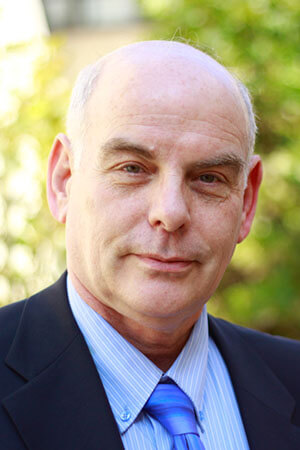


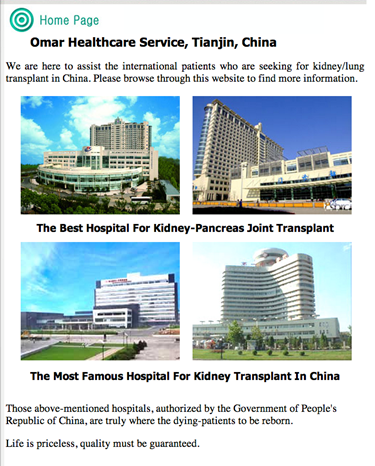


 דיויד סטברו