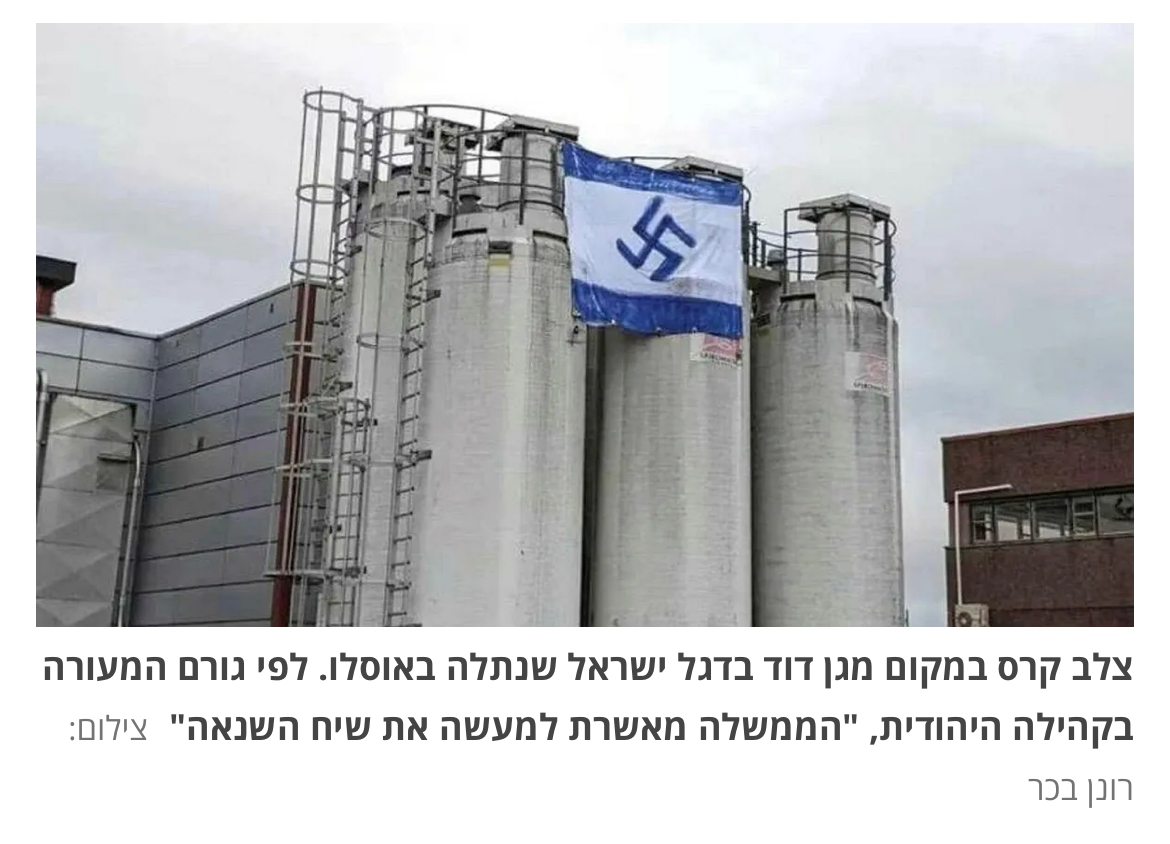
Norwegian Holocaust Center Events on Nakba and Gaza War Draw Ire From Israeli Embassy

Israel's embassy in Norway condemned the events organized by the Norwegian Holocaust Center in Oslo, saying they 'legitimize antisemitism.' The center said the aim is to 'understand shadows of historical traumas without equating them'

Published in Haaretz: Norwegian Holocaust Center Events on Nakba, Gaza War Draw Ire From Israeli Embassy – Jewish World

Israel's Embassy in Norway called for an independent Holocaust studies center in Oslo to cancel two upcoming events that it claims are a "grotesque distortion of Holocaust memory."

As part of a lecture series titled "In Shadow of War – The Way Forward," the Norwegian Center for Holocaust Studies and Religious Minorities is hosting two events with the University of Oslo this spring. The first event, which took place on Thursday, was a lecture by Prof. Nadim Khoury titled "Nakba and Holocaust as cultural traumas."

According to the University of Oslo's website ahead of the event, Khoury – a Palestinian professor of international studies at the Innland Norway University of Applied Sciences – "will trace their trajectories since 1948 and explore how they are intertwined and how the tensions between them are shaping the path forward in Israeli and Palestinian lives."

A second event, scheduled for June 3, will feature Israeli historian and Brown University professor Omer Bartov, whose contributions to Holocaust scholarship were recognized by Yad Vashem in 2019.

In an April 28 X post, Israel's embassy in Norway called on the HL Center to cancel the events "immediately."

"The Norwegian Holocaust Center's decision to host events drawing parallels between the Holocaust, the 'Nakba' and the war in Gaza is a grotesque distortion of Holocaust memory," the post read. The embassy added that the center has chosen political activism over historical responsibility and it called upon it to cancel the events and stop "legitimizing antisemitism in its modern forms."

Addressing the criticism in a social media post, the HL Center explained that it invited academics from different environments and backgrounds as speakers in order to "address and reflect on challenging topics without ending up in polarized debates where constructive nuance tends to disappear."

HL Center director Jan Heiret told Haaretz that the event with Khoury was supposed to follow another event hosting Martin Auerbach, former director of the National Israeli Center for Psychosocial Support of Survivors of the Holocaust and the Second Generation (AMCHA). Auerbach couldn't come due to uncertainty around the ongoing conflict with Iran, but Heiret said the center will make another attempt to host him in the autumn.

Heiret added that both events are meant "to find a way out of a destructive spiral of hatred, dehumanization and violence."

"We must understand the long-lasting shadows of historical traumas without equating, or even putting up, the Holocaust with the Nakba – which would be a historical distortion given the events are so different in nature, course and scope," Heiret said. "We acknowledge that the consequences for the individuals and collectives traumatized by them are interconnected, and that the denial of the trauma of the other lies at the core of the dynamics of the Israeli-Palestinian conflict."

Leif Knutsen, an activist and the chair of the Jewish Community of Norway, says the academics invited to speak at the HL Center "represent a fringe element," and that it's a recurring issue.

"The center doesn't question them; it doesn't bring anyone to balance the discussion and it doesn't present their perspectives in anything like a critical light," Knutsen said. "It's always in the same direction – one that's beyond critical to Israel. Someone should be sitting on stage and presenting an alternative point of view or at least a nuanced one."

Knutsen said Norway's Jewish population of about 2,000 is particularly vulnerable due to a sharp rise in antisemitic attitudes. In its most recent report published in early 2024, the Norwegian Center for Holocaust and Minority Studies documented an increase in antisemitic attitudes among Norwegians, with 11.5 percent of survey respondents having "pronounced prejudices" against Jews.

Images from Norway, 2024

"The center should be combating antisemitism rather than promoting a one-sided program," he said. "Even worse is the effect that such extreme voices have on Norwegian Jews who are being lectured about their own understanding of reality on the basis of a supposedly academic framework that completely ignores the real conditions in Norway."

According to its website, the Norwegian Center for Studies of the Holocaust and Religious Minorities is a research, education and documentation center intended to focus on the Holocaust and other genocides, as well as antisemitism and minority rights in Norway. The center's exhibitions receive roughly 50,000 visitors each year. It was established in 2001 using capital from a national restitution settlement over World War II between Norway and the country's Jewish community.

The center has previously faced criticism for its programming. In a letter sent in September 2024, more than 100 Norwegian Holocaust survivors and their descendants accused the center of failing to use "its mandate to combat the hostility we experience," and that instead of fighting antisemitism it was positioning itself as a "critic of Israel's policies and military tactics." The letter also said the center manifests "bias in its choice of experts and supporting a narrative that's negative toward Israel as a Jewish state."

In another letter from January 2025, the Norwegian branch of B'nai Brith criticized Heiret for mentioning Palestinians twice while delivering a speech on International Holocaust Remembrance Day, amid Israel's war in Gaza.

"By focusing on Gaza and Palestinian civilians who have lost their lives during the commemoration of the Holocaust and the genocide of the Jews in Europe, at a time when one-sided and anti-Israel portrayals make debates related to Israel very un-nuanced, the director has in a blatant way contributed to the tendency to relativize the Holocaust and the genocide of the Jews," the letter said.

"As the center's own research shows, demonization of Israel leads to increasing antisemitism in Norway. Trivialization of the Holocaust is, as is well-known, defined as antisemitism."

She Grew Up in an Exiled Iranian Opposition Group, That Turned Into a Brutal Cult

Atefeh Sebdani was born in Iran to parents active in the MEK but was torn from them and sent for molding to a family in Sweden. In an interview, she describes life in the exiled cult and its rejection of Persian culture.

Published in Haaretz: She Grew Up in an Exiled Iranian Opposition Group, That Turned Into a Brutal Cult – Middle East News

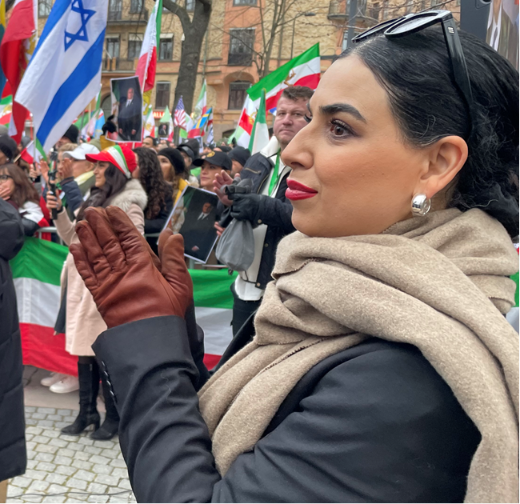
At a protest in Stockholm in April, alongside the Lion and Sun flags representing pre-revolution Iran, Israeli and American flags were also waved. As in similar events around the world, the demonstrators praised the Israeli-American attack on Iran and expressed support for Reza Pahlavi, son of the shah who was deposed in 1979, as Iran's future leader.

The rule of the ayatollahs unites many Iranian exiles against the regime, and threatens political activists operating against it in Europe. However, one of the women who helps the organizers of the Stockholm demonstrations, Atefeh Sebdani, has suffered for most of her life from another Iranian group – an organization that was once part of the Islamic Revolution but later became its enemy.

Mujahedin-e Khalq was founded in 1965 by a group of Iranian students who opposed the shah's rule. The organization combined elements of Shiite Islam with Marxist and anti-imperialist ideas and operated underground during the 1970s. During this period, it attacked regime targets and gained support as an opposition organization.

When the Islamic Revolution emerged in the late 1970s, MEK even joined Khomeini on his path to power. Yet after the establishment of the Islamic Republic, conflict arose between it and the new regime and by the early 1980s, the MEK was attacking government targets. That was countered with brutal repression that included the execution of thousands. The MEK leadership fled into exile in Iraq, where it formed a controversial alliance with Saddam Hussein during the Iran-Iraq War.

Atefeh Sebdani in Stockholm, 2026. Photo: David Stavrou

Atefeh Sebdani's story begins in the clash between the ayatollahs' regime and the MEK. "My parents were imprisoned after the revolution because of their rivalry with the new regime. They were considered enemies of the state and like other MEK members, after they were released, they were forced to leave," she says.

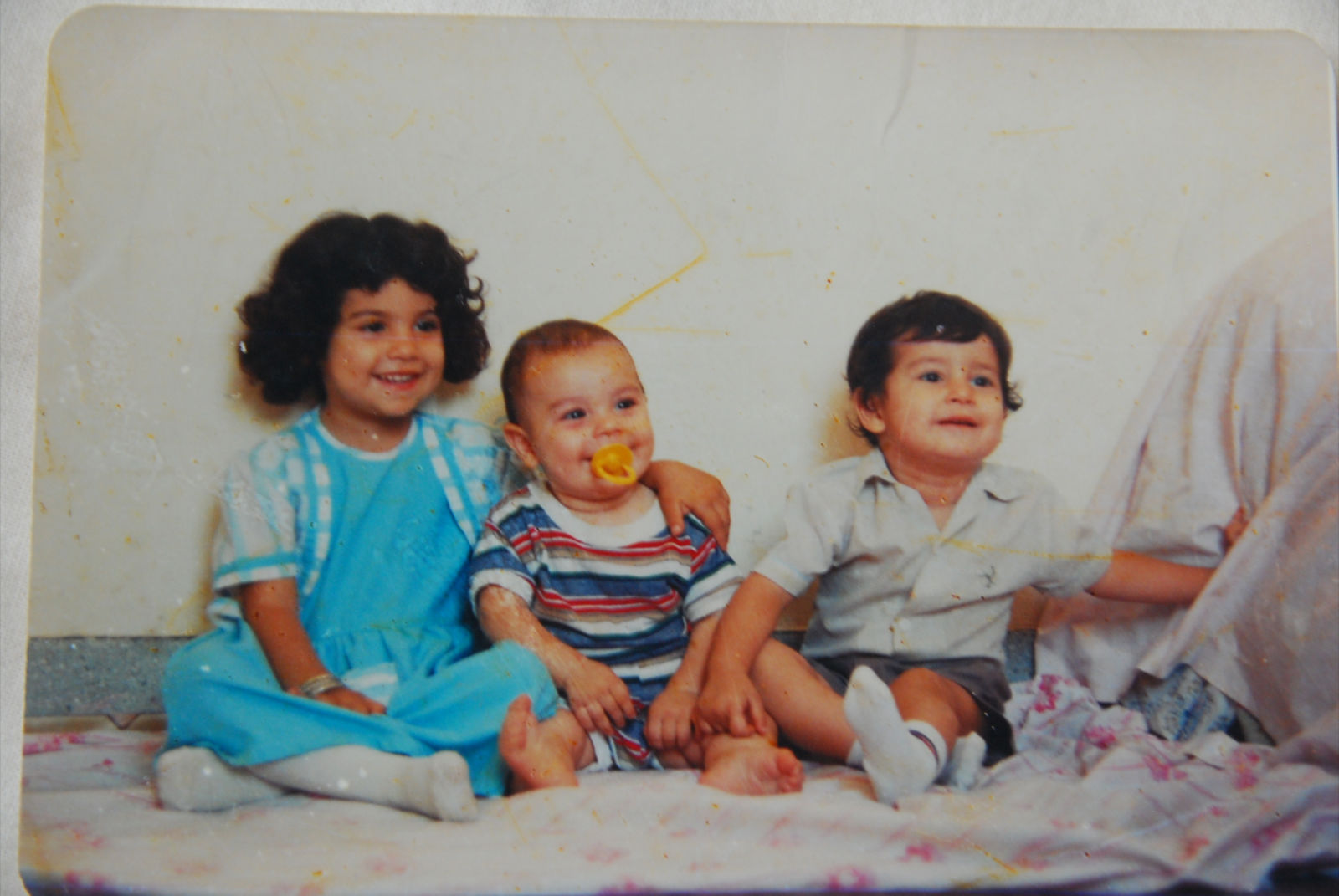
She was two years old at the time. Sebdani recounts that she, her younger brother, her father and her pregnant mother fled to Pakistan and lived there destitute on the streets. Her father continued from Pakistan onto Iraq, where he joined other MEK members in a camp called Ashraf, which later became the movement's center.

"After some time, we also moved to the camp. By that stage it had become a kind of small town with kindergartens, parks, and schools – mainly for propaganda purposes. They wanted to show how good things were there so others would join," she says. "For me, it was like paradise. I had everything; it was idyllic. I was with my mother and I was happy."

Then, without warning, everything ended at once. She hadn't even turned five yet but her mother told her she would have to take care of her two brothers by herself. She didn't explain why or how, but when the day came, Sebdani found herself standing by a bus with a group of crying women. When the bus departed, five-year-old Sebdani became a mother in practice.

"On the way, I had to take care of one brother who was still a baby and wanted to breastfeed, and another who was very ill," she recalls. She adds that the expulsion of the children from Camp Ashraf was a process. She doesn't know exactly how long it took, but she remembers children disappearing from kindergarten without knowing why or where they were going.

Eventually, all the roughly 900 children in the camp were separated from their parents and transported to other countries.

"The place was emptied of children's voices," she says. "And children's voices are the most human thing there is – the core of life – and that was taken away."

Why were the children expelled?

"The children were an element that disturbed the organization's leader, Massoud Rajavi. The ideological struggle to liberate Iran turned into the struggle of a narcissistic leader who wanted all the power in his hands. He wanted the men and women in the movement to be under his absolute control, and the children stood in his way. The movement began as an ideological movement, but it became a cult."

What Sebdani describes aligns with what is known from other sources about the MEK. During the 1980s and 1990s, the organization became highly centralized, developing political and military branches that operated from bases in Iraq. At the same time, the National Council of Resistance of Iran was established as a political umbrella organization.

'The family I came to was politically obligated to take children. It's not that they loved children or wanted us. We underwent heavy indoctrination and were forced to constantly work for the organization.'

During this period, allegations indeed emerged about cult-like characteristics such as strict internal discipline, ideological control, and exclusion of dissenters.

However, the organization's leader, Rajavi, has not been seen in public since the early 2000s, and his fate remains unclear, as the organization has not disclosed information about his whereabouts nor announced his death. Meanwhile, his wife, Maryam Rajavi, serves as the public face of the organization – contributing to an atmosphere of secrecy and uncertainty regarding its structure and decision-making.

After several months and a long journey that included stops in Jordan and Germany, Sebdani and her two younger brothers arrived in Gothenburg in western Sweden.

"For all that time, I was sure we would soon be reunited with my mother," she recalls. "We sat on planes and trains, I saw things I didn't know, I saw climates and people change, there were new languages and places – but alongside the excitement, I constantly feared we were moving further away from my mother and worried she wouldn't be able to find us."

In Gothenburg, they were told they would soon meet their mother. "I was very excited. But what actually happened was different – we stood on a train platform, and instead of my mother, two other people I didn't know arrived, a woman and a man, and we were told: these are your mother and father. That's when the nightmare began."

Atefeh and her two brothers

The people who took Sebdani and her brothers were MEK members living in Sweden and working for the movement. They also had a child of their own, and took in two other children out of roughly 200 MEK children who arrived in Sweden. Sebdani says she later traced the fate of hundreds of other children who were "exported" from Camp Ashraf and that she obtained a document listing their destinations – including Germany, the Netherlands, Norway, Canada, and the United States.

"The family I came to was politically obligated to take children," she says. "It's not that they loved children or wanted us. We underwent heavy indoctrination and were forced to constantly work for the organization." She does not reveal the identities of her foster parents, but her childhood memories expose the nature of the organization as it became a cult.

According to her, MEK families abroad were completely mobilized. They engaged in recruiting members and funds, organizing demonstrations, fighting opponents, and harassing defectors. She describes this society as oikophobic (one that is hostile, dislikes and rejects its own "home" culture, country and traditions). "They hated anything Iranian that wasn't related to the MEK. We weren't allowed, for example, to listen to Persian music unless it was the music of MEK members. I didn't read books in Persian. There was no Persian culture—everything was subordinated to the organization."

As far as you know, is this still the case?

"Yes. They still have offices in different countries and a strong presence on social media. The headquarters is in Auvers-sur-Oise, a suburb northwest of Paris, where political leadership members and full-time 'soldiers' are based. At the same time, there are activists like my foster family, and MEK members in Camp Ashraf 3 in Albania. That camp is essentially a 'troll factory' that produces large numbers of accounts and spreads propaganda in Persian and English. They write articles about themselves, smear their opponents, and create the impression of support – even though they have no real support."

Camp Ashraf 3 is the fortified camp to which most MEK members – estimated at 2,500 to 3,000 – were transferred from Iraq between 2013 and 2016. The move was carried out with the support of the United States, the United Nations, and the Albanian government. It took place because after the fall of Saddam Hussein, the MEK was no longer protected in Iraq, and international actors worked to evacuate them. Although the organization had been designated a terrorist organization in the U.S. for many years, it was removed from the list in 2012 as a result of pressure applied by the movement, and some American and other actors even saw it as a partner in opposing the Iranian regime. According to reports, the MEK no longer engages in military activity, but the camp in Albania has become a center of political and media activity with a highly centralized and controlled structure.

"It's a place where entry and exit are not free, and in the past there were physical punishments and torture of those who wanted to leave," says Sebdani. "I know stories of people who disappeared and of mandatory daily confessions about 'dirty thoughts' – for example, sexual thoughts and masturbation. You weren't even allowed to think about your children or speak with members of the opposite sex without permission. Today, with defectors speaking out and social media, the movement can no longer allow itself to use such methods."

Sebdani is not alone in her claims about the MEK. The French newspaper Le Monde conducted interviews in 2024 with former members of the organization living in Europe, including two named Amir Vafa and Amin Golmaryami. Vafa described how he and others were forced to participate in public confession sessions in which, once a week, everyone had to describe their sexual fantasies. He added that friendships were closely monitored: "It was forbidden to have lunch with the same friend twice in a row."

Golmaryami added that during clashes with Iraqi security forces in 2011, MEK leaders sent him and his comrades to go "in front of Iraqi bullets to increase the number of casualties." He claims they did this in order to "put pressure on Europe and the United States to remove the organization from the list of terrorist organizations and facilitate the relocation of its members to another country."

Another MEK member, Reza Torabi, said that at the age of 17 he was a zealous member and was assigned the role of "welcoming" young newcomers. "Our objective was to brainwash them, make them forget their previous lives, and instill in them the ideology of the Mujahedeen," he said. "My dedication was unwavering." In hindsight, he believes that he too fell victim to manipulation and regrets "the harm [he] caused in the course of his duties."

A 2005 report by Human Rights Watch, based on in-depth interviews with former members, also described a reality of beatings, verbal and psychological abuse, coerced confessions, threats of execution, and torture.

How do you believe control of MEK member is maintained today?

"If you look at people like the father, you see someone who joined in his twenties and spent his entire life inside this system. He never paid a bill or looked for a job – everything was handled by the organization. He doesn't know how to buy a plane ticket or even drive to the end of a street. The MEK infantilized these people, and there is no one to take care of them if they leave."

Does that mean there are no new members?

"That's right. There are no new members. It's a movement of older people – but they pay young people to attend demonstrations. If you go to MEK protests, you'll find Poles and Ukrainians who don't speak Persian and don't know what they're protesting about, alongside Swedes with no connection to the organization who were paid to join."

Who pays for all this?

"From what I saw and was part of, many people pay the MEK monthly so they won't harass them – Iranians in exile subjected to pressure, propaganda, flattery, and social coercion. There are also welfare funds, for example for foster families, as well as political donations and funding from human rights organizations influenced by the group's propaganda."

Beyond the political activity, the period that Sebdani stayed with her foster family, had another aspect. She talks about indoctrination and the constant threat that was used to make her stay.

"From the age of five, I experienced sexual abuse, physical abuse and psychological abuse in the foster family," she says, "but I couldn't say anything because they threatened to separate me from my brothers. I was not allowed to be a child. The first thing that happened to me in the foster family was that my father began to show interest in my naked body. He wanted me to do things. I felt it was wrong and frightening, but I knew nothing about sex or sexuality and I didn't understand.

"Over time, it only got worse, and my foster brother abused me too, encouraged by my foster mother. I had no childhood; it was just survival. I was the one who cleaned and tidied, I had to be a good student, and also the one who went out to demonstrations and went to Mujahideen conferences around the world". Talking to Sebdani she describes a reality full of exploitation, punishment, crying at night, and deception of Swedish welfare services.

As an adult, she eventually left, moved to Stockholm, became an engineer, and worked for Microsoft. After a personal crisis, she began telling her story and wrote a book (Min hand i min, "My Hand in Mine", published by Albert Bonniers förlag, 2024). Today she is married and has three children.

Politically, Sebdani is active among supporters of Reza Pahlavi. "I saw the difference between the two leaders," she says. "I met Maryam Rajavi as a child, and recently I met Pahlavi in Paris with a group of other former MEK children. I support the Iranian people, and the people support Pahlavi. He is exactly what Iran needs – a secular, humane person, with a family, who knows what living a normal life is, who listens and can unite people."

After Sebdani's meeting with Reza Pahlavi and other "MEK children" she became the target of an online campaign against her. Sebdani says that this isn't the first time and she has been targeted by a smear campaign led by the MEK on several previous occasions before.

Sebdani's book

"This kind of harassment happens to everyone who has left the organization and spoken out," she says. This time, the MEK website denied Sebdani's account through a letter it claimed was written by her biological father. "For me, as a father, seeing 'Atefeh Sebdani' at a gathering of the Shah's son was painful… Atefeh is the same person who, by spreading defamation against the organization under the false pretext of being part of a group of 'child soldiers,' has for many years become a full servant of Iranian intelligence."

The text claims that Sebdani was never part of the MEK and accuses her and her associates of collaborating with the regime in Tehran. Sebdani does not know whether her father actually wrote the text, but she says that everything in it is false and that she is familiar with other examples of letters that MEK members were forced to write under coercion.

Following the letter, a senior figure in the organization, Freydoun Salimi, also spoke out, accusing Sebdani of never having been a member of the group and of acting as an agent of the regime. In responses to his claims on X, supporters of the organization repeat the accusations and insult Sebdani. On other social media platforms, she is also accused of assisting Israel, betraying Iran, and supporting Americans attacking her country.

Sebdani's personal MEK story has a positive ending – she escaped, her siblings left, and even her mother eventually left the organization. The organization itself, however, is still very much alive. It even claims to still have networks inside Iran, though most analysts believe its influence there is limited. "The MEK is more of a European problem than an Iranian one," Sebdani concludes. "In Iran, they have no real support, not even with regime critics. But after the 'Woman, Life, Freedom' protests, it's clear that a unifying leader is needed, otherwise, there will be no change – and I have no doubt that Pahlavi is the right person."

Israel Between Peace and the Sword

The choices the region will face after the Iran-US-Israel War, and does international law have anything to do with them.

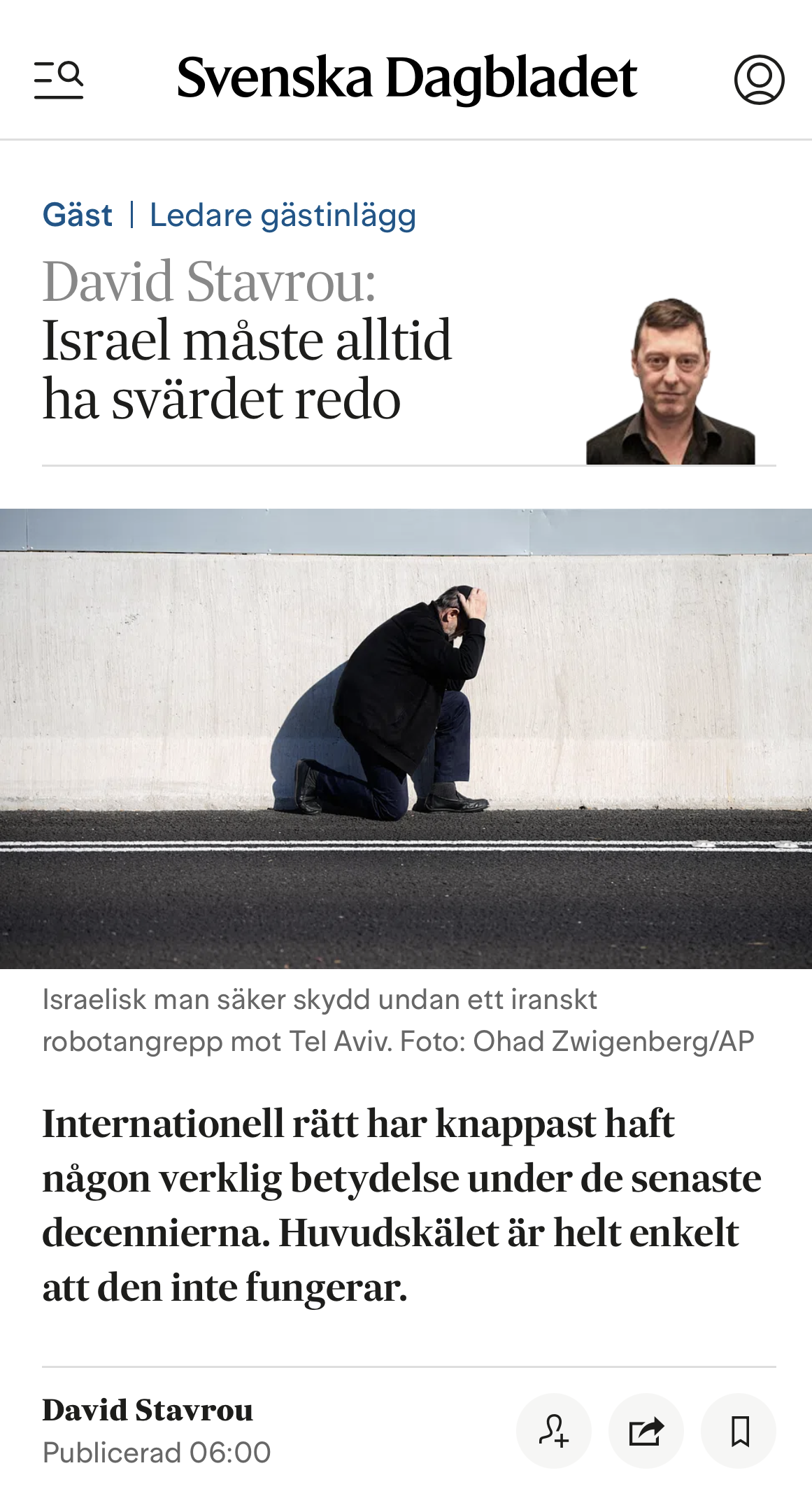
Published in Swedish Svenska Dagbladet: Israel måste alltid ha svärdet redo | David Stavrou | SvD Ledare

The Swedish discourse on the war in Iran has been dominated by the question of its legality. In recent weeks, international law scholars, academics, politicians, and columnists have explained why the American and Israeli attack is “illegal under international law.” There is much to say about this reasoning, but a reasonable question is what the point really is. In the real world, the legality of war matters very little, because international law, in general, has hardly had any real significance over the past decades.

The main reason is simply that it doesn't work. International law has been used by some of the world’s worst despots, from Gaddafi to Assad, to delay international action against their crimes, and when it was finally used for intervention—in many cases, it made the situation even worse and led to more violence and failed states.

International law has also given legitimacy to regimes such as Qatar and Somalia, which have gained seats on the UN Human Rights Council despite their total lack of such rights. Terrorist organizations have used it in their propaganda to avoid the consequences of their actions, and China’s and Russia’s veto rights in the UN Security Council ensure that aggressive dictators go unpunished.

“If the U.S. illegally invades other countries, Russia will do the same” is a common argument against the American offensive. But the truth is rather the opposite: Russia did not wait for the Americans to attack Georgia or Ukraine, and—like Turkey in Syria, Azerbaijan in Armenia, and Eritrea in Ethiopia—has ignored international law for decades. No country is waiting for Israel or the U.S. to legitimize their actions according to the “law of the jungle”.

For a country that has not been at war since 1814, the question of the legality of military interventions may seem like the most important one. Theoretically, even a superpower like the U.S. should be concerned with issues of limiting its global power. But for a country like Israel, which is constantly threatened by real enemies who want to annihilate it and kill its population, this question appears fairly academic.

There is, however, another question that from an Israeli perspective is extremely important. It is simple but crucial, and it should concern other countries as well—it is not whether the war is legal, but whether it is effective. Or more broadly: can military power by itself solve Israel’s problems with Iran and other enemies?

“When all you have is a hammer,” as the well-known saying goes, “every problem looks like a nail.” Israel undoubtedly has a powerful hammer. Could it be that the country has become accustomed to solving all its problems with it? Previously, Israel used many forms of power to strengthen its security and international standing. Diplomats engaged in creating complex alliances, its soft power included outstanding achievements in culture, art, agriculture, science, and technology, and governments were willing to participate in peace negotiations and consider compromises.

The Hamas massacre on October 7 and Iran’s persistence in combining nuclear ambitions with threats to wipe Israel off the map changed all of this. The Israeli foreign service has been marginalized; the country’s artists and scientists are boycotted around the world, and its enemies are blown to pieces rather than invited to ceremonies on the White House lawn. Considering that many of Israel’s enemies are ruthless killers, this is hardly surprising. Anyone who sees value in human life should not shed tears for people like Hassan Nasrallah, Yahya Sinwar, and Ali Khamenei. But do military operations improve reality if they are not accompanied by other measures such as diplomacy, economic development, and new creative political alliances? This is not only an Israeli question. A new world order is taking shape before our eyes, and if we are not heading toward total anarchy, the question of limiting military power and understanding what it can and cannot achieve is crucial.

One indication is the situation in Gaza. After more than two years of extensive military force and enormous destruction, the reality is that Hamas not only still exists, it is armed and controls many state functions. In Lebanon, Israel may have achieved significant military successes against Hezbollah, but the Israeli are still spending far too much time in bomb shelters, and despite everything, Hezbollah is still alive and kicking. Both militarily and politically.

Israelis are once again deprived of basic necessities—schools are closed, workplaces shut down, flights canceled, thousands have lost relatives, been forced from their homes, and suffered injuries and trauma. Not to mention that Israel is deeply divided on issues concerning its democracy, which can only be resolved when the shooting stops. Meanwhile, Israel has also, without justification, become the punching bag of the international community. All the world’s power seems to be of little use in solving this.

And then there is Iran. Now that the war has begun, it should, for the sake of both Iranians and Israelis, end with a regime change—and no regime change is possible without the use of force. The Iranian people themselves, who ultimately must liberate themselves, have asked for foreign intervention, and giving it to them is the right thing to do. But what then?

“From the moment we decided that only here, in the land of Israel, could the Jewish state arise, we accepted that more than a hundred million people from the Arab world, from the Arab nations, and from the Palestinians would be our neighbors,” said Israel’s former prime minister Yitzhak Rabin a few years before he was assassinated in 1995. “There are now only two possibilities: either a serious and determined effort is made to achieve peace—peace and security—or the sword will always rule.” In the 1990s, Rabin chose the first option, but since then, leaders across the region, including Israeli leaders, have developed a dependence on using force. Perhaps even an adiction.

When the war in Iran is over, Israel will face a choice. Previously, the country combined pragmatic diplomacy, careful alliance-building, and visionary openings toward the Arab world. In a region like the Middle East, this is risky. Israel will always need to keep a sword ready, but with security guarantees and economic support instead of anachronistic laws and self-righteous moralism from other countries, peace may once again become an option.

Oslo Police Probe Blast Outside U.S. Embassy, Bolster Security at Jewish Sites

Norwegian police said they are searching for suspects and added that they were reinforcing security measures to protect both the Iranian diaspora and the Norway's Jewish communities

Pubished in Haaretz, with AP and Reuters: Oslo Police Probe Blast Outside U.S. Embassy, Bolster Security at Jewish Sites – Europe

The U.S. embassy in Oslo was hit by a loud explosion overnight into Sunday, causing minor damage but not injuries, Norwegian ‌police said, as the justice minister said a thorough investigation had been launched. The blast at the embassy compound in western Oslo occurred at around 1 A.M. local time, sending thick smoke into the street by the entrance of the consular section, eyewitnesses said.

The explosion was caused by some sort of incendiary device, Oslo police representative Frode Larsen said during a news conference Sunday. Investigators believe the embassy was the target and are searching for one or more potential perpetrators and their motive. Justice Minister Astri Aas-Hansen added they had deployed "considerable resources" to the investigation.

"One of our hypothesis is that this is terrorism, but we are also exploring other options," Larsen later told public broadcaster NRK. Police added that they were reinforcing security measures to protect both the Iranian diaspora and the country's Jewish communities. "This is an unacceptable incident that is being treated with the utmost seriousness," said Astri Aas-Hansen, Norway's justice and public security minister. "The police have stated that they are investigating the case with significant resources, and that nothing indicates the situation poses any danger to the public," she said.

PST, the Norwegian police security service, called in additional personnel following the incident but has not changed the country's terror threat level, according to communication adviser Martin Bernsen. The blast occurred at the entry to the consular section, Oslo police said, and witnesses said the entrance had been damaged.

"There was a very thick layer of smoke on the street," said ‌Sebastian ⁠Toerstad, 18, a high school student who drove past the embassy at the time of the explosion. "There was some damage to the entrance," he added. Police said no further explosive devices had been found in the area. "Investigations have been ⁠carried out at the scene with the aid of dogs, drones and a helicopter, searching for one or more potential perpetrators," the Oslo police department said in ⁠a statement.

The U.S. Embassy in Oslo referred media queries to the U.S. State Department, which did not immediately return a request for comment. Nor did Oslo police. Other details were not available.

Leif Knutsen, a Norwegian Jewish activist and chairman of the newly founded Jewish Community of Norway umbrella organization, said security around Jewish institutions across Norway has been elevated since October 7. Knutsen noted that armed police with assault rifles have been stationed around the synagogues in Oslo and Trondheim and near the Israeli embassy.

The local Jewish community generally trusts the Norwegian Police Security Service, known as PST, and cooperation between security services and Jewish institutions is strong, according to Knutsen. He said, however, that many people feel more vulnerable on their way to and from synagogues, when they "become visible" outside the protected perimeter.

He expressed that the broader concern is what the situation represents. "What's wrong with a society when its most heavily guarded and fortified installations are not government offices or military bases, but two synagogues and the embassy of a country that Norway is supposed to have a friendly relationship with?" Knutsen said, adding that the situation was "unsustainable" in the long term.

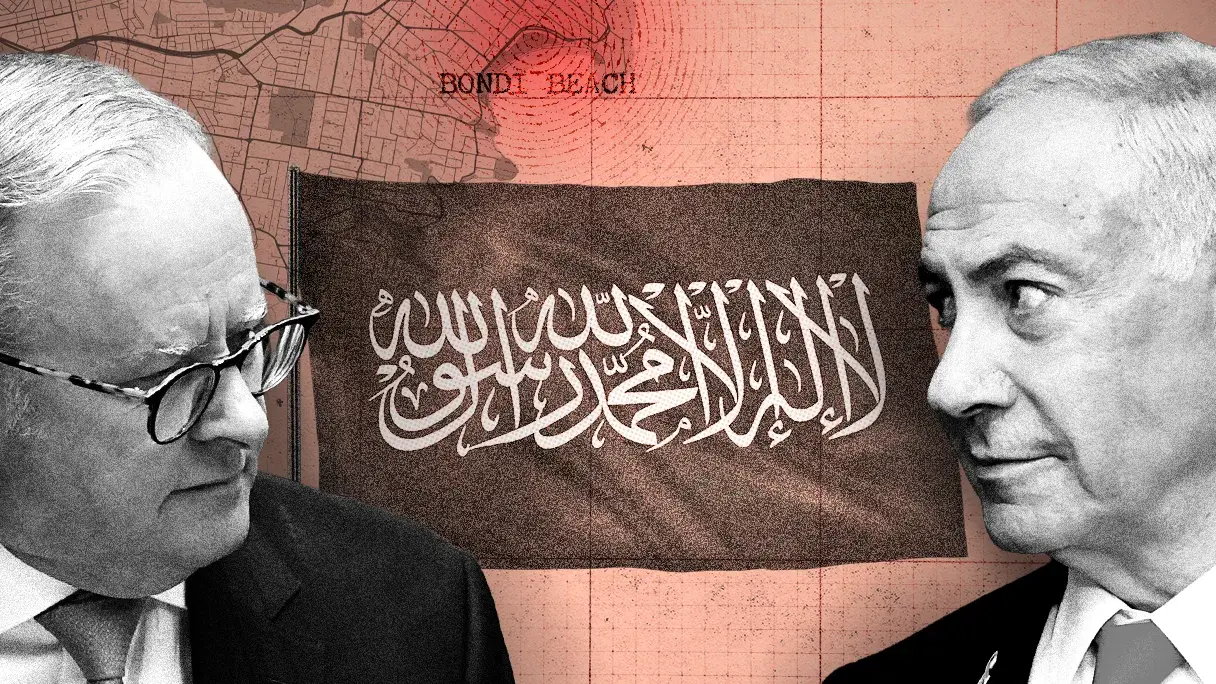
Zero tolerance” is no longer enough after Bondi Beach. Political action is required – and it is urgent

Published in Swedish in Kvartal: https://kvartal.se/erikhogstrom/artiklar/hur-paverkar-politiken-terrordad-mot-judar/cG9zdDozNzA5NA

Reactions to the terrorist attack at Bondi Beach have largely focused on the hateful rhetoric believed to have contributed to the violent extremism that claimed 15 lives – the deadliest attack on Jews since October 7. That focus is understandable after two years of global demonstrations under slogans such as “globalize the intifada.”

At the same time, the attack is rooted in more than a toxic debate climate. It also involves a geopolitical and security dimension that has primarily been raised by Israeli officials.

According to Israeli intelligence assessments, links had already existed for several months between Australian pro-Palestinian activists and groups such as the Islamic State, al-Qaeda, and Iran’s Revolutionary Guard. Against this backdrop, Israeli Prime Minister Benjamin Netanyahu accused Australia’s prime minister of betraying the country’s Jews. After the attack, Netanyahu stated that he had already warned in August that recognizing Palestine would, in his words, “pour fuel on the antisemitic fire, reward Hamas terrorists, and encourage threats against Australia’s Jews.”

This raises a number of questions. Does Australia really need Israeli intelligence to identify threats against its Jewish population? And more importantly: is Netanyahu truly the right person to lecture others about being unprepared for Islamist terrorism, when his own government bears responsibility for Israel’s worst catastrophe in decades?

But Netanyahu is not the central issue. What matters is that the warnings proved correct. A massacre of Jews took place in Australia, carried out by men who had ISIS flags in their car. Australian authorities knew that one of the perpetrators had ties to ISIS and that his father, the other perpetrator, legally owned at least six weapons. Despite this, no warning flags were raised, and the Jewish event lacked police protection when the attack occurred.

Islamists operate freely in Sweden

Against this background, Europe should ask itself a clear question. If Australia’s policies over the past two years resemble those pursued in many European countries, could what happened at Bondi Beach happen here?

Both domestic and foreign policy must be scrutinized. Domestically, this concerns insufficient resources to protect Jewish sites, an inability to counter conspiracy theories, and complacency toward Islamist actors. These challenges affect all European countries, including Sweden. Swedish journalists have recently exposed how Islamists operate freely in Sweden, how Iranian actors direct terrorist activity via Swedish organized crime, and what links Swedish activists have to terrorist movements such as the PFLP.

“Jews in countries that do not take Islamist terrorism seriously end up paying the price, regardless of whether government passivity stems from fear, incompetence, or indifference.”

Sweden is not alone. According to a recent Europol report, jihadist terrorism remains a central security challenge for the EU, with groups such as al-Qaeda and the Islamic State exploiting the conflict in Gaza. Added to this is Hamas, which, according to Israel’s Mossad and European intelligence services, has planned attacks against Jews in Europe since 2023. The causal link is clear: Jews in countries that do not take Islamist terrorism seriously pay the price.

Kvartal

Why foreign policy matters

How, then, does foreign policy factor in? Can recognition of Palestine or harsh criticism of Israel encourage terrorism? Countries such as Spain, Norway, and Ireland pursue a clear line against Israel. Like Australia, they have recently recognized Palestine; they voice strong opposition to Israel in international forums and serve as comfortable host countries for movements that not only oppose Israeli policy but view the state itself as an illegitimate colonial project.

Australia’s prime minister firmly rejected Netanyahu’s claim that the country’s foreign policy had any connection to the attack. He may be right – such accusations require evidence. But that does not mean foreign policy is irrelevant to the climate surrounding antisemitic hate crimes.

First, governments – unlike individuals – must understand the unique situation Jews face. Demonstrations are marked by hatred, aggression, Nazi comparisons, terrorist symbols, and boycotts. Of course, protests are legitimate in a democracy, and no one seriously claims that all participants are violent antisemites. But at the political level, it is unclear whether countries such as Norway fully grasp what their Jewish populations are forced to endure. The situation is worsened by the fact that no other conflict in the world is covered as intensely – and, according to many, as one-sidedly – in Norwegian media. This has an enormous impact on Norway’s small Jewish community.

Second, does the tax-funded public sphere remain neutral, or does it contribute to an unsafe environment for Jews? What do teachers say? What do libraries display? How do healthcare professionals behave? This is a matter of public safety, not freedom of speech. In February, a video went viral showing two nurses at Bankstown Hospital in Sydney boasting about refusing care to – or even killing – Israeli patients. In Ireland, an official report found that school textbooks contain serious distortions of the Holocaust and Jewish history, which Jews in the country say fuel antisemitism. In Spain, Jewish organizations similarly warn that some teachers use classrooms for anti-Israel activism.

“Zero tolerance” is no longer enough

We can continue debating the limits of protest, but we must also scrutinize institutions. The state must protect freedom of expression, but it must also guarantee safety. That requires schools, hospitals, and libraries free from political propaganda and symbolic acts intended to influence public opinion.

Finally, it is a fact that jihadist terrorists in Europe are often exposed with the help of Israeli intelligence. Can Jews in Spain and Ireland truly trust that their governments will cooperate with the Mossad to save lives, when those same governments cannot even tolerate Israel’s participation in Eurovision?

After Bondi Beach, Europe’s governments must decide where they place their resources and political capital. If they are serious about protecting their Jewish populations, “zero tolerance” and symbolic gestures of solidarity are no longer sufficient. Political action is required – and it's required urgently.

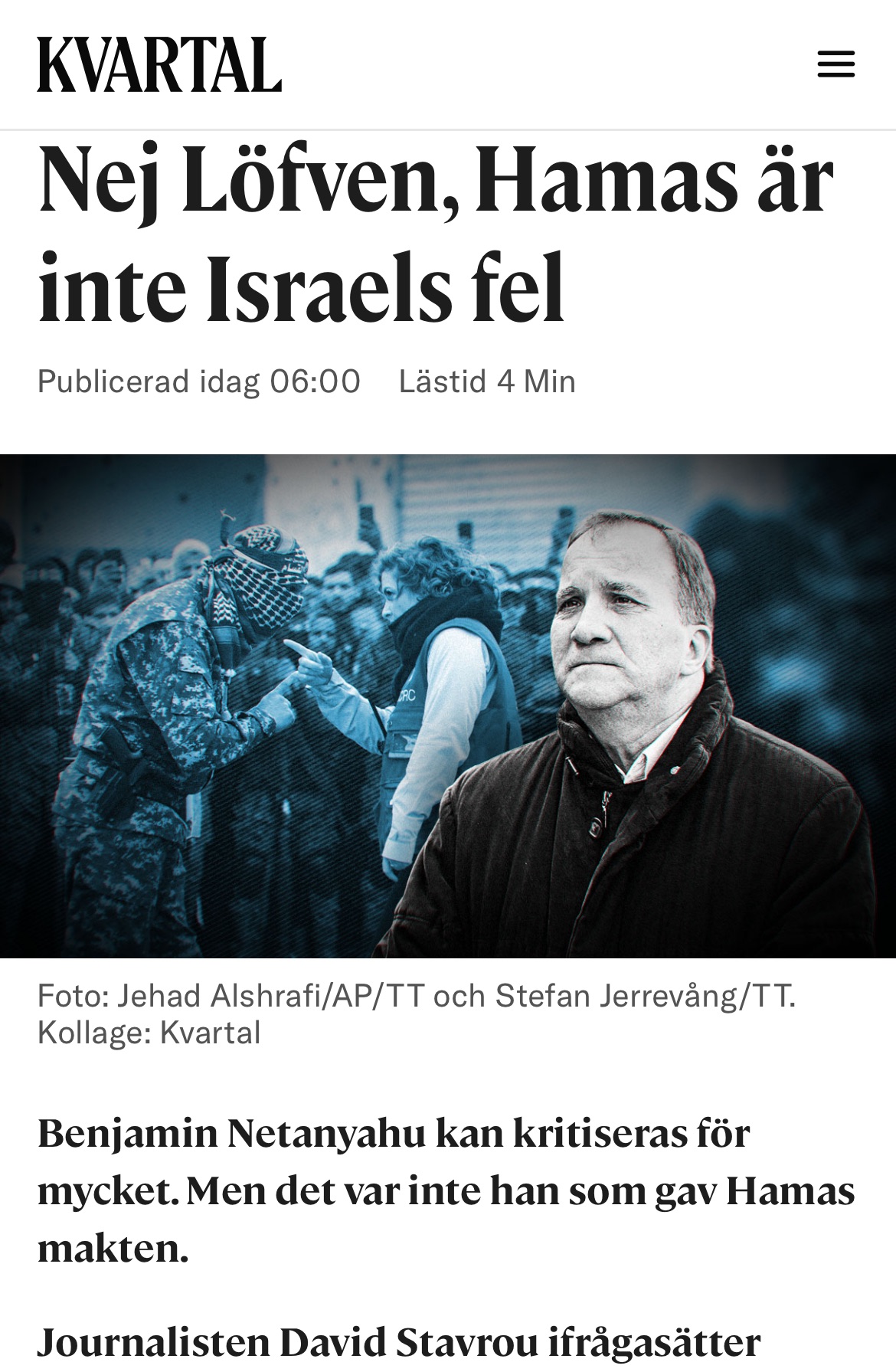
No Löfven, Hamas isn't Israel's Fault

Published in Swedish in Kvartal: https://kvartal.se/erikhogstrom/artiklar/nej-lofven-hamas-ar-inte-israels-fel/cG9zdDoyMjc1NA

A popular proverb says that a half-truth is a whole lie. The latest episode of SVT’s Utrikesbyrån about Hamas was a good example of that. That does not mean it wasn’t interesting. It was. Nor is there any doubt that the three participants — former Prime Minister Stefan Löfven, political scientist Marco Nilsson and Middle East analyst Bitte Hammargren — knew what they were talking about. But when it came to the analysis of Hamas, we were given only a half-truth.

The questions the presenter Rebecca Randhawa asked were: what is left of Hamas, will they lay down their arms, and who will govern Gaza. The first and the third questions are almost impossible to answer. Even Israeli intelligence does not know what remains of Hamas’s military capability, and Gaza’s future governance depends on a complicated geopolitical process. The second question, however, can be answered based on a deep understanding of what Hamas is, the choices it has made in the past, and what its ideological and political DNA is.

According to Löfven, Hamas’s power is the result of a paradox. Despite being one of Israel’s greatest enemies, its power originated with Israel’s political leadership. “Such an organization receives support (from Qatar, for example) simply because Israel wants to avoid the Palestinian Authority (PA) gaining any power.” Hammargren agreed and said that Hamas was a political asset for Israel. “Netanyahu’s line was that by letting Hamas grow in Gaza we don’t have to hear about a Palestinian statehood,” she said. This is a common analysis and it is partly true. Netanyahu and other Israeli leaders do indeed oppose a two-state solution. Because of this, his strategy was to weaken the PA, and many argue that one of the ways he did this was by allowing Hamas to grow. But this is only half the truth.

The other half, and the real reason Hamas rose to power and was able to retain it, is much simpler. The source of Hamas’s power is support from large parts of the Palestinian people. Even now, after two years of destruction and death that are a direct consequence of Hamas’s decision to massacre Israeli civilians on October 7, 2023, Hamas is still supported by many Palestinians. The international support from Qatar and Iran that Löfven and Hammargren mentioned is also not hard to understand. Iran’s regime has a long-term goal of eliminating “the Zionist entity,” and Qatar built its international position on supporting its ideological Muslim Brotherhood allies. Sure, Netanyahu miscalculated Hamas’s capacity and misread its intentions, but it was not he who made Hamas’s ideology popular, and it was not he who turned Qatar and Iran into dangerous regional destabilizing powers.

But where is Hamas heading? Utrikesbyrån’s two-and-a-half-minute clip tried to provide background. According to the clip, “Hamas removed the demand that Israel be destroyed, but still does not recognize the state of Israel.” This is not even a half-truth. Hamas is absolutely committed to the destruction of Israel. Yes, it created a new charter for foreign audiences, because the old document contained antisemitic propaganda that was not particularly popular on university campuses and in some Western circles. But even the new charter demands “all of Palestine” from the river to the sea, it does not accept the Oslo Accords or the two-state solution, and it still endorses “armed resistance,” which has been a decisive part of Hamas’s nature long before October 7. That includes blowing up buses and restaurants full of civilians as well as kidnapping, torturing and murdering Jews of all ages, genders and backgrounds. One interesting thing Utrikesbyrån did not mention is that Hamas activists have on several occasions been arrested in Europe for planning attacks on “Jewish targets.” Worth mentioning if anyone took the “new charter” seriously.

Despite (or perhaps because of) the violence, Hamas won the Palestinian elections in 2006 in both the West Bank and Gaza. Palestinians are not blind or politically incapable — they knew exactly what they were voting for. According to Utrikesbyrån’s experts, Netanyahu could have fought Hamas by strengthening the PA. It’s an interesting theory. Only problem is that it’s not true. Not during the years when Hamas was building its reign of terror, anyway. The reasons are that Netanyahu was not Israel’s prime minister at that time. Between 1999 and 2009 the prime ministers of Israel were Ehud Barak, Ariel Sharon and Ehud Olmert. The first was an outspoken advocate for a two-state solution, the second ended the occupation of Gaza, and the third was probably the one who offered the PA the most generous territorial compromise. Hamas was not impressed. It continued to build the fundamentalist, jihadist, genocidal faction within the Palestinian nationalist movement. Hamas did not need Netanyahu for this. It was fully capable of doing it on its own, while many Israelis were still considering peace and reconciliation.

Utrikesbyrån downplayed all of this. In the program there were no blown-up buses, no tunnels, rockets, high-tech international propaganda campaigns or brutal executions of Palestinian “collaborators.” October 7 was only mentioned in passing, as another point on the timeline. No hostages, no burned neighborhoods, no executed families. This is not a complaint that they “forgot October 7,” but a critique of incomplete analysis. How can one answer the question about Hamas’s intentions without taking into account that the organization recruited thousands of people who were willing not only to kill but also to commit gang rapes and sexualized torture in the name of Allah?

Netanyahu can and should be criticized for many things, but not for this. Sure, he did not destroy Hamas before October 7, and through his incompetence and corruption he may have contributed to the opposite. Israelis should hold him accountable for that. But this is far from the cause of the catastrophe. Hamas began building its advanced military capability long before Netanyahu, it remains standing, and many Palestinians still support it. Let us imagine that Netanyahu had decided to wipe out Hamas back in 2014. Now that we know that not even the destruction of Gaza did the job, would Stefan Löfven have supported an Israeli offensive on that scale? Would the Obama administration have allowed it? Would the UN have accepted it? Of course not. Everyone can complain about Netanyahu and everyone can criticize Hamas, but in the end — whose responsibility is it to eliminate Hamas, and who will support such an effort?

It is obvious that Stefan Löfven in no way supports Hamas. In Utrikesbyrån he spoke very clearly about the necessity of a political process with a reformed Palestinian Authority moving toward a two-state solution. But putting the blame for the situation on the Israeli government while ignoring Hamas’s inherently genocidal nature is a classic half-truth. It leads people to believe in conspiracy theories about secret Israeli involvement in the massacre of its own citizens, and more importantly — it shifts the focus to the wrong side. To reach a lasting ceasefire it would be wiser to focus on the “de‑Hamasification” of Gaza and support moderate forces on both sides that can help their communities recover from this two-year trauma and build a future together.

Are Israelis Supposed to Just Pack Their Bags and Leave?

In an article in SvD this week, Göran Rosenberg shared his concerns about the Jewish world. Many, myself included, share some of his worries — for example, concern over Israel’s extremist settler movement and the situation in Gaza. But several of his claims are dangerous and misleading.

Published in Svenska Dagbladet: https://www.svd.se/a/yEBLgr/david-stavrou-goran-rosenbergs-satt-att-tala-om-israel-ar-farligt

"The Israel project is morally dead," writes Rosenberg. The project, not the country. That’s an extremely important nuance. If Israel is a project, then it can either succeed or fail, in which case, like any other failed project, it loses its right to exist. But Israel is not a project; it is a country. A country with a political right and left, babies and pensioners, gangsters and hipsters, programmers and midwives, people sitting in traffic jams and people demonstrating against the government. That is the entire point of Zionism — Jews have the right to be like any other people and have an unconditional right to self-determination. Israel should not be the only country in the world whose existence is conditional, and the right to self-determination of its people can't be dependent on their ability to meet Rosenberg’s moral standards.

What are Israelis supposed to do now that "the project has failed"? Pack their bags and leave? Vanish into thin air? Go up in smoke? That’s exactly the propaganda Hamas spreads through Western protest movements — if Israeli Jews are so morally bankrupt, then it’s not about regime change or electing a new government, as it is with Russians or Iranians. Instead, the Jews must disappear. Or die.

It's no coincidence that Israel's worst enemies — those who want to wipe it off the face of the earth — refuse to acknowledge it as a state among states. The Iranian regime calls Israel 'the Zionist regime' or 'the occupying regime of Jerusalem'. Hamas speaks of 'the Zionist entity' or 'the occupation', and the Houthis in Yemen refer to 'the Zionist enemy'. Always an abstract creature — an entity, a project — never a state. Even Nazi Germany and Stalinist Russia were allowed to be states. But not Israel.

Rosenberg writes that Israel’s “genocide in Gaza” is now putting Jews in other countries into an “existential crisis” and that voices like his are being silenced. Besides the fact that he regularly writes in one of Sweden's main daily newspapers and is far from being silenced, there's a much more important falsehood in his claim. In fact, in a broader context, the opposite of what he writes is true — Israel, with all its sins, is the answer, not the problem (and the problem can be explained in one word – Auschwitz). Historically, there have been Jewish non-Zionist movements, but the reason most of them disappeared has nothing to do with silencing voices. It has to do with the fact that Zionism understood antisemitism better and offered a concrete answer based on international law. The other solutions vanished in the Holocaust. What alternative does Rosenberg propose? Another socialist utopia? Or should we return to the pogroms on European streets?

Then there’s the conflict with the Palestinians. Rosenberg is right that Israel has oppressed the Palestinians for decades and made every conceivable mistake. But the Palestinians have too. They are not the eternal victims Rosenberg sees them as, and their violence is not a natural "expression against oppression". The violence started long before Israel was founded — before the occupation, before the oppression — and much of it is imported. Just as Israel receives American support, the Palestinians received support from the Nazis in the 1940s, from Egypt’s Muslim Brotherhood and the Soviet Union in the 1970s and 1980s, and more recently from dictators and jihadists in Qatar, Iran, and Yemen — countries that have no territorial conflict with Israel, but still support fascist, chauvinistic, and corrupt Palestinian movements.

We can all enjoy philosophical discussions about the Jewish intellectual world, but the bigger problem right now is those who persistently blame Jews and Israelis for all the world’s problems. Some even build nuclear weapons to "wipe out the Zionist entity". It’s true that polarization within the Jewish world and anti-democratic tendencies in Israel are serious, but most Jews are more concerned about genocide-prone regimes that are after Jewish blood. Even if Rosenberg finds it uncomfortable or unpleasant, Israelis still have the right to face these challenges and build themselves a future.

Report in Sweden: Iran Planned to Kill Jews in the Country Using Agents Disguised as Refugees

Swedish public radio has reported that the two agents, a man and a woman who were expelled from Sweden in 2022, were linked to Iran's Revolutionary Guards and that among their intended victims was the chairman of the Jewish community

Published in "Haaretz": https://www.haaretz.com/jewish/2024-02-06/ty-article/.premium/report-iran-planned-to-kill-jews-in-the-sweden-using-agents-disguised-as-refugees/0000018d-7e7b-daa1-a9fd-7e7b366e0000

Swedish public radio reported on Tuesday that Iran had planned to kill Swedish Jews using agents who had infiltrated into the country in 2015 by pretending to be refugees. In its investigative report, Radio Sweden said that the agents, a man, and a woman, were linked to the Iranian Revolutionary Guards and that among the targets of their plot was Aron Verständig, the chairman of the Swedish Jewish community's umbrella organization, the Official Council of Swedish Jewish Communities.

"This involves a plan by another country to murder a Swedish citizen, and that has me boiling," Verständig told the public radio station. "It felt very unpleasant. I was worried and as a father of young children, I felt a major responsibility for my children's safety." In a Facebook post, Verständig added: "From my standpoint, there was never any doubt that I would continue living life as usual. I hope that what was disclosed today doesn't cause anyone to be less open regarding their Jewish identity."

Another person who was in the Iranian agents' crosshairs was a U.S. citizen, and according to the Swedish prosecutor's office, the FBI was involved in the investigation.

The two alleged Iranian agents – Mahdi Ramezani and Fereshteh Sanaeifarid– were arrested in the Stockholm area in April 2021, the radio station reported. The Swedish prosecutor told reporters that the authorities hadn't managed to gather sufficient evidence against them at the time to indict them, so it was decided to expel them to Iran in 2022. Their expulsion was reported in the past, but the circumstances of the matter weren't disclosed at the time. The Iranian embassy in Stockholm refused to comment.

The Iranian plot revealed a major failure on the part of Sweden's immigration authority, which had granted the pair status as Afghan asylum-seekers, and later resident status. This was despite the fact that in 2016, the immigration authority received two anonymous tips that the pair were Iranian and not Afghani, and that the Iranian man was working for the Iranian Revolutionary Guards.

The immigration authority declined to comment on this specific case, but a spokesman said, "What's important is that ultimately, the correct decision was made."

The disclosure of the plot comes at a complicated time for Jews and Israelis in Sweden. Last week, a grenade was thrown at the Israeli embassy in Stockholm. It didn't explode. Several days before that, there were reports that Hamas planned to attack the Israeli embassy in Sweden as well as other sites following the arrest of its members in Denmark, Norway, and the Netherlands.

In addition, in recent months, there has been an increase in reports of antisemitic incidents in Sweden, including demonstrations with antisemitic content, calls for boycotts, antisemitic comments in the media and on social media and abuse and harassment at schools and universities.

"Antisemitism has gone sky-high since October 7," Verständig told Haaretz last week, in reference to the Hamas attacks in a string of Israeli border communities that day, "and many people have been experiencing fear, insecurity, and anxiety. A survey that we carried out in November shows that many Jews have considered leaving Sweden. The government has reacted in an excellent way – but in civil society, reactions are sometimes very different."

!Say it: Yes, I condemn Hamas

The discourse within the Swedish and European left is important even if you're not part of it and the insane embrace of Hamas by so-called left-wing radicals, climate change fighters, human rights activists and western intellectuals and academics must be challenged.

Originally published in Swedish in Parabol: https://www.parabol.press/andreas-malm-har-fel-om-hamas/

Imagine this powerful image: in a country which is slowly being taken over by right-wing nationalists, it's becoming harder to speak truth to power and to speak up for the underdog and the repressed. But then, from the trenches of the opposition, rises a fearless figure. He knows he'll be arrested and tortured if he's caught crying out, and so he does what intellectuals from resistance movements allways do under tyrannical regimes. He uses sarcasm, he sharpens his pencil and cleverly plays with words to produce a text which is radical and subversive, but at the same time meticulously designed not to be flagged down by the authorities. That way the avant-garde academic doesn’t get in trouble with the all-powerful secret service henchmen who are hunting down traitors.

Sweden 2024. While a war is going on in Gaza and in Israel, the whole political elite is powerfully supporting Israel. It's blue and white from left to right and it's not allowed to speak up for the Palestinians. And then, a single voice of a brave dissident rings out. He wrote a text. It's called "I Condemn Hamas" and it's brilliantly designed by a rhetorical trick – the title is mainstream and boring, everyone condemns Hamas. The content seems to be the same, but under the surface lies the explosive message – it's the exact opposite of condemning Hamas, it's actually supporting it (Malm, Anders, Jag Fördömer Hamas, Parabol, 01/11-23). At last the opposition has a voice – Andreas Malm has weighed in. It's a powerful text and a powerful image. The only problem is that none of it is true.

Malm's claim is clear – everyone's condemning Hamas, mainstream media, politicians and public discourse in general. He, on the other hand, thinks this is false. Hamas may have killed civilians, kidnapped children and burned down residential buildings on October 7th, but according to him this isn't unique. It's all been done before by Israel. Malm doesn't claim this directly. He does it by sarcasm. The same kind of sarcasm is pointed at the Swedish discourse. "In Sweden there are strikingly few who have condemned Hamas in the past few days. Those who have done it have only done it once, so that we now wonder if it was really meant honestly", he writes creating an illusion which is the exact opposite of the truth. In fact, Sweden is one of the countries in which the Hamas did surprisingly well. At least for an organization which is internationally recognized as a terror organization.

Hamas supporters have spoken openly in conferences and seminars in Sweden, money has been raised for Hamas freely in Sweden; just in the last few months there have been dozens of pro-Palestinian demonstrations with speeches supporting Hamas or at least not condemning them including demonstrations celebrating the events of October 7th on the day they happened. Unlike other countries, these demonstrations are not only legal, they're supported by some of the political elite and many in the media, in the cultural world and in civil society. Malm's style implies that Swedish publicists have to condemn Hamas or they'll be cancelled. Nothing could be further from the truth. In fact, Malm himself is a writer who has supported Hamas publicly in several newspapers, magazines and publications. As far as I know, he's yet to be arrested, censored or fired. In Sweden it’s allowed to burn the Koran, join parties which support North-Korea and have Neo-Nazi marches on Yom-Kippur. No one's preventing anyone from supporting Hamas. Indeed, I recently met Hamas supporters in Sergels Torg. They were members of two perfectly legal Swedish movements, RKU, the revolutionary communist youth movement and NMR, the friendly neighborhood neo-Nazis. Who knows, perhaps Andreas Malm himself was there supporting them both.

However, the Swedish context is only the beginning of Malm's mistake. The claim that the massacre on October 7th was more of the same, that it was Palestinians retaliating with the same kind of violence Israel uses, is worth studying. "What happened on Black Saturday, October 7th was something new in the history of the Israeli-Palestinian conflict", Malm writes using his smug self-satisfied irony, "it redraws the political and moral map of the Middle East for good. Gunmen stormed into communities and shot children to death with rifles. They did not care at all about the age of the victims. Hundreds of civilians were killed – people with no connection to any military activity, murdered simply because of their identity. Entire families disappeared". If this wasn't so true, it would be real cutting-edge political satire. But Malm's satire, is in fact the sad truth. Nothing like October 7th ever happened before in this conflict. Israelis and Palestinians never killed so many people in one attack or in one day. Not in Kafar Qasim (1956), not in Deir Yassin and Tantura (1948), not in Hebron (1996) and not in the bombings of Gaza in previous years. There were never so many acts of torture and violence against civilians, never so many people kidnaped and never such brutality. And yes, October 7th did redraw the political and moral map of the Middle-East for good. I couldn't have said it better myself.

Israel made many mistakes in the last few decades; like any other army it has committed war crimes during conflict, some of its civilians, especially in the West-Bank are violent extremists and its occupation of the West-Bank continues to be a hindrance to peace in the Middle-East. But October 7th was unique. It's not only about the brutality or the number of victims. The really scary number is the number of the people who committed the crimes. Unlike 9/11 which was executed by a small Jihadist vanguard of 19 Al-Quade operatives, and unlike Utøya which was the work of one (Andreas Malm cracks a little clever joke making the comparison), October 7th was carried out by about 3,000 people. Many of were sipplied with written instructions about how to murder, torture and kidnap civilians, some were also provided with drugs and with body cameras. This wasn’t a spontaneous, heat of the moment action. It was a planned strategy. On October 7th the world saw a society capable of drafting 3,000 people who were 100 percent committed to murder.

Andreas Malm perhaps hasn't heard the story told by David Tahar, father of Adir Tahar, an Israeli soldier who was killed on October 7th. Tahar told Israeli Chanel 14 that before the funeral he insisted on seeing his son's body even though army officials advised against it. The reason was that apparently after he was killed Hamas fighters decapitated Adir and took his head back home to Gaza. A few weeks later, after receiving intelligence from captured terrorists, an Israeli military unit retrieved the head. It was hidden in a bag with some tennis balls and a few documents inside an ice-cream shop freezer in Gaza. Apparently the head was up for sale. The price was 10,000 US Dollars. I know there are many who don't believe Israeli media and think that Zionists fathers are so perverted that they can make up this kind of story for propaganda purposes. So here's another one. This time from the New York Times.

Sapir, a 24-year-old accountant who attended the rave party near Kibbutz Reim on October 7th gave a testimony which was reliable enough for the NYT which told the story of what she saw from her hiding place (Gettleman, Schwartz and Sella, "Screams Without Words": How Hamas Weaponized Sexual Violence on Oct. 7", The New York Times, 28/12-23). Sapir says she saw "a young woman, blood running down her back, pants pushed down to her knees. One man pulled her by the hair and made her bend over. Another penetrated her. Every time she flinched, he plunged a knife into her back. Sapir said she watched another woman "shredded into pieces". While one terrorist raped her another pulled out a box cutter and sliced off her breast. "One continues to rape her", she said, "the other throws her breast to someone else, and they play with it, throw it, and it falls on the road". She said the men sliced her face and then the woman fell out of view. Around the same time, she said, she saw three other women raped and terrorists carrying the severed heads of three more women.

These are just two testimonies from October 7th. There are thousands more. One could always claim, as Malm does in earlier texts, that all this violence should be seen in context. But this kind of violence has no context. If it was really about freedom, or fighting the occupation there would be no need for mass rape, kidnapping babies and removing body parts. The atrocities, the rockets, the tunnels and the complete subordination of Gazans to Hamas militants are all far darker and more sinister than Malm's theories. It's not the price paid for Israel's colonialism. If for no other reason, because this isn't colonialism. Israel isn't Algeria.

According to Malm, the conflict between Israel and the Palestinians isn't a war between two indigenous peoples which have a legitimate claim to the same territory and therefore are engaged in a violent conflict. Instead, there is one legitimate native nation and for over a century it has been fighting an occupation by invaders who came from other countries as colonizers. The invaders are supported by imperialist powers and they are now committing genocide. This kind of aggression according to Malm must be, should be and always has been resisted with violence. In fact, Malm's latest text is one of many in Parabol making the same claim.

These texts rarely even mention the events of October 7th which I would suggest is a sign of total moral bankruptcy. But that's me and I may be biased. The problem here is different, it's about intellectual honesty. The description of the Israeli-Palestinian conflict as a story of a colonial power murdering the natives is incredibly shallow and misleading. It's perfectly ok to oppose Israel's policies (as I do myself most of the time), it's perfectly ok to name-drop Edward Said and Franz Fanon, make comparisons to Apartheid South-Africa and quote Israeli officials making outrageous genocidal statements which can then be quoted at the ICJ in the Hague. But people who have studied the region, as I guess Malm has, know very well that Jews, not only Palestinians are natives to it. And no, I'm not referring to Jesus and Abraham. Biblical stories cannot be a base for international geo-politics. I'm referring to facts completely ignored by the whole post-colonial discourse.

Take Gaza, for example, in the place where Rimal, the political center of Gaza City used to stand, a synagogue was built in the year 508 AD. We know that the figure in the center of the ancient mosaic which was found there is King David. How do we know this? Because his name is written there. In Hebrew. Gaza has a long bloody history – Romans, Christian Crusaders, Arab armies, the Egyptians, Napolean's army, the Ottomans and the British Mandate all controlled Gaza. During this history, Jews lived in Gaza, they didn't arrive in ships in the 1940s. They were there during the time of the Romans, 2,000 years ago, they were there in the Middle-Ages and during the time of Islamic rule, then again in the 14th and 15th century and under the rule of the Ottoman empire. Some were still there even after WW 2.

As in many other areas in the region, for thousands of years, Jews thrived and declined in Gaza, they were expelled and fled, they killed and were killed, built and destroyed, returned, immigrated and emigrated. Arabs in the region have a similar, though somewhat shorter, story (I'm referring to them as Arabs, because the name Palestinians wasn't used in the way that we use it today until after WW2). The story of the region being a land inhabited by indigenous Palestinians who were attacked by American, European and Russian Jews arriving from abroad after the Holocaust and kicking out the natives is a fairytale. Concepts like colonialism and indigenous peoples aren't abstract. Unfashionable as it may seem, these things have actual meanings beyond TikTok clips made by demonstrators wearing fashionable red, white and green scarfs. They can be discussed in terms of archeological findings, origin and descent, historical continuity of settlements, language and culture, collective ancestral ties to a territory and to natural resources, self-identification, experiences of subjugation and discrimination and so on. It may be frustrating, but when it comes to Israel, to the West-Bank and to Gaza, both Jews and Palestinians are natives. They're all a combination of immigrants and people who are decedents of families who haven't left for generations. And they've all suffered from violence, massacres, displacement and trauma.

And there's another similarity between the Jewish national movement (aka Zionism) and the Palestinian one. They both have a genocidal wing. These are the people on both sides who don't accept the idea of territorial compromise in order to achieve peace. The people who are willing to go as far as killing or expelling the other group in its entirety. They're usually religious fanatics, they're extremely violent, they totally oppose democracy and human rights, they're willing to kill and die for the cause and they've always been around. On the Jewish side, they began to become a serious threat after Israel's 1967 victory with the rise of the settler movement in the occupied West-Bank. These days they're becoming stronger, they're getting closer to government circles, but they're still far from being anywhere near a majority in Israeli society.

On the Palestinian side, things seem to be worse. If on the Zionist side there was a right-wing revisionist leader, Zeev Jabotinsky, who had a connection with Mussolini in the 30s, the leader of the Arab nationalists in Palestine at the time, Haj Amin al-Husseini, spent WW2 in Berlin and in Rome, he collaborated with the Nazis and the Fascists, he personally met Hitler, Himmler and Mussolini and was a supporter of the "Final Solution of the Jewish Problem". Al-Husseini was just the beginning. The Palestinian National movement has always had an active and extremely popular genocidal side to it. It's not because of Israel, because it started many years before Israel even existed. And it's not unimportant because what we saw on October 7th was a direct result of the same kind of ideology.

That's what's really amazing about Andreas Malm's text. Hamas is the genocidal wing of the Palestinian national movement and its ideological roots go all the way back to Nazi Germany. Although it was seen as a traditional grassroot, social and religious movement when it was founded in the 80s, it's now a modern, extreme right-wing movement combining Jihadism, high-tech disinformation campaigns, a financial empire of global investments, leaders who live a life of luxury outside the region, modern weapon systems and powerful alliances with the world's most tyrannical regimes. Anyone imagining the Hamas as a young David standing up to the Israeli Goliath is living in a naïve lullaby.

But Andreas Malm isn't naïve. He knows very well that the geo-political realities show that Hamas and indeed the Palestinian national movement is far more complicated than just a victim of western colonialism. He knows about the Israeli disengagement from Gaza in 2005 which means there was no occupation of Gaza for almost two decades. He knows that the blockade on Gaza is just as much an Egyptian policy as it is an Israeli one and that many Arab countries want Israel to destroy Hamas. He knows that the Hamas charter is an antisemitic and fundamentalist text. He knows that Hamas has crushed the secular Palestinian national movement in Gaza and that it sees the Palestinian Fatah movement as an enemy which is almost as bad as Israel. He knows about Hamas' brutal war against the Palestinian Authority and he knows about the unprecedented Hamas military buildup and take-over of civil society in Gaza.

The reason that I know that Malm knows all this is because of other texts that he wrote. Reading them one learns a lot about his way of seeing the world, though I must admit, it's sometimes a confusing task. Although he seems well versed in Middle-Eastern politics, when it comes to moral statements and political conclusions, his considerations are so complicated, it's hard to keep track. Although Israel is always wrong (that's the constant) when it comes to Palestinians, Arab states and Islamic super powers, the target is painted around the dart after it's been thrown.

In a text he wrote a few years ago (Malm, Andreas, "Därför Hamas", Expressen, 15/01-09) he claims one can have two thoughts at the same time, like the Palestinian left which allies itself tactically with Hamas but at the same time supports the opposition in Iran while the opposition in Iran is fighting the Iranian regime at the same time the Iranian regime is funding Hamas. It's ok if you need to read the last sentence again.

Malm's reasoning is not that unique. He supports Hamas and its fight against what he called the "corrupt Fatah politicians" and Mahmoud Abbas, who's an Israeli and American "marionet". If this sounds familiar it's because this is exactly the same logic used by Israeli PM Netanyahu who for years has been undermining the Fatah controlled Palestinian Authority by allowing Hamas to stay in power in Gaza so that he wouldn't have to take real steps towards a two-state solution. Surprisingly enough, Malm and Netanyahu are on the same side. They'll both do anything to avoid compromise and consolidation.

In another text from 2009 Malm referred to Hamas as a liberation movement which is "forced to resort to every possible form of resistance" (Malm, Andreas, "Vi bör följa Iran och stödja Hamas i kampen mot Israels folkmordspolitik", Newsmill, 04/01-09). In the same text he quoted Nir Rosen, who claimed that "Attacking civilians is the last, most desperate and basic method of resistance when confronting overwhelming odds and imminent eradication" (Rosen, Nir, "Gaza: the logic of colonial power", The Guardian, 29/12-08). Malm is entitled to write these kind of statements even if they encourage violence and are fascist in nature. I only hope that most Swedes, including those who support the Palestinians, can see beyond this tragic war mongering, since it's clear to anyone what this means politically. Hamas will continue murdering Israelis; Israel will have to retaliate and will do so forcefully – and more Palestinians will be killed. If there's anything that hasn't changed in the last few decades it's this dynamic.

Hamas is not the only problem. In another text Malm openly supported Hezbollah (Malm, Andreas, "Därför Ska Vi Stödja Hezbollah", 11/08-2006), an Islamic movement funded, trained and inspired by the Iranian Ayatollahs and their Islamic Revolutionary Guard Corps, which was involved in suicide attacks, political assassinations, bombing of civilians and hijackings in Lebanon and other countries. I don't know how Malm manages to pull off being a left wing radical and supporting two of the most conservative, fascist, chauvinist, fundamentalist, hierarchical, anti-democratic, homophobic and xenophobic movements in the history of the known universe, but I know that explanations along the lines of "I can't be expected to condemn actions taken by the weak and oppressed” can't work anymore after the massacre of October 7th which was a tectonic, world-changing event. Not condemning it, or in Malm's case, condemning it sarcastically, means supporting it.

This period isn't easy for the global political left. Just like in the 1950s when left-wing activists, politicians and intellectuals had to decide whether to stay faithful to the Stalinist flagship even after it was exposed as a sadistic killing machine of gulags and mock trials, today's left must decide if its alliance with the dictators, Jihadists and militants from Gaza, Teheran, Beirut and Doha is more important than its ideals. Those who have the courage to choose their ideals and abandon their old murderous  allies will not have Andreas Malm's problem. They will be able to proudly say "yes, I condemn Hamas".
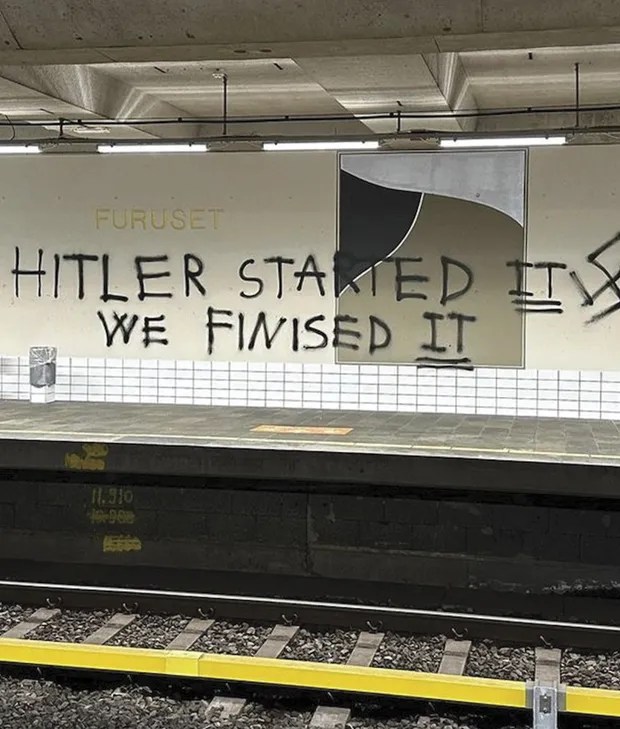
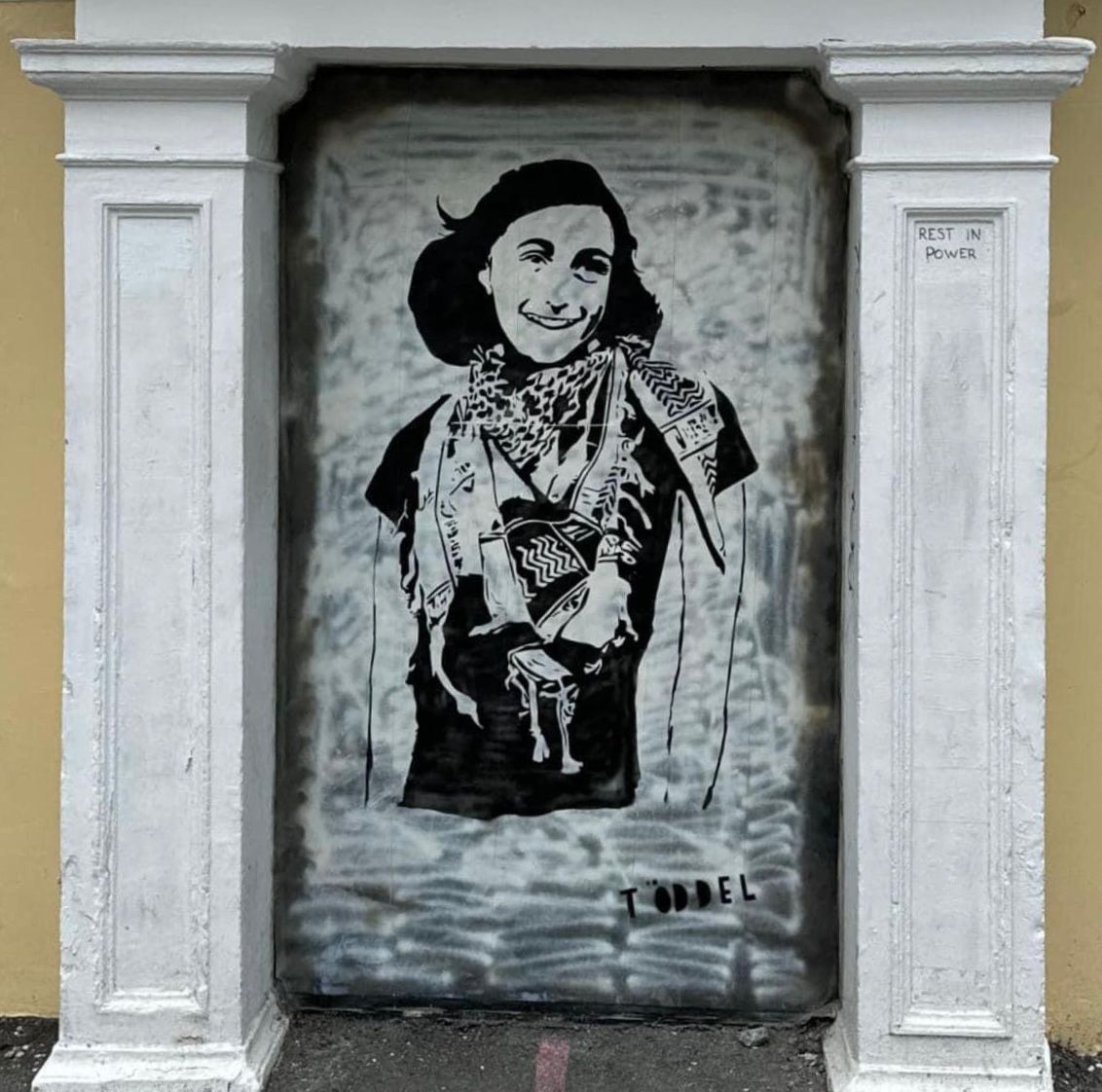
Why Don't You Recognize October 7th – A letter to a Burmese friend (and a genocide researcher)

This is a tectonic and world-changing event, carried out by thousands of people supported by hundreds of thousands of people, as well as by movements, states and regimes. Not condemning it is supporting it. And the results are inevitable. Because of the horror that these people have inflicted on the world, an even darker night is to come before we will see the light. 

Published in "Davar": https://en.davar1.co.il/462536/

A is my friend. He is a Burmese expatriate from Myanmar living in Europe. He is an academic, an educated and friendly person, and a veteran human rights activist. As a journalist who writes, among other things, about countries where acts of genocide, ethnic cleansing and human rights violations take place, I consult with various experts. A is one of them. This is the letter I sent him last week.

Hello, A. I am writing in response to your letter regarding the “colonial character and genocidal policy of Israel.” As you can imagine, I am quite busy these days, and as someone who is far away from his family in Israel, I am distracted. I am responding to you despite all this, mainly because your words opened with a reference to Auschwitz, a place where many of my family members were murdered about 80 years ago.

According to you, Israel is using the Holocaust as a “blank check” to justify the imprisonment, bombing and starvation of 2.3 million Palestinians in Gaza, almost half of whom are children. "In these circumstances, 'never again' is a hollow phrase," you write. “It becomes a call for uncontrolled violence, battle cries and a campaign of revenge and extermination." In the past and under different circumstances, I must admit that I might have agreed with you.

A, you must remember that we got to know each other after several occasions when you very generously shared with me your expertise, knowledge and experience regarding Myanmar. When I first contacted you, I wrote that as a journalist working in a free country, I felt obliged to tell the story of the victims of atrocities there – amongst others, the Rohingya people other minorities who have been suffering from genocidal policies for years since the military coup in 2021. 

Since I am not an expert myself, I reached out to you, just as I reached out to many other experts, witnesses and human rights activists who could shed light on other places I wrote about, such as China, Ethiopia, Syria, Iran, Mexico, Belarus and Iraq.

This is an important point. As you know, there are complicated conflicts in many of these places about which there are different opinions. Still, my feeling was that we shared a real commitment to expose and fight certain types of acts which cannot be excused under any circumstances, regardless of the different narratives that explain the conflict. I mean the kind of actions that cannot be permitted even if there is no agreement on the history of the conflict or even on the identity of those responsible for it.

These actions include those that took place in Rakhine province in Myanmar, which I wrote about with your kind help. The barbaric murder, torture and rape of innocents that happened in your country is inexcusable. Political, ethnic, religious or demographic claims simply cannot justify throwing babies into fire, torturing children to death in front of their parents, and the mass rape of women before their execution. I thought we agreed on that.

This week, I received a long email from you, Dr. A. Extremely long. Long enough to clarify your words or even to add something along the lines of: "despite all this, of course I condemn [Hamas’ actions],” or even "despite the absolute truth of the Palestinian claims and genocidal policy of Israel, I do not justify killing civilians."

But there was none of that. Somehow, your post references 100 years of conflict prior to October 7 (including explanations using maps, cartoons, pictures, and quotes). And there is a reference to the days after October 7.

But the day itself, when over a thousand people, most of them civilians, were brutally murdered and over 200 people, again most of them civilians, were kidnapped, was completely absent. And it's strange given the fact that, as I recall, we share an interest in cases of throwing babies into fire, torturing children to death in front of their parents, and the mass rape of women before their execution. Yes, to make the point clear to a person from your background, for one historical moment, Israel's Gaza envelope region became Myanmar's Rakhine. 

A, since I received your message, I have been trying to understand why you do not recognize October 7th. I understand your opinion about the essence of Zionism and the essence of Israel. I don't agree with it, but I understand your point. Still, there's that little matter of “under all circumstances.” Perhaps there is a certain type of fascist, fundamentalist, racist, and violent organization that, against your usual leftist positions, you actually do support.

But if so, what are the criteria? Is it because they are jihadists? Is it a matter of religion? Or that according to the accepted code of the post-colonialist discourse, the "natives" have certain Jew-killing privileges because of the many years of oppression they have endured? Oppression, which, as you know, I have never denied. 

And maybe you are one of those who do not believe the photos, the direct testimonies of survivors, the explicit confessions of the attackers and the unwatchable and undeniable videos. Do all these not meet your strict standards? Strange, because we never applied such strict standards when I wrote about Myanmar.

Do you think it's all a conspiracy of Western governments spreading fake news? Is it all the settlers’ lies, supported by American imperialists? Are you really not affected by the testimonies of Israeli women, children and elders, many of whom, by the way, are peace activists who built their homes in socialist communes that are not in any way located in the West Bank or in any way disputed. Unless the very existence of Israel is disputed, a position I assume you hold since you treat Israel as a settler and colonialist entity.

And maybe I didn't understand what you meant. In this case, perhaps in the future, we can discuss the true nature of Israel. As you know from our previous correspondence, I never supported Netanyahu, I have always believed in compromise with the Palestinians and I am absolutely against any kind of war crime, including against civilians in Gaza. You also know that I am a social democrat and a person who is aware of the climate crisis and the hardships of the "global south.”  But wait, here I am, once again falling into this trap. If I were not all of these things, if I were a Netanyahu supporter or a settler in the West Bank, would my massacre and that of my family members be justified?

Again, there's that "under all circumstances" nuisance. Even if the Jews were like the French in Algiers, and they are not, deliberate murder of innocents is always evil and mass murder is absolute evil. Among us Jews, even complete secularists like me sometimes recite from the ancient texts: “I have set before you today the heavens and the earth, life and death; I have set before you the blessing and the curse. Choose life, for your lives and for your descendants,” as it is written in the book that you call the Old Testament. Do you understand A? You chose life – without “buts” and without “maybes.” This is why I always opposed my own people murdering other innocent people. And you know what, I'm angry at myself for not resisting enough.

***

And so for the record, I want to mention that I believe that Jews, not just Palestinians, also have rights in the place where I was born. They have personal, social and national rights and they also have responsibilities that are well described in the Declaration of Independence of their country, our country, which was founded 75 years ago. You don't acknowledge that, which is probably the real reason you didn't mention October 7th in your message. If "Palestine will be free from the river to the sea," as they are now shouting in the streets near my house in Europe, the events of October 7th are probably not an accident in your eyes. They are the first step in the plan.

"Free from the river to the sea” means without the people who are living there now. This is not the two-state solution, nor a partition plan, nor a federation. I think with your education, you know exactly what it means. But in case it's not clear enough, I'll say it explicitly: Hamas is the genocidal wing of the Palestinian national movement, and it turns out that it has quite a few supporters. My friends say that such views stem from antisemitism, but I don't know what is hidden in a person's heart. How much darkness, how much hatred.

I also don't know what is hidden in your heart. But I know that October 7th was not another attack, another battle, another chapter in the bloody history of the Middle East. It cannot be solved with sentences like "I cannot be expected to condemn every action taken by the weak and oppressed.” This is a tectonic and world-changing event, carried out by thousands of people supported by hundreds of thousands of people, as well as by movements, states and regimes. Not condemning it is supporting it. And the results are inevitable. Because of the horror that these people have inflicted on the world, an even darker night is to come before we will see the light. 

***

And so, as a wise man wrote during the World War II, you and I now stand on two sides. "My opinion is clear about your motives,” he wrote, “and you would do well to speculate on my motives.” And he added: "I have one more thing left to say to you, and let it be the last. I want to tell you how in the past we were so similar and today we are enemies. How could I have stood by your side, and and why everything between us is over now.” 

And that's the thing. In Xinjiang and Syria, in Tigray and Iran, in Myanmar and Israel, acts like those committed by Hamas are not only the absolute lowest of what the human race is capable of. They also redefine the lines. If they do not fill a person's heart with unconditional anger and disgust, they place him outside the legitimate discussion of civilized people. If you can only find room in your heart for the pain of one side, that's your problem. But with your permission, I think I'll find myself a different expert on Myanmar.

Before I finish, I will ask just one last thing. Do me a favor – next time, please refrain from referring to Auschwitz. Not because I have a monopoly on the memory of the Holocaust or the memory of the victims. But because when it comes to the 1940s, those people on whose behalf you are currently campaigning, they tend to be something different than you imagine. When you remove the appearances of European leftist movements, those people tend to be supporters of the side that built Auschwitz, not of those led there to their deaths.