Israel's embassy in Norway condemned the events organized by the Norwegian Holocaust Center in Oslo, saying they 'legitimize antisemitism.' The center said the aim is to 'understand shadows of historical traumas without equating them'
Israel's Embassy in Norway called for an independent Holocaust studies center in Oslo to cancel two upcoming events that it claims are a "grotesque distortion of Holocaust memory."
As part of a lecture series titled "In Shadow of War – The Way Forward," the Norwegian Center for Holocaust Studies and Religious Minorities is hosting two events with the University of Oslo this spring. The first event, which took place on Thursday, was a lecture by Prof. Nadim Khoury titled "Nakba and Holocaust as cultural traumas."
According to the University of Oslo's website ahead of the event, Khoury – a Palestinian professor of international studies at the Innland Norway University of Applied Sciences – "will trace their trajectories since 1948 and explore how they are intertwined and how the tensions between them are shaping the path forward in Israeli and Palestinian lives."
A second event, scheduled for June 3, will feature Israeli historian and Brown University professor Omer Bartov, whose contributions to Holocaust scholarship were recognized by Yad Vashem in 2019.
In an April 28 X post, Israel's embassy in Norway called on the HL Center to cancel the events "immediately."
"The Norwegian Holocaust Center's decision to host events drawing parallels between the Holocaust, the 'Nakba' and the war in Gaza is a grotesque distortion of Holocaust memory," the post read. The embassy added that the center has chosen political activism over historical responsibility and it called upon it to cancel the events and stop "legitimizing antisemitism in its modern forms."
Addressing the criticism in a social media post, the HL Center explained that it invited academics from different environments and backgrounds as speakers in order to "address and reflect on challenging topics without ending up in polarized debates where constructive nuance tends to disappear."
HL Center director Jan Heiret told Haaretz that the event with Khoury was supposed to follow another event hosting Martin Auerbach, former director of the National Israeli Center for Psychosocial Support of Survivors of the Holocaust and the Second Generation (AMCHA). Auerbach couldn't come due to uncertainty around the ongoing conflict with Iran, but Heiret said the center will make another attempt to host him in the autumn.
Heiret added that both events are meant "to find a way out of a destructive spiral of hatred, dehumanization and violence."
"We must understand the long-lasting shadows of historical traumas without equating, or even putting up, the Holocaust with the Nakba – which would be a historical distortion given the events are so different in nature, course and scope," Heiret said. "We acknowledge that the consequences for the individuals and collectives traumatized by them are interconnected, and that the denial of the trauma of the other lies at the core of the dynamics of the Israeli-Palestinian conflict."
Leif Knutsen, an activist and the chair of the Jewish Community of Norway, says the academics invited to speak at the HL Center "represent a fringe element," and that it's a recurring issue.
"The center doesn't question them; it doesn't bring anyone to balance the discussion and it doesn't present their perspectives in anything like a critical light," Knutsen said. "It's always in the same direction – one that's beyond critical to Israel. Someone should be sitting on stage and presenting an alternative point of view or at least a nuanced one."
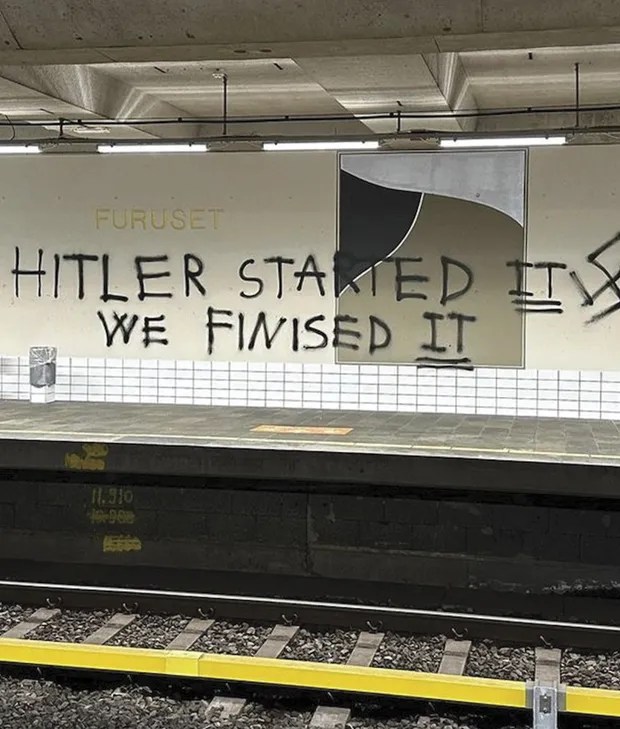
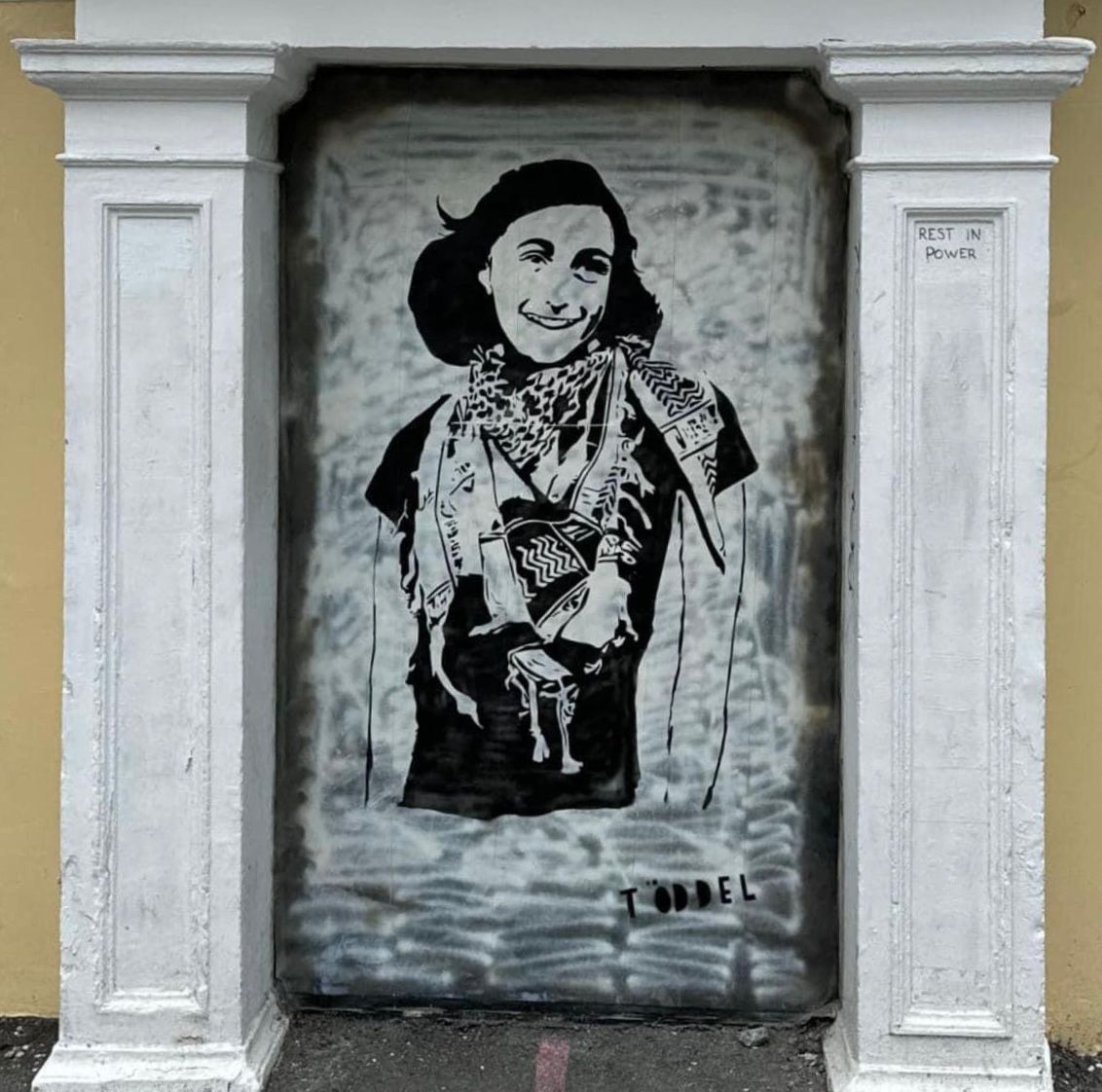
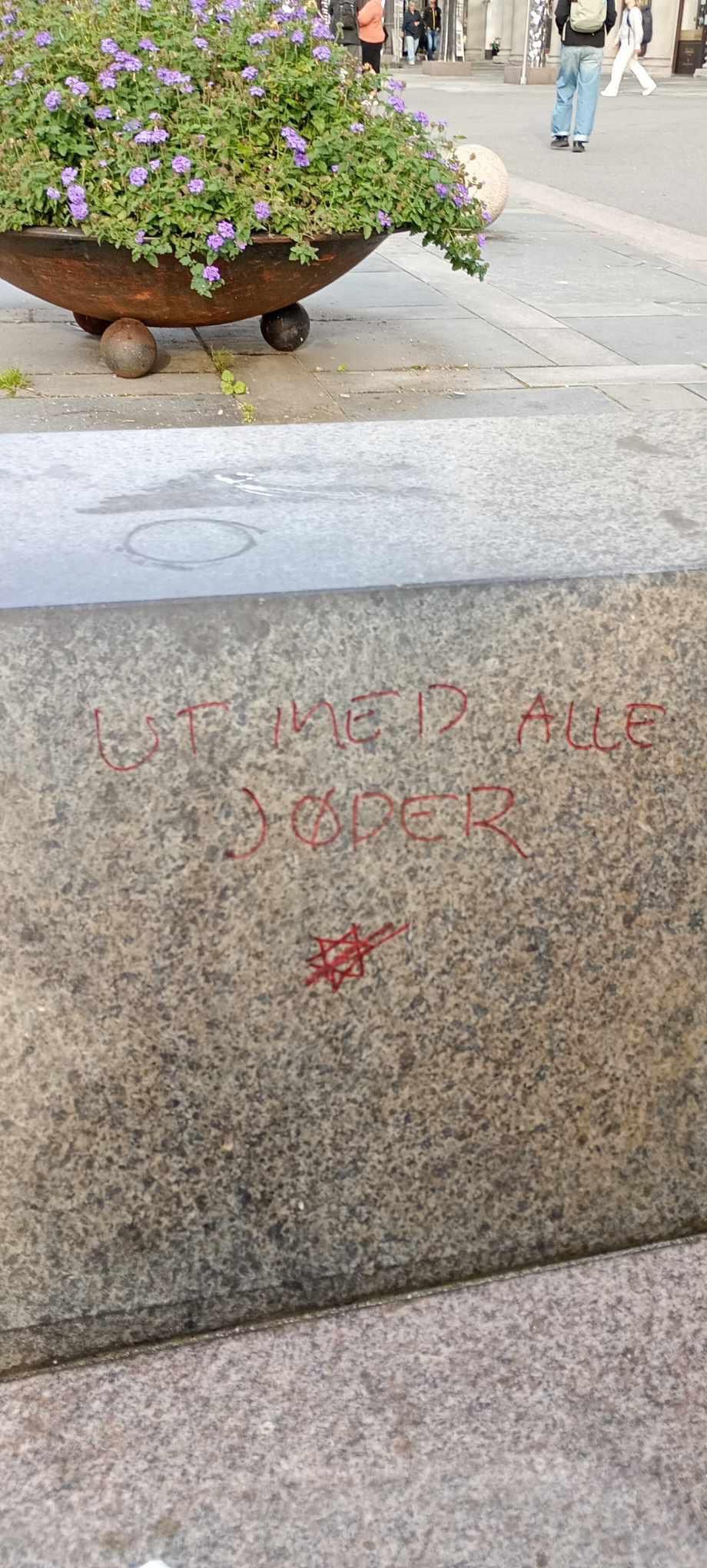
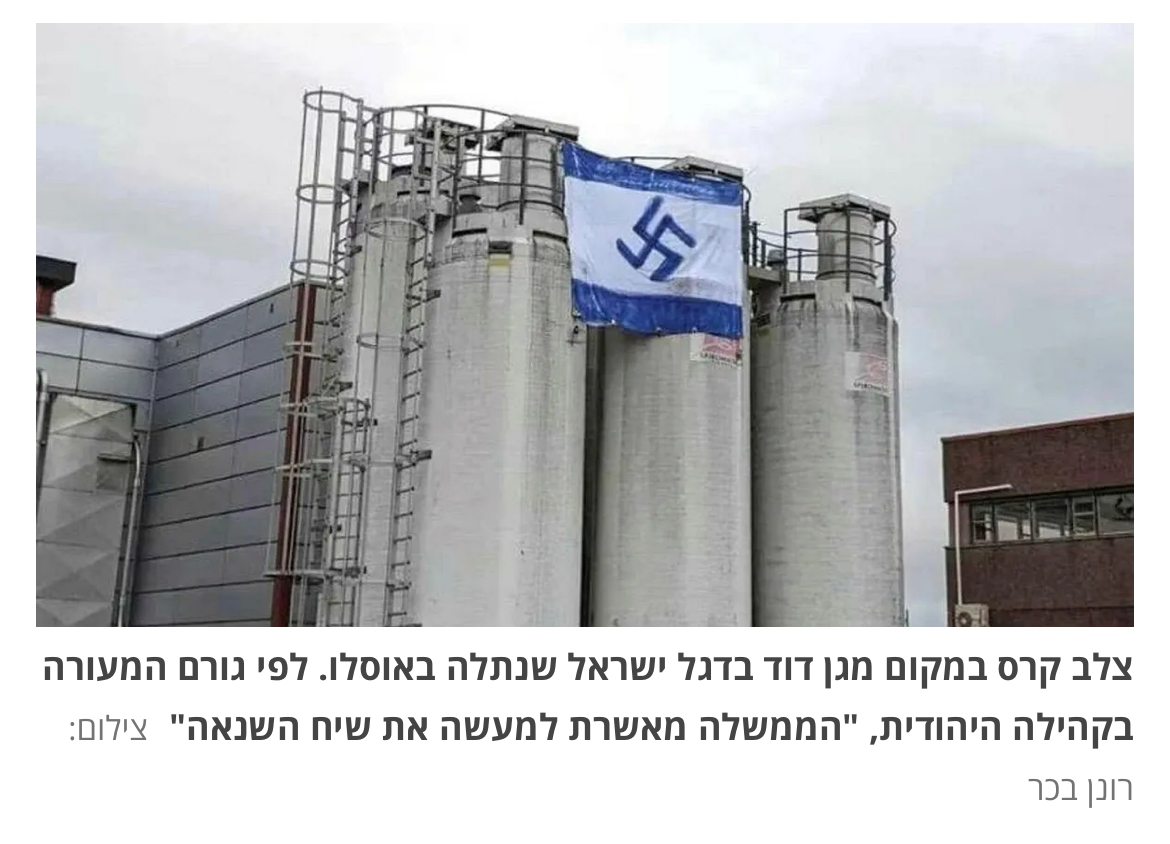
Knutsen said Norway's Jewish population of about 2,000 is particularly vulnerable due to a sharp rise in antisemitic attitudes. In its most recent report published in early 2024, the Norwegian Center for Holocaust and Minority Studies documented an increase in antisemitic attitudes among Norwegians, with 11.5 percent of survey respondents having "pronounced prejudices" against Jews.
Images from Norway, 2024
"The center should be combating antisemitism rather than promoting a one-sided program," he said. "Even worse is the effect that such extreme voices have on Norwegian Jews who are being lectured about their own understanding of reality on the basis of a supposedly academic framework that completely ignores the real conditions in Norway."
According to its website, the Norwegian Center for Studies of the Holocaust and Religious Minorities is a research, education and documentation center intended to focus on the Holocaust and other genocides, as well as antisemitism and minority rights in Norway. The center's exhibitions receive roughly 50,000 visitors each year. It was established in 2001 using capital from a national restitution settlement over World War II between Norway and the country's Jewish community.
The center has previously faced criticism for its programming. In a letter sent in September 2024, more than 100 Norwegian Holocaust survivors and their descendants accused the center of failing to use "its mandate to combat the hostility we experience," and that instead of fighting antisemitism it was positioning itself as a "critic of Israel's policies and military tactics." The letter also said the center manifests "bias in its choice of experts and supporting a narrative that's negative toward Israel as a Jewish state."
In another letter from January 2025, the Norwegian branch of B'nai Brith criticized Heiret for mentioning Palestinians twice while delivering a speech on International Holocaust Remembrance Day, amid Israel's war in Gaza.
"By focusing on Gaza and Palestinian civilians who have lost their lives during the commemoration of the Holocaust and the genocide of the Jews in Europe, at a time when one-sided and anti-Israel portrayals make debates related to Israel very un-nuanced, the director has in a blatant way contributed to the tendency to relativize the Holocaust and the genocide of the Jews," the letter said.
"As the center's own research shows, demonization of Israel leads to increasing antisemitism in Norway. Trivialization of the Holocaust is, as is well-known, defined as antisemitism."
Atefeh Sebdani was born in Iran to parents active in the MEK but was torn from them and sent for molding to a family in Sweden. In an interview, she describes life in the exiled cult and its rejection of Persian culture.
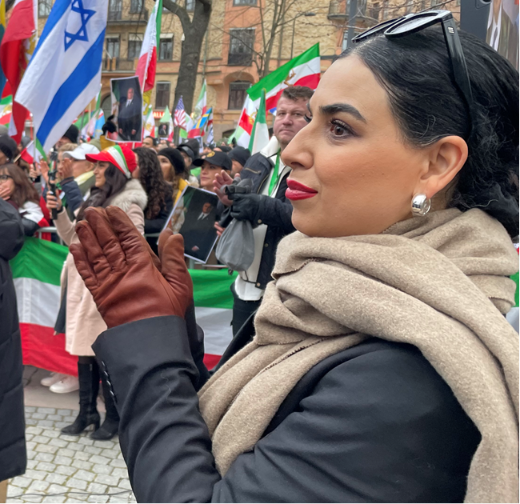
At a protest in Stockholm in April, alongside the Lion and Sun flags representing pre-revolution Iran, Israeli and American flags were also waved. As in similar events around the world, the demonstrators praised the Israeli-American attack on Iran and expressed support for Reza Pahlavi, son of the shah who was deposed in 1979, as Iran's future leader.
The rule of the ayatollahs unites many Iranian exiles against the regime, and threatens political activists operating against it in Europe. However, one of the women who helps the organizers of the Stockholm demonstrations, Atefeh Sebdani, has suffered for most of her life from another Iranian group – an organization that was once part of the Islamic Revolution but later became its enemy.
Mujahedin-e Khalq was founded in 1965 by a group of Iranian students who opposed the shah's rule. The organization combined elements of Shiite Islam with Marxist and anti-imperialist ideas and operated underground during the 1970s. During this period, it attacked regime targets and gained support as an opposition organization.
When the Islamic Revolution emerged in the late 1970s, MEK even joined Khomeini on his path to power. Yet after the establishment of the Islamic Republic, conflict arose between it and the new regime and by the early 1980s, the MEK was attacking government targets. That was countered with brutal repression that included the execution of thousands. The MEK leadership fled into exile in Iraq, where it formed a controversial alliance with Saddam Hussein during the Iran-Iraq War.
Atefeh Sebdani in Stockholm, 2026. Photo: David Stavrou
Atefeh Sebdani's story begins in the clash between the ayatollahs' regime and the MEK. "My parents were imprisoned after the revolution because of their rivalry with the new regime. They were considered enemies of the state and like other MEK members, after they were released, they were forced to leave," she says.
She was two years old at the time. Sebdani recounts that she, her younger brother, her father and her pregnant mother fled to Pakistan and lived there destitute on the streets. Her father continued from Pakistan onto Iraq, where he joined other MEK members in a camp called Ashraf, which later became the movement's center.
"After some time, we also moved to the camp. By that stage it had become a kind of small town with kindergartens, parks, and schools – mainly for propaganda purposes. They wanted to show how good things were there so others would join," she says. "For me, it was like paradise. I had everything; it was idyllic. I was with my mother and I was happy."
Then, without warning, everything ended at once. She hadn't even turned five yet but her mother told her she would have to take care of her two brothers by herself. She didn't explain why or how, but when the day came, Sebdani found herself standing by a bus with a group of crying women. When the bus departed, five-year-old Sebdani became a mother in practice.
"On the way, I had to take care of one brother who was still a baby and wanted to breastfeed, and another who was very ill," she recalls. She adds that the expulsion of the children from Camp Ashraf was a process. She doesn't know exactly how long it took, but she remembers children disappearing from kindergarten without knowing why or where they were going.
Eventually, all the roughly 900 children in the camp were separated from their parents and transported to other countries.
"The place was emptied of children's voices," she says. "And children's voices are the most human thing there is – the core of life – and that was taken away."
Why were the children expelled?
"The children were an element that disturbed the organization's leader, Massoud Rajavi. The ideological struggle to liberate Iran turned into the struggle of a narcissistic leader who wanted all the power in his hands. He wanted the men and women in the movement to be under his absolute control, and the children stood in his way. The movement began as an ideological movement, but it became a cult."
What Sebdani describes aligns with what is known from other sources about the MEK. During the 1980s and 1990s, the organization became highly centralized, developing political and military branches that operated from bases in Iraq. At the same time, the National Council of Resistance of Iran was established as a political umbrella organization.
'The family I came to was politically obligated to take children. It's not that they loved children or wanted us. We underwent heavy indoctrination and were forced to constantly work for the organization.'
During this period, allegations indeed emerged about cult-like characteristics such as strict internal discipline, ideological control, and exclusion of dissenters.
However, the organization's leader, Rajavi, has not been seen in public since the early 2000s, and his fate remains unclear, as the organization has not disclosed information about his whereabouts nor announced his death. Meanwhile, his wife, Maryam Rajavi, serves as the public face of the organization – contributing to an atmosphere of secrecy and uncertainty regarding its structure and decision-making.
After several months and a long journey that included stops in Jordan and Germany, Sebdani and her two younger brothers arrived in Gothenburg in western Sweden.
"For all that time, I was sure we would soon be reunited with my mother," she recalls. "We sat on planes and trains, I saw things I didn't know, I saw climates and people change, there were new languages and places – but alongside the excitement, I constantly feared we were moving further away from my mother and worried she wouldn't be able to find us."
In Gothenburg, they were told they would soon meet their mother. "I was very excited. But what actually happened was different – we stood on a train platform, and instead of my mother, two other people I didn't know arrived, a woman and a man, and we were told: these are your mother and father. That's when the nightmare began."
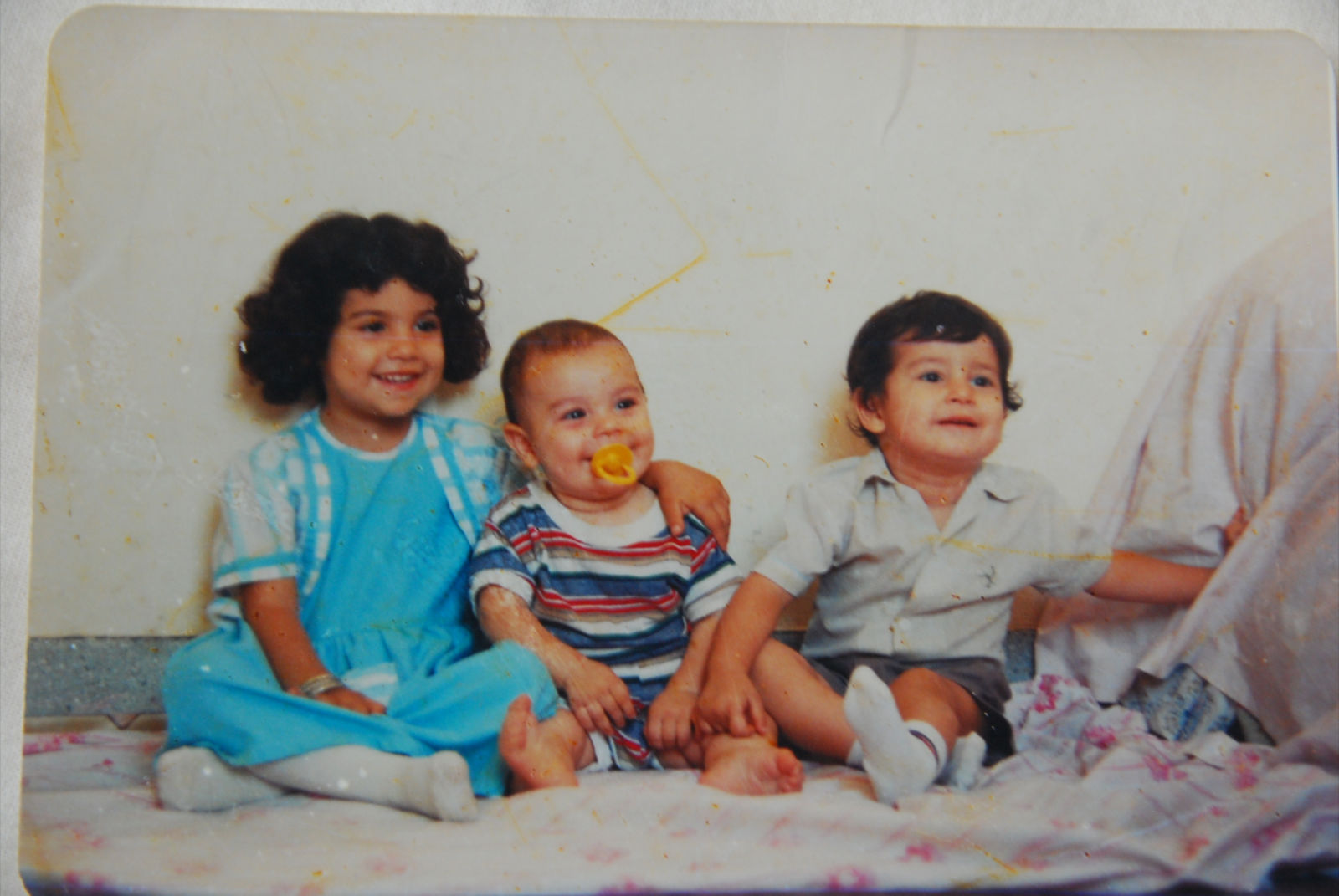
Atefeh and her two brothers
The people who took Sebdani and her brothers were MEK members living in Sweden and working for the movement. They also had a child of their own, and took in two other children out of roughly 200 MEK children who arrived in Sweden. Sebdani says she later traced the fate of hundreds of other children who were "exported" from Camp Ashraf and that she obtained a document listing their destinations – including Germany, the Netherlands, Norway, Canada, and the United States.
"The family I came to was politically obligated to take children," she says. "It's not that they loved children or wanted us. We underwent heavy indoctrination and were forced to constantly work for the organization." She does not reveal the identities of her foster parents, but her childhood memories expose the nature of the organization as it became a cult.
According to her, MEK families abroad were completely mobilized. They engaged in recruiting members and funds, organizing demonstrations, fighting opponents, and harassing defectors. She describes this society as oikophobic (one that is hostile, dislikes and rejects its own "home" culture, country and traditions). "They hated anything Iranian that wasn't related to the MEK. We weren't allowed, for example, to listen to Persian music unless it was the music of MEK members. I didn't read books in Persian. There was no Persian culture—everything was subordinated to the organization."
As far as you know, is this still the case?
"Yes. They still have offices in different countries and a strong presence on social media. The headquarters is in Auvers-sur-Oise, a suburb northwest of Paris, where political leadership members and full-time 'soldiers' are based. At the same time, there are activists like my foster family, and MEK members in Camp Ashraf 3 in Albania. That camp is essentially a 'troll factory' that produces large numbers of accounts and spreads propaganda in Persian and English. They write articles about themselves, smear their opponents, and create the impression of support – even though they have no real support."
Camp Ashraf 3 is the fortified camp to which most MEK members – estimated at 2,500 to 3,000 – were transferred from Iraq between 2013 and 2016. The move was carried out with the support of the United States, the United Nations, and the Albanian government. It took place because after the fall of Saddam Hussein, the MEK was no longer protected in Iraq, and international actors worked to evacuate them. Although the organization had been designated a terrorist organization in the U.S. for many years, it was removed from the list in 2012 as a result of pressure applied by the movement, and some American and other actors even saw it as a partner in opposing the Iranian regime. According to reports, the MEK no longer engages in military activity, but the camp in Albania has become a center of political and media activity with a highly centralized and controlled structure.
"It's a place where entry and exit are not free, and in the past there were physical punishments and torture of those who wanted to leave," says Sebdani. "I know stories of people who disappeared and of mandatory daily confessions about 'dirty thoughts' – for example, sexual thoughts and masturbation. You weren't even allowed to think about your children or speak with members of the opposite sex without permission. Today, with defectors speaking out and social media, the movement can no longer allow itself to use such methods."
Sebdani is not alone in her claims about the MEK. The French newspaper Le Monde conducted interviews in 2024 with former members of the organization living in Europe, including two named Amir Vafa and Amin Golmaryami. Vafa described how he and others were forced to participate in public confession sessions in which, once a week, everyone had to describe their sexual fantasies. He added that friendships were closely monitored: "It was forbidden to have lunch with the same friend twice in a row."
Golmaryami added that during clashes with Iraqi security forces in 2011, MEK leaders sent him and his comrades to go "in front of Iraqi bullets to increase the number of casualties." He claims they did this in order to "put pressure on Europe and the United States to remove the organization from the list of terrorist organizations and facilitate the relocation of its members to another country."
Another MEK member, Reza Torabi, said that at the age of 17 he was a zealous member and was assigned the role of "welcoming" young newcomers. "Our objective was to brainwash them, make them forget their previous lives, and instill in them the ideology of the Mujahedeen," he said. "My dedication was unwavering." In hindsight, he believes that he too fell victim to manipulation and regrets "the harm [he] caused in the course of his duties."
A 2005 report by Human Rights Watch, based on in-depth interviews with former members, also described a reality of beatings, verbal and psychological abuse, coerced confessions, threats of execution, and torture.
How do you believe control of MEK member is maintained today?
"If you look at people like the father, you see someone who joined in his twenties and spent his entire life inside this system. He never paid a bill or looked for a job – everything was handled by the organization. He doesn't know how to buy a plane ticket or even drive to the end of a street. The MEK infantilized these people, and there is no one to take care of them if they leave."
Does that mean there are no new members?
"That's right. There are no new members. It's a movement of older people – but they pay young people to attend demonstrations. If you go to MEK protests, you'll find Poles and Ukrainians who don't speak Persian and don't know what they're protesting about, alongside Swedes with no connection to the organization who were paid to join."
Who pays for all this?
"From what I saw and was part of, many people pay the MEK monthly so they won't harass them – Iranians in exile subjected to pressure, propaganda, flattery, and social coercion. There are also welfare funds, for example for foster families, as well as political donations and funding from human rights organizations influenced by the group's propaganda."
Beyond the political activity, the period that Sebdani stayed with her foster family, had another aspect. She talks about indoctrination and the constant threat that was used to make her stay.
"From the age of five, I experienced sexual abuse, physical abuse and psychological abuse in the foster family," she says, "but I couldn't say anything because they threatened to separate me from my brothers. I was not allowed to be a child. The first thing that happened to me in the foster family was that my father began to show interest in my naked body. He wanted me to do things. I felt it was wrong and frightening, but I knew nothing about sex or sexuality and I didn't understand.
"Over time, it only got worse, and my foster brother abused me too, encouraged by my foster mother. I had no childhood; it was just survival. I was the one who cleaned and tidied, I had to be a good student, and also the one who went out to demonstrations and went to Mujahideen conferences around the world". Talking to Sebdani she describes a reality full of exploitation, punishment, crying at night, and deception of Swedish welfare services.
As an adult, she eventually left, moved to Stockholm, became an engineer, and worked for Microsoft. After a personal crisis, she began telling her story and wrote a book (Min hand i min, "My Hand in Mine", published by Albert Bonniers förlag, 2024). Today she is married and has three children.
Politically, Sebdani is active among supporters of Reza Pahlavi. "I saw the difference between the two leaders," she says. "I met Maryam Rajavi as a child, and recently I met Pahlavi in Paris with a group of other former MEK children. I support the Iranian people, and the people support Pahlavi. He is exactly what Iran needs – a secular, humane person, with a family, who knows what living a normal life is, who listens and can unite people."
After Sebdani's meeting with Reza Pahlavi and other "MEK children" she became the target of an online campaign against her. Sebdani says that this isn't the first time and she has been targeted by a smear campaign led by the MEK on several previous occasions before.
Sebdani's book
"This kind of harassment happens to everyone who has left the organization and spoken out," she says. This time, the MEK website denied Sebdani's account through a letter it claimed was written by her biological father. "For me, as a father, seeing 'Atefeh Sebdani' at a gathering of the Shah's son was painful… Atefeh is the same person who, by spreading defamation against the organization under the false pretext of being part of a group of 'child soldiers,' has for many years become a full servant of Iranian intelligence."
The text claims that Sebdani was never part of the MEK and accuses her and her associates of collaborating with the regime in Tehran. Sebdani does not know whether her father actually wrote the text, but she says that everything in it is false and that she is familiar with other examples of letters that MEK members were forced to write under coercion.
Following the letter, a senior figure in the organization, Freydoun Salimi, also spoke out, accusing Sebdani of never having been a member of the group and of acting as an agent of the regime. In responses to his claims on X, supporters of the organization repeat the accusations and insult Sebdani. On other social media platforms, she is also accused of assisting Israel, betraying Iran, and supporting Americans attacking her country.
Sebdani's personal MEK story has a positive ending – she escaped, her siblings left, and even her mother eventually left the organization. The organization itself, however, is still very much alive. It even claims to still have networks inside Iran, though most analysts believe its influence there is limited. "The MEK is more of a European problem than an Iranian one," Sebdani concludes. "In Iran, they have no real support, not even with regime critics. But after the 'Woman, Life, Freedom' protests, it's clear that a unifying leader is needed, otherwise, there will be no change – and I have no doubt that Pahlavi is the right person."
For 40 years, the assassination of Sweden's prime minister, Olof Palme, has remained unsolved. Now, some are revisiting a dark possibility: not a lone gunman, but a covert network embedded deep within Swedish society – part of a secret Europe-wide effort to resist a Soviet invasion
The most shocking event in the history of modern Sweden occurred almost exactly 40 years ago. On the evening of Friday, February 28, 1986, Prime Minister Olof Palme and his wife, Lisbet, went to see a movie in central Stockholm. It was a cold winter evening in the capital. As he often did, Palme dismissed his bodyguards and the couple travelled three subway stations to the theater without a security escort. When they emerged onto the street, they met up with their 25-year-old son, Mårten, and his partner. The four bought tickets and went in.
Shortly after 11:20 P.M., while the prime minister and his wife were walking back home along a main street in the city, a man approached them from behind and fired a gun at close range. Palme was hit and collapsed on the frozen pavement. A second shot was fired immediately afterward, lightly wounding Lisbet. Bystanders attempted to help but it was in vain. Palme died on the spot. An ambulance was called and evacuated his body and his wife to a hospital, arriving less than 20 minutes after the shots were fired.
The hours that followed were dramatic. News of the murder spread in the Swedish media and overseas. The country went on high alert, and Deputy Prime Minister Ingvar Carlsson convened the cabinet. At 5 A.M. Saturday morning a press conference was held. Flags were subsequently lowered to half-mast, flowers and candles were placed at the murder site, and an atmosphere of national mourning and crisis permeated the country. At the same time, it emerged that almost every possible mistake was made in the investigation of the murder: The shooter immediately fled; police arriving at the scene failed to apprehend him. They also did not set up roadblocks or cordon off the area. Coordination between law enforcement forces at the site was poor; no situation room was established, and testimonies from eyewitnesses were neither systematically collected nor fully documented. These errors were never corrected in the intervening four decades.
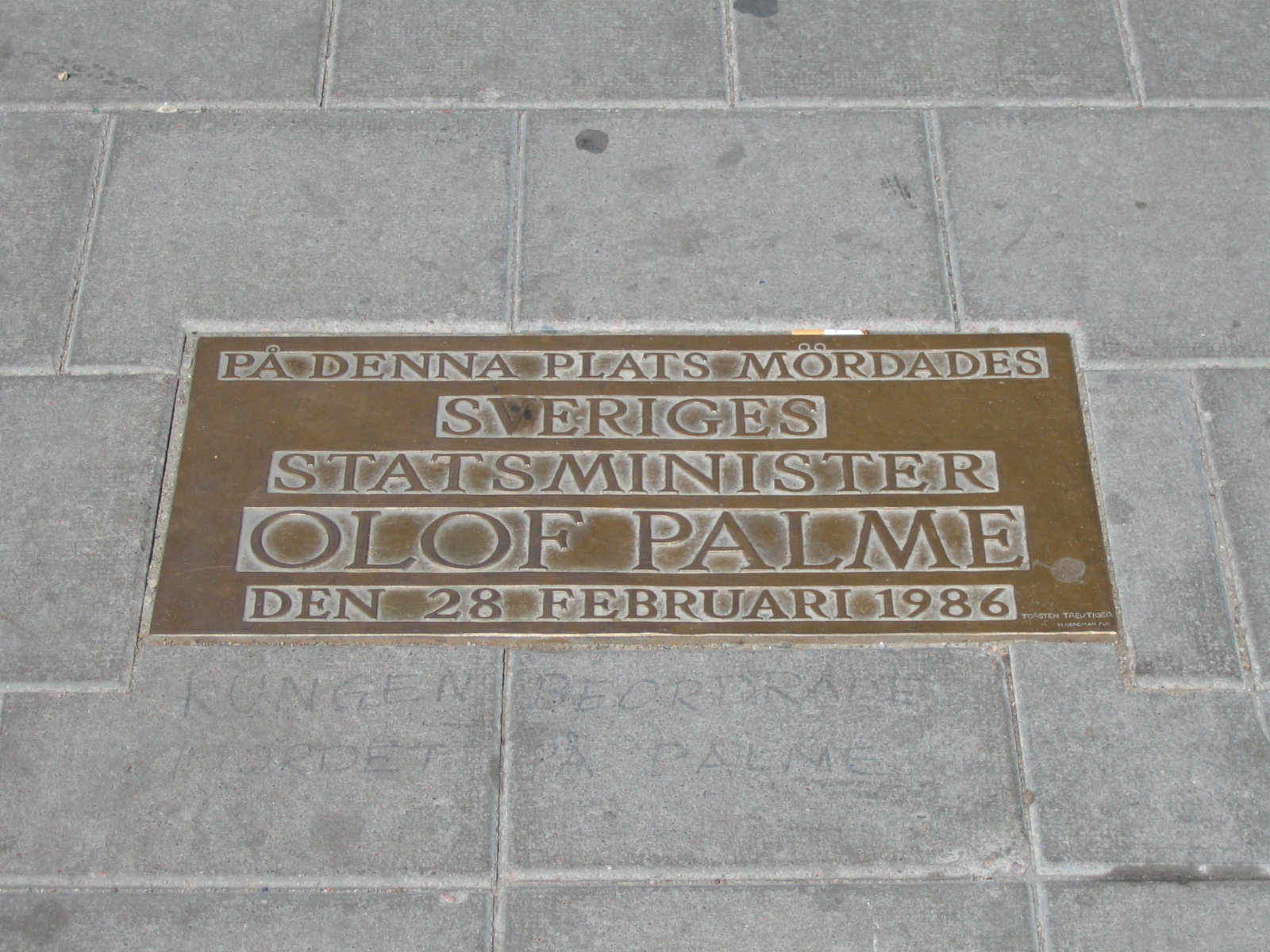
Olof Pale's Murder Site on Sveavägen in Cenral Stockholm
In the years following the murder, what is referred to by Swedish authorities as "the largest and longest-running murder investigation in the world" was launched, but despite significant resources, it was marred by disputes and conflicts and did not lead to any definitive outcome. Many investigative directions were pursued but no one was charged. In the first year, the Kurdish PKK organization was a central focus. Later, theories involving possible actors from various countries, such as South Africa – which allegedly had both a motive and the capability for executing a political assassination abroad – were explored but did not result in indictments. Such was also the case following investigations of theories involving terrorist organizations from the Middle East and Eastern Europe.
In 1988, a local criminal named Christer Pettersson was convicted of the murder, mainly based on a controversial identification by Lisbet Palme; a year later he was acquitted on appeal due to lack of evidence. In June 2020, the Swedish prosecution announced that the investigation was closed, declaring that a man named Stig Engström was the probable suspect. Engström had allegedly been present at the scene on the night of the shooting and had been interviewed as a witness in later years, but he died in 2000 and therefore could not be prosecuted. His motive was unclear, and the evidence against him was circumstantial and unconvincing. Nevertheless, this was enough for the prosecution to close the case.
But this was not the end of the story: In December 2025, the prosecution reversed its position. In a surprising development, it announced that a renewed examination of the investigative material had concluded that there was insufficient evidence against Engström, and thus he was no longer officially considered to be the suspect. At the same time, no other names were suggested, nor was the investigation formally reopened. Thus, 40 years later, the Swedish public still does not know who killed its prime minister or why. Meanwhile, on the margins of these developments, a discussion has surfaced about another historical phenomenon, which – like the identity of the man who pulled the trigger – was heretofore unknown to the Swedish public and kept in the shadows for decades.
"Today, we know no more about the murder than we did the day after it happened," says Gunnar Wall, a journalist and author who has dedicated years to researching and writing books about the Palme assassination. "We do not know if it was a lone assassin or an organized group, we do not know the motive, how the killer escaped, whether he was Swedish or foreign, or whether he is still alive today and, if so, is he in Sweden or abroad. Given this situation, there are countless speculations and theories."
Wall, recipient of the 1998 and 2024 Guldspaden (Golden Spade) award, Sweden's most prestigious prize for investigative journalism, for books he wrote about the incident, notes that while there are those who claim to know who the murderer was, despite years of research, he himself does not.
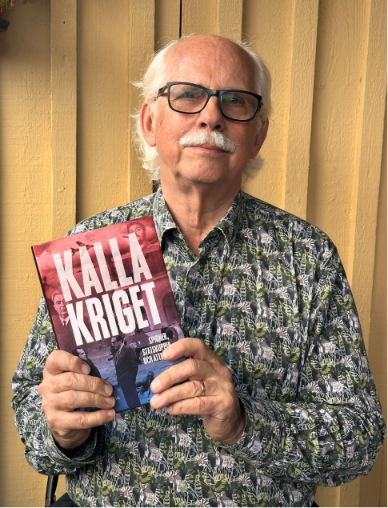
Gunnar Wall
However, Wall points to an interesting issue. The decision not to reopen the investigation late last year is strange, in his view, because about 15 years ago Sweden changed its legislation regarding statutes of limitations. Serious inquests into crimes such as murder, under the new law, are no longer closed after 25 years as was previously the case, and can remain open indefinitely. The prosecutor who last December chose not to resume the whole process justified that by saying there were no conditions for doing so – even though he admitted that he had examined only the Engström lead and not other possibilities.
When the previous prosecutor closed the case in 2020, it was possible to say that happened because he had reached a dead end – but the same cannot be said about his successor's decision, since he said he had not even attempted to evaluate materials that did not concern Engström. And yet, he seemed determined to leave the case closed nonetheless.
"The investigators of the Palme murder examined, almost until the very last moment, indications of [involvement by] a larger group that went beyond Engström alone," says Wall, who bases his claims on interviews he conducted with the investigators themselves and with additional witnesses, as well as on reviews of countless documents, reports and other materials. "Their main hypothesis was that forces within a secret Swedish network were behind the murder, and they tried to link Engström to these actors. When they failed, they abandoned the hypothesis and Engström remained the sole suspect. Five years later, because the evidence against him was weak, it all ended with no conviction and no suspect."
Suggestions about some secret entity having been behind the Palme assassination may sound like far-fetched conspiracy theories – but they are not. For decades, underground organizations called stay-behind networks existed in Sweden and many other European countries. While a direct link between the Swedish stay-behind network and Palme's assassination has not been proven, the existence of the group is an established fact. These clandestine bodies were created after World War II as a way for countries to prepare for a possible invasion and hostile occupation. Their work included drafting blueprints for underground resistance groups, maintaining contact with a government-in-exile and actively opposing an occupier.
In the early days of the Cold War, following World War II, the threat of Soviet aggression was tangible. Across Europe, secret networks were created in various countries, in order to forge connections between the military, police, intelligence services and civil society. Initially, these organizations were intended to prepare for a Soviet invasion, but over time some engaged in other activities, sometimes even conducting covert operations within their own borders, including false flag operations – designed to appear as if carried out by others to justify certain political or military reactions.
The most famous example is the Italian network and operation code named Gladio, whose existence was revealed to parliament in 1990 by Prime Minister Giulio Andreotti. Some claimed that this stay-behind network participated in domestic acts of political terrorism in the 1970s and '80s. Parliamentary inquiries looked into its operations and ties with foreign actors and intelligence bodies such as the CIA and NATO, and exposed its involvement in guerrilla training, communications networks, weapons storage and sabotage. There were also suspicions that Italy's network operatives engaged in domestic political activity, including terrorism designed to strengthen the Italian right and diminish the left. Similar underground groups have been documented in Belgium and Switzerland, and evidence of same exists in France and Germany, although without confirmation of domestic violence. There are also hypotheses about the involvement of such networks in coups and politically motivated violence in Greece and Turkey.
The investigators' hypothesis was that forces within a secret Swedish network were behind the murder, and they tried to link Engström to these actors. When they failed, they abandoned the hypothesis.
The whole phenomenon remains highly controversial and difficult to research due to the secrecy and compartmentalization surrounding it, yet there is general agreement that stay-behind networks have existed across Europe, operating without parliamentary oversight and known to only a small circle of decision-makers.
After years of rumors and official denials of such bodies existing underground in Sweden, in 2013, one of the country's major newspapers, Dagens Nyheter, published an article by Inga-Britt Ahlenius, a civil servant who worked at the Ministry of Finance, the National Audit Office and the United Nations. Based on evidence and research that had emerged since the 1990s, Ahlenius wrote: "While the initial disclosure of Sweden's institutional but unofficial Cold War connections with Western powers was met with denials and outrage, it was eventually accepted as the new truth. Thus, the revelation of stay-behind networks is often treated more like a romantic spy adventure than a historical fact." She noted that the secret resistance movement established in Sweden, and closely linked with Western powers, was likely initiated by Prime Minister Tage Erlander (Palme's predecessor) along with several ministers.
"[It was] initially led by Alvar Lindencrona, CEO of Thule insurance, three department heads and regional/local 'cells' operated under him," she wrote and added, "meetings occurred in secret rooms in Lindencrona's house or Thule's offices, and funding came from secret sources. Between 1951 and 1953, the CIA under William Colby, stationed in Stockholm and later CIA director, helped establish the network in Sweden, although the Swedes retained top-level control."
Journalist Wall adds some background information: Experience from World War II, he says, showed that countries that were occupied had been unprepared for such an eventuality – there were no resistance movements and they in essence had to be improvised. Thereafter, it was in the interest of those countries and others to prepare properly for the threat of military occupation; in Sweden, various actors dealt with this scenario at an early stage. Immediately after the war, a secret, state-level initiative was launched by the prime minister; the CIA entered the picture in the 1950s. Before that certain extremist elements had worked toward similar aims – among them war veterans who supported the Nazis during the war and volunteered to fight alongside them in the Continuation War in Finland. In the end, these three trajectories evolved into the Sweden's stay-behind network, although it is unclear exactly what remained of them in its final iteration.
"Unlike in other places, despite the cooperation with American and other actors, the Swedish network was established and organized by Swedes," says historian Mats Deland, a senior lecturer at Mid Sweden University (Mittuniversitetet) in Sundsvall. "Sweden did not participate in World War II, but it could learn from the Nazi invasion of Norway in 1940. The Norwegians sank the Blücher, one of the German ships on its way to capture the Norwegian capital in the Oslo fjord, which delayed the Germans and caused them heavy losses, while at the same time giving the Norwegians time to evacuate the royal family and their government northward.
"This experience was important for both the Norwegians and the Swedes who learned from it and came up with the idea to establish an organization that could evacuate the Swedish royal family and the government, but also 'stay behind' and protect the country. This goal of staying behind was the result of another experience from World War II: the NKVD, the Soviet security service under Stalin, who remained behind and became partisans in the German-occupied areas."
So, in the Swedish case, the stay-behind network was not controlled by the Americans or by NATO?
Deland: "Correct, in Sweden this was a local initiative. The Americans arrived a little after the network was established, and even then, they did not take control; they only integrated needs arising from NATO doctrine, which was based on the fact that only the United States had nuclear weapons. In the case of a Soviet invasion and the need for American aircraft to fly over Sweden, the idea was, like the French resistance – and to some extent the Belgian and Dutch resistance – to create escape lines that could smuggle out downed crews. But the United States did not establish the network and did not manage it. This may have changed in 1965, when Swedish security services were reorganized [when the Cold War-era external intelligence agency, T-kontoret, and internal intelligence agency, B-kontoret, merged into a single, secret organization], partly with the involvement of Olof Palme. It is possible that American involvement increased then."
How much was the Swedish stay behind network controlled by the state, and how much of its activity was conducted by civilian or military actors without the knowledge or control of the political leadership?
"Between 1947 and 1951, there were many volunteers in the network, including people who had served alongside the Germans during World War II, some of whom were highly problematic. Because of these types, the secret police discovered the network even though they were not supposed to know about it. Only the people directly involved – Prime Minister Erlander and a small part of the security apparatus – were meant to be 'in the loop.' Following this discovery, which angered Erlander and the security apparatus greatly, the network was reorganized, removing the problematic elements and incorporating trade union members and the business sector."
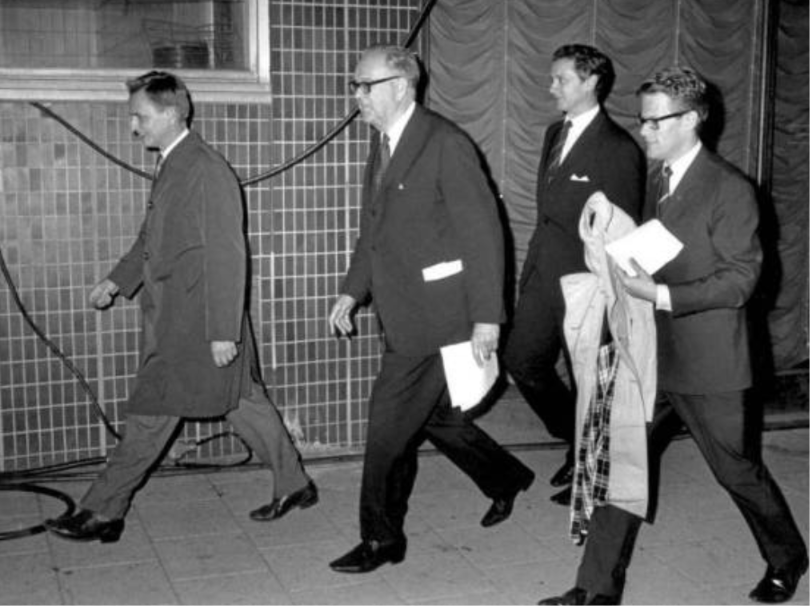
,Olof Palme, Tage Erlander, Sten Andersson and Ingvar Carlsson (1968) Photo: Lennart Nygren / SvD / Scanpix
According to Deland – and in keeping with Ahlenius' observations, as mentioned – the network was indeed led by executives such as Alvar Lindencrona, the head of the Thule company, a businessman with relatively progressive social views for his time, and it recruited forces from the trade unions that had a traditional affinity to the ruling Social Democratic Party. "These were ordinary people," he says, "not former soldiers. Although they needed training, they could be trusted, and the network remained secret until the 1990s." In other words, even though neither the Swedish parliament nor the rest of the government knew about the network, it was indeed an official entity. Indeed Deland notes that a recent book revealed an interesting document: an official government decision from the 1950s forming Sweden's stay-behind network, showing that it was legal and above board. The diaries of Prime Minister Erlander show that he may have given it a green light as early as 1947.
The book Deland refers to is Johan Wennström's "Sweden's Cause Was Our Cause: The Secret Swedish Resistance Movement" (2023). Wennström calls his country's stay-behind underground a "resistance movement," and reveals that the organization's code name, used by its members at the time, was Metro. Wennström says Metro was not established or controlled by NATO and it did not act on the latter's behalf, although he confirms there was cooperation with MI6 in Britain and, to some extent, with the CIA, mainly concerning programs such as evacuating Swedish decision-makers to England if necessary.
Furthermore, Wennström writes, Metro likely included several hundred people, as well as a sort of "invisible combat unit" that could expand to as many as 3,000. The underlying principle was that the network's members would recruit additional people from their immediate circle if necessary. The author also describes the group's structure was fairly cooperative, with representation from various sectors of Swedish society; information about its activities, he says, was distributed on a strict "need-to-know" basis. The organization was formally legalized in 1955, having been mandated by an earlier government decision. Typically, it was involved in organizing potential resistance and civil defense activities, such as mapping escape routes, planning acts of sabotage of critical infrastructure that could fall into Soviet hands, rescuing government officials and storing weapons. Wennström does not know when the organization ceased to exist, or if it exists today.
The phenomenon remains highly controversial and difficult to research, yet there's general agreement that stay-behind networks existed in Europe, operating without parliamentary oversight and known to few decision-makers.
Regarding other countries that had stay-behind networks, it is clear, both from Wennström's book and other sources, that heterogeneity was the keyword. Each country built its organization differently depending on perceived threat and the nature of the country's political, military and industrial power structures. Even in NATO member states, the networks were not necessarily under that organization's control. Parliamentary or public oversight was generally minimal, and there is still controversy over what their involvement was in domestic activity beyond preparing for a possible Soviet invasion during the Cold War era.
One of those who has focused on the phenomenon at the European level is Swiss author and researcher Daniele Ganser, whose controversial 2005 book – "NATO's Secret Armies: Operation Gladio and Terrorism in Western Europe" – is one of the best-known on the subject. It received praise but also criticism by some who claim that it is based on an unsubstantiated conspiracy. In it Ganser claims that Western intelligence networks operated secretly in Allied countries during the postwar era, sometimes beyond the bounds of proper legal and political oversight. He cites Italy, Belgium, France, Germany, Switzerland, the Netherlands, and Turkey, emphasizing that in some of these countries the stay-behind networks were indeed involved in terrorism, false-flag operations and political manipulation.
Mats Deland collaborated with Ganser on the Swedish edition of the book, which includes a chapter on the possible connection to the Palme assassination.
Did Prime Minister Olof Palme know about the network?
Deland: "We know he was aware of it during the tenure of his predecessor, Erlander, because he worked on it as one of Erlander's people in the 1950s. What he knew later, we do not know for certain. But it is reasonable to assume that all prime ministers knew about the network, although there are no official documents on the matter."
What can be said, to the best of your knowledge, about the Swedish stay-behind network in the 1980s, during Palme's second government?
"We don't know. We have some information about the network in the 1950s, but very little about the 1980s."
When did suspicions arise about a connection between the network and Palme's assassination?
"These were suspicions that arose from the very beginning. There was an investigative attempt as part of the official inquiry, and there were also discussions about people from the Stockholm police who could have been involved in the murder, but these are speculations and I do not deal with them."
Sometimes it's difficult to know whether a fact uncovered in an investigation is the key to solving a (murder) mystery or just a coincidence. The last person suspected of killing Prime Minister Palme, Stig Engström, who died 26 years ago, was nicknamed the "Scandia Man" because his workplace was in a building called the Scandia building. The building had previously housed the headquarters of the above-mentioned Thule insurance company Thule merged with Scandia in the 1960s and was run by Alvar Lindercrona who, as said, apparently headed country's the stay-behind network; indeed some of its meetings took place in that same building. In other words, if Engström murdered Palme, he did so while leaving a place where in the past – and possibly as late as the 1980s – meetings of senior members of the country's stay-behind network were held. Is this a coincidence? And even though there is no evidence that Engström was actually connected to the underground organization, is there any logic to the claim that it was involved in Palme's murder?
Wall, the journalist, is not unequivocal on this matter, but he does suggest some key historical points that should be taken into account. "One of the things that happened during Palme's second term as prime minister in the 1980s was a series of alleged Soviet submarine incursions into Swedish territorial waters," he explains. "These incidents caused a severe security crisis, and some argued that they were preparations for an invasion and the establishment of espionage infrastructure. Within the Swedish security establishment, there were claims that Palme did not take the threat seriously and that, because of this, he posed a security risk to Sweden.
"Furthermore, Palme was supposed to travel to Moscow to meet Soviet leader Mikhail Gorbachev in April 1986. Palme, who returned to serve as prime minister in 1982, was active on the international stage on issues of arms reduction and nuclear disarmament. His opponents argued that he had close and controversial ties to the Soviet Union, although a more balanced description would be that he was open to discussions with Soviet leaders about disarmament – something that went against both NATO's view and the opinions of senior Swedish military officials. The assassination on February 28, 1986, meant that it was Palme's successor, Ingvar Carlsson, who met Gorbachev."
As far as is known, the issue of disarmament was not on the agenda at that Swedish-Soviet summit.
Wall adds that there were a number of people who claimed to have received offers to kill Olof Palme; in several cases, it was suggested that Swedish intelligence services were behind those offers. But no one known to have actually belonged to any of these secret services has ever come forward to confirm that they were approached. Wall also provided Haaretz with documents he's collected showing that evidence indicating that people with radio devices were present in the area on the night of the assassination was not taken seriously by the investigators. He does not claim that there is proof that the murder was organized by political actors, but argues that it is certainly a line of inquiry worthy of serious examination.
And he is not alone: Ahead of the 40th anniversary of the assassination, a public appeal was launched to encourage the Swedish government and parliament to establish a "truth commission" to finally resolve any outstanding questions.
"On February 28, 1986, Olof Palme fell victim to a brutal attack on an open street in central Stockholm," the appeal begins. "The assassination of the prime minister of Sweden was a unique attack on our democracy. In a country governed by the rule of law like Sweden, everything possible should have been done to solve this murder. The fact that it remains unsolved 40 years later is unacceptable, especially when not all possibilities for an indisputable and absolute solution have been investigated."
The text cites problems that may have prevented discovery of the truth – still-classified archives, false answers given to the investigators by secret service personnel and investigative files that have disappeared. Possible involvement of the Swedish stay-behind network is also mentioned, and the conclusion is: "This is the only assassination of a political leader in modern Europe that may remain unsolved. Clarifying all the circumstances surrounding Olof Palme's murder will strengthen Sweden."
Still, at this rate, it is doubtful whether the mystery will ever be solved. Even if it is, the relatively recent revelations regarding stay-behind networks in Europe are just another example of how, even if and when the public discovers the truth, it sometimes comes decades too late, in the form of very old news.
Norwegian police said they are searching for suspects and added that they were reinforcing security measures to protect both the Iranian diaspora and the Norway's Jewish communities
The U.S. embassy in Oslo was hit by a loud explosion overnight into Sunday, causing minor damage but not injuries, Norwegian police said, as the justice minister said a thorough investigation had been launched. The blast at the embassy compound in western Oslo occurred at around 1 A.M. local time, sending thick smoke into the street by the entrance of the consular section, eyewitnesses said.
The explosion was caused by some sort of incendiary device, Oslo police representative Frode Larsen said during a news conference Sunday. Investigators believe the embassy was the target and are searching for one or more potential perpetrators and their motive. Justice Minister Astri Aas-Hansen added they had deployed "considerable resources" to the investigation.
"One of our hypothesis is that this is terrorism, but we are also exploring other options," Larsen later told public broadcaster NRK. Police added that they were reinforcing security measures to protect both the Iranian diaspora and the country's Jewish communities. "This is an unacceptable incident that is being treated with the utmost seriousness," said Astri Aas-Hansen, Norway's justice and public security minister. "The police have stated that they are investigating the case with significant resources, and that nothing indicates the situation poses any danger to the public," she said.
PST, the Norwegian police security service, called in additional personnel following the incident but has not changed the country's terror threat level, according to communication adviser Martin Bernsen. The blast occurred at the entry to the consular section, Oslo police said, and witnesses said the entrance had been damaged.
"There was a very thick layer of smoke on the street," said Sebastian Toerstad, 18, a high school student who drove past the embassy at the time of the explosion. "There was some damage to the entrance," he added. Police said no further explosive devices had been found in the area. "Investigations have been carried out at the scene with the aid of dogs, drones and a helicopter, searching for one or more potential perpetrators," the Oslo police department said in a statement.
The U.S. Embassy in Oslo referred media queries to the U.S. State Department, which did not immediately return a request for comment. Nor did Oslo police. Other details were not available.
Leif Knutsen, a Norwegian Jewish activist and chairman of the newly founded Jewish Community of Norway umbrella organization, said security around Jewish institutions across Norway has been elevated since October 7. Knutsen noted that armed police with assault rifles have been stationed around the synagogues in Oslo and Trondheim and near the Israeli embassy.
The local Jewish community generally trusts the Norwegian Police Security Service, known as PST, and cooperation between security services and Jewish institutions is strong, according to Knutsen. He said, however, that many people feel more vulnerable on their way to and from synagogues, when they "become visible" outside the protected perimeter.
He expressed that the broader concern is what the situation represents. "What's wrong with a society when its most heavily guarded and fortified installations are not government offices or military bases, but two synagogues and the embassy of a country that Norway is supposed to have a friendly relationship with?" Knutsen said, adding that the situation was "unsustainable" in the long term.
The release of court documents in the U.S on Jeffrey Epstein in February has sent political shockwaves far beyond Washington. From American power brokers to British royalty and European decision-makers, the files reference powerful figures across the globe. In Norway, the fallout has struck a blow to the country's self-image, as well as its image abroad.
Traditionally, Norway, which has one of the world's most comprehensive welfare state systems, has had a high level of trust in its public officials, and until recently the country was best-known internationally for the Nobel Peace Prize and for humanitarian and peacemaking efforts.
Now high-profile Norwegian public figures are facing criminal investigations as a result of their links to late convicted sex offender Epstein, and the country is reckoning with the fallout. The most high-profile Norwegian figures to be implicated in the files are Crown Princess Mette-Marit, who exchanged hundreds of emails with Epstein between 2011 and 2014 and stayed at his Palm Beach residence in 2013, and former Prime Minister and former Chair of the Nobel Committee Thorbjørn Jagland who has been charged with gross corruption as a result of his ties with Epstein.
But the files have also revealed that two members of Norway's diplomatic elite – married couple Terje Rød-Larsen and Mona Juul – had connections with Epstein. The couple were among a small group of diplomats who facilitated the back-channel negotiations between Israeli and the Palestine Liberation Organization representatives in the early 1990s which led to the Oslo Accords in 1993.
Norwegian authorities have now opened an investigations into Juul – who resigned as Norway's ambassador to Iraq and Jordan earlier this year – on suspicion of gross corruption and Rød-Larsen on suspicion of complicity in gross corruption in relation to gifts and favors the two received from Epstein. According to the released files, they maintained extensive personal and financial ties with Epstein over several years. They visited his private island, their two children were bequeathed $10 million by Epstein in his will, and Rød Larsen was appointed executer of the will (which was later revoked).
According to lawyers for Juul, who has also served as Norway's ambassador to Israel, the U.K. and the UN, she "does not recognize" the allegations against her. For his part, Rød-Larsen has acknowledged the relationship with Epstein but denies wrongdoing. He has not held a public role for over two decades and resigned from his position as president of New York-based think tank the International Peace Institute in 2020 following revelations about his ties to Epstein.
Norway's efforts to facilitate secret Israeli-Palestinian negotiations in the early 1990s leading to the Oslo Accords helped forge its identity as a peace-brokering power, and the current association of key figures from that legacy with Epstein has prompted a discourse in the country about political oversight and elite networks.
"Norwegian diplomats are loyal people, but if they were honest, they would say that the behavior of these two individuals has been an open secret for many years," Professor Torkel Brekke, an Oslo historian who works for the Norwegian think tank Civita and also studies Norway's relations with its Jewish minority and with Israel, tells Haaretz.
Brekke added that "People probably didn't know about the most serious part of the allegations, the ones concerning trafficking [the files show that in his capacity as president of IPI Rod-Larsen wrote recommendations letters for U.S. visas for young Eastern European women at Epstein's request], but the rest of it was known to many. They just didn't want to talk about it".
According to Brekke, Rød-Larsen, in particular, is well-known for his tendency to promote himself and there were many rumors within diplomatic circles of inappropriate conduct and inappropriate associations.
Beyond the personal allegations, what has this done to the political discourse in Norway?
"In Norway the concept of trust has been elevated and is almost sacred," Brekke said. "You always hear Norwegians speaking about trust being more important than oil and that it's what makes us special as a society. So, the question many people are asking now is if this is going to destroy trust in our society. I often personally think that the concept of trust is sometimes sprinkled as a kind of gold dust and that too much trust in government is probably not a good thing. We may need trust that's a bit more critical."
According to Brekke, political implications span the spectrum. While Jagland was a Labour party prime minister and Juul and Rød-Larsen served under Labor governments, former Conservative foreign minister Børge Brende also stepped down as president and CEO of the World Economic Forum following scrutiny of past interactions with Epstein.
"The Royal Family too is a great concern," Brekke adds. "Crown Princess Mette-Marit has been in close contact with Epstein. The communication between her and Epstein is hard to explain and combined with the court case against her son. [Marius Borg Høiby, the crown princess's son from a former relationship, is currently facing multiple criminal charges, including rape, which he denies.] It's concerning to many Norwegians. Even more concerning than party politics."
When it comes to the Israeli angle, does the fact that officials involved in the Oslo Accords are now implicated affect Norway's peacemaking legacy and relations with Israel?
"First, I think that although there were several hard-working, very decent diplomats who created the Israeli-Palestinian back channel, there were, at the same time, others who tried to make it into something a lot more important than it really was. Rød-Larsen tried to make himself seem much more important than he really was. When it comes to relations with Israel, I don't think there will be much of an impact, apart from maybe giving Israelis another reason to be critical of Norway [Many Israelis' resent Norway's criticism of Israeli conduct in the Gaza war which has also led to tension between the two countries' governments].
I'd expect some Israelis will feel some kind of schadenfreude after the recent souring of relations," he said. Two weeks after October 7, 2023, Norway condemned Israel's war in Gaza, and drew anger from Israel after deciding not to recognize Hamas as a terror organization. Oslo also continued funding UNRWA – and campaigned to defend it abroad – despite allegations some staff took part in the October 7 attacks.
"However, relations with Israel will probably only improve if there is a new government that will be able to set things back on track after the way things were handled from the Norwegian side after October 7."
The argument that Norway's role in the Oslo process was more facilitative than decisive is not a new one. Many analysts contend that the end of the Cold War and political shifts within Israel and the PLO were the primary drivers, and Norway's role was mainly to provide a discreet venue.
But while the Norwegians' influence over the content of the Oslo accords was limited, Rød-Larsen was influential in his role as the facilitator of the secret channel, and in that sense he and his wife had an important role in the Oslo story.
Noa Eshkol's 'Mourning Carpet' from 1974 was inspired by the Israelis who died in a Palestinian terror attack that year. Opposition to the showing of the work lays bare the unique enmity toward Israel
The scene at Norway's National Museum a month ago was unusual, even for a protest in Oslo in a year of countless harsh demonstrations against Israel. In the "On the Barricades" room showing works with a political context, dozens of people sat on the floor and shouted "Remove the carpet!"
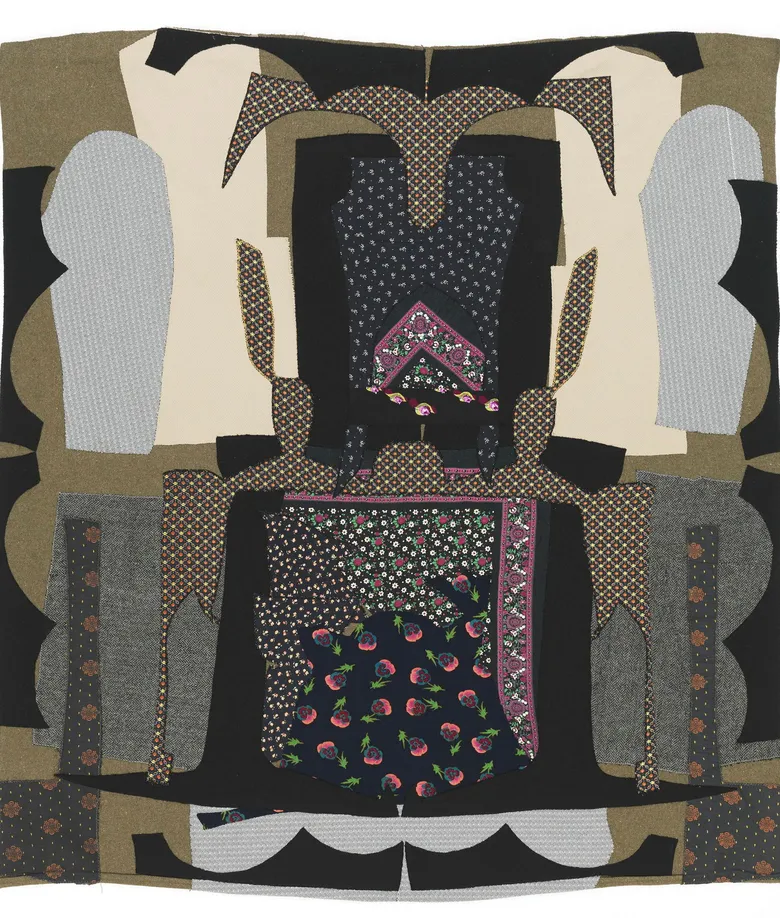
The participants, including artists and cultural figures, were protesting the showing of one of the works, 1974's "Mourning Carpet," a 174-by-160-centimeter (roughly 6-foot-by-5-foot) wall carpet by Israeli textile artist and choreographer Noa Eshkol. The piece features images of flowers in an array of colors. A YouTube video and media photos reveal the flavor of the protest. The chants filled the room, a Palestinian flag had been placed on the floor, and a few demonstrators wore kaffiyehs. Israel and Hamas' signing of a cease-fire agreement that day, October 9, didn't seem to register much.
A few days earlier an initiator of the protest, Norwegian artist Victor Lind, explained what was rousing the demonstrators' anger. "The National Museum has chosen to show a work that legitimizes the occupation of Palestine by the war criminal the State of Israel," he said in a panel discussion in Oslo in September. Lind also claimed that the work was "war propaganda" that legitimized genocide and fascism.
The call to remove Eshkol's work was also heard in letters, newspaper articles and social media posts; even employees of the museum joined in. But for now, the piece is still there and the museum hasn't voiced any intention to pull it. "The National Museum isn't supposed to be a political player," the museum's director, Ingrid Roynesdal, told Aftenposten, Norway's most popular daily. She added: "If we as a museum choose to become an active player in geopolitical debates, we're likely in the end to contribute to a narrowing of freedom of expression."
The demonstration at the museum joins a long list of protests and boycotts over the past two years against Israel and Israeli artists, scholars, athletes and businesses. But the battle surrounding Eshkol's work seems particularly strident. It reflects the depth of the crisis of Israel's international standing and the scale of the hatred for Israel in Europe, which goes far beyond opposition to the war in Gaza.
Noa Eshkol, "Mourning Carpet (Following the Massacre at the Ma'alot School). Credit: Jens Ziehe/Photographie/Neugerriemschneider Berlin
The story of the carpet begins with a national trauma in Israel. It was May 1974, slightly over six months since the Yom Kippur War and around two years since a string of terror attacks: the Munich Olympics massacre, the hijacking of a Sabena airliner that landed in Israel, and an assault at Israel's airport that killed 26 civilians. In May 1974, terrorists from the Democratic Front for the Liberation of Palestine infiltrated from Lebanon into Israel.
Over two days, with rifles, hand grenades and explosives, the DFLP terrorists killed and wounded Israelis in a series of attacks, the worst being the abduction of 85 Safed high school students who were staying at a school in another northern town, Ma'alot.
The students, some of whose teachers fled the building as the terrorists entered, served as bargaining chips for the gunmen, who sought the release of Palestinian prisoners. During negotiations, the government played for time as it planned a commando raid. The results were tragic in what is now known as the Ma'alot massacre. The storming of the building ended with the death of more than two dozen people, most of them students.
Like many Israelis, Noa Eshkol was shocked by the attack. Eshkol, who was born in 1924, is known for Eshkol-Wachman movement notation. She and her student Avraham Wachman created a system of symbols for describing movement; for example, in choreography. The work "Mourning Carpet," whose full name is "Mourning Carpet (After the Ma'alot School Massacre)," was the artist's response to the terror attack.
"This is one of the hundreds of carpets that Noa created in the final decades of her life," says Mooky Dagan, a human rights activist, musician and art curator who manages Eshkol's estate and heads the foundation established in her name. Dagan, who was a close friend of Eshkol's, adds: "It's one of her only carpets that can be connected to a specific event. That's why it was important to me to add the parenthetical information to the title."
Dagan says Eshkol created several mourning carpets after the Yom Kippur War. Another carpet, which was sold to the Pompidou Center in Paris, is called "Leaving Yamit," referring to an Israeli town in Egypt's Sinai Peninsula, before it was uprooted in 1982 as part of the Egyptian-Israeli peace deal. "Another one was named after Golda Meir, but these are the exceptions connected to a specific event or person," Dagan says. "She created over 1,000 carpets."
Dagan sees the irony in the fact that the carpet in Oslo is stirring such controversy. "The incident in Ma'alot shook the foundations," he says. "It was an event with hostages including many children, it launched a debate on surrendering to terrorists or taking military action, and it shook the country. It became a formative event, and it's symbolic in light of what's happening today in Israel and in Gaza." Dagan says the protest in Oslo has been the toughest challenge when it comes to Eshkol's work being shown abroad. He says his friend never wanted to display her carpets at all.
On a few rare occasions, he was able to convince her otherwise, but the international breakthrough came after her death in 2007, when he says she became a brand name and a raft of museums acquired her works. Solo exhibitions of her art have been staged in Germany, the Netherlands, Brazil, Sweden, Norway and Israel, and her works have taken part in group exhibitions in many other countries. "In the last years of her life she was drawn to creating the carpets in a way that she herself couldn't explain," Dagan says. "It became the most important thing in her life."
Would you say that these are political works? It's true that she was the daughter of Israel's third prime minister, Levi Eshkol, a fact that wasn't officially mentioned in the protest but came up in some of the online debates. But can she be linked to a specific political viewpoint?
"I can't speak in her name, and it's absurd to speak for people after their death. But I was very close to her and we became close friends already after the Six-Day War. When it came to the carpets, I shared the process of creation with her intimately. Noa was a political person, but her viewpoint wasn't linked to a party and she didn't intervene in specific political issues. Even though her father was the prime minister, and even though she was born on Kibbutz Degania and was thoroughly Israeli, she was totally antiestablishment. That was the paradox in her. Even though she breathed her Israeli identity, she created movement notation, which is the most universal thing possible. Her worldview was universal; she stressed this and even refused to patent her movement notation, so that the whole world could use it."
Dagan describes Eshkol as a dominant personality with solid opinions and clear thinking. She wouldn't take anything for granted, hated clichés and lived as a feminist. Surrounded by students, she detested titles and rebelled against every framework and consensus. She didn't want to be a candidate for the Israel Prize and convinced her friend Uri Zohar to turn down the 1976 prize for film because it was granted by the government. "Her attitude, spiritually and practically, was that of a rebel," Dagan says.
Just because of the protest against her work in Oslo, it would be interesting to know if she had clear opinions about the Israeli-Palestinian conflict.
"I can definitely attest that she was a person with a worldview that's now called leftist. Even though she detested labels of this kind, above all she had a humanistic outlook. She wasn't an activist, but the current situation would have clearly driven her crazy. Until her death she had the worldview of a pure dove."
***
Hawk or dove, it makes no difference to the demonstrators against the National Museum in Oslo, which bought Eshkol's work in 2022. In May this year the work was hung in Room 76, the space reserved for political art. When the director was asked by the online contemporary art magazine Kunstkritikk why she chose it, she said the museum switches works in its rooms so that all the works can be better preserved.
"Room 76 is devoted to political art, mainly from 1965 to 1980," she said. "This work was chosen according to the regular procedures. The room displays a variety of artistic expressions and strategies, and tries to reflect the art of the period when the works were created."
Lind, the Norwegian artist, said about the storm after the decision to display "Mourning Carpet": "We all see pictures from Gaza every day of child-size white body bags, small white cloth sacks tied with rope at the top and bottom. He said in the panel discussion: "The genocide being perpetrated by Israel against the Palestinians is intolerable. Little children, like our children, are dying of starvation. A mother who has no more milk because she herself is suffering from malnutrition. She was shot in the stomach by Israeli soldiers while waiting in line for food. There's a smell of gas in Gaza. I'm sorry that the situation requires such harsh language."
Lind, 84, was among political artists identified with the radical left in the early '70s. He also created works commemorating the Holocaust of Norway's Jews. Regarding "Mourning Carpet," he said that "the National Museum's choice to show this work during the ongoing genocide in Gaza infuriates me because of its curating decisions with a viewpoint of supporting the Israeli narrative. … The work depicts the Israelis as the victims of Palestinian terror.
"'Mourning Carpet' commemorates the Israelis who were killed during the Palestinian revolt against the Israeli occupation. The work reflects Israel's official narrative of the Israel-Palestinian conflict from 1948 until today, a narrative that sees Israel as the main victim throughout." Lind's protest included a complaint about the removal of Norwegian works in favor of the Israeli work. "Mourning Carpet" is displayed alongside pieces by Norwegian artists, including Lind himself, whose work is "art in favor of freedom and against occupation and oppression," he said.
Geir Egil Bergjord, chairman of the Association of Norwegian Visual Artists, wrote in Aftenposten: "The museum's decision to show this work now, during what many consider a genocide in Gaza, has given the work political significance. A national museum can't be neutral in every context. It must balance artistic freedom and the context in which the work is displayed.
"The museum has removed political works by Norwegian artists to make room for a work that supports the narrative of an occupier, Israel. The director must recognize that fact. Curating decisions require more than vague declarations of 'space for artistic expression.'"
The left-wing Norwegian newspaper Klassekampen examined the extent Norwegian museums took an interest in the war between Israel and Hamas. It found that museums in Bergen and Trondheim are showing works by Palestinian artists. It also found that the Nitja Center for Contemporary Art in Lillestrom has held an exhibition of video works by Palestinian artists, as well as an exhibition of posters for Palestine and works by Palestinian artist Hasan Daraghmeh. It has also shown aerial photographs by Norwegian photographer Hedevig Anker "filmed in Palestine before the establishment of the State of Israel."
Several employees took part in the protest at the National Museum. "We aren't neutral, we stand in solidarity with Palestine," curator Monica Holmen told Klassekampen. One complaint by the anti-Eshkol demonstrators was the listing of her place of birth as Israel, even though the artist was born 24 years before the state was established. The sign has been changed to "British Mandate Palestine (today's Israel)."
The original decision was to follow the museum's policy: The country of an artist's birth is noted in its modern version even if it had a different name during the artist's lifetime. Only after public pressure did the museum change tack, while creating the impression that it had made a technical error. (Though internal emails leaked to the Norwegian media show that the museum was well aware of the sensitivity of the subject.)
It was very difficult to speak to the protesters themselves and give them a chance to explain their viewpoint to Israeli readers. Lind declined to be interviewed by Haaretz. Requests to the Association of Norwegian Visual Artists were unsuccessful at first, but Egil Bergjord, the chairman, eventually agreed. He said in an English-language email: "I would like you to note that the Norwegian Visual Artists Association (NBK) has not asked the museum to remove the artwork. Rather, NBK has criticized the museum for displaying it without providing a proper contextualization." He said that if "our National Museum exhibits Eshkol's work without presenting alternative perspectives or critical discourse, the museum fails to acknowledge or critically engage with the political significance of its curatorial decisions."
The National Museum said it couldn't arrange an interview with the director or the person responsible for the exhibition. Later it said that these officials couldn't be interviewed due to the public debate about the museum's decision – precisely the debate that Haaretz wanted to discuss.
***
"Museums must of course listen to different opinions, but their job isn't to meet the demands of various groups," says Marianne Hultman, a Swedish curator and art historian who spent some of her childhood in Israel. She has worked in Norway for nearly 20 years, and four years ago, as director of the Oslo Kunstforening art gallery and society, she curated an Eshkol exhibition in cooperation with Sweden's Norrköping Art Museum and the organization Jewish Culture in Sweden.
Regarding Eshkol's controversial work, she says: "Eshkol often used tablecloths, curtains and blankets as a base for her textile collages. In this work she used one of the army blankets brought to her by one of her dancers after the Yom Kippur War. "In 'Mourning Carpet' the symbolically charged fabric is allowed to emerge and become an integral part of the image. With remnants from the clothing industry, the image bears traces of bodily forms and points to the absence of the body, pointing to the traces of human life.
"The military blanket functions concretely as a base for the pieces of fabric, and symbolically as a representation of the violence that marked the event. It's a work of mourning for all the lives lost in connection with the massacre. Today it perhaps also expresses grief over a conflict that continues to leave deep traces of suffering and death."
Hultman believes there is justification for including Eshkol's work in the political art space at the National Museum, and she's disappointed at the protest against it. "How would our museums look if every artwork had to meet the same demands that Noa Eshkol's 'Mourning Carpet' now faces?" she asks. "It would mean that all artists had to bear responsibility for their country's political, religious and military choices. And where would that leave artistic freedom?"
Reactions to the terrorist attack at Bondi Beach have largely focused on the hateful rhetoric believed to have contributed to the violent extremism that claimed 15 lives – the deadliest attack on Jews since October 7. That focus is understandable after two years of global demonstrations under slogans such as “globalize the intifada.”
At the same time, the attack is rooted in more than a toxic debate climate. It also involves a geopolitical and security dimension that has primarily been raised by Israeli officials.
According to Israeli intelligence assessments, links had already existed for several months between Australian pro-Palestinian activists and groups such as the Islamic State, al-Qaeda, and Iran’s Revolutionary Guard. Against this backdrop, Israeli Prime Minister Benjamin Netanyahu accused Australia’s prime minister of betraying the country’s Jews. After the attack, Netanyahu stated that he had already warned in August that recognizing Palestine would, in his words, “pour fuel on the antisemitic fire, reward Hamas terrorists, and encourage threats against Australia’s Jews.”
This raises a number of questions. Does Australia really need Israeli intelligence to identify threats against its Jewish population? And more importantly: is Netanyahu truly the right person to lecture others about being unprepared for Islamist terrorism, when his own government bears responsibility for Israel’s worst catastrophe in decades?
But Netanyahu is not the central issue. What matters is that the warnings proved correct. A massacre of Jews took place in Australia, carried out by men who had ISIS flags in their car. Australian authorities knew that one of the perpetrators had ties to ISIS and that his father, the other perpetrator, legally owned at least six weapons. Despite this, no warning flags were raised, and the Jewish event lacked police protection when the attack occurred.
Islamists operate freely in Sweden
Against this background, Europe should ask itself a clear question. If Australia’s policies over the past two years resemble those pursued in many European countries, could what happened at Bondi Beach happen here?
Both domestic and foreign policy must be scrutinized. Domestically, this concerns insufficient resources to protect Jewish sites, an inability to counter conspiracy theories, and complacency toward Islamist actors. These challenges affect all European countries, including Sweden. Swedish journalists have recently exposed how Islamists operate freely in Sweden, how Iranian actors direct terrorist activity via Swedish organized crime, and what links Swedish activists have to terrorist movements such as the PFLP.
“Jews in countries that do not take Islamist terrorism seriously end up paying the price, regardless of whether government passivity stems from fear, incompetence, or indifference.”
Sweden is not alone. According to a recent Europol report, jihadist terrorism remains a central security challenge for the EU, with groups such as al-Qaeda and the Islamic State exploiting the conflict in Gaza. Added to this is Hamas, which, according to Israel’s Mossad and European intelligence services, has planned attacks against Jews in Europe since 2023. The causal link is clear: Jews in countries that do not take Islamist terrorism seriously pay the price.
Kvartal
Why foreign policy matters
How, then, does foreign policy factor in? Can recognition of Palestine or harsh criticism of Israel encourage terrorism? Countries such as Spain, Norway, and Ireland pursue a clear line against Israel. Like Australia, they have recently recognized Palestine; they voice strong opposition to Israel in international forums and serve as comfortable host countries for movements that not only oppose Israeli policy but view the state itself as an illegitimate colonial project.
Australia’s prime minister firmly rejected Netanyahu’s claim that the country’s foreign policy had any connection to the attack. He may be right – such accusations require evidence. But that does not mean foreign policy is irrelevant to the climate surrounding antisemitic hate crimes.
First, governments – unlike individuals – must understand the unique situation Jews face. Demonstrations are marked by hatred, aggression, Nazi comparisons, terrorist symbols, and boycotts. Of course, protests are legitimate in a democracy, and no one seriously claims that all participants are violent antisemites. But at the political level, it is unclear whether countries such as Norway fully grasp what their Jewish populations are forced to endure. The situation is worsened by the fact that no other conflict in the world is covered as intensely – and, according to many, as one-sidedly – in Norwegian media. This has an enormous impact on Norway’s small Jewish community.
Second, does the tax-funded public sphere remain neutral, or does it contribute to an unsafe environment for Jews? What do teachers say? What do libraries display? How do healthcare professionals behave? This is a matter of public safety, not freedom of speech. In February, a video went viral showing two nurses at Bankstown Hospital in Sydney boasting about refusing care to – or even killing – Israeli patients. In Ireland, an official report found that school textbooks contain serious distortions of the Holocaust and Jewish history, which Jews in the country say fuel antisemitism. In Spain, Jewish organizations similarly warn that some teachers use classrooms for anti-Israel activism.
“Zero tolerance” is no longer enough
We can continue debating the limits of protest, but we must also scrutinize institutions. The state must protect freedom of expression, but it must also guarantee safety. That requires schools, hospitals, and libraries free from political propaganda and symbolic acts intended to influence public opinion.
Finally, it is a fact that jihadist terrorists in Europe are often exposed with the help of Israeli intelligence. Can Jews in Spain and Ireland truly trust that their governments will cooperate with the Mossad to save lives, when those same governments cannot even tolerate Israel’s participation in Eurovision?
After Bondi Beach, Europe’s governments must decide where they place their resources and political capital. If they are serious about protecting their Jewish populations, “zero tolerance” and symbolic gestures of solidarity are no longer sufficient. Political action is required – and it's required urgently.
As politicians and dignitaries take part in Trondheim Synagogue's centennial celebrations later this month, for the city's small but growing Jewish population it has become a safe haven from post-October 7 antisemitism.
TRONDHEIM, Norway – When it comes to the attendance list, it's hard to imagine a more distinguished and high-ranking one in Norway. Prime Minister Jonas Gahr Støre will deliver a speech. Mayor of Trondheim Kent Ranum will be there along with other municipal leaders and senior representatives of the Norwegian government. The Royal Family will also be represented alongside leaders of Norwegian Jewish communities, several bishops and leaders of various Christian denominations, an imam and representatives from the Israeli and American embassies in Norway.
The occasion? The 100th anniversary of one of the northernmost synagogues in the world, the Trondheim Synagogue, which will take place on October 26. The synagogue serves the small Jewish community (numbering approximately 200) in Norway's third most populous city, positioned about 350 kilometers south of the Arctic Circle.
Trondheim Synagogue, 2025, photo: Martin Borg
"The events will include religious services, a concert featuring Edan Tamler, a well-known Israeli cantor, and a festive dinner for congregation members and visiting guests," says John Arne Moen, the chairman of the community. Moen, who's a retired journalist and editor, has been a member of the community's board since 2006 and now serves as chairman. "The event will also include a keynote address by Chief Rabbi of Norway, Michael Melchior, who has served as an Israeli government minister and MK (the community itself doesn't have its own permanent rabbi).
The story of Trondheim's Jews goes 150 years back. "The first Jews to arrive in Trondheim came from today's Lithuania and Poland via Sweden in the 1870s," says Moen. "At the end of World War I, there were about 340 Jews in Trondheim and in other towns in Western and Northern Norway. Unlike Jews who came to Oslo, many of whom came from Denmark and German speaking parts of Europe, these were poor immigrants who escaped pogroms and poverty in the Russian Empire."
Moen goes on to say, these Jews "didn't speak Danish or German, which were languages common for educated Norwegians at the time. Instead, they spoke Yiddish and Russian. They came from small shtetls and it must have been really hard for them to settle here. Most of them didn't even intend to stay. They wanted to go to America, and Trondheim was just a stop during which they hoped to make some money for the ship ticket. However, almost all of them ended up staying here."
"These immigrants mostly settled in an area close to the harbor, known for prostitution and poverty, and they transformed it into the only Jewish quarter in Norway. It became rich in Jewish cultural and religious life led by a rabbi who arrived in 1896 from Belarus. A synagogue was founded in a building borrowed and then bought from a Baptist church, and the small community had a women's organization and a Zionist youth organization," Moen says. "There were also unique challenges."
Moen is referring to Trondheim's geographic location. Because of its proximity to the Arctic Circle, the sun in Trondheim sets after 11 p.m. in the summer and before 3 p.m. in the winter. Naturally, this is a challenge for Orthodox Jews when it comes to determining when Shabbat and holidays start and end. "This has been an issue for many years," Moen says. "Rabbi Samuel Brandhändler – the first rabbi in Trondheim – decided to have set times for Shabbat during some weeks in the summer and some winter weeks. Later, in the 1920s, that became the practice year-round making Trondheim probably the only Orthodox Jewish community with set times for Shabbat."
Moen says that the golden age of the community was between the two world wars. It was then that the community moved into its current location – a building which was decommissioned as a train station, purchased by the Salvation Army and then bought by the Jewish community. After extensive renovation work, it was inaugurated in October 1925. The building became the center of Jewish life in Trondheim and it still is today. It serves not only as the synagogue, but also the Jewish community center and home to Jewish Museum Trondheim, the permanent exhibition of this unique community.
"As a museum, we communicate knowledge, we take care of the exhibits, we research and renew," says Agnete Eilersten, 40, who has been the museum's collection manager and curator for the last five years. "The people who come here are mostly school …children [ages] 13 to 18, but we also have [individual visitors] including students, tourists and Norwegians of all ages."
Walking around the museum, Eilersten points out the old ark and Torah scrolls from Trondheim's first synagogue, pictures of the first Jewish families, exhibits about Jewish traditions and an old mikveh (Jewish ritual purification bath) in the cellar. When asked why she was drawn to work at this particular museum Eilersten, who is not Jewish herself, speaks of her fascination with Norwegian-Jewish culture which has been "hidden in many ways." But it's also about combating antisemitism. "We try to counter antisemitism by disseminating knowledge and teaching people about Jewish history," she says, "we believe that more knowledge means less prejudice." And, of course, there's also the war. "It is very important to preserve the history of World War II," she says. "We need to [pass it on] to new generations."
In Norway, this attitude isn't a given. Norway's World War II legacy is complicated by the fact that many Norwegians supported and cooperated with the Nazis. As such, it has remained in the shadows for decades. The Nazis occupied Trondheim and the rest of Norway in 1940. A year later, they took over the synagogue which became barracks for German soldiers. "We think that the soldiers, who were probably drunk, lay in their beds and shot at the ceiling," says Moen, the synagogue chairman. "The building was heavily damaged and during those years more than half of the community's members were deported and murdered. No other Jewish community in the Nordic countries suffered more than Trondheim's."
On the eve of World War II, Norway had around 2,400 Jews, including a few hundred from other nationalities. When Germany invaded and occupied Norway in 1940, the Norwegian king and government fled the country forming a government-in-exile in London, while Norway was ruled by a Nazi official named Josef Terboven, who governed through a pro-Nazi puppet government headed by Vidkun Quisling, the leader of a Norwegian fascist party, Nasjonal Samling (The National Union), founded in 1933. The party cooperated with the Nazis in taking over the country, and in many cases Norwegian policemen, not German Nazis, were the ones who arrested and deported the Jews.
Persecution of the Jews began in 1941 with arrests, property confiscation and some executions on false charges. In 1942, mass arrests of hundreds of Jews were carried out. Most were transported on the SS Donau to Auschwitz. Another ship, the MS Gotenland, transported over 150 more to the same destination in February 1943. In total, 772 Norwegian Jews were arrested or deported. The oldest among them was 80 and the youngest an eight-week-old baby. Fewer than 40 came back. Those who survived had mostly escaped to neutral Sweden. When the war was over, they returned, and although they survived they were deeply traumatized. And even worse – they stood alone.
Irene Levin turned the hundreds of notes her mother left behind after her death into a book chronicling the story of Norwegian Jews during the Holocaust.
When Irene Levin's mother was 96, she left her apartment in Oslo and moved into a Jewish old age home. Levin and her two children wanted her mother's – and their grandmother's – new home to feel like a miniature version of the elegant, meticulously arranged apartment she had lived in for decades. To do so, they moved in the gilded-upholstered furniture, the paintings, the silverware, and the mirrors her mother never passed without briefly checking her reflection. As part of the process, they also cleaned and organized the apartment.
It took Levin more than five years to understand the significance of what she found during that process. "There were notes everywhere," she told Haaretz in an interview. "Some were hidden in piles of newspapers, other were tucked away in drawers, on shelves, and in cupboards. Some had only one or two sentences, others were full pages written in my mother's handwriting. Although they weren't dated, her handwriting showed they spanned different time periods – the 1960s, 70s and 80s.
"When I first found the notes, I didn't read them. They became just one more thing I would get to when I had time. For five years, they stayed enclosed in an envelope." Levin's mother, Fanny Raskow, died in 2013 at the age of 101. "After she passed away, and after I retired, I started reading the notes," Levin recalls. "Mostly the notes were about World War II, but also about her upbringing before the war in a family that had escaped to what is now Lithuania. There were many unfinished sentences, especially those dealing with the arrest and deportation of her father, my grandfather. It's unclear who the notes were meant for. Maybe she wrote for herself, as a way of venting, or perhaps she hoped I would eventually find them. But she never mentioned them".
Levin says the notes revealed the dilemmas and choices her mother faced. "My mother blamed herself all her life for not being able to save her father," she says. "It haunted her constantly, until the end of her life. In all my upbringing there was a silence, and the war was never discussed openly. If it came up, it was always indirectly or through broken, incomplete sentences." At a certain point, Levin realized that her mother's story was also the story of other Norwegian Jews. The result was her book, ("Vi snakket ikke om Holocaust. Mor, jeg og tausheten," Gyldendal, 2020, literally translated as "We Didn't Talk About the Holocaust: Mother, I, and the Silence"). The English version, titled "Everyday Silence and the Holocaust", was published by Routledge last year.
"My mother was trapped in a history that had been imposed on her, and one that for decades remained almost unspoken in Norwegian society," Levin says. "When I began researching in the National Archives of Norway in Oslo, I tried to see whether other Jewish families' stories were similar to that of my mother. I started asking new questions about my personal history and discovered experiences and events that had always been there, just not talked about.
"As a child, I simply acted on behaviors that seemed normal. As an adult – and as a professional – I began questioning my own story. Are the gaps in the stories significant? The fact that the life of our tiny nuclear family was defined by specific, historical events was something I simply knew. Just as one learns one's mother tongue intuitively, I learned about 'the war'. I lived my whole life in a community of World War II survivors, yet I still didn't really know much, despite believing I knew the whole story."
'What Happened to Our Jews?'
The story of Irene Levin is, to a great extent, the story of an entire generation of Norwegian Jews. Her grandparents' families emigrated to Norway around 1905 from Lithuania, fleeing poverty, hard conditions, and persecution. Levin explains that this migration differed from that of other Scandinavian countries. While Denmark and Sweden received "Ost-Juden" – Jews from Central Europe – there were already established Jewish communities in those countries. Some were prominent figures in society and openly identified as Jews. In Norway, by contrast, Jews were only permitted to enter starting in the mid-19th century. They were few in number, poor, and mostly uneducated.
Less than 40 years after her grandparents arrived in Norway, they and their children had to flee. This time, it was due to the German occupation during World War II, and their destination was Sweden, the neutral and thus safe neighboring country to the east. Levin's parents were among hundreds of Jews who left Norway as the Nazi persecution escalated, peaking in the fall of 1942 when hundreds of Norwegian Jews were deported to Auschwitz.
Levin's parents received help from a neighboring family, and their escape was aided by friends and members of the resistance movement, who hid them from the Gestapo and the Norwegian police in various locations. Their journey took 23 days. Levin's mother was pregnant during the escape, and she gave birth to Irene, her first and only child, in the Swedish town of Norrköping, where the family stayed until the war ended.
After the war, Levin, her mother, and father returned to Norway and began rebuilding their lives. She was less than two and a half years old and doesn't remember Liberation Day, but it's clear to her that even then, silence began to play a significant role. "We didn't talk about the war," she recalls. "The fact that the family went through a disaster was always present, but it wasn't spoken about. In the 1950s, when I was ten, we could be sitting with guests around the dinner table, and someone might suddenly say something like, 'It was Norwegian police who made the arrests, not the Germans.' And someone would reply, 'It doesn't matter, we're not getting them back either way.' Then the conversation would switch to the previous topic, and no one would ask, 'What do you mean?' Everyone knew what it meant, they just didn't talk about it for decades."
Did the silence begin right at the end of the war?
"You can tell from the Norwegian press how knowledge about what had happened slowly evolved. The free press resumed operations as early as May 14, 1945. On the second day, the country's largest newspaper, Aftenposten, asked, 'What happened to our Jews?' The article reported, 'There is reason to fear that many Norwegian Jews have died,' and quickly added that no confirmation had been received. In the weeks that followed, reports ended with phrases like, 'There is no reason to lose hope.' On May 17, the same newspaper reported, 'We have 750 Jews in Germany. So far, we've heard from only nine or ten.' Slowly, the news worsened, and by May 23, it was reported that the Jews had been taken to 'the notorious concentration camp Auschwitz.'
"After a while, the topic was no longer written about. It resurfaced in the trials of Norwegians who had collaborated with the Nazis, and in the court case of the Norwegian traitor Vidkun Quisling [a Nazi collaborator who headed the government of Norway during the country's occupation by Nazi Germany] where two survivors testified. One of them, the later well-known psychiatrist Leo Eitinger, told of Jews being gassed. When asked by the judge if Norwegian Jews were treated in the same way, he answered 'Yes, I swear to God.'"
The outcome of the war was catastrophic for Levin's family. Thirty-two members of her extended family, including her maternal grandfather, were murdered in Auschwitz. Her grandfather was deported along with hundreds of other Norwegians –men, women, and children – on November 26, 1942. Levin's mother tried to spare him by putting him in a hospital but he was taken from there, arrested and, the next day, loaded onto the ship SS Donau. After four days in its cargo hold, he and the others arrived in Stettin, where they were crammed into cattle cars. On December 1, they reached Auschwitz-Birkenau. Levin's grandfather's exact fate remains unknown. He was one of an endless number of victims who didn't survive and never returned to Norway.
The facts about World War II in Norway and the fate of its Jews are well-known. On the eve of the war, Norway had around 2,800,000 inhabitants, of whom about 2,400 were Jews, including around 500 from other nationalities. During World War I, Norway had remained neutral, and hoped to maintain neutrality again during World War II. But events took a different turn. A Norwegian fascist party, Nasjonal Samling (The National Union), founded in 1933 by officer and politician Vidkun Quisling, offered the Nazis cooperation in taking over the country. Germany invaded Norway and Denmark on April 9, 1940, in Operation Weserübung. Denmark surrendered within hours, while battles in Norway lasted around two months before the German victory, achieved after the Allied forces retreated and Narvik – a strategic port used for shipping iron ore from Sweden – was captured.
As the Germans occupied the country, the Norwegian king and government fled and formed a government-in-exile in London. Civilian rule in Norway was overtaken by Nazi official Josef Terboven, appointed Reichskommissar by Hitler. Terboven governed through a pro-German puppet government headed by Quisling. The Norwegian parliament was dissolved, all parties banned except Quisling's, and the judiciary was subordinated to German control.
Persecution of the Jews began with sporadic decrees early in the occupation. In 1941, arrests were made, property confiscated, and some Jews were executed on false charges. In 1942, mass arrests of hundreds of Jews were carried out, most of whom, including Levin's grandfather, were transported on the SS Donau to Auschwitz. Another ship, the MS Gotenland, transported 158 more Jews to the same destination in February 1943. In total, 772 Norwegian Jews were arrested or deported. The oldest among them 80, the youngest an 8-week-old baby. Fewer than 40 came back. Those who survived the war had mostly escaped to neutral Sweden or Britain.
The facts were known for decades, but their meaning has been the subject of public debate – one that Irene Levin, after publishing her book, is now central to. Levin is a professor emeritus of social sciences at Oslo Metropolitan University. Her work started in the area of family studies with emphasis on new family forms and gender studies. In recent years, she has moved her area of research into history and Holocaust studies and has been closely connected to the Norwegian Center for Holocaust and Minority Studies, including working with surveys on antisemitism. She has worked with Soviet Jewry and been active in applying for Norwegian non-Jews receiving the Righteous Among the Nations award, granted by Yad Vashem.
Her recent book adds to numerous other publications she's written or edited, covering topics from social sciences to remembrance, and the Holocaust in Norway.
Her new book generated considerable attention in Norway. Positive reviews appeared in major newspapers; she was interviewed by media and gave lectures across the country for over a year. Headlines focused on themes like "The Holocaust That Always Sat Within the Walls" or "The Mother Who Dealt with Trauma Through Silence." Critics noted that Levin "presents her family's history as a gateway to understanding the Jewish tragedy in Norway," "gives us a micro-history that opens wounds – with painful, terrifying details," and "breaks the silence, telling dramatic stories of fate."
Is the silence of the survivors and Norwegian society similar to that of survivors in other countries, or does it have unique characteristics?
"The phenomenon of silence is not unique, but circumstances vary. What's special about Norway is that it had a small number of Jews and geographically, with the long border with Sweden and the long coastline to England, one would think that it would be possible to hide more".
"Moreover, Norwegian Jews loved Norway. They learned the language and embraced the culture; they embraced the Norwegian love of nature and even changed their surnames to make them easier for their neighbors to pronounce. That's why what happened shocked them. They told themselves that they were arrested by the Gestapo – when, in fact, it was the Norwegian police.
"My mother always said: 'It took such a long time until we really understood, Irene.' Those who survived and returned weren't like the other Norwegians coming back after the war – the resistance fighters or political exiles. They weren't heroes. They won the war. The Jews had not won the war. They were deported or fled because of who they were, not what they did – and that came with a sense of shame. They asked themselves, 'What kind of Norwegians are we now?'"
Levin explains that other elements were involved. Some blamed themselves for failing to save relatives. They were grief-stricken, and many had to face the painful, often unsuccessful process of reclaiming seized property. Homes and businesses had been confiscated or auctioned off. Only in the 1990s, following a media campaign and the creation of a restitution committee, did Norwegian society begin to seriously reckon with the Holocaust. Survivors received compensation, and the Norwegian Center for Holocaust and Minority Studies was established.
"Until the 1990s, the story of the Jews was not integrated into the national historical narrative," Levin says. "It's not that people didn't know what happened – there were books and survivor testimonies – but Jews were not part of the main story. The Holocaust in Norway was like an appendix to Norwegian history, not part of the official narrative."
So, if the Holocaust wasn't part of Norway's war story, would it be accurate to say that Norway didn't take responsibility for what happened to its Jews?
"In three major historical books that shaped the narrative and were published in 1950, the extermination of the Jews was described merely as a 'detail'. Later, in the 1980s, six volumes titled 'Norway at War' asked: What happened to the Jews? The answer is mostly covered in the third volume, spanning 18 pages with photos. In the final section, the question is raised – could more have been done to help the Jews? could they have been warned about what deportation meant? the answer the book gives is that Jews in all occupied countries and even in the free world underestimated the cruelty of the SS. That is, responsibility was ultimately shifted to the Jews themselves – because they didn't resist arrest.
"When I first read these, I thought that they did the same as my mother, blaming herself for her father's arrest, as did society at large. Both the minority and the majority put the responsibility on the Jews. But I realized that when my mother blamed herself, she was taking the burden on herself, bearing the responsibility – as a Jewish woman and a daughter. When the author, as a representative of society, blamed the Jews, it was the opposite: it was the removal of responsibility."
Do you think this perspective still echoes in Norway in 2025, amid rising antisemitism and claims that Norwegian society is abandoning its Jews?
"For the Jews in Norway [the community numbers approximately 1,500 people], October 7 is an echo from the war, while knowing that it was not the same and that the Holocaust is unique. But Norwegian society at large did not hear the same echo. They only heard the voice from Hamas and very quickly defined the attack as a continuity of occupation.
"It was a shock that the empathy that the Jews in Norway had earned due their history during the war, suddenly disappeared. I never thought that during my lifetime, I would experience a rise of antisemitism. When researching the Holocaust and antisemitism, I was doing it as something belonging to the past to ensure it would not happen again. Suddenly, the Jewish state was attacked and its legitimacy was at stake. The Jewish voice has lost its legitimacy.
"My grandmother would always tell me: 'Die Juden sind schuldig' – the Jews are to blame, always. I thought that was relevant to the shtetl, not my everyday life. There is a shift in the perception of responsibility and legitimacy – the focus has changed, and it is no longer in our favor. I demonstrated on Women's Day and my fellow feminists didn't allow us to participate! They questioned whether there were even sexual assaults on October 7; and if they did accept that they happened, they minimized their significance, treating it as something that 'naturally' happens in every war.
"In my research on silence, an important factor is the interaction between the individual and society. After World War II, it was not only the Jews who were silent. The society at large was silent, too, but for different reasons. The space the minority has is shaped by the majority. It took Norwegian society 50 years before it recognized its responsibility in the atrocities. In the current situation, the Jewish voice has little legitimacy and the connection with society at large is of distrust. But can we Jews wait for the society to show us such a space? We have to take it. In that sense, it's like a revolution."
At the end of the interview, Levin returns to the topic of silence, which she sees as the common thread between the biographical and the historical. It's a silence shared by many survivors of the war, but Levin suggests that it is an even broader phenomenon.
"If you had asked me about the Holocaust while I was growing up – if you had asked me whether I knew about the war and what happened to the Jews – I would have said yes," she says. "But today I know that I didn't know. I didn't have the details; I didn't know what really happened. What I had was a sense that a catastrophe had occurred, and that it had happened to the Jews. Nothing more.
"And maybe that's similar to other disasters, like what happened on October 7. Even though information spreads much faster today, the feeling is similar. We know a disaster occurred, we think we understand it, but as time passes, we realize in hindsight that we didn't know everything, that we didn't grasp the scope, and that we still haven't dealt with all the implications."
Irene Levin turned the hundreds of notes her mother left behind after her death into a book chronicling the story of Norwegian Jews during the Holocaust.
When Irene Levin's mother was 96, she left her apartment in Oslo and moved into a Jewish old age home. Levin and her two children wanted her mother's – and their grandmother's – new home to feel like a miniature version of the elegant, meticulously arranged apartment she had lived in for decades. To do so, they moved in the gilded-upholstered furniture, the paintings, the silverware, and the mirrors her mother never passed without briefly checking her reflection. As part of the process, they also cleaned and organized the apartment.
It took Levin more than five years to understand the significance of what she found during that process. "There were notes everywhere," she told Haaretz in an interview. "Some were hidden in piles of newspapers, other were tucked away in drawers, on shelves, and in cupboards. Some had only one or two sentences, others were full pages written in my mother's handwriting. Although they weren't dated, her handwriting showed they spanned different time periods – the 1960s, 70s and 80s.
Levin's mother, Fanny Raskow, died in 2013 at the age of 101. "After she passed away, and after I retired, I started reading the notes," Levin recalls. "Mostly the notes were about World War II, but also about her upbringing before the war in a family that had escaped to what is now Lithuania. There were many unfinished sentences, especially those dealing with the arrest and deportation of her father, my grandfather. It's unclear who the notes were meant for. Maybe she wrote for herself, as a way of venting, or perhaps she hoped I would eventually find them. But she never mentioned them".
Levin says the notes revealed the dilemmas and choices her mother faced. "My mother blamed herself all her life for not being able to save her father," she says. "It haunted her constantly, until the end of her life. In all my upbringing there was a silence, and the war was never discussed openly. If it came up, it was always indirectly or through broken, incomplete sentences."
At a certain point, Levin realized that her mother's story was also the story of other Norwegian Jews. The result was her book, ("Vi snakket ikke om Holocaust. Mor, jeg og tausheten," Gyldendal, 2020, literally translated as "We Didn't Talk About the Holocaust: Mother, I, and the Silence"). The English version, titled "Everyday Silence and the Holocaust", was published by Routledge last year.
"My mother was trapped in a history that had been imposed on her, and one that for decades remained almost unspoken in Norwegian society," Levin says. "When I began researching in the National Archives of Norway in Oslo, I tried to see whether other Jewish families' stories were similar to that of my mother. I started asking new questions about my personal history and discovered experiences and events that had always been there, just not talked about.
"As a child, I simply acted on behaviors that seemed normal. As an adult – and as a professional – I began questioning my own story. Are the gaps in the stories significant? The fact that the life of our tiny nuclear family was defined by specific, historical events was something I simply knew. Just as one learns one's mother tongue intuitively, I learned about 'the war'. I lived my whole life in a community of World War II survivors, yet I still didn't really know much, despite believing I knew the whole story."
The story of Irene Levin is, to a great extent, the story of an entire generation of Norwegian Jews. Her grandparents' families emigrated to Norway around 1905 from Lithuania, fleeing poverty, hard conditions, and persecution. Levin explains that this migration differed from that of other Scandinavian countries. While Denmark and Sweden received "Ost-Juden" – Jews from Central Europe – there were already established Jewish communities in those countries. Some were prominent figures in society and openly identified as Jews. In Norway, by contrast, Jews were only permitted to enter starting in the mid-19th century. They were few in number, poor, and mostly uneducated.
Less than 40 years after her grandparents arrived in Norway, they and their children had to flee. This time, it was due to the German occupation during World War II, and their destination was Sweden, the neutral and thus safe neighboring country to the east. Levin's parents were among hundreds of Jews who left Norway as the Nazi persecution escalated, peaking in the fall of 1942 when hundreds of Norwegian Jews were deported to Auschwitz.
Levin's parents received help from a neighboring family, and their escape was aided by friends and members of the resistance movement, who hid them from the Gestapo and the Norwegian police in various locations. Their journey took 23 days. Levin's mother was pregnant during the escape, and she gave birth to Irene, her first and only child, in the Swedish town of Norrköping, where the family stayed until the war ended.
After the war, Levin, her mother, and father returned to Norway and began rebuilding their lives. She was less than two and a half years old and doesn't remember Liberation Day, but it's clear to her that even then, silence began to play a significant role.
"We didn't talk about the war," she recalls. "The fact that the family went through a disaster was always present, but it wasn't spoken about. In the 1950s, when I was ten, we could be sitting with guests around the dinner table, and someone might suddenly say something like, 'It was Norwegian police who made the arrests, not the Germans.' And someone would reply, 'It doesn't matter, we're not getting them back either way.' Then the conversation would switch to the previous topic, and no one would ask, 'What do you mean?' Everyone knew what it meant, they just didn't talk about it for decades."
Did the silence begin right at the end of the war?
"You can tell from the Norwegian press how knowledge about what had happened slowly evolved. The free press resumed operations as early as May 14, 1945. On the second day, the country's largest newspaper, Aftenposten, asked, 'What happened to our Jews?' The article reported, 'There is reason to fear that many Norwegian Jews have died,' and quickly added that no confirmation had been received. In the weeks that followed, reports ended with phrases like, 'There is no reason to lose hope.' On May 17, the same newspaper reported, 'We have 750 Jews in Germany. So far, we've heard from only nine or ten.' Slowly, the news worsened, and by May 23, it was reported that the Jews had been taken to 'the notorious concentration camp Auschwitz.'
"After a while, the topic was no longer written about. It resurfaced in the trials of Norwegians who had collaborated with the Nazis, and in the court case of the Norwegian traitor Vidkun Quisling [a Nazi collaborator who headed the government of Norway during the country's occupation by Nazi Germany] where two survivors testified. One of them, the later well-known psychiatrist Leo Eitinger, told of Jews being gassed. When asked by the judge if Norwegian Jews were treated in the same way, he answered 'Yes, I swear to God.'"
The outcome of the war was catastrophic for Levin's family. Thirty-two members of her extended family, including her maternal grandfather, were murdered in Auschwitz. Her grandfather was deported along with hundreds of other Norwegians –men, women, and children – on November 26, 1942. Levin's mother tried to spare him by putting him in a hospital but he was taken from there, arrested and, the next day, loaded onto the ship SS Donau. After four days in its cargo hold, he and the others arrived in Stettin, where they were crammed into cattle cars. On December 1, they reached Auschwitz-Birkenau. Levin's grandfather's exact fate remains unknown. He was one of an endless number of victims who didn't survive and never returned to Norway.
The facts about World War II in Norway and the fate of its Jews are well-known. On the eve of the war, Norway had around 2,800,000 inhabitants, of whom about 2,400 were Jews, including around 500 from other nationalities. During World War I, Norway had remained neutral, and hoped to maintain neutrality again during World War II. But events took a different turn. A Norwegian fascist party, Nasjonal Samling (The National Union), founded in 1933 by officer and politician Vidkun Quisling, offered the Nazis cooperation in taking over the country. Germany invaded Norway and Denmark on April 9, 1940, in Operation Weserübung. Denmark surrendered within hours, while battles in Norway lasted around two months before the German victory, achieved after the Allied forces retreated and Narvik – a strategic port used for shipping iron ore from Sweden – was captured.
As the Germans occupied the country, the Norwegian king and government fled and formed a government-in-exile in London. Civilian rule in Norway was overtaken by Nazi official Josef Terboven, appointed Reichskommissar by Hitler. Terboven governed through a pro-German puppet government headed by Quisling. The Norwegian parliament was dissolved, all parties banned except Quisling's, and the judiciary was subordinated to German control.
Persecution of the Jews began with sporadic decrees early in the occupation. In 1941, arrests were made, property confiscated, and some Jews were executed on false charges. In 1942, mass arrests of hundreds of Jews were carried out, most of whom, including Levin's grandfather, were transported on the SS Donau to Auschwitz. Another ship, the MS Gotenland, transported 158 more Jews to the same destination in February 1943. In total, 772 Norwegian Jews were arrested or deported. The oldest among them 80, the youngest an 8-week-old baby. Fewer than 40 came back. Those who survived the war had mostly escaped to neutral Sweden or Britain.
The facts were known for decades, but their meaning has been the subject of public debate – one that Irene Levin, after publishing her book, is now central to. Levin is a professor emeritus of social sciences at Oslo Metropolitan University. Her work started in the area of family studies with emphasis on new family forms and gender studies. In recent years, she has moved her area of research into history and Holocaust studies and has been closely connected to the Norwegian Center for Holocaust and Minority Studies, including working with surveys on antisemitism. She has worked with Soviet Jewry and been active in applying for Norwegian non-Jews receiving the Righteous Among the Nations award, granted by Yad Vashem.
Her recent book adds to numerous other publications she's written or edited, covering topics from social sciences to remembrance, and the Holocaust in Norway. Her new book generated considerable attention in Norway. Positive reviews appeared in major newspapers; she was interviewed by media and gave lectures across the country for over a year. Headlines focused on themes like "The Holocaust That Always Sat Within the Walls" or "The Mother Who Dealt with Trauma Through Silence." Critics noted that Levin "presents her family's history as a gateway to understanding the Jewish tragedy in Norway," "gives us a micro-history that opens wounds – with painful, terrifying details," and "breaks the silence, telling dramatic stories of fate."
Is the silence of the survivors and Norwegian society similar to that of survivors in other countries, or does it have unique characteristics?
"The phenomenon of silence is not unique, but circumstances vary. What's special about Norway is that it had a small number of Jews and geographically, with the long border with Sweden and the long coastline to England, one would think that it would be possible to hide more".
"Moreover, Norwegian Jews loved Norway. They learned the language and embraced the culture; they embraced the Norwegian love of nature and even changed their surnames to make them easier for their neighbors to pronounce. That's why what happened shocked them. They told themselves that they were arrested by the Gestapo – when, in fact, it was the Norwegian police.
"My mother always said: 'It took such a long time until we really understood, Irene.' Those who survived and returned weren't like the other Norwegians coming back after the war – the resistance fighters or political exiles. They weren't heroes. They won the war. The Jews had not won the war. They were deported or fled because of who they were, not what they did – and that came with a sense of shame. They asked themselves, 'What kind of Norwegians are we now?'"
Levin explains that other elements were involved. Some blamed themselves for failing to save relatives. They were grief-stricken, and many had to face the painful, often unsuccessful process of reclaiming seized property. Homes and businesses had been confiscated or auctioned off. Only in the 1990s, following a media campaign and the creation of a restitution committee, did Norwegian society begin to seriously reckon with the Holocaust. Survivors received compensation, and the Norwegian Center for Holocaust and Minority Studies was established.
"Until the 1990s, the story of the Jews was not integrated into the national historical narrative," Levin says. "It's not that people didn't know what happened – there were books and survivor testimonies – but Jews were not part of the main story. The Holocaust in Norway was like an appendix to Norwegian history, not part of the official narrative."
So, if the Holocaust wasn't part of Norway's war story, would it be accurate to say that Norway didn't take responsibility for what happened to its Jews?
"In three major historical books that shaped the narrative and were published in 1950, the extermination of the Jews was described merely as a 'detail'. Later, in the 1980s, six volumes titled 'Norway at War' asked: What happened to the Jews? The answer is mostly covered in the third volume, spanning 18 pages with photos. In the final section, the question is raised – could more have been done to help the Jews? could they have been warned about what deportation meant? the answer the book gives is that Jews in all occupied countries and even in the free world underestimated the cruelty of the SS. That is, responsibility was ultimately shifted to the Jews themselves – because they didn't resist arrest.
"When I first read these, I thought that they did the same as my mother, blaming herself for her father's arrest, as did society at large. Both the minority and the majority put the responsibility on the Jews. But I realized that when my mother blamed herself, she was taking the burden on herself, bearing the responsibility – as a Jewish woman and a daughter. When the author, as a representative of society, blamed the Jews, it was the opposite: it was the removal of responsibility."
Irene Levin and her mother on 1943. Photo: Irene Levin
Do you think this perspective still echoes in Norway in 2025, amid rising antisemitism and claims that Norwegian society is abandoning its Jews?
"For the Jews in Norway [the community numbers approximately 1,500 people], October 7 is an echo from the war, while knowing that it was not the same and that the Holocaust is unique. But Norwegian society at large did not hear the same echo. They only heard the voice from Hamas and very quickly defined the attack as a continuity of occupation.
"It was a shock that the empathy that the Jews in Norway had earned due their history during the war, suddenly disappeared. I never thought that during my lifetime, I would experience a rise of antisemitism. When researching the Holocaust and antisemitism, I was doing it as something belonging to the past to ensure it would not happen again. Suddenly, the Jewish state was attacked and its legitimacy was at stake. The Jewish voice has lost its legitimacy.
"My grandmother would always tell me: 'Die Juden sind schuldig' – the Jews are to blame, always. I thought that was relevant to the shtetl, not my everyday life. There is a shift in the perception of responsibility and legitimacy – the focus has changed, and it is no longer in our favor. I demonstrated on Women's Day and my fellow feminists didn't allow us to participate! They questioned whether there were even sexual assaults on October 7; and if they did accept that they happened, they minimized their significance, treating it as something that 'naturally' happens in every war.
"In my research on silence, an important factor is the interaction between the individual and society. After World War II, it was not only the Jews who were silent. The society at large was silent, too, but for different reasons. The space the minority has is shaped by the majority. It took Norwegian society 50 years before it recognized its responsibility in the atrocities. In the current situation, the Jewish voice has little legitimacy and the connection with society at large is of distrust. But can we Jews wait for the society to show us such a space? We have to take it. In that sense, it's like a revolution."
At the end of the interview, Levin returns to the topic of silence, which she sees as the common thread between the biographical and the historical. It's a silence shared by many survivors of the war, but Levin suggests that it is an even broader phenomenon.
"If you had asked me about the Holocaust while I was growing up – if you had asked me whether I knew about the war and what happened to the Jews – I would have said yes," she says. "But today I know that I didn't know. I didn't have the details; I didn't know what really happened. What I had was a sense that a catastrophe had occurred, and that it had happened to the Jews. Nothing more.
"And maybe that's similar to other disasters, like what happened on October 7. Even though information spreads much faster today, the feeling is similar. We know a disaster occurred, we think we understand it, but as time passes, we realize in hindsight that we didn't know everything, that we didn't grasp the scope, and that we still haven't dealt with all the implications."