For Israel’s Prime Minister Benjamin Netanyahu, October 7 is not about learning lessons and making improvements — but rather about placing the blame on the military.
He has dominated Israeli politics for three decades. Few contemporary democratic leaders have accumulated as much experience and political skill as Benjamin Netanyahu. In Israel’s October 27 election, he is running for a seventh term as Prime Minister. But the question is, beyond the desire to hold on to power, does he have a clear plan for Israel, and in what direction does he want to take the country?
On this question, Israelis are deeply divided. Netanyahu’s critics see a skilled tactician whose main objective is political survival and who is now also trying to shape his legacy as what he himself calls “Israel’s defender.” They also argue that his political calculations cannot be separated from the ongoing corruption trial, which has now lasted six years. Netanyahu, who maintains that the charges are politically motivated, turns 77 a few days before the election and has also suffered from both cancer and heart problems. If he wins the election, it will become increasingly difficult to bring the trial to a conclusion.
His supporters, by contrast, see a leader with a long-term vision who has transformed Israel’s position in the Middle East and who has a clear strategy. In foreign policy, it's all about preventing the establishment of a Palestinian state between the Jordan River and the Mediterranean Sea. Domestically, it's about reshaping institutions that limit political power, above all the judiciary – the Supreme Court and State Prosecution, and the established media.
A couple of decades ago, Netanyahu was still a classic right-wing politician — hawkish on defense, neoliberal and conservative. Something like a Middle Eastern Margaret Thatcher. Today he is more of a populist, and his former allies on the right have turned against him. Instead, he has allied himself with ultra-Orthodox and nationalist right-wing parties. The election will therefore be less a contest between left and right than between those who support Netanyahu and those who oppose him.
For many Israelis, especially Netanyahu’s critics, it is obvious that the first election after October 7 should be about the worst catastrophe in Israel’s history, the day that claimed around 1,200 lives and left thousands wounded, 251 people taken hostage, and entire communities destroyed and abandoned. They argue that the election debate should address questions such as why the catastrophe occurred, how it was handled, and which path the country should choose going forward.
October 7 was not a single intelligence failure, but the culmination of several years of weakening Israel’s political system and security apparatus. The IDF and the Shin Bet security service became trapped in the belief that Hamas had been deterred. Warning signs from intelligence agencies, border observers, regional actors, and suspicious activity on the night before the attack were misinterpreted or failed to lead to sufficient preparations. The military was weakened by organizational rigidity and excessive faith in technology. Politicians, led by Netanyahu, allowed Qatari money to flow into Gaza and acted on the assumption that the Palestinian conflict could be “managed” indefinitely.
The brutal awakening of October 7, 2023, came almost exactly 50 years after the Yom Kippur War. Then, too, information about the enemy’s plans was available, but the Israeli leadership was locked into a rigid conception of what the enemy would do and failed to prepare. After the Yom Kippur War, then-Prime Minister Golda Meir appointed a commission of inquiry and resigned the following year.
Three years after October 7, most of Israel’s military and security leadership have left their posts. Netanyahu, however, remains and has still not appointed an independent state commission of inquiry. He chose a different path.
For Netanyahu, October 7 is not about learning lessons and improving — but rather about blaming the military. His supporters also emphasize everything that happened after the catastrophe: the wars against Hamas, Hezbollah and Iran. Instead of taking responsibility, he is constructing a narrative that could win the “October 7 election”: everyone but him bears responsibility for the catastrophe, while he alone deserves the credit for the military successes that followed.
Are Israelis buying this account of reality? In a national security survey from June, only 20 percent described the country’s security situation as good or very good, just 29 percent said they felt a high degree of personal security, and only 15 percent believed Israel had won the war against Iran.
The dissatisfaction, however, has not translated into any clear shift in the opinion polls. Netanyahu’s right-wing bloc — Likud, nationalist right-wing parties and ultra-Orthodox parties — is relatively united. The opposition, currently led by former IDF chief Gadi Eisenkot, ranges from Netanyahu critics on the right through the center and the remnants of the Israeli left to Israeli-Arab parties. Much like a potential Swedish governing coalition based on the Social Democrats, Greens, Left Party and Centre Party, it would struggle to form a government because of internal red lines and major ideological differences. Unlike the opposition to Viktor Orbán in Hungary, the Israeli opposition lacks a united alternative.
The latest opinion polls indicate that the election will be close. But it is worth remembering that for many Israelis, the election is as much about who they are as what they think. The outcome may be determined by which of Israel’s “tribes,” as former President Reuven Rivlin defined them in a famous speech, mobilizes the most voters — secular, national-religious, ultra-Orthodox or Arab Israelis.
Between and within these groups, a profound struggle is underway over the country’s democracy and welfare. Israel today has an increasingly politicized police force, extremist settler violence in the West Bank, and an ever-deepening conflict between the government and the judiciary. At the same time, liberal Israelis’ relative demographic weight is declining, while the ultra-Orthodox community’s exemption from military service and low labor-force participation are increasing the burden on the working population and public finances. The healthcare system has fewer doctors and nurses per capita than the OECD average, psychiatric services are under extreme strain from the aftermath of October 7, many schools suffer from teacher shortages, and the cost of living is high.
From a European standpoint, it's important to remember – Israel is not only about war and peace. The country is now in desperate need of healing and reconstruction. Many Israelis see the October 27 election as a decision about the country’s character and direction. For them, this may be the last realistic opportunity to change the course the country has taken.
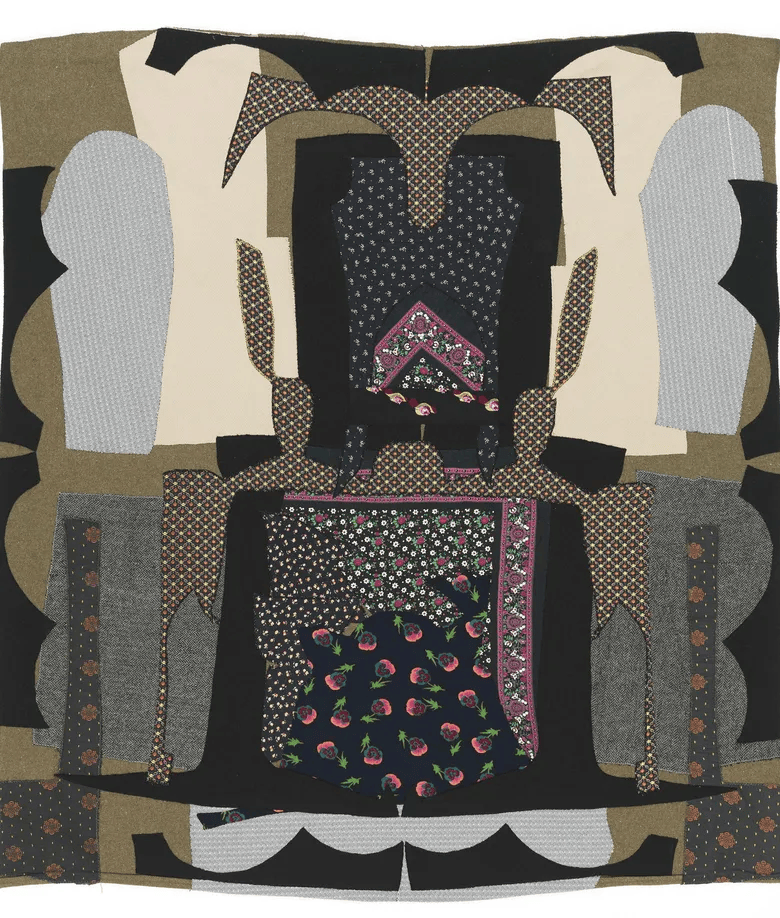
Noa Eshkol's 'Mourning Carpet' from 1974 was inspired by the Israelis who died in a Palestinian terror attack that year. Opposition to the showing of the work lays bare the unique enmity toward Israel
The scene at Norway's National Museum a month ago was unusual, even for a protest in Oslo in a year of countless harsh demonstrations against Israel. In the "On the Barricades" room showing works with a political context, dozens of people sat on the floor and shouted "Remove the carpet!"
The participants, including artists and cultural figures, were protesting the showing of one of the works, 1974's "Mourning Carpet," a 174-by-160-centimeter (roughly 6-foot-by-5-foot) wall carpet by Israeli textile artist and choreographer Noa Eshkol. The piece features images of flowers in an array of colors. A YouTube video and media photos reveal the flavor of the protest. The chants filled the room, a Palestinian flag had been placed on the floor, and a few demonstrators wore kaffiyehs. Israel and Hamas' signing of a cease-fire agreement that day, October 9, didn't seem to register much.
A few days earlier an initiator of the protest, Norwegian artist Victor Lind, explained what was rousing the demonstrators' anger. "The National Museum has chosen to show a work that legitimizes the occupation of Palestine by the war criminal the State of Israel," he said in a panel discussion in Oslo in September. Lind also claimed that the work was "war propaganda" that legitimized genocide and fascism.
The call to remove Eshkol's work was also heard in letters, newspaper articles and social media posts; even employees of the museum joined in. But for now, the piece is still there and the museum hasn't voiced any intention to pull it. "The National Museum isn't supposed to be a political player," the museum's director, Ingrid Roynesdal, told Aftenposten, Norway's most popular daily. She added: "If we as a museum choose to become an active player in geopolitical debates, we're likely in the end to contribute to a narrowing of freedom of expression."
The demonstration at the museum joins a long list of protests and boycotts over the past two years against Israel and Israeli artists, scholars, athletes and businesses. But the battle surrounding Eshkol's work seems particularly strident. It reflects the depth of the crisis of Israel's international standing and the scale of the hatred for Israel in Europe, which goes far beyond opposition to the war in Gaza.
Noa Eshkol, "Mourning Carpet (Following the Massacre at the Ma'alot School). Credit: Jens Ziehe/Photographie/Neugerriemschneider Berlin
The story of the carpet begins with a national trauma in Israel. It was May 1974, slightly over six months since the Yom Kippur War and around two years since a string of terror attacks: the Munich Olympics massacre, the hijacking of a Sabena airliner that landed in Israel, and an assault at Israel's airport that killed 26 civilians. In May 1974, terrorists from the Democratic Front for the Liberation of Palestine infiltrated from Lebanon into Israel.
Over two days, with rifles, hand grenades and explosives, the DFLP terrorists killed and wounded Israelis in a series of attacks, the worst being the abduction of 85 Safed high school students who were staying at a school in another northern town, Ma'alot.
The students, some of whose teachers fled the building as the terrorists entered, served as bargaining chips for the gunmen, who sought the release of Palestinian prisoners. During negotiations, the government played for time as it planned a commando raid. The results were tragic in what is now known as the Ma'alot massacre. The storming of the building ended with the death of more than two dozen people, most of them students.
Like many Israelis, Noa Eshkol was shocked by the attack. Eshkol, who was born in 1924, is known for Eshkol-Wachman movement notation. She and her student Avraham Wachman created a system of symbols for describing movement; for example, in choreography. The work "Mourning Carpet," whose full name is "Mourning Carpet (After the Ma'alot School Massacre)," was the artist's response to the terror attack.
"This is one of the hundreds of carpets that Noa created in the final decades of her life," says Mooky Dagan, a human rights activist, musician and art curator who manages Eshkol's estate and heads the foundation established in her name. Dagan, who was a close friend of Eshkol's, adds: "It's one of her only carpets that can be connected to a specific event. That's why it was important to me to add the parenthetical information to the title."
Dagan says Eshkol created several mourning carpets after the Yom Kippur War. Another carpet, which was sold to the Pompidou Center in Paris, is called "Leaving Yamit," referring to an Israeli town in Egypt's Sinai Peninsula, before it was uprooted in 1982 as part of the Egyptian-Israeli peace deal. "Another one was named after Golda Meir, but these are the exceptions connected to a specific event or person," Dagan says. "She created over 1,000 carpets."
Dagan sees the irony in the fact that the carpet in Oslo is stirring such controversy. "The incident in Ma'alot shook the foundations," he says. "It was an event with hostages including many children, it launched a debate on surrendering to terrorists or taking military action, and it shook the country. It became a formative event, and it's symbolic in light of what's happening today in Israel and in Gaza." Dagan says the protest in Oslo has been the toughest challenge when it comes to Eshkol's work being shown abroad. He says his friend never wanted to display her carpets at all.
On a few rare occasions, he was able to convince her otherwise, but the international breakthrough came after her death in 2007, when he says she became a brand name and a raft of museums acquired her works. Solo exhibitions of her art have been staged in Germany, the Netherlands, Brazil, Sweden, Norway and Israel, and her works have taken part in group exhibitions in many other countries. "In the last years of her life she was drawn to creating the carpets in a way that she herself couldn't explain," Dagan says. "It became the most important thing in her life."
Would you say that these are political works? It's true that she was the daughter of Israel's third prime minister, Levi Eshkol, a fact that wasn't officially mentioned in the protest but came up in some of the online debates. But can she be linked to a specific political viewpoint?
"I can't speak in her name, and it's absurd to speak for people after their death. But I was very close to her and we became close friends already after the Six-Day War. When it came to the carpets, I shared the process of creation with her intimately. Noa was a political person, but her viewpoint wasn't linked to a party and she didn't intervene in specific political issues. Even though her father was the prime minister, and even though she was born on Kibbutz Degania and was thoroughly Israeli, she was totally antiestablishment. That was the paradox in her. Even though she breathed her Israeli identity, she created movement notation, which is the most universal thing possible. Her worldview was universal; she stressed this and even refused to patent her movement notation, so that the whole world could use it."
Dagan describes Eshkol as a dominant personality with solid opinions and clear thinking. She wouldn't take anything for granted, hated clichés and lived as a feminist. Surrounded by students, she detested titles and rebelled against every framework and consensus. She didn't want to be a candidate for the Israel Prize and convinced her friend Uri Zohar to turn down the 1976 prize for film because it was granted by the government. "Her attitude, spiritually and practically, was that of a rebel," Dagan says.
Just because of the protest against her work in Oslo, it would be interesting to know if she had clear opinions about the Israeli-Palestinian conflict.
"I can definitely attest that she was a person with a worldview that's now called leftist. Even though she detested labels of this kind, above all she had a humanistic outlook. She wasn't an activist, but the current situation would have clearly driven her crazy. Until her death she had the worldview of a pure dove."
***
Hawk or dove, it makes no difference to the demonstrators against the National Museum in Oslo, which bought Eshkol's work in 2022. In May this year the work was hung in Room 76, the space reserved for political art. When the director was asked by the online contemporary art magazine Kunstkritikk why she chose it, she said the museum switches works in its rooms so that all the works can be better preserved.
"Room 76 is devoted to political art, mainly from 1965 to 1980," she said. "This work was chosen according to the regular procedures. The room displays a variety of artistic expressions and strategies, and tries to reflect the art of the period when the works were created."
Lind, the Norwegian artist, said about the storm after the decision to display "Mourning Carpet": "We all see pictures from Gaza every day of child-size white body bags, small white cloth sacks tied with rope at the top and bottom. He said in the panel discussion: "The genocide being perpetrated by Israel against the Palestinians is intolerable. Little children, like our children, are dying of starvation. A mother who has no more milk because she herself is suffering from malnutrition. She was shot in the stomach by Israeli soldiers while waiting in line for food. There's a smell of gas in Gaza. I'm sorry that the situation requires such harsh language."
Lind, 84, was among political artists identified with the radical left in the early '70s. He also created works commemorating the Holocaust of Norway's Jews. Regarding "Mourning Carpet," he said that "the National Museum's choice to show this work during the ongoing genocide in Gaza infuriates me because of its curating decisions with a viewpoint of supporting the Israeli narrative. … The work depicts the Israelis as the victims of Palestinian terror.
"'Mourning Carpet' commemorates the Israelis who were killed during the Palestinian revolt against the Israeli occupation. The work reflects Israel's official narrative of the Israel-Palestinian conflict from 1948 until today, a narrative that sees Israel as the main victim throughout." Lind's protest included a complaint about the removal of Norwegian works in favor of the Israeli work. "Mourning Carpet" is displayed alongside pieces by Norwegian artists, including Lind himself, whose work is "art in favor of freedom and against occupation and oppression," he said.
Geir Egil Bergjord, chairman of the Association of Norwegian Visual Artists, wrote in Aftenposten: "The museum's decision to show this work now, during what many consider a genocide in Gaza, has given the work political significance. A national museum can't be neutral in every context. It must balance artistic freedom and the context in which the work is displayed.
"The museum has removed political works by Norwegian artists to make room for a work that supports the narrative of an occupier, Israel. The director must recognize that fact. Curating decisions require more than vague declarations of 'space for artistic expression.'"
The left-wing Norwegian newspaper Klassekampen examined the extent Norwegian museums took an interest in the war between Israel and Hamas. It found that museums in Bergen and Trondheim are showing works by Palestinian artists. It also found that the Nitja Center for Contemporary Art in Lillestrom has held an exhibition of video works by Palestinian artists, as well as an exhibition of posters for Palestine and works by Palestinian artist Hasan Daraghmeh. It has also shown aerial photographs by Norwegian photographer Hedevig Anker "filmed in Palestine before the establishment of the State of Israel."
Several employees took part in the protest at the National Museum. "We aren't neutral, we stand in solidarity with Palestine," curator Monica Holmen told Klassekampen. One complaint by the anti-Eshkol demonstrators was the listing of her place of birth as Israel, even though the artist was born 24 years before the state was established. The sign has been changed to "British Mandate Palestine (today's Israel)."
The original decision was to follow the museum's policy: The country of an artist's birth is noted in its modern version even if it had a different name during the artist's lifetime. Only after public pressure did the museum change tack, while creating the impression that it had made a technical error. (Though internal emails leaked to the Norwegian media show that the museum was well aware of the sensitivity of the subject.)
It was very difficult to speak to the protesters themselves and give them a chance to explain their viewpoint to Israeli readers. Lind declined to be interviewed by Haaretz. Requests to the Association of Norwegian Visual Artists were unsuccessful at first, but Egil Bergjord, the chairman, eventually agreed. He said in an English-language email: "I would like you to note that the Norwegian Visual Artists Association (NBK) has not asked the museum to remove the artwork. Rather, NBK has criticized the museum for displaying it without providing a proper contextualization." He said that if "our National Museum exhibits Eshkol's work without presenting alternative perspectives or critical discourse, the museum fails to acknowledge or critically engage with the political significance of its curatorial decisions."
The National Museum said it couldn't arrange an interview with the director or the person responsible for the exhibition. Later it said that these officials couldn't be interviewed due to the public debate about the museum's decision – precisely the debate that Haaretz wanted to discuss.
***
"Museums must of course listen to different opinions, but their job isn't to meet the demands of various groups," says Marianne Hultman, a Swedish curator and art historian who spent some of her childhood in Israel. She has worked in Norway for nearly 20 years, and four years ago, as director of the Oslo Kunstforening art gallery and society, she curated an Eshkol exhibition in cooperation with Sweden's Norrköping Art Museum and the organization Jewish Culture in Sweden.
Regarding Eshkol's controversial work, she says: "Eshkol often used tablecloths, curtains and blankets as a base for her textile collages. In this work she used one of the army blankets brought to her by one of her dancers after the Yom Kippur War. "In 'Mourning Carpet' the symbolically charged fabric is allowed to emerge and become an integral part of the image. With remnants from the clothing industry, the image bears traces of bodily forms and points to the absence of the body, pointing to the traces of human life.
"The military blanket functions concretely as a base for the pieces of fabric, and symbolically as a representation of the violence that marked the event. It's a work of mourning for all the lives lost in connection with the massacre. Today it perhaps also expresses grief over a conflict that continues to leave deep traces of suffering and death."
Hultman believes there is justification for including Eshkol's work in the political art space at the National Museum, and she's disappointed at the protest against it. "How would our museums look if every artwork had to meet the same demands that Noa Eshkol's 'Mourning Carpet' now faces?" she asks. "It would mean that all artists had to bear responsibility for their country's political, religious and military choices. And where would that leave artistic freedom?"