הבחירות שיתקיימו ביום ראשון לא התמקדו בסוגיה אחת ושני המחנות נראים קרובים מאי פעם בשאלות של מדיניות. עם זאת, מפלגות הימין והשמאל הקיצוניות שואפות להיכנס לקואליציה הבאה והצליחו להחריף את השיח סביב הבחירות, גם בנוגע לאנטישמיות וישראל.
אחת הסוגיות המעניינות ביותר בבחירות הכלליות שייערכו מחר (ראשון) בשוודיה היא שאין סוגיה אחת מרכזית שניצבת במוקד ההצבעה. בבחירות הקודמות, ב־2022, הנושאים המרכזיים היו הגירה ופשיעה, ובמערכות שלפני כן בלטו נושאים כמו אבטלה ומדיניות רווחה. הפעם מפלגות שונות מקדמות סדר יום שנוח להן, בעוד שכמה מהמחלוקות החריפות שהפרידו בעבר בין ימין לשמאל נחלשו מאוד. כך למשל, המחלוקת סביב מדיניות ההגירה הצטמצמה מאוד בקדנציה הנוכחית לאחר שהמפלגה הסוציאל־דמוקרטית אימצה מדיניות שתומכת בצמצום ההגירה והצבת דרישות מחמירות בנוגע לשילוב מהגרים. פערים הצטמצמו גם בסוגיות אחרות – כמעט כל המפלגות תומכות בחברות בברית נאט"ו ובהגדלת תקציב הביטחון, ולמעט כמה מפלגות קטנות, ישנו גם קונצנזוס לגבי מדיניות האנרגיה ומאבק בפשע המאורגן.
כעת מובילה את שוודיה ממשלת מרכז־ימין בראשות אולף קריסטרסון מהמפלגה השמרנית־ליברלית (Moderaterna). למפלגה אין רוב פרלמנטרי ולכן היא נשענת על שתי שותפות קואליציוניות: הליברלים והנוצרים־הדמוקרטים, כמו גם על מפלגת השוודים הדמוקרטים, מפלגת ימין פופוליסטית שתומכת בה מבחוץ ומשפיעה על מדיניותה. האופוזיציה מורכבת מהסוציאל־דמוקרטים בהנהגת מגדלנה אנדרסון ושלוש מפלגות קטנות יותר. במשך רוב הקמפיין, הסקרים בשוודיה העניקו לאופוזיציה יתרון ברור, למרות שהיא מורכבת ממפלגות שונות מאוד שיתקשו להרכיב יחד קואליציה בעלת רוב בפרלמנט. בשלב מסוים, הסקרים הצביעו על יתרון של עשרה אחוזים וניצחון כמעט ודאי של אנדרסון. בשבועות האחרונים הפער הצטמצם מאוד ולקראת ההצבעה ביום ראשון המרוץ נראה שוב פתוח.
שניים מבכירי הקואליציה סיפרו השבוע ל"הארץ" על הישורת האחרונה. במפלגה הסוציאל־דמוקרטית ומפלגת המרכז שתומכת בה לא הסכימו להתראיין ל"הארץ". יואר פורסל, יו"ר ועדת החינוך של הפרלמנט מטעם המפלגה הליברלית (Liberalerna), סיפר שמבחינת מפלגתו, מפלגת מרכז־ימין קלאסית, התשובה היא חינוך. המפלגה, שהחזיקה בתיק החינוך בארבע השנים האחרונות, מבקשת לשמור אותו אצלה, לדבריו, כדי לשפר את הישגי התלמידים, לחזק את מעמד המורים ולהמשיך בהוצאת סמארטפונים ומסכים מבתי הספר.
הקושי לזהות נושא מרכזי שניצב במוקד הבחירות הנוכחיות, טוען פורסל, מעיד על הקדנציה המוצלחת של הממשלה הנוכחית. "סיפקנו תוצאות טובות ברבים מהנושאים שהעסיקו את שוודיה בשנים האחרונות", הוא אומר. "הצלחנו לצרף את שוודיה לנאט"ו, הצלחנו להוריד את רמת הפשיעה, הצלחנו לעשות הרבה בבתי הספר, להוריד את האינפלציה ולהביא לצמיחה כלכלית טובה מזו של מרבית מדינות אירופה. האופוזיציה מתקשה למצוא נושא שבאמצעותו תוכל לתקוף את הממשלה".
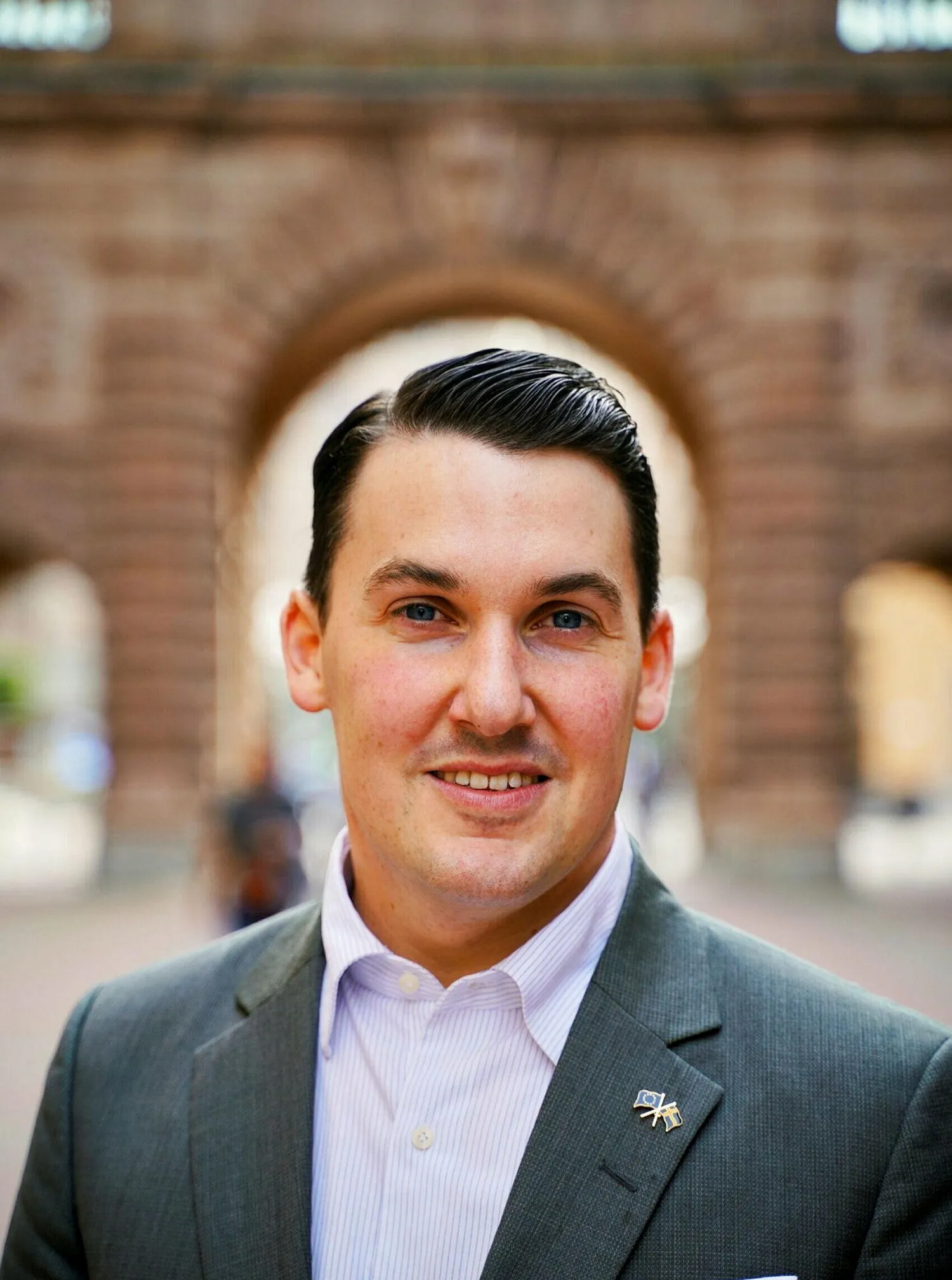
יואר פורסל, יו"ר וועדת החינוך של הפרלמנט, המפלגה הליברלית. צילום: Liberalerna
אליס טיאודורסקו מווה, חברת הפרלמנט האירופי מטעם הנוצרים־הדמוקרטים (Kristdemokraterna) וכיום מועמדת לפרלמנט השוודי, ממשיכה את הקו של פורסל. לטענתה, הסוציאל־דמוקרטים התקרבו בשנים האחרונות לימין בנושאים שפעם היו בליבת קו השבר בפוליטיקה השוודית. "בשאלת הכיוון הכללי ששוודיה צריכה ללכת אליו הפערים קטנים ויש הסכמה רחבה בשאלות כמו הגירה והרפורמה במאבק בפשיעה", היא אומרת ומוסיפה שהשאיפה המרכזית של הסוציאל־דמוקרטים היא לחזור לעמדת כוח ולצורך זה הם אימצו עמדות דומות לאלו של הקואליציה.
טיאודורסקו מווה מצביעה גם על פרדוקס: בכמה מהסוגיות הללו הפער בין הסוציאל־דמוקרטים לשותפיהם האפשריים משמאל – כמו מפלגת השמאל והירוקים – גדול יותר מהפער בינם לבין מפלגות גוש הימין. "מפלגות אלו מחזיקות עמדות שונות לגמרי בנושאים חשובים כמו אנרגיה גרעינית, האיחוד האירופי והגירה וזו גם אחת הסיבות לכך שמאז 2010 הפוליטיקה השוודית עוסקת יותר בהרכב הקואליציה וזהות ראש הממשלה מאשר במדיניות", היא מסבירה. "זה כשלעצמו סימפטומטי: לעיתונאים וגם לפוליטיקאים קל יותר לדבר על מי משחק עם מי מאשר לעסוק במדיניות וזה מתאים לכל אלו שמתעצלים להיכנס לדיון על איך ניתן לקיים הבטחות שהובטחו".
במשך רוב המאה ה־20 הייתה שוודיה שם נרדף למדינת רווחה סוציאל־דמוקרטית. המפלגה הסוציאל־דמוקרטית שלטה במדינה כמעט ללא הפסקה במשך למעלה מ־40 שנה ובתקופה זו נבנה חלק גדול ממה שנודע כ"מודל השוודי" – איגודים מקצועיים רבי־עוצמה ומשא ומתן קיבוצי נרחב המוביל לכיסוי רחב מאוד של המשק בהסכמים קיבוציים. במקביל המדינה מתחזקת מגזר ציבורי גדול, שירותי בריאות וחינוך ציבוריים ואוניברסליים ורשת ביטחון חברתית נדיבה שממומנים באמצעות מסים גבוהים ומובילים לרמות נמוכות יחסית של אי־שוויון. בעשורים האחרונים התחלפו ממשלות ימין ושמאל והמודל אמנם השתנה בעקבות הפחתות מסים, הפרטות, פתיחת שירותים ציבוריים לתחרות ורפורמות בקצבאות ובפנסיה, אבל השלד הבסיסי נותר על כנו.
גם פורסל, איש המרכז־ימין, אינו מציע לפרק את המודל השוודי. "בתי הספר ומערכת הבריאות יישארו וליבת הפעילות של מדינת הרווחה תמשיך להיות ממומנת כמעט כולה באמצעות מסים", הוא אומר. "קו המחלוקת עובר במקום אחר: עד כמה מדינת הרווחה יכולה להיות גדולה לפני שהיא הופכת למדינה פטרנליסטית? כמה רווחה אנחנו יכולים להעניק לפני שאנשים נעשים פחות להוטים למצוא עבודה או פחות מחויבים לתרום לחברה? הממשלה שלנו הציעה למשל להגביל את הסכום הכולל שאדם יכול לקבל מהמדינה בקצבאות. אנחנו רוצים מסים נמוכים יותר ומערכת שלא תפחית את התמריץ לעבוד".
טיאודורסקו מווה מוסיפה: "יש הסכמה בין הימין לשמאל שלשוודיה צריכה להיות מערכת רווחה יציבה ונדיבה. אבל מדינה שמטילה מסים גבוהים כל כך אינה יכולה להשלים עם שירותים ציבוריים ירודים, ובשנים הקרובות גם נידרש להוצאות ביטחון עצומות מכיוון שזה הלב של מדינת הרווחה – ההגנה על אזרחיה ועל הטריטוריה שלה". גם היא מתנגדת להעלאת מסים ומדגישה את העיקרון שעליו, לדבריה, נבנה המודל מלכתחילה – "כל מי שיכול לעבוד צריך לעבוד. כיום יש כאלו, רבים מהם מהגרים, שלא עובדים אבל עדיין מקבלים קצבאות וזה מזעזע את המערכת. לכן, אני כבר שנים תומכת בקשירת חלק מהזכאות לרווחה בצורה הדוקה יותר לאזרחות ולהשתתפות במימון המערכת. צעדים כאלו יבהירו שמדינת הרווחה היא במידה מסוימת כמו חברת ביטוח ממשלתית: גם בה צריך לשלם את הפרמיה לפני שדורשים לקבל תשלום".
פורסל וטיאודורסקו מווה סבורים שניהם כי עצם קיומו של מודל הרווחה השוודי אינו בסכנה גם אם מפלגותיהם יישארו בשלטון. הסוציאל־דמוקרטים, לעומת זאת, מציגים את הבחירות במידה רבה כמאבק על עתידה של מדינת הרווחה. לטענתם, ארבע שנות ממשלת הימין התאפיינו בתת־תקצוב של מערכות הבריאות והחינוך והפחתות מסים לבעלי הכנסות גבוהות. אנדרסון חוזרת בנאומיה על מצבם העגום של בתי הספר, התורים הארוכים במערכת הבריאות ושירותי הרווחה הנשחקים. בעימות טלוויזיוני עם ראש הממשלה קריסטרסון השבוע היא אמרה: "אנחנו מציגים את הבטחת הבחירות הכי פחות סקסית, אבל הכי חשובה שלנו – מימון בסיסי ממשלתי בטוח לטיפול בקשישים, למערכת הבריאות ולבתי הספר. כשהעלויות עולות, גם המימון הממשלתי יעלה".
התקווה של אנדרסון היא ששוודיה תצטרף לתנועת המטוטלת שכבר נעה בחזרה לכיוון הסוציאל־דמוקרטי ביתר מדינות סקנדינביה. בנורווגיה עומד בראש הממשלה מנהיג מפלגת העבודה יונאס גאר סטורה, שהחליף ממשלת ימין ב־2021; בדנמרק מכהנת מדה פרדריקסן הסוציאל־דמוקרטית כראשת הממשלה מאז 2019; ואפילו באיסלנד הנורדית עומדת מאז דצמבר 2024 בראש הממשלה קריסטרון פרוסטדוטיר, מנהיגת הברית הסוציאל־דמוקרטית. כך, ערב הבחירות, שוודיה היא הסקנדינבית היחידה שאינה נשלטת בידי ממשלה סוציאל־דמוקרטית (פינלנד היא מדינה נורדית ולא סקנדינבית, וגם בה ינסו הסוציאל־דמוקרטים לחזור לשלטון בבחירות שיתקיימו בשנה הבאה).
אחת השאלות המרכזיות בבחירות הנוכחיות היא שאלת הלגיטימיות של שתיים מהמפלגות הנמצאות בקצוות הספקטרום הפוליטי השוודי. הראשונה היא השוודים הדמוקרטים, מפלגת ימין לאומנית ששורשיה בתנועות ניאו־נאציות ועליונות לבנה. בארבע השנים האחרונות היא תמכה בממשלת קריסטרסון ללא שמונו שרים מטעמה, אך הפעם ברור שאם גוש הימין ינצח היא תיכנס לממשלה.
משמאל נמצאת מפלגת השמאל, המפלגה הקומוניסטית לשעבר, שלאחרונה נחשף בתקשורת שרבים מחבריה הציגו עמדות אנטישמיות ותמכו בטרור. המפלגה שמעולם לא הייתה חברה בממשלה, דורשת הפעם תפקידי שרים כתנאי לתמיכה בממשלת מרכז־שמאל.
פורסל מתאר את השינוי ביחסו לשוודים הדמוקרטים ואת הסכמתו לכהן איתם בממשלה כמסע שנמשך לאורך ארבע שנות שיתוף פעולה עמם. "הצלחנו להשיג איתם הישגים משמעותיים. הדברים שחששנו מהם לא קרו, ובאותו הזמן הסיכון שבשיתוף פעולה עם הצד השמאלי גדל". בין ההישגים הוא מונה מימון ציבורי לאבטחת בית הספר היהודי ובית הכנסת הגדול בשטוקהולם וגיבוש הצעות להגדלת עצמאותה של מערכת המשפט.
למרות נסיונו של פורסל, שתי מפלגות הקצה תרמו להפיכת השיח הפוליטי בשוודיה למפלג וחריף מבעבר. ריקרד יומסהוף, מבכירי השוודים הדמוקרטים, כינה באוגוסט את אנדרסון ואת העורך הפוליטי של היומון אפטונבלדט, אנדרס לינדברג, "קוויזלינגים" – על שם וידקון קוויזלינג, ראש הממשלה הנורווגי ששיתף פעולה עם הנאצים וששמו הפך למילה נרדפת לבוגד; על אנדרסון כתב יומסהוף שהיא ואחרים "מתרפסים בפני האסלאמיסטים שמטרתם לקחת מאיתנו את הדמוקרטיה ואת המדינה". זוהי רק תקרית אחת מני רבות שבה נחשפו עמדות קיצוניות וגזעניות בקרב חברי המפלגה. במקביל, תחקירים בתקשורת השוודית חשפו שעשרות מחבריה ומועמדיה של מפלגת השמאל תמכו בטרוריסטים ובדיקטטורים, הפיצו תיאוריות קשר אנטישמיות וחגגו את מתקפת שבעה באוקטובר.
לשאלה האם אנטישמיות מאיימת על החברה השוודית וכמה משקל יש לה בבחירות משיב פורסל שבעבר האיום הניאו־נאצי על יהודי שוודיה היה רציני יותר, אך כיום, אף שהוא עדיין קיים, האנטישמיות שמקורה באסלאמיזם משמעותית יותר ומתחברת לאנטישמיות האירופאית. "ברור שאנטישמיות בולטת כיום ברשתות החברתיות, אבל היא מבוססת על דימויים וסטריאוטיפים אנטישמיים בני מאות שנים", הוא אומר.
"אני חושב שהקהילה היהודית בשוודיה נמצאת תחת לחץ כבד מאוד גם בגלל תגובות אנטישמיות הנובעות מכך שאנשים רבים בשמאל מערבבים בין יהודים לבין הפוליטיקה הישראלית. אנטישמיות שמגיעה מסביבות אסלאמיסטיות מקבלת מרחב גדול יותר להתפתח כששוודים מן השורה מאמצים את תיאוריות הקונספירציה ואת הסטריאוטיפים האלה". מנהיגת מפלגתו של פורסל, סימונה מוהאמסון, פוליטיקאית שוודית ממוצא פלסטיני, עוררה סערה לאחרונה כשהופיעה לעימות טלוויזיוני כשמגן דוד לצווארה, כאות הזדהות עם יהודי שוודיה. בעקבות זאת היא הוצפה בתגובות שנאה ובאיומים.
טיאודורסקו מווה אומרת שמאז 7 באוקטובר נוצר חיבור בין קבוצות שמאל שוודיות לאנטישמים ממוצא מזרח־תיכוני, ש"מצאו זה את זה בשנאה לישראל". מפלגת השמאל, היא אומרת, מסרבת להתמודד עם גילויי האנטישמיות שמתגלים בה. "מנהיגת המפלגה, נושי דגוסטר, ממש מגלמת את הגישה הזאת. היא מחייכת, היא צוחקת, היא לועגת, ומראה בדרכים שונות שהיא לא מתייחסת לסוגיה הזאת ברצינות. זה נובע משילוב של שני דברים: מצד אחד, אלו הן באמת העמדות שלהם; ומצד שני, יש כאן ניתוח ציני שמבוסס על כך שלחלק מהבוחרים שהם רוצים למשוך אליהם – קבוצה שהולכת וגדלה כחלק מכלל ציבור הבוחרים – יש תפיסות אנטישמיות. זה קוקטייל מסוכן מאוד".
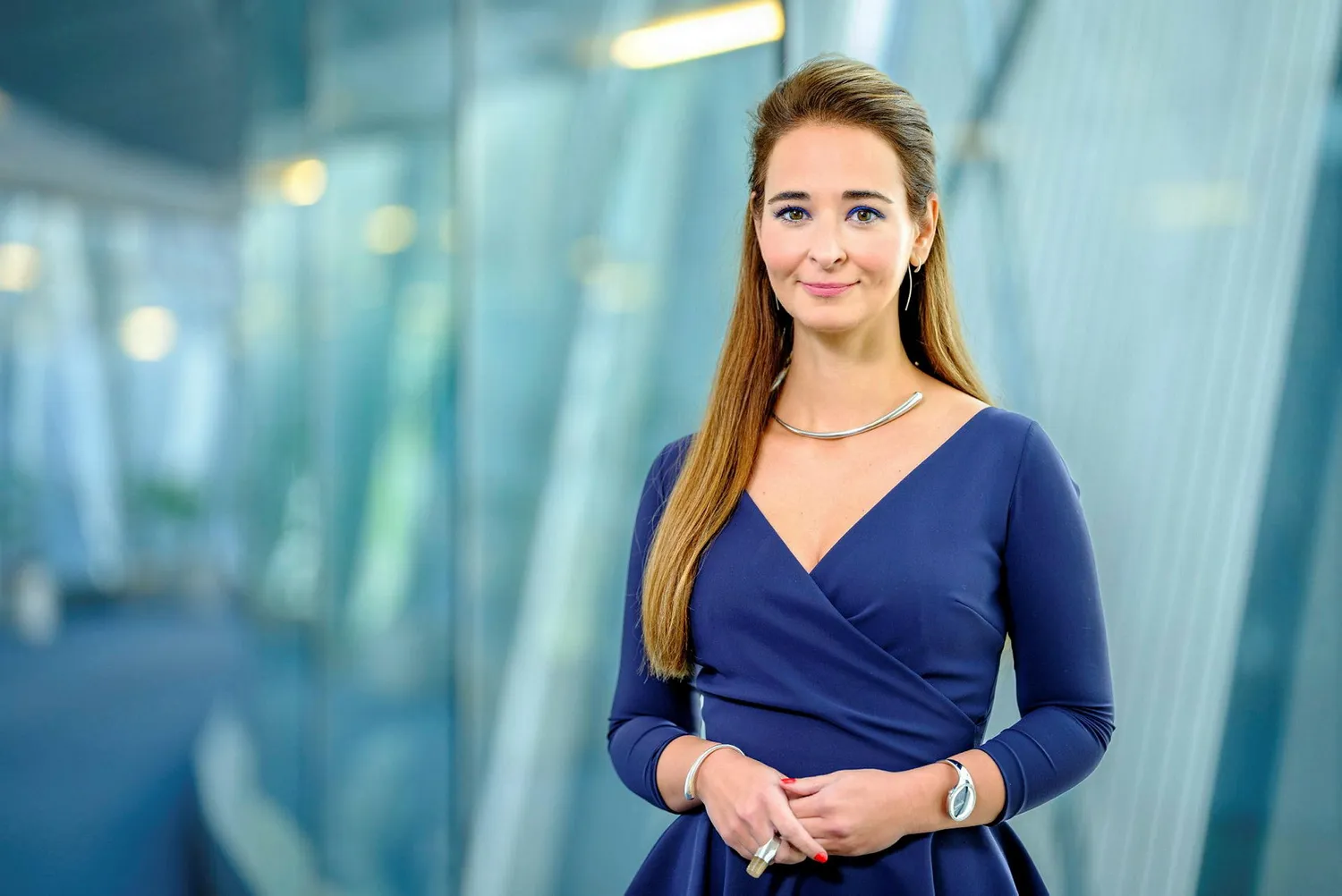
חברת הפרלמנט האירופי והמועמדת לפרלמנט השוודי אליס טיאודורסקו מווה, המפלגה הנוצרית דמוקרטית צילום: Karl Gabor, Kristdemokraterna / Epp Group
לא רק האנטישמיות, גם ישראל הפכה לקו מחלוקת בבחירות, הפעם גם בתוך גוש הימין. פורסל, לשעבר דובר הליברלים לענייני חוץ, מזכיר שהיה מהראשונים שקראו להטיל סנקציות אישיות על שרים ישראלים קיצוניים – מהלך שהוא מתאר כ"צעד גדול מבחינה דיפלומטית". עם זאת, הוא מתנגד לסנקציות גורפות על ישראל: "אם אומרים שאסור להעניש את כל הפלסטינים על מה שחמאס עשה, אי אפשר אחר כך לתמוך בהענשת כל הישראלים על מה שממשלת נתניהו עושה". מבחינתו, לצד תמיכה בפתרון שתי המדינות והפעלת לחץ על גורמים קיצוניים, שוודיה צריכה להמשיך לקיים קשרי מסחר ויחסים מדיניים עם ישראל שמהווה עדיין "מגדלור של דמוקרטיה במזרח התיכון".
טיאודורסקו מווה מסתייגת מהרחבת הצעדים נגד ישראל. היא אומרת שיש מקום לפעול נגד שרים קיצוניים, אך מתנגדת להגבלות סחר שעלולות לטשטש את ההבחנה בין ההתנחלויות לישראל: "אני אישית חושבת שסנקציות מהסוג הזה הן בעייתיות, משום שקשה להבחין בין מה שמגיע מהגדה המערבית לבין מה שמגיע מישראל. המשמעות היא שהמסר עדיין יהיה שמחרימים את ישראל כמדינה". התחושה שנוצרת, לדבריה, היא ששוודיה והאיחוד האירופי פועלים לבודד את ישראל, דבר ש"לא יועיל ליחסים שלנו בטווח הארוך". להיפך, היא אומרת, "אנחנו נמצאים במצב שבו ישראל זקוקה לאיחוד האירופי ושוודיה זקוקה לישראל, לא מעט בתחום הביטחון".
ייתכן שזהו בסופו של דבר הסיפור של הבחירות השוודיות ב־2026. דווקא כאשר הפערים בין ימין לשמאל בכמה משאלות היסוד הצטמצמו, המאבק על זהות השותפים לשלטון, גבולות השיח הפוליטי, יחסה של שוודיה לעולם ומקומה בו נעשה חריף מאי פעם. ביום ראשון בלילה יתגלה מה הכיוון שבחרה.
מתקפת החרב בעיירה פגרסטה, שתלמידת תיכון נרצחה בה, חשפה מחדש את תת־התרבויות המקוונות שבהן רוצחי המונים מוצגים כגיבורים ומספר הקורבנות הוא מדד להצלחה. חוקר שמתמחה בקבוצות רשת אלימות ובימין קיצוני: "אלה לא זאבים בודדים. הם עוברים סוציאליזציה ברשת ומספקים השראה זה לזה".
ליאם נבל, תלמיד במגמת חשמל ואנרגיה, השתתף ביום שישי שעבר בשיעור אחד בלבד בבית ספרו, תיכון ברינל בעיירה פגרסטה שבמרכז שוודיה. בסוף השיעור, קצת אחרי השעה 14:00, יצא הנער בן ה־18 למסע דקירות כשהוא לבוש בגדים שחורים, עוטה מסכה ואוחז בידו חרב שככל הנראה החביא בנרתיק הגיטרה שלו.
נבל הרג נערה בת 17 ופצע שלושה תלמידים אחרים, שניים מהם קשה. בשעה 14:16, עשר דקות אחרי שקיבלה דיווחים על התקיפה בחרב, כבר הייתה משטרת שוודיה בבית הספר ושוטר אחד ירה בנער התוקף. הוא לא הצליח לפגוע בו, אבל השוטרים השתלטו עליו ועצרו אותו.
כלי תקשורת בשוודיה דיווחו כי נבל תכנן את התקיפה במשך זמן רב והיה קרוב לבצע אותה יום קודם לכן. העיתון אפטונבלדט דיווח מפי מקור המעורה בחקירה, כי הקורבנות לא נבחרו מראש וכי נבל תקף באקראי את מי שנקרה בדרכו.
מלבד הטרגדיה האנושית, התקרית הקשה בפגרסטה העלתה לכותרות בשוודיה את סיפורן של כמה תת־תרבויות מקוונות שבשנים האחרונות מדאיגות את רשויות אכיפת החוק במדינות רבות. "החשוד ברצח בפגרסטה כנראה הפעיל חשבון טיקטוק והעלה בו תכנים של קהילת פשע אמיתי (TCC), שיש לה אובססיה למעשי אלימות המונית ושמהללת מעשים כאלה", אומר ל"הארץ" מורגן פינשו, חוקר שוודי המתמחה באלימות של קבוצות ימין קיצוני, ברדיקליזציה ובתת־תרבויות אלימות ברשת.
פינשו פעיל ב־Expo, מכון שעורך תחקירים ומנטר תנועות גזעניות וקיצוניות, והוא טוען כי TCC היא תת־תרבות ספציפית מאוד וכי החשבון של הרוצח מפגרסטה היה אופייני לקהילה הזאת. "החשבון היה אנונימי ובינתיים הוסר מהרשת, ובשלב זה עדיין אין הוכחה ודאית שהתוקף הוא שאכן יצר אותו", אומר פינשו, "אבל כנראה שהוא היה פעיל בתחום במשך שנתיים לפחות, ובחשבון היו לא מעט שיתופים ותגובות. התוכן המרכזי הורכב ממה שמכונה edits, סרטונים קצרים בליווי מוזיקה שכל אחד יכול להכין. הסרטונים בחשבון היללו אנשים שביצעו מעשי טבח בבתי ספר, אבל גם טרוריסטים מהימין הקיצוני וכאלה שתקפו בתי כנסת ומסגדים".
"כמה מה־edits נוצרו בידי ליאם נבל עצמו ואחרים הוא רק שיתף", אמר החוקר. "לעיתים הם הוכנו בעזרת בינה מלאכותית והתמקדו ברוצחים המוצגים כדמויות אטרקטיביות, סקסיות ועוצמתיות, או לחילופין כגיבורים טרגיים שהחברה אינה מבינה אותם. לפעמים הסרטונים גם מונים את מספר הקורבנות. ככל שהוא גבוה יותר כך הרוצח הופך לגיבור גדול יותר".
פינשו אמר כי בחשבון הטיקטוק שבו פרסם הרוצח מפגרסטה את ה־edits שלו הופיעו דמויות כגון רוצח ההמונים הנורווגי אנדרס ברינק ברייוויק. ביולי 2011 ביצע בריוויק מתקפת טרור בקריית הממשלה באוסלו ובאי אוטויה הסמוך, במחנה קיץ של מפלגת העבודה הנורווגית, והרג 77 בני אדם. ב־2012 הוא נידון ל־21 שנות מאסר, העונש המקסימלי בנורווגיה.
דמות אחרת שהופיעה בסרטונים בחשבונו של נבל הייתה של הצעיר השוודי אנטון לונדין פטרסון. ב־2015 רצח פטרסון שלושה בני אדם בבית ספר בעיר טרולהטן, ממניעים גזעניים. שוטרים ירו בו למוות. השפעתו של פטרסון על נבל ברורה – את מסע הדקירות שלו הוא ביצע בחרב כשהוא לבוש שחורים ועוטה מסכה.
חוץ מקהילות האינטרנט שבהן היה מעורב, התברר שנבל היה מוכר לשירותי הרווחה בשוודיה עוד מילדותו. הדיווח הראשון עליו התקבל כשהיה בן שלוש, ומאז נפתחו עשר בדיקות בעניינו. מסמכי בית משפט מתארים ילדות של אלימות, איומים והזנחה, וב־2024 הוא הוצא מביתו והועבר למשפחת אומנה בפגרסטה. הוא אף הורשע בתקיפת תלמיד בבית ספרו הקודם ונידון לעבודות שירות לנוער.
לפי שעה עדיין לא ידוע אם מאחורי המתקפה של נבל עמד יצר אלימות בלבד או גם מניעים פוליטיים או אידאולוגיים. פינשו ציין כי בחשבון הטיקטוק של הנער השוודי שותפו תכנים התומכים בדמויות הקשורות לימין הקיצוני במדינה: מרקוס אלארד, פוליטיקאי מקומי מהעיר אורברו, שייסד מפלגה מקומית פופוליסטית המתנגדת להגירה ותוקפת פוליטיקאים ממסדיים; וגוסטב קאסלסטרנד, מנהיג מפלגת אלטרנטיבה לשוודיה (AFS), מפלגת ימין לאומנית קיצונית.
"יש שם גם תוכן אסלאמופובי ותמיכה בתאוריית הקשר על ההחלפה הגדולה", אמר החוקר בנוגע לתאוריית קשר הטוענת כי האליטות מעודדות הגירה המונית, בעיקר של מוסלמים, כדי להחליף את האוכלוסייה הלבנה במדינות אירופה.
בשעה שמשטרת שוודיה חוקרת אם החשוד היה פעיל בקהילות מקוונות שמעודדות אלימות בבתי ספר, פינשו מסביר כיצד התפתחה תת־תרבות של "קהילת פשע אמיתי", ואיך היא נראית במקומות אחרים בעולם.
"פעילי קבוצות TCC ברחבי העולם אינם רבים. יש אולי כמה אלפים. זו תרבות שאינה מוכרת מאוד וכל כולה עוסקת בגלוריפיקציה של רוצחי המונים", אמר החוקר. "באופן יחסי לקבוצות קיצוניות מקוונות אחרות, זו תת־תרבות ותיקה ולכן היא חיה בכמה פלטפורמות, לא רק בטיקטוק. זה התחיל בטאמבלר, אבל לאחר שהתחיל שם פיקוח אגרסיבי יותר על תכנים, התוכן עבר לטיקטוק, לאינסטגרם, לרשת X ולרשתות אחרות".
"זו למעשה התפתחות של תופעה שהתחילה עוד לפני שהיו רשתות חברתיות" אמר פינשו, והזכיר את ההערצה לשני התלמידים בארה"ב, שביצעו את הטבח בתיכון בקולומביין שבקולורדו ב־1999 והרגו 12 תלמידים ומורה אחד. "כבר אז היו אנשים שפיתחו אובססיה לא בריאה למעשי ירי המוני בבתי ספר. כשהאינטרנט התפתח ורשתות חברתיות החלו לפעול, העניין השולי הזה עבר לאינטרנט והתפתח למה שהמשתתפים בסצנה קוראים לו קהילת TCC".
"מרבית החברים בקהילת TCC הם פסיביים. הם רק קוראים וצופים בסרטונים. אחרים גם משתפים, כותבים ומעירים. אבל יש גם כאלה שפעילים יותר ומתכננים לבצע בעצמם מעשי אלימות", אמר פינשו. "בשנים האחרונות אלה הדמויות שמושכות את תשומת ליבם של מומחים לאלימות, אנשי ביטחון ומעצבי מדיניות, משום שמאז 2023 נרשמה עלייה במתקפות בבתי ספר בארצות הברית, והתוקפים היו ככל הנראה מעורבים בסצנת ה־TCC".
פינשו שרטט את הפרופיל של החברים בקהילות מקוונות אלו. "הגיל הנפוץ של המעורבים בקהילות TCC ירד בעת האחרונה, וכיום הם בני 13 עד 18", הוא אמר. "באופן מפתיע, החלוקה המגדרית היא בערך חצי־חצי, עניין חריג למדי בתת־תרבויות קיצוניות מקוונות, שברובן יש רוב גברי. אבל צריך לזכור שהגולשים ברשתות החברתיות הם פעמים רבות אנונימיים וקשה למפות אותם".
פינשו מסביר כי TCC היא רק תת־תרבות אחת מתוך מגוון רחב של קהילות מקוונות שהוא מכנה "אנטי־חברתיות", ושבמקומות אחרים הן לעיתים מכונות "ניהיליסטיות" או "מיזנתרופיות". הן חוגגות אלימות ומקדמות אותה. אחת מהן היא רשת 764, על שם שלוש הספרות הראשונות במיקוד של מייסדה, בראדלי קאדנהד מטקסס. אחרת היא רשת "שום חיים אינם חשובים" (No Lives Matter או NLM) שפועלת בעיקר בטלגרם.
פינשו מסביר כי לעומת TCC, שמתמקדת במעשי אלימות שכבר נעשו, רשתות 764 ו־NLM ממש מייחדות תכנים לקידום בפועל של מעשי פשע וטרור. "יש דיון בקרב חוקרים לגבי השאלה אם המניעים של חברי הקבוצות האלה הם פוליטיים או לא. לדעתי, לפחות בשוודיה, ברור מאוד כי אלו שביצעו מעשי אלימות כאלה קשורים לאידאולוגיה נאו־נאצית", אמר פינשו. "בחירת הקורבנות שלהם מבוססת על השקפה שלפיה נשים, מהגרים ומוסלמים הם תת־אדם. הם דוגלים בתאוריות קשר אנטישמיות, הטוענות כי צריך להפר חוקים ולפגוע בבני אדם משום שהמערכת האתית והמוסרית של החברה המערבית והנצרות הן תוצאה של קונספירציה יהודית־קומוניסטית. כמובן שהכול מתערבב במעין שיגעון בסגנון התפוז המכני, שיש בו אלמנט מיזנתרופי וניהיליסטי, אבל יש כאן גם אידאולוגיה".
החוקר אמר עוד כי הקבוצות הקיצוניות הופיעו בשוודיה בסביבות 2023. "התופעות האלה החלו מוקדם יותר בארצות הברית, אבל גם ברוסיה ובאוקראינה. זה התפשט במהירות ויש עדויות ששוודיה היא אחת המדינות שיש בהן פעילות מוגברת", אמר פינשו. "קבוצה נוספת היא Maniac Murder Cult (MMC), קבוצה קיצונית נאו־נאצית ושטניסטית, שנוצרה באוקראינה, התפשטה לרוסיה וכיום הגיעה גם לשוודיה ולמדינות דוברות אנגלית".
פינשו הסביר כי קודם לכן נהגו לדבר על "זאבים בודדים" שקשה לאתר או לצפות מראש את פשעיהם, אך כיום הם חלק מתופעה חברתית באינטרנט. "יש מומחה ששמו לאסה לינדקילדה, חוקר מדע המדינה באוניברסיטת אורהוס, שטוען כי אין דבר כזה 'זאב בודד'". אמר פינשו. "האנשים האלה עוברים סוציאליזציה ברשת, ויש להם דינמיקה קולקטיבית של חיקויים והשראה הדדית. התוקפים נוטים להיות בקשר זה עם זה, והמתקפות עצמן מופיעות בדרך כלל במקבצים. יש גלים של אלימות בגלל הדינמיקה הזאת".
החוקר הביא, לדוגמה, את אחת המתקפות של ארגון NLM בפרבר של סטוקהולם ב־2024, אז דקר נער בן 14 גבר בן 80 בגבו. "המעשה הועבר בשידור חי ברשת, והתוקף קיבל עידוד מקבוצה של חברים שהפצירו בו לבצע את הפשע. אפילו תוך כדי התקיפה הוא לא היה זאב בודד", אמר פינשו. "אלה לא קולות בראשו של מטורף אחד, אלה קולות של אנשים אמיתיים שבוקעים מטלפון אמיתי, וייתכן שהתוקף מבצע את הפשע בשבילם, מול קהל".
בינתיים בפגרסטה, בימים שלאחר מתקפת החרב התמלאה רחבת הכניסה לתיכון ברינל בפרחים ובנרות לזכר הנערה בת ה־17 שנרצחה. למחרת המתקפה באו יחד לעיירה ראש ממשלת שוודיה אולף קריסטרסון וראשת האופוזיציה מגדלנה אנדרסון. הם הניחו פרחים והדליקו נרות באתר הזיכרון, ושוחחו עם תושבים.
הבחירות הכלליות בשוודיה צפויות ב־13 בספטמבר, ומנהיגי המפלגות במדינה השעו זמנית את הקמפיינים שלהם בעקבות התקרית הקטלנית.
חמישה ימים אחרי הרצח בפגרסטה, משטרת שוודיה עצרה בדרום סטוקהולם נער בן 16 שאינו קשור למתקפת החרב בתיכון בעיירה, אבל הוא חשוד בסיוע לרצח. הרשויות עדיין לא פירטו מה בדיוק הוא עשה, כיצד הכיר את נבל או באיזה אופן סייע לו, אבל התקשורת השוודית דיווחה שהוא היה בקשר עם נבל באמצעות צ'אטים מוצפנים ועודד אותו לבצע רצח.
רק אתמול אישרה המשטרה השוודית – כפי שהזהירו מומחים במדינה – כי שני הצעירים סיפקו השראה זה לזה לבצע מעשה אלימות. על פי המשטרה, הנער בן ה־16 שנעצר שיתף את נבל בתוכניותיו, וכעת הוא חשוד שתכנן לבצע בעצמו מתקפה בבית ספר באזור סטוקהולם.
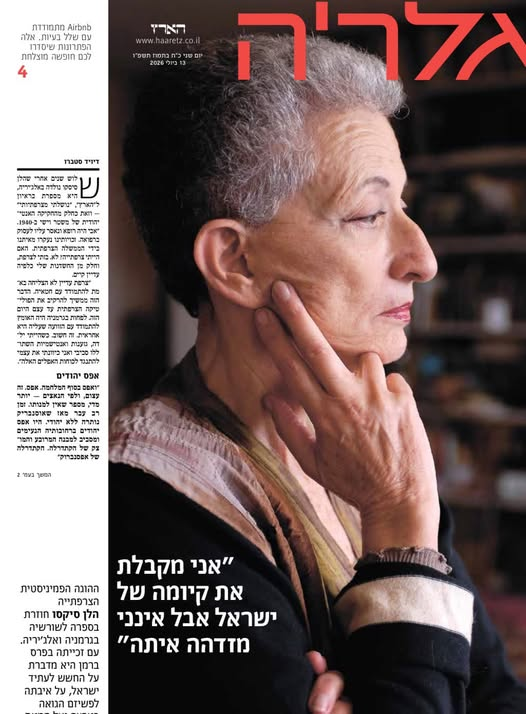
שלוש שנים אחרי שהלן סיקסו נולדה באלג'יריה, היא מספרת בראיון ל"הארץ", "נושלתי מצרפתיותי" — וזאת כחלק מהחקיקה האנטי־יהודית של משטר וישי ב־1940. "אבי היה רופא ונאסר עליו לעסוק ברפואה. זכויותינו נעקרו מאיתנו בידי הממשלה הצרפתית. האם הייתי צרפתייה? לא. בזתי לצרפת, וחלק מן החשדנות שלי כלפיה עדיין קיים. צרפת עדיין לא הצליחה באמת להתמודד עם חטאיה. הדבר הזה ממשיך להרקיב את הפוליטיקה הצרפתית עד עצם היום הזה. לפחות בגרמניה היה האומץ להתמודד עם הזוועה שעליה היא אחראית. זה חשוב. כשהייתי ילדה, גזענות ואנטישמיות השתוללו סביבי ואני כיוונתי את עצמי להתנגד לכוחות האפלים האלה".
"אפס יהודים בסוף המלחמה. אפס. זה עצום, ולפי הנאצים — יותר מדי, מספר שאין למנותו. זמן רב עבר מאז שאוסנבריק נותרה ללא יהודי. היו אפס יהודים ברחובותיה הנעימים ומסביב למבנה המרובע והמוצק של הקתדרלה. הקתדרלה של אפסנבריק".
משפט זה, בתרגומי החופשי, מתוך ספרה של הלן סיקסו "תחנת אוסנבריק לירושלים" לוכד את מהותו של ספרה האחרון. בחלקו ממואר, בחלקו היסטוריה משפחתית, הספר משלב את הטרגדיה היהודית הגדולה עם הרהורים פילוסופיים על הקיום היהודי. כדרכה מפעילה סיקסו בכתיבה את כוחות היצירה שלה לא רק ביחס לדמויותיה אלא גם כלפי השפה עצמה. אוסנבריק, העיר הגרמנית שממנה הגיעה משפחת אמה, הופכת ל"אפסנבריק" לאחר שהיא מתרוקנת מיהודיה. בשנת 1934 חיו בה 435 יהודים, כותבת סיקסו; לאחר המלחמה המספר היה אפס. באופן היסטורי ומאגי גם יחד, העיר נקשרת לירושלים: שתיהן הופכות לנופי זיכרון וכמיהה, שתיהן מאוכלסות בחיים ובמתים ועומדות במרכז הניסיון להבין מה זה להיות יהודי כשעולמך מעוצב על ידי עקירה, אסון וחיפוש אחר בית.
אוסנבריק מקבלת מעמד כמעט מיתי לאורך הספר. עבור סיקסו היא אינה רק "אפסנבריק"; היא גם "פריז של סקסוניה התחתונה". כמו ירושלים, היא גם ממשית וגם חלום סוריאליסטי שבו דמויות חיות פוגשות את המתים, ובו הספר עצמו הופך לדמות ומדבר עם המחברת שלו. כל זה מתרחש בצירי זמן ומקום שמדלגים בין השואה באירופה לבין אלג'יריה והמזרח התיכון תוך שילוב אזכורים מקראיים, מיתולוגיה יוונית, קלאסיקות אירופיות וטרגדיה שייקספירית.
כל זה דיבר מאוד אל ועדת פרס ברמן השוודי לספרות, שבחרה בסיקסו ובספרה — שפורסם בצרפתית ב־2016 ובאנגלית ב־2020 וטרם תורגם לעברית — כזוכת הפרס לשנת 2026. טקס הענקת הפרס ייערך באוקטובר. זהו אחד מפרסי הספרות היוקרתיים ביותר, הוא כולל מענק כספי של מיליון קרונות שוודיות, כ־320 אלף שקלים, ומוענק לסופרים שיצירתם מאירה את החיים היהודיים ובה בעת עוסקת בשאלות אנושיות אוניברסליות.
הפרס נוסד בשנת 2020 בידי הפילנתרופים השוודים תומס וקתרינה ברמן, כתרומה פרטית שנועדה לתמוך בתרבות היהודית ולחזק את המסורת הספרותית היהודית. תומס ברמן סיפר כי העלייה באנטישמיות היתה אחת הסיבות לייסוד הפרס. הזוכה הראשון היה דויד גרוסמן, על מכלול יצירתו, ועם הזוכים הנוספים נמנים הסופר ההונגרי פטר נאדאש, הסופרת, המשוררת והעיתונאית היהודייה־רוסייה מריה סטפנובה, והסופר היהודי־גוואטמלי אדוארדו חלפון. השנה שיבחה ועדת הפרס את "תחנת אוסנבריק לירושלים" ותיארה אותו כיצירה ש"מתחקה אחר החלל שהותירו המגורשים, ממפה את ההיעדר ומעניקה קול למי שאינם יכולים עוד לדבר".
"אוסנבריק היא כמו ירושלים: צריך להגיע אליה, צריך להתייצב מול פניה, צריך לתת לה לדבר ולהתקדם לעבר שפתה כמו שמתקדמים לעבר מפלצת בהמות שבה מתפאר האל בפני איוב. צריך לגעת בה באצבעות, ברגליים; אי אפשר להכיר אותה מרחוק. זה כמו הים: אפילו ממרחק שני מטרים אינך מכיר אותו; צריך להשליך את עצמך לזרועותיו בצעקה".
סיקסו נולדה באוראן שבאלג'יריה בשנת 1937 לאם יהודייה־גרמנייה שהיתה מיילדת ולאב יהודי־ספרדי. במשך יותר משישה עשורים היא עוסקת בשאלות של זהות, שפה וזיכרון. היא ידועה בעיקר כמחברת המאמר "צחוקה של המדוזה" (1975), אחד הטקסטים המכוננים בתיאוריה הספרותית הפמיניסטית המודרנית, שביסס את מעמדה כהוגה משפיעה וכאחת מאמהות הפמיניזם הפוסט־סטרוקטורליסטי.
סיקסו עבדה בשיתוף פעולה הדוק עם ז'אק דרידה, שהתייחס אליה כ"סופרת החיה הגדולה ביותר בשפתנו". בתחילת שנות ה־30 לחייה, ב־1968, השתתפה במרד הסטודנטים של פריז ובהקמת אוניברסיטת פריז 8, מוסד שנועד לשמש חלופה לסביבה האקדמית הצרפתית המסורתית. ב־1974 הפכה האוניברסיטה לביתו של מרכז ללימודי נשים שייסדה סיקסו, הראשון מסוגו באירופה.
היא גם התעניינה תמיד בשאלות הנוגעות להיסטוריה היהודית שלה. שאלות אלה עומדות בלבו של "תחנת אוסנבריק לירושלים".
האם ספרה נועד להעניק קול למי שאינם יכולים עוד לדבר? "כשאני כותבת, זו לא אני והכוונות שלי, זה הספר", היא עונה. "לספר יש הדחיפות שלו והוא לא מכוון לשיקול כזה או אחר. נכון שהוא מעניק קול לריק, כמו כל דבר שנכתב מתוך השדה העצום של האירועים הטרגיים. אבל כתיבה היא תמיד הענקת קול. בספר הזה, הכל נמצא איכשהו בכותרת. זו חוויית היחס שלי להיסטוריה, לפוליטיקה ולטרגדיה. הקול של הכתיבה שלי הוא תערובת של טרגדיה וקומדיה, החומר הוא בחלקו אוטוביוגרפי ובחלקו תיאטרון והאובססיה שהובילה אותי לספר היתה הנסיעה לאוסנבריק".
האובססיה שעליה היא מדברת היא שימור באמצעות דיאלוג משפחתי, פנטזיה ותרפיה. לאורך "תחנת אוסנבריק לירושלים" המתים מסרבים להיעלם והספר נדמה כמלא רוחות רפאים — אמהות, סבתות, קרובי משפחה שנרצחו וכאלו שנולדו הרבה אחרי המלחמה, שכנים שנעלמו וקהילות שנחרבו. כולם שבים ומופיעים בחלומות, בשיחות, בשברי שפה וביצירות אמנות. החיים והמתים מתמזגים זה בזה. הביקור באוסנבריק הופך אפוא לא רק למסע למקום מסוים אלא למפגש עם קולותיו של עולם אבוד.
העיר אוסנבריק תופסת מקום יוצא דופן בדמיונה של סיקסו. "זה מקום שאיש אינו מכיר. אפילו הגרמנים אינם מכירים אותו", היא אומרת, "אבל זו עיר היסטורית, אחת משתי הערים שבהן נחתם שלום וסטפליה בשנת 1648, שסיים את מלחמת 30 השנים. זהו מקום נפלא, מסתורי ופנטסטי, שהקסים אותי בילדותי. נולדתי לאם שהגיעה מאוסנבריק וחיה באוראן, עיר אלג'יראית שהיתה אז חלק ממושבה צרפתית. ראיתי את אוסנבריק כאור רחוק באופק, בדיוק כפי שאנשים רבים רואים את ירושלים".
היא נזכרת כיצד נסעה פעמים רבות לגרמניה עם אמה וסבתה, תוך שהן מקפידות להימנע מן העיר עצמה. "נסענו לברלין, לקלן, לבון — אבל אף פעם לא לאוסנבריק. זה הפך לדבר שתהיתי לגביו. מה לא בסדר באוסנבריק? למה אנחנו אף פעם לא נוסעות לשם?" היא זוכרת כיצד הגיעה לאמה ולדודתה מן העיר עצמה הזמנה רשמית לביקור. בין שתי האחיות התפתח דיון שהחל כשיחה על בתי מלון והפך במהרה לוויכוח על היסטוריה ועל מחילה.
בסופו של דבר החליטה אמה לנסוע. "הדור הזה אינו האויב שלנו", נזכרת סיקסו בדברי אמה. "אין לנו צורך לסלוח להם. אנחנו צריכים להמשיך הלאה ולקבל את המציאות ההיסטורית".
שנים לאחר מכן, כאשר סיקסו הציעה לאמה לשוב יחד לאלג'יריה, סירבה האם, והסבירה: "בגרמניה הזמינו אותי וביקשו את סליחתי. באלג'יריה גירשו אותי לאחר שסייעתי לאלפי אלג'יראים לבוא לעולם כמיילדת". רק לאחר מות אמה, בגיל 103, נסעה סיקסו עצמה לאוסנבריק.
מאז, לדבריה, הפכה שם ל"מעין אזרחית כבוד". כשדיברה שם, הזכירה לתושבי העיר שגם השלום עצמו לעולם אינו מובן מאליו, וכי גם נוכחותה שלה מותנית. "אם בעוד עשרים שנה תהפכו לנאצים, כפי שקורה לפעמים", אמרה, "זה כבר לא יהיה אפשרי". הערה זו לוכדת את המתח המרכזי בספרה: האפשרויות הטובות והגרועות ביותר נותרות נוכחות בו־זמנית.
האם הספר מייצג חזרה לשורשים יהודיים לאחר עשרות שנים שבהן עסקת בעיקר בתיאוריה מגדרית ופמיניסטית?
"הדברים מורכבים יותר. הנושא היהודי תמיד היה שם, במובן מסוים", היא עונה, ומוסיפה בחיוך: "יש לי היסטוריה של התנגדות לכוחות הרשע. גדלתי באלג'יריה הקולוניאלית במשפחה שהתנגדה לגזענות ולקולוניאליזם, ובו בזמן הפכה קורבן לאנטישמיות. כמובן שתמיד הזדהיתי עם הצד של המדוכאים והנכבשים. זה לא היה פשוט באלג'יריה, שבה הכובשים היו צרפתים. שנאתי את הצרפתים מאז שנולדתי. המשפחה שלי השתייכה למיעוט קטן של אנשים שהתנגדו באופן מוחלט לגזענות ולקולוניאליזם. אבל באלג'יריה זה לא נתפס כך. מבחינת הסביבה היינו אמורים להיות צרפתים.
"מאוחר יותר, כשהייתי בת 18, הגעתי לצרפת, והפכתי שוב ל'צרפתייה', אם כי אינני בטוחה שאפשר באמת להפוך שוב לצרפתייה והאמת היא שמעולם לא הרגשתי שהגעתי באמת לצרפת. אבל הנוף החברתי והפוליטי השתנה; הוא היה זר לי לחלוטין. בהדרגה, בתוך שנתיים או שלוש, התחלתי לחשוב שאנטישמיות כבר איננה השאלה המרכזית. לעומת זאת, קיבלתי תחושה נוראה ששונאים כאן נשים. זה לא היה עניין של מעמדות כלכליים — זה היה גברים נגד נשים. בכל מקום בחברה. המאבק הדחוף כבר לא היה למען היהודים, הוא היה למען נשים. זה מאבק שנמשך אלפי שנים. הוא עדיין נמשך ויימשך גם בעתיד. אבל מדי פעם מופיע נושא אחר שהופך לעיקרי ודחוף למשך תקופה מסוימת, ואז צריך להחליט, כמו גנרל בצבא, היכן הכוחות שלך נחוצים ביותר. בשנים האחרונות, למשל, זה קרה עם אוקראינה. אחר כך ישראל ועזה חזרו שוב למרכז. לפעמים צריך לחלק את הכוחות".
"אני יכולה להיות הרבה דברים, אבל היהדות שלי תמיד נמצאת שם", אומרת סיקסו. היא מסבירה שקל לה יחסית להיות שלמה עם זהותה כאישה. "אפשר לחלק אותה לכל מיני נטיות וזרמים, אבל היא בסיסית, ראשונית". לעומת זאת, הזהות היהודית שלה ויחסה לציונות ולישראל מורכבים הרבה יותר.
"הכל חוזר אל אמי", היא אומרת. "היא גדלה בימי 'הציונות היפה' — החלומות של צעירים יהודים סוציאליסטים. אבל היא לא היתה חלק מזה בגלל סיפור חייה, שהיה מנוגד לכל סוג של לאומיות. אביה גויס לצבא הגרמני ונהרג כיהודי־גרמני, ולכן הדרך שלה להסתכל על ההיסטוריה היתה רציונלית מאוד.
"הייתי ילדה כשישראל הוקמה, וראיתי באלג'יריה את השליחים הראשונים שניסו לשכנע יהודים לעלות לישראל. התייחסתי לכך בזהירות. מיד חשבתי שלא ארגיש בבית בתוך תנועה שהפכה באופן בלתי נמנע לקולוניאליסטית. זה היה בלתי נמנע. לכן, כמובן שאני מבינה את הקמתה של ישראל, וכמובן שהתרגשתי ממנה, אבל היא לא יכלה להימלט מן הקולוניאליזם. באתי ממדינה שבה הערבים היו נתונים לשלטון קולוניאלי. לכן פשוט התבוננתי בישראל. מעולם לא חשבתי שהשתייכות למה שהם כינו 'הגולה', מונח שאני לא מסכימה לו, היא דבר שלילי. זו דרך להיות אזרחית של העולם. אמי נסעה לישראל לבקר את בני המשפחה שעברו לשם. אני נמנעתי מכך. חשבתי שלא נכון שאסע אם אינני מזדהה עם ישראל. לא רציתי להיות רק משקיפה. אני אוהבת להיות מעורבת".
האם אי אפשר להבין את מה שאת מכנה קולוניאליזם גם כחזרה של היהודים למולדתם?
"אני יכולה להבין שהשליחים האמינו שהם חוזרים למולדתם. אני יכולה גם להבין את בני משפחתי שנמלטו מחורבן השואה אל פלשתינה, שהפכה אחר כך לישראל. אבל עבורי זו לא היתה הדרך היחידה. חשבתי שאנחנו יכולים להיות חופשיים לבחור, ושעמדו בפנינו דרכים רבות להגיב לאירועים הנוראים הללו. אני מקבלת את קיומה של ישראל, אבל אינני מזדהה איתה. וזה נכון לגבי אנשים רבים".
גישתה של סיקסו לישראל מורכבת. היא אינה מקבלת לאומיות יהודית אך גם אינה מכחישה את הממד הטרגי של ההיסטוריה היהודית ושל האנטישמיות שהובילו לציונות ולהקמת המדינה היהודית. היא מודעת היטב גם לאופן שבו בני אדם מגיבים לאסונות, ובמקרה הזה מדובר בחלק מרכזי בסיפור היציאה מאירופה והקמת ישראל.
אחד הנושאים המרכזיים בספרך הוא חוסר היכולת לזהות אסון מתקרב — כפי שקרה באוסנבריק עם עליית הנאצים. איך אפשר להבין זאת?
"ההיסוס כאשר מדובר בשינוי קיצוני בחייו של אדם הוא דבר נפוץ. בימינו אפשר לראות את המנגנון הזה בבירור נוכח האפשרות שהימין הקיצוני הפשיסטי ינצח בבחירות לנשיאות בצרפת. צרפת היא מקום פוליטי מאוד, ולכן בכל מקום אני רואה אנשים משוחחים זה עם זה על הבחירות הבאות ואומרים דברים כמו 'בשנה הבאה בגיהנום'. הם דנים במה שיעשו ביום הבחירות. יש שאומרים שזה לא יקרה. אחרים אומרים שזה יקרה אם לא נתאחד. כל הדיונים הללו מתנהלים בכל מקום ואפשר לראות בהם את נפש האדם מהססת". מבחינתה, ההיסוס הזה מסוכן. "זה המזון של הפשיזם", היא אומרת.
הניגוד בתוך משפחתה שלה הוא דוגמה טובה. "סבתי נשארה באוסנבריק ולא עזבה עד לאחר ליל הבדולח. אמי, שהיתה אז אישה צעירה, עזבה ברגע שהריחה את צחנת הפשיזם. היא מעולם לא היססה". אחרים מבני משפחתה נספו.
במלחמה הנוכחית של ישראל יש מפגש טרגי בין מגדר, אלימות מינית ופוליטיקה מזרח־תיכונית: רבים בישראל כעסו על חוסר הנכונות של חלקים בתנועה הפמיניסטית להביע הזדהות עם קורבנות האלימות המינית במתקפת חמאס ב־7 באוקטובר. מה דעתך על כך?
"זהו אירוע מפלצתי. הוא יישאר בהיסטוריה, והשלכותיו עמוקות ומרחיקות לכת מכפי שאפשר לדמיין. למרבה האימה של אנשים מסוגי, הוא פילג אפילו את הפמיניסטיות. היה משהו מחריד בכך שכאשר יהודי צרפת הגיבו בעוצמה לאירוע הנורא הזה, חלקים מן התנועה הפמיניסטית הצרפתית היו כה אנטי־ישראליים וכה פרו־פלסטיניים, עד שלא גילו שום הזדהות עם הנשים היהודיות שנפגעו".
סיקסו מתארת זאת ככישלון מוסרי. "אלה העיוותים שנוצרים כאשר אנשים מזדהים באופן מוחלט עם מטרה אחת ומתנערים מהאחר. זה נורא". עמדתה שלה, היא אומרת, היתה חד־משמעית. "מבחינתי לא היה שום מקום להיסוס. זה היה פשע נורא. חמאס היא תנועה אכזרית ומלאת שנאה, כמו תנועות רבות אחרות בעולם הערבי. העולם כולו הוא קורבן של חמאס. אבל כיום אנשים רבים, מדינות רבות ותנועות רבות הם גם קורבנות של העיוורון והטירוף של ממשלת נתניהו.
"הגיע הזמן — ולמעשה הוא הגיע כבר מזמן — להפסיק להיות קולוניאליים ולקבל את העובדה שגם לאחרים יש זכויות. ההיסטוריה קבעה שחלקת האדמה הזאת צריכה להיות משותפת ליהודים ולפלסטינים". לדבריה, ישראל מכלה בהדרגה מאגרי אהדה בינלאומיים שנבנו במשך דורות. "הם הורסים את עצמם, והם הורסים את ההון — את הירושה של אהדה והבנה מצד אחרים".
זוהי ביקורת הנובעת מדאגה, לא מריחוק. "הייתי רוצה שישראל תשרוד", היא מסכמת, "אבל היא מרחיקה ממנה את המדינות שתומכות בה. זה טרגי".
עבור סיקסו, ישראל אינה רק הפוליטיקה שלה, היא גם סיפור של גלות והגירה. "לכל הגירה יש המבנה הייחודי שלה. היא דורשת אומץ עצום. היא דורשת ויתור והתחלה מחדש. זו אחת הסיבות לכך שאני מבינה את הקמתה של ישראל. הספרות מעניקה לחוויות הללו את משמעותן האנושית העמוקה ביותר. אני מעריכה מאוד את הספרות הישראלית העוסקת בכך, ואת הסופרים הגדולים שמעניקים לאירועים האלה אנושיות עמוקה". כשאני מבקש דוגמאות, סיקסו אומרת שהיא אוהבת את יצירתם של אהרן אפלפלד ושל דויד גרוסמן.
לקראת סוף הראיון סיקסו חוזרת אל ההווה. "לעתים קרובות מאוד אני חושבת שמה שמתרחש כיום הוא משהו שכבר חוויתי כילדה צעירה בשנות ה־30", היא אומרת, אך ממהרת להוסיף שההיסטוריה לעולם אינה חוזרת על עצמה באופן זהה.
"כמובן שהטכנולוגיה, והאפשרות שננושל מעצמנו באמצעות בינה מלאכותית, הן דבר שלא ניתן היה לדמיין. אנחנו, אלה שקוראים, אלה שעדיין רוצים לחשוב, שומרי הסף של האמנויות — עלינו לחזק את החלק הזה של האנושות. בכל פעם שמדינה אירופית הולכת בדרך שבה הלכה גרמניה של היטלר, היא מזהמת הכל. הדבר הופך לאפשרי, הוא מפתה מדינות אחרות. אנחנו עלולים להיזרק לתקופה הדומה לימי המגפה.
"כל הזמן אומרים שאירופה חלשה, מפולגת ולא נדיבה. לכן אירופה צריכה צבא. בעבר הדבר עמד בניגוד לעקרונות ההומניסטיים שלה, אבל הפציפיזם הזה אינו עובד. לא מספיק רק להיות בצד השלום והדיפלומטיה. לא. כאשר משתמשים בנשק, צריך להתנגד באמצעות נשק".
ולצד הצבא, מה תפקידם של אינטלקטואלים ציבוריים בימים כאלו?
"המושג 'אינטלקטואל ציבורי' הוא המצאה חדשה יחסית. הוא התחיל בפרשת דרייפוס — והוא נכחד. אין כיום אינטלקטואלים ציבוריים חשובים. אולי יש אינטלקטואלים תקשורתיים. זה לא אומר שהדבר לא יכול לחזור. אני לא יודעת. ייתכן שמשהו ישוב בעתיד. אבל אותם רגעים נפלאים של אור, כמו זה של 1968, נכחדו".
החשש של סיקסו מדפוסים חוזרים של קיצוניות ושנאה, של הפיתוי לזלזל בסכנה, עובר כחוט השני לאורך "תחנת אוסנבריק לירושלים" שעוסק באופן שבו בני אדם זוכרים ובאופן שבו הם שוכחים.
חבר השופטים של פרס ברמן שיבח את הספר על כך שהוא מעניק קול למושתקים. למעשה, הוא עושה יותר מכך. הוא מחייה עולמות אבודים — כמו אלה של אוסנבריק וירושלים. תוך כדי כך מציבה סיקסו שורה ארוכה של שאלות על זיכרון, מציאות, גלות ושייכות. רובן נותרות פתוחות. בגיל 89 היא אינה מציעה תשובות סופיות.
כשהנשיא טראמפ מערער את ברית נאט"ו, פינלנד יודעת שהיא יכולה לסמוך רק על עצמה, ולא מסתפקת בגיוס חובה. אזרחים מן השורה נשלחים לקורסי הגנה לאומית וחברות פרטיות משתפות פעולה בבניית מאגרים אסטרטגיים לשעת חירום.
מאז נבחר לקדנציה שנייה בתפקיד נשיא ארה"ב, מדינות אירופה עוקבות בדריכות ובדאגה אחר התבטאויותיו של דונלד טראמפ בדבר מחויבותו לאמנת נאט"ו, ובמיוחד לסעיף חמש שלה, סעיף ההגנה ההדדית של הברית. אירופה אומנם מודאגת, אבל הדאגה אינה מתחלקת באופן שווה. במערב אירופה ההתבטאויות מוושינגטון, ובהן הצהרת הנשיא כי "אם הן לא ישלמו, אני לא מתכוון להגן עליהן", מעוררות בעיקר דאגה פוליטית, אבל במדינות מזרח היבשת הן נתפסות כסכנה ממשית. בעיניהן זו תזכורת כי ייתכן שבעתיד הן לא יוכלו להישען על ערבויות מבחוץ כדי להבטיח את ביטחונן, וייאלצו להסתמך על יכולתן העצמאית לעמוד מול רוסיה.
פינלנד היא אחת הדוגמאות המובהקות למגמה זו. עם גבול שאורכו יותר מ־1,300 ק"מ עם רוסיה, הארוך ביותר מבין כל מדינות נאט"ו, היא נעשתה מדינת חזית. אף על פי שבשלב זה אין באזור מתקפות טילים, רקטות או רחפנים, בשנים האחרונות פינלנד מתמודדת עם מה שמכונה "לוחמה היברידית": מערכה שאינה מגיעה לכדי עימות צבאי גלוי, אך נועדה לערער את ביטחונה באופן המקשה על ייחוס התוקפנות למקור ספציפי. וכך, למרות שפינלנד סופגת מתקפות סייבר, חבלה בתשתיות והפרה של ריבונותה, היא מתקשה להוכיח שהמקור לכל אלו הוא רוסיה.
ובכל זאת, מבחינת פינלנד האויב ברור – והלוחמה ההיברידית עלולה להפוך לעימות צבאי קונבנציונלי בכל רגע נתון. מכיוון שרוסיה היא אויב ותיק מאוד, ההיערכות לעימות החלה לפני שנים והיא מקיפה את כל מרכיבי החברה – בתי הספר, חברות האנרגיה, הרשויות המקומיות, הנמלים, רשתות התקשורת, סופרמרקטים ואפילו סתם בנייני מגורים. תפיסה זו מכונה "Total Defence" (הגנה טוטלית), ובניגוד לדוקטרינה צבאית קלאסית, היא יוצאת מנקודת הנחה שיכולתה של מדינה לשרוד במשבר תלויה לא רק בכוחו של הצבא, אלא גם בכוחה של החברה להוסיף ולתפקד.
"בפינלנד היו תמיד שתי גישות בענייני ביטחון", אומר יואל ליניינמקי, חוקר עמית במכון הפיני ליחסי חוץ (FIIA) המתמחה בביטחון בצפון אירופה ובמדיניות חוץ וביטחון בפינלנד. "את הראשונה ביטא גנרל פיני ושמו אדולף אהרנרוט אחרי מלחמת העולם השנייה, ולפיה 'מטרת מדיניות ההגנה והביטחון של פינלנד היא: לעולם לא נעמוד עוד לבד'. הגישה השנייה הובעה בסיסמה שחרוטה במבצר סאומנלינה שבכניסה להלסינקי, והגה אותה מדינאי שוודי כשפינלנד עדיין הייתה חלק מהאימפריה השוודית – 'בני הדורות הבאים, עמדו על אדמתכם שלכם, ואל תבטחו בעזרה מבחוץ'. תמיד היה מתח בין שתי הגישות, אבל הן למעשה השלימו זו את זו – בהיותנו מדינה קטנה יחסית, אנחנו יודעים שנחוצים לנו שותפים, אבל בו בזמן בפינלנד יש פסימיזם פרגמטי, שלפיו בסופו של דבר אנחנו יכולים לסמוך רק על עצמנו".
למעלה מ־200 שנים מפרידות בין שני ציטוטי המפתח האלה, והגישה המשלבת ביניהם גרמה לפינלנד להצטרף לברית נאט"ו ב־2023. עקרון ההסתמכות העצמית נשאר בתוקף, אבל הוא נוסף ללקח ההיסטורי מאמצע המאה העשרים, הקובע כי גם מדינה מוכנה היטב אינה יכולה לעמוד לבדה מול מעצמה. "כשהרוסים פלשו ב־1939 במה שמכונה 'מלחמת החורף', פינלנד הייתה מבודדת למדי, והיא שרדה במלחמה רק בזכות התאחדותה של האומה סביב הרעיון הלאומי וההגנה על המולדת", מסביר ליניינמקי. "העימות נמשך במה שמכונה 'מלחמת ההמשך' (1944–1941) שבעקבותיה איבדה פינלנד נתח גדול משטחה. המסקנה הייתה ברורה – מעצמות אירופה הן חלשות, הן לא מתעניינות בחלק הזה של העולם ואינן יכולות לסייע מול האויב הרוסי".
כך נוצרה מדיניות כפולה כלפי רוסיה, ונמשכה לאורך המלחמה הקרה. מצד אחד נקטה פינלנד מדיניות חוץ שנועדה להבהיר לרוסיה שהיא אינה מאיימת עליה – היא לא הצטרפה לנאט"ו, היא שמרה על ניטרליות צבאית ובמידה מסוימת הייתה כפופה לברית המועצות. מצד שני היא נשארה דמוקרטיה מערבית עם כלכלת שוק, עיתונות חופשית וקשרים הדוקים עם מערב אירופה. בד בבד היא גם השקיעה בצבא גדול המבוסס על גיוס חובה, במערך מילואים רחב ובהיערכות אזרחית למצבי חירום. הנחת העבודה הייתה שניטרליות איננה תחליף לכוח, ושהיא מחייבת כוח הרתעה שמגובה ב"הגנה טוטלית". אז החלה להתפתח השיטה ליצירת אינטגרציה בין כל חלקי החברה והכלכלה, כדי להגביר את הביטחון הפיני מול מעצמת הענק.
האיום הסובייטי כבר איננו; מה האיום על פינלנד היום ומהם תרחישי הייחוס שנערכים אליהם?
"יש כמה איומים. הראשון הוא מיידי וקשור למלחמה באוקראינה. בגלל הקרבה שלנו למלחמה, יש גלישה, למשל בדמות רחפנים חמושים ובעיקר של אוקראינה, שמגיעים בטעות לטריטוריה פינית בגלל המתקפה על מתקני נפט רוסיים באזור. בגלל חסימות GPS רוסיות הרחפנים לפעמים 'אובדים' במרחב האווירי הפיני וגורמים לתאונות, בינתיים בלא פגיעות רציניות. האיום הכבד יותר הוא האיום ההיברידי – רוסיה משתמשת בכל מיני כלים נגד נאט"ו כדי ליצור לחץ שירתיע את הברית מתמיכה אקטיבית באוקראינה. הנפגעות העיקריות הן המדינות הבלטיות ופולין, אבל גם פינלנד נפגעת".
בהקשר זה ליניינמקי מציין את "צי הרפאים" הרוסי – אוניות הפועלות מטעם רוסיה בניגוד לחוקים ולנהלים בינלאומיים כדי לעקוף את הסנקציות על ייצוא הנפט שלה. "פינלנד הייתה בין הראשונות שניסו לעצור אוניות כאלה, להוציא אותן מהמים הטריטוריאליים שלה וליזום נגדן הליכים משפטיים, אך הרוסים החלו להגביר את הנוכחות הצבאית סביב האוניות, בין השאר בליווי ימי ואווירי. כל אלו יוצרים סיכון מוגבר בים הבלטי", הוא מסביר.
מלבד זאת, מספר ליניינמקי, יש טענה, גם אם קשה להוכיח אותה בוודאות, שמערכות לוחמה אלקטרונית רוסיות משבשות בכוונה אותות GPS מעל אדמת פינלנד ופוגעות בתעופה האזרחית ובניווט הימי. הלסינקי גם מאשימה את מוסקבה בהכוונת מבקשי מקלט אל הגבול הפיני כדי לעורר לחץ פוליטי במדינה, מהלך שכונה "שימוש בהגירה כנשק" (weaponization of immigration) וגרם לסגירת מעברי הגבול עם רוסיה ולחקיקת חוקי חירום. הצד הרוסי של הגבול, אומר ליניינמקי, נשלט בידי ה־FSB (שירות הביטחון הפדרלי הרוסי) שמופעל ישירות מטעם הנשיא פוטין ולכן ברור שזו הייתה יוזמה מכוונת. בה בעת, בים הבלטי וסביבו נעשות בשנים האחרונות פעולות של פגיעה בכבלים תת־ימיים, בתשתיות אנרגיה ובמתקני תקשורת, ורשויות הביטחון בפינלנד מתריעות מפני מתקפות סייבר ומבצעי דיסאינפורמציה. הרמה האחרונה של האיום היא התפתחות אפשרית של מלחמה קונבנציונלית, מסביר ליניינמקי.
לדבריו, "כרגע הכוחות הרוסיים סביב הגבול הפיני אינם גדולים, כי הם עסוקים באוקראינה. אבל הרוסים מפעילים את חיל האוויר שלהם מהאזור הארקטי במורמנסק, אחד האזורים הצבאיים הרגישים והמבוצרים בעולם. הרוסים גם מרחיבים תשתיות צבאיות כגון כבישים, מסילות ברזל ומגורי חיילים באזור. כשהמלחמה באוקראינה תסתיים סביר להניח שתהיה התעצמות סמוך לפינלנד ומדינות אחרות, למשל פולין".
האיום הצבאי הקונקרטי טרם התממש, אבל ההיערכות אליו כבר החלה מזמן, ולפי ליניינמקי היא שונה מזו של מדינות אירופיות אחרות. "בראש ובראשונה הוא מורכב ממרכיב צבאי קלאסי שיש בו גיוס חובה", הוא מסביר. "שלא כמו במדינות אירופיות אחרות, מרבית הגברים ויותר ויותר נשים משרתים בצבא, והשירות הצבאי שלהם הוא חוויה משנת חיים בשבילם. זו מדינה של 5.6 מיליון תושבים וכל שנה מתגייסים כ־20,000 איש. צבא המילואים מונה כ־900,000 חיילים והמספר עומד לעלות למיליון. מלבד הצבא יש מערכת אזרחית שהיא חלק אינטגרלי ממערכת ההגנה. זו כוללת לא רק מקלטים – בבתי מגורים, תחנות רכבת ואתרים אחרים – אלא גם שיתוף פעולה הדוק ברמה יום־יומית בין הממשלה ובין המגזר הפרטי וארגוני חברה אזרחית, ששותפים גם הם למאמץ".
כיצד שיתוף הפעולה הזה נראה בפועל?
"בפינלנד יש סוכנות אספקת חירום לאומית (National Emergency Supply Agency) שכפופה למשרד הכלכלה והתעסוקה ושתפקידה להבטיח את רציפות תפקודה של המדינה במצבי משבר כמו מלחמה. הסוכנות אחראית על ניהול מאגרי חירום אסטרטגיים של דלק, מזון, תרופות וחומרי גלם חיוניים, והיא מתאמת את היערכותם של משרדי הממשלה, הרשויות המקומיות והחברות הפרטיות. הסוכנות בעצם גורמת לחברות שבעת שגרה מתחרות זו בזו בשוק הפרטי לשתף פעולה בהיערכות לחירום ולהבטיח את תפקוד המדינה על כל מרכיביה. זה מבוסס על התנדבות אבל גם על חוזים בין הממשלה לחברות ולארגונים בדבר רזרבות, מלאים ושינוע".
"סקרים מראים שכ־80% מהפינים אומרים בעקביות שהם מוכנים להגן על המדינה ולהילחם למענה", אומר ליניינמקי.
על פי ליניינמקי, אחד המרכיבים החשובים והמעניינים ביותר בהיערכות למתקפה הוא החוסן הפסיכולוגי. "סקרים מראים שכ־80% מהפינים אומרים בעקביות שהם מוכנים להגן על המדינה ולהילחם למענה", הוא אומר. "הנתון הזה מכניס לתמונה גם את מערכת החינוך ואמצעי התקשורת. קשה לנהל לחימה פסיכולוגית נגד פינים שנוטים לפקפק בכל דבר שמגיע ממקורות רוסיים, ושיש להם רמה גבוהה של אמון בממשלה ובמוסדות שלהם. גם אם לא כולם תמיד סומכים על מפלגות או פוליטיקאים ספציפיים, מרבית האזרחים מרגישים שהם שותפים בהגנה על המדינה, ושיש משהו שראוי להגן עליו. לכן הם גם יצייתו להוראות מטעם השלטונות במצבי משבר".
נוסף על ההיבטים הרגילים שמיוחסים למדינות הנורדיות, כגון רמה גבוהה של מוביליות חברתית, שירותים חברתיים טובים ודמוקרטיה מתפקדת, ליניינמקי אומר שרמת האמון הגבוהה נובעת גם מתחושת אחריות משותפת שמטופחת באופן אקטיבי. לדוגמה הוא מציין את מערכת האימונים, התרגולים ושיתוף המידע, שמתבצעת בזמן רגיעה בהכנה למצב מלחמה ושמתבטאת גם בקורסים להגנה לאומית (National Defence Courses). זו תוכנית המיועדת לאזרחים מכל אגפי החברה הפינית, החל בבכירים במגזר הציבורי, הצבא והמשק ועד אנשי תקשורת, משפיענים ואנשי מגזר שלישי. הקורסים מספקים למשתתפים הבנה של מדיניות החוץ, הביטחון וההגנה של פינלנד ומחזקים שיתוף פעולה וקשרים אישיים בין הגופים שיידרשו לעבוד יחד בעת מלחמה. הרעיון הוא ליצור מודעות ולהמחיש כיצד מרכיבי החברה משתלבים בהיערכות למלחמה – ממשרדי ממשלה, חברות פרטיות ובתי ספר ועד עיתונים, עמותות ואגודות דיור. הקורסים נחשבים לעמוד תווך של תפיסת הביטחון הפינית ולמוסד מרכזי בבניית אמון ושיתוף פעולה בין הנהגת המדינה, הצבא והמשק.
"הקורסים האלה ניתנים כבר כשישים שנה", אומר ליניינמקי. "הם נמשכים כשלושה שבועות בלו"ז מלא מבוקר עד ערב. אזרחים מוזמנים אליהם מטעם הרשויות, ולמרות שאיש אינו מכריח אותם לבוא, אין השתמטות. להפך, מדובר במשהו שנחשב אליטיסטי וההשתתפות היא אות כבוד לכל אחד". קורסי ההגנה הלאומית נהפכו לביטוי המלא ביותר לתפיסה שהגנה על המדינה אינה מתבססת רק על הצבא; היא נוכחת בחיי היום־יום. פינלנד מניחה שהמתקפה הבאה לא תכוון נגד חיילים בלבד אלא נגד החברה כולה, ולכן היא נערכת ברמה כוללת של מוסדות המדינה, המשק והחברה. עם זאת ולמרות ההיערכות, למקבלי ההחלטות בפינלנד ברור שההחלטה אם ומתי יבוא כל זה לידי שימוש מעשי תתקבל במוסקבה, לא בהלסינקי.
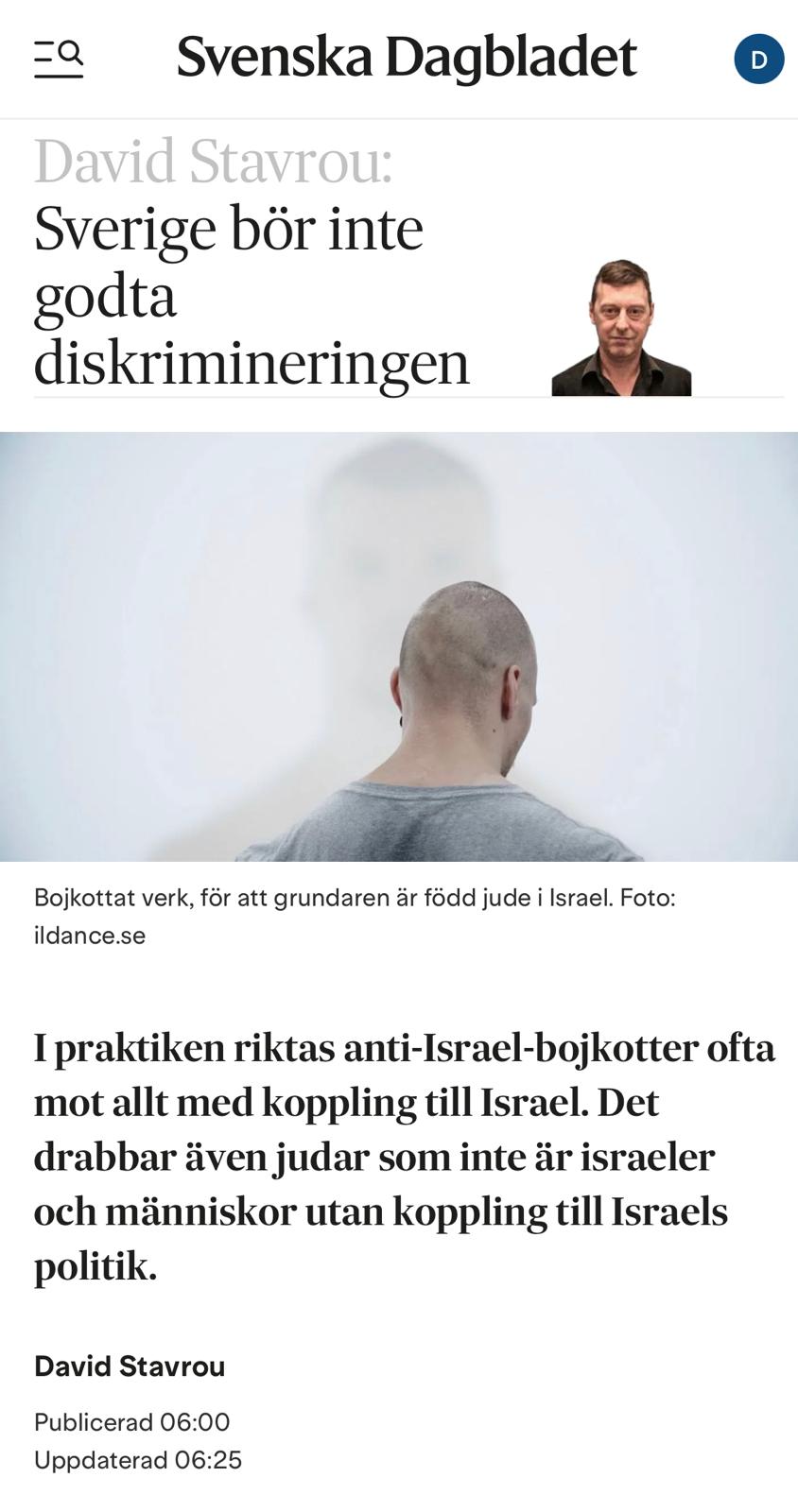
In practice, anti-Israel boycotts are often directed at virtually anything with a connection to Israel. They also affect Jews who are not Israeli and people with no connection whatsoever to Israeli policy.
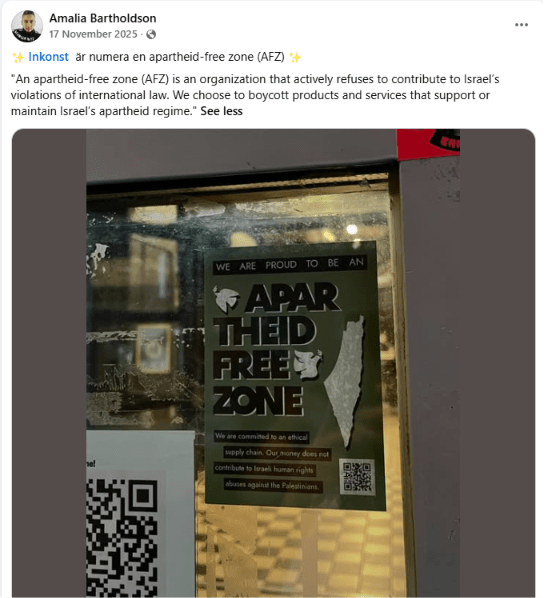
In recent years, calls to boycott Israel have become increasingly visible. Campaigns to exclude Israel from Eurovision, initiatives declaring various institutions and places “apartheid-free zones,” academic boycotts, and demands to terminate cooperation with Israeli companies have become increasingly common in public debate.
At the same time, the same argument is repeated whenever boycott advocates are accused of antisemitism: the boycott is described as an expression of solidarity with the Palestinians and a struggle against the policies of the Israeli government, rather than as action directed against Jews. As then-Foreign Minister Ann Linde (Social Democrat) put it during a parliamentary debate in 2019, in response to a question from Lars Adaktusson (Christian Democrat): “Advocating a boycott of Israel by peaceful means with the aim of ending the occupation is not antisemitism”.
One can agree with that in theory, but in practice boycotts are often applied without regard for nuance and they're directed at virtually anything connected to Israel – sometimes very indirectly. They also affects Jews who are not Israeli and people with no connection whatsoever to Israeli policy.
One of them is Israel Aloni. Born in Israel and educated at two of the country’s leading dance and art schools, Aloni moved to Sweden more than 25 years ago. Here, they (the artist’s chosen pronoun) built an international career as an artist, dancer, choreographer, educator and artistic director. After spending time with the Göteborg Opera Dance Company, Aloni, together with another Swedish-Israeli dancer, founded ilDance in 2012, which has since developed international performing-arts projects in Sweden and elsewhere in Europe.
A few years ago, Aloni created Boys Just Want to Have Fun, a multidisciplinary dance and performance work for museum exhibition spaces, described as an exploration of masculinity and an attempt to challenge taboos surrounding male sensuality and sexuality in contemporary Western culture. The work received support from Perform Europe, an EU-funded program for international performing-arts collaborations, and became the only Swedish performing-arts project included in the program’s international touring activities. During 2024 and 2025, it was performed in Serbia, Finland, Norway and the Netherlands.
This year, the Estonian Museum of Contemporary Art (EKKM) decided to present the work. Ahead of the performance, the Swedish Arts Council awarded the company SEK 64,000 in travel funding, thereby judging the work worthy of representing Sweden internationally.
Everything seemed settled. But then came the boycott.
After more than a year of dialogue between Aloni and the Estonian museum, after all the funding had been approved and the museum had committed to hosting the performance, the announcement came during a Zoom meeting: “Unfortunately, we have some bad news. It will not be possible to stage the performance here in August.” No new date was provided.
A postponement without a new date or any guarantee that the project will take place is, in practice, a cancellation. This came despite the initial enthusiasm and close contact with the curator for more than a year, during which no objections had been raised. But the message was clear. The reason was that the work’s creator had been born Jewish in Israel.
No, they never explicitly said that the issue was that Aloni is Jewish. But the museum was simultaneously planning to present an exhibition featuring Palestinian artists and believed that the “political climate in Tallinn” made it impossible to present the two projects at the same time. This was despite the fact that the work has no connection to Israel, Middle Eastern politics or the Israeli state. Nor has the choreographer ever expressed support for the Israeli government. Aloni’s only “fault” was their background.
The Palestinian exhibition, which opens in October and is curated by the same person who invited Aloni, is described on the museum’s website as an attempt to shift the perspective from “news feeds and statistics” to people’s stories and lived experiences. This, it says, would make art and culture “carriers of resilience, memory and imagination.” That the same principle might also apply to an Israeli Jew appears never to have been considered.
When I spoke with Aloni, it became clear that the concern went far beyond the artistic, financial and career consequences: “It is a dehumanizing experience.”
But there are also other dimensions to the issue that concern Sweden. At ilDance, support from the Swedish Arts Council is not taken for granted. Such funding is handled with care. Since the company regards itself as part of the Swedish cultural ecosystem, this was not merely an insult to Aloni. It was also an insult to Sweden.
This is not an isolated case. Israeli artists – and, as in this case, even Jews with only an indirect connection to Israel – are regularly cancelled, excluded or shut out across Europe, even when they have no connection to the Israeli state and are often themselves critical of the Israeli government. There are numerous examples of artists being told that they are welcome only if they publicly distance themselves from Israel and demonstrate that they are on the “right side” politically.
In this case, the Estonian museum argued that presenting a performance by Aloni would make it appear as though the museum had a political agenda. Aloni pointed out that they are a Swedish citizen who left Israel as a teenager and have lived most of their life in Sweden; that they have never made any political statements; and that ilDance is a Swedish company with no connection whatsoever to Israel. None of this made any difference. After all, Aloni had studied in Israel. When Aloni proposed a dialogue with the Palestinian artists, it became clear that the decision had already been made.
If Sweden wants to demonstrate that it does not accept this kind of discrimination, there is an obvious first step. Sweden’s cultural establishment – from the Minister for Culture and the Swedish Arts Council to independent cultural institutions – should clearly protest against an Estonian museum boycotting a Swedish dance company funded by Swedish taxpayers solely because of its founder’s origin. If there has ever been an issue on which Sweden’s self-proclaimed anti-racists ought to be able to agree, this is it.
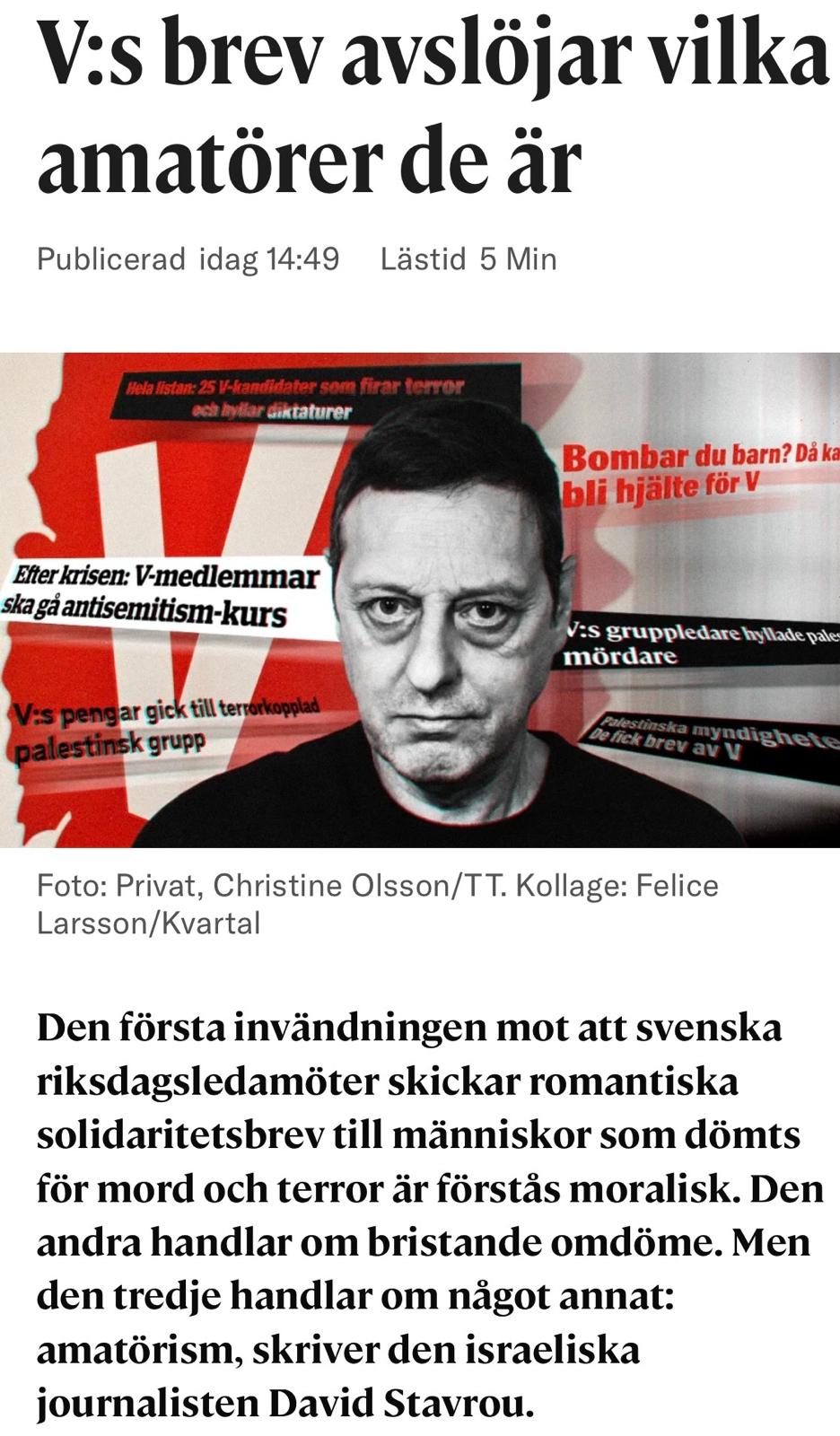
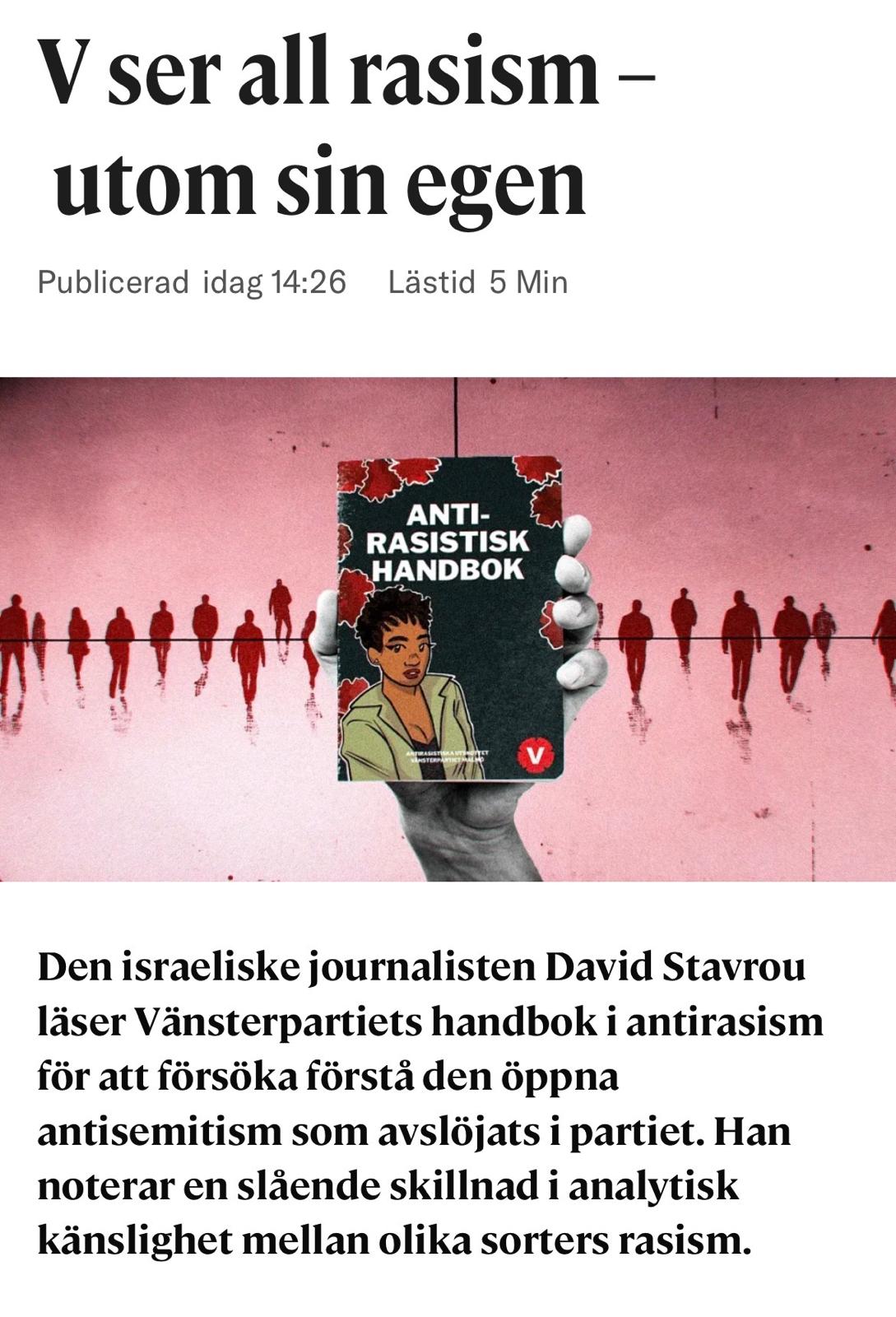
The first objection to Swedish MPs sending romantic letters of solidarity to people convicted of murder and terrorism is, of course, a moral one. The second concerns poor judgment. But the third is about something else: amateurism, writes Israeli journalist David Stavrou.
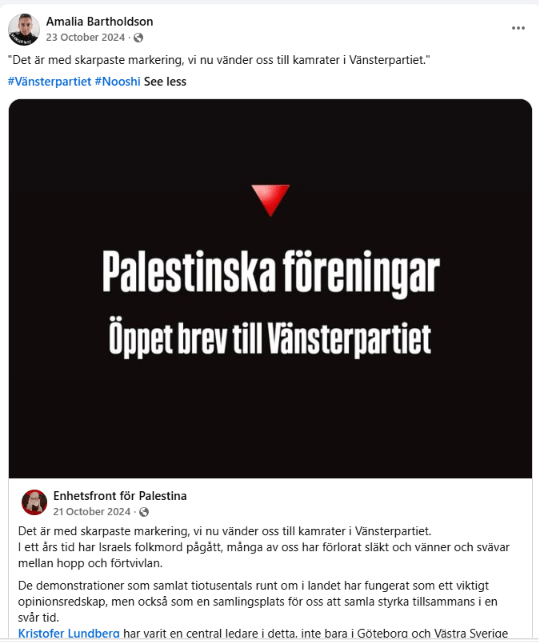
In the space of just a few days, journalists Sofie Löwenmark, Nathalie Rothschild and Inas Hamdan published investigations showing how members of the Swedish parliament had sent letters of solidarity to Palestinian prisoners convicted of very serious terrorism offenses and had participated in an organized campaign in which several of the recipients are serving life sentences for attacks against civilians.
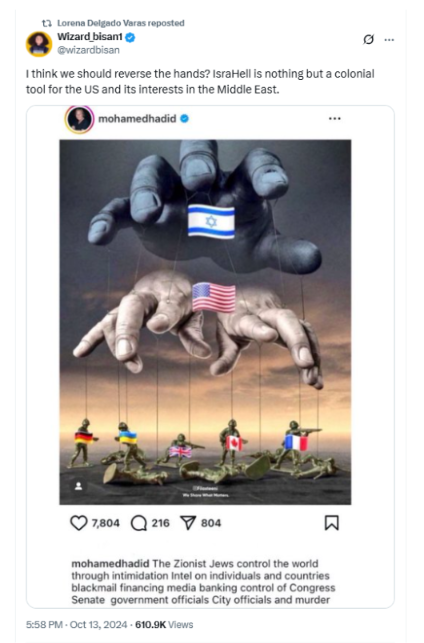
In 2023, SVT revealed that aid money from the Left Party’s international organization had gone to a project with links to the DFLP, an organization that participated in the October 7 massacre. The following year, prominent Left Party figure Kristofer Lundberg was expelled after expressing support for the terrorist-designated PFLP. In Malmö, Orwa Kadoura left the party following criticism over antisemitic messages. In 2025, MP Lorena Delgado Varas shared a classic antisemitic conspiracy image, and as recently as June this year, the Left Party removed a large number of candidates who had praised Hamas’s October 7 attack, spread Holocaust denial and promoted antisemitic conspiracy theories.
All of this is, of course, serious. By now, it is clear that the Left Party has a problem with romanticizing terrorism and spreading antisemitism and conspiracy theories. This can no longer be dismissed as anecdotal. Every time you think rock bottom has been reached, another investigation appears with new revelations. But precisely for that reason, it is almost no longer interesting to discuss this as a question of values. Left Party members are free to believe whatever they want. The truly interesting issue is something else.
Politics is not merely an ideological arena. Politics is a profession. There are laws, practices, institutions and rules of the game. And then there is what in British politics is sometimes described as simply not done – things that may not actually be prohibited but that politicians nevertheless know not to do. It is like any other profession. Surgeons do not operate on gut feeling. Judges do not rule according to whom they instinctively like best. Even a passionate politician is expected to be able to control that passion long enough to do the job.
The first objection to Swedish MPs sending romantic letters of solidarity to people convicted of murder and terrorism is, of course, a moral one. The second concerns poor judgment. But the third is about something else: amateurism.
The Left Party’s explanation in the latest affair illustrates the problem. The party secretary has said that the names came from the Palestinian Association of Sweden and that the Left Party carried out no checks of its own. “There had been a mistake in the fact-checking,” MP Ilona Szatmári Waldau wrote. Nooshi Dadgostar has repeatedly resorted to variations of the same defense during the scandals of recent years. In June, she referred to the large number of Left Party representatives – more than 4,000 – and stressed that those exposed represented only a small proportion. She then said that “there are occasions when people turn up whom you haven’t kept track of.” She promised to tighten the party’s procedures, but that is clearly an almost impossible task, since many other Left Party members defend people who have expressed support for terrorist organizations.
If a blue-haired 17-year-old activist sends a love letter to an ideologically motivated murderer he saw on TikTok, perhaps he can get away with shrugging his shoulders or shouting along with Rage Against the Machine: “Fuck you, I won’t do what you tell me!” But members of parliament are not teenagers. They are adults, and adults are expected to evaluate their sources critically and ask questions. What does it look like when we become fixated on prisoners from a single international conflict while ignoring others? What diplomatic, trade-policy and security-policy consequences could our statements have? Which people and organizations are we legitimizing?
Is that boring? Does it involve compromise? Perhaps even moral coruption? Perhaps – if you live in a syndicalist collective, eat out of tin cans beneath posters of “freedom fighters” and say that “when the forest is felled, the chips will fly”. But the Left Party’s MPs are well-paid public officials who participate in – and enjoy all the privileges and perks that come with – professional politics.
That means it is part of the job to investigate the people and organizations you cooperate with, read court judgments, speak to embassies, diplomats, experts and lawyers, ask what is disputed and what has been established, and understand the consequences of your own symbolic politics. For example, when a professional politician becomes involved in another country’s prison system by writing a letter, they must understand how the people they are writing to are perceived by their victims, as well as understand another society’s sensitivities and collective trauma.
To a Swede, Ahmad al-Moghrabi or Ibrahim Abu Mokh may be unfamiliar names on a list of “Palestinian prisoners.” To an Israeli, those same names may signify deadly suicide attacks against civilians, murdered children or a young conscript who was kidnapped on his way home and never returned. You do not have to accept Israel’s policies in the West Bank or agree with the Israeli courts. You only need to be able to imagine the reverse situation. Imagine if foreign parliamentarians wrote to Jackie Arklöv and praised his “courage and perseverance” without checking the judgment against him. The first Swedish response wouldn't be a complex debate about Scandinavian geo-politics, it would be: Have you even bothered to find out who this person is?
This kind of disregard for the rules of politics – in which passionate conviction is allowed to cloud judgment and consequences and basic due diligence are ignored – has a name. It is called populism.
For many years, the Sweden Democrats have struggled with a similar transition – from a protest movement to a party with influence over the state. As part of that process, the party has run internal training programs under the title The Road to Power (Vägen till makten), although there is, of course, no reason to romanticize the results. SD continues to be plagued by recurring scandals. A training course cannot magically erase a political culture.
And this is where the parallel with the Left Party becomes even more uncomfortable. V has already tried the educational route. Following several antisemitism scandals, in the spring of 2025 the party invited its members to a two-hour training session on antisemitism. Every member received an invitation. Yet one year later, the party found itself with 25 candidates removed from its lists following revelations involving, among other things, precisely antisemitism. As the Swedish elections draw closer, the party is finding it increasingly difficult to convince voters that sympathy for terrorists, conspiracy theories and antisemitism among its politicians and activists is a bug. In its case, it seems much more like a feature.
Israel's embassy in Norway condemned the events organized by the Norwegian Holocaust Center in Oslo, saying they 'legitimize antisemitism.' The center said the aim is to 'understand shadows of historical traumas without equating them'
Israel's Embassy in Norway called for an independent Holocaust studies center in Oslo to cancel two upcoming events that it claims are a "grotesque distortion of Holocaust memory."
As part of a lecture series titled "In Shadow of War – The Way Forward," the Norwegian Center for Holocaust Studies and Religious Minorities is hosting two events with the University of Oslo this spring. The first event, which took place on Thursday, was a lecture by Prof. Nadim Khoury titled "Nakba and Holocaust as cultural traumas."
According to the University of Oslo's website ahead of the event, Khoury – a Palestinian professor of international studies at the Innland Norway University of Applied Sciences – "will trace their trajectories since 1948 and explore how they are intertwined and how the tensions between them are shaping the path forward in Israeli and Palestinian lives."
A second event, scheduled for June 3, will feature Israeli historian and Brown University professor Omer Bartov, whose contributions to Holocaust scholarship were recognized by Yad Vashem in 2019.
In an April 28 X post, Israel's embassy in Norway called on the HL Center to cancel the events "immediately."
"The Norwegian Holocaust Center's decision to host events drawing parallels between the Holocaust, the 'Nakba' and the war in Gaza is a grotesque distortion of Holocaust memory," the post read. The embassy added that the center has chosen political activism over historical responsibility and it called upon it to cancel the events and stop "legitimizing antisemitism in its modern forms."
Addressing the criticism in a social media post, the HL Center explained that it invited academics from different environments and backgrounds as speakers in order to "address and reflect on challenging topics without ending up in polarized debates where constructive nuance tends to disappear."
HL Center director Jan Heiret told Haaretz that the event with Khoury was supposed to follow another event hosting Martin Auerbach, former director of the National Israeli Center for Psychosocial Support of Survivors of the Holocaust and the Second Generation (AMCHA). Auerbach couldn't come due to uncertainty around the ongoing conflict with Iran, but Heiret said the center will make another attempt to host him in the autumn.
Heiret added that both events are meant "to find a way out of a destructive spiral of hatred, dehumanization and violence."
"We must understand the long-lasting shadows of historical traumas without equating, or even putting up, the Holocaust with the Nakba – which would be a historical distortion given the events are so different in nature, course and scope," Heiret said. "We acknowledge that the consequences for the individuals and collectives traumatized by them are interconnected, and that the denial of the trauma of the other lies at the core of the dynamics of the Israeli-Palestinian conflict."
Leif Knutsen, an activist and the chair of the Jewish Community of Norway, says the academics invited to speak at the HL Center "represent a fringe element," and that it's a recurring issue.
"The center doesn't question them; it doesn't bring anyone to balance the discussion and it doesn't present their perspectives in anything like a critical light," Knutsen said. "It's always in the same direction – one that's beyond critical to Israel. Someone should be sitting on stage and presenting an alternative point of view or at least a nuanced one."
Knutsen said Norway's Jewish population of about 2,000 is particularly vulnerable due to a sharp rise in antisemitic attitudes. In its most recent report published in early 2024, the Norwegian Center for Holocaust and Minority Studies documented an increase in antisemitic attitudes among Norwegians, with 11.5 percent of survey respondents having "pronounced prejudices" against Jews.
Images from Norway, 2024
"The center should be combating antisemitism rather than promoting a one-sided program," he said. "Even worse is the effect that such extreme voices have on Norwegian Jews who are being lectured about their own understanding of reality on the basis of a supposedly academic framework that completely ignores the real conditions in Norway."
According to its website, the Norwegian Center for Studies of the Holocaust and Religious Minorities is a research, education and documentation center intended to focus on the Holocaust and other genocides, as well as antisemitism and minority rights in Norway. The center's exhibitions receive roughly 50,000 visitors each year. It was established in 2001 using capital from a national restitution settlement over World War II between Norway and the country's Jewish community.
The center has previously faced criticism for its programming. In a letter sent in September 2024, more than 100 Norwegian Holocaust survivors and their descendants accused the center of failing to use "its mandate to combat the hostility we experience," and that instead of fighting antisemitism it was positioning itself as a "critic of Israel's policies and military tactics." The letter also said the center manifests "bias in its choice of experts and supporting a narrative that's negative toward Israel as a Jewish state."
In another letter from January 2025, the Norwegian branch of B'nai Brith criticized Heiret for mentioning Palestinians twice while delivering a speech on International Holocaust Remembrance Day, amid Israel's war in Gaza.
"By focusing on Gaza and Palestinian civilians who have lost their lives during the commemoration of the Holocaust and the genocide of the Jews in Europe, at a time when one-sided and anti-Israel portrayals make debates related to Israel very un-nuanced, the director has in a blatant way contributed to the tendency to relativize the Holocaust and the genocide of the Jews," the letter said.
"As the center's own research shows, demonization of Israel leads to increasing antisemitism in Norway. Trivialization of the Holocaust is, as is well-known, defined as antisemitism."
Atefeh Sebdani was born in Iran to parents active in the MEK but was torn from them and sent for molding to a family in Sweden. In an interview, she describes life in the exiled cult and its rejection of Persian culture.
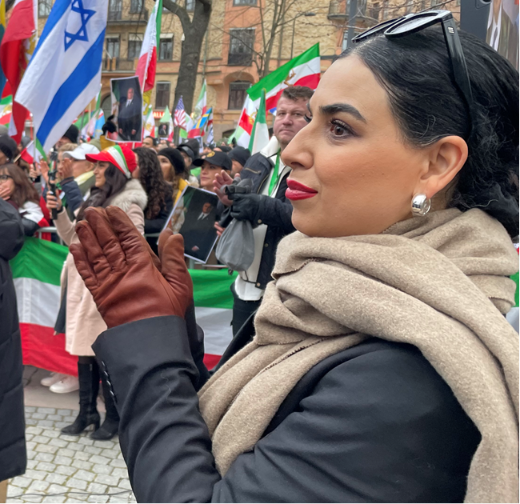
At a protest in Stockholm in April, alongside the Lion and Sun flags representing pre-revolution Iran, Israeli and American flags were also waved. As in similar events around the world, the demonstrators praised the Israeli-American attack on Iran and expressed support for Reza Pahlavi, son of the shah who was deposed in 1979, as Iran's future leader.
The rule of the ayatollahs unites many Iranian exiles against the regime, and threatens political activists operating against it in Europe. However, one of the women who helps the organizers of the Stockholm demonstrations, Atefeh Sebdani, has suffered for most of her life from another Iranian group – an organization that was once part of the Islamic Revolution but later became its enemy.
Mujahedin-e Khalq was founded in 1965 by a group of Iranian students who opposed the shah's rule. The organization combined elements of Shiite Islam with Marxist and anti-imperialist ideas and operated underground during the 1970s. During this period, it attacked regime targets and gained support as an opposition organization.
When the Islamic Revolution emerged in the late 1970s, MEK even joined Khomeini on his path to power. Yet after the establishment of the Islamic Republic, conflict arose between it and the new regime and by the early 1980s, the MEK was attacking government targets. That was countered with brutal repression that included the execution of thousands. The MEK leadership fled into exile in Iraq, where it formed a controversial alliance with Saddam Hussein during the Iran-Iraq War.
Atefeh Sebdani in Stockholm, 2026. Photo: David Stavrou
Atefeh Sebdani's story begins in the clash between the ayatollahs' regime and the MEK. "My parents were imprisoned after the revolution because of their rivalry with the new regime. They were considered enemies of the state and like other MEK members, after they were released, they were forced to leave," she says.
She was two years old at the time. Sebdani recounts that she, her younger brother, her father and her pregnant mother fled to Pakistan and lived there destitute on the streets. Her father continued from Pakistan onto Iraq, where he joined other MEK members in a camp called Ashraf, which later became the movement's center.
"After some time, we also moved to the camp. By that stage it had become a kind of small town with kindergartens, parks, and schools – mainly for propaganda purposes. They wanted to show how good things were there so others would join," she says. "For me, it was like paradise. I had everything; it was idyllic. I was with my mother and I was happy."
Then, without warning, everything ended at once. She hadn't even turned five yet but her mother told her she would have to take care of her two brothers by herself. She didn't explain why or how, but when the day came, Sebdani found herself standing by a bus with a group of crying women. When the bus departed, five-year-old Sebdani became a mother in practice.
"On the way, I had to take care of one brother who was still a baby and wanted to breastfeed, and another who was very ill," she recalls. She adds that the expulsion of the children from Camp Ashraf was a process. She doesn't know exactly how long it took, but she remembers children disappearing from kindergarten without knowing why or where they were going.
Eventually, all the roughly 900 children in the camp were separated from their parents and transported to other countries.
"The place was emptied of children's voices," she says. "And children's voices are the most human thing there is – the core of life – and that was taken away."
Why were the children expelled?
"The children were an element that disturbed the organization's leader, Massoud Rajavi. The ideological struggle to liberate Iran turned into the struggle of a narcissistic leader who wanted all the power in his hands. He wanted the men and women in the movement to be under his absolute control, and the children stood in his way. The movement began as an ideological movement, but it became a cult."
What Sebdani describes aligns with what is known from other sources about the MEK. During the 1980s and 1990s, the organization became highly centralized, developing political and military branches that operated from bases in Iraq. At the same time, the National Council of Resistance of Iran was established as a political umbrella organization.
'The family I came to was politically obligated to take children. It's not that they loved children or wanted us. We underwent heavy indoctrination and were forced to constantly work for the organization.'
During this period, allegations indeed emerged about cult-like characteristics such as strict internal discipline, ideological control, and exclusion of dissenters.
However, the organization's leader, Rajavi, has not been seen in public since the early 2000s, and his fate remains unclear, as the organization has not disclosed information about his whereabouts nor announced his death. Meanwhile, his wife, Maryam Rajavi, serves as the public face of the organization – contributing to an atmosphere of secrecy and uncertainty regarding its structure and decision-making.
After several months and a long journey that included stops in Jordan and Germany, Sebdani and her two younger brothers arrived in Gothenburg in western Sweden.
"For all that time, I was sure we would soon be reunited with my mother," she recalls. "We sat on planes and trains, I saw things I didn't know, I saw climates and people change, there were new languages and places – but alongside the excitement, I constantly feared we were moving further away from my mother and worried she wouldn't be able to find us."
In Gothenburg, they were told they would soon meet their mother. "I was very excited. But what actually happened was different – we stood on a train platform, and instead of my mother, two other people I didn't know arrived, a woman and a man, and we were told: these are your mother and father. That's when the nightmare began."
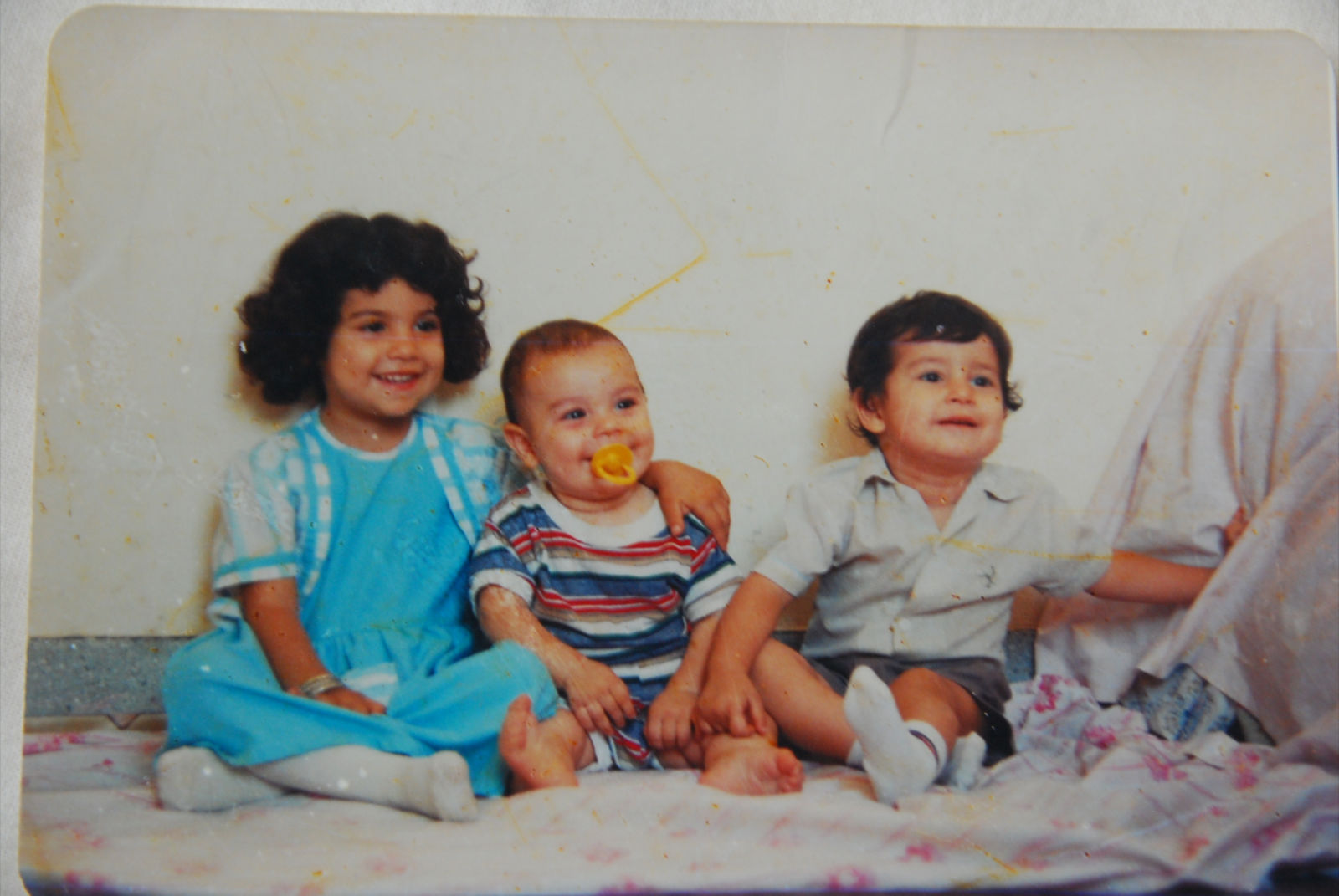
Atefeh and her two brothers
The people who took Sebdani and her brothers were MEK members living in Sweden and working for the movement. They also had a child of their own, and took in two other children out of roughly 200 MEK children who arrived in Sweden. Sebdani says she later traced the fate of hundreds of other children who were "exported" from Camp Ashraf and that she obtained a document listing their destinations – including Germany, the Netherlands, Norway, Canada, and the United States.
"The family I came to was politically obligated to take children," she says. "It's not that they loved children or wanted us. We underwent heavy indoctrination and were forced to constantly work for the organization." She does not reveal the identities of her foster parents, but her childhood memories expose the nature of the organization as it became a cult.
According to her, MEK families abroad were completely mobilized. They engaged in recruiting members and funds, organizing demonstrations, fighting opponents, and harassing defectors. She describes this society as oikophobic (one that is hostile, dislikes and rejects its own "home" culture, country and traditions). "They hated anything Iranian that wasn't related to the MEK. We weren't allowed, for example, to listen to Persian music unless it was the music of MEK members. I didn't read books in Persian. There was no Persian culture—everything was subordinated to the organization."
As far as you know, is this still the case?
"Yes. They still have offices in different countries and a strong presence on social media. The headquarters is in Auvers-sur-Oise, a suburb northwest of Paris, where political leadership members and full-time 'soldiers' are based. At the same time, there are activists like my foster family, and MEK members in Camp Ashraf 3 in Albania. That camp is essentially a 'troll factory' that produces large numbers of accounts and spreads propaganda in Persian and English. They write articles about themselves, smear their opponents, and create the impression of support – even though they have no real support."
Camp Ashraf 3 is the fortified camp to which most MEK members – estimated at 2,500 to 3,000 – were transferred from Iraq between 2013 and 2016. The move was carried out with the support of the United States, the United Nations, and the Albanian government. It took place because after the fall of Saddam Hussein, the MEK was no longer protected in Iraq, and international actors worked to evacuate them. Although the organization had been designated a terrorist organization in the U.S. for many years, it was removed from the list in 2012 as a result of pressure applied by the movement, and some American and other actors even saw it as a partner in opposing the Iranian regime. According to reports, the MEK no longer engages in military activity, but the camp in Albania has become a center of political and media activity with a highly centralized and controlled structure.
"It's a place where entry and exit are not free, and in the past there were physical punishments and torture of those who wanted to leave," says Sebdani. "I know stories of people who disappeared and of mandatory daily confessions about 'dirty thoughts' – for example, sexual thoughts and masturbation. You weren't even allowed to think about your children or speak with members of the opposite sex without permission. Today, with defectors speaking out and social media, the movement can no longer allow itself to use such methods."
Sebdani is not alone in her claims about the MEK. The French newspaper Le Monde conducted interviews in 2024 with former members of the organization living in Europe, including two named Amir Vafa and Amin Golmaryami. Vafa described how he and others were forced to participate in public confession sessions in which, once a week, everyone had to describe their sexual fantasies. He added that friendships were closely monitored: "It was forbidden to have lunch with the same friend twice in a row."
Golmaryami added that during clashes with Iraqi security forces in 2011, MEK leaders sent him and his comrades to go "in front of Iraqi bullets to increase the number of casualties." He claims they did this in order to "put pressure on Europe and the United States to remove the organization from the list of terrorist organizations and facilitate the relocation of its members to another country."
Another MEK member, Reza Torabi, said that at the age of 17 he was a zealous member and was assigned the role of "welcoming" young newcomers. "Our objective was to brainwash them, make them forget their previous lives, and instill in them the ideology of the Mujahedeen," he said. "My dedication was unwavering." In hindsight, he believes that he too fell victim to manipulation and regrets "the harm [he] caused in the course of his duties."
A 2005 report by Human Rights Watch, based on in-depth interviews with former members, also described a reality of beatings, verbal and psychological abuse, coerced confessions, threats of execution, and torture.
How do you believe control of MEK member is maintained today?
"If you look at people like the father, you see someone who joined in his twenties and spent his entire life inside this system. He never paid a bill or looked for a job – everything was handled by the organization. He doesn't know how to buy a plane ticket or even drive to the end of a street. The MEK infantilized these people, and there is no one to take care of them if they leave."
Does that mean there are no new members?
"That's right. There are no new members. It's a movement of older people – but they pay young people to attend demonstrations. If you go to MEK protests, you'll find Poles and Ukrainians who don't speak Persian and don't know what they're protesting about, alongside Swedes with no connection to the organization who were paid to join."
Who pays for all this?
"From what I saw and was part of, many people pay the MEK monthly so they won't harass them – Iranians in exile subjected to pressure, propaganda, flattery, and social coercion. There are also welfare funds, for example for foster families, as well as political donations and funding from human rights organizations influenced by the group's propaganda."
Beyond the political activity, the period that Sebdani stayed with her foster family, had another aspect. She talks about indoctrination and the constant threat that was used to make her stay.
"From the age of five, I experienced sexual abuse, physical abuse and psychological abuse in the foster family," she says, "but I couldn't say anything because they threatened to separate me from my brothers. I was not allowed to be a child. The first thing that happened to me in the foster family was that my father began to show interest in my naked body. He wanted me to do things. I felt it was wrong and frightening, but I knew nothing about sex or sexuality and I didn't understand.
"Over time, it only got worse, and my foster brother abused me too, encouraged by my foster mother. I had no childhood; it was just survival. I was the one who cleaned and tidied, I had to be a good student, and also the one who went out to demonstrations and went to Mujahideen conferences around the world". Talking to Sebdani she describes a reality full of exploitation, punishment, crying at night, and deception of Swedish welfare services.
As an adult, she eventually left, moved to Stockholm, became an engineer, and worked for Microsoft. After a personal crisis, she began telling her story and wrote a book (Min hand i min, "My Hand in Mine", published by Albert Bonniers förlag, 2024). Today she is married and has three children.
Politically, Sebdani is active among supporters of Reza Pahlavi. "I saw the difference between the two leaders," she says. "I met Maryam Rajavi as a child, and recently I met Pahlavi in Paris with a group of other former MEK children. I support the Iranian people, and the people support Pahlavi. He is exactly what Iran needs – a secular, humane person, with a family, who knows what living a normal life is, who listens and can unite people."
After Sebdani's meeting with Reza Pahlavi and other "MEK children" she became the target of an online campaign against her. Sebdani says that this isn't the first time and she has been targeted by a smear campaign led by the MEK on several previous occasions before.
Sebdani's book
"This kind of harassment happens to everyone who has left the organization and spoken out," she says. This time, the MEK website denied Sebdani's account through a letter it claimed was written by her biological father. "For me, as a father, seeing 'Atefeh Sebdani' at a gathering of the Shah's son was painful… Atefeh is the same person who, by spreading defamation against the organization under the false pretext of being part of a group of 'child soldiers,' has for many years become a full servant of Iranian intelligence."
The text claims that Sebdani was never part of the MEK and accuses her and her associates of collaborating with the regime in Tehran. Sebdani does not know whether her father actually wrote the text, but she says that everything in it is false and that she is familiar with other examples of letters that MEK members were forced to write under coercion.
Following the letter, a senior figure in the organization, Freydoun Salimi, also spoke out, accusing Sebdani of never having been a member of the group and of acting as an agent of the regime. In responses to his claims on X, supporters of the organization repeat the accusations and insult Sebdani. On other social media platforms, she is also accused of assisting Israel, betraying Iran, and supporting Americans attacking her country.
Sebdani's personal MEK story has a positive ending – she escaped, her siblings left, and even her mother eventually left the organization. The organization itself, however, is still very much alive. It even claims to still have networks inside Iran, though most analysts believe its influence there is limited. "The MEK is more of a European problem than an Iranian one," Sebdani concludes. "In Iran, they have no real support, not even with regime critics. But after the 'Woman, Life, Freedom' protests, it's clear that a unifying leader is needed, otherwise, there will be no change – and I have no doubt that Pahlavi is the right person."
For 40 years, the assassination of Sweden's prime minister, Olof Palme, has remained unsolved. Now, some are revisiting a dark possibility: not a lone gunman, but a covert network embedded deep within Swedish society – part of a secret Europe-wide effort to resist a Soviet invasion
The most shocking event in the history of modern Sweden occurred almost exactly 40 years ago. On the evening of Friday, February 28, 1986, Prime Minister Olof Palme and his wife, Lisbet, went to see a movie in central Stockholm. It was a cold winter evening in the capital. As he often did, Palme dismissed his bodyguards and the couple travelled three subway stations to the theater without a security escort. When they emerged onto the street, they met up with their 25-year-old son, Mårten, and his partner. The four bought tickets and went in.
Shortly after 11:20 P.M., while the prime minister and his wife were walking back home along a main street in the city, a man approached them from behind and fired a gun at close range. Palme was hit and collapsed on the frozen pavement. A second shot was fired immediately afterward, lightly wounding Lisbet. Bystanders attempted to help but it was in vain. Palme died on the spot. An ambulance was called and evacuated his body and his wife to a hospital, arriving less than 20 minutes after the shots were fired.
The hours that followed were dramatic. News of the murder spread in the Swedish media and overseas. The country went on high alert, and Deputy Prime Minister Ingvar Carlsson convened the cabinet. At 5 A.M. Saturday morning a press conference was held. Flags were subsequently lowered to half-mast, flowers and candles were placed at the murder site, and an atmosphere of national mourning and crisis permeated the country. At the same time, it emerged that almost every possible mistake was made in the investigation of the murder: The shooter immediately fled; police arriving at the scene failed to apprehend him. They also did not set up roadblocks or cordon off the area. Coordination between law enforcement forces at the site was poor; no situation room was established, and testimonies from eyewitnesses were neither systematically collected nor fully documented. These errors were never corrected in the intervening four decades.
Olof Pale's Murder Site on Sveavägen in Cenral Stockholm
In the years following the murder, what is referred to by Swedish authorities as "the largest and longest-running murder investigation in the world" was launched, but despite significant resources, it was marred by disputes and conflicts and did not lead to any definitive outcome. Many investigative directions were pursued but no one was charged. In the first year, the Kurdish PKK organization was a central focus. Later, theories involving possible actors from various countries, such as South Africa – which allegedly had both a motive and the capability for executing a political assassination abroad – were explored but did not result in indictments. Such was also the case following investigations of theories involving terrorist organizations from the Middle East and Eastern Europe.
In 1988, a local criminal named Christer Pettersson was convicted of the murder, mainly based on a controversial identification by Lisbet Palme; a year later he was acquitted on appeal due to lack of evidence. In June 2020, the Swedish prosecution announced that the investigation was closed, declaring that a man named Stig Engström was the probable suspect. Engström had allegedly been present at the scene on the night of the shooting and had been interviewed as a witness in later years, but he died in 2000 and therefore could not be prosecuted. His motive was unclear, and the evidence against him was circumstantial and unconvincing. Nevertheless, this was enough for the prosecution to close the case.
But this was not the end of the story: In December 2025, the prosecution reversed its position. In a surprising development, it announced that a renewed examination of the investigative material had concluded that there was insufficient evidence against Engström, and thus he was no longer officially considered to be the suspect. At the same time, no other names were suggested, nor was the investigation formally reopened. Thus, 40 years later, the Swedish public still does not know who killed its prime minister or why. Meanwhile, on the margins of these developments, a discussion has surfaced about another historical phenomenon, which – like the identity of the man who pulled the trigger – was heretofore unknown to the Swedish public and kept in the shadows for decades.
"Today, we know no more about the murder than we did the day after it happened," says Gunnar Wall, a journalist and author who has dedicated years to researching and writing books about the Palme assassination. "We do not know if it was a lone assassin or an organized group, we do not know the motive, how the killer escaped, whether he was Swedish or foreign, or whether he is still alive today and, if so, is he in Sweden or abroad. Given this situation, there are countless speculations and theories."
Wall, recipient of the 1998 and 2024 Guldspaden (Golden Spade) award, Sweden's most prestigious prize for investigative journalism, for books he wrote about the incident, notes that while there are those who claim to know who the murderer was, despite years of research, he himself does not.
Gunnar Wall
However, Wall points to an interesting issue. The decision not to reopen the investigation late last year is strange, in his view, because about 15 years ago Sweden changed its legislation regarding statutes of limitations. Serious inquests into crimes such as murder, under the new law, are no longer closed after 25 years as was previously the case, and can remain open indefinitely. The prosecutor who last December chose not to resume the whole process justified that by saying there were no conditions for doing so – even though he admitted that he had examined only the Engström lead and not other possibilities.
When the previous prosecutor closed the case in 2020, it was possible to say that happened because he had reached a dead end – but the same cannot be said about his successor's decision, since he said he had not even attempted to evaluate materials that did not concern Engström. And yet, he seemed determined to leave the case closed nonetheless.
"The investigators of the Palme murder examined, almost until the very last moment, indications of [involvement by] a larger group that went beyond Engström alone," says Wall, who bases his claims on interviews he conducted with the investigators themselves and with additional witnesses, as well as on reviews of countless documents, reports and other materials. "Their main hypothesis was that forces within a secret Swedish network were behind the murder, and they tried to link Engström to these actors. When they failed, they abandoned the hypothesis and Engström remained the sole suspect. Five years later, because the evidence against him was weak, it all ended with no conviction and no suspect."
Suggestions about some secret entity having been behind the Palme assassination may sound like far-fetched conspiracy theories – but they are not. For decades, underground organizations called stay-behind networks existed in Sweden and many other European countries. While a direct link between the Swedish stay-behind network and Palme's assassination has not been proven, the existence of the group is an established fact. These clandestine bodies were created after World War II as a way for countries to prepare for a possible invasion and hostile occupation. Their work included drafting blueprints for underground resistance groups, maintaining contact with a government-in-exile and actively opposing an occupier.
In the early days of the Cold War, following World War II, the threat of Soviet aggression was tangible. Across Europe, secret networks were created in various countries, in order to forge connections between the military, police, intelligence services and civil society. Initially, these organizations were intended to prepare for a Soviet invasion, but over time some engaged in other activities, sometimes even conducting covert operations within their own borders, including false flag operations – designed to appear as if carried out by others to justify certain political or military reactions.
The most famous example is the Italian network and operation code named Gladio, whose existence was revealed to parliament in 1990 by Prime Minister Giulio Andreotti. Some claimed that this stay-behind network participated in domestic acts of political terrorism in the 1970s and '80s. Parliamentary inquiries looked into its operations and ties with foreign actors and intelligence bodies such as the CIA and NATO, and exposed its involvement in guerrilla training, communications networks, weapons storage and sabotage. There were also suspicions that Italy's network operatives engaged in domestic political activity, including terrorism designed to strengthen the Italian right and diminish the left. Similar underground groups have been documented in Belgium and Switzerland, and evidence of same exists in France and Germany, although without confirmation of domestic violence. There are also hypotheses about the involvement of such networks in coups and politically motivated violence in Greece and Turkey.
The investigators' hypothesis was that forces within a secret Swedish network were behind the murder, and they tried to link Engström to these actors. When they failed, they abandoned the hypothesis.
The whole phenomenon remains highly controversial and difficult to research due to the secrecy and compartmentalization surrounding it, yet there is general agreement that stay-behind networks have existed across Europe, operating without parliamentary oversight and known to only a small circle of decision-makers.
After years of rumors and official denials of such bodies existing underground in Sweden, in 2013, one of the country's major newspapers, Dagens Nyheter, published an article by Inga-Britt Ahlenius, a civil servant who worked at the Ministry of Finance, the National Audit Office and the United Nations. Based on evidence and research that had emerged since the 1990s, Ahlenius wrote: "While the initial disclosure of Sweden's institutional but unofficial Cold War connections with Western powers was met with denials and outrage, it was eventually accepted as the new truth. Thus, the revelation of stay-behind networks is often treated more like a romantic spy adventure than a historical fact." She noted that the secret resistance movement established in Sweden, and closely linked with Western powers, was likely initiated by Prime Minister Tage Erlander (Palme's predecessor) along with several ministers.
"[It was] initially led by Alvar Lindencrona, CEO of Thule insurance, three department heads and regional/local 'cells' operated under him," she wrote and added, "meetings occurred in secret rooms in Lindencrona's house or Thule's offices, and funding came from secret sources. Between 1951 and 1953, the CIA under William Colby, stationed in Stockholm and later CIA director, helped establish the network in Sweden, although the Swedes retained top-level control."
Journalist Wall adds some background information: Experience from World War II, he says, showed that countries that were occupied had been unprepared for such an eventuality – there were no resistance movements and they in essence had to be improvised. Thereafter, it was in the interest of those countries and others to prepare properly for the threat of military occupation; in Sweden, various actors dealt with this scenario at an early stage. Immediately after the war, a secret, state-level initiative was launched by the prime minister; the CIA entered the picture in the 1950s. Before that certain extremist elements had worked toward similar aims – among them war veterans who supported the Nazis during the war and volunteered to fight alongside them in the Continuation War in Finland. In the end, these three trajectories evolved into the Sweden's stay-behind network, although it is unclear exactly what remained of them in its final iteration.
"Unlike in other places, despite the cooperation with American and other actors, the Swedish network was established and organized by Swedes," says historian Mats Deland, a senior lecturer at Mid Sweden University (Mittuniversitetet) in Sundsvall. "Sweden did not participate in World War II, but it could learn from the Nazi invasion of Norway in 1940. The Norwegians sank the Blücher, one of the German ships on its way to capture the Norwegian capital in the Oslo fjord, which delayed the Germans and caused them heavy losses, while at the same time giving the Norwegians time to evacuate the royal family and their government northward.
"This experience was important for both the Norwegians and the Swedes who learned from it and came up with the idea to establish an organization that could evacuate the Swedish royal family and the government, but also 'stay behind' and protect the country. This goal of staying behind was the result of another experience from World War II: the NKVD, the Soviet security service under Stalin, who remained behind and became partisans in the German-occupied areas."
So, in the Swedish case, the stay-behind network was not controlled by the Americans or by NATO?
Deland: "Correct, in Sweden this was a local initiative. The Americans arrived a little after the network was established, and even then, they did not take control; they only integrated needs arising from NATO doctrine, which was based on the fact that only the United States had nuclear weapons. In the case of a Soviet invasion and the need for American aircraft to fly over Sweden, the idea was, like the French resistance – and to some extent the Belgian and Dutch resistance – to create escape lines that could smuggle out downed crews. But the United States did not establish the network and did not manage it. This may have changed in 1965, when Swedish security services were reorganized [when the Cold War-era external intelligence agency, T-kontoret, and internal intelligence agency, B-kontoret, merged into a single, secret organization], partly with the involvement of Olof Palme. It is possible that American involvement increased then."
How much was the Swedish stay behind network controlled by the state, and how much of its activity was conducted by civilian or military actors without the knowledge or control of the political leadership?
"Between 1947 and 1951, there were many volunteers in the network, including people who had served alongside the Germans during World War II, some of whom were highly problematic. Because of these types, the secret police discovered the network even though they were not supposed to know about it. Only the people directly involved – Prime Minister Erlander and a small part of the security apparatus – were meant to be 'in the loop.' Following this discovery, which angered Erlander and the security apparatus greatly, the network was reorganized, removing the problematic elements and incorporating trade union members and the business sector."
,Olof Palme, Tage Erlander, Sten Andersson and Ingvar Carlsson (1968) Photo: Lennart Nygren / SvD / Scanpix
According to Deland – and in keeping with Ahlenius' observations, as mentioned – the network was indeed led by executives such as Alvar Lindencrona, the head of the Thule company, a businessman with relatively progressive social views for his time, and it recruited forces from the trade unions that had a traditional affinity to the ruling Social Democratic Party. "These were ordinary people," he says, "not former soldiers. Although they needed training, they could be trusted, and the network remained secret until the 1990s." In other words, even though neither the Swedish parliament nor the rest of the government knew about the network, it was indeed an official entity. Indeed Deland notes that a recent book revealed an interesting document: an official government decision from the 1950s forming Sweden's stay-behind network, showing that it was legal and above board. The diaries of Prime Minister Erlander show that he may have given it a green light as early as 1947.
The book Deland refers to is Johan Wennström's "Sweden's Cause Was Our Cause: The Secret Swedish Resistance Movement" (2023). Wennström calls his country's stay-behind underground a "resistance movement," and reveals that the organization's code name, used by its members at the time, was Metro. Wennström says Metro was not established or controlled by NATO and it did not act on the latter's behalf, although he confirms there was cooperation with MI6 in Britain and, to some extent, with the CIA, mainly concerning programs such as evacuating Swedish decision-makers to England if necessary.
Furthermore, Wennström writes, Metro likely included several hundred people, as well as a sort of "invisible combat unit" that could expand to as many as 3,000. The underlying principle was that the network's members would recruit additional people from their immediate circle if necessary. The author also describes the group's structure was fairly cooperative, with representation from various sectors of Swedish society; information about its activities, he says, was distributed on a strict "need-to-know" basis. The organization was formally legalized in 1955, having been mandated by an earlier government decision. Typically, it was involved in organizing potential resistance and civil defense activities, such as mapping escape routes, planning acts of sabotage of critical infrastructure that could fall into Soviet hands, rescuing government officials and storing weapons. Wennström does not know when the organization ceased to exist, or if it exists today.
The phenomenon remains highly controversial and difficult to research, yet there's general agreement that stay-behind networks existed in Europe, operating without parliamentary oversight and known to few decision-makers.
Regarding other countries that had stay-behind networks, it is clear, both from Wennström's book and other sources, that heterogeneity was the keyword. Each country built its organization differently depending on perceived threat and the nature of the country's political, military and industrial power structures. Even in NATO member states, the networks were not necessarily under that organization's control. Parliamentary or public oversight was generally minimal, and there is still controversy over what their involvement was in domestic activity beyond preparing for a possible Soviet invasion during the Cold War era.
One of those who has focused on the phenomenon at the European level is Swiss author and researcher Daniele Ganser, whose controversial 2005 book – "NATO's Secret Armies: Operation Gladio and Terrorism in Western Europe" – is one of the best-known on the subject. It received praise but also criticism by some who claim that it is based on an unsubstantiated conspiracy. In it Ganser claims that Western intelligence networks operated secretly in Allied countries during the postwar era, sometimes beyond the bounds of proper legal and political oversight. He cites Italy, Belgium, France, Germany, Switzerland, the Netherlands, and Turkey, emphasizing that in some of these countries the stay-behind networks were indeed involved in terrorism, false-flag operations and political manipulation.
Mats Deland collaborated with Ganser on the Swedish edition of the book, which includes a chapter on the possible connection to the Palme assassination.
Did Prime Minister Olof Palme know about the network?
Deland: "We know he was aware of it during the tenure of his predecessor, Erlander, because he worked on it as one of Erlander's people in the 1950s. What he knew later, we do not know for certain. But it is reasonable to assume that all prime ministers knew about the network, although there are no official documents on the matter."
What can be said, to the best of your knowledge, about the Swedish stay-behind network in the 1980s, during Palme's second government?
"We don't know. We have some information about the network in the 1950s, but very little about the 1980s."
When did suspicions arise about a connection between the network and Palme's assassination?
"These were suspicions that arose from the very beginning. There was an investigative attempt as part of the official inquiry, and there were also discussions about people from the Stockholm police who could have been involved in the murder, but these are speculations and I do not deal with them."
Sometimes it's difficult to know whether a fact uncovered in an investigation is the key to solving a (murder) mystery or just a coincidence. The last person suspected of killing Prime Minister Palme, Stig Engström, who died 26 years ago, was nicknamed the "Scandia Man" because his workplace was in a building called the Scandia building. The building had previously housed the headquarters of the above-mentioned Thule insurance company Thule merged with Scandia in the 1960s and was run by Alvar Lindercrona who, as said, apparently headed country's the stay-behind network; indeed some of its meetings took place in that same building. In other words, if Engström murdered Palme, he did so while leaving a place where in the past – and possibly as late as the 1980s – meetings of senior members of the country's stay-behind network were held. Is this a coincidence? And even though there is no evidence that Engström was actually connected to the underground organization, is there any logic to the claim that it was involved in Palme's murder?
Wall, the journalist, is not unequivocal on this matter, but he does suggest some key historical points that should be taken into account. "One of the things that happened during Palme's second term as prime minister in the 1980s was a series of alleged Soviet submarine incursions into Swedish territorial waters," he explains. "These incidents caused a severe security crisis, and some argued that they were preparations for an invasion and the establishment of espionage infrastructure. Within the Swedish security establishment, there were claims that Palme did not take the threat seriously and that, because of this, he posed a security risk to Sweden.
"Furthermore, Palme was supposed to travel to Moscow to meet Soviet leader Mikhail Gorbachev in April 1986. Palme, who returned to serve as prime minister in 1982, was active on the international stage on issues of arms reduction and nuclear disarmament. His opponents argued that he had close and controversial ties to the Soviet Union, although a more balanced description would be that he was open to discussions with Soviet leaders about disarmament – something that went against both NATO's view and the opinions of senior Swedish military officials. The assassination on February 28, 1986, meant that it was Palme's successor, Ingvar Carlsson, who met Gorbachev."
As far as is known, the issue of disarmament was not on the agenda at that Swedish-Soviet summit.
Wall adds that there were a number of people who claimed to have received offers to kill Olof Palme; in several cases, it was suggested that Swedish intelligence services were behind those offers. But no one known to have actually belonged to any of these secret services has ever come forward to confirm that they were approached. Wall also provided Haaretz with documents he's collected showing that evidence indicating that people with radio devices were present in the area on the night of the assassination was not taken seriously by the investigators. He does not claim that there is proof that the murder was organized by political actors, but argues that it is certainly a line of inquiry worthy of serious examination.
And he is not alone: Ahead of the 40th anniversary of the assassination, a public appeal was launched to encourage the Swedish government and parliament to establish a "truth commission" to finally resolve any outstanding questions.
"On February 28, 1986, Olof Palme fell victim to a brutal attack on an open street in central Stockholm," the appeal begins. "The assassination of the prime minister of Sweden was a unique attack on our democracy. In a country governed by the rule of law like Sweden, everything possible should have been done to solve this murder. The fact that it remains unsolved 40 years later is unacceptable, especially when not all possibilities for an indisputable and absolute solution have been investigated."
The text cites problems that may have prevented discovery of the truth – still-classified archives, false answers given to the investigators by secret service personnel and investigative files that have disappeared. Possible involvement of the Swedish stay-behind network is also mentioned, and the conclusion is: "This is the only assassination of a political leader in modern Europe that may remain unsolved. Clarifying all the circumstances surrounding Olof Palme's murder will strengthen Sweden."
Still, at this rate, it is doubtful whether the mystery will ever be solved. Even if it is, the relatively recent revelations regarding stay-behind networks in Europe are just another example of how, even if and when the public discovers the truth, it sometimes comes decades too late, in the form of very old news.
In light of Ina Hamdan's widely discussed revelations about members of Sweden's Left Party (Vänsterpartiet) who have expressed support for violent organizations or spread antisemitic propaganda, there is reason to revisit an interesting publication that the Malmö branch of the Party released in 2023 under the title Anti-Racist Handbook.
Vänsterpartiet's Anti-Racist Handbook is a strange document to read in light of current Swedish discourse. On the one hand, it's an ambitious text about how racism and discrimination should be fought. The reader learns about structural racism and intersectionality, Islamophobia and Afrophobia, colonialism and gender power structures and there's an almost academic overview of the various manifestations of racism in Swedish society. In light of this, the book argues that the party should actively recruit "non-white comrades," and proposes a range of symbolic, political and educational measures to combat racism.
On the other hand, there is very little about Islamism and contemporary antisemitism. This is interesting because it may be the key to understanding why people who devote their lives to "anti-racist politics" sometimes end up supporting violent, genocidal and fundamentalist movements such as Hamas and Hezbollah, while spreading propaganda against Jews and their national movement.
The point is the striking difference in how much nuance, complexity and analytical sensitivity the leaders of the Swedish Left Party in Malmö are willing to apply to different social phenomena.
When it comes to racism against Black people, the handbook explains how racism has changed form and modernized. Although African Americans are no longer sold from from one cotton plantation to another and are no longer viewed as people with smaller brains, racism still exists. In Sweden, the handbook explains, there is Afrophobia, manifested through hostility and hate crimes, insults and discrimination, exclusion and structural inequalities resulting from "norms of whiteness" and ideas of white supremacy.
But when it comes to antisemitism, the analysis seems to stop in history.
In the past, Jews were portrayed as the killers of Jesus, as people who kidnapped Christian children and used their blood, or those who started revolutions. The result was pogroms, state violence and discrimination. Twentieth-century antisemitism instead revolved around ideas of Jewish control over governments, the media and financial systems. The result was the Holocaust.
Antisemitism after the Second World War is different, and it is certainly about more than merely "racism against Jews." Christer Mattsson, one of Sweden's leading scholars of antisemitism and violent extremism, describes contemporary antisemitism as an "Israelized antisemitism," in which traditional anti-Jewish stereotypes are no longer expressed directly about "Jews" but are instead projected onto "Israel" or "Zionists."
Thousands of people in the streets of Stockholm shout "No Zionists on our streets" on a weekly basis. This is just a new version of "Jews Out!". Their demonstration "street theatre" also portrays Israelis as bloodthirsty creatures who drink the blood of dead infants, or as people who secretly control governments.
Recently we've also witnessed court cases of Swedish so-called pro-Palestinians who have spread messages on social media destorting the Holocaust and presented images of snakes and hyenas adorned with Stars of David killing Palestinian children. Their defence strategy, which actually convinced the court, was that the Star of David represent the Zionist flag rather than rabbis and synagogues.
This is where the handbook's blind spot becomes visible, and the results are obvious.
At the end of the Left Party's handbook there are quotations from representatives of the Party that reveal the same pattern: extreme sensitivity toward every conceivable form of discrimination on the one hand, and total blindness to extremism and racism when it comes to Jews and Israel on the other.
For example, Amelia Bartholdson wrote in the handbook that combating racism requires "awareness, humility and self-awareness." Yet after October 7 she shared a video accusing her own party secretary of being a Zionist because he did not regard October 7 as a legitimate act of resistance (the post came from EPYU, an organization that spreads conspiracy theories and blood libels). She also shared an open letter decorated with a red triangle (known as a Hamas propaganda symbol) supporting Kristofer Lundberg, a well-known supporter of the PFLP, one of the organizations organizations behind the October 7 massacre. Truly a fine display of awareness, humility and self-awareness.
In other posts, Bartholdson compared the situation in Gaza to the Holocaust and supported boycotts and so-called "apartheid-free zones." This is an interesting point, because many of those quoted in the handbook support boycotts that are not directed at products from the West Bank or at far-right Netanyahu supporters, but essentially at anything connected to Israel. It is a bit like boycotting Bruce Springsteen or Beyoncé because of U.S. immigration policy. In an American context that would seem absurd, but when it comes to Israel everyone is lumped together. How does that fit with Sabrin Omar Högelius's statement in the handbook that people should be able to "simply exist, without having to defend their origins"?
"Anti-racism should permeate the party's politics and practice and build broad alliances with civil society," Anders Neergaard wrote in the handbook. Last week he was scheduled to lead a seminar celebrating an intifada (a term that in political contexts clearly implies violence against Israeli and Jewish targets). The other seminar leader was Orwa Kadoura, who was also quoted in the 2023 handbook condemning "racist behaviors, structures and organizations," yet in recent years he has repeatedly shared antisemitic and pro-Hamas material.
Another prominent former Left Party member quoted in the handbook is Lorena Delgado Varas. "Western anti-racism goes hand in hand with feminism and socialism," she wrote. A few years later, as is well known, there the "hand in hand" had an entirely different meaning as Delgado Varas shared an image on X showing a hand with the Israeli flag controlling a hand with the American flag, which in turn controlled soldiers carrying the flags of various other countries, accompanied by a text claiming that "Zionist Jews control the world" through threats, blackmail, the media, banks and control over the U.S. Congress, Senate and government.
These examples do not even include the individuals Inas Hamdan wrote about in Expressen, because the party's antisemitism problem extends far beyond 25, 50 or even 100 people. The most important lesson of the Anti-Racist Handbook is not what it says about racism, but what it does not say.
It's not about hating Jews. It is about a worldview that blames one people, one movement and one country for all the world's evils and fails to understand what contemporary antisemitism is. Or perhaps understands it perfectly well, but chooses to exploit it in order to win votes.