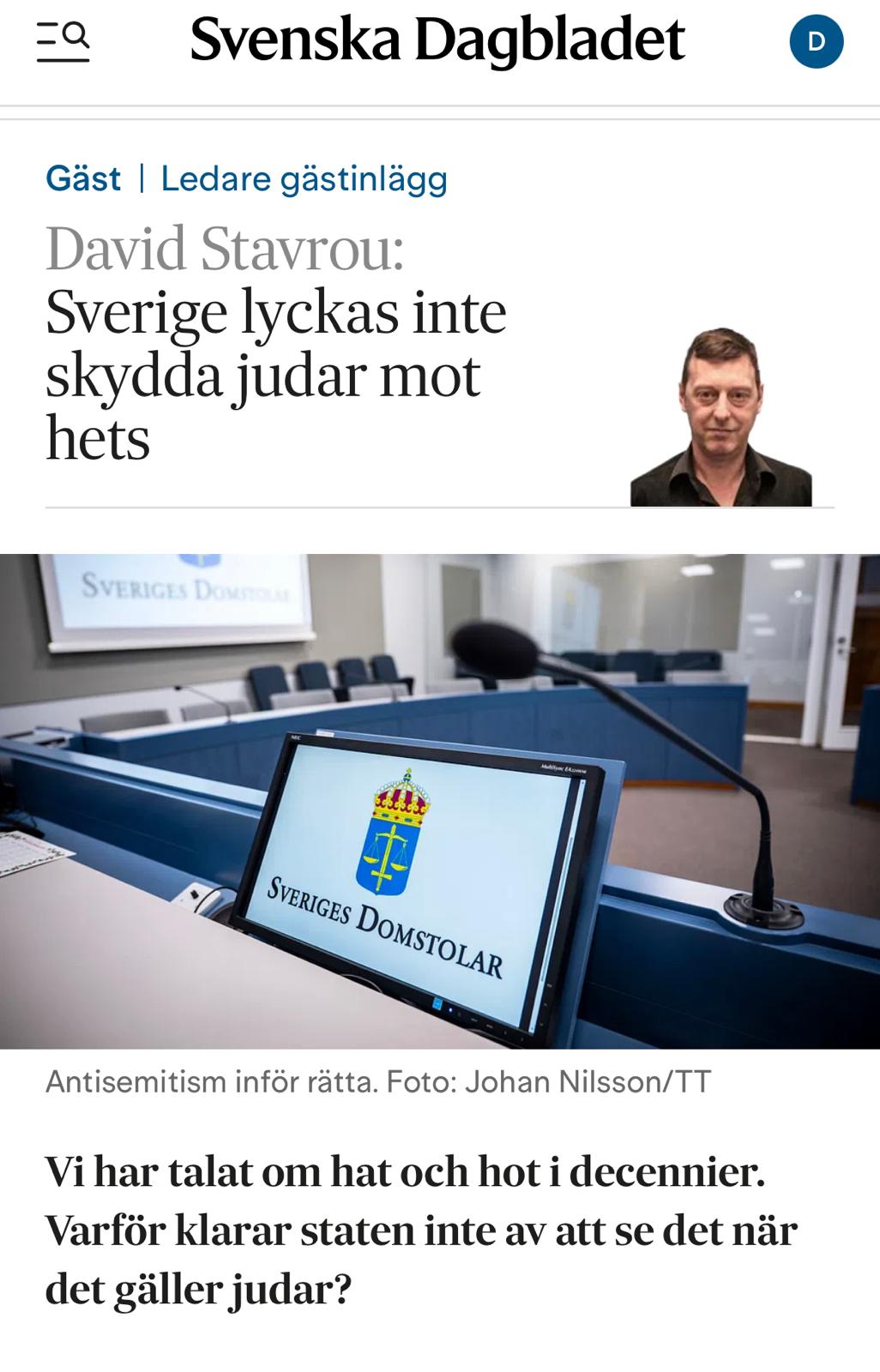
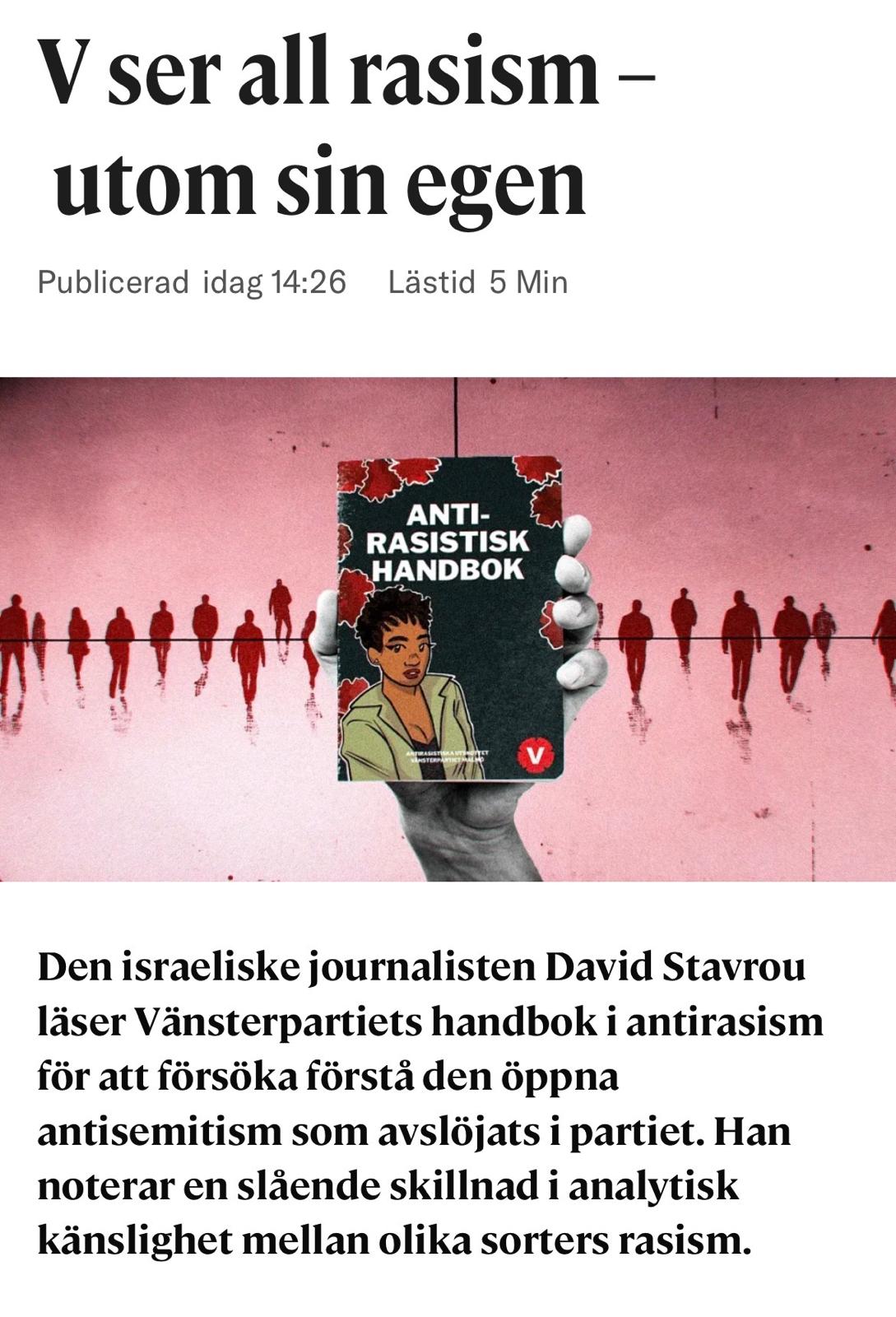
In light of Ina Hamdan's widely discussed revelations about members of Sweden's Left Party (Vänsterpartiet) who have expressed support for violent organizations or spread antisemitic propaganda, there is reason to revisit an interesting publication that the Malmö branch of the Party released in 2023 under the title Anti-Racist Handbook.
Published in Kvartal: V ser all rasism – utom sin egen – Kvartal
Vänsterpartiet's Anti-Racist Handbook is a strange document to read in light of current Swedish discourse. On the one hand, it's an ambitious text about how racism and discrimination should be fought. The reader learns about structural racism and intersectionality, Islamophobia and Afrophobia, colonialism and gender power structures and there's an almost academic overview of the various manifestations of racism in Swedish society. In light of this, the book argues that the party should actively recruit "non-white comrades," and proposes a range of symbolic, political and educational measures to combat racism.
On the other hand, there is very little about Islamism and contemporary antisemitism. This is interesting because it may be the key to understanding why people who devote their lives to "anti-racist politics" sometimes end up supporting violent, genocidal and fundamentalist movements such as Hamas and Hezbollah, while spreading propaganda against Jews and their national movement.
The point is the striking difference in how much nuance, complexity and analytical sensitivity the leaders of the Swedish Left Party in Malmö are willing to apply to different social phenomena.
When it comes to racism against Black people, the handbook explains how racism has changed form and modernized. Although African Americans are no longer sold from from one cotton plantation to another and are no longer viewed as people with smaller brains, racism still exists. In Sweden, the handbook explains, there is Afrophobia, manifested through hostility and hate crimes, insults and discrimination, exclusion and structural inequalities resulting from "norms of whiteness" and ideas of white supremacy.
But when it comes to antisemitism, the analysis seems to stop in history.
In the past, Jews were portrayed as the killers of Jesus, as people who kidnapped Christian children and used their blood, or those who started revolutions. The result was pogroms, state violence and discrimination. Twentieth-century antisemitism instead revolved around ideas of Jewish control over governments, the media and financial systems. The result was the Holocaust.
Antisemitism after the Second World War is different, and it is certainly about more than merely "racism against Jews." Christer Mattsson, one of Sweden's leading scholars of antisemitism and violent extremism, describes contemporary antisemitism as an "Israelized antisemitism," in which traditional anti-Jewish stereotypes are no longer expressed directly about "Jews" but are instead projected onto "Israel" or "Zionists."
Thousands of people in the streets of Stockholm shout "No Zionists on our streets" on a weekly basis. This is just a new version of "Jews Out!". Their demonstration "street theatre" also portrays Israelis as bloodthirsty creatures who drink the blood of dead infants, or as people who secretly control governments.
Recently we've also witnessed court cases of Swedish so-called pro-Palestinians who have spread messages on social media destorting the Holocaust and presented images of snakes and hyenas adorned with Stars of David killing Palestinian children. Their defence strategy, which actually convinced the court, was that the Star of David represent the Zionist flag rather than rabbis and synagogues.
This is where the handbook's blind spot becomes visible, and the results are obvious.
At the end of the Left Party's handbook there are quotations from representatives of the Party that reveal the same pattern: extreme sensitivity toward every conceivable form of discrimination on the one hand, and total blindness to extremism and racism when it comes to Jews and Israel on the other.
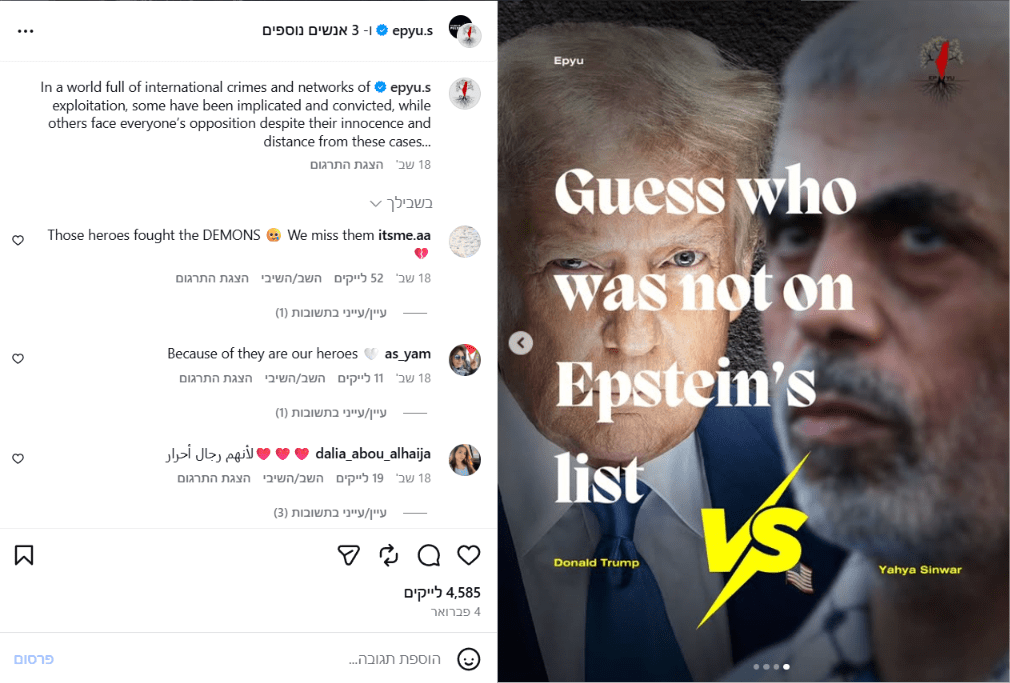
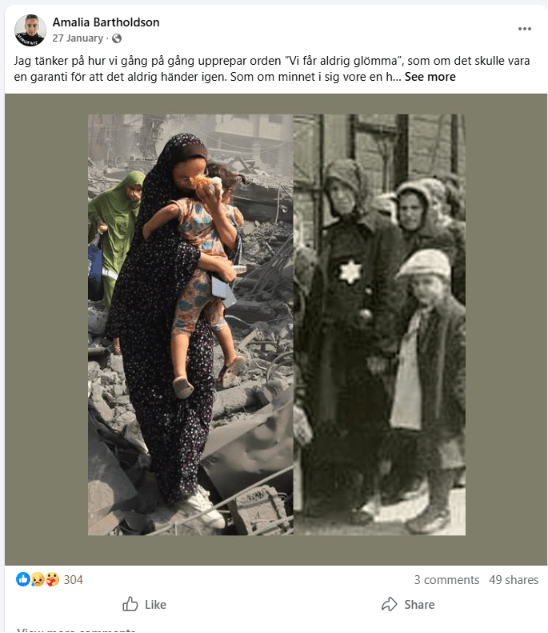
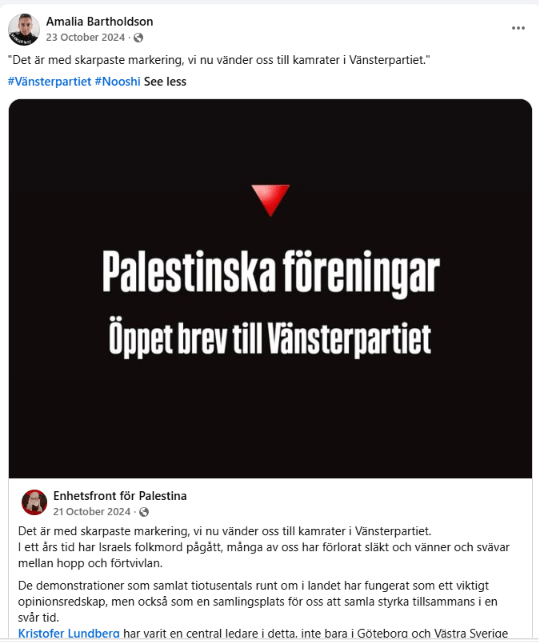
For example, Amelia Bartholdson wrote in the handbook that combating racism requires "awareness, humility and self-awareness." Yet after October 7 she shared a video accusing her own party secretary of being a Zionist because he did not regard October 7 as a legitimate act of resistance (the post came from EPYU, an organization that spreads conspiracy theories and blood libels). She also shared an open letter decorated with a red triangle (known as a Hamas propaganda symbol) supporting Kristofer Lundberg, a well-known supporter of the PFLP, one of the organizations organizations behind the October 7 massacre. Truly a fine display of awareness, humility and self-awareness.
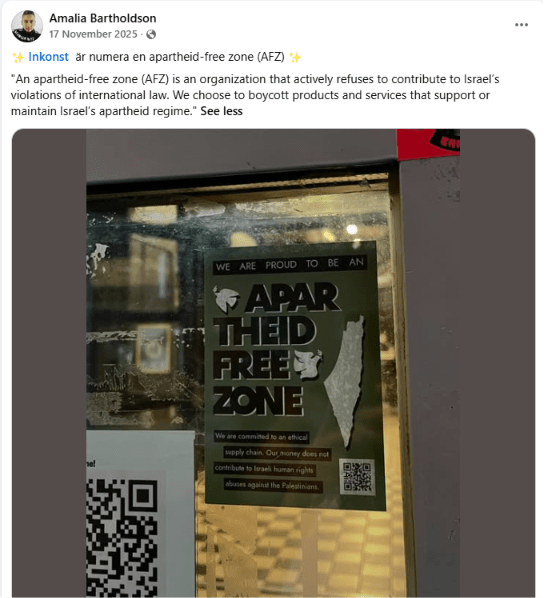
In other posts, Bartholdson compared the situation in Gaza to the Holocaust and supported boycotts and so-called "apartheid-free zones." This is an interesting point, because many of those quoted in the handbook support boycotts that are not directed at products from the West Bank or at far-right Netanyahu supporters, but essentially at anything connected to Israel. It is a bit like boycotting Bruce Springsteen or Beyoncé because of U.S. immigration policy. In an American context that would seem absurd, but when it comes to Israel everyone is lumped together. How does that fit with Sabrin Omar Högelius's statement in the handbook that people should be able to "simply exist, without having to defend their origins"?
"Anti-racism should permeate the party's politics and practice and build broad alliances with civil society," Anders Neergaard wrote in the handbook. Last week he was scheduled to lead a seminar celebrating an intifada (a term that in political contexts clearly implies violence against Israeli and Jewish targets). The other seminar leader was Orwa Kadoura, who was also quoted in the 2023 handbook condemning "racist behaviors, structures and organizations," yet in recent years he has repeatedly shared antisemitic and pro-Hamas material.




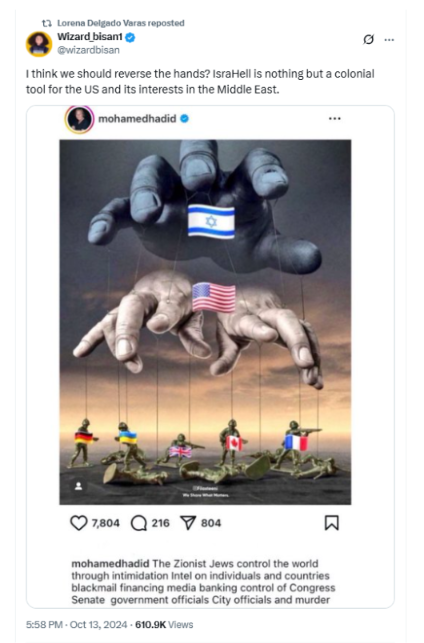
Another prominent former Left Party member quoted in the handbook is Lorena Delgado Varas. "Western anti-racism goes hand in hand with feminism and socialism," she wrote. A few years later, as is well known, there the "hand in hand" had an entirely different meaning as Delgado Varas shared an image on X showing a hand with the Israeli flag controlling a hand with the American flag, which in turn controlled soldiers carrying the flags of various other countries, accompanied by a text claiming that "Zionist Jews control the world" through threats, blackmail, the media, banks and control over the U.S. Congress, Senate and government.
These examples do not even include the individuals Inas Hamdan wrote about in Expressen, because the party's antisemitism problem extends far beyond 25, 50 or even 100 people. The most important lesson of the Anti-Racist Handbook is not what it says about racism, but what it does not say.
It's not about hating Jews. It is about a worldview that blames one people, one movement and one country for all the world's evils and fails to understand what contemporary antisemitism is. Or perhaps understands it perfectly well, but chooses to exploit it in order to win votes.