Norwegian Holocaust Center Events on Nakba and Gaza War Draw Ire From Israeli Embassy

Israel's embassy in Norway condemned the events organized by the Norwegian Holocaust Center in Oslo, saying they 'legitimize antisemitism.' The center said the aim is to 'understand shadows of historical traumas without equating them'

Published in Haaretz: Norwegian Holocaust Center Events on Nakba, Gaza War Draw Ire From Israeli Embassy – Jewish World

Israel's Embassy in Norway called for an independent Holocaust studies center in Oslo to cancel two upcoming events that it claims are a "grotesque distortion of Holocaust memory."

As part of a lecture series titled "In Shadow of War – The Way Forward," the Norwegian Center for Holocaust Studies and Religious Minorities is hosting two events with the University of Oslo this spring. The first event, which took place on Thursday, was a lecture by Prof. Nadim Khoury titled "Nakba and Holocaust as cultural traumas."

According to the University of Oslo's website ahead of the event, Khoury – a Palestinian professor of international studies at the Innland Norway University of Applied Sciences – "will trace their trajectories since 1948 and explore how they are intertwined and how the tensions between them are shaping the path forward in Israeli and Palestinian lives."

A second event, scheduled for June 3, will feature Israeli historian and Brown University professor Omer Bartov, whose contributions to Holocaust scholarship were recognized by Yad Vashem in 2019.

In an April 28 X post, Israel's embassy in Norway called on the HL Center to cancel the events "immediately."

"The Norwegian Holocaust Center's decision to host events drawing parallels between the Holocaust, the 'Nakba' and the war in Gaza is a grotesque distortion of Holocaust memory," the post read. The embassy added that the center has chosen political activism over historical responsibility and it called upon it to cancel the events and stop "legitimizing antisemitism in its modern forms."

Addressing the criticism in a social media post, the HL Center explained that it invited academics from different environments and backgrounds as speakers in order to "address and reflect on challenging topics without ending up in polarized debates where constructive nuance tends to disappear."

HL Center director Jan Heiret told Haaretz that the event with Khoury was supposed to follow another event hosting Martin Auerbach, former director of the National Israeli Center for Psychosocial Support of Survivors of the Holocaust and the Second Generation (AMCHA). Auerbach couldn't come due to uncertainty around the ongoing conflict with Iran, but Heiret said the center will make another attempt to host him in the autumn.

Heiret added that both events are meant "to find a way out of a destructive spiral of hatred, dehumanization and violence."

"We must understand the long-lasting shadows of historical traumas without equating, or even putting up, the Holocaust with the Nakba – which would be a historical distortion given the events are so different in nature, course and scope," Heiret said. "We acknowledge that the consequences for the individuals and collectives traumatized by them are interconnected, and that the denial of the trauma of the other lies at the core of the dynamics of the Israeli-Palestinian conflict."

Leif Knutsen, an activist and the chair of the Jewish Community of Norway, says the academics invited to speak at the HL Center "represent a fringe element," and that it's a recurring issue.

"The center doesn't question them; it doesn't bring anyone to balance the discussion and it doesn't present their perspectives in anything like a critical light," Knutsen said. "It's always in the same direction – one that's beyond critical to Israel. Someone should be sitting on stage and presenting an alternative point of view or at least a nuanced one."

Knutsen said Norway's Jewish population of about 2,000 is particularly vulnerable due to a sharp rise in antisemitic attitudes. In its most recent report published in early 2024, the Norwegian Center for Holocaust and Minority Studies documented an increase in antisemitic attitudes among Norwegians, with 11.5 percent of survey respondents having "pronounced prejudices" against Jews.
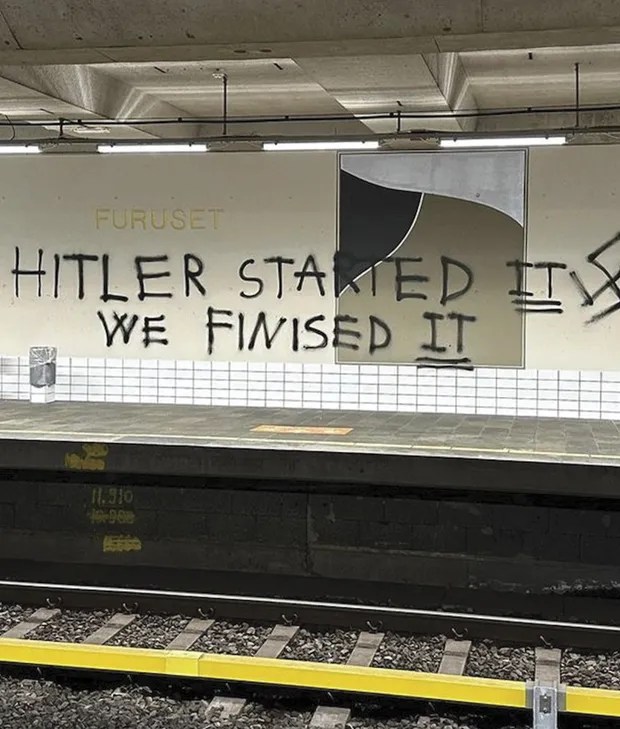
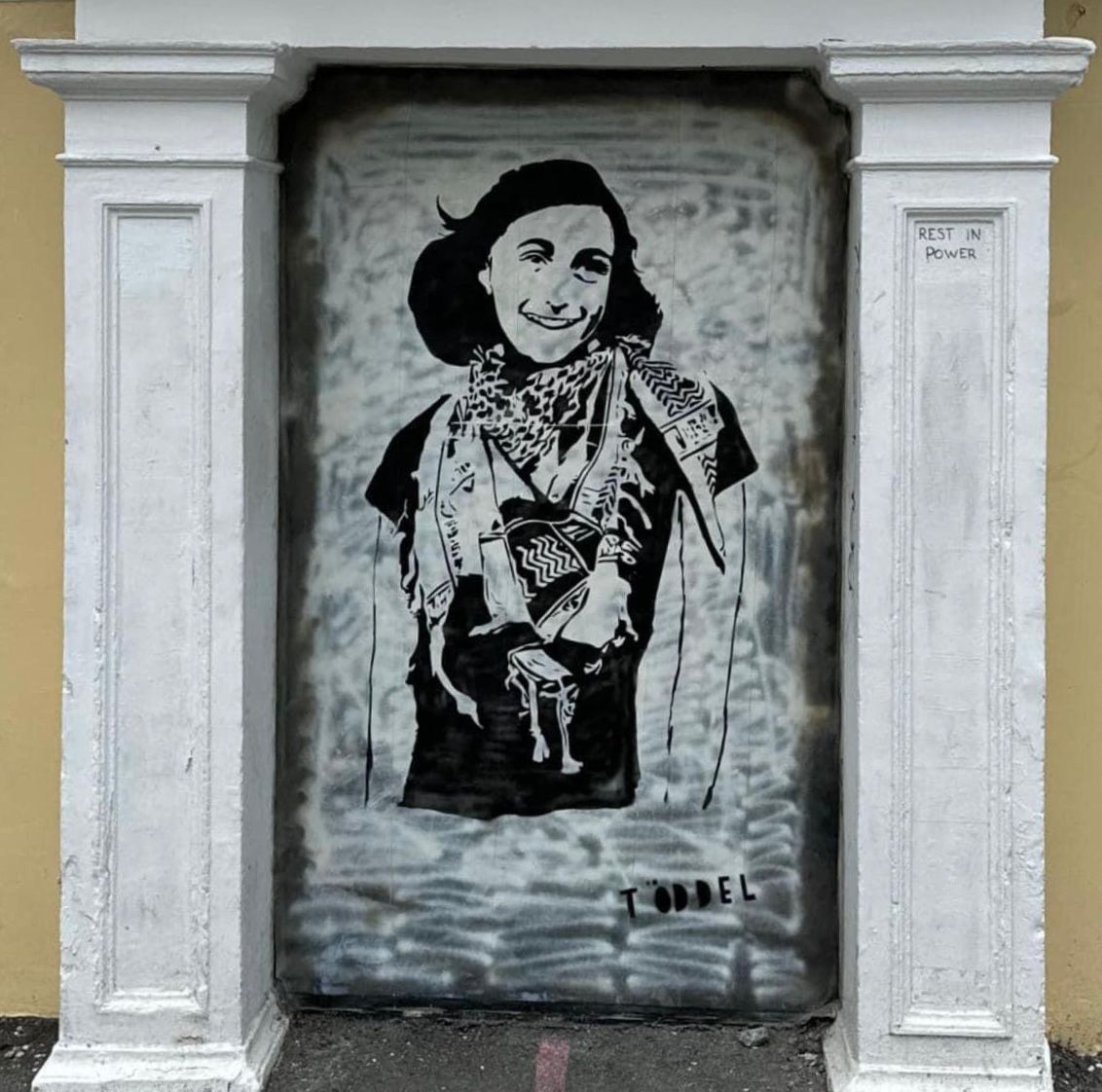
Images from Norway, 2024

"The center should be combating antisemitism rather than promoting a one-sided program," he said. "Even worse is the effect that such extreme voices have on Norwegian Jews who are being lectured about their own understanding of reality on the basis of a supposedly academic framework that completely ignores the real conditions in Norway."

According to its website, the Norwegian Center for Studies of the Holocaust and Religious Minorities is a research, education and documentation center intended to focus on the Holocaust and other genocides, as well as antisemitism and minority rights in Norway. The center's exhibitions receive roughly 50,000 visitors each year. It was established in 2001 using capital from a national restitution settlement over World War II between Norway and the country's Jewish community.

The center has previously faced criticism for its programming. In a letter sent in September 2024, more than 100 Norwegian Holocaust survivors and their descendants accused the center of failing to use "its mandate to combat the hostility we experience," and that instead of fighting antisemitism it was positioning itself as a "critic of Israel's policies and military tactics." The letter also said the center manifests "bias in its choice of experts and supporting a narrative that's negative toward Israel as a Jewish state."

In another letter from January 2025, the Norwegian branch of B'nai Brith criticized Heiret for mentioning Palestinians twice while delivering a speech on International Holocaust Remembrance Day, amid Israel's war in Gaza.

"By focusing on Gaza and Palestinian civilians who have lost their lives during the commemoration of the Holocaust and the genocide of the Jews in Europe, at a time when one-sided and anti-Israel portrayals make debates related to Israel very un-nuanced, the director has in a blatant way contributed to the tendency to relativize the Holocaust and the genocide of the Jews," the letter said.

"As the center's own research shows, demonization of Israel leads to increasing antisemitism in Norway. Trivialization of the Holocaust is, as is well-known, defined as antisemitism."
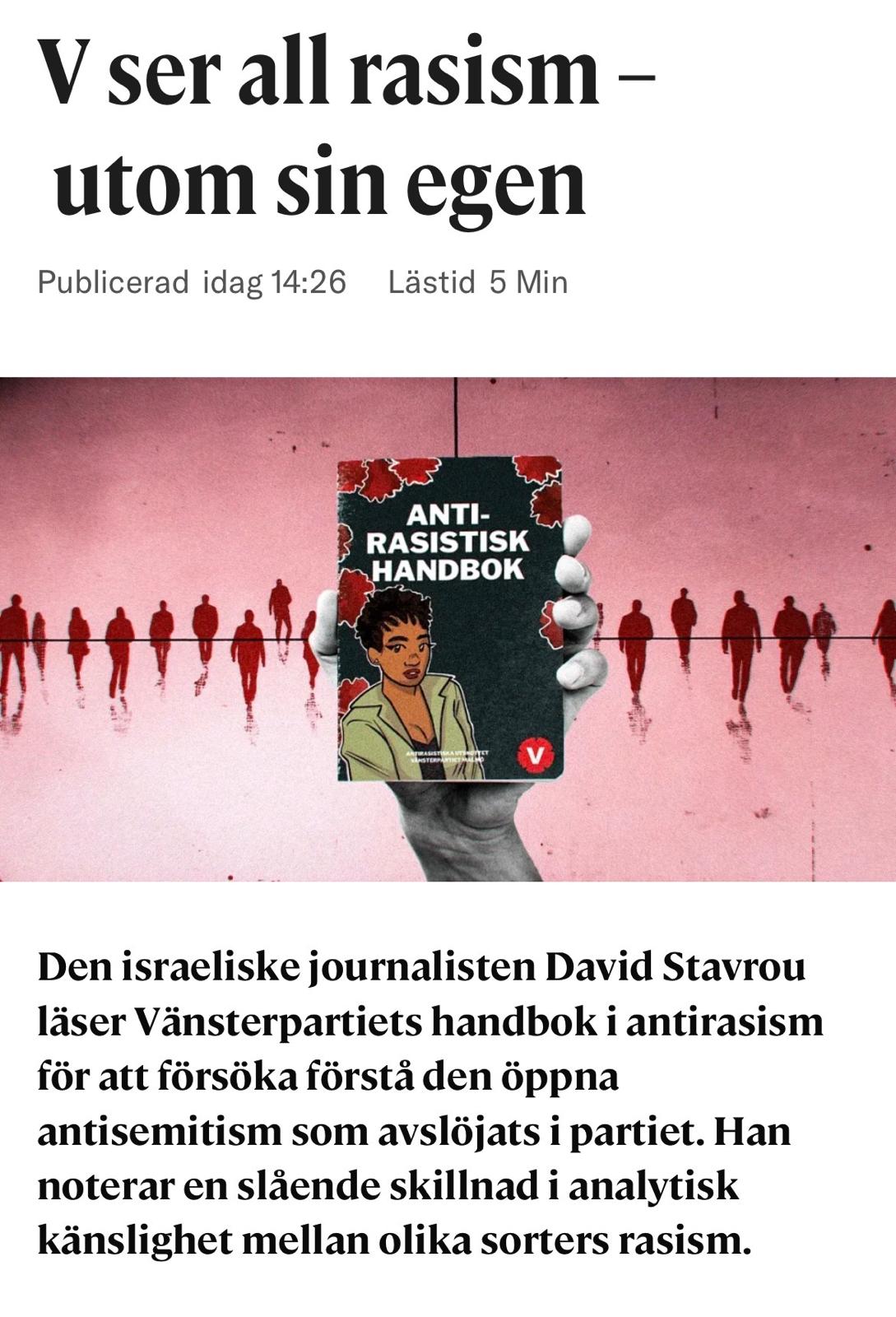
The Left Party Sees All Racism — Except Its Own

In light of Ina Hamdan's widely discussed revelations about members of Sweden's Left Party (Vänsterpartiet) who have expressed support for violent organizations or spread antisemitic propaganda, there is reason to revisit an interesting publication that the Malmö branch of the Party released in 2023 under the title Anti-Racist Handbook.

Published in Kvartal: V ser all rasism – utom sin egen – Kvartal

Vänsterpartiet's Anti-Racist Handbook is a strange document to read in light of current Swedish discourse. On the one hand, it's an ambitious text about how racism and discrimination should be fought. The reader learns about structural racism and intersectionality, Islamophobia and Afrophobia, colonialism and gender power structures and there's an almost academic overview of the various manifestations of racism in Swedish society. In light of this, the book argues that the party should actively recruit "non-white comrades," and proposes a range of symbolic, political and educational measures to combat racism.

On the other hand, there is very little about Islamism and contemporary antisemitism. This is interesting because it may be the key to understanding why people who devote their lives to "anti-racist politics" sometimes end up supporting violent, genocidal and fundamentalist movements such as Hamas and Hezbollah, while spreading propaganda against Jews and their national movement.

The point is the striking difference in how much nuance, complexity and analytical sensitivity the leaders of the Swedish Left Party in Malmö are willing to apply to different social phenomena.

When it comes to racism against Black people, the handbook explains how racism has changed form and modernized. Although African Americans are no longer sold from from one cotton plantation to another and are no longer viewed as people with smaller brains, racism still exists. In Sweden, the handbook explains, there is Afrophobia, manifested through hostility and hate crimes, insults and discrimination, exclusion and structural inequalities resulting from "norms of whiteness" and ideas of white supremacy.

But when it comes to antisemitism, the analysis seems to stop in history.

In the past, Jews were portrayed as the killers of Jesus, as people who kidnapped Christian children and used their blood, or those who started revolutions. The result was pogroms, state violence and discrimination. Twentieth-century antisemitism instead revolved around ideas of Jewish control over governments, the media and financial systems. The result was the Holocaust.

Antisemitism after the Second World War is different, and it is certainly about more than merely "racism against Jews." Christer Mattsson, one of Sweden's leading scholars of antisemitism and violent extremism, describes contemporary antisemitism as an "Israelized antisemitism," in which traditional anti-Jewish stereotypes are no longer expressed directly about "Jews" but are instead projected onto "Israel" or "Zionists."

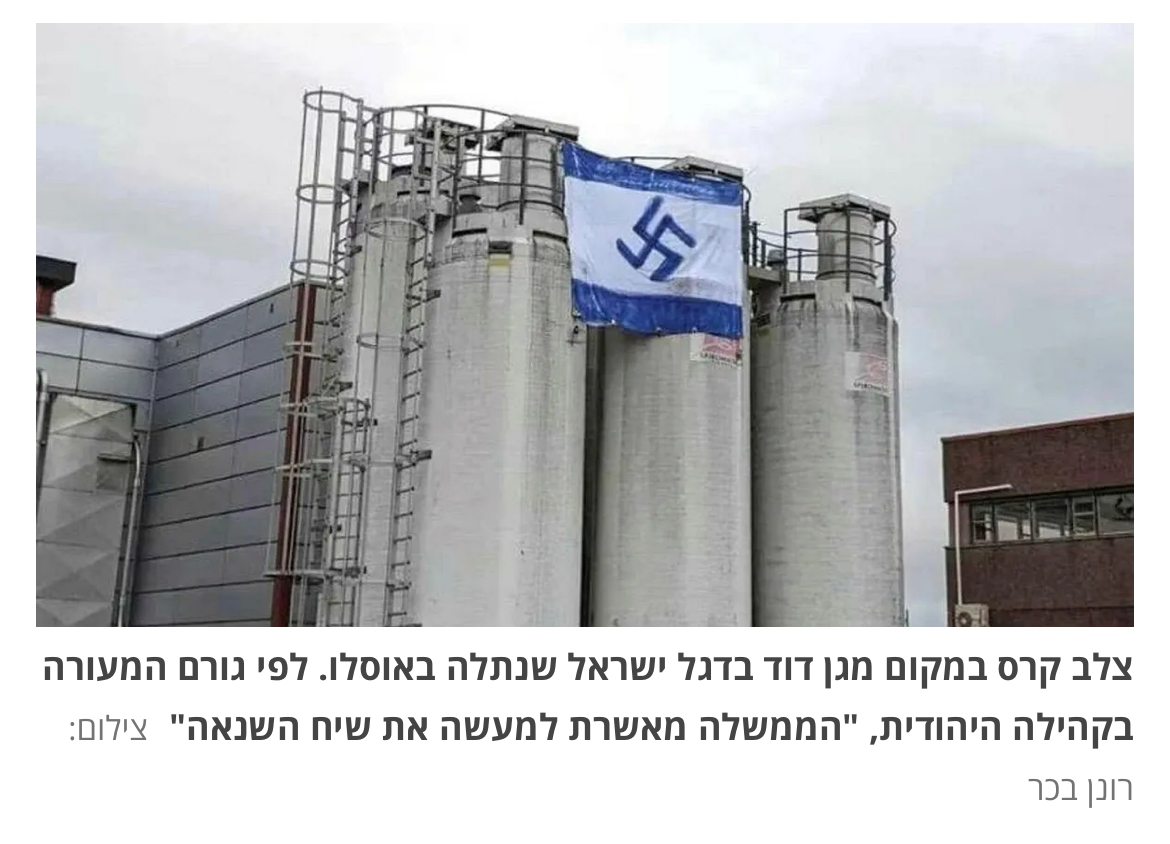
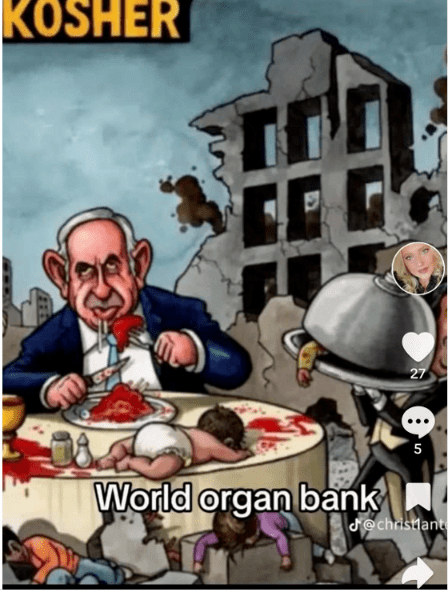
Thousands of people in the streets of Stockholm shout "No Zionists on our streets" on a weekly basis. This is just a new version of "Jews Out!". Their demonstration "street theatre" also portrays Israelis as bloodthirsty creatures who drink the blood of dead infants, or as people who secretly control governments.

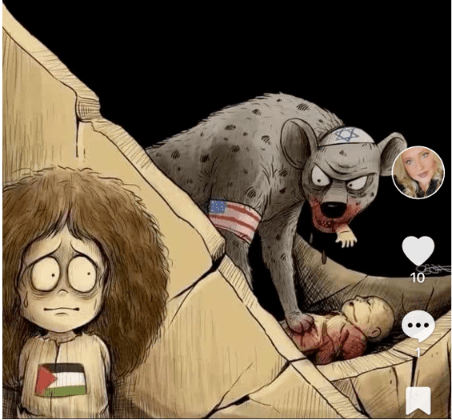
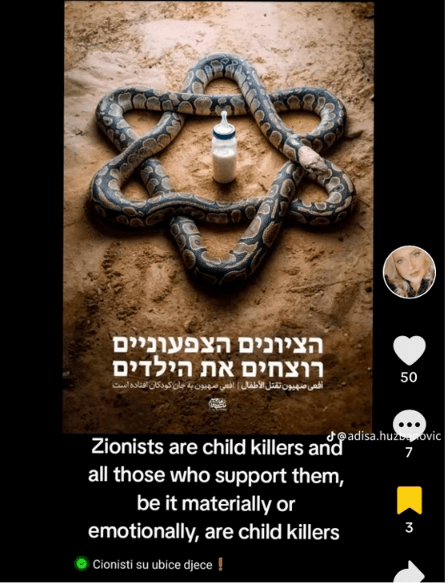
Recently we've also witnessed court cases of Swedish so-called pro-Palestinians who have spread messages on social media destorting the Holocaust and presented images of snakes and hyenas adorned with Stars of David killing Palestinian children. Their defence strategy, which actually convinced the court, was that the Star of David represent the Zionist flag rather than rabbis and synagogues.

This is where the handbook's blind spot becomes visible, and the results are obvious.

At the end of the Left Party's handbook there are quotations from representatives of the Party that reveal the same pattern: extreme sensitivity toward every conceivable form of discrimination on the one hand, and total blindness to extremism and racism when it comes to Jews and Israel on the other.

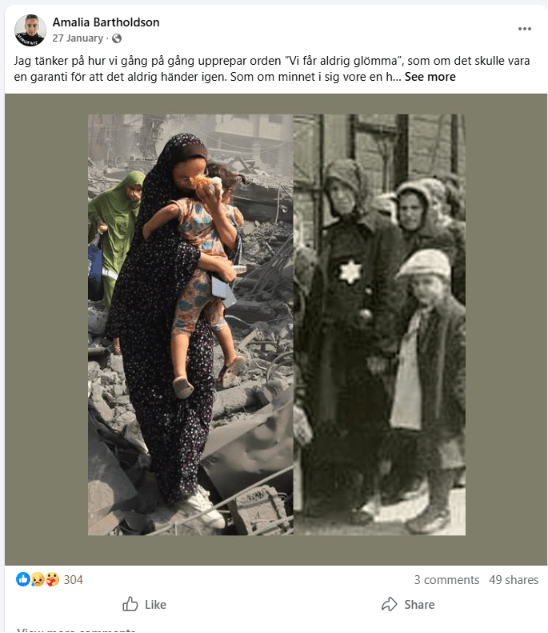
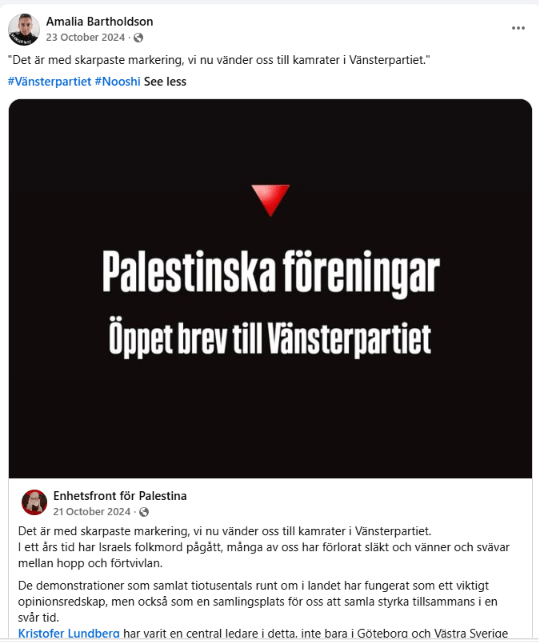
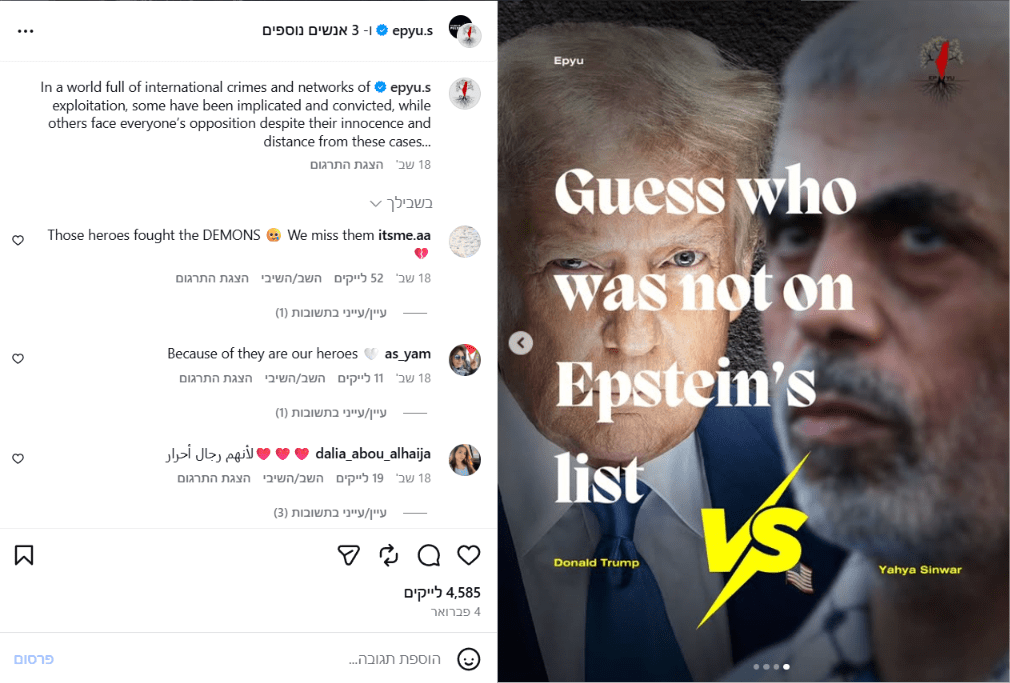
For example, Amelia Bartholdson wrote in the handbook that combating racism requires "awareness, humility and self-awareness." Yet after October 7 she shared a video accusing her own party secretary of being a Zionist because he did not regard October 7 as a legitimate act of resistance (the post came from EPYU, an organization that spreads conspiracy theories and blood libels). She also shared an open letter decorated with a red triangle (known as a Hamas propaganda symbol) supporting Kristofer Lundberg, a well-known supporter of the PFLP, one of the organizations organizations behind the October 7 massacre. Truly a fine display of awareness, humility and self-awareness.

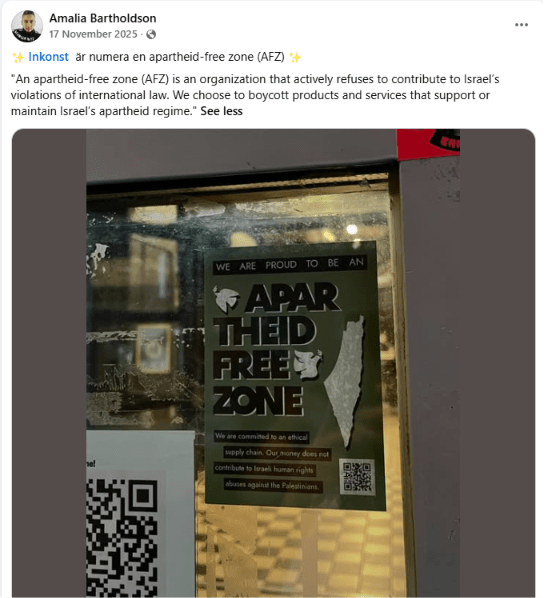
In other posts, Bartholdson compared the situation in Gaza to the Holocaust and supported boycotts and so-called "apartheid-free zones." This is an interesting point, because many of those quoted in the handbook support boycotts that are not directed at products from the West Bank or at far-right Netanyahu supporters, but essentially at anything connected to Israel. It is a bit like boycotting Bruce Springsteen or Beyoncé because of U.S. immigration policy. In an American context that would seem absurd, but when it comes to Israel everyone is lumped together. How does that fit with Sabrin Omar Högelius's statement in the handbook that people should be able to "simply exist, without having to defend their origins"?

"Anti-racism should permeate the party's politics and practice and build broad alliances with civil society," Anders Neergaard wrote in the handbook. Last week he was scheduled to lead a seminar celebrating an intifada (a term that in political contexts clearly implies violence against Israeli and Jewish targets). The other seminar leader was Orwa Kadoura, who was also quoted in the 2023 handbook condemning "racist behaviors, structures and organizations," yet in recent years he has repeatedly shared antisemitic and pro-Hamas material.

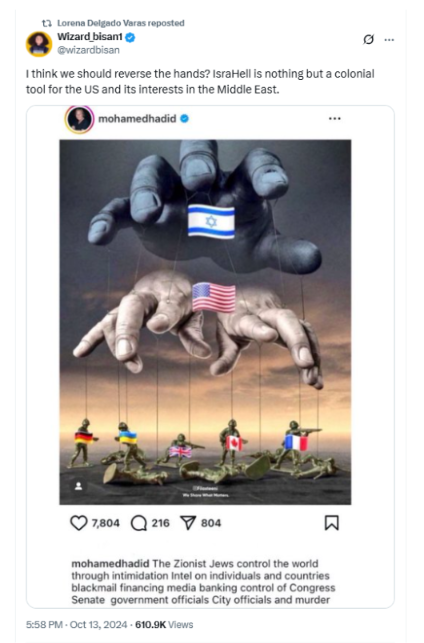
Another prominent former Left Party member quoted in the handbook is Lorena Delgado Varas. "Western anti-racism goes hand in hand with feminism and socialism," she wrote. A few years later, as is well known, there the "hand in hand" had an entirely different meaning as Delgado Varas shared an image on X showing a hand with the Israeli flag controlling a hand with the American flag, which in turn controlled soldiers carrying the flags of various other countries, accompanied by a text claiming that "Zionist Jews control the world" through threats, blackmail, the media, banks and control over the U.S. Congress, Senate and government.

These examples do not even include the individuals Inas Hamdan wrote about in Expressen, because the party's antisemitism problem extends far beyond 25, 50 or even 100 people. The most important lesson of the Anti-Racist Handbook is not what it says about racism, but what it does not say.

It's not about hating Jews. It is about a worldview that blames one people, one movement and one country for all the world's evils and fails to understand what contemporary antisemitism is. Or perhaps understands it perfectly well, but chooses to exploit it in order to win votes.

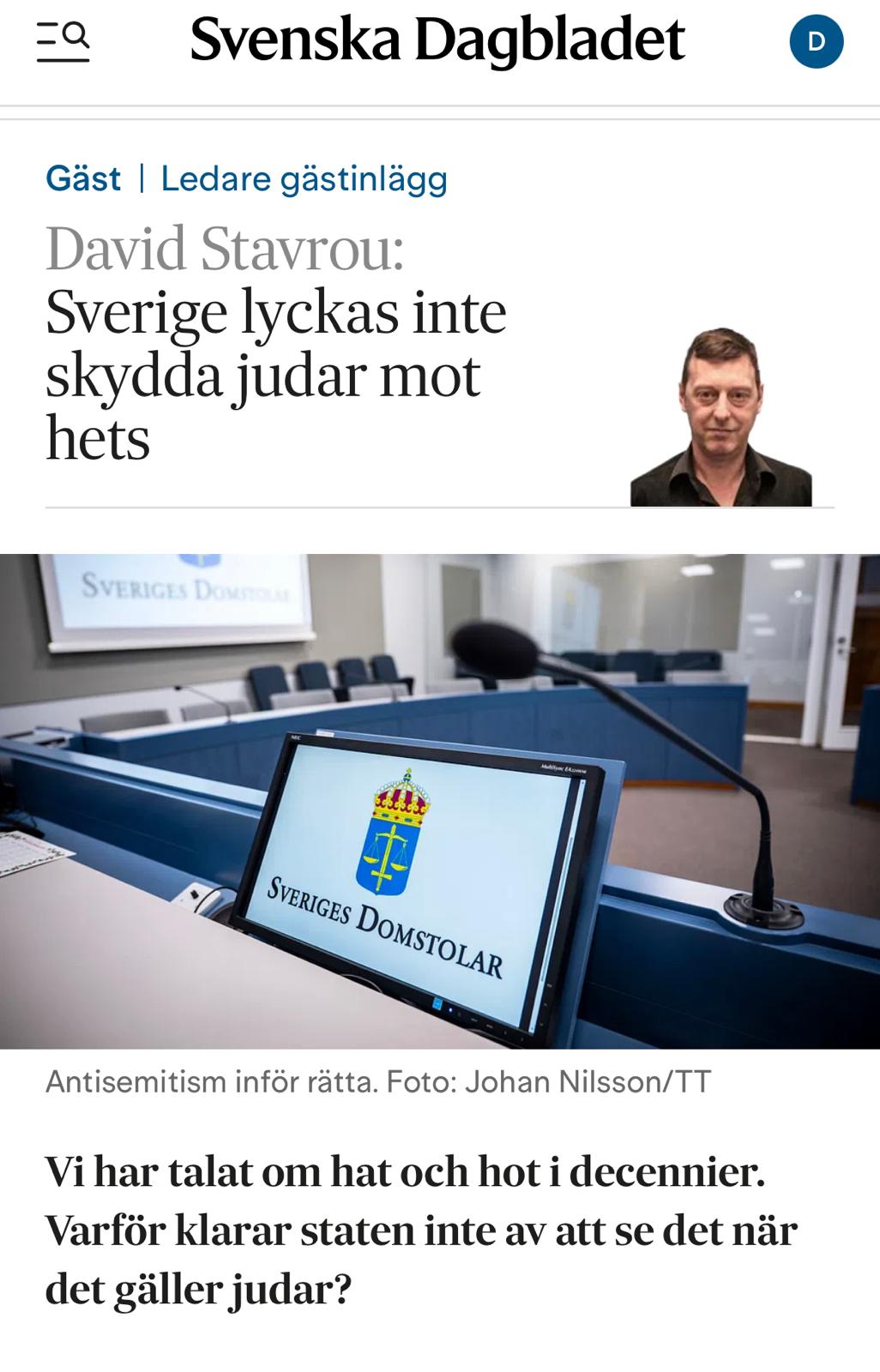
Sweden Fails to Protect its Jews From Incitement

We have spoken about hatred and threats for decades. Why is Sweden still unable to recognize them when it comes to Jews?
Published in Sweden in Svenska Dagbladet: Rättegång om hets mot judar missar målet | David Stavrou | SvD Ledare

In recent years, we have seen what hate propaganda, conspiracy theories, and dehumanizing rhetoric can lead to — especially when it concerns Jews.

A long series of arson attacks, stabbings, and shootings has made Jewish communities around the world increasingly vulnerable. In many cases, the perpetrators were influenced precisely by hate propaganda, conspiracy theories, antisemitic incitement, and Islamist ideology portraying Jews as legitimate targets of violence.

At the same time, two recent court cases in Sweden — one in Helsingborg and one in Gothenburg — concluded in a way that shows that Sweden is beginning to understand the importance of combating extremism, while still failing to fully understand it.

The Helsingborg case concerned charges of incitement against an ethnic group involving antisemitic publications on social media, Holocaust distortion, and conspiratorial content. The defendant was convicted on several counts, including Nazi salutes, publishing antisemitic images, and spreading theories like the one claiming that “4 out of 5 American slave owners were Jewish,” equating Jews with rats, and portraying Jews as a satanic force controlling the world.

At the same time, the man was acquitted on certain counts related to Holocaust distortion — a newer component of Sweden’s incitement legislation. The prosecutor argued that the man’s statements formed part of a broader antisemitic conspiracy narrative involving references to the Illuminati and Freemasons. But the district court was not convinced. During the questioning of Christer Mattsson, an expert on violent extremism and antisemitism and director of the Segerstedt Institute, the defense demanded answers to questions about the number of people cremated in Belzec, Treblinka, and Sobibor, and discussed the extent to which the Israeli government does or does not “weaponize antisemitism”.
Despite Mattsson’s clear answers, and instead of the court telling the defense attorney to stop wasting time on historical revisionism, the result was an acquittal. The defendant’s statements claiming that it would have been impossible to “dispose of 6 million bodies in the ovens,” and the publication of a video describing the figure six million as false, were not considered contrary to generally accepted historical facts and were not considered serious Holocaust distortion.

The problem with the verdict is that the court failed to see the forest for the trees, and the broader antisemitic context disappeared as the court got lost in details. No one has ever claimed that six million bodies were burned or that six million is an exact number. Six million is a widely accepted estimate, supported by millions of confirmed victim names, as well as Nazi documentation, demographic studies, transport records, camp archives, postwar investigations, eyewitness testimony, and forensic evidence.

No serious historian has argued that limited crematorium capacity would suggest exaggerated death tolls or inconsistencies in the history of the Holocaust. The entire debate is absurd. Anyone who has studied this kind of rhetoric knows that Holocaust denial and Holocaust distortion — referred to in academic literature as Holocaust distortion — are very rarely expressed by claiming that the Holocaust never happened. It is usually about relativization, contextualization, and minimization.

This kind of denial is not merely a lie about the past — it is a precondition for genocide: minimizing, justifying, or erasing the crimes and thereby continuing the dehumanization of the victims while obstructing historical accountability and remembrance. In this case, it is not only an insult — it is a call to renew the violence.

In the Gothenburg trial, a woman was acquitted on Wednesday after being charged with incitement against an ethnic group. The images she published online contained classic antisemitic symbols: a snake with a Star of David on its head and large fangs about to attack a naked child; a snake shaped like a Star of David wrapped around a baby bottle with text describing Zionists as child murderers; and an image depicting a hyena eating a child while staring at another child hiding nearby wearing a Palestinian flag on its shirt. The hyena wears a kippah with a Star of David on it.

During police questioning, the woman claimed she had nothing against Jews. “It is Zionists I am speaking against, and what is happening in Gaza is horrific. Seeing children slaughtered every day,” she said.

Christer Mattsson, who also testified in this case, explained that research has long established that snakes and the killing of children are common antisemitic symbols. Anti-Zionism, he explained, becomes antisemitism when it adopts antisemitic stereotypes, conspiracy theories, and so-called antisemitic tropes, such as the notion that evil Jews control global media and governments. Mattsson explained that in this form of “Israelized antisemitism,” “Zionists” assume the role historically assigned to Jews in classic antisemitic ideology and are portrayed as uniquely evil, manipulative, powerful, and conspiratorial.

Despite this, the court missed the point. The fact that a message is critical of Israel does not exclude the possibility that it is simultaneously antisemitic. The Star of David, the snakes, the conspiracies, and the innocent dead children should have been enough. It seems Swedish courts will not act until someone explicitly says, “I really hate Jews and now I’m going to kill a few,” or “Auschwitz is a fictional place.”

But that is not what antisemitism sounds like today. To minimize and distort the Holocaust and spread hatred against the legitimate national movement of the Jewish people is not an exercise in free speech — it is spreading hatred and encouraging violence in disguise.

Things should be called by their proper names, and words have consequences. History gives us many examples of this and they are often associated with specific names – Capital Jewish Museum in Washington DC, the Tree of Life – Or L’Simcha Synagogue in Pittsburgh, Bondi Beach in Sydney, the Krystalgade Synagogue in Copenhagen, the Hypercacher supermarket in Paris, the Jewish Museum in Brussels, Heaton Park Synagogue in Manchester, the Halle Synagogue in Germany, Chabad of Poway Synagogue in California, Golders Green Road in London, the Ozar Hatorah School in Toulouse, and the El Ghriba Synagogue in Tunisia.

All of these acts began with words.

We have spoken about hatred and threats for decades. Why is the state still unable to recognize them when it comes to Jews?