Norwegian Holocaust Center Events on Nakba and Gaza War Draw Ire From Israeli Embassy

Israel's embassy in Norway condemned the events organized by the Norwegian Holocaust Center in Oslo, saying they 'legitimize antisemitism.' The center said the aim is to 'understand shadows of historical traumas without equating them'

Published in Haaretz: Norwegian Holocaust Center Events on Nakba, Gaza War Draw Ire From Israeli Embassy – Jewish World

Israel's Embassy in Norway called for an independent Holocaust studies center in Oslo to cancel two upcoming events that it claims are a "grotesque distortion of Holocaust memory."

As part of a lecture series titled "In Shadow of War – The Way Forward," the Norwegian Center for Holocaust Studies and Religious Minorities is hosting two events with the University of Oslo this spring. The first event, which took place on Thursday, was a lecture by Prof. Nadim Khoury titled "Nakba and Holocaust as cultural traumas."

According to the University of Oslo's website ahead of the event, Khoury – a Palestinian professor of international studies at the Innland Norway University of Applied Sciences – "will trace their trajectories since 1948 and explore how they are intertwined and how the tensions between them are shaping the path forward in Israeli and Palestinian lives."

A second event, scheduled for June 3, will feature Israeli historian and Brown University professor Omer Bartov, whose contributions to Holocaust scholarship were recognized by Yad Vashem in 2019.

In an April 28 X post, Israel's embassy in Norway called on the HL Center to cancel the events "immediately."

"The Norwegian Holocaust Center's decision to host events drawing parallels between the Holocaust, the 'Nakba' and the war in Gaza is a grotesque distortion of Holocaust memory," the post read. The embassy added that the center has chosen political activism over historical responsibility and it called upon it to cancel the events and stop "legitimizing antisemitism in its modern forms."

Addressing the criticism in a social media post, the HL Center explained that it invited academics from different environments and backgrounds as speakers in order to "address and reflect on challenging topics without ending up in polarized debates where constructive nuance tends to disappear."

HL Center director Jan Heiret told Haaretz that the event with Khoury was supposed to follow another event hosting Martin Auerbach, former director of the National Israeli Center for Psychosocial Support of Survivors of the Holocaust and the Second Generation (AMCHA). Auerbach couldn't come due to uncertainty around the ongoing conflict with Iran, but Heiret said the center will make another attempt to host him in the autumn.

Heiret added that both events are meant "to find a way out of a destructive spiral of hatred, dehumanization and violence."

"We must understand the long-lasting shadows of historical traumas without equating, or even putting up, the Holocaust with the Nakba – which would be a historical distortion given the events are so different in nature, course and scope," Heiret said. "We acknowledge that the consequences for the individuals and collectives traumatized by them are interconnected, and that the denial of the trauma of the other lies at the core of the dynamics of the Israeli-Palestinian conflict."

Leif Knutsen, an activist and the chair of the Jewish Community of Norway, says the academics invited to speak at the HL Center "represent a fringe element," and that it's a recurring issue.

"The center doesn't question them; it doesn't bring anyone to balance the discussion and it doesn't present their perspectives in anything like a critical light," Knutsen said. "It's always in the same direction – one that's beyond critical to Israel. Someone should be sitting on stage and presenting an alternative point of view or at least a nuanced one."

Knutsen said Norway's Jewish population of about 2,000 is particularly vulnerable due to a sharp rise in antisemitic attitudes. In its most recent report published in early 2024, the Norwegian Center for Holocaust and Minority Studies documented an increase in antisemitic attitudes among Norwegians, with 11.5 percent of survey respondents having "pronounced prejudices" against Jews.
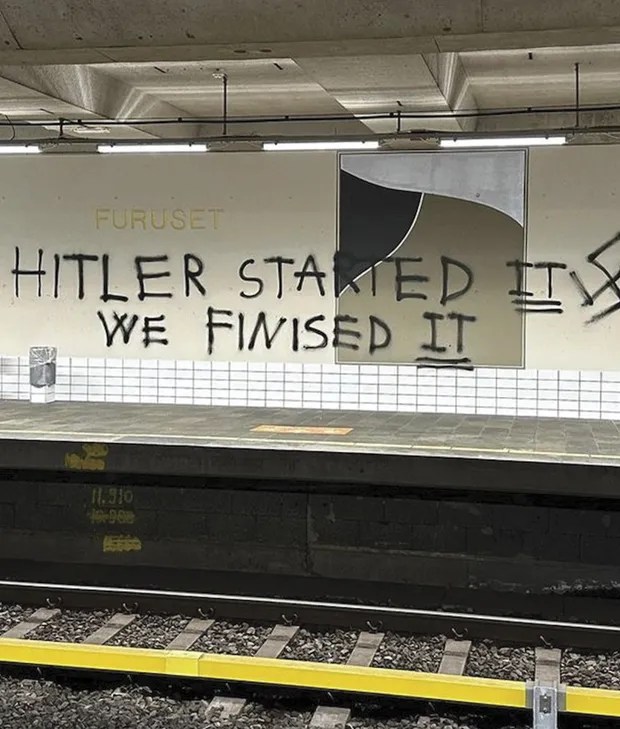
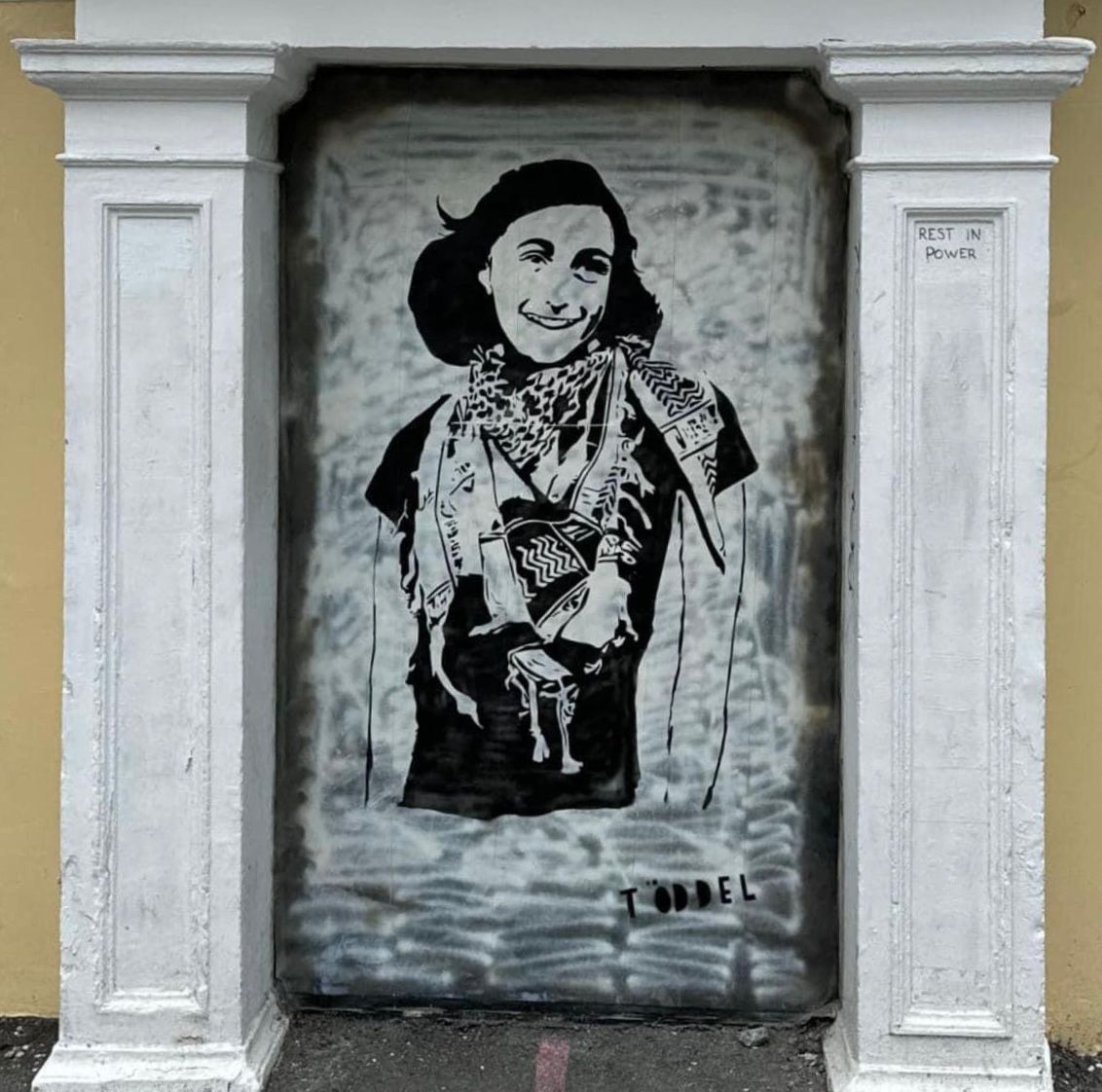
Images from Norway, 2024

"The center should be combating antisemitism rather than promoting a one-sided program," he said. "Even worse is the effect that such extreme voices have on Norwegian Jews who are being lectured about their own understanding of reality on the basis of a supposedly academic framework that completely ignores the real conditions in Norway."

According to its website, the Norwegian Center for Studies of the Holocaust and Religious Minorities is a research, education and documentation center intended to focus on the Holocaust and other genocides, as well as antisemitism and minority rights in Norway. The center's exhibitions receive roughly 50,000 visitors each year. It was established in 2001 using capital from a national restitution settlement over World War II between Norway and the country's Jewish community.

The center has previously faced criticism for its programming. In a letter sent in September 2024, more than 100 Norwegian Holocaust survivors and their descendants accused the center of failing to use "its mandate to combat the hostility we experience," and that instead of fighting antisemitism it was positioning itself as a "critic of Israel's policies and military tactics." The letter also said the center manifests "bias in its choice of experts and supporting a narrative that's negative toward Israel as a Jewish state."

In another letter from January 2025, the Norwegian branch of B'nai Brith criticized Heiret for mentioning Palestinians twice while delivering a speech on International Holocaust Remembrance Day, amid Israel's war in Gaza.

"By focusing on Gaza and Palestinian civilians who have lost their lives during the commemoration of the Holocaust and the genocide of the Jews in Europe, at a time when one-sided and anti-Israel portrayals make debates related to Israel very un-nuanced, the director has in a blatant way contributed to the tendency to relativize the Holocaust and the genocide of the Jews," the letter said.

"As the center's own research shows, demonization of Israel leads to increasing antisemitism in Norway. Trivialization of the Holocaust is, as is well-known, defined as antisemitism."
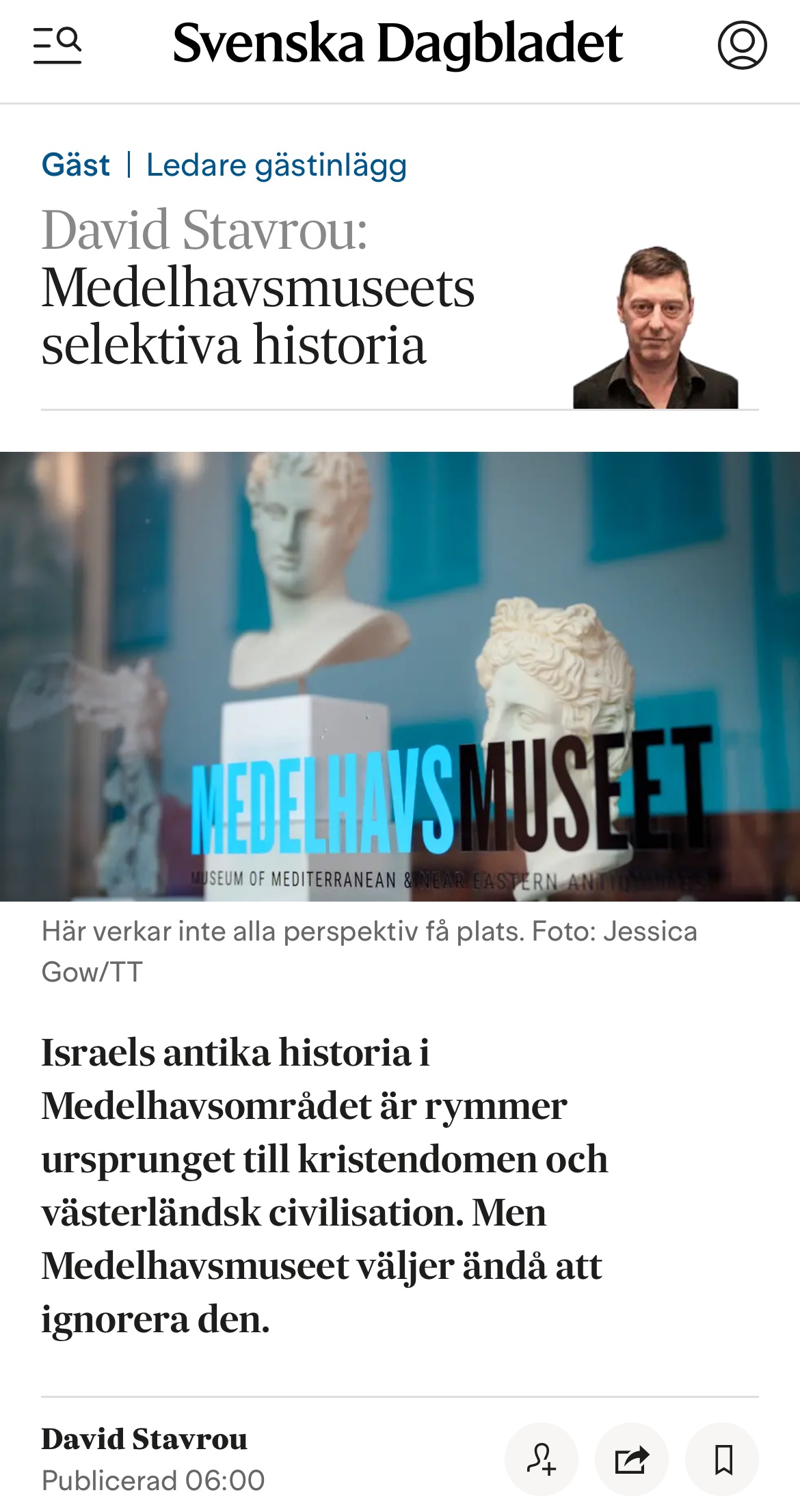
Medelhavsmuseet's Selective History

When it comes to the past, Medelhavsmuseet (The Swedish Museum of Mediterranean and Near Eastern Antiquities) largely ignores Israel, but when it comes to the present the museum presents only different shades of the same narrative, one that excludes a balanced, mainstream Israeli perspective. This in itself is not necessarily a problem. However, since public funds are being used and this is all payed for by tax-payers money, why not invest in presenting all sides of the story? Are Israelis so dehumanized that their pain, loss, and sacrifice are not considered worthy of being told?

Published in Swedish in Svenska Dagbladet: https://www.svd.se/a/K8Bn37/medelhavsmuseets-selektiva-historia

The lecture hall at Medelhavsmuseet was full on September 4th. The evening seminar which took place there was called "Repair, Return and Reconstruction for Palestine’s Decolonized Future", and in case the message wasn’t clear enough from the name, during most of the evening there was a photograph of Gaza and a slogan in Arabic and English projected on the screen behind the panel members. The slogan read: “Glory to Gaza”.

The seminar itself wasn’t exactly intellectually challenging and the message was pretty straight forward. When Israel was mentioned by all speakers it was associated with very specific words. Genocide, occupation, oppression, destruction, starvation, ethnic cleansing, collective punishment and settler-colonialism were some of the favourites. There was also a consensus about the Palestinian reaction to the Israeli aggression. Here the popular words were: education, culture, conservation, de-colonization, renovation and restoration. Listening to the panel members it sounded like Palestinian resistance is all about Mahmoud Darwish poems, architecture podcasts and a struggle for free press.

In an hour and a half of debate there was nothing about Palestinian terror or violence, there were no suicide bombings or rockets, Hamas wasn’t mentioned and October 7th was just the date when the current Israeli offensive started. Since all panel members were engaged in architecture and restoration and apparently very well acquainted with Gaza, it was interesting that the immense military underground tunnel infrastructure, a remarkable architectural achievement in itself, was not mentioned. There was also no mention of another kind of physical destruction – the one of Israeli communities. No destroyed and abandoned kibbutzim, no apartments demolished by Qassam rockets and no homes burned to the ground with entire families still inside. There were no hostages, no executions and no organized rape and sexual violence. The whole event felt like a motivational inspirational gathering for activists, where all the speakers clearly presented a Palestinian narrative, and many in the audience were members of the so-called "pro-Palestinian" movement. Some wore kaffiyehs, a couple of them even had red triangles (a Hamas symbol) on them.

In itself, all this is completely legitimate. In a democracy, people are free to organize whatever seminar they wish. What is, however, somewhat troubling is that Medelhavsmuseet is part of a government agency (Statens museer för världskultur) funded by taxpayers, with tens of millions of Swedish Crowns each year. When Rani Kasapi, Head of Content and Learning at Världskulturmuseerna, opened the seminar, she also mentioned that other institutions were also involved in organizing it: the Swedish Institute of International Affairs (UI), the Swedish Research Institute in Istanbul (SRII), and the Swedish Arts Grants Committee. All of these are also fully or partially funded by Swedish taxpayers, raising the question – why should funds that could be spent on education and culture for the benefit of all be used for a one-sided, highly political event based on foreign policy propaganda?

Perhaps, the idea was to have another event to balance the message and show another side and a different narrative. And indeed, on October 7th, a very symbolic and politically charged date, another event was planned by the museum. This time the title was: What’s Happening in Israel Now? (Vad händer i Israel nu?). In a perfect world, this could have been the the missing piece, the event that shows that the situation is more complex than just propaganda. But the world isn’t perfect. According to publications, the event had only one speaker – Göran Rosenberg. The same Rosenberg who only a few months earlier described Israel as a "morally dead project" and questioned its future existents in its current form. It’s as if the museum invited an anti-vaxer to lecture about the importance of vaccinations. Was it really so hard to find another voice to describe the situation in Israel? One who at least believes in its future?
Medelhavsmuseet has hosted more events about the region in the last couple of years — for example, there was a book talk with Cecilia Uddén, one of Swedish media’s most critical voices when it comes to Israel. There was also a UI event featuring several Israeli left-wing activists. But the bigger picture is that, aside from rare exceptions, Medelhavsmuseet largely presents different shades of the same narrative, one that excludes a balanced, mainstream Israeli perspective. This in itself is not necessarily a problem. However, if public funds are being used, why not invest in presenting all sides of the story? Are Israelis so dehumanized that their pain, loss, and sacrifice are not considered worthy of being told?

Looking a bit deeper, it’s obvious that Medelhavsmusset doesn’t ignore the Israeli perspective only when it comes to the current conflict. For some reason, it ignores Israel’s existence all together (apart from occasionally mentioning it as a colonial bully destructing the fascinating, authentic and noble people of the orient). Israel as a modern state and the ancient Jewish entities in the Eastern Mediterranean like the Kingdoms of Jehuda and The Northern Kingdom of Israel are a treasure of history, archaeology and ancient culture. They’re the origin story of Christianity and Western civilization and a fascinating story of cultural, social and linguistic revival. Still, in the last twenty years of exhibitions, it seems like Medelhavsmuseet hasn’t had a single exhibition presenting Israeli or Jewish culture and history. I spoke with two historians who have studied this in detail. One of them said that “ancient Jewish history is almost completely erased from the museum’s portrayal of the ancient Mediterranean region”. The other said that for historical reasons, the museum focuses on Egypt and Cyprus, which is fine, but even when those cultures had strong connections to Jews in the region, those connections are usually not mentioned, and even on the rare occasions that they are the name Israel never is.

And they're right. Medelhavsmuseet has presented many exhibitions about Egypt, Greece, Rome, Syria, Cyprus, Turkey – and even non-Mediterranean countries such as Iraq. In fact, the only recent exhibition that touched on Israel was “Nakba,” which according to the Jewish Central Council was highly one-sided and sparked debate over whether the museum was pursuing a political agenda. The museum responded that “it is not a historical exhibition, but a small audio exhibition with stories”. When representatives from the Jewish Central Council met with the superintendent of Statens museer för världskultur regarding this, their concerns were not taken seriously.

There’s no doubt that the story of the Nakba should be told. It’s an important part of the region’s history. But if this was only a “small audio exhibition with stories”, where is the next audio exhibition with the other stories from the same war – for example, those about Holocaust survivors who were killed in the battle field after being freed from Auschwitz, or those about massacres of Jews that took place during the same time, or the ones about the Jordanians expelling the Jews from Jerusalem’s old town or the Egyptians illegally occupying Gaza?

During the debate with the Jewish Central Council, the museum mentioned one exhibition – Egypt’s Jews (Egyptens judar), perhaps as one with a more “Jewish narrative”. But the truth is that even when the exhibition explains how Egyptian Jews were attacked, harassed, arrested and expelled in the 1950s and 60s, it’s clear that the message is that this is a direct result of Zionism. The exhibition explains how for 3,000 years Jews were “totally integrated in the surrounding society” (helt integrerade i det omgivande samhället) and only when the UN decided to “divide Palestine” and the 1948 war broke out, Egyptians started “anti-Zionists riots” and resisted “foreign influence”. These texts are a wonderful example of verbal acrobatics. There’s no Egyptian antisemitism, no Muslim Brotherhood (the mother movement of Hamas) promoting genocidal racism against Jews, just an unfortunate mixing up (ihopblandning) of “Jews” and “Zionists”. This makes sense since one of the exhibition’s production partners was Magda Haroun, Head of the Jewish Community Council in Egypt and a vocal opponent of Israel who claims that Zionism is a racist movement. Interestingly, the exhibition which mentions the wars between Israel and Egypt, doesn’t discuss Egyptian President Saadat’s historic recognition of Israel and the resulting Israel-Egypt peace agreement. One can only assume that the reason is that if the museum tells its visitors about Egypt recognizing Israel, this may lead to a demand that Medelhavsmuseet does the same.