Swedish Opposition Could Force Shift on EU-Israel Association Agreement

Sources say the Swedish Foreign Affairs Committee's new Social Democratic chair is pushing for a tougher policy toward Israel. The Center Party could determine whether a majority backs seeking suspension or termination

Published in Haaretz: Swedish Opposition Could Force Shift on EU-Israel Association Agreement

The Swedish parliament's Foreign Affairs Committee discussed Thursday whether Stockholm should advocate for suspending or terminating the European Union's association agreement with Israel, as the opposition's narrow majority may help advance the initiative.

Sweden's Left Party has in the past called for the EU-Israel Association Agreement to be terminated, while the Social Democrats and Greens have advocated for suspending it. The Center Party could therefore prove decisive: If all four parties agree on a common position, their 176-seat majority could be used to change the line the caretaker government is expected to represent at EU level.

No formal statement was made after the meeting. Representatives of the Center Party and the Social Democrats said they will release a statement in the future, while the Sweden Democrats' foreign policy spokesperson, Aron Emilsson, said he does not want to see the agreement frozen. He believes that would be harmful and would leave Sweden isolated within the EU.

Sweden's September 13 election produced an exceptionally narrow result, with the Social Democrats remaining the largest party and, together with the rest of the opposition, holding 176 of parliament's 349 seats. But the Social Democrats' majority has so far proved insufficient to form a government.

The Center Party refuses to join a government that includes the Left Party, while the parties remain divided over the composition and policies of a future coalition. Outgoing Prime Minister Ulf Kristersson and his center-right government therefore remain in office in a caretaker capacity while Social Democratic leader Magdalena Andersson tries to find a viable parliamentary arrangement.

This leaves Sweden in an unusual situation: It may take weeks or even months before a new government is formed, but the four opposition parties that won a razor-thin parliamentary majority – 176 seats compared to the coalition's 173 – can already use it to influence government policy, particularly on the relatively few issues on which all four can agree.

Sources familiar with the details have told Haaretz that Former Social Democrat Deputy Prime Minister Morgan Johansson, who has taken over as chair of the Foreign Affairs Committee, is pushing for a change in Sweden's policy towards Israel. According to the sources, when the committee meets tomorrow, October 8, it is expected to discuss whether Sweden should advocate suspending or terminating the EU-Israel Association Agreement.

Although the Foreign Affairs Committee itself will not formally vote to suspend the agreement, a more consequential stage comes the next day.

On Friday, the Swedish government will consult Sweden's Committee on European Union Affairs, ahead of a meeting of the EU Foreign Affairs Council on Monday. A parliamentary majority could then establish a new Swedish position, potentially requiring the caretaker government to advocate suspending or terminating the EU-Israel agreement despite it not being the government's own policy.

One issue which may delay the process is the fact that the four parties which hold the current parliamentary majority do not yet appear to have agreed on a common formulation, with some calling to suspend the agreement and another to terminate it.

"Now the Center Party must show its hand: Will it follow the left's lead and collectively punish all Israelis, or will it safeguard Sweden's relations with Israel?" a government source told Haaretz.

Any actual suspension or termination of the agreement would ultimately have to be decided at the EU level, which means that the Swedish move will affect Sweden's bilateral relations with Israel rather than Israel-EU relations.

However, a new Swedish position could also make a difference on a European level, since it will mean that another significant European country joins Spain, Ireland and other governments pushing for measures against Israel under the EU-Israel Association Agreement.

The European Commission has already proposed suspending some of the trade preferences Israel receives under the agreement, a measure that can be approved by a qualified majority of EU member states, but the proposal has so far failed to secure sufficient support in the Foreign Affairs Council. A Swedish shift would alter the balance among EU governments and add political weight to efforts to turn the Commission's proposal into EU policy.

The last time a Social Democratic government came to power in Sweden, in 2014, one of its first major foreign-policy decisions was to recognize the State of Palestine, making Sweden the first Western European EU member to do so while already a member of the Union.

The move was followed by years of some of the worst relations between Israel and Sweden in decades, including repeated diplomatic confrontations and periods in which senior-level contacts were severely strained. Relations gradually improved in the years that followed, particularly after Sweden's then-foreign minister Ann Linde visited Israel in 2021, and improved further under the center-right government that took office in 2022.

A new Swedish push to suspend the EU-Israel Association Agreement would therefore risk reversing a decade-long process in which the two countries slowly rebuilt their political relationship.
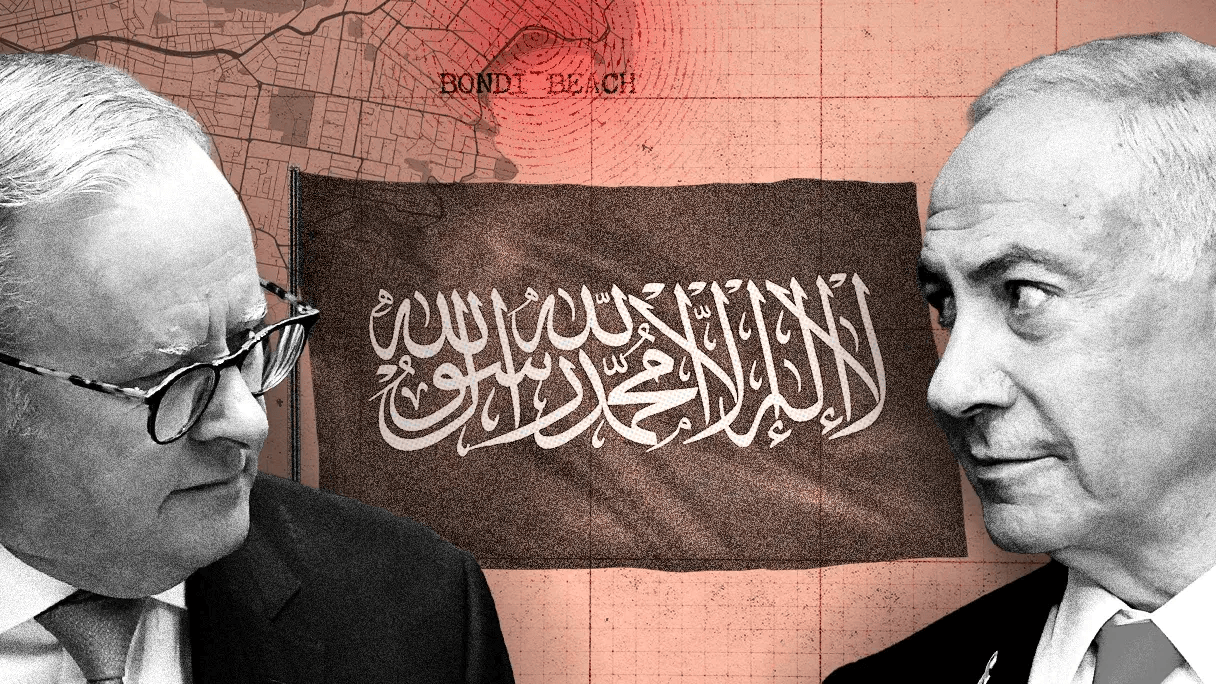
Zero tolerance” is no longer enough after Bondi Beach. Political action is required – and it is urgent

Published in Swedish in Kvartal: https://kvartal.se/erikhogstrom/artiklar/hur-paverkar-politiken-terrordad-mot-judar/cG9zdDozNzA5NA

Reactions to the terrorist attack at Bondi Beach have largely focused on the hateful rhetoric believed to have contributed to the violent extremism that claimed 15 lives – the deadliest attack on Jews since October 7. That focus is understandable after two years of global demonstrations under slogans such as “globalize the intifada.”

At the same time, the attack is rooted in more than a toxic debate climate. It also involves a geopolitical and security dimension that has primarily been raised by Israeli officials.

According to Israeli intelligence assessments, links had already existed for several months between Australian pro-Palestinian activists and groups such as the Islamic State, al-Qaeda, and Iran’s Revolutionary Guard. Against this backdrop, Israeli Prime Minister Benjamin Netanyahu accused Australia’s prime minister of betraying the country’s Jews. After the attack, Netanyahu stated that he had already warned in August that recognizing Palestine would, in his words, “pour fuel on the antisemitic fire, reward Hamas terrorists, and encourage threats against Australia’s Jews.”

This raises a number of questions. Does Australia really need Israeli intelligence to identify threats against its Jewish population? And more importantly: is Netanyahu truly the right person to lecture others about being unprepared for Islamist terrorism, when his own government bears responsibility for Israel’s worst catastrophe in decades?

But Netanyahu is not the central issue. What matters is that the warnings proved correct. A massacre of Jews took place in Australia, carried out by men who had ISIS flags in their car. Australian authorities knew that one of the perpetrators had ties to ISIS and that his father, the other perpetrator, legally owned at least six weapons. Despite this, no warning flags were raised, and the Jewish event lacked police protection when the attack occurred.

Islamists operate freely in Sweden

Against this background, Europe should ask itself a clear question. If Australia’s policies over the past two years resemble those pursued in many European countries, could what happened at Bondi Beach happen here?

Both domestic and foreign policy must be scrutinized. Domestically, this concerns insufficient resources to protect Jewish sites, an inability to counter conspiracy theories, and complacency toward Islamist actors. These challenges affect all European countries, including Sweden. Swedish journalists have recently exposed how Islamists operate freely in Sweden, how Iranian actors direct terrorist activity via Swedish organized crime, and what links Swedish activists have to terrorist movements such as the PFLP.

“Jews in countries that do not take Islamist terrorism seriously end up paying the price, regardless of whether government passivity stems from fear, incompetence, or indifference.”

Sweden is not alone. According to a recent Europol report, jihadist terrorism remains a central security challenge for the EU, with groups such as al-Qaeda and the Islamic State exploiting the conflict in Gaza. Added to this is Hamas, which, according to Israel’s Mossad and European intelligence services, has planned attacks against Jews in Europe since 2023. The causal link is clear: Jews in countries that do not take Islamist terrorism seriously pay the price.

Kvartal

Why foreign policy matters

How, then, does foreign policy factor in? Can recognition of Palestine or harsh criticism of Israel encourage terrorism? Countries such as Spain, Norway, and Ireland pursue a clear line against Israel. Like Australia, they have recently recognized Palestine; they voice strong opposition to Israel in international forums and serve as comfortable host countries for movements that not only oppose Israeli policy but view the state itself as an illegitimate colonial project.

Australia’s prime minister firmly rejected Netanyahu’s claim that the country’s foreign policy had any connection to the attack. He may be right – such accusations require evidence. But that does not mean foreign policy is irrelevant to the climate surrounding antisemitic hate crimes.

First, governments – unlike individuals – must understand the unique situation Jews face. Demonstrations are marked by hatred, aggression, Nazi comparisons, terrorist symbols, and boycotts. Of course, protests are legitimate in a democracy, and no one seriously claims that all participants are violent antisemites. But at the political level, it is unclear whether countries such as Norway fully grasp what their Jewish populations are forced to endure. The situation is worsened by the fact that no other conflict in the world is covered as intensely – and, according to many, as one-sidedly – in Norwegian media. This has an enormous impact on Norway’s small Jewish community.

Second, does the tax-funded public sphere remain neutral, or does it contribute to an unsafe environment for Jews? What do teachers say? What do libraries display? How do healthcare professionals behave? This is a matter of public safety, not freedom of speech. In February, a video went viral showing two nurses at Bankstown Hospital in Sydney boasting about refusing care to – or even killing – Israeli patients. In Ireland, an official report found that school textbooks contain serious distortions of the Holocaust and Jewish history, which Jews in the country say fuel antisemitism. In Spain, Jewish organizations similarly warn that some teachers use classrooms for anti-Israel activism.

“Zero tolerance” is no longer enough

We can continue debating the limits of protest, but we must also scrutinize institutions. The state must protect freedom of expression, but it must also guarantee safety. That requires schools, hospitals, and libraries free from political propaganda and symbolic acts intended to influence public opinion.

Finally, it is a fact that jihadist terrorists in Europe are often exposed with the help of Israeli intelligence. Can Jews in Spain and Ireland truly trust that their governments will cooperate with the Mossad to save lives, when those same governments cannot even tolerate Israel’s participation in Eurovision?

After Bondi Beach, Europe’s governments must decide where they place their resources and political capital. If they are serious about protecting their Jewish populations, “zero tolerance” and symbolic gestures of solidarity are no longer sufficient. Political action is required – and it's required urgently.