For star Swedish composer Jacob Mühlrad, 'making music is like practicing religion.' Indeed, his works are heavily informed by Jewish themes, Hebrew words and Holocaust trauma.
David Stavrou
STOCKHOLM – Jacob Mühlrad used to be a bad student. A very bad student. Because he suffered from dyslexia, he had difficulty reading and writing, and in school they thought he was unmotivated and lacked proper learning skills. Although he came from a middle class Jewish family living in an affluent neighborhood in west Stockholm, he was seen as a “problematic” child. A lonely child, he suffered from panic attacks and depression at the early age of 9, disturbed his teachers in the classroom and got into fights in the schoolyard. All that was accompanied by other, physical health problems.
Today Mühlrad is considered one of the most promising young classical composers in the world. At the age of 30, he is the youngest composer to have written for the Royal Swedish Opera. Beyond that, he has written for Sweden’s leading orchestras and choirs, his music has been performed in concert halls all around the world, including Carnegie Hall in New York, he has won scholarships and awards in Sweden – and this year an album containing four of his choral works was released by Deutsche Grammophon.
While he has been called a “wunderkind” on several occasions, as a young boy Mühlrad was not interested in music at all. That all changed when he was 15. The trigger for that may be familiar to anyone one who grew up in Israel (and other countries) in the last 40 years: an episode of the classic, animated French television series “Once Upon a Time,” created and produced by Albert Barillé, which was broadcast on educational channels in the late 1970s, 80s and 90s.
“The TV was on and suddenly I heard music. It was a work by Bach,” Mühlrad recalls in an interview with Haaretz. “I heard it as something spiritual and it affected me deeply. One day I heard my sister, Hannah, playing the piano. She was a good student, I wasn’t; she played the piano, and I didn’t. I was just looking at her and tried to imagine what it felt like to play like that. She played a Bach prelude. I remember wanting to feel that way too. That summer, my father had a broken electric piano that my sister once received for Hanukkah, repaired. At first, it didn’t interest me at all, but eventually I started playing around with it. It was easier for me to associate myself with a plastic electric instrument than with a shiny, polished piano. My mother suggested that I take a lesson with my sister’s teacher, Regina Steinboch. At first I resisted, but eventually I took a lesson and I was immediately hooked.”
At first, Mühlrad experimented with his new toy. “I pressed a button that started a pre-programmed piece,” he remembers. “It was a familiar work by Mozart, ‘Rondo Alla Turca’ (the final movement of the Piano Sonata No. 11). I tried to play it myself, to find the right keys, and I did it. It was easy, I just played it. Then I showed the piano teacher. She laughed at the weird way I played it. I almost felt like a clown. She talked to my mother and told her what every Jewish mother wants to hear – that her son is very talented. My mother was always very supportive of me. But I wanted to learn more, and I wanted to learn faster. When I watched ‘Once Upon a Time’ on TV again, I asked my teacher for the name of the piece that opens it. She said it was Johann Sebastian Bach’s Toccata and Fugue in D minor. When I asked if she could teach me how to play it, she explained that the piece was written for organ and that I could play it in perhaps five years. It needs to be done step by step, she explained. But I hate doing things step by step. I’ve never done anything step by step. She said that I couldn’t learn it without reading sheet music, I said I could mimic her fingers – and she claimed that in that way it would take forever. We finally agreed that we’d try to do it my way and if it didn’t work out, we’d do it hers.
Swedish Jewish organization blasts church’s decision, saying it cements its image as anti-Israel, while some of the church’s own bishops label it a ‘one-sided fixation on Israel’.
STOCKHOLM – A decision by the Church of Sweden last week calling on ecumenical organizations to investigate Israel as an apartheid state has been condemned by the country’s leading Jewish body and members of the church itself.
According to the formal decision, the General Synod (the church’s decision-making body) has commissioned its Central Board to “raise the issue of scrutinizing the implementation of international law in Israel and Palestine, also from the perspective of the United Nations convention on apartheid and the definitions of apartheid in the Rome Statute.”
The church’s director of international affairs, Erik Lysén, told Haaretz that “the addendum suggests that the Central Board raise the issue with ecumenical organizations such as the Lutheran World Federation and the World Council of Churches. How the task is handled will be a matter for the Central Board to decide. There is no specific time frame for this.”
The latest decision, which was supported by members of the Synod who are part of Sweden’s Social Democratic and Center parties, has been criticized both within and outside the church.
Aron Verständig, president of the Council of Swedish Jewish Communities, said his organization found the decision unacceptable. He said the Church of Sweden “repeatedly chooses to criticize the only Jewish state, without criticizing any of Israel’s neighbors for the persecution that Christians are subjected to.” Verständig added that “the result of this decision is unfortunately that the image of the Church of Sweden having a strong anti-Israel approach is cemented.”
When asked if the decision was a result of the church’s will to protect Christians in the region or due to a more general political agenda, Lysén responded: “The members of the Synod who proposed the addendum argued in the debate that they were doing so out of a belief that the deteriorating human rights situation on the ground requires an investigation based on human rights and international law, and echoed voices of Palestinian Christians, as well as Israeli, Palestinian and international human rights groups who call for international action.”
The Church of Sweden, which has been active in the Middle East region for many years, publicly supports a two-state solution based on the armistice demarcation line before the 1967 Six-Day War. It calls for an end to “Israel’s occupation of Palestine,” for “a return to talks and negotiations based on international law,” and for both sides to end violence and respect human rights.
In the past, the church has claimed that “methods that prevent financial support for the occupation are legitimate ways of working for peace.” At the end of last week, the church’s head, Archbishop of Sweden Antje Jackelén, informed Verständig that she was personally opposed to the decision. However, she added in an open letter published on the church's website, that “an image of the decision is now being spread that is not entirely correct, and which can easily lead to misunderstandings and overinterpretations.”
Jackelén wrote “it is the use of the word ‘apartheid’ that provokes anger and sadness. I myself would not have used the word in this context. But I am also aware that Israeli and other human rights organizations such as B’Tselem, Yesh Din and Human Rights Watch have used the term in their reports.
“The decision also raises the issue of an examination of how the Palestinian Authority and Hamas live up to international law,” she continued. “Even though I think the wording is unfortunate, it is clear to me that the church council’s decision is in no way directed at Jews as a people, either in Sweden or in Israel, nor at the State of Israel.”
Other senior figures within the Church of Sweden were even more critical. “As bishops, we love our church and support its structure. This doesn’t prevent us from strongly distancing ourselves from the decision taken by the council,” wrote Åke Bonnier and Sören Dalevi, two bishops who mentioned the split vote at the church council. In "Kyrakans Tidning", a Swedish weekly newspaper which focuses on church issues, they stated that “103 members chose to vote against the proposal. As a church, we simply don’t agree on this issue. Why does the council so often pass motions concerning Israel, the only democracy in the Middle East? After all, there are 195 other countries in the world to choose from. Why is it never exercised over Belarus, Ethiopia, the U.S., China, Russia or any of the abominable dictatorships surrounding Israel? We note that this one-sided fixation on Israel does not directly contribute to improving relations with the Jewish state or with our Jewish siblings.”
One-sided supporter
As part of its involvement in the region, the Church of Sweden backs various organizations and projects, some of which support the boycott, divestment and sanctions movement against Israel. The church has often been accused of being anti-Israel and a one-sided supporter of the Palestinians.
Lysén said the Church of Sweden “focuses its international engagement on countries where we have long-term development and humanitarian partners,” and rejected the notion that it was only focused on the Israeli-Palestinian conflict. He said the church had raised issues of human rights violations in countries such as “Colombia, Myanmar, South Sudan, Tanzania, several countries in Central America and regionally in the Middle East. This is often done in partnership with ecumenical networks and alliances, and always with a basis in human rights and international humanitarian law.”
Responding to criticism of the decision, Lysén stressed that “the Church of Sweden’s position is not anti-Israeli and remains principled to human rights and international law – in Israel and Palestine, and in any other context where we work. We support and cooperate with both Israeli and Palestinian partners, all of whom work from a human rights-based approach. We remain committed to the rights of both the Israeli and the Palestinian people.”
The Church of Sweden is an evangelical Lutheran church with 5.8 million members (about 55 percent of Sweden’s population) and is considered a progressive and liberal church by international standards. It has ordained female priests since the late 1950s; recognizes and performs same-sex marriages; and its decision-making body, which consists of 251 members who meet biannually, is voted for in a democratic election in which all of the country’s major political parties are represented.
The General Synod elects the church’s Central Board, which is led by the archbishop of Sweden (Jackelén is the first woman to hold the church’s highest position). Until the start of the 2000s, the church held the position of state church, which explains the high membership numbers in a country that is extremely secular and in which only a small percentage of the population attends church services.
Until 1996, all newborn children were made members, unless parents actively canceled their membership. The church is involved in humanitarian work far from Sweden’s boarders, its self-proclaimed priorities including “gender justice and equality, safeguarding people’s sexual and reproductive health and rights, basic freedom of religion or belief, just peace worldwide, fair and sustainable livelihood, and maintaining human dignity and human rights in emergency situations.”
The murder of the Israeli athletes at the '72 Munich Olympics, and the Israeli revenge campaign that followed, spawned many books and films. But in all of them, one figure remains anonymous: Ahmed Bouchikhi, accidentally murdered by the Mossad in the ‘Lillehammer affair.’ We set out on his trail
One morning in September 1994, shortly after the French musician Jalloul “Chico” Bouchikhi parted ways with the Gipsy Kings, the successful flamenco-pop group he founded, he got an unexpected phone call. On the line was a UNESCO representative who sounded distraught. The United Nation’s cultural organization was organizing a special concert to mark the first anniversary of the signing of the Oslo Accords, in the presence of Israeli Foreign Minister Shimon Peres and PLO Chairman Yasser Arafat – with the participation of the Gipsy Kings, she said. But now, at the 11th hour and with 24,000 tickets sold, they had been informed that the band had missed the flight to Oslo. Would Bouchikhi agree to appear in their place with his new band, Chico & the Gypsies, and prevent a fiasco?
“I said yes. I arrived with my musicians, we informed the audience that the Gipsy Kings couldn’t make it, but that I was their founder. We played ‘Bamboleo’ and other of the band’s hits, and it was a big success,” Bouchikhi recalls. “At the end, Peres and Arafat came onstage and congratulated me. I shook hands with them. My brothers, who lived in Paris and had come for the concert, took pictures of the event.”
That appearance launched Bouchikhi, who is now 67, on a course he had never imagined for himself. He was appointed UNESCO Envoy for Peace in 1996, acting as a goodwill ambassador and promoting messages of tolerance and peace at his performances. But if today he looks back on his past, emotionally, almost in disbelief, as the “story of a special fate” – it’s not because the Gipsy Kings missed their flight and he filled in for them. The reason is that, unbeknownst to any of the others involved at the time – neither UNESCO, Peres or Arafat, nor those who were supposed to ensure their safety – fate or chance had placed the two leaders on a stage with a musician whose brother was mistakenly murdered by Israeli intelligence agents because they thought he was a Palestinian terrorist.
Israel's new ambassador to Sweden, Ziv Nevo Kulman, is eliciting strong reactions in the country following an interview he gave to Swedish newspaper, in which he said that Israel has no ties to the right-wing populist Sweden Democrats party.
The ambassador's interview followed the official visit of Swedish Foreign Minister Ann Linde to Israel, which was the first such visit in ten years. It was seen by many as a new start for bilateral relations between Israel and Sweden after the frigid period that came with Sweden’s recognition of Palestinian statehood in 2014. Speaking to the Dagens Nyheter daily, Nevo Kulman, who took his post in August, said that Israel has no relations with the Sweden Democrats and has no intention of establishing such ties in the future. He does not mean to get involved in Sweden's democratic process, he said, "but this is a moral position that is about far-right parties with roots in Nazism."
He continued, "We don't have, and don't intend to establish, any contact with the Sweden Democrats. They can say that they support Israel, but you also have to look at what they don't support. We will also not have contact with openly Islamophobic parties. This also applies to other countries in Europe. ”The Sweden Democrats party was founded in the late 80's as a result of a series of mergers of political movements on Sweden's far-right, nationalist and neo-Nazi scene. Since then, it has become closer to the mainstream, referring to itself as a "nationalist and social-conservative" party. It entered the Swedish parliament in 2010, and is currently the third-largest political party in Sweden.
Anders Lindberg, left-leaning political editor-in-chief of the Aftonbladet daily wrote that Israel's clear spoken language about "far-right parties with roots in Nazism" should be seen as a "wake-up call" to his home country. He also claimed that the Israeli statement emphasized that the Sweden Democrats’ Nazi past and ideology should make it impossible for democratic parties to have any contact with them.
On the other hand, on the right, many claimed on social media that Nevo Kulman was meddling in Swedish politics. "I hardly think that an ‘apartheid state’ built on stolen land where the original inhabitants are treated as less-than-second-class citizens are in a position to lecture others on ‘xenophobia,’" one critic wrote on Twitter, "nor is what happens in Sweden any of your business." Another wrote, "Please avoid burning bridges at this point, you might change your mind after a year in an almost-dystopia of rampant crime, Arabic clan infiltration and imported antisemitism."
A week after the International Forum on Holocaust Remembrance and Combating Antisemitism left Malmö, local Jewish leaders have differing views about the battle and challenges ahead.
MALMÖ – The international focus may have moved on following last week’s International Forum on Holocaust Remembrance and Combating Antisemitism here, but community leaders here are under no illusions about the battle ahead. In the eyes of some, this southern Swedish city has become part of the problem rather than part of the solution in recent years, with numerous instances of harassment and antisemitic attacks. These problems were not ignored at the forum, though local Jewish activists know that a one-day conference featuring world leaders and Swedish dignitaries won’t bring change on the ground when it comes to hate crimes against the community.
Swedish Prime Minister Stefan Löfven, the man behind the forum, visited Malmö a day before the main event and met with local Jewish community leaders. One of them was Rabbi Moshe David Hacohen, who recounts how he told the premier that he really appreciated his efforts to bring the forum to the city. “It wasn’t an easy choice,” says Hacohen, who is originally from Tekoa, Israel. But he noted that, for him, the forum was “happening from the top down: delegates came from all over the world, but not much attention was paid to Malmö itself.”
Hacohen’s work, on the other hand, takes the opposite approach. Apart from being the city’s rabbi, he is also one of the founders of Amanah, a grassroots organization featuring members of Malmö’s Jewish community and the Malmö Muslim Network, which is represented by local imam Salahuddin Barakat. “Of course there’s a problem of antisemitism in Malmö – everybody acknowledges that,” Hacohen says. “Every time there’s an escalation in the Israeli-Palestinian conflict, Jewish children suffer from it at schools and we see the effect of it in the streets.” But Hacohen tries to approach the problem in a unique way. He talks about long-term change and doesn’t see the situation as a result of tensions between the Jewish and Muslim communities. “Morally, we should avoid generalizations and racism toward other groups,” he says. “We must also remember that antisemitism doesn’t come only from the Muslim community; there’s also an old, traditional, European antisemitism to be addressed.”
Imam Salahuddin Barakat and Rabbi Moshe David Hacohen
Hacohen and his Muslim counterparts believe in tackling this challenge in several ways. These include school programs combating racism; a digital project that simulates dealing with antisemitic situations; addressing Holocaust denial in schools; and monitoring social media that can potentially “poison the minds of 9- and 10-year-olds.” Hacohen doesn’t claim Amanah has solved the problem of antisemitism in Malmö – but says it’s a start at least. “During the last Gaza conflict [in May], there was increased tension in the city, as we’ve seen in the past, since there’s a large Palestinian community here,” he says. “There were demonstrations against Israel, and as usual some of the protesters started to shout antisemitic slogans. But this time, these people were removed by imams who left their comfort zone and protected their Jewish neighbors. “In the same way, we stood alongside our Muslim neighbors when supporters of a far-right Danish politician who was denied access to Sweden filmed themselves burning and kicking the Koran in the streets of Malmö,” he adds.
Skeptical voice
Not all Jewish activists voice such optimism. Ilan Sadé, for instance, is an Israeli-born lawyer, news site owner and Malmö-based politician who leads the right-wing Citizens’ Coalition party, which is yet to make into Sweden’s parliament but holds four seats at various city halls in southern Sweden. “I’m not against the forum taking place in Malmö,” he says, “but this might just be an attempt to improve Malmö’s image.” Sadé is skeptical when it comes to the ruling Social Democratic party’s efforts to combat antisemitism. “There’s a problematic connection between the Social Democrats and the immigrant population in neighborhoods like Rosengård,” he says, referring to a hardscrabble Malmö neighborhood known for its gang-related crime.
“The Social Democrats have very wide support there, and they don’t want to lose it; they need to keep the balance,” he charges. “And of course, there are also many people from Arab countries who are party members. There were incidents like the one when members of the party’s youth league were heard shouting slogans like ‘Crush Zionism’ at demonstrations. That’s at least borderline antisemitism – they don’t shout that against other countries.”
Ilan Sade. Photo: Tomas Fransson
According to Sadé, there was a new wave of hate when the latest conflict broke out in Gaza last May. “There’s a gray zone between hatred of Israel and antisemitism,” he says, adding that though the Social Democratic party and Malmö City Hall are at least trying to combat antisemitism, it still “felt uncomfortable to see cars driving around town shouting and waving Palestinian flags. These days, hate spreads very quickly on social media and we saw these scenes all over Europe.” Sadé believes the root of the problem is found in many places. He cites the so-called cellar mosques that, unlike established mainstream mosques, have imams who spread Islamist propaganda. He also highlights what he sees as a “chaotic situation” in local schools, and immigrant families who are inspired by Arab networks news. He alleges that there is a lack of determination to prevent, stop and prosecute hate crimes. “The police file on the attacks against the Chabad rabbi of Malmö is as thick as a Dostoevsky book,” Sadé says. “There are about 160 to 180 cases registered: anything from spitting on him to cursing and harassing him. This is absurd. In Sweden, a religious leader should be able to walk down the street. Priests can do it, imams can do it, so why not a rabbi? This should be prioritized, and it isn’t.”
When Sadé is asked what he would do differently, his solutions focus on more restrictive immigration policies, teaching Western values in Swedish schools, combating foreign Wahhabist and Salafist ideologies, which he says have spread among the immigrant populations, and preventing foreign funds from countries like Turkey or Qatar reaching local organizations. “If you bring so many uneducated people from the Middle East,what you get in the end is a new Middle East,” he says, echoing the thoughts of many far-right groups.
Those on the other side of the debate, like Hacohen, would admit that more work needs to be done. However, they would argue that leaders on the municipal level like Malmö Mayor Katrin Stjernfeldt Jammeh and, on the national level, Löfven are committed to the issue, as are opposition leaders in both the municipal and national arenas. Some of the steps currently being discussed and promoted are stepping up police work, changing prosecution policies for hate crimes, legislating against organized racism and more work in local schools. Compared to the past, the Swedish discourse on antisemitism, on all sides of the political spectrum, is clearer and unequivocal.
Prime Minister Löfven said last week that “even though antisemitism should belong to the past, we see it spreading in society even today. Hatred of Jews exists in our history, in extreme right-wing groups, in parts of the left and in Islamist environments.” He concluded by saying that “we all have a duty to stand up to antisemitism. An important part of this is remembering the Holocaust, which is becoming harder now that less and less survivors can tell their stories.” Löfven has stated on many occasions his commitment to the survivors, and to Jewish communities in Malmö and elsewhere. Whether this commitment turns into concrete steps and a real change in the lives of the city’s Jews remains the challenge now the circus has left town.
Heads of state from several European countries and a world-famous Israeli historian were the stars of the show at last week’s International Forum on Holocaust Remembrance and Combating Antisemitism in Malmö.
MALMÖ – A governmental pledege to establish a new Holocaust museum, a plan to criminalize organized racism, and vows by social media giants to increase funding to combat antisemitism on their platforms – these were among the main highlights that emerged out of last week's International Forum on Holocaust Remembrance and Combating Antisemitism, which was held in Malmö, the third largest city in Sweden.
The Swedish government invited some 50 heads of state to the International Forum, but few sent their highest-ranking officials. Notable exceptions included the prime ministers of Albania, Estonia, Slovakia and Ukraine, and the presidents of Finland, Latvia, Romania and North Macedonia. Naturally, the host nation was represented at the highest levels, by Prime Minister Stefan Löfven, other senior ministers, and the country’s king and queen. Israel, meanwhile, was represented by Diaspora Affairs Minister Nachman Shai, while President Isaac Herzog made a virtual appearance. As he was entering the conference, Shai told the local media that “a new chapter of combating antisemitism is starting in Malmö today.”
Prime Minister Stefan Löfven at the Malmö International Forum on Holocaust Remembrance and Combating Antisemitism, in Malmö on October 13, 2021. Photo: Ninni Andersson/Government offices of Sweden
Even though Sweden itself has witnessed numerous antisemitic incidents in recent years, the Swedish government has been recognized as a world leader in efforts to tackle the scourge globally. “Threats and hatred against Jews remain widespread in many societies and have unfortunately increased, not least through social media,” Swedish Education Minister Anna Ekström said in an interview with Haaretz. “We can and we must do more to combat antisemitism, counter Holocaust denial and distortion, and promote democratic values and respect for human rights,” she added.
Originally planned to coincide with the 20-year anniversary of the Stockholm International Forum, the coronavirus pandemic put the conference on hold for a year. The original forum in 2000 was initiated by then-Prime Minister Göran Persson, as part of his efforts to deal with young people’s lack of knowledge about the Holocaust and a rise in antisemitism. Internationally, Persson’s campaign led to the foundation of what is now known as the International Holocaust Remembrance Alliance (IHRA), which is best known for its working definition of what antisemitism is.
Persson himself wasn’t present at last week’s conference, but the honorary chairman and senior academic adviser at the original forum, Israeli Prof. Yehuda Bauer, was. In a powerful speech, Bauer, now 95, told delegates: “We remember because this is an extreme case of a general human disease. This is not a Jewish illness, though the Jews are the obvious first victims. Antisemitism is a cancer in the body politic of the world’s societies.” The forum’s program was defined as “action-orientated,” as world leaders and representatives of private and civil society organizations were asked to present pledges and concrete programs to promote Holocaust remembrance and combat antisemitism.
Professor Yehuda Bauer at the Malmö Forum. Photo: Mikael Sjöberg/Government offices of Sweden
Sweden’s incumbent premier, Löfven, told the conference: “We’re not looking for another declaration, we’re looking for a way to translate the principles of these [Stockholm Forum and IHRA] documents into reality. It’s our duty to continue to tell the stories of Holocaust survivors when they are no longer among us; it’s our duty to do whatever necessary to counter the forces that threaten human dignity. It’s our duty to remember and react,” he said.
“I’ll never forget that when I was there, I learned from Prof. Bauer – one of the most forceful minds I’ve ever met – that the easiest thing to do when you’re a teacher dealing with an expression of antisemitism in the classroom is to pretend you didn’t hear it,” she relayed. “The next easiest thing is to simply tell the student to leave. None of this works. The strongest tool against antisemitism is for the teacher to have the time, the resources, the courage and the support of school leadership to interact with the young person. This takes time, it’s difficult and challenging.”
‘The guts to fight’
Several leading Jewish organizations were present at the conference, including the American Jewish Committee, the Anti-Defamation League and B’nai B’rith. However, it was the World Jewish Congress, represented by President Ronald Lauder, which was particularly active. The night before the conference, it hosted an event in Malmö’s synagogue attended by Lauder, Löfven, Israeli minister Shai, and the leadership of Sweden’s and local Jewish communities. During the event Lauder said: “There is still so much to be done. I’m not naïve; I realize the hatred of Jews has been with us for 2,000 years and will never completely go away. But we can do everything in our power to keep this virus from spreading.”
Speaking to Haaretz, Lauder praised the Swedish initiative. “Prime Minister Löfven is superb,” he said. “This man is committed to fighting antisemitism. He knows how important it is for his country.” When asked if he believes there is a future for Jews in countries like Sweden and, specifically, cities like Malmö that have become breeding grounds for antisemitism, Lauder said: “There’s a great future [for Jews] in Sweden. It may take time in Malmö, but Stockholm is growing and I believe that we as Jews don’t give up, we fight back. We in the World Jewish Congress have the guts to fight. Other international Jewish organizations don’t have the same guts we do, but we’re out there fighting.”
Perhaps the best perspective to understand the Malmö forum was offered by Bauer. “For the Nazis, the Jews were the paramount enemy,” he told delegates in his speech. “This makes the Holocaust an unprecedented event. A genocide for ideological, anti-pragmatic reasons such as the Holocaust can be repeated, not only with Jews as victims but with anyone by anyone. The Holocaust becomes a universal issue precisely because it is specific. Because it happened to a specific people, for a specific reason, it could happen to others – and so it becomes a universal threat.”
The mayor of Malmö says her city is working hard with the Jewish community to combat antisemitism, and welcomes the arrival this week of the International Forum on Holocaust Remembrance and Combating Antisemitism
The Malmö International Forum on Holocaust Remembrance and Combating Antisemitism takes place in southern Sweden this Wednesday, 21 years after the original Stockholm International Forum which led to the foundation of what is now known as the International Holocaust Remembrance Alliance (IHRA). Like that first forum, this one too, aims to bring the issues of Holocaust remembrance and antisemitism to the world’s attention. This time, world leaders and representatives of private and civil society organizations will engage in an “action-oriented” program, after delegations were invited to present pledges of “concrete steps forward in the work on Holocaust remembrance and the fight against antisemitism.”
The Swedes’ decision to host the forum in Malmö has raised a few eyebrows. It is true that the city has a unique history when it comes to the Holocaust. This is where Danish Jews arrived after crossing the Öresund strait when they were fleeing the Nazis in 1943. This is also where the Swedish Red Cross’ legendary “White Buses” arrived in 1945, carrying survivors of the Nazi concentration camps. However, it is also true that in the eyes of many in recent years, Malmö has become a symbol of a new kind of Swedish antisemitism. Earlier this year, a report commissioned by the municipality described Malmö schools as an unsafe environment for Jewish students, who have to contend with verbal and physical attacks while teachers prefer to avoid conflict with the aggressors. It has also been reported in the Swedish media that Holocaust survivors are no longer invited to tell their stories in certain schools because Muslim students treat them disrespectfully.
But it is not only the schools. In 2009, Molotov cocktails were thrown at the local Jewish funeral home. There have also been numerous physical and verbal attacks against Jews in the city over the past decade, while several pro-Palestinian demonstrations were documented as featuring heavily antisemitic slogans, signs and rhetoric. It has also been reported that Jewish families have left Malmö because they no longer felt safe there.
Katrin Stjernfeldt Jammeh, 47, has been the city’s mayor since 2013. She’s a member of the Social Democratic Party, which has been in power locally since the mid-1990s, and is the first woman to hold the most powerful post in Sweden’s third largest city. Her name has been mentioned as a potential candidate for higher office at the national level, too, though she recently told the local press that she still has work to do in Malmö. In recent years, her main challenges have been unemployment, segregation and organized crime.
“Antisemitism can be found everywhere and Malmö isn’t vaccinated against it,” says Stjernfeldt Jammeh in an interview, “but it’s a problem we’re addressing. We talk about it more today and, when you talk about it, it seems like it’s a bigger problem than it does if you don’t talk about it. But for me, [the image] is not important. The only thing that’s important is that we attack the problem and create change.” This attitude contrasts with that of Stjernfeldt Jammeh’s predecessor. In 2010, then-Mayor Ilmar Reepalu was quoted as telling a local daily: “We accept neither Zionism nor antisemitism. They are extremes that put themselves above other groups, and believe they have a lower value.” Reepalu also criticized Malmö’s Jewish community for supporting Israel. This was during a period of violent pro-Palestinian demonstrations in Malmö, the most famous being during a tennis match between Sweden and Israel when thousands of protesters clashed with the police.
Katrin Stjernfeldt Jammeh
While Stjernfeldt Jammeh says that antisemitism can be found everywhere, citing cities such as Paris, Copenhagen and Gothenburg, she also notes that Malmö has its own unique circumstances. “Malmö is a small and dense city with a population that comes from all over the world, living in a very small area,” she says. “The problem is more visible than in other places, and we face it in many different ways.” Asked to detail what the city has done to confront the problem in the eight years she has been in charge, she says she has been “working to combat antisemitism and racism since the day I was elected by working with our citizens in various different set-ups. We’ve been working with the Jewish community in several ways to map the problem, to create an understanding of the problem and, today, we have a long-term commitment. We’re investing more than 2 million Euros ($2.3 million) over four years".
“This is not just a small project this year or next year: it’s a commitment to work in the long-term to create better conditions for the [Jewish] congregation, to enhance security and create knowledge,” Stjernfeldt Jammeh adds. “We’re also working within our school system, mapping the problem there too, and creating different ways to prevent prejudice.”
‘Important discussions’
Ann Katina, chairwoman of Malmö’s Jewish community, and Fredrik Sieradzki, manager of the Jewish Communities' Learning Center that is about to be opened, say they enjoy a good relationship with the mayor and that she’s “doing a lot in this area,” especially in the past couple of years. According to both, there were intensive meetings during 2019 that led to the major 2-million-Euro investment and a long-term cooperation agreement between the community and the municipality, which, among other things, helps with the struggle against antisemitism.
Fredrik Sieradzki, Photo: Josefin Widell Hultgren
The cooperation with the Jewish community isn’t the only strategy Stjernfeldt Jammeh is using. There are other partners too. “We’re working with the Swedish Committee Against Antisemitism to arrange trips to the concentration camps, which create important discussions leading to change and awareness,” the mayor says. “We’ve also being working for several years with our local soccer club, because it reaches a lot of our youth outside the schools and can help with the work against racism and antisemitism. We also support interreligious cooperation to create dialogue and mutual understanding. We work hard, we’re certainly not done this year or next year as it’s a long-term challenge to create trust and mutual understanding.”
The recent flare-up between Israel and Hamas in Gaza once again reignited tensions in the city’s schools, with Jewish children facing attacks both in the classroom and online. Stjernfeldt Jammeh says the municipality is working to combat antisemitism in schools. “We mainly support teachers and help them to handle these kinds of issues and handle discussions in the schools that are really infected.” She mentions cooperation with the Jewish community again and talks about the work of Miriam Katzin, a special coordinator who the city appointed to work on the problem of antisemitism in Malmö’s schools. She also notes the Jewish community learning centre that is opening soon and will be working with local schools.
“We’re launching the Jewish Learning Center, which aims to broaden education about Jewish civilization, as well as antisemitism and the Holocaust, mainly among schoolchildren and youngsters,” confirms Katina. “Another purpose of the cooperation is strengthening Jewish identity and increasing the opportunity for the inhabitants of Malmö to engage with Jewish culture. We can see that Jewish culture is getting more attention.”
Ann Katina, Foto: Daniel Nilsson
‘Huge issue’
Helena Nanne is deputy chairman of the center-right Moderate Party in City Hall, and is somewhat skeptical regarding the steps the municipality has taken. “It’s obvious we have a huge issue with antisemitism and it’s affecting people’s everyday lives in Malmö,” she says. “For families with children at school, the situation with antisemitism is a major issue, and we hear stories of families who choose to move because they don’t feel safe and can’t be sure the school will be safe for their children. So, some move to Stockholm or other places where they feel safer. We don’t have statistics, but parents are telling us that they’re moving.”
She continues: “The [municipality-commissioned] report about the schools was a good thing to do. But as far as we can see, it’s only a report. We haven’t seen any action. We hear stories about children being beaten up at school because they’re Jewish. We have a serious problem with school discipline, and this is an extreme example of it. We want to see a zero-tolerance policy toward these issues, but we don’t – and it’s worse for the children who come from a Jewish background.”
Helena Nanne
Sieradzki says antisemitism was always around in Sweden, but the profile of the offender has changed over the years. In the 1950s and ’60s it was everyday Swedes, although at that time it was a relatively fringe occurrence compared to the last 15 to 20 years. Then came the neo-Nazis and, when it comes to Malmö today, Sieradzki says the antisemitic offenders are “predominantly young people with roots in the Middle East, who are responsible mainly for verbal assaults, threats and attacks via social media.”
“It’s important to stress that we’re not talking about everybody from that background,” Sieradzki adds. “We can see how the Israeli-Palestinian conflict casts a shadow in Malmö, and that’s why we’ve been working together with Muslim youth – especially through the organization Amanah, formed by our rabbi, Moshe David HaCohen, and imam Salahuddin Barakat, to create trust and understanding between Muslims and Jews. Salahuddin Barakat has the support of a number of mosques in Malmö for his work, and particularly in schools.
“We’ve been very clear about the situation since 2010, when we started to speak to the Swedish media about the problems,” Sieradzki says. “We were very clear then – as we are now – that we’re talking about some, not all Muslims or Arabs.” When asked about this sensitive issue, Stjernfeldt Jammeh adds another perspective. “It’s not that sensitive,” she responds. “It’s important to see that lots of Muslim leaders, imams and different community leaders condemn antisemitism and take part in events in memory of the Holocaust. For several years now, Muslim leaders in Malmö have been standing side by side with Jewish leaders. This is important. We have a problem with extremism, radicalism and violence, and it’s important to know that lots of Muslim leaders take a stand against this and against antisemitism. It’s also important to know that Muslims in Malmö suffer from racism and Islamophobia, and that members of the Jewish community stand side by side with them.”
Of course, like elsewhere, antisemitism in Malmö comes from many directions. Sweden has several extremist and neo-Nazi groups that have threatened members of the Jewish community in recent years, while antisemitic statements have also been made on the left – including by members of Stjernfeldt Jammeh’s own party. Apart from her predecessor’s controversial legacy, leaders of the Social Democrats’ local youth wing have been accused of antisemitic statements and actions, as were various other party members. They were strongly condemned by Stjernfeldt Jammeh and by national party leader and prime minister, Stefan Löfven. “This city is run by a party that has had a problem with antisemitism in its own organization,” charges Nanne. “It’s hard to take commitments they make seriously.”
Stjernfeldt Jammeh acknowledges that her party is not antisemitism-free – “We’re not vaccinated against it, and no other party is either” – but says that "It's important to always react when you see antisemitism" and notes that every elected representative of her party is required to sit with the Swedish Committee Against Antisemitism and be educated about the problem.
Opportunity to share experiences
This week’s Holocaust forum will put the city in the spotlight regarding the fight against antisemitism, and Stjernfeldt Jammeh says she welcomes the attention. “One of our main goals today is to work hard to create an open, safe and inclusive city for all our citizens. We’re a young and very globally connected city; we have citizens who come from 180 different countries and we live very closely together. We’re addressing these issues; we’re working hard and we have high ambitions when it comes to safety and inclusiveness. Since we’re aware of the problems of racism and antisemitism, it’s important for us to address them on different levels. So, when our prime minister announced that he was inviting world leaders to address these exact issues, for me this seemed like an opportunity to share our experiences and to take part in other countries’ experiences. For example, the perspective of placing a focus on the internet and online hate crimes needs to be addressed on a global level. The problems we’re facing are everywhere. We have things to learn, but we also have things to show others.”
When speaking to politicians and social leaders in the city, it’s obvious that no one thinks a one-day conference of world leaders will change things on the ground when it comes to hate crimes or antisemitic harassment. It is clear, however, that at this point, when it comes to issues like police efforts, prosecution policies, legislation against neo-Nazi groups and the spreading of online antisemitic hate, politicians on the left and right – as well as Jewish leaders – realize there is a limit to the impact of local policies and initiatives. Stjernfeldt Jammeh talks about national and international cooperation; Nanne suggests more national resources are needed for police work and even a national decision to create local police units for everyday crime such as antisemitic harassment.
When it comes to Jews living in Malmö who have suffered and are suffering antisemitism, it’s apparent that steps have to be taken on many levels. Katina thinks Malmö is an excellent venue for the international forum. “Even if it creates a nuisance in terms of traffic and mobility in Malmö, this brings the issue of antisemitism and Holocaust remembrance to the front and center,” she says. “Hopefully it will provide energy and inspiration to different initiatives, both on the political and grassroots level.”
One after another they took the witness stand, and in soft voices described what they endured in the camps China has built to incarcerate its Muslim citizens. A report from the tribunal that convened in London to decide one question: Is genocide being perpetrated against the Uyghur people?
David Stavrou, LONDON – “It was one of the darkest, most tragic days of my life,” the witness stated, referring to her arrest in March 2018. “There were already four big buses at the gate when I arrived. Some people had children, and police officers took the children away by force and took them to another bus to be sent somewhere else. As soon as you enter, there are two armed guards standing on the left and right. They have a machine that scans people. In another room, there were two police officers who searched everyone, and they ripped off all their clothes. An old woman was standing in front of me, about 70 years old. They tore off her skirt, leaving only her underwear. She tried to cover her breasts, the policeman did not allow her to do that… Her hijab was also viciously ripped off. I can’t forget that scene to this day. I didn’t have time to take my earrings off, they pulled them off so viciously that my ears started bleeding.”
The speaker was Tursunay Ziyawudun, 43. She gave her testimony last June before a people’s tribunal in London that was established to investigate the policy that the Chinese regime has been carrying out for years against citizens of the Uyghur minority in the region of Xinjiang. Ziyawudun’s account of her imprisonment makes for unbearable reading. She talked about female prisoners disappearing at night, some of whom did not return; about injections and pills that she and the other inmates were given regularly, which caused the disruption of the menstrual cycle, hallucinations and general confusion. There were also cases of brutal violence and rape by police. “I have no words to describe the inhuman cruelty of the violence,” she testified, adding, “I was raped by three of them together. I remember it very clearly. I can’t cry and I can’t die, I must see them pay for this. I am already a walking corpse, my soul and heart are dead.”
The descriptions of these atrocities, recounted time and again by the hundreds of witnesses who shared their stories, either in writing or in appearances before the tribunal are consistent with the allegations that have been voiced against China for some years. Human rights organizations and Western parliaments maintain that the Chinese regime is committing serious crimes against Uyghurs and members of other Muslim minorities in Xinjiang, in the country’s northwest. According to the allegations, the Chinese have coercively incarcerated more than a million persons under harsh conditions in “reeducation” camps, where they have subjected them to medical experiments, brainwashing, torture and rape. In addition, the Chinese leadership is accused of subjecting the population in the region to forced labor, of attempting to destroy the Uyghur culture and language, and of effectively turning the area as a whole into a vast prison, which it monitors with the aid of advanced technologies. And beyond even these outrages, human rights activists allege that the regime is also carrying out coerced abortions, separating children from their parents and murdering prisoners in order to harvest their organs.
Nonetheless, China is not paying a price of any sort. No international court is conducting proceedings against Beijing, the United Nations Security Council has not condemned its government, most countries continue to maintain normal diplomatic relations with China, and corporations worldwide haven’t stopped doing business with the regime. The Chinese, for their part, lash out against anyone who raises the subject, claiming that it is China that is being subjected to a campaign of vilification and fabricated propaganda, the aim of which is to harm the country.
The reasonable individual in the West, then, confronts a dilemma: Is this a case of a political campaign being waged against China through a cynical use of the suspicions often harbored about Beijing? Or are we witnessing a crime of historic dimensions to which the international community is responding with incomprehensible indifference? The organizers of the Uyghur Tribunal, an extraordinary civilian procedure, are out to discover the truth once and for all. The tribunal is intended to address the following questions: Is China perpetrating a crime against humanity, and have the Uyghur people become the victim of genocide?
These serious accusations against China are being addressed not in the International Criminal Court in The Hague or at the United Nations in New York, but in a medium-size auditorium in London. The tribunal held two four-day hearings this year, in June and in September, and plans to present its conclusions in December. The witnesses who testified before it are individuals who succeeded in escaping from China – and in overcoming their fear that it will avenge their testimony by harming their relatives. The only wish many of them have, it was clear in the London hall, was for their voice to be heard. They gave their testimony only after deciding that silence was no longer an option. Many stated that they had decided to speak, or cry out, for the sake of their spouses, their siblings or their parents, and the sake of their people in general. They spoke quietly and with restraint, but effectively were shouting for help: Save my sister, my father, my mother – save my people.
An additional tragic element hovered over the scene. In contrast to the witnesses’ expectations, the whole world was not watching. Even the hall itself was not full. Most of the September sessions were attended by about 50 people, most of them activists, experts or family members. There were few journalists or television cameras. Although the tribunal received a modicum of British and international media coverage, it vanished quickly in the shadow of the events in Afghanistan, and the ongoing pandemic and climate crises. There are simply not enough foreign news slots available.
Still, the witnesses seemed to have realistic expectations from the tribunal. “China is not a member of the ICC in The Hague, so it’s impossible to obtain justice for the Uyghurs,” Nyrole Elimä, 36, from Xinjiang, who now lives in Sweden, told Haaretz. “We are not like Israel, which was able to bring Eichmann to trial by itself. We will never have that [possibility], our genocide has no court, so when the most respected jurist in Britain and the professors and PhDs of the panel arrived, I wanted to tell them our story.”
Elimä was referring to Sir Geoffrey Nice, a barrister and former professor of law who led the prosecution of Slobodan Milošević, former president of Serbia, at the UN’s International Criminal Tribunal for the former Yugoslavia, in the years 1998-2006, and decided to take on this mission as well. The other eight members of the tribunal are British public figures from a range of fields (and not necessarily China experts) – law, medicine, business, human rights, education and culture – who have committed to maintain an impartial procedure. Also involved are researchers, interpreters and advisers who have been collecting testimony and other materials for more than a year. The tribunal has amassed hundreds of thousands of pages on the subject, including the stories of some 500 witnesses and explanations by about 100 experts from various fields. As such, it has become the repository of the most significant body of knowledge in the world on this subject.
Nevertheless, the tribunal, which was established as a private initiative and is funded entirely by donations, has no standing in international law and no powers of enforcement. It cannot arrest suspects, impose sanctions or punish anyone. All that its members can do is to strive to uncover the truth, in the hope that the international community will be ready to listen and to act accordingly. And there is another crucial difference between this tribunal and others like it. In contrast to the international proceedings conducted in the wake of World War II, and following the Yugoslavia conflicts and the genocide in Rwanda – the Uyghur Tribunal is being held in real time. The alleged crimes it is supposed to examine continue to be committed, even as the tribunal meets. This fact lends its work a sense of urgency and deep responsibility, even if not legal force.
,The Uyghur Tribunal, The September Hearings, Church House, London
‘Separatism, terrorism, extremism’
More than 25 million people live in the Xinjiang Uyghur Autonomous Region, as it is officially called. Of them about 40 percent are Han Chinese, the country’s largest, and dominant, ethnic group. The others are members of ethnic minorities, of which the Uyghur is the largest. In recent decades, the region, which today remains autonomous only in name, has undergone an industrialization process in the wake of massive investments by the regime, which also moved large numbers of Han Chinese into the region. These changes generated tension between the local population and the central government and led to separatist activity by groups of Uyghurs, including a number of terrorist attacks. In 2014, the regime declared a war against “separatism, terrorism and extremism” in the region. The conflict grew more acute in 2017, when the government’s representative in the region was replaced. The new Communist Party Committee Secretary of Xinjiang, Chen Quanguo, who for years had been in charge of suppressing the protest movement in Tibet, intensified the policing, monitoring and supervision of the local population.
Some of the witnesses who spoke to the tribunal described the radicalization of the regime’s actions vis-a-vis the population: the systematic destruction of mosques across the region, the demolition of Uyghur neighborhoods and villages under the guise of a war on poverty, and the forced transfer of the population to new neighborhoods in the cities, where they live under strict governmental surveillance, and are forced to work in factories. In the course of just a few years, the entire region became a police state. “I couldn’t recognize my native village,” said a Kazakhstan citizen who was born in Xinjiang and visited his relatives in 2017. “My family was afraid to talk to me.”
As the oppression in Xinjiang has become more acute, it has become dramatically more difficult to obtain firsthand information about developments on the ground. Reliable journalistic reporting from the region has been effectively nonexistent for some years. Any member of the press entering the region gets to see only what the authorities want to show them, so information flows from very limited sources: witnesses who manage to escape from the country, analyses of satellite images, information that appears (sometimes by mistake or inadvertently) in the local media, and leaked official documents that reach the Western media. Thus the broad mosaic of testimonies voiced in the tribunal is highly exceptional. The grimmest of them come from the men and women who were incarcerated in “reeducation” camps.
Many of the women who were imprisoned testified about being raped, about being forced to take medications and about medical examinations whose purpose was unstated. One of them is Gulbahar Jelilova, 57, who was imprisoned for 15 months on a charge of engaging in terrorist activity. She told about interrogations in which she was tied to a chair for 24 hours, during which, whenever she fell asleep, she would be awakened with an electric shock. When she refused to sign a confession, she was raped. “There was only one bed in the room with a bedcover and a table and chair,” Jelilova related in her testimony (given in Uyghur and translated into English by the tribunal). “They asked me to sit on the chair and they chained me to it. There were three people, one on computer, one translating and one interrogating. They asked me again to sign. I refused and said I need a lawyer. They said I had to sign it to get my freedom. One of the Chinese men removed his trousers and approached me and tried to put his penis in my mouth. I said, ‘Don’t you have a sister and mother?’… The other Chinese man was beating me.”
She also told the tribunal about the fates of some of the other women she was incarcerated with: mothers who gave birth in the camp and had their newborns taken from them, women whose arms were bound to their legs for extended periods, so that they could not stand erect, others who were taken to the “dark room” – a cage of one meter by one meter, beneath which water flows and where it is impossible to stand up. So crowded were the cells, Jelilova said, that the inmates were forced to sleep in shifts, because there wasn’t enough room for all of them to lie down at the same time. They had to relieve themselves standing up and with cameras constantly trained on them. Like many other witnesses, she too noted the meager food and moldy bread, and the effort at brainwashing by having to sing songs of praise to the party for hours on end.
“We were made to say things like ‘I love China’ or ‘I love [Chinese President] Xi Jinping,’” stated Gulzire Awulqanqizi, 42, from the city of Ghulja in Xinjiang, who spent time in four different camps in 2017 and 2018. “We had to write down everything, our feelings and our gratitude toward Xi Jinping. Once every week they would mark our writings, and they would tell us that if we failed to pass, we would be kept inside the camp our whole life.” She too was forced to take pills and endure inoculations that affected her cognitive abilities and disrupted her menstrual cycle. She was interrogated 19 times, beaten and forced to eat pork, which is forbidden to her as a Muslim. In some cases, she related, inmates were made to burn copies of the Koran.
In one of the camps, she was forced to carry out a particularly onerous task. “My duty was to sit next to the curtain, then when [a member of the] staff comes in with a woman, she writes her name in Chinese and I take her fingerprints, I help her take her clothes off, but not the clothing below the waist. I also had to restrain her hands with chains. I was not allowed to talk to her. Then a man enters the room, and I go sit silently next to the door, outside the room. When the man leaves the room, I take the woman for a shower. There was nothing I could do, I was forced… I would go on to do this task for six months.”
Abdusalem Muhammad, 44, related that when he and other men arrived in their camp, they were stripped naked and thrust into a small, freezing-cold cell. Sixteen men, handcuffed together in pairs, were thrust into a space of 2.5 square meters (27 sq. ft.), in which there wasn’t enough room to sleep. “There was no cover for the bucket which we used as a toilet. We had to smell from the bucket day and night, so we had runny noses or nasal infections,” he testified. He stated that the inmates were required to memorize Chinese poetry that ran on over many pages, and that those whose who failed to commit them to memory were punished. The punishments included savage beatings, sleep and food deprivation, and interrogations that lasted more than 48 hours. In one camp, to which Muhammad was sent in 2015, the prisoners were taken for cruel runs. “They called it a kind of exercise but it was another form of torture,” he told the tribunal. “There were 70-year-old ladies, they could not run, even walking was difficult for them, and sometimes they fell or tripped. At that moment, the police officers started to beat or kick [them], so they stood up and ran again.”
One witness said he saw a prisoner beaten to death; another related that in the middle of winter he was thrown handcuffed into a narrow, deep pit where he had water poured on him until he lost consciousness; and another spoke about unexplained blood tests he was forced to undergo. A key witness during the June sessions was a Chinese man who had served as a policeman in Xinjiang before leaving China in 2020. The police officer, Wang Leizhan, now lives in Germany. His testimony, in which he talked about the orders he was compelled to carry out, completes sections of the puzzle. He stated that he was one of 150,000 police officers who were recruited to work in the region and who received training in the political reeducation (he called it “brainwashing”) of the Uyghur population. Police barriers were placed every 500 meters in city streets, and in rural areas even every 200 meters. “All Uyghurs residents in Xinjiang had to provide the Chinese government with DNA samples, to enable continual monitoring of Uyghurs,” he related. “We arrested around 300,000 Uyghurs [because] they might have had a knife at home or because they were exposing their cultural identity, or they were somehow considered to have a different ideology. In some villages in Xinjiang, the whole population of a village was taken to the concentration camps.”
Leizhan testified that he saw prisoners being tortured. Before his eyes, prisoners were made to go down on their knees and were beaten, heads covered with a plastic bag and arms and legs bound, while a pipe funneled water into their mouth. He also witnessed torture by means of electric shocks administered to the genitals, saw hammers being used to break legs and also men being stripped and placed in freezing water, and he recounted how inmates were starved.
Another bit of information provided by the former police officer is especially important: “The children of many adults in the concentration camps have been taken into state orphanages, where they have been assimilated into Han Chinese culture.” Indeed, it emerges from testimony that the Chinese regime is pursuing a particularly brutal policy with regard to Uyghur children. This involves not only the separation of children from their parents but also coerced abortions. “My wife was pregnant for six months and the fetus was ripped out of her body,” Baqitali Nur said in a choking voice.
Rahima Mohammed Nuri, a nurse who worked in a maternity ward where she focused on abortion procedures, provided context for Nur’s account. In her testimony, which she delivered from Turkey, she confirmed that the regime does in fact carry out forced abortions on women, even if they are in advanced stages of pregnancy. A panel member asked whether there were cases in which pregnancy was terminated in the sixth or seventh month and viable living fetuses were delivered. Nuri replied in the affirmative, but added that the mothers received an injection before the infant emerged, so these infants died within 72 hours of birth.
What happens in the hall in London during the moments when testimony is given about the death of an infant or about gang rape? Not much, in fact. There is no sense of dramatic climax: the statements are translated, the social-media people post tweets, some people gape at the witness, others close their eyes. The floor is turned over to the next witness.
Long arm of the regime
It’s difficult to overstate the degree of courage shown by those who came here to tell their story. “I had a panic attack before I took the floor to speak,” says Nyrole Elimä; she was testifying in the name of her cousin, Mayila Yakufu, who was arrested when she tried to transfer money to her parents, who live in Australia. Yakufu was sent to a reeducation camp, where she was later hospitalized, and is currently incarcerated on a charge of financing terrorist activity. “While testifying,” Elimä recalled later, “ I didn’t turn my head, because I was afraid. I know that the Chinese government is checking all the time, I knew they were watching me and I felt as though they were standing next to me. But they left me no choice.”
The fear of the long arm of the Chinese regime is well founded, and even those who managed to flee to the West have cause for apprehension. Omer Rozi, who escaped from Xinjiang after being arrested and tortured, has lived in Norway for some years. “In January 2017,” by which time he was in Norway, “I got a call without a number displayed,” he testified. “I was told on the phone that I would meet my brother and sister. Then they hung up right away. Right after the phone hung up, I got a video call on WeChat. When I opened the WeChat video call my brother and sister were hanging. The police on the video call gave me four conditions [for their release].” The conditions included not approaching anyone else in the Uyghur diaspora and not donating to Uyghur organizations in Turkey. “The last thing I heard was my brother and sister screaming before they hung up. I have not heard anything since then.”
Similarly, Mehray Mezensof, 27, who testified via video link from Australia, related how fearful she was for the fate of her husband, from whom she hadn’t heard for more than a year. “He lives in constant fear,” she says, “always looking over his shoulder.” Relatives understood that he was sentenced to 25 years in prison.
“The witnesses who are speaking here are very strong,” I am told by Rahima Mahmut, a Uyghur activist who is assisting the tribunal as an interpreter. “But not everyone can be like that. Not everyone is able to speak, not even in front of the family. That is very common. Like many of the survivors of World War II, who didn’t tell anything.” Some witnesses who appeared before the tribunal received threatening calls from Chinese persons, and relatives begged them not to testify. She says she understands those who opted to be silent. Mahmut too has family in Xinjiang, including nine siblings. The last time she spoke with any of them was in 2017. They stopped answering and she stopped calling. She was afraid that getting calls from abroad might land them in danger. But she admits that she too was afraid to discover the truth. In one of the last conversations, she relates, one of her brothers told her, “Leave us in God’s hands.”
The Chinese are undertaking “far-reaching and relentless campaigns to silence, intimidate, harass and slander witness testimonies,” testified Laura Harth, from the human rights organization Safeguard Defenders. The Chinese authorities work on two planes, she says: by issuing international arrest warrants and launching judicial proceedings against Uyghurs in exile who could potential speak out about their experiences, and by threatening their families and other loved ones in China. Harth provided the tribunal with examples of cases in which people who told their stories in the West were accused of embezzlement, cheating on their partners, rape, drug abuse and abandoning their families.
China, which initially denied the existence of the camps, effectively replaced its policy of sweeping denial with a campaign to reshape the discourse. According to Beijing, the camps are used to combat religious extremism and also for professional training, and their residents have chosen to be there of their own free will. At some point the authorities claimed that the camps have served their purpose and the prisoners were released. A series of videos disseminated in China show survivors of camps heaping praise on the process they underwent. In other clips, relatives of witnesses condemn and deny the remarks of their family members. The same phrases are heard over and over in the videos by different families in different places, as if they were speaking from a script.
It turns out that even the expert witnesses, whether Chinese or not, who testified before the tribunal are taking a risk and that many of them suffer ongoing harassment. Muetter Iliqud, an Uyghur researcher in a project that documents the disappearance of Uyghurs, relates that in the days ahead of her presentation to the tribunal, many attempts were made to hack her Instagram, Facebook and WhatsApp accounts, and that she and her mother received phone calls from unidentified numbers. Recently her computer stopped working.
Julie Millsap, an American activist who testified about what is being done to Uyghur children, also showed me screenshots of anonymous Instagram, Twitter and Facebook accounts that harassed her. The accounts shared faked photographs of her supposedly cheating on her partner, with the caption, “We’ll show this to your husband.” The images, which were in fact sent to her husband, were also spammed on the Uyghur Congress livestream chat during her testimony to the tribunal.
‘Stepping into the future’
The dozens of professional experts who testified at the hearings – scholars, civil society activists, jurists and investigative reporters – rounded off the picture drawn by camp survivors and revealed snippets of information about what’s going on in one of the world’s most secretive regions. The American journalist Geoffrey Cain, who visited Xinjiang and conducted many interviews in the reporting for his recently published book “The Perfect Police State: An Undercover Odyssey into China’s Terrifying Surveillance Dystopia of the Future,” described an environment that might have been drawn from a work of science fiction. “When I visited North Korea, I felt like I was stepping into the past,” he said, “but when I got to Xinjiang I felt I was stepping into the future.”
Cain related that beyond the familiar means for gathering information about residents – such as the use of spies, interrogations and psychological pressure – the Chinese regime also employs an advanced technological system that collects vast amounts of information about each of the region’s inhabitants. This includes shopping and consumption habits, web surfing, downloaded apps, police and court reports, employment data, physical features, images from street cameras, information from gas stations, roadblocks and schools, and checks of digital calendars and of people’s whereabouts. This immense quantity of data, which is accumulated in part with the help of new systems of face and voice recognition, is forwarded directly to local authorities, who use it in order to decide, among other questions, whom to send to the camps.
The face-recognition technology is used in the service of the regime, but is developed by the Chinese high-tech industry. Another American researcher, Conor Healy, testified that the Chinese tech company Huawei took part in developing the “Uyghur alarm,” a monitoring system that identifies and classifies faces of passersby as Han or Uyghur. Three years ago, the company sought to patent the technology. According to this testimony, other merchandising firms, such as the cloud service of Alibaba and the surveillance giant Tiandy Technologies, are also engaged in ethnic recognition. Another Tiandy product is a “smart interrogation table,” which includes a touch screen, an electronic display of evidence and a system for recording interrogations – everything that’s needed to streamline the questioning of masses of detainees.
Tiandy Technologies’ “smart interrogation table,” offering everything needed to streamline the questioning of masses of detainees.Credit: IPVM
Illiqud, who works for the Uyghur Transitional Justice Database, who was not deterred from testifying despite the harassment of the Chinese regime, presented a comprehensive report about the incarceration situation in the country. Based on interviews, leaked policy documents, photographs and satellite images, the report details the types of camps, their location, size and number. According to the data she collected, there are several types of camps: for reeducation, incarceration, pretrial detention and work camps, the latter of which are like forced-labor farms. The report states that at least 1,347,000 persons were imprisoned in the reeducation camps [according to data which is collected since 2018], at least 422,000 were incarcerated in prisons, 486,000 in pretrial detention centers and 76,000 in work camps.
Ebrakit Otarbay, 48, was an inmate in one such work camp. He was sent to sew in a textile factory, where, he related, the conditions were a slight improvement over those in the reeducation camp. The food was better, though to get a meal the workers had to sing propaganda songs praising the communist regime. Cameras filmed them throughout their working day. His testimony reveals something of the way in which forced laborers in these camps become a chain in the global fashion industry. A report issued last year showed how big fashion firms in the West that employ local Chinese firms, are actually enjoying the products of forced labor.
“Normally they do not show us the brand of the clothes,” Otarbay testified. “The clothing brand was stitched by their own people. Once they showed us a brand, it was a small towel used by Nanhang [a Chinese airline] in China. Later, they scolded us for putting on the wrong brand [i.e., label] and asked us to remove them. Then we had meetings for a whole day saying that these things should not be told anywhere else. There were cameras watching us while we were working. We have not seen [the names of] any brands since that incident. We sewed pants in addition to making pants belts. Each of us used to sew different parts. One person sews pockets, another person sews the back and another one sews other parts.” Asked by a member of the tribunal whether he was paid for his work, Otarbay laughed.
‘Interested parties’
The tribunal’s work generally proceeded tranquilly, apart from isolated interference from the Chinese. During the September hearings, for example, the Chinese ambassador to Britain held a press conference in which he accused the tribunal of lying and claimed it was conducting a “pseudo-trial” and a “political manipulation aimed at discrediting China.” The ambassador also asked the British government to prevent the continuation of this “malicious behavior.” London did nothing, and as often happens, the Chinese outburst got the tribunal a few more headlines.
But what if there’s some truth to the Chinese claims? After all, if there is no official Chinese representative here, what makes the tribunal a proper judicial process? If there is no one to reply to the accusations, and if the tribunal lacks concrete authority, what meaning does it have? The most suitable person to respond to these questions, which challenge the very existence of the procedure, is the person who heads it: Sir Geoffrey Nice. In the middle of the third day of the proceedings I spoke to him in a side room off the main hall.
“The people who gathered here have no interest in the result, no special interest in the Uyghur people and no intention of making recommendations,” Sir Geoffrey said about the tribunal he established. “Our only wish is to answer a question that is not being asked by national or international bodies. We are ordinary non-specialist representatives of the general public who are investigating a subject that is not being discussed anywhere else, with the best means at the public’s disposal.”
He added, “For your readers, I am certain it will be easy to understand, without making excessive use of the example of Nazi Germany, that there were times at the end of the 1930s when information that could have been open to the public was concealed from the public by governments, by the media and even by the public’s disinclination to know. Proceedings of this sort, had they been carried out then, could perhaps have served a very good cause.”
For the sake of the historical perspective, is what you are hearing here similar to the information which might have been used to prevent the Holocaust of European Jewry?
“In a certain sense, yes. There’s no point in suggesting that comparisons close to the Holocaust can be made when, in truth, they can’t. For example, evidence about the suffering of the Uyghurs does not at present include evidence of mass killings. But when there is a failure to reveal something in time, or a lack of determination to know, or an attempt to conceal things from citizens, a procedure like a public tribunal has great value. What has changed since World War II, and even then only slowly, is that the world’s citizens are less willing to agree to silence for political reasons and are ready, perhaps, to take more part in procedures such as these and also to respect their results. The first procedure of this kind – the public tribunal on Vietnam of Lord Russell and Sartre [the British philosopher Bertrand Russell and the French philosopher Jean-Paul Sartre, in 1967] – attracted very little attention and did not have significant results. Things have progressed since then, not least because the United Nations created international criminal tribunals in the 1990s – for Rwanda and the former Yugoslavia – and the term ‘genocide’ entered into general use after not having been in use for a long time.”
Nice, who has taken part in three previous public tribunals, also addresses the question of the objectivity of the whole procedure and of the witnesses in particular. “I am not worried,” he says, “for the same reason that I was not worried that the Nazi hunters were almost always Jews. Would it be preferable, from the viewpoint of visibility, for the experts not to be affiliated with organizations of one kind or another? Possibly. Will we ever have experts of that kind? Probably not. It’s likely that a person who researches the suffering of a group will belong to that group or possess a strong interest in that group. I am quite sure that you will find that those who led the formal proceedings after the Nuremberg trials, as with the Eichmann trial, were all interested parties – and why not, actually?”
Do you think that a formal legal proceeding will ever be launched against China in regard to the Uyghurs?
“No one expected that the leaders of states would come to international judicial proceedings. No one expected that Burma would be taken to an international court, but then The Gambia arrived on the scene and changed that with creative legal thinking. [In 2019, the African country of The Gambia filed a case against Myanmar in the International Court of Justice over the latter’s treatment of its Rohingya population.] Of course, China is a country of vast power which wields influence over its neighbors, over other countries and over bodies such as the [UN’s] Human Rights Council, so that quite a bit of optimism is needed [to believe we will] see an international judicial proceeding actually happen. But things change. Even though there is no great likelihood of something parallel to the fall of the Berlin Wall and to the seizure and execution of [Romania’s] President Ceausescu, those things do happen. And the best way to make them happen is to do everything possible to bring the truth to light.”
The uncovering of the truth is also the ideal that is driving Aldo Zammit Borda, who heads the tribunal’s research and investigation unit. “People ask what is the point of people’s tribunals that possess no formal power or authority to punish,” says Dr. Zammit Borda, an associate professor in international law at City, University of London. “Speaking generally, as we have seen throughout history, there are countries that have great power, and their power can potentially be used not only to commit crimes within their area of jurisdiction, but also to shape the narrative about those crimes. They can forbid discussions in international bodies, so that the victims of these crimes suffer twice – once from the crime itself and a second time from the silencing of the crime, from the denial of its existence. A people’s tribunal conducting public hearings, even if it has no formal authority, is able in large measure to change and challenge that narrative. In cases where avenues for formal justice have been blocked, in the end, the victims have to choose between a tribunal like this, with the limited justice it can provide, or silence.”
But will revelation of the truth and reshaping of the narrative satisfy the witnesses who are appearing here? I ask Abduweli Ayup, an Uyghur intellectual who went through a number of camps in Xinjiang and now lives in Norway, how he felt when he stood before the members of the tribunal and told his story. “I felt that I was carrying tremendous responsibility,” he replies. “This is the place where it will be decided whether genocide is happening or not. This is a human issue, a world issue. I was afraid, but millions of people are in concentration camps and I am speaking on their behalf. I am not one person who is speaking, these are millions who are speaking. The question us: Who is listening? Who will take action?”
Ayup says he was disappointed when he saw that there were only about 50 people in the hall, when he appeared before the tribunal in June, but then recalled that millions more were watching and listening. He’s probably being overoptimistic. There was indeed live coverage of the hearings online, and there were people physically present who simply came in order to listen and to help, but they were few in number. One was Jonathan Gibson, a local, kippa-wearing 18-year-old who founded an interfaith organization called “Burst the Bubble UK.” He turned up at the hearings with several other youngsters who, together with him, organize campaigns against such wrongs as religious persecution and modern slavery. They came to support the Uyghurs’ struggle. I also spoke with Julia Granville, who came as part of a collective of psychotherapists who help witnesses process the brutal experiences they have undergone and support them through their testimonies. And occasionally people showed up who were simply curious, having heard about the issue on the news. But that’s it, more or less.
In December, the tribunal will reassemble at the Church House conference center in Westminster to inform the world of its judgment regarding whether crimes against humanity are being perpetrated in Xinjiang and whether the Chinese regime is implementing genocide against the Uyghurs. Provided, of course, that the world wants to know.
Outside the building, life goes on normally. At the entrance to the Underground station, a few dozen anti-vaxxers are demonstrating against the coronavirus vaccines. “Even one death is too many,” one of the signs says. Next to the statue of Churchill, a small man with a large bullhorn reminds passersby not to forget Jesus. Someone else, long-haired and unshaven, is demonstrating against the use of plastic bottles, and on the lawn between Parliament and Westminster Abbey a group of hunger strikers are protesting the Taliban takeover in Afghanistan. They’re of different backgrounds, ages, genders and nationalities, but they’re all intermingling, and they all have one thing in common: No one is turning around to check for the enemy behind their back.
After the foreign ministers of Israel and Sweden spoke for the first time in seven years this week, diplomats in Stockholm tell Haaretz what’s prompted the relaunching of relations with the new government in Jerusalem
STOCKHOLM – In what could be labeled a new start for bilateral relations between the two countries, Israeli Foreign Minister Yair Lapid tweeted Monday that he had spoken to his Swedish counterpart Ann Linde, calling it the first conversation in seven years between the respective foreign ministers. According to Lapid, the conversation “symbolizes the relaunching of relations at this level.” He wrote that he appreciated Linde’s statement regarding her country’s “strong and solid commitment to the security of Israel,” and mentioned that in the course of the conversation, Linde also recognized Israel as the homeland of the Jewish people. Lapid added that they discussed Israel’s participation at next month’s Malmö International Forum on Holocaust Remembrance and Combating Antisemitism, and that he is looking forward to “increased cooperation with Sweden on bilateral and multilateral issues.”
Robert Rydberg, Sweden’s deputy minister for foreign affairs, says the timing of the conversation is connected to both sides realizing that the time has come to move forward in a positive direction. “We have strong common interests – there are many issues and aspects that join Sweden and Israel, and we need to cooperate,” he says. “This doesn’t in any way prevent us from having an open discussion about issues we might have different positions on.” Asked whether the move has anything to do with the recently formed government in Jerusalem, Rydberg responds that “sometimes new people in office can help move beyond tensions of the past. This hasn’t been an issue of people or personalities. Nevertheless, people have the opportunity to try to resolve problems, and I think that both our ministers saw that this was an opportunity.”
Swedish Foreign Minister Ann Linde Credit: REUTERS/Evgenia Novozhenina
Outlining what the foreign ministers discussed, Rydberg says there was also a personal element to the conversation. “They talked about bilateral cooperation and cooperation between the European Union and Israel; they discussed the Middle East, including the Palestinian issue; the upcoming Malmö conference and the struggle against antisemitism. Our foreign minister spoke about her long history and contacts with Israel, and her many Israeli friends. Minister Lapid mentioned – and I must say this was quite emotional – the fact that [the Swedish special envoy in Budapest during World War II] Raoul Wallenberg saved the life of his father [Tommy Lapid]. So that’s a very special connection from his point of view. “Minister Linde mentioned her commitment to the two-state solution and she mentioned Israel being the historic homeland of the Jewish people,” he adds. “She also spoke about issues in which Sweden continues to criticize Israeli policy, including the continued construction of settlements” in the occupied West Bank.
Sweden has been a vocal Western supporter for the formation of a Palestinian state, even though the peace process has been dormant for years, and the Swedish deputy foreign minister stresses his country’s continued commitment to a two-state solution. “We very much hope that one day we will see two peaceful states, Israel and Palestine, living together beside each other in peace and security. That’s our dream and our hope,” he says. While Rydberg says no concrete high-level meetings between the countries’ foreign or prime ministers are planned at this stage, he is looking forward to physical meetings ultimately taking place between the leaders.
Highs and lows
Historically, Israel had excellent relations in its early years with Sweden and other Scandinavian countries. These relations were built on the countries’ left-wing movements that were in power at the time, as well as the connections between their respective professional unions and cooperatives. Good relations were in both sides’ interests in the 1950s and ’60s. Although Sweden had maintained its policy of neutrality during World War II, there were also contradictions within its wartime actions: it supplied Nazi Germany with iron ore for its military, yet also rescued many Jewish refugees. As a result, it was keen to demonstrate its commitment to the newly founded Jewish state. Israel, meanwhile, was looking for allies, especially unaligned allies, during the first years of the Cold War.
Over time, various political developments, both foreign and domestic, caused relations to grow colder. Diplomatic relations reached their nadir in the last decade after a newly formed Swedish government – Prime Minister Stefan Löfven’s first – recognized the Palestinian state in 2014. The following year, in an interview on Swedish TV, then-Foreign Minister Margot Wallström linked the Israeli-Palestinian conflict to that year’s jihadist terror attacks in Paris. That comment, and others, were seen as pro-Palestinian and anti-Israeli in Jerusalem, and led to ambassadors briefly being recalled and relations being frozen between the countries. For nearly three years, there were no official meetings between the countries and Israel repeatedly rebuffed requests by Wallström and Löfven to improve ties.
Relations warmed slightly toward the end of 2017, when two senior Swedish officials came to Israel: then-Parliament Speaker Urban Ahlin and Linde, who was serving as commerce minister at the time. When Löfven visited Israel during the International Holocaust Forum at the start of 2020, it was the first time a Swedish prime minister had made an official visit to Jerusalem since Göran Persson 21 years earlier. However, there were no one-on-one meetings between Löfven and Israel’s then-prime minister, Benjamin Netanyahu, and no high-level conversations between the countries’ foreign ministers. That all changed Monday with the Lapid-Linde phone call.
Several factors could be driving the renewal of relations. The new Israeli government, led by Prime Minister Naftali Bennett and Lapid, may be eager to show that it is mending damaged diplomatic relations from the Netanyahu era. And in Sweden, Löfven has announced that he won’t be seeking reelection next year, and his government – widely perceived as one of Sweden’s weakest in modern times – could do with an international achievement. It’s holding the Malmö forum on Holocaust remembrance and combating antisemitism in a few weeks, and a formal Israeli embrace of the forum and Sweden’s potential 2022 presidency of the International Holocaust Remembrance Alliance could be one such achievement.
In Stockholm, meanwhile, the new Israeli ambassador, Ziv Nevo Kulman, is said to be making a positive impression on Swedish officials. Nevo Kulman, whose previous role was head of cultural diplomacy at the Foreign Ministry, released a video on social media in which he talked about the importance of “cultural, scientific and educational cooperation” between Sweden and Israel – as well as mentioning being a member of the Israeli ABBA fan club as a teenager. “I’m happy about the opening of a new page in Israel-Sweden relations,” Nevo Kulman tells Haaretz. “This will allow us to focus on a long list of issues and promote the relations between the two countries.”
Rydberg agrees that, ultimately, the two countries have much in common. “We’re two democratic, economically successful, relatively small countries that dedicate much of their budgets to innovation and research, and share values of individual freedom, gender equality and equal rights irrespective of sexual identity, and many other issues,” he says. “I believe that in the economic, cultural and scientific area, we can do much more together. At the same time, we should, of course, develop our dialogue on political affairs – both related to the Middle East and the situation in Europe and the international scene.”
No less important than recognizing a genocide: fighting the current one
President Biden's recognition of the Armenian Genocide is an important step in the struggle against mass atrocities – genocide, ethnic cleansing, crimes against humanity and war crimes. But it's far from being enough and it won't do much for those who are being persecuted, discriminated against and murdered in places like the Chinese Xinjiang province, the Tigray region in Ethiopia and Myanmar.
About a week before the outbreak of World War II Adolf Hitler met with his army commanders at his Bavarian Alps headquarters. At this meeting he spoke about exterminating the Poles by mercilessly killing men, women and children. There are some who say that this speech also included the rhetorical question: “Who, after all, speaks today of the annihilation of the Armenians?’’
That statement has served as a warning and an illustration of the famous saying, “Those who cannot remember the past are condemned to repeat it.” But that’s only one reason why it’s important. Another one is that the denial of a genocide is a part of genocide itself. It conceals the crime, exonerates the murderers and erases the victims’ existence as a group.
For those reasons, last week, many praised the U.S. president for recognizing the Armenian genocide and criticized other countries, including Israel, for not doing so because of political and economic interests. As justified as the criticism may be, and as positive as the declaration by President Biden is, we should recall that despite the importance of historical memory, there are other forces that shape the present and the future. Recognition of a genocide that took place over 100 years ago is only the first step in a long journey.
This journey passes through places like Xinjiang in northwest China, the Tigray region in Ethiopia and Myanmar. In China, members of ethnic minorities such as the Uighurs are being sent to “reeducation” camps, in which the prisoners are held without trial in grueling conditions and suffer from cruel indoctrination, torture and rape. In addition to the camps, testimonies, leaked documents, satellite photos and media reports reveal a series of other steps against the population in Xinjiang: forced labor, tight surveillance, separating children from their parents and a ban on practicing Islam. There is also evidence of medical experiments, organ harvesting and forced sterilization, all almost without intervention by the international community.
In Ethiopia’s Tigray region and in Myanmar local longstanding ethnic conflicts include horrific reports. News from Tigray in the last few months included acts of slaughter, looting, uprooting the population, deliberate starvation by burning crops, and widespread rape. In this round of the conflict the perpetrators are the Ethiopian government with the assistance of forces from Eritrea and Amharic militias. In Myanmar the second half of the previous decade saw tens of thousands of Rohingya people murdered, and hundreds of thousands persecuted and expelled. Testimonies revealed horrific acts such as setting entire villages on fire and throwing their residents into the flames, acts of gang rape, and tossing infants into the river. Since the military coup in February, the situation of the Rohingya may deteriorate even further.
The sad truth is that in the short term, the recognition of the Armenian genocide won’t help the victims in China, Ethiopia and Myanmar. History teaches that acts of genocide were not prevented in Rwanda, Kosovo, Darfur or Syria in the 1990s and 2000s despite the universal recognition of the most comprehensive genocide in history – the Holocaust. Nor did they take place due to a failure to recognize the Armenian genocide. Recognition is necessary for prevention, but it’s insufficient. In order to combat present and future genocides at least three additional elements are needed: facts, limits and institutions.
There’s a great deal of discussion about media and public discourse in the 21st century suffering from relativization and multiple narratives. In addition, some of the conflicts that lead to genocide are complex and hard to understand. The terrible result is that the murderers can always paint a picture in which they themselves are the victims. That is how reports are published, based on partial truths, maintaining that the Uighurs are fundamentalists and terrorists, the Rohingya are Muslim invaders and the Tigrayans themselves carried out acts of ethnic cleansing. Only undisputed facts and a wide context can counter the abundance of opinions and propaganda.
But facts aren’t enough. “They shall understand that a limit, under the sun, shall curb them all,” wrote Albert Camus in “The Rebel.” “Each tells the other that he is not God” (translated by Anthony Bower). In a world where Authoritarian leaders and their regimes aim to achieve absolute power, recognition of the past and understanding the present must lead to placing limitations. Wars will probably continue to accompany mankind for years to come. We must recognize that and place clear limitations on them.
This isn’t new – international treaties, institutions, courts and tribunals have tried for decades to place limitations and prevent genocide, ethnic cleansing, war crimes and crimes against humanity. The situation of these institutions has never been worse, but even if they suffer from weakness, political biases and corruption, in the absence of a world power that is committed to putting an end to acts of horror, and is capable of doing so, the international institutions must recognize the past, discover present facts and place limitations. Nothing else will prevent the next genocide.

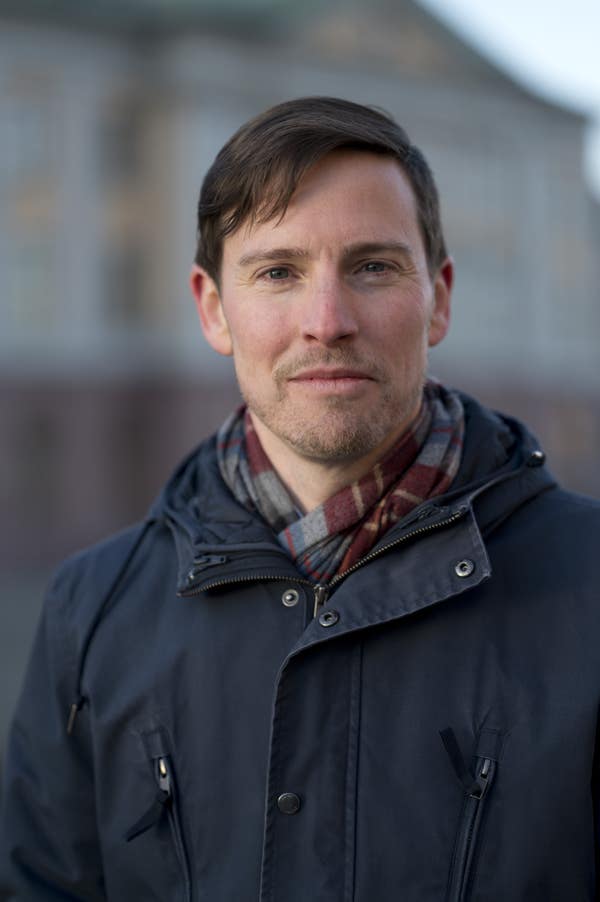
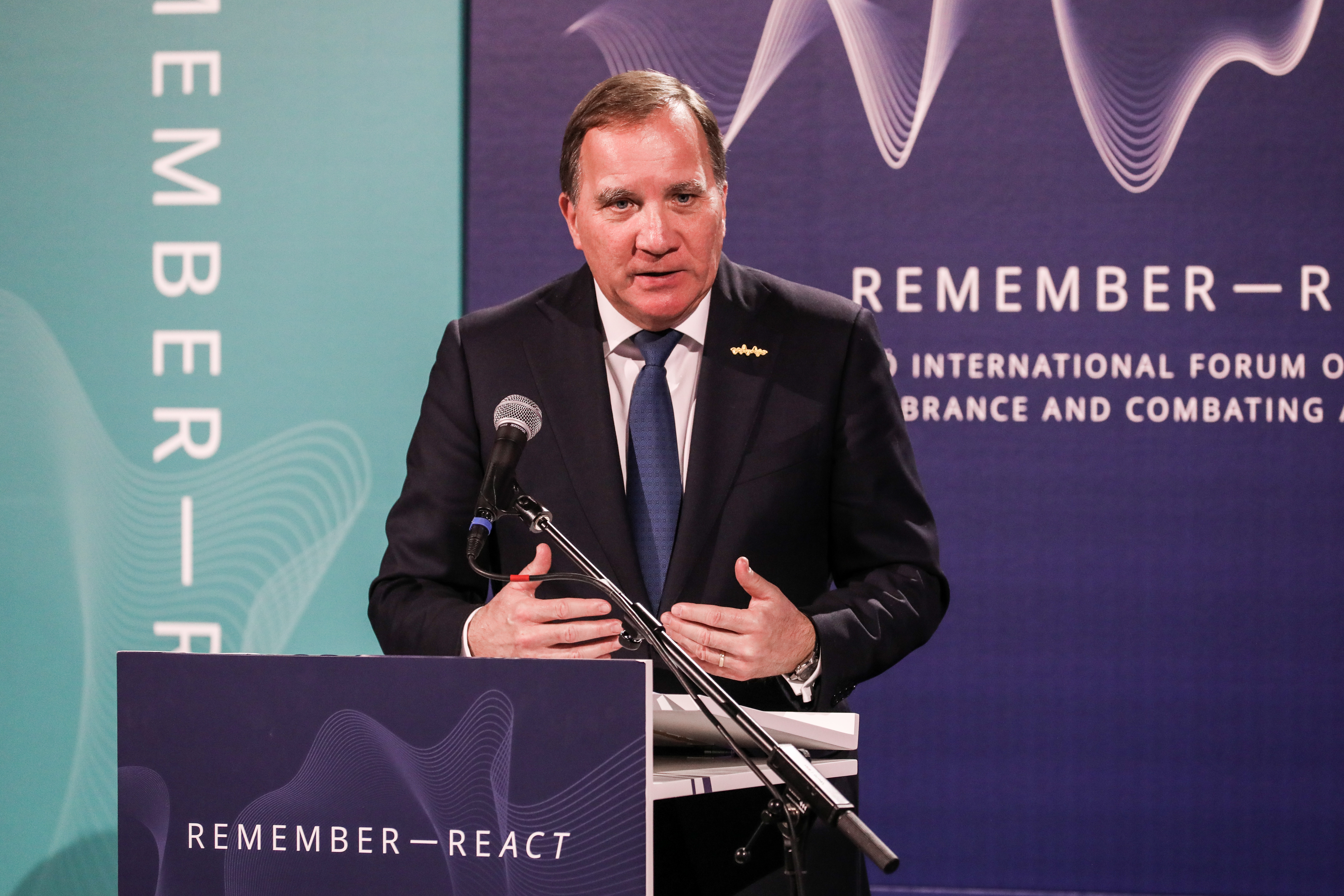

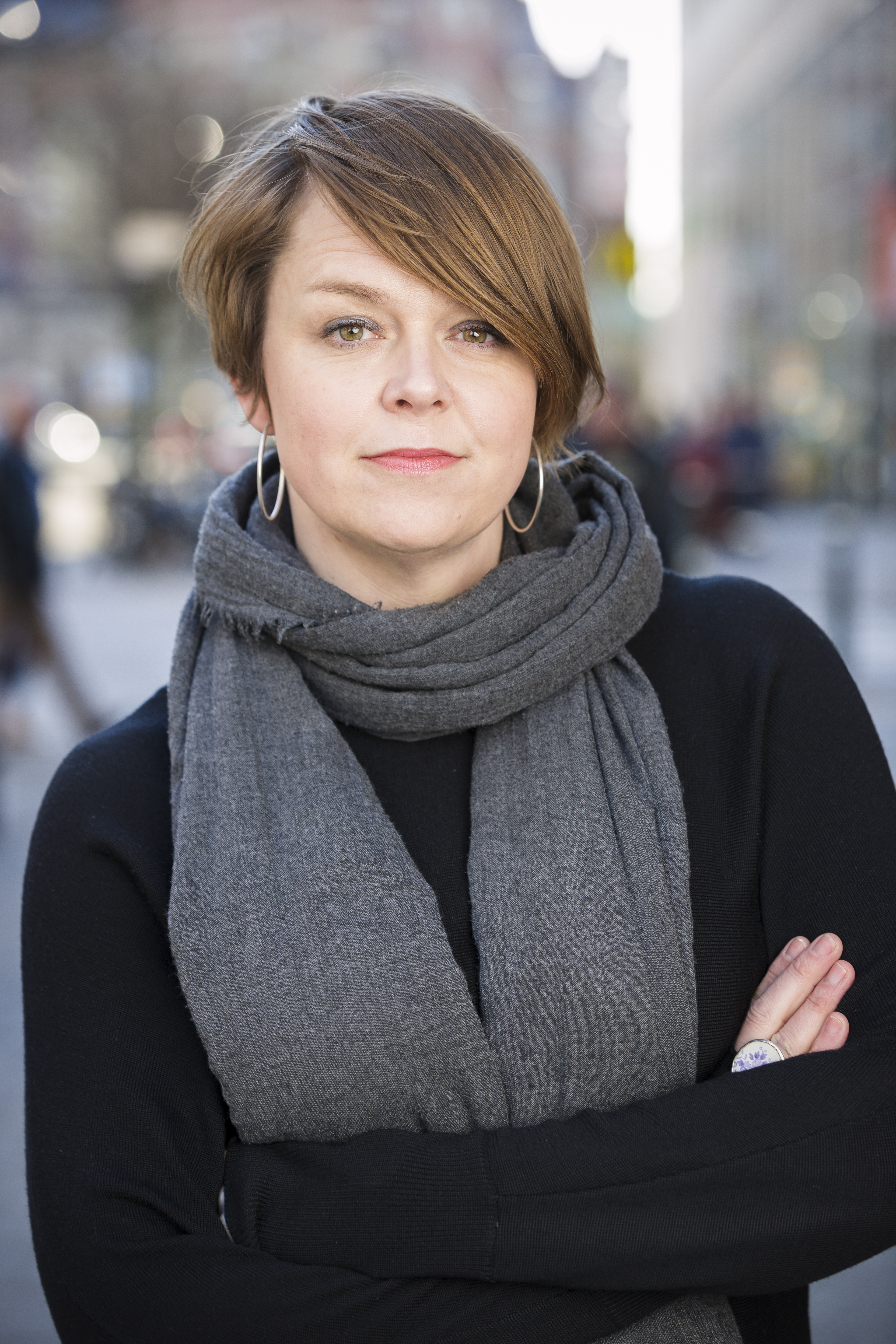
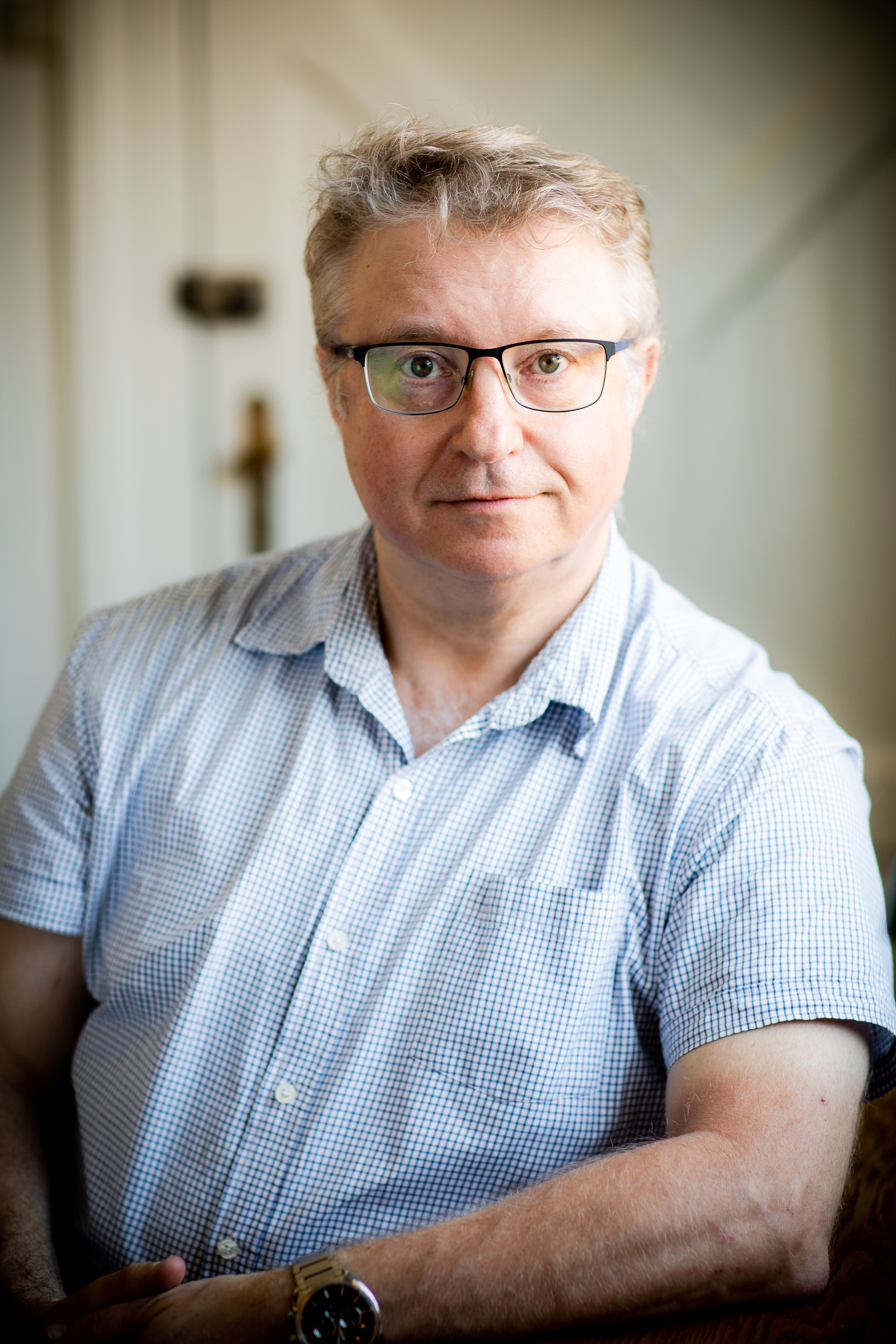
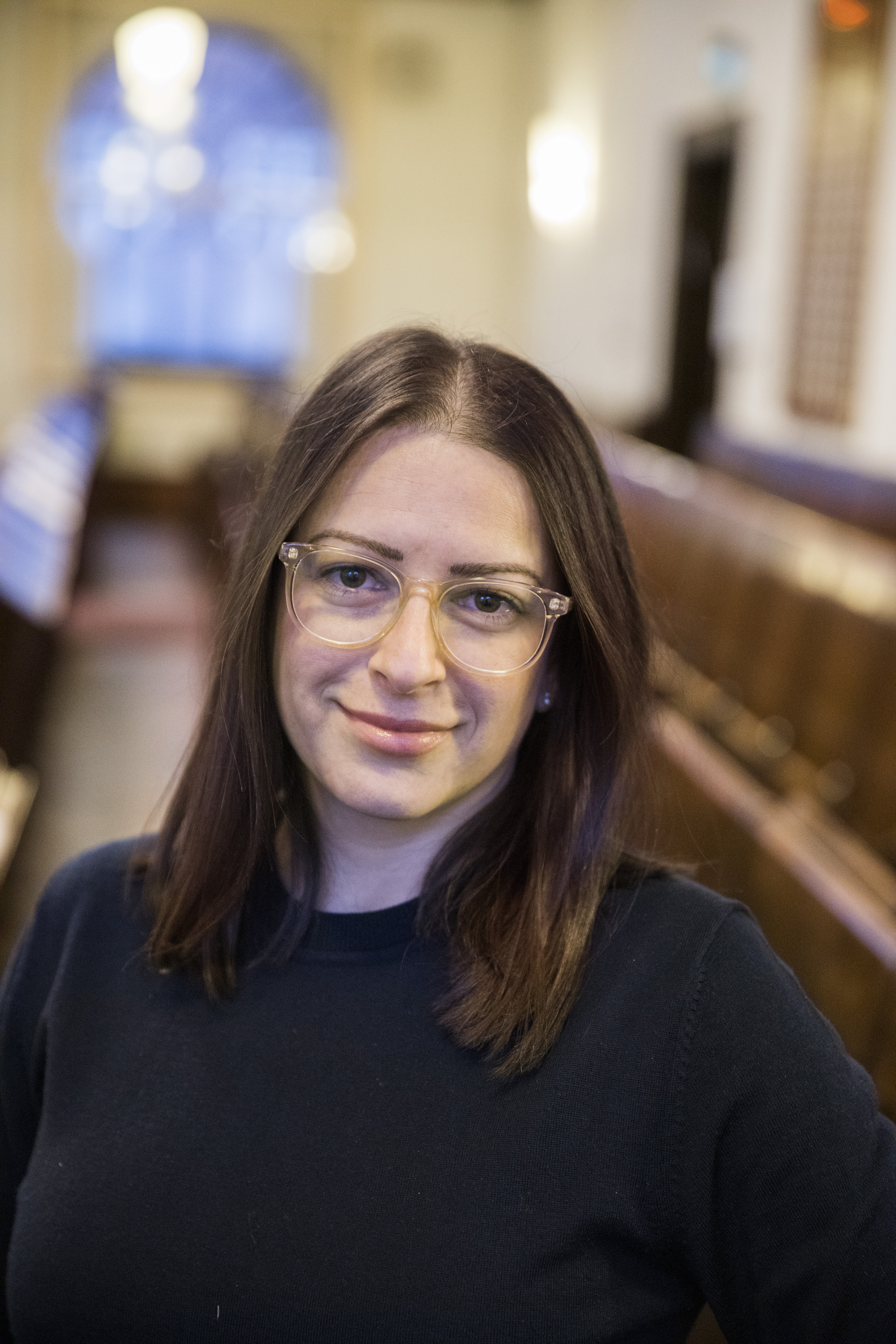


 דיויד סטברו