Malmö, the large city in southern Sweden, has been in the headlines in recent years because of expressions of antisemitism. This is the story of the slow awareness of local and national authorities and the measures taken to deal with the problem. Could Malmö's experience be of any value for the whole of Europe, where many large cities are facing similar problems.
Punlished in K. Magazine: https://k-larevue.com/en/antisemitism-in-malmo-from-swedish-symptom-to-european-symbol/
Those who believe in the old saying “there’s no such thing as bad publicity” would do well to study the case of Sweden’s third largest city – Malmö. Home to some 350,000 people, it‘s not particularly big, it’s not Sweden’s oldest or most beautiful city and it’s not exceptionally cheap or expensive to live in. Still, in the last few years it made an international name for itself, though perhaps not the name its leaders were hoping for. Instead of being praised for Västra Hamnen which claims to be Europe’s first carbon neutral neighbourhood, for its multiculturism or for the Turning Torso building, Scandinavia’s highest skyscraper, Malmö is known around the world for a much less appealing feature – antisemitism.
The new antisemitism of Malmö
It’s hard to say when or where it started. Antisemitism isn’t a new phenomenon in Sweden. In fact, it was there even before the first Jewish communities were founded in Stockholm and Marstrand near Gothenburg in the late 18th century. Towards the end of the 19th century and the beginning of the 20th, official state restrictions and discrimination slowly disappeared, but antisemitic ideology and propaganda could be found throughout both the old political establishment and newly founded neo-Nazi and fascist movements. Surprisingly, the end of WW2, which left neutral Sweden relatively unharmed, wasn’t the end of Swedish Nazism. Quite the opposite. After the war Sweden became host for many racist, nationalist and fascist movements. While the political elite was gradually embracing universal values and continuing to develop a social-democratic welfare state, the extreme right on the margins of Swedish society was, and some say still is, flourishing. Neo-Nazi skinheads, antisemitic publishing houses and movements based on pre-Christian imagery that promote nationalist, racist and anti-establishment ideas became an integrate part of Swedish society.
Malmö played an interesting role in this story during the final stages of WW2 and the following years. On one hand, this was the city that became a safe haven for Danish Jews who arrived at its shores after crossing the Öresund strait fleeing the Nazis in 1943. This is also where the Swedish Red Cross’ “White Buses” arrived in 1945, carrying survivors of the Nazi concentration camps. On the other hand, this was the home of the so-called Malmö Movement, which played a central role in the rehabilitation of Europe’s extreme right, back in the 1950’s. The movement’s leader Per Engdahl took a leading role in the project of connecting the remnants of fascist and Nazi movements from all over Europe and forming a political network which published literature, organized conferences and created an escape route for Nazis from Europe to South America. The center of all this was Malmö were Engdahl lived and worked. But all this is ancient history.
For over ten years now, Malmö has become, in the eyes of many, a symbol of a new kind of Swedish antisemitism. While right wing extremism is still dangerous and threatens Jews in Malmö just like anywhere else, in the last few years an imported antisemitism originating in the Middle East and Islamist environments has taken over. In Sweden, the combination of the two proved itself particularly worrying and Malmö is sometimes seen as the center of it all. In 2012 an explosion shook the Jewish community center. In 2009, Molotov cocktails were thrown at the local Jewish funeral home. In the same year Malmö was the scene of what is now known as the Davis Cup riots. As Israel and Sweden were playing an official tennis match, thousands of anti-Israel demonstrators took to the streets and the protest developed into physical and verbal attacks against the city’s Jews and law enforcement forces. At the time, former mayor IImar Reepalu, was accused of being part of the problem, rather than part of the solution when he said to a local daily that “We accept neither Zionism nor antisemitism which are extremes that put themselves above other groups”. But problems didn’t stop when Reepalu was replaced in 2013. Pro-Palestinian demonstrations, especially during periods of conflict in Gaza, continued to feature heavily antisemitic slogans, signs and rhetoric.
When I visited the city in 2015 in order to write a report for “Haaretz” I spoke to a few members of its Jewish Community. Those were the days when hundreds of asylum seekers were arriving every day, mainly from Syria and Afghanistan, crossing the bridge from Copenhagen and arriving at Malmö which became their Swedish port of arrival. As authorities in Sweden were struggling with challenges of housing, employment, education and integration, many in Malmö were worried. “There is fear and harassment on a daily bases”, one woman who immigrated from Israel to Malmö decades ago told me. She claimed that authorities were doing nothing against the daily harassment and the incitement from local mosques. “I’m not against accepting asylum seekers”, another community member told me, “one should not close the door to people in need of help, but this is what happens when we want to solve one problem by creating a bigger one. We need to use our heads, not only our hearts”. After this, I returned to the city on several occasions and reports continued to be troubling. Some claimed that Jewish families were leaving the city because they no longer felt safe. In 2021, a report commissioned by the municipality described Malmö schools as an unsafe environment for Jewish students who suffer from verbal and physical attacks while teachers prefer to avoid conflict with the aggressors. Other reports claimed that Holocaust survivors are no longer invited to tell their stories in certain schools in Malmö because Muslim students treat them disrespectfully.
Malmö at the center of the world
As a response to all this, Malmö’s Jewish community which has existed since the 1870s and now has two synagogues, a community center, a variety of educational activities and just under 500 members, decided to speak out. Now it became harder for the Swedish press to ignore the problem and the picture it painted wasn’t a pretty one – the reports included children who had to put up with their schoolmates burning Israeli flags, making threats and praising Hitler, youngsters who were suffering from bullying and threats of rape and murder on social media and Jewish teachers who were told to put up with the harassment and keep a low profile. These are all well documented facts. They are based on resident’s testimonies, information collected by journalist, NGOs and authorities and studies conducted by serious researchers. But when it comes to Malmö there seems to be a layer of mythology covering the facts. This is the Mythology that gave Malmö unflattering titles like “Sweden’s antisemitism capital” or even “Europe’s most antisemitic city”. During the last few years, reports on Malmö, mainly in the international press, became full of stories about so-called honor killings, forced marriages, polygamy, female genital mutilation, parallel societies, riots, organized crime of ethnic clans and no-go zones in which local criminals have taken over and police and authorities cannot operate.
All this seemed to go hand in hand with the reports on antisemitism and although many of the reports in the media were true or at least based on some aspect of reality, others were extremely exaggerated, taken out of context and, more importantly, highly politicized. This is where Malmö became part of the global list of “greatest hits” for everyone who was spreading stories and conspiracy theories about Sharia law taking over Sweden, Sweden becoming the “rape capital of the world” and Sweden as proof of the “Great Replacement Theory”. With these reports, the attention of the Jewish world was turned towards Sweden and in 2010 the Los-Angeles based Simon Wiesenthal Center started advising Jews to not visit Malmö. With the populist right in Sweden growing stronger, integration of immigrants from the Middle-East becoming harder and the Israel-Palestinian conflict growing closer, Malmö‘s small Jewish community suddenly became a symbol for all the problems in the world, even if a reluctant one.
Public authorities react
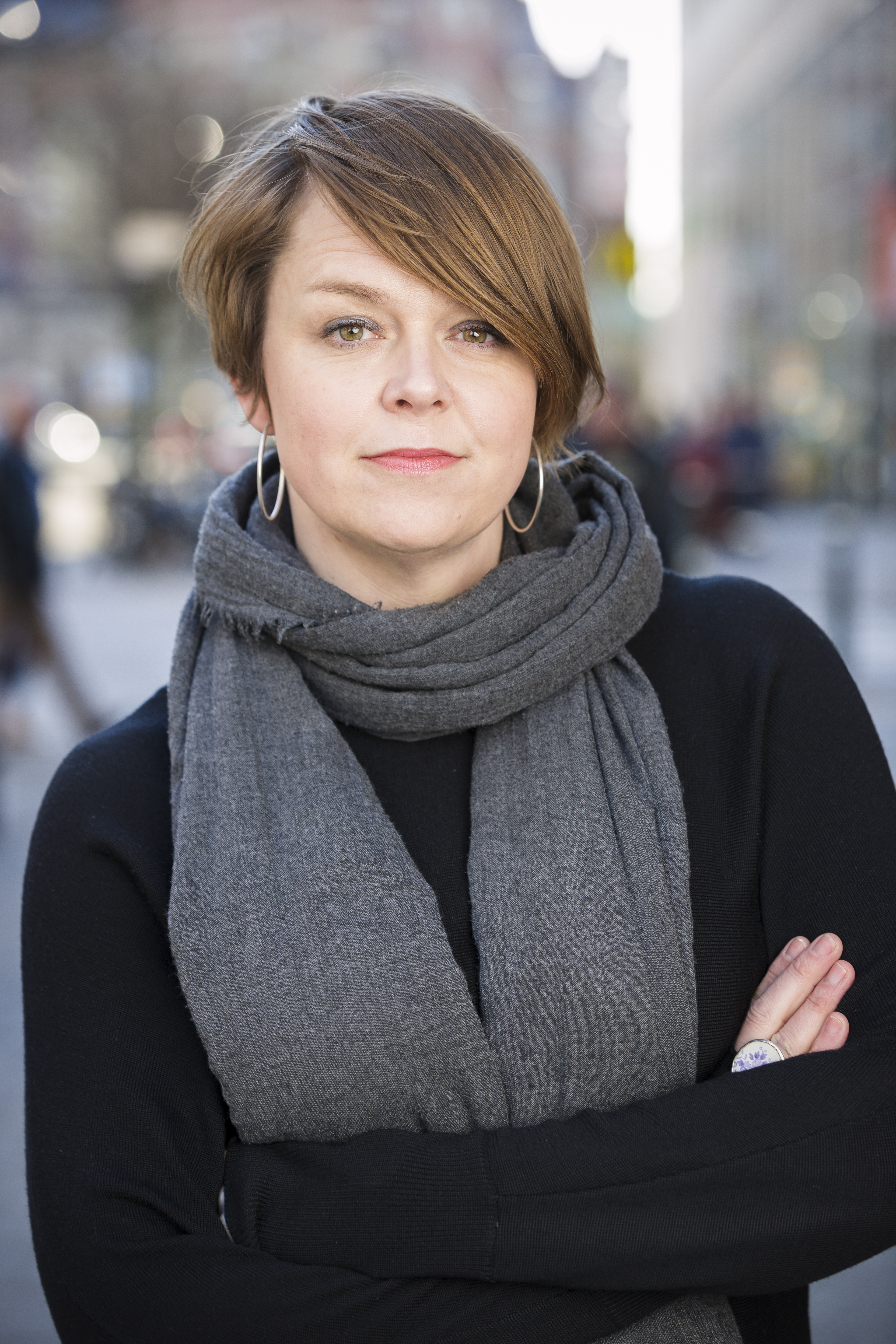
It’s hard to say if the situation in Malmö is really as bad as it’s sometimes portrayed in foreign media, or if it’s really that different from the situation in other Swedish cities or any other multicultural European city for that sake. Still, at some point local authorities and the government in Stockholm realized they have a serious problem. The situation in Malmö, whether exaggerated by the press or not, was making Sweden look bad. But it was more than that. In the last couple of years, I have spoken about antisemitism with the Mayor of Malmö, Sweden‘s Education Minister, Foreign Minister and former Prime Minister (all Social Democrats) and there is no doubt in my mind that they were all troubled by antisemitism and dedicated to the fight against it. For them, this is not only a PR problem. This doesn’t necessarily mean that their efforts were 100 percent effective, but at least their concern was sincere. Last October, When I interviewed Katrin Stjernfeldt Jammeh who has been Mayor of Malmö since 2013 she said that she realizes that Malmö isn’t vaccinated against antisemitism. “It’s a problem we’re addressing” she said, “we talk about it more today and, when you talk about it, it seems like it’s a bigger problem than it does if you don’t talk about it. But for me, (the image) is not important. The only thing that’s important is that we attack the problem and create change”.
Asked to detail what the city has done to confront the problem in the eight years she has been in charge, she said she has been working to combat antisemitism and racism since the day she was elected by “working with our citizens in various different set-ups, working with the Jewish community in several ways to map the problem, to create an understanding of the problem and, today, we have a long-term commitment”. She added that the city is investing more than 2 million Euros over four years. “This is not just a small project this year or next year”, she explained, “it’s a commitment to work in the long-term to create better conditions for the (Jewish) congregation, to enhance security and create knowledge. We’re also working within our school system, mapping the problem there too, and creating different ways to prevent prejudice”.
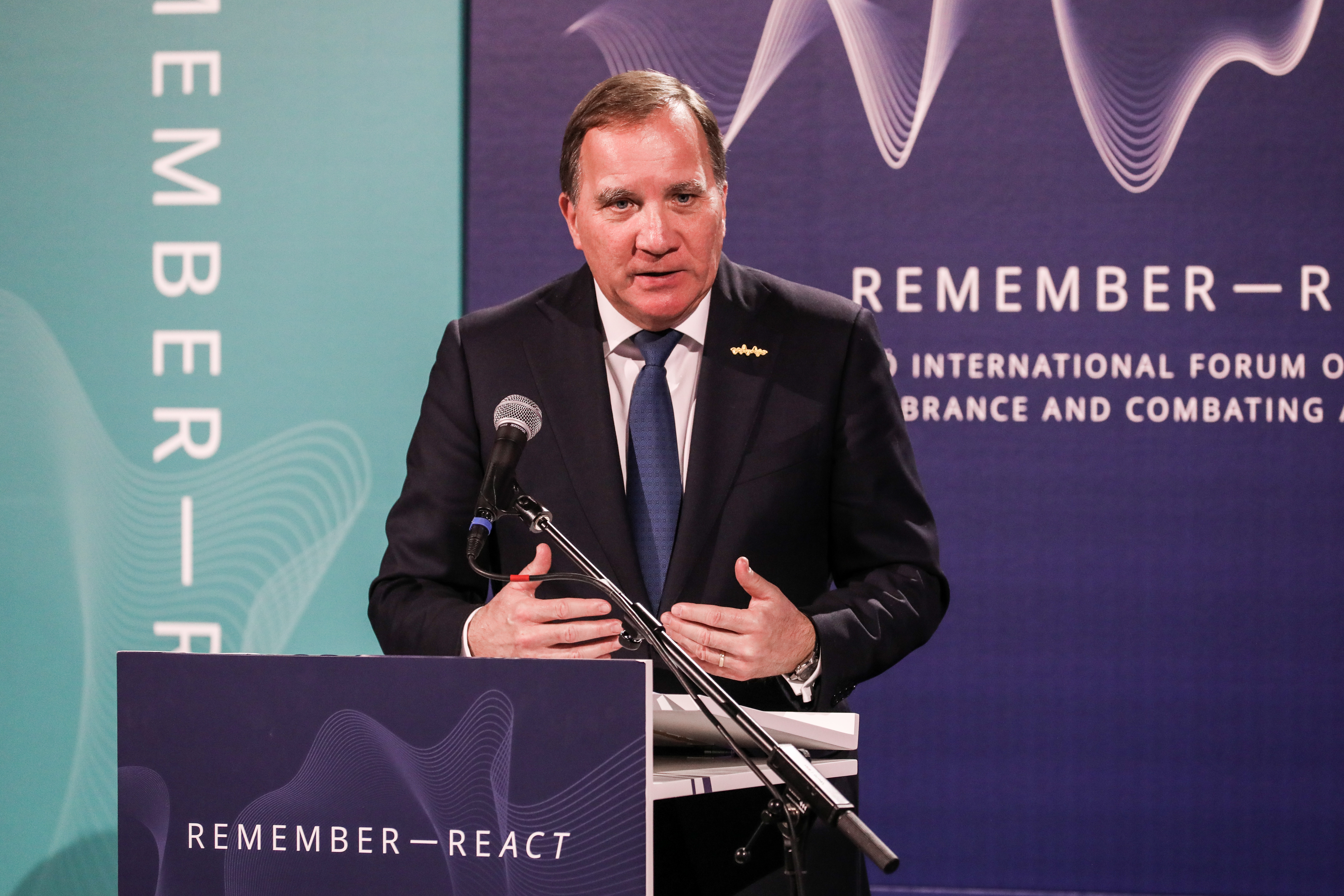
On the national level, former Prime Minister, Stefan Löfven, made the struggle against antisemitism and Holocaust remembrance a major part of his political legacy. Here too Malmö played a critical role. Last October Löfven and the city of Malmö hosted a special conference – The Malmö International Forum on Holocaust Remembrance and Combating Antisemitism. Although the conference dealt with a much wider issue than the concrete problems of Malmö’s Jewish community, it caught the attention of many around the world as heads of state and governments, researchers and representatives of private and civil society organizations engaged in what the Swedish government called an “action-oriented” program. The idea was that delegations from around the globe would present pledges of “concrete steps forward in the work on Holocaust remembrance and the fight against antisemitism”. The Swedish government, for example, promised to build a new Holocaust Museum, to criminalize organized racism, to contribute to the Auschwitz-Birkenau Foundation, to appoint a government inquiry on a strategy to promote Jewish life in Sweden and to “significantly increase” the funding for “security enhancing measures for civil society, including the Jewish community from 2022”.
The Malmö Forum took place just over twenty years after the original Stockholm International Forum which was initiated by one of Löfven’s predecessors, former Swedish Prime Minister Göran Persson. This was the beginning of the international partnership to fight antisemitism and promote Holocaust remembrance and it led to the “Stockholm Declaration” which is the founding document of the International Holocaust Remembrance Alliance (IHRA). When I spoke to Löfven a few weeks after the conference he told me that the Malmö forum was “all about commitments, not about speeches”. He then explained that there were two kinds of commitments: “first, never to forget, which is why different countries undertook to have various memorial events and memorial sites, and second, the fight against antisemitism, which is also about commitments. In our case, this means doing more in schools, investing more in research so that we have a better understanding of the forces behind antisemitism and so on. We want to spread this to other countries, organizations and companies, such as social media companies for example. Everyone can make commitments. Individual schools can commit, more companies can make commitments, sport organizations can make commitments. That’s the way to address these issues”.
The limits of political mobilization
The Malmö Forum made some headlines and brought Malmö some positive attention for a change. But are these national and international initiatives, which are discussed by high-ranking politicians, business leaders, journalists and international organizations making any difference on the local level – in the streets, the squares and the schools of Malmö? That depends, naturally, on who you ask. Some local opposition politicians, for example, were skeptical even before the conference started. “It’s obvious we have a huge issue with antisemitism and it’s affecting people’s everyday lives in Malmö”, Helena Nanne the deputy chairman of the center-right Moderate Party in City Hall told me a few days before the Malmö Forum convened, “For families with children at school, the situation with antisemitism is a major issue, and we hear stories of families who choose to move because they don’t feel safe and can’t be sure the school will be safe for their children”. Nanne wasn’t opposed to the international forum as an idea but she claimed that the Social-Democrats who were organizing it had a home-made antisemitism problem. “This city is run by a party that has had a problem with antisemitism in its own organization”, she said, “It’s hard to take commitments they make seriously”. Another opposition politician based in Malmö, Ilan Sadé, who leads the right-wing Citizens’ Coalition party, was even more critical. “I’m not against the forum taking place in Malmö”, he said, “but this might just be an attempt to improve Malmö’s image. There’s a problematic connection between the Social Democrats and the immigrant population in neighborhoods like Rosengård (a Malmö neighborhood known for its immigrant population and gang-related crime, D.S). The Social Democrats have very wide support there, and they don’t want to lose it; they need to keep the balance. And of course, there are also many people from Arab countries who are party members. There were incidents like the one when members of the party’s youth league were heard shouting slogans like ‘Crush Zionism’ at demonstrations. That’s at least borderline antisemitism – they don’t shout that against other countries”. Sadé alleges that there is a lack of determination to prevent, stop and prosecute hate crimes in Malmö. “The police file on the attacks against the Chabad rabbi of Malmö is as thick as a Dostoevsky book”, he told me, “there are about 160 to 180 cases registered: anything from spitting on him to cursing and harassing him. This is absurd. In Sweden, a religious leader should be able to walk down the street. Priests can do it, imams can do it, so why not a rabbi? This should be prioritized, and it isn’t”.
Another way of approaching the problem does indeed involve both an imam and a rabbi. Imam Salahuddin Barakat and Rabbi Moshe David HaCohen, both based in Malmö, founded an organization which aims to create a trusting society while working to counter discrimination. The organization, Amanah, believes that deepening of identity and roots are key elements towards reaching their goal and it focuses on countering antisemitism and islamophobia within all levels of society – schools, universities, communities and official representatives. I spoke to rabbi HaCohen on the morning the Malmö Forum started and he told me that he appreciated the Swedish government‘s efforts even though not much attention was paid to Malmö itself since the forum was happening from the top down. His organization, on the other hand, is more of a grassroots one. HaCohen spoke about school programs combating racism that Amanah was promoting as well as a digital project that simulates dealing with antisemitic situations and the efforts the organization makes to address Holocaust denial in schools and monitor social media that can potentially “poison the minds of 9- and 10-year-olds”. Hacohen already sees some results to the interfaith dialogue. “During the last Gaza conflict (in May 2021), there was increased tension in the city, as we’ve seen in the past”, he remembered, “since there’s a large Palestinian community here, there were demonstrations against Israel, and as usual some of the protesters started to shout antisemitic slogans. But this time, these people were removed by imams who left their comfort zone and protected their Jewish neighbors. In the same way, we stood alongside our Muslim neighbors when supporters of a far-right Danish politician who was denied access to Sweden filmed themselves burning and kicking the Koran in the streets of Malmö”.
The people of Amanah aren’t standing alone. Other organizations and municipal leaders are doing their best to deal with the problem of antisemitism in the city. The Jewish community recently opened a new learning center that has been working with local schools. City Hall is working with the Swedish Committee Against Antisemitism to arrange trips to the concentration camps in Poland and its partnering with local football clubs to help them deal with racism and antisemitism. The city has also appointed a special coordinator to work on the problem of antisemitism in Malmö’s schools. The coordinator, Miriam Katzin, a Jew herself, a lawyer and a left-wing politician, gave an important perspective when she spoke to the Swedish Expo magazine just over a year ago. “There’s an antisemitism problem in in the whole of society which expresses itself in different ways”, she said, “I think it’s convenient for the majority of Swedes to turn to Malmö and place antisemitism there as the fault of groups that don’t belong to the majority. But that’s making it easy for themselves. The antisemitism I grew up with was expressed by regular majority swedes. That antisemitism is still alive, but it’s often overlooked. One wants to make antisemitism to be a problem of the others”. According to Katzin immigrant groups are blamed for antisemitism as part of this tendency, the right blames the left for being antisemitic and the left blames the right, while in reality antisemitism is a general social problem and it’s “deeply problematic to engage in a competition about who are the worst antisemites”.
This is indeed one of the most serious problems regarding antisemitism in Malmö and in many other European cities. The understanding that it still exists in this day and age is a depressing thought as it is. The thought that it’s not limited to one side of the political debate or to one particular social group, region or culture makes it even worse. Once one realizes that hatred of Jews is a problem that unites left-wing progressives, old-school conservatives, white supremist and hard-core Islamists, it’s hard to imagine a solution. In the same way, Malmö which became a symbol of antisemitism but in reality, was never the only or the worse expression of it, is just a tiny part of the bigger problem. After all that has happened in Malmö – the international attention, the media circus, the scores of high-profile politicians, the pledges, the promises and the time, effort and money spent on education, interfaith dialogue and security measures, there is still a serious problem. It’s not that nothing helped. Things are probably a bit better these days in this one medium sized city in southern Sweden. But that’s just the tip of the iceberg. Now, all that’s left to do is fix the rest of the world.
David Stavrou is a regular contributor for “Haaretz” based is Stockholm. This article is based on a series of articles about Malmö originally published in “Haaretz”.