Amid Rising Antisemitism in Norway, One of the World's Northernmost Synagogues Turns 100

As politicians and dignitaries take part in Trondheim Synagogue's centennial celebrations later this month, for the city's small but growing Jewish population it has become a safe haven from post-October 7 antisemitism.

Published in Haaretz: https://www.haaretz.com/jewish/2025-10-16/ty-article-magazine/.premium/amid-rising-antisemitism-in-norway-one-of-the-worlds-northernmost-synagogues-turns-100/00000199-e7fe-dde4-a7bd-fffedb130000

TRONDHEIM, Norway – When it comes to the attendance list, it's hard to imagine a more distinguished and high-ranking one in Norway. Prime Minister Jonas Gahr Støre will deliver a speech. Mayor of Trondheim Kent Ranum will be there along with other municipal leaders and senior representatives of the Norwegian government. The Royal Family will also be represented alongside leaders of Norwegian Jewish communities, several bishops and leaders of various Christian denominations, an imam and representatives from the Israeli and American embassies in Norway.

The occasion? The 100th anniversary of one of the northernmost synagogues in the world, the Trondheim Synagogue, which will take place on October 26. The synagogue serves the small Jewish community (numbering approximately 200) in Norway's third most populous city, positioned about 350 kilometers south of the Arctic Circle.

Trondheim Synagogue, 2025, photo: Martin Borg

"The events will include religious services, a concert featuring Edan Tamler, a well-known Israeli cantor, and a festive dinner for congregation members and visiting guests," says John Arne Moen, the chairman of the community. Moen, who's a retired journalist and editor, has been a member of the community's board since 2006 and now serves as chairman. "The event will also include a keynote address by Chief Rabbi of Norway, Michael Melchior, who has served as an Israeli government minister and MK (the community itself doesn't have its own permanent rabbi).

The story of Trondheim's Jews goes 150 years back. "The first Jews to arrive in Trondheim came from today's Lithuania and Poland via Sweden in the 1870s," says Moen. "At the end of World War I, there were about 340 Jews in Trondheim and in other towns in Western and Northern Norway. Unlike Jews who came to Oslo, many of whom came from Denmark and German speaking parts of Europe, these were poor immigrants who escaped pogroms and poverty in the Russian Empire."

Moen goes on to say, these Jews "didn't speak Danish or German, which were languages common for educated Norwegians at the time. Instead, they spoke Yiddish and Russian. They came from small shtetls and it must have been really hard for them to settle here. Most of them didn't even intend to stay. They wanted to go to America, and Trondheim was just a stop during which they hoped to make some money for the ship ticket. However, almost all of them ended up staying here."

"These immigrants mostly settled in an area close to the harbor, known for prostitution and poverty, and they transformed it into the only Jewish quarter in Norway. It became rich in Jewish cultural and religious life led by a rabbi who arrived in 1896 from Belarus. A synagogue was founded in a building borrowed and then bought from a Baptist church, and the small community had a women's organization and a Zionist youth organization," Moen says. "There were also unique challenges."

Moen is referring to Trondheim's geographic location. Because of its proximity to the Arctic Circle, the sun in Trondheim sets after 11 p.m. in the summer and before 3 p.m. in the winter. Naturally, this is a challenge for Orthodox Jews when it comes to determining when Shabbat and holidays start and end. "This has been an issue for many years," Moen says. "Rabbi Samuel Brandhändler – the first rabbi in Trondheim – decided to have set times for Shabbat during some weeks in the summer and some winter weeks. Later, in the 1920s, that became the practice year-round making Trondheim probably the only Orthodox Jewish community with set times for Shabbat."

Moen says that the golden age of the community was between the two world wars. It was then that the community moved into its current location – a building which was decommissioned as a train station, purchased by the Salvation Army and then bought by the Jewish community. After extensive renovation work, it was inaugurated in October 1925. The building became the center of Jewish life in Trondheim and it still is today. It serves not only as the synagogue, but also the Jewish community center and home to Jewish Museum Trondheim, the permanent exhibition of this unique community.

"As a museum, we communicate knowledge, we take care of the exhibits, we research and renew," says Agnete Eilersten, 40, who has been the museum's collection manager and curator for the last five years. "The people who come here are mostly school …children [ages] 13 to 18, but we also have [individual visitors] including students, tourists and Norwegians of all ages."

Walking around the museum, Eilersten points out the old ark and Torah scrolls from Trondheim's first synagogue, pictures of the first Jewish families, exhibits about Jewish traditions and an old mikveh (Jewish ritual purification bath) in the cellar. When asked why she was drawn to work at this particular museum Eilersten, who is not Jewish herself, speaks of her fascination with Norwegian-Jewish culture which has been "hidden in many ways." But it's also about combating antisemitism. "We try to counter antisemitism by disseminating knowledge and teaching people about Jewish history," she says, "we believe that more knowledge means less prejudice." And, of course, there's also the war. "It is very important to preserve the history of World War II," she says. "We need to [pass it on] to new generations."

In Norway, this attitude isn't a given. Norway's World War II legacy is complicated by the fact that many Norwegians supported and cooperated with the Nazis. As such, it has remained in the shadows for decades. The Nazis occupied Trondheim and the rest of Norway in 1940. A year later, they took over the synagogue which became barracks for German soldiers. "We think that the soldiers, who were probably drunk, lay in their beds and shot at the ceiling," says Moen, the synagogue chairman. "The building was heavily damaged and during those years more than half of the community's members were deported and murdered. No other Jewish community in the Nordic countries suffered more than Trondheim's."

On the eve of World War II, Norway had around 2,400 Jews, including a few hundred from other nationalities. When Germany invaded and occupied Norway in 1940, the Norwegian king and government fled the country forming a government-in-exile in London, while Norway was ruled by a Nazi official named Josef Terboven, who governed through a pro-Nazi puppet government headed by Vidkun Quisling, the leader of a Norwegian fascist party, Nasjonal Samling (The National Union), founded in 1933. The party cooperated with the Nazis in taking over the country, and in many cases Norwegian policemen, not German Nazis, were the ones who arrested and deported the Jews.

Persecution of the Jews began in 1941 with arrests, property confiscation and some executions on false charges. In 1942, mass arrests of hundreds of Jews were carried out. Most were transported on the SS Donau to Auschwitz. Another ship, the MS Gotenland, transported over 150 more to the same destination in February 1943. In total, 772 Norwegian Jews were arrested or deported. The oldest among them was 80 and the youngest an eight-week-old baby. Fewer than 40 came back. Those who survived had mostly escaped to neutral Sweden. When the war was over, they returned, and although they survived they were deeply traumatized. And even worse – they stood alone.

Continues here: https://www.haaretz.com/jewish/2025-10-16/ty-article-magazine/.premium/amid-rising-antisemitism-in-norway-one-of-the-worlds-northernmost-synagogues-turns-100/00000199-e7fe-dde4-a7bd-fffedb130000

Why Don't You Recognize October 7th – A letter to a Burmese friend (and a genocide researcher)

This is a tectonic and world-changing event, carried out by thousands of people supported by hundreds of thousands of people, as well as by movements, states and regimes. Not condemning it is supporting it. And the results are inevitable. Because of the horror that these people have inflicted on the world, an even darker night is to come before we will see the light. 

Published in "Davar": https://en.davar1.co.il/462536/

A is my friend. He is a Burmese expatriate from Myanmar living in Europe. He is an academic, an educated and friendly person, and a veteran human rights activist. As a journalist who writes, among other things, about countries where acts of genocide, ethnic cleansing and human rights violations take place, I consult with various experts. A is one of them. This is the letter I sent him last week.

Hello, A. I am writing in response to your letter regarding the “colonial character and genocidal policy of Israel.” As you can imagine, I am quite busy these days, and as someone who is far away from his family in Israel, I am distracted. I am responding to you despite all this, mainly because your words opened with a reference to Auschwitz, a place where many of my family members were murdered about 80 years ago.

According to you, Israel is using the Holocaust as a “blank check” to justify the imprisonment, bombing and starvation of 2.3 million Palestinians in Gaza, almost half of whom are children. "In these circumstances, 'never again' is a hollow phrase," you write. “It becomes a call for uncontrolled violence, battle cries and a campaign of revenge and extermination." In the past and under different circumstances, I must admit that I might have agreed with you.

A, you must remember that we got to know each other after several occasions when you very generously shared with me your expertise, knowledge and experience regarding Myanmar. When I first contacted you, I wrote that as a journalist working in a free country, I felt obliged to tell the story of the victims of atrocities there – amongst others, the Rohingya people other minorities who have been suffering from genocidal policies for years since the military coup in 2021. 

Since I am not an expert myself, I reached out to you, just as I reached out to many other experts, witnesses and human rights activists who could shed light on other places I wrote about, such as China, Ethiopia, Syria, Iran, Mexico, Belarus and Iraq.

This is an important point. As you know, there are complicated conflicts in many of these places about which there are different opinions. Still, my feeling was that we shared a real commitment to expose and fight certain types of acts which cannot be excused under any circumstances, regardless of the different narratives that explain the conflict. I mean the kind of actions that cannot be permitted even if there is no agreement on the history of the conflict or even on the identity of those responsible for it.

These actions include those that took place in Rakhine province in Myanmar, which I wrote about with your kind help. The barbaric murder, torture and rape of innocents that happened in your country is inexcusable. Political, ethnic, religious or demographic claims simply cannot justify throwing babies into fire, torturing children to death in front of their parents, and the mass rape of women before their execution. I thought we agreed on that.

This week, I received a long email from you, Dr. A. Extremely long. Long enough to clarify your words or even to add something along the lines of: "despite all this, of course I condemn [Hamas’ actions],” or even "despite the absolute truth of the Palestinian claims and genocidal policy of Israel, I do not justify killing civilians."

But there was none of that. Somehow, your post references 100 years of conflict prior to October 7 (including explanations using maps, cartoons, pictures, and quotes). And there is a reference to the days after October 7.

But the day itself, when over a thousand people, most of them civilians, were brutally murdered and over 200 people, again most of them civilians, were kidnapped, was completely absent. And it's strange given the fact that, as I recall, we share an interest in cases of throwing babies into fire, torturing children to death in front of their parents, and the mass rape of women before their execution. Yes, to make the point clear to a person from your background, for one historical moment, Israel's Gaza envelope region became Myanmar's Rakhine. 

A, since I received your message, I have been trying to understand why you do not recognize October 7th. I understand your opinion about the essence of Zionism and the essence of Israel. I don't agree with it, but I understand your point. Still, there's that little matter of “under all circumstances.” Perhaps there is a certain type of fascist, fundamentalist, racist, and violent organization that, against your usual leftist positions, you actually do support.

But if so, what are the criteria? Is it because they are jihadists? Is it a matter of religion? Or that according to the accepted code of the post-colonialist discourse, the "natives" have certain Jew-killing privileges because of the many years of oppression they have endured? Oppression, which, as you know, I have never denied. 

And maybe you are one of those who do not believe the photos, the direct testimonies of survivors, the explicit confessions of the attackers and the unwatchable and undeniable videos. Do all these not meet your strict standards? Strange, because we never applied such strict standards when I wrote about Myanmar.

Do you think it's all a conspiracy of Western governments spreading fake news? Is it all the settlers’ lies, supported by American imperialists? Are you really not affected by the testimonies of Israeli women, children and elders, many of whom, by the way, are peace activists who built their homes in socialist communes that are not in any way located in the West Bank or in any way disputed. Unless the very existence of Israel is disputed, a position I assume you hold since you treat Israel as a settler and colonialist entity.

And maybe I didn't understand what you meant. In this case, perhaps in the future, we can discuss the true nature of Israel. As you know from our previous correspondence, I never supported Netanyahu, I have always believed in compromise with the Palestinians and I am absolutely against any kind of war crime, including against civilians in Gaza. You also know that I am a social democrat and a person who is aware of the climate crisis and the hardships of the "global south.”  But wait, here I am, once again falling into this trap. If I were not all of these things, if I were a Netanyahu supporter or a settler in the West Bank, would my massacre and that of my family members be justified?

Again, there's that "under all circumstances" nuisance. Even if the Jews were like the French in Algiers, and they are not, deliberate murder of innocents is always evil and mass murder is absolute evil. Among us Jews, even complete secularists like me sometimes recite from the ancient texts: “I have set before you today the heavens and the earth, life and death; I have set before you the blessing and the curse. Choose life, for your lives and for your descendants,” as it is written in the book that you call the Old Testament. Do you understand A? You chose life – without “buts” and without “maybes.” This is why I always opposed my own people murdering other innocent people. And you know what, I'm angry at myself for not resisting enough.

***

And so for the record, I want to mention that I believe that Jews, not just Palestinians, also have rights in the place where I was born. They have personal, social and national rights and they also have responsibilities that are well described in the Declaration of Independence of their country, our country, which was founded 75 years ago. You don't acknowledge that, which is probably the real reason you didn't mention October 7th in your message. If "Palestine will be free from the river to the sea," as they are now shouting in the streets near my house in Europe, the events of October 7th are probably not an accident in your eyes. They are the first step in the plan.

"Free from the river to the sea” means without the people who are living there now. This is not the two-state solution, nor a partition plan, nor a federation. I think with your education, you know exactly what it means. But in case it's not clear enough, I'll say it explicitly: Hamas is the genocidal wing of the Palestinian national movement, and it turns out that it has quite a few supporters. My friends say that such views stem from antisemitism, but I don't know what is hidden in a person's heart. How much darkness, how much hatred.

I also don't know what is hidden in your heart. But I know that October 7th was not another attack, another battle, another chapter in the bloody history of the Middle East. It cannot be solved with sentences like "I cannot be expected to condemn every action taken by the weak and oppressed.” This is a tectonic and world-changing event, carried out by thousands of people supported by hundreds of thousands of people, as well as by movements, states and regimes. Not condemning it is supporting it. And the results are inevitable. Because of the horror that these people have inflicted on the world, an even darker night is to come before we will see the light. 

***

And so, as a wise man wrote during the World War II, you and I now stand on two sides. "My opinion is clear about your motives,” he wrote, “and you would do well to speculate on my motives.” And he added: "I have one more thing left to say to you, and let it be the last. I want to tell you how in the past we were so similar and today we are enemies. How could I have stood by your side, and and why everything between us is over now.” 

And that's the thing. In Xinjiang and Syria, in Tigray and Iran, in Myanmar and Israel, acts like those committed by Hamas are not only the absolute lowest of what the human race is capable of. They also redefine the lines. If they do not fill a person's heart with unconditional anger and disgust, they place him outside the legitimate discussion of civilized people. If you can only find room in your heart for the pain of one side, that's your problem. But with your permission, I think I'll find myself a different expert on Myanmar.

Before I finish, I will ask just one last thing. Do me a favor – next time, please refrain from referring to Auschwitz. Not because I have a monopoly on the memory of the Holocaust or the memory of the victims. But because when it comes to the 1940s, those people on whose behalf you are currently campaigning, they tend to be something different than you imagine. When you remove the appearances of European leftist movements, those people tend to be supporters of the side that built Auschwitz, not of those led there to their deaths.

Israel Is Learning How Quickly Democracy Gives Way to Dictatorship

in a global context, the demonstrations in Israel are not only about the reasonableness standard, the standing of the attorney general, or legal advisers in government ministries. They’re an eruption triggered by the actual grave dangers: ignorance, racism, ultranationalism, and unfettered governmental power. They’re about liberalism and solidarity, education and culture, and the Israeli Declaration of Independence’s “freedom, justice and peace” and “complete equality of social and political rights to all its inhabitants.”

Published in Haaretz: https://www.haaretz.com/opinion/2023-08-01/ty-article-opinion/.premium/how-quickly-democracy-gives-way-to-dictatorship/00000189-ada1-db6d-ad9b-fdf91c740000

Over the past several months, numerous essays comparing Israel with other countries have appeared in this newspaper. It started with the obvious comparison to the illiberal democracies in Europe, voicing fears that the country is turning into Hungary or Poland. The comparisons then moved on to Turkey; some interesting exegeses followed about similarities to Afghanistan, Tunisia, the United Arab Emirates, and even Margaret Atwood’s fictional Republic of Gilead. Comparing Israel to other countries always leads to criticism because there is not – and cannot be – absolute congruity. It is a valuable thought experiment, however. Even if Israel doesn’t become a dictatorship, looking outward broadens and expands the debate.

I’ve written in recent years about human rights violations, murderous dictatorships, and ethnic cleansing contain good examples of countries for comparison. They illustrate what can happen in countries without a separation of powers, freedom of the press, and independent courts. I had one conversation with Sviatlana Tsikhanouskaya, who challenged Belarusian President Alexander Lukashenko in the country’s last election. Our talk showed that the mere existence of elections does not guarantee democracy.

Although Lukashenko officially defeated her, the world knew the election was fraudulent. After Tsikhanouskaya filed a complaint with the country’s central election commission, the authorities detained her for several hours. She told me the security services then escorted her to the Lithuanian border. After she crossed it, footage reminiscent of a hostage video was released, in which she asked Belarusians to stop demonstrating and accept Lukashenko’s victory.

The stories of three demonstrators who managed to leave reflect what happened to those who defied the request. Valery was viciously beaten, his wrists restrained so tightly he couldn’t feel his hands. Vyacheslav was stripped to his underwear, stuffed into a holding cell with dozens of people, and starved for four days until his trial, which lasted six minutes. Alexey saw people with broken ribs and guards beating a man to death. None of the three men was a political activist. They were a software engineer, an art professor, and the owner of a technology company. They never imagined that they would end up in this kind of situation.

The brutality of the Belarusian police is one example of what happens when the criminal justice system is not answerable to an independent civil authority committed to protecting human rights. There are some citizens in China whom its government wants to eliminate. A network of “psychiatric prisons” has been established for this purpose, where people without mental illness are forcibly admitted after being abducted and having their phones confiscated.

They’re locked in rooms with mentally ill patients, where they’re given psychiatric drugs and electroshock “therapy” while fully conscious. If they resist, they’re tied to a bed, sometimes for an entire night. This is nothing compared to what’s happening in the remote northwestern Xinjiang region, where various ethnic minorities live. Reeducation camps established there combine indoctrination, torture, and medical experiments.

I haven’t mentioned these examples because of any similarity to Israel. I’ve mentioned them because conversations with people who survived and escaped these hells reveal a notable point: how quickly things turned upside down. The survivors were once teachers, physicians, and civil servants who lived entirely everyday lives. Then began the riots, terror attacks, and “lack of governance” – and with them, accusations of extremism, factionalism, and terrorism. Next came the arrival of someone who could “create order,” and order was indeed created.

First, the textbooks were replaced, and newspapers were closed. Afterward came the checkpoints, the facial recognition cameras, and restrictions on technology. Finally, passports were seized, and the borders were closed. The camps appeared then, too. Solely for reeducation, of course. It’s unlikely that Israel would act with such determination and efficiency even against the Palestinians, but this is an important lesson about a government with no oversight – and how quickly the water heats around unaware frogs.

There’s another element that must be considered: dehumanization. Last year, a young Yazidi woman named Leila told me about how she was bought and sold several times by members of ISIS, who abused her for months. She was just one victim of the trafficking of women and organized rape that became a feature of the Syrian Civil War. A few months before that, a young Kurdish man named Bejan told me about a Turkish attack on civilians in northern Syria, the product of decades of dehumanizing the Kurds.

He said he saw many dead and wounded, most full of shrapnel or missing limbs. “The thing that’s hardest to forget,” he said, “was a girl, about 8 years old, who was sitting by her dead brother, trying to wake him up.” Testimonies from Ethiopia’s Tigray Province and the mass slaughter of the Rohingya in Myanmar show to what depths it’s possible to descend: gang rape, execution by gunfire or machete, drowning babies, setting villages on fire along with their inhabitants. These occurred in the second decade of the 21st century. Nothing even close is happening in Israel, but the processes of dehumanization begin long before the overt violence in those countries.

Horrifically enough, the murderers in Myanmar, Ethiopia, and Syria don’t see themselves as grim reapers. On the contrary: in many cases, they’re ordinary people who have convinced themselves they’re the victims. Society disintegrated and descended into violent chaos with the help of racist and ultranationalist ideologies, narratives based on political interests, and social media algorithms.

Some will argue that these are examples from countries that lack a democratic tradition, and no comparison can be made – but the truth is that Israel also lacks a centuries-old parliament or generations of a democratic culture. While it’s neither a Soviet republic nor a failed state in Africa, it’s a young and vulnerable democracy possessing a formidable military, a significant minority population, and the occupation of another nation. These are not starting conditions that provide strong resilience.

That’s why, when looking at the demonstrations in Israel in a global context, you can see that they’re not about the reasonableness standard, the standing of the attorney general, or legal advisers in government ministries. They’re an eruption triggered by the actual grave dangers: ignorance, racism, ultranationalism, and unfettered governmental power. They’re about liberalism and solidarity, education and culture, and the Israeli Declaration of Independence’s “freedom, justice and peace” and “complete equality of social and political rights to all its inhabitants.” The demonstrations are against a choice to break from the enlightened world and walk with eyes wide shut toward countries to which only Israel is willing to sell arms, cyber technology, and “security consulting.” If Israel doesn’t come to its senses, it could follow in their footsteps very soon.

'Guards Beat a Detainee. He Cried and Cried, Then Stopped. Doctors Came and Covered His Head'

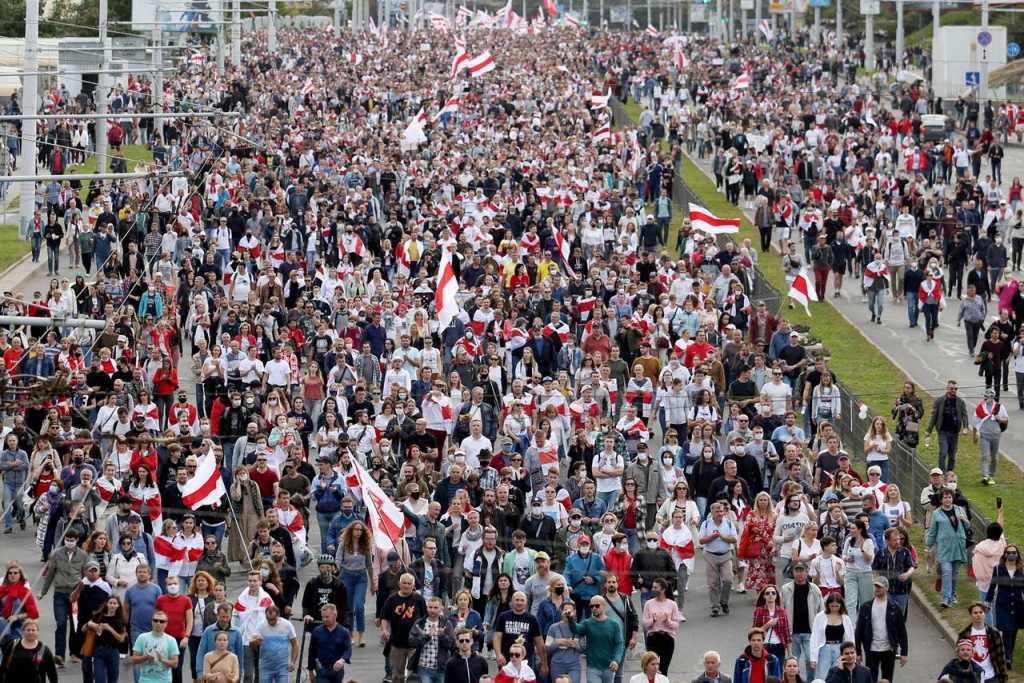
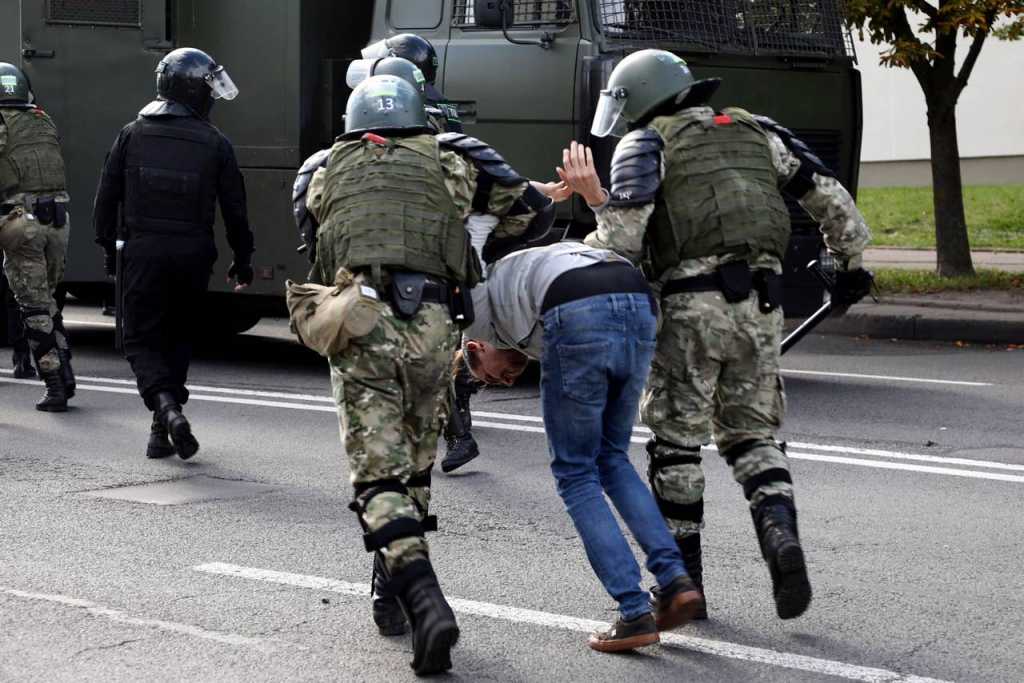
Large numbers of people went into the streets of Belarus in August after the authorities in Minsk declared that President Alexander Lukashenko had been reelected with 80 percent of the votes. The opposition candidate, Sviatlana Tsikhanouskaya, was said to have received 10 percent. Since then, statements testifying to fraud in the voting booths have been published, and the European Union condemned the Minsk government for “elections that were not free or fair.” Undeterred, however, Lukashenko had himself inaugurated for a sixth term on September 23, even as protests continued around the country. The demonstrations in Belarus against Lukashensko, who has been in power for 26 years, have been met with a heavy hand by the security forces. Thousands of demonstrators who have been arrested since the protests began have testified about brutal violence, torture and the crass violation of their rights. Three of them told Haaretz about what they endured in incarceration.

Published in Haaretz: https://www.haaretz.com/world-news/.premium.MAGAZINE-guards-beat-a-detainee-he-cried-then-stopped-doctors-came-and-covered-his-head-1.9203112

‘I wanted to protest the theft of my vote’

Valery Samalazou, 32, a software engineer from Minsk, is married and the father of three daughters. In June, he received a visa to work in the U.K. He returned in August to visit his daughters and wife and his friends, and to vote. He says he never expressed his political opinions publicly in the past, never broke the law and was never arrested. “I never even received a driving ticket,” he relates.

On August 8, the day before the election, he was on a camping trip with his family, cut off from the unfolding events in the country. On his return to Minsk, he discovered that the city was full of soldiers and that internet access was blocked. “We decided to take the girls out of town, to my wife’s mother,” he says, speaking to Haaretz by phone using secure channels, “in order to save them from the uncertainty and possible dangers.” He and his wife then returned to the capital, shortly before the polling stations closed, in order to vote. To find out the results, he bypassed the government's internet shutdown by connecting via a computer of the company he works for – an Israeli company based in the U.K.

An arrest in Minsk, Photo: AFP

Initial exit polls, Samalazou discovered, showed an apparent Lukashenko victory. “That was impossible, we thought. When I checked again in the morning, I also found messages from people abroad who sent video clips via social media of arrests and violence. I didn’t know anything and I decided to look into it. By the evening, there was no internet at all. After I met colleagues who confirmed that there had been war-like scenes in Minsk, I decided to go to the city center in order to speak my mind and protest the theft of my vote.”

He continues, “As I passed the central railway station, I saw people in black masks hiding around the corner. They blocked my path, questioned me and asked to see some identification. Then they grabbed me, hit me in the head and dragged me to a police vehicle which already had around five detainees inside.” Afterward, he was pulled out of the vehicle and dragged to a nearby building, where his shoes were removed and he was beaten again and questioned. His phone was examined, and the security forces wanted to know why he had money, pictures and bank cards from Britain.

“They treated me like I was a spy,” Samalazou continues. “When the person in charge arrived – in civilian clothes and not wearing a mask – he ordered me to be taken to the police station. He told me that I would be jailed for such a long time that my daughters would be married by the time I got out, and he also threatened to rape me with a club. A police vehicle took me to the station and collected more detainees along the way.” At the police station, the prisoners were forced out of the vehicle and made to lie on the ground. Police officers occasionally came by and hit them randomly, focusing on the younger detainees. “Some of them were hit so hard that they passed out,” he recalls. “We weren’t allowed to look, but we heard the truncheons strike their bodies. I discovered that a truncheon that strikes someone who’s unconscious makes a different sound. There was a girl there who pleaded with them to stop hitting those who had fainted, and they then beat her on the legs. When someone asked to see a doctor, the guard shouted ‘Doctor!’ and two policemen in masks arrived and beat the person viciously.”

Valery Samalazou and his doughters

Samalazou was interrogated in the station: “They tried to prove I was a spy. I was asked about my work and my political views. By searching my phone, they discovered that I had voted for Tsikhanouskaya [by reveiling a picture of the ballot which was taken for a system whereby activists submitted such pictures in order to compare them to the official count]. They beat me for that. Finally I was taken back to the parking area. In the middle of the night they brought detainees from the demonstrations, who had undergone worse beatings. Their faces were seveirly wounded and covered with blood.” He was left lying, bound, on the ground in the parking area for some 18 hours. “I understood that we were not under arrest but had been kidnapped and that they could do with us as they pleased.”

In the morning, after the group spent the night in the cold, a military vehicle transported Samalazou and the others to a detention facility. “We were made to lie on the floor of the vehicle in three layers. Whoever got on after us had to step on us,” he relates. He was handcuffed, and started to feel that the blood wasn’t reaching the palms of his hands. When he asked for his hands to be freed, they were bound behind his back instead. Leaving the vehicle, his arms were twisted violently and he lost consciousness.

At the detention facility, Samalazou was left for seven hours in an inner courtyard. The handcuffs were removed, but by then his hands had turned blue and purple and he had no feeling in them. Finally he and 30 more detainees were incarcerated in a cell intended for 10. There he was finally given food, after two days in which he hadn’t eaten. “There were no beatings in that prison, but the conditions were awful,” he says. After three and a half days, Samalazou was released with no explanation. He signed a declaration stating that he would not take part in demonstrations and was hospitalized for two weeks with head injuries. Since then he’s returned to his job in London and hopes that his wife and daughters, who don’t yet have visas for Britain, will be able to join him soon. He still has no feeling in his fingers.

Four days in a cell with 40 people

Viachaslau Krasulin, 32 and single, was forced to leave Belarus after the demonstrations in August. A lecturer on culture and art at a university in Minsk, and a musician, he fled to Vilnius, the Lithuanian capital, on September 3, after a criminal case was opened against him in Belarus, which could land him in prison for some years. He had participated with friends in a demonstration at a shopping center in Minsk on August 10.

“There were maybe a hundred people there, and things were calm,” he recalls. “There were no weapons. Some of the demonstrators erected roadblocks, a few young ones collected stones. After a time, police vehicles arrived, and the forces began throwing stun grenades. People ran and the police started to dismantle the roadblocks. My friends fled, but I thought that if I didn’t run, they wouldn’t take me in. That was a mistake.”

As he was trying to leave the scene, Krasulin continues, “I saw that one of the police officers had shot an elderly man in the stomach. The man wasn’t moving. I was in shock. I saw a young man running toward the man who had been shot to try and help him, and I wanted to join him, but then four men in green uniforms jumped me. They started to hit me and took me to a police vehicle. Two more of them attacked me there – one of them cut off my long hair with a knife. They made me lie on the floor, shouted at me that I was gay and handcuffed me. Then the man who had helped the person who was shot was forced into the vehicle. He was a doctor.”

More detainees were brought to the already crowded vehicle – two people had to lie on top of him, Krasulin relates. After a drive of about half an hour, they arrived at the Okrestina detention center. “We were beaten as we got out of the vehicle. They made us run to the wall of the courtyard and get on our knees, and left us like that for two hours.” They were then forced to lie on the ground for a few hours. “We were left there until 8 in the morning and then interrogated separately and taken to a cell. It was a cell for six people but they packed 30 detainees in and ordered us to strip down to our underwear. We weren’t beaten, but we were forbidden to approach the windows, so that people standing outside would not be able to see or hear us.”

Viachaslau Krasulin, Photo: Alfred Mikus

Eventually, he says, about 40 people were crammed into the cell, making it impossible to sit, let alone lie down. “I spent four days there, and for the first three days I received only a little bread and cereal for breakfast,” Krasulin continues. “We drank water, but there was no more food. On the third day, there were trials. There were no lawyers and we weren’t allowed to make calls. Each trial lasted six minutes. The judge asked what I had done, who had beaten me and why. I replied that I had no idea why I was beaten. I was sentenced to 11 days in prison. I was glad not to have received more; others were given far worse punishments.”

On the following day, Krasulin and his fellow detainees also were fed supper. After being interrogated again, he was transferred to a different, less crowded cell. Subsequently a police officer arrived to let him out. “I was given back my clothes, which were filthy, but not my bag, which held my passport, papers and credit cards,” he relates. “My telephone also remained with the police, because it was used as evidence in someone else’s trial. Before being released, I was made to sign a document stating that I would not take part in more demonstrations. I was taken in a police vehicle with six other people to a cemetery in the city, where we were released.”

Krasulin received medical treatment and decided to file a complaint against the police officers who had beaten him. In the wake of the complaint, he was informed that a file had been opened against him, after which he left the country at the advice of his lawyer.

‘He was beaten, then doctors covered his head’

Aliaksei Novik, 37, from Minsk, is the owner of a technology company. On Election Day, he was an independent poll observer for an opposition party. “Because of the coronavirus, we were not allowed to be inside the polling station during the day,” he relates. “But at the end of the day we waited outside for the protocol [i.e., the results of the voting at the station] to be published. It was made available two hours after the polling stations closed, and it turned out that Lukashenko had won big. That was a joke. It was clear that the results were falsified.”

Aliaksei Novik

Novik wanted to make his way home, but discovered that public transportation had been halted and also that internet access was being blocked: “I tried to walk to the center and find a taxi, but when I got close to one of the metro stations, I saw large forces who looked to be from the army. I lay on the grass in a courtyard, I heard very loud screaming and also shots, and I waited for it all to end.” Afterward, he relates, “I got up and ran in the opposite direction. I ran into a police patrol. I felt safe and asked them how I could get home. They pointed to a yellow bus nearby and one of them said, ‘That’s your ride home.’ Maybe he was joking. Then a few of them grabbed me. The five days that followed will stay with me for the rest of my life.”

He, too, like Krasulin, was taken to Okrestina. Sentenced to a 15-day prison term, apparently for participating in the protests, he was moved to a different detention facility in Zhodino, northeast of Minsk. His story is also rife with brutal violence against detainees, the hacking of his phone, coerced false confessions that were videoed, threats of rape on the part of the guards and appalling hunger and overcrowding in the detention cell. The age of the detainees ranged from 16 to 74, he says, based on their conversations. “There were people with broken ribs. One night in Okrestina, through the window, we saw guards beating a man in the yard. He cried and cried, then stopped. When things were quiet, I saw a few doctors arrive and cover his head. I don’t know for certain that he was dead, but I think a few people died there.”

Snipers were posted on the watchtowers of the facility, Novik relates, and there were dogs in the yard. From the adjacent cell he heard women’s voices. He refers to the police as “Gestapo,” and he says that one police officer called him “Jew” (he isn't Jewish). After he was released, apparently following the intervention of the European Union and human rights organizations, he filed a complaint against the police and has been conducting a legal battle against them since. He has remained in Minsk. He says he is wounded mentally and physically and can’t sleep at night.

“The Belarusian people is starting anew,” Novik says. “We live in the center of Europe. I see how people live in Ukraine, Poland and Lithuania, and I ask: Why do I not have human rights such as freedom of expression and freedom of assembly? I do not want a union with Russia, we are not its ‘little brother.’ We are a free people in Europe, and this is our war of independence.”

. Mass demonstration in Minsk, photo: AFP

Exiled Belarusian regime opponents' leader: The president is weak, women can defend our country

In an interview with Haaretz from a hiding place in Lithuania, Sviatlana Tsikhanouskaya calls on Russia and other countries not to intervene in the political crisis in Belarus, and stresses that she does not intend to run for the presidency in any future election

Published in Haaretz: https://www.haaretz.com/israel-news/.premium-exiled-belarus-opposition-leader-to-haaretz-our-female-revolution-is-significant-1.9137156

Sviatlana Tsikhanouskaya has been in hiding in Lithuania since August 10, under guard. While she has been living in forced exile, Belarus President Alexander Lukashenko – who is considered by many to be “the last dictator in Europe,” having served as his country’s leader since 1994 – has been facing huge nationwide demonstrations daily.

“I feel great pride [at] my people who at last woke up,” Tsikhanouskaya told Haaretz in an interview – the first time Lukashenko’s greatest rival, who ran in the recent presidential election against him, has been interviewed in the Israeli media.

Tsikhanouskaya during the interview: "I’m not the leader of the opposition, I’m the leader of the majority"

“They have aims, they know what they’re fighting for. They’re fighting for new elections where they’ll be able to choose a new president for our country,” she said.

Until last summer, Tsikhanouskaya, 37, was an English teacher and translator. She had no intention of being active in politics and only decided to run in this year’s presidential election after her husband, Sergei Tikhanovsky – an entrepreneur who launched a YouTube channel last year in which he criticized the government – was not allowed to stand. He has been labeled an opponent of the regime and was arrested at a demonstration in May. He was later charged with disorderly conduct and attacking a police officer, and has been imprisoned ever since.

In response, Tsikhanouskaya became the opposition candidate in the August 9 election. Her husband supported her until he was jailed, and she continued to campaign despite threats, harassment and the arrest of some of her supporters and staff. 

She reportedly received widespread support from the public on Election Day, as well as from major opposition figures. Standing alongside her were Veronika Tsepkalo, the wife of Valery Tsepkalo – another opposition candidate who was barred from running – and Maria Kalesnikava, the campaign manager of a third candidate, Viktor Babaryka, who was also barred from running and jailed. 

Tsikhanouskaya said she was worried about the “awful violence” being used by the authorities in Minsk against Belarusians. She views the public protest that broke out in her country as the tip of a process that has existed for years.

“Of course it didn’t happen in just a moment,” she said. “There were preconditions. COVID played a huge role: Our society understood that we can help each other, that we’re a nation and our authorities don’t care for us in difficult times. So, when Sergei Tikhanovsky was going around the country showing the truth and saying the truth, they started to prosecute him. But he encouraged other people to understand they have the right to say the truth and talk about it".

“Step by step, people started to wake up,” she continued. “There was a great fear, but every day – the same as I did – people had to overcome the fear and do something and say what they want. During this election campaign they saw how united they are. Many people came to our rallies,” she said, “and they looked into each other’s eyes and understood that they want to live in a different country. They want to be respected by the authorities, unlike the last 26 years. We want a different life for our children.”

According to the official result, Lukashenko won 80 percent of the votes while Tsikhanouskaya received only 10 percent. However, opposition activists claimed there had been voter fraud, while the European Union condemned the government in Minsk for holding an election that was “neither free nor fair.” It also criticized the violent repression of the protests that erupted immediately after the election, and is advancing sanctions against senior Belarusian leaders. 

Tsikhanouskaya filed a complaint with the Central Election Committee the day after the vote, and as a result was detained by the authorities for several hours. Later that same day, security forces accompanied her to the Lithuanian border (to the west of Belarus). In Lithuania, she joined her 10-year-old son and 5-year-old daughter, who were evacuated from Belarus before the election due to threats against the family.

After arriving in Lithuania, the official media in Belarus released a video in which Tsikhanoskaya can be seen reading an announcement calling on protesters not to go out into the streets and to respect the election result – in a style reminiscent of those films where hostages read the words of their captors. Later that day, she released her own video on social media in which she stated that she was forced to leave Belarus out of fears for her children’s safety.

A few days later, Tsikhanouskaya declared in another video that she had won the election and was forming a public council to arrange the transfer of power from Lukashenko to her – and to hold new and free elections. In interviews, Tsikhanouskaya emphasized that she would serve as an interim president and didn’t intend to run in any new election.

Will the fact that the president holds all the power in Belarus, including the military and police force, not cause the protest to dissipate without replacing the government – especially in light of the fact that the opposition leader is not even in the country? Do you have the power to even start a dialogue with Lukashenko?

“First of all, I’m not the leader of the opposition, I’m the leader of the majority. Second, you say that Lukashenko has all the power, and you mentioned police, but he doesn’t have the power on his people. This matters. He has power on 1 percent of the people. He has no power at all in the eyes of the Belarusians. They will never trust him anymore, they will not be able to live in their country under his leadership. So, how can you say that he has power? Absolutely not!"

In that case, what practical steps are you taking in order to bring a regime change?

“First of all, all the political prisoners must be released. That will be the sign that our authorities are ready for a dialogue. This dialogue has to happen as soon as possible, because of the political crises and the economic crises. When the political prisoners will be released we’ll start this dialogue – which will lead to new, fair and transparent elections, and people will have the right to elect a new president for themselves,” she said. 

“Thanks to different initiatives, we have results from poll stations where the results were falsified. At the moment, we have over 150 real results which are radically different than those which were published.” Says Tsikhanoskaya and adds that

 international observers were not allowed to come and supervise the election. Furthermore, the results she obtained were the result of acts of bravery from people who worked in the polling places and were charged by the authorities because they published the truth. She added that she won over 50 percent of the vote – a level that does not require a second round of voting according to Belarusian law.

Are you, like many others, concerned about possible Russian intervention in the situation in Belarus? Have you been in touch with the Kremlin or have they tried to contact you?

“What’s going on in Belarus is absolutely our internal affair. It’s not about geopolitics, it’s a political crisis where our people are standing up against one person. There’s no need and there’s no reason for the Russians to interfere in this political crisis. There is awareness to this [Russian intervention], but I can’t say that I’m afraid of this. I always ask all the countries, including Russia, to respect our sovereignty. We have to deal with this conflict ourselves.”

The principle of Belarusian sovereignty is equally valid with regards to other nations too, Tsikhanouskaya says. Nonetheless, she’s happy to note that many countries recognize her claims that election results in Belarus were falsified and that they don’t recognize Lukashenko’s victory.

“They show their support for the Belarusian people who are standing up for their rights and for defending our elections. They are absolutely for our people, they are supporting us in this fight,” she said. “We appreciate what they say and we appreciate that they are vocal, and we are very grateful for whatever they do to support our people. 

“But we also call to respect the sovereignty of our country. We underline that what’s going on is our internal affair and other countries shouldn’t interfere in the situation. When other leaders ask what they can do for us, I say that if one day we will need international mediation in starting negotiations with our authorities, then all the countries which care about our situation are invited.”

Women’s revolution

International criticism, nonrecognition of the election result and calls for Lukashenko to avoid violence have also come from the United Nations, Belarus’ neighbors and even from the Vatican. A source close to Tsikhanoskaya said she has already spoken with U.S. Deputy Secretary of State Stephen Biegun, European Commission President Ursula von der Leyen, and the Leaders of Sweden, Finland and Estonia. But her exile in Lithuania has forced her to devote time not only to foreign officials but also to her partners in the protest.

What’s the nature of your relationship with the protest leadership and the other leaders, Veronika Tsepkalo and Maria Kalesnikava? Do you speak? Are there any disagreements or conflicts between you?

“Of course we’re in touch. We’re working together. But we understand that Maria Kalesnikava is in Minsk, and of course she has much more pressure on herself than I have or Veronika Tsepkalo, who is in Poland I suppose. But each one of us does her best to reach the aim we have. So I’m here, meeting with leaders of different countries who show support to our people and our situation. Veronika also, I’m sure, is doing her best for the same purpose, and Maria, who’s in front at this moment in Minsk. I’m really proud that she’s there and I’m proud that we’re still together, that we have one aim and we’re moving toward it together.”

The fact that the leadership of the opposition is made up of women is no coincidence, and Tsikhanoskaya attributed great importance to it. “The phenomena of a [female] revolution is very significant in our demonstrations. We understood that we can, we are important and we can defend our country not in the kitchen but in front of men and beside men. So we felt ourselves as a united nation where people help other people, take care of other people – and this is our unity.” 

But in spite of what she may say, it’s clear that living in exile is not easy for Tsikhanouskaya.

In a video released after she arrived in Lithuania, she said that the decision to leave was very difficult and one she made on her own, without consulting with political figures – or even her husband in prison. In subsequent interviews, as well as now, she has refused to say exactly what happened during the hours when she was held by the authorities in Minsk before crossing the border into Lithuania. 

“It’s not time [to tell]. Sorry,” she said.

What about your future plans? Do you intend to be president of Belarus?

“No, my opinion on this hasn’t changed. I’m not planning to be involved in the future elections.”

Are you in touch with your husband? When did you last talk to him?

“I think I spoke to him about three and a half months ago, because in our country you can’t phone prisoners. But we communicate via a lawyer who visits him about twice a week. The lawyer tells him about what’s going on in Belarus, and he’s very proud of the Belarusian people. He supports me and he’s really grateful to the Belarusian people that everything he did wasn’t in vain. Of course I’m worried about him, because he’s held like a hostage.”

Can you tell us a little about your situation in Lithuania, the conditions in which you live, the situation of the children and your plans to return to Belarus?

“What matters is that I feel safe here. I’m surrounded with different, wonderful people – Lithuanians and Belarusians – who are now members of my team, and we’re doing our best to achieve our aims in Belarus. We’re all working for the same purpose, which hasn’t changed: new elections in Belarus.

“My children are fine, thank God. They want to go back, they miss their Daddy. I also want to go back to Belarus, and I will as soon as I feel safe there.”

She continues: “We have a wonderful country with peaceful, friendly and hardworking people who have lived under this regime for 26 years. According to the Constitution we have a lot of rights, but in reality we have no rights at all. People are imprisoned just for having an intention to tell the truth; they’re imprisoned for going out and showing their disagreement with the regime. 

“It’s not safe to live there, because people are disappearing. It’s not safe to go out and raise your voice, because you’ll be beaten and imprisoned. There’s no justice – our people have had enough. They woke up and want to live in a democratic country where people are safe and free. Now it’s high time for our people to struggle for their rights, and they’re ready to build a country for life.”