Israel's government has boycotted the Sweden Democrats since the party's founding by neo-Nazis in 1988. The political repercussions of the Gaza war have led to a new Israeli directive calling for exploratory talks, but the Swedish Jewish community still refuses all contact with the far-right party
STOCKHOLM – Foreign Minister Gideon Sa'ar's instruction for Israeli diplomats to launch discreet talks with the far-right Sweden Democrats has made waves in the Swedish media. It marks a drastic change for Israel's foreign policy, which was previously characterized by a long-standing boycott against far-right parties associated with antisemitism, Holocaust revisionism and neo-Nazi activists.
Sa'ar has ordered these exploratory talks with far-right parties in France, Spain and Sweden, Axios' Barak Ravid reported Monday. The Sweden Democrats' foreign policy spokesman, Aron Emilsson, who heads the parliamentary Foreign Affairs Committee, told the daily Expressen that Israel's decision was "extremely positive."
"We've been working for a long time to improve relations," he said, adding that "the ties are also important in security matters, particularly regarding Iran."
The Sweden Democrats have been boycotted by the Israeli government since the party's inception in 1988, but two unofficial visits by the party's leaders to Israel in 2023 and early 2024, as well as a series of unpublicized talks with Prime Minister Benjamin Netanyahu's Likud party and the Foreign Ministry triggered a policy change.
Ziv Nevo Kulman, Israel's ambassador in Stockholm, told the daily Dagens Nyheter in 2021 that his country had no ties with the Sweden Democrats and had no intention of establishing any. "This is a moral position about far-right parties with roots in Nazism," he said, two months into his term.
He told Haaretz last May: "We are aware of the positive statements by the Sweden Democrats about Israel. But at the same time, the party continues to adhere to extremist positions regarding a ban on brit milah [Jewish ritual circumcision] and the importing of kosher meat, and it has yet to seriously grapple with its neo-Nazi past and with the antisemitism among its members." He said the party's alleged support for Israel was "questionable."
Despite this earlier skepticism, the Israeli Embassy said Tuesday: "As part of a broader review of parties in Europe with which we have not previously had contact, the embassy has held talks with the Sweden Democrats. The initial contacts have largely focused on how the party handles its history and its stance on issues affecting Jewish life in Sweden."
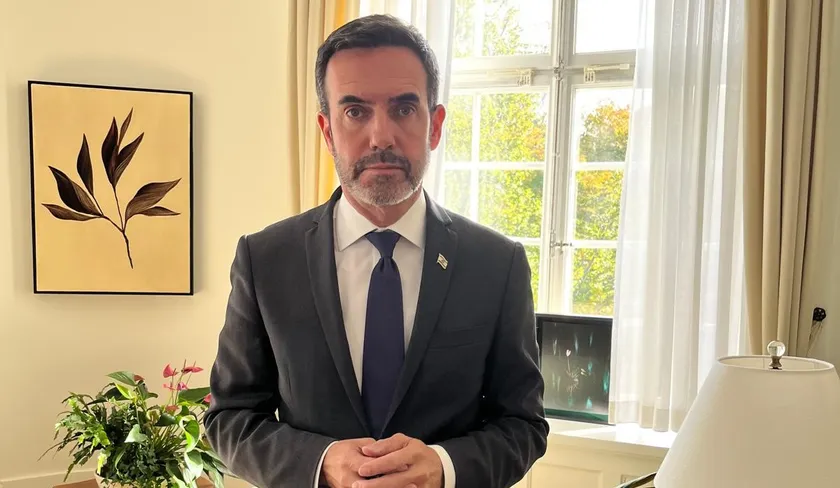
Ziv Nevo Kulman, Photo: Israel's Embassy to Sweden
According to sources familiar with Israeli-Swedish relations, this change of tack was not only the work of Israel. Since the beginning of the war in Gaza, Sweden's center-left has been increasingly hostile toward Israel, and these parties' ties with Jerusalem have significantly weakened. Israel has become a wedge issue between Sweden's center-right coalition and the centrist and left-wing opposition.
According to the sources, the opposition's approach is pushing Israel into the arms of the Swedish populist right. As a result, the Sweden Democrats are increasingly seen as a legitimate party in both Israel and the Jewish world, a major win for the party.
For Sweden's Jewish community, the Sweden Democrats are still considered off-limits, at least officially. The party is not in touch with the community and is not welcome at community events.
In a letter to Israel's foreign minister a year ago, the European Jewish Congress and the Council of Swedish Jewish Communities expressed concerns about a meeting between Israeli ministers and Sweden Democrats visiting Jerusalem. The president of the European Jewish Congress, Ariel Muzicant, and the chairman of the Council of Swedish Jewish Communities, Aron Verständig, wrote that they were "gravely concerned" and referred to the party's "neo-Nazi roots."
Muzicant and Verständig added that the Sweden Democrats' "ideology is still inherently xenophobic even though its representatives claim to be our allies, making an exception for the Jews as a national minority, albeit claiming that Jews cannot be Swedes." They said the party regularly submitted bills to ban "non-medical circumcision," as opponents call it, and the importing of kosher meat.
When asked Tuesday about Israel's apparent policy shift, Verständig told Haaretz that he was notified a few days ago that Israel's Foreign Ministry had instructed the Stockholm embassy to forge contacts with the Sweden Democrats.
"However, we don't have contacts with the Sweden Democrats," Verständig said. "The issue of the Sweden Democrats is one that we discuss regularly, but we haven't changed our position and we still don't have ties with the party."roots
The Sweden Democrats party was founded in 1988 by members of Swedish neo-Nazi and far-right movements. A key figure in the organization was Gustav Ekström, a member of Germany's Waffen-SS, the SS' military arm, during World War II and an activist in the NSAP, the Swedish Nazi party that disbanded in 1950. Other founders were members of white supremacist parties, neofascist and neo-Nazi movements, the Swedish skinhead movement and criminal organizations.
But the neo-Nazi past wasn't the only reason for the Israeli boycott. In recent years party members have spread conspiracy theories and racist, antisemitic and Islamophobic propaganda. In 2021 the Swedish daily Aftonbladet revealed that Jörgen Fogelklou, the party's leader in Sweden's second-largest city, Gothenburg, spread antisemitic and racist statements on social media such as "It is clear that Jews are the root of all evil in the world."
A few years ago, another local party leader in southern Sweden, Jonas Lingvärn, took part in performances by rock bands supporting white supremacy and used the slogan "Skinhead 88" – 88 is shorthand for HH, meaning "Heil Hitler."
The party first entered Sweden's parliament in 2010, and in the 2022 elections it won more than 20 percent of the vote, making it the country's second largest party. Until just a few years ago, the Sweden Democrats were boycotted by parties across the political spectrum.
But after a shift in approach by two center-right parties, the Sweden Democrats became an integral part of the right-wing bloc after elections, without which a center-right government could not be formed. In parliament, the party heads the Foreign Affairs Committee, the Justice Committee and the Industry and Commerce Committee.
In a letter to Israel's foreign minister, leaders of the European Jewish Congress and the Council of Swedish Jewish Communities warned against allying with the Sweden Democrats who, according to the letter, 'claim to be our allies' while advocating that 'Jews cannot be Swedes.' The party has roots in neo-Nazi and antisemitic ideologies
STOCKHOLM – In a letter to Israel's foreign minister sent Monday by the presidents of the European Jewish Congress and the Council of Swedish Jewish Communities, the two leaders expressed concern over a recent meeting between Israeli ministers and a delegation from the far-right Sweden Democrats party, which violated Israeli policy.
EJC President Ariel Muzicant and Jewish community leader Aron Verstandig wrote that they were "gravely concerned by the implications and long-term consequences of this meeting" which also ran "counter to the Israeli foreign policy vis-à-vis the Sweden Democrats as being non-welcome, with reference to their Neo-Nazi roots."
On January 29, a delegation of senior members from the Sweden Democrats arrived in Israel and met with Diaspora Affairs Minister Amichai Chikli and Culture and Sports Minister Miki Zohar. The group included the party's leader, Jimmie Akesson, chairman of the Swedish parliament's foreign affairs committee, Aron Emilsson, head of the party's parliamentary group, Linda Lindberg, and the head of the party's group in the European Parliament, Charlie Weimers.
The Sweden Democrats, currently the second-largest party in the Swedish parliament, has roots in neo-Nazi and antisemitic ideologies. It is one of several European parties with which Israel has refrained from establishing official ties. For that reason the recent visit to Israel was not an official one and was not arranged by Israel's Foreign Ministry.
Last year, two members of the Sweden Democrats visited Israel and met with Knesset member Amit Halevi from Netanyahu's Likud party and with former Knesset member Michael Kleiner, who serves as the president of Likud's court. There were no meetings with government ministers.
"With right wing populism and extremism on the rise throughout Europe, Jewish communities easily become exploited in narratives targeting other minorities," Verstandig and Muzicant wrote to Foreign Minister Israel Katz, "these populist parties and movements are often keen to establish alliances with Jewish communities and Israel, acting on the presumption that Jews and Jewish institutions, often being targeted by extremists of Middle Eastern and/or Muslim descent, would (and should) be interested in uniting over the notion of a 'common enemy.'"
In their letter Verstandig and Muzicant also explained that "the [Sweden Democrats] party's ideology is still inherently xenophobic even though its representatives claim to be our allies, making an exception for the Jews as a national minority, albeit claiming that Jews cannot be Swedes." They added that the party regularly submit bills in the Swedish Parliament to ban circumcision and the import of kosher meat.
In this context, the January meeting with Chikli, whose role includes fostering connection between world Jewry and Israel as well as combating antisemitism, is particularly notable. In May, Chikli also caused diplomatic embarrassment for Israel when he delivered a keynote speech at the controversial evangelical Canada Christian College. The school's president, Dr. Charles McVety, is an activist and leader of Canada's Christian far right.
Sweden Democrats leader Akesson took to X after the meeting, writing, "It is clear that our parties and our nations share common values." In response, Chikli tweeted: "We deeply appreciate your support and your passion for our mutual fight for the future of Western civilization."
Asked by Haaretz what he expects as a reply to his letter, Verstandig said he hoped Katz would confirm that the policy of not allying with extremist parties still applies.
A Foreign Ministry source replied to Haaretz's query on the subject, saying there is no change in the ministry's policy toward the Sweden Democrats. The source did not say whether the ministers would face disciplinary action over the meeting.
Swedish Police Approve Hebrew Bible-burning Event Near Israeli Embassy in Stockholm
According to reports in Swedish media, local police will allow the event to take place on Saturday, during which the attendees are expected to burn a Hebrew and Christian bible in an attempt to expose Swedish hyprocisy
July 14th
Police in Sweden have approved a request to burn both a Hebrew and a Christian Bible during a protest expected to take place Saturday in front of the Israeli embassy in Stockholm, police in the Swedish capital have confirmed. The request was made by a 32-year-old Swede who claims that his action is a protest against recent events of burning the Quran, which were approved by Swedish authorities and took place in the last few months.
In a statement released on Friday, Israeli Prime Minister Benjamin Netanyahu said that he condemns “in the strongest terms the authorities’ decision in Sweden to permit the burning of a Jewish Bible in front of the Israeli Embassy.” Netanyahu added that “this deeply shameful act undermines the sacredness of the Jewish people’s holiest scriptures.” Israel’s ambassador to Sweden, Ziv Nevo Kulman, condemned the burning of holy books from any religion, saying it’s “an act of hate and disrespect, that has nothing to do with freedom of expression.”
Israeli President Isaac Herzog said he “unequivocally condemn[s] the permission granted in Sweden to burn holy books,” and that he is “heartbroken that the same fate awaits a Jewish Bible.” Herzog added that “permitting the defacement of sacred texts is not an exercise in freedom of expression, it is blatant incitement and an act of pure hate.”
Israeli Foreign Minister Eli Cohen also stated on Friday that “burning a Torah scroll is a hate crime, provocation, and a severe attack on the Jewish people and Jewish tradition,” urging Swedish authorities to “prevent this disgraceful event and not allow the burning of a Torah scroll.” On Friday, the European Jewish Congress (EJC) also issued a condemnation, saying the Swedish authorities shouldn’t allow the event to take place. “Provocative, racist, antisemitic and sickening acts such as these have no place in any civilized society,” EJC president Dr. Ariel Muzicant said.
The Official Council of Swedish Jewish Communities published a statement claiming that “our tragic European history links the burning of Jewish books with pogroms, expulsions, inquisitions and the Holocaust.” The council added that it condemns the abuse of freedom of expression that takes place with the aim of sowing hatred in society. “Burning holy books, be it the Quran, the Torah or the New Testament,” it concluded, “are hateful acts that we perceive as direct threats to the societies that value them. Following the Quran burnings, we support the Muslim community in Sweden, express our gratitude for their strong stance and condemnation, and sincerely hope that this and all other burnings of holy books will stop.”
In a meeting with representatives of religious communities in Sweden, Swedish Prime Minister Ulf Kristersson said: “Sweden is and must be a country where people of different faiths – or no faith – can live together side by side in mutual respect. Let us together fight the hatred in society, which drives people to burn the Quran, the Bible or the Torah, and in places and times that are most offensive. Instead, let’s show each other respect.”
The practice of burning holy books in Sweden started a few years ago as a result of a Danish far right provocateur and politician named Rasmus Paludan. A few of Paludan’s supporters burned the Quran in the southern city of Malmö in 2020, and he himself repeated the act a number of times since then.
Rasmus Paludan in Stockholm, August 2022, photo: David Stavrou
In April 2022, Paludan managed to provoke a violent reaction when criminal elements took advantage of the local communities’ outrage and used the opportunity to set off riots which included setting cars on fire and attacking police in several Swedish towns. In January, Paludan returned to Sweden after he received a permit to burn a Quran in front of the Turkish Embassy in Stockholm. This time the reaction had geopolitical implications. Turkey used the Quran burning in Stockholm as a pretext to continue blocking Sweden’s decision to join NATO.
Things got even worse in June when an Iraqi Christian immigrant burned a Quran just outside a Stockholm Mosque during Eid al-Adha. This led to anti-Sweden protests all over the Arab world. In recent weeks there have been more applications sent to the police requesting approval to hold demonstrations which include burning of holy books. The current case of burning of Jewish and Christian holy scripture is intended as a way of exposing Swedish hypocrisy, claiming the authorities allow burning the Quran in the name of freedom of expression too easily, but many claim the result is that a handful of extremists have managed to drag Sweden down a path which is becoming both dangerous and internationally embracing.
Some Swedes have had enough of this, including some government officials. Jonas Trolle, the head of the Swedish Center for Preventing Violent Extremism, for example, said that it’s time for Sweden to consider certain legal changes. “Sweden needs to be equipped in a turbulent time in Europe,” he wrote in “Expressen” one of Sweden’s daily newspapers, “Today it’s Quran burnings, tomorrow it will be something else. Without a legal change, Sweden risks becoming vulnerable. It’s unreasonable that our laws concerning public order are out of step with our basic laws [concerning freedom of speech]. We must protect both our freedom of expression and our national security.” Trolle also claimed in recent interviews to the Swedish press that Sweden needs a “reality check” in these matters and it can learn from countries like Germany, France and the UK which have managed to legally forbid these kinds of events and still remain democratic.
Earlier this month, a man who identified himself in Swedish media as a refugee from Iraq burned a Quran outside a mosque in central Stockholm – resulting in strong condemnation from several countries. Shortly after, reports surfaced about another individual who had applied for a police permit to burn the Torah outside the Israeli embassy. “I am shocked and horrified by the prospect of the burning of more books in Sweden, be it the Koran [sic], the Torah or any other holy book,” Ambassador Nevo Kulman tweeted in early July.
Man Who Planned Hebrew Bible-burning Event in Stockholm Delivers Speech Against Act Instead
The 32-year-old Swedish citizen, who is Muslim, says his intention was to 'show how wrong it is that people don't respect other religions'
July 15th
STOCKHOLM — A 32-year-old Swede named Ahmad Alush who announced that he intended to burn a Hebrew and Christian Bible on Saturday in front of the Israeli embassy in Stockholm surprised those present and instead gave a speech against the burning of religious books. When he arrived in front of the Israeli embassy in Stockholm at noon holding a large lighter in his hand, he made it clear that he did not intend to use it. "I'm Muslim, we don't burn [books]," he said, adding "I wanted to show how wrong it is that people don't respect other religions."
The man, who lives in the south of Sweden, explained on Friday that he intends to burn a Bible as a protest against an event about three weeks ago in which a Quran was burned before a mosque in Stockholm with police permission. "It deeply saddens me and many others in Sweden and the world who allow the Quran to be burned," he explained. "I know that the Swedes are very good people and that they want to prevent the burning of the Quran and that there is a legal obstacle to doing that."
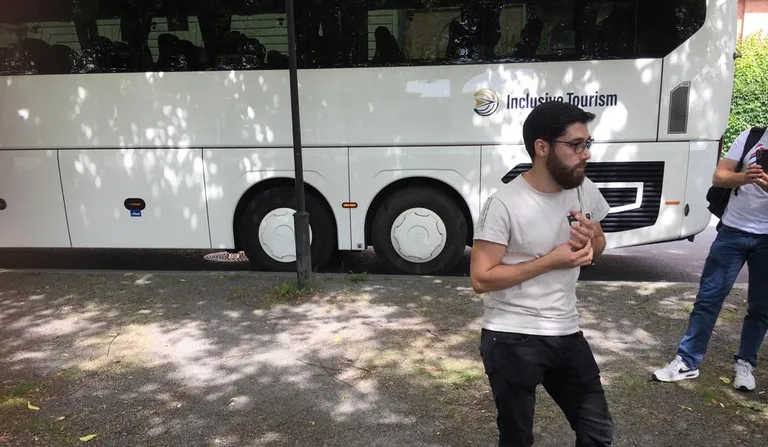
Ahmad Alush, the man who said he'd burn a Torah book outside the Israeli embassy in Stockholm, photo: David Stavrou
After the Swedish police approved the man's request to burn the Bibles, Israeli Foreign Minister Eli Cohen instructed Israel’s ambassador to Sweden, Ziv Nevo Kulman, "to act in every way in order to prevent this shameful incident." It was also reported that the ministry's political director Aliza Bin Noun spoke with Kulman in Israel "and made clear to him the seriousness with which Israel views the police's approval of damage to the sacred sites of Judaism."
The decision to permit burning of the Bible was met with harsh criticism in Israel, with Prime Minister Benjamin Netanyahu saying he condemns “in the strongest terms the authorities’ decision in Sweden to permit the burning of a Jewish Bible in front of the Israeli Embassy.” Netanyahu added that “this deeply shameful act undermines the sacredness of the Jewish people’s holiest scriptures.” Kulman earlier condemned the burning of holy books from any religion, saying it’s “an act of hate and disrespect, that has nothing to do with freedom of expression.”
Israeli President Isaac Herzog said he “unequivocally condemn[s] the permission granted in Sweden to burn holy books,” and that he is “heartbroken that the same fate awaits a Jewish Bible.” Herzog added that “permitting the defacement of sacred texts is not an exercise in freedom of expression, it is blatant incitement and an act of pure hate.” On Friday, the European Jewish Congress (EJC) also issued a condemnation, saying the Swedish authorities shouldn’t allow the event to take place. “Provocative, racist, antisemitic and sickening acts such as these have no place in any civilized society,” EJC president Dr. Ariel Muzicant said.
In a meeting with representatives of religious communities in Sweden, Swedish Prime Minister Ulf Kristersson said: “Sweden is and must be a country where people of different faiths – or no faith – can live together side by side in mutual respect. Let us together fight the hatred in society, which drives people to burn the Quran, the Bible or the Torah, and in places and times that are most offensive. Instead, let’s show each other respect.”
The practice of burning holy books in Sweden started a few years ago as a result of a Danish far right provocateur and politician named Rasmus Paludan. A few of Paludan’s supporters burned the Quran in the southern city of Malmö in 2020, and he himself repeated the act a number of times since then. In January, Paludan returned to Sweden after he received a permit to burn a Quran in front of the Turkish Embassy in Stockholm. This time the reaction had geopolitical implications. Turkey used the Quran burning in Stockholm as a pretext to continue blocking Sweden’s decision to join NATO.
When an Iraqi Christian immigrant burned a Quran just outside a Stockholm Mosque during Eid al-Adha in June, anti-Sweden protests broke out all over the Arab world. In recent weeks there have been more applications sent to the police requesting approval to hold demonstrations which include burning of holy books. Earlier this month, a man who identified himself in Swedish media as a refugee from Iraq burned a Quran outside a mosque in central Stockholm – resulting in strong condemnation from several countries. Shortly after, reports surfaced about another individual who had applied for a police permit to burn the Torah outside the Israeli embassy. “I am shocked and horrified by the prospect of the burning of more books in Sweden, be it the Koran [sic], the Torah or any other holy book,” Ambassador Nevo Kulman tweeted in early July.
The Torah Wasn’t Burned This Time. But What’s Next?
Are public burnings of the Quran and other holy books inevitable in a country that values free speech? No, according to the co-head of a Jewish-Muslim organization in Sweden, Rabbi Moshe David Hacohen. 'These events are an opportunity for cooperation, because the threat to Muslims and Jews is real,' he says
July 16th
STOCKHOLM – The Swedish capital found itself in the world news this weekend when a Muslim man who had pledged to burn copies of the Torah and Bible in front of the Israeli Embassy instead discarded his lighter and sought to send a message about respecting other religions. The Swede, who was named in the media as Ahmad Alush, went on to explain that he and many other Muslims were saddened by the burning of the Quran in Sweden and that the right to freedom of expression can’t excuse such hate crimes.
The practice of the Quran being publicly burned in Sweden started a few years ago because of a far-right Danish politician called Rasmus Paludan. A few of his supporters burned the sacred book of Islam in the southern city of Malmö in 2020, and he himself has subsequently repeated the act a number of times. In April 2022, he managed to provoke a violent reaction when criminal elements took advantage of the local outrage and started riots, including setting cars alight and attacking police forces in several Swedish towns.
Last January, Paludan returned to Sweden after receiving a permit to burn a Quran in front of the Turkish Embassy in Stockholm. This time, the reaction had geopolitical implications: Turkey used the incident as a pretext to continue blocking Sweden’s efforts to join NATO. Things got even worse last month when an Iraqi Christian immigrant burned a Quran just outside a Stockholm mosque during the Eid al-Adha festival. This prompted not only more Turkish reaction, but also anti-Sweden protests all over the Arab world. And more applications requesting approval to hold public demonstrations to burn the holy books of three major religions (Judaism, Islam and Christianity) were sent to the police in recent weeks.
On Saturday, Alush said he wanted to expose Swedish hypocrisy that permits the Quran to be burned in the name of freedom of expression, but ended up making a wider statement by saying the practice of burning holy books must end.
Dismantling the fear
This point has been made by others, including some Swedish officials. Jonas Trolle, who heads the Swedish Center for Preventing Violent Extremism, has said it’s time for Sweden to consider certain legal changes. He said in recent media interviews that Sweden needs a “reality check” in such matters and that it can learn from countries such as Germany, France and Britain, which have managed to legally ban these kinds of events yet still remain democratic.
Civil society has also joined the discourse over the burning of holy books. The Amanah organization, founded by Imam Salahuddin Barakat and Rabbi Moshe David Hacohen, for instance, has prevented Torah burnings in the past. The group focuses on creating a trusting society while working to combat discrimination, antisemitism and Islamophobia.
“Jewish history is useful in this debate,” Hacohen said in an interview. “It’s clear that the purpose of burning holy books is not to demonstrate an objection to the content of the books; it’s about creating the Other in society – like Nazi propaganda in the 1930s. Burning books is a way of showing certain people that they are not welcome in society, and this leads to legitimizing murder.”
Asked what Amanah does when it learns that someone intends to burn a holy book, Hacohen explained that “the first thing we do is join forces. These events are a good opportunity for real cooperation, because the threat to both Muslims and Jews is real. We try to bring in forces from the Jewish world, the Muslim world, the leaderships of all communities in Sweden, the Nordic countries and Europe, and we try to send a unified message.
“On a more local and practical level, we exert our influence wherever we can behind the scenes – not only in order to prevent the burning of books, but also to prevent antisemitic incidents and Islamophobic behavior such as hate speech online. We work on dismantling the fear and building bridges in various ways. We created a digital project for Swedish schools, funded by the Swedish government, which helps young people understand what it’s like to be a Muslim or a Jew in Sweden. We also created a Jewish-Muslim madrassa [school] for adults, in order to deepen the knowledge about the two religions, understand the similarities, and see beyond the black and white way of seeing reality.” Hacohen noted that the imam of Stockholm's main mosque spoke on Friday against the burning of all holy books, and added that Muslims should not act against Jews who are their partners in the struggle against Quran burnings.
Sweden's unique interface
As for why Sweden has seemingly become an epicenter of book-burning controversies, Hacohen believes it is because the country has a unique interface where religion and social freedom meet. “The limits of democracy are stretched as they meet different cultural and religious values such as those brought by immigrants who arrive to a very different culture than they came from,” he said. “This friction triggers a debate about limits on freedom of speech and limits on behavior in the public arena when it comes to hate and racism. In Sweden, freedom of expression is a value above almost all others, and limiting it because of the danger of hate crimes is seen by many Swedes as a threat to their basic values.”
Hacohen referred to Jewish tradition when asked if Swedish exaltation of freedom of expression makes such incidents inevitable. “Amanah was invited to a panel discussion at the law faculty in Lund University. The participants were a law professor, the archbishop of the Church of Sweden and us, Imam Barakat and myself. When asked about the freedom of expression in Judaism, I replied that the notion of freedom is very personal, it’s about how one relates to choices. But when it comes to social laws and the relationship to others, the word ‘responsibility’ is used. We have rules regarding responsibility to others and the society we live in. It’s about responsibility rather than freedom. Perhaps this distinction can help direct us toward a true cohesive society where we care for one another and have a trusted shared space.”
The rabbi also highlighted recent comments by the Vatican and the World Jewish Congress. Pope Francis told United Arab Emirates daily Al-Ittihad that any book considered sacred by its people must be respected out of respect for its believers. “Freedom of expression must never be used as an excuse to despise others, and allowing this must be rejected and condemned,” the pope was quoted as saying.
WJC President Ronald Lauder, meanwhile, reacted to the recent incidents in Sweden by calling the burning of the Quran a “heinous act,” expressing solidarity with “our Muslim brothers and sisters.” On Friday, he said that “the burning of our sacred texts ostracizes and hurts the Swedish Jewish community as well as all those who value pluralism and multiculturalism. Books should be read and cherished, not set ablaze.”
Quran Burnings and Terror Threats: Israel Warns Citizens to Avoid Crowds – in Sweden
As Sweden raises its terrorism alert to its second-highest level, Prime Minister Ulf Kristersson warns of potential revenge attacks for recent public burnings of the Quran – from Lebanon's Hezbollah, Al-Shabab in Somalia and Al-Qaida
August 21st
STOCKHOLM – The Swedish Security Service on Thursday raised the country's terrorist-threat level to its second-highest rung, a step last taken in 2016 when Europe was wracked by terror attacks. The move follows a spate of Quran burnings by protesters in Sweden, angering the Muslim world and triggering assaults on Swedish consulates and embassies in Baghdad, Beirut and Izmir, Turkey. The threat level will now be a 4 in a five-rung scale.
“There are also several examples of terrorist groups that have urged their sympathizers around the world to take revenge for the Quran burnings that have taken place in Sweden. Among them are Hezbollah in Lebanon, al-Shabab in Somalia and Al-Qaida,” Prime Minister Ulf Kristersson told a press conference Wednesday.
At the news conference, officials said the authorities had thwarted terrorist attempts and made arrests. Sweden's security agencies were cooperating with each other and their foreign counterparts, Kristersson added. Meanwhile, Britain and the United States have warned their citizens to stay vigilant in public places and tourist sites in Sweden. Even the National Security Council in Jerusalem has asked Israelis to “try their best to avoid crowded places and public institutions at the present time.” British officials have said there is a chance that terrorists will attempt to strike in Sweden, adding that the Swedish security agencies had already prevented attacks on Swedish citizens.
Burning holy books as a political provocation is nothing new to this Scandinavian country. For years now, far-right Danish politician Rasmus Paludan has been burning Qurans to express opposition to immigration to Sweden and neighboring Denmark, and in a bid to goad immigrant communities. In April 2022, provoked by Paludan, criminal elements took advantage of Muslim citizens' wrath and sparked riots in Swedish cities that included the torching of cars and attacks on the police. In January this year, Paludan returned to Sweden after receiving permission to burn a Quran in front of the Turkish Embassy in Stockholm. This time there were geopolitical repercussions: Turkey used the event as one of its reasons to block Sweden's entry into NATO.
The situation worsened in June when Salwan Momika, an Iraqi Christian, burned a Quran outside a mosque in Stockholm during the Eid al-Adha holiday. This time, the Turkish protests were joined by anti-Swedish demonstrations around the world. This wasn't the only Quran-burning by Momika, an anti-Muslim activist and asylum seeker who has been in Sweden since 2018. He has burned a Quran outside parliament, and on Friday, a day after the raising of the threat level, he burned the book outside the Iranian Embassy. Similar incidents have occurred in Denmark. In recent weeks, further requests for approval to burn holy books have been submitted to the Swedish police, with torchings of the New Testament and the Hebrew Bible also being prepared.
Sweden has absolute freedom of speech; it has no law preventing the burning of holy books. Meanwhile, the country’s legislation on hate crimes and public disturbances doesn’t allow the police to prevent book burnings, except in extraordinary circumstances. But many in Sweden argue that the country is paying too high a price for this policy. The freedom to burn holy books is letting a handful of extremists – whose views or actions are very unpopular around the country – drag Sweden into severe international crises while worsening the security situation.
At the press conference, Justice Minister Gunnar Strömmer said that new legislation to fight terror groups is now in place while new policies have been crafted to prevent terrorists from entering the country in the first place. Sweden's police chiefs added that the security services were following suspects' online activities, gathering intelligence on radicals and preparing the rescue and security services for a rapid response to all scenarios. The head of the Swedish Security Service, Charlotte von Essen, added that the threat to Sweden may carry on for a long time.
She said the threat stems largely from Islamic extremists, while the spread of fake news, disinformation and rumors about Sweden – mainly portraying it as an anti-Muslim country – worsens the situation. The authorities are also monitoring intimidation from the far right and security threats in the entire region, against the backdrop of Russia's war on Ukraine and the Swedes' subsequent request to join NATO.
The threats in Sweden cast a shadow over Stockholm’s annual end-of-summer culture festival, which ended Sunday. For many Swedes, the mid-August event marks the last week of the summer vacation, after which it's back to work and school.
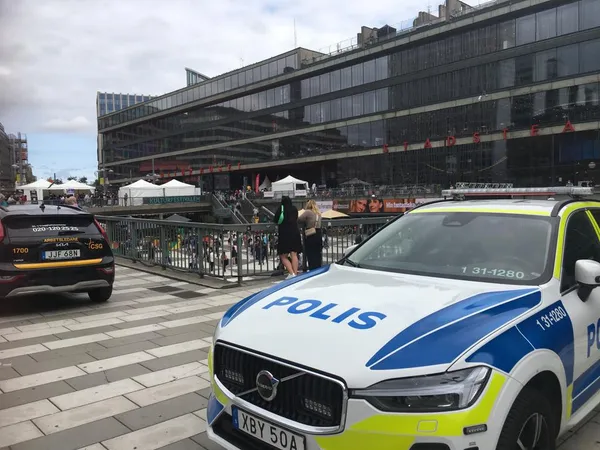
A police Car at Stockholm's Culture Festival. Photo: David Stavrou
Since its inception nearly two decades ago, the festival has been a huge attraction both for Stockholmers and tourists. For five days, stages throughout the city center host dance, music, circus and theater performances, all for free. Long lines stretch around dozens of food and drink stands, and more than a million visitors and hundreds of workers fill central Stockholm's streets, squares and bridges.
This year's installment went by without incident. Despite the warnings, there were no metal detectors, no one checking bags at the entrance, and no tense atmosphere at all. Maybe the reason is that instead of the rainy weather of the first half of August, the sun shined on Stockholm. Maybe it's just that the Swedish approach to terror threats, at least for now, is the same as the Swedish approach in general: faith in the authorities and security forces – and a cautious pragmatism. “We must live our lives as normal,” Kristersson said. “We stand behind our democratic values. We are defending ourselves, but we still stand behind our way of life.”

 דיויד סטברו