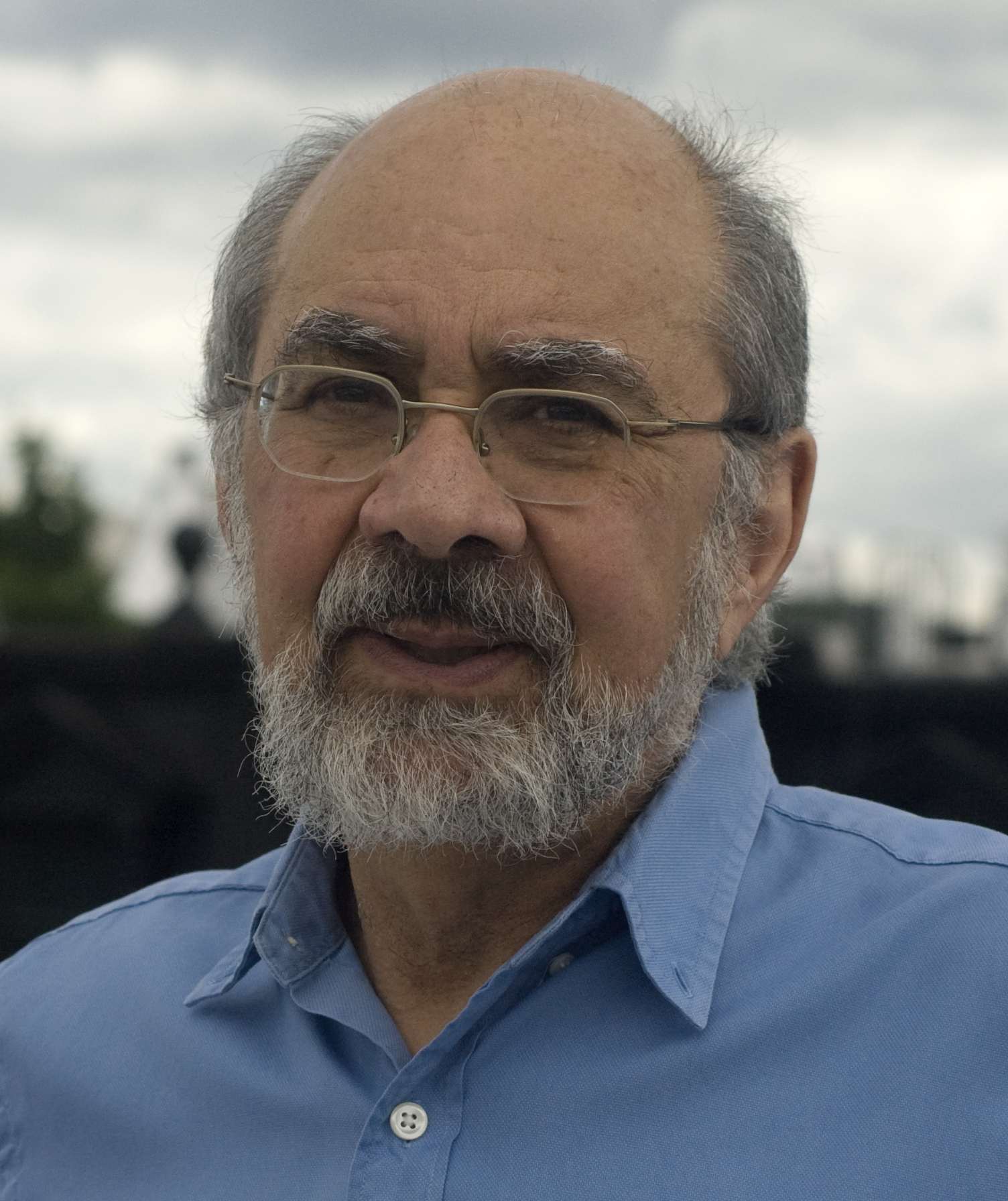
Sweden's New FM Says 2014 Palestine Recognition Was 'Premature and Unfortunate’

Sweden’s new foreign minister, Tobias Billström, talks to Haaretz about recalibrating foreign policy, the importance of ties with Israel and the new government's far-right partners

published in "Haaretz": https://www.haaretz.com/world-news/europe/2022-11-22/ty-article/.premium/swedens-new-fm-calls-2014-palestine-recognition-premature-and-unfortunate/00000184-9f0a-d40d-a9ce-bf7f31f60000

STOCKHOLM – Swedish foreign policy has been unique for many years in Europe. The Scandinavian nation hasn’t joined military alliances since it was a military power in the 17th and 18th centuries, and hasn’t been involved in a war for over 200 years (with the exception of occasional peacekeeping missions far away from its borders). In the second half of the 20th century, its policy of avoiding alliances and maintaining wartime neutrality created a foreign policy that in many ways wasn’t about serving Swedish national interests. Instead, it was about becoming a “humanitarian superpower” and endeavoring to make the world a better place.

Naturally, there were those both at home and abroad who criticized this policy. Some saw Sweden’s attempts to position itself on the right side of history as self-serving, opportunistic and hypocritical. Others claimed its private sector’s thriving arms industry was incompatible with a government preaching peace, love and understanding. Another problematic aspect was Sweden’s close ties with a host of dictators and oppressive regimes.

Still, for decades, Swedish diplomats were crucial in bringing wars to a close. Swedish policymakers were generous when it came to humanitarian aid, and vocal when it came to issues like the struggles against apartheid and the Cold War arms race.

This tradition was maintained in recent years as well. As well as being the only Western European country to recognize a Palestinian state, Sweden did its best to export progressive ideas like “feminist foreign policy,” taking radical steps against climate change and building stronger international institutions.

But change is on the horizon. Sweden has taken its first steps to join the NATO military alliance and is building up its military capabilities in a way it hasn’t done for decades due to recent Russian aggression. After voting out the left-wing Social Democrats and electing a center-right government led by the Moderate Party and supported by the far-right Sweden Democrats, what is the future of neutral Sweden?

“Since I took office, I’ve been very clear that we need a recalibration of Swedish foreign policy,” says Sweden’s new foreign minister, Tobias Billström. “We need to make some very clear statements about our priorities. One priority, above anything else, is the NATO accession. With that we also have to think about our neighborhood – the Nordic states, the Baltic states and the countries surrounding the Baltic Sea. This is where we’re putting our emphasis. It’s not a choice between being active in the international arena and being focused on our neighborhood. You can do both. What you can’t do is be everywhere all the time and be active in all aspects. We’ll have to prioritize.”

This may be a seismic change on the national level but it’s not for Billström, who notes that his party “has supported joining NATO for years. And I believe that the question of neutrality ended in 1995 when Sweden became a member of the European Union.”

No Jerusalem embassy yet

Billström, 48, is an experienced politician despite his relatively young age. He has been a parliamentarian for 20 years, serving as migration and asylum policy minister from 2006 to 2014, and was a local politician before that. The role he now holds is one of his country’s most important considering current regional instabilities. He meets Haaretz at his Stockholm office, which is located in a beautiful 18th-century palace facing the Royal Opera House on one side and the Royal Palace and Parliament House on the other. He has just accompanied the king and queen of Sweden on a state visit to Jordan, one of his first on the job. He says he’d like to visit Israel one day and thinks that Sweden’s relationship with Israel is “excellent following the establishment of dialogue in 2021.” Still, no official visit has as yet been planned.

Eight years ago, one of the first steps of the previous government was to recognize a Palestinian state. What is your government’s position on the issue?

“The decision to recognize Palestine in 2014 was premature and unfortunate. However, the decision has been taken and this government doesn’t plan to revoke it.”

But it wasn’t just about recognition. The previous government was very active in this field: it appointed a special envoy to the Israeli-Palestinian conflict; it actively opposed Israeli settlements in the West Bank; and it supported the Palestinian Authority and the two-state solution. Is Sweden’s new government still committed to these policies?

“On the Israeli-Palestinian conflict, the government stands firmly behind the EU policy. We want to see a negotiated two-state solution based on international law. That decision will remain. As for being active, we will continue to criticize the parties when called for, when violations of international law are committed and when human rights are abused. We’ll do that in the same way we criticize other states when it’s justified. This is in no way contrary to having excellent relations with Israel or Palestine. The government will at all times stand up for Israel’s legitimate security needs.”

Would Sweden consider moving its embassy from Tel Aviv to the capital, Jerusalem?

“Like the EU, the government will continue to respect the broad consensus of the international community and relevant UN Security Council resolutions and regard Jerusalem as a final-status issue. Pending a peace agreement, Sweden’s embassy will not be moved.”

Your government plans to cut foreign aid drastically in the next couple of years – will this affect Swedish aid to the Palestinians, and could this lead to a problem with Sweden’s Palestinian partners?

“Sweden’s development cooperation with Palestine, just like the EU’s, ultimately aims to build the conditions and promote a two-state solution in line with international law. This goal will remain. As we review our overall development cooperation, we will also recess our Palestine strategy, which applies to the period of 2020 to 2024.”

What about aid to the Palestinian organizations that the Israeli government claims are terror groups? Or aid to the UN Relief and Works Agency for Palestine Refugees, which allegedly publishes schoolbooks containing antisemitic incitement?

“The government takes terrorist accusations very seriously and several of these civil society organizations – which were listed by Israel as terror groups in October 2021 – receive support from the EU, the United Nations, Sweden and other donors. Together, the donors within the EU followed up thoroughly on the allegations and concluded that no substantial evidence was provided. The donors will therefore continue to support Palestinian civil society. We believe that a free and strong civil society is indispensable for promoting democratic values and the two-state solution. Needless to say, if Israel makes convincing evidence available that would justify a review in the policy toward these organizations, we would act accordingly.

“When it comes to antisemitism, it is of course unacceptable and it’s very important that the PA ensures that its textbooks fully meet UNESCO standards, and that the EU continues to be clear in its dialogue with the Palestinians to ensure that this is the case.”

Israel’s new government will be led by former Prime Minister Benjamin Netanyahu. Are you confident that Israeli-Swedish relations, which have recently improved under another government, won’t deteriorate again under the new one?

“As Sweden’s foreign minister, I would like to see a good dialogue with countries we think we can maintain good relations with. The question of relations between Sweden and Israel is exactly about that: to have a dialogue on issues that we might disagree on – but we think it’s still a good thing to sit and talk about them.

“It’s not up to me as foreign minister of Sweden to say anything about Israel’s domestic policy. The people of Israel have a right to elect their government, just as the Swedish people have a right to elect our government. The important thing is to understand that in Sweden we cherish dialogue and would like to see it maintained.”

Just over a year ago, Israel’s ambassador to Sweden said Israel will not have any contacts with the populist Sweden Democrats party. Since then, it has become the closest and most important political supporter of your government. Will it influence Sweden’s foreign policy? And do you think Israel should have ties with it?

“It’s up to the Israeli government through its ambassador here in Sweden to choose with whom it wants to talk. As foreign minister, the case is very clear: the Swedish constitution says that foreign policy is shaped by the government, which keeps parliament informed. This means that since the Sweden Democrats are not part of the government, their influence is limited to exactly that – namely, parliamentary control, just like all the other parties represented in the Swedish parliament.”

A personal Holocaust story

As well as relations with Israel and the Israeli-Palestinian conflict, another Swedish policy to draw attention during the previous government’s term was the one concerning antisemitism and Holocaust remembrance.

For over 20 years, since a Swedish initiative started the International Holocaust Remembrance Alliance in 1998, Sweden has been considered a world leader in this field. Last year, the government organized a major international conference in Malmö dedicated to Holocaust remembrance and combating antisemitism. It also decided to open a new Holocaust Museum and accept the IHRA definition of antisemitism and its examples (which some have slammed for equating criticism of Israel with antisemitism).

When asked if his government is just as committed to combating antisemitism and preserving the memory of the Holocaust, Billström says: “Certainly! Combating antisemitism is very important and the new government is fully committed to doing so.”

Since Sweden is still struggling with many instances of antisemitism in schools, in some Muslim environments and in far-right circles, Billström knows the problem is still unresolved. “I will always be a very strong advocate against antisemitism,” he says. “We are working very closely with Israel on this. I appreciate the very fruitful cooperation with Israel during the IHRA presidency, and we’re looking forward to continuing the cooperation during Israel’s presidency in 2025.

“I would also like to make a personal remark on this,” he adds. “My grandparents in Malmö took in a Jewish family that escaped from Denmark across the Öresund strait, during the period in 1943 when the Gestapo tried to round up the Jews. I grew up with this story. I have this very nice diploma that says two trees were planted in their memory in Tzippori [in northern Israel] as thanks from this family. My grandmother and my mother, who remembers playing with the kids of this family, told me this story, and it has left a deep mark on me leading to my understanding of what the Jews and what Denmark went through.

“I’ve always believed that antisemitism is a horrible thing. When the Jewish burial chapel in Malmö was attacked during my time as migration minister [in 2009], I went there for the inauguration of the restored chapel and talked about my family’s story in my speech. For me, it’s obvious that there are examples of antisemitism in Swedish society that should be condemned, and it’s obvious there are people in our society who have not laid off the horrible idea that there are grounds for antisemitic persecution of people of Jewish origin in our society. That should always be combated – in schools, at workplaces, wherever we find it. As foreign minister of Sweden, this is something I have a very firm conviction about.”

What about the Sweden Democrats? Besides their past as a neo-Nazi party and many extremely problematic antisemitic opinions voiced by some of their leaders, the biggest party supporting your government supports various laws that could be problematic for Sweden’s Jewish community – such as forbidding circumcision and banning the importation of kosher meat. Are you sure your partnership with them won’t be part of the problem rather than part of the solution?

“I have to say that although there is certainly room for political debate concerning those aspects, as foreign minister it’s clear that the constitution limits their parliamentary influence. As to other issues you mentioned, they belong to areas under the influence of other ministers and I think that, again, under the limits of the constitution I shouldn’t be addressing them.”

One issue Billström is willing to address is Swedish-Iranian relations, which have been tense lately. A Swedish court recently sentenced an Iranian official, Hamid Nouri, to life in prison for war crimes committed in Iran in 1988. There are also two Iranian-born Swedes standing trial in Stockholm after allegedly spying for Russia, while Swedish nationals are also being held in Iran. The recent domestic demonstrations against the Iranian regime make it even harder for Sweden to maintain business as usual with the Islamic republic.

When asked if these events will bring about a change of Swedish policy toward Iran, Billström makes the Swedish position clear. He says that since Sweden has an independent judiciary, there is no government influence on verdicts in Swedish courts. This may be seen as a signal to Tehran about the government’s policy concerning the complicated court cases in both countries.

However, when it comes to the political arena, things are easier to act upon. “As we see it, there is no movement on the Iran nuclear deal,” Billström says. “But the developments in Iran are a source of great worry for Sweden, which also has a considerable Iranian diaspora. The violence directed against peaceful demonstrators is horrible. I had direct communication with the foreign minister of Iran a few days ago, and I was very frank about the way the Swedish government feels about this – we believe people shouldn’t be persecuted and that the use of the death penalty is absolutely unacceptable in every regard. However, we still feel there’s room for dialogue with the Iranian government on this – and the only way to influence them is by dialogue.

“We are also very clear that individuals who have participated in the persecution of demonstrators, and also those who have been involved in the sale of drones to Russia to be used in the war in Ukraine, should face sanctions. It’s very worrying that Iran is turning in this direction.”

Another Middle Eastern leader Billström’s government is dealing with is Turkish President Recep Tayyip Erdogan. Swedish Prime Minister Ulf Kristersson met him in Ankara earlier this month, in a bid to get Turkey to ease its objections to Sweden’s NATO accession.

“There is a trilateral memorandum signed by Sweden, Finland and Turkey,” says Billström, explaining the current state of affairs. “The memorandum has conditions that have to be fulfilled and will pave the way for the Turkish parliament to ratify Sweden and Finland’s accession to NATO. The visit to Ankara was good; I think it was a fruitful dialogue.”

It seems there are items on the Turkish president’s agenda – some domestic, others foreign – that are still causing him to block Sweden’s NATO ambitions. Billström thinks it is now time for the “relevant authorities in all three countries” to get to work, but doesn’t specify what the problematic issues are or when he thinks the process will be completed. “Because there are certain issues that have to be dealt with,” he concludes, “I don’t want to set a time frame. Because it’s not helpful to do that.”

Over 100 Murders: The Iranian Standing Trial for War Crimes in Sweden

Hamid Nouri is charged with being involved in over 100 murders and war crimes during the bloody Iranian massacre of July 1988. In a unique legal case, Stockholm District Court may sentence him to life in prison

Published in "Haaretz": https://www.haaretz.com/world-news/europe/2022-06-21/ty-article-magazine/.premium/over-100-murders-the-iranian-standing-trial-for-war-crimes-in-sweden/00000181-853d-ddb4-a3ab-d5fd84520000

STOCKHOLM – At the time, Manoochehr Eshaghi didn’t really understand why he was taken out of the line. Leaving Tehran’s Evin Prison courtroom, after a collective legal proceeding lasting only a few minutes, he and the others in his group were blindfolded and ordered to walk toward a bus, each holding the shoulder of the man in front. When the bus dropped them off, Eshaghi was told to wait by a wall. From under the blindfold, he could see the others. Joined by prisoners from other buses arriving on the scene, they were divided into groups of four. These were their last moments, and Eshaghi, the lone survivor, can’t forget them.

They stood with their backs to their executioners. A few words were said to announce the verdict and some of them shouted out last words. Then came the shots. “Nobody begged or showed any weakness,” Eshaghi says some 40 years on, in an interview in a Stockholm café not far from his home. “Some shouted ‘Long live freedom!’ Others shouted ‘Death to Khomeini!’ After a first round of shots, the commander checked the bodies and shot them again in the head. I just sat there and cried.”

The apparent reason Eshaghi was spared was because he had yet to reach puberty. Today, aged 55, he remembers the demonstration that caused his arrest in 1981. He says he was there to support his uncle, who was a supporter of the People’s Mujahedin of Iran (aka Mujahedin-e-Khalq, or MEK), a student movement that in those days combined a modernist version of Islam, Marxist influences and opposition to Ayatollah Ruhollah Khomeini’s Islamic clergy.

Eshaghi was sentenced to 10 years in prison, during which time he saw many of his prison mates executed. Sometimes he and others were made to carry the bodies and load them onto trucks. He says prisoners were raped by guards; many, including himself, were tortured and placed in solitary confinement. When he was transferred to another prison – Gohardasht in Karaj, west of Tehran – things only got worse. Violence there was part of the daily routine. One form of torture Eshaghi remembers is being beaten by the guards and then stuffed into a small unventilated room together with other prisoners until they almost suffocated to death. They called it the “gas chamber.”

Eshaghi was at Gohardasht during the summer of 1988, when thousands of political prisoners were executed by hanging. He remembers many of his cellmates being taken to a committee and asked about their political beliefs. Some agreed to show remorse, condemn the Mujahedin movement and ask for mercy. Others refused, not knowing in those early days that rejecting the terms meant being sent to the gallows.

Thirty-four years have passed but Eshaghi hasn’t forgotten his cellmates who were murdered, or the men in charge of the killings. One of them, a deputy to the assistant prosecutor, was a man he knew as Hamid Abbasi. In an unexpected turn of events, Abbasi, whose real name is Hamid Nouri, is now standing trial for the 1988 Gohardasht and Evin killings not far from the Stockholm café where Eshaghi told me his story.

A protester outside Stockholm District Court during the trial of Hamid Nouri last month. David Stavrou

According to the prosecutors, in the space of just a few weeks, Nouri and his colleagues rounded up thousands of prisoners, gave them staged trials and handed down death sentences. Most of them were People’s Mujahedin of Iran supporters, others were members of left-wing movements. It was all done secretly, hastily and deceitfully. At last, Manoochehr Eshaghi, who was asked to testify at the trial, got to face one of his torturers. “I’m 100 percent sure it’s him,” he says, “and he knows exactly who I am too. Me and my two brothers, who were also imprisoned in Gohardasht, were targets for him. When I first saw him in court, I was frightened. But then I calmed down. When I testified, it felt good. Finally, he had to answer questions and take responsibility.”

Nouri, who is 61, is charged with more than 100 murders and war crimes. The verdict will be announced on July 14 and, if convicted on both charges, he may spend the rest of his life in a Swedish prison.

***

The trial in Stockholm District Court began last August, almost two years after Nouri was dramatically detained at Stockholm’s international airport. According to the prosecution, back in 1988 Nouri was one of those who took the prisoners to the so-called death committee and then to the execution chambers. He was also involved in the torture, the hangings and the secret burial of the victims, they say.

Nouri projected an air of confidence during the trial. He was always well-dressed and looked elegant when his handcuffs were removed and he took his place at the defendant’s table. His behavior during the proceedings was eye-catching: he exchanged intense looks with witnesses and members of the public attending the court sessions. He occasionally mumbled a few words or expressed his opinion using body language. He followed every word (translated into Persian for him from Swedish, and vice versa), read the material presented to the court and exchanged remarks with the judge, lawyers and law enforcement officers.

On the days when he presented his side of the story, it sometimes felt like he was lecturing the court with a mix of self-praise, political theories and theatrics. He claimed he wasn’t a violent man, never hurt anyone and that everybody loves him. He also praised Iran and its regime, which has to face the “terrible lies” it’s accused of and made harsh allegations against the Mujahedin movement, which he refused to call by name – referring to it instead as “the little group” that “murdered thousands of Iranians in a way that makes ISIS look like innocent children.”

It was as if Nouri was certain he’d soon be back home and wanted to avoid being seen as a man who turned his back on his previous ideals and comrades. At times, it seemed as if Nouri’s testimony had very little to do with a coherent legal defense or the advice of his Swedish lawyers. He claimed that although he used the alias Hamid Abbasi and worked at Evin Prison, he was not the only Hamid Abbasi there and he wasn’t employed at Gohardasht at all.

He also claimed that because his wife had just given birth, he was on leave on the dates when the supposed executions took place – but according to him there were no mass executions at all. Even so, the Swedish court, the plaintiff’s lawyers and prosecutors put an enormous amount of work and resources into this unique trial, which is based on the international legal principle of universal jurisdiction. This allows for crimes that are deemed a threat to the whole of humanity to be prosecuted by national courts regardless of where they were committed.

The trial even relocated to Albania for a few weeks in November, in order to hear from witnesses who are still Mujahedin supporters and are based there. But it wasn’t the tireless work of Swedish authorities that first brought Nouri to Sweden on November 9, 2019. Rather, it was the determination of one man: a former Iranian Mujahedin supporter called Iraj Mesdaghi.

***

Mesdaghi is another survivor of the 1988 massacre who lives in Sweden. He was born in Tehran and educated in the United States. Although he is today a harsh critic of the Mujahedin movement, he was a supporter back in 1981 when he started a 10-year prison sentence, during which he was subjected to violence and torture.

In 2019, decades after arriving in Sweden, Mesdaghi received information that one of his torturers – the man he knew as Hamid Abbasi – was traveling to Stockholm for a private visit. It turned out that one of his stepdaughters used to be married to a Swede and was involved in a custody dispute over their 2-year-old child. When Mesdaghi heard of this, he put a complex international legal plot into action.

“With the help of one of Nouri’s Swedish acquaintances, who secretly assisted me, I got Nouri tickets for a cruise and booked hotels for him in order to tempt him to start his trip in Stockholm, meet the family here and then go on vacation,” he recounts in an interview outside the courtroom.

Iraj Mesdaghi

“After making these arrangements, I traveled to London and met with British lawyers and legal advisers to start preparing the case. Later, they contacted a Swedish lawyer, who got in touch with the Swedish prosecutor.” Mesdaghi was initially concerned about the Swedish government being reluctant to get involved. “I know the European system,” he says. “There’s a difference between foreign affairs, intelligence services and the justice system. Everyone does their job. Intelligence services are concerned about keeping the country safe, they don’t care about justice. But I created the scenario and I knew we could get him here.”

The plan worked. Nouri was arrested upon arrival in Stockholm and charges were filed against him. When the trial finally began some 21 months later, it was only natural that Mesdaghi would be the first witness. He told the court about how he was taken from his cell in Gohardasht and stood in line, blindfolded, with other prisoners awaiting trial. When the procedure began, he was not officially warned that the next few minutes could seal his fate. However, he understood that his answers could send him straight to the executioners who were waiting on the other side of what would be known as the “death corridor.”

Mesdaghi was therefore willing to promise that he would not carry out political activities upon his release. In the following days, he met the committee again, signed various written statements, was tortured by prison guards and witnessed many of his fellow inmates being taken to their deaths as his own fate was hanging in the balance. After his eventual release and escape from Iran in 1994, Mesdaghi wrote extensively about the events leading up to the summer of 1988. He claims there was a power struggle within the Iranian political elite as the Iran-Iraq War was coming to an end, Khomeini’s health was deteriorating and the question of political prisoners was dividing his assumed successors.

Hussein-Ali Montazeri, the designated successor, was opposed to the massacre, while other senior officials such as Akbar Hashemi Rafsanjani and Ali Khamenei were supporters. Mesdaghi experienced the results of this geopolitical drama in solitary confinement, when he heard the guards speaking of a fatwa soon to be issued by the supreme leader. Toward the end of July 1988, it was obvious something was going on: prison visits were canceled, prisoners were being moved between wings, and access to newspapers and television was denied.

The fatwa, which was issued on July 28, sanctioned the execution of political prisoners who were still loyal to the Mujahedin. Later, Khomeini allegedly issued a second fatwa targeting left-wing prisoners. Mesdaghi explains that when Montazeri objected to the massacre, he was removed from his senior positions by Khomeini, who also set up the so-called death commissions. In the Tehran area, the commission that arrived at Gohardasht on July 30 included Sharia Judge Hossein Ali Nayyeri and Tehran prosecutor Gen. Morteza Eshraghi. When Mesdaghi faced the committee on August 6, he recognized the two as well as the man who he knew as Naserian – now known as Mohammad Moghiseh, a judge in Tehran’s Revolutionary Court. Naserian’s deputy was Hamid Abbasi, who Mesdaghi recognizes as Hamid Nouri. The committee included several others who would become extremely important figures. One was Mostafa Pourmohammadi, an intelligence official who later served as a minister under presidents Mahmoud Ahmadinejad and Hassan Rohani. The other would become even more significant. His name was Ebrahim Raisi.

***

In Iran, the president is second only to the supreme religious leader in the chain of command. The fact that Raisi was a key player in the 1988 massacre, and then became Iran’s president in June 2021, makes the Nouri trial even more momentous. One of the prisoners who clearly remembers Raisi is Fereydoun Najafi (62) who now lives in Australia and was one of the witnesses in Nouri’s trial. “When taken to the committee I told Raisi that I didn’t do anything. I said 'I’m not against you, I don’t care about the Mujahedin’. Raisi then told me to go and wait outside, and I was returned to my cell. After that I was transferred back to Evin where I spent three more years”. Unlike other prisoners, Najafi answered the committee members this way, because he already had information about the proceedings and their possible results thanks to two other prisoners who managed to contact him before their executions and explained the situation by morse code. "Other prisoners didn’t know and they just asked to be left alone", says Najafi, "which meant that they are still Mujahidin supporters”.

Najafi, who was arrested because his brother and sister were Mujahedin supporters, was beaten and tortured, sent to Evin and given a harsh sentence of 15 years with no real grounds. He was later transferred to Gohardasht where he spent three years in solitary confinement. When he was called in to face the Death Committee, he was asked a couple of questions. He recognized Eshraghi, Nayyeri, Naserian and Raisi who he said received his file from Hamid Abbasi who he’s now completely sure is Hamid Nouri. “Even if you forget everything”, he says, “you never forget your enemy. This guy is a torturer. I’ll never forget him”.

“The trial of Hamid Nouri is one of the most significant events during the rule of the Islamic regime,” says Mehdi Aslani, another trial witness. He is a writer and activist who is now based in Germany and was a member of the left-wing Fadaiyan-e-Khalq (FKO) in the 1980s. “Up until recently, arrests of Islamic regime operatives were predominantly linked to their activities outside of Iran. Whereas now, for the first time, someone is facing justice outside Iran for involvement in crimes against political prisoners in Iran.”

Mesdaghi (left) and Aslani leaving the Stockholm courtroom. David Stavrou

For Aslani, it’s not just about politics. He says that when he stared Nouri in the eye during the trial, he remembered friends who perished in their youth and shed a tear for the victims of the 1988 “thought inquisition and slaughter of intellect.” “Khomeini’s second fatwa is even more sinister and outrageous than the first one against the Mujahedin,” says Ervand Abrahamian, a U.S.-based historian of modern Iran. “The first fatwa tried to get the prisoners to deny the Mujahedin and rat against their colleagues. The second fatwa is medieval. It’s against apostates, the members of the left-wing groups. They were asked other questions such as did they pray? Or did they believe the Koran is the word of God? According to strict Islamic law, apostates can be executed. This is a case of medieval law in 20th-century Iran.

“There are two different stories here,” he continues. “The first one, the war on political opponents, is brutal but it’s normal in 20th-century politics. The second, the execution of prisoners because they were nonbelievers, is like the [Spanish] Inquisition.” Abrahamian estimates the number of executed members of the Mujahedin at between 2,500 and 7,000, while the number of left-wing activists who were killed was smaller (probably several hundred). The Mujahedin victims may include prisoners of war who were executed after Operation Mersad – an invasion of Iran in July 1988 in which Iraqi forces and Mujahedin fighters cooperated. Whatever the real number, the American-Iranian historian says the regime “wanted to keep a lid on the information and never admitted anything.”

But the massacre didn’t remain a secret. Members of the Iranian diaspora have been talking about it for decades; there are books and reports on it; and international organizations have been demanding justice for years, including Amnesty International. Many of these organizations have been present at the Stockholm trial, which is currently in recess ahead of the verdict next month, and it is clear that although they are united against the Iranian regime and Nouri as its representative, they are sometimes strongly opposed to each other as well. Under the surface, there are many accusations and deep animosity between Mujahedin supporters, former Marxists, human right activists and different Iranian diaspora groups.

Inside Iran, however, the regime seems to be united in a new strategy toward the West. Former presidents “Khatami, Rohani and Rafsanjani were interested in foreign relations and the image of Iran in Western Europe,” Abrahamian says. “Raisi couldn’t care less. I think they’re not worried about the West anymore; they’re isolationists, and they’re counting on Russia and China.

Ervand Abrahamian Photo: Emma Nolan-Abrahamian

A prime example of the way Iran is behaving toward Europe nowadays was offered in May. In what was widely seen as an attempt to affect the Stockholm court, Tehran is threatening to execute Iranian-Swedish doctor Ahmadreza Reza Djalali, who was convicted of espionage in 2017 in what human rights groups regard as a highly dubious trial. The Islamic republic, it seems, is trying to get Nouri back and is certainly not accepting any blame for the 1988 massacre.

Nouri himself continues to deny a massacre ever happened, praises Iran’s leaders and threatens his opponents. In this sense, he can be seen as a warning. If he is the face of the current Iranian regime, negotiations over the new nuclear deal, oil sales and sanctions may be different than in the past. “Concerning the nuclear discussions in Vienna,” historian Abrahamian says, “the premise in the West is that Iran wants an agreement with the world powers, including the United States. But that may not be true now that the right-wing, die-hard extremists are in charge.”

If he is right, Hamid Nouri’s trial may be just the beginning of a whole new chapter in Iran’s relations with the West.