Church of Sweden in unholy spat after call to probe Israel as an apartheid state

Swedish Jewish organization blasts church’s decision, saying it cements its image as anti-Israel, while some of the church’s own bishops label it a ‘one-sided fixation on Israel’.

Published in "Haaretz": https://www.haaretz.com/israel-news/.premium.HIGHLIGHT-the-church-of-sweden-s-unholy-spat-over-israel-and-apartheid-1.10431536

STOCKHOLM – A decision by the Church of Sweden last week calling on ecumenical organizations to investigate Israel as an apartheid state has been condemned by the country’s leading Jewish body and members of the church itself.

According to the formal decision, the General Synod (the church’s decision-making body) has commissioned its Central Board to “raise the issue of scrutinizing the implementation of international law in Israel and Palestine, also from the perspective of the United Nations convention on apartheid and the definitions of apartheid in the Rome Statute.”

The church’s director of international affairs, Erik Lysén, told Haaretz that “the addendum suggests that the Central Board raise the issue with ecumenical organizations such as the Lutheran World Federation and the World Council of Churches. How the task is handled will be a matter for the Central Board to decide. There is no specific time frame for this.”

The latest decision, which was supported by members of the Synod who are part of Sweden’s Social Democratic and Center parties, has been criticized both within and outside the church.

Aron Verständig, president of the Council of Swedish Jewish Communities, said his organization found the decision unacceptable. He said the Church of Sweden “repeatedly chooses to criticize the only Jewish state, without criticizing any of Israel’s neighbors for the persecution that Christians are subjected to.” Verständig added that “the result of this decision is unfortunately that the image of the Church of Sweden having a strong anti-Israel approach is cemented.”

When asked if the decision was a result of the church’s will to protect Christians in the region or due to a more general political agenda, Lysén responded: “The members of the Synod who proposed the addendum argued in the debate that they were doing so out of a belief that the deteriorating human rights situation on the ground requires an investigation based on human rights and international law, and echoed voices of Palestinian Christians, as well as Israeli, Palestinian and international human rights groups who call for international action.”

The Church of Sweden, which has been active in the Middle East region for many years, publicly supports a two-state solution based on the armistice demarcation line before the 1967 Six-Day War. It calls for an end to “Israel’s occupation of Palestine,” for “a return to talks and negotiations based on international law,” and for both sides to end violence and respect human rights.

In the past, the church has claimed that “methods that prevent financial support for the occupation are legitimate ways of working for peace.” At the end of last week, the church’s head, Archbishop of Sweden Antje Jackelén, informed Verständig that she was personally opposed to the decision. However, she added in an open letter published on the church's website, that “an image of the decision is now being spread that is not entirely correct, and which can easily lead to misunderstandings and overinterpretations.”

Jackelén wrote “it is the use of the word ‘apartheid’ that provokes anger and sadness. I myself would not have used the word in this context. But I am also aware that Israeli and other human rights organizations such as B’Tselem, Yesh Din and Human Rights Watch have used the term in their reports.

“The decision also raises the issue of an examination of how the Palestinian Authority and Hamas live up to international law,” she continued. “Even though I think the wording is unfortunate, it is clear to me that the church council’s decision is in no way directed at Jews as a people, either in Sweden or in Israel, nor at the State of Israel.”

Other senior figures within the Church of Sweden were even more critical. “As bishops, we love our church and support its structure. This doesn’t prevent us from strongly distancing ourselves from the decision taken by the council,” wrote Åke Bonnier and Sören Dalevi, two bishops who mentioned the split vote at the church council. In "Kyrakans Tidning", a Swedish weekly newspaper which focuses on church issues, they stated that “103 members chose to vote against the proposal. As a church, we simply don’t agree on this issue. Why does the council so often pass motions concerning Israel, the only democracy in the Middle East? After all, there are 195 other countries in the world to choose from. Why is it never exercised over Belarus, Ethiopia, the U.S., China, Russia or any of the abominable dictatorships surrounding Israel? We note that this one-sided fixation on Israel does not directly contribute to improving relations with the Jewish state or with our Jewish siblings.”

One-sided supporter

As part of its involvement in the region, the Church of Sweden backs various organizations and projects, some of which support the boycott, divestment and sanctions movement against Israel. The church has often been accused of being anti-Israel and a one-sided supporter of the Palestinians.

Lysén said the Church of Sweden “focuses its international engagement on countries where we have long-term development and humanitarian partners,” and rejected the notion that it was only focused on the Israeli-Palestinian conflict. He said the church had raised issues of human rights violations in countries such as “Colombia, Myanmar, South Sudan, Tanzania, several countries in Central America and regionally in the Middle East. This is often done in partnership with ecumenical networks and alliances, and always with a basis in human rights and international humanitarian law.”

Responding to criticism of the decision, Lysén stressed that “the Church of Sweden’s position is not anti-Israeli and remains principled to human rights and international law – in Israel and Palestine, and in any other context where we work. We support and cooperate with both Israeli and Palestinian partners, all of whom work from a human rights-based approach. We remain committed to the rights of both the Israeli and the Palestinian people.”

The Church of Sweden is an evangelical Lutheran church with 5.8 million members (about 55 percent of Sweden’s population) and is considered a progressive and liberal church by international standards. It has ordained female priests since the late 1950s; recognizes and performs same-sex marriages; and its decision-making body, which consists of 251 members who meet biannually, is voted for in a democratic election in which all of the country’s major political parties are represented.

The General Synod elects the church’s Central Board, which is led by the archbishop of Sweden (Jackelén is the first woman to hold the church’s highest position). Until the start of the 2000s, the church held the position of state church, which explains the high membership numbers in a country that is extremely secular and in which only a small percentage of the population attends church services.

Until 1996, all newborn children were made members, unless parents actively canceled their membership. The church is involved in humanitarian work far from Sweden’s boarders, its self-proclaimed priorities including “gender justice and equality, safeguarding people’s sexual and reproductive health and rights, basic freedom of religion or belief, just peace worldwide, fair and sustainable livelihood, and maintaining human dignity and human rights in emergency situations.”

Israel’s Ambassador to Sweden Rejects Far-right – and Stirs Political Storm

Israel's new ambassador to Sweden, Ziv Nevo Kulman, is eliciting strong reactions in the country following an interview he gave to Swedish newspaper, in which he said that Israel has no ties to the right-wing populist Sweden Democrats party.

Published in "Haaretz": https://www.haaretz.com/world-news/europe/.premium-israel-s-ambassador-to-sweden-rejects-far-right-and-stirs-political-storm-1.10334124

The ambassador's interview followed the official visit of Swedish Foreign Minister Ann Linde to Israel, which was the first such visit in ten years. It was seen by many as a new start for bilateral relations between Israel and Sweden after the frigid period that came with Sweden’s recognition of Palestinian statehood in 2014. Speaking to the Dagens Nyheter daily, Nevo Kulman, who took his post in August, said that Israel has no relations with the Sweden Democrats and has no intention of establishing such ties in the future. He does not mean to get involved in Sweden's democratic process, he said, "but this is a moral position that is about far-right parties with roots in Nazism."

He continued, "We don't have, and don't intend to establish, any contact with the Sweden Democrats. They can say that they support Israel, but you also have to look at what they don't support. We will also not have contact with openly Islamophobic parties. This also applies to other countries in Europe. ”The Sweden Democrats party was founded in the late 80's as a result of a series of mergers of political movements on Sweden's far-right, nationalist and neo-Nazi scene. Since then, it has become closer to the mainstream, referring to itself as a "nationalist and social-conservative" party. It entered the Swedish parliament in 2010, and is currently the third-largest political party in Sweden.

Anders Lindberg, left-leaning political editor-in-chief of the Aftonbladet daily wrote that Israel's clear spoken language about "far-right parties with roots in Nazism" should be seen as a "wake-up call" to his home country. He also claimed that the Israeli statement emphasized that the Sweden Democrats’ Nazi past and ideology should make it impossible for democratic parties to have any contact with them.

On the other hand, on the right, many claimed on social media that Nevo Kulman was meddling in Swedish politics. "I hardly think that an ‘apartheid state’ built on stolen land where the original inhabitants are treated as less-than-second-class citizens are in a position to lecture others on ‘xenophobia,’" one critic wrote on Twitter, "nor is what happens in Sweden any of your business." Another wrote, "Please avoid burning bridges at this point, you might change your mind after a year in an almost-dystopia of rampant crime, Arabic clan infiltration and imported antisemitism."

Continues here: https://www.haaretz.com/world-news/europe/.premium-israel-s-ambassador-to-sweden-rejects-far-right-and-stirs-political-storm-1.10334124

Swedish city associated with Jewish hate crimes prepares to host global forum on antisemitism

The mayor of Malmö says her city is working hard with the Jewish community to combat antisemitism, and welcomes the arrival this week of the International Forum on Holocaust Remembrance and Combating Antisemitism

Published in "Haaretz": https://www.haaretz.com/world-news/europe/.premium.HIGHLIGHT-her-city-was-called-an-antisemitism-capital-this-mayor-is-fighting-to-change-that-1.10282224

David Stavrou, STOCKHOLM

The Malmö International Forum on Holocaust Remembrance and Combating Antisemitism takes place in southern Sweden this Wednesday, 21 years after the original Stockholm International Forum which led to the foundation of what is now known as the International Holocaust Remembrance Alliance (IHRA). Like that first forum, this one too, aims to bring the issues of Holocaust remembrance and antisemitism to the world’s attention. This time, world leaders and representatives of private and civil society organizations will engage in an “action-oriented” program, after delegations were invited to present pledges of “concrete steps forward in the work on Holocaust remembrance and the fight against antisemitism.” 

The Swedes’ decision to host the forum in Malmö has raised a few eyebrows. It is true that the city has a unique history when it comes to the Holocaust. This is where Danish Jews arrived after crossing the Öresund strait when they were fleeing the Nazis in 1943. This is also where the Swedish Red Cross’ legendary “White Buses” arrived in 1945, carrying survivors of the Nazi concentration camps. However, it is also true that in the eyes of many in recent years, Malmö has become a symbol of a new kind of Swedish antisemitism. Earlier this year, a report commissioned by the municipality described Malmö schools as an unsafe environment for Jewish students, who have to contend with verbal and physical attacks while teachers prefer to avoid conflict with the aggressors. It has also been reported in the Swedish media that Holocaust survivors are no longer invited to tell their stories in certain schools because Muslim students treat them disrespectfully. 

But it is not only the schools. In 2009, Molotov cocktails were thrown at the local Jewish funeral home. There have also been numerous physical and verbal attacks against Jews in the city over the past decade, while several pro-Palestinian demonstrations were documented as featuring heavily antisemitic slogans, signs and rhetoric. It has also been reported that Jewish families have left Malmö because they no longer felt safe there. 

Katrin Stjernfeldt Jammeh, 47, has been the city’s mayor since 2013. She’s a member of the Social Democratic Party, which has been in power locally since the mid-1990s, and is the first woman to hold the most powerful post in Sweden’s third largest city. Her name has been mentioned as a potential candidate for higher office at the national level, too, though she recently told the local press that she still has work to do in Malmö. In recent years, her main challenges have been unemployment, segregation and organized crime. 

“Antisemitism can be found everywhere and Malmö isn’t vaccinated against it,” says Stjernfeldt Jammeh in an interview, “but it’s a problem we’re addressing. We talk about it more today and, when you talk about it, it seems like it’s a bigger problem than it does if you don’t talk about it. But for me, [the image] is not important. The only thing that’s important is that we attack the problem and create change.” This attitude contrasts with that of Stjernfeldt Jammeh’s predecessor. In 2010, then-Mayor Ilmar Reepalu was quoted as telling a local daily: “We accept neither Zionism nor antisemitism. They are extremes that put themselves above other groups, and believe they have a lower value.” Reepalu also criticized Malmö’s Jewish community for supporting Israel. This was during a period of violent pro-Palestinian demonstrations in Malmö, the most famous being during a tennis match between Sweden and Israel when thousands of protesters clashed with the police. 

Katrin Stjernfeldt Jammeh

While Stjernfeldt Jammeh says that antisemitism can be found everywhere, citing cities such as Paris, Copenhagen and Gothenburg, she also notes that Malmö has its own unique circumstances. “Malmö is a small and dense city with a population that comes from all over the world, living in a very small area,” she says. “The problem is more visible than in other places, and we face it in many different ways.” Asked to detail what the city has done to confront the problem in the eight years she has been in charge, she says she has been “working to combat antisemitism and racism since the day I was elected by working with our citizens in various different set-ups. We’ve been working with the Jewish community in several ways to map the problem, to create an understanding of the problem and, today, we have a long-term commitment. We’re investing more than 2 million Euros ($2.3 million) over four years". 

“This is not just a small project this year or next year: it’s a commitment to work in the long-term to create better conditions for the [Jewish] congregation, to enhance security and create knowledge,” Stjernfeldt Jammeh adds. “We’re also working within our school system, mapping the problem there too, and creating different ways to prevent prejudice.”

‘Important discussions’ 

Ann Katina, chairwoman of Malmö’s Jewish community, and Fredrik Sieradzki, manager of the Jewish Communities' Learning Center that is about to be opened, say they enjoy a good relationship with the mayor and that she’s “doing a lot in this area,” especially in the past couple of years. According to both, there were intensive meetings during 2019 that led to the major 2-million-Euro investment and a long-term cooperation agreement between the community and the municipality, which, among other things, helps with the struggle against antisemitism. 

Fredrik Sieradzki, Photo: Josefin Widell Hultgren

The cooperation with the Jewish community isn’t the only strategy Stjernfeldt Jammeh is using. There are other partners too. “We’re working with the Swedish Committee Against Antisemitism to arrange trips to the concentration camps, which create important discussions leading to change and awareness,” the mayor says. “We’ve also being working for several years with our local soccer club, because it reaches a lot of our youth outside the schools and can help with the work against racism and antisemitism. We also support interreligious cooperation to create dialogue and mutual understanding. We work hard, we’re certainly not done this year or next year as it’s a long-term challenge to create trust and mutual understanding.”

The recent flare-up between Israel and Hamas in Gaza once again reignited tensions in the city’s schools, with Jewish children facing attacks both in the classroom and online. Stjernfeldt Jammeh says the municipality is working to combat antisemitism in schools. “We mainly support teachers and help them to handle these kinds of issues and handle discussions in the schools that are really infected.” She mentions cooperation with the Jewish community again and talks about the work of Miriam Katzin, a special coordinator who the city appointed to work on the problem of antisemitism in Malmö’s schools. She also notes the Jewish community learning centre that is opening soon and will be working with local schools. 

“We’re launching the Jewish Learning Center, which aims to broaden education about Jewish civilization, as well as antisemitism and the Holocaust, mainly among schoolchildren and youngsters,” confirms Katina. “Another purpose of the cooperation is strengthening Jewish identity and increasing the opportunity for the inhabitants of Malmö to engage with Jewish culture. We can see that Jewish culture is getting more attention.”  

Ann Katina, Foto: Daniel Nilsson

‘Huge issue’

Helena Nanne is deputy chairman of the center-right Moderate Party in City Hall, and is somewhat skeptical regarding the steps the municipality has taken. “It’s obvious we have a huge issue with antisemitism and it’s affecting people’s everyday lives in Malmö,” she says. “For families with children at school, the situation with antisemitism is a major issue, and we hear stories of families who choose to move because they don’t feel safe and can’t be sure the school will be safe for their children. So, some move to Stockholm or other places where they feel safer. We don’t have statistics, but parents are telling us that they’re moving.”

She continues: “The [municipality-commissioned] report about the schools was a good thing to do. But as far as we can see, it’s only a report. We haven’t seen any action. We hear stories about children being beaten up at school because they’re Jewish. We have a serious problem with school discipline, and this is an extreme example of it. We want to see a zero-tolerance policy toward these issues, but we don’t – and it’s worse for the children who come from a Jewish background.” 

Helena Nanne

Sieradzki says antisemitism was always around in Sweden, but the profile of the offender has changed over the years. In the 1950s and ’60s it was everyday Swedes, although at that time it was a relatively fringe occurrence compared to the last 15 to 20 years. Then came the neo-Nazis and, when it comes to Malmö today, Sieradzki says the antisemitic offenders are “predominantly young people with roots in the Middle East, who are responsible mainly for verbal assaults, threats and attacks via social media.” 

“It’s important to stress that we’re not talking about everybody from that background,” Sieradzki adds. “We can see how the Israeli-Palestinian conflict casts a shadow in Malmö, and that’s why we’ve been working together with Muslim youth – especially through the organization Amanah, formed by our rabbi, Moshe David HaCohen, and imam Salahuddin Barakat, to create trust and understanding between Muslims and Jews. Salahuddin Barakat has the support of a number of mosques in Malmö for his work, and particularly in schools.

“We’ve been very clear about the situation since 2010, when we started to speak to the Swedish media about the problems,” Sieradzki says. “We were very clear then – as we are now – that we’re talking about some, not all Muslims or Arabs.” When asked about this sensitive issue, Stjernfeldt Jammeh adds another perspective. “It’s not that sensitive,” she responds. “It’s important to see that lots of Muslim leaders, imams and different community leaders condemn antisemitism and take part in events in memory of the Holocaust. For several years now, Muslim leaders in Malmö have been standing side by side with Jewish leaders. This is important. We have a problem with extremism, radicalism and violence, and it’s important to know that lots of Muslim leaders take a stand against this and against antisemitism. It’s also important to know that Muslims in Malmö suffer from racism and Islamophobia, and that members of the Jewish community stand side by side with them.” 

Of course, like elsewhere, antisemitism in Malmö comes from many directions. Sweden has several extremist and neo-Nazi groups that have threatened members of the Jewish community in recent years, while antisemitic statements have also been made on the left – including by members of Stjernfeldt Jammeh’s own party. Apart from her predecessor’s controversial legacy, leaders of the Social Democrats’ local youth wing have been accused of antisemitic statements and actions, as were various other party members. They were strongly condemned by Stjernfeldt Jammeh and by national party leader and prime minister, Stefan Löfven. “This city is run by a party that has had a problem with antisemitism in its own organization,” charges Nanne. “It’s hard to take commitments they make seriously.” 

Stjernfeldt Jammeh acknowledges that her party is not antisemitism-free – “We’re not vaccinated against it, and no other party is either” – but says that "It's important to always react when you see antisemitism" and notes that every elected representative of her party is required to sit with the Swedish Committee Against Antisemitism and be educated about the problem.

Opportunity to share experiences

This week’s Holocaust forum will put the city in the spotlight regarding the fight against antisemitism, and Stjernfeldt Jammeh says she welcomes the attention. “One of our main goals today is to work hard to create an open, safe and inclusive city for all our citizens. We’re a young and very globally connected city; we have citizens who come from 180 different countries and we live very closely together. We’re addressing these issues; we’re working hard and we have high ambitions when it comes to safety and inclusiveness. Since we’re aware of the problems of racism and antisemitism, it’s important for us to address them on different levels. So, when our prime minister announced that he was inviting world leaders to address these exact issues, for me this seemed like an opportunity to share our experiences and to take part in other countries’ experiences. For example, the perspective of placing a focus on the internet and online hate crimes needs to be addressed on a global level. The problems we’re facing are everywhere. We have things to learn, but we also have things to show others.”

When speaking to politicians and social leaders in the city, it’s obvious that no one thinks a one-day conference of world leaders will change things on the ground when it comes to hate crimes or antisemitic harassment. It is clear, however, that at this point, when it comes to issues like police efforts, prosecution policies, legislation against neo-Nazi groups and the spreading of online antisemitic hate, politicians on the left and right – as well as Jewish leaders – realize there is a limit to the impact of local policies and initiatives. Stjernfeldt Jammeh talks about national and international cooperation; Nanne suggests more national resources are needed for police work and even a national decision to create local police units for everyday crime such as antisemitic harassment. 

When it comes to Jews living in Malmö who have suffered and are suffering antisemitism, it’s apparent that steps have to be taken on many levels. Katina thinks Malmö is an excellent venue for the international forum. “Even if it creates a nuisance in terms of traffic and mobility in Malmö, this brings the issue of antisemitism and Holocaust remembrance to the front and center,” she says. “Hopefully it will provide energy and inspiration to different initiatives, both on the political and grassroots level.”

First Phone Call in Seven Years: What's Behind Sweden's New Approach to Israel

After the foreign ministers of Israel and Sweden spoke for the first time in seven years this week, diplomats in Stockholm tell Haaretz what’s prompted the relaunching of relations with the new government in Jerusalem

Published in Haaretz: https://www.haaretz.com/israel-news/.premium-first-phone-call-in-seven-years-what-s-behind-sweden-s-new-approach-to-israel-1.10231586

STOCKHOLM – In what could be labeled a new start for bilateral relations between the two countries, Israeli Foreign Minister Yair Lapid tweeted Monday that he had spoken to his Swedish counterpart Ann Linde, calling it the first conversation in seven years between the respective foreign ministers. According to Lapid, the conversation “symbolizes the relaunching of relations at this level.” He wrote that he appreciated Linde’s statement regarding her country’s “strong and solid commitment to the security of Israel,” and mentioned that in the course of the conversation, Linde also recognized Israel as the homeland of the Jewish people. Lapid added that they discussed Israel’s participation at next month’s Malmö International Forum on Holocaust Remembrance and Combating Antisemitism, and that he is looking forward to “increased cooperation with Sweden on bilateral and multilateral issues.”

Robert Rydberg, Sweden’s deputy minister for foreign affairs, says the timing of the conversation is connected to both sides realizing that the time has come to move forward in a positive direction. “We have strong common interests – there are many issues and aspects that join Sweden and Israel, and we need to cooperate,” he says. “This doesn’t in any way prevent us from having an open discussion about issues we might have different positions on.” Asked whether the move has anything to do with the recently formed government in Jerusalem, Rydberg responds that “sometimes new people in office can help move beyond tensions of the past. This hasn’t been an issue of people or personalities. Nevertheless, people have the opportunity to try to resolve problems, and I think that both our ministers saw that this was an opportunity.”

Anne Linde
Swedish Foreign Minister Ann Linde Credit: REUTERS/Evgenia Novozhenina

Outlining what the foreign ministers discussed, Rydberg says there was also a personal element to the conversation. “They talked about bilateral cooperation and cooperation between the European Union and Israel; they discussed the Middle East, including the Palestinian issue; the upcoming Malmö conference and the struggle against antisemitism. Our foreign minister spoke about her long history and contacts with Israel, and her many Israeli friends. Minister Lapid mentioned – and I must say this was quite emotional – the fact that [the Swedish special envoy in Budapest during World War II] Raoul Wallenberg saved the life of his father [Tommy Lapid]. So that’s a very special connection from his point of view. “Minister Linde mentioned her commitment to the two-state solution and she mentioned Israel being the historic homeland of the Jewish people,” he adds. “She also spoke about issues in which Sweden continues to criticize Israeli policy, including the continued construction of settlements” in the occupied West Bank.

Sweden has been a vocal Western supporter for the formation of a Palestinian state, even though the peace process has been dormant for years, and the Swedish deputy foreign minister stresses his country’s continued commitment to a two-state solution. “We very much hope that one day we will see two peaceful states, Israel and Palestine, living together beside each other in peace and security. That’s our dream and our hope,” he says. While Rydberg says no concrete high-level meetings between the countries’ foreign or prime ministers are planned at this stage, he is looking forward to physical meetings ultimately taking place between the leaders.

Highs and lows

Historically, Israel had excellent relations in its early years with Sweden and other Scandinavian countries. These relations were built on the countries’ left-wing movements that were in power at the time, as well as the connections between their respective professional unions and cooperatives. Good relations were in both sides’ interests in the 1950s and ’60s. Although Sweden had maintained its policy of neutrality during World War II, there were also contradictions within its wartime actions: it supplied Nazi Germany with iron ore for its military, yet also rescued many Jewish refugees. As a result, it was keen to demonstrate its commitment to the newly founded Jewish state. Israel, meanwhile, was looking for allies, especially unaligned allies, during the first years of the Cold War.

Over time, various political developments, both foreign and domestic, caused relations to grow colder. Diplomatic relations reached their nadir in the last decade after a newly formed Swedish government – Prime Minister Stefan Löfven’s first – recognized the Palestinian state in 2014. The following year, in an interview on Swedish TV, then-Foreign Minister Margot Wallström linked the Israeli-Palestinian conflict to that year’s jihadist terror attacks in Paris. That comment, and others, were seen as pro-Palestinian and anti-Israeli in Jerusalem, and led to ambassadors briefly being recalled and relations being frozen between the countries. For nearly three years, there were no official meetings between the countries and Israel repeatedly rebuffed requests by Wallström and Löfven to improve ties.

Relations warmed slightly toward the end of 2017, when two senior Swedish officials came to Israel: then-Parliament Speaker Urban Ahlin and Linde, who was serving as commerce minister at the time. When Löfven visited Israel during the International Holocaust Forum at the start of 2020, it was the first time a Swedish prime minister had made an official visit to Jerusalem since Göran Persson 21 years earlier. However, there were no one-on-one meetings between Löfven and Israel’s then-prime minister, Benjamin Netanyahu, and no high-level conversations between the countries’ foreign ministers. That all changed Monday with the Lapid-Linde phone call.

Several factors could be driving the renewal of relations. The new Israeli government, led by Prime Minister Naftali Bennett and Lapid, may be eager to show that it is mending damaged diplomatic relations from the Netanyahu era. And in Sweden, Löfven has announced that he won’t be seeking reelection next year, and his government – widely perceived as one of Sweden’s weakest in modern times – could do with an international achievement. It’s holding the Malmö forum on Holocaust remembrance and combating antisemitism in a few weeks, and a formal Israeli embrace of the forum and Sweden’s potential 2022 presidency of the International Holocaust Remembrance Alliance could be one such achievement.

In Stockholm, meanwhile, the new Israeli ambassador, Ziv Nevo Kulman, is said to be making a positive impression on Swedish officials. Nevo Kulman, whose previous role was head of cultural diplomacy at the Foreign Ministry, released a video on social media in which he talked about the importance of “cultural, scientific and educational cooperation” between Sweden and Israel – as well as mentioning being a member of the Israeli ABBA fan club as a teenager. “I’m happy about the opening of a new page in Israel-Sweden relations,” Nevo Kulman tells Haaretz. “This will allow us to focus on a long list of issues and promote the relations between the two countries.”

Rydberg agrees that, ultimately, the two countries have much in common. “We’re two democratic, economically successful, relatively small countries that dedicate much of their budgets to innovation and research, and share values of individual freedom, gender equality and equal rights irrespective of sexual identity, and many other issues,” he says. “I believe that in the economic, cultural and scientific area, we can do much more together. At the same time, we should, of course, develop our dialogue on political affairs – both related to the Middle East and the situation in Europe and the international scene.”

A Year On, How Coronavirus Changed Sweden

A policy downplaying lockdowns and mask-wearing may have buoyed infection rates and deaths, but Swedes disagree on how the long term will look. How the world we knew has changed – the first in a series.

Published in "Haaretz": https://www.haaretz.com/world-news/.premium.MAGAZINE-coronavirus-year-one-the-way-the-pandemic-has-changed-sweden-1.9511565

Scandiabadet, Malmö, summer 2020. Photo: News Øresund Johan Wessman

David Stavrou

Stockholm, Sweden

 Feb 5, 2021 13:10

STOCKHOLM – Håkan Frändén, 61, lives in Stockholm and normally works as a tour guide, but these aren’t ordinary times and tourists have been a very rare commodity in Sweden since the coronavirus broke out a year ago.

“Of course, the pandemic affected my professional life when the world closed down and the high tourist season ended before it even began,” he says. “In 2020 we had zero tourists and my wife, who’s a tourist guide too, and I lost all our income.”

But Frändén and his wife didn’t give up. She took a course and is now working as a personal trainer and yoga instructor, while Håkan got a part-time job via the national employment agency delivering groceries – plus he receives unemployment benefits for the days he doesn’t work.

.Malmö, 2021. Photo: Maria Eklind

"It’s true this has been a terrible year when it comes to the victims of the pandemic, but personally I had a good year,” he says. “We bought bicycles and made them our main means of transportation, we rediscovered our city – many times with our children and grandchildren – and we had more time for ourselves and our family.”

In the past year, few countries have attracted attention like Sweden. The fact that it didn’t impose lockdowns, didn’t force quarantines, didn’t close schools and didn’t require masks made it the subject of thousands of news reports and commentaries in the world media. Some called Sweden “the world’s control group,” others said it was carrying out “an experiment on people.”

As far as we know, COVID-19 reached Sweden in January 2020, carried by a passenger from Wuhan, China. Still, there’s a suspicion that already the month before people were infected in Sweden, without being traced due to a lack of testing.

Community transmission started in March, after a month earlier many infected people landed on flights from northern Italy, Iran and other countries. Already during the first stage of the pandemic the Swedish authorities were criticized for not assessing the danger and preparing accordingly.

On March 11, the day the World Health Organization declared a global pandemic, the first coronavirus patient died in Stockholm. April saw a significant wave of illness, and by mid-June dozens of infected people were dying every day in Sweden.

Heavy burden on health care

The country’s health care system withstood the heavy burden and didn’t collapse thanks to the great efforts of the medical staff, as well as budgetary and logistics efforts by the government and local authorities. But in nursing homes for the elderly the situation was completely different. A government committee has determined that Sweden failed to protect this population, citing neglect and poor management by the current government and its predecessors.

In the first wave, the Swedish strategy for halting the infection was unique. The authorities simply asked people who developed symptoms and people in risk groups to show responsibility and stay home. Also, everyone was asked to work from home if possible and  forgo unnecessary travel.

Instead of the thorough system of testing, tracing and quarantining established in many countries, the Swedes did coronavirus testing during the first stage only in hospitals and in care for the elderly.

Anders Tegnell, the chief epidemiologist and the person most identified with Sweden’s management of the virus, explained this policy in April in an interview with Haaretz. He said that Sweden had limited testing capacity and that regardless of the test results, the recommendation would be to stay home. The Swedish policy was based on a high level of public trust in the authorities and long-term thinking, he added.

Hagaparkern, north of Stockholm, 2021. Photo: Guillume Baviere

Despite the reliance on public trust, the government and the local authorities, the Swedes took a number of restrictive steps due to the virus. They switched over to online learning at universities and high schools, limited public gatherings to 50 people, prohibited visits to hospitals and nursing homes, and imposed restrictions on serving food in bars and restaurants.

'The long-term social consequences will probably turn out greater in countries that seemed to be succeeding at the beginning'

During the summer the pandemic waned in Sweden and the hospitals’ coronavirus wards emptied out. But this was temporary; in November a more deadly wave began. Once again there were dozens of deaths every day and the hospitals were overburdened. So the authorities tightened the restrictions: They limited gatherings to eight people, banned the sale of alcohol after 8 P.M. and closed movie theaters, museums and libraries.

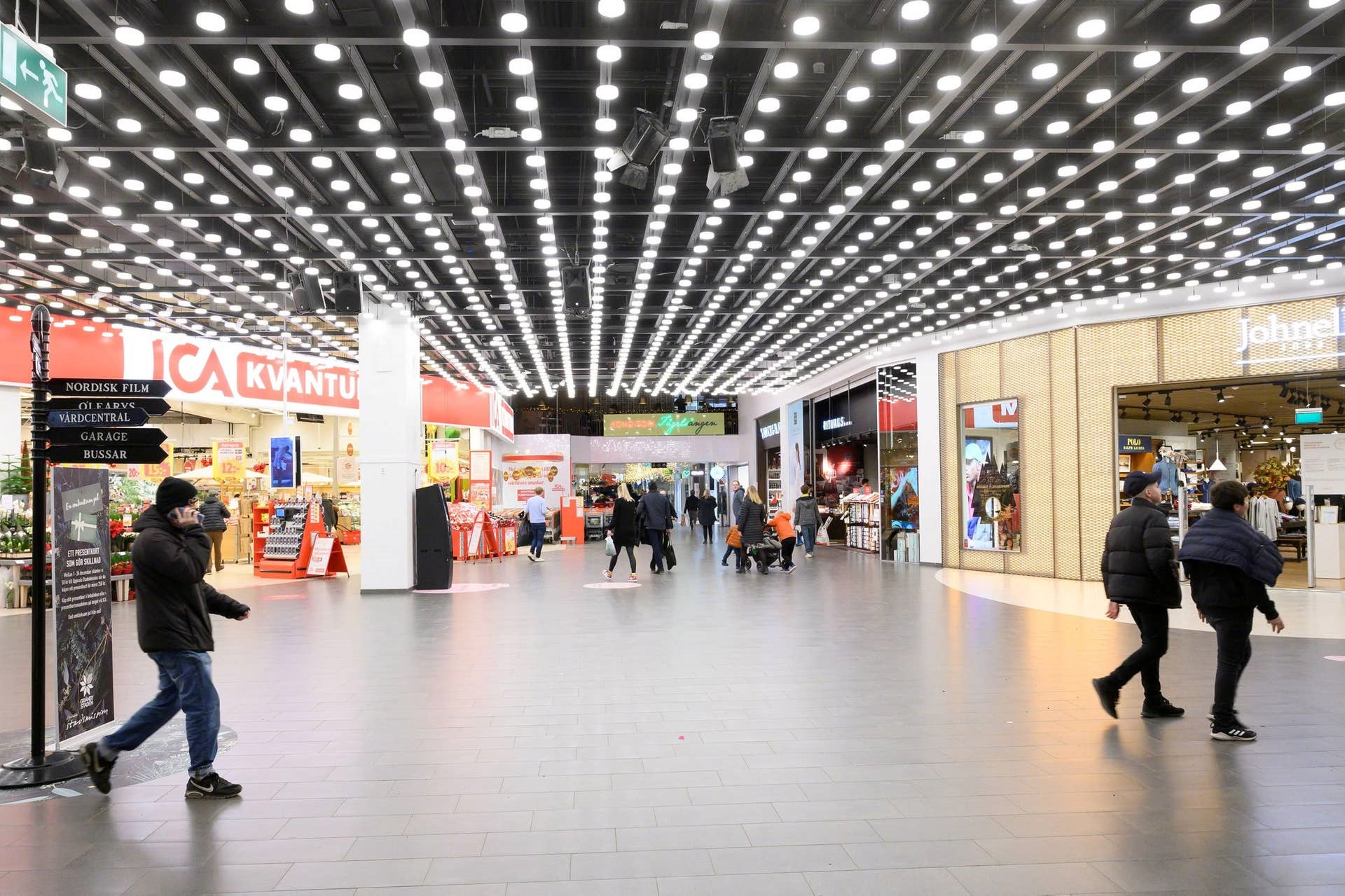
Still, the overall strategy didn’t change. The country’s leaders continued to rely on public trust and eschewed a general lockdown; they left the schools, restaurants and malls open. Stores and other businesses remained open, but with restrictions on the number of people allowed inside. Also, there was no requirement to wear a mask; Swedes were recommended to wear one only on public transportation at peak hours.

Around the world, people had the impression that while many countries were isolating and suffering a harsh economic blow, in Sweden it was business as usual. But the reality was different. “At first I thought we’d work from home for a month and then return to the office,” says Erik Numan, a 56-year-old art director from Stockholm. “By now, 10 months later, I’ve been in the office for only one day.”

'Even though I work in many fields, everything disappeared and I still can’t plan anything even a year later'

A shopping mall in Stockholm, December 2020. Photo: TT News Agency via Reuters

Numan says he has stopped exercising at a gym, doesn’t visit his parents and rarely meets with friends. Although he says he isn’t very worried about the virus personally, he feels solidarity with others who are likely to become infected and is concerned about the overburdened health care system.

“Nobody checks on me and the police won’t arrest me if I don’t observe the recommendations,” he says. “But I think most Swedes do what’s necessary when there’s a crisis.”

Numan’s 16-year-old daughter contracted the virus, developed mild symptoms and was in quarantine for two weeks. “When she meets girlfriends now they hug as usual, at a time when we adults have completely stopped shaking hands,” Numan says.

Like the Frändéns, Linnéa Sallay, a 60-year-old singer and violinist who lives in Stockholm, saw her professional life racked by the virus. “All the jobs disappeared overnight in mid-March,” she says. “Even though I work in many fields, perform in concerts, guide tours and produce events, everything disappeared and I still can’t plan anything even a year later.”

Sallay notes, however, that the past year has also provided a welcome time-out. She's surviving financially thanks to her savings, she has launched a YouTube channel and is developing her digital skills. She has also spent a lot of time with her family and friends, even if not at restaurants and cafes. And she’s now rehearsing and preparing for digital concerts.

Vaxholm, Sweden, summer of 2020. Photo: Bengt Nyman

Entering the crisis with disadvantages

Sweden has several disadvantages regarding COVID-19. Twenty percent of the population is over 65, it’s cold, its borders are open to other countries, its population is very diverse and it’s not used to emergency situations. But it also had advantages: a universal, quality health care system, stable and well-financed government services, and many single-person households.

Considering its starting conditions a year ago, it’s hard to estimate the real effect of the Swedish policy on illness rates and mortality. Compared to its Nordic neighbors – Finland, Denmark and Norway – Sweden’s mortality has been very high. The country of 10 million people has suffered about 12,000 deaths, with this figure per million people high at 1,444. In Denmark, Finland and Norway the number is 363, 121 and 104, respectively.

It’s not a competition and there’s no point saying who the winner is. It’s far too early and too dangerous to compare week-by-week mortality rates

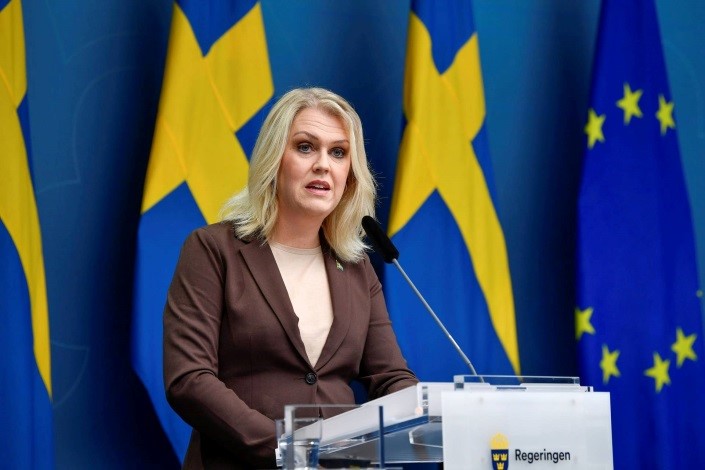
Swedish Health Minister Lena Hallengren

Swedish Health Minister Lena Hallengren at a press conference in Stockholm in November 2020. Photo: Henrik Montgomery / TT News Agency via Reuters

But compared to many other European countries, including those that imposed lockdowns, closed schools and halted the economy, the mortality rate is modest. In Britain, Spain and Italy, for example, the number of deaths from COVID-19 per million inhabitants is 1,591, 1,254 and 1,473, respectively.

Some experts believe that the shunning of lockdowns has brought Sweden better results in metrics that have yet to be measured such as rates for depression, excessive weight gain, addiction, violence and illnesses from diabetes to heart attacks and strokes. In Sweden you could also hear the claim that the country’s high mortality rate in 2020 stemmed from the low mortality rates from the flu in 2019.

Fiasco at the nursing homes

Swedish Health Minister Lena Hallengren told Haaretz in September that it was too early to judge the Swedish policy because this was a marathon, not a sprint.

“It’s not a competition and there’s no point saying who the winner is,” she said. “It’s far too early and too dangerous to compare week-by-week mortality rates. Different countries were hit differently; they have different structures and relations with their authorities, they test in different ways and have different kinds of data and information. In the long run, we all need well-functioning societies. We should learn what there is to learn from others, point fewer fingers and try to keep up with long-term recommendations.”

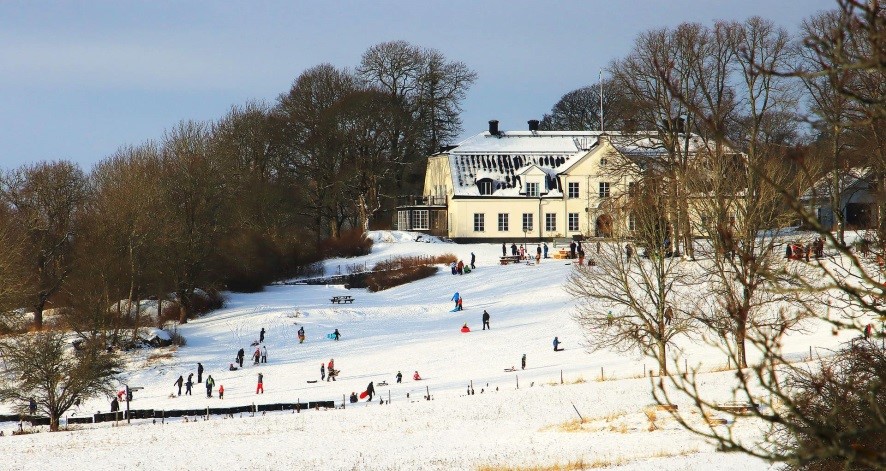
Uppsala, Sweden, last month. Photo: Guillaume Baviere

But there’s considerable evidence of failures in Sweden’s handling of the pandemic. The Swedish media has reported on cases where nursing home residents did not see a doctor and were not evacuated to hospitals despite their serious condition. The nursing home staffs were unequipped and not trained at all to deal with a pandemic.

The Public Health Agency of Sweden has been harshly criticized too. Critics say that during the pandemic’s early days, the agency was complacent and didn’t assess the danger correctly. Later, the prime minister himself, Stefan Löfven, said the agency had downplayed the second wave. At various stages, key people in academia and the medical system demanded that the agency make more stringent recommendations to curb the spread of the virus.

Regarding vaccines in Sweden, signs also attest to delays and complications, though here the shortcoming is mainly on the European level. Like many countries, Sweden has bought vaccines as part of an EU transaction, but the supply has been slow, one reason being a hitch in the manufacture and supply of AstraZeneca’s vaccine.

As of now, Sweden has vaccinated 256,978 people with the first dose and 28,279 with the second. That means 3.13 percent of the population over 18 has received one dose and only 0.34 percent two.

Although Swedish politicians in general have backed the government over the past year, other voices have been heard in recent weeks. “We have to respond differently now,” Ebba Busch, the leader of the opposition Christian Democratic Party, told the daily Aftonbladet. “If the government lacks the courage to lead, it should resign.” Nonetheless, the ruling Social Democratic Party is leading in the polls and received 28.5 percent support in a survey last month, a 2-point rise over November.

'I hope we’ll appreciate each other more when all this is over, and I hope we’ll go back to meeting up again. The hell with Zoom'

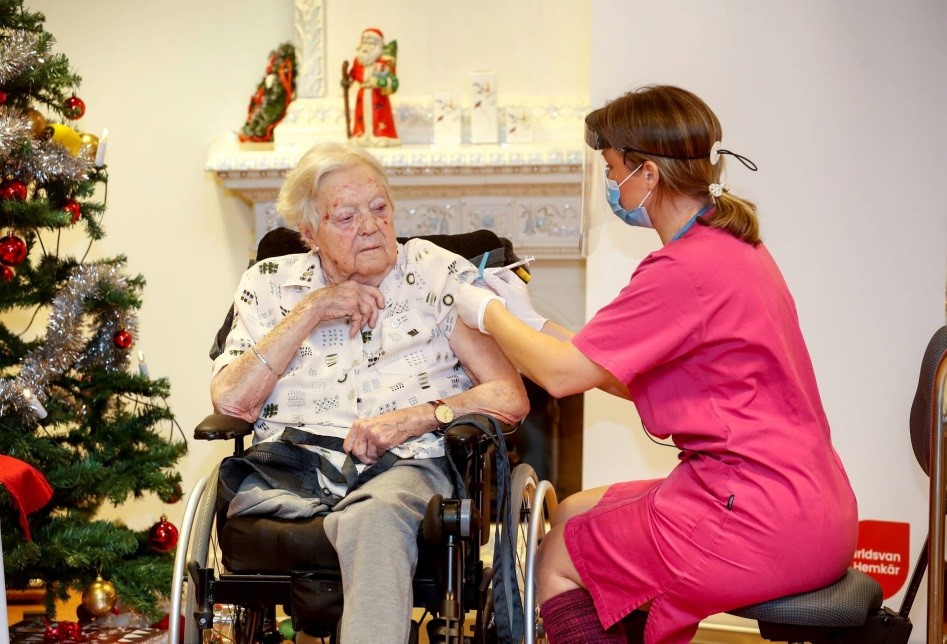
A nurse vaccinating a nursing home resident in Mjölby, Sweden, in December 2020.Photo: Stefan Jerrevang / TT News Agency via Reuters

“I think we’ve dealt pretty well with the pandemic,” says Frändén, the tour guide. “I wouldn’t want to be anywhere else. But there have been failures too, mainly the spreading of the virus in old age homes. In recent decades there has been unrestrained privatization in our care system, and that’s one reason for the negligence in preparing and training staff.”

Frändén says the virus spread within another marginalized group too. “In 2014 and 2015 Sweden was one of the countries in Europe that opened its doors to the most refugees,” he says.

“As a result, many refugees settled in Stockholm’s suburbs and we saw social phenomena that we didn’t have before – crowded living conditions in large families, large family gatherings including elderly people, and less access to the authorities’ information. Our authorities failed here, and that may be an explanation for the differences in the virus’ spread between Sweden and Denmark, Norway and Finland, which hardly took in any refugees.”

‘Every country has its own conditions’

Sallay, the singer and violinist, also criticizes the authorities’ handling of the pandemic, especially the economic aspect, so she and a colleague launched a protest by the self-employed.

“We, the small independent workers who don’t have employees, have been discriminated against,” she says, noting that large companies in Sweden furloughed employees and received government funding for expenses, while small businesses are only now beginning to receive help.

And indeed, in an interview with TheMarker in June, Swedish Finance Minister Magdalena Andersson said the national priority is to help salaried workers and large companies. During the crisis the Swedish government has invested large sums to buoy employment while providing payments to furloughed workers, compensation and guarantees, while strengthening companies’ liquidity and providing professional training and retraining for the unemployed.

“I think it’s too early to know whether we chose the right path,” says Numan, the art director. “Every country has its own conditions, and the long-term social consequences will probably turn out greater in countries that seemed to be succeeding at the beginning.”

As he puts it, “I hope we’ll appreciate each other more when all this is over, and I hope we’ll go back to meeting up again. The hell with Zoom.”

What Can Be Learned from the Swedish Coronavirus Case

STOCKHOLM – In the final analysis the Swedes will disappoint everyone. Those who claim that their own government's reaction to the coronavirus pandemic was hysterical, because "in Sweden it's business as usual," have yet to discover how little they knew about business in Sweden. Even those who claim that countries that opted for a lockdown saved numerous lives, as opposed to the Swedes who are dying in the thousands, will discover that the numbers are misleading and confusing.

Published in Haaretz: https://www.haaretz.com/opinion/.premium-what-can-be-learned-from-the-swedish-coronavirus-case-1.8903160

Both groups will be forced to find another source to prove their arguments. Last week, for example, headlines worldwide declared that the Swedes admit their mistake and that their model for dealing with COVID-19 has collapsed. The headlines were incorrect. The Swedish authorities are still adhering to their initial strategy, and the presumed admission of a mistake was a general statement that was taken totally out of context. But Sweden has long since become a punching bag for those justifying the lockdown policy as well as an exemplar for those who oppose it. Meanwhile, in the real world, the situation is more complex.

First it should be noted that it is not business as usual in Sweden – high schools and universities have switched to distance learning, most of the cultural, entertainment and sports venues are closed, and residents were asked to work from home, maintain social distancing and avoid traveling. Although most of the restrictions are only recommendations, it can be proven that most Swedes observe them meticulously,

Despite that, the elementary schools and preschools did not close, no lockdown was imposed and there is no obligation to wear a mask. These are examples of controversial policies, which may turn out to be more damaging than beneficial. It is definitely possible that the Swedish government is wrong, but the claim that it is practicing “human experimentation” could be directed to all the other governments too. In times of coronavirus uncertainty, steps such as isolating asymptomatic patients, prohibiting swimming in the sea and closing places of business are also a gamble. It’s clear to everyone that they all cause social, economic and health-related damage, but it is still unknown if and to what extent these steps limit the spread of the virus.

As is true of every country, Sweden has advantages and disadvantages in dealing with the pandemic. The advantages include: an efficient public sector, a good health care system, a sparse population and a large number of single-person households (about 40 percent of households). And on the other hand, the Swedish population is elderly (about 20 percent are aged 65 and above), the country has open borders and a cold climate, and about one fifth of the population was born outside the country – and therefore has less trust in the authorities and limited access to their directives.

There is therefore a limit to our ability to learn from the terrible figure – about 4,500 dead. Even if we ignore the differences in the way countries count their dead, and complex data such as overall and excess mortality – it is hard to compare young countries with elderly ones, hot countries with cold ones, and open and closed countries. Although Worldometer charts have become a morbid sport of body counts and patriotic wrestling matches, it is doubtful whether we can learn from counting the dead about the degree of effectiveness in a country’s handling of the pandemic, and especially the effectiveness of lockdowns.

Heading the charts are Belgium, Spain, Italy, England and France – countries which imposed a lockdown, and occasionally adopted tough measures to enforce it. They are followed by Sweden, without a lockdown and with a “soft policy.” And then come the rest of the countries, which have various ways of dealing with the problem. There are countries that imposed a lockdown and have a high mortality rate (Belgium), there are countries with a lockdown and a low mortality rate (Israel), countries without a lockdown and a high mortality rate (Sweden) and some without a lockdown and a low mortality rate (Iceland). And of course there are also differences between one city and the next in the same country.

Why then have so many died in Sweden? At this point it seems that the failure is not related to the failure to impose a lockdown. There is no evidence of a significant contribution by schools or shopping centers to the spread of the pandemic. But there is evidence of a different failure – the treatment of the elderly. Although the handling of senior citizens’ homes was problematic all over the world, in Sweden the situation was especially grave. Recently it was revealed that due to power struggles among the authorities, the personnel were not prepared, there was a lack of equipment and the ban on visits was belated.

And yes, although Sweden is a developed welfare state, in the years when the seeds of the failure were sown it suffered from another plague: privatization, cutbacks and reforms in the public sector. Today, as opposed to the situation in the past, senior citizens’ homes in Stockholm lack work slots, equipment and skilled manpower. This is another example of the helplessness of the “invisible hand” when it comes to managing crises and protecting the weak.

Is it true, as has been claimed, that Sweden gave up on its elderly for the sake of the economy? Definitely not. First of all, public health is managed by an independent authority, which is not subject to economic considerations. Second, the Swedish economy is export-oriented. Initial investigations have shown that the blow to Sweden did not differ greatly from that of its neighbors. In Sweden too there was a decline in consumption, growth was harmed and unemployment increased. Even if local businesses remained open, Volvo cannot manufacture vehicles when there is interference in the supply chains and demand plummets, and H&M cannot sell clothing when factories and malls the world over are closed. Not to mention the tourism industry. Policymakers knew that and did not waste time on attempts to prevent the blow, but instead channeled money to reduce the damage it caused.

Even more serious is the claim that the Swedes tried to save the economy by achieving herd immunity, because initial examinations demonstrated that Sweden is very far from that objective. But Sweden has never claimed that it was aiming at herd immunity – on the contrary, it vehemently denied that. The objectives were to flatten the curve of the number of patients and to protect the populations at risk. The first objective was achieved: intensive care beds and ventilators were ready for use at all times – an impressive achievement, because there was no need for a ruinous lockdown. In the case of the second objective, the Swedes themselves admit failure. Those using the example of Sweden would do well to stop looking at the country for proof for their arguments, and to try to think what can be learned from the Swedish case. In the final analysis, this is not a theoretical exercise, it is an essential preparation for the second wave.

חזון אפס – המטרה: אפס הרוגים בתאונות דרכים

"חזון אפס": התכנית השוודית להוריד לאפס את מספר ההרוגים והפצועים קשה בתאונות דרכים המבוססת על העיקרון הפשוט שחיי אדם הם מעל הכל. האם אלו מילים ריקות או תכנית מעשית? מה תפקידן של הרשויות ושל תעשיית הרכב? והעיקר, האם זה עובד?

התפרסם בהארץ: https://www.haaretz.co.il/magazine/MAGAZINE-1.5937055

יש פער כמעט בלתי נסבל בין הכאב, האבל והאובדן שחש כל מי שאיבד אדם קרוב בתאונת דרכים לבין האופי הטכני והבירוקרטי של הטיפול הממלכתי בהקטנת מספר הנפגעים בכבישים. איבוד חיים בדרך ממקום למקום הוא טראגי כל כך, פתאומי כל כך ומשאיר אחריו שובל של הרס אנושי רב כל כך שלעיתים אי אפשר שלא לתמוה מדוע הנושא לא פותח את כל מהדורות החדשות וקופץ לראש סדרי העדיפויות. מבחינה רשמית אין כמובן מי שיתנגד לכך שיש לעשות כל שניתן על מנת שפחות אנשים יהרגו כתוצאה מתאונות דרכים, אך רבים מן העוסקים בתחום יאלצו להודות שמבחינה מעשית יש גבול למה שניתן לעשות ברמה הלאומית כאשר מיליוני בני-אדם חיים את חייהם תוך שהם נעים במכוניותיהם, במהירויות גבוהות ממקום למקום ללא הפסקה. מספר כלי הרכב עולה בהתמדה, המשאבים המוקדשים לטיפול בתשתיות מוגבלים וכל עוד בני-אדם ולא רובוטים יושבים מאחורי ההגה הם ימשיכו לעשות טעויות ולעיתים להתנהג ברשלנות שתגבה חיים. ע"פ נתוני ארגון הבריאות העולמי מ-2015 נהרגים מדי שנה כ-1.2 מיליון בני-אדם בתאונות דרכים שגם גורמות למיליונים נוספים פציעות חמורות מהן הם סובלים כל חייהם. תאונות דרכים הן הגורם התשיעי לאובדן חיי אדם בעולם והגורם הראשון לתמותת צעירים בגילאי 15 עד 29. למרות הבזבוז הנורא של חיי אדם והנטל הכלכלי העצום שתאונות מפילות על משקי בית ומדינות תהליכי תיעוש וטיפול לקוי של רשויות, בעיקר בעולם המתפתח, גורמים לכך שמספרים מדאיגים אלו רק יעלו בשנים הקרובות. גם אם ישנה הסכמה על כך שערכם של חיי-אדם הוא אינסופי ושהשכול על מותם של נשים, גברים וילדים חוצה עמים, לאומים ודתות, העולם האמיתי מתפשר על בטיחות בדרכים כל הזמן. התחבורה בכבישים היא עורק החיים של האנושות והמחיר שהיא גובה, כואב ככל שהוא יהיה, מתקבל ע"י הרשויות כרע הכרחי. הן פועלות אמנם לצמצמו אבל רק במסגרת האילוצים הפוליטיים והכלכליים בהם הן נתונות.

על רקע דברים אלו סיפור התמודדותה של שוודיה עם התופעה בעשרים השנים האחרונות הוא מעורר מחשבה והשראה. זהו סיפור המתחיל בפקיד ברשות התחבורה הממלכתית שקיבל החלטה שבמבט ראשון נדמית כמובנת מאליה אך במבט שני היא לא פחות ממדהימה. כמו קודמיו בתפקיד מנהל תחום הבטיחות ברשות השוודית הממלכתית לתחבורה, קלאס טינגוואל נאלץ לקבוע יעד סביר למספר ההרוגים בתאונות דרכים שייקח בחשבון גורמים שונים כמו מצב התשתיות, מספר כלי הרכב בכבישים, פעילות המשק וכיוב'. טינגוואל, אקדמאי שהרקע שלו הוא בתחום האפידמיולוגיה (חקר התפשטות מחלות) ושלא היה לו כל ניסיון בתחום התחבורה, ידע שבשנות התשעים, העשור בו מונה לתפקידו, מספר ההרוגים בתאונות דרכים בשוודיה היה בין 500 ל-600 בשנה. "לכמה הרוגים אנחנו אמורים להסכים?", הוא שאל את עצמו כשהממונים עליו ביקשו ממנו מספר סביר כיעד לחתור אליו. תשובתו היתה מהפכנית אך היא גם היתה היחידה שהוא יכול היה לעלות על הדעת – אפס.

פשוטה וטבעית ככל שהיתה תשובתו של טינגוואל היא עוררה התנגדות מידית בקרב רבים מעמיתיו. "אנשים התרגזו עליי כי הם היו רגילים לטרייד-אוף שלקח בחשבון מרכיבים של זמן, תקציבים ויעילות בתחבורה. בטיחות היתה בסה"כ גורם אחד מיני רבים והיה לה תג-מחיר", מספר טינגוואל בראיון ל"הארץ", "אני הגעתי כאדם מחוץ למערכת וטענתי שלחיי אדם יש מעמד מיוחד. בכל תחום אחר, כמו בחיי העבודה למשל, אנחנו אומרים שחיי אדם ובריאות הם מעל הכל. לא עושים ניסיונות בבני-אדם ולא חוסכים משאבים על מנת להצילם. בתעשייה או בעולם התעופה, למשל, לא אומרים "בוא נהרוג כמה אנשים בשביל עוד קצת רווח". אני רציתי להביא את הגישה הזו גם לעולם התחבורה". טינגוואל מספר על תאונה שהתרחשה באחת היציאות של ה-E4, הכביש הארוך ביותר בשוודיה, בשנתו הראשונה בתפקיד. זו היתה תאונה שגרתית אבל תוצאותיה היו טרגיות. חמישה בני-אדם נהרגו כאשר רכבם התחלק ונמחץ ע"י גוש בטון שתמך בעמוד תאורה. טינגוואל סרב לראות בתאונה עוד נתון סטטיסטי. הוא הזמין את האחראי המחוזי למשרדו ושאל את דעתו על כך שבני-אדם נהרגו בהתנגשות עם גוש בטון שהרשות עצמה הציבה. התשובה היתה שהאחריות היתה של הנהג ושהרשות תחזור להציב במקום את אותה תשתית בדיוק. "לפי גישה זו החלטה שלנו לשנות את התשתית היתה נראית כהודאה באשמת הרשויות שהיו רגילות להסביר את ההתנגשויות שאירעו בכבישים כאחריותם הבלעדית של הקורבנות שנסעו מהר מדי, לא צייתו לחוק או נהגו שיכורים".

טינגוואל לא כפר בכך שנהיגה מסוכנת גורמת לתאונות אך בעקבות התאונה ב-E4 ותאונות אחרות שארעו הוא טען שבתחום התחבורה על המדינה לעשות הכל על מנת להוריד את מספר הקורבנות גם אם הם טעו או התרשלו. "אני הבאתי לתחום התחבורה גישה הדומה לתחום הבריאות שבו אנחנו מצילים אנשים בלי לשאול למה הם הגיעו לחדר-מיון ובלי להתחשב בכך שלעיתים הם עצמם אחראים למחלתם או פציעתם". ע"פ טינגוואל הרשויות מחויבות לנהוג בנושא תאונות הדרכים כפי שהן נוהגות כאשר הן מטפלות בחולי סרטן גם אם אלו מעשנים. "כשנכנסתי לתפקיד הנהלת הרשות הממלכתית לתחבורה לא אהבה את הגישה שלי כי הם הבינו את ההשלכות שלה", מספר טינגוואל, "אולי היו מי שראו בי עושה צרות נאיבי וחסר ניסיון שקיבל תואר בלי שיש לו כל רקע בנושא. אבל אני אוהב בני-אדם, אני רוצה שהם יחיו וחושב שיש להצילם גם אם הם טועים ומקבלים החלטות טיפשיות. בסופו של דבר אנשים מתים לא יכולים להשתפר".

*****

כך נולד "חזון אפס" שהפך למדיניות הרשמית של ממשלת שוודיה בסוף שנות התשעים. זוהי מדיניות המבוססת על עיקרון פשוט מאוד – אף אדם אינו צריך להיהרג או להיפצע בחומרה במערכת התחבורה מפני שחיי אדם הם מעל הכל ואינם ניתנים להמרה בכל דבר אחר. איש לא דיבר על הצלחה מידית. העיקרון היה מוסרי במהותו ובזמן החלטת הפרלמנט השוודי באוקטובר 1997 עדיין לא נגזרו ממנו צעדים אופרטיביים. למרות שהכיוון היה ברור נשאלו לא מעט שאלות – מה אומר בפועל "חזון אפס"? האם אין אלו רק מילים ריקות? והעיקר, האם ניתן לתרגם חזון יומרני כל כך לצעדים קונקרטיים? ע"פ טינגוואל וצוותו התשובה היתה בהחלט כן. הדוגמא המובהקת ביותר היתה הטיפול בהתנגשויות חזיתיות במהירות גבוהה שאחראיות לחלק גדול מההרוגים בדרכים. ע"פ ההיגיון ששלט בשוודיה עד סוף שנות התשעים הפתרון היה הגבלת המהירות המותרת בכבישים ללא הפרדה פיזית בין מסלולי הנסיעה, ובמקביל השקעה בבניית כבישים מהירים עם הפרדה בין המסלולים בכיוונים השונים. מכיוון ששוודיה היא מדינה ענקית (השלישית בגודלה באירופה) בניית כבישים מהירים וגדרות הפרדה היתה יקרה, איטית ולא מעשית במקומות רבים ובכבישים ללא גדרות הפרדה האחריות נחה כולה אצל הנהגים והנהגות. מי שעבר את המהירות המותרת, סטה מנתיבו והתנגש ברכב שבא מולו היה האחראי לתאונה ולקורבנות שהיא גבתה. למדינה עצמה לא היתה במקרה זה כל אחריות.

אבל טינגוואל ראה את הדברים אחרת. במקום הפתרון היקר והאיטי של בניית כבישים מהירים הוא הציע את פתרון כבישי ה-1+2. אלו הם כבישים רגילים ברוחב 13 מטר שהוסבו להיות כבישים של שלושה מסלולים, שניים בכיוון אחד ואחד בכיוון השני כאשר ביניהם יש גדר הפרדה ובכל מספר קילומטרים מתחלף הכיוון שבו יש שני מסלולים. הרעיון בבסיס ההצעה היה להוריד את מספר ההרוגים בהתנגשויות חזיתיות באמצעות גדר הפרדה ללא השקעות הענק הכרוכות בבניית כבישים מהירים וללא ההסתמכות על יכולתם של משתמשי הדרך להימנע מסטיות וממהירות מופרזת. ההתנגדות להצעתו של טינגוואל היתה מקיר לקיר והיא כללה גורמים ממשלתיים, מומחי תחבורה ועיתונאים שטענו שכבישים כאלו יהיו מסוכנים יותר ושנהגים לא יצליחו להסתגל אליהם. המנכ"ל הממונה על טינגוואל אפשר לו לערוך ניסוי בקטע דרך של ה-E4 אך הבהיר לו שאם הוא נכשל זה יעלה לו בכיסאו. לטקס הפתיחה ב-1998 לא הגיע אף גורם בכיר וטינגוואל נאלץ לגזור את הסרט בעצמו. תוצאות הניסוי התבהרו כעבור זמן מה כשלמשרדו של טינגוואל הגיעה עוגה שנשלחה ע"י אשה לא מוכרת. לאחר ברור הסתבר שהאשה היתה נהגת שכמה ימים קודם לכן סטתה מנתיבה, איבדה שליטה על רכבה והתנגשה בגדר ההפרדה שמנעה ממנה התנגשות חזיתית עם רכב שבא ממול. על הפתק שהתלווה לעוגה היה כתוב: "בלעדיך הייתי מתה".

*****

כבישי ה-2+1 היו צעד ראשון לצמצום מספר ההרוגים אך הם היו רחוקים מלהיות האחרונים. "מדובר בחזון שיש בו תהליך מתמיד של למידה ומעקב", אומרת פרופ' אסטריד לינדר, מנהלת מחקר בטיחות בדרכים במכון המחקר השוודי הלאומי לתחבורה, "זוהי עבודה קשה ליישום אבל החזון הוא ברור וקבוע – איש אינו צריך להיהרג בדרכים כתוצאה מטעות אנוש. במקום לשנות את החוק ולהפיל את האחריות על הנהגים שוודיה שינתה את צורת ההסתכלות על מערכת התחבורה כך שהנהג עדיין אחראי אך יש שני גורמים נוספים הנושאים בנטל: יצרני המכוניות והרשויות. הנהג אחראי לנהוג כחוק אך אם משהו משתבש שני הגורמים האחרים צריכים למנוע את התוצאות ההרסניות. זה היה רעיון חדש לגמרי. במקום הגישות המסורתיות של "להוריד את המטורפים מהכביש", להעניש בחומרה נהגים עבריינים ולשים את הפוקוס על זיהוי נהגים מסוכנים אנחנו הנחנו פלטפורמה אתית – יש לאדם זכות לשרוד. גם כשאדם טועה, וכולם טועים, העונש לא יכול להיות איבוד החיים". חזון אפס, ע"פ לינדר וטינגוואל, הוא לא אינטואיטיבי. לפעמים הוא דורש נקיטת צעדים החורגים מקו המחשבה שגורמי אכיפת החוק והרשויות התרגלו אליהם. הוא אינו דורש חינוך לנהגים ברמה פרטנית או קמפיינים בטלוויזיה וברדיו. הוא אינו דורש מאנשים לא לדבר בטלפון בשעת נהיגה והוא אינו דורש החמרה בחקיקה ובענישה. במקום זאת הוא דורש מעקב רב שנים וניתוח מדוקדק של תאונות, סיבותיהן ותוצאותיהן והתמקדות בגורמים שיצילו חיים בפועל.

"יש במדינות רבות בזבוז עצום של חיי אדם כי הרשויות מתנהלות בחובבנות ומתבססות על הגיון פשוט במקום על מחקר", אומר קלאס טינגוואל, "במקום להשקיע בחקיקה נגד דיבור בטלפון, למשל, צריך להכיר בכך שעדיף שנהגים ידברו בטלפון גם אם הם מחזיקים אותו ביד ולא ישלחו הודעות טקסט מפני שהסחת הדעת אינה הבעיה אלא הסחת המבט. לדָבֵּר זה בסדר גמור, הבעיה היא ההתמקדות במסך ובמכוניות רבות יש היום מסכים שאינם טלפונים שמסיחים את מבטי הנהגים ומהווים סכנה גדולה יותר מהטלפון". טינגוואל מדבר על עבודה מלמעלה למטה. לדבריו אין טעם לנסות לחנך את נהג המונית או נהג המשאית הפרטני יש ללכת להנהלת חברות המוניות והמשאיות, לטפל במקבלי ההחלטות, להשקיע במודרניזציה של ציי רכב גדולים, לגרום לתעשיית הרכב להשקיע בתחום הבטיחות של כלי הרכב עצמם וברמה הממשלתית לגרום באמצעות תשתיות להגבלת מהירות כללית והורדת מהירות באזורים שיש בהם הולכי רגל.

"כשמחליטים שאף הולך רגל לא צריך להיהרג, למשל, צריך להתחיל מבדיקת עמידותם של הולכי הרגל", אומרת אסטריד לינדר, "מכיוון שברור שבהתנגשות בין הולך רגל לרכב שנוסע במהירות של 50 קמ"ש יש 80% סיכוי שהולך הרגל ייהרג הורדנו את המהירות המותרת באזורים שיש בהם הולכי רגל רבים ל-30 קמ"ש". מעבר לכך, מדגישה לינדר, תעשיית הרכב תורמת טכנולוגיות שמונעות התנגשויות כמו חיישנים שמזהים בני-אדם וסכנות בדרך והרשויות מעמידות פתרונות תשתיתיים שגורמים להורדת המהירות כמו כיכרות צרות שאינן מעוצבות על מנת להקל על זרימת התנועה אלא על מנת להאט אותה, או מצלמות בכבישים שאינן מיועדות לספק כמה שיותר דו"חות אלא להוות גורם מרתיע ולכן שלטים גדולים מודיעים על נוכחותן. "מטרת המצלמות היא לתת כמה שפחות דו"חות, לא כמה שיותר", אומרת לינדר, "הן שם רק על מנת להוריד את רמת האנרגיה בתאונות. הן לא צריכות להאשים את הנהגים אלא לתמוך בהם, כמו אמצעי התראה שונים שיש היום בתוך המכוניות". כך מהווה "חזון אפס" מאמץ משולב ומתמשך כאשר מאז 1997 כל תאונה קטלנית בשוודיה נחקרת ומוגדרת ככישלון של השיטה (גם אם זוהי טעות אנוש, הגורם האנושי מהווה קריטריון שהשיטה חייבת לקחת בחשבון).

היום, כעשרים שנה אחרי ש"חזון אפס" הפך למדיניות רשמית בשוודיה, אנשים עדיין נהרגים על הכבישים אך אין כמעט ספק לגבי השפעת חזונו של קלאס טינגוואל. למרות העלייה במספר כלי הרכב מספר ההרוגים בשנה ירד מסביבות 600 בשנות התשעים לסביבות 250 בשנים האחרונות. ע"פ דו"ח ארגון הבריאות העולמי מ-2015 בשוודיה יש את מספר ההרוגים הקטן ביותר בעולם יחסית לאוכלוסייה (היא שנייה רק למיקרונזיה) – 2.8 הרוגים ל-100,000 תושבים (ישראל במקום ה-11 עם 3.6). ע"פ סקר אירופי מ-2016 שוודיה היא במקום השלישי עם 2.7 הרוגים ל-100,000 תושבים בפער קטנטן מנורבגיה ושוויץ עם 2.6 הרוגים ל-100,000 תושבים (ישראל במקום השמיני עם 3.9). לקלאס טינגוואל שהוא כיום איש אקדמיה ויועץ בכיר לחברה העוסקת בתשתיות, אנרגיה ותעשייה, יש הסבר לנתונים אלו. את הירידה של כ-450 הרוגים לשנה הוא מייחס למרכיביה השונים של "חזון אפס": "כ-80 חיי אדם בשנה נחסכים בזכות כבישי 1+2, כ-30-40 נוספים בזכות מרכיבי תשתיות שונים כמו כיכרות, מספר דומה בזכות הורדת המהירות המותרת באזורים בנויים וכ-20-30 בזכות הורדת המהירות המותרת הכללית. כ-30 חיים בשנה נחסכים בזכות מצלמות מהירות ועוד כמה עשרות בזכות בדיקות אלכוהול וגורמים נוספים". עם זאת, הגורם המשמעותי ביותר, ע"פ טינגוואל, הוא תעשיית הרכב. כ-150-200 חיי אדם נחסכים מדי שנה בזכות הרכב עצמו. למרות שתופעה זו דומה במדינות רבות בעולם המפותח ומכוניות מתקדמות מצילות חיים בכל רחבי הגלובוס, לשוודיה יש חשיבות מיוחדת בתחום בטיחות כלי-רכב בעיקר בזכות חברה אחת ששמה הפך לשם נרדף לשוודיה כמעט כמו אבבא, H&M ואינגמר ברגמן.

*****

רצפת הייצור במפעל של וולבו בגוטנברג, העיר השנייה בגודלה בשוודיה, היא מקום שוקק חיים. למרות שהרכבת המכוניות מתבצעת כמעט כולה ע"י רובוטים משוכללים אלפי אנשים עובדים כאן במשמרות מסביב לשעון. העובדים, שכ-30% מהם הן עובדות, לבושים בסרבלים בצבע כתום-כחול, מפקחים על המכונות, מבצעים את המלאכות העדינות ומשנעים חלקים ממחסן ענק שנראה כמו אזור האחסון בסניף של איקאה אל קווי הייצור. לעיתים ניתן לראות אותם נעים באופניים ממקום למקום, משתלבים בתנועה של מלגזות וכלי רכב אוטונומיים המתרוצצים ללא נהגים כאשר ברקע נשמע רעש המכונות והרובוטים נראים כמרקדים בין גיצים המתעופפים באוויר ונוחתים על הרצפה האפורה. למרות שהחברה נמצאת מאז 2010 בבעלות סינית, מטה החברה, מרכז המחקר והפיתוח, מרכז הבטיחות וגם חלק מרכזי מתהליך הייצור נמצא כאן באזור התעשייה שבצפון-מערב גוטנברג.

יאן איברסון הוא בכיר במערך הבטיחות של וולבו. בפגישה במשרדי החברה בגוטנברג הוא מסביר את חלקה של החברה, שהנתח שלה בשוק הרכב השוודי הוא כ-20%, בהגשמת חזון אפס ההרוגים בתאונות דרכים בשוודיה. וולבו נוסדה ב-1927 ואחת התרומות החשובות שלה לתעשיית הרכב העולמית קשורה לבטיחות. "בתום מלה"ע השנייה היתה בעולם עליה אדירה במספר כלי הרכב", מספר, איברסון, "רמת הבטיחות היתה נמוכה מאוד ואנשים רבים נהרגו כתוצאה מתאונות. כאן בוולבו בשנות החמישים גויס לעבודה בחור בשם נילס בוהלין שהגיע מתחום התעופה. בוהלין הבין את הכוחות הפועלים על כלי רכב ועד כמה חשוב שבזמן תאונות דרכים אנשים יישארו במקומם ולא יעופו מהמכונית. מתוך הכרות עם חגורות הבטיחות שכבר היו קיימות במטוסים והבנה עד כמה חשובה אפשרות ההסרה המהירה הוא פיתח את חגורת שלושת הנקודות הנמצאת בשימוש במכוניות עד היום. ב-1959 וולבו הפכה להיות החברה הראשונה שהפכה את החגורה לסטנדרט ולמרות שהפטנט על החגורה היה שלה היא אפשרה לחברות אחרות להשתמש בו באופן חופשי". איברסון מספר שמאוחר יותר בוהלין (שנפטר ב-2002) הפך לבכיר בחברה והוא זה שהחל למעשה את מחקרי הבטיחות של וולבו. בזכות בוהלין החברה אוספת כבר מ-1970 נתוני בטיחות הקשורים למכוניות שלה ולתאונות בהן הן היו מעורבות בשוודיה ובמדינות נוספות ובשיתוף פעולה עם חוקרים באוניברסיטאות, חברות ביטוח וגורמים נוספים היא מנתחת אותם ומשתמשת בהם בתכנון ועיצוב כלי-הרכב שהיא מוכרת.

כמה שנים אחרי שממשלת שוודיה אימצה את "חזון אפס" החליטה וולבו לאמץ חזון משלה בנושא. כמו החזון הלאומי, גם החזון של וולבו היה פשוט אבל שאפתני – עד 2020 איש לא אמור להיהרג או להיפגע פגיעה חמורה ברכב חדש של וולבו. "זה הכיוון של החברה", אומר איברסון, "וכל מי שעובד כאן המנכ"ל, ההנהלה, המהנדסים, כולם יודעים על זה ומחויבים לזה. אנחנו גם בקשר עם הממשלה ועם הרשויות המקומיות בנושא כי גם הכבישים חשובים, לא רק המכוניות". איברסון מספר על דיונים, בין השאר עם קלאס טינגוואל, על בניית גדרות הפרדה, הזזת סלעים ועצים מצדי הדרכים, התמודדות עם התנגשויות בחיות גדולות וגם על מחשבה המוקדשת להתנהגות הנהגים – מה ניתן לעשות עם נהיגה בשכרות, נהיגה במהירות מופרזת ונהיגה של אוכלוסייה מבוגרת. בכל העניינים האלו הממשלה לומדת מהתעשייה ולהיפך. "חזון 2020 הוא אופן מחשבה", אומר איברסון, "יש לנו תכניות מחקר, יש לנו מתודות וטכנולוגיה ועם השנים מה שיוצא לשוק הוא תוצר של כל אלו". ואכן בשנים האחרונות וולבו הוציאה לשוק מוצרים הכוללים מערכות טכנולוגיות של מצלמות וחיישנים המתריעות מפני סכנות שונות בדרך ומפני נהיגה מסוכנות, מערכות המטפלות במקרי חירום באמצעות היגוי ובלימה אוטומטיים ובמקרים הקיצוניים שכל אלו לא עוזרים והתנגשויות מתרחשות בכל זאת, המכוניות גם בנויות מסוגים חדשים של פלדה מחוזקת ומצוידות במודלים חדשים של מושבים, חגורות בטיחות וכריות אוויר שנועדו לתת לנוסעים הגנה נוספת.

אך האם עוד שנתיים מהיום, ב-2020, אכן לא ייהרג אפילו אדם אחד במכונית חדשה של וולבו כפי שהחברה הגדירה את כוונותיה לפני כעשור והיכן החברה עומדת עכשיו ע"פ הנתונים שהיא אוספת כלפי המטרה היומרנית שהציגה לעצמה? "זה מה שכולם שואלים ואנחנו לא מפרסמים כרגע את הנתונים המדויקים", אומר יאן איברסון, "עם זאת, אני יכול לומר שבשנים האחרונות יש לנו שיפור של כ-50% במספר ההרוגים והפגועים קשה במכוניות שלנו". ברמה הלאומית אומר קלאס טינגוואל, ממציא "חזון אפס", שהממשלה עדיין מחויבת למטרה ושעד 2030 מספר ההרוגים בשוודיה, בה חיים כעשרה מיליון תושבים, יהיה מתחת ל-100 בשנה ועד 2050 המספר יהיה קרוב לאפס. טינגוואל גם מספר שהאיחוד האירופי אימץ מטרה דומה ושמדינות רבות וגם ערים גדולות בארה"ב אימצו כיוון מחשבה זהה ושואפות ליעד דומה. "יש עוד מה לעשות עם הולכי רגל ורוכבי אופניים", הוא אומר, "וכנראה שההרוג האחרון יהיה אופנוען. על אופנוענים הרבה יותר קשה להגן" הוא אומר בצער. "יש אי-הבנה נפוצה כשמדברים על חזון אפס", אומרת פרופ' אסטריד לינדר, "בעתיד הנראה לעין יהיו לנו התנגשויות אבל אין שום סיבה שניהרג כאשר אנחנו מתנגשים. זה בהחלט אפשרי טכנית למנוע מאתנו לאבד את חיינו ובד בבד לקיים עדיין מערכת תחבורה מהירה ויעילה".

*****

סיפורו של "חזון אפס" איננו סיפור של תרופת פלא או של פטנט פשוט ואלגנטי לטרגדיה של הקטל בכבישים. מדובר בתהליך ארוך טווח של תכנון כלכלי, חברתי, פוליטי וטכנולוגי שיכול לעבוד רק בשיתוף פעולה של גורמים רבים שאינם מבקשים תוצאות מידיות או קרדיט פוליטי. מרכיבים רבים ב"חזון אפס" הראו תוצאות שנים אחרי שמי שיזם אותם כבר עבר לתפקיד אחר או יצא לפנסיה. הדוגמאות בשוודיה הן רבות: בשנות התשעים בגוטנבורג יצרו מעברי חציה מוגבהים שאילצו את הנהגים להאט לפניהם ולאפשר להולכי רגל לחצות בבטחה בעוד שבעיר נורשופינג, צומת מרומזרת שהיתה ידועה בתאונות הרבות שהתרחשו בה הוסבה, לתדהמתם של התושבים, לכיכר נטולת רמזורים שבה האספלט הוחלף באבנים משתלבות. למרות נבואות הזעם של המתנגדים התוצאה היתה שמשתמשי הדרך נאלצו להאט את נסיעתם ולהתרכז בסובב אותם. מאז אמנם מתרחשות במקום תאונות מדי פעם אך הן אינן גובות קורבנות בנפש.

פרופ' לינדר מסבירה שהיכולת לשיתוף פעולה מערכתי למען מטרות ארוכות טווח איננה חדשה בשוודיה. אחד הסיפורים הידועים שהיא מזכירה כמעין הקדמה ל"חזון אפס" הוא סיפורו של יום מאוד מיוחד בספטמבר 1967 או כפי שהוא נודע עד היום: יום ה-H. זהו היום שבו עברה שוודיה מנהיגה בצד שמאל לנהיגה בצד ימין (ה-H היא מן המילה Högertrafik שמשמעותה תחבורה בצד ימין). עבודת הכנה של שנים שכללה הכנה פסיכולוגית, יצירת מערכות כפולות של שלטים, תמרורים ורמזורים, צביעת פסי דרך חדשים וכיסויים עד ליום המעבר, הסבה של תשתיות, התאמה של ציי רכב בתחבורה הציבורית, כיוון של פנסים ועוד הגיעו לפרקן כאשר ביום ראשון השלושה בספטמבר 1967 ב-04:50 לפנות בוקר, בעוד פועלי הדרך מסירים את הכיסויים מהתמרורים והרמזורים החדשים, היה על המכוניות המעטות שהיו בכבישים לעצור, לעבור בזהירות לצד השני של הכביש, להמתין עד ששאר כלי-הרכב יעברו גם הם ואז להמשיך בנסיעה כרגיל. רק בצד השני של הכביש. "יום ה-H השפיע על מספר הנפגעים בתאונות בשוודיה", אומרת לינדר, "אחרי המעבר היתה נפילה במספר הנפגעים בכבישים. כנראה שהמעבר גרם לאנשים להיות זהירים ומרוכזים יותר. אחרי זמן מה המספר שוב עלה אבל מאז הוא יורד בהדרגה". הירידה, מוסיפה לינדר, משותפת למדינות רבות בעולם אך ייתכן שיום ה-H חושף את אחת הסיבות לכך ש"חזון אפס" אפשרי בשוודיה. "יש בשוודיה מסורת ארוכה של בנייה חברתית ויש ציפייה שהחברה תיבנה ביחד, בסולידריות. אין ציפייה שהממשלה תהיה קטנה ופסיבית אלא שתפעל בצורה שתהיה טובה לכולם".

על רקע זה ניתן לבחון מה יכולתה של ישראל לאמץ מודלים דומים של הקטנה במספר נפגעי תאונות הדרכים. מצד אחד גם בישראל נרשמה במשך שנים רבות ירידה במספר ההרוגים. הפוטנציאל הטכנולוגי של ישראל בתחום זה הוא גדול והיא אף מסייע למדינות אחרות, ביניהן שוודיה, בנושא. קלאס טינגוואל מספר על כך שהוא וצוותו נעזרו במשטרת ישראל בתחום הצבת מצלמות מהירות ויאן איברסון מוולבו אומר שוולבו עשתה עבודה חלוצית יחד עם חברת מובילאיי. "גם היום אנחנו משתפים פעולה עם חברות ישראליות", הוא אומר, "אנחנו רואים בישראל סביבה מאוד מעניינת מבחינת סטרטאפים טכנולוגיים ולישראל יש חשיבות רבה בעבור וולבו". מעבר לטכנולוגיה הישראלית ניתן לראות גם בכבישי הארץ חלק מהפתרונות התשתיתיים שיושמו בשוודיה כחלק מ"חזון אפס", כלי הרכב בישראל, ממש כמו אלו שבשוודיה, הפכו בשנים האחרונות לבטוחים יותר וב-2011 אף הוכנה מעין מקבילה ישראלית של "חזון אפס" בעבור שר התחבורה ישראל כץ ע"י צוות מקצועי בראשות ד"ר יעקוב שיינין ששימש מאוחר יותר כיו"ר הרשות הלאומית לבטיחות בדרכים.

עם זאת, בשנים האחרונות חלה שוב עליה במספר ההרוגים בתאונות הדרכים בישראל. ב-2017 נהרגו בישראל 362 בני-אדם, בשנת 2016 נהרגו 377, עלייה של כ-6% לעומת שנת 2015, שבה נהרגו 356 בני אדם. החל משנת 2013 ועד לשנת 2016 חלה עלייה של 30% במספר ההרוגים. לישראל, כך נראה, יש את כל האמצעים הטכנולוגיים והכלכליים להוריד את מספר ההרוגים אך דומה שבשנים האחרונות היה חסר בה כוח שיוכל למנף תוכנית לאומית גדולה שרואה לטווח רחוק, שלא עסוקה במאבקים על סמכויות וקרדיטים ושמוכנה לחשוב מחוץ לקופסה. אולי זה הזמן לחשוב על זה שוב. אחרי הכל, יש פער כמעט בלתי נסבל בין הכאב, האבל והאובדן שחש כל מי שאיבד אדם קרוב בתאונת דרכים לבין האופי הטכני והבירוקרטי של הטיפול הממלכתי בהקטנת מספר הנפגעים בכבישים. איבוד חיים בדרך ממקום למקום הוא טראגי כל כך, פתאומי כל כך ומשאיר אחריו שובל של הרס אנושי רב כל כך שלעיתים אי אפשר שלא לתמוה מדוע הנושא לא פותח את כל מהדורות החדשות וקופץ לראש סדרי העדיפויות.

Gaza conflict needs help, not empty rhetoric

As the rhetoric rises at demonstrations in Swedish cities, it's time to rethink and cast a critical eye over much that is written and said about the conflict in Gaza.

Published in The Local: http://www.thelocal.se/20140724/gaza-conflict-needs-impartial-unaligned-help-not-empty-rhetoric 

As usual it didn’t take long for events in Gaza and Israel to reach Swedish public attention. For the benefit of those who witnessed the demonstrations in Stockholm last week, read the statements made by Swedish politicians and followed the coverage in the Swedish media, here are a few recommendations and warnings about the way Swedes may see the conflict, and how they can do something about it.
First, don't believe the demonstrators who tell you that Hamas is a legitimate liberation movement. Hamas is a fundamentalist, racist, death-worshipping organization which uses terror and violence against both Palestinians and Israelis. It's in total control of Gaza which is not occupied by Israel; it has never agreed to the two state solution ; it doesn't recognize Israel's right to exist; it invests millions of dollars received from abroad in warfare instead of infrastructure, healthcare and education and it intentionally targets Israeli civilians. Hamas' aim is the total destruction of the Jewish state, not a compromise with it. Swedish Green Party MP Mehmet Kaplan's words last week were particularly revealing. "We shall free Jerusalem" he shouted at a demonstration in Medborgareplatsen. Yes, that's right, Jerusalem, not Gaza. But beyond the politics of borders and security arrangements ,if there's an hierarchy of evil-doers in this crises, Hamas, which uses intentional killing of children as a political tool justified by religious ideology, is no doubt on the top of it.
But don’t believe the official Israeli spokesmen quoted in the Swedish media either .Even if they're extremely well spoken, even if they have American accents and great catch phrases, don’t believe them when they paint a picture of a military operation which is defensive by nature, targeting only armed militants. Israel isn't out for Palestinian blood, but its overwhelming advantages in military technology and fire power make a bloodbath inevitable. Palestinians are being killed by the hundreds and there is a built-in asymmetry in the death toll. Israel's military operation in Gaza is causing a humanitarian catastrophe in one of the world's poorest and most densely populated areas. Because of this and because of Israel's modern defense systems, if there's an hierarchy of suffering, the Palestinians with their dead children, their thousands of displaced refugees, their bombed hospitals and demolished quarters are no doubt on the top of it.
But don’t believe the Palestinian story of a bloodthirsty Israeli government operating an army of professional killers either. The main reason Palestinian civilian targets are being hit is because Hamas militants choose to place their weapons and hide their troops behind, under and besides apartments, schools, hospitals and mosques. This has been proven time and again and Hamas leaders have even been seen publicly justifying the practice of using civilians as human shields in the name of the holy war against the infidels. Most Israeli soldiers killed in Gaza so far are young men in their late teens or early twenties, just out of high-school, put in a terrible situation wanting to protect their parents, girlfriends and siblings from missiles aimed at their homes. They are not bloodthirsty mercenaries.
But don't believe Israel's advocates who tell you that Israel, as the only democracy in the Middle-East, is a western, almost European society, promoting humanism, gay rights and religious freedom while it's attacked by its barbarian neighbors. Sadly, the plague of racism and extreme nationalism has entered mainstream Israeli society as well as its national media and corridors of power .Israel could have been, indeed it should have been, a force for progress, democracy and welfare in the Middle-East, instead it's becoming more and more adapted to the ugliest sides of the region with its growing fundamentalist religious movements and brutal xenophobic mobs, all in the service of international forces using the local population as clients for weapon manufactures and sellers of energy sources.
But don’t believe the Palestinians who tell you the conflict is between Jews and Arabs. It's not. This conflict is part of a wider political complex. Israel is now -at least temporarily – in a strategic partnership with Egypt which is why it agreed to an Egyptian ceasefire plan designed to counter an initiative by Qatar and Turkey. While the Arab world is in flames fuelled by tension between Sunnis and the Shiites, rivalries between Saudi-Arabia and Iran, and the falling apart of Syria and Iraq, radical Muslim organizations such as ISIS, Boko Haram, Al-Qaeda and Hezbollahare are just as eager to kill rival Muslims as they are to kill Jews.
But don't blindly accept the Israeli narrative describing the Arabs as pathological rejecters of peace. Since the Oslo agreements in the early nineties Israel has rejected many peace initiatives both local and international, preferring Jewish settlement building in the West-Bank and a one-sided disengagement in Gaza. Meantime it has made the daily life of the Palestinians in both regions impossible and has weakened the moderate Palestinian leadership of Mahmoud Abbas.
But most of all – don't believe those who tell you that you don't get it, that you're ignorant, that you don't understand the complexity of the situation and that there's nothing you can do to change it. You can. But diplomatic statements, angry talkbacks and one-sided demonstrations in the streets of Stockholm won't do it.
There's nothing wrong with talkbacks and demonstrations. Showing solidarity with the victims of war and expressing popular support or outrage are worthy causes. But importing the Middle-East's violence, shallow cliché banners and ignorant hysterical screams won't help anyone. Neither will boycotts, sanctions and biased resolutions.
Swedes, however, can give a great deal to the people of Tel-Aviv, Gaza city, Sderot and Beit-Hanoun. They can teach them the inspiring pragmatism of the Swedish welfare state and its ability to invest in universal healthcare, education, an uncorrupted governing system and an open society. Forget about carefully crafted diplomatic lingo; forget about vocal, uncompromising support to one side only. Swedes can contribute the moral and political legacy of the likes of Raul Wallenberg and Olof Palme, they can shake off the ugly baggage of Islamophobia and Anti-Semitism still haunting them, and contribute their historical heritage of peacemaking and activism which takes a stand and saves lives wherever and whenever needed.
'What impressed me", wrote George Orwell about the Spanish Civil-War, "is that atrocities are believed in or disbelieved in solely on grounds of political predilection. Everyone believes in the atrocities of the enemy and disbelieves in those of his own side". It seems many Israelis and many Palestinians have reached this point of apathy, distrust and despair. If anything, this should be what Swedish demonstrators, reporters and politicians together with their European allies, should contribute to this escalating crisis – impartial and unaligned help – not empty rhetoric of criticizing this and supporting that, rather humanitarian assistance and international funding and assurances for a lasting, stable and fair ceasefire.

Sweden's war in Afghanistan

המדיניות השוודית באפגניסטאן

Published in The Local – Sweden's news in English, December 2010 http://www.thelocal.se/30858/20101215/


One of those catchy phrases about foreign policy is the one in which Winston Churchill explains why he cannot forecast Russia's actions. "It's a riddle, wrapped in a mystery inside an enigma", he said. Churchill knew what he was talking about, foreign policy can be complicated, and the war in Afghanistan is a perfect example. 

First, the conflict's history is long and full of twists and turns. Second, it's a war and like any other war it's a matter of life and death, which makes it an urgent moral issue, not just an abstract geopolitical one. Third, the story is told differently by different spectators, each holding a different narrative. The participants themselves meanwhile frequently say one thing while doing another, creating policy drowning in hidden interests and secret dealings. In fact, the dealings around the war in Afghanistan have turned out to be a war in itself, what a Frontline documentary called a war behind closed doors.

Afghanistan, which has been in a state of war or civil conflict since its ancient history, has seen many great powers fighting over it, from Alexander the Great and Genghis Khan to the modern British, Soviet and American empires. The current war started just months after 9/11 when a combined US and British military attack toppled the Taliban regime which supported Al-Qaeda. An Afghan anti-Taliban front then created a local government and an International Security Assistance Force (ISAF) was subsequently formed by the UN to secure Kabul. ISAF is now led by NATO and Sweden is one of over 40 countries who is part of it.

Despite ISAF's successes there are many who now claim that it's fighting a losing battle and that the war in Afghanistan can't be won. According to American journalist Bob Woodward even president Obama is sceptical. "I'm not doing 10 years" he supposedly told Robert Gates and Hillary Clinton, "I'm not doing long-term nation-building. I'm not spending a trillion dollars".

With these doubts and with more and more ISAF member countries planning exit strategies, what is the wider context of Sweden's new wide political agreement on a an Afghanistan strategy shift, changing the military's mission from actively fighting insurgents to training and supporting local forces?

First, it's worthwhile taking a look at the two parties opposing the government's proposal. Though both the left-wing Vänsterpartiet and the Sweden-Democrats can agree the Taliban is a fundamentalist war-mongering movement, they want the troops home earlier than 2014. The Sweden Democrats don't prioritize solving problems far away from home, and Vänsterpartiet won't support any kind of military strategy.

This should be seen in context. It's an ongoing debate if the west should be responsible for imposing freedom and democracy on the rest of the world. On the one hand, there are doctrines of using economic and military power to export democracy, liberalism and human-rights. The shortcomings of these doctrines are obvious – their disciples tend to choose targets according to their own self-interests, they almost always invest more in short-term force than in long-term education, infrastructure and civil service and often they make the situation worse than it was in the first place.

On the other hand there are those who reject any attempt to meddle in the affairs of others. Who are we to decide what's right and wrong? they say, why should we impose our values on others? Perhaps the most telling argument against this political moral relativism is that if it had been implemented in the 1940s it would not have allowed the war against Hitler. Taking this argument further, it may have been these attitudes that made concentration camps and genocide possible in the first place, since it was precisely the disappearance of clear definitions of good and evil that led the way to politics of strong and weak and ethics of superior and inferior. If you can't define evil, you can't fight it, you just ignore it.

Swedish decision makers are somewhere between these arguments. Most of them agree that the Taliban is evil and I assume all of them know that back in 2001 the Taliban wasn't going anywhere without military intervention. The Sweden Democrat's position is therefore somewhat self-centered and indifferent. Vänsterpartiet's attitude, on the other hand, lacks a basic ingredient – the civilian aid it speaks of could never reach Taliban-led Afghanistan without an invasion. Take away the support for an invasion, and your policy becomes either naïve or complacent.

The government's position and new strategy is, I think, more morally balanced. But in the real world moral debates are usually a disguise for other motives. It all goes back to the post 9/11 conflict within the Bush administration which ended up adding a war in Iraq to a relatively limited and reasonable reaction focusing on the actual terrorists and their hosts in Afghanistan.

The two-front war which shook an all ready trouble-ridden region, inevitably created political and social instability. This instability had many effects. When the part of the world which produces so much oil is in flames, for example, prices rise. That may be bad for car owners in suburban Stockholm but it's great if you're selling oil and even better if you're making money from the financial difficulties of industrial heavy oil users.

Though blaming greedy generals and over-eager military establishments is common practice, it's men in suits, not in uniform, who have hidden interests. There are many, in official offices and financial institutions rather than army HQs, whose livelihood or political aspirations depend on instability – advocates of nuclear weapons for example, opponents of regional peace negotiations and your usual suspects of international lenders, financial speculators, drug and arm dealers and money launderers.

So should Swedish politicians avoid destabilizing wars a long way from home all together? The answer, I think, is no. Once a war has started, the worst scenario for an occupied nation is a premature withdrawal which leaves it no chance of rebuilding. Take Iraq for example, even if the war was originally based on lies and deception, now that the old regime is gone and the country still isn't stabilized, the international community must take responsibility and help build a modern and stable Iraq.

This is also true for Afghanistan where the war made much more sense in the first place. Some in Islamabad, Tehran and even Washington and London have everything to gain from the chaos, but for most Afghans it's just a prolonged nightmare.

So it's no use obsessing about final dates. It's more important to create a situation which allows a safe home-coming for Swedish troops while not leaving Afghanistan in ruins. How is this done? As far as the military aspect goes it'll probably be wise to focus less on killing insurgents and more on protecting local populations while taking every possible measure to avoid civilian casualties. Politically, investments must be made in Afghanistan's industry and welfare and a wide international front must strengthen all branches of the local government and take tough measures against international actors supporting destabilizing forces.

Ultra-modern, super-organized, secular Sweden is a long way from Afghanistan. Stockholm's government offices and TV studios are safe; they're surrounded by prosperity and while the debate commences in parliament, first signs of Christmas decorations are popping up all over town. It's so easy to forget what it's all about. It's not about Lars Ohly's political loneliness or about Aliansen's brilliant parliamentary tactics. It's about one of the richest countries in the world participating in an international force in one of its poorest. It's about trying to make real people's lives better while other forces are cynically exploiting them. If Sweden can do this, its years of involvement in Afghanistan, I think, may both be valuable and as most people hope, soon be over.

Auschwitz wasn't on another planet

יום השואה הבינ"ל, גניבת שלט הכניסה של אושוויץ וראיון עם פרופ' יהודה באואר

Published in The Local – Sweden's news in English, January 2010 http://www.thelocal.se/24616/20100127/

When writing about Auschwitz, it's important to start with the obvious. The theft of the camp's notorious entrance sign was an appalling act and those who are responsible for it must be punished. In a broader context, on the occasion of the International Holocaust Remembrance Day and the 65 anniversary of the liberation of Auschwitz, it is important to point out that the original camp site, along with the museum and archive which were built on it, are in need of serious renovation. If the site's educational projects, research activities and ceremonial events, are to continue, there is need of a large investment, of international support and of course, a better security system.

So much for stating the obvious.

There is however another way of looking at the theft of the sign which naturally raised many angry reactions. Interestingly enough, statements made after the event were of the kind usually made when religious sites are desecrated. It's easy to forget that Auschwitz is not a holy site. It is not a vandalized grave or a burnt down synagogue, in fact it's as far from a holy site as one can imagine. Birkenau (Auschwitz 2) may well be the largest Jewish graveyard in the world and the site where thousands of Poles, Roma, Russians and many others were murdered, but the entrance sign of the main camp, Auschwitz 1, which simply states "Arbeit Macht Frei" (work liberates) is perhaps one of most profound symbols of evil and one of the most symbolic representations of Nazism. So much so that it is almost tempting to cry out to the thieves and to all the Anti-Semites and Neo-Nazis who support them: "If you want it so badly, just go ahead and take it!"

 There is a reason why that sign is so symbolic. Auschwitz wasn't on another planet, as Jewish writer and Auschwitz survivor, Yehiel Dinur, once put it. It was made from the stuff of our very own planet. It took all the evils of this world and brought them to a new level. Though it developed new and monstrous techniques, it didn't invent anything new. It was the most accurate representation of the world view of the Nazi movement which, while being politically revolutionary, was based on old and conservative values. Like Nazism itself, Auschwitz was hierarchical, racist, and murderous all of which are typical aspects of the twentieth century. It was a world where human beings had no value, where every part of their body and belongings was used to make profit before they were annihilated. It was a world of cruelty and ruthlessness, but not less interesting, it was a world of lies. And this is where the "Work Liberates" slogan has its deeper meaning.

The lies in Auschwitz weren’t limited to the lies told to the victims who were told, for example, that they are entering the showers when they were standing at the doors of gas chambers. They were deeper, almost philosophical. Auschwitz had every aspect of human life. There was music, medicine and even a judicial system. There were work places, sex life, trade and industry. But these were all distorted. Any trace of humanity was sucked out of them. Music, for example, was transformed from an expression of beauty and human emotions to a soundtrack of slave marches and executions. In the so called "Joy Division", sex was transformed from a source of pleasure and expression of intimacy to violent and repeated rape. In the torture chambers of Block no. 11, the judicial system served might instead of right and in Dr. Mengale's Block medicine did not save lives, but practiced diabolical experiments to glorify a mythical ‘master race.’

And then there's work. Work can define us; it can give us pleasure, release our creative abilities or at least provide for us. Work can liberate. But in Auschwitz work was the exploitation of people struck by disease and hunger by corporations, some of which, sadly enough, still exist today. All this makes the stolen slogan not only cynical but also a pure symbol of everything wrong in this world. As such, perhaps we can do without it.

Many, myself included, were shocked by the theft of the sign. But was the response proportional? Is the symbol really so important? I have visited Auschwitz many times and have seen how the sign has turned into a tourist attraction and how groups of laughing teenagers from all over the world gather beneath it to have their picture taken. Visiting Auschwitz is important and Symbols are important too but they are not everything. It's important to remember that although the war ended in 1945 genocide, racism and oppression didn't. Perhaps it would be more effective if some of the attention given to the stolen sign were diverted to the atrocities in Darfur for example, or to the many cases of minority oppression and discrimination worldwide.

The Israeli historian Prof. Yehuda Bauer, who is one of the world's greatest authorities on the Holocaust, says: "There are many places in the world today where mass murder and even genocide are possible. Everyone knows about Sudan but there are other places like Burma (Myanmar) and East Congo. The situation in other regions like Iran, with its complex ethnical problems, The Balkans, Zimbabwe, Kenya and Iraq and some places in South America like Guatemala could also deteriorate into mass murder". Bauer, who is visiting Stockholm this week, serves as an senior adviser to many institutes including the Swedish Government, the Task Force for International Cooperation on Holocaust Education, Remembrance, and Research and the International Forum on Genocide Prevention. "The Holocaust was an unprecedented event because of its totality, universality and the pure ideological motives behind it", says Bauer, "But it was not unique, since it was an act of human beings on other human beings, it can happen again".

Though Bauer's work with the UN and other international organizations to prevent future crimes, may be more important to future generations than the preservation of old Nazi concentration camps, it can be claimed that the stolen sign, like the camp itself, is important as a witness of what happened and can be used in the battle against those who deny the Holocaust. There is truth in this. But there will come a day when not much will remain of the original camp. What then?

Even today parts of it are falling apart despite all preservation efforts. Like it or not, physical artifacts, just like the testimonies of living survivors, important as they are, will have a smaller role in remembering and understanding the Holocaust in the future. It is, after all, an event from the past century, and sadly its' survivors are becoming fewer and fewer. Camps like Treblinka and Sobibor were totally destroyed and many documents and artifacts are already lost. Future discussion about the Holocaust will have to be based on books, museums and films, and if we want it to have a future at all, public debate, educational dialogue and historical research will have to take the place of visiting the sites themselves.

From a Swedish perspective, these observations are particularly important. The apparent involvement of a Swedish Neo-Nazi in the sign theft last month reminds us that there is a need to continue the efforts to fight racism, Anti-Semitism and undemocratic trends in Swedish society. Sweden's ambivalent role in WW2 makes this even more crucial. As a vital exporter of iron ore to the German war machine, and as an industrial and sometimes political and ideological Nazi allay, Sweden has a moral and political obligation to deal with its past even if it is also responsible for saving many lives through its diplomatical efforts and generosity to refugees.

"Anti-Semitism in Europe is getting worse", says Prof. Bauer and explains that it exists in the extreme Right-Wing as well as in the left and in parts of the second generation of Muslim immigrants who rebel against their communities by targeting Israel and the Jews. He points out Sweden's efforts in fighting these trends, "Sweden dedicated time and money and has created The Living History Forum, a government agency commissioned to promote democracy and human rights, with the Holocaust as its point of reference". There is of course still work to be done and Bauer claims that studying the core issues of the Holocaust and especially the dilemmas of its victims are crucial to this process.

As for the stolen sign, I don't really know what the thieves who climbed on Auschwitz's gate and removed the sign on that cold December night had in mind. Truth be told, I don't really care. I was shocked when it was taken and I'm glad it is now back. But that is stating the obvious again.

Beyond the obvious is another thought. In one of his books, Yehiel Dinur describes a vision of an Auschwitz prisoner. He is sitting in a truck full of prisoners on the way to the crematorium and he's looking at an SS officer. He realizes, to his horror, that under other circumstances the roles could have been reversed and he could have been the killer. The worst thing about Auschwitz, he realizes, is that it is man-maid, not the work of the devil and it lies within the potential of human behavior. He describes the truck passing under the German words "Arbeit Mach Frei" and in his mind the German words are transformed into Hebrew ones: "In the image of God created he him". The symbol of Nazism becomes the cradle of Humanism. Now that would be a sign no one could steal.

וגרסה עברית:

כשעוסקים באושוויץ חשוב לפתוח במובן מאליו. גניבת השלט משער המחנה לפני יותר מחודש היא מעשה נפשע והאחראים לו חייבים להיענש. זאת ועוד, יום השנה ה 65 לשחרור המחנה ויום השואה הבינלאומי, שיצוין השבוע ברחבי העולם, הוא הזדמנות נוספת להזכיר את מצבו הקשה של האתר בו נרצחו מעל למיליון וחצי בני-אדם ולקוות כי השמירה עליו תשופר, שהכסף הנדרש לשיפוצו יגויס בקרוב ושמאמץ ניכר יושקע בשימור המחנה ובהמשך הפעילות החינוכית, התיעודית והטקסית המתקיימת בו.

עד כאן המובן מאליו.

גניבת השלט "העבודה משחררת" עורר מטבע הדברים גל תגובות בישראל ובעולם. רוב התגובות הזכירו דברים שנשמעים כאשר מטרות יהודיות מותקפות בחו"ל. אך גניבת שלט הכניסה של אושוויץ איננה דומה לריסוס גרפיטי על בית-כנסת, להשחתת ספר תורה או לחילול קבר יהודי. מחנה אושוויץ איננו מקום קדוש, הוא מקום מקולל. שדות בירקנאו הם אמנם בית-הקברות הגדול ביותר של העם היהודי, אך דווקא השלט בעל הכתובת "ארבט מאכט פריי", הוא הדבר הרחוק ביותר מהיהדות או מהאנושיות שניתן לעלות על הדעת. הוא אולי הייצוג הנאמן ביותר של הנאציזם ושל הרוע עצמו. הוא ארור ומאוס עד כדי כך שמפתה לומר לגנביו כמו גם לכל האנטישמים, הניאו-נאצים והפשיסטים למיניהם שחוגגים את האירוע: "אם אתם כל כך רוצים את השלט הזה, בבקשה – קחו אותו!".

אושוויץ לא הייתה, כפי שאמר ק.צטניק, פלנטה אחרת. להיפך, אושוויץ הייתה בנויה מהחומרים של הפלנטה הזאת. היא לקחה את כל הרעות החולות של העולם המודרני והביאה אותן לקצה. היא פיתחה אמנם טכניקות חדשות, מפלצתיות, אך היא לא המציאה שום רעיון חדש. היא הייתה התגלמותו הנאמנה של האידיאולוגיה הנאצית, שהייתה מהפכנית אולי מבחינה פוליטית, אך התבססה על עקרונות שמרניים ומוכרים, החל מהפרקטיקה הניהולית ועד השימוש בפסיכולוגיה של התליינים והקורבנות. במחנה אושוויץ, כמו בנאציזם עצמו, היה כל מה שהיה רע במודרנה. הייתה בו ההיררכיה, הגזענות והרצחנות שאפיינו את המאה העשרים (ושלא חלפו עדיין מן העולם). נבנה בו עולם בו בני-אדם היו פחות מסך כל חלקיהם, חפצים חסרי ערך שכל חלק מגופם ורכושם נוצל למטרות כלכליות. היו באושוויץ אכזריות, חוסר חמלה ודיכוי אך  מעניין לא פחות, אושוויץ הייתה מבוססת על שקר. וכאן בדיוק תפקידה של הסיסמא הידועה לשמצה: "העבודה משחררת".

ההונאה באושוויץ לא התבטאה רק בשקרים שסופרו לקורבנות שנכנסו לתאי-הגזים מתוך אמונה שהם מקלחות. השקר של אושוויץ היה עמוק יותר. כמעט פילוסופי. באושוויץ היו הרי כל ביטויי העולם האנושי, היו בה מוסיקה, רפואה ומערכת משפט, היו בה מקומות עבודה, חיי מין, מסחר ותעשייה. אך מחולליה של אושוויץ לקחו כל מה שהיה לו פוטנציאל אנושי והפכו אותו על פיו. המוסיקה באושוויץ, למשל, הפכה מביטוי של יופי ורגשות אנושיים לפס-קול של מצעדי עבדים והוצאות להורג. בבית-הבובות המין הפך ממקור של עונג ואינטימיות לאונס סדרתי ואלים. במרתפי העינויים של בלוק 11, המשפט לא עשה צדק אלא הנציח את שרירות לבו ואכזריותו של השליט. בבלוק 10 של הדר' מנגלה הרפואה הפכה ממצילת חיים לגיהינום של המתת ילדים וקטיעת איברים.

ויש כמובן את העבודה. העבודה מעצבת את מי שאנחנו, היא יכולה להיות מקום של יצירה ומקור של פרנסה, היא יכולה להיות משחררת. אבל לא באושוויץ. באושוויץ העבודה הפכה לעבדות, לניצול של בני-אדם מוכי קור, מחלות ורעב ע"י תאגידים כלכליים שחלקם, למרבה הציניות, קיימים עדיין היום. כל אלו מבוטאים היטב בשלט "העבודה משחררת". זוהי יותר מציניות, זהו הביטוי הטהור ביותר של השקר והרוע של הנאציזם.

רבים הזדעזעו, ובצדק, מגניבת הסמל החשוב הזה. אך האם הפרופורציות הופרו? האם הסמל הזה באמת כל כך חשוב? אני ביקרתי באושוויץ פעמים רבות. ראיתי כיצד השלט הזה הופך לאתר תיירות וכיצד קבוצות מצחקקות של בני נוער מכל העולם מתקבצים תחתיו כדי להצטלם. אין ספק, הביקורים באושוויץ הם חשובים וגם סמלים הם חשובים אך הם לא מראית הכל. המלחמה אמנם הסתיימה ב 1945 אך מעשים של רצח-עם, גזענות ואפליה הם לא נחלת ההיסטוריה. ייתכן שלא היה מזיק אם מעט מתשומת הלב שלו זכה השלט הנאצי באושוויץ היה מופנה לנעשה בדרפור, לדיכוי מיעוטים או לצמיחתן של תנועות פשיסטיות ברחבי העולם.

פרופ' יהודה באואר, אחת האוטוריטות החשובות בעולם בנושא השואה, אומר: "יש מקומות רבים בעולם כיום שהרג המוני ורצח-עם אפשריים בהם. כולם יודעים על סודאן, אך יש מקומות נוספים כמו בורמה (מיאנמר) וקונגו המזרחית. המצב במקומות כמו איראן, על המורכבות האתנית שלה, הבלקנים, זימבבווה, קניה ועיראק ומקומות מסוימים בדרום-אמריקה כמו גווטאמאלה, יכול גם הוא להידרדר לרצח המוני". באואר, המבקר בימים אלו בסטוקהולם, משמש כיועץ בכיר לפורומים בינלאומיים שונים הנלחמים בתופעות של הרג המוני ורצח-עם. "השואה הייתה אירוע אי-תקדימי במובן הזה שהיא הייתה טוטאלית, אוניברסאלית, שיטתית ומונעת ע"י מניעים אידיאולוגיים טהורים", הוא אומר, "אבל היא איננה ייחודית. מכיוון שהיא בוצעה ע"י בני-אדם היא יכולה לקרות שוב".

למרות שעבודתו של באואר ושל אחרים חשובה אולי לאנושות יותר משימור מחנות-הריכוז הישנים, יש הטוענים שהשלט הגנוב, כמו שאר שרידי המחנה, חשוב כדי להילחם בהכחשת השואה. יש אמת בטענה זאת אך יבוא היום שבו לא יוותר הרבה מהמחנה המקורי ומשרידיו. כבר היום חלקים ממנו מתפוררים ויש שרידים שיתכלו למרות כל מאמצי השימור. השרידים הפיזיים כמו גם העדים החיים, חשובים ככל שיהיו, לא נותנים היום מענה להכחשת השואה וגם לא להבנתה. אחרי הכל, מדובר באירועים מאמצע המאה הקודמת ובקרוב לא יוותרו להם עדים חיים. מחנות חשובים כמו טרבלינקה וסוביבור נהרסו לחלוטין ע"י הגרמניים וחומר תיעודי רב נהרס ונעלם. אם חשוב לנו שהשואה ולקחיה לא יישכחו ניאלץ להתרגל ללמוד אותם דרך ספרים, סרטים ומוזיאונים ובעיקר דרך מחקר היסטורי, דיון ציבורי ושיח חינוכי.

מנקודת ראות שוודית אבחנות אלו חשובות במיוחד. מעורבותו לכאורה של ניאו-נאצי שוודי בגניבת השלט בחודש שעבר היא תזכורת לחשיבותו של המאבק בגזענות, באנטישמיות ובמגמות אנטי-דמוקרטיות בחברה השוודית. זכר התפקיד האמביוולנטי של שוודיה במלה"ע השנייה רק מחזקת צורך זה. כיצאנית ברזל חיוני למכונת המלחמה הגרמנית וכשותפה עסקית, ולעיתים גם פוליטית ואידיאולוגית של גרמניה הנאצית, לשוודיה יש אחריות פוליטית ומוסרית להתמודד עם עברה, אפילו אם היא הצילה אלפי בני-אדם בתקופת המלחמה כתוצאה ממאמציה הדיפלומטיים ונדיבותה כלפי פליטים. זוהי מחויבות היסטורית שנוגעת גם למגמות מדאיגות בהווה.

"מצבם של היהודים באירופה גרוע יותר היום משהוא היה בעבר", אומר פרופסור יהודה באואר ומסביר כי יש היום באירופה אנטישמיות מסורתית, דומה לזו הטרום-נאצית וגם אנטישמיות חדשה יותר. האנטישמיות לדבריו מגיעה משלושה מקומות מרכזיים: הימין הקיצוני, השמאל והדור השני והשלישי של מהגרים מוסלמים שמפנים את המרד שלהם בחברות המערביות הקולטות נגד ישראל והיהודים. שוודיה, מציין באואר, מקדישה מאמצים, זמן וכסף רב להילחם במגמות אלו אך יש עוד עבודה רבה. השימוש בגרעין הקשה של השואה, ובעיקר בדילמות של קורבנותיה, היא הדרך הטובה ביותר להמשיך את הדיון החשוב הזה.

אינני יודע מה בדיוק עבר בראשם של החוליגנים העלובים שטיפסו על השער של אושוויץ, הבריגו החוצה את שלט הכניסה וברחו איתו. למען האמת, זה גם לא אכפת לי במיוחד. המובן מאליו אומר שהשלט חשוב להנצחת הקורבנות ולפעילות החינוכית של המוזיאון וטוב שהוא הוחזר. אבל מעבר למובן מאליו יש מחשבה נוספת.

הסופר ק.צטניק בספרו "הצופן" מתאר חיזיון של אסיר, שלד בין שלדים עירומים, היושב במשאית בדרך לקרמטוריום ומביט אל קצין SS. האסיר מבין שהזוועה האמיתית של אושוויץ היא בכך שהיוצרות יכולות היו להתהפך ושהוא עצמו, בנסיבות אחרות, יכול היה להיות קצין SS. אושוויץ הרי איננה יצירת השטן, הוא מבין, אלא יצירת בני-אדם, שכולם שווים וכולם נבראו בצלם. "המשאית עוברת את שער אושוויץ שמעליו האותיות הגרמניות: ARBEIT MACHT FREI", כותב ק.צטניק את חזיון האסיר, "והן מתחלפות באותיות העבריות: "בצלם אלוהים ברא אותו". כך הופך סמל הנאציזם לערש ההומניזם. את השלט הזה אין איש יכול לגנוב.