Thousands of people marched through Malmö to protest Israeli singer Eden Golan's participation and to demand a Gaza cease-fire. Police removed dozens protesting outside of the arena.
MALMÖ — After performing to boos and applause, and as thousands protested outside, Israeli singer Eden Golan ultimately placed in fifth in the 68th Eurovision Song Contest final, receiving 329 points from the public vote.
Golan's performance of the power ballad, "Hurricane," in Thursday's semifinal shot up her odds. Though she faced some booing at dress rehearsals, she was voted into the final by viewers around the world.
Police removed dozens of pro-Palestinian demonstrators protesting outside the Malmö Arena as the final began on Saturday. Earlier, thousands attended a pro-Palestinian demonstration to protest Israel's participation in the event held in the city Saturday night.
The competition that pits nations against one another for pop music glory concluded in the Swedish city, with Switzerland claiming the trophy, and Israel at the center of a political storm.
Meanwhile, a few minutes walk away from the pro-Palastinian protesta, a completely different demonstration took place. Under heavy police protection, about 100 supporters of Israel gathered. The event included singing of Israeli Eurovision songs alongside dancing.
All photos: David Stavrou
On the evening of the final competition, demonstrators took part in Falastinvision, a pro-Palestinian musical protest event held at a venue in the city. Attendees waved Palestinian flags and banners while chanting protests against Israel and its actions in Gaza.
Described on its website as a "genocide-free song contest," the event featured various singers and bands who registered in advance and competed for a prize. According to the organizers, the event aims to "shed light on the Palestinian issue" and protest against the decision of the European Broadcasting Union to allow Israel to participate in Eurovision amid accusations of committing war crimes.
Israeli Prime Minister Benjamin Netanyahu praised 20-year-old Golan for performing despite "contending with an ugly wave of antisemitism."
A visit to Sweden's third-largest city a few weeks before it hosts the huge song competition reveals that preparations for putting the Palestinian cause on Europe's biggest stage are at a fever pitch. 'People I know are taking off kippot and necklaces with Stars of David in public'
MALMÖ, Sweden – On a wintry March day, Malmö gives the impression of a multifaceted port city. Fans of the crime series "The Bridge" are familiar with its architectural symbol, the long Oresund Bridge linking the city with Copenhagen in Denmark. But a visitor to Sweden's third-largest city can discover all kinds of architectural connections to historical and demographic processes.
Take the contrast between the medieval historic city center and the impressive modern port to its west, where shipyards and industrial zones have been replaced by luxury homes, with the Turning Torso skyscraper as the area's landmark – and the contrast with concrete apartment buildings constructed decades ago as part of the government's large public housing program, which have become home to immigrants.
In May, these areas will all be flooded with swarms of visitors to celebrate the 68th Eurovision Song Contest and shake off the remnants of the freezing winter. Patriotic groups will fill the 130-year-old Folkets Park, which will become the Eurovision Village. Members of the indefatigable Eurovision fan clubs will party at the EuroClub every night, and the residents will, of course, enjoy an economic and cultural boom.
Meanwhile, when asked what they think about the event, their answers sound like they're reading from a marketing pamphlet. They're pleased and are happy to welcome everyone. This answer echoes the city council's message and description of the event: "A lively celebration of openness and inclusion."
It began with celebrations in the city on the night of October 7, after the Hamas attack that saw civilians brutally massacred. Hundreds celebrated with music, dancing, and fireworks as convoys of honking cars passed by and people handed out candy. Since then, protests against Israel and its participation in Eurovision have not stopped in the city.
Midweek, Malmö's central Möllevången neighborhood, the focal point of the protests, is quiet. Around the neighborhood, which gentrification has changed from a working-class area to one characterized by hipsters, students, and multiculturalism, hang posters with slogans like "stop the genocide" and flyers calling for demonstrations. A supermarket shelf with avocados from Israel has a label with a Palestinian flag and the word "boycott."
A secondhand clothing store's display window has a big screen breaking down the number of dead in Gaza: how many children have died, how many people are wounded or buried underneath rubble, how many become orphans every day, how many mosques have been destroyed, how many medical workers have been arrested or killed. An Israeli flag appears next to each number, and postcards are available to send to the foreign ministers.
But weekends provide a much more dynamic picture. Protests with thousands of participants are regularly held here, with Palestinian flags and signs reading "free Palestine" and "end the Israeli occupation," speeches in which Israel is called a child murderer and don't mention the events of October 7, and catchy songs with choruses such as "Free Palestine – crush Zionism."
They do not appear to have lost their strength – unsurprisingly, given that Malmö, like nearby cities such as Helsingborgs and Landskrona, is the residence of tens of thousands of Palestinian immigrants. Some claim it's one of the most antisemitic cities in Europe. But anyone expecting to find only immigrants in the throngs of demonstrators will be disappointed. There are also Swedish retirees, activists from youth organizations, and young couples with strollers.
Mira Kelber
The Jewish community is unsettled by the protests. "Being a Jew in Malmö after October 7 is living in fear," says Mira Kelber, 24, who is chairwoman of the Malmö Jewish Youth organization. "I walk around with the thought that something might happen, and the only question is what will happen, to whom, and when."
There is no question that October 7 exacerbated the situation, and Eurovision provides a unique platform for protesting the war that followed the Hamas attack. But the Jewish community was already concerned about its safety beforehand, and you don't have to look at Eurovision for the start of Malmö's ties with the Palestinian cause.
If we were to search for a starting point, it might be found in the waves of immigration to the city in the late 20th century. By 2015, Malmö had become a major focal point of the refugee crisis in Europe. Since then, thousands of people have crossed the Oresund Bridge every day to seek asylum in Sweden. Today, people from over 180 countries live in the city. More than a third of its population of 362,000 was born outside the country. And in contrast to the rest of Sweden, half of the immigrants are below the age of 35.
Among the consequences of these demographic changes was an increase in antisemitism, most notably in demonstrations that have sometimes seen violent incidents. The list of such protests is long. In 2009, when Malmö hosted the Davis Cup tennis matches between Israel and Sweden, thousands of demonstrators gathered in the city. Several hundred extremists who were among them – Islamists, far-left activists, and neo-Nazis – rioted and clashed with police.
Over the years, other demonstrations have seen antisemitic chants that have been documented and discussed in the Swedish media. In 2017, the cry was "we're going to shoot the Jews," made at a demonstration against the relocation of the U.S. embassy in Israel from Tel Aviv to Jerusalem. In 2019, it was young activists from the Social Democratic Party shouting "crush Zionism" at the May Day Parade. In 2020, it was "Khaybar, Khaybar, oh Jews, Mohammed's army will return," a reference to the victory of Mohammed's followers over the Jewish tribes in the seventh-century battle of Khaybar, an inspiration to modern Islamist fighters.
Meanwhile, Jews in the city have experienced violence. In 2009, Molotov cocktails were thrown at the city's Jewish funeral home. In 2010 and 2012, firecrackers were thrown outside the synagogue and Jewish community center, breaking windows. In the following years, several complaints have been filed of verbal and physical attacks and harassment, and the community's sense of security has been undermined.
A 2021 report by the municipality determined that the city's schools were an unsafe environment for Jewish students, who were encountering verbal and physical assault as teachers chose to avoid confronting the assailants. Media outlets have also reported that Holocaust survivors are no longer invited to tell their stories in some of the city's schools because Muslim students disrespect them.
"Those who are born Jewish in Malmö grow up with the feeling that they have to protect themselves," says Kelber. "I'm publicly known as a Jew, but people I know are taking off kippot and necklaces with Stars of David in public."
The uneasiness doesn't just stem from harassment and hate crimes. Some of the city's residents of Palestinian descent have been involved in terrorism. These include Osama Karim, a son of Palestinian immigrants who was caught in Belgium after participating in attacks in Brussels and France in 2015 and 2016 and traveling to Syria to join ISIS. There have also been Palestinian Swedish groups that have been found to have ties to terrorist organizations. One of them, Group 194, had longstanding ties with the Democratic Front for the Liberation of Palestine, which reportedly took part in the October 7 attack.
In May 2023, less than half a year before the slaughter in Israel's southern border communities, a large pan-European Palestinian conference was held in Malmö with the participation of Palestinian Dutch leader Amin Abu-Rashid, who has links to Hamas. The Social Democratic Party, which was scheduled to attend, canceled when it learned about his attendance. One member, Jamal al-Hajj, attended despite being forbidden from doing so.
Concerns for Malmö's Jewish community haven't been eased by the fact that he is still a member of parliament and that quite a few people in the Swedish political system, academy, and cultural world are affiliated with Hamas, directly or indirectly. The result is that the city's Jewish community is shrinking.
These events look like another chapter in a long story. The community was founded in 1871, mostly by immigrants from Germany and Poland. From the late 1800s to the 1920s, it expanded through large-scale immigration, driven by poverty, antisemitism, and pogroms, from Poland, Russia, Ukraine, and the Baltic states. With Hitler's rise to power, the community absorbed more refugees, mostly from Nazi Germany, greatly expanding its social activity.
In the autumn of 1943, during World War II, Denmark's Jews were successfully smuggled to Sweden over the Oresund Straits by the Danish resistance. The Nazi occupation government in Denmark turned a blind eye. Along with other Holocaust survivors, several hundred of these Jews settled in Malmö after the war and became pillars of the community. In the late 1960s, almost 3,000 Polish Jews fleeing antisemitic persecution arrived in Sweden, with some of them settling in the Malmö area. The community's size peaked at 3,000 people in the early 1970s. The city now has 1,500 Jews, of whom only 534 are active members of the community.
Roko Kursar, photo: Liberalerna
"The issue of antisemitism is a global problem and in Malmö we have been aware of the problem locally for a long time. That's why we've been working on combating antisemitism in a structural way for a long time," says Roko Kursar, one of Malmö's deputy mayors and a member of the city council from the Liberal Party. "Antisemitism in Malmö didn't start after October 7. … We have a collaboration and cooperation with the Jewish community: we have put in resources, formed a steering committee which forms an action plan for every year. We also want to strengthen Jewish life, Jewish identity and Jewish culture in our city, and this is a wide cooperation which has been going on for over four years, and last year we extended this for another four years."
Can you explain?
"For example, we have coordinators in our schools with the job to combat antisemitism… We have also allocated a couple of extra million euros for work on conflict and crisis management in our schools… The work that was put in before October is a basis to gear up and face the challenges, like members of the Jewish community feeling insecure. The solidarity with the Jewish community in Malmö is widespread. We've had 'kippah marches'" – joint marches by Jewish community leaders and national or local political leaders in which they wear kippahs, held in Stockholm and Malmö since October 7 – "and we've had manifestations of solidarity from all sides of the political spectrum joined by citizens showing solidarity with our Jewish brothers and sisters. … Malmö is a very international and multicultural city. … That means we have backgrounds and ethnicities from all over the world, including places which are conflict-torn and war-torn, and many citizens of Malmö are affected by this. We have to always continue the work and be prepared to gear it up."
It may be time to speed things up. "There is fear within the Jewish community these days, especially when it comes to schoolchildren," says Fredrik Sieradzki, spokesman for the local Jewish community and director of the synagogue's Jewish learning center, which teaches locals and visitors about the community. "People are reluctant to say that they are Jewish, and some hide Jewish signs in public. All this isn't new, but it's much worse now. There is a strong sense of being alone. We have wide social circles, but a lot of people have the feeling that many in their social circles are turning against them. There's a lot of unfriending on social media, friends share antisemitic propaganda and so on. This has been a shock for many."
Fredrik Sieradzki, Malmö Jewish community spokesman and director of synagogue's learning center
Kelber describes similar feelings. "When we recently had a Shabbat dinner at the synagogue, people told me that they were afraid to even be near the synagogue." She says that every time she looks at her phone, she encounters antisemitism. "An Instagram account we opened under the name Proud Jew, for example, is filled with pig emojis and videos from Gaza with the question, 'Are you proud of this?' People do not distinguish between Israel and Jews and there are many influencers and celebrities who publish terrible things."
One of the examples Kelber is referring to is Stina Wollter, a highly prominent Swedish artist, radio host, and activist. Wollter wrote on her Instagram account, which has over 300,000 followers, that the Swedish media was not telling the truth about the conflict in Gaza and was ignoring the "fact" that Israel steals organs from dead Palestinians, that Israel lied about rapes and babies being beheaded on October 7, that Israel killed its own citizens by shooting at them from helicopters at the Nova music festival, and more. "We read in the newspaper about swastikas graffiti and attacks on Jews, a few days after October 7, Hamas published a call to attack Jews in the world, and many students simply did not go to university that day. There is always the fear – when will this happen to me," Kelber says.
The controversy surrounding Israel's participation in Eurovision, and then around the first version of its entry for this year's contest, "October Rain" – which, very symbolically, turned into "Hurricane" – certainly did little to allay the fears. "We are aware … that there are risks and security needs and restrictions here. Still, Malmö is a city that should be able to host everyone, including Israelis, so I hope the city will step up," Sieradzki says. "It's reassuring that the city is investing many resources in the event which is important to us all."
Kelber is less official sounding. "When Sweden won last time and when we heard that the Eurovision would be held in Malmö, we were very happy. I love the Eurovision and I would really like to be part of the party. But after October, I'm not ready to risk it. I won't participate" in the celebrations surrounding the event, she says, adding that her friends are also afraid. "We always doubt, and I don't feel like I want to risk myself for the Eurovision. In the past I was optimistic about a Jewish future in Malmö, I thought there were much worse places. But now, unfortunately, I'm not sure I can be optimistic. … [Eurovision is] supposed to be an event of joy and love, but for us it's about fear."
Do you have a message for [Israel's Eurovision entry] Eden Golan and the Israeli delegation?
"Yes, stay safe."
This is far from Malmös first encounter with Eurovision. It was the host city in both 1992 and 2013. "When we had all the options on the table, we conducted a thorough assessment considering many factors. And this time, once again, all the pieces fell into place in Malmö," Ebba Adielsson, the executive producer of Eurovision 2024, says. The city, she says, has the necessary "infrastructure, new meeting places and one of Sweden's best arenas. … In Malmö there is also a great commitment and a great deal of experience in hosting Eurovision."
Has the Swedish production team discussed the fact that there are large Palestinian protests on a regular basis in Malmöand that these may affect the event?
"We understand and are aware that people are making their voices heard on this issue and we are prepared for protests that may occur in connection with the event," Adielsson says.
Despite these assurances, Kelber says she was relieved when news emerged that Israel might not participate this year. Not everyone is happy that Israel is still set to do so. A group of residents has filed a motion asking the city to disqualify the Israeli delegation, which will most likely be debated in April. The Left Party is the only one in the city council that is expected to support the proposal, whose value is mainly symbolic in any case. The city has no authority to act on the matter beyond contacting the European Broadcasting Union.
Nina Jakku is a Left Party member of the Malmö City Council and the party's political secretary in the city. She says that the motion is a citizens' initiative, not a political one. We speak in her office, which is decorated with a large picture of Karl Marx and posters of Palestinian flags and slogans. "The Left Party supports the initiative by saying that it would be a good statement from the city of Malmö to say we don't wish for Israel to participate in the Eurovision."
Why shouldn't Israel participate, actually?
"It's about the situation in Gaza. The International Court of Justice is asking Israel to take immediate and effective measures to prevent a genocide and Israel has not even taken the bare minimum. Perhaps it has even done the opposite. The question should be how can we go on with business as usual."
Assuming that Eurovision does go on as usual, what are the Left Party and related movements planning to do as a protest during the song contest in May?
"The city of Malmö can't make a decision not to allow Israel's participation, but … there is a broad movement which is planning demonstration, a boycott campaign, and other protest events which in a sense have already started. We are part of that in the broader context," Jakku says.
That broad movement seems to be gaining momentum. Over 1,000 Swedish musical acts, including Robyn, Fever Ray, the folk duo First Aid Kit, and some of the singers who participated in Melodifestivalen (the competition that determines Sweden's Eurovision entry) signed an open letter demanding that Israel be barred from this year's competition over its "brutal" war in Gaza.
The letter, which was published in the Aftonbladet daily in January, states: "We believe that by allowing Israel's participation, the European Broadcasting Union is exhibiting a remarkable double standard that undermines the organization's credibility. … The fact that countries that place themselves above humanitarian law are welcomed to participate in international cultural events trivializes violations of international law and makes the suffering of the victims invisible."
From the Malmö.for.Palestine Instegram account
The musicians are hardly alone. Many social media groups are calling for a boycott of Israel and protests against its participation. One of them, Malmö for Palestine, is calling for weekly demonstrations outside city hall. In a message posted on Instagram, an illustration of an Israeli soldier with a microphone and a cable made of razor wire appears next to the slogans "remove Israel from Eurovision" and "stop the genocide in Gaza." The soldier is standing at the entrance to the Eurovision stage door, and his gun drips blood onto a large puddle that has already accumulated beneath him.
Nina Jakku's colleague at the city council, Anfal Mahdi, has also called for Israel's disqualification. "Belarus got a 'No' in 2021, Russia got a 'No' in 2022, Israel can also get a 'No' in 2024," she wrote on her Instagram account. "We've all seen how Israel starves and bombs Gaza. Children undergo amputations without anesthesia, the health services are bombed and smashed to pieces. There is no water, no food and no electricity for the residents of Gaza. Malmö should not celebrate with terrorist states." In a different post, Mahdi added: "Being political for Ukraine but not for Palestine is pure racism."
"I think there is no reason to compare wars or occupations, they are all horrific, wherever they are," Jakku says when asked about the comparison of Israel to Russia regarding Eurovision. "Still, the decision not to allow Russia to participate was correct and it would be correct not to allow Israel to participate too. In that sense it is comparable."
Do you take into account the effect of the demonstrations on members of the Jewish community in Malmö? Are you aware of the claim that the pro-Palestinian demonstrations in the city include antisemitic content?"
"I hope everyone will be safe to visit anywhere they want to in Malmö . I do agree that there is a big concern when it comes to antisemitism in Malmö . Every antiracist should be concerned about that situation. But I have been participating in massive protests in Malmö almost every week since October and in these demonstrations, there are no signs or slogans that can be classified as antisemitic. The protests are against war crimes, about genocide and what's happening in Gaza. They're asking for a cease-fire and raising concerns about the violence and killing of civilians. Antisemitism in Malmö and the protests against Israel, of which [the latter] are totally legitimate, are two entirely different things," Jakku says.
Nina Jakku, photo: Emmalisa Pauli
What about the burning of the Israeli flag outside the synagogue and the spontaneous demonstrations on the evening of October 7 that praised the massacre and Hamas?
"There have been some protests that have been totally unacceptable. But if you look at the total amount of people and demonstrations, the flag-burning was just one occasion, with only a couple of people involved. There have been some other occasions that can be seen as inappropriate, but we have taken part in protests against burning the flag and we have to be able to hold two thoughts in our head at the same time," she says – that is, to support the protests against Israel while also ensuring nothing inappropriate happens.
Doesn't excluding singers, dancers, and those who love Israeli music hurt precisely Israelis who are open to criticism and destroy the chances for dialogue?
"The question implies that there are two equal parts that can engage in a dialogue; that there's a possibility of a dialogue. But as far as I can see, that's not the case in the past 75 years. What we have is a military occupation that is using massive violence, and the people of Gaza don't have the possibility of dialogue with those who oppress them. The boycott is a possibility for the rest of the world to put pressure on Israel and we need to use it. As I understand, there are also some Israeli organizations calling for a boycott. The boycott isn't against an individual. It's the State of Israel that's the target."
The situation, certainly since October 7, is not a situation where one side is strong, conquering, and oppressive. There are victims on both sides. Israel has more than 1,000 civilian victims, including more than 200 hostages, some of whom are still in Gaza. Isn't your protest one-sided?
"The massacres in Gaza are going on now, and that is what we're trying to stop. I'm not questioning feelings or other victims, it's not my place to do so, but the people in Gaza are starving, tens of thousands have been murdered in five months, the International Court of Justice has called to prevent a genocide and other organizations are talking about war crimes which are going on. Unfortunately, we can't change what happened on October 7, but nothing justifies business as usual, as the Israeli bombs are killing civilians in Gaza month after month."
It has been reported that the Left Party's foreign aid organization, Left International Forum, has for years, via its Danish partners, cooperated with the Democratic Front for the Liberation of Palestine. It is also known that the party had tight connections with Group 194 and similar organizations that, according to many reports in Swedish media outlets, also supported the DFLP, spread antisemitic propaganda, and supported armed resistance against Israel. In light of the current war, does the party still support these partners and their messages, or has the party changed its policy on this?
"Regarding [Left International Forum], their statement has been that they take responsibility and their task now is to make sure that something like this never happens again in our organization. When it comes to the other groups, I don't have any further information."
What is almost certain to happen, as Jakku says, is protests against Israel being part of Eurovision. Other Palestinian solidarity organizations in Malmö didn't respond to inquiries from Haaretz, but they are presumably planning major protest activity in the city during the song contest in May. Are measures being taken to prevent attempts to use the live broadcast as a platform for political protest, perhaps by planting large numbers of political activists in the audience with propaganda items like signs and flags to wave before the cameras?
"One of Eurovision's fundamental values is to be a nonpolitical event where everyone is united through music," says Adielsson, the song contest's executive producer this year. "[W]e always go through potential/prospective and conceivable scenarios and … take measures to avoid political expressions during the live broadcasts."
Were the musicians and members of the delegations told that they are not allowed to express political opinions before, during, and after the show, as the competition rules state?
"The European Broadcasting Union is responsible for the rules regarding the Eurovision Song Contest, [which] state that it is a nonpolitical event. For further information or questions on the topic, please contact the [union]."
City officials were similarly cautious and terse in their responses. "I heard that the Eurovision is the second largest TV show in the world after the Super Bowl, so obviously having it here in Malmö is important to us," says Kursar, a deputy member and council member. "But it's not the first time this is happening; we had the Eurovision in Malmö in the early 1990s and again in 2013. From the city's perspective, it's a very important event. … We're looking forward to having an inclusive, welcoming, and sustainable song contest," Kursar says.
I understand that despite the inclusive competition, less inclusive demonstrations are expected surrounding it. Let's say anti-Israeli protests with extreme expressions of antisemitism.
"[W]e have freedom of speech and freedom of protest in Sweden, and this is a question for the police to answer and decide on. The police are responsible for questions regarding public order, and we have a very good dialogue with the police."
Overall, the city government puts forward a united front of full trust in the police. It's a matter for the police, the city's director of safety and security, Per-Erik Ebbestahl, concurs. In any case, he adds, officials aren't aware of any concrete threats.
The police have ways to avoid eroding Jewish audiences' sense of security, such as refusing to approve a protest location or changing it, Ebbestahl says. He says the city is responsible for security at the events in which it is the main organizer and that there is no upper limit to the budget put into it.
Nevertheless, on the Israeli side, no one is taking chances. Although things are still under review, says a person familiar with the country's preparations for Eurovision, there will clearly be very stringent restrictions on the delegation, and it will be absent from events that other delegations attend, such as media appearances, public relations events, and parties.
It is Israel's ambassador to Sweden, Ziv Nevo Kulman, who sees less reason for anxiety. He says that despite Malmö's image as a place that is hostile and dangerous for Israelis, he knows another side of the city. "I was in Malmö during the 2021 Malmö International Forum on Holocaust Remembrance and Combating Antisemitism," Nevo Kulman says, "and I saw how this city knows how to deal with major international events. Not all of Malmö is against us, and not all of Sweden is against us.
"It is true that [Eurovision] is a complex event in which there can be provocations, protests and demonstrations, but I trust the Swedish authorities to take the challenges seriously and those responsible for the competition itself and the members of the delegations to ensure that the rules of the competition are respected and that no politics are brought into it. So, on the one hand, it may well be that Israelis, Jews, or members of the LGBT community, who usually support Israeli music, will not feel comfortable walking around Malmö with Israeli flags. But from what I hear, the Swedes are opposed to ostracism and only on the extreme left are there calls against Israel, for populist reasons. Most of the Swedes I've spoken to said they are against mixing politics and music and that they are happy that Israel is participating."
In general, says Nevo Kulman, a die-hard Eurovision fan and Israel's official representative, if it weren't for the political issue, he has no doubt that Israel would reach a respectable place in the final contest. "The song is excellent, Eden is amazing, and the performance is great," he says.
Are you willing to bet on Israel's final position?
For Emmanuel Levinas, ethics and responsibility towards "the other" were more important than the search for a metaphysical truth. Levinas, a Lithuania born, Frech Jew, saw human interaction and its resulting revelation of alterity as the heart of everything. In this aspect, he belongs to a line of Jewish philosophers like Martin Buber and Franz Rosenzweig who are still studied in European universities. One of them is Södertörn University which has a research group called "The Life and Afterlife of Jewish Intellectual Culture in the 20th Century Baltic Region".
The project, which receives a state grant (via Östersjöstiftelsen), studies traditional Jewish thought and its connection to western enlightenment and it's only natural that Levinas would come up in this context. Indeed, when the faculty wanted a seminar about his work, it contacted a Levinas expert and asked her to come to Södertörn as a guest lecturer. There was, however, one problem. The expert happened to be Israeli.
The seminar was supposed to take place in April and as expected, it didn't take long before protests started. An Israeli lecturer is more than some activists can digest. It made no difference that she doesn't represent the Israeli government or that the subject was not political. In fact, anyone looking for criticism of Israel's government and its policies, would do well to start in Israeli universities' humanities departments. But this isn't about dialogue or political debate. Not adhering to Levinas' teachings, according to their slogans these activists are more interested in wiping all Israelis of the map in a global intifada from the river to the sea. And so, the email campaign begun.
Foto: TT, Stella
A few days later "the resistance gave results", as one activist put it. Bragging on Facebook, he wrote that: "we shall have no cooperation with a genocidal regime like Israel". A short film shows how the achievement was celebrated in a nearby square with "cross Zionism" songs and "solidarity hugs for Gaza".
Could this be true? Did a serious Swedish university give in to political bullying rather than maintain its academic independence and freedom. And even more worrying, is this the kind of judgement exercised with tax payer's money? If the invitation was important enough academically, surely the university wouldn't change its mind because of angry emails and calls for boycotts.
When I asked Södertörn, a spokesperson replied that "the Israeli lecturer requested that her lecture would be cancelled. This was not the university's decision". She added that the lecturer made the decision because of "comments posted on social media". According to this, the activists didn’t influence the university, they just intimidated the lecturer. But is that really what happened? And if it is, isn't it even worse?
As it turns out, the story is more complicated – after the protest begun, rather than making arrangements to make sure that the seminar will be held despite boycotts and fear of riots, the university's research group considered another solution – moving the seminar off campus. That just created another problem. Having an event with an Israeli speaker in Stockholm these days involves special security arrangements, and there wasn't time for all that. And so, the Israeli lecturer was faced with an awkward situation – Södertörn invited her, but couldn't guarantee a calm and safe academic learning environment. Despite the research group's good intentions, it failed to stand up to the angry mob.
Since Images are very important in Sweden, sometimes more important than reality, no one decided to cancel the seminar. That would be admitting Södertörn lost its academic freedom. Instead, other solutions were considered – a Zoom seminar or an invitation to a safer location next year. But this just gave a shining victory to those who made a clear demand – no Israeli teacher will set foot at Södertörn!
The description of these events as "the lecturer requested that her lecture would be cancelled" is therefore extremally misleading. When I asked if Södertörn looked for an alternative venue for the seminar and if this was the background for the cancelation, its spokesperson answered that part of planning seminars, including this one, is the security aspect. She added in a secret service tone that "the details are not something we discuss publicly". And so, Södertörn claims that academic freedom is important and that it doesn't boycott scholars, but meantime in the real world, the Israeli lecturer was cancelled and Södertörn has no cooperation with any Israeli university. It's anyone's guess if this is policy or a coincidence.
This story is important for two reasons. First, it shows that threats often succeed even when those being threatened have good intentions. The only way to fight a bully is to stand strong and be willing to pay a price. The other reason is a look into the future. Unlike Södertörn, most major Swedish universities have fruitful cooperations with Israeli universities. So far, their leaderships effectively dismissed demands to end these cooperations. It's not even a serious dilemma – Israeli universities did nothing wrong, they're free and independent, they're a crucial part of Israeli democracy and are absolutely necessary for any potential peaceful future in the Middle-East. They also contribute to worldwide academic research in numerous fields and Sweden gains a lot from cooperating with them. Until now, only Israelis and sadly Jewish students suffered from the endless stream of demonstrations, petitions, walk-outs and protests led by activists, who at times go as far as supporting terror organizations and violence against civilians.
But Jews are always first and never last. Stay quiet when they're victimized, and the bullies will quickly find others. Calls for boycotts are now heard everywhere from Lund to Uppsala, from Konstfack to KTH. Södertörn is just the beginning. If academic freedom is important to Swedish universities, they'd do well to stand firm and stop the bullies now.
Israel has so far refrained from engaging with the Swedish Democrats amid antisemitic and Islamophobic sentiments expressed by members. Party members told Haaretz that they met with several ministers during their visit but refused to disclose their names.
A delegation of senior members from the far-right party in Sweden, the Swedish Democrats, arrived in Israel on an unofficial visit and met on Monday with Israeli Diaspora Affairs Minister Amichai Chikli in the Knesset.
The party, currently the second-largest in the Swedish parliament, has roots in neo-Nazi and antisemitic ideologies. It is one of several European parties with which Israel has refrained from establishing official ties.
The delegation has visited Yad Vashem, one of the crossings connecting Israel to the West Bank, and the Old City in Jerusalem. Yad Vashem Museum has emphasized that the delegation members registered for a regular guided tour at the site, like any other tourists, and did not have an official visit within the compound.
Officials in Sweden following the party suggest that the visit is part of its attempt to whitewash its antisemitic and racist positions by presenting itself as a friend of Israel. In a post on the social media platform X (formerly Twitter), the party leader, Jimmie Akesson, wrote: "It is clear that our parties and our nations share common values," accompanied by a photo of himself with Minister Chikli.
Party members told Haaretz that they met with several ministers during their visit but refused to disclose their names.
Israel has so far refrained from engaging with the Swedish Democrats not only due to their neo-Nazi roots but also because members of the party have disseminated conspiracy theories and expressed racist, antisemitic, and Islamophobic sentiments in recent years.
Israel's Ambassador to Stockholm, Ziv Nevo Kulman, even declared that Israel does not maintain and will not establish future relations with the party. The Israeli foreign ministry, which was not involved in coordinating the visit, clarified on Monday that "there is no change in policy towards the party."
Among the delegation members who visited the Knesset were party leader Akesson, the chairman of the Swedish parliament's foreign affairs committee, Aron Emilsson, the head of the party's parliamentary group, Linda Lindberg, and the head of the party's group in the European Parliament, Charlie Weimers.
Weimers is one of the party's top members who already visited Israel in May of last year. During the previous visit, it was reported that party leaders met with Knesset member Amit Halevi from Likud and former Knesset member Michael Kleiner, who now serves as the president of the Likud's court.
Though part of the Swedish political establishment today, the Sweden Democrats do indeed have roots in Nazism. Some of the party's founders were known Nazis, such as its first auditor, Gustaf Ekström, who was a Waffen-SS veteran.
The party's first spokesperson Leif Ericsson and its first chairman Anders Klarström were both active in various neo-Nazi and extremist right-wing parties, and the chairman of the party's youth organization, Robert Vesterlund, was also a known neo-Nazi. During the 80's and 90's, the party was a marginal force in Swedish politics, and it began distancing itself from extremism and aligning itself closer to mainstream politics in the mid 90's.
The party entered the Swedish parliament for the first time in 2010, and in the elections held a year and a half ago, it received over 20% of the votes. Until a few years ago, the party was ostracized by parties across the political spectrum in Sweden and was not considered for inclusion in any coalition.
However, due to a change in approach by two traditional right-wing parties, the Swedish Democrats became an integral part of the right-wing bloc after the elections, with the government in Stockholm entirely dependent on their support. Party members wield significant influence over the government's policies and hold key positions in parliamentary committees, including foreign affairs, justice, and industry and trade.
In recent months, the party has been attempting to position itself as "the most pro-Israel party in Sweden" and distance itself from its antiemetic and neo-Nazi past. However, in 2021, the Swedish newspaper Aftonbladet revealed that the party leader in the second-largest city council in Sweden, Gothenburg, Jörgen Fogelklou, had posted antisemitic and racist statements on social media, such as "It is clear that the Jews are the root of all evil in the world."
Two years ago, it was exposed that some party members had connections with neo-Nazi movements even in recent years. For instance, one party member in southern Sweden, Jonas Lingren, publicly supported rock bands advocating for "white supremacy" and used the slogan "Skinhead 88" (88 is a known code for Heil Hitler, i.e., HH).
Arrests have been made in three European countries after Hamas plot for terror attacks in the Middle East, Africa, and Europe uncovered, the Mossad and Shin Bet said
Three European countries arrested suspects allegedly involved in plans by Hamas to attack Israeli and Jewish targets abroad in December, the Mossad spy agency and Shin Bet security service said Saturday.
According to the agencies' statement, the arrests in Denmark, Germany, and the Netherlands are part of an ongoing intelligence investigation in various countries.
It said that Hamas tried to plan attacks on targets in the Middle East, Africa, and Europe, commanded by top Hamas leaders Saleh al-Arouri, Samir Findi Abu Amer, and Azzam Al-Aqraa Abu Ammar – all killed in a bombing in Beirut earlier this month. The arrests were made on December 14, and legal proceedings continue.
The planned targets included the Israeli Embassy in Sweden, the agencies said. While other European embassies were open and functioning normally in the weeks following the outbreak of the war, the embassy in Stockholm was completely closed, very strict restrictions were imposed on the movement and work of Israeli diplomats in the country, and consular services were not provided to Israelis living in Sweden except in very urgent cases.
According to the Mossad and Shin Bet, Hamas' activity in Europe included acquiring drones and running street gangs. The statement further noted that Khalil Harraz, the former deputy commander of Hamas' military wing in Lebanon, oversaw the activity in Europe.
He was killed in November 2023 in an attack attributed to Israel in southern Lebanon. Harraz allegedly used Hamas collaborators in Europe and members of the organized crime group LFT – Loyal to Familia – which was outlawed in Denmark in 2021.
Swedish daily news site Expressen reported that the object found and detonated by police was a hand grenade. Israel's ambassador to Sweden thanked police for its swift response
Swedish police detonated on Wednesday a suspicious object found near the Israeli embassy in Stockholm, believed to be an explosive charge.
The Swedish daily news site Expressen reported that it was a hand grenade.
Israel's ambassador to Sweden, Ziv Nevo Kulman, said this was an "attempted attack" against the embassy and its employees, and thanked Swedish authorities "for their swift response." He added that they "will not be intimidated by terror."
Shortly after the attack, a police car and an officer with a weapon drawn were seen outside the Hillel Jewish school in the center of Stockholm.
Israeli Foreign Minister Israel Katz commended the Swedish authorities in a post on X for their "vigilance and quick handling of the attempt to attack the embassy in Stockholm." "Our excellent diplomats around the world are subject to danger and threats from supporters of Islamic terrorism. I told this to all my colleagues – Islamic terrorism must be eradicated everywhere. In Gaza and Europe. Defend your countries," he added.
"This is very serious. An attempted attack on an embassy is an attack both on those who work there and on Sweden," Swedish Prime Minister Ulf Kristersson said in a social media post, adding police and Sweden's Security Police were investigating "who is or who are responsible".
Kristersson said surveillance of the embassy and of Jewish institutions in Sweden had been tightened.
Aron Verstandig, chairman of the Council of Jewish Communities in Sweden, told Haaretz that he takes the incident very seriously. "I condemn this criminal act," he said.
Petra Kahn Nord, representative of the World Jewish Congress (WJC) in the Nordic countries, says she sees the attempted attack as very serious. "It is very good that the Swedish authorities acted quickly and decisively," she said. "Now I hope that whoever is behind this will be found and prosecuted soon."
Earlier this month, Israel's Mossad spy agency and Shin Bet security service said that three European countries arrested suspects allegedly involved in plans by Hamas to attack Israeli and Jewish targets abroad.
The planned targets included the Israeli Embassy in Sweden, the agencies said. While other European embassies were open and functioning normally in the weeks following the outbreak of the war, the embassy in Stockholm was completely closed, very strict restrictions were imposed on the movement and work of Israeli diplomats in the country, and consular services were not provided to Israelis living in Sweden except in very urgent cases.
In a letter to Israel's foreign minister, leaders of the European Jewish Congress and the Council of Swedish Jewish Communities warned against allying with the Sweden Democrats who, according to the letter, 'claim to be our allies' while advocating that 'Jews cannot be Swedes.' The party has roots in neo-Nazi and antisemitic ideologies
STOCKHOLM – In a letter to Israel's foreign minister sent Monday by the presidents of the European Jewish Congress and the Council of Swedish Jewish Communities, the two leaders expressed concern over a recent meeting between Israeli ministers and a delegation from the far-right Sweden Democrats party, which violated Israeli policy.
EJC President Ariel Muzicant and Jewish community leader Aron Verstandig wrote that they were "gravely concerned by the implications and long-term consequences of this meeting" which also ran "counter to the Israeli foreign policy vis-à-vis the Sweden Democrats as being non-welcome, with reference to their Neo-Nazi roots."
On January 29, a delegation of senior members from the Sweden Democrats arrived in Israel and met with Diaspora Affairs Minister Amichai Chikli and Culture and Sports Minister Miki Zohar. The group included the party's leader, Jimmie Akesson, chairman of the Swedish parliament's foreign affairs committee, Aron Emilsson, head of the party's parliamentary group, Linda Lindberg, and the head of the party's group in the European Parliament, Charlie Weimers.
The Sweden Democrats, currently the second-largest party in the Swedish parliament, has roots in neo-Nazi and antisemitic ideologies. It is one of several European parties with which Israel has refrained from establishing official ties. For that reason the recent visit to Israel was not an official one and was not arranged by Israel's Foreign Ministry.
Last year, two members of the Sweden Democrats visited Israel and met with Knesset member Amit Halevi from Netanyahu's Likud party and with former Knesset member Michael Kleiner, who serves as the president of Likud's court. There were no meetings with government ministers.
"With right wing populism and extremism on the rise throughout Europe, Jewish communities easily become exploited in narratives targeting other minorities," Verstandig and Muzicant wrote to Foreign Minister Israel Katz, "these populist parties and movements are often keen to establish alliances with Jewish communities and Israel, acting on the presumption that Jews and Jewish institutions, often being targeted by extremists of Middle Eastern and/or Muslim descent, would (and should) be interested in uniting over the notion of a 'common enemy.'"
In their letter Verstandig and Muzicant also explained that "the [Sweden Democrats] party's ideology is still inherently xenophobic even though its representatives claim to be our allies, making an exception for the Jews as a national minority, albeit claiming that Jews cannot be Swedes." They added that the party regularly submit bills in the Swedish Parliament to ban circumcision and the import of kosher meat.
In this context, the January meeting with Chikli, whose role includes fostering connection between world Jewry and Israel as well as combating antisemitism, is particularly notable. In May, Chikli also caused diplomatic embarrassment for Israel when he delivered a keynote speech at the controversial evangelical Canada Christian College. The school's president, Dr. Charles McVety, is an activist and leader of Canada's Christian far right.
Sweden Democrats leader Akesson took to X after the meeting, writing, "It is clear that our parties and our nations share common values." In response, Chikli tweeted: "We deeply appreciate your support and your passion for our mutual fight for the future of Western civilization."
Asked by Haaretz what he expects as a reply to his letter, Verstandig said he hoped Katz would confirm that the policy of not allying with extremist parties still applies.
A Foreign Ministry source replied to Haaretz's query on the subject, saying there is no change in the ministry's policy toward the Sweden Democrats. The source did not say whether the ministers would face disciplinary action over the meeting.
Swedish public radio has reported that the two agents, a man and a woman who were expelled from Sweden in 2022, were linked to Iran's Revolutionary Guards and that among their intended victims was the chairman of the Jewish community
Swedish public radio reported on Tuesday that Iran had planned to kill Swedish Jews using agents who had infiltrated into the country in 2015 by pretending to be refugees. In its investigative report, Radio Sweden said that the agents, a man, and a woman, were linked to the Iranian Revolutionary Guards and that among the targets of their plot was Aron Verständig, the chairman of the Swedish Jewish community's umbrella organization, the Official Council of Swedish Jewish Communities.
"This involves a plan by another country to murder a Swedish citizen, and that has me boiling," Verständig told the public radio station. "It felt very unpleasant. I was worried and as a father of young children, I felt a major responsibility for my children's safety." In a Facebook post, Verständig added: "From my standpoint, there was never any doubt that I would continue living life as usual. I hope that what was disclosed today doesn't cause anyone to be less open regarding their Jewish identity."
Another person who was in the Iranian agents' crosshairs was a U.S. citizen, and according to the Swedish prosecutor's office, the FBI was involved in the investigation.
The two alleged Iranian agents – Mahdi Ramezani and Fereshteh Sanaeifarid– were arrested in the Stockholm area in April 2021, the radio station reported. The Swedish prosecutor told reporters that the authorities hadn't managed to gather sufficient evidence against them at the time to indict them, so it was decided to expel them to Iran in 2022. Their expulsion was reported in the past, but the circumstances of the matter weren't disclosed at the time. The Iranian embassy in Stockholm refused to comment.
The Iranian plot revealed a major failure on the part of Sweden's immigration authority, which had granted the pair status as Afghan asylum-seekers, and later resident status. This was despite the fact that in 2016, the immigration authority received two anonymous tips that the pair were Iranian and not Afghani, and that the Iranian man was working for the Iranian Revolutionary Guards.
The immigration authority declined to comment on this specific case, but a spokesman said, "What's important is that ultimately, the correct decision was made."
In addition, in recent months, there has been an increase in reports of antisemitic incidents in Sweden, including demonstrations with antisemitic content, calls for boycotts, antisemitic comments in the media and on social media and abuse and harassment at schools and universities.
"Antisemitism has gone sky-high since October 7," Verständig told Haaretz last week, in reference to the Hamas attacks in a string of Israeli border communities that day, "and many people have been experiencing fear, insecurity, and anxiety. A survey that we carried out in November shows that many Jews have considered leaving Sweden. The government has reacted in an excellent way – but in civil society, reactions are sometimes very different."
Sweden's 20,000-strong Jewish community was looking forward to marking a landmark event next year – but October 7 changed everything. Now, with antisemitic incidents skyrocketing, there are fears that a community that was only founded in 1775 could be at risk.
STOCKHOLM – Sweden's Jewish community is preparing to celebrate its 250th anniversary next year, but what was being heralded as an unprecedentedly good moment for the community changed in the blink of an eye on Oct. 7.
This is a story about both ancient and modern history, and how a country went from having no Jews to having a vibrant Jewish community – yet could still end up having very few local Jewish communities if the recent tensions continue.
Prior to 1774, there was no Jewish community in Sweden. Although some Jews had settled there earlier, there was no Jewish community as Jews who immigrated there had to be baptized into the Lutheran religion.
Aaron Isaac, Credit: Wikipedia
That all changed 250 years ago, though, when a Jewish seal engraver named Aaron Isaac arrived in Stockholm from German Mecklenburg. "Isaac became the first person who was allowed to live as a Jew in Sweden," says Daniel Leviathan, a Swedish-Jewish historian who's also active in some of the country's Jewish organizations. "He was able to secure the right to form a minyan [prayer group] and to found a Jewish cemetery and mikveh."
Within the space of a year, Stockholm had a proper Jewish community, which included new arrivals from Germany, Denmark and Holland. Around the same period, under King Gustav III, a second Jewish community was established in Sweden's second largest city, Gothenburg. "In 1782, a Jewish ordinance was issued as a demand of the Swedish aristocracy," Leviathan recounts. Apart from regulating the right for Jews to live in Sweden, the ordinance set some restrictions. Jews were only allowed to move to the country if they had a minimum capital worth today's equivalent of about $100,000; they had to live in one of three towns; and local guilds stopped them from working in certain fields. "At the beginning of the 19th century," he says, "there were only about 1,000 Jews living in Sweden. Many of them were young and industrious people who thought they could make a better life for themselves in Sweden. At this point, they couldn't yet assimilate into Swedish society, and since it was a small community they all knew each other. They competed with each other but were also dependent on each other."
"At the beginning of the 19th century," he says, "there were only about 1,000 Jews living in Sweden. Many of them were young and industrious people who thought they could make a better life for themselves in Sweden. At this point, they couldn't yet assimilate into Swedish society, and since it was a small community they all knew each other. They competed with each other but were also dependent on each other."
Daniel Leviathan, photo: Hugh Gordon
According to Leviathan, the second part of the 19th century brought great change: Sweden opened its borders more widely, with pogroms and hardships in the Russian Empire bringing poor Orthodox Jews to the country. At the same time, the Jews who had been in Sweden for several generations enjoyed full emancipation in 1870.
They were considered Swedish citizens of the Jewish faith, no longer a "foreign" element. Many were assimilated and belonged to the elite of Swedish society. They could live anywhere, had a brand-new synagogue in the capital, and many considered themselves Reform Jews. By the time immigration came to a halt because of World War I, Sweden had about 7,000 Jews.
Sweden's World War II story is well-known: It managed to maintain so-called neutrality and wasn't officially part of the war. As for immigration, it was extremely restrictive both before and at the start of the war, but this changed dramatically in 1942 when it allowed about half of Norway's Jews, all of Denmark's Jews and many more refugees from across the continent find refuge within its borders. "After the war, Sweden accepted around 15,000 Jews," says Leviathan. "Many of the Holocaust survivors immigrated later to the United States or Israel, but 5,000 or 6,000 stayed. They were joined by other waves of immigration in later decades: Poles in 1969, Russians in the 1990s, and also Israelis. Today, the community is in many ways similar to Swedish society – modern, liberal and relatively secular. Because of its unique wartime history, it's different to most European communities because it became much bigger after the war than it was before it."
Today, it's estimated that about 20,000 Jews live in Sweden – though there are thousands more who can claim Jewish heritage. The largest community is in Stockholm, which has three synagogues and a relatively new cultural center called Bajit that is home to a Jewish elementary school and kindergarten, Jewish activities, a kosher shop and a café. The city also houses plenty of Jewish cultural and educational institutions, and organizations. Other Jewish communities and associations exist in Malmö, Gothenburg and a few smaller towns.
Sweden's Jewish groups are united under an umbrella organization called the Official Council of Swedish Jewish Communities, and its chairman, Aron Verständig, says the local community is a vibrant and diverse one. "It's more diverse now than it was 150 or even 50 years ago," he says. "There are families like my own that have been here for three or four generations and are established in Sweden. And there are also many Jews who live here but weren't born here." Verständig adds that this diversity is of a religious nature too. "These days, Stockholm has – for the first time – a progressive community with a progressive rabbi, but there's also renewed interest in the Great Synagogue [which is Conservative] and Orthodox Judaism. Chabad, which has been here for over 20 years, has also become a respected part of the community."
But there are many challenges too. One is the fact that the smaller Jewish communities aren't as vibrant as the one in the capital. "The optimism that you can see in Stockholm, where the community is growing, isn't what you see in the smaller communities – and this has been the case for many decades," says Verständig. "Initially, many members of the smaller communities moved to Stockholm, Gothenburg and Malmö. Now Gothenburg and Malmö's communities are getting smaller too, and many are moving to Stockholm. It's increasingly hard to live a Jewish life outside of Stockholm, and organized Jewish life in the smaller towns is quite slim."
Other challenges, according to Verständig, include staying relevant who those who are not observant and finding ways to attract new members in a country where assimilation rates are very high. He adds, though, that things have changed in that regard in his lifetime. "When I was growing up, they said that if you married a non-Jew, your kids wouldn't be Jewish – but nowadays it's not like that," he says. "We see that children of interfaith marriages are sent to Jewish schools and summer camps. There's a great need for Jewish education when you have a non-Jewish spouse, and it's a challenge to be inclusive enough for different groups from very different backgrounds."
However, while issues such as the legal status of circumcision, importing kosher meat and the legal framework of Jewish schools are undoubtedly issues for the community, all pale in comparison to the main problem these days: antisemitism. The issue of antisemitism has been discussed extensively over several decades in Sweden. In fact, all Swedish governments since the turn of the century have made concerted attempts to address it. The current (center-right) government appointed a special interministerial task force in order to combat antisemitism and strengthen Jewish life. This was a follow-up to 2021's Malmö International Forum on Holocaust Remembrance and Combating Antisemitism, which had been arranged by the previous (center-left) government.
These measures acknowledged that antisemitism comes in many different forms, including right-wing nationalism, left-wing radicalism and Islamism, which arrived through large waves of immigration from the Middle East starting in the last few decades. It was also clear that antisemitism can be found in many different arenas: online, in the workplace, public spaces and, perhaps worst of all, in schools. "A report that was written as a result of our request, and as one of the pledges of the Malmö conference, was released a few weeks ago," says Verständig. "In general, there are many suggestions that I think improve the possibility of living a Jewish life in Sweden – including safeguarding the right for Brit Milah [circumcision], financing security [at Jewish institutions], funding maintenance of synagogues and setting up a Jewish information center."
Yet the situation has deteriorated dramatically since the start of the Israel-Hamas war on Oct. 7. "Antisemitism has skyrocketed," says Verständig. "Many are feeling afraid, insecure and anxious," he says – and this was said on Tuesday, a day before a grenade was found outside the Israeli Embassy in central Stockholm. "A survey we did in November shows that many Jews have considered leaving Sweden. The government has reacted in an excellent way – but in civil society, reactions are sometimes very different."
Leviathan also expresses concerns over recent developments. "What's new in the current situation is that antisemitism is much harder to avoid," he says. "We always had antisemitism, but you could avoid it by moving to a different neighborhood or changing your job. Now it's everywhere – in the streets and squares, even in the 'nice' neighborhoods. It's in schools and universities. Youngsters are being bullied and exposed to antisemitism on TikTok, and adults are losing friends and colleagues who post anti-Israeli propaganda online. You're not even safe in your private space: you never know if the postman will react to the Jewish name on your mailbox. This is what I hear from young people in Sweden, and it's what I've experienced myself: there's no safe space anymore."
Leviathan's views are echoed by others in the community. Sweden has a vibrant Jewish cultural scene, but the difference between the period prior to Oct. 7 and afterward are dramatic.
The week before Oct. 7, the most important cultural event in the region, the Gothenburg Book Fair, hosted an institution called Jewish Culture in Sweden – founded and managed by Swedish-Israeli Lizzie Oved Scheja – as a guest of honor. This was a historic moment for Swedish-Jewish culture: Jewish literature, philosophy, music and humor were celebrated by a very wide audience, in what many described as an almost euphoric atmosphere.
What followed changed everything.
"My life has changed drastically since Oct. 7, both personally and professionally," says Natalie Lantz, a PhD scholar in Hebrew Bible studies who's also a columnist and translator of Hebrew literature (her translations include works by David Grossman, Amos Oz and Sara Shilo). "In 2013, I started writing and lecturing about Jewish and Hebrew culture and literature. My field of expertise has always spurred curiosity and positive reactions. Before Oct. 7, I had only been treated with suspicion by colleagues a few times. I remember a social gathering at a cultural institution when I was presented as the translator of Amos Oz's 'Dear Zealots,' and a person immediately took two steps back and said with disgust: 'I just want to be very clear that I don't support the Israeli occupation.' The conversation was abruptly shot down. Painfully, I realized that some people in the cultural world consider the Hebrew language and Israeli cultural expressions as being evil to the core. But such incidents were rare before Oct. 7. Now, there seems to be no end to the aggressive calls for a boycott of Israeli academia and culture."
She recounts how a petition signed by cultural workers, including some from public institutions, was peppered with terms like "apartheid system" and "Zionist-motivated genocide." "There are BDS rallies at the universities and I hear of faculties that are asked by students and staff to report if they have academic cooperation with Israeli universities," Lantz says.
Natalie Lantz, photo: Hugh Gordon
For her, it's not only about her feelings but also her livelihood. "I'm dependent on being in dialogue with the intellectual arenas of Israel in order to conduct my work in an insightful manner," she says. "Now I fear that the calls for boycott may result in a difficulty to get funding for academic and cultural exchanges between Sweden and Israel. I myself have become very anxious in interactions with colleagues and institutions.
"Will my upcoming university lecture on the history of Jewish Bible translations provoke someone?" she asks. "Is [Austrian-Israeli philosopher] Martin Buber going to be canceled? Can I film the planned family program about Purim for Swedish television without being aggressively attacked? And, most scarily, can I continue to be an openly Jewish public figure in Sweden? I feel vulnerable and exposed. My world is shrinking."
Lantz is accustomed to the sight of a heavy security presence outside synagogues and Stockholm's Jewish school, "even though it feels absurd that community members have to be protected just for being Jewish. I've never really felt frightened of taking part in Jewish activities, but this has changed. I was out walking in the city center last Saturday when I accidentally got caught in a pro-Palestinian demonstration. This was on International Holocaust Remembrance Day. That evening, some people from the demonstration stood outside the synagogue where we hosted a memorial ceremony with Holocaust survivors present. They filmed people entering the synagogue and screamed 'child murderers,' 'death to Israel' and 'intifada.' That horrified me."
She believes the Swedish government has an "enormous responsibility" to combat this wave of antisemitism. "It seems to me that the politicians are taking the matter seriously, as they're not only allocating funds for security to Jewish institutions but also have a strategy to strengthen Jewish life – which focuses on the transmission of Jewish culture and Yiddish to future generations."
Yiddish is one of five official minority languages in Sweden, which is why Lantz believes focusing on it makes sense. That said, she still has concerns. "I fear that the strong focus on Yiddish in Sweden comes at the expense of possibilities to strengthen the knowledge of Hebrew, which is important as a common language for Jews globally," she says. "I was puzzled to note that 'Yiddish' appears 327 times in the strategy document while 'Hebrew' appears only 15 times. To me, strengthening Jewish life in Sweden is also about providing tools to partake in the international Hebrew cultural scene. After all, we'll need Hebrew translators also in future generations. At least, I hope so."
Yiddish as an official minority language? A government agency that promotes Yiddish? Translations into that language of 'Harry Potter' and 'The Lord of the Rings' – and all this in Sweden?? Vos? Yo, yo!
STOCKHOLM – It was less than two weeks after October 7. The Stockholm Jazz Festival was taking place as scheduled, but for some of the visitors nothing was "as scheduled." The performance by renowned Israeli bassist Avishai Cohen, touted as one of the festival's highlights, was canceled because of the war, and for many Jews in Sweden and for the Israelis who live there as well, that was a portent of a very fraught period.
But the evening of October 18 was different. In Faschig, one of the most important jazz venues in Sweden, 13 musicians performed before a full house. Musically, the Georg Riedels Yiddishland performance, it was spectacular. The pieces sounded like a mash-up of Frank Zappa and Swedish folk tunes, combined with American jazz and zemirot – traditional Jewish songs sung on Shabbat – from some East European shtetl. The traditional songs in particular constituted a very unusual occurrence for a Nordic jazz festival. All the lyrics in the songs performed that evening were in Yiddish.
The music was composed by Georg Riedel, one of the biggest names in Swedish jazz. But it turns out that when it comes to a fondness for Yiddish, Riedel is actually not alone. In recent years, the language has been flourishing in Sweden. One reasons for this is that Yiddish has a special status here: It is officially recognized as a non-territorial, minority language. As such, it joins the languages of other minorities in Sweden: Finnish, Sami, Romany (the language of the Roma) and Meänkieli (a Finnish language spoken in the Torne Valley of far-north Sweden). In practice, the government in Stockholm is obligated to promote and preserve Yiddish.
"Because Yiddish is an official language here, there's a government agency to promote Yiddish," says Sarah Schulman, a local writer and publisher of books in Yiddish. "Swedes have a right to study Yiddish at school as a mother tongue, even if it's not their mother tongue. Public radio has several Yiddish programs and there are television shows in Yiddish – all part of a quota that the public broadcasting service has to meet."
Schulman is a member of the Yiddish Society of Stockholm, which she describes as a "very active" community. Some 20,000 Jews live in her country, the vast majority of whom do not speak Yiddish. "For example, through Judisk Kultur I Sverige – the Jewish Culture in Sweden organization – we brought a Yiddish-language production of Beckett's 'Waiting for Godot' to the Royal Dramatic Theatre, Sweden's most important theater. We just held a huge, two-day symposium about the Singer family [Isaac Bashevis, his brother Israel Joshua Singer and their sister Esther Kreitman, all accomplished Yiddish writers] with experts from all over the world. We have a Yiddish faculty at Lund University [in southern Sweden], and there are several Yiddish-related courses at [a college called] Paideia – The European Institute for Jewish Studies in Sweden. There is an annual seminar of worldwide scope about Yiddish. There has been a Yiddish theater in Stockholm for 120 years, we have a Yiddish choir, and there are several publishing houses that put out Yiddish books. My publishing house is one of them, but there are also poetry publishers and more."
Schulman was also the driving force behind Riedel's recent jazz concert. Riedel, who celebrated his 90th birthday in January, was born to a Jewish mother and a Sudeten-German father, who had fled to Sweden from the former Czech Republic four years before that. During his long career – he is also an accomplished double bass player – he has composed music rife with multiple influences, but it was only in recent years that he was inspired by his Jewish roots and began composing music with Yiddish lyrics, and approached Schulman.
"I love Yiddish songs and I have always sung traditional songs, but for my children I wanted newer songs," says Schulman, 40. "When Riedel contacted me and said he wanted to put Yiddish texts to music, I put him in touch with the Swedish Yiddish writer Salomon Schulman [no relation to Sarah] and together with me and with the poet Hanna Riedel, Georg's daughter, we wrote the new songs that were finally compiled into a beautiful book, two music albums and a theater show for children in Yiddish.
Sarah Schulman, photo: Hugh Gordon
"This is a fascinating project," she continues, "because it offers a bridge between Yiddish culture, Jewish culture and Swedish culture. Since every Swedish child knows Georg's music [not least because Riedel composed the songs for a series of films about the iconic children's book heroine Pippi Longstocking], we have also translated some of Georg's better-known Swedish songs into Yiddish. This is one of the most important projects we have ever done to revive the language and attract a new audience to the Yiddish world. For me it was like 'go big, or go home,' so I made sure the project reached the biggest stages. I wanted to show people – including also Jews in Sweden – that the Yiddish world has something unique and different to offer. This year a Georg Riedels Yiddishland album was also been nominated for one of the most prestigious music awards in Sweden."
Schulman grew up in a Yiddish-speaking family. "My Yiddish-speaking grandparents, who survived the Holocaust, came to Sweden from Poland with the White Boats [a humanitarian operation that transported thousands of survivors to Sweden from German concentration camps after World War II]. My father is the head of the Yiddish Society in Stockholm, so Yiddish is a large part of my Jewish identity. I grew up with Yiddish literature, with Isaac Bashevis Singer, I. L. Peretz and Itzik Manger. Yiddish stories were my favorites when I was young. I was surrounded by Yiddish music, idiomatic expressions and jokes."
She went on to study Yiddish at Columbia University in New York. "As a young woman in New York, I realized how important Yiddish was for me, so when I returned to Sweden I became very active in the local Yiddish community. In 2015 I wrote my first children's book in Yiddish. I was looking for books in Yiddish for my sister's children, and because I couldn't find any that were secular and modern, I wrote one myself. A few years later, in 2019, I founded my own publishing house, Dos Nisele (the Little Nut), because the comments I got from readers were so positive. They wanted more."
Does the Swedish audience accept Yiddish naturally? Is there no resistance to a relatively unknown language identified with the Jewish past in Europe?
"It's been a slow process, but Swedish society is gradually getting interested in what we're doing. Yiddishists tend to have pretty radical dreams, and in the last 20 years, and especially since the Georg Riedel project, we've been getting a lot of attention. We've been on radio and television and in the newspapers. The project is doing very well, probably because Riedel's music is part of the core of Swedish culture and we are taking this core and adding something to it, using Yiddish."
Nikolaj Olniansky also heads a Yiddish publishing house in the city of Lund, in southern Sweden, which is known worldwide. Its recent publications include Yiddish translations of some of the "Harry Potter" books and "The Lord of the Rings," typically purchased by secular Yiddish lovers and also as collectibles by non-speakers.
"We started Olniansky Tekst back in 2010," the publisher says. "My wife, Ida, and I had just taken Yiddish at Lund University and wanted an outlet to use the language afterward. Together with a friend from Yiddish studies, Linda Gordon, we decided to put out a magazine. While in university, we noticed that a lot of material published in Yiddish was also about Yiddish [itself]. We wanted to do something different: to write in Yiddish about things that interested us, like movies, video games, books, music, etc. Much of the content had absolutely nothing to do with Yiddish and/or Jewish culture. The result was a small periodical called Dos Bletele [the Small Page].' We did everything ourselves: articles, editing, graphics, distribution – the works. Although we had some subscribers, it was really a project designed for ourselves as a way to practice our language skills, and when we felt ready we decided to take the publishing house to the next level."
In time, Ida and Nikolaj continued on their own,and began to focus on children's literature in Yiddish. With a grant from the Swedish Arts Council, they published four books. "This was – and is – pure activism," he says. "The feeling that Yiddish was about to fade away was hard to bear, and we knew that a lot of families outside the Hasidic world felt the same way. So our mission became to help keep Yiddish alive in the secular world by creating modern, high-quality literature. So when Yiddishists became parents, there would be point-and-learn books for their children, when a Jewish teenager searched for their roots they would have juvenile fiction to enjoy, and when Yiddish writers created prose and poetry there would be a publishing house available for them. So far we have published about 30 books and 21 issues of an ambitious literary quarterly."
What books have you published lately, and how many copies have you sold?
"We've published classic Yiddish writers like Bashevis Singer and [the poet] Kadya Molodowsky, big international writers like J.K. Rowling, Erich Kästner and J.R.R. Tolkien; award-winning graphic novels, poetry and prose from the best contemporary writers, new children's books and more. A standard print run for us is 500 to 1,000 copies, but there are exceptions. 'Harry Potter' reaches a lot of target groups, because many see it as a collector's item, a cool book to have on the bookshelf, or a fun gift to give – we've printed 5,000 copies so far."
How do you explain the fact that a country with a population of 10 million and a small Jewish community has become a Yiddish superpower?
Yiddish has been a part of the Swedish-Jewish cultural scene for a long time. However, as in the rest of the world, Yiddish basically skipped a generation and became a language of the past and a reminder of terrible pain and suffering.Nikolaj Olniansky
"First of all, one has to remember that although the Jewish community in Sweden is small in numbers, there have been several immigration waves that have kept Yiddish alive within the community – from the Jews who came from czarist Russia to those who came from Poland in the 1960s. Yiddish has been a part of the Swedish-Jewish cultural scene for a long time. However, as in the rest of the world, Yiddish basically skipped a generation and became a language of the past and a reminder of terrible pain and suffering, whereas Hebrew became the language of a new dawn, of victory and prosperity.
"The fact that Yiddish became an official minority language in Sweden in 2000 is what brought about the current situation," he observes, "but that would not have happened if Yiddish hadn't been a central part of many Swedish Jews' lives. It was also partly a matter of timing. Sweden's governments were then investing in minority languages just as some people who thought it was important were putting their heart and soul into creating a new wave of Yiddish literature.
"And it's not just in Sweden. Take [American-born translators including] Arun Viswanath, for example, who wanted his kids to be able to read Harry Potter in Yiddish and set out to translate the book without knowing whether it would ever see the light of day; or [former computer programmer-turned-translator] Barry Goldstein, who wanted something to do after retiring and decided that translating Tolkien's works into Yiddish was a good project; or Israeli writers Michael (Mikhel) Felsenbaum, Velvl Chernin and Emil Kalin, who also write in Yiddish. I'm very happy to be a small part of this group of people who live and breathe Yiddish and carry the language into the 21st century."
The Yiddish translation of "Harry Potter and the Philosopher's Stone."Credit: Art: Jonny Duddle/OLNIANSKY TE
Schulman, too, sees Swedish history as a central factor behind the present revival of Yiddish in the country. "Because Sweden was not involved in World War II, it became the only country in Europe [besides Albania] that had more Jews after the Holocaust than before. After the war, Sweden was also one of the wealthiest countries in Europe because it had stayed out of the war. The Jews who came here brought [with them] the stars of the Yiddish theater, the Yiddish music scene and Yiddish films. All the great names performed here; we had more Yiddish culture here than existed almost anywhere else."
How important is Yiddish to the local Jewish community?
"Most Swedish Jews come from Yiddish-speaking families. The events organized by the Yiddish Society of Stockholm always attract a full house and there's obviously much interest in the language. So, we bring value to the Jewish community and add to Jewish life in Sweden. Aaron Isaac, the first Jew to come to Sweden, 250 years ago, spoke Yiddish, and I think that even today it's the right of every Jewish child in Sweden to have access to the Yiddish culture and language. More and more Jewish families today ask for Yiddish teachers, and we don't have enough."
But for Schulman, the language's importance is not just historical. "There's something in the Yiddish world that doesn't only give me meaning and purpose," she says. "It's also something I want to create for my children. Yiddish is driven by tolerance, curiosity and courage. It's a platter of ideas, and these values are embedded in the Yiddish world – it's an alternative to a world that's gotten increasingly polarized."
Isn't there tension between Yiddish and Hebrew? Is it convenient for the Swedes to support Yiddish because it helps distinguish the Jews of Sweden from the State of Israel, where Hebrew is spoken?
"It doesn't come from the need to protect the Jewish minority – that's something else – but from the need to protect Yiddish as an endangered language. Hebrew is a different story altogether … it doesn't qualify as an official minority language.
"Jews have always been multilingual, and there's no reason to choose one Jewish language over another. We don't think about what some perceive as tension between Yiddish and Hebrew. If we can create quality Yiddish culture for Jews and non-Jews in Sweden as well as for Yiddishists around the world, we're happy to do it. We've received recognition in Sweden, and we are really going to use the opportunities we get. I want my children and the generations to come to have access to the beautiful Yiddish culture that I knew as a child, and which has brought me so much joy and happiness."
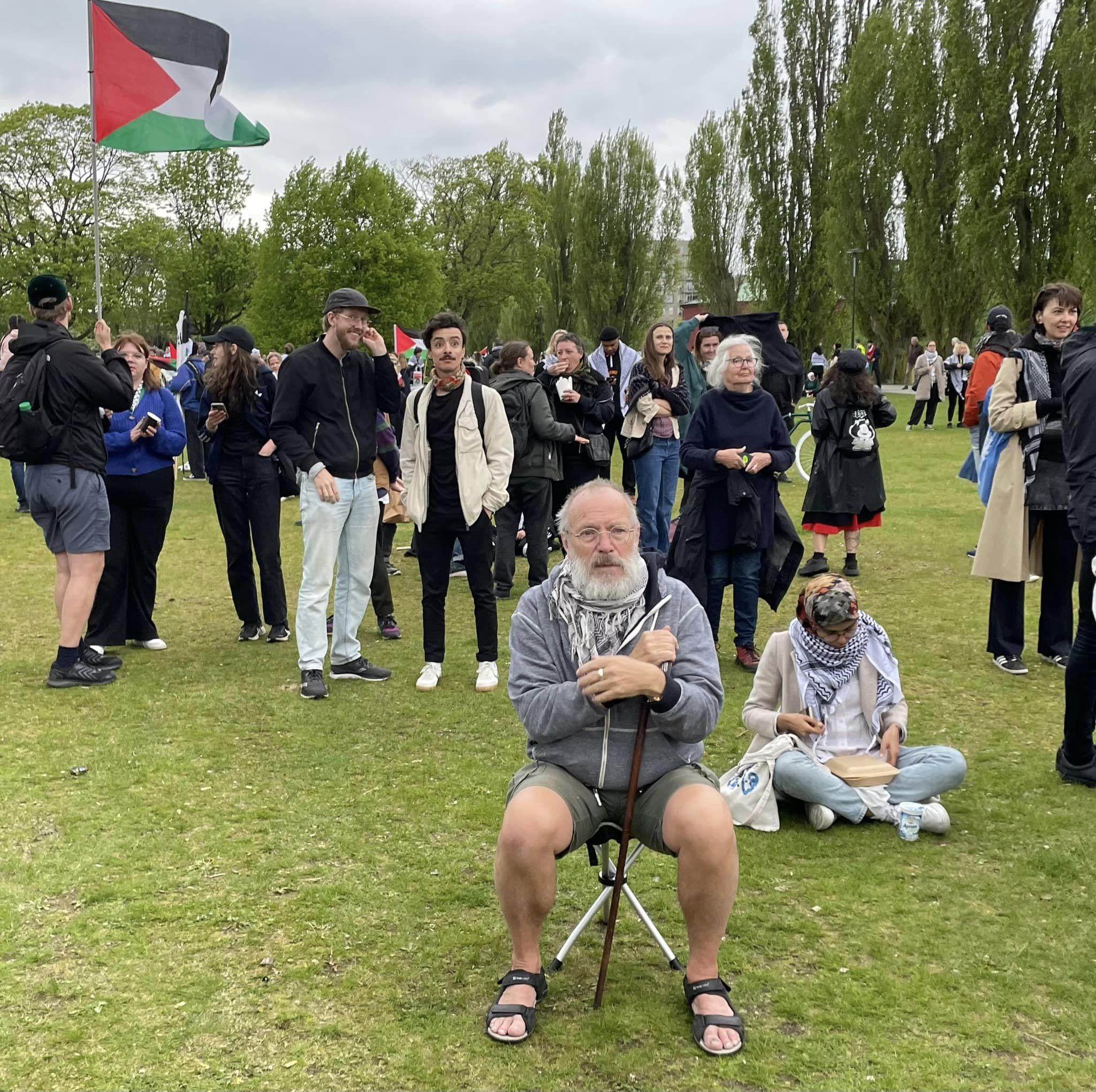
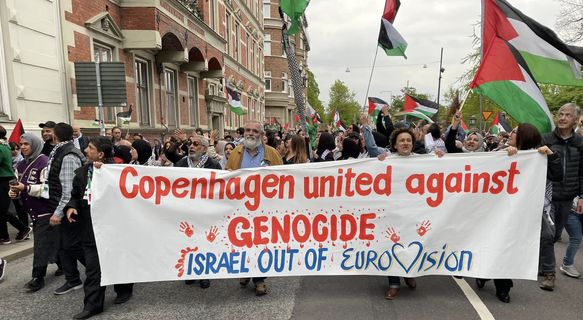


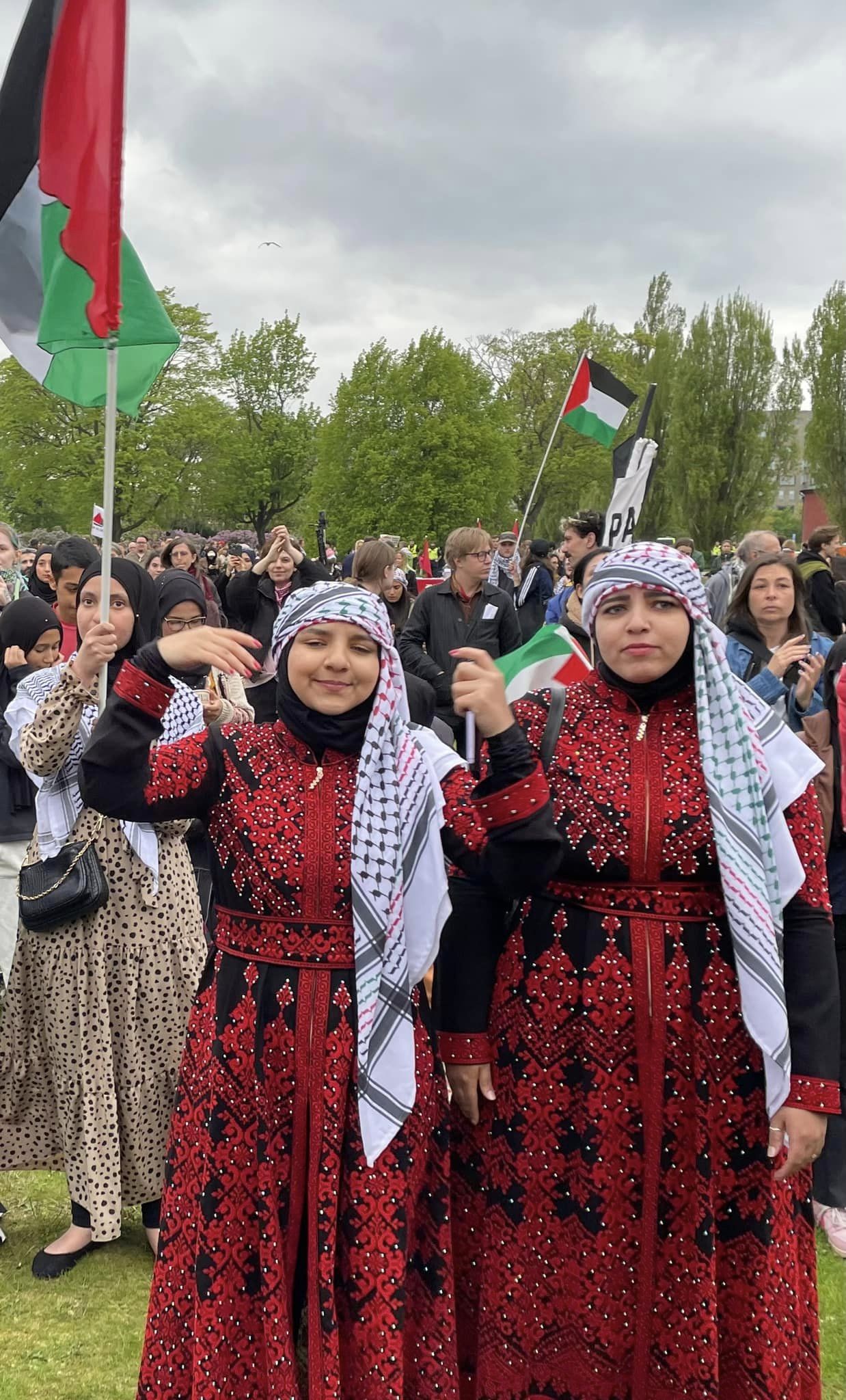


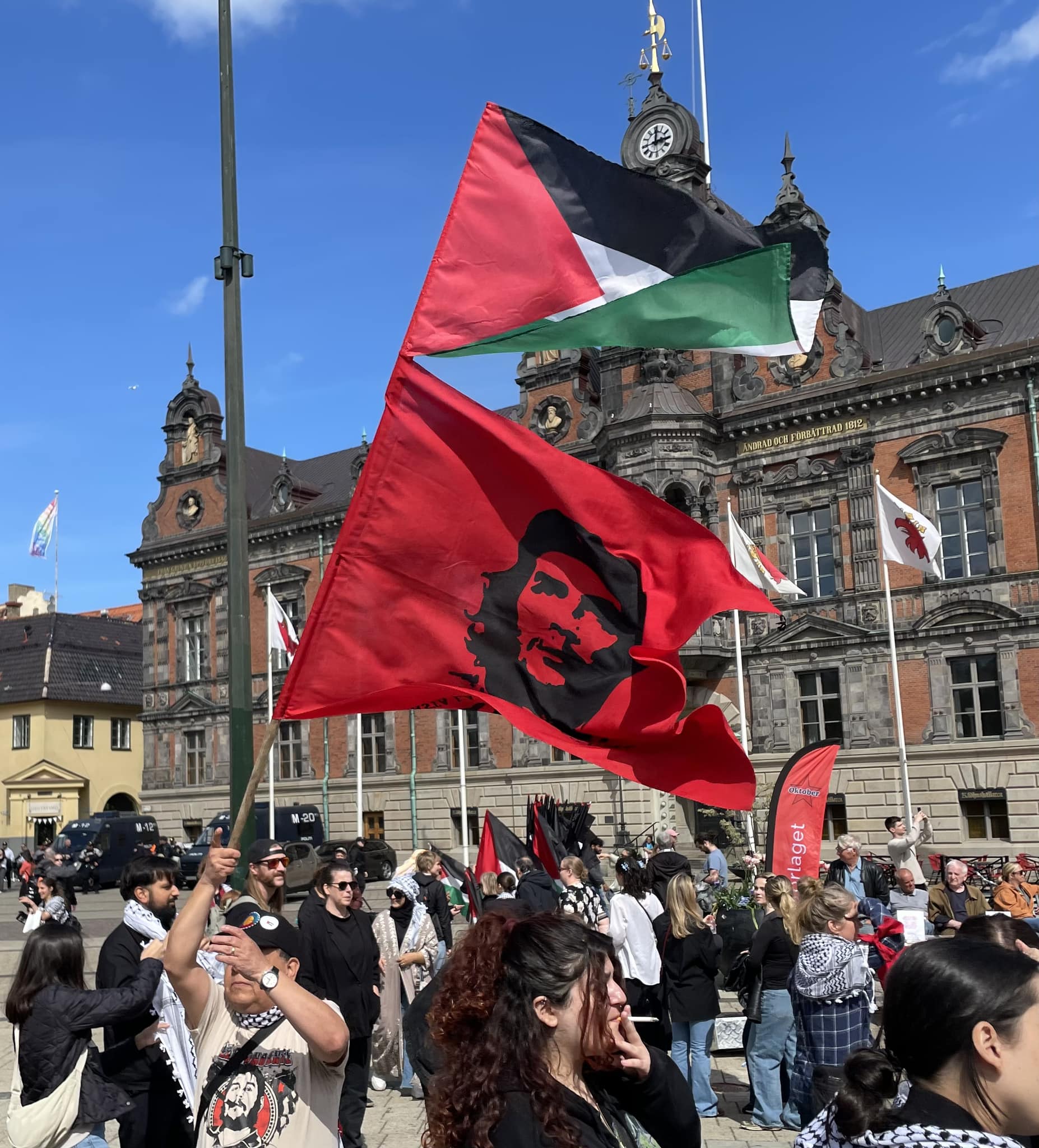
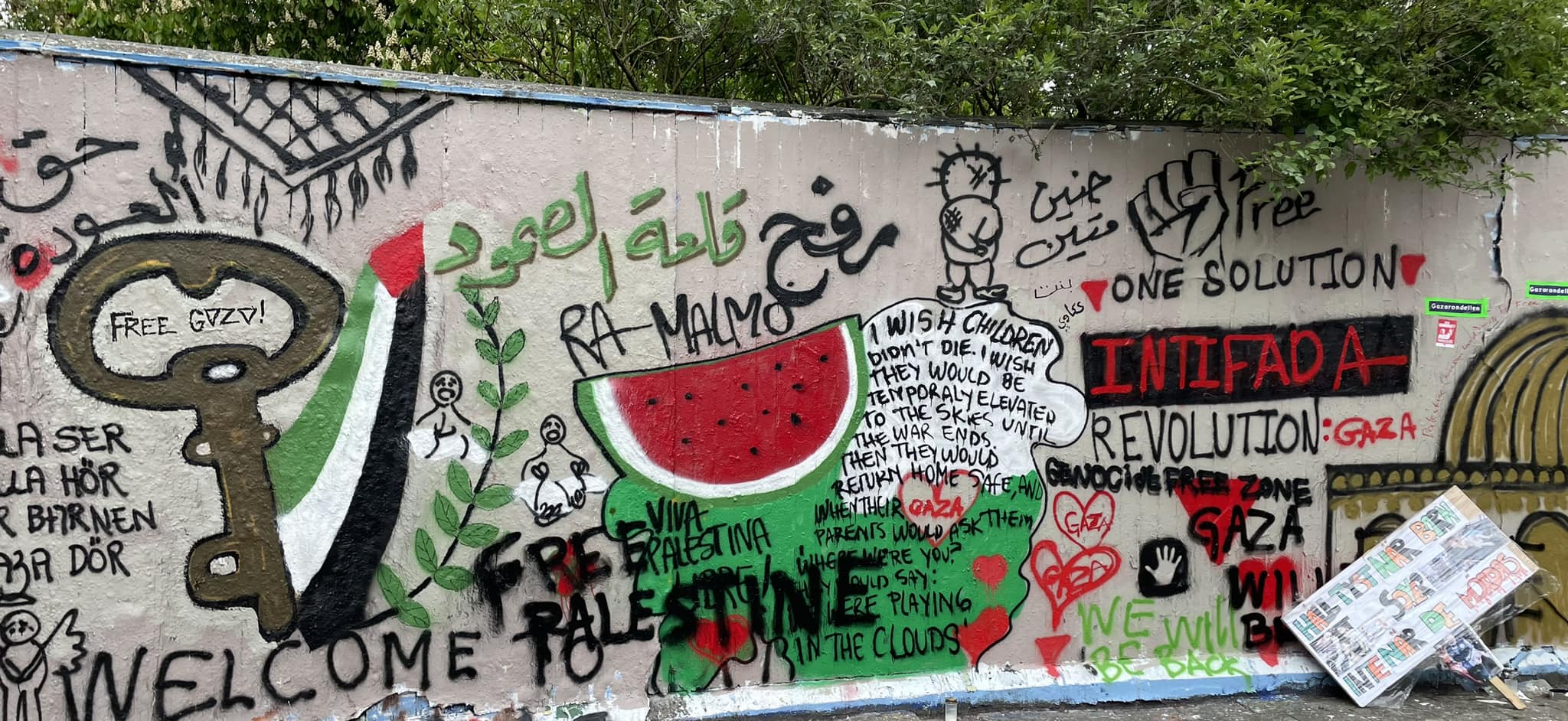
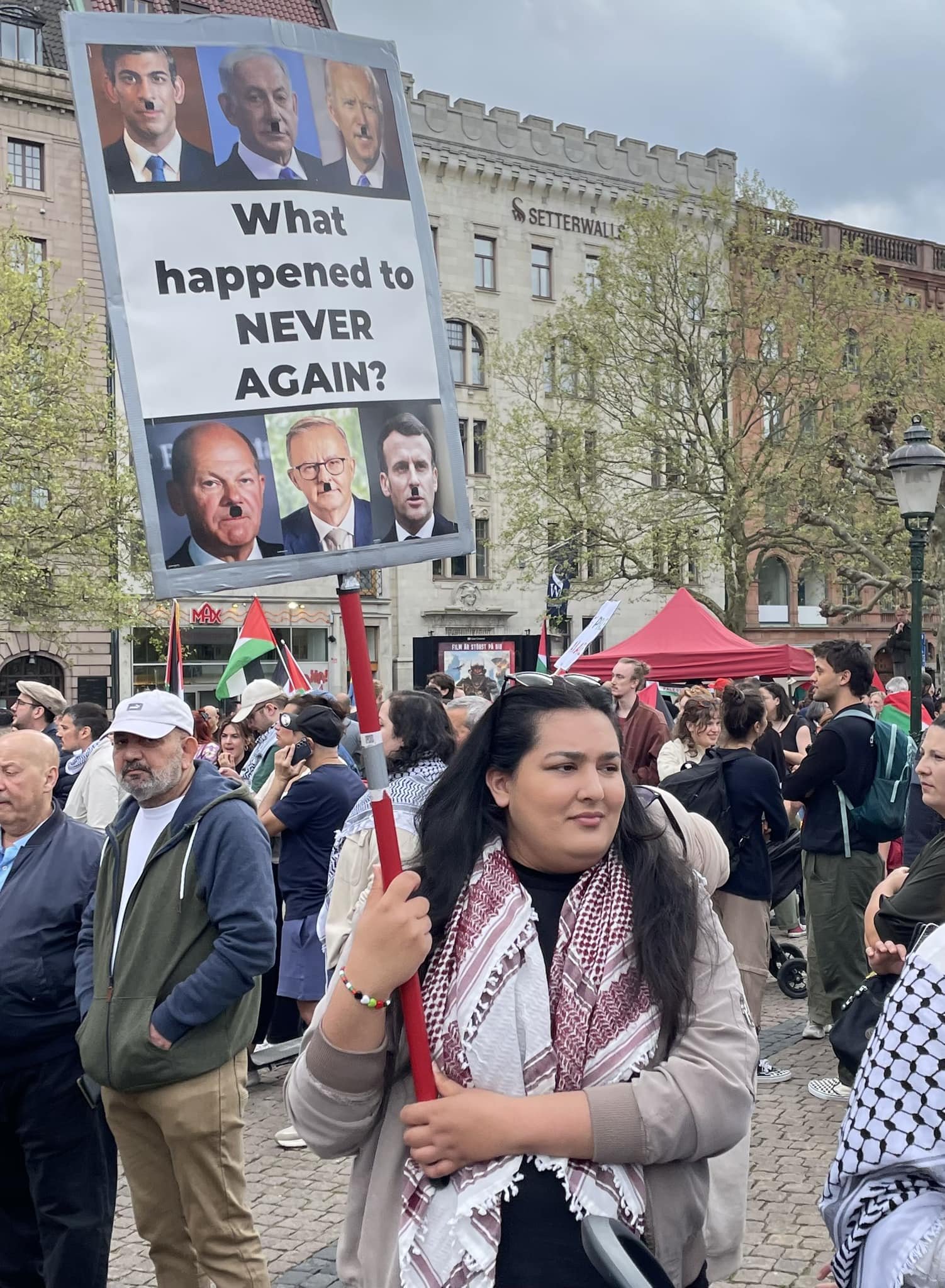


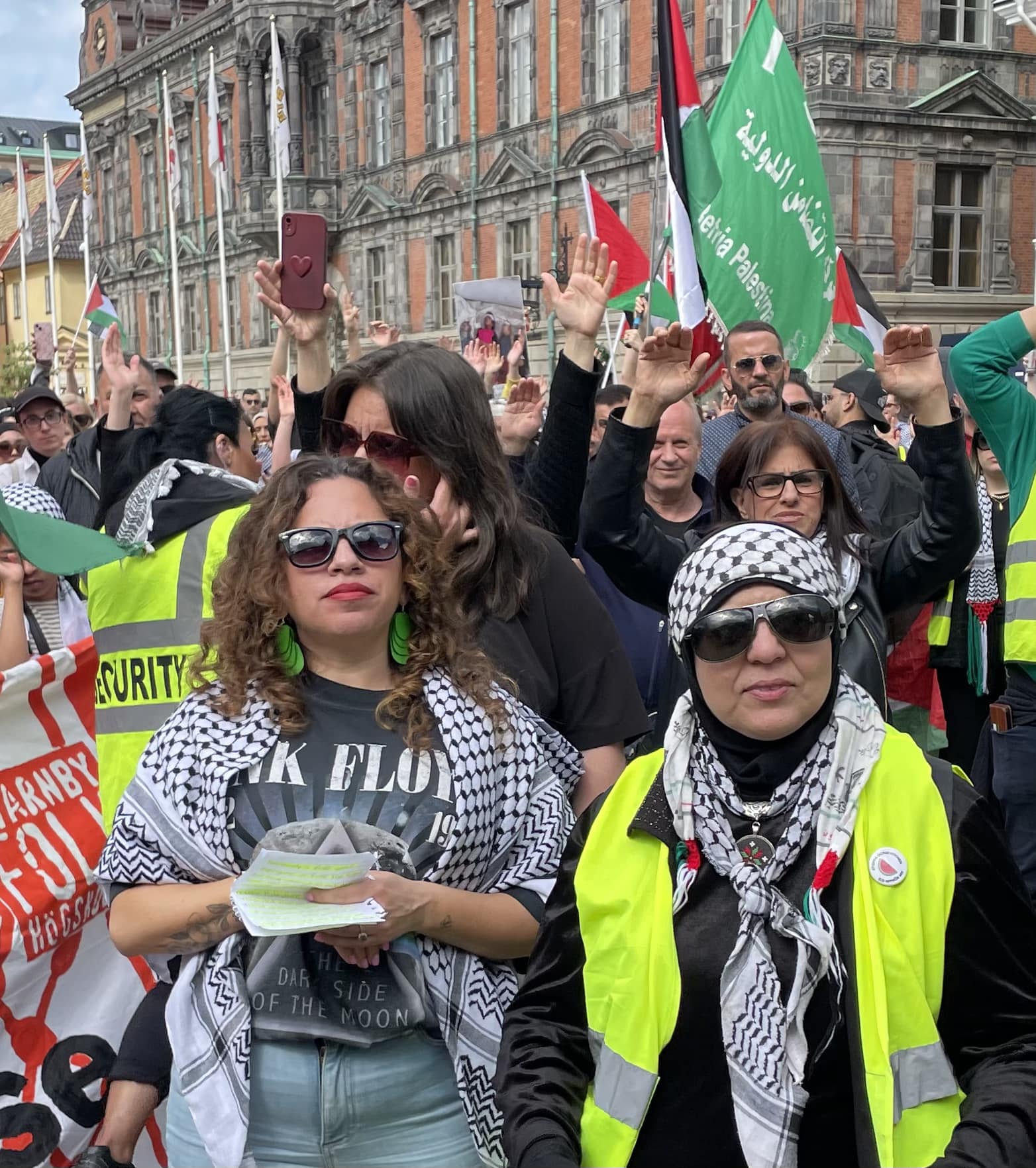

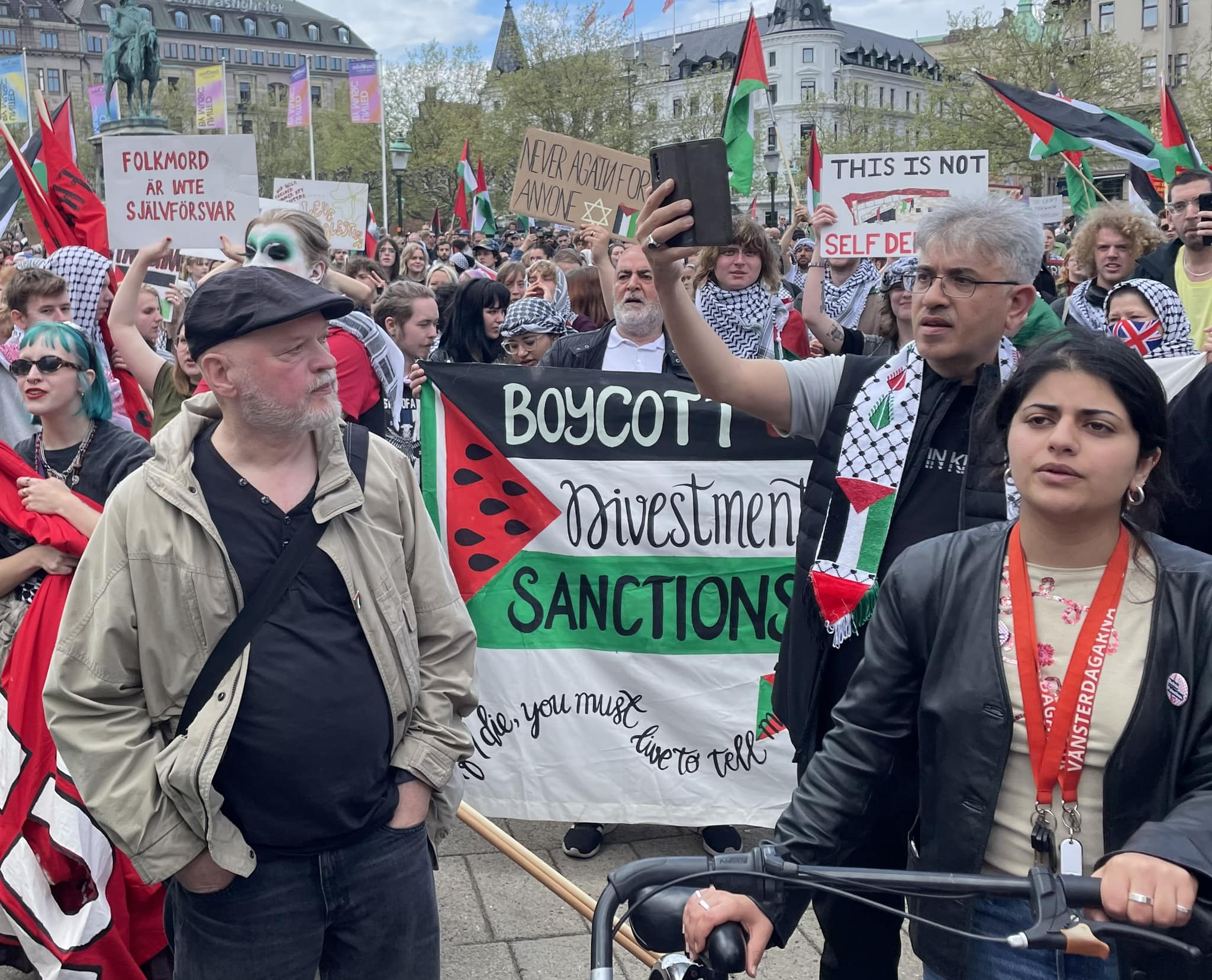

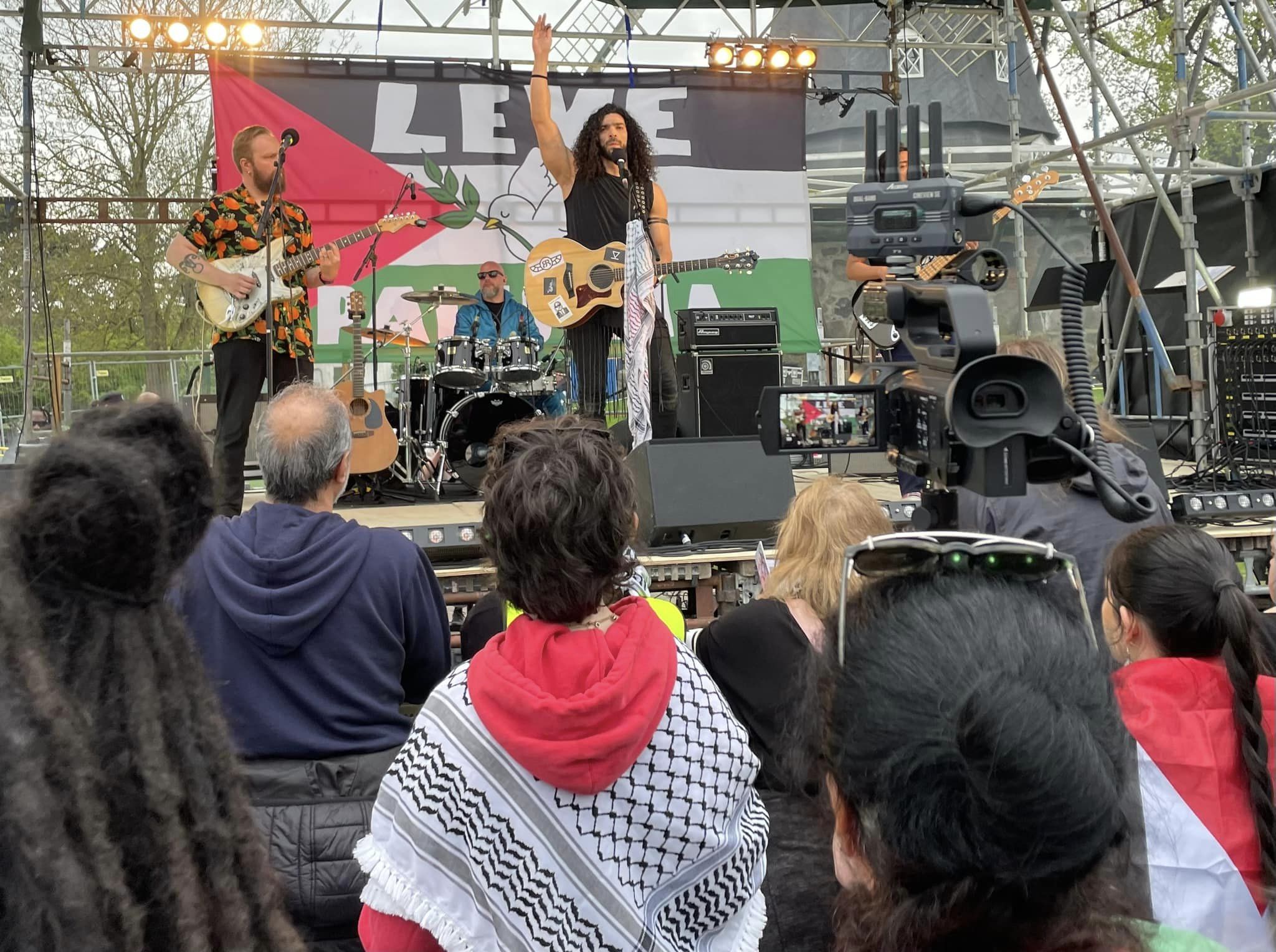


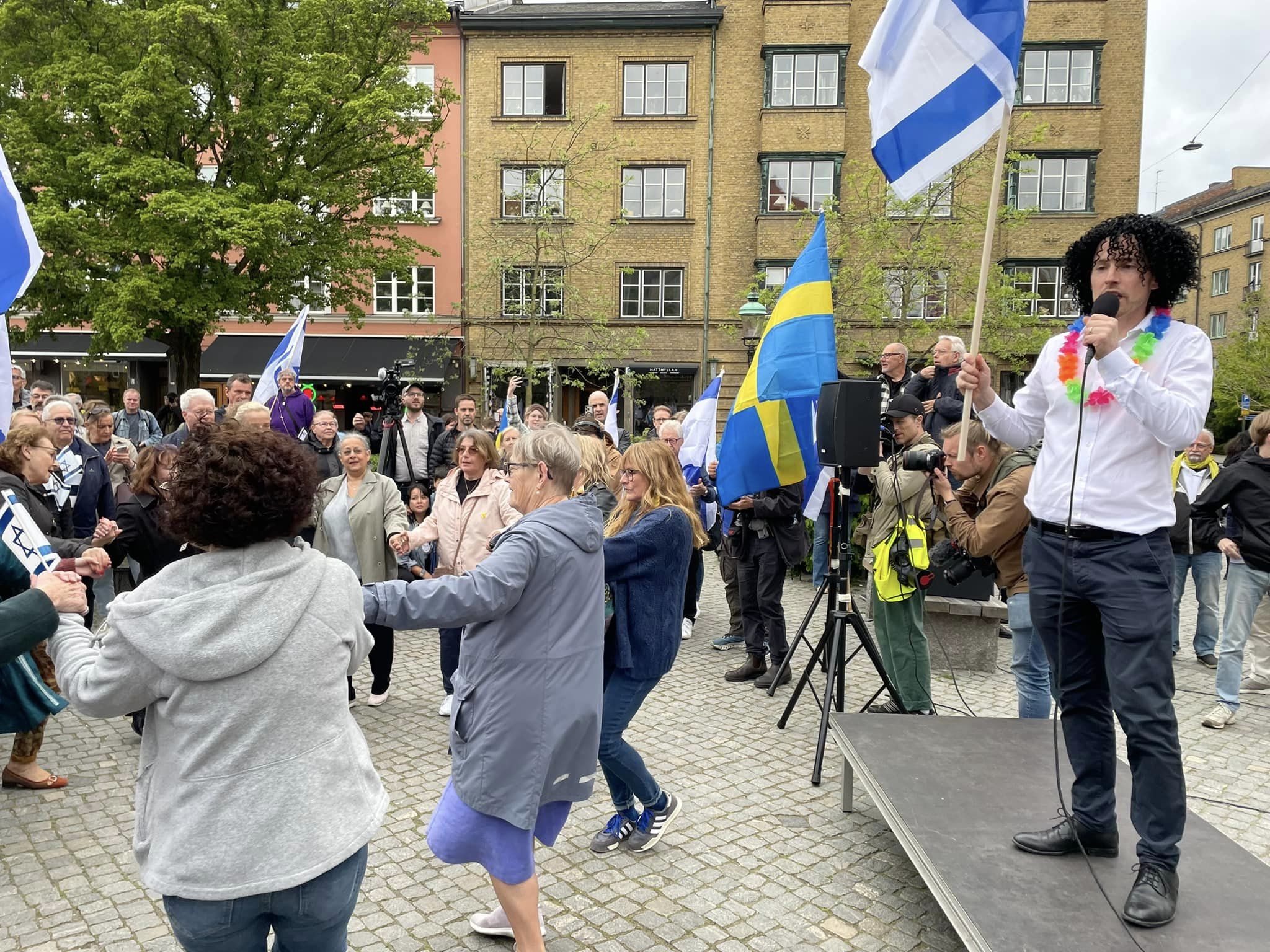


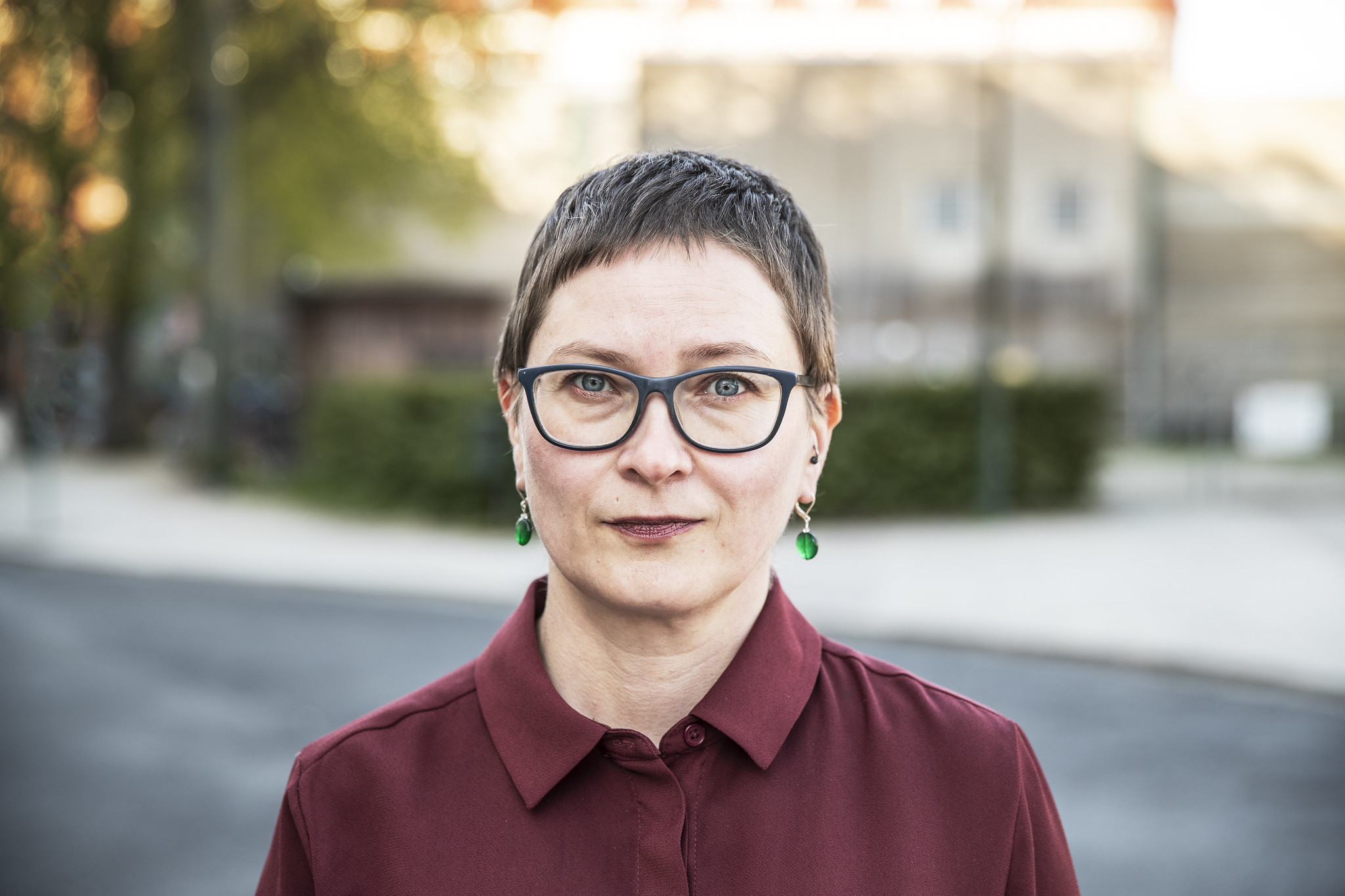
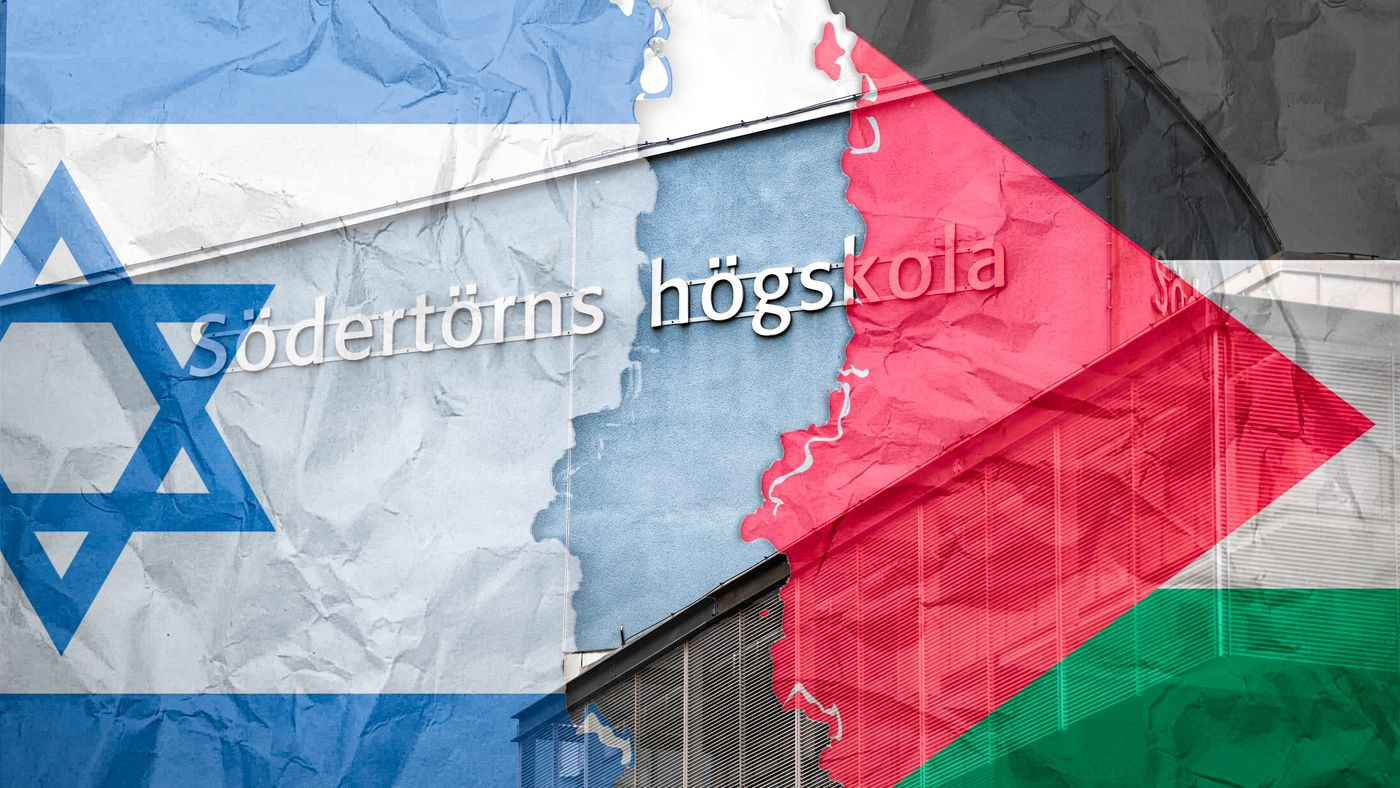


 דיויד סטברו