Zero tolerance” is no longer enough after Bondi Beach. Political action is required – and it is urgent

Published in Swedish in Kvartal: https://kvartal.se/erikhogstrom/artiklar/hur-paverkar-politiken-terrordad-mot-judar/cG9zdDozNzA5NA

Reactions to the terrorist attack at Bondi Beach have largely focused on the hateful rhetoric believed to have contributed to the violent extremism that claimed 15 lives – the deadliest attack on Jews since October 7. That focus is understandable after two years of global demonstrations under slogans such as “globalize the intifada.”

At the same time, the attack is rooted in more than a toxic debate climate. It also involves a geopolitical and security dimension that has primarily been raised by Israeli officials.

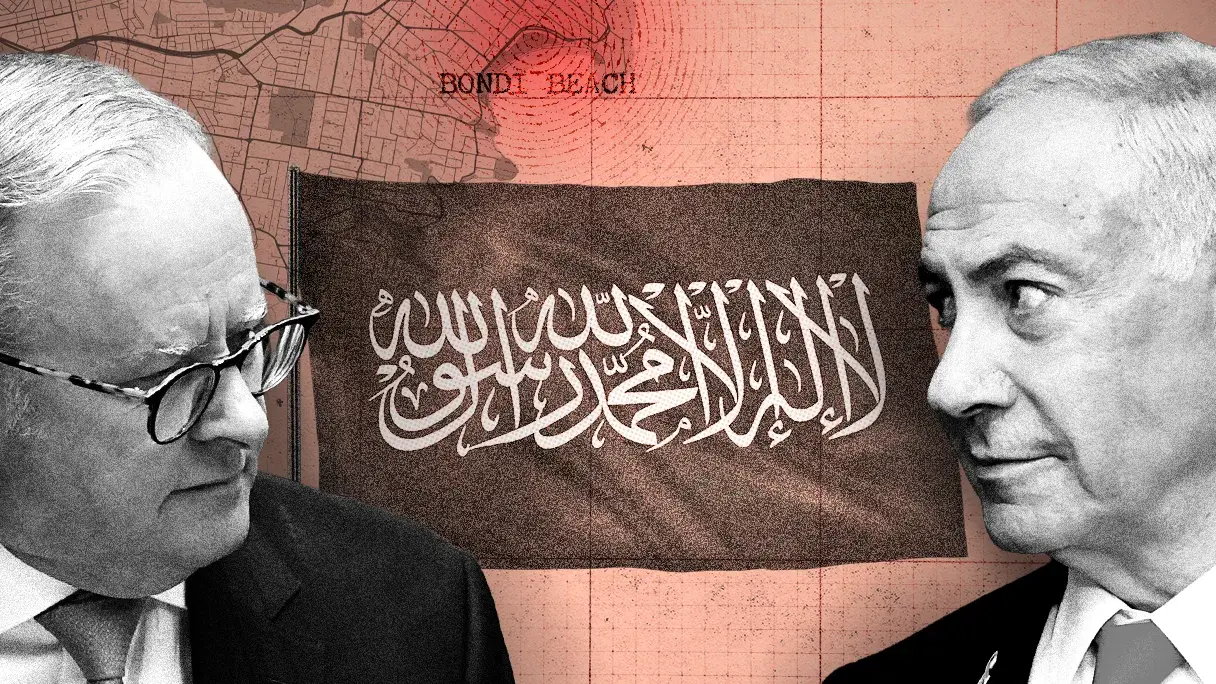
According to Israeli intelligence assessments, links had already existed for several months between Australian pro-Palestinian activists and groups such as the Islamic State, al-Qaeda, and Iran’s Revolutionary Guard. Against this backdrop, Israeli Prime Minister Benjamin Netanyahu accused Australia’s prime minister of betraying the country’s Jews. After the attack, Netanyahu stated that he had already warned in August that recognizing Palestine would, in his words, “pour fuel on the antisemitic fire, reward Hamas terrorists, and encourage threats against Australia’s Jews.”

This raises a number of questions. Does Australia really need Israeli intelligence to identify threats against its Jewish population? And more importantly: is Netanyahu truly the right person to lecture others about being unprepared for Islamist terrorism, when his own government bears responsibility for Israel’s worst catastrophe in decades?

But Netanyahu is not the central issue. What matters is that the warnings proved correct. A massacre of Jews took place in Australia, carried out by men who had ISIS flags in their car. Australian authorities knew that one of the perpetrators had ties to ISIS and that his father, the other perpetrator, legally owned at least six weapons. Despite this, no warning flags were raised, and the Jewish event lacked police protection when the attack occurred.

Islamists operate freely in Sweden

Against this background, Europe should ask itself a clear question. If Australia’s policies over the past two years resemble those pursued in many European countries, could what happened at Bondi Beach happen here?

Both domestic and foreign policy must be scrutinized. Domestically, this concerns insufficient resources to protect Jewish sites, an inability to counter conspiracy theories, and complacency toward Islamist actors. These challenges affect all European countries, including Sweden. Swedish journalists have recently exposed how Islamists operate freely in Sweden, how Iranian actors direct terrorist activity via Swedish organized crime, and what links Swedish activists have to terrorist movements such as the PFLP.

“Jews in countries that do not take Islamist terrorism seriously end up paying the price, regardless of whether government passivity stems from fear, incompetence, or indifference.”

Sweden is not alone. According to a recent Europol report, jihadist terrorism remains a central security challenge for the EU, with groups such as al-Qaeda and the Islamic State exploiting the conflict in Gaza. Added to this is Hamas, which, according to Israel’s Mossad and European intelligence services, has planned attacks against Jews in Europe since 2023. The causal link is clear: Jews in countries that do not take Islamist terrorism seriously pay the price.
Kvartal

Why foreign policy matters

How, then, does foreign policy factor in? Can recognition of Palestine or harsh criticism of Israel encourage terrorism? Countries such as Spain, Norway, and Ireland pursue a clear line against Israel. Like Australia, they have recently recognized Palestine; they voice strong opposition to Israel in international forums and serve as comfortable host countries for movements that not only oppose Israeli policy but view the state itself as an illegitimate colonial project.

Australia’s prime minister firmly rejected Netanyahu’s claim that the country’s foreign policy had any connection to the attack. He may be right – such accusations require evidence. But that does not mean foreign policy is irrelevant to the climate surrounding antisemitic hate crimes.

First, governments – unlike individuals – must understand the unique situation Jews face. Demonstrations are marked by hatred, aggression, Nazi comparisons, terrorist symbols, and boycotts. Of course, protests are legitimate in a democracy, and no one seriously claims that all participants are violent antisemites. But at the political level, it is unclear whether countries such as Norway fully grasp what their Jewish populations are forced to endure. The situation is worsened by the fact that no other conflict in the world is covered as intensely – and, according to many, as one-sidedly – in Norwegian media. This has an enormous impact on Norway’s small Jewish community.

Second, does the tax-funded public sphere remain neutral, or does it contribute to an unsafe environment for Jews? What do teachers say? What do libraries display? How do healthcare professionals behave? This is a matter of public safety, not freedom of speech. In February, a video went viral showing two nurses at Bankstown Hospital in Sydney boasting about refusing care to – or even killing – Israeli patients. In Ireland, an official report found that school textbooks contain serious distortions of the Holocaust and Jewish history, which Jews in the country say fuel antisemitism. In Spain, Jewish organizations similarly warn that some teachers use classrooms for anti-Israel activism.

“Zero tolerance” is no longer enough

We can continue debating the limits of protest, but we must also scrutinize institutions. The state must protect freedom of expression, but it must also guarantee safety. That requires schools, hospitals, and libraries free from political propaganda and symbolic acts intended to influence public opinion.

Finally, it is a fact that jihadist terrorists in Europe are often exposed with the help of Israeli intelligence. Can Jews in Spain and Ireland truly trust that their governments will cooperate with the Mossad to save lives, when those same governments cannot even tolerate Israel’s participation in Eurovision?

After Bondi Beach, Europe’s governments must decide where they place their resources and political capital. If they are serious about protecting their Jewish populations, “zero tolerance” and symbolic gestures of solidarity are no longer sufficient. Political action is required – and it's required urgently.

Sweden navigates complex waters of EU foreign policy

מדיניות החוץ של שוודיה

Published in The Local – Sweden's news in English, September 2009 http://www.thelocal.se/21864/20090903/

It was an October evening in the Karlskona archipelago when a local fisherman saw something unusual. He didn't know it at the time, but what he saw was about to cause a dramatic military and political standoff that would attract the world's attention and influence Swedish foreign policy for years to come. He phoned the Coast Guard and reported what he had seen, which turned out to be a submarine which ran aground not far from Karlskrona's town centre and naval base. To everyone's amazement, the vessel was a Whisky class submarine of the Soviet Union's Baltic fleet which hit an underwater rock. The story would later be referred to as the 1981 "Whisky on the rocks" incident.

Recalling this incident now, as the EU's 27 Foreign Ministers are preparing to meet in Stockholm this weekend, is useful since it gives an important historical perspective to the event. After two devastating world wars and a long cold war, Europe is still looking for its role in the new world order. It is clearly a great economic power and a model of stability and prosperity. It is also a leader in many international issues like climate change. Still, when it comes to many of the world's security problems and international dilemmas, the EU seems either absent or lost. The US, Russia and China are more decisive and influential and many say that the Europeans are too divided and that they lose political power because their many states, institutions and organizations don't speak with one voice.

Within the EU, Sweden's situation is a special one. Today, just like other nations, it is navigating the complicated waters of a multi power world, creating alliances and making friends and foes as it goes along. But things used to be different. Since the 19th century Sweden maintained a unique position of nonalignment which defined its foreign policy. This brings us back to the "Whisky on the rocks" affair and other occasions in the 1980s when foreign submarines threatened Sweden’s neutrality; these incidents had long-term political consequences, some of which are at the root of Sweden’s foreign policy today.

In October 1982, following a dramatic "submarine hunt" outside Stockholm, a Parliamentary investigation committee was appointed. The committee's report said that the Soviet Union was behind the incursion and political repercussions followed. Sweden's ambassador to the UN was criticized for creating secret channels with Soviet officials. The Foreign Minister, Lennart Bodström, was forced out of office after he openly questioned Soviet responsibility. Both were probably acting on instructions by the newly-elected PM, Olof Palme, who was trying to maintain Sweden's vulnerable foreign relations. Later on, Palme became furious when a young conservative member of the original committee met with representatives of US intelligence. He called him a security risk and a threat to Swedish foreign Policy. The upcoming MP's name was Carl Bildt.

This historical anecdote is significant as Carl Bildt is now Sweden's foreign minister and he will be the one hosting the semi-annual informal meeting of European Foreign Ministers in Stockholm this weekend. In the years since the submarine dramas of the eighties, Bildt has had a decisive role in shaping Sweden's political landscape and international attitudes. He was MP in the eighties, PM in the nineties, he has been acting as Foreign Minister since 2006 and he's one of those responsible for changing Sweden's neutrality and nonalignment policy. Though Sweden hasn't joined NATO or the EURO zone, it is part of the EU (since 1995) and many of its officials talk about strong European and American ties and "solidarity" with neighboring Nordic and Baltic states, even to the extent of military assistance.

But as the old conflicts between those who want to maintain Sweden's nonalignment and those who seek closer ties with one of the great powers disappear, what are the new burning topics of Swedish foreign policy? If Sweden once aspired to be an independent bridge between east and west in a divided Europe what is its mission when Europe is united? And what are its interests in the new world order? Surprisingly, it's not easy to tell. In a country where every minute detail of employment, health and education policy is discussed in the public arena, foreign policy is often hidden in the back pages.

If this weekend's informal meeting is any indication, climate change and the economic crisis are the main issues concerning European Foreign Ministers and their Swedish hosts. "The most pressing issues on the agenda", Kjell Engelbrekt, an associate Professor at the Swedish National Defense College tells The Local, "will likely be the financial and economic crisis, the upcoming Copenhagen summit on climate change, and a variety of topical foreign policy questions". Engelbrekt adds that since the foreign ministers of Croatia, Turkey and Macedonia are attending the second day, the issue of EU enlargement will probably be discussed too.

Anders Jörle, director of the press section at the Swedish Ministry of Foreign Affairs tells The Local that "It is well known that the situation in the Afghanistan-Pakistan region and the Middle East will be among the topics of the meeting". He also says that the agenda is not fixed and to some extent it is decided on the spot. "There will be no decisions, common conclusions or resolutions", he says, "Success is if there will be an open-minded discussion that brings effectiveness to the foreign policy of the union". In order to understand this special dynamic, one has to go back to the early seventies and to a meeting that took place in a 17th century castle in West Germany.

Gymnich castle near Bonn is an impressive Baroque building which was used as a guest house for foreign dignitaries by the German federal government. It has seen guests like Ronald Reagan, Queen Elisabeth and Leonid Brezhnev. In 1974, nine EC foreign ministers met there for the first time and since then it has become a tradition –  in addition to regular meetings of the General Affairs and External Relations Council, EU foreign ministers meet for "Gymnich meetings" every six months, in an informal setting in the country holding the presidency of the European Council. This weekend they will meet in Stockholm's Modern Museum and will be joined by Javier Solana the high representative of the CFSP, the commissioner for external relations, Benita Ferrero-Waldner, and the commissioner for enlargement, Olli Rehn. As usual, although no formal decisions will be made, the outcome of the discussions could have a decisive influence on the relationship between Europe and the rest of the world.
These relations are crucial to an understanding of Sweden's foreign policy, which is itself part of the dilemma facing European policy makers. Judging by almost any parameter, Europe can be a world power, but does it really want to become one? Is the EU a united force striving to influence world affairs or is it content dealing with issues within and close to its borders while leaving the bigger issues to its component states and to other world powers?

Kjell Engelbrekt says: "The EU can be described as a composite actor because of its lack of cohesive policies and executive power toward many parts of the world". Engelbrekt adds that the EU has a powerful negotiating position in global trade talks and a collection of aid donors more important than the US', but its significance on a variety of political issues is only to the extent that it limits the range of views, options and policies that its members endorse, and consequently agree on. Although the EU is expected to help shape the future of Afghanistan, and is engaged in the question of Iran's nuclear program and the Middle-East peace process, its power is limited. Other issues like North Korea, Pakistan and other Asian countries, says Engelbrekt, are way beyond the EU's reach.

It is true that the EU's EUFOR military deployment is keeping the peace in Bosnia and it was important in similar efforts in Eastern Congo and Chad. The EU was also involved in solving tough issues such as the Ukraine-Russian crises and the January energy cutoff. But is the EU cut out to be a real world power? Many are skeptical. And like the bigger European picture, the Swedish one is ambivalent too. On some issues, Swedish policy is clear, as Kjell Engelbrekt explains: an international agreement on climate change must be reached in Copenhagen at the end of this year. This is not only crucial to the survival of mankind; it's also a "key area from which the Union draws legitimacy as a global player". Sweden's policy is pretty clear on the question of enlargement too. "The commitment made by the Union in Helsinki in 1999, to treat Turkey as a candidate country, must be upheld. It is now up to Turkey to conduct negotiations and fulfill its obligations as a candidate country". The same can be said about the other two recognized candidates – Croatia and Macedonia.

But other issues are more complicated. Some, like the relationship with Russia and energy supply, are politically complicated because of conflicting interests (economic interest vs. environmental concerns and diplomatic relations with Russia, Germany and the Baltic states). Other issues can raise a heated political debate – what is Sweden willing to risk in order to gain more international credibility both in terms of its independence when it concerns adopting the EURO or giving away power to Brussels, and in terms of lives when it concerns military involvement in other countries. And there are yet other issues which raise almost philosophical questions.

Sweden's official neutrality was never really what many thought it to be. It was designed to keep Sweden out of wars but in many cases it meant that different Swedish elements played conflicting roles in world affairs, serving both admirable and sinister purposes. Sweden's neutrality during WW2, for example, was used to save thousands of refugees from Ghettos and concentration camps throughout Europe but at the same time it assisted the Nazi war machine. Later on, official nonalignment was used by Swedish organizations to spread both humanitarian aid and weapons in developing countries.

Sweden's current foreign policy can have similar ambivalent effects. It could be used to serve the narrow interests of powerful economical or political elites or it could be used in the service of something greater than Sweden alone, be it a political union or a set of ideals. It's hard to tell if the current Swedish EU presidency is showing the way to a new leading position in international politics, but the Gymnich meeting is surely a good opportunity to take a broader look at the situation. The world is facing enormous challenges and its inhabitants are making choices every day. Some are joining hands and confronting the challenges, others continue to engage in "old world behavior". Sweden and other European countries are making choices too. This time it's not about chasing submarines or creating secret diplomatic backchannels, it's about taking responsibility and making history.