The state of antisemitism in Sweden

As Sweden is marking 250 years of Jewish life, the reactions to the October 7th massacre, the war in Gaza and the tone of the rhetoric in the public debate are reasons to be concerned about Swedish antisemitism. But what is the true extent of this scourge, what is its impact on Sweden’s Jewish community, and how is it being addressed by the authorities? By placing these issues in a broader historical context, David Stavrou’s investigation, which we are publishing as part of our partnership with the DILCRAH, seeks to answer these questions.

Published in K. in English: https://k-larevue.com/en/sweden/ and in French: https://k-larevue.com/antisemitisme-suede/

In 1973 a young Moroccan army officer named Ahmed Rami arrived in Sweden asking for political asylum. He said he needed protection because he was part of an unsuccessful coup d’état in his homeland the previous summer. More than a decade later, after obtaining asylum in Sweden, Rami started broadcasting Radio Islam, a radio program which subsequently turned into a newspaper and later, a web-site. The focus of these enterprises became clear right at the beginning – it was not about Islam; it was about Jews. The radio program and the website featured some of antisemitism’s greatest hits; conspiracy theories about how Jews and Zionists control the world, Holocaust denial, Nazi propaganda, lists of influential Swedish Jews and Israel bashing. During the last three decades, Rami has been investigated, charged, convicted and fined for hate speech and hate crimes and his radio station was shut down by the authorities more than once. Still, now aged 78, Rami’s legacy lives on. He has published books, voiced support for Hezbollah and neo-Nazi groups, his website is still very much alive and the internet allows his work to continue.

Radio Islam is an important landmark in the history of Swedish antisemitism for several reasons. One of them is that the precedential trial which sent Rami to prison for six months also gave a small and relatively unknown Swedish organization called The Swedish Committee Against Antisemitism (SCAA, or SKMA in Swedish) an important role in the Swedish public arena. “SCAA is a religiously and politically unaffiliated NGO which was founded in 1983”, says Mathan Shastin Ravid, the organization’s office manager, “it was founded by a group of activists who wanted to raise awareness about antisemitism. It was a period with a clear wave of antisemitism in Sweden and other European countries during and after the Lebanon War in 1982. Antisemitism was not a new phenomenon in Sweden back then, but this was on a new scale, there were all these accusations with motives and images that targeted not only Israel, but Jews as a group. When the Radio Islam broadcasts started in the end of the eighties, it was clear to us that the radio station was a megaphone for anti-Jewish hatred and propaganda. On the basis of SCAA´s report to Sweden’s Chancellor of Justice, Rami was convicted of hate speech. But it was clear that in those days we stood pretty much alone. Not many people understood the problem, people did not want to talk about it and there were many known figures who came to Rami’s defence saying it was only criticism of Israel, not antisemitism”.

A lot has changed in Sweden since then and SCAA probably has an important part in the change. Shastin Ravid says that since the nineties, the organization has become more than just an activist watchdog. It now also focuses on education. “These days we stand on two legs”, he explains, “one of them is monitoring, information and advocacy, as we try to follow what is happening in Sweden and the world and follow the Swedish and international debate regarding antisemitism. We then react when we see antisemitism in different forms. The other leg is education. We have educational programs for different target groups such as teachers and pupils in Swedish schools, journalists and politicians. We also work with some governmental authorities like the police, which often lack a deeper knowledge of contemporary antisemitism and how it spreads. It is my understanding that there is more awareness in this area today than there was ten years ago and that positive things are happening as part of a higher level of knowledge and consciousness in general in Swedish society today when it comes to antisemitism. But there is still much work to do..”

When Shastin Ravid is asked for an up-to-date description of antisemitism in Sweden, he starts by saying that more research is needed to get a better understanding of the problem. That said, it is clear that in many ways Sweden is not different from other countries. “The development in Sweden is connected to global developments”, he says, “antisemitic conspiracy theories have been spread and legitimized by important political actors in recent years. In Europe we have for example seen it in countries like Hungary and Poland amongst right-wing nationalist parties and governments, but we have also seen it in other countries including the US where amongst others Donald Trump, Elon Musk and the MAGA movement have legitimized and spread antisemitic propaganda. This global phenomenon has affected Sweden too and has sparked hate speech and hate crimes. And then there is, of course, the strong global wave of antisemitism after Hamas’ attack in Israel on the 7th of October 2023 and the war in Gaza. It is not the first time an escalation of the Israel-Palestinian conflict triggers antisemitism in Sweden and other countries, but the level of propaganda, hate, threats and attacks against Jews has been unusually high.”

“Studies show that antisemitism in the form of negative beliefs and attitudes towards Jews exists, in varying degrees, in all Swedish society, in many different groups and milieus. Within Swedish mainstream politics, the problem has long been visible in the right-wing nationalist Sweden Democrats party. For years, the party has tried to portray itself as a party which opposes antisemitism and is pro-Israel, but antisemitism continues to be a problem in the party. We often find high- and low-level representatives of the party spreading antisemitic propaganda and we see many connections between the party and right-wing and even Nazi extremists. In addition, the Sweden-Democrats do not deal with antisemitism within their ranks unless they are exposed by the media, and even then, there are many cases of people within the party who have kept their jobs after they were exposed”. The party’s proclaimed “Zero Tolerance” policy towards racism and extremism, including antisemitism, Shastin Ravid says, is “a joke”.

“But the nationalist and populist right is just part of the problem. Antisemitism does, for example, also regularly appear within the pro-Palestine movement and parts of the Swedish left, where it is often related to Israel and the Israel-Palestinian conflict. In these circles there is sometimes a denial or an unwillingness to see the problem of antisemitism, sometimes rooted in the misperception that Jews are “white” and therefore cannot be victims of racism. In the last year, there has been a big debate in Sweden about the fact that several representatives of the Swedish Left Party have spread antisemitic propaganda, many times on social media. And when criticized, those party representatives have been backed by many others within and around the party who have denied that the propaganda is antisemitic. The SCAA and many others have strongly criticized all of this, and the fact that the party leadership many times has been slow to act and condemn the spread of such anti-Jewish racism and those party members who defend and excuse it.”

“And of course, movements linked to radical Islamism must also be taken into account”, Shastin Ravid adds. According to him, antisemitism is most virulent within those movements and Nazi and other right-wing extremist movements. “For all of them, antisemitism is an ideological foundation, a “worldview,” a way of understanding and describing events both locally and globally. Jews are constantly portrayed as conspirators and blamed for all the world’s ills”. Furthermore, Shastin Ravid adds, “antisemitism has long been a weapon of regimes in the Middle East, where it is deeply rooted, openly expressed, and legitimized. The spread of this type of propaganda via the internet by regimes such as Iran has contributed to the globalization of this hatred. Recently, it was revealed that the Iranian regime is suspected of having planned to murder Swedish Jews, among them Aron Verständig, the chair of the Official Council of Swedish Jewish Communities (Judiska Centralrådet). According to the Swedish Security Services (Säpo), Iran has also recruited Swedish criminal networks to carry out attacks against Israeli and Jewish targets. The Swedish National Centre for Terrorist Threat Assessment (NCT) has reported that the biggest terror threats in Sweden come from violent Islamists and right-wing extremists, which both have Jews and Jewish institutions as some of their primary targets”.

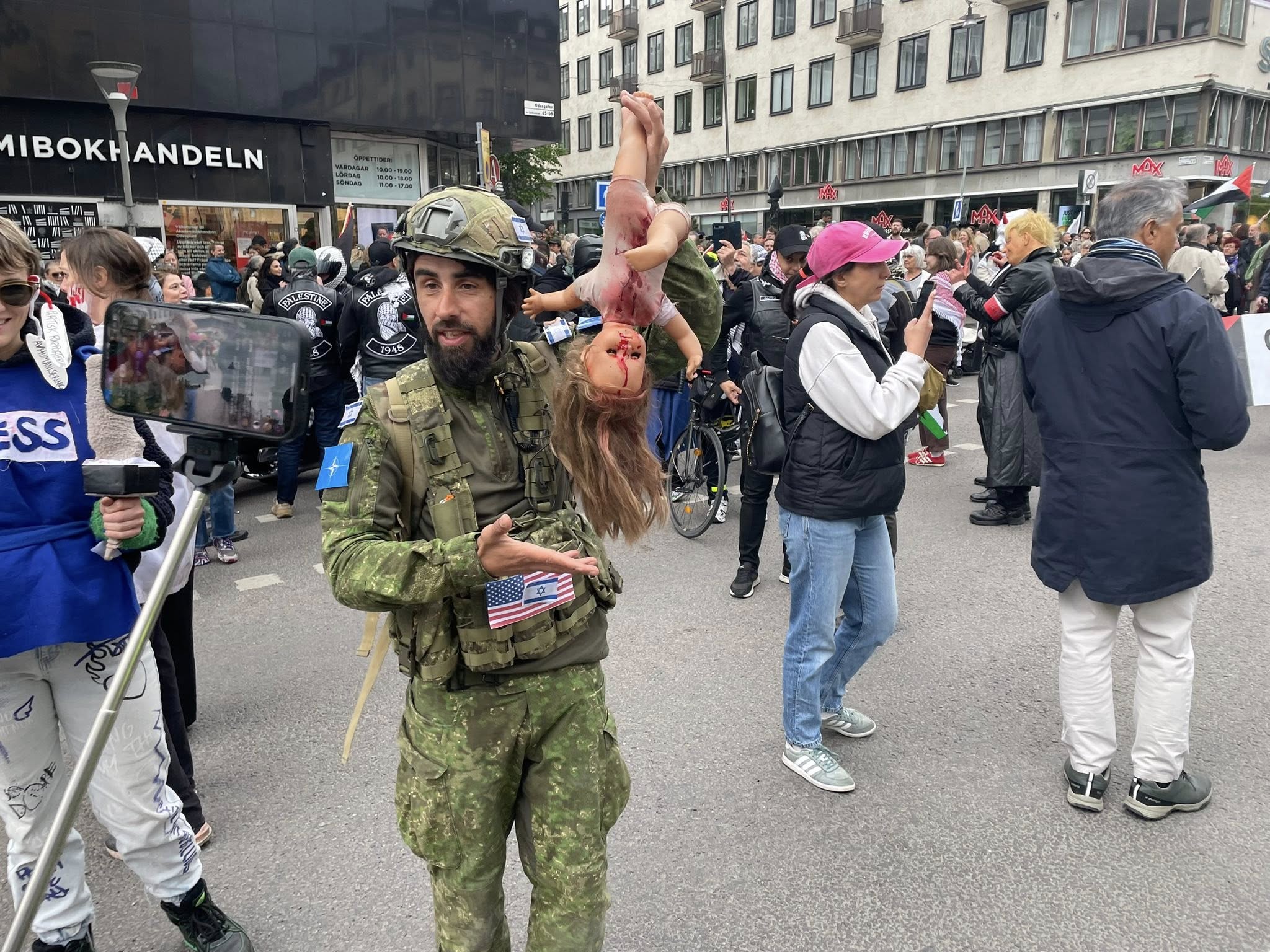
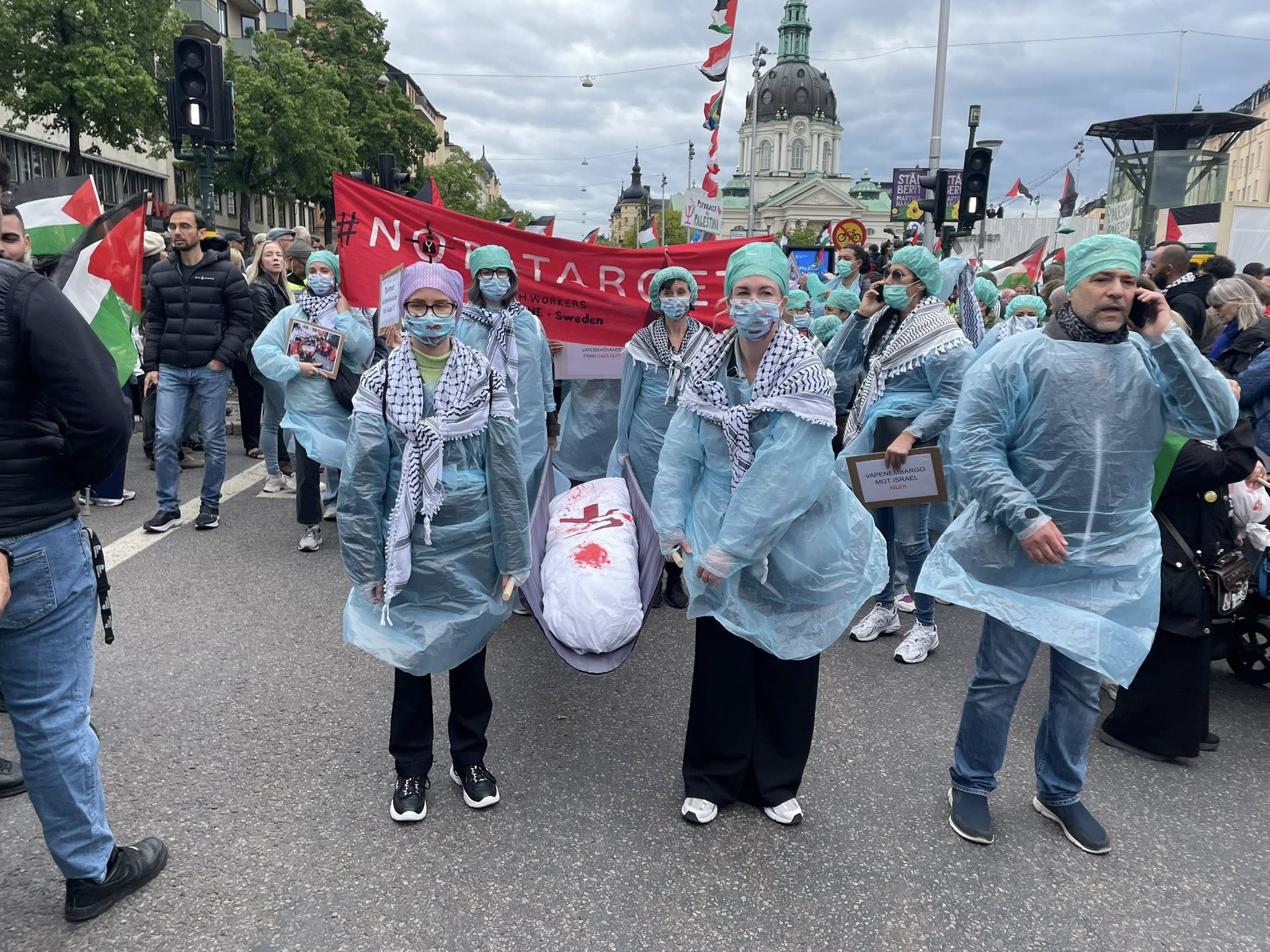
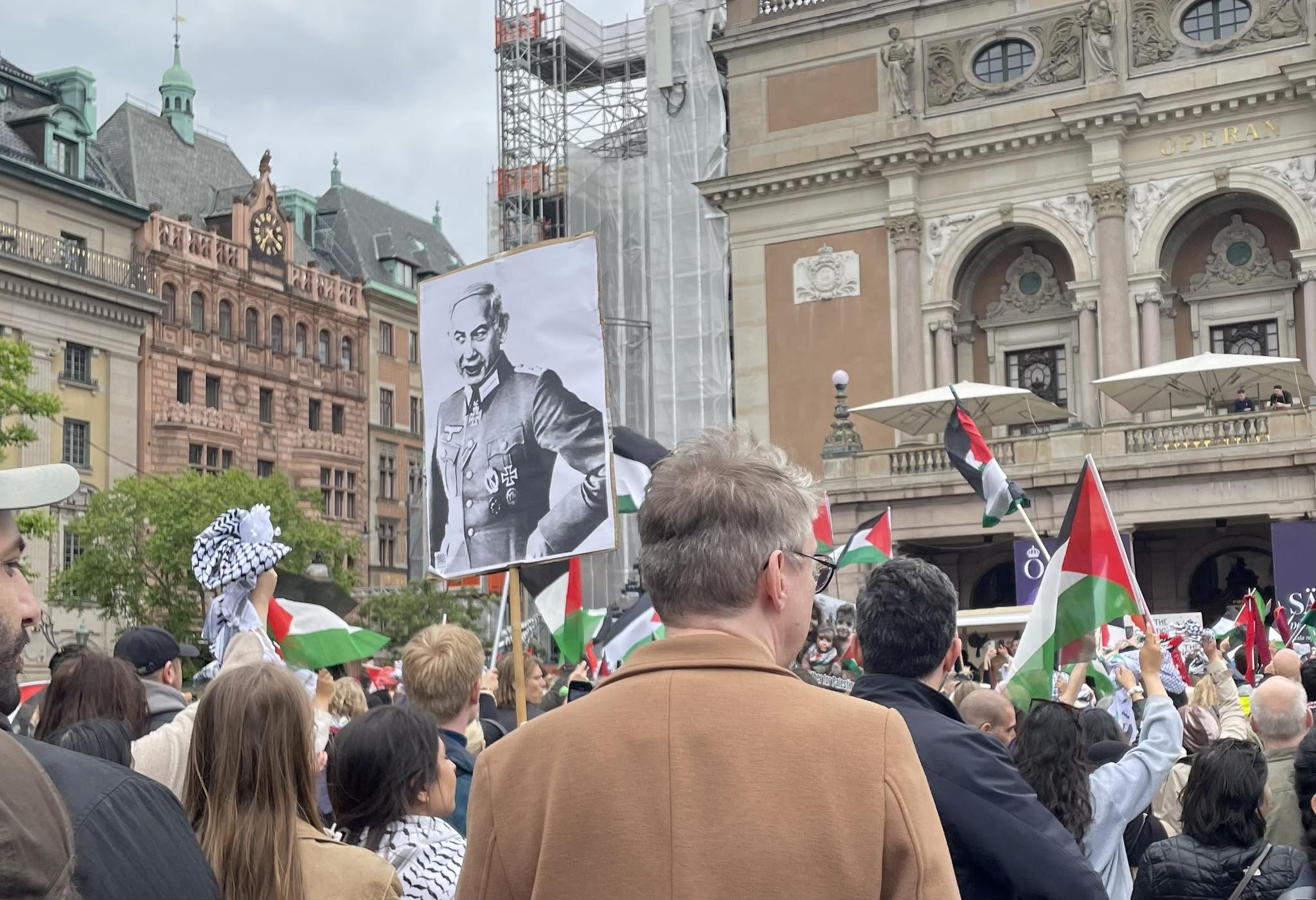
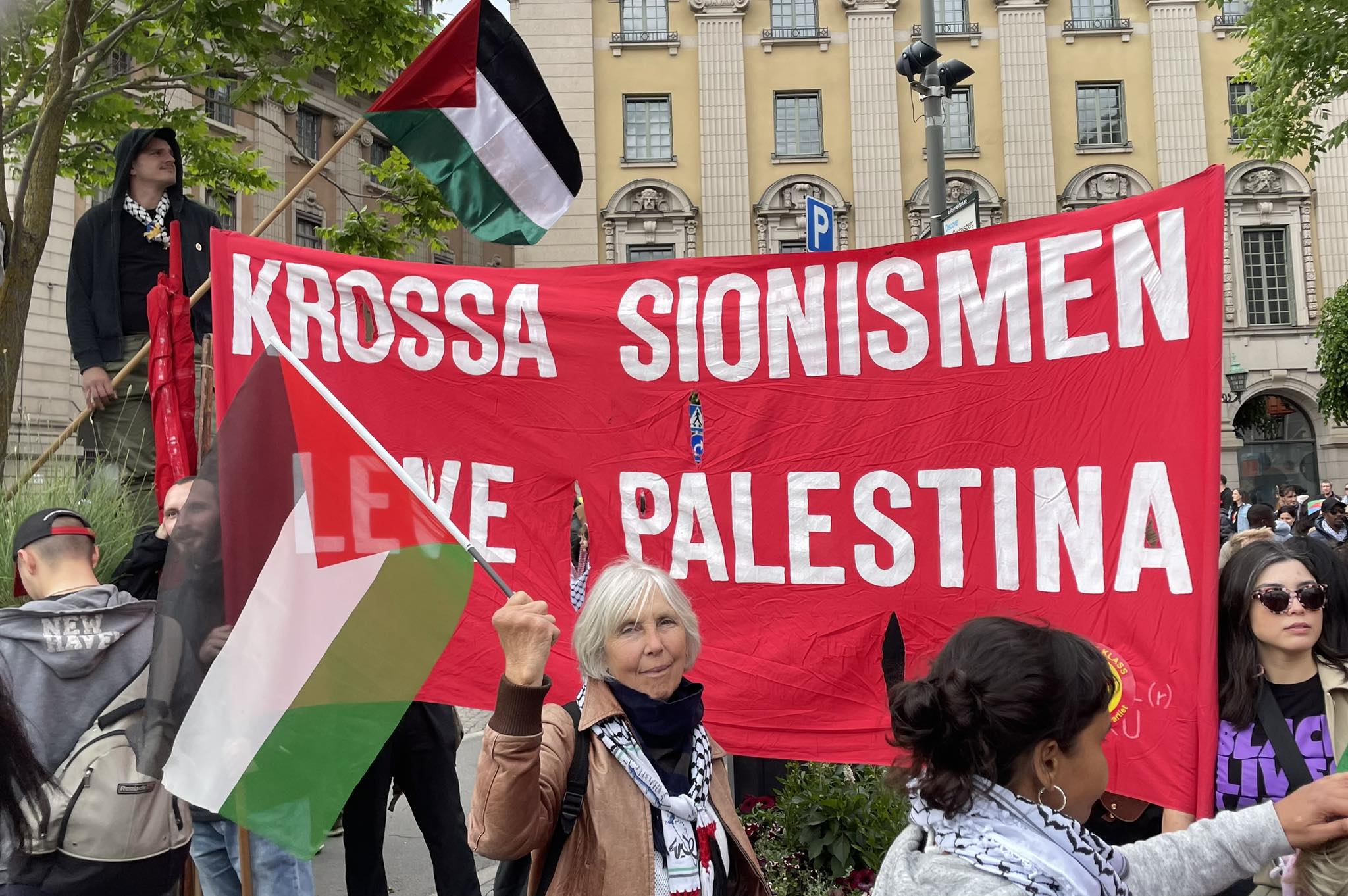
Even without physical violence, Swedish antisemitism is present in the public sphere and one of its main outlets are the numerous demonstrations in support of the Palestinians and denouncing the “genocide” in Gaza. The days right after October 7th, and before the Israeli ground attack on Gaza began, were a good example. While the massacre in southern Israel was still ongoing, there were a couple of spontaneous demonstrations in southern Sweden which included music, dancing and convoys of cars honking their horns in support of the Hamas attack. Right after that, in the course of one weekend in Stockholm, three different organizations demonstrated separately but with similar slogans. A part from the mainstream Pro-Palestinian movements, there were more radical organizations on the streets. One was Hizb ut-Tahrir, a radical Islamic group advocating the creation of a caliphate governed by Sharia law from Uzbekistan to Morocco, with a small branch in Sweden. It was granted permission to demonstrate despite being banned in several countries. Next came the Nordic Resistance Movement, a neo-Nazi group with a few hundred members who demonstrated in support of the Hamas attack. They were followed by the Revolutionary Communist Youth, which claims that Palestinians have the right to “fight by all means against the occupying power to liberate their land.” The latter described the October 7 attacks as an act of liberation that “caught the Zionists in their beds.” Both organizations, one neo-Nazi and the other Marxist-Leninist, support the Palestinian slogan calling for “crushing Zionism.”

Since then, there have been numerous demonstrations in Sweden, many of them on a weekly basis. These demonstrations are legal, the organizers deny that they feature antisemitic content and they are seen by many Swedes as legitimate opposition to Israel and solidarity with Palestinians. However, they often include slogans which are considered antisemitic by many such as supporting a “global intifada” and “crushing Zionism”, promoting antisemitic conspiracy theories and calling for a “Free Palestine from the River to the Sea”.  

Still, demonstrations are not the main concern when it comes to current Swedish antisemitism. There have been numerous reports of activists who have used school classes, universities and even pre-schools to spread radical anti-Israeli political propaganda which is seen by many as antisemitic, the culture world has been full of calls for boycotting Israel and ending cooperation with Israeli artists, the BDS movement which was hardly present in Sweden before the war has been publicly active in promoting boycotts against companies which they claim are complicit with Israel’s “illegal occupation and apartheid politics” and parts of Swedish academia have become hostile to Jewish and Israeli students. In Gothenburg University, for example, activists were allowed to take over the premises of the university’s art and design school and they distributed Hamas propaganda. In Stockholm, Lund and Uppsala there have been reports in Swedish media of pro-Palestinian encampments and so-called “liberated zones” which together with harsh rhetoric from members of senior university staff who are also political activists made students hide their Jewish identity and caused concerns about their safety and well-being.
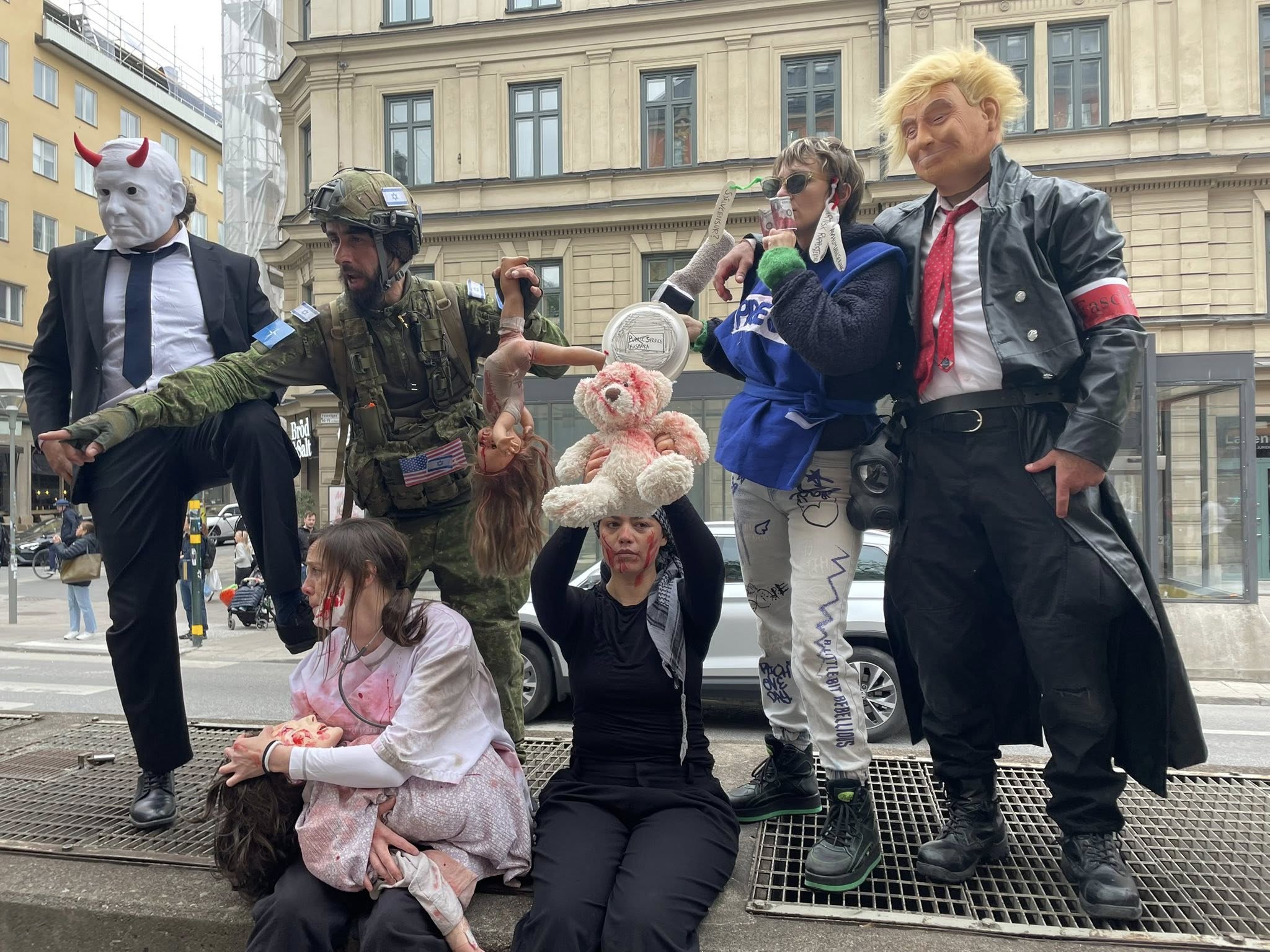
Demonstration in Stockholm, June 2025

How prevalent are antisemitic crimes?

“Many Jews in Sweden have experienced antisemitism in one way or another”, Shastin Ravid says, “we need more research, but studies have indicated that many Swedish Jews have been targeted by antisemitism and many of them have not reported these incidents. This is also true for other hate crimes, most of them are probably never reported to the police”. Some of the studies Shastin Ravid is referring to were made by the Swedish National Council for Crime Prevention (Brottsförebyggande rådet, Brå). They show that there is a small and inconsistent increase in the number of reported antisemitic hate crimes over the years, but some years there is a sharp rise. “These are often the years when the conflict between Israel and the Palestinians has escalated, like the last war in Gaza. According to a study from Brå, there was a sharp rise in reported antisemitic hate crimes during the last part of 2023, almost 5 times as many as during the same period the year before”.

But other global events may also have been important in this respect. “The pandemic, for example, brought at least two kinds of antisemitic effects”, Shastin Ravid says, “First, there were accusations against the Jews, who were blamed for starting the pandemic and for profiting from it. Then, there were parts of the anti-vaccination movement which instrumentalized and diminished the Holocaust, claiming that they are treated the same way as the Jews in Nazi Germany. The war in Ukraine also triggers antisemitism on a global scale as do the discussion about Quran burnings and the debate about migration and refugees which fuels the antisemitic so-called replacement theory. These days antisemitic propaganda is often spread online with code words replacing the word Jews. Instead, it is Zionists or Globalist or specific names like Soros or Rothschild. These words are used globally as symbols of a big Jewish conspiracy, and they are widely spread in Sweden too”. 

Another study Shastin Ravid speaks of was made by a government agency called The Living History Forum (Forum för Levande historia), which was founded in the beginning of the 2000s to “work for democracy and equality between all people, using lessons learned from the Holocaust”. According to Shastin Ravid, the study from 2020, showed that there had been a decline in antisemitic attitudes and notions over a period of 15 years, but that antisemitism still exists within different parts of the population. “I think that this is an important point to make”, he says, “the study showed that around 5 % of the respondents displayed antisemitic attitudes with a stronger intensity, which is a rather low figure compared to many other countries. However, if you broaden it and look at the group of people who agreed with one or more of the study’s antisemitic statements, the number is 34 %. This does not mean that 34 % can be said to be antisemitic, but it indicates that antisemitic ideas exist among a bigger part of the population than many think. We should not only focus on the most extreme groups. According to the study, higher levels of antisemitic beliefs correlated among other things with, and were more common amongst people who are: older, have lower levels of education and have a low trust in public institutions. Antisemitic beliefs were also more common among people who have sexist and anti-immigrant attitudes, people who sympathize with the Sweden Democrats party, people who were born outside Sweden or Europe, and people with a Muslim religious affiliation. Another interesting factor is that traditional and Holocaust related antisemitic beliefs tended to be slightly more common among men, and Israel-related antisemitic attitudes and notions tended to be slightly more common among women”. However, Shastin Ravid points out, the study is now a few years old, and many things have happened since that could affect the results of the next study, which is supposed to be published in 2026.

One group which is particularly exposed to antisemitic hatred is the group of school pupils and teachers who in many cases are scared to be open with their Jewish identity. “We have studies from among other places Malmö and Stockholm which show that there are serious problems with antisemitism in some Swedish schools. Sometimes it is related to the Israeli-Palestinian conflict, sometimes the word Jew is used as a curse and sometimes we see antisemitic conspiracy theories which fascinate youngsters. We also see jokes about the Holocaust, swastikas on benches or lockers, and Nazi salutes. Jewish pupils often feel that their teachers and schools do not take the matter of antisemitism seriously, and they say that there is a lack of knowledge and support. This is something that many Swedish youngsters have told us at the SCAA through the years”.

Sweden is home to the largest Jewish community in Scandinavia. It’s estimated that about 15,000 Jews live in the country which has a population of just over ten million. That said, there are probably many more Swedes who have a Jewish background, as Jewish immigration to Sweden dates back to the 18th and 19th centuries and many have married into Swedish families. The largest community in the country is the one in the capital Stockholm which has three synagogues, including the conservative Great Synagogue adjacent to the Raoul Wallenberg and Holocaust monuments and an office building which houses various Jewish organizations. A few minutes’ walk away, there’s a relatively new cultural centre called “Bajit” which houses a Jewish primary school, a Jewish kindergarten and a variety of Jewish activities for all ages, as well as a Kosher shop and a café. Smaller Jewish communities and associations exist in Malmö, Gothenburg and a couple of other smaller towns. Sweden’s Jewish communities are united under an umbrella organization, the Official Council of Swedish Jewish Communities (Judiska Centralrådet) which usually takes part in national discussions concerning Jewish life in the Swedish Parliament, Government and other authorities.

Since the problem of antisemitism isn’t new to Swedish society, it’s no surprise that in recent years the Swedish government has made many attempts to address it. After decades of ignoring the problem, dismissing and repressing it, recent Swedish governments have put it on their agenda and have tried many different approaches. Petra Kahn Nord who served as the World Jewish Congress’ representative in the Nordic countries, says that the current Swedish government appointed a special inter-ministerial task force in order to combat antisemitism and improve the conditions for Jewish life in Sweden. “This government task force was set up to be a ‘one point of contact’ authority, which is something we’ve suggested before”, she says, “it was founded in January 2023 and the first issue that it focused on was government funding for security for Jewish institutions like synagogues and schools. The second issue was, and still is, addressing antisemitism”. Kahn Nord explains that the previous government had the political will to secure security funding, but the budget mechanism didn’t really work. The current government, however, addressed the issue, increased funding and gave additional funding after October 7th. But protection against violent antisemitic incidents isn’t all that’s needed.

In 2021 Sweden hosted The Malmö International Forum on Holocaust Remembrance and Combating Antisemitism. The conference, hosted by then-Prime-Minister, Social-Democrat Stefan Löfven, asked the participating countries and organization to make concrete pledges that would strengthen Holocaust remembrance and tackle Holocaust distortion, Holocaust denial and contemporary antisemitism. The Malmö forum was seen by many as a natural continuation to the steps another Social-Democratic Prime-Minister, Göran Persson, made twenty years earlier. Persson founded what is now called the International Holocaust Remembrance Alliance (IHRA) and initiated the Stockholm International Forum on the Holocaust which brought together political leaders, state officials, religious leaders, survivors, educators, and historians from around the globe. When Löfven initiated the 2021 events, one of Sweden’s pledges was to form an inquiry on strengthening Jewish life in the country. The idea was that fighting antisemites is one thing, but making Jewish life flourish was another subject. One that has been neglected for many years.

This indeed happened and various issues which Jews in Sweden were concerned about were discussed seriously. These included the threats of illegalizing Jewish circumcision and banning the import of Kosher meat which were supported by some political parties. Another important issue was the status of Jewish schools in Sweden which doesn’t have almost any real private schools. There are so-called independent schools, including a couple of Jewish ones, within a charter system, but because of reports of radicalization in some of Sweden’s independent Muslim schools, new legislation was put in place which affected Jewish schools too. The new legislation imposed the definition of “denominational schools”, and with-it necessary restrictions, on existing Jewish schools. Another concern was an initiative to limit the establishment of new denominational schools. These were all concerns in the Swedish-Jewish pre-October 7th reality. Community leaders were saying then that “Swedish Jews may be able to survive a terror attack, but not legislation forbidding Brit Mila or Jewish schools”.

Today, after October 7th, it’s clear that the majority of political parties, and certainly the ones which are part of the Swedish Government, are committed to addressing these Jewish concerns. Antisemitism, however, is not necessarily a problem which the government can easily address since its origins are well-rooted and widespread in many parts of Swedish society. All recent Swedish governments have therefore realized that combating antisemitism is as complicated as it’s important. And it’s a work in progress. Petra Kahn Nord mentions two major shifts in the last few years. “First, before 2015 it was not acceptable to talk about antisemitism which came from immigrant groups from the Middle-East. This made members of the Jewish community feel abandoned. Sweden has now changed and it’s now possible to talk about it and deal with the problem”, Kahn Nord says, “the second shift has to do with the fact that the populist right-wing Sweden-Democrats party is supporting the government. So far, however, the party hasn’t caused any policy shifts aimed at the Jewish minority. But October 7th created a new reality. We’ve seen an increase in the number of antisemitic incidents in schools and universities, we’ve seen politicians, especially in the Swedish Left, who spread antisemitic propaganda and we’ve seen support for Hamas in demonstrations and online”. Kahn Nord says that schools and social media are a particular concern. “The problem in these arenas is serious”, she claims, “and it can’t be dealt with by using old “action plans” that previous governments suggested. Many of these plans, including pledges made in Malmö four years ago, focused on Holocaust education and educational strategies against racism in general, as opposed to antisemitism as a specific phenomenon. The Malmö Pledges, for example, included the pledge to establish a new Holocaust Museum in Stockholm (which has indeed been opened since then) and another to contribute 5.5 million SEK to the Auschwitz-Birkenau Foundation. “There’s a Swedish tendency to focus on dead Jews”, Petra Kahn Nord says, “perhaps now, especially after October 7th, it’s time to focus on the living ones”.

And indeed, when it comes to living Jews and real concrete Jewish communities, combating antisemitism and taking measures to improve Jewish depends on strong support and clear stands by governments. 

In Sweden, the subject of antisemitism has been on the agenda for decades and different governments have handled it in different ways. Today, the government minister who holds the relevant portfolio is Parisa Liljestrand, a forty-two-year-old minister from the center-right Moderate party. Liljestrand, immigrated to Sweden as a young child from Iran and worked as a teacher and school head-master before getting involved in local politics. In 2022 she received her first post on the national political scene and became Sweden’s Minister of Culture. In an interview conducted in her Stockholm office she explains that one of her responsibilities is addressing issues connected with Sweden’s five national minorities. The minorities and their languages, which are considered official minority languages in Sweden, were recognized in the year 2000 and they include Jews and Yiddish; Roma and Romani Chib; the Sami and the Sami language; the Swedish Finns and Finnish and the Tornedalers and their Meänkieli language.

 “Our government was appointed in October 2022 and the Prime Minister made it clear, as early as his first government statement, that strengthening Jewish life and working against antisemitism would be one of our priorities”, she says, “When we started our work, we decided that we need to understand what’s been done in Sweden today and to listen to the Jewish organizations which are active in Sweden. We wanted to understand what they think is needed. What we found out was that a lot of important work is being done, but there are things which still don’t work and there are things which are lacking. Sweden ranks well in global measurements of antisemitism, but there’s still widespread antisemitism in Sweden which we need to actively fight. This became even more evident after Hamas’s horrific attack on October 7, 2023. As in many other countries, we have seen the threat perception towards Swedish Jews increase, as has open antisemitism. The government takes this very seriously.

But it is not enough to work against antisemitism. We need to strengthen the possibility to live a free Jewish life, both in terms of Jewish culture and in terms of Jewish religious life. This is why we need to gather the work that’s done by different government ministries and by Jewish organizations. When we talked to the organizations, we found that it was sometimes hard to understand who’s responsible for what issue and it was important to make sure that things don’t end up in the wrong place. That’s why we founded the Government Task Force for Jewish Life as an inter-governmental work group which, beside the Prime Minister’s office, has eight more government offices represented in it”.

When asked if the fact that her government is supported by a party with roots in neo-Nazism doesn’t affect her attempts to fight antisemitism, Liljestrand tells a story of one of her meetings. “I met a Jewish father who told me about his son who went shopping while he was wearing a necklace with a Star of David. The father said that when the boy came to the cashier, the person who was working there told him that he was not welcome in the shop. This story really hurts. This can’t be our reality. This isn’t Sweden. We have a clear mission – making Sweden a free country to live in and supporting those groups who cannot live a de-facto free life here. So, I don’t feel the Sweden-Democrats are stopping me from doing this. I understand that there’s a concern, but I’m clear, and the government is clear in its message. One must remember that antisemitism is about gathering and capitalizing violence from various directions. That’s what makes it different from regular racism”. 
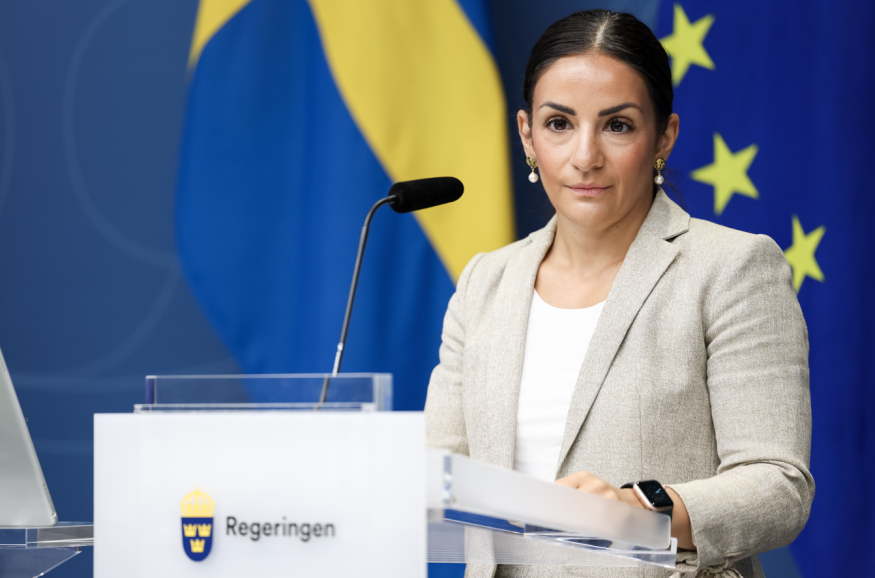
Parisa Liljestrand, Photo by Ninni Andersson Regeringskansliet

Part of the violence Liljestrand is talking about is online and much of it is aimed at young people who have to grow up with it. “It’s extremely serious when antisemitism becomes a natural part of day-to-day life and it isn’t limited to the physical space and instead it’s spread digitally”, Liljestrand says, “it’s worrying and we need to fight it and work towards the goal of not having another generation which is exposed to the same kind of difficulties living a Jewish life or the same kind of antisemitic hate which previous generations were exposed to”.

Liljestrand seems to be serious about this particular aspect of her job. “I myself, with my background, know exactly what it’s like to live in a society which treats you differently if you have a different skin color or if you have a different culture”, she says, “I know what it’s like to fight your way into society and have the will to be part of it while still keeping a part of your culture and heritage”.

When it comes to antisemitism and the struggle against it, Sweden is indeed an interesting case. For much of its post war history, antisemitism wasn’t taken very seriously. Neo-Nazi movements operated freely while the close ties to Nazi Germany were ignored. This came together with a widespread ignorance about the Holocaust, antisemitic attitudes within the Swedish elite and free import of antisemitism with large waves of immigration from other countries. Then, in the last couple of decades, all that changed. Sweden became a world leader of Holocaust education and combating antisemitism. At least that’s what it presents itself as being. But are the museums, task forces, international conferences, research projects and educational initiatives really working? 

On the one hand, it is clear that Sweden is much more aware of the problem and much better equipped to combat it than it has ever been. But any honest assessment of the situation must admit that, in many cases, Swedish schools and universities remain hostile dangerous places for Jewish students and teachers, who continue to suffer from harassment, social pressure and occasionally also violence, while teachers and principals avoid confronting the aggressors. It has been reported that in some schools, Shoah survivors haven’t been invited to share their stories because of the disrespect shown by some students. 

Outside the education system, other problems remain unresolved. Although physical violence against Jewish targets is not common in Sweden, it has occurred and, according to police and the press, it remains possible. Molotov cocktails have been thrown at Jewish cemeteries, funeral homes, and synagogues, the Israeki embassy has been attacked and other cases of physical and verbal assaults against Jews have been documented. 

The resurgence of pro-Palestinian demonstrations since October 7—where strongly antisemitic slogans, signs, and rhetoric have been documented—is also a cause for concern. The scale of the protests against singer Eden Golan’s participation in the Eurovision 2024 final in Malmö made international headlines, but the truth is that although those demonstrations may have been the biggest, they weren’t the most aggressive. 

For many Jews who live in Sweden it’s not about the size of the demonstration and not about the legitimate right to demonstrate. Anyone who’s uncomfortable with these demonstrations can just avoid them. The problem is that when Sweden’s Jews see thousands of people who are collectively calling Israel, which is an important part of their identity, the worse things in the world and promoting a very high level of hate, they know that in that crowd there may be familiar faces – perhaps their children’s pre-school teacher or their local clinic’s nurse or doctor. And it’s not only that. The separation that some of the demonstrators try to make between criticizing Israel and attacking Jews doesn’t always work. When demonstrators wanted to burn an Israeli flag in Malmö in November 2023, they didn’t get on a train and go to Israel’s embassy in Stockholm. They did it outside the local synagogue. A couple of months later protesters from a group called ”Together for Palestine” chanted anti-Israeli slogans at people who were entering Stockholm’s Great synagogue for a Holocaust Remembrance Day ceremony. Some of the people who encountered this were Holocaust survivors. The demonstrators demanded that Sweden’s Jews will denounce Israel and its war in Gaza. These events send a message that 250 years after Jews were officially allowed to live and create a community in Sweden, their legitimacy is now conditional. If they speak out against their historic homeland and its government, they are tolerated. If not, all hell may to break loose. 

A look at the Radio Islam website is a thought-provoking experience. It features lengthy texts about subjects like how Jews have controlled Sweden for centuries, how they “instrumentalize the Holocaust” and how racism, hatred and cruelty are the driving forces of the Torah and the Talmud. In a way this brings us full circle. Sweden has gone a long way fighting antisemitism since Radio Islam was persecuted back in the eighties. Since then, Swedish governments, Jewish organizations and civil society organizations have turned Sweden into a country known for its rigorous combat against antisemitism. However, with populist and racist political movements on the rise, with Islamist propaganda on and off-line, with an increasingly aggressive discourse against Israel and Zionism, demonstrations, boycotts, and burnings of flags and books on a weekly basis, it’s now clearer than ever that the fight against antisemitism still has a long way to go.

Sweden's New FM Says 2014 Palestine Recognition Was 'Premature and Unfortunate’

Sweden’s new foreign minister, Tobias Billström, talks to Haaretz about recalibrating foreign policy, the importance of ties with Israel and the new government's far-right partners

published in "Haaretz": https://www.haaretz.com/world-news/europe/2022-11-22/ty-article/.premium/swedens-new-fm-calls-2014-palestine-recognition-premature-and-unfortunate/00000184-9f0a-d40d-a9ce-bf7f31f60000

STOCKHOLM – Swedish foreign policy has been unique for many years in Europe. The Scandinavian nation hasn’t joined military alliances since it was a military power in the 17th and 18th centuries, and hasn’t been involved in a war for over 200 years (with the exception of occasional peacekeeping missions far away from its borders). In the second half of the 20th century, its policy of avoiding alliances and maintaining wartime neutrality created a foreign policy that in many ways wasn’t about serving Swedish national interests. Instead, it was about becoming a “humanitarian superpower” and endeavoring to make the world a better place.

Naturally, there were those both at home and abroad who criticized this policy. Some saw Sweden’s attempts to position itself on the right side of history as self-serving, opportunistic and hypocritical. Others claimed its private sector’s thriving arms industry was incompatible with a government preaching peace, love and understanding. Another problematic aspect was Sweden’s close ties with a host of dictators and oppressive regimes.

Still, for decades, Swedish diplomats were crucial in bringing wars to a close. Swedish policymakers were generous when it came to humanitarian aid, and vocal when it came to issues like the struggles against apartheid and the Cold War arms race.

This tradition was maintained in recent years as well. As well as being the only Western European country to recognize a Palestinian state, Sweden did its best to export progressive ideas like “feminist foreign policy,” taking radical steps against climate change and building stronger international institutions.

But change is on the horizon. Sweden has taken its first steps to join the NATO military alliance and is building up its military capabilities in a way it hasn’t done for decades due to recent Russian aggression. After voting out the left-wing Social Democrats and electing a center-right government led by the Moderate Party and supported by the far-right Sweden Democrats, what is the future of neutral Sweden?

“Since I took office, I’ve been very clear that we need a recalibration of Swedish foreign policy,” says Sweden’s new foreign minister, Tobias Billström. “We need to make some very clear statements about our priorities. One priority, above anything else, is the NATO accession. With that we also have to think about our neighborhood – the Nordic states, the Baltic states and the countries surrounding the Baltic Sea. This is where we’re putting our emphasis. It’s not a choice between being active in the international arena and being focused on our neighborhood. You can do both. What you can’t do is be everywhere all the time and be active in all aspects. We’ll have to prioritize.”

This may be a seismic change on the national level but it’s not for Billström, who notes that his party “has supported joining NATO for years. And I believe that the question of neutrality ended in 1995 when Sweden became a member of the European Union.”

No Jerusalem embassy yet

Billström, 48, is an experienced politician despite his relatively young age. He has been a parliamentarian for 20 years, serving as migration and asylum policy minister from 2006 to 2014, and was a local politician before that. The role he now holds is one of his country’s most important considering current regional instabilities. He meets Haaretz at his Stockholm office, which is located in a beautiful 18th-century palace facing the Royal Opera House on one side and the Royal Palace and Parliament House on the other. He has just accompanied the king and queen of Sweden on a state visit to Jordan, one of his first on the job. He says he’d like to visit Israel one day and thinks that Sweden’s relationship with Israel is “excellent following the establishment of dialogue in 2021.” Still, no official visit has as yet been planned.

Eight years ago, one of the first steps of the previous government was to recognize a Palestinian state. What is your government’s position on the issue?

“The decision to recognize Palestine in 2014 was premature and unfortunate. However, the decision has been taken and this government doesn’t plan to revoke it.”

But it wasn’t just about recognition. The previous government was very active in this field: it appointed a special envoy to the Israeli-Palestinian conflict; it actively opposed Israeli settlements in the West Bank; and it supported the Palestinian Authority and the two-state solution. Is Sweden’s new government still committed to these policies?

“On the Israeli-Palestinian conflict, the government stands firmly behind the EU policy. We want to see a negotiated two-state solution based on international law. That decision will remain. As for being active, we will continue to criticize the parties when called for, when violations of international law are committed and when human rights are abused. We’ll do that in the same way we criticize other states when it’s justified. This is in no way contrary to having excellent relations with Israel or Palestine. The government will at all times stand up for Israel’s legitimate security needs.”

Would Sweden consider moving its embassy from Tel Aviv to the capital, Jerusalem?

“Like the EU, the government will continue to respect the broad consensus of the international community and relevant UN Security Council resolutions and regard Jerusalem as a final-status issue. Pending a peace agreement, Sweden’s embassy will not be moved.”

Your government plans to cut foreign aid drastically in the next couple of years – will this affect Swedish aid to the Palestinians, and could this lead to a problem with Sweden’s Palestinian partners?

“Sweden’s development cooperation with Palestine, just like the EU’s, ultimately aims to build the conditions and promote a two-state solution in line with international law. This goal will remain. As we review our overall development cooperation, we will also recess our Palestine strategy, which applies to the period of 2020 to 2024.”

What about aid to the Palestinian organizations that the Israeli government claims are terror groups? Or aid to the UN Relief and Works Agency for Palestine Refugees, which allegedly publishes schoolbooks containing antisemitic incitement?

“The government takes terrorist accusations very seriously and several of these civil society organizations – which were listed by Israel as terror groups in October 2021 – receive support from the EU, the United Nations, Sweden and other donors. Together, the donors within the EU followed up thoroughly on the allegations and concluded that no substantial evidence was provided. The donors will therefore continue to support Palestinian civil society. We believe that a free and strong civil society is indispensable for promoting democratic values and the two-state solution. Needless to say, if Israel makes convincing evidence available that would justify a review in the policy toward these organizations, we would act accordingly.

“When it comes to antisemitism, it is of course unacceptable and it’s very important that the PA ensures that its textbooks fully meet UNESCO standards, and that the EU continues to be clear in its dialogue with the Palestinians to ensure that this is the case.”

Israel’s new government will be led by former Prime Minister Benjamin Netanyahu. Are you confident that Israeli-Swedish relations, which have recently improved under another government, won’t deteriorate again under the new one?

“As Sweden’s foreign minister, I would like to see a good dialogue with countries we think we can maintain good relations with. The question of relations between Sweden and Israel is exactly about that: to have a dialogue on issues that we might disagree on – but we think it’s still a good thing to sit and talk about them.

“It’s not up to me as foreign minister of Sweden to say anything about Israel’s domestic policy. The people of Israel have a right to elect their government, just as the Swedish people have a right to elect our government. The important thing is to understand that in Sweden we cherish dialogue and would like to see it maintained.”

Just over a year ago, Israel’s ambassador to Sweden said Israel will not have any contacts with the populist Sweden Democrats party. Since then, it has become the closest and most important political supporter of your government. Will it influence Sweden’s foreign policy? And do you think Israel should have ties with it?

“It’s up to the Israeli government through its ambassador here in Sweden to choose with whom it wants to talk. As foreign minister, the case is very clear: the Swedish constitution says that foreign policy is shaped by the government, which keeps parliament informed. This means that since the Sweden Democrats are not part of the government, their influence is limited to exactly that – namely, parliamentary control, just like all the other parties represented in the Swedish parliament.”

A personal Holocaust story

As well as relations with Israel and the Israeli-Palestinian conflict, another Swedish policy to draw attention during the previous government’s term was the one concerning antisemitism and Holocaust remembrance.

For over 20 years, since a Swedish initiative started the International Holocaust Remembrance Alliance in 1998, Sweden has been considered a world leader in this field. Last year, the government organized a major international conference in Malmö dedicated to Holocaust remembrance and combating antisemitism. It also decided to open a new Holocaust Museum and accept the IHRA definition of antisemitism and its examples (which some have slammed for equating criticism of Israel with antisemitism).

When asked if his government is just as committed to combating antisemitism and preserving the memory of the Holocaust, Billström says: “Certainly! Combating antisemitism is very important and the new government is fully committed to doing so.”

Since Sweden is still struggling with many instances of antisemitism in schools, in some Muslim environments and in far-right circles, Billström knows the problem is still unresolved. “I will always be a very strong advocate against antisemitism,” he says. “We are working very closely with Israel on this. I appreciate the very fruitful cooperation with Israel during the IHRA presidency, and we’re looking forward to continuing the cooperation during Israel’s presidency in 2025.

“I would also like to make a personal remark on this,” he adds. “My grandparents in Malmö took in a Jewish family that escaped from Denmark across the Öresund strait, during the period in 1943 when the Gestapo tried to round up the Jews. I grew up with this story. I have this very nice diploma that says two trees were planted in their memory in Tzippori [in northern Israel] as thanks from this family. My grandmother and my mother, who remembers playing with the kids of this family, told me this story, and it has left a deep mark on me leading to my understanding of what the Jews and what Denmark went through.

“I’ve always believed that antisemitism is a horrible thing. When the Jewish burial chapel in Malmö was attacked during my time as migration minister [in 2009], I went there for the inauguration of the restored chapel and talked about my family’s story in my speech. For me, it’s obvious that there are examples of antisemitism in Swedish society that should be condemned, and it’s obvious there are people in our society who have not laid off the horrible idea that there are grounds for antisemitic persecution of people of Jewish origin in our society. That should always be combated – in schools, at workplaces, wherever we find it. As foreign minister of Sweden, this is something I have a very firm conviction about.”

What about the Sweden Democrats? Besides their past as a neo-Nazi party and many extremely problematic antisemitic opinions voiced by some of their leaders, the biggest party supporting your government supports various laws that could be problematic for Sweden’s Jewish community – such as forbidding circumcision and banning the importation of kosher meat. Are you sure your partnership with them won’t be part of the problem rather than part of the solution?

“I have to say that although there is certainly room for political debate concerning those aspects, as foreign minister it’s clear that the constitution limits their parliamentary influence. As to other issues you mentioned, they belong to areas under the influence of other ministers and I think that, again, under the limits of the constitution I shouldn’t be addressing them.”

One issue Billström is willing to address is Swedish-Iranian relations, which have been tense lately. A Swedish court recently sentenced an Iranian official, Hamid Nouri, to life in prison for war crimes committed in Iran in 1988. There are also two Iranian-born Swedes standing trial in Stockholm after allegedly spying for Russia, while Swedish nationals are also being held in Iran. The recent domestic demonstrations against the Iranian regime make it even harder for Sweden to maintain business as usual with the Islamic republic.

When asked if these events will bring about a change of Swedish policy toward Iran, Billström makes the Swedish position clear. He says that since Sweden has an independent judiciary, there is no government influence on verdicts in Swedish courts. This may be seen as a signal to Tehran about the government’s policy concerning the complicated court cases in both countries.

However, when it comes to the political arena, things are easier to act upon. “As we see it, there is no movement on the Iran nuclear deal,” Billström says. “But the developments in Iran are a source of great worry for Sweden, which also has a considerable Iranian diaspora. The violence directed against peaceful demonstrators is horrible. I had direct communication with the foreign minister of Iran a few days ago, and I was very frank about the way the Swedish government feels about this – we believe people shouldn’t be persecuted and that the use of the death penalty is absolutely unacceptable in every regard. However, we still feel there’s room for dialogue with the Iranian government on this – and the only way to influence them is by dialogue.

“We are also very clear that individuals who have participated in the persecution of demonstrators, and also those who have been involved in the sale of drones to Russia to be used in the war in Ukraine, should face sanctions. It’s very worrying that Iran is turning in this direction.”

Another Middle Eastern leader Billström’s government is dealing with is Turkish President Recep Tayyip Erdogan. Swedish Prime Minister Ulf Kristersson met him in Ankara earlier this month, in a bid to get Turkey to ease its objections to Sweden’s NATO accession.

“There is a trilateral memorandum signed by Sweden, Finland and Turkey,” says Billström, explaining the current state of affairs. “The memorandum has conditions that have to be fulfilled and will pave the way for the Turkish parliament to ratify Sweden and Finland’s accession to NATO. The visit to Ankara was good; I think it was a fruitful dialogue.”

It seems there are items on the Turkish president’s agenda – some domestic, others foreign – that are still causing him to block Sweden’s NATO ambitions. Billström thinks it is now time for the “relevant authorities in all three countries” to get to work, but doesn’t specify what the problematic issues are or when he thinks the process will be completed. “Because there are certain issues that have to be dealt with,” he concludes, “I don’t want to set a time frame. Because it’s not helpful to do that.”

Antisemitism in Malmö: from a Swedish Symptom to an European Symbol?

Malmö, the large city in southern Sweden, has been in the headlines in recent years because of expressions of antisemitism. This is the story of the slow awareness of local and national authorities and the measures taken to deal with the problem. Could Malmö's experience be of any value for the whole of Europe, where many large cities are facing similar problems.

Punlished in K. Magazine: https://k-larevue.com/en/antisemitism-in-malmo-from-swedish-symptom-to-european-symbol/

Those who believe in the old saying “there’s no such thing as bad publicity” would do well to study the case of Sweden’s third largest city – Malmö. Home to some 350,000 people, it‘s not particularly big, it’s not Sweden’s oldest or most beautiful city and it’s not exceptionally cheap or expensive to live in. Still, in the last few years it made an international name for itself, though perhaps not the name its leaders were hoping for. Instead of being praised for Västra Hamnen which claims to be Europe’s first carbon neutral neighbourhood, for its multiculturism or for the Turning Torso building, Scandinavia’s highest skyscraper, Malmö is known around the world for a much less appealing feature – antisemitism.

The new antisemitism of Malmö

It’s hard to say when or where it started. Antisemitism isn’t a new phenomenon in Sweden. In fact, it was there even before the first Jewish communities were founded in Stockholm and Marstrand near Gothenburg in the late 18th century. Towards the end of the 19th century and the beginning of the 20th, official state restrictions and discrimination slowly disappeared, but antisemitic ideology and propaganda could be found throughout both the old political establishment and newly founded neo-Nazi and fascist movements. Surprisingly, the end of WW2, which left neutral Sweden relatively unharmed, wasn’t the end of Swedish Nazism. Quite the opposite. After the war Sweden became host for many racist, nationalist and fascist movements. While the political elite was gradually embracing universal values and continuing to develop a social-democratic welfare state, the extreme right on the margins of Swedish society was, and some say still is, flourishing. Neo-Nazi skinheads, antisemitic publishing houses and movements based on pre-Christian imagery that promote nationalist, racist and anti-establishment ideas became an integrate part of Swedish society.

Malmö played an interesting role in this story during the final stages of WW2 and the following years. On one hand, this was the city that became a safe haven for Danish Jews who arrived at its shores after crossing the Öresund strait fleeing the Nazis in 1943. This is also where the Swedish Red Cross’ “White Buses” arrived in 1945, carrying survivors of the Nazi concentration camps. On the other hand, this was the home of the so-called Malmö Movement, which played a central role in the rehabilitation of Europe’s extreme right, back in the 1950’s. The movement’s leader Per Engdahl took a leading role in the project of connecting the remnants of fascist and Nazi movements from all over Europe and forming a political network which published literature, organized conferences and created an escape route for Nazis from Europe to South America. The center of all this was Malmö were Engdahl lived and worked. But all this is ancient history.

For over ten years now, Malmö has become, in the eyes of many, a symbol of a new kind of Swedish antisemitism. While right wing extremism is still dangerous and threatens Jews in Malmö just like anywhere else, in the last few years an imported antisemitism originating in the Middle East and Islamist environments has taken over. In Sweden, the combination of the two proved itself particularly worrying and Malmö is sometimes seen as the center of it all. In 2012 an explosion shook the Jewish community center. In 2009, Molotov cocktails were thrown at the local Jewish funeral home. In the same year Malmö was the scene of what is now known as the Davis Cup riots. As Israel and Sweden were playing an official tennis match, thousands of anti-Israel demonstrators took to the streets and the protest developed into physical and verbal attacks against the city’s Jews and law enforcement forces. At the time, former mayor IImar Reepalu, was accused of being part of the problem, rather than part of the solution when he said to a local daily that “We accept neither Zionism nor antisemitism which are extremes that put themselves above other groups”. But problems didn’t stop when Reepalu was replaced in 2013. Pro-Palestinian demonstrations, especially during periods of conflict in Gaza, continued to feature heavily antisemitic slogans, signs and rhetoric.

When I visited the city in 2015 in order to write a report for “Haaretz” I spoke to a few members of its Jewish Community. Those were the days when hundreds of asylum seekers were arriving every day, mainly from Syria and Afghanistan, crossing the bridge from Copenhagen and arriving at Malmö which became their Swedish port of arrival. As authorities in Sweden were struggling with challenges of housing, employment, education and integration, many in Malmö were worried. “There is fear and harassment on a daily bases”, one woman who immigrated from Israel to Malmö decades ago told me. She claimed that authorities were doing nothing against the daily harassment and the incitement from local mosques. “I’m not against accepting asylum seekers”, another community member told me, “one should not close the door to people in need of help, but this is what happens when we want to solve one problem by creating a bigger one. We need to use our heads, not only our hearts”. After this, I returned to the city on several occasions and reports continued to be troubling. Some claimed that Jewish families were leaving the city because they no longer felt safe. In 2021, a report commissioned by the municipality described Malmö schools as an unsafe environment for Jewish students who suffer from verbal and physical attacks while teachers prefer to avoid conflict with the aggressors. Other reports claimed that Holocaust survivors are no longer invited to tell their stories in certain schools in Malmö because Muslim students treat them disrespectfully.

Malmö at the center of the world

As a response to all this, Malmö’s Jewish community which has existed since the 1870s and now has two synagogues, a community center, a variety of educational activities and just under 500 members, decided to speak out. Now it became harder for the Swedish press to ignore the problem and the picture it painted wasn’t a pretty one – the reports included children who had to put up with their schoolmates burning Israeli flags, making threats and praising Hitler, youngsters who were suffering from bullying and threats of rape and murder on social media and Jewish teachers who were told to put up with the harassment and keep a low profile. These are all well documented facts. They are based on resident’s testimonies, information collected by journalist, NGOs and authorities and studies conducted by serious researchers. But when it comes to Malmö there seems to be a layer of mythology covering the facts. This is the Mythology that gave Malmö unflattering titles like “Sweden’s antisemitism capital” or even “Europe’s most antisemitic city”. During the last few years, reports on Malmö, mainly in the international press, became full of stories about so-called honor killings, forced marriages, polygamy, female genital mutilation, parallel societies, riots, organized crime of ethnic clans and no-go zones in which local criminals have taken over and police and authorities cannot operate.

All this seemed to go hand in hand with the reports on antisemitism and although many of the reports in the media were true or at least based on some aspect of reality, others were extremely exaggerated, taken out of context and, more importantly, highly politicized. This is where Malmö became part of the global list of “greatest hits” for everyone who was spreading stories and conspiracy theories about Sharia law taking over Sweden, Sweden becoming the “rape capital of the world” and Sweden as proof of the “Great Replacement Theory”. With these reports, the attention of the Jewish world was turned towards Sweden and in 2010 the Los-Angeles based Simon Wiesenthal Center started advising Jews to not visit Malmö. With the populist right in Sweden growing stronger, integration of immigrants from the Middle-East becoming harder and the Israel-Palestinian conflict growing closer, Malmö‘s small Jewish community suddenly became a symbol for all the problems in the world, even if a reluctant one.   

Public authorities react

It’s hard to say if the situation in Malmö is really as bad as it’s sometimes portrayed in foreign media, or if it’s really that different from the situation in other Swedish cities or any other multicultural European city for that sake. Still, at some point local authorities and the government in Stockholm realized they have a serious problem. The situation in Malmö, whether exaggerated by the press or not, was making Sweden look bad. But it was more than that. In the last couple of years, I have spoken about antisemitism with the Mayor of Malmö, Sweden‘s Education Minister, Foreign Minister and former Prime Minister (all Social Democrats) and there is no doubt in my mind that they were all troubled by antisemitism and dedicated to the fight against it. For them, this is not only a PR problem. This doesn’t necessarily mean that their efforts were 100 percent effective, but at least their concern was sincere. Last October, When I interviewed Katrin Stjernfeldt Jammeh who has been Mayor of Malmö since 2013 she said that she realizes that Malmö isn’t vaccinated against antisemitism. “It’s a problem we’re addressing” she said, “we talk about it more today and, when you talk about it, it seems like it’s a bigger problem than it does if you don’t talk about it. But for me, (the image) is not important. The only thing that’s important is that we attack the problem and create change”.

Asked to detail what the city has done to confront the problem in the eight years she has been in charge, she said she has been working to combat antisemitism and racism since the day she was elected by “working with our citizens in various different set-ups, working with the Jewish community in several ways to map the problem, to create an understanding of the problem and, today, we have a long-term commitment”. She added that the city is investing more than 2 million Euros over four years. “This is not just a small project this year or next year”, she explained, “it’s a commitment to work in the long-term to create better conditions for the (Jewish) congregation, to enhance security and create knowledge. We’re also working within our school system, mapping the problem there too, and creating different ways to prevent prejudice”.

On the national level, former Prime Minister, Stefan Löfven, made the struggle against antisemitism and Holocaust remembrance a major part of his political legacy. Here too Malmö played a critical role. Last October Löfven and the city of Malmö hosted a special conference – The Malmö International Forum on Holocaust Remembrance and Combating Antisemitism. Although the conference dealt with a much wider issue than the concrete problems of Malmö’s Jewish community, it caught the attention of many around the world as heads of state and governments, researchers and representatives of private and civil society organizations engaged in what the Swedish government called an “action-oriented” program. The idea was that delegations from around the globe would present pledges of “concrete steps forward in the work on Holocaust remembrance and the fight against antisemitism”. The Swedish government, for example, promised to build a new Holocaust Museum, to criminalize organized racism, to contribute to the Auschwitz-Birkenau Foundation, to appoint a government inquiry on a strategy to promote Jewish life in Sweden and to “significantly increase” the funding for “security enhancing measures for civil society, including the Jewish community from 2022”.

The Malmö Forum took place just over twenty years after the original Stockholm International Forum which was initiated by one of Löfven’s predecessors, former Swedish Prime Minister Göran Persson. This was the beginning of the international partnership to fight antisemitism and promote Holocaust remembrance and it led to the “Stockholm Declaration” which is the founding document of the International Holocaust Remembrance Alliance (IHRA). When I spoke to Löfven a few weeks after the conference he told me that the Malmö forum was “all about commitments, not about speeches”. He then explained that there were two kinds of commitments: “first, never to forget, which is why different countries undertook to have various memorial events and memorial sites, and second, the fight against antisemitism, which is also about commitments. In our case, this means doing more in schools, investing more in research so that we have a better understanding of the forces behind antisemitism and so on. We want to spread this to other countries, organizations and companies, such as social media companies for example. Everyone can make commitments. Individual schools can commit, more companies can make commitments, sport organizations can make commitments. That’s the way to address these issues”.

The limits of political mobilization

The Malmö Forum made some headlines and brought Malmö some positive attention for a change. But are these national and international initiatives, which are discussed by high-ranking politicians, business leaders, journalists and international organizations making any difference on the local level – in the streets, the squares and the schools of Malmö? That depends, naturally, on who you ask. Some local opposition politicians, for example, were skeptical even before the conference started.  “It’s obvious we have a huge issue with antisemitism and it’s affecting people’s everyday lives in Malmö”, Helena Nanne the deputy chairman of the center-right Moderate Party in City Hall told me a few days before the Malmö Forum convened, “For families with children at school, the situation with antisemitism is a major issue, and we hear stories of families who choose to move because they don’t feel safe and can’t be sure the school will be safe for their children”. Nanne wasn’t opposed to the international forum as an idea but she claimed that the Social-Democrats who were organizing it had a home-made antisemitism problem. “This city is run by a party that has had a problem with antisemitism in its own organization”, she said, “It’s hard to take commitments they make seriously”. Another opposition politician based in Malmö, Ilan Sadé, who leads the right-wing Citizens’ Coalition party, was even more critical. “I’m not against the forum taking place in Malmö”, he said, “but this might just be an attempt to improve Malmö’s image. There’s a problematic connection between the Social Democrats and the immigrant population in neighborhoods like Rosengård (a Malmö neighborhood known for its immigrant population and gang-related crime, D.S). The Social Democrats have very wide support there, and they don’t want to lose it; they need to keep the balance. And of course, there are also many people from Arab countries who are party members. There were incidents like the one when members of the party’s youth league were heard shouting slogans like ‘Crush Zionism’ at demonstrations. That’s at least borderline antisemitism – they don’t shout that against other countries”. Sadé alleges that there is a lack of determination to prevent, stop and prosecute hate crimes in Malmö. “The police file on the attacks against the Chabad rabbi of Malmö is as thick as a Dostoevsky book”, he told me, “there are about 160 to 180 cases registered: anything from spitting on him to cursing and harassing him. This is absurd. In Sweden, a religious leader should be able to walk down the street. Priests can do it, imams can do it, so why not a rabbi? This should be prioritized, and it isn’t”.

Another way of approaching the problem does indeed involve both an imam and a rabbi. Imam Salahuddin Barakat and Rabbi Moshe David HaCohen, both based in Malmö, founded an organization which aims to create a trusting society while working to counter discrimination. The organization, Amanah, believes that deepening of identity and roots are key elements towards reaching their goal and it focuses on countering antisemitism and islamophobia within all levels of society – schools, universities, communities and official representatives. I spoke to rabbi HaCohen on the morning the Malmö Forum started and he told me that he appreciated the Swedish government‘s efforts even though not much attention was paid to Malmö itself since the forum was happening from the top down. His organization, on the other hand, is more of a grassroots one. HaCohen spoke about school programs combating racism that Amanah was promoting as well as a digital project that simulates dealing with antisemitic situations and the efforts the organization makes to address Holocaust denial in schools and monitor social media that can potentially “poison the minds of 9- and 10-year-olds”. Hacohen already sees some results to the interfaith dialogue. “During the last Gaza conflict (in May 2021), there was increased tension in the city, as we’ve seen in the past”, he remembered, “since there’s a large Palestinian community here, there were demonstrations against Israel, and as usual some of the protesters started to shout antisemitic slogans. But this time, these people were removed by imams who left their comfort zone and protected their Jewish neighbors. In the same way, we stood alongside our Muslim neighbors when supporters of a far-right Danish politician who was denied access to Sweden filmed themselves burning and kicking the Koran in the streets of Malmö”.

The people of Amanah aren’t standing alone. Other organizations and municipal leaders are doing their best to deal with the problem of antisemitism in the city. The Jewish community recently opened a new learning center that has been working with local schools. City Hall is working with the Swedish Committee Against Antisemitism to arrange trips to the concentration camps in Poland and its partnering with local football clubs to help them deal with racism and antisemitism. The city has also appointed a special coordinator to work on the problem of antisemitism in Malmö’s schools. The coordinator, Miriam Katzin, a Jew herself, a lawyer and a left-wing politician, gave an important perspective when she spoke to the Swedish Expo magazine just over a year ago. “There’s an antisemitism problem in in the whole of society which expresses itself in different ways”, she said, “I think it’s convenient for the majority of Swedes to turn to Malmö and place antisemitism there as the fault of groups that don’t belong to the majority. But that’s making it easy for themselves. The antisemitism I grew up with was expressed by regular majority swedes. That antisemitism is still alive, but it’s often overlooked. One wants to make antisemitism to be a problem of the others”. According to Katzin immigrant groups are blamed for antisemitism as part of this tendency, the right blames the left for being antisemitic and the left blames the right, while in reality antisemitism is a general social problem and it’s “deeply problematic to engage in a competition about who are the worst antisemites”.

This is indeed one of the most serious problems regarding antisemitism in Malmö and in many other European cities. The understanding that it still exists in this day and age is a depressing thought as it is. The thought that it’s not limited to one side of the political debate or to one particular social group, region or culture makes it even worse. Once one realizes that hatred of Jews is a problem that unites left-wing progressives, old-school conservatives, white supremist and hard-core Islamists, it’s hard to imagine a solution. In the same way, Malmö which became a symbol of antisemitism but in reality, was never the only or the worse expression of it, is just a tiny part of the bigger problem. After all that has happened in Malmö – the international attention, the media circus, the scores of high-profile politicians, the pledges, the promises and the time, effort and money spent on education, interfaith dialogue and security measures, there is still a serious problem. It’s not that nothing helped. Things are probably a bit better these days in this one medium sized city in southern Sweden. But that’s just the tip of the iceberg. Now, all that’s left to do is fix the rest of the world.

David Stavrou is a regular contributor for “Haaretz” based is Stockholm. This article is based on a series of articles about Malmö originally published in “Haaretz”.

שוודי טוב לא פותח את הפה

כשהקומיקאי היהודי-שוודי, ארון פלאם, כתב ספר פרובוקטיבי על יחסה של שוודיה אל הנאצים, הוא ידע שיעורר מחלוקת. אבל הוא לא ציפה שהמדינה תדרוש להשמיד את ספריו. 

פורסם ב"הארץ": https://www.haaretz.co.il/magazine/.premium-MAGAZINE-1.9029866

ארבעת השוטרים, אישה אחת ושלושה גברים, הגיעו קצת אחרי תשע בבוקר. חלקם היו חמושים ולבושי אפודי מגן. כשהגיעו לבניין באזור מסחרי בדרום סטוקהולם הם עלו במעלית ומצאו את המחסן אליו נשלחו ע"י התובע ממחלקת פשיעה בינלאומית ופשע מאורגן. במחסן היו כ-150 ארגזי קרטון. הם ניגשו לעבודה. במשך כשעה וחצי הם העבירו את הארגזים למשטחי עץ, הוציאו אותם החוצה, העמיסו אותם על משאית ופינו אותם מהמקום. עכשיו מחכים הארגזים להכרעת בית-משפט כדי שאפשר יהיה להשמיד את תוכנם. זה יכול היה להיות סיפור פשע סקנדינבי רגיל אם ארגזי הקרטון היו מכילים סמים או תוצרת גנובה והמשטרה יכולה היתה להתגאות במודיעין מוצלח ובשוטרים אמיצים אם מאחורי ארגזי הקרטון היה עומד אחד מראשי כנופיות הפשע שהיא מנסה להילחם בהם בשנים האחרונות. אך הסיפור הזה הוא אחר. פשיטת המשטרה בבוקר ה-11 ביוני היתה יוצאת דופן בגלל שהארגזים לא היו שייכים לעבריין מסוכן, אלא לקומיקאי ותוכנם הממתין להוראת ההשמדה אינו מורכב מחומרים מסוכנים אלא מספרי היסטוריה.

ארון פלאם (Aron Flam) הוא קומיקאי יהודי שוודי בן 42 המתגורר בסטוקהולם. בנוסף למופעי סטנד-אפ, פלאם משתתף בסרטים, תוכניות טלוויזיה ורדיו, הוא כותב ספרים ומקליט פודקסטים. במהלך הקריירה שלו הוא מרבה לעסוק בנושאים מורכבים כמו הסכסוך הישראלי-פלסטיני, פה ושם הוא שוחט פרות קדושות ולא אחת הוא מעביר ביקורת מעוררת מחלוקת על תופעות תרבותיות, תנועות פוליטיות והשקפות עולם, בעיקר מהצד הפמיניסטי והסוציאליסטי, שיש להן אהדה בקרב חוגים מסוימים בשוודיה. ספרו של פלאם "זהו טיגריס שוודי" (Det här är en svensk tiger) יצא לאור השנה, הוא עוסק בהיסטוריה השוודית, בעיקר בזו של מאה השנים האחרונות, ואחד מנושאיו המרכזיים הוא המדיניות השוודית בזמן מלחמת העולם השנייה. הנושא אמנם נחקר לעומק ע"י אחרים, אך פלאם טוען שהתמונה שהוא מצייר היא חדשה ומקיפה יותר. בניגוד למרבית ההיסטוריונים המציגים את שוודיה כמדינה ניטרלית שנטתה לכיוון הגרמנים עד 1943 ושינתה את נטייתה לטובת בעלות הברית ככל שהתקרבה המלחמה לסופה, פלאם מציג את שוודיה כ"מדינה צמיתה" (vassal state) של גרמניה לאורך כל הדרך. זוהי טענה רדיקלית המעוררת עניין רב בשוודיה, עניין שלא דעך ואולי אפילו התגבר, לאחר ששתי המהדורות הראשונות נמכרו והמהדורה השלישית הוחרמה ע"י המשטרה. החרמה כזו היא אירוע נדיר בשוודיה ובאופן רשמי הסיבה להתרחשותו אינה תוכן הספר, אלא תביעה על הפרת זכויות יוצרים. מקור הסכסוך הוא הציור המופיע על עטיפת הספר – טיגריס בצבעי כחול-צהוב. הטיגריס, כך מסתבר, הוא נושא רגיש בשוודיה והעיסוק בו פותח תיבת פנדורה שתוכנה מתחיל באירועים שהתרחשו לפני עשרות שנים וממשיך עד לימינו אנו.

IMG_5219
ספרו של פלאם וגרסתו לנמר השוודי על עטיפתו

הכל התחיל לפני כמעט שמונים שנה. ע"פ מרבית ההיסטוריונים שמרה שוודיה בימי מלה"ע על ניטרליות למרות שבלא מעט תחומים היא סייעה בדרכים שונות גם לגרמניה וגם לאויבותיה. ב-1941 עיצב המאייר והסופר השוודי ברטיל אלמקוויסט (Bertil Almqvist) בהזמנת הרשויות השוודיות פוסטר של טיגריס צבוע בכחול-צהוב, צבעי הדגל השוודי, תחת הסיסמה "טיגריס שוודי". הביטוי עצמו הוא משחק מילים. המילה "שוודי" (Svensk) יכולה להיות גם שם תואר וגם שם עצם, והמילה "טיגריס " (Tiger) יכולה להיות שם עצם, כלומר בעה"ח טיגריס, אבל גם פועל – הטיית ההווה של הפועל "לשתוק". כלומר "טיגריס שוודי" אינו רק בע"ח טורף הצבוע בצבעי הדגל הלאומי אלא גם מעין הנחיה בקריצת עין האומרת: שוודי טוב לא פותח את הפה. זוהי סיסמא הדומה לסיסמאות שהיו בשימוש במדינות רבות בזמן במלה"ע השנייה. האמריקאים והבריטים, לדוגמא, הפיצו סיסמאות כמו "loose lips sink ships" ו-"careless talk costs lives" על מנת לחזק את ביטחון השדה. לאחר המלחמה יצא הטיגריס משימוש רשמי ולאחר מותו של האומן ב-1972 תרמו קרובי משפחתו את זכויות השימוש בו ל"מוזיאון המוכנות הצבאית השוודי", מוזיאון פרטי בדרום שוודיה העוסק בהיסטוריה הצבאית של המדינה.

"הטיגריס השוודי" המופיע על עטיפת ספרו של ארון פלאם אינו העתק מדויק של המקור. בניגוד לטיגריס המקורי, הטיגריס של פלאם קורץ בעינו האחת, הוא מניף את רגלו הקדמית כהצדעה במועל יד ורגלו השנייה מעוטרת בצלב קרס. מעבר לכך הוא מטיל צל ארוך על הקרקע שלצידו. "שוודיה היא המדינה היחידה שמתגאה בשתיקה בהמנון הלאומי שלה", הוא אומר בראיון ל"הארץ" ומכוון למשפטים הראשונים בהמנון השוודי המהללים את הארץ העתיקה והחופשית של הרי הצפון, ארץ שהיא גם טובה ומלאת שמחה אבל גם שקטה, "אנחנו אוהבים את השתיקה עד כדי כך שאנחנו שרים עליה. הנמר הוא בעצם מעין בדיחה על השתיקה הזו, הוא משחק מילים שמשמעותו היא שהשוודים הם חזקים אבל הם גם שתקנים. זה אמנם דומה לסיסמה האמריקאית Loose Lips Sink Ships אבל לנו, בניגוד לאמריקאים, לא היו אוניות בסכנת טביעה בזמן מלה"ע השנייה, אנחנו היינו לכאורה ניטרליים, מה שמעלה את התהיה – למה בעצם נועדה השתיקה השוודית? בזה בדיוק עוסק הספר שלי. זוהי תרבות השתיקה השוודית והעטיפה היא פרודיה על הטיגריס, כלומר פרודיה על בדיחה. בספר אני עוסק בפסיכולוגיה, במשפט, בפוליטיקה ובפילוסופיה והכל מתחיל בבדיחה הזו. שוודים היום לא מכירים את ההקשר ההיסטורי, הם לא מבינים את הבדיחה כי סביהם הבינו אותה טוב כל כך ושתיקתם על מה שהתחולל בשוודיה במשך מלה"ע השנייה היתה מוחלטת. בקומדיה, על מנת להבין בדיחה צריך להבין את הרפרנסים הספר בעצם מסביר את הרפרנס".

AronFlam_by_Cajsa Borgström
ארון פלאם. צילמה: קייסה בורגסטרום

עולם התרבות והקהילה המשפטית השוודיים לא נשארו אדישים להליך נגד פלאם ולהחרמה של ספרו. "התביעה נגד פלאם בגין הפרת זכויות יוצרים, כמו גם החרמת הספר שלו הן סקנדל", כתב טורשטן קארס, משפטן שוודי בכיר ביומון הנפוץ סבנסקה דגבלדט, "קשה להבין איזה אינטרס יש למחזיקי זכויות היוצרים, שאפילו אינם קשורים לאמן עצמו, בתביעה ובהחרמת הספרים. קשה עוד יותר להבין כיצד הפגיעה במדינה, בעם וב"סמל הלאומי" שלו היא קשה כל כך שהיא מצדיקה תביעה והחרמה". כמו אחרים, מכנה קארס את פעולת המשטרה והתביעה "התערבות בוטה בחופש הביטוי". "זה נשמע כמו תגובה מוגזמת של בעלי הזכויות", אמר לערוץ 4 השוודי העיתונאי נילס פונקה, מומחה לחופש הביטוי בשוודיה, שטוען שהחרמת מהדורה שלמה של ספר היא נדירה, "ומוזר שהתובע נוקט בצעד דרסטי כל כך".

גם חלק מהקולגות של פלאם, קומיקאים שוודים ידועים, יצאו להגנתו. "קומדיה והומור הם חלק חשוב מאוד של חופש הביטוי והשיח הציבורי, אפילו בשוודיה שהיא ארץ נטולת הומור", אמרה בחיוך הקומיקאית סנדרה אילר והוסיפה שאסור לשתוק לנוכח האיום עליהם. "לא צריך להסכים עם ארון בשביל לתמוך בו", אמר קומיקאי אחר, אוז נוין, והוסיף: "זהו סקנדל. לא ראוי לתבוע קומיקאי וסופר בגלל שהוא מטיל ספק ועושה סאטירה – זאת בדיוק העבודה שלו".

עם זאת, לא כל התגובות בשוודיה תומכות. העיתונאי אנדרס לוקו, למשל, כתב מאמר בו הוא טוען שפלאם הופך את עצמו לקדוש מעונה ונותן לקהל שלו בדיוק מה שהוא רוצה ע"י כך שהוא מפריד את הסאטירה שלו מהומור. "מה שפלאם קורא לו צנזורה כמו זו של מזרח-גרמניה, הוא בעצם מה שרובנו קוראים לו פייק-ניוז", הוא כותב, "המעבר שלו מתפקידו כקומיקאי, למעצב דעה ומשם להיסטוריון נותן לו גמישות גדולה שלפיה הוא יכול לבחור איזה כובע שמתאים לו באותו רגע". לוקו מאשים את פלאם בהיותו דובר של הימין הקיצוני האלטרנטיבי והוא אינו הראשון הטוען כך. בשנים האחרונות פלאם הכחיש לא פעם כל קשר לאלט-רייט השוודי או לאנשי הימין הפופוליסטי וטען שבניגוד אליהם הוא ליברל, דמוקרט, תומך בחופש הביטוי ואינדיבידואליסט. עם זאת, ניתן למצוא בקרב תומכיו ברשת כאלו הטוענים שהתלות של עולם התרבות השוודי בתמיכות מהממשלה הסוציאל-דמוקרטית גורמת לכך שאנשי תרבות רבים אינם עומדים לצידו של פלאם האנטי-סוציאליסט. אחרים טוענים שההליך נגד פלאם הוא תגובת נגד של הממסד הסוציאל-דמוקרטי המנסה להסתיר את ההיסטוריה האפלה של המפלגה. לטענות אלו אמנם אין ראיות או הוכחות אך הן מתודלקות בין השאר ע"י שתיקתו של הממסד הפוליטי בנושא. הסופר והמוסיקאי ינס גנמן, למשל, ביקר את הממשלה והתקשורת הממלכתית על שתיקתה בנושא במאמר שכתב תחת הכותרת "כיצד אנו יכולים לישון כשספרינו בוערים?" ושאל: "מדוע לא הוזמן שר המשפטים לאולפן החדשות הגדול במדינה להגיב על כך שאנחנו שולחים את המשטרה להחרים ספר על המפלגה הסוציאל-דמוקרטית ו(קשריה עם) היטלר שנכתב ע"י סופר יהודי?".

דומה שהכוחות העומדים מול פלאם הורידו פרופיל בימים אלו. עוה"ד מארי אנדרה המייצגת את המוזיאון המחזיק את הזכויות סרבה להגיב לדברים למרות פניות חוזרות ונשנות של "הארץ". את עיקר טיעוניה ניתן למצוא בדברים שכתבה בעבר בהקשר של תביעות שונות בהן היתה מעורבת. היא רואה את הטיגריס כ"סמל למלחמת העולם השנייה וחלק מהמורשת התרבותית השוודית" והיא טוענת שהמוזיאון מסרב לכל הבקשות לשימוש בו. גם התביעה בשוודיה סרבה מספר פעמים לענות לשאלות "הארץ" והפנתה להודעה לעיתונות שפורסמה לפני שבועיים ושלפיה בית-המשפט יכריע בתיק העוסק ב"קונפליקט העקרוני בין חופש הביטוי לזכויות יוצרים". ע"פ ההודעה לעיתונות אין מדובר בצנזורה של התוכן אלא בזכויות על עטיפת הספר. "הספרים הוחרמו מכיוון שלא ניתן להפריד בין העטיפה לספר עצמו".

לפני שנכנסים לתוכן הספר, איך קורה שקומיקאי, איש תקשורת ופודקסטר כותב פתאום ספר היסטוריה? זה עניין אישי? פוליטי? אקדמי?

"הייתי אומר שכל הסיבות האלו נכונות. כפודקסטר ומי שעוסק בסאטירה פוליטית אני נשאל הרבה על המורשת היהודית שלי ועל האופן שבו הקונפליקט בין הישראלים והפלסטינים מוצג בתקשורת השוודית. כשהחלטתי לכתוב תשובות לשאלות אלו הבנתי שהן קשורות למה שקורה בחברה היום אבל יש להן שורשים בתרבות השתיקה השוודית, שאיננה חדשה, היא הולכת הרבה אחורה".

לא מעט נכתב על שוודיה במלה"ע השנייה, כולל על קשריה עם גרמניה הנאצית, החל במכירת ברזל לתעשיית הנשק הגרמנית, דרך המתנדבים השוודיים בוואפן אס-אס ועד לנטיות הפרו-נאציות של האליטה השוודית. מה בעצם חדש בעבודה שלך?

"הספר התחיל בעצם כפרקים בפודקסט שלי. לאחר שקראתי ספרים, עברתי על חומר בארכיונים דיגיטליים וניתחתי מידע ממדינות אחרות, עשיתי משהו שעד כמה שאני יודע אף אחד אחר עדיין לא עשה – שמתי את מה שמצאתי על ציר-זמן. מחקרים אחרים כבר עסקו בהרבה ממה שכתבתי עליו, אבל כל אחד מהם הוא כמו שבר זכוכית על הרצפה אחרי שחלון נשבר. אני אספתי מידע רב וכשחיברתי את הכל יחד התוצאה היתה סיפור קוהרנטי וברור שגם מסתדר טוב יותר עם ההיסטוריה של לאומים אחרים. למעשה אני טוען שהסוציאל-דמוקרטים השוודים (המפלגה שהיתה בשלטון בשוודיה בזמן עליית הנאצים לשלטון והנמצאת בשלטון גם היום, ד.ס) התחילו לעבוד עם היטלר עוד לפני שהוא עלה לשלטון. הגרסה השוודית של ההיסטוריה משאירה בחוץ את העובדה ששוודיה היתה תלויה בגרמניה ומשתפת פעולה עם גרמניה לפני ובזמן המלחמה. שוודים שדיברו שפה שנייה דיברו ברוב המקרים גרמנית, רוב השוודים היום לא יודעים על זה אבל שוודיה היתה בת-ברית של גרמניה מ-1933 ועד נובמבר 1944 כשהמלחמה היתה כבר גמורה לגמרי. רק אז הודיעה שוודיה שתפסיק לעשות עסקים עם גרמניה. אני חיברתי את חתיכות הזכוכית האלו ובניתי את החלון מחדש. יש בו אמנם סדקים אבל הוא מגן בפני הרוח".

פלאם, שיש לו הכשרה כלכלית, מפרט בספר גם את הצד הכלכלי של הסיפור. "הספר עוסק גם במודל העסקי של שוודיה, שוויץ וגרמניה בזמן המלחמה והוא מוסבר בצורה קלה להבנה", הוא אומר, "הגרמנים היו זקוקים לכלי נשק כדי שיוכלו לשדוד יהודים וגם בני עמים אחרים. לשוודיה היו החומרים לבניית כלי נשק (ברזל לפני תחילת המלחמה ומסבים כדוריים אחרי תחילתה), הגרמנים היו זקוקים לחומרים אלו והבנקים השווייצריים יכלו לכבס את הכסף שהוחלף ידיים בעסקאות האלו. כך סיפקה שוודיה לגרמניה את המרכיבים שאף צבא מודרני לא יכול לירות, לנסוע, לטוס או לנוע מעל ומתחת למים בלעדיהם".

גם אם המדיניות השוודית סייעה לגרמנים וגרמה למלחמה להיות ארוכה וקשה יותר, האם אתה לא מתעלם מהאמביוולנטיות שלה? האם אין משמעות, למשל, להצלת עשרות אלפי יהודי הונגריה ע"י ראול וולנברג, למקלט ששוודיה נתנה ליהודי דנמרק ולאוטובוסים הלבנים של הצלב-האדום השוודי שחילצו פליטים מהמחנות הנאצים?

ע"פ הדוגמאות שנתת הייתי אומר שאין לזה משמעות. מטרתו של פולקה ברנדוט (הדיפלומט השוודי ששימש כיו"ר הצלב-האדום השוודי ולימים שימש כמתווך האו"ם בסכסוך היהודי-ערבי ונרצח ע"י הלח"י בירושלים, ד.ס) לא היתה להציל יהודים. הוא אסף יהודים על הדרך ואז כתב ספר שמסביר איזה גיבור גדול הוא היה. זה עיצוב היסטורי עצמי. גם המקרה של יהודי דנמרק (שהוברחו לשוודיה בסיוע המחתרת הדנית, ד.ס) הוא מורכב. הם העמידו את הממשלה השוודית במבוכה. הם התקבלו בשוודיה מסיבות של דימוי ונראות ציבורית והציבור השוודי לא בהכרח ידע מה קורה. ובעניין ראול וולנברג, עד כמה שאני מבין הוא היה גיבור. תמיד יש יוצאי דופן וסיפורים רבים הם מסובכים ומורכבים, וולנברג פעל לבדו, זו היתה יוזמתו האישית, מצפונו לא יכול היה להתמודד עם מה שממשלתו עושה. אני די בטוח שהוא הבין את אחריותה של ממשלתו למה שקורה בשטח במקום שהוא נמצא".

בקרב חוקרים ישנם חילוקי דעות רבים על דמויות דוגמת וולנברג וברנדוט. ישנם היסטוריונים שלא יסכימו עם התזה של פלאם בעניינם, אך גם חוקרים ביקורתיים עלולים להסתייג ממסקנותיו של פלאם שטוען שיש אמנם לכבד את היוזמות ההרואיות השוודיות במידה שהצילו חיים, אך צריך לזכור את העובדות "שלא מוזכרות אף פעם". ראשית, הוא טוען ששוודיה היתה בצד הגרמני לאורך כל הדרך וקורא לסיפור הניטרליות הרשמי "בולשיט". שנית, הוא טוען שמדינת הרווחה השוודית "נבנתה על זהב שנשדד מיהודים ועמים אירופאים אחרים". אלו טענות רציניות מאוד ולמרות שאפשר להתווכח על חלקים רבים בספרו של פלאם, אין ספק שזהו פרויקט מרתק המדלג בין דיסיפלינות, תקופות ואירועים שונים בהיסטוריה השוודית. פלאם מחבר בין יחסו של הממסד השוודי לישראל לאנטישמיות בחברה השוודית ולמגמות האידאולוגיות, הכלכליות והפוליטיות שבבסיסה, כולן, טוען פלאם, מבוססות על תרבות השתיקה.

אך האם השתיקה עליה מדבר פלאם נמשכת עד היום? בשנות התשעים, למרות עברה הבעייתי, ואולי בגללו, נקטה ממשלת שוודיה בראשות יוראן פאשון, מספר פעולות שהפכו את שוודיה למובילה עולמית בחקר והנצחת השואה. פאשון, מדינאי סוציאל-דמוקרטי שגם היה ראש-הממשלה השוודי האחרון שביקר בישראל, יזם את הקמתו של "הפורום להיסטוריה חיה", מוסד ממלכתי העוסק בחינוך ומחקר ששואת יהודי אירופה היא נקודת המוצא שלו. פאשון גם נקט בצעדים משמעותיים נגד האנטישמיות במדינה ויזם את "הצהרת שטוקהולם" שהובילה להקמת "הברית הבינלאומית להנצחת זכר השואה" (IHRA) שבה חברות כיום עשרות מדינות. פלאם אינו מתנגד לפעולות אלו אבל הוא חושב שהדברים נעצרו באיבם. "זה אולי התחיל נכון", הוא אומר, "אבל מהר מאוד הדברים השתנו חזרה. הנושא עבר משולחנו של ראש הממשלה לזה של שר המשפטים ושם הוא נשכח". פלאם מסביר שאמנם ארכיונים שוודים מסוימים נפתחו בגלל העיסוק בשאלת הזהב השדוד שהנאצים השתמשו בו כדי לשלם לשוודים, אבל "זו היתה תוצאה של לחץ בינלאומי. נעשתה עבודה טובה בעניין חקירת הבנק השוודי המרכזי אבל ברור שהיתה שם צנזורה ושזה לא נעשה עד הסוף". למעשה, טוען פלאם, השתיקה השוודית לא הסתיימה בשנות התשעים. גם אחריהן רבים מאלו שניסו להפר אותה הוקעו כמשוגעים והפכו למעין דיסידנטים. האירועים סביב ספרו שלו מעלים את החשד שייתכן ויש צדק בטענותיו.

"כבר מהתחלה החלטתי להשתמש בטיגריס השוודי כי הוא סמל לשתיקה השוודית בזמן המלחמה", מספר פלאם, "בזמן המלחמה הסמל הזה היה בכל מקום, על קופסאות אוכל ועל קלמרים, על חולצות, על ארונות ועוד. אני סטיריקן כבר הרבה שנים, חלק מהסגנון ודרך הביטוי האסתטית שלי היא יצירת קולאז'ים שממחישים את הסיפורים או הבדיחות שלי. גם במקרה הזה יצרתי בעבור הפודקסט שלי קולאז' שהנמר השוודי היה חלק ממנו ושממחיש את מדיניותה ותרבותה של שוודיה. מתישהו, בין הפרק השני והשלישי של הפודקסט, התקשרה אלי עו"ד מארי אנדרה המייצגת את מוזיאון המוכנות הצבאית השוודית (אנדרה ובעלה הם גם בעלי המוזיאון, ד.ס). היא צרחה עלי בטלפון ואמרה שאני צריך להתבייש בעצמי על כך שאני פוגע במורשת התרבותית שלנו".

פלאם מספר שהוא לא נענה לדרישה מפני שע"פ פרשנותו הוא אמנם משתמש בטיגריס השוודי אבל העבודה שלו משנה אותו ויוצרת לו משמעות חדשה. מעבר לכך, מדובר בפרודיה וזו מוגנת בשוודיה על פי נוהג משפטי (אם כי לא באופן מפורש בחוק). כשעוה"ד אנדרה לא וויתרה החל מעין משחק של חתול ועכבר בין המוזיאון לפלאם וכשהאחרון החליט להוציא לאור את ספרו הוא פנה למעצב גראפי שיצור בעבורו את הטיגריס השוודי כפי שהוא רואה אותו – קורץ, מצדיע במועל יד, עונד צלב קרס ומטיל צל. בשלב זה נכנסה המשטרה לתמונה. בעקבות פניית המוזיאון היא יצרה קשר עם החברה שמדפיסה את הספר, הזמינה את פלאם לחקירה והעניין הגיע לשיא לפני מספר שבועות. "הייתי בשירותים ועשיתי מה שאנשים בד"כ עושים בבוקר בשירותים", מספר פלאם, "קיבלתי הודעת טקסט מבניין המשרדים שבו אני משכיר מחסן. בהודעה היה כתוב "המשטרה כאן". כעת מחזיקה המשטרה בספרים, המשפט מתחיל ב-24 בספטמבר ואם התביעה תנצח הספרים יושמדו ופלאם יאלץ לשלם למוזיאון מיליון וחצי כתר שוודי (כ-580,000 ₪).

האם לדעתך התביעה אכן נובעת מהפרת זכויות יוצרים או שהיא בעצם על התוכן?

"אני לא יודע ולא רוצה לעשות ספקולציות. אני יכול לומר שתגובתה של המתלוננת אנדרה היתה רגשית מאוד. היא מדברת על "הפרת זכויות יוצרים" ומצד שני על "חילול מורשת תרבותית". זה גם מה שהתובע הראשי בתיק אמר, הוא טען שאני "מחלל" את העבודה המקורית בכך ששמתי עליה צלב-קרס. הם טוענים שזה נוגע רק לעטיפת הספר ולא לתוכן אבל מארי אנדרן אמרה למשטרה שהיא רוצה שכל עותקי הספר, גם אלו שכבר נמכרו, יושמדו. אם הם חושבים שהעבודה שלי מחללת את המורשת השוודית זו זכותם אבל סאטירה לא אמורה מנומסת ומכבדת".

האם אתה חושב שהם מנסים להשתיק אותך?

"אם זה מה שהם מנסים לעשות, הם עושים עבודה גרועה מאוד".

האם התביעה מביאה לך יותר פרסום ועוזרת למכירות?

"אני לא יכול להכחיש שאני מקבל פרסום וזה עוזר למכור את הספר. זה הצד החיובי בכך שאני עומד על זכותי כסאטיריקן לעשות צחוק גם מדברים שאנשים חושבים שהם קדושים. את הקרב הזה הייתי מוכן לעשות בכל תנאי ובמקרה הזה אני לא מתבייש לעמוד מול בית-משפט ולהגן על עבודתי". פלאם רואה בזה עניין עקרוני. "האם זכות הדיבור קיימת ללא הזכות לעשות פרודיה?", הוא שואל ועונה: "אני חושב שלא, אבל אני לא אובייקטיבי. אני קומיקאי".

המכתב של הוגו

"אני רוצה להיפגש", כתב חבר לשעבר בארגון הנאצי למנהלת המרכז היהודי והיא הסכימה. על רקע העלייה בתקריות האנטישמיות בשוודיה, סיפורם המפתיע של הוגו אדלונד וקארין שוברג יכול אולי להעניק קמצוץ של תקווה.

התפרסם במוסף"הארץ": https://www.haaretz.co.il/magazine/.premium-MAGAZINE-1.8663342

"אני לא יודע אם את יודעת מי אני ולכן אפתח בכך שאציין שעד לפני כשנה הייתי חבר פעיל בארגון הנאצי "תנועת ההתנגדות הנורדית". כך נפתחה ההודעה שקיבלה קארין שוברג לתיבת המייל שלה בתחילת פברואר, "לפני זמן מה בחרתי לעזוב את הארגון מכיוון שהגעתי למסקנה שהוא הרסני ובעל מאפיינים של כת. זהו העבר שלי והיום אני מתבייש בו". שוברג, יהודייה וישראלית לשעבר המתגוררת בעיר אומיאו שבצפון שוודיה, הופתעה אמנם מההודעה שנשלחה ע"י צעיר מקומי בשם הוגו אדלונד, אך היא ידעה בדיוק מדוע היא היתה הכתובת. היא היגרה לשוודיה בשנות השמונים וכיום היא מכהנת כחברה במועצת העיר בת כ-90,000 התושבים מטעם המפלגה הליברלית. בעיר חיים עשרות בודדות של יהודים בלבד ולפני כעשור שוברג, יחד עם מספר שותפות, הקימה בה מרכז תרבות יהודי קטן. מטרת המרכז היתה קיום פעילויות קהילתיות, חינוכיות והסברתיות שנועדו להחיות את החיים היהודיים ולחשוף את הציבור בעיר ליהדות. באירועים, שכללו פעילויות בחגים, מפגשי שיח, הרצאות ותערוכות, השתתפו יהודים ולא יהודים כאחד.

למרות שהפעילות עצמה היתה מוצלחת, בשלב מסוים הוטל עליה צל. כאן נכנס לתמונה, גם אם לא באופן ישיר, הוגו אדלונד. "זה התחיל בזה שיום אחד מצאנו מדבקות על החלונות", מספרת שוברג, "הן כללו כתובות כמו "היזהרו מהתערבבות עם זרים" ותמונה של היטלר שכיסתה את מגן-הדוד בשלט הכניסה. אחר כך נצפו אנשים חשודים שעמדו בחוץ וצילמו את כלי-הרכב בחניה. זה התפרש כאיום. לא היתה לנו גדר, לא היתה שמירה ואנשים נכנסו ללחץ. אחד מחברי הקהילה סיפר שהאיומים הגיעו גם למקום העבודה שלו ושרכבו נפרץ מבלי שנלקח ממנו דבר (וזאת למרות שהיה בו ציוד יקר)". מאחורי האיומים עמדו חברי "תנועת ההתנגדות הנורדית" ושוברג אומרת שזו היתה רק ההתחלה. "מסתבר שהם הגיעו עד אלי הביתה", היא מספרת, "בתיבת הדואר שלי הופיעו פלאיירים רבים. הם היו מסריחים מסיגריות והיו בהם ציטוטים מ"מיין קאמפ". כשבדקתי אם השכנים קיבלו גם הם פלאיירים התברר שלא. הדפים היו מיועדים רק אלי ואליהם התווספו גם תמונות של היטלר שהודבקו בכניסה לבית". היו גם הזדמנויות שחברי התנועה הניאו-נאצית התקרבו פיזית אל שוברג. "כשסיימתי לשאת דברים כנציגת הקהילה היהודית בעצרת זיכרון לזכר ליל הבדולח ב-2017, שמתי לב שאני מוקפת במעין חומה אנושית", מספרת שוברג, "פוליטיקאים מקומיים וגברים נוספים כמו סוככו עלי. תחילה לא הבנתי למה אבל אז הסתבר שהניאו-נאצים היו שם כל הזמן. אח"כ גם נצמדה אלי ניידת משטרה".

שוברג טוענת שבאופן אישי היא לא היתה מבוהלת, אך חברי הקהילה האחרים פחדו והפסיקו להגיע לפעילויות. "היו בינינו בנים ובנות של ניצולי שואה שאמרו שאין מי שיגן עליהם ופשוט הפסיקו לבוא. היו הורים שפחדו על ילדיהם והיו שטענו שאולי היינו צריכים להוריד פרופיל כדי לא למשוך אש. מבחינתי לא היתה לפעילות טעם אם היא צריכה להיעשות בהיחבא". בסופו של דבר, מספרת שוברג, הוחלט לסיים את פעילות המרכז היהודי והפוליטיקה המקומית שהיתה מפוחדת ומבוהלת ועשתה הכל כדי להימנע מפרסום שלילי ומקונפליקטים לא הצילה את המצב. הקהילה היהודית היחידה בשוודיה מצפון לסטוקהולם נסגרה ולא פתחה שוב את שעריה.

על רקע זה הגיעה הודעתו של הוגו אדלונד לשוברג. בהודעה הוא סיפר שלמרות שהוא לא היה מעורב בפעילות הספציפית נגד שוברג הוא מתבייש בדברים שחברי תנועתו עשו והוא מנסה כעת להשתנות ולעשות עם עצמו משהו חיובי ופרודוקטיבי. "התנצלותי האישית היא הדבר הראשון שאני רוצה להעביר", הוא כתב בסיום ההודעה, "חוץ מזה, הייתי רוצה לדעת אם תסכימי להיפגש ולדבר". "תחילה היו לי קצת חשדות", מספרת שוברג, "זו לא הפעם הראשונה שאני מקבלת הודעות מוזרות". מכיוון שיש לה קשרים במשטרה ובשלטון המקומי, היא ידעה עם מי לדבר כדי לוודא שסיפורו של אדלונד הוא אמיתי ושהיא לא נתונה לסכנה. כשהיתה בטוחה שהכל כשורה היא השיבה לאדלונד בחיוב והם אכן נפגשו. "הפגישה היתה טובה", היא מספרת, "לא היה לי משהו אישי נגדו. כאב לי הלב עליו ועל זה שיש עוד הרבה כמוהו". שוברג מספרת שהיא למדה מאדלונד על כך ש"תנועת ההתנגדות הנורדית" מגייסת בני-נוער בתוך בתי-הספר באומיאו ויש שמועות שזה קורה אפילו בקבוצת הוקי-קרח מקומית. "הם פשוט מנצלים את החברה' התמימים האלו", היא אומרת, "הוגו הוא ילד טוב, בחור נחמד ולא אגרסיבי והניאו-נאצים מוצאים בחורים כאלו ומגייסים אותם לשורותיהם כאשר החברה הכללית מעלימה עיין. בסופו של דבר, אם המבוגרים לא מתמודדים עם תופעות של אנטישמיות ומתעלמים מגזענות, אין להתפלא שהנוער מתגייס בקלות לארגונים כאלו".

הוגו אדלונד וקארין שוברג. "זה לא מאבק למען היהודים בלבד", אומרת שוברג

הוגו אדלונד וקארין שוברג. צילום: Kristoffer Pettersson

"תנועת ההתנגדות הנורדית" (Nordiska Motståndsrörelsen או NMR בקיצור) היא תנועה ניאו-נאצית שנוסדה רשמית ב-2016 על בסיס תנועה קודמת, "תנועת ההתנגדות השוודית", שנוסדה בסוף שנות התשעים. בנוסף לשוודיה, פעילה התנועה גם במדינות שכנות כמו נורבגיה ופינלנד והיא מהווה חוליה בשרשרת של תנועות ומפלגות ניאו-נאציות שפעלו בשוודיה כבר משנות השלושים של המאה הקודמת. הארגון מהלל את היטלר, מפיץ תיאוריות קשר אנטישמיות, משתמש בטרמינולוגיה נאצית ומטפח רשימה ארוכה של אויבים: הומוסקסואלים, מהגרים, יהודים, מוסלמים וכל מי שחשוד בתמיכה בפמיניזם, גלובליזציה, רב-תרבותיות ודמוקרטיה. למרות שלחברים רבים בתנועה יש היסטוריה של אלימות, עבריינות וישיבה בכלא, ולמרות שפעילויות רבות שלה מסתיימות בעימותים עם המשטרה, לתנועה יש גם זרוע פוליטית. בבחירות הכלליות של 2018 היא זכתה אמנם רק ל-0.03% מהקולות אך שניים מנציגיה זכו למושב במועצה של רשויות מוניציפליות בשוודיה. בשנים האחרונות מקיימים חברי התנועה, בחסות חוקי חופש הדיבור וההתאגדות בשוודיה, מצעדים והפגנות ברחבי המדינה. אירועים אלו מתפתחים פעמים רבות לעימותים אלימים עם המשטרה ומפגיני נגד.

הוגו אדלונד הוא אכן בחור נעים דיבור וסימפטי. הוא צעיר מאוד, תלמיד תיכון בן 18 בלבד. ניכר שהוא ניחן באינטליגנציה ובעל כישורים חברתיים. הוא גדל במשפחה רגילה ביישוב קטן, קרוב לעיר אומיאו, בחברת שני אחים גדולים וחברים רבים. הקשר שלו ל-NMR התחיל עוד לפני שגויס לשורות התנועה. "כשהייתי בן 12 התקיים באומיאו אירוע שמשך הרבה תשומת לב", הוא מספר בשיחה עם "הארץ", "זו היתה הפגנה של "תנועת ההתנגדות השוודית" במרכז העיר. היתה שם אלימות, נזרקו בקבוקים והמשטרה עצרה אנשים. לא דיברתי על זה בבית אבל בין החברים, בבי"ס, דיברנו על זה. אז עוד לא התעניינתי באידאולוגיה, אבל נמשכתי לעניין הוויזואלי – הדגלים, המדים, המגנים. גם ההתנגדות למשטרה והעובדה שהיו להם הרבה מתנגדים משכו אותנו. בקרב החברים ה-NMR נחשב לארגון מרדני, מעניין ומגניב וזה הביא אותי וחבר ילדות נוסף שלי להתחיל לעקוב אחרי אתר האינטרנט שלהם". אדלונד מספר שלקח זמן עד שהוא עבר משלב האינטרנט לחברות ממשית בתנועה. "כשהייתי בן 15 הגשתי בקשת הצטרפות", הוא מספר, "אחרי זמן מה התקשר אלי ראש הסניף המקומי והזמין אותי לפגישת היכרות. בפגישה עצמה, שהתקיימה במסעדה מקומית, היו מספר אנשים, כולם מבוגרים. סתם ישבנו ודיברנו, לא היה שם משהו משמעותי במיוחד ובסוף קיבלתי פלאיירים לחלוקה שלקחתי הביתה ושכחתי בארון. לאחר כמה שבועות התקשר אלי ראש המחוז של התנועה והצמיד לי איש קשר שהיה אמור לנסוע איתי לפגישה בעיר סמוכה וכך אמנם עשינו. במעמד הזה חתמתי על טופס ההצטרפות. כך הפכתי לחבר רשמי בתנועה".

לאחר ההצטרפות, מה בעצם עשיתם? מה אופי הפעילות בתנועה?

"האמת היא שרוב הזמן סתם יושבים ומדברים. יש יותר פעילות פנימית מפעילות המופנית החוצה. כל שבוע היה מפגש חברתי. היינו יושבים אצל מישהו בבית ומדברים. פעם בחודש היה מפגש במרתף של ראש המחוז ואחריה היתה הרבה פעמים פעילות כמו הפגנה או חלוקת פלאיירים. לפעמים היינו קוראים משהו או לומדים את מצע התנועה". עיון במצע התנועה מגלה שימוש מפורש במושג נציונאל-סוציאליזם ובשלל סממנים המזכירים את שנות השלושים. יש בו תורת גזע (הגירה ל"בעלי אתניות צפון-אירופית" בלבד), תיאוריות קשר אנטישמיות (מאבק בכל האמצעים ב"אליטה הציונית הגלובאלית"), לאומנות נורדית (קריאה לאיחוד של המדינות הנורדיות ופרישה מיידית מהאיחוד האירופי, אויב העמים), ניחוחות של פשיזם (מדינה חזקה למען העם) ורומנטיקה פטריוטית (הגנה על הטבע הנורדי והרמוניה עם חוקי הטבע, גיוס חובה וחימוש כלל האוכלוסייה).

מה היה טיב הקשר בין חברי התנועה? מי היו השותפים שלך לפעילות?

"בעיר שלנו היו -7-8 חברים פעילים, במחוז היו אולי 25. הרוב היו מבוגרים, מתוכם רק שתי נשים. היתה תחושה של חברות ושותפות עמוקה. היתה גם אווירה שאנחנו צריכים להגן על עצמנו, וכמובן לא לדבר עם המשטרה. ראש המחוז היה צוחק ואומר: "אם תדברו עם המשטרה, נירה בכם". היו איתי בתנועה שני חברים קרובים. אחד מהם, זה שהתחיל להתעניין בתנועה יחד איתי, היה חבר ילדות שאני מכיר עוד מימי גן הילדים. אנחנו מאותו מקום, הכרנו אחד את השני כל החיים ואני הוא זה שגייס אותו לתנועה. עוד לפני זה, גייסתי חבר נוסף, שאותו אני מכיר כשלוש שנים. הוא הפך, יחד איתי, לאחד מאלו שמארגנים פעילויות. היינו טובים בזה, היה בינינו קשר טוב, הרגשנו שאנחנו רדיקלים יותר מהאחרים ורצינו שיקרו יותר דברים".

מתוך האוסף הפרטי של הוגו אדלונד

הפגנה של הארגון וסטיקר שהדביקו

אדלונד בימים שבהם היה חבר בארגון

מתוך אוסף התמונות של אדלונד

אדלונד מספר על פעילויות שונות שהוא היה הרוח החיה מאחוריהן. הם הפגינו, חילקו פלאיירים וריססו כתובות גרפיטי. זו היתה בעיקר הפצת תעמולה פוליטית ואידאולוגית – דגלי, סמלי וסיסמאות התנועה נגד "הבוגדים בעם", נגד תומכי הגלובליזציה ונגד הגירה. הוגו וחבריו צעדו לצד מצעד הגאווה המקומי על מנת למחות, לתעד ולהרתיע את המשתתפים והם גם ארגנו מעין מחנה קיץ, "מחנה המאבק", הם קראו לו, שהיה מיועד לתת לבני נוער מקומיים מפלט ממה שמציעה להם החברה הנורמטיבית. הטקסטים של אדלונד מופיעים עדיין באתר האינטרנט של התנועה. "אני מדבר על פסיכולוגים שאמורים לרפא אותנו מהשקפת העולם שלנו", כך הוא כתב לפני כשנה על המבוגרים המנסים להילחם בו ובחבריו, "אני מדבר על המשטרה שמראה לנו סרטים על השקר הגרוטסקי שנקרא "השואה", על השיחות עם שירותי הרווחה, על הורים שמארגנים פגישות עם מרצים שפרשו מהתנועה, על מכתבים משמאלנים, על לחץ משירותי הביטחון והרשימה עוד ארוכה". בהמשך הדברים הוא מצטט חבר תנועה מסניף אחר: "לנו בני הנוער יש הרבה מה לתרום למאבק החירות של עמנו. אנחנו גם מהפכנים יותר וגם יש לנו את היתרון החברתי של מפגש יומיומי עם בני נוער בבית-הספר ולכן אפשרות להפיץ את הנציונל-סוציאליזם ולגייס חברים חדשים".

האם הדברים הגיעו לידי אלימות?

"אני לא הייתי מעורב בתקריות אלימות אבל היו תקריות שאחרים היו מעורבים בהן. שניים מהבוגרים יותר, למשל, נשפטו באשמת תקיפה של אדם, אני חושב שהוא היה שחור, בפאב מקומי. היה על זה דיבור במפגש החודשי של המחוז אחרי התקרית. היינו מדברים תמיד על דברים כאלו שהתרחשו והיו אקטואליים. למשל כשחבר אחר הרביץ לנער בן 16 תוך כדי קמפיין הבחירות, דיברנו על זה בפגישה ושיבחנו אותו. בפעם הראשונה שאני אישית נתקלתי בסיטואציה אלימה קפאתי. זה היה במצעד הגאווה של אומיאו כשהותקפנו ע"י אקטיביסטים מהצד השני. לא ידעתי מה לעשות, פשוט קפאתי וכתוצאה מכך גם האדם שהתקיף אותי קפא. חברי הטוב, לעומת זאת, הלך מכות עם האדם שתקף אותו, אבל כשהמשטרה שאלה אם אנחנו רוצים להגיש תלונה אמרנו שלא. המשטרה, כך אמרו בתנועה, עובדת בשירות היהודים".

מה עוד היו אומרים בתנועה על יהודים?

"היו מדברים הרבה על יהודים. היו הרבה תיאוריות קשר על כך שיהודים מקדמים סדר-יום שהופך את אירופה לרב-תרבותית ולמעין "גוש אפור". הכוונה היתה שהיהודים רוצים לערבב גזעים ולהשמיד כך את הגזע הלבן. בתנועה אמרו שהיהודים משפיעים על החברה דרך הרכוש שלהם, הבנקים ואמצעי התקשורת, שנותנים להם השפעה פוליטית. והיתה גם ביקורת על יהודים ספציפיים. ברגע שהיה איזשהו יהודי מעורב במשהו, מייד ציינו את זה, מייד היתה דעה קדומה וחיפשו סדר-יום סמוי. למשל, היה דיבור אצלנו שכש"היהודייה קארין שוברג" התבכיינה וסגרה את המרכז היהודי, היא עשתה את זה רק בכדי להופיע בתקשורת".

הוגו אדלונד. צילום: Kristoffer Pettersson

סיפורה של הקהילה היהודית באומיאו הוא חלק מהתמונה הכללית של הקהילות היהודיות בשוודיה שעשרת השנים האחרונות לא היו קלות בעבורן. תקריות אנטישמיות בדרגות שונות של חומרה התרחשו בכל רחבי המדינה, כאשר חלקן מתפרסמות בעולם והופכות את שוודיה למדינה הידועה כבעייתית ביחס ליהודיה. יש אמנם רבים הטוענים ששוודיה היא עדיין מדינה בטוחה יחסית ליהודים. ע"פ טענה זו, האנטישמיות במדינה איננה נפוצה, היא איננה מקובלת חברתית והרשויות עושות את הנדרש כדי לטפל בה. יש בטענה זו מידה רבה של צדק וישנם יהודים וישראלים רבים החיים בשוודיה המוכנים להישבע שהם לא נתקלים באנטישמיות כלל. עם זאת, קשה להתווכח עם העובדה שבשנים האחרונות ובמיוחד בחודשים האחרונים השיח הציבורי במדינה נדרש שוב ושוב לסוגיית האנטישמיות ותקריות אנטישמיות רבות עולות לכותרות.

התקריות הידועות יותר של שלושת השנים האחרונות החלו ב-2017 וכללו השלכת בקבוקי תבערה על ביהכ"נס בגוטנבורג בזמן שנערכה בו פעילות לבני-נוער, קריאות אנטישמיות קיצוניות בהפגנה פרו-פלסטינית במאלמו וצעדה של ניאו-נאצים שהתקיימה במרכז גוטנברג ביום-כיפור. באותה תקופה נזרקו בקבוקי תבערה גם על בית-העלמין היהודי במאלמו, שהותקף גם בשנים קודמות כחלק מרצף אירועים של תקיפת יהודים ומוסדות יהודיים בעיר. יו"ר מועצת הקהילות היהודיות בשוודיה, אהרון וורשטנדיג, אמר בראיון ל"הארץ" בינואר ש"בשנים האחרונות אנחנו רואים עלייה במספר פשעי השנאה האנטישמיים בשוודיה. זו יכולה להיות בריונות ברשתות חברתיות ובמקרים מסוימים, גם אם לא נפוצים מאוד, גם תקיפות פיזיות".

ואכן, מעבר למקרים הידועים של אלימות פיזית התפרסמו בשוודיה לאחרונה גם מקרים רבים של אווירה מאיימת, הטרדות והתעמרות ביהודים. מקרה אחד שהתפרסם בהרחבה בתקשורת השוודית והבינלאומית הוא זה של ההתעמרות ברופא יהודי בביה"ח קרולינסקה שבסטוקהולם. בראיון ל"הארץ" השבוע אמר הרופא שהוא ועמיתיו היהודיים סבלו במשך שנים מ"קיפוח ואפליה שיטתיים" מצד מנהל המחלקה שלהם. "מנהל המחלקה יצר סביבת עבודה עוינת, פרסם קריקטורות אנטישמיות ברשתות חברתיות והעיר הערות אנטישמיות במקום העבודה". הרופא גם סיפר שמנהליו ובכירים בקרולינסקה ניסו לטייח את המקרה, טענה שזכתה בסוף ינואר לאישור בדו"ח של נציבות תלונות הציבור בשוודיה.

במקביל לפרשות אלו עסקה התקשורת השוודית בשבועות האחרונים בפרשות נוספות של גילויים אנטישמיים. בתוכנית "האח הגדול" הודחו שני משתתפים שהביעו השקפות אנטישמיות תוך כדי שיחה סתמית על מקום עבודה. כאשר האחד סיפר על המנהלת היהודייה שלו, ענתה השנייה, משתתפת בת 24, שהיא "שונאת יהודים". משתתף אחר, שלא הודח, נחשף כאשר סמלים נאצים מקועקעים על גופו. באותם ימים ממש נגזרו שישה חודשי מאסר על ניאו-נאצי שהטריד ואיים על שתי עיתונאיות ועל עורכת-דין בכירה באמצעות מאות הודעות בעלות מסרים אנטישמיים. שבוע לפני אירוע "האח הגדול" הותקפה תושבת שוודיה, יהודייה וישראלית במוצאה, ע"י שלושה גברים בעיר קטנה בדרום-מזרח המדינה. ע"פ היומון השוודי אפטונבלדט, האישה, שענדה תליון מגן-דוד ויצאה מחנות כאשר היא מדברת עברית בטלפון, הותקפה ע"י השלושה שקרעו ממנה את השרשרת, דחפו אותה ופצעו אותה תוך כדי קריאות "שרמוטה" ו-"שתישרף ישראל".

"קשה לומר בוודאות כיצד רמת האנטישמיות בשוודיה מתפתחת", אומר מתן שסטין רביד, מהמועצה השוודית נגד אנטישמיות, "המחקר בנושא מוגבל ואין לנו מחקרים נרחבים על התפתחות הגישות במשך הזמן. מה שניתן לומר הוא שאנטישמיות היא ברורה יותר ובולטת יותר בכל רחבי החברה בשנים האחרונות. אנחנו עדים לתעמולה אנטישמית פתוחה ואגרסיבית יותר בסביבות פוליטיות קיצוניות והתפשטות נרחבת ברשתות חברתיות". שסטין רביד מדבר על כך שהאנטישמיות מחמירה בעתות של החרפה בקונפליקט הישראלי-פלסטיני, שמחקרים מראים שיהודים רבים בשוודיה חוששים מהצגת סממנים יהודיים בפומבי ושרבים נתקלו בתקריות אנטישמיות מסוגים שונים. "במקביל לכך", הוא מוסיף, "המודעות לבעיה עלתה. האנטישמיות נוכחת יותר בדיון הציבורי משהיתה לפני עשר שנים, יותר מקבלי החלטות ופרשנים מתייחסים לאנטישמיות ומוקיעים אותה וזו התפתחות חשובה".

המועצה הלאומית השוודית למניעת פשיעה (BRÅ) פרסמה בשנה שעברה דו"ח מצב של פשעי השנאה בשוודיה. ע"פ דו"ח זה התרחשו ב-2018 כ-7090 פשעי שנאה מדווחים בשוודיה (עלייה של 11% מ-2016 ושל 29% מאז 2013). מתוך אלפי מקרים אלו העלייה הגדולה ביותר נרשמה בפשעי השנאה בעלי הרקע האנטישמי. כ-280 מקרים נרשמו ב-2018, עלייה של 53% מאז 2016. ישנן, ע"פ הדו"ח, קבוצות אוכלוסייה שסבלו מיותר פשעי שנאה באותה שנה כמו להט"בים (756 מקרים, החמרה של 37%) ומוסלמים (562, החמרה של 28%) אך באופן יחסי אין ספק שההחמרה הגדולה ביותר נרשמה במקרים בעלי רקע אנטישמי. מרבית המקרים (כ-45%) היו הפצת כללית של שנאה, כאשר מרבית מקרים אלו התרחשו ברחבי האינטרנט, כ-34% מהמקרים היו מקרי תקיפה ואיומים (דוגמת איומים לרצח בטלפון, מכתבי איומים המגיעים לתיבות דואר או הצקה והטרדה במקומות ציבוריים), כ-8% מפשעי השנאה היו מקרי וונדליזם וגרפיטי, לאלו התווספו כ-8% של מקרי לשון הרע ו-2% פשעי שנאה של אלימות פיזית חמורה.

זוהי תמונת מצב עגומה למדי אך יש לזכור שהיא חלקית מאוד היות וישנם מקרים רבים שאינם מדווחים כלל. צעירה מדרום שוודיה שסיפרה לעיתונות השוודית שבמשך שנים לא העזה לספר לאיש שהיא יהודייה בגלל האווירה המאיימת בבית-הספר, פתחה לפני מספר חודשים חשבון אינסטגרם שבו צעירים יהודים במאלמו שיתפו את חוויותיהם. מדובר בסיפורים על קללות, יריקות, איומים, מכתבי שטנה, צלבי קרס שצוירו על דלתות וקירות ולעיתים גם מכות. אבל מאלמו אינה לבדה. "יום אחד העולם יידע שישראל היא טרוריסטית. עוד מעט יהיה הסוף שלכם", כך לשונה של הודעת מסנג'ר שקיבלה ישראלית תושבת סטוקהולם מאדם שלא הכירה ללא שום הסבר או הקשר. "תעיף את הידיים היהודיות המסריחות שלך מהמוצרים שלי", כך מעיד צעיר יהודי ששמע ממוכרת בחנות כאשר ניגש למדף. "כשסיפרתי למנחה הקורס שלי שאני מישראל", מספר סטודנט ישראלי שלמד במוסד אקדמי במרכז שוודיה, "הוא מיד השיב בהתלהבות שהוא שונא את ישראל, שהוא קיווה שנסראללה ישמיד אותה ב-2006 ושהוא תומך גדול בחיזבאללה. זה שיתק אותי, רעדתי בידיים במשך כל היום אחרי זה והלימודים לא היו אותו דבר מאז". צעירה שוודית ממוצא יהודי סיפרה על אחד מאירועים רבים המתרחשים בין כתלי בתי-ספר בשוודיה: "בשיעור היסטוריה בתיכון, כאשר דיברנו על השואה והמורה אמר שהנאצים לא הצליחו להשמיד את כל היהודים, שמעתי מאחורי שני חברים לכיתה שהתלחשו ואמרו: "חבל". אחד מהם אמר גם בהזדמנות אחרת שיהודים הם מגעילים וצריכים להיעלם משוודיה". מורה יהודייה בבי"ס בדרום שוודיה נזכרת כיצד קיבלה באי-מייל הודעה ממנהל ביה"ס שלה. "בהודעה היתה קריקטורה אנטישמית ובה נראים שני יהודים הורגים ילד נוצרי. כשהתלוננתי בפני נציגי האיגוד המקצועי שלי, שום דבר לא נעשה. תגובת חברי הצוות האחרים שלי היתה שתיקה רועמת ובסופו של דבר המנהל גם ביטל מימון לאחד הפרויקטים שלי". כשהתקשרה המורה למרכז האיגוד המקצועי שלה בסטוקהולם התגובה היתה מאכזבת: "אתם היהודים ממהרים להיעלב", ענו לה, "מה את רוצה, כסף?".

מקרים שכאלו המתרחשים בשוודיה אינם מגיעים תמיד לידיעת הרשויות ומרבית התוקפים, המקללים, המאיימים והמטרידים אינם נתפסים או נענשים. חלק מהמקרים הם תוצאה של תרבות הדיון ברשתות חברתיות, אחרים הם תוצר של קיצוניות פוליטית או של בורות, דעות קדומות וגזענות הנובעת מרקעים שונים ומגוונים – מצד אחד יש בשוודיה תנועות ימין קיצוני וניאו-נאצים, מולן גם בשמאל הרדיקלי השוודי צומחות בעשרות השנים האחרונות מגמות של התנגדות לישראל ולמדיניותה החורגות מביקורת שמופנית כלפי מדינות אחרות ולכן הן נחשבות ע"י רבים כאנטישמיות. לאלו נוספה גם האנטישמיות הנפוצה בקרב קבוצות מסוימות של מהגרים ממדינות מוסלמיות במזה"ת שהצמיחו מתוכן את האחראים לרבות מהתקריות האנטישמיות של השנים האחרונות. מתן שסטין רביד אומר שבהחלט ישנה סכנה פיזית ליהודים בשוודיה ושהיא מגיעה בעיקר מכיוון תנועות הימין הקיצוני והאיסלם הרדיקלי. עם זאת, ישנן גישות אנטישמיות, רטוריקה אנטישמית ותאוריות קונספירציה אנטישמיות החודרות למעגלים רחבים יותר בחברה . "חשוב להבין שהאנטישמיות איננה נוכחת רק בשוליים הפוליטיים הקיצוניים", הוא אומר, "היא נוכחת גם בזרם המרכזי, היא נפוצה יותר ממה שבד"כ חושבים ויש להתייחס אליה ברצינות יתרה".

הממשלה השוודית טוענת שהיא מחויבת למאבק באנטישמיות. לאחרונה היא תומכת בפעילויות חינוך, תרבות והסברה בנושא, היא משקיעה ביכולותיה של מערכת אכיפת החוק והמשטרה להיאבק בארגונים בעלי אופי גזעני ובאבטחה של מוסדות שעלולים להיפגע מפשעי שנאה. בנוסף ישנם גם צעדים סמליים – חברי הפרלמנט השוודי ביקרו באושוויץ, משרד החינוך השוודי משתף פעולה עם יד-ושם, באוקטובר השנה יתקיים בשוודיה כנס "פורום מאלמו הבינלאומי לזכר השואה ולמאבק באנטישמיות" וראש הממשלה, סטפן לובן, הודיע ששוודיה מאמצת את הגדרת האנטישמיות של ה-IHRA הכוללת דוגמאות כגון האשמת היהודים בנאמנות כפולה והכחשת זכות היהודים להגדרה עצמית עקב הטענה שישראל היא גזענית.

ולמרות כל אלו הבעיות עדיין רחוקות מפתרון. ביום השואה הבינלאומי האחרון, ארגנה קארין שוברג אירוע לתלמידי כיתות ט' בעיר אומיאו. זהו אירוע המתקיים כבר כמה שנים שבו משתתפים כאלף תלמידים ומורים המאזינים להרצאות, נאומים ותכנים הקשורים לזכר השואה ומורשתה. השנה נתקלה שוברג בתלמידים שצחקו, עשו קולות הקאה, הפריעו וקיללו תוך כדי האירוע וגם בכאלו שהשתמשו במעין פצצות סירחון כדי לחבל בו. במקרה הראשון היו אלו תלמידים בעייתיים שמוצאם במדינות מוסלמיות בהן האנטישמיות נפוצה. המורים פחדו להתמודד איתם ובסופו של דבר גם הוזמנה משטרה. במקרה השני היו אלו חברי "תנועת ההתנגדות הנורדית" שככל הנראה פעלו בעקבות כרזות שהופצו בבתי-הספר יום לפני האירוע. "כשאני עליתי לדבר, הם כל כך הפריעו שלא יכולתי לסיים את דבריי", מספרת קארין שוברג, "אף אחד לא עשה כלום והאירוע פשוט הופסק. גרוע מכך, היו פוליטיקאים מקומיים שאמרו שאולי עדיף לא לקיים יותר את האירוע הזה כי הוא נותן מקום לבני הנוער לעשות את הדברים האלו. גם חלק מהמורים כבר לא רוצים את זה כי זו הרבה עבודה ולא מעט הוצאות. אני מתקשה לקבל את זה. קודם הם גרמו למרכז היהודי להיסגר ועכשיו הם גם יסגרו את המפעל החינוכי הזה? זה יהיה עוד ניצחון של הניאו-נאצים בזמן שהנהגת העיר מתנהגת כמו שלושת הקופים – לא רואים, לא שומעים, לא מדברים".

הפגנה של הארגון הניאו־נאצי "תנועת ההתנגדות הנורדית". לרבים בתנועה יש היסטוריה של אלימות

הפגנת "תנועת ההתנגדות הנורדית" בשוודיה. צילום: MARKKU ULANDER / Lehtikuva / AFP

ב-2019 התקרבו ימיו של הוגו ב"תנועת ההתנגדות הנורדית" אל סופם. "במהלך השנתיים האחרונות הוגשו נגדי שני כתבי אישום", הוא מספר, "אחד היה על פשע שנאה בגלל דברים נגד יהודים שהפצתי בטוויטר. קיבלתי עבודות שירות לנוער וקנס. בפעם השנייה זה היה על פשע שנאה וגם על גרפיטי כאשר ריססתי צלבי קרס וסמלים של התנועה בכל מיני מקומות בעיר. גם במקרה זה קיבלתי עבודות שירות וקנס בתוספת תשלום פיצויים".

באותה תקופה היית עוד קטין וגרת עם משפחתך, איך הגיבו הוריך?

"לא סיפרתי להם שאני חבר ב"תנועת ההתנגדות הנורדית". הם גילו את זה בהפתעה, דרך אחי, כשהשתתפתי בפעילות נגד מצעד גאווה בלוליאו (עיר בצפון שוודיה, ד.ס). הם הכירו את הדעות והאידאולוגיה שלי אבל לא את הקשר שלי לארגון. אחד מאחיי הגדולים ניתק איתי קשר והמשפחה הייתה מבולבלת ולא ידעה כיצד להתייחס אליי. ההורים ניסו הכל, הם ניסו לנתק את האינטרנט, הם ניסו לאסור על קיום שיחות פוליטיות בבית וגם ניסו לא לאפשר לי ללכת לפעילויות. אבל זה הגיע למצב שהם פשוט התייאשו כי הם הרגישו שהם לא יכולים לעשות כלום".

באילו נסיבות החלטת לבסוף לעזוב?

"זה היה תהליך ארוך והיו כל מיני שלבים. למשל, כשהמשטרה הגיעה לעשות חיפוש אצלי בבית בחמש בבוקר. הבנתי שלא היו לי חיים רגילים, לא הרגשתי טוב, היתה עלי סטיגמה חברתית ולא תפקדתי בחברה כמו בן-אדם רגיל. זה היה כמו לחיות בבועה. לא הלכתי לביה"ס, ניסיתי לעבוד אבל גם את זה עזבתי וכבר לא עניין אותי הכסף. כל הפוקוס שלי הלך ל-NMR. יש שלבים בחברות בארגון כזה. השלב הראשון לוקח אותך מפעילות דרך המחשב בלבד לחברות אקטיבית, בשלב השני הופכים לקיצוניים יותר. הסביבה היא הרסנית ויש סיכוי גדול שתתחיל לעשות פשעים ולסגור לעצמך דלתות. לאט לאט מאבדים חברים, אפשרויות תעסוקה ולימודים. בסופו של דבר הבנתי את זה והצלחתי לצאת".

חבריו של אדלונד, ובמיוחד השניים שהיו קרובים אליו ביותר וגויסו על ידו לתנועה, הגיבו באגרסיביות לנטישתו של חברם. הם הגיעו אליו הביתה באחד מערבי אוקטובר שעבר והיכו אותו בגלל וויכוח על החזרת מעיל המהווה מעין מדים של התנועה. חודשיים מאוחר יותר הם נשפטו, הורשעו בתקיפה ונגזרו עליהם עבודות שירות ותשלום פיצוי כספי לאדלונד, שמודע לכך שחבריו לשעבר עלולים להמשיך לרדוף אותו. עם זאת, הוא נחוש לצאת לדרך אחרת. "עכשיו אני לגמרי נקי מהעבר הזה", הוא אומר, "אני מסיים את לימודיי. לצד הלימודים אני עוסק בפרויקט נוסף, בשיתוף פעולה עם קארין, זה פרויקט שקשור לימין הקיצוני וזה מה שאני רוצה לעשות בעתיד. אני רוצה לתרום משהו לחברה ואני לא רוצה שצעירים אחרים ילכו בדרך שהלכתי בה בעבר". אדלונד כבר מסר מידע על "תנועת ההתנגדות הנורדית" לארגון העוקב ומנתח את פעילות התנועות הקיצוניות בשוודיה ושאיפתו היא לפעול בקרב בני נוער ולתרום למאבק ברדיקליזציה שלהם. הפגישה בינו לבין קארין שוברג, שהתקיימה בעקבות המכתב ששלח, היתה רק הפגישה הראשונה ביניהם וכיום הם בקשר שוטף והם שותפים למאבק בקיצוניות הפוליטית הגזענית והאנטישמית בשוודיה. "זה לא מאבק למען היהודים בלבד", מסכמת שוברג, "זה מאבק על הדמוקרטיה, והוא חשוב לכולם, המאבק על הזכות להיות מה שאנחנו רוצים להיות, ולחיות את החיים שאנחנו בוחרים לחיות".

***