Ziv Nevo Kulman took office in 2021, at the tail end of one of the most difficult crises in the history of Israeli-Swedish relations. October 7 brought other voices to the fore. 'Suddenly, we see that on the core issues there is agreement,' he says in an interview with Haaretz
While singer Eden Golan was on the Eurovision stage in Malmö, one person in the audience was accompanied by at least the same amount of security guards as the Israeli delegation. Ziv Nevo Kulman, the Israeli Ambassador to Sweden and longtime Eurovision fan, insisted on coming to the event to support Golan and her team, despite likely being one of the most heavily guarded people in the Scandinavian country at the time.
"There was an illustrative moment in the Israeli performance in the semi-final," he says. "The performance began with boos before Eden even opened her mouth. In response, there were also cheers from the audience, and a kind of duel started up between them. And then, because the performance was so good and Eden wasn't affected at all by the boos, most of the audience cheered for her. They were impressed by a 20-year-old singer who was put in a difficult situation and rose to the occasion with great honor."
Nevo Kulman says the hostility and calls for a boycott of Israel were met with a clear and supportive reaction from the public. "That was also the moment when she leapt up in the odds," the ambassador says. "As someone who has really been following the boycott calls in Sweden recently, I can say that the Swedes are in favor of dialogue, in favor of listening and in favor of freedom of expression. My impression is that the Swedes are not advocates for BDS."
Ambassador Ziv Nevo Kulman, photo credit: Embassy of Israel in Sweden
The conversation with Nevo Kulman took place in a discreet location in Stockholm, with four security guards, both Swedes and Israelis, sitting in the next room. He says that after Eurovision ended, just before the delegation returned to Israel, he met with Golan. "It was one of the most thrilling and moving moments in my career," he says. "What we had here was a concerted effort by an incredible delegation with an incredible singer and an incredible song, and we [at the embassy] also helped to provide the right umbrella."
This umbrella, Nevo Kulman says, included his local media appearances in which he sought to provide a counterweight to the large anti-Israel protests in Malmö over Eurovision weekend. In an interview with the Swedish daily Dagens Nyheter, the ambassador was pictured wearing an ABBA T-shirt adorned with a yellow ribbon, as well as a necklace with the Chai symbol.
Nevo Kulman says that, normally, Eurovision to him is a time for celebration. If things were normal, he would probably have been going around Malmö with other ABBA fans, simply enjoying the fun and colorful event. But because of the current situation, this year none of that is possible.
"The shirt is like a wink," he explains. "I speak with a wide audience through the media interviews and I see more Swedes who are sympathetic to Israel. I hear from people who tell me – Don't get the wrong idea, don't be confused. Just because there are loud people in the streets, in protests, doesn't mean that's what the Swedes think. Our messages are getting through to a lot of readers and listeners and viewers."
Nevo Kulman wanted to stress that, while the protesters are entitled to freedom of expression, as a member of the European Broadcasting Union, Israel also has the right to participate in Eurovision without being harassed. "We also deserve the right to speak, and the competition showed that the conception that everyone in Europe hates us is incorrect," he says.
Unlike the professional juries, the voters from the general public are anonymous, and a large portion of them awarded Israel the coveted 12 points. "Including people from countries you wouldn't expect," the ambassador says.
Nevo Kulman cites the LGBT community as an example of a group that is partly hostile to Israel, despite the country's historic role in the contest. "We were supposed to be the country that carries this banner in the Eurovision, but this is a generation that doesn't know who Dana International was." Nevo Kulman, who is gay himself, says, "Now they're into being Queers for Palestine. It's not enough for them anymore to just be gay or trans, and this is concerning. We need to find a way to talk with these publics."
Things have been particularly tense at the Israeli Embassy in Sweden lately. This past Friday, the police detained several people suspected of firing guns near the embassy. In January, a grenade was thrown at the building, but did not explode. The incident took place a few days after reports came out that Hamas planned to attack the Israeli Embassy and other sites in the country.
Police outside the Israeli embassy in Stockholm, in January.Credit: David Stavrou
"Of course, it affects the work," Nevo Kulman says. "In Sweden, unfortunately, consular services are only provided online. But the embassy is working, we're here and we're operating." He says the threats definitely have an impact on his regular agenda as ambassador: "There are things I did in the past that I can't do now. I can't stand in a public square and give a speech, and therefore I have to miss certain events, and it breaks my heart."
Nevo Kulman has been in the Israeli foreign service for 28 years. He served as cultural attache at the embassy in Tokyo, as Deputy Ambassador to the Czech Republic, as cultural affairs advisor at the embassy in Paris, as general consul in Montreal, and as head of the cultural diplomacy division at the Foreign Ministry in Jerusalem. The position in Sweden is his first as an ambassador. Despite the nation's tranquil image, his tenure in Stockholm has been quite tumultuous.
He is well-liked by Swedish politicians and the Swedish media, maintains extensive ties with the country's Jewish community, and does not hesitate to express an opinion in different areas. For example, he firmly denounced the practice of far-right political provocateurs burning copies of the Koran. He fought for Israeli culture to be included in the Book Fair in Gothenburg. One of his more controversial moves was to declare that Israel would not maintain ties with the populist far-right Swedish Democrats party.
"We are aware of the positive statements by the Swedish Democrats about Israel," he says. "But at the same time, the party continues to adhere to extremist positions regarding a ban on brit milah [Jewish religious circumcision] and the importing of kosher meat, and it has yet to seriously grapple with its neo-Nazi past and with the antisemitism among its members." He adds that the party has not expressed any remorse for its many years of mistreatment of Holocaust survivors, which makes its supposed support for Israel questionable.
Nevo Kulman took over the position in Sweden in the summer of 2021, when Israeli Swedish relations had been languishing after a long and difficult state of crisis. The two countries were attempting to mend the rift that began in 2014, when Sweden officially recognized a Palestinian state and was followed by years of harsh statements, recalls of ambassadors and a halt to state visits.
"It was a lengthy process," Nevo Kulman says. "The Swedes understood that they had gone too far with the recognition of a Palestinian state. The move didn't change anything on the ground and didn't contribute to the Swedish interest of being perceived as a fair partner acceptable to both sides."
But the process of rehabilitating relations was jolted again in the aftermath of October 7. "Now it's impossible to promote an agenda beyond the conflict," says the ambassador, although he also sees an optimistic angle here. "Suddenly, we see that on the core issues there is agreement: the attitude toward Hamas, Israel's right to defend itself, returning the hostages, the fight against the accusations of genocide, and other issues."
Nevo Kulman explains that Israel and Sweden have similar positions on many matters. "Swedish official statements consistently cite Israel's right to defend itself and call for the immediate release of all the hostages." He adds that the Swedish foreign minister has said that he will soon visit the region. "Naturally, this will enable a direct and fruitful dialogue about all the issues on the agenda," the ambassador says.
Norway is seen by many as one of the most hostile European countries toward Israel. But the government in Oslo is veering between demands that it toughen its line against Israel and its actions in Gaza – and the fact that Norway is a major arms exporter
In recent months, some Israelis have declared Norway the European country most hostile to Israel. This theory is largely based on the policy of Norwegian Foreign Minister Espen Barth Eide, whose term began only a few days after the October 7 Hamas attacks. Barth Eide, a member of the Labour Party, is doing his second stint as foreign minister for the second time, having served in the role in 2012 and 2013. He has also briefly served as defense minister and climate and environment minister.
The list of Israeli grievances against him and his government is long. First came a report that Barth Eide's ministry had prevented King Harald V from sending a condolence letter to Israel after October 7 – because in Norway, the king isn't authorized to make declarations concerning "victims of a political conflict."
This was followed by a condemnation of Israel two weeks later at an international conference in Cairo. Norway's decision not to recognize Hamas as a terror organization also drew anger. In addition, Norway insisted on continuing to transfer money to the United Nations Relief and Works Agency, the UN agency assisting Palestinian refugees, while several other countries halted their support in response to reports that some of its employees had been involved in the October 7 attacks.
Norway not only continued to transfer money but initiated a campaign to defend UNRWA in other countries. Meanwhile, Norway has been active in the lawsuit against Israel in the International Court of Justice over the occupation of the West Bank and East Jerusalem, which is separate from the South African suit accusing Israel of genocide.
Espen Barth Eide on a Stockholm visit, June 2024, photo: David Stavrou
"We are friends of Israel," says the foreign minister, clarifying his position in an interview. "We always have been and we will continue to be. Sometimes good friends need to give good advice, but we are in no way hostile to Israel. We have always tried to help Israel live in peace and security." When asked to explain why Norway is nevertheless seen by many in Israel as hostile, he says that despite the friendship, his country can disagree with the Israeli government.
"We condemned the attack by Hamas on October 7 and we recognize Israel's right to defend itself against terrorism," he says, "but we also said that, like any other country, Israel must obey the laws of war within the international humanitarian laws of the Geneva Convention. Our criticism was that some of the military tactics that Israel used, and the de facto partial blockade on the Gaza Strip that prevented food, electricity, and necessary means of life from the Gaza population, were very problematic. This is not hostility towards Israel; it's criticism towards certain elements of the government's policy."
Among the issues Barth Eide mentions are statements by Israeli cabinet ministers who "gave the impression, which is probably wrong, that Israel wants to expel the Palestinians from Gaza. There have been such statements in Israel and they are very problematic when they come from government ministers."
Although several countries stopped transferring funds to UNRWA, Norway continued to transfer funds and demanded that other countries do so too. Do you not believe the Israeli authorities who reported that UNRWA employees were involved in the October 7 attack, or do you think this is not a sufficient reason to stop funding the organization?
"Our decision is not based on a lack of trust in the Israeli claim. Although we haven't seen evidence, that's not the point, because it may indeed be true. It may be that amongst 13,000 employed in Gaza, there were some who were involved with Hamas and even in the terrorist attack. This is terrible, unacceptable and it requires an investigation, we said this to the UN Secretary-General Guterres and to [UNRWA Commissioner-General Philippe] Lazzarini.
"But we did not agree that if this is true, all funding should be cut," he says. "This is not how to react to transgressions or crimes inside organizations. You don't close the organization, you look for the criminals. If someone in the Oslo police force is arrested on suspicion of murder, I will not shut down the police but arrest the suspect. We are happy to see that there are now countries that have changed their position on this – Australia, Denmark, Sweden, and Canada, for example, as well as the European Commission. It's not that we don't believe Israel, but we don't think that all Palestinians should be punished because of it."
Regarding UNRWA as a whole, Barth Eide does not accept claims that the organization is problematic and that aid for Palestinians should flow through other organizations instead. "A vast majority of the other international organizations operating in the region say that it's not possible to replace UNRWA in the short term," he says, "because they are the backbone for all humanitarian activities in Gaza, so all organizations are coordinating with them."
In November you declared, "We were clear in stating that Hamas should be seen as a terror organization." Is this, as opposed to the past, now Norway's official policy, including when it comes to enforcing the law, economic sanctions, etc.?
"The terrorist attack on October 7 was clearly a terrorist attack and it was carried out by Hamas, so in this context they carried out a very grave terrorist act. However, we have a standing position that maintains some kind of contact with all the relevant groups. This does not mean that we accept their goals or their policies, but we think that if we are trying to contribute to a cease-fire between the Israeli army and Hamas, someone has to talk to Hamas. This is not an endorsement of Hamas, but only an acknowledgment that they exist.
"The way to weaken Hamas is to develop an alternative path to a Palestinian statehood. People who contributed to the division of Palestinian society served Hamas and those who did not want progress. We do not want a Palestine under the control of Hamas, but a Palestine who recognizes Israel under the control of other Palestinians who recognize Israel and its right to life and security."
So are you in contact with Hamas?
"Yes, we are in contact with Hamas, as we are in contact with Hezbollah, with the Houthis, and everybody else in the neighborhood. And that is why we didn't impose the same sanctions that other countries imposed –but this should not be understood as endorsement of their goals and policies." Barth Eide adds, without specifying exactly to whom he is referring, that "There are people in the world who criticize us for this in public, but are actually happy that this is the case, because someone has to maintain these contacts".
What is your current position regarding the South African lawsuit in The Hague and its results?
"I commended the fact that Israel decided to respond to the lawsuit. We did not respond to the initiative itself, but given that the lawsuit exists, it's good that Israel responded, it's good that it recognizes the authority of the court and it's clearly its right to defend itself against the accusations. The court did not conclude that there is a genocide here, but that there are sufficient elements that may constitute a violation of the Convention on the Prevention of Genocide, and Israel should respond and inform the court what steps it is taking to comply with the limitations applicable to a country at war. It isn't illegal to go to war in self-defense, but there are laws on how to do it.
"There is of course another ICJ case dealing with the Israeli occupation. Unlike the genocide case, in the occupation case, we have actually intervened." Indeed, Norway was one of 50 countries that testified before the court on the matter in late February. "Norway clearly distances itself from Israeli settlers' displacement of and violence against Palestinians on occupied land," Barth Eide says. "The settlements are illegal according to international law… the injustice the Palestinians are being subjected to must stop."
Retail policy
Norway's policy toward Israel also has an economic aspect. Its Foreign Ministry recently issued a warning to Norwegian companies "not to engage in business cooperation or trade that serves to perpetuate the illegal Israeli settlements." Regarding this topic, Barth Eide was quoted in the statement as saying "Norway has long maintained that Israel's settlement policy in the West Bank, including East Jerusalem, is in violation of international law, including international humanitarian law and human rights, and undermines the prospects of achieving a future Palestinian state and a peaceful resolution of the conflict."
The statement said the recommendation to Norwegian companies was issued against the backdrop of swelling settlement expansion, as well as "increased settlement violence against the Palestinians."
The minister said in the statement that the "Norwegian business community has sought advisory guidelines from the Norwegian authorities. This recommendation makes it clear that Norwegian companies should be alert to the fact that engaging in any economic or financial activity in the illegal Israeli settlements could put them at risk of contributing to violations of international humanitarian law and human rights."
This policy has already had practical consequences. "A week ago, Norway's foreign minister sent an 'information letter' to the Norwegian Confederation of Business and made it clear that doing anything that would benefit organizations that contribute to the illegal occupation in Israel is not in keeping with Norwegian policy," says Leif Knutsen, the media coordinator for Norway's Jewish community. "He also sent this letter to Vinmonopolet, Norway's government-owned alcoholic beverage retailer monopoly. Vinmonopolet then immediately called for an emergency board meeting, which decided to take all wines from the West Bank and the Golan Heights off the shelves."
Knutsen says that this step may be illegal in the context of European Union or World Trade Organization rules, especially in the case of the Golan Heights. "It's a policy change that Barth Eide dictated from his own desk, not via the cabinet or the parliament, as foreign policy conducted via retail," says Knutsen. "One of the results of this is that in practice, Jews in Norway who want wine [that] is kosher for Pesach will find it hard to get hold of it."
Barth Eide clarifies that "Vinmonopolet can import other Israeli wines if it chooses to," and adds: "We have economic relations with Israel and we want to continue to maintain them. But we have been arguing for years that our economic relations with Israel should be with the Israel within the 1967 borders. This is not new. Now, we are strengthening our advice to Norwegian businesses – feel free to buy and sell in Israel, but not in what fuels the occupation, which I think everyone, except the Israeli government, recognizes is illegal.
"This is not a very radical policy," he says. "But [it exists] to be consistent with our own policy of not financially contributing to human rights violations and violations of international law. We do not go into the specifics, we give general advice. So it was the board of Vinmonopolet who made this decision."
In spite of all that, it seems that the Norwegian economy isn't paying a particularly high price for the government's moral stance. Trade relations with Israel haven't slowed dramatically, and the calls for a boycott of Israel are more symbolic than concrete.
According to Mette Johanne Follestad, president of the Norwegian-Israeli Chamber of Commerce, "For decades, Norway's main export to Israel [has been] fish. More than 80 percent of all imported salmon to Israel is from Norway. To a much smaller extent, Norway also exports metals and paper. Israel's main export to Norway is agricultural products – i.e., fruits and vegetables. Israel also exports to Norway technological products such as computer items. Those two sectors cover most of the Israeli imports to Norway."
She adds that despite political tensions, Norwegian fish exports to Israel have continued to grow in recent years. Exports from other industries have not increased for some time, however. "The political climate in Norway regarding Israel is not helpful for the promotion of business and especially for initiating new lines of trade. It seems that the anti-Israel sentiment has created a reluctance to develop new business relations with Israel.
"Even so, some trade continues to grow. In 2022-2023, Israeli imports to Norway increased from 1.649 billion kroner (570 million shekels) to 1.801 billion, reaching record figures in both years. Norwegian exports to Israel were also at a record level in 2022 at 2.644 billion krone. Unfortunately, Norwegian exports to Israel decreased to 2.313 billion kroner in 2023."
In addition to the recommendation of the Norwegian government to boycott Israeli products from the West Bank, Follestad also notes that universities in Norway are calling for an academic boycott against Israel, although the Norwegian government is against it. Knutsen adds that Norway has seen many calls for various types of boycotts against Israel. In Norwegian academia, for example, some universities have severed ties with academic institutions from Israel. One example is Oslo Metropolitan University, commonly known as OsloMet, which decided not to continue a student exchange program with the University of Haifa. "This is a case where the institution's board of directors made the decision," says Knutsen. "They claim that it's not a boycott but a decision not to continue a program, but this is a game of semantics."
Knutsen sees the decision as a clear violation of fundamental academic freedom that was meant to appease activists wishing to silence anyone disagreeing with them. According to reports, OsloMet is not alone, with the University of South-East Norway deciding to end its academic and research collaborations with the Hadassah College of Technology in Jerusalem over the war in Gaza.
The boycotting isn't limited to academia. Knutsen says there has been a flood of calls for boycotts of Israeli products in recent months. Some trade unions and local municipalities, including Oslo, have called for boycotts or announced them. "They're very careful to say that they're not boycotting Israel, they're only boycotting organizations and cooperation that contribute to the settlements, particularly in the West Bank," she says. "However, it's not always clear what exactly that means and what it is that they're not buying. It seems like virtue signaling for a domestic audience."
When it comes to big money, however, Norway is in no rush to cut off every investment that could somehow be connected to the occupation and the settlements. On this subject, it's interesting to consider Norway's Oil Fund, which invests the surplus revenue from the country's oil sector in what has become the largest sovereign wealth fund in the world. The fund, which holds about $1.5 trillion, has previously withdrawn investments in Israeli companies. However, according to various reports, it still has investments in some 70 Israeli companies totaling billions of dollars. Now it's examining whether to withdraw investments from companies connected to the occupation and settlements, mainly entities like Israeli banks and financial institutions.
"This is discussed widely here," says Barth Eide. "Our recommendations are also relevant to investments in the Oil Fund. The ethical committee of the fund is looking into the matter. It's complicated, because, for example, when there is ownership in a bank, the bank may have activities both in Israel and in the occupied territories, so it's complicated, it's a question of to what grade, and the government doesn't go into the details of every portfolio. The fund has a board of directors and it also has a wider management and an ethics committee. They are the ones who decide."
Sell and forget
In spite of the many steps aimed at pressuring Israel, there are voices in Norway arguing that the government isn't doing enough to oppose Israel and support the Palestinians. Pro-Palestinian organizations say the Norwegian arms industry, a large part of which is government-owned, has found ways of bypassing the prohibition against selling weapons to countries at war. Could Norway be trying to enjoy the best of both worlds, portraying itself as the enthusiastic defender of the Palestinians while avoiding missing out on the profits made from its relationship with Israel?
"There is a clear definition of what a Norwegian weapon is," says Barth Eide. "It's a weapon that is manufactured in Norway or at least the main component is manufactured in Norway. This is an international definition. In this sense, it's forbidden to export Norwegian weapons to countries that are at war like Israel and we have no reason to believe that there has been violation of this." However, the foreign minister clarifies that since Norway has a large arms industry, Norwegian companies also own companies abroad –and here, the government's control is more limited. The same is true of other countries.
"Besides, there are also joint projects in which we produce parts for weapons made by other countries," says Barth Eide. "For example, we manufacture some minor parts for F-35 aircraft. Norwegian laws do not apply here because it would simply create a situation where international defense cooperation would be impossible." Barth Eide says Norway doesn't sell weapons to Israel and that he has called on other countries to follow its example to ensure there is no indirect complicity in what potentially may constitute genocide.
However, some say that Norwegian companies, including at least one that is half-owned by the government, are bypassing this government policy. The online daily magazine Verdens Gang reported in November that Norwegian-produced components may be used in missiles that Israel is firing in Gaza. The publication reported that since Norway allows the exportation of weapons components to NATO countries like the U.S., the parts could be used to assemble weapons exported to Israel according to American regulations.
That's how, according to the newspaper, Chemring Nobel is one of the manufacturers of rocket fuel for Hellfire missiles, which the U.S. supplies to Israel for use in the war in Gaza. Reports that this company produces rocket fuel and explosives for missiles used by the Israel Defense Forces aren't new and have appeared in various Norwegian media outlets in the past.
In response to the Verdens Gang report, Chemring Nobel's CEO said he couldn't rule out the possibility that Norwegian components are included in the weapons systems used in Gaza, Ukraine, or other places. This is because several of Norway's allies permit the export of defense products to Israel, in contradiction with Norwegian export policy.
The Nordic Ammunition Company (aka Nammo), another Norwegian company, has also been accused of selling weapons to Israel. Ownership of Nammo is divided between the Norwegian government and a Finnish company named Patria, itself half-owned by a Norwegian company whose largest stockholder is the government. In December, the Norwegian public broadcaster reported that pro-Palestinian activists had blocked the entrance to the company's factory in Raufoss, saying that "Nammo's weapons are helping to kill Palestinians in Gaza." According to the demonstrators, M141 shoulder-fired missiles exported by Nammos' factory in Arizona to Israel are being used in Gaza. The company denied the claims, saying the weapons were sold to the U.S. military up until 10 years ago, which was the extent of its involvement.
In response to a request for comment, a Nammo spokesperson wrote: "We have also seen media reports about U.S.-made Nammo products in Israel. Given that sales of these products took place several years ago and were made to U.S. authorities, we're not in a position to confirm reports of later transfer from the US to Israel, nor are we privy to knowledge about which weapons or materiel the Israeli military uses."
Asked whether there is oversight over the use of the weapons parts the company exports to other countries (such as by means of an End-User Certificate), the spokesperson wrote: "Nammo is subject to export control laws in the countries where we have operations, including Norway, which does not permit exports of Norwegian-produced products to Israel. For export license requests to countries where exports from Norway are permitted, end-user documentation or certificates are normally part of the list of required documents."
Chemring Nobel declined to respond to a request for comment.
Mediation and boycott
"Trends in International Arms Transfers, 2023," the latest edition of the annual report by the respected independent watchdog Stockholm International Peace Research Institute provides context regarding Norway's arms industry. The think tank is dedicated to research into conflicts, armaments, arms control, and disarmament. Its publications are considered highly reliable sources on the global arms trade, although the institute acknowledges that complete information on deals in the field is hard to obtain. In the 2023 report, Norway is 19th on its list of the 25 largest exporters of major arms – all the more notable because of the country's small population of 5.5 million. According to the report, imports of major arms by European countries increased by 94 percent – nearly double – in 2014-18 and 2019-23.
More than half of European arms imports in 2019-23, 55 percent, were from the U.S., up from 35 percent in 2014-18. Arms imports to countries in Asia, Oceania, and the Middle East also increased significantly in 2019-23. The top arms importers in this period were India, Saudi Arabia, Qatar, Ukraine, Pakistan, Japan, Egypt, Australia, South Korea, and China. Israel was 15th on the list. Almost 70 percent of its arms imports were from the United States – the world's top arms exporter, whose total arms exports rose 17 percent. Russia's exports, in contrast, fell 53 percent, losing its spot as the second-largest arms exporter to France and dropping to third place. The U.S., France, and Russia were followed by China, Germany, Italy, Britain, Spain, and Israel (in ninth place).
Countries in the Middle East accounted for 30 percent of arms imports in 2019-23. Saudi Arabia, the world's second-largest arms importer, received 8.4 percent of global arms imports during this period. With a global share of 7.6 percent, arms imports by Qatar increased 396 percent during that timeframe. The United States is the region's arms supplier, accounting for 52 percent of Middle East arms imports; following it are France (12 percent), Italy (10 percent,) and Germany (7.1 percent).
Norway shouldn't be on the list at all, since its regulations prohibit arms exports to countries in a state of war. Therefore, the countries leading the list of imports from Norwegian companies in this field are the United States, Ukraine, and Lithuania. After Russia's invasion of Ukraine and given Norway's special interest in helping to repel it, the Norwegian government passed a resolution allowing direct arms sales to Ukraine. Also, Norwegian law allows the provision of military aid to countries at war, as opposed to the sale of weapons for commercial purposes.
"The defense and weapons market in Norway is highly regulated," Nicholas Marsh, a senior researcher at the Oslo Peace Research Institute, says. "The Ministry of Foreign Affairs issues export permits and customs checks the products that cross the border. The trading partners in this area are mainly NATO countries and [other] developed and democratic countries, such as Australia. The main principle according to which export licenses are granted was already formulated in the late 1950s, in the declaration of the Norwegian Parliament according to which it is forbidden to sell weapons or ammunition to areas that are at war, under threat of war, or in civil war. Beyond that, Norway is also subject to the International Arms Trade Control Treaty and EU guidelines." Although Norway is not an EU member, it has accepted the EU's guidelines in this field.
"Norway's defense and weapons industry doesn't have a huge effect on the national economy. Obviously, it's much less important than oil and gas in terms of Norway's gross domestic product. However," Marsh adds, "Norway doesn't produce much. For example, unlike Sweden, we don't have a large high-tech industry, so in terms of production and employment, [the defense] sector is important. There are two major companies, Nammo and Kongsberg, both partly owned by the Norwegian government."
What about Norwegian companies with subsidiaries in other countries? Are they subject to Norwegian law, or to the laws of the countries in which they manufacture the arms?
"When it comes to subsidiaries, things get complicated. Hypothetically, if a Norwegian company buys a company abroad, Norwegian regulations don't apply to it. It only applies to products that leave Norway. However, Norwegian export regulations can be applied if a product that is manufactured in, say, the United States, uses parts that were made in Norway or even uses software or technical plans [that] are Norwegian intellectual property."
When Norway exports arms, is it considered standard to demand an end-user certificate?
"Like other countries, Norway also uses end-user certificates, but more important are the conditions of sale documents. This is how companies define, among other things, who they allow their products to be sold to. It is not only a matter of maintaining human rights, it is also a commercial matter. But in the case of NATO countries, Norway has repeatedly made it clear that it does not request end-user certificates. This is a political statement and it has been repeated over the years.
"Thus, since Norway can sell to France, the United States, and the United Kingdom, for example, and since it does not require an end-user certificate from these countries that export to countries like Saudi Arabia, the situation is that the government can claim that there are no weapons in countries at war that have 'Made in Norway' on them, but It's certainly possible that there are weapons that have Norwegian parts or are produced by subsidiaries of Norwegian companies. It should be remembered that the arms industry is partially owned by the government, which has both an economic and a political interest here, so there is a balance between principled considerations and practical consideration," Marsh says.
"This has characterized Norway for a long time," Marsh adds, summing up what he calls Norway's dualistic nature. "The Nobel Peace Prize is awarded here and there is political emphasis on peace talks, diplomatic efforts, solidarity, and humanitarian activity. But on the other hand, Norway has been a NATO member from the very beginning, and since World War II it has a strong military which is part of a military alliance that opposes Russia. As a small country, its interest is to promote peace, but it has never been a pacifist country."
When Barth Eide is asked about the future of Israel-Norway relations, he says that although there are ups and downs, his country still formally has a central role in the region because it's the chair of the Ad Hoc Liaison Committee, the body that coordinates international economic aid to the Palestinian Authority. Established in 1993, it has 16 members, led by Norway and sponsored by the United States and the European Union.
"After a cease-fire, this will again be the key body for discussing the coordination of donations to build the Palestinian Authority," Barth Eide says. "That is why we worked with the Israeli government to find a solution to the problem of the clearance revenues collected by Israel on behalf of the Palestinian Authority. This shows that we can still work with Israel and with Ramallah to solve problems." This is a reference to the temporary arrangement facilitated by Norway between Israel and the Palestinian Authority, in which Norway serves as an intermediary for the portion of tax and customs revenues that Israel has withheld since October 7.
In a broader context, Barth Eide still holds to the policy he held in the past. "I believe and have believed for many years that the best path to peace is an agreement with the Palestinians," he says, "not with Hamas, of course, but with the Palestinian Authority, with Fatah and the PLO. Israel will be more successful in its attempt to be both a state for Jews and a democratic state if it has a Palestinian state by its side. Everything we do on this issue is intended to end suffering but also to establish a Palestinian state that is run by a legitimate authority after an agreement. This is a goal that is good for both the Israelis and the Palestinians."
Follestad, the president of the Norwegian Israeli Chamber of Commerce, stresses that any boycott, including one only on Israeli products from the West Bank, would be primarily damaging to Norway's position as an honest broker. "Ever since the Oslo Accords were negotiated in our country, Norway has tried to be a mediator and bring the sides closer to peace," she says. "By boycotting Israeli products from the West Bank, which according to the Oslo Accords is still legally under Israeli jurisdiction, the Norwegian government, by not respecting the signed agreements, is itself violating the spirit of the Oslo Accords. Accordingly, Norway's opinion may no longer be respected by Israel, and Norway may become irrelevant as a mediator in the conflict."
Thousands of people marched through Malmö to protest Israeli singer Eden Golan's participation and to demand a Gaza cease-fire. Police removed dozens protesting outside of the arena.
MALMÖ — After performing to boos and applause, and as thousands protested outside, Israeli singer Eden Golan ultimately placed in fifth in the 68th Eurovision Song Contest final, receiving 329 points from the public vote.
Golan's performance of the power ballad, "Hurricane," in Thursday's semifinal shot up her odds. Though she faced some booing at dress rehearsals, she was voted into the final by viewers around the world.
Police removed dozens of pro-Palestinian demonstrators protesting outside the Malmö Arena as the final began on Saturday. Earlier, thousands attended a pro-Palestinian demonstration to protest Israel's participation in the event held in the city Saturday night.
The competition that pits nations against one another for pop music glory concluded in the Swedish city, with Switzerland claiming the trophy, and Israel at the center of a political storm.
Meanwhile, a few minutes walk away from the pro-Palastinian protesta, a completely different demonstration took place. Under heavy police protection, about 100 supporters of Israel gathered. The event included singing of Israeli Eurovision songs alongside dancing.
All photos: David Stavrou
On the evening of the final competition, demonstrators took part in Falastinvision, a pro-Palestinian musical protest event held at a venue in the city. Attendees waved Palestinian flags and banners while chanting protests against Israel and its actions in Gaza.
Described on its website as a "genocide-free song contest," the event featured various singers and bands who registered in advance and competed for a prize. According to the organizers, the event aims to "shed light on the Palestinian issue" and protest against the decision of the European Broadcasting Union to allow Israel to participate in Eurovision amid accusations of committing war crimes.
Israeli Prime Minister Benjamin Netanyahu praised 20-year-old Golan for performing despite "contending with an ugly wave of antisemitism."
A visit to Sweden's third-largest city a few weeks before it hosts the huge song competition reveals that preparations for putting the Palestinian cause on Europe's biggest stage are at a fever pitch. 'People I know are taking off kippot and necklaces with Stars of David in public'
MALMÖ, Sweden – On a wintry March day, Malmö gives the impression of a multifaceted port city. Fans of the crime series "The Bridge" are familiar with its architectural symbol, the long Oresund Bridge linking the city with Copenhagen in Denmark. But a visitor to Sweden's third-largest city can discover all kinds of architectural connections to historical and demographic processes.
Take the contrast between the medieval historic city center and the impressive modern port to its west, where shipyards and industrial zones have been replaced by luxury homes, with the Turning Torso skyscraper as the area's landmark – and the contrast with concrete apartment buildings constructed decades ago as part of the government's large public housing program, which have become home to immigrants.
In May, these areas will all be flooded with swarms of visitors to celebrate the 68th Eurovision Song Contest and shake off the remnants of the freezing winter. Patriotic groups will fill the 130-year-old Folkets Park, which will become the Eurovision Village. Members of the indefatigable Eurovision fan clubs will party at the EuroClub every night, and the residents will, of course, enjoy an economic and cultural boom.
Meanwhile, when asked what they think about the event, their answers sound like they're reading from a marketing pamphlet. They're pleased and are happy to welcome everyone. This answer echoes the city council's message and description of the event: "A lively celebration of openness and inclusion."
It began with celebrations in the city on the night of October 7, after the Hamas attack that saw civilians brutally massacred. Hundreds celebrated with music, dancing, and fireworks as convoys of honking cars passed by and people handed out candy. Since then, protests against Israel and its participation in Eurovision have not stopped in the city.
Midweek, Malmö's central Möllevången neighborhood, the focal point of the protests, is quiet. Around the neighborhood, which gentrification has changed from a working-class area to one characterized by hipsters, students, and multiculturalism, hang posters with slogans like "stop the genocide" and flyers calling for demonstrations. A supermarket shelf with avocados from Israel has a label with a Palestinian flag and the word "boycott."
A secondhand clothing store's display window has a big screen breaking down the number of dead in Gaza: how many children have died, how many people are wounded or buried underneath rubble, how many become orphans every day, how many mosques have been destroyed, how many medical workers have been arrested or killed. An Israeli flag appears next to each number, and postcards are available to send to the foreign ministers.
But weekends provide a much more dynamic picture. Protests with thousands of participants are regularly held here, with Palestinian flags and signs reading "free Palestine" and "end the Israeli occupation," speeches in which Israel is called a child murderer and don't mention the events of October 7, and catchy songs with choruses such as "Free Palestine – crush Zionism."
They do not appear to have lost their strength – unsurprisingly, given that Malmö, like nearby cities such as Helsingborgs and Landskrona, is the residence of tens of thousands of Palestinian immigrants. Some claim it's one of the most antisemitic cities in Europe. But anyone expecting to find only immigrants in the throngs of demonstrators will be disappointed. There are also Swedish retirees, activists from youth organizations, and young couples with strollers.
Mira Kelber
The Jewish community is unsettled by the protests. "Being a Jew in Malmö after October 7 is living in fear," says Mira Kelber, 24, who is chairwoman of the Malmö Jewish Youth organization. "I walk around with the thought that something might happen, and the only question is what will happen, to whom, and when."
There is no question that October 7 exacerbated the situation, and Eurovision provides a unique platform for protesting the war that followed the Hamas attack. But the Jewish community was already concerned about its safety beforehand, and you don't have to look at Eurovision for the start of Malmö's ties with the Palestinian cause.
If we were to search for a starting point, it might be found in the waves of immigration to the city in the late 20th century. By 2015, Malmö had become a major focal point of the refugee crisis in Europe. Since then, thousands of people have crossed the Oresund Bridge every day to seek asylum in Sweden. Today, people from over 180 countries live in the city. More than a third of its population of 362,000 was born outside the country. And in contrast to the rest of Sweden, half of the immigrants are below the age of 35.
Among the consequences of these demographic changes was an increase in antisemitism, most notably in demonstrations that have sometimes seen violent incidents. The list of such protests is long. In 2009, when Malmö hosted the Davis Cup tennis matches between Israel and Sweden, thousands of demonstrators gathered in the city. Several hundred extremists who were among them – Islamists, far-left activists, and neo-Nazis – rioted and clashed with police.
Over the years, other demonstrations have seen antisemitic chants that have been documented and discussed in the Swedish media. In 2017, the cry was "we're going to shoot the Jews," made at a demonstration against the relocation of the U.S. embassy in Israel from Tel Aviv to Jerusalem. In 2019, it was young activists from the Social Democratic Party shouting "crush Zionism" at the May Day Parade. In 2020, it was "Khaybar, Khaybar, oh Jews, Mohammed's army will return," a reference to the victory of Mohammed's followers over the Jewish tribes in the seventh-century battle of Khaybar, an inspiration to modern Islamist fighters.
Meanwhile, Jews in the city have experienced violence. In 2009, Molotov cocktails were thrown at the city's Jewish funeral home. In 2010 and 2012, firecrackers were thrown outside the synagogue and Jewish community center, breaking windows. In the following years, several complaints have been filed of verbal and physical attacks and harassment, and the community's sense of security has been undermined.
A 2021 report by the municipality determined that the city's schools were an unsafe environment for Jewish students, who were encountering verbal and physical assault as teachers chose to avoid confronting the assailants. Media outlets have also reported that Holocaust survivors are no longer invited to tell their stories in some of the city's schools because Muslim students disrespect them.
"Those who are born Jewish in Malmö grow up with the feeling that they have to protect themselves," says Kelber. "I'm publicly known as a Jew, but people I know are taking off kippot and necklaces with Stars of David in public."
The uneasiness doesn't just stem from harassment and hate crimes. Some of the city's residents of Palestinian descent have been involved in terrorism. These include Osama Karim, a son of Palestinian immigrants who was caught in Belgium after participating in attacks in Brussels and France in 2015 and 2016 and traveling to Syria to join ISIS. There have also been Palestinian Swedish groups that have been found to have ties to terrorist organizations. One of them, Group 194, had longstanding ties with the Democratic Front for the Liberation of Palestine, which reportedly took part in the October 7 attack.
In May 2023, less than half a year before the slaughter in Israel's southern border communities, a large pan-European Palestinian conference was held in Malmö with the participation of Palestinian Dutch leader Amin Abu-Rashid, who has links to Hamas. The Social Democratic Party, which was scheduled to attend, canceled when it learned about his attendance. One member, Jamal al-Hajj, attended despite being forbidden from doing so.
Concerns for Malmö's Jewish community haven't been eased by the fact that he is still a member of parliament and that quite a few people in the Swedish political system, academy, and cultural world are affiliated with Hamas, directly or indirectly. The result is that the city's Jewish community is shrinking.
These events look like another chapter in a long story. The community was founded in 1871, mostly by immigrants from Germany and Poland. From the late 1800s to the 1920s, it expanded through large-scale immigration, driven by poverty, antisemitism, and pogroms, from Poland, Russia, Ukraine, and the Baltic states. With Hitler's rise to power, the community absorbed more refugees, mostly from Nazi Germany, greatly expanding its social activity.
In the autumn of 1943, during World War II, Denmark's Jews were successfully smuggled to Sweden over the Oresund Straits by the Danish resistance. The Nazi occupation government in Denmark turned a blind eye. Along with other Holocaust survivors, several hundred of these Jews settled in Malmö after the war and became pillars of the community. In the late 1960s, almost 3,000 Polish Jews fleeing antisemitic persecution arrived in Sweden, with some of them settling in the Malmö area. The community's size peaked at 3,000 people in the early 1970s. The city now has 1,500 Jews, of whom only 534 are active members of the community.
Roko Kursar, photo: Liberalerna
"The issue of antisemitism is a global problem and in Malmö we have been aware of the problem locally for a long time. That's why we've been working on combating antisemitism in a structural way for a long time," says Roko Kursar, one of Malmö's deputy mayors and a member of the city council from the Liberal Party. "Antisemitism in Malmö didn't start after October 7. … We have a collaboration and cooperation with the Jewish community: we have put in resources, formed a steering committee which forms an action plan for every year. We also want to strengthen Jewish life, Jewish identity and Jewish culture in our city, and this is a wide cooperation which has been going on for over four years, and last year we extended this for another four years."
Can you explain?
"For example, we have coordinators in our schools with the job to combat antisemitism… We have also allocated a couple of extra million euros for work on conflict and crisis management in our schools… The work that was put in before October is a basis to gear up and face the challenges, like members of the Jewish community feeling insecure. The solidarity with the Jewish community in Malmö is widespread. We've had 'kippah marches'" – joint marches by Jewish community leaders and national or local political leaders in which they wear kippahs, held in Stockholm and Malmö since October 7 – "and we've had manifestations of solidarity from all sides of the political spectrum joined by citizens showing solidarity with our Jewish brothers and sisters. … Malmö is a very international and multicultural city. … That means we have backgrounds and ethnicities from all over the world, including places which are conflict-torn and war-torn, and many citizens of Malmö are affected by this. We have to always continue the work and be prepared to gear it up."
It may be time to speed things up. "There is fear within the Jewish community these days, especially when it comes to schoolchildren," says Fredrik Sieradzki, spokesman for the local Jewish community and director of the synagogue's Jewish learning center, which teaches locals and visitors about the community. "People are reluctant to say that they are Jewish, and some hide Jewish signs in public. All this isn't new, but it's much worse now. There is a strong sense of being alone. We have wide social circles, but a lot of people have the feeling that many in their social circles are turning against them. There's a lot of unfriending on social media, friends share antisemitic propaganda and so on. This has been a shock for many."
Fredrik Sieradzki, Malmö Jewish community spokesman and director of synagogue's learning center
Kelber describes similar feelings. "When we recently had a Shabbat dinner at the synagogue, people told me that they were afraid to even be near the synagogue." She says that every time she looks at her phone, she encounters antisemitism. "An Instagram account we opened under the name Proud Jew, for example, is filled with pig emojis and videos from Gaza with the question, 'Are you proud of this?' People do not distinguish between Israel and Jews and there are many influencers and celebrities who publish terrible things."
One of the examples Kelber is referring to is Stina Wollter, a highly prominent Swedish artist, radio host, and activist. Wollter wrote on her Instagram account, which has over 300,000 followers, that the Swedish media was not telling the truth about the conflict in Gaza and was ignoring the "fact" that Israel steals organs from dead Palestinians, that Israel lied about rapes and babies being beheaded on October 7, that Israel killed its own citizens by shooting at them from helicopters at the Nova music festival, and more. "We read in the newspaper about swastikas graffiti and attacks on Jews, a few days after October 7, Hamas published a call to attack Jews in the world, and many students simply did not go to university that day. There is always the fear – when will this happen to me," Kelber says.
The controversy surrounding Israel's participation in Eurovision, and then around the first version of its entry for this year's contest, "October Rain" – which, very symbolically, turned into "Hurricane" – certainly did little to allay the fears. "We are aware … that there are risks and security needs and restrictions here. Still, Malmö is a city that should be able to host everyone, including Israelis, so I hope the city will step up," Sieradzki says. "It's reassuring that the city is investing many resources in the event which is important to us all."
Kelber is less official sounding. "When Sweden won last time and when we heard that the Eurovision would be held in Malmö, we were very happy. I love the Eurovision and I would really like to be part of the party. But after October, I'm not ready to risk it. I won't participate" in the celebrations surrounding the event, she says, adding that her friends are also afraid. "We always doubt, and I don't feel like I want to risk myself for the Eurovision. In the past I was optimistic about a Jewish future in Malmö, I thought there were much worse places. But now, unfortunately, I'm not sure I can be optimistic. … [Eurovision is] supposed to be an event of joy and love, but for us it's about fear."
Do you have a message for [Israel's Eurovision entry] Eden Golan and the Israeli delegation?
"Yes, stay safe."
This is far from Malmös first encounter with Eurovision. It was the host city in both 1992 and 2013. "When we had all the options on the table, we conducted a thorough assessment considering many factors. And this time, once again, all the pieces fell into place in Malmö," Ebba Adielsson, the executive producer of Eurovision 2024, says. The city, she says, has the necessary "infrastructure, new meeting places and one of Sweden's best arenas. … In Malmö there is also a great commitment and a great deal of experience in hosting Eurovision."
Has the Swedish production team discussed the fact that there are large Palestinian protests on a regular basis in Malmöand that these may affect the event?
"We understand and are aware that people are making their voices heard on this issue and we are prepared for protests that may occur in connection with the event," Adielsson says.
Despite these assurances, Kelber says she was relieved when news emerged that Israel might not participate this year. Not everyone is happy that Israel is still set to do so. A group of residents has filed a motion asking the city to disqualify the Israeli delegation, which will most likely be debated in April. The Left Party is the only one in the city council that is expected to support the proposal, whose value is mainly symbolic in any case. The city has no authority to act on the matter beyond contacting the European Broadcasting Union.
Nina Jakku is a Left Party member of the Malmö City Council and the party's political secretary in the city. She says that the motion is a citizens' initiative, not a political one. We speak in her office, which is decorated with a large picture of Karl Marx and posters of Palestinian flags and slogans. "The Left Party supports the initiative by saying that it would be a good statement from the city of Malmö to say we don't wish for Israel to participate in the Eurovision."
Why shouldn't Israel participate, actually?
"It's about the situation in Gaza. The International Court of Justice is asking Israel to take immediate and effective measures to prevent a genocide and Israel has not even taken the bare minimum. Perhaps it has even done the opposite. The question should be how can we go on with business as usual."
Assuming that Eurovision does go on as usual, what are the Left Party and related movements planning to do as a protest during the song contest in May?
"The city of Malmö can't make a decision not to allow Israel's participation, but … there is a broad movement which is planning demonstration, a boycott campaign, and other protest events which in a sense have already started. We are part of that in the broader context," Jakku says.
That broad movement seems to be gaining momentum. Over 1,000 Swedish musical acts, including Robyn, Fever Ray, the folk duo First Aid Kit, and some of the singers who participated in Melodifestivalen (the competition that determines Sweden's Eurovision entry) signed an open letter demanding that Israel be barred from this year's competition over its "brutal" war in Gaza.
The letter, which was published in the Aftonbladet daily in January, states: "We believe that by allowing Israel's participation, the European Broadcasting Union is exhibiting a remarkable double standard that undermines the organization's credibility. … The fact that countries that place themselves above humanitarian law are welcomed to participate in international cultural events trivializes violations of international law and makes the suffering of the victims invisible."
From the Malmö.for.Palestine Instegram account
The musicians are hardly alone. Many social media groups are calling for a boycott of Israel and protests against its participation. One of them, Malmö for Palestine, is calling for weekly demonstrations outside city hall. In a message posted on Instagram, an illustration of an Israeli soldier with a microphone and a cable made of razor wire appears next to the slogans "remove Israel from Eurovision" and "stop the genocide in Gaza." The soldier is standing at the entrance to the Eurovision stage door, and his gun drips blood onto a large puddle that has already accumulated beneath him.
Nina Jakku's colleague at the city council, Anfal Mahdi, has also called for Israel's disqualification. "Belarus got a 'No' in 2021, Russia got a 'No' in 2022, Israel can also get a 'No' in 2024," she wrote on her Instagram account. "We've all seen how Israel starves and bombs Gaza. Children undergo amputations without anesthesia, the health services are bombed and smashed to pieces. There is no water, no food and no electricity for the residents of Gaza. Malmö should not celebrate with terrorist states." In a different post, Mahdi added: "Being political for Ukraine but not for Palestine is pure racism."
"I think there is no reason to compare wars or occupations, they are all horrific, wherever they are," Jakku says when asked about the comparison of Israel to Russia regarding Eurovision. "Still, the decision not to allow Russia to participate was correct and it would be correct not to allow Israel to participate too. In that sense it is comparable."
Do you take into account the effect of the demonstrations on members of the Jewish community in Malmö? Are you aware of the claim that the pro-Palestinian demonstrations in the city include antisemitic content?"
"I hope everyone will be safe to visit anywhere they want to in Malmö . I do agree that there is a big concern when it comes to antisemitism in Malmö . Every antiracist should be concerned about that situation. But I have been participating in massive protests in Malmö almost every week since October and in these demonstrations, there are no signs or slogans that can be classified as antisemitic. The protests are against war crimes, about genocide and what's happening in Gaza. They're asking for a cease-fire and raising concerns about the violence and killing of civilians. Antisemitism in Malmö and the protests against Israel, of which [the latter] are totally legitimate, are two entirely different things," Jakku says.
Nina Jakku, photo: Emmalisa Pauli
What about the burning of the Israeli flag outside the synagogue and the spontaneous demonstrations on the evening of October 7 that praised the massacre and Hamas?
"There have been some protests that have been totally unacceptable. But if you look at the total amount of people and demonstrations, the flag-burning was just one occasion, with only a couple of people involved. There have been some other occasions that can be seen as inappropriate, but we have taken part in protests against burning the flag and we have to be able to hold two thoughts in our head at the same time," she says – that is, to support the protests against Israel while also ensuring nothing inappropriate happens.
Doesn't excluding singers, dancers, and those who love Israeli music hurt precisely Israelis who are open to criticism and destroy the chances for dialogue?
"The question implies that there are two equal parts that can engage in a dialogue; that there's a possibility of a dialogue. But as far as I can see, that's not the case in the past 75 years. What we have is a military occupation that is using massive violence, and the people of Gaza don't have the possibility of dialogue with those who oppress them. The boycott is a possibility for the rest of the world to put pressure on Israel and we need to use it. As I understand, there are also some Israeli organizations calling for a boycott. The boycott isn't against an individual. It's the State of Israel that's the target."
The situation, certainly since October 7, is not a situation where one side is strong, conquering, and oppressive. There are victims on both sides. Israel has more than 1,000 civilian victims, including more than 200 hostages, some of whom are still in Gaza. Isn't your protest one-sided?
"The massacres in Gaza are going on now, and that is what we're trying to stop. I'm not questioning feelings or other victims, it's not my place to do so, but the people in Gaza are starving, tens of thousands have been murdered in five months, the International Court of Justice has called to prevent a genocide and other organizations are talking about war crimes which are going on. Unfortunately, we can't change what happened on October 7, but nothing justifies business as usual, as the Israeli bombs are killing civilians in Gaza month after month."
It has been reported that the Left Party's foreign aid organization, Left International Forum, has for years, via its Danish partners, cooperated with the Democratic Front for the Liberation of Palestine. It is also known that the party had tight connections with Group 194 and similar organizations that, according to many reports in Swedish media outlets, also supported the DFLP, spread antisemitic propaganda, and supported armed resistance against Israel. In light of the current war, does the party still support these partners and their messages, or has the party changed its policy on this?
"Regarding [Left International Forum], their statement has been that they take responsibility and their task now is to make sure that something like this never happens again in our organization. When it comes to the other groups, I don't have any further information."
What is almost certain to happen, as Jakku says, is protests against Israel being part of Eurovision. Other Palestinian solidarity organizations in Malmö didn't respond to inquiries from Haaretz, but they are presumably planning major protest activity in the city during the song contest in May. Are measures being taken to prevent attempts to use the live broadcast as a platform for political protest, perhaps by planting large numbers of political activists in the audience with propaganda items like signs and flags to wave before the cameras?
"One of Eurovision's fundamental values is to be a nonpolitical event where everyone is united through music," says Adielsson, the song contest's executive producer this year. "[W]e always go through potential/prospective and conceivable scenarios and … take measures to avoid political expressions during the live broadcasts."
Were the musicians and members of the delegations told that they are not allowed to express political opinions before, during, and after the show, as the competition rules state?
"The European Broadcasting Union is responsible for the rules regarding the Eurovision Song Contest, [which] state that it is a nonpolitical event. For further information or questions on the topic, please contact the [union]."
City officials were similarly cautious and terse in their responses. "I heard that the Eurovision is the second largest TV show in the world after the Super Bowl, so obviously having it here in Malmö is important to us," says Kursar, a deputy member and council member. "But it's not the first time this is happening; we had the Eurovision in Malmö in the early 1990s and again in 2013. From the city's perspective, it's a very important event. … We're looking forward to having an inclusive, welcoming, and sustainable song contest," Kursar says.
I understand that despite the inclusive competition, less inclusive demonstrations are expected surrounding it. Let's say anti-Israeli protests with extreme expressions of antisemitism.
"[W]e have freedom of speech and freedom of protest in Sweden, and this is a question for the police to answer and decide on. The police are responsible for questions regarding public order, and we have a very good dialogue with the police."
Overall, the city government puts forward a united front of full trust in the police. It's a matter for the police, the city's director of safety and security, Per-Erik Ebbestahl, concurs. In any case, he adds, officials aren't aware of any concrete threats.
The police have ways to avoid eroding Jewish audiences' sense of security, such as refusing to approve a protest location or changing it, Ebbestahl says. He says the city is responsible for security at the events in which it is the main organizer and that there is no upper limit to the budget put into it.
Nevertheless, on the Israeli side, no one is taking chances. Although things are still under review, says a person familiar with the country's preparations for Eurovision, there will clearly be very stringent restrictions on the delegation, and it will be absent from events that other delegations attend, such as media appearances, public relations events, and parties.
It is Israel's ambassador to Sweden, Ziv Nevo Kulman, who sees less reason for anxiety. He says that despite Malmö's image as a place that is hostile and dangerous for Israelis, he knows another side of the city. "I was in Malmö during the 2021 Malmö International Forum on Holocaust Remembrance and Combating Antisemitism," Nevo Kulman says, "and I saw how this city knows how to deal with major international events. Not all of Malmö is against us, and not all of Sweden is against us.
"It is true that [Eurovision] is a complex event in which there can be provocations, protests and demonstrations, but I trust the Swedish authorities to take the challenges seriously and those responsible for the competition itself and the members of the delegations to ensure that the rules of the competition are respected and that no politics are brought into it. So, on the one hand, it may well be that Israelis, Jews, or members of the LGBT community, who usually support Israeli music, will not feel comfortable walking around Malmö with Israeli flags. But from what I hear, the Swedes are opposed to ostracism and only on the extreme left are there calls against Israel, for populist reasons. Most of the Swedes I've spoken to said they are against mixing politics and music and that they are happy that Israel is participating."
In general, says Nevo Kulman, a die-hard Eurovision fan and Israel's official representative, if it weren't for the political issue, he has no doubt that Israel would reach a respectable place in the final contest. "The song is excellent, Eden is amazing, and the performance is great," he says.
Are you willing to bet on Israel's final position?
Students stay home from class or attend and suffer abuse, protesters call for Israel’s erasure, and radical Islamist groups operate unfettered. Sweden’s Jewish community fears for its safety against the backdrop of the war and mass killings in Gaza.
STOCKHOLM – It’s unclear whether Swedes are aware of what the country’s Jewish community has been facing – their neighbors, coworkers, customers, and teachers. The community has been in a state of anxiety since the Hamas terrorist attack on October 7 and the start of Israeli strikes in the Gaza Strip. Swedish Jews fear for their safety, and it seems the authorities aren’t grasping the urgency of the situation.
October 13. Threats by Hamas political leader Khaled Meshal to spark an international “day of rage” circulated through social media. Parents, many of them in mourning and worried about family and friends in Israel, wrote in private WhatsApp groups that the school’s regular security was inadequate. Some volunteered to watch the surroundings outside the school, and the local police stationed a patrol car nearby for a few hours.
Nonetheless, conversations with parents indicate that in some classes, at least half the students stayed home from school on October 13. Those who attended were strongly advised to avoid displaying Jewish symbols and refrain from speaking Hebrew.
A pro-Palestinian demonstration in front of the Swedish Parliament, October 2023. Photo: Hugh Gordon
A., a former Israeli who lives in Sweden, kept his shop closed on the same Friday, feeling he can’t protect himself and his customers. Another Israeli living in the country encountered violence on the Stockholm Metro after speaking Hebrew on his phone.
Another incident occurred to a man from southern Sweden whose mother is Jewish but who is not religious and does not display Jewish symbols. He describes receiving seven calls from an unknown number this week. A voice told him, “We know where you live. You should watch behind you when leaving home.” It added that he “should no longer live in the city.”
When he contacted the police, he was met with disappointment. They told him that there was nothing they could do because the call came from an unknown number. The police would only intervene if he could provide the caller’s name, an impossible demand for someone receiving an anonymous threat.
Multiple reports have also emerged of students receiving harassment over the Gaza war. The mother of a 16-year-old boy from a Jewish family who goes to a large high school in Goteborg gave one disturbing account. She says a girl stood up in class and shouted, “Slaughter, rape, and torture all the Jews” at her son. The teacher did not react, stop the girl, or report her to the principal, the mother says. The other students also stayed silent. She said they're now considering a transfer to another school.
Two classmates asked a Jewish boy in an elementary school in southern Sweden who he supported in the war. The boy, aged 10, replied that he supported Israel. The two others drew a crossed-out Israeli flag, crumpled it up, and threw it at him, saying, “We hate Israel.” The teacher present in the classroom did nothing until the student’s mother contacted him.
Such attacks and threats have been seen throughout Sweden, with the common denominator being that the victims were Jewish or Israeli.
Swedish academics have also been targeted. A renowned scholar in western Sweden was emailed threats after daring to publicly condemn the October 7 attacks. The head of one department at Uppsala University wrote a social media post stating, “Hamas gave Netanyahu and his radical right partners what they wanted.” Elsewhere, he wrote: “In 1940 and 1941, Hitler developed a plan to systematically starve 30 million Ukrainians, Russians, and Slavs. In 2023, Netanyahu is executing his ‘starvation plan’ in Gaza!”
A Jewish protester, Joanna Istner Byman, at a pro-Palestinian demonstration in Stockholm, this week.Credit: David Stavrou
The cultural world has also been rife with tension. Seven hundred cultural figures published a petition urging an end to the “brutal violence in Gaza” and the end of “military, political, and financial support for Israel.” The petition did not mention Hamas’ terrorist attack, its victims, or the Israeli hostages in Gaza. Well-known Swedish environmental activist Greta Thunberg has taken several opportunities to express support for the Palestinians in recent days, omitting any mention of the Palestinian acts of terrorism last month or the Israeli victims.
The war between Israel and Hamas has reverberated throughout the public sphere in Sweden. Numerous demonstrations have been held since the war began, both pro-Palestinian and pro-Israeli. On the evening of October 7, hours after Hamas went door-to-door to brutalize and kill Israelis, thousands of people, including women and children, participated in rallies across the country. These featured music, dancing, and convoys of cars honking their horns to show support for the Hamas attack.
Even larger and fiercer demonstrations have been held in the subsequent three weeks. At these pro-Palestinian demonstrations, Israel is accused of genocide and ethnic cleansing in the Gaza Strip and there are calls to erase Israel from the map. “From the river to the sea, Palestine will be free,” cried the demonstrators in Sweden. The protests have also seen increasingly widespread calls for an “intifada.”
One of the pro-Palestinian demonstrations was organized by Hizb ut-Tahrir, a radical Islamic group advocating for the creation of a caliphate ruled by Sharia law, which has a small branch in Sweden. It received permission for the demonstration despite being banned in several countries. Demonstrators called for a caliphate stretching from Uzbekistan to Morocco, a war between Islam and the non-Muslim world, and the liberation of “all of Palestine” through military force.
Most of the demonstrations held in Sweden since the war began have been organized by local organizations backing the Palestinians. One weekend in Stockholm's central Sergel Square saw three different organizations demonstrating separately, but with similar slogans. Beside the Palestinian organization, the neo-Nazi Nordic Resistance Movement, which has a few hundred members, was one of them, the Revolutionary Communist Youth, which argues that Palestinians have a right “to fight with every means against the occupying power to liberate their lands" was another. The latter described the October 7 attacks as an act of liberation that “caught the Zionists in their beds.”
The two organizations, one neo-Nazi and the other Marxist-Leninist, both endorse the Palestinian cry to “crush Zionism.” Another demonstration held in Stockholm’s main square a week later drew more than 5,000 people. Speeches by Palestinians and Swedish leftists called for “an intifada until victory” as they waved Palestinian flags, horrifying images from Gaza, and signs condemning the government’s support for Israel. None of the speakers at the pro-Palestinian demonstrations mentioned the Hamas attacks.
A demonstration in solidarity with Palestinians in the Gaza Strip, in Stockholm, Sweden, October 2023.Credit: Hugh Gordon
Mikail Yuksel, leader of the Nuance Party, which defines itself as the representative of Sweden’s minorities, with an emphasis on immigrants, posted on X (formerly Twitter) that he had participated in a pro-Palestinian demonstration in Stockholm. Yuksel, born in Turkey and now a Stockholm resident, was once a member of Sweden’s Center Party. He was expelled for his ties with the Grey Wolves radical Islamic movement.
On October 7, Yuksel called for the removal of Hamas from the list of terrorist organizations. When Haaretz asked him about this, he replied, “If Hamas is considered a terrorist organization, it is impossible to hold a dialogue with it and reach an arrangement. So long as they are considered terrorists, we isolate and radicalize them. We are in favor of talking with them to reach a settlement.”
He added, “It’s no secret that we are a pro-Palestinian party. Israel is recognized by the UN as an occupying power, which commits war crimes and is an apartheid state. Israel must be stopped, and Netanyahu should be brought to trial at the International Criminal Court.”
Asked about the crimes committed by Hamas, Yuksel replied, “An occupied people have the right to use military force. Violence against civilians is not permitted to any of the sides. Everyone must lay down their arms and not point them against civilians to solve the dispute.”
While speaking with Haaretz, Yuksel condemned the attacks on civilians on October 7 as well as the “continuous Israeli attacks on Gaza.” His position is notable, as no Muslim organization in Sweden has condemned the attacks, including entities that previously cooperated with Sweden’s Jewish community and groups.
One pro-Palestinian demonstrator, prominent Muslim leader Rashid Musa, went as far as writing a sarcastic article mocking demands for condemnation in the national tabloid Expressen. “I, Rashid Musa, as a spokesman for 1.3 billion people worldwide, condemn the Hamas, condemn hummus, condemn Hassan, and [Swedish football club] Hammarby.”
Magnus Ranstorp, a prominent Swedish researcher on domestic Salafi-jihadism, terrorism, and radical groups, is concerned about more than just antisemitic slogans at the demonstrations and incidents at schools and workplaces. He says this could escalate to physical threats against Jewish and Israeli targets. A lecturer and strategic advisor at the Swedish Defense University, Ranstorp says two parallel crises are affecting Sweden’s security.
“The first is related to the burning of Koran books and a false campaign regarding the alleged kidnapping of Muslim children by Swedish welfare services,” he says. “This crisis has put Sweden in the crosshairs of organizations such as al-Qaeda, ISIS, and al-Shabab.
“The second crisis is the conflict between Israel and Hamas,” he continues. He says that according to the Swedish Security Service, there were about 2,000 Salafi-jihadists in various Swedish cities in 2017 who had a definite potential for violent activity.
In the cities of Malmö and Helsingborg, large Palestinian communities include families with members previously convicted of terrorist activities in Germany. Malmö is home to Scandinavia’s largest mosque, built recently with the help of millions of euros from Qatar. It is also home to civil society organizations like Group 194. Despite receiving municipal funding, the Swedish Palestinian group endorses terrorism, spreads antisemitism, and has connections to the Popular Front for the Liberation of Palestine, which was involved in the October 7 attacks.
It also recently emerged that the Left Party had used taxpayer money to support a project related to the PFLP through an organization run by its Danish counterpart. Meanwhile, in May, a large Palestinian European conference was held in Malmö with the participation of Amin Abu Rashid, a Dutch Palestinian leader linked to Hamas.
Although the Left Party canceled its participation in the conference when it learned that Abu Rashid would be present, a member of the Social Democratic Party, Jamal el-Haj, ignored a prohibition by party leaders and participated. El-Haj is a member of parliament, and some say he was saved from being kicked out of the party because of his substantial political base.
Ranstorp notes the case of Die Wahre Religion (“The True Religion”), an organization outlawed in Germany. It was banned in part because some of the people connected to it volunteered and joined the ranks of ISIS. Nevertheless, it operated freely as a legitimate Swedish organization that promoted an educational project on Koran reading.
In another case, a Swedish activist named Ahmad Qadan raised money for ISIS and Tahrir al-Sham (formerly Jabhat-al-Nusra) and was sentenced to a few months in jail. It seems that his imprisonment didn’t change much. On October 7, he posted a video on social media of Israelis fleeing Hamas gunmen together with a quote from the Koran, “I will fill the hearts of the unbelievers with fear.”
The international organization Islamic Relief, founded in the U.K. in the 1980s, also has an official Swedish branch. The organization enjoys considerable financial support from the Swedish government and engages in humanitarian activities. Various governments, including the Israeli one, say it’s associated with the Muslim Brotherhood, however. According to Ranstorp, Sweden is an important European center for Islamic Relief and, therefore, the Muslim Brotherhood in Europe.
Ranstorp and others have spoken of this for years. Although politicians’ approach has changed somewhat, some say Swedish authorities and public opinion still don’t appreciate how grave things are. Swedish money ends up financing terrorism, and Middle Eastern money is invested in organizations that pose a risk to Sweden. The law allows public activities that threaten the country’s stability and security bodies.
In response to a query by Haaretz, the security service refused to estimate of current number of jihadi activists and organizations in Sweden. Asked about specific organizations, a spokesperson replied: “The Swedish Security Service does not go into details describing our operational activities. We follow violent extremists and assess the threat to prevent terrorist acts and other security threatening activities. We follow individuals and do not target organizations.”
Regarding the protection of Jewish institutions in Stockholm, the police said, “What security measures we implement, if and when we implement them, and in what way, is something we do not publicize.”
Despite several requests, Swedish Justice Minister Gunnar Strommer, who oversees the police, prosecutions, and the courts, declined to grant an interview to Haaretz.
Hizb ut-Tahrir in Sweden and the Palestine Solidarity Association of Sweden (Palestinagrupperna) did not respond to Haaretz's requests for comment. Greta Thunberg also showed no enthusiasm for speaking with Haaretz about the subject. When she was offered an interview in which she could clarify her position, a spokesman said, “Greta is not holding interviews at this time.”
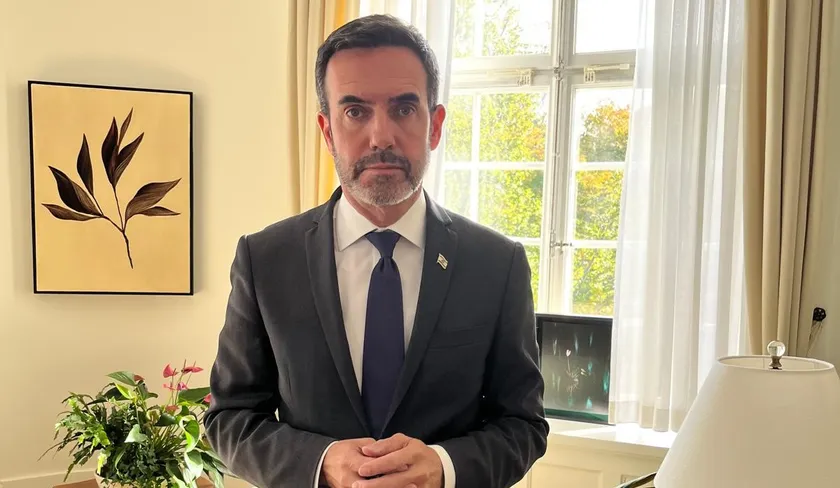


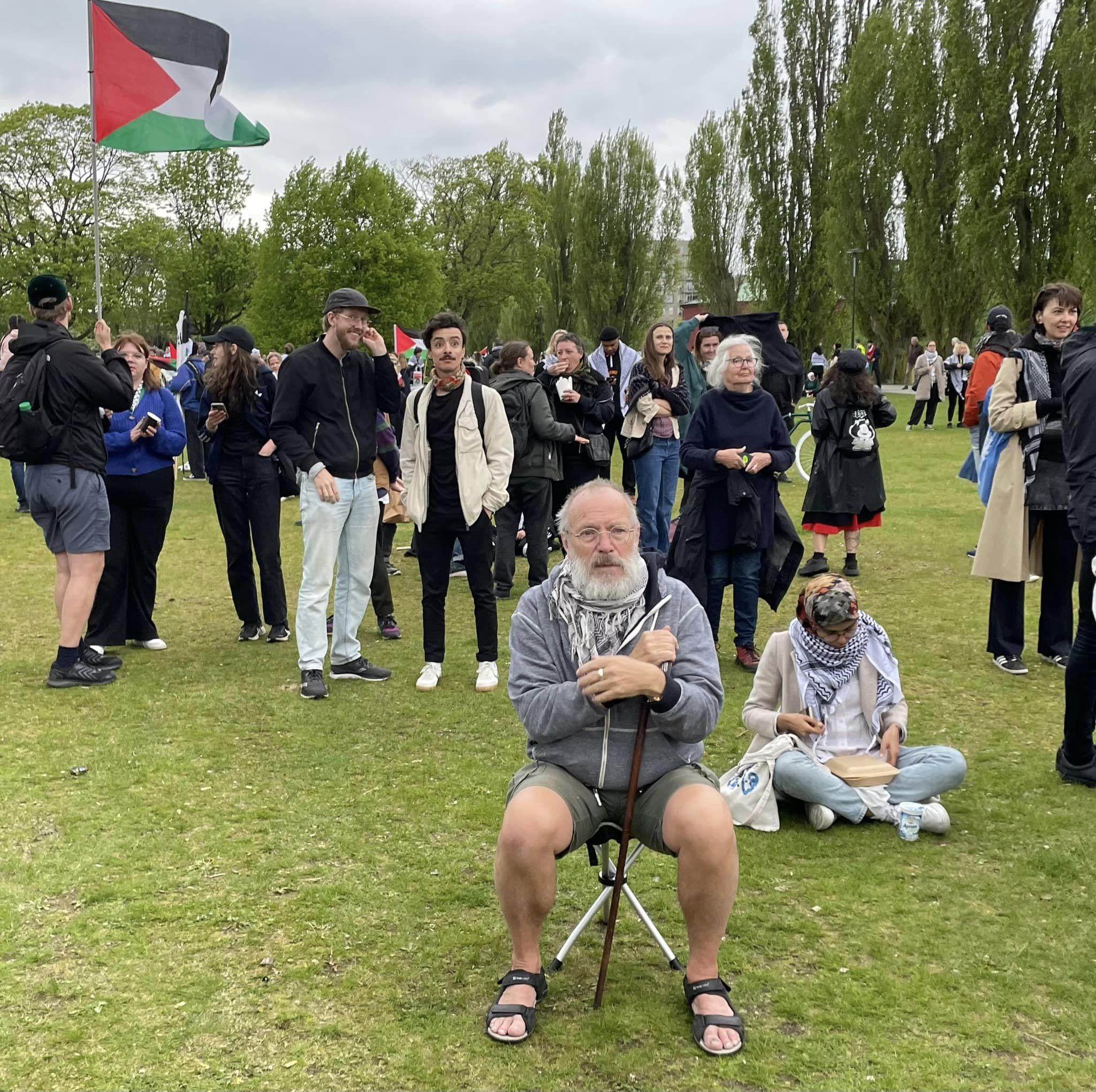
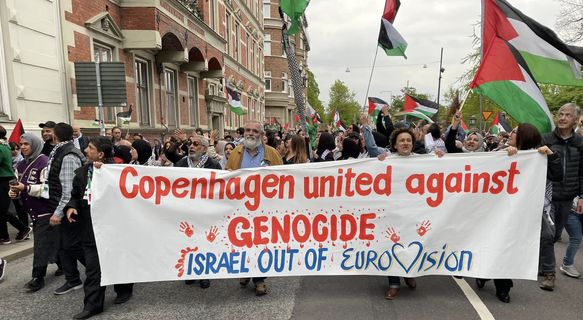


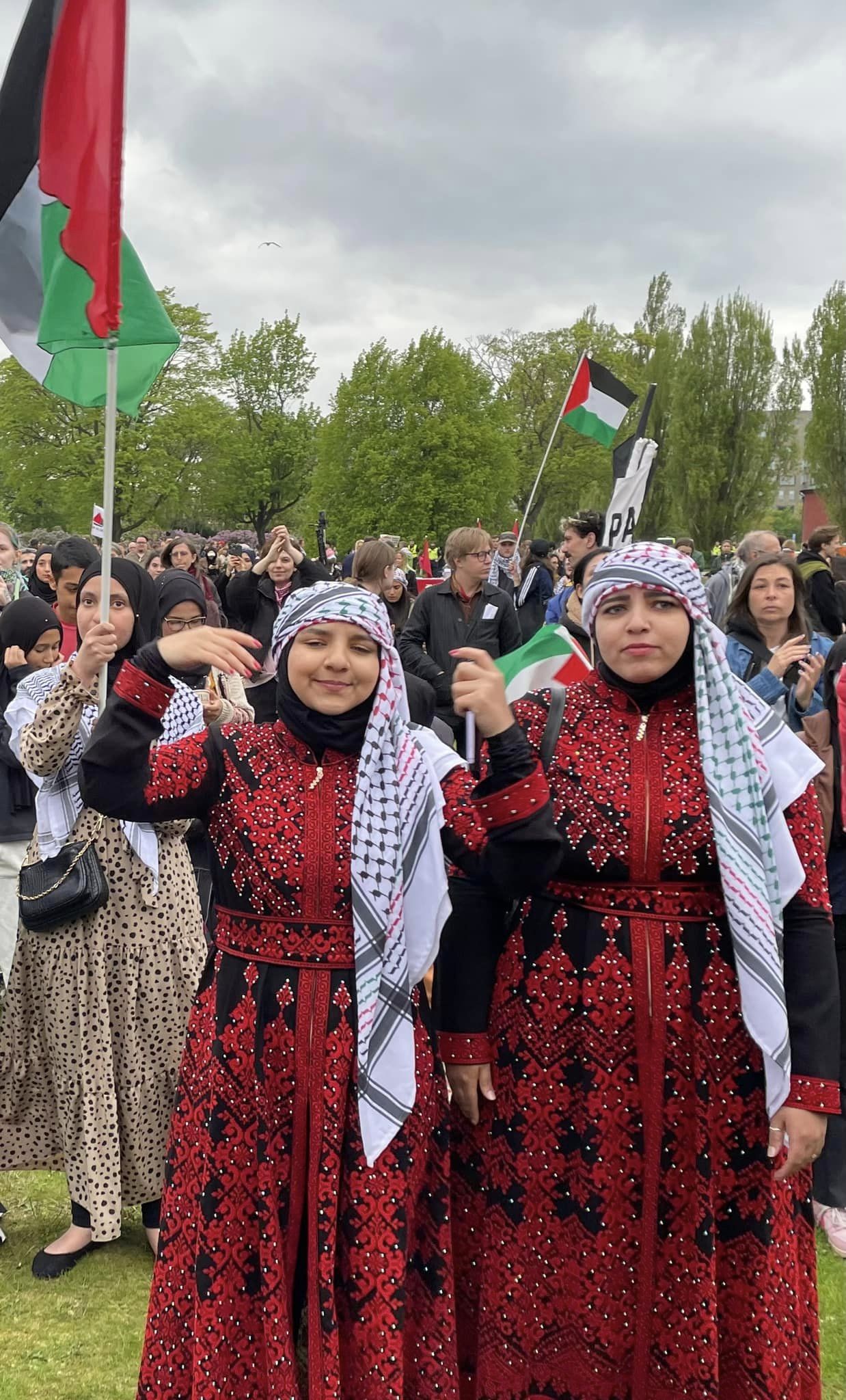


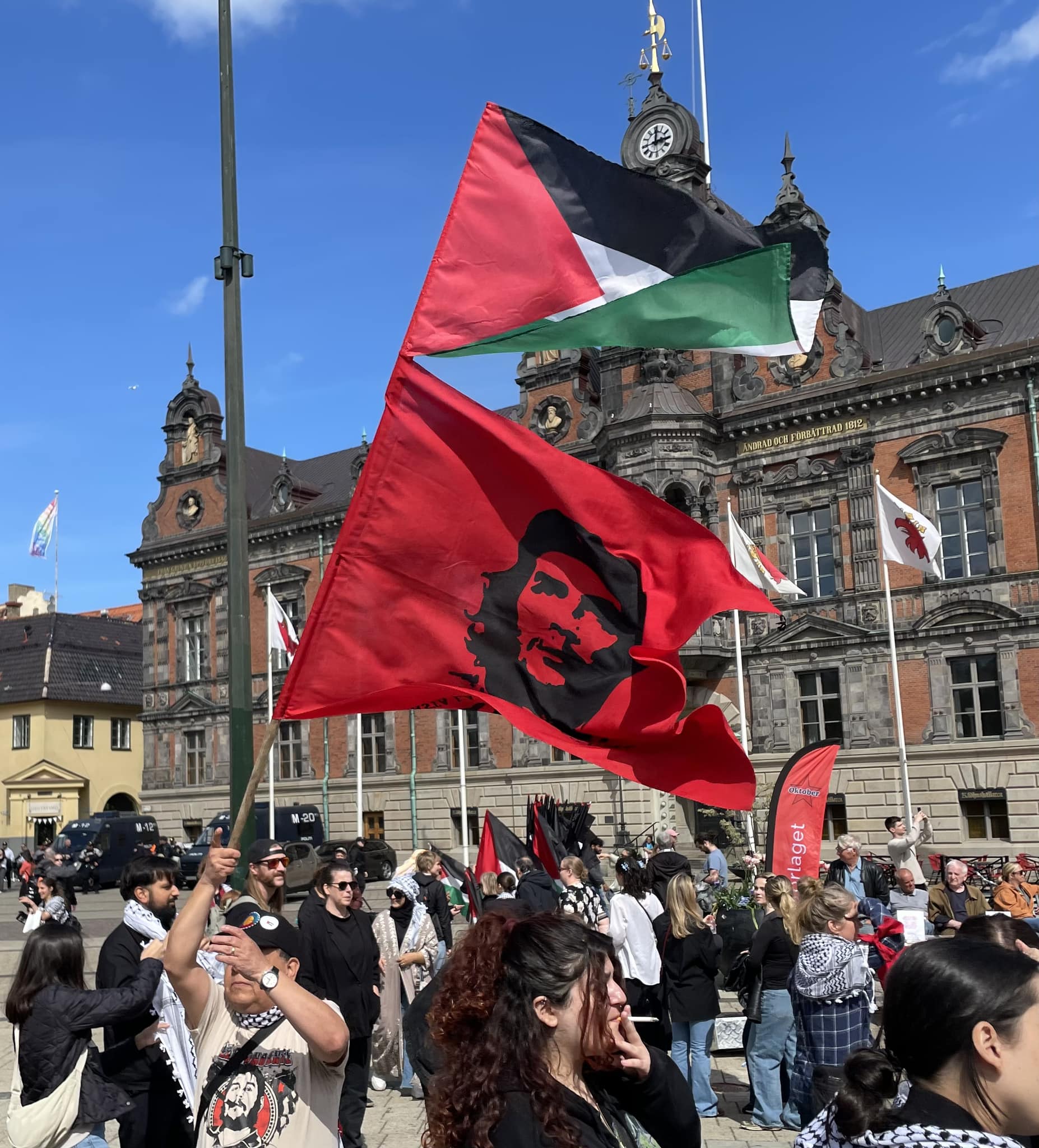
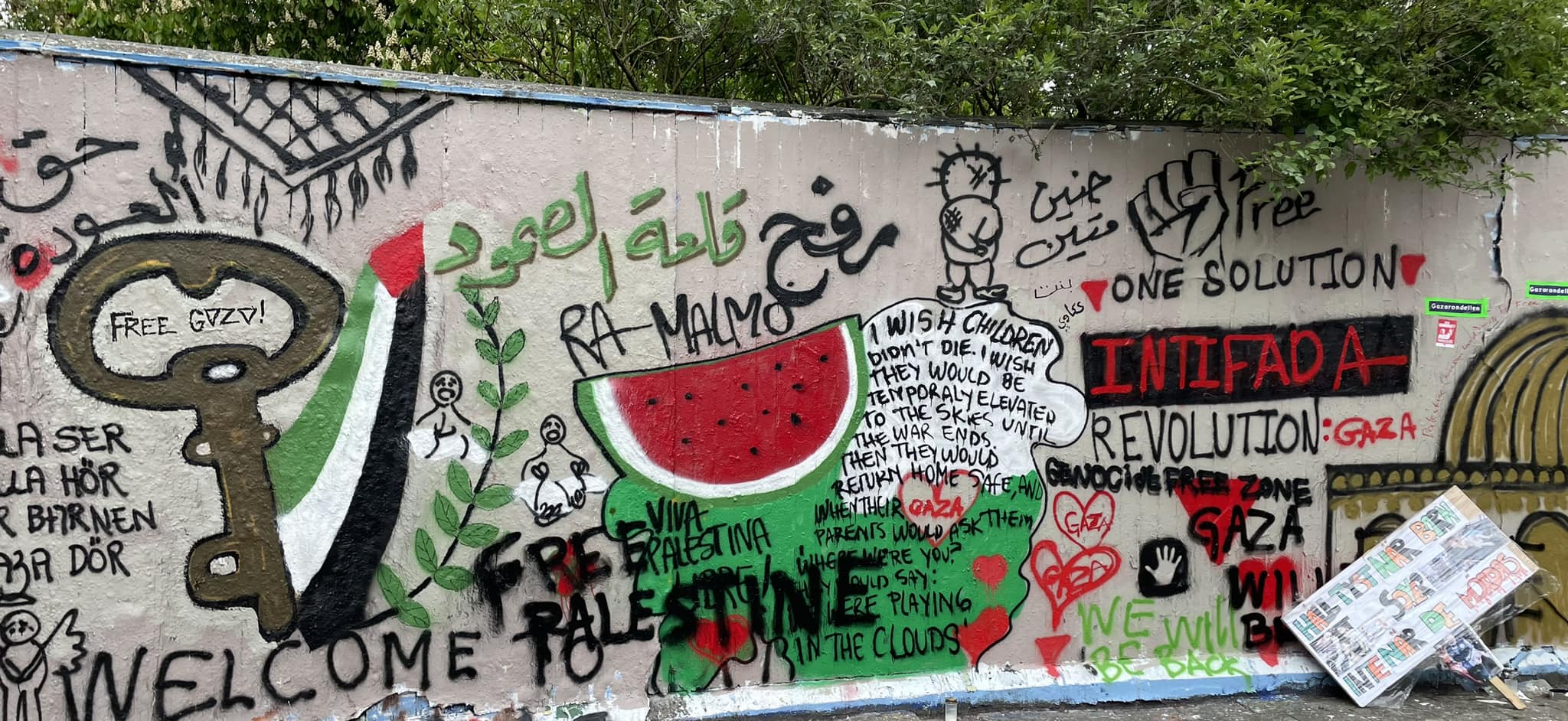
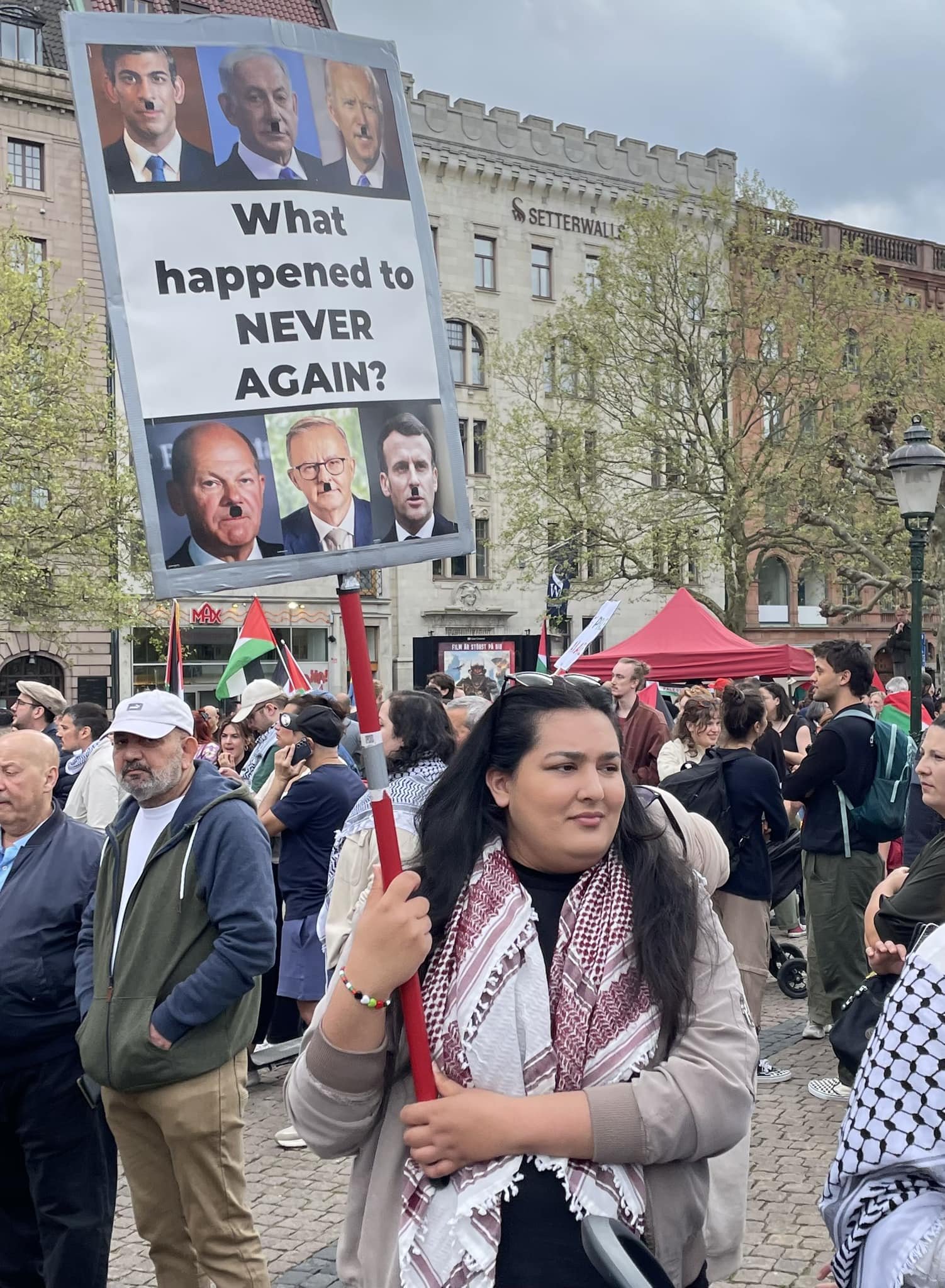


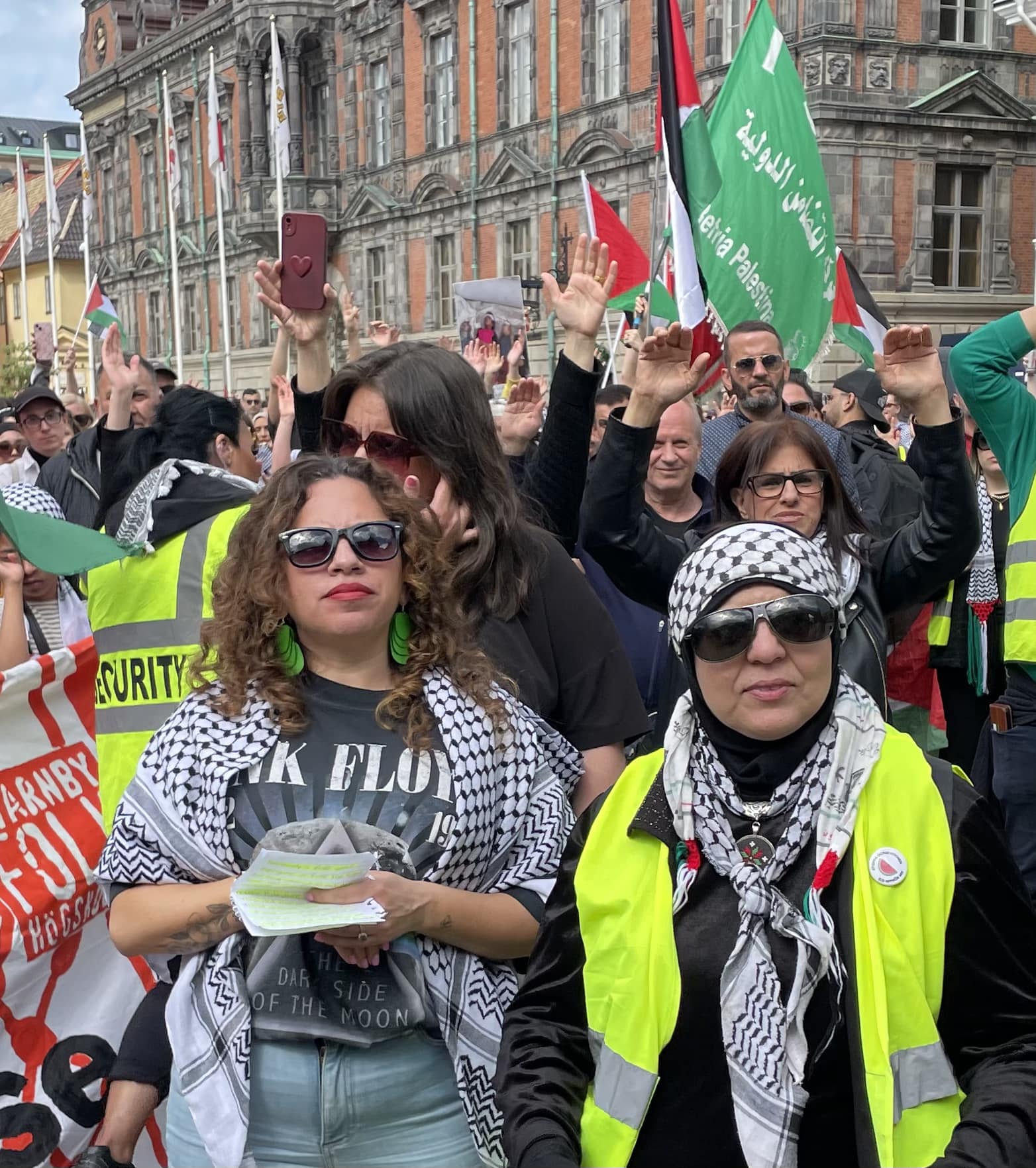

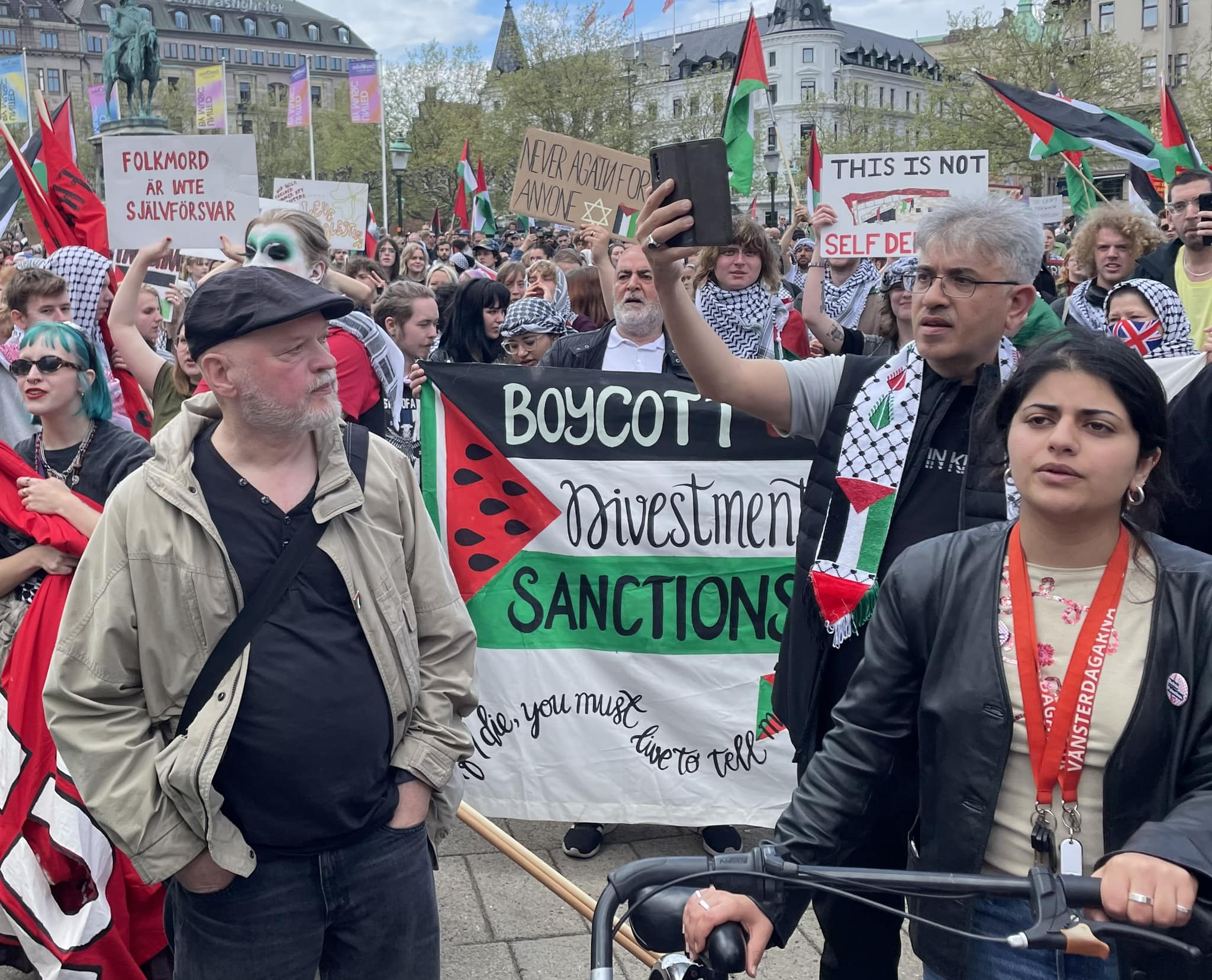

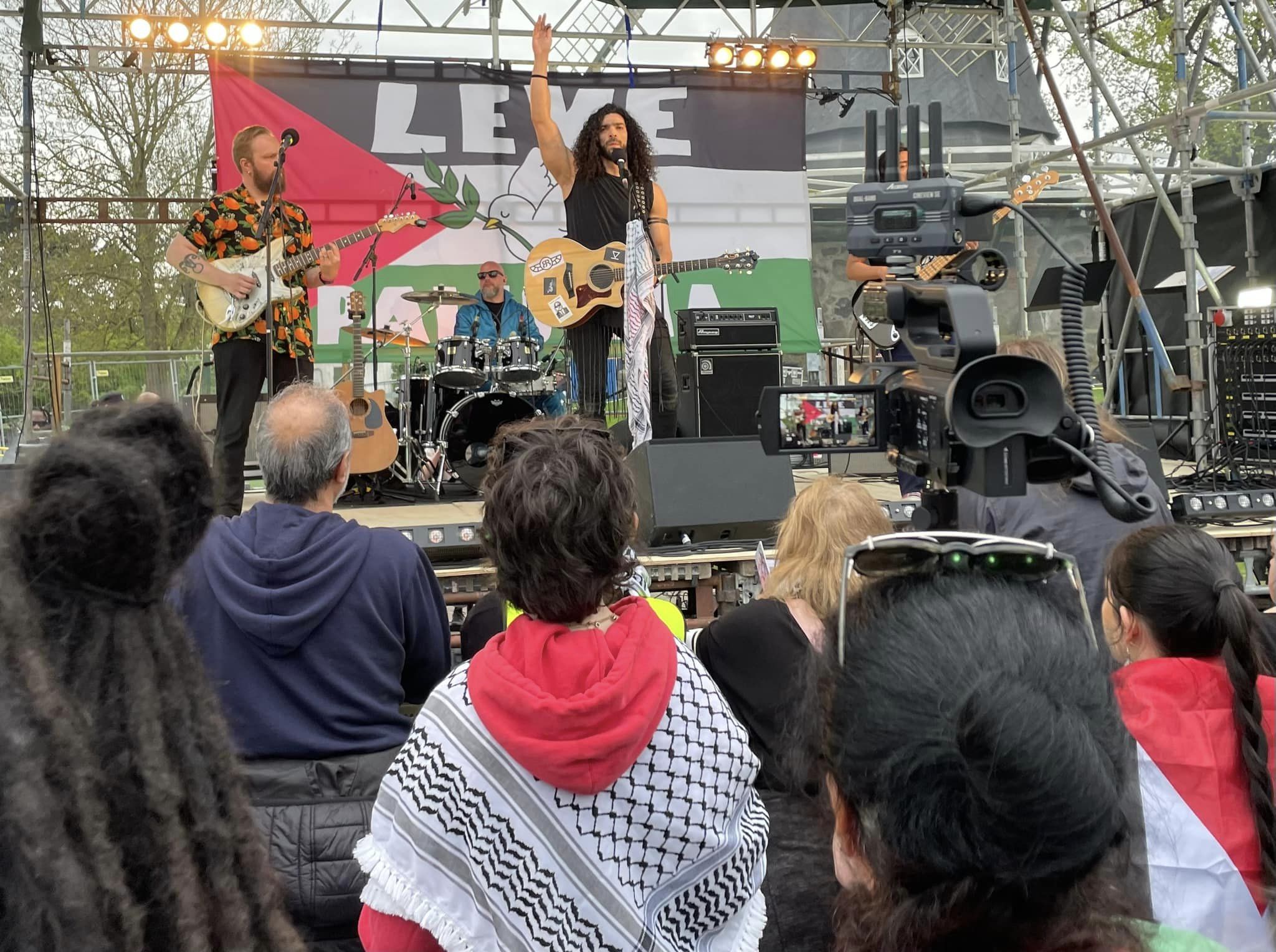


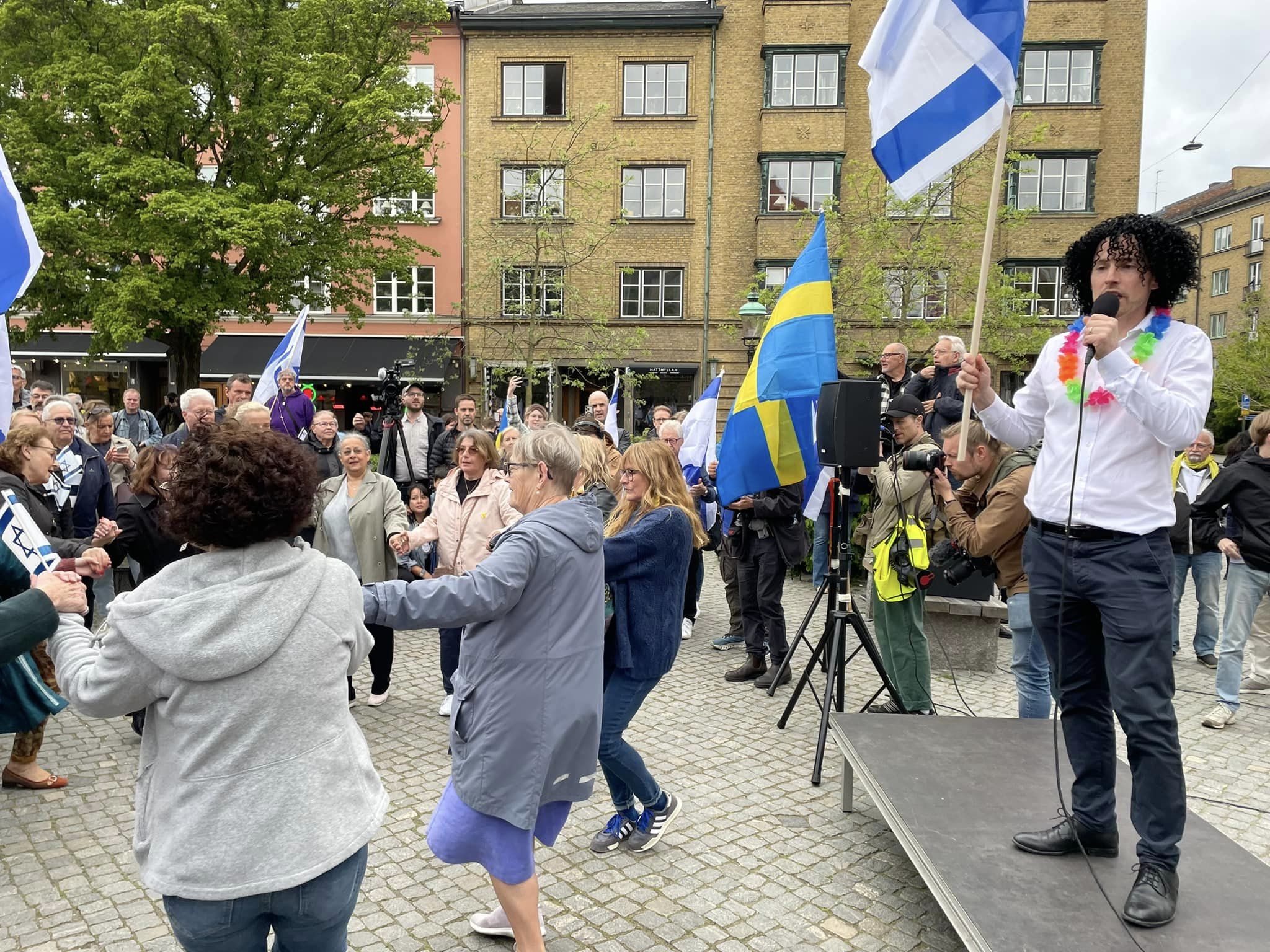


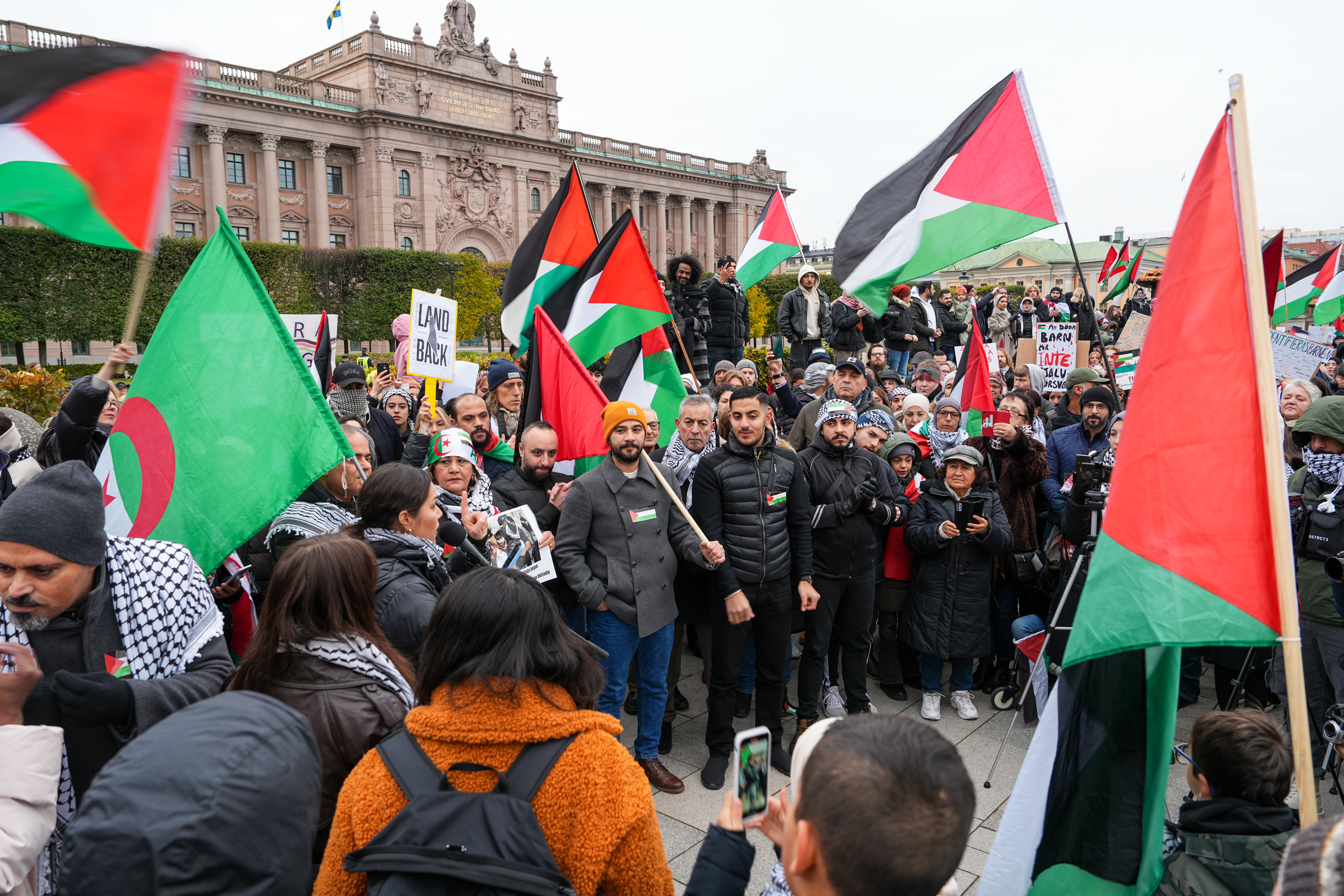
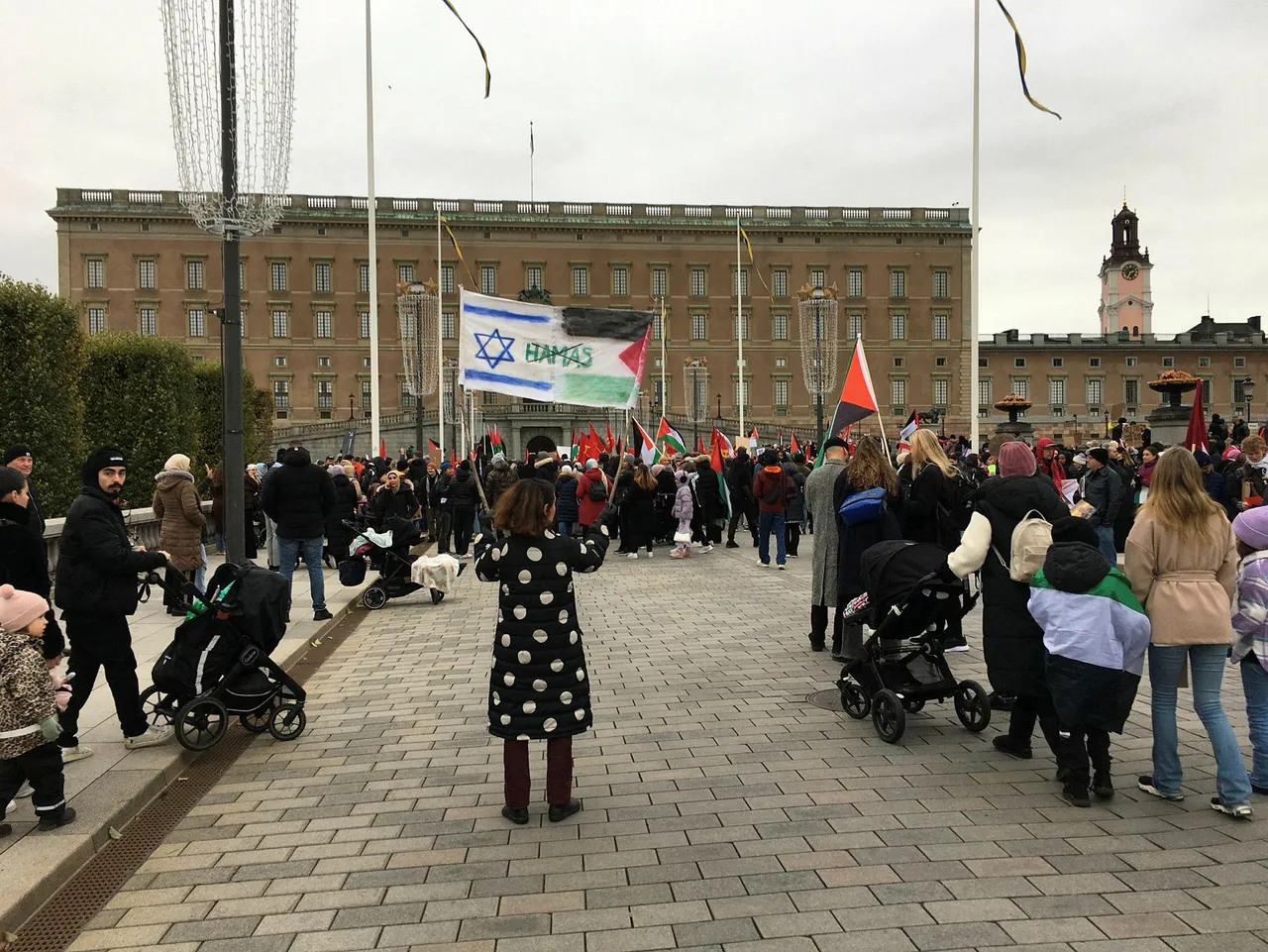

 דיויד סטברו