Sweden is turning Gaza into domestic politics

The situation in Gaza is detreating and the international community has every right to intervene, but anyone who criticizes Israel’s warfare can’t be taken seriously unless they also have a serious suggestion as to how to protect Israeli citizens from another massacre by the genocidal wing of the Palestinian national movement. 

Published in Swedish in Swedish daily Svenska Dagbladet: https://www.svd.se/a/Xj17Vr/gor-inte-gaza-till-svensk-inrikespolitik

Israel’s new ground offensive in Gaza is raising stark Swedish reactions, as always. The left is denouncing Israel as a genocidal power indiscriminately killing Palestinians. The right is slightly more restrained, but it too claims that Israel is going too far. These reactions are understandable considering the horrifying images from Gaza shown on Swedish TV. But it’s more than that. Horrifying scenes are taking place all over the world, but Gaza, unlike other conflicts, has a unique role in Swedish politics. It’s an issue of interest but also a source of easily-won political points. The Swedish Left Party, Vänsterpartiet, uses it to show its electoral base how pro-Palestinian it is, so as not to lose votes to radical breakaway fractions, while The Social Democratic Party leaders use it to show their loyalty to old-school “humanitarian super power” policies. On the other side of the political spectrum, while Right Wing populist party, Sverige Demokraterna, continues marketing itself as “Sweden’s most pro-Israel party” as an alibi against accusations of antisemitism, Moderaterna, the ruling center-right party, is trying to maintain a responsible image, aligning itself with EU allies and international law, by presenting a moderate critical policy towards Israel. Sweden’s Gaza discourse, it seems, is more about domestic politics than the reality in Israel and Gaza.

But there is an Israeli reality which isn’t visible to Swedish news followers, one that adds another dimension and shows that Israel is more than just a blood thirsty monstrous state out for revenge. Those who choose to go beyond Swedish headlines, find that there are many Israelis who oppose their government and its Gaza policy. In fact, thousands of them demonstrate against it week after week. These are not only radical left-wingers from the fringes of the political spectrum. Israel is deeply split and even mainstream Zionist political leaders with hundreds of thousands of voters are speaking up against Netanyahu’s government.

A "sane state does not wage war against civilians, does not kill babies as a hobby, and does not set goals for itself like the expulsion of a population", said the leader of The Democrats, Israel’s Centre-Left Zionist party who’s also a retired IDF major general. When Netanyahu reacted by claiming that Golan’s statement was “wild incitement”, Golan refused to apologize. “The time has come for us to have a backbone of steel”, he said, “we must stand by our values as a Zionist, Jewish, and democratic state”. He added that the government ministers are corrupt and that the “war must be ended, the hostages returned, and Israel rebuilt”.

But it’s not only the Israeli Left. “What’s the strategy?”, said Yair Lapid, leader of the centrist “Yesh Atid” party, “we all support the elimination of Hamas, but Hamas will not disappear unless an alternative to its rule is presented. Getting the IDF stuck in Gaza for years is a strategic mistake, an economic disaster, and a diplomatic tragedy that will prevent us from being part of the historic change in the Middle East”.

Even some Israeli right-wing politicians oppose Netanyahu’s government. “This war is not a war for security but a war for power”, said Avigdor Liberman, a hardliner who in the past held important ministerial posts under Netanyahu, “this government is willing to pay any price for staying in power — even at the cost of the lives of the hostages and soldiers”. This is a point many in Israel agree on. According to a poll published by Israeli Chanel 12, 61% of the Israeli public prefers a deal which would return all Israeli hostages and end the war in Gaza, compared to only 25% who support expanding the fighting and occupying Gaza.

It seems like one must read news in Hebrew to understand that Israelis are more than just aggressors, just like one must read Arabic in order to understand that Palestinians are more than just victims. For example, anyone following Hamas-affiliated Telegram accounts in Arabic knows that besides images of Palestinian suffering, there are posts with images of suicide bombers standing next to bus wreckages accompanied by texts like "the buses carrying you will become coffins" and “our martyrs are on their way”. This isn’t just a reaction to Israel’s Gaza offensive. It’s been going on for decades. Long before October 7th, official Telegram posts by the al-Aqsa Brigades, a Fatah-aligned armed group, called the “heroes of the West Bank” to “stab, run over, slay and blow up”. “Oh heroes of Jerusalem”, one of them said, “the land is your land, what are you waiting for? The time has come to kill the Jews”. Naturally, Hamas takes it even further. Fathi Hamad, a member of the movement’s political bureau and former minister called on Palestinians to "buy knives for five shekels, sharpen them and decapitate the Jews". Naturally, these quotes are not available in Swedish and are not part of the Swedish discourse.

Still, Swedish politicians have every right to react to events in the Middle-East and in the current reality, there’s plenty of reasons to criticize Israel. There are, however, a few simple ideas which can make the criticism more grounded in reality and more balanced. 

First, categorizing Hamas as a terrorist organization is correct, but it has an unwanted side effect. Because it deals with terror, some may assume that it’s a terror organization like others. But it’s not. It’s an army. Some may imagine it as a kind of Baader-Meinhof-like gang of youngsters in red and white keffiyehs squatting in abandoned buildings in down town Rafah and reading texts by Leon Trotsky. Nothing could be further from the truth. The Hamas military machine has brigades, battalions and commando units. It has strict military hierarchies and discipline as well as weapon manufacturing capabilities, a navy, military intelligence, cyber experts, a propaganda machine and thousands of young men to recruit, even during the IDF’s campaign. Hamas is clear about its end game – it’s a barbaric, fascist and fundamentalist movement committed to wipe the Jewish state off the face of the earth. Anyone who criticizes Israel’s war in Gaza can’t be taken seriously unless they also have a serious suggestion as to how to protect Israeli citizens from another massacre by the genocidal wing of the Palestinian national movement. 

Second, sometimes one has to be honest even concerning political and military policies. Israeli society is deeply traumatised by a vicious attack which took the lives of more than 1,100 people. Everyone knows someone who was killed, a child who was kidnapped or a woman who was raped. Everyone saw the atrocities – homes burnet to ashes and dead bodies of all ages. Everyone is worried about a relative or a friend on the front lines. Everyone knows a survivor. Everyone is a survivor. The expectation that Israel will react in a calm, moderate and gentle way is absurd. This doesn’t mean that a wild storm of revenge is justifiable. It does mean that swedes would do well to ask themselves modestly and honestly how they react to crises.

Sweden was unaligned for over 200 years. Then a war started over 2,000 km away. Still, Sweden changed its policy almost over-night and joined NATO. In the same way, a handful of problems with integration caused the country which was known for its leaders asking its citizens to “open their hearts” to refugees because “their Europe has no walls”, made a former neo-Nazi party its second largest. It also reversed all of its immigration policies. These dramatic and, anything but calm and moderate changes, happened without one shot being fired at Sweden and without hundreds of Swedes being killed, raped or injured. Israel, on the other hand, apart from the horrors of October 7th, has had, 35,500 rockets fired directly at it in the last year and a half, targeting, displacing and killing civilians. Is Sweden really qualified to lecture it about reacting unproportionally? And finally, criticizing Israel is fine, but it shouldn’t be done according to the propaganda of Sweden’s so-called pro-Palestinian movement. For some reason, this movement has adopted an extremist narrative echoing Hamas propaganda which claims that the Jewish state has no right to exist. The slogan of a “free Palestine from the river to the sea” is a genocidal one, since it implies the elimination of Israel. The slogans calling for an “Intifada” are incitement for violence and the claim that Israelis are settler colonizer is historically ridiculous and politically dangerous. Those who criticizes Israel because they support a just peace and a political compromise in the Middle-East would do well to find better partners – instead of people who scream “crush Zionism” and are just as bad as those who automatically support everything Israel does; they can join hands with moderate Israelis who still believe in peace and are struggling to save their home from a never-ending cycle of violence.

Europe’s New Right Is Deluded. The Continent’s Fate Is Up to the Left

At the end of the 1940s, while Europe was putting ‘never again’ into a work plan, a parallel movement was arising. What began in obscure realms now characterizes the far-right renaissance in Europe

published in "Haaretz": https://www.haaretz.com/world-news/2022-10-13/ty-article-magazine/.highlight/europes-new-right-is-deluded-the-continents-fate-is-up-to-the-left/00000183-d2d9-def3-a9a3-f3d90c1c0000

In the years following World War II, the words “never again” were a key to understanding political and social events in Europe. Shortly after the war, senior Nazi war criminals were tried in Nuremberg, and the United Nations was founded to safeguard the peace and security of the world. Then in 1948 the United States launched the Marshall Plan, with the aim of rehabilitating the Continent and setting it on a path of growth. One of the first treaties adopted by the UN was the Convention on the Prevention and Punishment of the Crime of Genocide, a term coined by the Jewish lawyer Raphael Lemkin, who was one of the convention’s initiators. Thanks to these developments, by the end of the decade, the term “never again” had become more than a moral imperative: It was a work plan.

But concurrently, a parallel historical movement was rising, one that attracted less public attention. In the shadow of the new and free Europe, a united front began to coalesce; it aimed to restore Nazi and fascist values and ideas to dominant roles. A few years after the mass murders ended, an increasing number of movements and parties that bore the racist, nationalist and antidemocratic heritage that was vanquished in 1945 cropped up across the Continent.

It began in obscure realms, far from the eyes of the international institutions and the press. The Swedish historian Elisabeth Åsbrink describes the process in her 2016 book “1947: Where Now Begins.” She notes that Per Engdahl, the leader of the Swedish fascist movement who had been active during the war, began connecting nationalists from across the Continent – those from the losing side in the war. He brought Nazi war criminals to safe haven in Sweden and from there smuggled them around the world. Conferences that were public knowledge were held, working plans were written and parties were founded in many European countries. This is how the English fascist Oswald Mosley could be linked both ideologically and organizationally via the Italian Social Movement (MSI), the heir to Mussolini’s path, to the neo-Nazis in Scandinavia and the Low Countries and to the last of Hitler’s loyalists in Germany.

That unity did not last long. Ideological differences – questions of race, culture and nationalism – arose quickly, and were compounded by personal power struggles. The trans-European parent movement was gradually dissolved, and its branches in the various countries split into movements and parties of two main types: Some became violent, revolutionary fringe groups, while others strove to draw close to the mainstream.

In Sweden, which had been neutral during the war, thus evading the devastation caused by the fighting, a large number of neo-Nazi movements would emerge in the decades to come – from the National Socialist Workers’ Party (NSAP) in the 1940s during the war to Keep Sweden Swedish in the 1980s. In Italy, the MSI went through several incarnations before morphing into the National Alliance, in the 1990s. In 1954 France saw the establishment of the Rassemblement National Français by Maurice Bardèche, who was close to Engdahl, and Jean Louis Tixier-Vignancour, who had served in the Vichy regime. It’s these same three countries that now embody the far-right renaissance in Europe.

In 1988, members of the Swedish neo-Nazi scene founded the Sweden Democrats. One of its key figures was Gustaf Ekström, then 81, a former Swedish volunteer in the Waffen SS who had also been active in the NSAP. Ekstrom died in 1995, but his party is still around, and it crossed the electoral threshold for the first time in 2010. In last month’s parliamentary election, it became the country’s second-largest party, garnering more than 20 percent of the vote. Sweden’s next government will be wholly dependent on it.

While the Sweden Democrats were slowly and cautiously consolidating their strength, in 1992 a 15-year-old girl named Giorgia Meloni joined the youth movement of Italy’s the neo-fascist party, the MSI. She rose through the ranks of the party, which eventually became the Brothers of Italy (FdI), which in September won Italy’s parliamentary election. Meloni will be the next prime minister of Italy, borne on the wings of a party whose emblem makes use of the tricolor flame, the old Italian fascist symbol.l

In last April’s runoff presidential election in France, Emmanuel Macron, the incumbent and the centrist candidate, was victorious; but the losing candidate Marine Le Pen, received 41.45 percent of the vote, a personal high. Le Pen’s roots were planted in the same fascist ground that had been plowed originally by Per Engdahl. The European far right’s renewal movement in the 1950s had a monthly journal, Nation Europa, which was founded by a former SS officer, Arthur Ehrhardt. Among its writers were thinkers who became the living spirit of the new European right. One of them was a young Frenchman campaigning for the Comité National Français: Jean-Marie Le Pen.

His daughter’s party, recently renamed the National Rally, is similar to the Sweden Democrats and to Meloni’s party. The three, which represent the success of the far right’s postwar evolution, vehemently insist they are not fascists. They take pride in their conservatism and in encouraging “traditional family values”; they think that feminism, LGBTQ rights and access to abortion – not to mention immigration – have gone too far. Independent and activist courts, a free and unbiased media, and academia are also not their cup of tea. But publicly, they shake off accusations of racism and authoritarian tendencies.

It may well be that the great problem with these parties may not be their extremism, antisemitism and xenophobia, but the lack of seriousness of those who wish to lead the Continent (and are poised to do so in no few countries). A major contention against the left is that it is naïve and unrealistic, even dreamy. But in today’s Europe, it is the populist right that is afflicted with these childhood ailments: disconnected from reality, delusionary, unpragmatic and fickle in its views. At times its leaders draw close to Russia and its president, Vladimir Putin, then it suddenly supports NATO. It views the European Union as the root of all evil but when in power happily accepts astronomical checks from it. This isn’t necessarily extremism, it’s populism that avoids responsible long-term solutions while fueling well-organized crusades against so-called corrupt elites.

This childish, look-the-other-way behavior is most blatant in the far right’s denial of the climate crisis, in the face of an absolute scientific consensus. For these parties and the leaders they spawned, the approaching consequences and the existential crisis that humanity is facing are akin to fairy tales, and they oppose almost all the measures being proposed to reduce greenhouse gas emissions.

Riding an ostrich

But it’s not just global warming, the droughts or the rising sea levels. The populist right closes its eyes to the realities of the waves of immigration, the refugee crisis and the wars of the future. While the left and the conservative right suggest solutions – some better, some less so – the populist right believes that if it ignores the problem, it will simply go away. As far as it’s concerned, it’s possible to build a wall around the Continent and explain the world using a variety of alternative sources, from Fox News to “The Protocols of the Elders of Zion.”

On the one hand, they are against taking in refugees, but they are also opposed to offering economic aid to the countries in Africa and the Middle East where the migrants come from. Similarly, it’s out of the question to invest in international institutions and conflict resolution. The flow of immigrants westward and northward, which could total tens of millions, will simply end by itself. It is sometimes said that cooperating with these far-right parties is like riding a tiger, but in reality it’s more like riding an ostrich.

The answer to the question of where all of this is leading, and whether the Europe of the future will be a conservative, insular continent that has regressed in regard to human rights, immigrant absorption and coping with the challenges facing humanity, actually rests with the left. Today, both in Europe and the United States, the left is adapting to its right-wing rivals. Populism is not an exclusively right-wing phenomenon; both sides are adept at deconstructing themselves and putting forward a garland of specific struggles that are divided according to race, sex, gender and age, instead of coming up with solutions that are intended for society as a whole.

Social Democratic parties still advocate traditional solutions such as crafting full-employment policies, strengthening trade unions, investing in welfare and providing public housing and a strong social safety net. But in some countries these parties have given way to the identity politics of the so-called radical left, or to the neoliberal policies of Social Democratic parties that have lost their way. For these kinds of parties, reality is no longer the political arena, it’s the endless chatter on TV and social media. In countries that have lost their traditional left, it’s hard to see who will right the ship that’s sailing toward the populist iceberg.

Predicting the future isn’t easy, but we don’t have to go back many years to remember what happens in Europe when the extreme fringes on the right and left fight for power while the moderates are preoccupied with internal wrangling. While all this is going on, the war in Ukraine is becoming an echo of the Spanish Civil War of the 1930s, which was the preview for World War II. As the cliché goes, history tends to repeat. The past year looks like the start of a process that may end with the ushering in of a new period – one whose guiding principle may very well once more be “never again.”

A Year On, How Coronavirus Changed Sweden

A policy downplaying lockdowns and mask-wearing may have buoyed infection rates and deaths, but Swedes disagree on how the long term will look. How the world we knew has changed – the first in a series.

Published in "Haaretz": https://www.haaretz.com/world-news/.premium.MAGAZINE-coronavirus-year-one-the-way-the-pandemic-has-changed-sweden-1.9511565

Scandiabadet, Malmö, summer 2020. Photo: News Øresund Johan Wessman

David Stavrou

Stockholm, Sweden

 Feb 5, 2021 13:10

STOCKHOLM – Håkan Frändén, 61, lives in Stockholm and normally works as a tour guide, but these aren’t ordinary times and tourists have been a very rare commodity in Sweden since the coronavirus broke out a year ago.

“Of course, the pandemic affected my professional life when the world closed down and the high tourist season ended before it even began,” he says. “In 2020 we had zero tourists and my wife, who’s a tourist guide too, and I lost all our income.”

But Frändén and his wife didn’t give up. She took a course and is now working as a personal trainer and yoga instructor, while Håkan got a part-time job via the national employment agency delivering groceries – plus he receives unemployment benefits for the days he doesn’t work.

.Malmö, 2021. Photo: Maria Eklind

"It’s true this has been a terrible year when it comes to the victims of the pandemic, but personally I had a good year,” he says. “We bought bicycles and made them our main means of transportation, we rediscovered our city – many times with our children and grandchildren – and we had more time for ourselves and our family.”

In the past year, few countries have attracted attention like Sweden. The fact that it didn’t impose lockdowns, didn’t force quarantines, didn’t close schools and didn’t require masks made it the subject of thousands of news reports and commentaries in the world media. Some called Sweden “the world’s control group,” others said it was carrying out “an experiment on people.”

As far as we know, COVID-19 reached Sweden in January 2020, carried by a passenger from Wuhan, China. Still, there’s a suspicion that already the month before people were infected in Sweden, without being traced due to a lack of testing.

Community transmission started in March, after a month earlier many infected people landed on flights from northern Italy, Iran and other countries. Already during the first stage of the pandemic the Swedish authorities were criticized for not assessing the danger and preparing accordingly.

On March 11, the day the World Health Organization declared a global pandemic, the first coronavirus patient died in Stockholm. April saw a significant wave of illness, and by mid-June dozens of infected people were dying every day in Sweden.

Heavy burden on health care

The country’s health care system withstood the heavy burden and didn’t collapse thanks to the great efforts of the medical staff, as well as budgetary and logistics efforts by the government and local authorities. But in nursing homes for the elderly the situation was completely different. A government committee has determined that Sweden failed to protect this population, citing neglect and poor management by the current government and its predecessors.

In the first wave, the Swedish strategy for halting the infection was unique. The authorities simply asked people who developed symptoms and people in risk groups to show responsibility and stay home. Also, everyone was asked to work from home if possible and  forgo unnecessary travel.

Instead of the thorough system of testing, tracing and quarantining established in many countries, the Swedes did coronavirus testing during the first stage only in hospitals and in care for the elderly.

Anders Tegnell, the chief epidemiologist and the person most identified with Sweden’s management of the virus, explained this policy in April in an interview with Haaretz. He said that Sweden had limited testing capacity and that regardless of the test results, the recommendation would be to stay home. The Swedish policy was based on a high level of public trust in the authorities and long-term thinking, he added.

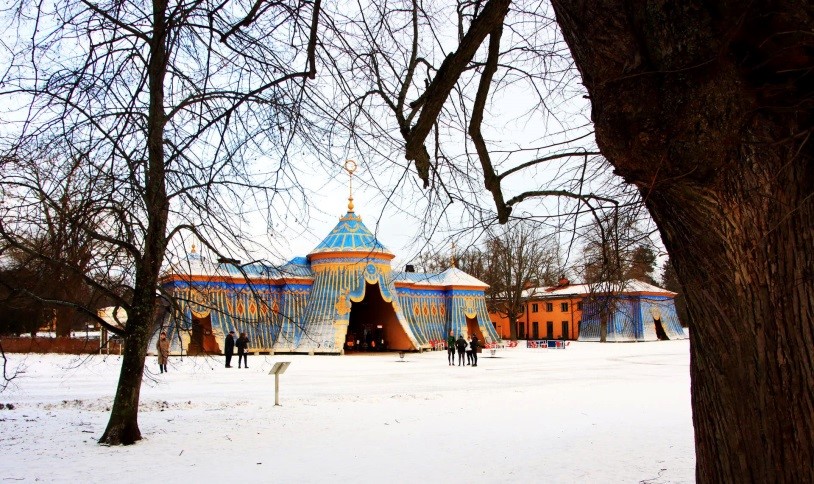
Hagaparkern, north of Stockholm, 2021. Photo: Guillume Baviere

Despite the reliance on public trust, the government and the local authorities, the Swedes took a number of restrictive steps due to the virus. They switched over to online learning at universities and high schools, limited public gatherings to 50 people, prohibited visits to hospitals and nursing homes, and imposed restrictions on serving food in bars and restaurants.

'The long-term social consequences will probably turn out greater in countries that seemed to be succeeding at the beginning'

During the summer the pandemic waned in Sweden and the hospitals’ coronavirus wards emptied out. But this was temporary; in November a more deadly wave began. Once again there were dozens of deaths every day and the hospitals were overburdened. So the authorities tightened the restrictions: They limited gatherings to eight people, banned the sale of alcohol after 8 P.M. and closed movie theaters, museums and libraries.

Still, the overall strategy didn’t change. The country’s leaders continued to rely on public trust and eschewed a general lockdown; they left the schools, restaurants and malls open. Stores and other businesses remained open, but with restrictions on the number of people allowed inside. Also, there was no requirement to wear a mask; Swedes were recommended to wear one only on public transportation at peak hours.

Around the world, people had the impression that while many countries were isolating and suffering a harsh economic blow, in Sweden it was business as usual. But the reality was different. “At first I thought we’d work from home for a month and then return to the office,” says Erik Numan, a 56-year-old art director from Stockholm. “By now, 10 months later, I’ve been in the office for only one day.”

'Even though I work in many fields, everything disappeared and I still can’t plan anything even a year later'

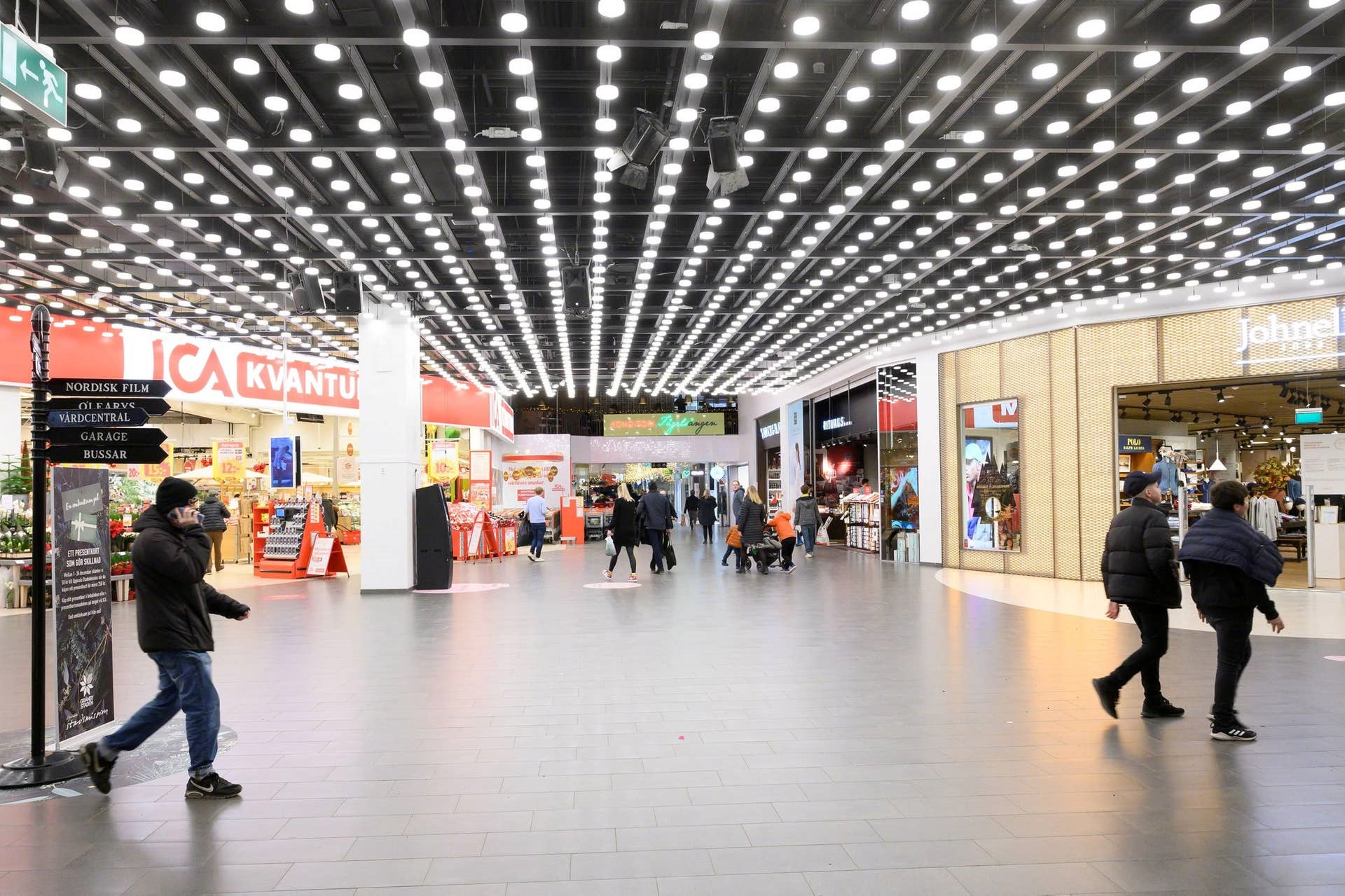
A shopping mall in Stockholm, December 2020. Photo: TT News Agency via Reuters

Numan says he has stopped exercising at a gym, doesn’t visit his parents and rarely meets with friends. Although he says he isn’t very worried about the virus personally, he feels solidarity with others who are likely to become infected and is concerned about the overburdened health care system.

“Nobody checks on me and the police won’t arrest me if I don’t observe the recommendations,” he says. “But I think most Swedes do what’s necessary when there’s a crisis.”

Numan’s 16-year-old daughter contracted the virus, developed mild symptoms and was in quarantine for two weeks. “When she meets girlfriends now they hug as usual, at a time when we adults have completely stopped shaking hands,” Numan says.

Like the Frändéns, Linnéa Sallay, a 60-year-old singer and violinist who lives in Stockholm, saw her professional life racked by the virus. “All the jobs disappeared overnight in mid-March,” she says. “Even though I work in many fields, perform in concerts, guide tours and produce events, everything disappeared and I still can’t plan anything even a year later.”

Sallay notes, however, that the past year has also provided a welcome time-out. She's surviving financially thanks to her savings, she has launched a YouTube channel and is developing her digital skills. She has also spent a lot of time with her family and friends, even if not at restaurants and cafes. And she’s now rehearsing and preparing for digital concerts.

Vaxholm, Sweden, summer of 2020. Photo: Bengt Nyman

Entering the crisis with disadvantages

Sweden has several disadvantages regarding COVID-19. Twenty percent of the population is over 65, it’s cold, its borders are open to other countries, its population is very diverse and it’s not used to emergency situations. But it also had advantages: a universal, quality health care system, stable and well-financed government services, and many single-person households.

Considering its starting conditions a year ago, it’s hard to estimate the real effect of the Swedish policy on illness rates and mortality. Compared to its Nordic neighbors – Finland, Denmark and Norway – Sweden’s mortality has been very high. The country of 10 million people has suffered about 12,000 deaths, with this figure per million people high at 1,444. In Denmark, Finland and Norway the number is 363, 121 and 104, respectively.

It’s not a competition and there’s no point saying who the winner is. It’s far too early and too dangerous to compare week-by-week mortality rates

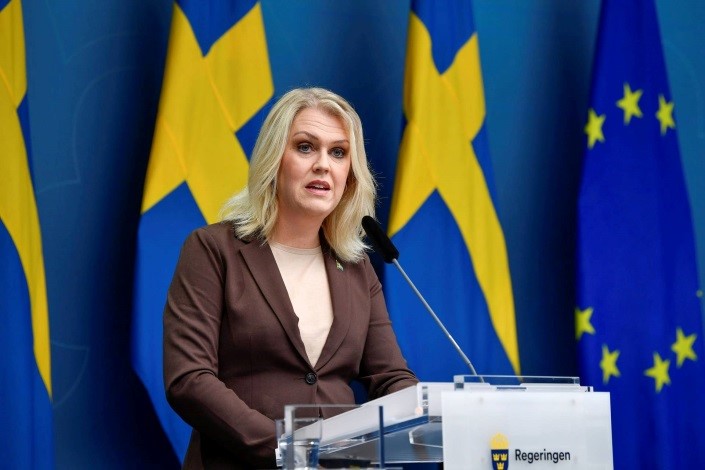
Swedish Health Minister Lena Hallengren

Swedish Health Minister Lena Hallengren at a press conference in Stockholm in November 2020. Photo: Henrik Montgomery / TT News Agency via Reuters

But compared to many other European countries, including those that imposed lockdowns, closed schools and halted the economy, the mortality rate is modest. In Britain, Spain and Italy, for example, the number of deaths from COVID-19 per million inhabitants is 1,591, 1,254 and 1,473, respectively.

Some experts believe that the shunning of lockdowns has brought Sweden better results in metrics that have yet to be measured such as rates for depression, excessive weight gain, addiction, violence and illnesses from diabetes to heart attacks and strokes. In Sweden you could also hear the claim that the country’s high mortality rate in 2020 stemmed from the low mortality rates from the flu in 2019.

Fiasco at the nursing homes

Swedish Health Minister Lena Hallengren told Haaretz in September that it was too early to judge the Swedish policy because this was a marathon, not a sprint.

“It’s not a competition and there’s no point saying who the winner is,” she said. “It’s far too early and too dangerous to compare week-by-week mortality rates. Different countries were hit differently; they have different structures and relations with their authorities, they test in different ways and have different kinds of data and information. In the long run, we all need well-functioning societies. We should learn what there is to learn from others, point fewer fingers and try to keep up with long-term recommendations.”

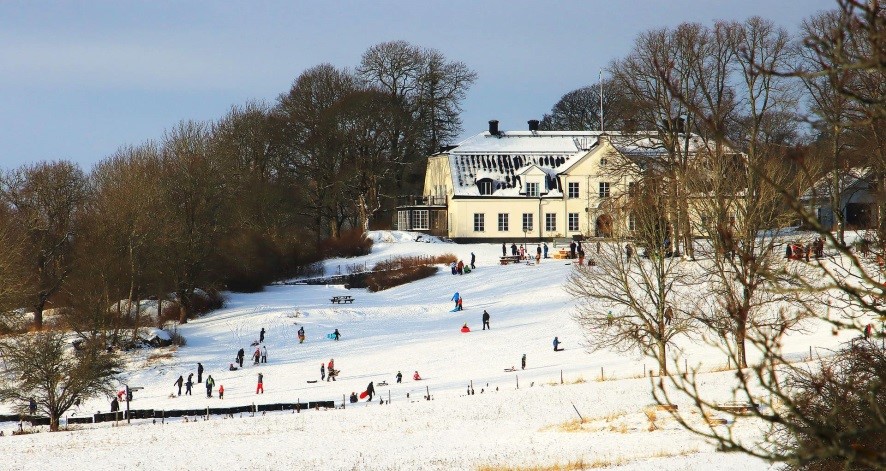
Uppsala, Sweden, last month. Photo: Guillaume Baviere

But there’s considerable evidence of failures in Sweden’s handling of the pandemic. The Swedish media has reported on cases where nursing home residents did not see a doctor and were not evacuated to hospitals despite their serious condition. The nursing home staffs were unequipped and not trained at all to deal with a pandemic.

The Public Health Agency of Sweden has been harshly criticized too. Critics say that during the pandemic’s early days, the agency was complacent and didn’t assess the danger correctly. Later, the prime minister himself, Stefan Löfven, said the agency had downplayed the second wave. At various stages, key people in academia and the medical system demanded that the agency make more stringent recommendations to curb the spread of the virus.

Regarding vaccines in Sweden, signs also attest to delays and complications, though here the shortcoming is mainly on the European level. Like many countries, Sweden has bought vaccines as part of an EU transaction, but the supply has been slow, one reason being a hitch in the manufacture and supply of AstraZeneca’s vaccine.

As of now, Sweden has vaccinated 256,978 people with the first dose and 28,279 with the second. That means 3.13 percent of the population over 18 has received one dose and only 0.34 percent two.

Although Swedish politicians in general have backed the government over the past year, other voices have been heard in recent weeks. “We have to respond differently now,” Ebba Busch, the leader of the opposition Christian Democratic Party, told the daily Aftonbladet. “If the government lacks the courage to lead, it should resign.” Nonetheless, the ruling Social Democratic Party is leading in the polls and received 28.5 percent support in a survey last month, a 2-point rise over November.

'I hope we’ll appreciate each other more when all this is over, and I hope we’ll go back to meeting up again. The hell with Zoom'

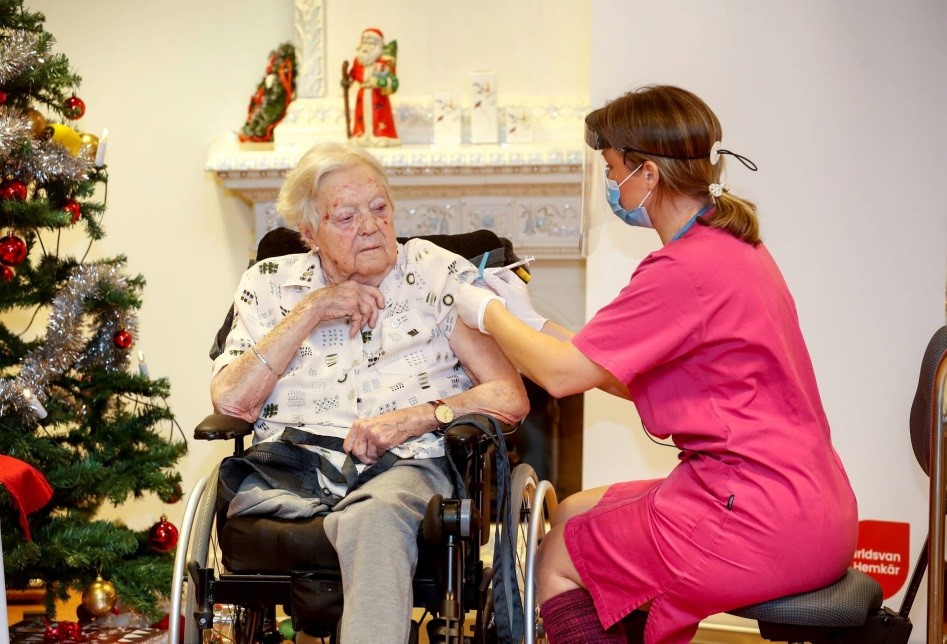
A nurse vaccinating a nursing home resident in Mjölby, Sweden, in December 2020.Photo: Stefan Jerrevang / TT News Agency via Reuters

“I think we’ve dealt pretty well with the pandemic,” says Frändén, the tour guide. “I wouldn’t want to be anywhere else. But there have been failures too, mainly the spreading of the virus in old age homes. In recent decades there has been unrestrained privatization in our care system, and that’s one reason for the negligence in preparing and training staff.”

Frändén says the virus spread within another marginalized group too. “In 2014 and 2015 Sweden was one of the countries in Europe that opened its doors to the most refugees,” he says.

“As a result, many refugees settled in Stockholm’s suburbs and we saw social phenomena that we didn’t have before – crowded living conditions in large families, large family gatherings including elderly people, and less access to the authorities’ information. Our authorities failed here, and that may be an explanation for the differences in the virus’ spread between Sweden and Denmark, Norway and Finland, which hardly took in any refugees.”

‘Every country has its own conditions’

Sallay, the singer and violinist, also criticizes the authorities’ handling of the pandemic, especially the economic aspect, so she and a colleague launched a protest by the self-employed.

“We, the small independent workers who don’t have employees, have been discriminated against,” she says, noting that large companies in Sweden furloughed employees and received government funding for expenses, while small businesses are only now beginning to receive help.

And indeed, in an interview with TheMarker in June, Swedish Finance Minister Magdalena Andersson said the national priority is to help salaried workers and large companies. During the crisis the Swedish government has invested large sums to buoy employment while providing payments to furloughed workers, compensation and guarantees, while strengthening companies’ liquidity and providing professional training and retraining for the unemployed.

“I think it’s too early to know whether we chose the right path,” says Numan, the art director. “Every country has its own conditions, and the long-term social consequences will probably turn out greater in countries that seemed to be succeeding at the beginning.”

As he puts it, “I hope we’ll appreciate each other more when all this is over, and I hope we’ll go back to meeting up again. The hell with Zoom.”