פסק-הדין של הטריבונל האויגורי בלונדון, דו"ח מצב הדמוקרטיה בעולם של ארגון IDEA ודו"ח הבנק העולמי על הקונפליקטים האלימים על פני הגלובוס מעלים את השאלה – האם הפשעים של המשטר הסיני בשינג'יאנג הם אירוע מבודד או שהם רמז לעתיד של כולנו.
לפני שנתיים עוד היה אפשר להתעלם. העדויות היו מעטות וההכחשות היו גורפות. אפשר היה לטעון שהסיפורים על מדיניות השלטון הסיני כלפי בני המיעוטים בשינג'יאנג הם תעמולה אנטי-סינית וחלק ממאבק בין מעצמות. או שאפשר היה פשוט להפעיל את הווטאבאוטיזם הישן והטוב; למה לא מדברים על בתי-הכלא האמריקאים? למה שוכחים את המיליונים שהבלגים שחטו בקונגו? למה מתעלמים מהסעודים שתולים אנשים ברחובות? אבל אז, אחד אחר השנייה, הגיעו הניצולים – מאות נשים וגברים המספרים על מה שקרה להם וליקיריהם. מהם כבר היה קשה להתעלם. סיפוריהם מסמרי שיער: ענישה במעשי אונס קבוצתי, עקירת ציפורניים, מכות באלות חשמליות, כליאה בכלובים שלא ניתן לעמוד או לשכב בהם, אינדוקטרינציה פוליטית, ניסויים רפואיים, מערכת הייטק של מעקב ופיקוח במרחב הציבורי, פלישת המדינה למרחב הפרטי, מאסרים ללא הליך משפטי וכליאה בתנאים לא אנושיים.
אחרי העדים הגיעו בני משפחות אויגוריות, קזחיות ואחרות, וסיפרו על יקיריהם שנעלמו ללא שוב במנגנון הכליאה הסיני. לבסוף הגיעו החוקרים והעיתונאים ונתנו הקשר רחב יותר באמצעות צילומי לווין, מסמכים שהודלפו ונתונים, תמונות וכתבות שנקטפו מהאינטרנט הסיני לפני שהועלמו. אלו חשפו רשת של "מחנות לחינוך מחדש" בהם נכלאו ע"פ הערכות למעלה ממיליון בני-אדם, במקביל התבצעו טרנספרים של אוכלוסייה, הרס של בתים, שכונות ומסגדים, העסקה של מאות אלפי עובדי כפייה בתנאי עבדות וכפייה המונית של עיקורים והפלות שנועדו לצמצם את אוכלוסיית בני המיעוטים. בשבוע שעבר (חמישי) התפרסם פסק דין של טריבונל ציבורי עצמאי בלונדון בנושא מדיניות סין כלפי האויגורים. הטריבונל אסף מאות אלפי עמודי מידע, תיעד את סיפוריהם של כ-500 עדים ושמע את הסבריהם של כמאה מומחים מתחומים שונים. כך הוא יצר את גוף הידע המשמעותי ביותר בעולם בנושא ופסיקתו היתה חד-משמעית: סין אשמה, מעבר לכל ספק סביר, בעינויים, בפשעים נגד האנושות וברצח-עם נגד המיעוט האויגורי.
פסק-הדין בלונדון לא יגרום לסינים לשנות את מדיניותם. לטריבונל אין סמכות משפטית, כוח פוליטי או אפילו משקל ציבורי רב. למעשה, אין כוח בעולם שמאיים על עצמאות הפעולה הסינית בשינג'יאנג – סין לא חברה ולא כפופה לבית-הדין הפלילי הבינלאומי, אין חשש שצבא זר יפלוש לשינג'יאנג כי סין היא מעצמה צבאית וגרעינית, גופים כלכליים יהססו לפעול נגד סין בגלל עוצמתה הכלכלית, הסינים מחזיקים זכות ווטו במועהב"ט של האו"ם, שינג'יאנג עצמה סגורה הרמטית וכמעט שאין אפשרות לבצע בה עבודה עיתונאית ונכון להיום, אין עדות לכך שבסין פועלת אופוזיציה משמעותית או התנגדות עממית נרחבת למשטר. ארגוני חברה אזרחית ואמצעי תקשורת במערב כמו גם פוליטיקאים בפרלמנטים אירופאיים ובממשל האמריקאי מעלים אמנם את הנושא לסדר-היום העולמי, אך אלו הן בעיקר הצהרות, לא מעשים. למרות זאת, יש שאלה אחת שכדאי לשאול, לא רק לטובת האויגורים, אלא למען האנושות כולה – האם מדיניות סין בשינג'יאנג היא מקרה יוצא מן הכלל או שהיא עלולה להפוך למודל לחיקוי ועתיד אפשרי לכולנו?
המשפט האחרון עלול להישמע קצת דרמטי, אבל הוא מתבסס על תופעות מדאיגות המתרבות בשנים האחרונות. ראשית, למרות ההבטחה החגיגית "לעולם לא עוד" מאמצע המאה ה-20 והתיאוריה על "קץ ההיסטוריה" מסופה, עושה רושם שרצח-עם, פשעים נגד האנושות והפרות מאסיביות של זכויות-אדם זוכים לקאמבק מרשים. המאה ה-21 לבדה מספקת אין-סוף דוגמאות לכך, החל ברצח-העם בחבל דארפור ועד רצח-העם היזידי. במיאנמר נרצחו עשרות אלפי בני רוהינגה ומאות אלפים גורשו ע"י חיילי המשטר ותומכיהם. דו"ח של האו"ם חשף פוגרומים ברוטליים שכללו השלכה של תינוקות לנהר, מעשי אונס קבוצתי שהסתיימו ברצח, הצתה של כפרים על יושביהם והרג נשים וילדים בירי, סכינים ומצ'טות. באתיופיה, מתקיים בשנה האחרונה טבח נרחב של אזרחים כחלק מהסכסוך בין המשטר לבין אנשי חבל תיגראי. גם כאן ישנן עדויות על הוצאות המוניות להורג, הרעבת אזרחים ואסון הומניטרי בעקבות בריחתם של מיליוני פליטים.
מה הנסיבות המאפשרות את כל אלו? רמזים לכך ניתן למצוא בשני דו"חות שהתפרסמו לאחרונה. הראשון, דו"ח של IDEA, ארגון בינ"ל לחיזוק מוסדות דמוקרטיים, מראה שמצב הדמוקרטיה בעולם מדרדר. בעשור האחרון הוכפל מספר המדינות המוגדרות כ"דמוקרטיות בנסיגה", כלומר, מדינות בעלות ממשלות שנבחרו בדרך דמוקרטית הנוקטות בטקטיקות אוטוריטריות כמו הונגריה, ברזיל, הודו וסלובניה. כמו כן, בשנים האחרונות נוספו למועדון המדינות הלא דמוקרטיות יותר ויותר חברות. גם אם יש תחושה שהמצב בקמרון, זימבבווה או ניקרגואה לא משפיע עלינו ישירות, קשה להתעלם מהעובדה שע"פ הדו"ח, שני-שליש מאוכלוסיית העולם חיה כיום ב"דמוקרטיות בנסיגה" או תחת משטרים אוטוקרטיים. גם אם אנחנו חיים עדיין בווילה (ויש שיכפרו גם בזה), הג'ונגל הפך להיות גדול ומסוכן יותר. הדו"ח השני, של הבנק העולמי, הראה שיש בשנים האחרונות עלייה במספר הקונפליקטים האלימים בעולם. זהו שיא של שלושת העשורים האחרונים. הקונפליקטים אמנם פחות קטלניים משהיו בעבר אך הדו"ח קושר אותם לבעיות קשות וגורליות – יותר פליטים מאי פעם ועלייה ברמות העוני ואי-השוויון בעולם.
כאילו שכל זה לא מספיק, הנסיבות הספציפיות של המאה ה-21 מאפשרות לרודני כל העולם גישה למערכות נשק קטלניות יותר מאי-פעם ואפשרויות חסרות תקדים למעקב אחרי אזרחים. בנוסף נותנת המגפה העולמית את התירוץ המושלם לסגירת גבולות, דחיית בחירות ושלילת זכויות. שנאה גזעית ולאומנית מפומפמת ע"י רשתות חברתיות שהאלגוריתם שלהן פועל למען שורת הרווח בלבד והנסיבות הכלכליות הופכות לקיצוניות יותר במקומות רבים בעולם בעקבות משבר האקלים. מבחינת נטיותיו הרצחניות של האדם, זוהי סערה מושלמת.
בתנאים אלו ייתכן ששינג'יאנג היא רק ההתחלה. אין ספק שלעולם כולו, החל מההנהגה הפוליטית ועד לאחרון צרכני עליבאבא, נוח להתעלם מהמחנות, מהעינויים ומעבודות הכפייה. אך יש להכיר בכך שהמשך ההתעלמות מהפשעים המתבצעים בשינג'יאנג איננה רק פגיעה בקורבנות המשטר הסיני, היא תעודת הכשר להמשך הזוועות ותרומה ישירה להתפשטותן בעולם שהופך לאלים, דכאני ומסוכן יותר.
Swedish Jewish organization blasts church’s decision, saying it cements its image as anti-Israel, while some of the church’s own bishops label it a ‘one-sided fixation on Israel’.
STOCKHOLM – A decision by the Church of Sweden last week calling on ecumenical organizations to investigate Israel as an apartheid state has been condemned by the country’s leading Jewish body and members of the church itself.
According to the formal decision, the General Synod (the church’s decision-making body) has commissioned its Central Board to “raise the issue of scrutinizing the implementation of international law in Israel and Palestine, also from the perspective of the United Nations convention on apartheid and the definitions of apartheid in the Rome Statute.”
The church’s director of international affairs, Erik Lysén, told Haaretz that “the addendum suggests that the Central Board raise the issue with ecumenical organizations such as the Lutheran World Federation and the World Council of Churches. How the task is handled will be a matter for the Central Board to decide. There is no specific time frame for this.”
The latest decision, which was supported by members of the Synod who are part of Sweden’s Social Democratic and Center parties, has been criticized both within and outside the church.
Aron Verständig, president of the Council of Swedish Jewish Communities, said his organization found the decision unacceptable. He said the Church of Sweden “repeatedly chooses to criticize the only Jewish state, without criticizing any of Israel’s neighbors for the persecution that Christians are subjected to.” Verständig added that “the result of this decision is unfortunately that the image of the Church of Sweden having a strong anti-Israel approach is cemented.”
When asked if the decision was a result of the church’s will to protect Christians in the region or due to a more general political agenda, Lysén responded: “The members of the Synod who proposed the addendum argued in the debate that they were doing so out of a belief that the deteriorating human rights situation on the ground requires an investigation based on human rights and international law, and echoed voices of Palestinian Christians, as well as Israeli, Palestinian and international human rights groups who call for international action.”
The Church of Sweden, which has been active in the Middle East region for many years, publicly supports a two-state solution based on the armistice demarcation line before the 1967 Six-Day War. It calls for an end to “Israel’s occupation of Palestine,” for “a return to talks and negotiations based on international law,” and for both sides to end violence and respect human rights.
In the past, the church has claimed that “methods that prevent financial support for the occupation are legitimate ways of working for peace.” At the end of last week, the church’s head, Archbishop of Sweden Antje Jackelén, informed Verständig that she was personally opposed to the decision. However, she added in an open letter published on the church's website, that “an image of the decision is now being spread that is not entirely correct, and which can easily lead to misunderstandings and overinterpretations.”
Jackelén wrote “it is the use of the word ‘apartheid’ that provokes anger and sadness. I myself would not have used the word in this context. But I am also aware that Israeli and other human rights organizations such as B’Tselem, Yesh Din and Human Rights Watch have used the term in their reports.
“The decision also raises the issue of an examination of how the Palestinian Authority and Hamas live up to international law,” she continued. “Even though I think the wording is unfortunate, it is clear to me that the church council’s decision is in no way directed at Jews as a people, either in Sweden or in Israel, nor at the State of Israel.”
Other senior figures within the Church of Sweden were even more critical. “As bishops, we love our church and support its structure. This doesn’t prevent us from strongly distancing ourselves from the decision taken by the council,” wrote Åke Bonnier and Sören Dalevi, two bishops who mentioned the split vote at the church council. In "Kyrakans Tidning", a Swedish weekly newspaper which focuses on church issues, they stated that “103 members chose to vote against the proposal. As a church, we simply don’t agree on this issue. Why does the council so often pass motions concerning Israel, the only democracy in the Middle East? After all, there are 195 other countries in the world to choose from. Why is it never exercised over Belarus, Ethiopia, the U.S., China, Russia or any of the abominable dictatorships surrounding Israel? We note that this one-sided fixation on Israel does not directly contribute to improving relations with the Jewish state or with our Jewish siblings.”
One-sided supporter
As part of its involvement in the region, the Church of Sweden backs various organizations and projects, some of which support the boycott, divestment and sanctions movement against Israel. The church has often been accused of being anti-Israel and a one-sided supporter of the Palestinians.
Lysén said the Church of Sweden “focuses its international engagement on countries where we have long-term development and humanitarian partners,” and rejected the notion that it was only focused on the Israeli-Palestinian conflict. He said the church had raised issues of human rights violations in countries such as “Colombia, Myanmar, South Sudan, Tanzania, several countries in Central America and regionally in the Middle East. This is often done in partnership with ecumenical networks and alliances, and always with a basis in human rights and international humanitarian law.”
Responding to criticism of the decision, Lysén stressed that “the Church of Sweden’s position is not anti-Israeli and remains principled to human rights and international law – in Israel and Palestine, and in any other context where we work. We support and cooperate with both Israeli and Palestinian partners, all of whom work from a human rights-based approach. We remain committed to the rights of both the Israeli and the Palestinian people.”
The Church of Sweden is an evangelical Lutheran church with 5.8 million members (about 55 percent of Sweden’s population) and is considered a progressive and liberal church by international standards. It has ordained female priests since the late 1950s; recognizes and performs same-sex marriages; and its decision-making body, which consists of 251 members who meet biannually, is voted for in a democratic election in which all of the country’s major political parties are represented.
The General Synod elects the church’s Central Board, which is led by the archbishop of Sweden (Jackelén is the first woman to hold the church’s highest position). Until the start of the 2000s, the church held the position of state church, which explains the high membership numbers in a country that is extremely secular and in which only a small percentage of the population attends church services.
Until 1996, all newborn children were made members, unless parents actively canceled their membership. The church is involved in humanitarian work far from Sweden’s boarders, its self-proclaimed priorities including “gender justice and equality, safeguarding people’s sexual and reproductive health and rights, basic freedom of religion or belief, just peace worldwide, fair and sustainable livelihood, and maintaining human dignity and human rights in emergency situations.”
הפרלמנט בשטוקהולם אישר את מינויה של שרת האוצר מגדלנה אנדרסון הסוציאל-דמוקרטית, במקום סטפן לופבן, שכשל בהעברת רפורמות בשוק הדיור. שעות אחרי מינויה, אנדרסון הודיעה על פרישה ועל כוונתה להקים ממשלה חדשה בראשות מפלגה יחידה.
רויטרס ודיויד סטברו
הפרלמנט בשוודיה אישר היום (רביעי) את מינויה של שרת האוצר מגדלנה אנדרסון לראשות הממשלה. אנדרסון בת ה-54, המנהיגה החדשה של המפלגה הסוציאל-דמוקרטית, היא האישה הראשונה במדינה המכהנת בתפקיד. אולם שעות ספורות לאחר מינויה לתפקיד, אנדרסון הודיעה ליו"ר הפרלמנט על התפטרותה. ראשת הממשלה הטרייה מסרה את ההודעה לאחר שמפלגת הירוקים פרשה מהקואליציה החדשה, בעקבות אי אישור תקציב המדינה בפרלמנט. אנדרסון אמרה כי היא שואפת להקים עתה ממשלה חדשה שתישען רק על מפלגתה שלה. בפרלמנט השוודי, ריקסדאג, יש 349 מושבים. 117 מחוקקים תמכו במינויה של אנדרסון, 174 התנגדו, 57 נמנעו ומחוקק אחד נעדר מההצבעה. אף שהיו יותר מתנגדים מאשר תומכים בהצבעה, המינוי של שרת האוצר לראשת הממשלה אושר בכל זאת. הסיבה לכך היא שראשי ממשלה בשוודיה יכולים להתמנות ולמשול כל זמן שהם נהנים מרוב פרלמנטרי של מחוקקים שלא מתנגד להם – מינימום של 175.
מפלגת הירוקים הודיעה כי תתמוך בפרלמנט בהצבעה עתידית על קואליציה חדשה בראשותה של אנדרסון וכך גם מפלגת השמאל "ואנסטרפרטייט". מפלגת המרכז הודיעה כי תימנע בהצבעה. שלוש המפלגות חלוקות אמנם בהצבעה על התקציב אך מלוכדות ברצונן למנוע ממפלגת "השוודים הדמוקרטים" הפופוליסטית והמתנגדת להגירה לקחת חלק בכל ממשלה עתידית. עוד טרם התפטרותה, לאנדרסון לא היו צפויים יותר מדי ימי חסד, ומתברר שאפילו לא אחד. בדברים שנשאה הבוקר לאחר המינוי הבהירה אנדרסון כי היא נערכת להנהיג את המדינה גם אם הפרלמנט ידחה את התקציב לטובת חוק התקציב של האופוזיציה השוודית. "אני בדעה שתקציב האופוזיציה בכללותו הוא משהו שאני יכולה לחיות איתו", אמרה.
In an exclusive interview with Haaretz, Swedish prime minister Stefan Löfven explains his policies on Israel, and reaffirms his support for Holocaust commemoration, better U.S.-Europe relations and a revived Iran nuclear deal
GOTHENBURG, Sweden – Just weeks after Sweden hosted the Malmö International Forum on Holocaust Remembrance and Combating Antisemitism, Stefan Löfven, the country’s prime minister and the driving force behind the forum, is stepping down as head of the Social Democratic party – and the government. While the 64-year-old premier, whose tenure is coming to an end this week after more than seven years, has recently been praised internationally for his role in confronting antisemitism, his policies concerning a host of other issues, both foreign and domestic, have also attracted attention. Among these are his country's unique handling of the coronavirus pandemic, the way it is dealing with challenges posed by a looming refugee crisis in Europe, relations with Iran, and Sweden's recently improved ties with Israel. Talking to Haaretz during a party congress in Gothenburg, Löfven addresses these subjects and offers some initial insight into his political legacy.
It’s recently been announced that you are the recipient of the Aron Isaac Prize that's awarded by the Jewish community in Stockholm for your “efforts to ensure that the victims of the Holocaust are not forgotten and to counter antisemitism and racism in today’s society.” When and why did you decide to make these issues part of your job as prime minister?
“This is a deep conviction that I’ve held all my life, ever since I can remember. When I became prime minister, it was obvious to me that I would take part in Holocaust commemoration, and naturally I met more and more people, I heard more stories and I promised the survivors that I’d do all I could both as prime minister and as a fellow human being. For example, when (Holocaust survivor) Max Safir called me a few years ago and asked me to help found a Holocaust museum in Sweden – that felt like something I could do, so we started a dialogue with survivors and organization and we’re well on our way now (the museum will open next year). Then, when the 20-year anniversary of the Stockholm International Forum on the Holocaust took place, we thought that since these problems still exist, we have to do more.”
Löfven is referring to the 2020 conference of an organization initiated by then-Prime Minister Göran Persson as an international partnership to fight antisemitism and promote Holocaust remembrance, education and research. 21 years later, Löfven created the Malmö forum to continue to address the same problems. “I started with a deep personal conviction,” he stresses, “and the prime ministerial role gave me the possibility to do a lot more”.
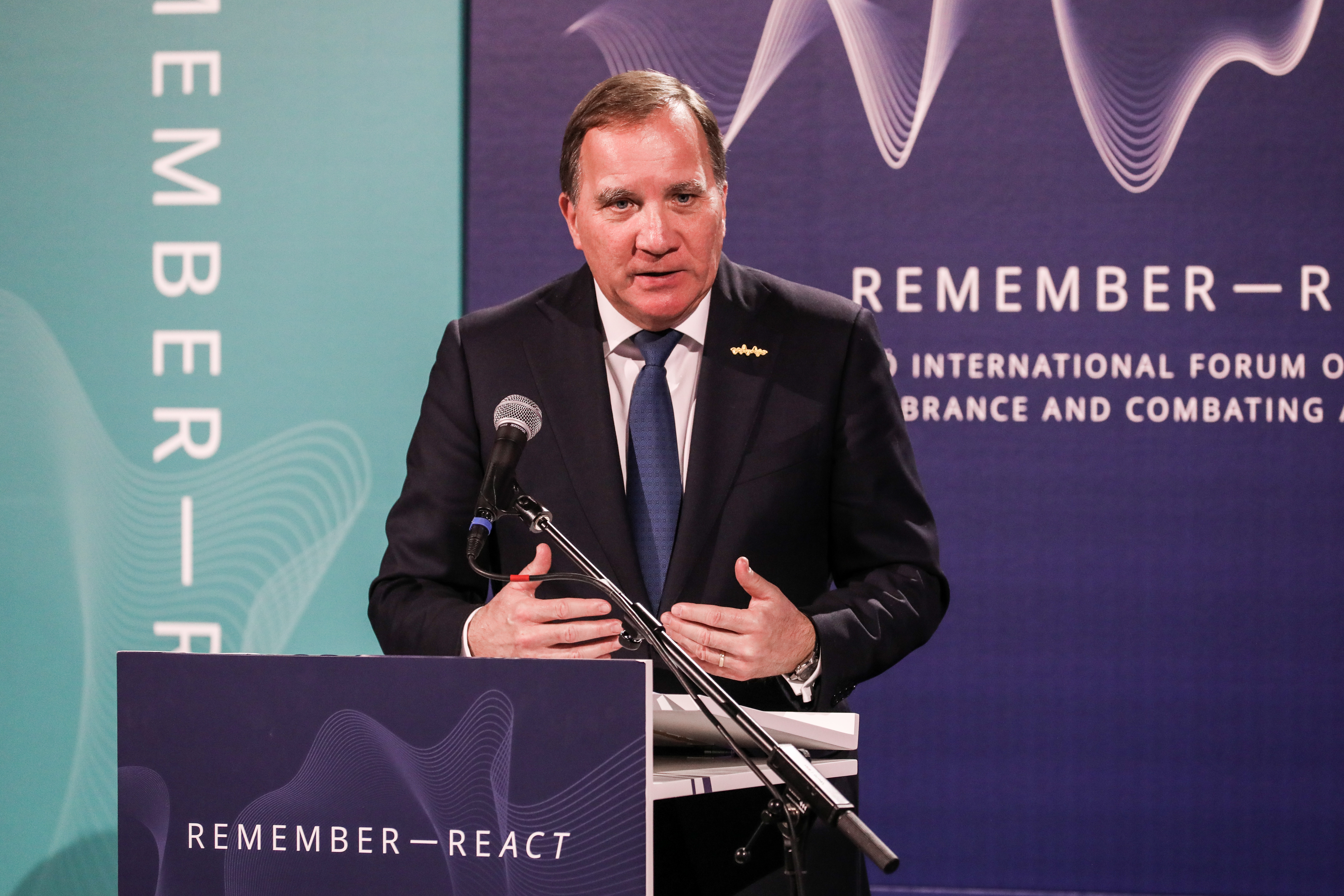
Stefan Löfven Photo: Kristian Pohl/Regeringskansliet
Despite the awards and ceremonies, Sweden’s Jewish community still has many unresolved problems. With possible changes in the country’s school system, will it still be possible to have a Jewish school in the country? Will circumcision for religious purposes stay legal? And for how long will hate crimes and bullying of Jewish children and teachers continue in Swedish schools? Has enough been done in these areas? Is there more than just rhetoric?
“It’s true, we do still have problems. That’s why, in the short run, we’re investing more in security. Yes, it will be possible to have Jewish schools in Sweden even if independent religious schools which receive public funding will be prohibited in the future. The Jewish minority is one of our national minorities, which means that its language, culture and schools are protected. [Five minorities are protected by law in Sweden: Jews, the Roma, the Sami people – Sweden’s indigenous inhabitants – Swedish Finns and the residents of the Torne Valley.]. I don’t see any danger for the right to conduct circumcisions since there’s no majority against it. Sure, there are still problems and that’s why the Malmö forum was all about commitments, not about speeches. It was about two kinds of commitments: first, never to forget, which is why different countries undertook to have various memorial events and memorial sites, and second, the fight against antisemitism, which is also about commitments. In our case, this means doing more in schools, investing more in research so that we have a better understanding of the forces behind antisemitism and so on. We want to spread this to other countries, organizations and companies (such as social media companies for example). Everyone can make commitments. Individual schools can commit, more companies can make commitments, sport organizations can make commitments. That’s the way to address these issues". More than 40 countries and more than 20 international organizations, civil society organizations and private sector giants such as Facebook and Googel participated in the Malmö Forum and made pledges to combat antisemitism and promote Holocaust remembrance.
Löfven has served as prime minister since October 2014. Though born in Stockholm, he grew up in northern Sweden with a foster family, since his biological father died before he was born and his biological mother was unable to raise him. His foster parents were working-class Swedes – the father a lumberjack and factory worker; the mother, a homemaker. After completing his high school and a couple of years of military service in the Swedish Air Force, he became a welder. As a metal worker, he became a trade unionist and worked his way up the ranks until 2005 when he became the head of IF Metall, one of Sweden’s largest and most powerful blue-collar unions. In January 2012, Löfven, who had been active as a young man in the Social Democratic youth league, was elected head of the party at a point when the Social Democrats were in the opposition and suffered a leadership crisis. Löfven became Sweden's Prime-Minister after the 2014 general elections and won a second term four years later, despite the fact that the Social Democrats had their worse showing in over 100 years in those elections. The fact that country's four center-right parties would not cooperate with the populist right-wing Sweden Democrats at the time created a situation in which Löfven was able to form a coalition with the Green Party, bolstered by a left-wing party and a couple of center-right parties. This coalition, still in power, has suffered and still suffers from week support in the parliament and the Social Democrats have had to make painful compromises in order to stay in power. Löfven has often been described as a political survivor and an extremely skillful negotiator who has managed to keep his party afloat despite the tough political landscape.
Last week, during the party gathering in Gothenburg, Löfven’s successor, Finance Minister Magdalena Andersson, was elected. If all goes according to Löfven’s plan, Andersson will be chosen by the Swedish parliament to become prime minister until the 2022 elections. She'll be the first woman ever to hold the job. Her task now is to lead the Social Democratic party to victory. In her first speech as party leader, she chose to stress the core values of her electorate, away from the compromises made by her predecessor. “In the age of global crises, it is obvious to more and more people that the wind is blowing for us Social Democrats, for strong society, for equality,” she said, adding that after decades of privatization, market experiments, weakened worker’s rights and growing social gaps in the interest of private profits, it’s time for common solutions rather than market solutions. In another speech Andersson mentioned Löfven’s efforts to combat antisemitism and promote Holocaust remembrance, and vowed: “Stefan, we will all continue that work.” Löfven himself is confident that she will continue stepping in the path he laid. “This is part of our party’s ideology,” he says. “I’m convinced that my successor as party leader has no different understanding than I do (on these issues).”
Bilateral ties
When it comes to Sweden’s relations with Israel, the start of Löfven’s first term couldn’t have been worse. One of his government’s first steps was the recognition of a Palestinian state. The following year, 2015, in an interview on Swedish TV, then-Foreign Minister Margot Wallström linked that year's jihadist terror attacks in Paris to the Palestinians' plight under Israel's occupation. That comment, and others like it, were viewed in Jerusalem as pro-Palestinian and anti-Israeli in Jerusalem, and led to the recall of ambassadors and freezing of bilateral relations. Indeed, for nearly three years, there were no meetings between the countries' official and Israel repeatedly rebuffed requests by Wallström and Löfven to make more efforts to improve ties. The situation improved slightly toward the end of 2017, but there were no one-on-one meetings between Löfven and Israel’s then-Prime Minister, Benjamin Netanyahu, and no high-level contacts between the countries’ foreign ministries. But all that changed last month when Swedish Foreign Minister Ann Linde visited Israel and met with her Israeli counterpart, Yair Lapid. A few days earlier, Israel’s President Isaac Herzog made an online appearance at the Malmö forum.
The murder of the Israeli athletes at the '72 Munich Olympics, and the Israeli revenge campaign that followed, spawned many books and films. But in all of them, one figure remains anonymous: Ahmed Bouchikhi, accidentally murdered by the Mossad in the ‘Lillehammer affair.’ We set out on his trail
One morning in September 1994, shortly after the French musician Jalloul “Chico” Bouchikhi parted ways with the Gipsy Kings, the successful flamenco-pop group he founded, he got an unexpected phone call. On the line was a UNESCO representative who sounded distraught. The United Nation’s cultural organization was organizing a special concert to mark the first anniversary of the signing of the Oslo Accords, in the presence of Israeli Foreign Minister Shimon Peres and PLO Chairman Yasser Arafat – with the participation of the Gipsy Kings, she said. But now, at the 11th hour and with 24,000 tickets sold, they had been informed that the band had missed the flight to Oslo. Would Bouchikhi agree to appear in their place with his new band, Chico & the Gypsies, and prevent a fiasco?
“I said yes. I arrived with my musicians, we informed the audience that the Gipsy Kings couldn’t make it, but that I was their founder. We played ‘Bamboleo’ and other of the band’s hits, and it was a big success,” Bouchikhi recalls. “At the end, Peres and Arafat came onstage and congratulated me. I shook hands with them. My brothers, who lived in Paris and had come for the concert, took pictures of the event.”
That appearance launched Bouchikhi, who is now 67, on a course he had never imagined for himself. He was appointed UNESCO Envoy for Peace in 1996, acting as a goodwill ambassador and promoting messages of tolerance and peace at his performances. But if today he looks back on his past, emotionally, almost in disbelief, as the “story of a special fate” – it’s not because the Gipsy Kings missed their flight and he filled in for them. The reason is that, unbeknownst to any of the others involved at the time – neither UNESCO, Peres or Arafat, nor those who were supposed to ensure their safety – fate or chance had placed the two leaders on a stage with a musician whose brother was mistakenly murdered by Israeli intelligence agents because they thought he was a Palestinian terrorist.
Israel's new ambassador to Sweden, Ziv Nevo Kulman, is eliciting strong reactions in the country following an interview he gave to Swedish newspaper, in which he said that Israel has no ties to the right-wing populist Sweden Democrats party.
The ambassador's interview followed the official visit of Swedish Foreign Minister Ann Linde to Israel, which was the first such visit in ten years. It was seen by many as a new start for bilateral relations between Israel and Sweden after the frigid period that came with Sweden’s recognition of Palestinian statehood in 2014. Speaking to the Dagens Nyheter daily, Nevo Kulman, who took his post in August, said that Israel has no relations with the Sweden Democrats and has no intention of establishing such ties in the future. He does not mean to get involved in Sweden's democratic process, he said, "but this is a moral position that is about far-right parties with roots in Nazism."
He continued, "We don't have, and don't intend to establish, any contact with the Sweden Democrats. They can say that they support Israel, but you also have to look at what they don't support. We will also not have contact with openly Islamophobic parties. This also applies to other countries in Europe. ”The Sweden Democrats party was founded in the late 80's as a result of a series of mergers of political movements on Sweden's far-right, nationalist and neo-Nazi scene. Since then, it has become closer to the mainstream, referring to itself as a "nationalist and social-conservative" party. It entered the Swedish parliament in 2010, and is currently the third-largest political party in Sweden.
Anders Lindberg, left-leaning political editor-in-chief of the Aftonbladet daily wrote that Israel's clear spoken language about "far-right parties with roots in Nazism" should be seen as a "wake-up call" to his home country. He also claimed that the Israeli statement emphasized that the Sweden Democrats’ Nazi past and ideology should make it impossible for democratic parties to have any contact with them.
On the other hand, on the right, many claimed on social media that Nevo Kulman was meddling in Swedish politics. "I hardly think that an ‘apartheid state’ built on stolen land where the original inhabitants are treated as less-than-second-class citizens are in a position to lecture others on ‘xenophobia,’" one critic wrote on Twitter, "nor is what happens in Sweden any of your business." Another wrote, "Please avoid burning bridges at this point, you might change your mind after a year in an almost-dystopia of rampant crime, Arabic clan infiltration and imported antisemitism."
A week after the International Forum on Holocaust Remembrance and Combating Antisemitism left Malmö, local Jewish leaders have differing views about the battle and challenges ahead.
MALMÖ – The international focus may have moved on following last week’s International Forum on Holocaust Remembrance and Combating Antisemitism here, but community leaders here are under no illusions about the battle ahead. In the eyes of some, this southern Swedish city has become part of the problem rather than part of the solution in recent years, with numerous instances of harassment and antisemitic attacks. These problems were not ignored at the forum, though local Jewish activists know that a one-day conference featuring world leaders and Swedish dignitaries won’t bring change on the ground when it comes to hate crimes against the community.
Swedish Prime Minister Stefan Löfven, the man behind the forum, visited Malmö a day before the main event and met with local Jewish community leaders. One of them was Rabbi Moshe David Hacohen, who recounts how he told the premier that he really appreciated his efforts to bring the forum to the city. “It wasn’t an easy choice,” says Hacohen, who is originally from Tekoa, Israel. But he noted that, for him, the forum was “happening from the top down: delegates came from all over the world, but not much attention was paid to Malmö itself.”
Hacohen’s work, on the other hand, takes the opposite approach. Apart from being the city’s rabbi, he is also one of the founders of Amanah, a grassroots organization featuring members of Malmö’s Jewish community and the Malmö Muslim Network, which is represented by local imam Salahuddin Barakat. “Of course there’s a problem of antisemitism in Malmö – everybody acknowledges that,” Hacohen says. “Every time there’s an escalation in the Israeli-Palestinian conflict, Jewish children suffer from it at schools and we see the effect of it in the streets.” But Hacohen tries to approach the problem in a unique way. He talks about long-term change and doesn’t see the situation as a result of tensions between the Jewish and Muslim communities. “Morally, we should avoid generalizations and racism toward other groups,” he says. “We must also remember that antisemitism doesn’t come only from the Muslim community; there’s also an old, traditional, European antisemitism to be addressed.”
Imam Salahuddin Barakat and Rabbi Moshe David Hacohen
Hacohen and his Muslim counterparts believe in tackling this challenge in several ways. These include school programs combating racism; a digital project that simulates dealing with antisemitic situations; addressing Holocaust denial in schools; and monitoring social media that can potentially “poison the minds of 9- and 10-year-olds.” Hacohen doesn’t claim Amanah has solved the problem of antisemitism in Malmö – but says it’s a start at least. “During the last Gaza conflict [in May], there was increased tension in the city, as we’ve seen in the past, since there’s a large Palestinian community here,” he says. “There were demonstrations against Israel, and as usual some of the protesters started to shout antisemitic slogans. But this time, these people were removed by imams who left their comfort zone and protected their Jewish neighbors. “In the same way, we stood alongside our Muslim neighbors when supporters of a far-right Danish politician who was denied access to Sweden filmed themselves burning and kicking the Koran in the streets of Malmö,” he adds.
Skeptical voice
Not all Jewish activists voice such optimism. Ilan Sadé, for instance, is an Israeli-born lawyer, news site owner and Malmö-based politician who leads the right-wing Citizens’ Coalition party, which is yet to make into Sweden’s parliament but holds four seats at various city halls in southern Sweden. “I’m not against the forum taking place in Malmö,” he says, “but this might just be an attempt to improve Malmö’s image.” Sadé is skeptical when it comes to the ruling Social Democratic party’s efforts to combat antisemitism. “There’s a problematic connection between the Social Democrats and the immigrant population in neighborhoods like Rosengård,” he says, referring to a hardscrabble Malmö neighborhood known for its gang-related crime.
“The Social Democrats have very wide support there, and they don’t want to lose it; they need to keep the balance,” he charges. “And of course, there are also many people from Arab countries who are party members. There were incidents like the one when members of the party’s youth league were heard shouting slogans like ‘Crush Zionism’ at demonstrations. That’s at least borderline antisemitism – they don’t shout that against other countries.”
Ilan Sade. Photo: Tomas Fransson
According to Sadé, there was a new wave of hate when the latest conflict broke out in Gaza last May. “There’s a gray zone between hatred of Israel and antisemitism,” he says, adding that though the Social Democratic party and Malmö City Hall are at least trying to combat antisemitism, it still “felt uncomfortable to see cars driving around town shouting and waving Palestinian flags. These days, hate spreads very quickly on social media and we saw these scenes all over Europe.” Sadé believes the root of the problem is found in many places. He cites the so-called cellar mosques that, unlike established mainstream mosques, have imams who spread Islamist propaganda. He also highlights what he sees as a “chaotic situation” in local schools, and immigrant families who are inspired by Arab networks news. He alleges that there is a lack of determination to prevent, stop and prosecute hate crimes. “The police file on the attacks against the Chabad rabbi of Malmö is as thick as a Dostoevsky book,” Sadé says. “There are about 160 to 180 cases registered: anything from spitting on him to cursing and harassing him. This is absurd. In Sweden, a religious leader should be able to walk down the street. Priests can do it, imams can do it, so why not a rabbi? This should be prioritized, and it isn’t.”
When Sadé is asked what he would do differently, his solutions focus on more restrictive immigration policies, teaching Western values in Swedish schools, combating foreign Wahhabist and Salafist ideologies, which he says have spread among the immigrant populations, and preventing foreign funds from countries like Turkey or Qatar reaching local organizations. “If you bring so many uneducated people from the Middle East,what you get in the end is a new Middle East,” he says, echoing the thoughts of many far-right groups.
Those on the other side of the debate, like Hacohen, would admit that more work needs to be done. However, they would argue that leaders on the municipal level like Malmö Mayor Katrin Stjernfeldt Jammeh and, on the national level, Löfven are committed to the issue, as are opposition leaders in both the municipal and national arenas. Some of the steps currently being discussed and promoted are stepping up police work, changing prosecution policies for hate crimes, legislating against organized racism and more work in local schools. Compared to the past, the Swedish discourse on antisemitism, on all sides of the political spectrum, is clearer and unequivocal.
Prime Minister Löfven said last week that “even though antisemitism should belong to the past, we see it spreading in society even today. Hatred of Jews exists in our history, in extreme right-wing groups, in parts of the left and in Islamist environments.” He concluded by saying that “we all have a duty to stand up to antisemitism. An important part of this is remembering the Holocaust, which is becoming harder now that less and less survivors can tell their stories.” Löfven has stated on many occasions his commitment to the survivors, and to Jewish communities in Malmö and elsewhere. Whether this commitment turns into concrete steps and a real change in the lives of the city’s Jews remains the challenge now the circus has left town.
Heads of state from several European countries and a world-famous Israeli historian were the stars of the show at last week’s International Forum on Holocaust Remembrance and Combating Antisemitism in Malmö.
MALMÖ – A governmental pledege to establish a new Holocaust museum, a plan to criminalize organized racism, and vows by social media giants to increase funding to combat antisemitism on their platforms – these were among the main highlights that emerged out of last week's International Forum on Holocaust Remembrance and Combating Antisemitism, which was held in Malmö, the third largest city in Sweden.
The Swedish government invited some 50 heads of state to the International Forum, but few sent their highest-ranking officials. Notable exceptions included the prime ministers of Albania, Estonia, Slovakia and Ukraine, and the presidents of Finland, Latvia, Romania and North Macedonia. Naturally, the host nation was represented at the highest levels, by Prime Minister Stefan Löfven, other senior ministers, and the country’s king and queen. Israel, meanwhile, was represented by Diaspora Affairs Minister Nachman Shai, while President Isaac Herzog made a virtual appearance. As he was entering the conference, Shai told the local media that “a new chapter of combating antisemitism is starting in Malmö today.”
Prime Minister Stefan Löfven at the Malmö International Forum on Holocaust Remembrance and Combating Antisemitism, in Malmö on October 13, 2021. Photo: Ninni Andersson/Government offices of Sweden
Even though Sweden itself has witnessed numerous antisemitic incidents in recent years, the Swedish government has been recognized as a world leader in efforts to tackle the scourge globally. “Threats and hatred against Jews remain widespread in many societies and have unfortunately increased, not least through social media,” Swedish Education Minister Anna Ekström said in an interview with Haaretz. “We can and we must do more to combat antisemitism, counter Holocaust denial and distortion, and promote democratic values and respect for human rights,” she added.
Originally planned to coincide with the 20-year anniversary of the Stockholm International Forum, the coronavirus pandemic put the conference on hold for a year. The original forum in 2000 was initiated by then-Prime Minister Göran Persson, as part of his efforts to deal with young people’s lack of knowledge about the Holocaust and a rise in antisemitism. Internationally, Persson’s campaign led to the foundation of what is now known as the International Holocaust Remembrance Alliance (IHRA), which is best known for its working definition of what antisemitism is.
Persson himself wasn’t present at last week’s conference, but the honorary chairman and senior academic adviser at the original forum, Israeli Prof. Yehuda Bauer, was. In a powerful speech, Bauer, now 95, told delegates: “We remember because this is an extreme case of a general human disease. This is not a Jewish illness, though the Jews are the obvious first victims. Antisemitism is a cancer in the body politic of the world’s societies.” The forum’s program was defined as “action-orientated,” as world leaders and representatives of private and civil society organizations were asked to present pledges and concrete programs to promote Holocaust remembrance and combat antisemitism.
Professor Yehuda Bauer at the Malmö Forum. Photo: Mikael Sjöberg/Government offices of Sweden
Sweden’s incumbent premier, Löfven, told the conference: “We’re not looking for another declaration, we’re looking for a way to translate the principles of these [Stockholm Forum and IHRA] documents into reality. It’s our duty to continue to tell the stories of Holocaust survivors when they are no longer among us; it’s our duty to do whatever necessary to counter the forces that threaten human dignity. It’s our duty to remember and react,” he said.
“I’ll never forget that when I was there, I learned from Prof. Bauer – one of the most forceful minds I’ve ever met – that the easiest thing to do when you’re a teacher dealing with an expression of antisemitism in the classroom is to pretend you didn’t hear it,” she relayed. “The next easiest thing is to simply tell the student to leave. None of this works. The strongest tool against antisemitism is for the teacher to have the time, the resources, the courage and the support of school leadership to interact with the young person. This takes time, it’s difficult and challenging.”
‘The guts to fight’
Several leading Jewish organizations were present at the conference, including the American Jewish Committee, the Anti-Defamation League and B’nai B’rith. However, it was the World Jewish Congress, represented by President Ronald Lauder, which was particularly active. The night before the conference, it hosted an event in Malmö’s synagogue attended by Lauder, Löfven, Israeli minister Shai, and the leadership of Sweden’s and local Jewish communities. During the event Lauder said: “There is still so much to be done. I’m not naïve; I realize the hatred of Jews has been with us for 2,000 years and will never completely go away. But we can do everything in our power to keep this virus from spreading.”
Speaking to Haaretz, Lauder praised the Swedish initiative. “Prime Minister Löfven is superb,” he said. “This man is committed to fighting antisemitism. He knows how important it is for his country.” When asked if he believes there is a future for Jews in countries like Sweden and, specifically, cities like Malmö that have become breeding grounds for antisemitism, Lauder said: “There’s a great future [for Jews] in Sweden. It may take time in Malmö, but Stockholm is growing and I believe that we as Jews don’t give up, we fight back. We in the World Jewish Congress have the guts to fight. Other international Jewish organizations don’t have the same guts we do, but we’re out there fighting.”
Perhaps the best perspective to understand the Malmö forum was offered by Bauer. “For the Nazis, the Jews were the paramount enemy,” he told delegates in his speech. “This makes the Holocaust an unprecedented event. A genocide for ideological, anti-pragmatic reasons such as the Holocaust can be repeated, not only with Jews as victims but with anyone by anyone. The Holocaust becomes a universal issue precisely because it is specific. Because it happened to a specific people, for a specific reason, it could happen to others – and so it becomes a universal threat.”
רצח הספורטאים הישראלים באולימפיאדת מינכן, שבקרוב ימלאו לו 50 שנה, והמבצע הישראלי שנערך בעקבותיו, "זעם האל", הניבו אינספור ספרים וסרטים, עד לתקופה האחרונה ממש. גם מי שלא מרבה בקריאת ספרי ריגול ודאי מכיר, לכל הפחות, את הרקע לפרשה ואת המחדל הקולוסלי של "המוסד" בעיירה לילהאמר שבנורבגיה. ספרים וסרטים רבים תיארו את השתלשלות האירועים ועסקו במשמעויותיו הפוליטיות, אחרים עסקו בסיבות שהובילו אליו או בדמויות שנשלחו למשימת החיסול, שחלקן נתפסו, נשפטו, נכלאו בנורבגיה, ובעקבות מאמצי ישראל יצאו מהכלא אחרי זמן לא רב. אבל בכל אלו נשארה דמות אחת כמעט אנונימית לגמרי: אחמד בושיקי, הקרבן החף-מפשע של מסע החיסולים הישראלי. הוא ידוע רק כ"המלצר המרוקאי שנרצח בטעות". מי הוא היה? מה הוא עשה בנורבגיה? איך הוא קשור למוזיקה צוענית? ומה הוא השאיר אחריו?
בוקר אחד של ספטמבר בשנת 1994, זמן קצר לאחר שהמוזיקאי צ'יקו בושיקי נפרד מהלהקה המצליחה שהקים, "ג'יפסי קינגס", הוא קיבל שיחת טלפון לא צפויה. על הקו היתה נציגה של אונסק"ו והיא נשמעה בהולה: הארגון מקיים קונצרט מיוחד לציון יום השנה להסכם אוסלו בנוכחות שמעון פרס ויאסר ערפאת ובהשתתפות "הג'יפסי קינגס". אלא שעכשיו, בדקה ה-90, ולאחר ש-24,000 כרטיסים נמכרו, נודע שהלהקה החמיצה את הטיסה לאוסלו, האם בושיקי יסכים להופיע במקומה עם להקתו החדשה, "צ'יקו והג'יפסיז", וימנע פיאסקו? "אמרתי כן. באתי עם המוזיקאים שלי, הודענו לקהל ש'הג'יפסי קינגס' לא יכלו לבוא לבסוף אבל אני המייסד שלהם, ניגנו את 'במבולאו' ולהיטים אחרים של הלהקה, וזו היתה הצלחה גדולה", הוא נזכר. "בסוף ההופעה פרס וערפאת עלו לבמה ובירכו אותי. לחצתי להם את הידיים, והאחים שלי שחיים בפריז והגיעו גם הם להופעה צילמו את המעמד".
האירוע ההוא פתח לפני בושיקי מסלול שלא חשב עליו מעולם: הוא מונה לשגריר מיוחד לשלום מטעם אונסק"ו וקידם מסר של סובלנות ושלום בהופעותיו. אבל אם גם היום הוא מגדיר אותו בהתרגשות, כמעט באי אמון, כ"סיפור של גורל מיוחד", זה לא משום ש"ג'יפסי קינגס" החמיצו את הטיסה והוא הוזעק במקומם. הסיבה היא שללא ידיעתו של איש מהמעורבים, לא של אנשי אונסק"ו, לא של פרס וערפאת ולא של מי שהיה אמור לדאוג לשלומם, הגורל או המקריות הציבו את שני המנהיגים על במה אחת עם מוזיקאי שהוא אחיו של האיש שנרצח בידי שירותי הביון הישראליים משום שאלו טעו לחשוב שהוא פעיל בארגון טרור פלסטיני.
The mayor of Malmö says her city is working hard with the Jewish community to combat antisemitism, and welcomes the arrival this week of the International Forum on Holocaust Remembrance and Combating Antisemitism
The Malmö International Forum on Holocaust Remembrance and Combating Antisemitism takes place in southern Sweden this Wednesday, 21 years after the original Stockholm International Forum which led to the foundation of what is now known as the International Holocaust Remembrance Alliance (IHRA). Like that first forum, this one too, aims to bring the issues of Holocaust remembrance and antisemitism to the world’s attention. This time, world leaders and representatives of private and civil society organizations will engage in an “action-oriented” program, after delegations were invited to present pledges of “concrete steps forward in the work on Holocaust remembrance and the fight against antisemitism.”
The Swedes’ decision to host the forum in Malmö has raised a few eyebrows. It is true that the city has a unique history when it comes to the Holocaust. This is where Danish Jews arrived after crossing the Öresund strait when they were fleeing the Nazis in 1943. This is also where the Swedish Red Cross’ legendary “White Buses” arrived in 1945, carrying survivors of the Nazi concentration camps. However, it is also true that in the eyes of many in recent years, Malmö has become a symbol of a new kind of Swedish antisemitism. Earlier this year, a report commissioned by the municipality described Malmö schools as an unsafe environment for Jewish students, who have to contend with verbal and physical attacks while teachers prefer to avoid conflict with the aggressors. It has also been reported in the Swedish media that Holocaust survivors are no longer invited to tell their stories in certain schools because Muslim students treat them disrespectfully.
But it is not only the schools. In 2009, Molotov cocktails were thrown at the local Jewish funeral home. There have also been numerous physical and verbal attacks against Jews in the city over the past decade, while several pro-Palestinian demonstrations were documented as featuring heavily antisemitic slogans, signs and rhetoric. It has also been reported that Jewish families have left Malmö because they no longer felt safe there.
Katrin Stjernfeldt Jammeh, 47, has been the city’s mayor since 2013. She’s a member of the Social Democratic Party, which has been in power locally since the mid-1990s, and is the first woman to hold the most powerful post in Sweden’s third largest city. Her name has been mentioned as a potential candidate for higher office at the national level, too, though she recently told the local press that she still has work to do in Malmö. In recent years, her main challenges have been unemployment, segregation and organized crime.
“Antisemitism can be found everywhere and Malmö isn’t vaccinated against it,” says Stjernfeldt Jammeh in an interview, “but it’s a problem we’re addressing. We talk about it more today and, when you talk about it, it seems like it’s a bigger problem than it does if you don’t talk about it. But for me, [the image] is not important. The only thing that’s important is that we attack the problem and create change.” This attitude contrasts with that of Stjernfeldt Jammeh’s predecessor. In 2010, then-Mayor Ilmar Reepalu was quoted as telling a local daily: “We accept neither Zionism nor antisemitism. They are extremes that put themselves above other groups, and believe they have a lower value.” Reepalu also criticized Malmö’s Jewish community for supporting Israel. This was during a period of violent pro-Palestinian demonstrations in Malmö, the most famous being during a tennis match between Sweden and Israel when thousands of protesters clashed with the police.
Katrin Stjernfeldt Jammeh
While Stjernfeldt Jammeh says that antisemitism can be found everywhere, citing cities such as Paris, Copenhagen and Gothenburg, she also notes that Malmö has its own unique circumstances. “Malmö is a small and dense city with a population that comes from all over the world, living in a very small area,” she says. “The problem is more visible than in other places, and we face it in many different ways.” Asked to detail what the city has done to confront the problem in the eight years she has been in charge, she says she has been “working to combat antisemitism and racism since the day I was elected by working with our citizens in various different set-ups. We’ve been working with the Jewish community in several ways to map the problem, to create an understanding of the problem and, today, we have a long-term commitment. We’re investing more than 2 million Euros ($2.3 million) over four years".
“This is not just a small project this year or next year: it’s a commitment to work in the long-term to create better conditions for the [Jewish] congregation, to enhance security and create knowledge,” Stjernfeldt Jammeh adds. “We’re also working within our school system, mapping the problem there too, and creating different ways to prevent prejudice.”
‘Important discussions’
Ann Katina, chairwoman of Malmö’s Jewish community, and Fredrik Sieradzki, manager of the Jewish Communities' Learning Center that is about to be opened, say they enjoy a good relationship with the mayor and that she’s “doing a lot in this area,” especially in the past couple of years. According to both, there were intensive meetings during 2019 that led to the major 2-million-Euro investment and a long-term cooperation agreement between the community and the municipality, which, among other things, helps with the struggle against antisemitism.
Fredrik Sieradzki, Photo: Josefin Widell Hultgren
The cooperation with the Jewish community isn’t the only strategy Stjernfeldt Jammeh is using. There are other partners too. “We’re working with the Swedish Committee Against Antisemitism to arrange trips to the concentration camps, which create important discussions leading to change and awareness,” the mayor says. “We’ve also being working for several years with our local soccer club, because it reaches a lot of our youth outside the schools and can help with the work against racism and antisemitism. We also support interreligious cooperation to create dialogue and mutual understanding. We work hard, we’re certainly not done this year or next year as it’s a long-term challenge to create trust and mutual understanding.”
The recent flare-up between Israel and Hamas in Gaza once again reignited tensions in the city’s schools, with Jewish children facing attacks both in the classroom and online. Stjernfeldt Jammeh says the municipality is working to combat antisemitism in schools. “We mainly support teachers and help them to handle these kinds of issues and handle discussions in the schools that are really infected.” She mentions cooperation with the Jewish community again and talks about the work of Miriam Katzin, a special coordinator who the city appointed to work on the problem of antisemitism in Malmö’s schools. She also notes the Jewish community learning centre that is opening soon and will be working with local schools.
“We’re launching the Jewish Learning Center, which aims to broaden education about Jewish civilization, as well as antisemitism and the Holocaust, mainly among schoolchildren and youngsters,” confirms Katina. “Another purpose of the cooperation is strengthening Jewish identity and increasing the opportunity for the inhabitants of Malmö to engage with Jewish culture. We can see that Jewish culture is getting more attention.”
Ann Katina, Foto: Daniel Nilsson
‘Huge issue’
Helena Nanne is deputy chairman of the center-right Moderate Party in City Hall, and is somewhat skeptical regarding the steps the municipality has taken. “It’s obvious we have a huge issue with antisemitism and it’s affecting people’s everyday lives in Malmö,” she says. “For families with children at school, the situation with antisemitism is a major issue, and we hear stories of families who choose to move because they don’t feel safe and can’t be sure the school will be safe for their children. So, some move to Stockholm or other places where they feel safer. We don’t have statistics, but parents are telling us that they’re moving.”
She continues: “The [municipality-commissioned] report about the schools was a good thing to do. But as far as we can see, it’s only a report. We haven’t seen any action. We hear stories about children being beaten up at school because they’re Jewish. We have a serious problem with school discipline, and this is an extreme example of it. We want to see a zero-tolerance policy toward these issues, but we don’t – and it’s worse for the children who come from a Jewish background.”
Helena Nanne
Sieradzki says antisemitism was always around in Sweden, but the profile of the offender has changed over the years. In the 1950s and ’60s it was everyday Swedes, although at that time it was a relatively fringe occurrence compared to the last 15 to 20 years. Then came the neo-Nazis and, when it comes to Malmö today, Sieradzki says the antisemitic offenders are “predominantly young people with roots in the Middle East, who are responsible mainly for verbal assaults, threats and attacks via social media.”
“It’s important to stress that we’re not talking about everybody from that background,” Sieradzki adds. “We can see how the Israeli-Palestinian conflict casts a shadow in Malmö, and that’s why we’ve been working together with Muslim youth – especially through the organization Amanah, formed by our rabbi, Moshe David HaCohen, and imam Salahuddin Barakat, to create trust and understanding between Muslims and Jews. Salahuddin Barakat has the support of a number of mosques in Malmö for his work, and particularly in schools.
“We’ve been very clear about the situation since 2010, when we started to speak to the Swedish media about the problems,” Sieradzki says. “We were very clear then – as we are now – that we’re talking about some, not all Muslims or Arabs.” When asked about this sensitive issue, Stjernfeldt Jammeh adds another perspective. “It’s not that sensitive,” she responds. “It’s important to see that lots of Muslim leaders, imams and different community leaders condemn antisemitism and take part in events in memory of the Holocaust. For several years now, Muslim leaders in Malmö have been standing side by side with Jewish leaders. This is important. We have a problem with extremism, radicalism and violence, and it’s important to know that lots of Muslim leaders take a stand against this and against antisemitism. It’s also important to know that Muslims in Malmö suffer from racism and Islamophobia, and that members of the Jewish community stand side by side with them.”
Of course, like elsewhere, antisemitism in Malmö comes from many directions. Sweden has several extremist and neo-Nazi groups that have threatened members of the Jewish community in recent years, while antisemitic statements have also been made on the left – including by members of Stjernfeldt Jammeh’s own party. Apart from her predecessor’s controversial legacy, leaders of the Social Democrats’ local youth wing have been accused of antisemitic statements and actions, as were various other party members. They were strongly condemned by Stjernfeldt Jammeh and by national party leader and prime minister, Stefan Löfven. “This city is run by a party that has had a problem with antisemitism in its own organization,” charges Nanne. “It’s hard to take commitments they make seriously.”
Stjernfeldt Jammeh acknowledges that her party is not antisemitism-free – “We’re not vaccinated against it, and no other party is either” – but says that "It's important to always react when you see antisemitism" and notes that every elected representative of her party is required to sit with the Swedish Committee Against Antisemitism and be educated about the problem.
Opportunity to share experiences
This week’s Holocaust forum will put the city in the spotlight regarding the fight against antisemitism, and Stjernfeldt Jammeh says she welcomes the attention. “One of our main goals today is to work hard to create an open, safe and inclusive city for all our citizens. We’re a young and very globally connected city; we have citizens who come from 180 different countries and we live very closely together. We’re addressing these issues; we’re working hard and we have high ambitions when it comes to safety and inclusiveness. Since we’re aware of the problems of racism and antisemitism, it’s important for us to address them on different levels. So, when our prime minister announced that he was inviting world leaders to address these exact issues, for me this seemed like an opportunity to share our experiences and to take part in other countries’ experiences. For example, the perspective of placing a focus on the internet and online hate crimes needs to be addressed on a global level. The problems we’re facing are everywhere. We have things to learn, but we also have things to show others.”
When speaking to politicians and social leaders in the city, it’s obvious that no one thinks a one-day conference of world leaders will change things on the ground when it comes to hate crimes or antisemitic harassment. It is clear, however, that at this point, when it comes to issues like police efforts, prosecution policies, legislation against neo-Nazi groups and the spreading of online antisemitic hate, politicians on the left and right – as well as Jewish leaders – realize there is a limit to the impact of local policies and initiatives. Stjernfeldt Jammeh talks about national and international cooperation; Nanne suggests more national resources are needed for police work and even a national decision to create local police units for everyday crime such as antisemitic harassment.
When it comes to Jews living in Malmö who have suffered and are suffering antisemitism, it’s apparent that steps have to be taken on many levels. Katina thinks Malmö is an excellent venue for the international forum. “Even if it creates a nuisance in terms of traffic and mobility in Malmö, this brings the issue of antisemitism and Holocaust remembrance to the front and center,” she says. “Hopefully it will provide energy and inspiration to different initiatives, both on the political and grassroots level.”