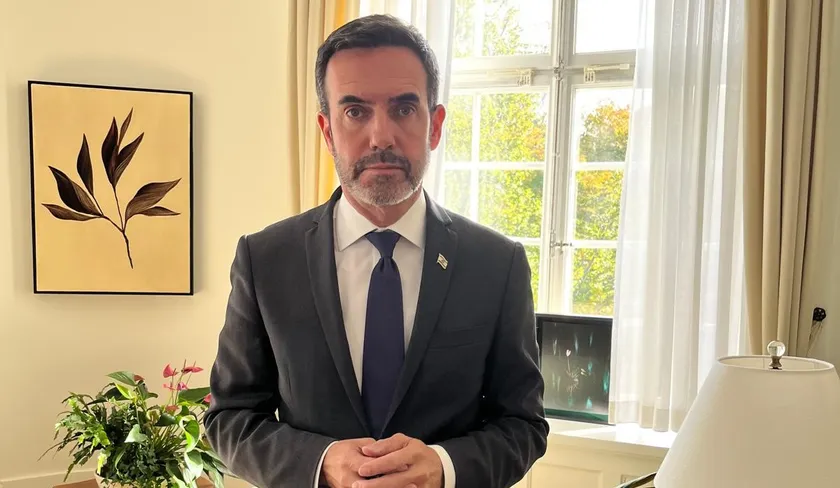
The Amnesty Article

Since my article about Amnesty and Swedish schools was written and published in Swedish and since the debate with Amnesty Sweden's Secretery Genral in Svenska Dagbladet was also in Swedish, I finally got round to translating the original texts into English so that non-Swedish speakers can see what the all the fuss was about…

When a Jewish woman from Umeå was featured on DN's first page after she decided to leave town, at least one writer, Göran Rosenberg, was critical. The article explained that the woman was leaving because of decades of antisemitic harassment. Still, Rosenberg wasn't impressed. "Today, DN publishes on its entire front page that a woman in Umeå (of Israeli origin) intends to leave the city because of her experiences of antisemitism ", he wrote and added that DN failed to explain the background: "consequently, we are not told that the same woman was very active in supporting Israel in the Gaza war". A couple of days later he explained in Expressen that antisemitism is being used as a political weapon. The woman from Umeå, it seems, had it coming. After all, she's not a "Swedish Jew", rather she's "a woman in Umeå (of Israeli origin)". Rosenberg's message is clear: while Antisemitism against regular Jews like himself, is despicable, Zionists and Israelis just "experience" antisemitism which is actually just good old criticism of Israel, or as Swedes elegantly call it – Israelkritik.

I thought of this when I talked to an organization called "Zikaron" last week. This small but extremely important organization offers lectures on the fates of Holocaust survivors to Swedish schools. The lectures are carried out by young people, grandchildren or great grandchildren of survivors who are taking over the historic burden of remembrance. Naturally, this has nothing to do with Israel. The Holocaust took place before there was an Israel and the victims were not "settler colonialist" or responsible for the "blockade of Gaza". And yet, it turns out that sometimes even the Holocaust is too problematic for some schools. When I talked to one of Zikaron's organizers, she told me that after the massacre of October 7th last year there were about ten schools that cancelled their lectures due to reasons like "wrong timing" or "sensitive timing" and since then, there has been less demand for their lectures. Could this also be "Israelkritik" or is it just that Swedish schools are too scared of upsetting the sensitive souls who find Holocaust education provocative. Or perhaps they don’t want to get in trouble with activist bullies who didn't get the memo saying that it's ok to talk about dead Jews from the 40s and the problem is only with the other kind of Jews, the ones with guns from the Middle-East. Whatever it is, anyone who's worried about Swedish schools being cowards can rest assured. They found their courage elsewhere.
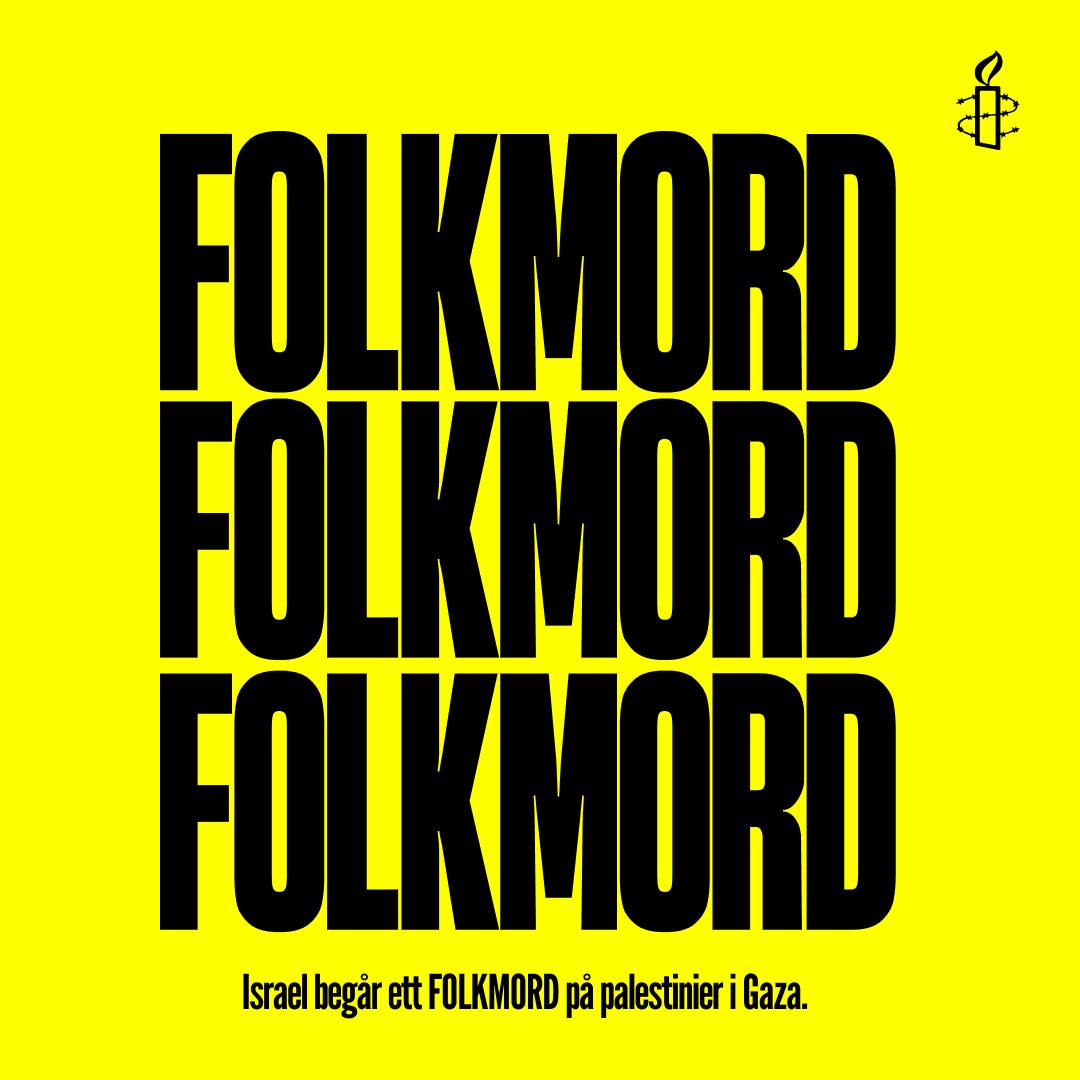
While Holocaust education may be too sensitive, foreign policy political activism seems to be no problem at all. Otherwise, how could 39 Swedish schools be "partner schools (samarbetsskolor)" of Amnesty, a political organization which is as far from mainstream as it gets. These schools use Amnesty's "Schools for Human Rights" model (skola för mänskliga rättigheter) for teacher's education, planning "theme days" (temadagar) and providing material and lectures. They even take part in global campaigns. This model may be great for highlighting human rights and democracy, but there's a serious problem when it comes to the conflict in the Middle-East, since Amnesty is anything but impartial.

In recent years Amnesty International positioned itself clearly as opposed to everything Israeli. It has disproportionately targeted Israel for years, it has supported boycott campaigns and some of its campaigners and partners have supported or even been linked to terror organization and Islamist movements (to name some: Yasmin Hussein, Saleh Hijazi and Moazzam Begg). It almost entirely ignores attacks against Israel and atrocities committed against its civilians, it bases its information about Gaza casualties on Hamas' propaganda and it makes claims which are obviously false like "Israel's military operations in Gaza continue to kill people on a scale that has never been seen before".

But it's not only talk. Amnesty Sweden actively campaigned against policies of the Swedish government, like the decision to pause funding for UNRWA (based on information that some of its employees took part in the October 7th massacre) and the decision to stop funding Swedish Ibn Rushd study circle (after accusations that the organization has ties to the Muslim Brotherhood and spreads antisemitism). In fact, whoever wants an idea of what Amnesty really supports can take a look at the kind of people it awards its prizes to. Elin Forghani, a Vänsterpartiet activist from Östersund just won Amnesty's new "Noismaker" prize after publicly claiming that: "Israel is a colonial project and an outpost of the West in the Middle East and always has been". And just to make clear what should be done with the colonizers she wrote: "we can make Israel and their sponsors sweat, tremble and fall. Liberation is in sight".

Naturally, in a democracy political activism is more than legitimate. However, it's also clear that Amnesty is in no way neutral or objective. It's a political player in global geo-politics, but it's still marching into Swedish schools, presenting itself as a non-biased public informer and bearer of a universal truth. Although political parties and organizations are allowed in Swedish schools and naturally Democracy and human rights should be part of their education, this isn't a case of mainstream education. Amnesty is getting a special "partner" status as a long-term official partner while other political actors are just guests, implying that Amnesty represents facts while the others represent opinions.

It's unclear why Swedish schools should be discussing the war in Gaza in the first place, but if they must, the material should be written and supervised carefully by serious state actors. This isn’t the place to start outsourcing. I spoke to a few parents and students in a Stockholm high school. They told me about their complaints to the school management regarding Amnesty's Gaza war education material and about lessons using material from Globalis, an organization run by "Svenska FN-förbundet" an organization which claims to "work for a better and stronger UN ". The UN in the title shouldn't be confused with impartiality. When I spoke to one student, he told me that since the lessons about the Israeli-Palestinian conflict started "it feels like I have to go to school to defend Israel twice a week. It's not that the teacher lies but it's so one-sided. For example, there were two lessons about the Palestinian Nakba and only half a slide about the expulsion of Jews from Arab countries and Iran and even that, according to the teacher, could be understood as a result of "Mossad activity". When the students were given texts on the subject, they were given guiding questions like: "what support is there for the claim that Israel is an apartheid state?". Student I spoke to talked about feeling very uncomfortable and worried about their classmates. "I feel I have to give the other side", one of them said, "because the other students in the class don't know the whole picture".

In an incident in another school, UN day was celebrated in the schoolyard by waving flags of different countries. According to one of the teachers, when some angry spectators who were passing by threatened to enter the school and remove the Israeli flag, the reaction wasn’t standing up to the threatening bullies and informing the police. Instead, the flag was removed and the person waving it was asked not to wave it again.

It seems that our schools are becoming a ridiculous case of Dr. Jackyle and Mr. Hyde. On one hand, they're wannabe rebels, dealing with the world's most complicated conflicts by employing radical political activists, while on the other hand, they're so afraid of controversy and conflict that they can't even wave a flag of a UN member country or talk about the Holocaust.

It's true, only a few schools cancelled Holocaust lectures and only some are Amnesty partners. But it's also true that only some pro-Palestinian demonstrators support violence (which is what shouting "Intifada!" means), only part of vänsterpartiet supports the PFLP and only a handful burned an Israeli flag outside a synagogue. Not to mention that just several thousand attended a Hamas conference in Malmö, and only a few hundred contribute to Islamist, antisemitic movements, and only one Imam praised Hezbollah's leader and only one or two artist spread antisemitic conspiracy theories, and only a small minority screamed at Holocaust survivors entering a memorial ceremony. How many minorities will it take to get the message? and when will our schools become part of the solution instead of part of the problem.

Amnesty Sweden's comment (originally in Swedish):

Our schoolwork is based on international conventions and Swedish school's governing documents.

On December 10th, 1948, the newly formed UN adopted the Universal Declaration of Human Rights. For the first time, the world had an agreement that viewed all people as free and equal, regardless of gender, skin color, religion or other beliefs or characteristics.

In 2011, knowledge of human rights was incorporated into the Swedish curriculum. Since 2012, Amnesty has been supporting upper secondary schools with teaching materials, lectures, and a model for working with human rights, based on both international conventions and Sweden's school governing documents.

David Stavrou, guest columnist for Svenska Dagbladet, criticizes Amnesty for supporting upper secondary schools in their work on human rights education, by making directly false accusations about Amnesty as an organization and our work. But these claims are easy to refute: No, Amnesty does not support the call for a boycott of Israel. Yes, Amnesty has condemned attacks on civilian Israelis and called for those responsible for these war crimes to be held accountable. No, our teaching materials and lectures are not about Israel and Palestine.

David Stavrou claims that we are a biased organization and that our criticism of Israel is disproportionate. This is a direct false statement that is often made by representatives of the Israeli government. Amnesty is an impartial, politically independent organization. We do not accept government funds because we want to be free to investigate human rights violations without being dependent on anyone. Our demands and criticisms are based on international law and respect for human rights. And we assess all states by the same standards.

Even though our lectures in high schools this fall did not address the war in Gaza, high school students have asked many questions about the situation in Gaza. Human rights, contrary to what David Stavrou suggests, apply both in times of peace and in conflicts. Amnesty's focus in all conflicts is the protection of civilians and their human rights.

Amnesty is not alone in criticizing Israel's indiscriminate attacks on civilians, the forced displacement of Palestinian civilians, and the denial of humanitarian aid into Gaza, three clear examples of violations of the laws of war. Knowledge of human rights is necessary. We are happy to contribute to helping upper secondary schools fulfill the curriculum, providing students with more knowledge and the conditions to protect their own rights and work to ensure that others' rights are respected, both now and in the future.

Anna Johansson, Secretary General, Amnesty International Sweden.

David Stavrou's reply:

It’s great that Amnesty Sweden takes texts which are published in Svenska Dagbladet seriously. However, it’s a bit surprising because, during the process of writing the article, I contacted their press service to ask questions that had arisen after conversations with students at their partner schools. No one responded. To avoid mistakes, I wrote again, but I was ignored once more. On the other hand, Amnesty’s response suggests it might not matter – it’s filled with answers to questions no one asked and avoids addressing the questions that were actually raised.

No one suggested that schools shouldn’t teach human rights and democracy. No one asked whether human rights are important during wartime. Even if one appreciates the Secretary General of Amnesty’s inspiring words, that wasn’t at all what the article was about. Everyone knows human rights are important. The question is whether her organization is qualified to be the one teaching our children about them.

One question that goes unanswered, however, in the one addressing Amnesty’s partners abroad that have had connections to terrorist organizations and Islamist movements. Perhaps it’s because she is aware of the collaboration with Moazzam Begg, for example. Begg, a former Guantanamo detainee, was invited to Sweden by Amnesty despite having supported the Taliban. This isn’t something I’m claiming – it’s what a senior official within Amnesty in London, Gita Sahgal, said. She argued that collaboration with "Britain’s most famous Taliban supporter" and links to groups promoting Islamic right-wing ideas damage Amnesty’s integrity and pose a threat to human rights. Amnesty’s reaction – she was dismissed.

Then there’s the claim that Amnesty doesn’t support a boycott of Israel. If that’s the case, why did Amnesty’s Regional Director for the Middle East and North Africa write the following: "We urge the international community to cease all forms of support – whether direct or indirect, through actions or omissions – for Israel’s apartheid system"? (Direct quote from Amnesty’s website).

As for Amnesty having condemned attacks on Israeli civilians, it is true that they’ve done so on certain occasions. After October 7th, it would have been absurd if they hadn’t. But anyone familiar with Amnesty’s publications knows that the Secretary General’s statement is misleading. During September and October, Amnesty International published 14 texts on their website criticizing Israel. That’s as many as the texts about Syria, Afghanistan, and Iraq – combined. Iran received seven texts during the same period, Sudan and South Sudan six in total, and Belarus only four. During these two months, 7,517 rockets were fired at Israel. Amnesty published nothing about these attacks, which kill and injure and have forced over 140,000 Israeli citizens to live as internally displaced persons for more than a year.

"We assess all states by the same standards," writes Amnesty’s Secretary General. That’s hard to believe when reading about their "regional activist seminars" in Stockholm and Malmö in November. The program begins with "Palestine then and now" and continues with "a deeper understanding of the Palestine issue through a Palestinian perspective." Then there’s a lecture on the Palestine groups in Malmö, followed by "panel discussion: Academics for Palestine." Later in the day, there’s "panel discussion: on Palestine, struggle, and conflict." It seems like the Rohingyas, Uighurs, the Belarusian opposition, and Tigrayans from Ethiopia will have to wait for the next seminar because the next workshop is "What can I do? A guide to action for Palestinian liberation." This is organized by, drumroll, BDS Sweden. Yes, BDS – Boycott, Divestment, and Sanction (remember the Secretary General’s statement: "But these claims are easy to refute: No, Amnesty does not support the call for a boycott of Israel." Does she think we can’t read?).

None of the speakers at the seminar are pro-Israel; instead, it’s full of well-known pro-Palestinian activists. And that’s entirely okay. The Svenska Dagbladet article wasn’t about whether Amnesty is right or wrong or about their right to be pro-Palestinian. It was about impartiality. I wonder if any of the young people who participated in the activist seminar are students from one of Amnesty’s 39 partner schools. I suggest that Sweden’s school principals take what the Secretary General wrote seriously. When she writes that she’s glad to "give students more knowledge," it becomes clear that their schools are her recruitment ground.

75 Years Ago, This Jewish Boy Was the Sole Survivor of a Disastrous Plane Crash in Norway

The son of Itzhak El Al, one of 28 Jewish Tunisian children who were on the plane that crashed in Norway in 1949, reflects back on his father's good fortune. 'The Norwegians even built my family's home on the moshav,' he says.

Published in Haaretz: https://www.haaretz.com/jewish/2024-11-26/ty-article-magazine/.premium/75-years-ago-this-jewish-boy-was-the-sole-survivor-of-a-disastrous-plane-crash-in-norway/00000193-5e4a-d68e-a1db-fe4ec66f0000

STOCKHOLM – Seventy-five years ago, on November 20, 1949, a Dutch Douglas DC-3 aircraft was approaching Oslo on its way to Fornebu, Norway's main international airport at the time.

Confronting bad weather conditions, the pilot lowered the plane, apparently not aware of the exact height of the mountainous terrain. Its wing hit a tree not far from Hurum, a small community southwest of Oslo, and disaster followed: The plane crashed into a mountain, igniting the fuel tank. Except for one 12-year-old child, Itzhak Allal, all other 30 passengers on board – 27 of them children – and four crew members were killed.

Although the tragedy happened in Norway, it was very Jewish. The plane had been chartered by the Youth Aliyah organization (Aliyat Hano'ar) to transport Jewish children from Tunisia to a recovery center in Norway, before their planned immigration to Israel.

They were heading to a sanitarium for tuberculosis patients made available by the Norwegian government for Jewish children from North Africa. In April 1949, 200 Jewish children from Morocco were hosted there for the first time, and the Jewish children from Tunisia were the next group in line.

Haim El Al and his son Itzhak, named after his grandfather, visit the 1949 Hurum air disaster site in Norway.

Haim El Al and his son Itzhak, named after his grandfather, visit the 1949 Hurum air disaster site in Norway. Credit: Rami Kafarov.

It took two days until the wreckage was discovered by two hunters, who also found the dead bodies of the passengers and crew as well as the only survivor. Allal was handed over to the Norwegian authorities and aroused so much sympathy in the country that King Haakon VII offered to adopt him.

The bodies of the other children were flown back to Tunisia where they were buried.

Allal was taken to Israel where he was eventually united with his family who immigrated to Israel and settled in Yanuv, a moshav near Netanya. This agricultural community had been partly built with Norwegian funds, following the air disaster. Allal changed his last name to El Al, and he and his wife Lilian would eventually have six children. He died of cancer when he was 48.

One of the couple's children, Haim, now 51, visited Norway for the first time last week. He came with his 15-year-old son Itzhak, named after his grandfather and born, coincidentally, on the 60th anniversary of the tragedy.

The two family members of the sole survivor of the accident were invited to attend a series of events to mark the 75th anniversary of the crash, organized by the Israeli embassy in Norway and the Friends of Israel in the Norwegian Labor Movement association (Venner av Israel i Norsk Arbeiderbevegelse).

"I've felt a strong connection to Norway my whole life," Haim El Al said in an interview after visiting the site of the disaster, "so it's really emotional for me to be here for the first time."

When you were a child, did your father tell you about the accident and the tragedy he was part of as a 12-year-old boy?

"My dad died young, when I was only 13. But we heard plenty of stories at home. My father talked about the two planes which took him and the other Jewish children from Tunisia to Norway. He remembered the story well – one aircraft arrived safely and the other, the one he was on, made a stop in Belgium because of a faulty radio. As we know, that was the plane that crashed in the Norwegian forest outside Hurum.

"He talked about being discovered two days later by the two Norwegian hunters and about how he survived in the cold and the darkness – drinking water from a nearby stream, eating apples from the bags and boxes that the children had on the plane and warming himself by the warm parts of the engine and the motor oil that kept on burning. He said that one of the people who found him gave him his coat. I was at the site just now with my son and we were freezing after just 30 minutes. He was there for two whole days."

Do you think your father was traumatized? As a boy, did you feel he was still under the influence of this tragic event?

"No, the Norwegians took care of his rehabilitation very well. They treated him in a wonderful way. They gave him presents and even the king of Norway, who was very touched by his story, gave him a bicycle. When dad came to Israel, he became famous, everybody knew him and his story. When his parents, my grandparents, immigrated to Israel, the Norwegians even built them a home, which is where I grew up."

Rest of the article: https://www.haaretz.com/jewish/2024-11-26/ty-article-magazine/.premium/75-years-ago-this-jewish-boy-was-the-sole-survivor-of-a-disastrous-plane-crash-in-norway/00000193-5e4a-d68e-a1db-fe4ec66f0000

'For Israelis, It's Clear Jews Can Be Religious, Secular, Asian or Black. Not for Swedes'

From Annie Leibovitz to Amy Winehouse and Ofra Haza: New book on Jewish heroines, created by three feminist Swedish Jewish women, offers an answer to antisemitism

Published: https://www.haaretz.com/jewish/2024-08-05/ty-article-magazine/.premium/for-israelis-its-clear-jews-can-be-religious-secular-asian-or-black-not-for-swedes/00000191-22ac-d4fa-a7d7-e7ef96a70000

What do Amy Winehouse, Anne Frank, Estée Lauder, Rosa Luxemburg, Ofra Haza and Marilyn Monroe have in common? They were all Jewish (Marilyn converted), they were all heroines, and now, all six are among the 120 Jewish women in the new Swedish-language book "Jewish Heroines." The book, which targets both young readers and adults, not only tells the heroines' stories but also uses them to pose questions that have become more urgent in the post-October 7 world.

"Jewish Heroines" is the work of three Jewish Swedish women. The text was written by Anneli Rådestad, the editor of the Jewish-Swedish culture magazine Judisk Krönika, and Karin Brygger, a poet and author who also writes for the Swedish media. The heroines were illustrated by Joanna Rubin Dranger, a graphic artist and also an illustration professor at the University of Arts, Crafts and Design in Stockholm. She's also a winner of the Nordic Council's Literature Prize for her latest graphic novel.

Anneli Radestad
Anneli Rådestad.Credit: Hugh Gordon

"The three of us come from very strong feminist backgrounds," says Rådestad, who's also a former journalist for Swedish public radio. She notes that Rubin Dranger has been working with feminist issues since the '90s, while Brygger has being studying women's history and literature for around 25 years. Rådestad is the editor of Judisk Krönika, which launched a series of articles about Jewish women, "partly because the magazine has been male dominated since its founding in 1932. Through these articles, we tried to contribute to a correction of Jewish-Swedish history by bringing women out of the shadows."

The idea to turn the project into a book came during the pandemic, while Rådestad was reading to her daughter, who was 5 at the time. "The book I was reading was the Swedish version of 'Good Night Stories for Rebel Girls' [by Elena Favilli and Francesca Cavallo], and I thought it would be great if there was a book dedicated to Jewish heroines. Jews are a small minority in Sweden, and the stories of Jewish women … have left very little mark." Rådestad says that when she told Rubin Dranger about the idea, "she was enthusiastic and very surprised that a book like this didn't already exist."

איורים - book_ Joanna Rubin Dranger
The book cover.Credit: Joanna Rubin Dranger / Natur & Kultur

I spoke with the three authors in Stockholm's Old Town after the book's launch party at a local bookstore. They say that when they checked if there was already a book on Jewish heroines, they found a few in English, but on a smaller scale. And they discovered the Jewish Women's Archive in the United States – a great source, but it's not a book. Rubin Dranger notes that they aimed to rise above the local context. "I wanted to make a book that would not only be for the Jewish community in Sweden but would suit everyone, including people in other countries," she says.

Brygger adds that "Jewish Heroines" could also play a role in academic debates. "It can be part of women's history and women's literary history studies. I've been involved in women's studies for a long time and I've been writing life stories and texts that give women a voice," she says. "These stories are missing in the academic world. In fact, a large part of the ability to do this now exists thanks to women like those we wrote about in the book, such as Gloria Steinem, Betty Friedan and Susan Faludi."

These last three are among a long line of American women in "Jewish Heroines," including Supreme Court Justice Ruth Bader Ginsburg, thinkers such as Susan SontagJudith Butler and Masha Gessen, and artists of various stripes such as Barbra StreisandBette Midler and Annie Leibovitz. The book also portrays women from totally different backgrounds – Nobel-winning scientists such as Israeli Ada Yonath and Italian Rita Levi-Montalcini – as well as actresses, dancers, heroines from Middle Eastern history and even biblical figures such as Esther, Ruth and the Four Matriarchs: Sarah, Rebecca, Leah and Rachel. "Jewish Heroines" weaves them into a tapestry of inspiring women from different eras all over the world.

Your book features a wide variety of countries of origin, eras and ethnic groups, but some are more widely represented than others. For example, there are many women from Sweden and the United States and only a few from Israel including Golda MeirOfra Haza, Ada Yonath, Ester Rada and Robi Damelin of the Parents Circle – Families Forum. How did you make your choices?

Joanna Rubin Dranger
Joanna Rubin Dranger.Credit: Hugh Gordon

Brygger: "When we found women we wanted to have in the book, we made presentations for the others … and the others took some time to think and learn, and we made a decision. The three of us had an equal part in 'finding' the women." Then came the greater work of research, writing and illustrating. "This ongoing conversation was the most fabulous part of working on the book," Brygger says. "We were in constant contact, sending messages, photos and articles to each other in a flow of creative desire to write and portray as many great women as we could."

Rubin Dranger adds about the women they chose: "For Israelis, it's quite clear that Jews can be anything – religious or secular, Asian, white or Black – but for Swedes it's not so clear. Many people have never met a Jew but they have an image of Jews. Often, they think of a Jew as a religious man with a hat and payes [sidelocks]. They don't always realize that this is a flexible identity."

According to Rubin Dranger, this is why the book also features a Black American rabbi, writers, journalists and spiritual women from Algeria, New Zealand, Egypt and Cuba, not to mention a Mexican poet and actresses from India. Rådestad adds: "In a way, this book is a response to things like the report published in 2021 about antisemitism in schools in Malmö, a city that has become notorious in this context. The report showed the way students and teachers understand the word 'Jew': an Orthodox religious white man or a figure in the Israeli-Palestinian conflict."

Karin Brygger.
Karin Brygger.Credit: Hugh Gordon

Brygger notes that the world of the past – and unfortunately still the present – is filled with prejudices. So the book "not only offers a wonderful possibility of finding a character who is similar to you, who can give you strength or inspire you. It's also a tool for breaking down stereotypes and fighting antisemitism."

Brygger, who lives in Gothenburg, adds that she received warm responses when she presented the book at cultural institutions in the city. "They said, 'We don't need more reports, we already know that there is antisemitism here. We need tools to deal with the problem.' They were enthusiastic about the book and wanted to use it as an educational tool."

And the issue of Jewish diversity isn't taken for granted in the Jewish community.

"Today, when you look, for example, at the school photo of the Jewish school in Stockholm, you can find the whole world in them," Rådestad says. "People get married in all kinds of ways, and it's important to represent everyone."

In Brygger's opinion, the book's diversity of Jewish identities includes "a way to deal with prejudices and racism that exist even in the Jewish community." Rubin Dranger adds: "But it's not just the representation. It's not just pointing out the fact that there is someone in the book who is adopted or someone who is Ethiopian. It's a presence that's truly broad, not an example or two who are chosen just to serve as an alibi."

Beyond the choice of specific characters, the creators stress the significance of the content being available in a physical book, sold nationwide, rather than just being information in an internet archive or a Jewish publication. "In a country where the Jewish minority is tiny, we shouldn't underestimate the fact that a large non-Jewish publisher released the book in Swedish," Rådestad says. "This makes a statement that this book is for everyone – Jews and non-Jews, young and old, library visitors and school students."

She and her two co-authors are aware that the book is being published in stormy times globally for both women and Jews. The book links these two identities. Many of the profiles are of women who stood – or are still standing – at the forefront of such troubles, from Russian-American anarchist Emma Goldman, through Hannah Szenes and women fighters in WWII ghettos, to young Ethiopian-American activist Naomi Wadler. The impression is that, beyond its heroines' scientific and artistic achievements, the book celebrates the struggle against tyranny, racism and the patriarchy.

Illustrations of Ruth Bader Ginsburg, from the book.
Illustrations of Ruth Bader Ginsburg and Ofra Haza, from the book.Credit: Joanna Rubin Dranger

"We have seen and continue to see a retreat in women's rights in the world," Brygger says. "It keeps returning. In the book, we connect Jewish history with women's history." Rådestad continues: "We are connecting in many ways with other struggles, like that of the LGBTQ community. The Jewish feminist movement and the Jewish LGBTQ movement walked hand in hand. "Take Steven Greenberg, for example, the first openly homosexual Orthodox rabbi. His interpretation of the Biblical verse forbidding male intercourse is that it is a prohibition against degrading another man. Doing so lowers him to the status of a woman, which in biblical times was seen as inferior. Greenberg's interpretation connects the two struggles – striving for equality in both male-male relationships and male-female relationships. It's a common struggle."

The authors acknowledge that the book's significance has changed somewhat since October 7. Work on the book was finished before the Hamas attack. However, says Rådestad, quite a few more Jewish female heroines have emerged since then. "Take, for example, Rachel Edri from Ofakim, who saved her own life and that of her husband," she says. "She became famous for giving cookies and coffee to the terrorists, thus preventing them from murdering more people. Another example came after the terrible Eurovision week in Malmö. I think that Eden Golan not only carried Israel on her shoulders but also Sweden's Jewish minority. A young woman stood high when so many older people around her went so low. She really showed great strength, while many Jews around the world felt pressure and fear. Her character gave me strength, too."

"We couldn't have imagined these circumstances when we wrote the book. We presented it, on the eve of its publication, at the Gothenburg International Book Fair the week before October 7," Rådestad recalls, referring to the largest cultural event in Scandinavia and one of Europe's largest book fairs. "The transition from being on an important international cultural stage to October 7 was very stark. It was a terrible fall. It shook the ground beneath the feet of Israelis and Palestinians – and Jews worldwide.

"I realized a few months later that the meaning of some of the book's heroines had changed for me. For example, Dona Gracia. When I wrote about her, I saw her as a powerful historical figure who faced the Inquisition 500 years ago. Today, I understand that there are still many who live as crypto-Jews – I have friends worried because they gave their children Jewish names. Now, they don't know what effect this will have.

איורים 5 Joanna Rubin Dranger

Illustration of Golda Meir, from the book.
Illustrations of Golda Meir and Esther Rada from the book.Illustration: Joanna Rubin Dranger/Natur & Kultur

In the reality of cultural and educational boycotts, a Jewish name can lead to serious consequences. At the same time, I feel that the resistance, the strength and the resilience of Jews are an important part of this book. As a people, we've been through this many times for hundreds of years. Some of the heroines here withstood the test. They gave what they created to themselves, to their families, to their people and to the world."

Rådestad mentions a common sentiment among Jews around the world today: "Israelis have become more Jewish and Jews have become more Israeli since Since October 7. The pogromist terror of October 7 evoked something that previously only happened in the Diaspora and that Israel was supposed to prevent. The security of independence and having agency was shaken. Israelis got a taste of what it was like to be a minority in Russia a couple of hundred years ago in the most terrible and terrifying way."

She observes that many Jews worldwide are suffering for the same reason Israelis are suffering. She says they see erstwhile friends and partners, such as the international cultural communities and feminist movement, being silent and turning their backs. "It's become very important for some Jews to stand up for Israel and Israelis in a world where haters are targeting Jews and Israelis alike," she says. "So when Israel is framed as a pariah state and a controversial country, the women we profiled provide strength that children and teenagers need."

"It's not just children," Brygger adds. "When I look through the book, I'm inspired and feel strength and joy. Already when we were writing it, when we discovered women we didn't know about, it made us happy. But now the joy is different. In the past, it was the euphoria of discovering something new – like the Jewish actresses who starred in Bollywood. But today, under the shadow of October 7, the book also gives us the strength we need."

Another layer to the book is the flexible definition of Jewish identity. Some figures were not born Jewish and converted (like Marilyn Monroe, who underwent a Reform conversion to Judaism ahead of her marriage to playwright Arthur Miller, and called herself "a Jewish atheist"). Some had a Jewish father and a non-Jewish mother. Some weren't born Jewish but were adopted by Jews. Some of the heroines didn't identify as Jewish growing up, but as adults were foced by others to grapple with their Jewish identity.

By way of example, Brygger points out Marianne Cohn, a member of the French Resistance during World War II. She saved many Jewish children by smuggling them over the Swiss border. She had no active Jewish identity whatsoever during her childhood in Germany. It only developed upon emigrating to France with her parents. Rubin Dranger talks about Lotte Laserstein, a German painter whose family had converted to Christianity. But the Nazis considered her Jewish and forbade her to work as an artist. She found refuge in Sweden. "In a way, her story connects to my own experience," she says. "I grew up assimilated and only embraced my Jewish identity after a priest in my Christian confirmation process made me feel singled out and attacked me because of my Jewish heritage. I know that many today share this experience. After October 7, many people are rediscovering their Jewish identity and they start searching for a community they may have already forgotten."

"In the current global climate, words like "minyan" and "shtetel" may take on a new meaning," Rådestad observes. "In progressive Judaism, at least, you can find a women's minyan. The term shtetel may represent a safe place." This is needed because there are already American publishing houses who say "No to sexism, no to racism and no to Zionism." Says Rådestad, "Jews may once again be forced to publish their books alone, until the world rediscovers them."

What sets a Jewish heroine apart from general heroism, and what is the uniqueness of women's heroism?

Brygger: "It's about persecution. The heroism in our book is related to the strength of coping with and resisting persecution, antisemitism and exclusion. In general society, there is a struggle against patriarchy and glass ceilings of all kinds. Here we need to add another struggle – the struggle that Jewish women have had to wage throughout history."

Rubin Dranger: "Part of it is that many Jewish women fought for the rights of other minorities, like African Americans or indigenous peoples in the United States. They weren't content with fighting for their own interests."

Rådestad: "It's part of Jewish values and Jewish tradition. Telling truth to power is part of what Jews do. So is the attempt to make the world a better place, tikkun olam. Although this characterizes American Judaism, it's not only in the United States. We wrote, for example, about the Iraqi-born philanthropist Flora Sassoon. She funded and promoted the use of vaccines against terrible diseases in India and fought against deprivation and discrimination."

Given the chance, who'd you like to meet from among the heroines you profiled?

Rubin Dranger: "The American cryptanalyst Elizebeth Smith Friedman, who cracked the Nazi codes. Code cracking and intelligence defense fascinates me, and the fact that Friedman's work wasn't known until quite recently. For many decades, her files were kept confidential and were lost to history. Elizebeth wasn't Jewish by birth but married a Jewish man, a U.S. Army cryptographer." It is important to talk about this type of Jewishness, exactly because not everybody considers them Jewish, she says.

Rådestad has a hard time choosing. She starts with Shifra and Puah, the biblical midwives who disobeyed Pharaoh's order to kill Hebrew children. Then she moves on to the young Jewish women who were part of the anti-Nazi resistance movements and the Warsaw Ghetto Uprising fighters. She finally chooses Asenath Barzani, a rabbinical scholar who was active in 17th century Kurdistan. Barzani's father was a yeshiva head in Mosul. She became a yeshiva head herself. "Barzani's story changed my view about how progress happens," she explains. "It gives perspective on what the West used to be and what Iraq used to be."

Brygger also mentions several women. She says her encounter with Susan Sontag "not only shaped my academic life, but also my personal life since I was a teenager." She also recalls the story of Charlotte Salomon, the Jewish-German artist who was murdered in Auschwitz. "It's a story with a lot of pain," she says. "Salomon sent her works to a friend with instructions to 'keep this safe, it's my whole life.' Salomon reminds us how important it is to write and document our lives even today, how important it is to leave traces and testimonies."

"I hope that if a young person feels alone or lost, they'll be able to find what I found in these women that changed my life so radically," she adds. "I hope our book will give them role models in these turbulent and terrible times. Perhaps they'll even find a soulmate, even if it's someone who's no longer alive or someone who's far away. It's so hard to find and mold your identity. I'd never have made it through my teenage years without these women who made me a reading and writing person, with a life goal. As usual, I went all in and really tried to learn everything about many of them. Some of them are much closer to me than 'real people.' The world opens up to you when you relate to texts and books. These writers and artists also give you a hand to hold throughout life."

Jewish Youth From Around Europe Write About Their Lives. Now, and 85 Years Ago

The Kaleidoscope project revives an initiative that was interrupted by the Holocaust: an autobiographical writing competition for Jewish youth from all over Europe

Published in "Haaretz": https://www.haaretz.com/jewish/2024-07-15/ty-article-magazine/.premium/jewish-youth-from-around-europe-write-about-their-lives-now-and-85-years-ago/00000190-a26f-da1a-adf0-a6ff4cb40000

"My father spoke with me as a friend. He touched offhandedly on the question of whether I was in love with a boy. The question has opened a new page for me … I've always tried to banish the subject from my heart," wrote a 17-year-old Jewish girl calling herself Hansi in Vilna in 1934. Later, she wrote that the boys in her class ignored her, that she saw herself as "unattractive to the eye" and that the indifference of the boys made her sit on the sidelines and sink into thought while the other girls sat together and shared anecdotes.

"That specific situation made it so I didn't love a single boy," she wrote. "At a time when I couldn't stop my feelings, I felt love for boys in general, as the opposite sex, as a group and not as individuals."

Hansi's text is only one testament out of hundreds that unfurl over thousands of pages written by young Jews who lived in Poland and several of its neighbors in the 1930s. They were collected by the Yiddish Scientific Institute, which worked in Eastern Europe in the lead-up to World War II with the mission of researching and preserving the region's Jewish life and Yiddish culture.

The organization was established in 1925 in Vilna (then in Poland, now the capital of Lithuania and known as Vilnius) and had branches in Warsaw, Berlin and New York. World War II forced the organization to move its operations to New York, which is the home to its modern incarnation's headquarters to this day.

The collection of these autobiographical accounts is fascinating in the personal glimpse it gives into prewar Jewish life. Many of the teenagers who wrote them died in the Holocaust, their words now serving as a memorial to the complex, diverse lives that were lost. They wrote about music, literature, ice skating and a myriad of other subjects. Some were politically aware and were Zionists, socialists or members of the Bund movement. There were the religious and the secular, the poor and the rich, the city folk and the rural folk. There were young people in love, the newly married and the divorced. Some dreamed of emigrating to the New World; some were excited about the future, and others were afraid of it.

The beginning of the Hebrew-language entry for the competition written by Hansi, a girl from Vilna, in 1934.
The beginning of the Hebrew-language entry for the competition written by Hansi, a girl from Vilna, in 1934.Credit: YIVO Institute for Jewish Research

"In the 1930s, the YIVO institute in Vilna wanted to know what was going on in the minds of young people in Yiddish-speaking countries," says Daniela Greiber, the Jewish Communal Life grants program manager at Rothschild Foundation Hanadiv Europe. "They organized a competition for autobiographical writing, and over the course of several rounds, between 1934 and 1939, they received 627 manuscripts. Most were handwritten and dozens of pages long. Most of the writers were boys, but there were girls too, and although the prevalent language was Yiddish, there were also some – including Hansi – who wrote in both Hebrew and Polish.

"The idea wasn't to publish the manuscripts, but to preserve them so they would serve as raw material for social research," continues Greiber. "The background for the project was the "Yiddishist" worldview, which believed in the need to develop a sense of belonging and meaning in Jewish life in countries where Yiddish was spoken.

There was also a belief among many that there was a future for Jews in Europe that would involve a socialist revolution. This was a time when people studied ethnography and were involved in the discipline of autobiographical writing. Someone had the ingenious idea of asking young people to write their biographies, and to make the manuscripts truthful, it was proposed to do it with anonymity."

The request was publicized in the press; to increase motivation, a competition with prizes was announced. Each year, several writers won 150 zlotys each. However, the winners in the final round never found out about their accomplishment. The date set for announcing the winner was September 1, 1939, the very day World War II broke out. It's likely that many of the participants didn't survive the following years.

The Jewish autobiographical competition was abruptly forced to end because of the war, but 85 years later, the Rothschild Foundation has begun to revive the project. It named the new project Kaleidoscope, and it seems almost like the twin of the original one. Once more, young Jews from all over Europe are writing about their lives. This time, the works aren't only being preserved and collected, but are also being published (in their original language and the English translation) on the project's website.

Dennis Grossman, one of the first participants in the project, is a young Jewish man from Budapest who grew up participating in Hungarian Jewish schools and summer camps. "I'm 21 years old and I still go to summer camps – now as a counselor," he wrote. "It is very hard to stay involved in the Jewish community after somebody reaches adulthood. Before that, you can go to camps, Jewish school and youth movements. But you grow out of these when you become 18 years old.

"That is why – if you want to stay involved – people usually go work at [camps] as a counselor or get jobs in Jewish organizations," he continued. "My girlfriend and I started hosting Shabbat dinners for our Jewish friends every other Friday as a way to keep our little community together. We usually say blessings for the wine and challah, sometimes we say kiddush. After that we eat, drink, have conversations and play board games. 

"Most of the people who come are our friends from […] camp, but we also try to invite anybody who has somewhat of a connection to Judaism and is looking for a way into the community," he added. "There are lots of young Jews in Hungary who either find out about their being Jewish too late or have some other reason for not getting involved in the community early on. These people get locked out because most of the programs and communities for young adults are just like our Shabbat dinners. Small, because my home can only fit so many, and somewhat closed because we only know the people in our social bubble.

Dennis Grossman enjoys some hasábburgonya. 'It is very hard to stay involved in the Jewish community after somebody reaches adulthood.'
Denis Grossman

"I am truly frustrated by this dynamic and I'm always looking for ways to get more people involved," he wrote. "My philosophy is that people should relate to their Jewish identities through experiences they have. These experiences can be anywhere from going to the synagogue to attending a Shabbat dinner or a bar mitzvah. These can overwrite the fact that a lot of people relate to Judaism through the Holocaust or through our history."

Dennis is the son of an American father and a Hungarian mother who divorced when he was a baby. Most of his mother's family died in Auschwitz, and those who survived avoided their Jewish identity after the war. His mother started to show renewed interest in her 20s. "My mother always put more emphasis on making these experiences fun and digestible for us rather than following the strict rules," he wrote. "Because of this, for example, my concept of Shabbat is about having everyone around the table and my mom kissing my head, blessing me, and having peace around us. It is very far from the concept that we aren't allowed to do certain things…"

Dennis understands the significance of the manuscripts that were written so many decades ago and of the renewal of the project. "It's trying to understand the period we live in and the significance of being a Hungarian Jew in this time period," he says. "In my text, I tried to explain the situation so that people understand it. But besides the historical aspect, I also like to express myself in writing, and it feels good to be a part of something like this and to share my Jewish identity with the world. "

In addition to the positive aspects of Jewish identity, are there also more challenging aspects?

"For me, it's not a big challenge to be Jewish. If I wasn't an active Jew, that would be a greater concession. There's a fear of antisemitism, of estrangement, of discrimination, of the fact that people don't understand us or think we're strange, but if we don't expose ourselves and aren't active, people will understand us even less. I believe in being a full part of society in general, and I feel that through me, people will understand what Judaism is.

Continues:

https://www.haaretz.com/jewish/2024-07-15/ty-article-magazine/.premium/jewish-youth-from-around-europe-write-about-their-lives-now-and-85-years-ago/00000190-a26f-da1a-adf0-a6ff4cb40000

October 7th and the new Jewish Year

October 7th becomes a new Memorial Day in the Jewish calendar as we are reminded where we come from, where we're headed and to whom we're destines to give account.

Published in Swedish daily Expressen: https://www.expressen.se/kultur/judiska-barn-sags-ansvariga-for-folkmord/

Last week, Jews all over the world welcomed a new Jewish year. According to Jewish tradition, the Jewish New Year isn't just a celebration. It's a memorial day – the day when God remembers his creations and grants them new life for the coming year. Or perhaps the day when we remind ourselves where we come from, where we are going, and to whom we are destined to give account.

This isn't unique. The Jewish calendar is all about memory – on Pesach, we remember the exodus from slavery in Egypt. On Tisha Be'Av, we remember the destruction of the temple in Jerusalem. These are events that happened thousands of years ago, and yet they are recounted in detail, with almost holy precision, so that the lessons are never forgotten. "In every generation, one must see oneself as if one had personally experienced the exodus from Egypt," says the text Jews have read on the same date for over a thousand years. And that's exactly what we do.

But this year, Israeli Jews faced different challenges on the New Year. Just after 7 p.m., two Hamas terrorists began shooting and stabbing civilians on a light rail train in Jaffa. After killing four people, they got off the train and killed three more. One of the victims was Inbar Segev Vigder, who was carrying her 9-month-old baby. Inbar is dead. The baby survived. Half an hour later, the Islamic Republic of Iran fired 180 ballistic missiles at Israel. This was followed by missiles and rockets launched by Lebanese Hezbollah. All of this happened within 24 hours.

And now, just a few days later, the Jewish calendar has a new catastrophe commemorate. The brutality, horror, and despair that were supposed to be over after the Holocaust, the pogroms, and exiles due to the birth of the Jewish state have returned. Now, after the terrorists from Gaza succeeded in dragging the whole region into a new spiral of violence, we have a new memorial day – October 7th, a day that has become almost biblical in nature sue to the existential drama and the enormous human cost. It has already become a cliché – the day when the most Jews were murdered since the Holocaust.

At this point, some may bring up the issue of context. These are only Israel’s victims. Where are the stories of the Palestinians and the Lebanese who are dying in their thousands?

Yes, everything has context. Even Hitler. And Christian the II. And Genghis Khan. And everyone has their own context. For the Palestinians, October 7th is seen within the context of the 1948 Nakba and the 1967 occupation of the West Bank. For the Israelis, it’s about the Holocaust and violent attacks throughout history – the exploding buses, the hijacked planes, the massacres, the wars and the bombings. But human beings are not neutral creatures. They see their story before others and mourn their own first. The loss of life is not abstract. I am a Jew and I am a Zionist – I’m not a representative of Sweden’s Jews, but I’m sure I’m not alone in seeing Israel as an important part of my identity and its story, its people, and its safety come first for me.

But October 7th is not about context. It’s not about revenge, and it’s not about a future peace either. Like other days in the Jewish calendar, it’s about remembering. It’s about remembering those who were on the front line – the young, beautiful people who were slaughtered at a rave in the desert, the women who were raped and mutilated, the elderly who were brutally dragged from their homes to suffocate in underground tunnels in Gaza, the civilians who were shot to death while embracing each other, and the children who were murdered alongside their siblings and parents before they even had a chance to live.

October 7th is about remembering them, but it’s also about remembering ourselves – where we were, how we were affected, and what we learned about our place in the world, in an ever-widening circle that even reached Sweden. It’s about the Jewish children who were blamed for genocide and were too scared to go to school, the demonstrations filled with antisemitic slogans, the endless boycotts, walkouts, open letters, and slander on social media, explaining that Hamas has the right to resist. It’s about remembering the mass psychosis that made grown men and women boo a 20-year-old girl who came to sing in Sweden, shout at Holocaust survivors attending a ceremony in a synagogue, burn the Israeli flag in Malmö, and shoot at the Israeli embassy in Stockholm.

We have to remember all of this to recall where we came from, where we are headed, and before whom we are destined to give account. Whoever that may be, it is certainly not those who explain to us that we are allowed to be Jews but not Zionists, or that we can be Swedish Jews only if we denounce Israel. This is our first October 7th memorial day, and we’re not really ready for it to become one of our regular memorial days yet. Today, while 101 Israelis are still held hostage in Gaza, while the violence continues, and while we are still counting our dead, for many Jews, this is just another day in the longest month in history – today is the 365th of October.

Swedish Israel-Palestine Debate Won't Effect the War in Gaza

However, it can improve life for Jews, Israelis, Palestinians and Palestinian activists here in Sweden.

For almost a year, so-called pro-Palestinian demonstrations in Sweden have raised opposing reactions. According to some, they're a powerful sign of international solidarity. Others criticized them saying that they support terrorism and spread antisemitic propaganda. The common reply to this claim uses the term "smutskasta"(literally – throw dirt), meaning that calling the demonstrators antisemitic is a smear campaign design to de-legitimize them.

This started early on. A popular slogan of the global pro-Palestinien demonstrations is "From the River to the Sea, Palestine Will be Free". Despite it's appealing and harmless sound, some claim that it's antisemitic since it implies that the Jewish state of Israel, which is currently between the (Jordan) river and the (Mediterranean) sea, will be violently annihilated. The answer was made by, amongst others, Shora Esmailian in Aftonbladet (November 2023) who said that this accusation is either ignorant or "a smear campaign against people and their quest for freedom and now also survival ".

Those who were persuaded that "From the River to the Sea" is a call for peace and harmony, may have been surprised when Sydsvenskan's Inas Hamdan and Jonas Nyren revealed what some of the demonstrators were shouting in Arabic. It turned out that it wasn't exactly calls for a cease fire and human rights. Instead, it was support for recognized terrorists and commitment to a violent struggle against any kind of compromise.

This time too, the comeback was accusing the accusers. " Sydsvenskan is now trying to discredit the organizers by insinuating their support for terrorism and speaking with double messages", Salahuddin Barakat, a famous Malmö immam, wrote claiming this is a result of islamofobia. Other Swedish pro-Palestinians went even further. In April Samidoun, an international "Palestinian prisoner solidarity network" which is active in Sweden and supports Hamas, claimed that authorities are aiming to " silence the movement promoting the legitimacy of the Palestinian resistance, especially the armed resistance". According to Samidoun, supporting armed resistance, which is a synonym for the massacre of Jews, is a natural right and preventing it is, once again, a silencing technique. 

A pro-Palestinian demonstration in Malmö, May 2024

There are many more examples. A group of over 70 Swedish writers accused Swedish media of portraying Israel as a democracy fighting terrorist, while portraying Swedish protesters as "troublemakers or, in the worst case, anti-Semites" (Journalisten, August 2024). Another group, this time of 50 Lund academics, pointed the blame at Swedish politicians who instead of praising pro-Palestinian demonstrators as champions of democracy, call them "undemocratic, uncivilized and destructive", which is a "step in the development towards fascism" (Sydsvenskan, April 2024).

It's important to point out that this Swedish debate doesn’t really matter when it comes to the actual war in Gaza. The days when Swedish politicians, NGOs and diplomats could affect Middle-East affairs are over. In fact, they never really existed. Swedish demonstrators won't stop the war, bring Israeli leaders to the ICC or open the gates for humanitarian help in Rafah. But that doesn't mean they don't have an effect. They do. But it's not on foreign affairs – it's domestic.

This debate is a manifestation of everything wrong with Swedish discourse today – it's polarizing, it's full of fake news and conspiracy theories and lacks depth and complexity. and it's clear who the victims are. Demonstrations, boycotts, walk-outs, open letters and manifestations are affecting the sense of belonging and security of Jewish students and teachers in Swedish schools, they're effecting the debate climate on social media and work relations in the Swedish culture world, public sector and academia. This isn't a made-up problem; many Swedish Jews and Israelis are experiencing alienation from large parts of Swedish society.

But does the entire Swedish pro-Palestinian movement agree to dismiss criticism as "smutskastning", or will at least some of the thousands of demonstrators agree to enter a serious dialogue on this? Now, almost a year after the war started, it's time to reach some sort of understanding about what's considered antisemitic, undemocratic, uncivilized, and destructive. This will do absolutely nothing for the people of Israel and Gaza, but it may contribute a lot to Jews, Israelis, Palestinians and pro-Palestinian activists here in Sweden.

Just to get the debate started, here are three initial thoughts to be considered.

First, the idea that Israel is a colonizer state which shouldn't really exist and should be wiped of the map is antisemitic. One can quote Edward Said and Franz Fanon and make comparisons to Algeria or South-Africa, but it won't change the fact that Jews are natives to the land between the river and the sea and have been so since biblical times, many centuries before the Palestinians even existed. Despite post-colonial theories, the land of Israel is part of Jewish identity, history and culture and therefore the idea that "I don't have a problem with Jews, I only have a problem with Israel" is a fantasy based on a false idea about Jews (just like most other forms of antisemitism).

Second, the fact that there are some ultra-orthodox and some Marxist anti-Zionist Jews, doesn't mean that Zionism is an extremist or unauthentic manifestation of Judaism. In other words, Noam Chomsky represents Jews today in the same way that NMR represents Sweden. It's true that 150 years ago, the Zionist movement was a minority within European Jewry since most Jews though they could continue living in Europe. But then came Auschwitz. After that, Zionism became more or less a consensus. There are many kinds of Zionism – religious, secular, socialist, revisionist and populist, but the base is clear – Jews, like any other people, have a right to self-definition in a state of their own. Claiming you "don't have a problem with Jews, but you won't allow Zionist on your streets" is claiming that every people in the world have rights that jews don't have. If that's not antisemitism, what is?

And finally, Hamas is the new version of the genocidal wing of the Palestinian national movement which historically had a close ties with Nazi Germany. These days it's a modern movement, combining a conservative, fascist, chauvinist, fundamentalist, anti-democratic, homophobic and xenophobic ideology with Jihadism, high-tech disinformation campaigns, a financial empire of global investments, modern weapon systems and powerful alliances with the world's most tyrannical regimes. Many parts of the pro-Palestinian movements in Sweden support Hamas actively and spread its propaganda, while for Jews in this country, Hamas are today's Nazis. This would be a good thing to remember next time people with megaphones in a "peaceful demonstration" shout "Hela världen står med Hamas. Allahu Akbar".

Pro-Palestinian protesters, Stockholm, December, 2023

If there are people who march in "solidarity with Palestine" who don't support these ideas and are willing to make themselves heard and renounce their extremist partners, they may find surprising allies. These may include Jews and Israelis who are willing to denounce Netanyahu's government, to oppose the occupation of the West-Bank, investigate allegations of war crimes and support a peaceful two-state solution. All that is needed is a show of good will: oppose Israel's policy but not it's right to exist, oppose Israel's violent racist nationalist parties, but not the entire national movement of the Jewish people, keep Swedish tax-financed public sector out of the conflict and, for god's sake, don't impose the conflict on Jewish school children, university students and work colleagues. Sadly, the war in the Middle-East will continue whatever we do here, but if we can agree on this, at least we can end its Swedish extension.

Should Swedish Teachers be Forcing Their Activism on School Children

Don't teachers know that getting school and pre-school children involved in their "support Palestine" is against Swedish school laws and regulation?

Published in Svenska Dagbladet: https://www.svd.se/a/rPW3RA/kulturdebatt-ska-forskolebarn-patvingas-politisk-aktivism

It was a regular day at a regular Stockholm pre-school. The children arrived in the morning and after the parents rushed off to work, they got busy making cute creations using paint and beads. But this day had a special theme – the bracelets the children made were all in the colors of the Palestinian flag, as were the hand prints that they put on white sheets of paper titled "Support Palestine". According to a social media post, the pre-school was also involved in raising money for the Sewedish Palestinagrupperna NGO.

This wasn't just a local initiative. It turns out that a self-titled "preschool teacher and lecturer who fights to strengthen the preschool's mission", who has tens of thousands of followers on social media, has been giving ideas and inspiration for what he called "pre-schools for Palestine day". The content itself was hardly impressive, but it made an impression on some pre-school teachers who decided to impose their political activism on 4 and 5-year-olds. In Jönköping, for example, a couple of pre-school teachers got children to draw watermelons to "show love and solidarity with Palestine". in Upplands-Bro, a pre-school teacher claimed on social media that "the children have been given beads and crafts in the colors of the Palestinian flag" and went on to say that the children will ask their parents to buy food for Palestinians and let Palestinians live in their homes.

Where is all this coming from? Surely, Swedish educators know that political activism in schools is opposed to the school law. In order to understand the phenomena, I went to a teacher's union meeting dedicated to a discussion about the union's policy concerning Gaza. Since the teachers attending the meeting, some of them wearing so-called Palestinasjals, didn't know who I was, they spoke freely about their concerns.

One spoke passionately about the disgrace of Swedish teachers supporting the Nazis in the 1940s. She then said "in twenty years someone will write – 'my teachers were silent!' I don't want to bear that shame". Another spoke about the cowardly silence in Swedish schools and said that many teachers are willing to speak out and show civil courage. The use of "civil courage" is interesting here. Civil courage means that there's a price for your actions. Otherwise, why is it courage? Raoul Wallenberg saved tens of thousands of Jews in Budapest 1944. The price – death in a KGB prison. Nelson Mandela fought for equality in apartheid South-Africa. The price – 27 years in prison. Miss Gunilla promotes Hamas narratives. The price – a reasonable salary from the Municipality of Stockholm funded by Swedish tax payers. There is, of course, a real price too, but it's not paid by the teachers. It's paid by children who feel unsafe and unwelcome when they encounter pro-Palestinian activism where there supposed to feel protected and appreciated.

In the union meeting, however, the teachers claimed that it's not about being pro-Palestinian, it's about values. "we have the Children's Rights Convention in our curriculum, human rights, children's rights", one of the said, "children are being slaughtered, burned to death in tents, and we cannot even make a statement". This claim is worth addressing since human rights are, and should be, part of the school plan. But since the world is a complicated place, school programs stick to values, history and social sciences and generally avoid ongoing, political conflicts. If schools would deal with this war, they'd have to deal with others. There are active genocides, civil wars and massacres going on in dozens of countries and still, Swedish schools don't dedicate their resources to Tigrayans, Darfurians, Curds, Uyghurs and Rohingya people and they certainly didn't discuss the victims of the October 7th massacre in Israel. Should Gaza be an exception just because it's a fashionable topic in Swedish activist circles? Even if the Palestinians were defenseless victims of a one-sided genocide and even if drawing watermelons could somehow save them, the result of turning Swedish schools into a political Hyde-Park will be even less time left for mathematics, Swedish, arts and science. Do Swedish students really excel in these subjects so much that they can allow themselves this righteous indulgence?

But even if they did, focusing on Gaza would be problematic. The current war in Israel and Gaza has victims on both sides. Israeli children as well as Palestinians were killed, Israeli teen-agers were raped and kidnapped, Israeli students also lost their homes and became orphans and their schools are being bombed and destroyed too. Swedish activists who publicly "support Gaza", don't see this as an equally important issue. The teacher's union leadership even explained that solidarity help funds only go to UNRWA because Israel "can take care of itself". This comes from believing in a specific narrative: Israel is a colonialist state based on ethnic cleansing of indigenous Palestinians who are now victims of a genocide.

There are, however, competing narratives. For example: the Jewish national movement (aka Zionism) and the Palestinian national movement both have justified claims on the same territory and they're involved in a bloody conflict which can only be solved by compromise. And here's another: Iran is using its Palestinian and Lebanese proxies in order to annihilate Jews while it's engaging in an influence campaign in Europe which is designed to acquire western allies (such as Swedish teachers) who'll support its antisemitic genocidal aggression. The battle between these narratives is important, it's what politics are all about, and it should take place in many places, but not in schools, and aiming at 4-year-olds is a particularly cheap shot.

And finally, there's antisemitism. A Malmö school report (2021), a Stockholm school report (2022) and a government report (2024) all clearly show that Jewish students and Jewish teachers in Swedish schools are victims of antisemitism and that one of the reasons for this is that the Israeli-Palestinian conflict is present in classrooms and schoolyards. Does anybody seriously believe that even more of it will help addressing antisemitism? Of course not. But fighting antisemitism isn't as fashionable as it used to be, and it's not only about schools anymore.

It's happening everywhere. Political activists preach against indifference and demand that teachers, nurses, midwives, and social-workers "stand up for Palestine". That's all very well, but here's another option; perhaps teachers can stand up for their students, midwives can stand up for future mothers and nurses for their patients. Political activists can arrange demonstrations, write op-eds and promote the "global intifada" in their spare time, just like people with similar hobbies burn the Quran or shave their heads and march for "white power" after work and not during office hours. At the end of the union meeting, one of the teachers said: "I'm a child of the revolution. I came to Sweden from Iran and the revolution there started from the teachers". Sweden's teachers can exercise their freedom of speech because they live in a democracy, but considering the results of the revolution in Iran, perhaps it's best if they do it as far away from children as possible.

How Gaza Became a Swedish Domestic Political Issue

Sweden is no longer trying to create peace in the Middle East. Instead, the "humanitarian superpower" has become a country where the parties make short-term use of the war to win votes.

Published in Svenska Dagbladet: https://www.svd.se/a/Jbx098/david-stavrou-gaza-har-blivit-svensk-inrikespolitik

Sweden's Middle-East policy is a dynamic creature. In the 70's it went from the early pro-Israeli policies of the Erlander era to the radical pro-Palestinian activism of the Palme era. Later ties with Israel strengthened as Göran Persson positioned himself as an international fighter against antisemitism and part of attempts to bring peace to the region. confusingly enough, Sweden's turn to the right and Carl Bildt's term as Foreign Minister aligned Sweden with the Palestinians again. A few years later, Stefan Löfven's government continued the trend when it recognised Palestine, while Foreign Minister Wallström promoted a "feminist foreign policy", but focused on supporting the Palestinian cause more than woman's rights in any other region.

These policies had one thing in common – whether they were formed by Sten Andersson's "Stockholmsgruppen" or by over enthusiastic professional diplomats, they were all based on the assumption that Sweden can somehow contribute to solving this decades-long conflict and that it's an actor in this far away complicated drama. That all supposedly changed two years ago. Sweden's application to join NATO, the end of 200 years of non-alignment and the focus on Ukraine meant a paradigm shift. When I talked to Foreign-Minister Billström in 2022, he told me about a "recalibration of Swedish foreign policy" and "new priorities". He said that the NATO accession is above anything else and after that it's all about "our neighborhood" meaning the Nordic states and the Baltic region. He added that "this is where we're putting our emphasis", making it clear that fixing the world, including the Middle-East, is no longer a priority.

Fast forward a couple of years and we suddenly have a new reality. Sweden's new foreign policy priorities may be right or wrong, but at least they're clear and transparent. What happened during the last European Parliament election campaign, however, is the exact opposite. Since the war in Gaza became a major part of the news cycle and a fashionable subject in activist circles, Swedish policy makers, in a new and cynical twist, decided to use it as a tool to mobilize voters. And so, Sweden is no longer trying to bring peace to the Middle-East, instead the "humanitarian super-power" has become a petty war profiteering vote-collector.

Vänsterpartiet is a good example. You'd have to be extremely naïve in order to think that the European Parliament has a substantial effect on the current war. Still, Dadgostar and Sjöstedt went all in with the genocide accusations and demands for sanctions against Israel. They even supported boycotting Israel's Eurovision participation. When it comes to the EU, this is all symbol politics. The real issues are climate change, immigration and economic growth. But V's electorate are wearing Palestinasjals and shouting "Intifada-revolution!". That's where the votes are. Sjöstedt may also be looking at a competing party which can only be described as war-mongering. Nyans posters say "Legitimera Hamas" and the party claimed it  will use a seat in the European Parliament to remove Hamas from the terror organizations list. For Vänsterpartiet there was nothing to lose by making Gaza a campaign issue and there was a world to win. Socialdemokraterna, in perfect harmony, jumped on the Palestinian wagon slightly more moderately, insuring it wouldn't stay behind. How this will affect even one Palestinian in Rafah remains to be seen.

The conflict in Gaza was also used by Sverigedemokraterna which for months is trying to position itself as "Sweden's most pro-Israel party". But this isn't really about Israel. It's an attempt to wash away the party's neo-Nazi past. The idea that "we are friends of Israel, so we're no longer antisemites" is just as insulting as the old claim that "I'm not an antisemite because some of my best friends are Jews". Bust SD's timing is perfect. Some Israeli politicians are willing to align themselves with Europe's most populist and minority-hating parties, even if the side effect is legitimizing parties which are, or used to be antisemitic or neo-Nazi.

All this wouldn't have mattered so much if it was only about politics. Parties use what they can to get elected, that's just how it is. But this is causing damage too. The last thing real Israelis need is the support of ultra-right-wing parties encouraging Israeli politicians to continue marching into a hopeless future of endless war and backsliding democracy. They do, however, need real friends – Europeans who will support Israel's right to be a Jewish state and defend itself, but also insist that it coexists with its neighbors and stays a prosperous democracy. On the other side, the last thing Palestinians need are friends who adopt the Hamas narrative of colonialism, genocide and armed struggle. What they really need, besides humanitarian help, is uncorrupt leaders who are not the local chapter of the Muslim brotherhood or Iran.

But it's even more serious in a Swedish context. Politically dancing on the blood in Gaza and Israel is blowing wind in the sails of Swedish antisemitism which has never been worse.

Sweden's political class has to start taking responsibility. It's fine that it decided that Sweden can't bring world peace. It's actually probably very wise. But that doesn't mean Swedish politicians have to go to the other extreme. Even if they can't be part of the solution, at least they can stop being part of the problem.

Israel's Ambassador to Sweden Remains Optimistic Under Constant Threats

Ziv Nevo Kulman took office in 2021, at the tail end of one of the most difficult crises in the history of Israeli-Swedish relations. October 7 brought other voices to the fore. 'Suddenly, we see that on the core issues there is agreement,' he says in an interview with Haaretz

Published in "Haaretz": https://www.haaretz.com/israel-news/2024-05-21/ty-article/.premium/israels-ambassador-to-sweden-remains-optimistic-while-working-under-constant-threats/0000018f-9a6c-dce9-a1cf-feecb91f0000

While singer Eden Golan was on the Eurovision stage in Malmö, one person in the audience was accompanied by at least the same amount of security guards as the Israeli delegation. Ziv Nevo Kulman, the Israeli Ambassador to Sweden and longtime Eurovision fan, insisted on coming to the event to support Golan and her team, despite likely being one of the most heavily guarded people in the Scandinavian country at the time.

"There was an illustrative moment in the Israeli performance in the semi-final," he says. "The performance began with boos before Eden even opened her mouth. In response, there were also cheers from the audience, and a kind of duel started up between them. And then, because the performance was so good and Eden wasn't affected at all by the boos, most of the audience cheered for her. They were impressed by a 20-year-old singer who was put in a difficult situation and rose to the occasion with great honor."

Nevo Kulman says the hostility and calls for a boycott of Israel were met with a clear and supportive reaction from the public. "That was also the moment when she leapt up in the odds," the ambassador says. "As someone who has really been following the boycott calls in Sweden recently, I can say that the Swedes are in favor of dialogue, in favor of listening and in favor of freedom of expression. My impression is that the Swedes are not advocates for BDS."

Ambassador Ziv Nevo Kulman, photo credit: Embassy of Israel in Sweden

The conversation with Nevo Kulman took place in a discreet location in Stockholm, with four security guards, both Swedes and Israelis, sitting in the next room. He says that after Eurovision ended, just before the delegation returned to Israel, he met with Golan. "It was one of the most thrilling and moving moments in my career," he says. "What we had here was a concerted effort by an incredible delegation with an incredible singer and an incredible song, and we [at the embassy] also helped to provide the right umbrella."

This umbrella, Nevo Kulman says, included his local media appearances in which he sought to provide a counterweight to the large anti-Israel protests in Malmö over Eurovision weekend. In an interview with the Swedish daily Dagens Nyheter, the ambassador was pictured wearing an ABBA T-shirt adorned with a yellow ribbon, as well as a necklace with the Chai symbol.

Nevo Kulman says that, normally, Eurovision to him is a time for celebration. If things were normal, he would probably have been going around Malmö with other ABBA fans, simply enjoying the fun and colorful event. But because of the current situation, this year none of that is possible.

"The shirt is like a wink," he explains. "I speak with a wide audience through the media interviews and I see more Swedes who are sympathetic to Israel. I hear from people who tell me – Don't get the wrong idea, don't be confused. Just because there are loud people in the streets, in protests, doesn't mean that's what the Swedes think. Our messages are getting through to a lot of readers and listeners and viewers."

Nevo Kulman wanted to stress that, while the protesters are entitled to freedom of expression, as a member of the European Broadcasting Union, Israel also has the right to participate in Eurovision without being harassed. "We also deserve the right to speak, and the competition showed that the conception that everyone in Europe hates us is incorrect," he says.

Unlike the professional juries, the voters from the general public are anonymous, and a large portion of them awarded Israel the coveted 12 points. "Including people from countries you wouldn't expect," the ambassador says.

Nevo Kulman cites the LGBT community as an example of a group that is partly hostile to Israel, despite the country's historic role in the contest. "We were supposed to be the country that carries this banner in the Eurovision, but this is a generation that doesn't know who Dana International was." Nevo Kulman, who is gay himself, says, "Now they're into being Queers for Palestine. It's not enough for them anymore to just be gay or trans, and this is concerning. We need to find a way to talk with these publics."

Things have been particularly tense at the Israeli Embassy in Sweden lately. This past Friday, the police detained several people suspected of firing guns near the embassy. In January, a grenade was thrown at the building, but did not explode. The incident took place a few days after reports came out that Hamas planned to attack the Israeli Embassy and other sites in the country.

Police outside the Israeli embassy in Stockholm, in January.Credit: David Stavrou

"Of course, it affects the work," Nevo Kulman says. "In Sweden, unfortunately, consular services are only provided online. But the embassy is working, we're here and we're operating." He says the threats definitely have an impact on his regular agenda as ambassador: "There are things I did in the past that I can't do now. I can't stand in a public square and give a speech, and therefore I have to miss certain events, and it breaks my heart."

Nevo Kulman has been in the Israeli foreign service for 28 years. He served as cultural attache at the embassy in Tokyo, as Deputy Ambassador to the Czech Republic, as cultural affairs advisor at the embassy in Paris, as general consul in Montreal, and as head of the cultural diplomacy division at the Foreign Ministry in Jerusalem. The position in Sweden is his first as an ambassador. Despite the nation's tranquil image, his tenure in Stockholm has been quite tumultuous.

He is well-liked by Swedish politicians and the Swedish media, maintains extensive ties with the country's Jewish community, and does not hesitate to express an opinion in different areas. For example, he firmly denounced the practice of far-right political provocateurs burning copies of the Koran. He fought for Israeli culture to be included in the Book Fair in Gothenburg. One of his more controversial moves was to declare that Israel would not maintain ties with the populist far-right Swedish Democrats party.

"We are aware of the positive statements by the Swedish Democrats about Israel," he says. "But at the same time, the party continues to adhere to extremist positions regarding a ban on brit milah [Jewish religious circumcision] and the importing of kosher meat, and it has yet to seriously grapple with its neo-Nazi past and with the antisemitism among its members." He adds that the party has not expressed any remorse for its many years of mistreatment of Holocaust survivors, which makes its supposed support for Israel questionable.

Nevo Kulman took over the position in Sweden in the summer of 2021, when Israeli Swedish relations had been languishing after a long and difficult state of crisis. The two countries were attempting to mend the rift that began in 2014, when Sweden officially recognized a Palestinian state and was followed by years of harsh statements, recalls of ambassadors and a halt to state visits.

"It was a lengthy process," Nevo Kulman says. "The Swedes understood that they had gone too far with the recognition of a Palestinian state. The move didn't change anything on the ground and didn't contribute to the Swedish interest of being perceived as a fair partner acceptable to both sides."

But the process of rehabilitating relations was jolted again in the aftermath of October 7. "Now it's impossible to promote an agenda beyond the conflict," says the ambassador, although he also sees an optimistic angle here. "Suddenly, we see that on the core issues there is agreement: the attitude toward Hamas, Israel's right to defend itself, returning the hostages, the fight against the accusations of genocide, and other issues."

Nevo Kulman explains that Israel and Sweden have similar positions on many matters. "Swedish official statements consistently cite Israel's right to defend itself and call for the immediate release of all the hostages." He adds that the Swedish foreign minister has said that he will soon visit the region. "Naturally, this will enable a direct and fruitful dialogue about all the issues on the agenda," the ambassador says.

Israel and Norway: An Icy Relationship

Norway is seen by many as one of the most hostile European countries toward Israel. But the government in Oslo is veering between demands that it toughen its line against Israel and its actions in Gaza – and the fact that Norway is a major arms exporter

Published in Haaretz: https://www.haaretz.com/world-news/europe/2024-04-11/ty-article-magazine/.premium/israel-and-norway-a-schizophrenic-relationship/0000018e-c7a3-dc93-adce-eff3a37e0000

In recent months, some Israelis have declared Norway the European country most hostile to Israel. This theory is largely based on the policy of Norwegian Foreign Minister Espen Barth Eide, whose term began only a few days after the October 7 Hamas attacks. Barth Eide, a member of the Labour Party, is doing his second stint as foreign minister for the second time, having served in the role in 2012 and 2013. He has also briefly served as defense minister and climate and environment minister.

The list of Israeli grievances against him and his government is long. First came a report that Barth Eide's ministry had prevented King Harald V from sending a condolence letter to Israel after October 7 – because in Norway, the king isn't authorized to make declarations concerning "victims of a political conflict."

This was followed by a condemnation of Israel two weeks later at an international conference in Cairo. Norway's decision not to recognize Hamas as a terror organization also drew anger. In addition, Norway insisted on continuing to transfer money to the United Nations Relief and Works Agency, the UN agency assisting Palestinian refugees, while several other countries halted their support in response to reports that some of its employees had been involved in the October 7 attacks.

Norway not only continued to transfer money but initiated a campaign to defend UNRWA in other countries. Meanwhile, Norway has been active in the lawsuit against Israel in the International Court of Justice over the occupation of the West Bank and East Jerusalem, which is separate from the South African suit accusing Israel of genocide.

Espen Barth Eide on a Stockholm visit, June 2024, photo: David Stavrou

"We are friends of Israel," says the foreign minister, clarifying his position in an interview. "We always have been and we will continue to be. Sometimes good friends need to give good advice, but we are in no way hostile to Israel. We have always tried to help Israel live in peace and security." When asked to explain why Norway is nevertheless seen by many in Israel as hostile, he says that despite the friendship, his country can disagree with the Israeli government.

"We condemned the attack by Hamas on October 7 and we recognize Israel's right to defend itself against terrorism," he says, "but we also said that, like any other country, Israel must obey the laws of war within the international humanitarian laws of the Geneva Convention. Our criticism was that some of the military tactics that Israel used, and the de facto partial blockade on the Gaza Strip that prevented food, electricity, and necessary means of life from the Gaza population, were very problematic. This is not hostility towards Israel; it's criticism towards certain elements of the government's policy."

Among the issues Barth Eide mentions are statements by Israeli cabinet ministers who "gave the impression, which is probably wrong, that Israel wants to expel the Palestinians from Gaza. There have been such statements in Israel and they are very problematic when they come from government ministers."

Although several countries stopped transferring funds to UNRWA, Norway continued to transfer funds and demanded that other countries do so too. Do you not believe the Israeli authorities who reported that UNRWA employees were involved in the October 7 attack, or do you think this is not a sufficient reason to stop funding the organization?

"Our decision is not based on a lack of trust in the Israeli claim. Although we haven't seen evidence, that's not the point, because it may indeed be true. It may be that amongst 13,000 employed in Gaza, there were some who were involved with Hamas and even in the terrorist attack. This is terrible, unacceptable and it requires an investigation, we said this to the UN Secretary-General Guterres and to [UNRWA Commissioner-General Philippe] Lazzarini.

"But we did not agree that if this is true, all funding should be cut," he says. "This is not how to react to transgressions or crimes inside organizations. You don't close the organization, you look for the criminals. If someone in the Oslo police force is arrested on suspicion of murder, I will not shut down the police but arrest the suspect. We are happy to see that there are now countries that have changed their position on this – Australia, Denmark, Sweden, and Canada, for example, as well as the European Commission. It's not that we don't believe Israel, but we don't think that all Palestinians should be punished because of it."

Regarding UNRWA as a whole, Barth Eide does not accept claims that the organization is problematic and that aid for Palestinians should flow through other organizations instead. "A vast majority of the other international organizations operating in the region say that it's not possible to replace UNRWA in the short term," he says, "because they are the backbone for all humanitarian activities in Gaza, so all organizations are coordinating with them."

In November you declared, "We were clear in stating that Hamas should be seen as a terror organization." Is this, as opposed to the past, now Norway's official policy, including when it comes to enforcing the law, economic sanctions, etc.?

"The terrorist attack on October 7 was clearly a terrorist attack and it was carried out by Hamas, so in this context they carried out a very grave terrorist act. However, we have a standing position that maintains some kind of contact with all the relevant groups. This does not mean that we accept their goals or their policies, but we think that if we are trying to contribute to a cease-fire between the Israeli army and Hamas, someone has to talk to Hamas. This is not an endorsement of Hamas, but only an acknowledgment that they exist.

"The way to weaken Hamas is to develop an alternative path to a Palestinian statehood. People who contributed to the division of Palestinian society served Hamas and those who did not want progress. We do not want a Palestine under the control of Hamas, but a Palestine who recognizes Israel under the control of other Palestinians who recognize Israel and its right to life and security."

So are you in contact with Hamas?

"Yes, we are in contact with Hamas, as we are in contact with Hezbollah, with the Houthis, and everybody else in the neighborhood. And that is why we didn't impose the same sanctions that other countries imposed –but this should not be understood as endorsement of their goals and policies." Barth Eide adds, without specifying exactly to whom he is referring, that "There are people in the world who criticize us for this in public, but are actually happy that this is the case, because someone has to maintain these contacts".

What is your current position regarding the South African lawsuit in The Hague and its results?

"I commended the fact that Israel decided to respond to the lawsuit. We did not respond to the initiative itself, but given that the lawsuit exists, it's good that Israel responded, it's good that it recognizes the authority of the court and it's clearly its right to defend itself against the accusations. The court did not conclude that there is a genocide here, but that there are sufficient elements that may constitute a violation of the Convention on the Prevention of Genocide, and Israel should respond and inform the court what steps it is taking to comply with the limitations applicable to a country at war. It isn't illegal to go to war in self-defense, but there are laws on how to do it.

"There is of course another ICJ case dealing with the Israeli occupation. Unlike the genocide case, in the occupation case, we have actually intervened." Indeed, Norway was one of 50 countries that testified before the court on the matter in late February. "Norway clearly distances itself from Israeli settlers' displacement of and violence against Palestinians on occupied land," Barth Eide says. "The settlements are illegal according to international law… the injustice the Palestinians are being subjected to must stop."

Retail policy

Norway's policy toward Israel also has an economic aspect. Its Foreign Ministry recently issued a warning to Norwegian companies "not to engage in business cooperation or trade that serves to perpetuate the illegal Israeli settlements." Regarding this topic, Barth Eide was quoted in the statement as saying "Norway has long maintained that Israel's settlement policy in the West Bank, including East Jerusalem, is in violation of international law, including international humanitarian law and human rights, and undermines the prospects of achieving a future Palestinian state and a peaceful resolution of the conflict."

The statement said the recommendation to Norwegian companies was issued against the backdrop of swelling settlement expansion, as well as "increased settlement violence against the Palestinians."

The minister said in the statement that the "Norwegian business community has sought advisory guidelines from the Norwegian authorities. This recommendation makes it clear that Norwegian companies should be alert to the fact that engaging in any economic or financial activity in the illegal Israeli settlements could put them at risk of contributing to violations of international humanitarian law and human rights."

This policy has already had practical consequences. "A week ago, Norway's foreign minister sent an 'information letter' to the Norwegian Confederation of Business and made it clear that doing anything that would benefit organizations that contribute to the illegal occupation in Israel is not in keeping with Norwegian policy," says Leif Knutsen, the media coordinator for Norway's Jewish community. "He also sent this letter to Vinmonopolet, Norway's government-owned alcoholic beverage retailer monopoly. Vinmonopolet then immediately called for an emergency board meeting, which decided to take all wines from the West Bank and the Golan Heights off the shelves."

Knutsen says that this step may be illegal in the context of European Union or World Trade Organization rules, especially in the case of the Golan Heights. "It's a policy change that Barth Eide dictated from his own desk, not via the cabinet or the parliament, as foreign policy conducted via retail," says Knutsen. "One of the results of this is that in practice, Jews in Norway who want wine [that] is kosher for Pesach will find it hard to get hold of it."

Barth Eide clarifies that "Vinmonopolet can import other Israeli wines if it chooses to," and adds: "We have economic relations with Israel and we want to continue to maintain them. But we have been arguing for years that our economic relations with Israel should be with the Israel within the 1967 borders. This is not new. Now, we are strengthening our advice to Norwegian businesses – feel free to buy and sell in Israel, but not in what fuels the occupation, which I think everyone, except the Israeli government, recognizes is illegal.

"This is not a very radical policy," he says. "But [it exists] to be consistent with our own policy of not financially contributing to human rights violations and violations of international law. We do not go into the specifics, we give general advice. So it was the board of Vinmonopolet who made this decision."

In spite of all that, it seems that the Norwegian economy isn't paying a particularly high price for the government's moral stance. Trade relations with Israel haven't slowed dramatically, and the calls for a boycott of Israel are more symbolic than concrete.

According to Mette Johanne Follestad, president of the Norwegian-Israeli Chamber of Commerce, "For decades, Norway's main export to Israel [has been] fish. More than 80 percent of all imported salmon to Israel is from Norway. To a much smaller extent, Norway also exports metals and paper. Israel's main export to Norway is agricultural products – i.e., fruits and vegetables. Israel also exports to Norway technological products such as computer items. Those two sectors cover most of the Israeli imports to Norway."

She adds that despite political tensions, Norwegian fish exports to Israel have continued to grow in recent years. Exports from other industries have not increased for some time, however. "The political climate in Norway regarding Israel is not helpful for the promotion of business and especially for initiating new lines of trade. It seems that the anti-Israel sentiment has created a reluctance to develop new business relations with Israel.

"Even so, some trade continues to grow. In 2022-2023, Israeli imports to Norway increased from 1.649 billion kroner (570 million shekels) to 1.801 billion, reaching record figures in both years. Norwegian exports to Israel were also at a record level in 2022 at 2.644 billion krone. Unfortunately, Norwegian exports to Israel decreased to 2.313 billion kroner in 2023."

In addition to the recommendation of the Norwegian government to boycott Israeli products from the West Bank, Follestad also notes that universities in Norway are calling for an academic boycott against Israel, although the Norwegian government is against it. Knutsen adds that Norway has seen many calls for various types of boycotts against Israel. In Norwegian academia, for example, some universities have severed ties with academic institutions from Israel. One example is Oslo Metropolitan University, commonly known as OsloMet, which decided not to continue a student exchange program with the University of Haifa. "This is a case where the institution's board of directors made the decision," says Knutsen. "They claim that it's not a boycott but a decision not to continue a program, but this is a game of semantics."

Knutsen sees the decision as a clear violation of fundamental academic freedom that was meant to appease activists wishing to silence anyone disagreeing with them. According to reports, OsloMet is not alone, with the University of South-East Norway deciding to end its academic and research collaborations with the Hadassah College of Technology in Jerusalem over the war in Gaza.

The boycotting isn't limited to academia. Knutsen says there has been a flood of calls for boycotts of Israeli products in recent months. Some trade unions and local municipalities, including Oslo, have called for boycotts or announced them. "They're very careful to say that they're not boycotting Israel, they're only boycotting organizations and cooperation that contribute to the settlements, particularly in the West Bank," she says. "However, it's not always clear what exactly that means and what it is that they're not buying. It seems like virtue signaling for a domestic audience."

When it comes to big money, however, Norway is in no rush to cut off every investment that could somehow be connected to the occupation and the settlements. On this subject, it's interesting to consider Norway's Oil Fund, which invests the surplus revenue from the country's oil sector in what has become the largest sovereign wealth fund in the world. The fund, which holds about $1.5 trillion, has previously withdrawn investments in Israeli companies. However, according to various reports, it still has investments in some 70 Israeli companies totaling billions of dollars. Now it's examining whether to withdraw investments from companies connected to the occupation and settlements, mainly entities like Israeli banks and financial institutions.

"This is discussed widely here," says Barth Eide. "Our recommendations are also relevant to investments in the Oil Fund. The ethical committee of the fund is looking into the matter. It's complicated, because, for example, when there is ownership in a bank, the bank may have activities both in Israel and in the occupied territories, so it's complicated, it's a question of to what grade, and the government doesn't go into the details of every portfolio. The fund has a board of directors and it also has a wider management and an ethics committee. They are the ones who decide."

Sell and forget

In spite of the many steps aimed at pressuring Israel, there are voices in Norway arguing that the government isn't doing enough to oppose Israel and support the Palestinians. Pro-Palestinian organizations say the Norwegian arms industry, a large part of which is government-owned, has found ways of bypassing the prohibition against selling weapons to countries at war. Could Norway be trying to enjoy the best of both worlds, portraying itself as the enthusiastic defender of the Palestinians while avoiding missing out on the profits made from its relationship with Israel?

"There is a clear definition of what a Norwegian weapon is," says Barth Eide. "It's a weapon that is manufactured in Norway or at least the main component is manufactured in Norway. This is an international definition. In this sense, it's forbidden to export Norwegian weapons to countries that are at war like Israel and we have no reason to believe that there has been violation of this." However, the foreign minister clarifies that since Norway has a large arms industry, Norwegian companies also own companies abroad –and here, the government's control is more limited. The same is true of other countries.

"Besides, there are also joint projects in which we produce parts for weapons made by other countries," says Barth Eide. "For example, we manufacture some minor parts for F-35 aircraft. Norwegian laws do not apply here because it would simply create a situation where international defense cooperation would be impossible." Barth Eide says Norway doesn't sell weapons to Israel and that he has called on other countries to follow its example to ensure there is no indirect complicity in what potentially may constitute genocide.

However, some say that Norwegian companies, including at least one that is half-owned by the government, are bypassing this government policy. The online daily magazine Verdens Gang reported in November that Norwegian-produced components may be used in missiles that Israel is firing in Gaza. The publication reported that since Norway allows the exportation of weapons components to NATO countries like the U.S., the parts could be used to assemble weapons exported to Israel according to American regulations.

That's how, according to the newspaper, Chemring Nobel is one of the manufacturers of rocket fuel for Hellfire missiles, which the U.S. supplies to Israel for use in the war in Gaza. Reports that this company produces rocket fuel and explosives for missiles used by the Israel Defense Forces aren't new and have appeared in various Norwegian media outlets in the past.

In response to the Verdens Gang report, Chemring Nobel's CEO said he couldn't rule out the possibility that Norwegian components are included in the weapons systems used in Gaza, Ukraine, or other places. This is because several of Norway's allies permit the export of defense products to Israel, in contradiction with Norwegian export policy.

The Nordic Ammunition Company (aka Nammo), another Norwegian company, has also been accused of selling weapons to Israel. Ownership of Nammo is divided between the Norwegian government and a Finnish company named Patria, itself half-owned by a Norwegian company whose largest stockholder is the government. In December, the Norwegian public broadcaster reported that pro-Palestinian activists had blocked the entrance to the company's factory in Raufoss, saying that "Nammo's weapons are helping to kill Palestinians in Gaza." According to the demonstrators, M141 shoulder-fired missiles exported by Nammos' factory in Arizona to Israel are being used in Gaza. The company denied the claims, saying the weapons were sold to the U.S. military up until 10 years ago, which was the extent of its involvement.

In response to a request for comment, a Nammo spokesperson wrote: "We have also seen media reports about U.S.-made Nammo products in Israel. Given that sales of these products took place several years ago and were made to U.S. authorities, we're not in a position to confirm reports of later transfer from the US to Israel, nor are we privy to knowledge about which weapons or materiel the Israeli military uses."

Asked whether there is oversight over the use of the weapons parts the company exports to other countries (such as by means of an End-User Certificate), the spokesperson wrote: "Nammo is subject to export control laws in the countries where we have operations, including Norway, which does not permit exports of Norwegian-produced products to Israel. For export license requests to countries where exports from Norway are permitted, end-user documentation or certificates are normally part of the list of required documents."

Chemring Nobel declined to respond to a request for comment.

Mediation and boycott

"Trends in International Arms Transfers, 2023," the latest edition of the annual report by the respected independent watchdog Stockholm International Peace Research Institute provides context regarding Norway's arms industry. The think tank is dedicated to research into conflicts, armaments, arms control, and disarmament. Its publications are considered highly reliable sources on the global arms trade, although the institute acknowledges that complete information on deals in the field is hard to obtain. In the 2023 report, Norway is 19th on its list of the 25 largest exporters of major arms – all the more notable because of the country's small population of 5.5 million. According to the report, imports of major arms by European countries increased by 94 percent – nearly double – in 2014-18 and 2019-23.

More than half of European arms imports in 2019-23, 55 percent, were from the U.S., up from 35 percent in 2014-18. Arms imports to countries in Asia, Oceania, and the Middle East also increased significantly in 2019-23. The top arms importers in this period were India, Saudi Arabia, Qatar, Ukraine, Pakistan, Japan, Egypt, Australia, South Korea, and China. Israel was 15th on the list. Almost 70 percent of its arms imports were from the United States – the world's top arms exporter, whose total arms exports rose 17 percent. Russia's exports, in contrast, fell 53 percent, losing its spot as the second-largest arms exporter to France and dropping to third place. The U.S., France, and Russia were followed by China, Germany, Italy, Britain, Spain, and Israel (in ninth place).

Countries in the Middle East accounted for 30 percent of arms imports in 2019-23. Saudi Arabia, the world's second-largest arms importer, received 8.4 percent of global arms imports during this period. With a global share of 7.6 percent, arms imports by Qatar increased 396 percent during that timeframe. The United States is the region's arms supplier, accounting for 52 percent of Middle East arms imports; following it are France (12 percent), Italy (10 percent,) and Germany (7.1 percent).

Norway shouldn't be on the list at all, since its regulations prohibit arms exports to countries in a state of war. Therefore, the countries leading the list of imports from Norwegian companies in this field are the United States, Ukraine, and Lithuania. After Russia's invasion of Ukraine and given Norway's special interest in helping to repel it, the Norwegian government passed a resolution allowing direct arms sales to Ukraine. Also, Norwegian law allows the provision of military aid to countries at war, as opposed to the sale of weapons for commercial purposes.

"The defense and weapons market in Norway is highly regulated," Nicholas Marsh, a senior researcher at the Oslo Peace Research Institute, says. "The Ministry of Foreign Affairs issues export permits and customs checks the products that cross the border. The trading partners in this area are mainly NATO countries and [other] developed and democratic countries, such as Australia. The main principle according to which export licenses are granted was already formulated in the late 1950s, in the declaration of the Norwegian Parliament according to which it is forbidden to sell weapons or ammunition to areas that are at war, under threat of war, or in civil war. Beyond that, Norway is also subject to the International Arms Trade Control Treaty and EU guidelines." Although Norway is not an EU member, it has accepted the EU's guidelines in this field.

"Norway's defense and weapons industry doesn't have a huge effect on the national economy. Obviously, it's much less important than oil and gas in terms of Norway's gross domestic product. However," Marsh adds, "Norway doesn't produce much. For example, unlike Sweden, we don't have a large high-tech industry, so in terms of production and employment, [the defense] sector is important. There are two major companies, Nammo and Kongsberg, both partly owned by the Norwegian government."

What about Norwegian companies with subsidiaries in other countries? Are they subject to Norwegian law, or to the laws of the countries in which they manufacture the arms?

"When it comes to subsidiaries, things get complicated. Hypothetically, if a Norwegian company buys a company abroad, Norwegian regulations don't apply to it. It only applies to products that leave Norway. However, Norwegian export regulations can be applied if a product that is manufactured in, say, the United States, uses parts that were made in Norway or even uses software or technical plans [that] are Norwegian intellectual property."

When Norway exports arms, is it considered standard to demand an end-user certificate?

"Like other countries, Norway also uses end-user certificates, but more important are the conditions of sale documents. This is how companies define, among other things, who they allow their products to be sold to. It is not only a matter of maintaining human rights, it is also a commercial matter. But in the case of NATO countries, Norway has repeatedly made it clear that it does not request end-user certificates. This is a political statement and it has been repeated over the years.

"Thus, since Norway can sell to France, the United States, and the United Kingdom, for example, and since it does not require an end-user certificate from these countries that export to countries like Saudi Arabia, the situation is that the government can claim that there are no weapons in countries at war that have 'Made in Norway' on them, but It's certainly possible that there are weapons that have Norwegian parts or are produced by subsidiaries of Norwegian companies. It should be remembered that the arms industry is partially owned by the government, which has both an economic and a political interest here, so there is a balance between principled considerations and practical consideration," Marsh says.

"This has characterized Norway for a long time," Marsh adds, summing up what he calls Norway's dualistic nature. "The Nobel Peace Prize is awarded here and there is political emphasis on peace talks, diplomatic efforts, solidarity, and humanitarian activity. But on the other hand, Norway has been a NATO member from the very beginning, and since World War II it has a strong military which is part of a military alliance that opposes Russia. As a small country, its interest is to promote peace, but it has never been a pacifist country."

When Barth Eide is asked about the future of Israel-Norway relations, he says that although there are ups and downs, his country still formally has a central role in the region because it's the chair of the Ad Hoc Liaison Committee, the body that coordinates international economic aid to the Palestinian Authority. Established in 1993, it has 16 members, led by Norway and sponsored by the United States and the European Union.

"After a cease-fire, this will again be the key body for discussing the coordination of donations to build the Palestinian Authority," Barth Eide says. "That is why we worked with the Israeli government to find a solution to the problem of the clearance revenues collected by Israel on behalf of the Palestinian Authority. This shows that we can still work with Israel and with Ramallah to solve problems." This is a reference to the temporary arrangement facilitated by Norway between Israel and the Palestinian Authority, in which Norway serves as an intermediary for the portion of tax and customs revenues that Israel has withheld since October 7.

In a broader context, Barth Eide still holds to the policy he held in the past. "I believe and have believed for many years that the best path to peace is an agreement with the Palestinians," he says, "not with Hamas, of course, but with the Palestinian Authority, with Fatah and the PLO. Israel will be more successful in its attempt to be both a state for Jews and a democratic state if it has a Palestinian state by its side. Everything we do on this issue is intended to end suffering but also to establish a Palestinian state that is run by a legitimate authority after an agreement. This is a goal that is good for both the Israelis and the Palestinians."

Follestad, the president of the Norwegian Israeli Chamber of Commerce, stresses that any boycott, including one only on Israeli products from the West Bank, would be primarily damaging to Norway's position as an honest broker. "Ever since the Oslo Accords were negotiated in our country, Norway has tried to be a mediator and bring the sides closer to peace," she says. "By boycotting Israeli products from the West Bank, which according to the Oslo Accords is still legally under Israeli jurisdiction, the Norwegian government, by not respecting the signed agreements, is itself violating the spirit of the Oslo Accords. Accordingly, Norway's opinion may no longer be respected by Israel, and Norway may become irrelevant as a mediator in the conflict."