Amanah was one of the most important Jewish-Muslim cooperation projects to exist in Europe before October 7. Founded eight years ago in the Swedish city of Malmö by Moshe David HaCohen, then the city's rabbi, and Salahuddin Barakat, a local imam, it aimed to build trust between the city's Jews and Muslims and to counter discrimination. This specific name for the organization was chosen because in Hebrew and Arabic, Amanah refers to the principles of faith and trust.
When it was still active, Amanah ran school programs and developed digital tools to combat racism and monitor social media, addressing many of the challenges for which Malmö had gained notoriety: Holocaust denial in schools, rising incidents of antisemitism every time violence broke out in the Middle East; and escalating Islamophobia culminating in the burning of Qurans by right-wing extremists on multiple occasions.
Amanah's activities were put on hold immediately after October 7, initially because of a statement posted on Facebook by Barakat's Islamic Academy that was deemed highly offensive to the Jewish community. "As Muslims, we stand with our oppressed brothers and sisters in their right to fight against these injustices for freedom, justice, and peace," read the post, which was written when the October massacre was still ongoing. While the post was later updated to offer condolences "to all the innocent victims of violence," the damage had been done. Although dialogue between HaCohen and several Muslim leaders continued and even helped prevent violence during the Eurovision Song Contest in Malmö last May, Amanah officially disbanded in December 2024.
Moshe David HaCohen, Photo: Herald Nilsson
HaCohen is now launching a new organization named B.R.I.T – an acronym for Building Resilience Identity and Trust, and a reference to the Hebrew word for "covenant." He says the organization will work to foster relations between Jews and Muslims in several European countries, based on the premise that security and safety "can't only be based on fear, guards and security cameras – it needs a deeper understanding and working together to overcome the problems."
Jewish-Muslim bridge-building initiatives have been tested in other Scandinavian countries as well over the past year and a half. Before October 7, Jews and Muslims in Oslo regularly held dialogue meetings under the auspices of the Council for Religious and Life Stance Communities (the umbrella organization for Norwegian religious organizations).
"After October 7, cooperation became a serious challenge to both sides," says Rabbi Joav Melchior, the leader of Oslo's Jewish community. "For members of the Jewish community, it was a challenge to deal with Muslim leaders who claimed Israel was committing genocide and spread anti-Israeli conspiracy theories," he adds. "Muslim leaders, on the other hand, saw the support of Zionism as a challenge and expected their Jewish counterparts to denounce it."
Although no major interfaith events have been held in the city over the past year-and-a-half, Melchior says Jewish and Muslim clergy continue to meet and share their thoughts in more intimate gatherings organized through the umbrella organization. "There is a will to improve relations, even though it won't be like it was before October 7," says Melchior, stressing the importance of continuing to talk.
Salaam Shalom was a Danish initiative launched a decade ago that aimed to facilitate dialogue between Middle Eastern communities based in Copenhagen. Inspired by a similar program in Berlin and partially funded by the European Union, the program, which ran for four years, was started by Tali Padan, an Israeli who grew up in the United States and now lives in the Danish capital.
After October 7, Padan wanted to arrange a get-together of some of the former activists and proposed holding a Hanukkah candle-lighting event. The response was not especially encouraging.
"In that first meeting we had only one Muslim, about 20-to-30 Israeli and Danish Jews, and some non-Jewish Danes," she recalls. "The atmosphere was heavy, but there were group activities. We talked, and we lit candles despite it all."
Padan was pleasantly surprised not long thereafter when one of her former Muslim partners, of Lebanese origin, suggested reviving the program. "I was shocked by his initiative because some of his family members were killed in an Israeli air-strike," she says. "Still, we went ahead and the first event took place this January. This time, the room was full. About 50 people, Danish Jews and Muslims, talked about activism and building bridges with a new energy."
Tali Padan, Photo: Thomas Busk
In contrast to the past, she says, in this latest iteration of her Jewish-Muslim partnership organization, the feel-good experience is not the main point. "This time it feels like people are making a powerful choice to commit to unity and peace," says Padan. "They know it's the only way forward."
In recent months, Greenland has found itself under a treacherous bullying attack by The United States which decided to break the rules and resort to threats, pressure, and blackmail. President Trump adopted the geopolitical logic of his Russian counterpart and threatened to annex the island regardless of the will of its inhabitants. Will this actually happen and what does it mean for Israel?
STOCKHOLM – It's hard to think of two countries more different from each other than Greenland and Israel. Greenland actually isn't even a country; it's an autonomous area on its way to independence from Denmark. It's also a giant island almost empty of inhabitants, with no intercity roads and no traffic jams. Israel, as we all know, is crowded, hot, small and tense.
These differences could create the illusion that what is happening now to Greenland couldn't happen to Israel. But that isn't so. In recent months, Greenland has come under a thuggish, traitorous attack. The United States, which for decades was its partner and friend, decided to break the rules and threaten, pressure and extort the island.
U.S. President Donald Trump adopted the geopolitical logic of his Russian counterpart and threatened to annex Greenland regardless of its inhabitants' wishes. To prove that it was serious, the administration sent Vice President JD Vance to visit the island in defiance of its government's wishes and at a sensitive political time.
Two weeks ago, Greenland held a general election that ended with the incumbent's ouster. Vance's visit was thus slated to take place while the coalition negotiations to form a new government were being held, and also just days before the local elections. Political sources described this as foreign intervention in the elections. The outgoing prime minister termed the visit "highly aggressive."
The visit took place last Friday. Washington tried to market it as a defense-oriented visit to the U.S. space force base there. Before that, it had been marketed as a cultural tour by Vance's wife, without her husband (she joined her husband on the visit in its new incarnation).
Having the Vances visit the base was a sophisticated move. Ostensibly, it was a de-escalation, because the Americans wouldn't interact with angry residents and would focus on the base. Yet in another sense, it was an escalation, because the visitor was the vice president of the United States – the highest-level American official to ever visit Greenland. But either way, Greenlanders rightly view the visit as an act of extortion.
Contrary to the Trump administration's claims, there is no demand in Greenland for American intervention. "We – all party leaders – cannot accept the repeated statements about annexation and control of Greenland," the leaders of all five of the island's parties said in a joint statement. "We as party leaders find this behavior unacceptable towards friends and allies in a defense alliance."
Denmark's prime minister termed the American move "unacceptable pressure." And throughout the island, demonstrations were held against Trump's threats, with slogans like "Make America Go Away." Two months ago, a poll found that 85 percent of the island's residents oppose becoming part of the United States (and only 6 percent support it). But the Americans haven't been deterred.
The example of Greenland, like the United States' abandonment of Ukraine, shows a worrying side of the Trump administration. The U.S. could always have continued protecting its national security by stationing systems there to defend and control sea lanes. It could also have cooperated with Greenland's government and its residents in finding, mining, and producing valuable minerals.
Instead, Washington chose to signal to the world that there's a new sheriff in town who's willing to ride roughshod over anyone who stands in his way.
Should other countries also be worried by this new America, which abandons its partners, changes its loyalties and fires in every direction? Israelis don't appear to be particularly worried. Their enthusiasm for Trump has only grown, and his intervention to get the hostages released and his lifting of restraints on Israeli military action are obviously reasons for that. But people are also making deeper arguments for this blind faith in the Trump administration.
One argument is that in contrast to Greenland, President Trump feels an emotional connection to Israel. His confidants and his Jewish relatives nurtured a deep connection to the Jewish people in him, so he won't betray Israel like he has betrayed America's partners in Europe, Mexico and Canada.
Another argument is realpolitik. In the new global order, the American global cop is giving way to a multipolar world in which Russia and China also have spheres of influence. Israel can, therefore, count on the Americans even if they are opportunistic thugs because it's part of an American-Saudi-Egyptian-Emirati axis against the Iranian enemy. Consequently, Washington will protect it in any case – if not because of Trump's warm feelings for the Jews, then out of political and economic interests.
But vast blindness and indifference are needed to depend on these arguments. The first one relies on the existence of a stable, normative emotional base of empathy, responsibility and altruistic feelings of belonging in someone who has none of those traits. The second one relies on America having permanent, unchanging interests in a world characterized by changing alliances, dissolving coalitions, and unforeseen dramatic developments.
Even if America gives up on Greenland and moves on to its next adventure, we have to remember that political processes always have more than one side. Even people who have lost their moral spine and become enthusiastic over the idea of population transfer for the Palestinians must remember that if transfer is part of the diplomatic toolbox, it could be applied in any direction. If the U.S. administration can "clear out Gaza," why shouldn't it decide to clear out the Negev?
Similarly, even people who celebrated Washington's green light to flatten the Gaza Strip should remember that a lack of international rules and laws can be used against them in the future as well. And even if American nihilism and opportunism are working to the benefit of a local, temporary Israeli interest, we must keep in mind that we won't be immune forever.
Norway is seen by many as one of the most hostile European countries toward Israel. But the government in Oslo is veering between demands that it toughen its line against Israel and its actions in Gaza – and the fact that Norway is a major arms exporter
In recent months, some Israelis have declared Norway the European country most hostile to Israel. This theory is largely based on the policy of Norwegian Foreign Minister Espen Barth Eide, whose term began only a few days after the October 7 Hamas attacks. Barth Eide, a member of the Labour Party, is doing his second stint as foreign minister for the second time, having served in the role in 2012 and 2013. He has also briefly served as defense minister and climate and environment minister.
The list of Israeli grievances against him and his government is long. First came a report that Barth Eide's ministry had prevented King Harald V from sending a condolence letter to Israel after October 7 – because in Norway, the king isn't authorized to make declarations concerning "victims of a political conflict."
This was followed by a condemnation of Israel two weeks later at an international conference in Cairo. Norway's decision not to recognize Hamas as a terror organization also drew anger. In addition, Norway insisted on continuing to transfer money to the United Nations Relief and Works Agency, the UN agency assisting Palestinian refugees, while several other countries halted their support in response to reports that some of its employees had been involved in the October 7 attacks.
Norway not only continued to transfer money but initiated a campaign to defend UNRWA in other countries. Meanwhile, Norway has been active in the lawsuit against Israel in the International Court of Justice over the occupation of the West Bank and East Jerusalem, which is separate from the South African suit accusing Israel of genocide.
Espen Barth Eide on a Stockholm visit, June 2024, photo: David Stavrou
"We are friends of Israel," says the foreign minister, clarifying his position in an interview. "We always have been and we will continue to be. Sometimes good friends need to give good advice, but we are in no way hostile to Israel. We have always tried to help Israel live in peace and security." When asked to explain why Norway is nevertheless seen by many in Israel as hostile, he says that despite the friendship, his country can disagree with the Israeli government.
"We condemned the attack by Hamas on October 7 and we recognize Israel's right to defend itself against terrorism," he says, "but we also said that, like any other country, Israel must obey the laws of war within the international humanitarian laws of the Geneva Convention. Our criticism was that some of the military tactics that Israel used, and the de facto partial blockade on the Gaza Strip that prevented food, electricity, and necessary means of life from the Gaza population, were very problematic. This is not hostility towards Israel; it's criticism towards certain elements of the government's policy."
Among the issues Barth Eide mentions are statements by Israeli cabinet ministers who "gave the impression, which is probably wrong, that Israel wants to expel the Palestinians from Gaza. There have been such statements in Israel and they are very problematic when they come from government ministers."
Although several countries stopped transferring funds to UNRWA, Norway continued to transfer funds and demanded that other countries do so too. Do you not believe the Israeli authorities who reported that UNRWA employees were involved in the October 7 attack, or do you think this is not a sufficient reason to stop funding the organization?
"Our decision is not based on a lack of trust in the Israeli claim. Although we haven't seen evidence, that's not the point, because it may indeed be true. It may be that amongst 13,000 employed in Gaza, there were some who were involved with Hamas and even in the terrorist attack. This is terrible, unacceptable and it requires an investigation, we said this to the UN Secretary-General Guterres and to [UNRWA Commissioner-General Philippe] Lazzarini.
"But we did not agree that if this is true, all funding should be cut," he says. "This is not how to react to transgressions or crimes inside organizations. You don't close the organization, you look for the criminals. If someone in the Oslo police force is arrested on suspicion of murder, I will not shut down the police but arrest the suspect. We are happy to see that there are now countries that have changed their position on this – Australia, Denmark, Sweden, and Canada, for example, as well as the European Commission. It's not that we don't believe Israel, but we don't think that all Palestinians should be punished because of it."
Regarding UNRWA as a whole, Barth Eide does not accept claims that the organization is problematic and that aid for Palestinians should flow through other organizations instead. "A vast majority of the other international organizations operating in the region say that it's not possible to replace UNRWA in the short term," he says, "because they are the backbone for all humanitarian activities in Gaza, so all organizations are coordinating with them."
In November you declared, "We were clear in stating that Hamas should be seen as a terror organization." Is this, as opposed to the past, now Norway's official policy, including when it comes to enforcing the law, economic sanctions, etc.?
"The terrorist attack on October 7 was clearly a terrorist attack and it was carried out by Hamas, so in this context they carried out a very grave terrorist act. However, we have a standing position that maintains some kind of contact with all the relevant groups. This does not mean that we accept their goals or their policies, but we think that if we are trying to contribute to a cease-fire between the Israeli army and Hamas, someone has to talk to Hamas. This is not an endorsement of Hamas, but only an acknowledgment that they exist.
"The way to weaken Hamas is to develop an alternative path to a Palestinian statehood. People who contributed to the division of Palestinian society served Hamas and those who did not want progress. We do not want a Palestine under the control of Hamas, but a Palestine who recognizes Israel under the control of other Palestinians who recognize Israel and its right to life and security."
So are you in contact with Hamas?
"Yes, we are in contact with Hamas, as we are in contact with Hezbollah, with the Houthis, and everybody else in the neighborhood. And that is why we didn't impose the same sanctions that other countries imposed –but this should not be understood as endorsement of their goals and policies." Barth Eide adds, without specifying exactly to whom he is referring, that "There are people in the world who criticize us for this in public, but are actually happy that this is the case, because someone has to maintain these contacts".
What is your current position regarding the South African lawsuit in The Hague and its results?
"I commended the fact that Israel decided to respond to the lawsuit. We did not respond to the initiative itself, but given that the lawsuit exists, it's good that Israel responded, it's good that it recognizes the authority of the court and it's clearly its right to defend itself against the accusations. The court did not conclude that there is a genocide here, but that there are sufficient elements that may constitute a violation of the Convention on the Prevention of Genocide, and Israel should respond and inform the court what steps it is taking to comply with the limitations applicable to a country at war. It isn't illegal to go to war in self-defense, but there are laws on how to do it.
"There is of course another ICJ case dealing with the Israeli occupation. Unlike the genocide case, in the occupation case, we have actually intervened." Indeed, Norway was one of 50 countries that testified before the court on the matter in late February. "Norway clearly distances itself from Israeli settlers' displacement of and violence against Palestinians on occupied land," Barth Eide says. "The settlements are illegal according to international law… the injustice the Palestinians are being subjected to must stop."
Retail policy
Norway's policy toward Israel also has an economic aspect. Its Foreign Ministry recently issued a warning to Norwegian companies "not to engage in business cooperation or trade that serves to perpetuate the illegal Israeli settlements." Regarding this topic, Barth Eide was quoted in the statement as saying "Norway has long maintained that Israel's settlement policy in the West Bank, including East Jerusalem, is in violation of international law, including international humanitarian law and human rights, and undermines the prospects of achieving a future Palestinian state and a peaceful resolution of the conflict."
The statement said the recommendation to Norwegian companies was issued against the backdrop of swelling settlement expansion, as well as "increased settlement violence against the Palestinians."
The minister said in the statement that the "Norwegian business community has sought advisory guidelines from the Norwegian authorities. This recommendation makes it clear that Norwegian companies should be alert to the fact that engaging in any economic or financial activity in the illegal Israeli settlements could put them at risk of contributing to violations of international humanitarian law and human rights."
This policy has already had practical consequences. "A week ago, Norway's foreign minister sent an 'information letter' to the Norwegian Confederation of Business and made it clear that doing anything that would benefit organizations that contribute to the illegal occupation in Israel is not in keeping with Norwegian policy," says Leif Knutsen, the media coordinator for Norway's Jewish community. "He also sent this letter to Vinmonopolet, Norway's government-owned alcoholic beverage retailer monopoly. Vinmonopolet then immediately called for an emergency board meeting, which decided to take all wines from the West Bank and the Golan Heights off the shelves."
Knutsen says that this step may be illegal in the context of European Union or World Trade Organization rules, especially in the case of the Golan Heights. "It's a policy change that Barth Eide dictated from his own desk, not via the cabinet or the parliament, as foreign policy conducted via retail," says Knutsen. "One of the results of this is that in practice, Jews in Norway who want wine [that] is kosher for Pesach will find it hard to get hold of it."
Barth Eide clarifies that "Vinmonopolet can import other Israeli wines if it chooses to," and adds: "We have economic relations with Israel and we want to continue to maintain them. But we have been arguing for years that our economic relations with Israel should be with the Israel within the 1967 borders. This is not new. Now, we are strengthening our advice to Norwegian businesses – feel free to buy and sell in Israel, but not in what fuels the occupation, which I think everyone, except the Israeli government, recognizes is illegal.
"This is not a very radical policy," he says. "But [it exists] to be consistent with our own policy of not financially contributing to human rights violations and violations of international law. We do not go into the specifics, we give general advice. So it was the board of Vinmonopolet who made this decision."
In spite of all that, it seems that the Norwegian economy isn't paying a particularly high price for the government's moral stance. Trade relations with Israel haven't slowed dramatically, and the calls for a boycott of Israel are more symbolic than concrete.
According to Mette Johanne Follestad, president of the Norwegian-Israeli Chamber of Commerce, "For decades, Norway's main export to Israel [has been] fish. More than 80 percent of all imported salmon to Israel is from Norway. To a much smaller extent, Norway also exports metals and paper. Israel's main export to Norway is agricultural products – i.e., fruits and vegetables. Israel also exports to Norway technological products such as computer items. Those two sectors cover most of the Israeli imports to Norway."
She adds that despite political tensions, Norwegian fish exports to Israel have continued to grow in recent years. Exports from other industries have not increased for some time, however. "The political climate in Norway regarding Israel is not helpful for the promotion of business and especially for initiating new lines of trade. It seems that the anti-Israel sentiment has created a reluctance to develop new business relations with Israel.
"Even so, some trade continues to grow. In 2022-2023, Israeli imports to Norway increased from 1.649 billion kroner (570 million shekels) to 1.801 billion, reaching record figures in both years. Norwegian exports to Israel were also at a record level in 2022 at 2.644 billion krone. Unfortunately, Norwegian exports to Israel decreased to 2.313 billion kroner in 2023."
In addition to the recommendation of the Norwegian government to boycott Israeli products from the West Bank, Follestad also notes that universities in Norway are calling for an academic boycott against Israel, although the Norwegian government is against it. Knutsen adds that Norway has seen many calls for various types of boycotts against Israel. In Norwegian academia, for example, some universities have severed ties with academic institutions from Israel. One example is Oslo Metropolitan University, commonly known as OsloMet, which decided not to continue a student exchange program with the University of Haifa. "This is a case where the institution's board of directors made the decision," says Knutsen. "They claim that it's not a boycott but a decision not to continue a program, but this is a game of semantics."
Knutsen sees the decision as a clear violation of fundamental academic freedom that was meant to appease activists wishing to silence anyone disagreeing with them. According to reports, OsloMet is not alone, with the University of South-East Norway deciding to end its academic and research collaborations with the Hadassah College of Technology in Jerusalem over the war in Gaza.
The boycotting isn't limited to academia. Knutsen says there has been a flood of calls for boycotts of Israeli products in recent months. Some trade unions and local municipalities, including Oslo, have called for boycotts or announced them. "They're very careful to say that they're not boycotting Israel, they're only boycotting organizations and cooperation that contribute to the settlements, particularly in the West Bank," she says. "However, it's not always clear what exactly that means and what it is that they're not buying. It seems like virtue signaling for a domestic audience."
When it comes to big money, however, Norway is in no rush to cut off every investment that could somehow be connected to the occupation and the settlements. On this subject, it's interesting to consider Norway's Oil Fund, which invests the surplus revenue from the country's oil sector in what has become the largest sovereign wealth fund in the world. The fund, which holds about $1.5 trillion, has previously withdrawn investments in Israeli companies. However, according to various reports, it still has investments in some 70 Israeli companies totaling billions of dollars. Now it's examining whether to withdraw investments from companies connected to the occupation and settlements, mainly entities like Israeli banks and financial institutions.
"This is discussed widely here," says Barth Eide. "Our recommendations are also relevant to investments in the Oil Fund. The ethical committee of the fund is looking into the matter. It's complicated, because, for example, when there is ownership in a bank, the bank may have activities both in Israel and in the occupied territories, so it's complicated, it's a question of to what grade, and the government doesn't go into the details of every portfolio. The fund has a board of directors and it also has a wider management and an ethics committee. They are the ones who decide."
Sell and forget
In spite of the many steps aimed at pressuring Israel, there are voices in Norway arguing that the government isn't doing enough to oppose Israel and support the Palestinians. Pro-Palestinian organizations say the Norwegian arms industry, a large part of which is government-owned, has found ways of bypassing the prohibition against selling weapons to countries at war. Could Norway be trying to enjoy the best of both worlds, portraying itself as the enthusiastic defender of the Palestinians while avoiding missing out on the profits made from its relationship with Israel?
"There is a clear definition of what a Norwegian weapon is," says Barth Eide. "It's a weapon that is manufactured in Norway or at least the main component is manufactured in Norway. This is an international definition. In this sense, it's forbidden to export Norwegian weapons to countries that are at war like Israel and we have no reason to believe that there has been violation of this." However, the foreign minister clarifies that since Norway has a large arms industry, Norwegian companies also own companies abroad –and here, the government's control is more limited. The same is true of other countries.
"Besides, there are also joint projects in which we produce parts for weapons made by other countries," says Barth Eide. "For example, we manufacture some minor parts for F-35 aircraft. Norwegian laws do not apply here because it would simply create a situation where international defense cooperation would be impossible." Barth Eide says Norway doesn't sell weapons to Israel and that he has called on other countries to follow its example to ensure there is no indirect complicity in what potentially may constitute genocide.
However, some say that Norwegian companies, including at least one that is half-owned by the government, are bypassing this government policy. The online daily magazine Verdens Gang reported in November that Norwegian-produced components may be used in missiles that Israel is firing in Gaza. The publication reported that since Norway allows the exportation of weapons components to NATO countries like the U.S., the parts could be used to assemble weapons exported to Israel according to American regulations.
That's how, according to the newspaper, Chemring Nobel is one of the manufacturers of rocket fuel for Hellfire missiles, which the U.S. supplies to Israel for use in the war in Gaza. Reports that this company produces rocket fuel and explosives for missiles used by the Israel Defense Forces aren't new and have appeared in various Norwegian media outlets in the past.
In response to the Verdens Gang report, Chemring Nobel's CEO said he couldn't rule out the possibility that Norwegian components are included in the weapons systems used in Gaza, Ukraine, or other places. This is because several of Norway's allies permit the export of defense products to Israel, in contradiction with Norwegian export policy.
The Nordic Ammunition Company (aka Nammo), another Norwegian company, has also been accused of selling weapons to Israel. Ownership of Nammo is divided between the Norwegian government and a Finnish company named Patria, itself half-owned by a Norwegian company whose largest stockholder is the government. In December, the Norwegian public broadcaster reported that pro-Palestinian activists had blocked the entrance to the company's factory in Raufoss, saying that "Nammo's weapons are helping to kill Palestinians in Gaza." According to the demonstrators, M141 shoulder-fired missiles exported by Nammos' factory in Arizona to Israel are being used in Gaza. The company denied the claims, saying the weapons were sold to the U.S. military up until 10 years ago, which was the extent of its involvement.
In response to a request for comment, a Nammo spokesperson wrote: "We have also seen media reports about U.S.-made Nammo products in Israel. Given that sales of these products took place several years ago and were made to U.S. authorities, we're not in a position to confirm reports of later transfer from the US to Israel, nor are we privy to knowledge about which weapons or materiel the Israeli military uses."
Asked whether there is oversight over the use of the weapons parts the company exports to other countries (such as by means of an End-User Certificate), the spokesperson wrote: "Nammo is subject to export control laws in the countries where we have operations, including Norway, which does not permit exports of Norwegian-produced products to Israel. For export license requests to countries where exports from Norway are permitted, end-user documentation or certificates are normally part of the list of required documents."
Chemring Nobel declined to respond to a request for comment.
Mediation and boycott
"Trends in International Arms Transfers, 2023," the latest edition of the annual report by the respected independent watchdog Stockholm International Peace Research Institute provides context regarding Norway's arms industry. The think tank is dedicated to research into conflicts, armaments, arms control, and disarmament. Its publications are considered highly reliable sources on the global arms trade, although the institute acknowledges that complete information on deals in the field is hard to obtain. In the 2023 report, Norway is 19th on its list of the 25 largest exporters of major arms – all the more notable because of the country's small population of 5.5 million. According to the report, imports of major arms by European countries increased by 94 percent – nearly double – in 2014-18 and 2019-23.
More than half of European arms imports in 2019-23, 55 percent, were from the U.S., up from 35 percent in 2014-18. Arms imports to countries in Asia, Oceania, and the Middle East also increased significantly in 2019-23. The top arms importers in this period were India, Saudi Arabia, Qatar, Ukraine, Pakistan, Japan, Egypt, Australia, South Korea, and China. Israel was 15th on the list. Almost 70 percent of its arms imports were from the United States – the world's top arms exporter, whose total arms exports rose 17 percent. Russia's exports, in contrast, fell 53 percent, losing its spot as the second-largest arms exporter to France and dropping to third place. The U.S., France, and Russia were followed by China, Germany, Italy, Britain, Spain, and Israel (in ninth place).
Countries in the Middle East accounted for 30 percent of arms imports in 2019-23. Saudi Arabia, the world's second-largest arms importer, received 8.4 percent of global arms imports during this period. With a global share of 7.6 percent, arms imports by Qatar increased 396 percent during that timeframe. The United States is the region's arms supplier, accounting for 52 percent of Middle East arms imports; following it are France (12 percent), Italy (10 percent,) and Germany (7.1 percent).
Norway shouldn't be on the list at all, since its regulations prohibit arms exports to countries in a state of war. Therefore, the countries leading the list of imports from Norwegian companies in this field are the United States, Ukraine, and Lithuania. After Russia's invasion of Ukraine and given Norway's special interest in helping to repel it, the Norwegian government passed a resolution allowing direct arms sales to Ukraine. Also, Norwegian law allows the provision of military aid to countries at war, as opposed to the sale of weapons for commercial purposes.
"The defense and weapons market in Norway is highly regulated," Nicholas Marsh, a senior researcher at the Oslo Peace Research Institute, says. "The Ministry of Foreign Affairs issues export permits and customs checks the products that cross the border. The trading partners in this area are mainly NATO countries and [other] developed and democratic countries, such as Australia. The main principle according to which export licenses are granted was already formulated in the late 1950s, in the declaration of the Norwegian Parliament according to which it is forbidden to sell weapons or ammunition to areas that are at war, under threat of war, or in civil war. Beyond that, Norway is also subject to the International Arms Trade Control Treaty and EU guidelines." Although Norway is not an EU member, it has accepted the EU's guidelines in this field.
"Norway's defense and weapons industry doesn't have a huge effect on the national economy. Obviously, it's much less important than oil and gas in terms of Norway's gross domestic product. However," Marsh adds, "Norway doesn't produce much. For example, unlike Sweden, we don't have a large high-tech industry, so in terms of production and employment, [the defense] sector is important. There are two major companies, Nammo and Kongsberg, both partly owned by the Norwegian government."
What about Norwegian companies with subsidiaries in other countries? Are they subject to Norwegian law, or to the laws of the countries in which they manufacture the arms?
"When it comes to subsidiaries, things get complicated. Hypothetically, if a Norwegian company buys a company abroad, Norwegian regulations don't apply to it. It only applies to products that leave Norway. However, Norwegian export regulations can be applied if a product that is manufactured in, say, the United States, uses parts that were made in Norway or even uses software or technical plans [that] are Norwegian intellectual property."
When Norway exports arms, is it considered standard to demand an end-user certificate?
"Like other countries, Norway also uses end-user certificates, but more important are the conditions of sale documents. This is how companies define, among other things, who they allow their products to be sold to. It is not only a matter of maintaining human rights, it is also a commercial matter. But in the case of NATO countries, Norway has repeatedly made it clear that it does not request end-user certificates. This is a political statement and it has been repeated over the years.
"Thus, since Norway can sell to France, the United States, and the United Kingdom, for example, and since it does not require an end-user certificate from these countries that export to countries like Saudi Arabia, the situation is that the government can claim that there are no weapons in countries at war that have 'Made in Norway' on them, but It's certainly possible that there are weapons that have Norwegian parts or are produced by subsidiaries of Norwegian companies. It should be remembered that the arms industry is partially owned by the government, which has both an economic and a political interest here, so there is a balance between principled considerations and practical consideration," Marsh says.
"This has characterized Norway for a long time," Marsh adds, summing up what he calls Norway's dualistic nature. "The Nobel Peace Prize is awarded here and there is political emphasis on peace talks, diplomatic efforts, solidarity, and humanitarian activity. But on the other hand, Norway has been a NATO member from the very beginning, and since World War II it has a strong military which is part of a military alliance that opposes Russia. As a small country, its interest is to promote peace, but it has never been a pacifist country."
When Barth Eide is asked about the future of Israel-Norway relations, he says that although there are ups and downs, his country still formally has a central role in the region because it's the chair of the Ad Hoc Liaison Committee, the body that coordinates international economic aid to the Palestinian Authority. Established in 1993, it has 16 members, led by Norway and sponsored by the United States and the European Union.
"After a cease-fire, this will again be the key body for discussing the coordination of donations to build the Palestinian Authority," Barth Eide says. "That is why we worked with the Israeli government to find a solution to the problem of the clearance revenues collected by Israel on behalf of the Palestinian Authority. This shows that we can still work with Israel and with Ramallah to solve problems." This is a reference to the temporary arrangement facilitated by Norway between Israel and the Palestinian Authority, in which Norway serves as an intermediary for the portion of tax and customs revenues that Israel has withheld since October 7.
In a broader context, Barth Eide still holds to the policy he held in the past. "I believe and have believed for many years that the best path to peace is an agreement with the Palestinians," he says, "not with Hamas, of course, but with the Palestinian Authority, with Fatah and the PLO. Israel will be more successful in its attempt to be both a state for Jews and a democratic state if it has a Palestinian state by its side. Everything we do on this issue is intended to end suffering but also to establish a Palestinian state that is run by a legitimate authority after an agreement. This is a goal that is good for both the Israelis and the Palestinians."
Follestad, the president of the Norwegian Israeli Chamber of Commerce, stresses that any boycott, including one only on Israeli products from the West Bank, would be primarily damaging to Norway's position as an honest broker. "Ever since the Oslo Accords were negotiated in our country, Norway has tried to be a mediator and bring the sides closer to peace," she says. "By boycotting Israeli products from the West Bank, which according to the Oslo Accords is still legally under Israeli jurisdiction, the Norwegian government, by not respecting the signed agreements, is itself violating the spirit of the Oslo Accords. Accordingly, Norway's opinion may no longer be respected by Israel, and Norway may become irrelevant as a mediator in the conflict."
A visit to Sweden's third-largest city a few weeks before it hosts the huge song competition reveals that preparations for putting the Palestinian cause on Europe's biggest stage are at a fever pitch. 'People I know are taking off kippot and necklaces with Stars of David in public'
MALMÖ, Sweden – On a wintry March day, Malmö gives the impression of a multifaceted port city. Fans of the crime series "The Bridge" are familiar with its architectural symbol, the long Oresund Bridge linking the city with Copenhagen in Denmark. But a visitor to Sweden's third-largest city can discover all kinds of architectural connections to historical and demographic processes.
Take the contrast between the medieval historic city center and the impressive modern port to its west, where shipyards and industrial zones have been replaced by luxury homes, with the Turning Torso skyscraper as the area's landmark – and the contrast with concrete apartment buildings constructed decades ago as part of the government's large public housing program, which have become home to immigrants.
In May, these areas will all be flooded with swarms of visitors to celebrate the 68th Eurovision Song Contest and shake off the remnants of the freezing winter. Patriotic groups will fill the 130-year-old Folkets Park, which will become the Eurovision Village. Members of the indefatigable Eurovision fan clubs will party at the EuroClub every night, and the residents will, of course, enjoy an economic and cultural boom.
Meanwhile, when asked what they think about the event, their answers sound like they're reading from a marketing pamphlet. They're pleased and are happy to welcome everyone. This answer echoes the city council's message and description of the event: "A lively celebration of openness and inclusion."
It began with celebrations in the city on the night of October 7, after the Hamas attack that saw civilians brutally massacred. Hundreds celebrated with music, dancing, and fireworks as convoys of honking cars passed by and people handed out candy. Since then, protests against Israel and its participation in Eurovision have not stopped in the city.
Midweek, Malmö's central Möllevången neighborhood, the focal point of the protests, is quiet. Around the neighborhood, which gentrification has changed from a working-class area to one characterized by hipsters, students, and multiculturalism, hang posters with slogans like "stop the genocide" and flyers calling for demonstrations. A supermarket shelf with avocados from Israel has a label with a Palestinian flag and the word "boycott."
A secondhand clothing store's display window has a big screen breaking down the number of dead in Gaza: how many children have died, how many people are wounded or buried underneath rubble, how many become orphans every day, how many mosques have been destroyed, how many medical workers have been arrested or killed. An Israeli flag appears next to each number, and postcards are available to send to the foreign ministers.
But weekends provide a much more dynamic picture. Protests with thousands of participants are regularly held here, with Palestinian flags and signs reading "free Palestine" and "end the Israeli occupation," speeches in which Israel is called a child murderer and don't mention the events of October 7, and catchy songs with choruses such as "Free Palestine – crush Zionism."
They do not appear to have lost their strength – unsurprisingly, given that Malmö, like nearby cities such as Helsingborgs and Landskrona, is the residence of tens of thousands of Palestinian immigrants. Some claim it's one of the most antisemitic cities in Europe. But anyone expecting to find only immigrants in the throngs of demonstrators will be disappointed. There are also Swedish retirees, activists from youth organizations, and young couples with strollers.
Mira Kelber
The Jewish community is unsettled by the protests. "Being a Jew in Malmö after October 7 is living in fear," says Mira Kelber, 24, who is chairwoman of the Malmö Jewish Youth organization. "I walk around with the thought that something might happen, and the only question is what will happen, to whom, and when."
There is no question that October 7 exacerbated the situation, and Eurovision provides a unique platform for protesting the war that followed the Hamas attack. But the Jewish community was already concerned about its safety beforehand, and you don't have to look at Eurovision for the start of Malmö's ties with the Palestinian cause.
If we were to search for a starting point, it might be found in the waves of immigration to the city in the late 20th century. By 2015, Malmö had become a major focal point of the refugee crisis in Europe. Since then, thousands of people have crossed the Oresund Bridge every day to seek asylum in Sweden. Today, people from over 180 countries live in the city. More than a third of its population of 362,000 was born outside the country. And in contrast to the rest of Sweden, half of the immigrants are below the age of 35.
Among the consequences of these demographic changes was an increase in antisemitism, most notably in demonstrations that have sometimes seen violent incidents. The list of such protests is long. In 2009, when Malmö hosted the Davis Cup tennis matches between Israel and Sweden, thousands of demonstrators gathered in the city. Several hundred extremists who were among them – Islamists, far-left activists, and neo-Nazis – rioted and clashed with police.
Over the years, other demonstrations have seen antisemitic chants that have been documented and discussed in the Swedish media. In 2017, the cry was "we're going to shoot the Jews," made at a demonstration against the relocation of the U.S. embassy in Israel from Tel Aviv to Jerusalem. In 2019, it was young activists from the Social Democratic Party shouting "crush Zionism" at the May Day Parade. In 2020, it was "Khaybar, Khaybar, oh Jews, Mohammed's army will return," a reference to the victory of Mohammed's followers over the Jewish tribes in the seventh-century battle of Khaybar, an inspiration to modern Islamist fighters.
Meanwhile, Jews in the city have experienced violence. In 2009, Molotov cocktails were thrown at the city's Jewish funeral home. In 2010 and 2012, firecrackers were thrown outside the synagogue and Jewish community center, breaking windows. In the following years, several complaints have been filed of verbal and physical attacks and harassment, and the community's sense of security has been undermined.
A 2021 report by the municipality determined that the city's schools were an unsafe environment for Jewish students, who were encountering verbal and physical assault as teachers chose to avoid confronting the assailants. Media outlets have also reported that Holocaust survivors are no longer invited to tell their stories in some of the city's schools because Muslim students disrespect them.
"Those who are born Jewish in Malmö grow up with the feeling that they have to protect themselves," says Kelber. "I'm publicly known as a Jew, but people I know are taking off kippot and necklaces with Stars of David in public."
The uneasiness doesn't just stem from harassment and hate crimes. Some of the city's residents of Palestinian descent have been involved in terrorism. These include Osama Karim, a son of Palestinian immigrants who was caught in Belgium after participating in attacks in Brussels and France in 2015 and 2016 and traveling to Syria to join ISIS. There have also been Palestinian Swedish groups that have been found to have ties to terrorist organizations. One of them, Group 194, had longstanding ties with the Democratic Front for the Liberation of Palestine, which reportedly took part in the October 7 attack.
In May 2023, less than half a year before the slaughter in Israel's southern border communities, a large pan-European Palestinian conference was held in Malmö with the participation of Palestinian Dutch leader Amin Abu-Rashid, who has links to Hamas. The Social Democratic Party, which was scheduled to attend, canceled when it learned about his attendance. One member, Jamal al-Hajj, attended despite being forbidden from doing so.
Concerns for Malmö's Jewish community haven't been eased by the fact that he is still a member of parliament and that quite a few people in the Swedish political system, academy, and cultural world are affiliated with Hamas, directly or indirectly. The result is that the city's Jewish community is shrinking.
These events look like another chapter in a long story. The community was founded in 1871, mostly by immigrants from Germany and Poland. From the late 1800s to the 1920s, it expanded through large-scale immigration, driven by poverty, antisemitism, and pogroms, from Poland, Russia, Ukraine, and the Baltic states. With Hitler's rise to power, the community absorbed more refugees, mostly from Nazi Germany, greatly expanding its social activity.
In the autumn of 1943, during World War II, Denmark's Jews were successfully smuggled to Sweden over the Oresund Straits by the Danish resistance. The Nazi occupation government in Denmark turned a blind eye. Along with other Holocaust survivors, several hundred of these Jews settled in Malmö after the war and became pillars of the community. In the late 1960s, almost 3,000 Polish Jews fleeing antisemitic persecution arrived in Sweden, with some of them settling in the Malmö area. The community's size peaked at 3,000 people in the early 1970s. The city now has 1,500 Jews, of whom only 534 are active members of the community.
Roko Kursar, photo: Liberalerna
"The issue of antisemitism is a global problem and in Malmö we have been aware of the problem locally for a long time. That's why we've been working on combating antisemitism in a structural way for a long time," says Roko Kursar, one of Malmö's deputy mayors and a member of the city council from the Liberal Party. "Antisemitism in Malmö didn't start after October 7. … We have a collaboration and cooperation with the Jewish community: we have put in resources, formed a steering committee which forms an action plan for every year. We also want to strengthen Jewish life, Jewish identity and Jewish culture in our city, and this is a wide cooperation which has been going on for over four years, and last year we extended this for another four years."
Can you explain?
"For example, we have coordinators in our schools with the job to combat antisemitism… We have also allocated a couple of extra million euros for work on conflict and crisis management in our schools… The work that was put in before October is a basis to gear up and face the challenges, like members of the Jewish community feeling insecure. The solidarity with the Jewish community in Malmö is widespread. We've had 'kippah marches'" – joint marches by Jewish community leaders and national or local political leaders in which they wear kippahs, held in Stockholm and Malmö since October 7 – "and we've had manifestations of solidarity from all sides of the political spectrum joined by citizens showing solidarity with our Jewish brothers and sisters. … Malmö is a very international and multicultural city. … That means we have backgrounds and ethnicities from all over the world, including places which are conflict-torn and war-torn, and many citizens of Malmö are affected by this. We have to always continue the work and be prepared to gear it up."
It may be time to speed things up. "There is fear within the Jewish community these days, especially when it comes to schoolchildren," says Fredrik Sieradzki, spokesman for the local Jewish community and director of the synagogue's Jewish learning center, which teaches locals and visitors about the community. "People are reluctant to say that they are Jewish, and some hide Jewish signs in public. All this isn't new, but it's much worse now. There is a strong sense of being alone. We have wide social circles, but a lot of people have the feeling that many in their social circles are turning against them. There's a lot of unfriending on social media, friends share antisemitic propaganda and so on. This has been a shock for many."
Fredrik Sieradzki, Malmö Jewish community spokesman and director of synagogue's learning center
Kelber describes similar feelings. "When we recently had a Shabbat dinner at the synagogue, people told me that they were afraid to even be near the synagogue." She says that every time she looks at her phone, she encounters antisemitism. "An Instagram account we opened under the name Proud Jew, for example, is filled with pig emojis and videos from Gaza with the question, 'Are you proud of this?' People do not distinguish between Israel and Jews and there are many influencers and celebrities who publish terrible things."
One of the examples Kelber is referring to is Stina Wollter, a highly prominent Swedish artist, radio host, and activist. Wollter wrote on her Instagram account, which has over 300,000 followers, that the Swedish media was not telling the truth about the conflict in Gaza and was ignoring the "fact" that Israel steals organs from dead Palestinians, that Israel lied about rapes and babies being beheaded on October 7, that Israel killed its own citizens by shooting at them from helicopters at the Nova music festival, and more. "We read in the newspaper about swastikas graffiti and attacks on Jews, a few days after October 7, Hamas published a call to attack Jews in the world, and many students simply did not go to university that day. There is always the fear – when will this happen to me," Kelber says.
The controversy surrounding Israel's participation in Eurovision, and then around the first version of its entry for this year's contest, "October Rain" – which, very symbolically, turned into "Hurricane" – certainly did little to allay the fears. "We are aware … that there are risks and security needs and restrictions here. Still, Malmö is a city that should be able to host everyone, including Israelis, so I hope the city will step up," Sieradzki says. "It's reassuring that the city is investing many resources in the event which is important to us all."
Kelber is less official sounding. "When Sweden won last time and when we heard that the Eurovision would be held in Malmö, we were very happy. I love the Eurovision and I would really like to be part of the party. But after October, I'm not ready to risk it. I won't participate" in the celebrations surrounding the event, she says, adding that her friends are also afraid. "We always doubt, and I don't feel like I want to risk myself for the Eurovision. In the past I was optimistic about a Jewish future in Malmö, I thought there were much worse places. But now, unfortunately, I'm not sure I can be optimistic. … [Eurovision is] supposed to be an event of joy and love, but for us it's about fear."
Do you have a message for [Israel's Eurovision entry] Eden Golan and the Israeli delegation?
"Yes, stay safe."
This is far from Malmös first encounter with Eurovision. It was the host city in both 1992 and 2013. "When we had all the options on the table, we conducted a thorough assessment considering many factors. And this time, once again, all the pieces fell into place in Malmö," Ebba Adielsson, the executive producer of Eurovision 2024, says. The city, she says, has the necessary "infrastructure, new meeting places and one of Sweden's best arenas. … In Malmö there is also a great commitment and a great deal of experience in hosting Eurovision."
Has the Swedish production team discussed the fact that there are large Palestinian protests on a regular basis in Malmöand that these may affect the event?
"We understand and are aware that people are making their voices heard on this issue and we are prepared for protests that may occur in connection with the event," Adielsson says.
Despite these assurances, Kelber says she was relieved when news emerged that Israel might not participate this year. Not everyone is happy that Israel is still set to do so. A group of residents has filed a motion asking the city to disqualify the Israeli delegation, which will most likely be debated in April. The Left Party is the only one in the city council that is expected to support the proposal, whose value is mainly symbolic in any case. The city has no authority to act on the matter beyond contacting the European Broadcasting Union.
Nina Jakku is a Left Party member of the Malmö City Council and the party's political secretary in the city. She says that the motion is a citizens' initiative, not a political one. We speak in her office, which is decorated with a large picture of Karl Marx and posters of Palestinian flags and slogans. "The Left Party supports the initiative by saying that it would be a good statement from the city of Malmö to say we don't wish for Israel to participate in the Eurovision."
Why shouldn't Israel participate, actually?
"It's about the situation in Gaza. The International Court of Justice is asking Israel to take immediate and effective measures to prevent a genocide and Israel has not even taken the bare minimum. Perhaps it has even done the opposite. The question should be how can we go on with business as usual."
Assuming that Eurovision does go on as usual, what are the Left Party and related movements planning to do as a protest during the song contest in May?
"The city of Malmö can't make a decision not to allow Israel's participation, but … there is a broad movement which is planning demonstration, a boycott campaign, and other protest events which in a sense have already started. We are part of that in the broader context," Jakku says.
That broad movement seems to be gaining momentum. Over 1,000 Swedish musical acts, including Robyn, Fever Ray, the folk duo First Aid Kit, and some of the singers who participated in Melodifestivalen (the competition that determines Sweden's Eurovision entry) signed an open letter demanding that Israel be barred from this year's competition over its "brutal" war in Gaza.
The letter, which was published in the Aftonbladet daily in January, states: "We believe that by allowing Israel's participation, the European Broadcasting Union is exhibiting a remarkable double standard that undermines the organization's credibility. … The fact that countries that place themselves above humanitarian law are welcomed to participate in international cultural events trivializes violations of international law and makes the suffering of the victims invisible."
From the Malmö.for.Palestine Instegram account
The musicians are hardly alone. Many social media groups are calling for a boycott of Israel and protests against its participation. One of them, Malmö for Palestine, is calling for weekly demonstrations outside city hall. In a message posted on Instagram, an illustration of an Israeli soldier with a microphone and a cable made of razor wire appears next to the slogans "remove Israel from Eurovision" and "stop the genocide in Gaza." The soldier is standing at the entrance to the Eurovision stage door, and his gun drips blood onto a large puddle that has already accumulated beneath him.
Nina Jakku's colleague at the city council, Anfal Mahdi, has also called for Israel's disqualification. "Belarus got a 'No' in 2021, Russia got a 'No' in 2022, Israel can also get a 'No' in 2024," she wrote on her Instagram account. "We've all seen how Israel starves and bombs Gaza. Children undergo amputations without anesthesia, the health services are bombed and smashed to pieces. There is no water, no food and no electricity for the residents of Gaza. Malmö should not celebrate with terrorist states." In a different post, Mahdi added: "Being political for Ukraine but not for Palestine is pure racism."
"I think there is no reason to compare wars or occupations, they are all horrific, wherever they are," Jakku says when asked about the comparison of Israel to Russia regarding Eurovision. "Still, the decision not to allow Russia to participate was correct and it would be correct not to allow Israel to participate too. In that sense it is comparable."
Do you take into account the effect of the demonstrations on members of the Jewish community in Malmö? Are you aware of the claim that the pro-Palestinian demonstrations in the city include antisemitic content?"
"I hope everyone will be safe to visit anywhere they want to in Malmö . I do agree that there is a big concern when it comes to antisemitism in Malmö . Every antiracist should be concerned about that situation. But I have been participating in massive protests in Malmö almost every week since October and in these demonstrations, there are no signs or slogans that can be classified as antisemitic. The protests are against war crimes, about genocide and what's happening in Gaza. They're asking for a cease-fire and raising concerns about the violence and killing of civilians. Antisemitism in Malmö and the protests against Israel, of which [the latter] are totally legitimate, are two entirely different things," Jakku says.
Nina Jakku, photo: Emmalisa Pauli
What about the burning of the Israeli flag outside the synagogue and the spontaneous demonstrations on the evening of October 7 that praised the massacre and Hamas?
"There have been some protests that have been totally unacceptable. But if you look at the total amount of people and demonstrations, the flag-burning was just one occasion, with only a couple of people involved. There have been some other occasions that can be seen as inappropriate, but we have taken part in protests against burning the flag and we have to be able to hold two thoughts in our head at the same time," she says – that is, to support the protests against Israel while also ensuring nothing inappropriate happens.
Doesn't excluding singers, dancers, and those who love Israeli music hurt precisely Israelis who are open to criticism and destroy the chances for dialogue?
"The question implies that there are two equal parts that can engage in a dialogue; that there's a possibility of a dialogue. But as far as I can see, that's not the case in the past 75 years. What we have is a military occupation that is using massive violence, and the people of Gaza don't have the possibility of dialogue with those who oppress them. The boycott is a possibility for the rest of the world to put pressure on Israel and we need to use it. As I understand, there are also some Israeli organizations calling for a boycott. The boycott isn't against an individual. It's the State of Israel that's the target."
The situation, certainly since October 7, is not a situation where one side is strong, conquering, and oppressive. There are victims on both sides. Israel has more than 1,000 civilian victims, including more than 200 hostages, some of whom are still in Gaza. Isn't your protest one-sided?
"The massacres in Gaza are going on now, and that is what we're trying to stop. I'm not questioning feelings or other victims, it's not my place to do so, but the people in Gaza are starving, tens of thousands have been murdered in five months, the International Court of Justice has called to prevent a genocide and other organizations are talking about war crimes which are going on. Unfortunately, we can't change what happened on October 7, but nothing justifies business as usual, as the Israeli bombs are killing civilians in Gaza month after month."
It has been reported that the Left Party's foreign aid organization, Left International Forum, has for years, via its Danish partners, cooperated with the Democratic Front for the Liberation of Palestine. It is also known that the party had tight connections with Group 194 and similar organizations that, according to many reports in Swedish media outlets, also supported the DFLP, spread antisemitic propaganda, and supported armed resistance against Israel. In light of the current war, does the party still support these partners and their messages, or has the party changed its policy on this?
"Regarding [Left International Forum], their statement has been that they take responsibility and their task now is to make sure that something like this never happens again in our organization. When it comes to the other groups, I don't have any further information."
What is almost certain to happen, as Jakku says, is protests against Israel being part of Eurovision. Other Palestinian solidarity organizations in Malmö didn't respond to inquiries from Haaretz, but they are presumably planning major protest activity in the city during the song contest in May. Are measures being taken to prevent attempts to use the live broadcast as a platform for political protest, perhaps by planting large numbers of political activists in the audience with propaganda items like signs and flags to wave before the cameras?
"One of Eurovision's fundamental values is to be a nonpolitical event where everyone is united through music," says Adielsson, the song contest's executive producer this year. "[W]e always go through potential/prospective and conceivable scenarios and … take measures to avoid political expressions during the live broadcasts."
Were the musicians and members of the delegations told that they are not allowed to express political opinions before, during, and after the show, as the competition rules state?
"The European Broadcasting Union is responsible for the rules regarding the Eurovision Song Contest, [which] state that it is a nonpolitical event. For further information or questions on the topic, please contact the [union]."
City officials were similarly cautious and terse in their responses. "I heard that the Eurovision is the second largest TV show in the world after the Super Bowl, so obviously having it here in Malmö is important to us," says Kursar, a deputy member and council member. "But it's not the first time this is happening; we had the Eurovision in Malmö in the early 1990s and again in 2013. From the city's perspective, it's a very important event. … We're looking forward to having an inclusive, welcoming, and sustainable song contest," Kursar says.
I understand that despite the inclusive competition, less inclusive demonstrations are expected surrounding it. Let's say anti-Israeli protests with extreme expressions of antisemitism.
"[W]e have freedom of speech and freedom of protest in Sweden, and this is a question for the police to answer and decide on. The police are responsible for questions regarding public order, and we have a very good dialogue with the police."
Overall, the city government puts forward a united front of full trust in the police. It's a matter for the police, the city's director of safety and security, Per-Erik Ebbestahl, concurs. In any case, he adds, officials aren't aware of any concrete threats.
The police have ways to avoid eroding Jewish audiences' sense of security, such as refusing to approve a protest location or changing it, Ebbestahl says. He says the city is responsible for security at the events in which it is the main organizer and that there is no upper limit to the budget put into it.
Nevertheless, on the Israeli side, no one is taking chances. Although things are still under review, says a person familiar with the country's preparations for Eurovision, there will clearly be very stringent restrictions on the delegation, and it will be absent from events that other delegations attend, such as media appearances, public relations events, and parties.
It is Israel's ambassador to Sweden, Ziv Nevo Kulman, who sees less reason for anxiety. He says that despite Malmö's image as a place that is hostile and dangerous for Israelis, he knows another side of the city. "I was in Malmö during the 2021 Malmö International Forum on Holocaust Remembrance and Combating Antisemitism," Nevo Kulman says, "and I saw how this city knows how to deal with major international events. Not all of Malmö is against us, and not all of Sweden is against us.
"It is true that [Eurovision] is a complex event in which there can be provocations, protests and demonstrations, but I trust the Swedish authorities to take the challenges seriously and those responsible for the competition itself and the members of the delegations to ensure that the rules of the competition are respected and that no politics are brought into it. So, on the one hand, it may well be that Israelis, Jews, or members of the LGBT community, who usually support Israeli music, will not feel comfortable walking around Malmö with Israeli flags. But from what I hear, the Swedes are opposed to ostracism and only on the extreme left are there calls against Israel, for populist reasons. Most of the Swedes I've spoken to said they are against mixing politics and music and that they are happy that Israel is participating."
In general, says Nevo Kulman, a die-hard Eurovision fan and Israel's official representative, if it weren't for the political issue, he has no doubt that Israel would reach a respectable place in the final contest. "The song is excellent, Eden is amazing, and the performance is great," he says.
Are you willing to bet on Israel's final position?
Arrests have been made in three European countries after Hamas plot for terror attacks in the Middle East, Africa, and Europe uncovered, the Mossad and Shin Bet said
Three European countries arrested suspects allegedly involved in plans by Hamas to attack Israeli and Jewish targets abroad in December, the Mossad spy agency and Shin Bet security service said Saturday.
According to the agencies' statement, the arrests in Denmark, Germany, and the Netherlands are part of an ongoing intelligence investigation in various countries.
It said that Hamas tried to plan attacks on targets in the Middle East, Africa, and Europe, commanded by top Hamas leaders Saleh al-Arouri, Samir Findi Abu Amer, and Azzam Al-Aqraa Abu Ammar – all killed in a bombing in Beirut earlier this month. The arrests were made on December 14, and legal proceedings continue.
The planned targets included the Israeli Embassy in Sweden, the agencies said. While other European embassies were open and functioning normally in the weeks following the outbreak of the war, the embassy in Stockholm was completely closed, very strict restrictions were imposed on the movement and work of Israeli diplomats in the country, and consular services were not provided to Israelis living in Sweden except in very urgent cases.
According to the Mossad and Shin Bet, Hamas' activity in Europe included acquiring drones and running street gangs. The statement further noted that Khalil Harraz, the former deputy commander of Hamas' military wing in Lebanon, oversaw the activity in Europe.
He was killed in November 2023 in an attack attributed to Israel in southern Lebanon. Harraz allegedly used Hamas collaborators in Europe and members of the organized crime group LFT – Loyal to Familia – which was outlawed in Denmark in 2021.
Swedish Police Approve Hebrew Bible-burning Event Near Israeli Embassy in Stockholm
According to reports in Swedish media, local police will allow the event to take place on Saturday, during which the attendees are expected to burn a Hebrew and Christian bible in an attempt to expose Swedish hyprocisy
July 14th
Police in Sweden have approved a request to burn both a Hebrew and a Christian Bible during a protest expected to take place Saturday in front of the Israeli embassy in Stockholm, police in the Swedish capital have confirmed. The request was made by a 32-year-old Swede who claims that his action is a protest against recent events of burning the Quran, which were approved by Swedish authorities and took place in the last few months.
In a statement released on Friday, Israeli Prime Minister Benjamin Netanyahu said that he condemns “in the strongest terms the authorities’ decision in Sweden to permit the burning of a Jewish Bible in front of the Israeli Embassy.” Netanyahu added that “this deeply shameful act undermines the sacredness of the Jewish people’s holiest scriptures.” Israel’s ambassador to Sweden, Ziv Nevo Kulman, condemned the burning of holy books from any religion, saying it’s “an act of hate and disrespect, that has nothing to do with freedom of expression.”
Israeli President Isaac Herzog said he “unequivocally condemn[s] the permission granted in Sweden to burn holy books,” and that he is “heartbroken that the same fate awaits a Jewish Bible.” Herzog added that “permitting the defacement of sacred texts is not an exercise in freedom of expression, it is blatant incitement and an act of pure hate.”
Israeli Foreign Minister Eli Cohen also stated on Friday that “burning a Torah scroll is a hate crime, provocation, and a severe attack on the Jewish people and Jewish tradition,” urging Swedish authorities to “prevent this disgraceful event and not allow the burning of a Torah scroll.” On Friday, the European Jewish Congress (EJC) also issued a condemnation, saying the Swedish authorities shouldn’t allow the event to take place. “Provocative, racist, antisemitic and sickening acts such as these have no place in any civilized society,” EJC president Dr. Ariel Muzicant said.
The Official Council of Swedish Jewish Communities published a statement claiming that “our tragic European history links the burning of Jewish books with pogroms, expulsions, inquisitions and the Holocaust.” The council added that it condemns the abuse of freedom of expression that takes place with the aim of sowing hatred in society. “Burning holy books, be it the Quran, the Torah or the New Testament,” it concluded, “are hateful acts that we perceive as direct threats to the societies that value them. Following the Quran burnings, we support the Muslim community in Sweden, express our gratitude for their strong stance and condemnation, and sincerely hope that this and all other burnings of holy books will stop.”
In a meeting with representatives of religious communities in Sweden, Swedish Prime Minister Ulf Kristersson said: “Sweden is and must be a country where people of different faiths – or no faith – can live together side by side in mutual respect. Let us together fight the hatred in society, which drives people to burn the Quran, the Bible or the Torah, and in places and times that are most offensive. Instead, let’s show each other respect.”
The practice of burning holy books in Sweden started a few years ago as a result of a Danish far right provocateur and politician named Rasmus Paludan. A few of Paludan’s supporters burned the Quran in the southern city of Malmö in 2020, and he himself repeated the act a number of times since then.
Rasmus Paludan in Stockholm, August 2022, photo: David Stavrou
In April 2022, Paludan managed to provoke a violent reaction when criminal elements took advantage of the local communities’ outrage and used the opportunity to set off riots which included setting cars on fire and attacking police in several Swedish towns. In January, Paludan returned to Sweden after he received a permit to burn a Quran in front of the Turkish Embassy in Stockholm. This time the reaction had geopolitical implications. Turkey used the Quran burning in Stockholm as a pretext to continue blocking Sweden’s decision to join NATO.
Things got even worse in June when an Iraqi Christian immigrant burned a Quran just outside a Stockholm Mosque during Eid al-Adha. This led to anti-Sweden protests all over the Arab world. In recent weeks there have been more applications sent to the police requesting approval to hold demonstrations which include burning of holy books. The current case of burning of Jewish and Christian holy scripture is intended as a way of exposing Swedish hypocrisy, claiming the authorities allow burning the Quran in the name of freedom of expression too easily, but many claim the result is that a handful of extremists have managed to drag Sweden down a path which is becoming both dangerous and internationally embracing.
Some Swedes have had enough of this, including some government officials. Jonas Trolle, the head of the Swedish Center for Preventing Violent Extremism, for example, said that it’s time for Sweden to consider certain legal changes. “Sweden needs to be equipped in a turbulent time in Europe,” he wrote in “Expressen” one of Sweden’s daily newspapers, “Today it’s Quran burnings, tomorrow it will be something else. Without a legal change, Sweden risks becoming vulnerable. It’s unreasonable that our laws concerning public order are out of step with our basic laws [concerning freedom of speech]. We must protect both our freedom of expression and our national security.” Trolle also claimed in recent interviews to the Swedish press that Sweden needs a “reality check” in these matters and it can learn from countries like Germany, France and the UK which have managed to legally forbid these kinds of events and still remain democratic.
Earlier this month, a man who identified himself in Swedish media as a refugee from Iraq burned a Quran outside a mosque in central Stockholm – resulting in strong condemnation from several countries. Shortly after, reports surfaced about another individual who had applied for a police permit to burn the Torah outside the Israeli embassy. “I am shocked and horrified by the prospect of the burning of more books in Sweden, be it the Koran [sic], the Torah or any other holy book,” Ambassador Nevo Kulman tweeted in early July.
Man Who Planned Hebrew Bible-burning Event in Stockholm Delivers Speech Against Act Instead
The 32-year-old Swedish citizen, who is Muslim, says his intention was to 'show how wrong it is that people don't respect other religions'
July 15th
STOCKHOLM — A 32-year-old Swede named Ahmad Alush who announced that he intended to burn a Hebrew and Christian Bible on Saturday in front of the Israeli embassy in Stockholm surprised those present and instead gave a speech against the burning of religious books. When he arrived in front of the Israeli embassy in Stockholm at noon holding a large lighter in his hand, he made it clear that he did not intend to use it. "I'm Muslim, we don't burn [books]," he said, adding "I wanted to show how wrong it is that people don't respect other religions."
The man, who lives in the south of Sweden, explained on Friday that he intends to burn a Bible as a protest against an event about three weeks ago in which a Quran was burned before a mosque in Stockholm with police permission. "It deeply saddens me and many others in Sweden and the world who allow the Quran to be burned," he explained. "I know that the Swedes are very good people and that they want to prevent the burning of the Quran and that there is a legal obstacle to doing that."
Ahmad Alush, the man who said he'd burn a Torah book outside the Israeli embassy in Stockholm, photo: David Stavrou
After the Swedish police approved the man's request to burn the Bibles, Israeli Foreign Minister Eli Cohen instructed Israel’s ambassador to Sweden, Ziv Nevo Kulman, "to act in every way in order to prevent this shameful incident." It was also reported that the ministry's political director Aliza Bin Noun spoke with Kulman in Israel "and made clear to him the seriousness with which Israel views the police's approval of damage to the sacred sites of Judaism."
The decision to permit burning of the Bible was met with harsh criticism in Israel, with Prime Minister Benjamin Netanyahu saying he condemns “in the strongest terms the authorities’ decision in Sweden to permit the burning of a Jewish Bible in front of the Israeli Embassy.” Netanyahu added that “this deeply shameful act undermines the sacredness of the Jewish people’s holiest scriptures.” Kulman earlier condemned the burning of holy books from any religion, saying it’s “an act of hate and disrespect, that has nothing to do with freedom of expression.”
Israeli President Isaac Herzog said he “unequivocally condemn[s] the permission granted in Sweden to burn holy books,” and that he is “heartbroken that the same fate awaits a Jewish Bible.” Herzog added that “permitting the defacement of sacred texts is not an exercise in freedom of expression, it is blatant incitement and an act of pure hate.” On Friday, the European Jewish Congress (EJC) also issued a condemnation, saying the Swedish authorities shouldn’t allow the event to take place. “Provocative, racist, antisemitic and sickening acts such as these have no place in any civilized society,” EJC president Dr. Ariel Muzicant said.
In a meeting with representatives of religious communities in Sweden, Swedish Prime Minister Ulf Kristersson said: “Sweden is and must be a country where people of different faiths – or no faith – can live together side by side in mutual respect. Let us together fight the hatred in society, which drives people to burn the Quran, the Bible or the Torah, and in places and times that are most offensive. Instead, let’s show each other respect.”
The practice of burning holy books in Sweden started a few years ago as a result of a Danish far right provocateur and politician named Rasmus Paludan. A few of Paludan’s supporters burned the Quran in the southern city of Malmö in 2020, and he himself repeated the act a number of times since then. In January, Paludan returned to Sweden after he received a permit to burn a Quran in front of the Turkish Embassy in Stockholm. This time the reaction had geopolitical implications. Turkey used the Quran burning in Stockholm as a pretext to continue blocking Sweden’s decision to join NATO.
When an Iraqi Christian immigrant burned a Quran just outside a Stockholm Mosque during Eid al-Adha in June, anti-Sweden protests broke out all over the Arab world. In recent weeks there have been more applications sent to the police requesting approval to hold demonstrations which include burning of holy books. Earlier this month, a man who identified himself in Swedish media as a refugee from Iraq burned a Quran outside a mosque in central Stockholm – resulting in strong condemnation from several countries. Shortly after, reports surfaced about another individual who had applied for a police permit to burn the Torah outside the Israeli embassy. “I am shocked and horrified by the prospect of the burning of more books in Sweden, be it the Koran [sic], the Torah or any other holy book,” Ambassador Nevo Kulman tweeted in early July.
The Torah Wasn’t Burned This Time. But What’s Next?
Are public burnings of the Quran and other holy books inevitable in a country that values free speech? No, according to the co-head of a Jewish-Muslim organization in Sweden, Rabbi Moshe David Hacohen. 'These events are an opportunity for cooperation, because the threat to Muslims and Jews is real,' he says
July 16th
STOCKHOLM – The Swedish capital found itself in the world news this weekend when a Muslim man who had pledged to burn copies of the Torah and Bible in front of the Israeli Embassy instead discarded his lighter and sought to send a message about respecting other religions. The Swede, who was named in the media as Ahmad Alush, went on to explain that he and many other Muslims were saddened by the burning of the Quran in Sweden and that the right to freedom of expression can’t excuse such hate crimes.
The practice of the Quran being publicly burned in Sweden started a few years ago because of a far-right Danish politician called Rasmus Paludan. A few of his supporters burned the sacred book of Islam in the southern city of Malmö in 2020, and he himself has subsequently repeated the act a number of times. In April 2022, he managed to provoke a violent reaction when criminal elements took advantage of the local outrage and started riots, including setting cars alight and attacking police forces in several Swedish towns.
Last January, Paludan returned to Sweden after receiving a permit to burn a Quran in front of the Turkish Embassy in Stockholm. This time, the reaction had geopolitical implications: Turkey used the incident as a pretext to continue blocking Sweden’s efforts to join NATO. Things got even worse last month when an Iraqi Christian immigrant burned a Quran just outside a Stockholm mosque during the Eid al-Adha festival. This prompted not only more Turkish reaction, but also anti-Sweden protests all over the Arab world. And more applications requesting approval to hold public demonstrations to burn the holy books of three major religions (Judaism, Islam and Christianity) were sent to the police in recent weeks.
On Saturday, Alush said he wanted to expose Swedish hypocrisy that permits the Quran to be burned in the name of freedom of expression, but ended up making a wider statement by saying the practice of burning holy books must end.
Dismantling the fear
This point has been made by others, including some Swedish officials. Jonas Trolle, who heads the Swedish Center for Preventing Violent Extremism, has said it’s time for Sweden to consider certain legal changes. He said in recent media interviews that Sweden needs a “reality check” in such matters and that it can learn from countries such as Germany, France and Britain, which have managed to legally ban these kinds of events yet still remain democratic.
Civil society has also joined the discourse over the burning of holy books. The Amanah organization, founded by Imam Salahuddin Barakat and Rabbi Moshe David Hacohen, for instance, has prevented Torah burnings in the past. The group focuses on creating a trusting society while working to combat discrimination, antisemitism and Islamophobia.
“Jewish history is useful in this debate,” Hacohen said in an interview. “It’s clear that the purpose of burning holy books is not to demonstrate an objection to the content of the books; it’s about creating the Other in society – like Nazi propaganda in the 1930s. Burning books is a way of showing certain people that they are not welcome in society, and this leads to legitimizing murder.”
Asked what Amanah does when it learns that someone intends to burn a holy book, Hacohen explained that “the first thing we do is join forces. These events are a good opportunity for real cooperation, because the threat to both Muslims and Jews is real. We try to bring in forces from the Jewish world, the Muslim world, the leaderships of all communities in Sweden, the Nordic countries and Europe, and we try to send a unified message.
“On a more local and practical level, we exert our influence wherever we can behind the scenes – not only in order to prevent the burning of books, but also to prevent antisemitic incidents and Islamophobic behavior such as hate speech online. We work on dismantling the fear and building bridges in various ways. We created a digital project for Swedish schools, funded by the Swedish government, which helps young people understand what it’s like to be a Muslim or a Jew in Sweden. We also created a Jewish-Muslim madrassa [school] for adults, in order to deepen the knowledge about the two religions, understand the similarities, and see beyond the black and white way of seeing reality.” Hacohen noted that the imam of Stockholm's main mosque spoke on Friday against the burning of all holy books, and added that Muslims should not act against Jews who are their partners in the struggle against Quran burnings.
Sweden's unique interface
As for why Sweden has seemingly become an epicenter of book-burning controversies, Hacohen believes it is because the country has a unique interface where religion and social freedom meet. “The limits of democracy are stretched as they meet different cultural and religious values such as those brought by immigrants who arrive to a very different culture than they came from,” he said. “This friction triggers a debate about limits on freedom of speech and limits on behavior in the public arena when it comes to hate and racism. In Sweden, freedom of expression is a value above almost all others, and limiting it because of the danger of hate crimes is seen by many Swedes as a threat to their basic values.”
Hacohen referred to Jewish tradition when asked if Swedish exaltation of freedom of expression makes such incidents inevitable. “Amanah was invited to a panel discussion at the law faculty in Lund University. The participants were a law professor, the archbishop of the Church of Sweden and us, Imam Barakat and myself. When asked about the freedom of expression in Judaism, I replied that the notion of freedom is very personal, it’s about how one relates to choices. But when it comes to social laws and the relationship to others, the word ‘responsibility’ is used. We have rules regarding responsibility to others and the society we live in. It’s about responsibility rather than freedom. Perhaps this distinction can help direct us toward a true cohesive society where we care for one another and have a trusted shared space.”
The rabbi also highlighted recent comments by the Vatican and the World Jewish Congress. Pope Francis told United Arab Emirates daily Al-Ittihad that any book considered sacred by its people must be respected out of respect for its believers. “Freedom of expression must never be used as an excuse to despise others, and allowing this must be rejected and condemned,” the pope was quoted as saying.
WJC President Ronald Lauder, meanwhile, reacted to the recent incidents in Sweden by calling the burning of the Quran a “heinous act,” expressing solidarity with “our Muslim brothers and sisters.” On Friday, he said that “the burning of our sacred texts ostracizes and hurts the Swedish Jewish community as well as all those who value pluralism and multiculturalism. Books should be read and cherished, not set ablaze.”
Quran Burnings and Terror Threats: Israel Warns Citizens to Avoid Crowds – in Sweden
As Sweden raises its terrorism alert to its second-highest level, Prime Minister Ulf Kristersson warns of potential revenge attacks for recent public burnings of the Quran – from Lebanon's Hezbollah, Al-Shabab in Somalia and Al-Qaida
August 21st
STOCKHOLM – The Swedish Security Service on Thursday raised the country's terrorist-threat level to its second-highest rung, a step last taken in 2016 when Europe was wracked by terror attacks. The move follows a spate of Quran burnings by protesters in Sweden, angering the Muslim world and triggering assaults on Swedish consulates and embassies in Baghdad, Beirut and Izmir, Turkey. The threat level will now be a 4 in a five-rung scale.
“There are also several examples of terrorist groups that have urged their sympathizers around the world to take revenge for the Quran burnings that have taken place in Sweden. Among them are Hezbollah in Lebanon, al-Shabab in Somalia and Al-Qaida,” Prime Minister Ulf Kristersson told a press conference Wednesday.
At the news conference, officials said the authorities had thwarted terrorist attempts and made arrests. Sweden's security agencies were cooperating with each other and their foreign counterparts, Kristersson added. Meanwhile, Britain and the United States have warned their citizens to stay vigilant in public places and tourist sites in Sweden. Even the National Security Council in Jerusalem has asked Israelis to “try their best to avoid crowded places and public institutions at the present time.” British officials have said there is a chance that terrorists will attempt to strike in Sweden, adding that the Swedish security agencies had already prevented attacks on Swedish citizens.
Burning holy books as a political provocation is nothing new to this Scandinavian country. For years now, far-right Danish politician Rasmus Paludan has been burning Qurans to express opposition to immigration to Sweden and neighboring Denmark, and in a bid to goad immigrant communities. In April 2022, provoked by Paludan, criminal elements took advantage of Muslim citizens' wrath and sparked riots in Swedish cities that included the torching of cars and attacks on the police. In January this year, Paludan returned to Sweden after receiving permission to burn a Quran in front of the Turkish Embassy in Stockholm. This time there were geopolitical repercussions: Turkey used the event as one of its reasons to block Sweden's entry into NATO.
The situation worsened in June when Salwan Momika, an Iraqi Christian, burned a Quran outside a mosque in Stockholm during the Eid al-Adha holiday. This time, the Turkish protests were joined by anti-Swedish demonstrations around the world. This wasn't the only Quran-burning by Momika, an anti-Muslim activist and asylum seeker who has been in Sweden since 2018. He has burned a Quran outside parliament, and on Friday, a day after the raising of the threat level, he burned the book outside the Iranian Embassy. Similar incidents have occurred in Denmark. In recent weeks, further requests for approval to burn holy books have been submitted to the Swedish police, with torchings of the New Testament and the Hebrew Bible also being prepared.
Sweden has absolute freedom of speech; it has no law preventing the burning of holy books. Meanwhile, the country’s legislation on hate crimes and public disturbances doesn’t allow the police to prevent book burnings, except in extraordinary circumstances. But many in Sweden argue that the country is paying too high a price for this policy. The freedom to burn holy books is letting a handful of extremists – whose views or actions are very unpopular around the country – drag Sweden into severe international crises while worsening the security situation.
At the press conference, Justice Minister Gunnar Strömmer said that new legislation to fight terror groups is now in place while new policies have been crafted to prevent terrorists from entering the country in the first place. Sweden's police chiefs added that the security services were following suspects' online activities, gathering intelligence on radicals and preparing the rescue and security services for a rapid response to all scenarios. The head of the Swedish Security Service, Charlotte von Essen, added that the threat to Sweden may carry on for a long time.
She said the threat stems largely from Islamic extremists, while the spread of fake news, disinformation and rumors about Sweden – mainly portraying it as an anti-Muslim country – worsens the situation. The authorities are also monitoring intimidation from the far right and security threats in the entire region, against the backdrop of Russia's war on Ukraine and the Swedes' subsequent request to join NATO.
The threats in Sweden cast a shadow over Stockholm’s annual end-of-summer culture festival, which ended Sunday. For many Swedes, the mid-August event marks the last week of the summer vacation, after which it's back to work and school.
A police Car at Stockholm's Culture Festival. Photo: David Stavrou
Since its inception nearly two decades ago, the festival has been a huge attraction both for Stockholmers and tourists. For five days, stages throughout the city center host dance, music, circus and theater performances, all for free. Long lines stretch around dozens of food and drink stands, and more than a million visitors and hundreds of workers fill central Stockholm's streets, squares and bridges.
This year's installment went by without incident. Despite the warnings, there were no metal detectors, no one checking bags at the entrance, and no tense atmosphere at all. Maybe the reason is that instead of the rainy weather of the first half of August, the sun shined on Stockholm. Maybe it's just that the Swedish approach to terror threats, at least for now, is the same as the Swedish approach in general: faith in the authorities and security forces – and a cautious pragmatism. “We must live our lives as normal,” Kristersson said. “We stand behind our democratic values. We are defending ourselves, but we still stand behind our way of life.”
Officials in Scandinavian countries generally prefer not to intervene in Israel’s domestic affairs, but the concerns are palpable – even among its Jewish supporters in Stockholm
“I am closely following what’s happening in Israel and see that they’re even talking about a civil war there,” says Lars Aslan Rasmussen, addressing the protests over the Netanyahu government’s efforts to undermine the judiciary. “Israel is a democracy, it had five elections within a short time while its neighbors have no elections at all,” says Rasmussen, a member of the ruling Social Democratic Party in Denmark. “However, as a social democrat and a secular person, I think it would be a pity if Israel changes as a result of the far right that provocatively enters the Temple Mount and tries to impose religious law on the inhabitants of the country. It is important that Israel remains a democracy despite the far right.”
In recent weeks, leaders in Western Europe such as French President Emmanuel Macron and German Chancellor Olaf Scholz have been expressing their concern about the Israeli government’s plans. Rasmussen’s words reflect the concerns of elected officials in Scandinavian countries, who are now joining the international chorus of alarm. In most cases, the criticism is still gentle – in part because it is coming from representatives of parties that are traditionally not hostile toward Israel.
Rasmussen is considered a friend of Israel and was awarded the Jerusalem Prize by the World Zionist Organization last year. “Extremist tendencies exist in many countries, including Denmark and the United States in the days of Donald Trump’s presidency,” he says. “I don’t think the relations between Israel and Denmark will weaken [because of the judicial overhaul], but it’s good that people are criticizing and demonstrating against the rise of the power of the far right.” The Danish Foreign Ministry declined to answer questions or provide an official statement on the political unrest in Israel.
In Norway, however, Erling Rimestad, the state secretary at the Foreign Ministry, had no hesitation in taking a clear position. “We’re following the developments in Israel closely,” he says. “Some of the legislation put forward by the new government is highly problematic and could, if passed by parliament, have far-reaching consequences for Israel’s future as a liberal and democratic state. This would also have implications for the many Palestinians living in areas occupied by Israel, and for Palestinians imprisoned in Israel.”
Rimestad says that Norway has long-standing ties with Israel and will continue to maintain relationships and dialogue with the Israeli authorities and the Israeli people. However, he also criticized the new government – and not only in regard to the so-called judicial coup. “Norway has strongly condemned some of the Israeli government’s policy announcements and measures, in particular the punitive measures against the Palestinians,” he says.
“We have condemned the legalization of outposts and new settlements. Israeli settlements are illegal under international law. We have also voiced our concern over statements and actions by members of the Israeli government regarding the holy sites. It’s important to respect the status quo in Jerusalem. In addition to our bilateral dialogue, there are also international forums where we bring up human rights concerns.”
Rimestad, the state secretary to Norwegian Foreign Minister Anniken Huitfeldt (a position akin to deputy minister), adds: “Israel’s human rights situation will be assessed during the Universal Periodic Review in Geneva this coming May. Norway will give our recommendations to Israel there.”
The Labour Party is in power in Norway, but the concern over the situation in Israel transcends party lines. Christian Tybring-Gjedde, a legislator from the right-wing Progress Party, says he believes “it is very important that Israel remains the beacon of hope in the Middle East. It is therefore of vital importance that Israel protects its democracy. It means that a few religious, conservative politicians should not be able to determine Israel’s future. Politics all based on an ancient religious text is not the way to govern a democracy.”
STOCKHOLM – Out of the horrors of the Holocaust came no few tales that stir inspiration, but many of them ended with a firing squad or a hangman’s noose. The rescue of Denmark’s Jews, whose 80th anniversary will be marked this year, was different. It was the story of a country that decided to rescue all the members of its Jewish community – and succeeded.
Danish Jewry had an advantage not shared by other Jews in Europe: In the wake of a leak in information from Germany, they knew what was in store for them. Indeed, in October 1943, during Rosh Hashanah, many had already heard the report of their looming expulsion. Denmark’s Jewish population stood at approximately 7,700 at the time, among whom were 1,200 Jews who had arrived there recently from other countries. Those who received the report were requested to pass the information on to other members of the community and to go into hiding. Concurrently, a kind of popular uprising erupted. Ordinary Danes – police officers and postmen, waiters and drivers, teachers and clergy – spread the news, and some also helped Jews find escape routes and places to hide. Thanks to the popular support, nearly all the Jews were able to find places where they could hide from the Gestapo during raids, and then places where they could wait until they could make the trip to Sweden, which had already offered them a safe harbor. Not everyone managed to escape. Some ill and elderly members of the community were captured by the Germans. In the town of Gilleleje, for example, the Gestapo caught and arrested several dozen Jews who were hiding in a church loft. However, the vast majority managed to reach the villages and towns along the coast of the Strait of Oresund, which separates Denmark and Sweden. Residents there continued to hide them until fishermen and sailors could take them to neutral Sweden on boats. Here, too, not everything went smoothly – some of the vessels sank – but eventually the majority of the country’s Jews, more than 7,200 individuals, reached Sweden.
Most of the facts about the rescue of Danish Jewry are not in dispute. The story became a formative myth that is taught in the Israeli school system, is marked at ceremonies and commemorated at public sites, such as Denmark Square and Denmark High School in Jerusalem and in a square in Haifa. In contrast to what many people assume, however, the Danish people was not designated as Righteous Among the Nations by the Yad Vashem Holocaust Memorial in Jerusalem (that honorific is granted only to individuals), though three trees were planted there in honor of the people of Denmark, the country’s underground organization and King Christian X (who reigned from 1912 to 1947).
This assumption is another example of the fact that not everything related to Danish Jewry during the Holocaust is faithful to the facts. One of the well-known stories, for example, is that the king wore the telltale yellow Star of David patch Jews were forced to wear in many occupied countries while riding his horse in the streets of Copenhagen, as a mark of identification with the community. That account turns out to be false, probably a result of public relations efforts during the war by Danes who lived in the United States and sought to better the image of their homeland, which had capitulated to the Nazis almost without a battle.
To understand whether the other accounts are also vitiated by elements that do not square with the truth, we need to return to 1940. “Denmark survived the Nazi occupation better than any other European country,” says historian Orna Keren-Carmel of the Hebrew University of Jerusalem, an expert in Israel-Scandinavia relations and author of the 2021 book “Israel and Scandinavia: The Beginning of Relations” (in Hebrew), on the ties between the young state of Israel and the Scandinavian countries.
“When Hitler invaded Denmark, Norway, Holland, Belgium and France,” Dr. Keren-Carmel explains in an interview, “he made them all the same offer: surrender in advance, and in return you will be given the possibility of going on managing your domestic affairs in a sovereign manner, while Germany will be in charge of foreign policy.”
Denmark was the only country that acceded to this offer, signing terms of surrender within hours, on April 9, 1940. According to Keren-Carmel, the Danes knew they had no chance against the “giant from the south.” They preferred to capitulate, preserve their ability to function and to minimize the blow to the civilian population, its property and the country’s economy. “The Germans, from their point of view, chose to rule Denmark with a ‘velvet hand’ in order to maintain political stability and avail themselves of Danish exports,” she says.
In addition, she notes, this approach also dovetailed with the Nazi theory of the racial affinities of the Aryan race and the Nordic race, and with the “new European order”: The Nazis’ plan was for the Nordic peoples to help them rule the so-called inferior peoples of Eastern Europe after the war.
The Danes thus remained in control of their three branches of government – legislature, executive and judiciary. Moreover, daily life proceeded as before, and in March 1943 a free election was held in which the parties that were in favor of cooperation with Germany won 94 percent of the vote. Even the lives of the Jews had not changed substantially up until that point: They had retained their property, jobs and income, and were not required to wear a yellow patch or move into ghettos. Even synagogue worship continued unabated.
In the summer of 1943 a political crisis developed in Denmark. Why did it happen and was it the cause of the change in policy regarding the Jews?
Keren-Carmel: “After a surge in resistance activity by the Danish underground in [mid-] 1943, Germany demanded that the death penalty be imposed on its members. The Danish government objected and resigned on August 29, and from that day ministerial directors general, not ministers themselves, were actually the ones making decisions in the country. For many years, August 29 was seen to be the watershed date on which the Danes ceased to cooperate with Nazi Germany and declaratively joined the Allies. The rescue of the Jews, which took place about a month later, bolstered this conception. However, in recent years quite a few researchers, especially Danish scholars, have come up with a different view. They maintain that a few weeks after the members of government stepped down, relations between the Danes and the Germans returned to the former routine and the proportion of Denmark’s industrial production earmarked for Nazi Germany remained intact.”
After August 29, a state of emergency was declared and the Reich’s plenipotentiary in Denmark, Werner Best, decided to expel the Jews to the Theresienstadt camp/ghetto in Czechoslovakia. According to Keren-Carmel, shortly before the start of the planned deportation, which was due to take place on the night between October 1 and 2, Best himself decided to leak its exact date to his naval attaché, who passed on the information to senior Danish and Swedish officials.
“This was apparently an attempt to continue the political-economic cooperation between Germany and Denmark, and also an effort to avoid a conflict with the Danes over the Jews,” Keren-Carmel explains. “In the end, Best was able to report to Hitler that Denmark was ‘free of Jews.’ The fact that the Jews had escaped from the country and had not been deported to Theresienstadt made little difference, from Best’s point of view.”
How did the Nazis respond to the fact that the deportation plan had been leaked and to the events that followed?
“The German police were ordered not to break into Jewish homes by force. Some survivors also testified that the Germans turned a blind eye to the Jews’ attempts to hide and escape. Around this time, the commander of the German fleet, who was in charge of the passage in the Oresund Strait, instructed all German patrol boats there to return to port for maintenance. It’s also known that the Germans received intelligence information in real time that thousands of Jews were reaching Sweden, but they had a greater interest in preserving fruitful relations with the Danes than in annihilating the country’s small Jewish community.”
If so, even if it was the Danes who initiated the rescue operation, its success was apparently due primarily to the Germans’ conduct. But the number of Jews who didn’t succeed in escaping was not negligible – and they included not only the sick and the elderly in Copenhagen. For example, the leaked information about the expulsion did not reach members of the Hechalutz movement and other Zionist pioneering groups preparing for life in Palestine, who were then living in far-flung, isolated farms. All told, 482 Jews were captured and transported to Theresienstadt (none were sent to death camps); 53 died in the camp and the rest returned in April 1945 to Denmark within the framework of Operation White Buses, which was initiated by the Swedish aristocrat and diplomat Count Folke Bernadotte.
What prompted Danish society and members of the Danish underground to make an effort to rescue the Jews?
“The overwhelming majority of the citizens who helped hide the Jews of Denmark and get them to Sweden did not come from the underground and did not join it afterward. The Danes who helped the Jews did so in order to preserve the country’s democratic character – not as part of a resistance operation. In the Israeli culture of memory, however, the rescue has become a myth and the emphasis has been placed on the Danes’ singular humanitarian nature. That myth strengthened the assumption that those countries that wanted to save their Jews, like the Danes, could have done so, and that perhaps other countries did not want to do that enough.
Orna Keren-Carmel. Photo: Yoni Carmel
“But beyond the fact that a concrete possibility of rescue existed in Denmark because the Germans looked the other way, the explanation for the unprecedented success can be attributed to the character of the Danish government. In the 1930s, Denmark, like the other Nordic countries, had begun to take shape as a welfare state. One of the principles that guided its government in building this comprehensive welfare state – up until today – is that of equality. The moment you are part of a country, it has full responsibility toward you. In accordance with this concept, the Danish authorities saw it as their mission to protect the Jews and therefore were vehemently opposed to any infringement of their rights. For example, already in the surrender agreement in 1940 [in April, shortly after the Nazis invaded the country], the Danes declared that they would not allow any harm to befall the Jewish minority.”
According to Keren-Carmel, this commitment continued even after almost 500 of its Jews were deported to Theresienstadt. “The relatively high survival rate of the Danish Jewish inmates in that camp can be explained by the agreement the Danes signed with Adolf Eichmann, according to which Denmark’s Jews would not be deported to camps in the East, and by the fact that those who were at Theresienstadt were permitted to receive packages of food, vitamins and warm clothing from the government in Copenhagen.”
Moreover, the historian notes that the Danes were the only ones who insisted, and succeeded, in making official visits to the citizens imprisoned in Theresienstadt, in June 1944. “The Danish authorities were also able to preserve most of the Jews’ homes and property while they were in Sweden. They locked their abandoned homes and stored their property, then returned it all after the war. Denmark was the only country which, upon the return of the Jews at the end of the war, paid them compensation at its own initiative for the economic reversals they had suffered.
“The explanation for the rescue lies in the state’s approach toward its minorities. It was a rescue that effectively came from above, and not as it’s usually depicted – as a rescue by the people, from below. Many Danish citizens, especially fishermen, exacted payment from the Jews, in some cases exaggerated amounts, for helping them escape. That is not surprising, but it shows that the true hero of this story was not the ordinary Danish citizen but the Danish welfare state.”
How did the leadership of the Jewish community comport itself during the war years? Did the Jews actually resist the deportation or were they passive, placing their fate in the hands of their neighbors?
“For years the Jews of Denmark were depicted as passive victims. The Danes were said to have warned them, hidden them, supplied them with food and clothing, and finally also shipped them to Sweden. But the transformation that occurred in Israel in recent decades in the perception of the status of the survivors led to far-reaching changes in the way they’ve been represented, and the image of the survivor as an individual, as opposed to being merely part of a collective, began to gain prominence.
“When we delve into the details, we discover that the vast majority of Denmark’s Jews took pains to find themselves a place to hide. They left their homes within hours, found a way to reach the coast, and the majority financed their own boat trips to Sweden. Another unknown fact is that there was an active Jewish underground that was made up of members of the pioneering groups, which tried, albeit unsuccessfully, to smuggle its people to Palestine.”
The story of the rescue of Denmark’s Jews later created a tremendous impression in Israel. “On October 8, 1943, while thousands of Danish Jews looked for ways to cross Oresund Strait, Nathan Alterman published in his weekly ‘Seventh Column’ [in the daily Davar] a poem titled ‘The Swedish Language,’” Keren-Carmel says. “The poem lauds the opening of the gates of Sweden to the Jewish refugees unconditionally and without a quota, but the Danes’ contribution to the rescue isn’t mentioned in the poem at all. Over the years, however, the depiction of Sweden’s role as it has been represented internationally has diminished, and today its contribution is noted, if at all, as marginal.”
During the postwar years, the narrative that became accepted in Israel was that Denmark and Sweden were responsible for the rescue of thousands of Jews, whether in the wake of the rescue of the members of Denmark’s community or because of the actions of the Swedish diplomat Raoul Wallenberg. But the reality was more complicated: Denmark surrendered to Germany without a fight, and Sweden cooperated with the Nazis in multiple ways. So how and why was that narrative accepted?
“The Israeli culture of memory didn’t succeed in portraying the rescue event other than as a counter-example to the narratives involving other countries: The Danish people were presented as a ‘ray of light in the darkness of the Holocaust.’ The unique conditions and circumstances that [actually] made the rescue possible in Denmark, both from the German side and the Danish side, did not find a place or a memory in the rescue story.
“And there is also a political aspect here. The sweepingly positive representation of the behavior of the Danes and of the rescue efforts by Sweden and by the Norwegian underground, is a result of the good relations that developed between Israel and the Scandinavian countries after the state’s establishment. Scandinavian support for nascent Israel was frequently interpreted as a natural continuation of their support for their Jewish communities during the war. In this sense, the memory that took shape around the rescue efforts of Scandinavian countries served as a lever to enhance the diplomatic relations between the countries.”
The rescue operation itself and those who aided it were indeed a ray of light in the darkness of the Holocaust. However, at the same time, a more complex historical picture reveals that, just as Raoul Wallenberg did not, in his efforts, represent all of Swedish society, which did in some ways collaborate with the Nazis, it was also not solely morality that drove the Danes to act.
A slightly more nuanced view shows clearly that the more closely a country collaborated with the Germans, the easier it was for it to rescue its Jewish population. After the war, when the capitulation and collaboration became a historical legacy that was not something to be proud of, the rescue of Danish Jews assumed a new role. In addition to being a model of humanism, it also began to serve as proof of the country’s place on the right side of history. As such, the Jews and their rescue were transformed from a source of inspiration to an alibi.


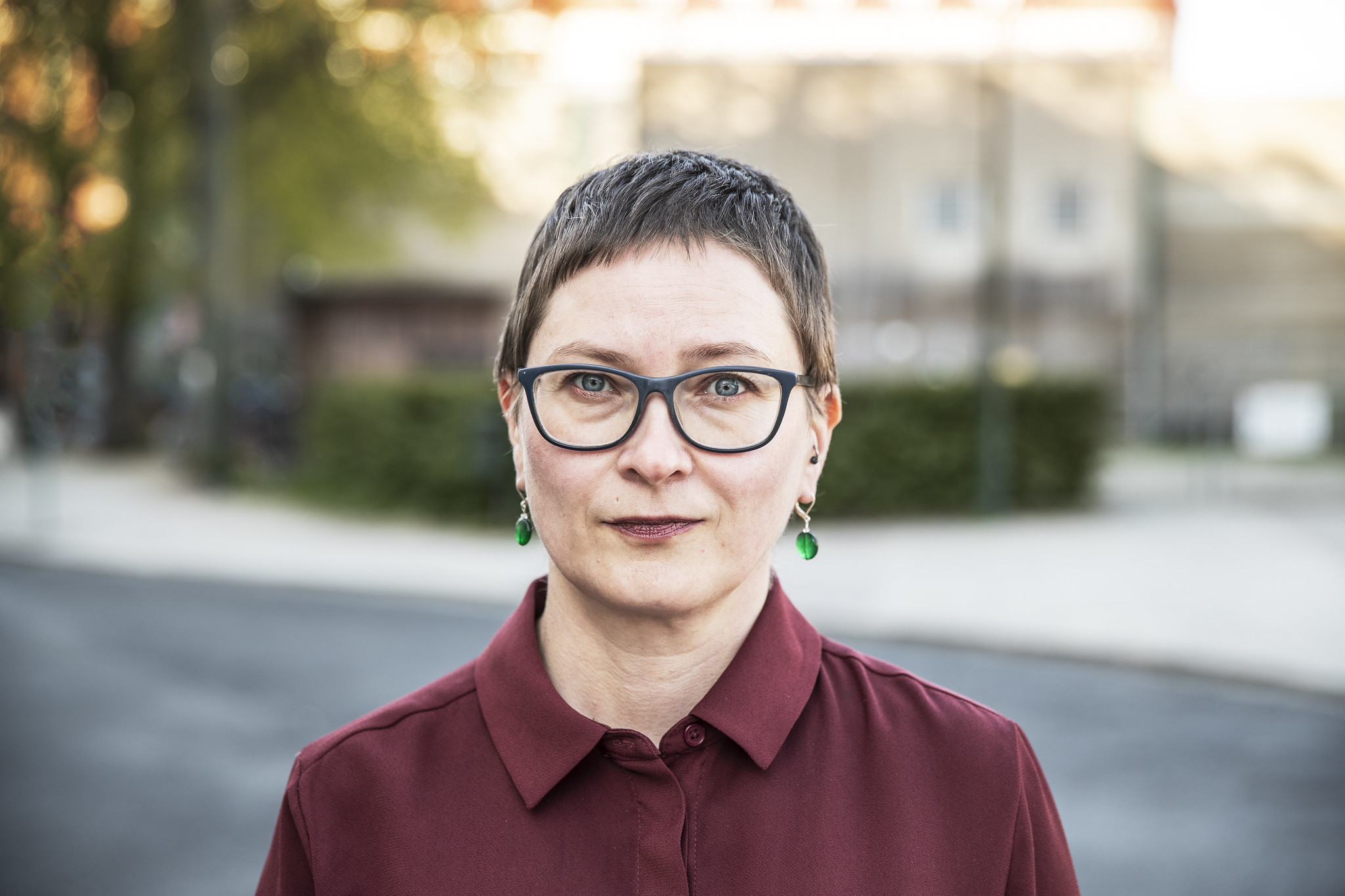


 דיויד סטברו