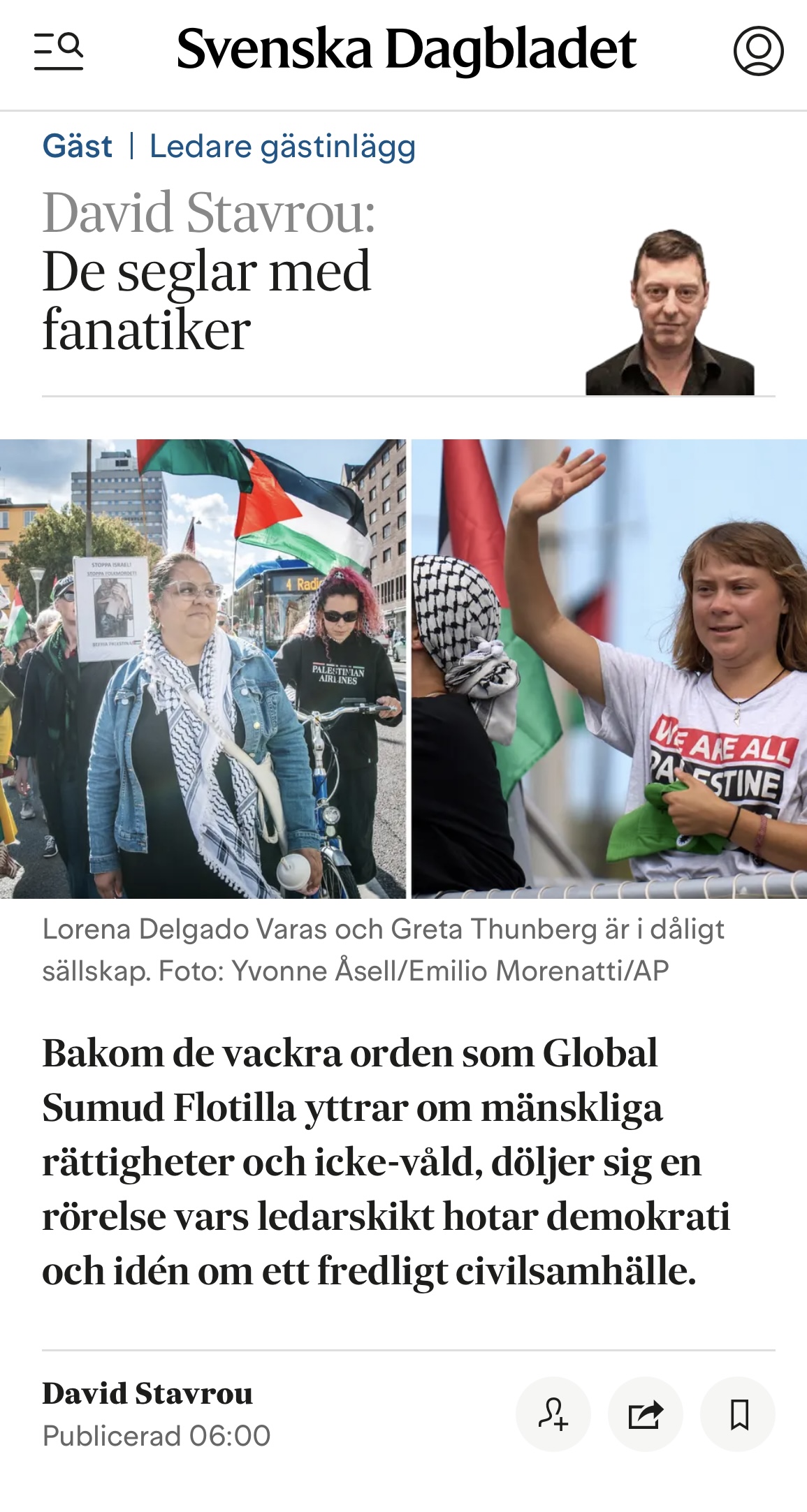
As Swedish Member of Parliament Lorena Delgado Varas and activist Greta Thunberg make their way to Gaza as part of the so-called Global Sumud Flotilla (GSF), many Swedes assume that their intentions are good. However, the reality behind the movement they are actively supporting is as far as can be imagined from humanitarian, non-violent, peaceful activism.
The images of destruction and suffering from Gaza, combined with statements published by the flotilla's organizers, have created an image of brave and kind-hearted activists, willing to pay a heavy personal price to deliver humanitarian aid and draw the world’s attention to Gaza. On its website, GSF describes itself as “a coalition of everyday people – organizers, humanitarians, doctors, artists, clergy, lawyers, and seafarers – who believe in human dignity and the power of nonviolence.” They also emphasize that their loyalty lies with “justice, freedom, and the sanctity of human life.”
But the reality behind GSF is far removed from the idealistic image presented to the public.
Screenshot
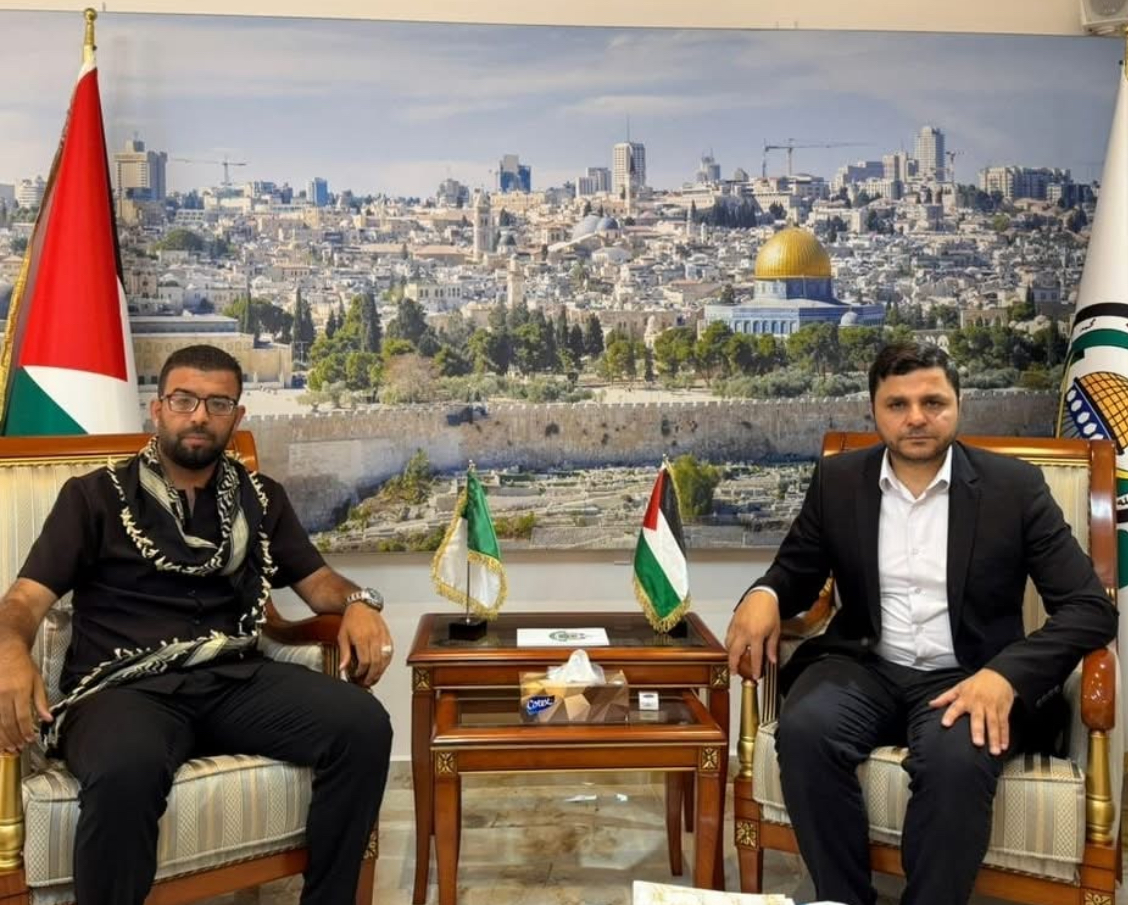
Less than three months ago, a meeting took place at Hamas’ headquarters in Algeria. Participants included representatives of the Global Sumud Flotilla and leaders of the movements that murdered, raped, tortured, and burned hundreds of Israeli civilians on October 7th – and many more before that. Among those present were Youssef Hamdan, Hamas' representative in Algeria, and Nader al-Qaisi, a representative of the Popular Front for the Liberation of Palestine (PFLP). This was no secret meeting. Despite the continued portrayal of the flotilla by Swedish media as a peace initiative with humanitarian aims, publicly available material reveals concrete links between GSF and some of the world’s most notorious terrorist organizations. All it takes to uncover these connections is a basic knowledge of Arabic and a quick search through social media.
In one photo published by Nabil Chennoufi, a spokesperson for GSF who frequently shares extremist violent propaganda on social media, two members of the flotilla’s steering committee – Wael Nawar and Hayfa Mansouri – can be seen smiling and wearing keffiyehs with Hamas symbols, alongside leaders of the terrorist organization in Algeria. The caption says the meeting focused on the flotilla’s progress, its positive impact, and its connection to the "Palestinian resistance." In a second photo, a third steering committee member, Marouan Ben Guettaia, is seen meeting with Hamas leader Hamdan.
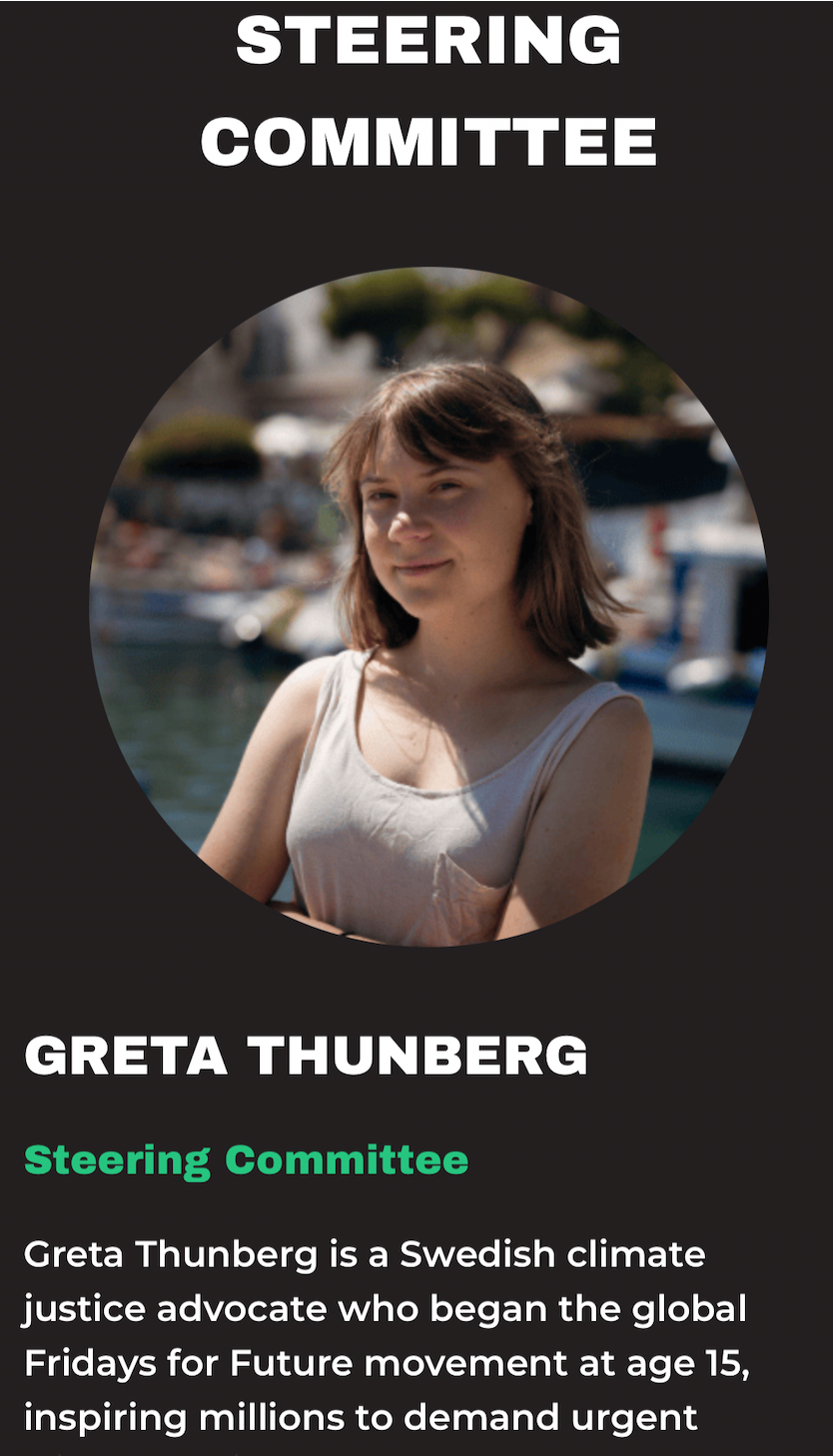
It’s important to stress that Greta Thunberg is not merely a regular passenger on one of the flotilla’s boats. GSF’s own website showed her as a member of the steering committee, alongside the aforementioned individuals. For some reason, her name and picture suddenly disappeared last Thursday.
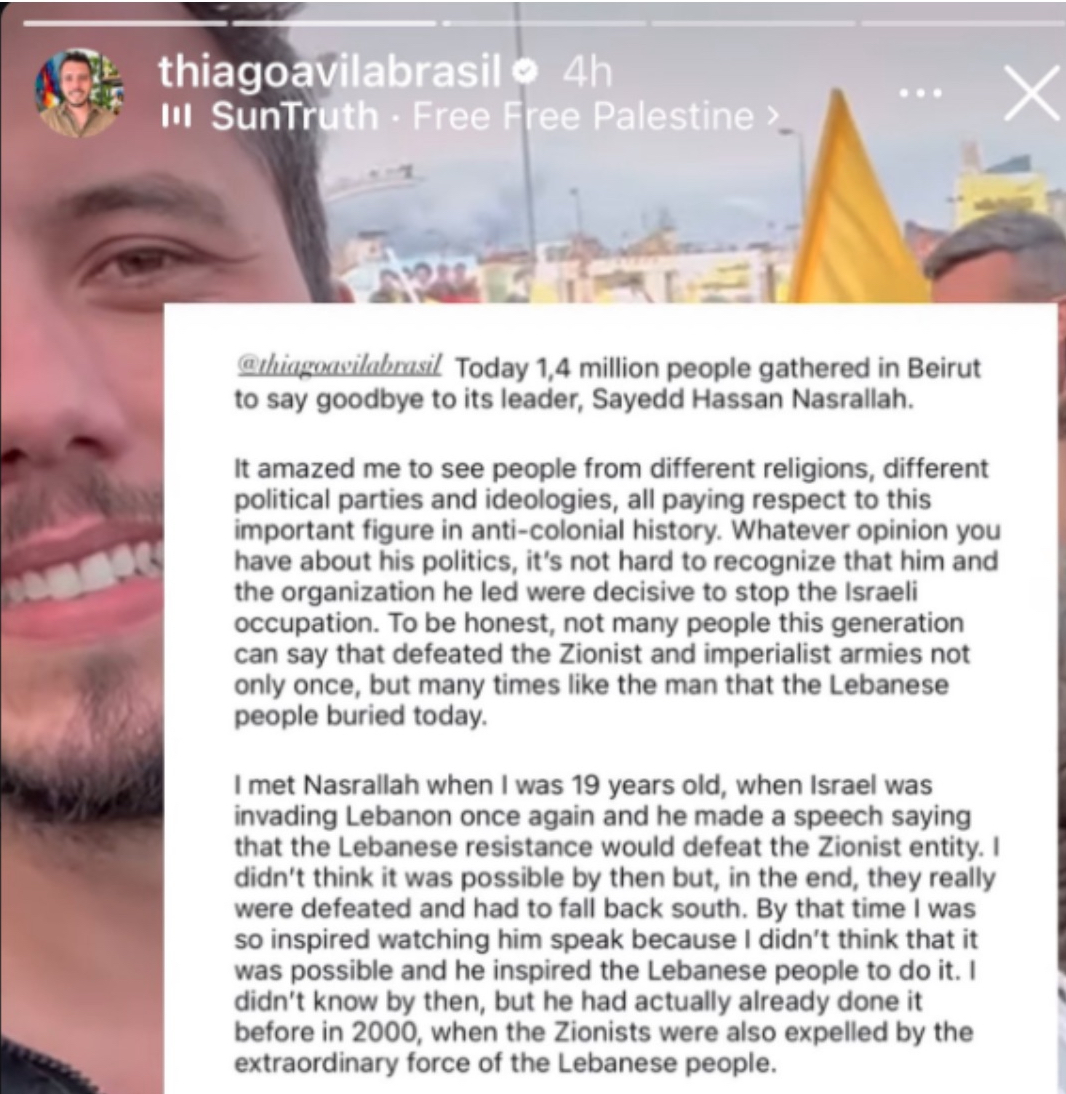
Another committee member is Brazilian activist Thiago Ávila, who has openly expressed his admiration for the late Hezbollah leader Hassan Nasrallah. On social media, Ávila shared how he was inspired as a young man after meeting Nasrallah and described him as “an important anti-colonial figure who defeated Zionist and imperialist armies multiple times.” Earlier this year, Ávila attended Nasrallah’s funeral in Beirut – a massive demonstration attended by tens of thousands of people chanting “Death to Israel” and “Death to America.” Ávila was impressed, writing: “Today I saw thousands of new freedom fighters.”
As a reminder, it’s worth noting that Hezbollah is a militant Shia Muslim organization allied with Iran, Russia, North Korea, and Shia militias in Iraq. It is designated as a terrorist organization by the United States, the United Kingdom, and the European Union, and is responsible for numerous terror attacks and kidnappings around the world – financed by Iran’s Islamist regime and the narcotics trade.
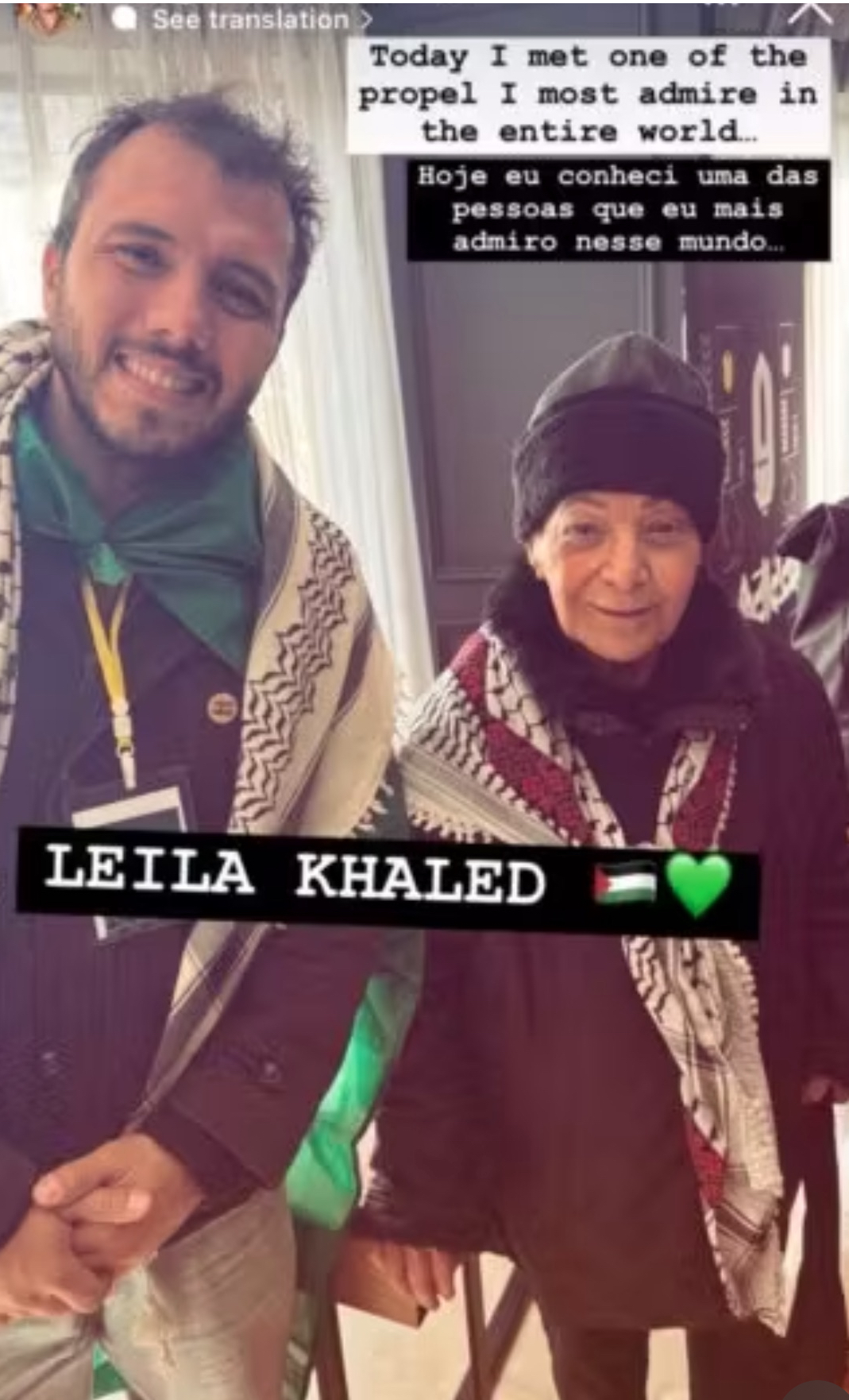
But it seems Ávila is not loyal to only one terrorist organization. In a photo, he is seen posing next to convicted PFLP terrorist Leila Khaled, with a green heart emoji and a Palestinian flag. The caption reads: “Today I met one of the people I admire most in the entire world.” Khaled’s notoriety, it should be remembered, is not based on “human dignity and the power of nonviolent action,” but on her involvement in the hijackings of TWA Flight 840 and El Al Flight 219 in the late 1960s and early 1970s.
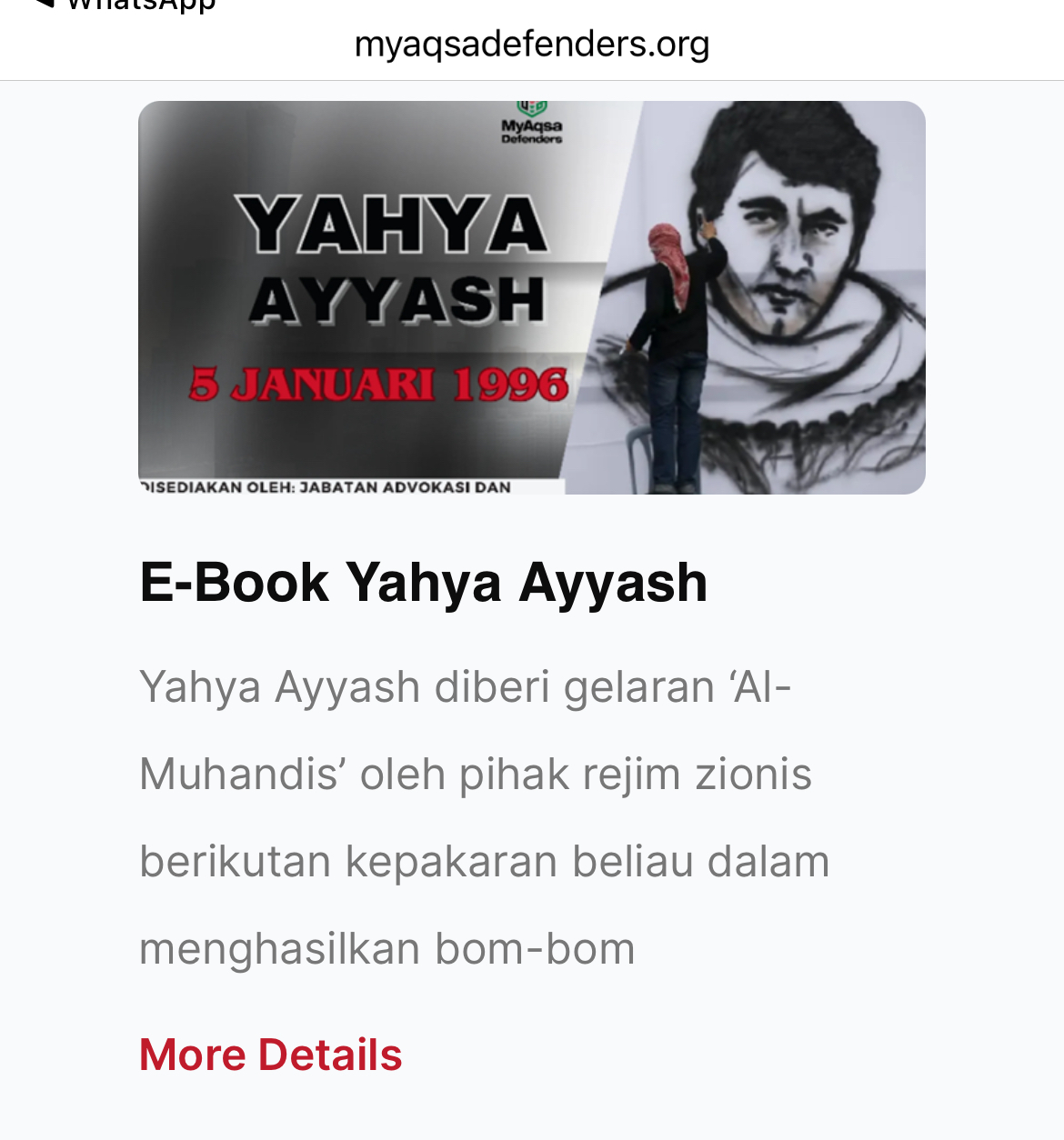
Another member of the GSF steering committee is Muhammad Nadir Al-Nuri Kamaruzaman, head of the GSF Southeast Asia coalition. He is also the founder of the Malaysian organization MyAqsa Defenders and CEO of the NGO Cinta Gaza Malaysia. Both organizations have expressed support for Hamas and have been linked to financing Hamas-run infrastructure in Gaza. Among other things, Cinta Gaza has published an e-book glorifying Yahya Ayyash, known as Hamas’s top bombmaker and responsible for numerous mass-casualty attacks in Israel during the 1990s. MyAqsa Defenders has also hosted a livestream event with Muslim Imran, whose name has appeared on Hamas channels as an official Hamas spokesperson.
Despite this information being openly and proudly published by those involved, neither Greta Thunberg nor Lorena Delgado Varas have been publicly questioned in Sweden for their participation in what clearly appears to be a well-organized, international operation with strong ties to terrorist groups. Sure – as citizens of a democratic country, they have every right to take part in whatever Mediterranean adventures they choose. But when those journeys are part of a network led by individuals with proven links to organizations responsible for massacres of civilians, there is a responsibility to investigate, question, and report.
It seems that behind the flowery rhetoric about human rights, humanitarian aid, and nonviolence hides a movement whose leadership praises antisemitic, religiously fanatical, chauvinistic, and ultranationalist violent actors. By participating in this initiative, Thunberg and Delgado Varas help legitimize forces that threaten democracy, gender equality, freedom of expression, and the very idea of a peaceful civil society. Despite their public image as champions of justice and solidarity, the facts suggest something quite different — in reality, Thunberg and Delgado Varas are supporting right-wing extremists.
Students stay home from class or attend and suffer abuse, protesters call for Israel’s erasure, and radical Islamist groups operate unfettered. Sweden’s Jewish community fears for its safety against the backdrop of the war and mass killings in Gaza.
STOCKHOLM – It’s unclear whether Swedes are aware of what the country’s Jewish community has been facing – their neighbors, coworkers, customers, and teachers. The community has been in a state of anxiety since the Hamas terrorist attack on October 7 and the start of Israeli strikes in the Gaza Strip. Swedish Jews fear for their safety, and it seems the authorities aren’t grasping the urgency of the situation.
October 13. Threats by Hamas political leader Khaled Meshal to spark an international “day of rage” circulated through social media. Parents, many of them in mourning and worried about family and friends in Israel, wrote in private WhatsApp groups that the school’s regular security was inadequate. Some volunteered to watch the surroundings outside the school, and the local police stationed a patrol car nearby for a few hours.
Nonetheless, conversations with parents indicate that in some classes, at least half the students stayed home from school on October 13. Those who attended were strongly advised to avoid displaying Jewish symbols and refrain from speaking Hebrew.
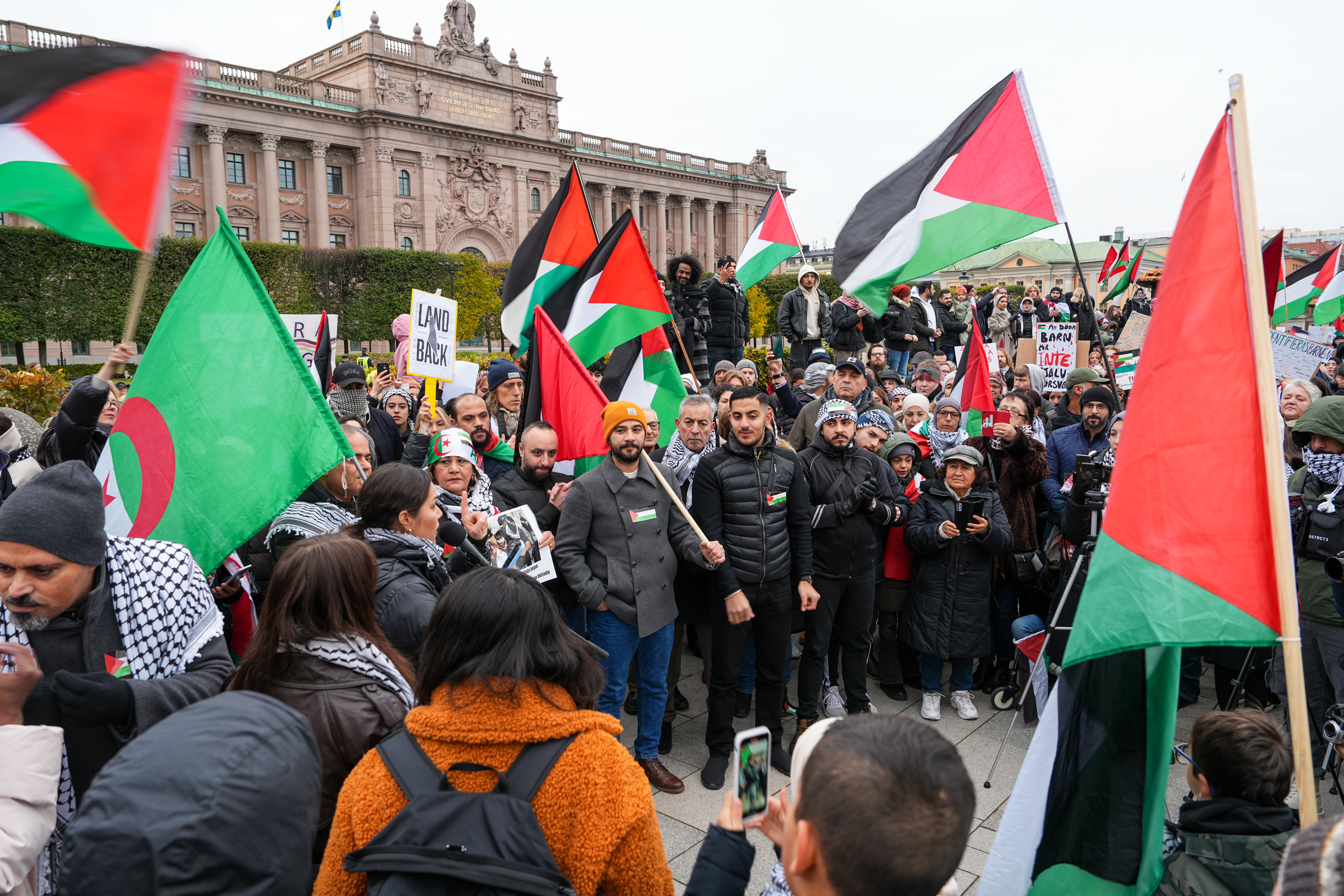
A pro-Palestinian demonstration in front of the Swedish Parliament, October 2023. Photo: Hugh Gordon
A., a former Israeli who lives in Sweden, kept his shop closed on the same Friday, feeling he can’t protect himself and his customers. Another Israeli living in the country encountered violence on the Stockholm Metro after speaking Hebrew on his phone.
Another incident occurred to a man from southern Sweden whose mother is Jewish but who is not religious and does not display Jewish symbols. He describes receiving seven calls from an unknown number this week. A voice told him, “We know where you live. You should watch behind you when leaving home.” It added that he “should no longer live in the city.”
When he contacted the police, he was met with disappointment. They told him that there was nothing they could do because the call came from an unknown number. The police would only intervene if he could provide the caller’s name, an impossible demand for someone receiving an anonymous threat.
Multiple reports have also emerged of students receiving harassment over the Gaza war. The mother of a 16-year-old boy from a Jewish family who goes to a large high school in Goteborg gave one disturbing account. She says a girl stood up in class and shouted, “Slaughter, rape, and torture all the Jews” at her son. The teacher did not react, stop the girl, or report her to the principal, the mother says. The other students also stayed silent. She said they're now considering a transfer to another school.
Two classmates asked a Jewish boy in an elementary school in southern Sweden who he supported in the war. The boy, aged 10, replied that he supported Israel. The two others drew a crossed-out Israeli flag, crumpled it up, and threw it at him, saying, “We hate Israel.” The teacher present in the classroom did nothing until the student’s mother contacted him.
Such attacks and threats have been seen throughout Sweden, with the common denominator being that the victims were Jewish or Israeli.
Swedish academics have also been targeted. A renowned scholar in western Sweden was emailed threats after daring to publicly condemn the October 7 attacks. The head of one department at Uppsala University wrote a social media post stating, “Hamas gave Netanyahu and his radical right partners what they wanted.” Elsewhere, he wrote: “In 1940 and 1941, Hitler developed a plan to systematically starve 30 million Ukrainians, Russians, and Slavs. In 2023, Netanyahu is executing his ‘starvation plan’ in Gaza!”
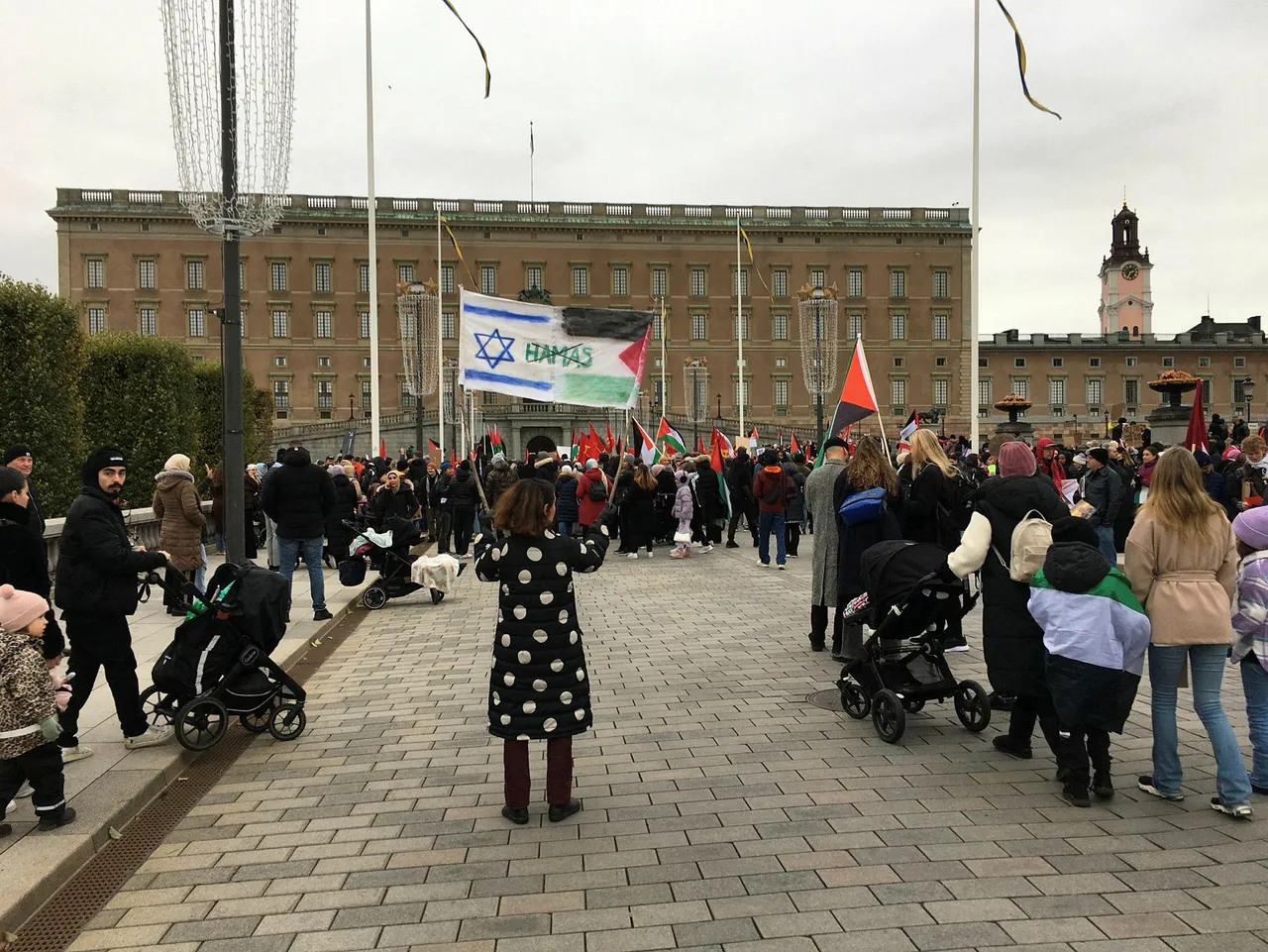
A Jewish protester, Joanna Istner Byman, at a pro-Palestinian demonstration in Stockholm, this week.Credit: David Stavrou
The cultural world has also been rife with tension. Seven hundred cultural figures published a petition urging an end to the “brutal violence in Gaza” and the end of “military, political, and financial support for Israel.” The petition did not mention Hamas’ terrorist attack, its victims, or the Israeli hostages in Gaza. Well-known Swedish environmental activist Greta Thunberg has taken several opportunities to express support for the Palestinians in recent days, omitting any mention of the Palestinian acts of terrorism last month or the Israeli victims.
The war between Israel and Hamas has reverberated throughout the public sphere in Sweden. Numerous demonstrations have been held since the war began, both pro-Palestinian and pro-Israeli. On the evening of October 7, hours after Hamas went door-to-door to brutalize and kill Israelis, thousands of people, including women and children, participated in rallies across the country. These featured music, dancing, and convoys of cars honking their horns to show support for the Hamas attack.
Even larger and fiercer demonstrations have been held in the subsequent three weeks. At these pro-Palestinian demonstrations, Israel is accused of genocide and ethnic cleansing in the Gaza Strip and there are calls to erase Israel from the map. “From the river to the sea, Palestine will be free,” cried the demonstrators in Sweden. The protests have also seen increasingly widespread calls for an “intifada.”
One of the pro-Palestinian demonstrations was organized by Hizb ut-Tahrir, a radical Islamic group advocating for the creation of a caliphate ruled by Sharia law, which has a small branch in Sweden. It received permission for the demonstration despite being banned in several countries. Demonstrators called for a caliphate stretching from Uzbekistan to Morocco, a war between Islam and the non-Muslim world, and the liberation of “all of Palestine” through military force.
Most of the demonstrations held in Sweden since the war began have been organized by local organizations backing the Palestinians. One weekend in Stockholm's central Sergel Square saw three different organizations demonstrating separately, but with similar slogans. Beside the Palestinian organization, the neo-Nazi Nordic Resistance Movement, which has a few hundred members, was one of them, the Revolutionary Communist Youth, which argues that Palestinians have a right “to fight with every means against the occupying power to liberate their lands" was another. The latter described the October 7 attacks as an act of liberation that “caught the Zionists in their beds.”
The two organizations, one neo-Nazi and the other Marxist-Leninist, both endorse the Palestinian cry to “crush Zionism.” Another demonstration held in Stockholm’s main square a week later drew more than 5,000 people. Speeches by Palestinians and Swedish leftists called for “an intifada until victory” as they waved Palestinian flags, horrifying images from Gaza, and signs condemning the government’s support for Israel. None of the speakers at the pro-Palestinian demonstrations mentioned the Hamas attacks.
A demonstration in solidarity with Palestinians in the Gaza Strip, in Stockholm, Sweden, October 2023.Credit: Hugh Gordon
Mikail Yuksel, leader of the Nuance Party, which defines itself as the representative of Sweden’s minorities, with an emphasis on immigrants, posted on X (formerly Twitter) that he had participated in a pro-Palestinian demonstration in Stockholm. Yuksel, born in Turkey and now a Stockholm resident, was once a member of Sweden’s Center Party. He was expelled for his ties with the Grey Wolves radical Islamic movement.
On October 7, Yuksel called for the removal of Hamas from the list of terrorist organizations. When Haaretz asked him about this, he replied, “If Hamas is considered a terrorist organization, it is impossible to hold a dialogue with it and reach an arrangement. So long as they are considered terrorists, we isolate and radicalize them. We are in favor of talking with them to reach a settlement.”
He added, “It’s no secret that we are a pro-Palestinian party. Israel is recognized by the UN as an occupying power, which commits war crimes and is an apartheid state. Israel must be stopped, and Netanyahu should be brought to trial at the International Criminal Court.”
Asked about the crimes committed by Hamas, Yuksel replied, “An occupied people have the right to use military force. Violence against civilians is not permitted to any of the sides. Everyone must lay down their arms and not point them against civilians to solve the dispute.”
While speaking with Haaretz, Yuksel condemned the attacks on civilians on October 7 as well as the “continuous Israeli attacks on Gaza.” His position is notable, as no Muslim organization in Sweden has condemned the attacks, including entities that previously cooperated with Sweden’s Jewish community and groups.
One pro-Palestinian demonstrator, prominent Muslim leader Rashid Musa, went as far as writing a sarcastic article mocking demands for condemnation in the national tabloid Expressen. “I, Rashid Musa, as a spokesman for 1.3 billion people worldwide, condemn the Hamas, condemn hummus, condemn Hassan, and [Swedish football club] Hammarby.”
Magnus Ranstorp, a prominent Swedish researcher on domestic Salafi-jihadism, terrorism, and radical groups, is concerned about more than just antisemitic slogans at the demonstrations and incidents at schools and workplaces. He says this could escalate to physical threats against Jewish and Israeli targets. A lecturer and strategic advisor at the Swedish Defense University, Ranstorp says two parallel crises are affecting Sweden’s security.
“The first is related to the burning of Koran books and a false campaign regarding the alleged kidnapping of Muslim children by Swedish welfare services,” he says. “This crisis has put Sweden in the crosshairs of organizations such as al-Qaeda, ISIS, and al-Shabab.
“The second crisis is the conflict between Israel and Hamas,” he continues. He says that according to the Swedish Security Service, there were about 2,000 Salafi-jihadists in various Swedish cities in 2017 who had a definite potential for violent activity.
In the cities of Malmö and Helsingborg, large Palestinian communities include families with members previously convicted of terrorist activities in Germany. Malmö is home to Scandinavia’s largest mosque, built recently with the help of millions of euros from Qatar. It is also home to civil society organizations like Group 194. Despite receiving municipal funding, the Swedish Palestinian group endorses terrorism, spreads antisemitism, and has connections to the Popular Front for the Liberation of Palestine, which was involved in the October 7 attacks.
It also recently emerged that the Left Party had used taxpayer money to support a project related to the PFLP through an organization run by its Danish counterpart. Meanwhile, in May, a large Palestinian European conference was held in Malmö with the participation of Amin Abu Rashid, a Dutch Palestinian leader linked to Hamas.
Although the Left Party canceled its participation in the conference when it learned that Abu Rashid would be present, a member of the Social Democratic Party, Jamal el-Haj, ignored a prohibition by party leaders and participated. El-Haj is a member of parliament, and some say he was saved from being kicked out of the party because of his substantial political base.
Ranstorp notes the case of Die Wahre Religion (“The True Religion”), an organization outlawed in Germany. It was banned in part because some of the people connected to it volunteered and joined the ranks of ISIS. Nevertheless, it operated freely as a legitimate Swedish organization that promoted an educational project on Koran reading.
In another case, a Swedish activist named Ahmad Qadan raised money for ISIS and Tahrir al-Sham (formerly Jabhat-al-Nusra) and was sentenced to a few months in jail. It seems that his imprisonment didn’t change much. On October 7, he posted a video on social media of Israelis fleeing Hamas gunmen together with a quote from the Koran, “I will fill the hearts of the unbelievers with fear.”
The international organization Islamic Relief, founded in the U.K. in the 1980s, also has an official Swedish branch. The organization enjoys considerable financial support from the Swedish government and engages in humanitarian activities. Various governments, including the Israeli one, say it’s associated with the Muslim Brotherhood, however. According to Ranstorp, Sweden is an important European center for Islamic Relief and, therefore, the Muslim Brotherhood in Europe.
Ranstorp and others have spoken of this for years. Although politicians’ approach has changed somewhat, some say Swedish authorities and public opinion still don’t appreciate how grave things are. Swedish money ends up financing terrorism, and Middle Eastern money is invested in organizations that pose a risk to Sweden. The law allows public activities that threaten the country’s stability and security bodies.
In response to a query by Haaretz, the security service refused to estimate of current number of jihadi activists and organizations in Sweden. Asked about specific organizations, a spokesperson replied: “The Swedish Security Service does not go into details describing our operational activities. We follow violent extremists and assess the threat to prevent terrorist acts and other security threatening activities. We follow individuals and do not target organizations.”
Regarding the protection of Jewish institutions in Stockholm, the police said, “What security measures we implement, if and when we implement them, and in what way, is something we do not publicize.”
Despite several requests, Swedish Justice Minister Gunnar Strommer, who oversees the police, prosecutions, and the courts, declined to grant an interview to Haaretz.
Hizb ut-Tahrir in Sweden and the Palestine Solidarity Association of Sweden (Palestinagrupperna) did not respond to Haaretz's requests for comment. Greta Thunberg also showed no enthusiasm for speaking with Haaretz about the subject. When she was offered an interview in which she could clarify her position, a spokesman said, “Greta is not holding interviews at this time.”
As the Swedish general election approaches, two issues are coming into focus. One is how difficult it will be to form a stable government after the election. Since the early summer, polls have been indicating that the two blocs representing the two possible government alternatives are having difficulty mobilizing a clear majority. They are alternating in the polls once every few weeks, unable to consolidate a clear advantage over one another and they are finding it hard to formulate a coherent message within the blocs themselves.
This is nothing new – after the previous election in 2018, the Social Democratic Party took 129 days to form a government and even after it was formed, it had trouble obtaining a parliamentary majority on the critical votes.
The second issue is the expected increase in the influence of the Sweden Democrats, the right-wing party that is considered by many to be populist and extremist (although it considers itself nationalist and conservative). In the past, the party was boycotted by the entire political spectrum and was not a candidate to join any coalition. This time, due to a change in approach by two of the traditional right-wing parties, it has become an integral part of the right-wing bloc.Open gallery view
The latest polls show that the Sweden Democrats is the country’s second-largest party, with over 20 percent of voters supporting it, at the expense of the Moderate Party, which has traditionally been considered the right-wing alternative for governing Sweden. According to the surveys, the largest party – with about 30 percent supporting it – remains the Social Democratic Party, headed by Magdalena Andersson, the current prime minster.
The composition of the two political blocs has changed in recent years, and has consolidated largely surrounding the attitude toward the Sweden Democrats. On the right a coalition is forming led by the Moderate Party and the Christian Democrats, with the support of the small Liberal Party and the Sweden Democrats, which despite its size is not seen as a ruling party but rather as an outside supporter.
On the left the Social Democratic Party is leading a very unstable coalition that is supported by the Green Party, the right wing-liberal Center Party and the Left Party, formerly the Communist Party. The election will be held on Sunday, September 11, and the expectation is that over 80 percent of the 7,772,120 Swedes with the right to vote will participate. About 1.3 million of them are under the age of 30, and almost 440,000 of them will be voting for the first time – more than in any other election campaign in Swedish history.
Where did you grow up? Where do you live now? “I grew up in Sundbyberg outside of Stockholm and still live there but in another part of the town." What’s your family background? “My parents immigrated to Sweden from Iran before I was born. My father got a degree in engineering and my mother in dentistry.” How old were you when you entered politics? “I joined Liberal Youth of Sweden in 2013 when I was 17 years old.” What are your main political fields of interest? “Education, combating climate change and feminism are my main fields of interest in politics. I strive to create a freer world where personal freedom is defended and expanded, and I believe that these subjects are important for achieving this.” How far do you aim in your political career? what’s your political dream job? “Right now I am a candidate for Parliament in Sweden. If I get elected on September 11th, I will have reached a big goal of mine. I want to continue my work there and a dream job would be a minister of education or culture.” Who are your political idols and influences? “I am very inspired by former LUF president as well as former minister of EU and democracy Birgitta Ohlsson. Her work for feminism and world-wide equality is inspiring to follow.” What are your hobbies? “Politics is a 24/7 business, especially during an election. But the few hours I am free I frequently visit soccer games for my favorite team (AIK), read books and walk my dog.” What’s your living situation? “I live with my dog Laban and my boyfriend Fredrik".
Like the young voters, some of the candidates for parliament are in their 20s. The younger generation in Swedish politics has recently been attracting attention outside of the country because Sweden traditionally plays a larger role in European politics than its relative size (a population of about 10 million). It is one of the most important countries in European Union institutions, it is expected to join NATO after 200 years of avoiding military alliances, it is one of the only European countries that still maintains the character of a social-democratic welfare state and it is accustomed to starring in international headlines in connection to many issues, from its policy of absorbing asylum seekers to its unique handling of the COVID-19 crisis.
Romina Pourmokhtari is the chairwoman of the Liberal Party’s youth league and a candidate for Parliament. One of the country’s most popular daily newspapers recently chose her as the most influential Swede under the age of 30. “Crime in Sweden is at the center of the public debate in this election campaign, as well as integration issues and the energy crisis that is causing a large increase in electricity prices,” she tells Haaretz at the offices of the youth league in Stockholm. “If we were to set the agenda, we would want to talk more about education and schools.” Pourmokhtari claims that there is a difference between the agenda of younger and older voters. “Young people are interested in questions concerning their lives – the climate crisis, rights of the LGBT community, issues related to the body such as the right to abortion, and of course also economic questions such as taxes, work and unemployment.”
The distinction between issues that interest older voters and those that interest younger ones is very clear in the election campaign. In recent years there has been a rise in violent crime by organized crime gangs, particularly in areas suffering from unemployment, poverty and segregation. The number of serious shooting incidents where innocent bystanders were also hurt have made the issue central to the campaign. Because of the war in Ukraine, electricity costs has become a main issue as well.
Meanwhile, the issue of climate change seems to have taken a back seat. Last Friday, the world's best-known climate activist, Greta Thunberg, took part in a "Fridays for Future" protest in Stockholm. She was quoted as saying: "The climate crisis has been more or less ignored in this election campaign. At best it’s been reduced to an issue about energy. So we have a lot to do."
“The problem of organized crime and the terrible shooting incidents we’re seeing now are causing a kind of doomsday feeling in the public debate and in the media,' says Pourmokhtari. 'The other issues on the agenda are wallet issues – the increase in electricity and fuel prices as a result of the energy crisis. These are questions that look like domestic issues, but they are international issues too,” says Christopher Lindvall, 26, one of the leaders of the Social Democratic Party’s youth league, the head of its international committee and a candidate for Parliament.
“Many questions that the younger generation is interested in are now filtered through the main issues that the parties are dealing with. For example, many young people are now in favor of nuclear power because they think that’s the way to get energy and move away from fossil fuels.
Christopher Lindvall. Photo: Emil Nordfjell, SSU
Where did you grow up? Where do you live now? “Järfälla, northwest of Stockholm.” What’s your family background? “I’m from a working-class background; my father works in a storage factory and my mother retired early.” How old were you when you entered politics? “I joined the Swedish Social Democratic Youth League in 2013, and have been a member of the Järfälla municipality parliament since 2018.” What are your main political fields of interest? “My main political fields of interest are international issues, defence issues and welfare.” How far do you aim in your political career? what’s your political dream job? “I am running for Parliament now, so that is my aim.” Who are your political idols and influences? “Former foreign ministers Anna Lindh and Margot Wallström.” What are your hobbies? “Being out and about in the nature! I also like to read whenever I do have the time.” What’s your living situation? “I live with my girlfriend".
“As far as the general sense of security is concerned, this is of interest to both the older and the younger voters. I myself felt it last week when I came back home from a meeting in the city center late at night – there were shootings right outside my window two nights in a row. These are problems that can happen everywhere to almost everyone, and they’re related to segregation and a class society that has become much more present in recent years. This happened because the government in Sweden has recently withdrawn from many areas and left them to the private sector,” he says. As a result of various reforms in Sweden, the authorities still fund universal healthcare and education, but in some cases, private companies are the ones providing the services.
“Both in the case of health care and education, we waste a lot of our tax money by funding private schools and clinics,” Lindvall continues. “Now the schools in many areas lack funding and professional teachers. Education is the best way to achieve social mobility. I myself come from a working-class family, and with a good education I got the opportunity to go to university. There is also a clear link between crime and poor school results. Segregation in housing is also important. The wealthier local authorities do not build cheap housing for rent, so immigrants are forced to live in segregated areas.”
Lindvall is well aware of the fact that his party has been in power for the past eight years and that it will be hard to convince voters that it is not largely responsible for the situation he describes. When we meet in the cafe of one of the Swedish labor movement’s educational centers, he explains that the Social Democratic Party was forced to be pragmatists and to compromise on many issues. According to Lindvall, the situation would be worse if the right were in power. He hopes that his party will be able to govern in Sweden even after the election, with the support of various parties, on the right and the left, each of which will support legislation on various issues.
There is, however, one party he’s not willing to cooperate with. “My red line is the Swedish Democrats. This is an immature party that has proven time and time again that they have neo-Nazi members and people who praise [Russian President] Vladimir Putin. For me, they are off limits.”
‘Unjustified prejudice’
Tobias Andersson, also 26, is a member of the Swedish Democrats and the Chairman of the Young Swedes SDU since 2015. He is used to hearing things of this nature about his party and is familiar with the argument that many of those who started it in the late 1980s were right-wing extremists, racists with fascistic tendencies, and he is used to hearing that his party has Nazi roots. “Some of my opponents tried to put the weight of the past on me,” he says in a conversation the Parliament building. “But I was born in 1996 and joined the party in 2012. I have no opinion about what the founders of the party did before they founded it in 1988. From what I’ve read, many of those people were terrible people, but when it comes to our policy, almost from the start there were almost no such issues. There are things that I’m glad we changed, but in general, our policy is far less extreme than the way it is portrayed. Occasionally we still find extremists in our party, we have a responsibility to keep them out and I’m proud that we’re doing so.”Open gallery view
Andersson has been a member of Parliament since the previous elections. He is a member of the party leadership and heads its youth league. He claims that the prejudice against the Swedish Democrats is unjustified. “If a racist sits in the basement of his parents’ home and hears from the media, from his friends and from his teacher that we’re a racist party, it seems to me a rational decision to join us. I’m not saying we’re not at all to blame, but maybe the need of our opponents to portray us as racists doesn’t help us to keep the racists out of the party.”
Regardless of the question of racism among Swedish Democrats members, there are certain aspects of the party’s activities that are more characteristic of a centrist party and could explain its increased strength in the polls. Andersson claims that when it comes to welfare issues, they are in the center of the political map, somewhat more to the left when it comes to the job market and somewhat more to the right regarding financial issues such as lowering taxes. He believes that he problem is that the system is falling apart. “We pay some of the highest taxes in the world, but many people feel that their children have to register for a private school in order to provide them with a good education. With all those taxes, we still spend little on the police and the crime level is high. How did we get to this situation?”
Tobias Andersson
Where did you grow up? Where do you live now? “Outside of Skövde in the countryside. I now own an apartment in Skövde and in Stockholm I stay at an apartment provided by the Parliament.” What’s your family background? “Working class from rural areas.” How old were you when you entered politics? “16 years old.” What are your main political fields of interest? “Judicial policies and civil society issues.” How far do you aim in your political career? what’s your political dream job? “I aim to help strengthen my party and do my best to make Sweden a better country, where that leads the future will tell.” Who are your political idols and influences? “Never truly had any, I’m not driven in that way.” What are your hobbies? “Training, hunting, cooking, eating and drinking.” What’s your living situation? “I am officially single at the moment, so I can focus on the election campaign 100 percent".
For Andersson, crime in Sweden is related to the economy, but also to the immigration policy. He thinks that immigration has created cultural clashes: “We warned that that’s what would happen. If people from a certain part of the world were unable to live in peace for 1,400 years, they won’t start to do so when they arrive in Sweden either. These are conflicts that were imported into Sweden. There’s also the socioeconomic component that has worsened due to mass immigration. There are about 700,000 people who come from immigrant families, who are incapable of supporting themselves and live at society’s expense. That has contributed to a poor socioeconomic situation in certain areas, which leads to crime.”
‘A different Sweden’
As opposed to Andersson, for whom issues of law and order are at the top of the agenda, Aida Badeli, 26, head of the Green Party’s youth league and a candidate for Parliament, claims that nothing is currently more important than the climate issue. “We’re emphasizing the reduction of carbon emissions, but also issues of social justice, economic justice and a war against racism. The conservatives in Sweden have taken control of the agenda, but we have to show the young Swedes and the rest of the country that we believe in a different Sweden, one in which there are equal rights for all and a responsibility to reduce the emissions here in Sweden as well, not only in other countries.”
Aida Bedeli
Where did you grow up? Where do you live now? “Gothenburg, now I live in Stockholm.” What’s your family background? “I was raised by a single mother.” How old were you when you entered politics? “15 years old.” What are your main political fields of interest? “Human rights.” How far do you aim in your political career? what’s your political dream job? “I live in the moment. I have no aim in my political career, I just want to make the world a better place.” Who are your political idols and influences? “My uncle and Olaf Palme.” What are your hobbies? “Netflix and hanging out with friends.” What’s your living situation? “I live with my boyfriend".
Like most of those running in the Swedish election, Badeli believes in the Swedish welfare model even though her party focuses on the climate crisis. “I’m trying to push my party leftward so we’ll talk more about social justice,” she says. “We see that in Sweden, the social disparities are growing. Many young people don’t finish school, the health care system is not longer good enough, and young Swedes, mainly young men, are murdering one another due to poverty and lack of justice.
“There are children who don’t have enough food at home. Although it’s not poverty like in Africa, it’s poverty that we haven’t seen here for a long time. The welfare state must be stronger, I don’t believe that the free market will take care of the needy. The government must do that and increase the budgets that haven’t increased since the 1990s.”
Badeli proposes higher taxes for the top 1% of the wealthy in order to pay for the increase in budgets and finance the cost of joining NATO. Although she and her party were initially opposed to joining NATO, almost nobody in the election campaign is discussing the topic, which only a few weeks ago was the most talked-about issue in the country. Foreign policy, as important as it may be, is simply not on the agenda.
However, the young candidates certainly have something to say on the subject. Pourmokhtari, of the Liberal Party, is opposed to Swedish neutrality, which came to an end with the decision to join NATO, and is proud of the fact that her party has been advocating this change for over 20 years. “There’s good and bad in the world,” she say. “Joining NATO is part of international solidarity and Swedish values – it’s our responsibility as a free democracy.”
Lindvall, of the Social Democratic Party, says that the war in Ukraine was a decisive factor in his party’s position on NATO. “There is now a general trend of return of authoritarian governments that are more aggressive, expansionist and nationalist, such as Russia and China. And when democracy is threatened, it is important that democracies work together. I wasn’t happy with the decision to join NATO [which was the result of a radical policy change by the leadership of the Social Democratic Party in the face of internal opposition], but now that it’s done, it’s important that we work within it and be a clear voice for disarmament together with other Nordic countries,” he says.
The Sweden Democrats were also opposed to joining NATO at the start, but changed their position after Russia’s invasion of Ukraine. Andersson says that their position was always nationalist, in favor of sovereignty and rejecting intervention by groups such as the European Union. With the situation that has been created with the war in Ukraine, he says, it was natural for them to examine public opinion. After listening to it, they tended to favor joining.
Badeli, leader of the Green Party’s youth league, is aware that for most of the voters, this election will be decided based on issues such as the prices of energy, fuel and food. In spite of that, she sees a bigger picture. “The most important thing is planet Earth,” she says. “We must have a place to live, it’s a question of survival. But it’s also important for us to have social justice. We care about the planet but no less than that, we care about the human beings living on it.”




 דיויד סטברו