In an exclusive interview with Haaretz, Swedish prime minister Stefan Löfven explains his policies on Israel, and reaffirms his support for Holocaust commemoration, better U.S.-Europe relations and a revived Iran nuclear deal
GOTHENBURG, Sweden – Just weeks after Sweden hosted the Malmö International Forum on Holocaust Remembrance and Combating Antisemitism, Stefan Löfven, the country’s prime minister and the driving force behind the forum, is stepping down as head of the Social Democratic party – and the government. While the 64-year-old premier, whose tenure is coming to an end this week after more than seven years, has recently been praised internationally for his role in confronting antisemitism, his policies concerning a host of other issues, both foreign and domestic, have also attracted attention. Among these are his country's unique handling of the coronavirus pandemic, the way it is dealing with challenges posed by a looming refugee crisis in Europe, relations with Iran, and Sweden's recently improved ties with Israel. Talking to Haaretz during a party congress in Gothenburg, Löfven addresses these subjects and offers some initial insight into his political legacy.
It’s recently been announced that you are the recipient of the Aron Isaac Prize that's awarded by the Jewish community in Stockholm for your “efforts to ensure that the victims of the Holocaust are not forgotten and to counter antisemitism and racism in today’s society.” When and why did you decide to make these issues part of your job as prime minister?
“This is a deep conviction that I’ve held all my life, ever since I can remember. When I became prime minister, it was obvious to me that I would take part in Holocaust commemoration, and naturally I met more and more people, I heard more stories and I promised the survivors that I’d do all I could both as prime minister and as a fellow human being. For example, when (Holocaust survivor) Max Safir called me a few years ago and asked me to help found a Holocaust museum in Sweden – that felt like something I could do, so we started a dialogue with survivors and organization and we’re well on our way now (the museum will open next year). Then, when the 20-year anniversary of the Stockholm International Forum on the Holocaust took place, we thought that since these problems still exist, we have to do more.”
Löfven is referring to the 2020 conference of an organization initiated by then-Prime Minister Göran Persson as an international partnership to fight antisemitism and promote Holocaust remembrance, education and research. 21 years later, Löfven created the Malmö forum to continue to address the same problems. “I started with a deep personal conviction,” he stresses, “and the prime ministerial role gave me the possibility to do a lot more”.
Stefan Löfven Photo: Kristian Pohl/Regeringskansliet
Despite the awards and ceremonies, Sweden’s Jewish community still has many unresolved problems. With possible changes in the country’s school system, will it still be possible to have a Jewish school in the country? Will circumcision for religious purposes stay legal? And for how long will hate crimes and bullying of Jewish children and teachers continue in Swedish schools? Has enough been done in these areas? Is there more than just rhetoric?
“It’s true, we do still have problems. That’s why, in the short run, we’re investing more in security. Yes, it will be possible to have Jewish schools in Sweden even if independent religious schools which receive public funding will be prohibited in the future. The Jewish minority is one of our national minorities, which means that its language, culture and schools are protected. [Five minorities are protected by law in Sweden: Jews, the Roma, the Sami people – Sweden’s indigenous inhabitants – Swedish Finns and the residents of the Torne Valley.]. I don’t see any danger for the right to conduct circumcisions since there’s no majority against it. Sure, there are still problems and that’s why the Malmö forum was all about commitments, not about speeches. It was about two kinds of commitments: first, never to forget, which is why different countries undertook to have various memorial events and memorial sites, and second, the fight against antisemitism, which is also about commitments. In our case, this means doing more in schools, investing more in research so that we have a better understanding of the forces behind antisemitism and so on. We want to spread this to other countries, organizations and companies (such as social media companies for example). Everyone can make commitments. Individual schools can commit, more companies can make commitments, sport organizations can make commitments. That’s the way to address these issues". More than 40 countries and more than 20 international organizations, civil society organizations and private sector giants such as Facebook and Googel participated in the Malmö Forum and made pledges to combat antisemitism and promote Holocaust remembrance.
Löfven has served as prime minister since October 2014. Though born in Stockholm, he grew up in northern Sweden with a foster family, since his biological father died before he was born and his biological mother was unable to raise him. His foster parents were working-class Swedes – the father a lumberjack and factory worker; the mother, a homemaker. After completing his high school and a couple of years of military service in the Swedish Air Force, he became a welder. As a metal worker, he became a trade unionist and worked his way up the ranks until 2005 when he became the head of IF Metall, one of Sweden’s largest and most powerful blue-collar unions. In January 2012, Löfven, who had been active as a young man in the Social Democratic youth league, was elected head of the party at a point when the Social Democrats were in the opposition and suffered a leadership crisis. Löfven became Sweden's Prime-Minister after the 2014 general elections and won a second term four years later, despite the fact that the Social Democrats had their worse showing in over 100 years in those elections. The fact that country's four center-right parties would not cooperate with the populist right-wing Sweden Democrats at the time created a situation in which Löfven was able to form a coalition with the Green Party, bolstered by a left-wing party and a couple of center-right parties. This coalition, still in power, has suffered and still suffers from week support in the parliament and the Social Democrats have had to make painful compromises in order to stay in power. Löfven has often been described as a political survivor and an extremely skillful negotiator who has managed to keep his party afloat despite the tough political landscape.
Last week, during the party gathering in Gothenburg, Löfven’s successor, Finance Minister Magdalena Andersson, was elected. If all goes according to Löfven’s plan, Andersson will be chosen by the Swedish parliament to become prime minister until the 2022 elections. She'll be the first woman ever to hold the job. Her task now is to lead the Social Democratic party to victory. In her first speech as party leader, she chose to stress the core values of her electorate, away from the compromises made by her predecessor. “In the age of global crises, it is obvious to more and more people that the wind is blowing for us Social Democrats, for strong society, for equality,” she said, adding that after decades of privatization, market experiments, weakened worker’s rights and growing social gaps in the interest of private profits, it’s time for common solutions rather than market solutions. In another speech Andersson mentioned Löfven’s efforts to combat antisemitism and promote Holocaust remembrance, and vowed: “Stefan, we will all continue that work.” Löfven himself is confident that she will continue stepping in the path he laid. “This is part of our party’s ideology,” he says. “I’m convinced that my successor as party leader has no different understanding than I do (on these issues).”
Bilateral ties
When it comes to Sweden’s relations with Israel, the start of Löfven’s first term couldn’t have been worse. One of his government’s first steps was the recognition of a Palestinian state. The following year, 2015, in an interview on Swedish TV, then-Foreign Minister Margot Wallström linked that year's jihadist terror attacks in Paris to the Palestinians' plight under Israel's occupation. That comment, and others like it, were viewed in Jerusalem as pro-Palestinian and anti-Israeli in Jerusalem, and led to the recall of ambassadors and freezing of bilateral relations. Indeed, for nearly three years, there were no meetings between the countries' official and Israel repeatedly rebuffed requests by Wallström and Löfven to make more efforts to improve ties. The situation improved slightly toward the end of 2017, but there were no one-on-one meetings between Löfven and Israel’s then-Prime Minister, Benjamin Netanyahu, and no high-level contacts between the countries’ foreign ministries. But all that changed last month when Swedish Foreign Minister Ann Linde visited Israel and met with her Israeli counterpart, Yair Lapid. A few days earlier, Israel’s President Isaac Herzog made an online appearance at the Malmö forum.
The murder of the Israeli athletes at the '72 Munich Olympics, and the Israeli revenge campaign that followed, spawned many books and films. But in all of them, one figure remains anonymous: Ahmed Bouchikhi, accidentally murdered by the Mossad in the ‘Lillehammer affair.’ We set out on his trail
One morning in September 1994, shortly after the French musician Jalloul “Chico” Bouchikhi parted ways with the Gipsy Kings, the successful flamenco-pop group he founded, he got an unexpected phone call. On the line was a UNESCO representative who sounded distraught. The United Nation’s cultural organization was organizing a special concert to mark the first anniversary of the signing of the Oslo Accords, in the presence of Israeli Foreign Minister Shimon Peres and PLO Chairman Yasser Arafat – with the participation of the Gipsy Kings, she said. But now, at the 11th hour and with 24,000 tickets sold, they had been informed that the band had missed the flight to Oslo. Would Bouchikhi agree to appear in their place with his new band, Chico & the Gypsies, and prevent a fiasco?
“I said yes. I arrived with my musicians, we informed the audience that the Gipsy Kings couldn’t make it, but that I was their founder. We played ‘Bamboleo’ and other of the band’s hits, and it was a big success,” Bouchikhi recalls. “At the end, Peres and Arafat came onstage and congratulated me. I shook hands with them. My brothers, who lived in Paris and had come for the concert, took pictures of the event.”
That appearance launched Bouchikhi, who is now 67, on a course he had never imagined for himself. He was appointed UNESCO Envoy for Peace in 1996, acting as a goodwill ambassador and promoting messages of tolerance and peace at his performances. But if today he looks back on his past, emotionally, almost in disbelief, as the “story of a special fate” – it’s not because the Gipsy Kings missed their flight and he filled in for them. The reason is that, unbeknownst to any of the others involved at the time – neither UNESCO, Peres or Arafat, nor those who were supposed to ensure their safety – fate or chance had placed the two leaders on a stage with a musician whose brother was mistakenly murdered by Israeli intelligence agents because they thought he was a Palestinian terrorist.
Israel's new ambassador to Sweden, Ziv Nevo Kulman, is eliciting strong reactions in the country following an interview he gave to Swedish newspaper, in which he said that Israel has no ties to the right-wing populist Sweden Democrats party.
The ambassador's interview followed the official visit of Swedish Foreign Minister Ann Linde to Israel, which was the first such visit in ten years. It was seen by many as a new start for bilateral relations between Israel and Sweden after the frigid period that came with Sweden’s recognition of Palestinian statehood in 2014. Speaking to the Dagens Nyheter daily, Nevo Kulman, who took his post in August, said that Israel has no relations with the Sweden Democrats and has no intention of establishing such ties in the future. He does not mean to get involved in Sweden's democratic process, he said, "but this is a moral position that is about far-right parties with roots in Nazism."
He continued, "We don't have, and don't intend to establish, any contact with the Sweden Democrats. They can say that they support Israel, but you also have to look at what they don't support. We will also not have contact with openly Islamophobic parties. This also applies to other countries in Europe. ”The Sweden Democrats party was founded in the late 80's as a result of a series of mergers of political movements on Sweden's far-right, nationalist and neo-Nazi scene. Since then, it has become closer to the mainstream, referring to itself as a "nationalist and social-conservative" party. It entered the Swedish parliament in 2010, and is currently the third-largest political party in Sweden.
Anders Lindberg, left-leaning political editor-in-chief of the Aftonbladet daily wrote that Israel's clear spoken language about "far-right parties with roots in Nazism" should be seen as a "wake-up call" to his home country. He also claimed that the Israeli statement emphasized that the Sweden Democrats’ Nazi past and ideology should make it impossible for democratic parties to have any contact with them.
On the other hand, on the right, many claimed on social media that Nevo Kulman was meddling in Swedish politics. "I hardly think that an ‘apartheid state’ built on stolen land where the original inhabitants are treated as less-than-second-class citizens are in a position to lecture others on ‘xenophobia,’" one critic wrote on Twitter, "nor is what happens in Sweden any of your business." Another wrote, "Please avoid burning bridges at this point, you might change your mind after a year in an almost-dystopia of rampant crime, Arabic clan infiltration and imported antisemitism."
A week after the International Forum on Holocaust Remembrance and Combating Antisemitism left Malmö, local Jewish leaders have differing views about the battle and challenges ahead.
MALMÖ – The international focus may have moved on following last week’s International Forum on Holocaust Remembrance and Combating Antisemitism here, but community leaders here are under no illusions about the battle ahead. In the eyes of some, this southern Swedish city has become part of the problem rather than part of the solution in recent years, with numerous instances of harassment and antisemitic attacks. These problems were not ignored at the forum, though local Jewish activists know that a one-day conference featuring world leaders and Swedish dignitaries won’t bring change on the ground when it comes to hate crimes against the community.
Swedish Prime Minister Stefan Löfven, the man behind the forum, visited Malmö a day before the main event and met with local Jewish community leaders. One of them was Rabbi Moshe David Hacohen, who recounts how he told the premier that he really appreciated his efforts to bring the forum to the city. “It wasn’t an easy choice,” says Hacohen, who is originally from Tekoa, Israel. But he noted that, for him, the forum was “happening from the top down: delegates came from all over the world, but not much attention was paid to Malmö itself.”
Hacohen’s work, on the other hand, takes the opposite approach. Apart from being the city’s rabbi, he is also one of the founders of Amanah, a grassroots organization featuring members of Malmö’s Jewish community and the Malmö Muslim Network, which is represented by local imam Salahuddin Barakat. “Of course there’s a problem of antisemitism in Malmö – everybody acknowledges that,” Hacohen says. “Every time there’s an escalation in the Israeli-Palestinian conflict, Jewish children suffer from it at schools and we see the effect of it in the streets.” But Hacohen tries to approach the problem in a unique way. He talks about long-term change and doesn’t see the situation as a result of tensions between the Jewish and Muslim communities. “Morally, we should avoid generalizations and racism toward other groups,” he says. “We must also remember that antisemitism doesn’t come only from the Muslim community; there’s also an old, traditional, European antisemitism to be addressed.”
Imam Salahuddin Barakat and Rabbi Moshe David Hacohen
Hacohen and his Muslim counterparts believe in tackling this challenge in several ways. These include school programs combating racism; a digital project that simulates dealing with antisemitic situations; addressing Holocaust denial in schools; and monitoring social media that can potentially “poison the minds of 9- and 10-year-olds.” Hacohen doesn’t claim Amanah has solved the problem of antisemitism in Malmö – but says it’s a start at least. “During the last Gaza conflict [in May], there was increased tension in the city, as we’ve seen in the past, since there’s a large Palestinian community here,” he says. “There were demonstrations against Israel, and as usual some of the protesters started to shout antisemitic slogans. But this time, these people were removed by imams who left their comfort zone and protected their Jewish neighbors. “In the same way, we stood alongside our Muslim neighbors when supporters of a far-right Danish politician who was denied access to Sweden filmed themselves burning and kicking the Koran in the streets of Malmö,” he adds.
Skeptical voice
Not all Jewish activists voice such optimism. Ilan Sadé, for instance, is an Israeli-born lawyer, news site owner and Malmö-based politician who leads the right-wing Citizens’ Coalition party, which is yet to make into Sweden’s parliament but holds four seats at various city halls in southern Sweden. “I’m not against the forum taking place in Malmö,” he says, “but this might just be an attempt to improve Malmö’s image.” Sadé is skeptical when it comes to the ruling Social Democratic party’s efforts to combat antisemitism. “There’s a problematic connection between the Social Democrats and the immigrant population in neighborhoods like Rosengård,” he says, referring to a hardscrabble Malmö neighborhood known for its gang-related crime.
“The Social Democrats have very wide support there, and they don’t want to lose it; they need to keep the balance,” he charges. “And of course, there are also many people from Arab countries who are party members. There were incidents like the one when members of the party’s youth league were heard shouting slogans like ‘Crush Zionism’ at demonstrations. That’s at least borderline antisemitism – they don’t shout that against other countries.”
Ilan Sade. Photo: Tomas Fransson
According to Sadé, there was a new wave of hate when the latest conflict broke out in Gaza last May. “There’s a gray zone between hatred of Israel and antisemitism,” he says, adding that though the Social Democratic party and Malmö City Hall are at least trying to combat antisemitism, it still “felt uncomfortable to see cars driving around town shouting and waving Palestinian flags. These days, hate spreads very quickly on social media and we saw these scenes all over Europe.” Sadé believes the root of the problem is found in many places. He cites the so-called cellar mosques that, unlike established mainstream mosques, have imams who spread Islamist propaganda. He also highlights what he sees as a “chaotic situation” in local schools, and immigrant families who are inspired by Arab networks news. He alleges that there is a lack of determination to prevent, stop and prosecute hate crimes. “The police file on the attacks against the Chabad rabbi of Malmö is as thick as a Dostoevsky book,” Sadé says. “There are about 160 to 180 cases registered: anything from spitting on him to cursing and harassing him. This is absurd. In Sweden, a religious leader should be able to walk down the street. Priests can do it, imams can do it, so why not a rabbi? This should be prioritized, and it isn’t.”
When Sadé is asked what he would do differently, his solutions focus on more restrictive immigration policies, teaching Western values in Swedish schools, combating foreign Wahhabist and Salafist ideologies, which he says have spread among the immigrant populations, and preventing foreign funds from countries like Turkey or Qatar reaching local organizations. “If you bring so many uneducated people from the Middle East,what you get in the end is a new Middle East,” he says, echoing the thoughts of many far-right groups.
Those on the other side of the debate, like Hacohen, would admit that more work needs to be done. However, they would argue that leaders on the municipal level like Malmö Mayor Katrin Stjernfeldt Jammeh and, on the national level, Löfven are committed to the issue, as are opposition leaders in both the municipal and national arenas. Some of the steps currently being discussed and promoted are stepping up police work, changing prosecution policies for hate crimes, legislating against organized racism and more work in local schools. Compared to the past, the Swedish discourse on antisemitism, on all sides of the political spectrum, is clearer and unequivocal.
Prime Minister Löfven said last week that “even though antisemitism should belong to the past, we see it spreading in society even today. Hatred of Jews exists in our history, in extreme right-wing groups, in parts of the left and in Islamist environments.” He concluded by saying that “we all have a duty to stand up to antisemitism. An important part of this is remembering the Holocaust, which is becoming harder now that less and less survivors can tell their stories.” Löfven has stated on many occasions his commitment to the survivors, and to Jewish communities in Malmö and elsewhere. Whether this commitment turns into concrete steps and a real change in the lives of the city’s Jews remains the challenge now the circus has left town.
Heads of state from several European countries and a world-famous Israeli historian were the stars of the show at last week’s International Forum on Holocaust Remembrance and Combating Antisemitism in Malmö.
MALMÖ – A governmental pledege to establish a new Holocaust museum, a plan to criminalize organized racism, and vows by social media giants to increase funding to combat antisemitism on their platforms – these were among the main highlights that emerged out of last week's International Forum on Holocaust Remembrance and Combating Antisemitism, which was held in Malmö, the third largest city in Sweden.
The Swedish government invited some 50 heads of state to the International Forum, but few sent their highest-ranking officials. Notable exceptions included the prime ministers of Albania, Estonia, Slovakia and Ukraine, and the presidents of Finland, Latvia, Romania and North Macedonia. Naturally, the host nation was represented at the highest levels, by Prime Minister Stefan Löfven, other senior ministers, and the country’s king and queen. Israel, meanwhile, was represented by Diaspora Affairs Minister Nachman Shai, while President Isaac Herzog made a virtual appearance. As he was entering the conference, Shai told the local media that “a new chapter of combating antisemitism is starting in Malmö today.”
Prime Minister Stefan Löfven at the Malmö International Forum on Holocaust Remembrance and Combating Antisemitism, in Malmö on October 13, 2021. Photo: Ninni Andersson/Government offices of Sweden
Even though Sweden itself has witnessed numerous antisemitic incidents in recent years, the Swedish government has been recognized as a world leader in efforts to tackle the scourge globally. “Threats and hatred against Jews remain widespread in many societies and have unfortunately increased, not least through social media,” Swedish Education Minister Anna Ekström said in an interview with Haaretz. “We can and we must do more to combat antisemitism, counter Holocaust denial and distortion, and promote democratic values and respect for human rights,” she added.
Originally planned to coincide with the 20-year anniversary of the Stockholm International Forum, the coronavirus pandemic put the conference on hold for a year. The original forum in 2000 was initiated by then-Prime Minister Göran Persson, as part of his efforts to deal with young people’s lack of knowledge about the Holocaust and a rise in antisemitism. Internationally, Persson’s campaign led to the foundation of what is now known as the International Holocaust Remembrance Alliance (IHRA), which is best known for its working definition of what antisemitism is.
Persson himself wasn’t present at last week’s conference, but the honorary chairman and senior academic adviser at the original forum, Israeli Prof. Yehuda Bauer, was. In a powerful speech, Bauer, now 95, told delegates: “We remember because this is an extreme case of a general human disease. This is not a Jewish illness, though the Jews are the obvious first victims. Antisemitism is a cancer in the body politic of the world’s societies.” The forum’s program was defined as “action-orientated,” as world leaders and representatives of private and civil society organizations were asked to present pledges and concrete programs to promote Holocaust remembrance and combat antisemitism.
Professor Yehuda Bauer at the Malmö Forum. Photo: Mikael Sjöberg/Government offices of Sweden
Sweden’s incumbent premier, Löfven, told the conference: “We’re not looking for another declaration, we’re looking for a way to translate the principles of these [Stockholm Forum and IHRA] documents into reality. It’s our duty to continue to tell the stories of Holocaust survivors when they are no longer among us; it’s our duty to do whatever necessary to counter the forces that threaten human dignity. It’s our duty to remember and react,” he said.
“I’ll never forget that when I was there, I learned from Prof. Bauer – one of the most forceful minds I’ve ever met – that the easiest thing to do when you’re a teacher dealing with an expression of antisemitism in the classroom is to pretend you didn’t hear it,” she relayed. “The next easiest thing is to simply tell the student to leave. None of this works. The strongest tool against antisemitism is for the teacher to have the time, the resources, the courage and the support of school leadership to interact with the young person. This takes time, it’s difficult and challenging.”
‘The guts to fight’
Several leading Jewish organizations were present at the conference, including the American Jewish Committee, the Anti-Defamation League and B’nai B’rith. However, it was the World Jewish Congress, represented by President Ronald Lauder, which was particularly active. The night before the conference, it hosted an event in Malmö’s synagogue attended by Lauder, Löfven, Israeli minister Shai, and the leadership of Sweden’s and local Jewish communities. During the event Lauder said: “There is still so much to be done. I’m not naïve; I realize the hatred of Jews has been with us for 2,000 years and will never completely go away. But we can do everything in our power to keep this virus from spreading.”
Speaking to Haaretz, Lauder praised the Swedish initiative. “Prime Minister Löfven is superb,” he said. “This man is committed to fighting antisemitism. He knows how important it is for his country.” When asked if he believes there is a future for Jews in countries like Sweden and, specifically, cities like Malmö that have become breeding grounds for antisemitism, Lauder said: “There’s a great future [for Jews] in Sweden. It may take time in Malmö, but Stockholm is growing and I believe that we as Jews don’t give up, we fight back. We in the World Jewish Congress have the guts to fight. Other international Jewish organizations don’t have the same guts we do, but we’re out there fighting.”
Perhaps the best perspective to understand the Malmö forum was offered by Bauer. “For the Nazis, the Jews were the paramount enemy,” he told delegates in his speech. “This makes the Holocaust an unprecedented event. A genocide for ideological, anti-pragmatic reasons such as the Holocaust can be repeated, not only with Jews as victims but with anyone by anyone. The Holocaust becomes a universal issue precisely because it is specific. Because it happened to a specific people, for a specific reason, it could happen to others – and so it becomes a universal threat.”
רצח הספורטאים הישראלים באולימפיאדת מינכן, שבקרוב ימלאו לו 50 שנה, והמבצע הישראלי שנערך בעקבותיו, "זעם האל", הניבו אינספור ספרים וסרטים, עד לתקופה האחרונה ממש. גם מי שלא מרבה בקריאת ספרי ריגול ודאי מכיר, לכל הפחות, את הרקע לפרשה ואת המחדל הקולוסלי של "המוסד" בעיירה לילהאמר שבנורבגיה. ספרים וסרטים רבים תיארו את השתלשלות האירועים ועסקו במשמעויותיו הפוליטיות, אחרים עסקו בסיבות שהובילו אליו או בדמויות שנשלחו למשימת החיסול, שחלקן נתפסו, נשפטו, נכלאו בנורבגיה, ובעקבות מאמצי ישראל יצאו מהכלא אחרי זמן לא רב. אבל בכל אלו נשארה דמות אחת כמעט אנונימית לגמרי: אחמד בושיקי, הקרבן החף-מפשע של מסע החיסולים הישראלי. הוא ידוע רק כ"המלצר המרוקאי שנרצח בטעות". מי הוא היה? מה הוא עשה בנורבגיה? איך הוא קשור למוזיקה צוענית? ומה הוא השאיר אחריו?
בוקר אחד של ספטמבר בשנת 1994, זמן קצר לאחר שהמוזיקאי צ'יקו בושיקי נפרד מהלהקה המצליחה שהקים, "ג'יפסי קינגס", הוא קיבל שיחת טלפון לא צפויה. על הקו היתה נציגה של אונסק"ו והיא נשמעה בהולה: הארגון מקיים קונצרט מיוחד לציון יום השנה להסכם אוסלו בנוכחות שמעון פרס ויאסר ערפאת ובהשתתפות "הג'יפסי קינגס". אלא שעכשיו, בדקה ה-90, ולאחר ש-24,000 כרטיסים נמכרו, נודע שהלהקה החמיצה את הטיסה לאוסלו, האם בושיקי יסכים להופיע במקומה עם להקתו החדשה, "צ'יקו והג'יפסיז", וימנע פיאסקו? "אמרתי כן. באתי עם המוזיקאים שלי, הודענו לקהל ש'הג'יפסי קינגס' לא יכלו לבוא לבסוף אבל אני המייסד שלהם, ניגנו את 'במבולאו' ולהיטים אחרים של הלהקה, וזו היתה הצלחה גדולה", הוא נזכר. "בסוף ההופעה פרס וערפאת עלו לבמה ובירכו אותי. לחצתי להם את הידיים, והאחים שלי שחיים בפריז והגיעו גם הם להופעה צילמו את המעמד".
האירוע ההוא פתח לפני בושיקי מסלול שלא חשב עליו מעולם: הוא מונה לשגריר מיוחד לשלום מטעם אונסק"ו וקידם מסר של סובלנות ושלום בהופעותיו. אבל אם גם היום הוא מגדיר אותו בהתרגשות, כמעט באי אמון, כ"סיפור של גורל מיוחד", זה לא משום ש"ג'יפסי קינגס" החמיצו את הטיסה והוא הוזעק במקומם. הסיבה היא שללא ידיעתו של איש מהמעורבים, לא של אנשי אונסק"ו, לא של פרס וערפאת ולא של מי שהיה אמור לדאוג לשלומם, הגורל או המקריות הציבו את שני המנהיגים על במה אחת עם מוזיקאי שהוא אחיו של האיש שנרצח בידי שירותי הביון הישראליים משום שאלו טעו לחשוב שהוא פעיל בארגון טרור פלסטיני.
The mayor of Malmö says her city is working hard with the Jewish community to combat antisemitism, and welcomes the arrival this week of the International Forum on Holocaust Remembrance and Combating Antisemitism
The Malmö International Forum on Holocaust Remembrance and Combating Antisemitism takes place in southern Sweden this Wednesday, 21 years after the original Stockholm International Forum which led to the foundation of what is now known as the International Holocaust Remembrance Alliance (IHRA). Like that first forum, this one too, aims to bring the issues of Holocaust remembrance and antisemitism to the world’s attention. This time, world leaders and representatives of private and civil society organizations will engage in an “action-oriented” program, after delegations were invited to present pledges of “concrete steps forward in the work on Holocaust remembrance and the fight against antisemitism.”
The Swedes’ decision to host the forum in Malmö has raised a few eyebrows. It is true that the city has a unique history when it comes to the Holocaust. This is where Danish Jews arrived after crossing the Öresund strait when they were fleeing the Nazis in 1943. This is also where the Swedish Red Cross’ legendary “White Buses” arrived in 1945, carrying survivors of the Nazi concentration camps. However, it is also true that in the eyes of many in recent years, Malmö has become a symbol of a new kind of Swedish antisemitism. Earlier this year, a report commissioned by the municipality described Malmö schools as an unsafe environment for Jewish students, who have to contend with verbal and physical attacks while teachers prefer to avoid conflict with the aggressors. It has also been reported in the Swedish media that Holocaust survivors are no longer invited to tell their stories in certain schools because Muslim students treat them disrespectfully.
But it is not only the schools. In 2009, Molotov cocktails were thrown at the local Jewish funeral home. There have also been numerous physical and verbal attacks against Jews in the city over the past decade, while several pro-Palestinian demonstrations were documented as featuring heavily antisemitic slogans, signs and rhetoric. It has also been reported that Jewish families have left Malmö because they no longer felt safe there.
Katrin Stjernfeldt Jammeh, 47, has been the city’s mayor since 2013. She’s a member of the Social Democratic Party, which has been in power locally since the mid-1990s, and is the first woman to hold the most powerful post in Sweden’s third largest city. Her name has been mentioned as a potential candidate for higher office at the national level, too, though she recently told the local press that she still has work to do in Malmö. In recent years, her main challenges have been unemployment, segregation and organized crime.
“Antisemitism can be found everywhere and Malmö isn’t vaccinated against it,” says Stjernfeldt Jammeh in an interview, “but it’s a problem we’re addressing. We talk about it more today and, when you talk about it, it seems like it’s a bigger problem than it does if you don’t talk about it. But for me, [the image] is not important. The only thing that’s important is that we attack the problem and create change.” This attitude contrasts with that of Stjernfeldt Jammeh’s predecessor. In 2010, then-Mayor Ilmar Reepalu was quoted as telling a local daily: “We accept neither Zionism nor antisemitism. They are extremes that put themselves above other groups, and believe they have a lower value.” Reepalu also criticized Malmö’s Jewish community for supporting Israel. This was during a period of violent pro-Palestinian demonstrations in Malmö, the most famous being during a tennis match between Sweden and Israel when thousands of protesters clashed with the police.
Katrin Stjernfeldt Jammeh
While Stjernfeldt Jammeh says that antisemitism can be found everywhere, citing cities such as Paris, Copenhagen and Gothenburg, she also notes that Malmö has its own unique circumstances. “Malmö is a small and dense city with a population that comes from all over the world, living in a very small area,” she says. “The problem is more visible than in other places, and we face it in many different ways.” Asked to detail what the city has done to confront the problem in the eight years she has been in charge, she says she has been “working to combat antisemitism and racism since the day I was elected by working with our citizens in various different set-ups. We’ve been working with the Jewish community in several ways to map the problem, to create an understanding of the problem and, today, we have a long-term commitment. We’re investing more than 2 million Euros ($2.3 million) over four years".
“This is not just a small project this year or next year: it’s a commitment to work in the long-term to create better conditions for the [Jewish] congregation, to enhance security and create knowledge,” Stjernfeldt Jammeh adds. “We’re also working within our school system, mapping the problem there too, and creating different ways to prevent prejudice.”
‘Important discussions’
Ann Katina, chairwoman of Malmö’s Jewish community, and Fredrik Sieradzki, manager of the Jewish Communities' Learning Center that is about to be opened, say they enjoy a good relationship with the mayor and that she’s “doing a lot in this area,” especially in the past couple of years. According to both, there were intensive meetings during 2019 that led to the major 2-million-Euro investment and a long-term cooperation agreement between the community and the municipality, which, among other things, helps with the struggle against antisemitism.
Fredrik Sieradzki, Photo: Josefin Widell Hultgren
The cooperation with the Jewish community isn’t the only strategy Stjernfeldt Jammeh is using. There are other partners too. “We’re working with the Swedish Committee Against Antisemitism to arrange trips to the concentration camps, which create important discussions leading to change and awareness,” the mayor says. “We’ve also being working for several years with our local soccer club, because it reaches a lot of our youth outside the schools and can help with the work against racism and antisemitism. We also support interreligious cooperation to create dialogue and mutual understanding. We work hard, we’re certainly not done this year or next year as it’s a long-term challenge to create trust and mutual understanding.”
The recent flare-up between Israel and Hamas in Gaza once again reignited tensions in the city’s schools, with Jewish children facing attacks both in the classroom and online. Stjernfeldt Jammeh says the municipality is working to combat antisemitism in schools. “We mainly support teachers and help them to handle these kinds of issues and handle discussions in the schools that are really infected.” She mentions cooperation with the Jewish community again and talks about the work of Miriam Katzin, a special coordinator who the city appointed to work on the problem of antisemitism in Malmö’s schools. She also notes the Jewish community learning centre that is opening soon and will be working with local schools.
“We’re launching the Jewish Learning Center, which aims to broaden education about Jewish civilization, as well as antisemitism and the Holocaust, mainly among schoolchildren and youngsters,” confirms Katina. “Another purpose of the cooperation is strengthening Jewish identity and increasing the opportunity for the inhabitants of Malmö to engage with Jewish culture. We can see that Jewish culture is getting more attention.”
Ann Katina, Foto: Daniel Nilsson
‘Huge issue’
Helena Nanne is deputy chairman of the center-right Moderate Party in City Hall, and is somewhat skeptical regarding the steps the municipality has taken. “It’s obvious we have a huge issue with antisemitism and it’s affecting people’s everyday lives in Malmö,” she says. “For families with children at school, the situation with antisemitism is a major issue, and we hear stories of families who choose to move because they don’t feel safe and can’t be sure the school will be safe for their children. So, some move to Stockholm or other places where they feel safer. We don’t have statistics, but parents are telling us that they’re moving.”
She continues: “The [municipality-commissioned] report about the schools was a good thing to do. But as far as we can see, it’s only a report. We haven’t seen any action. We hear stories about children being beaten up at school because they’re Jewish. We have a serious problem with school discipline, and this is an extreme example of it. We want to see a zero-tolerance policy toward these issues, but we don’t – and it’s worse for the children who come from a Jewish background.”
Helena Nanne
Sieradzki says antisemitism was always around in Sweden, but the profile of the offender has changed over the years. In the 1950s and ’60s it was everyday Swedes, although at that time it was a relatively fringe occurrence compared to the last 15 to 20 years. Then came the neo-Nazis and, when it comes to Malmö today, Sieradzki says the antisemitic offenders are “predominantly young people with roots in the Middle East, who are responsible mainly for verbal assaults, threats and attacks via social media.”
“It’s important to stress that we’re not talking about everybody from that background,” Sieradzki adds. “We can see how the Israeli-Palestinian conflict casts a shadow in Malmö, and that’s why we’ve been working together with Muslim youth – especially through the organization Amanah, formed by our rabbi, Moshe David HaCohen, and imam Salahuddin Barakat, to create trust and understanding between Muslims and Jews. Salahuddin Barakat has the support of a number of mosques in Malmö for his work, and particularly in schools.
“We’ve been very clear about the situation since 2010, when we started to speak to the Swedish media about the problems,” Sieradzki says. “We were very clear then – as we are now – that we’re talking about some, not all Muslims or Arabs.” When asked about this sensitive issue, Stjernfeldt Jammeh adds another perspective. “It’s not that sensitive,” she responds. “It’s important to see that lots of Muslim leaders, imams and different community leaders condemn antisemitism and take part in events in memory of the Holocaust. For several years now, Muslim leaders in Malmö have been standing side by side with Jewish leaders. This is important. We have a problem with extremism, radicalism and violence, and it’s important to know that lots of Muslim leaders take a stand against this and against antisemitism. It’s also important to know that Muslims in Malmö suffer from racism and Islamophobia, and that members of the Jewish community stand side by side with them.”
Of course, like elsewhere, antisemitism in Malmö comes from many directions. Sweden has several extremist and neo-Nazi groups that have threatened members of the Jewish community in recent years, while antisemitic statements have also been made on the left – including by members of Stjernfeldt Jammeh’s own party. Apart from her predecessor’s controversial legacy, leaders of the Social Democrats’ local youth wing have been accused of antisemitic statements and actions, as were various other party members. They were strongly condemned by Stjernfeldt Jammeh and by national party leader and prime minister, Stefan Löfven. “This city is run by a party that has had a problem with antisemitism in its own organization,” charges Nanne. “It’s hard to take commitments they make seriously.”
Stjernfeldt Jammeh acknowledges that her party is not antisemitism-free – “We’re not vaccinated against it, and no other party is either” – but says that "It's important to always react when you see antisemitism" and notes that every elected representative of her party is required to sit with the Swedish Committee Against Antisemitism and be educated about the problem.
Opportunity to share experiences
This week’s Holocaust forum will put the city in the spotlight regarding the fight against antisemitism, and Stjernfeldt Jammeh says she welcomes the attention. “One of our main goals today is to work hard to create an open, safe and inclusive city for all our citizens. We’re a young and very globally connected city; we have citizens who come from 180 different countries and we live very closely together. We’re addressing these issues; we’re working hard and we have high ambitions when it comes to safety and inclusiveness. Since we’re aware of the problems of racism and antisemitism, it’s important for us to address them on different levels. So, when our prime minister announced that he was inviting world leaders to address these exact issues, for me this seemed like an opportunity to share our experiences and to take part in other countries’ experiences. For example, the perspective of placing a focus on the internet and online hate crimes needs to be addressed on a global level. The problems we’re facing are everywhere. We have things to learn, but we also have things to show others.”
When speaking to politicians and social leaders in the city, it’s obvious that no one thinks a one-day conference of world leaders will change things on the ground when it comes to hate crimes or antisemitic harassment. It is clear, however, that at this point, when it comes to issues like police efforts, prosecution policies, legislation against neo-Nazi groups and the spreading of online antisemitic hate, politicians on the left and right – as well as Jewish leaders – realize there is a limit to the impact of local policies and initiatives. Stjernfeldt Jammeh talks about national and international cooperation; Nanne suggests more national resources are needed for police work and even a national decision to create local police units for everyday crime such as antisemitic harassment.
When it comes to Jews living in Malmö who have suffered and are suffering antisemitism, it’s apparent that steps have to be taken on many levels. Katina thinks Malmö is an excellent venue for the international forum. “Even if it creates a nuisance in terms of traffic and mobility in Malmö, this brings the issue of antisemitism and Holocaust remembrance to the front and center,” she says. “Hopefully it will provide energy and inspiration to different initiatives, both on the political and grassroots level.”
One after another they took the witness stand, and in soft voices described what they endured in the camps China has built to incarcerate its Muslim citizens. A report from the tribunal that convened in London to decide one question: Is genocide being perpetrated against the Uyghur people?
David Stavrou, LONDON – “It was one of the darkest, most tragic days of my life,” the witness stated, referring to her arrest in March 2018. “There were already four big buses at the gate when I arrived. Some people had children, and police officers took the children away by force and took them to another bus to be sent somewhere else. As soon as you enter, there are two armed guards standing on the left and right. They have a machine that scans people. In another room, there were two police officers who searched everyone, and they ripped off all their clothes. An old woman was standing in front of me, about 70 years old. They tore off her skirt, leaving only her underwear. She tried to cover her breasts, the policeman did not allow her to do that… Her hijab was also viciously ripped off. I can’t forget that scene to this day. I didn’t have time to take my earrings off, they pulled them off so viciously that my ears started bleeding.”
The speaker was Tursunay Ziyawudun, 43. She gave her testimony last June before a people’s tribunal in London that was established to investigate the policy that the Chinese regime has been carrying out for years against citizens of the Uyghur minority in the region of Xinjiang. Ziyawudun’s account of her imprisonment makes for unbearable reading. She talked about female prisoners disappearing at night, some of whom did not return; about injections and pills that she and the other inmates were given regularly, which caused the disruption of the menstrual cycle, hallucinations and general confusion. There were also cases of brutal violence and rape by police. “I have no words to describe the inhuman cruelty of the violence,” she testified, adding, “I was raped by three of them together. I remember it very clearly. I can’t cry and I can’t die, I must see them pay for this. I am already a walking corpse, my soul and heart are dead.”
The descriptions of these atrocities, recounted time and again by the hundreds of witnesses who shared their stories, either in writing or in appearances before the tribunal are consistent with the allegations that have been voiced against China for some years. Human rights organizations and Western parliaments maintain that the Chinese regime is committing serious crimes against Uyghurs and members of other Muslim minorities in Xinjiang, in the country’s northwest. According to the allegations, the Chinese have coercively incarcerated more than a million persons under harsh conditions in “reeducation” camps, where they have subjected them to medical experiments, brainwashing, torture and rape. In addition, the Chinese leadership is accused of subjecting the population in the region to forced labor, of attempting to destroy the Uyghur culture and language, and of effectively turning the area as a whole into a vast prison, which it monitors with the aid of advanced technologies. And beyond even these outrages, human rights activists allege that the regime is also carrying out coerced abortions, separating children from their parents and murdering prisoners in order to harvest their organs.
Nonetheless, China is not paying a price of any sort. No international court is conducting proceedings against Beijing, the United Nations Security Council has not condemned its government, most countries continue to maintain normal diplomatic relations with China, and corporations worldwide haven’t stopped doing business with the regime. The Chinese, for their part, lash out against anyone who raises the subject, claiming that it is China that is being subjected to a campaign of vilification and fabricated propaganda, the aim of which is to harm the country.
The reasonable individual in the West, then, confronts a dilemma: Is this a case of a political campaign being waged against China through a cynical use of the suspicions often harbored about Beijing? Or are we witnessing a crime of historic dimensions to which the international community is responding with incomprehensible indifference? The organizers of the Uyghur Tribunal, an extraordinary civilian procedure, are out to discover the truth once and for all. The tribunal is intended to address the following questions: Is China perpetrating a crime against humanity, and have the Uyghur people become the victim of genocide?
These serious accusations against China are being addressed not in the International Criminal Court in The Hague or at the United Nations in New York, but in a medium-size auditorium in London. The tribunal held two four-day hearings this year, in June and in September, and plans to present its conclusions in December. The witnesses who testified before it are individuals who succeeded in escaping from China – and in overcoming their fear that it will avenge their testimony by harming their relatives. The only wish many of them have, it was clear in the London hall, was for their voice to be heard. They gave their testimony only after deciding that silence was no longer an option. Many stated that they had decided to speak, or cry out, for the sake of their spouses, their siblings or their parents, and the sake of their people in general. They spoke quietly and with restraint, but effectively were shouting for help: Save my sister, my father, my mother – save my people.
An additional tragic element hovered over the scene. In contrast to the witnesses’ expectations, the whole world was not watching. Even the hall itself was not full. Most of the September sessions were attended by about 50 people, most of them activists, experts or family members. There were few journalists or television cameras. Although the tribunal received a modicum of British and international media coverage, it vanished quickly in the shadow of the events in Afghanistan, and the ongoing pandemic and climate crises. There are simply not enough foreign news slots available.
Still, the witnesses seemed to have realistic expectations from the tribunal. “China is not a member of the ICC in The Hague, so it’s impossible to obtain justice for the Uyghurs,” Nyrole Elimä, 36, from Xinjiang, who now lives in Sweden, told Haaretz. “We are not like Israel, which was able to bring Eichmann to trial by itself. We will never have that [possibility], our genocide has no court, so when the most respected jurist in Britain and the professors and PhDs of the panel arrived, I wanted to tell them our story.”
Elimä was referring to Sir Geoffrey Nice, a barrister and former professor of law who led the prosecution of Slobodan Milošević, former president of Serbia, at the UN’s International Criminal Tribunal for the former Yugoslavia, in the years 1998-2006, and decided to take on this mission as well. The other eight members of the tribunal are British public figures from a range of fields (and not necessarily China experts) – law, medicine, business, human rights, education and culture – who have committed to maintain an impartial procedure. Also involved are researchers, interpreters and advisers who have been collecting testimony and other materials for more than a year. The tribunal has amassed hundreds of thousands of pages on the subject, including the stories of some 500 witnesses and explanations by about 100 experts from various fields. As such, it has become the repository of the most significant body of knowledge in the world on this subject.
Nevertheless, the tribunal, which was established as a private initiative and is funded entirely by donations, has no standing in international law and no powers of enforcement. It cannot arrest suspects, impose sanctions or punish anyone. All that its members can do is to strive to uncover the truth, in the hope that the international community will be ready to listen and to act accordingly. And there is another crucial difference between this tribunal and others like it. In contrast to the international proceedings conducted in the wake of World War II, and following the Yugoslavia conflicts and the genocide in Rwanda – the Uyghur Tribunal is being held in real time. The alleged crimes it is supposed to examine continue to be committed, even as the tribunal meets. This fact lends its work a sense of urgency and deep responsibility, even if not legal force.
,The Uyghur Tribunal, The September Hearings, Church House, London
‘Separatism, terrorism, extremism’
More than 25 million people live in the Xinjiang Uyghur Autonomous Region, as it is officially called. Of them about 40 percent are Han Chinese, the country’s largest, and dominant, ethnic group. The others are members of ethnic minorities, of which the Uyghur is the largest. In recent decades, the region, which today remains autonomous only in name, has undergone an industrialization process in the wake of massive investments by the regime, which also moved large numbers of Han Chinese into the region. These changes generated tension between the local population and the central government and led to separatist activity by groups of Uyghurs, including a number of terrorist attacks. In 2014, the regime declared a war against “separatism, terrorism and extremism” in the region. The conflict grew more acute in 2017, when the government’s representative in the region was replaced. The new Communist Party Committee Secretary of Xinjiang, Chen Quanguo, who for years had been in charge of suppressing the protest movement in Tibet, intensified the policing, monitoring and supervision of the local population.
Some of the witnesses who spoke to the tribunal described the radicalization of the regime’s actions vis-a-vis the population: the systematic destruction of mosques across the region, the demolition of Uyghur neighborhoods and villages under the guise of a war on poverty, and the forced transfer of the population to new neighborhoods in the cities, where they live under strict governmental surveillance, and are forced to work in factories. In the course of just a few years, the entire region became a police state. “I couldn’t recognize my native village,” said a Kazakhstan citizen who was born in Xinjiang and visited his relatives in 2017. “My family was afraid to talk to me.”
As the oppression in Xinjiang has become more acute, it has become dramatically more difficult to obtain firsthand information about developments on the ground. Reliable journalistic reporting from the region has been effectively nonexistent for some years. Any member of the press entering the region gets to see only what the authorities want to show them, so information flows from very limited sources: witnesses who manage to escape from the country, analyses of satellite images, information that appears (sometimes by mistake or inadvertently) in the local media, and leaked official documents that reach the Western media. Thus the broad mosaic of testimonies voiced in the tribunal is highly exceptional. The grimmest of them come from the men and women who were incarcerated in “reeducation” camps.
Many of the women who were imprisoned testified about being raped, about being forced to take medications and about medical examinations whose purpose was unstated. One of them is Gulbahar Jelilova, 57, who was imprisoned for 15 months on a charge of engaging in terrorist activity. She told about interrogations in which she was tied to a chair for 24 hours, during which, whenever she fell asleep, she would be awakened with an electric shock. When she refused to sign a confession, she was raped. “There was only one bed in the room with a bedcover and a table and chair,” Jelilova related in her testimony (given in Uyghur and translated into English by the tribunal). “They asked me to sit on the chair and they chained me to it. There were three people, one on computer, one translating and one interrogating. They asked me again to sign. I refused and said I need a lawyer. They said I had to sign it to get my freedom. One of the Chinese men removed his trousers and approached me and tried to put his penis in my mouth. I said, ‘Don’t you have a sister and mother?’… The other Chinese man was beating me.”
She also told the tribunal about the fates of some of the other women she was incarcerated with: mothers who gave birth in the camp and had their newborns taken from them, women whose arms were bound to their legs for extended periods, so that they could not stand erect, others who were taken to the “dark room” – a cage of one meter by one meter, beneath which water flows and where it is impossible to stand up. So crowded were the cells, Jelilova said, that the inmates were forced to sleep in shifts, because there wasn’t enough room for all of them to lie down at the same time. They had to relieve themselves standing up and with cameras constantly trained on them. Like many other witnesses, she too noted the meager food and moldy bread, and the effort at brainwashing by having to sing songs of praise to the party for hours on end.
“We were made to say things like ‘I love China’ or ‘I love [Chinese President] Xi Jinping,’” stated Gulzire Awulqanqizi, 42, from the city of Ghulja in Xinjiang, who spent time in four different camps in 2017 and 2018. “We had to write down everything, our feelings and our gratitude toward Xi Jinping. Once every week they would mark our writings, and they would tell us that if we failed to pass, we would be kept inside the camp our whole life.” She too was forced to take pills and endure inoculations that affected her cognitive abilities and disrupted her menstrual cycle. She was interrogated 19 times, beaten and forced to eat pork, which is forbidden to her as a Muslim. In some cases, she related, inmates were made to burn copies of the Koran.
In one of the camps, she was forced to carry out a particularly onerous task. “My duty was to sit next to the curtain, then when [a member of the] staff comes in with a woman, she writes her name in Chinese and I take her fingerprints, I help her take her clothes off, but not the clothing below the waist. I also had to restrain her hands with chains. I was not allowed to talk to her. Then a man enters the room, and I go sit silently next to the door, outside the room. When the man leaves the room, I take the woman for a shower. There was nothing I could do, I was forced… I would go on to do this task for six months.”
Abdusalem Muhammad, 44, related that when he and other men arrived in their camp, they were stripped naked and thrust into a small, freezing-cold cell. Sixteen men, handcuffed together in pairs, were thrust into a space of 2.5 square meters (27 sq. ft.), in which there wasn’t enough room to sleep. “There was no cover for the bucket which we used as a toilet. We had to smell from the bucket day and night, so we had runny noses or nasal infections,” he testified. He stated that the inmates were required to memorize Chinese poetry that ran on over many pages, and that those whose who failed to commit them to memory were punished. The punishments included savage beatings, sleep and food deprivation, and interrogations that lasted more than 48 hours. In one camp, to which Muhammad was sent in 2015, the prisoners were taken for cruel runs. “They called it a kind of exercise but it was another form of torture,” he told the tribunal. “There were 70-year-old ladies, they could not run, even walking was difficult for them, and sometimes they fell or tripped. At that moment, the police officers started to beat or kick [them], so they stood up and ran again.”
One witness said he saw a prisoner beaten to death; another related that in the middle of winter he was thrown handcuffed into a narrow, deep pit where he had water poured on him until he lost consciousness; and another spoke about unexplained blood tests he was forced to undergo. A key witness during the June sessions was a Chinese man who had served as a policeman in Xinjiang before leaving China in 2020. The police officer, Wang Leizhan, now lives in Germany. His testimony, in which he talked about the orders he was compelled to carry out, completes sections of the puzzle. He stated that he was one of 150,000 police officers who were recruited to work in the region and who received training in the political reeducation (he called it “brainwashing”) of the Uyghur population. Police barriers were placed every 500 meters in city streets, and in rural areas even every 200 meters. “All Uyghurs residents in Xinjiang had to provide the Chinese government with DNA samples, to enable continual monitoring of Uyghurs,” he related. “We arrested around 300,000 Uyghurs [because] they might have had a knife at home or because they were exposing their cultural identity, or they were somehow considered to have a different ideology. In some villages in Xinjiang, the whole population of a village was taken to the concentration camps.”
Leizhan testified that he saw prisoners being tortured. Before his eyes, prisoners were made to go down on their knees and were beaten, heads covered with a plastic bag and arms and legs bound, while a pipe funneled water into their mouth. He also witnessed torture by means of electric shocks administered to the genitals, saw hammers being used to break legs and also men being stripped and placed in freezing water, and he recounted how inmates were starved.
Another bit of information provided by the former police officer is especially important: “The children of many adults in the concentration camps have been taken into state orphanages, where they have been assimilated into Han Chinese culture.” Indeed, it emerges from testimony that the Chinese regime is pursuing a particularly brutal policy with regard to Uyghur children. This involves not only the separation of children from their parents but also coerced abortions. “My wife was pregnant for six months and the fetus was ripped out of her body,” Baqitali Nur said in a choking voice.
Rahima Mohammed Nuri, a nurse who worked in a maternity ward where she focused on abortion procedures, provided context for Nur’s account. In her testimony, which she delivered from Turkey, she confirmed that the regime does in fact carry out forced abortions on women, even if they are in advanced stages of pregnancy. A panel member asked whether there were cases in which pregnancy was terminated in the sixth or seventh month and viable living fetuses were delivered. Nuri replied in the affirmative, but added that the mothers received an injection before the infant emerged, so these infants died within 72 hours of birth.
What happens in the hall in London during the moments when testimony is given about the death of an infant or about gang rape? Not much, in fact. There is no sense of dramatic climax: the statements are translated, the social-media people post tweets, some people gape at the witness, others close their eyes. The floor is turned over to the next witness.
Long arm of the regime
It’s difficult to overstate the degree of courage shown by those who came here to tell their story. “I had a panic attack before I took the floor to speak,” says Nyrole Elimä; she was testifying in the name of her cousin, Mayila Yakufu, who was arrested when she tried to transfer money to her parents, who live in Australia. Yakufu was sent to a reeducation camp, where she was later hospitalized, and is currently incarcerated on a charge of financing terrorist activity. “While testifying,” Elimä recalled later, “ I didn’t turn my head, because I was afraid. I know that the Chinese government is checking all the time, I knew they were watching me and I felt as though they were standing next to me. But they left me no choice.”
The fear of the long arm of the Chinese regime is well founded, and even those who managed to flee to the West have cause for apprehension. Omer Rozi, who escaped from Xinjiang after being arrested and tortured, has lived in Norway for some years. “In January 2017,” by which time he was in Norway, “I got a call without a number displayed,” he testified. “I was told on the phone that I would meet my brother and sister. Then they hung up right away. Right after the phone hung up, I got a video call on WeChat. When I opened the WeChat video call my brother and sister were hanging. The police on the video call gave me four conditions [for their release].” The conditions included not approaching anyone else in the Uyghur diaspora and not donating to Uyghur organizations in Turkey. “The last thing I heard was my brother and sister screaming before they hung up. I have not heard anything since then.”
Similarly, Mehray Mezensof, 27, who testified via video link from Australia, related how fearful she was for the fate of her husband, from whom she hadn’t heard for more than a year. “He lives in constant fear,” she says, “always looking over his shoulder.” Relatives understood that he was sentenced to 25 years in prison.
“The witnesses who are speaking here are very strong,” I am told by Rahima Mahmut, a Uyghur activist who is assisting the tribunal as an interpreter. “But not everyone can be like that. Not everyone is able to speak, not even in front of the family. That is very common. Like many of the survivors of World War II, who didn’t tell anything.” Some witnesses who appeared before the tribunal received threatening calls from Chinese persons, and relatives begged them not to testify. She says she understands those who opted to be silent. Mahmut too has family in Xinjiang, including nine siblings. The last time she spoke with any of them was in 2017. They stopped answering and she stopped calling. She was afraid that getting calls from abroad might land them in danger. But she admits that she too was afraid to discover the truth. In one of the last conversations, she relates, one of her brothers told her, “Leave us in God’s hands.”
The Chinese are undertaking “far-reaching and relentless campaigns to silence, intimidate, harass and slander witness testimonies,” testified Laura Harth, from the human rights organization Safeguard Defenders. The Chinese authorities work on two planes, she says: by issuing international arrest warrants and launching judicial proceedings against Uyghurs in exile who could potential speak out about their experiences, and by threatening their families and other loved ones in China. Harth provided the tribunal with examples of cases in which people who told their stories in the West were accused of embezzlement, cheating on their partners, rape, drug abuse and abandoning their families.
China, which initially denied the existence of the camps, effectively replaced its policy of sweeping denial with a campaign to reshape the discourse. According to Beijing, the camps are used to combat religious extremism and also for professional training, and their residents have chosen to be there of their own free will. At some point the authorities claimed that the camps have served their purpose and the prisoners were released. A series of videos disseminated in China show survivors of camps heaping praise on the process they underwent. In other clips, relatives of witnesses condemn and deny the remarks of their family members. The same phrases are heard over and over in the videos by different families in different places, as if they were speaking from a script.
It turns out that even the expert witnesses, whether Chinese or not, who testified before the tribunal are taking a risk and that many of them suffer ongoing harassment. Muetter Iliqud, an Uyghur researcher in a project that documents the disappearance of Uyghurs, relates that in the days ahead of her presentation to the tribunal, many attempts were made to hack her Instagram, Facebook and WhatsApp accounts, and that she and her mother received phone calls from unidentified numbers. Recently her computer stopped working.
Julie Millsap, an American activist who testified about what is being done to Uyghur children, also showed me screenshots of anonymous Instagram, Twitter and Facebook accounts that harassed her. The accounts shared faked photographs of her supposedly cheating on her partner, with the caption, “We’ll show this to your husband.” The images, which were in fact sent to her husband, were also spammed on the Uyghur Congress livestream chat during her testimony to the tribunal.
‘Stepping into the future’
The dozens of professional experts who testified at the hearings – scholars, civil society activists, jurists and investigative reporters – rounded off the picture drawn by camp survivors and revealed snippets of information about what’s going on in one of the world’s most secretive regions. The American journalist Geoffrey Cain, who visited Xinjiang and conducted many interviews in the reporting for his recently published book “The Perfect Police State: An Undercover Odyssey into China’s Terrifying Surveillance Dystopia of the Future,” described an environment that might have been drawn from a work of science fiction. “When I visited North Korea, I felt like I was stepping into the past,” he said, “but when I got to Xinjiang I felt I was stepping into the future.”
Cain related that beyond the familiar means for gathering information about residents – such as the use of spies, interrogations and psychological pressure – the Chinese regime also employs an advanced technological system that collects vast amounts of information about each of the region’s inhabitants. This includes shopping and consumption habits, web surfing, downloaded apps, police and court reports, employment data, physical features, images from street cameras, information from gas stations, roadblocks and schools, and checks of digital calendars and of people’s whereabouts. This immense quantity of data, which is accumulated in part with the help of new systems of face and voice recognition, is forwarded directly to local authorities, who use it in order to decide, among other questions, whom to send to the camps.
The face-recognition technology is used in the service of the regime, but is developed by the Chinese high-tech industry. Another American researcher, Conor Healy, testified that the Chinese tech company Huawei took part in developing the “Uyghur alarm,” a monitoring system that identifies and classifies faces of passersby as Han or Uyghur. Three years ago, the company sought to patent the technology. According to this testimony, other merchandising firms, such as the cloud service of Alibaba and the surveillance giant Tiandy Technologies, are also engaged in ethnic recognition. Another Tiandy product is a “smart interrogation table,” which includes a touch screen, an electronic display of evidence and a system for recording interrogations – everything that’s needed to streamline the questioning of masses of detainees.
Tiandy Technologies’ “smart interrogation table,” offering everything needed to streamline the questioning of masses of detainees.Credit: IPVM
Illiqud, who works for the Uyghur Transitional Justice Database, who was not deterred from testifying despite the harassment of the Chinese regime, presented a comprehensive report about the incarceration situation in the country. Based on interviews, leaked policy documents, photographs and satellite images, the report details the types of camps, their location, size and number. According to the data she collected, there are several types of camps: for reeducation, incarceration, pretrial detention and work camps, the latter of which are like forced-labor farms. The report states that at least 1,347,000 persons were imprisoned in the reeducation camps [according to data which is collected since 2018], at least 422,000 were incarcerated in prisons, 486,000 in pretrial detention centers and 76,000 in work camps.
Ebrakit Otarbay, 48, was an inmate in one such work camp. He was sent to sew in a textile factory, where, he related, the conditions were a slight improvement over those in the reeducation camp. The food was better, though to get a meal the workers had to sing propaganda songs praising the communist regime. Cameras filmed them throughout their working day. His testimony reveals something of the way in which forced laborers in these camps become a chain in the global fashion industry. A report issued last year showed how big fashion firms in the West that employ local Chinese firms, are actually enjoying the products of forced labor.
“Normally they do not show us the brand of the clothes,” Otarbay testified. “The clothing brand was stitched by their own people. Once they showed us a brand, it was a small towel used by Nanhang [a Chinese airline] in China. Later, they scolded us for putting on the wrong brand [i.e., label] and asked us to remove them. Then we had meetings for a whole day saying that these things should not be told anywhere else. There were cameras watching us while we were working. We have not seen [the names of] any brands since that incident. We sewed pants in addition to making pants belts. Each of us used to sew different parts. One person sews pockets, another person sews the back and another one sews other parts.” Asked by a member of the tribunal whether he was paid for his work, Otarbay laughed.
‘Interested parties’
The tribunal’s work generally proceeded tranquilly, apart from isolated interference from the Chinese. During the September hearings, for example, the Chinese ambassador to Britain held a press conference in which he accused the tribunal of lying and claimed it was conducting a “pseudo-trial” and a “political manipulation aimed at discrediting China.” The ambassador also asked the British government to prevent the continuation of this “malicious behavior.” London did nothing, and as often happens, the Chinese outburst got the tribunal a few more headlines.
But what if there’s some truth to the Chinese claims? After all, if there is no official Chinese representative here, what makes the tribunal a proper judicial process? If there is no one to reply to the accusations, and if the tribunal lacks concrete authority, what meaning does it have? The most suitable person to respond to these questions, which challenge the very existence of the procedure, is the person who heads it: Sir Geoffrey Nice. In the middle of the third day of the proceedings I spoke to him in a side room off the main hall.
“The people who gathered here have no interest in the result, no special interest in the Uyghur people and no intention of making recommendations,” Sir Geoffrey said about the tribunal he established. “Our only wish is to answer a question that is not being asked by national or international bodies. We are ordinary non-specialist representatives of the general public who are investigating a subject that is not being discussed anywhere else, with the best means at the public’s disposal.”
He added, “For your readers, I am certain it will be easy to understand, without making excessive use of the example of Nazi Germany, that there were times at the end of the 1930s when information that could have been open to the public was concealed from the public by governments, by the media and even by the public’s disinclination to know. Proceedings of this sort, had they been carried out then, could perhaps have served a very good cause.”
For the sake of the historical perspective, is what you are hearing here similar to the information which might have been used to prevent the Holocaust of European Jewry?
“In a certain sense, yes. There’s no point in suggesting that comparisons close to the Holocaust can be made when, in truth, they can’t. For example, evidence about the suffering of the Uyghurs does not at present include evidence of mass killings. But when there is a failure to reveal something in time, or a lack of determination to know, or an attempt to conceal things from citizens, a procedure like a public tribunal has great value. What has changed since World War II, and even then only slowly, is that the world’s citizens are less willing to agree to silence for political reasons and are ready, perhaps, to take more part in procedures such as these and also to respect their results. The first procedure of this kind – the public tribunal on Vietnam of Lord Russell and Sartre [the British philosopher Bertrand Russell and the French philosopher Jean-Paul Sartre, in 1967] – attracted very little attention and did not have significant results. Things have progressed since then, not least because the United Nations created international criminal tribunals in the 1990s – for Rwanda and the former Yugoslavia – and the term ‘genocide’ entered into general use after not having been in use for a long time.”
Nice, who has taken part in three previous public tribunals, also addresses the question of the objectivity of the whole procedure and of the witnesses in particular. “I am not worried,” he says, “for the same reason that I was not worried that the Nazi hunters were almost always Jews. Would it be preferable, from the viewpoint of visibility, for the experts not to be affiliated with organizations of one kind or another? Possibly. Will we ever have experts of that kind? Probably not. It’s likely that a person who researches the suffering of a group will belong to that group or possess a strong interest in that group. I am quite sure that you will find that those who led the formal proceedings after the Nuremberg trials, as with the Eichmann trial, were all interested parties – and why not, actually?”
Do you think that a formal legal proceeding will ever be launched against China in regard to the Uyghurs?
“No one expected that the leaders of states would come to international judicial proceedings. No one expected that Burma would be taken to an international court, but then The Gambia arrived on the scene and changed that with creative legal thinking. [In 2019, the African country of The Gambia filed a case against Myanmar in the International Court of Justice over the latter’s treatment of its Rohingya population.] Of course, China is a country of vast power which wields influence over its neighbors, over other countries and over bodies such as the [UN’s] Human Rights Council, so that quite a bit of optimism is needed [to believe we will] see an international judicial proceeding actually happen. But things change. Even though there is no great likelihood of something parallel to the fall of the Berlin Wall and to the seizure and execution of [Romania’s] President Ceausescu, those things do happen. And the best way to make them happen is to do everything possible to bring the truth to light.”
The uncovering of the truth is also the ideal that is driving Aldo Zammit Borda, who heads the tribunal’s research and investigation unit. “People ask what is the point of people’s tribunals that possess no formal power or authority to punish,” says Dr. Zammit Borda, an associate professor in international law at City, University of London. “Speaking generally, as we have seen throughout history, there are countries that have great power, and their power can potentially be used not only to commit crimes within their area of jurisdiction, but also to shape the narrative about those crimes. They can forbid discussions in international bodies, so that the victims of these crimes suffer twice – once from the crime itself and a second time from the silencing of the crime, from the denial of its existence. A people’s tribunal conducting public hearings, even if it has no formal authority, is able in large measure to change and challenge that narrative. In cases where avenues for formal justice have been blocked, in the end, the victims have to choose between a tribunal like this, with the limited justice it can provide, or silence.”
But will revelation of the truth and reshaping of the narrative satisfy the witnesses who are appearing here? I ask Abduweli Ayup, an Uyghur intellectual who went through a number of camps in Xinjiang and now lives in Norway, how he felt when he stood before the members of the tribunal and told his story. “I felt that I was carrying tremendous responsibility,” he replies. “This is the place where it will be decided whether genocide is happening or not. This is a human issue, a world issue. I was afraid, but millions of people are in concentration camps and I am speaking on their behalf. I am not one person who is speaking, these are millions who are speaking. The question us: Who is listening? Who will take action?”
Ayup says he was disappointed when he saw that there were only about 50 people in the hall, when he appeared before the tribunal in June, but then recalled that millions more were watching and listening. He’s probably being overoptimistic. There was indeed live coverage of the hearings online, and there were people physically present who simply came in order to listen and to help, but they were few in number. One was Jonathan Gibson, a local, kippa-wearing 18-year-old who founded an interfaith organization called “Burst the Bubble UK.” He turned up at the hearings with several other youngsters who, together with him, organize campaigns against such wrongs as religious persecution and modern slavery. They came to support the Uyghurs’ struggle. I also spoke with Julia Granville, who came as part of a collective of psychotherapists who help witnesses process the brutal experiences they have undergone and support them through their testimonies. And occasionally people showed up who were simply curious, having heard about the issue on the news. But that’s it, more or less.
In December, the tribunal will reassemble at the Church House conference center in Westminster to inform the world of its judgment regarding whether crimes against humanity are being perpetrated in Xinjiang and whether the Chinese regime is implementing genocide against the Uyghurs. Provided, of course, that the world wants to know.
Outside the building, life goes on normally. At the entrance to the Underground station, a few dozen anti-vaxxers are demonstrating against the coronavirus vaccines. “Even one death is too many,” one of the signs says. Next to the statue of Churchill, a small man with a large bullhorn reminds passersby not to forget Jesus. Someone else, long-haired and unshaven, is demonstrating against the use of plastic bottles, and on the lawn between Parliament and Westminster Abbey a group of hunger strikers are protesting the Taliban takeover in Afghanistan. They’re of different backgrounds, ages, genders and nationalities, but they’re all intermingling, and they all have one thing in common: No one is turning around to check for the enemy behind their back.
בזה אחר זה הם עלו על הדוכן, דיברו בשקט ותיארו את מה שחוו במחנות שהקימה סין לכליאת אזרחיה המוסלמים. דיווח מהטריבונל שהתכנס בלונדון כדי להכריע בשאלה אחת: האם בימים אלה מתבצע רצח עם?
"זה היה אחד הימים הקשים ביותר בחיי", סיפרה העדה על מעצרה במרץ 2018. "כשהגעתי, היו כבר ארבעה אוטובוסים גדולים בשער. לחלק מהאנשים היו ילדים. שוטרים לקחו מהם את הילדים בכוח ושמו אותם באוטובוס שנסע למקום אחר. שומרים חמושים ניצבו מימין ומשמאל בכניסה למחנה, ומכשיר סרק כל מי שנכנס. הוכנסנו לחדר שבו שוטרים ערכו חיפוש על כולם, וקרעו לנו את הבגדים. לפניי עמדה אישה כבת שבעים. הם הורידו ממנה את החצאית והשאירו אותה בבגדים תחתונים בלבד. השוטר לא הרשה לה לכסות את החזה שלה. גם את החיג'אב שלה הורידו בכוח. אני לא יכולה לשכוח את זה. לא הספקתי להוריד את העגילים שלי, אז הם הורידו אותם כל כך חזק שדיממתי מהאוזניים".
הדוברת היא טורסוניי זיוודון (Tursunay Ziyawudun), בת 43. את עדותה מסרה באחרונה בפני טריבונל ציבורי בלונדון, שהוקם כדי לחקור את המדיניות שנוקט המשטר הסיני בשנים האחרונות נגד אזרחיו המוסלמים, בני המיעוט האויגורי. התיאורים שמסרה זיוודון על כליאתה קשים מנשוא. היא סיפרה על אסירות שנעלמו בלילה, חלקן מעולם לא חזרו; על זריקות וכדורים שניתנו בקביעות לה וליתר האסירות, שגרמו לשיבוש המחזור החודשי, להזיות ולבלבול. והיו גם אלימות קשה ומקרים של אונס בידי השוטרים. "אין לי מילים לתאר את האכזריות הבלתי אנושית של האלימות שלהם", סיפרה בעדותה. "נאנסתי על ידי שלושה שוטרים יחד. אני לא יכולה לבכות ולא יכולה למות, אני גופה מהלכת. הנפש והלב שלי מתים. אני חייבת לראות אותם משלמים על זה".
סיפורי הזוועות הללו, שחזרו שוב ושוב אצל מאות העדים שחלקו את סיפורם עם חברי הטריבונל, עומדים בקנה אחד עם הטענות שמושמעות נגד סין זה כמה שנים. ארגוני זכויות אדם ופרלמנטים במערב טוענים שהמשטר הסיני מבצע פשעים חמורים נגד העם האויגורי ובני מיעוטים מוסלמיים אחרים בחבל שינג'יאנג שבצפון-מערב המדינה. לפי ההאשמות, הסינים כולאים בכפייה יותר ממיליון בני אדם בתנאים קשים במחנות ל"חינוך מחדש", בהם מתקיימים ניסויים רפואיים, שטיפת מוח, עינויים ואונס. בנוסף לכך, המשטר הסיני מואשם בכך שהוא מנצל את האוכלוסייה באזור לעבודות כפייה, חותר להרוס את התרבות והשפה האויגורית, והופך את האזור כולו למעין בית כלא ענק תחת פיקוח שמספקות טכנולוגיות חדשניות. אם לא די בכך, פעילי זכויות אדם טוענים שהמשטר מבצע גם הפלות כפויות, מפריד ילדים מהוריהם ורוצח אסירים לטובת מכירתם איבריהם.
ולמרות זאת, סין לא משלמת שום מחיר. בתי משפט בינלאומיים אינם מקיימים נגדה שום הליך, מועצת הביטחון של האו"ם לא מגנה אותה, מרבית המדינות מקיימות איתה קשרים דיפלומטיים כרגיל וחברות ענק מכל העולם ממשיכות לעשות איתה עסקים. הסינים, מצדם, תוקפים כל מי שמעלה את הנושא וטוענים שמדובר בקמפיין השמצה ובתעמולה שקרית שנועדו לפגוע במדינה. האדם הסביר במערב מוצא את עצמו בפני דילמה: האם מדובר כאן בקמפיין פוליטי נגד סין שעושה שימוש ציני בחשדנות כלפיה, או בפשע בקנה מידה היסטורי שהעולם מתייחס אליו באדישות בלתי נתפסת? מי שמנסה לפתור את ההתלבטות בימים אלו הם יוזמיו של הטריבונל הציבורי (People's Tribunal) – מהלך אזרחי יוצא דופן ששם לעצמו למטרה לגלות סוף סוף את האמת. לנגד עיניו ניצבת שאלה מרכזית אחת: האם סין מבצעת פשעים נגד האנושות, שמגיעים עד כדי רצח עם.
וכך, ההאשמות הקשות נגד סין מתבררות לא בבית הדין בהאג ולא בבניין האו"ם בניו יורק, אלא באולם קטן בלונדון. חברי הטריבונל ערכו שני שימועים, בני ארבעה ימים כל אחד, בספטמבר וביוני השנה. העדים שהגיעו אליו הם אלה שהצליחו להימלט מסין – ולהתגבר על הפחד. באולם בלונדון ניכר שרבים מהם רק רוצים שקולם יישמע. הם עלו אל שולחן העדים אחרי שהחליטו ששתיקה כבר אינה אופציה. רובם ביקשו לציין שהם החליטו לדבר, או לזעוק, למען אהוביהם, אחיהם או הוריהם ולמען עמם. הם דיברו בשקט ובאיפוק, אבל למעשה זעקו לעזרה – הצילו את אחותי, את אבא, את אמא.
היה משהו טראגי בסצנה הזו. בניגוד לציפיות העדים, העולם לא צופה. אפילו האולם עצמו אינו מלא. במרבית הדיונים ישבו כ-50 איש, מרביתם אקטיביסטים, מומחים ובני משפחות. לא היו עיתונאים רבים או מצלמות טלוויזיה. אמנם היו כמה אזכורים לטריבונל בתקשורת הבריטית והבינלאומית, אך הם נעלמו בצלם של האירועים באפגניסטן, מגפת הקורונה, ומשבר האקלים. פשוט אין מספיק משבצות פנויות בחדשות החוץ. אך העדים לא מתייאשים. "סין אינה חברה בבית הדין הפלילי הבינלאומי ולכן אי אפשר להביא צדק ומשפט לאויגורים", מסבירה נירולה אלימה (Nyrola Elimä), בת 36, מהעיר יינינג שבשינג'יאנג שחיה היום בשוודיה. אלימה מעידה בשם בת-הדודה שלה, מאילה יקופו (43), שנאסרה לדבריה לאחר שניסתה לעשות העברה בנקאית חוקית להוריה החיים באוסטרליה. יקופו ישבה כעשרה חודשים ב"מחנה לחינוך מחדש", אושפזה בבי"ח עם נזק בכבד ולאחר שחרורה נעצרה שוב ומאז היא יושבת במאסר באשמת "מימון פעילות טרוריסטית" ללא הליך משפטי תקין, ללא הוכחות או ייצוג משפטי וגם ללא קשר עם ילדיה. על הטריבונל שמעה אלימה בטוויטר והחליטה להביא את סיפורה לידיעת השופטים. היא נסעה ללונדון, הגישה ניירות ומסמכים המעידים לדבריה על כך שקרובת משפחתה לא פשעה ונבחרה לתת עדות ישירה מול חברי ההרכב במושב הראשון של ההליך. "לפני שעליתי לדבר היה לי התקף פניקה", היא מספרת, "על הבמה לא סובבתי את הראש כי פחדתי, אני יודעת שהממשלה הסינית בודקת כל הזמן, ידעתי שהם מסתכלים עלי הרגשתי שהם עומדים לידי. אבל הם לא השאירו לי ברירה, מאילה היא המשפחה שלי, היא מישהי שאני אוהבת, הייתי חייבת לומר את האמת, הם לא השאירו לי ברירה". "אנחנו לא כמו ישראל שיכולה היתה להביא בעצמה את אייכמן לדין. לעולם לא יהיה לנו את זה, לרצח העם שלנו אין בית משפט, אז כשהגיע המשפטן הכי מכובד בבריטניה והפרופסורים והדוקטורים של הפאנל, רציתי להביא בפניהם גם את הסיפור שלנו".
אלימה מתכוונת לסר ג'פרי נייס – המשפטן הבכיר שכיהן בעבר כתובע ראשי במשפטו של הרודן היוגוסלבי, סלובודן מילוסוביץ', והחליט לקחת על עצמו כעת את המשימה. חבריו לטריבונל הם אנשי ציבור בריטיים מתחומים שונים: משפט, רפואה, עסקים, זכויות אדם, חינות ותרבות, שהתחייבו לקיים הליך נטול פניות. בנוסף אליהם, לוקחים חלק במהלך תחקירנים, מתורגמנים, ויועצים, שעובדים כבר יותר משנה על איסוף העדויות והחומרים. בידי הטריבונל יש מאות אלפי עמודים של חומרים בנושא, כולל סיפוריהם של כ-500 עדים והסבריהם של כמאה מומחים מתחומים שונים. כך הוא הפך לבעליו של גוף הידע המשמעותי ביותר בעולם בנושא. ולמרות זאת, לטריבונל, שהוקם כיוזמה פרטית וממומן כולו בידי תרומות, אין מעמד בחוק הבינלאומי ואין לו סמכויות אכיפה. הוא לא יכול לעצור חשודים, לא להטיל סנקציות וגם לא להעניש איש. כל מה שהוא יכול לעשות הוא לחתור לגילוי האמת, בתקווה שהעולם יהיה מוכן להקשיב ולפעול בהתאם. ויש הבדל משמעותי נוסף בינו לבין טריבונלים אחרים. בניגוד להליכים הבינלאומיים המוכרים שנערכו למשל בנירנברג, יוגוסלביה ורואנדה, הטריבונל האיוגורי מתקיים בזמן אמת. הפשעים שהוא אמור לברר לא הסתיימו, וממשיכים להתבצע, לכאורה, בזמן הדיונים. עובדה זו מקנה לעבודתו תחושת דחיפות ואחריות עמוקה, גם אם לא תוקף חוקי.
הטריבונל האויגורי, לונדון, , ספטמבר 2021,
***
בשינג'יאנג חיים למעלה מ-25 מיליון בני אדם. כ-40% מהם בני האן, הקבוצה האתנית הגדולה והדומיננטית בסין. השאר הם בני מיעוטים אתניים, הגדול שבהם הוא המיעוט האויגורי. המחוז, שהיה בעבר אוטונומי, עבר בעשורים האחרונים תהליך תיעוש כתוצאה מהשקעות מאסיביות של המשטר שגם דאג להעברת המוני סינים בני האן לאזור. השינויים הללו הביאו למתיחות בין האוכלוסייה המקומית לבין השלטון והובילו לפעילות בדלנית של קבוצות אויגוריות ואפילו למספר פיגועי טרור. ב-2014 הכריז השלטון מלחמה על "בדלנות, טרור וקיצוניות" באזור. המלחמה הקצינה ב-2017, עם החלפתו של נציג השלטון באזור. הנציג החדש – אדם שהיה ממונה במשך שנים על דיכוי המחאה בטיבט – החריף את האמצעים לשיטור, ריגול ופיקוח על האוכלוסייה המקומית.
חלק מהעדים תיארו כיצד נראתה ההקצנה ביחסו של המשטר לאוכלוסייה – איך התחילו להרוס באופן שיטתי מסגדים בכל רחבי המחוז, איך החריבו שכונות וכפרים של הקהילה האויגורית במסווה של מלחמה בעוני, ואיך כפו על התושבים לעבור לשכונות חדשות בערים, שם הם חיים תחת שליטה מוחלטת ונאלצים להפוך לפועלים במפעלים. בתוך שנים ספורות, האזור כולו הפך למדינת משטרה. "את כפר מולדתי אי אפשר היה לזהות", אמר בעדותו אזרח קזחסטאן שנולד בשינג'יאנג ובא לבקר את קרוביו ב-2017. "המשפחה שלי פחדה לדבר איתי". עם החרפת הדיכוי בשינג'יאנג, פחתה דרמטית האפשרות להשיג מידע ממקור ראשון על מה שמתרחש באזור. דיווחים עיתונאיים אמינים מהשטח עצמו כמעט בלתי אפשריים בשנים האחרונות. מי שנכנס לאזור, זוכה לראות רק מה שהסינים מעוניינים לראות, ולכן, המידע זורם ממקורות מוגבלים מאוד: עדים שהצליחו להימלט מהמדינה, ניתוח של צילומי לוויין, מידע שמתפרסם (לפעמים בטעות או בהיסח דעת) בתקשורת המקומית ומסמכים רשמיים שהודלפו והגיעו לאמצעי תקשורת במערב. מסיבה זו, פסיפס העדויות הרחב שנשמע בטריבונל חריג במיוחד. קשות במיוחד הן העדויות של הגברים והנשים שנכלאו במחנות ל"חינוך מחדש".
רבות מהנשים שנכלאו סיפרו על אונס, על נטילת תרופות בכפייה ועל בדיקות רפואיות שפשרן לא נודע. אחת מהן היא גולבהאר ג'לילובה (Gulbahar Jelilova), בת 57, שנכלאה למשך 15 חודשים באשמת פעילות טרור. היא תיארה חקירות שבהן נקשרה לכיסא במשך 24 שעות, ובכל פעם שנרדמה, העירו אותה עם שוק חשמלי. כשסירבה לחתום על מסמך הודאה, היא גם נאנסה. "בחדר החקירות היתה רק מיטה אחת, כיסא ושולחן", סיפרה בעדותה. "הם ביקשו ממני לשבת על הכיסא ושם קשרו אותי בשרשרת. היו שם שלושה אנשים, אחד ישב עם מחשב, אחד שימש מתורגמן ואחד חוקר. ביקשו ממני שוב לחתום על הודאה באשמה. סירבתי. הם אמרו שאני חייבת לחתום כדי לקבל את החופש שלי. אחד הגברים הסינים הוריד את מכנסיו, ניגש אלי וניסה להכניס את איבר מינו לפי. אמרתי לו, "אין לך אחות או אימא?". הסיני השני היכה אותי".
בהצהרתה תיארה גם את סיפוריהן של הנשים האחרות שעמן נכלאה: אימהות שילדו במחנה ותינוקותיהן נלקחו מהן, נשים שידיהן נאזקו לרגליהן כך שלא יכלו לעמוד זקופות, אחרות שנלקחו ל"חדר החשוך" – כלוב של מטר על מטר, שבו אי אפשר לעמוד כלל ומים זורמים תחתיו. היא אמרה שהצפיפות בתאים היתה כל כך גדולה שהנשים נאלצו לישון במשמרות מכיוון שלא היה מקום לכולן לשכב. את הצרכים היה צריך לעשות בעמידה ומצלמות עקבו אחרי כל תנועה. כמו עדים רבים אחרים, היא סיפרה גם על מזון דל ולחם מלא עובש ועל ניסיונות לשטיפת מוח באמצעות שירת שירי הלל למפלגה במשך שעות. "הכריחו אותנו לומר דברים כמו 'אני אוהבת את סין' או 'אני אוהבת את שי ג'ינפינג", העידה גם גולזירה אוולקנקיזי (Gulzire Awulquanqizi), בת 42 מהעיר גולז'ה (Ghulja) שבשינג'יאנג, ששהתה בארבעה מחנות שונים ב-2017-2018. "היינו חייבות לכתוב הכל, את הרגשות שלנו ואת הכרת התודה שלנו לשי ג'ינפינג. פעם בשבוע נתנו לנו ציונים על מה שכתבנו ואמרו לנו שמי שלא עוברת תישאר במחנה כל חייה".
גם היא נאלצה לקבל כדורים וזריקות שהשפיעו על יכולותיה הקוגניטיביות ושיבשו את המחזור החודשי שלה. היא נחקרה 19 פעמים, קיבלה מכות ואולצה לאכול חזיר. היו פעמים, סיפרה, שבהן אסירים אולצו לשרוף ספרי קוראן. באחד המחנות היא קיבלה עבודה קשה במיוחד. "העבודה שלי היתה לשבת ליד וילון, עד שהיתה מגיעה אסירה מלווה על ידי מישהו מהצוות", סיפרה. "אני לקחתי את טביעות האצבע שלה וסייעתי לה להוריד את הבגדים, אבל לא את אלה שמתחת למותניים. הייתי צריכה גם לכבול אותה בשלשלאות. אז נכנס גבר לחדר ואני הייתי הולכת לשבת בשקט בחוץ, ליד הדלת. כשהגבר יצא מהחדר, אני לקחתי את האישה להתקלח. לא היה דבר שיכולתי לעשות, הם הכריחו אותי. עשיתי את העבודה הזו במשך שישה חודשים".
עבדוסלאם מוחמד (Abdulsalam Muhammad) בן 44 כמה מהכפר קושיריק (Qoshirik) סיפר שכשהגיע למחנה, הוא והאסירים האחרים הופשטו והוכנסו לתא קטן וקפוא כשהם כמעט עירומים. בתא של 2.5 מ"ר הוכנסו 16 אסירים. לא היה מספיק מקום לישון והאסירים נאזקו אחד לשני בזוגות. "לא היה מכסה לדלי ששימש כשירותים" הוא מספר בעדותו, "הרחנו אותו יום ולילה והיו לנו זיהומים באף". לדבריו, האסירים היו חייבים לזכור בעל פה שירים סינים באורך עמודים שלמים ואלו שלא הצליחו נענשו. העונשים כללו מכות קשות, מניעת שינה ומזון וחקירות של יותר מ-48 שעות. במחנה אחר שאליו נשלח ב-2015, נלקחו האסירים לאימוני ריצה אכזריים. "הם קראו לזה אימון אבל זה היה סוג של עינוי", הוא נזכר, "היו שם נשים בנות שבעים. הן לא יכלו לרוץ, אפילו ללכת היה קשה עבורן. כשהן נפלו, השוטרים החלו לבעוט בהן ולהכות אותן".
ככל שעוברים ימי הטריבונל, נערמות עוד ועוד עדויות. אחד העדים מספר איך ראה אסיר אחר מוכה למוות. עד נוסף מספר איך הוכנס אזוק באמצע החורף לבור צר ועמוק באדמה, שם שפכו עליו מים עד שאיבד את ההכרה. עד אחד מספר על בדיקות דם לא מוסברות שנאלץ לעבור. באחד הימים, מופיע עד מפתיע – אדם ששירת כשוטר סיני בשינג'יאנג. השוטר, וואנג לייז'אן (Wang Leizhan), עזב את סין ב-2020 וחי כיום בגרמניה. עדותו, בה סיפר על הפקודות שנדרש למלא בתפקידו, משלימה חלקים בפאזל. לדבריו, למחוז גויסו 150 אלף שוטרים, שקיבלו כולם הכשרה פוליטית לגבי האוכלוסייה האויגורית. מחסומים משטרתיים הוצבו כל 500 מטר, ובאזורים מסוימים אפילו כל 200 מטר. "כל התושבים האויגורים היו חייבים לספק לממשלה הסינית דגימת DNA", הוא מספר. "עצרנו אנשים על כל מיני עבירות – אחזקת סכין בבית, הצגת זהות תרבותית בגלוי או אמונה באידיאולוגיה אחרת. בסך הכל עצרנו אז כ-300 אלף איש. היו כפרים שכל האוכלוסייה שלהם נלקחה למחנות ריכוז".
לייז'אן מעיד שראה עינויים של אסירים. מול עיניו, אסירים הורדו על הברכיים, הוכו, ראשם כוסה בשקית פלסטיק וידיהם ורגליהם נקשרו בזמן שצינור החדיר מים לפיהם. הוא היה עד גם לעינוי גברים באמצעות שוקים חשמליים לאיברי המין, ראה פטישים ששימשו לשבירת רגליים, הפשטה וטבילה במים קפואים והרעבה. פרט מידע נוסף שמסר השוטר לשעבר חשוב במיוחד: "ילדיהם של רבים מאסירי מחנות הריכוז המבוגרים נלקחו לבתי יתומים של המדינה שם הם עברו אסימילציה לתרבות האן סינית". ואכן, מהעדויות עולה כי המשטר הסיני מפעיל מדיניות אכזרית במיוחד בכל הקשור לילדי האויגורים. מדיניות זו כוללת לא רק הפרדת ילדים מהוריהם, אלא גם כפייה של הפלות של נשים בהריון. "אשתי היתה בהריון בחודש השישי", מספר באקיטלי נור (Baqitali Nur) לצערי אני לא יודע בן כמה שמתאר בקול חנוק לפרטי פרטים כיצד עונה במחנה. "העובר נקרע מתוך גופה".
ראהימה מוחמד נורי (Rahima Mohammed Nuri), אחות בהכשרתה שעסקה שנים רבות בביצוע הפלות, נותנת הקשר לסיפורו. בעדותה, שנמסרת מטורקיה, היא מאשרת שהשלטון אכן מבצע הפלות בכפייה בחודשים מתקדמים. אחד מחברי הפאנל שואל אם היו מקרים שבהם הריונות הופסקו בחודש שישי או שביעי ונולדו ילדים חיים. נורי משיבה שכן, אבל לדבריה, "האימהות קיבלו זריקה לפני שהתינוק יצא. ולכן התינוקות האלו מתו תוך 72 שעות מלידתם". מה קורה באולם ברגעים האלה שבהם מסופר על מוות של תינוק או על אונס קבוצתי? ובכן, לא הרבה. אין רגע שיא, הדברים מתורגמים, אנשי המדיה מעלים לטוויטר, יש מי שבוהה בעדה, יש מי שעוצם את עיניו. ורשות הדיבור עוברת לעד הבא.
***
קשה להפריז במידת האומץ של האנשים שמספרים כאן את סיפורם. "לפני שעליתי לדבר היה לי התקף פאניקה", אומרת נירולה אלימה, שמנסה להשיג מידע על בת דודתה הכלואה. "על הבמה לא סובבתי את הראש כי פחדתי. אני יודעת שהממשלה הסינית בודקת כל הזמן, ידעתי שהם מסתכלים עליי והרגשתי שהם עומדים לידי. אבל הם לא השאירו לי ברירה". לפחד מזרועו הארוכה של המשטר הסיני יש בסיס איתן, ומסתבר שגם למי שהצליחו להימלט למערב יש סיבה לחשוש. עומר רוזי (Omer Rozi), שנמלט משינג'יאנג לאחר שנאסר ועונה, מתגורר כבר כמה שנים בנורבגיה. "בינואר 2017 קיבלתי שיחה ממספר לא מזוהה", הוא העיד. "נאמר לי שתיכף אפגוש את אחי ואחותי. השיחה נותקה ומיד אחר כך קיבלתי שיחת וידאו. כשעניתי לשיחה, ראיתי מיד את אחי ואחותי כבולים. השוטר ששוחח איתי נתן לי שורה תנאים, אחרת אחי ואחותי לא ישוחררו". רוזי מתאר את התנאים: אסור להתקרב לפזורה האויגורית בחו"ל, אסור לתרום לארגונים אויגורים בטורקיה ועוד. "הדבר האחרון ששמעתי הוא את אחי ואחותי צורחים", הוא אומר. "לא שמעתי מהם מאז".
גם מהריי מזנסוף (Mehray Mezensof) בת 27 שהעידה בשיחת ווידיאו מאוסטרליה, סיפרה עד כמה היא חוששת לגורל בעלה, שממנו היא לא שמעה כבר יותר משנה. "הוא חי בפחד תמידי", היא אומרת, "כל הזמן הביט מעבר לכתף". מקרובי משפחה הבינה שנשפט למאסר של 25 שנה. "העדים שמדברים פה חזקים מאוד", אומרת לי ראהימה מאהמוט (Rahima Mahmut), אקטיביסטית אויגורית שמסייעת לטריבונל בתרגום דברי העדים. "אבל לא כל אחד יכול להיות כזה. לא כל אחד יכול לדבר, אפילו בפני המשפחה. זה נפוץ מאוד. כמו הרבה מהשורדים של מלחמת העולם השנייה שלא סיפרו כלום". היא מספרת על עדים שהופיעו בטריבונל וקיבלו טלפונים מאיימים מגורמים סיניים ושיחות מבני משפחה שהתחננו בפניהם לא להעיד. היא מבינה את מי שמחליט לשתוק.
גם לה יש משפחה בשינג'יאנג, בהם תשעה אחים ואחיות. הפעם האחרונה שהיא דיברה עם מישהו מהם היתה ב-2017. הם הפסיקו לענות והיא הפסיקה להתקשר. היא חששה שאם יקבלו שיחות מחו"ל, הם עשויים להיות בסכנה. אבל היא גם מודה שבעצם פחדה לגלות את האמת. באחת השיחות האחרונות, היא מספרת, אמר לה אחד מאחיה: "השאירי אותנו ביד אלוהים". הסינים נוקטים ב"מאמץ חסר פשרות להשתיק, להפחיד, להטריד ולהשמיץ עדים", אומרת לאורה הארת', מארגון זכויות האדם Safeguard Defenders. לדבריה, התהליך מתבצע בשני מישורים – על ידי הוצאת צווי מעצר בינלאומיים והליכים משפטיים נגד עדים פוטנציאליים ועל ידי איומים על משפחותיהם ואהוביהם בסין. בעדותה בפני הטריבונל, סיפקה הארת' דוגמאות למקרים בהם עדים הואשמו במעילות כלכליות, בגידות, מעשי אונס, שימוש בסמים ונטישת משפחותיהם.
סין, שטענה בתחילה שהמחנות הללו כלל לא קיימים, החליפה למעשה את מדיניות ההכחשה הגורפת שלה בקמפיין לעיצוב מחדש של השיח. לטענת המשטר הסיני, המחנות הללו משמשים כאמצעי למלחמה בקיצוניות דתית ולהכשרה מקצועית, והחניכים בוחרים לשהות בהם מרצונם. בשורה של סרטוני וידיאו שהופצו בסין, מוצגים שורדי מחנות שמהללים את התהליך שעברו. בסרטונים אחרים, מוצגים בני משפחותיהם של עדים שמוקיעים ומכחישים את דברי קרוביהם. הניסוחים הנשמעים בסרטונים אלה חוזרים על עצמם פעם אחר פעם אצל בני משפחות שונות ממקומות שונים. מתברר שאפילו המומחים שבחרו להעיד בפני הטריבונל לוקחים סיכון, ושגם רבים מהם מוטרדים על בסיס קבוע. מואטר איליקוד (Muetter Iliqud), תחקירנית של פרויקט המתעד אויגורים שנעלמו בסין, מספרת שבימים לפני שהציגה את ממצאיה בפני הטריבונל נעשו ניסיונות רבים להיכנס לחשבונות האינסטגרם, הפייסבוק והווטסאפ שלה, ושהיא ואמה קיבלו שיחות טלפוניות ממספרים לא מזוהים. לאחרונה המחשב שלה הפסיק לפעול. גם ג'ולי מילסאפ (Julie Millsap), אקטיביסטית אמריקאית שהעידה לגבי הנעשה לילדים אויגורים, הראתה לי צילומי מסך של חשבונות אנונימיים באינסטגרם, טוויטר ופייסבוק שהטרידו אותה. החשבונות הללו שיתפו תמונות מזויפות שלה בוגדת כביכול בבן זוגה, עם ההודעה "נראה את זה לבעלך". התמונות, שאכן נשלחו לבעלה, גם מילאו את פיד השידור החי של העדות שלה בפני הטריבונל.
***
עשרות המומחים שעלו בזה אחר זה להעיד בפני הטריבונל – אקדמאים, פעילי ארגוני חברה אזרחית, משפטנים ועיתונאים חוקרים – השלימו את התמונה שתיארו ניצולי המחנות וחשפו פיסות מידע לגבי מה שמתרחש באחד המקומות הסודיים בעולם. העיתונאי האמריקאי ג'פרי קיין, ששהה בשינג'יאנג וראיין עדים רבים, תיאר עולם דיסטופי, שנשמע כמו לקוח ממחוזות המדע הבדיוני. "כשביקרתי בצפון קוריאה, הרגשתי כאילו אני צועד לתוך העבר", אמר, "אבל כשהגעתי לשינג'יאנג, הרגשתי שאני צועד לתוך העתיד".
קיין סיפר כי מעבר לאמצעים המוכרים לאיסוף מידע על תושבים – כמו הצבת מרגלים בבתי האויגורים, חקירות והפעלת לחץ פסיכולוגי – המשטר הסיני מפעיל באזור מערכת טכנולוגית מתקדמת שאוספת כמויות עצומות של מידע על כל אדם. בין היתר, נאספים נתונים על קניות וצריכה, גלישה ברשת, אפליקציות שהורדו, דו"חות משטרה ובתי משפט, נתוני תעסוקה, נתונים פיזיים, תמונות ממצלמות רחוב, מידע מתחנות דלק, מחסומים ובתי ספר, בדיקת לוחות זמנים ומיקומים של אנשים. המידע העצום, שמתבסס בין היתר על מערכות חדשות לזיהוי פנים וקול, נשלח היישר לרשויות הסיניות שמשתמשות בו על מנת להחליט, בין השאר, את מי יש לשלוח למחנות.
טכנולוגיות זיהוי הפנים הללו אמנם מופעלות בשירות המשטר, אך מפותחות על ידי תעשיית ההיי-טק. חוקר אמריקאי אחר העיד כי חברת הטכנולוגיה הסינית הואווי (Huwawei) לקחה חלק בפיתוח "אזעקה אויגורית" – מערכת מעקב שמזהה פנים של עוברי אורח, ומסווגת אותם – האן או אויגורי. לפני שלוש שנים, החברה אפילו הגישה על כך פטנט. לדבריו, גם חברות מוכרות אחרות – כמו שירות הענן של עליבאבא וענקית שירותי המעקב טיאנדי – עוסקות בזיהוי אתני. אחד המוצרים שפיתחה טיאנדי הוא "שולחן חקירות חכם" המכיל מסך מגע, תצוגת ראיות אלקטרונית ומערכת הקלטת חקירות – כל מה שצריך כדי לייעל את תחקורם של המוני העצירים.
שולחן החקירות החכם של טיאנדי, קרדיט IPVM
איליקוד, שהטרדות המשטר הסיני לא עצרו את עדותה, הציגה דו"ח מקיף על מצב הכליאה במדינה. הדו"ח, המבוסס על ראיונות, מסמכי מדיניות מודלפים, תמונות וצילומי לווין, מפרט את סוגי המחנות, מיקומם, שטחם ומספרם. לפי הנתונים שאספה, קיימים כמה סוגים של מחנות: מחנות לחינוך מחדש, בתי סוהר, מחנות מעצר לפני משפט ומחנות עבודה, שהם מעין חוות לעבודות כפייה. הדו"ח מסכם שלפחות 1,374,000 בני אדם נכלאו במחנות לחינוך מחדש, לפחות 422 אלף איש נכלאו בבתי-סוהר, 486 אלף בבתי מעצר לפני משפט ו-76 אלף במחנות עבודה.
ארבקיט אוטרביי (Erbakit Otarbay), בן 48, שהה במחנה עבודה כזה. הוא נשלח לעבוד בתפירה במפעל טקסטיל, ושם, הוא מספר, התנאים היו מעט טובים יותר מאשר במחנה לחינוך מחדש. האוכל היה טוב יותר, אבל כדי לזכות בארוחה, העובדים היו חייבים לשיר שירי תעמולה המהללים את השלטון הקומוניסטי. מצלמות צילמו את העובדים במשך כל שעות העבודה. עדותו חושפת טפח מהאופן שבו עובדי הכפייה במחנות הללו הופכים לחולייה בתעשיית האופנה העולמית. דו"ח שפורסם בשנה שעברה הראה כיצד חברות אופנה גדולות במערב, שמעסיקות חברות סיניות מקומיות, למעשה נהנות מהתוצרת של עבודות הכפייה הללו.
"לא היו מראים לנו לאיזה מותג שייכים הבגדים", מספר אוטרביי, "שם המותג נתפר על ידי האנשים שלהם. אבל פעם אחת ראינו את שם המותג – אלה היו מגבות קטנות שהיו בשימוש של Nanhang (חברת תעופה סינית). מאוחר יותר נזפו בנו על כך ששמנו את שם המותג הלא נכון והורו לנו להוריד אותו. באסיפה שנערכה אחר כך ונמשכה יום שלם הבהירו לנו שאסור שהדברים האלו ייאמרו בשום מקום אחר. לא ראינו שום שם של מותג מאז היום ההוא. תפרנו מכנסיים וחגורות. כל אחד מאיתנו תפר חלק אחר. אחד תפר את הכיסים, אחד תפר את הצד האחורי". כשאחד מחברי הטריבונל שואל את אוטרביי אם הוא קיבל שכר על העבודה, הוא צוחק.
***
דיוני הטריבונל האויגורי התנהלו בד"כ על מי מנוחות, למעט הפרעות בודדות מצד הסינים. במהלך השימועים בספטמבר, למשל, כינס שגריר סין בבריטניה מסיבת עיתונאים שבה האשים את חברי הטריבונל בשקרים וטען שמדובר ב"פסאודו-משפט" וב"הצגה פוליטית של מתנגדי סין". השגריר אף פנה לממשלה הבריטית בבקשה למנוע את המשך ה"התנהגות הזדונית" הזו. הבריטים לא עשו זאת, וההתבטאות הסינית, כפי שקורה לא מעט פעמים, הצליחה להביא לטריבונל עוד כמה כותרות. אבל אולי יש משהו בטענה הסינית. הרי אם לא יושב כאן נציג סיני רשמי, מה בעצם הופך את הטריבונל הזה להליך משפטי? אם אין כאן גורם שיכול להשיב לטענות, וממילא אין לטריבונל הזה סמכות של ממש, מהי בעצם משמעותו? האדם המתאים ביותר לענות על השאלות הללו, שמאתגרות את עצם קיום ההליך, הוא מי שעומד בראשו – המשפטן הבכיר, סר ג'פרי נייס. באמצע היום השלישי לדיונים, ישבתי עמו לראיון באחד מחדריו הצדדיים של האולם.
"התקבצו כאן אנשים שאין להם אינטרס בתוצאה, אין להם עניין מיוחד בעם האויגורי ואין להם כוונה להמליץ המלצות", אמר על חברי הטריבונל שייסד. "אנחנו רוצים רק לענות על שאלה שלא נשאלה על ידי גופים בינלאומיים אחרים. אנחנו בסך הכל נציגי ציבור שחוקרים כאן נושא שלא נידון בשום מקום אחר, באמצעים הטובים ביותר שעומדים לרשות הציבור". "לקוראים שלך", הוסיף, "אני בטוח שיהיה קל להבין, בלי לעשות שימוש יתר בדוגמה של גרמניה הנאצית, שהיו פעמים בסוף שנות השלושים שמידע שיכול היה להיות גלוי לציבור הוסתר מהציבור על ידי ממשלות, על ידי התקשורת ואולי אפילו על ידי חוסר רצון מצד הציבור לדעת. הליך כזה, אם היה נעשה אז, יכול היה אולי לשרת מטרה טובה מאוד".
למען הפרספקטיבה ההיסטורית, מה שאתה שומע כאן דומה למידע שניתן היה להשתמש בו כדי למנוע את שואת יהודי אירופה?
"במובן מסוים כן. אין טעם לעשות השוואות קרובות מדי לשואה, אבל כשיש כישלון של לגלות בזמן, או חוסר נחישות לדעת, או ניסיון להסתיר מהאזרחים דברים, להליך כמו טריבונל ציבורי יש ערך רב. מה שהשתנה מאז מלחמת העולם השנייה, וגם זה באיטיות, הוא שאזרחי העולם אולי פחות מוכנים להסכים לשתיקה מסיבות פוליטיות והם מוכנים, אולי, להשתתף יותר בהליכים כאלו ואז גם לכבד את תוצאותיהם. ההליך הראשון מהסוג הזה – הטריבונל הציבורי על וייטנאם של לורד ראסל וסארטר (הפילוסוף הבריטי ברטראנד ראסל והסופר הצרפתי ז'אן-פול סארטר, ד.ס) משך מעט מאוד תשומת לב ולא הביא תוצאות משמעותיות. מאז דברים התקדמו. טריבונלים בינלאומיים התחילו בשנות התשעים, המילה רצח עם נכנסה לשימוש אחרי שלא היתה בשימוש זמן רב.
נייס, שזה הטריבונל הרביעי שבו הוא לוקח חלק, מתייחס גם לשאלת האובייקטיביות של ההליך כולו ושל העדים בפרט. "אני לא מודאג", הוא אומר, "מאותה סיבה שלא הייתי מודאג מכך שציידי הנאצים כמעט תמיד היו יהודים. האם היה עדיף מבחינת נראות שלמומחים לא היה שיוך לארגונים כאלו ואחרים? אולי. האם אי פעם יהיו מומחים כאלו? כנראה שלא. סביר שמי שחוקר את הסבל של קבוצה כלשהי יהיה שייך לקבוצה זו או שיהיה לו עניין חזק בקבוצה זו. אני די בטוח שתמצא שמי שהוביל את ההליכים הפורמליים שאחרי משפטי נירנברג, כמו משפט אייכמן, היו כולם בעלי עניין, ולמה לא בעצם?"
אתה חושב שיהיה אי פעם הליך רשמי נגד סין בעניין האויגורים?
"אף אחד לא ציפה שמנהיגים של מדינות יגיעו להליכים משפטיים בינלאומיים. איש לא ציפה שבורמה תגיע לבית משפט בינלאומי, אבל אז הגיעה גמביה ושינתה את זה עם מחשבה חוקית יצירתית. כמובן שסין היא מדינה בעלת כוח עצום ויש לה השפעה על שכניה, על מדינות אחרות ועל גופים כמו מועצת זכויות האדם, כך שיש צורך בלא מעט אופטימיות. אבל דברים משתנים. אף על פי שאין סיכוי גדול למשהו שמקביל לנפילת חומת ברלין ותפיסתו והוצאתו להורג של הנשיא צ'אוצ'סקו, הדברים האלו כן קורים. והדרך הטובה ביותר לגרום להם לקרות היא לעשות כל שניתן כדי להוציא את האמת החוצה".
גילוי האמת הוא גם האידיאל שעומד לנגד עיניו של אלדו זאמיט בורדה (Aldo Zammit Borda), שמנהל את מנגנון החקירה של הטריבונל. "אנשים שואלים מה הטעם בטריבונל שאין לו כוח פורמלי או סמכות להעניש", אומר בורדה, שמשמש מרצה בכיר לחוק בינלאומי באוניברסיטת סיטי בלונדון. "הנקודה היא שיש מדינות שיש להן כוח רב, והכוח שלהן יכול לשמש פוטנציאלית לבצע פשעים בתוך תחום שיפוטן, אבל גם לעצב את הנרטיב של הפשעים האלו. הן יכולות לאסור דיונים בגופים בינלאומיים ולכן הקורבנות של הפשעים האלו סובלים פעמיים – פעם אחת מהפשע עצמו ופעם שנייה מהשתקת הפשע, מההכחשה שהוא התקיים. קוראים להם שקרנים. מה שחשוב בטריבונל ציבורי הוא שהוא יכול במידת רבה לשנות ולאתגר את הנרטיב. בסופו של דבר, הקורבנות בוחרים בין טריבונל כזה עם הצדק המוגבל שהוא יכול לספק, לבין שתיקה.
אבל האם גילוי האמת ועיצוב הנרטיב יספקו את העדים שהופיעו כאן? אני שואל את עבדוואלי איופ, אינטלקטואל אויגורי ששהה במספר מחנות בשינג'יאנג וחי כיום בנורבגיה, איך הוא הרגיש כשעמד מול חברי הטריבונל וסיפר את סיפורו. "הרגשתי שיש עלי אחריות ענקית", הוא משיב, "זה המקום שבו יוחלט אם זה רצח עם או לא. זו סוגיה אנושית, סוגיה עולמית. פחדתי, אבל מיליוני אנשים יושבים במחנות ריכוז ואני מדבר בשמם. אני לא איש אחד שמדבר, אלו מיליונים שמדברים. השאלה היא – מי מקשיב? מי יעשה מעשה?". איופ אומר שחש אכזבה כשראה שיש רק 50 איש בעולם, אבל נזכר שיש עוד מיליונים שרואים ומאזינים. כנראה שהוא אופטימי מדי. יש כאן באולם גם אנשים שפשוט באו להקשיב ולעזור, אך הם ספורים. פגשתי כאן נער מקומי חובש כיפה שמארגן קמפיינים עם חבריו נגד עוולות שונות, כמו רדיפה דתית ועבדות מודרנית, ונתרם גם למאבק האויגורי. שוחחתי עם פסיכותרפיסטית שהגיעה לכאן כדי לסייע לעדים לעבד את החוויות הקשות שעברו. ומדי פעם, הופיעו באולם גם סתם סקרנים ששמעו על הנושא בחדשות ובאו לבדוק את הנושא בעצמם. וזהו, פחות או יותר.
ב-9 בדצמבר יחזרו חברי הטריבונל למרכז הכנסים הלונדוני כדי לבשר לעולם את תשובתם לשאלות – האם אכן מתרחשים פשעים נגד האנושות בשינג'יאנג והאם המשטר הסיני מבצע רצח עם באויגורים. זאת במידה, כמובן, שהעולם ירצה לשמוע.
מחוץ לבניין, שנמצא באזור ווסטמינסטר, החיים בינתיים נמשכים כרגיל. בכניסה לתחתית כמה עשרות מפגינים מוחים נגד החיסונים. "גם מוות אחד הוא יותר מדי", כתוב על אחד השלטים. ליד הפסל של צ'רצ'יל, איש קטן עם רמקול גדול מזכיר לעוברים ושבים לא לשכוח את ישו. אדם נוסף, תמהוני למדי, מפגין נגד השימוש בבקבוקי פלסטיק, ובדשא בין הפרלמנט לווסטמינסטר אבי, קבוצת שובתי רעב מוחים על המתרחש באפגניסטן. כולם מתערבבים בזה בזה, ודבר אחד משותף לכולם – אף אחד לא מסובב את הראש ומחפש את האויב מאחורי הגב.
אינספור בני אדם ברחבי העולם מכירים אותו אף על פי שלא ביקרו בו מעולם — גשר אורסונד המחבר בין שוודיה לדנמרק זכה לתהילת עולם בזכות סדרת הטלוויזיה המופתית "הגשר". מעבר לכך, מגולמים בו יחסים מורכבים בין מדינות וערים, היסטוריה מרתקת וגם התרחשות עכשווית שעודנה תעלומה.
בסוף אפריל השנה הופר השקט באחד האזורים השקטים והפסטורליים בשוודיה. על הכביש המחבר את הערים ייסטד (Ystad) ומאלמו (Malmö), בין היערות והיישובים הקטנים של סקונה (Skåne), המחוז הדרומי ביותר בשוודיה, החלו להיזרק אבנים על מכוניות חולפות. תקריות אלו התרחשו לא פעם או פעמיים, אלא עשרות פעמים בחודשים האחרונים. המשטרה אמנם מתייחסת לעניין ברצינות, אך נכון לרגע זה אין לה קצה חוט או עצורים. מה שהופך את המקרים האלו למוזרים במיוחד היא העובדה שהמכוניות שנפלו קורבן לזריקת האבנים היו רק כאלו שנשאו לוחיות רישוי דניות, ברובן כאלה שהיו בדרכן מאזור קופנהגן למעבורת המקשרת את האי בורנהולם (Bornholm) לחצי האי הסקנדינבי. יהיה מוגזם לטעון שתקריות אלו גרמו מתיחות מדינית בין דנמרק לשוודיה, החיות ביניהן בשלום כבר יותר ממאתיים שנה, אך בכירים בשתי המדינות כבר הכריזו שהם מתייחסים לעניין בכובד ראש, התקשורת מראיינת את הנפגעים, ולמרות שאלו חדשות מקומיות מאוד, יש ברחבי העולם לא מעט אנשים שהסיפור הזה, או לפחות מקום ההתרחשות שלו, נשמע להם מוכר.
זוהי דוגמה קלאסית של היכרות שהיא ספרותית וטלוויזיונית בעיקרה – העיר ייסטד היא מקום פעילותו של הבלש הבדיוני קורט וולנדר, המוכר מסדרת הספרים של הסופר השוודי הנינג מנקל, והערים מאלמו וקופנהגן עומדות במרכזה של סדרת הטלוויזיה הדנית-שוודית "הגשר", שעלילותיה מתרחשות סביב גשר אורסונד (Øresundsbron בדנית, Öresundsbron בשוודית) המחבר את דנמרק ושוודיה. "הסדרה הזו היא שוברת הקרח האולטימטיבית כי כולם ראו אותה", אומר טואה דייוויד בק, מנהל "קופנהגן רבתי", ארגון שמטרתו להפוך את דרום שוודיה ואת אזור בירת דנמרק, קופנהגן, למטרופולין אחת. "היא מאפשרת לאנשים להתרשם מהמפה המנטלית של הקשר בין שתי הערים, מאלמו השוודית וקופנהגן הדנית. וזו לא רק 'הגשר', סדרות אחרות שנוצרו כאן מעוררות הערכה לחלק הזה של העולם. אפילו שני חברים ישראלים שביקרו אותי בקופנהגן שאלו אותי היכן הם יכולים למצוא את הדמויות מ'בורגן'" (דרמה פוליטית טלוויזיונית דנית מ-2010-2013).
קים בודניה וסופיה הלין בסדרה "הגשר". במציאות, גשר אורסונד פתר בעיות כלכליות וחברתיות צילום: באדיבות yes
תפקידו של בק הוא לשתף פעולה עם ראשיהן של שתי הערים, לקיים קשר עם הממשלות של שתי המדינות וליזום ולנהל פרויקטים שיתרמו להפיכת האזור לישות מוניציפלית מאוחדת. לגשר אורסונד יש, כמובן, תפקיד מרכזי ביכולת להגשים את המטרה. "יש לגשר אספקט מנטלי", הוא אומר, "דנים ושוודים נעשו קרובים יותר. במקום מעבורות במים סוערים ומזג אוויר גרוע, הגשר מאפשר נסיעה קצרה ומהירה בין שתי המדינות. במובן הזה המדינות נהיו קרובות יותר. מעבר לכך, הגשר מאפשר לתיירים בקופנהגן לראות גם את שוודיה; רבים מהם חושבים שהגשר עצמו הוא אטרקציה בכך שהוא מחבר שתי מדינות בעשרים דקות נסיעה בלבד משני צדיו של שדה התעופה הבינלאומי קסטרופ. חוץ מזה, הגשר נראה טוב. אולי לא כמו גשר הזהב בסן פרנסיסקו, אבל לא רחוק מזה".
מעבר לתחבורה, איך משפיע הגשר על החיים, על הכלכלה ועל הסחר משני צדדיו?
"הגשר עוזר בעיקר לכוח העבודה. שוודים רבים עובדים, למשל, במסעדות של קופנהגן. קל לעשות יותר כסף בדנמרק, והרבה דנים מעריכים את השוודים והשוודיות המטפלים בסבים ובסבתות שלהם בבתי האבות ואת אלו הנוהגים באוטובוסים הדניים. הם גם מעריכים את שדה התעופה הבינלאומי הגדול, שלא היה אפשרי או כדאי לולא הקרבה לשוודיה. מעבר לכך, זמרי אופרה, מוזיקאים, ציירים ואוהבי תרבות מדנמרק אוהדים את סצינת האמנות והתרבות התוססת של מאלמו, והם נוסעים לשם הרבה".
מה עם החסרונות, הבעיות והמשברים שעברו על המטרופולין המשותפת, כמו מעבר של פשע מאורגן בין המדינות?
"זה נכון שהיו בעיות ואי הסכמות. היה, למשל, פיצוץ במשרדי רשות המסים הדנית לפני כשנתיים. בזמן משבר הקורונה אנשים בדנמרק התקשו להבין מדוע שוודיה, 'האח הגדול', נוקטת מדיניות הפוכה מזו שלהם ושל שאר העולם. היו גם חילוקי דעות פוליטיות, למשל בענייני הגירה. אבל אני לא מאוד מודאג. שיעורי הפשיעה בשוודיה מתחילים לרדת ומדיניות ההגירה שלה נעשית עם הזמן קרובה יותר לשלנו. בשנים האחרונות הוגבל המעבר החופשי על הגשר. קודם בגלל משבר הפליטים, אחר כך בגלל פשיעה ולאחרונה בגלל הקורונה. יש תחושה שזה הנורמלי החדש, אבל יש גם הבנה שזו איננה התפתחות חיובית, ואנו מנסים לפתור את זה גם ברמה הפוליטית וגם ברמה הכלכלית. חייבים לחזור לנורמלי – ונורמלי זה גשר פתוח".
גם בעיר השוודית מאלמו, בצד השני של גשר אורסונד, מאמינים בעתיד הדו-לאומי של האזור. "אנחנו ניזונים זה מזה", אומרת אנה וויטגרן, הממונה על שיווקה של העיר מאלמו לתיירים, בעלי עסקים ותושבים פוטנציאליים. "קופנהגן היא הבירה של האזור ותישאר כזו לפחות בשנים הבאות, אבל יש למאלמו יתרונות שקופנהגן יכולה להרוויח מהם, ואנחנו בוודאי מרוויחים מהקשר עם קופנהגן". וויטגרן, כמו בק, מציינת את המעבר המבורך של תיירים מקופנהגן לדרום שוודיה ואת כוח העבודה השוודי הנודד לדנמרק, אך היא גם מוסיפה שהחיבור בין הערים פותח אפשרויות כמו כניסתן של חברות גדולות לאזור ויוצר מגוון והיצע גדול יותר בעבור סטודנטים משני צדי הגבול, הנהנים מאפשרויות אקדמיות רבות בשתי המדינות. ובכל זאת, היא אומרת, האינטגרציה בין שתי הערים אינה מלאה: "אנחנו עדיין לא מכירים מספיק טוב את התרבות של אלו החיים בצד השני של הגשר, יש עדיין חסמים מנטליים. אם אני מעיינת במגזין רכילות דני, לא אכיר את כל המפורסמים המופיעים בו. אנחנו לא מכירים את הלב הדני, את היומיום הדני. כשאנחנו עושים יחד עסקים לא ברור באיזו שפה נתקשר ואנחנו עדיין לא מבינים איך הדנים סופרים" (שמות המספרים בשפה הדנית הם מסובכים, מסורבלים ושונים מאוד מאלו שבשוודית או באנגלית). ובכל זאת, אומרת וויטגרן, צריך להמשיך להתקרב. "אנחנו לא צריכים להשתנות", היא מסכמת, "רק להכיר אלה את אלה טוב יותר. למדנו זאת גם מהמגיפה. הפגישה חשובה, לשבת סביב אותו שולחן זה חשוב".
החששות התבדו
גשר אורסונד נפתח לתנועה בשנת 2000 והוא שייך ל-Øresundsbro Konsortiets, חברה הנמצאת בבעלות המדינות שוודיה ודנמרק ושעובדים בה כ-150 בני אדם. בניית הגשר מומנה בהלוואות המוחזרות באמצעות התשלום הנגבה על המעבר בו. כיום המחיר המלא על מעבר חד-פעמי למכונית הוא 64 אירו (כ-250 שקלים), מחיר גבוה מאוד, אך מי שמחזיק כרטיס מנוי שמחירו 44 יורו בשנה (כ-170 שקלים) משלם 24 יורו בלבד (כ-93 שקלים) על מעבר אחד. תקופת הקורונה השפיעה בצורה דרמטית על התנועה בגשר. בחמש השנים שלפני 2020 עברו בו למעלה משבעה מיליון כלי רכב בשנה. ב-2020 עברו בו קצת יותר מארבעה מיליון וחצי כלי רכב בלבד ובחמשת החודשים הראשונים של 2021 — קצת יותר ממיליון ומאתיים אלף. הקורונה השפיעה גם על תנועת הרכבות בגשר. אם בשנים שלפניה מספר הרכבות בשנה היה בין 50,000 ל-60,000, ב-2020 הוא היה כ-40,000 בלבד. לאחר חודשים רבים של הגבלות משמעותיות, מאז חודש יוני השנה מאפשרת שוודיה מעבר חופשי על הגשר לתושבים דנים. דנמרק מצדה דורשת בדיקת קוביד שלילית מהשוודים הנכנסים לתחומה, אך המעבר מהיר ויעיל.
"2018 ו-2019 היו השנים הטובות ביותר לאזור מבחינה תיירותית", מספרת גודרון טנדרי, מדריכת טיולים ותיקה. "2020 היתה אמורה להיות שנה פנטסטית והיו לי המון הזמנות, אך מאז משבר הקורונה דנמרק נסגרה למעשה, כל ההזמנות בוטלו. זו היתה קטסטרופה. רק עכשיו זה מתחיל להיפתח מחדש". טנדרי חיה בעיר סמוכה למאלמו ומדריכה בעיקר תיירים גרמנים בדרום שוודיה וגם בצד השני של הגשר, בקופנהגן. היא מספרת שהמעבר החופשי בין המדינות היה חסר לא רק למדריכי תיירים אלא גם לתושבי מחוז סקונה השוודי, שמאלמו היא העיר הגדולה ביותר בו. "אנשי סקונה אוהבים לנסוע לקופנהגן ליום או לסופ"ש ברכבת (הם מתלוננים על כך שיקר מאוד לנסוע ברכב), שם הם אוכלים במסעדה, שותים בירה והולכים לתיאטרון. הם מתגעגעים לזה. היום גם הדנים רוצים לבוא לשוודיה. יותר זול כאן והם באים לעשות קניות".
לדבריה, יש הרבה מה לראות בשני צדי הגבול. היא ממליצה ליהנות מ"הארכיטקטורה המדהימה" של קופנהגן ומספרת על מבקרים רבים באתרים תיירותיים דניים כמו פארק השעשועים גני טיבולי (Tivoli) הפועל מאז 1843 ואקווריום הענק "הכוכב הכחול" (Den Blå Planet) הסמוך למצר אורסונד, שנפתח ב-2013 ומציג כ-20,000 דגים. טנדרי מספרת גם על ביקורים פופולריים באיים הדניים בורנהולם, המכונה פנינת הים הבלטי וידוע בטבע המרשים ובחופים שלו, ופין (Fyn), שם אפשר לבקר באתרים רבים הקשורים לחייו המוקדמים של הסופר הדני הידוע הנס כריסטיאן אנדרסן. גם בצד השוודי לא חסר מה לראות, בין אם מדובר בטבע של המחוז הדרומי או בעיר מאלמו עצמה. "אני חיה באזור מאז 1981", היא מספרת, "מאלמו, שהיתה פעם עיר אפורה ומכוערת, הפכה בשלושים, ארבעים השנים האחרונות לעיר של עתיד. יש בה שבילי אופניים, מסלולי טיולים, חופים, וכמובן האזור של הנמל המערבי עם ה-Turning Torso הוא אטרקציה גדולה".
"הטורסו המסתובב" הוא המגדל הגבוה ביותר במדינות הנורדיות, 190 מטר גובהו, והוא עוצב על ידי האדריכל והמהנדס הספרדי המפורסם סנטיאגו קלטרווה (שעיצב, בין השאר, גם את גשר המיתרים בירושלים). הנמל המערבי (Västra Hamnen), האזור שבו עומד המבנה, הוא אזור מספנות תעשייתי ישן שעבר שינוי דרמטי בראשית שנות האלפיים והפך לאחד האזורים המודרניים והאטרקטיביים ביותר בשוודיה. הוא קרוב מאוד למרכז העתיק של מאלמו, שנוסדה עוד בימי הביניים, ומעבר למגורי היוקרה שבו, הוא ידוע כמודל של אזור מגורים ידידותי מאוד לסביבה – האנרגיה שלו מגיעה מרוח, שמש וגז, הוא מלא בריאות ירוקות ומתכנניו שמו דגש על תחבורה ציבורית ומִחְזוּר.
"הטורסו המסתובב" במאלמו, שוודיה. המגדל הגבוה ביותר במדינות הנורדיות, בעיצובו של קלטרווהצילום: Santiago Calatrava/ Barbarossa
ההיסטוריה של אזור הנמל המערבי במאלמו וזאת של גשר אורסונד קשורות מאוד זו לזו ואחד האנשים שהיה מעורב בהקמה של שניהם הוא פר-ארנה נילסון, אסטרטג בכיר במחלקת איכות הסביבה של עיריית מאלמו. "בשנות השישים מאלמו היתה אחת הרשויות המוניציפליות העשירות בשוודיה, עיר תעשייתית מצליחה שחיו בה בעיקר תושבים ילידי שוודיה, עובדי ייצור ומסחר", הוא מספר. "כמה עשורים מאוחר יותר, בשנות התשעים, למאלמו היה הגירעון הגדול ביותר בתולדות שוודיה והיו בה הרבה בעיות. נבנו בעיר המון שיכוני בטון במסגרת תוכנית המיליון (פרויקט ממשלתי של בניית יותר ממיליון דירות בשוודיה בשנים 1965-1974, ד"ס), משלמי המסים יצאו מהעיר לבתים פרטיים בפרברים, ולמרכז העיר הגיעו מהגרים רבים ממקומות שונים בעולם, הרבה מהם אנשים עניים שחיו בתנאים פחות טובים, מה שהיה רקע לצמיחה של פשע ותופעות שליליות אחרות".
נילסון מלווה את הסיפור של גשר אורסונד שנים רבות לפני שהוא הוקם בפועל. לדבריו, היום אפשר לומר שהגשר, פיתוח אזור הנמל המערבי של מאלמו ופרויקטים נוספים היו שלבים חשובים בדרך להפיכת מאלמו למקום אחר, אחרי המשבר של שנות התשעים. מנהיגי העיר, מספר נילסון, רצו פיתוח וקידמה וגם קשר לאירופה (שוודיה הצטרפה לאיחוד האירופי ב-1995). הרעיון להקמת גשר המחבר את שוודיה לדנמרק נידון בשוודיה כבר זמן רב, אבל לא היה בו הרבה עניין והידע הנדרש לפרויקט גדול כל כך היה חסר. כשהממשלה השוודית החלה סוף סוף לדון ברצינות בהקמת הגשר, התפתחה התנגדות פוליטית בקרב חלק מהמפלגות והיתה גם התנגדות ציבורית שהתבטאה בהפגנות וצעדות מחאה.
ממה בעצם חששו המתנגדים?
"היו שחששו מהצפות של הים הבלטי והיה חשש גם מתנועת כלי הרכב בדרום שוודיה, כלומר חשש שיהיו יותר משאיות וכלי רכב על הכבישים ופחות אוניות. התפתח דיון סביבתי גדול בנושא, ושר מטעם מפלגת המרכז השוודית, מפלגת האיכרים לשעבר שראתה את עצמה כמייצגת אוכלוסיות מהפריפריה, אפילו התפטר. זה היה חלק מ'גל ירוק' של מעבר לפריפריה, התנגדות לבנייני הבטון של העיר וחזרה לטבע. הגשר לא התאים לחזון הזה".
האם החששות התממשו?
"היום ברור שהבעיות שדובר עליהן לא נוצרו. עד כמה שאני יודע, לגשר אין השפעה על זרימת המים לים הבלטי. במובן מסוים הגשר אפילו עוזר למים של האורסונד, כי חיות עליו צדפות (Blue Mussels) שעושות למים פילטריזציה". בסופו של דבר פתר גשר אורסונד בעיות חברתיות וכלכליות לא מעטות – כשמחירי הדירות בקופנהגן עלו, תושביה יכלו להמשיך לעבוד בה ולעבור לחיות בשוודיה. כששוק העבודה הדני סבל ממחסור בידיים עובדות, שוודים רבים מילאו את החסר. וכשהיה צורך לחבר את חצי האי הסקנדינבי לרשת הרכבות והכבישים של היבשת ולרשת המידע והאינטרנט שלה, הגשר היה בסיס לכבלים, לכבישים ולמסילות הברזל הנדרשות. כיום עשרות מיליוני בני אדם עוברים בו בכל שנה, והוא גם הבסיס לתעבורת המידע האינטרנטית בין שוודיה ונורווגיה ליבשת".
מפגשים מלכותיים
הדרך להקמת הגשר לא היתה פשוטה או קצרה. עוד לפני מלחמת העולם השנייה התקיימו דיונים בשתי המדינות על האפשרות להקמת גשר מעל מצר אורסונד. אף שהדיונים נמתחו על פני עשרות שנים ותמיד היו לרעיון תומכים, הוא לא התממש. לפעמים היתה זו תוצאה של אי יציבות פוליטית, לפעמים תוצאה של משבר כלכלי ולפעמים התגלעו חילוקי דעות בסוגיות מפתח כמו המיקום הנכון של הגשר או אופן עיצובו ובנייתו. בסופו של דבר, הפרלמנטים של שוודיה ודנמרק הסכימו על הקמת הגשר כפרויקט משותף לשתי המדינות רק ב-1991. שנתיים אחר כך בחרה החברה שהוקמה לצורך העניין בעיצוב של גשר דו-שלבי שעיצב הארכיטקט הדני גאורג רוטנה (Georg Rotne) בעבור תאגיד של חברות פרטיות מבריטניה, צרפת ודנמרק.
העיצוב היה פשוט יחסית. המתכננים העניקו לגשר עיצוב מעוקל כדי שהנסיעה בו תהיה מעניינת ולא מונוטונית (תחילה התכנון היה בצורת S אך זו הוחלפה לצורת C מתונה). המתכננים גם הפרידו לשתי קומות את מסלולי כלי הרכב והרכבות. מרבית הגשר עשוי מפלדה, העמודים בבסיסו עשויים בטון, משקלו הכולל הוא כ-82,000 טונות ויש עליו שני מסלולי רכבת ומעליהם ארבעה נתיבי כביש. אורכו של הגשר כמעט שמונה ק"מ הנמתחים בין העיר מאלמו לבין האי המלאכותי פבּרהולם, (Peberholm) שהוקם כדי לקשר בין הגשר לבין מנהרה באורך כארבעה ק"מ שתשלים את המעבר בין הצד השוודי והדני של המצר. ההפרדה לגשר, אי ומנהרה נוצרה כדי שהתוכנית לא תפריע לתנועה ימית במצר ולתנועה האווירית סביב שדה התעופה קסטרופ. ב-1995 נבחרו מבצעי העבודות, מיזם משותף של חברות מדנמרק, שוודיה וגרמניה, והעבודות החלו. עלות ההקמה של הגשר היתה בערך ארבעה מיליארד יורו, וכשהעבודות הושלמו שוודיה ודנמרק ציינו את המועד בדרך מקורית – יורשי העצר של שתי המדינות, הנסיכה ויקטוריה השוודית והנסיך הדני פרדריק, נפגשו במרכז הגשר. ביום הפתיחה, האחד ביולי 2000, מלך שוודיה קארל ה-16 גוסטאב ומלכת דנמרק מרגרטה השנייה השתתפו בטקס החגיגי. "היתה הרגשה טובה מאוד במאלמו", מתאר פר-ארנה נילסון את האווירה עם פתיחתו של הגשר, "הרגשה שמשהו חדש מתחיל, שאנחנו חלק מאירופה ושאנחנו יוצאים מהמשבר".
מלך שוודיה קארל ה-16 גוסטאב ומלכת דנמרק מרגרטה בטקס חנוכת הגשר, יולי 2000. היתה תחושה שמשהו חדש מתחיל צילום: HENRIK MONTGOMERY/AFP
כיצד התפתח האזור בשנים שלאחר מכן?
"יש באזור מבקרים רבים והרבה מקומות בעיר שהיו אזורים תעשייתיים בעבר הפכו לאזורי מגורים יוקרתיים קרובים לים. היום אזור הנמל המערבי וה-Turning Torso הוא האזור המתויר ביותר במחוז סקונה, והגגות הירוקים, התוכנית האקולוגית והטבע בעיר הם דרך חדשה להסתכל על פיתוח ערים. דנים ושוודים חיים ועובדים משני צדי הגבול, יש במאלמו יותר מסעדות, מלונות, בידור ותרבות בזכות הגשר ובאופן כללי העיר הפכה לגשר לאירופה". נילסון מדבר על טרנספורמציה של העיר אבל הוא מודע לכך שהתמונה אינה מושלמת. "הצלחנו בדברים מסוימים ונכשלנו באחרים", הוא אומר, "עד היום יש במאלמו אזורים עשירים מאוד ואזורים עניים מאוד, אנחנו ממשיכים להתמודד עם זה וזה לא קל. אין קוויק פיקס. האתגר גדול – יצירת אינטגרציה, מקומות עבודה ואפשרות לחיים טובים יותר. מצד שני, זה חלק מהאטרקטיביות של מאלמו, יש כאן כור היתוך, לטוב ולרע, לצד הבעיות יש הרבה דברים מעניינים שקורים, זה חלק מאוד יזמי של שוודיה ויש בו גם מפגש של טעמים, תרבויות ומוזיקה".
מלחמה ושלום
ישנן לא מעט סיבות שבגינן מגיעים תיירים לגשר אורסונד. מעבר לאתרים הרגילים, מספרת מדריכת הטיולים גודרון טנדרי, תיירים רבים מבקשים לשמוע על הגשר מסדרת הטלוויזיה המפורסמת ובאופן כללי על כל סדרות הפשע השוודיות-דניות, שפופולריות מאוד בקרב המבקרים שהיא פוגשת. אנה וויטגרן מעיריית מאלמו יודעת שאכן היו תיירים שהגיעו לראות את "הגשר" מהטלוויזיה, אך היא לא בטוחה שדווקא זו האטרקציה המרכזית. עם זאת, היא מספרת על פרויקט שעלול לעניין יותר תיירים ישראלים – מפה של "מאלמו היהודית", יוזמה של העירייה המאפשרת לעשות טיול בעקבות יהדות מאלמו. המפה, המיועדת בעיקר לתיירים שוודים, חושפת אירועים מרכזיים בתולדות הקהילה, דמויות ובניינים חשובים וגם כמה מושגי יסוד ביהדות. המפה מכסה למעלה ממאה שנה של היסטוריה יהודית, מראשית התבססותה של הקהילה ע"י מהגרים מגרמניה ופולין במחצית השנייה של המאה ה-19, דרך תור הזהב שלה בשנות ה-50 וה-60 של המאה ה-20 ועד דעיכה מסוימת ואתגרים גדולים בעשורים האחרונים שלה. אבל לאזור יש היסטוריה כללית ארוכה הרבה יותר.
"סקונה הוא אזור בעל היסטוריה ארוכה של מחלוקות ושיתופי פעולה", מספרת ההיסטוריונית ד"ר אורנה קרן-כרמל מהאוניברסיטה העברית, שספרה על ראשית היחסים בין ישראל לסקנדינביה ראה אור השנה (בהוצאת פרדס). "מאז ימי הביניים, בתקופה שבה נוסדו הממלכה הדנית וזו השוודית, סימל האזור את הגבול בין דנמרק לשוודיה, ולא פחות מ-11 מלחמות התנהלו ביניהן על גבול זה בין 1521 ל-1814. עד המאה ה-17 היתה ידה של דנמרק על העליונה בסכסוכי הגבול, אולם לאחר 1658, בעקבות אחד מהסכמי השלום שנחתמו, עבר האזור לשליטה שוודית. לאורך השנים, ולמרות גלי המלחמות והיריבות המדינית, למדו תושבי האזור הדנים והשוודים לא רק להסתדר אחד עם האחר, אלא גם לחיות זה לצד זה בשכנות טובה. לאורך המאה ה-19 מערכת היחסים בין שני העמים הלכה והתהדקה כתוצאה מהתחזקותם של כוחות חדשים ומאיימים יותר בצפון אירופה, רוסיה מחד גיסא וגרמניה מאידך גיסא".
על פי ד"ר קרן-כרמל, תחושת האחווה הכלל סקנדינבית אחרי המלחמות הנפוליאוניות בתחילת המאה ה-19 הובילה להקמתה של תנועה חדשה, הסקנדינביניזם, ששאפה ליצור איחוד לאומי בין הדנים, השוודים והנורווגים (נורווגיה זכתה לעצמאות מדינית רק ב-1905). "התנועה זכתה לתמיכה רבה הן בקרב פוליטיקאים והן בקרב האזרחים, ואגודות הסטודנטים שהובילו אותה קיבלו השראה מהדוגמאות המצליחות של איחוד גרמניה ואיטליה באותן שנים", היא אומרת. "למרות שכפרויקט פוליטי היוזמה לא קרמה עור וגידים, הרי כפרויקט רעיוני היא זכתה להצלחה לא מבוטלת. שיתופי הפעולה ההדוקים בשלל תחומים בין המדינות הנורדיות החל בשנות השלושים של המאה ה-20, ובעיקר לאחר מלחמת העולם השנייה, אז הצטרפו גם פינלנד ואיסלנד, והיו הבסיס לעיצובו של 'המודל הנורדי', שבמרכזו עומדת תפישה חברתית-כלכלית ייחודית שמשלבת בין שוויון, רווחה, תחרותיות ויוזמה וזוכה, גם כיום, להערכה בינלאומית רבה".
כיצד התמודדו השוודים והדנים בשני צדדי המצר עם המשבר של מלחמת העולם השנייה?
"חשיבותו של מצר האורסונד, ששימש למעבר בין דנמרק הכבושה לשוודיה הניטרלית במשך רוב מלחמת העולם השנייה, לא תסולא בפז. הדימוי שלו כתעלת מגן, כאשר מצד אחד נמצאת הגדה המערבית, הכבושה והמואפלת, ומצד שני הגדה המזרחית, השלווה והמוארת, שיקף את מצב המלחמה באותן שנים. אינטלקטואלים שוודים ודנים רבים השתמשו בדימוי זה של המצר כדי לבטא את ההבדלים בין שתי המדינות באותה תקופה, כמו כדי להדגיש את תחושת הסולידריות הנורדית. תחושה זו הגיעה לשיאה באוקטובר 1943, כאשר גם הדנים וגם השוודים יצאו בגלוי, במחאות מילוליות ובמעשים, נגד המבצע של הגרמנים לגירוש יהודי דנמרק".
מה שבעצם נותן למצר מקום מיוחד מאוד בהיסטוריה היהודית.
"נכון, בהיסטוריה היהודית-סקנדינבית שמור למצר האורסונד מקום מיוחד במינו, שכן בזכותו, בין היתר, הצליחה בסתיו 1943 להינצל רובה המכריע של יהדות דנמרק. במשך שלוש וחצי שנות המלחמה הראשונות, מיום הכיבוש ב-9 באפריל 1940, חוותה דנמרק 'כיבוש רך' על ידי גרמניה הנאצית. אולם באוגוסט 1943 סירבו הדנים להמשיך ולשתף פעולה עם הגרמנים, ובתגובה הכריז ורנר בסט, נציב הרייך, על מצב חירום במדינה ועל גירושה של כל הקהילה היהודית לטרזיינשטט. תגובתם יוצאת הדופן של הדנים להכרזת הגירוש היתה חסרת תקדים: במשך שלושה שבועות הם עזרו לכ-7,200 יהודים דנים ועוד כ-700 בני משפחתם הלא יהודים לחצות את מצר אורסונד, בעיקר בסירות דיג, ולהגיע לחוף המבטחים של שוודיה הניטרלית. שוודיה, מצדה, פרסמה ברדיו הודעה מפורשת, כי כל מי שיצליח להגיע לגבולותיה יתקבל במדינה בזרועות פתוחות. עם זאת, 482 יהודים דנים לא הצליחו להימלט בזמן ונשלחו לטרזיינשטט, שם נשארו עד לשחרורם באפריל 1945. מעל ל-99% מיהדות דנמרק ניצלה בזכות שלושה מרכיבים: הסכמתה של שוודיה לקבל את כל הפליטים, העזרה המשמעותית שהגישו הדנים לשכניהם היהודים והמעבר הימי הקצר באופן יחסי בין המדינות – מצר האורסונד".
בשוודיה ובדנמרק ניתן למצוא היום לא מעט אתרים הקשורים להיסטוריה של האזור שעליה מספרת ד"ר קרן-כרמל. טירת מאלמו ההיסטורית, למשל, מציגה תערוכות על ההיסטוריה של העיר והאזור, מוזיאון ההתנגדות הדנית מספר את סיפור מלחמת העולם השנייה בדנמרק, בעיירות הקטנות בין קופנהגן לגילליה (Gilleleje) ניתן לראות את החופים שבהם התרחשה הדרמה של הצלת היהודים ב-1943, ובטירת קרונבורג, הידועה כמקום ההתרחשות של המחזה "המלט", ניתן ללמוד, בין השאר, על היסטוריית המלחמות בין שוודיה לדנמרק. "לקחתי את ילדי לאחד המבצרים העתיקים בדנמרק והראיתי להם את התותחים", מספר טואה דייוויד בק, מנהל "קופנהגן רבתי", "הם צחקו. הם חשבו שקונפליקט בין דנמרק לשוודיה הוא בדיחה. זה היה לפני כל כך הרבה זמן והיום היריבות האינטנסיבית היחידה בין המדינות היא בספורט. אנחנו כמו אחים שמתחרים זה בזה. גם אנחנו הדנים היינו פעם אימפריה, אבל היום אנחנו מרגישים בסדר עם מה שאנחנו ואין געגועים לעבר האימפריאלי".
ובכל זאת, בקיץ האחרון מישהו התעקש לעורר מחדש את הסכסוך. אמנם לא התקיימו קרבות רבי משתתפים, אבל אין להקל ראש גם באבנים הנזרקות על מכוניות דניות העושות דרכן ביערות שוודיה. אנה וויטגרן מעיריית מאלמו חושבת שזה עניין רציני והיא מודעת לכך שדנים רבים חשים שגם העיר מאלמו עצמה מסוכנת. "אמנם יש בעיות", היא מסכמת, "אבל אנחנו צריכים להראות לדנים שבטוח כאן". טואה דייוויד בק מקופנהגן אומר בעניין האבנים: "זה ודאי נורא בעבור מי שנפגע, אבל זו תקרית שתישכח בקרוב. אני מקווה שזה רק תעלול של בני נוער. היחסים שלנו חזקים יותר מאירועים כאלו והמדינות שלנו יתמודדו עם זה. בסך הכל, אנחנו אוהבים את השוודים".
האבנים מהעולם האמיתי והבלשים מסדרות הטלוויזיה אמנם מספקים לאזור איזו תחושה של ריגוש וסכנה, אבל הימים שבהם מימי מצר אורוסונד היו שטח גבול צבאי שראה כיבושים אכזריים, מוות, ביזה ורעב עברו. היום נחצים מי המצר על ידי מבנה גדול, מעשה ידי אדם, המקשר את מציאות החיים של התושבים משני צדדיו ומאפשר להם להכיר זה את זה, להיפגש ולבנות עתיד משותף. כך מתגבר הגשר על ההיסטוריה האלימה ועל עולם הפשע הבדיוני והאמיתי כאחד והופך, סליחה על הקלישאה, לגשר מעל מים סוערים.


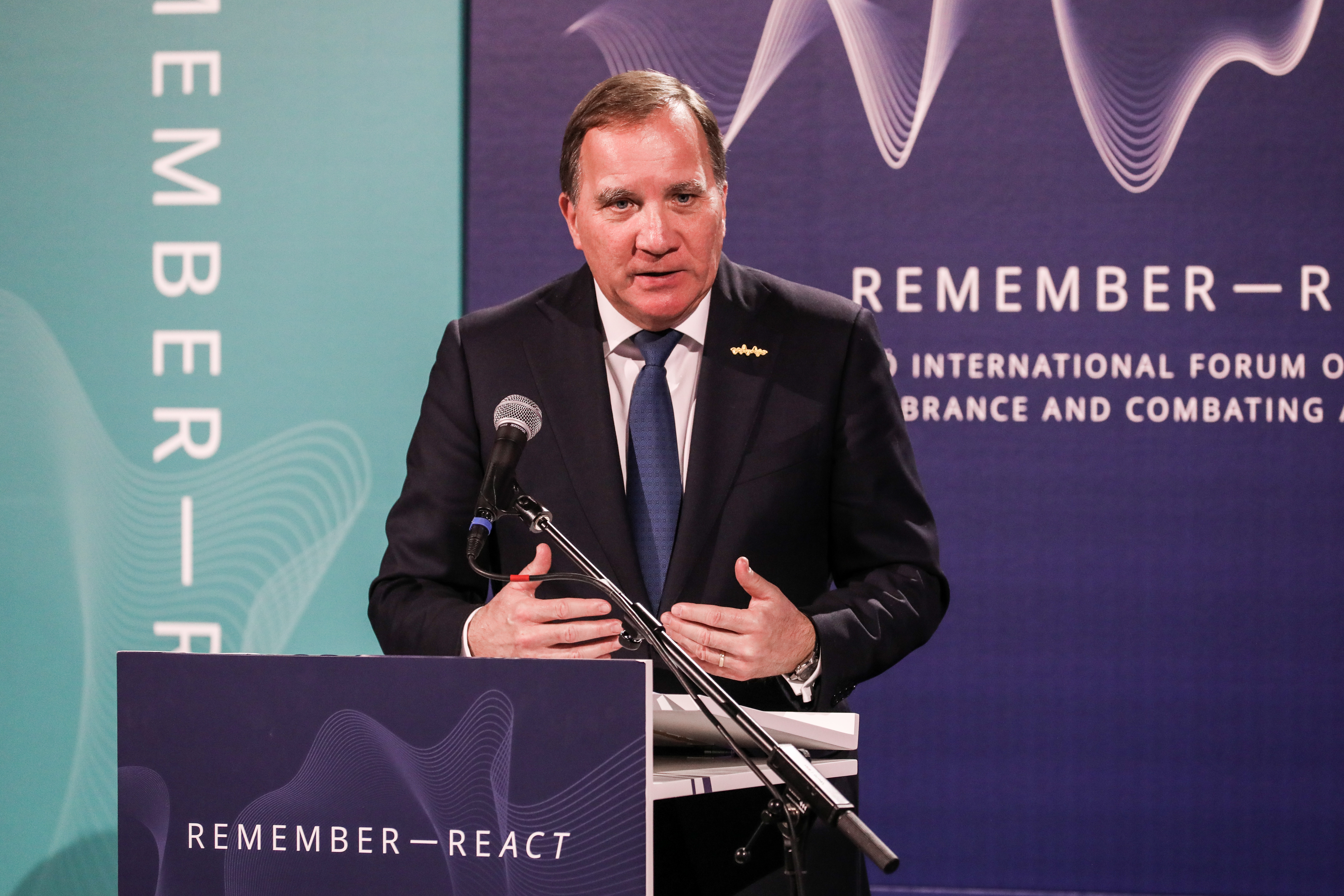



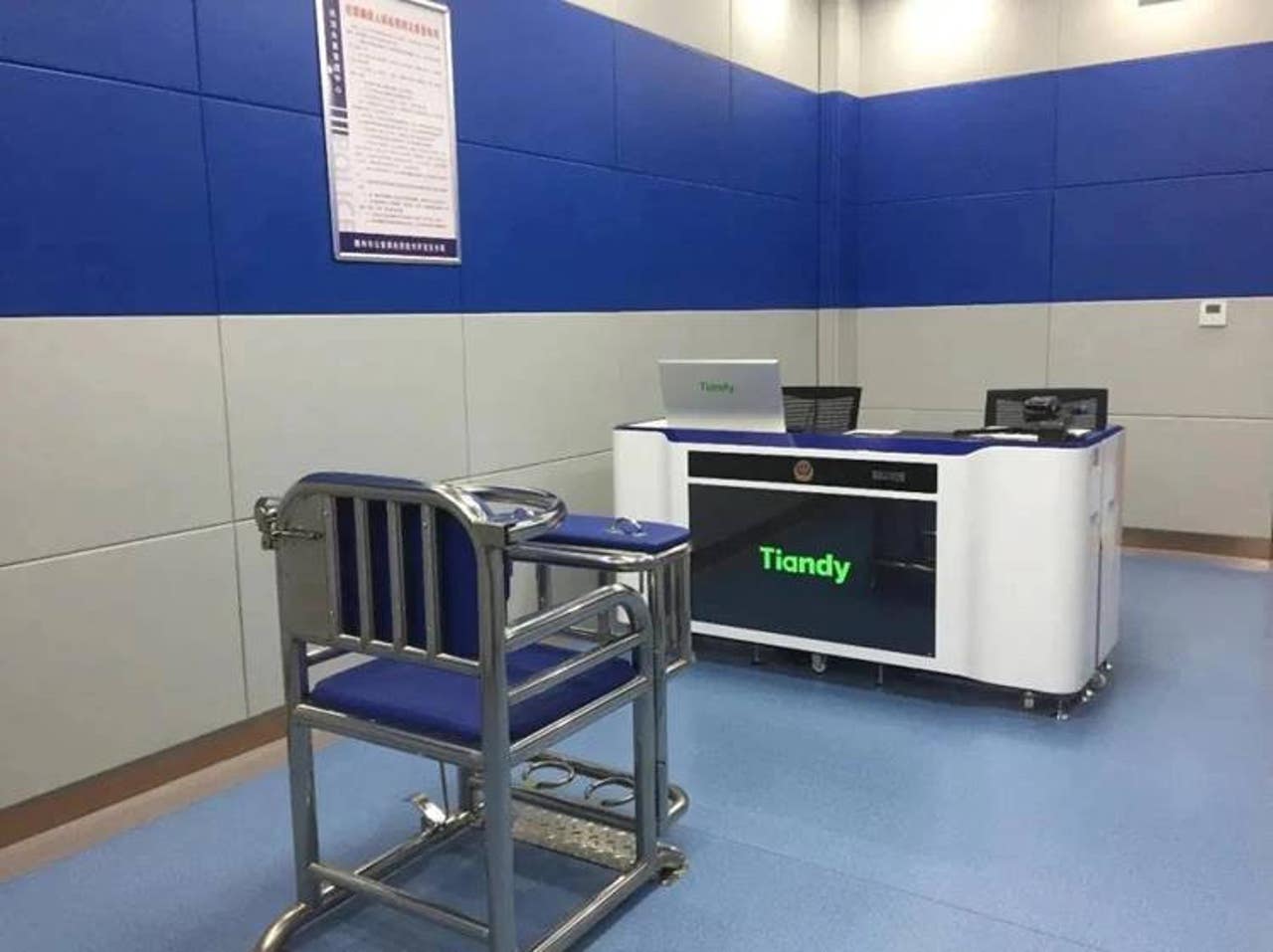


 דיויד סטברו