No less important than recognizing a genocide: fighting the current one
President Biden's recognition of the Armenian Genocide is an important step in the struggle against mass atrocities – genocide, ethnic cleansing, crimes against humanity and war crimes. But it's far from being enough and it won't do much for those who are being persecuted, discriminated against and murdered in places like the Chinese Xinjiang province, the Tigray region in Ethiopia and Myanmar.
About a week before the outbreak of World War II Adolf Hitler met with his army commanders at his Bavarian Alps headquarters. At this meeting he spoke about exterminating the Poles by mercilessly killing men, women and children. There are some who say that this speech also included the rhetorical question: “Who, after all, speaks today of the annihilation of the Armenians?’’
That statement has served as a warning and an illustration of the famous saying, “Those who cannot remember the past are condemned to repeat it.” But that’s only one reason why it’s important. Another one is that the denial of a genocide is a part of genocide itself. It conceals the crime, exonerates the murderers and erases the victims’ existence as a group.
For those reasons, last week, many praised the U.S. president for recognizing the Armenian genocide and criticized other countries, including Israel, for not doing so because of political and economic interests. As justified as the criticism may be, and as positive as the declaration by President Biden is, we should recall that despite the importance of historical memory, there are other forces that shape the present and the future. Recognition of a genocide that took place over 100 years ago is only the first step in a long journey.
This journey passes through places like Xinjiang in northwest China, the Tigray region in Ethiopia and Myanmar. In China, members of ethnic minorities such as the Uighurs are being sent to “reeducation” camps, in which the prisoners are held without trial in grueling conditions and suffer from cruel indoctrination, torture and rape. In addition to the camps, testimonies, leaked documents, satellite photos and media reports reveal a series of other steps against the population in Xinjiang: forced labor, tight surveillance, separating children from their parents and a ban on practicing Islam. There is also evidence of medical experiments, organ harvesting and forced sterilization, all almost without intervention by the international community.
In Ethiopia’s Tigray region and in Myanmar local longstanding ethnic conflicts include horrific reports. News from Tigray in the last few months included acts of slaughter, looting, uprooting the population, deliberate starvation by burning crops, and widespread rape. In this round of the conflict the perpetrators are the Ethiopian government with the assistance of forces from Eritrea and Amharic militias. In Myanmar the second half of the previous decade saw tens of thousands of Rohingya people murdered, and hundreds of thousands persecuted and expelled. Testimonies revealed horrific acts such as setting entire villages on fire and throwing their residents into the flames, acts of gang rape, and tossing infants into the river. Since the military coup in February, the situation of the Rohingya may deteriorate even further.
The sad truth is that in the short term, the recognition of the Armenian genocide won’t help the victims in China, Ethiopia and Myanmar. History teaches that acts of genocide were not prevented in Rwanda, Kosovo, Darfur or Syria in the 1990s and 2000s despite the universal recognition of the most comprehensive genocide in history – the Holocaust. Nor did they take place due to a failure to recognize the Armenian genocide. Recognition is necessary for prevention, but it’s insufficient. In order to combat present and future genocides at least three additional elements are needed: facts, limits and institutions.
There’s a great deal of discussion about media and public discourse in the 21st century suffering from relativization and multiple narratives. In addition, some of the conflicts that lead to genocide are complex and hard to understand. The terrible result is that the murderers can always paint a picture in which they themselves are the victims. That is how reports are published, based on partial truths, maintaining that the Uighurs are fundamentalists and terrorists, the Rohingya are Muslim invaders and the Tigrayans themselves carried out acts of ethnic cleansing. Only undisputed facts and a wide context can counter the abundance of opinions and propaganda.
But facts aren’t enough. “They shall understand that a limit, under the sun, shall curb them all,” wrote Albert Camus in “The Rebel.” “Each tells the other that he is not God” (translated by Anthony Bower). In a world where Authoritarian leaders and their regimes aim to achieve absolute power, recognition of the past and understanding the present must lead to placing limitations. Wars will probably continue to accompany mankind for years to come. We must recognize that and place clear limitations on them.
This isn’t new – international treaties, institutions, courts and tribunals have tried for decades to place limitations and prevent genocide, ethnic cleansing, war crimes and crimes against humanity. The situation of these institutions has never been worse, but even if they suffer from weakness, political biases and corruption, in the absence of a world power that is committed to putting an end to acts of horror, and is capable of doing so, the international institutions must recognize the past, discover present facts and place limitations. Nothing else will prevent the next genocide.
כשבוע לפני פרוץ מלה"ע השנייה נפגש אדולף היטלר עם מפקדי צבאו בביתו שבאלפים הבוואריים. בפגישה זו הוא דיבר על השמדת הפולנים, כולל הרג חסר רחמים של גברים, נשים וילדים. יש המייחסים לו בנאום זה גם את השאלה הרטורית: "אחרי הכל, מי מדבר היום על השמדת הארמנים?". משפט זה משמש מאז כאזהרה והמחשה לכלל הידוע שמי שלא זוכר את העבר נדון לחזור עליו. אבל זוהי רק סיבה אחת לחשיבות ההכרה ברצח-העם של כמיליון וחצי ארמנים באימפריה העות'מנית בזמן מלה"ע הראשונה. סיבה אחרת היא שהכחשת רצח-עם היא חלק אינטגרלי מרצח-העם עצמו. היא הסתרת הפשע, זלזול בקורבנות, מחיקת קיומם כקבוצה וטיהור הרוצחים.
בגלל כל אלו נשמעו בשבוע שעבר ברחבי העולם, וגם בעמודים אלו, דברי שבח על הכרת נשיא ארה"ב ברצח-העם הארמני. במקביל לשביעות הרצון מההחלטה האמריקאית נשמעה ביקורת על מדינות אחרות, כולל ישראל, שאינן מכירות ברצח הארמנים בגלל אינטרסים פוליטיים וכלכליים. מוצדקת ככל שתהיה הביקורת וחיובית ככל שתהיה הכרזת הנשיא ביידן, יש לזכור שבנוסף לחשיבות הזיכרון ההיסטורי, ההווה והעתיד מעוצבים גם ע"י כוחות אחרים. ההכרה ברצח-עם שהתרחש לפני למעלה ממאה שנה היא רק צעד ראשון בדרך ארוכה.
הדרך הארוכה עוברת למשל בשינג'יאנג שבצפון-מערב סין שם חיים בני מיעוטים כמו המיעוט האויגורי המונה מעל 12 מיליון איש. בשנים האחרונות נשלחו מאות אלפי אויגורים ואחרים בשינג'יאנג למחנות "חינוך מחדש" בהם אסירים מוחזקים ללא משפט בתנאים קשים. עדויות של שורדי המחנות סיפרו על אינדוקטרינציה אכזרית, על עינויים ואונס כאמצעי ענישה. בנוסף לעדויות, מסמכים מודלפים, צילומי לווין ופרסומים בתקשורת, מגלים שורת צעדים נוספים נגד האוכלוסייה בשינג'יאנג – עבודות כפייה, מעקב וריגול בתוך הבית ומחוצה לו, הפרדת ילדים מהוריהם ואיסור קיום אורח-חיים מוסלמי. ישנן גם עדויות על ניסויים רפואיים, עיקור בכפייה וסחר באיברים. כל אלו מתקיימים כמעט בלי הפרעה או התערבות של הקהילה הבינלאומית.
אבל זוהי רק ההתחלה. בחבל תיגראי שבאתיופיה מתקיים סכסוך אתני ארוך שבחודשים האחרונים מדרדר, ע"פ דיווחים של עיתונאים וארגוני סיוע, למעשי טבח, ביזה, עקירת אוכלוסייה תיגראית מביתה, הרעבה מכוונת ע"י שריפת יבולים ואונס בקנה מידה רחב. כוחות של השלטון האתיופי בסיוע כוחות מאריתריאה ומיליציות אמהריות הם האחראים לסיבוב הזוועות הנוכחי וגם כאן התגובה הבינלאומית מוגבלת. ואם כל זה לא מספיק, יש להזכיר את המתרחש במיאנמר ואת מעשי הטבח הנוראיים נגד בני הרוהינגיה, תושבי חבל ראקין. במחצית השנייה של העשור הקודם נרדפו וגורשו מאות אלפים החיים כיום במחנות פליטים בבנגלדש ומדינות שכנות. במקביל נרצחו עשרות אלפים. דיווחים המבוססים על עדויות הפליטים חשפו מעשי זוועה – הצתה של כפרים שלמים והשלכת תושביהם לאש, מעשי אונס קבוצתי של נשים לעיני ילדיהם והשלכת תינוקות לנהר. כעת, לאחר המהפכה הצבאית בפברואר, מצבם של בני הרוהינגיה עלול להחמיר עוד יותר.
צריך לומר בבירור – למרות החשיבות ארוכת הטווח של ההכרה ברצח-העם הארמני, בטווח הקצר היא אינה מסייעת לקורבנות בסין, אתיופיה ומיאנמר. אין בכך בכדי להפחית מחשיבות ההכרה, אך ההיסטוריה מלמדת שמעשי רצח-עם לא נמנעו בשנות התשעים והאלפיים במקומות כמו רואנדה, קוסובו, דארפור וסוריה למרות ההכרה האוניברסאלית ברצח-העם הנרחב והמקיף ביותר בהיסטוריה, שואת יהודי אירופה. הם גם לא התרחשו בגלל אי ההכרה ברצח הארמנים. הכרה היא תנאי הכרחי למניעה, אבל לא תנאי מספיק. על מנת להילחם ברציחות עמים בהווה ובעתיד יש צורך לפחות בשלושה מרכיבים נוספים: עובדות, גבולות ומוסדות.
רבות מדובר על כך שהתקשורת והשיח הציבורי במאה ה-21 סובלים מרלטיביזציה וריבוי נרטיבים. בנוסף לכך, חלק מהסכסוכים המובילים לרצח-עם הם מורכבים מאוד וקשים להבנה. התוצאה האיומה היא שהרוצחים יכולים תמיד להציג תמונה שעל פיה הם הקורבנות. כך מתפרסמות ידיעות המבוססות על אמיתות חלקיות על כך שהאויגרים הם פונדמנטליסטים וטרוריסטים, בני הרוהינגיה הם פולשים מוסלמים והתיגראים ביצעו בעצמם מעשי טיהור אתני. לכן חשובה העיתונות שתחקור ותפרסם עובדות הנותנות הקשר לים העמדות והפרשנויות.
אך עובדות אינן מספיקות. "יש גבול תחת השמש המרסן את כולם", כתב אלבר קאמי, "כל איש יגיד לרעהו שאין הוא אלוהים" ("האדם המורד", תרגום: צבי ארד). בעולם בו משטרים ומנהיגים חותרים לשלטון סמכותני ואוטוריטרי, חייבת ההכרה בעבר והבנת ההווה להוביל להצבת גבולות. מלחמות ימשיכו ככל הנראה ללוות את האנושות עוד שנים רבות. יש להכיר בכך ולחתור להציב להן גבול ברור. אין בכך חדש – אמנות בינלאומיות, מוסדות בינלאומיים, בתי-דין וטריבונלים ניסו בעשרות השנים האחרונות להציב גבולות ולמנוע מעשי רצח-עם, טיהור אתני, פשעי מלחמה ופשעים נגד האנושות. מצבם של מוסדות אלו אמנם מעולם לא היה גרוע יותר, אך גם אם הם סובלים מחולשה, הטיות פוליטיות ואפילו שחיתות, בהעדר מעצמה עולמית המחויבת והמסוגלת לעצור את זוועות ההמונים, המוסדות הבינלאומיים חייבים להכיר בעבר, לגלות את עובדות ההווה, להציב את הגבול ולמנוע את רצח-העם הבא.
ביורן אנדרסן לוהק לתפקיד הנער טאדז'ו, מושא תשוקתו של הגיבור המבוגר ב"מוות בוונציה" של הבמאי האיטלקי הנודע לוקינו ויסקונטי. בין לילה הפך לכוכב בינלאומי מנוצל, ומאז היו חייו לרצף טרגדיות בלתי נגמר. חמישים שנה אחרי, איתרו הדוקומנטריסטים קריסטינה לינדסטרום וקריסטיאן פטרי את התגלית הנשכחת של הסרט. בראיון עמם הם מסבירים מדוע החליטו לעשות עליו את הדוקו שיתקן את הטראומה שהותירה בנפשו יצירת הקולנוע ההיא.
ביורן אנדרסן אינו השחקן הראשון שזכה לתהילה מוקדם מדי בחייו והוא בוודאי אינו הראשון ששילם עליה מחיר אישי גבוה. ידועים סיפוריהם של כוכבים וכוכבות רבים שנוצלו על ידי תעשיית המוסיקה, הקולנוע או האופנה ושחייהם האישיים היו רחוקים מאידיליה של אושר והגשמת חלומות, מג'ודי גרלנד ועד לבריטני ספירס. ובכל זאת, סיפורו של אנדרסן, שכיכב ב-1971, כשהיה בן 16, בסרטו הקלאסי של לוקינו ויסקונטי, "מוות בוונציה" (Morte a Venezia) הוא יוצא דופן. זהו סיפור על נער צעיר מלא כישרון ובעל יופי נדיר שנוצל על ידי עולם המבוגרים כך שבמקום אושר ועושר, חייו הפכו לסאגה שבה טרגדיה רודפת טרגדיה. חייו של ביורן אנדרסן מוצגים כעת לקהל בסרט דוקומנטרי שיצרו שני הבמאים השוודים, קריסטינה לינדסטרום וקריסטיאן פטרי. הסרט הוצג לראשונה בפסטיבל סאנדנס האחרון וזכה לביקורות טובות ולתשומת לב בשוודיה ומחוצה לה.
ביורן אנדרסן נולד ב-1955 בסטוקהולם והטרגדיה הראשונה הכתה בו כבר כשהיה בן עשר. אמו, ברברו (Barbro), שהיתה אומנית בוהמיינית והרפתקנית שסבלה ככל הנראה מדיכאון, נעלמה. אנדרסן זוכר עד היום את הפעם האחרונה שראה אותה. היא נפנפה לו לשלום כשהוא בדרכו לבית הספר וכשחזר היא כבר לא היתה. כעבור מספר חודשים הופיעו שני שוטרים בפתח ביתם של סבו וסבתו והודיעו למשפחה שהאם נמצאה מתה ביער. מהסרט ניתן להבין כי התאבדה. אניקה, אחותו הצעירה של ביורן זוכרת שלאחר ההודעה האם הושכחה לגמרי על ידי המשפחה. "אחרי היום ההוא", היא אומרת בסרטם של לינדסטרום ופטרי, "איש לא הזכיר את אמא אפילו לא במילה". אנדרסן נשלח לפנימייה בדנמרק, ברח ממנה, חזר לסטוקהולם ושם התגורר אצל סבתו, אמה של אמו. הסבתא, כך זוכר אנדרסן, "רצתה נכד סלב" וכך הוא מצא את עצמו עובר ממבחן-בד אחד למשנהו כבר בגיל צעיר מאוד. את הופעתו הראשונה על המסך הגדול עשה ב-1970 בתפקיד משני בקלאסיקה השוודית "סיפור אהבה" (A Swedish Love Story). שנה אחר-כך הוא כיכב בסרטו של ויסקונטי ומאז השתתף בסרטים (לאחרונה בתפקיד משנה ב"מידסומר" מ־2019) וסדרות טלוויזיה רבות ופעל גם כמוזיקאי. אבל סיפורו הוא הרבה מעבר לרשימת ההפקות בהן השתתף. סרטם של לינדסטרום ופטרי חושף לראשונה בפני קהל בינלאומי את סיפורו של ילד הפלא השוודי והוא נקרא על שם הכינוי שהודבק לאנדרסן עוד כשהיה בן 15 – "הנער היפה ביותר בעולם" (The Most Beautiful Boy in the World).
בראיון ל"הארץ" מספרים הבמאים על הנסיבות בהן החליטו ליצור את הסרט. "הכרתי את ביורן מכיוון שהסתובב במעגלים החברתיים שגם אני הייתי בהם והיו לנו חברים משותפים", אומר פטרי, "לפני כ-15 או 20 שנה הוא גם השתתף כשחקן בסדרת טלוויזיה לילדים שעשיתי. הוא גילם את האיש הרע, היה כיף לעבוד איתו והיה לנו קשר טוב". פטרי מספר שלמרות הקשר הטוב הוא מעולם לא שאל אותו על "מוות בוונציה" ועל חייו כ"נער היפה ביותר בעולם". כל זה השתנה כאשר קריסטינה לינדסטרום הצטרפה אל השניים לארוחת ערב. "היא שברה את הטאבו", צוחק פטרי ולינדסטרום מסבירה: "שאלתי אותו על התפקיד שקיבל בסרט של ויסקונטי ועל איך הוא קיבל אותו. כשהוא סיפר על סבתא שלו שאלתי למה הוא חי אצל הסבתא והוא החל לספר את הסיפור. זה סיפור מסקרן וחזק מאוד וחשבתי שחשוב לספר על האובססיה הזו ליופי ועל הצלקות שהאיש הצעיר הזה קיבל מתשומת הלב שהוא זכה לה". לינדסטרום ופטרי מספרים שאנדרסן לא התלהב בתחילה מהרעיון לעשות סרט על חייו. "הוא אמר שיחשוב על זה והמשכנו לדבר על זה במשך כמה חודשים", מספר פטרי, "לא רצינו ללחוץ, הוא התייחס לזה מאוד במקצועיות ואנחנו חיכינו עד שיהיה מוכן לדבר. גם כשהתחלנו את הסרט לא ידענו את הכל והסיפור שלו נחשף לאט לאט. הוא הזמין אותנו כל פעם לפרק הבא בחייו או לאדם הבא שיש לו חשיבות בעבורו. לקח לו שנתיים רק להזמין אותנו לבקר בדירה שלו. בדרך כלל, כשעושים סרט דוקומנטרי, זה קורה מיד. במקרה הזה היינו הראשונים לבקר בדירה בעשר שנים".
דירתו השכורה של אנדרסן משחקת תפקיד גם בסיפור שלו בשנים האחרונות. הסרט מלווה אותו כאשר הוא נאלץ לערוך ניקיונות ושיפוצים מכיוון שהיא מוזנחת ומלוכלכת כל כך שהוא כמעט מפונה ממנה. זוהי סצנה שבה אנדרסן נחשף כאדם בוגר, רחוק מאוד מהנער היפה שהיה. הרושם הוא של אדם שלא מצליח לתפקד בעולם האמיתי, שערו ארוך, זקן גדול מכסה את פניו, הוא שותה ומעשן בכמויות גדולות ומצליח להיחלץ מפינוי מדירתו רק בעזרת בת-זוג צעירה (יסיקה ונברג) שעוזרת לו בניקיונות ובהתמודדות עם הרשויות. אך כיצד הגיעו הדברים לידי כך?
הנער היפה ביותר בעולם
על מנת להבין היכן הכל השתבש צריך לחזור להתחלה ובמקרה של ביורן אנדרסן ההתחלה היא רגע אחד ספציפי. רגע מכונן ודרמטי שלולא התקיים יתכן שמסלול חייו היה אחר לגמרי. זה היה יום חורף ב-1970. אנדרסן היה בן 15 וסטוקהולם היתה קפואה ומושלגת. הבמאי האיטלקי הנודע לוקינו ויסקונטי התמקם במלון המפואר ביותר במרכז העיר, ה-Grand Hotel, ובחן שורה של נערים לתפקיד מרכזי בסרטו החדש. מכיוון שמדובר היה במבחן-בד, האירוע תועד ומופיע כבר בתחילת סרטם של לינדסטרום ופטרי. זוהי סצנה שמעוררת אי-נוחות רבה – דלת חדר הבחינות של ויסקונטי נפתחת, אל החדר נכנס אנדרסן הצעיר כשהוא מחייך בביישנות. יופיו יוצא דופן. הבמאי וצוותו מבינים שהם מצאו את מה שביקשו, הם מצווים עליו ללכת במעגל, להביט למצלמה ולחייך. לבסוף הוא נאלץ להוריד את חולצתו ומכנסיו. הוא עושה זאת למרות שמבוכתו ואי הנעימות שלו ניכרות לעין. כל זה לא ממש משנה, ההפקה הקולנועית מאפילה על רגשותיו של הנער, מחמאות על יופיו נזרקות לאוויר, המצלמה עוברת מזווית אחת לשנייה וגורלו של אנדרסן נחתם – ההצגה חייבת להימשך והוא עומד להפוך לכוכב קולנוע.
הסרט "מוות בוונציה", מבוסס על סיפור של תומאס מאן מ-1912 שמתאר מלחין חולה ומזדקן המתאהב בנער צעיר ויפהפה בשם טאדז'ו אותו הוא מגלה במהלך חופשתו במלון Des Bains באי לידו שבוונציה. זוהי אינה אהבה המתממשת במערכת יחסים או במגע אלא מעין אובססיה, אהבה לאידיאל היופי המתבטא בנער הצעיר. זוהי אהבה שנותרת בלתי ממומשת כאשר מושא היופי עצמו הופך בעבור המלחין, המגולם על ידי השחקן דירק בוגרד, לדמות שהיא משהו שמעבר לאדם ממשי. בטקסט של תומאס מאן, טאדז'ו מתואר כביטוי ליופי אלוהי וכמלאך מוות. הבמאי ויסקונטי, שעסק רבות ביופי ובמוות ולא הסתיר את מערכות היחסים ההומוסקסואליות שלו, השקיע מאמצים רבים במציאת הנער שיתאים ביותר לסרט המבוסס על יצירתו של מאן. הוא ביקר במדינות שונות ובחן מועמדים רבים, אך היה זה ביקורו בסטוקהולם שהניב בדיוק את מה שהזדקק לו. "זהו אמנם רגע מכריע עבור אנדרסן אבל זה גם רגע מכריע עבור ויסקונטי", אומר פטרי, "בשבילו זהו הרגע שבו מסתיים מסע של שלוש שנים. כמו שאומרת המלהקת בסרטו של ויסקונטי – כשנכנס הילד הבלונדיני הזה היה ניכר שכל גופו של ויסקונטי התעורר לחיים".
הקרנת הבכורה של "מוות בוונציה" נערכה בלונדון ומשכה תשומת לב עולמית. אפילו מלכת אנגליה היתה שם. זה היה גם האירוע שבו העניק הבמאי ויסקונטי לאנדרסן את הכינוי שליווה אותו כל חייו – "הנער היפה ביותר בעולם". כשהסרט השתתף בפסטיבל קאן, חודשיים מאוחר יותר, אנדרסן הופך לכוכב בינלאומי. "בקאן התחיל הקרקס", נזכר אנדרסן ומספר ללינדסטרום ולפטרי, "הייתי מפוחד. הרגשתי כאילו להקת עטלפים סובבת אותי כל הזמן. זה היה סיוט". הסרט מציג את ויסקונטי כבמאי שתלטן ותובעני, את סבתו של אנדרסן, שהצטרפה לנסיעה לוונציה, כרודפת פרסום ותהילה ואת אנדרסן עצמו כנער המנוצל על ידי כל הסביבה המבוגרת במשך כל תהליך עשיית הסרט. "זהו סיפור אוניברסלי על יחס לילדים", אומרת לינדסטרום, "ילדים אמורים להיות מטופלים על ידי מבוגרים. מבוגרים אמורים לכבד ילדים. אבל הילד הזה ניזוק מהיחס שקיבל". אבל זו היתה רק ההתחלה.
בסרט מספר אנדרסן שאחרי סיום צילומי "מוות בוונציה" הוא נלקח על ידי אנשי ההפקה, שהיו כולם הומוסקסואלים, למועדון גייז שבו הרגיש לראשונה כסמל מין כשראה מכל עבר "מבטים רעבתניים, שפתיים רטובות ולשונות מתגלגלים". הוא מעולם לא התמודד עם דבר דומה והוא שתה והשתכר כדי להדחיק. כשהסרט הופץ עיתונאים רדפו אחריו, כתבות עליו הופיעו בכל העולם, הוא קיבל מכתבי מעריצים ומעריצות ממדינות רבות והוא היה עדיין מחויב לויסקונטי בחוזה לשלוש שנים. ההצלחה הבינלאומית והלחץ של סבתו הביאו אותו עד יפן שם הפך אנדרסן באמצעות תעשיית הבידור המקומית לכוכב פופ ואליל נוער. בסרט הוא קורא לתקופה ההיא "חלום סוריאליסטי". הוא הופיע על במות, בטלוויזיה ובפרסומות, הוא הפך לדמות מנגה (קומיקס יפני) וזכה להערצה עיוורת של המונים. כיום ברור שהוא לא רצה להיות ביפן כלל. הוא עבד ללא הפסקה, הוא איבד את ביטחונו העצמי והפך לעבד של התעשייה שגם סיפקה לו חומרים כימיים כדי שיוכל להמשיך לתפקד. אם כל זה לא היה מספיק, מסעו של אנדרסן עבר ב-1976 מיפן לצרפת אליה הגיע כדי להשתתף בסרט שלא צולם בסופו של דבר. במקום לחזור הביתה הוא נשאר בפאריז שנה שלמה כמעין בן-חסות של אדם שאמנם מימן את שהותו ושילם את כל הוצאותיו אך ניצל אותו והתייחס אליו כמעין פרס שהציג לראווה כנער היפה ביותר בעולם. כך הוא הפך שוב לאובייקט מיני וסמל יופי, הפעם בעבור הקהילה ההומוסקסואלית בפאריז.
"הסרט שלנו עוסק באופן שבו אנשים רואים ומגיבים ליופי", אומרת הבמאית קריסטינה לינדסטרום, "אנדרסן נוצל כמו חפץ. ברור שלא היה לו נוח עם זה, הוא שנא את זה, הוא גם אמר את זה כשהתראיין בעיתונות השוודית שם הוא אמר שהוא בסך הכל רוצה להיות עם החברים שלו. הוא בעצם נחטף. העולם שנחשף בפניו היה מאוד מפתה, הוא הוזמן לנסיעות, למסיבות ולחוויות אבל היתה לו כל הזמן תחושה של בושה, הוא אמר שקיבל תשומת לב בעבור כלום". "זה היה נטל גדול", מוסיף הבמאי קריסטיאן פטרי, "ובגלל הרקע שלו הוא לא היה חזק מספיק בכדי להתמודד עם זה. הוא תמיד היה צנוע. והרי זה לא באמת היה רק היופי שלו. הוא היה כריזמטי והוא עדיין כריזמטי, הוא גם חכם ומהיר מחשבה וזה ממש לא נכון שתשומת הלב שקיבל היתה רק בגלל יופיו החיצוני. לוקינו ויסקונטי ראה לא רק את היופי, אלא גם את הפגיעות שלו. העניין הוא שהפגיעות הזו היתה חלק מהיופי שלו".
אנדרסן וויסקונטי, צילום: צילום: Mario Tursi
קריסטינה לינדסטרום וקריסטיאן פטרי הם שני במאים שוודים וותיקים בעלי קריירה של עשרות שנות עשייה. לינדסטרום (ילידת 1957) היא עיתונאית, מפיקה ובמאית שעבדה שנים רבות ברדיו ובטלוויזיה הציבוריים בשוודיה ויצרה סדרות וסרטים תיעודיים על דמויות שוודיות מיתולוגיות כמו הסופרת אסטריד לינדגרן ("בילבי", ספרי "ילדי עמים" כמו נוריקו סאן ואלה קארי) וראש הממשלה השוודי, אולוף פלמה, שנרצח ב-1986. ביצירתה עוסקת לינדסטרום רבות בהיסטוריה ובמקום של נשים בהיסטוריה. קריסטיאן פטרי (יליד 1956) הוא במאי, מפיק, סופר ועיתונאי שכתב ספרי מסעות, נובלות, תסריטים ורומנים ויצר גם סרטים תיעודיים, סרטים עלילתיים וסדרות טלוויזיה. הנושאים שפטרי עוסק בהם הם מגוונים מאוד, החל במסעות במקומות נידחים כמו בורנאו, סנקטה הלנה ואיי פוקלנד, דרך יצירה אוטוביוגרפית ועד פרשות היסטוריות ודרמות משפחתיות. הסרט הנוכחי של פטרי ולינדסטרום אינו הפעם הראשונה שהם עובדים יחד. בשנים האחרונות הם עבדו יחד על יצירות תעודה על חברת תקליטים שוודית מיתולוגית ועל עידן הפאנק במוסיקה השוודית.
העבודה על "הנער היפה ביותר בעולם" נמשכה לדבריו של פטרי כחמש שנים שבהם הם עשו למעשה "סרט עם אנדרסן, לא על אנדרסן", כאשר סיפור חייו מתגלה שלב אחר שלב. לפטרי ולינדסטרום היה חשוב לכבד את אנדרסן ולזכות באמונו. "רצינו להיות ההיפך מוויסקונטי", אמרה לינדסטרום בראיון, "בעבר הוא נוצל ואנחנו החלטנו להיות שם בשבילו כל הזמן: כשכמעט פינו אותו מדירתו, כשבתו, רובין רומאן, הגיעה אליו בפעם הראשונה ב-11 שנים וכשהוא רב עם בת-הזוג שלו. אחרי זמן מה היינו לחלק מהמשפחה שלו". למזלם גילו הבמאים שלאנדרסן יש חומר תיעודי בעל ערך רב – שיחות טלפון שהוקלטו על ידי דודתו בהן נשמעים אמו ובני משפחה אחרים, חומר שאמו הקליטה בילדותו, תמונות, סרטים ישנים ועוד. כל אלו נוספים לחומר ארכיוני שהם אספו ולשיחות עם אנדרסן, בני משפחתו ודמויות מחייו שנערכו במקומות אליהם התגלגלו חייו של אנדרסן. כך זוכים צופי הסרט לבקר עם אנדרסן בוונציה בה צולם הסרט ששינה את חייו, בטוקיו בה הוא הפך לכוכב, בפאריז בה הוא שהה בצעירותו וכמובן בסטוקהולם בה הוא חי היום.
מכיוון שחייו של אנדרסן מלאים בכאב, בניצול ובטראומה, היחס של פטרי ולינדסטרום אליו הוא סבלני ורגיש מאוד. הסרט נזהר לא להיות סנסציוני ובניגוד לסרטים אחרים העוסקים בניצול ילדים, הוא לא יורד לפרטים כאשר מדובר בחלק מעלילותיו בוונציה ובפאריז, בעיקר באלו הנוגעים לניצול מיני. "יש הרבה דברים שדיברנו עליהם עם ביורן ולא נמצאים בסרט", אומרת לינדסטרום כשהיא נשאלת על נקודה זו ועל תחושת האנדרסטייטמנט הכללי של הסרט, "נתנו כבוד לרגשות שלו". "זאת החלטה שהיא גם אסטתית וגם אתית", מוסיף פטרי, "זה גם עניין של כבוד וגם עושה את הסרט למעניין יותר. הסרטים שאני אוהב הם כאלו ששואלים שאלות ונותנים לי להשלים פערים ופרטים".
היחס המכבד והסבלני הוא חידוש בעבור אנדרסן שנפגע בעבר פעמים רבות מניצול והחפצה. אחת הפעמים הידועות ביותר היא פרשה שהתרחשה ב-2003 כאשר הסופרת והאקטיביסטית הפמיניסטית הרדיקלית, ג'רמיין גריר, הוציאה לאור ספר בשם "הנער" (The Boy). הספר מכיל כ-200 תמונות של נערים מתקופות שונות, מקופידון, דרך ג'ים מוריסון ועד קורט קוביין, והוא דן באידיאל יופי הנעורים של בנים מהעת העתיקה ועד היום. על עטיפת הספר מופיעה תמונתו של ביורן אנדרסן הצעיר שצולמה על הסט של "מוות בוונציה". אנדרסן עצמו לא התבקש לתת את הסכמתו להופעתו על עטיפת הספר ובעקבות הפרסום הוא אמר לעיתונות הבריטית שהוא מרגיש מנוצל על ידי הפמיניסטית האוסטרלית הידועה. בראיון ל"גרדיאן" באוקטובר 2003 הוא אמר: "אני מתנגד באופן עקרוני לאהבה של מבוגרים לנעורים. זה מטריד אותי רגשית ואינטלקטואלית מכיוון שיש לי הבנה במה מדובר". גריר עצמה הואשמה בפדופיליה בגלל התבטאויותיה על "הנערים המרהיבים בעלי החזה החלק, הרגליים הפשוקות והאגן הצר". במאמר ב"טלגרף" היא אף כתבה ש"אני יודעת שהיחידים שאמורים ליהנות מתמונות של נערים הם חברי תת-התרבות של גברים הומואים. ובכן, אני רוצה לעשות 'ריקליים' בעבור נשים ולתת להן את הזכות להעריך את היופי קצר-הימים של נערים, נערים אמיתיים, לא גברים בני שלושים בעלי חזה מגולח".
אנדרסן וויסקונטי, צילום: Mario Tursi
פרשת ספרה של גריר אינה מופיעה בסרט של לינדסטרום ופטרי אך ההקשר האקטואלי הוא בלתי נמנע. האם זוהי בעצם פרשת מיטו מהופכת שבה גבר צעיר מנוצל ומוחפץ על ידי נשים וגברים כאחד? לינדסטרום בהחלט רואה בסיפורו של ביורן אנדרסן מרכיבי ניצול כמו אלו העומדים בבסיס תנועת מיטו. העובדה שהוא נער ולא נערה על פי לינדסטרום רק עושה אותו בודד יותר. פטרי מוסיף שלמרות הייחודיות של הסיפור של אנדרסן הוא גם מזכיר לו סיפורים של נשים רבות. הוא מדבר על דוגמניות ושחקניות קולנוע שנוצלו על ידי תעשיית הבידור ומציין לדוגמה את פיה דגרמרק, השחקנית השוודית שכיכבה ב-1967 בקלאסיקה השוודית "אלבירה מדיגן" (Elvira Madigan) וסבלה בהמשך חייה מאנורקסיה, התמכרות ואפילו ישבה בכלא. הצפייה בסרט של לינדסטרום ופטרי על ביורן אנדרסן, נער מנוצל שהפך לגבר מנוצל, היא תזכורת לכך שניצול של נשים על ידי גברים הוא אמנם נפוץ ואוניברסלי, אך הוא חלק מהתנהגות אנושית כללית יותר – הפיכת הזולת לאובייקט וראייתו כאמצעי להגשמת תכלית. מה שהחל הבמאי הנודע ויסקונטי, נמשך על ידי המפיקים ביפן וחברי הקהילה ההומוסקסואלית בצרפת ולא נגמר אפילו אצל ג'רמיין גריר. זהו אמנם לא המקרה הקלאסי, אבל גם אם אנדרסן הוא גבר לבן והטרוסקסואל אין ספק שהוא קורבן.
בשלב מסוים בסרט נדמה שחייו של אנדרסן מסתדרים סוף סוף. הוא חזר לשוודיה, למד תיאטרון ואפילו התחתן. ב-1984 נולדה לו בת בכורה ושנתיים אחריה נולד בן נוסף. אך אז הכתה שוב הטרגדיה. בסרט מספר אנדרסן על השתלשלות האירועים ששינתה שוב את הכל: הוא חזר הביתה אחרי לילה של שתייה. השעה היתה מאוחרת מאוד והוא נרדם שיכור במיטתו. בבוקר, כשאשתו לקחה את הילדה לגן, היא השאירה לידו את התינוק בן השמונה חודשים. "התעוררתי מהצרחה של אשתי", מספר אנדרסן בסרט, "וראיתי אותו שוכב שם. שפתיו כחולות. ניסינו שנינו, לשווא, להחיות אותו. הדיאגנוזה היתה 'תסמונת מוות בעריסה'. אבל הדיאגנוזה שלי היא חוסר באהבה". אנדרסן מאשים את עצמו, את חוסר הבשלות וחוסר האחריות שלו במוות של בנו. הוא אומר שזו תוצאה של העובדה שאושרה של המשפחה כולה היה מונח על כתפיו הצרות של התינוק חסר האונים. אחרי מותו של התינוק אנדרסן שקע בדיכאון, אלכוהוליזם והרס עצמי. הוא נפרד מאשתו ומהבת ונכנע לרחמים העצמיים ורגשות האשמה. "הכל היה דפוק מהתחלה", הוא אומר, ומסכם את חייו שצולקו על ידי מותה של אמו, ניצולו על ידי תעשיית התרבות ומותו של בנו. "אבל בסוף מתרגלים לזה. כבר לא מצפים ליותר מהחיים. במובן מסוים יותר קל לחיות כשמאבדים כל כך הרבה".
קריסטינה לינדסטרום אומרת שבתחילת צילומי הסרט אנדרסן היה בתקופה קשה במיוחד אך היום היא חושבת שהמצב טוב יותר. "אחרי הסרט שוחחתי עם בתו של אנדרסן", היא מספרת, "והיא אומרת שהסרט היה תהליך חשוב ועכשיו הם גם מדברים יותר". הסרט מפגיש את אנדרסן גם עם דמויות נוספות מעברו כמו אחותו הצעירה והאנשים שליוו אותו ביפן ועם אנשים שסייעו לו בזמן הצילומים כמו בת-הזוג שלו ואשת ארכיון המסייעת לו למצוא מידע על אמו ועל אביו אותו לא פגש מעולם. מפגשים אלו חושפים את יכולתו של אנדרסן לשתף, להקשיב ולאהוב. האמון שלו בבני-אדם, כך נראה, עדיין קיים. "בתהליך יצירת הסרט היינו שם איתו ברגעים קריטיים של חייו", אומר הבמאי פטרי, "התהליך עזר לו להיחשף, הוא ראה יותר מעצמו, הוא חזר לרגעים החשובים בחייו והוא במקום טוב יותר עכשיו". לינדסטרום מוסיפה שבמינו מוצא אנדרסן נחמה גם באמונה דתית: "האמונה שלו חזקה והיא מאוד חשובה לו. הוא אומר שבלעדיה הוא לא היה חי". אך זה לא סיפור של גאולה שלמה. לינדסטרום אומרת שהסרט היה אמנם תהליך חיובי, אבל הצלקות עדיין שם, "זה לא סיפור עם הפי-אנד", היא מסכמת, "החיים פשוט אינם כאלו".
ביורן אנדרסן כיום, מתוך הסרט התיעודי אודותיו. צילום: Mantaray Film
אמנם לא גאולה, אבל הסרט "הנער היפה ביותר בעולם" מסתיים בסגירת מעגל, פחות או יותר במקום שבו הוא התחיל – ילד בן עשר שמתבשר שאמו לא חזרה הביתה. זוהי כמובן טראומה שעיצבה את חייו של אנדרסן שלימים גילה את מה שהיה מכתב הפרידה של אמו. המכתב שכתבה האם לפני היעלמה נקרא בסרט פעמיים. בפעם הראשונה קוראת אותו אחותו של אנדרסן. בפעם השנייה זהו אנדרסן עצמו. האספקט הוויזואלי בזמן קריאת המכתב מעניק לתוכנו משמעות נוספת. אלו אמנם דבריה של האם אך הם נקראים כאשר אנדרסן הבוגר נראה כשהוא מטייל על החוף בוונציה שבו שיחק את דמותו של הנער היפה והתמים 50 שנה קודם לכן. "לא נשאר ממני הרבה. אל תבכו עלי. כבר לא נותרה אש לכבות ולא נותרה בי עוד תחושה של מה שאני ומה שאינני", כך הטקסט. וברקע מתחלפות תמונות – פעם אנדרסן על החוף בוונציה כשהוא בן יותר משישים ופעם תמונות מאותו המקום כאשר הוא בן 15. השמיים אמנם התקדרו אבל הים הוא אותו הים, החול אותו החול והגלים הם אותם הגלים. אנדרסן נמצא באותו המרחב הפיזי אך בינו לבין בן דמותו הצעיר מפרידה חומה בלתי עבירה של זמן, הזמן שכל שהתרחש בו כבר אינו ניתן לשינוי. הסרט מצליח להפגיש את האדם הבוגר שאיבד את בנו עם הילד הצעיר שאיבד את אמו, וכבר לא ברור אם הטקסט הוא שלה או שלו: "אני הופך לבלתי נראה. כבר נתתי את כל שהיה לי לתת. נשארה רק דלת. אני לא מת, רק נעלם. אולי עוד אתעורר. או אז, אחזור ואחפש אותך".
כשגבר אקראי שולח לה תמונה של איבר המין שלו בליווי פנינים סקסיסטיות, היא בהחלט עשויה להעביר את ההודעה שלו הלאה לאשתו או לאמו. לינאה קלאסון, בעבר שחקנית כדור-יד מקצוענית מצליחה וכיום אחת האקטיביסטיות הפמיניסטיות הידועות בשוודיה, מצהירה שאין דרכים שגויות לנהוג כשאת מותקפת, מספרת על האיומים שקיבלה ומסבירה מדוע ארצה רחוקה מלהיות מתקדמת בכל הנוגע לזכויות נשים.
השורות הראשונות של כתבה זו אינן נעימות לקריאה. היה טוב לולא היה צורך בהן. ובכל זאת, הן כאן כי הן הכרחיות, לא כדי למשוך תשומת לב או לעורר פרובוקציה, אלא כדי לתאר פיסת מציאות שהיא מנת חלקן של נערות ונשים רבות, גם אם היא לא נמצאת תמיד בכותרות.
אדם מבוגר כותב לבחורה שהוא איננו מכיר. הוא הגיע אליה דרך אחת הרשתות החברתיות: "וואו, השדיים שלך! את אוהבת שדופקים אותך בשדיים? זה מעורר אותך?", היא איננה עונה. לאחר זמן מה הוא מנסה שוב: "כל כך עומד לי כשאני חושב עליך בייבי. אני רואה שראית את ההודעה וקראת אותה. את חרמנית?". ההודעה מלווה הפעם בתמונה של איבר מינו של השולח. גם הפעם – התעלמות ואחריה, ניסיון אחרון: "היי. מה את עושה? את ערה?". עד כאן ההשתלשלות רגילה למדי. אבל הנה מגיע טוויסט. לשם שינוי היא עונה. "כן, אכן ראיתי וקראתי", היא פותחת, "חוץ מזה שלחתי העתק של השיחה הזאת כולל התמונה הלא מאוד מרשימה של הפין שלך, לאמא שלך, לחברה שלך, לאחותך ולמי שעושה רושם מדף הפייסבוק שלך שהיא החברה הטובה ביותר שלך. חשבתי שזה סביר שהן יראו איזה בן-אדם אתה. בהצלחה עם זה". זוהי התכתבות אחת מיני רבות של לינאה קלאסון, צעירה שוודית בת 28, שהפכו לנחלת הציבור ועשו אותה לאחת הדמויות המעניינות והמוכרות בשיח הפמיניסטי העכשווי בשוודיה.
Photo: Victor Gårdsäter
קלאסון נולדה בעיר נורשופינג שבדרום-מזרח שוודיה ב-1992. היא התפרסמה לראשונה כספורטאית כשהיתה שחקנית כדור-יד מקצוענית והגיעה להישגים עם הנבחרת הלאומית הצעירה של שוודיה ועם קבוצות בליגה השוודית והדנית, מהליגות המובילות בכדור-יד הנשים בעולם. היא פרשה מהקריירה הספורטיבית שלה ב-2018, השלימה לימודי תואר במשפטים והיא כיום אקטיביסטית פמיניסטית, פעילת זכויות-אדם בשוודיה ומחוצה לה, מרצה וכותבת. למרות שבמובנים רבים, היא אחת הפנים המוכרות של מהפכת Metoo בשוודיה, היא הקדימה אותה. כבר ב-2015, שנתיים לפני פריצת המושג Metoo לתודעה העולמית, היא פתחה דף אינסטגרם בשם Assholes Online. בדף חושפת קלאסון הודעות של גברים שהטרידו אותה מינית והתכתבויות שלה ושל אחרות עם המטרידים (אם כי ללא שמותיהם ותמונתם). הדף עוסק גם בתכנים פמיניסטים ואנטי-גזעניים, בזכויות להט"ב, בצדק חברתי, אקטיביזם אזרחי ועוד. לחשבון יש כיום יותר מ-255 אלף עוקבים, יותר מזה של ראש-ממשלת שוודיה.
בנוסף לדף האינסטגרם שלה, קלאסון מפרסמת בשנים האחרונות מאמרים בעיתונות השוודית, מרצה בפני מורים ותלמידים ופעילה בעמותות וארגונים שונים העוסקים בפעילות למען חסרי-בית ופליטים בשוודיה ובפעילות פמיניסטית במדינות שונות בעולם. פעילויות אלו הביאו לכך שהיא זכתה בפרסים של ארגוני חברה אזרחית שונים וקיבלה חשיפה תקשורתית גדולה. במסגרת חשיפה זו היא סיפרה בגילוי לב על האלימות המינית שהיא ונשים ונערות אחרות נחשפו ונחשפות אליה בכל מקום – בין השאר, בגן-הילדים, בבית-הספר, ברחוב ובתחבורה הציבורית. היא סיפרה למשל על אדם שאונן מולה במצלמת אינטרנט כשהיתה בת 11, על יריקות והשפלות בבית-הספר, על ידיים שנשלחו מתחת לחולצה ללא הסכמתה ועל תקריות אלימות בחיי הלילה. כבר מתחילת דרכה מקפידה קלאסון להדגיש שהיא לא מיוחדת, שאין כאן כל חדש ושזו המציאות בעבור נערות ונשים בכל העולם.
"כבר כילדה בגן שמתי לב שהיחס לבנים ולבנות שונה לגמרי", היא מספרת בראיון ל"הארץ" בבית-קפה בסטוקהולם, "בבית הספר, בנים נישקו בנות ונגעו בהן כנגד רצונן בלי לשלם מחיר כי "אין מה לעשות, ככה זה בנים". בנים יכלו לעשות דברים שאנחנו לא יכולנו לעשות וידעתי שזה לא הוגן. לבנים היה יותר חופש והותר להם לתפוס יותר מקום. כל זה איננו ייחודי. להיפך, אני חולקת את אותן חוויות התבגרות עם בנות ונשים רבות. רבות מהן חוו חוויות קשות בהרבה ממני. זה מתחיל בגיל צעיר, בגן מושכים לך בשיער ומסבירים לך שזה בסדר כי הוא מאוהב בך. בבית-הספר את מפחדת בדרך הביתה מהחוג, ובגיל הנעורים כשאת הולכת עם חברות לבר, אנשים נוגעים בך וצועקים אחריך ברחוב. כששיחקתי כדור-יד, הקבוצות ששיחקתי בהן הצליחו וקיבלנו תשומת-לב תקשורתית. כשראו אותי בטלוויזיה הייתי מקבלת אימיילים מגברים ששלחו תמונות של איברי-המין שלהם, הצעות מגונות והערות על הגוף שלי. לא בדיוק מה שרציתי כספורטאית מקצוענית, לא הייתי מעוניינת בהערות על המכנסיים או הרגליים שלי אחרי שהבקעתי עשרה שערים במשחק. כמובן שזה לא מה שהיה קורה לשחקנים גברים".
אך מאז 2015 קלאסון משיבה מלחמה, לפחות בכל מה שקשור לאלימות המופנית נגדה ברשת. היא עושה זאת בעיקר בדף האינסטגרם שלה בדרכים רבות ומגוונות. לפעמים היא מצחיקה, לפעמים דידקטית, לעיתים היא צינית ולעיתים רצינית, לפעמים היא מתקנת שגיאות כתיב של הגברים התוקפים ולפעמים היא מציעה להם הצעות משפילות.
"את באמת חושבת שאת בטוחה, זונה פמיניסטית קטנה? אנחנו נאנוס ונחתוך אותך. לילה טוב, קטנה שלי", כך התחילה אחת ממאות התכתובת שפרסמה קלאסון. וההמשך:
– "אתה באמת חושב שאתה מפחיד אותי? אני לא מפחדת מחנונים קטנים באינטרנט. לך לישון".
– "או, את סקסית כשאת כועסת".
– "או, אתה מגעיל כשאתה עצמך".
ועוד אחת:
– "אם הייתי הבן שלך, הייתי אוהב לינוק ממך".
– "אם הייתי אמא שלך, הייתי עושה הפלה".
ועוד:
– "אנשים כמוך גורמים לי לחשוב שחבל שאנחנו כבר לא עושים לובוטומיה. פסיכית מזוינת. את הורסת לנו את המדינה עם החרא שלך (כאן מגיעה תמונה של איבר מין גברי) – הנה לך זין שתחנקי איתו וזה בטח הזין היחיד שתקבלי, אישה מגעילה ומכוערת, אז תגידי תודה. חחחח. סמיילי צוחק. נסי לא לחשוב עליי כשאת מאוננת הלילה, זונה חרמנית".
– "מצחיק שאתה כותב את זה לאישה שמקבלת כל כך הרבה תמונות של זין בדואר הנכנס שלה שאני יכולה לכסות עם זה קיר שלם. נו מילא, הסתכלתי קצת בפרופיל שלך כדי לראות איזה מן בן-אדם אתה. חָבֵרה. ילדים. אחלה מודל לחיקוי אתה. אני רואה שאתה גם חבר של אבא שלך. חמוד. זה גם יותר נוח בשבילי. כך יכולתי לשלוח את תמונת הזין שלך ואת שנאת הנשים שלך גם אליו. אני מניחה שתהיה לכם שיחה מעניינת בזמן הקרוב. אתה יכול לראות בזה סימן להכרת התודה שלי. לא אכפת לי אם אתה בן 34. מי שמתנהג כמו כלבלב מנוזל יכול לקבל קצת נביחות גם מאבא".
ועוד:
– "למה את עושה פוזות סקסיות ומתלבשת ככה אם את לא רוצה להזדיין? חשבי על איך את מציגה את עצמך. נמאס מפמיניסטיות ארוטיות".
– "כי אני רוצה להיות בן-אדם חופשי, אישה חופשיה עם גישה חופשית לגוף שלי, לזהות ולמיניות שלי. רוצה להיות חופשיה להביע את עצמי בלי מבטים שיפוטיים. רוצה להיות חופשיה לבחור להזדיין או לא להזדיין, עם מי שאני רוצה, בתנאים שלי. אני רוצה להיות אדם שלם. ארוטית או לא ארוטית. זאת הסיבה".
ועוד:
– "לינאה היקרה, אני מקווה שאת מבינה שבכל פעם שאת פותחת את הפה עם פוליטיקת ה-כולם-צריכים-להיות-נחמדים-לכולם שלך, את מתקרבת יותר למוות שלך. מאחל לך ערב נעים. יש לי תחושה שניפגש בקרוב (קריצה)".
– "יקר, נדמה לי שיש לך אי-הבנה ואתה חושב שלהיות נחמד זה להיות חלש או לפחד בקלות. אבל אני אפילו לא טיפה מפחד ממך והמילים שלך לא שוות כלום. אני מאחלת לך שתיתקע לך חתיכת תפוז בין השיניים ושלעולם לא תוכל להוציא אותה. יש לי תחושה שלא ניפגש בקרוב כי אחרי הכל אתה סתם פחדן (קריצה)".
ואין לזה סוף.
"כשפתחתי את Assholes Online רציתי לעשות שינוי. להעלות את זה על-פני השטח. זה לא שהייתה לי תכנית סדורה. הייתי מתוסכלת, רציתי לעשות שינוי וזה אחד הדברים שניסיתי", אומרת קלאסון ומספרת על הנסיבות שבהן פתחה את חשבון האינסטגרם הפופולרי. "רציתי לשאול אנשים אם הם חושבים שזה באמת צריך להיות ככה. לשאול אם הם יודעים שזה באמת קורה. אם הם יודעים שילדים מקבלים הודעות כאלו ברשת. הדברים האלו נפוצים כל כך שאנחנו כמעט לא מדברים על זה. אנחנו בקושי מגיבים לזה. זה נהיה נורמלי. אני יודעת שאם אלך למועדון וארקוד, מישהו ייגע בי ללא הסכמתי. זה מטורף לגמרי. אנחנו לא מגיבים לזה כי אנחנו כל כך רגילים. זה מה שמסוכן, זה כאילו שאנחנו מקבלים את זה. כשפתחתי את החשבון לפני שש שנים, עוד לפני Metoo והשיח הציבורי על שנאה ברשת, על טרולים ועל אלימות באינטרנט, רציתי להביא את הנושא לדיון. בשביל הנשים, אבל גם בשביל הורים, בשביל ילדים. רציתי לספר שאני והחברות שלי מקבלות הודעות מגברים מבוגרים מאז שאנחנו בנות עשר. הרבה אנשים לא ידעו את זה בכלל. הקונספט של Assholes Online הוא להראות מה קורה בתיבת הדואר שלי ובאלו של נשים אחרות ולפתוח כך בעיות גדולות כמו אלימות מינית ממוסדת ואי-שוויון. בהרבה מקרים אני גם עונה בדרך קצת חצופה. כי ככה אני. אני ספורטאית ואני אוהבת להתחרות. אני אומרת: Game On. אבל אני גם משפטנית, אני אוהבת לשחק עם מילים ולהיות מתוחכמת יותר מיריביי. אני חושבת שאנשים מצאו את השילוב הזה מצחיק, אבל בשבילי זו הגנה עצמית, אני לא רואה בזה ריב, זה מישהו שמתקיף אותי ואני מתגוננת. אני מעדיפה לא לריב, אבל אני עושה זאת אם אני חייבת".
Photo: Marcus Frendberg
פרסום ההודעות היא דרך אחת להגיב להתקפות. אבל זה מה שאת ממליצה לכולן לעשות? האם התעלמות איננה אופציה לגיטימית? או אולי פנייה למשטרה?
"הדעה שלי היא שאם את מותקפת, לך כקורבן אין שום מחויבות, את יכולה להגן על עצמך כפי שמתאים לך. גם אני משלבת כל מיני דרכים. לא תמיד אני עונה. היו פעמים שפניתי למשטרה, לפעמים אני מתעלמת, לפעמים צוחקת על זה, לפעמים אני מדברת עם חברה ובוכה. אין דרכים שגויות לנהוג כשאת מותקפת. מעולם לא אמרתי – עשו כמוני!".
ומה לגבי פרסום שמות ופני התוקפים? מצד אחד, את מפיצה הודעות תוקפניות לקרובים וחברים של התוקפים ומצד שני, את לא מפרסמת שמות ותמונות בדף האינסטגרם שלך.
"לאורך הדרך למדתי הרבה, אבל מלכתחילה העמדה שלי היתה שלא כדאי לפרסם ברבים את שמות התוקפים, כי צריך להתייחס לזה ברמה המבנית, זה לא עניין של אנשים ספציפיים. הנושא הוא אלימות מינית בחברה, לא הריב שלי עם בחור כזה או אחר. זו הרי בעיה גלובלית, לא אישית. אם מישהו שולח לי תמונה של איבר מין והערה נבזית אני לא צריכה שכולם יכתבו לו כמה הוא אדם גרוע, הוא לא הנושא, הנושא הוא ההבנה עד כמה האלימות הזו נפוצה וכמה צריך שינוי. השינוי לא יבוא מהודעות לאדם ספציפי. זה הרי לא רק אלימות מינית ברשת. זה ברחוב, בבית, בבתי-ספר, מקומות בילוי ומקומות עבודה. יש הרבה מה לעשות והכל קשור בהכל. זה נכון שבהזדמנויות שונות העברתי הודעות לקרוביי התוקפים, אבל זה לא כמו לפרסם את השם בפני כל המדינה. זה משהו אחר. בחשבון שלי יש לפעמים יותר מ-300,000 צופים. שם אני לא מפרסמת שמות. כיום אני שולחת פחות הודעות אישיות, גם בעבר לא עשיתי את זה הרבה, אני לא יודעת אם אעשה את זה בעתיד, ובכל מקרה אני חושבת שזה בסדר אם קורבנות אלימות אחרות עושות את זה. עם ההתבגרות שלי אני מבינה שמה שיותר חשוב עכשיו הוא האופן בו אנחנו מדברים ומקשיבים, חשוב להקשיב על מנת להבין, לא על מנת לענות. אני לא רואה דברים בשחור-לבן ואני לא עושה את זה בשביל תשומת לב, אלא בשביל לצעוד בְּשביל שיהיה גם בריא וגם שימושי".
Photo: Linnéa Claeson, 2012
למרות הטון המפויס של קלאסון, הדיאלוג עם חלק מהגברים שפונים אליה הוא עדיין אלים ותוקפני ולעיתים הוא גם יוצא מגבולות האינטרנט. היא מספרת על גבר שהורשע במשפט על איומים לקשור ולאנוס אותה, על גבר אחר שהורשע מכיוון שעקב אחריה והטריד אותה במשך תשע שנים, אדם שלישי הורשע בעבור התקפה נגדה ברחוב ורביעי הופיע בדלת שלה בערב חג-המולד אחרי שבמשך זמן רב עקב אחריה, כתב לה, התקשר אליה והפר צווי-הרחקה. "כשהתחלתי את הפעילות שלי לא הייתי עדיין דמות ציבורית", היא אומרת, "אבל עכשיו זה אחרת. במשך שנתיים וחצי כתבתי בעיתון הנפוץ ביותר במדינות הנורדיות, דיברתי בתכנית רדיו שהיו לה כשלושה מיליון מאזינים, השתתפתי בתכנית הטלוויזיה "לרקוד עם כוכבים" שצפו בה כשני מיליון צופים בכל יום שישי, הייתי בפלטפורמות הכי גדולות שיש לנו. אז עכשיו אני דמות ציבורית. המשמעות של זה היא שההתקפות נגדי יצאו מהרשת. היו איומי רצח, איומי אונס וחטיפה, קיבלתי אימיילים עם תמונות של כלי-נשק. עקבו אחרי והגיעו אלי הביתה ואנשים נעצרו והורשעו. אני מניחה שאישה צעירה המדברת על שוויון יכולה להיות מאוד מרגיזה". קלאסון אומרת שלצד המתקפות היא מקבלת גם תמיכה עצומה. "יש לילות שאני באמת מפחדת בהם", היא אומרת, "אז אני מזכירה לעצמי שזה אף פעם לא קל, אבל זה תמיד שווה את זה".
לצד המתקפות האלימות נגדה, התמודדה קלאסון בשנים האחרונות גם עם ביקורת נוקבת. ככל שפעילותה נהיתה ציבורית ומוכרת יותר, גברו נגדה טענות מסוגים שונים. היו שטענו שהיא משקרת, רבים טענו שהיא מוציאה דברים מהקשרם, מגזימה ומסתירה חלקים מהאמת שאינם מתיישבים עם התזות שלה. היו גם טענות על גניבה ספרותית ופרסום סמוי בכתיבה שלה. קלאסון פרסמה תשובה לטענות נגדה והיא טוענת שהדברים הובהרו. "היו שאלות על המתודות שלי ועל אופן העריכה שלי. טוב שעניתי והבהרתי את הדברים. אבל תמיד יהיו אנשים שלא אוהבים אותך אם את משמיעה דברים בציבור, ואלו תמיד ינסו בדרכים שונות לגרום לך להיראות כמה שיותר גרוע. זה חלק מהעניין וזה קורה להרבה אנשים. לצערי, פעמים רבות אנחנו מפסידים הרבה מהשיעור כי אנחנו מתמקדים במורה ומתלוננים עליה: היא מתלבשת לא נכון, היא שמנה מדי, רזה מדי, מכוערת מדי, יפה מדי. אנשים אומרים דברים חשובים אבל הם לא נשמעים כי מי שאמר אותם הוא מהמקום הלא נכון, המפלגה הלא נכונה או מרקע לא נכון".
Photo: Linnéa Claeson
ואכן, במובנים רבים, הפמיניזם של לינאה קלאסון לא תמיד נשמע והוא איננו דומה לפמיניזם השוודי המסורתי. ראשית, הוא מתיימר להשיב מלחמה ומרים ראש מול התוקפנות המינית היומיומית שנחשבה בעבר לנורמטיבית ולכזאת שלא ניתן למנוע אותה. זהו פמיניזם לא מתנצל שאינו מפחד גם משאלות של מין, מיניות ומגדר. קלאסון מדברת על נושאים אלו ומנסה לדבריה להפיץ את העובדות, לא להטיף מוסר. "ידע הוא כוח", היא אומרת, "אני מדברת על מין ומיניות, על פורנו ועל התעשייה, אני מביאה סטטיסטיקה וספרות רלוונטית. אני לא מטיפה. כך אנשים יכולים לחשוב ולגבש את דעתם בעצמם". הפמיניזם של קלאסון הוא גם פוליטי במובן שהוא עוסק בסוגיות של חוק ומשפט ובמאבקים חברתיים וכלכליים. היא השתתפה בקמפיין למען "חוק ההסכמה" השוודי החדש המגדיר אונס כיחסי-מין ללא הסכמה מפורשת ואקטיבית (כלומר, יחסי-מין יכולים להיחשב אונס גם אם הקורבן לא התנגדה). קלאסון גם משתתפת במאבקים פוליטיים שאינם "נשיים" בלבד, כאלו העוסקים בגזענות, קיפוח מיעוטים, הגירה ופליטות. אך הפוליטיות של קלאסון איננה מפלגתית והיא מסרבת להצטרף או לתמוך פומבית במפלגה ספציפית. למרות שהיא מצטרפת לעיתים למאבקים פוליטיים, היא מרבה לדבר על שאיפות כלליות לעולם "נבון יותר, נעים יותר ואמיץ יותר".
לקלאסון חשוב לשמור על המונח "פמיניזם", אך היא נאבקת ברבות מהמשמעויות שהודבקו לו. "יש הרבה אי-הבנות כשזה נוגע לפמיניזם", היא אומרת, "ויש הרבה גישות שונות על האופן שבו אנחנו אמורות להתלבש, לגדל שערות ברגליים, להיות לסבית או לצבוע את השיער בצבעים משונים. יש כאלו שחושבים שלהיות פמיניסטית זה להיות כועסת ולשנוא גברים. זה לא נכון. להיות פמיניסטית זה להאמין שלגברים ונשים צריכות להיות אותן אפשרויות ושגברים ונשים צריכים לקבל יחס שווה. אני לא כועסת וזה ברור לגמרי שאני אוהבת גברים ובנים. אני אוהבת אותם ומאמינה בהם. אני רוצה שהם ירגישו טוב וירגישו חופשיים. אני ניגשת אליהם ומדברת איתם הרבה. הפמיניזם שלי כולל אותם. אני רוצה בעבורם את החופש ליצור את חייהם בעצמם ולהיות הגברים שאני יודעת שהם יכולים להיות. העניין הוא להגדיל אותם, לא למחוק אותם. החברה שלנו מחלקת אנשים לקופסאות צרות. מי שהוא מאצ'ו ואוהב מכוניות ושרירים, אין בעיה, שיהיה כזה. מי שהוא אחר צריך להיות חופשי להיות אחר. אני רוצה שגברים יוכלו לבחור כי אני אוהבת גברים. אבל בקופסאות הצרות האלו הם יכולים להיות רק בצד אחד של הסקאלה. בפמיניזם שלי, השוויון הוא היכולת לעשות את זה יחד, לא נשים נגד גברים, אלא גברים ונשים, נערות ונערים שאומרים – לעזאזל עם הקופסאות, בואו פשוט נהיה אנושים, ונצבע בכל הצבעים.
ובכל זאת, האם את מגדירה את עצמך כחלק מזרם פמיניסטי מסוים? ליברלי, רדיקלי, סוציאליסטי? האם חשוב לך בכלל להגדיר את עצמך כ"פמיניסטית"?
"אני לא חושבת כך על הדברים. אני לא מדברת במושגים האלו. אני מדברת על אדיבות וטוב-לב ועל אומץ. אני מאמינה שזו התשובה לשאלות רבות ולא רק לשאלות של נושאים פמיניסטיים. אני קוראת לעצמי פמיניסטית כדי לא לנטוש את השם שהושמץ. מישהי פעם אמרה שאסור לתת לגברים ששונאים נשים להגדיר פמיניזם כנשים ששונאות גברים. זה משהו שאני רואה הרבה וחושבת שצריכים להילחם בו. אסור לתת לשונאים להגדיר מי אנחנו".
כאחת הנשים שתמכו והובילו את רעיונות ה-Metoo בשוודיה, לאן את חושבת שהמהפכה הגיעה? מה השלב הבא?
הנשים דיברו. עכשיו אני חושבת שהגיע הזמן שהן יקבלו תשובה. אני מאמינה שהרבה גברים מוכנים לתת תשובה ולהיות חלק משינוי חיובי בעבור נערים, נערות, נשים וגברים. אני רואה את זה, מרגישה את זה ויודעת שזה אפשרי כי יש יותר אנשים עם אהבה בלב מאנשים עם שנאה בלב. אחרי Metoo אי אפשר לטעון "לא ידענו". אולי בעבר הם ידעו והתעלמו, אבל עכשיו אי אפשר לומר "לא ידעתי". עכשיו מדובר בסולידריות, לא בצדקה והרבה גברים מוכנים לקחת אחריות. אלימות נגד נשים איננה "נושא נשי", זה נושא של כל מי שאכפת לו מנשים ואוהב נשים. רוב הגברים אוהבים נשים אז אני חושבת שאנחנו חייבים לעשות את זה יחד". וקלאסון מתכוונת לנשים בעולם כולו. בשנים האחרונות היא מסייעת למספר ארגונים הפועלים במדינות שונות. "זוהי מחויבות גלובלית בשבילי", היא אומרת ומספרת על ביקורים ברוואנדה, מלאווי וקניה, קוסובו, סרביה ובוסניה, צרפת, אנגליה, יוון ואפילו ישראל שבה היא ביקרה בת"א, חיפה וירושלים. "אני לא מעוניינת בעולם טוב יותר רק בעבור שוודים", היא אומרת, "אני רוצה לדבר, להקשיב ולפגוש אנשים במדינות נוספות. אני לא יודעת מה טוב יותר בשבילכם, אבל כל אחת היא מומחית בהקשר הספציפי שלה ותמיד אפשר להיפגש, לעזור וללמוד זה מזו".
האם יכול להיות שאת מרחיבה את פעילותך למדינות נוספות כי היא פשוט נדרשת פחות בשוודיה? כלומר, זוהי מדינה עם חקיקה פמיניסטית, ייצוג פוליטי שווה, חופשות לידה לגברים ויחס שבמדינות אחרות אפשר רק לחלום עליו. יש שיטענו שבשוודיה המלחמה בעצם כבר הוכרעה.
"אני רואה את זה כסולם. השלב העליון הוא שוויון – כלומר, המקום בו גברים ונשים שווים לגמרי בערכם, זוכים ליחס שווה, לאותן אפשרויות ולאותם תנאים חברתיים וכלכליים. כל דבר שהוא פחות מזה הוא רע מאוד. זה לא מספק להיות כמעט שם ואף אחת לא צריכה לחגוג כי מתייחסים אליה כמעט כאדם מלא. גם אם שוודיה נמצאת גבוה יחסית בסולם, היא עדיין לא למעלה, היא עדיין מתייחסת לחלק מבני-האדם כשווים פחות וזה עניין רציני מאוד. במקום להיות רגועים כי מצבנו פחות גרוע ממצבם של אחרים, אנחנו יכולים לקחת את זה לשלב הבא ולהאיץ תהליכים, אנחנו יודעים שהעולם מסתכל עלינו ומה שאנחנו עושים כאן משנה. מדינות אחרות ובני-אדם אחרים מסתכלים בשינויים שאנחנו עושים כאן והשינויים מטפטפים למטה. "חוק ההסכמה" השוודי, שהייתי אחת מרבים שתמכו בקמפיין שלו, הוא דוגמא טובה מכיוון שחוקים דומים נבחנים עכשיו בארצות נוספות (דוגמא טובה נוספת בהקשר זה הוא חוק הפללת לקוחות הזנות שהתקבל לראשונה בשוודיה ב-1999 ומאז הלכו בעקבותיה מדינות נוספות כולל, לאחרונה, ישראל, ד.ס). העבודה לא נגמרה. אין אפילו מדינה אחת שהגיעה לשכר שווה לגמרי, אין מדינה אחת שנשים לא נאנסות בה, שנשים לא מפחדות בדרכן הביתה או בתוך הבית. אף אחת לא חופשיה לפני שכולן חופשיות ועד שמגיעים לשוויון מלא אף אחד לא סיים שום עבודה".
זה היה בסוף נובמבר. העיר אקסום שבמחוז תיגראי בצפון אתיופיה נערכה לחג המסורתי בכנסיית מריה מציון. ע"פ המסורת המקומית זהו התאריך שבו הובא למקום ארון הברית מירושלים. הפעם נערך החג בצל מלחמת אזרחים שהחלה כמה שבועות קודם לכן ושבמסגרתה פלש הצבא האתיופי למחוז כחלק מסכסוך פוליטי עם מפלגת ה-TPLF השולטת בו. לסכסוך הצטרפו גם כוחות מזוינים ממחוז אמהרה הסמוך ומאריתראיה השכנה. ע"פ עדויות שנאספו ע"י אמנסטי מפי אזרחי העיר שנכבשה ב-19 בחודש, רצחו חיילים אריתראים מאות בני אדם ב-24 השעות שלפני החג. העדויות מספרות על רצח בדם קר באמצעות הוצאות להורג ברחוב, פשיטות מבית לבית וירי צלפים כאשר גופות הנרצחים מוטלות ברחובות במשך ימים.
"הם סידרו אותם בשתי שורות ושאלו היכן כלי-הנשק שלהם", אמר אחד העדים שצפה מהחלון בשישה גברים שנתפסו, "הם ענו: "אין לנו נשק, אנחנו אזרחים" ואחד החיילים ניגש למפקדו ושאל: "לשחרר אותם או להרוג אותם?". העד מספר שהמפקד פקד להרוג את השבויים. החיילים, שהיו חמושים בתת-מקלע ברן, ירו בשלושה מהם בכדור אחד. "הראשון והשני נפלו מתים", סיפר העד, "השלישי נפצע. הם ירו בו פעם שנייה והרגו את שלושת הנותרים בכדור אחד. הם הועמדו בצורה מושלמת". ד"וח אמנסטי מספר גם על ביזה והפגזות בלתי פוסקות של יעדים אזרחיים שגרמו לתושבי אקסום ל"טראומה קולקטיבית של אלימות, אֵבֶל וקבורות המוניות".
"המשפחה שלי נמצאת בתיגראי", סיפר לי הָילה שעזב את אתיופיה לפני כמה שנים וחי כעת באירופה, "מאמי, מאחיותיי והמשפחה המורחבת לא שמעתי כבר ארבעה חודשים, אבל אחי נמצא בעיר כ-25 ק"מ מאקסום ושוחחתי איתו בטלפון לפני כעשרה ימים. הוא סיפר שהכל הרוס – תשתיות, בתי-ספר ובתי-חולים. החנויות סגורות, אין תרופות בבתי-מרקחת, אין מים נקיים וחשמל, האזור נשלט ע"י חיילים אריתראים והקרבות עם ה-TPLF נמשכים". עדות זו תואמת דיווחים מתיגראי על שריפת שדות והרס מפעלים. הילה טוען שהמצב מזכיר לו אירועים היסטוריים. "אתיופים ממוצא תיגראי מסומנים ע"י השלטון וצעדים שונים כגון איסור טיסות ופיטורים מעבודות ממשלתיות ננקטים נגדם. זה נראה כמו היחס ליהודים לפני מלה"ע השנייה. חשוב מאוד שהעולם יפסיק רק לדבר על המשבר ויתחיל לעשות משהו לפני שיקרה מה שקרה ברואנדה (רצח-עם בו נרצחו ב-1994 כחצי מיליון בני אדם)".
לא בטוח עד כמה העולם מדבר על המתרחש באתיופיה, אבל הניו-יורק טיימס חשף לאחרונה שדו"ח של הממשל האמריקאי מפברואר טוען שבתיגראי מתבצע טיהור אתני. הטענה מתבססת על עדויות בדבר כפרים נטושים ועשרות אלפי תושבים שברחו או נעלמו. גם התקשורת הבינלאומית הצליחה בשבועות האחרונים להביא עדויות על המתרחש. רשת אל-ג'זירה פרסמה עדות של אישה מהעיר מאי-קדרה המספרת שעברה עם חברותיה אונס קבוצתי בידי חיילים. באותה כתבה מצולמת גם צעירה בת 18 ששרדה ניסיון אונס וידיה נכרתו כתוצאה מירי. רשת CNN פרסמה לפני מספר ימים מידע על טבח שנמשך שלושה ימים בכפר דנגלט. ע"פ הדיווח האירוע החל בחסימת הכניסה לכפר ע"י חיילים אריתראים ונמשך בירי על הכנסייה המקומית בשעה ששהו בה מאות מתפללים. לאחר מכן עברו החיילים מבית לבית, גררו החוצה את דייריהם וירו בהם. חלק מהעדויות מספרות על נשים שאולצו לקשור את ילדיהן ולצפות בהוצאתם להורג.
כמו מקרים אחרים של פשעי מלחמה וטיהור אתני, הרקע לאירועים בתיגראי הוא מורכב. מפלגת ה-TPLF השולטת במחוז שלטה באתיופיה כולה במשך שלושים שנה ובעקבות מלחמת אתיופיה-אריתראה (1998-2000) היא הביאה לבידודה של אריתראה וגרמה לפגיעה קשה באינטרסים הכלכליים והפוליטיים שלה. מומחים לפוליטיקה אתיופית מסבירים גם שהמפלגה התיגראית מואשמת בעצמה בטיהור אתני בבני האמהרה, השכנים מדרום, במסגרת סכסוך גבולות ישן. כך, יש המגדירים את מה שמתרחש כעת כקמפיין נקמה אכזרי שבמסגרתו האנשים הפשוטים משלמים את המחיר על מעשי האליטות מכל הצדדים. ראש-ממשלת אתיופיה אבייה אחמד, שנחשב כרפורמטור וזכה בפרס-נובל בעקבות הסכם השלום שחתם עם אריתראה, הפך בפועל לשותף בקואליציה שבחסותה נרצחים אלפי אזרחים על לא עוול בכפם. "מבחינה פוליטית אין כאן טובים ורעים", אמר לי פעיל זכויות-אדם מאתיופיה, "כבר שלושים שנה שהלאומנות האתנית ממוסדת באתיופיה ומחריפה את השנאה והאלימות בין הקהילות השונות. כל עוד לא יימצא הסדר פוליטי והלאומנות האתנית המסוכנת לא תשכח, האלימות והשנאה לא ייפסקו".
וזהו אכן אחד האספקטים הקשים של מה שמכונה "זוועות המונים" (פשעי מלחמה, פשעים נגד האנושות, טיהור אתני ורצח-עם). כשהרצח מונע מנקמה, הרוצחים רואים בעצמם את הקורבנות שנדחקו למעשה בלית ברירה. לעיתים זו תוצאה של שטיפת מוח לאומנית וגזענית, לעיתים אינדוקטרינציה פוליטית ולעיתים תוצאה של סכסוך מתמשך. כך או כך, מבחינה זו תחילת המאה ה-21 דומה לתחילת המאה ה-20. שתיהן מתאפיינות בזוועות המוניות ובשתיהן אין בנמצא מנהיגות עולמית, מנגנוני הגנה או הסדרים חוקיים בעלי שיניים שבכוחם למנוע את הזוועה. גם היום, כמו אז, הלאומנות הגואה היא התשתית האידיאולוגית ואינטרסים כלכליים ופוליטיים הם הכוח המניע. זה הזמן לשאול האם גם בסיבוב הזה נזדקק לשתי מלחמות עולם לפני שנרגיע את הלהט הלאומני ונרסן את תאוות הבצע של בעלי השררה? האם העתיד שייך לליברליזם ולדמוקרטיה שיתגברו על הלאומנות או שהעתיד, כמאמר המשורר, הוא רצח? מי שזקוק להמחשת התוצאות יכול למצוא את החזרה הכללית כבר עכשיו בשינג'יאנג, מיאנמר ועכשיו גם בתיגראי.
A policy downplaying lockdowns and mask-wearing may have buoyed infection rates and deaths, but Swedes disagree on how the long term will look. How the world we knew has changed – the first in a series.
STOCKHOLM – Håkan Frändén, 61, lives in Stockholm and normally works as a tour guide, but these aren’t ordinary times and tourists have been a very rare commodity in Sweden since the coronavirus broke out a year ago.
“Of course, the pandemic affected my professional life when the world closed down and the high tourist season ended before it even began,” he says. “In 2020 we had zero tourists and my wife, who’s a tourist guide too, and I lost all our income.”
But Frändén and his wife didn’t give up. She took a course and is now working as a personal trainer and yoga instructor, while Håkan got a part-time job via the national employment agency delivering groceries – plus he receives unemployment benefits for the days he doesn’t work.
.Malmö, 2021. Photo: Maria Eklind
"It’s true this has been a terrible year when it comes to the victims of the pandemic, but personally I had a good year,” he says. “We bought bicycles and made them our main means of transportation, we rediscovered our city – many times with our children and grandchildren – and we had more time for ourselves and our family.”
In the past year, few countries have attracted attention like Sweden. The fact that it didn’t impose lockdowns, didn’t force quarantines, didn’t close schools and didn’t require masks made it the subject of thousands of news reports and commentaries in the world media. Some called Sweden “the world’s control group,” others said it was carrying out “an experiment on people.”
As far as we know, COVID-19 reached Sweden in January 2020, carried by a passenger from Wuhan, China. Still, there’s a suspicion that already the month before people were infected in Sweden, without being traced due to a lack of testing.
Community transmission started in March, after a month earlier many infected people landed on flights from northern Italy, Iran and other countries. Already during the first stage of the pandemic the Swedish authorities were criticized for not assessing the danger and preparing accordingly.
On March 11, the day the World Health Organization declared a global pandemic, the first coronavirus patient died in Stockholm. April saw a significant wave of illness, and by mid-June dozens of infected people were dying every day in Sweden.
Heavy burden on health care
The country’s health care system withstood the heavy burden and didn’t collapse thanks to the great efforts of the medical staff, as well as budgetary and logistics efforts by the government and local authorities. But in nursing homes for the elderly the situation was completely different. A government committee has determined that Sweden failed to protect this population, citing neglect and poor management by the current government and its predecessors.
In the first wave, the Swedish strategy for halting the infection was unique. The authorities simply asked people who developed symptoms and people in risk groups to show responsibility and stay home. Also, everyone was asked to work from home if possible and forgo unnecessary travel.
Instead of the thorough system of testing, tracing and quarantining established in many countries, the Swedes did coronavirus testing during the first stage only in hospitals and in care for the elderly.
Anders Tegnell, the chief epidemiologist and the person most identified with Sweden’s management of the virus, explained this policy in April in an interview with Haaretz. He said that Sweden had limited testing capacity and that regardless of the test results, the recommendation would be to stay home. The Swedish policy was based on a high level of public trust in the authorities and long-term thinking, he added.
Hagaparkern, north of Stockholm, 2021. Photo: Guillume Baviere
Despite the reliance on public trust, the government and the local authorities, the Swedes took a number of restrictive steps due to the virus. They switched over to online learning at universities and high schools, limited public gatherings to 50 people, prohibited visits to hospitals and nursing homes, and imposed restrictions on serving food in bars and restaurants.
'The long-term social consequences will probably turn out greater in countries that seemed to be succeeding at the beginning'
During the summer the pandemic waned in Sweden and the hospitals’ coronavirus wards emptied out. But this was temporary; in November a more deadly wave began. Once again there were dozens of deaths every day and the hospitals were overburdened. So the authorities tightened the restrictions: They limited gatherings to eight people, banned the sale of alcohol after 8 P.M. and closed movie theaters, museums and libraries.
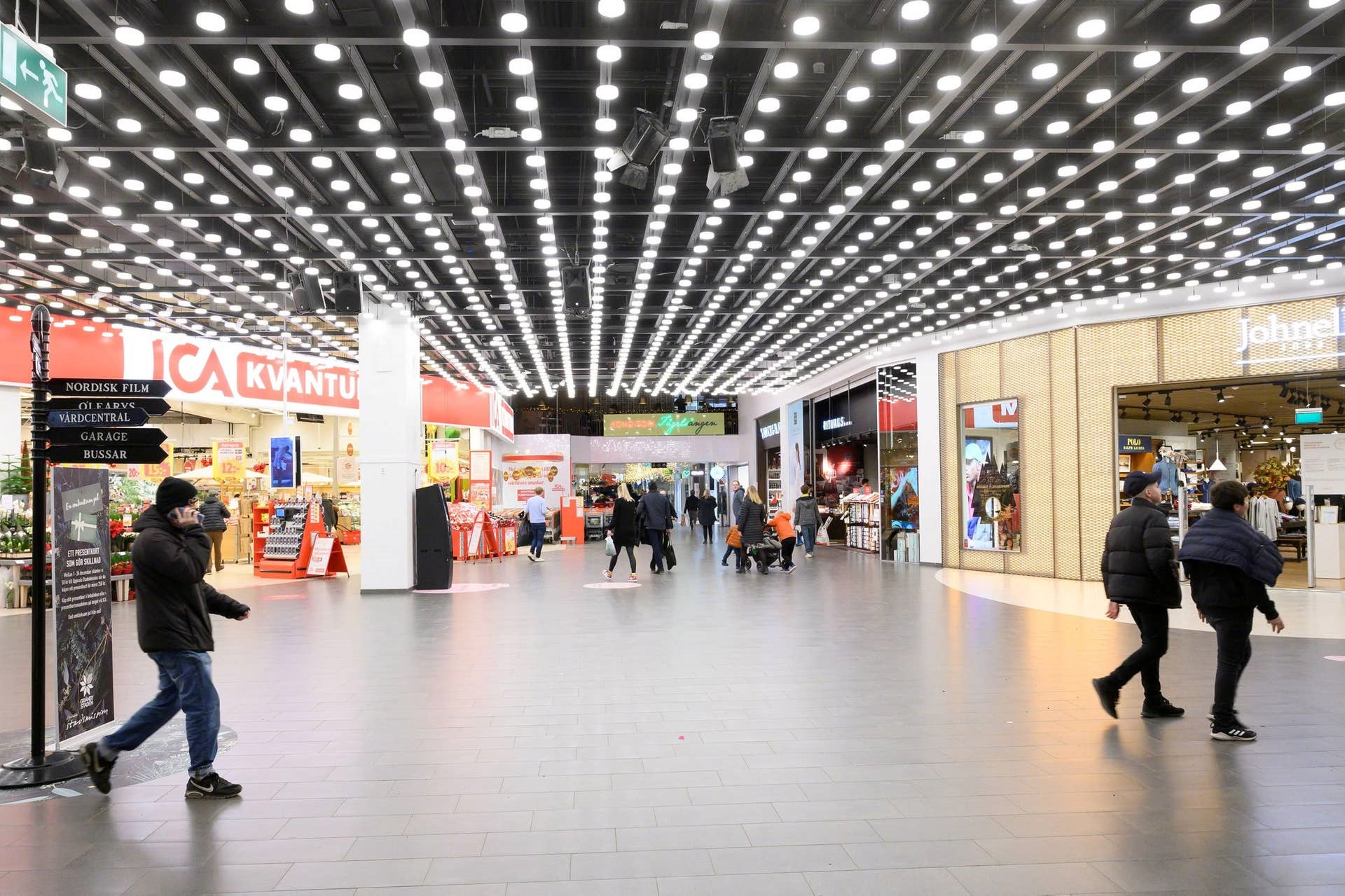
Still, the overall strategy didn’t change. The country’s leaders continued to rely on public trust and eschewed a general lockdown; they left the schools, restaurants and malls open. Stores and other businesses remained open, but with restrictions on the number of people allowed inside. Also, there was no requirement to wear a mask; Swedes were recommended to wear one only on public transportation at peak hours.
Around the world, people had the impression that while many countries were isolating and suffering a harsh economic blow, in Sweden it was business as usual. But the reality was different. “At first I thought we’d work from home for a month and then return to the office,” says Erik Numan, a 56-year-old art director from Stockholm. “By now, 10 months later, I’ve been in the office for only one day.”
'Even though I work in many fields, everything disappeared and I still can’t plan anything even a year later'
A shopping mall in Stockholm, December 2020. Photo: TT News Agency via Reuters
Numan says he has stopped exercising at a gym, doesn’t visit his parents and rarely meets with friends. Although he says he isn’t very worried about the virus personally, he feels solidarity with others who are likely to become infected and is concerned about the overburdened health care system.
“Nobody checks on me and the police won’t arrest me if I don’t observe the recommendations,” he says. “But I think most Swedes do what’s necessary when there’s a crisis.”
Numan’s 16-year-old daughter contracted the virus, developed mild symptoms and was in quarantine for two weeks. “When she meets girlfriends now they hug as usual, at a time when we adults have completely stopped shaking hands,” Numan says.
Like the Frändéns, Linnéa Sallay, a 60-year-old singer and violinist who lives in Stockholm, saw her professional life racked by the virus. “All the jobs disappeared overnight in mid-March,” she says. “Even though I work in many fields, perform in concerts, guide tours and produce events, everything disappeared and I still can’t plan anything even a year later.”
Sallay notes, however, that the past year has also provided a welcome time-out. She's surviving financially thanks to her savings, she has launched a YouTube channel and is developing her digital skills. She has also spent a lot of time with her family and friends, even if not at restaurants and cafes. And she’s now rehearsing and preparing for digital concerts.
Vaxholm, Sweden, summer of 2020. Photo: Bengt Nyman
Entering the crisis with disadvantages
Sweden has several disadvantages regarding COVID-19. Twenty percent of the population is over 65, it’s cold, its borders are open to other countries, its population is very diverse and it’s not used to emergency situations. But it also had advantages: a universal, quality health care system, stable and well-financed government services, and many single-person households.
Considering its starting conditions a year ago, it’s hard to estimate the real effect of the Swedish policy on illness rates and mortality. Compared to its Nordic neighbors – Finland, Denmark and Norway – Sweden’s mortality has been very high. The country of 10 million people has suffered about 12,000 deaths, with this figure per million people high at 1,444. In Denmark, Finland and Norway the number is 363, 121 and 104, respectively.
It’s not a competition and there’s no point saying who the winner is. It’s far too early and too dangerous to compare week-by-week mortality rates
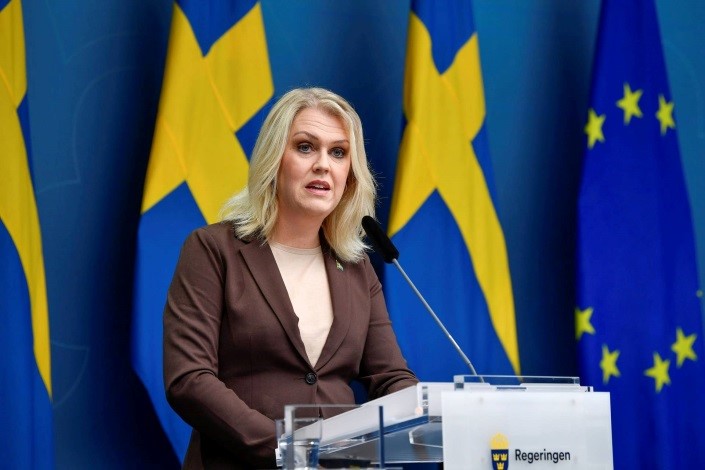
Swedish Health Minister Lena Hallengren
Swedish Health Minister Lena Hallengren at a press conference in Stockholm in November 2020. Photo: Henrik Montgomery / TT News Agency via Reuters
But compared to many other European countries, including those that imposed lockdowns, closed schools and halted the economy, the mortality rate is modest. In Britain, Spain and Italy, for example, the number of deaths from COVID-19 per million inhabitants is 1,591, 1,254 and 1,473, respectively.
Some experts believe that the shunning of lockdowns has brought Sweden better results in metrics that have yet to be measured such as rates for depression, excessive weight gain, addiction, violence and illnesses from diabetes to heart attacks and strokes. In Sweden you could also hear the claim that the country’s high mortality rate in 2020 stemmed from the low mortality rates from the flu in 2019.
Fiasco at the nursing homes
Swedish Health Minister Lena Hallengren told Haaretz in September that it was too early to judge the Swedish policy because this was a marathon, not a sprint.
“It’s not a competition and there’s no point saying who the winner is,” she said. “It’s far too early and too dangerous to compare week-by-week mortality rates. Different countries were hit differently; they have different structures and relations with their authorities, they test in different ways and have different kinds of data and information. In the long run, we all need well-functioning societies. We should learn what there is to learn from others, point fewer fingers and try to keep up with long-term recommendations.”
Uppsala, Sweden, last month. Photo: Guillaume Baviere
But there’s considerable evidence of failures in Sweden’s handling of the pandemic. The Swedish media has reported on cases where nursing home residents did not see a doctor and were not evacuated to hospitals despite their serious condition. The nursing home staffs were unequipped and not trained at all to deal with a pandemic.
The Public Health Agency of Sweden has been harshly criticized too. Critics say that during the pandemic’s early days, the agency was complacent and didn’t assess the danger correctly. Later, the prime minister himself, Stefan Löfven, said the agency had downplayed the second wave. At various stages, key people in academia and the medical system demanded that the agency make more stringent recommendations to curb the spread of the virus.
Regarding vaccines in Sweden, signs also attest to delays and complications, though here the shortcoming is mainly on the European level. Like many countries, Sweden has bought vaccines as part of an EU transaction, but the supply has been slow, one reason being a hitch in the manufacture and supply of AstraZeneca’s vaccine.
As of now, Sweden has vaccinated 256,978 people with the first dose and 28,279 with the second. That means 3.13 percent of the population over 18 has received one dose and only 0.34 percent two.
Although Swedish politicians in general have backed the government over the past year, other voices have been heard in recent weeks. “We have to respond differently now,” Ebba Busch, the leader of the opposition Christian Democratic Party, told the daily Aftonbladet. “If the government lacks the courage to lead, it should resign.” Nonetheless, the ruling Social Democratic Party is leading in the polls and received 28.5 percent support in a survey last month, a 2-point rise over November.
'I hope we’ll appreciate each other more when all this is over, and I hope we’ll go back to meeting up again. The hell with Zoom'
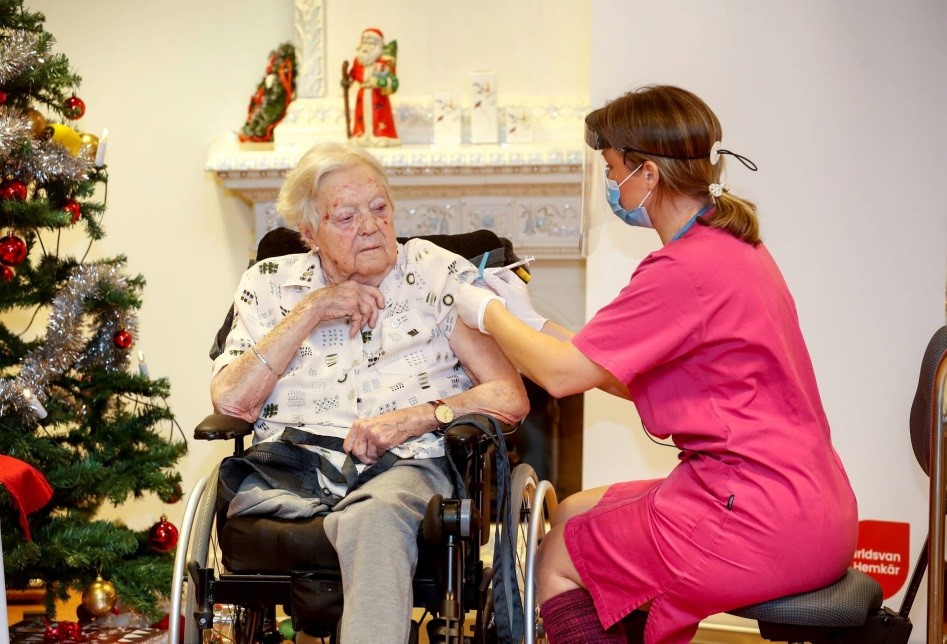
A nurse vaccinating a nursing home resident in Mjölby, Sweden, in December 2020.Photo: Stefan Jerrevang / TT News Agency via Reuters
“I think we’ve dealt pretty well with the pandemic,” says Frändén, the tour guide. “I wouldn’t want to be anywhere else. But there have been failures too, mainly the spreading of the virus in old age homes. In recent decades there has been unrestrained privatization in our care system, and that’s one reason for the negligence in preparing and training staff.”
Frändén says the virus spread within another marginalized group too. “In 2014 and 2015 Sweden was one of the countries in Europe that opened its doors to the most refugees,” he says.
“As a result, many refugees settled in Stockholm’s suburbs and we saw social phenomena that we didn’t have before – crowded living conditions in large families, large family gatherings including elderly people, and less access to the authorities’ information. Our authorities failed here, and that may be an explanation for the differences in the virus’ spread between Sweden and Denmark, Norway and Finland, which hardly took in any refugees.”
‘Every country has its own conditions’
Sallay, the singer and violinist, also criticizes the authorities’ handling of the pandemic, especially the economic aspect, so she and a colleague launched a protest by the self-employed.
“We, the small independent workers who don’t have employees, have been discriminated against,” she says, noting that large companies in Sweden furloughed employees and received government funding for expenses, while small businesses are only now beginning to receive help.
And indeed, in an interview with TheMarker in June, Swedish Finance Minister Magdalena Andersson said the national priority is to help salaried workers and large companies. During the crisis the Swedish government has invested large sums to buoy employment while providing payments to furloughed workers, compensation and guarantees, while strengthening companies’ liquidity and providing professional training and retraining for the unemployed.
“I think it’s too early to know whether we chose the right path,” says Numan, the art director. “Every country has its own conditions, and the long-term social consequences will probably turn out greater in countries that seemed to be succeeding at the beginning.”
As he puts it, “I hope we’ll appreciate each other more when all this is over, and I hope we’ll go back to meeting up again. The hell with Zoom.”
רק מדינות מעטות משכו תשומת לב עולמית כפי שעשתה שוודיה מאז החלה מגפת הקורונה. העובדה שהיא לא הטילה סגרים, לא כפתה בידודים, לא השביתה בתי-ספר ולא המליצה על עטית מסכות גרמה לה להפוך למושאם של אלפי מאמרי פרשנות, ידיעות עיתונאיות וכתבות טלוויזיה. יש שכינו אותה "קבוצת הביקורת של העולם", אחרים אמרו שביצעה "ניסוי בבני-אדם". יחד עם תשומת-הלב הגיעו, כצפוי, גם חדשות הכזב. דיווחים על כך שבשוודיה בני 65 ומעלה לא מאושפזים בבתי-חולים אלא מופקרים למות ושהממשלה מקריבה את הזקנים למען הכלכלה נפוצו בכל רחבי העולם. דברים אלו אמנם מופרכים, אך המודל השוודי אכן מעלה שאלות – מה בעצם קרה שם בשנה האחרונה? מה המצב כעת? האם השוודים הצליחו או כשלו ומה מצפה להם בחודשים הקרובים?
הוקן פרנדן גר בשטוקהולם ועובד בימים כתיקונם כמדריך תיירים, אבל הימים אינם ימים רגילים ותיירים נחשבים למצרך נדיר ביותר במדינה מאז פרוץ מגפת הקורונה בשנה שעברה. "מטבע הדברים המגפה השפיעה מאוד על חיי המקצועיים", אומר פרנדן בן ה-61 ל"הארץ". "העולם נסגר ועונת התיירות הסתיימה עוד לפני שהחלה. ב-2020 הגיעו אפס תיירים ואני ואשתי, גם היא מדריכת תיירים, איבדנו את כל הכנסותינו". למרות המצב הקשה שאליו נקלעו, פרנדן ורעייתו לא נשברו. היא עברה השתלמות ועובדת כיום כמאמנת כושר ומדריכת יוגה, והוא קיבל מלשכת התעסוקה עבודה חלקית במשלוחי מזון ומקבל דמי אבטלה עבור הימים שבהם אינו עובד. "זאת היתה שנה נוראית מבחינת קורבנות המגפה, אבל ברמה האישית היא היתה טובה", הוא אומר, "קנינו אופניים וגילינו מחדש את העיר, פעמים רבות ביחד עם הילדים והנכדים, והיה לנו יותר זמן לעצמנו ולמשפחה".
כמו לבני הזוג פרנדן, לשוודים רבים היתה 2020 שנה שונה מכל מה שהכירו. הכל התחיל, ככל הידוע, בינואר כשתושבת המדינה הגיעה בטיסה מהעיר ווהאן שבסין. אולם, יש חשד שכבר בדצמבר 2019 היו נדבקים במדינה, אבל הם לא אותרו בשל היעדר בדיקות בזמנו. בתחילת מארס כבר נרשמה הדבקה בקהילה עםנחיתתם של נדבקים רבים בפברואר בטיסות מצפון איטליה, איראן ומדינות נוספות. כבר בשלב הראשון של המגפה נמתחה ביקורת על הרשויות השוודיות על כך שלא העריכו את הסכנה ולא נערכו בהתאם. ב-11 במארס, היום בו הכריז ארגון הבריאות העולמי על מגפה עולמית, מת בשטוקהולם חולה הקורונה הראשון. באפריל נרשם גל תחלואה משמעותי ועד אמצע יוני מתו מדי יום בשוודיה עשרות בני אדם שנדבקו בנגיף.
מערכת הבריאות עמדה בעומס הכבד ולא קרסה הודות למאמצים גדולים של הצוותים הרפואיים ותגבור תקציבי ולוגיסטי מצד הממשלה והרשויות המקומיות. לעומת זאת, בבתי האבות המצב היה אחר לגמרי. דו"ח של ועדה ממשלתית קבע בדצמבר ששוודיה נכשלה בהגנה על האוכלוסייה בבתי האבות כתוצאה מהזנחה וטיפול לקוי של הממשלה הנוכחית ושל קודמותיה.
בגל הראשון, האסטרטגיה השוודית לבלימת הידבקויות במדינה היתה ייחודית. בניגוד לסגרים כלליים שנכפים באמצעות פיקוח וסנקציות, הרשויות פשוט ביקשו מתושבים שפיתחו תסמינים לנגיף ומאנשים בקבוצות סיכון להישאר בבית. כמו כן, האוכלוסייה הכללית התבקשה לעבוד מהבית במידת האפשר ולהימנע מנסיעות מיותרות. בניגוד למערך מקיף של בדיקות, מעקבים ובידודים שהוקם במדינות רבות, השוודים ביצעו בשלב הראשון בדיקות קורונה רק בבתי החולים ובמערכת הטיפול באוכלוסייה המבוגרת. אנדרס טגנל, האפידמיולוג הראשי והאיש המזוהה ביותר עם ההתמודדות השוודית עם הקורונה, הסביר את המדיניות הזו בראיון ל"הארץ" באפריל ואמר שלשוודיה היתה יכולת בדיקה מוגבלת. לדבריו, גם אם בדיקות מעלות תשובות חיוביות, ההמלצה ממילא תהיה להישאר בבית. טגנל גם אמר שהמדיניות השוודית מתבססת על רמה גבוהה של אמון ציבורי בשלטונות ועל מחשבה לטווח ארוך. למרות ההסתמכות על אמון הציבור, הממשלה והשלטון המקומי, הרשויות השוודיות נקטו במספר קטן של צעדים מגבילים על רקע המגפה: הן העבירו את האוניברסיטאות והתיכונים ללמידה מקוונת, הגבילו התקהלויות בפומבי ל-50 איש, אסרו על ביקורים בבתי חולים ובבתי אבות והטילו מגבלות מסוימות על הגשת אוכל בברים ומסעדות.
במהלך קיץ 2020 המגפה דעכה בשוודיה ומחלקות הקורונה בבתי החולים התרוקנו. אבל הדעיכה היתה רגעית ובנובמבר החל גל שני וקטלני יותר של הידבקויות. פעם נוספת נרשמו עשרות מקרי מוות ביום ובתי החולים התמודד עם עומס גדול. על רקע המצב, הרשויות בשוודיה החליטו להחמיר את ההגבלות: הן הגבילו התקהלויות לשמונה אנשים, הטילו איסור על מכירת אלכוהול אחרי השעה שמונה בערב וסגרו בתי קולנוע, מוזיאונים וספריות ציבורית. עם זאת, האסטרטגיה הכללית לא השתנתה. ראשי המדינה המשיכו לסמוך על אמון הציבור ונמנעו מסגירה כללית של המשק והשאירו את בתי-הספר, המסעדות והקניונים פתוחים. גם חנויות ובתי עסק נותרו פתוחים, אך עם הגבלה של מספר המבקרים בהם. יתר על כן, במקום לחייב לעטות מסכות הם המליצו לתושבי המדינה להשתמש בהן רק בתחבורה הציבורית, בשעות השיא.
ברחבי העולם נוצר הרושם שבזמן שמדינות רבות מסתגרות וסובלות מפגיעה כלכלית קשה, בשוודיה "העסקים כרגיל". אבל המציאות היתה שונה. "בהתחלה חשבתי שנעבוד מהבית למשך חודש ואז נחזור למשרד", מספר ל"הארץ" אריק נוימן, ארט דיירקטור בן 56 משטוקהולם. "היום, עשרה חודשים מאוחר יותר, הייתי במשרד רק יום אחד". נוימן מספר שהפסיק להתעמל בחדר כושר, לא מבקר את הוריו וכמעט שלא נפגש עם חברים. הוא אמנם אומר שאינו מוטרד מאוד מהנגיף באופן אישי, אבל חש סולידריות עם אחרים שעלולים להידבק ודואג למערכת הבריאות העמוסה. "אין מי שבודק אותי והמשטרה לא תעצור אותי אם לא אקיים את ההמלצות", הוא אומר, "אבל נדמה לי שמרבית השוודים עושים מה שצריך כשיש משבר". בתו בת ה-16 של נוימן נדבקה בקורונה ופיתחה תסמינים קלים ובשל מצבה שהתה שבועיים בבידוד. "כשהיא פוגשת עכשיו חברות הן מתחבקות כרגיל, בזמן שאנחנו המבוגרים הפסקנו לגמרי ללחוץ ידיים", מספר נוימן.
בדומה לזוג פרנדן, גם לינאה סאליי, זמרת וכנרית בת 60 המתגוררת בשטוקהולם, נפגעה מהקורונה ברמה המקצועית. "כל העבודות נעלמו בן לילה באמצע מארס", היא מספרת, "אף על פי שאני עובדת בתחומים רבים, משתתפת בקונצרטים, מדריכה סיורים ומפיקה אירועים, הכל נעלם ואני עדיין לא יכולה לתכנן שום דבר גם אחרי שחלפה שנה". סאליי אומרת שהשנה האחרונה היתה במובנים רבים עבורה גם הפסקה מבורכת. היא החזיקה מעמד כלכלית הודות לחסכונות שהיו לה, פתחה ערוץ יוטיוב ופיתחה את כישוריה הדיגיטליים. גם היא בילתה זמן רב עם משפחתה וחבריה, אם כי נמנעה מללכת למסעדות ובתי קפה. את המקצוע שלה היא לא זנחה ומתכוננת בימים אלה לקונצרטים דיגיטליים ועושה חזרות.
שוודיה סבלה מכמה חסרונות בעת התמודדותה עם נגיף הקורונה: היא מדינה מבוגרת מאוד (20% מהאוכלוסייה מעל גיל 65), היא קרה, גבולותיה פתוחים למדינות אחרות, אוכלוסייתה מגוונת מאוד והיא לא מורגלת במצבי חירום. מצד שני, היו לה גם יתרונות: מערכת בריאות אוניברסלית המספקת שירותים טובים, מערכות שלטוניות יציבות ומתוקצבות היטב וריבוי משקי-בית שחיים בהם אדם אחד בלבד. בהתחשב בעמדת הפתיחה שהיתה לה לפני שנה, קשה להעריך מה היתה ההשפעה האמיתית של המדיניות השוודית על שיעורי התחלואה והתמותה מקורונה. ביחס לשכנותיה הנורדיות, פינלנד, דנמרק ונורבגיה, שיעורי התמותה בשוודיה היו גבוהים מאוד. בסה"כ מתו במדינה, שאוכלוסייתה מונה כעשרה מיליון תושבים, כ-12 אלף בני אדם ומספר המתים למיליון תושבים היה גבוה ועמד על 1,166. לשם השוואה, בדנמרק, פינלנד ונורבגיה נרשמו 372, 123 ו-104 מתים למיליון אנשים, בהתאמה. אבל ביחס למדינות רבות אחרות באירופה, בהן כאלה שהטילו סגרים, סגרו בתי ספר והשביתו את המשק, שיעור התמותה בשוודיה נמוך יחסית. בבריטניה, ספרד ואיטליה, למשל, מספרי המתים מקורונה למיליון תושבים הם 1,263,1,565 ו-1,471, בהתאמה.
בראייה רחבה יותר של בריאות הציבור יש המשערים שההימנעות מהטלת סגרים הביאה לשוודיה תוצאות טובות יותר בפרמטרים שטרם נמדדו כמו שיעורי דיכאון, השמנה, התמכרויות, אלימות והתפתחות של מחלות אחרות החל מסכרת ועד להתקפי לב ושבץ. בשוודיה גם נשמעה טענה שהתמותה הגבוהה במדינה ב-2020 היא תוצאה של שיעורי תמותה נמוכים משפעת ב-2019. בראיון שהעניקה ל"הארץ" בספטמבר אמרה שרת הבריאות של שוודיה, לנה הלנגרן, שמוקדם לשפוט את המדיניות השוודית משום שמדובר במרתון ולא בריצת ספרינט. "זו אינה תחרות ואין סיבה להכריז על מנצח", היא אמרה, "עדיין מוקדם ומסוכן מדי להשוות שיעורי תמותה שבועיים. מדינות שונות נפגעו בדרכים שונות. יש להן תשתיות שונות, ומערכות יחסים שונות בין הרשויות לאזרחים. הן בודקות בשיטות שונות ומחזיקות בנתונים ובמידע שונים. בטווח הארוך, כולנו זקוקים לחברה שמתפקדת היטב. עלינו ללמוד את מה שאפשר מאחרים, לא להפנות אצבעות מאשימות ולנסות להתמיד בציות להמלצות לאורך זמן".
עם זאת, יש לא מעט עדויות על כישלונות נקודתיים ומערכתיים באופן שבו שוודיה התמודדה עם המגפה. התקשורת השוודית חשפה מקרים שבהם דיירי בתי אבות שנדבקו בנגיף לא זכו לפגוש רופא ולא פונו לבתי חולים למרות מצבם הקשה. צוותי בתי האבות לא היו ערוכים, לא היו מצוידים ולא הוכשרו כלל להתמודדות עם מגפה. גם הרשות לבריאות הציבור, שמנהלת את המשבר הבריאותי, ספגה ביקורת קשה. בימים הראשונים של המגפה, כך נטען, היא היתה שאננה ולא העריכה נכון את הסכנה. בהמשך, ראש הממשלה עצמו, סטפן לופבן, הצטרף לטענות ואמר שרשות הבריאות המעיטה בהערכותיה לגבי הגל השני. דמויות מרכזיות באקדמיה ובמערכת הרפואית גם הצטרפו למבקרים, ובשלבים שונים דרשו מהרשות להחמיר את המלצותיה במטרה לבלום את התפשטות הנגיף.
גם בתחום החיסונים בשוודיה יש סימנים המעידים על עיכובים ומחדלים, אם כי בסוגיה זו מדובר בעיקר בכשל ברמה האירופית ולא הלאומית. כמו מדינות רבות אחרות, שוודיה רכשה חיסונים כחלק מעסקה של האיחוד האירופי עם יצרניות החיסונים אבל האספקה של המנות איטית, בין היתר בגלל תקלה בייצור ובאספקת החיסונים של חברת אסטרה-זנקה. נכון ל-2 בפברואר, שוודיה חיסנה 256,978 בני אדם במנה הראשונה של החיסון ו-28,279 במנה השנייה. המשמעות היא ש-3.13% מהאוכלוסייה הבוגרת במדינה (מעל גיל 18) קיבלו מנה אחת של החיסון ו-0.34% בלבד קיבלו את שתי המנות.
המערכת הפוליטית השוודית אמנם תמכה בממשלה והתייצבה מאחוריה בשנה החולפת, אך בשבועות האחרונים מתחילים להישמע גם קולות אחרים. "אנחנו צריכים להגיב אחרת מעתה והלאה", אמרה אֵבָּה בוש, מנהיגת המפלגה הנוצרית-דמוקרטית האופוזיציונית בראיון ליומון "אפטונבלדט", "אם אין לממשלה אומץ להנהיג היא צריכה להתפטר". עם זאת, המפלגה הסוציאל-דמוקרטית השלטת עדיין מובילה בסקרים וזכתה ל-28.5% תמיכה בסקר שנערך בחודש שעבר, עלייה של 2% לעומת נובמבר.
"אני חושב שהתמודדנו טוב עם המגפה", אומר מדריך התיירים פרנדן, "לא הייתי רוצה עכשיו להיות במקום אחר. אבל היו גם כישלונות. בעיקר ההדבקה בבתי האבות. בעשורים האחרונים היו בשוודיה הפרטות חסרות מעצורים במערכת הטיפול בקשישים וזאת אחת הסיבות לרשלנות בהכשרת הצוותים הרפואיים בבתי האבות. לדברי פרנדן, הנגיף התפשט בקרב אוכלוסייה מוחלשת נוספת בשוודיה. "ב-2015-2014 היתה שוודיה אחת המדינות שפתחה הכי הרבה את הדלת פליטים. רבים מהם התמקמו בפרברים של שטוקהולם והחלו לצוץ תופעות שלא הכרנו קודם לכן", מספר מדריך התיירים. "מגורים בצפיפות במשפחות גדולות, התקהלויות המוניות של קרובי משפחה מבוגרים ופחות גישה למידע מהשלטונות. בעניין הזה הרשויות נכשלו וייתכן שזהו הסבר להבדלים בהתפשטות המחלה בין שוודיה לבין דנמרק, פינלנד ונורבגיה שכמעט ולא קלטו אליהן פליטים".
גם סאליי מתחה ביקורת על התמודדות הרשויות עם המגפה, בייחוד בפן הכלכלי, ובמהלך המשבר יזמה מחאה של עובדים עצמאיים ביחד עם עמיתה שלה. "אנחנו העצמאיים הקטנים שאין להם עובדים שכירים הופלינו לרעה", היא אומרת ומספרת שחברות גדולות בשוודיה הוציאו עובדים לחל"ת וקיבלו מהממשלה תמיכה כספית על הוצאות קבועות ואילו החברות הקטנות מתחילות רק עכשיו לקבל עזרה. סאליי צודקת. גם בימים כתיקונם המשק השוודי נוטה לטובתם של עובדים שכירים וחברות גדולות. בראיון ל"דה-מרקר" ביוני הסבירה שרת האוצר השוודית, מגדלנה אנדרסון, את האסטרטגיה הכלכלית של המשבר כתוכנית בעלת ארבעה שלבים, כולם נוטים לטובת המערכות הציבוריות והגופים הגדולים במשק. הצעד הראשון היה הקצאת תקציבים למערכת הבריאות וניהול המשבר עצמו, השני היה צעדים להגבלת הפגיעה בתעסוקה ובעסקים באמצעות פיצויים, תשלום לעובדים בחל"ת, ערבויות, חיזוק נזילות וכו'. הצעד השלישי הוא תמיכה במובטלים באמצעות דמי אבטלה, הכשרה מקצועית והסבה מקצועית והרביעי הוא השקעה גדולה במערכות הציבוריות ליציאה מהמשבר. אנדרסון תומכת בחיזוק האיגודים המקצועיים ובהגדלת התעסוקה הקבועה במערכת הבריאות, כך שנראה שגם בתום המשבר עצמאים קטנים לא יהיו במוקד ההשקעה הממשלתית.
"אני חושב שמוקדם מדי לדעת אם בחרנו בדרך הנכונה", אומר נוימן, "לכל מדינה יש את התנאים שלה, וההשלכות החברתיות ארוכות הטווח עלולות להתגלות כגדולות יותר במדינות שהיה נראה שהצליחו בתחילת הדרך". הארט דיירקטור משטוקהולם סיכם ואמר כי "אני מקווה שנדע להעריך יותר זה את זה כשכל זה ייגמר, ואני מקווה שנחזור להיפגש באופן אנלוגי. לעזאזל הזום".
Contrary to popular opinion, Sweden’s handling of the coronavirus crisis is not so unusual. Sweden is not a coronavirus-denier, it is not continuing business as usual and it does not seek herd immunity; it is just trying to flatten the curve by social distancing using methods suitable for its society and its political culture. For example, the decisions are made at the professional level and not the political one, most of the directives are recommendations not obligatory orders and there is almost no enforcement through fines or police action.
The essential differences, compared to other countries, are few: Sweden did not close its elementary schools or its kindergartens; it did not recommend the wearing of masks and did not impose general lockdowns, because the authorities decided that these steps would do more harm than good.
The uniqueness of the Swedish model might therefore be defined as “non-imposing of lockdown.” This is a significant difference, but – and the conspiracy theorists will forgive me – it does not prove that Sweden treats the coronavirus like “flu with PR.”
The main argument of critics of the Swedish model is the high mortality rate, about 11,000 in a country of 10 million. While this is a human tragedy, even if we ignore the fact that the population of Sweden is very elderly (about 20 percent are age 65 or over), the number of the dead compared to the number of inhabitants is still much smaller than in other countries in Europe that imposed strict lockdowns, like France and Great Britain. The experience in Europe so far has shown that lockdowns do not necessarily reduce the level of mortality.
The focus on the “failure of the Swedish model” in this matter is absurd and its purpose is to justify the policy of lockdowns. Why isn’t anyone talking about the “failure of the Belgian model,” for example? The number of dead in Belgium, which imposed severe lockdowns, is about 1,800 per million inhabitants. In Sweden, the number is less than 1,100 per million.
“But even the king of Sweden himself said the Swedish model failed,” goes another common claim. King Carl Gustaf XVI did stammer something in an interview about the high number of the dead being a failure, but he did not relate to any specific component of the Swedish model, and certainly not to the fact that no lockdown was imposed. The criticism expressed by the king is also accepted by the state authorities, which concede the failure to protect nursing homes. But more importantly – and the monarchists will forgive me – the king of Sweden does not deal with the matter, he is not particularly knowledgeable about it and he has no influence or political power whatsoever.
One of the reasons lockdowns were not imposed in Sweden is that until the beginning of 2021, the law did not permit this. The government could and indeed did restrict public events and initiated emergency action, but it did not have the authority to close restaurants, malls or gyms. Laws can be changed, but the Swedes are hesitant when it comes to restricting personal freedoms and human rights. That is one of the reasons that they seek to change behavior voluntarily, without orders and fines. There are many indications that change has indeed been achieved this way.
In Sweden it is easier to maintain discipline, trust and solidarity. Many claim that this is because its population is homogenous (a polite way of saying they don’t have ultra-Orthodox communities or an Arab population). But the image of the Swedes as blond and obedient, hard-working and doing as they are told is false – a quarter of the population is made up of immigrants or second-generation immigrants. That is in fact a great challenge, but with a social-democratic welfare system, ethnic variety does not necessarily contradict trust and social responsibility. On the contrary – and the Greeks and the Hungarians will forgive me – a lack of trust in the authorities and concern over government corruption are common in quite a few countries that are more ethnically homogenous.
Another issue absent from the public debate is the global addiction to tables and numbers, which can be drawn and understood quickly: The number of infected, the number of seriously ill, the number of dead. It will be years before the price of the lockdowns will be measured and calculated, but public health is a broad concept, and there are reasons to believe that the advantages of the Swedish model will be recorded in the future with regard to phenomena like depression, addictions, violence, weight gain, diabetes, disrupted treatment of other illnesses, poverty, unemployment and more.
This is the price of a lockdown: It’s high, it's tough, and it must be paid over the course of years. Sweden decided to avoid this although the temptation was great. Nevertheless, hospitals in Stockholm never got to the situation of hospitals in Lombardia and Madrid; excess mortality in Sweden over the past few months is lower than that of Switzerland and Austria; and the number of seriously ill patients in Sweden is lower than in Romania and the Czech Republic. Like every other country, Sweden made mistakes in dealing with the pandemic. But not imposing a lockdown wasn’t one of them. Comparing the illness and mortality rates in Sweden and Israel is problematic because it’s hard to compare a warm, young country with closed borders and lot of experience with emergency situations to a cold and aging country with open borders that last experienced war in 1814. But, on second thought, that last part may not be such a disadvantage. Perhaps treating the pandemic like a military battle is a metaphor that got out of control, and produced sweeping, brutal solutions when what may really have been needed were complex, balanced and long-term solutions. I hope the generals will forgive me, but after all, the coronavirus is a virus, not an army, and COVID-19 is an illness, not a war
סרטם הדוקומנטרי של אורלי וילנאי וגיא מרוז "ומה אם כל העולם טעה?" מעלה לדיון מחודש את מה שמכונה "המודל השוודי להתמודדות עם הקורונה". בסרט מוצגת שוודיה כ"מדינה המסרבת להתיישר עם הקו ההיסטרי העולמי" וכהוכחה לאפשרות להתמודדות עם המגפה ללא סגרים הרסניים. אפשר להתווכח עם מסקנותיהם של וילנאי ומרוז לגבי שוודיה, אך גם המתקפה נגדם באמצעי התקשורת וברשתות החברתיות היא במקרים רבים משוללת יסוד. הנה כאן, לשירות הציבור, כמה דברים שיש לדעת על "המודל השוודי" שנעלמו מהדיון בנושא.
ראשית, בניגוד למה שנהוג לחשוב, שוודיה אינה חריגה כל כך. היא איננה מכחישת קורונה, היא לא ממשיכה ב"עסקים כרגיל" והיא לא חותרת לחסינות עדר. היא בסה"כ מנסה להשטיח את העקומה ע"י ריחוק חברתי בשיטות המתאימות לחברה ולתרבות הפוליטית שלה. כלומר, ההחלטות מתקבלות בידי דרג מקצועי ולא פוליטי, מרבית ההנחיות הן בגדר המלצות ולא צווים מחייבים וכמעט שאין בה אכיפה באמצעות קנסות וכוחות משטרה. ההבדלים המהותיים הם מעטים: שוודיה לא סגרה את בתי-הספר היסודיים וגני-הילדים, היא לא ממליצה לעטות מסכות והיא לא הטילה סגרים כלליים מכיוון שרשויותיה החליטו שהנזק הכרוך בהם גדול מהתועלת. ניתן, אם כן, להגדיר את הייחוד של המודל השוודי כך: "אי-הטלת סגר". זהו אמנם הבדל משמעותי, אבל יסלחו לי הקונספירטיבים, הוא איננו מעיד על כך ששוודיה נוהגת בקורונה כאל "שפעת עם יחסי ציבור".
מצד שני, הטיעון המרכזי של מבקרי המודל השוודי הוא מספר המתים הגבוה. קרוב ל-11,000 בני-אדם במדינה בת 10 מיליון תושבים. זוהי אמנם טרגדיה אנושית, אבל גם אם מתעלמים מהעובדה ששוודיה מבוגרת מאוד, מספר המתים שלה ביחס לאוכלוסייה הוא עדיין קטן בהרבה מזה של מדינות אחרות באירופה שהטילו סגרים מחמירים כמו צרפת ובריטניה. הניסיון באירופה עד כה מראה שסגרים לא בהכרח מורידים את רמת התמותה, בוודאי שלא בטווח הארוך. ההתמקדות ב"כישלון המודל השוודי" בעניין זה הוא אבסורדי והוא נועד אך ורק כדי להצדיק את מדיניות הסגרים. מדוע אף אחד לא מדבר על "כישלון המודל הבלגי" למשל? יסלחו לי הבלגים, אבל מספר המתים למיליון תושבים בבלגיה שהוטלו בה סגרים מחמירים מתקרב ל-1,800. בשוודיה המספר נמוך מ-1,100.
"אבל אפילו מלך שוודיה עצמו אמר שהמודל השוודי נכשל", כך ע"פ טענה נפוצה נוספת. אמנם נכון שהמלך קארל ה-16 גוסטב גמגם משהו בראיון על כך שמספר המתים הגבוה הוא כשלון, אך הוא לא התייחס לשום מרכיב ספציפי במודל השוודי, בוודאי שלא לאי-הטלת סגרים. הביקורת שהוא הביע מקובלת גם על רשויות המדינה שמודות בכישלון ההגנה על בתי-האבות. אבל חשוב מכך, מלך שוודיה אינו עוסק בנושא, הוא אינו מתמצא בו ואין לו השפעה או כוח פוליטי. יש אמנם מלכים ונשיאים שמעמדם הציבורי גבוה בגלל ניסיונם, תבונתם ואישיותם הכריזמטית. מלך שוודיה, ויסלחו לי המלוכנים, אינו כזה. ארמוז בעדינות שהביטוי שעולה כאן על הדעת קשור לעפרונות וקלמרים.
עוד עובדה פחות ידועה היא שאחת הסיבות לאי הטלת סגר בשוודיה היא שעד תחילת 2021 החוק פשוט לא איפשר זאת. הממשלה יכלה ואמנם הגבילה אירועים ציבוריים והפעילה אמצעי חירום אך לא היתה לה סמכות לסגור מסעדות, קניונים ומכוני כושר. נכון, חוקים אפשר לשנות, אבל השוודים הססנים מאוד כשמדובר בהגבלת חירויות אישיות וזכויות אדם. זו אחת הסיבות לכך שהם חתרו לשינוי התנהגות וולונטרי ללא צווים וקנסות וישנן אינדיקציות רבות לכך שהשינוי אכן הושג. בשוודיה קל יותר לשמור על משמעת, אמון וסולידריות, כך טוענים רבים, כי אוכלוסייתה הומוגנית (ביטוי מכובס שמשמעותו – אין בשוודיה חרדים וערבים). אך הדימוי של השוודים כבלונדינים צייתנים שעובדים קשה ועושים מה שאומרים להם הוא מופרך – רבע מאוכלוסיית שוודיה היא מהגרת או דור שני של מהגרים. זהו אמנם אתגר גדול, אבל עם מערכת רווחה סוציאל-דמוקרטית, הגיוון האתני לא נוגד בהכרח אמון ואחריות חברתית. להפך, יסלחו לי היוונים וההונגרים, אך חוסר אמון ברשויות ודאגה מפני שחיתות שלטונית, נפוצים בלא מעט מדינות הומוגניות יותר מבחינה אתנית.
נושא נוסף שנעדר מהדיון הציבורי קשור להתמכרות העולמית לטבלאות ולמספרים שאפשר לייצר ולהבין במהירות – מספר נדבקים, מספר חולים, מספר מתים. ייקח עוד שנים רבות עד שגם מחיר הסגרים יימדד ויחושב, אך בריאות הציבור הוא מושג רחב ויש בהחלט סיבות להאמין שיתרונות המודל השוודי יירשמו בהמשך הדרך בכל הקשור לנושאים כמו דיכאון, התמכרויות, אלימות, השמנה, סכרת, טיפול לקוי במחלות אחרות, עוני, אבטלה ועוד. זהו מחיר הסגר – הוא גבוה, הוא קשיח והתשלומים נמשכים שנים. שוודיה החליטה להימנע מהרכישה גם כשהפיתוי היה גדול. ולמרות זאת, בתי-החולים של סטוקהולם לא הגיעו למצבם של בתי-החולים בלומברדיה ובמדריד, התמותה העודפת בשוודיה בחודשים האחרונים היתה נמוכה מזו של שוויץ ואוסטריה ומספר החולים הקשים בשוודיה הוא נמוך מזה של צ'כיה ורומניה.
כמו כל מדינה אחרת, גם שוודיה עשתה טעויות בהתמודדותה עם המגפה. אי-הטלת סגר לא היתה אחת מהן. ההשוואה בין שוודיה לישראל בכל הקשר למספרי התחלואה והתמותה היא בעייתית מכיוון שקשה להשוות מדינה חמה וצעירה, בעלת גבולות סגורים וניסיון במצבי חירום, למדינה קרה וזקנה, בעלת גבולות פתוחים שחוותה מלחמה בפעם האחרונה ב-1814. ואולי בעצם זהו לא חיסרון – אולי ההתייחסות למגפה כאל קרב צבאי היא מטפורה שיצאה משליטה המולידה פתרונות גורפים וברוטליים במקום שצריכים דווקא פתרונות מורכבים, מאוזנים וארוכי טווח. יסלחו לי הגנרלים, אבל אחרי הכל הקורונה היא נגיף, לא צבא וקוביד-19 היא מחלה, לא מלחמה.
מקורו של נגיף הקורונה הוא אמנם במדינה דיקטטורית והחיסון המופץ נגדו הוא תוצאה של מדע שצמח במדינות דמוקרטיות, אך המציאות מראה שמדינות בעלות משטר דיקטטורי נפגעו הרבה פחות מהנגיף או שהן נפגעו יותר ומצליחות להסתיר את הפגיעה. גם אם הם משקרים, יכולים משטרים דיקטטוריים לספר לנתיניהן סיפור פשוט ושימושי: "הדמוקרטיות המערביות חסרות אונים מול הנגיף שקוטל את תושביהן, בעוד אנחנו מצילים אתכם ממוות".האם דיקטטורות עדיפות על דמוקרטיות כשמדובר במלחמה במגפות? האם, כחברה, אנו נידונים לבחור בין דמוקרטיה לבריאות?
לעיתים מומלץ להביט גם על מקומות רחוקים כדי להבין טוב יותר משמעויות של משברים. הנה למשל בסרי-לנקה, מדינה שאוכלוסייתה מונה למעלה מ-21 מיליון בני אדם, מספר קורבנות הקורונה הוא קצת יותר מ-200. זה לא הפריע לממשלה לנקוט צעדים אגרסיביים נגד המגפה, כמו ההחלטה שגופותיהם של קורבנותיה תישרפנה ולא תיקברנה. ארגון הבריאות העולמי אמנם אינו ממליץ על כך, אך שלטונות המדינה בעלת הרוב הבודהיסטי החליטו להתעלם מזכות-אדם בסיסית ולשרוף גם את גופות המתים שמשפחותיהם מתנגדות לכך. הדבר פוגע בעיקר במיעוט המוסלמי ויש הטוענים שזוהי פגיעה מכוונת. במקביל, אלפי קילומטרים משם, החליט לפני למעלה מחצי שנה נשיא טנזניה שהמגפה נעלמה ממדינתו כתוצאה מתפילות אזרחיה. בהתאם לכך הוא הפסיק לדווח לעולם על נדבקים, חולים ומתים. כאשר תחנת טלוויזיה מקומית התריעה על המחדל, הממשלה פשוט לקחה לה את הרישיון.
אלו הן רק שתי דוגמאות לאופן שבו הקורונה הופכת לנשק שימושי נגד אויבים פוליטיים, מיעוטים ועיתונאים ובמקרים מסוימים היא גם מסייעת להסב את תשומת הלב העולמית ממיליוני פליטים, קורבנות רצח-עם ומלחמות אזרחים. ע"פ נתוני IDEA, ארגון בינ"ל שמטרתו קידום הדמוקרטיה בעולם, מעל למחצית ממדינות העולם הכריזו בתחילת המגפה על מצב חרום לאומי המאפשר להן להגביל זכויות בסיסיות כמו זכות ההפגנה וחופש התנועה. גם אם אלו היו צעדים הכרחיים במרץ, בסוף נובמבר נקטו כבר 61% ממדינות העולם צעדים שהארגון מגדיר כ"מדאיגים מפרספקטיבה דמוקרטית", כלומר צעדים ללא בסיס חוקי, לא פרופורציונאליים, לא הכרחיים מבחינה רפואית או לא מוגבלים בזמן.
זאת ועוד, ע"פ הארגון "עיתונאים ללא גבולות" כ-450 עיתונאים נעצרו, נשבו או נעלמו ב-2020 ברחבי העולם, רבים מהם כתוצאה מסיקור משבר הקורונה. במדינות כמו סין, מיאנמר ואיראן עצורים עיתונאים הנאשמים בהפצת מידע מוטעה על המגפה, באפריקה ובדרום-אמריקה מותקפים עיתונאים באלימות וצעדים חוקיים נגד עיתונאים וכלי-תקשורת ננקטו במדינות כמו הודו, גוואטמלה, פולין וסרביה. למצב העיתונות ולהגבלות על חופש התנועה ניתן להוסיף את העובדה שעשרות מערכות בחירות דמוקרטיות נדחו בעולם השנה. המסקנה היא עגומה למדי: כפי שהקורונה פוגעת בזקנים יותר מאשר בצעירים ובעובדי התיירות יותר מאשר בהייטקיסטים, היא פוגעת בדמוקרטיות יותר מאשר בדיקטטורות.
עוד מוקדם להסביר מדוע, אבל בשלב זה ברור שהמדינות שנפגעו באופן החמור ביותר מהמגפה הן מדינות דמוקרטיות. כל המדינות שבהן מספר המתים למיליון תושבים הוא מעל לאלף, בהן ארה"ב, בריטניה, איטליה וספרד, הן דמוקרטיות. ברוסיה, לשם השוואה, מספר המתים למיליון תושבים הוא כ-400 בלבד, בערב-הסעודית 178 ובבלארוס 153. בסין המספר הוא שלוש. מקורה של הקורונה הוא אמנם במדינה דיקטטורית והחיסון המופץ נגדה הוא תוצאה של מדע שצמח במדינות דמוקרטיות, אך המציאות מראה שמדינות בעלות משטר דיקטטורי נפגעו הרבה פחות מהנגיף או שהן נפגעו יותר ומצליחות להסתיר את הפגיעה. גם אם הם משקרים, יכולים משטרים דיקטטוריים לספר לנתיניהן סיפור פשוט ושימושי: "הדמוקרטיות המערביות חסרות אונים מול הנגיף שקוטל את תושביהן, בעוד אנחנו מצילים אתכם ממוות".
גם אם טענה זו היא צינית ומניפולטיבית, יש ביסודה אמת. הדמוקרטיות המערביות, שעסקו בעשורים האחרונים בחגיגה של הפרטות ובחיסול המגזר הציבורי, העבודה המאורגנת ומערכות הרווחה האוניברסליות, אמנם העשירו שכבה מסוימת של אזרחיהן והעפילו לפסגות טכנולוגיות ותרבותיות, אך הן הגיעו למשבר הנוכחי כשארגז הכלים שלהן ריק בדיוק בתחומים הנדרשים: בריאות הציבור, טיפול באוכלוסייה המבוגרת ויצירת מקומות עבודה ומנועי צמיחה. כל זה מעורר את השאלה הקשה – האם דיקטטורות עדיפות על דמוקרטיות כשמדובר במלחמה במגפות? או במילים אחרות, האם, כחברה, אנו נידונים לבחור בין דמוקרטיה לבריאות?
התשובה, למרות הנתונים המדאיגים, היא לא. זאת מפני שיש סוג מסוים של דמוקרטיות שלא נכשל. אלו הן המדינות הסוציאל-דמוקרטיות. ציות עיוור להנחיות רפואיות הנובע מפחד ושיטור אכזרי הוא אמנם יעיל במלחמה במגפה, אך המדינות הסוציאל-דמוקרטיות מוכיחות שהמלצות רפואיות יכולות להישמר גם מכוח אמון בנבחרי הציבור וערבות הדדית בין קבוצות שונות באוכלוסייה. הן גם מוכיחות שטיפול רפואי הניתן ע"י אנשי מגזר ציבורי מקצועי ומתוגמל כהלכה הוא לא פחות טוב מטיפול רפואי הניתן בבתי-חולים צבאיים או במערכי חירום של מדינות סמכותניות. מדינות כמו דנמרק, פינלנד ונורבגיה הצליחו, לפחות עד שלב זה, לשמור על תמותה נמוכה מאוד (232, 101 ו-80 מתים למיליון תושבים בהתאמה) למרות שיש בהן אוכלוסייה מבוגרת, ערים מודרניות וצפופות ושדות תעופה בינלאומיים מרכזיים. אפילו שוודיה שנקטה במדיניות של אי-הטלת סגרים ועוברת גל שני קשה במיוחד, נמצאת עדיין במצב טוב יותר ממדינות היפר-קפיטליסטיות מצד אחד וממדינות המאופיינות בשחיתות שלטונית ואי-אמון בין הציבור והשלטון מצד שני. החל בארה"ב, דרך מקסיקו וארגנטינה ועד בולגריה התמונה המסתמנת היא ברורה – דמוקרטיות החסרות מערכת רפואית ציבורית חזקה, שקיפות שלטונית ודרג מקצועי עצמאי וחזק אינן מצליחות להתמודד עם המגפה לאורך זמן.
כך מתברר שהדילמה בפני המשבר הבא היא זו: כשהיד-הנעלמה לא עובדת, במה נבחר – בציות או באמון. ביד ברזל של רודן או בדמוקרטיה וסולידריות? מי שמסתייג עדיין מהפתרונות הדיקטטורים יוכל אולי ללמוד משהו מהמכנה המשותף של פינלנד, דנמרק ונורבגיה: בכולן יש מגזר ציבורי גדול, מערכת רווחה אוניברסלית שאיננה מופרטת, רמה גבוהה יחסית של שוויון חברתי ועבודה מאורגנת חזקה. ואולי גם זו איננה יד המקרה – כולן מונהגות ע"י נשים.