In a letter to Israel's foreign minister, leaders of the European Jewish Congress and the Council of Swedish Jewish Communities warned against allying with the Sweden Democrats who, according to the letter, 'claim to be our allies' while advocating that 'Jews cannot be Swedes.' The party has roots in neo-Nazi and antisemitic ideologies
STOCKHOLM – In a letter to Israel's foreign minister sent Monday by the presidents of the European Jewish Congress and the Council of Swedish Jewish Communities, the two leaders expressed concern over a recent meeting between Israeli ministers and a delegation from the far-right Sweden Democrats party, which violated Israeli policy.
EJC President Ariel Muzicant and Jewish community leader Aron Verstandig wrote that they were "gravely concerned by the implications and long-term consequences of this meeting" which also ran "counter to the Israeli foreign policy vis-à-vis the Sweden Democrats as being non-welcome, with reference to their Neo-Nazi roots."
On January 29, a delegation of senior members from the Sweden Democrats arrived in Israel and met with Diaspora Affairs Minister Amichai Chikli and Culture and Sports Minister Miki Zohar. The group included the party's leader, Jimmie Akesson, chairman of the Swedish parliament's foreign affairs committee, Aron Emilsson, head of the party's parliamentary group, Linda Lindberg, and the head of the party's group in the European Parliament, Charlie Weimers.
The Sweden Democrats, currently the second-largest party in the Swedish parliament, has roots in neo-Nazi and antisemitic ideologies. It is one of several European parties with which Israel has refrained from establishing official ties. For that reason the recent visit to Israel was not an official one and was not arranged by Israel's Foreign Ministry.
Last year, two members of the Sweden Democrats visited Israel and met with Knesset member Amit Halevi from Netanyahu's Likud party and with former Knesset member Michael Kleiner, who serves as the president of Likud's court. There were no meetings with government ministers.
"With right wing populism and extremism on the rise throughout Europe, Jewish communities easily become exploited in narratives targeting other minorities," Verstandig and Muzicant wrote to Foreign Minister Israel Katz, "these populist parties and movements are often keen to establish alliances with Jewish communities and Israel, acting on the presumption that Jews and Jewish institutions, often being targeted by extremists of Middle Eastern and/or Muslim descent, would (and should) be interested in uniting over the notion of a 'common enemy.'"
In their letter Verstandig and Muzicant also explained that "the [Sweden Democrats] party's ideology is still inherently xenophobic even though its representatives claim to be our allies, making an exception for the Jews as a national minority, albeit claiming that Jews cannot be Swedes." They added that the party regularly submit bills in the Swedish Parliament to ban circumcision and the import of kosher meat.
In this context, the January meeting with Chikli, whose role includes fostering connection between world Jewry and Israel as well as combating antisemitism, is particularly notable. In May, Chikli also caused diplomatic embarrassment for Israel when he delivered a keynote speech at the controversial evangelical Canada Christian College. The school's president, Dr. Charles McVety, is an activist and leader of Canada's Christian far right.
Sweden Democrats leader Akesson took to X after the meeting, writing, "It is clear that our parties and our nations share common values." In response, Chikli tweeted: "We deeply appreciate your support and your passion for our mutual fight for the future of Western civilization."
Asked by Haaretz what he expects as a reply to his letter, Verstandig said he hoped Katz would confirm that the policy of not allying with extremist parties still applies.
A Foreign Ministry source replied to Haaretz's query on the subject, saying there is no change in the ministry's policy toward the Sweden Democrats. The source did not say whether the ministers would face disciplinary action over the meeting.
תחנת הרדיו הציבורית של שוודיה דיווחה ששני הסוכנים, גבר ואישה, היו קשורים למשמרות המהפכה האיראניים ותכננו לרצוח בין היתר את יו"ר מועצת הקהילות היהודיות במדינה, אהרון וורשטנדיג. השניים גורשו לאיראן ב-2022, לאחר שלא נמצאו ראיות חזקות נגדם
תחנת הרדיו הציבורית של שוודיה דיווחה היום (שלישי) שאיראן תכננה לרצוח יהודים שוודים באמצעות שני סוכנים שהוחדרו למדינה ב-2015 בזהות בדויה ובמסווה של פליטים. בתחקיר שהופק מטעם "רדיו שוודיה" נטען ששני הסוכנים, גבר ואישה, היו קשורים למשמרות המהפכה האיראניים ותכננו לרצוח בין היתר את יו"ר מועצת הקהילות היהודיות במדינה, אהרון וורשטנדיג.
"מדובר בתוכנית של מדינה אחרת לרצוח אזרח שוודי, וזה מרתיח אותי", אמר וורשטנדיג לתחנת הרדיו הציבורית. "זו היתה הרגשה מאוד לא נעימה. הייתי מודאג, וכאבא לילדים קטנים הרגשתי אחריות גדולה לביטחון הילדים שלי". בעמוד הפייסבוק שלו הוא כתב: "מבחינתי, מעולם לא היה ספק שאוסיף לחיות את חיי כרגיל. אני מקווה שמה שהתגלה היום לא יגרום לאף אחד להסס להיות פתוח לגבי זהותו היהודית". אדם נוסף שהיה על הכוונת של הסוכנים האיראנים הוא אזרח אמריקאי, ולפי התובע השוודי "ה־FBI היה מעורב בחקירה".
לפי תחנת הרדיו השוודית, שני הסוכנים האיראנים – פרשתה סנאאיפרד ומהדי רמזאני – נעצרו באזור סטוקהולם באפריל 2021. התובע השוודי אמר לעיתונאים שהרשויות לא הצליחו לאסוף מספיק ראיות כדי להגיש נגדם תביעה ולכן הוחלט לגרשם לאיראן ב-2022. ידיעות על גירוש השניים פורסמו בעבר, אולם בזמנו לא התפרסמו נסיבותיו. לאיראן יש שגרירות בבירת שוודיה והיא סירבה להגיב על הפרשה.
התוכנית האיראנית חשפה מחדל חמור של רשות ההגירה השוודית, שנתנה לשני האיראנים מעמד של מבקשי מקלט אפגנים ואחרי כן גם מעמד של תושבים. המעמד הוענק להם אף על פי שכבר ב-2016 שמעה הרשות עדויות שהשניים אינם אפגנים אלא איראנים, ושהגבר עובד בשירות משמרות המהפכה האיראניים. רשות ההגירה השוודית סירבה להתייחס למקרה הספציפי, אך דובר מטעמה אמר ש"מה שחשוב הוא שבסופו של דבר התקבלה ההחלטה הנכונה".
חשיפת המזימה האיראנית התפרסמה בזמנים לא פשוטים עבור יהודי שוודיה וישראלים שוודים שחיים במדינה. בשבוע שעבר נזרק רימון שלא התפוצץ לעבר שגרירות ישראל במדינה, וכמה ימים קודם לכן התפרסמו דיווחים על כך שחמאס תכנן לפגוע בשגרירות ישראל ובאתרים אחרים בשוודיה על רקע מעצרים של פעיליו בדנמרק, בגרמניה ובהולנד.
כמו כן, בחודשים האחרונים התרבו דיווחים על תקריות אנטישמיות בשוודיה, בהן הפגנות בעלות תוכן אנטישמי, קריאות לחרם, התבטאויות אנטישמיות בתקשורת וברשתות החברתיות והתנכלויות והטרדות בבתי ספר ובאוניברסיטאות.
בריאיון ל"הארץ" בשבוע שעבר אמר וורשטנדיג: "האנטישמיות הרקיעה שחקים מאז 7 באוקטובר ורבים חשים פחד, חוסר ביטחון וחרדה. סקר שערכנו בנובמבר מראה שיהודים רבים שקלו לעזוב את שוודיה. הממשלה אמנם הגיבה מצוין, אבל בחברה האזרחית התגובות לפעמים מאוד אחרות".
Swedish public radio has reported that the two agents, a man and a woman who were expelled from Sweden in 2022, were linked to Iran's Revolutionary Guards and that among their intended victims was the chairman of the Jewish community
Swedish public radio reported on Tuesday that Iran had planned to kill Swedish Jews using agents who had infiltrated into the country in 2015 by pretending to be refugees. In its investigative report, Radio Sweden said that the agents, a man, and a woman, were linked to the Iranian Revolutionary Guards and that among the targets of their plot was Aron Verständig, the chairman of the Swedish Jewish community's umbrella organization, the Official Council of Swedish Jewish Communities.
"This involves a plan by another country to murder a Swedish citizen, and that has me boiling," Verständig told the public radio station. "It felt very unpleasant. I was worried and as a father of young children, I felt a major responsibility for my children's safety." In a Facebook post, Verständig added: "From my standpoint, there was never any doubt that I would continue living life as usual. I hope that what was disclosed today doesn't cause anyone to be less open regarding their Jewish identity."
Another person who was in the Iranian agents' crosshairs was a U.S. citizen, and according to the Swedish prosecutor's office, the FBI was involved in the investigation.
The two alleged Iranian agents – Mahdi Ramezani and Fereshteh Sanaeifarid– were arrested in the Stockholm area in April 2021, the radio station reported. The Swedish prosecutor told reporters that the authorities hadn't managed to gather sufficient evidence against them at the time to indict them, so it was decided to expel them to Iran in 2022. Their expulsion was reported in the past, but the circumstances of the matter weren't disclosed at the time. The Iranian embassy in Stockholm refused to comment.
The Iranian plot revealed a major failure on the part of Sweden's immigration authority, which had granted the pair status as Afghan asylum-seekers, and later resident status. This was despite the fact that in 2016, the immigration authority received two anonymous tips that the pair were Iranian and not Afghani, and that the Iranian man was working for the Iranian Revolutionary Guards.
The immigration authority declined to comment on this specific case, but a spokesman said, "What's important is that ultimately, the correct decision was made."
In addition, in recent months, there has been an increase in reports of antisemitic incidents in Sweden, including demonstrations with antisemitic content, calls for boycotts, antisemitic comments in the media and on social media and abuse and harassment at schools and universities.
"Antisemitism has gone sky-high since October 7," Verständig told Haaretz last week, in reference to the Hamas attacks in a string of Israeli border communities that day, "and many people have been experiencing fear, insecurity, and anxiety. A survey that we carried out in November shows that many Jews have considered leaving Sweden. The government has reacted in an excellent way – but in civil society, reactions are sometimes very different."
Sweden's 20,000-strong Jewish community was looking forward to marking a landmark event next year – but October 7 changed everything. Now, with antisemitic incidents skyrocketing, there are fears that a community that was only founded in 1775 could be at risk.
STOCKHOLM – Sweden's Jewish community is preparing to celebrate its 250th anniversary next year, but what was being heralded as an unprecedentedly good moment for the community changed in the blink of an eye on Oct. 7.
This is a story about both ancient and modern history, and how a country went from having no Jews to having a vibrant Jewish community – yet could still end up having very few local Jewish communities if the recent tensions continue.
Prior to 1774, there was no Jewish community in Sweden. Although some Jews had settled there earlier, there was no Jewish community as Jews who immigrated there had to be baptized into the Lutheran religion.
Aaron Isaac, Credit: Wikipedia
That all changed 250 years ago, though, when a Jewish seal engraver named Aaron Isaac arrived in Stockholm from German Mecklenburg. "Isaac became the first person who was allowed to live as a Jew in Sweden," says Daniel Leviathan, a Swedish-Jewish historian who's also active in some of the country's Jewish organizations. "He was able to secure the right to form a minyan [prayer group] and to found a Jewish cemetery and mikveh."
Within the space of a year, Stockholm had a proper Jewish community, which included new arrivals from Germany, Denmark and Holland. Around the same period, under King Gustav III, a second Jewish community was established in Sweden's second largest city, Gothenburg. "In 1782, a Jewish ordinance was issued as a demand of the Swedish aristocracy," Leviathan recounts. Apart from regulating the right for Jews to live in Sweden, the ordinance set some restrictions. Jews were only allowed to move to the country if they had a minimum capital worth today's equivalent of about $100,000; they had to live in one of three towns; and local guilds stopped them from working in certain fields. "At the beginning of the 19th century," he says, "there were only about 1,000 Jews living in Sweden. Many of them were young and industrious people who thought they could make a better life for themselves in Sweden. At this point, they couldn't yet assimilate into Swedish society, and since it was a small community they all knew each other. They competed with each other but were also dependent on each other."
"At the beginning of the 19th century," he says, "there were only about 1,000 Jews living in Sweden. Many of them were young and industrious people who thought they could make a better life for themselves in Sweden. At this point, they couldn't yet assimilate into Swedish society, and since it was a small community they all knew each other. They competed with each other but were also dependent on each other."
Daniel Leviathan, photo: Hugh Gordon
According to Leviathan, the second part of the 19th century brought great change: Sweden opened its borders more widely, with pogroms and hardships in the Russian Empire bringing poor Orthodox Jews to the country. At the same time, the Jews who had been in Sweden for several generations enjoyed full emancipation in 1870.
They were considered Swedish citizens of the Jewish faith, no longer a "foreign" element. Many were assimilated and belonged to the elite of Swedish society. They could live anywhere, had a brand-new synagogue in the capital, and many considered themselves Reform Jews. By the time immigration came to a halt because of World War I, Sweden had about 7,000 Jews.
Sweden's World War II story is well-known: It managed to maintain so-called neutrality and wasn't officially part of the war. As for immigration, it was extremely restrictive both before and at the start of the war, but this changed dramatically in 1942 when it allowed about half of Norway's Jews, all of Denmark's Jews and many more refugees from across the continent find refuge within its borders. "After the war, Sweden accepted around 15,000 Jews," says Leviathan. "Many of the Holocaust survivors immigrated later to the United States or Israel, but 5,000 or 6,000 stayed. They were joined by other waves of immigration in later decades: Poles in 1969, Russians in the 1990s, and also Israelis. Today, the community is in many ways similar to Swedish society – modern, liberal and relatively secular. Because of its unique wartime history, it's different to most European communities because it became much bigger after the war than it was before it."
Today, it's estimated that about 20,000 Jews live in Sweden – though there are thousands more who can claim Jewish heritage. The largest community is in Stockholm, which has three synagogues and a relatively new cultural center called Bajit that is home to a Jewish elementary school and kindergarten, Jewish activities, a kosher shop and a café. The city also houses plenty of Jewish cultural and educational institutions, and organizations. Other Jewish communities and associations exist in Malmö, Gothenburg and a few smaller towns.
Sweden's Jewish groups are united under an umbrella organization called the Official Council of Swedish Jewish Communities, and its chairman, Aron Verständig, says the local community is a vibrant and diverse one. "It's more diverse now than it was 150 or even 50 years ago," he says. "There are families like my own that have been here for three or four generations and are established in Sweden. And there are also many Jews who live here but weren't born here." Verständig adds that this diversity is of a religious nature too. "These days, Stockholm has – for the first time – a progressive community with a progressive rabbi, but there's also renewed interest in the Great Synagogue [which is Conservative] and Orthodox Judaism. Chabad, which has been here for over 20 years, has also become a respected part of the community."
But there are many challenges too. One is the fact that the smaller Jewish communities aren't as vibrant as the one in the capital. "The optimism that you can see in Stockholm, where the community is growing, isn't what you see in the smaller communities – and this has been the case for many decades," says Verständig. "Initially, many members of the smaller communities moved to Stockholm, Gothenburg and Malmö. Now Gothenburg and Malmö's communities are getting smaller too, and many are moving to Stockholm. It's increasingly hard to live a Jewish life outside of Stockholm, and organized Jewish life in the smaller towns is quite slim."
Other challenges, according to Verständig, include staying relevant who those who are not observant and finding ways to attract new members in a country where assimilation rates are very high. He adds, though, that things have changed in that regard in his lifetime. "When I was growing up, they said that if you married a non-Jew, your kids wouldn't be Jewish – but nowadays it's not like that," he says. "We see that children of interfaith marriages are sent to Jewish schools and summer camps. There's a great need for Jewish education when you have a non-Jewish spouse, and it's a challenge to be inclusive enough for different groups from very different backgrounds."
However, while issues such as the legal status of circumcision, importing kosher meat and the legal framework of Jewish schools are undoubtedly issues for the community, all pale in comparison to the main problem these days: antisemitism. The issue of antisemitism has been discussed extensively over several decades in Sweden. In fact, all Swedish governments since the turn of the century have made concerted attempts to address it. The current (center-right) government appointed a special interministerial task force in order to combat antisemitism and strengthen Jewish life. This was a follow-up to 2021's Malmö International Forum on Holocaust Remembrance and Combating Antisemitism, which had been arranged by the previous (center-left) government.
These measures acknowledged that antisemitism comes in many different forms, including right-wing nationalism, left-wing radicalism and Islamism, which arrived through large waves of immigration from the Middle East starting in the last few decades. It was also clear that antisemitism can be found in many different arenas: online, in the workplace, public spaces and, perhaps worst of all, in schools. "A report that was written as a result of our request, and as one of the pledges of the Malmö conference, was released a few weeks ago," says Verständig. "In general, there are many suggestions that I think improve the possibility of living a Jewish life in Sweden – including safeguarding the right for Brit Milah [circumcision], financing security [at Jewish institutions], funding maintenance of synagogues and setting up a Jewish information center."
Yet the situation has deteriorated dramatically since the start of the Israel-Hamas war on Oct. 7. "Antisemitism has skyrocketed," says Verständig. "Many are feeling afraid, insecure and anxious," he says – and this was said on Tuesday, a day before a grenade was found outside the Israeli Embassy in central Stockholm. "A survey we did in November shows that many Jews have considered leaving Sweden. The government has reacted in an excellent way – but in civil society, reactions are sometimes very different."
Leviathan also expresses concerns over recent developments. "What's new in the current situation is that antisemitism is much harder to avoid," he says. "We always had antisemitism, but you could avoid it by moving to a different neighborhood or changing your job. Now it's everywhere – in the streets and squares, even in the 'nice' neighborhoods. It's in schools and universities. Youngsters are being bullied and exposed to antisemitism on TikTok, and adults are losing friends and colleagues who post anti-Israeli propaganda online. You're not even safe in your private space: you never know if the postman will react to the Jewish name on your mailbox. This is what I hear from young people in Sweden, and it's what I've experienced myself: there's no safe space anymore."
Leviathan's views are echoed by others in the community. Sweden has a vibrant Jewish cultural scene, but the difference between the period prior to Oct. 7 and afterward are dramatic.
The week before Oct. 7, the most important cultural event in the region, the Gothenburg Book Fair, hosted an institution called Jewish Culture in Sweden – founded and managed by Swedish-Israeli Lizzie Oved Scheja – as a guest of honor. This was a historic moment for Swedish-Jewish culture: Jewish literature, philosophy, music and humor were celebrated by a very wide audience, in what many described as an almost euphoric atmosphere.
What followed changed everything.
"My life has changed drastically since Oct. 7, both personally and professionally," says Natalie Lantz, a PhD scholar in Hebrew Bible studies who's also a columnist and translator of Hebrew literature (her translations include works by David Grossman, Amos Oz and Sara Shilo). "In 2013, I started writing and lecturing about Jewish and Hebrew culture and literature. My field of expertise has always spurred curiosity and positive reactions. Before Oct. 7, I had only been treated with suspicion by colleagues a few times. I remember a social gathering at a cultural institution when I was presented as the translator of Amos Oz's 'Dear Zealots,' and a person immediately took two steps back and said with disgust: 'I just want to be very clear that I don't support the Israeli occupation.' The conversation was abruptly shot down. Painfully, I realized that some people in the cultural world consider the Hebrew language and Israeli cultural expressions as being evil to the core. But such incidents were rare before Oct. 7. Now, there seems to be no end to the aggressive calls for a boycott of Israeli academia and culture."
She recounts how a petition signed by cultural workers, including some from public institutions, was peppered with terms like "apartheid system" and "Zionist-motivated genocide." "There are BDS rallies at the universities and I hear of faculties that are asked by students and staff to report if they have academic cooperation with Israeli universities," Lantz says.
Natalie Lantz, photo: Hugh Gordon
For her, it's not only about her feelings but also her livelihood. "I'm dependent on being in dialogue with the intellectual arenas of Israel in order to conduct my work in an insightful manner," she says. "Now I fear that the calls for boycott may result in a difficulty to get funding for academic and cultural exchanges between Sweden and Israel. I myself have become very anxious in interactions with colleagues and institutions.
"Will my upcoming university lecture on the history of Jewish Bible translations provoke someone?" she asks. "Is [Austrian-Israeli philosopher] Martin Buber going to be canceled? Can I film the planned family program about Purim for Swedish television without being aggressively attacked? And, most scarily, can I continue to be an openly Jewish public figure in Sweden? I feel vulnerable and exposed. My world is shrinking."
Lantz is accustomed to the sight of a heavy security presence outside synagogues and Stockholm's Jewish school, "even though it feels absurd that community members have to be protected just for being Jewish. I've never really felt frightened of taking part in Jewish activities, but this has changed. I was out walking in the city center last Saturday when I accidentally got caught in a pro-Palestinian demonstration. This was on International Holocaust Remembrance Day. That evening, some people from the demonstration stood outside the synagogue where we hosted a memorial ceremony with Holocaust survivors present. They filmed people entering the synagogue and screamed 'child murderers,' 'death to Israel' and 'intifada.' That horrified me."
She believes the Swedish government has an "enormous responsibility" to combat this wave of antisemitism. "It seems to me that the politicians are taking the matter seriously, as they're not only allocating funds for security to Jewish institutions but also have a strategy to strengthen Jewish life – which focuses on the transmission of Jewish culture and Yiddish to future generations."
Yiddish is one of five official minority languages in Sweden, which is why Lantz believes focusing on it makes sense. That said, she still has concerns. "I fear that the strong focus on Yiddish in Sweden comes at the expense of possibilities to strengthen the knowledge of Hebrew, which is important as a common language for Jews globally," she says. "I was puzzled to note that 'Yiddish' appears 327 times in the strategy document while 'Hebrew' appears only 15 times. To me, strengthening Jewish life in Sweden is also about providing tools to partake in the international Hebrew cultural scene. After all, we'll need Hebrew translators also in future generations. At least, I hope so."
Yiddish as an official minority language? A government agency that promotes Yiddish? Translations into that language of 'Harry Potter' and 'The Lord of the Rings' – and all this in Sweden?? Vos? Yo, yo!
STOCKHOLM – It was less than two weeks after October 7. The Stockholm Jazz Festival was taking place as scheduled, but for some of the visitors nothing was "as scheduled." The performance by renowned Israeli bassist Avishai Cohen, touted as one of the festival's highlights, was canceled because of the war, and for many Jews in Sweden and for the Israelis who live there as well, that was a portent of a very fraught period.
But the evening of October 18 was different. In Faschig, one of the most important jazz venues in Sweden, 13 musicians performed before a full house. Musically, the Georg Riedels Yiddishland performance, it was spectacular. The pieces sounded like a mash-up of Frank Zappa and Swedish folk tunes, combined with American jazz and zemirot – traditional Jewish songs sung on Shabbat – from some East European shtetl. The traditional songs in particular constituted a very unusual occurrence for a Nordic jazz festival. All the lyrics in the songs performed that evening were in Yiddish.
The music was composed by Georg Riedel, one of the biggest names in Swedish jazz. But it turns out that when it comes to a fondness for Yiddish, Riedel is actually not alone. In recent years, the language has been flourishing in Sweden. One reasons for this is that Yiddish has a special status here: It is officially recognized as a non-territorial, minority language. As such, it joins the languages of other minorities in Sweden: Finnish, Sami, Romany (the language of the Roma) and Meänkieli (a Finnish language spoken in the Torne Valley of far-north Sweden). In practice, the government in Stockholm is obligated to promote and preserve Yiddish.
"Because Yiddish is an official language here, there's a government agency to promote Yiddish," says Sarah Schulman, a local writer and publisher of books in Yiddish. "Swedes have a right to study Yiddish at school as a mother tongue, even if it's not their mother tongue. Public radio has several Yiddish programs and there are television shows in Yiddish – all part of a quota that the public broadcasting service has to meet."
Schulman is a member of the Yiddish Society of Stockholm, which she describes as a "very active" community. Some 20,000 Jews live in her country, the vast majority of whom do not speak Yiddish. "For example, through Judisk Kultur I Sverige – the Jewish Culture in Sweden organization – we brought a Yiddish-language production of Beckett's 'Waiting for Godot' to the Royal Dramatic Theatre, Sweden's most important theater. We just held a huge, two-day symposium about the Singer family [Isaac Bashevis, his brother Israel Joshua Singer and their sister Esther Kreitman, all accomplished Yiddish writers] with experts from all over the world. We have a Yiddish faculty at Lund University [in southern Sweden], and there are several Yiddish-related courses at [a college called] Paideia – The European Institute for Jewish Studies in Sweden. There is an annual seminar of worldwide scope about Yiddish. There has been a Yiddish theater in Stockholm for 120 years, we have a Yiddish choir, and there are several publishing houses that put out Yiddish books. My publishing house is one of them, but there are also poetry publishers and more."
Schulman was also the driving force behind Riedel's recent jazz concert. Riedel, who celebrated his 90th birthday in January, was born to a Jewish mother and a Sudeten-German father, who had fled to Sweden from the former Czech Republic four years before that. During his long career – he is also an accomplished double bass player – he has composed music rife with multiple influences, but it was only in recent years that he was inspired by his Jewish roots and began composing music with Yiddish lyrics, and approached Schulman.
"I love Yiddish songs and I have always sung traditional songs, but for my children I wanted newer songs," says Schulman, 40. "When Riedel contacted me and said he wanted to put Yiddish texts to music, I put him in touch with the Swedish Yiddish writer Salomon Schulman [no relation to Sarah] and together with me and with the poet Hanna Riedel, Georg's daughter, we wrote the new songs that were finally compiled into a beautiful book, two music albums and a theater show for children in Yiddish.
Sarah Schulman, photo: Hugh Gordon
"This is a fascinating project," she continues, "because it offers a bridge between Yiddish culture, Jewish culture and Swedish culture. Since every Swedish child knows Georg's music [not least because Riedel composed the songs for a series of films about the iconic children's book heroine Pippi Longstocking], we have also translated some of Georg's better-known Swedish songs into Yiddish. This is one of the most important projects we have ever done to revive the language and attract a new audience to the Yiddish world. For me it was like 'go big, or go home,' so I made sure the project reached the biggest stages. I wanted to show people – including also Jews in Sweden – that the Yiddish world has something unique and different to offer. This year a Georg Riedels Yiddishland album was also been nominated for one of the most prestigious music awards in Sweden."
Schulman grew up in a Yiddish-speaking family. "My Yiddish-speaking grandparents, who survived the Holocaust, came to Sweden from Poland with the White Boats [a humanitarian operation that transported thousands of survivors to Sweden from German concentration camps after World War II]. My father is the head of the Yiddish Society in Stockholm, so Yiddish is a large part of my Jewish identity. I grew up with Yiddish literature, with Isaac Bashevis Singer, I. L. Peretz and Itzik Manger. Yiddish stories were my favorites when I was young. I was surrounded by Yiddish music, idiomatic expressions and jokes."
She went on to study Yiddish at Columbia University in New York. "As a young woman in New York, I realized how important Yiddish was for me, so when I returned to Sweden I became very active in the local Yiddish community. In 2015 I wrote my first children's book in Yiddish. I was looking for books in Yiddish for my sister's children, and because I couldn't find any that were secular and modern, I wrote one myself. A few years later, in 2019, I founded my own publishing house, Dos Nisele (the Little Nut), because the comments I got from readers were so positive. They wanted more."
Does the Swedish audience accept Yiddish naturally? Is there no resistance to a relatively unknown language identified with the Jewish past in Europe?
"It's been a slow process, but Swedish society is gradually getting interested in what we're doing. Yiddishists tend to have pretty radical dreams, and in the last 20 years, and especially since the Georg Riedel project, we've been getting a lot of attention. We've been on radio and television and in the newspapers. The project is doing very well, probably because Riedel's music is part of the core of Swedish culture and we are taking this core and adding something to it, using Yiddish."
Nikolaj Olniansky also heads a Yiddish publishing house in the city of Lund, in southern Sweden, which is known worldwide. Its recent publications include Yiddish translations of some of the "Harry Potter" books and "The Lord of the Rings," typically purchased by secular Yiddish lovers and also as collectibles by non-speakers.
"We started Olniansky Tekst back in 2010," the publisher says. "My wife, Ida, and I had just taken Yiddish at Lund University and wanted an outlet to use the language afterward. Together with a friend from Yiddish studies, Linda Gordon, we decided to put out a magazine. While in university, we noticed that a lot of material published in Yiddish was also about Yiddish [itself]. We wanted to do something different: to write in Yiddish about things that interested us, like movies, video games, books, music, etc. Much of the content had absolutely nothing to do with Yiddish and/or Jewish culture. The result was a small periodical called Dos Bletele [the Small Page].' We did everything ourselves: articles, editing, graphics, distribution – the works. Although we had some subscribers, it was really a project designed for ourselves as a way to practice our language skills, and when we felt ready we decided to take the publishing house to the next level."
In time, Ida and Nikolaj continued on their own,and began to focus on children's literature in Yiddish. With a grant from the Swedish Arts Council, they published four books. "This was – and is – pure activism," he says. "The feeling that Yiddish was about to fade away was hard to bear, and we knew that a lot of families outside the Hasidic world felt the same way. So our mission became to help keep Yiddish alive in the secular world by creating modern, high-quality literature. So when Yiddishists became parents, there would be point-and-learn books for their children, when a Jewish teenager searched for their roots they would have juvenile fiction to enjoy, and when Yiddish writers created prose and poetry there would be a publishing house available for them. So far we have published about 30 books and 21 issues of an ambitious literary quarterly."
What books have you published lately, and how many copies have you sold?
"We've published classic Yiddish writers like Bashevis Singer and [the poet] Kadya Molodowsky, big international writers like J.K. Rowling, Erich Kästner and J.R.R. Tolkien; award-winning graphic novels, poetry and prose from the best contemporary writers, new children's books and more. A standard print run for us is 500 to 1,000 copies, but there are exceptions. 'Harry Potter' reaches a lot of target groups, because many see it as a collector's item, a cool book to have on the bookshelf, or a fun gift to give – we've printed 5,000 copies so far."
How do you explain the fact that a country with a population of 10 million and a small Jewish community has become a Yiddish superpower?
Yiddish has been a part of the Swedish-Jewish cultural scene for a long time. However, as in the rest of the world, Yiddish basically skipped a generation and became a language of the past and a reminder of terrible pain and suffering.Nikolaj Olniansky
"First of all, one has to remember that although the Jewish community in Sweden is small in numbers, there have been several immigration waves that have kept Yiddish alive within the community – from the Jews who came from czarist Russia to those who came from Poland in the 1960s. Yiddish has been a part of the Swedish-Jewish cultural scene for a long time. However, as in the rest of the world, Yiddish basically skipped a generation and became a language of the past and a reminder of terrible pain and suffering, whereas Hebrew became the language of a new dawn, of victory and prosperity.
"The fact that Yiddish became an official minority language in Sweden in 2000 is what brought about the current situation," he observes, "but that would not have happened if Yiddish hadn't been a central part of many Swedish Jews' lives. It was also partly a matter of timing. Sweden's governments were then investing in minority languages just as some people who thought it was important were putting their heart and soul into creating a new wave of Yiddish literature.
"And it's not just in Sweden. Take [American-born translators including] Arun Viswanath, for example, who wanted his kids to be able to read Harry Potter in Yiddish and set out to translate the book without knowing whether it would ever see the light of day; or [former computer programmer-turned-translator] Barry Goldstein, who wanted something to do after retiring and decided that translating Tolkien's works into Yiddish was a good project; or Israeli writers Michael (Mikhel) Felsenbaum, Velvl Chernin and Emil Kalin, who also write in Yiddish. I'm very happy to be a small part of this group of people who live and breathe Yiddish and carry the language into the 21st century."
The Yiddish translation of "Harry Potter and the Philosopher's Stone."Credit: Art: Jonny Duddle/OLNIANSKY TE
Schulman, too, sees Swedish history as a central factor behind the present revival of Yiddish in the country. "Because Sweden was not involved in World War II, it became the only country in Europe [besides Albania] that had more Jews after the Holocaust than before. After the war, Sweden was also one of the wealthiest countries in Europe because it had stayed out of the war. The Jews who came here brought [with them] the stars of the Yiddish theater, the Yiddish music scene and Yiddish films. All the great names performed here; we had more Yiddish culture here than existed almost anywhere else."
How important is Yiddish to the local Jewish community?
"Most Swedish Jews come from Yiddish-speaking families. The events organized by the Yiddish Society of Stockholm always attract a full house and there's obviously much interest in the language. So, we bring value to the Jewish community and add to Jewish life in Sweden. Aaron Isaac, the first Jew to come to Sweden, 250 years ago, spoke Yiddish, and I think that even today it's the right of every Jewish child in Sweden to have access to the Yiddish culture and language. More and more Jewish families today ask for Yiddish teachers, and we don't have enough."
But for Schulman, the language's importance is not just historical. "There's something in the Yiddish world that doesn't only give me meaning and purpose," she says. "It's also something I want to create for my children. Yiddish is driven by tolerance, curiosity and courage. It's a platter of ideas, and these values are embedded in the Yiddish world – it's an alternative to a world that's gotten increasingly polarized."
Isn't there tension between Yiddish and Hebrew? Is it convenient for the Swedes to support Yiddish because it helps distinguish the Jews of Sweden from the State of Israel, where Hebrew is spoken?
"It doesn't come from the need to protect the Jewish minority – that's something else – but from the need to protect Yiddish as an endangered language. Hebrew is a different story altogether … it doesn't qualify as an official minority language.
"Jews have always been multilingual, and there's no reason to choose one Jewish language over another. We don't think about what some perceive as tension between Yiddish and Hebrew. If we can create quality Yiddish culture for Jews and non-Jews in Sweden as well as for Yiddishists around the world, we're happy to do it. We've received recognition in Sweden, and we are really going to use the opportunities we get. I want my children and the generations to come to have access to the beautiful Yiddish culture that I knew as a child, and which has brought me so much joy and happiness."
מתברר שהיידיש היא שפה רשמית בשוודיה שיש בה גם הוצאות ספרים ביידיש, תיאטרון, מקהלה, תוכניות טלוויזיה ורדיו ביידיש. ויש אפילו סוכנות ממשלתית שלמה שמוקדשת לקידום השפה.
זה היה פחות משבועיים אחרי 7 באוקטובר. פסטיבל הג'אז של סטוקהולם התקיים אמנם כרגיל, אבל עבור חלק ממבקריו שום דבר לא היה רגיל. הופעתו של הבסיסט הישראלי אבישי כהן, שהיתה אמורה להיות אחד משיאי הפסטיבל, בוטלה בגלל המלחמה, ולרבים מיהודי שוודיה והישראלים שחיים בה זה היה אות ראשון לתקופה קשה מאוד. אבל 18 באוקטובר בערב היה שונה. על במת הג'אז החשובה ביותר בשוודיה הופיעו 13 מוזיקאים לפני אולם מלא. מבחינה מוזיקלית זו היתה הופעה מרהיבה — המוזיקה נשמעה כשילוב של פרנק זאפה ומוזיקת עם שוודית, ג'אז אמריקאי וזמירות של שטייטל מזרח־אירופי. את המרכיב האחרון ניתן לייחס למאפיין לא רגיל לפסטיבל ג'אז נורדי — כל השירים היו ביידיש.
המוזיקה היתה של המלחין גאורג רידל, אחד המוזיקאים הבולטים והמוכרים בשוודיה. אבל מתברר שבכל האמור ביידיש רידל לא לבד, ובשנים האחרונות השפה זוכה לפריחה בשוודיה. אחת הסיבות לכך היא העובדה שהיידיש מוכרת במדינה כשפה רשמית, כלומר כשפת מיעוט בעלת מעמד רשמי. זאת לצד שפות של מיעוטים ותיקים אחרים במדינה: פינית, סאמי, רומאני (שפת בני הרומה) ומאנקיאלי (שפה פינית המדוברת באזור עמק הטורנה בצפון שוודיה). כפועל יוצא מכך, הממשלה השוודית מחויבת למשימת שימור היידיש.
"משום שהיידיש היא שפה רשמית יש סוכנות ממשלתית ליידיש שתפקידה לקדם את השפה", מספרת שרה שולמן, סופרת ומוציאה לאור של ספרים ביידיש בשוודיה. "לשוודים יש זכות ללמוד יידיש בבית הספר כשפת אם, גם אם היא לא שפת האם שלהם. ברדיו הציבורי יש תוכניות ביידיש, יש תוכניות טלוויזיה ביידיש והכל חלק ממכסה שהשירות הציבורי חייב לשדר".
שולמן עצמה חברה באגודה היידית של סטוקהולם. "אנחנו קהילה מאוד פעילה", היא אומרת, "הצגנו, למשל, את 'מחכים לגודו' של סמואל בקט ביידיש, ובזכות ארגון 'תרבות יהודית בשוודיה' (Judisk Kultur I Sverige) המחזה עלה בתיאטרון הדרמטי המלכותי, התיאטרון החשוב ביותר בשוודיה, קיימנו סימפוזיון ענק של יומיים על משפחת זינגר עם מומחים מכל העולם, יש מחלקת יידיש באוניברסיטת לונד (בדרום שוודיה), יש כנס יידיש עולמי שמתקיים כל שנה ויש קורסים שקשורים ביידיש בפאידיאה, מכללה שוודית העוסקת בתרבות יהודית. מעבר לכך, יש בשוודיה תיאטרון יידי כבר 120 שנה, יש מקהלה ביידיש והוצאות לאור המוציאות ספרים ביידיש. ההוצאה שלי היא אחת מהן, אבל יש גם הוצאות שירה נוספות".
שרה שולמן, צילום: היו גורדון
שולמן היתה הרוח החיה גם במופע הג'אז של רידל. המוזיקאי נולד לאם יהודייה צ'כית ולאב סודטי־גרמני שנמלטו לשוודיה עם סיפוח חבל הסודטים לגרמניה ב–1938. במהלך הקריירה הארוכה שלו הוא כתב מוזיקה שהושפעה ממסורות מוזיקליות רבות, אבל רק בהגיעו לגיל 90 החליט לכתוב מוזיקה ברוח שורשיו היהודיים ופנה אל שולמן.
"אני אוהבת שירים ביידיש ותמיד שרתי את השירים המסורתיים, אבל בשביל הילדים שלי רציתי שירים חדשים יותר", מספרת שולמן. "כשרידל פנה אליי ואמר שהוא רוצה לכתוב מוזיקה לטקסטים ביידיש, חיברתי אותו לסופר היידי השוודי סלומון שולמן (אין קשר משפחתי — ד"ס) ויחד איתי ועם המשוררת חנה רידל, בתו של גיאורג, כתבנו את השירים החדשים שבסופו של דבר קובצו בספר שירים, שני אלבומים והצגת תיאטרון לילדים ביידיש. זה פרויקט מרתק כי הוא מציע גשר בין תרבות היידיש, התרבות היהודית והתרבות השוודית. מכיוון שכל ילד שוודי מכיר את המוזיקה של גיאורג (בין היתר הלחין גיאורג את השירים לסדרת הסרטים של בילבי— ד"ס) תירגמנו גם כמה מהשירים השוודיים המוכרים שלו. זה אחד הפרויקטים החשובים ביותר שעשינו כדי להחיות את השפה ולמשוך קהל חדש לעולם היידי. בשבילי זה היה כמו 'ללכת בגדול או ללכת הביתה', אז דאגתי שהפרויקט יגיע לבמות הגדולות ביותר. רציתי להראות, בין השאר גם ליהודי שוודיה, שלעולם היידי יש משהו ייחודי ושונה להציע. השנה אנחנו גם מועמדים לאחד מפרסי המוזיקה היוקרתיים ביותר בשוודיה".
שולמן מספרת שגדלה במשפחה דוברת יידיש. "סבי וסבתי, דוברי יידיש ששרדו את השואה, הגיעו לשוודיה מפולין עם הסירות הלבנות (מבצע לשחרור אסירים סקנדינבים ממחנות ריכוז גרמנים לאחר מלחמת העולם השנייה — ד"ס). אבי הוא ראש אגודת היידיש בסטוקהולם והיידיש היא חלק גדול מהזהות היהודית שלי. גדלתי על ספרות יידית, על בשביס זינגר, י.ל. פרץ ואיציק מאנגר. אלה היו הסיפורים האהובים עליי והייתי מוקפת במוזיקה, בביטויים ובבדיחות ביידיש".
בהמשך למדה שולמן יידיש באוניברסיטת קולומביה בניו יורק. "כשהפכתי לאישה צעירה בניו יורק הבנתי עד כמה היידיש חשובה לי, וכשחזרתי לשוודיה הפכתי פעילה מאוד בסצנת היידיש המקומית. את ספר הילדים הראשון שלי כתבתי ביידיש. זה היה ב–2015, חיפשתי ספרים ביידיש בשביל הילדים של אחותי, ומכיוון שלא הצלחתי למצוא כאלו שהם גם חילוניים ומודרניים, כתבתי אחד בעצמי. כמה שנים מאוחר יותר, ב–2019, הקמתי את בית ההוצאה שלי כי ההערות שקיבלתי מהקוראים היו חיוביות מאוד. הם רצו יותר. קראתי להוצאה כפי שקראתי לספר — דאס ניסעלע".
הקהל השוודי מקבל את היידיש בטבעיות? אין התנגדות לשפה לא מוכרת שמזוהה עם העבר היהודי באירופה?
"זה היה תהליך אטי, אבל החברה השוודית מתחילה להתעניין במה שאנחנו עושים. יידישיסטים נוטים לחלום חלומות די קיצוניים, וב–20 השנים האחרונות, ובמיוחד מאז הפרויקט של שירי רידל, קיבלנו הרבה תשומת לב. היינו ברדיו, בטלוויזיה ובעיתונים. הפרויקט מצליח מאוד, כנראה מפני שהמוזיקה הזאת היא הליבה של התרבות השוודית ואנחנו לוקחים את הליבה ומוסיפים לה משהו חדש".
גם ניקולאי אולניאנסקי עומד בראש הוצאת ספרים ביידיש. ההוצאה, אולניאנסקי טקסט, מוכרת בכל העולם והוציאה לאחרונה לאור את "הארי פוטר" ואת "שר הטבעות" ביידיש. "הקמנו את ההוצאה ב–2010", מספר אולניאנסקי. "אני ואשתי, אידה, למדנו יידיש באוניברסיטת לונד וחיפשנו דרך להשתמש בשפה כשהלימודים יסתיימו. יחד עם חברה נוספת מהכיתה, לינדה גורדון, החלטנו להוציא לאור מגזין. בלימודים שלנו שמנו לב לכך שהרבה חומר שמפורסם ביידיש עוסק ביידיש. אנחנו רצינו לעשות משהו אחר — לכתוב על דברים שעניינו אותנו כמו סרטים, משחקי וידיאו, ספרים ומוזיקה. התוכן לא היה קשור ליידיש או לתרבות יהודית. התוצאה היתה כתב העת הקטן 'Dos Bletele', שעשינו בו הכל בעצמנו — מאמרים, עריכה, גרפיקה והפצה. למרות שהיו לנו כמה מנויים, זה היה פרויקט שנועד לתרגל את כישורי השפה שלנו, וכשהרגשנו מוכנים החלטנו לקחת את ההוצאה לשלב הבא".
בשלב זה אידה וניקולאי המשיכו לבדם והחלו להתמקד בספרות ילדים. הם קיבלו מענק מהמועצה השוודית לאמנות ופירסמו ארבעה ספרים. "זה היה וזה עדיין אקטיביזם טהור", אומר אולניאנסקי. "התחושה שהיידיש עומדת להתפוגג היתה קשה מנשוא, וידענו שהרבה משפחות מחוץ לעולם החסידי נמצאות באותו מצב. החלטנו לפרסם ספרות מודרנית ואיכותית כדי לנסות לשמור על היידיש כשפה ותרבות חיה מחוץ לעולם החסידי. כך, כאשר היידישיסטים יהפכו להורים, יהיו ספרי לימוד לילדיהם, כאשר נער יהודי יחפש את שורשיו תהיה לו ספרות נעורים, וכאשר סופרים ביידיש ייצרו פרוזה ושירה, תהיה הוצאה לאור שיכולה לפרסם את יצירותיהם. עד כה פירסמנו כ–30 ספרים ו–21 גיליונות של מגזין ספרותי שאפתני".
אילו ספרים הוצאתם לאחרונה וכמה עותקים נמכרים מהם?
"פירסמנו סופרים קלאסיים ביידיש כמו בשביס זינגר וקדיה מולודובסקי, סופרים בינלאומיים גדולים כמו ג'יי.קיי. רולינג, אריך קסטנר וג'.ר.ר. טולקין. פירסמנו רומנים גרפיים עטורי פרסים, שירה ופרוזה ממיטב הסופרים העכשוויים וספרי ילדים חדשים. מהדורה סטנדרטית היא 500–1,000 עותקים, אבל יש גם יוצאים מן הכלל. הארי פוטר מגיע להרבה קבוצות יעד, שכן רבים רואים בו פריט אספנים, ספר מגניב שיהיה על מדף הספרים או מתנה כיפית. הוא הודפס ב–5,000 עותקים עד כה".
כיצד אתה מסביר שמדינה בת 10 מיליון תושבים עם קהילה יהודית קטנה הפכה למעצמת יידיש?
"צריך לזכור שלמרות שהקהילה היהודית בשוודיה קטנה מספרית, היו אליה כמה גלי הגירה שהחזיקו את היידיש בחיים בתוך הקהילה. מהיהודים שהגיעו מרוסיה הצארית ועד אלו שהגיעו מפולין בשנות ה–60. יידיש היתה חלק מסצנת התרבות השוודית־יהודית במשך זמן רב. עם זאת, כמו בשאר העולם, היידיש איבדה דור והפכה לשפת עבר ולתזכורת של כאב וסבל נוראיים, בעוד העברית הפכה לשפה של שחר חדש, ניצחון ושגשוג. העובדה שבשנת 2000 היידיש הפכה לשפת מיעוט רשמית בשוודיה תרמה כמובן לפריחה המחודשת, אבל זה לא היה קורה לולא תפסה היידיש חלק מרכזי בחייהם של יהודים שוודים רבים. זה גם עניין של עיתוי. ממשלות שוודיות השקיעו בשפות של מיעוטים בדיוק בזמן שאנשים השקיעו את הלב והנשמה שלהם ביצירת גל חדש של ספרות יידיש. וזה לא רק בשוודיה, קח לדוגמה את ארון ויסוואנת, שרצה שהילדים שלו יוכלו לקרוא 'הארי פוטר' ביידיש והתחיל לתרגם את הספר בלי לדעת אם הוא אי פעם יראה אור, או ברי גולדשטיין, שרצה לעשות משהו אחרי שיצא לפנסיה והחליט לתרגם את יצירותיו של טולקין, או הסופרים הישראלים מיכאל פלזנבוים, וֶלוְול טשֶרנין ואמיל קאלין שמשקיעים זמן רב בכתיבה ביידיש. אני מאוד שמח להיות חלק קטן מהאנשים שחיים ונושמים יידיש בכל העולם ונושאים את השפה אל המאה ה–21".
צילום: Art: Jonny Duddle / OLNIANSKY TE
גם שולמן מכירה בהיסטוריה השוודית כחלק מרכזי מתחיית היידיש הנוכחית במדינה. "משום ששוודיה לא היתה מעורבת במלחמה העולם השנייה, זו המדינה היחידה באירופה שבה היו יותר יהודים לאחר השואה מאשר לפניה, והיא גם היתה אחת המדינות העשירות ביבשת. היהודים שהגיעו לכאן הביאו לשוודיה את כוכבי התיאטרון היידי, את סצנת המוזיקה היידית ואת סרטי היידיש. כל הגדולים הופיעו כאן והיתה כאן יותר תרבות יידית מאשר ברוב המקומות בעולם".
עד כמה חשובה היידיש לקהילה היהודית המקומית?
"רוב יהודי שוודיה מגיעים ממשפחות דוברות יידיש. האירועים שלנו תמיד מלאים וברור שיש עניין גדול ביידיש. אנחנו מביאים ערך לקהילה ומוסיפים לחיים היהודיים בשוודיה. ארון אייזק, היהודי הראשון שהגיע לשוודיה לפני 250 שנה, דיבר יידיש, ואני חושבת שגם היום זו זכותו של כל ילד יהודי בשוודיה לקבל גישה לתרבות ולשפה היידית. יותר ויותר משפחות יהודיות מבקשות היום מורים ליידיש ואין לנו מספיק".
אבל מבחינת שולמן, זהו לא רק עניין היסטורי. "יש משהו בעולם היידיש שלא רק נותן לי משמעות ותכלית", היא אומרת, "זה גם משהו שאני רוצה ליצור עבור הילדים שלי. יידיש מונעת על ידי סובלנות, סקרנות ואומץ. זה מגש של רעיונות והערכים האלה טבועים בעולם היידי, זו אלטרנטיבה לעולם שהפך יותר ויותר מקוטב".
האם אין מתח בין היידיש לעברית? האם נוח לשוודים לתמוך ביידיש משום שהיא עוזרת להם להפריד בין יהודי שוודיה לבין מדינת ישראל דוברת העברית?
"זה לא נובע מהצורך להגן על המיעוט היהודי, זה משהו אחר, זה נובע מהצורך להגן על שפה בסכנת הכחדה. העברית היא סיפור אחר לגמרי. בניגוד ליידיש, היא לא מדוברת בשוודיה יותר מ–200 שנה ולכן היא לא עומדת בקריטריון של שפת מיעוט רשמית. יהודים תמיד היו רב־לשוניים ואין סיבה לבחור בשפה יהודית אחת על פני אחרת. אני לא חושבת שיש מתח בין יידיש לעברית. אנחנו פשוט שמחים ליצור תרבות איכותית עבור יהודים ולא־יהודים בשוודיה ועבור יידישיסטים ברחבי העולם. בשוודיה קיבלנו את ההכרה, ואנחנו אכן ננצל את ההזדמנויות שאנחנו מקבלים. אני רוצה שלילדיי ולדורות הבאים תהיה גישה לתרבות היידית היפה שהיתה לי גישה אליה כילדה, ושהביאה לי כל כך הרבה שמחה ואושר".
כמייסדת ומנהלת "המוסד לתרבות יהודית בשוודיה" ליזי עובד שייה ידעה תקריות דיפלומטיות, גינויים והאשמות הן מצד מדינת ישראל והן מהאירופאים, אבל שום דבר לא הכין אותה ל-7 באוקטובר
השבועות שלפני 7 באוקטובר היו מהעמוסים והמוצלחים בקריירה המקצועית של ליזי עובד שייה, המייסדת והמנהלת של "המוסד לתרבות יהודית בשוודיה". בסוף השבוע האחרון של ספטמבר המוסד שהיא מנהלת היה אורח הכבוד של יריד הספרים בגטבורג, אירוע התרבות החשוב ביותר במדינות הנורדיות ואחד מירידי הספרים הגדולים באירופה. הנושא המרכזי של היריד היה "תרבות יהודית", עובד שייה ניצחה על האירוע ובסיומו הורעפו עליה כל המחמאות האפשריות. למשך סוף שבוע אחד לפחות, התרבות היהודית היתה לב השיח התרבותי בשוודיה. פחות משבוע לאחר מכן באה השבת הארורה וטרפה את כל הקלפים.
"כמו רבים אחרים, יש אצלי 'לפני 'ואחרי' 7 באוקטובר", אומרת עובד שייה. "התגובות שהגיעו מהקהל העצום של היריד, יהודי ולא יהודי, מעולם התרבות, עיתונאים, פוליטיקאים, הקהילה היהודית, היו מסחררות. כתבו לי למשל שזה היה אירוע התרבות היהודית החשוב ביותר שאי פעם התקיים בשוודיה. היתה תחושה חזקה של עוצמתה של התרבות היהודית, עוצמת ההיסטוריה, הספרות, השפה והאמנות. היתה שמחה גדולה שבאה לידי ביטוי אפילו ב-happy hour מדי ערב, עם מוזיקה, שיחות וכוס יין.
"כשאני חושבת על ארבעת הימים של היריד אני רואה את עצמי מהלכת על ענן", ממשיכה עובד שייה, "עם שמחה גדולה בלב, עדיין לא לגמרי מבינה את העוצמה של מה שעשינו אבל כן מבינה שדבר מחולל שינוי קורה מולי. מדי יום לאחר תום היריד שלחתי ניוזלטר לאלפי האנשים שברשימת התפוצה שלנו, בשוודיה ובחו"ל. כל מכתב סיכם יום מהיריד ולווה בתמונות. את היום הרביעי לא הספקתי לשלוח. השבת השחורה קטעה את הרצף. התחושה היתה שאין טעם יותר לדבר על תרבות, ספרות ושפה. הברבריות, האכזריות והשנאה תפסו את מקום התרבות, כך הרגשתי. שקלתי אם לבטל את שאר אירועי התרבות המתוכננים לאוקטובר. מועקה קשה ופחד מצמית השתלטו עלי. את האירוע של 9 באוקטובר – הענקת פרס, כמה מוזר, לאישה שמקדמת ערכים ליברליים ובוני גשרים (המו"לית דורותיאה ברומברג, ד"ס) – קיימנו בכל זאת. חשבתי שאיש לא יגיע. אני בעצמי לא רציתי להיות שם. אבל הקהל העצום שהגיע, יותר מבכל שנה, סימן לי שני דברים: את הסולידריות הגדולה הקיימת בצל האסון הכבד, ואת הצורך הגדול להתכנס ולדבר, להיות יחד. החלטתי שאני לא סוגרת, שאנחנו ממשיכים, שכך נכון".
עובד שייה אומרת שמוסדות יהודיים אחרים ברחבי שוודיה ביטלו פעילות לקהל הרחב בימים שלאחר האסון. "הסיבות ברורות לחלוטין", היא אומרת, "הרי קיים איום מוחשי. אבל אנחנו ממשיכים, אמנם עם ליווי משטרתי, בפעם השנייה בתולדותינו (הפעם הראשונה היתה ב-2015, אחרי אירועי הטרור ב"שארלי הבדו" בפריז וכן בקופנהגן, ד"ס). אני נמצאת בקשר הדוק עם הגורמים הביטחוניים ופועלת בהתאם. כמובן שאם המשטרה תבקש שנסגור או שננמיך פרופיל, כך נעשה ללא שאלות מיותרות. כל אירוע שאנחנו מקיימים, בין שזה סמינר על ניטשה או שיחה על ספר חדש, מתקיים במקביל לשיחה על 7 באוקטובר והמלחמה בחמאס. הכל מתערבב. אין אפשרות לקיים אירוע תרבות המנותק מהאסון. לפני כמה ימים התארח אצלנו ג'ונתן פרידלנד (העיתונאי והסופר הבריטי) לדבר על ספרו The Escape Artist, השיחה התחילה והסתיימה בישראל. האירוע היחיד שביטלנו הוא אירוע שמנסה לברר את הנושא 'שנאה'. במקור, האירוע היה אמור להתקיים סביב 'וויצק' (המחזה מאת גיאורג ביכנר) עם ציטוטים מז'אן אמרי ומרטין בובר. הבנו שאין אפשרות לקיים שיחה ודיון על שנאה ו'וויצק', כאשר שנאה אומרת לכולנו משהו לגמרי אחר ברגע זה".
כמעט קשה לדמיין שבימים שלפני המלחמה היה זה נושא אחר שהעמיד את עובד שייה בלב השיח היהודי-תרבותי-שוודי. לאחר שנודע שתרבות יהודית תהיה הנושא המרכזי של היריד בגטבורג, התעוררה ביקורת מצד שגריר ישראל בשוודיה, שטען שהיריד מתמקד אמנם בתרבות יהודית, אבל מתעלם מישראל ומדיר אותה. את השגריר גיבה אחד האינטלקטואלים המוכרים במדינה, כריסטר מאטסון, מומחה לקיצוניות פוליטית, אנטישמיות ואידיאולוגיות גזעניות. מאטסון טען שהיריד לוקה ב"אנטישמיות מבנית", כזו שאינה נובעת בהכרח מכוונות רעות, אבל מתבטאת בהתמקדות בשואה, בתרבות יהודית בתפוצות, בגולה וביידיש תוך התעלמות מישראל, המוזכרת, אם בכלל, רק באופן שלילי וביקורתי.
ביקורת זו עוררה זעם כלפי השגריר בקרב חלק מיהודי שוודיה, אי נוחות בהנהלת היריד ותמיהה של אנשי האליטה התרבותית השוודית שנחשפו לוויכוח בכלי התקשורת המרכזיים במדינה. אך מעבר לעניין התקשורתי, הפרשה חשפה נושא עקרוני ומעניין – מה מקומה של התרבות הישראלית העכשווית בתוך האוקיינוס הענק של התרבות היהודית, והאם ישראל היא לב עולם התרבות היהודי או רק עוד מדינה שיש בה קהילה יהודית גדולה? אלו שאלות כבדות משקל והן אינן נדונות תמיד בפתיחות.
כיום כל זה נראה אמנם דיון רחוק מימים עברו, אבל בשביל עובד שייה זה היה שלב נוסף במסע שלה מילדות ישראלית, על שפת הים התיכון, ללב האצולה התרבותית של שוודיה – מקום שאליו הגיעה בזכות הארגון שהקימה, שהוא תופעה יוצאת דופן למדי. בשוודיה חיים רק כ-15,000 יהודים, ובכל זאת, המוסד לתרבות יהודית שמנהלת עובד שייה נחשב לאחד ממוסדות התרבות החשובים במדינה; לא ארגון קהילתי, אלא מוסד תרבות שוודי שעוסק בתרבות יהודית. מאז הוקם, לפני מעט יותר מעשור, הוא הצליח לבנות לעצמו שם בשוודיה ומחוצה לה והוא גם הביא למדינה כמה מהשמות החשובים בעולם היהודי, בהם רות ביידר גינזבורג, ברנאר אנרי לוי, דניאל בארנבוים, זיגמונט באומן וסטיב רייך.
בהנהלת הפסטיבל הבינלאומי הכחישו כי בוטלה הזמנת עליזה חנוביץ', יוצרת הסדרה "חאנשי", עקב המלחמה. לדבריהם נשלחה הודעה שגויה מטעמם והם ישמחו ויתגאו לארח את חנוביץ'. חנוביץ': בכל זאת לא אבוא
פסטיבל הקולנוע הבינלאומי של שטוקהולם הכחיש היום את הטענה כי ביטל את הזמנתה של עליזה חנוביץ', יוצרת הסדרה "חאנשי", בעקבות המלחמה בין ישראל לחמאס. לפי ידיעות שהתפרסמו אתמול, הפסטיבל ביטל את השתתפותה של חנוביץ' ואז חזר בו מהביטול והציע לה להגיע לפסטיבל אם תשלם בעצמה על טיסתה.
בראיון ל"הארץ" אומרת ביאטריס קרלסון, מנהלת התוכניות של הפסטיבל, כי צוות הפסטיבל נמצא בדיאלוג עם צוות הסדרה מאז ספטמבר ומתכנן את הביקור של חאנשי ושל במאי הסדרה, אהרון גבע ומיקי טריאסט. "אחרי 7 באוקטובר נשארנו בקשר ודנו כיצד להתקדם", אומרת קרלסון, "הצענו כבר אז שנקיים שיחה דיגיטלית במקום ביקור פיזי אבל עדיין היינו פתוחים להזמין את עליזה לבוא. מחלקת האורחים שלנו הביעה דאגה בעניין ביטחון הטיסה במרחב האווירי הישראלי בשלב זה. זו היתה דאגה ביטחונית.
"המייל מאיתנו שצוטט ב'הארץ' (בדבר אי הזמנת טיסה מישראל, ד.ס) נשלח על ידי איש צוות זמני מבלי שאושר על ידי הפסטיבל והוא אינו משקף את העמדה הרשמית של הפסטיבל, שהיא לתמוך בסדרה וביוצרים. ההודעה לא נוסחה היטב ואנו מבינים כיצד זה הוביל לאי־ההבנה וצר לנו מאוד על כך. המייל לא התייחס כלל למצב הפוליטי. הפסטיבל גאה בהצגת סרטים מכל העולם, עומד מאחורי הסרטים ויוצריהם ולא נוקט עמדה פוליטית בסכסוך. אנו מעריכים את ההזדמנות להגיב לאי־ההבנה ומצטערים מאוד על שפגענו ברגשותיהם של אנשים".
אם לא התכוונתם לבטל, מה היתה הסיבה לדון בשינוי התוכנית? ההסבר בעניין כרטיסי הטיסה לא מבהיר את העניין, כי אין בעיה ביטחונית לטוס מישראל לשבדיה דרך אירופה.
"אנחנו כמובן מודעים לזה. הביקור תוכנן במשך זמן רב. כאשר המצב הביטחוני באזור השתנה, מחלקת האורחים של הפסטיבל דנה בבעיית ביטחון הטיסה. בשלב זה היא הציעה לערוך את הפגישה עם היוצרים בפורמט דיגיטלי".
אם אני מבין נכון, ההקרנה עדיין אמורה להתקיים. האם טריאסט, גבע וחנוביץ' הסכימו לחלופה הדיגיטלית לפני שהתפרסם סיפור הביטול לכאורה?
"ההקרנה מעולם לא בוטלה. הפסטיבל לעולם לא היה מבטל סרט מסיבות פוליטיות. אנו מאמינים שהפסטיבל מהווה פלטפורמה לאמנות ויצירתיות. בכמה הזדמנויות הצענו לקיים שיחה בפורמט דיגיטלי כדי לאפשר לכל הצוות להשתתף".
האם הגיעו לפסטיבל בקשות לנקוט עמדה בנוגע למלחמה בין ישראל לחמאס? האם היתה דרישה לבטל ביקורים של יוצרי קולנוע ישראלים?
"לא. ואם היינו מקבלים בקשה כזו — העמדה הרשמית שלנו היא שאנחנו לא נוקטים עמדה פוליטית בסכסוך הזה".
קרה בעבר שהפסטיבל ביטל ביקורים מתוכננים של יוצרי קולנוע עקב התפתחויות פוליטיות במדינותיהם. למשל, האם יוצרי קולנוע רוסים לא הוזמנו לאחר פריצת המלחמה באוקראינה?
"לא".
אז איפה עומד כרגע הביקור של יוצרי "חאנשי"?
"מעולם לא התכוונו להסיר את הסדרה או את השתתפותה של עליזה חנוביץ' מתוכנית הפסטיבל. הצענו להזמין אותה באופן אישי ואנחנו כמובן עדיין נשמח לארגן פגישה דיגיטלית. שלחנו את שתי ההצעות האלו לצוות (הישראלי) היום. אנחנו שוב מדגישים כמה אנחנו גאים ואסירי תודה להציג את הבכורה השוודית של "חאנשי". אנחנו חושבים שזו יצירת אמנות חכמה, מצחיקה ופורצת גבולות והתרשמנו מאוד מכל הצוות ובמיוחד מחנוביץ' על יצירת הסדרה ועל המשחק בה. אנו מצטערים מאוד על שגרמנו כאב וצער".
חנוביץ אמרה היום בתגובה, כי דיברה עם נציגי הפסטיבל ואלה התנצלו בפניה, אולם היא החליטה בסופו של דבר לא לנסוע, בין היתר מפני שלא רצתה שההקרנה תהפוך לאירוע פוליטי. לדבריה, היא מתכוונת לכתוב טקסט שיוקרא באולם לפני ההקרנה, ובכוונתה להסתפק בכך. "אני מקווה שמשהו טוב ייצא מזה. אולי פסטיבלים אחרים באירופה ובעולם בכלל יחשבו מעכשיו פעמיים לפני שהם פוסלים מישהו יהודי או ישראלי במיוחד בימים האלה. ושיתמקדו במה שהם אמורים להיות – אירוע תרבותי שבו יוצרים יכולים להרגיש מוגנים".
אתמול, עם הפרסום על ביטול ההזמנה של חנוביץ' — והחזרה מהביטול אם תשלם בעצמה על טיסתה — אמרה חנוביץ': "התירוץ של הפסטיבל ללמה הם לא רוצים שאגיע השתנה שלוש פעמים, וזה גורם לי להרגיש שהם לא אומרים לי את האמת. אני חושבת שלא אסע בסוף כי אני לא מרגישה הכי רצויה".
חנוביץ' היתה אמורה להגיע השבוע לשטוקהולם לקראת הקרנת פרק בסדרתה ביום שישי במסגרת הפסטיבל, וכן לקיים במהלכו שיחה עם הקהל. בימים האחרונים הבהירו לה נציגי הפסטיבל כי בעקבות המלחמה הוחלט לסגת מן ההחלטה לארח אותה. "היה עלינו לנקוט עמדה", הם כתבו לה.
"אני מופתעת מהפחדנות של הפסטיבל, וזה מבאס אותי כי ציפיתי לבלות באירוע תרבותי שבו אוכל לקחת הפסקה מהמציאות המפחידה שלנו וליהנות ולדבר על אמנות", מסרה חנוביץ' בתגובה. "גם אני have had to take a stand, ואני עומדת עם היהודים, ואני תומכת בישראל, שלום עם השכנים שלנו, ובעיקר אני עומדת לצד משפחות החטופים".
לדבריה, צוות הפסטיבל יצר איתה קשר בתחילת אוקטובר והזמין אותה להגיע לשוודיה כדי לערוך שיחה עם הקהל לאחר הקרנת פרק מתוך הסדרה שלה. בשבוע שעבר, כשמועד ההקרנה התקרב והיא ביקשה לסגור מולם את פרטי הטיסה, פתאום השתנה הטון. האחראית על האורחים מטעם הפסטיבל כתבה לה: "אני מתנצלת על העיכוב, היה בלגן סביב העניין הזה. עשינו כמיטב יכולתו לעקוף את זה, אבל עכשיו עלינו לנקוט עמדה, אפילו שזה בכלל לא כיף. אנחנו ממש מצטערים, אבל בהתחשב באירועים הטרגיים ובקונפליקט שנמשך, החלטנו שלא להזמין אף טיסה מישראל ברגע זה. לא נרצה לסכן אף אחד בביטול פתאומי או אירועים לא צפויים שיגרמו לאורחינו לעמוד במצב לא נעים בגלל קשיים בנסיעה בחזרה הביתה".
הסדרה "חאנשי" מספרת על צעירה חרדית מברוקלין שמגיעה לירושלים לקראת חתונתה של חברתה הטובה, ובמהלך שהותה מחליטה לעשות עלייה, להיפרד מהארוס שלה הממתין בניו יורק, ולהתמסר לפנטזיות שלה על רומנים עם חיילים ישראלים חסונים ומסוקסים. סצינת הפתיחה של הסדרה מציגה את הגיבורה, בגילומה של חנוביץ', מתלטפת ומתמזמזת עם חיילי צה"ל על גבי טנק. ההקרנה בפסטיבל השוודי נכון לעכשיו עדיין לא בוטלה.
Prime Minister Ulf Kristersson and opposition leader Magdalena Andersson were among those marching in Stockholm against antisemitism on Wednesday. 'All leaders bear a responsibility to draw a line against hate,' says premier
STOCKHOLM – It was minus 12 degrees Celsius (10 degrees Fahrenheit) in the Swedish capital on Wednesday afternoon. Raoul Wallenberg Square, named for the Swedish diplomat who saved tens of thousands of Hungarian Jews during the Holocaust, was covered with both snow and security personnel. The tightened security was not just because of the country's high terror alert, but also due to an unusual gathering taking place there at 1 P.M.
Swedish Prime Minister Ulf Kristersson was at the heart of it all, accompanied by senior members of his government, opposition leader Magdalena Andersson, and the heads of most other opposition parties. In fact, apart from the far-right Sweden Democrats, every single party in the Swedish Parliament showed up for this unique event, coalescing together around the same agenda.
That in itself is unusual, but there was an especially rare element to this gathering: the male politicians were all wearing kippot.
The event, an initiative of the Swedish Parliament's Network Against Antisemitism and the Council of Swedish-Jewish Communities, was dubbed a "kippa march." Politicians, Jewish leaders and several hundred marchers placed the kippot atop their heads and walked through central Stockholm, in order to show solidarity with Sweden's small Jewish community and take a stand against antisemitism.
"The Jewish holiday of Hanukkah begins [on Thursday], and it's about spreading light in the darkness," said Magnus Manhammar, who represents the Social Democratic Party and the Network Against Antisemitism. "Sweden and the world need less polarization and fewer harsh words," he added.
As politicians and participants walked past the Royal Opera House and Royal Palace, they attracted both media and public attention. They then arrived at their destination: Parliament House, where they listened to speeches by PM Kristersson, opposition leader Andersson and others.
Israel's Sweden ambassador, Ziv Nevo Kulman, was there as well, alongside the leadership of many Swedish-Jewish institutions and organizations.
"We are here today to show our support for Sweden's Jews. The right to express one's faith, identity, culture and relations is fundamental in a democracy like ours," Kristersson said. "The government and I will never accept the development we have seen both in Europe and in Sweden since the terrorist attack on October 7 [in southern Israel]. No Jew in Sweden should have to ask himself or herself whether he or she dares to stay in their own country."
Since the Israel-Hamas war began, Kristersson has made numerous statements in support of both Israel and Sweden's Jewish community. He told the parliament that in the context of the harsh, sometimes hostile, political debate about the war in Gaza, "it's legitimate to think differently about conflicts there, but not to spread antisemitism here."
Andersson, meanwhile, said that "in recent months, we have seen antisemitic slogans being chanted in the streets and squares. Spread online. More and more people with a Jewish background are affected. Anxiety spreads, insecurity grows. All leaders – political, religious, in civil society – bear a responsibility to draw a line against hate; to stand up for our way of life, in contrast to those who seek to divide."
She added that "because Jewish life in Sweden is as obvious as an inalienable part of our society, the fight against antisemitism in all its forms must be principled and vigorous. Support for Jewish life must be strong. And in this situation, continued measures against antisemitism, resources for security-enhancing measures and education about the Holocaust and antisemitism, are more important than ever."
From left to right: Center Party leader, Muharrem Demirok; Liberal Party leader, Johan Pehrson; Prime Minister, Ulf Kristersson; Oposition leader Magdalena Andersson; Left Party leader, Nooshi Dadgostar Photo credit: Hugh Gordon
It's estimated that about 15,000 Jews live in Sweden, which has a population of just over 10 million (although there are probably many more Swedes who are Jewish by descent). The capital has the country's largest Jewish community, with other communities found in Malmö, Gothenburg and a couple of smaller towns.
Antisemitism is by no means a new phenomenon in Swedish society, and in recent years various governments have made concerted efforts to address it. Against the backdrop of the latest war in Gaza, though, media reports have indicated a sharp rise in the number of antisemitic incidents. These include bullying, threats and hate crimes in Swedish schools, antisemitic propaganda spread in universities, "pro-Palestinian" demonstrations featuring antisemitic slogans, and the spreading of antisemitic hate and conspiracy theories online.
"The truth is that antisemitism exists in several places in our society – among Islamists, right-wing extremists and left-wing extremists," said Aron Verständig, chairman of the Council of Swedish-Jewish Communities. "It's not possible to approach the problem by simply pointing out one group as solely responsible for Jew-hatred in society. It's gratifying, therefore, that leading politicians from so many different parties chose to cooperate on Wednesday. The fight against Jew-hatred is everyone's fight."
Students stay home from class or attend and suffer abuse, protesters call for Israel’s erasure, and radical Islamist groups operate unfettered. Sweden’s Jewish community fears for its safety against the backdrop of the war and mass killings in Gaza.
STOCKHOLM – It’s unclear whether Swedes are aware of what the country’s Jewish community has been facing – their neighbors, coworkers, customers, and teachers. The community has been in a state of anxiety since the Hamas terrorist attack on October 7 and the start of Israeli strikes in the Gaza Strip. Swedish Jews fear for their safety, and it seems the authorities aren’t grasping the urgency of the situation.
October 13. Threats by Hamas political leader Khaled Meshal to spark an international “day of rage” circulated through social media. Parents, many of them in mourning and worried about family and friends in Israel, wrote in private WhatsApp groups that the school’s regular security was inadequate. Some volunteered to watch the surroundings outside the school, and the local police stationed a patrol car nearby for a few hours.
Nonetheless, conversations with parents indicate that in some classes, at least half the students stayed home from school on October 13. Those who attended were strongly advised to avoid displaying Jewish symbols and refrain from speaking Hebrew.
A pro-Palestinian demonstration in front of the Swedish Parliament, October 2023. Photo: Hugh Gordon
A., a former Israeli who lives in Sweden, kept his shop closed on the same Friday, feeling he can’t protect himself and his customers. Another Israeli living in the country encountered violence on the Stockholm Metro after speaking Hebrew on his phone.
Another incident occurred to a man from southern Sweden whose mother is Jewish but who is not religious and does not display Jewish symbols. He describes receiving seven calls from an unknown number this week. A voice told him, “We know where you live. You should watch behind you when leaving home.” It added that he “should no longer live in the city.”
When he contacted the police, he was met with disappointment. They told him that there was nothing they could do because the call came from an unknown number. The police would only intervene if he could provide the caller’s name, an impossible demand for someone receiving an anonymous threat.
Multiple reports have also emerged of students receiving harassment over the Gaza war. The mother of a 16-year-old boy from a Jewish family who goes to a large high school in Goteborg gave one disturbing account. She says a girl stood up in class and shouted, “Slaughter, rape, and torture all the Jews” at her son. The teacher did not react, stop the girl, or report her to the principal, the mother says. The other students also stayed silent. She said they're now considering a transfer to another school.
Two classmates asked a Jewish boy in an elementary school in southern Sweden who he supported in the war. The boy, aged 10, replied that he supported Israel. The two others drew a crossed-out Israeli flag, crumpled it up, and threw it at him, saying, “We hate Israel.” The teacher present in the classroom did nothing until the student’s mother contacted him.
Such attacks and threats have been seen throughout Sweden, with the common denominator being that the victims were Jewish or Israeli.
Swedish academics have also been targeted. A renowned scholar in western Sweden was emailed threats after daring to publicly condemn the October 7 attacks. The head of one department at Uppsala University wrote a social media post stating, “Hamas gave Netanyahu and his radical right partners what they wanted.” Elsewhere, he wrote: “In 1940 and 1941, Hitler developed a plan to systematically starve 30 million Ukrainians, Russians, and Slavs. In 2023, Netanyahu is executing his ‘starvation plan’ in Gaza!”
A Jewish protester, Joanna Istner Byman, at a pro-Palestinian demonstration in Stockholm, this week.Credit: David Stavrou
The cultural world has also been rife with tension. Seven hundred cultural figures published a petition urging an end to the “brutal violence in Gaza” and the end of “military, political, and financial support for Israel.” The petition did not mention Hamas’ terrorist attack, its victims, or the Israeli hostages in Gaza. Well-known Swedish environmental activist Greta Thunberg has taken several opportunities to express support for the Palestinians in recent days, omitting any mention of the Palestinian acts of terrorism last month or the Israeli victims.
The war between Israel and Hamas has reverberated throughout the public sphere in Sweden. Numerous demonstrations have been held since the war began, both pro-Palestinian and pro-Israeli. On the evening of October 7, hours after Hamas went door-to-door to brutalize and kill Israelis, thousands of people, including women and children, participated in rallies across the country. These featured music, dancing, and convoys of cars honking their horns to show support for the Hamas attack.
Even larger and fiercer demonstrations have been held in the subsequent three weeks. At these pro-Palestinian demonstrations, Israel is accused of genocide and ethnic cleansing in the Gaza Strip and there are calls to erase Israel from the map. “From the river to the sea, Palestine will be free,” cried the demonstrators in Sweden. The protests have also seen increasingly widespread calls for an “intifada.”
One of the pro-Palestinian demonstrations was organized by Hizb ut-Tahrir, a radical Islamic group advocating for the creation of a caliphate ruled by Sharia law, which has a small branch in Sweden. It received permission for the demonstration despite being banned in several countries. Demonstrators called for a caliphate stretching from Uzbekistan to Morocco, a war between Islam and the non-Muslim world, and the liberation of “all of Palestine” through military force.
Most of the demonstrations held in Sweden since the war began have been organized by local organizations backing the Palestinians. One weekend in Stockholm's central Sergel Square saw three different organizations demonstrating separately, but with similar slogans. Beside the Palestinian organization, the neo-Nazi Nordic Resistance Movement, which has a few hundred members, was one of them, the Revolutionary Communist Youth, which argues that Palestinians have a right “to fight with every means against the occupying power to liberate their lands" was another. The latter described the October 7 attacks as an act of liberation that “caught the Zionists in their beds.”
The two organizations, one neo-Nazi and the other Marxist-Leninist, both endorse the Palestinian cry to “crush Zionism.” Another demonstration held in Stockholm’s main square a week later drew more than 5,000 people. Speeches by Palestinians and Swedish leftists called for “an intifada until victory” as they waved Palestinian flags, horrifying images from Gaza, and signs condemning the government’s support for Israel. None of the speakers at the pro-Palestinian demonstrations mentioned the Hamas attacks.
A demonstration in solidarity with Palestinians in the Gaza Strip, in Stockholm, Sweden, October 2023.Credit: Hugh Gordon
Mikail Yuksel, leader of the Nuance Party, which defines itself as the representative of Sweden’s minorities, with an emphasis on immigrants, posted on X (formerly Twitter) that he had participated in a pro-Palestinian demonstration in Stockholm. Yuksel, born in Turkey and now a Stockholm resident, was once a member of Sweden’s Center Party. He was expelled for his ties with the Grey Wolves radical Islamic movement.
On October 7, Yuksel called for the removal of Hamas from the list of terrorist organizations. When Haaretz asked him about this, he replied, “If Hamas is considered a terrorist organization, it is impossible to hold a dialogue with it and reach an arrangement. So long as they are considered terrorists, we isolate and radicalize them. We are in favor of talking with them to reach a settlement.”
He added, “It’s no secret that we are a pro-Palestinian party. Israel is recognized by the UN as an occupying power, which commits war crimes and is an apartheid state. Israel must be stopped, and Netanyahu should be brought to trial at the International Criminal Court.”
Asked about the crimes committed by Hamas, Yuksel replied, “An occupied people have the right to use military force. Violence against civilians is not permitted to any of the sides. Everyone must lay down their arms and not point them against civilians to solve the dispute.”
While speaking with Haaretz, Yuksel condemned the attacks on civilians on October 7 as well as the “continuous Israeli attacks on Gaza.” His position is notable, as no Muslim organization in Sweden has condemned the attacks, including entities that previously cooperated with Sweden’s Jewish community and groups.
One pro-Palestinian demonstrator, prominent Muslim leader Rashid Musa, went as far as writing a sarcastic article mocking demands for condemnation in the national tabloid Expressen. “I, Rashid Musa, as a spokesman for 1.3 billion people worldwide, condemn the Hamas, condemn hummus, condemn Hassan, and [Swedish football club] Hammarby.”
Magnus Ranstorp, a prominent Swedish researcher on domestic Salafi-jihadism, terrorism, and radical groups, is concerned about more than just antisemitic slogans at the demonstrations and incidents at schools and workplaces. He says this could escalate to physical threats against Jewish and Israeli targets. A lecturer and strategic advisor at the Swedish Defense University, Ranstorp says two parallel crises are affecting Sweden’s security.
“The first is related to the burning of Koran books and a false campaign regarding the alleged kidnapping of Muslim children by Swedish welfare services,” he says. “This crisis has put Sweden in the crosshairs of organizations such as al-Qaeda, ISIS, and al-Shabab.
“The second crisis is the conflict between Israel and Hamas,” he continues. He says that according to the Swedish Security Service, there were about 2,000 Salafi-jihadists in various Swedish cities in 2017 who had a definite potential for violent activity.
In the cities of Malmö and Helsingborg, large Palestinian communities include families with members previously convicted of terrorist activities in Germany. Malmö is home to Scandinavia’s largest mosque, built recently with the help of millions of euros from Qatar. It is also home to civil society organizations like Group 194. Despite receiving municipal funding, the Swedish Palestinian group endorses terrorism, spreads antisemitism, and has connections to the Popular Front for the Liberation of Palestine, which was involved in the October 7 attacks.
It also recently emerged that the Left Party had used taxpayer money to support a project related to the PFLP through an organization run by its Danish counterpart. Meanwhile, in May, a large Palestinian European conference was held in Malmö with the participation of Amin Abu Rashid, a Dutch Palestinian leader linked to Hamas.
Although the Left Party canceled its participation in the conference when it learned that Abu Rashid would be present, a member of the Social Democratic Party, Jamal el-Haj, ignored a prohibition by party leaders and participated. El-Haj is a member of parliament, and some say he was saved from being kicked out of the party because of his substantial political base.
Ranstorp notes the case of Die Wahre Religion (“The True Religion”), an organization outlawed in Germany. It was banned in part because some of the people connected to it volunteered and joined the ranks of ISIS. Nevertheless, it operated freely as a legitimate Swedish organization that promoted an educational project on Koran reading.
In another case, a Swedish activist named Ahmad Qadan raised money for ISIS and Tahrir al-Sham (formerly Jabhat-al-Nusra) and was sentenced to a few months in jail. It seems that his imprisonment didn’t change much. On October 7, he posted a video on social media of Israelis fleeing Hamas gunmen together with a quote from the Koran, “I will fill the hearts of the unbelievers with fear.”
The international organization Islamic Relief, founded in the U.K. in the 1980s, also has an official Swedish branch. The organization enjoys considerable financial support from the Swedish government and engages in humanitarian activities. Various governments, including the Israeli one, say it’s associated with the Muslim Brotherhood, however. According to Ranstorp, Sweden is an important European center for Islamic Relief and, therefore, the Muslim Brotherhood in Europe.
Ranstorp and others have spoken of this for years. Although politicians’ approach has changed somewhat, some say Swedish authorities and public opinion still don’t appreciate how grave things are. Swedish money ends up financing terrorism, and Middle Eastern money is invested in organizations that pose a risk to Sweden. The law allows public activities that threaten the country’s stability and security bodies.
In response to a query by Haaretz, the security service refused to estimate of current number of jihadi activists and organizations in Sweden. Asked about specific organizations, a spokesperson replied: “The Swedish Security Service does not go into details describing our operational activities. We follow violent extremists and assess the threat to prevent terrorist acts and other security threatening activities. We follow individuals and do not target organizations.”
Regarding the protection of Jewish institutions in Stockholm, the police said, “What security measures we implement, if and when we implement them, and in what way, is something we do not publicize.”
Despite several requests, Swedish Justice Minister Gunnar Strommer, who oversees the police, prosecutions, and the courts, declined to grant an interview to Haaretz.
Hizb ut-Tahrir in Sweden and the Palestine Solidarity Association of Sweden (Palestinagrupperna) did not respond to Haaretz's requests for comment. Greta Thunberg also showed no enthusiasm for speaking with Haaretz about the subject. When she was offered an interview in which she could clarify her position, a spokesman said, “Greta is not holding interviews at this time.”





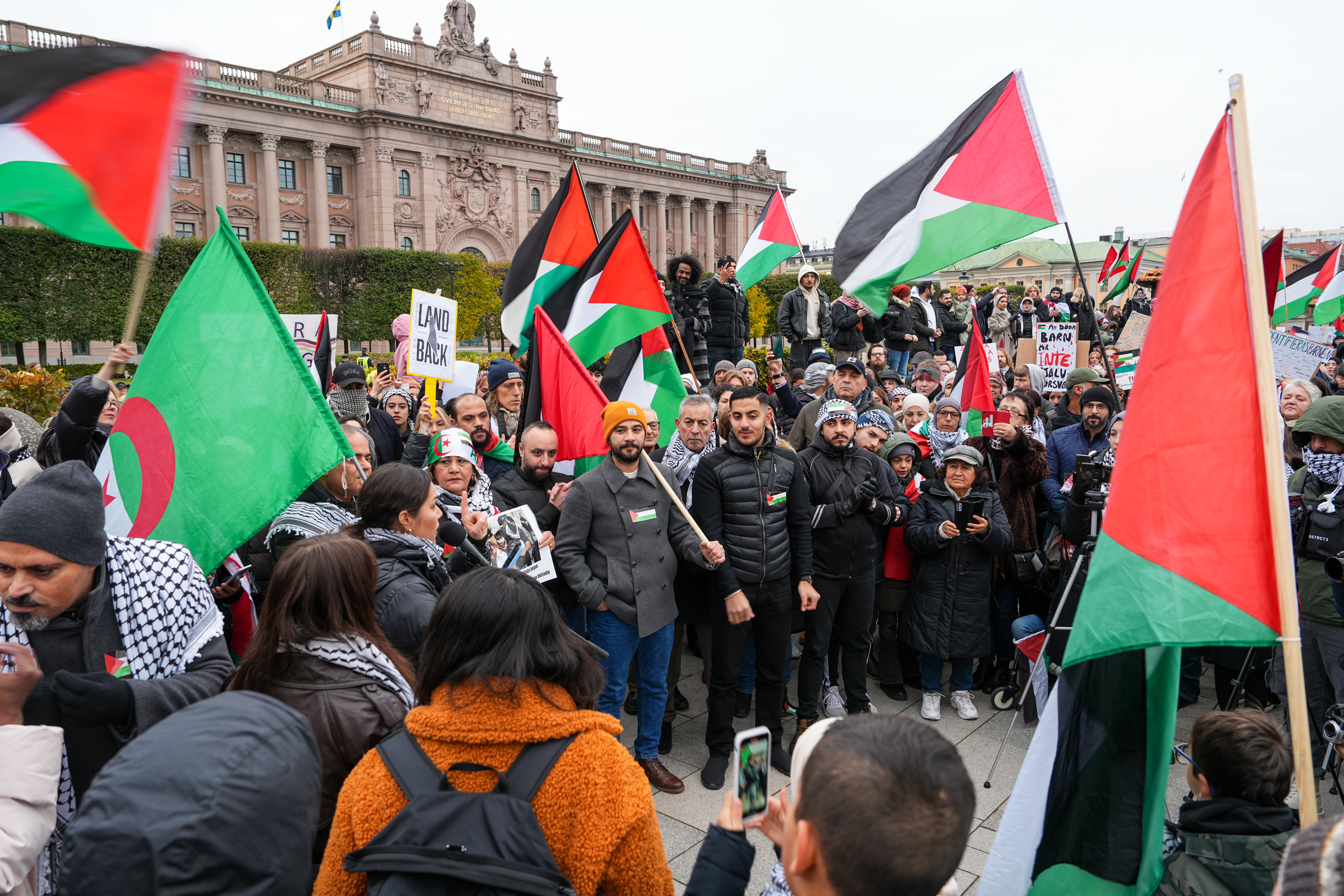
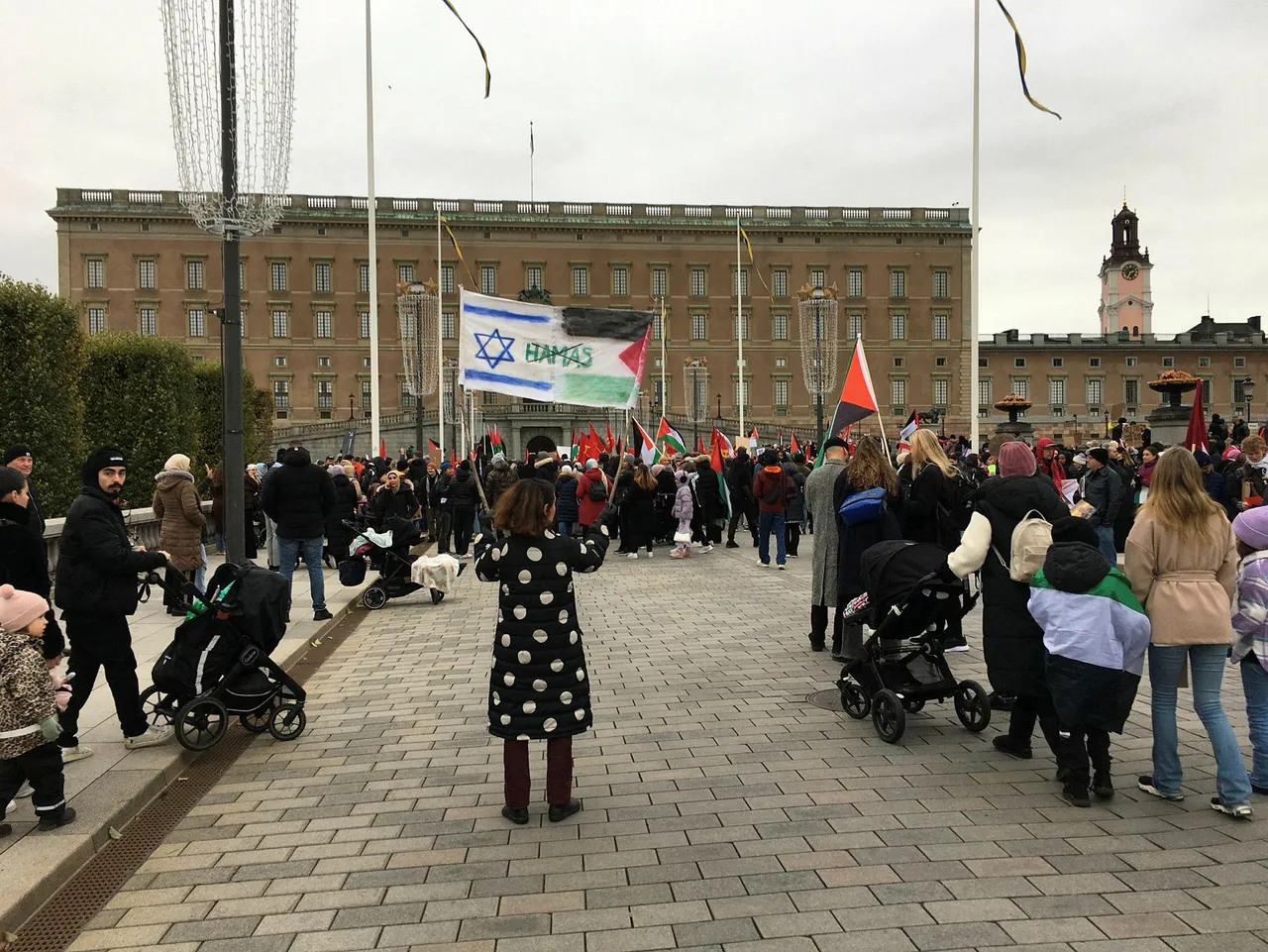

 דיויד סטברו