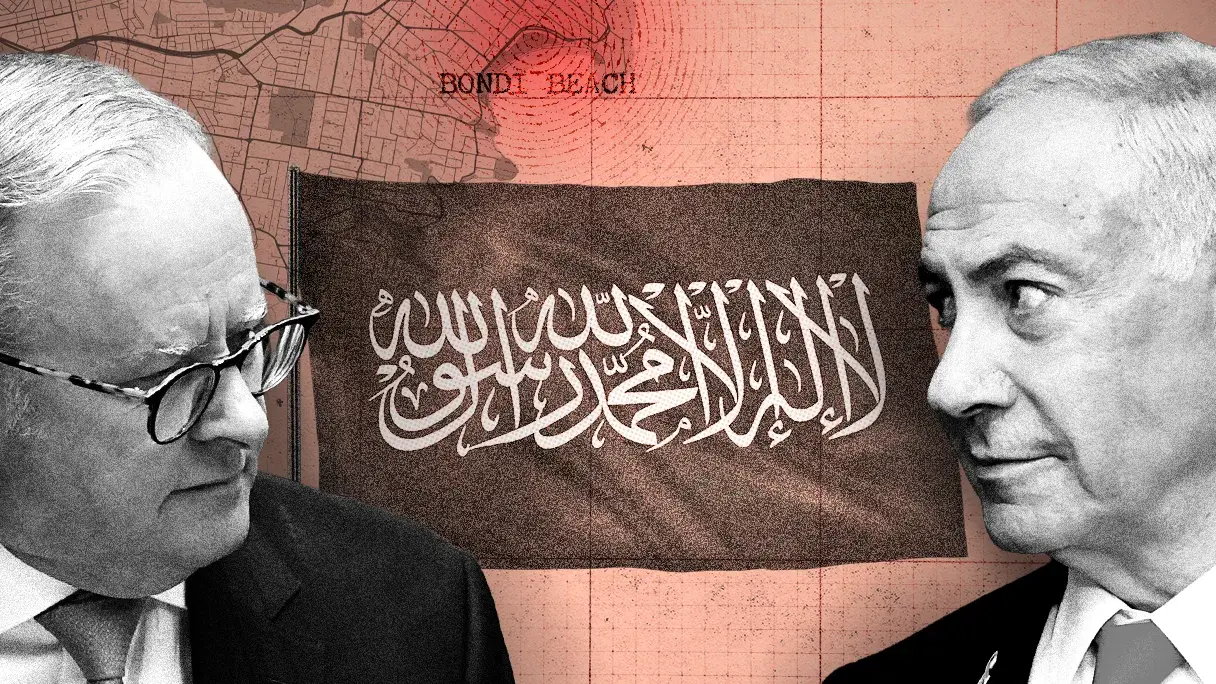
I'm Israeli. Am I allowed on your streets?

Glorifying Terror at Way Out West. A Fancy Architecture Firm Rejects Israeli Colleagues. And a Mob Threatens to Attack Israelis in Central Stockholm.
Published in Swedish daily Svenska Dagbladet: https://www.svd.se/a/VzExKW/jag-ar-israel-kan-jag-leva-har

It’s a spiral — it starts with a feeling of discomfort and eventually leads to avoiding certain environments. If, for example, you're a Jewish music lover and the Way Out West festival is a must on your events calendar, maybe this year you skipped it because of one of the festival’s main acts – Kneecap. The festival describes them as “controversial Belfast rappers creating music for the powerless and the voiceless.” It doesn’t specify who those voiceless people are, but a clue might be that one of the Irish rappers, during a performance, shouted “up Hamas, up Hezbollah” while wearing a Hezbollah flag. The oppressed and supposedly powerless turn out to be fascist, chauvinist, racist, antisemitic, and well-funded terrorist organizations.

Screenshot

When the Swedish Jewish Central Council asked Way Out West to cancel the band, the festival chose to play the freedom-of-speech card – something they likely wouldn’t have done if it had been a band supporting far-right rather than far-left populists. But the real issue is that Kneecap gave the festival exactly what it seemed to want – an image of uncompromising, righteous rebels standing up to censorship and oppression. Music industry professionals know very well they have everything to gain and nothing to lose when B-list celebrities scream “Fuck Israel” while they whisper to each other that the Jews are once again whining about antisemitism and supporting genocide.

Way Out West is just one example. In October, Swedish Jews will likely also avoid Kulturhuset, which has chosen to use taxpayers’ money to fund a public discussion moderated by Shora Esmailian. The event marks two years to the October massacre of Israelis and Kulturhuset couldn't come up with a more suitable candidate than Esmailian. The same Esmailian who was moved by images of Hamas fighters invading Israel to massacre, rape, and kidnap hundreds of civilians, and who later explained that “the reason hostages were taken was because it’s the Palestinians’ only way to negotiate for freedom”.

Many Swedish Jews who have nothing to do with Israel’s war in Gaza feel deeply uncomfortable attending events where support for Hamas is tolerated. For their own sake, they stay away. Sure, they’re not being kicked out – not yet – but when it comes to Israelis, there’s a more proactive attitude.

Boycott is now the latest trend and a cheap way to craft a virtuous image.

A group of Israeli architects and designers who had scheduled meetings with Swedish colleagues ahead of their visit to Sweden received the following reply from an architect at White, one of Scandinavia’s leading architecture firms:
“I’m relatively sure that neither you nor your fellow travelers support what the Israeli government is doing, so this might seem strange, but as long as the State of Israel continues its war tactics, we will have to pause tours and collaborations. See it as a form of pressure.”

It’s a revealing message. The sender assumes the group members oppose Netanyahu’s government and its Gaza policy — which many Israelis do. But it doesn’t matter. All Israelis are automatically canceled. If the Swedish architect truly cared about Palestinian victims and wanted to work toward ending the war, he would support more dialogue with Israelis, not less. But these symbolic gestures are solely about appearing virtuous and morally superior. It’s not even about buying into the absurd narrative that Israel is a colonialist project — because White has previously collaborated with Israeli colleagues. But now, boycotting is the trendy new stance and an easy way to signal virtue.

Who cares that millions of Israelis have fought for their lives and political freedoms over the past two years? Who cares that thousands of deadly rockets from six countries have rained down on them? Who cares that academic boycotts, trade blockades, and cultural isolation only strengthen the extremist forces on both the Israeli and Palestinian sides, while hurting the moderate, pragmatic voices trying to build bridges?

The spiral ends with a mob out on the streets, hunting for Israelis.
“We don’t accept war criminals walking freely in our streets,” read a post calling people to gather outside a hotel in Stockholm where an Israeli tourist — spotted in the city center — was staying. Rumors began circulating on social media — “an IDF soldier in Stockholm!” — and the digital intifada took off.
“Israeli passports should not be accepted at the border!” read one comment.
“The problem is they usually have two passports — one from their real country and one from Israhell,” said another.
Finally, came the demand for blood:
“Let’s go there. Who’s coming with me? We should take the law into our own hands,” one user wrote on X, continuing: “Violence must be used.”

Is the goal to organize a lynching or to pose as humanitarian superheroes? It doesn’t really matter.

It’s easy to threaten tourists.

But what about me? I’m Swedish, but also an Israeli-Jewish Zionist. I write for Haaretz, an Israeli newspaper critical of the Gaza war. Still, like many of my colleagues, I’ve served in the IDF. That said, I thought I was fully integrated into Sweden and that my presence here was just as unconditional as anyone else’s. Is that no longer true? Like most Israelis, I’m not afraid of self-righteous bullies shouting “no Zionists on our streets” – so this is just a rhetorical question – I’m neither a tourist, an architect, nor a Way Out West fan. But I am a Swedish-Israeli who loves his country of origin – Am I allowed to walk your streets?

Sweden is turning Gaza into domestic politics

The situation in Gaza is detreating and the international community has every right to intervene, but anyone who criticizes Israel’s warfare can’t be taken seriously unless they also have a serious suggestion as to how to protect Israeli citizens from another massacre by the genocidal wing of the Palestinian national movement. 

Published in Swedish in Swedish daily Svenska Dagbladet: https://www.svd.se/a/Xj17Vr/gor-inte-gaza-till-svensk-inrikespolitik

Israel’s new ground offensive in Gaza is raising stark Swedish reactions, as always. The left is denouncing Israel as a genocidal power indiscriminately killing Palestinians. The right is slightly more restrained, but it too claims that Israel is going too far. These reactions are understandable considering the horrifying images from Gaza shown on Swedish TV. But it’s more than that. Horrifying scenes are taking place all over the world, but Gaza, unlike other conflicts, has a unique role in Swedish politics. It’s an issue of interest but also a source of easily-won political points. The Swedish Left Party, Vänsterpartiet, uses it to show its electoral base how pro-Palestinian it is, so as not to lose votes to radical breakaway fractions, while The Social Democratic Party leaders use it to show their loyalty to old-school “humanitarian super power” policies. On the other side of the political spectrum, while Right Wing populist party, Sverige Demokraterna, continues marketing itself as “Sweden’s most pro-Israel party” as an alibi against accusations of antisemitism, Moderaterna, the ruling center-right party, is trying to maintain a responsible image, aligning itself with EU allies and international law, by presenting a moderate critical policy towards Israel. Sweden’s Gaza discourse, it seems, is more about domestic politics than the reality in Israel and Gaza.

But there is an Israeli reality which isn’t visible to Swedish news followers, one that adds another dimension and shows that Israel is more than just a blood thirsty monstrous state out for revenge. Those who choose to go beyond Swedish headlines, find that there are many Israelis who oppose their government and its Gaza policy. In fact, thousands of them demonstrate against it week after week. These are not only radical left-wingers from the fringes of the political spectrum. Israel is deeply split and even mainstream Zionist political leaders with hundreds of thousands of voters are speaking up against Netanyahu’s government.

A "sane state does not wage war against civilians, does not kill babies as a hobby, and does not set goals for itself like the expulsion of a population", said the leader of The Democrats, Israel’s Centre-Left Zionist party who’s also a retired IDF major general. When Netanyahu reacted by claiming that Golan’s statement was “wild incitement”, Golan refused to apologize. “The time has come for us to have a backbone of steel”, he said, “we must stand by our values as a Zionist, Jewish, and democratic state”. He added that the government ministers are corrupt and that the “war must be ended, the hostages returned, and Israel rebuilt”.

But it’s not only the Israeli Left. “What’s the strategy?”, said Yair Lapid, leader of the centrist “Yesh Atid” party, “we all support the elimination of Hamas, but Hamas will not disappear unless an alternative to its rule is presented. Getting the IDF stuck in Gaza for years is a strategic mistake, an economic disaster, and a diplomatic tragedy that will prevent us from being part of the historic change in the Middle East”.

Even some Israeli right-wing politicians oppose Netanyahu’s government. “This war is not a war for security but a war for power”, said Avigdor Liberman, a hardliner who in the past held important ministerial posts under Netanyahu, “this government is willing to pay any price for staying in power — even at the cost of the lives of the hostages and soldiers”. This is a point many in Israel agree on. According to a poll published by Israeli Chanel 12, 61% of the Israeli public prefers a deal which would return all Israeli hostages and end the war in Gaza, compared to only 25% who support expanding the fighting and occupying Gaza.

It seems like one must read news in Hebrew to understand that Israelis are more than just aggressors, just like one must read Arabic in order to understand that Palestinians are more than just victims. For example, anyone following Hamas-affiliated Telegram accounts in Arabic knows that besides images of Palestinian suffering, there are posts with images of suicide bombers standing next to bus wreckages accompanied by texts like "the buses carrying you will become coffins" and “our martyrs are on their way”. This isn’t just a reaction to Israel’s Gaza offensive. It’s been going on for decades. Long before October 7th, official Telegram posts by the al-Aqsa Brigades, a Fatah-aligned armed group, called the “heroes of the West Bank” to “stab, run over, slay and blow up”. “Oh heroes of Jerusalem”, one of them said, “the land is your land, what are you waiting for? The time has come to kill the Jews”. Naturally, Hamas takes it even further. Fathi Hamad, a member of the movement’s political bureau and former minister called on Palestinians to "buy knives for five shekels, sharpen them and decapitate the Jews". Naturally, these quotes are not available in Swedish and are not part of the Swedish discourse.

Still, Swedish politicians have every right to react to events in the Middle-East and in the current reality, there’s plenty of reasons to criticize Israel. There are, however, a few simple ideas which can make the criticism more grounded in reality and more balanced. 

First, categorizing Hamas as a terrorist organization is correct, but it has an unwanted side effect. Because it deals with terror, some may assume that it’s a terror organization like others. But it’s not. It’s an army. Some may imagine it as a kind of Baader-Meinhof-like gang of youngsters in red and white keffiyehs squatting in abandoned buildings in down town Rafah and reading texts by Leon Trotsky. Nothing could be further from the truth. The Hamas military machine has brigades, battalions and commando units. It has strict military hierarchies and discipline as well as weapon manufacturing capabilities, a navy, military intelligence, cyber experts, a propaganda machine and thousands of young men to recruit, even during the IDF’s campaign. Hamas is clear about its end game – it’s a barbaric, fascist and fundamentalist movement committed to wipe the Jewish state off the face of the earth. Anyone who criticizes Israel’s war in Gaza can’t be taken seriously unless they also have a serious suggestion as to how to protect Israeli citizens from another massacre by the genocidal wing of the Palestinian national movement. 

Second, sometimes one has to be honest even concerning political and military policies. Israeli society is deeply traumatised by a vicious attack which took the lives of more than 1,100 people. Everyone knows someone who was killed, a child who was kidnapped or a woman who was raped. Everyone saw the atrocities – homes burnet to ashes and dead bodies of all ages. Everyone is worried about a relative or a friend on the front lines. Everyone knows a survivor. Everyone is a survivor. The expectation that Israel will react in a calm, moderate and gentle way is absurd. This doesn’t mean that a wild storm of revenge is justifiable. It does mean that swedes would do well to ask themselves modestly and honestly how they react to crises.

Sweden was unaligned for over 200 years. Then a war started over 2,000 km away. Still, Sweden changed its policy almost over-night and joined NATO. In the same way, a handful of problems with integration caused the country which was known for its leaders asking its citizens to “open their hearts” to refugees because “their Europe has no walls”, made a former neo-Nazi party its second largest. It also reversed all of its immigration policies. These dramatic and, anything but calm and moderate changes, happened without one shot being fired at Sweden and without hundreds of Swedes being killed, raped or injured. Israel, on the other hand, apart from the horrors of October 7th, has had, 35,500 rockets fired directly at it in the last year and a half, targeting, displacing and killing civilians. Is Sweden really qualified to lecture it about reacting unproportionally? And finally, criticizing Israel is fine, but it shouldn’t be done according to the propaganda of Sweden’s so-called pro-Palestinian movement. For some reason, this movement has adopted an extremist narrative echoing Hamas propaganda which claims that the Jewish state has no right to exist. The slogan of a “free Palestine from the river to the sea” is a genocidal one, since it implies the elimination of Israel. The slogans calling for an “Intifada” are incitement for violence and the claim that Israelis are settler colonizer is historically ridiculous and politically dangerous. Those who criticizes Israel because they support a just peace and a political compromise in the Middle-East would do well to find better partners – instead of people who scream “crush Zionism” and are just as bad as those who automatically support everything Israel does; they can join hands with moderate Israelis who still believe in peace and are struggling to save their home from a never-ending cycle of violence.

A letter to Athena

Published in Swedish in Svenka Dagbladet:

https://www.svd.se/a/RGLvzO/oppet-brev-ar-israeliska-forfattare-bannlysta-pa-kulturhuset

Athena Farrokhzad is responsible (together with Ida Linde) for the international literature stage at Stockholm's Kulturhuset stadsteatern, arguably one of Sweden's most important literary institutions.

David Stavrou is an Israeli/Swedish journalist based in Stockholm.

Hej Athena,

Since we don't know each other, I'll start by introducing myself and explaining why I'm writing to you publicly.

I'm a journalist who writes for "Haaretz", one of Israel's daily newspapers. Although I write about various issues worldwide, as an Israeli who's lived in Stockholm for many years, I'm particularly interested in Swedish politics, economy, society and culture. As you can imagine, these days "Haaretz” is highly focused on the terrible war in Gaza and its implications for Israel. As a foreign correspondent, rather than writing about the military and political issues of the war, I've concentrated on some of its European aspects – demonstrations, diplomacy, and its effects on local Jewish communities.

At some point, another issue caught my interest – the intense debate about the war in cultural circles. I decided to ask leading cultural figures about how the war has affected their work.  I wanted you to be my first interlocutor after I discovered that Kulturhuset had invited Palestinian writer Adiana Shibli for a discussion in March. I thought this was an interesting and exciting choice. Unlike others, I don't see any problem in hosting Shibli, but I was interested in the larger picture: how Kulturhuset is affected by the war that everybody's interested in (unlike, say, recent conflicts in Ethiopia, Sudan or Azerbaijan)? Are you planning to host writers from both sides of the conflict? Is your strategy to embrace the political debate or focus on more abstract themes? Do you have to deal with a lot of political pressure?

When I discovered that you yourself are very politically active, I became even more interested. After all, you're not only a writer, but also a public figure with a key role in Sweden’s literary world – and you work for a public institution. So, I sent an interview request to Kulturhuset's press department. I think you know what followed.

After a few friendly messages, it was made clear that "Athena declines to participate in an interview at this time". I then wrote to you privately. And then I wrote again. And again. Obviously, you don't have to answer me and I guess no one can make you talk to journalists. Still, you're a public figure paid from public funds and I think, modestly, that my questions are important. In the past I've been granted interviews by Swedish parliamentarians, government ministers, and leaders in all aspects of Swedish political, social and cultural life. Most were happy to grant interviews, and I found it strange that you're so unavailable. So I decided that if you don't want me to ask my questions privately, I'll ask them here. Publicly.

First, Kulturhuset's program for the next few months doesn't include any Israeli writers. That's fine of course. Only a handful of countries are represented in the programme. But I noticed that a few years ago you signed a petition proclaiming that "we must refrain from Israeli participation in cultural exchanges". Have you changed your mind – or does the same policy apply now that you’re a public official? Are Israeli writers banned from Kulturhuset from now on? Will Stockholmers who are interested in meeting writers like David Grossman or Dorit Rabinyan be unable to do so anymore?

Secondly: the fact that your salary is paid by Stockholmers of all shades of opinion, hasn't stopped you from making some very extreme statements. On Instagram you recently told your friends who "spread the voices of the Palestinian resistance" that you'll see them on the streets next year for the "Global Intifada 2024". I’m sure you know that although the word "intifada" has many meanings, in the current Palestinian context it means violent resistance. My question is: as Stockholmers of all shades of opinion, might we be meeting violent resistance next time we visit Kulturhuset.  Or is our safety guaranteed only if we belong to those who "spread Palestinian resistance"?

For the next couple of questions, let me add some background. Solidarity with civilian victims of war and a demand for humanitarian aid are integral elements of Swedish mainstream politics. And rightly so. But in the Israeli-Palestinian conflict, there is a particularly extreme political thesis that is popular in certain circles. This school of thought proclaims that the war isn't a violent clash between two national movements with legitimate claims to the same territory, but instead involves colonialist Israelis committing genocide against powerless indigenous Palestinians. Historically this discourse is obviously uninformed: it ignores inconvenient truths like the fact that Jews are indigenous in Israel since they've lived in the region for thousands of years (including in Gaza where a synagogue predated the Viking period by hundreds of years), the fact that the Palestinian National movement has violent genocidal fractions (like Hamas) and the fact that the Arab world is at least as responsible for the Palestinian tragedy as Israel. Still, in a democracy it is legitimate to be ignorant.

But my third question isn't about ignorance, it's about what public servants are allowed to do and say. Athena, on social media you invite us to demonstrations against genocide which ignore the genocidal Hamas attack on October 7 and advocate destroying Israel by violent resistance (I know: I was there). You've also recently signed political demands addressed to various writers' associations (PEN, the Journalists association and the Writers Union) requesting stronger pro-Palestinian and anti-Israeli action. One can't help but wonder – are you using your status as a public appointee to promote agendas which some of those who pay your salary may strongly oppose? Is it reasonable for someone who sets an agenda to publicly express extreme ideas which many regard as not only mistaken, but also deeply offensive? These opinions may be appropriate for radical students living in a commune and publishing syndicalist poetry online magazines with 14 subscribers – but you're part of a municipal apparatus, responsible for the careers of many people. But you have a rather middle-class job which is meant to supply services to Swedish lovers of literature. If you want to be a militant freedom fighter, perhaps you should consider a career change? And if you don't, if you stand behind your opinions, why won't you talk to journalists about them?

The latest demonstration you publicly embraced occurred on International Holocaust Memorial Day. You shared a picture stating "Never Again for Anyone".  If the Palestinian flags and the dates shown (1941, 1948, 1967) weren't enough to clarify that you're comparing the current conflict to the Holocaust, your byline couldn't be clearer: "All of Sweden for Palestine in Stockholm on Saturday. Come, spread".

Again, one could argue about the absurdity of this comparison. How many Jews fired rockets at German civilians? How many Jewish militants raped German girls? And how many Jewish suicide bombers blew up German buses? I could ask about the Palestinian leader Haj Amin Al Hussaini, Hitler’s ally and supporter of the "Final solution". I could engage in this debate, but what's the point? You decline to grant an interview at this time.

But it's not only about words. Words lead to action. After the demonstration you promoted, a group of people, ("presumably from the demonstration" according to the police), arranged a “spontaneous demonstration” outside the synagogue where a memorial service was being held for the victims of the Holocaust. The demonstrators filmed the participants, including Holocaust survivors, and chanted slogans like "child killer" and "intifada". Is this also legitimate criticism of Israel, Athena? At the synagogue? On Holocaust Remembrance Day? Are you serious?

According to the working definition of the international Holocaust Remembrance Alliance, contemporary examples of antisemitism include "drawing comparisons of contemporary Israeli policy to that of the Nazis". You may object to this. In fact, I'm sure you do, and that's fine. But most western democracies – including your own government – disagree. Which means that Sweden's public institutions should be committed to this definition. So, I guess my last question is this: as someone who works for such an institution, are you committed? And more importantly, considering your involvement in antisemitic campaigns, am I still allowed in Kulturhuset? Or are Jews not welcome anymore?