בעיצומו של סיבוב הופעות חובק עולם ורדיקלי מתמיד, רוג'ר ווטרס, תיכף בן 80, הסכים להתראיין ל"הארץ" ולהסביר מדוע כל עוד ישראל היא מדינת היהודים הוא ימשיך להחרים אותה, ולא בגלל שהוא אנטישמי
ממש בתחילת כל הופעה בסיבוב העכשווי של רוג'ר ווטרס נשמעת באולם הכרזה לא שגרתית. אחרי ה"אנא כבו את הטלפונים הסלולריים" הרגיל מגיעה הודעה קצת יותר פרובוקטיבית: "אם אתם אחד מאנשי ה'אני אוהב את פינק פלויד, אבל אני לא סובל את הפוליטיקה של רוג'ר'", היא נפתחת וממשיכה בעקיצה שמוטב להשאיר במקור האנגלי: "You might do well to fuck off to the bar right now". ההכרזה הזאת נותנת את הטון המדויק למה שצפוי בהמשך הערב, מכיוון שהנושא המרכזי של ההופעה הוא מעין שילוב של אקטואליה, מדע המדינה ופוליטיקה גלובלית, ורוג'ר ווטרס הוא הכל חוץ ממיינסטרים בעניינים האלה. למעשה, רבים יגידו שהוא הכי רדיקלי שרק אפשר להיות. העמדה הזאת שלו, בשילוב העובדה שהוא אחד מכוכבי הרוק הגדולים של דורו ומושך עשרות אלפי אנשים לכל הופעה, גורמת לסיבוב ההופעות שלו להיות תופעה תרבותית חשובה המעוררת תגובות רבות ומחלוקות סוערות.
ווטרס, שיהיה בן 80 בספטמבר, העניק ל"הארץ" ראיון בעיצומו של המסע, לאחר שכבר השלים את החלק האמריקאי בסיבוב ו-14 מבין 40 המופעים האירופיים שלו. תחילה אנחנו מדברים על המוזיקה, לא על הפוליטיקה. בסופו של דבר, מדובר בהופעת רוק, לא במערכת בחירות.
במופע החדש הוא כלל – לצד שירים מקריירת הסולו שלו וגם שיר אחד חדש לגמרי – גם לא מעט מהקלאסיקות שיצר יחד עם פינק פלויד, הלהקה שהקים עם חבריו סיד בארט, ניק מייסון וריק רייט ב-1965 ועזב באמצע שנות השמונים; ביניהן, למשל, כל החלק השני של The Dark Side of the Moon. הוא מספר שאף סיים להקליט מחדש במלואו את האלבום, שיצא לפני חמישים שנה בדיוק. הגרסה החדשה תראה אור ביולי הקרוב ויוצרהּ מאמין שהאלבום עדיין רלוונטי מאוד. "שום דבר שעשיתי בשנים האחרונות אינו פוליטי יותר מהשיר Us and Them", הוא אומר ומצטט את מילות השיר, "With, without, and who'll deny it's what the fighting's all about". "זו גם הסיבה שהקלטתי מחדש את האלבום – כבר חמישים שנה שאנשים לא מבינים במה הוא בעצם עוסק". לדבריו, הוא נהנה לנגן את החלק הזה של ההופעה לא פחות מאשר את השירים החדשים יותר, בגלל הפן הוויזואלי: "יש צלב ענק של מסכי LED שתלוי מעל הבמה", הוא מסביר, "והתמונות שאנו מציגים, במיוחד במהלך Us and Them, מרגשות את הקהל מכיוון שהן מאוד אנטי-מלחמתיות".
עם עבודת הווידיאו המתוחכמת על מסכי הענק והתפאורה של כבשים וחזירים מעופפים, אתה לא מרגיש שהכל קצת גרנדיוזי והופך את הקשר עם הקהל לפחות אינטימי?
ווטרס לא אוהב את השימוש במילה גרנדיוזי. "או שזה תיאטרון טוב, או שזה לא תיאטרון טוב", הוא אומר. "ביליתי את שישים השנים האחרונות בניסיון ליצור תיאטרון שמתאים לרוקנרול באיצטדיונים ואולמות גדולים שמכילים בין 15 ל-100 אלף איש. אי אפשר לעשות תיאטרון אינטימי בתנאים כאלו, גם אם אני מאוד אוהב תיאטרון אינטימי ולפעמים מתחרט על כך שלא הצלחתי לעבוד בתיאטראות קטנים". הוא מוסיף שיש לו תוכניות לעשות מופע אחד או שניים שיהיו מצומצמים יותר עם הגרסה החדשה של "הצד האפל של הירח" וכן להעלות לבמה את The Wall בחלל אינטימי יותר. עם הפרויקטים האלה ואחרים, לא נראה שהוא קרוב בכלל לפרוש מעסקי הרוקנרול.
המופע החדש נקרא "זה לא תרגיל – סיבוב הפרידה הראשון" והוא כולל גם טקסטים ביוגרפיים המסבירים חלקים שונים בקריירה שלך. האם זהו ניסיון להתחיל לסכם את הדברים ולעצב את הנרטיב של הקריירה שלך?
"לא. בכל פעם שאני עושה סיבוב הופעות, אני צריך להחליט איך הוא ייראה, מה יהיה הסיפור, מה אני מקווה להשיג וכמה מהדברים הישנים של פינק פלויד אני צריך לעשות כדי להשביע את הרעב של הקהל. דבר אחד שאני מרוצה ממנו הוא הדמוגרפיה של הקהל. רבים מאלו שמגיעים להופעות שלי הם סביב גיל 20. זה פנטסטי וזה לא קורה להרבה מהלהקות הוותיקות. ברור שכשהוצאנו כרזות שכתוב בהן 'סיבוב הפרידה הראשון' זו היתה בדיחה. כי כל כך הרבה מהאחרים עושים סיבוב פרידה אחרי סיבוב פרידה במשך שנים על גבי שנים". הוא מוסיף שהוא מרוצה מהמופע ושעל פי התגובות עד כה, נראה שכך גם הקהל.
אפרופו להקות אחרות, אמרת פעם בראיון שאתה לא שומע הרבה מוזיקה ולא מתעניין במה שקורה בתעשיית המוזיקה. אתה באמת לא מתעניין במה שקורה בתעשייה?
"מה קורה בתעשייה? תגיד לי אתה, אם זה מעניין אותך. אני ממש לא מעוניין. החיים קצרים מדי". ווטרס מסביר שלאף אמן אין זמן לדברים כאלו. "צריך להמשיך עם העבודה", הוא אומר, "מיכלאנג'לו לא אמר, 'טוב, אני חושב שאני אעלה על חמור, אסתובב באיטליה ואבדוק מה האחרים עושים. הוא אמר – 'אני רוצה את חתיכת השַׁיִשׁ קררה הזו, עכשיו בואו נראה איך אני יכול להוריד אותה מהגבעה בלי להרוג מאה אנשים'". בשלב זה ווטרס מצטט את שירו Free Four מ-1972. בתרגום חופשי: "החיים הם רגע חמים וקצר והמוות הוא מנוחה קרה וארוכה. אתה מקבל את ההזדמנות לנסות, כהרף עין, שמונים שנה עם מזל או אפילו פחות. אז קדימה לסיפון, לסיבוב האמריקאי, ואולי תגיע לפסגה, אך היזהר בדרכך, ואני יכול לומר מידיעה, שייתכן שהירידה תהיה קשה. אבל אתה מלאך המוות, ואני בנו של המת שנקבר כמו חפרפרת בתוך שוחה, וכולם עדיין במנוסה".
אלה משפטים חשובים ביקום של ווטרס, יליד אזור כפרי בדרום-מזרח אנגליה שחי זה עשרים שנה בארצות הברית ("בגלל מזג האוויר יותר מאשר כל דבר אחר. באנגליה לא מפסיק לרדת גשם"). הוא נולד ב-1943, אביו, אריק פלטשר ווטרס, שהיה מורה בבית ספר וחבר במפלגה הקומוניסטית, נהרג במלחמת העולם השנייה בקרב באנציו שבאיטליה כאשר ווטרס היה בן חמישה חודשים בלבד. סבו, ג'ורג' הנרי ווטרס, היה גם הוא חלל מלחמה. הוא מת בזמן לחימה בצרפת במלחמת העולם הראשונה. לנוכח מורשת זו, אין זה מפתיע שהאכזריות וחוסר המשמעות של המלחמה תמיד היו חלק חשוב בעבודתו של ווטרס, ובמופע הנוכחי הנושאים הללו ניכרים מתמיד. זה ההקשר שבו צריך לראות את פתיחת המופע שבה ווטרס מבקש ממי שלא מסכים עם העיסוק שלו בפוליטיקה להיעלם לכיוון הבר. זו הדרך שלו להגיד שהוא לא שוכח את מה שקרה למשפחתו ואת מה שהוא חושב שממשיך לקרות בעולם, ואין לו שום עניין להתעלם מזה או לרכך את עמדותיו.
מעבר לכך שזו פתיחה ייחודית ופרובוקטיבית, יש כאן גם סוגיה רצינית. אם באים להופעה שלך אנשים שאוהבים את המוזיקה שלך, אבל גם תומכים בדונלד טראמפ, ז'איר בולסונרו או בנימין נתניהו, אתה באמת לא רוצה אותם שם?
"לא אכפת לי אם הם שם או לא. אני לא ממיר אנשים. אתה יודע, אתה כותב את זה ב'הארץ' ואנשים תמיד מנסים לשכנע אותי לנסוע לישראל, לעשות הופעות בתל אביב ולדבר עם אנשים, לנסות לגרום להם לשנות את דעתם ו'לשנות מבפנים'. ואני אומר, לעזאזל עם זה, יש פה 'משמרת-שביתה' ואני לא שובר שביתה, כי אני מאמין בזכויות אדם. אנשים שהצביעו לטראמפ היו קמים ויוצאים מהופעות שלי כשניגנתי שירים מתוך Animals (האלבום של פינק פלויד מ-1977 המבוסס על 'חוות החיות' של ג'ורג' אורוול, ד"ס). לא אכפת לי. עזבו! אני לא רוצה שתבואו. אני לא מנסה להשפיע עליכם, כי אתם אבודים. האנשים שאני מנסה לעודד הם הצעירים שרוצים להתנגד להרס הנורא של כדור הארץ שלנו על ידי המעמד השליט. אני מעוניין לתקשר איתם, לא אכפת לי מאנשים שמצביעים נתניהו או טראמפ או בולסונרו".
נראה כי מעשור לעשור המסר של העבודה של ווטרס נעשה ספציפי יותר ופחות מופשט ואוניברסלי. אם בשנות השבעים הוא עסק בחוויה האנושית ובמושגים קיומיים ומופשטים כמו זמן, ניכור, מוות ובדידות, ובהמשך עסק ברעיונות פוליטיים כלליים כמו חברות דיסטופיות ופאשיזם, הרי מאז שנות השמונים הוא כותב על אירועים ספציפיים, כמו מלחמת לבנון הראשונה והמלחמות באפגניסטן ובעיראק, ומסמן בבירור את הנבלים שלו, כמו מרגרט תאצ'ר וטראמפ, ואת הגיבורים שלו, כמו ג'וליאן אסאנג'. זה לא משהו שכולם יכולים להזדהות איתו.
"אני מסכים לגמרי", הוא אומר. "אני חושב שזו פונקציה של גיל. כולנו חיים בהקשר של העבר האישי שלנו. אלה מאיתנו שבאמת יודעים לקרוא, ויש פחות ופחות מאיתנו, אנחנו קוראים היסטוריה ומביאים אותה בחשבון. אבל ככל שהחיים שלנו מתפתחים, אנו מזהים את האיוולת שבחזרה על אותן טעויות שוב ושוב, והמנוע שמניע את הטעויות הללו הוא בעיקר תאוות בצע גדולה. בצע כסף או בצע כוח. אז כן, אני פחות מודאג מלהיות לא רלוונטי כי אני כותב על דברים ספציפיים או על תקופות ספציפיות. ההקשר של חלוף הזמן חשוב מאוד; אולי בגלל שאני בן 79, המחשבה על כך שההצטרפות הסופית לאחדות הגדולה – לאחדות שבה הכל הוא אפר ואבק, אולי גם זיכרון אבל אולי אפילו לא זה – הולכת ומתקרבת, גורמת לכך שמתבקש יותר ויותר להתמודד עם השאלות הגדולות, הנדרשות מכל אמנות שיש לה איזושהי משמעות".
בהופעה אתה מתייחס לעתיד הדיסטופי שג'ורג' אורוול ואלדוס האקסלי כתבו עליו ולמנהיגים האמיתיים שהופכים לשיטתך את החזון שלהם למציאות. אבל אלו בעיקר נשיאים אמריקאים – תמונות כל הנשיאים מרונלד רייגן ועד ג'ו ביידן מופיעות על מסכי הענק והם מוצגים כפושעי מלחמה. האם נשיא סין שי ג'ינפינג ונשיא רוסיה ולדימיר פוטין אינם מופיעים שם כי אתה חושב שהם לא פושעי מלחמה, או שיש סיבה אחרת?
"ההיסטוריה שלי מלאה בנשיאים האמריקאים; הם הגדירו את האירועים הגיאו-פוליטיים מאז שנולדתי. 'אימפריית הרשע' מאז מלחמת העולם השנייה היא ארצות הברית והיא ממשיכה להיות כזו. כרגע ארה"ב וביידן בראשה גוררת אותנו במהירות לעבר מלחמת עולם שלישית. נראה שיש שני מניעים אפשריים לכך. האחד הוא הרווח, שהרי הערך של תעשיות המלחמה עלה מאוד מאז שהחלה מלחמת אוקראינה. השני הוא מה שארה"ב מחשיבה לייעודה המוצהר – לשלוט בעולם. אז היא מחליטה מי דמוקרטי ומי לא דמוקרטי. קשה להבין מה גורם למישהו לחשוב שארה"ב היא דמוקרטיה, כי היא לא, וכל אחד עם מנת משכל מעל לטמפרטורת החדר יודע שהיא לא. הכל בה מונע על ידי כסף וכוח ולאנשים הרגילים אין שום השפעה על העניין".
ווטרס אומר שהוא יודע שזו אמירה קיצונית. אף שהוא חי בארצות הברית – בלונג איילנד שבמדינת ניו יורק, עם אישתו (החמישית) קאמיליה צ'אבס (עם שתיים מנשותיו הקודמות הביא לעולם שלושה ילדים) – דעתו עליה ברורה. הוא לא סומך על התקשורת האמריקאית, ובהופעה שלו המסכים מלאים בדוגמאות ובתמונות שמבהירות היכן לדעתו טמונה הבעיה האמיתית – מוצגים שם קורבנות של אלימות מדינה נגד אזרחים, קורבנות של מה שמכונה "המלחמה בטרור", קורבנות מדיניות החוץ האמריקאית בדרום אמריקה ומדיניות הפנים האמריקאית נגד ילידי היבשת ונגד אפרו-אמריקאים. ועם זאת, יש תחושה שמשהו חסר בתמונה שווטרס מציג.
בראיון ל-CNN הגבת לשאלה על אלימות המשטר הסיני כלפי אזרחיו ואמרת שזה "קשקוש, שטויות מוחלטות". אתה לא מאמין, למשל, לידיעות על הזוועות שמתבצעות בשינג'יאנג נגד המיעוטים האתניים שחיים שם? בעיני, למשל, מה שקורה בסין נראה כדבר הקרוב ביותר ל"1984" בעולם האמיתי.
"תלוי איזה סיפור אתה קורא. אני לא מאמין לנרטיב המערבי על האויגורים. אני לא מאמין שיש מיליוני אנשים כלואים במחנות ריכוז שנרצחים אט אט ומעונים למוות. אני לא מאמין לדיבורים על כך שהנשים נאנסות על ידי הממשלה הסינית. האם יש בעיה בחלק הזה של סין? ייתכן. כנראה. האם כל המוסלמים עוברים חינוך מחדש במחנות? כמעט בטוח שלא. האם חלק מהם עוברים את זה? ייתכן מאוד, אם הם חברים בדאעש למשל. אם הייתי בסין ואם הייתי מדבר סינית הייתי יכול לענות על כך. אני לא יכול לסמוך על תקשורת המיינסטרים המערבית שתספר לי מה קורה שם, ואני לא מאמין להם יותר ממה שאני מאמין לשטויות האלה על רוסיה-גייט (חקירת מעורבות רוסיה בבחירות בארה"ב ב-2016, ד"ס). כל הפוביה הזאת נגד מדינות אחרות משודרת כל יום, כל היום, בכלי התקשורת ומובילה למלחמת עולם שלישית. בהופעה שלי אני אומר 'אף אחד לא יכול לשלוט בעולם. העולם שם כדי שיכבדו אותו, שיטפחו אותו, שיאהבו אותו, שיגנו עליו ויחלקו בו'. אתה יכול לקרוא לזה נדוש, לא אכפת לי, אבל זו הבעיה עם כל המצב הגיאו-פוליטי. ארה"ב רוצה לשלוט בסין, היא רוצה לשלוט ברוסיה, היא רוצה לשלוט בעולם, היא מודה בזה, זה מופיע בכל המניפסטים הפוליטיים שלה וזה הורס את העולם".
לפי ווטרס, המלחמה באוקראינה היא תוצאה של אותה מדיניות אמריקאית ממש. למרות שהוא גינה את הפלישה הרוסית, הוא לא רואה במלחמה תוצאה של התוקפנות של רוסיה לבדה. הוא גם מגנה בחריפות את המשך התמיכה הצבאית של המערב באוקראינה. "זה הם (ארה"ב) שמקדמים את נאט"ו עוד ועוד מזרחה מאז סוף המלחמה הקרה", הוא אומר. "האם הם הולכים לנצח את רוסיה? לא, לא בלי מלחמה גרעינית. אז למה הם עושים את זה? ובכן, זה בגלל שיש להם מטומטמים כמו (היועץ לביטחון לאומי האמריקאי) ג'ייק סאליבן ו(מזכיר המדינה) אנתוני בלינקן שמפטפטים באוזן של איש ממש ממש זקן עם אלצהיימר שלא מבין כלום ולא יבין כלום" (ביידן, אגב, מבוגר מווטרס עצמו בפחות משנה).
בספטמבר האחרון כתב ווטרס שני מכתבים לאולנה זלנסקה, אישתו של נשיא אוקראינה וולודימיר זלנסקי, במטרה לנסות לגרום לה לשכנע את בעלה שהגיע הזמן לפשרה עם הרוסים. כשהיא כתבה לו בתשובה שהוא כותב לנשיא הלא נכון, ווטרס כתב גם לפוטין. הנשיא הרוסי עדיין לא ענה. ווטרס אמנם הבהיר שהוא נחרד מתוצאות הפלישה הרוסית, אך טוען שמדיניות אוקראינית שונה בחבל דונבאס והתערבות אמריקאית פחותה היו מובילות לפתרון של שלום. גישה זו הובילה לתגובות עזות במערב ונראה שווטרס שוב משלם מחיר על עמדותיו הפוליטיות. מיד לאחר פרסום המכתב לזלנסקה, העיר הפולנית קראקוב ביטלה את ההופעות של ווטרס בעיר. הסיבה שניתנה היתה שהעירייה, שהיא גם בעלי האולם, לא תסבול את השימוש בנכס שלה על ידי אמן שמפיץ רעיונות על המלחמה באוקראינה שרוב תושבי המדינה מתנגדים להם.
זה קרה בחודש שעבר: גואו יאן, מצאצאי הקהילה, נחטפה ונעלמה לחמישה ימים. סיפורה הוא פרק חדש בקורותיה של קהילה קטנטנה שחיה כבר אלף שנה מתחת לרדאר. אלא שכשמדובר בשלטון הנוכחי, אף אחד לא נשאר מתחת לרדאר.
באמצע החודש שעבר הגיע לידי נעם אורבך מכתב מדאיג. "אני גואו יאן, צאצאית של יהודי קאיפנג", נכתב בפתח הדברים. "לפני כמה ימים, ב–7 באפריל 2023 בשעות הערב, נחטפתי על ידי כמה גברים כשהלכתי ברחוב והוכנסתי למכונית שבה ישבו גברים לבושים בבגדים אזרחיים שלא הציגו מסמכי זיהוי. הם טענו שהם עובדי ממשלה. לאחר נסיעה של כמה שעות הרחק מהעיר, הכניסו אותי לחדר מלון תחת שמירה. מכיוון שלא נשאתי איתי את הטלפון הנייד שלי כשנחטפתי, ביקשתי להשתמש בטלפון כדי לדווח למשפחתי, על מנת שההיעלמות הפתאומית שלי לא תגרום להם לחרדה, אך הם לא איפשרו לי. לאחר חמישה ימים הסיעו אותי בחזרה לקאיפנג, הוכנסתי לחדר ריק שם נחקרתי על ידי ארבעה אנשים. אחד מהם לבש מדי משטרה וטען שהוא שוטר. כל החקירה הוקלטה על ידם. בשום שלב הם לא ציינו את הסיבה לחטיפתי ולא טענו כי הפרתי חוק או תקנה כלשהי. לאחר החקירה שוחררתי".
אורבך, חוקר סין שעוסק כבר שנים רבות בתולדות יהודי סין, הבחין שהמכתב לא היה מיועד רק אליו. הוא נשלח לקבוצה של פעילים יהודים שקשורים למכון הסיני־יהודי, שמנהל קשרים עם צאצאי הקהילה היהודית ההיסטורית בקאיפנג. העיר, שנמצאת במחוז חנאן שבמרכז סין ומאכלסת כיום כמעט חמישה מיליון תושבים, שימשה בעבר בירת סין. היא גם ידועה כמקום היחיד שבו התקיימה קהילה יהודית פעילה בסין העתיקה.
מדוע העלימו את גואו לחמישה ימים? מדוע הסתובבו אנשי ממשל רבים בסביבת ביתה בימים שבהם נעדרה? החוטפים לא הסבירו, אבל לגואו, שמכנה עצמה גם בשם העברי אסתר, יש הסבר. מתברר שהימים שבהם הורחקה מביתה היו ימים שבהם שגריר פולין בסין ביקר בעיר. גואו משוכנעת שיש קשר בין הדברים. לדבריה, היא הורחקה על ידי השלטונות כצעד מנע, כדי לבלום אפשרות שהשגריר ירצה לפגוש אותה ואת צאצאי יהודי העיר. "הוחזקתי כשבויה לא בגלל משהו שעשיתי", היא כתבה, "אלא מפני שמישהו רצה לפגוש אותי".
טיעון כזה עשוי להישמע קונספירטיבי למי שלא מכיר את הרקע. בשנים האחרונות נוקט הממשל הסיני יד קשה כלפי מיעוטים אתניים ודתיים ברחבי המדינה. מהבודהיסטים בטיבט, דרך המיעוטים המוסלמים בשינג'יאנג ועד הנוצרים במזרח המדינה, הממשל מתנגד לכל ביטוי של דת שאינו מפוקח על ידי השלטון. אלא שהרדיפה הזאת הגיעה גם לפתחה של הקהילה היהודית הקטנטנה של קאיפנג. אורבך מכנה זאת מדיניות של "טוטליטריות טוטלית" שכוללת ירידה לרזולוציות הקטנות ביותר — רדיפה אחר כל ביטוי של דתיות, עד הרמה הקטנה והמקומית ביותר.
גואו, במידה רבה, מייצגת את הרמה הקטנה והמקומית הזאת. מדובר בדמות משמעותית בקרב צאצאי יהודי קאיפנג, שאורבך אף כתב על פעילותה במחקרו האקדמי. "היא בלטה במיוחד בזכות עמדתה הייחודית", מספר אורבך. "במקום התמקדות בתקוות להגר לישראל או לארה"ב, היא דגלה בשחזור היהדות הסינית הייחודית שהיתה בקאיפנג".
בית משפחתה של גואו צמוד לאתר בית הכנסת ההיסטורי של יהודי קאיפנג. אף שהמבנה העתיק נהרס עוד במאה ה–19, בני המשפחה שימרו במשך שנים ממצאים המזוהים עם הקהילה היהודית, וכיום גואו מקיימת במקום מוזיאון פרטי ולא רשמי שמוקדש למורשת ההיסטורית של יהודי העיר. כחלק מהתנגדותם להצגה פומבית של כל סממן יהודי, השלטונות הסיניים מתנגדים לשימוש בבית כאתר היסטורי ודתי.
גואו חוששת לגורלה, אך כבר אינה חוששת להיחשף. הרי השלטונות כבר ממילא מכירים אותה, ואולי חשיפה בינלאומית דווקא תקשה עליהם לרדוף אותה. בשיחה עם מוסף "הארץ" בשבוע שעבר היא הסכימה לדבר על הפרשה. את השיחה ביקשה לקיים במייל, מכיוון שלדבריה, השלטונות עוקבים אחרי הטלפון הנייד שלה. "נולדתי ב–1980. אמי היא צאצאית של יהודי קאיפנג שאביה נולד לאב יהודי", כותבת גואו. היא מצרפת למייל צילום מ–1906 של סבא של סבא שלה, כשהוא עומד ליד לוח אבן משנת 1679. האבן הוצבה בעבר ליד ביתה וככל הנראה מוחזקת כיום במוזיאון של העיר קאיפנג. "בשנה שבה נולדתי היתה רפורמה שאיפשרה לזרים להיכנס לסין. הופעתם של זרים מרחבי העולם, בהם יהודים, הביאה אותי להסיק מדברי הוריי, שכניי והמבקרים, שאני יהודייה".
גואו מקדישה את חייה לתיעוד ההיסטוריה והתרבות היהודית בקאיפנג. "אם יש מבקרים שרוצים ללמוד על התרבות או ההיסטוריה של יהודי קאיפנג, הם מוזמנים לפנות אליי". לדבריה, היא אינה קשורה לשום ארגון או דת, אינה משתפת פעולה עם ארגונים ופעילים בסין או מחוצה לה ומוסיפה כי אין שום מרכיב של קיצוניות בעבודתה, כפי שעלולים לטעון השלטונות. "אני רק מספרת על ההיסטוריה", היא אומרת. "הפרשנות, קיצונית או לא קיצונית, תלויה באלו שמביטים בה".
אסתר באולם התצוגה שלה בקאיפנג לפני כעשר שנים
התקרית האחרונה אמנם היתה חריגה, אך לדבריה, זו אינה הפעם הראשונה שהשלטונות מטרידים אותה. "אני מוטרדת לעתים קרובות", היא אומרת. "לעתים הסירו והשחיתו שלטי מידע מחוץ לביתי שפירסמו את פעילות המחקר שלי ואת דרכי ההתקשרות איתי. במקרה אחד, כשעשיתי קבלת פנים בדירה שלי, הופיעו מצלמות ופקחים בתחתית הבניין. כשאמי באה לבקר אותי, עוכבתי ושאלו אותי את מי היא מחפשת". גואו מוסיפה שאנשים שהזדהו כאנשי ממשל דפקו על דלתה פעמים רבות וביקשו לדבר איתה וכי הם יידעו אותה על כך שהטלפון שלה נמצא תחת מעקב.
את מצפה לעזרה כלשהי ממדינת ישראל או מהקהילה היהודית העולמית?
"לא, אני לא מצפה לעזרה, כי צאצאי יהודי קאיפנג לא מוכרים כישראלים (או כיהודים) על ידי ממשלת ישראל או ממשלת סין. יש לי רק תעודת זהות סינית. מה שעברתי הוא תוצאה של התפיסה של הממשלה הסינית שהיסטוריה ותרבות יהודית אינן נושא שמתאים שצאצאי היהודים יספרו עליו למבקרים זרים".
שקלת לעזוב את סין?
"אני רוצה ללמוד את התפתחות התרבות היהודית בקאיפנג. משמעות עזיבת קאיפנג תהיה ויתור על העבודה הזאת. אי־אפשר פשוט לעזוב את העבודה בגלל סכנה. הם אולי מקווים שאוותר ואעזוב, אבל אני לא רוצה לעזוב, לפחות לא בשלב זה".
ואכן, הקהילה היהודית בעיר היא פיסת היסטוריה מרתקת ויוצאת דופן. "זו למעשה הקהילה היהודית היחידה שתועדה בסין", מסביר אורבך. "יש אמנם קהילות מודרניות, כמו היהודים הבגדדים בשנגחאי, היהודים הרוסים בחרבין ובהמשך גם יקים ופליטי שואה, אבל זה נושא אחר לגמרי. אין קשר בין צאצאי יהודי קאיפנג לבין קהילות של יהודים זרים שחיים בסין. למעשה, לקהילות הזרים אסור לשתף פעולה בפעילות יהודית עם אזרחים סינים — כולל צאצאי יהודי קאיפנג — מכיוון שהיהדות אינה מוכרת באופן רשמי בסין והיא לגיטימית בפועל רק עבור זרים".
מומחים מעריכים כי חבריה הראשונים היו סוחרים דוברי פרסית, שהגיעו ככל הנראה מדרך המשי בין המאה ה–10 למאה ה–12 לספירה. לפי לוח האבן הקדום ביותר שנמצא משנת 1489, בית הכנסת — היחידי הידוע בסין — נחנך לראשונה בשנת 1163, כך שסביר שאז התגבשו הסוחרים לכדי קהילה. כשהתבססו במקום, אומר אורבך, בני הקהילה עברו סיניפיקציה. "הם יצרו מין היתוך של יסודות יהודיים — כמו השימוש בשפה העברית, לפחות בכתובים — בשילוב עם השפה הסינית. למשל, ישנם לוחות אבן שהטקסט הסיני החרות עליהם מתאר במעורפל את הסיפור התנכי, החל מסיפורי נח ואברהם ועד משה רבנו ואפילו עזרא, אך הוא מעורבב עם דמויות מיתולוגיות סיניות והשיח בעל מאפיינים קונפוציאניים מובהקים. היו גם ריטואלים שהיו ייחודיים ליהודי קאיפנג. בית הכנסת התנהל במידה רבה כמו מקדש קונפוציאני וכלל גם פולחן אבות".
קיומה של הקהילה התגלה לעולם המערבי רק כעבור מאות שנים. "הקהילה התגלתה במקרה בשנת 1605, על ידי הישועי מטאו ריצ'י, הידוע כמיסיונר הראשון בסין", מספר אורבך. "הישועים הגיעו לכמה ביקורים בקאיפנג, תיעדו את מה שידעו על הקהילה ושלחו את המידע בחזרה לאירופה. זו היסטוריה מרתקת, ובעיקר מרגשת עבור הרבה מאוד אנשים, נוצרים ויהודים כאחד, מאז ועד היום. עבור לא מעט סינולוגים יהודים, סין היא לכאורה תחום לימוד זר ומרוחק, ופתאום מתגלה להם קשר יהודי". גם עבור אורבך עצמו המפגש עם קהילת קאיפנג היה משמעותי. "ב–1999 חייתי בקאיפנג כסטודנט במשך חצי שנה", הוא מספר, "כשחייתי שם לא מצאתי קהילה יהודית מתפקדת, אבל גיליתי את החשיבות העצומה של סיפור יהודי קאיפנג עבור העיר, וגם את המתח והרגישות סביב עצם שאלת קיומה. מאז חזרתי כמה פעמים לבקר שם, לאחרונה ב–2018".
אורבך כותב בימים אלה את הדוקטורט שלו בנושא השפעות נוצריות על הקהילה. הוא בילה שנתיים כחוקר ומורה לעברית ותלמוד במרכז ראשון מסוגו לחקר היהדות באוניברסיטת שאנדונג שבמזרח סין. במשך יותר מעשור לימד סינית באוניברסיטאות בארץ והוביל פרויקטים של תרגום תכנים לסינית מטעם יד ושם. במקביל למחקר האקדמי בנושא, הוא גם אסף חומרים לסרט דוקומנטרי בנושא. אלא שמחשש למצבם של צאצאי יהודי קאיפנג שלקחו חלק בצילומים, העדיף לגנוז את הפרויקט.
חוקרים מעריכים שהקהילה הגיעה לשיא גודלה בתחילת המאה ה–17, בשלהי שושלת מינג, אז היא כללה אלפים בודדים של בני אדם. חברי הקהילה לא דיברו עברית, אך יש עדויות לכך שלפחות חכמי הקהילה ידעו לקרוא בתורה בעברית. לדברי אורבך, לא ידוע הרבה על שמירת החגים בקרב הקהילה. "מעריכים שהם קיימו ברית מילה, אך המנהג לא נשתמר מעבר לתחילת המאה ה–19", הוא אומר. "הם גם שמרו שבת באופן כלשהו וקיימו תפילות".
במהלך התפילה נהגו חברי הקהילה ללבוש מצנפות דמויות טליתות. אחד הנזירים הישועים שביקר את הקהילה סיפר כי כיפה כחולה הבדילה בינם לבין שכניהם המוסלמים־סינים שחבשו כיפות לבנות, ועל כן הם זכו לכינוי "מוסלמים כחולי כובע". כינוי נוסף שיוחס לקהילה בעבר היה "כת תולשי הגידים". הדבר מעיד כנראה על הקפדה על איסור אכילת גיד הנשה, באופן שייחד את מנהגי הכשרות שלהם מאלו של שכניהם המוסלמים.
אם נדלג קדימה בזמן, במאה ה–19 כבר לא היתה קהילה של ממש בקאיפנג.
"נכון, לפי תיעוד של הבריטים שהגיעו ב–1850, הם מצאו את בית הכנסת עם הספרים והכתבים, אבל הקהילה היתה מדולדלת וחסרת חיות. שליחי הבריטים הצליחו לרכוש חלק מהדברים שהיו בבית הכנסת, כולל ספרי תורה וגם ספר אילן יוחסין שתיעד את כל הנפטרים בקהילה במשך תקופה מסוימת במאה ה–17. זה הספר היחיד שמשלב עברית וסינית ומעיד על קיום דתי שהתקיים תוך שילוב שתי השפות". אורבך מספר כי בתחילת המאה ה–20 ניסה בישוף אנגליקני שחי בעיר לאגד את חברי הקהילה יחד, אך הדבר לא נחל הצלחה. למרות זאת, היתה תמיד מודעות לכך שבעיר חיים צאצאים של יהודים. לדבריו, "במאה ה–20 הם כבר ידעו שהם חלק מקהילה עולמית מוכרת שנקראת 'יואוטאי' — יהודים".
אחרי המהפכה ב–1949 התקיים תהליך של רישום המיעוטים הרשמיים בסין. היהודים הוכרו על ידי הרשויות כמיעוט אתני?
"יש תיעוד לכך שהממשל המקומי בקאיפנג שלח נציגים של צאצאי היהודים לבייג'ין כדי לקבל הכרה כמיעוט רשמי, כנראה מתוך הבנה שיש קהילה יהודית עולמית, ויש מדינה יהודית, ומכיוון שגם כאן יש צאצאים של קהילה כזו כדאי להכיר בה. המשלחת נפגשה עם ראש הממשלה אבל הוחלט שלא להכיר בהם כמיעוט. עם זאת, רשום שיש לשמור על הזכויות שלהם ולא להפלות כנגדם. זו פשוט היתה קבוצה קטנה וגם לא ממש קיימת כקהילה".
כשסין נפתחה לעולם, אחרי מותו של מאו דזה דונג, התרחשו כמה תהליכים במקביל. "היתה התלהבות מגילוי צאצאי הקהילה, אפילו התלהבות רומנטית, גם מצד יהודים במערב וגם מצד נוצרים", אומר אורבך. "היתה סקרנות שהובילה לביקורים של יחידים וקבוצות שהגיעו לקאיפנג כדי לגלות את היהודים הסינים. הרשויות בעיר הגיבו להתעניינות שהגיעה מבחוץ. זה התפתח לתוכניות להחיות מחדש איזו נוכחות פיזית של ההיסטוריה היהודית בקאיפנג. אחרי הקמת השגרירות הישראלית בבייג'ין ב–1992, התחושה בממשל המקומי היתה כאילו ניתן אור ירוק להנכחת המורשת היהודית בקאיפנג. במהרה אושרה תוכנית להקמת בית הכנסת באתר המקורי ותוך שחזור צורתו ההיסטורית, הפעם כמוזיאון להיסטוריה של יהודי קאיפנג ולא כבית כנסת מתפקד. בנוסף, הוקמה אגודה מחקרית של יהדות סין בקאיפנג וצאצאי הקהילה היהודית הוכרו כיהודים באופן מקומי סמי־רשמי, גם אם לא ברמה הארצית. התפתחויות אלו גם עוררו תקוות להחייאתה של הקהילה. במקביל התעוררו גם תקוות בקרב חלק מהצאצאים שתתאפשר עלייה לישראל".
אלא שבאמצע שנות ה–90 התוכניות הללו נעצרו בפתאומיות. האגודה המחקרית נסגרה, כך גם המשרד שהופקד על הקמת המוזיאון, ורישום התושבים כיהודים נמחק. "כנראה שהממשל המרכזי הבין שקורה משהו בקאיפנג שעלול להצמיח סנטימנט של תחייה דתית", אומר אורבך. "הם החליטו שחייבים למנוע את זה".
הממשל התביית אז על מי שנתפס כמנהיג צאצאי היהודים — פרופסור מבייג'ין שעמד בראש האגודה לחקר ההיסטוריה והתרבות היהודית בקאיפנג ואף ביקר בישראל. האיש, שהפך לדמות ייצוגית של הקהילה, הורחק מקאיפנג, הוצא לפנסיה מוקדמת מהאקדמיה הלאומית למדעי החברה, הושתק ונמנע ממנו לבוא בקהל. "הוא הוכנס למעצר בית ובמידה מסוימת הוא למעשה יושב במעצר בית עד היום", אומר אורבך. "אני ביקרתי אותו בביתו ומצאתי אדם מובס ומפוחד".
אורבך מספר כי באותה התקופה לא היתה קהילה יהודית פעילה בקאיפנג, אך באופן פוטנציאלי, מאות או אלפי צאצאים עשויים היו להזדהות כיהודים. בעוד מרביתם לא עסקו בזהותם היהודית באופן אקטיבי, היו תמיד כמה עשרות אקטיביסטים שעסקו בנושא. הם באו במגע עם המבקרים הזרים, ביקשו תמיכה כלכלית מהרשויות ומגורמים בחו"ל והיו שהביעו רצון לעלות לארץ. בסוף שנות ה–90 אכן החלה עלייה קטנה לישראל, ובתחילת שנות האלפיים שוב התרחשה התעוררות יהודית מסוימת שהשלטונות בחרו להעלים עין ממנה. "החלה התארגנות של ציון שבתות וחגים באופן קהילתי", אומר אורבך, "ונפתחו שני מרכזי לימוד לא רשמיים עם מורים זרים במימון זר בדירות שכורות".
צילום: נעם אורבך
מי עמד מאחורי כל זה?
"המכון הסינו־יהודי בארצות הברית (SJI) וארגון 'שבי ישראל' בירושלים. מדובר בארגון שירש את "עמישב" (ארגון המקיים קשר עם קבוצות הקשורות לעם היהודי שאינן מטופלות על ידי הסוכנות היהודית, דוגמת בני המנשה בהודו וצאצאי האנוסים, ד.ס). היתה גם תמיכה של גורמים נוצריים.
מה המקום של מדינת ישראל בהתרחשויות האלו?
"ההתייחסות לזה בישראל, לפחות בהקשר הדיפלומטי, היתה כסמל היסטורי לידידות בין העמים. גם בסין היה עניין בקידום המסר הזה — קהילה יהודית עתיקה, בת אלף שנים, שמעולם לא סבלה מאנטישמיות. זו סיסמה ששני הצדדים, ובמיוחד הסינים, אהבו מאוד והם אוהבים אותה עד היום". אורבך גם מספק דוגמה ליחס המורכב בין ישראל לבין צאצאי קהילת קאיפנג, שאינם נחשבים יהודים על פי ההלכה. "השגריר הראשון של ישראל בבייג'ין, זאב סופות, החליט שהביקור הרשמי הראשון שלו כשגריר מחוץ לבירה יהיה לקאיפנג, וזה מה שהוא אכן עשה. הוא בא להציג מחווה היסטורית של הממשלה הישראלית כלפי הסינים, ודווקא המארחים הסינים הפגישו אותו עם צאצאי הקהילה. בראיון שקיימתי איתו במסגרת המחקר שלי הוא אמר לי שהיה לו ברור שצאצאי היהודים שהוצגו בפניו 'הם יהודים כמו שאני סיני'".
השלב האחרון בסיפורה של קהילת קאיפנג החל עם עלייתו לשלטון של נשיא סין הנוכחי, שי ג'ינפינג, שנוקט יד קשה כלפי מיעוטים אתניים ודתיים במדינה. "באמצע העשור הקודם היה שינוי ברור לרעה ביחס לצאצאי יהודי קאיפנג", מספר אורבך. "השינוי קשור למדיניות הסינית שמתנגדת לכל ביטוי של דתיות שהיא מחוץ לארגונים הרשמיים שמפוקחים על ידי המפלגה הקומוניסטית. אולם לדעתי מדובר גם בחשש ספציפי מייבוא סכסוך יהודי־מוסלמי לסין, שכן בקאיפנג העתיקה ישנה גם אוכלוסייה מוסלמית־סינית משמעותית".
"זה התחיל דווקא מדיווח אופטימי ב'ניו יורק טיימס', אולי אופטימי מדי, על סדר פסח שהתקיים בקאיפנג ב–2015", מספר אורבך. "הכתבה עוררה תשומת לב בבייג'ין והכעיסה את השלטונות. אחר כך נסגרו שני מרכזי הלימוד היהודיים. אחת ממשפחות הצאצאים הגיעה לניו יורק, וביקשה מקלט מדיני על רקע רדיפה דתית. בקשתה ככל הנראה התקבלה. אירוע זה החמיר את עמדת השלטונות, שהחלו לאסור על כל ביטוי חיצוני פיזי של קיום יהודי היסטורי בקאיפנג. מצבת אבן שניצבה מחוץ לבית הכנסת ההיסטורי — והוצבה כמה שנים קודם לכן על ידי השלטונות עצמם — הוסרה לפתע. המוזיאון העירוני, שהיה בו אגף שלם שהוקדש להיסטוריה היהודית של העיר, נסגר לשם בניית מוזיאון חדש. כשהמוסד החדש נחנך ב–2018, כבר לא היה זכר לאגף היהודי. שום אזכור לעבר היהודי. הם פשוט מחקו את ההיסטוריה היהודית. במקום להתגאות בלוחות האבן ההיסטוריים, הם מסתירים אותם".
לדברי אנסון לייטנר, נשיא המכון הסינו־יהודי (SJI), באותה שנה אסרו הרשויות התכנסויות של הקהילה היהודית וגירשו מורה שלימד בקאיפנג מטעם המכון. "הרשויות מנסות למחוק את עקבות החיים היהודיים בקאיפנג, בהווה ובעבר", אמר לייטנר למוסף "הארץ". "הן לא עושות זאת כתוצאה מאנטישמיות, אלא כחלק מהקמפיין הממשלתי נגד הדתות הבלתי־מורשות. למרות היסטוריה של 1,000 שנים בסין, היהדות איננה דת מורשית והיהודים אינם מיעוט אתני מוכר". לייטנר מוסיף שיהיה לעזר אם ישראל תביע בפני הממשל בסין "את דאגתה בצורה ידידותית ולא מתעמתת. ייתכן שסין תמצא פתרון פנימי ל'בעיה היהודית' שלה על ידי שיחה עם צאצאיהם של יהודי קאיפנג". בינתיים אורבך מזהה זהירות יתרה גם בקרב אקדמאים סינים שחוששים לעסוק בנושא. הוא מספר, למשל, על מחקר של אנתרופולוגית סינית שחקרה את צאצאי היהודים מקאיפנג שהתגיירו ועלו לארץ, וניתחה את זהותם המורכבת. בניגוד מוחלט לנוהג בעולם האקדמי, מאמרה, שפורסם בכתב־עת מדעי בספטמבר האחרון, הופיע תחת פסבדונים. "מבירור שעשינו ידוע לנו כמעט בוודאות מי הכותבת האמיתית", אומר אורבך. "מדובר בתלמידת מחקר סינית שלמדה עברית בבייג'ין וערכה את המחקר במסגרת לימודיה לתואר שני באוניברסיטה יוקרתית באנגליה. אבל היא חזרה מאז לסין וכנראה הובהר לה שפרסום המחקר עלול לפגוע בה".
התקווה היתה שבתקופה הזאת, שבה סין נפתחת מחדש לאחר הקורונה, הממשל יפגין פתיחות מחודשת ליהודי קאיפנג או לפחות יעלים עין מפעילות הקהילה כפי שעשה בעבר. "אבל אירועים כמו החטיפה והפרסום בעילום שם מהווים אינדיקציה ברורה שהמגמה הפוכה", אומר אורבך.
בינתיים גואו אומרת שתמשיך בעבודתה, אך מבטאת חשש אמיתי לביטחונה. "מה יקרה בפעם הבאה שמבקר זר בקאיפנג ירצה לדבר איתי על הקהילה היהודית?" היא תוהה במכתב ששלחה בחודש שעבר. "פתאום יחטפו אותי שוב. ואם אפעיל התנגדות עזה, אולי החוטפים יחליטו פשוט לפתור את הבעיה אחת ולתמיד. זה יכול להיות, למשל, נהג שיכור שנוהג במשאית שידרוס אותי בפעם הבאה שאצא לרחוב. לכן, עכשיו, בזמן שעדיין יש לי את היכולת להשמיע את קולי, אני כותבת את הדברים ומנסה לשלוח לכם".
המכתב מסתיים באזהרה לקוראים שלא לתקשר איתה במכשיר הנייד, כי הוא נמצא תחת מעקב ממשלתי. "תשובתך רק תביא לך צרות מיותרות", היא מסכמת, "אני שולחת את ההודעות האלו לא כדי לבקש עזרה או תגובה מאף אחד, אלא פשוט כדי להשלים את העבודה שלי — לתעד ולספר את ההיסטוריה".
The kidnapping last month of Guo Yan, a descendant of the ancient Jewish community in Kaifeng, is a disturbing new chapter in the annals of a tiny community that existed under the radar for a thousand years – until now
In mid-April, Noam Urbach received a worrying letter by email. “I am Guo Yan, a descendant of the Jews of Kaifeng,” the letter began. “Seven days ago, on April 7, 2023, in the evening, I was abducted by a number of men as I was walking in the street, and was forced into a car in which there were two men wearing civilian clothes who did not present identification documents. They claimed they were government employees. After driving several hours far from the city, I was taken to a hotel room under guard. Not having my mobile phone with me when I was kidnapped, I asked to use a phone in order to inform my family, so that my sudden disappearance would not make then anxious, but they wouldn’t let me.
“After five days, I was driven back to Kaifeng and taken to an empty room, where I was interrogated by four men. One of them was wearing a police uniform and claimed he was a police officer. They recorded the entire conversation. At no stage did they state the reason for abducting me or claim that I had violated any law or regulation. I was released after the interrogation.”
Urbach, a China scholar and commentator on Chinese affairs who has spent many years studying the history of China’s Jews, was only one of the people who saw the letter – which was sent to a group of Jewish activists who are connected with the U.S.-based Sino-Judaic Institute, which maintains ties with the descendants of the historic Jewish community in Kaifeng. The city, which is in Henan Province in central China and has a population of about 5 million, was in the past the country’s capital. It’s also known as the only place where an active Jewish community existed in imperial China.
Why was Guo disappeared for five days? Why did a large number of government agents wander about the vicinity of the building where she lives while she was gone? The abductors didn’t explain, but Guo, who also uses the Hebrew name Esther, has a theory. On the days she was absent, the Polish ambassador to China visited Kaifeng. Guo is certain that the two events are connected: that the authorities removed her from the city as a preventive measure, so that she would not be there should the ambassador request to meet her or other descendants of the Jews of Kaifeng. “I was held as a captive not because of something I did,” she wrote, “but because someone wanted to meet with me.”
That might sound paranoid to those unfamiliar with the background. In the past few years, the Chinese government has taken a hard line against ethnic and religious minorities across the country. From the Buddhists in Tibet to the Muslim minorities in Xinjiang and the Christians in the east of the country, the authorities object to every manifestation of religion that is not authorized by the government. This persecution has also affected the tiny Jewish community of Kaifeng. Urbach terms this a policy of “total totalitarianism,” which reaches down to the lowest resolution: persecution of every expression of religious life, however small and local.
Guo, who is in her early 40s, can be said to represent that small, local level. She is a significant figure among the descendants of Kaifeng’s Jews – indeed, Urbach has written about her activity in his academic work and she has spoken to Western journalists in the past. “She stood out especially because of her unique stance,” Urbach says. “Instead of focusing on hopes of immigrating to Israel or the United States, she advocated the reconstruction of the unique Jewishness that existed in Kaifeng.”
Guo’s home is adjacent to the site where the historic synagogue in Kaifeng once stood. The ancient structure was demolished in the 19th century, but the family preserved objects associated with the Jewish community. Today, Guo maintains a private, unofficial museum at the site that is devoted to the city’s Jewish heritage. These days, the authorities prohibit the public display of anything identified with Jewishness, and as such they are opposed to the use of the venue as a historical or religious site.
Although Guo is fearful for her fate, she is no longer reluctant to go public. After all, the authorities know who she is, and international exposure might make it more difficult for them to persecute her. In an interview with Haaretz earlier this month, she agreed to talk about the abduction. She requested that we communicate by email, as her mobile phone is under surveillance by the powers that be, she says. She responded to questions in English with answers in Chinese, which have been translated here.
“I was born in 1980,” she wrote, by way of background. “My mother is a descendant of the Kaifeng Jews; her father was born to a Jewish father.” She attached a photograph from 1906 of her great-great grandfather standing next to a stone tablet from the year 1679. In the past the stone stood next to her house, near the synagogue site, but it is now apparently in the possession of the municipal museum of Kaifeng and is not on display. “In the year of my birth there was a reform that allowed foreigners to enter China,” she adds. “The appearance of foreigners from all over the world in Kaifeng, among them Jews, led me to infer from what my parents, my neighbors and visitors said, that I am Jewish.”
Guo is devoting her life to documenting Jewish history and culture in Kaifeng. “If there are visitors who want to learn about the culture or history of Kaifeng’s Jews, they are invited to contact me.” She says she is not connected to any organization or religion, does not cooperate with organizations and activists in China or elsewhere, nor, she adds, is there any element of extremism in her work, as the authorities are liable to allege. “I am only telling about history,” she says. “The interpretation – extreme or not extreme – is in the eyes of the beholder.”
The recent incident was unusual, she says, but it wasn’t the first time she was harassed. “I am frequently harassed,” she notes. “In some cases they removed and wrecked informative signs outside my home that advertised my research activity and ways to contact me. In one case, when I held a reception in my apartment, cameras and inspectors showed up below the building. When my mother came to visit me, I was detained and asked what she wanted.” She adds that people who identified themselves as government officials have knocked on her door many times and said they wanted to talk to her. They also informed her that her telephone was being monitored.
Do you expect help of any sort from Israel or from the world Jewish community?
“No, I don’t expect help, because the descendants of the Kaifeng Jews are not recognized as Israelis (or Jews) by the government of Israel or the government of China. I have only a Chinese ID card. What I went through is the result of the Chinese government’s conception that Jewish history and culture are not an appropriate subject for the Jewish descendants to tell foreign visitors about.”
Have you considered leaving China?
“I want to learn about the development of Jewish culture in Kaifeng. Leaving Kaifeng would mean giving up that work. I can’t just give up the work because of danger. They might hope that I will give up and leave, but I do not want to leave, at least not at this stage.”
Esther in her showroom, ca 2010
Indeed, the city’s Jewish community is a riveting and extraordinary slice of history. “It’s actually the only Jewish community that is documented in China,” Urbach says. “There are modern communities, like the Baghdadi Jews in Shanghai, the Russian Jews in Harbin, and afterward also Yekkes [German-speaking Jews] and other Holocaust refugees, but that is a completely different subject. There is no connection between the descendants of the Kaifeng Jews and communities of foreign Jews who live in China. In fact, the foreign communities are forbidden to take part in Jewish activities with Chinese citizens – including the descendants of the Kaifeng Jews – because Judaism is not officially recognized in China and is effectively legitimate only for foreigners.”
Students of the subject think that the community’s first members were Persian-speaking merchants who apparently arrived via the Silk Route between the 10th and 12th centuries C.E. According to the earliest stone tablet that has been found, from 1489, a synagogue – the only one known ever to have existed in China – was inaugurated in the year 1163, so it’s likely that this was when the merchants coalesced into a community. Once established there, Urbach notes, they also underwent a process of Sinicization.
“They created a kind of syncretism of Jewish elements – such as the use of Hebrew, at least in writing – with the Chinese language. For example, there are stone tablets on which a Chinese text has been engraved that vaguely tells the biblical story, from Noah and Abraham to Moshe and even Ezra, but it’s mixed with Chinese mythological figures and the discourse bears distinctly Confucian features. There were also rituals that were unique to the Kaifeng Jews. The synagogue was managed in large measure like a Confucian temple and included ancestor worship.”
The community’s existence became known to the Western world only hundreds of years later. “The community was discovered by chance in 1605 by the Jesuit Matteo Ricci, who is known as the first missionary in China,” Urbach relates. “The Jesuits visited Kaifeng several times, documented what they knew about the community and sent the information to Europe. It’s a fascinating history, and it has moved a great many people, Jews and Christians alike, from that time to the present. For no few Jewish Sinologists, China is ostensibly a foreign and remote area of study, yet suddenly a Jewish connection is revealed.”
The encounter with the Kaifeng community was meaningful for Urbach, too. “In 1999, I was in Kaifeng as a student for half a year,” he says. “I didn’t find a functioning Jewish community when I was there, but I discovered the immense importance of the story of the local Jewish community for the city, as well as the tension and sensitivity around the question of its existence. I’ve been back to visit a few times, the last was in 2018.”
Urbach is currently writing his doctoral dissertation on the subject of Christian influences on the Kaifeng Jewish community. He spent two years as a researcher and a teacher of Hebrew and Talmud at what was the first center of its kind in China for the study of Judaism at Shandong University in eastern China. For more than a decade Urbach taught Chinese at universities in Israel and helped Yad Vashem in Jerusalem in translation of texts, films and other Holocaust related material into Chinese for Yad Vashem – The World Holocaust Remembrance Center. Parallel to his academic research, he also collected material for a documentary film about the Jewish community in Kaifeng. However, fearing for the consequences for the descendants of the Kaifeng Jews who took part in the filming, he decided to shelve the project for the time being.
Urbach says that research estimates that the community reached its peak size at the beginning of the 17th century, toward the end of the Ming Dynasty, totaling a few thousand individuals. The members of the community didn’t speak Hebrew, but there are testimonies to the effect that at least the elders of the community could read the Torah in Hebrew. According to Urbach, not much is known about the community’s observance of the Jewish festivals. “It’s thought that they practiced circumcision, but the custom wasn’t preserved beyond the beginning of the nineteenth century,” he says. “They also observed Shabbat in some way and held prayers.”
During prayer service, the male congregants customarily wore a tallit-like headdress. One of the Jesuit priests who visited the community related that a blue kippa set them apart from their Muslim-Chinese neighbors, who wore white head coverings, and so the Jews were known as “blue-capped Muslims.” In the past the community was also known as the “sinew-plucking sect” – an apparent reference to the ban on eating the “gid hanasheh” (the sciatic nerve) of animals, thereby differentiating their laws of kashrut from the dietary laws of their Muslim neighbors.
If we leap ahead in time, in the 19th century, there was no longer a real community in Kaifeng.
“True, according to documentation by the British, who arrived in 1850, they found the synagogue with the books and some inscriptions intact, but the community was sparse, and lacking in vitality. The British envoys succeeded in buying some of the objects in the synagogue, including Torah scrolls and also a genealogical book that documented all the deceased of the community over a certain period in the 17th century. It’s the only document anywhere that combines Hebrew and Chinese, and it attests to a religious existence that combined the two languages.”
At the beginning of the 20th century, Urbach relates, an Anglican bishop who lived in the city tried to bring together the community’s members, but to no avail. Despite this, there was always an awareness that there were descendants of Jews living in the city. “By the 20th century,” he says, “they already knew that they were part of a well-known community called ‘Yuotai’ – Jews.”
After the 1949 revolution, there was a process of registering China’s official minorities. Were the Jews recognized by the authorities as an ethnic minority?
“There is documentation to the effect that the local government in Kaifeng sent representatives of the descendants of the Jews to Beijing in order to be recognized as an official minority, apparently out of the understanding that there was a world Jewish community and a Jewish state, and because there are descendants of such a community here, too, it should be given recognition. The delegation met with the prime minister, but it was decided not to recognize them as a minority. At the same time, it’s recorded by government officials that their rights should be preserved and they should not be subjects of discrimination. It was simply a small group and didn’t really exist as a [functioning] community.”
After the death of Mao Zedong, when China began opening up to the world, a number of processes took place concurrently. “There was enthusiasm at the discovery of the community’s descendants, but it was a romantic enthusiasm, both on the part of Jews in the West and on the part of Christians as well,” Urbach relates. “There was curiosity that led to visits by individuals and groups that came to Kaifeng in order to discover the Chinese Jews. City authorities responded to that interest from outside. That led to a program to revive a physical presence of Jewish history in Kaifeng.
“Following the opening of the Israeli embassy in Beijing, in 1992, the feeling in the local government was that the preservation of Kaifeng’s Jewish heritage had been given the go-ahead. A plan to rebuild the synagogue at the original site and in its historic form was quickly approved, this time as a museum of the history of the local Jews and rather than a functioning house of worship. In addition, a society for the research of Chinese Jewry was established in Kaifeng, and local authorities recognized the descendants of the Jewish community as Jews on a semi-official basis. These developments also stirred hopes among both local descendants and enthusiasts from abroad for the community’s revival. At the same time, some of the descendants also harbored the hope that immigration to Israel would be possible.
But in the mid-1990s, all these plans came to an abrupt halt. The research society was shut down, as was the office that was in charge of establishing the museum, and the registration of any local residents as Jews was erased. Urbach says: “Apparently the central government realized that something was happening in Kaifeng that was liable to give rise to a sentiment of religious revival. They decided that it must be nipped in the bud.”
The government homed in on the person who was perceived as the leader of the Jews’ descendants, a professor from Beijing who headed the society for the study of Jewish history and culture in Kaifeng and who had also visited Israel. “Having become a representative figure of the community, he was forced to leave Kaifeng, was pensioned off early from the National Academy of Social Sciences and was silenced. He was placed under house arrest, and to a certain degree remains under house arrest to this day,” Urbach says. “I visited him in his home and found a cowed, defeated man.”
Photo: Noam Urbach
According to Urbach, at the time there was no active Jewish community in Kaifeng, but there were potentially hundreds or even thousands of descendants who might identify themselves as Jews given the right conditions. Most of them were not actively engaged with questions of their Jewish identity, but there were always a few dozen activists who did deal with the subject. They were in contact with the foreign visitors, requested support from the authorities and from abroad, and some said they wanted to immigrate to Israel.
At the end of the 1990s there was in fact a small aliya (after official conversion), and during the 2000s there was something of another Jewish awakening, which the authorities chose to ignore. “People organized to mark Shabbat and Jewish festivals at a community level,” Urbach says, “and two unofficial study centers were opened in rented apartments with foreign teachers and foreign financing.”
Who was behind all that?
“The Sino-Judaic Institute in the United States and the Jerusalem-based Shavei Israel organization, which succeeded Amishav [an organization that maintained ties with groups connected with the Jewish people that were not under the purview of the Jewish Agency, such as the Bnei Menashe in India and the descendants of the anusim, who were forced to abandon Judaism]. There was also support from Christian groups.”
What is Israel’s position in this?
“The approach in Israel, at least in the diplomatic context, was to see it as an historic symbol of friendship between the nations. China too had an interest in promoting this message: an ancient Jewish community, a thousand years old, that had never suffered antisemitism. It’s a slogan that both sides, and especially the Chinese, liked, and still do.”
Urbach also offers an illustration of the complex relations between Israel and the descendants of the Kaifeng community, who are not considered Jews by the Chief Rabbinate. “Israel’s first ambassador to Beijing, Zev Sufott, decided that his initial official visit as ambassador outside the capital would be to Kaifeng. He sought to carry out a historic gesture by the government of Israel toward China, and it was actually his Chinese hosts who introduced him to the community’s descendants. I interviewed him for my research, and he told me that it was plain to him that the descendants of the Jews whom he met ‘are Jews like I am Chinese.’”
The final stage in the story of the Kaifeng community began with the rise to power of the current president of China, Xi Jinping, a hardliner when it comes to ethnic and religious minorities. “In the middle of the past decade, there was a clear change for the worse in the attitude toward the descendants of the Kaifeng Jews,” Urbach notes. “The change is related to the Chinese policy that opposes any manifestation of religion that goes outside the official organizations which are supervised by the Communist Party. However, in my opinion there is also a specific apprehension about importing a Jewish-Muslim conflict into China, given that in the old part of Kaifeng there is also a significant Muslim-Chinese population.”
According to Urbach, “It actually started with an optimistic report in The New York Times, possibly too optimistic, about a Passover seder held in Kaifeng in 2015. The report drew attention in Beijing and angered the authorities. Afterward the two Jewish study centers were shut down. One of the families of the descendants arrived in New York and requested political asylum on the grounds of religious persecution. The request was apparently granted.
“After that event, the authorities began cracking down, and prohibited any public manifestation of Jewish historic existence in Kaifeng. A stone monument that had been installed outside the historic synagogue a few years earlier by the authorities themselves was suddenly removed. The municipal museum, which had an entire wing devoted to the city’s Jewish history, was shut down in order to construct a new building. When the new museum opened, in 2018, there was no longer a trace of the Jewish wing and no mention whatsoever of the Jewish past. They simply erased the Jewish history that was unique to the city. Instead of taking pride in the historic stone tablets, they are hiding them.”
In the same year, according to Anson Laytner, the president of the Sino-Judaic Institute, Jewish communal gatherings were barred and an SJI teacher was expelled from Kaifeng. The national authorities, he tells Haaretz, “are attempting to obliterate all traces of Jewish life in Kaifeng, present and past, not as a result of antisemitism, but as an extension or consequence of the government’s campaign against non-unauthorized religions. Judaism,” he explains, “despite a 1,000-year history in China, is not an authorized religion, nor are Jews a recognized ethnic minority.”
Laytner adds, “If Israel were to express its concern in a non-confrontational, friendly way, China might be inclined to find an internal resolution to its ‘Jewish problem’ by talking with the Kaifeng Jewish descendants.”
In the meantime, Urbach discerns extreme caution also among Chinese academics, who are afraid to address the subject of Chinese Jews. A case in point, he says, is a study by a Chinese anthropologist who investigated the story of the two dozen or so Jewish descendants from Kaifeng who underwent conversion to Judaism and immigrated to Israel. Her study included an analysis of their complex identity. But in complete contrast to academic custom, her article, which was published in English in a scientific journal last September, appeared under a pseudonym.
“After looking into the subject, we know almost for certain who wrote the article,” Urbach says. “She is a Chinese research student who learned Hebrew in Beijing and did the research within the framework of M.A. studies at a prestigious university in England. But she has since returned to China, and it was apparently made clear to her that publishing the article in her own name was liable to be harmful to her.”
There was hope that in this period, with China reopening after Covid, the government would show renewed acceptance of Kaifeng Jews or at least ignore the community’s barely noticeable activity, as it had in the past. “But events such as the abduction [of Guo] and the publication of an article under a false name are a clear indication that things are moving in the opposite direction,” Urbach says.
Guo, for her part, says she will continue with her work, but that she is genuinely concerned for her safety. “What will happen the next time a foreign visitor wants to talk with me about the Jewish community?” she wrote in last month’s letter. “Suddenly, I will be abducted again. And if I resist strongly, maybe the abductors will decide simply to solve the problem once and for all. It might be, say, that a drunk truck driver will run me over the next time I’m out in the street. Therefore, while I am still able to speak out, I am writing this and trying to send it to you.”
The letter ends by cautioning the letter’s readers not to call her, because, she says, her cell phone is under government surveillance. “Your reply will only bring you unnecessary troubles,” she notes, and sums up: “I am sending you [this information] not to ask for help or a response from anyone, but simply to complete my work: to document and tell the history.”
Chefs and experts at the Big Meet conference in Stockholm were all in agreement that in order to save the planet, we need to start having a serious conversation about food. ‘The future is going to look a lot more like a table in Israel than a table in 18th-century France,’ says Mitchell Davis of Asif culinary center in Tel Aviv.
A global food-technology conference is a natural fit for Sweden, where it’s not uncommon to hear locals discussing climate change, workers’ rights and environmental issues as part of their decision-making process. It is also no surprise to find young Israelis here attracting interest for their heap of new ideas, technologies and techniques.
According to the organizers of Big Meet, current food systems don’t allow consumers to understand what they’re eating and how it affects their health and the planet. Given the escalating problems of overpopulation and climate change, they say, the need for sustainable solutions to feed future generations is ever more urgent. And anyone visiting the two-day conference near Stockholm’s northern harbor on June 1-2 could experience what food-tech companies are hoping could be part of the solution.
There was a chef from New Zealand who offered a vegan “cod” fillet based on wheat, starch, algae and proteins. Near him was a Swedish businesswoman who specializes in plant-based, gluten-free vegan burgers made from mung beans. Another Swedish company showcased a pizza that replaces dough with cabbage. There were shakes from hemp seeds, vegetarian tacos and even a new kind of flavored sparkling water that, with the help of a combination of minerals and amino acids, combats post-meal fatigue and drowsiness.
Based on their presence at the event, it seems Israeli food tech is a leading player in the field. Gitit Lahav and her business partner Shimrit Lev, for instance, founded Sweet Victory – a company that has developed a chewing gum that stops sugar cravings by blocking sugar receptors. “By doing this,” Lahav explained to her audience on stage, “those who chew the gum get the power to take back control.”
Another Israeli company, Vanilla Vida, is revolutionizing the world of vanilla production by maximizing the potential of vanilla crops. It uses technological, agricultural and industrial expertise to achieve a stable supply of quality vanilla that is grown in climate-controlled greenhouses. The company says this allows it to achieve the highest vanillin concentration vanilla bean on the market, getting more flavor from less vanilla. A third company, the Mediterranean Food Lab, aims to bring together scientists, food technologists and chefs to create flavor for various food products by solid state fermentation instead of by using meat as flavoring.
Hundreds of attendees were working the room, spreading the word and talking to potential clients, colleagues and investors. Even though these are all business ventures, the language nearly always involved environmental buzz words like “sustainability,” “ethical trade” and “zero emissions.” Some of the participants – Israelis and non-Israelis alike – also paid a visit to the residence of Israel’s ambassador to Sweden, Ziv Nevo Kulman, who arranged a culinary event to showcase the Israeli entrepreneurs’ efforts.
The biggest Israeli delegation at Big Meet was a group of young chefs who succeeded in creating a very long food line, waiting to taste their wares in the conference’s test kitchen. Shirel Berger, 33, head chef and co-owner of Tel Aviv’s Opa restaurant, together with Raz Rahav, 31, head chef and owner of Tel Aviv’s OCD Restaurant and his head of R&D, Shalom Simcha Elbert, 29, created quite the stir when they served their wolffish baked in coffee flour dough with a vanilla beurre blanc, ramson (aka wild garlic) oil and chili oil, accompanied by a fresh strawberry-based dessert.
The three chefs are part of an Israeli culinary institution called Asif, a nonprofit that is endeavoring to make Israeli food culture – not just Israeli food – an important part of the global food scene. “Asif was founded in 2021 by Israeli New Yorker Naama Shefi, who’s the founder and executive director of New York’s Jewish Food Society – a nonprofit that works to preserve, celebrate and revitalize Jewish culinary heritage from around the world,” explains Michal Levit, Asif’s director of programs and innovation. Shefi joined forces with Tel Aviv’s Start-Up Nation Central and created Asif, which is dedicated to cultivating and nurturing Israel’s diverse and creative food culture.
Asif strategy consultant Mitchell Davis, who has been a leading voice on the global culinary scene for the past three decades, is an important member of this delegation. He lives in New York and has a PhD in food studies from New York University (a program he helped create 25 years ago), has written five cookbooks, worked with numerous restaurants, foundations and NGOs, and, more importantly, believes we should be taking food much more seriously.
Michal Levit, left, Shirel Berger, Shalom Sincha Elbert and Raz Rahav on stage at the Big Meet food-tech conference in Stockholm earlier this month.Credit: Miki Anagrius
This view is shared by many in the Nordic countries, who Davis sees as the ones pushing for what he calls “the food system agenda” internationally. He cites Stockholm’s EAT Forum, which works toward “a fair and sustainable global food system for healthy people and a healthy planet.” That forum was founded by Norwegian physician and environmental advocate Dr. Gunhild Stordalen, who also supports the “chef manifesto” that deals with issues of hunger, nutrition and sustainable agriculture in connection with the UN’s Sustainable Development Goals blueprint.
Davis also mentions Danish chef René Redzepi’s Nordic Food Lab, Sweden’s many research institutes and another of his collaborators, Johan Jörgensen, the Swedish founder of the Big Meet conference. “Food culture is an amorphous area,” says Davis. “Everybody’s a food expert, but not everybody fully appreciates the cultural value of food. The transactions of eating in a restaurant and buying groceries are only two elements – but we’re looking to infuse that with a deeper meaning. It’s about value. When you think of classical music or dance or art, there’s an accepted appreciation of both the literal and figurative value; people spend a lot of money on them and there’s an effort to understand their meaning. But food is one of those things that are so pervasive and mundane that people haven’t paid attention to it,” he says.
“This isn’t new, but in my view a better-informed consumer public makes better decisions for itself, for its communities and for the planet. So, I’ve come to learn that Israel is perfectly situated for the food moment we need now because of the casualness of the way people eat, the variety of vegetables, the freshness, the entrepreneurial spirit and the technology. It’s a cliché and funny to even say it, but making the desert bloom is what everyone’s going to have to do not that far into the future.
“I have no proof of this,” he continues, “but you can see that Israeli restaurants are opening all over the world. I don’t think fine dining is over, but in the future it is going to look a lot more like a table in Israel than a table in 18th-century France – which it has looked like for a very long time.”
“The French created the idea of a national cuisine,” Davis says. “They codified it and then everybody else thought they had to do the same in response. But that’s the French way. Asif’s mission is not to define what Israeli cuisine is, because it’s a constantly changing and dynamic thing. But there is a clear distinction between Israeli cuisine and Jewish food. To use a French idea after all, there’s the notion of terroir – the combination of geography, history and culture.
“The evolution of what’s being cooked in Israel is a product of the people, the land, the climate and history of the country, whereas Jewish food is much more similar to what’s eaten in places Jews have lived than it is to food eaten by other Jews around the world. Jewish food is obviously a huge part of Israeli cuisine, but you can see that elements of different communities are finding their way into a common table: there’s the Bukharan dishes, there’s the new, amazing Druze restaurant Naifa, which I visited recently; there’s the prevalence of salads; the spreads; the sharing of plates; and all these second- and third-generation kids who now have restaurants and are referring back to their grandparents.”
“The three things I think are most important these days in food are a dynamic and diverse culture, a recognition of the impact our food decisions have on the environment, climate change and sustainability issues. And then there’s this idea of innovation and technology, which we all know we’re going to need.
נאסרין שייק גדלה בתנאי עבדות: מגיל תשע היא נכלאה-למעשה ועבדה ללא תמורה שבעה ימים בשבוע. בראיון ל"הארץ" היא מספרת שרק כשהגיעה לקניון בארצות הברית הבינה לאן הגיעו הבגדים שתפרה בחדר המעופש בנפאל. דו"ח חדש על עבדות מודרנית מגלה שזו נמצאת בעלייה בשנים האחרונות, ובתעשיית האופנה יש מי שמתחילים להתעורר.
נאסרין שייק אפילו לא יודעת בדיוק בת כמה היא. בכפר ההודי הקטן שהיא נולדה בו איש לא רשם את הלידות ואת הפטירות ובזמן שהיתה ילדה, המדינה לא התערבה בו, לא השקיעה בו ולא פיקחה עליו. כמו חייהם של ילדים וילדות אחרים בכפר, גם חייה של שייק היו אמורים להיות חיי עוני של עבודה קשה ונישואים בגיל צעיר מאוד. היום, כשהיא בשנות השלושים המוקדמות שלה ולאחר שנחלצה מחיים אלו וחיה בארצות-הברית, היא מספרת על מה שנאלצה לעבור כילדה ועל מה שמיליוני ילדים אחרים עדיין עוברים.
"נולדתי בכפר בשם רג'ורה במדינת ביהאר בפריפריה של הודו, קרוב לגבול נפאל", מספרת שייק ל"הארץ", "בתקופה שנולדתי בה זה היה כפר לא מוכר. בכפרים מהסוג הזה ישנם ילדים וגם מבוגרים רבים שנאלצים לעבוד בעבודת כפייה. זה לא מרצונם החופשי, הרבה מזה הוא תוצאה של אמונות דתיות ושל עוני. כשחייתי בכפר לא היה שם חשמל, לא היו מכוניות ולא היתה גישה לבתי-חולים. עבודות כפייה מחוץ לכפר היו דרך הכרחית להתקיים. זו גם חברה שנשלטת על ידי גברים. כשהייתי ילדה צעירה מאוד ראיתי את כל הנערות נישאות בכפייה בגיל 12 עד 16 ומיד אחרי הנישואין הן ילדו שישה או שבעה ילדים. ראיתי גם אלימות כנגד נשים. יש לי שלוש אחיות ואחותי הבכורה נישאה כבר בגיל 12. כשזה קרה החלטתי שאני חייבת לעזוב את הכפר. כך הגעתי לסווטשופ בקטמנדו שבנפאל. אני חושבת שהייתי בת תשע או עשר כשהגעתי לשם".
איך הצלחת לעזוב את הכפר בגיל צעיר כל כך?
"לא עזבתי לבד. היה לי בן-דוד שעבד כילד במפעל נורות בקטמנדו שהיה גם הוא סווטשופ. בן-הדוד הזה חלה באסטמה ועבר לסווטשופ בתעשיית הבגדים. ביקשתי ממנו לקחת אותי ולאחר כמה חודשים הוא לקח אותי לשם והתחלתי לעבוד".
איך היו החיים בסווטשופ?
"זה לא היה ממש מפעל. זה היה רק חדר קטן שבו אני וחמישה אנשים נוספים חיינו בו, ישנו ואכלנו בו. היה בחדר חלון קטנטן שהיה מכוסה כל הזמן. לא יכולנו לראות החוצה. היו שתי דלתות. דלת ראשית שתמיד היתה נעולה ועוד דלת לכיוון שאר החדרים שגם היתה נעולה רוב הזמן. היו חדרים אחרים ובכל חדר עשו חלק אחר של העבודה, היו חדרים שתפרו חלק אחד של הבגד ובחדרים אחרים תפרו חלק אחר. לחדרים השונים היו שירותים משותפים. ההיגיינה היתה גרועה מאוד וגם חליתי כתוצאה מזה. בחדר שאני הייתי בו היו בדים, היו הרבה טי-שרטים, היו חצאיות מיני ועשינו רק חלק אחד שלהם. בד"כ היתה מכסה של 500 חתיכות שהיינו צריכים להספיק לעבוד עליהם בשבוע אחד. אם לא סיימנו בשבוע לא היו משלמים לנו בכלל. לכן, כדי לעמוד בקצב, היינו חייבים בסוף השבוע לקום בארבע בבוקר ולעבוד עד חצות. הסוכן שהיה אחראי עלינו היה בלחץ ורץ הלוך חזור כדי ללחוץ עלינו לעבוד מהר יותר כשהוא מאיים עלינו שאם לא נספיק, הוא לא ישלם לנו ולא נקבל עוד עבודה".
מה היו תנאי השינה בחדר? איך היו הארוחות?
"לא היו מיטות בסווטשופ. בלילה שמנו את מכונות התפירה בצד וישנו על הבגדים שעשינו. הפכנו אותם לכריות ומזרנים. בפינת החדר היה תנור קטן שעבד על נפט. לא היה גז. האוכל היה מלא אבק וחוטים מהבדים. הייתי בתת-תזונה נוראית. אכלנו רק אורז ועדשים. האורז היה ישן שהתוקף שלו כבר עבר והיו בו חרקים קטנים. מדי פעם היו נותנים לנו גם ענבים רקובים. הנפט מהתנור גם שימש אותנו לנקות ידיים כי לא היה סבון ולכן לידיים היה ריח לא טוב כשאכלנו. גם המים היו מוגבלים והיינו יכולים להתקלח מקסימום שלוש פעמים בחודש".
מי היו האנשים האחרים שעבדת איתם בחדר?
"הייתה ילדה אחת אפילו יותר צעירה ממני. אני זוכרת שהיתה תאונה והיא תפרה לעצמה את היד. בגלל שלא היתה לנו ערכת עזרה ראשונה, היא דיממה ונאלצנו לעצור את הדימום עם חול. היא אפילו לא בכתה אבל אני לא שוכחת את הפנים שלה ואת הדם שכיסה את הבדים. העובדים הנוספים בסווטשופ היו ילדים, ילדות וגברים צעירים בני 18 עד 25 לפעמים התחלפו האנשים והיו כאלו שעברו לעבוד במקומות דומים אחרים".
כמה שילמו לכם?
"פחות משני דולר ביום וזה בערך הסכום שהיינו צריכים לשלם לסוכן בשביל האוכל שלנו. כשעמדו לסגור את הסווטשופ, עבדנו חודשיים וכל הזמן הבטיחו שיתנו לנו את הכסף למחרת ובסופו של דבר, המקום נסגר, הם פשוט נעלמו בלי לשלם ולא חזרו".
האם היו ימים חופשיים?
"לא. בשבתות היה קצת יותר קל כי הדד-ליין של השלמת המכסה היה בימי שישי, כך שבימי שבת התחלנו לעבוד על משלוח חדש ולכן היה פחות לחץ. לא היו חופשות וגם לא ממש יצאנו".
מי היו הבוסים או הסוכנים שניהלו את העבודה, בעבור מי עבדתם?
"אני לא יודעת בדיוק מי הם היו, לא היו על הבגדים שייצרנו תגיות של חברות כי זה היה בשלבים הראשונים של הייצור שלהם ולא דיברו על שמות של חברות. בזמנו גם לא ידעתי כלום על העולם. הייתי בהלם תרבות כי באתי מכפר קטן לעיר גדולה ואז נכלאתי בחדר קטן. הסוכן שהיה אחראי עלינו היה גבר בין גיל 45 ל-50. היום אני יודעת שחברות גדולות מתחום האופנה המהירה השתמשו בבדים כמו אלו שאנחנו עבדנו עליהם. אבל הבדים שעבדנו עליהם בנפאל נשלחו קודם לתאילנד ורק משם הם נשלחו לעולם המערבי. אני לא ידעתי אז כלום אבל בדיעבד אני מבינה שאני הייתי ילדה שייצרה טי-שרטים לילדים במדינות המערב".
על פי שייק, הסוכנים שניהלו את העבודה בסווטשופ שעבדה בו, קיבלו מכסות עבודה ממפעלים במדינות אחרות ומפעלים אלו, בתורם, העבירו את הסחורה לאחר שלב נוסף בייצור לחברות במערב. כך הפכו נאסרין ועובדים ועובדות אחרים במצבה לחלק החבוי בשרשרת ייצור ארוכה. לדוגמא, מפעלים בארה"ב היו מקבלים סחורה שיוצרה במפעלים בהודו או בסין שקיבלו את הסחורה הגולמית מסווטשופים בנפאל. "אנחנו היינו החדר הקטן והלא חוקי שהיה השלב הראשון בתהליך הייצור של הבגד", אומר שייק, "החברות המערביות הגדולות לא עושות עסקים עם המקומות האלו, הן עושות עסקים עם המפעלים הגדולים בחלק המסודר והחוקי יותר של שרשרת הייצור. אבל צריך לדבר על שקיפות בשרשראות הייצור. הרבה חברות מסתירות את האמת. הן מפרסמות רק את סוף השרשרת אבל לא את ההתחלה שלה. המקומות שבהם גדלה הכותנה, המקומות שבהם היא נקצרת, המקומות שבהם היא נטווית, המקומות שמיוצרים בהם הבדים הגולמיים. צריך לדרוש שקיפות של כל זה. כל החברות הגדולות מסתירות עבדות בתחתית שרשרת הייצור וצרכנים יכולים להיות חלק בפתרון אם הם רק ישאלו את השאלות".
נאסרין שייק. צילום: Local Women's Handicrafts
ואכן, בשנים האחרונות יש ברחבי העולם כאלו המתחילים לשאול את השאלות וישנם אפילו מעצבי אופנה שמתחילים לקחת בחשבון את שרשראות הייצור המסתירות עבודות כפייה ועבודת ילדים. אחת מהן היא לואיז שין, מעצבת צעירה ומבטיחה ששמעה את סיפורה של נאסרין שייק וסיפורים דומים והחליטה לעשות מעשה. שין, ילידת סין שעברה עם אמה לשוודיה כשהיתה ילדה וחיה כיום בפאריז, החליטה שהקריירה שלה בתחום האופנה תהיה חלק מהפתרון ולא חלק מהבעיה ולכן פיתחה מותג לא קונבנציונלי – זהו המותג הראשון בסקנדינביה שייצר אופנה עילית שהיא להשכרה בלבד ולא למכירה. שין חיפשה לדבריה לא רק דרך שונה וחדשה לייצר ולמכור בגדים, ובמיוחד אופנה עילית, אלא גם דרך חדשה לצרוך אותם, לא רק כמודל עסקי חדשני, אלא גם כביטוי של השקפת עולם. "אופנה מהירה מלמדת אותנו משהו על סדרי העדיפויות והערכים החברתיים שלנו", אומרת שין בראיון ל"הארץ", "יש לנו הרי גם מזון מהיר ומערכות יחסים מהירות. קל יותר ומהיר יותר לזרוק משהו כשהוא נשבר, מאשר לתקן אותו. במיוחד אם זה משהו שאין לו ערך גדול בעבורנו. צריכה המונית מובילה לייצור המוני, מה שגורם לייצור הזול ביותר האפשרי על מנת לשמור על רווחים ומה יכול להיות יותר זול מעובדים שנעולים במקומות כמו מחנות ריכוז באזורים בהם חיים האויגורים בסין. ייצור בצורה זו גם גורם להתחממות כדור הארץ ולכל הנזקים הקשורים בו מהם סובלים בעיקר אלו שיש להם הכי פחות במקומות כמו ניגריה ופקיסטן".
שין מספרת שהכל התחיל כשהיתה תקועה במשך שישה חודשים ביפן בזמן מגפת הקורונה. בזמן הזה היא למדה מקריאה ומצריכת חדשות על גורלם של המיעוטים האתניים בסין, על עבודות כפייה ועל תוצאות משבר האקלים במדינות שונות. כתגובה, היא החלה לייצר שמלות מחומרים ממוחזרים כמו ווילונות ובגדים ישנים שיצאו משימוש. כשחזרה לשוודיה, היא יצרה קשר עם משפחות של אויגורים ושורדי עבדות מודרנית והחלה לעצב שמלות כמעין יצירות אומנות שיהוו קול לאנשים איתם שוחחה. במקביל חשבה שין שעבודותיה יהוו מעין תשובה לחוסר האתיות של עולם האופנה והשפעתו השלילית על העולם ועל רווחת בני-האדם החיים בו. היא ייצרה עשר שמלות בחודש וחצי, גייסה דוגמניות וצלמים שרבים מהם היו מרקע של מהגרים שהגיעו ממדינות בהן יש הפרות של זכויות-אדם, ויחד הם ייצרו אירוע שהיה חצי תצוגת אופנה וחצי הפגנה. הדוגמניות צעדו בחצר בניין עיריית סטוקהולם כשהן לבושות בשמלות ששין יצרה מחומרים ממוחזרים ומחזיקות שלטים על עוולות כל העולם – "שחררו את האויגורים", "מזדהים עם אפגניסטן", "עומדים עם טיגראי" וכן, גם "עצרו את המלחמה בעזה".
"בחלומות הכי פרועים שלי לא האמנתי שאהפוך לפעילת זכויות-אדם", מספרת שין, "בסוף אוגוסט 2021 פרסמתי ווידאו של תצוגת האופנה שלי באינסטגרם. חמש דקות אחר-כך הבנתי שהכל השתנה. לא היה לנו תקציב או צוות שיווק, אבל זה הפך לוויראלי. היום נפגשת שין עם שורדי עבדות, מקבלי החלטות ופורומים פוליטיים. היא מרצה, מתראיינת וכמובן, ממשיכה לייצר שמלות. לאחרונה, כאחת מ"עמיתות סחרוב" (תכנית הכשרה של הפרלמנט האירופי לפעילי זכויות אדם צעירים), היא קיימה תצוגת אופנה בשיתוף פעולה עם הפרלמנט האירופי בתחילתו של אחד מדיוניו בבריסל".
מוקדם יותר החלו הפרלמנט האירופי ומועצת האיחוד האירופי בהליכי חקיקה שתגביל ייבוא וייצוא של סחורות שנוצרו בעבודות כפייה ועבודת ילדים. "אם אנחנו רוצים לשנות את העולם, אנחנו חייבים להתחיל בעצמנו", אומרת שין כשהיא מתייחסת להליכי חקיקה אלו, "אנחנו חייבים להיות מודעים יותר לאופן ההתנהגות שלנו, לאופן בו אנחנו עובדים וליכולת שלנו לקחת אחריות". נאסרין שייק, אגב, הגיעה גם היא לדיון בבריסל ופגשה את שין ופעילי זכויות אדם נוספים שהשתתפו בדיון. הבעיה, גם אם עוד לא נפתרה, לפחות הועלתה לשולחן הדיונים.
תצוגת האופנה של לואיז שין בסטוקהולם. צילום: Emma Grann
אבל על מנת לפתור בעיה כמו בעיית העבדות המודרנית יש קודם כל להבין את ההיקף שלה. ארגון Walk Free שהוקם ב-2010 עושה בדיוק את זה. הארגון, שמרכזו באוסטרליה, מפרסם ביחד עם ארגון העבודה הבינלאומי (ILO) ועם ארגון ההגירה הבינלאומי (IOM), שניהם קשורים לאו"ם, דו"חות על היקף עבודות הכפייה והנישואים בכפייה ברחבי העולם. ב-2013 פרסם הארגון את אינדקס העבדות הראשון שלו והשבוע פורסם האינדקס החמישי. דו"ח זה, שנאסרין שייק תרמה לו מניסיונה וסיפור חייה, הוא מטריד במיוחד לא רק בגלל שהוא מגלה שישנם כחמישים מיליון בני-אדם בעולם בכל רגע נתון הנמצאים במצב של עבדות מודרנית, אלא גם מפני שהמספר הזה רק הולך וגדל.
"הדו"ח שלנו מראה בבירור שהיקף התופעה של עבדות מודרנית גדל", אומרת קת'רין בריינט האחראית על תוכניות ומדיניות בארגון Walk Free ואחת ממחברות הדו"ח, "הרקע לגידול הזה הוא מגפת הקורונה, שינוי האקלים וקונפליקטים צבאיים ברחבי העולם. מה שראינו בארבע השנים האחרונות הוא גידול של כעשרה מיליון במספר האנשים הנמצאים בעבדות מודרנית".
כיצד אתם מגדירים עבדות מודרנית?
"כשאנחנו מדברים על עבדות מודרנית אנחנו מתכוונים לעבודות כפייה ולנישואים בכפייה. יש כ-28 מיליון בני אדם בעבודות כפייה וכ-22 מיליון בנישואים כפויים. עבודות כפייה כוללות עבודות שבהן אנשים עובדים בכדי לשלם חוב, למשל חוב לאנשים שהובילו אותם למדינה אחרת ולכן הם עובדים למעשה ללא שכר או בעבור שכר זעום. זה כולל גם בני אדם העובדים בעבודות כפייה בעבור מדינות שונות למשל בגיוס חובה, בעבודות לפיתוח כלכלי או בעבודות של אסירים בבתי-סוהר. אנחנו גם יודעים שיש תעשיות ברחבי העולם שהן בסיכון גבוהה של שימוש בעבודות כפייה ותעשיית האופנה היא אחת מהן. זו אחת התעשיות הנצלניות והמזיקות ביותר בעולם גם מבחינת הפרות זכויות-אדם וגם מבחינת ההשפעה הסביבתית שלה, בעיקר בגלל שרשראות הייצור הארוכות והמורכבות שלה. כלומר כשאנחנו, כצרכנים, קונים בגדים, סביר מאוד להניח שהבגדים שאנו קונים עברו מאות זוגות ידיים שחלק גדול מהן נוצלו בעבודות כפייה – אלו שקטפו את הכותנה, אלו שטוו את החוטים, אלו שיצרו את הטקסטיל ואלו שתפרו את הבגדים".
הדו"ח של Walk Free מראה היכן הבעיה היא חמורה ביותר. בהודו, סין ורוסיה יש 11 מיליון, 5.8 מיליון ו-1.9 מיליון בני-אדם בעבדות מודרנית בהתאמה. קוריאה הצפונית, אריתריאה, מאוריטניה, ערב-הסעודית ותורכיה מובילות במדד בני-האדם הנמצאים בעבדות מודרנית לנפש. חשוב לציין שכאשר מתייחסים לכל סוגי העבדות המודרנית כולל נישואים בכפייה, קורבנות סחר בבני-אדם ועבודה בתנאים ירודים ושכר זעום כתוצאה של שעבוד לחוב, הונאה וניצול מיני, אין כמעט מדינה שאין בה עבדות. הדו"ח גם מספר אילו מדינות נוקטות בצעדים המשמעותיים ביותר להילחם בבעיה, בראש עומדות בריטניה, אוסטרליה והולנד ואחריהן עוד מספר מדינות אירופאיות וארה"ב. המדינות שהתמודדותן עם הבעיה היא הגרועה ביותר בנוסף לקוריאה הצפונית ואריתריאה הן איראן, לוב וסומליה.
ברור מה הן המדינות שבהן נפוצות עבודות כפייה, אך מה לגבי צריכת התוצרת שלה? עד כמה הסחורות שאנו מייבאים במדינות המפותחות הן כאלו שנעשה בהן שימוש בעבדות מודרנית?
"ערך הסחורות שלגביהן אפשר לומר שיש סיכון גבוהה שעבודות כפייה היו חלק משרשראות הייצור שלהן שיובאו למדינות ה-G20 (20 הכלכלות הגדולות בעולם, ד.ס) הוא 468 מיליארד דולר. כ-148 מיליארד מתוך סכום זה הם סחורות מתחום הביגוד והאופנה, וכ-13 מיליארד דולר הם סחורות טקסטיל אחרות. אלו סחורות שחלק מהעובדים המייצרים אותן מנוצלים, החל בעובדים המקבלים שכר זעום ותנאי עבודה גרועים מאוד ועד לאלו שעובדים בצורות הקיצוניות ביותר של עבודות כפייה. אנשים כמו נאסרין מייצגים אלפים רבים של גברים, נשים וילדים המנוצלים על מנת שיהיו לנו בגדים זולים שאפשר לקנות ולזרוק".
הדו"ח של Walk Free גם מפרט אילו מדינות צורכות סחורות הנגועות בעבדות. ארה"ב, לדוגמא, צורכת כ-170 מיליארד דולר של סחורות שהנמצאות בסיכון גבוהה שעבדות מודרנית היתה חלק מתהליך הייצור שלהן, יפן כ-53 מיליארד, גרמניה כ-44 מיליארד ובריטניה כ-26 מיליארד. כלומר, גם מדינות שעושות מאמץ להילחם בתופעה עדיין תורמות לה. אחרי הכל, מול כל הרגולציה והחקיקה, יש גם שופינג.
כשמדובר בעבדות בחסות המדינה, כמו ניצול המיעוטים האתניים בעבודות כפייה במחוז שינג'יאנג שבסין, ישנם חוקרים שהצליחו לגלות מי הן החברות המערביות שעשו שימוש בעבודות כפייה. מדוע אתם לא מציינים בדו"ח מי הן החברות המערביות שעשו שימוש במוצרים מהסווטשופס בנפאל או במדינות דומות?
"אנחנו לא יודעים אילו חברות עושות שימוש בניצול העובדים בנפאל, אבל אנחנו מברכים על כל בדיקה מעמיקה של שרשראות הייצור האלו בנפאל ובמדינות נוספות. היינו מאוד רוצים שהתקשורת והרשויות היו מפעילות את אותה התמקדות במדינות אחרות כפי שהן עשו והצליחו להביא לתשובות במקרה של שינג'יאנג".
בדו"ח שלכם יש גם סקירה של תגובות המדינות השונות לבעיה העבדות המודרנית ואתם מדרגים למעשה את האופן שבו הן מנסות להתמודד עם הבעיה. מה בעצם מצופה ממדינה לעשות כדי לפתור את הבעיה?
"יש ממדים שונים שמרכיבים תגובה חזקה לבעיית העבדות המודרנית. מצד אחד יש את מה שמדינות עושות על מנת לזהות את הקורבנות ולתמוך בהם, יש את מה שהן עושות במונחים של פעילות נגד עבדות במישור הפלילי וגם, מצד שני, יש את מה שנעשה על מנת להימנע מצריכה של סחורות שעבדות היתה חלק משרשרת הייצור שלהן – זיהוי מרכיבי סיכון לסחורות כאלו ופעולה מול המגזר העסקי. זו מערכת מורכבת, אנחנו מתבססים על כ-141 אינדיקטורים ומכסים 176 מדינות באינדקס שלנו. זה נותן לנו מפת דרכים שמדינות יכולות להיעזר בה כדי להילחם בתופעה".
כשמדובר בישראל, באינדקס שלכם ישראל נמצאת במקום לא טוב, גם כי יש בה, על פי הדו"ח כ-33,000 אנשים הנמצאים במצב של עבדות מודרנית וגם כי המדינה נמצאת במקום נמוך בדירוג הטיפול שלה בנושא. כל זה בלי שהדו"ח כולל בכלל את השטחים הפלסטיניים. תוכלי לפרט על כך?
"מהגרי עבודה הם קבוצה פגיעה במיוחד. זה כולל פלסטינים בעלי היתרי עבודה ומהגרים מדרום ודרום מזרח אסיה, רפובליקות סובייטיות לשעבר ומזרח אירופה וממדינות שכנות באזור. מבקשי מקלט אריתראים וסודנים פגיעים גם הם בשל חוסר יכולת למצוא עבודה באופן רשמי בזמן שהם ממתינים לבירור בקשת המקלט שלהם. ההמלצה שלנו היא לדאוג להגנות לעובדים זרים – אנחנו מכירים מצבים של עובדים הקשורים למעסיקים ספציפיים דרך היתרי העבודה שלהם והמספר של אנשים בעבדות כולל גם נשים, נערות וטרנסג'נדרים הנמצאים בסכנת ניצול מיני כפוי ונשים ונערות שהן קורבנות של נישואים בכפייה. מעבר לכך, לישראל יש ציון אפס בהתמודדות עם שרשראות האספקה ואנחנו ממליצים מאוד שהממשלה הישראלית תחוקק חוקים שיכריחו חברות לדווח על מה שהן עושות על מנת לחקור את שרשראות הייצור שלהן, או אפילו טוב יותר, לחייב חברות לעשות גילוי נאות ולחפש עדויות של עבודות כפייה. גם לצרכנים יש כוח כאן. הם יכולים לשאול את החברות המוכרות בגדים שאלות כמו 'מי עשה הבגדים האלו?' או 'האם שרשרת הייצור שלכם שקופה'".
ממשרד המשפטים נמסר בתגובה: "מדינת ישראל מחויבת לקידום המאבק בסחר בבני אדם ובעבדות מודרנית. החלטה על תוכנית חומש ליישום התוכנית הלאומית למאבק בסחר בבני אדם התקבלה בספטמבר 2022 והיא כוללת פעילות ב-14 משרדי ממשלה. כחלק מתוכנית זו, החל מחקר מקיף שימדוד את היקפי הסחר בישראל ובמקביל נערך שינוי במנגנון ההכרה בקורבנות, ואף הוקם מודל חדש לזיהוי קורבנות בנתב"ג. יחידת התאום הממשלתית למאבק בסחר בבני אדם פועלת להגנה על זכויות אוכלוסיות פגיעות, בהן עובדים פלסטינים, עובדים זרים, מבקשי מקלט, קטינים ועוד, ושורה של מנגנונים פותחו במיוחד כדי למנוע סחר ועבדות של אוכלוסיות אלה. כמו כן, תחת החלטת הממשלה הוקם צוות בין-מגזרי לבחון את קידום נושא מניעת סחר בשרשראות אספקה בישראל, והצוות אמור למסור את המלצותיו עד לסוף שנה זו. ישראל הצטרפה לאמנת האו"ם בנושא סחר בבני אדם משנת 2000, והיא עומדת באופן מלא על יישום הוראותיו. בנוסף, ישראל הצטרפה בשנת 2021 לאמנת מועצת אירופה בדבר פעולה נגד סחר בבני אדם (אמנת ורשה), הנחשבת למתקדמת בעולם".
קת'רין בריינט. צילום: Walk Free
כמו קת'רין ברייאנט ולואיז שין, נאסרין שייק היא כיום חלק מרשת רחבה של פעילי זכויות-אדם המנסים לשנות את האופן שאנו מייצרים, מוכרים וקונים בגדים. שייק, שיש לה ניסיון אישי כואב מתחתית שרשרת הייצור הבינה כבר כילדה צעירה מאוד שהיא חלק ממערכת אכזרית ונצלנית, אך בעבורה ובעבור אלו שעבדו איתה זו פשוט היתה מציאות שקשה לדמיין אחרת במקומה. "האנשים שעבדו איתי פשוט הרגישו שזו חוויה נורמלית", היא מספרת, "חשבנו שאלה החיים".
האם השאירו אתכם שם בכוח? היו כאלו שניסו להתנגד, לברוח או פשוט לעזוב?
"האנשים שעבדו איתי פשוט הרגישו שזו חוויה נורמלית. חשבנו שאלו החיים. כמו שאמא שלי לימדה אותי שחתונה בגיל 12 זה בסדר. בקהילה שלנו לא חשבו שעבודת ילדים ועבודות כפייה הן הפרה של זכויות-אדם. בנפאל רואים אפילו היום אימהות שמוכרות את הילדים שלהם. יש עוני קיצוני, חוסר קיצוני בזכויות-אדם וחוסר מודעות, כל אלו יוצרים את המצב הזה. רבים מאלו שעבדו בסווטשופ עבדו שם כילדים והמשיכו לעבוד כך גם כמבוגרים. אנשים חיו, עבדו ומתו בסווטשופ. אחד הדודים שלי, למשל, התחיל לעבוד בגיל תשע או עשר ועבד 15 שעות ביום במשך שנים ארוכות. בגיל 25 הוא התעוור בגלל שעבד כל כך הרבה, במקום סגור ואכל רק אורז כל השנים האלו. שנתיים או שלוש אחר כך הוא מת. אנשים חיים ומתים בתנאים האלה וחושבים שאלו חיים נורמליים".
זה עדיין המצב בנפאל?
"כן. היום בנפאל יש על פי דו"ח של האו"ם יותר ממיליון ילדים עובדים. הם בחקלאות, במפעלי לבנים ובטקסטיל. יש מיליוני אנשים שאינם רשומים בכלל בשום מקום. לא מדובר באנשים מהערים הגדולות, אלא באנשים מהפריפריה. ויש סיבה לכך שהם לא רשומים. אם הם לא רשומים, איש לא שולח אותם לבית-ספר, אין להם אפשרות להתלונן במשטרה, אין להם לאן לברוח".
איך הצלחת לצאת משם בסוף?
"אחרי שנתיים בסווטשופ ואחרי שלא שילמו לנו על החודשיים האחרונים, נאלצנו ללכת לחפש עבודה אחרת והפכתי לילדת רחוב. יש המון ילדות במצב הזה וחלק מהן הופכות קורבנות לסחר בבני-אדם. אז פגשתי אדם אחד שטייל עם הכלב שלו. הכלב ניגש אלי כשהייתי ברחוב והתחלתי לדבר איתו. האיש הזה, לזלי ג'ון, יהודי אמריקאי שלמד הודית ונפאלית והפך לנזיר בנפאל, הפך למורה ומנטור שלי ואחר כך למעין אבא בשבילי. הייתי איתו 15 שנה, נסענו יחד לארה"ב והיינו שם עד שהוא מת. הוא הציל את חיי. הוא הנס של החיים שלי, איש אחד ששינה את הכל".
שייק מספרת כיצד לפני המעבר לארה"ב ג'ון דאג שתיכנס להליך של קבלת תעודת זהות שלקח שנים. במקביל הוא לימד אותה כיצד לבקש הלוואה והיא קנתה מכונת תפירה, התחילה לייצר מוצרים משלה ואפילו פתחה בית-מלאכה משלה בקטמנדו שעבדו בו נשים נוספות שעזרו אחת לשנייה והפכו אותו למרכז של אקטיביזם, תמיכה ולמידה. "אפילו בתקופה זו לא הבנתי עדיין את כל האמת על עבודת כפייה והמשפחה שלי עדיין ניסתה לגרום לי להתחתן. אז גם הכרתי קבוצה של אמריקאים שהגיעה לנפאל כדי לתמוך ביוזמה החברתית שלנו. הם עזרו לי לצאת מזה ואנחנו עדיין עובדים ביחד בארה"ב כדי לעורר מודעות ולסיים את העבדות המודרנית", אומרת שייק, "ההתעוררות האמיתית שלי הגיעה רק כשהגעתי לאמריקה, נכנסתי לקניון וראיתי ילדים שהיו בטוחים ומוגנים. רק אז הבנתי. כל הבגדים האלו מיוצרים מסבל. זה מה שאני הייתי עושה. לקח לי ארבע או חמש שנים להבין את הכל. להבין עד כמה הצרכנות מנותקת ובנויה על עבדות. אני זוכרת שהסתכלתי על הבגדים בקניון הזה ובכיתי כל היום".
Officials in Scandinavian countries generally prefer not to intervene in Israel’s domestic affairs, but the concerns are palpable – even among its Jewish supporters in Stockholm
“I am closely following what’s happening in Israel and see that they’re even talking about a civil war there,” says Lars Aslan Rasmussen, addressing the protests over the Netanyahu government’s efforts to undermine the judiciary. “Israel is a democracy, it had five elections within a short time while its neighbors have no elections at all,” says Rasmussen, a member of the ruling Social Democratic Party in Denmark. “However, as a social democrat and a secular person, I think it would be a pity if Israel changes as a result of the far right that provocatively enters the Temple Mount and tries to impose religious law on the inhabitants of the country. It is important that Israel remains a democracy despite the far right.”
In recent weeks, leaders in Western Europe such as French President Emmanuel Macron and German Chancellor Olaf Scholz have been expressing their concern about the Israeli government’s plans. Rasmussen’s words reflect the concerns of elected officials in Scandinavian countries, who are now joining the international chorus of alarm. In most cases, the criticism is still gentle – in part because it is coming from representatives of parties that are traditionally not hostile toward Israel.
Rasmussen is considered a friend of Israel and was awarded the Jerusalem Prize by the World Zionist Organization last year. “Extremist tendencies exist in many countries, including Denmark and the United States in the days of Donald Trump’s presidency,” he says. “I don’t think the relations between Israel and Denmark will weaken [because of the judicial overhaul], but it’s good that people are criticizing and demonstrating against the rise of the power of the far right.” The Danish Foreign Ministry declined to answer questions or provide an official statement on the political unrest in Israel.
In Norway, however, Erling Rimestad, the state secretary at the Foreign Ministry, had no hesitation in taking a clear position. “We’re following the developments in Israel closely,” he says. “Some of the legislation put forward by the new government is highly problematic and could, if passed by parliament, have far-reaching consequences for Israel’s future as a liberal and democratic state. This would also have implications for the many Palestinians living in areas occupied by Israel, and for Palestinians imprisoned in Israel.”
Rimestad says that Norway has long-standing ties with Israel and will continue to maintain relationships and dialogue with the Israeli authorities and the Israeli people. However, he also criticized the new government – and not only in regard to the so-called judicial coup. “Norway has strongly condemned some of the Israeli government’s policy announcements and measures, in particular the punitive measures against the Palestinians,” he says.
“We have condemned the legalization of outposts and new settlements. Israeli settlements are illegal under international law. We have also voiced our concern over statements and actions by members of the Israeli government regarding the holy sites. It’s important to respect the status quo in Jerusalem. In addition to our bilateral dialogue, there are also international forums where we bring up human rights concerns.”
Rimestad, the state secretary to Norwegian Foreign Minister Anniken Huitfeldt (a position akin to deputy minister), adds: “Israel’s human rights situation will be assessed during the Universal Periodic Review in Geneva this coming May. Norway will give our recommendations to Israel there.”
The Labour Party is in power in Norway, but the concern over the situation in Israel transcends party lines. Christian Tybring-Gjedde, a legislator from the right-wing Progress Party, says he believes “it is very important that Israel remains the beacon of hope in the Middle East. It is therefore of vital importance that Israel protects its democracy. It means that a few religious, conservative politicians should not be able to determine Israel’s future. Politics all based on an ancient religious text is not the way to govern a democracy.”
מאז שעלתה משוודיה לישראל, משלבת האוצרת סנדרה וייל פעילות אמנותית עם אקטיביזם. עם פתיחת "הביאנלה האוטונומית לאמנות", היא מסבירה איך מלאכת יד מסורתית מסייעת לנשים מוחלשות ומה הקשר שלה ללהקת בת שבע
האמנית השוודית כריסטין אודלונד מקשיבה לטבע. זו לפחות ההתרשמות שמתקבלת כשמביטים בגוף העבודה שלה. זו הקשבה עמוקה ורבת רבדים המתגבשת לניסיון ליצור גשר בין עולם הטבע ובני האדם. אודלונד משלבת ביצירתה מדע, מוזיקה, וידיאו, פיסול ואמנות חזותית, ומגישה לצופים הזדמנות לחשוב על עוצמתו ואינסופיותו של הטבע והקשר בין צמחים לבין עצמם ובינם לבין בני האדם. יש משהו מאוד שוודי באורח החשיבה שעומד בבסיס עבודותיה של אודלונד; אהבת הטבע ששוודים רבים מתגאים בה אינה מבוססת על העפלה לפסגות הרים או טיולים קבוצתיים לוואדיות ומפלים. זו אהבת טבע יומיומית יותר, שקטה וקשובה לקולות של טיול ערב ביער, שהות בצריף עץ ליד אגם או ליקוט פטריות.
"כשהפילוסוף, והאוצר רועי ברנד הזמין אותי ואת רולא חורי להצטרף לאוצרות של 'הביאנלה האוטונומית לאמנות' בגימנסיה הרצליה, חשבתי מיד על כריסטין אודלונד", מספרת האוצרת סנדרה וייל. "אודלונד עוסקת בהקשבה לטבע, ברעיון שעל אף שיש לטבע את כל הידע שאנחנו צריכים, אנחנו בוחרים שלא להקשיב לו. הרגשתי שחשוב להביא את אודלונד לישראל בדיוק בגלל העניין הזה — ההקשבה. אני נמצאת בהרבה מקומות ופוגשת אנשים מדהימים, אבל כל אחד רוצה לשמוע בעיקר את הקול של עצמו. תמיד חסרה הקשבה".
סנדרה וייל. תמונה: אבישג שאר ישוב
וייל נולדה בשוודיה ב–1975 והביאנלה בתל אביב שתיפתח ביום שישי היא התוספת האחרונה לרשימת הפרויקטים הארוכה שהיא אחראית להם מאז הגיעה לארץ ב–1996, ביקור שבמהלכו למדה עברית באולפן ואחר כך נרשמה ללימודי אמנות באוניברסיטת תל אביב. "התאהבתי בתל אביב כבר בימי האולפן", היא מספרת, "וכשלמדתי באוניברסיטה נכנסתי לעולם של האמנות והאקטיביזם, והתאהבתי בזה שאנשים רוצים לשנות את העולם. כל בן אדם שפגשתי רצה לעשות משהו כדי שהעולם יהיה מקום יותר טוב. לא כך גדלתי בשוודיה. שם המדינה מטפלת בהכל. היום דברים השתנו מאוד, אבל אז לא היתה בשוודיה תרבות של התנדבות, לא היה אקטיביזם. כשהגעתי לארץ, התרבות הזו ממש הפחידה אותי, כאב לי בבטן כששמעתי סטודנטים צועקים על המרצה. אבל זה היה מסקרן והתאהבתי בזה".
היום וייל היא כבר ישראלית לכל דבר. היא חיה בתל אביב עם בן זוג וילד בן תשע וחצי, והקשר שלה לארץ הוא חזק ועמוק. "הגעתי לישראל בפעם הראשונה בגלל סבתא שלי", היא מספרת. "הוריו של אבי היו יהודים גרמנים שהגיעו לשוודיה ב–1938. באותה שנה משפחתה של סבתא שלי נלקחה לפולין ונספתה בשואה. סבתא שלי אהבה מאוד את ישראל וביקרה בה הרבה. הגעתי לכאן בעקבותיה. למדתי בבית ספר יהודי בסטוקהולם ושם סיפרו לנו עד כמה ישראל מושלמת. אחרי שעליתי לארץ הבנתי שאפשר לאהוב את ישראל אבל גם להיות ביקורתית כלפיה".
בדנמרק, בשוודיה, בנורווגיה ובפינלנד מעדיפים שלא להתערב בענייני הפנים בישראל, אך החששות מורגשים — גם מקרב תומכיה: "אם ישראל תיחשב פחות דמוקרטית, טיעוני תנועות החרם יתחזקו"
"אני עוקב מקרוב אחרי מה שמתרחש בישראל ורואה שמדברים שם אפילו על מלחמת אזרחים", אומר לארס ראסמוסן, חבר מפלגת השלטון הסוציאל־דמוקרטית בדנמרק על ההפיכה המשטרית שמקדמת ממשלתו של בנימין נתניהו. "ישראל היא דמוקרטיה, היו לה חמש מערכות בחירות בזמן קצר בעוד אצל השכנים שלה אין בחירות בכלל. עם זאת, כסוציאל־דמוקרט וכחילוני, אני חושב שזה יהיה חבל אם ישראל תשתנה כתוצאה מהימין הקיצוני שעולה להר הבית ומנסה לכפות את חוקי הדת על אזרחי המדינה. חשוב שישראל תישאר דמוקרטיה למרות הימין הקיצוני".
בשבועות האחרונים הביעו מנהיגים במערב אירופה את דאגתם מההפיכה המשטרית בישראל. אתמול (שני) שוחח נשיא ארה"ב ג'ו ביידן עם נתניהו וגם הביע את דאגתו ואמר שהוא מקווה "שתימצא נוסחה לפשרה". ראסמוסן ביטא את קולותיהם של נבחרי ציבור מהמדינות הנורדיות שמצטרפים כעת למקהלת המודאגים הבינלאומית. ברוב המקרים, הביקורת מצד המדינות הנורדיות עדיין עדינה, בין השאר מכיוון שלא מדובר בנציגי מפלגות המגלות עוינות לישראל באופן מסורתי, אלא דווקא בכאלו הנחשבים לתומכי ישראל מובהקים.
ראסמוסן כיהן כחבר פרלמנט בדנמרק ובפרלמנט של ארגון מועצת אירופה ונחשב לידיד ישראל ואף זכה בשנה שעברה בפרס ירושלים שהוענק לו על ידי ההסתדרות הציונית העולמית. "המגמות הקיצוניות קיימות במדינות רבות, כולל בדנמרק ובארה"ב בימי נשיאותו של דונלד טראמפ", אמר ראסמוסן ל"הארץ", "אני לא חושב שיחסי ישראל ודנמרק ייחלשו (בגלל ההפיכה המשטרית), אבל טוב שיש מי שמבקר ומפגין נגד העלייה בכוחו של הימין הקיצוני". משרד החוץ הדני סירב לענות על שאלות או להגיב באופן רשמי להתפתחויות האחרונות בישראל.
בנורווגיה, לעומת זאת, מזכיר המדינה של שרת החוץ באוסלו, ארלינג רימסטד, שוחח עם "הארץ" ולא נרתע מהצגת עמדה ברורה. "אנחנו עוקבים מקרוב אחר ההתפתחויות בישראל", אמר רימסטד, "חלק מהחקיקה שהציגה הממשלה החדשה היא בעייתית ביותר ואם תעבור בכנסת עלולה להיות בעלת השלכות מרחיקות לכת על עתידה של ישראל כמדינה ליברלית ודמוקרטית. יהיו לכך השלכות גם על הפלסטינים הרבים החיים באזורים שנכבשו על ידי ישראל, ועל הפלסטינים הכלואים בישראל".
עזיז עיסה אלקון הוא אויגורי שחי בלונדון, או בלשון ציורית יותר, ליבו במזרח והוא בסוף מערב. עברו יותר מעשרים שנה מאז עזב את מולדתו, אותה הוא מכנה אויגוריסטן, חבל הארץ הידוע כמזרח-טורקיסטאן או כשינג'יאנג בצפון-מערב סין. כיום הוא משורר גולה, מתרגם וחוקר המתמחה בשפה, בשירה ובתרבות האויגורית ובימים אלו הוא משלים את העבודה על אנתולוגית שירה אויגורית באנגלית שתצא לאור בספטמבר בהוצאת Penguin Random House.
כמו אויגורים רבים החיים מחוץ לסין, לאלקון אין קשר עם מולדתו. הקשר עם אימו, אחותו ומשפחתו המורחבת אסור על ידי השלטונות, האינטרנט והרשתות החברתיות חסומים והחשש ליקיריו גדול. בשנים האחרונות נודע שמיליוני אויגורים נאסרו במחנות ל"חינוך מחדש" המשלבים אינדוקטרינציה עם עינויים, ניסויים רפואיים ומעשי אונס. בנוסף ידוע על מערך עצום של עבודות כפייה, הפרדת ילדים מהוריהם, הפלות כפויות ומשטר רודני של אפליה ודיכוי.
מעבר לסבל הפיזי ולדיכוי הפוליטי, המשטר הסיני עושה הכל כדי לחסל גם את התרבות האויגורית. מסגדים ובתי קברות נהרסים, פרקטיקות דתיות אסורות והתרבות כולה תחת מתקפה. "אני זוכר שבכל עיר גדולה במולדת היו עשרות הוצאות ספרים וכתבי-עת", מספר אלקון, "כעת לא נשאר כלום. הסינים סגרו הכל, הם לא מאפשרים יצירה חדשה, הם מצנזרים את יצירות העבר ולעיתים גם שורפים ספרים". כל זה לא חדש. לסין יש היסטוריה ארוכה של צנזורה – מ"ג'יין אייר" ו"אליס בארץ הפלאות" במאה ה-19 ועד זוכה פרס הנובל שלה, גאו שינג'יאן, במאה ה-20.
עזיז עיסה אלקום. צילום: Bavdun Umer
גם דיכוי האויגורים אינו חדש. "ב-1945, למשל, משורר ועיתונאי אויגורי בן 22 בשם לוטופולה מוטליפ נאסר בעיר אקסו כי תמך בתנועת השחרור האויגורית", מספר אלקום, "לאחר מספר ימים הוא ועוד 17 צעירים אויגורים הוצאו להורג בעריפת ראשם ונקברו בסודיות. לפני מותו, כתב מוטליפ שיר בדם על קיר בית-הכלא". השיר התגלה לאחר מספר חודשים והוא כלול בספר שאלקון עורך. עוד יופיעו בו שירים מתור הזהב של השירה האויגורית אותן קישטו דמויות מנהיגים אגדתיים כמו אוע'וז חאן בן המאה השנייה לפנה"ס והמלומד מחמוד אל-כאשע'רי בן המאה ה-11. אלקון מוסיף שהספר יכלול שירים מתקופות קדומות שבהן האויגורים היו בני דתות שונות וכתבו שירת אהבה ותשוקה, פילוסופיה ואמונה.
הספר יכלול גם שירה מימי המהפכה התרבותית וכזו שנכתבה בשנים האחרונות על ידי משוררים שנאסרו במחנות לחינוך מחדש ונשפטו לשנים ארוכות בכלא. הסופר והמשורר פרהאט טורסון, למשל, נשפט ל-16 שנות מאסר, המשוררת גולניסה אימין נשפטה ל-17 והמשורר והמלומד עבדולקאדיר ג'אלאלידין אסור גם הוא. בהקשר ישראלי, מעניין לציין שיופיעו בספר שירים של המשורר והאינטלקטואל אבלט אבדורישיט ברקי שהיה פוסט-דוקטורנט באוניברסיטת חיפה ונאסר עם חזרתו לסין ב-2017. הוא מרצה כעת 13 שנות מאסר.
אלקון אומר שהצנזורה והמלחמה בתרבות האויגורית היא חלק מרצח-העם הנמשך נגד עמו ונועד להשלים את הקולוניזציה המלאה שלו ושל מולדתו. הספר שערך נועד להחזיר את התרבות האויגורית לבמה העולמית ולהיות תשובה ניצחת לממשלה הסינית. הטרגדיה היא שלפחות בעתיד הנראה לעין, אף אדם בסין לא יוכל לקרוא אותו.
The pre-show announcement in Roger Water's latest tour is rather unconventional. After the regular, please "turn off your cell phones", comes a slightly more provocative announcement "if you’re one of those ‘I love Pink Floyd, but I can’t stand Roger’s politics’ people, you might do well to fuck off to the bar right now". This sets the tone since the show's main theme is a mix of current affairs, political science and global politics and Waters is anything but mainstream in these aspects. In fact, many would say he's a hard core radical. This, combined with the fact that Waters is one his generation's biggest rock stars and he attracts tens of thousands of people to his concerts, makes his tour an important cultural phenomenon which provokes many reactions and heated debates. Waters granted "Haaretz" an interview during this controversial tour and I spoke to him at his hotel, a couple of days prior to his Stockholm show, after he completed the American part of the tour and 14 of its 40 European dates.
So as not to start the conversation with the confrontational opener, we talk first about the music, rather than the politics. This is after all a rock concert, not an election campaign. Waters, who will be 80 in September has an enormous body of work to choose from when he goes on the road. He realizes, of course, that it wouldn't be right to go on stage without playing any of the classics he created together with Pink Floyd, the band he co-founded in 1965 with by Syd Barrett, Nick Mason and Rick Wright and left in the mid-eighties. And indeed, the show includes the whole second part of The Dark Side of the Moon, Pink Floyd's 1973 album as well as material from Wish You Were Here (1975), Animals (1977), The Wall (1979) and The Final Cut (1983). "If I followed only my heart and not my head, I'd probably do what I used to do with Pink Floyd", Waters says, "I led Pink Floyd for many years, and when I did, at least during the last few years, when we toured, we only played the current record and the last record. If I would do that now I would have played only my latest solo albums and I might have also added Us and Them (from The Dark Side of the Moon), which is a genuine co-write with Rick Wright (Pink Floyd's keyboard player)".
Waters points out that he has just finished re-recording the whole of The Dark Side of the Moon which was released exactly fifty years ago. The new version will be released this July. Waters believes it's still extremely relevant and that's why so much of it is on his current show. "Nothing I've done recently is more political than Us and Them", he says and quotes the lyrics, "with, without, and who'll deny that's what the fighting's all about". "It's a truism and part of the reason I re-made the album", he explains, "people haven't noticed in the last fifty years what it's actually about". Waters adds that he enjoys playing this part of the show as much as the newer songs, because it's very visual. "There's an enormous LED crucifix hanging over the stage", he explains, "and the images that we show, particularly during Us and Them move people very deeply because it's so anti-war".
So, as it is, are you pleased with the set list you're playing on the tour even though it includes more than just your current and previous albums?
"Yes, I'm content with the way the set lives, it's full of new things and old things, and in consequence sometimes people are a bit puzzled". Waters mentions, as an example, a new song called The Bar which he says is "extremely important philosophically and emotionally, because it's my plea for conversation and communication between us human beings, in support of, and in defense of humanity, and how we need to learn to cooperate with one another, rather than killing one another".
When it comes to the visual side, don't you feel that the sophisticated video work, the images on the enormous screens and the setup of flying pigs and flying sheep is all a bit grandiose and makes your connection with the audience less intimate?
Waters doesn't approve of the word grandiose. "It either is, or it is not good theatre", he says, "I've spent the last sixty years trying to create theatre which is appropriate for rock'n'roll in arenas and outdoor venues and to play for anything from 15 to 100 thousand people. You can't do intimate theatre, much as I adore intimate theater and sometimes regret that I haven't been able to work in small theaters". Waters adds that there are plans "in the pipeline" to do one or two smaller shows of the new version of The Dark Side of the Moon as well as a theatrical version of The Wall in an intimate space. With these projects and others, it doesn't seem at all as if he's ready to retire.
The Show is called This is Not a Drill – The First Farwell Tour, it also includes biographical texts explaining various parts of you career. Is this your attempt to start wrapping things up, is this you shaping the narrative one last time?
"No, whenever I do a tour, I have to decide what it's going to look like, what the story's going to be, what the narrative is, what it is I hope to achieve and how much of the old Pink Floyd stuff I need to do in order to satisfy the hunger. One thing that's really good is the age demographic of the people who are coming to the shows. Many of them are 20-year-olds. That's fantastic and that doesn’t happen with many of the old bands. Obviously when I put out adds saying "his first final farewell tour" it's a joke. Because so many of the others do farewell tour after farewell tour for years and years".
Speaking of other bands, you said in an interview a few years ago that you don't listen much to music and you're not very interested in what's going on in the so-called music industry. Since your show is part of this industry, aren't you interested in what else is going around?
"What else is going around? You tell me, if you are interested. I'm really not interested. Life is too short". Waters explains that no artist has time for that. "You get on with your work", he says, "Michelangelo didn’t say 'well, I think I'll get on a donkey, go round Italy and see what the others are doing. He said – 'I want that bit of Carrara marble, now let's see how I can get it down the hill without killing a hundred people'". At this point Waters quotes his 1972 song, Free Four, "Life is a short warm moment, and death is a long cold rest, You get your chance to try, In the twinkling of an eye, Eighty years with luck or even less, So all aboard for the American tour, And maybe you'll make it to the top, But mind how you go, And I can tell you 'cos I know You may find it hard to get off. But you are the angel of death, And I am the dead man's son, He was buried like a mole in a fox-hole, And everyone's still on the run".
These are important sentences in the Waters universe. He was born in South East England in 1943 and has lived in the United States for twenty years ("because of the weather more than anything else. It never stops raining in England"). His father, Eric Fletcher Waters, who was a schoolteacher and a member of the communist party, was killed in the WW2 in the battle of Anzio in Italy when Waters was just five months old. His grandfather, George Henry Waters, was also a war casualty. He died while fighting in France during WW1. Considering this, it's not much of a surprise that the cruelty and meaninglessness of war have always been an important part of Waters' work and in the current show these themes are more apparent than ever. It is in this context one should see the opener asking those who don't approve with Waters' politics to "fuck off to the bar", it's just his way of saying he's not forgetting and he has no interested in toning it down.
Roger Waters on the cover of Haaretz' weekend culture magazine, photo: Kate Izor
Apart from being a unique opener, there's also a serious issue here. If someone comes to your show because he or she loves your music, but that someone happens to also be a supporter of Trump, Bolsonaro, Boris Johnson or Netanyahu, do you really not want them there?
"I don't give a fuck if they're there or not. I'm not proselytizing. You know, you're writing this for Haaretz and people are always trying to persuade me to go to Israel, do gigs in Tel-Aviv and talk to people, proselytize and try to get them to change their policies and work from within. And I say, fuck off, there's a picket line here and I'm not crossing it because I believe in human rights. Those people, people who voted for Trump, they would get up and leave when I played tracks from Animals (Pink Floyd's 1977 album based on George Orwell's Animal Farm). I couldn't care less. Leave! I don't want you to come. This isn't an attempt to affect you because you're lost. The people who I'm trying to encourage are the young people who want to resist the dreadful destruction of our home planet by the ruling class. I'm interested in communicating with them. I don't care about people who vote for Netanyahu or Trump or Bolsonaro".
Here's another way of putting it. It seems like from decade to decade your work becomes more specific and less abstract and universal. If, in the 70s you dealt with the way we see the humanity in others, and existential and abstract concepts like time, death alienation and loneliness and later with general political ideas like dystopian societies and fascism, since the 80s, you're writing about specific events like the wars in Afghanistan or Iraq and you clearly mark your villains like Thatcher and Trump and your heroes like Juliane Assange. This isn’t something everyone can sympathize with.
"I couldn’t agree more. I think it's a function of age. We all live within the context of our personal histories. Those of us who can actually read, and there are fewer and fewer of us, we read history and take notice of what happened in the past, but as our lives unfold, we recognize the folly of repeating the same mistakes over and over again, and the engine which drives those mistakes, is by an large greed. Greed for money or power. And so, yes, I'm less concerned about becoming irrelevant because I'm writing about specific things or specific periods of time. The context of the passage of time is very important, maybe because I'm 79 years old, the idea of rejoining the great oneness of everything as ashes and dust, possibly as a memory but maybe not even that, becomes closer and also behooves us more and more to grapple with the big questions, which is required of all art which means anything".
Speaking of great works of art which you quote in your show – George Orwell's 1984 and Animal Farm and Aldus Huxley's Brave New World, you refer to the dystopian future they talk about and to the real-life leaders who are making their visions into a reality, mostly American presidents – the pictures of all presidents from Reagan to Biden are on the screens in you show presented as war criminals. I wonder if Chines president Xi, Russia's Putin and Belarus's Lukashenko are not on the screen because you think that they are not war criminals, or is there some other reason?
"My history is full of those American presidents; they have been denominating geo-political events since the Second World War when I was born. The 'evil empire' since WW2 is the USA and it continues to be. And right now, the US with Joe Biden at the helm is driving us towards World War 3 as fast as it can. And there seems to be two potential drivers – one is profit, the value of the war industries has gone up vastly since the Ukraine war started. The other is what's considered to be their manifested destiny – to rule the world. So, they decide who is and who isn’t democratic. What makes anybody think the US is a democracy is absolutely beggar's belief, because it is not, and anybody with an IQ above room temperature knows it's not. It's driven by money and power and the people have no say in the matter".
Waters also mentions he knows he's making an extreme statement, but since he lives in America, and does not live in Russia or speak Russian, some issues he can't really comment on. He doesn't trust the American media, he quotes presidents Eisenhower's warnings against the so-called "military-industrial complex" and, in his show, the screens are full of examples and images which make clear where he thinks the real problem lies – victims of state violence against civilians, victims of the so-called "war on terror", victims of drone attacks, American foreign policies in South America and domestic policies against native Americans.
In a CNN interview you reacted to a question about Chinese violence towards their own people by saying it was "bollocks, absolute nonsense". Do you not believe, for example, the news about the atrocities being committed in Xinjiang against ethnic minorities or do you just think it's not your place to comment about that? To me, what's happening there is the closest thing to 1984 in the real world.
"Depends what story you read. I do not believe the western narrative about the Uyghurs. I don't believe it. I don't believe there are millions and millions of people locked up in concentration camps being slowly murdered and tortured to death and that the women are being raped by the Chinese government. I don't believe it. Is there a problem in that part of China? Possibly. Probably. Are the Muslim's all being re-educated in camps? Almost certainly not. Are some of them? Quite possibly, if they're members of ISIS for instance. If I was in China and spoke Chinese I could answer these questions, I cannot relay on the western mainstream media to tell me what's going on there and I don't believe them any more than I believe this Russiagate nonsense and any of this phobia against other countries going on all day every day, drumming up a third world war. In my show I say "you can't rule the world. Nobody can. The world is there to be respected, nurtured, loved protected and shared. That's the text I wrote, you can call it corny, I don't give a fuck, but this is the problem with the whole geo-political situation, the US wants to rule China, they want to rule Russia, they want to rule the world, they declared it, it's in all their political manifestos and it's destroying the world".
According to Waters the war in Ukraine is a result of the same American policies. Even though he denounced the Russian invasion, he doesn't see the war as the fault of the Russians alone. He also strongly condemns continued military support to Ukraine. "It's them (the US) advancing NATO further and further east since the end of the cold war", he says, "are they going to beat Russia? Not without a nuclear war they won't. So, why are they doing it? Well, it's because they've got morons like (American National Security Advisor) Jake Sullivan and (Secretary of State) Antony Blinken chattering in the ear of a really really old bloke with Alzheimers who doesn’t understand any of it and never will" (incidentally, President Biden is less than a year older than Waters).
Last September Waters wrote a couple of letters to Olena Zelenska, Ukrainian president Zelenskyy's wife, in order to try to get her to convince her husband that it's time for a compromise with the Russians. When she replied on Twitter and wrote that he was writing to the wrong president, Waters wrote to President Putin too. Putin is yet to answer. Although Waters made clear that he's horrified by the invasion's results, he claims that a different Ukrainian policy in the Donbas and less American intervention would have led to a peaceful solution. This attitude led to strong reactions in the west and it seems Waters is once again paying a price for his politics.
Just after the Zelenska letter was published, the Polish city of Krakow cancelled Waters' shows in the city. The reason was that the city, which owns the arena, would not tolerate it being used by an artist spreading ideas objectionable to most people in Poland, referring to Waters' stance on the war in Ukraine. "I wrote a letter to the councilor who orchestrated all that", Waters says, "but they didn’t take any notice of it". The gig was indeed cancelled and that was not the only Ukraine related controversy Waters was involved in. A few months earlier, Waters' ex bandmates from Pink Floyd, guitarist David Gilmour and drummer Nick Mason, recorded a song called "Hey, Hey, Rise up!", supporting Ukraine and featuring vocals in Ukrainian by the Ukrainian musician Andriy Khlyvnyuk. Waters talked about the song in an interview to Berliner Zeitung a couple of months ago. "I have seen the video and I am not surprised", he said, "but I find it really, really sad. It’s so alien to me, this action is so lacking in humanity. It encourages the continuation of the war. Pink Floyd is a name I used to be associated with. That was a huge time in my life, a very big deal. To associate that name now with something like this. Proxy war makes me sad. I mean, they haven’t made the point of demanding, “Stop the war, stop the slaughter, bring our leaders together to talk!” It’s just this content-less waving of the blue and yellow flag. I wrote in one of my letters to the Ukrainian teenager Alina: I will not raise a flag in this conflict, not a Ukrainian flag, not a Russian flag, not a US flag".
This was probably the background for one of the most extreme public comments against Waters made by Polly Samson, a novelist, lyricist and journalist who is married to Gilmour and has written the lyrics to many of his songs. "Sadly, you are antisemitic to your rotten core", Samson wrote, "also a Putin apologist and a lying, thieving, hypocritical, tax-avoiding, lip-synching, misogynistic, sick-with-envy, megalomaniac. Enough of your nonsense".
Would you care to comment on what Samson wrote?
"No", Waters smiles, "I think I'll rise above that. Thank you for the offer".
But Samson isn't the only one opposing Waters. His latest tour is being threatened from another direction. One that Waters has encountered before. In Germany, he's being accused of antisemitism and therefore some cities have tried to cancel his shows. Waters claims the people behind this are "the Israeli lobby and people who believe that I'm an antisemite because they've read all the lies and believe this ridiculous story". As always, he denies the allegations. "I'm not an antisemite, never have been and never will be", he says, "I have nothing against Jews, I criticize the Israeli government and I'm part of the BDS movement. So, they're trying to cancel me in Frankfurt and in Munich and in Cologne. Munich has now backed off, Cologne seems to be backing off". This means the shows there are supposed to take place and so is the performance in Frankfurt at the end of the month, due to a court ruling forbidding the authorities to cancel it. "In Frankfurt I've taken out an injunction reminding them it's illegal even though the council and state own the venue", Waters explains, "in their attack on me they were trotting out stories about Kristallnacht, sort of accusing me of somehow being responsible for the deaths of 3,000 Jews who were rounded up by their Frankfurt police and sent off to be killed" (the venue Waters was supposed to play was the place where 3,000 Jewish men were arrested after Kristallnacht and from where they were sent to concentration camps).
According to Waters this is far from the first time he is being attacked on this background. "When I finished The Wall movie (2014), we had a world premiere in Canada at Toronto International Film Festival", he recalls, "that night a representative from Netflix came to see my management and said 'I adore the movie, we want it, let's make a deal tomorrow', he could not have been more effusive. The next morning there's a phone call saying 'we're not sure it's quite right for Netflix'. That's just a board meeting with the Israeli lobby raising its voice saying 'you cannot have anything to do with this man, Waters, he's an antisemite, anti-Israeli and anti-Zionist, we are going to crush him. And they've tried. Trust me. I have the bruises. But they have failed".
There are many stories regarding the accusations claiming Waters is an antisemite and they've all been told in length. The flying pig which appeared in his concerts with a star of David symbol on it (along many other symbols including a cross and a crescent), the events surrounding the replacement of Waters' show in Tel-Aviv with a show in Neve Shalom in 2006 and comparisons Waters made between Israel and Nazi Germany and Apartheid South Africa. Essentially, however, it seems like the main long-lasting reason he attracts this particular criticism is his support of the BDS movement.
You are a supporter of the BDS movement and many wonder about the way the BDS campaign is focused only on Israel. Considering everything you say about the US, for example, why are you still playing concerts in America? Isn't it time to start boycotting the US?
"Should one turn one's back on any problem anywhere simply because you can't solve all the problems everywhere? My view is – no. And my view is that it was correct to join the anti-apartheid movement in South Africa, even though we may never know what effect that had on the downfall of that supremacist white racist regime. In my view, what really did it was when we stopped playing rugby and cricket with south Africa, that's what tipped it over the edge. They couldn't bare it".
And you think the BDS will have the same effect on the occupation?
"I'm certain it will. We're coming close to it now. You can see what happened with Indonesia which refused to host the U20 world cup because they wouldn't entertain an Israeli team. The point was made. The power is shifting. It's about the Human Rights Declaration of Paris, 1948 – you cannot cherry pick. You're either in or you're out. You either believe in human rights or you don't. and most governments don't. so, you say, why don't I boycott America. Because I can't! I can't boycott America and the UK and France and Germany. Well, I could, I could go and live on a fucking island and do nothing for the rest of my life. But I think because Israel is so extreme and it gets more and more extreme as the minutes go by, we may win this and get human rights for the people of Palestine".
When you say human rights for Palestinians, It's not clear if you're talking about 1948 or 1967. If the problem is the occupation of the West Bank, it could theoretically be solved by a two-state solution. But if the problem is not only the occupation of 1967, does your success mean the disappearance of the Jewish state? What exactly is your solution?
The solution is a state that is democratic and that every citizen and every person who lives within the territory has equal civil, political and religious rights. If that means the end of the Jewish state, so be it. It would be like having a Christian state. If America would become a Christian only state, I would say, you can't do that. I would say – get rid of America because you cannot have a Christian supremacist state where only Christians have rights. That's anti-human, anti-democratic and against everything I believe in. so is the Jewish state of Israel, because people who are not Jewish do not have rights. There's no getting round it. Maybe it's the nomenclature that is the problem, because (the Jewish state) is expressed in the behavior of these disgusting thugs, the settlers, like the ones from Hawara. Doesn't that make your blood boil? We've all met these kinds of people. They don't have to be Jewish. Their religion is irrelevant. It's the attachment to the religion that they think gives them the permission to be a fascist.
So, no two-state solution then?
Please! Go back to the 67 borders, get the settlers out, allow the Palestinians a separate and sovereign state, and you can do it tomorrow. It's not rocket science. But we've all known, right from the beginning that there was never ever going to be any possibility for any of that. A lot of people believed in all the shenanigans of pretending that. They never had any intention of there being a Palestinian state because they've read their bible, they want Jorden and the whole fucking lot and they want it to be a Jewish supremacist apartheid state. Well, you can't have it because the rest of global civil society will not stand for it. And the people who've looked after you for all these years, the US, are discovering that they can't support it either, and the Jewish community in North America are changing their stance faster than you can imagine, because many of them are really wonderful humane people who follow their religion, who've read the Talmud and who actually aspire to a lot of the great things that are in it.
What about the hundreds of thousands of people within Israel who are against the government and demonstrating these last months?
What are they demonstrating about?
Democracy and freedom.
Well, no they're not. You mean democracy and freedom for them, in their little supremacist Jewish bubble. That's not democracy and freedom.
Well, even if the Israeli peace movement is small, aren't you worried about the BDS making its attempts for dialogue even harder, there have been claims that the BDS shuts down initiatives for dialogue by informing on them to Hamas.
"So, it's Hamas' fault again. What a surprise! But that's bullshit". Waters denies the theory of the BDS being an obstacle for peace and he's very clear about his support for the BDS movement. He speaks of the "picket line" that his Palestinian brothers and sisters asked him not to break, he speaks of the Balfour declaration that says that the National Jewish home does not "infringe in any way on the religious or civil rights of any of the indigenous people" and he insists that the only democratic solution is one of equal rights to all between the river and the sea. In his show there are images of the Israeli West Bank barrier, of Palestinian victims and a slogan that couldn't be clearer "you can't have occupation and human rights".
What if a one state solution doesn't mean a democratic country in reality, but instead it's the beginning of ethnic cleansing? Whether it will be Jews killing Arabs or Arabs killing Jews, decades of hatred on both sides, including the Palestinian leadership, may lead to a bloodbath, rather than peace and harmony.
"I'm trying to work out if this is a question or not", Waters says, "this is the story they're being fed all their lives, but you can't say 'we do not want equal human rights because it might turn into a blood bath', that is the new Hitler. 'If I control everything, then we'll live in an ordered society'. If you really believe in freedom and democracy, you have to tear up all the papers that Ben Gurion wrote all those years ago and you have to say 'we got this completely wrong. This is not what we want. We do not want a supremacist apartheid state. We want to live in a lovely country where we can live safely, but where everybody else can live safely too. It's no good for the burden of being the oppressor just to be switched from the Germans to us. We don't want to be the oppressors. We want everybody to be free. That's what we want if we're going to have a homeland'".
In a way, the first sentence of Waters' new show, the one sending those who are not fans of his politics to the bar, is a reasonable warning. Waters' opinions are far from mainstream politics and some of them may seem offensive to many. The last part of the show, however, is somewhat different. Waters has a drink with the musicians he shares the stage with, talks about his wife (his fifth) as a rock he leans on and about his older brother, John, who died last year. He then goes back to the new song, "The Bar", which is about his family, about memory and empathy. The song's accompanied by an old black and white family picture which appears on the screen. There are four people on it – his mother, his father, his brother and himself, just a couple of months old. He's now the only one on that picture who is still alive. After a song describing a nuclear holocaust and the end of life on earth, this is a surprising private, non-political moment which is both touching and honest. Waters would probably disagree and claim that everything is political, but perhaps the words he uses to describe the loss of his old friend and bandmate, Syd Barret, explain the uniqueness and importance of the human experience, the fragility of life and the importance of human connection at this moment at the end of the show. "When you lose someone you love", he says, "it does serve to remind you. This is not a drill".
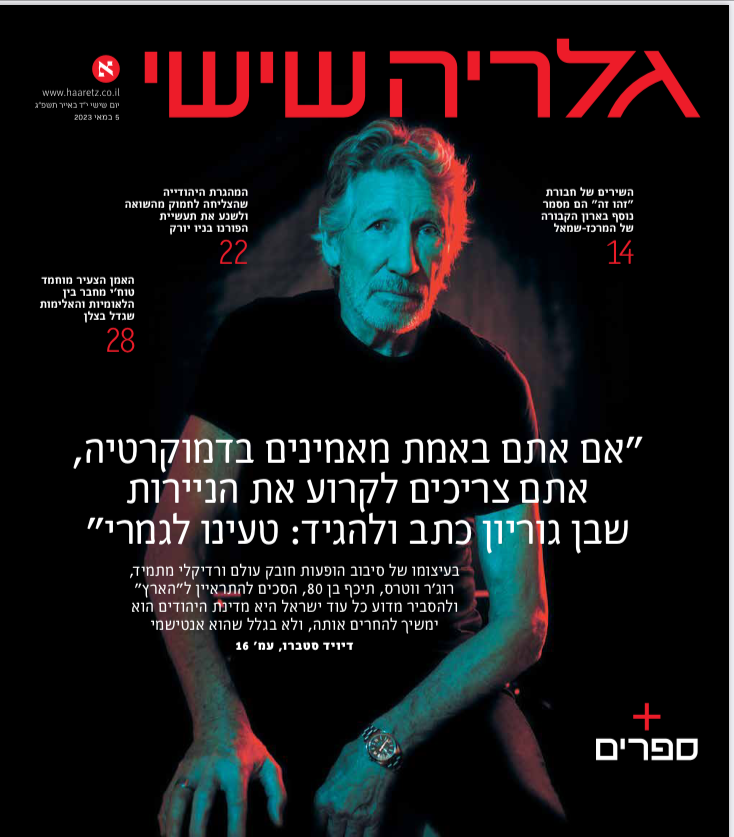



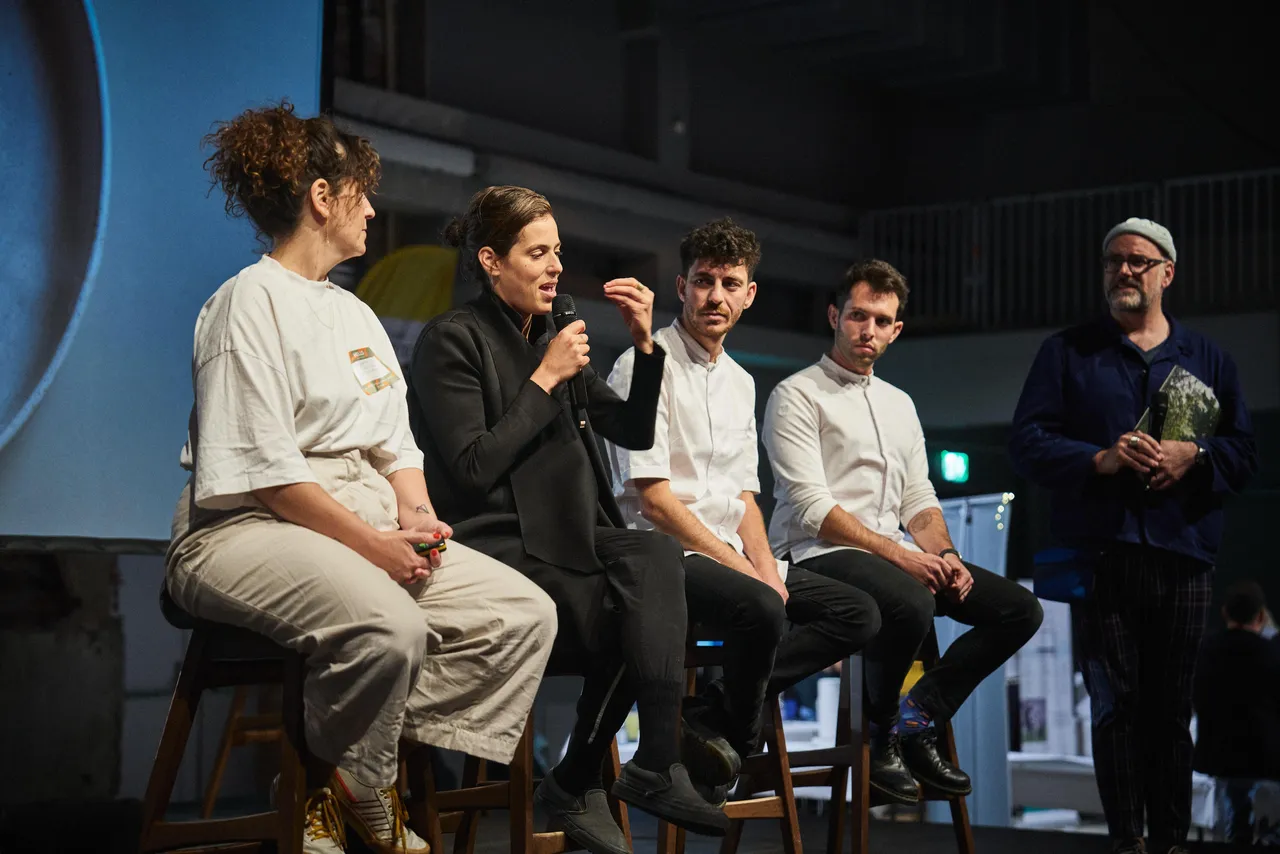


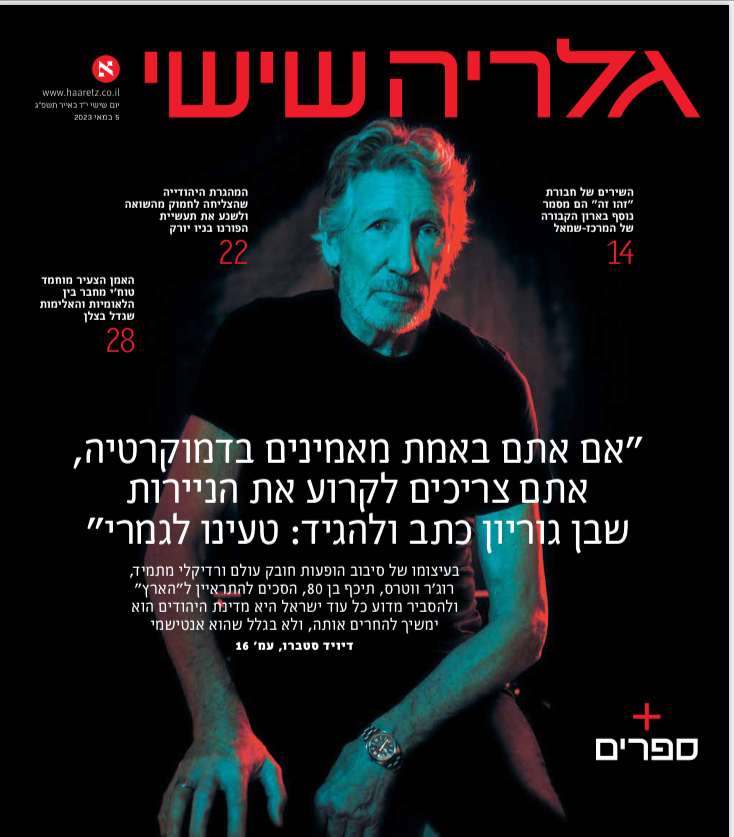
 דיויד סטברו