The Swedish discourse on the war in Iran has been dominated by the question of its legality. In recent weeks, international law scholars, academics, politicians, and columnists have explained why the American and Israeli attack is “illegal under international law.” There is much to say about this reasoning, but a reasonable question is what the point really is. In the real world, the legality of war matters very little, because international law, in general, has hardly had any real significance over the past decades.
The main reason is simply that it doesn't work. International law has been used by some of the world’s worst despots, from Gaddafi to Assad, to delay international action against their crimes, and when it was finally used for intervention—in many cases, it made the situation even worse and led to more violence and failed states.
International law has also given legitimacy to regimes such as Qatar and Somalia, which have gained seats on the UN Human Rights Council despite their total lack of such rights. Terrorist organizations have used it in their propaganda to avoid the consequences of their actions, and China’s and Russia’s veto rights in the UN Security Council ensure that aggressive dictators go unpunished.
“If the U.S. illegally invades other countries, Russia will do the same” is a common argument against the American offensive. But the truth is rather the opposite: Russia did not wait for the Americans to attack Georgia or Ukraine, and—like Turkey in Syria, Azerbaijan in Armenia, and Eritrea in Ethiopia—has ignored international law for decades. No country is waiting for Israel or the U.S. to legitimize their actions according to the “law of the jungle”.
For a country that has not been at war since 1814, the question of the legality of military interventions may seem like the most important one. Theoretically, even a superpower like the U.S. should be concerned with issues of limiting its global power. But for a country like Israel, which is constantly threatened by real enemies who want to annihilate it and kill its population, this question appears fairly academic.
There is, however, another question that from an Israeli perspective is extremely important. It is simple but crucial, and it should concern other countries as well—it is not whether the war is legal, but whether it is effective. Or more broadly: can military power by itself solve Israel’s problems with Iran and other enemies?
“When all you have is a hammer,” as the well-known saying goes, “every problem looks like a nail.” Israel undoubtedly has a powerful hammer. Could it be that the country has become accustomed to solving all its problems with it? Previously, Israel used many forms of power to strengthen its security and international standing. Diplomats engaged in creating complex alliances, its soft power included outstanding achievements in culture, art, agriculture, science, and technology, and governments were willing to participate in peace negotiations and consider compromises.
The Hamas massacre on October 7 and Iran’s persistence in combining nuclear ambitions with threats to wipe Israel off the map changed all of this. The Israeli foreign service has been marginalized; the country’s artists and scientists are boycotted around the world, and its enemies are blown to pieces rather than invited to ceremonies on the White House lawn. Considering that many of Israel’s enemies are ruthless killers, this is hardly surprising. Anyone who sees value in human life should not shed tears for people like Hassan Nasrallah, Yahya Sinwar, and Ali Khamenei. But do military operations improve reality if they are not accompanied by other measures such as diplomacy, economic development, and new creative political alliances? This is not only an Israeli question. A new world order is taking shape before our eyes, and if we are not heading toward total anarchy, the question of limiting military power and understanding what it can and cannot achieve is crucial.
One indication is the situation in Gaza. After more than two years of extensive military force and enormous destruction, the reality is that Hamas not only still exists, it is armed and controls many state functions. In Lebanon, Israel may have achieved significant military successes against Hezbollah, but the Israeli are still spending far too much time in bomb shelters, and despite everything, Hezbollah is still alive and kicking. Both militarily and politically.
Israelis are once again deprived of basic necessities—schools are closed, workplaces shut down, flights canceled, thousands have lost relatives, been forced from their homes, and suffered injuries and trauma. Not to mention that Israel is deeply divided on issues concerning its democracy, which can only be resolved when the shooting stops. Meanwhile, Israel has also, without justification, become the punching bag of the international community. All the world’s power seems to be of little use in solving this.
And then there is Iran. Now that the war has begun, it should, for the sake of both Iranians and Israelis, end with a regime change—and no regime change is possible without the use of force. The Iranian people themselves, who ultimately must liberate themselves, have asked for foreign intervention, and giving it to them is the right thing to do. But what then?
“From the moment we decided that only here, in the land of Israel, could the Jewish state arise, we accepted that more than a hundred million people from the Arab world, from the Arab nations, and from the Palestinians would be our neighbors,” said Israel’s former prime minister Yitzhak Rabin a few years before he was assassinated in 1995. “There are now only two possibilities: either a serious and determined effort is made to achieve peace—peace and security—or the sword will always rule.” In the 1990s, Rabin chose the first option, but since then, leaders across the region, including Israeli leaders, have developed a dependence on using force. Perhaps even an adiction.
When the war in Iran is over, Israel will face a choice. Previously, the country combined pragmatic diplomacy, careful alliance-building, and visionary openings toward the Arab world. In a region like the Middle East, this is risky. Israel will always need to keep a sword ready, but with security guarantees and economic support instead of anachronistic laws and self-righteous moralism from other countries, peace may once again become an option.
In recent months, Greenland has found itself under a treacherous bullying attack by The United States which decided to break the rules and resort to threats, pressure, and blackmail. President Trump adopted the geopolitical logic of his Russian counterpart and threatened to annex the island regardless of the will of its inhabitants. Will this actually happen and what does it mean for Israel?
STOCKHOLM – It's hard to think of two countries more different from each other than Greenland and Israel. Greenland actually isn't even a country; it's an autonomous area on its way to independence from Denmark. It's also a giant island almost empty of inhabitants, with no intercity roads and no traffic jams. Israel, as we all know, is crowded, hot, small and tense.
These differences could create the illusion that what is happening now to Greenland couldn't happen to Israel. But that isn't so. In recent months, Greenland has come under a thuggish, traitorous attack. The United States, which for decades was its partner and friend, decided to break the rules and threaten, pressure and extort the island.
U.S. President Donald Trump adopted the geopolitical logic of his Russian counterpart and threatened to annex Greenland regardless of its inhabitants' wishes. To prove that it was serious, the administration sent Vice President JD Vance to visit the island in defiance of its government's wishes and at a sensitive political time.
Two weeks ago, Greenland held a general election that ended with the incumbent's ouster. Vance's visit was thus slated to take place while the coalition negotiations to form a new government were being held, and also just days before the local elections. Political sources described this as foreign intervention in the elections. The outgoing prime minister termed the visit "highly aggressive."
The visit took place last Friday. Washington tried to market it as a defense-oriented visit to the U.S. space force base there. Before that, it had been marketed as a cultural tour by Vance's wife, without her husband (she joined her husband on the visit in its new incarnation).
Having the Vances visit the base was a sophisticated move. Ostensibly, it was a de-escalation, because the Americans wouldn't interact with angry residents and would focus on the base. Yet in another sense, it was an escalation, because the visitor was the vice president of the United States – the highest-level American official to ever visit Greenland. But either way, Greenlanders rightly view the visit as an act of extortion.
Contrary to the Trump administration's claims, there is no demand in Greenland for American intervention. "We – all party leaders – cannot accept the repeated statements about annexation and control of Greenland," the leaders of all five of the island's parties said in a joint statement. "We as party leaders find this behavior unacceptable towards friends and allies in a defense alliance."
Denmark's prime minister termed the American move "unacceptable pressure." And throughout the island, demonstrations were held against Trump's threats, with slogans like "Make America Go Away." Two months ago, a poll found that 85 percent of the island's residents oppose becoming part of the United States (and only 6 percent support it). But the Americans haven't been deterred.
The example of Greenland, like the United States' abandonment of Ukraine, shows a worrying side of the Trump administration. The U.S. could always have continued protecting its national security by stationing systems there to defend and control sea lanes. It could also have cooperated with Greenland's government and its residents in finding, mining, and producing valuable minerals.
Instead, Washington chose to signal to the world that there's a new sheriff in town who's willing to ride roughshod over anyone who stands in his way.
Should other countries also be worried by this new America, which abandons its partners, changes its loyalties and fires in every direction? Israelis don't appear to be particularly worried. Their enthusiasm for Trump has only grown, and his intervention to get the hostages released and his lifting of restraints on Israeli military action are obviously reasons for that. But people are also making deeper arguments for this blind faith in the Trump administration.
One argument is that in contrast to Greenland, President Trump feels an emotional connection to Israel. His confidants and his Jewish relatives nurtured a deep connection to the Jewish people in him, so he won't betray Israel like he has betrayed America's partners in Europe, Mexico and Canada.
Another argument is realpolitik. In the new global order, the American global cop is giving way to a multipolar world in which Russia and China also have spheres of influence. Israel can, therefore, count on the Americans even if they are opportunistic thugs because it's part of an American-Saudi-Egyptian-Emirati axis against the Iranian enemy. Consequently, Washington will protect it in any case – if not because of Trump's warm feelings for the Jews, then out of political and economic interests.
But vast blindness and indifference are needed to depend on these arguments. The first one relies on the existence of a stable, normative emotional base of empathy, responsibility and altruistic feelings of belonging in someone who has none of those traits. The second one relies on America having permanent, unchanging interests in a world characterized by changing alliances, dissolving coalitions, and unforeseen dramatic developments.
Even if America gives up on Greenland and moves on to its next adventure, we have to remember that political processes always have more than one side. Even people who have lost their moral spine and become enthusiastic over the idea of population transfer for the Palestinians must remember that if transfer is part of the diplomatic toolbox, it could be applied in any direction. If the U.S. administration can "clear out Gaza," why shouldn't it decide to clear out the Negev?
Similarly, even people who celebrated Washington's green light to flatten the Gaza Strip should remember that a lack of international rules and laws can be used against them in the future as well. And even if American nihilism and opportunism are working to the benefit of a local, temporary Israeli interest, we must keep in mind that we won't be immune forever.
Norway is seen by many as one of the most hostile European countries toward Israel. But the government in Oslo is veering between demands that it toughen its line against Israel and its actions in Gaza – and the fact that Norway is a major arms exporter
In recent months, some Israelis have declared Norway the European country most hostile to Israel. This theory is largely based on the policy of Norwegian Foreign Minister Espen Barth Eide, whose term began only a few days after the October 7 Hamas attacks. Barth Eide, a member of the Labour Party, is doing his second stint as foreign minister for the second time, having served in the role in 2012 and 2013. He has also briefly served as defense minister and climate and environment minister.
The list of Israeli grievances against him and his government is long. First came a report that Barth Eide's ministry had prevented King Harald V from sending a condolence letter to Israel after October 7 – because in Norway, the king isn't authorized to make declarations concerning "victims of a political conflict."
This was followed by a condemnation of Israel two weeks later at an international conference in Cairo. Norway's decision not to recognize Hamas as a terror organization also drew anger. In addition, Norway insisted on continuing to transfer money to the United Nations Relief and Works Agency, the UN agency assisting Palestinian refugees, while several other countries halted their support in response to reports that some of its employees had been involved in the October 7 attacks.
Norway not only continued to transfer money but initiated a campaign to defend UNRWA in other countries. Meanwhile, Norway has been active in the lawsuit against Israel in the International Court of Justice over the occupation of the West Bank and East Jerusalem, which is separate from the South African suit accusing Israel of genocide.
Espen Barth Eide on a Stockholm visit, June 2024, photo: David Stavrou
"We are friends of Israel," says the foreign minister, clarifying his position in an interview. "We always have been and we will continue to be. Sometimes good friends need to give good advice, but we are in no way hostile to Israel. We have always tried to help Israel live in peace and security." When asked to explain why Norway is nevertheless seen by many in Israel as hostile, he says that despite the friendship, his country can disagree with the Israeli government.
"We condemned the attack by Hamas on October 7 and we recognize Israel's right to defend itself against terrorism," he says, "but we also said that, like any other country, Israel must obey the laws of war within the international humanitarian laws of the Geneva Convention. Our criticism was that some of the military tactics that Israel used, and the de facto partial blockade on the Gaza Strip that prevented food, electricity, and necessary means of life from the Gaza population, were very problematic. This is not hostility towards Israel; it's criticism towards certain elements of the government's policy."
Among the issues Barth Eide mentions are statements by Israeli cabinet ministers who "gave the impression, which is probably wrong, that Israel wants to expel the Palestinians from Gaza. There have been such statements in Israel and they are very problematic when they come from government ministers."
Although several countries stopped transferring funds to UNRWA, Norway continued to transfer funds and demanded that other countries do so too. Do you not believe the Israeli authorities who reported that UNRWA employees were involved in the October 7 attack, or do you think this is not a sufficient reason to stop funding the organization?
"Our decision is not based on a lack of trust in the Israeli claim. Although we haven't seen evidence, that's not the point, because it may indeed be true. It may be that amongst 13,000 employed in Gaza, there were some who were involved with Hamas and even in the terrorist attack. This is terrible, unacceptable and it requires an investigation, we said this to the UN Secretary-General Guterres and to [UNRWA Commissioner-General Philippe] Lazzarini.
"But we did not agree that if this is true, all funding should be cut," he says. "This is not how to react to transgressions or crimes inside organizations. You don't close the organization, you look for the criminals. If someone in the Oslo police force is arrested on suspicion of murder, I will not shut down the police but arrest the suspect. We are happy to see that there are now countries that have changed their position on this – Australia, Denmark, Sweden, and Canada, for example, as well as the European Commission. It's not that we don't believe Israel, but we don't think that all Palestinians should be punished because of it."
Regarding UNRWA as a whole, Barth Eide does not accept claims that the organization is problematic and that aid for Palestinians should flow through other organizations instead. "A vast majority of the other international organizations operating in the region say that it's not possible to replace UNRWA in the short term," he says, "because they are the backbone for all humanitarian activities in Gaza, so all organizations are coordinating with them."
In November you declared, "We were clear in stating that Hamas should be seen as a terror organization." Is this, as opposed to the past, now Norway's official policy, including when it comes to enforcing the law, economic sanctions, etc.?
"The terrorist attack on October 7 was clearly a terrorist attack and it was carried out by Hamas, so in this context they carried out a very grave terrorist act. However, we have a standing position that maintains some kind of contact with all the relevant groups. This does not mean that we accept their goals or their policies, but we think that if we are trying to contribute to a cease-fire between the Israeli army and Hamas, someone has to talk to Hamas. This is not an endorsement of Hamas, but only an acknowledgment that they exist.
"The way to weaken Hamas is to develop an alternative path to a Palestinian statehood. People who contributed to the division of Palestinian society served Hamas and those who did not want progress. We do not want a Palestine under the control of Hamas, but a Palestine who recognizes Israel under the control of other Palestinians who recognize Israel and its right to life and security."
So are you in contact with Hamas?
"Yes, we are in contact with Hamas, as we are in contact with Hezbollah, with the Houthis, and everybody else in the neighborhood. And that is why we didn't impose the same sanctions that other countries imposed –but this should not be understood as endorsement of their goals and policies." Barth Eide adds, without specifying exactly to whom he is referring, that "There are people in the world who criticize us for this in public, but are actually happy that this is the case, because someone has to maintain these contacts".
What is your current position regarding the South African lawsuit in The Hague and its results?
"I commended the fact that Israel decided to respond to the lawsuit. We did not respond to the initiative itself, but given that the lawsuit exists, it's good that Israel responded, it's good that it recognizes the authority of the court and it's clearly its right to defend itself against the accusations. The court did not conclude that there is a genocide here, but that there are sufficient elements that may constitute a violation of the Convention on the Prevention of Genocide, and Israel should respond and inform the court what steps it is taking to comply with the limitations applicable to a country at war. It isn't illegal to go to war in self-defense, but there are laws on how to do it.
"There is of course another ICJ case dealing with the Israeli occupation. Unlike the genocide case, in the occupation case, we have actually intervened." Indeed, Norway was one of 50 countries that testified before the court on the matter in late February. "Norway clearly distances itself from Israeli settlers' displacement of and violence against Palestinians on occupied land," Barth Eide says. "The settlements are illegal according to international law… the injustice the Palestinians are being subjected to must stop."
Retail policy
Norway's policy toward Israel also has an economic aspect. Its Foreign Ministry recently issued a warning to Norwegian companies "not to engage in business cooperation or trade that serves to perpetuate the illegal Israeli settlements." Regarding this topic, Barth Eide was quoted in the statement as saying "Norway has long maintained that Israel's settlement policy in the West Bank, including East Jerusalem, is in violation of international law, including international humanitarian law and human rights, and undermines the prospects of achieving a future Palestinian state and a peaceful resolution of the conflict."
The statement said the recommendation to Norwegian companies was issued against the backdrop of swelling settlement expansion, as well as "increased settlement violence against the Palestinians."
The minister said in the statement that the "Norwegian business community has sought advisory guidelines from the Norwegian authorities. This recommendation makes it clear that Norwegian companies should be alert to the fact that engaging in any economic or financial activity in the illegal Israeli settlements could put them at risk of contributing to violations of international humanitarian law and human rights."
This policy has already had practical consequences. "A week ago, Norway's foreign minister sent an 'information letter' to the Norwegian Confederation of Business and made it clear that doing anything that would benefit organizations that contribute to the illegal occupation in Israel is not in keeping with Norwegian policy," says Leif Knutsen, the media coordinator for Norway's Jewish community. "He also sent this letter to Vinmonopolet, Norway's government-owned alcoholic beverage retailer monopoly. Vinmonopolet then immediately called for an emergency board meeting, which decided to take all wines from the West Bank and the Golan Heights off the shelves."
Knutsen says that this step may be illegal in the context of European Union or World Trade Organization rules, especially in the case of the Golan Heights. "It's a policy change that Barth Eide dictated from his own desk, not via the cabinet or the parliament, as foreign policy conducted via retail," says Knutsen. "One of the results of this is that in practice, Jews in Norway who want wine [that] is kosher for Pesach will find it hard to get hold of it."
Barth Eide clarifies that "Vinmonopolet can import other Israeli wines if it chooses to," and adds: "We have economic relations with Israel and we want to continue to maintain them. But we have been arguing for years that our economic relations with Israel should be with the Israel within the 1967 borders. This is not new. Now, we are strengthening our advice to Norwegian businesses – feel free to buy and sell in Israel, but not in what fuels the occupation, which I think everyone, except the Israeli government, recognizes is illegal.
"This is not a very radical policy," he says. "But [it exists] to be consistent with our own policy of not financially contributing to human rights violations and violations of international law. We do not go into the specifics, we give general advice. So it was the board of Vinmonopolet who made this decision."
In spite of all that, it seems that the Norwegian economy isn't paying a particularly high price for the government's moral stance. Trade relations with Israel haven't slowed dramatically, and the calls for a boycott of Israel are more symbolic than concrete.
According to Mette Johanne Follestad, president of the Norwegian-Israeli Chamber of Commerce, "For decades, Norway's main export to Israel [has been] fish. More than 80 percent of all imported salmon to Israel is from Norway. To a much smaller extent, Norway also exports metals and paper. Israel's main export to Norway is agricultural products – i.e., fruits and vegetables. Israel also exports to Norway technological products such as computer items. Those two sectors cover most of the Israeli imports to Norway."
She adds that despite political tensions, Norwegian fish exports to Israel have continued to grow in recent years. Exports from other industries have not increased for some time, however. "The political climate in Norway regarding Israel is not helpful for the promotion of business and especially for initiating new lines of trade. It seems that the anti-Israel sentiment has created a reluctance to develop new business relations with Israel.
"Even so, some trade continues to grow. In 2022-2023, Israeli imports to Norway increased from 1.649 billion kroner (570 million shekels) to 1.801 billion, reaching record figures in both years. Norwegian exports to Israel were also at a record level in 2022 at 2.644 billion krone. Unfortunately, Norwegian exports to Israel decreased to 2.313 billion kroner in 2023."
In addition to the recommendation of the Norwegian government to boycott Israeli products from the West Bank, Follestad also notes that universities in Norway are calling for an academic boycott against Israel, although the Norwegian government is against it. Knutsen adds that Norway has seen many calls for various types of boycotts against Israel. In Norwegian academia, for example, some universities have severed ties with academic institutions from Israel. One example is Oslo Metropolitan University, commonly known as OsloMet, which decided not to continue a student exchange program with the University of Haifa. "This is a case where the institution's board of directors made the decision," says Knutsen. "They claim that it's not a boycott but a decision not to continue a program, but this is a game of semantics."
Knutsen sees the decision as a clear violation of fundamental academic freedom that was meant to appease activists wishing to silence anyone disagreeing with them. According to reports, OsloMet is not alone, with the University of South-East Norway deciding to end its academic and research collaborations with the Hadassah College of Technology in Jerusalem over the war in Gaza.
The boycotting isn't limited to academia. Knutsen says there has been a flood of calls for boycotts of Israeli products in recent months. Some trade unions and local municipalities, including Oslo, have called for boycotts or announced them. "They're very careful to say that they're not boycotting Israel, they're only boycotting organizations and cooperation that contribute to the settlements, particularly in the West Bank," she says. "However, it's not always clear what exactly that means and what it is that they're not buying. It seems like virtue signaling for a domestic audience."
When it comes to big money, however, Norway is in no rush to cut off every investment that could somehow be connected to the occupation and the settlements. On this subject, it's interesting to consider Norway's Oil Fund, which invests the surplus revenue from the country's oil sector in what has become the largest sovereign wealth fund in the world. The fund, which holds about $1.5 trillion, has previously withdrawn investments in Israeli companies. However, according to various reports, it still has investments in some 70 Israeli companies totaling billions of dollars. Now it's examining whether to withdraw investments from companies connected to the occupation and settlements, mainly entities like Israeli banks and financial institutions.
"This is discussed widely here," says Barth Eide. "Our recommendations are also relevant to investments in the Oil Fund. The ethical committee of the fund is looking into the matter. It's complicated, because, for example, when there is ownership in a bank, the bank may have activities both in Israel and in the occupied territories, so it's complicated, it's a question of to what grade, and the government doesn't go into the details of every portfolio. The fund has a board of directors and it also has a wider management and an ethics committee. They are the ones who decide."
Sell and forget
In spite of the many steps aimed at pressuring Israel, there are voices in Norway arguing that the government isn't doing enough to oppose Israel and support the Palestinians. Pro-Palestinian organizations say the Norwegian arms industry, a large part of which is government-owned, has found ways of bypassing the prohibition against selling weapons to countries at war. Could Norway be trying to enjoy the best of both worlds, portraying itself as the enthusiastic defender of the Palestinians while avoiding missing out on the profits made from its relationship with Israel?
"There is a clear definition of what a Norwegian weapon is," says Barth Eide. "It's a weapon that is manufactured in Norway or at least the main component is manufactured in Norway. This is an international definition. In this sense, it's forbidden to export Norwegian weapons to countries that are at war like Israel and we have no reason to believe that there has been violation of this." However, the foreign minister clarifies that since Norway has a large arms industry, Norwegian companies also own companies abroad –and here, the government's control is more limited. The same is true of other countries.
"Besides, there are also joint projects in which we produce parts for weapons made by other countries," says Barth Eide. "For example, we manufacture some minor parts for F-35 aircraft. Norwegian laws do not apply here because it would simply create a situation where international defense cooperation would be impossible." Barth Eide says Norway doesn't sell weapons to Israel and that he has called on other countries to follow its example to ensure there is no indirect complicity in what potentially may constitute genocide.
However, some say that Norwegian companies, including at least one that is half-owned by the government, are bypassing this government policy. The online daily magazine Verdens Gang reported in November that Norwegian-produced components may be used in missiles that Israel is firing in Gaza. The publication reported that since Norway allows the exportation of weapons components to NATO countries like the U.S., the parts could be used to assemble weapons exported to Israel according to American regulations.
That's how, according to the newspaper, Chemring Nobel is one of the manufacturers of rocket fuel for Hellfire missiles, which the U.S. supplies to Israel for use in the war in Gaza. Reports that this company produces rocket fuel and explosives for missiles used by the Israel Defense Forces aren't new and have appeared in various Norwegian media outlets in the past.
In response to the Verdens Gang report, Chemring Nobel's CEO said he couldn't rule out the possibility that Norwegian components are included in the weapons systems used in Gaza, Ukraine, or other places. This is because several of Norway's allies permit the export of defense products to Israel, in contradiction with Norwegian export policy.
The Nordic Ammunition Company (aka Nammo), another Norwegian company, has also been accused of selling weapons to Israel. Ownership of Nammo is divided between the Norwegian government and a Finnish company named Patria, itself half-owned by a Norwegian company whose largest stockholder is the government. In December, the Norwegian public broadcaster reported that pro-Palestinian activists had blocked the entrance to the company's factory in Raufoss, saying that "Nammo's weapons are helping to kill Palestinians in Gaza." According to the demonstrators, M141 shoulder-fired missiles exported by Nammos' factory in Arizona to Israel are being used in Gaza. The company denied the claims, saying the weapons were sold to the U.S. military up until 10 years ago, which was the extent of its involvement.
In response to a request for comment, a Nammo spokesperson wrote: "We have also seen media reports about U.S.-made Nammo products in Israel. Given that sales of these products took place several years ago and were made to U.S. authorities, we're not in a position to confirm reports of later transfer from the US to Israel, nor are we privy to knowledge about which weapons or materiel the Israeli military uses."
Asked whether there is oversight over the use of the weapons parts the company exports to other countries (such as by means of an End-User Certificate), the spokesperson wrote: "Nammo is subject to export control laws in the countries where we have operations, including Norway, which does not permit exports of Norwegian-produced products to Israel. For export license requests to countries where exports from Norway are permitted, end-user documentation or certificates are normally part of the list of required documents."
Chemring Nobel declined to respond to a request for comment.
Mediation and boycott
"Trends in International Arms Transfers, 2023," the latest edition of the annual report by the respected independent watchdog Stockholm International Peace Research Institute provides context regarding Norway's arms industry. The think tank is dedicated to research into conflicts, armaments, arms control, and disarmament. Its publications are considered highly reliable sources on the global arms trade, although the institute acknowledges that complete information on deals in the field is hard to obtain. In the 2023 report, Norway is 19th on its list of the 25 largest exporters of major arms – all the more notable because of the country's small population of 5.5 million. According to the report, imports of major arms by European countries increased by 94 percent – nearly double – in 2014-18 and 2019-23.
More than half of European arms imports in 2019-23, 55 percent, were from the U.S., up from 35 percent in 2014-18. Arms imports to countries in Asia, Oceania, and the Middle East also increased significantly in 2019-23. The top arms importers in this period were India, Saudi Arabia, Qatar, Ukraine, Pakistan, Japan, Egypt, Australia, South Korea, and China. Israel was 15th on the list. Almost 70 percent of its arms imports were from the United States – the world's top arms exporter, whose total arms exports rose 17 percent. Russia's exports, in contrast, fell 53 percent, losing its spot as the second-largest arms exporter to France and dropping to third place. The U.S., France, and Russia were followed by China, Germany, Italy, Britain, Spain, and Israel (in ninth place).
Countries in the Middle East accounted for 30 percent of arms imports in 2019-23. Saudi Arabia, the world's second-largest arms importer, received 8.4 percent of global arms imports during this period. With a global share of 7.6 percent, arms imports by Qatar increased 396 percent during that timeframe. The United States is the region's arms supplier, accounting for 52 percent of Middle East arms imports; following it are France (12 percent), Italy (10 percent,) and Germany (7.1 percent).
Norway shouldn't be on the list at all, since its regulations prohibit arms exports to countries in a state of war. Therefore, the countries leading the list of imports from Norwegian companies in this field are the United States, Ukraine, and Lithuania. After Russia's invasion of Ukraine and given Norway's special interest in helping to repel it, the Norwegian government passed a resolution allowing direct arms sales to Ukraine. Also, Norwegian law allows the provision of military aid to countries at war, as opposed to the sale of weapons for commercial purposes.
"The defense and weapons market in Norway is highly regulated," Nicholas Marsh, a senior researcher at the Oslo Peace Research Institute, says. "The Ministry of Foreign Affairs issues export permits and customs checks the products that cross the border. The trading partners in this area are mainly NATO countries and [other] developed and democratic countries, such as Australia. The main principle according to which export licenses are granted was already formulated in the late 1950s, in the declaration of the Norwegian Parliament according to which it is forbidden to sell weapons or ammunition to areas that are at war, under threat of war, or in civil war. Beyond that, Norway is also subject to the International Arms Trade Control Treaty and EU guidelines." Although Norway is not an EU member, it has accepted the EU's guidelines in this field.
"Norway's defense and weapons industry doesn't have a huge effect on the national economy. Obviously, it's much less important than oil and gas in terms of Norway's gross domestic product. However," Marsh adds, "Norway doesn't produce much. For example, unlike Sweden, we don't have a large high-tech industry, so in terms of production and employment, [the defense] sector is important. There are two major companies, Nammo and Kongsberg, both partly owned by the Norwegian government."
What about Norwegian companies with subsidiaries in other countries? Are they subject to Norwegian law, or to the laws of the countries in which they manufacture the arms?
"When it comes to subsidiaries, things get complicated. Hypothetically, if a Norwegian company buys a company abroad, Norwegian regulations don't apply to it. It only applies to products that leave Norway. However, Norwegian export regulations can be applied if a product that is manufactured in, say, the United States, uses parts that were made in Norway or even uses software or technical plans [that] are Norwegian intellectual property."
When Norway exports arms, is it considered standard to demand an end-user certificate?
"Like other countries, Norway also uses end-user certificates, but more important are the conditions of sale documents. This is how companies define, among other things, who they allow their products to be sold to. It is not only a matter of maintaining human rights, it is also a commercial matter. But in the case of NATO countries, Norway has repeatedly made it clear that it does not request end-user certificates. This is a political statement and it has been repeated over the years.
"Thus, since Norway can sell to France, the United States, and the United Kingdom, for example, and since it does not require an end-user certificate from these countries that export to countries like Saudi Arabia, the situation is that the government can claim that there are no weapons in countries at war that have 'Made in Norway' on them, but It's certainly possible that there are weapons that have Norwegian parts or are produced by subsidiaries of Norwegian companies. It should be remembered that the arms industry is partially owned by the government, which has both an economic and a political interest here, so there is a balance between principled considerations and practical consideration," Marsh says.
"This has characterized Norway for a long time," Marsh adds, summing up what he calls Norway's dualistic nature. "The Nobel Peace Prize is awarded here and there is political emphasis on peace talks, diplomatic efforts, solidarity, and humanitarian activity. But on the other hand, Norway has been a NATO member from the very beginning, and since World War II it has a strong military which is part of a military alliance that opposes Russia. As a small country, its interest is to promote peace, but it has never been a pacifist country."
When Barth Eide is asked about the future of Israel-Norway relations, he says that although there are ups and downs, his country still formally has a central role in the region because it's the chair of the Ad Hoc Liaison Committee, the body that coordinates international economic aid to the Palestinian Authority. Established in 1993, it has 16 members, led by Norway and sponsored by the United States and the European Union.
"After a cease-fire, this will again be the key body for discussing the coordination of donations to build the Palestinian Authority," Barth Eide says. "That is why we worked with the Israeli government to find a solution to the problem of the clearance revenues collected by Israel on behalf of the Palestinian Authority. This shows that we can still work with Israel and with Ramallah to solve problems." This is a reference to the temporary arrangement facilitated by Norway between Israel and the Palestinian Authority, in which Norway serves as an intermediary for the portion of tax and customs revenues that Israel has withheld since October 7.
In a broader context, Barth Eide still holds to the policy he held in the past. "I believe and have believed for many years that the best path to peace is an agreement with the Palestinians," he says, "not with Hamas, of course, but with the Palestinian Authority, with Fatah and the PLO. Israel will be more successful in its attempt to be both a state for Jews and a democratic state if it has a Palestinian state by its side. Everything we do on this issue is intended to end suffering but also to establish a Palestinian state that is run by a legitimate authority after an agreement. This is a goal that is good for both the Israelis and the Palestinians."
Follestad, the president of the Norwegian Israeli Chamber of Commerce, stresses that any boycott, including one only on Israeli products from the West Bank, would be primarily damaging to Norway's position as an honest broker. "Ever since the Oslo Accords were negotiated in our country, Norway has tried to be a mediator and bring the sides closer to peace," she says. "By boycotting Israeli products from the West Bank, which according to the Oslo Accords is still legally under Israeli jurisdiction, the Norwegian government, by not respecting the signed agreements, is itself violating the spirit of the Oslo Accords. Accordingly, Norway's opinion may no longer be respected by Israel, and Norway may become irrelevant as a mediator in the conflict."
This is a tectonic and world-changing event, carried out by thousands of people supported by hundreds of thousands of people, as well as by movements, states and regimes. Not condemning it is supporting it. And the results are inevitable. Because of the horror that these people have inflicted on the world, an even darker night is to come before we will see the light.
A is my friend. He is a Burmese expatriate from Myanmar living in Europe. He is an academic, an educated and friendly person, and a veteran human rights activist. As a journalist who writes, among other things, about countries where acts of genocide, ethnic cleansing and human rights violations take place, I consult with various experts. A is one of them. This is the letter I sent him last week.
Hello, A. I am writing in response to your letter regarding the “colonial character and genocidal policy of Israel.” As you can imagine, I am quite busy these days, and as someone who is far away from his family in Israel, I am distracted. I am responding to you despite all this, mainly because your words opened with a reference to Auschwitz, a place where many of my family members were murdered about 80 years ago.
According to you, Israel is using the Holocaust as a “blank check” to justify the imprisonment, bombing and starvation of 2.3 million Palestinians in Gaza, almost half of whom are children. "In these circumstances, 'never again' is a hollow phrase," you write. “It becomes a call for uncontrolled violence, battle cries and a campaign of revenge and extermination." In the past and under different circumstances, I must admit that I might have agreed with you.
A, you must remember that we got to know each other after several occasions when you very generously shared with me your expertise, knowledge and experience regarding Myanmar. When I first contacted you, I wrote that as a journalist working in a free country, I felt obliged to tell the story of the victims of atrocities there – amongst others, the Rohingya people other minorities who have been suffering from genocidal policies for years since the military coup in 2021.
Since I am not an expert myself, I reached out to you, just as I reached out to many other experts, witnesses and human rights activists who could shed light on other places I wrote about, such as China, Ethiopia, Syria, Iran, Mexico, Belarus and Iraq.
This is an important point. As you know, there are complicated conflicts in many of these places about which there are different opinions. Still, my feeling was that we shared a real commitment to expose and fight certain types of acts which cannot be excused under any circumstances, regardless of the different narratives that explain the conflict. I mean the kind of actions that cannot be permitted even if there is no agreement on the history of the conflict or even on the identity of those responsible for it.
These actions include those that took place in Rakhine province in Myanmar, which I wrote about with your kind help. The barbaric murder, torture and rape of innocents that happened in your country is inexcusable. Political, ethnic, religious or demographic claims simply cannot justify throwing babies into fire, torturing children to death in front of their parents, and the mass rape of women before their execution. I thought we agreed on that.
This week, I received a long email from you, Dr. A. Extremely long. Long enough to clarify your words or even to add something along the lines of: "despite all this, of course I condemn [Hamas’ actions],” or even "despite the absolute truth of the Palestinian claims and genocidal policy of Israel, I do not justify killing civilians."
But there was none of that. Somehow, your post references 100 years of conflict prior to October 7 (including explanations using maps, cartoons, pictures, and quotes). And there is a reference to the days after October 7.
But the day itself, when over a thousand people, most of them civilians, were brutally murdered and over 200 people, again most of them civilians, were kidnapped, was completely absent. And it's strange given the fact that, as I recall, we share an interest in cases of throwing babies into fire, torturing children to death in front of their parents, and the mass rape of women before their execution. Yes, to make the point clear to a person from your background, for one historical moment, Israel's Gaza envelope region became Myanmar's Rakhine.
A, since I received your message, I have been trying to understand why you do not recognize October 7th. I understand your opinion about the essence of Zionism and the essence of Israel. I don't agree with it, but I understand your point. Still, there's that little matter of “under all circumstances.” Perhaps there is a certain type of fascist, fundamentalist, racist, and violent organization that, against your usual leftist positions, you actually do support.
But if so, what are the criteria? Is it because they are jihadists? Is it a matter of religion? Or that according to the accepted code of the post-colonialist discourse, the "natives" have certain Jew-killing privileges because of the many years of oppression they have endured? Oppression, which, as you know, I have never denied.
And maybe you are one of those who do not believe the photos, the direct testimonies of survivors, the explicit confessions of the attackers and the unwatchable and undeniable videos. Do all these not meet your strict standards? Strange, because we never applied such strict standards when I wrote about Myanmar.
Do you think it's all a conspiracy of Western governments spreading fake news? Is it all the settlers’ lies, supported by American imperialists? Are you really not affected by the testimonies of Israeli women, children and elders, many of whom, by the way, are peace activists who built their homes in socialist communes that are not in any way located in the West Bank or in any way disputed. Unless the very existence of Israel is disputed, a position I assume you hold since you treat Israel as a settler and colonialist entity.
And maybe I didn't understand what you meant. In this case, perhaps in the future, we can discuss the true nature of Israel. As you know from our previous correspondence, I never supported Netanyahu, I have always believed in compromise with the Palestinians and I am absolutely against any kind of war crime, including against civilians in Gaza. You also know that I am a social democrat and a person who is aware of the climate crisis and the hardships of the "global south.” But wait, here I am, once again falling into this trap. If I were not all of these things, if I were a Netanyahu supporter or a settler in the West Bank, would my massacre and that of my family members be justified?
Again, there's that "under all circumstances" nuisance. Even if the Jews were like the French in Algiers, and they are not, deliberate murder of innocents is always evil and mass murder is absolute evil. Among us Jews, even complete secularists like me sometimes recite from the ancient texts: “I have set before you today the heavens and the earth, life and death; I have set before you the blessing and the curse. Choose life, for your lives and for your descendants,” as it is written in the book that you call the Old Testament. Do you understand A? You chose life – without “buts” and without “maybes.” This is why I always opposed my own people murdering other innocent people. And you know what, I'm angry at myself for not resisting enough.
***
And so for the record, I want to mention that I believe that Jews, not just Palestinians, also have rights in the place where I was born. They have personal, social and national rights and they also have responsibilities that are well described in the Declaration of Independence of their country, our country, which was founded 75 years ago. You don't acknowledge that, which is probably the real reason you didn't mention October 7th in your message. If "Palestine will be free from the river to the sea," as they are now shouting in the streets near my house in Europe, the events of October 7th are probably not an accident in your eyes. They are the first step in the plan.
"Free from the river to the sea” means without the people who are living there now. This is not the two-state solution, nor a partition plan, nor a federation. I think with your education, you know exactly what it means. But in case it's not clear enough, I'll say it explicitly: Hamas is the genocidal wing of the Palestinian national movement, and it turns out that it has quite a few supporters. My friends say that such views stem from antisemitism, but I don't know what is hidden in a person's heart. How much darkness, how much hatred.
I also don't know what is hidden in your heart. But I know that October 7th was not another attack, another battle, another chapter in the bloody history of the Middle East. It cannot be solved with sentences like "I cannot be expected to condemn every action taken by the weak and oppressed.” This is a tectonic and world-changing event, carried out by thousands of people supported by hundreds of thousands of people, as well as by movements, states and regimes. Not condemning it is supporting it. And the results are inevitable. Because of the horror that these people have inflicted on the world, an even darker night is to come before we will see the light.
***
And so, as a wise man wrote during the World War II, you and I now stand on two sides. "My opinion is clear about your motives,” he wrote, “and you would do well to speculate on my motives.” And he added: "I have one more thing left to say to you, and let it be the last. I want to tell you how in the past we were so similar and today we are enemies. How could I have stood by your side, and and why everything between us is over now.”
And that's the thing. In Xinjiang and Syria, in Tigray and Iran, in Myanmar and Israel, acts like those committed by Hamas are not only the absolute lowest of what the human race is capable of. They also redefine the lines. If they do not fill a person's heart with unconditional anger and disgust, they place him outside the legitimate discussion of civilized people. If you can only find room in your heart for the pain of one side, that's your problem. But with your permission, I think I'll find myself a different expert on Myanmar.
Before I finish, I will ask just one last thing. Do me a favor – next time, please refrain from referring to Auschwitz. Not because I have a monopoly on the memory of the Holocaust or the memory of the victims. But because when it comes to the 1940s, those people on whose behalf you are currently campaigning, they tend to be something different than you imagine. When you remove the appearances of European leftist movements, those people tend to be supporters of the side that built Auschwitz, not of those led there to their deaths.
in a global context, the demonstrations in Israel are not only about the reasonableness standard, the standing of the attorney general, or legal advisers in government ministries. They’re an eruption triggered by the actual grave dangers: ignorance, racism, ultranationalism, and unfettered governmental power. They’re about liberalism and solidarity, education and culture, and the Israeli Declaration of Independence’s “freedom, justice and peace” and “complete equality of social and political rights to all its inhabitants.”
Over the past several months, numerous essays comparing Israel with other countries have appeared in this newspaper. It started with the obvious comparison to the illiberal democracies in Europe, voicing fears that the country is turning into Hungary or Poland. The comparisons then moved on to Turkey; some interesting exegeses followed about similarities to Afghanistan, Tunisia, the United Arab Emirates, and even Margaret Atwood’s fictional Republic of Gilead. Comparing Israel to other countries always leads to criticism because there is not – and cannot be – absolute congruity. It is a valuable thought experiment, however. Even if Israel doesn’t become a dictatorship, looking outward broadens and expands the debate.
I’ve written in recent years about human rights violations, murderous dictatorships, and ethnic cleansing contain good examples of countries for comparison. They illustrate what can happen in countries without a separation of powers, freedom of the press, and independent courts. I had one conversation with Sviatlana Tsikhanouskaya, who challenged Belarusian President Alexander Lukashenko in the country’s last election. Our talk showed that the mere existence of elections does not guarantee democracy.
Although Lukashenko officially defeated her, the world knew the election was fraudulent. After Tsikhanouskaya filed a complaint with the country’s central election commission, the authorities detained her for several hours. She told me the security services then escorted her to the Lithuanian border. After she crossed it, footage reminiscent of a hostage video was released, in which she asked Belarusians to stop demonstrating and accept Lukashenko’s victory.
The stories of three demonstrators who managed to leave reflect what happened to those who defied the request. Valery was viciously beaten, his wrists restrained so tightly he couldn’t feel his hands. Vyacheslav was stripped to his underwear, stuffed into a holding cell with dozens of people, and starved for four days until his trial, which lasted six minutes. Alexey saw people with broken ribs and guards beating a man to death. None of the three men was a political activist. They were a software engineer, an art professor, and the owner of a technology company. They never imagined that they would end up in this kind of situation.
The brutality of the Belarusian police is one example of what happens when the criminal justice system is not answerable to an independent civil authority committed to protecting human rights. There are some citizens in China whom its government wants to eliminate. A network of “psychiatric prisons” has been established for this purpose, where people without mental illness are forcibly admitted after being abducted and having their phones confiscated.
They’re locked in rooms with mentally ill patients, where they’re given psychiatric drugs and electroshock “therapy” while fully conscious. If they resist, they’re tied to a bed, sometimes for an entire night. This is nothing compared to what’s happening in the remote northwestern Xinjiang region, where various ethnic minorities live. Reeducation camps established there combine indoctrination, torture, and medical experiments.
I haven’t mentioned these examples because of any similarity to Israel. I’ve mentioned them because conversations with people who survived and escaped these hells reveal a notable point: how quickly things turned upside down. The survivors were once teachers, physicians, and civil servants who lived entirely everyday lives. Then began the riots, terror attacks, and “lack of governance” – and with them, accusations of extremism, factionalism, and terrorism. Next came the arrival of someone who could “create order,” and order was indeed created.
First, the textbooks were replaced, and newspapers were closed. Afterward came the checkpoints, the facial recognition cameras, and restrictions on technology. Finally, passports were seized, and the borders were closed. The camps appeared then, too. Solely for reeducation, of course. It’s unlikely that Israel would act with such determination and efficiency even against the Palestinians, but this is an important lesson about a government with no oversight – and how quickly the water heats around unaware frogs.
There’s another element that must be considered: dehumanization. Last year, a young Yazidi woman named Leila told me about how she was bought and sold several times by members of ISIS, who abused her for months. She was just one victim of the trafficking of women and organized rape that became a feature of the Syrian Civil War. A few months before that, a young Kurdish man named Bejan told me about a Turkish attack on civilians in northern Syria, the product of decades of dehumanizing the Kurds.
He said he saw many dead and wounded, most full of shrapnel or missing limbs. “The thing that’s hardest to forget,” he said, “was a girl, about 8 years old, who was sitting by her dead brother, trying to wake him up.” Testimonies from Ethiopia’s Tigray Province and the mass slaughter of the Rohingya in Myanmar show to what depths it’s possible to descend: gang rape, execution by gunfire or machete, drowning babies, setting villages on fire along with their inhabitants. These occurred in the second decade of the 21st century. Nothing even close is happening in Israel, but the processes of dehumanization begin long before the overt violence in those countries.
Horrifically enough, the murderers in Myanmar, Ethiopia, and Syria don’t see themselves as grim reapers. On the contrary: in many cases, they’re ordinary people who have convinced themselves they’re the victims. Society disintegrated and descended into violent chaos with the help of racist and ultranationalist ideologies, narratives based on political interests, and social media algorithms.
Some will argue that these are examples from countries that lack a democratic tradition, and no comparison can be made – but the truth is that Israel also lacks a centuries-old parliament or generations of a democratic culture. While it’s neither a Soviet republic nor a failed state in Africa, it’s a young and vulnerable democracy possessing a formidable military, a significant minority population, and the occupation of another nation. These are not starting conditions that provide strong resilience.
That’s why, when looking at the demonstrations in Israel in a global context, you can see that they’re not about the reasonableness standard, the standing of the attorney general, or legal advisers in government ministries. They’re an eruption triggered by the actual grave dangers: ignorance, racism, ultranationalism, and unfettered governmental power. They’re about liberalism and solidarity, education and culture, and the Israeli Declaration of Independence’s “freedom, justice and peace” and “complete equality of social and political rights to all its inhabitants.” The demonstrations are against a choice to break from the enlightened world and walk with eyes wide shut toward countries to which only Israel is willing to sell arms, cyber technology, and “security consulting.” If Israel doesn’t come to its senses, it could follow in their footsteps very soon.
The kidnapping last month of Guo Yan, a descendant of the ancient Jewish community in Kaifeng, is a disturbing new chapter in the annals of a tiny community that existed under the radar for a thousand years – until now
In mid-April, Noam Urbach received a worrying letter by email. “I am Guo Yan, a descendant of the Jews of Kaifeng,” the letter began. “Seven days ago, on April 7, 2023, in the evening, I was abducted by a number of men as I was walking in the street, and was forced into a car in which there were two men wearing civilian clothes who did not present identification documents. They claimed they were government employees. After driving several hours far from the city, I was taken to a hotel room under guard. Not having my mobile phone with me when I was kidnapped, I asked to use a phone in order to inform my family, so that my sudden disappearance would not make then anxious, but they wouldn’t let me.
“After five days, I was driven back to Kaifeng and taken to an empty room, where I was interrogated by four men. One of them was wearing a police uniform and claimed he was a police officer. They recorded the entire conversation. At no stage did they state the reason for abducting me or claim that I had violated any law or regulation. I was released after the interrogation.”
Urbach, a China scholar and commentator on Chinese affairs who has spent many years studying the history of China’s Jews, was only one of the people who saw the letter – which was sent to a group of Jewish activists who are connected with the U.S.-based Sino-Judaic Institute, which maintains ties with the descendants of the historic Jewish community in Kaifeng. The city, which is in Henan Province in central China and has a population of about 5 million, was in the past the country’s capital. It’s also known as the only place where an active Jewish community existed in imperial China.
Why was Guo disappeared for five days? Why did a large number of government agents wander about the vicinity of the building where she lives while she was gone? The abductors didn’t explain, but Guo, who also uses the Hebrew name Esther, has a theory. On the days she was absent, the Polish ambassador to China visited Kaifeng. Guo is certain that the two events are connected: that the authorities removed her from the city as a preventive measure, so that she would not be there should the ambassador request to meet her or other descendants of the Jews of Kaifeng. “I was held as a captive not because of something I did,” she wrote, “but because someone wanted to meet with me.”
That might sound paranoid to those unfamiliar with the background. In the past few years, the Chinese government has taken a hard line against ethnic and religious minorities across the country. From the Buddhists in Tibet to the Muslim minorities in Xinjiang and the Christians in the east of the country, the authorities object to every manifestation of religion that is not authorized by the government. This persecution has also affected the tiny Jewish community of Kaifeng. Urbach terms this a policy of “total totalitarianism,” which reaches down to the lowest resolution: persecution of every expression of religious life, however small and local.
Guo, who is in her early 40s, can be said to represent that small, local level. She is a significant figure among the descendants of Kaifeng’s Jews – indeed, Urbach has written about her activity in his academic work and she has spoken to Western journalists in the past. “She stood out especially because of her unique stance,” Urbach says. “Instead of focusing on hopes of immigrating to Israel or the United States, she advocated the reconstruction of the unique Jewishness that existed in Kaifeng.”
Guo’s home is adjacent to the site where the historic synagogue in Kaifeng once stood. The ancient structure was demolished in the 19th century, but the family preserved objects associated with the Jewish community. Today, Guo maintains a private, unofficial museum at the site that is devoted to the city’s Jewish heritage. These days, the authorities prohibit the public display of anything identified with Jewishness, and as such they are opposed to the use of the venue as a historical or religious site.
Although Guo is fearful for her fate, she is no longer reluctant to go public. After all, the authorities know who she is, and international exposure might make it more difficult for them to persecute her. In an interview with Haaretz earlier this month, she agreed to talk about the abduction. She requested that we communicate by email, as her mobile phone is under surveillance by the powers that be, she says. She responded to questions in English with answers in Chinese, which have been translated here.
“I was born in 1980,” she wrote, by way of background. “My mother is a descendant of the Kaifeng Jews; her father was born to a Jewish father.” She attached a photograph from 1906 of her great-great grandfather standing next to a stone tablet from the year 1679. In the past the stone stood next to her house, near the synagogue site, but it is now apparently in the possession of the municipal museum of Kaifeng and is not on display. “In the year of my birth there was a reform that allowed foreigners to enter China,” she adds. “The appearance of foreigners from all over the world in Kaifeng, among them Jews, led me to infer from what my parents, my neighbors and visitors said, that I am Jewish.”
Guo is devoting her life to documenting Jewish history and culture in Kaifeng. “If there are visitors who want to learn about the culture or history of Kaifeng’s Jews, they are invited to contact me.” She says she is not connected to any organization or religion, does not cooperate with organizations and activists in China or elsewhere, nor, she adds, is there any element of extremism in her work, as the authorities are liable to allege. “I am only telling about history,” she says. “The interpretation – extreme or not extreme – is in the eyes of the beholder.”
The recent incident was unusual, she says, but it wasn’t the first time she was harassed. “I am frequently harassed,” she notes. “In some cases they removed and wrecked informative signs outside my home that advertised my research activity and ways to contact me. In one case, when I held a reception in my apartment, cameras and inspectors showed up below the building. When my mother came to visit me, I was detained and asked what she wanted.” She adds that people who identified themselves as government officials have knocked on her door many times and said they wanted to talk to her. They also informed her that her telephone was being monitored.
Do you expect help of any sort from Israel or from the world Jewish community?
“No, I don’t expect help, because the descendants of the Kaifeng Jews are not recognized as Israelis (or Jews) by the government of Israel or the government of China. I have only a Chinese ID card. What I went through is the result of the Chinese government’s conception that Jewish history and culture are not an appropriate subject for the Jewish descendants to tell foreign visitors about.”
Have you considered leaving China?
“I want to learn about the development of Jewish culture in Kaifeng. Leaving Kaifeng would mean giving up that work. I can’t just give up the work because of danger. They might hope that I will give up and leave, but I do not want to leave, at least not at this stage.”
Esther in her showroom, ca 2010
Indeed, the city’s Jewish community is a riveting and extraordinary slice of history. “It’s actually the only Jewish community that is documented in China,” Urbach says. “There are modern communities, like the Baghdadi Jews in Shanghai, the Russian Jews in Harbin, and afterward also Yekkes [German-speaking Jews] and other Holocaust refugees, but that is a completely different subject. There is no connection between the descendants of the Kaifeng Jews and communities of foreign Jews who live in China. In fact, the foreign communities are forbidden to take part in Jewish activities with Chinese citizens – including the descendants of the Kaifeng Jews – because Judaism is not officially recognized in China and is effectively legitimate only for foreigners.”
Students of the subject think that the community’s first members were Persian-speaking merchants who apparently arrived via the Silk Route between the 10th and 12th centuries C.E. According to the earliest stone tablet that has been found, from 1489, a synagogue – the only one known ever to have existed in China – was inaugurated in the year 1163, so it’s likely that this was when the merchants coalesced into a community. Once established there, Urbach notes, they also underwent a process of Sinicization.
“They created a kind of syncretism of Jewish elements – such as the use of Hebrew, at least in writing – with the Chinese language. For example, there are stone tablets on which a Chinese text has been engraved that vaguely tells the biblical story, from Noah and Abraham to Moshe and even Ezra, but it’s mixed with Chinese mythological figures and the discourse bears distinctly Confucian features. There were also rituals that were unique to the Kaifeng Jews. The synagogue was managed in large measure like a Confucian temple and included ancestor worship.”
The community’s existence became known to the Western world only hundreds of years later. “The community was discovered by chance in 1605 by the Jesuit Matteo Ricci, who is known as the first missionary in China,” Urbach relates. “The Jesuits visited Kaifeng several times, documented what they knew about the community and sent the information to Europe. It’s a fascinating history, and it has moved a great many people, Jews and Christians alike, from that time to the present. For no few Jewish Sinologists, China is ostensibly a foreign and remote area of study, yet suddenly a Jewish connection is revealed.”
The encounter with the Kaifeng community was meaningful for Urbach, too. “In 1999, I was in Kaifeng as a student for half a year,” he says. “I didn’t find a functioning Jewish community when I was there, but I discovered the immense importance of the story of the local Jewish community for the city, as well as the tension and sensitivity around the question of its existence. I’ve been back to visit a few times, the last was in 2018.”
Urbach is currently writing his doctoral dissertation on the subject of Christian influences on the Kaifeng Jewish community. He spent two years as a researcher and a teacher of Hebrew and Talmud at what was the first center of its kind in China for the study of Judaism at Shandong University in eastern China. For more than a decade Urbach taught Chinese at universities in Israel and helped Yad Vashem in Jerusalem in translation of texts, films and other Holocaust related material into Chinese for Yad Vashem – The World Holocaust Remembrance Center. Parallel to his academic research, he also collected material for a documentary film about the Jewish community in Kaifeng. However, fearing for the consequences for the descendants of the Kaifeng Jews who took part in the filming, he decided to shelve the project for the time being.
Urbach says that research estimates that the community reached its peak size at the beginning of the 17th century, toward the end of the Ming Dynasty, totaling a few thousand individuals. The members of the community didn’t speak Hebrew, but there are testimonies to the effect that at least the elders of the community could read the Torah in Hebrew. According to Urbach, not much is known about the community’s observance of the Jewish festivals. “It’s thought that they practiced circumcision, but the custom wasn’t preserved beyond the beginning of the nineteenth century,” he says. “They also observed Shabbat in some way and held prayers.”
During prayer service, the male congregants customarily wore a tallit-like headdress. One of the Jesuit priests who visited the community related that a blue kippa set them apart from their Muslim-Chinese neighbors, who wore white head coverings, and so the Jews were known as “blue-capped Muslims.” In the past the community was also known as the “sinew-plucking sect” – an apparent reference to the ban on eating the “gid hanasheh” (the sciatic nerve) of animals, thereby differentiating their laws of kashrut from the dietary laws of their Muslim neighbors.
If we leap ahead in time, in the 19th century, there was no longer a real community in Kaifeng.
“True, according to documentation by the British, who arrived in 1850, they found the synagogue with the books and some inscriptions intact, but the community was sparse, and lacking in vitality. The British envoys succeeded in buying some of the objects in the synagogue, including Torah scrolls and also a genealogical book that documented all the deceased of the community over a certain period in the 17th century. It’s the only document anywhere that combines Hebrew and Chinese, and it attests to a religious existence that combined the two languages.”
At the beginning of the 20th century, Urbach relates, an Anglican bishop who lived in the city tried to bring together the community’s members, but to no avail. Despite this, there was always an awareness that there were descendants of Jews living in the city. “By the 20th century,” he says, “they already knew that they were part of a well-known community called ‘Yuotai’ – Jews.”
After the 1949 revolution, there was a process of registering China’s official minorities. Were the Jews recognized by the authorities as an ethnic minority?
“There is documentation to the effect that the local government in Kaifeng sent representatives of the descendants of the Jews to Beijing in order to be recognized as an official minority, apparently out of the understanding that there was a world Jewish community and a Jewish state, and because there are descendants of such a community here, too, it should be given recognition. The delegation met with the prime minister, but it was decided not to recognize them as a minority. At the same time, it’s recorded by government officials that their rights should be preserved and they should not be subjects of discrimination. It was simply a small group and didn’t really exist as a [functioning] community.”
After the death of Mao Zedong, when China began opening up to the world, a number of processes took place concurrently. “There was enthusiasm at the discovery of the community’s descendants, but it was a romantic enthusiasm, both on the part of Jews in the West and on the part of Christians as well,” Urbach relates. “There was curiosity that led to visits by individuals and groups that came to Kaifeng in order to discover the Chinese Jews. City authorities responded to that interest from outside. That led to a program to revive a physical presence of Jewish history in Kaifeng.
“Following the opening of the Israeli embassy in Beijing, in 1992, the feeling in the local government was that the preservation of Kaifeng’s Jewish heritage had been given the go-ahead. A plan to rebuild the synagogue at the original site and in its historic form was quickly approved, this time as a museum of the history of the local Jews and rather than a functioning house of worship. In addition, a society for the research of Chinese Jewry was established in Kaifeng, and local authorities recognized the descendants of the Jewish community as Jews on a semi-official basis. These developments also stirred hopes among both local descendants and enthusiasts from abroad for the community’s revival. At the same time, some of the descendants also harbored the hope that immigration to Israel would be possible.
But in the mid-1990s, all these plans came to an abrupt halt. The research society was shut down, as was the office that was in charge of establishing the museum, and the registration of any local residents as Jews was erased. Urbach says: “Apparently the central government realized that something was happening in Kaifeng that was liable to give rise to a sentiment of religious revival. They decided that it must be nipped in the bud.”
The government homed in on the person who was perceived as the leader of the Jews’ descendants, a professor from Beijing who headed the society for the study of Jewish history and culture in Kaifeng and who had also visited Israel. “Having become a representative figure of the community, he was forced to leave Kaifeng, was pensioned off early from the National Academy of Social Sciences and was silenced. He was placed under house arrest, and to a certain degree remains under house arrest to this day,” Urbach says. “I visited him in his home and found a cowed, defeated man.”
Photo: Noam Urbach
According to Urbach, at the time there was no active Jewish community in Kaifeng, but there were potentially hundreds or even thousands of descendants who might identify themselves as Jews given the right conditions. Most of them were not actively engaged with questions of their Jewish identity, but there were always a few dozen activists who did deal with the subject. They were in contact with the foreign visitors, requested support from the authorities and from abroad, and some said they wanted to immigrate to Israel.
At the end of the 1990s there was in fact a small aliya (after official conversion), and during the 2000s there was something of another Jewish awakening, which the authorities chose to ignore. “People organized to mark Shabbat and Jewish festivals at a community level,” Urbach says, “and two unofficial study centers were opened in rented apartments with foreign teachers and foreign financing.”
Who was behind all that?
“The Sino-Judaic Institute in the United States and the Jerusalem-based Shavei Israel organization, which succeeded Amishav [an organization that maintained ties with groups connected with the Jewish people that were not under the purview of the Jewish Agency, such as the Bnei Menashe in India and the descendants of the anusim, who were forced to abandon Judaism]. There was also support from Christian groups.”
What is Israel’s position in this?
“The approach in Israel, at least in the diplomatic context, was to see it as an historic symbol of friendship between the nations. China too had an interest in promoting this message: an ancient Jewish community, a thousand years old, that had never suffered antisemitism. It’s a slogan that both sides, and especially the Chinese, liked, and still do.”
Urbach also offers an illustration of the complex relations between Israel and the descendants of the Kaifeng community, who are not considered Jews by the Chief Rabbinate. “Israel’s first ambassador to Beijing, Zev Sufott, decided that his initial official visit as ambassador outside the capital would be to Kaifeng. He sought to carry out a historic gesture by the government of Israel toward China, and it was actually his Chinese hosts who introduced him to the community’s descendants. I interviewed him for my research, and he told me that it was plain to him that the descendants of the Jews whom he met ‘are Jews like I am Chinese.’”
The final stage in the story of the Kaifeng community began with the rise to power of the current president of China, Xi Jinping, a hardliner when it comes to ethnic and religious minorities. “In the middle of the past decade, there was a clear change for the worse in the attitude toward the descendants of the Kaifeng Jews,” Urbach notes. “The change is related to the Chinese policy that opposes any manifestation of religion that goes outside the official organizations which are supervised by the Communist Party. However, in my opinion there is also a specific apprehension about importing a Jewish-Muslim conflict into China, given that in the old part of Kaifeng there is also a significant Muslim-Chinese population.”
According to Urbach, “It actually started with an optimistic report in The New York Times, possibly too optimistic, about a Passover seder held in Kaifeng in 2015. The report drew attention in Beijing and angered the authorities. Afterward the two Jewish study centers were shut down. One of the families of the descendants arrived in New York and requested political asylum on the grounds of religious persecution. The request was apparently granted.
“After that event, the authorities began cracking down, and prohibited any public manifestation of Jewish historic existence in Kaifeng. A stone monument that had been installed outside the historic synagogue a few years earlier by the authorities themselves was suddenly removed. The municipal museum, which had an entire wing devoted to the city’s Jewish history, was shut down in order to construct a new building. When the new museum opened, in 2018, there was no longer a trace of the Jewish wing and no mention whatsoever of the Jewish past. They simply erased the Jewish history that was unique to the city. Instead of taking pride in the historic stone tablets, they are hiding them.”
In the same year, according to Anson Laytner, the president of the Sino-Judaic Institute, Jewish communal gatherings were barred and an SJI teacher was expelled from Kaifeng. The national authorities, he tells Haaretz, “are attempting to obliterate all traces of Jewish life in Kaifeng, present and past, not as a result of antisemitism, but as an extension or consequence of the government’s campaign against non-unauthorized religions. Judaism,” he explains, “despite a 1,000-year history in China, is not an authorized religion, nor are Jews a recognized ethnic minority.”
Laytner adds, “If Israel were to express its concern in a non-confrontational, friendly way, China might be inclined to find an internal resolution to its ‘Jewish problem’ by talking with the Kaifeng Jewish descendants.”
In the meantime, Urbach discerns extreme caution also among Chinese academics, who are afraid to address the subject of Chinese Jews. A case in point, he says, is a study by a Chinese anthropologist who investigated the story of the two dozen or so Jewish descendants from Kaifeng who underwent conversion to Judaism and immigrated to Israel. Her study included an analysis of their complex identity. But in complete contrast to academic custom, her article, which was published in English in a scientific journal last September, appeared under a pseudonym.
“After looking into the subject, we know almost for certain who wrote the article,” Urbach says. “She is a Chinese research student who learned Hebrew in Beijing and did the research within the framework of M.A. studies at a prestigious university in England. But she has since returned to China, and it was apparently made clear to her that publishing the article in her own name was liable to be harmful to her.”
There was hope that in this period, with China reopening after Covid, the government would show renewed acceptance of Kaifeng Jews or at least ignore the community’s barely noticeable activity, as it had in the past. “But events such as the abduction [of Guo] and the publication of an article under a false name are a clear indication that things are moving in the opposite direction,” Urbach says.
Guo, for her part, says she will continue with her work, but that she is genuinely concerned for her safety. “What will happen the next time a foreign visitor wants to talk with me about the Jewish community?” she wrote in last month’s letter. “Suddenly, I will be abducted again. And if I resist strongly, maybe the abductors will decide simply to solve the problem once and for all. It might be, say, that a drunk truck driver will run me over the next time I’m out in the street. Therefore, while I am still able to speak out, I am writing this and trying to send it to you.”
The letter ends by cautioning the letter’s readers not to call her, because, she says, her cell phone is under government surveillance. “Your reply will only bring you unnecessary troubles,” she notes, and sums up: “I am sending you [this information] not to ask for help or a response from anyone, but simply to complete my work: to document and tell the history.”
The pre-show announcement in Roger Water's latest tour is rather unconventional. After the regular, please "turn off your cell phones", comes a slightly more provocative announcement "if you’re one of those ‘I love Pink Floyd, but I can’t stand Roger’s politics’ people, you might do well to fuck off to the bar right now". This sets the tone since the show's main theme is a mix of current affairs, political science and global politics and Waters is anything but mainstream in these aspects. In fact, many would say he's a hard core radical. This, combined with the fact that Waters is one his generation's biggest rock stars and he attracts tens of thousands of people to his concerts, makes his tour an important cultural phenomenon which provokes many reactions and heated debates. Waters granted "Haaretz" an interview during this controversial tour and I spoke to him at his hotel, a couple of days prior to his Stockholm show, after he completed the American part of the tour and 14 of its 40 European dates.
So as not to start the conversation with the confrontational opener, we talk first about the music, rather than the politics. This is after all a rock concert, not an election campaign. Waters, who will be 80 in September has an enormous body of work to choose from when he goes on the road. He realizes, of course, that it wouldn't be right to go on stage without playing any of the classics he created together with Pink Floyd, the band he co-founded in 1965 with by Syd Barrett, Nick Mason and Rick Wright and left in the mid-eighties. And indeed, the show includes the whole second part of The Dark Side of the Moon, Pink Floyd's 1973 album as well as material from Wish You Were Here (1975), Animals (1977), The Wall (1979) and The Final Cut (1983). "If I followed only my heart and not my head, I'd probably do what I used to do with Pink Floyd", Waters says, "I led Pink Floyd for many years, and when I did, at least during the last few years, when we toured, we only played the current record and the last record. If I would do that now I would have played only my latest solo albums and I might have also added Us and Them (from The Dark Side of the Moon), which is a genuine co-write with Rick Wright (Pink Floyd's keyboard player)".
Waters points out that he has just finished re-recording the whole of The Dark Side of the Moon which was released exactly fifty years ago. The new version will be released this July. Waters believes it's still extremely relevant and that's why so much of it is on his current show. "Nothing I've done recently is more political than Us and Them", he says and quotes the lyrics, "with, without, and who'll deny that's what the fighting's all about". "It's a truism and part of the reason I re-made the album", he explains, "people haven't noticed in the last fifty years what it's actually about". Waters adds that he enjoys playing this part of the show as much as the newer songs, because it's very visual. "There's an enormous LED crucifix hanging over the stage", he explains, "and the images that we show, particularly during Us and Them move people very deeply because it's so anti-war".
So, as it is, are you pleased with the set list you're playing on the tour even though it includes more than just your current and previous albums?
"Yes, I'm content with the way the set lives, it's full of new things and old things, and in consequence sometimes people are a bit puzzled". Waters mentions, as an example, a new song called The Bar which he says is "extremely important philosophically and emotionally, because it's my plea for conversation and communication between us human beings, in support of, and in defense of humanity, and how we need to learn to cooperate with one another, rather than killing one another".
When it comes to the visual side, don't you feel that the sophisticated video work, the images on the enormous screens and the setup of flying pigs and flying sheep is all a bit grandiose and makes your connection with the audience less intimate?
Waters doesn't approve of the word grandiose. "It either is, or it is not good theatre", he says, "I've spent the last sixty years trying to create theatre which is appropriate for rock'n'roll in arenas and outdoor venues and to play for anything from 15 to 100 thousand people. You can't do intimate theatre, much as I adore intimate theater and sometimes regret that I haven't been able to work in small theaters". Waters adds that there are plans "in the pipeline" to do one or two smaller shows of the new version of The Dark Side of the Moon as well as a theatrical version of The Wall in an intimate space. With these projects and others, it doesn't seem at all as if he's ready to retire.
The Show is called This is Not a Drill – The First Farwell Tour, it also includes biographical texts explaining various parts of you career. Is this your attempt to start wrapping things up, is this you shaping the narrative one last time?
"No, whenever I do a tour, I have to decide what it's going to look like, what the story's going to be, what the narrative is, what it is I hope to achieve and how much of the old Pink Floyd stuff I need to do in order to satisfy the hunger. One thing that's really good is the age demographic of the people who are coming to the shows. Many of them are 20-year-olds. That's fantastic and that doesn’t happen with many of the old bands. Obviously when I put out adds saying "his first final farewell tour" it's a joke. Because so many of the others do farewell tour after farewell tour for years and years".
Speaking of other bands, you said in an interview a few years ago that you don't listen much to music and you're not very interested in what's going on in the so-called music industry. Since your show is part of this industry, aren't you interested in what else is going around?
"What else is going around? You tell me, if you are interested. I'm really not interested. Life is too short". Waters explains that no artist has time for that. "You get on with your work", he says, "Michelangelo didn’t say 'well, I think I'll get on a donkey, go round Italy and see what the others are doing. He said – 'I want that bit of Carrara marble, now let's see how I can get it down the hill without killing a hundred people'". At this point Waters quotes his 1972 song, Free Four, "Life is a short warm moment, and death is a long cold rest, You get your chance to try, In the twinkling of an eye, Eighty years with luck or even less, So all aboard for the American tour, And maybe you'll make it to the top, But mind how you go, And I can tell you 'cos I know You may find it hard to get off. But you are the angel of death, And I am the dead man's son, He was buried like a mole in a fox-hole, And everyone's still on the run".
These are important sentences in the Waters universe. He was born in South East England in 1943 and has lived in the United States for twenty years ("because of the weather more than anything else. It never stops raining in England"). His father, Eric Fletcher Waters, who was a schoolteacher and a member of the communist party, was killed in the WW2 in the battle of Anzio in Italy when Waters was just five months old. His grandfather, George Henry Waters, was also a war casualty. He died while fighting in France during WW1. Considering this, it's not much of a surprise that the cruelty and meaninglessness of war have always been an important part of Waters' work and in the current show these themes are more apparent than ever. It is in this context one should see the opener asking those who don't approve with Waters' politics to "fuck off to the bar", it's just his way of saying he's not forgetting and he has no interested in toning it down.
Roger Waters on the cover of Haaretz' weekend culture magazine, photo: Kate Izor
Apart from being a unique opener, there's also a serious issue here. If someone comes to your show because he or she loves your music, but that someone happens to also be a supporter of Trump, Bolsonaro, Boris Johnson or Netanyahu, do you really not want them there?
"I don't give a fuck if they're there or not. I'm not proselytizing. You know, you're writing this for Haaretz and people are always trying to persuade me to go to Israel, do gigs in Tel-Aviv and talk to people, proselytize and try to get them to change their policies and work from within. And I say, fuck off, there's a picket line here and I'm not crossing it because I believe in human rights. Those people, people who voted for Trump, they would get up and leave when I played tracks from Animals (Pink Floyd's 1977 album based on George Orwell's Animal Farm). I couldn't care less. Leave! I don't want you to come. This isn't an attempt to affect you because you're lost. The people who I'm trying to encourage are the young people who want to resist the dreadful destruction of our home planet by the ruling class. I'm interested in communicating with them. I don't care about people who vote for Netanyahu or Trump or Bolsonaro".
Here's another way of putting it. It seems like from decade to decade your work becomes more specific and less abstract and universal. If, in the 70s you dealt with the way we see the humanity in others, and existential and abstract concepts like time, death alienation and loneliness and later with general political ideas like dystopian societies and fascism, since the 80s, you're writing about specific events like the wars in Afghanistan or Iraq and you clearly mark your villains like Thatcher and Trump and your heroes like Juliane Assange. This isn’t something everyone can sympathize with.
"I couldn’t agree more. I think it's a function of age. We all live within the context of our personal histories. Those of us who can actually read, and there are fewer and fewer of us, we read history and take notice of what happened in the past, but as our lives unfold, we recognize the folly of repeating the same mistakes over and over again, and the engine which drives those mistakes, is by an large greed. Greed for money or power. And so, yes, I'm less concerned about becoming irrelevant because I'm writing about specific things or specific periods of time. The context of the passage of time is very important, maybe because I'm 79 years old, the idea of rejoining the great oneness of everything as ashes and dust, possibly as a memory but maybe not even that, becomes closer and also behooves us more and more to grapple with the big questions, which is required of all art which means anything".
Speaking of great works of art which you quote in your show – George Orwell's 1984 and Animal Farm and Aldus Huxley's Brave New World, you refer to the dystopian future they talk about and to the real-life leaders who are making their visions into a reality, mostly American presidents – the pictures of all presidents from Reagan to Biden are on the screens in you show presented as war criminals. I wonder if Chines president Xi, Russia's Putin and Belarus's Lukashenko are not on the screen because you think that they are not war criminals, or is there some other reason?
"My history is full of those American presidents; they have been denominating geo-political events since the Second World War when I was born. The 'evil empire' since WW2 is the USA and it continues to be. And right now, the US with Joe Biden at the helm is driving us towards World War 3 as fast as it can. And there seems to be two potential drivers – one is profit, the value of the war industries has gone up vastly since the Ukraine war started. The other is what's considered to be their manifested destiny – to rule the world. So, they decide who is and who isn’t democratic. What makes anybody think the US is a democracy is absolutely beggar's belief, because it is not, and anybody with an IQ above room temperature knows it's not. It's driven by money and power and the people have no say in the matter".
Waters also mentions he knows he's making an extreme statement, but since he lives in America, and does not live in Russia or speak Russian, some issues he can't really comment on. He doesn't trust the American media, he quotes presidents Eisenhower's warnings against the so-called "military-industrial complex" and, in his show, the screens are full of examples and images which make clear where he thinks the real problem lies – victims of state violence against civilians, victims of the so-called "war on terror", victims of drone attacks, American foreign policies in South America and domestic policies against native Americans.
In a CNN interview you reacted to a question about Chinese violence towards their own people by saying it was "bollocks, absolute nonsense". Do you not believe, for example, the news about the atrocities being committed in Xinjiang against ethnic minorities or do you just think it's not your place to comment about that? To me, what's happening there is the closest thing to 1984 in the real world.
"Depends what story you read. I do not believe the western narrative about the Uyghurs. I don't believe it. I don't believe there are millions and millions of people locked up in concentration camps being slowly murdered and tortured to death and that the women are being raped by the Chinese government. I don't believe it. Is there a problem in that part of China? Possibly. Probably. Are the Muslim's all being re-educated in camps? Almost certainly not. Are some of them? Quite possibly, if they're members of ISIS for instance. If I was in China and spoke Chinese I could answer these questions, I cannot relay on the western mainstream media to tell me what's going on there and I don't believe them any more than I believe this Russiagate nonsense and any of this phobia against other countries going on all day every day, drumming up a third world war. In my show I say "you can't rule the world. Nobody can. The world is there to be respected, nurtured, loved protected and shared. That's the text I wrote, you can call it corny, I don't give a fuck, but this is the problem with the whole geo-political situation, the US wants to rule China, they want to rule Russia, they want to rule the world, they declared it, it's in all their political manifestos and it's destroying the world".
According to Waters the war in Ukraine is a result of the same American policies. Even though he denounced the Russian invasion, he doesn't see the war as the fault of the Russians alone. He also strongly condemns continued military support to Ukraine. "It's them (the US) advancing NATO further and further east since the end of the cold war", he says, "are they going to beat Russia? Not without a nuclear war they won't. So, why are they doing it? Well, it's because they've got morons like (American National Security Advisor) Jake Sullivan and (Secretary of State) Antony Blinken chattering in the ear of a really really old bloke with Alzheimers who doesn’t understand any of it and never will" (incidentally, President Biden is less than a year older than Waters).
Last September Waters wrote a couple of letters to Olena Zelenska, Ukrainian president Zelenskyy's wife, in order to try to get her to convince her husband that it's time for a compromise with the Russians. When she replied on Twitter and wrote that he was writing to the wrong president, Waters wrote to President Putin too. Putin is yet to answer. Although Waters made clear that he's horrified by the invasion's results, he claims that a different Ukrainian policy in the Donbas and less American intervention would have led to a peaceful solution. This attitude led to strong reactions in the west and it seems Waters is once again paying a price for his politics.
Just after the Zelenska letter was published, the Polish city of Krakow cancelled Waters' shows in the city. The reason was that the city, which owns the arena, would not tolerate it being used by an artist spreading ideas objectionable to most people in Poland, referring to Waters' stance on the war in Ukraine. "I wrote a letter to the councilor who orchestrated all that", Waters says, "but they didn’t take any notice of it". The gig was indeed cancelled and that was not the only Ukraine related controversy Waters was involved in. A few months earlier, Waters' ex bandmates from Pink Floyd, guitarist David Gilmour and drummer Nick Mason, recorded a song called "Hey, Hey, Rise up!", supporting Ukraine and featuring vocals in Ukrainian by the Ukrainian musician Andriy Khlyvnyuk. Waters talked about the song in an interview to Berliner Zeitung a couple of months ago. "I have seen the video and I am not surprised", he said, "but I find it really, really sad. It’s so alien to me, this action is so lacking in humanity. It encourages the continuation of the war. Pink Floyd is a name I used to be associated with. That was a huge time in my life, a very big deal. To associate that name now with something like this. Proxy war makes me sad. I mean, they haven’t made the point of demanding, “Stop the war, stop the slaughter, bring our leaders together to talk!” It’s just this content-less waving of the blue and yellow flag. I wrote in one of my letters to the Ukrainian teenager Alina: I will not raise a flag in this conflict, not a Ukrainian flag, not a Russian flag, not a US flag".
This was probably the background for one of the most extreme public comments against Waters made by Polly Samson, a novelist, lyricist and journalist who is married to Gilmour and has written the lyrics to many of his songs. "Sadly, you are antisemitic to your rotten core", Samson wrote, "also a Putin apologist and a lying, thieving, hypocritical, tax-avoiding, lip-synching, misogynistic, sick-with-envy, megalomaniac. Enough of your nonsense".
Would you care to comment on what Samson wrote?
"No", Waters smiles, "I think I'll rise above that. Thank you for the offer".
But Samson isn't the only one opposing Waters. His latest tour is being threatened from another direction. One that Waters has encountered before. In Germany, he's being accused of antisemitism and therefore some cities have tried to cancel his shows. Waters claims the people behind this are "the Israeli lobby and people who believe that I'm an antisemite because they've read all the lies and believe this ridiculous story". As always, he denies the allegations. "I'm not an antisemite, never have been and never will be", he says, "I have nothing against Jews, I criticize the Israeli government and I'm part of the BDS movement. So, they're trying to cancel me in Frankfurt and in Munich and in Cologne. Munich has now backed off, Cologne seems to be backing off". This means the shows there are supposed to take place and so is the performance in Frankfurt at the end of the month, due to a court ruling forbidding the authorities to cancel it. "In Frankfurt I've taken out an injunction reminding them it's illegal even though the council and state own the venue", Waters explains, "in their attack on me they were trotting out stories about Kristallnacht, sort of accusing me of somehow being responsible for the deaths of 3,000 Jews who were rounded up by their Frankfurt police and sent off to be killed" (the venue Waters was supposed to play was the place where 3,000 Jewish men were arrested after Kristallnacht and from where they were sent to concentration camps).
According to Waters this is far from the first time he is being attacked on this background. "When I finished The Wall movie (2014), we had a world premiere in Canada at Toronto International Film Festival", he recalls, "that night a representative from Netflix came to see my management and said 'I adore the movie, we want it, let's make a deal tomorrow', he could not have been more effusive. The next morning there's a phone call saying 'we're not sure it's quite right for Netflix'. That's just a board meeting with the Israeli lobby raising its voice saying 'you cannot have anything to do with this man, Waters, he's an antisemite, anti-Israeli and anti-Zionist, we are going to crush him. And they've tried. Trust me. I have the bruises. But they have failed".
There are many stories regarding the accusations claiming Waters is an antisemite and they've all been told in length. The flying pig which appeared in his concerts with a star of David symbol on it (along many other symbols including a cross and a crescent), the events surrounding the replacement of Waters' show in Tel-Aviv with a show in Neve Shalom in 2006 and comparisons Waters made between Israel and Nazi Germany and Apartheid South Africa. Essentially, however, it seems like the main long-lasting reason he attracts this particular criticism is his support of the BDS movement.
You are a supporter of the BDS movement and many wonder about the way the BDS campaign is focused only on Israel. Considering everything you say about the US, for example, why are you still playing concerts in America? Isn't it time to start boycotting the US?
"Should one turn one's back on any problem anywhere simply because you can't solve all the problems everywhere? My view is – no. And my view is that it was correct to join the anti-apartheid movement in South Africa, even though we may never know what effect that had on the downfall of that supremacist white racist regime. In my view, what really did it was when we stopped playing rugby and cricket with south Africa, that's what tipped it over the edge. They couldn't bare it".
And you think the BDS will have the same effect on the occupation?
"I'm certain it will. We're coming close to it now. You can see what happened with Indonesia which refused to host the U20 world cup because they wouldn't entertain an Israeli team. The point was made. The power is shifting. It's about the Human Rights Declaration of Paris, 1948 – you cannot cherry pick. You're either in or you're out. You either believe in human rights or you don't. and most governments don't. so, you say, why don't I boycott America. Because I can't! I can't boycott America and the UK and France and Germany. Well, I could, I could go and live on a fucking island and do nothing for the rest of my life. But I think because Israel is so extreme and it gets more and more extreme as the minutes go by, we may win this and get human rights for the people of Palestine".
When you say human rights for Palestinians, It's not clear if you're talking about 1948 or 1967. If the problem is the occupation of the West Bank, it could theoretically be solved by a two-state solution. But if the problem is not only the occupation of 1967, does your success mean the disappearance of the Jewish state? What exactly is your solution?
The solution is a state that is democratic and that every citizen and every person who lives within the territory has equal civil, political and religious rights. If that means the end of the Jewish state, so be it. It would be like having a Christian state. If America would become a Christian only state, I would say, you can't do that. I would say – get rid of America because you cannot have a Christian supremacist state where only Christians have rights. That's anti-human, anti-democratic and against everything I believe in. so is the Jewish state of Israel, because people who are not Jewish do not have rights. There's no getting round it. Maybe it's the nomenclature that is the problem, because (the Jewish state) is expressed in the behavior of these disgusting thugs, the settlers, like the ones from Hawara. Doesn't that make your blood boil? We've all met these kinds of people. They don't have to be Jewish. Their religion is irrelevant. It's the attachment to the religion that they think gives them the permission to be a fascist.
So, no two-state solution then?
Please! Go back to the 67 borders, get the settlers out, allow the Palestinians a separate and sovereign state, and you can do it tomorrow. It's not rocket science. But we've all known, right from the beginning that there was never ever going to be any possibility for any of that. A lot of people believed in all the shenanigans of pretending that. They never had any intention of there being a Palestinian state because they've read their bible, they want Jorden and the whole fucking lot and they want it to be a Jewish supremacist apartheid state. Well, you can't have it because the rest of global civil society will not stand for it. And the people who've looked after you for all these years, the US, are discovering that they can't support it either, and the Jewish community in North America are changing their stance faster than you can imagine, because many of them are really wonderful humane people who follow their religion, who've read the Talmud and who actually aspire to a lot of the great things that are in it.
What about the hundreds of thousands of people within Israel who are against the government and demonstrating these last months?
What are they demonstrating about?
Democracy and freedom.
Well, no they're not. You mean democracy and freedom for them, in their little supremacist Jewish bubble. That's not democracy and freedom.
Well, even if the Israeli peace movement is small, aren't you worried about the BDS making its attempts for dialogue even harder, there have been claims that the BDS shuts down initiatives for dialogue by informing on them to Hamas.
"So, it's Hamas' fault again. What a surprise! But that's bullshit". Waters denies the theory of the BDS being an obstacle for peace and he's very clear about his support for the BDS movement. He speaks of the "picket line" that his Palestinian brothers and sisters asked him not to break, he speaks of the Balfour declaration that says that the National Jewish home does not "infringe in any way on the religious or civil rights of any of the indigenous people" and he insists that the only democratic solution is one of equal rights to all between the river and the sea. In his show there are images of the Israeli West Bank barrier, of Palestinian victims and a slogan that couldn't be clearer "you can't have occupation and human rights".
What if a one state solution doesn't mean a democratic country in reality, but instead it's the beginning of ethnic cleansing? Whether it will be Jews killing Arabs or Arabs killing Jews, decades of hatred on both sides, including the Palestinian leadership, may lead to a bloodbath, rather than peace and harmony.
"I'm trying to work out if this is a question or not", Waters says, "this is the story they're being fed all their lives, but you can't say 'we do not want equal human rights because it might turn into a blood bath', that is the new Hitler. 'If I control everything, then we'll live in an ordered society'. If you really believe in freedom and democracy, you have to tear up all the papers that Ben Gurion wrote all those years ago and you have to say 'we got this completely wrong. This is not what we want. We do not want a supremacist apartheid state. We want to live in a lovely country where we can live safely, but where everybody else can live safely too. It's no good for the burden of being the oppressor just to be switched from the Germans to us. We don't want to be the oppressors. We want everybody to be free. That's what we want if we're going to have a homeland'".
In a way, the first sentence of Waters' new show, the one sending those who are not fans of his politics to the bar, is a reasonable warning. Waters' opinions are far from mainstream politics and some of them may seem offensive to many. The last part of the show, however, is somewhat different. Waters has a drink with the musicians he shares the stage with, talks about his wife (his fifth) as a rock he leans on and about his older brother, John, who died last year. He then goes back to the new song, "The Bar", which is about his family, about memory and empathy. The song's accompanied by an old black and white family picture which appears on the screen. There are four people on it – his mother, his father, his brother and himself, just a couple of months old. He's now the only one on that picture who is still alive. After a song describing a nuclear holocaust and the end of life on earth, this is a surprising private, non-political moment which is both touching and honest. Waters would probably disagree and claim that everything is political, but perhaps the words he uses to describe the loss of his old friend and bandmate, Syd Barret, explain the uniqueness and importance of the human experience, the fragility of life and the importance of human connection at this moment at the end of the show. "When you lose someone you love", he says, "it does serve to remind you. This is not a drill".
The public is not allowed to know which products can be marketed without a license and to whom, but they are also sold to countries that perpetrate horrific acts with them
The raid on MonTaing Pin began at 6 A.M. About 150 soldiers entered the village from the west, firing in all directions. Many of the residents fled, others found shelter in the local monastery. What happened afterwards was described by witnesses who told their story to Radio Free Asia (RFA). The soldiers arrived at the monastery, found the villagers who had hidden there and sat them in rows, men and women separately. The women were taken to one of the rooms and locked inside. The men were tied up and their valuables taken. Later they were stripped, interrogated and tortured by knife stabbings and beatings.
In the evening they were locked into one of the rooms without food, water or access to a toilet. The next morning 10 of them were forced to carry looted property to the riverbank. When they finished the work, they were executed with machetes. Their bodies were burned. In the afternoon most of the remaining men were taken to the village, with their hands bound and their faces covered. They were executed with guns and machetes, and their bodies were dragged into the houses.
Some were cut into three or four parts before the houses were torched. Afterwards the soldiers left. A few hours later, the few captives who had remained in the monastery and survived returned to the village and found puddles of blood outside the ruins of the houses, and body parts, some of which were eaten by feral dogs.
The village where the massacre was perpetrated in May is located in the Sagaing district of northern Myanmar – a region identified with opponents of the junta that ousted the semi-civilian government of Aung San Su Chi in February 2021 and took over the country. There is evidence that recently in this region there were acts of slaughter and torching of additional villages.
This is a tumultuous period in Myanmar because many forces are fighting one another, while harming the civilian population. The conflict in the state of Rakhine in the west of the country continues even after it had already turned into genocide against the members of the Rohingya minority. Protesters against the regime are killed in demonstrations in the major cities, and at the same time there are clashes with organizations of ethnic minorities. We know nothing about many of the incidents due to restrictions on freedom of the press.
The reason why the massacre in Mon Taing Pin reached the media is interesting and unusual: One of the soldiers involved in it forgot or lost his cell phone. The phone was found, and its contents sent to RFA, a Washington based American funded media organization.
The photos and film clips discovered on the phone are a smoking gun. There is a picture of men who are seated, tied up, in a row outside the monastery. Another picture, dated a day later, shows the bodies of five of those men, with three soldiers standing over them: One is smoking a cigarette, a second is staring at the bodies and holding a gun, the third is photographing the bodies with his cell phone. Other pictures show a young man, on his knees, his hands bound, being tortured by knife stabbings. And there is also a film clip of the owner of the phone and two of his friends boasting about the executions they carried out. Their faces and the symbols and numbers of the army units are exposed.
This is horrifying evidence for anyone to absorb, but there is an aspect that is likely to be of particular concern to Israeli readers. It is known that in the past, Israel had extensive ties with the regime in Myanmar, and weapons, cyber systems, vehicles and drones of Israeli manufacture were and are used by the army. These are not only historical connections, but also business deals dating from the middle of the previous decade, when the hands of the Myanmar army were deeply mired in the blood of the genocide of the Rohingya.
As far as is known, Israeli defense exports to Myanmar ended about five years ago, but is it possible that Israeli weapons are still being used by the Myanmar army? Is it possible that the horrors in the village of Mon Taing Pin also have an Israeli connection? As a journalist who writes about genocide, ethnic cleansing and human rights violations, I asked the RFA for the original photos and film clips, and when I received them I was pleased to discover than they contain no evidence of weapons and equipment originating in Israel. Presumably, this is reason for a sigh of relief.
But only presumably. Israel is one of the world’s largest arms exporters. In spite of that, it did not ratify the Arms Trade Treaty – a multilateral pact that regulates the international trade in conventional arms – as did most Western democracies. Israel is also refraining from setting regulations to monitor the activity of intermediaries, especially former senior defense establishment officials, in military transactions and arms sales.
In addition, a few weeks ago the Defense Ministry’s Defense Export Control Agency published a proposal for new regulations that ease the sale of unclassified products. The list of unclassified products that can be sold without a license was expanded, as was the list of countries to which they can be sold. At the same time, the public is not permitted to know precisely which products can be sold, or to which countries. Yet it is known that crimes and horrific acts that are likely to be committed are not a consideration in determining the list of countries, and the government can in any case bypass the list by means of secret diplomatic agreements.
It is true that no evidence of Israeli weapons was found in Mon Taing Pin, but in the broader picture Israeli citizens have no way of knowing that their country, or companies operating in their country, are not involved in the marketing, sale or mediation in transactions with countries that massacre civilians, like Myanmar; countries where there is ethnic cleansing, like Ethiopia or South Sudan; or dictatorships that keep ethnic minorities in concentration camps and attack their neighbors, like Russia and China.
Transparency and adding an ethical dimension to considerations in this field would not harm Israeli security and are unrelated to political parties. Yanshuf, an NGO that does important work in this area, recently turned to all the parties to get their official position on the issue. Only one of them, Meretz, bothered to reply. And even if someone lost money from tougher regulation, all of Israeli society would benefit from the removal of its contribution to the major atrocities of our time, and enjoy an international reputation as the nation of startups, drip agriculture and Copaxone, rather that as a nation of “masters of war.”
The academic boycott of Chinese doctors is a very significant pressure tactic,' says Israeli author of International Society for Heart & Lung Transplantation’s declaration of boycott against China.
After years of receiving reports about thousands of transplant operations being carried out in China contrary to the rules of medical ethics, this June the International Society for Heart & Lung Transplantation issued a declaration acknowledging that China executes prisoners in order to harvest their organs for transplantation.
As a result, doctors from China will no longer be able to publish their research in the society’s prestigious medical journal or to present the results of their work at its annual conference. Practically speaking, the decision amounts to the imposition of an academic boycott on Chinese researchers and surgeons who deal with heart and lung transplants, keeping them out of the international transplantation community.
The organization’s statement explains that there is an accepted ethical framework for organ transplantation, and in particular for heart and lung transplantation. This framework consists of several rules, including that the source of the organ can only be a donation – not through coercion, and not through buying and selling.
Medical ethics also require that the process be conducted transparently, under regulation and subject to national and international oversight. In light of all this, and based on the UN Declaration of Human Rights, the Declaration of Helsinki (regarding medical experiments on humans), the Declaration of Istanbul (regarding organ trafficking and “transplant tourism”) and the World Medical Association’s statement on the transplantation of organs and tissues, the international group is explicitly instructing its members not to cooperate with surgeons and researchers who took part or are liable to take part in “transplantation crimes” such as harvesting organs from condemned prisoners or organ trafficking.
The declaration was issued in wake of a study published in April of this year, which found proof that from 1980 to 2015, China made frequent use of vital organs that were harvested from people who were executed for this purpose. Thus the Chinese authorities and medical establishment violated the most important ethical rule regarding transplantation – the Dead Donor Rule, which forbids the donation of vital organs from living donors and causing a person’s death in order to harvest their organs.
The study also found that Chinese doctors essentially participated in executions. It proves the allegations that have been made against China for many years by human rights activists and investigative journalists, as well as an international tribunal headed by British jurist Sir Geoffrey Nice, which found that “the Chinese campaign of forcible organ harvesting from innocent victims is a crime against humanity and one of the gravest atrocities of the modern age.”
Among the main victims of this practice were members of the Falun Gong, a spiritual movement that was outlawed in China 20 years ago and which faces persecution from the authorities. In recent years, the list of victims has also included the ethnic minorities in Xinjiang Province in northwest China, particularly the Uyghur minority.
The organs harvested from executed victims are allegedly sold to wealthy Chinese in need of a transplant as well as to “transplant tourists” from other countries, who can find information about transplants in China in advertisements that appear in English, Russian and Arabic on the websites of Chinese hospitals.
A website for an agency from Tianjin that offers foreigners transplants in China.Credit: Screenshot
The authors of the April study were Matthew Robertson, a doctoral candidate at the School for Politics and International Relations at Australian National University in Canberra, and Prof. Jacob (Jay) Lavee, who is also the senior author of the ISHLT declaration on Chinese organ transplantation. Lavi is a medical consultant to the Sheba Medical Center administration and a member of the transplantation organization’s ethics committee. He established and formerly ran the heart transplant unit at Sheba and served as president of the Israel Transplantation Society.
“The academic boycott of Chinese doctors is a very significant pressure tactic that has previously shown that it can bring about change,” Lavee says, noting that a similar academic boycott of China by international transplantation societies was lifted in 2015 following China’s announcement of the reform of its transplantation system.
“We know that the Chinese did institute a reform, but they also still continue with the organ trafficking and the use of organs from executed prisoners,” Lavee says. He says he hopes that the new declaration will pave the way for other international societies to follow suit. “I’m not so naïve as to think that the desired change in China will come solely from the medical community. If diplomatic sanctions at the level of international relations are not added to the academic pressure, there won’t be any change.”
Prof. Jacob (Jay) Lavee, who is also the senior author of the ISHLT declaration on Chinese organ transplantation. Photo: Tomer Applebaum
The ISHLT is a professional and interdisciplinary international organization whose mission statement says it is “dedicated to improving the care of patients with advanced heart or lung disease through transplantation, mechanical support and innovative therapies via research, education and advocacy.” It has approximately 3,000 members in 50 countries. For years Lavee has been involved in the subject of the medical ethics of transplantation in China and other countries. In 2008, he helped author the Israeli legislation preventing insurance companies and health maintenance organizations from funding transplants for Israelis in countries that engage in organ trafficking.
Lavee says that pressure was exerted on the ISHLT leadership to get it to back off of the boycott. But despite the pressure, the society issued its declaration and became the first international medical society to impose a new boycott on the Chinese medical establishment.
“Practically speaking, doctors’ academic advancement is dependent upon their ability to publish in scientific journals and present at conferences. Now those possibilities are blocked to the Chinese and I hope that this pressure will bring about an end to the criminal use of the organs of condemned prisoners,” Lavee says.
Between 1980 and at least until 2015 China has violated two core values of medical ethics regarding organ transplants, according to a new research by Matthew P. Robertson and Israeli Prof. Jacob Lavee ■ The Chinese embassy in Israel: 'Some countries and anti-China forces have been hyping up lies and distorting facts on organ transplantation in order to smear China.'
The organ transplant industry in China has a dark, hidden and often illegal side, some foreign experts have claimed in recent years. According to these experts, Chinese authorities murder prisoners in “reeducation camps” to harvest their organs and sell them for transplant for high prices to local and foreign customers.
In 2019, an international tribunal headed by the British barrister Geoffrey Nice published a report on organ transplants in China. It was based on months of discussions, presentation of evidence and analysis of findings, calling these acts crimes against humanity and “one of the worst atrocities committed” in modern times.
Ethan Gutmann, a researcher and human rights activist, told Haaretz in late 2020 that some 15 million members of minorities in the Xinjiang province, including Uighur Muslims, underwent medical examinations essential to check matches of organs for transplant. He said over a million of those tested were in prison camps. “This is not sporadic,” he said, adding that China has “created a policy of ethnic cleansing – a potentially very profitable one.”
Gutmann estimated that China murders at least 25,000 people each year in Xinjiang for their organs. He described fast tracks to move the organs in local airports, and crematoria built to dispose of the bodies. Customers for organs these days, he said, are mainly wealthy Chinese. However, he noted, there are also “organ tourists.” They included Japanese, South Koreans and Muslims from the Gulf States who prefer “halal organs” taken from Muslims like the Uighurs, he said.
But despite the extensive evidence on organ trafficking in China, no “smoking gun” has been found yet in the form of official documents that could prove the state is behind the illegal, immoral and profitable industry. Until now, apparently.
‘The smoking gun’
China has violated two core values of medical ethics regarding organ transplants, according to an article published on Monday in the American Journal of Transplantation – the leading scientific journal in the world on transplants. Analyzing data between 1980 and 2015, the researchers concluded that the Chinese have routinely violated the Dead Donor Rule, which prohibits harvesting an essential organ from a living person and prohibits causing the death of donors to harvest their organ.
The 71 papers proving that organs were harvested before the subject’s death were spread out over a period of 35 years and came from 56 different hospitals in 33 cities and 15 provinces
The authors, Mathew Robertson, a doctoral student in politics and international relations at the Australian National University in Canberra, and Prof. Jacob (Jay) Lavee, also claim that the Chinese have violated the prohibition on the participation of physicians in the executions of prisoners.
Professor Lavee is a medical advisor on risk management for Sheba Medical Center and a member of the board of ethics of the International Society for Heart and Lung Transplantation. He set up and managed Sheba’s heart transplantation unit and served as the president of the Israeli Transplantation Society. He told Haaretz that the research he conducted with his Australian colleague found the previously missing “smoking gun” on illegal transplants in China. “Until now, there was a lot of circumstantial evidence,” Lavee said. “However, our research provides for the first time testimonies by people involved in their own language.”
According to the dead donor rule, it is prohibited to cause death by procuring organs. Lavee and Robertson’s research checked whether Chinese doctors determined brain death as required before conducting operations to procure organs. “In order to determine that a subject is brain dead, the subject must unequivocally have no independent breathing capabilities,” Lavee said. “The test is done by cutting the subject off from artificial ventilation provided via intubation through the trachea. After cutting off ventilation, the doctors wait to see whether the patient is breathing independently. They also check CO2 levels in the subject’s blood.”
If the doctors have not observed spontaneous breathing, Lavee explained, they can determine that the subject has no breathing reflex and rule that the subject is brain dead and therefore proclaim the person dead. “The medical establishment accepts this standard worldwide,” he says. “Chinese medical literature also accepts this procedure for determining brain death, even though China lacks an explicit law governing brain death.”
For their research, Lavee and Robertson scoured a database of over 120,000 papers in Chinese that deal with organ transplants. They then filtered out 2,800 articles dealing with heart and lung transplants and searched in the text for sentences that describe intubation into the windpipe of the deceased that was conducted only after determination of brain death or after the beginning of an operation to procure organs.
“Finding such a description proves that a test to determine cessation of breathing was not conducted,” Lavee said. It indicates that “the patient was not ventilated until that moment and breathed independently until the beginning of the organ harvesting operation and thus was not brain dead,” Lavee noted. “In 310 papers we found sentences that describe problems in determining the death of the donor. There was no clear and unequivocal testimony that ventilation was commenced after the start of the operation. But in 71 other papers, we found clear and unequivocal proof that brain death was not determined before the organ harvesting operation commenced.”
The 71 papers proving that organs were harvested before the subject’s death were spread out over a period of 35 years and came from 56 different hospitals in 33 cities and 15 provinces. “This spread,” explained Lavee, “proves that this is not an isolated or temporary problem. It must be a policy.”
Organ donation is only possible in the event of brain death because this condition provides a limited window of opportunity to preserve organ function artificially. In this time window, organ procurement surgery is performed because the organs will stop functioning after that and body systems will collapse.
Inadvertent admission
A website for an agency from Tianjin that offers foreigners transplants in China.Credit: Screenshot
Lavee said the “incriminating sentences” found in 71 papers were no more than a line or two within papers dealing with methodology. “The sentences show time after time that the organ ‘donor’ was ventilated only after the surgical procedure commenced, or was ventilated only with a mask – proof that the ‘donor’ had been breathing independently, without ventilation, up until the operation,” he explained.
Lavee and Robertson don’t know whether or not the dead donor rule was honored in procedures mentioned in papers in which they could not determine a definite problem. The reason, they said, is that the authors of those papers did not detail the organ procurement procedure or note at what stage the person undergoing surgery was ventilated. They insist there is no other possible explanation for the findings in the 71 papers. “Our article was checked with a fine-tooth comb by the American Journal of Transplantation’s editorial board,” Lavee said. “Four external reviewers and three editors went over our article very carefully and none of them held up its publication. There is no other way to explain our findings.”
The mountains of papers the two researchers scanned did not state the identity of the ‘organ donors’ or whether they were prisoners. Lavee and Robertson said however that the Chinese have provided that information in the past. “The Chinese themselves admitted in 2007 that 95 percent of the organs for transplantation came from prisoners,” Lavee said. “The person who admitted this, Dr. Huang Jiefu, is in charge of transplantations in China. He has served as deputy health minister. He currently serves as the deputy head of the transplantation committee at the World Health Organization, where China has great influence. We explain in the paper’s introduction why it is clear that all the subjects undergoing surgery described in the papers had to be prisoners. There was no alternative voluntary organ donor system during the time in question.”
“The unique discovery of our research,” says Lavee, “is the fact that the authors of those 71 papers, admit, without having intended to, that the organ procurement procedure was in fact the cause of death of the subjects in surgery as it was conducted prior to brain death.” According to Robertson an additional important finding of the study is the “exposure of the involvement of physicians in the medical execution of prisoners. The data proves that there has been a very close connection, over decades, between the security apparatuses and the medical establishment in China,” Robertson said.
Matthew Robertson, Photo: ANU
Robertson and Lavee rejected in their paper the claim by Chinese transplantation authorities that physicians were not involved in executions. “Our data contradicts this claim through their own words, in officially published papers,” Robertson said. Besides their paper, there are reports of events in Xinjiang while the number of organ transplantation centers in China is growing. Researchers fear massive trade in human organs is going on in China, with prisoners executed to provide the organs.
תקווה מהבד :Jacob Lavee, Photo
‘Just a few weeks wait’
Nobody knows for certain just how many organ transplants are conducted every year in China. “The figure that we note in our paper – that some 50,000 organ transplants will be conducted in China in 2023 – is quoted from public Chinese statements,” Lavee said.
“We write in the paper that Chinese hospitals advertise waiting times of just a few weeks for organ transplants – compared with months and years in the West. The Chinese continue to advertise the sale of organs to transplant tourists on the internet in English, Russian and Arabic.” Lavee noted that these ads do not state the origin of the organs. Rather, they show that organ transplant tourism is ongoing, and that livers, hearts and lungs are offered to potential customers with a wait time of just two-to-three weeks.
The Chinese claim that they ceased using organs from prisoners in 2015. Indeed, Lavee and Robertson found no evidence in the papers they scanned that organ harvesting prior to determination of brain death has taken place since then. The big question is whether the Chinese have conducted reforms and corrected the system or whether they are just covering their tracks better.
“We can’t say whether the reason is that the situation has indeed improved because of international pressure, or if is possible that there has been no real change, just a change in what is published,” said Lavee. “However, I would like to be fair to the Chinese. I have no doubt that in recent years there have been reforms and increased use of perfectly legitimate organs. We wrote this in our paper. What we claim at the same time is that the previous criminal activities continue and we have no way of knowing their scope.”
Lavee and Robertson said that China is the only country in the world that exploits organs from executed prisoners for transplants. Taiwan was the only other example, but it ceased doing so over a decade ago. In other countries, it is forbidden to even ask death row prisoners for their consent to donate organs. There was one exception in the United States, where a death row prisoner was allowed to donate a kidney to a first-degree relative,” explained Lavee.
One wonders why the Chinese didn’t hide the practice if they knew it was prohibited in the rest of the world. Lavee noted that papers he and Robertson scanned in their research were written in Chinese. The doctors who wrote them probably never imagined that one day someone would go through them and search for incriminating phrases. “These sentences do not appear in papers from China published in English,” Lavee pointed out. “If they had appeared there, not one editor of a medical journal in the West would have approved them for publication.”
Prof. Lavee became interested in the topic of organ transplants in China after being stunned when learning that one of his patients had undergone a heart transplant there. He heard the whole process took only two weeks. “There have been many such stories in the past. I was not the only one to expose them,” Lavee said. “There is no doubt the Chinese have become far more aware of the issue in recent years. They claim, at least outwardly, they have put a stop to transplants tourism. I know for certain that not one Israeli patient has traveled to China since 2008, and that is the situation in many other Western countries. But we do know from unofficial sources that there is transplant tourism to China from Persian Gulf countries, among them Saudi Arabia.”
The Israeli researcher does not know why doctors in Saudi Arabia or other countries don’t report this immoral practice, but he has no doubt about what the right thing to do is. “As the son of a Holocaust survivor who was in a Nazi concentration camp, I can not stand aside and remain silent when my professional colleagues, Chinese transplant surgeons, have for years been partners to a crime against humanity by cooperating with the authorities and serving as the operational arm for mass executions,” he says.
The Chinese embassy in Israel responded:
“Some countries and anti-China forces have been hyping up lies and distorting facts on organ transplantation in order to smear China. The Chinese side firmly opposes such acts. If the study you mentioned is based on anti-China rumors, we hope Haaretz, as an influential media outlet, could view the facts and truth objectively, avoid being misled by false arguments, and refrain from providing a platform for spreading lies and rumors about China.
The Chinese government has always followed the guidelines of the World Health Organization (WHO) on human organ transplantation, and has further strengthened the administration of organ transplantation in recent years. On 21 March 2007, China’s State Council adopted and enacted the Regulation on Human Organ Transplantation, stipulating that the donation of human organ shall be voluntary and free of any monetary payment or other reward of monetary value, that human organ trafficking shall be prohibited, and that human organs used by medical institutions for transplantation shall be obtained with the written consent of the donors. The transplantation shall also be prohibited if the donors and their next to kin don’t give their consent, and if the donated organs fail to meet medical criteria. On 3 December 2014, the Chinese government declared that donations from citizens shall be the only legal source for organ transplantation. China banned transplants of organs donated from executed prisoners on 1 January 2015. In accordance with relevant laws, China launched an organ transplant donation system for citizens to meet medical treatment needs, which has been welcomed by the Chinese people. The progress China made in organ transplantation has also been recognized by the international community. While some anti-China forces fabricate and spread rumors on China’s organ transplantation, their true, malicious intentions are becoming increasingly clear to and rejected by the international community”.
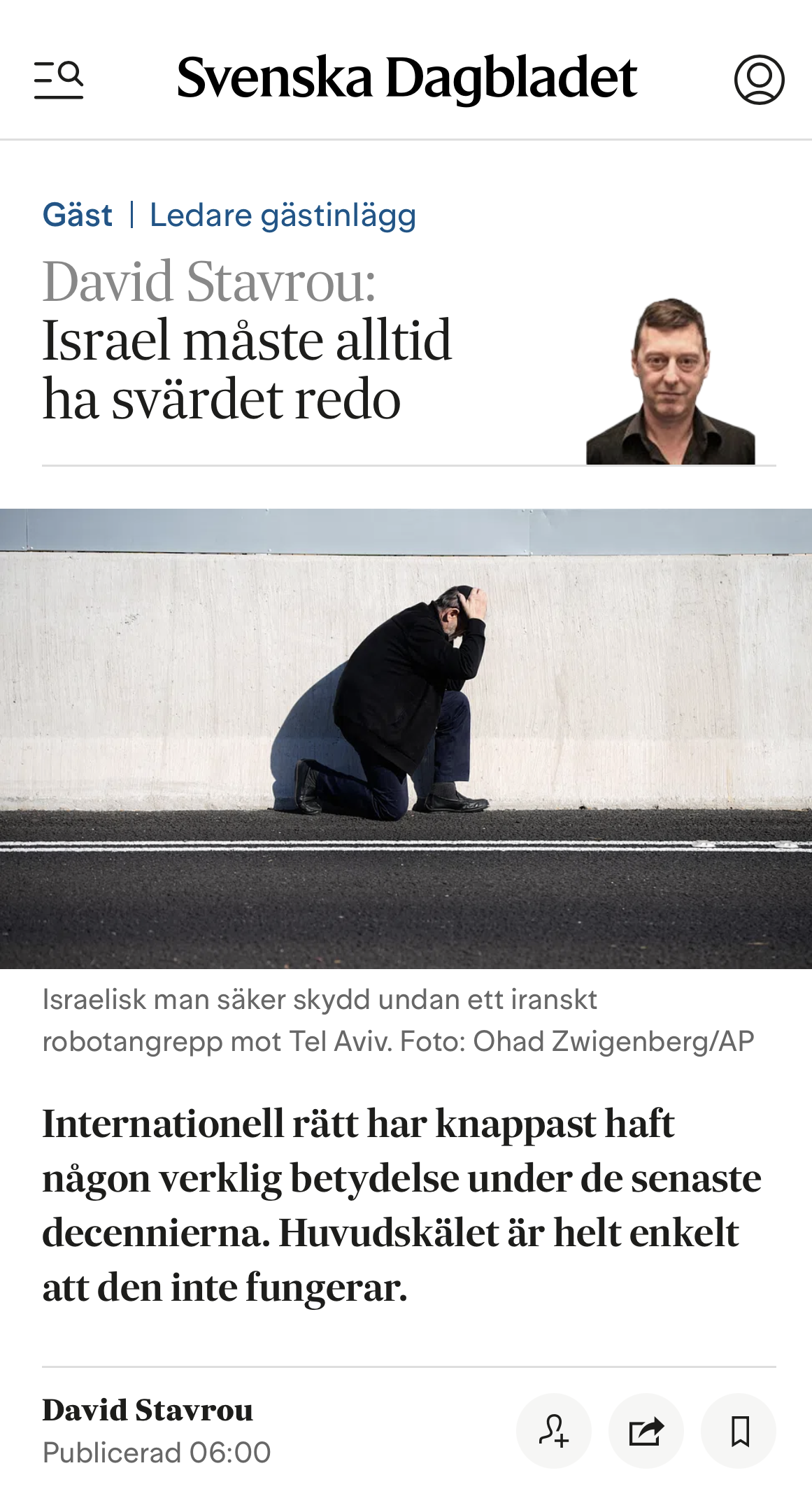





 דיויד סטברו