Filmmaker Tal Kantor's Israeli-French coproduction, the animated short film 'Letter to a Pig,' exploring intergenerational trauma and its potential to lead to empathy, has received numerous accolades. Now, a rabbi in Sweden has shown the film to Jewish-Muslim audiences to encourage dialogue post October 7 and the Israel-Gaza war.
Israeli animation filmmaker and visual artist Tal Kantor, 37, has taken her film "Letter to a Pig" to more film festivals, master classes, school seminars, and public screenings than she can easily remember. These events have taken place all over the world since the film was first screened in 2022, and there are more to come. From Harvard University to the Sigmund Freud Museum in Vienna, from the Academy Museum of Motion Pictures in L.A. to the Museum of Contemporary Art in Zagreb, it seems like Kantor and her film have been everywhere.
The 17-minute piece of animated art has also won Kantor multiple prizes. These include the Ophir Award, known as "the Israeli Oscar," the Best Narrative Short at the Ottawa International Animation Festival, the Excellence Award at the Japan Media Arts Festival and prizes, and honorable mentions at animation festivals in Belgium and France, and even an Oscar nomination for Best Animated Short Film in 2024.
The film itself took about five years to complete because of the meticulous hand-drawn animation style, which is combined with live action and involves visionary techniques and imagery. It was produced by The Hive Studio in Israel and Miyu Productions in France. It is based on one of Kantor's real-life childhood memories, and it depicts the way pain and collective trauma are transmitted from one generation to another, and the role they play in human history, society, and identity.
The film's main character is a girl who, together with her classmates, listens to the testimony of a Holocaust survivor in an Israeli school. Part of the testimony is a letter that the survivor wrote to a pig which, as he remembers, saved his life while he was hiding from the Nazis in a pigsty. In the film, the young schoolgirl sinks into a disturbing surrealistic dream while listening to the testimony. During the dream, new perspectives of good and evil are created in the girl's mind, and these expose her and her fellow students to the results of violence, victimhood, and trauma.
The pig's role shifts from savior to monster to victim, while the young children also go through a transformation. They start out as passive listeners and gradually become a threatening mob. The Holocaust may be the film's starting point, but "Letter to a Pig" is not a "Holocaust film." It's about universal motifs such as violence and suffering created by intergenerational trauma, which develops into a siege mentality. But it's also about empathy and the possibility to recognize other narratives through dialogue.
For Rabbi Moshe David HaCohen, 46, the narratives of pain and suffering, leading to endless conflict, actually drew him to the piece. HaCohen has just started his second term as the rabbi of the small Jewish community in Sweden's third-largest city, Malmö. In 2017, at the beginning of his first term as Malmö's rabbi (which ended in 2022), HaCohen founded Amanah, an organization based on his cooperation with a local imam to counter discrimination and build trust between the city's Jewish and Muslim populations. For a few years this worked very well, but the organization gradually dissolved as a result of the October 7 massacre, the ensuing Israel-Gaza war and the polarization caused by these events.
HaCohen is now launching a new organization named B.R.I.T – an acronym for Building Resilience, Identity, and Trust, and a reference to the Hebrew word for "covenant." He says the organization will work to counter polarization and foster relations between Jews and Muslims in several European countries. "I saw how Tal took something which is seen as almost holy like the Holocaust, and I was impressed by the way she asked complex questions that society today has to deal with," HaCohen told Haaretz in an interview in Stockholm. "The most serious question is how do we dismantle this complex conflict and create trust. Telling stories, like Tal does in her film, is a way to reach the real issue and move forward to create that kind of trust. People need hope, and I thought that during this time of conflict it would be good to create a debate based on the film."
One of the side effects of the Israeli-Palestinian conflict is the conflict in many European countries over the last two years, between Jewish Israel supporters and Muslim Palestinian supporters, who are entangled in cycles of suspicion and hostility. Jews have experienced rising levels of antisemitism, aggressive demonstrations at which protestors declare support for Hamas, and accusations of being responsible for the situation in Gaza because of their support for Israel.
Many European Muslims have found themselves on the receiving end of traditional anti-immigration and xenophobic attitudes, which are now amplified in response to the actions of elements of the pro-Palestinian solidarity movement. Even though there is now a cease-fire in the Middle East, tensions between the pro-Israel and pro-Palestinian camps and their supporters in many European countries persist.
And so Rabbi HaCohen asked Kantor to bring her film to Sweden in November to try to create productive dialogue. Kantor says that the film has taken part in about 150 festivals so far, and she has attended many of them personally. Meeting audiences together with the international crew who worked with her on the film is always important to her. "The film started from a very personal experience, and it has now become universal. Meeting audiences …. means everything to me," she says. "After screenings, people open up to me; they talk about their own experiences and their own perspectives. Some of them cry and open their hearts while talking about the multi-generational trauma they see in the film."
Still, for Kantor this wasn't just another invitation to a European cultural event. Instead of festival curators and ceremony producers, the invitation came from a rabbi who wanted to show her film as a tool for creating change and providing hope. Kantor couldn't refuse.
From right: Rabbi Moshe David HaCohen, Somar Al-Naher, Tal Kantor and Anneli Rådestad. Photo: Peter Lööv Roos
"Moshe David explained who he was and told me about what he does," Kantor told Haaretz in a local Stockholm café a day before she returned to Israel. "I immediately understood that he wasn't interested in the film because of its Oscar nomination or its international success. It was about the film's content…. The way he talked about it moved me deeply. He recognized its exploration of the danger of inherited trauma, fear, and narratives of cruelty, and how remaining in a place of victimhood can keep that cycle alive.
"He also saw how the film gestures toward compassion for all people [and towards] humanity and hope. It meant a great deal to me that he saw in the film a tool for opening a space for dialogue in such a polarized moment."
Irene Levin turned the hundreds of notes her mother left behind after her death into a book chronicling the story of Norwegian Jews during the Holocaust.
When Irene Levin's mother was 96, she left her apartment in Oslo and moved into a Jewish old age home. Levin and her two children wanted her mother's – and their grandmother's – new home to feel like a miniature version of the elegant, meticulously arranged apartment she had lived in for decades. To do so, they moved in the gilded-upholstered furniture, the paintings, the silverware, and the mirrors her mother never passed without briefly checking her reflection. As part of the process, they also cleaned and organized the apartment.
It took Levin more than five years to understand the significance of what she found during that process. "There were notes everywhere," she told Haaretz in an interview. "Some were hidden in piles of newspapers, other were tucked away in drawers, on shelves, and in cupboards. Some had only one or two sentences, others were full pages written in my mother's handwriting. Although they weren't dated, her handwriting showed they spanned different time periods – the 1960s, 70s and 80s.
"When I first found the notes, I didn't read them. They became just one more thing I would get to when I had time. For five years, they stayed enclosed in an envelope." Levin's mother, Fanny Raskow, died in 2013 at the age of 101. "After she passed away, and after I retired, I started reading the notes," Levin recalls. "Mostly the notes were about World War II, but also about her upbringing before the war in a family that had escaped to what is now Lithuania. There were many unfinished sentences, especially those dealing with the arrest and deportation of her father, my grandfather. It's unclear who the notes were meant for. Maybe she wrote for herself, as a way of venting, or perhaps she hoped I would eventually find them. But she never mentioned them".
Levin says the notes revealed the dilemmas and choices her mother faced. "My mother blamed herself all her life for not being able to save her father," she says. "It haunted her constantly, until the end of her life. In all my upbringing there was a silence, and the war was never discussed openly. If it came up, it was always indirectly or through broken, incomplete sentences." At a certain point, Levin realized that her mother's story was also the story of other Norwegian Jews. The result was her book, ("Vi snakket ikke om Holocaust. Mor, jeg og tausheten," Gyldendal, 2020, literally translated as "We Didn't Talk About the Holocaust: Mother, I, and the Silence"). The English version, titled "Everyday Silence and the Holocaust", was published by Routledge last year.
"My mother was trapped in a history that had been imposed on her, and one that for decades remained almost unspoken in Norwegian society," Levin says. "When I began researching in the National Archives of Norway in Oslo, I tried to see whether other Jewish families' stories were similar to that of my mother. I started asking new questions about my personal history and discovered experiences and events that had always been there, just not talked about.
"As a child, I simply acted on behaviors that seemed normal. As an adult – and as a professional – I began questioning my own story. Are the gaps in the stories significant? The fact that the life of our tiny nuclear family was defined by specific, historical events was something I simply knew. Just as one learns one's mother tongue intuitively, I learned about 'the war'. I lived my whole life in a community of World War II survivors, yet I still didn't really know much, despite believing I knew the whole story."
'What Happened to Our Jews?'
The story of Irene Levin is, to a great extent, the story of an entire generation of Norwegian Jews. Her grandparents' families emigrated to Norway around 1905 from Lithuania, fleeing poverty, hard conditions, and persecution. Levin explains that this migration differed from that of other Scandinavian countries. While Denmark and Sweden received "Ost-Juden" – Jews from Central Europe – there were already established Jewish communities in those countries. Some were prominent figures in society and openly identified as Jews. In Norway, by contrast, Jews were only permitted to enter starting in the mid-19th century. They were few in number, poor, and mostly uneducated.
Less than 40 years after her grandparents arrived in Norway, they and their children had to flee. This time, it was due to the German occupation during World War II, and their destination was Sweden, the neutral and thus safe neighboring country to the east. Levin's parents were among hundreds of Jews who left Norway as the Nazi persecution escalated, peaking in the fall of 1942 when hundreds of Norwegian Jews were deported to Auschwitz.
Levin's parents received help from a neighboring family, and their escape was aided by friends and members of the resistance movement, who hid them from the Gestapo and the Norwegian police in various locations. Their journey took 23 days. Levin's mother was pregnant during the escape, and she gave birth to Irene, her first and only child, in the Swedish town of Norrköping, where the family stayed until the war ended.
After the war, Levin, her mother, and father returned to Norway and began rebuilding their lives. She was less than two and a half years old and doesn't remember Liberation Day, but it's clear to her that even then, silence began to play a significant role. "We didn't talk about the war," she recalls. "The fact that the family went through a disaster was always present, but it wasn't spoken about. In the 1950s, when I was ten, we could be sitting with guests around the dinner table, and someone might suddenly say something like, 'It was Norwegian police who made the arrests, not the Germans.' And someone would reply, 'It doesn't matter, we're not getting them back either way.' Then the conversation would switch to the previous topic, and no one would ask, 'What do you mean?' Everyone knew what it meant, they just didn't talk about it for decades."
Did the silence begin right at the end of the war?
"You can tell from the Norwegian press how knowledge about what had happened slowly evolved. The free press resumed operations as early as May 14, 1945. On the second day, the country's largest newspaper, Aftenposten, asked, 'What happened to our Jews?' The article reported, 'There is reason to fear that many Norwegian Jews have died,' and quickly added that no confirmation had been received. In the weeks that followed, reports ended with phrases like, 'There is no reason to lose hope.' On May 17, the same newspaper reported, 'We have 750 Jews in Germany. So far, we've heard from only nine or ten.' Slowly, the news worsened, and by May 23, it was reported that the Jews had been taken to 'the notorious concentration camp Auschwitz.'
"After a while, the topic was no longer written about. It resurfaced in the trials of Norwegians who had collaborated with the Nazis, and in the court case of the Norwegian traitor Vidkun Quisling [a Nazi collaborator who headed the government of Norway during the country's occupation by Nazi Germany] where two survivors testified. One of them, the later well-known psychiatrist Leo Eitinger, told of Jews being gassed. When asked by the judge if Norwegian Jews were treated in the same way, he answered 'Yes, I swear to God.'"
The outcome of the war was catastrophic for Levin's family. Thirty-two members of her extended family, including her maternal grandfather, were murdered in Auschwitz. Her grandfather was deported along with hundreds of other Norwegians –men, women, and children – on November 26, 1942. Levin's mother tried to spare him by putting him in a hospital but he was taken from there, arrested and, the next day, loaded onto the ship SS Donau. After four days in its cargo hold, he and the others arrived in Stettin, where they were crammed into cattle cars. On December 1, they reached Auschwitz-Birkenau. Levin's grandfather's exact fate remains unknown. He was one of an endless number of victims who didn't survive and never returned to Norway.
The facts about World War II in Norway and the fate of its Jews are well-known. On the eve of the war, Norway had around 2,800,000 inhabitants, of whom about 2,400 were Jews, including around 500 from other nationalities. During World War I, Norway had remained neutral, and hoped to maintain neutrality again during World War II. But events took a different turn. A Norwegian fascist party, Nasjonal Samling (The National Union), founded in 1933 by officer and politician Vidkun Quisling, offered the Nazis cooperation in taking over the country. Germany invaded Norway and Denmark on April 9, 1940, in Operation Weserübung. Denmark surrendered within hours, while battles in Norway lasted around two months before the German victory, achieved after the Allied forces retreated and Narvik – a strategic port used for shipping iron ore from Sweden – was captured.
As the Germans occupied the country, the Norwegian king and government fled and formed a government-in-exile in London. Civilian rule in Norway was overtaken by Nazi official Josef Terboven, appointed Reichskommissar by Hitler. Terboven governed through a pro-German puppet government headed by Quisling. The Norwegian parliament was dissolved, all parties banned except Quisling's, and the judiciary was subordinated to German control.
Persecution of the Jews began with sporadic decrees early in the occupation. In 1941, arrests were made, property confiscated, and some Jews were executed on false charges. In 1942, mass arrests of hundreds of Jews were carried out, most of whom, including Levin's grandfather, were transported on the SS Donau to Auschwitz. Another ship, the MS Gotenland, transported 158 more Jews to the same destination in February 1943. In total, 772 Norwegian Jews were arrested or deported. The oldest among them 80, the youngest an 8-week-old baby. Fewer than 40 came back. Those who survived the war had mostly escaped to neutral Sweden or Britain.
The facts were known for decades, but their meaning has been the subject of public debate – one that Irene Levin, after publishing her book, is now central to. Levin is a professor emeritus of social sciences at Oslo Metropolitan University. Her work started in the area of family studies with emphasis on new family forms and gender studies. In recent years, she has moved her area of research into history and Holocaust studies and has been closely connected to the Norwegian Center for Holocaust and Minority Studies, including working with surveys on antisemitism. She has worked with Soviet Jewry and been active in applying for Norwegian non-Jews receiving the Righteous Among the Nations award, granted by Yad Vashem.
Her recent book adds to numerous other publications she's written or edited, covering topics from social sciences to remembrance, and the Holocaust in Norway.
Her new book generated considerable attention in Norway. Positive reviews appeared in major newspapers; she was interviewed by media and gave lectures across the country for over a year. Headlines focused on themes like "The Holocaust That Always Sat Within the Walls" or "The Mother Who Dealt with Trauma Through Silence." Critics noted that Levin "presents her family's history as a gateway to understanding the Jewish tragedy in Norway," "gives us a micro-history that opens wounds – with painful, terrifying details," and "breaks the silence, telling dramatic stories of fate."
Is the silence of the survivors and Norwegian society similar to that of survivors in other countries, or does it have unique characteristics?
"The phenomenon of silence is not unique, but circumstances vary. What's special about Norway is that it had a small number of Jews and geographically, with the long border with Sweden and the long coastline to England, one would think that it would be possible to hide more".
"Moreover, Norwegian Jews loved Norway. They learned the language and embraced the culture; they embraced the Norwegian love of nature and even changed their surnames to make them easier for their neighbors to pronounce. That's why what happened shocked them. They told themselves that they were arrested by the Gestapo – when, in fact, it was the Norwegian police.
"My mother always said: 'It took such a long time until we really understood, Irene.' Those who survived and returned weren't like the other Norwegians coming back after the war – the resistance fighters or political exiles. They weren't heroes. They won the war. The Jews had not won the war. They were deported or fled because of who they were, not what they did – and that came with a sense of shame. They asked themselves, 'What kind of Norwegians are we now?'"
Levin explains that other elements were involved. Some blamed themselves for failing to save relatives. They were grief-stricken, and many had to face the painful, often unsuccessful process of reclaiming seized property. Homes and businesses had been confiscated or auctioned off. Only in the 1990s, following a media campaign and the creation of a restitution committee, did Norwegian society begin to seriously reckon with the Holocaust. Survivors received compensation, and the Norwegian Center for Holocaust and Minority Studies was established.
"Until the 1990s, the story of the Jews was not integrated into the national historical narrative," Levin says. "It's not that people didn't know what happened – there were books and survivor testimonies – but Jews were not part of the main story. The Holocaust in Norway was like an appendix to Norwegian history, not part of the official narrative."
So, if the Holocaust wasn't part of Norway's war story, would it be accurate to say that Norway didn't take responsibility for what happened to its Jews?
"In three major historical books that shaped the narrative and were published in 1950, the extermination of the Jews was described merely as a 'detail'. Later, in the 1980s, six volumes titled 'Norway at War' asked: What happened to the Jews? The answer is mostly covered in the third volume, spanning 18 pages with photos. In the final section, the question is raised – could more have been done to help the Jews? could they have been warned about what deportation meant? the answer the book gives is that Jews in all occupied countries and even in the free world underestimated the cruelty of the SS. That is, responsibility was ultimately shifted to the Jews themselves – because they didn't resist arrest.
"When I first read these, I thought that they did the same as my mother, blaming herself for her father's arrest, as did society at large. Both the minority and the majority put the responsibility on the Jews. But I realized that when my mother blamed herself, she was taking the burden on herself, bearing the responsibility – as a Jewish woman and a daughter. When the author, as a representative of society, blamed the Jews, it was the opposite: it was the removal of responsibility."
Do you think this perspective still echoes in Norway in 2025, amid rising antisemitism and claims that Norwegian society is abandoning its Jews?
"For the Jews in Norway [the community numbers approximately 1,500 people], October 7 is an echo from the war, while knowing that it was not the same and that the Holocaust is unique. But Norwegian society at large did not hear the same echo. They only heard the voice from Hamas and very quickly defined the attack as a continuity of occupation.
"It was a shock that the empathy that the Jews in Norway had earned due their history during the war, suddenly disappeared. I never thought that during my lifetime, I would experience a rise of antisemitism. When researching the Holocaust and antisemitism, I was doing it as something belonging to the past to ensure it would not happen again. Suddenly, the Jewish state was attacked and its legitimacy was at stake. The Jewish voice has lost its legitimacy.
"My grandmother would always tell me: 'Die Juden sind schuldig' – the Jews are to blame, always. I thought that was relevant to the shtetl, not my everyday life. There is a shift in the perception of responsibility and legitimacy – the focus has changed, and it is no longer in our favor. I demonstrated on Women's Day and my fellow feminists didn't allow us to participate! They questioned whether there were even sexual assaults on October 7; and if they did accept that they happened, they minimized their significance, treating it as something that 'naturally' happens in every war.
"In my research on silence, an important factor is the interaction between the individual and society. After World War II, it was not only the Jews who were silent. The society at large was silent, too, but for different reasons. The space the minority has is shaped by the majority. It took Norwegian society 50 years before it recognized its responsibility in the atrocities. In the current situation, the Jewish voice has little legitimacy and the connection with society at large is of distrust. But can we Jews wait for the society to show us such a space? We have to take it. In that sense, it's like a revolution."
At the end of the interview, Levin returns to the topic of silence, which she sees as the common thread between the biographical and the historical. It's a silence shared by many survivors of the war, but Levin suggests that it is an even broader phenomenon.
"If you had asked me about the Holocaust while I was growing up – if you had asked me whether I knew about the war and what happened to the Jews – I would have said yes," she says. "But today I know that I didn't know. I didn't have the details; I didn't know what really happened. What I had was a sense that a catastrophe had occurred, and that it had happened to the Jews. Nothing more.
"And maybe that's similar to other disasters, like what happened on October 7. Even though information spreads much faster today, the feeling is similar. We know a disaster occurred, we think we understand it, but as time passes, we realize in hindsight that we didn't know everything, that we didn't grasp the scope, and that we still haven't dealt with all the implications."
As Sweden is marking 250 years of Jewish life, the reactions to the October 7th massacre, the war in Gaza and the tone of the rhetoric in the public debate are reasons to be concerned about Swedish antisemitism. But what is the true extent of this scourge, what is its impact on Sweden’s Jewish community, and how is it being addressed by the authorities? By placing these issues in a broader historical context, David Stavrou’s investigation, which we are publishing as part of our partnership with the DILCRAH, seeks to answer these questions.
In 1973 a young Moroccan army officer named Ahmed Rami arrived in Sweden asking for political asylum. He said he needed protection because he was part of an unsuccessful coup d’état in his homeland the previous summer. More than a decade later, after obtaining asylum in Sweden, Rami started broadcasting Radio Islam, a radio program which subsequently turned into a newspaper and later, a web-site. The focus of these enterprises became clear right at the beginning – it was not about Islam; it was about Jews. The radio program and the website featured some of antisemitism’s greatest hits; conspiracy theories about how Jews and Zionists control the world, Holocaust denial, Nazi propaganda, lists of influential Swedish Jews and Israel bashing. During the last three decades, Rami has been investigated, charged, convicted and fined for hate speech and hate crimes and his radio station was shut down by the authorities more than once. Still, now aged 78, Rami’s legacy lives on. He has published books, voiced support for Hezbollah and neo-Nazi groups, his website is still very much alive and the internet allows his work to continue.
Radio Islam is an important landmark in the history of Swedish antisemitism for several reasons. One of them is that the precedential trial which sent Rami to prison for six months also gave a small and relatively unknown Swedish organization called The Swedish Committee Against Antisemitism (SCAA, or SKMA in Swedish) an important role in the Swedish public arena. “SCAA is a religiously and politically unaffiliated NGO which was founded in 1983”, says Mathan Shastin Ravid, the organization’s office manager, “it was founded by a group of activists who wanted to raise awareness about antisemitism. It was a period with a clear wave of antisemitism in Sweden and other European countries during and after the Lebanon War in 1982. Antisemitism was not a new phenomenon in Sweden back then, but this was on a new scale, there were all these accusations with motives and images that targeted not only Israel, but Jews as a group. When the Radio Islam broadcasts started in the end of the eighties, it was clear to us that the radio station was a megaphone for anti-Jewish hatred and propaganda. On the basis of SCAA´s report to Sweden’s Chancellor of Justice, Rami was convicted of hate speech. But it was clear that in those days we stood pretty much alone. Not many people understood the problem, people did not want to talk about it and there were many known figures who came to Rami’s defence saying it was only criticism of Israel, not antisemitism”.
A lot has changed in Sweden since then and SCAA probably has an important part in the change. Shastin Ravid says that since the nineties, the organization has become more than just an activist watchdog. It now also focuses on education. “These days we stand on two legs”, he explains, “one of them is monitoring, information and advocacy, as we try to follow what is happening in Sweden and the world and follow the Swedish and international debate regarding antisemitism. We then react when we see antisemitism in different forms. The other leg is education. We have educational programs for different target groups such as teachers and pupils in Swedish schools, journalists and politicians. We also work with some governmental authorities like the police, which often lack a deeper knowledge of contemporary antisemitism and how it spreads. It is my understanding that there is more awareness in this area today than there was ten years ago and that positive things are happening as part of a higher level of knowledge and consciousness in general in Swedish society today when it comes to antisemitism. But there is still much work to do..”
When Shastin Ravid is asked for an up-to-date description of antisemitism in Sweden, he starts by saying that more research is needed to get a better understanding of the problem. That said, it is clear that in many ways Sweden is not different from other countries. “The development in Sweden is connected to global developments”, he says, “antisemitic conspiracy theories have been spread and legitimized by important political actors in recent years. In Europe we have for example seen it in countries like Hungary and Poland amongst right-wing nationalist parties and governments, but we have also seen it in other countries including the US where amongst others Donald Trump, Elon Musk and the MAGA movement have legitimized and spread antisemitic propaganda. This global phenomenon has affected Sweden too and has sparked hate speech and hate crimes. And then there is, of course, the strong global wave of antisemitism after Hamas’ attack in Israel on the 7th of October 2023 and the war in Gaza. It is not the first time an escalation of the Israel-Palestinian conflict triggers antisemitism in Sweden and other countries, but the level of propaganda, hate, threats and attacks against Jews has been unusually high.”
“Studies show that antisemitism in the form of negative beliefs and attitudes towards Jews exists, in varying degrees, in all Swedish society, in many different groups and milieus. Within Swedish mainstream politics, the problem has long been visible in the right-wing nationalist Sweden Democrats party. For years, the party has tried to portray itself as a party which opposes antisemitism and is pro-Israel, but antisemitism continues to be a problem in the party. We often find high- and low-level representatives of the party spreading antisemitic propaganda and we see many connections between the party and right-wing and even Nazi extremists. In addition, the Sweden-Democrats do not deal with antisemitism within their ranks unless they are exposed by the media, and even then, there are many cases of people within the party who have kept their jobs after they were exposed”. The party’s proclaimed “Zero Tolerance” policy towards racism and extremism, including antisemitism, Shastin Ravid says, is “a joke”.
“But the nationalist and populist right is just part of the problem. Antisemitism does, for example, also regularly appear within the pro-Palestine movement and parts of the Swedish left, where it is often related to Israel and the Israel-Palestinian conflict. In these circles there is sometimes a denial or an unwillingness to see the problem of antisemitism, sometimes rooted in the misperception that Jews are “white” and therefore cannot be victims of racism. In the last year, there has been a big debate in Sweden about the fact that several representatives of the Swedish Left Party have spread antisemitic propaganda, many times on social media. And when criticized, those party representatives have been backed by many others within and around the party who have denied that the propaganda is antisemitic. The SCAA and many others have strongly criticized all of this, and the fact that the party leadership many times has been slow to act and condemn the spread of such anti-Jewish racism and those party members who defend and excuse it.”
“And of course, movements linked to radical Islamism must also be taken into account”, Shastin Ravid adds. According to him, antisemitism is most virulent within those movements and Nazi and other right-wing extremist movements. “For all of them, antisemitism is an ideological foundation, a “worldview,” a way of understanding and describing events both locally and globally. Jews are constantly portrayed as conspirators and blamed for all the world’s ills”. Furthermore, Shastin Ravid adds, “antisemitism has long been a weapon of regimes in the Middle East, where it is deeply rooted, openly expressed, and legitimized. The spread of this type of propaganda via the internet by regimes such as Iran has contributed to the globalization of this hatred. Recently, it was revealed that the Iranian regime is suspected of having planned to murder Swedish Jews, among them Aron Verständig, the chair of the Official Council of Swedish Jewish Communities (Judiska Centralrådet). According to the Swedish Security Services (Säpo), Iran has also recruited Swedish criminal networks to carry out attacks against Israeli and Jewish targets. The Swedish National Centre for Terrorist Threat Assessment (NCT) has reported that the biggest terror threats in Sweden come from violent Islamists and right-wing extremists, which both have Jews and Jewish institutions as some of their primary targets”.
Even without physical violence, Swedish antisemitism is present in the public sphere and one of its main outlets are the numerous demonstrations in support of the Palestinians and denouncing the “genocide” in Gaza. The days right after October 7th, and before the Israeli ground attack on Gaza began, were a good example. While the massacre in southern Israel was still ongoing, there were a couple of spontaneous demonstrations in southern Sweden which included music, dancing and convoys of cars honking their horns in support of the Hamas attack. Right after that, in the course of one weekend in Stockholm, three different organizations demonstrated separately but with similar slogans. A part from the mainstream Pro-Palestinian movements, there were more radical organizations on the streets. One was Hizb ut-Tahrir, a radical Islamic group advocating the creation of a caliphate governed by Sharia law from Uzbekistan to Morocco, with a small branch in Sweden. It was granted permission to demonstrate despite being banned in several countries. Next came the Nordic Resistance Movement, a neo-Nazi group with a few hundred members who demonstrated in support of the Hamas attack. They were followed by the Revolutionary Communist Youth, which claims that Palestinians have the right to “fight by all means against the occupying power to liberate their land.” The latter described the October 7 attacks as an act of liberation that “caught the Zionists in their beds.” Both organizations, one neo-Nazi and the other Marxist-Leninist, support the Palestinian slogan calling for “crushing Zionism.”
Since then, there have been numerous demonstrations in Sweden, many of them on a weekly basis. These demonstrations are legal, the organizers deny that they feature antisemitic content and they are seen by many Swedes as legitimate opposition to Israel and solidarity with Palestinians. However, they often include slogans which are considered antisemitic by many such as supporting a “global intifada” and “crushing Zionism”, promoting antisemitic conspiracy theories and calling for a “Free Palestine from the River to the Sea”.
Still, demonstrations are not the main concern when it comes to current Swedish antisemitism. There have been numerous reports of activists who have used school classes, universities and even pre-schools to spread radical anti-Israeli political propaganda which is seen by many as antisemitic, the culture world has been full of calls for boycotting Israel and ending cooperation with Israeli artists, the BDS movement which was hardly present in Sweden before the war has been publicly active in promoting boycotts against companies which they claim are complicit with Israel’s “illegal occupation and apartheid politics” and parts of Swedish academia have become hostile to Jewish and Israeli students. In Gothenburg University, for example, activists were allowed to take over the premises of the university’s art and design school and they distributed Hamas propaganda. In Stockholm, Lund and Uppsala there have been reports in Swedish media of pro-Palestinian encampments and so-called “liberated zones” which together with harsh rhetoric from members of senior university staff who are also political activists made students hide their Jewish identity and caused concerns about their safety and well-being.
Demonstration in Stockholm, June 2025
How prevalent are antisemitic crimes?
“Many Jews in Sweden have experienced antisemitism in one way or another”, Shastin Ravid says, “we need more research, but studies have indicated that many Swedish Jews have been targeted by antisemitism and many of them have not reported these incidents. This is also true for other hate crimes, most of them are probably never reported to the police”. Some of the studies Shastin Ravid is referring to were made by the Swedish National Council for Crime Prevention (Brottsförebyggande rådet, Brå). They show that there is a small and inconsistent increase in the number of reported antisemitic hate crimes over the years, but some years there is a sharp rise. “These are often the years when the conflict between Israel and the Palestinians has escalated, like the last war in Gaza. According to a study from Brå, there was a sharp rise in reported antisemitic hate crimes during the last part of 2023, almost 5 times as many as during the same period the year before”.
But other global events may also have been important in this respect. “The pandemic, for example, brought at least two kinds of antisemitic effects”, Shastin Ravid says, “First, there were accusations against the Jews, who were blamed for starting the pandemic and for profiting from it. Then, there were parts of the anti-vaccination movement which instrumentalized and diminished the Holocaust, claiming that they are treated the same way as the Jews in Nazi Germany. The war in Ukraine also triggers antisemitism on a global scale as do the discussion about Quran burnings and the debate about migration and refugees which fuels the antisemitic so-called replacement theory. These days antisemitic propaganda is often spread online with code words replacing the word Jews. Instead, it is Zionists or Globalist or specific names like Soros or Rothschild. These words are used globally as symbols of a big Jewish conspiracy, and they are widely spread in Sweden too”.
Another study Shastin Ravid speaks of was made by a government agency called The Living History Forum (Forum för Levande historia), which was founded in the beginning of the 2000s to “work for democracy and equality between all people, using lessons learned from the Holocaust”. According to Shastin Ravid, the study from 2020, showed that there had been a decline in antisemitic attitudes and notions over a period of 15 years, but that antisemitism still exists within different parts of the population. “I think that this is an important point to make”, he says, “the study showed that around 5 % of the respondents displayed antisemitic attitudes with a stronger intensity, which is a rather low figure compared to many other countries. However, if you broaden it and look at the group of people who agreed with one or more of the study’s antisemitic statements, the number is 34 %. This does not mean that 34 % can be said to be antisemitic, but it indicates that antisemitic ideas exist among a bigger part of the population than many think. We should not only focus on the most extreme groups. According to the study, higher levels of antisemitic beliefs correlated among other things with, and were more common amongst people who are: older, have lower levels of education and have a low trust in public institutions. Antisemitic beliefs were also more common among people who have sexist and anti-immigrant attitudes, people who sympathize with the Sweden Democrats party, people who were born outside Sweden or Europe, and people with a Muslim religious affiliation. Another interesting factor is that traditional and Holocaust related antisemitic beliefs tended to be slightly more common among men, and Israel-related antisemitic attitudes and notions tended to be slightly more common among women”. However, Shastin Ravid points out, the study is now a few years old, and many things have happened since that could affect the results of the next study, which is supposed to be published in 2026.
One group which is particularly exposed to antisemitic hatred is the group of school pupils and teachers who in many cases are scared to be open with their Jewish identity. “We have studies from among other places Malmö and Stockholm which show that there are serious problems with antisemitism in some Swedish schools. Sometimes it is related to the Israeli-Palestinian conflict, sometimes the word Jew is used as a curse and sometimes we see antisemitic conspiracy theories which fascinate youngsters. We also see jokes about the Holocaust, swastikas on benches or lockers, and Nazi salutes. Jewish pupils often feel that their teachers and schools do not take the matter of antisemitism seriously, and they say that there is a lack of knowledge and support. This is something that many Swedish youngsters have told us at the SCAA through the years”.
Sweden is home to the largest Jewish community in Scandinavia. It’s estimated that about 15,000 Jews live in the country which has a population of just over ten million. That said, there are probably many more Swedes who have a Jewish background, as Jewish immigration to Sweden dates back to the 18th and 19th centuries and many have married into Swedish families. The largest community in the country is the one in the capital Stockholm which has three synagogues, including the conservative Great Synagogue adjacent to the Raoul Wallenberg and Holocaust monuments and an office building which houses various Jewish organizations. A few minutes’ walk away, there’s a relatively new cultural centre called “Bajit” which houses a Jewish primary school, a Jewish kindergarten and a variety of Jewish activities for all ages, as well as a Kosher shop and a café. Smaller Jewish communities and associations exist in Malmö, Gothenburg and a couple of other smaller towns. Sweden’s Jewish communities are united under an umbrella organization, the Official Council of Swedish Jewish Communities (Judiska Centralrådet) which usually takes part in national discussions concerning Jewish life in the Swedish Parliament, Government and other authorities.
Since the problem of antisemitism isn’t new to Swedish society, it’s no surprise that in recent years the Swedish government has made many attempts to address it. After decades of ignoring the problem, dismissing and repressing it, recent Swedish governments have put it on their agenda and have tried many different approaches. Petra Kahn Nord who served as the World Jewish Congress’ representative in the Nordic countries, says that the current Swedish government appointed a special inter-ministerial task force in order to combat antisemitism and improve the conditions for Jewish life in Sweden. “This government task force was set up to be a ‘one point of contact’ authority, which is something we’ve suggested before”, she says, “it was founded in January 2023 and the first issue that it focused on was government funding for security for Jewish institutions like synagogues and schools. The second issue was, and still is, addressing antisemitism”. Kahn Nord explains that the previous government had the political will to secure security funding, but the budget mechanism didn’t really work. The current government, however, addressed the issue, increased funding and gave additional funding after October 7th. But protection against violent antisemitic incidents isn’t all that’s needed.
In 2021 Sweden hosted The Malmö International Forum on Holocaust Remembrance and Combating Antisemitism. The conference, hosted by then-Prime-Minister, Social-Democrat Stefan Löfven, asked the participating countries and organization to make concrete pledges that would strengthen Holocaust remembrance and tackle Holocaust distortion, Holocaust denial and contemporary antisemitism. The Malmö forum was seen by many as a natural continuation to the steps another Social-Democratic Prime-Minister, Göran Persson, made twenty years earlier. Persson founded what is now called the International Holocaust Remembrance Alliance (IHRA) and initiated the Stockholm International Forum on the Holocaust which brought together political leaders, state officials, religious leaders, survivors, educators, and historians from around the globe. When Löfven initiated the 2021 events, one of Sweden’s pledges was to form an inquiry on strengthening Jewish life in the country. The idea was that fighting antisemites is one thing, but making Jewish life flourish was another subject. One that has been neglected for many years.
This indeed happened and various issues which Jews in Sweden were concerned about were discussed seriously. These included the threats of illegalizing Jewish circumcision and banning the import of Kosher meat which were supported by some political parties. Another important issue was the status of Jewish schools in Sweden which doesn’t have almost any real private schools. There are so-called independent schools, including a couple of Jewish ones, within a charter system, but because of reports of radicalization in some of Sweden’s independent Muslim schools, new legislation was put in place which affected Jewish schools too. The new legislation imposed the definition of “denominational schools”, and with-it necessary restrictions, on existing Jewish schools. Another concern was an initiative to limit the establishment of new denominational schools. These were all concerns in the Swedish-Jewish pre-October 7th reality. Community leaders were saying then that “Swedish Jews may be able to survive a terror attack, but not legislation forbidding Brit Mila or Jewish schools”.
Today, after October 7th, it’s clear that the majority of political parties, and certainly the ones which are part of the Swedish Government, are committed to addressing these Jewish concerns. Antisemitism, however, is not necessarily a problem which the government can easily address since its origins are well-rooted and widespread in many parts of Swedish society. All recent Swedish governments have therefore realized that combating antisemitism is as complicated as it’s important. And it’s a work in progress. Petra Kahn Nord mentions two major shifts in the last few years. “First, before 2015 it was not acceptable to talk about antisemitism which came from immigrant groups from the Middle-East. This made members of the Jewish community feel abandoned. Sweden has now changed and it’s now possible to talk about it and deal with the problem”, Kahn Nord says, “the second shift has to do with the fact that the populist right-wing Sweden-Democrats party is supporting the government. So far, however, the party hasn’t caused any policy shifts aimed at the Jewish minority. But October 7th created a new reality. We’ve seen an increase in the number of antisemitic incidents in schools and universities, we’ve seen politicians, especially in the Swedish Left, who spread antisemitic propaganda and we’ve seen support for Hamas in demonstrations and online”. Kahn Nord says that schools and social media are a particular concern. “The problem in these arenas is serious”, she claims, “and it can’t be dealt with by using old “action plans” that previous governments suggested. Many of these plans, including pledges made in Malmö four years ago, focused on Holocaust education and educational strategies against racism in general, as opposed to antisemitism as a specific phenomenon. The Malmö Pledges, for example, included the pledge to establish a new Holocaust Museum in Stockholm (which has indeed been opened since then) and another to contribute 5.5 million SEK to the Auschwitz-Birkenau Foundation. “There’s a Swedish tendency to focus on dead Jews”, Petra Kahn Nord says, “perhaps now, especially after October 7th, it’s time to focus on the living ones”.
And indeed, when it comes to living Jews and real concrete Jewish communities, combating antisemitism and taking measures to improve Jewish depends on strong support and clear stands by governments.
In Sweden, the subject of antisemitism has been on the agenda for decades and different governments have handled it in different ways. Today, the government minister who holds the relevant portfolio is Parisa Liljestrand, a forty-two-year-old minister from the center-right Moderate party. Liljestrand, immigrated to Sweden as a young child from Iran and worked as a teacher and school head-master before getting involved in local politics. In 2022 she received her first post on the national political scene and became Sweden’s Minister of Culture. In an interview conducted in her Stockholm office she explains that one of her responsibilities is addressing issues connected with Sweden’s five national minorities. The minorities and their languages, which are considered official minority languages in Sweden, were recognized in the year 2000 and they include Jews and Yiddish; Roma and Romani Chib; the Sami and the Sami language; the Swedish Finns and Finnish and the Tornedalers and their Meänkieli language.
“Our government was appointed in October 2022 and the Prime Minister made it clear, as early as his first government statement, that strengthening Jewish life and working against antisemitism would be one of our priorities”, she says, “When we started our work, we decided that we need to understand what’s been done in Sweden today and to listen to the Jewish organizations which are active in Sweden. We wanted to understand what they think is needed. What we found out was that a lot of important work is being done, but there are things which still don’t work and there are things which are lacking. Sweden ranks well in global measurements of antisemitism, but there’s still widespread antisemitism in Sweden which we need to actively fight. This became even more evident after Hamas’s horrific attack on October 7, 2023. As in many other countries, we have seen the threat perception towards Swedish Jews increase, as has open antisemitism. The government takes this very seriously.
But it is not enough to work against antisemitism. We need to strengthen the possibility to live a free Jewish life, both in terms of Jewish culture and in terms of Jewish religious life. This is why we need to gather the work that’s done by different government ministries and by Jewish organizations. When we talked to the organizations, we found that it was sometimes hard to understand who’s responsible for what issue and it was important to make sure that things don’t end up in the wrong place. That’s why we founded the Government Task Force for Jewish Life as an inter-governmental work group which, beside the Prime Minister’s office, has eight more government offices represented in it”.
When asked if the fact that her government is supported by a party with roots in neo-Nazism doesn’t affect her attempts to fight antisemitism, Liljestrand tells a story of one of her meetings. “I met a Jewish father who told me about his son who went shopping while he was wearing a necklace with a Star of David. The father said that when the boy came to the cashier, the person who was working there told him that he was not welcome in the shop. This story really hurts. This can’t be our reality. This isn’t Sweden. We have a clear mission – making Sweden a free country to live in and supporting those groups who cannot live a de-facto free life here. So, I don’t feel the Sweden-Democrats are stopping me from doing this. I understand that there’s a concern, but I’m clear, and the government is clear in its message. One must remember that antisemitism is about gathering and capitalizing violence from various directions. That’s what makes it different from regular racism”.
Parisa Liljestrand, Photo by Ninni Andersson Regeringskansliet
Part of the violence Liljestrand is talking about is online and much of it is aimed at young people who have to grow up with it. “It’s extremely serious when antisemitism becomes a natural part of day-to-day life and it isn’t limited to the physical space and instead it’s spread digitally”, Liljestrand says, “it’s worrying and we need to fight it and work towards the goal of not having another generation which is exposed to the same kind of difficulties living a Jewish life or the same kind of antisemitic hate which previous generations were exposed to”.
Liljestrand seems to be serious about this particular aspect of her job. “I myself, with my background, know exactly what it’s like to live in a society which treats you differently if you have a different skin color or if you have a different culture”, she says, “I know what it’s like to fight your way into society and have the will to be part of it while still keeping a part of your culture and heritage”.
When it comes to antisemitism and the struggle against it, Sweden is indeed an interesting case. For much of its post war history, antisemitism wasn’t taken very seriously. Neo-Nazi movements operated freely while the close ties to Nazi Germany were ignored. This came together with a widespread ignorance about the Holocaust, antisemitic attitudes within the Swedish elite and free import of antisemitism with large waves of immigration from other countries. Then, in the last couple of decades, all that changed. Sweden became a world leader of Holocaust education and combating antisemitism. At least that’s what it presents itself as being. But are the museums, task forces, international conferences, research projects and educational initiatives really working?
On the one hand, it is clear that Sweden is much more aware of the problem and much better equipped to combat it than it has ever been. But any honest assessment of the situation must admit that, in many cases, Swedish schools and universities remain hostile dangerous places for Jewish students and teachers, who continue to suffer from harassment, social pressure and occasionally also violence, while teachers and principals avoid confronting the aggressors. It has been reported that in some schools, Shoah survivors haven’t been invited to share their stories because of the disrespect shown by some students.
Outside the education system, other problems remain unresolved. Although physical violence against Jewish targets is not common in Sweden, it has occurred and, according to police and the press, it remains possible. Molotov cocktails have been thrown at Jewish cemeteries, funeral homes, and synagogues, the Israeki embassy has been attacked and other cases of physical and verbal assaults against Jews have been documented.
The resurgence of pro-Palestinian demonstrations since October 7—where strongly antisemitic slogans, signs, and rhetoric have been documented—is also a cause for concern. The scale of the protests against singer Eden Golan’s participation in the Eurovision 2024 final in Malmö made international headlines, but the truth is that although those demonstrations may have been the biggest, they weren’t the most aggressive.
For many Jews who live in Sweden it’s not about the size of the demonstration and not about the legitimate right to demonstrate. Anyone who’s uncomfortable with these demonstrations can just avoid them. The problem is that when Sweden’s Jews see thousands of people who are collectively calling Israel, which is an important part of their identity, the worse things in the world and promoting a very high level of hate, they know that in that crowd there may be familiar faces – perhaps their children’s pre-school teacher or their local clinic’s nurse or doctor. And it’s not only that. The separation that some of the demonstrators try to make between criticizing Israel and attacking Jews doesn’t always work. When demonstrators wanted to burn an Israeli flag in Malmö in November 2023, they didn’t get on a train and go to Israel’s embassy in Stockholm. They did it outside the local synagogue. A couple of months later protesters from a group called ”Together for Palestine” chanted anti-Israeli slogans at people who were entering Stockholm’s Great synagogue for a Holocaust Remembrance Day ceremony. Some of the people who encountered this were Holocaust survivors. The demonstrators demanded that Sweden’s Jews will denounce Israel and its war in Gaza. These events send a message that 250 years after Jews were officially allowed to live and create a community in Sweden, their legitimacy is now conditional. If they speak out against their historic homeland and its government, they are tolerated. If not, all hell may to break loose.
A look at the Radio Islam website is a thought-provoking experience. It features lengthy texts about subjects like how Jews have controlled Sweden for centuries, how they “instrumentalize the Holocaust” and how racism, hatred and cruelty are the driving forces of the Torah and the Talmud. In a way this brings us full circle. Sweden has gone a long way fighting antisemitism since Radio Islam was persecuted back in the eighties. Since then, Swedish governments, Jewish organizations and civil society organizations have turned Sweden into a country known for its rigorous combat against antisemitism. However, with populist and racist political movements on the rise, with Islamist propaganda on and off-line, with an increasingly aggressive discourse against Israel and Zionism, demonstrations, boycotts, and burnings of flags and books on a weekly basis, it’s now clearer than ever that the fight against antisemitism still has a long way to go.
Irene Levin turned the hundreds of notes her mother left behind after her death into a book chronicling the story of Norwegian Jews during the Holocaust.
When Irene Levin's mother was 96, she left her apartment in Oslo and moved into a Jewish old age home. Levin and her two children wanted her mother's – and their grandmother's – new home to feel like a miniature version of the elegant, meticulously arranged apartment she had lived in for decades. To do so, they moved in the gilded-upholstered furniture, the paintings, the silverware, and the mirrors her mother never passed without briefly checking her reflection. As part of the process, they also cleaned and organized the apartment.
It took Levin more than five years to understand the significance of what she found during that process. "There were notes everywhere," she told Haaretz in an interview. "Some were hidden in piles of newspapers, other were tucked away in drawers, on shelves, and in cupboards. Some had only one or two sentences, others were full pages written in my mother's handwriting. Although they weren't dated, her handwriting showed they spanned different time periods – the 1960s, 70s and 80s.
Levin's mother, Fanny Raskow, died in 2013 at the age of 101. "After she passed away, and after I retired, I started reading the notes," Levin recalls. "Mostly the notes were about World War II, but also about her upbringing before the war in a family that had escaped to what is now Lithuania. There were many unfinished sentences, especially those dealing with the arrest and deportation of her father, my grandfather. It's unclear who the notes were meant for. Maybe she wrote for herself, as a way of venting, or perhaps she hoped I would eventually find them. But she never mentioned them".
Levin says the notes revealed the dilemmas and choices her mother faced. "My mother blamed herself all her life for not being able to save her father," she says. "It haunted her constantly, until the end of her life. In all my upbringing there was a silence, and the war was never discussed openly. If it came up, it was always indirectly or through broken, incomplete sentences."
At a certain point, Levin realized that her mother's story was also the story of other Norwegian Jews. The result was her book, ("Vi snakket ikke om Holocaust. Mor, jeg og tausheten," Gyldendal, 2020, literally translated as "We Didn't Talk About the Holocaust: Mother, I, and the Silence"). The English version, titled "Everyday Silence and the Holocaust", was published by Routledge last year.
"My mother was trapped in a history that had been imposed on her, and one that for decades remained almost unspoken in Norwegian society," Levin says. "When I began researching in the National Archives of Norway in Oslo, I tried to see whether other Jewish families' stories were similar to that of my mother. I started asking new questions about my personal history and discovered experiences and events that had always been there, just not talked about.
"As a child, I simply acted on behaviors that seemed normal. As an adult – and as a professional – I began questioning my own story. Are the gaps in the stories significant? The fact that the life of our tiny nuclear family was defined by specific, historical events was something I simply knew. Just as one learns one's mother tongue intuitively, I learned about 'the war'. I lived my whole life in a community of World War II survivors, yet I still didn't really know much, despite believing I knew the whole story."
The story of Irene Levin is, to a great extent, the story of an entire generation of Norwegian Jews. Her grandparents' families emigrated to Norway around 1905 from Lithuania, fleeing poverty, hard conditions, and persecution. Levin explains that this migration differed from that of other Scandinavian countries. While Denmark and Sweden received "Ost-Juden" – Jews from Central Europe – there were already established Jewish communities in those countries. Some were prominent figures in society and openly identified as Jews. In Norway, by contrast, Jews were only permitted to enter starting in the mid-19th century. They were few in number, poor, and mostly uneducated.
Less than 40 years after her grandparents arrived in Norway, they and their children had to flee. This time, it was due to the German occupation during World War II, and their destination was Sweden, the neutral and thus safe neighboring country to the east. Levin's parents were among hundreds of Jews who left Norway as the Nazi persecution escalated, peaking in the fall of 1942 when hundreds of Norwegian Jews were deported to Auschwitz.
Levin's parents received help from a neighboring family, and their escape was aided by friends and members of the resistance movement, who hid them from the Gestapo and the Norwegian police in various locations. Their journey took 23 days. Levin's mother was pregnant during the escape, and she gave birth to Irene, her first and only child, in the Swedish town of Norrköping, where the family stayed until the war ended.
After the war, Levin, her mother, and father returned to Norway and began rebuilding their lives. She was less than two and a half years old and doesn't remember Liberation Day, but it's clear to her that even then, silence began to play a significant role.
"We didn't talk about the war," she recalls. "The fact that the family went through a disaster was always present, but it wasn't spoken about. In the 1950s, when I was ten, we could be sitting with guests around the dinner table, and someone might suddenly say something like, 'It was Norwegian police who made the arrests, not the Germans.' And someone would reply, 'It doesn't matter, we're not getting them back either way.' Then the conversation would switch to the previous topic, and no one would ask, 'What do you mean?' Everyone knew what it meant, they just didn't talk about it for decades."
Did the silence begin right at the end of the war?
"You can tell from the Norwegian press how knowledge about what had happened slowly evolved. The free press resumed operations as early as May 14, 1945. On the second day, the country's largest newspaper, Aftenposten, asked, 'What happened to our Jews?' The article reported, 'There is reason to fear that many Norwegian Jews have died,' and quickly added that no confirmation had been received. In the weeks that followed, reports ended with phrases like, 'There is no reason to lose hope.' On May 17, the same newspaper reported, 'We have 750 Jews in Germany. So far, we've heard from only nine or ten.' Slowly, the news worsened, and by May 23, it was reported that the Jews had been taken to 'the notorious concentration camp Auschwitz.'
"After a while, the topic was no longer written about. It resurfaced in the trials of Norwegians who had collaborated with the Nazis, and in the court case of the Norwegian traitor Vidkun Quisling [a Nazi collaborator who headed the government of Norway during the country's occupation by Nazi Germany] where two survivors testified. One of them, the later well-known psychiatrist Leo Eitinger, told of Jews being gassed. When asked by the judge if Norwegian Jews were treated in the same way, he answered 'Yes, I swear to God.'"
The outcome of the war was catastrophic for Levin's family. Thirty-two members of her extended family, including her maternal grandfather, were murdered in Auschwitz. Her grandfather was deported along with hundreds of other Norwegians –men, women, and children – on November 26, 1942. Levin's mother tried to spare him by putting him in a hospital but he was taken from there, arrested and, the next day, loaded onto the ship SS Donau. After four days in its cargo hold, he and the others arrived in Stettin, where they were crammed into cattle cars. On December 1, they reached Auschwitz-Birkenau. Levin's grandfather's exact fate remains unknown. He was one of an endless number of victims who didn't survive and never returned to Norway.
The facts about World War II in Norway and the fate of its Jews are well-known. On the eve of the war, Norway had around 2,800,000 inhabitants, of whom about 2,400 were Jews, including around 500 from other nationalities. During World War I, Norway had remained neutral, and hoped to maintain neutrality again during World War II. But events took a different turn. A Norwegian fascist party, Nasjonal Samling (The National Union), founded in 1933 by officer and politician Vidkun Quisling, offered the Nazis cooperation in taking over the country. Germany invaded Norway and Denmark on April 9, 1940, in Operation Weserübung. Denmark surrendered within hours, while battles in Norway lasted around two months before the German victory, achieved after the Allied forces retreated and Narvik – a strategic port used for shipping iron ore from Sweden – was captured.
As the Germans occupied the country, the Norwegian king and government fled and formed a government-in-exile in London. Civilian rule in Norway was overtaken by Nazi official Josef Terboven, appointed Reichskommissar by Hitler. Terboven governed through a pro-German puppet government headed by Quisling. The Norwegian parliament was dissolved, all parties banned except Quisling's, and the judiciary was subordinated to German control.
Persecution of the Jews began with sporadic decrees early in the occupation. In 1941, arrests were made, property confiscated, and some Jews were executed on false charges. In 1942, mass arrests of hundreds of Jews were carried out, most of whom, including Levin's grandfather, were transported on the SS Donau to Auschwitz. Another ship, the MS Gotenland, transported 158 more Jews to the same destination in February 1943. In total, 772 Norwegian Jews were arrested or deported. The oldest among them 80, the youngest an 8-week-old baby. Fewer than 40 came back. Those who survived the war had mostly escaped to neutral Sweden or Britain.
The facts were known for decades, but their meaning has been the subject of public debate – one that Irene Levin, after publishing her book, is now central to. Levin is a professor emeritus of social sciences at Oslo Metropolitan University. Her work started in the area of family studies with emphasis on new family forms and gender studies. In recent years, she has moved her area of research into history and Holocaust studies and has been closely connected to the Norwegian Center for Holocaust and Minority Studies, including working with surveys on antisemitism. She has worked with Soviet Jewry and been active in applying for Norwegian non-Jews receiving the Righteous Among the Nations award, granted by Yad Vashem.
Her recent book adds to numerous other publications she's written or edited, covering topics from social sciences to remembrance, and the Holocaust in Norway. Her new book generated considerable attention in Norway. Positive reviews appeared in major newspapers; she was interviewed by media and gave lectures across the country for over a year. Headlines focused on themes like "The Holocaust That Always Sat Within the Walls" or "The Mother Who Dealt with Trauma Through Silence." Critics noted that Levin "presents her family's history as a gateway to understanding the Jewish tragedy in Norway," "gives us a micro-history that opens wounds – with painful, terrifying details," and "breaks the silence, telling dramatic stories of fate."
Is the silence of the survivors and Norwegian society similar to that of survivors in other countries, or does it have unique characteristics?
"The phenomenon of silence is not unique, but circumstances vary. What's special about Norway is that it had a small number of Jews and geographically, with the long border with Sweden and the long coastline to England, one would think that it would be possible to hide more".
"Moreover, Norwegian Jews loved Norway. They learned the language and embraced the culture; they embraced the Norwegian love of nature and even changed their surnames to make them easier for their neighbors to pronounce. That's why what happened shocked them. They told themselves that they were arrested by the Gestapo – when, in fact, it was the Norwegian police.
"My mother always said: 'It took such a long time until we really understood, Irene.' Those who survived and returned weren't like the other Norwegians coming back after the war – the resistance fighters or political exiles. They weren't heroes. They won the war. The Jews had not won the war. They were deported or fled because of who they were, not what they did – and that came with a sense of shame. They asked themselves, 'What kind of Norwegians are we now?'"
Levin explains that other elements were involved. Some blamed themselves for failing to save relatives. They were grief-stricken, and many had to face the painful, often unsuccessful process of reclaiming seized property. Homes and businesses had been confiscated or auctioned off. Only in the 1990s, following a media campaign and the creation of a restitution committee, did Norwegian society begin to seriously reckon with the Holocaust. Survivors received compensation, and the Norwegian Center for Holocaust and Minority Studies was established.
"Until the 1990s, the story of the Jews was not integrated into the national historical narrative," Levin says. "It's not that people didn't know what happened – there were books and survivor testimonies – but Jews were not part of the main story. The Holocaust in Norway was like an appendix to Norwegian history, not part of the official narrative."
So, if the Holocaust wasn't part of Norway's war story, would it be accurate to say that Norway didn't take responsibility for what happened to its Jews?
"In three major historical books that shaped the narrative and were published in 1950, the extermination of the Jews was described merely as a 'detail'. Later, in the 1980s, six volumes titled 'Norway at War' asked: What happened to the Jews? The answer is mostly covered in the third volume, spanning 18 pages with photos. In the final section, the question is raised – could more have been done to help the Jews? could they have been warned about what deportation meant? the answer the book gives is that Jews in all occupied countries and even in the free world underestimated the cruelty of the SS. That is, responsibility was ultimately shifted to the Jews themselves – because they didn't resist arrest.
"When I first read these, I thought that they did the same as my mother, blaming herself for her father's arrest, as did society at large. Both the minority and the majority put the responsibility on the Jews. But I realized that when my mother blamed herself, she was taking the burden on herself, bearing the responsibility – as a Jewish woman and a daughter. When the author, as a representative of society, blamed the Jews, it was the opposite: it was the removal of responsibility."
Irene Levin and her mother on 1943. Photo: Irene Levin
Do you think this perspective still echoes in Norway in 2025, amid rising antisemitism and claims that Norwegian society is abandoning its Jews?
"For the Jews in Norway [the community numbers approximately 1,500 people], October 7 is an echo from the war, while knowing that it was not the same and that the Holocaust is unique. But Norwegian society at large did not hear the same echo. They only heard the voice from Hamas and very quickly defined the attack as a continuity of occupation.
"It was a shock that the empathy that the Jews in Norway had earned due their history during the war, suddenly disappeared. I never thought that during my lifetime, I would experience a rise of antisemitism. When researching the Holocaust and antisemitism, I was doing it as something belonging to the past to ensure it would not happen again. Suddenly, the Jewish state was attacked and its legitimacy was at stake. The Jewish voice has lost its legitimacy.
"My grandmother would always tell me: 'Die Juden sind schuldig' – the Jews are to blame, always. I thought that was relevant to the shtetl, not my everyday life. There is a shift in the perception of responsibility and legitimacy – the focus has changed, and it is no longer in our favor. I demonstrated on Women's Day and my fellow feminists didn't allow us to participate! They questioned whether there were even sexual assaults on October 7; and if they did accept that they happened, they minimized their significance, treating it as something that 'naturally' happens in every war.
"In my research on silence, an important factor is the interaction between the individual and society. After World War II, it was not only the Jews who were silent. The society at large was silent, too, but for different reasons. The space the minority has is shaped by the majority. It took Norwegian society 50 years before it recognized its responsibility in the atrocities. In the current situation, the Jewish voice has little legitimacy and the connection with society at large is of distrust. But can we Jews wait for the society to show us such a space? We have to take it. In that sense, it's like a revolution."
At the end of the interview, Levin returns to the topic of silence, which she sees as the common thread between the biographical and the historical. It's a silence shared by many survivors of the war, but Levin suggests that it is an even broader phenomenon.
"If you had asked me about the Holocaust while I was growing up – if you had asked me whether I knew about the war and what happened to the Jews – I would have said yes," she says. "But today I know that I didn't know. I didn't have the details; I didn't know what really happened. What I had was a sense that a catastrophe had occurred, and that it had happened to the Jews. Nothing more.
"And maybe that's similar to other disasters, like what happened on October 7. Even though information spreads much faster today, the feeling is similar. We know a disaster occurred, we think we understand it, but as time passes, we realize in hindsight that we didn't know everything, that we didn't grasp the scope, and that we still haven't dealt with all the implications."
The Kaleidoscope project revives an initiative that was interrupted by the Holocaust: an autobiographical writing competition for Jewish youth from all over Europe
"My father spoke with me as a friend. He touched offhandedly on the question of whether I was in love with a boy. The question has opened a new page for me … I've always tried to banish the subject from my heart," wrote a 17-year-old Jewish girl calling herself Hansi in Vilna in 1934. Later, she wrote that the boys in her class ignored her, that she saw herself as "unattractive to the eye" and that the indifference of the boys made her sit on the sidelines and sink into thought while the other girls sat together and shared anecdotes.
"That specific situation made it so I didn't love a single boy," she wrote. "At a time when I couldn't stop my feelings, I felt love for boys in general, as the opposite sex, as a group and not as individuals."
Hansi's text is only one testament out of hundreds that unfurl over thousands of pages written by young Jews who lived in Poland and several of its neighbors in the 1930s. They were collected by the Yiddish Scientific Institute, which worked in Eastern Europe in the lead-up to World War II with the mission of researching and preserving the region's Jewish life and Yiddish culture.
The organization was established in 1925 in Vilna (then in Poland, now the capital of Lithuania and known as Vilnius) and had branches in Warsaw, Berlin and New York. World War II forced the organization to move its operations to New York, which is the home to its modern incarnation's headquarters to this day.
The collection of these autobiographical accounts is fascinating in the personal glimpse it gives into prewar Jewish life. Many of the teenagers who wrote them died in the Holocaust, their words now serving as a memorial to the complex, diverse lives that were lost. They wrote about music, literature, ice skating and a myriad of other subjects. Some were politically aware and were Zionists, socialists or members of the Bund movement. There were the religious and the secular, the poor and the rich, the city folk and the rural folk. There were young people in love, the newly married and the divorced. Some dreamed of emigrating to the New World; some were excited about the future, and others were afraid of it.
The beginning of the Hebrew-language entry for the competition written by Hansi, a girl from Vilna, in 1934.Credit: YIVO Institute for Jewish Research
"In the 1930s, the YIVO institute in Vilna wanted to know what was going on in the minds of young people in Yiddish-speaking countries," says Daniela Greiber, the Jewish Communal Life grants program manager at Rothschild Foundation Hanadiv Europe. "They organized a competition for autobiographical writing, and over the course of several rounds, between 1934 and 1939, they received 627 manuscripts. Most were handwritten and dozens of pages long. Most of the writers were boys, but there were girls too, and although the prevalent language was Yiddish, there were also some – including Hansi – who wrote in both Hebrew and Polish.
"The idea wasn't to publish the manuscripts, but to preserve them so they would serve as raw material for social research," continues Greiber. "The background for the project was the "Yiddishist" worldview, which believed in the need to develop a sense of belonging and meaning in Jewish life in countries where Yiddish was spoken.
There was also a belief among many that there was a future for Jews in Europe that would involve a socialist revolution. This was a time when people studied ethnography and were involved in the discipline of autobiographical writing. Someone had the ingenious idea of asking young people to write their biographies, and to make the manuscripts truthful, it was proposed to do it with anonymity."
The request was publicized in the press; to increase motivation, a competition with prizes was announced. Each year, several writers won 150 zlotys each. However, the winners in the final round never found out about their accomplishment. The date set for announcing the winner was September 1, 1939, the very day World War II broke out. It's likely that many of the participants didn't survive the following years.
The Jewish autobiographical competition was abruptly forced to end because of the war, but 85 years later, the Rothschild Foundation has begun to revive the project. It named the new project Kaleidoscope, and it seems almost like the twin of the original one. Once more, young Jews from all over Europe are writing about their lives. This time, the works aren't only being preserved and collected, but are also being published (in their original language and the English translation) on the project's website.
Dennis Grossman, one of the first participants in the project, is a young Jewish man from Budapest who grew up participating in Hungarian Jewish schools and summer camps. "I'm 21 years old and I still go to summer camps – now as a counselor," he wrote. "It is very hard to stay involved in the Jewish community after somebody reaches adulthood. Before that, you can go to camps, Jewish school and youth movements. But you grow out of these when you become 18 years old.
"That is why – if you want to stay involved – people usually go work at [camps] as a counselor or get jobs in Jewish organizations," he continued. "My girlfriend and I started hosting Shabbat dinners for our Jewish friends every other Friday as a way to keep our little community together. We usually say blessings for the wine and challah, sometimes we say kiddush. After that we eat, drink, have conversations and play board games.
"Most of the people who come are our friends from […] camp, but we also try to invite anybody who has somewhat of a connection to Judaism and is looking for a way into the community," he added. "There are lots of young Jews in Hungary who either find out about their being Jewish too late or have some other reason for not getting involved in the community early on. These people get locked out because most of the programs and communities for young adults are just like our Shabbat dinners. Small, because my home can only fit so many, and somewhat closed because we only know the people in our social bubble.
Denis Grossman
"I am truly frustrated by this dynamic and I'm always looking for ways to get more people involved," he wrote. "My philosophy is that people should relate to their Jewish identities through experiences they have. These experiences can be anywhere from going to the synagogue to attending a Shabbat dinner or a bar mitzvah. These can overwrite the fact that a lot of people relate to Judaism through the Holocaust or through our history."
Dennis is the son of an American father and a Hungarian mother who divorced when he was a baby. Most of his mother's family died in Auschwitz, and those who survived avoided their Jewish identity after the war. His mother started to show renewed interest in her 20s. "My mother always put more emphasis on making these experiences fun and digestible for us rather than following the strict rules," he wrote. "Because of this, for example, my concept of Shabbat is about having everyone around the table and my mom kissing my head, blessing me, and having peace around us. It is very far from the concept that we aren't allowed to do certain things…"
Dennis understands the significance of the manuscripts that were written so many decades ago and of the renewal of the project. "It's trying to understand the period we live in and the significance of being a Hungarian Jew in this time period," he says. "In my text, I tried to explain the situation so that people understand it. But besides the historical aspect, I also like to express myself in writing, and it feels good to be a part of something like this and to share my Jewish identity with the world. "
In addition to the positive aspects of Jewish identity, are there also more challenging aspects?
"For me, it's not a big challenge to be Jewish. If I wasn't an active Jew, that would be a greater concession. There's a fear of antisemitism, of estrangement, of discrimination, of the fact that people don't understand us or think we're strange, but if we don't expose ourselves and aren't active, people will understand us even less. I believe in being a full part of society in general, and I feel that through me, people will understand what Judaism is.
Sweden's 20,000-strong Jewish community was looking forward to marking a landmark event next year – but October 7 changed everything. Now, with antisemitic incidents skyrocketing, there are fears that a community that was only founded in 1775 could be at risk.
STOCKHOLM – Sweden's Jewish community is preparing to celebrate its 250th anniversary next year, but what was being heralded as an unprecedentedly good moment for the community changed in the blink of an eye on Oct. 7.
This is a story about both ancient and modern history, and how a country went from having no Jews to having a vibrant Jewish community – yet could still end up having very few local Jewish communities if the recent tensions continue.
Prior to 1774, there was no Jewish community in Sweden. Although some Jews had settled there earlier, there was no Jewish community as Jews who immigrated there had to be baptized into the Lutheran religion.
Aaron Isaac, Credit: Wikipedia
That all changed 250 years ago, though, when a Jewish seal engraver named Aaron Isaac arrived in Stockholm from German Mecklenburg. "Isaac became the first person who was allowed to live as a Jew in Sweden," says Daniel Leviathan, a Swedish-Jewish historian who's also active in some of the country's Jewish organizations. "He was able to secure the right to form a minyan [prayer group] and to found a Jewish cemetery and mikveh."
Within the space of a year, Stockholm had a proper Jewish community, which included new arrivals from Germany, Denmark and Holland. Around the same period, under King Gustav III, a second Jewish community was established in Sweden's second largest city, Gothenburg. "In 1782, a Jewish ordinance was issued as a demand of the Swedish aristocracy," Leviathan recounts. Apart from regulating the right for Jews to live in Sweden, the ordinance set some restrictions. Jews were only allowed to move to the country if they had a minimum capital worth today's equivalent of about $100,000; they had to live in one of three towns; and local guilds stopped them from working in certain fields. "At the beginning of the 19th century," he says, "there were only about 1,000 Jews living in Sweden. Many of them were young and industrious people who thought they could make a better life for themselves in Sweden. At this point, they couldn't yet assimilate into Swedish society, and since it was a small community they all knew each other. They competed with each other but were also dependent on each other."
"At the beginning of the 19th century," he says, "there were only about 1,000 Jews living in Sweden. Many of them were young and industrious people who thought they could make a better life for themselves in Sweden. At this point, they couldn't yet assimilate into Swedish society, and since it was a small community they all knew each other. They competed with each other but were also dependent on each other."
Daniel Leviathan, photo: Hugh Gordon
According to Leviathan, the second part of the 19th century brought great change: Sweden opened its borders more widely, with pogroms and hardships in the Russian Empire bringing poor Orthodox Jews to the country. At the same time, the Jews who had been in Sweden for several generations enjoyed full emancipation in 1870.
They were considered Swedish citizens of the Jewish faith, no longer a "foreign" element. Many were assimilated and belonged to the elite of Swedish society. They could live anywhere, had a brand-new synagogue in the capital, and many considered themselves Reform Jews. By the time immigration came to a halt because of World War I, Sweden had about 7,000 Jews.
Sweden's World War II story is well-known: It managed to maintain so-called neutrality and wasn't officially part of the war. As for immigration, it was extremely restrictive both before and at the start of the war, but this changed dramatically in 1942 when it allowed about half of Norway's Jews, all of Denmark's Jews and many more refugees from across the continent find refuge within its borders. "After the war, Sweden accepted around 15,000 Jews," says Leviathan. "Many of the Holocaust survivors immigrated later to the United States or Israel, but 5,000 or 6,000 stayed. They were joined by other waves of immigration in later decades: Poles in 1969, Russians in the 1990s, and also Israelis. Today, the community is in many ways similar to Swedish society – modern, liberal and relatively secular. Because of its unique wartime history, it's different to most European communities because it became much bigger after the war than it was before it."
Today, it's estimated that about 20,000 Jews live in Sweden – though there are thousands more who can claim Jewish heritage. The largest community is in Stockholm, which has three synagogues and a relatively new cultural center called Bajit that is home to a Jewish elementary school and kindergarten, Jewish activities, a kosher shop and a café. The city also houses plenty of Jewish cultural and educational institutions, and organizations. Other Jewish communities and associations exist in Malmö, Gothenburg and a few smaller towns.
Sweden's Jewish groups are united under an umbrella organization called the Official Council of Swedish Jewish Communities, and its chairman, Aron Verständig, says the local community is a vibrant and diverse one. "It's more diverse now than it was 150 or even 50 years ago," he says. "There are families like my own that have been here for three or four generations and are established in Sweden. And there are also many Jews who live here but weren't born here." Verständig adds that this diversity is of a religious nature too. "These days, Stockholm has – for the first time – a progressive community with a progressive rabbi, but there's also renewed interest in the Great Synagogue [which is Conservative] and Orthodox Judaism. Chabad, which has been here for over 20 years, has also become a respected part of the community."
But there are many challenges too. One is the fact that the smaller Jewish communities aren't as vibrant as the one in the capital. "The optimism that you can see in Stockholm, where the community is growing, isn't what you see in the smaller communities – and this has been the case for many decades," says Verständig. "Initially, many members of the smaller communities moved to Stockholm, Gothenburg and Malmö. Now Gothenburg and Malmö's communities are getting smaller too, and many are moving to Stockholm. It's increasingly hard to live a Jewish life outside of Stockholm, and organized Jewish life in the smaller towns is quite slim."
Other challenges, according to Verständig, include staying relevant who those who are not observant and finding ways to attract new members in a country where assimilation rates are very high. He adds, though, that things have changed in that regard in his lifetime. "When I was growing up, they said that if you married a non-Jew, your kids wouldn't be Jewish – but nowadays it's not like that," he says. "We see that children of interfaith marriages are sent to Jewish schools and summer camps. There's a great need for Jewish education when you have a non-Jewish spouse, and it's a challenge to be inclusive enough for different groups from very different backgrounds."
However, while issues such as the legal status of circumcision, importing kosher meat and the legal framework of Jewish schools are undoubtedly issues for the community, all pale in comparison to the main problem these days: antisemitism. The issue of antisemitism has been discussed extensively over several decades in Sweden. In fact, all Swedish governments since the turn of the century have made concerted attempts to address it. The current (center-right) government appointed a special interministerial task force in order to combat antisemitism and strengthen Jewish life. This was a follow-up to 2021's Malmö International Forum on Holocaust Remembrance and Combating Antisemitism, which had been arranged by the previous (center-left) government.
These measures acknowledged that antisemitism comes in many different forms, including right-wing nationalism, left-wing radicalism and Islamism, which arrived through large waves of immigration from the Middle East starting in the last few decades. It was also clear that antisemitism can be found in many different arenas: online, in the workplace, public spaces and, perhaps worst of all, in schools. "A report that was written as a result of our request, and as one of the pledges of the Malmö conference, was released a few weeks ago," says Verständig. "In general, there are many suggestions that I think improve the possibility of living a Jewish life in Sweden – including safeguarding the right for Brit Milah [circumcision], financing security [at Jewish institutions], funding maintenance of synagogues and setting up a Jewish information center."
Yet the situation has deteriorated dramatically since the start of the Israel-Hamas war on Oct. 7. "Antisemitism has skyrocketed," says Verständig. "Many are feeling afraid, insecure and anxious," he says – and this was said on Tuesday, a day before a grenade was found outside the Israeli Embassy in central Stockholm. "A survey we did in November shows that many Jews have considered leaving Sweden. The government has reacted in an excellent way – but in civil society, reactions are sometimes very different."
Leviathan also expresses concerns over recent developments. "What's new in the current situation is that antisemitism is much harder to avoid," he says. "We always had antisemitism, but you could avoid it by moving to a different neighborhood or changing your job. Now it's everywhere – in the streets and squares, even in the 'nice' neighborhoods. It's in schools and universities. Youngsters are being bullied and exposed to antisemitism on TikTok, and adults are losing friends and colleagues who post anti-Israeli propaganda online. You're not even safe in your private space: you never know if the postman will react to the Jewish name on your mailbox. This is what I hear from young people in Sweden, and it's what I've experienced myself: there's no safe space anymore."
Leviathan's views are echoed by others in the community. Sweden has a vibrant Jewish cultural scene, but the difference between the period prior to Oct. 7 and afterward are dramatic.
The week before Oct. 7, the most important cultural event in the region, the Gothenburg Book Fair, hosted an institution called Jewish Culture in Sweden – founded and managed by Swedish-Israeli Lizzie Oved Scheja – as a guest of honor. This was a historic moment for Swedish-Jewish culture: Jewish literature, philosophy, music and humor were celebrated by a very wide audience, in what many described as an almost euphoric atmosphere.
What followed changed everything.
"My life has changed drastically since Oct. 7, both personally and professionally," says Natalie Lantz, a PhD scholar in Hebrew Bible studies who's also a columnist and translator of Hebrew literature (her translations include works by David Grossman, Amos Oz and Sara Shilo). "In 2013, I started writing and lecturing about Jewish and Hebrew culture and literature. My field of expertise has always spurred curiosity and positive reactions. Before Oct. 7, I had only been treated with suspicion by colleagues a few times. I remember a social gathering at a cultural institution when I was presented as the translator of Amos Oz's 'Dear Zealots,' and a person immediately took two steps back and said with disgust: 'I just want to be very clear that I don't support the Israeli occupation.' The conversation was abruptly shot down. Painfully, I realized that some people in the cultural world consider the Hebrew language and Israeli cultural expressions as being evil to the core. But such incidents were rare before Oct. 7. Now, there seems to be no end to the aggressive calls for a boycott of Israeli academia and culture."
She recounts how a petition signed by cultural workers, including some from public institutions, was peppered with terms like "apartheid system" and "Zionist-motivated genocide." "There are BDS rallies at the universities and I hear of faculties that are asked by students and staff to report if they have academic cooperation with Israeli universities," Lantz says.
Natalie Lantz, photo: Hugh Gordon
For her, it's not only about her feelings but also her livelihood. "I'm dependent on being in dialogue with the intellectual arenas of Israel in order to conduct my work in an insightful manner," she says. "Now I fear that the calls for boycott may result in a difficulty to get funding for academic and cultural exchanges between Sweden and Israel. I myself have become very anxious in interactions with colleagues and institutions.
"Will my upcoming university lecture on the history of Jewish Bible translations provoke someone?" she asks. "Is [Austrian-Israeli philosopher] Martin Buber going to be canceled? Can I film the planned family program about Purim for Swedish television without being aggressively attacked? And, most scarily, can I continue to be an openly Jewish public figure in Sweden? I feel vulnerable and exposed. My world is shrinking."
Lantz is accustomed to the sight of a heavy security presence outside synagogues and Stockholm's Jewish school, "even though it feels absurd that community members have to be protected just for being Jewish. I've never really felt frightened of taking part in Jewish activities, but this has changed. I was out walking in the city center last Saturday when I accidentally got caught in a pro-Palestinian demonstration. This was on International Holocaust Remembrance Day. That evening, some people from the demonstration stood outside the synagogue where we hosted a memorial ceremony with Holocaust survivors present. They filmed people entering the synagogue and screamed 'child murderers,' 'death to Israel' and 'intifada.' That horrified me."
She believes the Swedish government has an "enormous responsibility" to combat this wave of antisemitism. "It seems to me that the politicians are taking the matter seriously, as they're not only allocating funds for security to Jewish institutions but also have a strategy to strengthen Jewish life – which focuses on the transmission of Jewish culture and Yiddish to future generations."
Yiddish is one of five official minority languages in Sweden, which is why Lantz believes focusing on it makes sense. That said, she still has concerns. "I fear that the strong focus on Yiddish in Sweden comes at the expense of possibilities to strengthen the knowledge of Hebrew, which is important as a common language for Jews globally," she says. "I was puzzled to note that 'Yiddish' appears 327 times in the strategy document while 'Hebrew' appears only 15 times. To me, strengthening Jewish life in Sweden is also about providing tools to partake in the international Hebrew cultural scene. After all, we'll need Hebrew translators also in future generations. At least, I hope so."
The discourse within the Swedish and European left is important even if you're not part of it and the insane embrace of Hamas by so-called left-wing radicals, climate change fighters, human rights activists and western intellectuals and academics must be challenged.
Imagine this powerful image: in a country which is slowly being taken over by right-wing nationalists, it's becoming harder to speak truth to power and to speak up for the underdog and the repressed. But then, from the trenches of the opposition, rises a fearless figure. He knows he'll be arrested and tortured if he's caught crying out, and so he does what intellectuals from resistance movements allways do under tyrannical regimes. He uses sarcasm, he sharpens his pencil and cleverly plays with words to produce a text which is radical and subversive, but at the same time meticulously designed not to be flagged down by the authorities. That way the avant-garde academic doesn’t get in trouble with the all-powerful secret service henchmen who are hunting down traitors.
Sweden 2024. While a war is going on in Gaza and in Israel, the whole political elite is powerfully supporting Israel. It's blue and white from left to right and it's not allowed to speak up for the Palestinians. And then, a single voice of a brave dissident rings out. He wrote a text. It's called "I Condemn Hamas" and it's brilliantly designed by a rhetorical trick – the title is mainstream and boring, everyone condemns Hamas. The content seems to be the same, but under the surface lies the explosive message – it's the exact opposite of condemning Hamas, it's actually supporting it (Malm, Anders, Jag Fördömer Hamas, Parabol, 01/11-23). At last the opposition has a voice – Andreas Malm has weighed in. It's a powerful text and a powerful image. The only problem is that none of it is true.
Malm's claim is clear – everyone's condemning Hamas, mainstream media, politicians and public discourse in general. He, on the other hand, thinks this is false. Hamas may have killed civilians, kidnapped children and burned down residential buildings on October 7th, but according to him this isn't unique. It's all been done before by Israel. Malm doesn't claim this directly. He does it by sarcasm. The same kind of sarcasm is pointed at the Swedish discourse. "In Sweden there are strikingly few who have condemned Hamas in the past few days. Those who have done it have only done it once, so that we now wonder if it was really meant honestly", he writes creating an illusion which is the exact opposite of the truth. In fact, Sweden is one of the countries in which the Hamas did surprisingly well. At least for an organization which is internationally recognized as a terror organization.
Hamas supporters have spoken openly in conferences and seminars in Sweden, money has been raised for Hamas freely in Sweden; just in the last few months there have been dozens of pro-Palestinian demonstrations with speeches supporting Hamas or at least not condemning them including demonstrations celebrating the events of October 7th on the day they happened. Unlike other countries, these demonstrations are not only legal, they're supported by some of the political elite and many in the media, in the cultural world and in civil society. Malm's style implies that Swedish publicists have to condemn Hamas or they'll be cancelled. Nothing could be further from the truth. In fact, Malm himself is a writer who has supported Hamas publicly in several newspapers, magazines and publications. As far as I know, he's yet to be arrested, censored or fired. In Sweden it’s allowed to burn the Koran, join parties which support North-Korea and have Neo-Nazi marches on Yom-Kippur. No one's preventing anyone from supporting Hamas. Indeed, I recently met Hamas supporters in Sergels Torg. They were members of two perfectly legal Swedish movements, RKU, the revolutionary communist youth movement and NMR, the friendly neighborhood neo-Nazis. Who knows, perhaps Andreas Malm himself was there supporting them both.
However, the Swedish context is only the beginning of Malm's mistake. The claim that the massacre on October 7th was more of the same, that it was Palestinians retaliating with the same kind of violence Israel uses, is worth studying. "What happened on Black Saturday, October 7th was something new in the history of the Israeli-Palestinian conflict", Malm writes using his smug self-satisfied irony, "it redraws the political and moral map of the Middle East for good. Gunmen stormed into communities and shot children to death with rifles. They did not care at all about the age of the victims. Hundreds of civilians were killed – people with no connection to any military activity, murdered simply because of their identity. Entire families disappeared". If this wasn't so true, it would be real cutting-edge political satire. But Malm's satire, is in fact the sad truth. Nothing like October 7th ever happened before in this conflict. Israelis and Palestinians never killed so many people in one attack or in one day. Not in Kafar Qasim (1956), not in Deir Yassin and Tantura (1948), not in Hebron (1996) and not in the bombings of Gaza in previous years. There were never so many acts of torture and violence against civilians, never so many people kidnaped and never such brutality. And yes, October 7th did redraw the political and moral map of the Middle-East for good. I couldn't have said it better myself.
Israel made many mistakes in the last few decades; like any other army it has committed war crimes during conflict, some of its civilians, especially in the West-Bank are violent extremists and its occupation of the West-Bank continues to be a hindrance to peace in the Middle-East. But October 7th was unique. It's not only about the brutality or the number of victims. The really scary number is the number of the people who committed the crimes. Unlike 9/11 which was executed by a small Jihadist vanguard of 19 Al-Quade operatives, and unlike Utøya which was the work of one (Andreas Malm cracks a little clever joke making the comparison), October 7th was carried out by about 3,000 people. Many of were sipplied with written instructions about how to murder, torture and kidnap civilians, some were also provided with drugs and with body cameras. This wasn’t a spontaneous, heat of the moment action. It was a planned strategy. On October 7th the world saw a society capable of drafting 3,000 people who were 100 percent committed to murder.
Andreas Malm perhaps hasn't heard the story told by David Tahar, father of Adir Tahar, an Israeli soldier who was killed on October 7th. Tahar told Israeli Chanel 14 that before the funeral he insisted on seeing his son's body even though army officials advised against it. The reason was that apparently after he was killed Hamas fighters decapitated Adir and took his head back home to Gaza. A few weeks later, after receiving intelligence from captured terrorists, an Israeli military unit retrieved the head. It was hidden in a bag with some tennis balls and a few documents inside an ice-cream shop freezer in Gaza. Apparently the head was up for sale. The price was 10,000 US Dollars. I know there are many who don't believe Israeli media and think that Zionists fathers are so perverted that they can make up this kind of story for propaganda purposes. So here's another one. This time from the New York Times.
Sapir, a 24-year-old accountant who attended the rave party near Kibbutz Reim on October 7th gave a testimony which was reliable enough for the NYT which told the story of what she saw from her hiding place (Gettleman, Schwartz and Sella, "Screams Without Words": How Hamas Weaponized Sexual Violence on Oct. 7", The New York Times, 28/12-23). Sapir says she saw "a young woman, blood running down her back, pants pushed down to her knees. One man pulled her by the hair and made her bend over. Another penetrated her. Every time she flinched, he plunged a knife into her back. Sapir said she watched another woman "shredded into pieces". While one terrorist raped her another pulled out a box cutter and sliced off her breast. "One continues to rape her", she said, "the other throws her breast to someone else, and they play with it, throw it, and it falls on the road". She said the men sliced her face and then the woman fell out of view. Around the same time, she said, she saw three other women raped and terrorists carrying the severed heads of three more women.
These are just two testimonies from October 7th. There are thousands more. One could always claim, as Malm does in earlier texts, that all this violence should be seen in context. But this kind of violence has no context. If it was really about freedom, or fighting the occupation there would be no need for mass rape, kidnapping babies and removing body parts. The atrocities, the rockets, the tunnels and the complete subordination of Gazans to Hamas militants are all far darker and more sinister than Malm's theories. It's not the price paid for Israel's colonialism. If for no other reason, because this isn't colonialism. Israel isn't Algeria.
According to Malm, the conflict between Israel and the Palestinians isn't a war between two indigenous peoples which have a legitimate claim to the same territory and therefore are engaged in a violent conflict. Instead, there is one legitimate native nation and for over a century it has been fighting an occupation by invaders who came from other countries as colonizers. The invaders are supported by imperialist powers and they are now committing genocide. This kind of aggression according to Malm must be, should be and always has been resisted with violence. In fact, Malm's latest text is one of many in Parabol making the same claim.
These texts rarely even mention the events of October 7th which I would suggest is a sign of total moral bankruptcy. But that's me and I may be biased. The problem here is different, it's about intellectual honesty. The description of the Israeli-Palestinian conflict as a story of a colonial power murdering the natives is incredibly shallow and misleading. It's perfectly ok to oppose Israel's policies (as I do myself most of the time), it's perfectly ok to name-drop Edward Said and Franz Fanon, make comparisons to Apartheid South-Africa and quote Israeli officials making outrageous genocidal statements which can then be quoted at the ICJ in the Hague. But people who have studied the region, as I guess Malm has, know very well that Jews, not only Palestinians are natives to it. And no, I'm not referring to Jesus and Abraham. Biblical stories cannot be a base for international geo-politics. I'm referring to facts completely ignored by the whole post-colonial discourse.
Take Gaza, for example, in the place where Rimal, the political center of Gaza City used to stand, a synagogue was built in the year 508 AD. We know that the figure in the center of the ancient mosaic which was found there is King David. How do we know this? Because his name is written there. In Hebrew. Gaza has a long bloody history – Romans, Christian Crusaders, Arab armies, the Egyptians, Napolean's army, the Ottomans and the British Mandate all controlled Gaza. During this history, Jews lived in Gaza, they didn't arrive in ships in the 1940s. They were there during the time of the Romans, 2,000 years ago, they were there in the Middle-Ages and during the time of Islamic rule, then again in the 14th and 15th century and under the rule of the Ottoman empire. Some were still there even after WW 2.
As in many other areas in the region, for thousands of years, Jews thrived and declined in Gaza, they were expelled and fled, they killed and were killed, built and destroyed, returned, immigrated and emigrated. Arabs in the region have a similar, though somewhat shorter, story (I'm referring to them as Arabs, because the name Palestinians wasn't used in the way that we use it today until after WW2). The story of the region being a land inhabited by indigenous Palestinians who were attacked by American, European and Russian Jews arriving from abroad after the Holocaust and kicking out the natives is a fairytale. Concepts like colonialism and indigenous peoples aren't abstract. Unfashionable as it may seem, these things have actual meanings beyond TikTok clips made by demonstrators wearing fashionable red, white and green scarfs. They can be discussed in terms of archeological findings, origin and descent, historical continuity of settlements, language and culture, collective ancestral ties to a territory and to natural resources, self-identification, experiences of subjugation and discrimination and so on. It may be frustrating, but when it comes to Israel, to the West-Bank and to Gaza, both Jews and Palestinians are natives. They're all a combination of immigrants and people who are decedents of families who haven't left for generations. And they've all suffered from violence, massacres, displacement and trauma.
And there's another similarity between the Jewish national movement (aka Zionism) and the Palestinian one. They both have a genocidal wing. These are the people on both sides who don't accept the idea of territorial compromise in order to achieve peace. The people who are willing to go as far as killing or expelling the other group in its entirety. They're usually religious fanatics, they're extremely violent, they totally oppose democracy and human rights, they're willing to kill and die for the cause and they've always been around. On the Jewish side, they began to become a serious threat after Israel's 1967 victory with the rise of the settler movement in the occupied West-Bank. These days they're becoming stronger, they're getting closer to government circles, but they're still far from being anywhere near a majority in Israeli society.
On the Palestinian side, things seem to be worse. If on the Zionist side there was a right-wing revisionist leader, Zeev Jabotinsky, who had a connection with Mussolini in the 30s, the leader of the Arab nationalists in Palestine at the time, Haj Amin al-Husseini, spent WW2 in Berlin and in Rome, he collaborated with the Nazis and the Fascists, he personally met Hitler, Himmler and Mussolini and was a supporter of the "Final Solution of the Jewish Problem". Al-Husseini was just the beginning. The Palestinian National movement has always had an active and extremely popular genocidal side to it. It's not because of Israel, because it started many years before Israel even existed. And it's not unimportant because what we saw on October 7th was a direct result of the same kind of ideology.
That's what's really amazing about Andreas Malm's text. Hamas is the genocidal wing of the Palestinian national movement and its ideological roots go all the way back to Nazi Germany. Although it was seen as a traditional grassroot, social and religious movement when it was founded in the 80s, it's now a modern, extreme right-wing movement combining Jihadism, high-tech disinformation campaigns, a financial empire of global investments, leaders who live a life of luxury outside the region, modern weapon systems and powerful alliances with the world's most tyrannical regimes. Anyone imagining the Hamas as a young David standing up to the Israeli Goliath is living in a naïve lullaby.
But Andreas Malm isn't naïve. He knows very well that the geo-political realities show that Hamas and indeed the Palestinian national movement is far more complicated than just a victim of western colonialism. He knows about the Israeli disengagement from Gaza in 2005 which means there was no occupation of Gaza for almost two decades. He knows that the blockade on Gaza is just as much an Egyptian policy as it is an Israeli one and that many Arab countries want Israel to destroy Hamas. He knows that the Hamas charter is an antisemitic and fundamentalist text. He knows that Hamas has crushed the secular Palestinian national movement in Gaza and that it sees the Palestinian Fatah movement as an enemy which is almost as bad as Israel. He knows about Hamas' brutal war against the Palestinian Authority and he knows about the unprecedented Hamas military buildup and take-over of civil society in Gaza.
The reason that I know that Malm knows all this is because of other texts that he wrote. Reading them one learns a lot about his way of seeing the world, though I must admit, it's sometimes a confusing task. Although he seems well versed in Middle-Eastern politics, when it comes to moral statements and political conclusions, his considerations are so complicated, it's hard to keep track. Although Israel is always wrong (that's the constant) when it comes to Palestinians, Arab states and Islamic super powers, the target is painted around the dart after it's been thrown.
In a text he wrote a few years ago (Malm, Andreas, "Därför Hamas", Expressen, 15/01-09) he claims one can have two thoughts at the same time, like the Palestinian left which allies itself tactically with Hamas but at the same time supports the opposition in Iran while the opposition in Iran is fighting the Iranian regime at the same time the Iranian regime is funding Hamas. It's ok if you need to read the last sentence again.
Malm's reasoning is not that unique. He supports Hamas and its fight against what he called the "corrupt Fatah politicians" and Mahmoud Abbas, who's an Israeli and American "marionet". If this sounds familiar it's because this is exactly the same logic used by Israeli PM Netanyahu who for years has been undermining the Fatah controlled Palestinian Authority by allowing Hamas to stay in power in Gaza so that he wouldn't have to take real steps towards a two-state solution. Surprisingly enough, Malm and Netanyahu are on the same side. They'll both do anything to avoid compromise and consolidation.
In another text from 2009 Malm referred to Hamas as a liberation movement which is "forced to resort to every possible form of resistance" (Malm, Andreas, "Vi bör följa Iran och stödja Hamas i kampen mot Israels folkmordspolitik", Newsmill, 04/01-09). In the same text he quoted Nir Rosen, who claimed that "Attacking civilians is the last, most desperate and basic method of resistance when confronting overwhelming odds and imminent eradication" (Rosen, Nir, "Gaza: the logic of colonial power", The Guardian, 29/12-08). Malm is entitled to write these kind of statements even if they encourage violence and are fascist in nature. I only hope that most Swedes, including those who support the Palestinians, can see beyond this tragic war mongering, since it's clear to anyone what this means politically. Hamas will continue murdering Israelis; Israel will have to retaliate and will do so forcefully – and more Palestinians will be killed. If there's anything that hasn't changed in the last few decades it's this dynamic.
Hamas is not the only problem. In another text Malm openly supported Hezbollah (Malm, Andreas, "Därför Ska Vi Stödja Hezbollah", 11/08-2006), an Islamic movement funded, trained and inspired by the Iranian Ayatollahs and their Islamic Revolutionary Guard Corps, which was involved in suicide attacks, political assassinations, bombing of civilians and hijackings in Lebanon and other countries. I don't know how Malm manages to pull off being a left wing radical and supporting two of the most conservative, fascist, chauvinist, fundamentalist, hierarchical, anti-democratic, homophobic and xenophobic movements in the history of the known universe, but I know that explanations along the lines of "I can't be expected to condemn actions taken by the weak and oppressed” can't work anymore after the massacre of October 7th which was a tectonic, world-changing event. Not condemning it, or in Malm's case, condemning it sarcastically, means supporting it.
This period isn't easy for the global political left. Just like in the 1950s when left-wing activists, politicians and intellectuals had to decide whether to stay faithful to the Stalinist flagship even after it was exposed as a sadistic killing machine of gulags and mock trials, today's left must decide if its alliance with the dictators, Jihadists and militants from Gaza, Teheran, Beirut and Doha is more important than its ideals. Those who have the courage to choose their ideals and abandon their old murderous allies will not have Andreas Malm's problem. They will be able to proudly say "yes, I condemn Hamas".
This is a tectonic and world-changing event, carried out by thousands of people supported by hundreds of thousands of people, as well as by movements, states and regimes. Not condemning it is supporting it. And the results are inevitable. Because of the horror that these people have inflicted on the world, an even darker night is to come before we will see the light.
A is my friend. He is a Burmese expatriate from Myanmar living in Europe. He is an academic, an educated and friendly person, and a veteran human rights activist. As a journalist who writes, among other things, about countries where acts of genocide, ethnic cleansing and human rights violations take place, I consult with various experts. A is one of them. This is the letter I sent him last week.
Hello, A. I am writing in response to your letter regarding the “colonial character and genocidal policy of Israel.” As you can imagine, I am quite busy these days, and as someone who is far away from his family in Israel, I am distracted. I am responding to you despite all this, mainly because your words opened with a reference to Auschwitz, a place where many of my family members were murdered about 80 years ago.
According to you, Israel is using the Holocaust as a “blank check” to justify the imprisonment, bombing and starvation of 2.3 million Palestinians in Gaza, almost half of whom are children. "In these circumstances, 'never again' is a hollow phrase," you write. “It becomes a call for uncontrolled violence, battle cries and a campaign of revenge and extermination." In the past and under different circumstances, I must admit that I might have agreed with you.
A, you must remember that we got to know each other after several occasions when you very generously shared with me your expertise, knowledge and experience regarding Myanmar. When I first contacted you, I wrote that as a journalist working in a free country, I felt obliged to tell the story of the victims of atrocities there – amongst others, the Rohingya people other minorities who have been suffering from genocidal policies for years since the military coup in 2021.
Since I am not an expert myself, I reached out to you, just as I reached out to many other experts, witnesses and human rights activists who could shed light on other places I wrote about, such as China, Ethiopia, Syria, Iran, Mexico, Belarus and Iraq.
This is an important point. As you know, there are complicated conflicts in many of these places about which there are different opinions. Still, my feeling was that we shared a real commitment to expose and fight certain types of acts which cannot be excused under any circumstances, regardless of the different narratives that explain the conflict. I mean the kind of actions that cannot be permitted even if there is no agreement on the history of the conflict or even on the identity of those responsible for it.
These actions include those that took place in Rakhine province in Myanmar, which I wrote about with your kind help. The barbaric murder, torture and rape of innocents that happened in your country is inexcusable. Political, ethnic, religious or demographic claims simply cannot justify throwing babies into fire, torturing children to death in front of their parents, and the mass rape of women before their execution. I thought we agreed on that.
This week, I received a long email from you, Dr. A. Extremely long. Long enough to clarify your words or even to add something along the lines of: "despite all this, of course I condemn [Hamas’ actions],” or even "despite the absolute truth of the Palestinian claims and genocidal policy of Israel, I do not justify killing civilians."
But there was none of that. Somehow, your post references 100 years of conflict prior to October 7 (including explanations using maps, cartoons, pictures, and quotes). And there is a reference to the days after October 7.
But the day itself, when over a thousand people, most of them civilians, were brutally murdered and over 200 people, again most of them civilians, were kidnapped, was completely absent. And it's strange given the fact that, as I recall, we share an interest in cases of throwing babies into fire, torturing children to death in front of their parents, and the mass rape of women before their execution. Yes, to make the point clear to a person from your background, for one historical moment, Israel's Gaza envelope region became Myanmar's Rakhine.
A, since I received your message, I have been trying to understand why you do not recognize October 7th. I understand your opinion about the essence of Zionism and the essence of Israel. I don't agree with it, but I understand your point. Still, there's that little matter of “under all circumstances.” Perhaps there is a certain type of fascist, fundamentalist, racist, and violent organization that, against your usual leftist positions, you actually do support.
But if so, what are the criteria? Is it because they are jihadists? Is it a matter of religion? Or that according to the accepted code of the post-colonialist discourse, the "natives" have certain Jew-killing privileges because of the many years of oppression they have endured? Oppression, which, as you know, I have never denied.
And maybe you are one of those who do not believe the photos, the direct testimonies of survivors, the explicit confessions of the attackers and the unwatchable and undeniable videos. Do all these not meet your strict standards? Strange, because we never applied such strict standards when I wrote about Myanmar.
Do you think it's all a conspiracy of Western governments spreading fake news? Is it all the settlers’ lies, supported by American imperialists? Are you really not affected by the testimonies of Israeli women, children and elders, many of whom, by the way, are peace activists who built their homes in socialist communes that are not in any way located in the West Bank or in any way disputed. Unless the very existence of Israel is disputed, a position I assume you hold since you treat Israel as a settler and colonialist entity.
And maybe I didn't understand what you meant. In this case, perhaps in the future, we can discuss the true nature of Israel. As you know from our previous correspondence, I never supported Netanyahu, I have always believed in compromise with the Palestinians and I am absolutely against any kind of war crime, including against civilians in Gaza. You also know that I am a social democrat and a person who is aware of the climate crisis and the hardships of the "global south.” But wait, here I am, once again falling into this trap. If I were not all of these things, if I were a Netanyahu supporter or a settler in the West Bank, would my massacre and that of my family members be justified?
Again, there's that "under all circumstances" nuisance. Even if the Jews were like the French in Algiers, and they are not, deliberate murder of innocents is always evil and mass murder is absolute evil. Among us Jews, even complete secularists like me sometimes recite from the ancient texts: “I have set before you today the heavens and the earth, life and death; I have set before you the blessing and the curse. Choose life, for your lives and for your descendants,” as it is written in the book that you call the Old Testament. Do you understand A? You chose life – without “buts” and without “maybes.” This is why I always opposed my own people murdering other innocent people. And you know what, I'm angry at myself for not resisting enough.
***
And so for the record, I want to mention that I believe that Jews, not just Palestinians, also have rights in the place where I was born. They have personal, social and national rights and they also have responsibilities that are well described in the Declaration of Independence of their country, our country, which was founded 75 years ago. You don't acknowledge that, which is probably the real reason you didn't mention October 7th in your message. If "Palestine will be free from the river to the sea," as they are now shouting in the streets near my house in Europe, the events of October 7th are probably not an accident in your eyes. They are the first step in the plan.
"Free from the river to the sea” means without the people who are living there now. This is not the two-state solution, nor a partition plan, nor a federation. I think with your education, you know exactly what it means. But in case it's not clear enough, I'll say it explicitly: Hamas is the genocidal wing of the Palestinian national movement, and it turns out that it has quite a few supporters. My friends say that such views stem from antisemitism, but I don't know what is hidden in a person's heart. How much darkness, how much hatred.
I also don't know what is hidden in your heart. But I know that October 7th was not another attack, another battle, another chapter in the bloody history of the Middle East. It cannot be solved with sentences like "I cannot be expected to condemn every action taken by the weak and oppressed.” This is a tectonic and world-changing event, carried out by thousands of people supported by hundreds of thousands of people, as well as by movements, states and regimes. Not condemning it is supporting it. And the results are inevitable. Because of the horror that these people have inflicted on the world, an even darker night is to come before we will see the light.
***
And so, as a wise man wrote during the World War II, you and I now stand on two sides. "My opinion is clear about your motives,” he wrote, “and you would do well to speculate on my motives.” And he added: "I have one more thing left to say to you, and let it be the last. I want to tell you how in the past we were so similar and today we are enemies. How could I have stood by your side, and and why everything between us is over now.”
And that's the thing. In Xinjiang and Syria, in Tigray and Iran, in Myanmar and Israel, acts like those committed by Hamas are not only the absolute lowest of what the human race is capable of. They also redefine the lines. If they do not fill a person's heart with unconditional anger and disgust, they place him outside the legitimate discussion of civilized people. If you can only find room in your heart for the pain of one side, that's your problem. But with your permission, I think I'll find myself a different expert on Myanmar.
Before I finish, I will ask just one last thing. Do me a favor – next time, please refrain from referring to Auschwitz. Not because I have a monopoly on the memory of the Holocaust or the memory of the victims. But because when it comes to the 1940s, those people on whose behalf you are currently campaigning, they tend to be something different than you imagine. When you remove the appearances of European leftist movements, those people tend to be supporters of the side that built Auschwitz, not of those led there to their deaths.
STOCKHOLM – Out of the horrors of the Holocaust came no few tales that stir inspiration, but many of them ended with a firing squad or a hangman’s noose. The rescue of Denmark’s Jews, whose 80th anniversary will be marked this year, was different. It was the story of a country that decided to rescue all the members of its Jewish community – and succeeded.
Danish Jewry had an advantage not shared by other Jews in Europe: In the wake of a leak in information from Germany, they knew what was in store for them. Indeed, in October 1943, during Rosh Hashanah, many had already heard the report of their looming expulsion. Denmark’s Jewish population stood at approximately 7,700 at the time, among whom were 1,200 Jews who had arrived there recently from other countries. Those who received the report were requested to pass the information on to other members of the community and to go into hiding. Concurrently, a kind of popular uprising erupted. Ordinary Danes – police officers and postmen, waiters and drivers, teachers and clergy – spread the news, and some also helped Jews find escape routes and places to hide. Thanks to the popular support, nearly all the Jews were able to find places where they could hide from the Gestapo during raids, and then places where they could wait until they could make the trip to Sweden, which had already offered them a safe harbor. Not everyone managed to escape. Some ill and elderly members of the community were captured by the Germans. In the town of Gilleleje, for example, the Gestapo caught and arrested several dozen Jews who were hiding in a church loft. However, the vast majority managed to reach the villages and towns along the coast of the Strait of Oresund, which separates Denmark and Sweden. Residents there continued to hide them until fishermen and sailors could take them to neutral Sweden on boats. Here, too, not everything went smoothly – some of the vessels sank – but eventually the majority of the country’s Jews, more than 7,200 individuals, reached Sweden.
Most of the facts about the rescue of Danish Jewry are not in dispute. The story became a formative myth that is taught in the Israeli school system, is marked at ceremonies and commemorated at public sites, such as Denmark Square and Denmark High School in Jerusalem and in a square in Haifa. In contrast to what many people assume, however, the Danish people was not designated as Righteous Among the Nations by the Yad Vashem Holocaust Memorial in Jerusalem (that honorific is granted only to individuals), though three trees were planted there in honor of the people of Denmark, the country’s underground organization and King Christian X (who reigned from 1912 to 1947).
This assumption is another example of the fact that not everything related to Danish Jewry during the Holocaust is faithful to the facts. One of the well-known stories, for example, is that the king wore the telltale yellow Star of David patch Jews were forced to wear in many occupied countries while riding his horse in the streets of Copenhagen, as a mark of identification with the community. That account turns out to be false, probably a result of public relations efforts during the war by Danes who lived in the United States and sought to better the image of their homeland, which had capitulated to the Nazis almost without a battle.
To understand whether the other accounts are also vitiated by elements that do not square with the truth, we need to return to 1940. “Denmark survived the Nazi occupation better than any other European country,” says historian Orna Keren-Carmel of the Hebrew University of Jerusalem, an expert in Israel-Scandinavia relations and author of the 2021 book “Israel and Scandinavia: The Beginning of Relations” (in Hebrew), on the ties between the young state of Israel and the Scandinavian countries.
“When Hitler invaded Denmark, Norway, Holland, Belgium and France,” Dr. Keren-Carmel explains in an interview, “he made them all the same offer: surrender in advance, and in return you will be given the possibility of going on managing your domestic affairs in a sovereign manner, while Germany will be in charge of foreign policy.”
Denmark was the only country that acceded to this offer, signing terms of surrender within hours, on April 9, 1940. According to Keren-Carmel, the Danes knew they had no chance against the “giant from the south.” They preferred to capitulate, preserve their ability to function and to minimize the blow to the civilian population, its property and the country’s economy. “The Germans, from their point of view, chose to rule Denmark with a ‘velvet hand’ in order to maintain political stability and avail themselves of Danish exports,” she says.
In addition, she notes, this approach also dovetailed with the Nazi theory of the racial affinities of the Aryan race and the Nordic race, and with the “new European order”: The Nazis’ plan was for the Nordic peoples to help them rule the so-called inferior peoples of Eastern Europe after the war.
The Danes thus remained in control of their three branches of government – legislature, executive and judiciary. Moreover, daily life proceeded as before, and in March 1943 a free election was held in which the parties that were in favor of cooperation with Germany won 94 percent of the vote. Even the lives of the Jews had not changed substantially up until that point: They had retained their property, jobs and income, and were not required to wear a yellow patch or move into ghettos. Even synagogue worship continued unabated.
In the summer of 1943 a political crisis developed in Denmark. Why did it happen and was it the cause of the change in policy regarding the Jews?
Keren-Carmel: “After a surge in resistance activity by the Danish underground in [mid-] 1943, Germany demanded that the death penalty be imposed on its members. The Danish government objected and resigned on August 29, and from that day ministerial directors general, not ministers themselves, were actually the ones making decisions in the country. For many years, August 29 was seen to be the watershed date on which the Danes ceased to cooperate with Nazi Germany and declaratively joined the Allies. The rescue of the Jews, which took place about a month later, bolstered this conception. However, in recent years quite a few researchers, especially Danish scholars, have come up with a different view. They maintain that a few weeks after the members of government stepped down, relations between the Danes and the Germans returned to the former routine and the proportion of Denmark’s industrial production earmarked for Nazi Germany remained intact.”
After August 29, a state of emergency was declared and the Reich’s plenipotentiary in Denmark, Werner Best, decided to expel the Jews to the Theresienstadt camp/ghetto in Czechoslovakia. According to Keren-Carmel, shortly before the start of the planned deportation, which was due to take place on the night between October 1 and 2, Best himself decided to leak its exact date to his naval attaché, who passed on the information to senior Danish and Swedish officials.
“This was apparently an attempt to continue the political-economic cooperation between Germany and Denmark, and also an effort to avoid a conflict with the Danes over the Jews,” Keren-Carmel explains. “In the end, Best was able to report to Hitler that Denmark was ‘free of Jews.’ The fact that the Jews had escaped from the country and had not been deported to Theresienstadt made little difference, from Best’s point of view.”
How did the Nazis respond to the fact that the deportation plan had been leaked and to the events that followed?
“The German police were ordered not to break into Jewish homes by force. Some survivors also testified that the Germans turned a blind eye to the Jews’ attempts to hide and escape. Around this time, the commander of the German fleet, who was in charge of the passage in the Oresund Strait, instructed all German patrol boats there to return to port for maintenance. It’s also known that the Germans received intelligence information in real time that thousands of Jews were reaching Sweden, but they had a greater interest in preserving fruitful relations with the Danes than in annihilating the country’s small Jewish community.”
If so, even if it was the Danes who initiated the rescue operation, its success was apparently due primarily to the Germans’ conduct. But the number of Jews who didn’t succeed in escaping was not negligible – and they included not only the sick and the elderly in Copenhagen. For example, the leaked information about the expulsion did not reach members of the Hechalutz movement and other Zionist pioneering groups preparing for life in Palestine, who were then living in far-flung, isolated farms. All told, 482 Jews were captured and transported to Theresienstadt (none were sent to death camps); 53 died in the camp and the rest returned in April 1945 to Denmark within the framework of Operation White Buses, which was initiated by the Swedish aristocrat and diplomat Count Folke Bernadotte.
What prompted Danish society and members of the Danish underground to make an effort to rescue the Jews?
“The overwhelming majority of the citizens who helped hide the Jews of Denmark and get them to Sweden did not come from the underground and did not join it afterward. The Danes who helped the Jews did so in order to preserve the country’s democratic character – not as part of a resistance operation. In the Israeli culture of memory, however, the rescue has become a myth and the emphasis has been placed on the Danes’ singular humanitarian nature. That myth strengthened the assumption that those countries that wanted to save their Jews, like the Danes, could have done so, and that perhaps other countries did not want to do that enough.
Orna Keren-Carmel. Photo: Yoni Carmel
“But beyond the fact that a concrete possibility of rescue existed in Denmark because the Germans looked the other way, the explanation for the unprecedented success can be attributed to the character of the Danish government. In the 1930s, Denmark, like the other Nordic countries, had begun to take shape as a welfare state. One of the principles that guided its government in building this comprehensive welfare state – up until today – is that of equality. The moment you are part of a country, it has full responsibility toward you. In accordance with this concept, the Danish authorities saw it as their mission to protect the Jews and therefore were vehemently opposed to any infringement of their rights. For example, already in the surrender agreement in 1940 [in April, shortly after the Nazis invaded the country], the Danes declared that they would not allow any harm to befall the Jewish minority.”
According to Keren-Carmel, this commitment continued even after almost 500 of its Jews were deported to Theresienstadt. “The relatively high survival rate of the Danish Jewish inmates in that camp can be explained by the agreement the Danes signed with Adolf Eichmann, according to which Denmark’s Jews would not be deported to camps in the East, and by the fact that those who were at Theresienstadt were permitted to receive packages of food, vitamins and warm clothing from the government in Copenhagen.”
Moreover, the historian notes that the Danes were the only ones who insisted, and succeeded, in making official visits to the citizens imprisoned in Theresienstadt, in June 1944. “The Danish authorities were also able to preserve most of the Jews’ homes and property while they were in Sweden. They locked their abandoned homes and stored their property, then returned it all after the war. Denmark was the only country which, upon the return of the Jews at the end of the war, paid them compensation at its own initiative for the economic reversals they had suffered.
“The explanation for the rescue lies in the state’s approach toward its minorities. It was a rescue that effectively came from above, and not as it’s usually depicted – as a rescue by the people, from below. Many Danish citizens, especially fishermen, exacted payment from the Jews, in some cases exaggerated amounts, for helping them escape. That is not surprising, but it shows that the true hero of this story was not the ordinary Danish citizen but the Danish welfare state.”
How did the leadership of the Jewish community comport itself during the war years? Did the Jews actually resist the deportation or were they passive, placing their fate in the hands of their neighbors?
“For years the Jews of Denmark were depicted as passive victims. The Danes were said to have warned them, hidden them, supplied them with food and clothing, and finally also shipped them to Sweden. But the transformation that occurred in Israel in recent decades in the perception of the status of the survivors led to far-reaching changes in the way they’ve been represented, and the image of the survivor as an individual, as opposed to being merely part of a collective, began to gain prominence.
“When we delve into the details, we discover that the vast majority of Denmark’s Jews took pains to find themselves a place to hide. They left their homes within hours, found a way to reach the coast, and the majority financed their own boat trips to Sweden. Another unknown fact is that there was an active Jewish underground that was made up of members of the pioneering groups, which tried, albeit unsuccessfully, to smuggle its people to Palestine.”
The story of the rescue of Denmark’s Jews later created a tremendous impression in Israel. “On October 8, 1943, while thousands of Danish Jews looked for ways to cross Oresund Strait, Nathan Alterman published in his weekly ‘Seventh Column’ [in the daily Davar] a poem titled ‘The Swedish Language,’” Keren-Carmel says. “The poem lauds the opening of the gates of Sweden to the Jewish refugees unconditionally and without a quota, but the Danes’ contribution to the rescue isn’t mentioned in the poem at all. Over the years, however, the depiction of Sweden’s role as it has been represented internationally has diminished, and today its contribution is noted, if at all, as marginal.”
During the postwar years, the narrative that became accepted in Israel was that Denmark and Sweden were responsible for the rescue of thousands of Jews, whether in the wake of the rescue of the members of Denmark’s community or because of the actions of the Swedish diplomat Raoul Wallenberg. But the reality was more complicated: Denmark surrendered to Germany without a fight, and Sweden cooperated with the Nazis in multiple ways. So how and why was that narrative accepted?
“The Israeli culture of memory didn’t succeed in portraying the rescue event other than as a counter-example to the narratives involving other countries: The Danish people were presented as a ‘ray of light in the darkness of the Holocaust.’ The unique conditions and circumstances that [actually] made the rescue possible in Denmark, both from the German side and the Danish side, did not find a place or a memory in the rescue story.
“And there is also a political aspect here. The sweepingly positive representation of the behavior of the Danes and of the rescue efforts by Sweden and by the Norwegian underground, is a result of the good relations that developed between Israel and the Scandinavian countries after the state’s establishment. Scandinavian support for nascent Israel was frequently interpreted as a natural continuation of their support for their Jewish communities during the war. In this sense, the memory that took shape around the rescue efforts of Scandinavian countries served as a lever to enhance the diplomatic relations between the countries.”
The rescue operation itself and those who aided it were indeed a ray of light in the darkness of the Holocaust. However, at the same time, a more complex historical picture reveals that, just as Raoul Wallenberg did not, in his efforts, represent all of Swedish society, which did in some ways collaborate with the Nazis, it was also not solely morality that drove the Danes to act.
A slightly more nuanced view shows clearly that the more closely a country collaborated with the Germans, the easier it was for it to rescue its Jewish population. After the war, when the capitulation and collaboration became a historical legacy that was not something to be proud of, the rescue of Danish Jews assumed a new role. In addition to being a model of humanism, it also began to serve as proof of the country’s place on the right side of history. As such, the Jews and their rescue were transformed from a source of inspiration to an alibi.
The brutal Russian invasion of Ukraine shocked the world and rightly so. But what about Ethiopia, China, Yemen, Syria and Myanmar, countries in which atrocities which are no less serious are being committed? Why is the world not holding its breath, opening its heart and swiftly reacting for them too?
STOCKHOLM — Last week U.S. Secretary of State, Anthony Blinken, declared that the United States recognizes that the Myanmar military has committed genocide and crimes against humanity against the country’s Rohingya minority. The murder of thousands and deportation of hundreds of thousands was mostly committed in 2016-2017, but according to Blinken, the troubling situation in Myanmar continues to this day, after the military seized power in 2021. Blinken spoke of “widespread and systematic” attacks and atrocities committed with the clear intent to annihilate.
This is the eighth case since the Holocaust in which the United States recognizes a genocide. The previous were the Armenian genocide during World War I, the murder of Kurds in Iraq, the genocides in Bosnia, in Rwanda, and in Darfur, the murder of the Yazidis and other minorities by the Islamic State, and the genocide in Xinjiang, China, against Uyghurs and other minorities. In his speech, Blinken described the process preceding the murders – discrimination, stripping of rights and citizenship, incitement, imprisonment and deportation. He further went on to detail some of the atrocities – rape, executions, destruction of villages, children burned alive or trampled underfoot by soldiers, and boats sunk with families aboard.
Despite the importance of the U.S. declaration, it is not a necessarily a call for sanctions, nor does it come with an automatic international alignment against the regime in Myanmar. All this stands in sharp contrast to the U.S. attitude toward Russia following its attack on Ukraine. It may be hard to admit, but Ukraine gets a lot more attention than countries where the suffering, devastation and death toll are no smaller. Those imprisoned and tortured in camps in Xinjiang, the ethnic groups slaughtering each other in Ethiopia, and those doing the same even closer to Israel’s border – none of these affairs have made the world hold its breath, open its heart, or change its agenda.
Why, then, does the Myanmar genocide fail to produce headlines and reactions as strong as those sparked by the brutal invasion of Ukraine? It’s not because it it's over. The regime in Myanmar continues to oppress its people and imprison its critics. It is also hard to explain the indifference by geo-political considerations. While the effects of the Ukraine war could be disastrous, what’s happening in Myanmar isn’t a small, localized conflict either. The Russians sell weapons to the regime. The Chinese, who do so as well, share a border with Myanmar, and have massive investments there. Not far from the border, in Bangladesh, hundreds of thousands of Rohingya populate the world’s largest refugee camp. International institutions, organizations, and courts are also involved in the conflict. Myanmar may not have nuclear weapons, but it is a larger and more populous country than Ukraine, located in a strategic area between India and China. One would have to be blind or disingenuous not to recognize the simple truth behind the world’s silence and indifference.
After all, it's quite natural. The Rohingya, the Uighurs, and the Tigrayans are not like us. They are distant, alien, and most of us know very little about them. Unlike the Ukrainian refugees on the news, they carry colorful wheeled suitcases with them, not rag bundles. They sit en-route to the border in Mazdas and Toyotas, not on donkeys or in rickety boats. They’re the ones wearing H&M clothes, not those manufacturing them. They are the people for whom Hungary and Poland throw their gates open, not those for whom these countries erect barbed-wire fences and station armed soldiers. It’s very human, and therefore we can, and should, admit: The Ukrainians resemble Europeans, and that's at least one reason that Europeans have opened their hearts. Nor is moral preaching called for. Human empathy is differential. Our emotional connection to our family, our tribe, and our people is an integral part of our civilization. It is a survival tool and a source of beauty and cultural richness, not just an excuse for indifference.
Yet there is also no need to make an ideology of it. We are allowed, are able, and should do for those who are different from us, for those who are foreign and distant, and this is no mere slogan. Here are two examples:
Blinken chose to recognize the genocide in Myanmar at the Holocaust Museum in Washington, of all places, because denial is an integral part of any genocide. The purpose of the denial is not just concealment of the crime, but also denial of the very existence of the annihilated group. That is why recognizing a genocide is not only necessary to rescue or punishment – it is an act of redemption and of struggle against the murderers.
-The book “The Voice of Thy Brother’s Blood” (Dror Lanefesh Press), an anthology of poetry by victims of genocide, including those in Myanmar, was recently published in Hebrew. The book, which also includes “The Poem of the Murdered Jewish People” by Yitzhak Katzenelson, shows that even when our sympathy is turned first to Jews and Israelis, we can also hear the poetry of others, teach it in schools, read it at ceremonies, and thus aid the victims and fight the murderers by, in a way, bringing the dead back to existence.
No less important: Decent people must ask themselves what part their country plays in the misfortune of others. In the case of Israel and Myanmar, the answer is clear. The Myanmar military is equipped, among others, by Israeli weapons, which it continued purchasing until at least 2018. Because it's so obvious, it may be unnecessary to mention the tragic aspect of the Jewish state exporting arms that assist in a genocide. But it is, however, necessary to fight this phenomenon. Israeli NGO "YANSHUF – Arms Exports: Transparency and Oversight" does just that, promoting legislation against weapons exports to homicidal regimes. Israel is one of the world’s largest weapons exporters. It is not a signatory on the Arms Trade Treaty, and it sells weapons to murderous regimes as well. We should support YANSHUF’s struggle to promote legislation on the subject and by this help prevent the next genocide.
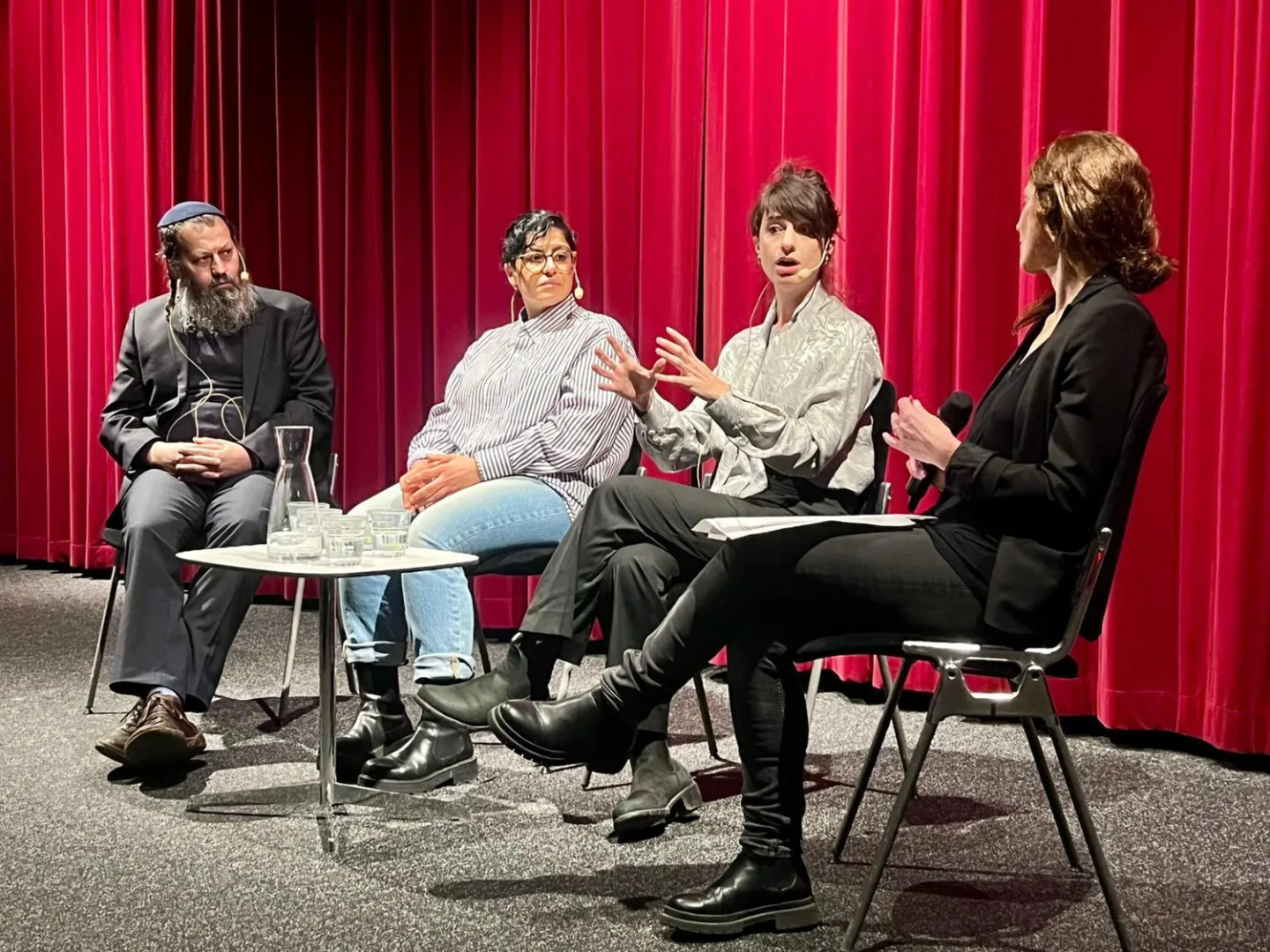


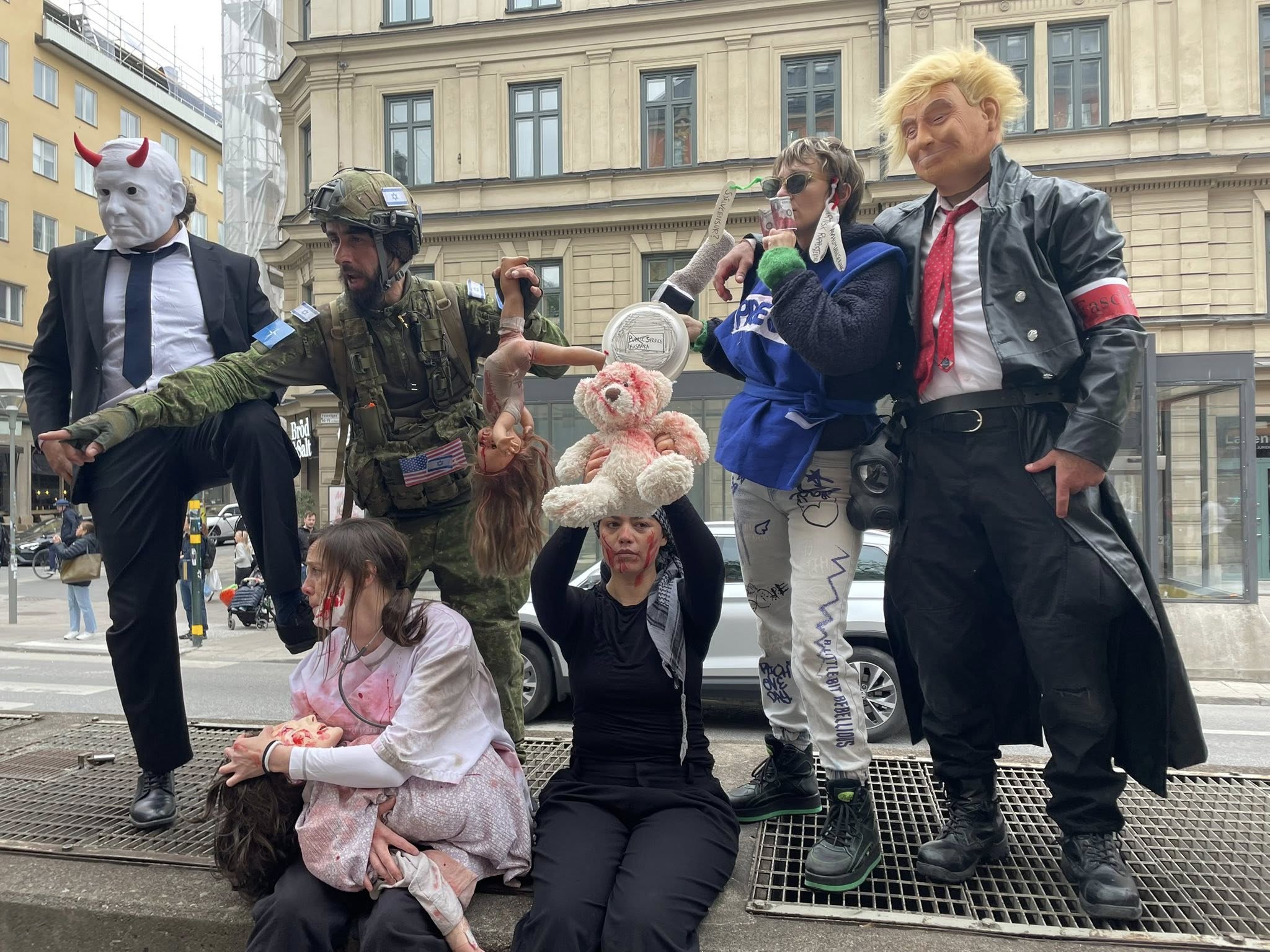

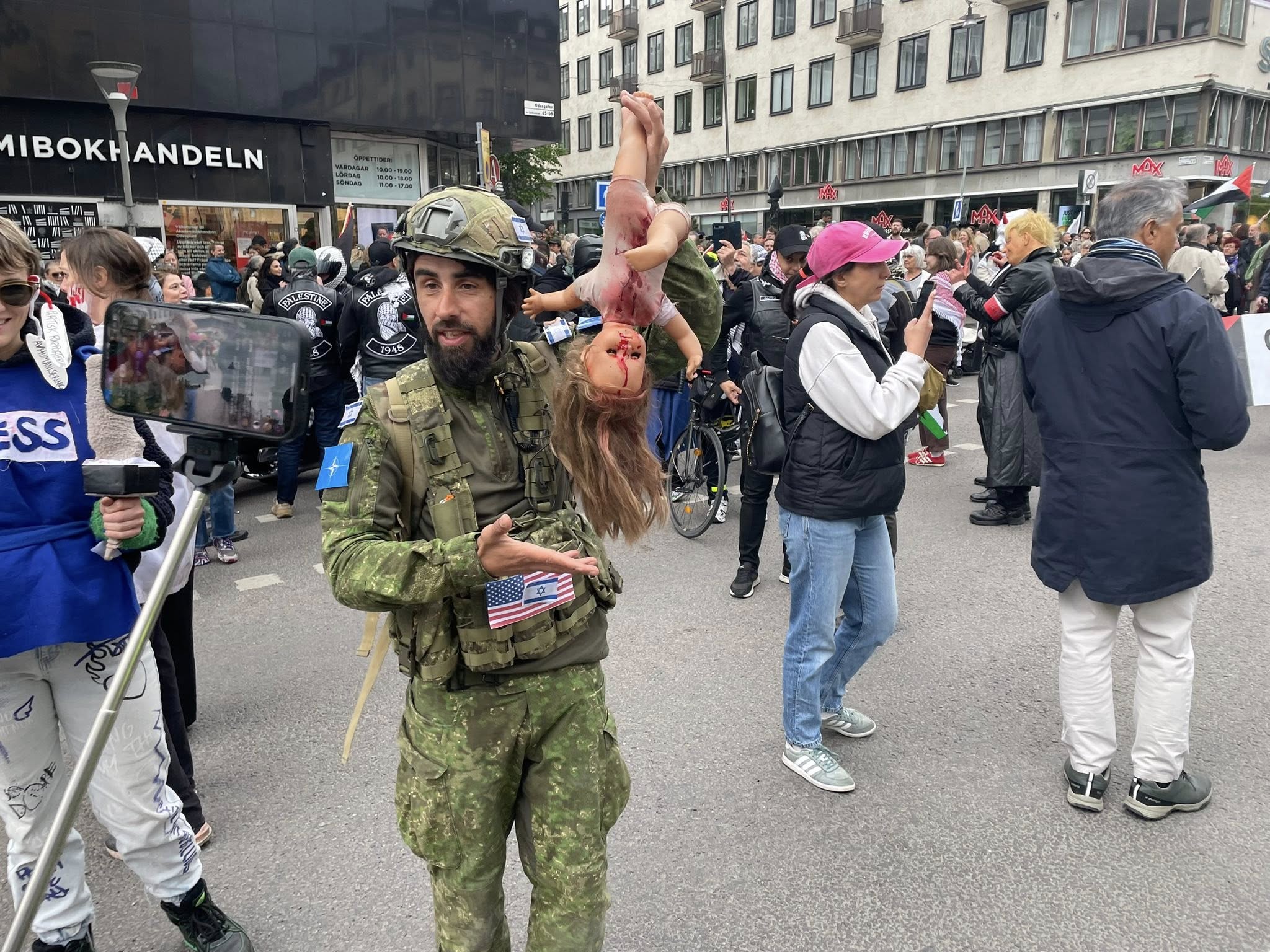

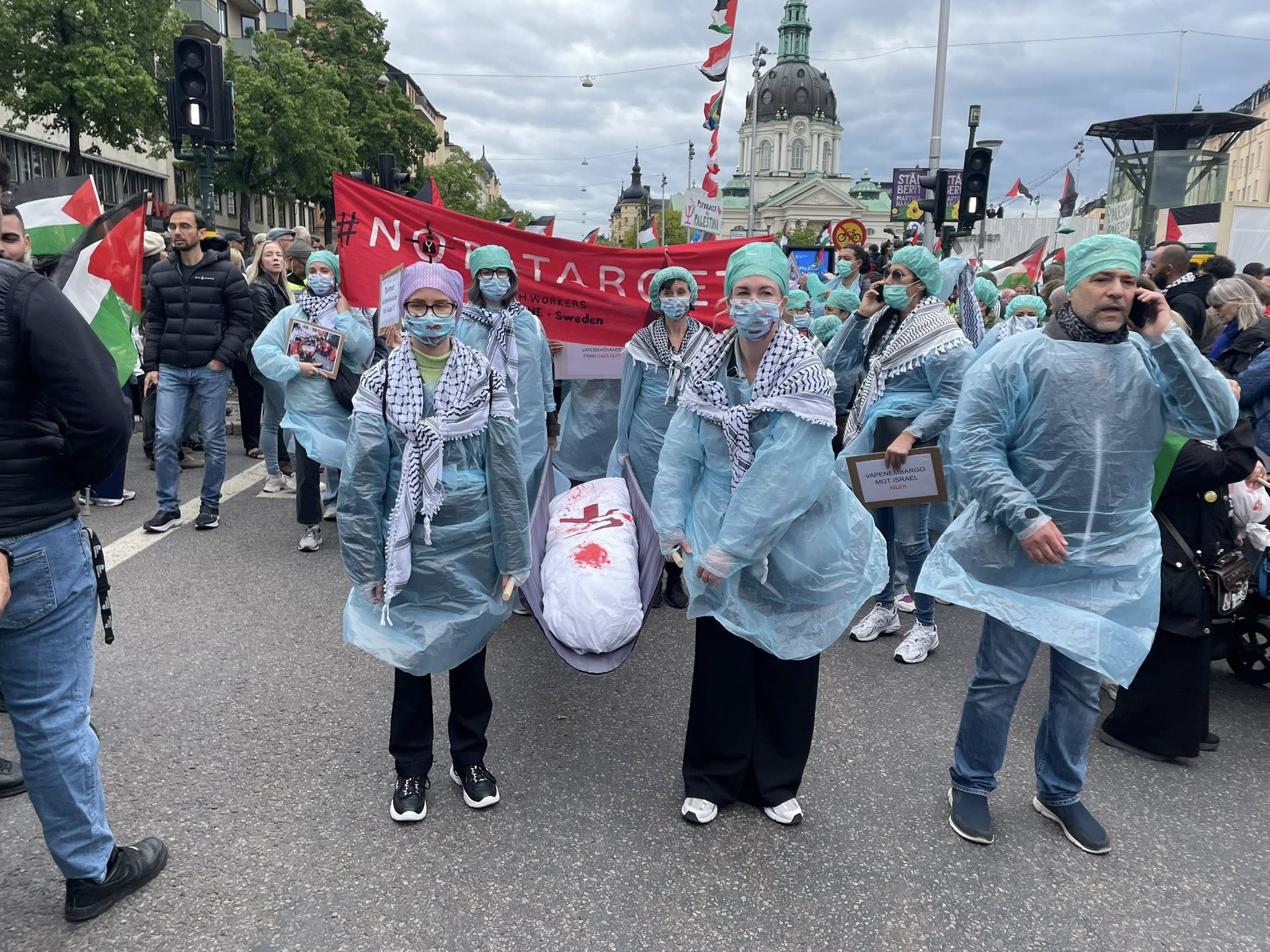
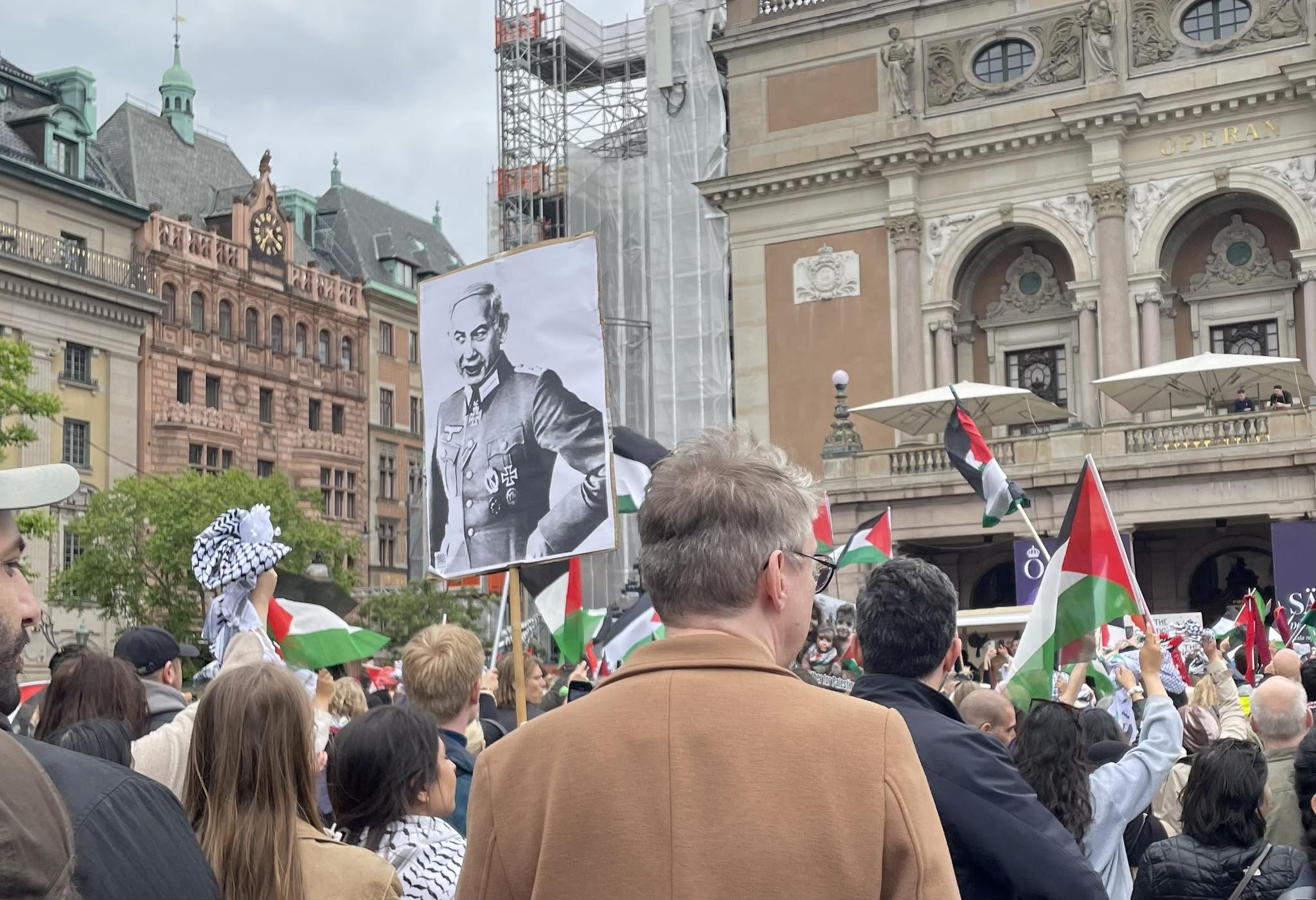
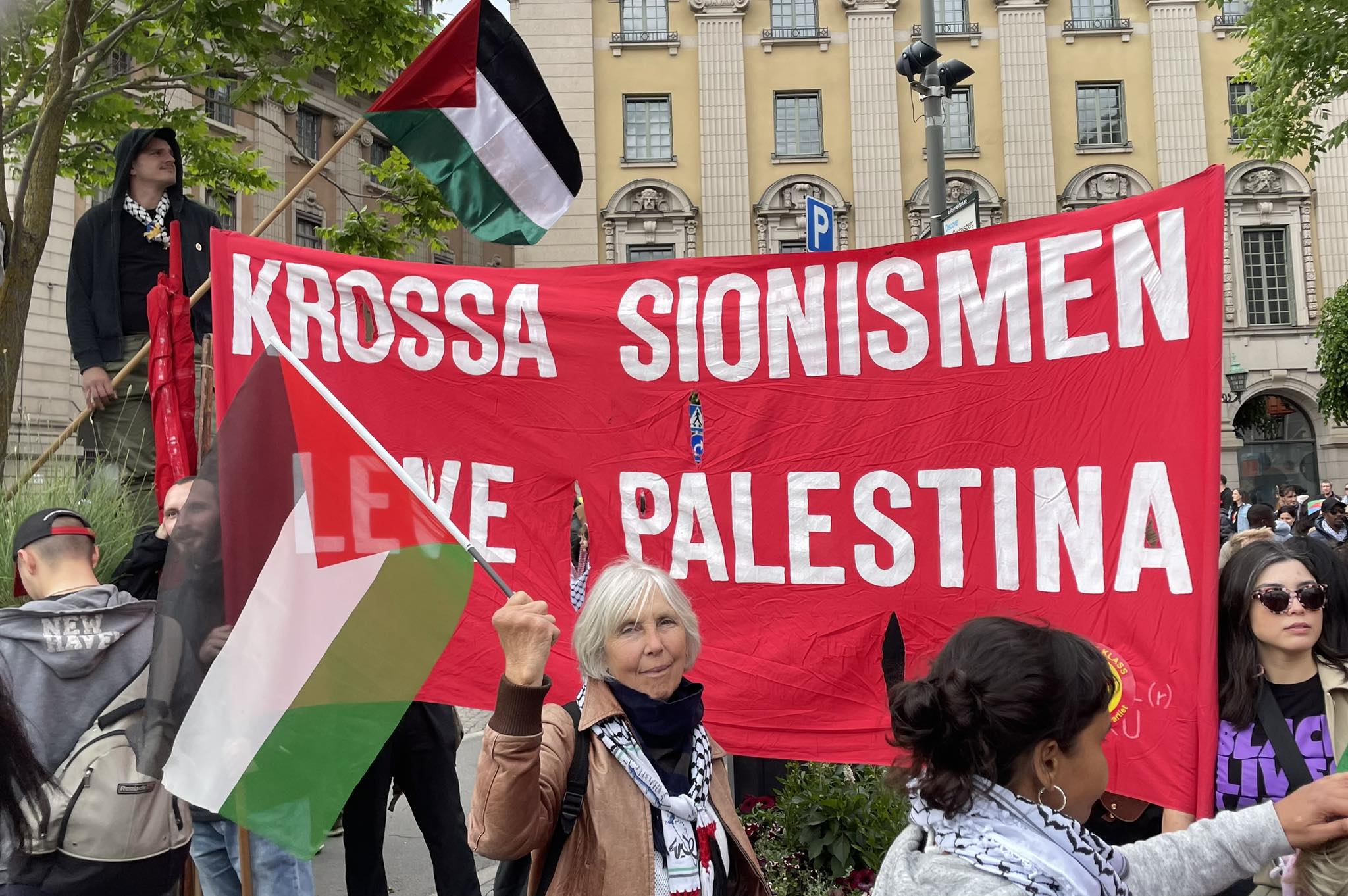
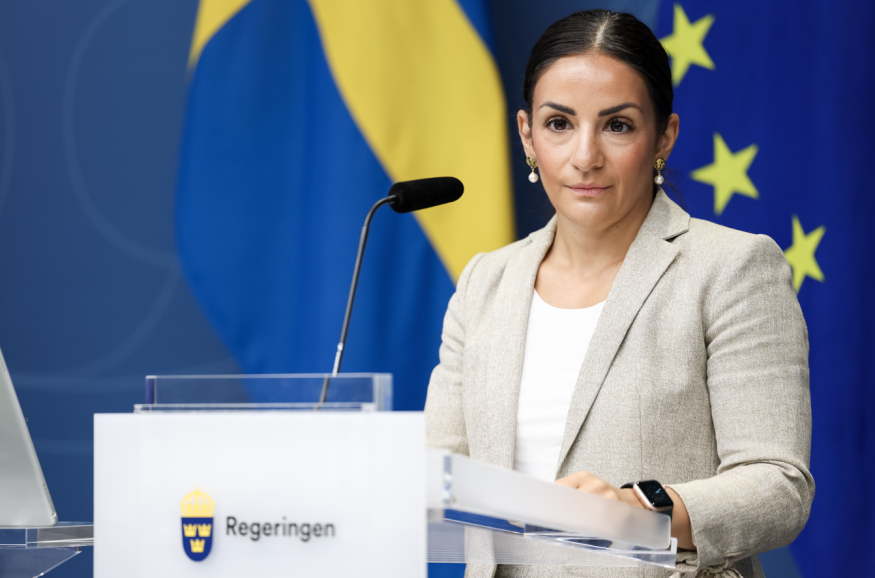


 דיויד סטברו