A popular proverb says that a half-truth is a whole lie. The latest episode of SVT’s Utrikesbyrån about Hamas was a good example of that. That does not mean it wasn’t interesting. It was. Nor is there any doubt that the three participants — former Prime Minister Stefan Löfven, political scientist Marco Nilsson and Middle East analyst Bitte Hammargren — knew what they were talking about. But when it came to the analysis of Hamas, we were given only a half-truth.
The questions the presenter Rebecca Randhawa asked were: what is left of Hamas, will they lay down their arms, and who will govern Gaza. The first and the third questions are almost impossible to answer. Even Israeli intelligence does not know what remains of Hamas’s military capability, and Gaza’s future governance depends on a complicated geopolitical process. The second question, however, can be answered based on a deep understanding of what Hamas is, the choices it has made in the past, and what its ideological and political DNA is.
According to Löfven, Hamas’s power is the result of a paradox. Despite being one of Israel’s greatest enemies, its power originated with Israel’s political leadership. “Such an organization receives support (from Qatar, for example) simply because Israel wants to avoid the Palestinian Authority (PA) gaining any power.” Hammargren agreed and said that Hamas was a political asset for Israel. “Netanyahu’s line was that by letting Hamas grow in Gaza we don’t have to hear about a Palestinian statehood,” she said. This is a common analysis and it is partly true. Netanyahu and other Israeli leaders do indeed oppose a two-state solution. Because of this, his strategy was to weaken the PA, and many argue that one of the ways he did this was by allowing Hamas to grow. But this is only half the truth.
The other half, and the real reason Hamas rose to power and was able to retain it, is much simpler. The source of Hamas’s power is support from large parts of the Palestinian people. Even now, after two years of destruction and death that are a direct consequence of Hamas’s decision to massacre Israeli civilians on October 7, 2023, Hamas is still supported by many Palestinians. The international support from Qatar and Iran that Löfven and Hammargren mentioned is also not hard to understand. Iran’s regime has a long-term goal of eliminating “the Zionist entity,” and Qatar built its international position on supporting its ideological Muslim Brotherhood allies. Sure, Netanyahu miscalculated Hamas’s capacity and misread its intentions, but it was not he who made Hamas’s ideology popular, and it was not he who turned Qatar and Iran into dangerous regional destabilizing powers.
But where is Hamas heading? Utrikesbyrån’s two-and-a-half-minute clip tried to provide background. According to the clip, “Hamas removed the demand that Israel be destroyed, but still does not recognize the state of Israel.” This is not even a half-truth. Hamas is absolutely committed to the destruction of Israel. Yes, it created a new charter for foreign audiences, because the old document contained antisemitic propaganda that was not particularly popular on university campuses and in some Western circles. But even the new charter demands “all of Palestine” from the river to the sea, it does not accept the Oslo Accords or the two-state solution, and it still endorses “armed resistance,” which has been a decisive part of Hamas’s nature long before October 7. That includes blowing up buses and restaurants full of civilians as well as kidnapping, torturing and murdering Jews of all ages, genders and backgrounds. One interesting thing Utrikesbyrån did not mention is that Hamas activists have on several occasions been arrested in Europe for planning attacks on “Jewish targets.” Worth mentioning if anyone took the “new charter” seriously.
Despite (or perhaps because of) the violence, Hamas won the Palestinian elections in 2006 in both the West Bank and Gaza. Palestinians are not blind or politically incapable — they knew exactly what they were voting for. According to Utrikesbyrån’s experts, Netanyahu could have fought Hamas by strengthening the PA. It’s an interesting theory. Only problem is that it’s not true. Not during the years when Hamas was building its reign of terror, anyway. The reasons are that Netanyahu was not Israel’s prime minister at that time. Between 1999 and 2009 the prime ministers of Israel were Ehud Barak, Ariel Sharon and Ehud Olmert. The first was an outspoken advocate for a two-state solution, the second ended the occupation of Gaza, and the third was probably the one who offered the PA the most generous territorial compromise. Hamas was not impressed. It continued to build the fundamentalist, jihadist, genocidal faction within the Palestinian nationalist movement. Hamas did not need Netanyahu for this. It was fully capable of doing it on its own, while many Israelis were still considering peace and reconciliation.
Utrikesbyrån downplayed all of this. In the program there were no blown-up buses, no tunnels, rockets, high-tech international propaganda campaigns or brutal executions of Palestinian “collaborators.” October 7 was only mentioned in passing, as another point on the timeline. No hostages, no burned neighborhoods, no executed families. This is not a complaint that they “forgot October 7,” but a critique of incomplete analysis. How can one answer the question about Hamas’s intentions without taking into account that the organization recruited thousands of people who were willing not only to kill but also to commit gang rapes and sexualized torture in the name of Allah?
Netanyahu can and should be criticized for many things, but not for this. Sure, he did not destroy Hamas before October 7, and through his incompetence and corruption he may have contributed to the opposite. Israelis should hold him accountable for that. But this is far from the cause of the catastrophe. Hamas began building its advanced military capability long before Netanyahu, it remains standing, and many Palestinians still support it. Let us imagine that Netanyahu had decided to wipe out Hamas back in 2014. Now that we know that not even the destruction of Gaza did the job, would Stefan Löfven have supported an Israeli offensive on that scale? Would the Obama administration have allowed it? Would the UN have accepted it? Of course not. Everyone can complain about Netanyahu and everyone can criticize Hamas, but in the end — whose responsibility is it to eliminate Hamas, and who will support such an effort?
It is obvious that Stefan Löfven in no way supports Hamas. In Utrikesbyrån he spoke very clearly about the necessity of a political process with a reformed Palestinian Authority moving toward a two-state solution. But putting the blame for the situation on the Israeli government while ignoring Hamas’s inherently genocidal nature is a classic half-truth. It leads people to believe in conspiracy theories about secret Israeli involvement in the massacre of its own citizens, and more importantly — it shifts the focus to the wrong side. To reach a lasting ceasefire it would be wiser to focus on the “de‑Hamasification” of Gaza and support moderate forces on both sides that can help their communities recover from this two-year trauma and build a future together.
As Sweden is marking 250 years of Jewish life, the reactions to the October 7th massacre, the war in Gaza and the tone of the rhetoric in the public debate are reasons to be concerned about Swedish antisemitism. But what is the true extent of this scourge, what is its impact on Sweden’s Jewish community, and how is it being addressed by the authorities? By placing these issues in a broader historical context, David Stavrou’s investigation, which we are publishing as part of our partnership with the DILCRAH, seeks to answer these questions.
In 1973 a young Moroccan army officer named Ahmed Rami arrived in Sweden asking for political asylum. He said he needed protection because he was part of an unsuccessful coup d’état in his homeland the previous summer. More than a decade later, after obtaining asylum in Sweden, Rami started broadcasting Radio Islam, a radio program which subsequently turned into a newspaper and later, a web-site. The focus of these enterprises became clear right at the beginning – it was not about Islam; it was about Jews. The radio program and the website featured some of antisemitism’s greatest hits; conspiracy theories about how Jews and Zionists control the world, Holocaust denial, Nazi propaganda, lists of influential Swedish Jews and Israel bashing. During the last three decades, Rami has been investigated, charged, convicted and fined for hate speech and hate crimes and his radio station was shut down by the authorities more than once. Still, now aged 78, Rami’s legacy lives on. He has published books, voiced support for Hezbollah and neo-Nazi groups, his website is still very much alive and the internet allows his work to continue.
Radio Islam is an important landmark in the history of Swedish antisemitism for several reasons. One of them is that the precedential trial which sent Rami to prison for six months also gave a small and relatively unknown Swedish organization called The Swedish Committee Against Antisemitism (SCAA, or SKMA in Swedish) an important role in the Swedish public arena. “SCAA is a religiously and politically unaffiliated NGO which was founded in 1983”, says Mathan Shastin Ravid, the organization’s office manager, “it was founded by a group of activists who wanted to raise awareness about antisemitism. It was a period with a clear wave of antisemitism in Sweden and other European countries during and after the Lebanon War in 1982. Antisemitism was not a new phenomenon in Sweden back then, but this was on a new scale, there were all these accusations with motives and images that targeted not only Israel, but Jews as a group. When the Radio Islam broadcasts started in the end of the eighties, it was clear to us that the radio station was a megaphone for anti-Jewish hatred and propaganda. On the basis of SCAA´s report to Sweden’s Chancellor of Justice, Rami was convicted of hate speech. But it was clear that in those days we stood pretty much alone. Not many people understood the problem, people did not want to talk about it and there were many known figures who came to Rami’s defence saying it was only criticism of Israel, not antisemitism”.
A lot has changed in Sweden since then and SCAA probably has an important part in the change. Shastin Ravid says that since the nineties, the organization has become more than just an activist watchdog. It now also focuses on education. “These days we stand on two legs”, he explains, “one of them is monitoring, information and advocacy, as we try to follow what is happening in Sweden and the world and follow the Swedish and international debate regarding antisemitism. We then react when we see antisemitism in different forms. The other leg is education. We have educational programs for different target groups such as teachers and pupils in Swedish schools, journalists and politicians. We also work with some governmental authorities like the police, which often lack a deeper knowledge of contemporary antisemitism and how it spreads. It is my understanding that there is more awareness in this area today than there was ten years ago and that positive things are happening as part of a higher level of knowledge and consciousness in general in Swedish society today when it comes to antisemitism. But there is still much work to do..”
When Shastin Ravid is asked for an up-to-date description of antisemitism in Sweden, he starts by saying that more research is needed to get a better understanding of the problem. That said, it is clear that in many ways Sweden is not different from other countries. “The development in Sweden is connected to global developments”, he says, “antisemitic conspiracy theories have been spread and legitimized by important political actors in recent years. In Europe we have for example seen it in countries like Hungary and Poland amongst right-wing nationalist parties and governments, but we have also seen it in other countries including the US where amongst others Donald Trump, Elon Musk and the MAGA movement have legitimized and spread antisemitic propaganda. This global phenomenon has affected Sweden too and has sparked hate speech and hate crimes. And then there is, of course, the strong global wave of antisemitism after Hamas’ attack in Israel on the 7th of October 2023 and the war in Gaza. It is not the first time an escalation of the Israel-Palestinian conflict triggers antisemitism in Sweden and other countries, but the level of propaganda, hate, threats and attacks against Jews has been unusually high.”
“Studies show that antisemitism in the form of negative beliefs and attitudes towards Jews exists, in varying degrees, in all Swedish society, in many different groups and milieus. Within Swedish mainstream politics, the problem has long been visible in the right-wing nationalist Sweden Democrats party. For years, the party has tried to portray itself as a party which opposes antisemitism and is pro-Israel, but antisemitism continues to be a problem in the party. We often find high- and low-level representatives of the party spreading antisemitic propaganda and we see many connections between the party and right-wing and even Nazi extremists. In addition, the Sweden-Democrats do not deal with antisemitism within their ranks unless they are exposed by the media, and even then, there are many cases of people within the party who have kept their jobs after they were exposed”. The party’s proclaimed “Zero Tolerance” policy towards racism and extremism, including antisemitism, Shastin Ravid says, is “a joke”.
“But the nationalist and populist right is just part of the problem. Antisemitism does, for example, also regularly appear within the pro-Palestine movement and parts of the Swedish left, where it is often related to Israel and the Israel-Palestinian conflict. In these circles there is sometimes a denial or an unwillingness to see the problem of antisemitism, sometimes rooted in the misperception that Jews are “white” and therefore cannot be victims of racism. In the last year, there has been a big debate in Sweden about the fact that several representatives of the Swedish Left Party have spread antisemitic propaganda, many times on social media. And when criticized, those party representatives have been backed by many others within and around the party who have denied that the propaganda is antisemitic. The SCAA and many others have strongly criticized all of this, and the fact that the party leadership many times has been slow to act and condemn the spread of such anti-Jewish racism and those party members who defend and excuse it.”
“And of course, movements linked to radical Islamism must also be taken into account”, Shastin Ravid adds. According to him, antisemitism is most virulent within those movements and Nazi and other right-wing extremist movements. “For all of them, antisemitism is an ideological foundation, a “worldview,” a way of understanding and describing events both locally and globally. Jews are constantly portrayed as conspirators and blamed for all the world’s ills”. Furthermore, Shastin Ravid adds, “antisemitism has long been a weapon of regimes in the Middle East, where it is deeply rooted, openly expressed, and legitimized. The spread of this type of propaganda via the internet by regimes such as Iran has contributed to the globalization of this hatred. Recently, it was revealed that the Iranian regime is suspected of having planned to murder Swedish Jews, among them Aron Verständig, the chair of the Official Council of Swedish Jewish Communities (Judiska Centralrådet). According to the Swedish Security Services (Säpo), Iran has also recruited Swedish criminal networks to carry out attacks against Israeli and Jewish targets. The Swedish National Centre for Terrorist Threat Assessment (NCT) has reported that the biggest terror threats in Sweden come from violent Islamists and right-wing extremists, which both have Jews and Jewish institutions as some of their primary targets”.
Even without physical violence, Swedish antisemitism is present in the public sphere and one of its main outlets are the numerous demonstrations in support of the Palestinians and denouncing the “genocide” in Gaza. The days right after October 7th, and before the Israeli ground attack on Gaza began, were a good example. While the massacre in southern Israel was still ongoing, there were a couple of spontaneous demonstrations in southern Sweden which included music, dancing and convoys of cars honking their horns in support of the Hamas attack. Right after that, in the course of one weekend in Stockholm, three different organizations demonstrated separately but with similar slogans. A part from the mainstream Pro-Palestinian movements, there were more radical organizations on the streets. One was Hizb ut-Tahrir, a radical Islamic group advocating the creation of a caliphate governed by Sharia law from Uzbekistan to Morocco, with a small branch in Sweden. It was granted permission to demonstrate despite being banned in several countries. Next came the Nordic Resistance Movement, a neo-Nazi group with a few hundred members who demonstrated in support of the Hamas attack. They were followed by the Revolutionary Communist Youth, which claims that Palestinians have the right to “fight by all means against the occupying power to liberate their land.” The latter described the October 7 attacks as an act of liberation that “caught the Zionists in their beds.” Both organizations, one neo-Nazi and the other Marxist-Leninist, support the Palestinian slogan calling for “crushing Zionism.”
Since then, there have been numerous demonstrations in Sweden, many of them on a weekly basis. These demonstrations are legal, the organizers deny that they feature antisemitic content and they are seen by many Swedes as legitimate opposition to Israel and solidarity with Palestinians. However, they often include slogans which are considered antisemitic by many such as supporting a “global intifada” and “crushing Zionism”, promoting antisemitic conspiracy theories and calling for a “Free Palestine from the River to the Sea”.
Still, demonstrations are not the main concern when it comes to current Swedish antisemitism. There have been numerous reports of activists who have used school classes, universities and even pre-schools to spread radical anti-Israeli political propaganda which is seen by many as antisemitic, the culture world has been full of calls for boycotting Israel and ending cooperation with Israeli artists, the BDS movement which was hardly present in Sweden before the war has been publicly active in promoting boycotts against companies which they claim are complicit with Israel’s “illegal occupation and apartheid politics” and parts of Swedish academia have become hostile to Jewish and Israeli students. In Gothenburg University, for example, activists were allowed to take over the premises of the university’s art and design school and they distributed Hamas propaganda. In Stockholm, Lund and Uppsala there have been reports in Swedish media of pro-Palestinian encampments and so-called “liberated zones” which together with harsh rhetoric from members of senior university staff who are also political activists made students hide their Jewish identity and caused concerns about their safety and well-being.
Demonstration in Stockholm, June 2025
How prevalent are antisemitic crimes?
“Many Jews in Sweden have experienced antisemitism in one way or another”, Shastin Ravid says, “we need more research, but studies have indicated that many Swedish Jews have been targeted by antisemitism and many of them have not reported these incidents. This is also true for other hate crimes, most of them are probably never reported to the police”. Some of the studies Shastin Ravid is referring to were made by the Swedish National Council for Crime Prevention (Brottsförebyggande rådet, Brå). They show that there is a small and inconsistent increase in the number of reported antisemitic hate crimes over the years, but some years there is a sharp rise. “These are often the years when the conflict between Israel and the Palestinians has escalated, like the last war in Gaza. According to a study from Brå, there was a sharp rise in reported antisemitic hate crimes during the last part of 2023, almost 5 times as many as during the same period the year before”.
But other global events may also have been important in this respect. “The pandemic, for example, brought at least two kinds of antisemitic effects”, Shastin Ravid says, “First, there were accusations against the Jews, who were blamed for starting the pandemic and for profiting from it. Then, there were parts of the anti-vaccination movement which instrumentalized and diminished the Holocaust, claiming that they are treated the same way as the Jews in Nazi Germany. The war in Ukraine also triggers antisemitism on a global scale as do the discussion about Quran burnings and the debate about migration and refugees which fuels the antisemitic so-called replacement theory. These days antisemitic propaganda is often spread online with code words replacing the word Jews. Instead, it is Zionists or Globalist or specific names like Soros or Rothschild. These words are used globally as symbols of a big Jewish conspiracy, and they are widely spread in Sweden too”.
Another study Shastin Ravid speaks of was made by a government agency called The Living History Forum (Forum för Levande historia), which was founded in the beginning of the 2000s to “work for democracy and equality between all people, using lessons learned from the Holocaust”. According to Shastin Ravid, the study from 2020, showed that there had been a decline in antisemitic attitudes and notions over a period of 15 years, but that antisemitism still exists within different parts of the population. “I think that this is an important point to make”, he says, “the study showed that around 5 % of the respondents displayed antisemitic attitudes with a stronger intensity, which is a rather low figure compared to many other countries. However, if you broaden it and look at the group of people who agreed with one or more of the study’s antisemitic statements, the number is 34 %. This does not mean that 34 % can be said to be antisemitic, but it indicates that antisemitic ideas exist among a bigger part of the population than many think. We should not only focus on the most extreme groups. According to the study, higher levels of antisemitic beliefs correlated among other things with, and were more common amongst people who are: older, have lower levels of education and have a low trust in public institutions. Antisemitic beliefs were also more common among people who have sexist and anti-immigrant attitudes, people who sympathize with the Sweden Democrats party, people who were born outside Sweden or Europe, and people with a Muslim religious affiliation. Another interesting factor is that traditional and Holocaust related antisemitic beliefs tended to be slightly more common among men, and Israel-related antisemitic attitudes and notions tended to be slightly more common among women”. However, Shastin Ravid points out, the study is now a few years old, and many things have happened since that could affect the results of the next study, which is supposed to be published in 2026.
One group which is particularly exposed to antisemitic hatred is the group of school pupils and teachers who in many cases are scared to be open with their Jewish identity. “We have studies from among other places Malmö and Stockholm which show that there are serious problems with antisemitism in some Swedish schools. Sometimes it is related to the Israeli-Palestinian conflict, sometimes the word Jew is used as a curse and sometimes we see antisemitic conspiracy theories which fascinate youngsters. We also see jokes about the Holocaust, swastikas on benches or lockers, and Nazi salutes. Jewish pupils often feel that their teachers and schools do not take the matter of antisemitism seriously, and they say that there is a lack of knowledge and support. This is something that many Swedish youngsters have told us at the SCAA through the years”.
Sweden is home to the largest Jewish community in Scandinavia. It’s estimated that about 15,000 Jews live in the country which has a population of just over ten million. That said, there are probably many more Swedes who have a Jewish background, as Jewish immigration to Sweden dates back to the 18th and 19th centuries and many have married into Swedish families. The largest community in the country is the one in the capital Stockholm which has three synagogues, including the conservative Great Synagogue adjacent to the Raoul Wallenberg and Holocaust monuments and an office building which houses various Jewish organizations. A few minutes’ walk away, there’s a relatively new cultural centre called “Bajit” which houses a Jewish primary school, a Jewish kindergarten and a variety of Jewish activities for all ages, as well as a Kosher shop and a café. Smaller Jewish communities and associations exist in Malmö, Gothenburg and a couple of other smaller towns. Sweden’s Jewish communities are united under an umbrella organization, the Official Council of Swedish Jewish Communities (Judiska Centralrådet) which usually takes part in national discussions concerning Jewish life in the Swedish Parliament, Government and other authorities.
Since the problem of antisemitism isn’t new to Swedish society, it’s no surprise that in recent years the Swedish government has made many attempts to address it. After decades of ignoring the problem, dismissing and repressing it, recent Swedish governments have put it on their agenda and have tried many different approaches. Petra Kahn Nord who served as the World Jewish Congress’ representative in the Nordic countries, says that the current Swedish government appointed a special inter-ministerial task force in order to combat antisemitism and improve the conditions for Jewish life in Sweden. “This government task force was set up to be a ‘one point of contact’ authority, which is something we’ve suggested before”, she says, “it was founded in January 2023 and the first issue that it focused on was government funding for security for Jewish institutions like synagogues and schools. The second issue was, and still is, addressing antisemitism”. Kahn Nord explains that the previous government had the political will to secure security funding, but the budget mechanism didn’t really work. The current government, however, addressed the issue, increased funding and gave additional funding after October 7th. But protection against violent antisemitic incidents isn’t all that’s needed.
In 2021 Sweden hosted The Malmö International Forum on Holocaust Remembrance and Combating Antisemitism. The conference, hosted by then-Prime-Minister, Social-Democrat Stefan Löfven, asked the participating countries and organization to make concrete pledges that would strengthen Holocaust remembrance and tackle Holocaust distortion, Holocaust denial and contemporary antisemitism. The Malmö forum was seen by many as a natural continuation to the steps another Social-Democratic Prime-Minister, Göran Persson, made twenty years earlier. Persson founded what is now called the International Holocaust Remembrance Alliance (IHRA) and initiated the Stockholm International Forum on the Holocaust which brought together political leaders, state officials, religious leaders, survivors, educators, and historians from around the globe. When Löfven initiated the 2021 events, one of Sweden’s pledges was to form an inquiry on strengthening Jewish life in the country. The idea was that fighting antisemites is one thing, but making Jewish life flourish was another subject. One that has been neglected for many years.
This indeed happened and various issues which Jews in Sweden were concerned about were discussed seriously. These included the threats of illegalizing Jewish circumcision and banning the import of Kosher meat which were supported by some political parties. Another important issue was the status of Jewish schools in Sweden which doesn’t have almost any real private schools. There are so-called independent schools, including a couple of Jewish ones, within a charter system, but because of reports of radicalization in some of Sweden’s independent Muslim schools, new legislation was put in place which affected Jewish schools too. The new legislation imposed the definition of “denominational schools”, and with-it necessary restrictions, on existing Jewish schools. Another concern was an initiative to limit the establishment of new denominational schools. These were all concerns in the Swedish-Jewish pre-October 7th reality. Community leaders were saying then that “Swedish Jews may be able to survive a terror attack, but not legislation forbidding Brit Mila or Jewish schools”.
Today, after October 7th, it’s clear that the majority of political parties, and certainly the ones which are part of the Swedish Government, are committed to addressing these Jewish concerns. Antisemitism, however, is not necessarily a problem which the government can easily address since its origins are well-rooted and widespread in many parts of Swedish society. All recent Swedish governments have therefore realized that combating antisemitism is as complicated as it’s important. And it’s a work in progress. Petra Kahn Nord mentions two major shifts in the last few years. “First, before 2015 it was not acceptable to talk about antisemitism which came from immigrant groups from the Middle-East. This made members of the Jewish community feel abandoned. Sweden has now changed and it’s now possible to talk about it and deal with the problem”, Kahn Nord says, “the second shift has to do with the fact that the populist right-wing Sweden-Democrats party is supporting the government. So far, however, the party hasn’t caused any policy shifts aimed at the Jewish minority. But October 7th created a new reality. We’ve seen an increase in the number of antisemitic incidents in schools and universities, we’ve seen politicians, especially in the Swedish Left, who spread antisemitic propaganda and we’ve seen support for Hamas in demonstrations and online”. Kahn Nord says that schools and social media are a particular concern. “The problem in these arenas is serious”, she claims, “and it can’t be dealt with by using old “action plans” that previous governments suggested. Many of these plans, including pledges made in Malmö four years ago, focused on Holocaust education and educational strategies against racism in general, as opposed to antisemitism as a specific phenomenon. The Malmö Pledges, for example, included the pledge to establish a new Holocaust Museum in Stockholm (which has indeed been opened since then) and another to contribute 5.5 million SEK to the Auschwitz-Birkenau Foundation. “There’s a Swedish tendency to focus on dead Jews”, Petra Kahn Nord says, “perhaps now, especially after October 7th, it’s time to focus on the living ones”.
And indeed, when it comes to living Jews and real concrete Jewish communities, combating antisemitism and taking measures to improve Jewish depends on strong support and clear stands by governments.
In Sweden, the subject of antisemitism has been on the agenda for decades and different governments have handled it in different ways. Today, the government minister who holds the relevant portfolio is Parisa Liljestrand, a forty-two-year-old minister from the center-right Moderate party. Liljestrand, immigrated to Sweden as a young child from Iran and worked as a teacher and school head-master before getting involved in local politics. In 2022 she received her first post on the national political scene and became Sweden’s Minister of Culture. In an interview conducted in her Stockholm office she explains that one of her responsibilities is addressing issues connected with Sweden’s five national minorities. The minorities and their languages, which are considered official minority languages in Sweden, were recognized in the year 2000 and they include Jews and Yiddish; Roma and Romani Chib; the Sami and the Sami language; the Swedish Finns and Finnish and the Tornedalers and their Meänkieli language.
“Our government was appointed in October 2022 and the Prime Minister made it clear, as early as his first government statement, that strengthening Jewish life and working against antisemitism would be one of our priorities”, she says, “When we started our work, we decided that we need to understand what’s been done in Sweden today and to listen to the Jewish organizations which are active in Sweden. We wanted to understand what they think is needed. What we found out was that a lot of important work is being done, but there are things which still don’t work and there are things which are lacking. Sweden ranks well in global measurements of antisemitism, but there’s still widespread antisemitism in Sweden which we need to actively fight. This became even more evident after Hamas’s horrific attack on October 7, 2023. As in many other countries, we have seen the threat perception towards Swedish Jews increase, as has open antisemitism. The government takes this very seriously.
But it is not enough to work against antisemitism. We need to strengthen the possibility to live a free Jewish life, both in terms of Jewish culture and in terms of Jewish religious life. This is why we need to gather the work that’s done by different government ministries and by Jewish organizations. When we talked to the organizations, we found that it was sometimes hard to understand who’s responsible for what issue and it was important to make sure that things don’t end up in the wrong place. That’s why we founded the Government Task Force for Jewish Life as an inter-governmental work group which, beside the Prime Minister’s office, has eight more government offices represented in it”.
When asked if the fact that her government is supported by a party with roots in neo-Nazism doesn’t affect her attempts to fight antisemitism, Liljestrand tells a story of one of her meetings. “I met a Jewish father who told me about his son who went shopping while he was wearing a necklace with a Star of David. The father said that when the boy came to the cashier, the person who was working there told him that he was not welcome in the shop. This story really hurts. This can’t be our reality. This isn’t Sweden. We have a clear mission – making Sweden a free country to live in and supporting those groups who cannot live a de-facto free life here. So, I don’t feel the Sweden-Democrats are stopping me from doing this. I understand that there’s a concern, but I’m clear, and the government is clear in its message. One must remember that antisemitism is about gathering and capitalizing violence from various directions. That’s what makes it different from regular racism”.
Parisa Liljestrand, Photo by Ninni Andersson Regeringskansliet
Part of the violence Liljestrand is talking about is online and much of it is aimed at young people who have to grow up with it. “It’s extremely serious when antisemitism becomes a natural part of day-to-day life and it isn’t limited to the physical space and instead it’s spread digitally”, Liljestrand says, “it’s worrying and we need to fight it and work towards the goal of not having another generation which is exposed to the same kind of difficulties living a Jewish life or the same kind of antisemitic hate which previous generations were exposed to”.
Liljestrand seems to be serious about this particular aspect of her job. “I myself, with my background, know exactly what it’s like to live in a society which treats you differently if you have a different skin color or if you have a different culture”, she says, “I know what it’s like to fight your way into society and have the will to be part of it while still keeping a part of your culture and heritage”.
When it comes to antisemitism and the struggle against it, Sweden is indeed an interesting case. For much of its post war history, antisemitism wasn’t taken very seriously. Neo-Nazi movements operated freely while the close ties to Nazi Germany were ignored. This came together with a widespread ignorance about the Holocaust, antisemitic attitudes within the Swedish elite and free import of antisemitism with large waves of immigration from other countries. Then, in the last couple of decades, all that changed. Sweden became a world leader of Holocaust education and combating antisemitism. At least that’s what it presents itself as being. But are the museums, task forces, international conferences, research projects and educational initiatives really working?
On the one hand, it is clear that Sweden is much more aware of the problem and much better equipped to combat it than it has ever been. But any honest assessment of the situation must admit that, in many cases, Swedish schools and universities remain hostile dangerous places for Jewish students and teachers, who continue to suffer from harassment, social pressure and occasionally also violence, while teachers and principals avoid confronting the aggressors. It has been reported that in some schools, Shoah survivors haven’t been invited to share their stories because of the disrespect shown by some students.
Outside the education system, other problems remain unresolved. Although physical violence against Jewish targets is not common in Sweden, it has occurred and, according to police and the press, it remains possible. Molotov cocktails have been thrown at Jewish cemeteries, funeral homes, and synagogues, the Israeki embassy has been attacked and other cases of physical and verbal assaults against Jews have been documented.
The resurgence of pro-Palestinian demonstrations since October 7—where strongly antisemitic slogans, signs, and rhetoric have been documented—is also a cause for concern. The scale of the protests against singer Eden Golan’s participation in the Eurovision 2024 final in Malmö made international headlines, but the truth is that although those demonstrations may have been the biggest, they weren’t the most aggressive.
For many Jews who live in Sweden it’s not about the size of the demonstration and not about the legitimate right to demonstrate. Anyone who’s uncomfortable with these demonstrations can just avoid them. The problem is that when Sweden’s Jews see thousands of people who are collectively calling Israel, which is an important part of their identity, the worse things in the world and promoting a very high level of hate, they know that in that crowd there may be familiar faces – perhaps their children’s pre-school teacher or their local clinic’s nurse or doctor. And it’s not only that. The separation that some of the demonstrators try to make between criticizing Israel and attacking Jews doesn’t always work. When demonstrators wanted to burn an Israeli flag in Malmö in November 2023, they didn’t get on a train and go to Israel’s embassy in Stockholm. They did it outside the local synagogue. A couple of months later protesters from a group called ”Together for Palestine” chanted anti-Israeli slogans at people who were entering Stockholm’s Great synagogue for a Holocaust Remembrance Day ceremony. Some of the people who encountered this were Holocaust survivors. The demonstrators demanded that Sweden’s Jews will denounce Israel and its war in Gaza. These events send a message that 250 years after Jews were officially allowed to live and create a community in Sweden, their legitimacy is now conditional. If they speak out against their historic homeland and its government, they are tolerated. If not, all hell may to break loose.
A look at the Radio Islam website is a thought-provoking experience. It features lengthy texts about subjects like how Jews have controlled Sweden for centuries, how they “instrumentalize the Holocaust” and how racism, hatred and cruelty are the driving forces of the Torah and the Talmud. In a way this brings us full circle. Sweden has gone a long way fighting antisemitism since Radio Islam was persecuted back in the eighties. Since then, Swedish governments, Jewish organizations and civil society organizations have turned Sweden into a country known for its rigorous combat against antisemitism. However, with populist and racist political movements on the rise, with Islamist propaganda on and off-line, with an increasingly aggressive discourse against Israel and Zionism, demonstrations, boycotts, and burnings of flags and books on a weekly basis, it’s now clearer than ever that the fight against antisemitism still has a long way to go.
Malmö, the large city in southern Sweden, has been in the headlines in recent years because of expressions of antisemitism. This is the story of the slow awareness of local and national authorities and the measures taken to deal with the problem. Could Malmö's experience be of any value for the whole of Europe, where many large cities are facing similar problems.
Those who believe in the old saying “there’s no such thing as bad publicity” would do well to study the case of Sweden’s third largest city – Malmö. Home to some 350,000 people, it‘s not particularly big, it’s not Sweden’s oldest or most beautiful city and it’s not exceptionally cheap or expensive to live in. Still, in the last few years it made an international name for itself, though perhaps not the name its leaders were hoping for. Instead of being praised for Västra Hamnen which claims to be Europe’s first carbon neutral neighbourhood, for its multiculturism or for the Turning Torso building, Scandinavia’s highest skyscraper, Malmö is known around the world for a much less appealing feature – antisemitism.
The new antisemitism of Malmö
It’s hard to say when or where it started. Antisemitism isn’t a new phenomenon in Sweden. In fact, it was there even before the first Jewish communities were founded in Stockholm and Marstrand near Gothenburg in the late 18th century. Towards the end of the 19th century and the beginning of the 20th, official state restrictions and discrimination slowly disappeared, but antisemitic ideology and propaganda could be found throughout both the old political establishment and newly founded neo-Nazi and fascist movements. Surprisingly, the end of WW2, which left neutral Sweden relatively unharmed, wasn’t the end of Swedish Nazism. Quite the opposite. After the war Sweden became host for many racist, nationalist and fascist movements. While the political elite was gradually embracing universal values and continuing to develop a social-democratic welfare state, the extreme right on the margins of Swedish society was, and some say still is, flourishing. Neo-Nazi skinheads, antisemitic publishing houses and movements based on pre-Christian imagery that promote nationalist, racist and anti-establishment ideas became an integrate part of Swedish society.
Malmö played an interesting role in this story during the final stages of WW2 and the following years. On one hand, this was the city that became a safe haven for Danish Jews who arrived at its shores after crossing the Öresund strait fleeing the Nazis in 1943. This is also where the Swedish Red Cross’ “White Buses” arrived in 1945, carrying survivors of the Nazi concentration camps. On the other hand, this was the home of the so-called Malmö Movement, which played a central role in the rehabilitation of Europe’s extreme right, back in the 1950’s. The movement’s leader Per Engdahl took a leading role in the project of connecting the remnants of fascist and Nazi movements from all over Europe and forming a political network which published literature, organized conferences and created an escape route for Nazis from Europe to South America. The center of all this was Malmö were Engdahl lived and worked. But all this is ancient history.
For over ten years now, Malmö has become, in the eyes of many, a symbol of a new kind of Swedish antisemitism. While right wing extremism is still dangerous and threatens Jews in Malmö just like anywhere else, in the last few years an imported antisemitism originating in the Middle East and Islamist environments has taken over. In Sweden, the combination of the two proved itself particularly worrying and Malmö is sometimes seen as the center of it all. In 2012 an explosion shook the Jewish community center. In 2009, Molotov cocktails were thrown at the local Jewish funeral home. In the same year Malmö was the scene of what is now known as the Davis Cup riots. As Israel and Sweden were playing an official tennis match, thousands of anti-Israel demonstrators took to the streets and the protest developed into physical and verbal attacks against the city’s Jews and law enforcement forces. At the time, former mayor IImar Reepalu, was accused of being part of the problem, rather than part of the solution when he said to a local daily that “We accept neither Zionism nor antisemitism which are extremes that put themselves above other groups”. But problems didn’t stop when Reepalu was replaced in 2013. Pro-Palestinian demonstrations, especially during periods of conflict in Gaza, continued to feature heavily antisemitic slogans, signs and rhetoric.
When I visited the city in 2015 in order to write a report for “Haaretz” I spoke to a few members of its Jewish Community. Those were the days when hundreds of asylum seekers were arriving every day, mainly from Syria and Afghanistan, crossing the bridge from Copenhagen and arriving at Malmö which became their Swedish port of arrival. As authorities in Sweden were struggling with challenges of housing, employment, education and integration, many in Malmö were worried. “There is fear and harassment on a daily bases”, one woman who immigrated from Israel to Malmö decades ago told me. She claimed that authorities were doing nothing against the daily harassment and the incitement from local mosques. “I’m not against accepting asylum seekers”, another community member told me, “one should not close the door to people in need of help, but this is what happens when we want to solve one problem by creating a bigger one. We need to use our heads, not only our hearts”. After this, I returned to the city on several occasions and reports continued to be troubling. Some claimed that Jewish families were leaving the city because they no longer felt safe. In 2021, a report commissioned by the municipality described Malmö schools as an unsafe environment for Jewish students who suffer from verbal and physical attacks while teachers prefer to avoid conflict with the aggressors. Other reports claimed that Holocaust survivors are no longer invited to tell their stories in certain schools in Malmö because Muslim students treat them disrespectfully.
Malmö at the center of the world
As a response to all this, Malmö’s Jewish community which has existed since the 1870s and now has two synagogues, a community center, a variety of educational activities and just under 500 members, decided to speak out. Now it became harder for the Swedish press to ignore the problem and the picture it painted wasn’t a pretty one – the reports included children who had to put up with their schoolmates burning Israeli flags, making threats and praising Hitler, youngsters who were suffering from bullying and threats of rape and murder on social media and Jewish teachers who were told to put up with the harassment and keep a low profile. These are all well documented facts. They are based on resident’s testimonies, information collected by journalist, NGOs and authorities and studies conducted by serious researchers. But when it comes to Malmö there seems to be a layer of mythology covering the facts. This is the Mythology that gave Malmö unflattering titles like “Sweden’s antisemitism capital” or even “Europe’s most antisemitic city”. During the last few years, reports on Malmö, mainly in the international press, became full of stories about so-called honor killings, forced marriages, polygamy, female genital mutilation, parallel societies, riots, organized crime of ethnic clans and no-go zones in which local criminals have taken over and police and authorities cannot operate.
All this seemed to go hand in hand with the reports on antisemitism and although many of the reports in the media were true or at least based on some aspect of reality, others were extremely exaggerated, taken out of context and, more importantly, highly politicized. This is where Malmö became part of the global list of “greatest hits” for everyone who was spreading stories and conspiracy theories about Sharia law taking over Sweden, Sweden becoming the “rape capital of the world” and Sweden as proof of the “Great Replacement Theory”. With these reports, the attention of the Jewish world was turned towards Sweden and in 2010 the Los-Angeles based Simon Wiesenthal Center started advising Jews to not visit Malmö. With the populist right in Sweden growing stronger, integration of immigrants from the Middle-East becoming harder and the Israel-Palestinian conflict growing closer, Malmö‘s small Jewish community suddenly became a symbol for all the problems in the world, even if a reluctant one.
Public authorities react
It’s hard to say if the situation in Malmö is really as bad as it’s sometimes portrayed in foreign media, or if it’s really that different from the situation in other Swedish cities or any other multicultural European city for that sake. Still, at some point local authorities and the government in Stockholm realized they have a serious problem. The situation in Malmö, whether exaggerated by the press or not, was making Sweden look bad. But it was more than that. In the last couple of years, I have spoken about antisemitism with the Mayor of Malmö, Sweden‘s Education Minister, Foreign Minister and former Prime Minister (all Social Democrats) and there is no doubt in my mind that they were all troubled by antisemitism and dedicated to the fight against it. For them, this is not only a PR problem. This doesn’t necessarily mean that their efforts were 100 percent effective, but at least their concern was sincere. Last October, When I interviewed Katrin Stjernfeldt Jammeh who has been Mayor of Malmö since 2013 she said that she realizes that Malmö isn’t vaccinated against antisemitism. “It’s a problem we’re addressing” she said, “we talk about it more today and, when you talk about it, it seems like it’s a bigger problem than it does if you don’t talk about it. But for me, (the image) is not important. The only thing that’s important is that we attack the problem and create change”.
Asked to detail what the city has done to confront the problem in the eight years she has been in charge, she said she has been working to combat antisemitism and racism since the day she was elected by “working with our citizens in various different set-ups, working with the Jewish community in several ways to map the problem, to create an understanding of the problem and, today, we have a long-term commitment”. She added that the city is investing more than 2 million Euros over four years. “This is not just a small project this year or next year”, she explained, “it’s a commitment to work in the long-term to create better conditions for the (Jewish) congregation, to enhance security and create knowledge. We’re also working within our school system, mapping the problem there too, and creating different ways to prevent prejudice”.
On the national level, former Prime Minister, Stefan Löfven, made the struggle against antisemitism and Holocaust remembrance a major part of his political legacy. Here too Malmö played a critical role. Last October Löfven and the city of Malmö hosted a special conference – The Malmö International Forum on Holocaust Remembrance and Combating Antisemitism. Although the conference dealt with a much wider issue than the concrete problems of Malmö’s Jewish community, it caught the attention of many around the world as heads of state and governments, researchers and representatives of private and civil society organizations engaged in what the Swedish government called an “action-oriented” program. The idea was that delegations from around the globe would present pledges of “concrete steps forward in the work on Holocaust remembrance and the fight against antisemitism”. The Swedish government, for example, promised to build a new Holocaust Museum, to criminalize organized racism, to contribute to the Auschwitz-Birkenau Foundation, to appoint a government inquiry on a strategy to promote Jewish life in Sweden and to “significantly increase” the funding for “security enhancing measures for civil society, including the Jewish community from 2022”.
The Malmö Forum took place just over twenty years after the original Stockholm International Forum which was initiated by one of Löfven’s predecessors, former Swedish Prime Minister Göran Persson. This was the beginning of the international partnership to fight antisemitism and promote Holocaust remembrance and it led to the “Stockholm Declaration” which is the founding document of the International Holocaust Remembrance Alliance (IHRA). When I spoke to Löfven a few weeks after the conference he told me that the Malmö forum was “all about commitments, not about speeches”. He then explained that there were two kinds of commitments: “first, never to forget, which is why different countries undertook to have various memorial events and memorial sites, and second, the fight against antisemitism, which is also about commitments. In our case, this means doing more in schools, investing more in research so that we have a better understanding of the forces behind antisemitism and so on. We want to spread this to other countries, organizations and companies, such as social media companies for example. Everyone can make commitments. Individual schools can commit, more companies can make commitments, sport organizations can make commitments. That’s the way to address these issues”.
The limits of political mobilization
The Malmö Forum made some headlines and brought Malmö some positive attention for a change. But are these national and international initiatives, which are discussed by high-ranking politicians, business leaders, journalists and international organizations making any difference on the local level – in the streets, the squares and the schools of Malmö? That depends, naturally, on who you ask. Some local opposition politicians, for example, were skeptical even before the conference started. “It’s obvious we have a huge issue with antisemitism and it’s affecting people’s everyday lives in Malmö”, Helena Nanne the deputy chairman of the center-right Moderate Party in City Hall told me a few days before the Malmö Forum convened, “For families with children at school, the situation with antisemitism is a major issue, and we hear stories of families who choose to move because they don’t feel safe and can’t be sure the school will be safe for their children”. Nanne wasn’t opposed to the international forum as an idea but she claimed that the Social-Democrats who were organizing it had a home-made antisemitism problem. “This city is run by a party that has had a problem with antisemitism in its own organization”, she said, “It’s hard to take commitments they make seriously”. Another opposition politician based in Malmö, Ilan Sadé, who leads the right-wing Citizens’ Coalition party, was even more critical. “I’m not against the forum taking place in Malmö”, he said, “but this might just be an attempt to improve Malmö’s image. There’s a problematic connection between the Social Democrats and the immigrant population in neighborhoods like Rosengård (a Malmö neighborhood known for its immigrant population and gang-related crime, D.S). The Social Democrats have very wide support there, and they don’t want to lose it; they need to keep the balance. And of course, there are also many people from Arab countries who are party members. There were incidents like the one when members of the party’s youth league were heard shouting slogans like ‘Crush Zionism’ at demonstrations. That’s at least borderline antisemitism – they don’t shout that against other countries”. Sadé alleges that there is a lack of determination to prevent, stop and prosecute hate crimes in Malmö. “The police file on the attacks against the Chabad rabbi of Malmö is as thick as a Dostoevsky book”, he told me, “there are about 160 to 180 cases registered: anything from spitting on him to cursing and harassing him. This is absurd. In Sweden, a religious leader should be able to walk down the street. Priests can do it, imams can do it, so why not a rabbi? This should be prioritized, and it isn’t”.
Another way of approaching the problem does indeed involve both an imam and a rabbi. Imam Salahuddin Barakat and Rabbi Moshe David HaCohen, both based in Malmö, founded an organization which aims to create a trusting society while working to counter discrimination. The organization, Amanah, believes that deepening of identity and roots are key elements towards reaching their goal and it focuses on countering antisemitism and islamophobia within all levels of society – schools, universities, communities and official representatives. I spoke to rabbi HaCohen on the morning the Malmö Forum started and he told me that he appreciated the Swedish government‘s efforts even though not much attention was paid to Malmö itself since the forum was happening from the top down. His organization, on the other hand, is more of a grassroots one. HaCohen spoke about school programs combating racism that Amanah was promoting as well as a digital project that simulates dealing with antisemitic situations and the efforts the organization makes to address Holocaust denial in schools and monitor social media that can potentially “poison the minds of 9- and 10-year-olds”. Hacohen already sees some results to the interfaith dialogue. “During the last Gaza conflict (in May 2021), there was increased tension in the city, as we’ve seen in the past”, he remembered, “since there’s a large Palestinian community here, there were demonstrations against Israel, and as usual some of the protesters started to shout antisemitic slogans. But this time, these people were removed by imams who left their comfort zone and protected their Jewish neighbors. In the same way, we stood alongside our Muslim neighbors when supporters of a far-right Danish politician who was denied access to Sweden filmed themselves burning and kicking the Koran in the streets of Malmö”.
The people of Amanah aren’t standing alone. Other organizations and municipal leaders are doing their best to deal with the problem of antisemitism in the city. The Jewish community recently opened a new learning center that has been working with local schools. City Hall is working with the Swedish Committee Against Antisemitism to arrange trips to the concentration camps in Poland and its partnering with local football clubs to help them deal with racism and antisemitism. The city has also appointed a special coordinator to work on the problem of antisemitism in Malmö’s schools. The coordinator, Miriam Katzin, a Jew herself, a lawyer and a left-wing politician, gave an important perspective when she spoke to the Swedish Expo magazine just over a year ago. “There’s an antisemitism problem in in the whole of society which expresses itself in different ways”, she said, “I think it’s convenient for the majority of Swedes to turn to Malmö and place antisemitism there as the fault of groups that don’t belong to the majority. But that’s making it easy for themselves. The antisemitism I grew up with was expressed by regular majority swedes. That antisemitism is still alive, but it’s often overlooked. One wants to make antisemitism to be a problem of the others”. According to Katzin immigrant groups are blamed for antisemitism as part of this tendency, the right blames the left for being antisemitic and the left blames the right, while in reality antisemitism is a general social problem and it’s “deeply problematic to engage in a competition about who are the worst antisemites”.
This is indeed one of the most serious problems regarding antisemitism in Malmö and in many other European cities. The understanding that it still exists in this day and age is a depressing thought as it is. The thought that it’s not limited to one side of the political debate or to one particular social group, region or culture makes it even worse. Once one realizes that hatred of Jews is a problem that unites left-wing progressives, old-school conservatives, white supremist and hard-core Islamists, it’s hard to imagine a solution. In the same way, Malmö which became a symbol of antisemitism but in reality, was never the only or the worse expression of it, is just a tiny part of the bigger problem. After all that has happened in Malmö – the international attention, the media circus, the scores of high-profile politicians, the pledges, the promises and the time, effort and money spent on education, interfaith dialogue and security measures, there is still a serious problem. It’s not that nothing helped. Things are probably a bit better these days in this one medium sized city in southern Sweden. But that’s just the tip of the iceberg. Now, all that’s left to do is fix the rest of the world.
David Stavrou is a regular contributor for “Haaretz” based is Stockholm. This article is based on a series of articles about Malmö originally published in “Haaretz”.
In an exclusive interview with Haaretz, Swedish prime minister Stefan Löfven explains his policies on Israel, and reaffirms his support for Holocaust commemoration, better U.S.-Europe relations and a revived Iran nuclear deal
GOTHENBURG, Sweden – Just weeks after Sweden hosted the Malmö International Forum on Holocaust Remembrance and Combating Antisemitism, Stefan Löfven, the country’s prime minister and the driving force behind the forum, is stepping down as head of the Social Democratic party – and the government. While the 64-year-old premier, whose tenure is coming to an end this week after more than seven years, has recently been praised internationally for his role in confronting antisemitism, his policies concerning a host of other issues, both foreign and domestic, have also attracted attention. Among these are his country's unique handling of the coronavirus pandemic, the way it is dealing with challenges posed by a looming refugee crisis in Europe, relations with Iran, and Sweden's recently improved ties with Israel. Talking to Haaretz during a party congress in Gothenburg, Löfven addresses these subjects and offers some initial insight into his political legacy.
It’s recently been announced that you are the recipient of the Aron Isaac Prize that's awarded by the Jewish community in Stockholm for your “efforts to ensure that the victims of the Holocaust are not forgotten and to counter antisemitism and racism in today’s society.” When and why did you decide to make these issues part of your job as prime minister?
“This is a deep conviction that I’ve held all my life, ever since I can remember. When I became prime minister, it was obvious to me that I would take part in Holocaust commemoration, and naturally I met more and more people, I heard more stories and I promised the survivors that I’d do all I could both as prime minister and as a fellow human being. For example, when (Holocaust survivor) Max Safir called me a few years ago and asked me to help found a Holocaust museum in Sweden – that felt like something I could do, so we started a dialogue with survivors and organization and we’re well on our way now (the museum will open next year). Then, when the 20-year anniversary of the Stockholm International Forum on the Holocaust took place, we thought that since these problems still exist, we have to do more.”
Löfven is referring to the 2020 conference of an organization initiated by then-Prime Minister Göran Persson as an international partnership to fight antisemitism and promote Holocaust remembrance, education and research. 21 years later, Löfven created the Malmö forum to continue to address the same problems. “I started with a deep personal conviction,” he stresses, “and the prime ministerial role gave me the possibility to do a lot more”.
Stefan Löfven Photo: Kristian Pohl/Regeringskansliet
Despite the awards and ceremonies, Sweden’s Jewish community still has many unresolved problems. With possible changes in the country’s school system, will it still be possible to have a Jewish school in the country? Will circumcision for religious purposes stay legal? And for how long will hate crimes and bullying of Jewish children and teachers continue in Swedish schools? Has enough been done in these areas? Is there more than just rhetoric?
“It’s true, we do still have problems. That’s why, in the short run, we’re investing more in security. Yes, it will be possible to have Jewish schools in Sweden even if independent religious schools which receive public funding will be prohibited in the future. The Jewish minority is one of our national minorities, which means that its language, culture and schools are protected. [Five minorities are protected by law in Sweden: Jews, the Roma, the Sami people – Sweden’s indigenous inhabitants – Swedish Finns and the residents of the Torne Valley.]. I don’t see any danger for the right to conduct circumcisions since there’s no majority against it. Sure, there are still problems and that’s why the Malmö forum was all about commitments, not about speeches. It was about two kinds of commitments: first, never to forget, which is why different countries undertook to have various memorial events and memorial sites, and second, the fight against antisemitism, which is also about commitments. In our case, this means doing more in schools, investing more in research so that we have a better understanding of the forces behind antisemitism and so on. We want to spread this to other countries, organizations and companies (such as social media companies for example). Everyone can make commitments. Individual schools can commit, more companies can make commitments, sport organizations can make commitments. That’s the way to address these issues". More than 40 countries and more than 20 international organizations, civil society organizations and private sector giants such as Facebook and Googel participated in the Malmö Forum and made pledges to combat antisemitism and promote Holocaust remembrance.
Löfven has served as prime minister since October 2014. Though born in Stockholm, he grew up in northern Sweden with a foster family, since his biological father died before he was born and his biological mother was unable to raise him. His foster parents were working-class Swedes – the father a lumberjack and factory worker; the mother, a homemaker. After completing his high school and a couple of years of military service in the Swedish Air Force, he became a welder. As a metal worker, he became a trade unionist and worked his way up the ranks until 2005 when he became the head of IF Metall, one of Sweden’s largest and most powerful blue-collar unions. In January 2012, Löfven, who had been active as a young man in the Social Democratic youth league, was elected head of the party at a point when the Social Democrats were in the opposition and suffered a leadership crisis. Löfven became Sweden's Prime-Minister after the 2014 general elections and won a second term four years later, despite the fact that the Social Democrats had their worse showing in over 100 years in those elections. The fact that country's four center-right parties would not cooperate with the populist right-wing Sweden Democrats at the time created a situation in which Löfven was able to form a coalition with the Green Party, bolstered by a left-wing party and a couple of center-right parties. This coalition, still in power, has suffered and still suffers from week support in the parliament and the Social Democrats have had to make painful compromises in order to stay in power. Löfven has often been described as a political survivor and an extremely skillful negotiator who has managed to keep his party afloat despite the tough political landscape.
Last week, during the party gathering in Gothenburg, Löfven’s successor, Finance Minister Magdalena Andersson, was elected. If all goes according to Löfven’s plan, Andersson will be chosen by the Swedish parliament to become prime minister until the 2022 elections. She'll be the first woman ever to hold the job. Her task now is to lead the Social Democratic party to victory. In her first speech as party leader, she chose to stress the core values of her electorate, away from the compromises made by her predecessor. “In the age of global crises, it is obvious to more and more people that the wind is blowing for us Social Democrats, for strong society, for equality,” she said, adding that after decades of privatization, market experiments, weakened worker’s rights and growing social gaps in the interest of private profits, it’s time for common solutions rather than market solutions. In another speech Andersson mentioned Löfven’s efforts to combat antisemitism and promote Holocaust remembrance, and vowed: “Stefan, we will all continue that work.” Löfven himself is confident that she will continue stepping in the path he laid. “This is part of our party’s ideology,” he says. “I’m convinced that my successor as party leader has no different understanding than I do (on these issues).”
Bilateral ties
When it comes to Sweden’s relations with Israel, the start of Löfven’s first term couldn’t have been worse. One of his government’s first steps was the recognition of a Palestinian state. The following year, 2015, in an interview on Swedish TV, then-Foreign Minister Margot Wallström linked that year's jihadist terror attacks in Paris to the Palestinians' plight under Israel's occupation. That comment, and others like it, were viewed in Jerusalem as pro-Palestinian and anti-Israeli in Jerusalem, and led to the recall of ambassadors and freezing of bilateral relations. Indeed, for nearly three years, there were no meetings between the countries' official and Israel repeatedly rebuffed requests by Wallström and Löfven to make more efforts to improve ties. The situation improved slightly toward the end of 2017, but there were no one-on-one meetings between Löfven and Israel’s then-Prime Minister, Benjamin Netanyahu, and no high-level contacts between the countries’ foreign ministries. But all that changed last month when Swedish Foreign Minister Ann Linde visited Israel and met with her Israeli counterpart, Yair Lapid. A few days earlier, Israel’s President Isaac Herzog made an online appearance at the Malmö forum.
A week after the International Forum on Holocaust Remembrance and Combating Antisemitism left Malmö, local Jewish leaders have differing views about the battle and challenges ahead.
MALMÖ – The international focus may have moved on following last week’s International Forum on Holocaust Remembrance and Combating Antisemitism here, but community leaders here are under no illusions about the battle ahead. In the eyes of some, this southern Swedish city has become part of the problem rather than part of the solution in recent years, with numerous instances of harassment and antisemitic attacks. These problems were not ignored at the forum, though local Jewish activists know that a one-day conference featuring world leaders and Swedish dignitaries won’t bring change on the ground when it comes to hate crimes against the community.
Swedish Prime Minister Stefan Löfven, the man behind the forum, visited Malmö a day before the main event and met with local Jewish community leaders. One of them was Rabbi Moshe David Hacohen, who recounts how he told the premier that he really appreciated his efforts to bring the forum to the city. “It wasn’t an easy choice,” says Hacohen, who is originally from Tekoa, Israel. But he noted that, for him, the forum was “happening from the top down: delegates came from all over the world, but not much attention was paid to Malmö itself.”
Hacohen’s work, on the other hand, takes the opposite approach. Apart from being the city’s rabbi, he is also one of the founders of Amanah, a grassroots organization featuring members of Malmö’s Jewish community and the Malmö Muslim Network, which is represented by local imam Salahuddin Barakat. “Of course there’s a problem of antisemitism in Malmö – everybody acknowledges that,” Hacohen says. “Every time there’s an escalation in the Israeli-Palestinian conflict, Jewish children suffer from it at schools and we see the effect of it in the streets.” But Hacohen tries to approach the problem in a unique way. He talks about long-term change and doesn’t see the situation as a result of tensions between the Jewish and Muslim communities. “Morally, we should avoid generalizations and racism toward other groups,” he says. “We must also remember that antisemitism doesn’t come only from the Muslim community; there’s also an old, traditional, European antisemitism to be addressed.”
Imam Salahuddin Barakat and Rabbi Moshe David Hacohen
Hacohen and his Muslim counterparts believe in tackling this challenge in several ways. These include school programs combating racism; a digital project that simulates dealing with antisemitic situations; addressing Holocaust denial in schools; and monitoring social media that can potentially “poison the minds of 9- and 10-year-olds.” Hacohen doesn’t claim Amanah has solved the problem of antisemitism in Malmö – but says it’s a start at least. “During the last Gaza conflict [in May], there was increased tension in the city, as we’ve seen in the past, since there’s a large Palestinian community here,” he says. “There were demonstrations against Israel, and as usual some of the protesters started to shout antisemitic slogans. But this time, these people were removed by imams who left their comfort zone and protected their Jewish neighbors. “In the same way, we stood alongside our Muslim neighbors when supporters of a far-right Danish politician who was denied access to Sweden filmed themselves burning and kicking the Koran in the streets of Malmö,” he adds.
Skeptical voice
Not all Jewish activists voice such optimism. Ilan Sadé, for instance, is an Israeli-born lawyer, news site owner and Malmö-based politician who leads the right-wing Citizens’ Coalition party, which is yet to make into Sweden’s parliament but holds four seats at various city halls in southern Sweden. “I’m not against the forum taking place in Malmö,” he says, “but this might just be an attempt to improve Malmö’s image.” Sadé is skeptical when it comes to the ruling Social Democratic party’s efforts to combat antisemitism. “There’s a problematic connection between the Social Democrats and the immigrant population in neighborhoods like Rosengård,” he says, referring to a hardscrabble Malmö neighborhood known for its gang-related crime.
“The Social Democrats have very wide support there, and they don’t want to lose it; they need to keep the balance,” he charges. “And of course, there are also many people from Arab countries who are party members. There were incidents like the one when members of the party’s youth league were heard shouting slogans like ‘Crush Zionism’ at demonstrations. That’s at least borderline antisemitism – they don’t shout that against other countries.”
Ilan Sade. Photo: Tomas Fransson
According to Sadé, there was a new wave of hate when the latest conflict broke out in Gaza last May. “There’s a gray zone between hatred of Israel and antisemitism,” he says, adding that though the Social Democratic party and Malmö City Hall are at least trying to combat antisemitism, it still “felt uncomfortable to see cars driving around town shouting and waving Palestinian flags. These days, hate spreads very quickly on social media and we saw these scenes all over Europe.” Sadé believes the root of the problem is found in many places. He cites the so-called cellar mosques that, unlike established mainstream mosques, have imams who spread Islamist propaganda. He also highlights what he sees as a “chaotic situation” in local schools, and immigrant families who are inspired by Arab networks news. He alleges that there is a lack of determination to prevent, stop and prosecute hate crimes. “The police file on the attacks against the Chabad rabbi of Malmö is as thick as a Dostoevsky book,” Sadé says. “There are about 160 to 180 cases registered: anything from spitting on him to cursing and harassing him. This is absurd. In Sweden, a religious leader should be able to walk down the street. Priests can do it, imams can do it, so why not a rabbi? This should be prioritized, and it isn’t.”
When Sadé is asked what he would do differently, his solutions focus on more restrictive immigration policies, teaching Western values in Swedish schools, combating foreign Wahhabist and Salafist ideologies, which he says have spread among the immigrant populations, and preventing foreign funds from countries like Turkey or Qatar reaching local organizations. “If you bring so many uneducated people from the Middle East,what you get in the end is a new Middle East,” he says, echoing the thoughts of many far-right groups.
Those on the other side of the debate, like Hacohen, would admit that more work needs to be done. However, they would argue that leaders on the municipal level like Malmö Mayor Katrin Stjernfeldt Jammeh and, on the national level, Löfven are committed to the issue, as are opposition leaders in both the municipal and national arenas. Some of the steps currently being discussed and promoted are stepping up police work, changing prosecution policies for hate crimes, legislating against organized racism and more work in local schools. Compared to the past, the Swedish discourse on antisemitism, on all sides of the political spectrum, is clearer and unequivocal.
Prime Minister Löfven said last week that “even though antisemitism should belong to the past, we see it spreading in society even today. Hatred of Jews exists in our history, in extreme right-wing groups, in parts of the left and in Islamist environments.” He concluded by saying that “we all have a duty to stand up to antisemitism. An important part of this is remembering the Holocaust, which is becoming harder now that less and less survivors can tell their stories.” Löfven has stated on many occasions his commitment to the survivors, and to Jewish communities in Malmö and elsewhere. Whether this commitment turns into concrete steps and a real change in the lives of the city’s Jews remains the challenge now the circus has left town.
Heads of state from several European countries and a world-famous Israeli historian were the stars of the show at last week’s International Forum on Holocaust Remembrance and Combating Antisemitism in Malmö.
MALMÖ – A governmental pledege to establish a new Holocaust museum, a plan to criminalize organized racism, and vows by social media giants to increase funding to combat antisemitism on their platforms – these were among the main highlights that emerged out of last week's International Forum on Holocaust Remembrance and Combating Antisemitism, which was held in Malmö, the third largest city in Sweden.
The Swedish government invited some 50 heads of state to the International Forum, but few sent their highest-ranking officials. Notable exceptions included the prime ministers of Albania, Estonia, Slovakia and Ukraine, and the presidents of Finland, Latvia, Romania and North Macedonia. Naturally, the host nation was represented at the highest levels, by Prime Minister Stefan Löfven, other senior ministers, and the country’s king and queen. Israel, meanwhile, was represented by Diaspora Affairs Minister Nachman Shai, while President Isaac Herzog made a virtual appearance. As he was entering the conference, Shai told the local media that “a new chapter of combating antisemitism is starting in Malmö today.”
Prime Minister Stefan Löfven at the Malmö International Forum on Holocaust Remembrance and Combating Antisemitism, in Malmö on October 13, 2021. Photo: Ninni Andersson/Government offices of Sweden
Even though Sweden itself has witnessed numerous antisemitic incidents in recent years, the Swedish government has been recognized as a world leader in efforts to tackle the scourge globally. “Threats and hatred against Jews remain widespread in many societies and have unfortunately increased, not least through social media,” Swedish Education Minister Anna Ekström said in an interview with Haaretz. “We can and we must do more to combat antisemitism, counter Holocaust denial and distortion, and promote democratic values and respect for human rights,” she added.
Originally planned to coincide with the 20-year anniversary of the Stockholm International Forum, the coronavirus pandemic put the conference on hold for a year. The original forum in 2000 was initiated by then-Prime Minister Göran Persson, as part of his efforts to deal with young people’s lack of knowledge about the Holocaust and a rise in antisemitism. Internationally, Persson’s campaign led to the foundation of what is now known as the International Holocaust Remembrance Alliance (IHRA), which is best known for its working definition of what antisemitism is.
Persson himself wasn’t present at last week’s conference, but the honorary chairman and senior academic adviser at the original forum, Israeli Prof. Yehuda Bauer, was. In a powerful speech, Bauer, now 95, told delegates: “We remember because this is an extreme case of a general human disease. This is not a Jewish illness, though the Jews are the obvious first victims. Antisemitism is a cancer in the body politic of the world’s societies.” The forum’s program was defined as “action-orientated,” as world leaders and representatives of private and civil society organizations were asked to present pledges and concrete programs to promote Holocaust remembrance and combat antisemitism.
Professor Yehuda Bauer at the Malmö Forum. Photo: Mikael Sjöberg/Government offices of Sweden
Sweden’s incumbent premier, Löfven, told the conference: “We’re not looking for another declaration, we’re looking for a way to translate the principles of these [Stockholm Forum and IHRA] documents into reality. It’s our duty to continue to tell the stories of Holocaust survivors when they are no longer among us; it’s our duty to do whatever necessary to counter the forces that threaten human dignity. It’s our duty to remember and react,” he said.
“I’ll never forget that when I was there, I learned from Prof. Bauer – one of the most forceful minds I’ve ever met – that the easiest thing to do when you’re a teacher dealing with an expression of antisemitism in the classroom is to pretend you didn’t hear it,” she relayed. “The next easiest thing is to simply tell the student to leave. None of this works. The strongest tool against antisemitism is for the teacher to have the time, the resources, the courage and the support of school leadership to interact with the young person. This takes time, it’s difficult and challenging.”
‘The guts to fight’
Several leading Jewish organizations were present at the conference, including the American Jewish Committee, the Anti-Defamation League and B’nai B’rith. However, it was the World Jewish Congress, represented by President Ronald Lauder, which was particularly active. The night before the conference, it hosted an event in Malmö’s synagogue attended by Lauder, Löfven, Israeli minister Shai, and the leadership of Sweden’s and local Jewish communities. During the event Lauder said: “There is still so much to be done. I’m not naïve; I realize the hatred of Jews has been with us for 2,000 years and will never completely go away. But we can do everything in our power to keep this virus from spreading.”
Speaking to Haaretz, Lauder praised the Swedish initiative. “Prime Minister Löfven is superb,” he said. “This man is committed to fighting antisemitism. He knows how important it is for his country.” When asked if he believes there is a future for Jews in countries like Sweden and, specifically, cities like Malmö that have become breeding grounds for antisemitism, Lauder said: “There’s a great future [for Jews] in Sweden. It may take time in Malmö, but Stockholm is growing and I believe that we as Jews don’t give up, we fight back. We in the World Jewish Congress have the guts to fight. Other international Jewish organizations don’t have the same guts we do, but we’re out there fighting.”
Perhaps the best perspective to understand the Malmö forum was offered by Bauer. “For the Nazis, the Jews were the paramount enemy,” he told delegates in his speech. “This makes the Holocaust an unprecedented event. A genocide for ideological, anti-pragmatic reasons such as the Holocaust can be repeated, not only with Jews as victims but with anyone by anyone. The Holocaust becomes a universal issue precisely because it is specific. Because it happened to a specific people, for a specific reason, it could happen to others – and so it becomes a universal threat.”
The mayor of Malmö says her city is working hard with the Jewish community to combat antisemitism, and welcomes the arrival this week of the International Forum on Holocaust Remembrance and Combating Antisemitism
The Malmö International Forum on Holocaust Remembrance and Combating Antisemitism takes place in southern Sweden this Wednesday, 21 years after the original Stockholm International Forum which led to the foundation of what is now known as the International Holocaust Remembrance Alliance (IHRA). Like that first forum, this one too, aims to bring the issues of Holocaust remembrance and antisemitism to the world’s attention. This time, world leaders and representatives of private and civil society organizations will engage in an “action-oriented” program, after delegations were invited to present pledges of “concrete steps forward in the work on Holocaust remembrance and the fight against antisemitism.”
The Swedes’ decision to host the forum in Malmö has raised a few eyebrows. It is true that the city has a unique history when it comes to the Holocaust. This is where Danish Jews arrived after crossing the Öresund strait when they were fleeing the Nazis in 1943. This is also where the Swedish Red Cross’ legendary “White Buses” arrived in 1945, carrying survivors of the Nazi concentration camps. However, it is also true that in the eyes of many in recent years, Malmö has become a symbol of a new kind of Swedish antisemitism. Earlier this year, a report commissioned by the municipality described Malmö schools as an unsafe environment for Jewish students, who have to contend with verbal and physical attacks while teachers prefer to avoid conflict with the aggressors. It has also been reported in the Swedish media that Holocaust survivors are no longer invited to tell their stories in certain schools because Muslim students treat them disrespectfully.
But it is not only the schools. In 2009, Molotov cocktails were thrown at the local Jewish funeral home. There have also been numerous physical and verbal attacks against Jews in the city over the past decade, while several pro-Palestinian demonstrations were documented as featuring heavily antisemitic slogans, signs and rhetoric. It has also been reported that Jewish families have left Malmö because they no longer felt safe there.
Katrin Stjernfeldt Jammeh, 47, has been the city’s mayor since 2013. She’s a member of the Social Democratic Party, which has been in power locally since the mid-1990s, and is the first woman to hold the most powerful post in Sweden’s third largest city. Her name has been mentioned as a potential candidate for higher office at the national level, too, though she recently told the local press that she still has work to do in Malmö. In recent years, her main challenges have been unemployment, segregation and organized crime.
“Antisemitism can be found everywhere and Malmö isn’t vaccinated against it,” says Stjernfeldt Jammeh in an interview, “but it’s a problem we’re addressing. We talk about it more today and, when you talk about it, it seems like it’s a bigger problem than it does if you don’t talk about it. But for me, [the image] is not important. The only thing that’s important is that we attack the problem and create change.” This attitude contrasts with that of Stjernfeldt Jammeh’s predecessor. In 2010, then-Mayor Ilmar Reepalu was quoted as telling a local daily: “We accept neither Zionism nor antisemitism. They are extremes that put themselves above other groups, and believe they have a lower value.” Reepalu also criticized Malmö’s Jewish community for supporting Israel. This was during a period of violent pro-Palestinian demonstrations in Malmö, the most famous being during a tennis match between Sweden and Israel when thousands of protesters clashed with the police.
Katrin Stjernfeldt Jammeh
While Stjernfeldt Jammeh says that antisemitism can be found everywhere, citing cities such as Paris, Copenhagen and Gothenburg, she also notes that Malmö has its own unique circumstances. “Malmö is a small and dense city with a population that comes from all over the world, living in a very small area,” she says. “The problem is more visible than in other places, and we face it in many different ways.” Asked to detail what the city has done to confront the problem in the eight years she has been in charge, she says she has been “working to combat antisemitism and racism since the day I was elected by working with our citizens in various different set-ups. We’ve been working with the Jewish community in several ways to map the problem, to create an understanding of the problem and, today, we have a long-term commitment. We’re investing more than 2 million Euros ($2.3 million) over four years".
“This is not just a small project this year or next year: it’s a commitment to work in the long-term to create better conditions for the [Jewish] congregation, to enhance security and create knowledge,” Stjernfeldt Jammeh adds. “We’re also working within our school system, mapping the problem there too, and creating different ways to prevent prejudice.”
‘Important discussions’
Ann Katina, chairwoman of Malmö’s Jewish community, and Fredrik Sieradzki, manager of the Jewish Communities' Learning Center that is about to be opened, say they enjoy a good relationship with the mayor and that she’s “doing a lot in this area,” especially in the past couple of years. According to both, there were intensive meetings during 2019 that led to the major 2-million-Euro investment and a long-term cooperation agreement between the community and the municipality, which, among other things, helps with the struggle against antisemitism.
Fredrik Sieradzki, Photo: Josefin Widell Hultgren
The cooperation with the Jewish community isn’t the only strategy Stjernfeldt Jammeh is using. There are other partners too. “We’re working with the Swedish Committee Against Antisemitism to arrange trips to the concentration camps, which create important discussions leading to change and awareness,” the mayor says. “We’ve also being working for several years with our local soccer club, because it reaches a lot of our youth outside the schools and can help with the work against racism and antisemitism. We also support interreligious cooperation to create dialogue and mutual understanding. We work hard, we’re certainly not done this year or next year as it’s a long-term challenge to create trust and mutual understanding.”
The recent flare-up between Israel and Hamas in Gaza once again reignited tensions in the city’s schools, with Jewish children facing attacks both in the classroom and online. Stjernfeldt Jammeh says the municipality is working to combat antisemitism in schools. “We mainly support teachers and help them to handle these kinds of issues and handle discussions in the schools that are really infected.” She mentions cooperation with the Jewish community again and talks about the work of Miriam Katzin, a special coordinator who the city appointed to work on the problem of antisemitism in Malmö’s schools. She also notes the Jewish community learning centre that is opening soon and will be working with local schools.
“We’re launching the Jewish Learning Center, which aims to broaden education about Jewish civilization, as well as antisemitism and the Holocaust, mainly among schoolchildren and youngsters,” confirms Katina. “Another purpose of the cooperation is strengthening Jewish identity and increasing the opportunity for the inhabitants of Malmö to engage with Jewish culture. We can see that Jewish culture is getting more attention.”
Ann Katina, Foto: Daniel Nilsson
‘Huge issue’
Helena Nanne is deputy chairman of the center-right Moderate Party in City Hall, and is somewhat skeptical regarding the steps the municipality has taken. “It’s obvious we have a huge issue with antisemitism and it’s affecting people’s everyday lives in Malmö,” she says. “For families with children at school, the situation with antisemitism is a major issue, and we hear stories of families who choose to move because they don’t feel safe and can’t be sure the school will be safe for their children. So, some move to Stockholm or other places where they feel safer. We don’t have statistics, but parents are telling us that they’re moving.”
She continues: “The [municipality-commissioned] report about the schools was a good thing to do. But as far as we can see, it’s only a report. We haven’t seen any action. We hear stories about children being beaten up at school because they’re Jewish. We have a serious problem with school discipline, and this is an extreme example of it. We want to see a zero-tolerance policy toward these issues, but we don’t – and it’s worse for the children who come from a Jewish background.”
Helena Nanne
Sieradzki says antisemitism was always around in Sweden, but the profile of the offender has changed over the years. In the 1950s and ’60s it was everyday Swedes, although at that time it was a relatively fringe occurrence compared to the last 15 to 20 years. Then came the neo-Nazis and, when it comes to Malmö today, Sieradzki says the antisemitic offenders are “predominantly young people with roots in the Middle East, who are responsible mainly for verbal assaults, threats and attacks via social media.”
“It’s important to stress that we’re not talking about everybody from that background,” Sieradzki adds. “We can see how the Israeli-Palestinian conflict casts a shadow in Malmö, and that’s why we’ve been working together with Muslim youth – especially through the organization Amanah, formed by our rabbi, Moshe David HaCohen, and imam Salahuddin Barakat, to create trust and understanding between Muslims and Jews. Salahuddin Barakat has the support of a number of mosques in Malmö for his work, and particularly in schools.
“We’ve been very clear about the situation since 2010, when we started to speak to the Swedish media about the problems,” Sieradzki says. “We were very clear then – as we are now – that we’re talking about some, not all Muslims or Arabs.” When asked about this sensitive issue, Stjernfeldt Jammeh adds another perspective. “It’s not that sensitive,” she responds. “It’s important to see that lots of Muslim leaders, imams and different community leaders condemn antisemitism and take part in events in memory of the Holocaust. For several years now, Muslim leaders in Malmö have been standing side by side with Jewish leaders. This is important. We have a problem with extremism, radicalism and violence, and it’s important to know that lots of Muslim leaders take a stand against this and against antisemitism. It’s also important to know that Muslims in Malmö suffer from racism and Islamophobia, and that members of the Jewish community stand side by side with them.”
Of course, like elsewhere, antisemitism in Malmö comes from many directions. Sweden has several extremist and neo-Nazi groups that have threatened members of the Jewish community in recent years, while antisemitic statements have also been made on the left – including by members of Stjernfeldt Jammeh’s own party. Apart from her predecessor’s controversial legacy, leaders of the Social Democrats’ local youth wing have been accused of antisemitic statements and actions, as were various other party members. They were strongly condemned by Stjernfeldt Jammeh and by national party leader and prime minister, Stefan Löfven. “This city is run by a party that has had a problem with antisemitism in its own organization,” charges Nanne. “It’s hard to take commitments they make seriously.”
Stjernfeldt Jammeh acknowledges that her party is not antisemitism-free – “We’re not vaccinated against it, and no other party is either” – but says that "It's important to always react when you see antisemitism" and notes that every elected representative of her party is required to sit with the Swedish Committee Against Antisemitism and be educated about the problem.
Opportunity to share experiences
This week’s Holocaust forum will put the city in the spotlight regarding the fight against antisemitism, and Stjernfeldt Jammeh says she welcomes the attention. “One of our main goals today is to work hard to create an open, safe and inclusive city for all our citizens. We’re a young and very globally connected city; we have citizens who come from 180 different countries and we live very closely together. We’re addressing these issues; we’re working hard and we have high ambitions when it comes to safety and inclusiveness. Since we’re aware of the problems of racism and antisemitism, it’s important for us to address them on different levels. So, when our prime minister announced that he was inviting world leaders to address these exact issues, for me this seemed like an opportunity to share our experiences and to take part in other countries’ experiences. For example, the perspective of placing a focus on the internet and online hate crimes needs to be addressed on a global level. The problems we’re facing are everywhere. We have things to learn, but we also have things to show others.”
When speaking to politicians and social leaders in the city, it’s obvious that no one thinks a one-day conference of world leaders will change things on the ground when it comes to hate crimes or antisemitic harassment. It is clear, however, that at this point, when it comes to issues like police efforts, prosecution policies, legislation against neo-Nazi groups and the spreading of online antisemitic hate, politicians on the left and right – as well as Jewish leaders – realize there is a limit to the impact of local policies and initiatives. Stjernfeldt Jammeh talks about national and international cooperation; Nanne suggests more national resources are needed for police work and even a national decision to create local police units for everyday crime such as antisemitic harassment.
When it comes to Jews living in Malmö who have suffered and are suffering antisemitism, it’s apparent that steps have to be taken on many levels. Katina thinks Malmö is an excellent venue for the international forum. “Even if it creates a nuisance in terms of traffic and mobility in Malmö, this brings the issue of antisemitism and Holocaust remembrance to the front and center,” she says. “Hopefully it will provide energy and inspiration to different initiatives, both on the political and grassroots level.”
After the foreign ministers of Israel and Sweden spoke for the first time in seven years this week, diplomats in Stockholm tell Haaretz what’s prompted the relaunching of relations with the new government in Jerusalem
STOCKHOLM – In what could be labeled a new start for bilateral relations between the two countries, Israeli Foreign Minister Yair Lapid tweeted Monday that he had spoken to his Swedish counterpart Ann Linde, calling it the first conversation in seven years between the respective foreign ministers. According to Lapid, the conversation “symbolizes the relaunching of relations at this level.” He wrote that he appreciated Linde’s statement regarding her country’s “strong and solid commitment to the security of Israel,” and mentioned that in the course of the conversation, Linde also recognized Israel as the homeland of the Jewish people. Lapid added that they discussed Israel’s participation at next month’s Malmö International Forum on Holocaust Remembrance and Combating Antisemitism, and that he is looking forward to “increased cooperation with Sweden on bilateral and multilateral issues.”
Robert Rydberg, Sweden’s deputy minister for foreign affairs, says the timing of the conversation is connected to both sides realizing that the time has come to move forward in a positive direction. “We have strong common interests – there are many issues and aspects that join Sweden and Israel, and we need to cooperate,” he says. “This doesn’t in any way prevent us from having an open discussion about issues we might have different positions on.” Asked whether the move has anything to do with the recently formed government in Jerusalem, Rydberg responds that “sometimes new people in office can help move beyond tensions of the past. This hasn’t been an issue of people or personalities. Nevertheless, people have the opportunity to try to resolve problems, and I think that both our ministers saw that this was an opportunity.”
Swedish Foreign Minister Ann Linde Credit: REUTERS/Evgenia Novozhenina
Outlining what the foreign ministers discussed, Rydberg says there was also a personal element to the conversation. “They talked about bilateral cooperation and cooperation between the European Union and Israel; they discussed the Middle East, including the Palestinian issue; the upcoming Malmö conference and the struggle against antisemitism. Our foreign minister spoke about her long history and contacts with Israel, and her many Israeli friends. Minister Lapid mentioned – and I must say this was quite emotional – the fact that [the Swedish special envoy in Budapest during World War II] Raoul Wallenberg saved the life of his father [Tommy Lapid]. So that’s a very special connection from his point of view. “Minister Linde mentioned her commitment to the two-state solution and she mentioned Israel being the historic homeland of the Jewish people,” he adds. “She also spoke about issues in which Sweden continues to criticize Israeli policy, including the continued construction of settlements” in the occupied West Bank.
Sweden has been a vocal Western supporter for the formation of a Palestinian state, even though the peace process has been dormant for years, and the Swedish deputy foreign minister stresses his country’s continued commitment to a two-state solution. “We very much hope that one day we will see two peaceful states, Israel and Palestine, living together beside each other in peace and security. That’s our dream and our hope,” he says. While Rydberg says no concrete high-level meetings between the countries’ foreign or prime ministers are planned at this stage, he is looking forward to physical meetings ultimately taking place between the leaders.
Highs and lows
Historically, Israel had excellent relations in its early years with Sweden and other Scandinavian countries. These relations were built on the countries’ left-wing movements that were in power at the time, as well as the connections between their respective professional unions and cooperatives. Good relations were in both sides’ interests in the 1950s and ’60s. Although Sweden had maintained its policy of neutrality during World War II, there were also contradictions within its wartime actions: it supplied Nazi Germany with iron ore for its military, yet also rescued many Jewish refugees. As a result, it was keen to demonstrate its commitment to the newly founded Jewish state. Israel, meanwhile, was looking for allies, especially unaligned allies, during the first years of the Cold War.
Over time, various political developments, both foreign and domestic, caused relations to grow colder. Diplomatic relations reached their nadir in the last decade after a newly formed Swedish government – Prime Minister Stefan Löfven’s first – recognized the Palestinian state in 2014. The following year, in an interview on Swedish TV, then-Foreign Minister Margot Wallström linked the Israeli-Palestinian conflict to that year’s jihadist terror attacks in Paris. That comment, and others, were seen as pro-Palestinian and anti-Israeli in Jerusalem, and led to ambassadors briefly being recalled and relations being frozen between the countries. For nearly three years, there were no official meetings between the countries and Israel repeatedly rebuffed requests by Wallström and Löfven to improve ties.
Relations warmed slightly toward the end of 2017, when two senior Swedish officials came to Israel: then-Parliament Speaker Urban Ahlin and Linde, who was serving as commerce minister at the time. When Löfven visited Israel during the International Holocaust Forum at the start of 2020, it was the first time a Swedish prime minister had made an official visit to Jerusalem since Göran Persson 21 years earlier. However, there were no one-on-one meetings between Löfven and Israel’s then-prime minister, Benjamin Netanyahu, and no high-level conversations between the countries’ foreign ministers. That all changed Monday with the Lapid-Linde phone call.
Several factors could be driving the renewal of relations. The new Israeli government, led by Prime Minister Naftali Bennett and Lapid, may be eager to show that it is mending damaged diplomatic relations from the Netanyahu era. And in Sweden, Löfven has announced that he won’t be seeking reelection next year, and his government – widely perceived as one of Sweden’s weakest in modern times – could do with an international achievement. It’s holding the Malmö forum on Holocaust remembrance and combating antisemitism in a few weeks, and a formal Israeli embrace of the forum and Sweden’s potential 2022 presidency of the International Holocaust Remembrance Alliance could be one such achievement.
In Stockholm, meanwhile, the new Israeli ambassador, Ziv Nevo Kulman, is said to be making a positive impression on Swedish officials. Nevo Kulman, whose previous role was head of cultural diplomacy at the Foreign Ministry, released a video on social media in which he talked about the importance of “cultural, scientific and educational cooperation” between Sweden and Israel – as well as mentioning being a member of the Israeli ABBA fan club as a teenager. “I’m happy about the opening of a new page in Israel-Sweden relations,” Nevo Kulman tells Haaretz. “This will allow us to focus on a long list of issues and promote the relations between the two countries.”
Rydberg agrees that, ultimately, the two countries have much in common. “We’re two democratic, economically successful, relatively small countries that dedicate much of their budgets to innovation and research, and share values of individual freedom, gender equality and equal rights irrespective of sexual identity, and many other issues,” he says. “I believe that in the economic, cultural and scientific area, we can do much more together. At the same time, we should, of course, develop our dialogue on political affairs – both related to the Middle East and the situation in Europe and the international scene.”
A policy downplaying lockdowns and mask-wearing may have buoyed infection rates and deaths, but Swedes disagree on how the long term will look. How the world we knew has changed – the first in a series.
STOCKHOLM – Håkan Frändén, 61, lives in Stockholm and normally works as a tour guide, but these aren’t ordinary times and tourists have been a very rare commodity in Sweden since the coronavirus broke out a year ago.
“Of course, the pandemic affected my professional life when the world closed down and the high tourist season ended before it even began,” he says. “In 2020 we had zero tourists and my wife, who’s a tourist guide too, and I lost all our income.”
But Frändén and his wife didn’t give up. She took a course and is now working as a personal trainer and yoga instructor, while Håkan got a part-time job via the national employment agency delivering groceries – plus he receives unemployment benefits for the days he doesn’t work.
.Malmö, 2021. Photo: Maria Eklind
"It’s true this has been a terrible year when it comes to the victims of the pandemic, but personally I had a good year,” he says. “We bought bicycles and made them our main means of transportation, we rediscovered our city – many times with our children and grandchildren – and we had more time for ourselves and our family.”
In the past year, few countries have attracted attention like Sweden. The fact that it didn’t impose lockdowns, didn’t force quarantines, didn’t close schools and didn’t require masks made it the subject of thousands of news reports and commentaries in the world media. Some called Sweden “the world’s control group,” others said it was carrying out “an experiment on people.”
As far as we know, COVID-19 reached Sweden in January 2020, carried by a passenger from Wuhan, China. Still, there’s a suspicion that already the month before people were infected in Sweden, without being traced due to a lack of testing.
Community transmission started in March, after a month earlier many infected people landed on flights from northern Italy, Iran and other countries. Already during the first stage of the pandemic the Swedish authorities were criticized for not assessing the danger and preparing accordingly.
On March 11, the day the World Health Organization declared a global pandemic, the first coronavirus patient died in Stockholm. April saw a significant wave of illness, and by mid-June dozens of infected people were dying every day in Sweden.
Heavy burden on health care
The country’s health care system withstood the heavy burden and didn’t collapse thanks to the great efforts of the medical staff, as well as budgetary and logistics efforts by the government and local authorities. But in nursing homes for the elderly the situation was completely different. A government committee has determined that Sweden failed to protect this population, citing neglect and poor management by the current government and its predecessors.
In the first wave, the Swedish strategy for halting the infection was unique. The authorities simply asked people who developed symptoms and people in risk groups to show responsibility and stay home. Also, everyone was asked to work from home if possible and forgo unnecessary travel.
Instead of the thorough system of testing, tracing and quarantining established in many countries, the Swedes did coronavirus testing during the first stage only in hospitals and in care for the elderly.
Anders Tegnell, the chief epidemiologist and the person most identified with Sweden’s management of the virus, explained this policy in April in an interview with Haaretz. He said that Sweden had limited testing capacity and that regardless of the test results, the recommendation would be to stay home. The Swedish policy was based on a high level of public trust in the authorities and long-term thinking, he added.
Hagaparkern, north of Stockholm, 2021. Photo: Guillume Baviere
Despite the reliance on public trust, the government and the local authorities, the Swedes took a number of restrictive steps due to the virus. They switched over to online learning at universities and high schools, limited public gatherings to 50 people, prohibited visits to hospitals and nursing homes, and imposed restrictions on serving food in bars and restaurants.
'The long-term social consequences will probably turn out greater in countries that seemed to be succeeding at the beginning'
During the summer the pandemic waned in Sweden and the hospitals’ coronavirus wards emptied out. But this was temporary; in November a more deadly wave began. Once again there were dozens of deaths every day and the hospitals were overburdened. So the authorities tightened the restrictions: They limited gatherings to eight people, banned the sale of alcohol after 8 P.M. and closed movie theaters, museums and libraries.
Still, the overall strategy didn’t change. The country’s leaders continued to rely on public trust and eschewed a general lockdown; they left the schools, restaurants and malls open. Stores and other businesses remained open, but with restrictions on the number of people allowed inside. Also, there was no requirement to wear a mask; Swedes were recommended to wear one only on public transportation at peak hours.
Around the world, people had the impression that while many countries were isolating and suffering a harsh economic blow, in Sweden it was business as usual. But the reality was different. “At first I thought we’d work from home for a month and then return to the office,” says Erik Numan, a 56-year-old art director from Stockholm. “By now, 10 months later, I’ve been in the office for only one day.”
'Even though I work in many fields, everything disappeared and I still can’t plan anything even a year later'
A shopping mall in Stockholm, December 2020. Photo: TT News Agency via Reuters
Numan says he has stopped exercising at a gym, doesn’t visit his parents and rarely meets with friends. Although he says he isn’t very worried about the virus personally, he feels solidarity with others who are likely to become infected and is concerned about the overburdened health care system.
“Nobody checks on me and the police won’t arrest me if I don’t observe the recommendations,” he says. “But I think most Swedes do what’s necessary when there’s a crisis.”
Numan’s 16-year-old daughter contracted the virus, developed mild symptoms and was in quarantine for two weeks. “When she meets girlfriends now they hug as usual, at a time when we adults have completely stopped shaking hands,” Numan says.
Like the Frändéns, Linnéa Sallay, a 60-year-old singer and violinist who lives in Stockholm, saw her professional life racked by the virus. “All the jobs disappeared overnight in mid-March,” she says. “Even though I work in many fields, perform in concerts, guide tours and produce events, everything disappeared and I still can’t plan anything even a year later.”
Sallay notes, however, that the past year has also provided a welcome time-out. She's surviving financially thanks to her savings, she has launched a YouTube channel and is developing her digital skills. She has also spent a lot of time with her family and friends, even if not at restaurants and cafes. And she’s now rehearsing and preparing for digital concerts.
Vaxholm, Sweden, summer of 2020. Photo: Bengt Nyman
Entering the crisis with disadvantages
Sweden has several disadvantages regarding COVID-19. Twenty percent of the population is over 65, it’s cold, its borders are open to other countries, its population is very diverse and it’s not used to emergency situations. But it also had advantages: a universal, quality health care system, stable and well-financed government services, and many single-person households.
Considering its starting conditions a year ago, it’s hard to estimate the real effect of the Swedish policy on illness rates and mortality. Compared to its Nordic neighbors – Finland, Denmark and Norway – Sweden’s mortality has been very high. The country of 10 million people has suffered about 12,000 deaths, with this figure per million people high at 1,444. In Denmark, Finland and Norway the number is 363, 121 and 104, respectively.
It’s not a competition and there’s no point saying who the winner is. It’s far too early and too dangerous to compare week-by-week mortality rates
Swedish Health Minister Lena Hallengren
Swedish Health Minister Lena Hallengren at a press conference in Stockholm in November 2020. Photo: Henrik Montgomery / TT News Agency via Reuters
But compared to many other European countries, including those that imposed lockdowns, closed schools and halted the economy, the mortality rate is modest. In Britain, Spain and Italy, for example, the number of deaths from COVID-19 per million inhabitants is 1,591, 1,254 and 1,473, respectively.
Some experts believe that the shunning of lockdowns has brought Sweden better results in metrics that have yet to be measured such as rates for depression, excessive weight gain, addiction, violence and illnesses from diabetes to heart attacks and strokes. In Sweden you could also hear the claim that the country’s high mortality rate in 2020 stemmed from the low mortality rates from the flu in 2019.
Fiasco at the nursing homes
Swedish Health Minister Lena Hallengren told Haaretz in September that it was too early to judge the Swedish policy because this was a marathon, not a sprint.
“It’s not a competition and there’s no point saying who the winner is,” she said. “It’s far too early and too dangerous to compare week-by-week mortality rates. Different countries were hit differently; they have different structures and relations with their authorities, they test in different ways and have different kinds of data and information. In the long run, we all need well-functioning societies. We should learn what there is to learn from others, point fewer fingers and try to keep up with long-term recommendations.”
Uppsala, Sweden, last month. Photo: Guillaume Baviere
But there’s considerable evidence of failures in Sweden’s handling of the pandemic. The Swedish media has reported on cases where nursing home residents did not see a doctor and were not evacuated to hospitals despite their serious condition. The nursing home staffs were unequipped and not trained at all to deal with a pandemic.
The Public Health Agency of Sweden has been harshly criticized too. Critics say that during the pandemic’s early days, the agency was complacent and didn’t assess the danger correctly. Later, the prime minister himself, Stefan Löfven, said the agency had downplayed the second wave. At various stages, key people in academia and the medical system demanded that the agency make more stringent recommendations to curb the spread of the virus.
Regarding vaccines in Sweden, signs also attest to delays and complications, though here the shortcoming is mainly on the European level. Like many countries, Sweden has bought vaccines as part of an EU transaction, but the supply has been slow, one reason being a hitch in the manufacture and supply of AstraZeneca’s vaccine.
As of now, Sweden has vaccinated 256,978 people with the first dose and 28,279 with the second. That means 3.13 percent of the population over 18 has received one dose and only 0.34 percent two.
Although Swedish politicians in general have backed the government over the past year, other voices have been heard in recent weeks. “We have to respond differently now,” Ebba Busch, the leader of the opposition Christian Democratic Party, told the daily Aftonbladet. “If the government lacks the courage to lead, it should resign.” Nonetheless, the ruling Social Democratic Party is leading in the polls and received 28.5 percent support in a survey last month, a 2-point rise over November.
'I hope we’ll appreciate each other more when all this is over, and I hope we’ll go back to meeting up again. The hell with Zoom'
A nurse vaccinating a nursing home resident in Mjölby, Sweden, in December 2020.Photo: Stefan Jerrevang / TT News Agency via Reuters
“I think we’ve dealt pretty well with the pandemic,” says Frändén, the tour guide. “I wouldn’t want to be anywhere else. But there have been failures too, mainly the spreading of the virus in old age homes. In recent decades there has been unrestrained privatization in our care system, and that’s one reason for the negligence in preparing and training staff.”
Frändén says the virus spread within another marginalized group too. “In 2014 and 2015 Sweden was one of the countries in Europe that opened its doors to the most refugees,” he says.
“As a result, many refugees settled in Stockholm’s suburbs and we saw social phenomena that we didn’t have before – crowded living conditions in large families, large family gatherings including elderly people, and less access to the authorities’ information. Our authorities failed here, and that may be an explanation for the differences in the virus’ spread between Sweden and Denmark, Norway and Finland, which hardly took in any refugees.”
‘Every country has its own conditions’
Sallay, the singer and violinist, also criticizes the authorities’ handling of the pandemic, especially the economic aspect, so she and a colleague launched a protest by the self-employed.
“We, the small independent workers who don’t have employees, have been discriminated against,” she says, noting that large companies in Sweden furloughed employees and received government funding for expenses, while small businesses are only now beginning to receive help.
And indeed, in an interview with TheMarker in June, Swedish Finance Minister Magdalena Andersson said the national priority is to help salaried workers and large companies. During the crisis the Swedish government has invested large sums to buoy employment while providing payments to furloughed workers, compensation and guarantees, while strengthening companies’ liquidity and providing professional training and retraining for the unemployed.
“I think it’s too early to know whether we chose the right path,” says Numan, the art director. “Every country has its own conditions, and the long-term social consequences will probably turn out greater in countries that seemed to be succeeding at the beginning.”
As he puts it, “I hope we’ll appreciate each other more when all this is over, and I hope we’ll go back to meeting up again. The hell with Zoom.”
STOCKHOLM – Once the coronavirus spread to Europe, Sweden captured the world’s attention with its low-key approach to fighting the pandemic. During the first wave in the spring, the Swedish government eschewed lockdowns and kept the elementary schools and preschools open. Gyms, restaurants and workplaces have also remained open throughout the crisis. Although measures like social distancing, working from home and discouraging large events were implemented, most were merely recommendations; no one would be fined. The policy was carried out at the recommendation of nonpartisan health experts and won the public’s trust.
At the wave’s peak, Sweden had one of the world’s highest death rates, yet this wasn’t attributed to the relaxed approach but to the failure to protect the elderly in retirement homes, where half the people who died had resided. The strategy came under fresh scrutiny this week following the release of an official report stating that the government had failed to sufficiently protect Swedes in retirement homes.
Commuters at a railway station in central Stockholm, December 2020, TT News agency, Reuters
Still, by summer, the belief was that perhaps the “Swedish model” was more sustainable than strategies elsewhere based on coercion and lockdowns. The number of infected people had decreased significantly; coronavirus wards in hospitals emptied and the death rate was not excessive.
But in the second half of October the second wave struck and now many of Sweden’s hospitals are overwhelmed. According to the Swedish statistics agency, the November death rate was the highest per capita in a decade and highest in absolute figures since November 1918 – during the Spanish flu pandemic. “The health system is overloaded,” Björn Eriksson, the health and medical care chief for the Stockholm region, said in a television interview. He described an event of historic proportions. “Never have we needed so much medical care at one time point in time, and an improvement doesn’t appear likely soon,” he said.
Worsening daily number
In recent days, 7,000 new coronavirus cases a day have been plaguing Sweden, whose population is 10 million. The number of patients in hospitals this week reached nearly 3,700, topping the peak of the first wave. The number of average daily fatalities is lower than in the spring, but with the total death toll approaching 8,000, there are fears the situation is getting worse. Sweden’s plight is no different than that of several other European countries now facing a second wave, but its per capita patient number is lower than in Switzerland, Austria, the Netherlands and the Czech Republic, where a similar number of tests are being done. Sweden comes in 25th in the world in deaths per capita – doing far better than Britain, Spain and Italy.
However, the situation in Sweden is far worse than in its neighbors Denmark, Norway and Finland, whose mortality and infection rates are among the lowest in the world. The numbers may be going up, but the Swedes are loyal to the model they created. Even in the second wave they decided not to impose a lockdown and kept schools and preschools open. The economy is functioning and although some people are wearing masks in public spaces, they’re still a minority. In recent days medical experts have slammed the public health agency, claiming that not enough has been done to slow the spread of the virus, and even Prime Minister Stefan Löfven appeared to be critical. Löfven told the daily Aftonbladet this week that the experts had underestimated the second wave, and the government is drafting a bill enabling the closure of shopping centers, gyms and public transportation.
The Royal Swedish Opera practicing social distancing, Stockholm, October 2020
Tactical change
However, the legislative process could take months and there’s no indication the government plans to implement a lockdown at this stage. Sara Byfors of Sweden’s Public Health Agency told Haaretz that while the country’s strategy hasn’t changed, stricter measures have been taken. “The Swedish strategy is to reduce mortality and the serious COVID-19 infection rate to a minimum and make sure the health system can cope and provide medical care to those who need it,” she said.
“The steps we’re taking to achieve this goal have changed in the course of the pandemic. In the autumn the government took steps like banning alcohol sales after 10 P.M. and limiting gatherings to eight people. We’re also very clear in our message that social interactions must be restricted, so the strategy has remained similar but the measures may change.” Additional measures have been implemented such as remote learning for school kids and the closing of some retirement homes to visitors. But these steps might not be enough: The hospitals are stretched to capacity, the death rate is rising and nonurgent medical procedures are being postponed. Last week, following the resignation of a large number of health care workers, the head of the Swedish Association of Health Professionals, Sineva Ribeiro, called the situation ”terrible.”
The head of emergency preparedness at the National Board of Health and Welfare, Johanna Sandwall, told Haaretz it saddened her to see nurses and other health workers quit during the crisis. “We don’t have an analysis yet as to whether it will affect national planning and what the repercussions will be,” she said. “At the moment the health system is stretched extremely thin due to the medical staffs’ exhaustion and the many COVID-19 patients. We have to take various steps to handle urgent needs.”
Either way, there is still no agreement on the Swedish strategy. Unlike those who say the current crisis stems from the soft approach and Sweden’s refusal to close everything down, many note that a raft of countries that shunned lockdowns are faring worse. This is reflected in infection rates, mortality, delays in treating strokes and heart attacks during lockdowns, and worsening cases of depression, obesity and addiction to drugs, cigarettes and alcohol, amid worsening violence, poverty and unemployment. The Swedish authorities also say it’s too early to judge their approach. At this stage they’re focusing on bolstering the health system and trying to prevent the virus from spreading. Conclusions will have to wait for the crisis to pass, they say.
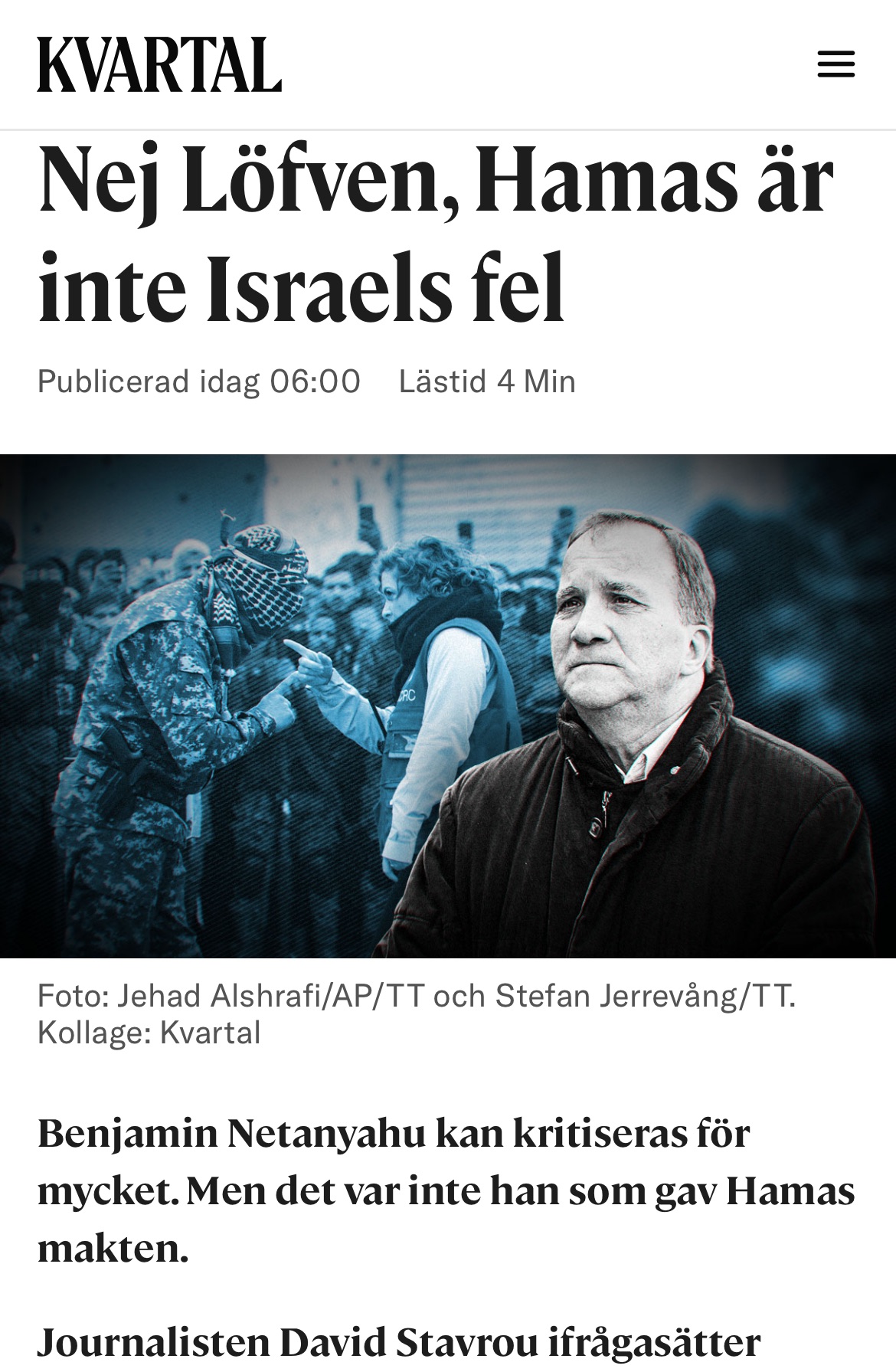
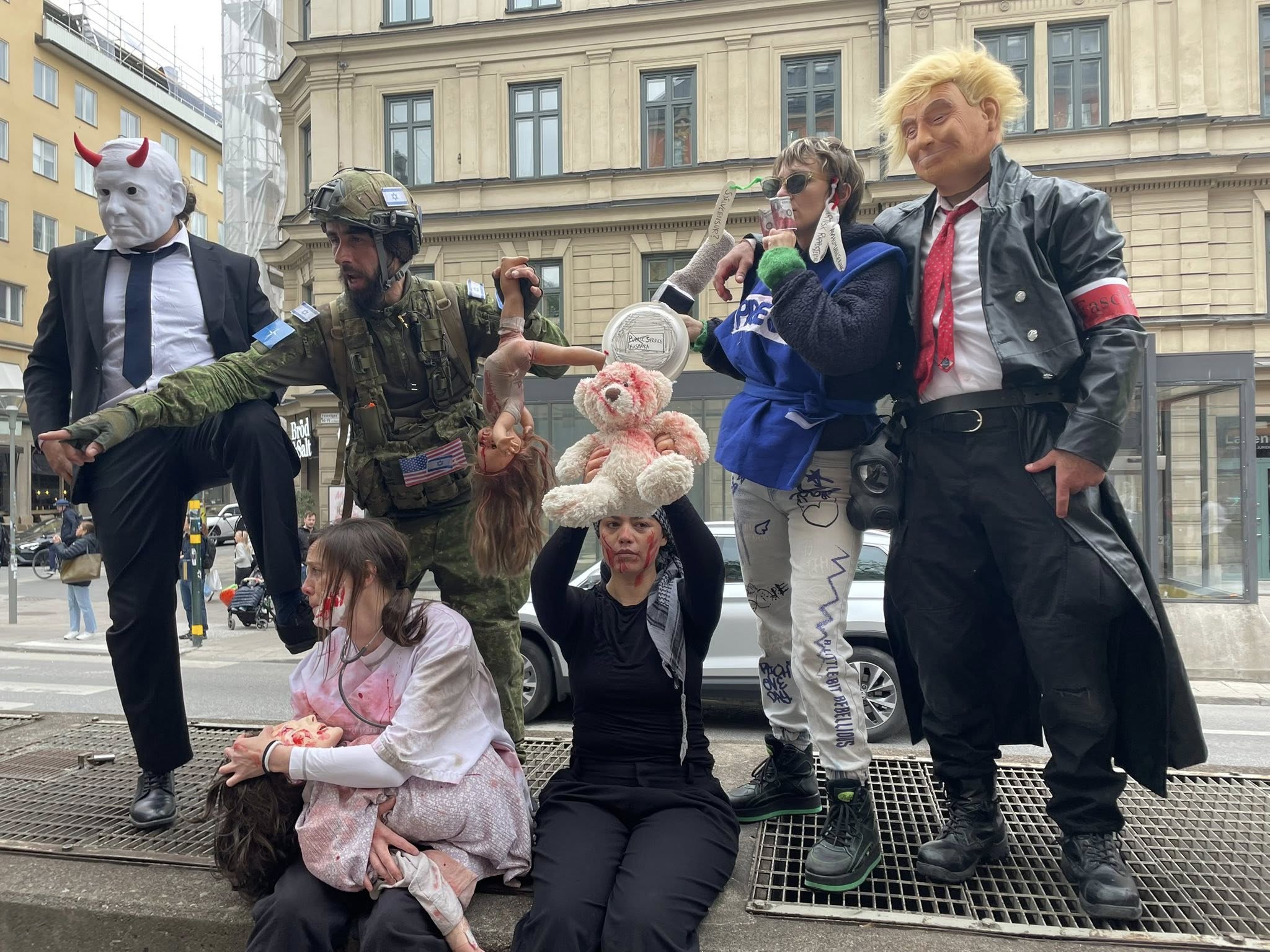

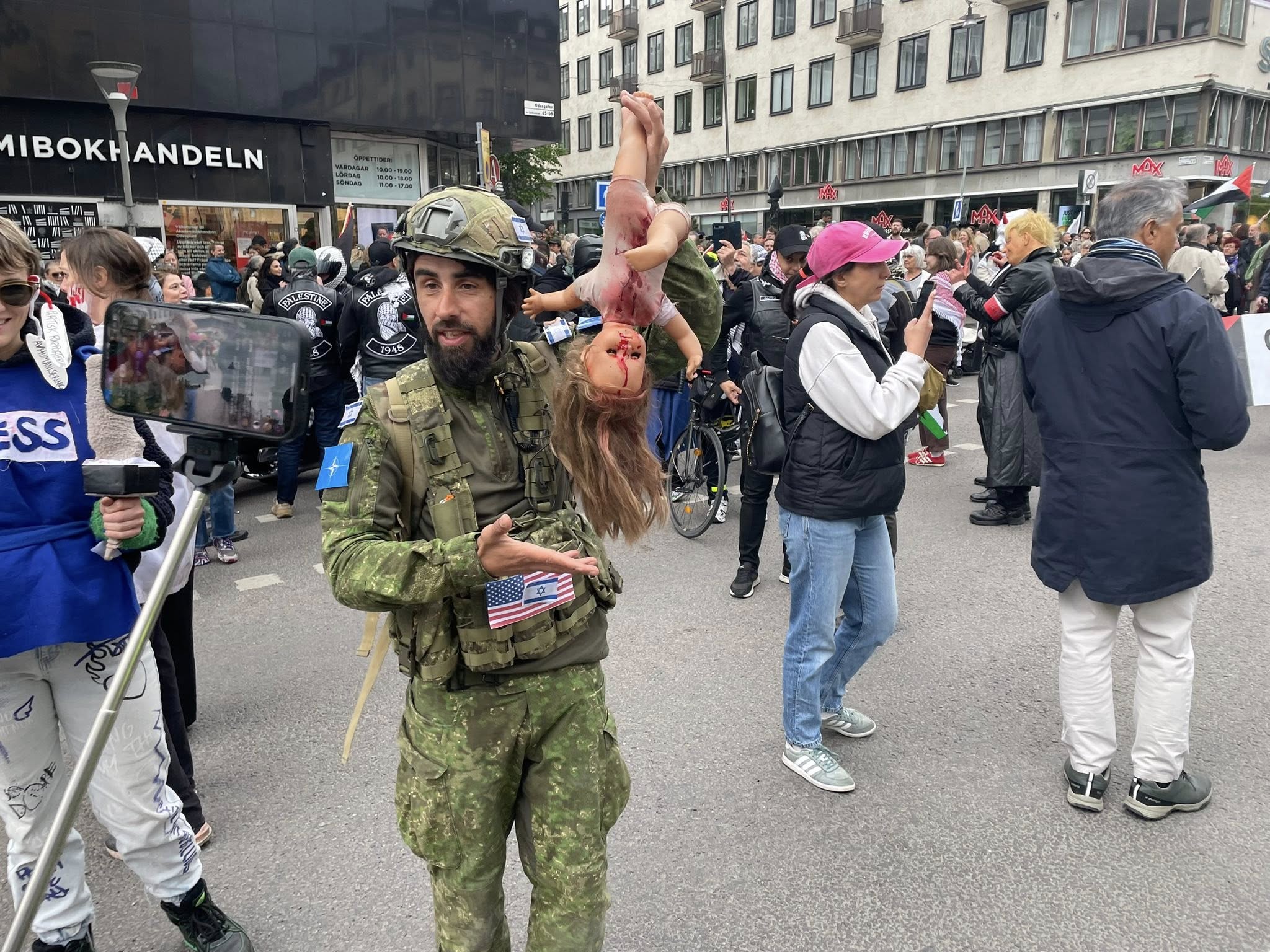

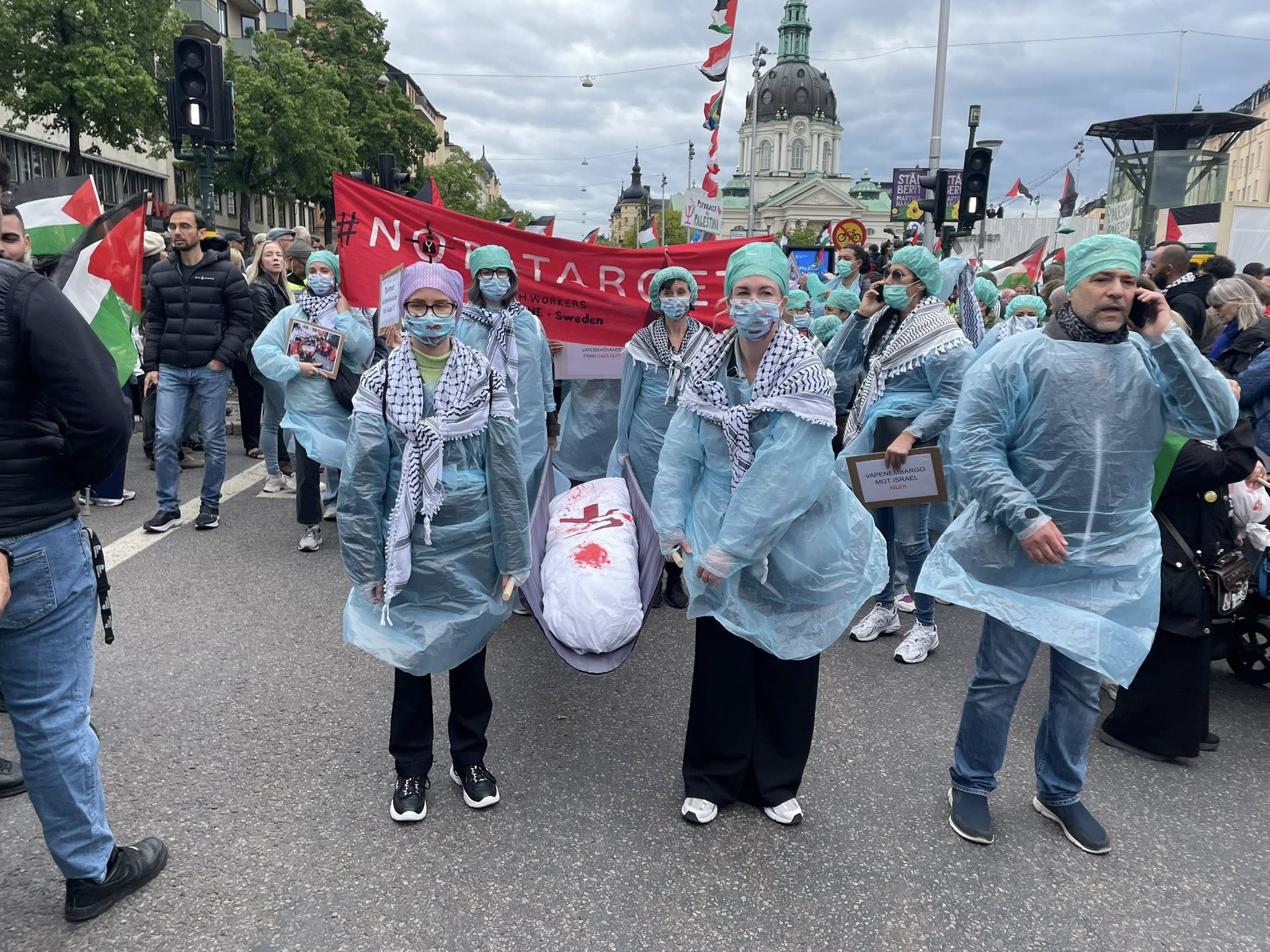
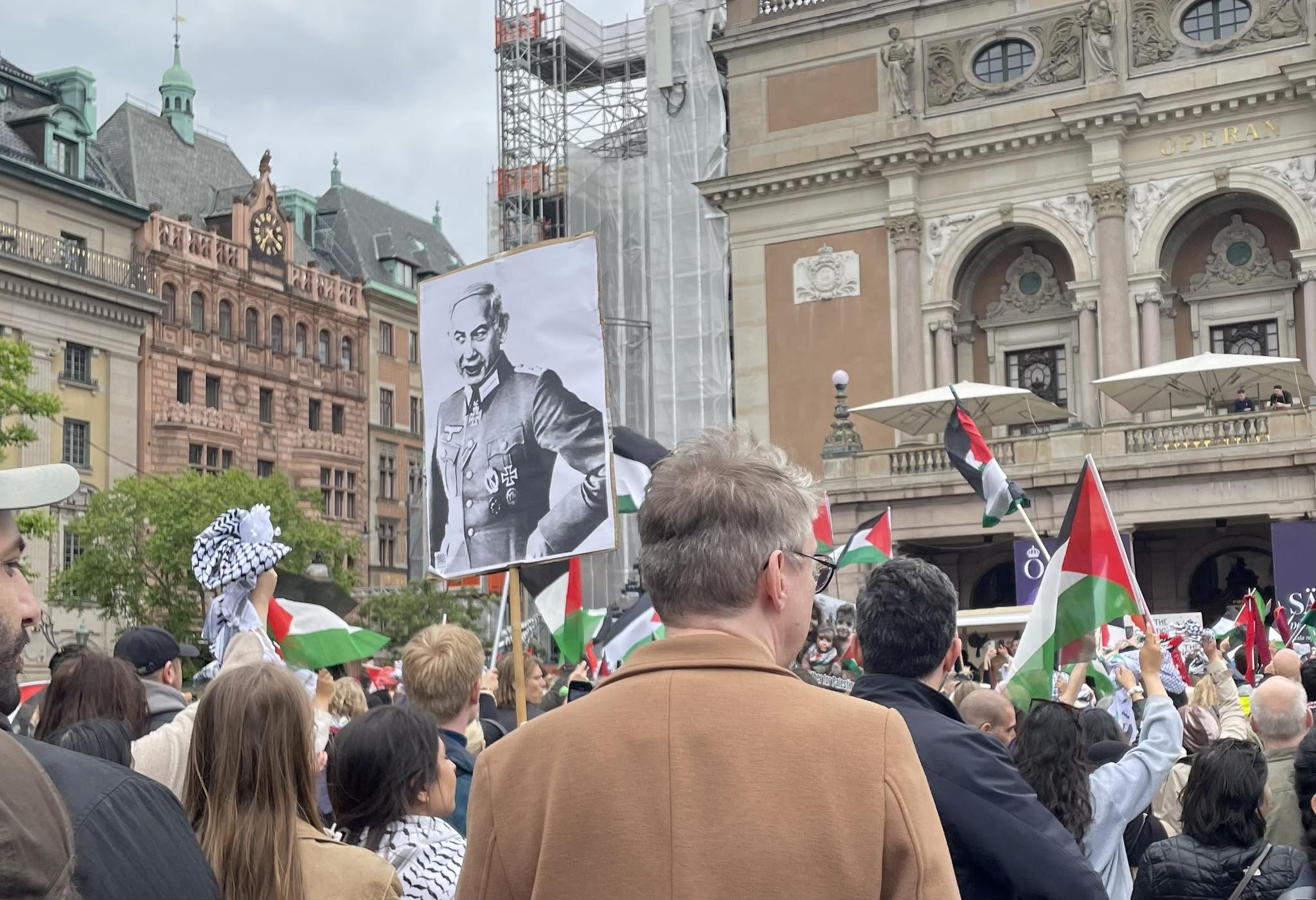
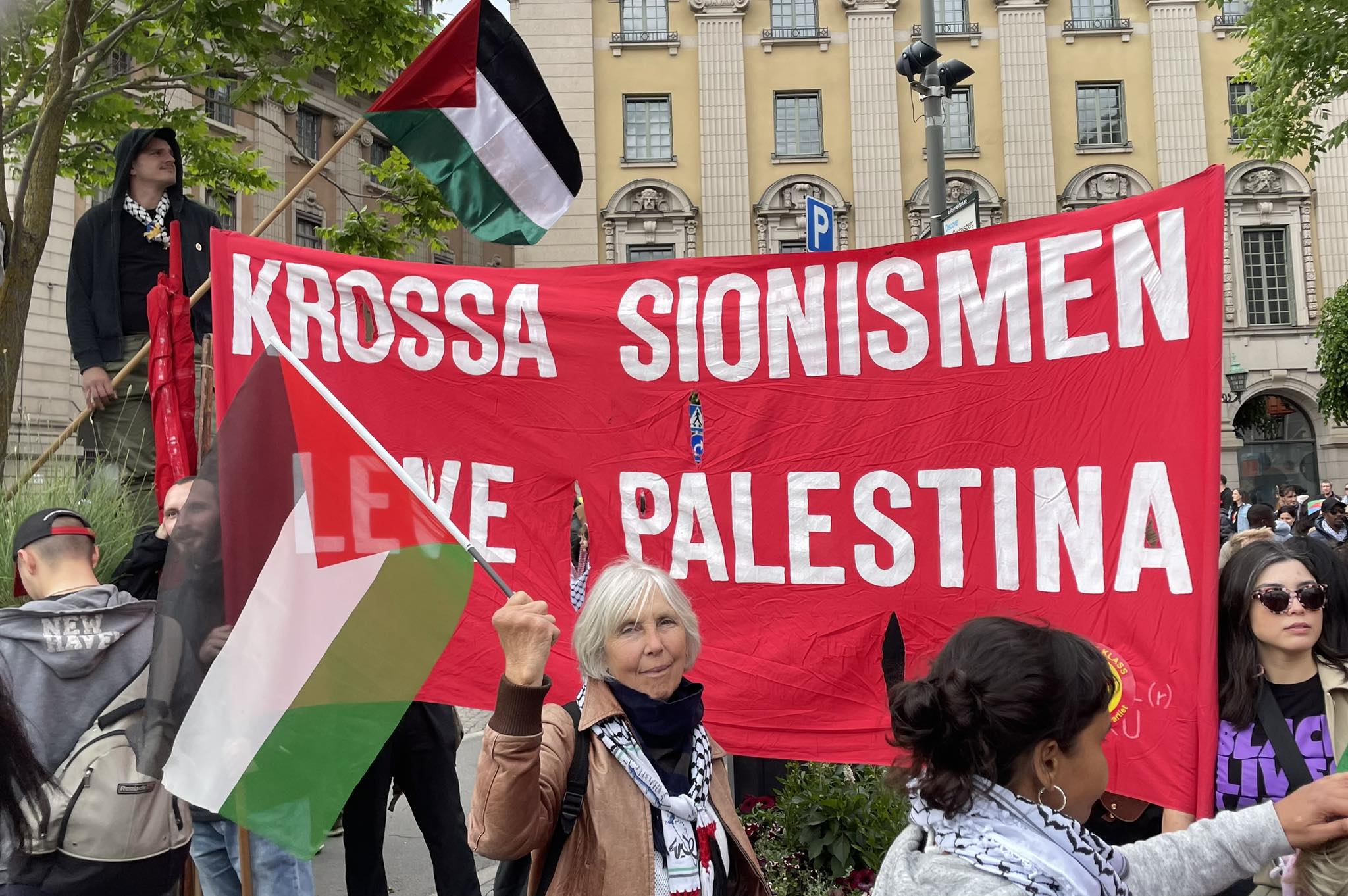
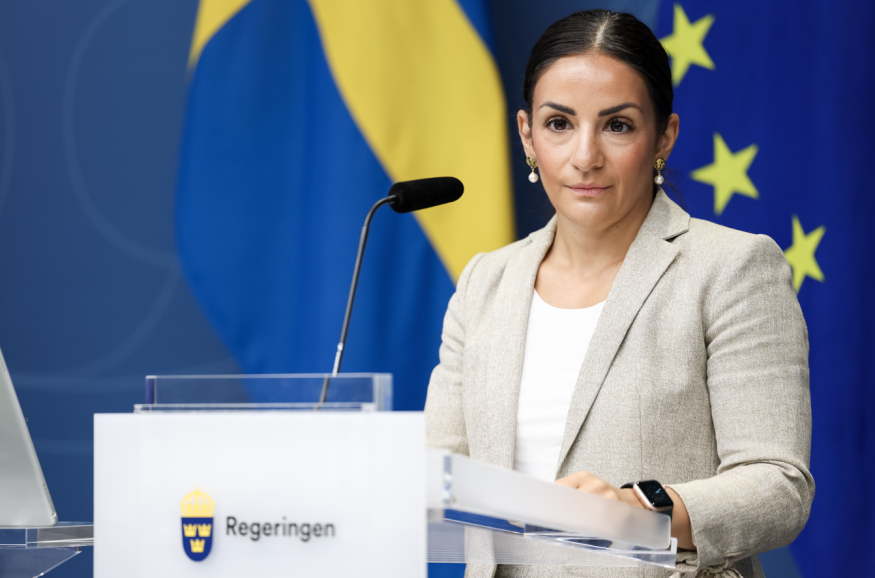


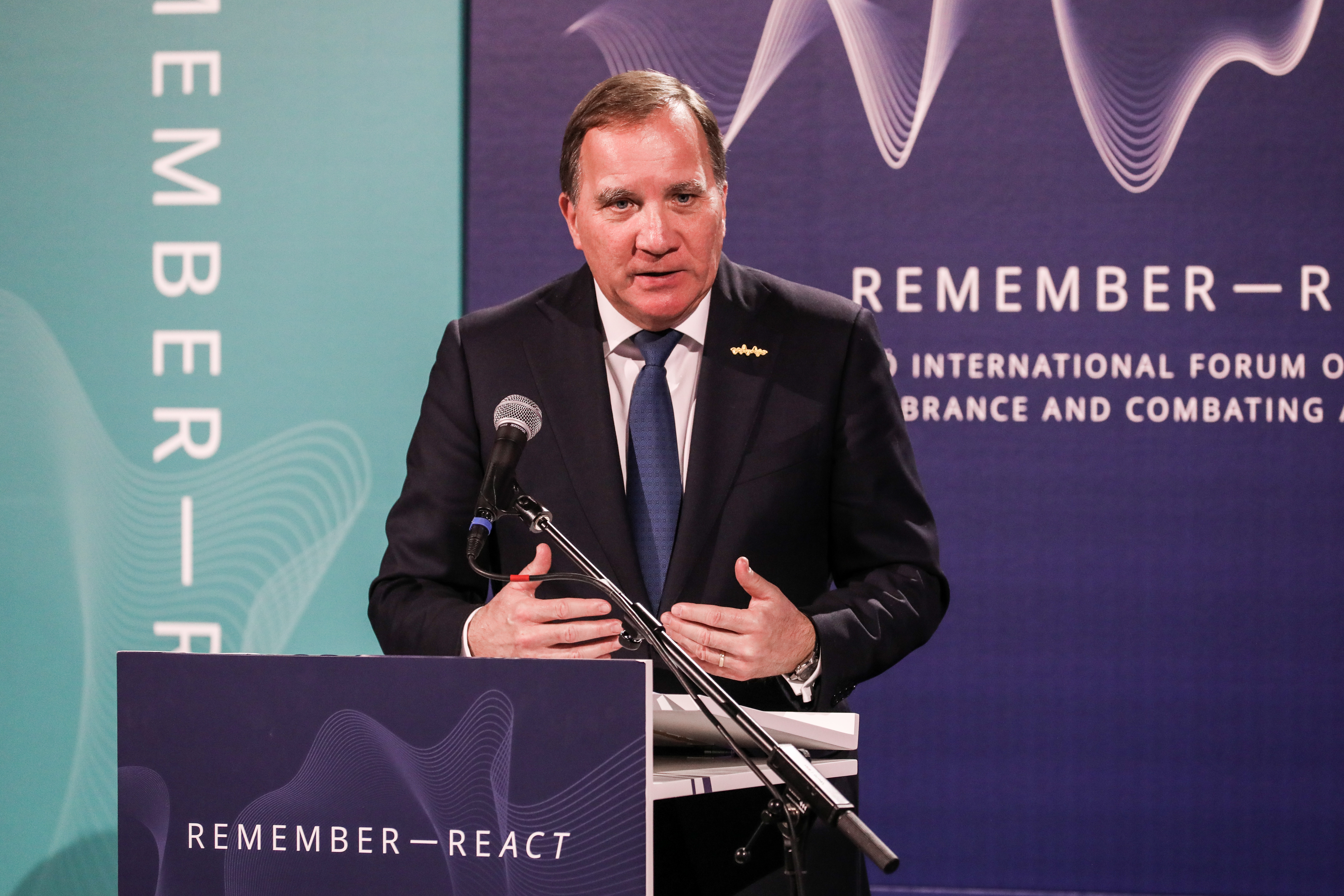

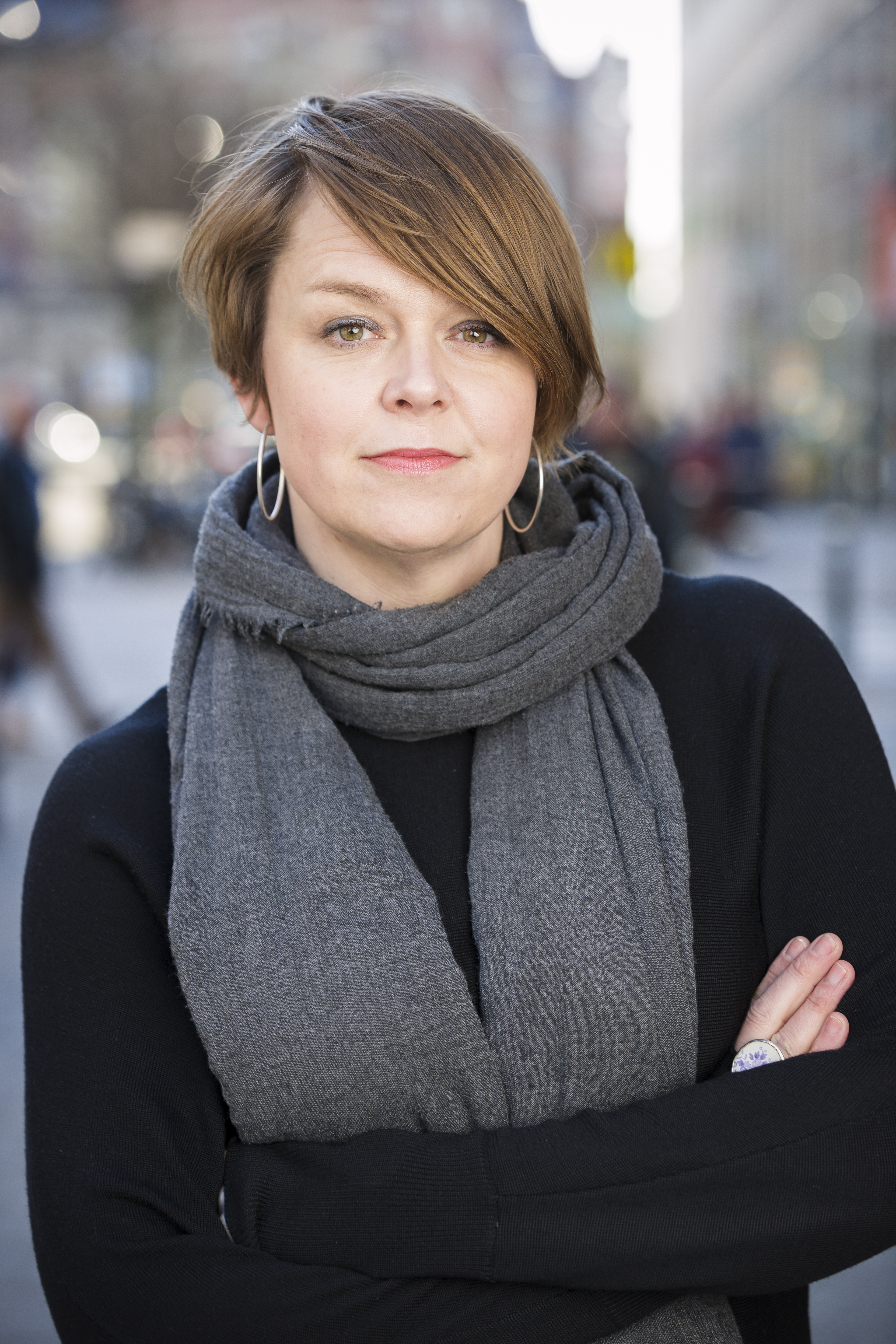
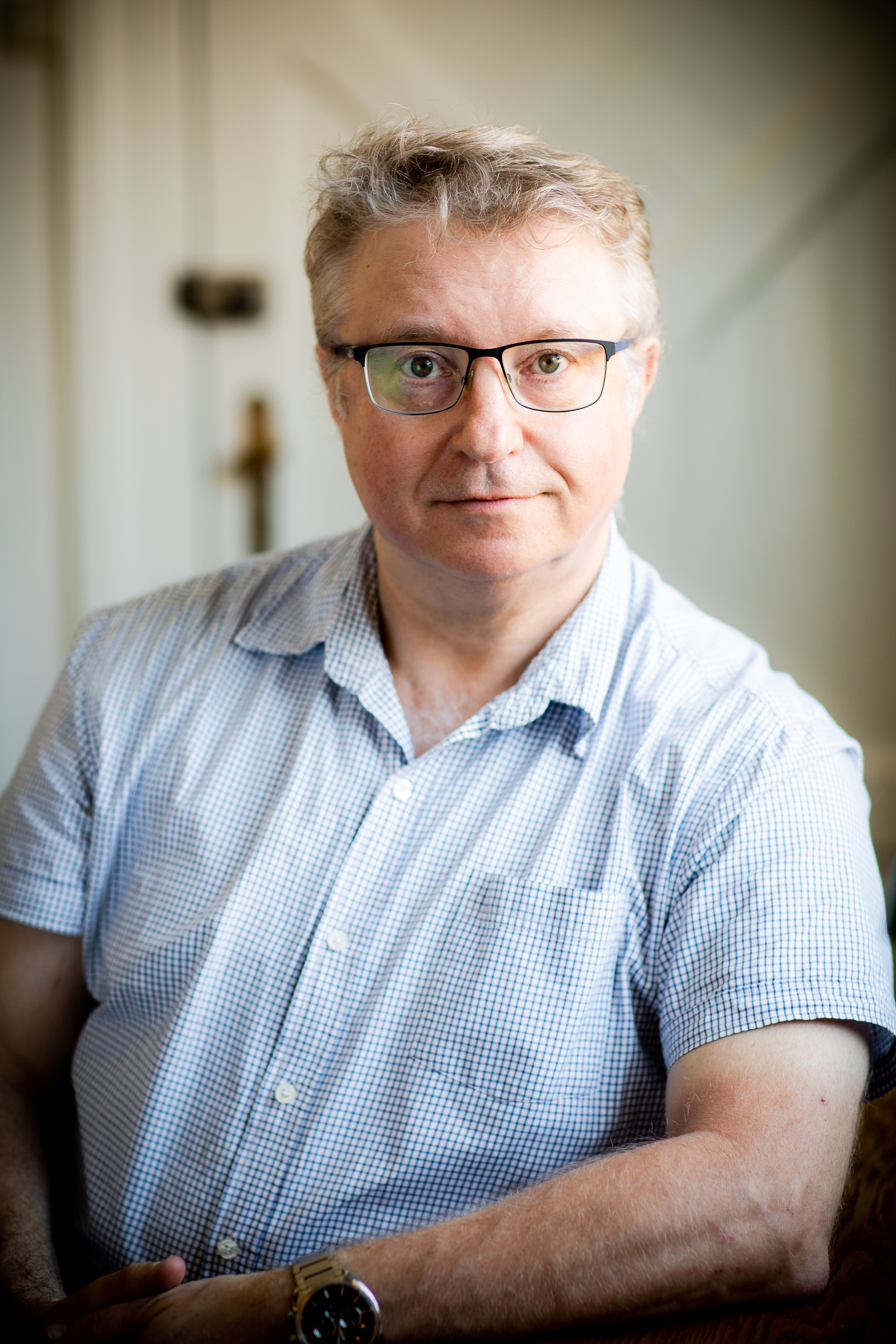
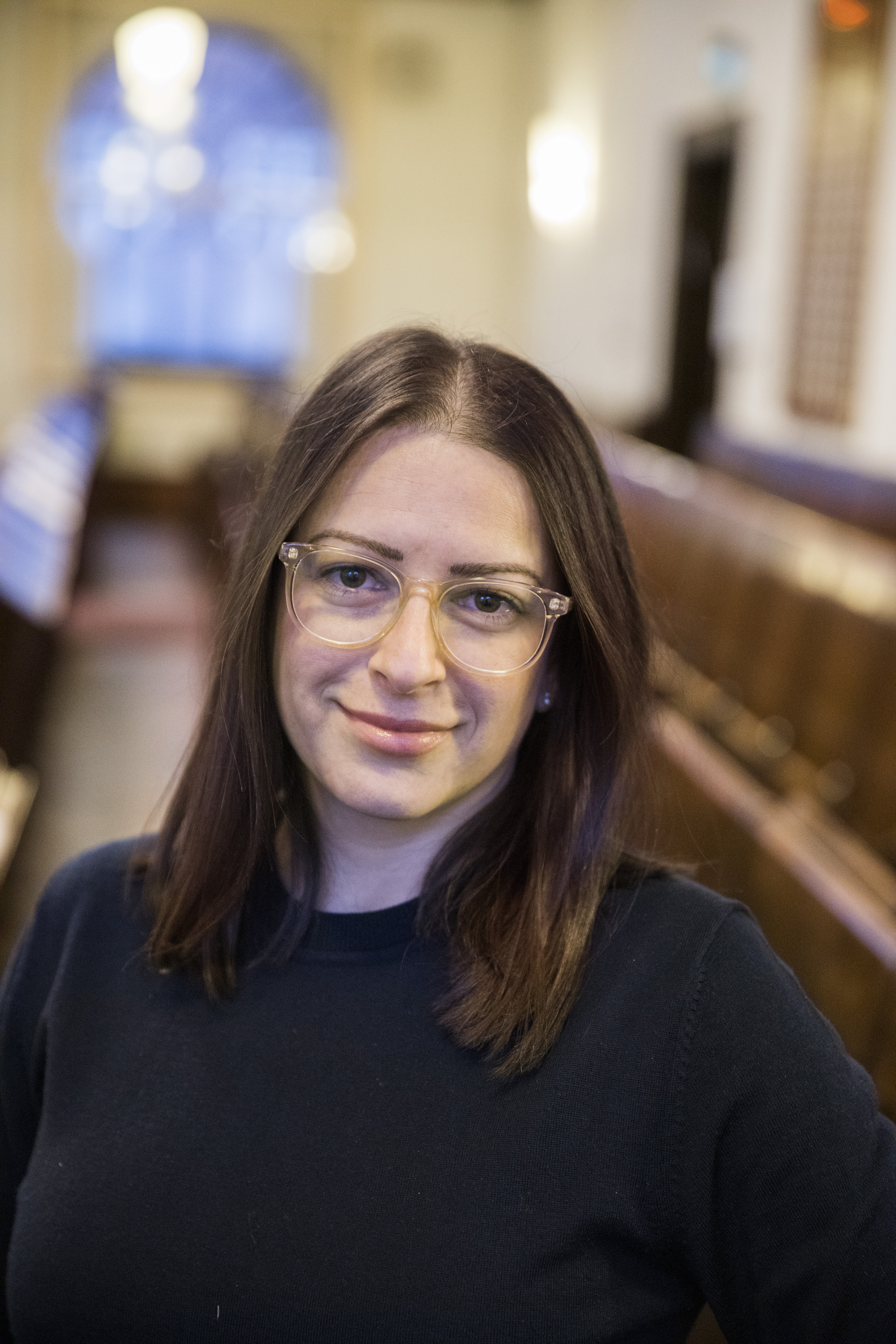



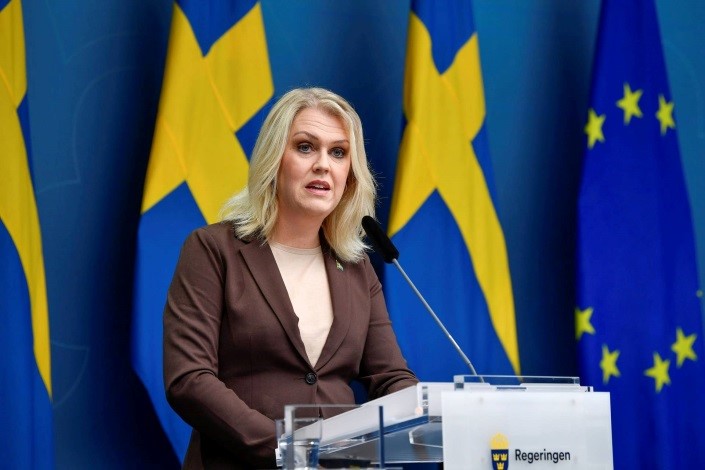

 דיויד סטברו