Chefs and experts at the Big Meet conference in Stockholm were all in agreement that in order to save the planet, we need to start having a serious conversation about food. ‘The future is going to look a lot more like a table in Israel than a table in 18th-century France,’ says Mitchell Davis of Asif culinary center in Tel Aviv.
A global food-technology conference is a natural fit for Sweden, where it’s not uncommon to hear locals discussing climate change, workers’ rights and environmental issues as part of their decision-making process. It is also no surprise to find young Israelis here attracting interest for their heap of new ideas, technologies and techniques.
According to the organizers of Big Meet, current food systems don’t allow consumers to understand what they’re eating and how it affects their health and the planet. Given the escalating problems of overpopulation and climate change, they say, the need for sustainable solutions to feed future generations is ever more urgent. And anyone visiting the two-day conference near Stockholm’s northern harbor on June 1-2 could experience what food-tech companies are hoping could be part of the solution.
There was a chef from New Zealand who offered a vegan “cod” fillet based on wheat, starch, algae and proteins. Near him was a Swedish businesswoman who specializes in plant-based, gluten-free vegan burgers made from mung beans. Another Swedish company showcased a pizza that replaces dough with cabbage. There were shakes from hemp seeds, vegetarian tacos and even a new kind of flavored sparkling water that, with the help of a combination of minerals and amino acids, combats post-meal fatigue and drowsiness.
Based on their presence at the event, it seems Israeli food tech is a leading player in the field. Gitit Lahav and her business partner Shimrit Lev, for instance, founded Sweet Victory – a company that has developed a chewing gum that stops sugar cravings by blocking sugar receptors. “By doing this,” Lahav explained to her audience on stage, “those who chew the gum get the power to take back control.”
Another Israeli company, Vanilla Vida, is revolutionizing the world of vanilla production by maximizing the potential of vanilla crops. It uses technological, agricultural and industrial expertise to achieve a stable supply of quality vanilla that is grown in climate-controlled greenhouses. The company says this allows it to achieve the highest vanillin concentration vanilla bean on the market, getting more flavor from less vanilla. A third company, the Mediterranean Food Lab, aims to bring together scientists, food technologists and chefs to create flavor for various food products by solid state fermentation instead of by using meat as flavoring.
Hundreds of attendees were working the room, spreading the word and talking to potential clients, colleagues and investors. Even though these are all business ventures, the language nearly always involved environmental buzz words like “sustainability,” “ethical trade” and “zero emissions.” Some of the participants – Israelis and non-Israelis alike – also paid a visit to the residence of Israel’s ambassador to Sweden, Ziv Nevo Kulman, who arranged a culinary event to showcase the Israeli entrepreneurs’ efforts.
The biggest Israeli delegation at Big Meet was a group of young chefs who succeeded in creating a very long food line, waiting to taste their wares in the conference’s test kitchen. Shirel Berger, 33, head chef and co-owner of Tel Aviv’s Opa restaurant, together with Raz Rahav, 31, head chef and owner of Tel Aviv’s OCD Restaurant and his head of R&D, Shalom Simcha Elbert, 29, created quite the stir when they served their wolffish baked in coffee flour dough with a vanilla beurre blanc, ramson (aka wild garlic) oil and chili oil, accompanied by a fresh strawberry-based dessert.
The three chefs are part of an Israeli culinary institution called Asif, a nonprofit that is endeavoring to make Israeli food culture – not just Israeli food – an important part of the global food scene. “Asif was founded in 2021 by Israeli New Yorker Naama Shefi, who’s the founder and executive director of New York’s Jewish Food Society – a nonprofit that works to preserve, celebrate and revitalize Jewish culinary heritage from around the world,” explains Michal Levit, Asif’s director of programs and innovation. Shefi joined forces with Tel Aviv’s Start-Up Nation Central and created Asif, which is dedicated to cultivating and nurturing Israel’s diverse and creative food culture.
Asif strategy consultant Mitchell Davis, who has been a leading voice on the global culinary scene for the past three decades, is an important member of this delegation. He lives in New York and has a PhD in food studies from New York University (a program he helped create 25 years ago), has written five cookbooks, worked with numerous restaurants, foundations and NGOs, and, more importantly, believes we should be taking food much more seriously.
Michal Levit, left, Shirel Berger, Shalom Sincha Elbert and Raz Rahav on stage at the Big Meet food-tech conference in Stockholm earlier this month.Credit: Miki Anagrius
This view is shared by many in the Nordic countries, who Davis sees as the ones pushing for what he calls “the food system agenda” internationally. He cites Stockholm’s EAT Forum, which works toward “a fair and sustainable global food system for healthy people and a healthy planet.” That forum was founded by Norwegian physician and environmental advocate Dr. Gunhild Stordalen, who also supports the “chef manifesto” that deals with issues of hunger, nutrition and sustainable agriculture in connection with the UN’s Sustainable Development Goals blueprint.
Davis also mentions Danish chef René Redzepi’s Nordic Food Lab, Sweden’s many research institutes and another of his collaborators, Johan Jörgensen, the Swedish founder of the Big Meet conference. “Food culture is an amorphous area,” says Davis. “Everybody’s a food expert, but not everybody fully appreciates the cultural value of food. The transactions of eating in a restaurant and buying groceries are only two elements – but we’re looking to infuse that with a deeper meaning. It’s about value. When you think of classical music or dance or art, there’s an accepted appreciation of both the literal and figurative value; people spend a lot of money on them and there’s an effort to understand their meaning. But food is one of those things that are so pervasive and mundane that people haven’t paid attention to it,” he says.
“This isn’t new, but in my view a better-informed consumer public makes better decisions for itself, for its communities and for the planet. So, I’ve come to learn that Israel is perfectly situated for the food moment we need now because of the casualness of the way people eat, the variety of vegetables, the freshness, the entrepreneurial spirit and the technology. It’s a cliché and funny to even say it, but making the desert bloom is what everyone’s going to have to do not that far into the future.
“I have no proof of this,” he continues, “but you can see that Israeli restaurants are opening all over the world. I don’t think fine dining is over, but in the future it is going to look a lot more like a table in Israel than a table in 18th-century France – which it has looked like for a very long time.”
“The French created the idea of a national cuisine,” Davis says. “They codified it and then everybody else thought they had to do the same in response. But that’s the French way. Asif’s mission is not to define what Israeli cuisine is, because it’s a constantly changing and dynamic thing. But there is a clear distinction between Israeli cuisine and Jewish food. To use a French idea after all, there’s the notion of terroir – the combination of geography, history and culture.
“The evolution of what’s being cooked in Israel is a product of the people, the land, the climate and history of the country, whereas Jewish food is much more similar to what’s eaten in places Jews have lived than it is to food eaten by other Jews around the world. Jewish food is obviously a huge part of Israeli cuisine, but you can see that elements of different communities are finding their way into a common table: there’s the Bukharan dishes, there’s the new, amazing Druze restaurant Naifa, which I visited recently; there’s the prevalence of salads; the spreads; the sharing of plates; and all these second- and third-generation kids who now have restaurants and are referring back to their grandparents.”
“The three things I think are most important these days in food are a dynamic and diverse culture, a recognition of the impact our food decisions have on the environment, climate change and sustainability issues. And then there’s this idea of innovation and technology, which we all know we’re going to need.
Officials in Scandinavian countries generally prefer not to intervene in Israel’s domestic affairs, but the concerns are palpable – even among its Jewish supporters in Stockholm
“I am closely following what’s happening in Israel and see that they’re even talking about a civil war there,” says Lars Aslan Rasmussen, addressing the protests over the Netanyahu government’s efforts to undermine the judiciary. “Israel is a democracy, it had five elections within a short time while its neighbors have no elections at all,” says Rasmussen, a member of the ruling Social Democratic Party in Denmark. “However, as a social democrat and a secular person, I think it would be a pity if Israel changes as a result of the far right that provocatively enters the Temple Mount and tries to impose religious law on the inhabitants of the country. It is important that Israel remains a democracy despite the far right.”
In recent weeks, leaders in Western Europe such as French President Emmanuel Macron and German Chancellor Olaf Scholz have been expressing their concern about the Israeli government’s plans. Rasmussen’s words reflect the concerns of elected officials in Scandinavian countries, who are now joining the international chorus of alarm. In most cases, the criticism is still gentle – in part because it is coming from representatives of parties that are traditionally not hostile toward Israel.
Rasmussen is considered a friend of Israel and was awarded the Jerusalem Prize by the World Zionist Organization last year. “Extremist tendencies exist in many countries, including Denmark and the United States in the days of Donald Trump’s presidency,” he says. “I don’t think the relations between Israel and Denmark will weaken [because of the judicial overhaul], but it’s good that people are criticizing and demonstrating against the rise of the power of the far right.” The Danish Foreign Ministry declined to answer questions or provide an official statement on the political unrest in Israel.
In Norway, however, Erling Rimestad, the state secretary at the Foreign Ministry, had no hesitation in taking a clear position. “We’re following the developments in Israel closely,” he says. “Some of the legislation put forward by the new government is highly problematic and could, if passed by parliament, have far-reaching consequences for Israel’s future as a liberal and democratic state. This would also have implications for the many Palestinians living in areas occupied by Israel, and for Palestinians imprisoned in Israel.”
Rimestad says that Norway has long-standing ties with Israel and will continue to maintain relationships and dialogue with the Israeli authorities and the Israeli people. However, he also criticized the new government – and not only in regard to the so-called judicial coup. “Norway has strongly condemned some of the Israeli government’s policy announcements and measures, in particular the punitive measures against the Palestinians,” he says.
“We have condemned the legalization of outposts and new settlements. Israeli settlements are illegal under international law. We have also voiced our concern over statements and actions by members of the Israeli government regarding the holy sites. It’s important to respect the status quo in Jerusalem. In addition to our bilateral dialogue, there are also international forums where we bring up human rights concerns.”
Rimestad, the state secretary to Norwegian Foreign Minister Anniken Huitfeldt (a position akin to deputy minister), adds: “Israel’s human rights situation will be assessed during the Universal Periodic Review in Geneva this coming May. Norway will give our recommendations to Israel there.”
The Labour Party is in power in Norway, but the concern over the situation in Israel transcends party lines. Christian Tybring-Gjedde, a legislator from the right-wing Progress Party, says he believes “it is very important that Israel remains the beacon of hope in the Middle East. It is therefore of vital importance that Israel protects its democracy. It means that a few religious, conservative politicians should not be able to determine Israel’s future. Politics all based on an ancient religious text is not the way to govern a democracy.”
The pre-show announcement in Roger Water's latest tour is rather unconventional. After the regular, please "turn off your cell phones", comes a slightly more provocative announcement "if you’re one of those ‘I love Pink Floyd, but I can’t stand Roger’s politics’ people, you might do well to fuck off to the bar right now". This sets the tone since the show's main theme is a mix of current affairs, political science and global politics and Waters is anything but mainstream in these aspects. In fact, many would say he's a hard core radical. This, combined with the fact that Waters is one his generation's biggest rock stars and he attracts tens of thousands of people to his concerts, makes his tour an important cultural phenomenon which provokes many reactions and heated debates. Waters granted "Haaretz" an interview during this controversial tour and I spoke to him at his hotel, a couple of days prior to his Stockholm show, after he completed the American part of the tour and 14 of its 40 European dates.
So as not to start the conversation with the confrontational opener, we talk first about the music, rather than the politics. This is after all a rock concert, not an election campaign. Waters, who will be 80 in September has an enormous body of work to choose from when he goes on the road. He realizes, of course, that it wouldn't be right to go on stage without playing any of the classics he created together with Pink Floyd, the band he co-founded in 1965 with by Syd Barrett, Nick Mason and Rick Wright and left in the mid-eighties. And indeed, the show includes the whole second part of The Dark Side of the Moon, Pink Floyd's 1973 album as well as material from Wish You Were Here (1975), Animals (1977), The Wall (1979) and The Final Cut (1983). "If I followed only my heart and not my head, I'd probably do what I used to do with Pink Floyd", Waters says, "I led Pink Floyd for many years, and when I did, at least during the last few years, when we toured, we only played the current record and the last record. If I would do that now I would have played only my latest solo albums and I might have also added Us and Them (from The Dark Side of the Moon), which is a genuine co-write with Rick Wright (Pink Floyd's keyboard player)".
Waters points out that he has just finished re-recording the whole of The Dark Side of the Moon which was released exactly fifty years ago. The new version will be released this July. Waters believes it's still extremely relevant and that's why so much of it is on his current show. "Nothing I've done recently is more political than Us and Them", he says and quotes the lyrics, "with, without, and who'll deny that's what the fighting's all about". "It's a truism and part of the reason I re-made the album", he explains, "people haven't noticed in the last fifty years what it's actually about". Waters adds that he enjoys playing this part of the show as much as the newer songs, because it's very visual. "There's an enormous LED crucifix hanging over the stage", he explains, "and the images that we show, particularly during Us and Them move people very deeply because it's so anti-war".
So, as it is, are you pleased with the set list you're playing on the tour even though it includes more than just your current and previous albums?
"Yes, I'm content with the way the set lives, it's full of new things and old things, and in consequence sometimes people are a bit puzzled". Waters mentions, as an example, a new song called The Bar which he says is "extremely important philosophically and emotionally, because it's my plea for conversation and communication between us human beings, in support of, and in defense of humanity, and how we need to learn to cooperate with one another, rather than killing one another".
When it comes to the visual side, don't you feel that the sophisticated video work, the images on the enormous screens and the setup of flying pigs and flying sheep is all a bit grandiose and makes your connection with the audience less intimate?
Waters doesn't approve of the word grandiose. "It either is, or it is not good theatre", he says, "I've spent the last sixty years trying to create theatre which is appropriate for rock'n'roll in arenas and outdoor venues and to play for anything from 15 to 100 thousand people. You can't do intimate theatre, much as I adore intimate theater and sometimes regret that I haven't been able to work in small theaters". Waters adds that there are plans "in the pipeline" to do one or two smaller shows of the new version of The Dark Side of the Moon as well as a theatrical version of The Wall in an intimate space. With these projects and others, it doesn't seem at all as if he's ready to retire.
The Show is called This is Not a Drill – The First Farwell Tour, it also includes biographical texts explaining various parts of you career. Is this your attempt to start wrapping things up, is this you shaping the narrative one last time?
"No, whenever I do a tour, I have to decide what it's going to look like, what the story's going to be, what the narrative is, what it is I hope to achieve and how much of the old Pink Floyd stuff I need to do in order to satisfy the hunger. One thing that's really good is the age demographic of the people who are coming to the shows. Many of them are 20-year-olds. That's fantastic and that doesn’t happen with many of the old bands. Obviously when I put out adds saying "his first final farewell tour" it's a joke. Because so many of the others do farewell tour after farewell tour for years and years".
Speaking of other bands, you said in an interview a few years ago that you don't listen much to music and you're not very interested in what's going on in the so-called music industry. Since your show is part of this industry, aren't you interested in what else is going around?
"What else is going around? You tell me, if you are interested. I'm really not interested. Life is too short". Waters explains that no artist has time for that. "You get on with your work", he says, "Michelangelo didn’t say 'well, I think I'll get on a donkey, go round Italy and see what the others are doing. He said – 'I want that bit of Carrara marble, now let's see how I can get it down the hill without killing a hundred people'". At this point Waters quotes his 1972 song, Free Four, "Life is a short warm moment, and death is a long cold rest, You get your chance to try, In the twinkling of an eye, Eighty years with luck or even less, So all aboard for the American tour, And maybe you'll make it to the top, But mind how you go, And I can tell you 'cos I know You may find it hard to get off. But you are the angel of death, And I am the dead man's son, He was buried like a mole in a fox-hole, And everyone's still on the run".
These are important sentences in the Waters universe. He was born in South East England in 1943 and has lived in the United States for twenty years ("because of the weather more than anything else. It never stops raining in England"). His father, Eric Fletcher Waters, who was a schoolteacher and a member of the communist party, was killed in the WW2 in the battle of Anzio in Italy when Waters was just five months old. His grandfather, George Henry Waters, was also a war casualty. He died while fighting in France during WW1. Considering this, it's not much of a surprise that the cruelty and meaninglessness of war have always been an important part of Waters' work and in the current show these themes are more apparent than ever. It is in this context one should see the opener asking those who don't approve with Waters' politics to "fuck off to the bar", it's just his way of saying he's not forgetting and he has no interested in toning it down.
Roger Waters on the cover of Haaretz' weekend culture magazine, photo: Kate Izor
Apart from being a unique opener, there's also a serious issue here. If someone comes to your show because he or she loves your music, but that someone happens to also be a supporter of Trump, Bolsonaro, Boris Johnson or Netanyahu, do you really not want them there?
"I don't give a fuck if they're there or not. I'm not proselytizing. You know, you're writing this for Haaretz and people are always trying to persuade me to go to Israel, do gigs in Tel-Aviv and talk to people, proselytize and try to get them to change their policies and work from within. And I say, fuck off, there's a picket line here and I'm not crossing it because I believe in human rights. Those people, people who voted for Trump, they would get up and leave when I played tracks from Animals (Pink Floyd's 1977 album based on George Orwell's Animal Farm). I couldn't care less. Leave! I don't want you to come. This isn't an attempt to affect you because you're lost. The people who I'm trying to encourage are the young people who want to resist the dreadful destruction of our home planet by the ruling class. I'm interested in communicating with them. I don't care about people who vote for Netanyahu or Trump or Bolsonaro".
Here's another way of putting it. It seems like from decade to decade your work becomes more specific and less abstract and universal. If, in the 70s you dealt with the way we see the humanity in others, and existential and abstract concepts like time, death alienation and loneliness and later with general political ideas like dystopian societies and fascism, since the 80s, you're writing about specific events like the wars in Afghanistan or Iraq and you clearly mark your villains like Thatcher and Trump and your heroes like Juliane Assange. This isn’t something everyone can sympathize with.
"I couldn’t agree more. I think it's a function of age. We all live within the context of our personal histories. Those of us who can actually read, and there are fewer and fewer of us, we read history and take notice of what happened in the past, but as our lives unfold, we recognize the folly of repeating the same mistakes over and over again, and the engine which drives those mistakes, is by an large greed. Greed for money or power. And so, yes, I'm less concerned about becoming irrelevant because I'm writing about specific things or specific periods of time. The context of the passage of time is very important, maybe because I'm 79 years old, the idea of rejoining the great oneness of everything as ashes and dust, possibly as a memory but maybe not even that, becomes closer and also behooves us more and more to grapple with the big questions, which is required of all art which means anything".
Speaking of great works of art which you quote in your show – George Orwell's 1984 and Animal Farm and Aldus Huxley's Brave New World, you refer to the dystopian future they talk about and to the real-life leaders who are making their visions into a reality, mostly American presidents – the pictures of all presidents from Reagan to Biden are on the screens in you show presented as war criminals. I wonder if Chines president Xi, Russia's Putin and Belarus's Lukashenko are not on the screen because you think that they are not war criminals, or is there some other reason?
"My history is full of those American presidents; they have been denominating geo-political events since the Second World War when I was born. The 'evil empire' since WW2 is the USA and it continues to be. And right now, the US with Joe Biden at the helm is driving us towards World War 3 as fast as it can. And there seems to be two potential drivers – one is profit, the value of the war industries has gone up vastly since the Ukraine war started. The other is what's considered to be their manifested destiny – to rule the world. So, they decide who is and who isn’t democratic. What makes anybody think the US is a democracy is absolutely beggar's belief, because it is not, and anybody with an IQ above room temperature knows it's not. It's driven by money and power and the people have no say in the matter".
Waters also mentions he knows he's making an extreme statement, but since he lives in America, and does not live in Russia or speak Russian, some issues he can't really comment on. He doesn't trust the American media, he quotes presidents Eisenhower's warnings against the so-called "military-industrial complex" and, in his show, the screens are full of examples and images which make clear where he thinks the real problem lies – victims of state violence against civilians, victims of the so-called "war on terror", victims of drone attacks, American foreign policies in South America and domestic policies against native Americans.
In a CNN interview you reacted to a question about Chinese violence towards their own people by saying it was "bollocks, absolute nonsense". Do you not believe, for example, the news about the atrocities being committed in Xinjiang against ethnic minorities or do you just think it's not your place to comment about that? To me, what's happening there is the closest thing to 1984 in the real world.
"Depends what story you read. I do not believe the western narrative about the Uyghurs. I don't believe it. I don't believe there are millions and millions of people locked up in concentration camps being slowly murdered and tortured to death and that the women are being raped by the Chinese government. I don't believe it. Is there a problem in that part of China? Possibly. Probably. Are the Muslim's all being re-educated in camps? Almost certainly not. Are some of them? Quite possibly, if they're members of ISIS for instance. If I was in China and spoke Chinese I could answer these questions, I cannot relay on the western mainstream media to tell me what's going on there and I don't believe them any more than I believe this Russiagate nonsense and any of this phobia against other countries going on all day every day, drumming up a third world war. In my show I say "you can't rule the world. Nobody can. The world is there to be respected, nurtured, loved protected and shared. That's the text I wrote, you can call it corny, I don't give a fuck, but this is the problem with the whole geo-political situation, the US wants to rule China, they want to rule Russia, they want to rule the world, they declared it, it's in all their political manifestos and it's destroying the world".
According to Waters the war in Ukraine is a result of the same American policies. Even though he denounced the Russian invasion, he doesn't see the war as the fault of the Russians alone. He also strongly condemns continued military support to Ukraine. "It's them (the US) advancing NATO further and further east since the end of the cold war", he says, "are they going to beat Russia? Not without a nuclear war they won't. So, why are they doing it? Well, it's because they've got morons like (American National Security Advisor) Jake Sullivan and (Secretary of State) Antony Blinken chattering in the ear of a really really old bloke with Alzheimers who doesn’t understand any of it and never will" (incidentally, President Biden is less than a year older than Waters).
Last September Waters wrote a couple of letters to Olena Zelenska, Ukrainian president Zelenskyy's wife, in order to try to get her to convince her husband that it's time for a compromise with the Russians. When she replied on Twitter and wrote that he was writing to the wrong president, Waters wrote to President Putin too. Putin is yet to answer. Although Waters made clear that he's horrified by the invasion's results, he claims that a different Ukrainian policy in the Donbas and less American intervention would have led to a peaceful solution. This attitude led to strong reactions in the west and it seems Waters is once again paying a price for his politics.
Just after the Zelenska letter was published, the Polish city of Krakow cancelled Waters' shows in the city. The reason was that the city, which owns the arena, would not tolerate it being used by an artist spreading ideas objectionable to most people in Poland, referring to Waters' stance on the war in Ukraine. "I wrote a letter to the councilor who orchestrated all that", Waters says, "but they didn’t take any notice of it". The gig was indeed cancelled and that was not the only Ukraine related controversy Waters was involved in. A few months earlier, Waters' ex bandmates from Pink Floyd, guitarist David Gilmour and drummer Nick Mason, recorded a song called "Hey, Hey, Rise up!", supporting Ukraine and featuring vocals in Ukrainian by the Ukrainian musician Andriy Khlyvnyuk. Waters talked about the song in an interview to Berliner Zeitung a couple of months ago. "I have seen the video and I am not surprised", he said, "but I find it really, really sad. It’s so alien to me, this action is so lacking in humanity. It encourages the continuation of the war. Pink Floyd is a name I used to be associated with. That was a huge time in my life, a very big deal. To associate that name now with something like this. Proxy war makes me sad. I mean, they haven’t made the point of demanding, “Stop the war, stop the slaughter, bring our leaders together to talk!” It’s just this content-less waving of the blue and yellow flag. I wrote in one of my letters to the Ukrainian teenager Alina: I will not raise a flag in this conflict, not a Ukrainian flag, not a Russian flag, not a US flag".
This was probably the background for one of the most extreme public comments against Waters made by Polly Samson, a novelist, lyricist and journalist who is married to Gilmour and has written the lyrics to many of his songs. "Sadly, you are antisemitic to your rotten core", Samson wrote, "also a Putin apologist and a lying, thieving, hypocritical, tax-avoiding, lip-synching, misogynistic, sick-with-envy, megalomaniac. Enough of your nonsense".
Would you care to comment on what Samson wrote?
"No", Waters smiles, "I think I'll rise above that. Thank you for the offer".
But Samson isn't the only one opposing Waters. His latest tour is being threatened from another direction. One that Waters has encountered before. In Germany, he's being accused of antisemitism and therefore some cities have tried to cancel his shows. Waters claims the people behind this are "the Israeli lobby and people who believe that I'm an antisemite because they've read all the lies and believe this ridiculous story". As always, he denies the allegations. "I'm not an antisemite, never have been and never will be", he says, "I have nothing against Jews, I criticize the Israeli government and I'm part of the BDS movement. So, they're trying to cancel me in Frankfurt and in Munich and in Cologne. Munich has now backed off, Cologne seems to be backing off". This means the shows there are supposed to take place and so is the performance in Frankfurt at the end of the month, due to a court ruling forbidding the authorities to cancel it. "In Frankfurt I've taken out an injunction reminding them it's illegal even though the council and state own the venue", Waters explains, "in their attack on me they were trotting out stories about Kristallnacht, sort of accusing me of somehow being responsible for the deaths of 3,000 Jews who were rounded up by their Frankfurt police and sent off to be killed" (the venue Waters was supposed to play was the place where 3,000 Jewish men were arrested after Kristallnacht and from where they were sent to concentration camps).
According to Waters this is far from the first time he is being attacked on this background. "When I finished The Wall movie (2014), we had a world premiere in Canada at Toronto International Film Festival", he recalls, "that night a representative from Netflix came to see my management and said 'I adore the movie, we want it, let's make a deal tomorrow', he could not have been more effusive. The next morning there's a phone call saying 'we're not sure it's quite right for Netflix'. That's just a board meeting with the Israeli lobby raising its voice saying 'you cannot have anything to do with this man, Waters, he's an antisemite, anti-Israeli and anti-Zionist, we are going to crush him. And they've tried. Trust me. I have the bruises. But they have failed".
There are many stories regarding the accusations claiming Waters is an antisemite and they've all been told in length. The flying pig which appeared in his concerts with a star of David symbol on it (along many other symbols including a cross and a crescent), the events surrounding the replacement of Waters' show in Tel-Aviv with a show in Neve Shalom in 2006 and comparisons Waters made between Israel and Nazi Germany and Apartheid South Africa. Essentially, however, it seems like the main long-lasting reason he attracts this particular criticism is his support of the BDS movement.
You are a supporter of the BDS movement and many wonder about the way the BDS campaign is focused only on Israel. Considering everything you say about the US, for example, why are you still playing concerts in America? Isn't it time to start boycotting the US?
"Should one turn one's back on any problem anywhere simply because you can't solve all the problems everywhere? My view is – no. And my view is that it was correct to join the anti-apartheid movement in South Africa, even though we may never know what effect that had on the downfall of that supremacist white racist regime. In my view, what really did it was when we stopped playing rugby and cricket with south Africa, that's what tipped it over the edge. They couldn't bare it".
And you think the BDS will have the same effect on the occupation?
"I'm certain it will. We're coming close to it now. You can see what happened with Indonesia which refused to host the U20 world cup because they wouldn't entertain an Israeli team. The point was made. The power is shifting. It's about the Human Rights Declaration of Paris, 1948 – you cannot cherry pick. You're either in or you're out. You either believe in human rights or you don't. and most governments don't. so, you say, why don't I boycott America. Because I can't! I can't boycott America and the UK and France and Germany. Well, I could, I could go and live on a fucking island and do nothing for the rest of my life. But I think because Israel is so extreme and it gets more and more extreme as the minutes go by, we may win this and get human rights for the people of Palestine".
When you say human rights for Palestinians, It's not clear if you're talking about 1948 or 1967. If the problem is the occupation of the West Bank, it could theoretically be solved by a two-state solution. But if the problem is not only the occupation of 1967, does your success mean the disappearance of the Jewish state? What exactly is your solution?
The solution is a state that is democratic and that every citizen and every person who lives within the territory has equal civil, political and religious rights. If that means the end of the Jewish state, so be it. It would be like having a Christian state. If America would become a Christian only state, I would say, you can't do that. I would say – get rid of America because you cannot have a Christian supremacist state where only Christians have rights. That's anti-human, anti-democratic and against everything I believe in. so is the Jewish state of Israel, because people who are not Jewish do not have rights. There's no getting round it. Maybe it's the nomenclature that is the problem, because (the Jewish state) is expressed in the behavior of these disgusting thugs, the settlers, like the ones from Hawara. Doesn't that make your blood boil? We've all met these kinds of people. They don't have to be Jewish. Their religion is irrelevant. It's the attachment to the religion that they think gives them the permission to be a fascist.
So, no two-state solution then?
Please! Go back to the 67 borders, get the settlers out, allow the Palestinians a separate and sovereign state, and you can do it tomorrow. It's not rocket science. But we've all known, right from the beginning that there was never ever going to be any possibility for any of that. A lot of people believed in all the shenanigans of pretending that. They never had any intention of there being a Palestinian state because they've read their bible, they want Jorden and the whole fucking lot and they want it to be a Jewish supremacist apartheid state. Well, you can't have it because the rest of global civil society will not stand for it. And the people who've looked after you for all these years, the US, are discovering that they can't support it either, and the Jewish community in North America are changing their stance faster than you can imagine, because many of them are really wonderful humane people who follow their religion, who've read the Talmud and who actually aspire to a lot of the great things that are in it.
What about the hundreds of thousands of people within Israel who are against the government and demonstrating these last months?
What are they demonstrating about?
Democracy and freedom.
Well, no they're not. You mean democracy and freedom for them, in their little supremacist Jewish bubble. That's not democracy and freedom.
Well, even if the Israeli peace movement is small, aren't you worried about the BDS making its attempts for dialogue even harder, there have been claims that the BDS shuts down initiatives for dialogue by informing on them to Hamas.
"So, it's Hamas' fault again. What a surprise! But that's bullshit". Waters denies the theory of the BDS being an obstacle for peace and he's very clear about his support for the BDS movement. He speaks of the "picket line" that his Palestinian brothers and sisters asked him not to break, he speaks of the Balfour declaration that says that the National Jewish home does not "infringe in any way on the religious or civil rights of any of the indigenous people" and he insists that the only democratic solution is one of equal rights to all between the river and the sea. In his show there are images of the Israeli West Bank barrier, of Palestinian victims and a slogan that couldn't be clearer "you can't have occupation and human rights".
What if a one state solution doesn't mean a democratic country in reality, but instead it's the beginning of ethnic cleansing? Whether it will be Jews killing Arabs or Arabs killing Jews, decades of hatred on both sides, including the Palestinian leadership, may lead to a bloodbath, rather than peace and harmony.
"I'm trying to work out if this is a question or not", Waters says, "this is the story they're being fed all their lives, but you can't say 'we do not want equal human rights because it might turn into a blood bath', that is the new Hitler. 'If I control everything, then we'll live in an ordered society'. If you really believe in freedom and democracy, you have to tear up all the papers that Ben Gurion wrote all those years ago and you have to say 'we got this completely wrong. This is not what we want. We do not want a supremacist apartheid state. We want to live in a lovely country where we can live safely, but where everybody else can live safely too. It's no good for the burden of being the oppressor just to be switched from the Germans to us. We don't want to be the oppressors. We want everybody to be free. That's what we want if we're going to have a homeland'".
In a way, the first sentence of Waters' new show, the one sending those who are not fans of his politics to the bar, is a reasonable warning. Waters' opinions are far from mainstream politics and some of them may seem offensive to many. The last part of the show, however, is somewhat different. Waters has a drink with the musicians he shares the stage with, talks about his wife (his fifth) as a rock he leans on and about his older brother, John, who died last year. He then goes back to the new song, "The Bar", which is about his family, about memory and empathy. The song's accompanied by an old black and white family picture which appears on the screen. There are four people on it – his mother, his father, his brother and himself, just a couple of months old. He's now the only one on that picture who is still alive. After a song describing a nuclear holocaust and the end of life on earth, this is a surprising private, non-political moment which is both touching and honest. Waters would probably disagree and claim that everything is political, but perhaps the words he uses to describe the loss of his old friend and bandmate, Syd Barret, explain the uniqueness and importance of the human experience, the fragility of life and the importance of human connection at this moment at the end of the show. "When you lose someone you love", he says, "it does serve to remind you. This is not a drill".
STOCKHOLM – Out of the horrors of the Holocaust came no few tales that stir inspiration, but many of them ended with a firing squad or a hangman’s noose. The rescue of Denmark’s Jews, whose 80th anniversary will be marked this year, was different. It was the story of a country that decided to rescue all the members of its Jewish community – and succeeded.
Danish Jewry had an advantage not shared by other Jews in Europe: In the wake of a leak in information from Germany, they knew what was in store for them. Indeed, in October 1943, during Rosh Hashanah, many had already heard the report of their looming expulsion. Denmark’s Jewish population stood at approximately 7,700 at the time, among whom were 1,200 Jews who had arrived there recently from other countries. Those who received the report were requested to pass the information on to other members of the community and to go into hiding. Concurrently, a kind of popular uprising erupted. Ordinary Danes – police officers and postmen, waiters and drivers, teachers and clergy – spread the news, and some also helped Jews find escape routes and places to hide. Thanks to the popular support, nearly all the Jews were able to find places where they could hide from the Gestapo during raids, and then places where they could wait until they could make the trip to Sweden, which had already offered them a safe harbor. Not everyone managed to escape. Some ill and elderly members of the community were captured by the Germans. In the town of Gilleleje, for example, the Gestapo caught and arrested several dozen Jews who were hiding in a church loft. However, the vast majority managed to reach the villages and towns along the coast of the Strait of Oresund, which separates Denmark and Sweden. Residents there continued to hide them until fishermen and sailors could take them to neutral Sweden on boats. Here, too, not everything went smoothly – some of the vessels sank – but eventually the majority of the country’s Jews, more than 7,200 individuals, reached Sweden.
Most of the facts about the rescue of Danish Jewry are not in dispute. The story became a formative myth that is taught in the Israeli school system, is marked at ceremonies and commemorated at public sites, such as Denmark Square and Denmark High School in Jerusalem and in a square in Haifa. In contrast to what many people assume, however, the Danish people was not designated as Righteous Among the Nations by the Yad Vashem Holocaust Memorial in Jerusalem (that honorific is granted only to individuals), though three trees were planted there in honor of the people of Denmark, the country’s underground organization and King Christian X (who reigned from 1912 to 1947).
This assumption is another example of the fact that not everything related to Danish Jewry during the Holocaust is faithful to the facts. One of the well-known stories, for example, is that the king wore the telltale yellow Star of David patch Jews were forced to wear in many occupied countries while riding his horse in the streets of Copenhagen, as a mark of identification with the community. That account turns out to be false, probably a result of public relations efforts during the war by Danes who lived in the United States and sought to better the image of their homeland, which had capitulated to the Nazis almost without a battle.
To understand whether the other accounts are also vitiated by elements that do not square with the truth, we need to return to 1940. “Denmark survived the Nazi occupation better than any other European country,” says historian Orna Keren-Carmel of the Hebrew University of Jerusalem, an expert in Israel-Scandinavia relations and author of the 2021 book “Israel and Scandinavia: The Beginning of Relations” (in Hebrew), on the ties between the young state of Israel and the Scandinavian countries.
“When Hitler invaded Denmark, Norway, Holland, Belgium and France,” Dr. Keren-Carmel explains in an interview, “he made them all the same offer: surrender in advance, and in return you will be given the possibility of going on managing your domestic affairs in a sovereign manner, while Germany will be in charge of foreign policy.”
Denmark was the only country that acceded to this offer, signing terms of surrender within hours, on April 9, 1940. According to Keren-Carmel, the Danes knew they had no chance against the “giant from the south.” They preferred to capitulate, preserve their ability to function and to minimize the blow to the civilian population, its property and the country’s economy. “The Germans, from their point of view, chose to rule Denmark with a ‘velvet hand’ in order to maintain political stability and avail themselves of Danish exports,” she says.
In addition, she notes, this approach also dovetailed with the Nazi theory of the racial affinities of the Aryan race and the Nordic race, and with the “new European order”: The Nazis’ plan was for the Nordic peoples to help them rule the so-called inferior peoples of Eastern Europe after the war.
The Danes thus remained in control of their three branches of government – legislature, executive and judiciary. Moreover, daily life proceeded as before, and in March 1943 a free election was held in which the parties that were in favor of cooperation with Germany won 94 percent of the vote. Even the lives of the Jews had not changed substantially up until that point: They had retained their property, jobs and income, and were not required to wear a yellow patch or move into ghettos. Even synagogue worship continued unabated.
In the summer of 1943 a political crisis developed in Denmark. Why did it happen and was it the cause of the change in policy regarding the Jews?
Keren-Carmel: “After a surge in resistance activity by the Danish underground in [mid-] 1943, Germany demanded that the death penalty be imposed on its members. The Danish government objected and resigned on August 29, and from that day ministerial directors general, not ministers themselves, were actually the ones making decisions in the country. For many years, August 29 was seen to be the watershed date on which the Danes ceased to cooperate with Nazi Germany and declaratively joined the Allies. The rescue of the Jews, which took place about a month later, bolstered this conception. However, in recent years quite a few researchers, especially Danish scholars, have come up with a different view. They maintain that a few weeks after the members of government stepped down, relations between the Danes and the Germans returned to the former routine and the proportion of Denmark’s industrial production earmarked for Nazi Germany remained intact.”
After August 29, a state of emergency was declared and the Reich’s plenipotentiary in Denmark, Werner Best, decided to expel the Jews to the Theresienstadt camp/ghetto in Czechoslovakia. According to Keren-Carmel, shortly before the start of the planned deportation, which was due to take place on the night between October 1 and 2, Best himself decided to leak its exact date to his naval attaché, who passed on the information to senior Danish and Swedish officials.
“This was apparently an attempt to continue the political-economic cooperation between Germany and Denmark, and also an effort to avoid a conflict with the Danes over the Jews,” Keren-Carmel explains. “In the end, Best was able to report to Hitler that Denmark was ‘free of Jews.’ The fact that the Jews had escaped from the country and had not been deported to Theresienstadt made little difference, from Best’s point of view.”
How did the Nazis respond to the fact that the deportation plan had been leaked and to the events that followed?
“The German police were ordered not to break into Jewish homes by force. Some survivors also testified that the Germans turned a blind eye to the Jews’ attempts to hide and escape. Around this time, the commander of the German fleet, who was in charge of the passage in the Oresund Strait, instructed all German patrol boats there to return to port for maintenance. It’s also known that the Germans received intelligence information in real time that thousands of Jews were reaching Sweden, but they had a greater interest in preserving fruitful relations with the Danes than in annihilating the country’s small Jewish community.”
If so, even if it was the Danes who initiated the rescue operation, its success was apparently due primarily to the Germans’ conduct. But the number of Jews who didn’t succeed in escaping was not negligible – and they included not only the sick and the elderly in Copenhagen. For example, the leaked information about the expulsion did not reach members of the Hechalutz movement and other Zionist pioneering groups preparing for life in Palestine, who were then living in far-flung, isolated farms. All told, 482 Jews were captured and transported to Theresienstadt (none were sent to death camps); 53 died in the camp and the rest returned in April 1945 to Denmark within the framework of Operation White Buses, which was initiated by the Swedish aristocrat and diplomat Count Folke Bernadotte.
What prompted Danish society and members of the Danish underground to make an effort to rescue the Jews?
“The overwhelming majority of the citizens who helped hide the Jews of Denmark and get them to Sweden did not come from the underground and did not join it afterward. The Danes who helped the Jews did so in order to preserve the country’s democratic character – not as part of a resistance operation. In the Israeli culture of memory, however, the rescue has become a myth and the emphasis has been placed on the Danes’ singular humanitarian nature. That myth strengthened the assumption that those countries that wanted to save their Jews, like the Danes, could have done so, and that perhaps other countries did not want to do that enough.
Orna Keren-Carmel. Photo: Yoni Carmel
“But beyond the fact that a concrete possibility of rescue existed in Denmark because the Germans looked the other way, the explanation for the unprecedented success can be attributed to the character of the Danish government. In the 1930s, Denmark, like the other Nordic countries, had begun to take shape as a welfare state. One of the principles that guided its government in building this comprehensive welfare state – up until today – is that of equality. The moment you are part of a country, it has full responsibility toward you. In accordance with this concept, the Danish authorities saw it as their mission to protect the Jews and therefore were vehemently opposed to any infringement of their rights. For example, already in the surrender agreement in 1940 [in April, shortly after the Nazis invaded the country], the Danes declared that they would not allow any harm to befall the Jewish minority.”
According to Keren-Carmel, this commitment continued even after almost 500 of its Jews were deported to Theresienstadt. “The relatively high survival rate of the Danish Jewish inmates in that camp can be explained by the agreement the Danes signed with Adolf Eichmann, according to which Denmark’s Jews would not be deported to camps in the East, and by the fact that those who were at Theresienstadt were permitted to receive packages of food, vitamins and warm clothing from the government in Copenhagen.”
Moreover, the historian notes that the Danes were the only ones who insisted, and succeeded, in making official visits to the citizens imprisoned in Theresienstadt, in June 1944. “The Danish authorities were also able to preserve most of the Jews’ homes and property while they were in Sweden. They locked their abandoned homes and stored their property, then returned it all after the war. Denmark was the only country which, upon the return of the Jews at the end of the war, paid them compensation at its own initiative for the economic reversals they had suffered.
“The explanation for the rescue lies in the state’s approach toward its minorities. It was a rescue that effectively came from above, and not as it’s usually depicted – as a rescue by the people, from below. Many Danish citizens, especially fishermen, exacted payment from the Jews, in some cases exaggerated amounts, for helping them escape. That is not surprising, but it shows that the true hero of this story was not the ordinary Danish citizen but the Danish welfare state.”
How did the leadership of the Jewish community comport itself during the war years? Did the Jews actually resist the deportation or were they passive, placing their fate in the hands of their neighbors?
“For years the Jews of Denmark were depicted as passive victims. The Danes were said to have warned them, hidden them, supplied them with food and clothing, and finally also shipped them to Sweden. But the transformation that occurred in Israel in recent decades in the perception of the status of the survivors led to far-reaching changes in the way they’ve been represented, and the image of the survivor as an individual, as opposed to being merely part of a collective, began to gain prominence.
“When we delve into the details, we discover that the vast majority of Denmark’s Jews took pains to find themselves a place to hide. They left their homes within hours, found a way to reach the coast, and the majority financed their own boat trips to Sweden. Another unknown fact is that there was an active Jewish underground that was made up of members of the pioneering groups, which tried, albeit unsuccessfully, to smuggle its people to Palestine.”
The story of the rescue of Denmark’s Jews later created a tremendous impression in Israel. “On October 8, 1943, while thousands of Danish Jews looked for ways to cross Oresund Strait, Nathan Alterman published in his weekly ‘Seventh Column’ [in the daily Davar] a poem titled ‘The Swedish Language,’” Keren-Carmel says. “The poem lauds the opening of the gates of Sweden to the Jewish refugees unconditionally and without a quota, but the Danes’ contribution to the rescue isn’t mentioned in the poem at all. Over the years, however, the depiction of Sweden’s role as it has been represented internationally has diminished, and today its contribution is noted, if at all, as marginal.”
During the postwar years, the narrative that became accepted in Israel was that Denmark and Sweden were responsible for the rescue of thousands of Jews, whether in the wake of the rescue of the members of Denmark’s community or because of the actions of the Swedish diplomat Raoul Wallenberg. But the reality was more complicated: Denmark surrendered to Germany without a fight, and Sweden cooperated with the Nazis in multiple ways. So how and why was that narrative accepted?
“The Israeli culture of memory didn’t succeed in portraying the rescue event other than as a counter-example to the narratives involving other countries: The Danish people were presented as a ‘ray of light in the darkness of the Holocaust.’ The unique conditions and circumstances that [actually] made the rescue possible in Denmark, both from the German side and the Danish side, did not find a place or a memory in the rescue story.
“And there is also a political aspect here. The sweepingly positive representation of the behavior of the Danes and of the rescue efforts by Sweden and by the Norwegian underground, is a result of the good relations that developed between Israel and the Scandinavian countries after the state’s establishment. Scandinavian support for nascent Israel was frequently interpreted as a natural continuation of their support for their Jewish communities during the war. In this sense, the memory that took shape around the rescue efforts of Scandinavian countries served as a lever to enhance the diplomatic relations between the countries.”
The rescue operation itself and those who aided it were indeed a ray of light in the darkness of the Holocaust. However, at the same time, a more complex historical picture reveals that, just as Raoul Wallenberg did not, in his efforts, represent all of Swedish society, which did in some ways collaborate with the Nazis, it was also not solely morality that drove the Danes to act.
A slightly more nuanced view shows clearly that the more closely a country collaborated with the Germans, the easier it was for it to rescue its Jewish population. After the war, when the capitulation and collaboration became a historical legacy that was not something to be proud of, the rescue of Danish Jews assumed a new role. In addition to being a model of humanism, it also began to serve as proof of the country’s place on the right side of history. As such, the Jews and their rescue were transformed from a source of inspiration to an alibi.
The actions of far-right politician Rasmus Paludan anger many in the Muslim world, and raise the question: is it time for Sweden to restrict the freedom to say and do anything you want in the public arena?
Officially, Rasmus Paludan is the leader of a far-right party active in Sweden and Denmark, but to call him a “leader” is misleading. Paludan, a 41-year-old lawyer with dual Swedish and Danish citizenship, has hardly any supporters – at least not in Sweden. Still, he's very famous there because of an unusual political tactic he developed: Burning the Koran.
A handful of supporters burned the Koran in Malmö in southern Sweden in 2020, and since then Paludan has repeated the act a number of times. In April 2022, he achieved exactly what he wanted. In response to his one-man show in a number of Swedish cities, criminal elements took advantage of the opportunity and set off riots, burned cars and attacked police. They gave Paludan and his pyromaniacal hobby impressive impact.
In January, Paludan returned to Sweden after he received a permit to burn a Koran in front of the Turkish Embassy in Stockholm. Not that he needed it, but this time he found a geopolitical excuse for his demonstration. For many months, Turkey has been using its power to prevent Sweden from joining NATO, supposedly because Sweden supports “Kurdish terrorists.”
Paludan exploited Sweden's justified anger and planned to score some points – or at the very least attract attention as another point of tension between the two countries. And that's what happened: Turkey and Muslims around the world aimed their arrows to the north. Boycotts were imposed on Swedish companies, protests were held in Muslim countries and Sweden’s entry into NATO looks more distant than ever. All this happened even though the vast majority of Swedes have reservations about Paludan, if they're not totally disgusted by him and his provocations.
So why have the Swedish authorities let Paludan harm their political interests and damage the social fabric? Because freedom of speech is absolute in Sweden. Some say that it's almost sacred and that civil rights such as freedom of speech and the right to protest and form unions have become in many ways the replacement for religion in one of the most secular societies in the world.
In Sweden, events like neo-Nazi marches and Koran burnings can cause riots and split society by stirring up emotions. This is how neo-Nazi movements can hold marches next to synagogues on Yom Kippur, supporters of dictators from around the world can demonstrate, and a person like Rasmus Paludan – who has almost no means in addition to his minuscule support – can undermine Sweden's national interests, cause riots and split society by stirring up emotions.
But the Swedes have another option. In recent years, some have argued that now is the time to restrict, if just a little, the freedom to say and do anything you want in the public arena. Despite the country's tranquil image, a prime minister and a foreign minister have been murdered in Sweden, which also has neo-Nazi movements, volunteers for the Islamic State, and harsh problems of integration and political violence – both above and below the surface.
The situation may still be better than in most countries, but Sweden is definitely not immune to the religious wars, social instability and political extremism spreading throughout the world in the third decade of the 21st century. Unsurprisingly, among those who understand the severity of the situation are Sweden's Jewish organizations. The Jewish community council there and the group Amanah, which promotes Jewish-Muslim dialogue, released a statement immediately after the Koran burning, saying: “Racists and extremists are once again allowed to burn the Koran, abusing democracy and freedom of speech to normalize hatred against one of Sweden’s religious minorities.”
Amanah mentions the “tragic history of Europe” and quotes Heinrich Heine’s famous words: “Those who burn books will in the end burn people.” In a democratic society, every person has the right to feel safe and respected, Amanah said, expressing its support for Sweden's Muslim minority and making clear that every act of discrimination and hate is unacceptable.
Proof of the need for this statement arrived quickly. In two separate cases late last month, Swedes of Egyptian origin tried to prove the “Swedish hypocrisy” by burning a Torah – in one case in front of the Israeli Embassy in Stockholm. It seems they thought that if they didn't receive a permit it would be proof of discrimination against Muslims. If they did receive one, it would add more fuel to the fire of hateful anger.
Even though the Israeli Foreign Ministry tried to take credit for intervening with the Swedes and preventing the burning of the Torah, it was others who prevented – or at least postponed – the incident. It was the Muslim community in Sweden, including people who cooperate with the Jewish community, who made the right calls and applied the right pressure to prevent the burning – at least for now.
True, dialogue alone won't solve the political, cultural and social problems today in Sweden – and outside it. Legislation, education, investment and sometimes even a little force are needed too. But dialogue is necessary; only it can set both limits and the rules of the game, because in the real world it's impossible to have rights without restrictions – and no one is better suited than Muslims and Jews to take responsibility together to set these limits.
More than a decade has passed since the arrival of the last large wave of Israeli immigrants to the German capital. Will the far-right government trigger a new exodus?
BERLIN – When Yael Nachshon Levin arrived in Berlin in 2016, she wasn’t remotely thinking about staying there. At that point in her life, she was a rather well-established musician in Israel. She had recorded three albums. She had appeared with leading Israeli musician Yoni Rechter and trained other singers, among other accomplishments. But then she was diagnosed with cancer, which interrupted her musical career. Her husband – the poet and director Aharon Levin – had always wanted to travel the world, and he and their two children have German passports. That decided the matter.
“The truth is that I hadn’t been interested in moving to Berlin, but I didn’t want to be the one to say no,” she says in an interview at a café several streets north of Alexanderplatz. “I said, ‘Okay, let’s do it for two years.’” Those two years have long passed and the Levins are still in the German capital, without any intention of leaving in the foreseeable future. One of the reasons she feels comfortable in her new home is the cultural project she has launched that combines a number of her loves: music, art and good food.
Yael Nachshon Levin. Credit: Yotam Shwartz
In October 2016, just a few months after she and her family moved to Germany, she decided to take advantage of their newly rented spacious apartment. She invited over a friend who is involved in electronic music, another who is a photographer and another 30 guests. They included Israelis whom she knew, German neighbors and friends from her German-language class. “There was something miraculous there,” she recounts six years on. “The combination of people from all over the world and the music. Hosting them and the cooking worked great. Everything came together for me, and I had a feeling that there was a hunger for this.”
Following the success of the initial evening, others followed and the format became a monthly event (for a fee) that includes a concert, art exhibit and good food. Nachshon Levin, who paid the artists from the beginning even when there was barely any money, found a patron to help finance the venture. The venue switched from her private living room to other locations, and a graphic artist friend of hers designed a logo and helped her find a name for the project: Framed, offering an open space for creativity.
“On the one hand, it’s like a house party,” explains Nachshon Levin, who already has 73 events under her belt. “On the other, it’s a high-level combination of music and art. The artists come from all over the world. The setting is intimate, warm and not pretentious. There’s no stage or backstage, and that encourages attentiveness, listening, observation and the ability to connect – which is a rarity. It’s a dreamlike situation for performing; an attempt to create a utopia.” In addition to that venture, she hasn’t neglected her own music. She recently finished recording a second album in Berlin, “Tigers and Hummingbirds,” which includes 10 songs in English and is being released by the Berlin recording label LowSwing Records.
It’s a beautiful album that extends in spirit beyond where it was recorded. It could have been recorded in Tel Aviv, Copenhagen or New York. The melodies are interesting and the arrangements complex. Nachshon Levin’s voice is mature and precise, and hits the right spots. “When you create an album in Germany,” she says, “you don’t need to organize everything alone amid an ongoing feeling of dread and humiliation.” In general, the creative experience she encountered in Berlin was quite different from her experience in Israel.“I only understood that I had suffered in Israel after coming here. Like a child who has something bad happen to him at school but only starts crying when he comes home to Mommy, I understood that the experience of being an artist in Israel involved ongoing insult,” she says.
“The more I put down roots here, the more I receive recognition and enjoy the audience’s curiosity and openness to hear something new – it’s clear to me how abusive the attitude in Israel was. People were always asking: ‘What do you want from me?’ ‘Why should I come?’ ‘How much does it cost?’ It was a relationship of exploiter and exploited. Artists in Israel live with a sense that this is the reality, but it’s an aberration compared to the artist’s role in the world. There’s so much pressure and so little free time. There’s just no room for it in your head.
“Until I came to Berlin, I had no language to explain it,” she adds. “I didn’t know why I was feeling bad. Things were always lacking: money, space, support, as if the essence of art – the generosity – was taken from it.” Of course, not everything is rosy in Berlin. “Clearly, there are less appealing aspects here,” she concedes. “The weather, the cold, the darkness and the fact that German culture is the exact opposite of Israeli culture. There are also people who come here and don’t make it. It’s not always easy, and my choice is full of sadness. The longer I’m here, every trip to Israel is more difficult.”
And there are many trips. Despite the universal nature of her work, Nachshon Levin has her roots and doesn’t forget them. She and her husband and children insist on speaking Hebrew. She visits Israel two to three times a year. She participated in the Israeli elections and takes pride in being Israeli. Is the Israeli audience still important to her? She says that while she would really love to create what she does in Berlin “for the people whom I love in Israel, in the current situation there’s no chance. I also want my voice to be heard in Israel – but at the moment it’s only possible from here.”
In the meantime, she suffices with the community of Israeli expats also in the German capital. “There’s an amazing community here,” she says. “There are friends with whom I’ve connected in a simple and natural manner, people whom I count on. And it’s happening because, despite the fact that there are several different groups of Israelis here, there’s a filter that has brought a certain group of people here who are rather similar. It’s a group with a common language, common disappointments and common discoveries. That’s not something I felt in New York when I lived there,” says Nachshon Levin, who studied music at Manhattan’s New School. “There are cultural refugees here who create a network of Israelis. There will always be someone to provide information, to help, and there are always new waves of emigration. Probably now, after the election, a new wave will come,” she says, referring to the November 1 election that resulted in a far-right government in Israel.
Nachshon Levin is not alone in expecting a new wave of emigration following the rise to power of antidemocratic and illiberal forces in Israel.
If it actually happens, it would just be the latest round of what she calls “cultural refugees” – singers, filmmakers, television producers, poets, writers and those involved in the plastic arts – looking to make Berlin their home. The list of “refugees” is long: curators Dorit Levita-Hertman and Hila Peleg; artists Yael Bartana, Alona Rodeh and Alona Harpaz; musicians Adi Gelbart and Maayan Nidam, and the members of Jealous – Paz Bonfil and Adi Kum. There is also the opera singer and actress Ruth Rosenfeld; director Rivka Ofek; and Avichai Partok, David Elimelech and Roi Perez, who all regularly deejay at Berlin’s Berghain nightclub.
These are just some of the hundreds of Israelis in the arts for whom Berlin is seen as a magnet and home for multidisciplinary cultural activity. What brought them here and did they find what they were looking for? And are they still in a cultural dialogue with Israel? Has Berlin given them opportunities they had trouble finding in Israel? The answer is a complex web of motives and consequences that Haaretz sought to unravel.
‘Feierabend’
Tal Alon, an Israeli journalist who came to Berlin in 2009, cites a German word that sums up an aspect of life in the German capital that is apparently one of the attractions for Israelis seeking a place to engage in the arts: Feierabend. It’s a combination of the words for “celebration” and “evening,” and describes the end of the workday. “It’s the time devoted to leisure, to rest or to family,” she explains – or what many Israelis would simply call quality of life. “After work, when you take leave of colleagues or the cashier at the supermarket, you say ‘Schönen Feierabend,’ and it doesn’t just mean ‘Have a good evening.’ It’s ‘Enjoy the evening celebration,’ from the time when you’ve stopped working and sat down with a glass of wine or beer, and when no one would expect you to respond on WhatsApp.”
The glass of wine is probably a reference to a wider cultural and social phenomenon.
“There’s something about Berlin that makes choices possible. You can choose making money, dining at expensive restaurants and having a glittering lifestyle. But you can also live modestly, buy secondhand, eat simply and subsist. Even following the price increases, rents here are cheaper [than Israel]. Even after inflation, the prices at the supermarket are lower. Kindergartens are subsidized, and it’s not looked down upon to be an artist,” Alon says. “On the contrary. People who create culture and art are respected.”
Tal Alon, Credit: Olaf Kühnemann
Alon, who spoke to Haaretz at a bar in Berlin’s Kreuzberg neighborhood, is a key figure in Berlin’s Israeli community. Three years after her arrival in the city, she founded Spitz – a Hebrew-language independent magazine that is an integral component of the Israeli community upon which it focuses. Particularly in recent years, it has also been a bridge between the community and German society, providing coverage of municipal and national news in Hebrew. In fact, it is the first Hebrew newspaper in Germany since the Holocaust. It initially appeared in print and online. Now it’s entirely online and also has podcasts. Alon describes its development and her own in Berlin as happening simultaneously.
“At first, there was a fascination with the very presence of Israelis in Berlin,” she recounts. “There was a lot of attention to the questions of identity, history and whether an Israeli community would be created here. Twelve or 13 years ago, it wasn’t clear if it would happen or was a passing fad. Later, people became a bit sick of the subject – mainly because of its instrumentalization in the public debate in Israel, which also came here.”
What do you mean?
“Israelis aren’t really interested in the Israelis in Berlin. It’s true that a lot has been written about us, and for a while they spoke about us a lot. But it was simply a tool to advance an agenda. On the one hand, they spoke about traitors, ‘lefty weaklings’ who had thrown up their hands, and this whole schtick, which was combined with slander and fearmongering regarding antisemitism.
“On the other end of the spectrum, we had glorification and romanticization of the good life – how easy and cheap it is there and how good it is for those who had fled [Israel]. Anyone who lives in the real world, certainly anyone who has emigrated, knows that real life isn’t at either end of the spectrum.”
And is this instrumental aspect just Israeli, or does German society also play a role in it?
“With regard to the German side, there’s a theory of ‘reforestation,’” Alon says, referring to the view that after Germany destroyed its Jewish community in the 20th century, it was now replenishing it. “The establishment is rather obsessed with ‘restoring Jewish life’ in Germany, and the expectation from us is to play that role so we give it legitimacy: ‘If the Jews are again living here,’ they say, ‘we must be wonderful. We’ve changed and rehabilitated ourselves.’”
When one adds political discourse to the mix – who is allowed to criticize Israel in Germany and who is not, and Germany’s involvement in the Middle East – the issues become even more complicated. “As a journalist, I understand the fascination,” she says. “But as a person, I’ve grown tired of being a pawn in that theater.”
Weariness over such discourse motivated Alon to seek a new journalistic direction. Shortly afterward, the coronavirus pandemic hit – and provided that new direction.
“COVID-19 created a need to serve as an intermediary for Israelis – particularly those who don’t speak German – about what’s happening here,” she says. “But that was only part of the issue. The coronavirus also cut off a lot of people, including myself, from existing with one foot here and one foot there. I was still involved with what was happening in Israel, but what was local became critical. During lockdowns, reading the Israeli press didn’t help me and others understand what was happening here. And I found myself consuming more German news and wading into what was happening here.
“Spitz took on the role of mediating and translating. At the same time, for example, we also issued a daily edition – a COVID diary in which Israelis living in Berlin shared what was happening to them during the pandemic.” Spitz still occasionally deals with questions of identity, but its focus is on serving as a bridge between German society and Israelis, and all things in Berlin pertaining to Hebrew and Israelis.
There’s a “kulinarische” section on Israeli-owned restaurants; a section featuring cultural events; and a “nostalgia” section featuring online versions of prior print issues that serves as an archive of sorts for the community. Alon also published a blog and, to mark her 10th anniversary in Berlin, launched a fascinating podcast based on conversations with “10 knowledgeable female Israeli Berliners.” In the process, she has become a mainstay of the community. One Berliner even call her Israelis’ mayor of Berlin.
In the first issue of Spitz, you described the community as a community in formation. How do things look 10 years on?
“It’s clear there’s a large group of Israelis who are not here temporarily. They speak Hebrew. They have connections among themselves. They have common fields of interest and they have events in common. But unlike the organized Jewish community, it’s not institutionalized or centralized. The Israelis aren’t interested in anything official, in the formality and the public activity usually associated with it. I’ve documented that and created a situation in which I have a role,” she says.
“Spitz’s right to exist is due to its niche, and I’m a zealot when it comes to this niche: between German and Hebrew; between Berlin and Israelis living here.” Referring to the “.de” address on the Spitz portal, Alon calls it a metaphor for her Hebrew-language website, indicating its hybrid nature.
And does that hybrid nature also express your sense of belonging?
“From the standpoint of language, culture and family, I still have an Israeli [sense of] belonging. But belonging is also about values – and in Berlin, the majority shares my values: seeking equality and taking care of the weaker parts of society and planet Earth aren’t esoteric positions here,” she says.
“When this article appears in Israel, there will be hundreds of [online] comments full of contempt and swearing. In that respect, from a values perspective, this is my home. The group that holds the same opinions as me in Israel is still affected on a daily and immediate basis by what is happening in Israeli politics, but those who live here have managed to keep an esthetic distance from these things. I was shocked by the results of the last election in Israel because there had been nothing like it before. But relative to my past emotional involvement, one can say that I’ve been remote. I’ve been here.”
‘A sense of roots’
Emotional involvement is a topic that recurs with Israelis working in the cultural sphere here. If every trip to Israel becomes more difficult for Nachshon Levin and if Tal Alon has maintained a certain distance, Shani Leiderman has found a way to reconcile the two worlds. She left Israel when she was 21 to study theater and dance in Amsterdam. After eight years in the Netherlands, she moved to Berlin with her German partner, whom she met while studying.
After she had her first child, she began working at Infarm – a startup, founded by Israelis, that is involved in hydroponic urban agriculture. She has also performed as a musician and appeared with her partner, who was part of the creative aspects of the music. Her work at Infarm involved working with food, events and chefs, and that whet her appetite.
“I’ve always been interested in what we’ll eat next,” she says, half-jokingly, “and it was natural that my next step would be to open a place of my own. I left Infarm and met someone who put me in touch with the Gropius Bau museum – one of the most highly regarded for contemporary art in Berlin – and in 2019 I opened my restaurant there, Beba, named after my grandmother.”
Now, at the age of 39, after separating from her partner and meeting a new one – an Israeli who brought a daughter of his own into the family – she’s a full-time restaurateur. And as in the world of music, comparisons between Germany and Israel are in order in the restaurant business too. Leiderman says Israel has been a source of inspiration for her for its high level of service, food and operations. On the other hand, everything is easier in Germany, she says.
Shani Leiderman, Credit: Noam Rosenthal
“The restaurant business is not a simple profession anywhere in the world,” she notes. “There’s a shortage of staff, costs are high, profit margins are low and there’s a very small margin for error. But during the coronavirus, for example, I felt the differences. There was a moment every day when I expressed thanks for being in Germany. I was thankful for the speed at which the government authorities worked. Also, the compensation was a reasonable sum and it arrived quickly and without complications.”
Leiderman actually had the best of both worlds. The German setting was more convenient, but the food was from Israel. “My food is Jewish and is inspired by my grandmother,” she explains. “The place that I cook and create from is a place of family, closeness and home. That’s my inspiration. The dishes, for instance, are plates that remind me of the house I grew up in. “The entire motivation,” she continues, “is to give people a sense of home – and as an immigrant, it’s most natural that I give people a sense of my home, of my places. It gives me a lot. That people are eating the same stuffed peppers that my grandmother made gives me a daily emotional connection. I’m creating a small world here with a sense of roots.”
Leiderman says she and other Israelis in Berlin aren’t cut off from their identity and actually connect with their Israeliness on a daily basis. “A lot of people have left Israel, but they don’t have anything against the language or the culture. I didn’t run away. I miss it. My life’s circumstances brought me here. I came as a result of a girl’s ambition to be a dancer. I stayed because life was pleasant and easy. And the fact that I could continue speaking Hebrew, creating the food that I create and maintaining my friends, makes it much easier. I don’t know if I could have stayed if it had been otherwise.”
Leiderman’s Beba restaurant is just one of several Israeli culinary institutions in Berlin. Just a few bus stops to the east is Goldadelux, which actually opened after other restaurants went bust: It was both during the pandemic and because of it. Goldadelux began in January 2021 as one of a series of pop-up restaurants opened by two Israelis, Yuval Tidhar and Avi Levy. Last year it began operating on a permanent basis, and is an anchor and source of solace – particularly during the winter, when the sun sets at 3 P.M. and the temperatures drop below freezing.
“The pandemic was a period of severe isolation for Israelis living in Berlin and for everyone else. We felt depressed too. We wanted the winter and the coronavirus to end,” says Levy, who arrived in the German capital a year before COVID. “This wasn’t our first pop-up, but when we posted [on social media] that we were coming back with another pop-up where this time the focus would be on our sabich [pita stuffed with grilled eggplant, hard-boiled egg and salad], there was particular enthusiasm,” he adds.
Levy and Tidhar describe the weekends that followed as a rare social encounter at a time when that was precisely what was missing. “All of a sudden, you saw a group of dozens of people, most of them speaking Hebrew, but they also brought their friends – Germans and others,” Levy says. “There were encounters, new connections. People broke the law together and didn’t keep a meter and a half apart. It was consoling and it was exactly what we wanted to do: pamper people, feed them, give them what we like.” The business grew. The sabich became their menu’s flagship dish, which quickly began to be served in paper bags decorated by tattoo artist Barak Radovich – who of course is also Israeli. The circle of customers grew. The local media gave the place enthusiastic reviews and, six months after the pop-up era ended, Goldadelux got a permanent location. “Opening a small place like this was a calculated risk,” Tidhar says. “And it was the result of what we went through during the days of the pandemic. Now people of all kinds are coming here: families with children, young people, as well as people 70 and older.”
Yuval Tidhar and Avi Levy, Credit: Inbal Lori
Complex identities
The Fraenkelufer synagogue is a three-minute walk from Tidhar and Levy’s sabich place in the Kreuzberg neighborhood. It was built in 1916 and partially destroyed on Kristallnacht in 1938. It was also bombed during World War II. In the 1990s, after the Jewish community in the neighborhood had dwindled, activity at the synagogue waned. But about 10 years ago, as Jews – including young people, secular Jews and Israelis – moved into the neighborhood, something began happening in and around it. New connections were forged between German Jews and Israelis, in part through their work in the arts.
This renaissance is thanks to the efforts of Israeli Dekel Peretz, who grew up in an Orthodox home and whose life in Berlin actually began as a form of getting away from his religious background. After completing his army service, he arrived in the city in 2002, straight from Goa after a trip to the Far East.
Olaf Kühnemann, Dekel Peretz and Rachel Libeskind.Credit: Bella Lieberberg
He married a German woman who converted to Judaism, and they have a child. As part of his wife’s conversion, and because he still wanted to celebrate the Jewish holidays, he started to visit the old synagogue in the neighborhood and became program director for the nonprofit organization that supports it. At first, they organized events for families, Hanukkah celebrations and traditional events that are popular in Israel like the Moroccan-Jewish Mimouna celebration following Passover and Tikkun Shavuot.
But there is now a project in the area that spans the globe. It began in 2016 with celebrations of the synagogue’s centennial, which were organized by Peretz and his wife Nina, who is currently the shul manager. The ties that were established with local politicians led to an initiative to found an adjacent Jewish community center and cultural center. This in turn led, in 2019, to the establishment of a partnership of Jewish social organizations called ERUV, which is headed by Peretz. Another new venture is LABA Berlin, an international project that brings together Jewish artists from Germany and around the world to study Jewish texts for three months, followed by another three months of creating works inspired by their studies. These are then exhibited for a month at the independent CLB Berlin, a gallery also located in Kreuzberg.
“Every year we bring eight artists from all different fields: visual artists, theater artists, writers and musicians,” Peretz says. “The idea is for collaborations to arise that will address the question of Jewish art and also that of the Jewish voice in Germany – a voice that is not confined to issues connected to the Holocaust, antisemitism and the treatment of minorities, but takes in broader social issues as well. Every year, the studies have a different theme. In the last exhibit, which was on the theme of ‘Broken,’ the artists addressed topics like patriarchy, body, gender, disability, family relations and immigration – wider questions that are relevant to German society as a whole but were discussed from a Jewish perspective.”
Last year, half of the participants were Israelis living in Berlin: the writer, poet and translator Tomer Dotan-Dreyfus; painter Roey Victoria Heifetz; performance artist and choreographer Gal Ovadia Naor; and visual artist Ella Ponizovsky Bergelson. However, Peretz says it was not essentially an Israeli experience. He says he and his partners – artistic director Olaf Kühnemann and creative director Rachel Libeskind – are striving to create a meeting place for everyone. “We’re building a Jewish-Berliner center here,” he says. “The Israelis are part of this, but LABA Berlin is first of all a community of artists, and the identities here are more complex than that.”
Which brings us back to your identity. How do you define yourself today?
“I’m a Berliner. I’m building institutions for my daughter and my grandchildren, and for my friends’ children and grandchildren. I’m here to stay.”
And would you say the Israeli community has changed over the course of your time in the city?
“Talk about the ‘Berlin utopia’ was very prevalent a decade ago. There was a lot of talk then about the cost of living and about the escapism of the Israeli left that was fleeing to Berlin. Today, the Israelis here are not a political group, certainly not a homogenous group. A lot has changed in the past 10 years, and it’s a good thing. Jewish Berlin is a more developed place and the Israelis are a heterogenous community composed of people who came here for work, for art, for studies, for anything and everything.
“Even if there is still a ‘Tel Aviv bubble’ in Berlin, it’s only part of the picture – because all types of things are happening in this city. It’s a city of startups; it has a wide variety of cultural offerings; public transportation that functions well; and immigrants from all over the world who together create a cosmopolitan urban life that’s hard to find in Israel.”
A virtual nightclub
Berlin is not Little Tel Aviv, and it certainly doesn’t look like Tel Aviv, particularly in December when a thin layer of snow covers the sidewalks, the subway station entrances and the banks of the Spree River that crosses the city. But in the Neukölln district, the city’s general resemblance to “classical Europe” – with its tidiness and centuries-old architecture – also disappears.
Israelis who came to Berlin 20 years ago or more tried to avoid neighborhoods like this because of their image as hubs for impoverished and hostile Middle Eastern migrants. But that is no longer the case. Kreuzberg and Neukölln are now both known as a home for alternative culture and avant-garde art. And among the first-, second- and third-generation immigrants who still live there, now one also finds many Israelis living and working in an area where Arabic and Turkish are heard just as frequently as German. In this sense, too, this is no Little Tel Aviv. If anything, it is Jaffa.
One such Israeli is DJ and music producer Doron Mastey – better known by his professional moniker, Charly. “It’s not an idyllic utopia,” he says at a Neukölln coffee shop. “There are places where you feel unwanted, but it’s the closest place to Israel you can imagine. I shop at a Palestinian store and there’s a Lebanese shop in the area and Turkish supermarkets too. I feel at home here. I’m basically just a kid from Beit Shemesh who is living here and enjoying life.”
Charly, who comes from a family of Moroccan immigrants and attended boarding school in Jerusalem before serving in the paratroopers, first got into music – especially house and techno – as a kid. After his army service, he met his musical partner, Ori Itshaki, at Tel Aviv’s BPM College for sound and music production, and they forged a successful career together in the city. They also opened nightclubs, worked as DJs, organized parties and founded a pioneering record label.
In 2019, they decided to move to Berlin, which Charly calls the undisputed world capital of electronic music. It is a city where the large number of nightclubs, DJs and music producers creates an atmosphere that attracts young people from around the world who want to be part the club scene. “We were looking for career fulfillment,” he says. “We were frustrated because it was hard to get gigs in Tel Aviv. We had done deejaying gigs in Germany, Poland and Hungary before making the move, but it wasn’t a regular thing. We’re not just DJs. We also produce the music – meaning that we worked all week in the studio and on weekends we deejayed at clubs, so we were more niche than other Israeli DJs who broke the glass ceiling related to Israel. We felt we would be more accessible in Berlin, and it would be good for us.”
But the transition was not easy. Like many young immigrants from around the world, Charly also had to reinvent himself. “No one was waiting for us with flowers at the airport,” he recalls. “In Israel, we were very well known in our scene. Here we had to start from zero. We felt like we were nothing. We rented a rundown little apartment; we slept on mattresses on the floor. There was no living room or dining area. We started out from a dark place, and I felt that salvation was not going to spontaneously present itself. No nightclub was going to suddenly offer us a residence.”
But salvation did arrive, in the form of an Israeli friend who worked in a property management company in Berlin and proposed that they come up with a joint project. In turn, Charly and Itshaki proposed establishing a meeting place for people like them: people new to the city who had yet to integrate and wanted to meet others like them.
The idea was to create a virtual music platform that would enable artists to present an audiovisual taste of what they could do and to introduce them to an audience unfamiliar with their work. The property company’s director liked the idea and offered the use of a space located on the Kreuzberg- Neukölln boundary. He invested the necessary capital and Hör went live in August 2019.
Things were a little rough at first. The two Israelis were not yet well-enough connected to get big names to join their enterprise. But they managed to fill the first two weeks with music and hoped to create that important buzz. “To our surprise, we were able to fill the lineup until the end of the year,” Charly says. “The program exploded. We were in the right place at the right time with the right format. The pandemic period that began a few months into our project gave us an even bigger boost. In our scene, people did not have anything to do when all the clubs were closed. We became everyone’s virtual nightclub.”
Hör now broadcasts on a website, YouTube and Instagram channels that have close to a million users. It is not a purely Israeli project. Although Israeli DJs sometimes appear, Charly and his partners don’t give them special preference. Any affirmative action is devoted to women, the LGBTQ community and to non-whites. “DJs in Berlin have it easier,” he says. “The Israeli scene is a lot more aggressive. There are a small number of clubs and a lot of DJs. You have to really stand out in order to get gigs. And it’s also easier for us in terms of government support. Here it’s a respected profession and the government supports artists. During the pandemic, freelancers in the arts received all kinds of support – including an immediate 5,000-euros grant [$5,370] – without having to show any kind of proof. Health insurance is also 50-percent subsidized, and [there are] pensions for self-employed artists.
“Another thing is that Tel Aviv is squeezing out its cultural institutions. At Alphabet [Charly was one of the club’s founders], we paid 50,000 shekels [$14,400] rent a month for 150 square meters [1,615 square feet]. In Kreuzberg, you pay the equivalent of 8,000 shekels for a commercial space of that size.”
Is the economic side of things what’s keeping you here? Or is Berlin also an inspiration?
“It’s comfortable for me to work here because I need quiet and seclusion in order to create. Here I can earn a living doing what I love and my partner, who is also Israeli, works with me as an art director. I’m still connected to Israel. But anyone who’s here for a long time knows there’s no going back – in terms of the cost of living, and politically too.
“It’s hard to imagine returning to Israel, about working three or four jobs just to get through the month, and living in an environment where violence, hatred, aggressiveness and intolerance are rampant. But whoever says they don’t miss Israel is lying. We all miss it.”
Published in Swedish daily newspaper Svenska Dagbladet (please note: this is an unoficial and unedited English translation)…
Israel is sometimes called the "only democracy in the Middle East", and in many ways it is. But Israeli democracy is very different from the Swedish one, even though theoretically both have similar parliamentary systems and the same kind of general elections. The differences are more about dynamics than technicalities. One important difference is that governments in Israel very rarely last an entire term, which is why Israelis will be going to the polls again on November 1st in what may seem like a déjà vu. This is the fifth election campaign in the last four years and the 11th since 2001. In the same period Sweden had only six.
Even though recent years have been unusually unstable in Swedish politics, with weak minority governments and changing political alliances, this is nothing compared to the instability of Israeli politics. This instability combined with unique historical and cultural differences, make the coming up elections very difficult to understand for those who are not locals. Here are a few things to keep in mind if you're following the political drama in the land of milk and honey.
There's probably only one global household name in current Israeli politics – the name of Benjamin Netanyahu. Since Netanyahu first became Prime Minister in 1996, he has held the job for 15 years, even more than David Ben-Gurion who's considered to be Israel's founding father. Netanyahu is head of the "Likud" party and currently leads the opposition even though he's standing trial for bribe and fraud charges. But Netanyahu is more than just a candidate. He's the key issue of these elections. He's not a man leading an agenda. He is the agenda itself. In these elections, many Israelis won't be voting because they want to promote their ideology or influence concrete issues, they'll be voting because they love or hate Netanyahu.
This leads to a misconception of Israeli politics. Since all recent elections ended in a tie between rival blocks, some assume this is a tie in the European style, meaning between left and right. But nothing could be further from the truth. In a European sense the Israeli left makes up 10 to 15 percent of the electorate on a good day. That is if left means socialist or social-democratic ideology combined with progressive values like secularism, civil rights, feminism, LGBT rights and multiculturalism. In Israel the blocks have nothing to do with all that. It's not socialists against capitalists or conservatives against liberals. It's all about Netanyahu. One block supports him, the other wants to get rid of him.
On Netanyahu's side, things are pretty clear – together with Netanyahu's "Likud" party, there's a coalition of Jewish ultra-orthodox parties, nationalist parties and representatives of West-Bank settlers. The other side, however, has no common values, ideas or interests with the exception of one – the idea of replacing Netanyahu. Led by centrist current Prime Minister Yair Lapid, it's a bizarre coalition based on middle class secular Jews supported by left-wing liberals, a variety of Israeli Palestinians (some Islamist, others secular, some nationalists, others old-school communist) and right-wing conservatives who for some reason or another are in conflict with Netanyahu. This is the main reason why the last Israeli government stayed in power for only a year and even during this short period it had to have two heads of government in rotation. If in Swedish politics, the old left-right spectrum became more complicated in recent years and developed into the so-called GAL-TAN spectrum, in Israel the opposite happened, things became simpler – the whole spectrum is reduced to one man.
But where exactly is Netanyahu on a left-right scale? That should be a simple question to answer since Netanyahu is and always has been a self-proclaimed right-wing leader. He's been called an Israeli Trump, an Israeli Orbán and even an Israeli Erdoğan (although they should be called American, Hungarian and Turkish Netanyahus since he assumed office before them). But context is king, and in an Israeli one, Netanyahu may be hated by the left, but that doesn't mean he's as right as it gets. In a social-economic perspective, Netanyahu used to be a Thatcherist, pushing for privatisations, tax cuts and restraining government spending, but it's been years since he spent his political capital on those kinds of issues. Today he leaves the economy in the hands of others. Though he's certainly a hawk and a sceptic when it comes to relations with the Palestinians, he's always been careful with the use of military power and he never went all the way towards Israel's hard core right which supports the annexation of the West Bank and putting an end to the so-called two state solution. In recent years Netanyahu has been mostly concerned with staying in power and avoiding prison. Unlike his potential successors, he's secular, he was raised in the US and has a western education and world view and he's an intellectual. In Israel this means that in many ways he's actually a centrist.
Just for the sake of perspective, the rising star of these elections is the 46-year-old leader of the "Jewish Strength" party, Itamar Ben Gvir, a man who first came to public attention when he threatened the life of Prime Minister Yitzhak Rabin a few weeks before he was assassinated in 1995. Ben Gvir also supported Baruch Goldstein an American Jew who massacred 29 Muslims in Hebron in 1994. The party Ben Gvir is currently part of has the support of 10 percent of the electorate in the latest polls. When it comes to ideology, Netanyahu is a middle of the road pragmatist compared to Ben Gvir and other Israeli nationalist and religious fanatics. The stark opposition he faces is more about his alleged corruption, opportunism and his relentless populist crusade against Israel's judicial system and law enforcement officials.
One of the reasons that Netanyahu's party is supported by over 25% of the voters according to polls is that in Israel many people don't vote according to their opinions. Rather, they vote according to their identity. It's not about what you think, it's about who you are. Arabs vote for Arab parties, religious people vote for religious parties, traditional Jews with an Eastern background vote for the Likud and secular Jews from a western background vote for one of the liberal centrist parties, usually led by ex-Army generals or former media celebrities. These include the Labour Party led by former TV and radio anchor, Merav Michaeli, and the National Unity Party led by Benny Gantz, former army Chief of Staff. To put it in a Swedish context – no one in Israel needs a "Val Kompas", many parties don't even have a party platform. a strong sectorial identity is much mor useful. The comparison may not be entirely fair, but in this aspect, Israeli parties are not very different from "Nyans".
Finally, Swedes may be surprised to know that the Palestinian issue is no longer an important part of the Israeli discourse. Back in the 80s and 90s, the lines of Israeli politics were drawn according to policies towards the Palestinians. The left promoted the two-state solution, the right argued against a Palestinian state. These days, the two-state solution is probably discussed more in Sweden's Foreign Ministry at Gustav Adolfs Torg, than it is in Jerusalem. It seems like both Israelis and Palestinians have lost faith in concepts like negotiations, compromise and peace agreements and a reality of a never ending low-intensity conflict is accepted on both sides. As a result, Israelis will not be voting to stop or to continue the occupation of the West Bank, they'll also not be voting about the threat from Iran, social issues or the economy. Instead, it's a mix of identity politics combined with anger about an eclectic collection of issues which happened to appear in yesterday's papers or social media feeds. When it comes to art and culture, entrepreneurship and industry, history and science, Israel is a beautiful country full of promise and potential. Its political establishment, on the other hand, has lost its way and is deeply divided. The only democracy in the Middle East is stuck in an endless spiral of election campaigns. The result of this fifth round is still unknown, but it may very well simply be nothing more than round number six.
At the end of the 1940s, while Europe was putting ‘never again’ into a work plan, a parallel movement was arising. What began in obscure realms now characterizes the far-right renaissance in Europe
In the years following World War II, the words “never again” were a key to understanding political and social events in Europe. Shortly after the war, senior Nazi war criminals were tried in Nuremberg, and the United Nations was founded to safeguard the peace and security of the world. Then in 1948 the United States launched the Marshall Plan, with the aim of rehabilitating the Continent and setting it on a path of growth. One of the first treaties adopted by the UN was the Convention on the Prevention and Punishment of the Crime of Genocide, a term coined by the Jewish lawyer Raphael Lemkin, who was one of the convention’s initiators. Thanks to these developments, by the end of the decade, the term “never again” had become more than a moral imperative: It was a work plan.
But concurrently, a parallel historical movement was rising, one that attracted less public attention. In the shadow of the new and free Europe, a united front began to coalesce; it aimed to restore Nazi and fascist values and ideas to dominant roles. A few years after the mass murders ended, an increasing number of movements and parties that bore the racist, nationalist and antidemocratic heritage that was vanquished in 1945 cropped up across the Continent.
It began in obscure realms, far from the eyes of the international institutions and the press. The Swedish historian Elisabeth Åsbrink describes the process in her 2016 book “1947: Where Now Begins.” She notes that Per Engdahl, the leader of the Swedish fascist movement who had been active during the war, began connecting nationalists from across the Continent – those from the losing side in the war. He brought Nazi war criminals to safe haven in Sweden and from there smuggled them around the world. Conferences that were public knowledge were held, working plans were written and parties were founded in many European countries. This is how the English fascist Oswald Mosley could be linked both ideologically and organizationally via the Italian Social Movement (MSI), the heir to Mussolini’s path, to the neo-Nazis in Scandinavia and the Low Countries and to the last of Hitler’s loyalists in Germany.
That unity did not last long. Ideological differences – questions of race, culture and nationalism – arose quickly, and were compounded by personal power struggles. The trans-European parent movement was gradually dissolved, and its branches in the various countries split into movements and parties of two main types: Some became violent, revolutionary fringe groups, while others strove to draw close to the mainstream.
In Sweden, which had been neutral during the war, thus evading the devastation caused by the fighting, a large number of neo-Nazi movements would emerge in the decades to come – from the National Socialist Workers’ Party (NSAP) in the 1940s during the war to Keep Sweden Swedish in the 1980s. In Italy, the MSI went through several incarnations before morphing into the National Alliance, in the 1990s. In 1954 France saw the establishment of the Rassemblement National Français by Maurice Bardèche, who was close to Engdahl, and Jean Louis Tixier-Vignancour, who had served in the Vichy regime. It’s these same three countries that now embody the far-right renaissance in Europe.
In 1988, members of the Swedish neo-Nazi scene founded the Sweden Democrats. One of its key figures was Gustaf Ekström, then 81, a former Swedish volunteer in the Waffen SS who had also been active in the NSAP. Ekstrom died in 1995, but his party is still around, and it crossed the electoral threshold for the first time in 2010. In last month’s parliamentary election, it became the country’s second-largest party, garnering more than 20 percent of the vote. Sweden’s next government will be wholly dependent on it.
While the Sweden Democrats were slowly and cautiously consolidating their strength, in 1992 a 15-year-old girl named Giorgia Meloni joined the youth movement of Italy’s the neo-fascist party, the MSI. She rose through the ranks of the party, which eventually became the Brothers of Italy (FdI), which in September won Italy’s parliamentary election. Meloni will be the next prime minister of Italy, borne on the wings of a party whose emblem makes use of the tricolor flame, the old Italian fascist symbol.l
In last April’s runoff presidential election in France, Emmanuel Macron, the incumbent and the centrist candidate, was victorious; but the losing candidate Marine Le Pen, received 41.45 percent of the vote, a personal high. Le Pen’s roots were planted in the same fascist ground that had been plowed originally by Per Engdahl. The European far right’s renewal movement in the 1950s had a monthly journal, Nation Europa, which was founded by a former SS officer, Arthur Ehrhardt. Among its writers were thinkers who became the living spirit of the new European right. One of them was a young Frenchman campaigning for the Comité National Français: Jean-Marie Le Pen.
His daughter’s party, recently renamed the National Rally, is similar to the Sweden Democrats and to Meloni’s party. The three, which represent the success of the far right’s postwar evolution, vehemently insist they are not fascists. They take pride in their conservatism and in encouraging “traditional family values”; they think that feminism, LGBTQ rights and access to abortion – not to mention immigration – have gone too far. Independent and activist courts, a free and unbiased media, and academia are also not their cup of tea. But publicly, they shake off accusations of racism and authoritarian tendencies.
It may well be that the great problem with these parties may not be their extremism, antisemitism and xenophobia, but the lack of seriousness of those who wish to lead the Continent (and are poised to do so in no few countries). A major contention against the left is that it is naïve and unrealistic, even dreamy. But in today’s Europe, it is the populist right that is afflicted with these childhood ailments: disconnected from reality, delusionary, unpragmatic and fickle in its views. At times its leaders draw close to Russia and its president, Vladimir Putin, then it suddenly supports NATO. It views the European Union as the root of all evil but when in power happily accepts astronomical checks from it. This isn’t necessarily extremism, it’s populism that avoids responsible long-term solutions while fueling well-organized crusades against so-called corrupt elites.
This childish, look-the-other-way behavior is most blatant in the far right’s denial of the climate crisis, in the face of an absolute scientific consensus. For these parties and the leaders they spawned, the approaching consequences and the existential crisis that humanity is facing are akin to fairy tales, and they oppose almost all the measures being proposed to reduce greenhouse gas emissions.
Riding an ostrich
But it’s not just global warming, the droughts or the rising sea levels. The populist right closes its eyes to the realities of the waves of immigration, the refugee crisis and the wars of the future. While the left and the conservative right suggest solutions – some better, some less so – the populist right believes that if it ignores the problem, it will simply go away. As far as it’s concerned, it’s possible to build a wall around the Continent and explain the world using a variety of alternative sources, from Fox News to “The Protocols of the Elders of Zion.”
On the one hand, they are against taking in refugees, but they are also opposed to offering economic aid to the countries in Africa and the Middle East where the migrants come from. Similarly, it’s out of the question to invest in international institutions and conflict resolution. The flow of immigrants westward and northward, which could total tens of millions, will simply end by itself. It is sometimes said that cooperating with these far-right parties is like riding a tiger, but in reality it’s more like riding an ostrich.
The answer to the question of where all of this is leading, and whether the Europe of the future will be a conservative, insular continent that has regressed in regard to human rights, immigrant absorption and coping with the challenges facing humanity, actually rests with the left. Today, both in Europe and the United States, the left is adapting to its right-wing rivals. Populism is not an exclusively right-wing phenomenon; both sides are adept at deconstructing themselves and putting forward a garland of specific struggles that are divided according to race, sex, gender and age, instead of coming up with solutions that are intended for society as a whole.
Social Democratic parties still advocate traditional solutions such as crafting full-employment policies, strengthening trade unions, investing in welfare and providing public housing and a strong social safety net. But in some countries these parties have given way to the identity politics of the so-called radical left, or to the neoliberal policies of Social Democratic parties that have lost their way. For these kinds of parties, reality is no longer the political arena, it’s the endless chatter on TV and social media. In countries that have lost their traditional left, it’s hard to see who will right the ship that’s sailing toward the populist iceberg.
Predicting the future isn’t easy, but we don’t have to go back many years to remember what happens in Europe when the extreme fringes on the right and left fight for power while the moderates are preoccupied with internal wrangling. While all this is going on, the war in Ukraine is becoming an echo of the Spanish Civil War of the 1930s, which was the preview for World War II. As the cliché goes, history tends to repeat. The past year looks like the start of a process that may end with the ushering in of a new period – one whose guiding principle may very well once more be “never again.”
Sweden’s new foreign minister, Tobias Billström, talks to Haaretz about recalibrating foreign policy, the importance of ties with Israel and the new government's far-right partners
STOCKHOLM – Swedish foreign policy has been unique for many years in Europe. The Scandinavian nation hasn’t joined military alliances since it was a military power in the 17th and 18th centuries, and hasn’t been involved in a war for over 200 years (with the exception of occasional peacekeeping missions far away from its borders). In the second half of the 20th century, its policy of avoiding alliances and maintaining wartime neutrality created a foreign policy that in many ways wasn’t about serving Swedish national interests. Instead, it was about becoming a “humanitarian superpower” and endeavoring to make the world a better place.
Naturally, there were those both at home and abroad who criticized this policy. Some saw Sweden’s attempts to position itself on the right side of history as self-serving, opportunistic and hypocritical. Others claimed its private sector’s thriving arms industry was incompatible with a government preaching peace, love and understanding. Another problematic aspect was Sweden’s close ties with a host of dictators and oppressive regimes.
Still, for decades, Swedish diplomats were crucial in bringing wars to a close. Swedish policymakers were generous when it came to humanitarian aid, and vocal when it came to issues like the struggles against apartheid and the Cold War arms race.
This tradition was maintained in recent years as well. As well as being the only Western European country to recognize a Palestinian state, Sweden did its best to export progressive ideas like “feminist foreign policy,” taking radical steps against climate change and building stronger international institutions.
“Since I took office, I’ve been very clear that we need a recalibration of Swedish foreign policy,” says Sweden’s new foreign minister, Tobias Billström. “We need to make some very clear statements about our priorities. One priority, above anything else, is the NATO accession. With that we also have to think about our neighborhood – the Nordic states, the Baltic states and the countries surrounding the Baltic Sea. This is where we’re putting our emphasis. It’s not a choice between being active in the international arena and being focused on our neighborhood. You can do both. What you can’t do is be everywhere all the time and be active in all aspects. We’ll have to prioritize.”
This may be a seismic change on the national level but it’s not for Billström, who notes that his party “has supported joining NATO for years. And I believe that the question of neutrality ended in 1995 when Sweden became a member of the European Union.”
No Jerusalem embassy yet
Billström, 48, is an experienced politician despite his relatively young age. He has been a parliamentarian for 20 years, serving as migration and asylum policy minister from 2006 to 2014, and was a local politician before that. The role he now holds is one of his country’s most important considering current regional instabilities. He meets Haaretz at his Stockholm office, which is located in a beautiful 18th-century palace facing the Royal Opera House on one side and the Royal Palace and Parliament House on the other. He has just accompanied the king and queen of Sweden on a state visit to Jordan, one of his first on the job. He says he’d like to visit Israel one day and thinks that Sweden’s relationship with Israel is “excellent following the establishment of dialogue in 2021.” Still, no official visit has as yet been planned.
Eight years ago, one of the first steps of the previous government was to recognize a Palestinian state. What is your government’s position on the issue?
“The decision to recognize Palestine in 2014 was premature and unfortunate. However, the decision has been taken and this government doesn’t plan to revoke it.”
But it wasn’t just about recognition. The previous government was very active in this field: it appointed a special envoy to the Israeli-Palestinian conflict; it actively opposed Israeli settlements in the West Bank; and it supported the Palestinian Authority and the two-state solution. Is Sweden’s new government still committed to these policies?
“On the Israeli-Palestinian conflict, the government stands firmly behind the EU policy. We want to see a negotiated two-state solution based on international law. That decision will remain. As for being active, we will continue to criticize the parties when called for, when violations of international law are committed and when human rights are abused. We’ll do that in the same way we criticize other states when it’s justified. This is in no way contrary to having excellent relations with Israel or Palestine. The government will at all times stand up for Israel’s legitimate security needs.”
Would Sweden consider moving its embassy from Tel Aviv to the capital, Jerusalem?
“Like the EU, the government will continue to respect the broad consensus of the international community and relevant UN Security Council resolutions and regard Jerusalem as a final-status issue. Pending a peace agreement, Sweden’s embassy will not be moved.”
Your government plans to cut foreign aid drastically in the next couple of years – will this affect Swedish aid to the Palestinians, and could this lead to a problem with Sweden’s Palestinian partners?
“Sweden’s development cooperation with Palestine, just like the EU’s, ultimately aims to build the conditions and promote a two-state solution in line with international law. This goal will remain. As we review our overall development cooperation, we will also recess our Palestine strategy, which applies to the period of 2020 to 2024.”
“The government takes terrorist accusations very seriously and several of these civil society organizations – which were listed by Israel as terror groups in October 2021 – receive support from the EU, the United Nations, Sweden and other donors. Together, the donors within the EU followed up thoroughly on the allegations and concluded that no substantial evidence was provided. The donors will therefore continue to support Palestinian civil society. We believe that a free and strong civil society is indispensable for promoting democratic values and the two-state solution. Needless to say, if Israel makes convincing evidence available that would justify a review in the policy toward these organizations, we would act accordingly.
“When it comes to antisemitism, it is of course unacceptable and it’s very important that the PA ensures that its textbooks fully meet UNESCO standards, and that the EU continues to be clear in its dialogue with the Palestinians to ensure that this is the case.”
Israel’s new government will be led by former Prime Minister Benjamin Netanyahu. Are you confident that Israeli-Swedish relations, which have recently improved under another government, won’t deteriorate again under the new one?
“As Sweden’s foreign minister, I would like to see a good dialogue with countries we think we can maintain good relations with. The question of relations between Sweden and Israel is exactly about that: to have a dialogue on issues that we might disagree on – but we think it’s still a good thing to sit and talk about them.
“It’s not up to me as foreign minister of Sweden to say anything about Israel’s domestic policy. The people of Israel have a right to elect their government, just as the Swedish people have a right to elect our government. The important thing is to understand that in Sweden we cherish dialogue and would like to see it maintained.”
“It’s up to the Israeli government through its ambassador here in Sweden to choose with whom it wants to talk. As foreign minister, the case is very clear: the Swedish constitution says that foreign policy is shaped by the government, which keeps parliament informed. This means that since the Sweden Democrats are not part of the government, their influence is limited to exactly that – namely, parliamentary control, just like all the other parties represented in the Swedish parliament.”
A personal Holocaust story
As well as relations with Israel and the Israeli-Palestinian conflict, another Swedish policy to draw attention during the previous government’s term was the one concerning antisemitism and Holocaust remembrance.
For over 20 years, since a Swedish initiative started the International Holocaust Remembrance Alliance in 1998, Sweden has been considered a world leader in this field. Last year, the government organized a major international conference in Malmö dedicated to Holocaust remembrance and combating antisemitism. It also decided to open a new Holocaust Museum and accept the IHRA definition of antisemitism and its examples (which some have slammed for equating criticism of Israel with antisemitism).
When asked if his government is just as committed to combating antisemitism and preserving the memory of the Holocaust, Billström says: “Certainly! Combating antisemitism is very important and the new government is fully committed to doing so.”
Since Sweden is still struggling with many instances of antisemitism in schools, in some Muslim environments and in far-right circles, Billström knows the problem is still unresolved. “I will always be a very strong advocate against antisemitism,” he says. “We are working very closely with Israel on this. I appreciate the very fruitful cooperation with Israel during the IHRA presidency, and we’re looking forward to continuing the cooperation during Israel’s presidency in 2025.
“I would also like to make a personal remark on this,” he adds. “My grandparents in Malmö took in a Jewish family that escaped from Denmark across the Öresund strait, during the period in 1943 when the Gestapo tried to round up the Jews. I grew up with this story. I have this very nice diploma that says two trees were planted in their memory in Tzippori [in northern Israel] as thanks from this family. My grandmother and my mother, who remembers playing with the kids of this family, told me this story, and it has left a deep mark on me leading to my understanding of what the Jews and what Denmark went through.
“I’ve always believed that antisemitism is a horrible thing. When the Jewish burial chapel in Malmö was attacked during my time as migration minister [in 2009], I went there for the inauguration of the restored chapel and talked about my family’s story in my speech. For me, it’s obvious that there are examples of antisemitism in Swedish society that should be condemned, and it’s obvious there are people in our society who have not laid off the horrible idea that there are grounds for antisemitic persecution of people of Jewish origin in our society. That should always be combated – in schools, at workplaces, wherever we find it. As foreign minister of Sweden, this is something I have a very firm conviction about.”
What about the Sweden Democrats? Besides their past as a neo-Nazi party and many extremely problematic antisemitic opinions voiced by some of their leaders, the biggest party supporting your government supports various laws that could be problematic for Sweden’s Jewish community – such as forbidding circumcision and banning the importation of kosher meat. Are you sure your partnership with them won’t be part of the problem rather than part of the solution?
“I have to say that although there is certainly room for political debate concerning those aspects, as foreign minister it’s clear that the constitution limits their parliamentary influence. As to other issues you mentioned, they belong to areas under the influence of other ministers and I think that, again, under the limits of the constitution I shouldn’t be addressing them.”
One issue Billström is willing to address is Swedish-Iranian relations, which have been tense lately. A Swedish court recently sentenced an Iranian official, Hamid Nouri, to life in prison for war crimes committed in Iran in 1988. There are also two Iranian-born Swedes standing trial in Stockholm after allegedly spying for Russia, while Swedish nationals are also being held in Iran. The recent domestic demonstrations against the Iranian regime make it even harder for Sweden to maintain business as usual with the Islamic republic.
When asked if these events will bring about a change of Swedish policy toward Iran, Billström makes the Swedish position clear. He says that since Sweden has an independent judiciary, there is no government influence on verdicts in Swedish courts. This may be seen as a signal to Tehran about the government’s policy concerning the complicated court cases in both countries.
However, when it comes to the political arena, things are easier to act upon. “As we see it, there is no movement on the Iran nuclear deal,” Billström says. “But the developments in Iran are a source of great worry for Sweden, which also has a considerable Iranian diaspora. The violence directed against peaceful demonstrators is horrible. I had direct communication with the foreign minister of Iran a few days ago, and I was very frank about the way the Swedish government feels about this – we believe people shouldn’t be persecuted and that the use of the death penalty is absolutely unacceptable in every regard. However, we still feel there’s room for dialogue with the Iranian government on this – and the only way to influence them is by dialogue.
“We are also very clear that individuals who have participated in the persecution of demonstrators, and also those who have been involved in the sale of drones to Russia to be used in the war in Ukraine, should face sanctions. It’s very worrying that Iran is turning in this direction.”
Another Middle Eastern leader Billström’s government is dealing with is Turkish President Recep Tayyip Erdogan. Swedish Prime Minister Ulf Kristersson met him in Ankara earlier this month, in a bid to get Turkey to ease its objections to Sweden’s NATO accession.
“There is a trilateral memorandum signed by Sweden, Finland and Turkey,” says Billström, explaining the current state of affairs. “The memorandum has conditions that have to be fulfilled and will pave the way for the Turkish parliament to ratify Sweden and Finland’s accession to NATO. The visit to Ankara was good; I think it was a fruitful dialogue.”
It seems there are items on the Turkish president’s agenda – some domestic, others foreign – that are still causing him to block Sweden’s NATO ambitions. Billström thinks it is now time for the “relevant authorities in all three countries” to get to work, but doesn’t specify what the problematic issues are or when he thinks the process will be completed. “Because there are certain issues that have to be dealt with,” he concludes, “I don’t want to set a time frame. Because it’s not helpful to do that.”
The public is not allowed to know which products can be marketed without a license and to whom, but they are also sold to countries that perpetrate horrific acts with them
The raid on MonTaing Pin began at 6 A.M. About 150 soldiers entered the village from the west, firing in all directions. Many of the residents fled, others found shelter in the local monastery. What happened afterwards was described by witnesses who told their story to Radio Free Asia (RFA). The soldiers arrived at the monastery, found the villagers who had hidden there and sat them in rows, men and women separately. The women were taken to one of the rooms and locked inside. The men were tied up and their valuables taken. Later they were stripped, interrogated and tortured by knife stabbings and beatings.
In the evening they were locked into one of the rooms without food, water or access to a toilet. The next morning 10 of them were forced to carry looted property to the riverbank. When they finished the work, they were executed with machetes. Their bodies were burned. In the afternoon most of the remaining men were taken to the village, with their hands bound and their faces covered. They were executed with guns and machetes, and their bodies were dragged into the houses.
Some were cut into three or four parts before the houses were torched. Afterwards the soldiers left. A few hours later, the few captives who had remained in the monastery and survived returned to the village and found puddles of blood outside the ruins of the houses, and body parts, some of which were eaten by feral dogs.
The village where the massacre was perpetrated in May is located in the Sagaing district of northern Myanmar – a region identified with opponents of the junta that ousted the semi-civilian government of Aung San Su Chi in February 2021 and took over the country. There is evidence that recently in this region there were acts of slaughter and torching of additional villages.
This is a tumultuous period in Myanmar because many forces are fighting one another, while harming the civilian population. The conflict in the state of Rakhine in the west of the country continues even after it had already turned into genocide against the members of the Rohingya minority. Protesters against the regime are killed in demonstrations in the major cities, and at the same time there are clashes with organizations of ethnic minorities. We know nothing about many of the incidents due to restrictions on freedom of the press.
The reason why the massacre in Mon Taing Pin reached the media is interesting and unusual: One of the soldiers involved in it forgot or lost his cell phone. The phone was found, and its contents sent to RFA, a Washington based American funded media organization.
The photos and film clips discovered on the phone are a smoking gun. There is a picture of men who are seated, tied up, in a row outside the monastery. Another picture, dated a day later, shows the bodies of five of those men, with three soldiers standing over them: One is smoking a cigarette, a second is staring at the bodies and holding a gun, the third is photographing the bodies with his cell phone. Other pictures show a young man, on his knees, his hands bound, being tortured by knife stabbings. And there is also a film clip of the owner of the phone and two of his friends boasting about the executions they carried out. Their faces and the symbols and numbers of the army units are exposed.
This is horrifying evidence for anyone to absorb, but there is an aspect that is likely to be of particular concern to Israeli readers. It is known that in the past, Israel had extensive ties with the regime in Myanmar, and weapons, cyber systems, vehicles and drones of Israeli manufacture were and are used by the army. These are not only historical connections, but also business deals dating from the middle of the previous decade, when the hands of the Myanmar army were deeply mired in the blood of the genocide of the Rohingya.
As far as is known, Israeli defense exports to Myanmar ended about five years ago, but is it possible that Israeli weapons are still being used by the Myanmar army? Is it possible that the horrors in the village of Mon Taing Pin also have an Israeli connection? As a journalist who writes about genocide, ethnic cleansing and human rights violations, I asked the RFA for the original photos and film clips, and when I received them I was pleased to discover than they contain no evidence of weapons and equipment originating in Israel. Presumably, this is reason for a sigh of relief.
But only presumably. Israel is one of the world’s largest arms exporters. In spite of that, it did not ratify the Arms Trade Treaty – a multilateral pact that regulates the international trade in conventional arms – as did most Western democracies. Israel is also refraining from setting regulations to monitor the activity of intermediaries, especially former senior defense establishment officials, in military transactions and arms sales.
In addition, a few weeks ago the Defense Ministry’s Defense Export Control Agency published a proposal for new regulations that ease the sale of unclassified products. The list of unclassified products that can be sold without a license was expanded, as was the list of countries to which they can be sold. At the same time, the public is not permitted to know precisely which products can be sold, or to which countries. Yet it is known that crimes and horrific acts that are likely to be committed are not a consideration in determining the list of countries, and the government can in any case bypass the list by means of secret diplomatic agreements.
It is true that no evidence of Israeli weapons was found in Mon Taing Pin, but in the broader picture Israeli citizens have no way of knowing that their country, or companies operating in their country, are not involved in the marketing, sale or mediation in transactions with countries that massacre civilians, like Myanmar; countries where there is ethnic cleansing, like Ethiopia or South Sudan; or dictatorships that keep ethnic minorities in concentration camps and attack their neighbors, like Russia and China.
Transparency and adding an ethical dimension to considerations in this field would not harm Israeli security and are unrelated to political parties. Yanshuf, an NGO that does important work in this area, recently turned to all the parties to get their official position on the issue. Only one of them, Meretz, bothered to reply. And even if someone lost money from tougher regulation, all of Israeli society would benefit from the removal of its contribution to the major atrocities of our time, and enjoy an international reputation as the nation of startups, drip agriculture and Copaxone, rather that as a nation of “masters of war.”
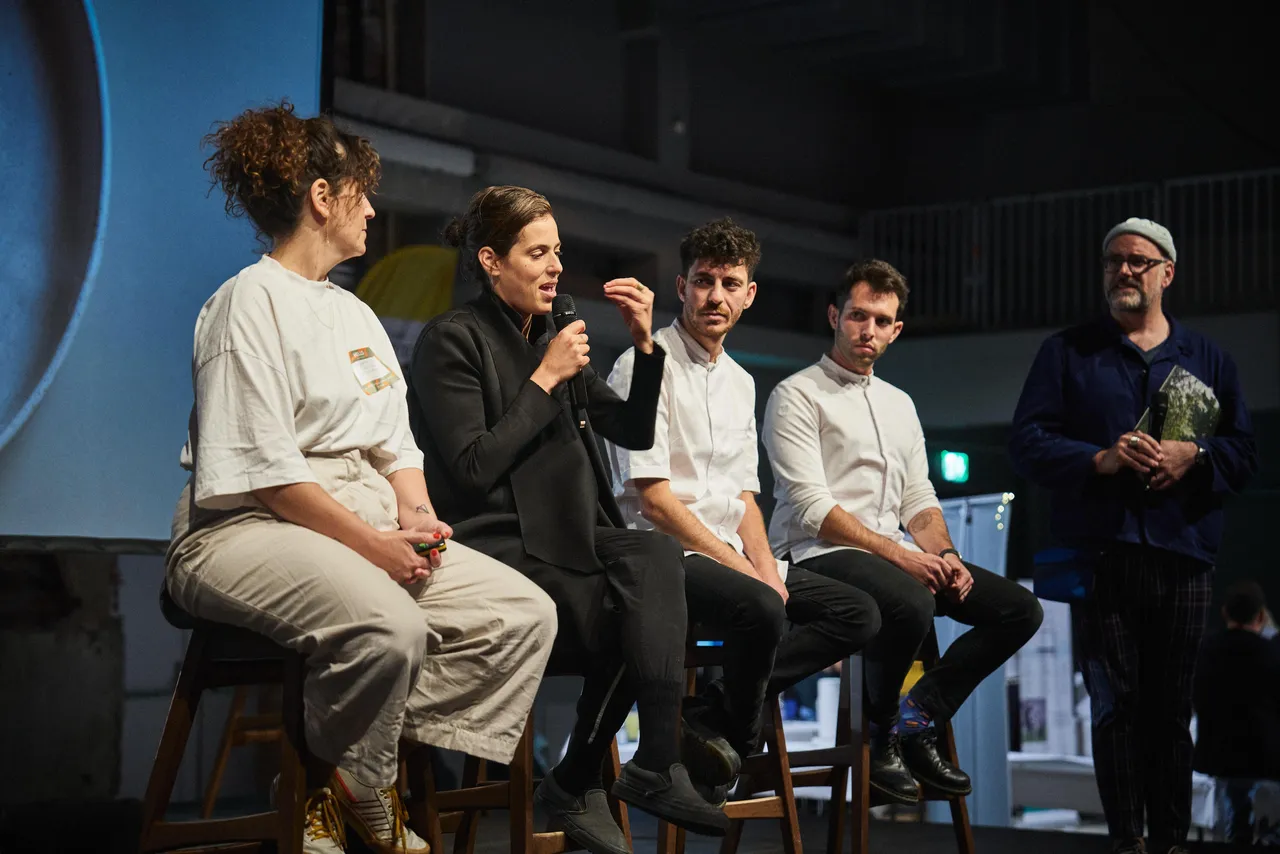
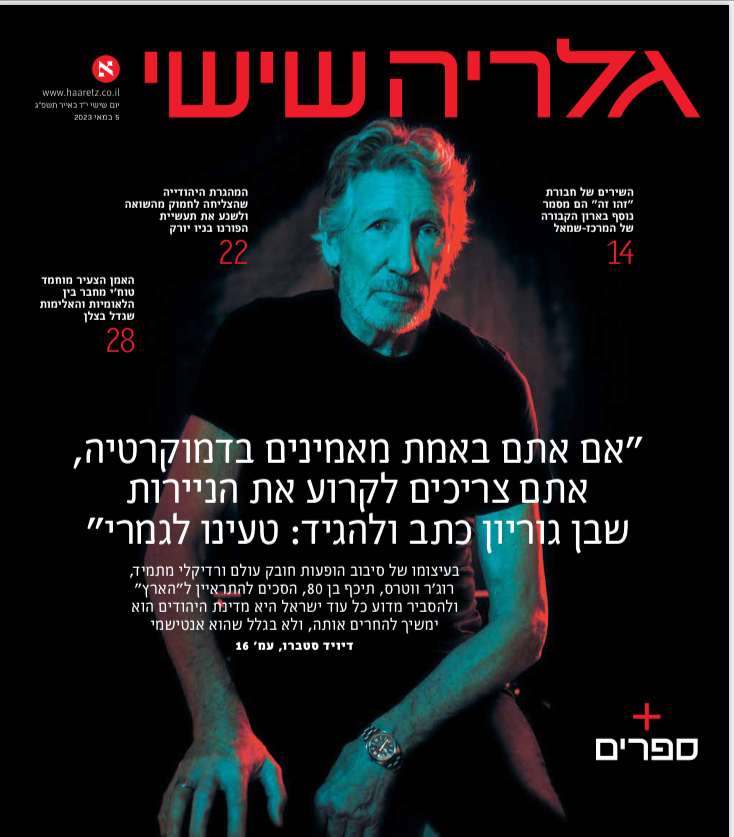




 דיויד סטברו