Reactions to the terrorist attack at Bondi Beach have largely focused on the hateful rhetoric believed to have contributed to the violent extremism that claimed 15 lives – the deadliest attack on Jews since October 7. That focus is understandable after two years of global demonstrations under slogans such as “globalize the intifada.”
At the same time, the attack is rooted in more than a toxic debate climate. It also involves a geopolitical and security dimension that has primarily been raised by Israeli officials.
According to Israeli intelligence assessments, links had already existed for several months between Australian pro-Palestinian activists and groups such as the Islamic State, al-Qaeda, and Iran’s Revolutionary Guard. Against this backdrop, Israeli Prime Minister Benjamin Netanyahu accused Australia’s prime minister of betraying the country’s Jews. After the attack, Netanyahu stated that he had already warned in August that recognizing Palestine would, in his words, “pour fuel on the antisemitic fire, reward Hamas terrorists, and encourage threats against Australia’s Jews.”
This raises a number of questions. Does Australia really need Israeli intelligence to identify threats against its Jewish population? And more importantly: is Netanyahu truly the right person to lecture others about being unprepared for Islamist terrorism, when his own government bears responsibility for Israel’s worst catastrophe in decades?
But Netanyahu is not the central issue. What matters is that the warnings proved correct. A massacre of Jews took place in Australia, carried out by men who had ISIS flags in their car. Australian authorities knew that one of the perpetrators had ties to ISIS and that his father, the other perpetrator, legally owned at least six weapons. Despite this, no warning flags were raised, and the Jewish event lacked police protection when the attack occurred.
Islamists operate freely in Sweden
Against this background, Europe should ask itself a clear question. If Australia’s policies over the past two years resemble those pursued in many European countries, could what happened at Bondi Beach happen here?
Both domestic and foreign policy must be scrutinized. Domestically, this concerns insufficient resources to protect Jewish sites, an inability to counter conspiracy theories, and complacency toward Islamist actors. These challenges affect all European countries, including Sweden. Swedish journalists have recently exposed how Islamists operate freely in Sweden, how Iranian actors direct terrorist activity via Swedish organized crime, and what links Swedish activists have to terrorist movements such as the PFLP.
“Jews in countries that do not take Islamist terrorism seriously end up paying the price, regardless of whether government passivity stems from fear, incompetence, or indifference.”
Sweden is not alone. According to a recent Europol report, jihadist terrorism remains a central security challenge for the EU, with groups such as al-Qaeda and the Islamic State exploiting the conflict in Gaza. Added to this is Hamas, which, according to Israel’s Mossad and European intelligence services, has planned attacks against Jews in Europe since 2023. The causal link is clear: Jews in countries that do not take Islamist terrorism seriously pay the price.
Kvartal
Why foreign policy matters
How, then, does foreign policy factor in? Can recognition of Palestine or harsh criticism of Israel encourage terrorism? Countries such as Spain, Norway, and Ireland pursue a clear line against Israel. Like Australia, they have recently recognized Palestine; they voice strong opposition to Israel in international forums and serve as comfortable host countries for movements that not only oppose Israeli policy but view the state itself as an illegitimate colonial project.
Australia’s prime minister firmly rejected Netanyahu’s claim that the country’s foreign policy had any connection to the attack. He may be right – such accusations require evidence. But that does not mean foreign policy is irrelevant to the climate surrounding antisemitic hate crimes.
First, governments – unlike individuals – must understand the unique situation Jews face. Demonstrations are marked by hatred, aggression, Nazi comparisons, terrorist symbols, and boycotts. Of course, protests are legitimate in a democracy, and no one seriously claims that all participants are violent antisemites. But at the political level, it is unclear whether countries such as Norway fully grasp what their Jewish populations are forced to endure. The situation is worsened by the fact that no other conflict in the world is covered as intensely – and, according to many, as one-sidedly – in Norwegian media. This has an enormous impact on Norway’s small Jewish community.
Second, does the tax-funded public sphere remain neutral, or does it contribute to an unsafe environment for Jews? What do teachers say? What do libraries display? How do healthcare professionals behave? This is a matter of public safety, not freedom of speech. In February, a video went viral showing two nurses at Bankstown Hospital in Sydney boasting about refusing care to – or even killing – Israeli patients. In Ireland, an official report found that school textbooks contain serious distortions of the Holocaust and Jewish history, which Jews in the country say fuel antisemitism. In Spain, Jewish organizations similarly warn that some teachers use classrooms for anti-Israel activism.
“Zero tolerance” is no longer enough
We can continue debating the limits of protest, but we must also scrutinize institutions. The state must protect freedom of expression, but it must also guarantee safety. That requires schools, hospitals, and libraries free from political propaganda and symbolic acts intended to influence public opinion.
Finally, it is a fact that jihadist terrorists in Europe are often exposed with the help of Israeli intelligence. Can Jews in Spain and Ireland truly trust that their governments will cooperate with the Mossad to save lives, when those same governments cannot even tolerate Israel’s participation in Eurovision?
After Bondi Beach, Europe’s governments must decide where they place their resources and political capital. If they are serious about protecting their Jewish populations, “zero tolerance” and symbolic gestures of solidarity are no longer sufficient. Political action is required – and it's required urgently.
As Swedish Member of Parliament Lorena Delgado Varas and activist Greta Thunberg make their way to Gaza as part of the so-called Global Sumud Flotilla (GSF), many Swedes assume that their intentions are good. However, the reality behind the movement they are actively supporting is as far as can be imagined from humanitarian, non-violent, peaceful activism.
The images of destruction and suffering from Gaza, combined with statements published by the flotilla's organizers, have created an image of brave and kind-hearted activists, willing to pay a heavy personal price to deliver humanitarian aid and draw the world’s attention to Gaza. On its website, GSF describes itself as “a coalition of everyday people – organizers, humanitarians, doctors, artists, clergy, lawyers, and seafarers – who believe in human dignity and the power of nonviolence.” They also emphasize that their loyalty lies with “justice, freedom, and the sanctity of human life.”
But the reality behind GSF is far removed from the idealistic image presented to the public.
Screenshot
Less than three months ago, a meeting took place at Hamas’ headquarters in Algeria. Participants included representatives of the Global Sumud Flotilla and leaders of the movements that murdered, raped, tortured, and burned hundreds of Israeli civilians on October 7th – and many more before that. Among those present were Youssef Hamdan, Hamas' representative in Algeria, and Nader al-Qaisi, a representative of the Popular Front for the Liberation of Palestine (PFLP). This was no secret meeting. Despite the continued portrayal of the flotilla by Swedish media as a peace initiative with humanitarian aims, publicly available material reveals concrete links between GSF and some of the world’s most notorious terrorist organizations. All it takes to uncover these connections is a basic knowledge of Arabic and a quick search through social media.
In one photo published by Nabil Chennoufi, a spokesperson for GSF who frequently shares extremist violent propaganda on social media, two members of the flotilla’s steering committee – Wael Nawar and Hayfa Mansouri – can be seen smiling and wearing keffiyehs with Hamas symbols, alongside leaders of the terrorist organization in Algeria. The caption says the meeting focused on the flotilla’s progress, its positive impact, and its connection to the "Palestinian resistance." In a second photo, a third steering committee member, Marouan Ben Guettaia, is seen meeting with Hamas leader Hamdan.
It’s important to stress that Greta Thunberg is not merely a regular passenger on one of the flotilla’s boats. GSF’s own website showed her as a member of the steering committee, alongside the aforementioned individuals. For some reason, her name and picture suddenly disappeared last Thursday.
Another committee member is Brazilian activist Thiago Ávila, who has openly expressed his admiration for the late Hezbollah leader Hassan Nasrallah. On social media, Ávila shared how he was inspired as a young man after meeting Nasrallah and described him as “an important anti-colonial figure who defeated Zionist and imperialist armies multiple times.” Earlier this year, Ávila attended Nasrallah’s funeral in Beirut – a massive demonstration attended by tens of thousands of people chanting “Death to Israel” and “Death to America.” Ávila was impressed, writing: “Today I saw thousands of new freedom fighters.”
As a reminder, it’s worth noting that Hezbollah is a militant Shia Muslim organization allied with Iran, Russia, North Korea, and Shia militias in Iraq. It is designated as a terrorist organization by the United States, the United Kingdom, and the European Union, and is responsible for numerous terror attacks and kidnappings around the world – financed by Iran’s Islamist regime and the narcotics trade.
But it seems Ávila is not loyal to only one terrorist organization. In a photo, he is seen posing next to convicted PFLP terrorist Leila Khaled, with a green heart emoji and a Palestinian flag. The caption reads: “Today I met one of the people I admire most in the entire world.” Khaled’s notoriety, it should be remembered, is not based on “human dignity and the power of nonviolent action,” but on her involvement in the hijackings of TWA Flight 840 and El Al Flight 219 in the late 1960s and early 1970s.
Another member of the GSF steering committee is Muhammad Nadir Al-Nuri Kamaruzaman, head of the GSF Southeast Asia coalition. He is also the founder of the Malaysian organization MyAqsa Defenders and CEO of the NGO Cinta Gaza Malaysia. Both organizations have expressed support for Hamas and have been linked to financing Hamas-run infrastructure in Gaza. Among other things, Cinta Gaza has published an e-book glorifying Yahya Ayyash, known as Hamas’s top bombmaker and responsible for numerous mass-casualty attacks in Israel during the 1990s. MyAqsa Defenders has also hosted a livestream event with Muslim Imran, whose name has appeared on Hamas channels as an official Hamas spokesperson.
Despite this information being openly and proudly published by those involved, neither Greta Thunberg nor Lorena Delgado Varas have been publicly questioned in Sweden for their participation in what clearly appears to be a well-organized, international operation with strong ties to terrorist groups. Sure – as citizens of a democratic country, they have every right to take part in whatever Mediterranean adventures they choose. But when those journeys are part of a network led by individuals with proven links to organizations responsible for massacres of civilians, there is a responsibility to investigate, question, and report.
It seems that behind the flowery rhetoric about human rights, humanitarian aid, and nonviolence hides a movement whose leadership praises antisemitic, religiously fanatical, chauvinistic, and ultranationalist violent actors. By participating in this initiative, Thunberg and Delgado Varas help legitimize forces that threaten democracy, gender equality, freedom of expression, and the very idea of a peaceful civil society. Despite their public image as champions of justice and solidarity, the facts suggest something quite different — in reality, Thunberg and Delgado Varas are supporting right-wing extremists.
Sweden is no longer trying to create peace in the Middle East. Instead, the "humanitarian superpower" has become a country where the parties make short-term use of the war to win votes.
Sweden's Middle-East policy is a dynamic creature. In the 70's it went from the early pro-Israeli policies of the Erlander era to the radical pro-Palestinian activism of the Palme era. Later ties with Israel strengthened as Göran Persson positioned himself as an international fighter against antisemitism and part of attempts to bring peace to the region. confusingly enough, Sweden's turn to the right and Carl Bildt's term as Foreign Minister aligned Sweden with the Palestinians again. A few years later, Stefan Löfven's government continued the trend when it recognised Palestine, while Foreign Minister Wallström promoted a "feminist foreign policy", but focused on supporting the Palestinian cause more than woman's rights in any other region.
These policies had one thing in common – whether they were formed by Sten Andersson's "Stockholmsgruppen" or by over enthusiastic professional diplomats, they were all based on the assumption that Sweden can somehow contribute to solving this decades-long conflict and that it's an actor in this far away complicated drama. That all supposedly changed two years ago. Sweden's application to join NATO, the end of 200 years of non-alignment and the focus on Ukraine meant a paradigm shift. When I talked to Foreign-Minister Billström in 2022, he told me about a "recalibration of Swedish foreign policy" and "new priorities". He said that the NATO accession is above anything else and after that it's all about "our neighborhood" meaning the Nordic states and the Baltic region. He added that "this is where we're putting our emphasis", making it clear that fixing the world, including the Middle-East, is no longer a priority.
Fast forward a couple of years and we suddenly have a new reality. Sweden's new foreign policy priorities may be right or wrong, but at least they're clear and transparent. What happened during the last European Parliament election campaign, however, is the exact opposite. Since the war in Gaza became a major part of the news cycle and a fashionable subject in activist circles, Swedish policy makers, in a new and cynical twist, decided to use it as a tool to mobilize voters. And so, Sweden is no longer trying to bring peace to the Middle-East, instead the "humanitarian super-power" has become a petty war profiteering vote-collector.
Vänsterpartiet is a good example. You'd have to be extremely naïve in order to think that the European Parliament has a substantial effect on the current war. Still, Dadgostar and Sjöstedt went all in with the genocide accusations and demands for sanctions against Israel. They even supported boycotting Israel's Eurovision participation. When it comes to the EU, this is all symbol politics. The real issues are climate change, immigration and economic growth. But V's electorate are wearing Palestinasjals and shouting "Intifada-revolution!". That's where the votes are. Sjöstedt may also be looking at a competing party which can only be described as war-mongering. Nyans posters say "Legitimera Hamas" and the party claimed it will use a seat in the European Parliament to remove Hamas from the terror organizations list. For Vänsterpartiet there was nothing to lose by making Gaza a campaign issue and there was a world to win. Socialdemokraterna, in perfect harmony, jumped on the Palestinian wagon slightly more moderately, insuring it wouldn't stay behind. How this will affect even one Palestinian in Rafah remains to be seen.
The conflict in Gaza was also used by Sverigedemokraterna which for months is trying to position itself as "Sweden's most pro-Israel party". But this isn't really about Israel. It's an attempt to wash away the party's neo-Nazi past. The idea that "we are friends of Israel, so we're no longer antisemites" is just as insulting as the old claim that "I'm not an antisemite because some of my best friends are Jews". Bust SD's timing is perfect. Some Israeli politicians are willing to align themselves with Europe's most populist and minority-hating parties, even if the side effect is legitimizing parties which are, or used to be antisemitic or neo-Nazi.
All this wouldn't have mattered so much if it was only about politics. Parties use what they can to get elected, that's just how it is. But this is causing damage too. The last thing real Israelis need is the support of ultra-right-wing parties encouraging Israeli politicians to continue marching into a hopeless future of endless war and backsliding democracy. They do, however, need real friends – Europeans who will support Israel's right to be a Jewish state and defend itself, but also insist that it coexists with its neighbors and stays a prosperous democracy. On the other side, the last thing Palestinians need are friends who adopt the Hamas narrative of colonialism, genocide and armed struggle. What they really need, besides humanitarian help, is uncorrupt leaders who are not the local chapter of the Muslim brotherhood or Iran.
But it's even more serious in a Swedish context. Politically dancing on the blood in Gaza and Israel is blowing wind in the sails of Swedish antisemitism which has never been worse.
Sweden's political class has to start taking responsibility. It's fine that it decided that Sweden can't bring world peace. It's actually probably very wise. But that doesn't mean Swedish politicians have to go to the other extreme. Even if they can't be part of the solution, at least they can stop being part of the problem.
Norway is seen by many as one of the most hostile European countries toward Israel. But the government in Oslo is veering between demands that it toughen its line against Israel and its actions in Gaza – and the fact that Norway is a major arms exporter
In recent months, some Israelis have declared Norway the European country most hostile to Israel. This theory is largely based on the policy of Norwegian Foreign Minister Espen Barth Eide, whose term began only a few days after the October 7 Hamas attacks. Barth Eide, a member of the Labour Party, is doing his second stint as foreign minister for the second time, having served in the role in 2012 and 2013. He has also briefly served as defense minister and climate and environment minister.
The list of Israeli grievances against him and his government is long. First came a report that Barth Eide's ministry had prevented King Harald V from sending a condolence letter to Israel after October 7 – because in Norway, the king isn't authorized to make declarations concerning "victims of a political conflict."
This was followed by a condemnation of Israel two weeks later at an international conference in Cairo. Norway's decision not to recognize Hamas as a terror organization also drew anger. In addition, Norway insisted on continuing to transfer money to the United Nations Relief and Works Agency, the UN agency assisting Palestinian refugees, while several other countries halted their support in response to reports that some of its employees had been involved in the October 7 attacks.
Norway not only continued to transfer money but initiated a campaign to defend UNRWA in other countries. Meanwhile, Norway has been active in the lawsuit against Israel in the International Court of Justice over the occupation of the West Bank and East Jerusalem, which is separate from the South African suit accusing Israel of genocide.
Espen Barth Eide on a Stockholm visit, June 2024, photo: David Stavrou
"We are friends of Israel," says the foreign minister, clarifying his position in an interview. "We always have been and we will continue to be. Sometimes good friends need to give good advice, but we are in no way hostile to Israel. We have always tried to help Israel live in peace and security." When asked to explain why Norway is nevertheless seen by many in Israel as hostile, he says that despite the friendship, his country can disagree with the Israeli government.
"We condemned the attack by Hamas on October 7 and we recognize Israel's right to defend itself against terrorism," he says, "but we also said that, like any other country, Israel must obey the laws of war within the international humanitarian laws of the Geneva Convention. Our criticism was that some of the military tactics that Israel used, and the de facto partial blockade on the Gaza Strip that prevented food, electricity, and necessary means of life from the Gaza population, were very problematic. This is not hostility towards Israel; it's criticism towards certain elements of the government's policy."
Among the issues Barth Eide mentions are statements by Israeli cabinet ministers who "gave the impression, which is probably wrong, that Israel wants to expel the Palestinians from Gaza. There have been such statements in Israel and they are very problematic when they come from government ministers."
Although several countries stopped transferring funds to UNRWA, Norway continued to transfer funds and demanded that other countries do so too. Do you not believe the Israeli authorities who reported that UNRWA employees were involved in the October 7 attack, or do you think this is not a sufficient reason to stop funding the organization?
"Our decision is not based on a lack of trust in the Israeli claim. Although we haven't seen evidence, that's not the point, because it may indeed be true. It may be that amongst 13,000 employed in Gaza, there were some who were involved with Hamas and even in the terrorist attack. This is terrible, unacceptable and it requires an investigation, we said this to the UN Secretary-General Guterres and to [UNRWA Commissioner-General Philippe] Lazzarini.
"But we did not agree that if this is true, all funding should be cut," he says. "This is not how to react to transgressions or crimes inside organizations. You don't close the organization, you look for the criminals. If someone in the Oslo police force is arrested on suspicion of murder, I will not shut down the police but arrest the suspect. We are happy to see that there are now countries that have changed their position on this – Australia, Denmark, Sweden, and Canada, for example, as well as the European Commission. It's not that we don't believe Israel, but we don't think that all Palestinians should be punished because of it."
Regarding UNRWA as a whole, Barth Eide does not accept claims that the organization is problematic and that aid for Palestinians should flow through other organizations instead. "A vast majority of the other international organizations operating in the region say that it's not possible to replace UNRWA in the short term," he says, "because they are the backbone for all humanitarian activities in Gaza, so all organizations are coordinating with them."
In November you declared, "We were clear in stating that Hamas should be seen as a terror organization." Is this, as opposed to the past, now Norway's official policy, including when it comes to enforcing the law, economic sanctions, etc.?
"The terrorist attack on October 7 was clearly a terrorist attack and it was carried out by Hamas, so in this context they carried out a very grave terrorist act. However, we have a standing position that maintains some kind of contact with all the relevant groups. This does not mean that we accept their goals or their policies, but we think that if we are trying to contribute to a cease-fire between the Israeli army and Hamas, someone has to talk to Hamas. This is not an endorsement of Hamas, but only an acknowledgment that they exist.
"The way to weaken Hamas is to develop an alternative path to a Palestinian statehood. People who contributed to the division of Palestinian society served Hamas and those who did not want progress. We do not want a Palestine under the control of Hamas, but a Palestine who recognizes Israel under the control of other Palestinians who recognize Israel and its right to life and security."
So are you in contact with Hamas?
"Yes, we are in contact with Hamas, as we are in contact with Hezbollah, with the Houthis, and everybody else in the neighborhood. And that is why we didn't impose the same sanctions that other countries imposed –but this should not be understood as endorsement of their goals and policies." Barth Eide adds, without specifying exactly to whom he is referring, that "There are people in the world who criticize us for this in public, but are actually happy that this is the case, because someone has to maintain these contacts".
What is your current position regarding the South African lawsuit in The Hague and its results?
"I commended the fact that Israel decided to respond to the lawsuit. We did not respond to the initiative itself, but given that the lawsuit exists, it's good that Israel responded, it's good that it recognizes the authority of the court and it's clearly its right to defend itself against the accusations. The court did not conclude that there is a genocide here, but that there are sufficient elements that may constitute a violation of the Convention on the Prevention of Genocide, and Israel should respond and inform the court what steps it is taking to comply with the limitations applicable to a country at war. It isn't illegal to go to war in self-defense, but there are laws on how to do it.
"There is of course another ICJ case dealing with the Israeli occupation. Unlike the genocide case, in the occupation case, we have actually intervened." Indeed, Norway was one of 50 countries that testified before the court on the matter in late February. "Norway clearly distances itself from Israeli settlers' displacement of and violence against Palestinians on occupied land," Barth Eide says. "The settlements are illegal according to international law… the injustice the Palestinians are being subjected to must stop."
Retail policy
Norway's policy toward Israel also has an economic aspect. Its Foreign Ministry recently issued a warning to Norwegian companies "not to engage in business cooperation or trade that serves to perpetuate the illegal Israeli settlements." Regarding this topic, Barth Eide was quoted in the statement as saying "Norway has long maintained that Israel's settlement policy in the West Bank, including East Jerusalem, is in violation of international law, including international humanitarian law and human rights, and undermines the prospects of achieving a future Palestinian state and a peaceful resolution of the conflict."
The statement said the recommendation to Norwegian companies was issued against the backdrop of swelling settlement expansion, as well as "increased settlement violence against the Palestinians."
The minister said in the statement that the "Norwegian business community has sought advisory guidelines from the Norwegian authorities. This recommendation makes it clear that Norwegian companies should be alert to the fact that engaging in any economic or financial activity in the illegal Israeli settlements could put them at risk of contributing to violations of international humanitarian law and human rights."
This policy has already had practical consequences. "A week ago, Norway's foreign minister sent an 'information letter' to the Norwegian Confederation of Business and made it clear that doing anything that would benefit organizations that contribute to the illegal occupation in Israel is not in keeping with Norwegian policy," says Leif Knutsen, the media coordinator for Norway's Jewish community. "He also sent this letter to Vinmonopolet, Norway's government-owned alcoholic beverage retailer monopoly. Vinmonopolet then immediately called for an emergency board meeting, which decided to take all wines from the West Bank and the Golan Heights off the shelves."
Knutsen says that this step may be illegal in the context of European Union or World Trade Organization rules, especially in the case of the Golan Heights. "It's a policy change that Barth Eide dictated from his own desk, not via the cabinet or the parliament, as foreign policy conducted via retail," says Knutsen. "One of the results of this is that in practice, Jews in Norway who want wine [that] is kosher for Pesach will find it hard to get hold of it."
Barth Eide clarifies that "Vinmonopolet can import other Israeli wines if it chooses to," and adds: "We have economic relations with Israel and we want to continue to maintain them. But we have been arguing for years that our economic relations with Israel should be with the Israel within the 1967 borders. This is not new. Now, we are strengthening our advice to Norwegian businesses – feel free to buy and sell in Israel, but not in what fuels the occupation, which I think everyone, except the Israeli government, recognizes is illegal.
"This is not a very radical policy," he says. "But [it exists] to be consistent with our own policy of not financially contributing to human rights violations and violations of international law. We do not go into the specifics, we give general advice. So it was the board of Vinmonopolet who made this decision."
In spite of all that, it seems that the Norwegian economy isn't paying a particularly high price for the government's moral stance. Trade relations with Israel haven't slowed dramatically, and the calls for a boycott of Israel are more symbolic than concrete.
According to Mette Johanne Follestad, president of the Norwegian-Israeli Chamber of Commerce, "For decades, Norway's main export to Israel [has been] fish. More than 80 percent of all imported salmon to Israel is from Norway. To a much smaller extent, Norway also exports metals and paper. Israel's main export to Norway is agricultural products – i.e., fruits and vegetables. Israel also exports to Norway technological products such as computer items. Those two sectors cover most of the Israeli imports to Norway."
She adds that despite political tensions, Norwegian fish exports to Israel have continued to grow in recent years. Exports from other industries have not increased for some time, however. "The political climate in Norway regarding Israel is not helpful for the promotion of business and especially for initiating new lines of trade. It seems that the anti-Israel sentiment has created a reluctance to develop new business relations with Israel.
"Even so, some trade continues to grow. In 2022-2023, Israeli imports to Norway increased from 1.649 billion kroner (570 million shekels) to 1.801 billion, reaching record figures in both years. Norwegian exports to Israel were also at a record level in 2022 at 2.644 billion krone. Unfortunately, Norwegian exports to Israel decreased to 2.313 billion kroner in 2023."
In addition to the recommendation of the Norwegian government to boycott Israeli products from the West Bank, Follestad also notes that universities in Norway are calling for an academic boycott against Israel, although the Norwegian government is against it. Knutsen adds that Norway has seen many calls for various types of boycotts against Israel. In Norwegian academia, for example, some universities have severed ties with academic institutions from Israel. One example is Oslo Metropolitan University, commonly known as OsloMet, which decided not to continue a student exchange program with the University of Haifa. "This is a case where the institution's board of directors made the decision," says Knutsen. "They claim that it's not a boycott but a decision not to continue a program, but this is a game of semantics."
Knutsen sees the decision as a clear violation of fundamental academic freedom that was meant to appease activists wishing to silence anyone disagreeing with them. According to reports, OsloMet is not alone, with the University of South-East Norway deciding to end its academic and research collaborations with the Hadassah College of Technology in Jerusalem over the war in Gaza.
The boycotting isn't limited to academia. Knutsen says there has been a flood of calls for boycotts of Israeli products in recent months. Some trade unions and local municipalities, including Oslo, have called for boycotts or announced them. "They're very careful to say that they're not boycotting Israel, they're only boycotting organizations and cooperation that contribute to the settlements, particularly in the West Bank," she says. "However, it's not always clear what exactly that means and what it is that they're not buying. It seems like virtue signaling for a domestic audience."
When it comes to big money, however, Norway is in no rush to cut off every investment that could somehow be connected to the occupation and the settlements. On this subject, it's interesting to consider Norway's Oil Fund, which invests the surplus revenue from the country's oil sector in what has become the largest sovereign wealth fund in the world. The fund, which holds about $1.5 trillion, has previously withdrawn investments in Israeli companies. However, according to various reports, it still has investments in some 70 Israeli companies totaling billions of dollars. Now it's examining whether to withdraw investments from companies connected to the occupation and settlements, mainly entities like Israeli banks and financial institutions.
"This is discussed widely here," says Barth Eide. "Our recommendations are also relevant to investments in the Oil Fund. The ethical committee of the fund is looking into the matter. It's complicated, because, for example, when there is ownership in a bank, the bank may have activities both in Israel and in the occupied territories, so it's complicated, it's a question of to what grade, and the government doesn't go into the details of every portfolio. The fund has a board of directors and it also has a wider management and an ethics committee. They are the ones who decide."
Sell and forget
In spite of the many steps aimed at pressuring Israel, there are voices in Norway arguing that the government isn't doing enough to oppose Israel and support the Palestinians. Pro-Palestinian organizations say the Norwegian arms industry, a large part of which is government-owned, has found ways of bypassing the prohibition against selling weapons to countries at war. Could Norway be trying to enjoy the best of both worlds, portraying itself as the enthusiastic defender of the Palestinians while avoiding missing out on the profits made from its relationship with Israel?
"There is a clear definition of what a Norwegian weapon is," says Barth Eide. "It's a weapon that is manufactured in Norway or at least the main component is manufactured in Norway. This is an international definition. In this sense, it's forbidden to export Norwegian weapons to countries that are at war like Israel and we have no reason to believe that there has been violation of this." However, the foreign minister clarifies that since Norway has a large arms industry, Norwegian companies also own companies abroad –and here, the government's control is more limited. The same is true of other countries.
"Besides, there are also joint projects in which we produce parts for weapons made by other countries," says Barth Eide. "For example, we manufacture some minor parts for F-35 aircraft. Norwegian laws do not apply here because it would simply create a situation where international defense cooperation would be impossible." Barth Eide says Norway doesn't sell weapons to Israel and that he has called on other countries to follow its example to ensure there is no indirect complicity in what potentially may constitute genocide.
However, some say that Norwegian companies, including at least one that is half-owned by the government, are bypassing this government policy. The online daily magazine Verdens Gang reported in November that Norwegian-produced components may be used in missiles that Israel is firing in Gaza. The publication reported that since Norway allows the exportation of weapons components to NATO countries like the U.S., the parts could be used to assemble weapons exported to Israel according to American regulations.
That's how, according to the newspaper, Chemring Nobel is one of the manufacturers of rocket fuel for Hellfire missiles, which the U.S. supplies to Israel for use in the war in Gaza. Reports that this company produces rocket fuel and explosives for missiles used by the Israel Defense Forces aren't new and have appeared in various Norwegian media outlets in the past.
In response to the Verdens Gang report, Chemring Nobel's CEO said he couldn't rule out the possibility that Norwegian components are included in the weapons systems used in Gaza, Ukraine, or other places. This is because several of Norway's allies permit the export of defense products to Israel, in contradiction with Norwegian export policy.
The Nordic Ammunition Company (aka Nammo), another Norwegian company, has also been accused of selling weapons to Israel. Ownership of Nammo is divided between the Norwegian government and a Finnish company named Patria, itself half-owned by a Norwegian company whose largest stockholder is the government. In December, the Norwegian public broadcaster reported that pro-Palestinian activists had blocked the entrance to the company's factory in Raufoss, saying that "Nammo's weapons are helping to kill Palestinians in Gaza." According to the demonstrators, M141 shoulder-fired missiles exported by Nammos' factory in Arizona to Israel are being used in Gaza. The company denied the claims, saying the weapons were sold to the U.S. military up until 10 years ago, which was the extent of its involvement.
In response to a request for comment, a Nammo spokesperson wrote: "We have also seen media reports about U.S.-made Nammo products in Israel. Given that sales of these products took place several years ago and were made to U.S. authorities, we're not in a position to confirm reports of later transfer from the US to Israel, nor are we privy to knowledge about which weapons or materiel the Israeli military uses."
Asked whether there is oversight over the use of the weapons parts the company exports to other countries (such as by means of an End-User Certificate), the spokesperson wrote: "Nammo is subject to export control laws in the countries where we have operations, including Norway, which does not permit exports of Norwegian-produced products to Israel. For export license requests to countries where exports from Norway are permitted, end-user documentation or certificates are normally part of the list of required documents."
Chemring Nobel declined to respond to a request for comment.
Mediation and boycott
"Trends in International Arms Transfers, 2023," the latest edition of the annual report by the respected independent watchdog Stockholm International Peace Research Institute provides context regarding Norway's arms industry. The think tank is dedicated to research into conflicts, armaments, arms control, and disarmament. Its publications are considered highly reliable sources on the global arms trade, although the institute acknowledges that complete information on deals in the field is hard to obtain. In the 2023 report, Norway is 19th on its list of the 25 largest exporters of major arms – all the more notable because of the country's small population of 5.5 million. According to the report, imports of major arms by European countries increased by 94 percent – nearly double – in 2014-18 and 2019-23.
More than half of European arms imports in 2019-23, 55 percent, were from the U.S., up from 35 percent in 2014-18. Arms imports to countries in Asia, Oceania, and the Middle East also increased significantly in 2019-23. The top arms importers in this period were India, Saudi Arabia, Qatar, Ukraine, Pakistan, Japan, Egypt, Australia, South Korea, and China. Israel was 15th on the list. Almost 70 percent of its arms imports were from the United States – the world's top arms exporter, whose total arms exports rose 17 percent. Russia's exports, in contrast, fell 53 percent, losing its spot as the second-largest arms exporter to France and dropping to third place. The U.S., France, and Russia were followed by China, Germany, Italy, Britain, Spain, and Israel (in ninth place).
Countries in the Middle East accounted for 30 percent of arms imports in 2019-23. Saudi Arabia, the world's second-largest arms importer, received 8.4 percent of global arms imports during this period. With a global share of 7.6 percent, arms imports by Qatar increased 396 percent during that timeframe. The United States is the region's arms supplier, accounting for 52 percent of Middle East arms imports; following it are France (12 percent), Italy (10 percent,) and Germany (7.1 percent).
Norway shouldn't be on the list at all, since its regulations prohibit arms exports to countries in a state of war. Therefore, the countries leading the list of imports from Norwegian companies in this field are the United States, Ukraine, and Lithuania. After Russia's invasion of Ukraine and given Norway's special interest in helping to repel it, the Norwegian government passed a resolution allowing direct arms sales to Ukraine. Also, Norwegian law allows the provision of military aid to countries at war, as opposed to the sale of weapons for commercial purposes.
"The defense and weapons market in Norway is highly regulated," Nicholas Marsh, a senior researcher at the Oslo Peace Research Institute, says. "The Ministry of Foreign Affairs issues export permits and customs checks the products that cross the border. The trading partners in this area are mainly NATO countries and [other] developed and democratic countries, such as Australia. The main principle according to which export licenses are granted was already formulated in the late 1950s, in the declaration of the Norwegian Parliament according to which it is forbidden to sell weapons or ammunition to areas that are at war, under threat of war, or in civil war. Beyond that, Norway is also subject to the International Arms Trade Control Treaty and EU guidelines." Although Norway is not an EU member, it has accepted the EU's guidelines in this field.
"Norway's defense and weapons industry doesn't have a huge effect on the national economy. Obviously, it's much less important than oil and gas in terms of Norway's gross domestic product. However," Marsh adds, "Norway doesn't produce much. For example, unlike Sweden, we don't have a large high-tech industry, so in terms of production and employment, [the defense] sector is important. There are two major companies, Nammo and Kongsberg, both partly owned by the Norwegian government."
What about Norwegian companies with subsidiaries in other countries? Are they subject to Norwegian law, or to the laws of the countries in which they manufacture the arms?
"When it comes to subsidiaries, things get complicated. Hypothetically, if a Norwegian company buys a company abroad, Norwegian regulations don't apply to it. It only applies to products that leave Norway. However, Norwegian export regulations can be applied if a product that is manufactured in, say, the United States, uses parts that were made in Norway or even uses software or technical plans [that] are Norwegian intellectual property."
When Norway exports arms, is it considered standard to demand an end-user certificate?
"Like other countries, Norway also uses end-user certificates, but more important are the conditions of sale documents. This is how companies define, among other things, who they allow their products to be sold to. It is not only a matter of maintaining human rights, it is also a commercial matter. But in the case of NATO countries, Norway has repeatedly made it clear that it does not request end-user certificates. This is a political statement and it has been repeated over the years.
"Thus, since Norway can sell to France, the United States, and the United Kingdom, for example, and since it does not require an end-user certificate from these countries that export to countries like Saudi Arabia, the situation is that the government can claim that there are no weapons in countries at war that have 'Made in Norway' on them, but It's certainly possible that there are weapons that have Norwegian parts or are produced by subsidiaries of Norwegian companies. It should be remembered that the arms industry is partially owned by the government, which has both an economic and a political interest here, so there is a balance between principled considerations and practical consideration," Marsh says.
"This has characterized Norway for a long time," Marsh adds, summing up what he calls Norway's dualistic nature. "The Nobel Peace Prize is awarded here and there is political emphasis on peace talks, diplomatic efforts, solidarity, and humanitarian activity. But on the other hand, Norway has been a NATO member from the very beginning, and since World War II it has a strong military which is part of a military alliance that opposes Russia. As a small country, its interest is to promote peace, but it has never been a pacifist country."
When Barth Eide is asked about the future of Israel-Norway relations, he says that although there are ups and downs, his country still formally has a central role in the region because it's the chair of the Ad Hoc Liaison Committee, the body that coordinates international economic aid to the Palestinian Authority. Established in 1993, it has 16 members, led by Norway and sponsored by the United States and the European Union.
"After a cease-fire, this will again be the key body for discussing the coordination of donations to build the Palestinian Authority," Barth Eide says. "That is why we worked with the Israeli government to find a solution to the problem of the clearance revenues collected by Israel on behalf of the Palestinian Authority. This shows that we can still work with Israel and with Ramallah to solve problems." This is a reference to the temporary arrangement facilitated by Norway between Israel and the Palestinian Authority, in which Norway serves as an intermediary for the portion of tax and customs revenues that Israel has withheld since October 7.
In a broader context, Barth Eide still holds to the policy he held in the past. "I believe and have believed for many years that the best path to peace is an agreement with the Palestinians," he says, "not with Hamas, of course, but with the Palestinian Authority, with Fatah and the PLO. Israel will be more successful in its attempt to be both a state for Jews and a democratic state if it has a Palestinian state by its side. Everything we do on this issue is intended to end suffering but also to establish a Palestinian state that is run by a legitimate authority after an agreement. This is a goal that is good for both the Israelis and the Palestinians."
Follestad, the president of the Norwegian Israeli Chamber of Commerce, stresses that any boycott, including one only on Israeli products from the West Bank, would be primarily damaging to Norway's position as an honest broker. "Ever since the Oslo Accords were negotiated in our country, Norway has tried to be a mediator and bring the sides closer to peace," she says. "By boycotting Israeli products from the West Bank, which according to the Oslo Accords is still legally under Israeli jurisdiction, the Norwegian government, by not respecting the signed agreements, is itself violating the spirit of the Oslo Accords. Accordingly, Norway's opinion may no longer be respected by Israel, and Norway may become irrelevant as a mediator in the conflict."
At the end of the 1940s, while Europe was putting ‘never again’ into a work plan, a parallel movement was arising. What began in obscure realms now characterizes the far-right renaissance in Europe
In the years following World War II, the words “never again” were a key to understanding political and social events in Europe. Shortly after the war, senior Nazi war criminals were tried in Nuremberg, and the United Nations was founded to safeguard the peace and security of the world. Then in 1948 the United States launched the Marshall Plan, with the aim of rehabilitating the Continent and setting it on a path of growth. One of the first treaties adopted by the UN was the Convention on the Prevention and Punishment of the Crime of Genocide, a term coined by the Jewish lawyer Raphael Lemkin, who was one of the convention’s initiators. Thanks to these developments, by the end of the decade, the term “never again” had become more than a moral imperative: It was a work plan.
But concurrently, a parallel historical movement was rising, one that attracted less public attention. In the shadow of the new and free Europe, a united front began to coalesce; it aimed to restore Nazi and fascist values and ideas to dominant roles. A few years after the mass murders ended, an increasing number of movements and parties that bore the racist, nationalist and antidemocratic heritage that was vanquished in 1945 cropped up across the Continent.
It began in obscure realms, far from the eyes of the international institutions and the press. The Swedish historian Elisabeth Åsbrink describes the process in her 2016 book “1947: Where Now Begins.” She notes that Per Engdahl, the leader of the Swedish fascist movement who had been active during the war, began connecting nationalists from across the Continent – those from the losing side in the war. He brought Nazi war criminals to safe haven in Sweden and from there smuggled them around the world. Conferences that were public knowledge were held, working plans were written and parties were founded in many European countries. This is how the English fascist Oswald Mosley could be linked both ideologically and organizationally via the Italian Social Movement (MSI), the heir to Mussolini’s path, to the neo-Nazis in Scandinavia and the Low Countries and to the last of Hitler’s loyalists in Germany.
That unity did not last long. Ideological differences – questions of race, culture and nationalism – arose quickly, and were compounded by personal power struggles. The trans-European parent movement was gradually dissolved, and its branches in the various countries split into movements and parties of two main types: Some became violent, revolutionary fringe groups, while others strove to draw close to the mainstream.
In Sweden, which had been neutral during the war, thus evading the devastation caused by the fighting, a large number of neo-Nazi movements would emerge in the decades to come – from the National Socialist Workers’ Party (NSAP) in the 1940s during the war to Keep Sweden Swedish in the 1980s. In Italy, the MSI went through several incarnations before morphing into the National Alliance, in the 1990s. In 1954 France saw the establishment of the Rassemblement National Français by Maurice Bardèche, who was close to Engdahl, and Jean Louis Tixier-Vignancour, who had served in the Vichy regime. It’s these same three countries that now embody the far-right renaissance in Europe.
In 1988, members of the Swedish neo-Nazi scene founded the Sweden Democrats. One of its key figures was Gustaf Ekström, then 81, a former Swedish volunteer in the Waffen SS who had also been active in the NSAP. Ekstrom died in 1995, but his party is still around, and it crossed the electoral threshold for the first time in 2010. In last month’s parliamentary election, it became the country’s second-largest party, garnering more than 20 percent of the vote. Sweden’s next government will be wholly dependent on it.
While the Sweden Democrats were slowly and cautiously consolidating their strength, in 1992 a 15-year-old girl named Giorgia Meloni joined the youth movement of Italy’s the neo-fascist party, the MSI. She rose through the ranks of the party, which eventually became the Brothers of Italy (FdI), which in September won Italy’s parliamentary election. Meloni will be the next prime minister of Italy, borne on the wings of a party whose emblem makes use of the tricolor flame, the old Italian fascist symbol.l
In last April’s runoff presidential election in France, Emmanuel Macron, the incumbent and the centrist candidate, was victorious; but the losing candidate Marine Le Pen, received 41.45 percent of the vote, a personal high. Le Pen’s roots were planted in the same fascist ground that had been plowed originally by Per Engdahl. The European far right’s renewal movement in the 1950s had a monthly journal, Nation Europa, which was founded by a former SS officer, Arthur Ehrhardt. Among its writers were thinkers who became the living spirit of the new European right. One of them was a young Frenchman campaigning for the Comité National Français: Jean-Marie Le Pen.
His daughter’s party, recently renamed the National Rally, is similar to the Sweden Democrats and to Meloni’s party. The three, which represent the success of the far right’s postwar evolution, vehemently insist they are not fascists. They take pride in their conservatism and in encouraging “traditional family values”; they think that feminism, LGBTQ rights and access to abortion – not to mention immigration – have gone too far. Independent and activist courts, a free and unbiased media, and academia are also not their cup of tea. But publicly, they shake off accusations of racism and authoritarian tendencies.
It may well be that the great problem with these parties may not be their extremism, antisemitism and xenophobia, but the lack of seriousness of those who wish to lead the Continent (and are poised to do so in no few countries). A major contention against the left is that it is naïve and unrealistic, even dreamy. But in today’s Europe, it is the populist right that is afflicted with these childhood ailments: disconnected from reality, delusionary, unpragmatic and fickle in its views. At times its leaders draw close to Russia and its president, Vladimir Putin, then it suddenly supports NATO. It views the European Union as the root of all evil but when in power happily accepts astronomical checks from it. This isn’t necessarily extremism, it’s populism that avoids responsible long-term solutions while fueling well-organized crusades against so-called corrupt elites.
This childish, look-the-other-way behavior is most blatant in the far right’s denial of the climate crisis, in the face of an absolute scientific consensus. For these parties and the leaders they spawned, the approaching consequences and the existential crisis that humanity is facing are akin to fairy tales, and they oppose almost all the measures being proposed to reduce greenhouse gas emissions.
Riding an ostrich
But it’s not just global warming, the droughts or the rising sea levels. The populist right closes its eyes to the realities of the waves of immigration, the refugee crisis and the wars of the future. While the left and the conservative right suggest solutions – some better, some less so – the populist right believes that if it ignores the problem, it will simply go away. As far as it’s concerned, it’s possible to build a wall around the Continent and explain the world using a variety of alternative sources, from Fox News to “The Protocols of the Elders of Zion.”
On the one hand, they are against taking in refugees, but they are also opposed to offering economic aid to the countries in Africa and the Middle East where the migrants come from. Similarly, it’s out of the question to invest in international institutions and conflict resolution. The flow of immigrants westward and northward, which could total tens of millions, will simply end by itself. It is sometimes said that cooperating with these far-right parties is like riding a tiger, but in reality it’s more like riding an ostrich.
The answer to the question of where all of this is leading, and whether the Europe of the future will be a conservative, insular continent that has regressed in regard to human rights, immigrant absorption and coping with the challenges facing humanity, actually rests with the left. Today, both in Europe and the United States, the left is adapting to its right-wing rivals. Populism is not an exclusively right-wing phenomenon; both sides are adept at deconstructing themselves and putting forward a garland of specific struggles that are divided according to race, sex, gender and age, instead of coming up with solutions that are intended for society as a whole.
Social Democratic parties still advocate traditional solutions such as crafting full-employment policies, strengthening trade unions, investing in welfare and providing public housing and a strong social safety net. But in some countries these parties have given way to the identity politics of the so-called radical left, or to the neoliberal policies of Social Democratic parties that have lost their way. For these kinds of parties, reality is no longer the political arena, it’s the endless chatter on TV and social media. In countries that have lost their traditional left, it’s hard to see who will right the ship that’s sailing toward the populist iceberg.
Predicting the future isn’t easy, but we don’t have to go back many years to remember what happens in Europe when the extreme fringes on the right and left fight for power while the moderates are preoccupied with internal wrangling. While all this is going on, the war in Ukraine is becoming an echo of the Spanish Civil War of the 1930s, which was the preview for World War II. As the cliché goes, history tends to repeat. The past year looks like the start of a process that may end with the ushering in of a new period – one whose guiding principle may very well once more be “never again.”
Sweden’s new foreign minister, Tobias Billström, talks to Haaretz about recalibrating foreign policy, the importance of ties with Israel and the new government's far-right partners
STOCKHOLM – Swedish foreign policy has been unique for many years in Europe. The Scandinavian nation hasn’t joined military alliances since it was a military power in the 17th and 18th centuries, and hasn’t been involved in a war for over 200 years (with the exception of occasional peacekeeping missions far away from its borders). In the second half of the 20th century, its policy of avoiding alliances and maintaining wartime neutrality created a foreign policy that in many ways wasn’t about serving Swedish national interests. Instead, it was about becoming a “humanitarian superpower” and endeavoring to make the world a better place.
Naturally, there were those both at home and abroad who criticized this policy. Some saw Sweden’s attempts to position itself on the right side of history as self-serving, opportunistic and hypocritical. Others claimed its private sector’s thriving arms industry was incompatible with a government preaching peace, love and understanding. Another problematic aspect was Sweden’s close ties with a host of dictators and oppressive regimes.
Still, for decades, Swedish diplomats were crucial in bringing wars to a close. Swedish policymakers were generous when it came to humanitarian aid, and vocal when it came to issues like the struggles against apartheid and the Cold War arms race.
This tradition was maintained in recent years as well. As well as being the only Western European country to recognize a Palestinian state, Sweden did its best to export progressive ideas like “feminist foreign policy,” taking radical steps against climate change and building stronger international institutions.
“Since I took office, I’ve been very clear that we need a recalibration of Swedish foreign policy,” says Sweden’s new foreign minister, Tobias Billström. “We need to make some very clear statements about our priorities. One priority, above anything else, is the NATO accession. With that we also have to think about our neighborhood – the Nordic states, the Baltic states and the countries surrounding the Baltic Sea. This is where we’re putting our emphasis. It’s not a choice between being active in the international arena and being focused on our neighborhood. You can do both. What you can’t do is be everywhere all the time and be active in all aspects. We’ll have to prioritize.”
This may be a seismic change on the national level but it’s not for Billström, who notes that his party “has supported joining NATO for years. And I believe that the question of neutrality ended in 1995 when Sweden became a member of the European Union.”
No Jerusalem embassy yet
Billström, 48, is an experienced politician despite his relatively young age. He has been a parliamentarian for 20 years, serving as migration and asylum policy minister from 2006 to 2014, and was a local politician before that. The role he now holds is one of his country’s most important considering current regional instabilities. He meets Haaretz at his Stockholm office, which is located in a beautiful 18th-century palace facing the Royal Opera House on one side and the Royal Palace and Parliament House on the other. He has just accompanied the king and queen of Sweden on a state visit to Jordan, one of his first on the job. He says he’d like to visit Israel one day and thinks that Sweden’s relationship with Israel is “excellent following the establishment of dialogue in 2021.” Still, no official visit has as yet been planned.
Eight years ago, one of the first steps of the previous government was to recognize a Palestinian state. What is your government’s position on the issue?
“The decision to recognize Palestine in 2014 was premature and unfortunate. However, the decision has been taken and this government doesn’t plan to revoke it.”
But it wasn’t just about recognition. The previous government was very active in this field: it appointed a special envoy to the Israeli-Palestinian conflict; it actively opposed Israeli settlements in the West Bank; and it supported the Palestinian Authority and the two-state solution. Is Sweden’s new government still committed to these policies?
“On the Israeli-Palestinian conflict, the government stands firmly behind the EU policy. We want to see a negotiated two-state solution based on international law. That decision will remain. As for being active, we will continue to criticize the parties when called for, when violations of international law are committed and when human rights are abused. We’ll do that in the same way we criticize other states when it’s justified. This is in no way contrary to having excellent relations with Israel or Palestine. The government will at all times stand up for Israel’s legitimate security needs.”
Would Sweden consider moving its embassy from Tel Aviv to the capital, Jerusalem?
“Like the EU, the government will continue to respect the broad consensus of the international community and relevant UN Security Council resolutions and regard Jerusalem as a final-status issue. Pending a peace agreement, Sweden’s embassy will not be moved.”
Your government plans to cut foreign aid drastically in the next couple of years – will this affect Swedish aid to the Palestinians, and could this lead to a problem with Sweden’s Palestinian partners?
“Sweden’s development cooperation with Palestine, just like the EU’s, ultimately aims to build the conditions and promote a two-state solution in line with international law. This goal will remain. As we review our overall development cooperation, we will also recess our Palestine strategy, which applies to the period of 2020 to 2024.”
“The government takes terrorist accusations very seriously and several of these civil society organizations – which were listed by Israel as terror groups in October 2021 – receive support from the EU, the United Nations, Sweden and other donors. Together, the donors within the EU followed up thoroughly on the allegations and concluded that no substantial evidence was provided. The donors will therefore continue to support Palestinian civil society. We believe that a free and strong civil society is indispensable for promoting democratic values and the two-state solution. Needless to say, if Israel makes convincing evidence available that would justify a review in the policy toward these organizations, we would act accordingly.
“When it comes to antisemitism, it is of course unacceptable and it’s very important that the PA ensures that its textbooks fully meet UNESCO standards, and that the EU continues to be clear in its dialogue with the Palestinians to ensure that this is the case.”
Israel’s new government will be led by former Prime Minister Benjamin Netanyahu. Are you confident that Israeli-Swedish relations, which have recently improved under another government, won’t deteriorate again under the new one?
“As Sweden’s foreign minister, I would like to see a good dialogue with countries we think we can maintain good relations with. The question of relations between Sweden and Israel is exactly about that: to have a dialogue on issues that we might disagree on – but we think it’s still a good thing to sit and talk about them.
“It’s not up to me as foreign minister of Sweden to say anything about Israel’s domestic policy. The people of Israel have a right to elect their government, just as the Swedish people have a right to elect our government. The important thing is to understand that in Sweden we cherish dialogue and would like to see it maintained.”
“It’s up to the Israeli government through its ambassador here in Sweden to choose with whom it wants to talk. As foreign minister, the case is very clear: the Swedish constitution says that foreign policy is shaped by the government, which keeps parliament informed. This means that since the Sweden Democrats are not part of the government, their influence is limited to exactly that – namely, parliamentary control, just like all the other parties represented in the Swedish parliament.”
A personal Holocaust story
As well as relations with Israel and the Israeli-Palestinian conflict, another Swedish policy to draw attention during the previous government’s term was the one concerning antisemitism and Holocaust remembrance.
For over 20 years, since a Swedish initiative started the International Holocaust Remembrance Alliance in 1998, Sweden has been considered a world leader in this field. Last year, the government organized a major international conference in Malmö dedicated to Holocaust remembrance and combating antisemitism. It also decided to open a new Holocaust Museum and accept the IHRA definition of antisemitism and its examples (which some have slammed for equating criticism of Israel with antisemitism).
When asked if his government is just as committed to combating antisemitism and preserving the memory of the Holocaust, Billström says: “Certainly! Combating antisemitism is very important and the new government is fully committed to doing so.”
Since Sweden is still struggling with many instances of antisemitism in schools, in some Muslim environments and in far-right circles, Billström knows the problem is still unresolved. “I will always be a very strong advocate against antisemitism,” he says. “We are working very closely with Israel on this. I appreciate the very fruitful cooperation with Israel during the IHRA presidency, and we’re looking forward to continuing the cooperation during Israel’s presidency in 2025.
“I would also like to make a personal remark on this,” he adds. “My grandparents in Malmö took in a Jewish family that escaped from Denmark across the Öresund strait, during the period in 1943 when the Gestapo tried to round up the Jews. I grew up with this story. I have this very nice diploma that says two trees were planted in their memory in Tzippori [in northern Israel] as thanks from this family. My grandmother and my mother, who remembers playing with the kids of this family, told me this story, and it has left a deep mark on me leading to my understanding of what the Jews and what Denmark went through.
“I’ve always believed that antisemitism is a horrible thing. When the Jewish burial chapel in Malmö was attacked during my time as migration minister [in 2009], I went there for the inauguration of the restored chapel and talked about my family’s story in my speech. For me, it’s obvious that there are examples of antisemitism in Swedish society that should be condemned, and it’s obvious there are people in our society who have not laid off the horrible idea that there are grounds for antisemitic persecution of people of Jewish origin in our society. That should always be combated – in schools, at workplaces, wherever we find it. As foreign minister of Sweden, this is something I have a very firm conviction about.”
What about the Sweden Democrats? Besides their past as a neo-Nazi party and many extremely problematic antisemitic opinions voiced by some of their leaders, the biggest party supporting your government supports various laws that could be problematic for Sweden’s Jewish community – such as forbidding circumcision and banning the importation of kosher meat. Are you sure your partnership with them won’t be part of the problem rather than part of the solution?
“I have to say that although there is certainly room for political debate concerning those aspects, as foreign minister it’s clear that the constitution limits their parliamentary influence. As to other issues you mentioned, they belong to areas under the influence of other ministers and I think that, again, under the limits of the constitution I shouldn’t be addressing them.”
One issue Billström is willing to address is Swedish-Iranian relations, which have been tense lately. A Swedish court recently sentenced an Iranian official, Hamid Nouri, to life in prison for war crimes committed in Iran in 1988. There are also two Iranian-born Swedes standing trial in Stockholm after allegedly spying for Russia, while Swedish nationals are also being held in Iran. The recent domestic demonstrations against the Iranian regime make it even harder for Sweden to maintain business as usual with the Islamic republic.
When asked if these events will bring about a change of Swedish policy toward Iran, Billström makes the Swedish position clear. He says that since Sweden has an independent judiciary, there is no government influence on verdicts in Swedish courts. This may be seen as a signal to Tehran about the government’s policy concerning the complicated court cases in both countries.
However, when it comes to the political arena, things are easier to act upon. “As we see it, there is no movement on the Iran nuclear deal,” Billström says. “But the developments in Iran are a source of great worry for Sweden, which also has a considerable Iranian diaspora. The violence directed against peaceful demonstrators is horrible. I had direct communication with the foreign minister of Iran a few days ago, and I was very frank about the way the Swedish government feels about this – we believe people shouldn’t be persecuted and that the use of the death penalty is absolutely unacceptable in every regard. However, we still feel there’s room for dialogue with the Iranian government on this – and the only way to influence them is by dialogue.
“We are also very clear that individuals who have participated in the persecution of demonstrators, and also those who have been involved in the sale of drones to Russia to be used in the war in Ukraine, should face sanctions. It’s very worrying that Iran is turning in this direction.”
Another Middle Eastern leader Billström’s government is dealing with is Turkish President Recep Tayyip Erdogan. Swedish Prime Minister Ulf Kristersson met him in Ankara earlier this month, in a bid to get Turkey to ease its objections to Sweden’s NATO accession.
“There is a trilateral memorandum signed by Sweden, Finland and Turkey,” says Billström, explaining the current state of affairs. “The memorandum has conditions that have to be fulfilled and will pave the way for the Turkish parliament to ratify Sweden and Finland’s accession to NATO. The visit to Ankara was good; I think it was a fruitful dialogue.”
It seems there are items on the Turkish president’s agenda – some domestic, others foreign – that are still causing him to block Sweden’s NATO ambitions. Billström thinks it is now time for the “relevant authorities in all three countries” to get to work, but doesn’t specify what the problematic issues are or when he thinks the process will be completed. “Because there are certain issues that have to be dealt with,” he concludes, “I don’t want to set a time frame. Because it’s not helpful to do that.”
Since the invasion of Ukraine, even traditionally dovish Social Democrats are beginning to change their minds, as seen in historic polls showing that about half of Swedes and Finns want their country to join the alliance
STOCKHOLM – NATO membership has been a controversial issue in Sweden and Finland since the alliance’s founding in 1949, but the two countries’ traditions of nonalignment are so strong that they’re staying out for now, despite Russia’s invasion of Ukraine.
The end of the Cold War saw 14 new members join NATO, bringing the roster to 30, but without these two Nordic countries.For Sweden, the main reason for staying out has been its long-standing policy of nonalignment and neutrality. For Finland, it has largely been concern about the way its Russian neighbor would interpret such a step.Thus, while the other Nordic countries – Denmark, Norway and Iceland – are full NATO members, Sweden and Finland have been cooperating with the alliance for years without actually joining. But then came Russia’s onslaught on Ukraine.
According to surveys conducted after the invasion, about half of Swedes are in favor of joining NATO – a record for the country, and up from 37 percent last summer and 32 percent in 2017. Other studies show that more and more Swedes are concerned about a possible Russian attack. In Finland, a petition signed by over 50,000 people calls for a referendum on NATO membership, a subject discussed in parliament last week. A poll by Finland’s public broadcaster early in Russia’s invasion showed that a record 53 percent of Finns support full NATO membership. In 2017 this number was only 19 percent.
In Helsinki last weekend, Swedish Prime Minister Magdalena Andersson and her Finnish counterpart, Sanna Marin, discussed defense policy and cooperation while keeping the NATO issue vague. Marin said that it’s “very understandable that the mindset of our citizens is changing due to Russia’s attack against Ukraine,” adding that Finland’s political parties would now be delving into the issue. Andersson agreed and added that “the security situation has altered in a dramatic way, and of course this will be discussed both in Finland and in Sweden.” In the current crisis, officials from both countries have spoken with U.S. President Joe Biden on their close cooperation with the United States.
“Historically, in both countries, nonalignment has been a long tradition, especially in Sweden, which was ‘neutral’ during World War II, though it was of course helping the Germans,” says Ann-Sofie Dahl, an associate professor in international relations and a nonresident senior fellow at the Atlantic Council in Washington. “Sweden clung to nonalignment during the Cold War as mostly a political and ideological tool for the ruling Social Democrats, who have a romantic view of Sweden playing a role in global politics as a neutral country,” Dahl says. “But this was a two-sided doctrine because it was combined with top secret cooperation with NATO during the Cold War.”
Getting closer
In the Finnish case it’s more of a security matter. “Finland has a very long border with Russia and they’ve also been part of the Russian Empire, which puts them in Putin’s sphere of interest. The Finns have also fought against the Russians [during World War II], which means that the Russians respect them. So, although Sweden and Finland both have nonalignment security doctrines, they have very different historical backgrounds.”
In 1994, Sweden and Finland were among the first to join the Partnership for Peace, NATO’s nonmember partnership program. But unlike Poland, Hungary and the Baltic states, they have not joined NATO. In 2014, with the first Russian invasion of Ukraine, Sweden and Finland became part of the Enhanced Opportunity Partnership, a small group of the alliance’s closest partners that now includes Ukraine.
“This means Sweden and Finland are part of NATO military exercises and various forms of communications and training. Now, because of the war, Sweden and Finland are even closer to NATO, and they’re participating in its discussions on the Ukraine crisis,” Dahl says. “This is a historic moment; we have never seen discussions like this before. Domestically in both countries, some center-right parties have supported joining NATO for years, others have recently joined, but now even some Social Democratic voices are moving towards accepting the idea of NATO membership. In Sweden this means a possible ideological U-turn for traditional supporters of nonalignment, while in Finland, the Social Democrats seem to be one step ahead because of a more pragmatic approach in these matters.”
Exposed and vulnerable
Swedes and Finns who are now changing their minds about NATO membership have a clear understanding of its benefits. It’s all about Article 5 of the North Atlantic Treaty. That clause, sometimes called the “Three Musketeer article,” commits each NATO member to consider an attack on another member an attack on it. As in the Alexandre Dumas novel, it’s “all for one and one for all.” “People in Sweden and Finland are afraid of what’s happening in Ukraine, which isn’t very far from them. They realize that they’re outside NATO, which means that like Ukraine, they’re exposed and vulnerable, particularly Sweden, which still has a very weak military and is seen as the most vulnerable part of the Baltic,” Dahl says. “We have a president in Moscow who is obviously unstable and ready to invade a neighboring country. Russia has been provoking Sweden with fighter jets entering its airspace. People are aware of this and of course they’re scared.”
Still, on Tuesday, Prime Minister Andersson said that a Swedish application for NATO membership was not on the table at the moment, adding that such a move would further destabilize the situation in Europe. Sweden prefers to strengthen its ties with Finland and the United States, cooperate with NATO as a nonmember partner and work within the EU framework to support Ukraine. Finland doesn’t seem like it will be joining NATO in the immediate future either. “The Finnish position is that we are at the beginning of a process,” says Maimo Henriksson, a senior Foreign Ministry official who headed the Eastern department and is now ambassador to Sweden. “The security situation has changed in our neighborhood, which means there are more reasons to analyze and discuss the situation and its implications. Joining NATO is one option, but it’s not self-evident that we’ll land there.”
Henriksson says a political debate has been launched in Finland that includes policy papers, parliamentary debates and discussions among the parties. “It’s an open issue, it should be handled efficiently but with care, and it’s not clear what the end result will be,” she says, adding that Finland has constantly been talking with the Russians throughout the years, but not over the last few weeks. The Finnish people, shocked like so many people around the world, have shown strong support for Ukraine. Regarding Sweden, Henriksson says that “both countries wish to go hand in hand when it comes to the decision about NATO. But of course, there are no guarantees since both countries have their individual national processes, and decisions will be made on the basis of national interest.”
“Who controls the past controls the future,” wrote George Orwell in “1984,” quoting a party slogan in that book. “Who controls the present controls the past,” he added.
The resolution adopted by the European Parliament on September 19 has an Orwellian ring to it. It is called “The importance of European memory for the future of Europe.” Not everything in this resolution is bad. It deals with the importance of remembering the crimes committed in World War II, and not only for the sake of honoring the memory of the victims and punishing the executioners.
Remembering, according to this resolution, bolsters democracy, the rule of law and the defense of human rights, which enable the European Union to prevent a repetition of past crimes.
This is definitely a worthy objective, but the lofty words conceal a dangerous view, expressed in the historical tale they tell. “The Second World War, the most destructive war in European history,” it says, “began as an immediate result of the Nazi-Soviet non-aggression pact, signed on August 23, 1939.”
This declaration is not problematic because of its falsity but because it’s not the whole truth. It’s true that the Ribbentrop-Molotov pact let Hitler move forward without worrying about a second front, but the Germans had planned the war much earlier, before this pact was signed.
Other contributing factors are not mentioned at all in the resolution, including the problem of the Treaty of Versailles, the Munich pact and the support of the Fuhrer’s allies such as Italy, Spain, Japan and the tycoons who benefited from his rule.
According to the European legislators, the war was not the result of German aggression, but of Nazi-Communist aggression. The emphasis this resolution places on Stalin, while ignoring figures such as Franco and Mussolini, raises the suspicion that the European Union’s alternative history takes the present status of Russia, Italy and Spain into consideration more than it does the historical truth.
The interpretation given to the manner in which the war ended is even sketchier. With all the justified criticism of Stalin’s crimes, one must remember that it was Russian troops who defeated the Nazis in Europe (obviously with the help of the other allies). Auschwitz was not liberated by humanist pacifists, but by armed soldiers fighting under the red flag.
The resolution adopted by the European Union repeatedly cites different variations of the words “Nazis, Communists and other totalitarian regimes.”
Placing communism on an equal footing with Nazism is a historical distortion which ignores the bravery of those who fought the Nazis. Even if one ignores the courage of the Red Army because of its role in maintaining the Soviet dictatorship, the ranks of fighters against the Nazis included loyal communists and socialists such as the Yugoslav partisans, the Polish communist Armia Ludowa partisans and many members of the French Resistance and Jewish fighters in the ghettos. Were these also responsible for the war and its crimes?
These crimes are the biggest problem with this resolution. “The Nazi and Communist regimes committed mass murders, genocide and deportations, leading to a loss of life and liberty on a scale that was unprecedented in human history,” says clause 3 of the resolution.
This statement is not wrong, but the conflation of atrocities creates a distorted picture. The European legislators do acknowledge the Holocaust suffered by European Jewry and condemn its denial, but overall, their resolution gives the impression that the crimes of the Nazis and “the crimes of Communist and other regimes” are equally heinous. Evil has its gradations, and blurring these makes it harder to combat it.
When corrupt people try to evade justice, they argue that everybody is corrupt. Similarly, painting Nazis and communists with the same brush denies the significance of the Holocaust in human history.
The Baltic states are particularly interesting in this context. They’ve been supporting such resolutions for years, to downplay their complicity in Nazi crimes by creating a false picture in which their fate under the Russian occupation was the same as the fate of the Jews.
This is why the resolution promotes practical steps such as establishing days of commemoration, the removal of offensive monuments and the determination of material included in the curriculum of European Union schools.
This is historical revisionism, which highlights the words of Prof. Yehuda Bauer, a leading Holocaust historian, published in these pages and elsewhere. Bauer said that the Holocaust was unique not because it couldn’t happen again, but because it was an attempt to totally annihilate an entire people, which was persecuted across the globe in the name of a racist and murderous ideology, with no underlying pragmatic reasons for doing so.
This distinction does not make it easier for the victims of Stalinism, but it’s required for combating genocide now and in the future, a struggle which requires an understanding of the mechanisms that enabled the murderousness and of the mechanisms that helped fight it.
These will never be understood if all aspects of human evil are lumped together, with no ability to distinguish between the different components.
Many supporters of this resolution in the European Union are not anti-Semitic or revisionists.
They are motivated by considerations that are connected to the confrontation with Russia, to promoting European integration and to contending with racist and isolationist trends across the continent. But even when intentions are good, the practicalities can be sloppy.
European leaders would do well to base their policy on a moral conception and on well-established facts, rather than on distorting history. Instead of Orwellian attempts to change the past, let them focus on amending the present and shaping the future.
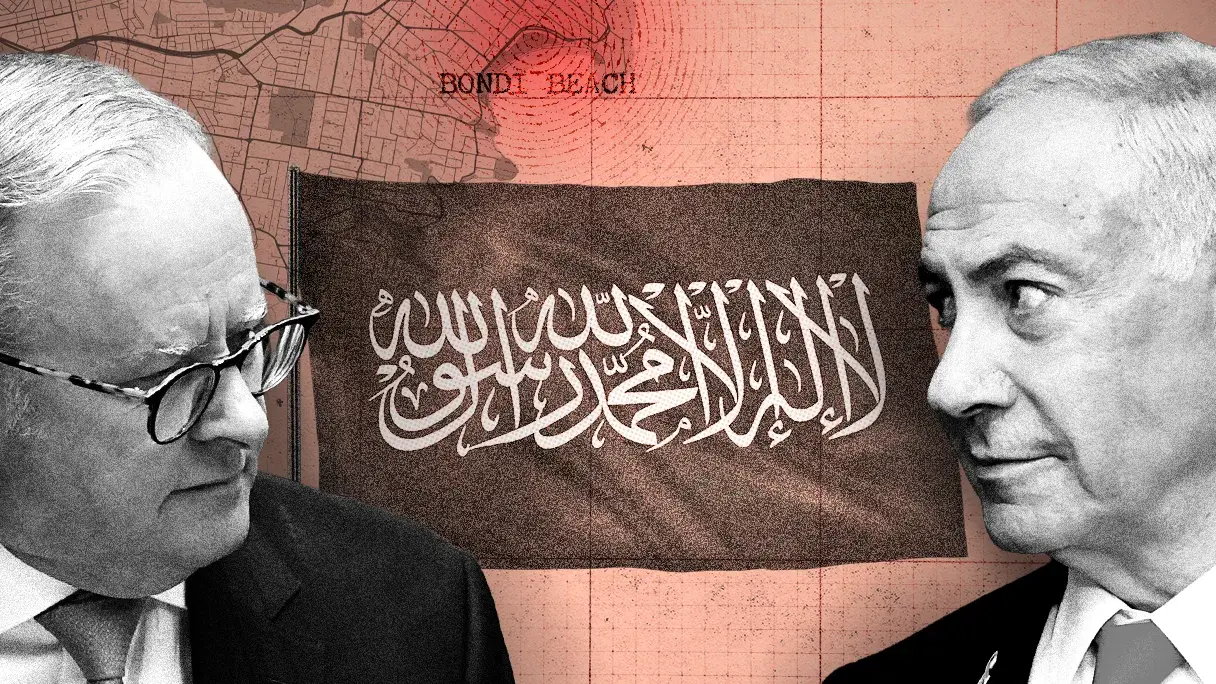
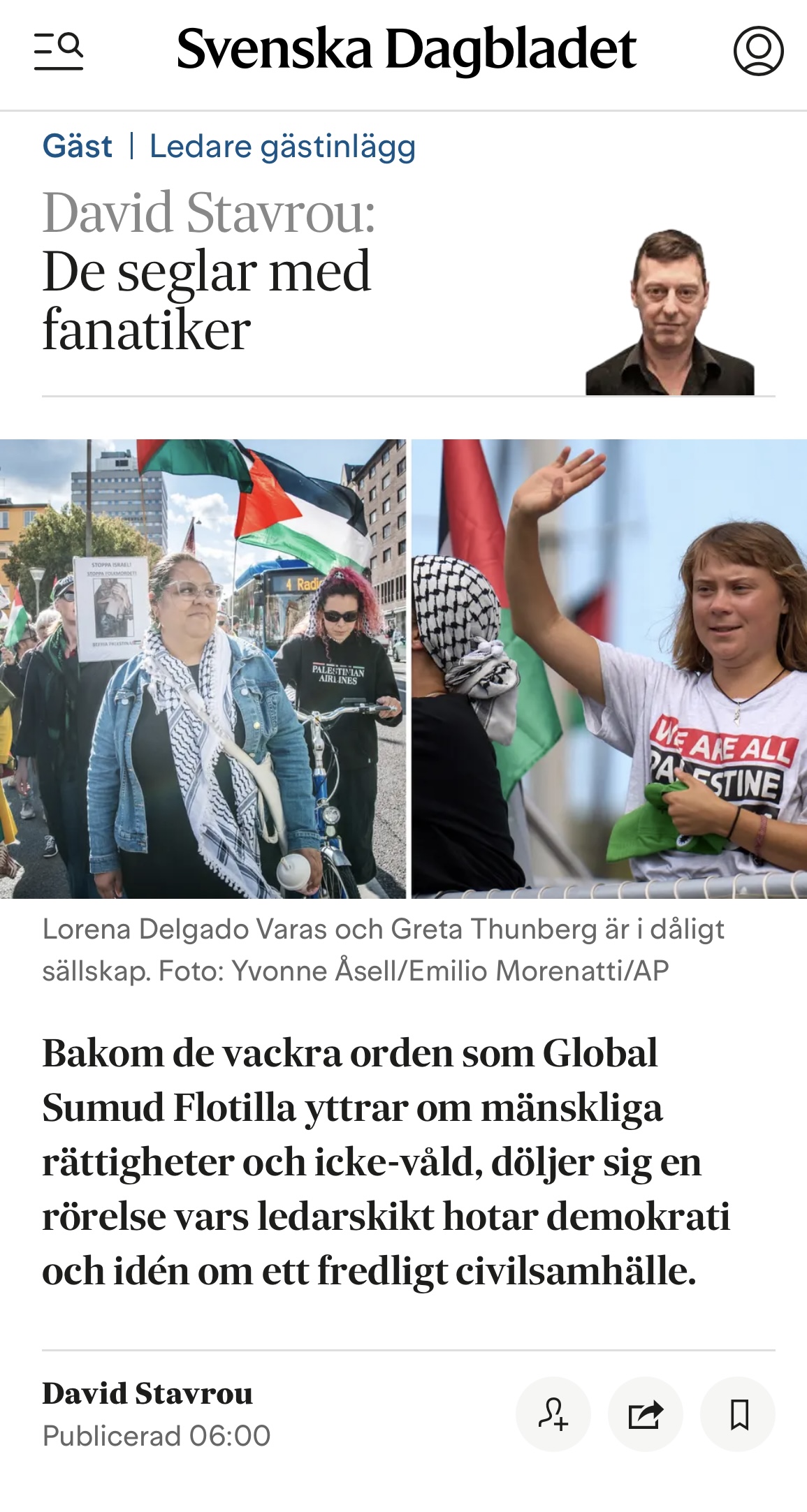
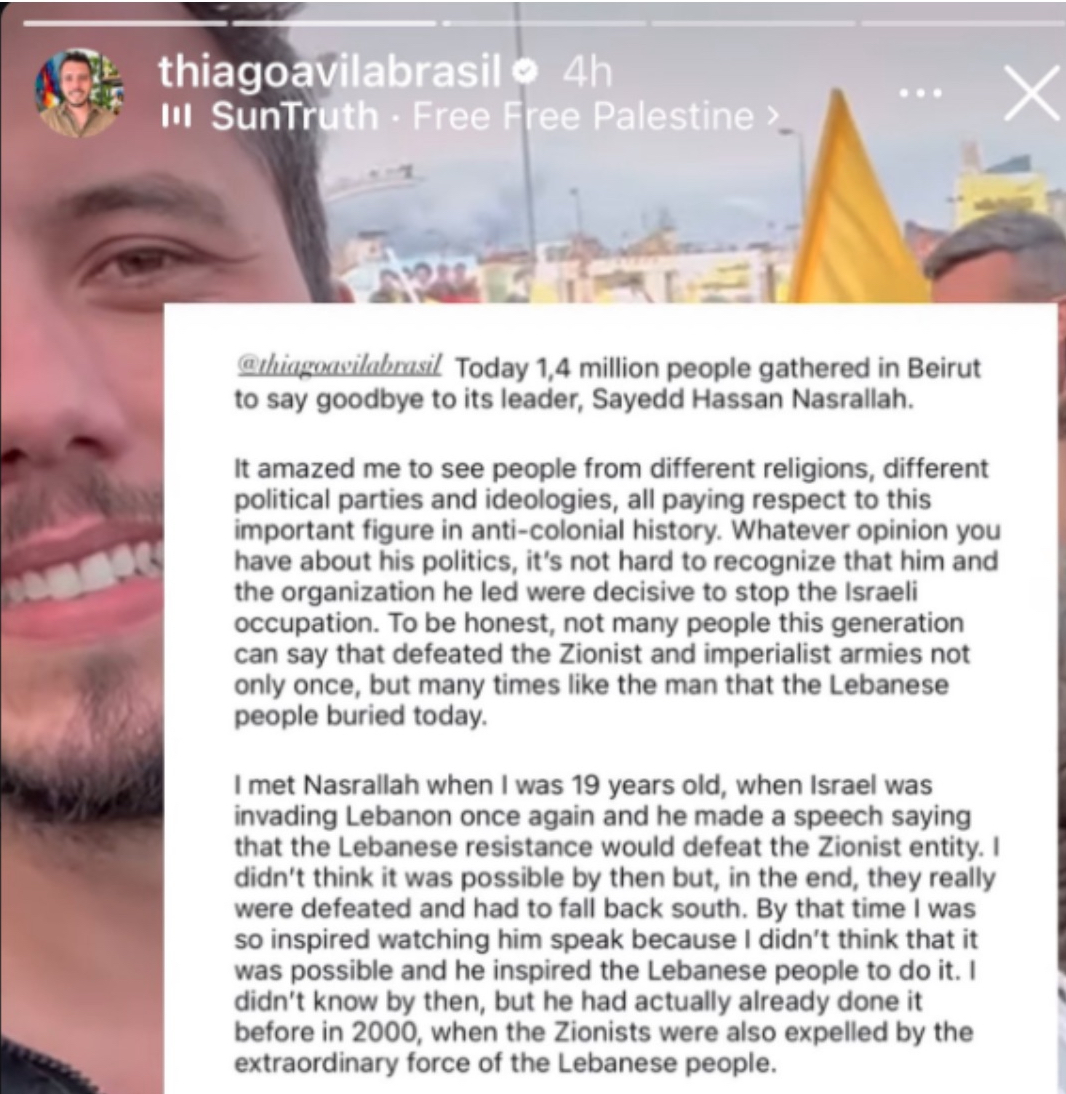

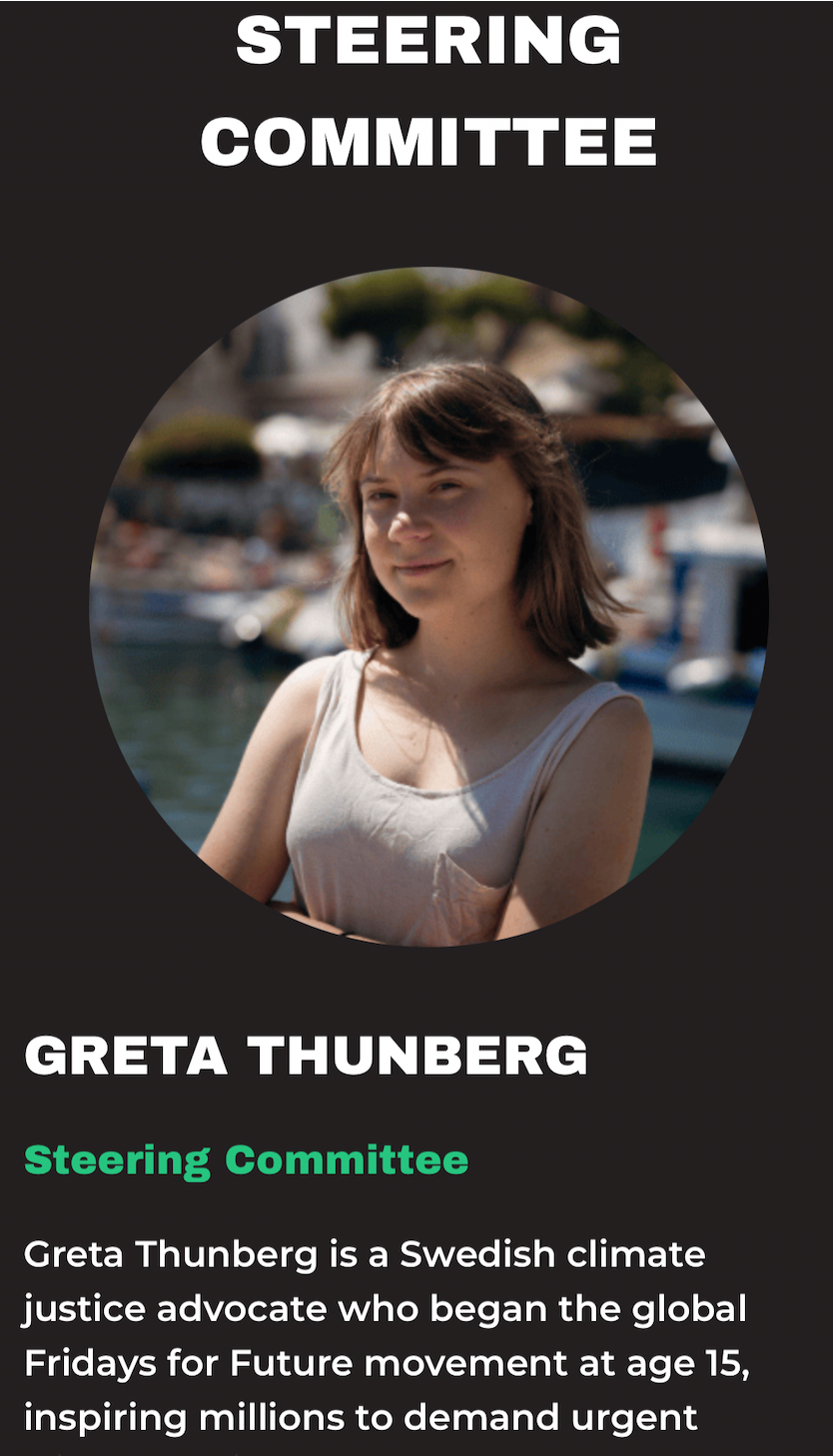

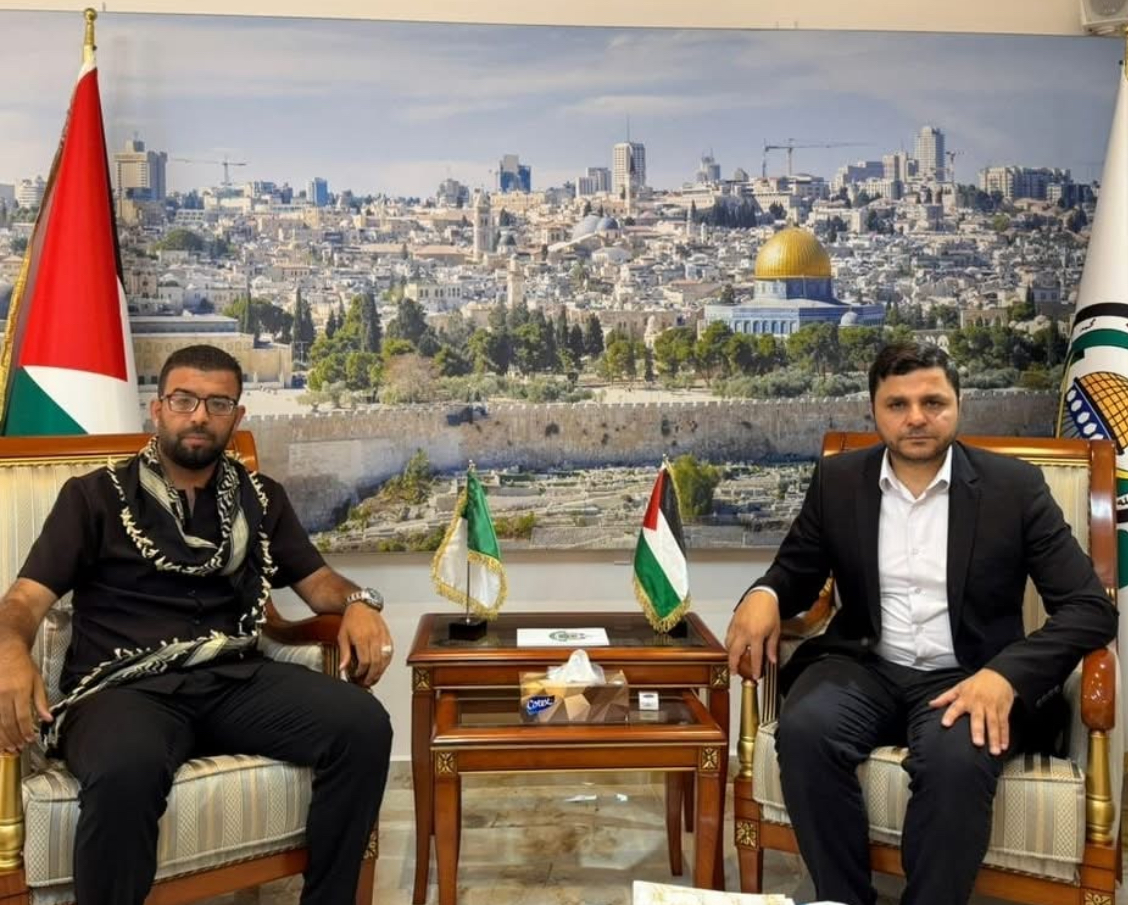



 דיויד סטברו