In a letter to Israel's foreign minister, leaders of the European Jewish Congress and the Council of Swedish Jewish Communities warned against allying with the Sweden Democrats who, according to the letter, 'claim to be our allies' while advocating that 'Jews cannot be Swedes.' The party has roots in neo-Nazi and antisemitic ideologies
STOCKHOLM – In a letter to Israel's foreign minister sent Monday by the presidents of the European Jewish Congress and the Council of Swedish Jewish Communities, the two leaders expressed concern over a recent meeting between Israeli ministers and a delegation from the far-right Sweden Democrats party, which violated Israeli policy.
EJC President Ariel Muzicant and Jewish community leader Aron Verstandig wrote that they were "gravely concerned by the implications and long-term consequences of this meeting" which also ran "counter to the Israeli foreign policy vis-à-vis the Sweden Democrats as being non-welcome, with reference to their Neo-Nazi roots."
On January 29, a delegation of senior members from the Sweden Democrats arrived in Israel and met with Diaspora Affairs Minister Amichai Chikli and Culture and Sports Minister Miki Zohar. The group included the party's leader, Jimmie Akesson, chairman of the Swedish parliament's foreign affairs committee, Aron Emilsson, head of the party's parliamentary group, Linda Lindberg, and the head of the party's group in the European Parliament, Charlie Weimers.
The Sweden Democrats, currently the second-largest party in the Swedish parliament, has roots in neo-Nazi and antisemitic ideologies. It is one of several European parties with which Israel has refrained from establishing official ties. For that reason the recent visit to Israel was not an official one and was not arranged by Israel's Foreign Ministry.
Last year, two members of the Sweden Democrats visited Israel and met with Knesset member Amit Halevi from Netanyahu's Likud party and with former Knesset member Michael Kleiner, who serves as the president of Likud's court. There were no meetings with government ministers.
"With right wing populism and extremism on the rise throughout Europe, Jewish communities easily become exploited in narratives targeting other minorities," Verstandig and Muzicant wrote to Foreign Minister Israel Katz, "these populist parties and movements are often keen to establish alliances with Jewish communities and Israel, acting on the presumption that Jews and Jewish institutions, often being targeted by extremists of Middle Eastern and/or Muslim descent, would (and should) be interested in uniting over the notion of a 'common enemy.'"
In their letter Verstandig and Muzicant also explained that "the [Sweden Democrats] party's ideology is still inherently xenophobic even though its representatives claim to be our allies, making an exception for the Jews as a national minority, albeit claiming that Jews cannot be Swedes." They added that the party regularly submit bills in the Swedish Parliament to ban circumcision and the import of kosher meat.
In this context, the January meeting with Chikli, whose role includes fostering connection between world Jewry and Israel as well as combating antisemitism, is particularly notable. In May, Chikli also caused diplomatic embarrassment for Israel when he delivered a keynote speech at the controversial evangelical Canada Christian College. The school's president, Dr. Charles McVety, is an activist and leader of Canada's Christian far right.
Sweden Democrats leader Akesson took to X after the meeting, writing, "It is clear that our parties and our nations share common values." In response, Chikli tweeted: "We deeply appreciate your support and your passion for our mutual fight for the future of Western civilization."
Asked by Haaretz what he expects as a reply to his letter, Verstandig said he hoped Katz would confirm that the policy of not allying with extremist parties still applies.
A Foreign Ministry source replied to Haaretz's query on the subject, saying there is no change in the ministry's policy toward the Sweden Democrats. The source did not say whether the ministers would face disciplinary action over the meeting.
תחנת הרדיו הציבורית של שוודיה דיווחה ששני הסוכנים, גבר ואישה, היו קשורים למשמרות המהפכה האיראניים ותכננו לרצוח בין היתר את יו"ר מועצת הקהילות היהודיות במדינה, אהרון וורשטנדיג. השניים גורשו לאיראן ב-2022, לאחר שלא נמצאו ראיות חזקות נגדם
תחנת הרדיו הציבורית של שוודיה דיווחה היום (שלישי) שאיראן תכננה לרצוח יהודים שוודים באמצעות שני סוכנים שהוחדרו למדינה ב-2015 בזהות בדויה ובמסווה של פליטים. בתחקיר שהופק מטעם "רדיו שוודיה" נטען ששני הסוכנים, גבר ואישה, היו קשורים למשמרות המהפכה האיראניים ותכננו לרצוח בין היתר את יו"ר מועצת הקהילות היהודיות במדינה, אהרון וורשטנדיג.
"מדובר בתוכנית של מדינה אחרת לרצוח אזרח שוודי, וזה מרתיח אותי", אמר וורשטנדיג לתחנת הרדיו הציבורית. "זו היתה הרגשה מאוד לא נעימה. הייתי מודאג, וכאבא לילדים קטנים הרגשתי אחריות גדולה לביטחון הילדים שלי". בעמוד הפייסבוק שלו הוא כתב: "מבחינתי, מעולם לא היה ספק שאוסיף לחיות את חיי כרגיל. אני מקווה שמה שהתגלה היום לא יגרום לאף אחד להסס להיות פתוח לגבי זהותו היהודית". אדם נוסף שהיה על הכוונת של הסוכנים האיראנים הוא אזרח אמריקאי, ולפי התובע השוודי "ה־FBI היה מעורב בחקירה".
לפי תחנת הרדיו השוודית, שני הסוכנים האיראנים – פרשתה סנאאיפרד ומהדי רמזאני – נעצרו באזור סטוקהולם באפריל 2021. התובע השוודי אמר לעיתונאים שהרשויות לא הצליחו לאסוף מספיק ראיות כדי להגיש נגדם תביעה ולכן הוחלט לגרשם לאיראן ב-2022. ידיעות על גירוש השניים פורסמו בעבר, אולם בזמנו לא התפרסמו נסיבותיו. לאיראן יש שגרירות בבירת שוודיה והיא סירבה להגיב על הפרשה.
התוכנית האיראנית חשפה מחדל חמור של רשות ההגירה השוודית, שנתנה לשני האיראנים מעמד של מבקשי מקלט אפגנים ואחרי כן גם מעמד של תושבים. המעמד הוענק להם אף על פי שכבר ב-2016 שמעה הרשות עדויות שהשניים אינם אפגנים אלא איראנים, ושהגבר עובד בשירות משמרות המהפכה האיראניים. רשות ההגירה השוודית סירבה להתייחס למקרה הספציפי, אך דובר מטעמה אמר ש"מה שחשוב הוא שבסופו של דבר התקבלה ההחלטה הנכונה".
חשיפת המזימה האיראנית התפרסמה בזמנים לא פשוטים עבור יהודי שוודיה וישראלים שוודים שחיים במדינה. בשבוע שעבר נזרק רימון שלא התפוצץ לעבר שגרירות ישראל במדינה, וכמה ימים קודם לכן התפרסמו דיווחים על כך שחמאס תכנן לפגוע בשגרירות ישראל ובאתרים אחרים בשוודיה על רקע מעצרים של פעיליו בדנמרק, בגרמניה ובהולנד.
כמו כן, בחודשים האחרונים התרבו דיווחים על תקריות אנטישמיות בשוודיה, בהן הפגנות בעלות תוכן אנטישמי, קריאות לחרם, התבטאויות אנטישמיות בתקשורת וברשתות החברתיות והתנכלויות והטרדות בבתי ספר ובאוניברסיטאות.
בריאיון ל"הארץ" בשבוע שעבר אמר וורשטנדיג: "האנטישמיות הרקיעה שחקים מאז 7 באוקטובר ורבים חשים פחד, חוסר ביטחון וחרדה. סקר שערכנו בנובמבר מראה שיהודים רבים שקלו לעזוב את שוודיה. הממשלה אמנם הגיבה מצוין, אבל בחברה האזרחית התגובות לפעמים מאוד אחרות".
Swedish public radio has reported that the two agents, a man and a woman who were expelled from Sweden in 2022, were linked to Iran's Revolutionary Guards and that among their intended victims was the chairman of the Jewish community
Swedish public radio reported on Tuesday that Iran had planned to kill Swedish Jews using agents who had infiltrated into the country in 2015 by pretending to be refugees. In its investigative report, Radio Sweden said that the agents, a man, and a woman, were linked to the Iranian Revolutionary Guards and that among the targets of their plot was Aron Verständig, the chairman of the Swedish Jewish community's umbrella organization, the Official Council of Swedish Jewish Communities.
"This involves a plan by another country to murder a Swedish citizen, and that has me boiling," Verständig told the public radio station. "It felt very unpleasant. I was worried and as a father of young children, I felt a major responsibility for my children's safety." In a Facebook post, Verständig added: "From my standpoint, there was never any doubt that I would continue living life as usual. I hope that what was disclosed today doesn't cause anyone to be less open regarding their Jewish identity."
Another person who was in the Iranian agents' crosshairs was a U.S. citizen, and according to the Swedish prosecutor's office, the FBI was involved in the investigation.
The two alleged Iranian agents – Mahdi Ramezani and Fereshteh Sanaeifarid– were arrested in the Stockholm area in April 2021, the radio station reported. The Swedish prosecutor told reporters that the authorities hadn't managed to gather sufficient evidence against them at the time to indict them, so it was decided to expel them to Iran in 2022. Their expulsion was reported in the past, but the circumstances of the matter weren't disclosed at the time. The Iranian embassy in Stockholm refused to comment.
The Iranian plot revealed a major failure on the part of Sweden's immigration authority, which had granted the pair status as Afghan asylum-seekers, and later resident status. This was despite the fact that in 2016, the immigration authority received two anonymous tips that the pair were Iranian and not Afghani, and that the Iranian man was working for the Iranian Revolutionary Guards.
The immigration authority declined to comment on this specific case, but a spokesman said, "What's important is that ultimately, the correct decision was made."
In addition, in recent months, there has been an increase in reports of antisemitic incidents in Sweden, including demonstrations with antisemitic content, calls for boycotts, antisemitic comments in the media and on social media and abuse and harassment at schools and universities.
"Antisemitism has gone sky-high since October 7," Verständig told Haaretz last week, in reference to the Hamas attacks in a string of Israeli border communities that day, "and many people have been experiencing fear, insecurity, and anxiety. A survey that we carried out in November shows that many Jews have considered leaving Sweden. The government has reacted in an excellent way – but in civil society, reactions are sometimes very different."
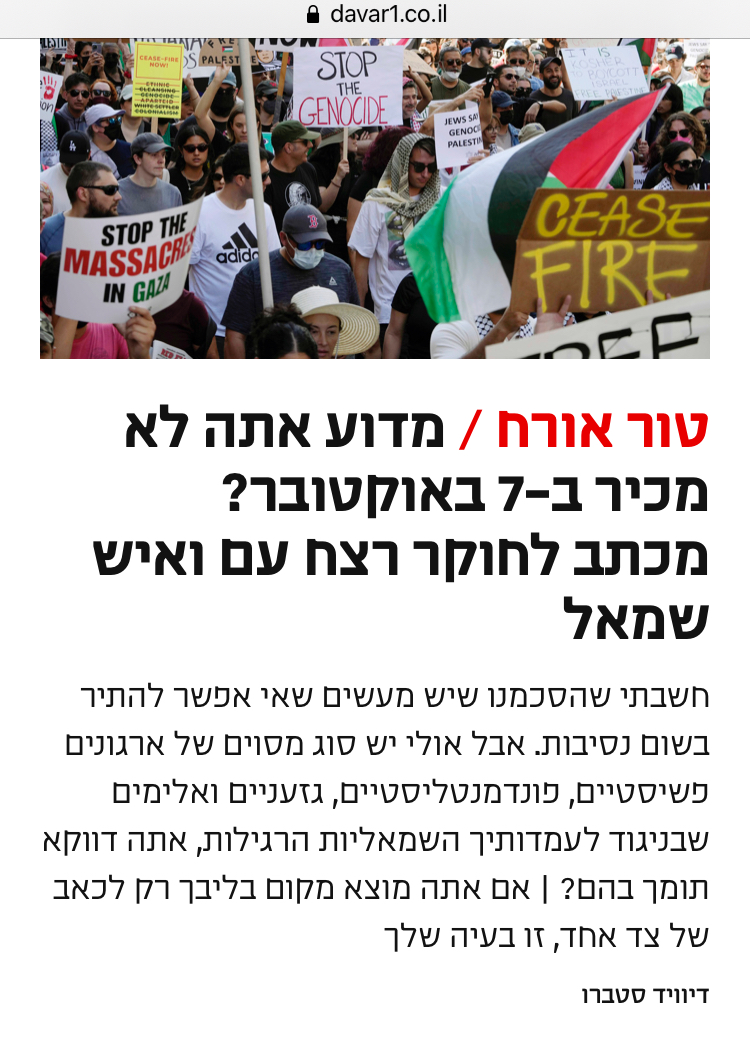
חשבתי שהסכמנו שיש מעשים שאי אפשר להתיר בשום נסיבות. אבל אולי יש סוג מסוים של ארגונים פשיסטיים, פונדמנטליסטיים, גזעניים ואלימים שבניגוד לעמדותיך השמאליות הרגילות, אתה דווקא תומך בהם?
א' הוא ידיד שלי. גולה בורמזי ממיאנמר המתגורר באירופה. הוא אקדמאי, אדם משכיל וחביב, ופעיל זכויות-אדם ותיק. כעיתונאי שכותב, בין השאר, על מדינות שבהן מתקיימים מעשי רצח-עם, טיהורים אתניים והפרות זכויות-אדם, אני מתייעץ עם מומחים שונים. א' הוא אחד מהם. זה המכתב ששלחתי לו בשבוע שעבר.
א' שלום. אני כותב בתגובה להודעתך בעניין "האופי הקולוניאליסטי ומדיניות רצח-העם של ישראל". כפי שאתה יכול לתאר לעצמך, אני עסוק למדי בימים אלו, ובהיותי אדם הנמצא רחוק ממשפחתו שבישראל, דעתי מוסחת. אני עונה לך למרות כל זאת, בעיקר מפני שהודעתך נפתחה בהתייחסות לאושוויץ, מקום בו נרצחו רבים מבני משפחתי לפני כ-80 שנה.
לדבריך, ישראל משתמשת בשואה כ'צ'ק פתוח' לכליאה, להפגזה ולהרעבה של 2.3 מיליון פלסטינים בעזה, כמעט מחציתם ילדים. "בנסיבות אלו, 'לעולם לא עוד' הוא ביטוי חלול", אתה כותב, "הוא הופך לקריאה לאלימות בלתי מבוקרת, לזעקות מלחמה ומסע תגמול וחיסול". בעבר ובנסיבות אחרות, אני חייב להודות, ייתכן שהייתי מסכים איתך.
א', אתה בטח זוכר, אנחנו מכירים כי במספר הזדמנויות חלקת איתי, בנדיבות רבה, את המומחיות, את הידע ואת הניסיון שלך לגבי מיאנמר. כשפניתי אליך לראשונה, כתבתי שכעיתונאי שעובד במדינה חופשית, אני מרגיש מחויב לספר את סיפורם של קורבנות הזוועות, בין השאר, את סיפורם של תושבי ארצך, בין אם אלו בני הרוהינגה או מיעוטים אחרים שנפלו קורבן לאירועים מחרידים שהתרחשו ברחבי המדינה מאז ההפיכה הצבאית ב-2021. מכיוון שאני לא מומחה בעצמי, הגעתי אליך, ממש כפי שהגעתי לאחרים, מומחים, עדים ופעילי זכויות-אדם שיכלו לשפוך אור על מקומות נוספים שכתבתי עליהם דוגמת סין, אתיופיה, סוריה, איראן, מקסיקו, בלארוס ועיראק.
והי נקודה חשובה. כפי שאתה יודע, ברבים ממקומות אלו ישנם קונפליקטים מסובכים שיש עליהם דעות שונות. ובכל זאת, תחושתי היתה שאנחנו חולקים מחויבות אמיתית לחשוף ולהילחם בסוג מסוים של מעשים בכל תנאי מזג-אוויר, וללא קשר לנרטיבים השונים המסבירים את הסכסוך. אני מתכוון למעשים שאי אפשר להתיר בשום נסיבות, גם אם אין הסכמה על ההיסטוריה של הסכסוך, ואפילו על זהות האחראים עליו. מעשים כמו אלו שהתרחשו במחוז ראקין במיאנמר שכתבתי עליהם בעזרתך האדיבה. הרצח, העינויים והאונס הברבריים של חפים מפשע שאירעו במדינתך לא ניתנים לתירוץ. טענות פוליטיות, אתניות, דתיות או דמוגרפיות פשוט לא יכולות להצדיק זריקת תינוקות לאש, עינויים למוות של ילדים מול הוריהם ואונס המוני של נשים לפני הוצאתן להורג. חשבתי שהסכמנו על זה.
השבוע, קיבלתי ממך מייל ארוך, ד"ר א'. אפילו ארוך מאוד. מספיק ארוך כדי להבהיר את דבריך ולהוסיף לדוגמא משהו כמו "למרות כל זאת, ברור שאני מגנה"… או אפילו "למרות האמת המוחלטת של הטענות הפלסטיניות ומדיניות רצח-העם של ישראל, אינני מצדיק"…
אבל לא מיני ולא מקצתי. איכשהו, בהודעתך יש התייחסות ל-100 שנים של סכסוך לפני 7 באוקטובר (כולל הסברים באמצעות מפות, קריקטורות, תמונות וציטוטים). ויש התייחסות לימים שאחרי 7 באוקטובר. אבל היום עצמו, היום שבו נרצחו באכזריות למעלה מאלף בני-אדם, רובם אזרחים ומעל 200 אנשים, שוב רובם אזרחים, נחטפו, נעדר לחלוטין. וזה מוזר, בהתחשב בעובדה שכזכור, אנחנו חולקים עניין במקרים של זריקת תינוקות לאש, עינויים למוות של ילדים מול הוריהם ואונס המוני של נשים לפני הוצאתן להורג. כן, כדי להבהיר את הנקודה לאדם מהרקע שלך, לרגע היסטורי אחד, חבל עוטף עזה מהמקום שלי היה לחבל ראקין מהמקום שלך.
א', מאז שקיבלתי את הודעתך, אני מנסה להבין מדוע אתה לא מכיר ב-7 באוקטובר. אני מבין את דעתך על מהות הציונות ועל מהותה של ישראל. אני לא מסכים איתה, אבל מבין את כוונתך. ובכל זאת, יש את העניין הפעוט הזה של "בכל תנאי מזג-אוויר". אולי יש סוג מסוים של ארגונים פשיסטיים, פונדמנטליסטיים, גזעניים, ואלימים שבניגוד לעמדותיך השמאליות הרגילות, אתה דווקא תומך בהם. אבל אם כך, מהם הקריטריונים? זה בגלל שהם ג'יהאדיסטים? זה עניין של דת? או שעל פי הקוד המקובל של השיח הפוסט-קולוניאליסטי, יש ל"ילידים" זכויות מסוימות של הרג יהודים בגלל דיכוים רב השנים? (דיכוי, שכפי שאתה יודע, מעולם לא הכחשתי).
ואולי אתה בכלל אחד מאלו שלא מאמינים לתמונות, לעדויות ישירות של ניצולים, להודאות המפורשות של התוקפים ולסרטונים שלא ניתן לצפות בהם ושאי אפשר להכחישם. האם כל אלו לא עונים לסטנדרטים המחמירים שלך? מוזר, כי מעולם לא יישמנו סטנדרטים מחמירים כל כך כשכתבתי על מיאנמר. האם לדעתך הכל קונספירציה של ממשלות מערביות המפיצות חדשות כזב? האם הכול שקרים של המתיישבים הנתמכים על ידי האימפריאליסטים מאמריקה? האם אתה באמת לא מתרשם מעדויות של ילדים, נשים וזקנים ישראלים, רבים מהם, אגב, פעילי שלום שבנו בתים בקהילות סוציאליסטיות שאינן, בשום אופן, בגדה המערבית או בשטחים שנויים במחלוקת? (אלא אם עצם קיומה של ישראל שנויה במחלוקת, עמדה שאני מניח שאתה אוחז בה שכן אתה מתייחס לישראל כישות מתנחלת וקולוניאליסטית).
ואולי לא הבנתי את כוונתך. במקרה זה, אולי בעתיד, נוכל לדון בטבעה האמיתי של ישראל. כפי שאתה יודע מהתכתבויות קודמות, מעולם לא תמכתי בנתניהו, תמיד האמנתי בפשרה עם הפלסטינים ואני בהחלט נגד כל סוג של פשע מלחמה, גם כלפי אזרחים בעזה. אתה יודע גם שאני סוציאל-דמוקרט ואדם בעל מודעות למשבר האקלים ולתלאות ה"דרום הגלובלי". אבל רגע, הנה אני שוב נופל במלכודת הזו. ואם לא הייתי כל הדברים האלו, אם הייתי תומך בנתניהו או מתנחל בגדה המערבית, האם טבח בי ובבני משפחתי היה מוצדק?
שוב, יש את המטרד הזה של "בכל תנאי מזג אוויר". גם אם היהודים היו כמו הצרפתים באלג'יר, והם לא, רצח מכוון של חפים מפשע הוא תמיד רוע, ורצח המוני הוא רוע מוחלט. אצלנו היהודים, אפילו חילונים גמורים כמוני מדקלמים לפעמים מהמקורות. "הַעִידֹתִי בָכֶם הַיּוֹם אֶת הַשָּׁמַיִם וְאֶת הָאָרֶץ, הַחַיִּים וְהַמָּוֶת נָתַתִּי לְפָנֶיךָ הַבְּרָכָה וְהַקְּלָלָה", ככה כתוב בספר שאתה קורא לו הברית הישנה, "וּבָחַרְתָּ בַּחַיִּים לְמַעַן תִּחְיֶה אַתָּה וְזַרְעֶךָ". אתה מבין א'? בחרת בחיים – בלי אבל ובלי אולי. זאת הסיבה שהתנגדתי תמיד לבני עמי שרצחו חפים מפשע. ואתה יודע מה, אני כועס על עצמי שלא התנגדתי מספיק.
ולכן, למען הפרוטוקול, אזכיר שאני מאמין שיהודים, לא רק פלסטינים, הם בעלי זכויות במקום שנולדתי בו. יש להם זכויות אישיות, חברתיות ולאומיות, ויש להם גם חובות המתוארות היטב במגילת העצמאות של מדינתם, מדינתנו, שנוסדה לפני 75 שנה. אתה אינך מכיר בכך, וזו כנראה הסיבה האמיתית שלא הזכרת בהודעתך את 7 באוקטובר. אם "פלסטין תהיה חופשית מהים ועד הנהר" כפי שצועקים כעת בכיכרות ליד ביתי באירופה, כנראה שאירועי 7 באוקטובר בעבורך אינם תאונה. הם שלב ראשון בתכנית.
"חופשית מהים עד הנהר", משמע ללא אלו היושבים שם עכשיו. זו לא תכנית שתי המדינות, לא תכנית החלוקה ולא פדרציה. נדמה לי שעם ההשכלה שלך, אתה יודע בדיוק מה זה אומר. אבל למקרה שאתה מתקשה אכתוב זאת בפרוש – החמאס הוא האגף הג'נוסיידיאלי של התנועה הלאומית הפלסטינית, ומסתבר שיש לו לא מעט תומכים. חברים שלי אומרים שדעות כאלו נובעות מאנטישמיות, אבל אני לא יודע מה מסתתר בליבו של אדם. איזה חושך, איזו שנאה.
אני גם לא יודע מה מסתתר בליבך. אבל אני יודע ש-7 באוקטובר לא היה עוד פיגוע, עוד קרב, עוד שורה בטיימליין המדמם של המזה"ת. אי אפשר לפתור אותו במשפטים כמו "אי אפשר לצפות שאני אגנה כל פעולה שהצד החלש מבצע". מדובר באירוע טקטוני ומשנה עולם, שבוצע על ידי אלפי בני-אדם שנתמכים על ידי מאות אלפי בני-אדם, וגם על ידי תנועות, מדינות ומשטרים. אי גינויו הוא תמיכה בו. והתוצאות הן בלתי נמנעות. בגלל הזוועה שאנשים אלו הטילו על העולם, צפוי לילה אפל עוד יותר לפני שיעלה האור.
וכך, כמו שכתב אדם חכם בזמן המלחמה הגדולה באירופה, אני ואתה עומדים כעת בשני צדדים. "דעתי ברורה לגבי מניעיך", הוא כתב, "ואתה מיטיב לשער את מניעי". והוא הוסיף: "עוד דבר אחד נותר לי לומר לך, שיהיה גם האחרון. מבקש אני לומר לך כיצד בעבר היינו כה דומים ואילו היום אנו אויבים, כיצד יכולתי לעמוד לצידך ומדוע כיום נגמר הכל בינינו".
וזה העניין – בשינג'יאנג ובסוריה, בטיגראי ובאיראן, במיאנמר ובישראל, מעשים כמו אלו שביצע החמאס אינם רק התחתית המוחלטת של מה שהמין האנושי מסוגל לו. הם גם מגדירים את הקווים מחדש. אם הם אינם ממלאים את ליבו של אדם בזעם ובגועל שאינו מותנה בדבר, הם מציבים אותו מחוץ לדיון הלגיטימי של בני תרבות. אם אתה מוצא מקום בליבך רק לכאב של צד אחד, זו בעיה שלך. אבל ברשותך, אני חושב שאמצא לי מומחה אחר למיאנמר.
לפני סיום אבקש רק דבר אחד אחרון. עשה לי טובה א', בפעם הבאה, הימנע בבקשה מההתייחסות לאושוויץ. לא כי יש לי מונופול על זיכרון השואה או על זכר הקורבנות, אלא כי כשמדובר בשנות הארבעים של המאה הקודמת, האנשים שאתה שולח כעת הודעות בשמם, אלו שאתה מנהל בעבורם קמפיין, נוטים להיות משהו אחר ממה שאתה מדמיין. כשמסירים מהם את החזות המהוגנת של תנועות השמאל האירופי, הם נוטים להיות תומכיו של הצד שבנה את אושוויץ, לא של הצד שהובל שם למותו.
Prime Minister Ulf Kristersson and opposition leader Magdalena Andersson were among those marching in Stockholm against antisemitism on Wednesday. 'All leaders bear a responsibility to draw a line against hate,' says premier
STOCKHOLM – It was minus 12 degrees Celsius (10 degrees Fahrenheit) in the Swedish capital on Wednesday afternoon. Raoul Wallenberg Square, named for the Swedish diplomat who saved tens of thousands of Hungarian Jews during the Holocaust, was covered with both snow and security personnel. The tightened security was not just because of the country's high terror alert, but also due to an unusual gathering taking place there at 1 P.M.
Swedish Prime Minister Ulf Kristersson was at the heart of it all, accompanied by senior members of his government, opposition leader Magdalena Andersson, and the heads of most other opposition parties. In fact, apart from the far-right Sweden Democrats, every single party in the Swedish Parliament showed up for this unique event, coalescing together around the same agenda.
That in itself is unusual, but there was an especially rare element to this gathering: the male politicians were all wearing kippot.
The event, an initiative of the Swedish Parliament's Network Against Antisemitism and the Council of Swedish-Jewish Communities, was dubbed a "kippa march." Politicians, Jewish leaders and several hundred marchers placed the kippot atop their heads and walked through central Stockholm, in order to show solidarity with Sweden's small Jewish community and take a stand against antisemitism.
"The Jewish holiday of Hanukkah begins [on Thursday], and it's about spreading light in the darkness," said Magnus Manhammar, who represents the Social Democratic Party and the Network Against Antisemitism. "Sweden and the world need less polarization and fewer harsh words," he added.
As politicians and participants walked past the Royal Opera House and Royal Palace, they attracted both media and public attention. They then arrived at their destination: Parliament House, where they listened to speeches by PM Kristersson, opposition leader Andersson and others.
Israel's Sweden ambassador, Ziv Nevo Kulman, was there as well, alongside the leadership of many Swedish-Jewish institutions and organizations.
"We are here today to show our support for Sweden's Jews. The right to express one's faith, identity, culture and relations is fundamental in a democracy like ours," Kristersson said. "The government and I will never accept the development we have seen both in Europe and in Sweden since the terrorist attack on October 7 [in southern Israel]. No Jew in Sweden should have to ask himself or herself whether he or she dares to stay in their own country."
Since the Israel-Hamas war began, Kristersson has made numerous statements in support of both Israel and Sweden's Jewish community. He told the parliament that in the context of the harsh, sometimes hostile, political debate about the war in Gaza, "it's legitimate to think differently about conflicts there, but not to spread antisemitism here."
Andersson, meanwhile, said that "in recent months, we have seen antisemitic slogans being chanted in the streets and squares. Spread online. More and more people with a Jewish background are affected. Anxiety spreads, insecurity grows. All leaders – political, religious, in civil society – bear a responsibility to draw a line against hate; to stand up for our way of life, in contrast to those who seek to divide."
She added that "because Jewish life in Sweden is as obvious as an inalienable part of our society, the fight against antisemitism in all its forms must be principled and vigorous. Support for Jewish life must be strong. And in this situation, continued measures against antisemitism, resources for security-enhancing measures and education about the Holocaust and antisemitism, are more important than ever."
From left to right: Center Party leader, Muharrem Demirok; Liberal Party leader, Johan Pehrson; Prime Minister, Ulf Kristersson; Oposition leader Magdalena Andersson; Left Party leader, Nooshi Dadgostar Photo credit: Hugh Gordon
It's estimated that about 15,000 Jews live in Sweden, which has a population of just over 10 million (although there are probably many more Swedes who are Jewish by descent). The capital has the country's largest Jewish community, with other communities found in Malmö, Gothenburg and a couple of smaller towns.
Antisemitism is by no means a new phenomenon in Swedish society, and in recent years various governments have made concerted efforts to address it. Against the backdrop of the latest war in Gaza, though, media reports have indicated a sharp rise in the number of antisemitic incidents. These include bullying, threats and hate crimes in Swedish schools, antisemitic propaganda spread in universities, "pro-Palestinian" demonstrations featuring antisemitic slogans, and the spreading of antisemitic hate and conspiracy theories online.
"The truth is that antisemitism exists in several places in our society – among Islamists, right-wing extremists and left-wing extremists," said Aron Verständig, chairman of the Council of Swedish-Jewish Communities. "It's not possible to approach the problem by simply pointing out one group as solely responsible for Jew-hatred in society. It's gratifying, therefore, that leading politicians from so many different parties chose to cooperate on Wednesday. The fight against Jew-hatred is everyone's fight."
Students stay home from class or attend and suffer abuse, protesters call for Israel’s erasure, and radical Islamist groups operate unfettered. Sweden’s Jewish community fears for its safety against the backdrop of the war and mass killings in Gaza.
STOCKHOLM – It’s unclear whether Swedes are aware of what the country’s Jewish community has been facing – their neighbors, coworkers, customers, and teachers. The community has been in a state of anxiety since the Hamas terrorist attack on October 7 and the start of Israeli strikes in the Gaza Strip. Swedish Jews fear for their safety, and it seems the authorities aren’t grasping the urgency of the situation.
October 13. Threats by Hamas political leader Khaled Meshal to spark an international “day of rage” circulated through social media. Parents, many of them in mourning and worried about family and friends in Israel, wrote in private WhatsApp groups that the school’s regular security was inadequate. Some volunteered to watch the surroundings outside the school, and the local police stationed a patrol car nearby for a few hours.
Nonetheless, conversations with parents indicate that in some classes, at least half the students stayed home from school on October 13. Those who attended were strongly advised to avoid displaying Jewish symbols and refrain from speaking Hebrew.
A pro-Palestinian demonstration in front of the Swedish Parliament, October 2023. Photo: Hugh Gordon
A., a former Israeli who lives in Sweden, kept his shop closed on the same Friday, feeling he can’t protect himself and his customers. Another Israeli living in the country encountered violence on the Stockholm Metro after speaking Hebrew on his phone.
Another incident occurred to a man from southern Sweden whose mother is Jewish but who is not religious and does not display Jewish symbols. He describes receiving seven calls from an unknown number this week. A voice told him, “We know where you live. You should watch behind you when leaving home.” It added that he “should no longer live in the city.”
When he contacted the police, he was met with disappointment. They told him that there was nothing they could do because the call came from an unknown number. The police would only intervene if he could provide the caller’s name, an impossible demand for someone receiving an anonymous threat.
Multiple reports have also emerged of students receiving harassment over the Gaza war. The mother of a 16-year-old boy from a Jewish family who goes to a large high school in Goteborg gave one disturbing account. She says a girl stood up in class and shouted, “Slaughter, rape, and torture all the Jews” at her son. The teacher did not react, stop the girl, or report her to the principal, the mother says. The other students also stayed silent. She said they're now considering a transfer to another school.
Two classmates asked a Jewish boy in an elementary school in southern Sweden who he supported in the war. The boy, aged 10, replied that he supported Israel. The two others drew a crossed-out Israeli flag, crumpled it up, and threw it at him, saying, “We hate Israel.” The teacher present in the classroom did nothing until the student’s mother contacted him.
Such attacks and threats have been seen throughout Sweden, with the common denominator being that the victims were Jewish or Israeli.
Swedish academics have also been targeted. A renowned scholar in western Sweden was emailed threats after daring to publicly condemn the October 7 attacks. The head of one department at Uppsala University wrote a social media post stating, “Hamas gave Netanyahu and his radical right partners what they wanted.” Elsewhere, he wrote: “In 1940 and 1941, Hitler developed a plan to systematically starve 30 million Ukrainians, Russians, and Slavs. In 2023, Netanyahu is executing his ‘starvation plan’ in Gaza!”
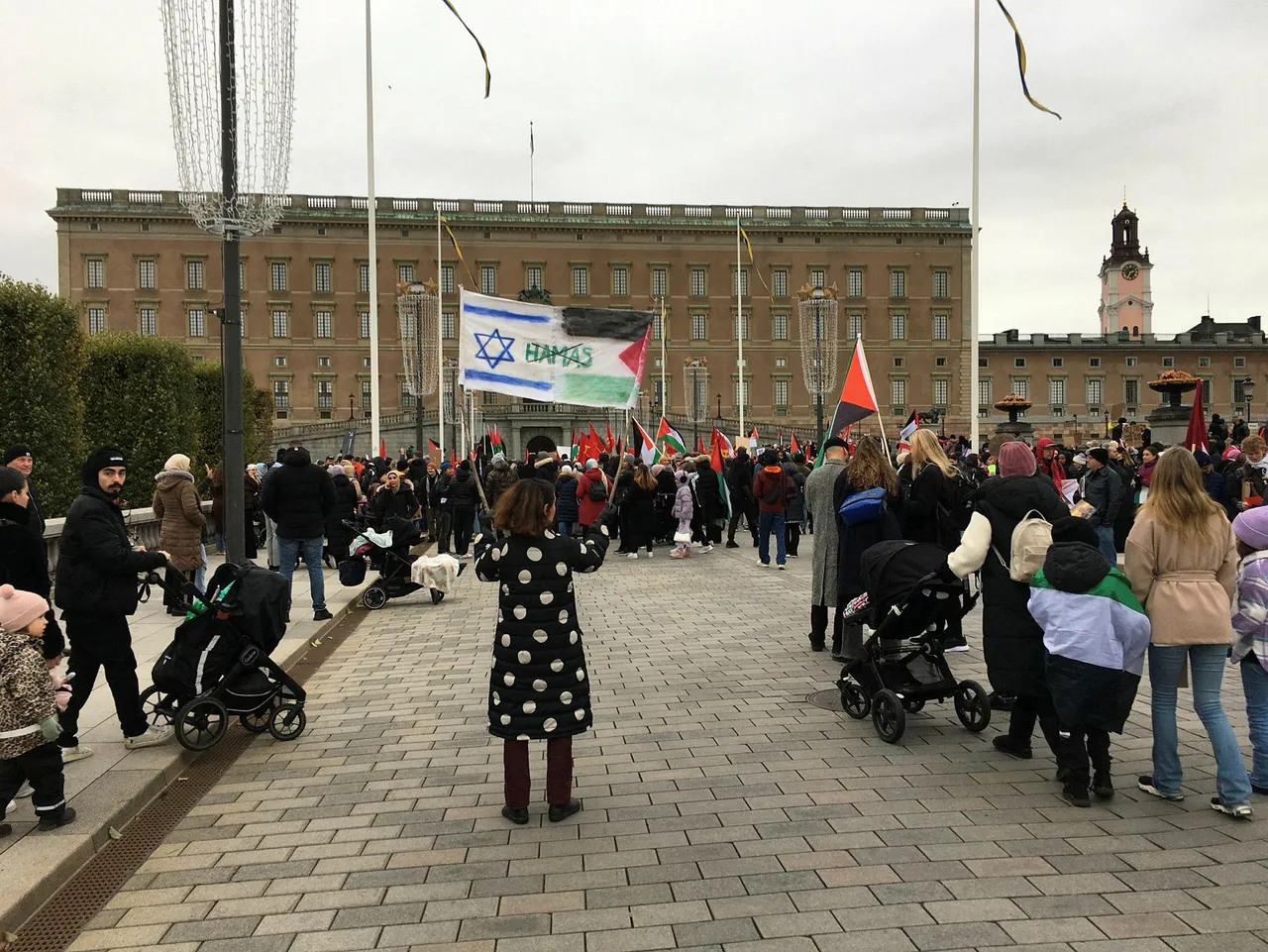
A Jewish protester, Joanna Istner Byman, at a pro-Palestinian demonstration in Stockholm, this week.Credit: David Stavrou
The cultural world has also been rife with tension. Seven hundred cultural figures published a petition urging an end to the “brutal violence in Gaza” and the end of “military, political, and financial support for Israel.” The petition did not mention Hamas’ terrorist attack, its victims, or the Israeli hostages in Gaza. Well-known Swedish environmental activist Greta Thunberg has taken several opportunities to express support for the Palestinians in recent days, omitting any mention of the Palestinian acts of terrorism last month or the Israeli victims.
The war between Israel and Hamas has reverberated throughout the public sphere in Sweden. Numerous demonstrations have been held since the war began, both pro-Palestinian and pro-Israeli. On the evening of October 7, hours after Hamas went door-to-door to brutalize and kill Israelis, thousands of people, including women and children, participated in rallies across the country. These featured music, dancing, and convoys of cars honking their horns to show support for the Hamas attack.
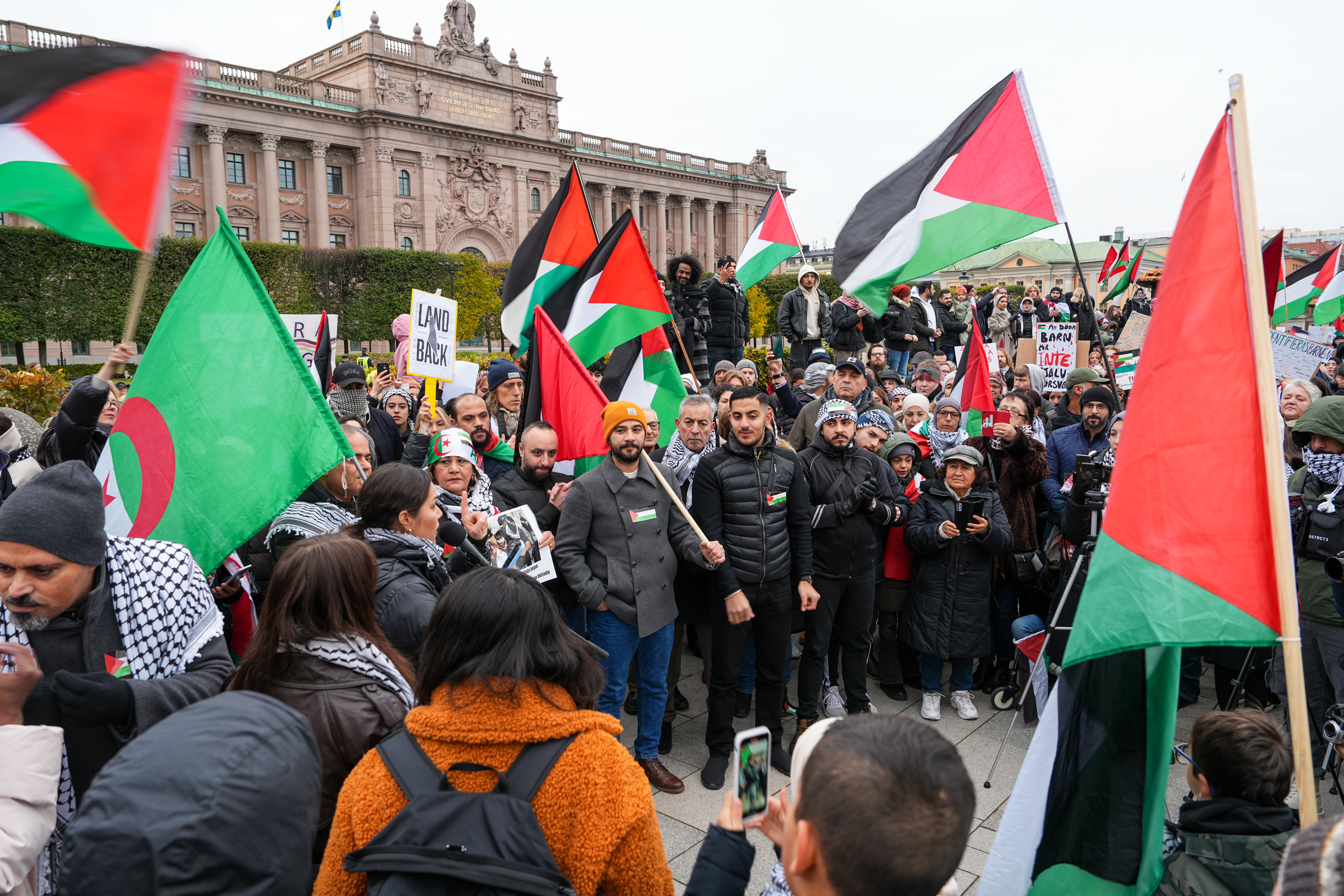
Even larger and fiercer demonstrations have been held in the subsequent three weeks. At these pro-Palestinian demonstrations, Israel is accused of genocide and ethnic cleansing in the Gaza Strip and there are calls to erase Israel from the map. “From the river to the sea, Palestine will be free,” cried the demonstrators in Sweden. The protests have also seen increasingly widespread calls for an “intifada.”
One of the pro-Palestinian demonstrations was organized by Hizb ut-Tahrir, a radical Islamic group advocating for the creation of a caliphate ruled by Sharia law, which has a small branch in Sweden. It received permission for the demonstration despite being banned in several countries. Demonstrators called for a caliphate stretching from Uzbekistan to Morocco, a war between Islam and the non-Muslim world, and the liberation of “all of Palestine” through military force.
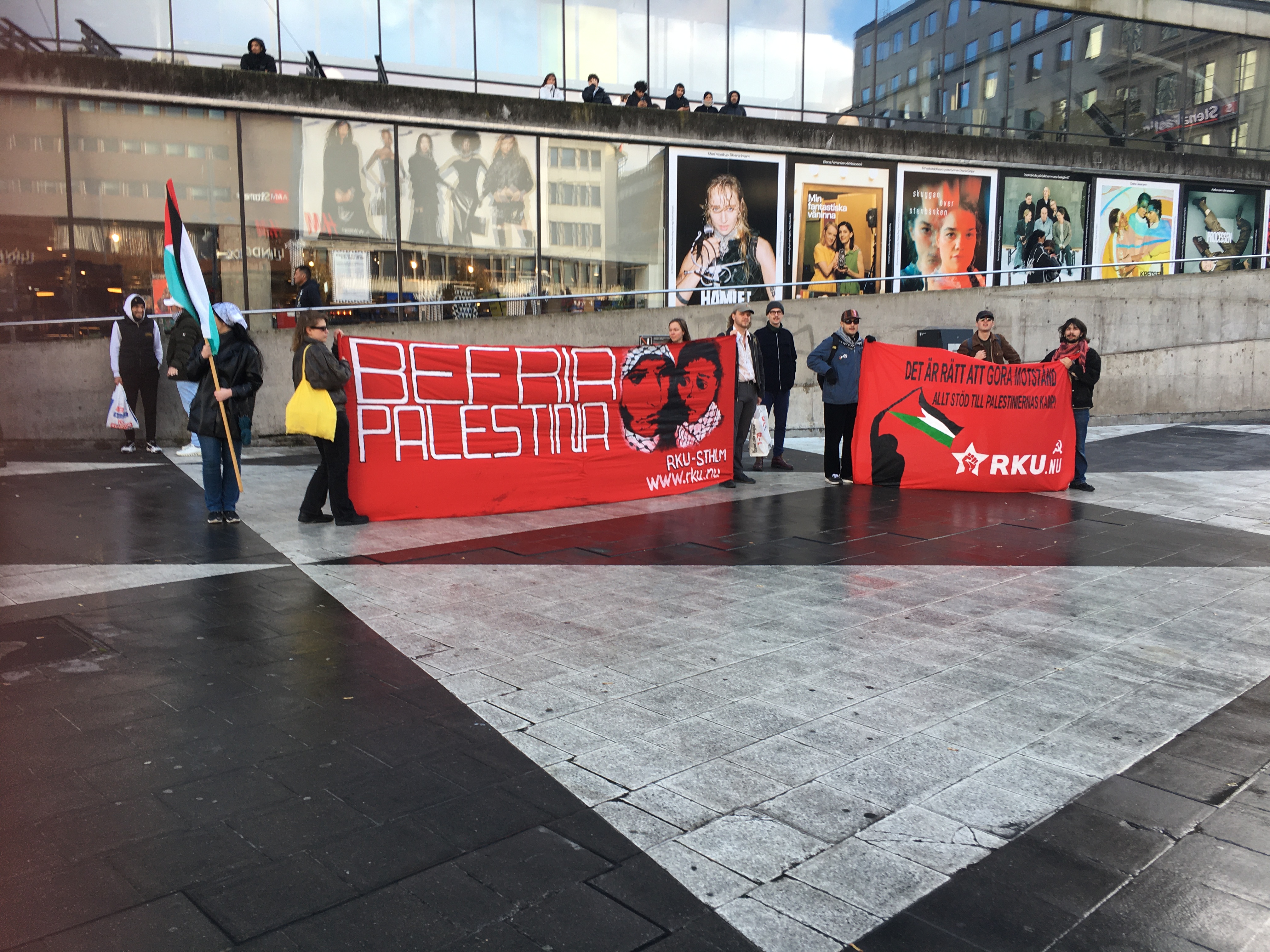
Most of the demonstrations held in Sweden since the war began have been organized by local organizations backing the Palestinians. One weekend in Stockholm's central Sergel Square saw three different organizations demonstrating separately, but with similar slogans. Beside the Palestinian organization, the neo-Nazi Nordic Resistance Movement, which has a few hundred members, was one of them, the Revolutionary Communist Youth, which argues that Palestinians have a right “to fight with every means against the occupying power to liberate their lands" was another. The latter described the October 7 attacks as an act of liberation that “caught the Zionists in their beds.”
The two organizations, one neo-Nazi and the other Marxist-Leninist, both endorse the Palestinian cry to “crush Zionism.” Another demonstration held in Stockholm’s main square a week later drew more than 5,000 people. Speeches by Palestinians and Swedish leftists called for “an intifada until victory” as they waved Palestinian flags, horrifying images from Gaza, and signs condemning the government’s support for Israel. None of the speakers at the pro-Palestinian demonstrations mentioned the Hamas attacks.
A demonstration in solidarity with Palestinians in the Gaza Strip, in Stockholm, Sweden, October 2023.Credit: Hugh Gordon
Mikail Yuksel, leader of the Nuance Party, which defines itself as the representative of Sweden’s minorities, with an emphasis on immigrants, posted on X (formerly Twitter) that he had participated in a pro-Palestinian demonstration in Stockholm. Yuksel, born in Turkey and now a Stockholm resident, was once a member of Sweden’s Center Party. He was expelled for his ties with the Grey Wolves radical Islamic movement.
On October 7, Yuksel called for the removal of Hamas from the list of terrorist organizations. When Haaretz asked him about this, he replied, “If Hamas is considered a terrorist organization, it is impossible to hold a dialogue with it and reach an arrangement. So long as they are considered terrorists, we isolate and radicalize them. We are in favor of talking with them to reach a settlement.”
He added, “It’s no secret that we are a pro-Palestinian party. Israel is recognized by the UN as an occupying power, which commits war crimes and is an apartheid state. Israel must be stopped, and Netanyahu should be brought to trial at the International Criminal Court.”
Asked about the crimes committed by Hamas, Yuksel replied, “An occupied people have the right to use military force. Violence against civilians is not permitted to any of the sides. Everyone must lay down their arms and not point them against civilians to solve the dispute.”
While speaking with Haaretz, Yuksel condemned the attacks on civilians on October 7 as well as the “continuous Israeli attacks on Gaza.” His position is notable, as no Muslim organization in Sweden has condemned the attacks, including entities that previously cooperated with Sweden’s Jewish community and groups.
One pro-Palestinian demonstrator, prominent Muslim leader Rashid Musa, went as far as writing a sarcastic article mocking demands for condemnation in the national tabloid Expressen. “I, Rashid Musa, as a spokesman for 1.3 billion people worldwide, condemn the Hamas, condemn hummus, condemn Hassan, and [Swedish football club] Hammarby.”
Magnus Ranstorp, a prominent Swedish researcher on domestic Salafi-jihadism, terrorism, and radical groups, is concerned about more than just antisemitic slogans at the demonstrations and incidents at schools and workplaces. He says this could escalate to physical threats against Jewish and Israeli targets. A lecturer and strategic advisor at the Swedish Defense University, Ranstorp says two parallel crises are affecting Sweden’s security.
“The first is related to the burning of Koran books and a false campaign regarding the alleged kidnapping of Muslim children by Swedish welfare services,” he says. “This crisis has put Sweden in the crosshairs of organizations such as al-Qaeda, ISIS, and al-Shabab.
“The second crisis is the conflict between Israel and Hamas,” he continues. He says that according to the Swedish Security Service, there were about 2,000 Salafi-jihadists in various Swedish cities in 2017 who had a definite potential for violent activity.
In the cities of Malmö and Helsingborg, large Palestinian communities include families with members previously convicted of terrorist activities in Germany. Malmö is home to Scandinavia’s largest mosque, built recently with the help of millions of euros from Qatar. It is also home to civil society organizations like Group 194. Despite receiving municipal funding, the Swedish Palestinian group endorses terrorism, spreads antisemitism, and has connections to the Popular Front for the Liberation of Palestine, which was involved in the October 7 attacks.
It also recently emerged that the Left Party had used taxpayer money to support a project related to the PFLP through an organization run by its Danish counterpart. Meanwhile, in May, a large Palestinian European conference was held in Malmö with the participation of Amin Abu Rashid, a Dutch Palestinian leader linked to Hamas.
Although the Left Party canceled its participation in the conference when it learned that Abu Rashid would be present, a member of the Social Democratic Party, Jamal el-Haj, ignored a prohibition by party leaders and participated. El-Haj is a member of parliament, and some say he was saved from being kicked out of the party because of his substantial political base.
Ranstorp notes the case of Die Wahre Religion (“The True Religion”), an organization outlawed in Germany. It was banned in part because some of the people connected to it volunteered and joined the ranks of ISIS. Nevertheless, it operated freely as a legitimate Swedish organization that promoted an educational project on Koran reading.
In another case, a Swedish activist named Ahmad Qadan raised money for ISIS and Tahrir al-Sham (formerly Jabhat-al-Nusra) and was sentenced to a few months in jail. It seems that his imprisonment didn’t change much. On October 7, he posted a video on social media of Israelis fleeing Hamas gunmen together with a quote from the Koran, “I will fill the hearts of the unbelievers with fear.”
The international organization Islamic Relief, founded in the U.K. in the 1980s, also has an official Swedish branch. The organization enjoys considerable financial support from the Swedish government and engages in humanitarian activities. Various governments, including the Israeli one, say it’s associated with the Muslim Brotherhood, however. According to Ranstorp, Sweden is an important European center for Islamic Relief and, therefore, the Muslim Brotherhood in Europe.
Ranstorp and others have spoken of this for years. Although politicians’ approach has changed somewhat, some say Swedish authorities and public opinion still don’t appreciate how grave things are. Swedish money ends up financing terrorism, and Middle Eastern money is invested in organizations that pose a risk to Sweden. The law allows public activities that threaten the country’s stability and security bodies.
In response to a query by Haaretz, the security service refused to estimate of current number of jihadi activists and organizations in Sweden. Asked about specific organizations, a spokesperson replied: “The Swedish Security Service does not go into details describing our operational activities. We follow violent extremists and assess the threat to prevent terrorist acts and other security threatening activities. We follow individuals and do not target organizations.”
Regarding the protection of Jewish institutions in Stockholm, the police said, “What security measures we implement, if and when we implement them, and in what way, is something we do not publicize.”
Despite several requests, Swedish Justice Minister Gunnar Strommer, who oversees the police, prosecutions, and the courts, declined to grant an interview to Haaretz.
Hizb ut-Tahrir in Sweden and the Palestine Solidarity Association of Sweden (Palestinagrupperna) did not respond to Haaretz's requests for comment. Greta Thunberg also showed no enthusiasm for speaking with Haaretz about the subject. When she was offered an interview in which she could clarify her position, a spokesman said, “Greta is not holding interviews at this time.”
מתלמידים שלא מגיעים ללימודים לכאלה שהגיעו וסובלים מהתעמרויות, מהפגנות פרו־פלסטיניות סוערות ועד לארגונים איסלאמיסטיים קיצוניים שפועלים באין מפריע. עדויות שהגיעו לידי "הארץ" מציירות תמונה מטרידה של קהילה יהודית שחוששת לביטחונה על רקע מלחמת ישראל־חמאס.
לא ברור אם תושבי שוודיה יודעים מה עובר בימים אלה על חברי הקהילה היהודית במדינה, בין שמדובר בשכנים, עמיתים לעבודה, לקוחות או מורים שלהם. מאז מתקפת הטרור של חמאס בישראל ב–7 באוקטובר ותחילת ההפצצות הישראליות ברצועת עזה, יהודי שוודיה עוברים ימים לא פשוטים וחוששים לביטחונם ונראה שהרשויות לא מכירות בחומרת המצב.
בבית הספר היהודי "הלל" שבמרכז סטוקהולם, למשל, היו אובדי עצות ביום שישי 13 באוקטובר. ברשתות החברתיות הופצו אז איומים של בכיר חמאס חאלד משעל על "יום זעם" בינלאומי, וההורים — רבים מהם מוכי אבל ודאגה לקרובים ומכרים בישראל — כתבו בקבוצות וואטסאפ פנימיות שהאבטחה הרגילה בבית הספר לא מספיקה. חלק מההורים התנדבו לעמוד ברחוב ליד בית הספר ולפקוח עיניים והמשטרה המקומית הציבה ניידת במקום בחלק משעות היום. עם זאת, משיחות עם הורים עולה שבחלק מהכיתות חצי מהילדים ואף יותר לא הגיעו לשיעורים באותו יום. אלה שכן הגיעו קיבלו המלצות ברורות — להסתיר סממנים יהודיים ולא לדבר עברית.
אף שממשלת שוודיה התייצבה באופן גורף לצד ישראל ולמרות שברמה האישית ישראלים ויהודים רבים קיבלו הודעות תמיכה ודאגה מהמעגלים החברתיים שלהם, לידי "הארץ" הגיעו עדויות רבות על תקריות מדאיגות שאירעו במדינה בשבועות האחרונים.
ישראלי שגר בשוודיה נקלע לתקרית אלימה ברכבת התחתית של סטוקהולם, לאחר שנשמע מדבר בטלפון בעברית. א', ישראלי לשעבר שמתגורר בשוודיה, לא פתח את החנות שלו לאחר שהרגיש שהוא לא יכול להגן על עצמו ועל לקוחותיו. ישראלי אחר שגר במדינה נקלע לתקרית אלימה ברכבת התחתית של סטוקהולם לאחר שנשמע מדבר בטלפון בעברית. אדם נוסף מדרום שוודיה שאמו יהודייה, אך הוא עצמו אינו דתי ולא לובש סממנים יהודיים, סיפר שקיבל שבע שיחות טלפון ממספר לא מזוהה בהן נאמר לו כי "יודעים היכן הוא גר", כדאי לו להסתכל לאחור כשהוא יוצא מהבית ושהוא "לא יוכל להתגורר יותר בעיר". כשפנה למשטרה נאמר לו שאין מה לעשות משום שהשיחות הגיעו ממספר חסוי, ושהמשטרה תפעל רק אם יוכל למסור לה את שם התוקף, דבר אבסורדי משום שהוא בכלל לא מכיר אותו.
ישנן גם עדויות רבות על התעמרויות בתלמידים בבתי ספר בשוודיה על רקע המצב בישראל ובעזה. אמו של נער בן 16 ממשפחה יהודית שלומד בתיכון גדול בעיר גטבורג סיפרה ל"הארץ" כי נערה בכיתה קמה וצעקה על בנה במהלך שיעור: "לשחוט, לאנוס ולענות את כל היהודים". המורה בכיתה לא הגיב, לא עצר את התלמידה וגם לא דיווח עליה להנהלת בית הספר. התלמידים האחרים גם שתקו ולא עשו דבר, ואמו של הנער מסרה שהיא מתכוונת להעבירו לבית ספר אחר.
ציירו בכיתה דגל ישראל וסימנו עליו איקס
ילד יהודי אחר מבית ספר יסודי בדרום שוודיה נשאל על ידי שני חברים לכיתה במי הוא תומך במלחמה. אחרי שהילד בן העשר ענה שהוא בעד ישראל, שני חבריו לכיתה ציירו דגל ישראל, סימנו עליו איקס, קימטו אותו וזרקו אותו כשהם קוראים: "שונאים את ישראל". גם במקרה זה המורה שלימד בכיתה לא עשה דבר עד לפניית אמו של התלמיד אליו. תקיפות ואיומים מסוג זה נרשמו בכמה מקומות בשוודיה, והמכנה המשותף לכולם היה שהמותקפים היו יהודים או ישראלים.
המלחמה בין ישראל לחמאס לא פסחה גם על האקדמיה השוודית. אקדמאית בכירה במערב המדינה קיבלה איום בדואר האלקטרוני לאחר שהעזה לצאת בפומבי נגד מתקפת חמאס ב–7 באוקטובר. באוניברסיטת אופסלה פרסם ראש מחלקה בכיר פוסט ברשת חברתית שבו טען כי "חמאס נתן לנתניהו ולשותפיו מהימין הקיצוני את מה שהם ביקשו". במקום אחר כתב: "ב–1940 וב–1941 היטלר פיתח תוכנית להרעבה שיטתית של 30 מיליון אוקראינים, רוסים וסלאבים. ב–2023, נתניהו מוציא לפועל 'תוכנית הרעבה' בעזה!".
בזירה אחרת בשוודיה הרוחות גם סוערות. 700 אנשי תרבות פרסמו עצומה הקוראת להפסקת "האלימות הברוטלית נגד העם בעזה" ולהפסקת "התמיכה הצבאית, הפוליטית והכלכלית לישראל". בעצומה לא היה זכר למתקפת הטרור של חמאס, לקורבנות הישראלים או לחטופים בעזה. גם פעילת הסביבה השוודית הידועה, גרטה תונברג, הביעה בכמה הזדמנויות בימים האחרונים את תמיכתה בפלסטינים ללא כל אזכור של הטרור הפלסטיני והקורבנות הישראלים.
המפגינה יואנה איסטהר-בימן, מול ארמון המלוכה בסטוקהולם, אוקטובר, 2023. צילום: דיויד סטברו
השפעות המלחמה בין ישראל לחמאס ניכרות בשבועות האחרונים גם בכיכרות וברחובות ברחבי שוודיה. מאז פרוץ המלחמה נערכו הפגנות רבות לאות הזדהות עם הפלסטינים וכן כמה הפגנות הזדהות עם ישראל. בערב 7 באוקטובר השתתפו אלפי בני אדם, בהם ילדים ונשים, בהפגנות ברחבי המדינה שכללו מוזיקה, ריקודים ושיירות של מכוניות שצפרו לאות תמיכה במתקפת חמאס. בשלושת השבועות שחלפו מאז נערכו הפגנות סוערות יותר ורבות משתתפים ביחס לעבר. במהלך ההפגנות הפרו־פלסטיניות נשמעו האשמות שישראל מבצעת רצח עם וטיהור אתני ברצועת עזה, וכן קריאה למחיקת ישראל מהמפה. "מהים ועד הנהר, פלסטין תהיה חופשית", קראו המפגינים בשוודיה וקריאה נוספת שהפכה יותר ויותר רווחת בהפגנות היא בעד "אינתיפאדה".
הפגנה פרו-פלסטינית בסטוקהולם, אוקטובר 2023, צילום: Hugh Gordon
ארגון איסלאמי קיצוני מאחורי מחאה פרו־פלסטינית
אחת ההפגנות הפרו־פלסטיניות אורגנה על ידי ארגון "חיזב אל־תחריר", ארגון איסלאמי קיצוני שתומך בהקמת חליפות איסלאמית והחלת חוקי שריעה ושיש לו סניף קטן בשוודיה. במדינות רבות בעולם הוצא הארגון מחוץ לחוק, אבל בשוודיה הוא קיבל אישור לערוך הפגנה שבה נשמעו קריאות להקים חליפות איסלאמית מאוזבקיסטאן ועד מרוקו, לצאת למלחמה בין האיסלאם לשאר העולם, ולשחרר בכוח צבאי את "פלסטין כולה".
רוב ההפגנות שנערכו בשוודיה מאז פרוץ המלחמה אורגנו על ידי ארגונים מקומיים שתומכים בפלסטינים. בהפגנה אחת שנערכה בסטוקהולם השתתפו חברי "תנועת ההתנגדות הנורדית" (NMR), ארגון ניאו־נאצי מוכר עם כמה מאות חברים, וחברי "הנוער הקומוניסטי המהפכני" (RKU), ארגון הטוען שיש לפלסטינים זכות "להילחם בכל אמצעי בכוח הכובש כדי לשחרר את אדמתם". ארגון RKU גם מתאר את מתקפת 7 באוקטובר כמהלך לשחרור מהכלא הגדול שהוא רצועת עזה, ש"תפס את הציונים במיטתם".
שתי התנועות, הניאו־נאצית והמרקסיסטית־לניניסטית, הביעו תמיכה בסיסמה הפלסטינית "רסקו את הציונות". בהפגנה אחרת שנערכה בכיכר המרכזית של סטוקהולם השתתפו יותר מ–5,000 בני אדם. הנואמים בהפגנה, חלקם פלסטינים וחלקם אנשי שמאל שוודים, קראו ל"אינתיפאדה עד הניצחון" כשהם מניפים דגלי פלסטין, תמונות זוועה מעזה וכרזות נגד הממשלה השוודית התומכת בישראל. באף אחד מהנאומים שנשמעו בהפגנות הפרו־פלסטיניות לא הוזכרה מתקפת חמאס בישראל שבה נהרגו כ–1,300 בני אדם.
מפגיני הנוער המהפכני הקומוניסטי, RKU (למעלה), תנועת ההתנגדות הנורדית, NMR (באמצע) וחיזב אל-תחריר (למטה). סטוקהולם, אוקטובר 2023. צילום: דיויד סטברו.
מיקאיל יוקסיל, מנהיג מפלגת "נואנס" — שמגדירה את עצמה כמייצגת מיעוטים בשוודיה עם דגש על אוכלוסיות מהגרים — עדכן בחשבון הטוויטר שלו שגם הוא היה בין ההמונים בהפגנה פרו־פלסטינית בסטוקהולם. יוקסיל נולד בטורקיה ומתגורר כיום בסטוקהולם. בעבר הוא היה חבר מפלגת המרכז השוודית, אך הוצא משורותיה בגלל קשריו עם התנועה הלאומנית האיסלאמית "הזאבים האפורים". ב–7 באוקטובר הוא פרסם הודעה הקוראת להסיר את חמאס מרשימת ארגוני הטרור. לשאלת "הארץ" בנוגע לקריאתו, ענה יוקסיל: "אם חמאס נחשב כארגון טרור, לא ניתן לקיים איתו דיאלוג ולהגיע להסדר. כל עוד הם נחשבים טרוריסטים, אנחנו מבדלים אותם וגורמים לרדיקליזציה. אנחנו בעד לדבר איתם כדי להגיע להסדר". יוקסיל הוסיף ש"זה לא סוד שאנחנו מפלגה פרו־פלסטינית. ישראל מוכרת על ידי האו"ם ככוח כובש שמבצע פשעי מלחמה וכמדינת אפרטהייד. צריך לעצור את ישראל ולהביא את נתניהו למשפט בבית הדין הפלילי הבינלאומי".
כאשר נשאל יוקסיל על הפשעים שביצע חמאס, הוא השיב כי "לעם נכבש יש זכות להשתמש בכוח צבאי. אלימות נגד אזרחים איננה מותרת לאף אחד מהצדדים. צריך שכולם יניחו את הנשק ולא יכוונו אותו נגד אזרחים כדי למצוא פתרון לסכסוך".
יוקסיל גינה בשיחה עם "הארץ" את המתקפה על אזרחים ב–7 באוקטובר וגם את "התקיפות הישראליות הנמשכות בעזה". בעניין זה הוא חריג מאוד. אף ארגון מוסלמי בשוודיה לא גינה את מתקפת הטרור של חמאס, כולל ארגונים ששיתפו בעבר פעולה עם הקהילות היהודיות וארגונים יהודיים בשוודיה. אחד ממשתתפי ההפגנות הפרו־פלסטיניות, המנהיג המוסלמי המוכר ראשיד מוסא, אף כתב מאמר ציני ביומון הנפוץ "אקספרסן" בנושא הגינויים. "אני, ראשיד מוסא, כדובר של 1.3 מיליארד אנשים ברחבי העולם" הוא כתב, "מגנה ליתר ביטחון את החמאס, מגנה חומוס, מגנה את חסן ואת המרבי (קבוצת כדורגל שוודית, ד"ס)".
מפגיניפ פרו-פלסטינים מול הפרלמנט השוודי בסטוקהולם. צילום: Hugh Gordon
מגנוס רנסטורפ, אחד המומחים המובילים בשוודיה לג'יהאד הסלפי, ארגוני טרור וארגונים רדיקליים הפועלים בשוודיה, מודאג מהאפשרות שהתקריות בבתי הספר ובמקומות העבודה, וכן הקריאות האנטישמיות בהפגנות יגלשו לפסים אלימים נגד יהודים במדינה. רנסטורפ, מרצה ויועץ אסטרטגי באוניברסיטה השוודית לביטחון, אמר ל"הארץ" שיש כיום שני משברים מקבילים שמשפיעים על הביטחון בשוודיה. "המשבר הראשון קשור לשריפות ספרי קוראן ולקמפיין שקרי בנוגע לחטיפתם לכאורה של ילדים מוסלמים על ידי שירותי הרווחה בשוודיה. המשבר הזה שם את שוודיה על הכוונת של ארגונים כמו אל–קאעידה, דאעש וא–שבאב", אמר רנסטורפ. "המשבר השני הוא הסכסוך בין ישראל לחמאס". לדברי המומחה, שירות הביטחון החשאי של שוודיה פרסם ב–2017 שבמדינה שוהים כ–2,000 פעילי ג'יהאד סלפי שבהחלט מהווים פוטנציאל לפעילות אלימה בערים רבות.
איפה הרשויות?
בערים השוודיות מאלמו והלסינבורג מתגוררת אוכלוסייה פלסטינית גדולה שכוללת משפחות שכמה מבניהן הורשעו בפעילות טרור בגרמניה. במאלמו, עיר שנבנה בה לפני כמה שנים המסגד הגדול ביותר בסקנדינביה בעלות מיליוני אירו במימון קטאר, פועלים גם ארגוני חברה אזרחית כמו "קבוצת 194". מדובר בארגון חברתי שוודי-פלסטיני שעל אף שזכה לתקצוב עירוני פרסם התבטאויות אנטישמיות ותומכות טרור ברשתות חברתיות והיה קשור לחזית העממית לשחרור פלסטין, ארגון טרור שלוחמיו הצטרפו למתקפת 7 באוקטובר בישראל.
לאחרונה נחשף שמפלגת השמאל השוודית העבירה כספי משלמי מסים לפרויקט הקשור לחזית העממית דרך ארגון של מפלגת השמאל בדנמרק. במאי האחרון נערך במאלמו כנס פלסטיני–אירופי גדול בהשתתפות אמין אבו-ראשיד, מנהיג פלסטיני-הולנדי המזוהה עם חמאס. מפלגת השמאל השוודית אמנם ביטלה את השתתפותה בכנס כשנודע שאבו-ראשיד יהיה בו, אבל חבר במפלגה הסוציאל-דמוקרטית, ג'מאל אל-חאג', השתתף בו אף שהנהגת מפלגתו אסרה עליו לעשות זאת. אל–חאג' מכהן כחבר פרלמנט ויש הטוענים שהוא לא הוצא משורות המפלגה בגלל הבייס הפוליטי הגדול שלו.
לפי רנסטורפ, ארגון בשם Die Wahre Religion ("הדת האמיתית") שהוצא מחוץ לחוק בגרמניה, בין השאר משום שאנשים שהיו קשורים אליו התנדבו לדאעש, פעל בחופשיות כארגון שוודי לגיטימי בפרויקט חינוכי של קריאת קוראן. כמו כן, פעיל שוודי בשם אחמד קאדאן שגייס כסף עבור דאעש וג'בהת פתח א-שאם (לשעבר ג'בהת א-נוסרה) נידון לשישה חודשי מאסר. אף שהוא נעצר בעבר נראה שההרתעה השוודית לא הייתה יעילה לגביו. ב-7 באוקטובר הוא פרסם פוסט ברשת חברתית ובו סרטון של ישראלים בורחים מירי אנשי חמאס ולצדו ציטוט מהקוראן שבו נאמר "אמלא את לבבות הכופרים בפחד".
בשוודיה גם פועל סניף של ארגון הסיוע ההומניטרי Islamic Relief שנוסד בשנות ה-80 באנגליה ונהנה מתמיכה כספית גדולה של המדינה. כמה ממשלות בעולם, בהן ישראל, טוענות שהארגון קשור לתנועת "האחים המוסלמים". רנסטורפ הסביר ששוודיה נחשבת למרכז חשוב של Islamic Relief ולכן גם של "האחים המוסלמים" באירופה. למרות אזהרות רנסטורפ ואחרים במשך שנים, יש הטוענים שהרשויות בשוודיה והציבור הכללי עדיין לא מכירים בחומרת המצב — שכסף שוודי מוצא את דרכו למימון טרור, שכסף מהמזרח התיכון מושקע במערכות המסכנות את שוודיה, ושחוקי המדינה מתירים לקיים פעילויות ציבוריות המערערות את היציבות ורשויות הביטחון.
בתשובה לשאלת "הארץ" סירבה המשטרה החשאית השוודית לתת הערכה לגבי המספר העדכני של פעילים וארגונים ג'יהאדיסטיים בשוודיה. בתשובה לשאלות על ארגונים ספציפיים שפועלים במדינה ענה דובר מטעם הארגון ש"שירות הביטחון השוודי לא נכנס לפרטים המתארים את הפעילות המבצעית שלו. אנו עוקבים אחר קיצונים אלימים ומעריכים את האיום למניעת פעולות טרור ופעילויות מאיימות אחרות שמאיימות על הביטחון. אנו עוקבים אחרי אנשים פרטיים ולא מכוונים לארגונים".
בתשובה לשאלות שנשלחו אליה בנוגע להגנת מוסדות יהודיים בסטוקהולם, משטרת סטוקהולם השיבה: "אנחנו לא מפרסמים באילו אמצעי אבטחה אנחנו משתמשים, אם ומתי אנחנו מיישמים אותם, ובאיזה אופן". שר המשפטים השוודי, גונאר סטרומר, האחראי על המשטרה, מערכת התביעה ובתי-המשפט, לא נעתר לבקשת "הארץ" לראיין אותו.
ארגון "חיזב אל-תחריר" בשוודיה וקואליציית הארגונים הפלסטיניים השוודיים "הקבוצות הפלסטיניות" לא ענו לפניית "הארץ" להגיב לכתבה. גם פעילת האקלים תונברג לא הביעה התלהבות לדבר עם "הארץ" בנושא זה וכאשר הוצע לה לקיים ראיון שבו תוכל להבהיר את עמדתה, נמסר מטעמה ש"גרטה לא משתתפת בראיונות בשלב זה".
ראש ממשלת שוודיה הדליק נר בשגרירות ישראל בסטוקהולם, מאות הפגינו בקופנהגן ואלפים בצרפת ובבריטניה. ברחבי היבשת מביעים תמיכה בישראל בעקבות מתקפת חמאס. נשיאת מחוז מדריד: "אני רוצה להביע את תנחומיי והזדהותי עם כאבכם. יש תמונות שלא אצליח למחוק מהראש"
משלוח יוצא דופן הופיע שלשום (שני) מחוץ לגדר שגרירות ישראל בסטוקהולם, בירת שוודיה. 900 ורדים בצבע אדום הונחו במקום על ידי שליח, ללא הודעה מוקדמת ובלי תיאום עם השגרירות.
אולוף אפלטון, מנהל חברת השקעות מסטוקהולם, סיפר ל"הארץ" שכמו כל העולם הנאור, גם הוא נחרד מהרצח של 900 בני אדם חפים מפשע בידי חמאס (המספר שהיה ידוע נכון ליום שני בבוקר, עת הונחו הוורדים). "רצינו להראות שאנחנו עומדים לצד ישראל והיהודים, אז קניתי 18 זרי פרחים של 50 ורדים בכל אחד מהם כדי שיהיו בסך הכול 900", הוא אמר, "אני גם יודע ש-18 מייצג 'חיים' ביהדות".
אפלטון אינו יהודי או ישראלי בעצמו, אך הסביר את המחווה בכך ש"היהודים הם עם מדהים שתורם לאנושות ושלא מגיע לו כל הרוע הזה".
הוא לא היחיד שביקר שם. ראש ממשלת שוודיה אולף קריסטרסון ביקר בשגרירות הישראלית והדליק נר לזכר ההרוגים ביחד עם שגריר ישראל בשוודיה, זיו נבו קולמן. ערב קודם לכן, בכנס תמיכה בבית הכנסת הגדול של סטוקהולם שנצבע בכחול־לבן, הביע קריסטרסון תמיכה בלתי מסויגת בישראל. "עלינו להילחם בטרור ובאנטישמיות בכל העולם החופשי, וגם כאן בשוודיה", הוא אמר, וסיכם "אנחנו אתכם, ממשלת שוודיה עומדת לצדכם, העם השוודי עומד לצדכם".
גילוי תמיכה נוסף ומפתיע בא מקהילת יוצאי איראן בשוודיה, שאחד מארגוניה מתכנן הפגנת הזדהות עם ישראל במרכז סטוקהולם בשבת הקרובה. בהפגנת תמיכה שנערכה היום מטעם הקהילה בעיר בהשתתפות המוני אנשים, הוקמה עמדת זיכרון ארעית ובה תמונות של כמה מקורבנות המתקפה, ושלט שעליו נכתב "העם האיראני עומד לצד העם בישראל".
גם בדנמרק, שכנתה הדרומית של שוודיה, הביעו הזדהות עם ישראל. "האגודה הציונית הדנית והנוער היהודי במדינה ארגנו הפגנת סולידריות בקופנהגן ביום שני בערב", סיפרה יעל פרחי גראבסן, ישראלית שחיה בדנמרק, "ההפגנה נערכה תחת משמר כבד של משטרת קופנהגן ומאבטחים ישראלים, והשתתפו בה כ-500 בני אדם, דנים יהודים, נוצרים ואתאיסטים, ישראלים מכל קצוות המפה הפוליטית ואחרים שהפיצו אור בחשכה שנפלה עלינו".
פרחי גראבסן הוסיפה שבהפגנה נאמו שגריר ישראל בדנמרק דוד עקוב, ראש האגודה הציונית מאקס מאייר, הרב הראשי לדנמרק יאיר מלכיאור ועוד. בה בעת, ראשת ממשלת דנמרק, מדה פרדריקסון, הניחה זר פרחים ליד שגרירות ישראל בבירה ביחד עם השגריר הישראלי.
הפגנה בהשתתפות אלפי בני אדם מתוכננת אחר הצהריים (חמישי) באמסטרדם ביוזמת ארגונים יהודיים וישראליים, ונוצרים למען ישראל. הפגנות רבות נוספות נערכו ועדיין נערכות בכל רחבי אירופה מאז השבת האחרונה.
ראש ממשלת בריטניה: "אין שני צדדים — חמאס טרוריסטים"
היומון הצרפתי לה מונד דיווח אתמול על הפגנות בכל רחבי המדינה. לדברי העיתון, בנוסף ל-16 אלף בני אדם שהביעו הזדהות עם ישראל בבירה פריז, היו הפגנות הזדהות דומות בבורדו, שטרסבורג, ניס, ליל ונאנסי.
בשכונת וסטמינסטר בלונדון נערכה הפגנת תמיכה בישראל בהשתתפות כ-2,000 בני אדם. בהפגנה נאמו בכירים בממשלה ובפרלמנט. באותו הזמן, ראש ממשלת בריטניה רישי סונאק השתתף באירוע בבית כנסת במחוז פינצ'לי שבצפון לונדון. "אין שני צדדים באירועים הללו — חמאס טרוריסטים. אין עניין של איזון. אני עומד לצד ישראל. אנחנו עומדים לצד ישראל, בריטניה עומדת לצד ישראל נגד הטרור הזה — היום, מחר ותמיד".
במדריד, בירת ספרד, היתה שלשום הפגנת תמיכה בישראל מול שגרירות המדינה בעיר, וכן אירוע הזדהות בבית הכנסת המרכזי בעיר. לריסה דרחלר, תושבת מדריד, סיפרה ל"הארץ" שמאות בני אדם השתתפו בשני האירועים. בין הנואמים בהפגנה מול השגרירות היו יצחק בן זקן, ראש הפדרציות היהודיות בספרד, ומרינה לארה, מזכ"לית ארגון הידידות ספרד־ישראל.
באירוע בבית הכנסת נאמה נשיאת מחוז מדריד, איזבל דיאז איוסו. "ישראל היא מדינה אחות של ספרד ואנחנו איתכם", אמרה איוסו, "בתור נציגה של מדריד ובתור ספרדייה, אני רוצה להביע את תנחומיי והזדהותי עם כאבכם. בתור אישה, אני חשה אימה ויש תמונות שלא אצליח למחוק מהראש".
בבודפשט, בירת הונגריה, היתה שלשום בערב עצרת הזדהות ותפילה ביוזמת הארגונים היהודיים בעיר. "האירוע התקיים בפארק ירושלים על גדת הדנובה והשתתפו בו מאות יהודים, הונגרים וישראלים", סיפר ל"הארץ" עופר לביא־בקין, האחראי על הקשר עם הקהילות הישראליות במרכז אירופה בהסתדרות הציונית העולמית. הוא הוסיף שההסתדרות הציונית ארגנה אחרי העצרת אירוע לקהילה הישראלית ולסטודנטים הישראלים הלומדים בעיר. "המפגש היה חשוב", הוסיף לביא־בקין, "הוא כלל שיחה פתוחה ושיתוף ברגשות של כל המשתתפים, בדגש על הסטודנטים, שרבים מחבריהם חזרו לישראל בצו שמונה ואחרים נפגעו או נחטפו במסיבת הטבע שהיתה ליד קיבוץ רעים".
STOCKHOLM – Instead of triggering a historic normalization with yet another Arab country, Israel’s announcement of Foreign Minister Eli Cohen’s meeting with his Libyan counterpart led to political embarrassment in Jerusalem, riots in Tripoli and the Libyan minister fleeing the country for her life. Some people claim that this was the result of opportunistic and amateurish behavior.
But if we divert our gaze from North Africa to Europe, we get suspicious that the problem lies not with the Foreign Ministry’s errors (if this indeed was an error) but with its successes.
Three months before Cohen met with the Libyan minister, he visited Stockholm. This wasn't a routine visit either. Cohen became the first Israeli foreign minister to visit Sweden in over 20 years. The trip lasted only 24 hours and included just a handful of meetings that were kept on a very low profile. Not that anyone expected a red carpet and marching bands, but the two countries held no public events, ceremonies or receptions, and the meeting between Cohen and his Swedish counterpart, Tobias Billström, was kept secret until it was over.
One reason for the uncharacteristic restraint is that the two governments are in an unprecedented situation. Jerusalem is advancing processes that are filling the streets with protesters, not only in Israel but anywhere in the world where a cabinet member visits. The Swedish government, meanwhile, is dependent on the Sweden Democrats party, which started out as a neo-Nazi party that up to 30 years ago was led by skinheads. Now this outfit defines itself as “nationalist and social-conservative,” and on the back of an agreement with parties such as Billström’s Moderate Party, it sets the country’s agenda.
Israel’s traditional policy is to refrain from any contact with such parties, not just because of their Nazi roots but because in recent years leaders and members of the Sweden Democrats and its counterparts across Europe have been disseminating conspiracy theories as well as racist, antisemitic and Islamophobic propaganda. Several of them have been implicated in violent incidents, not exactly the kind of thing Israel wants to be associated with.
But it's not so simple. If, as Cohen claims, he and his Swedish counterpart discussed the strengthening of political, economic and military ties, how could this happen when key positions in Sweden, including the leadership of parliament's foreign affairs and labor market committees, are held by a party that Israel is boycotting? Israel’s Foreign Ministry said that ties with the Sweden Democrats weren't addressed at the meetings in Stockholm. This may be true, but not because the issue is unimportant but because Israel seems to be well on its way to changing its policy in this area. Ties with Italy’s prime minister, despite her neofascist past, are stronger than ever, Hungary is considered an important ally, and Cohen recently instructed Israel’s ambassador in Romania to meet with the far-right AUR party, hitherto boycotted by Israel due to its antisemitic comments and Holocaust denial.
All this has been done to win support for Israel's settlements in the West Bank. Is there a connection between all these events? The answer can be found in another diplomatic visit. A few days after Cohen’s return from Stockholm, two senior members of the Sweden Democrats, Charlie Weimers and Richard Jomshof, landed in Israel. The visit was supposed to remain under the radar, but word got out that these Swedish far-rightists had met with Israeli lawmakers.
The daily Israel Hayom revealed that among them was Likud MK Amit Halevi, who spoke with his guests about suspending Israel’s boycott of their party. They even handed him a document that was passed higher up. Three months later, Halevi helped change Israel’s policy toward the Romanian AUR party. Another Likud member, former lawmaker Michael Kleiner, also met with the two Swedish legislators. Not surprisingly, Kleiner was a guest of the AUR in Bucharest last November.
All this is confusing: While Israel is officially boycotting the Sweden Democrats, politicians from the party are secretly meeting with members of Israel’s ruling party and undermining its official policy. Of course, the policy on Europe's far right should be weighed carefully, and it may be time to change it, but the impression is that what happened in Romania and is happening in Sweden isn't a result of deliberations by Foreign Ministry professionals but is a snap political move.
And so, it seems that as Israelis are caught up in domestic politics, a small number of Likud activists are changing Israel’s foreign policy. Israel’s democratic and liberal allies are being replaced with nationalist movements, including populist and racist ones, in a move that's a European parallel to what Finance Minister Bezalel Smotrich is doing with Israeli-U.S relations. His statements about America’s “preaching” may not have been off the cuff but a reflection of a new policy: exchanging America's traditional bipartisan support and the backing of mainstream forces in Europe for the support of the populist-evangelical camp in the United States and the nationalist-xenophobic wing in Europe.
Beyond the ideological considerations, political and business interests are at play here. In contrast to leaders such as U.S. President Joe Biden and German Chancellor Olaf Scholz, who openly protested Israel's judicial overhaul, Swedish Foreign Minister Billström had nothing to say about it. A country that used to see itself as a “humanitarian superpower” and global peacemaker is remaining silent when it comes to Israel’s democracy. This was probably refreshing for Cohen.
Meanwhile, sales of Israeli weapons to Sweden have spiked during the war in Ukraine and the entry of Sweden and Finland into NATO. The governments in Stockholm and Helsinki, both supported by far-right parties, are much more interested in drones, rocket launchers and cyberwarfare than human rights, settlements and judicial overhauls. Even if parts of the Israeli left don't consider this a problem, we should recognize a corollary of this new approach: Israel’s new partners won't save Israel from itself. They are part of governments that are morally blind, deaf and mute.
Maybe the Libyan incident was no mistake. Instead of pursuing a policy of building bridges to Arab states – a way of avoiding the Palestinian issue – Israel is adopting a new international stance and seeking support based on arms deals, natural gas and its cyber prowess, not shared values. This seems logical, because what common values are there anyway? Human rights? Peace? Social justice? That stuff is so '90s.
It’s still not clear if and when Billström will visit Israel, but when this happens, we can be sure that the Israeli-Palestinian conflict and the dangers to Israeli (and Swedish) democracy won't be on the agenda. Instead, when the ministers finish talking business, they can always talk about the weather, the Eurovision Song Contest and the pros and cons in the battle of Swedish meatballs vs. falafel.
עיתוי ההודעה הישראלית על פגישת שר החוץ אלי כהן ומקבילתו הלובית הביא לכך שבמקום נורמליזציה היסטורית עם מדינה ערבית, ירושלים נקלעה למבוכה דיפלומטית, טריפולי התמלאה בהפרות סדר והשרה הלובית פוטרה. יש הטוענים שזו תוצאה של חובבנות ואופורטוניזם, אבל הסטת המבט מאפריקה לאירופה, מעלה חשד שהבעיה איננה טעויותיו של משרד החוץ (אם אכן היתה זו טעות) אלא דווקא הצלחותיו.
שלושה חודשים לפני שנפגש עם השרה הלובית, ביקר השר כהן בסטוקהולם. גם זה לא היה אירוע שגרתי. כהן הוא שר החוץ הישראלי הראשון המבקר בשוודיה מזה למעלה מ–20 שנה, ולמרות זאת הביקור נמשך רק 24 שעות וכלל מעט פגישות שהתקיימו בפרופיל נמוך. לא שמישהו ציפה לשטיח אדום ומצעדים חגיגיים, אבל שתי המדינות לא קיימו אירועים פומביים, טקסים או קבלות פנים, ועצם קיום הפגישה של כהן עם עמיתו השוודי, טוביאס בילסטרום, נשמר בסוד עד אחרי שהסתיימה.
אחת הסיבות לאיפוק הלא אופייני הזה היא, ששתי הממשלות נמצאות במצב תקדימי. הישראלית מקדמת תהליכים הממלאים את הרחובות במפגינים — לא רק בישראל אלא בכל מקום בעולם אליו מגיעים שריה. ממשלת שוודיה לעומתה, תלויה במפלגת "השוודים־הדמוקרטים" שהחלה את דרכה כתנועת ימין קיצונית וניאו־נאצית והונהגה עד לפני 30 שנה בידי גלוחי־ראש. היום המפלגה מגדירה את עצמה כ"לאומית ושמרנית", וכתוצאה מהסכם שחתמה עם מפלגות כמו "המתונים" של השר בילסטרום, היא קובעת את סדר היום במדינה.
המדיניות המסורתית של ישראל היא להימנע ממגעים עם מפלגות מסוג זה, לא רק בגלל השורשים הנאציים שלהן, אלא גם בגלל שבשנים האחרונות חברי ובכירי המפלגה השוודית ודומיה ביבשת נתפסו כשהם מפיצים תיאוריות קונספירציה ותעמולה גזענית, אנטישמית ואיסלאמופובית. חלקם אף היו מעורבים בתקריות אלימות. לא בדיוק סוג הדברים שישראל רוצה להיות מזוהה איתם.
אבל הדברים אינם פשוטים. אם, כפי שטען כהן, הוא דיבר עם עמיתו השוודי על חיזוק הקשרים הפוליטיים, הכלכליים והביטחוניים, כיצד כל זה יכול היה לקרות כאשר תפקידי מפתח בשוודיה, כולל ראשות וועדות החוץ והעסקים של הפרלמנט, נתונים בידי מפלגה שישראל מחרימה?
משרד החוץ הישראלי טען שסוגיית הקשרים עם מפלגת השוודים־הדמוקרטים לא נדונה בפגישות בסטוקהולם. ייתכן שזה נכון, אבל לא בגלל שזה לא חשוב, אלא בגלל שנראה כי ישראל כבר נמצאת עמוק בתוך תהליך של שינוי מדיניות בנושא. הקשרים עם ראשת ממשלת איטליה בעלת העבר הניאו־פשיסטי חזקים מתמיד, הונגריה נחשבת לבעלת ברית חשובה ולאחרונה, שר החוץ כהן אף הורה לשגריר ברומניה להיפגש עם מפלגת הימין הקיצוני ה־AUR המוחרמת בישראל בגלל הצהרות אנטישמיות והכחשת שואה. כל זאת תמורת תמיכה בהתנחלויות. האם יש קשר בין הדברים?
את התשובה ניתן למצוא בביקור דיפלומטי נוסף: כמה ימים לאחר שכהן שב מסטוקהולם, נחתו בנתב"ג שני בכירי השוודים־הדמוקרטים — צ'רלי ווימרש וריקארד יומשוף. הביקור תוכנן מתחת לרדאר, אך במהלכו נחשף שאנשי הימין הקיצוני השוודים נפגשו עם חברי כנסת ישראלים. "ישראל היום" אף חשף כי אחד מהם היה איש הליכוד, עמית הלוי, ששוחח עם אורחיו על סיום החרם הישראלי עליהם וקיבל מהם מסמך שהועבר למקבלי ההחלטות בנושא. כעבור שלושה חודשים אותו הלוי היה אחד המעורבים בשינוי מדיניותה של ישראל כלפי מפלגת הימין הקיצוני הרומני. איש ליכוד נוסף, חה"כ לשעבר מיכאל קליינר, פגש גם הוא את המשלחת השוודית. באופן לא מפתיע, קליינר היה אורח של ה־AUR בבוקרשט בנובמבר האחרון.
זו מציאות מבלבלת. בעוד שישראל הרשמית מחרימה את השוודים־הדמוקרטים, הפוליטיקאים המוחרמים פוגשים בחשאי את מפלגת השלטון בישראל וחותרים תחת המדיניות הישראלית הרשמית. מטבע הדברים המדיניות כלפי הימין הקיצוני האירופי צריכה להישקל בצורה רצינית וייתכן גם שהגיע הזמן לשנותה אבל הרושם הוא, שמה שהתרחש ברומניה והמהלך הנרקם בשוודיה אינם תוצאה של דיוני אנשי המקצוע במשרד החוץ, אלא של מחטף פוליטי.
בעוד הציבור הישראלי עסוק במדיניות הפנים של ישראל, מספר קטן של פעילי ליכוד משנים את מדיניות החוץ שלה. בעלות הברית הדמוקרטיות והליברליות מוחלפות בתנועות לאומניות, פופוליסטיות וגזעניות במהלך המהווה מעין מקבילה אירופית למה שעושה השר בצלאל סמוטריץ' כלפי ארצות הברית.
ייתכן שהתבטאויותיו על "הטפות המוסר" האמריקאיות לא היו פליטת פה אלא מימוש מדיניות — החלפת תמיכה דו־מפלגתית אמריקאית בליווי הכוחות המסורתיים באירופה, בתמיכת הצד הפופוליסטי־אוונגליסטי באמריקה והאגף הקסנופובי־לאומני באירופה.
מעבר לשיקולים אידיאולוגיים, יש כאן שיקולים פוליטיים ועסקיים. פוליטית, בניגוד למנהיגים כמו נשיא ארה"ב ג'ו ביידן וקנצלר גרמניה אולף שולץ, שמַחוּ בגלוי על ההפיכה המשפטית בישראל, לשר השוודי בילסטרום לא היה דבר לומר בנושא. המדינה שבעבר ראתה את עצמה כ"מעצמה הומניטרית" ומשכינת שלום עולמית, ממלאת פיה מים בעניין הדמוקרטיה הישראלית. בעבור כהן זה היה בוודאי מרענן.
מהצד העסקי, ישנה עלייה דרמטית במכירות של מערכות נשק ישראליות לשוודיה בעקבות המלחמה באוקראינה והצטרפות שוודיה ופינלנד לנאט"ו. הממשלות בסטוקהולם והלסינקי, שנתמכות על ידי מפלגות ימין קיצוני, מעוניינות שתיהן ברחפנים, משגרי רקטות וסייבר הרבה יותר מאשר בזכויות אדם, התנחלויות והפיכות משטריות.
גם אם חלקים בשמאל הישראלי לא רואים בכך בעיה, יש להכיר בתופעת הלוואי ההכרחית: שותפותיה החדשות של ישראל לא יצילו אותה מעצמה. הן מונהגות על ידי ממשלות שמבחינה מוסרית הן עיוורות, חירשות ואילמות.
אז אולי התקרית הלובית לא היתה טעות. במקום מדיניות של בניית גשרים למדינות ערב, שהיא כשלעצמה דרך להימנע מהנושא הפלסטיני, ישראל הולכת לקראת אוריינטציה בינלאומית חדשה, ומחפשת תמיכה המבוססת על עסקאות נשק, גז טבעי וסייבר ולא על ערכים משותפים. וזה הגיוני בסך הכל כי על אלו ערכים אפשר כבר להתבסס — זכויות אדם? שלום? צדק חברתי? זה הכל כל כך ניינטיז.
עדיין לא ברור אם ומתי השר השוודי בילסטרום יבקר בישראל, אבל כשזה יקרה אפשר להיות בטוחים שהסכסוך הישראלי־פלסטיני והסכנות לדמוקרטיה הישראלית (והשוודית) לא יהיו על הפרק. במקום זאת, כאשר הם מסיימים לעשות עסקים, השרים תמיד יכולים לדבר על מזג האוויר, על האירוויזיון ועל היתרונות והחסרונות של כדורי בשר לעומת פלאפל.




 דיויד סטברו