חוקרים: סין קצרה איברים מאנשים בעודם בחיים. רופאים היו שותפים להוצאות להורג.

שני חוקרים, פרופ' יעקב (ג'יי) לביא מישראל ומת'יו רוברטסון מאוסטרליה הצליחו להוכיח את מה שנטען כבר שנים – סין קצרה איברים מאנשים שהיו עדיין בחיים ורופאים סיניים היו שותפים למעשה בהוצאות להורג.

פורסם ב"הארץ": https://www.haaretz.co.il/news/world/asia/.premium.HIGHLIGHT-MAGAZINE-1.10718342

בבוקר אחד באוקטובר, יה טונג הלכה לבית ספרה בעיר צ'ינג'ו שבדרום סין. זה היה אמור להיות יום שגרתי עבור הילדה בת התשע שכולל לימודים ומשחקים עם חברים, אך הוא הסתיים באופן טרגי ביותר. יה התנגשה בילדה אחרת במסדרון בית הספר, מעדה, ראשה נחבט בקיר והיא התעלפה. התלמידה עוד הספיקה לשוב להכרה, ללכת הביתה לארוחת צהריים ואז לשוב לבית הספר, אבל בסופו של יום היא סבלה מדימום במוחה והיתה בתרדמת במשך תשעה ימים, עד למותה.

אביה של יה, הואנג צ'ין, החליט לתרום את איבריה כדי להציל חיים של אנשים אחרים ולהשאיר בעולם הזה משהו מבתו המנוחה. "אני רק רוצה לתת ללב של הבת שלי להמשיך לפעום", הוא הסביר. בזכות הסכמתו של הואנג, הקרניות, הלב והכליות של בתו נתרמו להשתלה. "הוקל לי שהיא עזרה לאנשים אחרים והצילה את החיים שלהם", אמר האב.

המקרה של יה הציג את תעשיית השתלת האיברים בסין באור חיובי במיוחד, וכלי התקשורת המקומיים דאגו להדהד את סיפור המוות-מציל-החיים שלה באופן שלא נעלם גם מהתקשורת הבינלאומית. עם זאת, ברוב המקרים לא כך הדבר בסין. לתעשיית השתלות האיברים במדינה יש צד אפל, בלתי נודע ולעתים רבות לא חוקי – כך טענו בשנים האחרונות כמה מומחים זרים. לדבריהם, ב"מחנות לחינוך מחדש" בסין רוצחים חלק מהאסירים כדי לקצור את איבריהם ולמכור אותם להשתלה תמורת סכומי כסף גבוהים ללקוחות מקומיים וזרים.

טריבונל בינלאומי בראשות המשפטן הבריטי ג'פרי נייס פרסם ב-2019 דו"ח בנושא קציר האיברים בסין לאחר חודשים של דיונים, שמיעת עדויות וניתוח ממצאים. "הקמפיין הסיני לקציר איברים בכפייה מקורבנות חפים מפשע הוא פשע נגד האנושות", הוא קבע, "הוא מהווה את אחד ממעשי הזוועה החמורים ביותר בעת המודרנית". איתן גוטמן, חוקר ופעיל זכויות אדם אמריקאי, סיפר בראיון ל"הארץ" בנובמבר 2020 שכ-15 מיליון בני מיעוטים במחוז שינג'יאנג, בהם אויגורים מוסלמים, עברו בדיקות רפואיות שהכרחיות לבדיקת התאמת איבריהם להשתלה ושיותר ממיליון מהם נמצאים במחנות הכליאה. "אלו לא תקריות ספורדיות, זו מדיניות", הוא אמר, "טיהור אתני שיכול להניב רווחים גדולים".

גוטמן העריך שלפחות 25 אלף בני אדם בשנה נרצחים בשינג'יאנג בעבור איבריהם וסיפר על מסלולים מהירים למעבר איברים בשדות תעופה מקומיים ועל קרמטוריומים הנבנים כדי להיפטר מהגופות. לקוחות האיברים בימינו, הוא טען, הם בעיקר סינים אמידים, אך ישנם גם "תיירי איברים", יפנים, דרום קוריאנים ומוסלמים ממדינות המפרץ המעדיפים "איברי חלאל" שנלקחו ממוסלמים כמו האויגורים. אך למרות עדויות רבות שנשמעו בנושא סחר האיברים בסין, לא נמצא "האקדח המעשן" בדמות מסמכים רשמיים שיוכיחו שהמדינה עומדת מאחורי תעשייה לא חוקית ולא מוסרית כדי להרוויח כסף. עד עכשיו, ככל הנראה.

מחקר שהתפרסם היום (שני) ב-American Journal of Transplantation, כתב העת המדעי המוביל בעולם בתחום ההשתלות, טוען שבשנים 1980 ועד 2015 לפחות הופרו בסין שני תנאי בסיס קריטיים להתנהלות אתית של השתלות איברים בפרט ולהתנהלות אתית רפואית בכלל. התנאי הראשון שהופר הוא הכלל האתי החשוב של עולם ההשתלות – "כלל התורם המת" (Dead Donor Rule) שאוסר על תרומת איברים חיוניים מתורם שעודנו בחיים ואוסר על גרימת מותו של תורם כדי לקבל את איבריו. מחברי המחקר, מת'יו רוברטסון, דוקטורנט בביה"ס לפוליטיקה ויחסים בינלאומיים באוניברסיטה הלאומית האוסטרלית בקנברה ופרופ' יעקב (ג'יי) לביא מישראל, טוענים ש"כלל התורם המת" הופר בסין כעניין שבשגרה. זאת ועוד, שני החוקרים טוענים שהכלל האתי השני שהסינים הפרו, וסביר להניח שעדיין מפרים, הוא האיסור על השתתפות רופאים בהוצאות להורג.

פרופ' לביא הוא יועץ רפואי של הנהלת בית החולים שיבא לניהול סיכונים וחבר בוועדת האתיקה של החברה הבינלאומית להשתלות לב וריאות. בעבר הוא הקים וניהל את היחידה להשתלות לב בשיבא וכיהן כנשיא החברה הישראלית להשתלות. בראיון ל"הארץ" הוא מסביר שהמחקר שלו ושל עמיתו האוסטרלי מצא למעשה את "האקדח המעשן" שהיה חסר בנוגע לחשדות בעניין ההשתלות בסין. "עד היום היו הרבה עדויות נסיבתיות. לעומת זאת, במחקר שלנו יש לראשונה עדות של העוסקים בדבר בשפתם", אומר לביא.

על פי "כלל התורם המת", להליך הנצלת איברים (הצלת איברים וניצולם) אסור לגרום למותו של התורם. מחקרם של לביא ורוברטסון בדק אם רופאים סינים קבעו כנדרש מוות מוחי לפני שניגשו לניתוח הנצלת האיברים. "כדי שניתן יהיה לקבוע מוות מוחי של אדם הוא חייב להיות, באופן חד-משמעי, ללא יכולת נשימה עצמאית", מסביר לביא. "את הבדיקה עושים באמצעות ניתוק הנבדק ממכונת ההנשמה אליה הוא מחובר באמצעות צינור המוחדר לקנה הנשימה שלו. לאחר הניתוק ממתינים לראות אם הנבדק נושם עצמאית. בנוסף בודקים את רמת דו-תחמוצת הפחמן (Co2) בדם. אם לא נצפתה ולו נשימה ספונטנית אחת, אפשר לומר בוודאות שלאדם אין רפלקס נשימה וניתן לקבוע רשמית  שמוחו מת והוא מוגדר מת". "זהו תנאי אוניברסלי לגמרי המקובל על ידי הממסד הרפואי בכל מדינה בעולם", אומר החוקר הישראלי. "גם הספרות הרפואית הסינית מקבלת הגדרה זו לצורך קביעת מוות מוחי, וזאת למרות שאין בסין חוק מפורש בנושא".

לביא ורוברטסון עברו במהלך המחקר על מאגר מידע של יותר מ-120 אלף מאמרים בשפה הסינית שעוסקים באופן כללי בהשתלות איברים וסיננו מתוכם כ-2,800 מאמרים שעוסקים בהשתלות לב וריאה. הם חיפשו בטקסטים משפטים שמתארים החדרת צינור הנשמה לקנה הנשימה של המת שבוצעה רק לאחר  קביעת המוות המוחי או לאחר תחילת ניתוח הנצלת האיברים. "מציאת תיאור שכזה מוכיחה למעשה שמבחן הפסקת הנשימה לא בוצע, שכן החולה לא היה מונשם עד לאותו רגע ונשם בכוחות עצמו עד לתחילת ניתוח הנצלת האיברים ומכאן שלא היה במוות מוחי", אומר לביא. "ב-310 מאמרים מצאנו משפטים שמתארים בעייתיות בקביעת מותו של התורם וב-71 מאמרים מצאנו הוכחה ברורה וחד משמעית שלא נקבע מוות מוחי לפני שהחל הניתוח להנצלת איברים", אומר לביא.

71 המאמרים שהוכיחו שאיבריו של תורם נקצרו לפני מותו פרוסים על פני 35 שנה ומקורם ב-56 בתי חולים שונים מ-33 ערים ו-15 מחוזות. "פריסה זו", מסביר לביא, "מעידה על כך שלא מדובר בבעיה מקומית או זמנית. זו חייבת להיות מדיניות".

תרומת איברים אפשרית רק במצב של מוות מוחי משום שבמצב זה ניתן, למשך זמן מוגבל בלבד, לשמר את תפקוד האיברים באופן מלאכותי. בזמן מוגבל זה מבצעים את ניתוח הנצלת האיברים משום שלאחר מכן האיברים יפסיקו לתפקד ומערכות הגוף יקרסו. "השימוש באיברים להשתלה מאדם שהוצא להורג, המצוי במוות מוחי וליבו עדיין פועם, מצריך תיאום מורכב ועדין בין המוציאים להורג לבין הרופאים שמנצילים את האיבר", אומר לביא. "המסמכים שנחשפו במחקר מראים שעל מנת להימנע ממצב של איבוד האיבר כתוצאה מחוסר תיאום שכזה, הרופאים הסינים הפכו למעשה לחלק מהליך ההוצאה להורג". לביא מספר ש"המשפטים המרשיעים" שנמצאו ב-71 המאמרים היו לא יותר ממשפט קצר או שניים בחלק של המאמר העוסק במתודולוגיה שלו. "המשפטים מראים פעם אחר פעם ש'תורם' האיברים הונשם רק לאחר שנקבע מוות מוחי או שהתחלת ההנשמה החלה לאחר תחילת הניתוח, או שהוא הונשם רק במסכה – עדות לכך שה'תורם' לא נזקק להנשמה קודם ושהוא נשם בכוחות עצמו עד הניתוח", הוא מסביר.

לביא ורוברטסון מודים שהם לא יודעים אם במאמרים שבהם לא נמצאה בעייתיות בקביעת המוות המוחי נעשה הליך תקין. הסיבה לכך, לדבריהם, היא שמחברי המאמרים לא פירטו בהם את הליך הנצלת האיברים ולא ציינו באיזה שלב בוצעה הנשמת המנותח. כאשר הם נשאלים אם יש אולי הסבר אפשרי אחר לממצאים שהתגלו ב-71 המאמרים או שאכן מדובר בהוכחה מוחלטת לכך שקביעת מוות נעשתה בניגוד לכללי האתיקה, הם משיבים: "זו שאלת מיליון הדולר. המאמר שלנו נסרק במסרקות ברזל על ידי מערכת כתב העת American Journal of Transplantation. ארבעה מבקרים חיצוניים ושלושה עורכים עברו על המאמר שלנו בקפידה ואיש מהם לא עצר את פרסומו. אין דרך אחרת להסביר את הממצאים שלנו".

בהררי המחקרים שבהם נברו שני החוקרים לא צוינה זהות "תורמי האיברים" או אם הם היו אסירים. למרות זאת, אומרים לביא ורוברטסון, הסינים סיפקו את המידע הזה בעבר. "הסינים עצמם הודו ב-2007 שמקורם של 95% מהאיברים להשתלה הוא מאסירים", אומר לביא, "האדם שהודה בזה הוא מי שמנהל את מערך ההשתלות בסין והיה בזמנו סגן שר הבריאות, דר' ג'יפו הואנג (Huang Jiefu). היום הוא משמש גם כסגן הממונה על ההשתלות בארגון הבריאות העולמי (WHO) בו יש לסין השפעה רבה מאוד. במבוא למחקר אנחנו גם מסבירים מדוע ברור שכל המנותחים במאמרים שמצאנו חייבים היו להיות אסירים – משום שבתקופה המדוברת לא היתה קיימת בסין מערכת אלטרנטיבית לתרומות איברים מחולים שהסכימו לכך".

המשך ב"הארץ": https://www.haaretz.co.il/news/world/asia/.premium.HIGHLIGHT-MAGAZINE-1.10718342

מדוע העולם מתעניין באוקראינה יותר מאשר במיאנמר?

הפלישה הברוטאלית של הרוסים לאוקראינה מזעזעת, ובצדק, את העולם. מדוע מדינות שבתחומם מתבצעות זוועות לא פחות חמורות, כמו אתיופיה, סין, סוריה ומיאנמר, לא גורמות לעולם לעצור את נשימתו, לפתוח את ליבו או לשנות את סדר-יומו?

פורסם ב"הארץ": https://www.haaretz.co.il/opinions/.premium-1.10701302

בשבוע שעבר הכריז שר החוץ האמריקאי, אנתוני בלינקן, שארה"ב מכירה בכך שצבא מיאנמר ביצע פשעים נגד האנושות ורצח-עם נגד בני מיעוט הרוהינגה במדינה. רצח האלפים וגירוש מאות האלפים בוצע ברובו ב-2016 ו-2017 אך ע"פ בלינקן המצב החמור במיאנמר נמשך גם היום לאחר שהצבא תפס את השלטון במדינה ב-2021. בנאומו דיבר בלינקן על מתקפות "נרחבות ושיטתיות" ועל מעשי זוועה שהתבצעו בכוונה ברורה להשמדה. זהו המקרה השמיני אחרי השואה שבו ארה"ב מכירה ברצח-עם. הקודמים היו רצח-העם הארמני בזמן מלה"ע הראשונה, רצח הכורדים בעיראק, מעשי רצח-העם בבוסניה, ברואנדה ובדארפור, רצח היזידים ומיעוטים אחרים בידי המדינה האסלאמית ורצח-העם המתבצע במחוז שינג'יאנג בסין נגד האויגורים ומיעוטים נוספים.

בנאומו סיפר בלינקן על התהליך שהוביל לרצח – האפליה, שלילת הזכויות והאזרחות, ההסתה, הגזל והגירוש. הוא גם פירט חלק מהזוועות – אימהות שנאנסו בפני ילדיהם, הוצאות המוניות להורג, מחיקת כפרים שלמים, ילדים שנשרפו חיים או נרמסו ע"י חיילים וסירות שהוטבעו כשעל סיפונן משפחות שלמות. למרות חשיבות ההצהרה האמריקאית, היא אינה מחייבת סנקציות והיא אינה גוררת אחריה בהכרח יישור קו בינלאומי נגד המשטר במיאנמר. זאת, בניגוד בולט ליחס לרוסיה אחרי המתקפה על אוקראינה. קשה אולי להודות בזה, אך אוקראינה זוכה לתשומת לב גדולה בהרבה ממדינות שיש בהן לא פחות סבל, הרס והרג. אלו לא רק בני הרוהינגה. אלו הקורבנות הכלואים והמעונים במחנות בשינג'יאנג, הקבוצות האתניות הטובחות זו בזו באתיופיה וגם אלו העושות זאת לא רחוק מהגבול הישראלי. אף אחת מפרשות אלו לא ממש גרמו לעולם לעצור את נשימתו, לפתוח את ליבו או לשנות את סדר-יומו.

מדוע בעצם רצח-העם במיאנמר מייצר פחות כותרות ותגובות מאשר הפלישה הברוטאלית לאוקראינה? זה לא כי הנושא איננו אקטואלי שהרי המשטר הבורמזי ממשיך לדכא את אזרחיו ולרצוח ולאסור את מתנגדיו. קשה גם לייחס את האדישות לשיקולים גיאו-פוליטיים בלבד. השלכות המלחמה באוקראינה יכולות אמנם להיות הרסניות, אבל גם המתרחש במיאנמר איננו סכסוך קטן ומקומי – הרוסים מוכרים נשק למשטר, הסינים, שעושים זאת גם הם, גובלים במיאנמר ממזרח ויש להם השקעות ענק במדינה. לא רחוק מהגבול, בבנגלדש, נמצאים מאות אלפי בני רוהינגה המאכלסים את מחנה הפליטים הגדול בעולם ומוסדות, ארגונים ובתי-משפט בינלאומיים בוחשים גם הם באזור. נכון, למיאנמר אין נשק גרעיני, אבל זוהי מדינה גדולה יותר ומאוכלסת יותר מאוקראינה באזור אסטרטגי בין הודו לסין. צריך להיות עיוור או מיתמם כדי לא להכיר באמת הפשוטה העומדת מאחורי שתיקת העולם ואדישותו.

זה טבעי בסה"כ. בני הרוהינגה, האויגורים והטיגראים אינם דומים לנו. הם רחוקים, הם זרים ורובנו יודעים עליהם מעט מאוד. הפליטים האוקראינים המופיעים במהדורות החדשות הם אחרים. הם נושאים מזוודות צבעוניות על גלגלים, לא שקים מסחבות. בדרך לגבול, הם יושבים במאזדות וטיוטות, לא על חמורים או סירות רעועות. הם האנשים הלובשים בגדים של H&M, לא אלו שמייצרים אותם. הם אלו שפולין והונגריה פותחות בפניהם את גבולן, לא אלו שהן מעמידות לפניהם חיילים חמושים וגדרות תיל. זה אנושי מאוד ולכן אפשר וצריך להודות בזה – האוקראינים דומים לאירופאים וזו לפחות אחת הסיבות שהאירופאים פותחים להם את הלב. אין גם כל צורך בהטפות מוסר בעניין זה. האמפתיה של בני-אדם היא דיפרנציאלית. הקשר הרגשי למשפחה, לשבט ולעם, הוא חלק אינטגרלי מהציביליזציה שלנו, הוא כלי הישרדותי ומקור ליופי ועושר תרבותי, לא רק תירוץ לאדישות. למרות זאת, אין הכרח לעשות מזה אידאולוגיה. מותר, אפשר וצריך גם לפעול למען השונים מאיתנו, למען הזרים והרחוקים. זו לא רק סיסמה, הנה שתי דוגמאות קונקרטיות.

בלינקן בחר להכיר ברצח-העם במיאנמר דווקא במוזיאון השואה בוושינגטון מכיוון שחלק מרכזי מכל רצח-עם הוא הכחשתו. מטרת ההכחשה איננה רק הסתרת הפשע, אלא גם הכחשת עצם קיומה של הקבוצה המושמדת. לכן, ההכרה ברצח-עם איננה הכרחית רק למען הצלה או ענישה, היא אקט של תקומה ומאבק מהותי נגד הרוצחים. לאחרונה יצא לאור בעברית ספר בשם "קול דמי אחיך" (הוצאת "דרור לנפש") הכולל שירה שנכתבה ע"י קורבנות רצח-עם, כולל קורבנות הרצח במיאנמר. ספר זה, הכולל גם את "השיר על העם היהודי שנהרג" מאת יצחק קצנלסון, מראה שגם כשההזדהות המיידית שלנו מופנית ליהודים ולישראלים, אפשר גם לשמוע שירת אחרים, אפשר ללמוד אותה בבתי-הספר לקרוא אותה בטקסים וכך לסייע לקורבנות וגם להיאבק ברוצחים.

לא פחות חשוב מכך, אדם הגון מחויב לשאול את עצמו מה חלקה של מדינתו באסונם של אחרים. במקרה של ישראל ומיאנמר התשובה היא ברורה. הצבא הבורמזי מצויד, בין השאר, בנשק ישראלי שנמכר לו לפחות עד 2018. אין טעם להכביר מילים על הממד הטראגי שיש בעובדה שייצוא ממדינת היהודים מסייע לרצח-עם. יש, עם זאת, טעם במאבק בתופעה. עמותה ישראלית בשם ינשו"ף עושה בדיוק את זה כשהיא מקדמת חקיקה נגד מכירת נשק למשטרים רצחניים. ישראל היא מיצואניות הנשק הגדולות בעולם, היא איננה חתומה על האמנה לפיקוח על סחר בנשק והיא מוכרת גם למשטרים רצחניים. יש לתמוך במאבק של ינשו"ף, לקדם חקיקה בנושא ולסייע למנוע את רצח-העם הבא.

Antisemitism in Malmö: from a Swedish Symptom to an European Symbol?

Malmö, the large city in southern Sweden, has been in the headlines in recent years because of expressions of antisemitism. This is the story of the slow awareness of local and national authorities and the measures taken to deal with the problem. Could Malmö's experience be of any value for the whole of Europe, where many large cities are facing similar problems.

Punlished in K. Magazine: https://k-larevue.com/en/antisemitism-in-malmo-from-swedish-symptom-to-european-symbol/

Those who believe in the old saying “there’s no such thing as bad publicity” would do well to study the case of Sweden’s third largest city – Malmö. Home to some 350,000 people, it‘s not particularly big, it’s not Sweden’s oldest or most beautiful city and it’s not exceptionally cheap or expensive to live in. Still, in the last few years it made an international name for itself, though perhaps not the name its leaders were hoping for. Instead of being praised for Västra Hamnen which claims to be Europe’s first carbon neutral neighbourhood, for its multiculturism or for the Turning Torso building, Scandinavia’s highest skyscraper, Malmö is known around the world for a much less appealing feature – antisemitism.

The new antisemitism of Malmö

It’s hard to say when or where it started. Antisemitism isn’t a new phenomenon in Sweden. In fact, it was there even before the first Jewish communities were founded in Stockholm and Marstrand near Gothenburg in the late 18th century. Towards the end of the 19th century and the beginning of the 20th, official state restrictions and discrimination slowly disappeared, but antisemitic ideology and propaganda could be found throughout both the old political establishment and newly founded neo-Nazi and fascist movements. Surprisingly, the end of WW2, which left neutral Sweden relatively unharmed, wasn’t the end of Swedish Nazism. Quite the opposite. After the war Sweden became host for many racist, nationalist and fascist movements. While the political elite was gradually embracing universal values and continuing to develop a social-democratic welfare state, the extreme right on the margins of Swedish society was, and some say still is, flourishing. Neo-Nazi skinheads, antisemitic publishing houses and movements based on pre-Christian imagery that promote nationalist, racist and anti-establishment ideas became an integrate part of Swedish society.

Malmö played an interesting role in this story during the final stages of WW2 and the following years. On one hand, this was the city that became a safe haven for Danish Jews who arrived at its shores after crossing the Öresund strait fleeing the Nazis in 1943. This is also where the Swedish Red Cross’ “White Buses” arrived in 1945, carrying survivors of the Nazi concentration camps. On the other hand, this was the home of the so-called Malmö Movement, which played a central role in the rehabilitation of Europe’s extreme right, back in the 1950’s. The movement’s leader Per Engdahl took a leading role in the project of connecting the remnants of fascist and Nazi movements from all over Europe and forming a political network which published literature, organized conferences and created an escape route for Nazis from Europe to South America. The center of all this was Malmö were Engdahl lived and worked. But all this is ancient history.

For over ten years now, Malmö has become, in the eyes of many, a symbol of a new kind of Swedish antisemitism. While right wing extremism is still dangerous and threatens Jews in Malmö just like anywhere else, in the last few years an imported antisemitism originating in the Middle East and Islamist environments has taken over. In Sweden, the combination of the two proved itself particularly worrying and Malmö is sometimes seen as the center of it all. In 2012 an explosion shook the Jewish community center. In 2009, Molotov cocktails were thrown at the local Jewish funeral home. In the same year Malmö was the scene of what is now known as the Davis Cup riots. As Israel and Sweden were playing an official tennis match, thousands of anti-Israel demonstrators took to the streets and the protest developed into physical and verbal attacks against the city’s Jews and law enforcement forces. At the time, former mayor IImar Reepalu, was accused of being part of the problem, rather than part of the solution when he said to a local daily that “We accept neither Zionism nor antisemitism which are extremes that put themselves above other groups”. But problems didn’t stop when Reepalu was replaced in 2013. Pro-Palestinian demonstrations, especially during periods of conflict in Gaza, continued to feature heavily antisemitic slogans, signs and rhetoric.

When I visited the city in 2015 in order to write a report for “Haaretz” I spoke to a few members of its Jewish Community. Those were the days when hundreds of asylum seekers were arriving every day, mainly from Syria and Afghanistan, crossing the bridge from Copenhagen and arriving at Malmö which became their Swedish port of arrival. As authorities in Sweden were struggling with challenges of housing, employment, education and integration, many in Malmö were worried. “There is fear and harassment on a daily bases”, one woman who immigrated from Israel to Malmö decades ago told me. She claimed that authorities were doing nothing against the daily harassment and the incitement from local mosques. “I’m not against accepting asylum seekers”, another community member told me, “one should not close the door to people in need of help, but this is what happens when we want to solve one problem by creating a bigger one. We need to use our heads, not only our hearts”. After this, I returned to the city on several occasions and reports continued to be troubling. Some claimed that Jewish families were leaving the city because they no longer felt safe. In 2021, a report commissioned by the municipality described Malmö schools as an unsafe environment for Jewish students who suffer from verbal and physical attacks while teachers prefer to avoid conflict with the aggressors. Other reports claimed that Holocaust survivors are no longer invited to tell their stories in certain schools in Malmö because Muslim students treat them disrespectfully.

Malmö at the center of the world

As a response to all this, Malmö’s Jewish community which has existed since the 1870s and now has two synagogues, a community center, a variety of educational activities and just under 500 members, decided to speak out. Now it became harder for the Swedish press to ignore the problem and the picture it painted wasn’t a pretty one – the reports included children who had to put up with their schoolmates burning Israeli flags, making threats and praising Hitler, youngsters who were suffering from bullying and threats of rape and murder on social media and Jewish teachers who were told to put up with the harassment and keep a low profile. These are all well documented facts. They are based on resident’s testimonies, information collected by journalist, NGOs and authorities and studies conducted by serious researchers. But when it comes to Malmö there seems to be a layer of mythology covering the facts. This is the Mythology that gave Malmö unflattering titles like “Sweden’s antisemitism capital” or even “Europe’s most antisemitic city”. During the last few years, reports on Malmö, mainly in the international press, became full of stories about so-called honor killings, forced marriages, polygamy, female genital mutilation, parallel societies, riots, organized crime of ethnic clans and no-go zones in which local criminals have taken over and police and authorities cannot operate.

All this seemed to go hand in hand with the reports on antisemitism and although many of the reports in the media were true or at least based on some aspect of reality, others were extremely exaggerated, taken out of context and, more importantly, highly politicized. This is where Malmö became part of the global list of “greatest hits” for everyone who was spreading stories and conspiracy theories about Sharia law taking over Sweden, Sweden becoming the “rape capital of the world” and Sweden as proof of the “Great Replacement Theory”. With these reports, the attention of the Jewish world was turned towards Sweden and in 2010 the Los-Angeles based Simon Wiesenthal Center started advising Jews to not visit Malmö. With the populist right in Sweden growing stronger, integration of immigrants from the Middle-East becoming harder and the Israel-Palestinian conflict growing closer, Malmö‘s small Jewish community suddenly became a symbol for all the problems in the world, even if a reluctant one.   

Public authorities react

It’s hard to say if the situation in Malmö is really as bad as it’s sometimes portrayed in foreign media, or if it’s really that different from the situation in other Swedish cities or any other multicultural European city for that sake. Still, at some point local authorities and the government in Stockholm realized they have a serious problem. The situation in Malmö, whether exaggerated by the press or not, was making Sweden look bad. But it was more than that. In the last couple of years, I have spoken about antisemitism with the Mayor of Malmö, Sweden‘s Education Minister, Foreign Minister and former Prime Minister (all Social Democrats) and there is no doubt in my mind that they were all troubled by antisemitism and dedicated to the fight against it. For them, this is not only a PR problem. This doesn’t necessarily mean that their efforts were 100 percent effective, but at least their concern was sincere. Last October, When I interviewed Katrin Stjernfeldt Jammeh who has been Mayor of Malmö since 2013 she said that she realizes that Malmö isn’t vaccinated against antisemitism. “It’s a problem we’re addressing” she said, “we talk about it more today and, when you talk about it, it seems like it’s a bigger problem than it does if you don’t talk about it. But for me, (the image) is not important. The only thing that’s important is that we attack the problem and create change”.

Asked to detail what the city has done to confront the problem in the eight years she has been in charge, she said she has been working to combat antisemitism and racism since the day she was elected by “working with our citizens in various different set-ups, working with the Jewish community in several ways to map the problem, to create an understanding of the problem and, today, we have a long-term commitment”. She added that the city is investing more than 2 million Euros over four years. “This is not just a small project this year or next year”, she explained, “it’s a commitment to work in the long-term to create better conditions for the (Jewish) congregation, to enhance security and create knowledge. We’re also working within our school system, mapping the problem there too, and creating different ways to prevent prejudice”.

On the national level, former Prime Minister, Stefan Löfven, made the struggle against antisemitism and Holocaust remembrance a major part of his political legacy. Here too Malmö played a critical role. Last October Löfven and the city of Malmö hosted a special conference – The Malmö International Forum on Holocaust Remembrance and Combating Antisemitism. Although the conference dealt with a much wider issue than the concrete problems of Malmö’s Jewish community, it caught the attention of many around the world as heads of state and governments, researchers and representatives of private and civil society organizations engaged in what the Swedish government called an “action-oriented” program. The idea was that delegations from around the globe would present pledges of “concrete steps forward in the work on Holocaust remembrance and the fight against antisemitism”. The Swedish government, for example, promised to build a new Holocaust Museum, to criminalize organized racism, to contribute to the Auschwitz-Birkenau Foundation, to appoint a government inquiry on a strategy to promote Jewish life in Sweden and to “significantly increase” the funding for “security enhancing measures for civil society, including the Jewish community from 2022”.

The Malmö Forum took place just over twenty years after the original Stockholm International Forum which was initiated by one of Löfven’s predecessors, former Swedish Prime Minister Göran Persson. This was the beginning of the international partnership to fight antisemitism and promote Holocaust remembrance and it led to the “Stockholm Declaration” which is the founding document of the International Holocaust Remembrance Alliance (IHRA). When I spoke to Löfven a few weeks after the conference he told me that the Malmö forum was “all about commitments, not about speeches”. He then explained that there were two kinds of commitments: “first, never to forget, which is why different countries undertook to have various memorial events and memorial sites, and second, the fight against antisemitism, which is also about commitments. In our case, this means doing more in schools, investing more in research so that we have a better understanding of the forces behind antisemitism and so on. We want to spread this to other countries, organizations and companies, such as social media companies for example. Everyone can make commitments. Individual schools can commit, more companies can make commitments, sport organizations can make commitments. That’s the way to address these issues”.

The limits of political mobilization

The Malmö Forum made some headlines and brought Malmö some positive attention for a change. But are these national and international initiatives, which are discussed by high-ranking politicians, business leaders, journalists and international organizations making any difference on the local level – in the streets, the squares and the schools of Malmö? That depends, naturally, on who you ask. Some local opposition politicians, for example, were skeptical even before the conference started.  “It’s obvious we have a huge issue with antisemitism and it’s affecting people’s everyday lives in Malmö”, Helena Nanne the deputy chairman of the center-right Moderate Party in City Hall told me a few days before the Malmö Forum convened, “For families with children at school, the situation with antisemitism is a major issue, and we hear stories of families who choose to move because they don’t feel safe and can’t be sure the school will be safe for their children”. Nanne wasn’t opposed to the international forum as an idea but she claimed that the Social-Democrats who were organizing it had a home-made antisemitism problem. “This city is run by a party that has had a problem with antisemitism in its own organization”, she said, “It’s hard to take commitments they make seriously”. Another opposition politician based in Malmö, Ilan Sadé, who leads the right-wing Citizens’ Coalition party, was even more critical. “I’m not against the forum taking place in Malmö”, he said, “but this might just be an attempt to improve Malmö’s image. There’s a problematic connection between the Social Democrats and the immigrant population in neighborhoods like Rosengård (a Malmö neighborhood known for its immigrant population and gang-related crime, D.S). The Social Democrats have very wide support there, and they don’t want to lose it; they need to keep the balance. And of course, there are also many people from Arab countries who are party members. There were incidents like the one when members of the party’s youth league were heard shouting slogans like ‘Crush Zionism’ at demonstrations. That’s at least borderline antisemitism – they don’t shout that against other countries”. Sadé alleges that there is a lack of determination to prevent, stop and prosecute hate crimes in Malmö. “The police file on the attacks against the Chabad rabbi of Malmö is as thick as a Dostoevsky book”, he told me, “there are about 160 to 180 cases registered: anything from spitting on him to cursing and harassing him. This is absurd. In Sweden, a religious leader should be able to walk down the street. Priests can do it, imams can do it, so why not a rabbi? This should be prioritized, and it isn’t”.

Another way of approaching the problem does indeed involve both an imam and a rabbi. Imam Salahuddin Barakat and Rabbi Moshe David HaCohen, both based in Malmö, founded an organization which aims to create a trusting society while working to counter discrimination. The organization, Amanah, believes that deepening of identity and roots are key elements towards reaching their goal and it focuses on countering antisemitism and islamophobia within all levels of society – schools, universities, communities and official representatives. I spoke to rabbi HaCohen on the morning the Malmö Forum started and he told me that he appreciated the Swedish government‘s efforts even though not much attention was paid to Malmö itself since the forum was happening from the top down. His organization, on the other hand, is more of a grassroots one. HaCohen spoke about school programs combating racism that Amanah was promoting as well as a digital project that simulates dealing with antisemitic situations and the efforts the organization makes to address Holocaust denial in schools and monitor social media that can potentially “poison the minds of 9- and 10-year-olds”. Hacohen already sees some results to the interfaith dialogue. “During the last Gaza conflict (in May 2021), there was increased tension in the city, as we’ve seen in the past”, he remembered, “since there’s a large Palestinian community here, there were demonstrations against Israel, and as usual some of the protesters started to shout antisemitic slogans. But this time, these people were removed by imams who left their comfort zone and protected their Jewish neighbors. In the same way, we stood alongside our Muslim neighbors when supporters of a far-right Danish politician who was denied access to Sweden filmed themselves burning and kicking the Koran in the streets of Malmö”.

The people of Amanah aren’t standing alone. Other organizations and municipal leaders are doing their best to deal with the problem of antisemitism in the city. The Jewish community recently opened a new learning center that has been working with local schools. City Hall is working with the Swedish Committee Against Antisemitism to arrange trips to the concentration camps in Poland and its partnering with local football clubs to help them deal with racism and antisemitism. The city has also appointed a special coordinator to work on the problem of antisemitism in Malmö’s schools. The coordinator, Miriam Katzin, a Jew herself, a lawyer and a left-wing politician, gave an important perspective when she spoke to the Swedish Expo magazine just over a year ago. “There’s an antisemitism problem in in the whole of society which expresses itself in different ways”, she said, “I think it’s convenient for the majority of Swedes to turn to Malmö and place antisemitism there as the fault of groups that don’t belong to the majority. But that’s making it easy for themselves. The antisemitism I grew up with was expressed by regular majority swedes. That antisemitism is still alive, but it’s often overlooked. One wants to make antisemitism to be a problem of the others”. According to Katzin immigrant groups are blamed for antisemitism as part of this tendency, the right blames the left for being antisemitic and the left blames the right, while in reality antisemitism is a general social problem and it’s “deeply problematic to engage in a competition about who are the worst antisemites”.

This is indeed one of the most serious problems regarding antisemitism in Malmö and in many other European cities. The understanding that it still exists in this day and age is a depressing thought as it is. The thought that it’s not limited to one side of the political debate or to one particular social group, region or culture makes it even worse. Once one realizes that hatred of Jews is a problem that unites left-wing progressives, old-school conservatives, white supremist and hard-core Islamists, it’s hard to imagine a solution. In the same way, Malmö which became a symbol of antisemitism but in reality, was never the only or the worse expression of it, is just a tiny part of the bigger problem. After all that has happened in Malmö – the international attention, the media circus, the scores of high-profile politicians, the pledges, the promises and the time, effort and money spent on education, interfaith dialogue and security measures, there is still a serious problem. It’s not that nothing helped. Things are probably a bit better these days in this one medium sized city in southern Sweden. But that’s just the tip of the iceberg. Now, all that’s left to do is fix the rest of the world.

David Stavrou is a regular contributor for “Haaretz” based is Stockholm. This article is based on a series of articles about Malmö originally published in “Haaretz”.

Will Putin's Ukraine War Push His Neighbors Into NATO's Hands?

Since the invasion of Ukraine, even traditionally dovish Social Democrats are beginning to change their minds, as seen in historic polls showing that about half of Swedes and Finns want their country to join the alliance

Published in Haaretz: https://www.haaretz.com/world-news/europe/.premium-putin-ukraine-s-war-could-push-his-neighbors-into-nato-s-hands-1.10668900

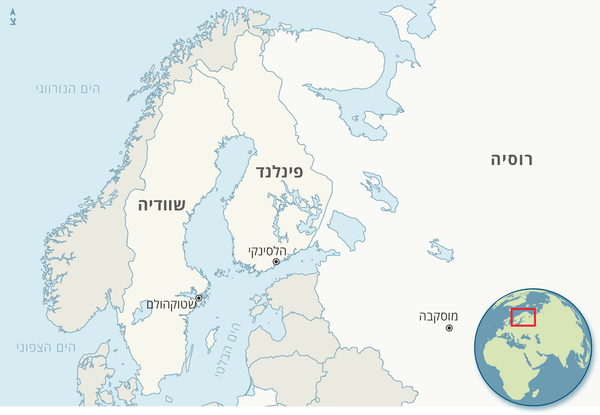
STOCKHOLM – NATO membership has been a controversial issue in Sweden and Finland since the alliance’s founding in 1949, but the two countries’ traditions of nonalignment are so strong that they’re staying out for now, despite Russia’s invasion of Ukraine.  

The end of the Cold War saw 14 new members join NATO, bringing the roster to 30, but without these two Nordic countries. For Sweden, the main reason for staying out has been its long-standing policy of nonalignment and neutrality. For Finland, it has largely been concern about the way its Russian neighbor would interpret such a step. Thus, while the other Nordic countries –  Denmark, Norway and Iceland – are full NATO members, Sweden and Finland have been cooperating with the alliance for years without actually joining. But then came Russia’s onslaught on Ukraine.

According to surveys conducted after the invasion, about half of Swedes are in favor of joining NATO – a record for the country, and up from 37 percent last summer and 32 percent in 2017. Other studies show that more and more Swedes are concerned about a possible Russian attack. In Finland, a petition signed by over 50,000 people calls for a referendum on NATO membership, a subject discussed in parliament last week. A poll by Finland’s public broadcaster early in Russia’s invasion showed that a record 53 percent of Finns support full NATO membership. In 2017 this number was only 19 percent.

In Helsinki last weekend, Swedish Prime Minister Magdalena Andersson and her Finnish counterpart, Sanna Marin, discussed defense policy and cooperation while keeping the NATO issue vague. Marin said that it’s “very understandable that the mindset of our citizens is changing due to Russia’s attack against Ukraine,” adding that Finland’s political parties would now be delving into the issue. Andersson agreed and added that “the security situation has altered in a dramatic way, and of course this will be discussed both in Finland and in Sweden.” In the current crisis, officials from both countries have spoken with U.S. President Joe Biden on their close cooperation with the United States.

“Historically, in both countries, nonalignment has been a long tradition, especially in Sweden, which was ‘neutral’ during World War II, though it was of course helping the Germans,” says Ann-Sofie Dahl, an associate professor in international relations and a nonresident senior fellow at the Atlantic Council in Washington. “Sweden clung to nonalignment during the Cold War as mostly a political and ideological tool for the ruling Social Democrats, who have a romantic view of Sweden playing a role in global politics as a neutral country,” Dahl says. “But this was a two-sided doctrine because it was combined with top secret cooperation with NATO during the Cold War.”

Getting closer

In the Finnish case it’s more of a security matter. “Finland has a very long border with Russia and they’ve also been part of the Russian Empire, which puts them in Putin’s sphere of interest. The Finns have also fought against the Russians [during World War II], which means that the Russians respect them. So, although Sweden and Finland both have nonalignment security doctrines, they have very different historical backgrounds.”

In 1994, Sweden and Finland were among the first to join the Partnership for Peace, NATO’s nonmember partnership program. But unlike Poland, Hungary and the Baltic states, they have not joined NATO. In 2014, with the first Russian invasion of Ukraine, Sweden and Finland became part of the Enhanced Opportunity Partnership, a small group of the alliance’s closest partners that now includes Ukraine.

“This means Sweden and Finland are part of NATO military exercises and various forms of communications and training. Now, because of the war, Sweden and Finland are even closer to NATO, and they’re participating in its discussions on the Ukraine crisis,” Dahl says. “This is a historic moment; we have never seen discussions like this before. Domestically in both countries, some center-right parties have supported joining NATO for years, others have recently joined, but now even some Social Democratic voices are moving towards accepting the idea of NATO membership. In Sweden this means a possible ideological U-turn for traditional supporters of nonalignment, while in Finland, the Social Democrats seem to be one step ahead because of a more pragmatic approach in these matters.”  

Exposed and vulnerable

Swedes and Finns who are now changing their minds about NATO membership have a clear understanding of its benefits. It’s all about Article 5 of the North Atlantic Treaty. That clause, sometimes called the “Three Musketeer article,” commits each NATO member to consider an attack on another member an attack on it. As in the Alexandre Dumas novel, it’s “all for one and one for all.”
“People in Sweden and Finland are afraid of what’s happening in Ukraine, which isn’t very far from them. They realize that they’re outside NATO, which means that like Ukraine, they’re exposed and vulnerable, particularly Sweden, which still has a very weak military and is seen as the most vulnerable part of the Baltic,” Dahl says. “We have a president in Moscow who is obviously unstable and ready to invade a neighboring country. Russia has been provoking Sweden with fighter jets entering its airspace. People are aware of this and of course they’re scared.”

Still, on Tuesday, Prime Minister Andersson said that a Swedish application for NATO membership was not on the table at the moment, adding that such a move would further destabilize the situation in Europe. Sweden prefers to strengthen its ties with Finland and the United States, cooperate with NATO as a nonmember partner and work within the EU framework to support Ukraine.
Finland doesn’t seem like it will be joining NATO in the immediate future either. “The Finnish position is that we are at the beginning of a process,” says Maimo Henriksson, a senior Foreign Ministry official who headed the Eastern department and is now ambassador to Sweden. “The security situation has changed in our neighborhood, which means there are more reasons to analyze and discuss the situation and its implications. Joining NATO is one option, but it’s not self-evident that we’ll land there.”

Henriksson says a political debate has been launched in Finland that includes policy papers, parliamentary debates and discussions among the parties. “It’s an open issue, it should be handled efficiently but with care, and it’s not clear what the end result will be,” she says, adding that Finland has constantly been talking with the Russians throughout the years, but not over the last few weeks. The Finnish people, shocked like so many people around the world,  have shown strong support for Ukraine. Regarding Sweden, Henriksson says that “both countries wish to go hand in hand when it comes to the decision about NATO. But of course, there are no guarantees since both countries have their individual national processes, and decisions will be made on the basis of national interest.”

האם פשעי שינג'יאנג הם מקרה מבודד או רמז לעתיד של כולנו?

פסק-הדין של הטריבונל האויגורי בלונדון, דו"ח מצב הדמוקרטיה בעולם של ארגון IDEA ודו"ח הבנק העולמי על הקונפליקטים האלימים על פני הגלובוס מעלים את השאלה – האם הפשעים של המשטר הסיני בשינג'יאנג הם אירוע מבודד או שהם רמז לעתיד של כולנו.

התפרסם ב"הארץ": https://www.haaretz.co.il/opinions/.premium-1.10469317

לפני שנתיים עוד היה אפשר להתעלם. העדויות היו מעטות וההכחשות היו גורפות. אפשר היה לטעון שהסיפורים על מדיניות השלטון הסיני כלפי בני המיעוטים בשינג'יאנג הם תעמולה אנטי-סינית וחלק ממאבק בין מעצמות. או שאפשר היה פשוט להפעיל את הווטאבאוטיזם הישן והטוב; למה לא מדברים על בתי-הכלא האמריקאים? למה שוכחים את המיליונים שהבלגים שחטו בקונגו? למה מתעלמים מהסעודים שתולים אנשים ברחובות? אבל אז, אחד אחר השנייה, הגיעו הניצולים – מאות נשים וגברים המספרים על מה שקרה להם וליקיריהם. מהם כבר היה קשה להתעלם. סיפוריהם מסמרי שיער: ענישה במעשי אונס קבוצתי, עקירת ציפורניים, מכות באלות חשמליות, כליאה בכלובים שלא ניתן לעמוד או לשכב בהם, אינדוקטרינציה פוליטית, ניסויים רפואיים, מערכת הייטק של מעקב ופיקוח במרחב הציבורי, פלישת המדינה למרחב הפרטי, מאסרים ללא הליך משפטי וכליאה בתנאים לא אנושיים.

אחרי העדים הגיעו בני משפחות אויגוריות, קזחיות ואחרות, וסיפרו על יקיריהם שנעלמו ללא שוב במנגנון הכליאה הסיני. לבסוף הגיעו החוקרים והעיתונאים ונתנו הקשר רחב יותר באמצעות צילומי לווין, מסמכים שהודלפו ונתונים, תמונות וכתבות שנקטפו מהאינטרנט הסיני לפני שהועלמו. אלו חשפו רשת של "מחנות לחינוך מחדש" בהם נכלאו ע"פ הערכות למעלה ממיליון בני-אדם, במקביל התבצעו טרנספרים של אוכלוסייה, הרס של בתים, שכונות ומסגדים, העסקה של מאות אלפי עובדי כפייה בתנאי עבדות וכפייה המונית של עיקורים והפלות שנועדו לצמצם את אוכלוסיית בני המיעוטים. בשבוע שעבר (חמישי) התפרסם פסק דין של טריבונל ציבורי עצמאי בלונדון בנושא מדיניות סין כלפי האויגורים. הטריבונל אסף מאות אלפי עמודי מידע, תיעד את סיפוריהם של כ-500 עדים ושמע את הסבריהם של כמאה מומחים מתחומים שונים. כך הוא יצר את גוף הידע המשמעותי ביותר בעולם בנושא ופסיקתו היתה חד-משמעית: סין אשמה, מעבר לכל ספק סביר, בעינויים, בפשעים נגד האנושות וברצח-עם נגד המיעוט האויגורי.

פסק-הדין בלונדון לא יגרום לסינים לשנות את מדיניותם. לטריבונל אין סמכות משפטית, כוח פוליטי או אפילו משקל ציבורי רב. למעשה, אין כוח בעולם שמאיים על עצמאות הפעולה הסינית בשינג'יאנג – סין לא חברה ולא כפופה לבית-הדין הפלילי הבינלאומי, אין חשש שצבא זר יפלוש לשינג'יאנג כי סין היא מעצמה צבאית וגרעינית, גופים כלכליים יהססו לפעול נגד סין בגלל עוצמתה הכלכלית, הסינים מחזיקים זכות ווטו במועהב"ט של האו"ם, שינג'יאנג עצמה סגורה הרמטית וכמעט שאין אפשרות לבצע בה עבודה עיתונאית ונכון להיום, אין עדות לכך שבסין פועלת אופוזיציה משמעותית או התנגדות עממית נרחבת למשטר. ארגוני חברה אזרחית ואמצעי תקשורת במערב כמו גם פוליטיקאים בפרלמנטים אירופאיים ובממשל האמריקאי מעלים אמנם את הנושא לסדר-היום העולמי, אך אלו הן בעיקר הצהרות, לא מעשים. למרות זאת, יש שאלה אחת שכדאי לשאול, לא רק לטובת האויגורים, אלא למען האנושות כולה – האם מדיניות סין בשינג'יאנג היא מקרה יוצא מן הכלל או שהיא עלולה להפוך למודל לחיקוי ועתיד אפשרי לכולנו?

המשפט האחרון עלול להישמע קצת דרמטי, אבל הוא מתבסס על תופעות מדאיגות המתרבות בשנים האחרונות. ראשית, למרות ההבטחה החגיגית "לעולם לא עוד" מאמצע המאה ה-20 והתיאוריה על "קץ ההיסטוריה" מסופה, עושה רושם שרצח-עם, פשעים נגד האנושות והפרות מאסיביות של זכויות-אדם זוכים לקאמבק מרשים. המאה ה-21 לבדה מספקת אין-סוף דוגמאות לכך, החל ברצח-העם בחבל דארפור ועד רצח-העם היזידי. במיאנמר נרצחו עשרות אלפי בני רוהינגה ומאות אלפים גורשו ע"י חיילי המשטר ותומכיהם. דו"ח של האו"ם חשף פוגרומים ברוטליים שכללו השלכה של תינוקות לנהר, מעשי אונס קבוצתי שהסתיימו ברצח, הצתה של כפרים על יושביהם והרג נשים וילדים בירי, סכינים ומצ'טות. באתיופיה, מתקיים בשנה האחרונה טבח נרחב של אזרחים כחלק מהסכסוך בין המשטר לבין אנשי חבל תיגראי. גם כאן ישנן עדויות על הוצאות המוניות להורג, הרעבת אזרחים ואסון הומניטרי בעקבות בריחתם של מיליוני פליטים.

מה הנסיבות המאפשרות את כל אלו? רמזים לכך ניתן למצוא בשני דו"חות שהתפרסמו לאחרונה. הראשון, דו"ח של IDEA, ארגון בינ"ל לחיזוק מוסדות דמוקרטיים, מראה שמצב הדמוקרטיה בעולם מדרדר. בעשור האחרון הוכפל מספר המדינות המוגדרות כ"דמוקרטיות בנסיגה", כלומר, מדינות בעלות ממשלות שנבחרו בדרך דמוקרטית הנוקטות בטקטיקות אוטוריטריות כמו הונגריה, ברזיל, הודו וסלובניה. כמו כן, בשנים האחרונות נוספו למועדון המדינות הלא דמוקרטיות יותר ויותר חברות. גם אם יש תחושה שהמצב בקמרון, זימבבווה או ניקרגואה לא משפיע עלינו ישירות, קשה להתעלם מהעובדה שע"פ הדו"ח, שני-שליש מאוכלוסיית העולם חיה כיום ב"דמוקרטיות בנסיגה" או תחת משטרים אוטוקרטיים. גם אם אנחנו חיים עדיין בווילה (ויש שיכפרו גם בזה), הג'ונגל הפך להיות גדול ומסוכן יותר. הדו"ח השני, של הבנק העולמי, הראה שיש בשנים האחרונות עלייה במספר הקונפליקטים האלימים בעולם. זהו שיא של שלושת העשורים האחרונים. הקונפליקטים אמנם פחות קטלניים משהיו בעבר אך הדו"ח קושר אותם לבעיות קשות וגורליות – יותר פליטים מאי פעם ועלייה ברמות העוני ואי-השוויון בעולם.

כאילו שכל זה לא מספיק, הנסיבות הספציפיות של המאה ה-21 מאפשרות לרודני כל העולם גישה למערכות נשק קטלניות יותר מאי-פעם ואפשרויות חסרות תקדים למעקב אחרי אזרחים. בנוסף נותנת המגפה העולמית את התירוץ המושלם לסגירת גבולות, דחיית בחירות ושלילת זכויות. שנאה גזעית ולאומנית מפומפמת ע"י רשתות חברתיות שהאלגוריתם שלהן פועל למען שורת הרווח בלבד והנסיבות הכלכליות הופכות לקיצוניות יותר במקומות רבים בעולם בעקבות משבר האקלים. מבחינת נטיותיו הרצחניות של האדם, זוהי סערה מושלמת.

בתנאים אלו ייתכן ששינג'יאנג היא רק ההתחלה. אין ספק שלעולם כולו, החל מההנהגה הפוליטית ועד לאחרון צרכני עליבאבא, נוח להתעלם מהמחנות, מהעינויים ומעבודות הכפייה. אך יש להכיר בכך שהמשך ההתעלמות מהפשעים המתבצעים בשינג'יאנג איננה רק פגיעה בקורבנות המשטר הסיני, היא תעודת הכשר להמשך הזוועות ותרומה ישירה להתפשטותן בעולם שהופך לאלים, דכאני ומסוכן יותר.

Church of Sweden in unholy spat after call to probe Israel as an apartheid state

Swedish Jewish organization blasts church’s decision, saying it cements its image as anti-Israel, while some of the church’s own bishops label it a ‘one-sided fixation on Israel’.

Published in "Haaretz": https://www.haaretz.com/israel-news/.premium.HIGHLIGHT-the-church-of-sweden-s-unholy-spat-over-israel-and-apartheid-1.10431536

STOCKHOLM – A decision by the Church of Sweden last week calling on ecumenical organizations to investigate Israel as an apartheid state has been condemned by the country’s leading Jewish body and members of the church itself.

According to the formal decision, the General Synod (the church’s decision-making body) has commissioned its Central Board to “raise the issue of scrutinizing the implementation of international law in Israel and Palestine, also from the perspective of the United Nations convention on apartheid and the definitions of apartheid in the Rome Statute.”

The church’s director of international affairs, Erik Lysén, told Haaretz that “the addendum suggests that the Central Board raise the issue with ecumenical organizations such as the Lutheran World Federation and the World Council of Churches. How the task is handled will be a matter for the Central Board to decide. There is no specific time frame for this.”

The latest decision, which was supported by members of the Synod who are part of Sweden’s Social Democratic and Center parties, has been criticized both within and outside the church.

Aron Verständig, president of the Council of Swedish Jewish Communities, said his organization found the decision unacceptable. He said the Church of Sweden “repeatedly chooses to criticize the only Jewish state, without criticizing any of Israel’s neighbors for the persecution that Christians are subjected to.” Verständig added that “the result of this decision is unfortunately that the image of the Church of Sweden having a strong anti-Israel approach is cemented.”

When asked if the decision was a result of the church’s will to protect Christians in the region or due to a more general political agenda, Lysén responded: “The members of the Synod who proposed the addendum argued in the debate that they were doing so out of a belief that the deteriorating human rights situation on the ground requires an investigation based on human rights and international law, and echoed voices of Palestinian Christians, as well as Israeli, Palestinian and international human rights groups who call for international action.”

The Church of Sweden, which has been active in the Middle East region for many years, publicly supports a two-state solution based on the armistice demarcation line before the 1967 Six-Day War. It calls for an end to “Israel’s occupation of Palestine,” for “a return to talks and negotiations based on international law,” and for both sides to end violence and respect human rights.

In the past, the church has claimed that “methods that prevent financial support for the occupation are legitimate ways of working for peace.” At the end of last week, the church’s head, Archbishop of Sweden Antje Jackelén, informed Verständig that she was personally opposed to the decision. However, she added in an open letter published on the church's website, that “an image of the decision is now being spread that is not entirely correct, and which can easily lead to misunderstandings and overinterpretations.”

Jackelén wrote “it is the use of the word ‘apartheid’ that provokes anger and sadness. I myself would not have used the word in this context. But I am also aware that Israeli and other human rights organizations such as B’Tselem, Yesh Din and Human Rights Watch have used the term in their reports.

“The decision also raises the issue of an examination of how the Palestinian Authority and Hamas live up to international law,” she continued. “Even though I think the wording is unfortunate, it is clear to me that the church council’s decision is in no way directed at Jews as a people, either in Sweden or in Israel, nor at the State of Israel.”

Other senior figures within the Church of Sweden were even more critical. “As bishops, we love our church and support its structure. This doesn’t prevent us from strongly distancing ourselves from the decision taken by the council,” wrote Åke Bonnier and Sören Dalevi, two bishops who mentioned the split vote at the church council. In "Kyrakans Tidning", a Swedish weekly newspaper which focuses on church issues, they stated that “103 members chose to vote against the proposal. As a church, we simply don’t agree on this issue. Why does the council so often pass motions concerning Israel, the only democracy in the Middle East? After all, there are 195 other countries in the world to choose from. Why is it never exercised over Belarus, Ethiopia, the U.S., China, Russia or any of the abominable dictatorships surrounding Israel? We note that this one-sided fixation on Israel does not directly contribute to improving relations with the Jewish state or with our Jewish siblings.”

One-sided supporter

As part of its involvement in the region, the Church of Sweden backs various organizations and projects, some of which support the boycott, divestment and sanctions movement against Israel. The church has often been accused of being anti-Israel and a one-sided supporter of the Palestinians.

Lysén said the Church of Sweden “focuses its international engagement on countries where we have long-term development and humanitarian partners,” and rejected the notion that it was only focused on the Israeli-Palestinian conflict. He said the church had raised issues of human rights violations in countries such as “Colombia, Myanmar, South Sudan, Tanzania, several countries in Central America and regionally in the Middle East. This is often done in partnership with ecumenical networks and alliances, and always with a basis in human rights and international humanitarian law.”

Responding to criticism of the decision, Lysén stressed that “the Church of Sweden’s position is not anti-Israeli and remains principled to human rights and international law – in Israel and Palestine, and in any other context where we work. We support and cooperate with both Israeli and Palestinian partners, all of whom work from a human rights-based approach. We remain committed to the rights of both the Israeli and the Palestinian people.”

The Church of Sweden is an evangelical Lutheran church with 5.8 million members (about 55 percent of Sweden’s population) and is considered a progressive and liberal church by international standards. It has ordained female priests since the late 1950s; recognizes and performs same-sex marriages; and its decision-making body, which consists of 251 members who meet biannually, is voted for in a democratic election in which all of the country’s major political parties are represented.

The General Synod elects the church’s Central Board, which is led by the archbishop of Sweden (Jackelén is the first woman to hold the church’s highest position). Until the start of the 2000s, the church held the position of state church, which explains the high membership numbers in a country that is extremely secular and in which only a small percentage of the population attends church services.

Until 1996, all newborn children were made members, unless parents actively canceled their membership. The church is involved in humanitarian work far from Sweden’s boarders, its self-proclaimed priorities including “gender justice and equality, safeguarding people’s sexual and reproductive health and rights, basic freedom of religion or belief, just peace worldwide, fair and sustainable livelihood, and maintaining human dignity and human rights in emergency situations.”

ראשת הממשלה הראשונה בשוודיה התפטרה מהתפקיד, שעות לאחר שמונתה

הפרלמנט בשטוקהולם אישר את מינויה של שרת האוצר מגדלנה אנדרסון הסוציאל-דמוקרטית, במקום סטפן לופבן, שכשל בהעברת רפורמות בשוק הדיור. שעות אחרי מינויה, אנדרסון הודיעה על פרישה ועל כוונתה להקים ממשלה חדשה בראשות מפלגה יחידה.

רויטרס ודיויד סטברו

הפרלמנט בשוודיה אישר היום (רביעי) את מינויה של שרת האוצר מגדלנה אנדרסון לראשות הממשלה. אנדרסון בת ה-54, המנהיגה החדשה של המפלגה הסוציאל-דמוקרטית, היא האישה הראשונה במדינה המכהנת בתפקיד. אולם שעות ספורות לאחר מינויה לתפקיד, אנדרסון הודיעה ליו"ר הפרלמנט על התפטרותה. ראשת הממשלה הטרייה מסרה את ההודעה לאחר שמפלגת הירוקים פרשה מהקואליציה החדשה, בעקבות אי אישור תקציב המדינה בפרלמנט. אנדרסון אמרה כי היא שואפת להקים עתה ממשלה חדשה שתישען רק על מפלגתה שלה. בפרלמנט השוודי, ריקסדאג, יש 349 מושבים. 117 מחוקקים תמכו במינויה של אנדרסון, 174 התנגדו, 57 נמנעו ומחוקק אחד נעדר מההצבעה. אף שהיו יותר מתנגדים מאשר תומכים בהצבעה, המינוי של שרת האוצר לראשת הממשלה אושר בכל זאת. הסיבה לכך היא שראשי ממשלה בשוודיה יכולים להתמנות ולמשול כל זמן שהם נהנים מרוב פרלמנטרי של מחוקקים שלא מתנגד להם – מינימום של 175.

מפלגת הירוקים הודיעה כי תתמוך בפרלמנט בהצבעה עתידית על קואליציה חדשה בראשותה של אנדרסון וכך גם מפלגת השמאל "ואנסטרפרטייט". מפלגת המרכז הודיעה כי תימנע בהצבעה. שלוש המפלגות חלוקות אמנם בהצבעה על התקציב אך מלוכדות ברצונן למנוע ממפלגת "השוודים הדמוקרטים" הפופוליסטית והמתנגדת להגירה לקחת חלק בכל ממשלה עתידית. עוד טרם התפטרותה, לאנדרסון לא היו צפויים יותר מדי ימי חסד, ומתברר שאפילו לא אחד. בדברים שנשאה הבוקר לאחר המינוי הבהירה אנדרסון כי היא נערכת להנהיג את המדינה גם אם הפרלמנט ידחה את התקציב לטובת חוק התקציב של האופוזיציה השוודית. "אני בדעה שתקציב האופוזיציה בכללותו הוא משהו שאני יכולה לחיות איתו", אמרה.

המשך: https://www.haaretz.co.il/news/world/europe/.premium-1.10411705

From Recognizing Palestine to Warming Ties With Israel: An Interview With Sweden's Outgoing Prime Minister

In an exclusive interview with Haaretz, Swedish prime minister Stefan Löfven explains his policies on Israel, and reaffirms his support for Holocaust commemoration, better U.S.-Europe relations and a revived Iran nuclear deal

GOTHENBURG, Sweden – Just weeks after Sweden hosted the Malmö International Forum on Holocaust Remembrance and Combating Antisemitism, Stefan Löfven, the country’s prime minister and the driving force behind the forum, is stepping down as head of the Social Democratic party – and the government. While the 64-year-old premier, whose tenure is coming to an end this week after more than seven years, has recently been praised internationally for his role in confronting antisemitism, his policies concerning a host of other issues, both foreign and domestic, have also attracted attention. Among these are his country's unique handling of the coronavirus pandemic, the way it is dealing with challenges posed by a looming refugee crisis in Europe, relations with Iran, and Sweden's recently improved ties with Israel. Talking to Haaretz during a party congress in Gothenburg, Löfven addresses these subjects and offers some initial insight into his political legacy.

It’s recently been announced that you are the recipient of the Aron Isaac Prize that's awarded by the Jewish community in Stockholm for your “efforts to ensure that the victims of the Holocaust are not forgotten and to counter antisemitism and racism in today’s society.” When and why did you decide to make these issues part of your job as prime minister?

“This is a deep conviction that I’ve held all my life, ever since I can remember. When I became prime minister, it was obvious to me that I would take part in Holocaust commemoration, and naturally I met more and more people, I heard more stories and I promised the survivors that I’d do all I could both as prime minister and as a fellow human being. For example, when (Holocaust survivor) Max Safir called me a few years ago and asked me to help found a Holocaust museum in Sweden – that felt like something I could do, so we started a dialogue with survivors and organization and we’re well on our way now (the museum will open next year). Then, when the 20-year anniversary of the Stockholm International Forum on the Holocaust took place, we thought that since these problems still exist, we have to do more.”

Löfven is referring to the 2020 conference of an organization initiated by then-Prime Minister Göran Persson as an international partnership to fight antisemitism and promote Holocaust remembrance, education and research. 21 years later, Löfven created the Malmö forum to continue to address the same problems. “I started with a deep personal conviction,” he stresses, “and the prime ministerial role gave me the possibility to do a lot more”.

Stefan Löfven Photo: Kristian Pohl/Regeringskansliet

Despite the awards and ceremonies, Sweden’s Jewish community still has many unresolved problems. With possible changes in the country’s school system, will it still be possible to have a Jewish school in the country? Will circumcision for religious purposes stay legal? And for how long will hate crimes and bullying of Jewish children and teachers continue in Swedish schools? Has enough been done in these areas? Is there more than just rhetoric?

“It’s true, we do still have problems. That’s why, in the short run, we’re investing more in security. Yes, it will be possible to have Jewish schools in Sweden even if independent religious schools which receive public funding will be prohibited in the future. The Jewish minority is one of our national minorities, which means that its language, culture and schools are protected. [Five minorities are protected by law in Sweden: Jews, the Roma, the Sami people – Sweden’s indigenous inhabitants – Swedish Finns and the residents of the Torne Valley.]. I don’t see any danger for the right to conduct circumcisions since there’s no majority against it. Sure, there are still problems and that’s why the Malmö forum was all about commitments, not about speeches. It was about two kinds of commitments: first, never to forget, which is why different countries undertook to have various memorial events and memorial sites, and second, the fight against antisemitism, which is also about commitments. In our case, this means doing more in schools, investing more in research so that we have a better understanding of the forces behind antisemitism and so on. We want to spread this to other countries, organizations and companies (such as social media companies for example). Everyone can make commitments. Individual schools can commit, more companies can make commitments, sport organizations can make commitments. That’s the way to address these issues".  More than 40 countries and more than 20 international organizations, civil society organizations and private sector giants such as Facebook and Googel participated in the Malmö Forum and made pledges to combat antisemitism and promote Holocaust remembrance.

Löfven has served as prime minister since October 2014. Though born in Stockholm, he grew up in northern Sweden with a foster family, since his biological father died before he was born and his biological mother was unable to raise him. His foster parents were working-class Swedes – the father a lumberjack and factory worker; the mother, a homemaker. After completing his high school and a couple of years of military service in the Swedish Air Force, he became a welder. As a metal worker, he became a trade unionist and worked his way up the ranks until 2005 when he became the head of IF Metall, one of Sweden’s largest and most powerful blue-collar unions. In January 2012, Löfven, who had been active as a young man in the Social Democratic youth league, was elected head of the party at a point when the Social Democrats were in the opposition and suffered a leadership crisis. Löfven became Sweden's Prime-Minister after the 2014 general elections and won a second term four years later, despite the fact that the Social Democrats had their worse showing in over 100 years in those elections. The fact that country's four center-right parties would not cooperate with the populist right-wing Sweden Democrats at the time created a situation in which Löfven was able to form a coalition with the Green Party, bolstered by a left-wing party and a couple of center-right parties. This coalition, still in power, has suffered and still suffers from week support in the parliament and the Social Democrats have had to make painful compromises in order to stay in power. Löfven has often been described as a political survivor and an extremely skillful negotiator who has managed to keep his party afloat despite the tough political landscape.

Last week, during the party gathering in Gothenburg, Löfven’s successor, Finance Minister Magdalena Andersson, was elected. If all goes according to Löfven’s plan, Andersson will be chosen by the Swedish parliament to become prime minister until the 2022 elections. She'll be the first woman ever to hold the job. Her task now is to lead the Social Democratic party to victory. In her first speech as party leader, she chose to stress the core values of her electorate, away from the compromises made by her predecessor. “In the age of global crises, it is obvious to more and more people that the wind is blowing for us Social Democrats, for strong society, for equality,” she said, adding that after decades of privatization, market experiments, weakened worker’s rights and growing social gaps in the interest of private profits, it’s time for common solutions rather than market solutions. In another speech Andersson mentioned Löfven’s efforts to combat antisemitism and promote Holocaust remembrance, and vowed: “Stefan, we will all continue that work.” Löfven himself is confident that she will continue stepping in the path he laid. “This is part of our party’s ideology,” he says. “I’m convinced that my successor as party leader has no different understanding than I do (on these issues).”

Bilateral ties

When it comes to Sweden’s relations with Israel, the start of Löfven’s first term couldn’t have been worse. One of his government’s first steps was the recognition of a Palestinian state. The following year, 2015, in an interview on Swedish TV, then-Foreign Minister Margot Wallström linked that year's jihadist terror attacks in Paris to the Palestinians' plight under Israel's occupation. That comment, and others like it, were viewed in Jerusalem as pro-Palestinian and anti-Israeli in Jerusalem, and led to the recall of ambassadors and freezing of bilateral relations. Indeed, for nearly three years, there were no meetings between the countries' official and Israel repeatedly rebuffed requests by Wallström and Löfven to make more efforts to improve ties. The situation improved slightly toward the end of 2017, but there were no one-on-one meetings between Löfven and Israel’s then-Prime Minister, Benjamin Netanyahu, and no high-level contacts between the countries’ foreign ministries. But all that changed last month when Swedish Foreign Minister Ann Linde visited Israel and met with her Israeli counterpart, Yair Lapid. A few days earlier, Israel’s President Isaac Herzog made an online appearance at the Malmö forum.

Was recognizing a Palestinian state a mistake?

Continues here: https://www.haaretz.com/world-news/europe/.premium-sweden-s-pm-likes-warming-ties-with-israel-but-doesn-t-regret-recognizing-palestine-1.10364546

The Forgotten Victim of One of Mossad's Greatest Fiascos

The murder of the Israeli athletes at the '72 Munich Olympics, and the Israeli  revenge campaign that followed, spawned many books and films. But in all of them, one figure remains anonymous: Ahmed Bouchikhi, accidentally murdered by the Mossad in the ‘Lillehammer affair.’ We set out on his trail

Published in "Haaretz": https://www.haaretz.com/israel-news/.premium.HIGHLIGHT.MAGAZINE-the-forgotten-victim-of-one-of-mossad-s-greatest-fiascos-1.10336877

David Stavrou

One morning in September 1994, shortly after the French musician Jalloul “Chico” Bouchikhi parted ways with the Gipsy Kings, the successful flamenco-pop group he founded, he got an unexpected phone call. On the line was a UNESCO representative who sounded distraught. The United Nation’s cultural organization was organizing a special concert to mark the first anniversary of the signing of the Oslo Accords, in the presence of Israeli Foreign Minister Shimon Peres and PLO Chairman Yasser Arafat – with the participation of the Gipsy Kings, she said. But now, at the 11th hour and with 24,000 tickets sold, they had been informed that the band had missed the flight to Oslo. Would Bouchikhi agree to appear in their place with his new band, Chico & the Gypsies, and prevent a fiasco? 

“I said yes. I arrived with my musicians, we informed the audience that the Gipsy Kings couldn’t make it, but that I was their founder. We played ‘Bamboleo’ and other of the band’s hits, and it was a big success,” Bouchikhi recalls. “At the end, Peres and Arafat came onstage and congratulated me. I shook hands with them. My brothers, who lived in Paris and had come for the concert, took pictures of the event.”

That appearance launched Bouchikhi, who is now 67, on a course he had never imagined for himself. He was appointed UNESCO Envoy for Peace in 1996, acting as a goodwill ambassador and promoting messages of tolerance and peace at his performances. But if today he looks back on his past, emotionally, almost in disbelief, as the “story of a special fate” – it’s not because the Gipsy Kings missed their flight and he filled in for them. The reason is that, unbeknownst to any of the others involved at the time – neither UNESCO, Peres or Arafat, nor those who were supposed to ensure their safety – fate or chance had placed the two leaders on a stage with a musician whose brother was mistakenly murdered by Israeli intelligence agents because they thought he was a Palestinian terrorist.

Continues here: https://www.haaretz.com/israel-news/.premium.HIGHLIGHT.MAGAZINE-the-forgotten-victim-of-one-of-mossad-s-greatest-fiascos-1.10336877

Israel’s Ambassador to Sweden Rejects Far-right – and Stirs Political Storm

Israel's new ambassador to Sweden, Ziv Nevo Kulman, is eliciting strong reactions in the country following an interview he gave to Swedish newspaper, in which he said that Israel has no ties to the right-wing populist Sweden Democrats party.

Published in "Haaretz": https://www.haaretz.com/world-news/europe/.premium-israel-s-ambassador-to-sweden-rejects-far-right-and-stirs-political-storm-1.10334124

The ambassador's interview followed the official visit of Swedish Foreign Minister Ann Linde to Israel, which was the first such visit in ten years. It was seen by many as a new start for bilateral relations between Israel and Sweden after the frigid period that came with Sweden’s recognition of Palestinian statehood in 2014. Speaking to the Dagens Nyheter daily, Nevo Kulman, who took his post in August, said that Israel has no relations with the Sweden Democrats and has no intention of establishing such ties in the future. He does not mean to get involved in Sweden's democratic process, he said, "but this is a moral position that is about far-right parties with roots in Nazism."

He continued, "We don't have, and don't intend to establish, any contact with the Sweden Democrats. They can say that they support Israel, but you also have to look at what they don't support. We will also not have contact with openly Islamophobic parties. This also applies to other countries in Europe. ”The Sweden Democrats party was founded in the late 80's as a result of a series of mergers of political movements on Sweden's far-right, nationalist and neo-Nazi scene. Since then, it has become closer to the mainstream, referring to itself as a "nationalist and social-conservative" party. It entered the Swedish parliament in 2010, and is currently the third-largest political party in Sweden.

Anders Lindberg, left-leaning political editor-in-chief of the Aftonbladet daily wrote that Israel's clear spoken language about "far-right parties with roots in Nazism" should be seen as a "wake-up call" to his home country. He also claimed that the Israeli statement emphasized that the Sweden Democrats’ Nazi past and ideology should make it impossible for democratic parties to have any contact with them.

On the other hand, on the right, many claimed on social media that Nevo Kulman was meddling in Swedish politics. "I hardly think that an ‘apartheid state’ built on stolen land where the original inhabitants are treated as less-than-second-class citizens are in a position to lecture others on ‘xenophobia,’" one critic wrote on Twitter, "nor is what happens in Sweden any of your business." Another wrote, "Please avoid burning bridges at this point, you might change your mind after a year in an almost-dystopia of rampant crime, Arabic clan infiltration and imported antisemitism."

Continues here: https://www.haaretz.com/world-news/europe/.premium-israel-s-ambassador-to-sweden-rejects-far-right-and-stirs-political-storm-1.10334124