Two young Israeli soldiers recently visited Stockholm together with an activist from Breaking the Silence, an Israeli organization that collects and publishes testimonies from Israeli veterans and, in many cases, acts as a whistleblower by exposing alleged human rights violations and war crimes. The Swedish visit was organized in collaboration with the Christian aid organization Diakonia, which arranged interviews with the Swedish press (SVT, Dagens ETC, Dagens Arena, and Jewish Chronicle). In the interviews, the soldiers used pseudonyms, and their faces were not shown.
In some of the publications, the interviews were presented as evidence supporting the gravest accusations against Israel. For example, Dagens ETC wrote: “The serious allegations have been dismissed as Hamas propaganda by commentators like Alice Teodorescu Måwe. But everything is now confirmed by Israeli soldiers.”
In the interviews, the soldiers reportedly said things like, “we were ordered to shoot all Palestinians we considered ‘military-age men’” and “we used Palestinian men as human shields.” Other claims included that many buildings were destroyed in Gaza and that, during the first weeks of the war, there was a lack of rules of engagement. Later, the soldiers said, rules were introduced, but they were weak and not always applied. As a result, unarmed men were shot.
They also reported that journalists and healthcare workers were considered legitimate targets, even if they themselves did not participate in such incidents. The two soldiers also described a discourse that dehumanized Palestinians.
Many Israelis have strong objections to Breaking the Silence. They argue that this type of testimony contributes to hatred of Israel, causes the country to be treated unfairly, and that even if the reports are true, they should be discussed domestically rather than in a hostile international stage.
Of course, Swedish journalists do not need to concern themselves with this—but it can help to understand the context. Many Swedes would likely raise an eyebrow if Swedish organizations on the political fringe were setting the agenda for Sweden’s image abroad. In this case, the soldiers are telling an important story—the problem is that the Swedish press misunderstood it.
A key issue concerns how to distinguish between different types of armed forces. Traditionally, there is a difference between terrorists or non-state actors who use violence against civilians and state-controlled armies with formal military forces, command structures, and legal frameworks. That definition is largely irrelevant for Israelis because Hamas is a hybrid actor. Although the organization uses terrorist methods, its military branch—the al-Qassam Brigades—is structured like an army, with battalions and brigades, elite units, command chains, and modern weapons systems. During the war, this was also supported by high-tech disinformation campaigns, a financial empire of global investments, leaders living luxuriously outside the region, and alliances with some of the world’s most tyrannical regimes.
This paints the Israeli soldiers’ testimony in a very specific colour since Hamas, despite its military structure, is not bound by international law. Its militants can behead, rape, and execute civilians, burn people alive, and take children as hostages—with or without uniforms—while exploiting its other source of power – the power of sovereignty, and the civilian control the organisation holds in Gaza. Expecting Israel not to act against individuals simply because they are not in uniform in this asymmetric conflict may be understandable, but it is hardly surprising that the reality forces terrible dilemmas and tragic decisions.
The Israeli soldiers confirm that Israel, despite the genocidal nature of the Hamas attack against it, at least tried to maintain some form of legal framework. They say civilians were evacuated, leaflets were dropped as warnings, orders were given not to shoot women and children, and no-go zones were established in order to limit Israel's massive firepower. Using human shields is obviously illegal and should be punished. But the claim that journalists and healthcare workers are always protected in a reality where Hamas has been shown to use both journalistic and medical infrastructure for attacks on Israeli civilians is detached from reality.
Israel claims that intercepted communications show Hamas used ambulances to transport fighters, weapons, and equipment. Hamas also hid weapons and command centers in hospitals, schools, mosques, and private homes. The IDF has released images that allegedly confirm this. Furthermore, at least three civilian hostages—Almog Meir Jan, Andrey Kozlov, and Shlomi Ziv—were reportedly held in a family home in Gaza where the son was a journalist and the father a doctor. There are also allegations that so-called freelance journalists were embedded in Hamas units on October 7 and documented the massacre for propaganda purposes.
The fact that Hamas controlled the Gaza Strip with an iron grip for years means that almost everything in Gaza effectively became part of the effort to destroy Israel. When the soldiers say they were told “everything is a military target,” this is viewed as condemning evidence against Israel—but in reality, it is not far from the truth.
International law recognizes these complex circumstances. While it may seem unfair to those unaccustomed to war, under the Geneva Conventions civilian structures—including hospitals—can lose their protection if they are used for military purposes. Even unarmed combatants and civilians participating in hostilities can, under certain circumstances, be considered legitimate targets. This is not what Israel claims—it is how international law works.
The reality described by the Israeli soldiers is horrific. Some of it, such as the use of human shields, also appears illegal. It can and should be discussed. It can and should be used for journalistic purposes and, hopefully, ultimately, for reconciliation when the heartbreaking testimonies from both sides become part of a healing process. That said, nothing in what the soldiers said in Sweden confirms allegations of genocide or deliberate starvation of civilians. Using these stories to imply that these horrific accusations are true is an abuse of the witnesses and their experiences.
Finally, there is one more aspect to consider. Being scared, wanting revenge, and not adhering to strict moral ideals under fire is natural in armed conflict. So too are remorse and shame. The Israeli soldiers who came to Stockholm were brave enough to share this with the world. But a reasonable question to pose to Diakonia, which organized the visit, is: Where is the Palestinian Breaking the Silence? Where are the remorseful Hamas fighters? Where are the Islamic Jihad militants ashamed of massacring Israeli civilians and now revealing their actions as “deeply immoral and devastating to our neighbors,” as one of the Israeli activists put it? Are these ignored by Diakonia—or do they simply not exist?
The ceasefire which has been in effect in Gaza for several months has given Israelis and Palestinians an opportunity to reflect on their next steps, and to begin rebuilding and recovering after two of the most difficult years in the region’s history. Although Israel is slowly disappearing from the international headlines, it remains important to examine what is actually taking place in its political arena. If there's anything to learn from recent history it's that what happens there will influence global politics for many years to come.
One of the war’s results is that Prime Minister Benjamin Netanyahu, who is currently on trial for corruption, is doing everything he can to control the historical narrative of the war and avoid taking responsibility for Israel’s failure on October 7. Instead, he places the blame on the security services and his political opponents. He refuses to establish an independent official inquiry commission and is doing his utmost to replace Israel’s military and legal elite with loyal officials. These changes may help Netanyahu evade accountability for the charges against him. But for his coalition partners—far-right, fundamentalist, and ultranationalist parties—they are a means to a broader goal: undermining Israel’s liberal democracy.
For example, the Knesset, Israel’s parliament, is discussing a bill that would expand state control over the media. The proposal would replace existing regulatory bodies with a new authority whose members are appointed by the government—effectively enabling political control over broadcast content. The bill has drawn criticism from the government’s legal adviser, who warned that it threatens freedom of the press. It is hardly surprising that the same attorney general is among those the government is attempting to remove.
Screenshot
Because Israel is a democratic country, many Israelis are demonstrating against these proposals and other government measures. In recent months, however, many protesters have claimed that the police are acting in ways they did not previously. They report arbitrary arrests and increased use of force, including stun grenades and mounted riot police.
The minister responsible for this is Itamar Ben-Gvir, a far-right politician previously convicted of incitement and support for terrorism. While he is busy consolidating control over the police within Israel, another minister, Bezalel Smotrich, is consolidating control over the West Bank. Smotrich is laying the groundwork for potential annexation and is taking no action against the growing violence perpetrated by extremist settlers.
Netanyahu himself has recently reaffirmed his intention to continue pursuing the so-called judicial reform which many in Israel describe as a judicial overhaul, as it threatens the fundamental principles of the rule of law and the separation of powers, weakens the independence of the courts, and risks undermining democracy. The issue has now returned to the parliamentary agenda and in addition, efforts to limit the powers of the attorney general and the Supreme Court are being resumed. Another bill currently under discussion would introduce the death penalty for terrorist offenses—formally to prevent Hamas and other groups from taking Israelis hostage in order to exchange them for convicted terrorists, but there are also those motivated simply by revenge.
If the death penalty does not sound like a sufficiently reactionary reform, the Knesset has even discussed the conservative Jewish concept of shmirat negiah—the obligation for a man and a woman who are not married to each other to refrain from physical contact. It is not an official legislative proposal, at least not yet. But the mere fact that it is being discussed alarms liberal and secular Israelis—and rightly so.
Swedes have always had a deep interest in Israel. This can have both positive and negative effects. To understand whether Sweden’s voice can contribute something meaningful in this context, we should examine the country’s current discourse on Israel.
The political left in Sweden has unfortunately totaly lost its bearings. Many of its supporters have embraced Hamas’ narrative of the Israeli–Palestinian conflict. This does not necessarily mean they support terrorism, but the view of Israel as a settler-colonial project that should be boycotted and opposed regardless of its policies or leadership has spread from a radical minority into mainstream politics. Even established political parties have begun discussing the dangerous idea of a one-state solution.
A one-state solution would either mean the end of the Jewish state—which even the Swedish left previously supported—or plunge the entire region into an even worse bloodbath than what we have witnessed over the past two years.
Equally dangerous is the stance of Sweden’s populist right. Supporting Israel because its current leaders appear to use methods similar to those of authoritarian, illiberal regimes, or because they see Israel as a symbol of a struggle against Islam, is both misguided and harmful. It is also a betrayal of the Israelis who are fighting for a democratic, liberal, and peaceful future.
This year, both Swedes and Israelis are heading to the polls. If Sweden still wishes to exert a positive influence on Israel (and on the Palestinians, for that matter), Swedish supporters of the left should cooperate with Israeli artists, entrepreneurs, researchers, and academics who are independent and often in opposition to the government, rather than the easy and intellectually lazy solution of boycotting and margenelizing them.
The Swedish right should support courageous Israeli leaders who oppose the government’s reactionary impulses and fight for democratic values, rather than backing corrupt leaders and extremist parties that are dragging Israel back toward the Middle Ages. Any other approach amounts to rewarding both Hamas and Jewish extremists and for those who live in the region, it is yet another step on the road to hell.
Filmmaker Tal Kantor's Israeli-French coproduction, the animated short film 'Letter to a Pig,' exploring intergenerational trauma and its potential to lead to empathy, has received numerous accolades. Now, a rabbi in Sweden has shown the film to Jewish-Muslim audiences to encourage dialogue post October 7 and the Israel-Gaza war.
Israeli animation filmmaker and visual artist Tal Kantor, 37, has taken her film "Letter to a Pig" to more film festivals, master classes, school seminars, and public screenings than she can easily remember. These events have taken place all over the world since the film was first screened in 2022, and there are more to come. From Harvard University to the Sigmund Freud Museum in Vienna, from the Academy Museum of Motion Pictures in L.A. to the Museum of Contemporary Art in Zagreb, it seems like Kantor and her film have been everywhere.
The 17-minute piece of animated art has also won Kantor multiple prizes. These include the Ophir Award, known as "the Israeli Oscar," the Best Narrative Short at the Ottawa International Animation Festival, the Excellence Award at the Japan Media Arts Festival and prizes, and honorable mentions at animation festivals in Belgium and France, and even an Oscar nomination for Best Animated Short Film in 2024.
The film itself took about five years to complete because of the meticulous hand-drawn animation style, which is combined with live action and involves visionary techniques and imagery. It was produced by The Hive Studio in Israel and Miyu Productions in France. It is based on one of Kantor's real-life childhood memories, and it depicts the way pain and collective trauma are transmitted from one generation to another, and the role they play in human history, society, and identity.
The film's main character is a girl who, together with her classmates, listens to the testimony of a Holocaust survivor in an Israeli school. Part of the testimony is a letter that the survivor wrote to a pig which, as he remembers, saved his life while he was hiding from the Nazis in a pigsty. In the film, the young schoolgirl sinks into a disturbing surrealistic dream while listening to the testimony. During the dream, new perspectives of good and evil are created in the girl's mind, and these expose her and her fellow students to the results of violence, victimhood, and trauma.
The pig's role shifts from savior to monster to victim, while the young children also go through a transformation. They start out as passive listeners and gradually become a threatening mob. The Holocaust may be the film's starting point, but "Letter to a Pig" is not a "Holocaust film." It's about universal motifs such as violence and suffering created by intergenerational trauma, which develops into a siege mentality. But it's also about empathy and the possibility to recognize other narratives through dialogue.
For Rabbi Moshe David HaCohen, 46, the narratives of pain and suffering, leading to endless conflict, actually drew him to the piece. HaCohen has just started his second term as the rabbi of the small Jewish community in Sweden's third-largest city, Malmö. In 2017, at the beginning of his first term as Malmö's rabbi (which ended in 2022), HaCohen founded Amanah, an organization based on his cooperation with a local imam to counter discrimination and build trust between the city's Jewish and Muslim populations. For a few years this worked very well, but the organization gradually dissolved as a result of the October 7 massacre, the ensuing Israel-Gaza war and the polarization caused by these events.
HaCohen is now launching a new organization named B.R.I.T – an acronym for Building Resilience, Identity, and Trust, and a reference to the Hebrew word for "covenant." He says the organization will work to counter polarization and foster relations between Jews and Muslims in several European countries. "I saw how Tal took something which is seen as almost holy like the Holocaust, and I was impressed by the way she asked complex questions that society today has to deal with," HaCohen told Haaretz in an interview in Stockholm. "The most serious question is how do we dismantle this complex conflict and create trust. Telling stories, like Tal does in her film, is a way to reach the real issue and move forward to create that kind of trust. People need hope, and I thought that during this time of conflict it would be good to create a debate based on the film."
One of the side effects of the Israeli-Palestinian conflict is the conflict in many European countries over the last two years, between Jewish Israel supporters and Muslim Palestinian supporters, who are entangled in cycles of suspicion and hostility. Jews have experienced rising levels of antisemitism, aggressive demonstrations at which protestors declare support for Hamas, and accusations of being responsible for the situation in Gaza because of their support for Israel.
Many European Muslims have found themselves on the receiving end of traditional anti-immigration and xenophobic attitudes, which are now amplified in response to the actions of elements of the pro-Palestinian solidarity movement. Even though there is now a cease-fire in the Middle East, tensions between the pro-Israel and pro-Palestinian camps and their supporters in many European countries persist.
And so Rabbi HaCohen asked Kantor to bring her film to Sweden in November to try to create productive dialogue. Kantor says that the film has taken part in about 150 festivals so far, and she has attended many of them personally. Meeting audiences together with the international crew who worked with her on the film is always important to her. "The film started from a very personal experience, and it has now become universal. Meeting audiences …. means everything to me," she says. "After screenings, people open up to me; they talk about their own experiences and their own perspectives. Some of them cry and open their hearts while talking about the multi-generational trauma they see in the film."
Still, for Kantor this wasn't just another invitation to a European cultural event. Instead of festival curators and ceremony producers, the invitation came from a rabbi who wanted to show her film as a tool for creating change and providing hope. Kantor couldn't refuse.
From right: Rabbi Moshe David HaCohen, Somar Al-Naher, Tal Kantor and Anneli Rådestad. Photo: Peter Lööv Roos
"Moshe David explained who he was and told me about what he does," Kantor told Haaretz in a local Stockholm café a day before she returned to Israel. "I immediately understood that he wasn't interested in the film because of its Oscar nomination or its international success. It was about the film's content…. The way he talked about it moved me deeply. He recognized its exploration of the danger of inherited trauma, fear, and narratives of cruelty, and how remaining in a place of victimhood can keep that cycle alive.
"He also saw how the film gestures toward compassion for all people [and towards] humanity and hope. It meant a great deal to me that he saw in the film a tool for opening a space for dialogue in such a polarized moment."
Noa Eshkol's 'Mourning Carpet' from 1974 was inspired by the Israelis who died in a Palestinian terror attack that year. Opposition to the showing of the work lays bare the unique enmity toward Israel
The scene at Norway's National Museum a month ago was unusual, even for a protest in Oslo in a year of countless harsh demonstrations against Israel. In the "On the Barricades" room showing works with a political context, dozens of people sat on the floor and shouted "Remove the carpet!"
The participants, including artists and cultural figures, were protesting the showing of one of the works, 1974's "Mourning Carpet," a 174-by-160-centimeter (roughly 6-foot-by-5-foot) wall carpet by Israeli textile artist and choreographer Noa Eshkol. The piece features images of flowers in an array of colors. A YouTube video and media photos reveal the flavor of the protest. The chants filled the room, a Palestinian flag had been placed on the floor, and a few demonstrators wore kaffiyehs. Israel and Hamas' signing of a cease-fire agreement that day, October 9, didn't seem to register much.
A few days earlier an initiator of the protest, Norwegian artist Victor Lind, explained what was rousing the demonstrators' anger. "The National Museum has chosen to show a work that legitimizes the occupation of Palestine by the war criminal the State of Israel," he said in a panel discussion in Oslo in September. Lind also claimed that the work was "war propaganda" that legitimized genocide and fascism.
The call to remove Eshkol's work was also heard in letters, newspaper articles and social media posts; even employees of the museum joined in. But for now, the piece is still there and the museum hasn't voiced any intention to pull it. "The National Museum isn't supposed to be a political player," the museum's director, Ingrid Roynesdal, told Aftenposten, Norway's most popular daily. She added: "If we as a museum choose to become an active player in geopolitical debates, we're likely in the end to contribute to a narrowing of freedom of expression."
The demonstration at the museum joins a long list of protests and boycotts over the past two years against Israel and Israeli artists, scholars, athletes and businesses. But the battle surrounding Eshkol's work seems particularly strident. It reflects the depth of the crisis of Israel's international standing and the scale of the hatred for Israel in Europe, which goes far beyond opposition to the war in Gaza.
Noa Eshkol, "Mourning Carpet (Following the Massacre at the Ma'alot School). Credit: Jens Ziehe/Photographie/Neugerriemschneider Berlin
The story of the carpet begins with a national trauma in Israel. It was May 1974, slightly over six months since the Yom Kippur War and around two years since a string of terror attacks: the Munich Olympics massacre, the hijacking of a Sabena airliner that landed in Israel, and an assault at Israel's airport that killed 26 civilians. In May 1974, terrorists from the Democratic Front for the Liberation of Palestine infiltrated from Lebanon into Israel.
Over two days, with rifles, hand grenades and explosives, the DFLP terrorists killed and wounded Israelis in a series of attacks, the worst being the abduction of 85 Safed high school students who were staying at a school in another northern town, Ma'alot.
The students, some of whose teachers fled the building as the terrorists entered, served as bargaining chips for the gunmen, who sought the release of Palestinian prisoners. During negotiations, the government played for time as it planned a commando raid. The results were tragic in what is now known as the Ma'alot massacre. The storming of the building ended with the death of more than two dozen people, most of them students.
Like many Israelis, Noa Eshkol was shocked by the attack. Eshkol, who was born in 1924, is known for Eshkol-Wachman movement notation. She and her student Avraham Wachman created a system of symbols for describing movement; for example, in choreography. The work "Mourning Carpet," whose full name is "Mourning Carpet (After the Ma'alot School Massacre)," was the artist's response to the terror attack.
"This is one of the hundreds of carpets that Noa created in the final decades of her life," says Mooky Dagan, a human rights activist, musician and art curator who manages Eshkol's estate and heads the foundation established in her name. Dagan, who was a close friend of Eshkol's, adds: "It's one of her only carpets that can be connected to a specific event. That's why it was important to me to add the parenthetical information to the title."
Dagan says Eshkol created several mourning carpets after the Yom Kippur War. Another carpet, which was sold to the Pompidou Center in Paris, is called "Leaving Yamit," referring to an Israeli town in Egypt's Sinai Peninsula, before it was uprooted in 1982 as part of the Egyptian-Israeli peace deal. "Another one was named after Golda Meir, but these are the exceptions connected to a specific event or person," Dagan says. "She created over 1,000 carpets."
Dagan sees the irony in the fact that the carpet in Oslo is stirring such controversy. "The incident in Ma'alot shook the foundations," he says. "It was an event with hostages including many children, it launched a debate on surrendering to terrorists or taking military action, and it shook the country. It became a formative event, and it's symbolic in light of what's happening today in Israel and in Gaza." Dagan says the protest in Oslo has been the toughest challenge when it comes to Eshkol's work being shown abroad. He says his friend never wanted to display her carpets at all.
On a few rare occasions, he was able to convince her otherwise, but the international breakthrough came after her death in 2007, when he says she became a brand name and a raft of museums acquired her works. Solo exhibitions of her art have been staged in Germany, the Netherlands, Brazil, Sweden, Norway and Israel, and her works have taken part in group exhibitions in many other countries. "In the last years of her life she was drawn to creating the carpets in a way that she herself couldn't explain," Dagan says. "It became the most important thing in her life."
Would you say that these are political works? It's true that she was the daughter of Israel's third prime minister, Levi Eshkol, a fact that wasn't officially mentioned in the protest but came up in some of the online debates. But can she be linked to a specific political viewpoint?
"I can't speak in her name, and it's absurd to speak for people after their death. But I was very close to her and we became close friends already after the Six-Day War. When it came to the carpets, I shared the process of creation with her intimately. Noa was a political person, but her viewpoint wasn't linked to a party and she didn't intervene in specific political issues. Even though her father was the prime minister, and even though she was born on Kibbutz Degania and was thoroughly Israeli, she was totally antiestablishment. That was the paradox in her. Even though she breathed her Israeli identity, she created movement notation, which is the most universal thing possible. Her worldview was universal; she stressed this and even refused to patent her movement notation, so that the whole world could use it."
Dagan describes Eshkol as a dominant personality with solid opinions and clear thinking. She wouldn't take anything for granted, hated clichés and lived as a feminist. Surrounded by students, she detested titles and rebelled against every framework and consensus. She didn't want to be a candidate for the Israel Prize and convinced her friend Uri Zohar to turn down the 1976 prize for film because it was granted by the government. "Her attitude, spiritually and practically, was that of a rebel," Dagan says.
Just because of the protest against her work in Oslo, it would be interesting to know if she had clear opinions about the Israeli-Palestinian conflict.
"I can definitely attest that she was a person with a worldview that's now called leftist. Even though she detested labels of this kind, above all she had a humanistic outlook. She wasn't an activist, but the current situation would have clearly driven her crazy. Until her death she had the worldview of a pure dove."
***
Hawk or dove, it makes no difference to the demonstrators against the National Museum in Oslo, which bought Eshkol's work in 2022. In May this year the work was hung in Room 76, the space reserved for political art. When the director was asked by the online contemporary art magazine Kunstkritikk why she chose it, she said the museum switches works in its rooms so that all the works can be better preserved.
"Room 76 is devoted to political art, mainly from 1965 to 1980," she said. "This work was chosen according to the regular procedures. The room displays a variety of artistic expressions and strategies, and tries to reflect the art of the period when the works were created."
Lind, the Norwegian artist, said about the storm after the decision to display "Mourning Carpet": "We all see pictures from Gaza every day of child-size white body bags, small white cloth sacks tied with rope at the top and bottom. He said in the panel discussion: "The genocide being perpetrated by Israel against the Palestinians is intolerable. Little children, like our children, are dying of starvation. A mother who has no more milk because she herself is suffering from malnutrition. She was shot in the stomach by Israeli soldiers while waiting in line for food. There's a smell of gas in Gaza. I'm sorry that the situation requires such harsh language."
Lind, 84, was among political artists identified with the radical left in the early '70s. He also created works commemorating the Holocaust of Norway's Jews. Regarding "Mourning Carpet," he said that "the National Museum's choice to show this work during the ongoing genocide in Gaza infuriates me because of its curating decisions with a viewpoint of supporting the Israeli narrative. … The work depicts the Israelis as the victims of Palestinian terror.
"'Mourning Carpet' commemorates the Israelis who were killed during the Palestinian revolt against the Israeli occupation. The work reflects Israel's official narrative of the Israel-Palestinian conflict from 1948 until today, a narrative that sees Israel as the main victim throughout." Lind's protest included a complaint about the removal of Norwegian works in favor of the Israeli work. "Mourning Carpet" is displayed alongside pieces by Norwegian artists, including Lind himself, whose work is "art in favor of freedom and against occupation and oppression," he said.
Geir Egil Bergjord, chairman of the Association of Norwegian Visual Artists, wrote in Aftenposten: "The museum's decision to show this work now, during what many consider a genocide in Gaza, has given the work political significance. A national museum can't be neutral in every context. It must balance artistic freedom and the context in which the work is displayed.
"The museum has removed political works by Norwegian artists to make room for a work that supports the narrative of an occupier, Israel. The director must recognize that fact. Curating decisions require more than vague declarations of 'space for artistic expression.'"
The left-wing Norwegian newspaper Klassekampen examined the extent Norwegian museums took an interest in the war between Israel and Hamas. It found that museums in Bergen and Trondheim are showing works by Palestinian artists. It also found that the Nitja Center for Contemporary Art in Lillestrom has held an exhibition of video works by Palestinian artists, as well as an exhibition of posters for Palestine and works by Palestinian artist Hasan Daraghmeh. It has also shown aerial photographs by Norwegian photographer Hedevig Anker "filmed in Palestine before the establishment of the State of Israel."
Several employees took part in the protest at the National Museum. "We aren't neutral, we stand in solidarity with Palestine," curator Monica Holmen told Klassekampen. One complaint by the anti-Eshkol demonstrators was the listing of her place of birth as Israel, even though the artist was born 24 years before the state was established. The sign has been changed to "British Mandate Palestine (today's Israel)."
The original decision was to follow the museum's policy: The country of an artist's birth is noted in its modern version even if it had a different name during the artist's lifetime. Only after public pressure did the museum change tack, while creating the impression that it had made a technical error. (Though internal emails leaked to the Norwegian media show that the museum was well aware of the sensitivity of the subject.)
It was very difficult to speak to the protesters themselves and give them a chance to explain their viewpoint to Israeli readers. Lind declined to be interviewed by Haaretz. Requests to the Association of Norwegian Visual Artists were unsuccessful at first, but Egil Bergjord, the chairman, eventually agreed. He said in an English-language email: "I would like you to note that the Norwegian Visual Artists Association (NBK) has not asked the museum to remove the artwork. Rather, NBK has criticized the museum for displaying it without providing a proper contextualization." He said that if "our National Museum exhibits Eshkol's work without presenting alternative perspectives or critical discourse, the museum fails to acknowledge or critically engage with the political significance of its curatorial decisions."
The National Museum said it couldn't arrange an interview with the director or the person responsible for the exhibition. Later it said that these officials couldn't be interviewed due to the public debate about the museum's decision – precisely the debate that Haaretz wanted to discuss.
***
"Museums must of course listen to different opinions, but their job isn't to meet the demands of various groups," says Marianne Hultman, a Swedish curator and art historian who spent some of her childhood in Israel. She has worked in Norway for nearly 20 years, and four years ago, as director of the Oslo Kunstforening art gallery and society, she curated an Eshkol exhibition in cooperation with Sweden's Norrköping Art Museum and the organization Jewish Culture in Sweden.
Regarding Eshkol's controversial work, she says: "Eshkol often used tablecloths, curtains and blankets as a base for her textile collages. In this work she used one of the army blankets brought to her by one of her dancers after the Yom Kippur War. "In 'Mourning Carpet' the symbolically charged fabric is allowed to emerge and become an integral part of the image. With remnants from the clothing industry, the image bears traces of bodily forms and points to the absence of the body, pointing to the traces of human life.
"The military blanket functions concretely as a base for the pieces of fabric, and symbolically as a representation of the violence that marked the event. It's a work of mourning for all the lives lost in connection with the massacre. Today it perhaps also expresses grief over a conflict that continues to leave deep traces of suffering and death."
Hultman believes there is justification for including Eshkol's work in the political art space at the National Museum, and she's disappointed at the protest against it. "How would our museums look if every artwork had to meet the same demands that Noa Eshkol's 'Mourning Carpet' now faces?" she asks. "It would mean that all artists had to bear responsibility for their country's political, religious and military choices. And where would that leave artistic freedom?"
Reactions to the terrorist attack at Bondi Beach have largely focused on the hateful rhetoric believed to have contributed to the violent extremism that claimed 15 lives – the deadliest attack on Jews since October 7. That focus is understandable after two years of global demonstrations under slogans such as “globalize the intifada.”
At the same time, the attack is rooted in more than a toxic debate climate. It also involves a geopolitical and security dimension that has primarily been raised by Israeli officials.
According to Israeli intelligence assessments, links had already existed for several months between Australian pro-Palestinian activists and groups such as the Islamic State, al-Qaeda, and Iran’s Revolutionary Guard. Against this backdrop, Israeli Prime Minister Benjamin Netanyahu accused Australia’s prime minister of betraying the country’s Jews. After the attack, Netanyahu stated that he had already warned in August that recognizing Palestine would, in his words, “pour fuel on the antisemitic fire, reward Hamas terrorists, and encourage threats against Australia’s Jews.”
This raises a number of questions. Does Australia really need Israeli intelligence to identify threats against its Jewish population? And more importantly: is Netanyahu truly the right person to lecture others about being unprepared for Islamist terrorism, when his own government bears responsibility for Israel’s worst catastrophe in decades?
But Netanyahu is not the central issue. What matters is that the warnings proved correct. A massacre of Jews took place in Australia, carried out by men who had ISIS flags in their car. Australian authorities knew that one of the perpetrators had ties to ISIS and that his father, the other perpetrator, legally owned at least six weapons. Despite this, no warning flags were raised, and the Jewish event lacked police protection when the attack occurred.
Islamists operate freely in Sweden
Against this background, Europe should ask itself a clear question. If Australia’s policies over the past two years resemble those pursued in many European countries, could what happened at Bondi Beach happen here?
Both domestic and foreign policy must be scrutinized. Domestically, this concerns insufficient resources to protect Jewish sites, an inability to counter conspiracy theories, and complacency toward Islamist actors. These challenges affect all European countries, including Sweden. Swedish journalists have recently exposed how Islamists operate freely in Sweden, how Iranian actors direct terrorist activity via Swedish organized crime, and what links Swedish activists have to terrorist movements such as the PFLP.
“Jews in countries that do not take Islamist terrorism seriously end up paying the price, regardless of whether government passivity stems from fear, incompetence, or indifference.”
Sweden is not alone. According to a recent Europol report, jihadist terrorism remains a central security challenge for the EU, with groups such as al-Qaeda and the Islamic State exploiting the conflict in Gaza. Added to this is Hamas, which, according to Israel’s Mossad and European intelligence services, has planned attacks against Jews in Europe since 2023. The causal link is clear: Jews in countries that do not take Islamist terrorism seriously pay the price.
Kvartal
Why foreign policy matters
How, then, does foreign policy factor in? Can recognition of Palestine or harsh criticism of Israel encourage terrorism? Countries such as Spain, Norway, and Ireland pursue a clear line against Israel. Like Australia, they have recently recognized Palestine; they voice strong opposition to Israel in international forums and serve as comfortable host countries for movements that not only oppose Israeli policy but view the state itself as an illegitimate colonial project.
Australia’s prime minister firmly rejected Netanyahu’s claim that the country’s foreign policy had any connection to the attack. He may be right – such accusations require evidence. But that does not mean foreign policy is irrelevant to the climate surrounding antisemitic hate crimes.
First, governments – unlike individuals – must understand the unique situation Jews face. Demonstrations are marked by hatred, aggression, Nazi comparisons, terrorist symbols, and boycotts. Of course, protests are legitimate in a democracy, and no one seriously claims that all participants are violent antisemites. But at the political level, it is unclear whether countries such as Norway fully grasp what their Jewish populations are forced to endure. The situation is worsened by the fact that no other conflict in the world is covered as intensely – and, according to many, as one-sidedly – in Norwegian media. This has an enormous impact on Norway’s small Jewish community.
Second, does the tax-funded public sphere remain neutral, or does it contribute to an unsafe environment for Jews? What do teachers say? What do libraries display? How do healthcare professionals behave? This is a matter of public safety, not freedom of speech. In February, a video went viral showing two nurses at Bankstown Hospital in Sydney boasting about refusing care to – or even killing – Israeli patients. In Ireland, an official report found that school textbooks contain serious distortions of the Holocaust and Jewish history, which Jews in the country say fuel antisemitism. In Spain, Jewish organizations similarly warn that some teachers use classrooms for anti-Israel activism.
“Zero tolerance” is no longer enough
We can continue debating the limits of protest, but we must also scrutinize institutions. The state must protect freedom of expression, but it must also guarantee safety. That requires schools, hospitals, and libraries free from political propaganda and symbolic acts intended to influence public opinion.
Finally, it is a fact that jihadist terrorists in Europe are often exposed with the help of Israeli intelligence. Can Jews in Spain and Ireland truly trust that their governments will cooperate with the Mossad to save lives, when those same governments cannot even tolerate Israel’s participation in Eurovision?
After Bondi Beach, Europe’s governments must decide where they place their resources and political capital. If they are serious about protecting their Jewish populations, “zero tolerance” and symbolic gestures of solidarity are no longer sufficient. Political action is required – and it's required urgently.
Glorifying Terror at Way Out West. A Fancy Architecture Firm Rejects Israeli Colleagues. And a Mob Threatens to Attack Israelis in Central Stockholm. Published in Swedish daily Svenska Dagbladet: https://www.svd.se/a/VzExKW/jag-ar-israel-kan-jag-leva-har
It’s a spiral — it starts with a feeling of discomfort and eventually leads to avoiding certain environments. If, for example, you're a Jewish music lover and the Way Out West festival is a must on your events calendar, maybe this year you skipped it because of one of the festival’s main acts – Kneecap. The festival describes them as “controversial Belfast rappers creating music for the powerless and the voiceless.” It doesn’t specify who those voiceless people are, but a clue might be that one of the Irish rappers, during a performance, shouted “up Hamas, up Hezbollah” while wearing a Hezbollah flag. The oppressed and supposedly powerless turn out to be fascist, chauvinist, racist, antisemitic, and well-funded terrorist organizations.
Screenshot
When the Swedish Jewish Central Council asked Way Out West to cancel the band, the festival chose to play the freedom-of-speech card – something they likely wouldn’t have done if it had been a band supporting far-right rather than far-left populists. But the real issue is that Kneecap gave the festival exactly what it seemed to want – an image of uncompromising, righteous rebels standing up to censorship and oppression. Music industry professionals know very well they have everything to gain and nothing to lose when B-list celebrities scream “Fuck Israel” while they whisper to each other that the Jews are once again whining about antisemitism and supporting genocide.
Way Out West is just one example. In October, Swedish Jews will likely also avoid Kulturhuset, which has chosen to use taxpayers’ money to fund a public discussion moderated by Shora Esmailian. The event marks two years to the October massacre of Israelis and Kulturhuset couldn't come up with a more suitable candidate than Esmailian. The same Esmailian who was moved by images of Hamas fighters invading Israel to massacre, rape, and kidnap hundreds of civilians, and who later explained that “the reason hostages were taken was because it’s the Palestinians’ only way to negotiate for freedom”.
Many Swedish Jews who have nothing to do with Israel’s war in Gaza feel deeply uncomfortable attending events where support for Hamas is tolerated. For their own sake, they stay away. Sure, they’re not being kicked out – not yet – but when it comes to Israelis, there’s a more proactive attitude.
Boycott is now the latest trend and a cheap way to craft a virtuous image.
A group of Israeli architects and designers who had scheduled meetings with Swedish colleagues ahead of their visit to Sweden received the following reply from an architect at White, one of Scandinavia’s leading architecture firms: “I’m relatively sure that neither you nor your fellow travelers support what the Israeli government is doing, so this might seem strange, but as long as the State of Israel continues its war tactics, we will have to pause tours and collaborations. See it as a form of pressure.”
It’s a revealing message. The sender assumes the group members oppose Netanyahu’s government and its Gaza policy — which many Israelis do. But it doesn’t matter. All Israelis are automatically canceled. If the Swedish architect truly cared about Palestinian victims and wanted to work toward ending the war, he would support more dialogue with Israelis, not less. But these symbolic gestures are solely about appearing virtuous and morally superior. It’s not even about buying into the absurd narrative that Israel is a colonialist project — because White has previously collaborated with Israeli colleagues. But now, boycotting is the trendy new stance and an easy way to signal virtue.
Who cares that millions of Israelis have fought for their lives and political freedoms over the past two years? Who cares that thousands of deadly rockets from six countries have rained down on them? Who cares that academic boycotts, trade blockades, and cultural isolation only strengthen the extremist forces on both the Israeli and Palestinian sides, while hurting the moderate, pragmatic voices trying to build bridges?
The spiral ends with a mob out on the streets, hunting for Israelis. “We don’t accept war criminals walking freely in our streets,” read a post calling people to gather outside a hotel in Stockholm where an Israeli tourist — spotted in the city center — was staying. Rumors began circulating on social media — “an IDF soldier in Stockholm!” — and the digital intifada took off. “Israeli passports should not be accepted at the border!” read one comment. “The problem is they usually have two passports — one from their real country and one from Israhell,” said another. Finally, came the demand for blood: “Let’s go there. Who’s coming with me? We should take the law into our own hands,” one user wrote on X, continuing: “Violence must be used.”
Is the goal to organize a lynching or to pose as humanitarian superheroes? It doesn’t really matter.
It’s easy to threaten tourists.
But what about me? I’m Swedish, but also an Israeli-Jewish Zionist. I write for Haaretz, an Israeli newspaper critical of the Gaza war. Still, like many of my colleagues, I’ve served in the IDF. That said, I thought I was fully integrated into Sweden and that my presence here was just as unconditional as anyone else’s. Is that no longer true? Like most Israelis, I’m not afraid of self-righteous bullies shouting “no Zionists on our streets” – so this is just a rhetorical question – I’m neither a tourist, an architect, nor a Way Out West fan. But I am a Swedish-Israeli who loves his country of origin – Am I allowed to walk your streets?
Amanah was one of the most important Jewish-Muslim cooperation projects to exist in Europe before October 7. Founded eight years ago in the Swedish city of Malmö by Moshe David HaCohen, then the city's rabbi, and Salahuddin Barakat, a local imam, it aimed to build trust between the city's Jews and Muslims and to counter discrimination. This specific name for the organization was chosen because in Hebrew and Arabic, Amanah refers to the principles of faith and trust.
When it was still active, Amanah ran school programs and developed digital tools to combat racism and monitor social media, addressing many of the challenges for which Malmö had gained notoriety: Holocaust denial in schools, rising incidents of antisemitism every time violence broke out in the Middle East; and escalating Islamophobia culminating in the burning of Qurans by right-wing extremists on multiple occasions.
Amanah's activities were put on hold immediately after October 7, initially because of a statement posted on Facebook by Barakat's Islamic Academy that was deemed highly offensive to the Jewish community. "As Muslims, we stand with our oppressed brothers and sisters in their right to fight against these injustices for freedom, justice, and peace," read the post, which was written when the October massacre was still ongoing. While the post was later updated to offer condolences "to all the innocent victims of violence," the damage had been done. Although dialogue between HaCohen and several Muslim leaders continued and even helped prevent violence during the Eurovision Song Contest in Malmö last May, Amanah officially disbanded in December 2024.
Moshe David HaCohen, Photo: Herald Nilsson
HaCohen is now launching a new organization named B.R.I.T – an acronym for Building Resilience Identity and Trust, and a reference to the Hebrew word for "covenant." He says the organization will work to foster relations between Jews and Muslims in several European countries, based on the premise that security and safety "can't only be based on fear, guards and security cameras – it needs a deeper understanding and working together to overcome the problems."
Jewish-Muslim bridge-building initiatives have been tested in other Scandinavian countries as well over the past year and a half. Before October 7, Jews and Muslims in Oslo regularly held dialogue meetings under the auspices of the Council for Religious and Life Stance Communities (the umbrella organization for Norwegian religious organizations).
"After October 7, cooperation became a serious challenge to both sides," says Rabbi Joav Melchior, the leader of Oslo's Jewish community. "For members of the Jewish community, it was a challenge to deal with Muslim leaders who claimed Israel was committing genocide and spread anti-Israeli conspiracy theories," he adds. "Muslim leaders, on the other hand, saw the support of Zionism as a challenge and expected their Jewish counterparts to denounce it."
Although no major interfaith events have been held in the city over the past year-and-a-half, Melchior says Jewish and Muslim clergy continue to meet and share their thoughts in more intimate gatherings organized through the umbrella organization. "There is a will to improve relations, even though it won't be like it was before October 7," says Melchior, stressing the importance of continuing to talk.
Salaam Shalom was a Danish initiative launched a decade ago that aimed to facilitate dialogue between Middle Eastern communities based in Copenhagen. Inspired by a similar program in Berlin and partially funded by the European Union, the program, which ran for four years, was started by Tali Padan, an Israeli who grew up in the United States and now lives in the Danish capital.
After October 7, Padan wanted to arrange a get-together of some of the former activists and proposed holding a Hanukkah candle-lighting event. The response was not especially encouraging.
"In that first meeting we had only one Muslim, about 20-to-30 Israeli and Danish Jews, and some non-Jewish Danes," she recalls. "The atmosphere was heavy, but there were group activities. We talked, and we lit candles despite it all."
Padan was pleasantly surprised not long thereafter when one of her former Muslim partners, of Lebanese origin, suggested reviving the program. "I was shocked by his initiative because some of his family members were killed in an Israeli air-strike," she says. "Still, we went ahead and the first event took place this January. This time, the room was full. About 50 people, Danish Jews and Muslims, talked about activism and building bridges with a new energy."
Tali Padan, Photo: Thomas Busk
In contrast to the past, she says, in this latest iteration of her Jewish-Muslim partnership organization, the feel-good experience is not the main point. "This time it feels like people are making a powerful choice to commit to unity and peace," says Padan. "They know it's the only way forward."
As Sweden is marking 250 years of Jewish life, the reactions to the October 7th massacre, the war in Gaza and the tone of the rhetoric in the public debate are reasons to be concerned about Swedish antisemitism. But what is the true extent of this scourge, what is its impact on Sweden’s Jewish community, and how is it being addressed by the authorities? By placing these issues in a broader historical context, David Stavrou’s investigation, which we are publishing as part of our partnership with the DILCRAH, seeks to answer these questions.
In 1973 a young Moroccan army officer named Ahmed Rami arrived in Sweden asking for political asylum. He said he needed protection because he was part of an unsuccessful coup d’état in his homeland the previous summer. More than a decade later, after obtaining asylum in Sweden, Rami started broadcasting Radio Islam, a radio program which subsequently turned into a newspaper and later, a web-site. The focus of these enterprises became clear right at the beginning – it was not about Islam; it was about Jews. The radio program and the website featured some of antisemitism’s greatest hits; conspiracy theories about how Jews and Zionists control the world, Holocaust denial, Nazi propaganda, lists of influential Swedish Jews and Israel bashing. During the last three decades, Rami has been investigated, charged, convicted and fined for hate speech and hate crimes and his radio station was shut down by the authorities more than once. Still, now aged 78, Rami’s legacy lives on. He has published books, voiced support for Hezbollah and neo-Nazi groups, his website is still very much alive and the internet allows his work to continue.
Radio Islam is an important landmark in the history of Swedish antisemitism for several reasons. One of them is that the precedential trial which sent Rami to prison for six months also gave a small and relatively unknown Swedish organization called The Swedish Committee Against Antisemitism (SCAA, or SKMA in Swedish) an important role in the Swedish public arena. “SCAA is a religiously and politically unaffiliated NGO which was founded in 1983”, says Mathan Shastin Ravid, the organization’s office manager, “it was founded by a group of activists who wanted to raise awareness about antisemitism. It was a period with a clear wave of antisemitism in Sweden and other European countries during and after the Lebanon War in 1982. Antisemitism was not a new phenomenon in Sweden back then, but this was on a new scale, there were all these accusations with motives and images that targeted not only Israel, but Jews as a group. When the Radio Islam broadcasts started in the end of the eighties, it was clear to us that the radio station was a megaphone for anti-Jewish hatred and propaganda. On the basis of SCAA´s report to Sweden’s Chancellor of Justice, Rami was convicted of hate speech. But it was clear that in those days we stood pretty much alone. Not many people understood the problem, people did not want to talk about it and there were many known figures who came to Rami’s defence saying it was only criticism of Israel, not antisemitism”.
A lot has changed in Sweden since then and SCAA probably has an important part in the change. Shastin Ravid says that since the nineties, the organization has become more than just an activist watchdog. It now also focuses on education. “These days we stand on two legs”, he explains, “one of them is monitoring, information and advocacy, as we try to follow what is happening in Sweden and the world and follow the Swedish and international debate regarding antisemitism. We then react when we see antisemitism in different forms. The other leg is education. We have educational programs for different target groups such as teachers and pupils in Swedish schools, journalists and politicians. We also work with some governmental authorities like the police, which often lack a deeper knowledge of contemporary antisemitism and how it spreads. It is my understanding that there is more awareness in this area today than there was ten years ago and that positive things are happening as part of a higher level of knowledge and consciousness in general in Swedish society today when it comes to antisemitism. But there is still much work to do..”
When Shastin Ravid is asked for an up-to-date description of antisemitism in Sweden, he starts by saying that more research is needed to get a better understanding of the problem. That said, it is clear that in many ways Sweden is not different from other countries. “The development in Sweden is connected to global developments”, he says, “antisemitic conspiracy theories have been spread and legitimized by important political actors in recent years. In Europe we have for example seen it in countries like Hungary and Poland amongst right-wing nationalist parties and governments, but we have also seen it in other countries including the US where amongst others Donald Trump, Elon Musk and the MAGA movement have legitimized and spread antisemitic propaganda. This global phenomenon has affected Sweden too and has sparked hate speech and hate crimes. And then there is, of course, the strong global wave of antisemitism after Hamas’ attack in Israel on the 7th of October 2023 and the war in Gaza. It is not the first time an escalation of the Israel-Palestinian conflict triggers antisemitism in Sweden and other countries, but the level of propaganda, hate, threats and attacks against Jews has been unusually high.”
“Studies show that antisemitism in the form of negative beliefs and attitudes towards Jews exists, in varying degrees, in all Swedish society, in many different groups and milieus. Within Swedish mainstream politics, the problem has long been visible in the right-wing nationalist Sweden Democrats party. For years, the party has tried to portray itself as a party which opposes antisemitism and is pro-Israel, but antisemitism continues to be a problem in the party. We often find high- and low-level representatives of the party spreading antisemitic propaganda and we see many connections between the party and right-wing and even Nazi extremists. In addition, the Sweden-Democrats do not deal with antisemitism within their ranks unless they are exposed by the media, and even then, there are many cases of people within the party who have kept their jobs after they were exposed”. The party’s proclaimed “Zero Tolerance” policy towards racism and extremism, including antisemitism, Shastin Ravid says, is “a joke”.
“But the nationalist and populist right is just part of the problem. Antisemitism does, for example, also regularly appear within the pro-Palestine movement and parts of the Swedish left, where it is often related to Israel and the Israel-Palestinian conflict. In these circles there is sometimes a denial or an unwillingness to see the problem of antisemitism, sometimes rooted in the misperception that Jews are “white” and therefore cannot be victims of racism. In the last year, there has been a big debate in Sweden about the fact that several representatives of the Swedish Left Party have spread antisemitic propaganda, many times on social media. And when criticized, those party representatives have been backed by many others within and around the party who have denied that the propaganda is antisemitic. The SCAA and many others have strongly criticized all of this, and the fact that the party leadership many times has been slow to act and condemn the spread of such anti-Jewish racism and those party members who defend and excuse it.”
“And of course, movements linked to radical Islamism must also be taken into account”, Shastin Ravid adds. According to him, antisemitism is most virulent within those movements and Nazi and other right-wing extremist movements. “For all of them, antisemitism is an ideological foundation, a “worldview,” a way of understanding and describing events both locally and globally. Jews are constantly portrayed as conspirators and blamed for all the world’s ills”. Furthermore, Shastin Ravid adds, “antisemitism has long been a weapon of regimes in the Middle East, where it is deeply rooted, openly expressed, and legitimized. The spread of this type of propaganda via the internet by regimes such as Iran has contributed to the globalization of this hatred. Recently, it was revealed that the Iranian regime is suspected of having planned to murder Swedish Jews, among them Aron Verständig, the chair of the Official Council of Swedish Jewish Communities (Judiska Centralrådet). According to the Swedish Security Services (Säpo), Iran has also recruited Swedish criminal networks to carry out attacks against Israeli and Jewish targets. The Swedish National Centre for Terrorist Threat Assessment (NCT) has reported that the biggest terror threats in Sweden come from violent Islamists and right-wing extremists, which both have Jews and Jewish institutions as some of their primary targets”.
Even without physical violence, Swedish antisemitism is present in the public sphere and one of its main outlets are the numerous demonstrations in support of the Palestinians and denouncing the “genocide” in Gaza. The days right after October 7th, and before the Israeli ground attack on Gaza began, were a good example. While the massacre in southern Israel was still ongoing, there were a couple of spontaneous demonstrations in southern Sweden which included music, dancing and convoys of cars honking their horns in support of the Hamas attack. Right after that, in the course of one weekend in Stockholm, three different organizations demonstrated separately but with similar slogans. A part from the mainstream Pro-Palestinian movements, there were more radical organizations on the streets. One was Hizb ut-Tahrir, a radical Islamic group advocating the creation of a caliphate governed by Sharia law from Uzbekistan to Morocco, with a small branch in Sweden. It was granted permission to demonstrate despite being banned in several countries. Next came the Nordic Resistance Movement, a neo-Nazi group with a few hundred members who demonstrated in support of the Hamas attack. They were followed by the Revolutionary Communist Youth, which claims that Palestinians have the right to “fight by all means against the occupying power to liberate their land.” The latter described the October 7 attacks as an act of liberation that “caught the Zionists in their beds.” Both organizations, one neo-Nazi and the other Marxist-Leninist, support the Palestinian slogan calling for “crushing Zionism.”
Since then, there have been numerous demonstrations in Sweden, many of them on a weekly basis. These demonstrations are legal, the organizers deny that they feature antisemitic content and they are seen by many Swedes as legitimate opposition to Israel and solidarity with Palestinians. However, they often include slogans which are considered antisemitic by many such as supporting a “global intifada” and “crushing Zionism”, promoting antisemitic conspiracy theories and calling for a “Free Palestine from the River to the Sea”.
Still, demonstrations are not the main concern when it comes to current Swedish antisemitism. There have been numerous reports of activists who have used school classes, universities and even pre-schools to spread radical anti-Israeli political propaganda which is seen by many as antisemitic, the culture world has been full of calls for boycotting Israel and ending cooperation with Israeli artists, the BDS movement which was hardly present in Sweden before the war has been publicly active in promoting boycotts against companies which they claim are complicit with Israel’s “illegal occupation and apartheid politics” and parts of Swedish academia have become hostile to Jewish and Israeli students. In Gothenburg University, for example, activists were allowed to take over the premises of the university’s art and design school and they distributed Hamas propaganda. In Stockholm, Lund and Uppsala there have been reports in Swedish media of pro-Palestinian encampments and so-called “liberated zones” which together with harsh rhetoric from members of senior university staff who are also political activists made students hide their Jewish identity and caused concerns about their safety and well-being.
Demonstration in Stockholm, June 2025
How prevalent are antisemitic crimes?
“Many Jews in Sweden have experienced antisemitism in one way or another”, Shastin Ravid says, “we need more research, but studies have indicated that many Swedish Jews have been targeted by antisemitism and many of them have not reported these incidents. This is also true for other hate crimes, most of them are probably never reported to the police”. Some of the studies Shastin Ravid is referring to were made by the Swedish National Council for Crime Prevention (Brottsförebyggande rådet, Brå). They show that there is a small and inconsistent increase in the number of reported antisemitic hate crimes over the years, but some years there is a sharp rise. “These are often the years when the conflict between Israel and the Palestinians has escalated, like the last war in Gaza. According to a study from Brå, there was a sharp rise in reported antisemitic hate crimes during the last part of 2023, almost 5 times as many as during the same period the year before”.
But other global events may also have been important in this respect. “The pandemic, for example, brought at least two kinds of antisemitic effects”, Shastin Ravid says, “First, there were accusations against the Jews, who were blamed for starting the pandemic and for profiting from it. Then, there were parts of the anti-vaccination movement which instrumentalized and diminished the Holocaust, claiming that they are treated the same way as the Jews in Nazi Germany. The war in Ukraine also triggers antisemitism on a global scale as do the discussion about Quran burnings and the debate about migration and refugees which fuels the antisemitic so-called replacement theory. These days antisemitic propaganda is often spread online with code words replacing the word Jews. Instead, it is Zionists or Globalist or specific names like Soros or Rothschild. These words are used globally as symbols of a big Jewish conspiracy, and they are widely spread in Sweden too”.
Another study Shastin Ravid speaks of was made by a government agency called The Living History Forum (Forum för Levande historia), which was founded in the beginning of the 2000s to “work for democracy and equality between all people, using lessons learned from the Holocaust”. According to Shastin Ravid, the study from 2020, showed that there had been a decline in antisemitic attitudes and notions over a period of 15 years, but that antisemitism still exists within different parts of the population. “I think that this is an important point to make”, he says, “the study showed that around 5 % of the respondents displayed antisemitic attitudes with a stronger intensity, which is a rather low figure compared to many other countries. However, if you broaden it and look at the group of people who agreed with one or more of the study’s antisemitic statements, the number is 34 %. This does not mean that 34 % can be said to be antisemitic, but it indicates that antisemitic ideas exist among a bigger part of the population than many think. We should not only focus on the most extreme groups. According to the study, higher levels of antisemitic beliefs correlated among other things with, and were more common amongst people who are: older, have lower levels of education and have a low trust in public institutions. Antisemitic beliefs were also more common among people who have sexist and anti-immigrant attitudes, people who sympathize with the Sweden Democrats party, people who were born outside Sweden or Europe, and people with a Muslim religious affiliation. Another interesting factor is that traditional and Holocaust related antisemitic beliefs tended to be slightly more common among men, and Israel-related antisemitic attitudes and notions tended to be slightly more common among women”. However, Shastin Ravid points out, the study is now a few years old, and many things have happened since that could affect the results of the next study, which is supposed to be published in 2026.
One group which is particularly exposed to antisemitic hatred is the group of school pupils and teachers who in many cases are scared to be open with their Jewish identity. “We have studies from among other places Malmö and Stockholm which show that there are serious problems with antisemitism in some Swedish schools. Sometimes it is related to the Israeli-Palestinian conflict, sometimes the word Jew is used as a curse and sometimes we see antisemitic conspiracy theories which fascinate youngsters. We also see jokes about the Holocaust, swastikas on benches or lockers, and Nazi salutes. Jewish pupils often feel that their teachers and schools do not take the matter of antisemitism seriously, and they say that there is a lack of knowledge and support. This is something that many Swedish youngsters have told us at the SCAA through the years”.
Sweden is home to the largest Jewish community in Scandinavia. It’s estimated that about 15,000 Jews live in the country which has a population of just over ten million. That said, there are probably many more Swedes who have a Jewish background, as Jewish immigration to Sweden dates back to the 18th and 19th centuries and many have married into Swedish families. The largest community in the country is the one in the capital Stockholm which has three synagogues, including the conservative Great Synagogue adjacent to the Raoul Wallenberg and Holocaust monuments and an office building which houses various Jewish organizations. A few minutes’ walk away, there’s a relatively new cultural centre called “Bajit” which houses a Jewish primary school, a Jewish kindergarten and a variety of Jewish activities for all ages, as well as a Kosher shop and a café. Smaller Jewish communities and associations exist in Malmö, Gothenburg and a couple of other smaller towns. Sweden’s Jewish communities are united under an umbrella organization, the Official Council of Swedish Jewish Communities (Judiska Centralrådet) which usually takes part in national discussions concerning Jewish life in the Swedish Parliament, Government and other authorities.
Since the problem of antisemitism isn’t new to Swedish society, it’s no surprise that in recent years the Swedish government has made many attempts to address it. After decades of ignoring the problem, dismissing and repressing it, recent Swedish governments have put it on their agenda and have tried many different approaches. Petra Kahn Nord who served as the World Jewish Congress’ representative in the Nordic countries, says that the current Swedish government appointed a special inter-ministerial task force in order to combat antisemitism and improve the conditions for Jewish life in Sweden. “This government task force was set up to be a ‘one point of contact’ authority, which is something we’ve suggested before”, she says, “it was founded in January 2023 and the first issue that it focused on was government funding for security for Jewish institutions like synagogues and schools. The second issue was, and still is, addressing antisemitism”. Kahn Nord explains that the previous government had the political will to secure security funding, but the budget mechanism didn’t really work. The current government, however, addressed the issue, increased funding and gave additional funding after October 7th. But protection against violent antisemitic incidents isn’t all that’s needed.
In 2021 Sweden hosted The Malmö International Forum on Holocaust Remembrance and Combating Antisemitism. The conference, hosted by then-Prime-Minister, Social-Democrat Stefan Löfven, asked the participating countries and organization to make concrete pledges that would strengthen Holocaust remembrance and tackle Holocaust distortion, Holocaust denial and contemporary antisemitism. The Malmö forum was seen by many as a natural continuation to the steps another Social-Democratic Prime-Minister, Göran Persson, made twenty years earlier. Persson founded what is now called the International Holocaust Remembrance Alliance (IHRA) and initiated the Stockholm International Forum on the Holocaust which brought together political leaders, state officials, religious leaders, survivors, educators, and historians from around the globe. When Löfven initiated the 2021 events, one of Sweden’s pledges was to form an inquiry on strengthening Jewish life in the country. The idea was that fighting antisemites is one thing, but making Jewish life flourish was another subject. One that has been neglected for many years.
This indeed happened and various issues which Jews in Sweden were concerned about were discussed seriously. These included the threats of illegalizing Jewish circumcision and banning the import of Kosher meat which were supported by some political parties. Another important issue was the status of Jewish schools in Sweden which doesn’t have almost any real private schools. There are so-called independent schools, including a couple of Jewish ones, within a charter system, but because of reports of radicalization in some of Sweden’s independent Muslim schools, new legislation was put in place which affected Jewish schools too. The new legislation imposed the definition of “denominational schools”, and with-it necessary restrictions, on existing Jewish schools. Another concern was an initiative to limit the establishment of new denominational schools. These were all concerns in the Swedish-Jewish pre-October 7th reality. Community leaders were saying then that “Swedish Jews may be able to survive a terror attack, but not legislation forbidding Brit Mila or Jewish schools”.
Today, after October 7th, it’s clear that the majority of political parties, and certainly the ones which are part of the Swedish Government, are committed to addressing these Jewish concerns. Antisemitism, however, is not necessarily a problem which the government can easily address since its origins are well-rooted and widespread in many parts of Swedish society. All recent Swedish governments have therefore realized that combating antisemitism is as complicated as it’s important. And it’s a work in progress. Petra Kahn Nord mentions two major shifts in the last few years. “First, before 2015 it was not acceptable to talk about antisemitism which came from immigrant groups from the Middle-East. This made members of the Jewish community feel abandoned. Sweden has now changed and it’s now possible to talk about it and deal with the problem”, Kahn Nord says, “the second shift has to do with the fact that the populist right-wing Sweden-Democrats party is supporting the government. So far, however, the party hasn’t caused any policy shifts aimed at the Jewish minority. But October 7th created a new reality. We’ve seen an increase in the number of antisemitic incidents in schools and universities, we’ve seen politicians, especially in the Swedish Left, who spread antisemitic propaganda and we’ve seen support for Hamas in demonstrations and online”. Kahn Nord says that schools and social media are a particular concern. “The problem in these arenas is serious”, she claims, “and it can’t be dealt with by using old “action plans” that previous governments suggested. Many of these plans, including pledges made in Malmö four years ago, focused on Holocaust education and educational strategies against racism in general, as opposed to antisemitism as a specific phenomenon. The Malmö Pledges, for example, included the pledge to establish a new Holocaust Museum in Stockholm (which has indeed been opened since then) and another to contribute 5.5 million SEK to the Auschwitz-Birkenau Foundation. “There’s a Swedish tendency to focus on dead Jews”, Petra Kahn Nord says, “perhaps now, especially after October 7th, it’s time to focus on the living ones”.
And indeed, when it comes to living Jews and real concrete Jewish communities, combating antisemitism and taking measures to improve Jewish depends on strong support and clear stands by governments.
In Sweden, the subject of antisemitism has been on the agenda for decades and different governments have handled it in different ways. Today, the government minister who holds the relevant portfolio is Parisa Liljestrand, a forty-two-year-old minister from the center-right Moderate party. Liljestrand, immigrated to Sweden as a young child from Iran and worked as a teacher and school head-master before getting involved in local politics. In 2022 she received her first post on the national political scene and became Sweden’s Minister of Culture. In an interview conducted in her Stockholm office she explains that one of her responsibilities is addressing issues connected with Sweden’s five national minorities. The minorities and their languages, which are considered official minority languages in Sweden, were recognized in the year 2000 and they include Jews and Yiddish; Roma and Romani Chib; the Sami and the Sami language; the Swedish Finns and Finnish and the Tornedalers and their Meänkieli language.
“Our government was appointed in October 2022 and the Prime Minister made it clear, as early as his first government statement, that strengthening Jewish life and working against antisemitism would be one of our priorities”, she says, “When we started our work, we decided that we need to understand what’s been done in Sweden today and to listen to the Jewish organizations which are active in Sweden. We wanted to understand what they think is needed. What we found out was that a lot of important work is being done, but there are things which still don’t work and there are things which are lacking. Sweden ranks well in global measurements of antisemitism, but there’s still widespread antisemitism in Sweden which we need to actively fight. This became even more evident after Hamas’s horrific attack on October 7, 2023. As in many other countries, we have seen the threat perception towards Swedish Jews increase, as has open antisemitism. The government takes this very seriously.
But it is not enough to work against antisemitism. We need to strengthen the possibility to live a free Jewish life, both in terms of Jewish culture and in terms of Jewish religious life. This is why we need to gather the work that’s done by different government ministries and by Jewish organizations. When we talked to the organizations, we found that it was sometimes hard to understand who’s responsible for what issue and it was important to make sure that things don’t end up in the wrong place. That’s why we founded the Government Task Force for Jewish Life as an inter-governmental work group which, beside the Prime Minister’s office, has eight more government offices represented in it”.
When asked if the fact that her government is supported by a party with roots in neo-Nazism doesn’t affect her attempts to fight antisemitism, Liljestrand tells a story of one of her meetings. “I met a Jewish father who told me about his son who went shopping while he was wearing a necklace with a Star of David. The father said that when the boy came to the cashier, the person who was working there told him that he was not welcome in the shop. This story really hurts. This can’t be our reality. This isn’t Sweden. We have a clear mission – making Sweden a free country to live in and supporting those groups who cannot live a de-facto free life here. So, I don’t feel the Sweden-Democrats are stopping me from doing this. I understand that there’s a concern, but I’m clear, and the government is clear in its message. One must remember that antisemitism is about gathering and capitalizing violence from various directions. That’s what makes it different from regular racism”.
Parisa Liljestrand, Photo by Ninni Andersson Regeringskansliet
Part of the violence Liljestrand is talking about is online and much of it is aimed at young people who have to grow up with it. “It’s extremely serious when antisemitism becomes a natural part of day-to-day life and it isn’t limited to the physical space and instead it’s spread digitally”, Liljestrand says, “it’s worrying and we need to fight it and work towards the goal of not having another generation which is exposed to the same kind of difficulties living a Jewish life or the same kind of antisemitic hate which previous generations were exposed to”.
Liljestrand seems to be serious about this particular aspect of her job. “I myself, with my background, know exactly what it’s like to live in a society which treats you differently if you have a different skin color or if you have a different culture”, she says, “I know what it’s like to fight your way into society and have the will to be part of it while still keeping a part of your culture and heritage”.
When it comes to antisemitism and the struggle against it, Sweden is indeed an interesting case. For much of its post war history, antisemitism wasn’t taken very seriously. Neo-Nazi movements operated freely while the close ties to Nazi Germany were ignored. This came together with a widespread ignorance about the Holocaust, antisemitic attitudes within the Swedish elite and free import of antisemitism with large waves of immigration from other countries. Then, in the last couple of decades, all that changed. Sweden became a world leader of Holocaust education and combating antisemitism. At least that’s what it presents itself as being. But are the museums, task forces, international conferences, research projects and educational initiatives really working?
On the one hand, it is clear that Sweden is much more aware of the problem and much better equipped to combat it than it has ever been. But any honest assessment of the situation must admit that, in many cases, Swedish schools and universities remain hostile dangerous places for Jewish students and teachers, who continue to suffer from harassment, social pressure and occasionally also violence, while teachers and principals avoid confronting the aggressors. It has been reported that in some schools, Shoah survivors haven’t been invited to share their stories because of the disrespect shown by some students.
Outside the education system, other problems remain unresolved. Although physical violence against Jewish targets is not common in Sweden, it has occurred and, according to police and the press, it remains possible. Molotov cocktails have been thrown at Jewish cemeteries, funeral homes, and synagogues, the Israeki embassy has been attacked and other cases of physical and verbal assaults against Jews have been documented.
The resurgence of pro-Palestinian demonstrations since October 7—where strongly antisemitic slogans, signs, and rhetoric have been documented—is also a cause for concern. The scale of the protests against singer Eden Golan’s participation in the Eurovision 2024 final in Malmö made international headlines, but the truth is that although those demonstrations may have been the biggest, they weren’t the most aggressive.
For many Jews who live in Sweden it’s not about the size of the demonstration and not about the legitimate right to demonstrate. Anyone who’s uncomfortable with these demonstrations can just avoid them. The problem is that when Sweden’s Jews see thousands of people who are collectively calling Israel, which is an important part of their identity, the worse things in the world and promoting a very high level of hate, they know that in that crowd there may be familiar faces – perhaps their children’s pre-school teacher or their local clinic’s nurse or doctor. And it’s not only that. The separation that some of the demonstrators try to make between criticizing Israel and attacking Jews doesn’t always work. When demonstrators wanted to burn an Israeli flag in Malmö in November 2023, they didn’t get on a train and go to Israel’s embassy in Stockholm. They did it outside the local synagogue. A couple of months later protesters from a group called ”Together for Palestine” chanted anti-Israeli slogans at people who were entering Stockholm’s Great synagogue for a Holocaust Remembrance Day ceremony. Some of the people who encountered this were Holocaust survivors. The demonstrators demanded that Sweden’s Jews will denounce Israel and its war in Gaza. These events send a message that 250 years after Jews were officially allowed to live and create a community in Sweden, their legitimacy is now conditional. If they speak out against their historic homeland and its government, they are tolerated. If not, all hell may to break loose.
A look at the Radio Islam website is a thought-provoking experience. It features lengthy texts about subjects like how Jews have controlled Sweden for centuries, how they “instrumentalize the Holocaust” and how racism, hatred and cruelty are the driving forces of the Torah and the Talmud. In a way this brings us full circle. Sweden has gone a long way fighting antisemitism since Radio Islam was persecuted back in the eighties. Since then, Swedish governments, Jewish organizations and civil society organizations have turned Sweden into a country known for its rigorous combat against antisemitism. However, with populist and racist political movements on the rise, with Islamist propaganda on and off-line, with an increasingly aggressive discourse against Israel and Zionism, demonstrations, boycotts, and burnings of flags and books on a weekly basis, it’s now clearer than ever that the fight against antisemitism still has a long way to go.
Lund University will host a conference on the 'instrumentalization of antisemitism,' and last month, a lecturer at Stockholm University denounced the leader of the local Jewish community as a 'murderer.' Jewish scholars see these incidents as signs that they are no longer welcome in Sweden.
STOCKHOLM – On Monday, Lund University in southern Sweden will host a conference titled "Beyond Polarization and Instrumentalization: Antisemitism and Other Racisms."
According to an advertisement on the university website, it will explore the "broader context" of "whiteness, the nation-state, Europeanness, politics of belonging, racial capitalism, gender, sexuality, religion/secularism, and (anti-)Zionism," and also the "instrumentalization [of antisemitism] in relation to support and opposition to Israel, before and after October 7th 2023."
This attempt to redefine antisemitism "and reduce it to a definition most Jews cannot support," says a Jewish historian in Sweden who asked not to be identified, effectively bars many Jewish scholars from participating in the discussion. The organizers of the conference, being hosted by the department of gender studies, rejected a request from Haaretz to attend and declined to answer questions.
A demonstration outside the Swedish parliament in Stockholm. Photo: David Stavrou
A few weeks ago, another Swedish university – defying growing calls from students and faculty to boycott Israel – notified its doctoral candidates about a fellowship opportunity in Israel. But less than a week later, Uppsala University issued an unusual apology. "We understand that the information we forwarded has caused strong reactions, and we apologize for this," it said, adding that it intended to review procedures for passing on such information.
Asked for comment, a university representative dismissed the retraction as a technicality. "We realized that several recipients perceived the information passed on from the career office as a statement from Uppsala University," said Cecilia Edin, head of the career office. "This was never our intention, and we wanted to say sorry for the feelings this misunderstanding caused. PhDs at Uppsala University aren't the main target group for the career office, and we don't usually communicate with them. Therefore, the routines for passing on information to this group will be reviewed.
But an email complaint circulated among Uppsala staff and shared with Haaretz suggests there were other reasons for the apology. "It's inappropriate to advertise Ph.D./postdoc opportunities at any institution or foundation complicit in apartheid," it said.
These two incidents indicate just how fraught the discourse surrounding antisemitism and Israel has become at Swedish universities. Indeed, just a few months ago, Uppsala – Sweden's oldest institute of higher education and one of its most prestigious – was accused of "canceling" its Jewish connections when it removed the name of Hugo Valentin – a prominent Jewish historian and ardent Zionist – from its Center for Holocaust and Genocide Studies. The move has been described by international scholars and historians as "removing the Jewish perspective from the Holocaust," which may explain why this academic center has repeatedly rejected requests to honor Jewish Holocaust historian Paul Levine, who was one of its leading historians. Although Levine, who died in 2019, was a groundbreaking Holocaust historian and a laureate of the Raoul Wallenberg Centennial Medal, the center refused to create a memorial page on its website or place a plaque at the center to recognize his contribution.
In March, tensions between the Jewish community and the Swedish academy escalated even further when a lecturer at Stockholm University denounced the leader of the local Jewish community as a "murderer." Aron Verständig, chairman of the Official Council of Swedish Jewish Communities, responded by filing a complaint to the Swedish police against sociologist Pär Engholm for slandering him.
Swedish journalists Sofie Löwenmark and Lars Jonson have since revealed, in a piece for the online magazine Doku, other vociferously anti-Israel statements by this Stockholm-based academic, including his depiction of Israelis as "Zionist monsters who must be forced back to Eastern Europe and the United States. "Engholm has referred to Jewish leaders and terrorism researchers as "obnoxious" and "disgusting Zionists." He propagated theories suggesting that Israel murdered its own citizens on October 7 and defended Hamas, accusing Israelis and Americans of being the true terrorists.
Verständig later reported to the Swedish Committee Against Antisemitism that Engholm attacked him because he had called out another Swedish institution of higher education, Gothenburg University, for allowing pro-Palestinians student activists to take over the premises of its school of art and design and distribute Hamas propaganda. Commenting on the increasingly hostile climate on campuses, Daniel Janouch, chairman of the Swedish Jewish Youth Union, told Haaretz: "Jewish and Israeli students are worried and feel uncertain about how the situation will develop and what it will mean for them. There is concern about whether students' grades could be affected if they are simply open about being Jewish or having a connection to Israel." He added: "Jewish students should not have to take a detour on their own campus to feel safe."
Swedish school curriculum and school laws require factual accuracy, objectivity, and scientific basis from all teachers. Nevertheless, more than once or twice, Swedish teachers who are also political activists use tax-funded schools for spreding their political propaganda.
It was an ordinary Friday in January at an ordinary high school in Stockholm. At the end of a religious studies lesson, which was dedicated to self-study in preparation for a test, the teacher asked the students to direct their attention to a film.
The film showed a speech lasting about 20 minutes. Although it was supposed to be a lesson about Judaism, the film strangely wasn't about Jewish theology, Jewish traditions, Jewish texts, Jewish holidays, or Jewish history. Instead, it showed a radical political speech given in France in May 2024. It was about 'Israel's genocide, ethnic cleansing, and war crimes in Gaza' and Zionism as a murderous ideology that specializes in killing women and infants. The speaker also claimed that the USA, the UK, and France are 'fascists, neo-Nazis, and Israel’s best friends' and that 'there is no freedom of speech in Europe.'
The speaker, a self-declared 'anti-Zionist Jew' from the UK, referred to Hamas terrorists as 'real freedom fighters.' About Israelis, he said, 'they are not only not Jewish, they are also not human,' adding that 'a nation like Israel has no right to exist.'
Of course, the speaker did not mention the genocidal-like Hamas attack on October 7, 2023, nothing about the women, children, and elderly taken hostage, nothing about the lack of democracy and human rights in the Palestinian autonomous areas, or about Islamist terrorism and antisemitism, which have been characteristics of the Palestinian national movement since the 1930s.
Given all this, it is clear that the film did not belong in a religious studies lesson. However, according to a student who was there, the film was shown without context, without discussion, without questions, and without any explanation (except for the claim that it showed 'not all Jews are Zionists').
Moreover, the teacher's deep involvement in the issue and the teacher's personal views became clear as the students watched the video. It included sections with standing ovations from the audience. Belive it or not, one of the people seen cheering in the film was the Swedish teacher, making it clear where the teacher stands politically. When asked about it, the teacher confirmed this.
The incident appears to be yet another case of political activism in a Swedish school, which harms individual students and involves the misuse of the taxpayer-funded school system to spread extreme ideologies. In this case, the teacher is also a union representative and one of the organizers of a discussion evening about Gaza, held in Stockholm last May. As one of 'the union’s internationally responsible officers,' the teacher gave the other teachers an introduction and explained the history of the Israeli-Palestinian conflict.
The teacher, who has also expressed extremely radical views in other contexts, is clearly not suitable to present a balanced view of the conflict. Yet, the teacher was allowed to do so for other teachers. This may be one of the reasons for other cases where extremist political views have been part of teaching in Stockholm's schools.
Since the beginning of the war in Gaza, Swedish schools have seen many such cases. Last May, SvD published an article about preschool teachers who imposed their political activism on 4- and 5-year-olds. At one preschool in Stockholm, for example, the children made jewelry with paint and beads in the colors of the Palestinian flag and handprints, which they placed on white sheets of paper with the heading 'Support Palestine.' According to a post on social media, the preschool was also involved in collecting money for Palestinian groups. In Jönköping, a couple of preschool teachers had children draw watermelons to 'show love and solidarity with Palestine.'
Older students in 39 Swedish schools were given their share of political propaganda from another direction. According to another article in SvD, these schools are 'partner schools' of Amnesty, an organization deeply involved in political activism focusing on the Israeli-Palestinian conflict and far from impartial. These schools use the 'Amnesty model' for teacher training, themed days, reading materials, and lectures. They even participate in global campaigns. Amnesty is known as an organization that disproportionately criticizes Israel, supports boycott campaigns against Israel, almost completely ignores attacks on Israeli civilians, uses information from Hamas propaganda, and some of its overseas partners have connections to terrorist organizations and Islamist movements.
A student at a high school in Stockholm shared that since the lessons on the Israel-Palestine conflict started, they feel 'I have to go to school to defend Israel. It's not that the teacher is lying, but it is very one-sided. For example, we had two lessons on the Palestinian Nakba and only half a slide about the expulsion of Jews from Arab countries.' When students were given texts on the subject, they received study questions like: 'What support is there to describe Israel as an apartheid state?' 'It’s uncomfortable,' says the student, who is concerned about their classmates. 'I feel like I need to present the other side. The others in the class don’t know the full picture.'
A mother of another student shared that her son had lost motivation for his social studies because of how the war was presented. The teacher continuously referred to all of Israel as occupied land and presented Hamas as one of what seemed to be two reasonable alternatives: a terrorist organization or an anti-colonial liberation movement.
Sometimes, Swedish teachers have not spoken about the topic at all but failed to protect students from politically motivated attacks. A few weeks after the war began, classmates of a Jewish boy in a primary school in southern Sweden asked him who he supported in the war. The 10-year-old boy replied that he supported Israel. The two others drew a crossed-out Israeli flag, crumpled it up, and threw it at him while saying, 'We hate Israel.' The teacher present in the classroom did nothing until the student’s mother contacted them.
The mother of a 16-year-old boy from a Jewish family attending a high school in western Sweden shared another disturbing story. She says a girl stood up in class and screamed, 'Slaughter, rape, and torture all Jews' at her son. The teacher did not react, did not stop the girl, or report her to the principal. The other students were also silent
Returning back to the Stockholm case from January, the school refused to disclose what sanction, if any, was taken against the teacher who used a high school classroom to spread extreme propaganda against Israel. The school’s principal says that the school does not comment on potential actions regarding individual staff matters. But it was confirmed that the teacher is still teaching at the school.Thus other teachers, students and parents will have to keep guessing – they know that the teacher exploited authority, a power position, taxpayer money and school infrastructure to advocate for political views that have nothing to do with the subject matter of the teaching. They also know that school curriculum and school laws require all teachers to be factual, objective, and based on scientific foundations. Still, we'll all have to stay in the dark when it comes to the implications of not doing so.
It is important to emphasize that the problem here is not discussing sensitive topics or censoring anyone. Different opinions are welcome, discussions in schools are important, and teachers, like everyone else, have the right to their political beliefs. The problem is the abuse of Swedish schools for pure political propaganda at the expence of the students and Swedish society.
One of the students who took part in the lesson in January has a Jewish background. She is now being taught by another teacher in religious studies. Since the school in this case reacted by separating the teacher from the student, even though it is clear that the problem lies with the teacher and not with the student, one must ask: would propaganda in teaching go unchallenged or without consequences if it concerned something other than Israel and Jews?
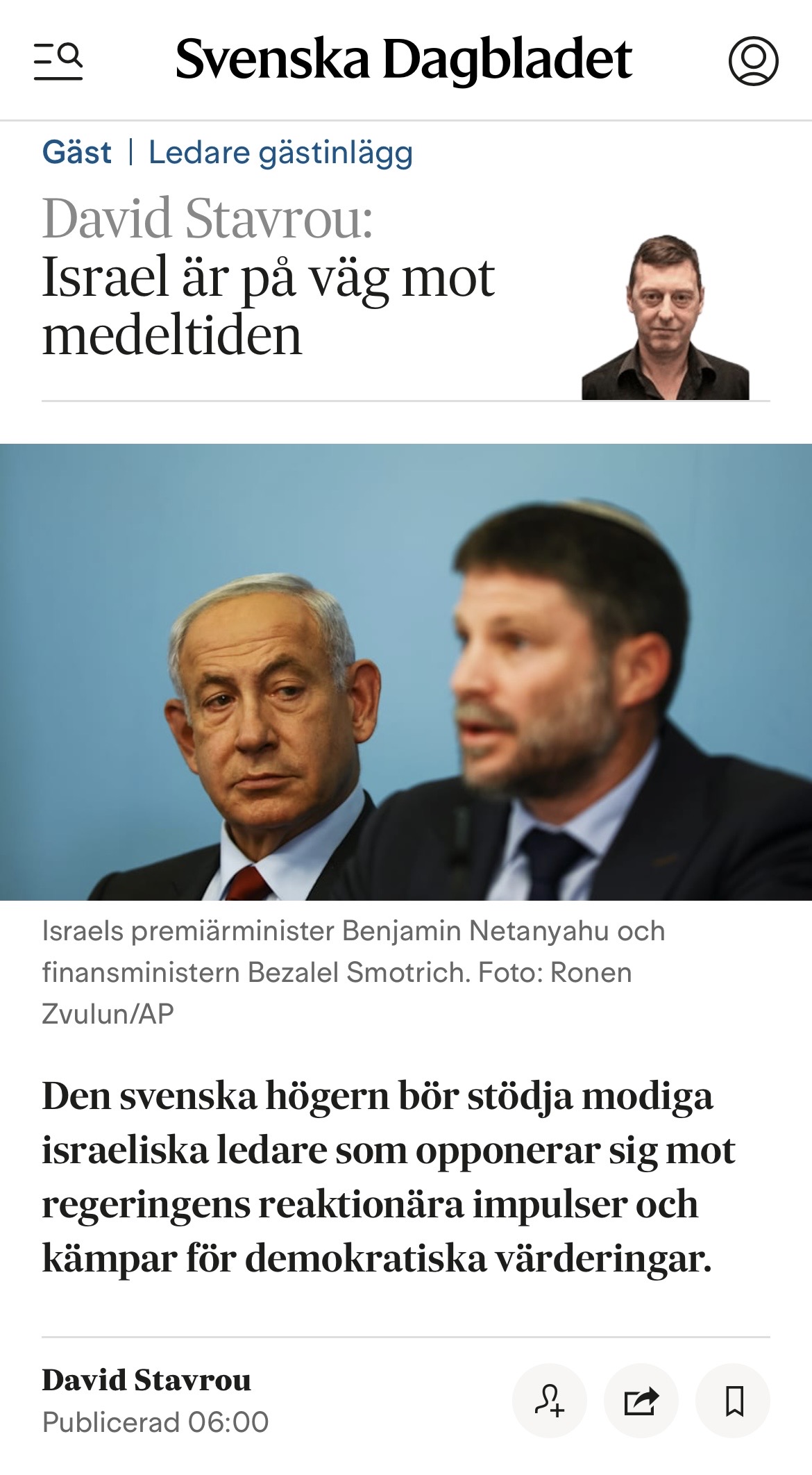
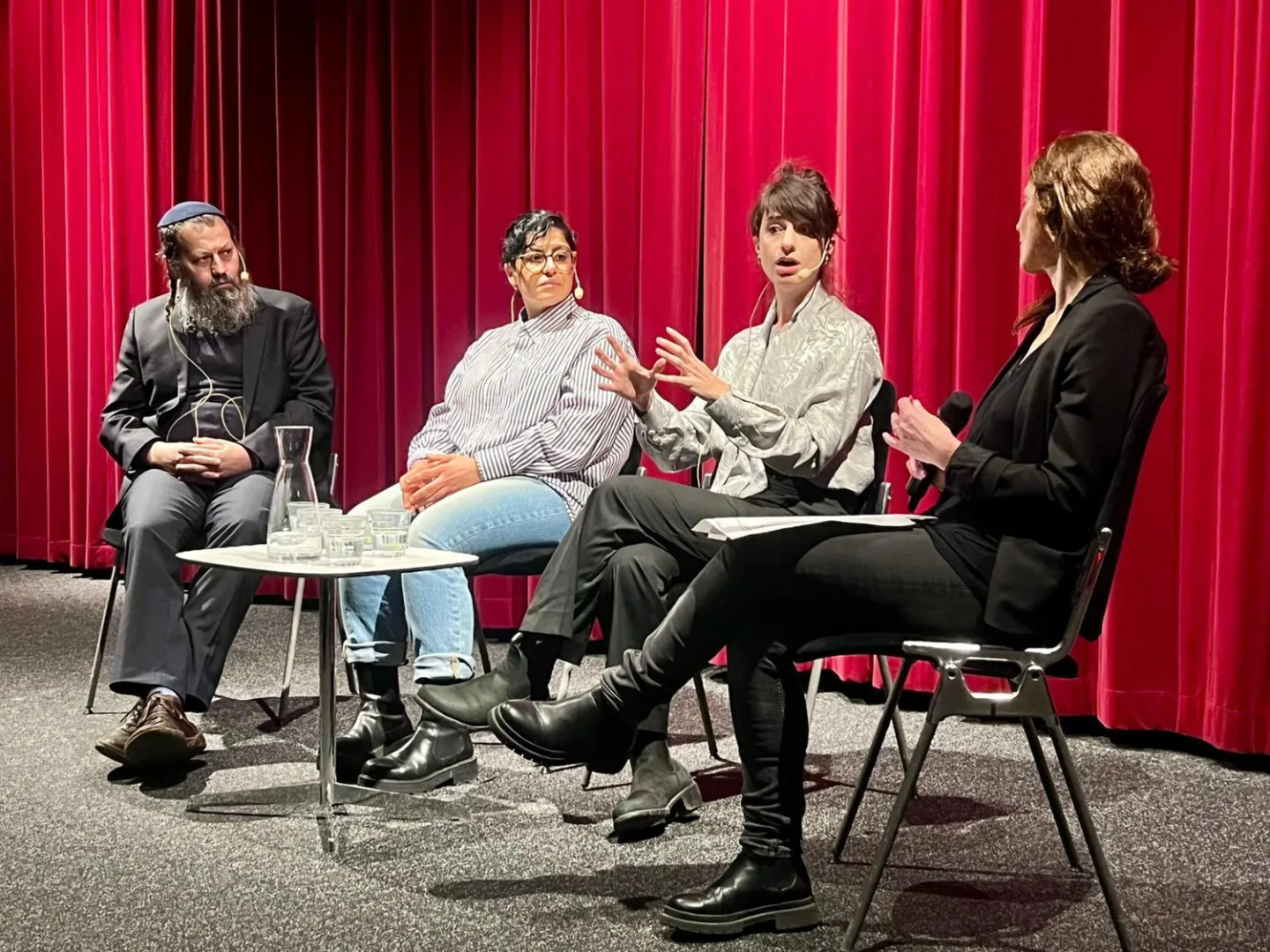
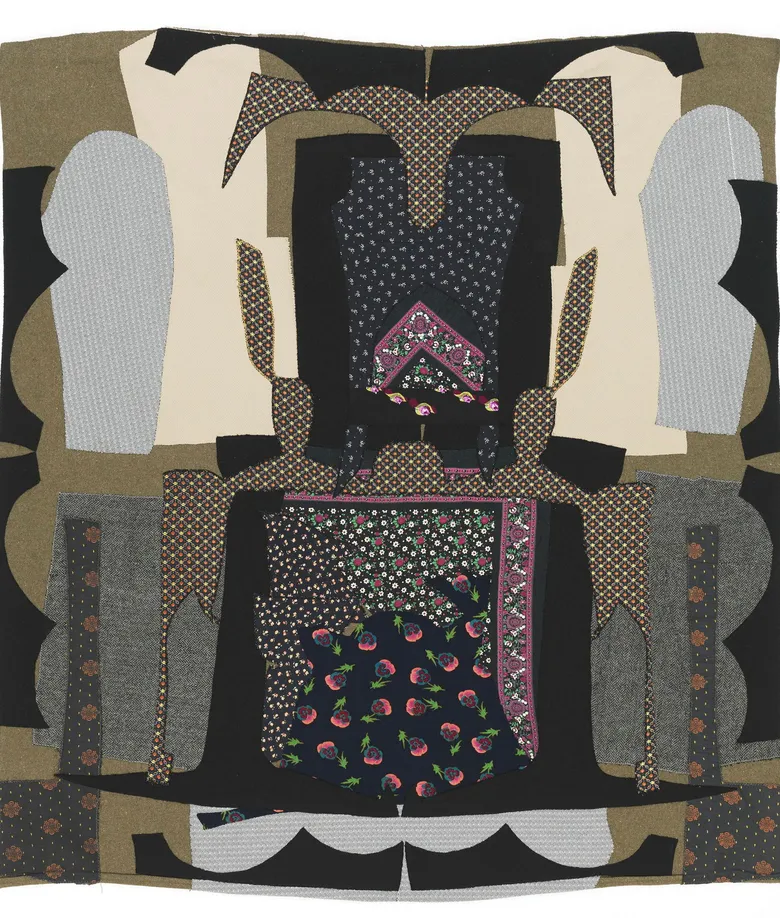
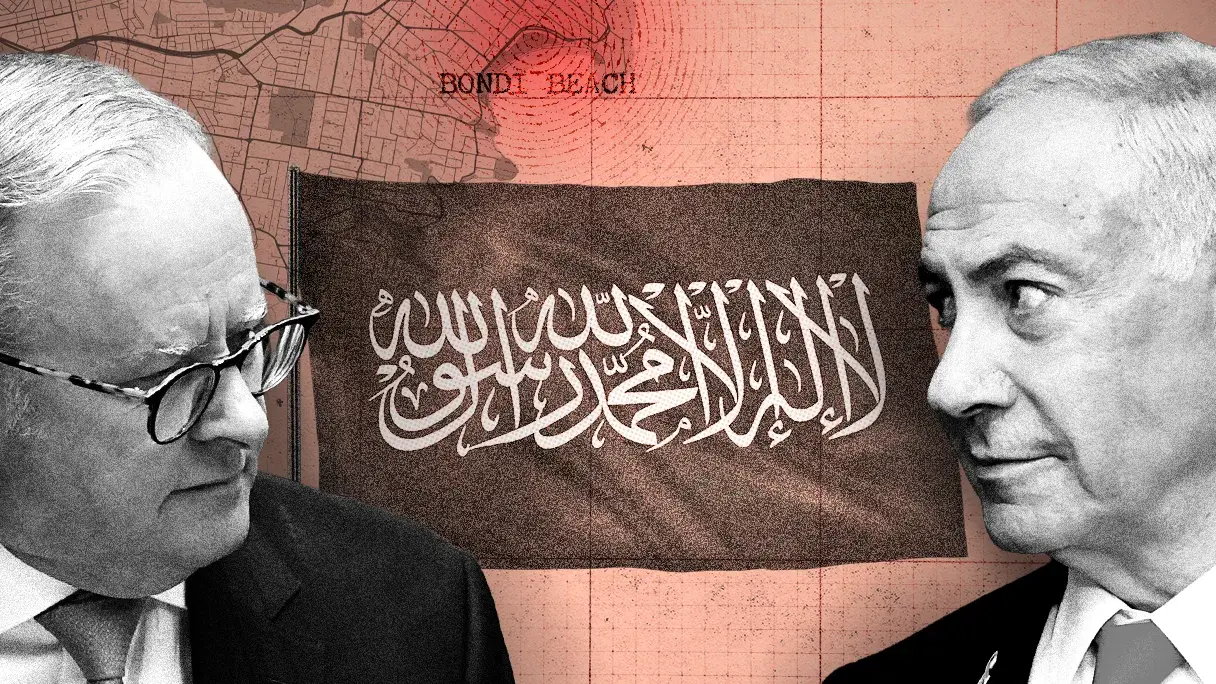


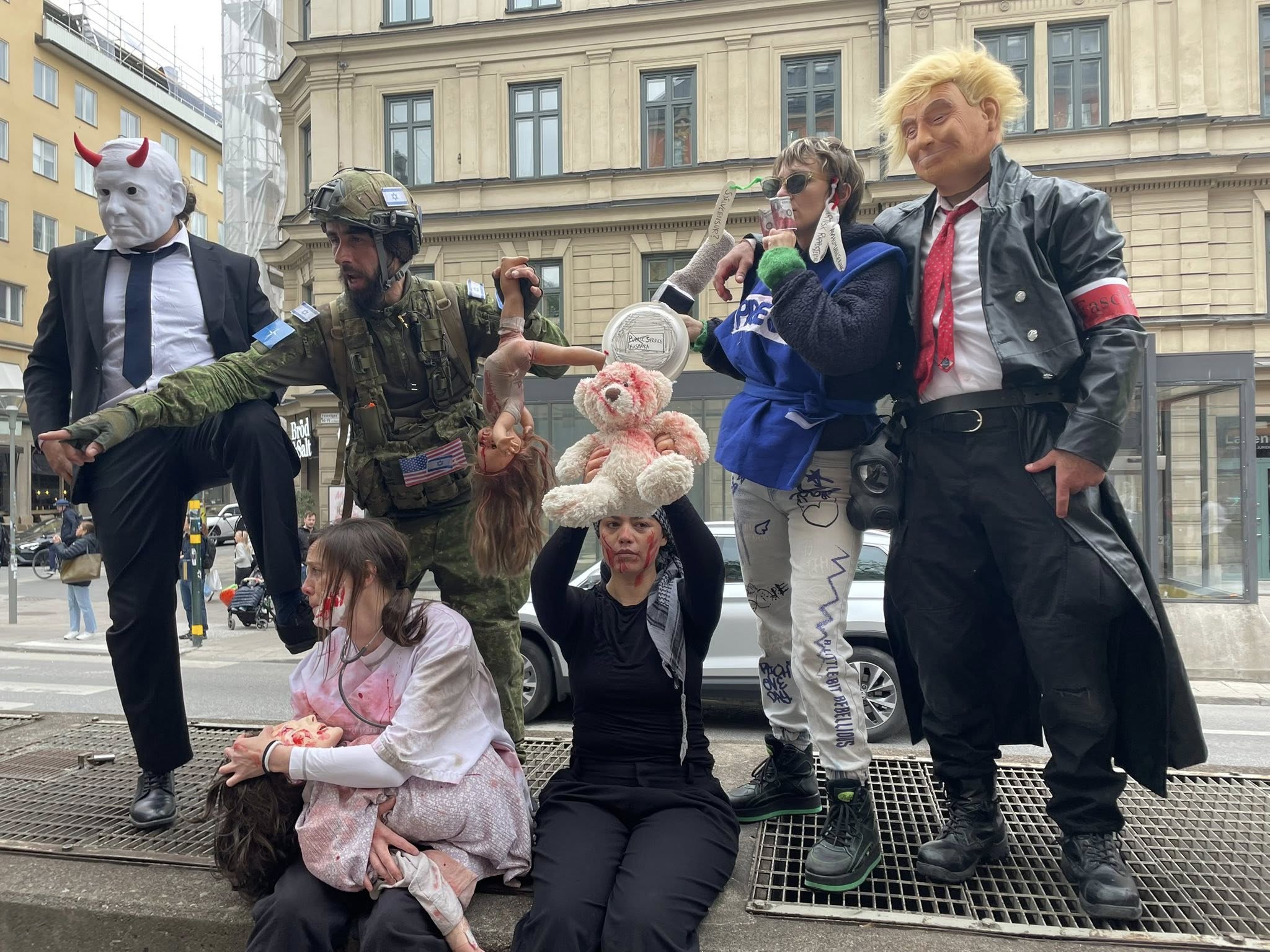

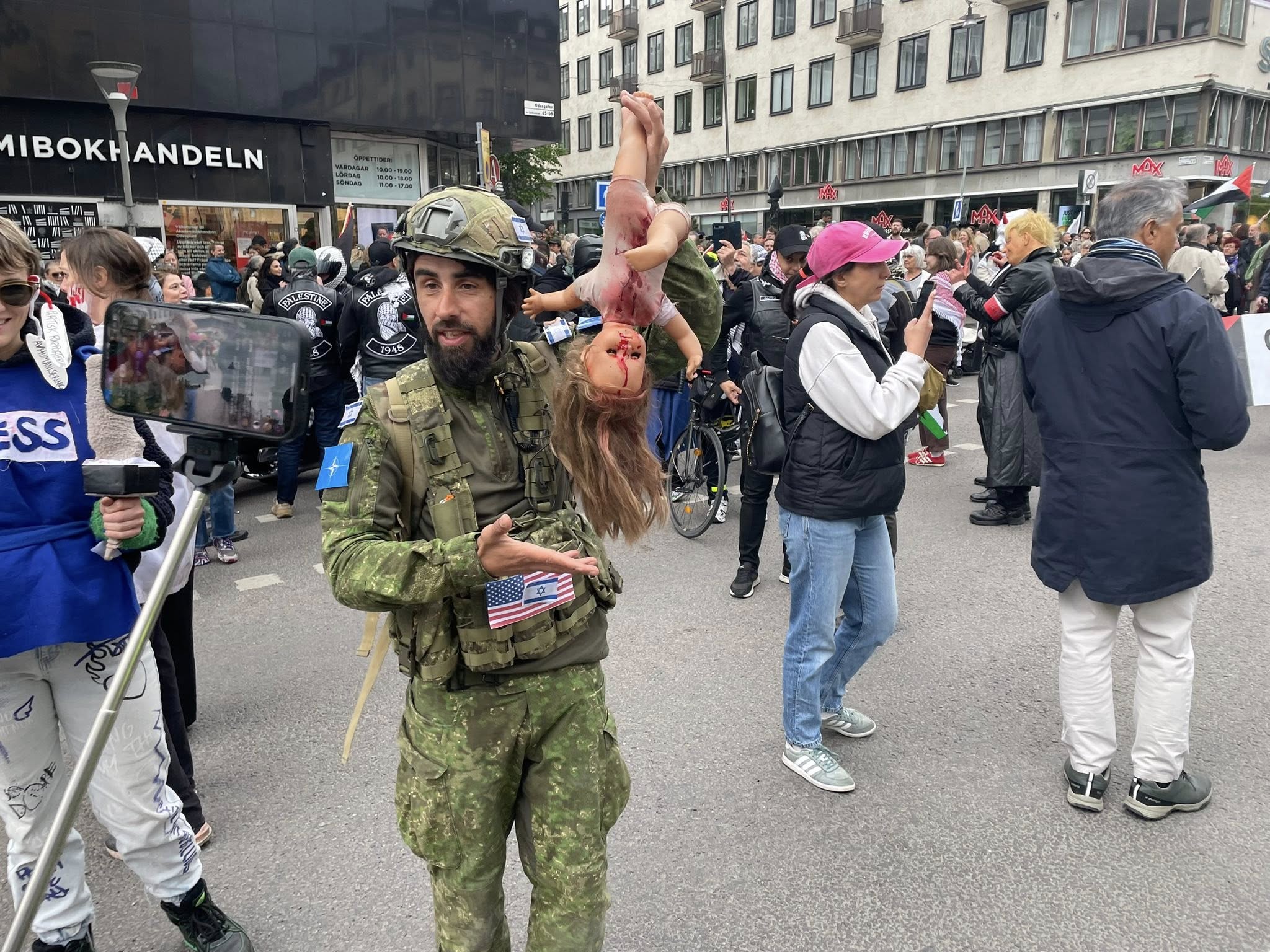

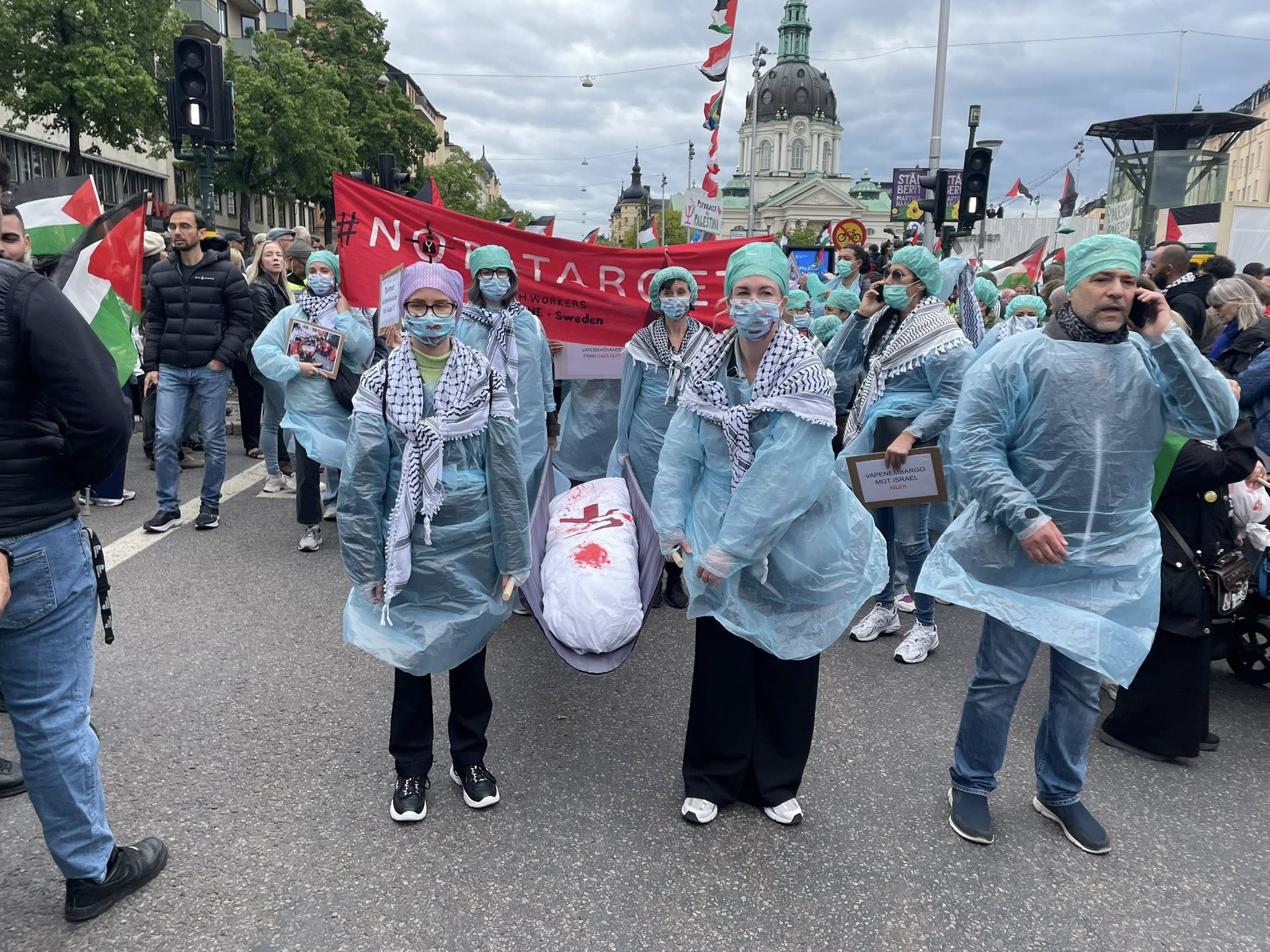
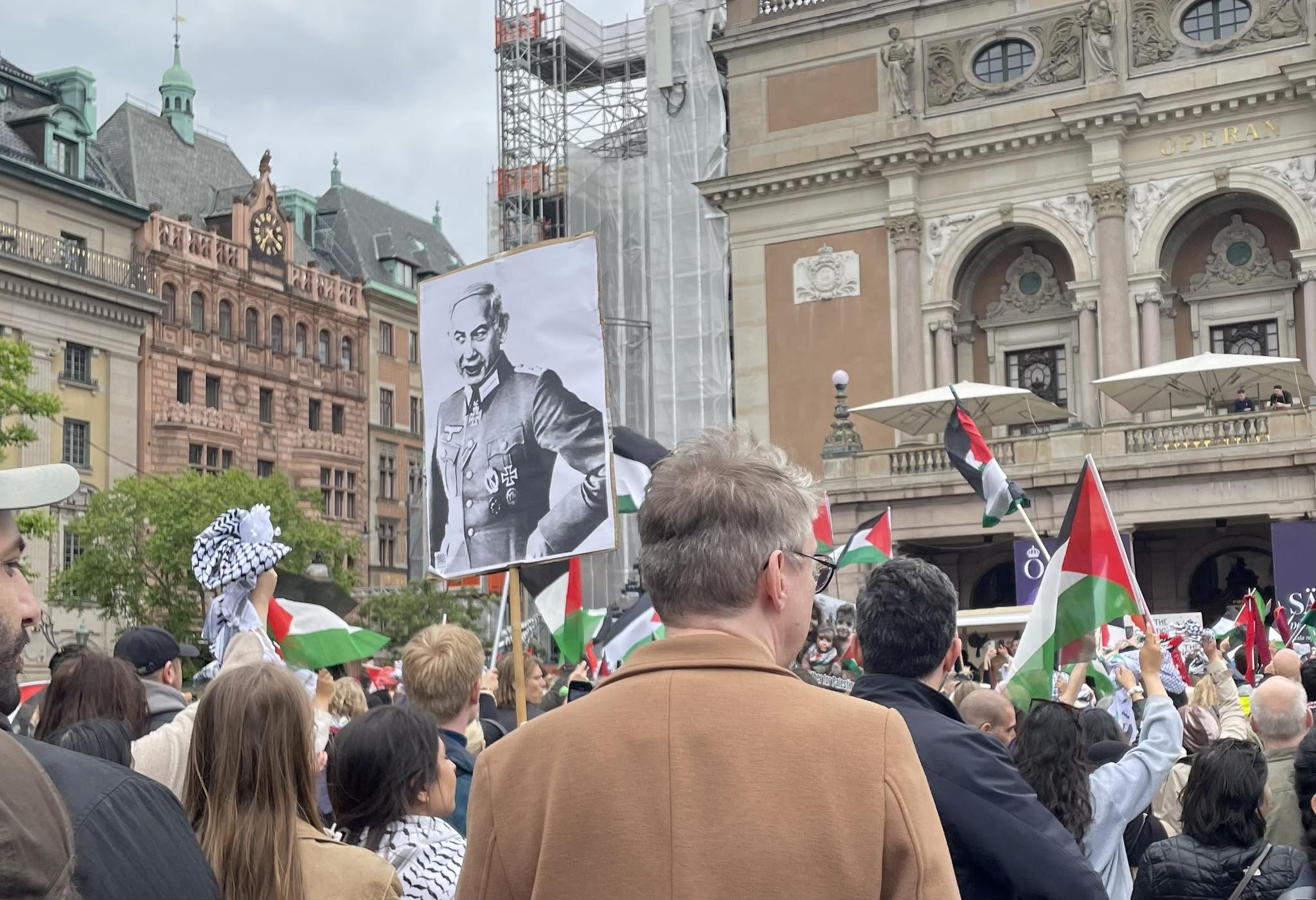
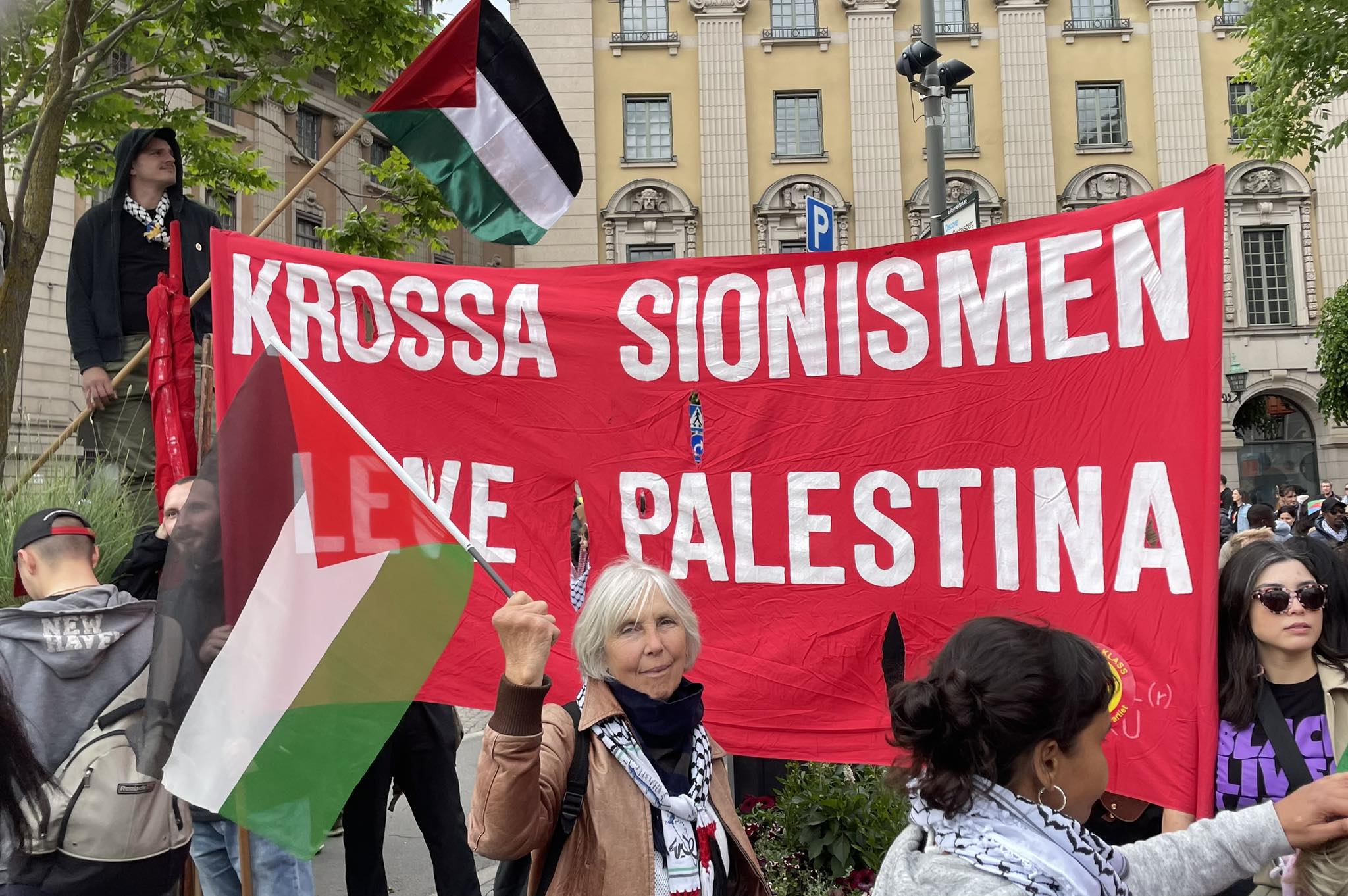
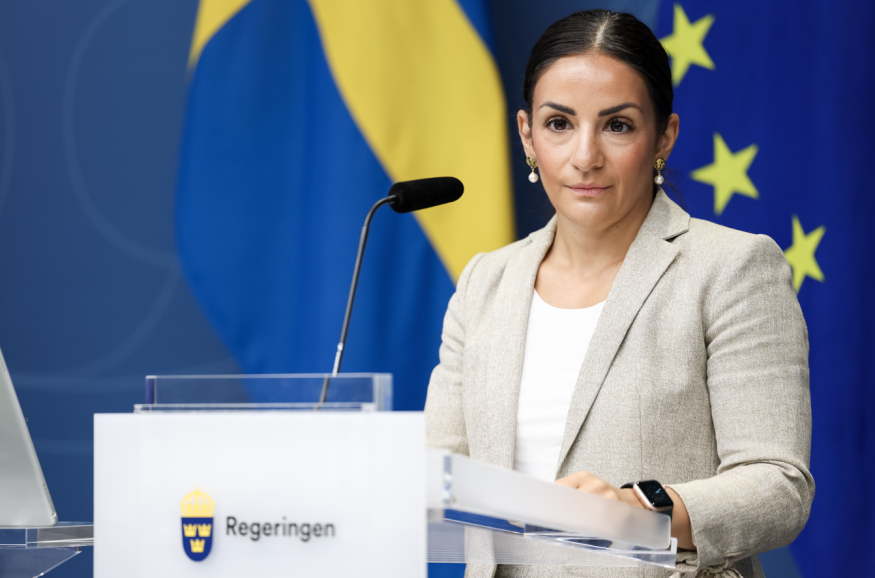
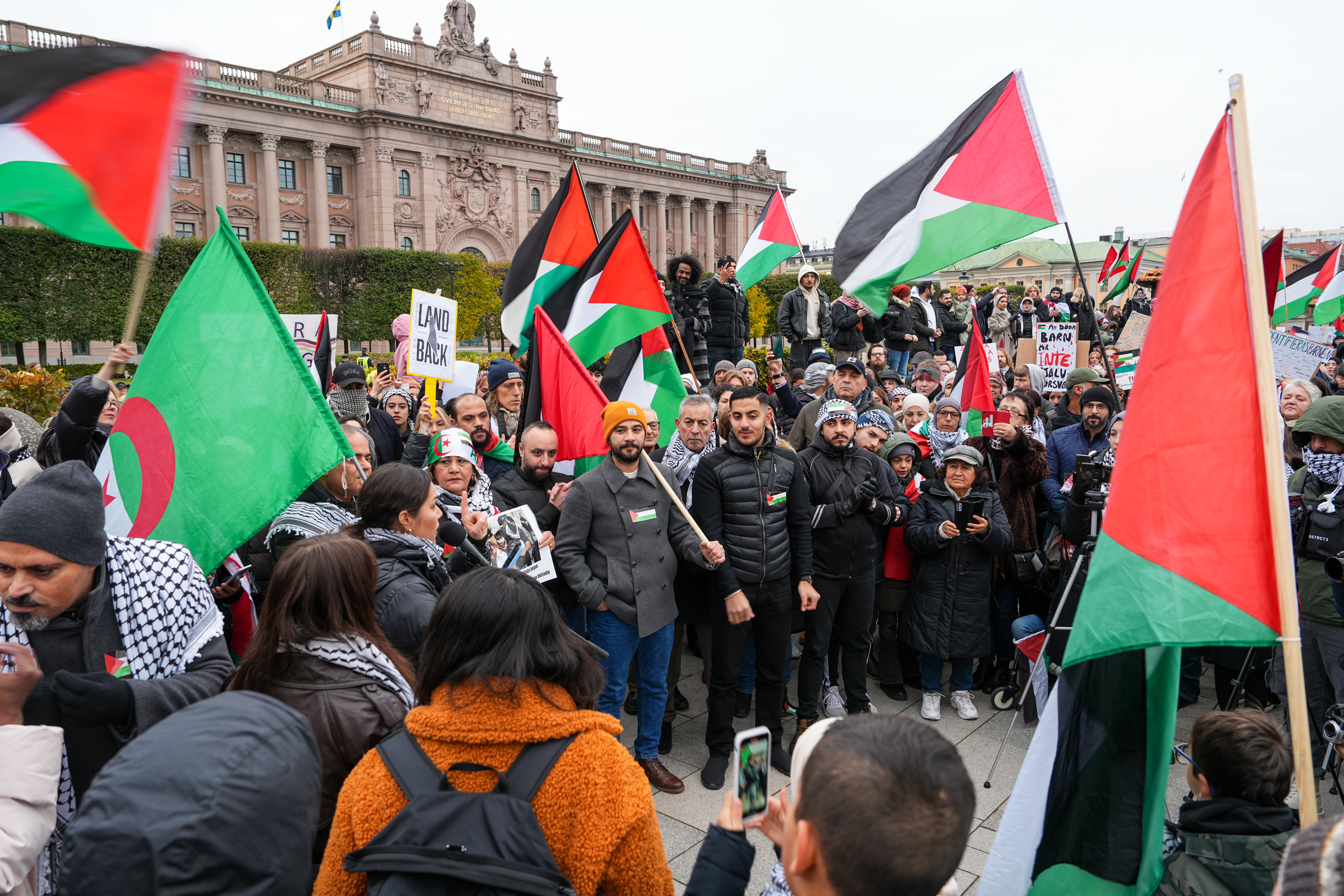
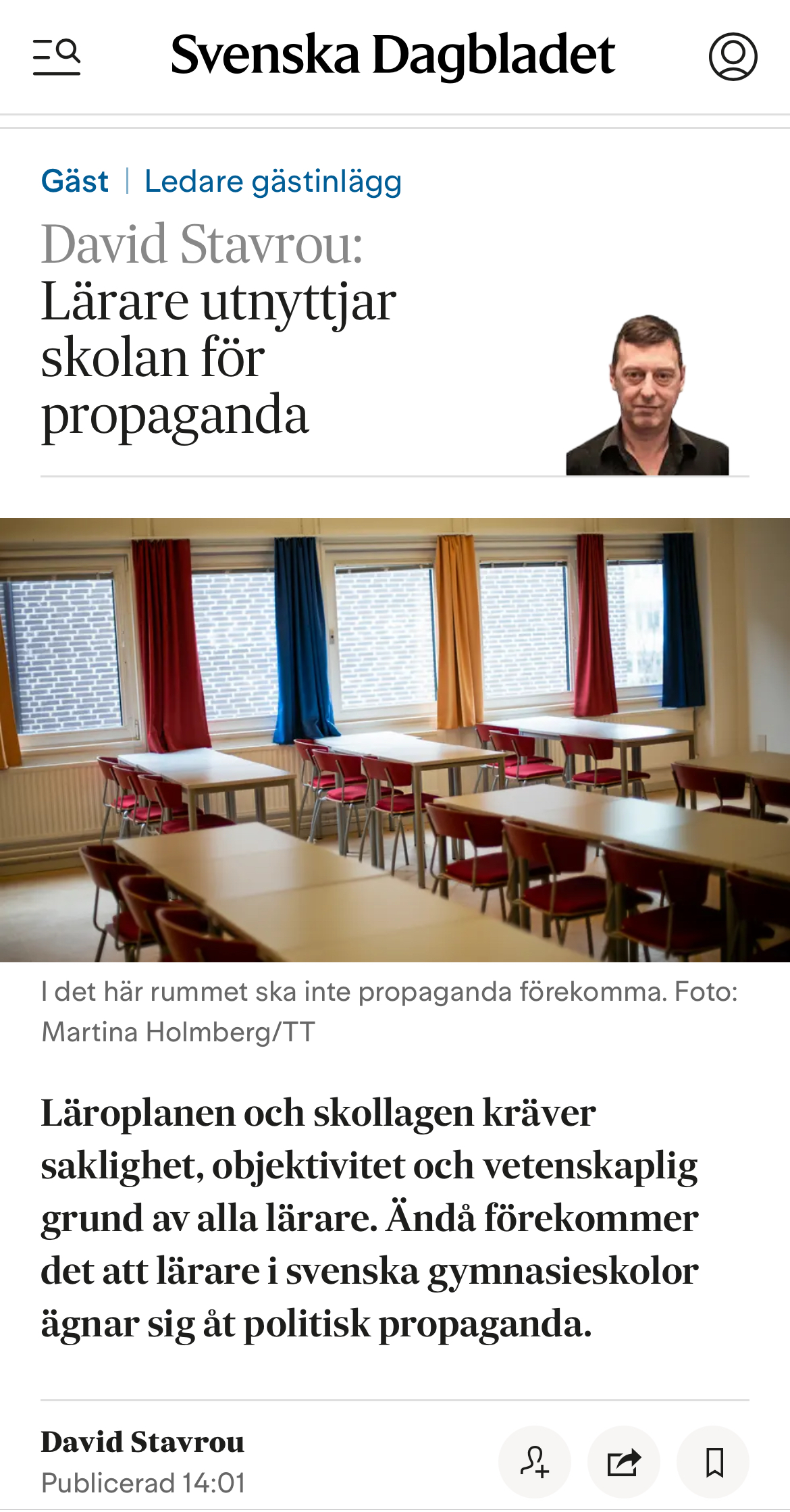
 דיויד סטברו