דו"ח של Safeguard Defenders מביא את סיפוריהם של עשרות אזרחים שאושפזו ללא נימוק רפואי בשל פעילות פוליטית או רק מפני שהגישו עתירה לרשויות לטפל בעוול שנגרם להם. אחת ממחברי הדו"ח: "זה רק קצה הקרחון".
דו"ח של ארגון העוקב אחר הפרת זכויות אדם בסין טוען כי בתי חולים פסיכיאטריים משמשים את המשטר בבייג'ין במאבקו בפעילי זכויות אדם ובמתנגדיו. על פי הדו"ח שפרסם הבוקר (שלישי) הארגון Safeguard Defenders, אזרחים רבים מאושפזים בכפייה ללא כל נימוק רפואי. זאת תוך ניתוקם מהעולם שבחוץ — ובמקרים רבים הכאתם, קשירתם למיטה ומתן "טיפול" תרופתי ואף מכות חשמל.
בדומה לטענות על הרג אסירים לשם קצירת איבריהם, גם במקרים אלה אנשי רפואה משתפים פעולה לכאורה עם רשויות החוק בניגוד לכללי האתיקה הרפואית ובניגוד לטובת המטופלים. כפי שהרשויות בבייג'ין טוענות בשנים האחרונות כי הן הסדירו את תחום הסחר באיברים למטרות השתלה, כך גם בסוגיית האשפוזים נטען כי הנושא הוסדר בחקיקה לפני כעשור. אולם, הדו"ח חושף 144 מקרי אשפוז בכפייה ב–109 בתי חולים ברחבי סין, מסיבות פוליטיות וללא כל צורך רפואי. הדו"ח כולל 99 קורבנות שאושפזו בין השנים 2015 ל-2021, כמה מהם יותר מפעם אחת.
ארגון Safeguard Defenders פועל ב"זירות עוינות" באסיה, כהגדרתו, למען "הגנה על זכויות אדם וקידום שלטון החוק". עיקר עבודתו מוקדשת להפרת זכויות אדם סיניות — הן בתוך המדינה והן בהתערבותם של גורמים סיניים במדינות אחרות, הפוגעת לכאורה בזכויות אדם ומערערת את שלטון החוק בהן. הארגון רשום בספרד וממומן באמצעות מענקים שונים, בעיקר מהאיחוד האירופי.
מנהלת המחקר של הארגון, דינה גרדנר, חיה בעבר בסין ועובדת כיום מטייוואן. לדבריה, "תמונת המצב המתוארת בדו"ח היא רק פיסת מציאות אחת. זה רק קצה הקרחון. אנחנו התבססנו על חומר שקיבלנו מארגון הפועל בתוך סין ועל עדויות מועטות שהתפרסמו בכלי תקשורת שונים". היא ציינה כי במדינה שאוכלוסייתה מונה 1.4 מיליארד תושבים, רוב הקורבנות של פרקטיקת האשפוזים הכפויים לא יודעים כלל כי ביכולתם לפנות לארגוני זכויות אדם.
חלק מהקורבנות, היא טוענת, סיפרו כי פגשו בבתי החולים הפסיכיאטריים קורבנות נוספים שהובאו למוסדות אלה בידי שוטרים. העדויות המופיעות בדו"ח, המתפרסם תחת הכותרת "בתי כלא פסיכיאטריים", קשות מאוד. לדברי גרדנר, "אנשים המאושפזים בכפייה וללא נימוק רפואי ננעלים בחדר יחד עם חולים רבים אחרים שכנראה סובלים באמת ממחלות נפש. הם מקבלים תרופות, לעתים בכדורים ולעתים בהזרקה לווריד. אם הם מתנגדים קושרים אותם למיטה. לעתים הם נקשרים ללילה שלם ושוכבים בתוך הצואה והשתן שלהם".
בכמה מהעדויות מופיע תיאור של מכות או של "טיפול" במכות חשמל בהכרה מלאה. "זו טראומה פיזית ופסיכולוגית קשה", אמרה גרדנר. לדבריה הקורבנות מופרדים ממשפחותיהם, שלא מעודכנות במצבם. מכשירי הטלפון שלהם מוחרמים והם אינם זכאים לביקורים. השחרור מ"אשפוז" אינו מתאפשר ללא אישור של המשטרה או הממשלה בבייג'ין — ולעתים חולפים ימים, שבועות ואף שנים עד שהוא ניתן. "באחד המקרים", המשיכה גרדנר, "הקורבן הוחזק במתקן פסיכיאטרי במשך 15 שנה". לפי הדו"ח, כמעט שליש מהקורבנות נשלחו לאשפוז בכפייה פעמיים או יותר. שניים מהם אושפזו לפחות חמש פעמים בעבר, ו-15 טרם שוחררו.
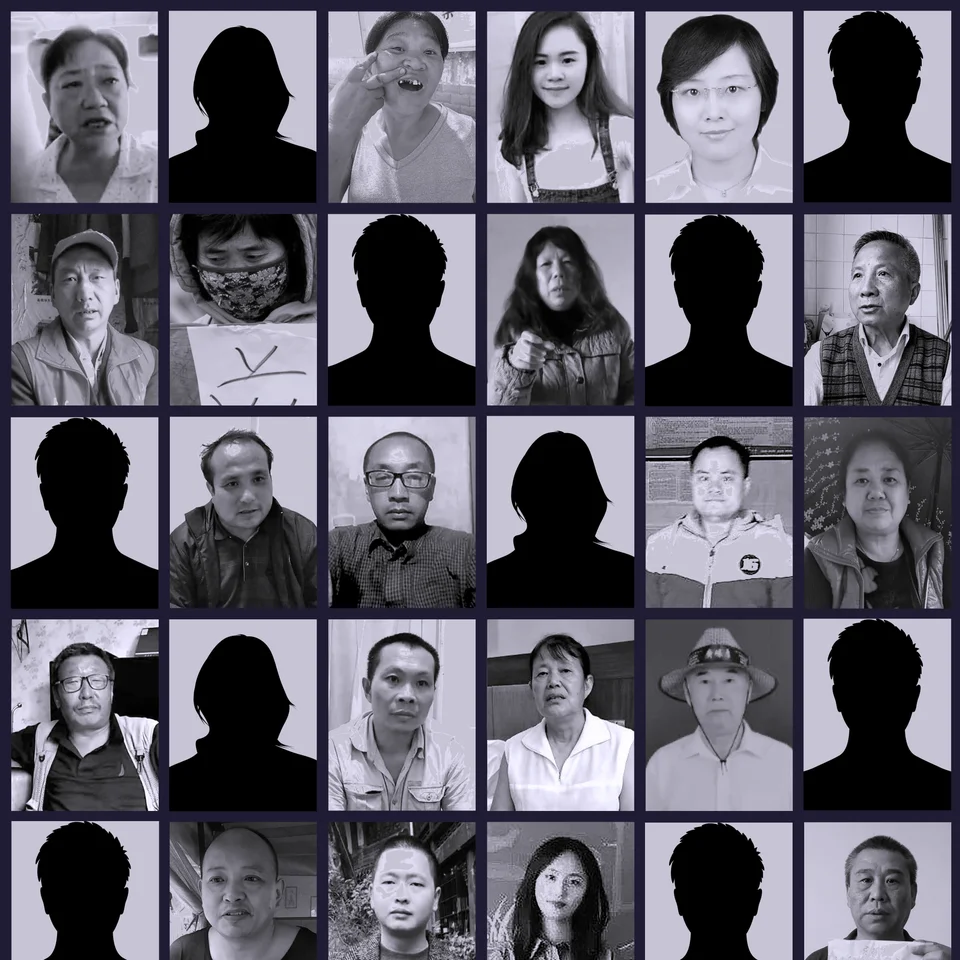
קורבנות מערכת אנקאנג, מתוך הדו"ח שפורסם. "במשטרו של שי ג'ינפינג נעשה מסוכן יותר ויותר לאנשים לדבר" צילום: ארגון Safeguard Defenders
לצורך כתיבתו נעזרו מחברי הדו"ח, בין היתר, בארגון הסיני Civil Rights and Livelihood Watch (CRLW), העוקב אחר הפרות זכויות אדם של אזרחים בני המעמדות הנמוכים במדינה. לדברי מואו ינסי, תחקירנית הארגון החיה בבריטניה, "יש לנו בארגון עיתונאים-אזרחים אמיצים שנמצאים בקשר עם קורבנות האשפוז בכפייה. הם קיבלו מהם את המידע באופן ישיר, ראיינו אותם ולעתים צילמו אותם בווידאו". בשיחה עם "הארץ" הוסיפה מואו כי הדו"ח מבוסס, בין היתר, על ראיונות אלה ועל מידע רב שנאסף מהשטח בשנים האחרונות. העדויות פורסמו מבלי לחשוף את זהותם של המראיינים, מחשש לביטחונם. "האנשים האלה נמצאים תחת מעקב הרשויות", הסבירה מואו. "הם מוטרדים על ידי המשטרה, ונאלצים במקרים רבים לעזוב את בייג'ין ולהתחבא. חלקם גם נעצרו".
אחד המקרים המתוארים בדו"ח הוא של הפעיל הפוליטי לו צ'יאן-רונג, שאושפז במחלקה הפסיכיאטרית של בית חולים במחוז ג'יאנגסו ב-2018 למשך תשעה שבועות. לו העיד כי רופאיו הודו בפניו שהמשטרה הורתה על אשפוזו — על אף שבדיקות שנערכו לו קבעו כי הוא לא סובל ממחלת נפש. מקרה אחר הוא של חה פאנג-וו, תושב מחוז חונאן, שאושפז בכפייה כמה פעמים בעבר. באחד המוסדות שאליהם הובא אובחן חה כסובל מפסיכוזה פרנואידית ולדבריו אחד הרופאים אמר לו: "קל להיכנס לכאן, אבל קשה לצאת. המנהיגים הורו לנו להשאיר אותך כאן ותפקידנו הוא להשגיח עליך 24 שעות ביממה".
צ'ן ביסיאנג, תושבת חונאן בשנות השמונים לחייה, נעצרה בידי המשטרה ב–2017 אך בשל גילה המבוגר והעובדה כי הוכתה בידי השוטרים ונחבלה, היא הופנתה לבית חולים צבאי ואושפזה למשך ארבעה חודשים במחלקה הפסיכיאטרית. מקרה אחר המוזכר בדו"ח הוא של דונג יאוצ'יונג — שב-2018 תיעדה את עצמה משליכה דיו על תמונתו של הנשיא שי, ומוכרת בכינוי "נערת הדיו". דונג נכלאה במוסד פסיכיאטרי שם הוכתה, נקשרה למיטה ונאלצה לקחת תרופות שלא נזקקה להן. היא אושפזה פעמיים, ובני משפחתה סיפרו כי קודם לכן היתה בריאה — אך לאחר שחרורה, כשהיא כבת 30 בלבד, סבלה מתופעות חמורות כמו דמנציה וחוסר שליטה על הסוגרים וכן מסיוטי לילה.
לא כל המאושפזים הם מתנגדים פוליטיים. בכמה מקרים הובאו לאשפוז בכפייה מי שתבעו פיצוי כספי מהרשויות בשל פציעה בעת שירותם הצבאי, דרשו מהמשטרה לחקור פריצה לביתם או תמכו בפומבי במורה שנענשה כי עודדה את תלמידיה להטיל ספק בנרטיבים ההיסטוריים הרשמיים של השלטון. 99 הקורבנות המוזכרים בדו"ח מגיעים מ-21 מחוזות ברחבי סין, אך הוא אינו עוסק בנעשה במחוזות שבהם מצב זכויות האדם עשוי להיות חמור יותר, שינג'יאנג וטיבט. גיל הקורבנות משתנה, חלקם צעירים ואחרים מבוגרים. 51 מהם גברים ו-48 נשים; 14 מהם פעילים פוליטיים ו-80 זכו להגדרה "עותרים" (petitioners). לדברי גרדנר, מדובר במי שפועלים תחת שיטת "המכתבים והביקורים" הוותיקה בסין.
"אזרח שמבקש להתלונן או להפנות לרשויות בקשה הנוגעת לעוול שנגרם לו יכול לעתור בנושא לרשויות באזור מגוריו", הסבירה מנהלת המחקר את השיטה. לדברי גרדנר, "אזרחים רבים מאמינים במערכת וחושבים שהיא תפתור את העניין בדרך צודקת, אבל זה לא עובד. חיי העותרים הם קשים, ההליכים נמשכים שנים וחלקם גם הופכים לקורבנות של השיטה המאשפזת אותם בכפייה". להגדרתם של מתנגדי משטר כמי שסובלים ממחלת נפש, ולאשפוזם בכפייה במוסדות פסיכיאטריים, יש היסטוריה בת עשרות שנים בסין וזו מוכרת גם מדיקטטורות אחרות דוגמת ברית המועצות. לפי הדו"ח, בשנות ה-80 הוקמה בסין רשת של 30 מוסדות פסיכיאטריים בשם אנקאנג (מונח שמשמעותו "שלום ובריאות"). מוסדות אלה היו מיועדים לאזרחים "בלתי שפויים מבחינה פלילית", ונוהלה בידי המשרד לביטחון הציבור. אולם מי שסומנו כמתנגדי משטר מאושפזים גם במוסדות פסיכיאטריים אחרים, בהם מרכזים רגילים לבריאות הנפש המטפלים באוכלוסייה הכללית ומנוהלים בידי משרד הבריאות הסיני. לדברי גרדנר, בין 2002 ל-2012 התקיים דיון ציבורי בסוגיה, בסין ומחוץ לה.
ב-2012 חוקקה סין את "חוק בריאות הנפש" שנועד להסדיר את זכויות המטופלים. כך נוצרו קריטריונים לאשפוז, בתי חולים קיבלו אחריות לזכויות החולים וגובשו נהלים מחמירים יותר, מבחינה רפואית ומשפטית, למקרים של אשפוז בכפייה. אך לטענת גרדנר, המצב בפועל לא השתפר. "עכשיו ברור שזה לא עובד", הוסיפה. "הדו"ח מראה כי עדיין יש מאות או אלפי קורבנות". לדבריה, "קשה לנו לומר אם המצב משתפר או נהיה גרוע יותר מבחינה זו, אבל במשטרו של שי, ישנה עלייה ברדיפה של פעילי זכויות אדם ועיתונאים-אזרחים, והם הרי אלו שיכולים לעצור את זה. לכן כדאי לשקול את האפשרות שהשיטות האלו קיימות באותו היקף שהן היו בעבר. זאת, בסופו של דבר דרך זולה, יעילה וקלה לשמר את היציבות שחשובה כל כך לשלטון".
כך נכתב גם בפרק המסקנות בדו"ח הארגון: "סין תחת שי ג'ינפינג מעולם לא היתה יותר עסוקה ב'שמירה על היציבות' ובהטרדה ומעצר של אנשים שהמפלגה הקומוניסטית מחליטה כי הם מסכנים את כוחה". מחברי הדו"ח מוסיפים כי הדבר בא לידי ביטוי בתקציב הרב המיועד למטרות של טיפול באי-שקט חברתי. ב–2019 הוקדשו לכך בתקציב המדינה כ–1.39 טריליון יואן (כ–217 מיליארד דולרים) — סכום הגבוה בכ–17% מתקציב הצבא הסיני. "בסין פועלות מערכות רבות למעצר שרירותי ולכפיית היעלמויות, המשמשות לתחזוקת היציבות — ממערכת המעקב אחרי מגורים, דרך 'בתי כלא שחורים בלתי חוקיים' ועד מעצרים כפויים בשם בדוי ואף מעצרי בית", נכתב בדו"ח. "אבל אחת השיטות המפחידות והסטיגמטיות ביותר היא מערכת 'אנקאנג', שבה קורבנות לכודים בתוך סיוט, ללא גזר דין של בית המשפט, ללא הליך שיפוטי וללא מושג מתי הסיוט יסתיים".
"הארץ" פנה לשגרירות סין בישראל, עדיין לא התקבלה תגובתה.
בסוף שנות ה-80 העמידה איראן אלפי אזרחים מול כיתות יורים, במסגרת גל טיהורים אכזרי. 30 שנה אחר כך, אחד האדריכלים של מסע ההרג הזה עשה את טעות חייו: הוא המריא לביקור פרטי בשוודיה, נעצר בשדה התעופה, ואז הבין – ניצולים איראנים טמנו לו פח. כעת הם ניצבים מולו בבית המשפט, נחושים לעשות צדק היסטורי.
מנוצ'ר אשחגי לא ממש הבין מדוע הוציאו אותו מהשורה באותו היום. כמו יתר האסירים לצדו הוא יצא בעיניים מכוסות מאולם בית המשפט אווין בטהרן, לאחר הליך משפטי שנמשך דקות ספורות בלבד. כמו כולם הוא עלה על האוטובוס, אבל כשירדו ממנו בתום הנסיעה נאמר לו להמתין בצד. מתחת לכיסוי העיניים הוא יכול היה לראות את שאר האנשים. הם צורפו לאסירים מאוטובוסים נוספים שהגיעו למקום וחולקו לקבוצות של ארבעה. אלה היו הרגעים האחרונים שלהם, ואשחגי, הניצול היחיד, לא יכול לשכוח אותם.
הם עמדו בגבם לכיתת היורים, גזר הדין הוכרז בקצרה, וכמה מהם צעקו מילים אחרונות. ואז נשמעו היריות.
"אף אחד לא התחנן או הפגין חולשה", אומר אשחגי כעבור יותר מ–40 שנה, בראיון בבית קפה בסטוקהולם הסמוך לביתו. "חלקם צעקו — יחי החופש, אחרים — מוות לחומייני. אחרי סבב יריות ראשון, המפקד בדק את הגופות וירה בהן שוב בראש. פשוט ישבתי שם ובכיתי". ככל הנראה, אשחגי ניצל מההוצאה להורג משום שעדיין לא הגיע לבגרות. הוא בדיוק עמד לחגוג את יום הולדתו ה–14.
היום, בגיל 55, אשחגי זוכר את ההפגנה שהביאה למעצרו ב–1981. לדבריו, הוא בא להפגנה כדי לתמוך בדודו שהיה מתומכי מוג'אהדין ח'לק, תנועת סטודנטים ששילבה באותם ימים בין גרסה מודרנית של האיסלאם, השפעות מרקסיסטיות והתנגדות למנהיגות הדתית של אייתוללה חומייני. הוא נידון לעשר שנות מאסר, תחילה בבית הכלא אווין ולאחר מכן בגוהרדש, שם ראה רבים מחבריו לכלא מוצאים להורג. 34 שנים חלפו, אבל אשחגי לא שכח את חבריו לתא שנרצחו או את האנשים שהיו אחראים לרציחות. אחד מהם, סגנו של עוזר התובע, היה חמיד נורי. בעקבות השתלשלות אירועים בלתי־צפויה, עומד כעת נורי למשפט על מעשי הרצח הללו בבית המשפט בסטוקהולם. לטענת התובעים, בתוך שבועות אחדים בלבד אספו נורי ועמיתיו אלפי אסירים פוליטיים, העמידו אותם למשפטים מבוימים וגזרו עליהם גזרי דין מוות מהירים.
תמונות הקורבנות מוצגות בהפגנה מחוץ לכותלי בית המשפט בסטוקהולם. איראן מאיימת כעת להוציא להורג רופא שוודי. צילום: דיויד סטברו
סוף־סוף זכה מנוצ'ר אשחגי, שהתבקש להעיד במשפט, לעמוד מול אחד ממעניו. "אני בטוח במאה אחוז שזה הוא", הוא אומר, "וגם הוא יודע בדיוק מי אני. אני ושני אחיי, שגם הם נכלאו איתי בכלא, היינו מטרות עבורו. כשראיתי אותו לראשונה בבית המשפט, נבהלתי. אבל אחר כך נרגעתי. כשהעדתי הרגשתי טוב. סוף־סוף הוא נאלץ לענות על שאלות ולשאת באחריות". נורי, בן 61, מואשם ברצח ובפשעי מלחמה. פסק הדין יפורסם ב–14 ביולי, ואם הוא יורשע בשני האישומים הוא עשוי לבלות את שארית חייו בכלא השוודי.
המשפט נדד עד אלבניה
המשפט בבית המשפט המחוזי בסטוקהולם החל באוגוסט 2021, כמעט שנתיים לאחר שנורי נעצר בנמל התעופה הבינלאומי של סטוקהולם. בית המשפט השוודי והתובעים השקיעו עבודה ומשאבים רבים במשפט המיוחד הזה המבוסס על עקרון השיפוט האוניברסלי. עיקרון זה מאפשר העמדה לדין בגין פשעים שהם איום על האנושות כולה בבתי משפט מקומיים ללא קשר למקום שבו בוצעו הפשעים. המשפט אף עבר לאלבניה למשך כמה שבועות בנובמבר כדי לשמוע עדים שעדיין תומכים במוג'אהדין וחיים שם. אבל לא עבודתן הבלתי־נלאית של הרשויות בשוודיה היא שהביאה לשם את נורי מלכתחילה. היתה זו נחישותו של אדם אחד — תומך מוג'אהדין איראני לשעבר ושמו אירג' מסדאגי, שניצל גם הוא מהטבח ב–1988.
אירג' מסדאגי
מסדאגי מתגורר כבר שנים בשוודיה. הוא אמנם ניצל מהטבח ב–1988, אבל היה כלוא שנים בכלא האיראני וספג שם אלימות ועינויים. ב–2019 נודע לו כי אחד ממעניו, חמיד נורי, מגיע לסטוקהולם לביקור פרטי. התברר שאחת מבנותיו החורגות של נורי היתה נשואה לשוודי ונקלעה לסכסוך משמורת על בנה בן השנתיים.
כשמסדאגי שמע על כך הוא רקם מזימה משפטית בינלאומית מורכבת. "בעזרת אחד ממכריו השוודים של נורי שסייעו לי בסתר, השגתי לנורי כרטיסים לשיט והזמנתי לו מלונות כדי לפתות אותו להתחיל את הטיול בסטוקהולם, לפגוש כאן את המשפחה ואז לצאת לחופשה", הוא אומר בראיון מחוץ לאולם בית המשפט. "לאחר שאירגנתי את הסידורים האלה נסעתי ללונדון ונפגשתי עם עורכי דין ויועצים משפטיים בריטים כדי להתחיל בבניית התיק. בהמשך הם יצרו קשר עם עורך דין שוודי שיצר קשר עם התובע השוודי. לאחר מכן נסעתי לארה"ב כי רציתי לוודא שאיש אינו חושד בדבר".
התוכנית עבדה. נורי נעצר עם הגעתו לסטוקהולם, כתבי האישום הוגשו, וכשהמשפט התחיל לבסוף היה זה אך טבעי שמסדאגי יהיה העד הראשון. הוא סיפר לבית המשפט כיצד נלקח מתאו בגוהרדשט והועמד בעיניים מכוסות בשורה עם אסירים אחרים בהמתנה למשפט מהיר. היה לו ברור שהתשובות שייתן עלולות לשלוח אותו ישירות אל כיתת היורים שהמתינה בצדו השני של מה שיכונה "מסדרון המוות". מסדאגי היה מוכן אפוא להבטיח שלא יעסוק בפעילות פוליטית לאחר שחרורו. בימים שלאחר מכן פגש שוב את הוועדה, חתם על הצהרות שונות בכתב, הוטרד ועונה על ידי סוהרים וראה רבים מחבריו האסירים נלקחים להוצאה להורג בשעה שגורלו שלו מתנדנד בין חיים למוות.
קשה היה להתעלם מהתנהגותו של נורי במהלך המשפט — הוא החליף מבטים נוקבים עם העדים ועם מעט האנשים שבקהל. מדי פעם מילמל כמה מילים או חיווה את דעתו בתנועות גוף. הוא עקב אחר כל מילה, קרא את החומר שהוצג לבית המשפט והחליף הערות עם השופט, עורכי הדין והשוטרים. בימים שבהם סיפר את גרסתו נדמה היה לעתים שהוא נושא נאום גדוש שבחים עצמיים, תיאוריות פוליטיות ומחוות תיאטרליות. הוא טען שאינו אדם אלים, שמעולם לא פגע באיש ושכולם אוהבים אותו. הוא גם שיבח את המשטר האיראני שנאלץ להתמודד עם "השקרים הנוראיים" שבהם הוא מואשם, והשמיע האשמות קשות נגד תנועת המוג'אהדין, שאותה סירב להזכיר בשמה והתייחס אליה כאל "הקבוצה הקטנה שרצחה אלפי איראנים באופן שגורם לדאעש להיראות כמו ילדים תמימים". נדמה היה שנורי בטוח שהוא חוזר הביתה בקרוב, ומנסה שלא להיתפס כאדם שהפנה עורף לאידיאלים ולחבריו הישנים.
לעתים נראה היה שלעדותו של נורי היה קשר קלוש ביותר להגנה משפטית קוהרנטית או לעצת עורכי הדין השוודים שלו. הוא טען כי אף על פי שהשתמש בכינוי חמיד עבאסי ועבד בכלא אווין, הוא לא היה חמיד עבאסי היחיד שם וכלל לא הועסק בגוהרדשט. עוד טען כי מכיוון שאשתו ילדה הוא היה בחופשה בתאריכים שבהם התבצעו ההוצאות להורג לכאורה, אך לטענתו לא היו הוצאות להורג המוניות כלל.
אינקוויזיציית המחשבות
לאחר שחרורו ובריחתו מאיראן ב–1994 כתב מסדאגי בהרחבה על האירועים שקדמו לקיץ 1988. לטענתו, בתוך האליטה הפוליטית האיראנית התחולל מאבק כוחות לקראת תום מלחמת איראן־עיראק. בריאותו של חומייני הידרדרה ושאלת האסירים הפוליטיים פילגה את יורשיו המשוערים. חוסיין עלי מונתזרי, היורש המיועד, התנגד לטבח, בעוד בכירים אחרים כמו האשמי רפסנג'אני ועלי חמינאי תמכו בו ללא סייג. מסדאגי חווה את תוצאות הדרמה הגיאו־פוליטית הזאת בתא הצינוק שלו כששמע את הסוהרים מדברים על פתווה שתינתן בקרוב על ידי המנהיג העליון. היה ברור שמשהו קורה. הביקורים בכלא בוטלו, אסירים הועברו בין מחלקות והגישה לעיתונים ולטלוויזיה בוטלה.
הפתווה, שאכן הוצאה ב–28 ביולי, אישרה את הוצאתם להורג של אסירים פוליטיים שעדיין היו נאמנים למוג'אהדין. בהמשך, על פי החשד, הוציא חומייני פתווה שנייה שהיתה מכוונת לאסירים שמאלנים. הוועדה שהגיעה לגוהרדשט ב–30 ביולי כללה את השופט חוסיין עלי נאיירי ואת התובע הכללי של טהרן, מורטזה אשראגי. כשמסדאגי התייצב בפני הוועדה ב–6 באוגוסט הוא זיהה שם גם את חמיד נורי ועוד שני פקידים. האחד היה מוסטפא פורמוחמדי, איש מודיעין שכיהן מאוחר יותר כשר, ואילו השני הוא מי שהפך ברבות הימים לנשיא איראן — איברהים ראיסי.
העובדה שראיסי מילא תפקיד מרכזי בטבח ב–1988 הופכת את משפטו של נורי לחשוב עוד יותר. "המשפט הזה הוא אחד האירועים המשמעותיים ביותר בתקופת שלטון המשטר האיסלאמי", אומר מהדי אסלאני, ניצול נוסף ואחד העדים במשפט. אסלאני הוא סופר שחי כעת בגרמניה ובשנות ה–80 היה חבר בארגון השמאל פדאיאן ח'לק. "עד לאחרונה, מעצרים של פעילי המשטר האיסלאמי היו קשורים בעיקר לפעילותם מחוץ לאיראן. ואילו כעת, לראשונה, מישהו עומד לדין מחוץ לאיראן בשל מעורבות בפשעים נגד אסירים פוליטיים באיראן". אך מבחינתו של אסלאני, זה לא רק עניין פוליטי. הוא מספר שכשהביט בעיניו של נורי במהלך המשפט, נזכר בחברים שנספו בצעירותם והזיל דמעה על קורבנות "אינקוויזיציית המחשבות וטבח האינטלקט" ב–1988.
"הפתווה השנייה של חומייני היא מרושעת ומקוממת עוד יותר מהראשונה שהיתה נגד המוג'אהדין", אומר ארוונד אברהמיאן, היסטוריון של איראן המודרנית שחי בארה"ב. "הפתווה הראשונה ניסתה לגרום לאסירים להתכחש למוג'אהדין ולהלשין על עמיתיהם. הפתווה השנייה לקוחה מימי הביניים. היא יוצאת נגד כופרים, חברי קבוצות השמאל. הם נשאלו שאלות כמו אם הם מתפללים, או אם הם מאמינים שהקוראן הוא דבר אלוהים. על פי החוק האיסלאמי המחמיר ניתן להוציא להורג כופרים. זהו מקרה של חוק מימי הביניים באיראן של המאה ה–20. יש כאן שני סיפורים שונים. הראשון, המלחמה ביריבים פוליטיים, הוא אכזרי אבל מקובל בפוליטיקה של המאה ה–20. השני, הוצאה להורג של אסירים משום שהם לא מאמינים, זה כמו האינקוויזיציה".
אברהמיאן מעריך שמספר חברי המוג'אהדין שהוצאו להורג היה בין 2,500 ל–7,000, בעוד מספר פעילי השמאל שנרצחו היה קטן יותר (כנראה כמה מאות). יהיה המספר האמיתי אשר יהיה, אברהמיאן אומר שהמשטר "רצה לשמור את המידע בסוד ומעולם לא הודה בדבר". אבל הטבח לא נשאר סוד. הפזורה האיראנית מדברת על כך כבר עשרות שנים. ספרים ודיווחים פורסמו על מעשי הרצח, וארגונים בינלאומיים דרשו צדק. רבים מהארגונים האלה נכחו במשפט בסטוקהולם, וניכר היה כי אף שהם מאוחדים נגד המשטר האיראני ונורי כנציגו, לעתים הם מתנגדים בתוקף זה לזה. מתחת לפני השטח יש האשמות רבות ועוינות עמוקה בין תומכי המוג'אהדין, מרקסיסטים לשעבר, פעילי זכויות אדם וקבוצות שונות של הפזורה האיראנית.
ארוונד אברהמיאן. צילום: אמה נולן אברהמיאן
אולם בתוך איראן נראה שהמשטר מאוחד באסטרטגיה חדשה כלפי המערב. "ח'אתמי, רוחאני ורפסנג'אני התעניינו ביחסי חוץ ובתדמית של איראן במערב אירופה", מסכם אברהמיאן. "לראיסי לא אכפת כלל. אני חושב שהם כבר לא מודאגים מהמערב. הם בדלנים, והם סומכים על רוסיה וסין. אשר לדיוני הגרעין בווינה, למשל, הנחת היסוד במערב היא שאיראן רוצה בהסכם, אבל ייתכן שזה לא נכון כעת, כשהקיצונים המושבעים מהימין הם האחראים באיראן".
דוגמה טובה לתגובתה של איראן לאירופה בעת הזאת ניתנה בימים האחרונים של משפט נורי. בצעד שנראה כמו ניסיון להשפיע על בית המשפט בסטוקהולם, טהרן מאיימת כעת להוציא להורג רופא שוודי ממוצא איראני שהואשם בריגול ובשיתוף פעולה עם ישראל. הרפובליקה האיסלאמית, כך נראה, מנסה להחזיר את נורי ובהחלט אינה מקבלת על עצמה כל סוג של אשמה בטבח ב–1988. נורי עצמו ממשיך להכחיש שהטבח אירע אי־פעם, משבח את מנהיגי איראן ומאיים על מתנגדיו. אולי המשפט הזה הוא נורת אזהרה למערב, בבואו לנהל משא ומתן עם איראן.
Hamid Nouri is charged with being involved in over 100 murders and war crimes during the bloody Iranian massacre of July 1988. In a unique legal case, Stockholm District Court may sentence him to life in prison
STOCKHOLM – At the time, Manoochehr Eshaghi didn’t really understand why he was taken out of the line. Leaving Tehran’s Evin Prison courtroom, after a collective legal proceeding lasting only a few minutes, he and the others in his group were blindfolded and ordered to walk toward a bus, each holding the shoulder of the man in front. When the bus dropped them off, Eshaghi was told to wait by a wall. From under the blindfold, he could see the others. Joined by prisoners from other buses arriving on the scene, they were divided into groups of four. These were their last moments, and Eshaghi, the lone survivor, can’t forget them.
They stood with their backs to their executioners. A few words were said to announce the verdict and some of them shouted out last words. Then came the shots. “Nobody begged or showed any weakness,” Eshaghi says some 40 years on, in an interview in a Stockholm café not far from his home. “Some shouted ‘Long live freedom!’ Others shouted ‘Death to Khomeini!’ After a first round of shots, the commander checked the bodies and shot them again in the head. I just sat there and cried.”
The apparent reason Eshaghi was spared was because he had yet to reach puberty. Today, aged 55, he remembers the demonstration that caused his arrest in 1981. He says he was there to support his uncle, who was a supporter of the People’s Mujahedin of Iran (aka Mujahedin-e-Khalq, or MEK), a student movement that in those days combined a modernist version of Islam, Marxist influences and opposition to Ayatollah Ruhollah Khomeini’s Islamic clergy.
Eshaghi was sentenced to 10 years in prison, during which time he saw many of his prison mates executed. Sometimes he and others were made to carry the bodies and load them onto trucks. He says prisoners were raped by guards; many, including himself, were tortured and placed in solitary confinement. When he was transferred to another prison – Gohardasht in Karaj, west of Tehran – things only got worse. Violence there was part of the daily routine. One form of torture Eshaghi remembers is being beaten by the guards and then stuffed into a small unventilated room together with other prisoners until they almost suffocated to death. They called it the “gas chamber.”
Eshaghi was at Gohardasht during the summer of 1988, when thousands of political prisoners were executed by hanging. He remembers many of his cellmates being taken to a committee and asked about their political beliefs. Some agreed to show remorse, condemn the Mujahedin movement and ask for mercy. Others refused, not knowing in those early days that rejecting the terms meant being sent to the gallows.
Thirty-four years have passed but Eshaghi hasn’t forgotten his cellmates who were murdered, or the men in charge of the killings. One of them, a deputy to the assistant prosecutor, was a man he knew as Hamid Abbasi. In an unexpected turn of events, Abbasi, whose real name is Hamid Nouri, is now standing trial for the 1988 Gohardasht and Evin killings not far from the Stockholm café where Eshaghi told me his story.
A protester outside Stockholm District Court during the trial of Hamid Nouri last month. David Stavrou
According to the prosecutors, in the space of just a few weeks, Nouri and his colleagues rounded up thousands of prisoners, gave them staged trials and handed down death sentences. Most of them were People’s Mujahedin of Iran supporters, others were members of left-wing movements. It was all done secretly, hastily and deceitfully. At last, Manoochehr Eshaghi, who was asked to testify at the trial, got to face one of his torturers. “I’m 100 percent sure it’s him,” he says, “and he knows exactly who I am too. Me and my two brothers, who were also imprisoned in Gohardasht, were targets for him. When I first saw him in court, I was frightened. But then I calmed down. When I testified, it felt good. Finally, he had to answer questions and take responsibility.”
Nouri, who is 61, is charged with more than 100 murders and war crimes. The verdict will be announced on July 14 and, if convicted on both charges, he may spend the rest of his life in a Swedish prison.
***
The trial in Stockholm District Court began last August, almost two years after Nouri was dramatically detained at Stockholm’s international airport. According to the prosecution, back in 1988 Nouri was one of those who took the prisoners to the so-called death committee and then to the execution chambers. He was also involved in the torture, the hangings and the secret burial of the victims, they say.
Nouri projected an air of confidence during the trial. He was always well-dressed and looked elegant when his handcuffs were removed and he took his place at the defendant’s table. His behavior during the proceedings was eye-catching: he exchanged intense looks with witnesses and members of the public attending the court sessions. He occasionally mumbled a few words or expressed his opinion using body language. He followed every word (translated into Persian for him from Swedish, and vice versa), read the material presented to the court and exchanged remarks with the judge, lawyers and law enforcement officers.
On the days when he presented his side of the story, it sometimes felt like he was lecturing the court with a mix of self-praise, political theories and theatrics. He claimed he wasn’t a violent man, never hurt anyone and that everybody loves him. He also praised Iran and its regime, which has to face the “terrible lies” it’s accused of and made harsh allegations against the Mujahedin movement, which he refused to call by name – referring to it instead as “the little group” that “murdered thousands of Iranians in a way that makes ISIS look like innocent children.”
It was as if Nouri was certain he’d soon be back home and wanted to avoid being seen as a man who turned his back on his previous ideals and comrades. At times, it seemed as if Nouri’s testimony had very little to do with a coherent legal defense or the advice of his Swedish lawyers. He claimed that although he used the alias Hamid Abbasi and worked at Evin Prison, he was not the only Hamid Abbasi there and he wasn’t employed at Gohardasht at all.
He also claimed that because his wife had just given birth, he was on leave on the dates when the supposed executions took place – but according to him there were no mass executions at all. Even so, the Swedish court, the plaintiff’s lawyers and prosecutors put an enormous amount of work and resources into this unique trial, which is based on the international legal principle of universal jurisdiction. This allows for crimes that are deemed a threat to the whole of humanity to be prosecuted by national courts regardless of where they were committed.
The trial even relocated to Albania for a few weeks in November, in order to hear from witnesses who are still Mujahedin supporters and are based there. But it wasn’t the tireless work of Swedish authorities that first brought Nouri to Sweden on November 9, 2019. Rather, it was the determination of one man: a former Iranian Mujahedin supporter called Iraj Mesdaghi.
***
Mesdaghi is another survivor of the 1988 massacre who lives in Sweden. He was born in Tehran and educated in the United States. Although he is today a harsh critic of the Mujahedin movement, he was a supporter back in 1981 when he started a 10-year prison sentence, during which he was subjected to violence and torture.
In 2019, decades after arriving in Sweden, Mesdaghi received information that one of his torturers – the man he knew as Hamid Abbasi – was traveling to Stockholm for a private visit. It turned out that one of his stepdaughters used to be married to a Swede and was involved in a custody dispute over their 2-year-old child. When Mesdaghi heard of this, he put a complex international legal plot into action.
“With the help of one of Nouri’s Swedish acquaintances, who secretly assisted me, I got Nouri tickets for a cruise and booked hotels for him in order to tempt him to start his trip in Stockholm, meet the family here and then go on vacation,” he recounts in an interview outside the courtroom.
Iraj Mesdaghi
“After making these arrangements, I traveled to London and met with British lawyers and legal advisers to start preparing the case. Later, they contacted a Swedish lawyer, who got in touch with the Swedish prosecutor.” Mesdaghi was initially concerned about the Swedish government being reluctant to get involved. “I know the European system,” he says. “There’s a difference between foreign affairs, intelligence services and the justice system. Everyone does their job. Intelligence services are concerned about keeping the country safe, they don’t care about justice. But I created the scenario and I knew we could get him here.”
The plan worked. Nouri was arrested upon arrival in Stockholm and charges were filed against him. When the trial finally began some 21 months later, it was only natural that Mesdaghi would be the first witness. He told the court about how he was taken from his cell in Gohardasht and stood in line, blindfolded, with other prisoners awaiting trial. When the procedure began, he was not officially warned that the next few minutes could seal his fate. However, he understood that his answers could send him straight to the executioners who were waiting on the other side of what would be known as the “death corridor.”
Mesdaghi was therefore willing to promise that he would not carry out political activities upon his release. In the following days, he met the committee again, signed various written statements, was tortured by prison guards and witnessed many of his fellow inmates being taken to their deaths as his own fate was hanging in the balance. After his eventual release and escape from Iran in 1994, Mesdaghi wrote extensively about the events leading up to the summer of 1988. He claims there was a power struggle within the Iranian political elite as the Iran-Iraq War was coming to an end, Khomeini’s health was deteriorating and the question of political prisoners was dividing his assumed successors.
Hussein-Ali Montazeri, the designated successor, was opposed to the massacre, while other senior officials such as Akbar Hashemi Rafsanjani and Ali Khamenei were supporters. Mesdaghi experienced the results of this geopolitical drama in solitary confinement, when he heard the guards speaking of a fatwa soon to be issued by the supreme leader. Toward the end of July 1988, it was obvious something was going on: prison visits were canceled, prisoners were being moved between wings, and access to newspapers and television was denied.
The fatwa, which was issued on July 28, sanctioned the execution of political prisoners who were still loyal to the Mujahedin. Later, Khomeini allegedly issued a second fatwa targeting left-wing prisoners. Mesdaghi explains that when Montazeri objected to the massacre, he was removed from his senior positions by Khomeini, who also set up the so-called death commissions. In the Tehran area, the commission that arrived at Gohardasht on July 30 included Sharia Judge Hossein Ali Nayyeri and Tehran prosecutor Gen. Morteza Eshraghi. When Mesdaghi faced the committee on August 6, he recognized the two as well as the man who he knew as Naserian – now known as Mohammad Moghiseh, a judge in Tehran’s Revolutionary Court. Naserian’s deputy was Hamid Abbasi, who Mesdaghi recognizes as Hamid Nouri. The committee included several others who would become extremely important figures. One was Mostafa Pourmohammadi, an intelligence official who later served as a minister under presidents Mahmoud Ahmadinejad and Hassan Rohani. The other would become even more significant. His name was Ebrahim Raisi.
***
In Iran, the president is second only to the supreme religious leader in the chain of command. The fact that Raisi was a key player in the 1988 massacre, and then became Iran’s president in June 2021, makes the Nouri trial even more momentous. One of the prisoners who clearly remembers Raisi is Fereydoun Najafi (62) who now lives in Australia and was one of the witnesses in Nouri’s trial. “When taken to the committee I told Raisi that I didn’t do anything. I said 'I’m not against you, I don’t care about the Mujahedin’. Raisi then told me to go and wait outside, and I was returned to my cell. After that I was transferred back to Evin where I spent three more years”. Unlike other prisoners, Najafi answered the committee members this way, because he already had information about the proceedings and their possible results thanks to two other prisoners who managed to contact him before their executions and explained the situation by morse code. "Other prisoners didn’t know and they just asked to be left alone", says Najafi, "which meant that they are still Mujahidin supporters”.
Najafi, who was arrested because his brother and sister were Mujahedin supporters, was beaten and tortured, sent to Evin and given a harsh sentence of 15 years with no real grounds. He was later transferred to Gohardasht where he spent three years in solitary confinement. When he was called in to face the Death Committee, he was asked a couple of questions. He recognized Eshraghi, Nayyeri, Naserian and Raisi who he said received his file from Hamid Abbasi who he’s now completely sure is Hamid Nouri. “Even if you forget everything”, he says, “you never forget your enemy. This guy is a torturer. I’ll never forget him”.
“The trial of Hamid Nouri is one of the most significant events during the rule of the Islamic regime,” says Mehdi Aslani, another trial witness. He is a writer and activist who is now based in Germany and was a member of the left-wing Fadaiyan-e-Khalq (FKO) in the 1980s. “Up until recently, arrests of Islamic regime operatives were predominantly linked to their activities outside of Iran. Whereas now, for the first time, someone is facing justice outside Iran for involvement in crimes against political prisoners in Iran.”
Mesdaghi (left) and Aslani leaving the Stockholm courtroom. David Stavrou
For Aslani, it’s not just about politics. He says that when he stared Nouri in the eye during the trial, he remembered friends who perished in their youth and shed a tear for the victims of the 1988 “thought inquisition and slaughter of intellect.” “Khomeini’s second fatwa is even more sinister and outrageous than the first one against the Mujahedin,” says Ervand Abrahamian, a U.S.-based historian of modern Iran. “The first fatwa tried to get the prisoners to deny the Mujahedin and rat against their colleagues. The second fatwa is medieval. It’s against apostates, the members of the left-wing groups. They were asked other questions such as did they pray? Or did they believe the Koran is the word of God? According to strict Islamic law, apostates can be executed. This is a case of medieval law in 20th-century Iran.
“There are two different stories here,” he continues. “The first one, the war on political opponents, is brutal but it’s normal in 20th-century politics. The second, the execution of prisoners because they were nonbelievers, is like the [Spanish] Inquisition.” Abrahamian estimates the number of executed members of the Mujahedin at between 2,500 and 7,000, while the number of left-wing activists who were killed was smaller (probably several hundred). The Mujahedin victims may include prisoners of war who were executed after Operation Mersad – an invasion of Iran in July 1988 in which Iraqi forces and Mujahedin fighters cooperated. Whatever the real number, the American-Iranian historian says the regime “wanted to keep a lid on the information and never admitted anything.”
But the massacre didn’t remain a secret. Members of the Iranian diaspora have been talking about it for decades; there are books and reports on it; and international organizations have been demanding justice for years, including Amnesty International. Many of these organizations have been present at the Stockholm trial, which is currently in recess ahead of the verdict next month, and it is clear that although they are united against the Iranian regime and Nouri as its representative, they are sometimes strongly opposed to each other as well. Under the surface, there are many accusations and deep animosity between Mujahedin supporters, former Marxists, human right activists and different Iranian diaspora groups.
Inside Iran, however, the regime seems to be united in a new strategy toward the West. Former presidents “Khatami, Rohani and Rafsanjani were interested in foreign relations and the image of Iran in Western Europe,” Abrahamian says. “Raisi couldn’t care less. I think they’re not worried about the West anymore; they’re isolationists, and they’re counting on Russia and China.
Ervand Abrahamian Photo: Emma Nolan-Abrahamian
A prime example of the way Iran is behaving toward Europe nowadays was offered in May. In what was widely seen as an attempt to affect the Stockholm court, Tehran is threatening to execute Iranian-Swedish doctor Ahmadreza Reza Djalali, who was convicted of espionage in 2017 in what human rights groups regard as a highly dubious trial. The Islamic republic, it seems, is trying to get Nouri back and is certainly not accepting any blame for the 1988 massacre.
Nouri himself continues to deny a massacre ever happened, praises Iran’s leaders and threatens his opponents. In this sense, he can be seen as a warning. If he is the face of the current Iranian regime, negotiations over the new nuclear deal, oil sales and sanctions may be different than in the past. “Concerning the nuclear discussions in Vienna,” historian Abrahamian says, “the premise in the West is that Iran wants an agreement with the world powers, including the United States. But that may not be true now that the right-wing, die-hard extremists are in charge.”
If he is right, Hamid Nouri’s trial may be just the beginning of a whole new chapter in Iran’s relations with the West.
A Swedish website claims that filmmaker Hogir Hirori faked key scenes and concealed information, and that the protagonist separated Yazidi women from their children. But Hirori says that everything in his film is true.
STOCKHOLM – The documentary “Sabaya” by Swedish-Kurdish director Hogir Hirori racked up a raft of prestigious awards last year; the topic was surely compelling: Yazidi women and girls held as sex slaves by the Islamic State and then sold – before their rescue by Yazidi activists in Syria. Now those activists have been accused by a Swedish website of deceiving the victims and taking their children from them.
One reason the film won so many awards, including best documentary at the Swedish International Film Festival and a World Cinema Award at Sundance, is that Hirori did the filming all by himself. You get the feeling you're with him at al-Hawl, the camp in northeastern Syria where the victims received refuge.
At al-Hawl, the filmmakers followed activists from the group Yazidi Home Center in Syria, in particular a man named Mahmud Resho. The women and girls lived there since the Islamic State's defeat in 2019.
The camp – which Hirori has said is plagued by stabbings and shootings – hosts tens of thousands of refugees, most of them women and children, and also thousands of Islamic State supporters. After rescuing the women and girls, the activists took them to Resho’s family home, which the film depicts as a kind of shelter.
One rescue shows Resho and his partners freeing a Yazidi girl named Leila from a tent in the camp; they were armed with a handgun, a cellphone and intelligence from Yazidi women who infiltrated the camp at great risk. Later, a drive from the camp to Resho’s home morphs into a car chase in which ISIS fighters fire at the Yazidis.
Kvartal, the respected Swedish website making the allegations, claims that Hirori faked key scenes, concealed information about the main characters' dark sides and lied to the media that reported extensively on the film.
According to Kvartal, some of the women and girls who bore children as a result of serial rapes by ISIS fighters didn't want to leave the camp because they knew that their children might be taken from them and handed to an orphanage. The conservative Yazidi community wouldn't accept a half-Muslim child.
Resho and his people took the women and girls out of the camp; they promised that any child taken away temporarily would be returned.
But Kvartal says the children weren't returned, and mothers who refused to give them up were held at Resho’s home under a kind of house arrest. The site also reports that Resho proposed to the Islamic State to buy the children so he could sell them on, but this was only a ruse to gain information from ISIS.
“They tricked us, they took us to their homes, and then they took our children from us,” one of the women told Kvartal. Another says about the film: “People will think Mahmud brings Yazidi girls back, and that’s true, but Mahmud treated them worse than ISIS did.”
Kvartal also alleges that Hirori fabricated key scenes and falsely presented key aspects; for example, it reports that Leila was actually rescued from al-Hawl before Hirori came to Syria.
The site says that Leila's rescue and the dramatic chase were either staged with an actress or involved another girl; the girl’s face is covered by a burqa so she can't be identified – and Hirori admits that this indeed was another girl's rescue. Kvartal also alleges that armed Kurdish guards were the ones who removed the girls from the tents and handed them over to Resho and a man named Ziyad, who waited in safety at the camp's offices.
“It’s a real shame if the taxpayers who pay for productions of this type are being misled by the filmmakers,” says Ludde Hellberg, who wrote the Kvartal article.
“In Sweden, millions of krona from public funds are invested in documentaries of this type every year. It turns out there is no oversight mechanism to ensure the authenticity of such films,” he says, adding that his report was based on a wide variety of sources.
“We quote one of the women taken out of al-Hawl by the hero of the film,” Hellberg says, adding that his sources included the former U.S. ambassador to the region, Peter Galbraith, who helped reunite mothers with their children. The sources also included a veteran international journalist in the region, and an interpreter who worked with Canada's CBC television and The Guardian.
“We were very careful, as always, when it came to the credibility of our sources,” Hellberg says. “Every fact that appears in our report is supported by a number of independent sources. Months of work went into the investigation, and fact-checking was done by two experienced editors.”
Hirori says Kvartal's article is misleading and takes things out of context. “Ever since 2014 when ISIS attacked the Yazidis in Iraq, I've been documenting the fate of the Yazidis. The situation with the children born to Yazidi mothers as a result of rapes by ISIS men is extremely tragic and also very complex,” he says.
“I've tried to show this in my documentary; for example, in a scene when one of the rescued women has to give up her baby. Unfortunately, it's impossible for the rescued Yazidi women to keep their children that have Muslim fathers if they want to return to their Yazidi families.
“This is because, according to Iraqi law, a Yazidi woman isn't allowed to have a child by a Muslim man, unless she converts to Islam, whereby she will no longer be welcomed into Yazidi society. Another problem is that the Yazidi religious leaders have given amnesty to the rescued Yazidi women to return to Yazidi society, but not to their children born in captivity, who are still seen as ‘children of the enemy.’
“It has never been a secret that the children are placed in an orphanage waiting for a solution if the women decide to return to Yazidi society, nor is it something I've tried to conceal by any means, as Kvartal claims I have.
“The situation is also clearly explained to the women when they face the decision to return to their families, and they're well aware of the circumstances. It wasn't possible for me to fit all these explanations … into the documentary, as my story was about the rescue of the women, not the fate of the children, which would need a whole documentary on its own.”
Regarding the allegations about staged scenes, Hirori says Leila was one of the girls who agreed to talk about her nightmare in captivity – as a way to get the girls' story out to the world.
Hirori admits he first met Leila several days after her liberation, and the scene depicting her rescue was shot when Resho and Ziyad freed another girl (who wasn't willing to be interviewed or show her face). Hirori admits he erred by presenting this scene as Leila’s rescue.
But he adds: “All the events portrayed in 'Sabaya' and all the parts of the story I tell in my documentary happened exactly as they're shown, and all the footage was recorded live with my camera as it happened. Leila was held captive by ISIS. She was rescued by Mahmud and the Yazidi Home Center from the al-Hawl camp.
“The main rescue scene in 'Sabaya' is a real rescue of a Yazidi woman being taken from the al-Hawl camp. It's by no means staged or faked. I'm in the car with my camera, and the ensuing car chase and us being shot at is completely real. Everything I share in the documentary of Leila’s story is also 100 percent true.”
Hirori’s statements are backed up by an interview on another topic that I conducted with Leila before the Kvartal article came out. There, Leila's recount of her rescue supports Hirori’s assertion that the rescue he filmed was similar to hers.
“Uncle Mahmud took me from there,” Leila said. “When I think about this trip, it feels unreal; my thoughts were all over the place. I was very frightened and didn’t speak with anyone. And then the shooting started. I can still hardly believe that I got out of there.”
Hirori also stresses that documentaries aren't the same as newspaper or magazine articles. "Documentary filmmaking isn't a neutral, objective narrative method. In Sweden especially, the genre has reached an expressive and artistic level through a long tradition of the craft," he says.
"Thanks to support from public service institutions such as the Swedish Film Institute and Swedish television, [the genre] has become an established form of narration that encourages a personal view and creative artistic expression, allowing independent filmmakers to express their own unique view of events. This is different from genres such as journalism and reporting that, rightly so, have strict requirements of neutrality and objectivity.”
הסרט היה אחד מסרטי התעודה הבולטים של השנה שעברה וגרף פרסים רבים. תחקיר עדכני טוען כי חלקים מהסרט זויפו ובוימו על ידי היוצר, שאומר להגנתו שגם אם טעה בהצגת הדברים, כל מה שהוא מספר בסרט הוא נכון.
הסרט "סבאייה" של הבמאי הכורדי־שוודי הוגיר הירורי נחשב לאחד מסרטי התעודה הבולטים של השנה שעברה. במגרש הביתי של הירורי זכה הסרט ב"גולדבאג", הפרס המקביל לאוסקר בשוודיה, ובפרס הסרט התיעודי הטוב ביותר בפסטיבל הסרטים הבינלאומי של סטוקהולם. בעולם הוא זכה בפרסים בפסטיבלים מרוסיה, דרך הונג־קונג ועד דוקאביב הישראלי. הירורי אף זכה בפרס הבימוי התיעודי הבינלאומי בפסטיבל סאנדנס האמריקאי היוקרתי.
הסרט עוסק בקבוצה קטנה של פעילים ופעילות יזידים הפועלים במסגרת ארגון בשם "מרכז הבית היזידי" בסוריה. הוא מראה כיצד פעילים אלו לוקחים על עצמם לאתר ולחלץ נשים יזידיות שנחטפו על ידי אנשי ארגון המדינה האיסלאמית (דאעש) והוחזקו כ"סבאייה" — שפחות שניתן לאנוס אותן, להעביד אותן ולמכור אותן הלאה. הנערות, הילדות והנשים המחולצות על ידי גיבורי הסרט, ובראשם הדמות המרכזית שלו, מחמוד רשו, מחולצות ממחנה אל־הול שבצפון־מזרח סוריה, קרוב לגבול העיראקי, שם הן שוהות כמעין פליטות לאחר שדאעש הובס בתחילת 2019. המחנה מנוהל בידי הכוחות הסוריים הדמוקרטיים (SDF) וחיים בו עשרות אלפי פליטים, רובם נשים וילדים, בהם אלפי תומכי ופעילי דאעש. הסרט עוקב אחרי חלק מפעולות החילוץ עצמן ולאחר מכן מלווה חלק מהנשים כאשר הן נלקחות לביתו של מחמוד ומשפחתו, המשמש כמעין בית מחסה.
אחת הסיבות שהסרט זכה לתשומת לב כה רבה היא העובדה שהבמאי, הירורי, מעביר את הסיפור ללא הסברים וללא סיוע של קריינות, מפות או "ראשים מדברים". הירורי צילם את המתרחש לבדו והוא מביא את הסיפור ללא פילטרים, כך שאצל הצופים נוצרת התחושה שהם נמצאים עם הבמאי במקום עצמו בזמן אמת. באחד ממבצעי החילוץ, למשל, הסרט מלווה את מחמוד ושותפיו כאשר הם שולפים נערה יזידית בשם ליילא מתוך אוהל במחנה, חמושים באקדח, בטלפון סלולרי ובמידע מודיעיני שקיבלו ממסתננות יזידיות הנכנסות למחנה על מנת להציל את חברותיהן תוך כדי נטילת סיכון גדול. בהמשך, בנסיעה מהמחנה אל ביתו של מחמוד, מצולם מרדף מכוניות שבמהלכו חמושי דאעש דולקים אחרי היזידים ויורים לעברם.
כעת, קרוב לשנה וחצי לאחר הקרנת הבכורה, טוען אתר האינטרנט השוודי Kvartal שגיבורי הסרט, אנשי מרכז הבית היזידי, הונו את הנשים היזידיות ולקחו מהן במרמה את ילדיהן. כמו כן טוען האתר שבמאי הסרט, הוגיר הירורי, פיברק סצינות מפתח, הציג מצגי שווא, העלים מידע על הצדדים האפלים של גיבוריו ושיקר לתקשורת שסיקרה את הסרט בהרחבה.
הטענות נחלקות לשתיים: ראשית, ישנן טענות קשות לגבי אנשי מרכז הבית היזידי, ובראשם מחמוד רשו (שנפטר בינתיים) וזיאד אבדאל, שאותם מציג הירורי כגיבורים. על פי התחקיר של Kvartal, חלק מהנשים שנחטפו על ידי דאעש ונולדו להן ילדים כתוצאה ממעשי האונס הרבים שעברו לא היו מעוניינות להשתחרר כלל מהמחנה, מכיוון שידעו שילדיהן עלולים להילקח מהן. למרות זאת הן הוצאו מהמחנה על ידי מחמוד ואנשיו, שהבטיחו להן שגם אם ילדיהן יילקחו באופן זמני, הם יוחזרו אליהן. בפועל, טוען התחקיר, הילדים לא הוחזרו ונשים שסירבו למסור אותם אף הוחזקו בביתו של מחמוד במעין מאסר בית. התחקיר אף טוען שמחמוד הציע לאנשי דאעש לקנות את הילדים. טענה זו מבוססת על ראיון עם מחמוד ששודר ב-CBC, רשת השידור הציבורי הקנדי. עם זאת, התחקיר מכיר בכך שמחמוד לא עשה זאת בפועל אלא השתמש בילדים כמעין פיתיון כדי לקבל מידע מאנשי דאעש ללא כוונה אמיתית למכור אותם.
ובכל זאת, העדויות הן קשות. "הם רימו אותנו, לקחו אותנו לבתיהם, ואז לקחו מאיתנו את הילדים שלנו", כך אמרה אחת הנשים לעורכי התחקיר. בנוסף לכך חושף התחקיר שיחת טלפון שהוקלטה בין הירורי לאחת הנשים שהיו מעורבות בחילוץ, ובה היא מספרת לו ש"אנשים יחשבו שמחמוד מחזיר בנות יזידיות, וזה נכון, אבל מחמוד התייחס אליהן גרוע יותר מאשר דאעש".
הטענות האחרות הקשורות לסרט נטענו כלפי הבמאי עצמו, הירורי, שזייף לכאורה סצינות מפתח והציג מצגי שווא. כך, למשל, מראה התחקיר שהנערה ליילא חולצה מאל־הול לפני שהירורי הגיע לסוריה ולכן הוא לא יכול היה לצלם את חילוצה ואת המרדף הדרמטי שהתקיים אחריו. סצינה זו, טוען התחקיר, היתה חייבת להיות מבוימת עם שחקנית או שהיא חילוץ אמיתי של נערה אחרת (פניה של המחולצת מכוסים בבורקה ולכן לא ניתן לזהותה). התחקיר גם טוען שהיו אלו השומרים החמושים הכורדים שהוציאו את הנערות מהאוהלים והם אלו שמסרו אותן למחמוד ולזיאד שחיכו במרחק ביטחון במשרדי המחנה.
בתשובה לשאלת "הארץ" אישרר העיתונאי שערך את התחקיר, לודה הלברג, את פרסום הדברים. "זה מצער מאוד אם משלמי המסים שמממנים הפקות מהסוג הזה מולכים שולל על ידי יוצרי הסרטים", הוא אמר וטען שזהו לא הסרט התיעודי השוודי הראשון שעליו הוא ערך תחקיר, בשני המקרים מומנו הסרטים בכספי ציבור. "בשוודיה אנחנו משקיעים מיליוני קרונה כל שנה מכספי הציבור בסרטי תעודה מהסוג הזה ועדיין מסתבר שיש חוסר בגוף ביקורת במוסדות כמו רשות השידור הציבורית השוודית ומכון הקולנוע הלאומי, שיוכל לוודא את האותנטיות שלהם".
הלברג מסביר גם שהתבסס על מקורות רבים ומגוונים כשערך את התחקיר. "בכתבה אנחנו מצטטים אחת מהנשים שהוצאה מאל־הול על ידי גיבור הסרט", הוא מספר ומוסיף שהיו מקורות רבים נוספים, בהם שגריר ארה"ב לשעבר באזור, פיטר גלבריית, שהיה מעורב במקרים של איחוד אמהות עם ילדיהן, עיתונאי בינלאומי שעבד באזור זמן רב, ומתרגם בשם נרצ'יוואן מאנדו, שפעל באזור ועבד, בין השאר, עם הרשת הקנדית CBC ועם "גרדיאן" הבריטי. "כמו בכל עבודה עיתונאית רצינית מהסוג הזה", מסכם הלברג, "עשינו הערכות זהירות מאוד של אמינות המקורות שלנו. בפרסום שלנו לא מופיעה שום עובדה שלא נתמכת על ידי מספר מקורות עצמאיים. מאחורי תחקיר כזה יש חודשים של עבודה ובדיקת עובדות על ידי שני עורכים מנוסים".
הירורי, מצדו, טוען שהתחקיר מטעה ומוציא דברים מהקשרם. לאחר פניית "הארץ" הוא מסר תשובה מפורטת לטענות נגדו ונגד הסרט שיצר — "מאז 2014, כשדאעש תקף את היזידים בעיראק, אני מתעד את גורלם. מצב הילדים שנולדו לאמהות יזידיות בשבי כתוצאה מאונס על ידי אנשי דאעש הוא טרגי ביותר ומורכב מאוד. ניסיתי להראות את זה בסרט שלי, לדוגמה בסצינה שבה אחת הנשים שניצלו נאלצת לוותר על התינוק שלה. למרבה הצער, הנשים היזידיות שחולצו לא יכולות לשמור על ילדיהן שיש להם אבות מוסלמים אם הן רוצות לחזור למשפחותיהן. הסיבה לכך היא שעל פי החוק העיראקי, אישה יזידית אינה רשאית להביא ילד לעולם עם גבר מוסלמי (אלא אם כן היא מתאסלמת ואז היא לא תתקבל יותר בחברה היזידית).
בעיה נוספת היא שמנהיגי הדת היזידים נתנו חנינה לנשים שחולצו כדי לחזור לחברה היזידית, אך לא לילדיהן שנולדו בשבי, שכן אלו עדיין נתפסים כ"ילדי האויב". זה מעולם לא היה סוד שהילדים מוכנסים לבתי יתומים ומחכים לפתרון במקרים שבהם הנשים מחליטות לחזור לחברה היזידית, וזה גם לא משהו שניסיתי להסתיר בשום אמצעי. הדברים גם מוסברים היטב לנשים כשהן עומדות בפני ההחלטה לחזור למשפחותיהן, והן מודעות לנסיבות. לא הצלחתי להכניס את כל ההסברים הללו על גורל הילדים לסרט, שכן קו העלילה שלי היה על הצלת הנשים ולא על גורל הילדים. אלו יצטרכו סרט תיעודי שלם בפני עצמו".
לגבי הטענות על בימוי וזיוף סצינות בסרט, טוען הירורי שהנערה המחולצת, ליילא, היתה אחת הנערות שהסכימו לדבר על הסיוט שעברו בשבי ולספר את סיפורן. הירורי מודה שפגש את ליילא לראשונה כמה ימים אחרי שחרורה ושהסצינה שבה היא משוחררת בסרט צולמה בעצם כאשר מחמוד וזיאד שיחררו נערה אחרת (שלא היתה מוכנה להתראיין או לחשוף את פניה). בהצהרתו מודה הירורי שטעה כאשר הציג את הסצינה המדוברת כאילו זהו השחרור של ליילא אך מוסיף: "כל האירועים המתוארים ב'סבאייה' וכל חלקי הסיפור שאני מספר בסרט התרחשו בדיוק כפי שהם מוצגים וכל הצילומים תועדו על ידי במצלמה שלי בשעת התרחשותם. ליילא היתה בשבי דאעש. היא חולצה על ידי מחמוד ואנשי המרכז היזידי ממחנה אל־הול. סצינת החילוץ המרכזית ב'סבאייה' היא חילוץ אמיתי של אישה יזידית שנלקחה ממחנה אל־הול. היא בשום אופן לא מבוימת או מזויפת. אני הייתי במכונית עם המצלמה שלי. מרדף המכוניות שבו יורים עלינו הוא אמיתי לחלוטין. כל מה שאני מספר בסרט על הסיפור של ליילא נכון גם הוא במאה אחוז".
חיזוק לדבריו של הירורי ניתן גם למצוא בראיון שערך כותב שורות אלו עם אותה ליילא עוד לפני פרסום התחקיר השוודי ובהקשר אחר. באותו ראיון סיפרה ליילא על חילוצה, גרסה התומכת בטענתו של הירורי שמבצע החילוץ שצילם היה דומה לזה שלה: "דּוֹד מחמוד לקח אותי משם", היא סיפרה, "כשאני חושבת על הנסיעה הזו, זה מרגיש לא אמיתי, המחשבות שלי היו בכל מקום. פחדתי מאוד ולא דיברתי עם אף אחד. ואז התחילו היריות. אני עדיין בקושי מאמינה שיצאתי משם".
אך טענה נוספת של הירורי היא מעניינת לא פחות ופותחת דיון גדול יותר מהדיון על "סבאייה" — "חשוב גם לזכור שעקרונות היצירה של סרטי תעודה אינם זהים לאלו של דיווח עיתונאי", הוא טוען, "יצירת סרטי תעודה אינה שיטה נרטיבית ניטרלית ואובייקטיבית. בשוודיה במיוחד, הסוגה הזו הגיעה לרמה אקספרסיבית ואמנותית באמצעות מסורת ארוכה של יוצרי קולנוע תיעודי רבים שהצליחו בעולם. הודות לתמיכתם של מוסדות ציבוריים כמו המכון השוודי לקולנוע והטלוויזיה השוודית התבססה כאן דרך לספר סיפור המעודדת השקפה אישית וביטוי אמנותי יצירתי ומאפשרת ליוצרים עצמאיים להביע את ההשקפה הייחודית שלהם על אירועים. זהו מדיום שונה מדיווח עיתונאי, שיש לו דרישות קפדניות של ניטרליות ואובייקטיביות ובצדק".
STOCKHOLM – Until a few months ago, nobody would have bet on Finland and Sweden joining NATO at all, much less doing so at lightning speed. Public opinion opposed the idea, as did both countries’ political establishments; neither country’s political system was built for rapid decisions on defense affairs; and most importantly, both countries had a decades-old tradition of avoiding military alliances. In Sweden’s case, this was an ideological approach. The last time Sweden was involved in a war was in 1814. Throughout the 20th century, it tried to position itself as a humanitarian superpower that, instead of taking sides in wars, tried to mediate between the parties, while also supporting international institutions, mediating conflicts and taking in refugees. Thus, it ostensibly remained neutral in World War II and nonaligned during the Cold War.
In Finland’s case, its neutrality stemmed from fear of the superpower next door. Finland shares a border with Russia that is more than 1,300 kilometers long. It was once part of the Russian Empire, fought against the Soviet Union during World War II and was threatened by Moscow during the Cold War. The last thing it wanted after the Soviet Union fell apart was to get involved in a new conflict with the Russians. But then Russia invaded Ukraine, and both countries’ unalignment policies melted away.
Finland and Sweden were always completely Western in their orientation. And practically speaking, it’s an open secret that they have been cooperating with NATO for years. But Russia’s invasion of Ukraine revealed a flaw – if Ukraine could be ruthlessly attacked by Russia while the world settled for economic sanctions and condemnations, who would protect Sweden and Finland? After all, just like Ukraine, they are independent countries that aren’t under the protection of the NATO alliance, and particularly the treaty’s Article 5 which states that an attack against one NATO country is considered as an attack against them all.
Consequently, the invasion of Ukraine produced a turnaround in Finnish and Swedish public opinion. Immediately after the invasion began, polls published in both countries showed that for the first time in history, there was widespread public support for joining NATO.
In Finland, 50,000 people signed a petition to join the alliance, and parliament began feverish discussions that culminated with Prime Minister Sanna Marin and President Sauli Niinisto saying in a joint statement that “Finland must apply for NATO membership without delay.” To enable the implementation of this decision, parliament will hold a vote on the issue in the coming days.
Sweden isn’t lagging far behind. Defense Minister Peter Hultqvist, who asserted in the past that “As long as I’m defense minister, I can promise that we won’t join” NATO, told Sweden’s national broadcaster last week that “Nordic mutual defense will be strengthened if Sweden and Finland join.” Explaining why he changed his position, he said, “There’s before February 24 and after February 24,” referring to the date when Russia invaded Ukraine.
Over the weekend, a parliamentary committee submitted a report about the worsening of Sweden’s security situation following the invasion of Ukraine. Many saw this as further support for those who advocate joining NATO. The ruling Social Democratic Party announced on Sunday that it had changed its position and would support joining NATO, and took the formal decision to apply on Monday after a debate in parliament.
“In Finland, the question of joining NATO was always a practical one, but in Sweden, it’s a more sensitive subject,” says Hans Wallmark, a veteran Swedish parliamentarian from the center-right Moderate Party who has supported joining NATO for years. “For part of the left, not being a member of NATO was almost a religious position, so for some politicians, supporting joining NATO is like converting to another religion. Therefore, it’s difficult and painful.
“When Russia invaded Ukraine and the Finns began their joining process, the Swedish Social Democratic Party was more or less pushed into the process,” adds Wallmark, who is deputy chairman of parliament’s Committee on Foreign Affairs. Nevertheless, he said, Sweden shouldn’t join NATO just because it’s forced into it, but because it’s the right thing to do.
“There are three reasons why Sweden should join NATO,” he continues. “First of all, there’s Article 5 of NATO’s treaty, with its principle of ‘one for all and all for one.’ Second, there’s a need for joint defense planning with other countries in the region, and third, this is an issue of solidarity with European and North American countries.”
Deterrent power against Russia
On the other side of the Baltic Sea, Jouni Ovaska, a member of Finland’s parliament representing the Center Party since 2019, made many of the same points as his Swedish colleague. As a member of his parliament’s Foreign Affairs Committee, he is also involved in the parliamentary proceedings to enable Finland’s membership bid. “Membership in NATO will guarantee Finland’s security, because of the alliance’s substantial deterrent power,” he says. “And of course, the most important thing is Article 5 of the treaty. ”Nevertheless, he says, Finland must continue investing in its own military and training its soldiers, just as it has until now, and continue cultivating its other international partnerships.
“The European Union is our main partner, and most European countries are NATO members,” he notes. “I hope joining will strengthen European countries so that they can take care of defense on their own. Sweden is our closest partner, and if it, like all the Nordic countries, becomes a NATO member, this will provide greater security for the entire region.” Ovaska says the Finns have moved very swiftly to join NATO. “February 24 changed everything,” he says. “We have cooperated with Russia in the past, but the invasion of Ukraine showed that we can’t trust it. That’s why we rethought the situation. Public opinion changed very quickly, more quickly than change happened among elected officials.” He says the change in public opinion stemmed directly from the war in Ukraine: “What was done to Ukraine dredged up memories from the past. It’s not like something from the 21st century, it reminds us of atrocities from many years ago, and we have to make a change.”
However, there are some who oppose joining the military alliance. The Swedish Green Party, for example, argues that Sweden should be an independent power that promotes democracy and peace in the world, not part of a military alliance that possesses and bases its power on nuclear weapons. According to the Left Party, Sweden will defend itself better if it adheres to the policy of refraining from military alliances, which it says has served the country well for many generations.
The two parties that oppose joining NATO have a total of just over 40 seats out of 349 in the Swedish parliament. In Finland, opposition to the move is even smaller, and at this point is heard only on the fringes. Therefore, it seems that Sweden and Finland’s rush into NATO is inevitable, although the process itself is not short. “After the official request is submitted to Jen Stoltenberg, the NATO secretary general, in Brussels, Sweden and Finland will enter what is called the Membership Action Plan,” Prof. Ann-Sofie Dahl explains.
Dahl, who lives in Denmark and serves as a senior fellow in the Atlantic Council in Washington, D.C., has written extensively about the NATO alliance. “Usually this is a process that takes a long time, but Sweden and Finland are very close to NATO, so that this time it will be just a formal process that will probably take only a day or two,” she says, explaining that the initial process will be followed by the ratification process.
“They will also try to accelerate this step, but because there is a need for the approval of the parliaments of the 30 member countries, it will probably take at least four to six months until the formal membership of the two countries goes into effect,” Dahl says. Naturally, in both Sweden and Finland there is some concern regarding the interim period between their decision and the validity of membership. Dahl note the guarantees of security that have been obtained in recent months. “British Prime Minister Boris Johnson visited Sweden and Finland this month and declared that the United Kingdom will guarantee the security of the two countries,” Dahl says. “
That is a very important declaration, because Britain is an important player as well as a nuclear power,” she notes, adding that there is apparently a less official, and less overt, commitment from the White House. It is known that the Finnish president has met in Washington with President Joe Biden, and the Swedish foreign minister recently also held meetings in the U.S. capital. In addition, Swedish Prime Minister Magdalena Andersson and Finnish Prime Minister Sanna Marin visited Berlin and received a promise from Chancellor Olaf Scholz that their countries “can rely on German support if they submit a request for NATO membership.”
“I think that after the decision to join NATO – and certainly from the moment the candidacy is submitted – we’ll see a lot of ‘Russian noise,’ but not a military assault,” says Dahl. “We may see things such as a cyberattack or an attack of disinformation, but Moscow is busy in Ukraine and probably, as happened during the previous NATO expansion process, Russia will make a lot of noise – but will then continue as usual.”
Wallmark, the deputy chairman of the Swedish parliament’s Foreign Affairs Committee, is also aware of the anticipated saber-rattling by Moscow. However, he anticipates that “the Kremlin will bark, but nothing more than that.” His Finnish colleague, Ovaska, finds it difficult to say what the Russian reaction will be. “We’re ready to make decisions and we’re ready for anything that happens because of them,” he says. “But it’s important to remember that even when we’re part of NATO, Russia will remain our neighbor. It’s important that in future, in some way, we find a way to cooperate with them.”
At 70, avant-garde musician Dror Feiler is best-known as one of the organizers of the Gaza aid flotillas and an art installation featuring a Palestinian suicide bomber. But the Israeli artist who lives in Sweden stresses that despite all the controversy, all he hopes for is a peaceful Middle East.
STOCKHOLM – When Haaretz met experimental musician, artist and political activist Dror Feiler at his home in the Swedish capital in January, he was composing a new work for an 80-piece orchestra. This task involved no small amount of optimism, since no one had commissioned the piece and European concert halls were shutting down at a rate of knots in those COVID days.
If the piece is eventually performed, then, like most of the 70-year-old’s works, audiences will likely describe it as “avant-garde,” “experimental,” “noncommunicative” or just “noise.” And while there may be some truth to these descriptions, over the decades Feiler’s work has included biographical elements from his kibbutz childhood, his military service as a paratrooper, his emigration to Sweden and his experience as a European expat. His works are ideological and artistic statements combined with personal elements.
Feiler’s arrest in Israel, his support for the boycott, divestment and sanctions movement and his well-publicized views, which sit well outside the legitimate boundaries of Israeli discourse: all these have attracted attention, sometimes at the expense of the music. Nonetheless, Feiler’s work is still performed around the world with some success – as much as noncommercial art music is able to enjoy success, at least.
Feiler was born in Tel Aviv in 1951. In eighth grade he left home to study at the Mikveh Israel boarding school, where he clashed with teachers due to his being so opinionated and was expelled two years later. He returned to his parents, who were now living at the Yad Hana kibbutz that had split from the United Kibbutz Movement to become the only kibbutz to support the Israeli Communist Party.
Feiler’s parents were party activists. His father, Eliezer, who died in 1993, was the personal assistant to the party’s general secretary. His mother, Pnina, who recently died at age 98, was an activist into her 90s. Feiler’s childhood memories are political in nature: he recalls demonstrations and handing out flyers; spraying anti-occupation graffiti with his father as early as June 1967; the heated arguments his mother had with the party leadership; and joining a demonstration against Arab land grabs with Uri Avnery and Dan Ben-Amotz.
Feiler was a member of the Alliance of Israeli Communist Youth, where he once again fell out of favor due to his opinionated independence and refusal to automatically toe the party line. This was in the late 1960s and Feiler was at the heart of Israel’s radical left. Years later, in 1986, his father met Palestine Liberation Organization representatives in Bucharest when it was still illegal to do so.
“This was significant,” Feiler says. “They went there despite the ban and spoke about coexistence. I was happy and proud that my father took part in this. It was not the first time he had met with Palestinian leaders, but on this occasion it was out in the open – in an attempt to challenge the stupid law that banned speaking to an enemy about peace.”
He joined the military at the end of the ’60s. “Every communist knows that political power grows from the barrel of a rifle, as Mao Zedong said, and as was written on my tent in the 50th Battalion,” Feiler says, more than 50 years after he joined the Paratroopers Brigade. “The Communist Party was not against the military; on the contrary, it fought against its co-optation by the right. Joining the military was important to me. I was a pale child who sunburned easily, was small, weak and had a big mouth. I wanted to express a little more machismo and masculinity. This was also the first time I encountered a broad section of Israeli society up close – religious people and Mizrahim, for example.”
These encounters and his time in the military did not influence Feiler’s worldview. In 1970, while serving in Gaza, he refused a direct order to fire into a crowd from which someone had thrown a grenade, arguing that the order was illegal. He was sent to military prison and eventually discharged from the battalion, finishing his service in his kibbutz.“When I spent time in solitary confinement in jail, the cell was tiny, the light was on the whole time and there was no one to be seen,” he recounts. “I could only hear my own heartbeat, the grumbling of my stomach, and a high-pitched sound that maybe came from my own brain or maybe was just in my imagination. My music contains these elements: rhythm, chaotic movement and high-pitched sounds.”
Dror Feiler. Photo: Pelle Seth
Feiler’s music is not easy on the ear. It is frequently chaotic, loud and turbulent. It is not concerned with sounding beautiful, and is the enemy of banality and cliché. Feiler once complained that Swedish pop stars ABBA were destroying the soul of music. “I make music that appeals to me, that I feel in my body, not just my ears. It is a total physical experience,” he explains.
Not everyone finds Feiler’s noise easy to play, let alone listen to: the Bavarian Radio Symphony Orchestra dropped his piece “Halat Hisar” (“State of Siege” in Arabic) ahead of its 2009 premiere, despite having commissioned and paid for the piece. Some musicians complained about the work’s volume, which they said caused headaches and ear problems. (The piece was eventually performed six months later.)
“I find anything that has become too mechanical hard to deal with,” Feiler says. “I don’t like things that are formulaic and compositions where you can predict exactly which chord is coming next, and which all follow the same beat.”
You told me you love melodies. Why don’t you write more of them?
“I also like salt, but I don’t add it to every dish,” smiles Feiler, who has written a considerable amount about his musical approach in the Swedish press. In one story he asks: “Is dissonance still possible today? At a time where the music of artists like Jimi Hendrix or the Sex Pistols, who once symbolized alternative lifestyles, are used in soft drink or car commercials, will noise music find its way into the mainstream?” Feiler’s answer? No; this music will always cause discomfort.
Do you make political music?
“My music is not political by nature. It isn’t written to cause a revolution. I make free music, but the job of the listener, the way they must approach this unknown thing, the very act of listening – this is the political act.”
Art and political struggles
Feiler is full of stories about previous concert tours that combined art and political struggles: from performances in front of FARC guerrillas in the jungles of Colombia to saxophone performances at demonstrations against the far right in Sweden.
He has toured in Russia, Japan, Europe and the United States, where he met with and collaborated with musicians such as Frank Zappa (this was in 1983 and Feiler does not remember much, except that the meeting took place in Zappa’s basement late at night), the saxophonist Anthony Braxton, the German free jazz musician Peter Brötzmann, Japanese noise project Merzbow, and many others.
Alongside his wife Sköld-Feiler, he makes sculptures and runs the Tegen2 gallery near his home in central Stockholm. One of the artists whose work he has displayed is David Reeb, whom Feiler considers a friend. Reeb was at the center of a controversy recently after his artwork “Jerusalem” was removed from an exhibition at the Ramat Gan Museum at the mayor’s behest. Reeb even drew a portrait of Feiler.
Another renowned artist who has focused on Feiler in his work is Blixa Bargeld, a founding member of the German experimental group Einstürzende Neubauten and former member of Nick Cave and the Bad Seeds. In 2019, Bargeld made a film about Feiler for Arte’s Square Artiste series, dealing with Feiler’s life, his views and his music. It goes without saying that Feiler was against Bargeld’s performance in Israel with Einstürzende Neubauten in 2016.
Marxist literature and memorabilia can be spotted among the artwork, books and musical instruments that litter Feiler’s home. Books on Che Guevara and Leon Trotsky rub shoulders with beautiful Hebrew literature and ancient Jewish texts – including a Talmud from 19th-century Moscow and Feiler’s father’s Passover Haggadah from ’30s Dusseldorf. The main living space features a large collection of unique bells and music boxes, some of which Feiler restored himself. Pride of place goes to the music boxes that play variations on “The Internationale.”
His own musical career was set in motion when he left Israel about 50 years ago. Six months after being discharged from the army, after spending a few months on the Continent he moved to Linköping, southern Sweden, following a Swedish kibbutz volunteer who lived in a women’s collective there. “Thirteen days after arriving here, I saw [Israel’s then-Defense Minister] Moshe Dayan on TV declaring that ‘total war’ had broken out. It was October 6, 1973, and I, Dror Feiler the communist, immediately called the Israeli embassy and asked how I could help.”
The embassy inquired if he was a medic or belonged to a tank unit. When he replied that he was a paratrooper, they asked him to leave his contact details so they could get back to him if they needed him. “I’m still waiting,” he laughs.
Feiler remained in Sweden. He was forced to give up his Israeli citizenship because it was still illegal to hold dual citizenship at the time, learned Swedish, bought a saxophone and met Gunilla, whom he would later marry.
In 1975, he moved to the capital, where he was accepted for musicology studies at Stockholm University and went on to study composition at the Royal Swedish Academy of Music. His experience as a migrant who lives in the Diaspora is an integral part of his music.
“For me, life as a migrant is like noise in a musical context,” he says. “It’s music that generates panic and fear, something that sounds like the screech of a dentist’s drill, a helicopter crash or the thermonuclear scream of the sun’s core. It sounds like musical machines are swallowing the Earth, and we’re listening to the waste being cleared as nature is devoured by technology. This fear resembles the experience of the Other, the migrant.”
Especially when it comes to a migrant who is an intellectual, Feiler says. Or at least this was the situation when he arrived in Sweden. “Foreigners, exiles and migrants make noise and disturbance for their new society,” he explains, “and the migrant intellectual is especially bothersome. He doesn’t become a street cleaner or delivery man, but participates in a social sphere the locals don’t think he should belong to. They’re happy for him to make hip-hop music or play basketball, but concert halls are a bit too much for them.”
Feiler demonstrated this performatively at a festival in 2008 when he placed a garbage truck at the front of the stage to make noise along with an orchestra and singer Meira Asher. American composer John Cage “talked about opening a window to the street noises. But compared to my truck, John Cage made lite noise.”
One gets the sense that anyone is lite compared to Feiler. “I am radical in my politics and my personality,” he admits. “I say what I think without thinking twice, and I’m an intense person. I used to argue with my mother even when she was in her 90s, and when we had a disagreement, I acted up. I can listen to and entertain other opinions intellectually, but I struggle when people talk in slogans or talk about things they don’t understand.”
The ‘Snow White’ affair
Public awareness of Feiler peaked in 2004, but not only because of his music. Instead, It was an art installation he and his wife created, which generated headlines worldwide and was a turning point in the Swedish artistic discourse and even diplomatic relations between Sweden and Israel.
“Snow White and the Madness of Truth” – shown in the snow-covered courtyard of Stockholm’s Swedish History Museum – was an installation consisting of a pool filled with blood red liquid, illuminated by three lighting rigs, with a recording of Bach’s “Mein Herze schwimmt im Blut” (“My Heart is Bathed in Blood”) church cantata playing in the background. On the liquid drifted a boat named “Snow White” carrying a portrait of Hanadi Jaradat, the Palestinian suicide bomber who had killed 21 people at the Maxim restaurant in Haifa a year earlier.
The installation didn’t receive much attention until Zvi Mazel, Israel’s then-ambassador to Sweden, visited the museum. He cut the power and knocked one of the lighting rigs into the water, causing a power surge. He refused to leave until he was ejected by museum security personnel. The incident caused an outrage and Feiler appeared on news programs around the world.
“The museum commissioned the installation from us as part of an exhibition called ‘Making Differences,’ which was scheduled to coincide with an international conference about Holocaust commemoration, and initiatives to combat genocide and antisemitism, convened by Swedish Prime minister Göran Persson,” Feiler explains.
“The inspiration for the work came from the cover of Haaretz newspaper’s weekend supplement featuring an image of Jaradat with black hair, a white face and red lips. We asked for the installation to be placed outdoors, in the cold and snow, to make it difficult to stand next to while enjoying a cocktail. Following the incident, a Swedish journalist who came to our support received death threats and was assigned a bodyguard. Gunilla and I received thousands of threats, 24 hours a day. The Swedish prime minister received 40,000 emails. It was an orchestrated campaign. I received a phone call from a man claiming to be from [the Israeli] police, saying my mother’s house was on fire and she was in hospital being treated for burns. He called back a few minutes later and said it was not actually true, but that it may well happen. This went on for weeks.”
“It was awful,” says Gunilla, who has entered the room and briefly joins the conversation. “It was much harder for me to shake off the accusations of antisemitism than it was for Dror. Beyond the threats,” she adds, “I really struggled when I realized that the work’s meaning had been already decided upon, had been disseminated widely and would be very hard to challenge.”
Gunilla strongly rejects the interpretation that “Snow White and the Madness of Truth” glorifies the murderer and supports Palestinian terrorism. “We tried to construct something to shed light on how someone can commit such an atrocity,” she explains. “We have to try to understand – not to forgive, but we must understand. How can we prevent such things if we don’t understand them?
“The installation explicitly objects to violence and conveys sorrow for the blood that was shed,” she says. “And there was something there, in the Stockholm cold, in the music and text alongside the installation, that made people reflect.”
When the strong reactions and threats started, Gunillla left town for a while. Feiler stayed and visited the museum daily, where he instructed visitors about the installation and became the subject of international attention. “When CNN called, after Prime Minister [Ariel] Sharon applauded Mazel, I thanked the ambassador for all the attention my work received due to him,” Feiler recounts.
Is it possible that you were also eager to provoke, just like the ambassador? I mean, you didn’t have to focus on the Israeli-Palestinian conflict as part of an exhibition on genocide and the Holocaust. There are plenty of other violent conflicts around the world.
“First of all, I’m Israeli and I care about what happens there. And in any case, the ambassador claimed he hadn’t heard about the installation before he visited the museum – but obviously that isn’t true. He came with the intent to do what he did. He was calculated: he headed straight to the installation, pulled the plug, knocked the lighting rig into the water, caused a short power surge and the pump stopped working so the water froze.
“In my opinion, this was part of a deliberate effort by the Israeli government. Israel wanted the exhibition to only deal with the Holocaust. They demanded that Sweden refrain from raising the Palestinian issue in this context, and Israel applied diplomatic pressure and threatened to pull out of the exhibition if our installation wasn’t removed. Once the Swedes made it clear that they couldn’t prevent art from being exhibited in a museum, Israel used the incident to try to show that Sweden and the Europeans are anti-Israeli and antisemitic.”
Death threats
Feiler has always engaged in numerous political issues – from the struggle against the far right in Sweden, the anti-apartheid and anti-Vietnam War campaigns, to support for leftist movements in South America and the Belarusian opposition movement. But the Israeli-Palestinian conflict has been closest to his heart. He joined the Swedish organization Jews for Israeli-Palestinian Peace after the first Lebanon war in 1982, and now serves as one of its spokespersons. In the early 2000s he was involved in forming the European umbrella organization Europeans Jews for a Just Peace, for which he also serves as president.
One of Feiler’s best-known actions occurred following Israel’s Operation Cast Lead in the Gaza Strip from December 2008 to January 2009. According to him, it started out “with a few people from the fringe of the Stockholm left” who were inspired by the Ship to Bosnia campaign – a humanitarian aid campaign in Bosnia during the ’90s – and culminated with the Israeli military raid on the [Turkish ship] Mavi Marmara and the other vessels that took part in the Gaza flotilla in 2010.
“We didn’t have any boats, money or experience,” Feiler recalls, presenting his version of events. “But we thought that if the politicians won’t do anything about the blockade of Gaza, we will. We heard about a Greek organization called Ship to Gaza that knew more about boats than we did. We raised donations from thousands of people – just normal people, no major donors – and traveled to Greece to buy a boat. After we already closed the deal, the seller called it off because he received another offer for twice the amount.
“We realized we needed to keep the whole thing secret and wait until another offer presented itself. Once it did, we left for Greece and on a dark night arrived at an unfamiliar place. We didn’t bring our mobile phones. They showed us the boat and even thought we knew nothing about boats, we bought it. Later on, once the Mavi Marmara – a boat belonging to the IHH [the Turkish-Islamist group recognized as a terrorist organization by several countries, including Israel] – joined, this led to additional participants joining from England, France, Norway and other countries. And so the Freedom Flotilla was born.
“This wasn’t the first time overseas boats had sailed to Gaza in support of the Palestinians – we were preceded by some smaller boats in 2008-2009 that carried tens of activists. But the 2010 flotilla was on a different scale and included over 600 people, including journalists, lawmakers, members of international organizations, human rights activists and trade union representatives.”
Tell us about the events of May 31, the night Israel Defense Forces commandoes raided the boats.
“It was the middle of the night, we were 85 kilometers [52 miles] from shore, within international waters, and I saw the attack on the Mavi Marmara from about 300 meters away. There was helicopter fire, apparently to destroy the searchlights; we saw the soldiers descending onto the ship and later some soldiers boarded our ship as well. They led us one after the other to the captain’s deck, and I was first. There was an Israeli officer there. He took my passport and cameras, and I asked him to guarantee that my gear was safe, and he refused to answer so I took everything back. Then he instructed two soldiers to lead me outside. They knocked me to the floor, kicked me and broke three of my ribs, and bruised my head. Later they tied my hands and threw me under a bench in the galley, still bleeding from my ear.”
Feiler said that when he and his associates were taken to the Israeli port of Ashdod, a bearded soldier with sidelocks and a skullcap, carrying a submachine gun, separated him from the group. Then, he added, the soldier ripped the earring from his ear and the necklaces from his neck, and ordered him to undress in front of hundreds of people. “While the rest of the detainees boarded buses, I was put in a caged vehicle. I, a 60-year-old Swedish composer, with broken ribs and a bruised head – an enemy of the Israeli state,” he recounts. “They said that because I was an Israeli citizen, even though I am not, that I will be tried for treason and aiding the enemy during wartime.
“In the end, they let me join the other detainees and we were sent to the new prison they built in Be’er Sheva. I was put in solitary confinement, separated from the others who were all together. They even refused me a book. I told them I didn’t care which book they gave me, even if it’s the Bible, but they refused that as well.”
“Eventually, [Turkish President Recep Tayyip] Erdogan sent three planes to transfer all the detainees to Istanbul, and said the planes would not take off unless every single one of us was released. Everyone gathered at the airport, waiting just for me. I finally got there and they tried to get me to sign a document and keep me back on the basis of a claim that I had used force. They also tried to keep Bülent back [Fehmi Bülent Yildirim, president of the IHH]. A violent clash between Bülent’s guards and the soldiers developed at the airport. I was sitting there, on a plastic chair inside Terminal 1, surrounded by soldiers with batons and one of them says to me ‘Go ahead, just try, make my day – just make one move.’ They released me eventually with the last detainees and I boarded the plane.”
In hindsight, Feiler believes he should have pressed charges against Israel. However, he says he was in such a state of shock from the solitary confinement, the violence and the fact that his family had not been notified about his circumstances that it never occurred to him at the time. For him, the entire episode remains traumatic.
The Mavi Marmara affair has been investigated by the IDF and the Turkel Commission, which ruled that the IDF soldiers acted appropriately and that Israel had complied with international law. The heated debate that took place in Israel following the affair was between sides talking over each other, possessing two incompatible versions of reality. Regarding the violence used against Feiler, the IDF Spokesperson’s Unit chose not to comment.
After the 2010 flotilla, Feiler took part in three additional ones and was arrested each time – finally being banned from entering Israel for several years. He was not even permitted to visit his mother, only being granted a temporary, restricted entry permit in 2019-2020. The Mavi Marmara affair served as inspiration for his composition “32°, 43’ North, 33°, 31’ East,” after the exact coordinates in the Mediterranean Sea where the ship was raided. A relatively recent composition, “Epexegesis,” for two soloists and orchestra, includes a text by the Palestinian-Syrian-Swedish poet Ghayath Almadhoun, and was performed by Norway’s Stavanger Symphony Orchestra in 2019, with Feiler and Bargeld as soloists.
“We, who are strewn about in fragments, whose flesh flies through the air like raindrops, offer our profound apologies to everyone in this civilized world, men, women and children, because we have unintentionally appeared in their peaceful homes without asking permission,” Almadhoun is quoted in Feiler’s piece. “We also apologize to the Israeli soldiers who took the trouble to press the buttons in their aircrafts and tanks to blow us to pieces, and we are sorry for how hideous we looked after they aimed their shells and bombs straight at our soft heads, and for the hours they are now going to spend in psychiatrists’ clinics, trying to become human again.”
A very dangerous individual
As a committed leftist and Marxist, Feiler still sees himself as having a Jewish identity. Together with his band Lokomotiv Konkret, he released the album “A Voice Still Heard” in 2011, which is full of Jewish influences stemming from his long-held admiration for Jewish liturgical music. He celebrates Jewish holidays, his family members speak Hebrew, and his home is stacked with Jewish texts and Jewish-themed artworks. He says he became a real Jew once he emigrated to Sweden.
His political activism and views may strongly antagonize many Israelis, but he sees it as part of the tradition of Jewish cosmopolitanism, in solidarity with the sufferings of all people everywhere. To him, the connection between the Gaza flotillas and his installation “Snow White and the Madness of Truth” is clear, even if many in the Jewish state would claim he is misguided and working for the enemy.
“At the end of the day, the siege of Gaza generates hatred of Israel and strengthens extremists on both sides,” he claims, “and this is the reason we wanted to bring humanitarian aid to Gaza. To show the Gazans that someone cares, that they don’t have to be so desperate to have to commit atrocious things, like Hanadi Jaradat.”
With all your criticism of Israel, aren’t you also disappointed with the Palestinian national movement?
“Of course I am. I consider Hamas to be a fanatical religious movement and it saddens me that so many Palestinians support them. But one of the reasons they do support them is the impotence of the PLO, which collaborates with the Israeli occupation. [President] Mahmoud Abbas visited Stockholm a few years ago. I was invited to meet him and [chief negotiator] Saeb Erekat at their hotel. I entered the room, they greeted me and I told them: ‘Excuse me, Mr. President, I am not a politician, I am an artist and a composer, and I speak truthfully. So I have to say to you, I am more of a president than you. I am president of European Jews for a Just Peace; I can travel to wherever I want for whatever I need. You cannot. You need to ask Israel for permission to travel. I suggest you head over to the United Nations and declare that you do not have a state, don’t have a government and don’t have a parliament. Tell them: We are under occupation and our sole demand is one person, one vote [voting rights for all Palestinians]. No one in the world would oppose this.’ Erekat looked at me and said, ‘You’re a very dangerous individual.’”
Do you still support a two-state solution? Do the changes in the Middle East, the Arab Spring, the regional wars and the Abraham Accords not require a change of perspective about the optimal diplomatic solution?
“I don’t care how many states there are. I care about the kind of states. If we have two democratic, egalitarian states, with equal rights and responsibilities for Jews and Palestinians, that’s fine. Even if we have seven states, or one state, or a federation or confederation, that’s fine. As a citizen of the world, I want to see equal rights over there as well – civil and equal rights for everyone.”
Is the existence of a Jewish state important in and of itself?
“No. It depends what kind of state. If it will be a Jewish state led by an extreme right-wing dictator who supports genocide, is that an important state? That’s an awful thing. What does a Jewish state even mean? Who is a Jew? These ideas about racial purity make me feel a certain discomfort – and that’s an understatement.”
Feiler writes tough music and when it comes to his worldview, there is also little room for sentimentality. Yet, at 70, he can reflect on life with a degree of optimism. “Even after 49 years in Sweden,” he says, “all I wish for is that people living between the [Jordan] river and the [Mediterranean] sea can have a good life without killing each other, and that they have equal rights and can establish paradise in the region.”
Ultimately, despite being banned from entering the country for years and the fact that many Israelis regard him as a traitor, Feiler – through a mixture of stubbornness, toughness, burning faith and uncompromising struggle – remains far more Israeli than Swedish. “Gunilla keeps telling me that you can take yourself out of Israel, but you can’t take the country out of you,” he concludes.
הוא היה אחד הסופרסטארים הגדולים של אומת הדאנס: הפיק להיטי ענק, הופיע באיצטדיונים מול מאות אלפים, הסתובב בעולם והרוויח מיליונים. אבל לפני ארבע שנים, בגיל 28, הדיג'יי והיוצר השוודי אביצ'י שם קץ לחייו. מוזיאון חדש וחסר תקדים שנפתח לזכרו בסטוקהולם מבקש לא רק להעלות על נס את פועלו המוזיקלי, אלא גם, כפי שמספר אביו, לשים קץ להסתרה.
העיסוק בנקודות ציון מוזיקליות שהפכו למיתולוגיות מאפיין בדרך כלל את הדור המבוגר יותר. אלו שנוצְרים, לדוגמה, את הרגע שבו בוב דילן הדהים את הקהל בפסטיבל הפולק בניופורט, רוד איילנד, מלווה בגיטרה חשמלית במקום אקוסטית, או את הופעתו של ג'וני קאש בכלא סן קוונטין. הדברים נכונים גם לגבי הרגעים הטרגיים שבהם העולם איבד את טובי יוצריו, שנפלו קורבן לסמים, תאונות, מעשי רצח או התאבדות. בין שאלו ג'ימי הנדריקס, קורט קוביין, טופאק שאקור או איימי ויינהאוס – מותם, כמו חייהם, הפך לחלק מיצירתם כי הוא משרטט מפה תרבותית של תקופתם וממקם את מאזיניהם ביחס אליה.
לעומת בומרים המתענגים על להקות רוק מתקדם או בני דור X שרקדו בשחור לצלילי "ג'וי דיויז'ן", חובבי מוזיקת מועדונים אלקטרונית מהעשור השני של המאה ה-21 כמעט שלא מקושרים לרגעים מיתולוגיים משלהם. הדיג'יי והיוצר השוודי טים ברגלינג, הידוע בכינויו אביצ'י (Avicii), סיפק בכל זאת כמה כאלו. האחרון שבהם הוא מהסוג הטרגי. ברגלינג התאבד באפריל 2018, בגיל 28, בשיא הצלחתו. אך אביצ'י סיפק גם רגעים מסוג אחר, כמו הופעתו, כבר אפשר לומר המיתולוגית, בפסטיבל UMF במיאמי ב-2013.
כבר יותר מעשרים שנה סוף השבוע שבו מתקיים הפסטיבל במיאמי הוא אחד מאירועי החובה של חובבי דאנס מרחבי העולם. ב-2013, כשהופיע בו, אביצ'י כבר היה מוכר מאוד. מאחוריו היו להיטי ענק כמו Levels ושיתופי פעולה עם אמנים כמו דייוויד גואטה ומדונה. באמצע הסט במיאמי, לאחר פתיחה קונבנציונלית של מוזיקת האוס מהסוג שמעריציו ציפו לה, עשה אביצ'י הפוגה פתאומית ולבמה עלו זמר ונגנית בנג'ו מלווים בבסיסט, מתופף וגיטריסט. להפתעת הקהל החל הזמר, אלו בלאק, לשיר את Wake Me Up, שנשמע כמו שיר קאנטרי. אביצ'י על עמדת התקלוט אמנם העניק קצב וכמה צלילים אלקטרוניים, אבל הם בבירור לא היו העיקר. כשהשיר נגמר התשואות לא היו רמות במיוחד. פה ושם היה אפשר לראות בקהל ניצנים של שעמום, אולי אפילו דכדוך. בניגוד לציפיות, השיר החריג לא היה רק גימיק קצר ולא מוצלח. גם פתיחת השיר הבא נשמעה כמו התחלה של בלדת רוק. זמר נוסף, מאק דייוויס, זמר קאנטרי בסוף שנות השישים לחייו, הצטרף לסט ובשיר השלישי נוספה כבר זמרת, אודרה מיי, מלווה בקולות רקע של מקהלה. קשה לומר שהתגובה היתה נרגשת במיוחד כשהיא צעקה "?How are you doing Miami". הקהל נותר אדיש למדי והרושם היה שהיא נהנית הרבה יותר ממנו. גם כאן אביצ'י סיפק כמה צלילים אלקטרוניים שעוררו בקהל תקוות שווא למסיבה שהוא התרגל אליה, אבל לאכזבתו עמדת התקלוט של אביצ'י הפכה לעוד כלי אחד בין כלים רבים.
לאלו שאינם בקיאים בחוקי הפורמט ההופעה הזאת נשמעת סבירה בהחלט. בסך הכל ערבוב אקלקטי ומעניין למדי של ז'אנרים. בעבור אחרים, ובעיקר אלו שהגיעו למיאמי בשביל להיסחף ולהתפרק על מפלי השיאים האלקטרוניים שהם התרגלו אליהם, מה שאביצ'י עשה על הבמה לא היה סביר בכלל. זו היתה הפרת חוזה. הם לא הגיעו בשביל מלודיות פופיות, מקצבי קאנטרי וכלים אקוסטיים. התגובות היו קשות והמאוכזבים הביעו את תסכולם גם אחרי ההופעה, ברשתות החברתיות. אביצ'י עצמו הגיב לדברים כמה ימים מאוחר יותר. "וואו, עושה רושם שעוררתי מחלוקת עם הסט שלי ב-UMF ביום שישי", הוא כתב בתגובה שהתפרסמה ברשתות והסביר שארבעים הדקות האחרונות של הסט הורכבו מחומר חדש שיופיע באלבום חדש (True, שיצא לאור בספטמבר 2013, ד"ס). "הבאתי נגנים חיים לפסטיבל של מוזיקת ריקודים הנמשכת שלושה ימים ברצף. רציתי לערבב קצת, לעשות משהו כיפי ושונה, כפי שאני מנסה לעשות תמיד. האלבום הזה עוסק בניסוי ומראה את האפשרויות האינסופיות שיש למוזיקה אלקטרונית ולהאוס". בעוד חובבי המוזיקה האלקטרונית הקנאים לא השתכנעו, כמה חודשים מאוחר יותר הגיע השיר Wake Me Up למקום הראשון במצעדים ב-63 מדינות והפך בין השאר לקטע חובה בכל חתונה בישראל.
פסטיבל UMF הוא רק אחד האירועים המונצחים במוזיאון חדש שנפתח לפני חודשיים בסטוקהולם, עיר הולדתו של אביצ'י. המוזיאון, Avicii Experience שמו, מספר את סיפור חייו הקצרים של טים ברגלינג ומשחזר מקומות ואירועי מפתח בקריירה שלו. מעבר לכך הוא גם מציע שלל אפשרויות אינטראקטיביות לעשות היכרות עם המוזיקה שיצר. מבקרי ומבקרות המוזיאון מוזמנים, למשל, ליצור מיקס חדש ומקורי לקטע Levels ולשיר באולפנים שבהם הפיק אביצ'י, יחד עם מוזיקאים ששיתפו איתו פעולה, באמצעות משקפי מציאות מדומה המעניקים חוויית קריוקי משודרגת. המוזיאון הוא חברה-בת של Pophouse מייסודו של ביורן אולבאוס, הידוע, בין השאר, כגיטריסט של "אבבא". אביצ'י היה אחד השמות הגדולים במוזיקה השוודית מאז ומעולם וארבע שנים לאחר מותו נראה שהמוזיאון, על הפעלולים הפירוטכניים שלו, עשוי להפוך אותו לסמל שוודי שחורג בהרבה מקהילת חובבי ה-EDM ותרבות המועדונים.
"הקמת המוזיאון היתה תהליך ארוך שהחל כאשר קלאס, אביו של טים, פנה לפֶּר סונדין, המנהל של פופהאוס. הוא הכיר אותו כי בתפקידו הקודם סונדין היה המנהל של יוניברסל מיוזיק בשוודיה", מספרת ליסה האלינג-אדלנד, מפיקת התוכן של המוזיאון. "קלאס ברגלינג הכיר את מוזיאון אבבא בסטוקהולם, הוא אהב אותו ויחד עם פֶּר הם חשבו על מוזיאון שיעסוק בקריירה של טים שחייו הסתיימו הרבה יותר מדי מוקדם. הרעיון היה לכבד את זכרו. במאי 2019 ביקשו ממני ומאינגמארי האלינג, אוצרת המוזיאון, להכין הצעה ברוח דברים אלו וכך עשינו. ההצעה התקבלה כבר ביוני והוחלט לצאת לדרך. התחלנו להאזין למוזיקת EDM ובעיקר למוזיקה של אביצ'י. ניסינו להבין את הז'אנר ואת התקופה שלא ממש הכרנו קודם".
מעבר להבנת התקופה, היה צריך גם להכיר את האדם עצמו. האלינג-אדלנד, שלא פגשה את ברגלינג בימי חייו, ריאיינה אנשים רבים שהיו קשורים אליו, מאנשי חברת התקליטים בלוס אנג'לס, דרך חברים ובני משפחה בסטוקהולם, ועד מוזיקאים ומפיקים שעבדו איתו (על פי מקורות שונים, היו לאביצ'י גם בנות זוג, כולל אחת בתקופה שהתאבד, אבל המשפחה החליטה לשמור את הצד הזה לעצמה ואביצ'י עצמו שמר על פרטיות מערכת היחסים האחרונה שלו). היא גם עברה על מכתבים ואימיילים ישנים. היא אומרת שגילתה אדם אינטליגנטי וחריף מאוד עם חוש הומור מפותח, וגם אדם רציני שעבד קשה, שדחף את עצמו כמעט בלי גבול וגם שאל שאלות קיומיות רבות. הוא היה, כמובן, גם מוזיקאי מוכשר מאוד. התכונות האלו עלו בכל הראיונות והאלינג-אדלנד ניסתה לתווך אותן גם לקהל שמגיע למוזיאון.
אביצ'י צילום: Sean Eriksson
בדומה למוזיאון אבבא, שגם ביצירתו היתה האלינג-אדלנד מעורבת, לא רק מעריצים שרופים מגיעים למוזיאון. "זה מוזיאון אינטראקטיבי ומוזיקלי", היא אומרת, "ויש בו פעילות מעניינת ומהנה בשביל כל אחד. ובאמת, כשהמוזיאון נפתח שמחנו לראות שהגיעו אליו הרבה אנשים מחתך דמוגרפי שלא בהכרח ציפינו לו. זו המוזיקה שמדברת בשם עצמה. המוזיקה לא קשורה לגיל או ללאום או לתרבות. המעריץ או המעריצה של אביצ'י יכולים להיות כל אחד ויש מגוון עצום. הם לא כולם מילניאלים או בני שלושים פלוס שגדלו עליו. יש, למשל, אישה בת 80 משוודיה שכתבה למשפחה של אביצ'י שהמוזיקה שלו שינתה את חייה".
יש, עם זאת, הבדל גדול בין מוזיאון אבבא למוזיאון המוקדש לאביצ'י. בניגוד למוזיאון המספר את סיפורה של הלהקה הצבעונית משנות השבעים, למוזיאון אביצ'י גם צד כבד יותר, אפילו אפל. אביצ'י סבל מהתמכרויות וממחלות קשות, פיזיות ונפשיות, בשנים האחרונות לחייו. סיבובי ההופעות המתישים שערך, כל עוד נמשכו, הקשו עליו מאוד בגלל לחץ, חרדה ופחד במה. וחשוב מכל, הוא כאמור התאבד בגיל צעיר. "אין ברירה", קובעת האלינג-אדלנד, "מה שקרה ידוע, וברור שיש לסיפור של אביצ'י גם חלקים טרגיים. אם לא היינו מזכירים אותם, זה היה לא אותנטי. מצד שני, זה מוזיאון מחווה המוקדש לחיים, למוזיקה, לאמנות ולאישיות של טים. זה לא היה פשוט למצוא את האיזון בין הצדדים האלו". המוזיאון כולל, למשל, חדר שבו מדגימים את הלחץ העצום שברגלינג היה חשוף אליו – לו"ז ההופעות, הנסיעות האינסופיות, הדדליינים והצד העסקי של הקריירה שלו. בחדר יש סרטונים ותמונות הכוללים צרחות של קהל, מטוסים ממריאים וצלמי פפרצי. מנגד, יש חדר המוקדש למדיטציה שברגלינג עסק בה, שחזורים של אולפני הקלטות וסרטונים המתעדים את אביצ'י יוצר מוזיקה עם שותפיו. כולם עדות לכישרונו ולהישגיו.
האלינג-אדלנד מספרת שהעבודה על המוזיאון נעשתה בצוות קטן. אביו של טים היה מעורב לכל אורך הדרך. "בכל פעם שהיה לנו רעיון שאהבנו, לקחנו אותו לקלאס ושאלנו אותו מה הוא חושב", היא מספרת, "שאלנו לא רק איך זה נראה ונשמע, אלא גם איך זה מרגיש, כי האיזון היה חשוב. כאן, יותר ממקומות אחרים, היה צריך להשתמש בלב ובתחושת בטן כמצפן ולראות מה נכון לעשות. בסופו של דבר, כמה ימים לפני הפתיחה המשפחה היתה כאן במשך שעות וזה היה אחד הרגעים הטובים ביותר בכל התהליך. הם אהבו את זה מאוד, זה היה אירוע של הרבה חיים ושל אושר. מצד אחד, עצוב כל כך לעשות מוזיאון המוקדש לבן אדם שמת בגיל צעיר כל כך. מצד שני, הוא היה גאון בכל כך הרבה דרכים ולתת לקהל אפשרות ללמוד יותר עליו ועל המוזיקה שלו זה פנטסטי".
טים ברגלינג נולד ב-1989 ובילה את נעוריו באחד האזורים העשירים והיוקרתיים של סטוקהולם. אמו, אנקי לידן, היא שחקנית, אביו, איש עסקים. הקריירה המוזיקלית שלו החלה כשהעלה רימיקסים של מוזיקה אלקטרונית שיצר בביתו לפורומים באינטרנט. ב-2010 קטע שהפיק, Seek Bromance, זכה להצלחה מסוימת בכמה מדינות אירופיות וב-2011 היה זה Levels שזכה להצלחה בינלאומית. הצלחה זו הובילה אותו להופיע בפסטיבלים חשובים בכל העולם, לפרוץ דרכים מוזיקליות חדשות ולשתף פעולה עם מוזיקאים מובילים. אז הגיע הפסטיבל במיאמי ולאחריו האלבום True שמיצב אותו ככוכב פופ ולא רק כאחד הדיג'ייז הטובים בעולם.
בשנים הבאות ההצלחה הביאה אותו ללב המיינסטרים. הוא שיתף פעולה עם מותגים כמו קוקה קולה, פיפ"א והאירוויזיון והקליט עם אמנים כמו "קולדפליי" ורובי ויליאמס. על פניו, אביצ'י לא יכול היה להיות במצב טוב יותר – האלבום Stories יצא ב-2015, סיבובי ההופעות היו אינטנסיביים וההצלחה המסחרית היתה ענקית. במקביל היתה גם מציאות אחרת – הוא סבל מבעיות רפואיות קשות, המרכזית שבהן דלקת לבלב חמורה, שגרמה לו כאבים קשים ובעקבותיה התמכר למשככי כאבים. הוא התמכר גם לאלכוהול וסבל מחרדה ומפחד במה שבסופו של דבר הביאו אותו להחלטה להפסיק להופיע ב-2016. התהליך כולו תועד בסרט Avicii – True Stories שביים ידידו, לבן טסיקורישבילי (Levan Tsikurishvili).
בשנתיים האחרונות לחייו ברגלינג טייל בעולם במקומות כמו מדגסקר, קניה ופרו. באביב של 2018 ההשראה חזרה. הוא הקליט עם שותפים בלוס אנג'לס, שיתף קטעים חדשים ברשתות חברתיות והקדיש מחשבה רבה לכתיבת מלים לקטעים חדשים שהחל ליצור. באפריל נסע לחופשה בעומאן וב־20 בחודש, דווקא כשהיה דומה שהוא בתקופה טובה ורגועה ונהנה מפריחה יצירתית, שם קץ לחייו. מספר ימים לאחר מכן פירסמה משפחתו הודעה: "טים האהוב שלנו היה אדם מחפש, נשמה אמנותית שברירית שחיפשה תשובות לשאלות קיומיות. פרפקציוניסט שחתר תמיד ליותר, שנסע ועבד קשה בקצב שהוביל ללחץ קיצוני. כשהפסיק להופיע, הוא רצה למצוא איזון בחיים כדי להיות מאושר ולעשות את מה שהוא הכי אוהב – מוזיקה. הוא נאבק במחשבות על משמעות, חיים ואושר. כעת, הוא לא יכול היה להמשיך יותר. הוא רצה למצוא שלווה. טים לא נוצר עבור המכונה העסקית שבה מצא את עצמו; הוא היה בחור רגיש שאהב את מעריציו אבל התנער מאור הזרקורים. טים, לנצח תהיה נאהב ותחסר לנו. האדם שהיית והמוזיקה שלך ישמרו את זכרך בחיים. אנחנו אוהבים אותך, המשפחה". ההלוויה התקיימה בסטוקהולם ביוני 2018.
ארבע שנים מאוחר יותר המוזיאון בסטוקהולם מציג את חדר ילדותו של ברגלינג. יש שם ציורים שצייר, ספרי הארי פוטר, מסכי מחשב עם המשחק שבו נהג לשחק, World of Warcraft, גיטרה קלאסית ומכשיר DVD. "כשאני רואה את זה, זה מאוד נוגע ללבי", אומר קלאס, אביו של ברגלינג בראיון מיוחד ל"הארץ", "יש כאן השתקפות של 30 שנה. זו חוויה רגשית מאוד. יוצרי המוזיאון לא עשו הפקת יתר, זה עשוי בטעם טוב ובאיזון ואני חושב שהחדר הוא חלק חשוב בהבנה של תחילת העשייה המוזיקלית של טים. זה בעצם התחיל עם משחקי מחשב".
איך זה בעצם קרה? מתי הבנת שטים הוא לא עוד בחור צעיר שאוהב משחקים, אלא שיש לך גאון מוזיקלי בבית?
"אני לא חושב שהבנתי שהוא גאון, אם להשתמש במלה שלך. עם זאת, כן שמתי לב שיש משהו מאוד מיוחד באנרגיה שלו, באופן שבו היה קורא לי לשמוע משהו שיצר. המוזיקה הזאת היתה, כמובן, שונה מאוד מהמוזיקה שאני אהבתי, זו היתה מוזיקת האוס מוקדמת. אני בן 76, אז הייתי שומע בלוז ודיקסילנד, שגם טים, אגב, שמע. הפעם הראשונה שהבנתי שיש בטים משהו מיוחד היתה כשהבן הבכור שלי, דייוויד, אמר לי שהוא שמע שיר של טים באירוע גדול במסעדה מפורסמת בסטוקהולם. אני חושב שהשיר Bromance היה הראשון שממנו הבנתי שיש כאן משהו מיוחד".
איך הרגשת כשטים התחיל להצליח? מה היית יותר, גאה או מודאג?
"הייתי גם גאה וגם מודאג. ברור שהייתי גאה. עכשיו אנחנו יודעים על מה שקרה לו ומאז דיברתי עם כל כך הרבה הורים שילדיהם הם מוזיקאים, ואין ספק שיש כאן פקטור של לחץ. ילדים צריכים בית, והם נקלעים לסביבה שונה לגמרי. הם מרוויחים כסף וזוכים לתהילה בגיל צעיר מאוד, כשהם לא לגמרי בוגרים ולא מוכנים לסוג כזה של חיים".
משמאל: אוצרת המוזיאון ליסה האלינג-אדלנד, אינגמארי האלינג, קלס ברגלינג ופר סונדין. פעלו כצוות מצומצם צילום: Johanna Pettersson
מה לגבי הטענה שנשמעת, שהיה משהו מרושע וציני בתעשיית המוזיקה שניצלה את טים? מה אתה אומר על זה ארבע שנים אחרי? אתה כועס על התעשייה? מאשים אותה במה שקרה לו?
"אני לא מאשים את התעשייה כולה או את ההנהלה או את הנהלת סיבובי ההופעות. אני חייב לומר, למרות שטים היה צעיר, הוא היה בוגר מספיק בשביל לקבל החלטות. הוא היה סביב גיל 20 או 21, היה לו כסף, הוא היה נחוש, הוא היה עקשן והוא ידע מה הוא רוצה. הוא חי חיים שלא היו טובים לבריאותו הנפשית והפיזית, אבל אני לא מאשים את התעשייה בכללה. עם זאת, צריך לדבר על החלקים השונים של התעשייה – יש בעלי מועדונים, יש חברות תקליטים, יש לתעשייה הרבה מרכיבים וזה צוות גדול מאוד. המנטליות צריכה להשתנות ואנחנו דיברנו מדי פעם עם אנשים שונים על כך שיש צורך לעשות שינוי באופן שבו חברות מחתימות אמנים צעירים. צריך להיות הסדר מיוחד – עם עורך דין, אמרגן ומנהל, צריך לדאוג לתכנון של דברים כמו מנוחה ושעות שינה. במקום פשוט להאשים את התעשייה באופן כללי – צריך לעשות משהו כמו רישיון נהיגה להחתמת אמנים צעירים. יש רגע שבו אמן מתחיל להצליח ולהרוויח כסף. בשלב הזה הדברים החשובים צריכים להיות כבר מטופלים".
אני מבין שהיו לפחות פעמיים שבהן המשפחה ואנשים אחרים שהיו קרובים לטים התערבו במה שנגע בהתמכרויות שלו לאלכוהול ולמשככי כאבים. תוכל לספר על זה קצת?
"ההתערבות הראשונה היתה ב־2014, בדירה של טים בסטוקהולם, יחד עם המנהל שלו. זו היתה התערבות אישית מאוד וטים כעס עלינו מאוד. הוא לא הסכים איתנו. היו שיחות ארוכות וניסינו לקבל עזרה, אבל לא היה לנו כאן מקום מתאים שבו אדם צעיר ומפורסם יכול לקבל טיפול טוב. אירגנו עזרה והיו אנשים טובים, אבל זה התחיל בכיוון הלא נכון, טים לא ממש קיבל את העניין וזה לא הצליח במיוחד. הפעם השנייה היתה התערבות גדולה יותר, עם כל חבריו, עם האחים שלו וההנהלה שלו, ב־2015. נפגשנו באיביזה וישבנו איתו לחמש או שש שעות. בסוף הוא הסכים ללכת למרכז טיפול קטן וטוב באיביזה, מקום שהיה רחוק מאוד מהסטייל ההוליוודי. הוא טופל על ידי אדם מבוגר שעשה איתו שיחות ארוכות בסביבה נעימה מאוד וזה היה בהחלט שינוי בכיוון חיובי".
מעבר לעובדה שטים היה ביישן ואינטרוברטי, הוא היה גם רציני ובעל מחשבות עמוקות. תוכל לספר קצת על זה?
"טים חיפש משמעות בחיים. אחרי הטיפול באיביזה הוא התחיל להבין את עצמו בצורה חדשה בכל הקשור לאנשים אחרים. השאלות הקיומיות היו שאלות כמו, מהיכן מגיעה החרדה שלי? הוא קרא למשל על בודהה. כשיש לך בעיות בחיים, אם רצת מהר מדי במשך זמן רב מדי, יש הרבה עם מה להתמודד וזה מה שהוא התחיל לעשות. זה היה טבעי להתחיל לתהות על הקיום – הוא שאל את עצמו, למשל, 'מה אנחנו עושים על האדמה הזאת?' היינו מדברים ארוכות בטלפון על החיים ועל משמעותם".
האם אתה חושב שזה הרקע להתאבדותו?
"אני לא חושב ככה. מאז שזה קרה חשבנו על זה הרבה. הוא היה באמצע הפקת אלבום. לא היו סימנים שהוא עומד להתאבד. זה כנראה מקרה של מעין 'תאונת שרשרת', שבו כמה דברים מצטברים יחד למצב פסיכוטי. לא ראינו שהיה שם ממש תכנון. אנחנו חולקים את הדבר הזה עם הורים רבים שלא יודעים. גם אם יש בעיות, מהמורות בדרך, לא חושבים שזה יגיע לזה".
אתה לא מהסס להשתמש במלה "התאבדות", למרות שרבים מתחמקים ממנה. האם זה מכוון?
"זה מכוון לגמרי, אני ואישתי דיברנו על זה והחלטנו להשתמש במלה הזו. בדרך כלל מתחמקים ממנה, ומתחמקים מהנושא. יש הרבה בושה סביב הנושא. יש אנשים שחושבים שאסור לדבר על זה. זה עניין גדול – חייבים להשתמש במלה, לקרוא לזה בשם האמיתי – להגיד מה שזה באמת ולא להשתמש במושגים שמרחיקים את הנושא מאיתנו. מומחים אומרים של-45% מאוכלוסיית שוודיה יש איזשהו קשר עם מישהו שהתאבד. זה מספר גדול וחבוי. חייבים לדבר על זה בשביל להתמודד עם זה. אם אנחנו יכולים לעזור במשהו כאן, זה קשור בסטיגמה – אנחנו יכולים לדבר על זה ולהקטין את הסטיגמה. אם הסטיגמה תשתנה, הצעדים המונעים והטיפוליים יהיו אחרים. אפילו ברמה הפרקטית – יש, למשל, מדינות שבהן יש גדרות מפרידות בין רציפים למסילות רכבות, ראיתי שבניו יורק יש ארגון שיש לו טלפון אדום מאויש שאליו מגיעות שיחות ישירות מגשרים. כלומר, בגשר יש מספר שאפשר להתקשר אליו כשרואים שמישהו מתכוון לקפוץ".
כשנה לאחר התאבדותו הקימה משפחתו של טים קרן לזכרו. הקרן, שהיא הבעלים של המותג "אביצ'י", הוקמה לדברי המשפחה בעקבות רצונו של טים לעשות שינוי בעולם. בהקשר זה הקרן מצטטת באתר הבית שלה את ברגלינג שאמר לפני מותו: "כשהתחלתי להרוויח כסף גיליתי שאני לא באמת צריך את זה. כשיש לך עודף כסף, כסף שאתה לא צריך, הדבר הכי הגיוני, הכי אנושי והכי מובן מאליו הוא לתת לאנשים נזקקים". ברוח זו ובהתחשב בנסיבות מותו של ברגלינג, הקרן עוסקת בעיקר בסוגיות של בריאות הנפש.
"אחרי שטים מת הבנו שאנשים צעירים סובלים מבעיות נפשיות מסוגים שונים", אומר קלאס. "זו בעיה גדולה ויש גם בעיה גדולה של התאבדויות אצל צעירים. לכן החלטנו לעשות עם מורשתו של טים משהו בעניין הזה. כעת אנחנו מתמקדים במניעת מחלות נפש אצל ילדים, נוער ובגירים צעירים. אנחנו גם עוסקים במניעת התאבדויות. אנחנו רוצים לעשות כל מה שביכולתנו על מנת להוריד את הסטיגמה שקשורה לבעיות אלו. הרבה פעמים הסטיגמה היא הבעיה הגדולה, כי היא משאירה את הבעיות היכן שהן, מונעת את היכולת לדבר עליהן ולטפל בהן. בעתיד נטפל בדברים אחרים שלטים היה אכפת מהם, למשל הסביבה ובעלי חיים, אבל כרגע ובשנים הקרובות אנחנו מתמקדים בבריאות הנפש".
לצד הקמת הקרן יצא לדרך ב-2019 פרויקט נוסף הקשור למורשתו של טים ברגלינג. ביוני אותה שנה יצא לאור האלבום Tim שהורכב מחומרים שאביצ'י עבד עליהם לפני מותו ויש מי שמצא בהם רמזים מטרימים להתאבדותו. השיר SOS, למשל, יכול להתפרש כקריאה לעזרה, והשיר Heaven (שיתוף פעולה עם כריס מרטין מ"קולדפליי") כולל משפט כמו "I think I just died and went to heaven".
"ההחלטה להוציא לאור את האלבום היתה קלה", אומר קלאס, "ידענו שטים רצה להוציא את המוזיקה הזאת לאור. זה גם מתועד. כמובן שגם רצינו שהמוזיקה שלו תישמע. שיתפנו פעולה עם החברה שמחזיקה את המאסטרים ועם חברת ההפצה, עם המפיקים שעבדו איתו על המוזיקה, כך שזה היה קרוב ככל האפשר לרצונות של טים".
מה אתה חושב על המלים באלבום?
"המלים של טים תמיד היו קצת אפלות. הוא תמיד רצה מלים שאומרות לו משהו והקפיד עליהן מאוד. אני לא חושב, כמו אחרים, שיש במלים רמז להתאבדות שלו. יש שם מחשבות על החיים, על אהבה, על התבגרות, זו השתקפות של אישיותו ושל הדברים שקרא וחשב. וזה שילוב מעניין מאוד של מלים ומוזיקה. מעריצים רבים של טים כתבו לנו עד כמה המלים שלו עזרו להם, עד כמה הן היו משמעותיות בשבילם. נדמה לי שהוא פגע במשהו שמשותף להרבה צעירים".
המשפט האחרון של קלאס ברגלינג מעניין במיוחד מפני שהוא נותן הקשר חדש לפער שנחשף בכל סרטון או הקלטה של הופעה של אביצ'י. כשצופים באיש הצעיר, המוכשר והרגיש הזה עומד על הבמה ומרקיד אלפי אנשים, אי אפשר שלא לתהות על הפער בינו, על מצבו הנפשי הרעוע, ובין הצעירים הצוהלים שלרגליו. עם זאת, כשמביטים קצת יותר לעומק, בהחלט יכול להיות שהפער הוא לא בין אביצ'י לקהל שלו, אלא בין כל אחד מהצופים והצופות לבין עצמם. כמו אביצ'י, גם הם נראים מבחוץ קצת כמו קריקטורה של שמחת נעורים נטולת דאגות, אבל ייתכן שממש כמו הדיג'יי הנערץ עליהם, גם הם מחפשים תשובות, גם הם מתמודדים עם חרדות, בדידות ופחדים, וגם הם, למרות קפיצות השמחה, הצרחות והידיים באוויר, מוצאים במוזיקה מקלט, גם אם זמני, לקושי הכרוך בלהיות אדם צעיר בעולם הזה בשנות העשרים של המאה ה-21.
הימים הקרובים הם הימים שבהן שתי המדינות יקבלו את החלטותיהן הרשמיות ויגישו את מועמדותן להצטרפות לברית הצפון האטלנטית. נאט"ו תעשה ככל שביכולה לזרז את תהליך ההצטרפות ותגובת רוסיה צפויה להיות מוגבלת.
עד לפני כמה חודשים, איש לא היה מהמר על תסריט שבו פינלנד ושוודיה תצטרפנה לברית נאט"ו, בוודאי שלא במהלך פתאומי. דעת הקהל היתה נגד; הממסדים הפוליטיים היו נגד; אופן קבלת ההחלטות בשתי המדינות אינו בנוי למהלכי בזק בתחום הביטחוני; אך חשוב מכך: בשתי המדינות נהוגה כבר עשרות שנים מדיניות הנמנעת מבריתות צבאיות.
במקרה השוודי, זוהי ממש אידיאולוגיה. הפעם האחרונה שבה שוודיה היתה מעורבת במלחמה היתה ב–1814. במשך המאה ה–20 ניסתה שוודיה למצב את עצמה כמעצמה הומניטרית שבמקום לקחת צד במלחמות, מהווה גורם המתווך בהן — ובמקביל תומך במוסדות בינלאומיים, מפשר בסכסוכים וקולט פליטים. כך נותרה שוודיה ניטרלית לכאורה במלחמת העולם השנייה ובלתי מזדהה בימי המלחמה הקרה.
במקרה של פינלנד, מדובר בחשש מפני המעצמה ממזרח. לפינלנד יש גבול של יותר מ–1,300 ק"מ עם רוסיה, היא היתה חלק מהאימפריה הרוסית בעבר, היא נלחמה ברוסיה במלחמת העולם השנייה ואוימה על ידה בזמן המלחמה הקרה. הדבר האחרון שהיא רצתה בשנים שמאז התפרקות ברית המועצות היה להיכנס לעימות מחודש עם הרוסים. אבל אז פלשה רוסיה לאוקראינה, וכל הדוקטרינות התפוגגו.
מבחינת האוריינטציה שלהן, פינלנד ושוודיה מזוהות באופן מוחלט עם המערב. מבחינה מעשית, זהו סוד גלוי שהן משתפות פעולה עם ברית נאט"ו כבר שנים. הפלישה הרוסית לאוקראינה, עם זאת, חשפה נקודת חולשה — אם אוקראינה נכתשת על ידי רוסיה, והעולם מסתפק בסנקציות כלכליות וגינויים, מי יגן על שוודיה ופינלנד? הרי גם הן, כמו אוקראינה, מדינות עצמאיות שאינן נהנות מההגנה שמקנה אמנת נאט"ו.
לכן, הפלישה לאוקראינה הביאה למפנה בדעת הקהל בפינלנד ובשוודיה. מיד אחריה התפרסמו בשתי המדינות סקרים שהעידו בפעם הראשונה בהיסטוריה על תמיכה ציבורית רחבה מאוד בהצטרפות לנאט"ו: בפינלנד חתמו 50 אלף אזרחים על עצומה והחלו דיונים קדחתניים בפרלמנט שהובילו להודעה של ראשת הממשלה, סאנה מארין, והנשיא, סאולי ניניסטה, על כך ש"פינלנד חייבת להגיש בקשת הצטרפות לנאט"ו ללא כל דיחוי". הצעדים הפוליטיים המעשיים ליישום ההכרזה יגיעו ככל הנראה למיצוי בהצבעה בפרלמנט כבר בימים הקרובים.
שוודיה אינה מפגרת הרבה מאחור. שר הביטחון השוודי, פטר הולטקוויסט, שהכריז בעבר ש"אני יכול להבטיח שכל עוד אני שר הביטחון לא נשתתף בהליך כזה" (הצטרפות לנאט"ו, ד"ס), אמר לרדיו השוודי הממלכתי בשבוע שעבר ש"ההגנה הנורדית המשותפת תתחזק אם שוודיה ופינלנד יצטרפו". את השינוי בגישה הוא הסביר בכך ש"יש לפני ה–24 בפברואר (תאריך הפלישה הרוסית לאוקראינה, ד"ס), ויש אחרי ה–24 בפברואר". בסוף השבוע הציגה ועדה פרלמנטרית דו"ח על ההרעה במצב הביטחוני בשוודיה בעקבות הפלישה לאוקראינה, ורבים ראו בו חיזוק נוסף לקולות הקוראים להצטרפות לנאט"ו. המפלגה הסוציאל־דמוקרטית השלטת נערכת להודיע על שינוי עמדתה בנושא ועל תמיכתה בהצטרפות לנאט"ו עוד היום, והצבעה בפרלמנט תיערך ככל הנראה בהמשך השבוע.
"בפינלנד, שאלת ההצטרפות לנאט"ו היתה תמיד שאלה פרקטית, אך בשוודיה זהו דיון רגשי יותר", אומר ל"הארץ" האנס וולמארק, חבר פרלמנט שוודי ותיק ממפלגת הימין־מרכז "המתונים", התומך בהצטרפות כבר שנים רבות, "מבחינת חלק מהשמאל, אי החברות בנאט"ו היא ממש עמדה דתית, ובעבור פוליטיקאים מסוימים התמיכה בהצטרפות לברית היא כמעט המרת דת. לכן היא קשה וכואבת".
"כשרוסיה פלשה לאוקראינה והפינים החלו את תהליך ההצטרפות שלהם, המפלגה הסוציאל־דמוקרטית השוודית פחות או יותר נדחפה בכוח", מוסיף וולמארק, המשמש כסגן יו"ר ועדת הביטחון של הפרלמנט. עם זאת, הוא טוען, ההצטרפות השוודית לא צריכה להיות תוצאה של אילוץ בלבד, אלא מהלך נכון בפני עצמו. "יש שלוש סיבות ששוודיה צריכה להצטרף לנאט"ו: קודם כל, ישנו סעיף חמש באמנת נאט"ו ועיקרון "אחד בשביל כולם וכולם בשביל אחד". שנית, יש צורך בתכנון הגנה משותפת עם מדינות האזור, ושלישית, זהו עניין של סולידריות עם מדינות אירופה וצפון אמריקה".
בינתיים, בצד השני של הים הבלטי, יואני אובסקה, חבר פרלמנט מטעם מפלגת המרכז הפינית מאז 2019, אומר דברים דומים מאוד לאלו של עמיתו השוודי. כחבר וועדת החוץ של הפרלמנט הוא גם שותף לתהליך הפרלמנטרי המקדם את ההצטרפות הפינית. "החברות בנאט"ו תבטיח את ביטחונה של פינלנד בגלל כוח ההרתעה המשמעותי של הברית", הוא אומר בראיון ל"הארץ", "וכמובן שהדבר הכי חשוב הוא סעיף חמש באמנה".
עם זאת, מדגיש אובסקה, פינלנד צריכה להמשיך להשקיע בצבאה ובאימון חייליה כפי שעשתה עד כה, ולהמשיך לבנות את שאר שיתופי הפעולה שלה. "האיחוד האירופי הוא השותף המרכזי שלנו, ומרבית המדינות האירופיות הן חברות בנאט"ו. אני מקווה שההצטרפות תחזק את מדינות אירופה, שיטפלו בביטחונן בעצמן. שוודיה היא השותפה הקרובה ביותר שלנו ואם היא, כמו כל המדינות הנורדיות, תהיה חברה בנאט"ו, זה ייתן ביטחון גדול יותר לאזור כולו".
אובסקה מתאר את תהליך ההצטרפות הפיני כמהיר מאוד. "ה–24 בפברואר שינה את הכל", הוא אומר, "שיתפנו בעבר פעולה עם רוסיה, אבל הפלישה לאוקראינה הראתה שאנחנו לא יכולים לסמוך עליה. זו הסיבה ששקלנו מחדש את המצב. דעת הקהל השתנתה מהר מאוד, מהר יותר מהשינוי אצל נבחרי הציבור". הוא מסביר שהשינוי בדעת הקהל נבע ישירות מהמלחמה על אדמת היבשת: "מה שנעשה באוקראינה הזכיר דברים מהעבר, לא משהו מהמאה ה–20, ולכן אנחנו צריכים לעשות שינוי".
עם זאת, יש מי שמתנגד להצטרפות לברית הצבאית. מפלגת הירוקים השוודית, למשל, טוענת ששוודיה צריכה להיות כוח עצמאי המקדם דמוקרטיה ושלום בעולם, לא חלק מברית צבאית המחזיקה ומתבססת על נשק גרעיני. על פי מפלגת השמאל, שוודיה תגן על עצמה טוב יותר אם תידבק במדיניות ההימנעות מבריתות צבאיות ששירתה, לדבריה, את המדינה בהצלחה רבה לאורך דורות רבים. שתי המפלגות המתנגדות להצטרפות לנאט"ו מחזיקות בסה"כ 43 מנדטים מתוך 349 בפרלמנט השוודי. בפינלנד, ההתנגדות למהלך היא מצומצמת עוד יותר ונשמעת, בשלב זה, רק בשוליים.
כך נראה שהדהירה של שוודיה ופינלנד לנאט"ו היא בלתי נמנעת, אם כי התהליך עצמו אינו קצר. "אחרי שהבקשה הרשמית תוגש ליאנס סטולטנברג, מזכ"ל נאט"ו, בבריסל, שוודיה ופינלנד יכנסו למה שמכונה Membership Action Plan", אומרת ל"הארץ" פרופ' אן סופי דאהל, מומחית לנאט"ו המתגוררת בדנמרק ומשמשת עמיתה בכירה במועצה האטלנטית בוושינגטון, "בדרך כלל זה תהליך שלוקח זמן רב, אך שוודיה ופינלנד קרובות מאוד לנאט"ו, כך שהפעם זה יהיה הליך פורמלי בלבד שיימשך כנראה רק יום או יומיים". לדבריה, לאחר השלב הראשוני יחל הליך האשרור. "גם את ההליך הזה ינסו לזרז, אך מכיוון שיש צורך באישור של הפרלמנטים של 30 המדינות החברות, זה ייקח כנראה לפחות ארבעה עד שישה חודשים עד שהחברות הפורמלית של שתי המדינות תיכנס לתוקף", מסבירה דאהל.
בשוודיה ובפינלנד יש, מטבע הדברים, חשש מסוים מפני תקופת הביניים שבין החלטתן לכניסת חברותן לתוקף. דאהל מספרת על ערבויות שהושגו לביטחונן בחודשים האחרונים. "ראש ממשלת בריטניה בוריס ג'ונסון ביקר החודש בשוודיה ובפינלנד והודיע שהממלכה המאוחדת ערבה לביטחונן של שתי המדינות. זוהי הצהרה חשובה מאוד כי בריטניה היא שחקן חשוב וגם מעצמה גרעינית", מסבירה דאהל, ומוסיפה שיש ככל הנראה התחייבות פחות רשמית ופחות גלויה גם מצד האמריקאים. ידוע כי נשיא פינלנד נפגש בוושינגטון עם הנשיא ג'ו ביידן ושרת החוץ השוודית ערכה לאחרונה גם היא פגישות בבירה האמריקאית. בנוסף, ביקרו ראשת ממשלת שוודיה, מגדלנה אנדרסון, וראשת ממשלת פינלנד, סאנה מארין, בברלין, וקיבלו הבטחה מהקנצלר אולף שולץ שמדינותיהן "יכולות לסמוך על תמיכה גרמנית אם יגישו בקשה לחברות בנאט"ו".
"אני חושבת שאחרי ההחלטה להצטרף לנאט"ו — ובוודאי מרגע הגשת המועמדות — אנחנו נראה הרבה "רעש רוסי", אבל לא מתקפה צבאית", אומרת המומחית דאהל, "ייתכן שנראה דברים כמו התקפות סייבר או מתקפת של מידע כוזב, אבל מוסקבה עסוקה באוקראינה וכנראה שכמו בתהליך ההגדלה הקודם של נאט"ו, רוסיה תעשה הרבה רעש — אבל אז תמשיך הלאה".
וולמארק, סגן יו"ר וועדת הביטחון של הפרלמנט השוודי, מודע גם הוא ל"שקשוק חרבות" הצפוי מהצד הרוסי. עם זאת, הוא צופה ש"הקרמלין ינבח, אך לא מעבר לזה". עמיתו הפיני אובסקה מתקשה לומר מה תהיה התגובה הרוסית. "אנחנו מוכנים לקבל החלטות ואנחנו מוכנים לכל מה שיגיע בעקבותיהן", הוא אומר, "אבל חשוב לזכור שגם כחלק מנאט"ו, רוסיה תישאר שכנה שלנו. זה חשוב שבעתיד, באיזשהו אופן, נמצא דרך לשתף איתה פעולה".
פרובוקציה של פוליטיקאי דני ששרף ספרי קוראן עוררה בחג הפסחא מחאה אלימה. בעוד ששוודים רבים הופתעו מהמהומות, יש מקומות שבהם הן לא התקבלו בהפתעה גמורה. למחאה הצטרפו ארגוני פשיעה שכוחם התחזק משמעותית בשנים האחרונות.
סוף השבוע של אמצע אפריל בשוודיה הוא באופן מסורתי הימים שבהם נוהגת המדינה הנורדית לציין את חג הפסחא, וכמדינה חילונית מאוד, ימים אלה מאופיינים בדרך כלל בטיולים בחיק הטבע, ארוחות משפחתיות ומסורות הקשורות לאביב המפציע אחרי חורף קר וחשוך. אך השנה נצפו ברחובותיהן של כמה מהערים המרכזיות במדינה מכוניות שרופות, נזרקו אבנים, נשמעו זעקות של צעירים זועמים ואפילו תועד ירי של שוטרים לעבר מתפרעים.
שוודים רבים הופתעו מהמהומות שפרצו, אך יש מקומות שבהם הן לא התקבלו בהפתעה גמורה. עבור חלק מהתושבים זו היתה רק הקצנה של מציאות שקיימת כבר זמן רב. "מהומות פסחא 2022" הן למעשה תוצאה של מספר תהליכים שונים: החל בבעיות של אינטגרציה בשכונות שבהן מתגוררים מהגרים ודור שני למהגרים, דרך הקצנה בשיח הפוליטי — בעיקר של הימין הקיצוני בסקנדינביה הנהנה מחופש ביטוי כמעט בלתי מוגבל — ועד לעלייה בתעוזה של ארגוני פשע מאורגן לצד כישלון של המשטרה המקומית להתמודד איתם.
ביום חמישי, 14 באפריל, נסע לשוודיה רסמוס פלאודן, מנהיג מפלגת ימין קיצוני דנית בשם Stram Kurs (בתרגום חופשי: "קו נוקשה"), ושרף ספר קוראן במסגרת הפגנה שערך בכיכר מרכזית בעיר יונשופינג (Jönköping) שבדרום המדינה. עבור פלאודן, שריפת ספרי קוראן היא כבר מסורת. הוא עורר מהומות בעבר כאשר עשה זאת ב-2019 בקופנהגן בירת דנמרק ובמאלמו השוודית ב-2020. פלאודן, בן 40, עורך דין במקצועו ובעל אזרחות כפולה — דנית ושוודית שהוענקה לו בזכות אביו השוודי — הקים ב-2017 את מפלגת הימין הקיצוני המתנגדת להגירה ממדינות לא מערביות, נלחמת באסלאם בדנמרק, ותומכת בגירוש מהגרים מוסלמים. כעת מפלגתו מקיימת מסע הפגנות גם בשוודיה.
לאחר האירוע ביונשופינג אמור היה פלאודן לקיים הפגנה דומה בעיר לינשופינג (Linköping), כשעתיים נסיעה צפונה משם, אך האירוע לא יצא בסופו של דבר לפועל, ייתכן כתוצאה משינוי בתוכניות מצדו. מפגינים המתנגדים לפלאודן שחיכו לו במקום החלו לתקוף כוחות משטרה שניסו לשמור על הסדר. שלושה שוטרים נפצעו כתוצאה מזריקת אבנים, ניידות משטרה הותקפו ואחת מהן הוצתה.
מהומת עולם פרצה — באותו ערב התרחשו הפגנות אלימות גם בעיר סמוכה בשם נורשופינג (Norrköping), שם הוצתו כ-15 מכוניות, ובמקביל הותקפו שוטרים והושחתו כלי תחבורה ציבורית. למחרת, יום שישי, התפשטו המהומות גם לבירה סטוקהולם. אנשי המפלגה הדנית שרפו ספר קוראן ברינקבי (Rinkeby), פרבר בצפון העיר שבו מתגוררת אוכלוסיית מהגרים גדולה. המהומות האלימות הגיעו באותו יום לשיא במרכז העיר אורברו (Örebro) שבמרכז שוודיה, בהשתתפות מאות בני אדם. בין היתר נגנב שם רכב משטרתי על ידי רעול פנים ומספר שוטרים נפצעו.
בשלב זה היה כבר מי שהטילו ספק בקשר הסיבתי שבין ההפגנות האנטי-מוסלמיות לבין המהומות האלימות שהתרחשו לכאורה בתגובה עליהן. אנשיו של פלאודן התכוונו אמנם להפגין ולשרוף ספרי קוראן, אך בחלק מהמקרים — כולל במקרה החמור באורברו — הפגנות אלה לא יצאו כלל לפועל. כך קרה גם בשבת, 16 באפריל, כאשר אישור להפגנה שתכנן פלאודן בעיר הדרומית לנדסקרונה (Landskrona) בוטל, וההפגנה הועברה לפאתי מאלמו, העיר השלישית בגודלה בשוודיה. מהומות אלימות פרצו בשתי הערים ובמאלמו אף הוצת אוטובוס שכל נוסעיו הצליחו להימלט. המהומות נמשכו בכמה ערים גם ביום ראשון. הפעם שלושה מפגינים נפצעו מירי שוטרים ובמאלמו הוצת בית ספר.
לפי משטרת שוודיה יותר ממאה שוטרים נפצעו; 20 רכבי משטרה הושחתו או נשרפו; במהומות השתתפו מאות מתפרעים ועשרות נעצרו. מעבר לכך, במשטרה מצאו עדויות לכך שחלק מהמתפרעים קשורים לארגוני פשע מאורגן שחבריהם מצאו בהפגנת הכוח של פלאודן תירוץ להפעיל אלימות נגד המשטרה. כמו כן, נמצאו עדויות למאמצי הסתה נגד המשטרה שהגיעו מחוץ למדינה, ככל הנראה ממדינות במזרח התיכון.
בשנים האחרונות שוודיה סובלת מעלייה בכוחם של ארגוני הפשע המאורגן המתפרנסים בעיקר מסחר בסמים. ארגונים אלה מבוססים בעיקר באזורים עירוניים המאופיינים באוכלוסיות מהגרים ודור שני למהגרים. הם מחזיקים בנשק רב והם מגייסים ילדים ובני נוער צעירים מאוד לשורותיהם. על אף שמדיניות האכיפה והענישה בשוודיה הוחמרה בשנים האחרונות, המשטרה עדיין לא מצליחה להשתלט על הבעיה.
הפשיעה ומעשי האלימות הרבים הביאו לעלייה בכוחה של מפלגת הימין הפופוליסטית "השוודים הדמוקרטים", וגם מפלגת הימין השמרנית "המתונים", שבעבר היתה ליברלית יותר, יישרה קו ימינה. "מה שראינו בימים האחרונים הוא שטרוריסטים תוצרת בית זרקו אבנים על מנת להרוג שוטרים", אמרה אליזבת סוונטנסון, חברת פרלמנט מטעם המפלגה בראיון ליומון אקספרסן. "נגד זה אנחנו צריכים להפעיל את כל הכוח שלנו ואת זה הממשלה לא עשתה. הממשלה קראה למתפרעים מפגינים שצריכים ללכת הביתה, אני חושבת שמדובר טרוריסטים תוצרת בית שצריכים להישלח לכלא".
העיתונאית פאולינה נאודינג כתבה במאמר המערכת של היומון השוודי הנפוץ Svenska Dagbladet כי "רסמוס פלאודן הוא לא יותר מהניצוץ שגרם לפיצוץ חבית אבק השריפה, שכבר היתה קיימת. כשהוא יחזור לדנמרק אנחנו נצטרך להמשיך לחיות עם חבית הנפץ הזו שממשלות שוודיות מימין ומשמאל מילאו במשך עשרות שנים". בסיום מאמרה הציעה נאודינג לקוראיה לחשוב מה האירועים מספרים על שוודיה. לטענתה זו שוודיה של "פרברים הסובלים מסגרגציה וחוסר משילות, שיש בהן מערכת מקבילה של נורמות, אלימות חסרת מעצורים ומלחמת כנופיות".
את המצב הקשה בחלק מפרברי הערים בשוודיה קשה להסביר בגורמים סוציו-אקונומיים בלבד, שכן גם השכונות הנחשבות לבעייתיות ביותר במדינה רחוקות מההזנחה, הקיפוח, העוני והמצוקה שניתן למצוא במדינות אחרות; יש בהן חינוך ציבורי חינם, דיור ציבורי נרחב, ספריות, בתי-תרבות, חינוך בלתי פורמלי ותחבורה ציבורית טובה. רשת הביטחון החברתית של מדינת הרווחה הסוציאל-דמוקרטית פרושה באופן שוויוני על כל אזרחי שוודיה וכוללת ביטוח בריאות מקיף, חופשות לידה, חופשות מחלה ומערכת פנסיונית סבירה.
גם השכר ותנאי העבודה השוודיים טובים ביחס לרוב מדינות העולם. אך כל אלה, מסתבר, לא הצליחו להעלים לחלוטין את הפשיעה המאורגנת, לא הביאו לקבלה מוחלטת של כללי המשחק הדמוקרטיים ובוודאי שלא לאימוץ ערכים ליברליים בכלל האוכלוסייה. בשנים האחרונות התגלו בשוליים של החברה השוודית מקרים קשים של דיכוי נשים, אימוץ ערכים אסלאמיסטיים ואפילו התגייסות לארגון המדינה האסלאמית (דאעש). כל אלה הן תופעות נדירות ושוליות יחסית אך הן גרמו למרבית השמאל השוודי להקשיח את גישתו כלפי מגוון נושאים: החל במדיניות ההגירה ואינטגרציה, דרך המלחמה בפשיעה ועד להתייחסות רצינית יותר לסוגיות של דת, גזע ורב-תרבותיות. תחת הממשלות הסוציאל-דמוקרטיות האחרונות הוקשחה מדיניות ההגירה לשוודיה, בשיח הציבורי סוגיות הקשורות למוצא אתני ודתי כבר אינן טאבו כפי שהיו בעבר, עונשים על פשיעה ועבריינות הוחמרו ותקציבים גדולים הועברו למשטרה וכוחות אכיפת חוק.
"שני כוחות רשע מעוררים זה את זה", אמר מורגן יוהאנסון שר המשפטים הסוציאל-דמוקרטי של שוודיה, בהתייחסו לימין הקיצוני ולאסלאם הקיצוני. "אנחנו, תומכי החברה הפתוחה והדמוקרטית, עומדים בין לבין, ומנסים לקיים את העקרונות הדמוקרטיים". יוהאנסון הוסיף שהוא נותן אמון במשטרה וכי יש לשמור בכל מקרה על חופש הביטוי במדינה. "זה בדיוק מה שפלאודן רוצה", אמרה לינדה סנקר, חברת פרלמנט ממפלגת השמאל (הקומוניסטית לשעבר) המתגוררת בנורשופינג, אחד ממוקדי המהומות. "הוא רוצה ששוודיה תהיה מפוצלת, שהאלימות תגבר ושמהומות יגבירו את האיום על מהגרים ועל האזורים הקשים בהם הם חיים. אלימות לעולם לא תיפתר באלימות".
ויש גם צד אחר לחברה השוודית. קבוצות צעירים, בהן צעירים מוסלמים, שיצאו למוקדי ההפגנות במספר מקומות וסייעו בעבודות הניקיון. באורברו, למשל, במקביל לעבודות הניקיון חילקו חברי ארגון נוער מקומי פרחים לבעלי בתים שגינותיהם הושחתו. "רצינו להראות קצת אהבה לתושבי האזור שנפגעו, וגם למשטרה", אמר מנהיג הארגון, האני מאדי בילאל, ליומון השוודי אפטונבלדט. יוזמה דומה היתה גם בנורשופינג שם צעירים הצטרפו לעבודות פינוי שברי הזכוכיות והאבנים לאחר המהומות. "אנחנו רוצים להראות שנורשופינג טובה מזה" אמרה מואה שלסהולם, אחת המשתתפות.
עם זאת, נראה שהצתה נוספת של חבית חומר הנפץ היא רק עניין של זמן. רסמוס פלאודן כבר ביקש אישור לשריפת קוראן נוספת השבוע, ובקשתו נדחתה. אך בקשות נוספות יגיעו, והאתגר העומד בפני השוודים לא פשוט — האם לשמור ללא פשרות על חופש הביטוי וזכות ההפגנה במדינה או לשים בראש סדר העדיפויות את הסדר הציבורי והרגעת הרוחות.