As It Prepares for 250th Anniversary, Sweden's Jewish Community Suddenly Faces Uncertain Future

Sweden's 20,000-strong Jewish community was looking forward to marking a landmark event next year – but October 7 changed everything. Now, with antisemitic incidents skyrocketing, there are fears that a community that was only founded in 1775 could be at risk.

Published in "Haaretz": https://www.haaretz.com/jewish/2024-02-03/ty-article-magazine/.premium/as-it-prepares-for-250th-anniversary-swedens-jewish-community-faces-uncertain-future/0000018d-69d4-dd6e-a98d-fdf6c1170000

STOCKHOLM – Sweden's Jewish community is preparing to celebrate its 250th anniversary next year, but what was being heralded as an unprecedentedly good moment for the community changed in the blink of an eye on Oct. 7.

This is a story about both ancient and modern history, and how a country went from having no Jews to having a vibrant Jewish community – yet could still end up having very few local Jewish communities if the recent tensions continue.

Prior to 1774, there was no Jewish community in Sweden. Although some Jews had settled there earlier, there was no Jewish community as Jews who immigrated there had to be baptized into the Lutheran religion.

Aaron Isaac. In 1774, the seal engraver became the first person allowed to live as a Jew in Sweden.
Aaron Isaac, Credit: Wikipedia

That all changed 250 years ago, though, when a Jewish seal engraver named Aaron Isaac arrived in Stockholm from German Mecklenburg. "Isaac became the first person who was allowed to live as a Jew in Sweden," says Daniel Leviathan, a Swedish-Jewish historian who's also active in some of the country's Jewish organizations. "He was able to secure the right to form a minyan [prayer group] and to found a Jewish cemetery and mikveh."

Within the space of a year, Stockholm had a proper Jewish community, which included new arrivals from Germany, Denmark and Holland. Around the same period, under King Gustav III, a second Jewish community was established in Sweden's second largest city, Gothenburg. "In 1782, a Jewish ordinance was issued as a demand of the Swedish aristocracy," Leviathan recounts. Apart from regulating the right for Jews to live in Sweden, the ordinance set some restrictions. Jews were only allowed to move to the country if they had a minimum capital worth today's equivalent of about $100,000; they had to live in one of three towns; and local guilds stopped them from working in certain fields. "At the beginning of the 19th century," he says, "there were only about 1,000 Jews living in Sweden. Many of them were young and industrious people who thought they could make a better life for themselves in Sweden. At this point, they couldn't yet assimilate into Swedish society, and since it was a small community they all knew each other. They competed with each other but were also dependent on each other."

"At the beginning of the 19th century," he says, "there were only about 1,000 Jews living in Sweden. Many of them were young and industrious people who thought they could make a better life for themselves in Sweden. At this point, they couldn't yet assimilate into Swedish society, and since it was a small community they all knew each other. They competed with each other but were also dependent on each other."

Swedish-Jewish historian Daniel Leviathan in Stockholm last month.
Daniel Leviathan, photo: Hugh Gordon

According to Leviathan, the second part of the 19th century brought great change: Sweden opened its borders more widely, with pogroms and hardships in the Russian Empire bringing poor Orthodox Jews to the country. At the same time, the Jews who had been in Sweden for several generations enjoyed full emancipation in 1870.

They were considered Swedish citizens of the Jewish faith, no longer a "foreign" element. Many were assimilated and belonged to the elite of Swedish society. They could live anywhere, had a brand-new synagogue in the capital, and many considered themselves Reform Jews. By the time immigration came to a halt because of World War I, Sweden had about 7,000 Jews.

Sweden's World War II story is well-known: It managed to maintain so-called neutrality and wasn't officially part of the war. As for immigration, it was extremely restrictive both before and at the start of the war, but this changed dramatically in 1942 when it allowed about half of Norway's Jews, all of Denmark's Jews and many more refugees from across the continent find refuge within its borders. "After the war, Sweden accepted around 15,000 Jews," says Leviathan. "Many of the Holocaust survivors immigrated later to the United States or Israel, but 5,000 or 6,000 stayed. They were joined by other waves of immigration in later decades: Poles in 1969, Russians in the 1990s, and also Israelis. Today, the community is in many ways similar to Swedish society – modern, liberal and relatively secular. Because of its unique wartime history, it's different to most European communities because it became much bigger after the war than it was before it."

Today, it's estimated that about 20,000 Jews live in Sweden – though there are thousands more who can claim Jewish heritage. The largest community is in Stockholm, which has three synagogues and a relatively new cultural center called Bajit that is home to a Jewish elementary school and kindergarten, Jewish activities, a kosher shop and a café. The city also houses plenty of Jewish cultural and educational institutions, and organizations. Other Jewish communities and associations exist in Malmö, Gothenburg and a few smaller towns.

Sweden's Jewish groups are united under an umbrella organization called the Official Council of Swedish Jewish Communities, and its chairman, Aron Verständig, says the local community is a vibrant and diverse one. "It's more diverse now than it was 150 or even 50 years ago," he says. "There are families like my own that have been here for three or four generations and are established in Sweden. And there are also many Jews who live here but weren't born here." Verständig adds that this diversity is of a religious nature too. "These days, Stockholm has – for the first time – a progressive community with a progressive rabbi, but there's also renewed interest in the Great Synagogue [which is Conservative] and Orthodox Judaism. Chabad, which has been here for over 20 years, has also become a respected part of the community."

But there are many challenges too. One is the fact that the smaller Jewish communities aren't as vibrant as the one in the capital. "The optimism that you can see in Stockholm, where the community is growing, isn't what you see in the smaller communities – and this has been the case for many decades," says Verständig. "Initially, many members of the smaller communities moved to Stockholm, Gothenburg and Malmö. Now Gothenburg and Malmö's communities are getting smaller too, and many are moving to Stockholm. It's increasingly hard to live a Jewish life outside of Stockholm, and organized Jewish life in the smaller towns is quite slim."

Other challenges, according to Verständig, include staying relevant who those who are not observant and finding ways to attract new members in a country where assimilation rates are very high. He adds, though, that things have changed in that regard in his lifetime. "When I was growing up, they said that if you married a non-Jew, your kids wouldn't be Jewish – but nowadays it's not like that," he says. "We see that children of interfaith marriages are sent to Jewish schools and summer camps. There's a great need for Jewish education when you have a non-Jewish spouse, and it's a challenge to be inclusive enough for different groups from very different backgrounds."

However, while issues such as the legal status of circumcision, importing kosher meat and the legal framework of Jewish schools are undoubtedly issues for the community, all pale in comparison to the main problem these days: antisemitism. The issue of antisemitism has been discussed extensively over several decades in Sweden. In fact, all Swedish governments since the turn of the century have made concerted attempts to address it. The current (center-right) government appointed a special interministerial task force in order to combat antisemitism and strengthen Jewish life. This was a follow-up to 2021's Malmö International Forum on Holocaust Remembrance and Combating Antisemitism, which had been arranged by the previous (center-left) government.

These measures acknowledged that antisemitism comes in many different forms, including right-wing nationalism, left-wing radicalism and Islamism, which arrived through large waves of immigration from the Middle East starting in the last few decades. It was also clear that antisemitism can be found in many different arenas: online, in the workplace, public spaces and, perhaps worst of all, in schools. "A report that was written as a result of our request, and as one of the pledges of the Malmö conference, was released a few weeks ago," says Verständig. "In general, there are many suggestions that I think improve the possibility of living a Jewish life in Sweden – including safeguarding the right for Brit Milah [circumcision], financing security [at Jewish institutions], funding maintenance of synagogues and setting up a Jewish information center."

Yet the situation has deteriorated dramatically since the start of the Israel-Hamas war on Oct. 7. "Antisemitism has skyrocketed," says Verständig. "Many are feeling afraid, insecure and anxious," he says – and this was said on Tuesday, a day before a grenade was found outside the Israeli Embassy in central Stockholm. "A survey we did in November shows that many Jews have considered leaving Sweden. The government has reacted in an excellent way – but in civil society, reactions are sometimes very different."

Leviathan also expresses concerns over recent developments. "What's new in the current situation is that antisemitism is much harder to avoid," he says. "We always had antisemitism, but you could avoid it by moving to a different neighborhood or changing your job. Now it's everywhere – in the streets and squares, even in the 'nice' neighborhoods. It's in schools and universities. Youngsters are being bullied and exposed to antisemitism on TikTok, and adults are losing friends and colleagues who post anti-Israeli propaganda online. You're not even safe in your private space: you never know if the postman will react to the Jewish name on your mailbox. This is what I hear from young people in Sweden, and it's what I've experienced myself: there's no safe space anymore."

Leviathan's views are echoed by others in the community. Sweden has a vibrant Jewish cultural scene, but the difference between the period prior to Oct. 7 and afterward are dramatic.

The week before Oct. 7, the most important cultural event in the region, the Gothenburg Book Fair, hosted an institution called Jewish Culture in Sweden – founded and managed by Swedish-Israeli Lizzie Oved Scheja – as a guest of honor. This was a historic moment for Swedish-Jewish culture: Jewish literature, philosophy, music and humor were celebrated by a very wide audience, in what many described as an almost euphoric atmosphere.

What followed changed everything.

"My life has changed drastically since Oct. 7, both personally and professionally," says Natalie Lantz, a PhD scholar in Hebrew Bible studies who's also a columnist and translator of Hebrew literature (her translations include works by David Grossman, Amos Oz and Sara Shilo). "In 2013, I started writing and lecturing about Jewish and Hebrew culture and literature. My field of expertise has always spurred curiosity and positive reactions. Before Oct. 7, I had only been treated with suspicion by colleagues a few times. I remember a social gathering at a cultural institution when I was presented as the translator of Amos Oz's 'Dear Zealots,' and a person immediately took two steps back and said with disgust: 'I just want to be very clear that I don't support the Israeli occupation.' The conversation was abruptly shot down. Painfully, I realized that some people in the cultural world consider the Hebrew language and Israeli cultural expressions as being evil to the core. But such incidents were rare before Oct. 7. Now, there seems to be no end to the aggressive calls for a boycott of Israeli academia and culture."

She recounts how a petition signed by cultural workers, including some from public institutions, was peppered with terms like "apartheid system" and "Zionist-motivated genocide." "There are BDS rallies at the universities and I hear of faculties that are asked by students and staff to report if they have academic cooperation with Israeli universities," Lantz says.

Hebrew Bible studies scholar Natalie Lantz in a Stockholm synagogue last month.
Natalie Lantz, photo: Hugh Gordon

For her, it's not only about her feelings but also her livelihood. "I'm dependent on being in dialogue with the intellectual arenas of Israel in order to conduct my work in an insightful manner," she says. "Now I fear that the calls for boycott may result in a difficulty to get funding for academic and cultural exchanges between Sweden and Israel. I myself have become very anxious in interactions with colleagues and institutions.

"Will my upcoming university lecture on the history of Jewish Bible translations provoke someone?" she asks. "Is [Austrian-Israeli philosopher] Martin Buber going to be canceled? Can I film the planned family program about Purim for Swedish television without being aggressively attacked? And, most scarily, can I continue to be an openly Jewish public figure in Sweden? I feel vulnerable and exposed. My world is shrinking."

Lantz is accustomed to the sight of a heavy security presence outside synagogues and Stockholm's Jewish school, "even though it feels absurd that community members have to be protected just for being Jewish. I've never really felt frightened of taking part in Jewish activities, but this has changed. I was out walking in the city center last Saturday when I accidentally got caught in a pro-Palestinian demonstration. This was on International Holocaust Remembrance Day. That evening, some people from the demonstration stood outside the synagogue where we hosted a memorial ceremony with Holocaust survivors present. They filmed people entering the synagogue and screamed 'child murderers,' 'death to Israel' and 'intifada.' That horrified me."

She believes the Swedish government has an "enormous responsibility" to combat this wave of antisemitism. "It seems to me that the politicians are taking the matter seriously, as they're not only allocating funds for security to Jewish institutions but also have a strategy to strengthen Jewish life – which focuses on the transmission of Jewish culture and Yiddish to future generations."

Yiddish is one of five official minority languages in Sweden, which is why Lantz believes focusing on it makes sense. That said, she still has concerns. "I fear that the strong focus on Yiddish in Sweden comes at the expense of possibilities to strengthen the knowledge of Hebrew, which is important as a common language for Jews globally," she says. "I was puzzled to note that 'Yiddish' appears 327 times in the strategy document while 'Hebrew' appears only 15 times. To me, strengthening Jewish life in Sweden is also about providing tools to partake in the international Hebrew cultural scene. After all, we'll need Hebrew translators also in future generations. At least, I hope so."

Why a Yiddish Renaissance Is Underway in Sweden, of All Places

Yiddish as an official minority language? A government agency that promotes Yiddish? Translations into that language of 'Harry Potter' and 'The Lord of the Rings' – and all this in Sweden?? Vos? Yo, yo!

Published in "Haaretz": https://www.haaretz.com/world-news/2024-02-23/ty-article-magazine/.highlight/why-a-yiddish-renaissance-is-underway-in-sweden-of-all-places/0000018d-d36b-d5f7-a3ff-d3ffea4f0000

STOCKHOLM – It was less than two weeks after October 7. The Stockholm Jazz Festival was taking place as scheduled, but for some of the visitors nothing was "as scheduled." The performance by renowned Israeli bassist Avishai Cohen, touted as one of the festival's highlights, was canceled because of the war, and for many Jews in Sweden and for the Israelis who live there as well, that was a portent of a very fraught period.

But the evening of October 18 was different. In Faschig, one of the most important jazz venues in Sweden, 13 musicians performed before a full house. Musically, the Georg Riedels Yiddishland performance, it was spectacular. The pieces sounded like a mash-up of Frank Zappa and Swedish folk tunes, combined with American jazz and zemirot – traditional Jewish songs sung on Shabbat – from some East European shtetl. The traditional songs in particular constituted a very unusual occurrence for a Nordic jazz festival. All the lyrics in the songs performed that evening were in Yiddish.

The music was composed by Georg Riedel, one of the biggest names in Swedish jazz. But it turns out that when it comes to a fondness for Yiddish, Riedel is actually not alone. In recent years, the language has been flourishing in Sweden. One reasons for this is that Yiddish has a special status here: It is officially recognized as a non-territorial, minority language. As such, it joins the languages of other minorities in Sweden: Finnish, Sami, Romany (the language of the Roma) and Meänkieli (a Finnish language spoken in the Torne Valley of far-north Sweden). In practice, the government in Stockholm is obligated to promote and preserve Yiddish.

"Because Yiddish is an official language here, there's a government agency to promote Yiddish," says Sarah Schulman, a local writer and publisher of books in Yiddish. "Swedes have a right to study Yiddish at school as a mother tongue, even if it's not their mother tongue. Public radio has several Yiddish programs and there are television shows in Yiddish – all part of a quota that the public broadcasting service has to meet."

Schulman is a member of the Yiddish Society of Stockholm, which she describes as a "very active" community. Some 20,000 Jews live in her country, the vast majority of whom do not speak Yiddish. "For example, through Judisk Kultur I Sverige – the Jewish Culture in Sweden organization – we brought a Yiddish-language production of Beckett's 'Waiting for Godot' to the Royal Dramatic Theatre, Sweden's most important theater. We just held a huge, two-day symposium about the Singer family [Isaac Bashevis, his brother Israel Joshua Singer and their sister Esther Kreitman, all accomplished Yiddish writers] with experts from all over the world. We have a Yiddish faculty at Lund University [in southern Sweden], and there are several Yiddish-related courses at [a college called] Paideia – The European Institute for Jewish Studies in Sweden. There is an annual seminar of worldwide scope about Yiddish. There has been a Yiddish theater in Stockholm for 120 years, we have a Yiddish choir, and there are several publishing houses that put out Yiddish books. My publishing house is one of them, but there are also poetry publishers and more."

Schulman was also the driving force behind Riedel's recent jazz concert. Riedel, who celebrated his 90th birthday in January, was born to a Jewish mother and a Sudeten-German father, who had fled to Sweden from the former Czech Republic four years before that. During his long career – he is also an accomplished double bass player – he has composed music rife with multiple influences, but it was only in recent years that he was inspired by his Jewish roots and began composing music with Yiddish lyrics, and approached Schulman.

"I love Yiddish songs and I have always sung traditional songs, but for my children I wanted newer songs," says Schulman, 40. "When Riedel contacted me and said he wanted to put Yiddish texts to music, I put him in touch with the Swedish Yiddish writer Salomon Schulman [no relation to Sarah] and together with me and with the poet Hanna Riedel, Georg's daughter, we wrote the new songs that were finally compiled into a beautiful book, two music albums and a theater show for children in Yiddish.

Publisher Sarah Schulman. "For me it was 'go big, or go home.' I wanted to show people that the Yiddish world has something unique to offer."

Sarah Schulman, photo: Hugh Gordon

"This is a fascinating project," she continues, "because it offers a bridge between Yiddish culture, Jewish culture and Swedish culture. Since every Swedish child knows Georg's music [not least because Riedel composed the songs for a series of films about the iconic children's book heroine Pippi Longstocking], we have also translated some of Georg's better-known Swedish songs into Yiddish. This is one of the most important projects we have ever done to revive the language and attract a new audience to the Yiddish world. For me it was like 'go big, or go home,' so I made sure the project reached the biggest stages. I wanted to show people – including also Jews in Sweden – that the Yiddish world has something unique and different to offer. This year a Georg Riedels Yiddishland album was also been nominated for one of the most prestigious music awards in Sweden."

Schulman grew up in a Yiddish-speaking family. "My Yiddish-speaking grandparents, who survived the Holocaust, came to Sweden from Poland with the White Boats [a humanitarian operation that transported thousands of survivors to Sweden from German concentration camps after World War II]. My father is the head of the Yiddish Society in Stockholm, so Yiddish is a large part of my Jewish identity. I grew up with Yiddish literature, with Isaac Bashevis Singer, I. L. Peretz and Itzik Manger. Yiddish stories were my favorites when I was young. I was surrounded by Yiddish music, idiomatic expressions and jokes."

She went on to study Yiddish at Columbia University in New York. "As a young woman in New York, I realized how important Yiddish was for me, so when I returned to Sweden I became very active in the local Yiddish community. In 2015 I wrote my first children's book in Yiddish. I was looking for books in Yiddish for my sister's children, and because I couldn't find any that were secular and modern, I wrote one myself. A few years later, in 2019, I founded my own publishing house, Dos Nisele (the Little Nut), because the comments I got from readers were so positive. They wanted more."

Does the Swedish audience accept Yiddish naturally? Is there no resistance to a relatively unknown language identified with the Jewish past in Europe?

"It's been a slow process, but Swedish society is gradually getting interested in what we're doing. Yiddishists tend to have pretty radical dreams, and in the last 20 years, and especially since the Georg Riedel project, we've been getting a lot of attention. We've been on radio and television and in the newspapers. The project is doing very well, probably because Riedel's music is part of the core of Swedish culture and we are taking this core and adding something to it, using Yiddish."

Nikolaj Olniansky also heads a Yiddish publishing house in the city of Lund, in southern Sweden, which is known worldwide. Its recent publications include Yiddish translations of some of the "Harry Potter" books and "The Lord of the Rings," typically purchased by secular Yiddish lovers and also as collectibles by non-speakers.

"We started Olniansky Tekst back in 2010," the publisher says. "My wife, Ida, and I had just taken Yiddish at Lund University and wanted an outlet to use the language afterward. Together with a friend from Yiddish studies, Linda Gordon, we decided to put out a magazine. While in university, we noticed that a lot of material published in Yiddish was also about Yiddish [itself]. We wanted to do something different: to write in Yiddish about things that interested us, like movies, video games, books, music, etc. Much of the content had absolutely nothing to do with Yiddish and/or Jewish culture. The result was a small periodical called Dos Bletele [the Small Page].' We did everything ourselves: articles, editing, graphics, distribution – the works. Although we had some subscribers, it was really a project designed for ourselves as a way to practice our language skills, and when we felt ready we decided to take the publishing house to the next level."

In time, Ida and Nikolaj continued on their own,and began to focus on children's literature in Yiddish. With a grant from the Swedish Arts Council, they published four books. "This was – and is – pure activism," he says. "The feeling that Yiddish was about to fade away was hard to bear, and we knew that a lot of families outside the Hasidic world felt the same way. So our mission became to help keep Yiddish alive in the secular world by creating modern, high-quality literature. So when Yiddishists became parents, there would be point-and-learn books for their children, when a Jewish teenager searched for their roots they would have juvenile fiction to enjoy, and when Yiddish writers created prose and poetry there would be a publishing house available for them. So far we have published about 30 books and 21 issues of an ambitious literary quarterly."

What books have you published lately, and how many copies have you sold?

"We've published classic Yiddish writers like Bashevis Singer and [the poet] Kadya Molodowsky, big international writers like J.K. Rowling, Erich Kästner and J.R.R. Tolkien; award-winning graphic novels, poetry and prose from the best contemporary writers, new children's books and more. A standard print run for us is 500 to 1,000 copies, but there are exceptions. 'Harry Potter' reaches a lot of target groups, because many see it as a collector's item, a cool book to have on the bookshelf, or a fun gift to give – we've printed 5,000 copies so far."

How do you explain the fact that a country with a population of 10 million and a small Jewish community has become a Yiddish superpower?

Yiddish has been a part of the Swedish-Jewish cultural scene for a long time. However, as in the rest of the world, Yiddish basically skipped a generation and became a language of the past and a reminder of terrible pain and suffering.Nikolaj Olniansky

"First of all, one has to remember that although the Jewish community in Sweden is small in numbers, there have been several immigration waves that have kept Yiddish alive within the community – from the Jews who came from czarist Russia to those who came from Poland in the 1960s. Yiddish has been a part of the Swedish-Jewish cultural scene for a long time. However, as in the rest of the world, Yiddish basically skipped a generation and became a language of the past and a reminder of terrible pain and suffering, whereas Hebrew became the language of a new dawn, of victory and prosperity.

"The fact that Yiddish became an official minority language in Sweden in 2000 is what brought about the current situation," he observes, "but that would not have happened if Yiddish hadn't been a central part of many Swedish Jews' lives. It was also partly a matter of timing. Sweden's governments were then investing in minority languages just as some people who thought it was important were putting their heart and soul into creating a new wave of Yiddish literature.

"And it's not just in Sweden. Take [American-born translators including] Arun Viswanath, for example, who wanted his kids to be able to read Harry Potter in Yiddish and set out to translate the book without knowing whether it would ever see the light of day; or [former computer programmer-turned-translator] Barry Goldstein, who wanted something to do after retiring and decided that translating Tolkien's works into Yiddish was a good project; or Israeli writers Michael (Mikhel) Felsenbaum, Velvl Chernin and Emil Kalin, who also write in Yiddish. I'm very happy to be a small part of this group of people who live and breathe Yiddish and carry the language into the 21st century."

The Yiddish translation of "Harry Potter and the Philosopher's Stone."Credit: Art: Jonny Duddle/OLNIANSKY TE

Schulman, too, sees Swedish history as a central factor behind the present revival of Yiddish in the country. "Because Sweden was not involved in World War II, it became the only country in Europe [besides Albania] that had more Jews after the Holocaust than before. After the war, Sweden was also one of the wealthiest countries in Europe because it had stayed out of the war. The Jews who came here brought [with them] the stars of the Yiddish theater, the Yiddish music scene and Yiddish films. All the great names performed here; we had more Yiddish culture here than existed almost anywhere else."

How important is Yiddish to the local Jewish community?

"Most Swedish Jews come from Yiddish-speaking families. The events organized by the Yiddish Society of Stockholm always attract a full house and there's obviously much interest in the language. So, we bring value to the Jewish community and add to Jewish life in Sweden. Aaron Isaac, the first Jew to come to Sweden, 250 years ago, spoke Yiddish, and I think that even today it's the right of every Jewish child in Sweden to have access to the Yiddish culture and language. More and more Jewish families today ask for Yiddish teachers, and we don't have enough."

But for Schulman, the language's importance is not just historical. "There's something in the Yiddish world that doesn't only give me meaning and purpose," she says. "It's also something I want to create for my children. Yiddish is driven by tolerance, curiosity and courage. It's a platter of ideas, and these values are embedded in the Yiddish world – it's an alternative to a world that's gotten increasingly polarized."

Isn't there tension between Yiddish and Hebrew? Is it convenient for the Swedes to support Yiddish because it helps distinguish the Jews of Sweden from the State of Israel, where Hebrew is spoken?

"It doesn't come from the need to protect the Jewish minority – that's something else – but from the need to protect Yiddish as an endangered language. Hebrew is a different story altogether … it doesn't qualify as an official minority language.

"Jews have always been multilingual, and there's no reason to choose one Jewish language over another. We don't think about what some perceive as tension between Yiddish and Hebrew. If we can create quality Yiddish culture for Jews and non-Jews in Sweden as well as for Yiddishists around the world, we're happy to do it. We've received recognition in Sweden, and we are really going to use the opportunities we get. I want my children and the generations to come to have access to the beautiful Yiddish culture that I knew as a child, and which has brought me so much joy and happiness."

כשבילבי פגשה את שלום עליכם: איך קורה שהיידיש פורחת דווקא בשוודיה?

מתברר שהיידיש היא שפה רשמית בשוודיה שיש בה גם הוצאות ספרים ביידיש, תיאטרון, מקהלה, תוכניות טלוויזיה ורדיו ביידיש. ויש אפילו סוכנות ממשלתית שלמה שמוקדשת לקידום השפה.

פורסם ב"הארץ": https://www.haaretz.co.il/magazine/2024-02-15/ty-article-magazine/.highlight/0000018d-a885-d0cb-a5ef-bbaf3e6a0000

זה היה פחות משבועיים אחרי 7 באוקטובר. פסטיבל הג'אז של סטוקהולם התקיים אמנם כרגיל, אבל עבור חלק ממבקריו שום דבר לא היה רגיל. הופעתו של הבסיסט הישראלי אבישי כהן, שהיתה אמורה להיות אחד משיאי הפסטיבל, בוטלה בגלל המלחמה, ולרבים מיהודי שוודיה והישראלים שחיים בה זה היה אות ראשון לתקופה קשה מאוד. אבל 18 באוקטובר בערב היה שונה. על במת הג'אז החשובה ביותר בשוודיה הופיעו 13 מוזיקאים לפני אולם מלא. מבחינה מוזיקלית זו היתה הופעה מרהיבה — המוזיקה נשמעה כשילוב של פרנק זאפה ומוזיקת עם שוודית, ג'אז אמריקאי וזמירות של שטייטל מזרח־אירופי. את המרכיב האחרון ניתן לייחס למאפיין לא רגיל לפסטיבל ג'אז נורדי — כל השירים היו ביידיש.

המוזיקה היתה של המלחין גאורג רידל, אחד המוזיקאים הבולטים והמוכרים בשוודיה. אבל מתברר שבכל האמור ביידיש רידל לא לבד, ובשנים האחרונות השפה זוכה לפריחה בשוודיה. אחת הסיבות לכך היא העובדה שהיידיש מוכרת במדינה כשפה רשמית, כלומר כשפת מיעוט בעלת מעמד רשמי. זאת לצד שפות של מיעוטים ותיקים אחרים במדינה: פינית, סאמי, רומאני (שפת בני הרומה) ומאנקיאלי (שפה פינית המדוברת באזור עמק הטורנה בצפון שוודיה). כפועל יוצא מכך, הממשלה השוודית מחויבת למשימת שימור היידיש.

"משום שהיידיש היא שפה רשמית יש סוכנות ממשלתית ליידיש שתפקידה לקדם את השפה", מספרת שרה שולמן, סופרת ומוציאה לאור של ספרים ביידיש בשוודיה. "לשוודים יש זכות ללמוד יידיש בבית הספר כשפת אם, גם אם היא לא שפת האם שלהם. ברדיו הציבורי יש תוכניות ביידיש, יש תוכניות טלוויזיה ביידיש והכל חלק ממכסה שהשירות הציבורי חייב לשדר".

שולמן עצמה חברה באגודה היידית של סטוקהולם. "אנחנו קהילה מאוד פעילה", היא אומרת, "הצגנו, למשל, את 'מחכים לגודו' של סמואל בקט ביידיש, ובזכות ארגון 'תרבות יהודית בשוודיה' (Judisk Kultur I Sverige) המחזה עלה בתיאטרון הדרמטי המלכותי, התיאטרון החשוב ביותר בשוודיה, קיימנו סימפוזיון ענק של יומיים על משפחת זינגר עם מומחים מכל העולם, יש מחלקת יידיש באוניברסיטת לונד (בדרום שוודיה), יש כנס יידיש עולמי שמתקיים כל שנה ויש קורסים שקשורים ביידיש בפאידיאה, מכללה שוודית העוסקת בתרבות יהודית. מעבר לכך, יש בשוודיה תיאטרון יידי כבר 120 שנה, יש מקהלה ביידיש והוצאות לאור המוציאות ספרים ביידיש. ההוצאה שלי היא אחת מהן, אבל יש גם הוצאות שירה נוספות".

שרה שולמן, צילום: היו גורדון

שולמן היתה הרוח החיה גם במופע הג'אז של רידל. המוזיקאי נולד לאם יהודייה צ'כית ולאב סודטי־גרמני שנמלטו לשוודיה עם סיפוח חבל הסודטים לגרמניה ב–1938. במהלך הקריירה הארוכה שלו הוא כתב מוזיקה שהושפעה ממסורות מוזיקליות רבות, אבל רק בהגיעו לגיל 90 החליט לכתוב מוזיקה ברוח שורשיו היהודיים ופנה אל שולמן.

"אני אוהבת שירים ביידיש ותמיד שרתי את השירים המסורתיים, אבל בשביל הילדים שלי רציתי שירים חדשים יותר", מספרת שולמן. "כשרידל פנה אליי ואמר שהוא רוצה לכתוב מוזיקה לטקסטים ביידיש, חיברתי אותו לסופר היידי השוודי סלומון שולמן (אין קשר משפחתי — ד"ס) ויחד איתי ועם המשוררת חנה רידל, בתו של גיאורג, כתבנו את השירים החדשים שבסופו של דבר קובצו בספר שירים, שני אלבומים והצגת תיאטרון לילדים ביידיש. זה פרויקט מרתק כי הוא מציע גשר בין תרבות היידיש, התרבות היהודית והתרבות השוודית. מכיוון שכל ילד שוודי מכיר את המוזיקה של גיאורג (בין היתר הלחין גיאורג את השירים לסדרת הסרטים של בילבי— ד"ס) תירגמנו גם כמה מהשירים השוודיים המוכרים שלו. זה אחד הפרויקטים החשובים ביותר שעשינו כדי להחיות את השפה ולמשוך קהל חדש לעולם היידי. בשבילי זה היה כמו 'ללכת בגדול או ללכת הביתה', אז דאגתי שהפרויקט יגיע לבמות הגדולות ביותר. רציתי להראות, בין השאר גם ליהודי שוודיה, שלעולם היידי יש משהו ייחודי ושונה להציע. השנה אנחנו גם מועמדים לאחד מפרסי המוזיקה היוקרתיים ביותר בשוודיה".

שולמן מספרת שגדלה במשפחה דוברת יידיש. "סבי וסבתי, דוברי יידיש ששרדו את השואה, הגיעו לשוודיה מפולין עם הסירות הלבנות (מבצע לשחרור אסירים סקנדינבים ממחנות ריכוז גרמנים לאחר מלחמת העולם השנייה — ד"ס). אבי הוא ראש אגודת היידיש בסטוקהולם והיידיש היא חלק גדול מהזהות היהודית שלי. גדלתי על ספרות יידית, על בשביס זינגר, י.ל. פרץ ואיציק מאנגר. אלה היו הסיפורים האהובים עליי והייתי מוקפת במוזיקה, בביטויים ובבדיחות ביידיש".

בהמשך למדה שולמן יידיש באוניברסיטת קולומביה בניו יורק. "כשהפכתי לאישה צעירה בניו יורק הבנתי עד כמה היידיש חשובה לי, וכשחזרתי לשוודיה הפכתי פעילה מאוד בסצנת היידיש המקומית. את ספר הילדים הראשון שלי כתבתי ביידיש. זה היה ב–2015, חיפשתי ספרים ביידיש בשביל הילדים של אחותי, ומכיוון שלא הצלחתי למצוא כאלו שהם גם חילוניים ומודרניים, כתבתי אחד בעצמי. כמה שנים מאוחר יותר, ב–2019, הקמתי את בית ההוצאה שלי כי ההערות שקיבלתי מהקוראים היו חיוביות מאוד. הם רצו יותר. קראתי להוצאה כפי שקראתי לספר — דאס ניסעלע".

הקהל השוודי מקבל את היידיש בטבעיות? אין התנגדות לשפה לא מוכרת שמזוהה עם העבר היהודי באירופה?

"זה היה תהליך אטי, אבל החברה השוודית מתחילה להתעניין במה שאנחנו עושים. יידישיסטים נוטים לחלום חלומות די קיצוניים, וב–20 השנים האחרונות, ובמיוחד מאז הפרויקט של שירי רידל, קיבלנו הרבה תשומת לב. היינו ברדיו, בטלוויזיה ובעיתונים. הפרויקט מצליח מאוד, כנראה מפני שהמוזיקה הזאת היא הליבה של התרבות השוודית ואנחנו לוקחים את הליבה ומוסיפים לה משהו חדש".

גם ניקולאי אולניאנסקי עומד בראש הוצאת ספרים ביידיש. ההוצאה, אולניאנסקי טקסט, מוכרת בכל העולם והוציאה לאחרונה לאור את "הארי פוטר" ואת "שר הטבעות" ביידיש. "הקמנו את ההוצאה ב–2010", מספר אולניאנסקי. "אני ואשתי, אידה, למדנו יידיש באוניברסיטת לונד וחיפשנו דרך להשתמש בשפה כשהלימודים יסתיימו. יחד עם חברה נוספת מהכיתה, לינדה גורדון, החלטנו להוציא לאור מגזין. בלימודים שלנו שמנו לב לכך שהרבה חומר שמפורסם ביידיש עוסק ביידיש. אנחנו רצינו לעשות משהו אחר — לכתוב על דברים שעניינו אותנו כמו סרטים, משחקי וידיאו, ספרים ומוזיקה. התוכן לא היה קשור ליידיש או לתרבות יהודית. התוצאה היתה כתב העת הקטן 'Dos Bletele', שעשינו בו הכל בעצמנו — מאמרים, עריכה, גרפיקה והפצה. למרות שהיו לנו כמה מנויים, זה היה פרויקט שנועד לתרגל את כישורי השפה שלנו, וכשהרגשנו מוכנים החלטנו לקחת את ההוצאה לשלב הבא".

בשלב זה אידה וניקולאי המשיכו לבדם והחלו להתמקד בספרות ילדים. הם קיבלו מענק מהמועצה השוודית לאמנות ופירסמו ארבעה ספרים. "זה היה וזה עדיין אקטיביזם טהור", אומר אולניאנסקי. "התחושה שהיידיש עומדת להתפוגג היתה קשה מנשוא, וידענו שהרבה משפחות מחוץ לעולם החסידי נמצאות באותו מצב. החלטנו לפרסם ספרות מודרנית ואיכותית כדי לנסות לשמור על היידיש כשפה ותרבות חיה מחוץ לעולם החסידי. כך, כאשר היידישיסטים יהפכו להורים, יהיו ספרי לימוד לילדיהם, כאשר נער יהודי יחפש את שורשיו תהיה לו ספרות נעורים, וכאשר סופרים ביידיש ייצרו פרוזה ושירה, תהיה הוצאה לאור שיכולה לפרסם את יצירותיהם. עד כה פירסמנו כ–30 ספרים ו–21 גיליונות של מגזין ספרותי שאפתני".

אילו ספרים הוצאתם לאחרונה וכמה עותקים נמכרים מהם?

"פירסמנו סופרים קלאסיים ביידיש כמו בשביס זינגר וקדיה מולודובסקי, סופרים בינלאומיים גדולים כמו ג'יי.קיי. רולינג, אריך קסטנר וג'.ר.ר. טולקין. פירסמנו רומנים גרפיים עטורי פרסים, שירה ופרוזה ממיטב הסופרים העכשוויים וספרי ילדים חדשים. מהדורה סטנדרטית היא 500–1,000 עותקים, אבל יש גם יוצאים מן הכלל. הארי פוטר מגיע להרבה קבוצות יעד, שכן רבים רואים בו פריט אספנים, ספר מגניב שיהיה על מדף הספרים או מתנה כיפית. הוא הודפס ב–5,000 עותקים עד כה".

כיצד אתה מסביר שמדינה בת 10 מיליון תושבים עם קהילה יהודית קטנה הפכה למעצמת יידיש?

"צריך לזכור שלמרות שהקהילה היהודית בשוודיה קטנה מספרית, היו אליה כמה גלי הגירה שהחזיקו את היידיש בחיים בתוך הקהילה. מהיהודים שהגיעו מרוסיה הצארית ועד אלו שהגיעו מפולין בשנות ה–60. יידיש היתה חלק מסצנת התרבות השוודית־יהודית במשך זמן רב. עם זאת, כמו בשאר העולם, היידיש איבדה דור והפכה לשפת עבר ולתזכורת של כאב וסבל נוראיים, בעוד העברית הפכה לשפה של שחר חדש, ניצחון ושגשוג. העובדה שבשנת 2000 היידיש הפכה לשפת מיעוט רשמית בשוודיה תרמה כמובן לפריחה המחודשת, אבל זה לא היה קורה לולא תפסה היידיש חלק מרכזי בחייהם של יהודים שוודים רבים. זה גם עניין של עיתוי. ממשלות שוודיות השקיעו בשפות של מיעוטים בדיוק בזמן שאנשים השקיעו את הלב והנשמה שלהם ביצירת גל חדש של ספרות יידיש. וזה לא רק בשוודיה, קח לדוגמה את ארון ויסוואנת, שרצה שהילדים שלו יוכלו לקרוא 'הארי פוטר' ביידיש והתחיל לתרגם את הספר בלי לדעת אם הוא אי פעם יראה אור, או ברי גולדשטיין, שרצה לעשות משהו אחרי שיצא לפנסיה והחליט לתרגם את יצירותיו של טולקין, או הסופרים הישראלים מיכאל פלזנבוים, וֶלוְול טשֶרנין ואמיל קאלין שמשקיעים זמן רב בכתיבה ביידיש. אני מאוד שמח להיות חלק קטן מהאנשים שחיים ונושמים יידיש בכל העולם ונושאים את השפה אל המאה ה–21".

צילום: Art: Jonny Duddle / OLNIANSKY TE

גם שולמן מכירה בהיסטוריה השוודית כחלק מרכזי מתחיית היידיש הנוכחית במדינה. "משום ששוודיה לא היתה מעורבת במלחמה העולם השנייה, זו המדינה היחידה באירופה שבה היו יותר יהודים לאחר השואה מאשר לפניה, והיא גם היתה אחת המדינות העשירות ביבשת. היהודים שהגיעו לכאן הביאו לשוודיה את כוכבי התיאטרון היידי, את סצנת המוזיקה היידית ואת סרטי היידיש. כל הגדולים הופיעו כאן והיתה כאן יותר תרבות יידית מאשר ברוב המקומות בעולם".

עד כמה חשובה היידיש לקהילה היהודית המקומית?

"רוב יהודי שוודיה מגיעים ממשפחות דוברות יידיש. האירועים שלנו תמיד מלאים וברור שיש עניין גדול ביידיש. אנחנו מביאים ערך לקהילה ומוסיפים לחיים היהודיים בשוודיה. ארון אייזק, היהודי הראשון שהגיע לשוודיה לפני 250 שנה, דיבר יידיש, ואני חושבת שגם היום זו זכותו של כל ילד יהודי בשוודיה לקבל גישה לתרבות ולשפה היידית. יותר ויותר משפחות יהודיות מבקשות היום מורים ליידיש ואין לנו מספיק".

אבל מבחינת שולמן, זהו לא רק עניין היסטורי. "יש משהו בעולם היידיש שלא רק נותן לי משמעות ותכלית", היא אומרת, "זה גם משהו שאני רוצה ליצור עבור הילדים שלי. יידיש מונעת על ידי סובלנות, סקרנות ואומץ. זה מגש של רעיונות והערכים האלה טבועים בעולם היידי, זו אלטרנטיבה לעולם שהפך יותר ויותר מקוטב".

האם אין מתח בין היידיש לעברית? האם נוח לשוודים לתמוך ביידיש משום שהיא עוזרת להם להפריד בין יהודי שוודיה לבין מדינת ישראל דוברת העברית?

"זה לא נובע מהצורך להגן על המיעוט היהודי, זה משהו אחר, זה נובע מהצורך להגן על שפה בסכנת הכחדה. העברית היא סיפור אחר לגמרי. בניגוד ליידיש, היא לא מדוברת בשוודיה יותר מ–200 שנה ולכן היא לא עומדת בקריטריון של שפת מיעוט רשמית. יהודים תמיד היו רב־לשוניים ואין סיבה לבחור בשפה יהודית אחת על פני אחרת. אני לא חושבת שיש מתח בין יידיש לעברית. אנחנו פשוט שמחים ליצור תרבות איכותית עבור יהודים ולא־יהודים בשוודיה ועבור יידישיסטים ברחבי העולם. בשוודיה קיבלנו את ההכרה, ואנחנו אכן ננצל את ההזדמנויות שאנחנו מקבלים. אני רוצה שלילדיי ולדורות הבאים תהיה גישה לתרבות היידית היפה שהיתה לי גישה אליה כילדה, ושהביאה לי כל כך הרבה שמחה ואושר".

A letter to Athena

Published in Swedish in Svenka Dagbladet:

https://www.svd.se/a/RGLvzO/oppet-brev-ar-israeliska-forfattare-bannlysta-pa-kulturhuset

Athena Farrokhzad is responsible (together with Ida Linde) for the international literature stage at Stockholm's Kulturhuset stadsteatern, arguably one of Sweden's most important literary institutions.

David Stavrou is an Israeli/Swedish journalist based in Stockholm.

Hej Athena,

Since we don't know each other, I'll start by introducing myself and explaining why I'm writing to you publicly.

I'm a journalist who writes for "Haaretz", one of Israel's daily newspapers. Although I write about various issues worldwide, as an Israeli who's lived in Stockholm for many years, I'm particularly interested in Swedish politics, economy, society and culture. As you can imagine, these days "Haaretz” is highly focused on the terrible war in Gaza and its implications for Israel. As a foreign correspondent, rather than writing about the military and political issues of the war, I've concentrated on some of its European aspects – demonstrations, diplomacy, and its effects on local Jewish communities.

At some point, another issue caught my interest – the intense debate about the war in cultural circles. I decided to ask leading cultural figures about how the war has affected their work.  I wanted you to be my first interlocutor after I discovered that Kulturhuset had invited Palestinian writer Adiana Shibli for a discussion in March. I thought this was an interesting and exciting choice. Unlike others, I don't see any problem in hosting Shibli, but I was interested in the larger picture: how Kulturhuset is affected by the war that everybody's interested in (unlike, say, recent conflicts in Ethiopia, Sudan or Azerbaijan)? Are you planning to host writers from both sides of the conflict? Is your strategy to embrace the political debate or focus on more abstract themes? Do you have to deal with a lot of political pressure?

When I discovered that you yourself are very politically active, I became even more interested. After all, you're not only a writer, but also a public figure with a key role in Sweden’s literary world – and you work for a public institution. So, I sent an interview request to Kulturhuset's press department. I think you know what followed.

After a few friendly messages, it was made clear that "Athena declines to participate in an interview at this time". I then wrote to you privately. And then I wrote again. And again. Obviously, you don't have to answer me and I guess no one can make you talk to journalists. Still, you're a public figure paid from public funds and I think, modestly, that my questions are important. In the past I've been granted interviews by Swedish parliamentarians, government ministers, and leaders in all aspects of Swedish political, social and cultural life. Most were happy to grant interviews, and I found it strange that you're so unavailable. So I decided that if you don't want me to ask my questions privately, I'll ask them here. Publicly.

First, Kulturhuset's program for the next few months doesn't include any Israeli writers. That's fine of course. Only a handful of countries are represented in the programme. But I noticed that a few years ago you signed a petition proclaiming that "we must refrain from Israeli participation in cultural exchanges". Have you changed your mind – or does the same policy apply now that you’re a public official? Are Israeli writers banned from Kulturhuset from now on? Will Stockholmers who are interested in meeting writers like David Grossman or Dorit Rabinyan be unable to do so anymore?

Secondly: the fact that your salary is paid by Stockholmers of all shades of opinion, hasn't stopped you from making some very extreme statements. On Instagram you recently told your friends who "spread the voices of the Palestinian resistance" that you'll see them on the streets next year for the "Global Intifada 2024". I’m sure you know that although the word "intifada" has many meanings, in the current Palestinian context it means violent resistance. My question is: as Stockholmers of all shades of opinion, might we be meeting violent resistance next time we visit Kulturhuset.  Or is our safety guaranteed only if we belong to those who "spread Palestinian resistance"?

For the next couple of questions, let me add some background. Solidarity with civilian victims of war and a demand for humanitarian aid are integral elements of Swedish mainstream politics. And rightly so. But in the Israeli-Palestinian conflict, there is a particularly extreme political thesis that is popular in certain circles. This school of thought proclaims that the war isn't a violent clash between two national movements with legitimate claims to the same territory, but instead involves colonialist Israelis committing genocide against powerless indigenous Palestinians. Historically this discourse is obviously uninformed: it ignores inconvenient truths like the fact that Jews are indigenous in Israel since they've lived in the region for thousands of years (including in Gaza where a synagogue predated the Viking period by hundreds of years), the fact that the Palestinian National movement has violent genocidal fractions (like Hamas) and the fact that the Arab world is at least as responsible for the Palestinian tragedy as Israel. Still, in a democracy it is legitimate to be ignorant.

But my third question isn't about ignorance, it's about what public servants are allowed to do and say. Athena, on social media you invite us to demonstrations against genocide which ignore the genocidal Hamas attack on October 7 and advocate destroying Israel by violent resistance (I know: I was there). You've also recently signed political demands addressed to various writers' associations (PEN, the Journalists association and the Writers Union) requesting stronger pro-Palestinian and anti-Israeli action. One can't help but wonder – are you using your status as a public appointee to promote agendas which some of those who pay your salary may strongly oppose? Is it reasonable for someone who sets an agenda to publicly express extreme ideas which many regard as not only mistaken, but also deeply offensive? These opinions may be appropriate for radical students living in a commune and publishing syndicalist poetry online magazines with 14 subscribers – but you're part of a municipal apparatus, responsible for the careers of many people. But you have a rather middle-class job which is meant to supply services to Swedish lovers of literature. If you want to be a militant freedom fighter, perhaps you should consider a career change? And if you don't, if you stand behind your opinions, why won't you talk to journalists about them?

The latest demonstration you publicly embraced occurred on International Holocaust Memorial Day. You shared a picture stating "Never Again for Anyone".  If the Palestinian flags and the dates shown (1941, 1948, 1967) weren't enough to clarify that you're comparing the current conflict to the Holocaust, your byline couldn't be clearer: "All of Sweden for Palestine in Stockholm on Saturday. Come, spread".

Again, one could argue about the absurdity of this comparison. How many Jews fired rockets at German civilians? How many Jewish militants raped German girls? And how many Jewish suicide bombers blew up German buses? I could ask about the Palestinian leader Haj Amin Al Hussaini, Hitler’s ally and supporter of the "Final solution". I could engage in this debate, but what's the point? You decline to grant an interview at this time.

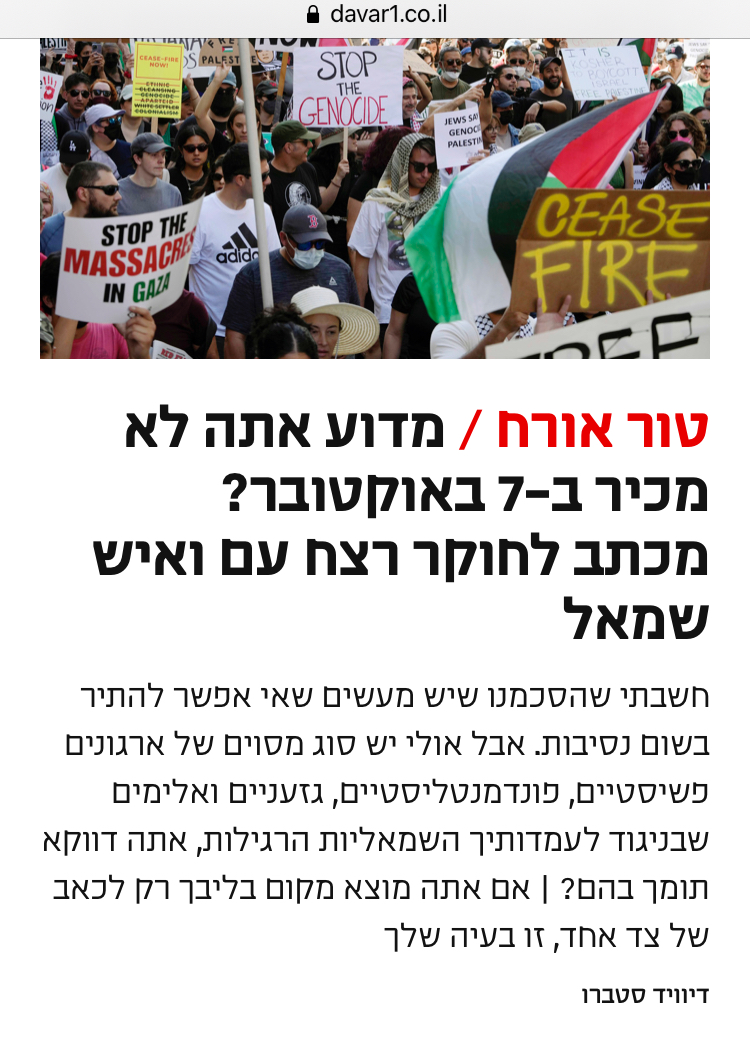
But it's not only about words. Words lead to action. After the demonstration you promoted, a group of people, ("presumably from the demonstration" according to the police), arranged a “spontaneous demonstration” outside the synagogue where a memorial service was being held for the victims of the Holocaust. The demonstrators filmed the participants, including Holocaust survivors, and chanted slogans like "child killer" and "intifada". Is this also legitimate criticism of Israel, Athena? At the synagogue? On Holocaust Remembrance Day? Are you serious?

According to the working definition of the international Holocaust Remembrance Alliance, contemporary examples of antisemitism include "drawing comparisons of contemporary Israeli policy to that of the Nazis". You may object to this. In fact, I'm sure you do, and that's fine. But most western democracies – including your own government – disagree. Which means that Sweden's public institutions should be committed to this definition. So, I guess my last question is this: as someone who works for such an institution, are you committed? And more importantly, considering your involvement in antisemitic campaigns, am I still allowed in Kulturhuset? Or are Jews not welcome anymore?

!Say it: Yes, I condemn Hamas

The discourse within the Swedish and European left is important even if you're not part of it and the insane embrace of Hamas by so-called left-wing radicals, climate change fighters, human rights activists and western intellectuals and academics must be challenged.

Originally published in Swedish in Parabol: https://www.parabol.press/andreas-malm-har-fel-om-hamas/

Imagine this powerful image: in a country which is slowly being taken over by right-wing nationalists, it's becoming harder to speak truth to power and to speak up for the underdog and the repressed. But then, from the trenches of the opposition, rises a fearless figure. He knows he'll be arrested and tortured if he's caught crying out, and so he does what intellectuals from resistance movements allways do under tyrannical regimes. He uses sarcasm, he sharpens his pencil and cleverly plays with words to produce a text which is radical and subversive, but at the same time meticulously designed not to be flagged down by the authorities. That way the avant-garde academic doesn’t get in trouble with the all-powerful secret service henchmen who are hunting down traitors.

Sweden 2024. While a war is going on in Gaza and in Israel, the whole political elite is powerfully supporting Israel. It's blue and white from left to right and it's not allowed to speak up for the Palestinians. And then, a single voice of a brave dissident rings out. He wrote a text. It's called "I Condemn Hamas" and it's brilliantly designed by a rhetorical trick – the title is mainstream and boring, everyone condemns Hamas. The content seems to be the same, but under the surface lies the explosive message – it's the exact opposite of condemning Hamas, it's actually supporting it (Malm, Anders, Jag Fördömer Hamas, Parabol, 01/11-23). At last the opposition has a voice – Andreas Malm has weighed in. It's a powerful text and a powerful image. The only problem is that none of it is true.

Malm's claim is clear – everyone's condemning Hamas, mainstream media, politicians and public discourse in general. He, on the other hand, thinks this is false. Hamas may have killed civilians, kidnapped children and burned down residential buildings on October 7th, but according to him this isn't unique. It's all been done before by Israel. Malm doesn't claim this directly. He does it by sarcasm. The same kind of sarcasm is pointed at the Swedish discourse. "In Sweden there are strikingly few who have condemned Hamas in the past few days. Those who have done it have only done it once, so that we now wonder if it was really meant honestly", he writes creating an illusion which is the exact opposite of the truth. In fact, Sweden is one of the countries in which the Hamas did surprisingly well. At least for an organization which is internationally recognized as a terror organization.

Hamas supporters have spoken openly in conferences and seminars in Sweden, money has been raised for Hamas freely in Sweden; just in the last few months there have been dozens of pro-Palestinian demonstrations with speeches supporting Hamas or at least not condemning them including demonstrations celebrating the events of October 7th on the day they happened. Unlike other countries, these demonstrations are not only legal, they're supported by some of the political elite and many in the media, in the cultural world and in civil society. Malm's style implies that Swedish publicists have to condemn Hamas or they'll be cancelled. Nothing could be further from the truth. In fact, Malm himself is a writer who has supported Hamas publicly in several newspapers, magazines and publications. As far as I know, he's yet to be arrested, censored or fired. In Sweden it’s allowed to burn the Koran, join parties which support North-Korea and have Neo-Nazi marches on Yom-Kippur. No one's preventing anyone from supporting Hamas. Indeed, I recently met Hamas supporters in Sergels Torg. They were members of two perfectly legal Swedish movements, RKU, the revolutionary communist youth movement and NMR, the friendly neighborhood neo-Nazis. Who knows, perhaps Andreas Malm himself was there supporting them both.

However, the Swedish context is only the beginning of Malm's mistake. The claim that the massacre on October 7th was more of the same, that it was Palestinians retaliating with the same kind of violence Israel uses, is worth studying. "What happened on Black Saturday, October 7th was something new in the history of the Israeli-Palestinian conflict", Malm writes using his smug self-satisfied irony, "it redraws the political and moral map of the Middle East for good. Gunmen stormed into communities and shot children to death with rifles. They did not care at all about the age of the victims. Hundreds of civilians were killed – people with no connection to any military activity, murdered simply because of their identity. Entire families disappeared". If this wasn't so true, it would be real cutting-edge political satire. But Malm's satire, is in fact the sad truth. Nothing like October 7th ever happened before in this conflict. Israelis and Palestinians never killed so many people in one attack or in one day. Not in Kafar Qasim (1956), not in Deir Yassin and Tantura (1948), not in Hebron (1996) and not in the bombings of Gaza in previous years. There were never so many acts of torture and violence against civilians, never so many people kidnaped and never such brutality. And yes, October 7th did redraw the political and moral map of the Middle-East for good. I couldn't have said it better myself.

Israel made many mistakes in the last few decades; like any other army it has committed war crimes during conflict, some of its civilians, especially in the West-Bank are violent extremists and its occupation of the West-Bank continues to be a hindrance to peace in the Middle-East. But October 7th was unique. It's not only about the brutality or the number of victims. The really scary number is the number of the people who committed the crimes. Unlike 9/11 which was executed by a small Jihadist vanguard of 19 Al-Quade operatives, and unlike Utøya which was the work of one (Andreas Malm cracks a little clever joke making the comparison), October 7th was carried out by about 3,000 people. Many of were sipplied with written instructions about how to murder, torture and kidnap civilians, some were also provided with drugs and with body cameras. This wasn’t a spontaneous, heat of the moment action. It was a planned strategy. On October 7th the world saw a society capable of drafting 3,000 people who were 100 percent committed to murder.

Andreas Malm perhaps hasn't heard the story told by David Tahar, father of Adir Tahar, an Israeli soldier who was killed on October 7th. Tahar told Israeli Chanel 14 that before the funeral he insisted on seeing his son's body even though army officials advised against it. The reason was that apparently after he was killed Hamas fighters decapitated Adir and took his head back home to Gaza. A few weeks later, after receiving intelligence from captured terrorists, an Israeli military unit retrieved the head. It was hidden in a bag with some tennis balls and a few documents inside an ice-cream shop freezer in Gaza. Apparently the head was up for sale. The price was 10,000 US Dollars. I know there are many who don't believe Israeli media and think that Zionists fathers are so perverted that they can make up this kind of story for propaganda purposes. So here's another one. This time from the New York Times.

Sapir, a 24-year-old accountant who attended the rave party near Kibbutz Reim on October 7th gave a testimony which was reliable enough for the NYT which told the story of what she saw from her hiding place (Gettleman, Schwartz and Sella, "Screams Without Words": How Hamas Weaponized Sexual Violence on Oct. 7", The New York Times, 28/12-23). Sapir says she saw "a young woman, blood running down her back, pants pushed down to her knees. One man pulled her by the hair and made her bend over. Another penetrated her. Every time she flinched, he plunged a knife into her back. Sapir said she watched another woman "shredded into pieces". While one terrorist raped her another pulled out a box cutter and sliced off her breast. "One continues to rape her", she said, "the other throws her breast to someone else, and they play with it, throw it, and it falls on the road". She said the men sliced her face and then the woman fell out of view. Around the same time, she said, she saw three other women raped and terrorists carrying the severed heads of three more women.

These are just two testimonies from October 7th. There are thousands more. One could always claim, as Malm does in earlier texts, that all this violence should be seen in context. But this kind of violence has no context. If it was really about freedom, or fighting the occupation there would be no need for mass rape, kidnapping babies and removing body parts. The atrocities, the rockets, the tunnels and the complete subordination of Gazans to Hamas militants are all far darker and more sinister than Malm's theories. It's not the price paid for Israel's colonialism. If for no other reason, because this isn't colonialism. Israel isn't Algeria.

According to Malm, the conflict between Israel and the Palestinians isn't a war between two indigenous peoples which have a legitimate claim to the same territory and therefore are engaged in a violent conflict. Instead, there is one legitimate native nation and for over a century it has been fighting an occupation by invaders who came from other countries as colonizers. The invaders are supported by imperialist powers and they are now committing genocide. This kind of aggression according to Malm must be, should be and always has been resisted with violence. In fact, Malm's latest text is one of many in Parabol making the same claim.

These texts rarely even mention the events of October 7th which I would suggest is a sign of total moral bankruptcy. But that's me and I may be biased. The problem here is different, it's about intellectual honesty. The description of the Israeli-Palestinian conflict as a story of a colonial power murdering the natives is incredibly shallow and misleading. It's perfectly ok to oppose Israel's policies (as I do myself most of the time), it's perfectly ok to name-drop Edward Said and Franz Fanon, make comparisons to Apartheid South-Africa and quote Israeli officials making outrageous genocidal statements which can then be quoted at the ICJ in the Hague. But people who have studied the region, as I guess Malm has, know very well that Jews, not only Palestinians are natives to it. And no, I'm not referring to Jesus and Abraham. Biblical stories cannot be a base for international geo-politics. I'm referring to facts completely ignored by the whole post-colonial discourse.

Take Gaza, for example, in the place where Rimal, the political center of Gaza City used to stand, a synagogue was built in the year 508 AD. We know that the figure in the center of the ancient mosaic which was found there is King David. How do we know this? Because his name is written there. In Hebrew. Gaza has a long bloody history – Romans, Christian Crusaders, Arab armies, the Egyptians, Napolean's army, the Ottomans and the British Mandate all controlled Gaza. During this history, Jews lived in Gaza, they didn't arrive in ships in the 1940s. They were there during the time of the Romans, 2,000 years ago, they were there in the Middle-Ages and during the time of Islamic rule, then again in the 14th and 15th century and under the rule of the Ottoman empire. Some were still there even after WW 2.

As in many other areas in the region, for thousands of years, Jews thrived and declined in Gaza, they were expelled and fled, they killed and were killed, built and destroyed, returned, immigrated and emigrated. Arabs in the region have a similar, though somewhat shorter, story (I'm referring to them as Arabs, because the name Palestinians wasn't used in the way that we use it today until after WW2). The story of the region being a land inhabited by indigenous Palestinians who were attacked by American, European and Russian Jews arriving from abroad after the Holocaust and kicking out the natives is a fairytale. Concepts like colonialism and indigenous peoples aren't abstract. Unfashionable as it may seem, these things have actual meanings beyond TikTok clips made by demonstrators wearing fashionable red, white and green scarfs. They can be discussed in terms of archeological findings, origin and descent, historical continuity of settlements, language and culture, collective ancestral ties to a territory and to natural resources, self-identification, experiences of subjugation and discrimination and so on. It may be frustrating, but when it comes to Israel, to the West-Bank and to Gaza, both Jews and Palestinians are natives. They're all a combination of immigrants and people who are decedents of families who haven't left for generations. And they've all suffered from violence, massacres, displacement and trauma.

And there's another similarity between the Jewish national movement (aka Zionism) and the Palestinian one. They both have a genocidal wing. These are the people on both sides who don't accept the idea of territorial compromise in order to achieve peace. The people who are willing to go as far as killing or expelling the other group in its entirety. They're usually religious fanatics, they're extremely violent, they totally oppose democracy and human rights, they're willing to kill and die for the cause and they've always been around. On the Jewish side, they began to become a serious threat after Israel's 1967 victory with the rise of the settler movement in the occupied West-Bank. These days they're becoming stronger, they're getting closer to government circles, but they're still far from being anywhere near a majority in Israeli society.

On the Palestinian side, things seem to be worse. If on the Zionist side there was a right-wing revisionist leader, Zeev Jabotinsky, who had a connection with Mussolini in the 30s, the leader of the Arab nationalists in Palestine at the time, Haj Amin al-Husseini, spent WW2 in Berlin and in Rome, he collaborated with the Nazis and the Fascists, he personally met Hitler, Himmler and Mussolini and was a supporter of the "Final Solution of the Jewish Problem". Al-Husseini was just the beginning. The Palestinian National movement has always had an active and extremely popular genocidal side to it. It's not because of Israel, because it started many years before Israel even existed. And it's not unimportant because what we saw on October 7th was a direct result of the same kind of ideology.

That's what's really amazing about Andreas Malm's text. Hamas is the genocidal wing of the Palestinian national movement and its ideological roots go all the way back to Nazi Germany. Although it was seen as a traditional grassroot, social and religious movement when it was founded in the 80s, it's now a modern, extreme right-wing movement combining Jihadism, high-tech disinformation campaigns, a financial empire of global investments, leaders who live a life of luxury outside the region, modern weapon systems and powerful alliances with the world's most tyrannical regimes. Anyone imagining the Hamas as a young David standing up to the Israeli Goliath is living in a naïve lullaby.

But Andreas Malm isn't naïve. He knows very well that the geo-political realities show that Hamas and indeed the Palestinian national movement is far more complicated than just a victim of western colonialism. He knows about the Israeli disengagement from Gaza in 2005 which means there was no occupation of Gaza for almost two decades. He knows that the blockade on Gaza is just as much an Egyptian policy as it is an Israeli one and that many Arab countries want Israel to destroy Hamas. He knows that the Hamas charter is an antisemitic and fundamentalist text. He knows that Hamas has crushed the secular Palestinian national movement in Gaza and that it sees the Palestinian Fatah movement as an enemy which is almost as bad as Israel. He knows about Hamas' brutal war against the Palestinian Authority and he knows about the unprecedented Hamas military buildup and take-over of civil society in Gaza.

The reason that I know that Malm knows all this is because of other texts that he wrote. Reading them one learns a lot about his way of seeing the world, though I must admit, it's sometimes a confusing task. Although he seems well versed in Middle-Eastern politics, when it comes to moral statements and political conclusions, his considerations are so complicated, it's hard to keep track. Although Israel is always wrong (that's the constant) when it comes to Palestinians, Arab states and Islamic super powers, the target is painted around the dart after it's been thrown.

In a text he wrote a few years ago (Malm, Andreas, "Därför Hamas", Expressen, 15/01-09) he claims one can have two thoughts at the same time, like the Palestinian left which allies itself tactically with Hamas but at the same time supports the opposition in Iran while the opposition in Iran is fighting the Iranian regime at the same time the Iranian regime is funding Hamas. It's ok if you need to read the last sentence again.

Malm's reasoning is not that unique. He supports Hamas and its fight against what he called the "corrupt Fatah politicians" and Mahmoud Abbas, who's an Israeli and American "marionet". If this sounds familiar it's because this is exactly the same logic used by Israeli PM Netanyahu who for years has been undermining the Fatah controlled Palestinian Authority by allowing Hamas to stay in power in Gaza so that he wouldn't have to take real steps towards a two-state solution. Surprisingly enough, Malm and Netanyahu are on the same side. They'll both do anything to avoid compromise and consolidation.

In another text from 2009 Malm referred to Hamas as a liberation movement which is "forced to resort to every possible form of resistance" (Malm, Andreas, "Vi bör följa Iran och stödja Hamas i kampen mot Israels folkmordspolitik", Newsmill, 04/01-09). In the same text he quoted Nir Rosen, who claimed that "Attacking civilians is the last, most desperate and basic method of resistance when confronting overwhelming odds and imminent eradication" (Rosen, Nir, "Gaza: the logic of colonial power", The Guardian, 29/12-08). Malm is entitled to write these kind of statements even if they encourage violence and are fascist in nature. I only hope that most Swedes, including those who support the Palestinians, can see beyond this tragic war mongering, since it's clear to anyone what this means politically. Hamas will continue murdering Israelis; Israel will have to retaliate and will do so forcefully – and more Palestinians will be killed. If there's anything that hasn't changed in the last few decades it's this dynamic.

Hamas is not the only problem. In another text Malm openly supported Hezbollah (Malm, Andreas, "Därför Ska Vi Stödja Hezbollah", 11/08-2006), an Islamic movement funded, trained and inspired by the Iranian Ayatollahs and their Islamic Revolutionary Guard Corps, which was involved in suicide attacks, political assassinations, bombing of civilians and hijackings in Lebanon and other countries. I don't know how Malm manages to pull off being a left wing radical and supporting two of the most conservative, fascist, chauvinist, fundamentalist, hierarchical, anti-democratic, homophobic and xenophobic movements in the history of the known universe, but I know that explanations along the lines of "I can't be expected to condemn actions taken by the weak and oppressed” can't work anymore after the massacre of October 7th which was a tectonic, world-changing event. Not condemning it, or in Malm's case, condemning it sarcastically, means supporting it.

This period isn't easy for the global political left. Just like in the 1950s when left-wing activists, politicians and intellectuals had to decide whether to stay faithful to the Stalinist flagship even after it was exposed as a sadistic killing machine of gulags and mock trials, today's left must decide if its alliance with the dictators, Jihadists and militants from Gaza, Teheran, Beirut and Doha is more important than its ideals. Those who have the courage to choose their ideals and abandon their old murderous  allies will not have Andreas Malm's problem. They will be able to proudly say "yes, I condemn Hamas".

Why Don't You Recognize October 7th – A letter to a Burmese friend (and a genocide researcher)

This is a tectonic and world-changing event, carried out by thousands of people supported by hundreds of thousands of people, as well as by movements, states and regimes. Not condemning it is supporting it. And the results are inevitable. Because of the horror that these people have inflicted on the world, an even darker night is to come before we will see the light. 

Published in "Davar": https://en.davar1.co.il/462536/

A is my friend. He is a Burmese expatriate from Myanmar living in Europe. He is an academic, an educated and friendly person, and a veteran human rights activist. As a journalist who writes, among other things, about countries where acts of genocide, ethnic cleansing and human rights violations take place, I consult with various experts. A is one of them. This is the letter I sent him last week.

Hello, A. I am writing in response to your letter regarding the “colonial character and genocidal policy of Israel.” As you can imagine, I am quite busy these days, and as someone who is far away from his family in Israel, I am distracted. I am responding to you despite all this, mainly because your words opened with a reference to Auschwitz, a place where many of my family members were murdered about 80 years ago.

According to you, Israel is using the Holocaust as a “blank check” to justify the imprisonment, bombing and starvation of 2.3 million Palestinians in Gaza, almost half of whom are children. "In these circumstances, 'never again' is a hollow phrase," you write. “It becomes a call for uncontrolled violence, battle cries and a campaign of revenge and extermination." In the past and under different circumstances, I must admit that I might have agreed with you.

A, you must remember that we got to know each other after several occasions when you very generously shared with me your expertise, knowledge and experience regarding Myanmar. When I first contacted you, I wrote that as a journalist working in a free country, I felt obliged to tell the story of the victims of atrocities there – amongst others, the Rohingya people other minorities who have been suffering from genocidal policies for years since the military coup in 2021. 

Since I am not an expert myself, I reached out to you, just as I reached out to many other experts, witnesses and human rights activists who could shed light on other places I wrote about, such as China, Ethiopia, Syria, Iran, Mexico, Belarus and Iraq.

This is an important point. As you know, there are complicated conflicts in many of these places about which there are different opinions. Still, my feeling was that we shared a real commitment to expose and fight certain types of acts which cannot be excused under any circumstances, regardless of the different narratives that explain the conflict. I mean the kind of actions that cannot be permitted even if there is no agreement on the history of the conflict or even on the identity of those responsible for it.

These actions include those that took place in Rakhine province in Myanmar, which I wrote about with your kind help. The barbaric murder, torture and rape of innocents that happened in your country is inexcusable. Political, ethnic, religious or demographic claims simply cannot justify throwing babies into fire, torturing children to death in front of their parents, and the mass rape of women before their execution. I thought we agreed on that.

This week, I received a long email from you, Dr. A. Extremely long. Long enough to clarify your words or even to add something along the lines of: "despite all this, of course I condemn [Hamas’ actions],” or even "despite the absolute truth of the Palestinian claims and genocidal policy of Israel, I do not justify killing civilians."

But there was none of that. Somehow, your post references 100 years of conflict prior to October 7 (including explanations using maps, cartoons, pictures, and quotes). And there is a reference to the days after October 7.

But the day itself, when over a thousand people, most of them civilians, were brutally murdered and over 200 people, again most of them civilians, were kidnapped, was completely absent. And it's strange given the fact that, as I recall, we share an interest in cases of throwing babies into fire, torturing children to death in front of their parents, and the mass rape of women before their execution. Yes, to make the point clear to a person from your background, for one historical moment, Israel's Gaza envelope region became Myanmar's Rakhine. 

A, since I received your message, I have been trying to understand why you do not recognize October 7th. I understand your opinion about the essence of Zionism and the essence of Israel. I don't agree with it, but I understand your point. Still, there's that little matter of “under all circumstances.” Perhaps there is a certain type of fascist, fundamentalist, racist, and violent organization that, against your usual leftist positions, you actually do support.

But if so, what are the criteria? Is it because they are jihadists? Is it a matter of religion? Or that according to the accepted code of the post-colonialist discourse, the "natives" have certain Jew-killing privileges because of the many years of oppression they have endured? Oppression, which, as you know, I have never denied. 

And maybe you are one of those who do not believe the photos, the direct testimonies of survivors, the explicit confessions of the attackers and the unwatchable and undeniable videos. Do all these not meet your strict standards? Strange, because we never applied such strict standards when I wrote about Myanmar.

Do you think it's all a conspiracy of Western governments spreading fake news? Is it all the settlers’ lies, supported by American imperialists? Are you really not affected by the testimonies of Israeli women, children and elders, many of whom, by the way, are peace activists who built their homes in socialist communes that are not in any way located in the West Bank or in any way disputed. Unless the very existence of Israel is disputed, a position I assume you hold since you treat Israel as a settler and colonialist entity.

And maybe I didn't understand what you meant. In this case, perhaps in the future, we can discuss the true nature of Israel. As you know from our previous correspondence, I never supported Netanyahu, I have always believed in compromise with the Palestinians and I am absolutely against any kind of war crime, including against civilians in Gaza. You also know that I am a social democrat and a person who is aware of the climate crisis and the hardships of the "global south.”  But wait, here I am, once again falling into this trap. If I were not all of these things, if I were a Netanyahu supporter or a settler in the West Bank, would my massacre and that of my family members be justified?

Again, there's that "under all circumstances" nuisance. Even if the Jews were like the French in Algiers, and they are not, deliberate murder of innocents is always evil and mass murder is absolute evil. Among us Jews, even complete secularists like me sometimes recite from the ancient texts: “I have set before you today the heavens and the earth, life and death; I have set before you the blessing and the curse. Choose life, for your lives and for your descendants,” as it is written in the book that you call the Old Testament. Do you understand A? You chose life – without “buts” and without “maybes.” This is why I always opposed my own people murdering other innocent people. And you know what, I'm angry at myself for not resisting enough.

***

And so for the record, I want to mention that I believe that Jews, not just Palestinians, also have rights in the place where I was born. They have personal, social and national rights and they also have responsibilities that are well described in the Declaration of Independence of their country, our country, which was founded 75 years ago. You don't acknowledge that, which is probably the real reason you didn't mention October 7th in your message. If "Palestine will be free from the river to the sea," as they are now shouting in the streets near my house in Europe, the events of October 7th are probably not an accident in your eyes. They are the first step in the plan.

"Free from the river to the sea” means without the people who are living there now. This is not the two-state solution, nor a partition plan, nor a federation. I think with your education, you know exactly what it means. But in case it's not clear enough, I'll say it explicitly: Hamas is the genocidal wing of the Palestinian national movement, and it turns out that it has quite a few supporters. My friends say that such views stem from antisemitism, but I don't know what is hidden in a person's heart. How much darkness, how much hatred.

I also don't know what is hidden in your heart. But I know that October 7th was not another attack, another battle, another chapter in the bloody history of the Middle East. It cannot be solved with sentences like "I cannot be expected to condemn every action taken by the weak and oppressed.” This is a tectonic and world-changing event, carried out by thousands of people supported by hundreds of thousands of people, as well as by movements, states and regimes. Not condemning it is supporting it. And the results are inevitable. Because of the horror that these people have inflicted on the world, an even darker night is to come before we will see the light. 

***

And so, as a wise man wrote during the World War II, you and I now stand on two sides. "My opinion is clear about your motives,” he wrote, “and you would do well to speculate on my motives.” And he added: "I have one more thing left to say to you, and let it be the last. I want to tell you how in the past we were so similar and today we are enemies. How could I have stood by your side, and and why everything between us is over now.” 

And that's the thing. In Xinjiang and Syria, in Tigray and Iran, in Myanmar and Israel, acts like those committed by Hamas are not only the absolute lowest of what the human race is capable of. They also redefine the lines. If they do not fill a person's heart with unconditional anger and disgust, they place him outside the legitimate discussion of civilized people. If you can only find room in your heart for the pain of one side, that's your problem. But with your permission, I think I'll find myself a different expert on Myanmar.

Before I finish, I will ask just one last thing. Do me a favor – next time, please refrain from referring to Auschwitz. Not because I have a monopoly on the memory of the Holocaust or the memory of the victims. But because when it comes to the 1940s, those people on whose behalf you are currently campaigning, they tend to be something different than you imagine. When you remove the appearances of European leftist movements, those people tend to be supporters of the side that built Auschwitz, not of those led there to their deaths.

מכתב לידיד (וחוקר רצח-עם) בורמזי – מדוע אינך מכיר ב-7 באוקטובר?

חשבתי שהסכמנו שיש מעשים שאי אפשר להתיר בשום נסיבות. אבל אולי יש סוג מסוים של ארגונים פשיסטיים, פונדמנטליסטיים, גזעניים ואלימים שבניגוד לעמדותיך השמאליות הרגילות, אתה דווקא תומך בהם?

פורסם ב"דבר": https://www.davar1.co.il/462084/

א' הוא ידיד שלי. גולה בורמזי ממיאנמר המתגורר באירופה. הוא אקדמאי, אדם משכיל וחביב, ופעיל זכויות-אדם ותיק. כעיתונאי שכותב, בין השאר, על מדינות שבהן מתקיימים מעשי רצח-עם, טיהורים אתניים והפרות זכויות-אדם, אני מתייעץ עם מומחים שונים. א' הוא אחד מהם. זה המכתב ששלחתי לו בשבוע שעבר.

א' שלום. אני כותב בתגובה להודעתך בעניין "האופי הקולוניאליסטי ומדיניות רצח-העם של ישראל". כפי שאתה יכול לתאר לעצמך, אני עסוק למדי בימים אלו, ובהיותי אדם הנמצא רחוק ממשפחתו שבישראל, דעתי מוסחת. אני עונה לך למרות כל זאת, בעיקר מפני שהודעתך נפתחה בהתייחסות לאושוויץ, מקום בו נרצחו רבים מבני משפחתי לפני כ-80 שנה.

לדבריך, ישראל משתמשת בשואה כ'צ'ק פתוח' לכליאה, להפגזה ולהרעבה של 2.3 מיליון פלסטינים בעזה, כמעט מחציתם ילדים. "בנסיבות אלו, 'לעולם לא עוד' הוא ביטוי חלול", אתה כותב, "הוא הופך לקריאה לאלימות בלתי מבוקרת, לזעקות מלחמה ומסע תגמול וחיסול". בעבר ובנסיבות אחרות, אני חייב להודות, ייתכן שהייתי מסכים איתך.

א', אתה בטח זוכר, אנחנו מכירים כי במספר הזדמנויות חלקת איתי, בנדיבות רבה, את המומחיות, את הידע ואת הניסיון שלך לגבי מיאנמר. כשפניתי אליך לראשונה, כתבתי שכעיתונאי שעובד במדינה חופשית, אני מרגיש מחויב לספר את סיפורם של קורבנות הזוועות, בין השאר, את סיפורם של תושבי ארצך, בין אם אלו בני הרוהינגה או מיעוטים אחרים שנפלו קורבן לאירועים מחרידים שהתרחשו ברחבי המדינה מאז ההפיכה הצבאית ב-2021. מכיוון שאני לא מומחה בעצמי, הגעתי אליך, ממש כפי שהגעתי לאחרים, מומחים, עדים ופעילי זכויות-אדם שיכלו לשפוך אור על מקומות נוספים שכתבתי עליהם דוגמת סין, אתיופיה, סוריה, איראן, מקסיקו, בלארוס ועיראק.

והי נקודה חשובה. כפי שאתה יודע, ברבים ממקומות אלו ישנם קונפליקטים מסובכים שיש עליהם דעות שונות. ובכל זאת, תחושתי היתה שאנחנו חולקים מחויבות אמיתית לחשוף ולהילחם בסוג מסוים של מעשים בכל תנאי מזג-אוויר, וללא קשר לנרטיבים השונים המסבירים את הסכסוך. אני מתכוון למעשים שאי אפשר להתיר בשום נסיבות, גם אם אין הסכמה על ההיסטוריה של הסכסוך, ואפילו על זהות האחראים עליו. מעשים כמו אלו שהתרחשו במחוז ראקין במיאנמר שכתבתי עליהם בעזרתך האדיבה. הרצח, העינויים והאונס הברבריים של חפים מפשע שאירעו במדינתך לא ניתנים לתירוץ. טענות פוליטיות, אתניות, דתיות או דמוגרפיות פשוט לא יכולות להצדיק זריקת תינוקות לאש, עינויים למוות של ילדים מול הוריהם ואונס המוני של נשים לפני הוצאתן להורג. חשבתי שהסכמנו על זה.

השבוע, קיבלתי ממך מייל ארוך, ד"ר א'. אפילו ארוך מאוד. מספיק ארוך כדי להבהיר את דבריך ולהוסיף לדוגמא משהו כמו "למרות כל זאת, ברור שאני מגנה"… או אפילו "למרות האמת המוחלטת של הטענות הפלסטיניות ומדיניות רצח-העם של ישראל, אינני מצדיק"…

אבל לא מיני ולא מקצתי. איכשהו, בהודעתך יש התייחסות ל-100 שנים של סכסוך לפני 7 באוקטובר (כולל הסברים באמצעות מפות, קריקטורות, תמונות וציטוטים). ויש התייחסות לימים שאחרי 7 באוקטובר. אבל היום עצמו, היום שבו נרצחו באכזריות למעלה מאלף בני-אדם, רובם אזרחים ומעל 200 אנשים, שוב רובם אזרחים, נחטפו, נעדר לחלוטין. וזה מוזר, בהתחשב בעובדה שכזכור, אנחנו חולקים עניין במקרים של זריקת תינוקות לאש, עינויים למוות של ילדים מול הוריהם ואונס המוני של נשים לפני הוצאתן להורג. כן, כדי להבהיר את הנקודה לאדם מהרקע שלך, לרגע היסטורי אחד, חבל עוטף עזה מהמקום שלי היה לחבל ראקין מהמקום שלך.

א', מאז שקיבלתי את הודעתך, אני מנסה להבין מדוע אתה לא מכיר ב-7 באוקטובר. אני מבין את דעתך על מהות הציונות ועל מהותה של ישראל. אני לא מסכים איתה, אבל מבין את כוונתך. ובכל זאת, יש את העניין הפעוט הזה של "בכל תנאי מזג-אוויר". אולי יש סוג מסוים של ארגונים פשיסטיים, פונדמנטליסטיים, גזעניים, ואלימים שבניגוד לעמדותיך השמאליות הרגילות, אתה דווקא תומך בהם. אבל אם כך, מהם הקריטריונים? זה בגלל שהם ג'יהאדיסטים? זה עניין של דת? או שעל פי הקוד המקובל של השיח הפוסט-קולוניאליסטי, יש ל"ילידים" זכויות מסוימות של הרג יהודים בגלל דיכוים רב השנים? (דיכוי, שכפי שאתה יודע, מעולם לא הכחשתי).

ואולי אתה בכלל אחד מאלו שלא מאמינים לתמונות, לעדויות ישירות של ניצולים, להודאות המפורשות של התוקפים ולסרטונים שלא ניתן לצפות בהם ושאי אפשר להכחישם. האם כל אלו לא עונים לסטנדרטים המחמירים שלך? מוזר, כי מעולם לא יישמנו סטנדרטים מחמירים כל כך כשכתבתי על מיאנמר. האם לדעתך הכל קונספירציה של ממשלות מערביות המפיצות חדשות כזב? האם הכול שקרים של המתיישבים הנתמכים על ידי האימפריאליסטים מאמריקה? האם אתה באמת לא מתרשם מעדויות של ילדים, נשים וזקנים ישראלים, רבים מהם, אגב, פעילי שלום שבנו בתים בקהילות סוציאליסטיות שאינן, בשום אופן, בגדה המערבית או בשטחים שנויים במחלוקת? (אלא אם עצם קיומה של ישראל שנויה במחלוקת, עמדה שאני מניח שאתה אוחז בה שכן אתה מתייחס לישראל כישות מתנחלת וקולוניאליסטית).

ואולי לא הבנתי את כוונתך. במקרה זה, אולי בעתיד, נוכל לדון בטבעה האמיתי של ישראל. כפי שאתה יודע מהתכתבויות קודמות, מעולם לא תמכתי בנתניהו, תמיד האמנתי בפשרה עם הפלסטינים ואני בהחלט נגד כל סוג של פשע מלחמה, גם כלפי אזרחים בעזה. אתה יודע גם שאני סוציאל-דמוקרט ואדם בעל מודעות למשבר האקלים ולתלאות ה"דרום הגלובלי". אבל רגע, הנה אני שוב נופל במלכודת הזו. ואם לא הייתי כל הדברים האלו, אם הייתי תומך בנתניהו או מתנחל בגדה המערבית, האם טבח בי ובבני משפחתי היה מוצדק?

שוב, יש את המטרד הזה של "בכל תנאי מזג אוויר". גם אם היהודים היו כמו הצרפתים באלג'יר, והם לא, רצח מכוון של חפים מפשע הוא תמיד רוע, ורצח המוני הוא רוע מוחלט. אצלנו היהודים, אפילו חילונים גמורים כמוני מדקלמים לפעמים מהמקורות. "הַעִידֹתִי בָכֶם הַיּוֹם אֶת הַשָּׁמַיִם וְאֶת הָאָרֶץ, הַחַיִּים וְהַמָּוֶת נָתַתִּי לְפָנֶיךָ הַבְּרָכָה וְהַקְּלָלָה", ככה כתוב בספר שאתה קורא לו הברית הישנה, "וּבָחַרְתָּ בַּחַיִּים לְמַעַן תִּחְיֶה אַתָּה וְזַרְעֶךָ". אתה מבין א'? בחרת בחיים – בלי אבל ובלי אולי. זאת הסיבה שהתנגדתי תמיד לבני עמי שרצחו חפים מפשע. ואתה יודע מה, אני כועס על עצמי שלא התנגדתי מספיק.

ולכן, למען הפרוטוקול, אזכיר שאני מאמין שיהודים, לא רק פלסטינים, הם בעלי זכויות במקום שנולדתי בו. יש להם זכויות אישיות, חברתיות ולאומיות, ויש להם גם חובות המתוארות היטב במגילת העצמאות של מדינתם, מדינתנו, שנוסדה לפני 75 שנה. אתה אינך מכיר בכך, וזו כנראה הסיבה האמיתית שלא הזכרת בהודעתך את 7 באוקטובר. אם "פלסטין תהיה חופשית מהים ועד הנהר" כפי שצועקים כעת בכיכרות ליד ביתי באירופה, כנראה שאירועי 7 באוקטובר בעבורך אינם תאונה. הם שלב ראשון בתכנית.

"חופשית מהים עד הנהר", משמע ללא אלו היושבים שם עכשיו. זו לא תכנית שתי המדינות, לא תכנית החלוקה ולא פדרציה. נדמה לי שעם ההשכלה שלך, אתה יודע בדיוק מה זה אומר. אבל למקרה שאתה מתקשה אכתוב זאת בפרוש – החמאס הוא האגף הג'נוסיידיאלי של התנועה הלאומית הפלסטינית, ומסתבר שיש לו לא מעט תומכים. חברים שלי אומרים שדעות כאלו נובעות מאנטישמיות, אבל אני לא יודע מה מסתתר בליבו של אדם. איזה חושך, איזו שנאה.

אני גם לא יודע מה מסתתר בליבך. אבל אני יודע ש-7 באוקטובר לא היה עוד פיגוע, עוד קרב, עוד שורה בטיימליין המדמם של המזה"ת. אי אפשר לפתור אותו במשפטים כמו "אי אפשר לצפות שאני אגנה כל פעולה שהצד החלש מבצע". מדובר באירוע טקטוני ומשנה עולם, שבוצע על ידי אלפי בני-אדם שנתמכים על ידי מאות אלפי בני-אדם, וגם על ידי תנועות, מדינות ומשטרים. אי גינויו הוא תמיכה בו. והתוצאות הן בלתי נמנעות. בגלל הזוועה שאנשים אלו הטילו על העולם, צפוי לילה אפל עוד יותר לפני שיעלה האור.

וכך, כמו שכתב אדם חכם בזמן המלחמה הגדולה באירופה, אני ואתה עומדים כעת בשני צדדים. "דעתי ברורה לגבי מניעיך", הוא כתב, "ואתה מיטיב לשער את מניעי". והוא הוסיף: "עוד דבר אחד נותר לי לומר לך, שיהיה גם האחרון. מבקש אני לומר לך כיצד בעבר היינו כה דומים ואילו היום אנו אויבים, כיצד יכולתי לעמוד לצידך ומדוע כיום נגמר הכל בינינו".

וזה העניין – בשינג'יאנג ובסוריה, בטיגראי ובאיראן, במיאנמר ובישראל, מעשים כמו אלו שביצע החמאס אינם רק התחתית המוחלטת של מה שהמין האנושי מסוגל לו. הם גם מגדירים את הקווים מחדש. אם הם אינם ממלאים את ליבו של אדם בזעם ובגועל שאינו מותנה בדבר, הם מציבים אותו מחוץ לדיון הלגיטימי של בני תרבות. אם אתה מוצא מקום בליבך רק לכאב של צד אחד, זו בעיה שלך. אבל ברשותך, אני חושב שאמצא לי מומחה אחר למיאנמר.

לפני סיום אבקש רק דבר אחד אחרון. עשה לי טובה א', בפעם הבאה, הימנע בבקשה מההתייחסות לאושוויץ. לא כי יש לי מונופול על זיכרון השואה או על זכר הקורבנות, אלא כי כשמדובר בשנות הארבעים של המאה הקודמת, האנשים שאתה שולח כעת הודעות בשמם, אלו שאתה מנהל בעבורם קמפיין, נוטים להיות משהו אחר ממה שאתה מדמיין. כשמסירים מהם את החזות המהוגנת של תנועות השמאל האירופי, הם נוטים להיות תומכיו של הצד שבנה את אושוויץ, לא של הצד שהובל שם למותו.

ליזי עובד שייה: "קיים איום מוחשי, אבל אנחנו ממשיכים. עם ליווי משטרתי"

כמייסדת ומנהלת "המוסד לתרבות יהודית בשוודיה" ליזי עובד שייה ידעה תקריות דיפלומטיות, גינויים והאשמות הן מצד מדינת ישראל והן מהאירופאים, אבל שום דבר לא הכין אותה ל-7 באוקטובר

פורסם במוסף "גלריה שישי" של "הארץ": https://www.haaretz.co.il/gallery/galleryfriday/2023-11-23/ty-article-magazine/.highlight/0000018b-f12d-d6a0-a7ff-f97f9b3e0000

השבועות שלפני 7 באוקטובר היו מהעמוסים והמוצלחים בקריירה המקצועית של ליזי עובד שייה, המייסדת והמנהלת של "המוסד לתרבות יהודית בשוודיה". בסוף השבוע האחרון של ספטמבר המוסד שהיא מנהלת היה אורח הכבוד של יריד הספרים בגטבורג, אירוע התרבות החשוב ביותר במדינות הנורדיות ואחד מירידי הספרים הגדולים באירופה. הנושא המרכזי של היריד היה "תרבות יהודית", עובד שייה ניצחה על האירוע ובסיומו הורעפו עליה כל המחמאות האפשריות. למשך סוף שבוע אחד לפחות, התרבות היהודית היתה לב השיח התרבותי בשוודיה. פחות משבוע לאחר מכן באה השבת הארורה וטרפה את כל הקלפים.

"כמו רבים אחרים, יש אצלי 'לפני 'ואחרי' 7 באוקטובר", אומרת עובד שייה. "התגובות שהגיעו מהקהל העצום של היריד, יהודי ולא יהודי, מעולם התרבות, עיתונאים, פוליטיקאים, הקהילה היהודית, היו מסחררות. כתבו לי למשל שזה היה אירוע התרבות היהודית החשוב ביותר שאי פעם התקיים בשוודיה. היתה תחושה חזקה של עוצמתה של התרבות היהודית, עוצמת ההיסטוריה, הספרות, השפה והאמנות. היתה שמחה גדולה שבאה לידי ביטוי אפילו ב-happy hour מדי ערב, עם מוזיקה, שיחות וכוס יין.

"כשאני חושבת על ארבעת הימים של היריד אני רואה את עצמי מהלכת על ענן", ממשיכה עובד שייה, "עם שמחה גדולה בלב, עדיין לא לגמרי מבינה את העוצמה של מה שעשינו אבל כן מבינה שדבר מחולל שינוי קורה מולי. מדי יום לאחר תום היריד שלחתי ניוזלטר לאלפי האנשים שברשימת התפוצה שלנו, בשוודיה ובחו"ל. כל מכתב סיכם יום מהיריד ולווה בתמונות. את היום הרביעי לא הספקתי לשלוח. השבת השחורה קטעה את הרצף. התחושה היתה שאין טעם יותר לדבר על תרבות, ספרות ושפה. הברבריות, האכזריות והשנאה תפסו את מקום התרבות, כך הרגשתי. שקלתי אם לבטל את שאר אירועי התרבות המתוכננים לאוקטובר. מועקה קשה ופחד מצמית השתלטו עלי. את האירוע של 9 באוקטובר – הענקת פרס, כמה מוזר, לאישה שמקדמת ערכים ליברליים ובוני גשרים (המו"לית דורותיאה ברומברג, ד"ס) – קיימנו בכל זאת. חשבתי שאיש לא יגיע. אני בעצמי לא רציתי להיות שם. אבל הקהל העצום שהגיע, יותר מבכל שנה, סימן לי שני דברים: את הסולידריות הגדולה הקיימת בצל האסון הכבד, ואת הצורך הגדול להתכנס ולדבר, להיות יחד. החלטתי שאני לא סוגרת, שאנחנו ממשיכים, שכך נכון".

עובד שייה אומרת שמוסדות יהודיים אחרים ברחבי שוודיה ביטלו פעילות לקהל הרחב בימים שלאחר האסון. "הסיבות ברורות לחלוטין", היא אומרת, "הרי קיים איום מוחשי. אבל אנחנו ממשיכים, אמנם עם ליווי משטרתי, בפעם השנייה בתולדותינו (הפעם הראשונה היתה ב-2015, אחרי אירועי הטרור ב"שארלי הבדו" בפריז וכן בקופנהגן, ד"ס). אני נמצאת בקשר הדוק עם הגורמים הביטחוניים ופועלת בהתאם. כמובן שאם המשטרה תבקש שנסגור או שננמיך פרופיל, כך נעשה ללא שאלות מיותרות. כל אירוע שאנחנו מקיימים, בין שזה סמינר על ניטשה או שיחה על ספר חדש, מתקיים במקביל לשיחה על 7 באוקטובר והמלחמה בחמאס. הכל מתערבב. אין אפשרות לקיים אירוע תרבות המנותק מהאסון. לפני כמה ימים התארח אצלנו ג'ונתן פרידלנד (העיתונאי והסופר הבריטי) לדבר על ספרו The Escape Artist, השיחה התחילה והסתיימה בישראל. האירוע היחיד שביטלנו הוא אירוע שמנסה לברר את הנושא 'שנאה'. במקור, האירוע היה אמור להתקיים סביב 'וויצק' (המחזה מאת גיאורג ביכנר) עם ציטוטים מז'אן אמרי ומרטין בובר. הבנו שאין אפשרות לקיים שיחה ודיון על שנאה ו'וויצק', כאשר שנאה אומרת לכולנו משהו לגמרי אחר ברגע זה".

כמעט קשה לדמיין שבימים שלפני המלחמה היה זה נושא אחר שהעמיד את עובד שייה בלב השיח היהודי-תרבותי-שוודי. לאחר שנודע שתרבות יהודית תהיה הנושא המרכזי של היריד בגטבורג, התעוררה ביקורת מצד שגריר ישראל בשוודיה, שטען שהיריד מתמקד אמנם בתרבות יהודית, אבל מתעלם מישראל ומדיר אותה. את השגריר גיבה אחד האינטלקטואלים המוכרים במדינה, כריסטר מאטסון, מומחה לקיצוניות פוליטית, אנטישמיות ואידיאולוגיות גזעניות. מאטסון טען שהיריד לוקה ב"אנטישמיות מבנית", כזו שאינה נובעת בהכרח מכוונות רעות, אבל מתבטאת בהתמקדות בשואה, בתרבות יהודית בתפוצות, בגולה וביידיש תוך התעלמות מישראל, המוזכרת, אם בכלל, רק באופן שלילי וביקורתי.

ביקורת זו עוררה זעם כלפי השגריר בקרב חלק מיהודי שוודיה, אי נוחות בהנהלת היריד ותמיהה של אנשי האליטה התרבותית השוודית שנחשפו לוויכוח בכלי התקשורת המרכזיים במדינה. אך מעבר לעניין התקשורתי, הפרשה חשפה נושא עקרוני ומעניין – מה מקומה של התרבות הישראלית העכשווית בתוך האוקיינוס הענק של התרבות היהודית, והאם ישראל היא לב עולם התרבות היהודי או רק עוד מדינה שיש בה קהילה יהודית גדולה? אלו שאלות כבדות משקל והן אינן נדונות תמיד בפתיחות.

כיום כל זה נראה אמנם דיון רחוק מימים עברו, אבל בשביל עובד שייה זה היה שלב נוסף במסע שלה מילדות ישראלית, על שפת הים התיכון, ללב האצולה התרבותית של שוודיה – מקום שאליו הגיעה בזכות הארגון שהקימה, שהוא תופעה יוצאת דופן למדי. בשוודיה חיים רק כ-15,000 יהודים, ובכל זאת, המוסד לתרבות יהודית שמנהלת עובד שייה נחשב לאחד ממוסדות התרבות החשובים במדינה; לא ארגון קהילתי, אלא מוסד תרבות שוודי שעוסק בתרבות יהודית. מאז הוקם, לפני מעט יותר מעשור, הוא הצליח לבנות לעצמו שם בשוודיה ומחוצה לה והוא גם הביא למדינה כמה מהשמות החשובים בעולם היהודי, בהם רות ביידר גינזבורג, ברנאר אנרי לוי, דניאל בארנבוים, זיגמונט באומן וסטיב רייך.

המשך הכתבה כאן: https://www.haaretz.co.il/gallery/galleryfriday/2023-11-23/ty-article-magazine/.highlight/0000018b-f12d-d6a0-a7ff-f97f9b3e0000

פסטיבל הקולנוע בשטוקהולם מתנצל: "חנוביץ' מוזמנת, מצטערים שגרמנו כאב"

בהנהלת הפסטיבל הבינלאומי הכחישו כי בוטלה הזמנת עליזה חנוביץ', יוצרת הסדרה "חאנשי", עקב המלחמה. לדבריהם נשלחה הודעה שגויה מטעמם והם ישמחו ויתגאו לארח את חנוביץ'. חנוביץ': בכל זאת לא אבוא

עם נירית אנדמן

פורסם ב"הארץ": https://www.haaretz.co.il/gallery/cinema/2023-11-13/ty-article/.premium/0000018b-c9bd-d518-a39b-fbbdc5700000

פסטיבל הקולנוע הבינלאומי של שטוקהולם הכחיש היום את הטענה כי ביטל את הזמנתה של עליזה חנוביץ', יוצרת הסדרה "חאנשי", בעקבות המלחמה בין ישראל לחמאס. לפי ידיעות שהתפרסמו אתמול, הפסטיבל ביטל את השתתפותה של חנוביץ' ואז חזר בו מהביטול והציע לה להגיע לפסטיבל אם תשלם בעצמה על טיסתה.

בראיון ל"הארץ" אומרת ביאטריס קרלסון, מנהלת התוכניות של הפסטיבל, כי צוות הפסטיבל נמצא בדיאלוג עם צוות הסדרה מאז ספטמבר ומתכנן את הביקור של חאנשי ושל במאי הסדרה, אהרון גבע ומיקי טריאסט. "אחרי 7 באוקטובר נשארנו בקשר ודנו כיצד להתקדם", אומרת קרלסון, "הצענו כבר אז שנקיים שיחה דיגיטלית במקום ביקור פיזי אבל עדיין היינו פתוחים להזמין את עליזה לבוא. מחלקת האורחים שלנו הביעה דאגה בעניין ביטחון הטיסה במרחב האווירי הישראלי בשלב זה. זו היתה דאגה ביטחונית.

"המייל מאיתנו שצוטט ב'הארץ' (בדבר אי הזמנת טיסה מישראל, ד.ס) נשלח על ידי איש צוות זמני מבלי שאושר על ידי הפסטיבל והוא אינו משקף את העמדה הרשמית של הפסטיבל, שהיא לתמוך בסדרה וביוצרים. ההודעה לא נוסחה היטב ואנו מבינים כיצד זה הוביל לאי־ההבנה וצר לנו מאוד על כך. המייל לא התייחס כלל למצב הפוליטי. הפסטיבל גאה בהצגת סרטים מכל העולם, עומד מאחורי הסרטים ויוצריהם ולא נוקט עמדה פוליטית בסכסוך. אנו מעריכים את ההזדמנות להגיב לאי־ההבנה ומצטערים מאוד על שפגענו ברגשותיהם של אנשים".

אם לא התכוונתם לבטל, מה היתה הסיבה לדון בשינוי התוכנית? ההסבר בעניין כרטיסי הטיסה לא מבהיר את העניין, כי אין בעיה ביטחונית לטוס מישראל לשבדיה דרך אירופה.

"אנחנו כמובן מודעים לזה. הביקור תוכנן במשך זמן רב. כאשר המצב הביטחוני באזור השתנה, מחלקת האורחים של הפסטיבל דנה בבעיית ביטחון הטיסה. בשלב זה היא הציעה לערוך את הפגישה עם היוצרים בפורמט דיגיטלי".

אם אני מבין נכון, ההקרנה עדיין אמורה להתקיים. האם טריאסט, גבע וחנוביץ' הסכימו לחלופה הדיגיטלית לפני שהתפרסם סיפור הביטול לכאורה?

"ההקרנה מעולם לא בוטלה. הפסטיבל לעולם לא היה מבטל סרט מסיבות פוליטיות. אנו מאמינים שהפסטיבל מהווה פלטפורמה לאמנות ויצירתיות. בכמה הזדמנויות הצענו לקיים שיחה בפורמט דיגיטלי כדי לאפשר לכל הצוות להשתתף".

האם הגיעו לפסטיבל בקשות לנקוט עמדה בנוגע למלחמה בין ישראל לחמאס? האם היתה דרישה לבטל ביקורים של יוצרי קולנוע ישראלים?

"לא. ואם היינו מקבלים בקשה כזו — העמדה הרשמית שלנו היא שאנחנו לא נוקטים עמדה פוליטית בסכסוך הזה".

קרה בעבר שהפסטיבל ביטל ביקורים מתוכננים של יוצרי קולנוע עקב התפתחויות פוליטיות במדינותיהם. למשל, האם יוצרי קולנוע רוסים לא הוזמנו לאחר פריצת המלחמה באוקראינה?

"לא".

אז איפה עומד כרגע הביקור של יוצרי "חאנשי"?

"מעולם לא התכוונו להסיר את הסדרה או את השתתפותה של עליזה חנוביץ' מתוכנית הפסטיבל. הצענו להזמין אותה באופן אישי ואנחנו כמובן עדיין נשמח לארגן פגישה דיגיטלית. שלחנו את שתי ההצעות האלו לצוות (הישראלי) היום. אנחנו שוב מדגישים כמה אנחנו גאים ואסירי תודה להציג את הבכורה השוודית של "חאנשי". אנחנו חושבים שזו יצירת אמנות חכמה, מצחיקה ופורצת גבולות והתרשמנו מאוד מכל הצוות ובמיוחד מחנוביץ' על יצירת הסדרה ועל המשחק בה. אנו מצטערים מאוד על שגרמנו כאב וצער".

חנוביץ אמרה היום בתגובה, כי דיברה עם נציגי הפסטיבל ואלה התנצלו בפניה, אולם היא החליטה בסופו של דבר לא לנסוע, בין היתר מפני שלא רצתה שההקרנה תהפוך לאירוע פוליטי. לדבריה, היא מתכוונת לכתוב טקסט שיוקרא באולם לפני ההקרנה, ובכוונתה להסתפק בכך. "אני מקווה שמשהו טוב ייצא מזה. אולי פסטיבלים אחרים באירופה ובעולם בכלל יחשבו מעכשיו פעמיים לפני שהם פוסלים מישהו יהודי או ישראלי במיוחד בימים האלה. ושיתמקדו במה שהם אמורים להיות – אירוע תרבותי שבו יוצרים יכולים להרגיש מוגנים".

אתמול, עם הפרסום על ביטול ההזמנה של חנוביץ' — והחזרה מהביטול אם תשלם בעצמה על טיסתה — אמרה חנוביץ': "התירוץ של הפסטיבל ללמה הם לא רוצים שאגיע השתנה שלוש פעמים, וזה גורם לי להרגיש שהם לא אומרים לי את האמת. אני חושבת שלא אסע בסוף כי אני לא מרגישה הכי רצויה".

חנוביץ' היתה אמורה להגיע השבוע לשטוקהולם לקראת הקרנת פרק בסדרתה ביום שישי במסגרת הפסטיבל, וכן לקיים במהלכו שיחה עם הקהל. בימים האחרונים הבהירו לה נציגי הפסטיבל כי בעקבות המלחמה הוחלט לסגת מן ההחלטה לארח אותה. "היה עלינו לנקוט עמדה", הם כתבו לה.

"אני מופתעת מהפחדנות של הפסטיבל, וזה מבאס אותי כי ציפיתי לבלות באירוע תרבותי שבו אוכל לקחת הפסקה מהמציאות המפחידה שלנו וליהנות ולדבר על אמנות", מסרה חנוביץ' בתגובה. "גם אני have had to take a stand, ואני עומדת עם היהודים, ואני תומכת בישראל, שלום עם השכנים שלנו, ובעיקר אני עומדת לצד משפחות החטופים".

לדבריה, צוות הפסטיבל יצר איתה קשר בתחילת אוקטובר והזמין אותה להגיע לשוודיה כדי לערוך שיחה עם הקהל לאחר הקרנת פרק מתוך הסדרה שלה. בשבוע שעבר, כשמועד ההקרנה התקרב והיא ביקשה לסגור מולם את פרטי הטיסה, פתאום השתנה הטון. האחראית על האורחים מטעם הפסטיבל כתבה לה: "אני מתנצלת על העיכוב, היה בלגן סביב העניין הזה. עשינו כמיטב יכולתו לעקוף את זה, אבל עכשיו עלינו לנקוט עמדה, אפילו שזה בכלל לא כיף. אנחנו ממש מצטערים, אבל בהתחשב באירועים הטרגיים ובקונפליקט שנמשך, החלטנו שלא להזמין אף טיסה מישראל ברגע זה. לא נרצה לסכן אף אחד בביטול פתאומי או אירועים לא צפויים שיגרמו לאורחינו לעמוד במצב לא נעים בגלל קשיים בנסיעה בחזרה הביתה".

הסדרה "חאנשי" מספרת על צעירה חרדית מברוקלין שמגיעה לירושלים לקראת חתונתה של חברתה הטובה, ובמהלך שהותה מחליטה לעשות עלייה, להיפרד מהארוס שלה הממתין בניו יורק, ולהתמסר לפנטזיות שלה על רומנים עם חיילים ישראלים חסונים ומסוקסים. סצינת הפתיחה של הסדרה מציגה את הגיבורה, בגילומה של חנוביץ', מתלטפת ומתמזמזת עם חיילי צה"ל על גבי טנק. ההקרנה בפסטיבל השוודי נכון לעכשיו עדיין לא בוטלה.

Spreading Light in the Darkness: Swedish Leaders Wear Kippot in Solidarity March With Jewish Community

Prime Minister Ulf Kristersson and opposition leader Magdalena Andersson were among those marching in Stockholm against antisemitism on Wednesday. 'All leaders bear a responsibility to draw a line against hate,' says premier

Published in Haaretz: https://www.haaretz.com/jewish/2023-12-07/ty-article/.premium/spreading-light-swedish-leaders-wear-kippot-in-solidarity-march-with-jewish-community/0000018c-4488-db23-ad9f-6cd8b6720000

STOCKHOLM – It was minus 12 degrees Celsius (10 degrees Fahrenheit) in the Swedish capital on Wednesday afternoon. Raoul Wallenberg Square, named for the Swedish diplomat who saved tens of thousands of Hungarian Jews during the Holocaust, was covered with both snow and security personnel. The tightened security was not just because of the country's high terror alert, but also due to an unusual gathering taking place there at 1 P.M.

Swedish Prime Minister Ulf Kristersson was at the heart of it all, accompanied by senior members of his government, opposition leader Magdalena Andersson, and the heads of most other opposition parties. In fact, apart from the far-right Sweden Democrats, every single party in the Swedish Parliament showed up for this unique event, coalescing together around the same agenda.

That in itself is unusual, but there was an especially rare element to this gathering: the male politicians were all wearing kippot.

The event, an initiative of the Swedish Parliament's Network Against Antisemitism and the Council of Swedish-Jewish Communities, was dubbed a "kippa march." Politicians, Jewish leaders and several hundred marchers placed the kippot atop their heads and walked through central Stockholm, in order to show solidarity with Sweden's small Jewish community and take a stand against antisemitism.

"The Jewish holiday of Hanukkah begins [on Thursday], and it's about spreading light in the darkness," said Magnus Manhammar, who represents the Social Democratic Party and the Network Against Antisemitism. "Sweden and the world need less polarization and fewer harsh words," he added.

As politicians and participants walked past the Royal Opera House and Royal Palace, they attracted both media and public attention. They then arrived at their destination: Parliament House, where they listened to speeches by PM Kristersson, opposition leader Andersson and others.

Israel's Sweden ambassador, Ziv Nevo Kulman, was there as well, alongside the leadership of many Swedish-Jewish institutions and organizations.

"We are here today to show our support for Sweden's Jews. The right to express one's faith, identity, culture and relations is fundamental in a democracy like ours," Kristersson said. "The government and I will never accept the development we have seen both in Europe and in Sweden since the terrorist attack on October 7 [in southern Israel]. No Jew in Sweden should have to ask himself or herself whether he or she dares to stay in their own country."

Since the Israel-Hamas war began, Kristersson has made numerous statements in support of both Israel and Sweden's Jewish community. He told the parliament that in the context of the harsh, sometimes hostile, political debate about the war in Gaza, "it's legitimate to think differently about conflicts there, but not to spread antisemitism here."

Andersson, meanwhile, said that "in recent months, we have seen antisemitic slogans being chanted in the streets and squares. Spread online. More and more people with a Jewish background are affected. Anxiety spreads, insecurity grows. All leaders – political, religious, in civil society – bear a responsibility to draw a line against hate; to stand up for our way of life, in contrast to those who seek to divide."

She added that "because Jewish life in Sweden is as obvious as an inalienable part of our society, the fight against antisemitism in all its forms must be principled and vigorous. Support for Jewish life must be strong. And in this situation, continued measures against antisemitism, resources for security-enhancing measures and education about the Holocaust and antisemitism, are more important than ever."

From left to right: Center Party leader, Muharrem Demirok; Liberal Party leader, Johan Pehrson; Prime Minister, Ulf Kristersson; Oposition leader Magdalena Andersson; Left Party leader, Nooshi Dadgostar
Photo credit: Hugh Gordon

It's estimated that about 15,000 Jews live in Sweden, which has a population of just over 10 million (although there are probably many more Swedes who are Jewish by descent). The capital has the country's largest Jewish community, with other communities found in Malmö, Gothenburg and a couple of smaller towns.

Antisemitism is by no means a new phenomenon in Swedish society, and in recent years various governments have made concerted efforts to address it. Against the backdrop of the latest war in Gaza, though, media reports have indicated a sharp rise in the number of antisemitic incidents. These include bullying, threats and hate crimes in Swedish schools, antisemitic propaganda spread in universities, "pro-Palestinian" demonstrations featuring antisemitic slogans, and the spreading of antisemitic hate and conspiracy theories online.

"The truth is that antisemitism exists in several places in our society – among Islamists, right-wing extremists and left-wing extremists," said Aron Verständig, chairman of the Council of Swedish-Jewish Communities. "It's not possible to approach the problem by simply pointing out one group as solely responsible for Jew-hatred in society. It's gratifying, therefore, that leading politicians from so many different parties chose to cooperate on Wednesday. The fight against Jew-hatred is everyone's fight."