Gaza War Has Halted, but Not the Protests Against an Israeli Artist's Work in Oslo

Noa Eshkol's 'Mourning Carpet' from 1974 was inspired by the Israelis who died in a Palestinian terror attack that year. Opposition to the showing of the work lays bare the unique enmity toward Israel

Published in Haaretz: https://www.haaretz.com/life/2025-11-09/ty-article-magazine/.premium/gaza-war-has-halted-but-not-the-protests-against-an-israeli-artists-work-in-oslo/0000019a-67e2-d0d0-a9db-67e7b8780000

The scene at Norway's National Museum a month ago was unusual, even for a protest in Oslo in a year of countless harsh demonstrations against Israel. In the "On the Barricades" room showing works with a political context, dozens of people sat on the floor and shouted "Remove the carpet!"

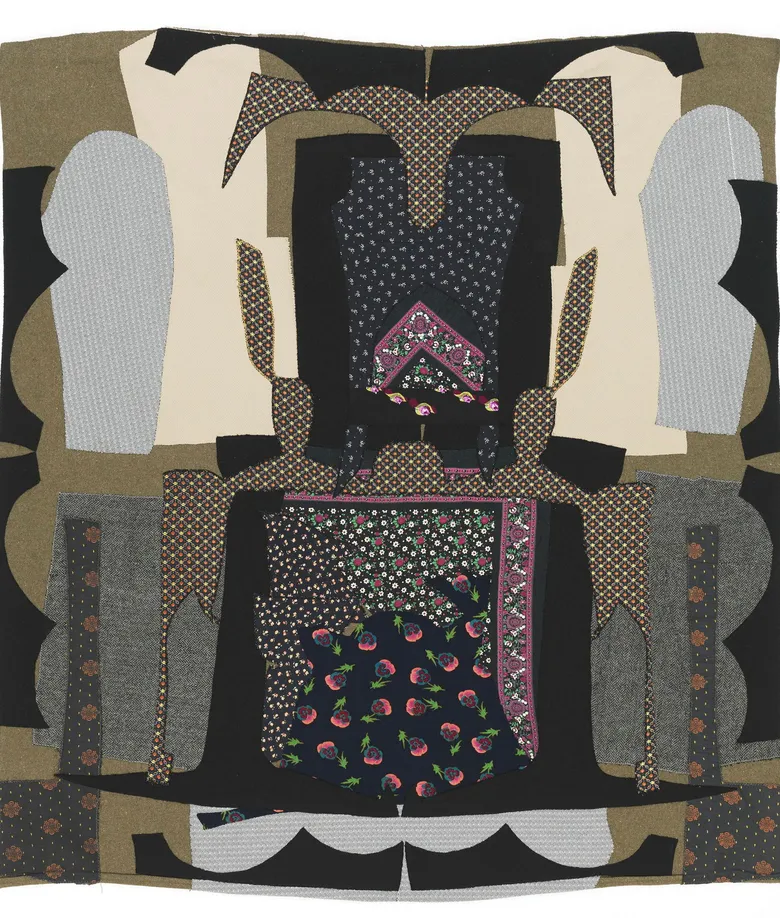
The participants, including artists and cultural figures, were protesting the showing of one of the works, 1974's "Mourning Carpet," a 174-by-160-centimeter (roughly 6-foot-by-5-foot) wall carpet by Israeli textile artist and choreographer Noa Eshkol. The piece features images of flowers in an array of colors. A YouTube video and media photos reveal the flavor of the protest. The chants filled the room, a Palestinian flag had been placed on the floor, and a few demonstrators wore kaffiyehs. Israel and Hamas' signing of a cease-fire agreement that day, October 9, didn't seem to register much.

A few days earlier an initiator of the protest, Norwegian artist Victor Lind, explained what was rousing the demonstrators' anger. "The National Museum has chosen to show a work that legitimizes the occupation of Palestine by the war criminal the State of Israel," he said in a panel discussion in Oslo in September. Lind also claimed that the work was "war propaganda" that legitimized genocide and fascism.

The call to remove Eshkol's work was also heard in letters, newspaper articles and social media posts; even employees of the museum joined in. But for now, the piece is still there and the museum hasn't voiced any intention to pull it. "The National Museum isn't supposed to be a political player," the museum's director, Ingrid Roynesdal, told Aftenposten, Norway's most popular daily. She added: "If we as a museum choose to become an active player in geopolitical debates, we're likely in the end to contribute to a narrowing of freedom of expression."

The demonstration at the museum joins a long list of protests and boycotts over the past two years against Israel and Israeli artists, scholars, athletes and businesses. But the battle surrounding Eshkol's work seems particularly strident. It reflects the depth of the crisis of Israel's international standing and the scale of the hatred for Israel in Europe, which goes far beyond opposition to the war in Gaza.

Noa Eshkol, "Mourning Carpet (Following the Massacre at the Ma'alot School). 
Credit: Jens Ziehe/Photographie/Neugerriemschneider Berlin

The story of the carpet begins with a national trauma in Israel. It was May 1974, slightly over six months since the Yom Kippur War and around two years since a string of terror attacks: the Munich Olympics massacre, the hijacking of a Sabena airliner that landed in Israel, and an assault at Israel's airport that killed 26 civilians. In May 1974, terrorists from the Democratic Front for the Liberation of Palestine infiltrated from Lebanon into Israel.

Over two days, with rifles, hand grenades and explosives, the DFLP terrorists killed and wounded Israelis in a series of attacks, the worst being the abduction of 85 Safed high school students who were staying at a school in another northern town, Ma'alot.

The students, some of whose teachers fled the building as the terrorists entered, served as bargaining chips for the gunmen, who sought the release of Palestinian prisoners. During negotiations, the government played for time as it planned a commando raid. The results were tragic in what is now known as the Ma'alot massacre. The storming of the building ended with the death of more than two dozen people, most of them students.

Like many Israelis, Noa Eshkol was shocked by the attack. Eshkol, who was born in 1924, is known for Eshkol-Wachman movement notation. She and her student Avraham Wachman created a system of symbols for describing movement; for example, in choreography. The work "Mourning Carpet," whose full name is "Mourning Carpet (After the Ma'alot School Massacre)," was the artist's response to the terror attack.

"This is one of the hundreds of carpets that Noa created in the final decades of her life," says Mooky Dagan, a human rights activist, musician and art curator who manages Eshkol's estate and heads the foundation established in her name. Dagan, who was a close friend of Eshkol's, adds: "It's one of her only carpets that can be connected to a specific event. That's why it was important to me to add the parenthetical information to the title."

Dagan says Eshkol created several mourning carpets after the Yom Kippur War. Another carpet, which was sold to the Pompidou Center in Paris, is called "Leaving Yamit," referring to an Israeli town in Egypt's Sinai Peninsula, before it was uprooted in 1982 as part of the Egyptian-Israeli peace deal. "Another one was named after Golda Meir, but these are the exceptions connected to a specific event or person," Dagan says. "She created over 1,000 carpets."

Dagan sees the irony in the fact that the carpet in Oslo is stirring such controversy. "The incident in Ma'alot shook the foundations," he says. "It was an event with hostages including many children, it launched a debate on surrendering to terrorists or taking military action, and it shook the country. It became a formative event, and it's symbolic in light of what's happening today in Israel and in Gaza." Dagan says the protest in Oslo has been the toughest challenge when it comes to Eshkol's work being shown abroad. He says his friend never wanted to display her carpets at all.

On a few rare occasions, he was able to convince her otherwise, but the international breakthrough came after her death in 2007, when he says she became a brand name and a raft of museums acquired her works. Solo exhibitions of her art have been staged in Germany, the Netherlands, Brazil, Sweden, Norway and Israel, and her works have taken part in group exhibitions in many other countries. "In the last years of her life she was drawn to creating the carpets in a way that she herself couldn't explain," Dagan says. "It became the most important thing in her life."

Would you say that these are political works? It's true that she was the daughter of Israel's third prime minister, Levi Eshkol, a fact that wasn't officially mentioned in the protest but came up in some of the online debates. But can she be linked to a specific political viewpoint?

"I can't speak in her name, and it's absurd to speak for people after their death. But I was very close to her and we became close friends already after the Six-Day War. When it came to the carpets, I shared the process of creation with her intimately. Noa was a political person, but her viewpoint wasn't linked to a party and she didn't intervene in specific political issues. Even though her father was the prime minister, and even though she was born on Kibbutz Degania and was thoroughly Israeli, she was totally antiestablishment. That was the paradox in her. Even though she breathed her Israeli identity, she created movement notation, which is the most universal thing possible. Her worldview was universal; she stressed this and even refused to patent her movement notation, so that the whole world could use it."

Dagan describes Eshkol as a dominant personality with solid opinions and clear thinking. She wouldn't take anything for granted, hated clichés and lived as a feminist. Surrounded by students, she detested titles and rebelled against every framework and consensus. She didn't want to be a candidate for the Israel Prize and convinced her friend Uri Zohar to turn down the 1976 prize for film because it was granted by the government. "Her attitude, spiritually and practically, was that of a rebel," Dagan says.

Just because of the protest against her work in Oslo, it would be interesting to know if she had clear opinions about the Israeli-Palestinian conflict.

"I can definitely attest that she was a person with a worldview that's now called leftist. Even though she detested labels of this kind, above all she had a humanistic outlook. She wasn't an activist, but the current situation would have clearly driven her crazy. Until her death she had the worldview of a pure dove."

***

Hawk or dove, it makes no difference to the demonstrators against the National Museum in Oslo, which bought Eshkol's work in 2022. In May this year the work was hung in Room 76, the space reserved for political art. When the director was asked by the online contemporary art magazine Kunstkritikk why she chose it, she said the museum switches works in its rooms so that all the works can be better preserved.

"Room 76 is devoted to political art, mainly from 1965 to 1980," she said. "This work was chosen according to the regular procedures. The room displays a variety of artistic expressions and strategies, and tries to reflect the art of the period when the works were created."

Lind, the Norwegian artist, said about the storm after the decision to display "Mourning Carpet": "We all see pictures from Gaza every day of child-size white body bags, small white cloth sacks tied with rope at the top and bottom. He said in the panel discussion: "The genocide being perpetrated by Israel against the Palestinians is intolerable. Little children, like our children, are dying of starvation. A mother who has no more milk because she herself is suffering from malnutrition. She was shot in the stomach by Israeli soldiers while waiting in line for food. There's a smell of gas in Gaza. I'm sorry that the situation requires such harsh language."

Lind, 84, was among political artists identified with the radical left in the early '70s. He also created works commemorating the Holocaust of Norway's Jews. Regarding "Mourning Carpet," he said that "the National Museum's choice to show this work during the ongoing genocide in Gaza infuriates me because of its curating decisions with a viewpoint of supporting the Israeli narrative. … The work depicts the Israelis as the victims of Palestinian terror.

"'Mourning Carpet' commemorates the Israelis who were killed during the Palestinian revolt against the Israeli occupation. The work reflects Israel's official narrative of the Israel-Palestinian conflict from 1948 until today, a narrative that sees Israel as the main victim throughout." Lind's protest included a complaint about the removal of Norwegian works in favor of the Israeli work. "Mourning Carpet" is displayed alongside pieces by Norwegian artists, including Lind himself, whose work is "art in favor of freedom and against occupation and oppression," he said.

Geir Egil Bergjord, chairman of the Association of Norwegian Visual Artists, wrote in Aftenposten: "The museum's decision to show this work now, during what many consider a genocide in Gaza, has given the work political significance. A national museum can't be neutral in every context. It must balance artistic freedom and the context in which the work is displayed.

"The museum has removed political works by Norwegian artists to make room for a work that supports the narrative of an occupier, Israel. The director must recognize that fact. Curating decisions require more than vague declarations of 'space for artistic expression.'"

The left-wing Norwegian newspaper Klassekampen examined the extent Norwegian museums took an interest in the war between Israel and Hamas. It found that museums in Bergen and Trondheim are showing works by Palestinian artists. It also found that the Nitja Center for Contemporary Art in Lillestrom has held an exhibition of video works by Palestinian artists, as well as an exhibition of posters for Palestine and works by Palestinian artist Hasan Daraghmeh. It has also shown aerial photographs by Norwegian photographer Hedevig Anker "filmed in Palestine before the establishment of the State of Israel."

Several employees took part in the protest at the National Museum. "We aren't neutral, we stand in solidarity with Palestine," curator Monica Holmen told Klassekampen. One complaint by the anti-Eshkol demonstrators was the listing of her place of birth as Israel, even though the artist was born 24 years before the state was established. The sign has been changed to "British Mandate Palestine (today's Israel)."

The original decision was to follow the museum's policy: The country of an artist's birth is noted in its modern version even if it had a different name during the artist's lifetime. Only after public pressure did the museum change tack, while creating the impression that it had made a technical error. (Though internal emails leaked to the Norwegian media show that the museum was well aware of the sensitivity of the subject.)

It was very difficult to speak to the protesters themselves and give them a chance to explain their viewpoint to Israeli readers. Lind declined to be interviewed by Haaretz. Requests to the Association of Norwegian Visual Artists were unsuccessful at first, but Egil Bergjord, the chairman, eventually agreed. He said in an English-language email: "I would like you to note that the Norwegian Visual Artists Association (NBK) has not asked the museum to remove the artwork. Rather, NBK has criticized the museum for displaying it without providing a proper contextualization." He said that if "our National Museum exhibits Eshkol's work without presenting alternative perspectives or critical discourse, the museum fails to acknowledge or critically engage with the political significance of its curatorial decisions."

The National Museum said it couldn't arrange an interview with the director or the person responsible for the exhibition. Later it said that these officials couldn't be interviewed due to the public debate about the museum's decision – precisely the debate that Haaretz wanted to discuss.

***

"Museums must of course listen to different opinions, but their job isn't to meet the demands of various groups," says Marianne Hultman, a Swedish curator and art historian who spent some of her childhood in Israel. She has worked in Norway for nearly 20 years, and four years ago, as director of the Oslo Kunstforening art gallery and society, she curated an Eshkol exhibition in cooperation with Sweden's Norrköping Art Museum and the organization Jewish Culture in Sweden.

Regarding Eshkol's controversial work, she says: "Eshkol often used tablecloths, curtains and blankets as a base for her textile collages. In this work she used one of the army blankets brought to her by one of her dancers after the Yom Kippur War. "In 'Mourning Carpet' the symbolically charged fabric is allowed to emerge and become an integral part of the image. With remnants from the clothing industry, the image bears traces of bodily forms and points to the absence of the body, pointing to the traces of human life.

"The military blanket functions concretely as a base for the pieces of fabric, and symbolically as a representation of the violence that marked the event. It's a work of mourning for all the lives lost in connection with the massacre. Today it perhaps also expresses grief over a conflict that continues to leave deep traces of suffering and death."

Hultman believes there is justification for including Eshkol's work in the political art space at the National Museum, and she's disappointed at the protest against it. "How would our museums look if every artwork had to meet the same demands that Noa Eshkol's 'Mourning Carpet' now faces?" she asks. "It would mean that all artists had to bear responsibility for their country's political, religious and military choices. And where would that leave artistic freedom?"

גם הפסקת האש לא עצרה את ההפגנות מול העבודה של נועה אשכול באוסלו

"שטיח האבל" מ-1974, שיצרה נועה אשכול בעקבות הטבח במעלות, מעוררת מחאה חריגה בנורבגיה ומראה שהשנאה לישראל חורגת מהמלחמה.

פורסם ב"הארץ": https://www.haaretz.co.il/gallery/galleryfriday/2025-11-06/ty-article-magazine/.highlight/0000019a-4f54-db4c-a5fb-cfff4e360000

הסצנה שהתרחשה במוזיאון הלאומי הנורווגי בתחילת אוקטובר היתה חריגה, אפילו ביחס לאירועי מחאה אחרים באוסלו, עיר שהתקיימו בה בשנתיים האחרונות אינספור מחאות קולניות וחריפות מאוד נגד ישראל. בחדר במוזיאון שעל קירותיו מוצגות יצירות אמנות בעלות הקשר פוליטי שנאספו תחת הכותרת "על הבריקדות" התיישבו עשרות בני אדם והחלו לצעוק יחד: "הורידו את השטיח!"

המשתתפים, אמנים ואנשי תרבות, ביקשו למחות על הצגתה של אחת היצירות – "שטיח אֵבל", שטיח קיר בגודל 174×160 ס"מ שיצרה ב-1974 האמנית והכוריאוגרפית הישראלית נועה אשכול, ובמרכזו דימויים של פרחים בשלל צבעים. סרטון שהועלה ביוטיוב ותמונות שפורסמו בתקשורת תיעדו את המחאה: הצעקות מילאו את חלל החדר, על הרצפה הונח דגל פלסטין וחלק מהמפגינים עטו כאפייה. לצד הצעקות נשמעו גם נאומים ואפילו מנהלת המוזיאון זומנה למקום. העובדה שבאותו יום, 9 באוקטובר, חתמו ישראל וחמאס על הסכם הפסקת אש לא השפיעה בשום צורה על המפגינים.

אחד מיוזמי המחאה, האמן הנורווגי ויקטור לינד, הסביר כמה ימים קודם לכן מה עורר את כעסם: "המוזיאון הלאומי בוחר להציג יצירה שעושה לגיטימיזציה לכיבוש פלסטין על ידי מדינת ישראל פושעת המלחמה". הוא גם טען שזו תעמולת מלחמה, שנותנת לגיטימציה לרצח עם ולפשיזם.

הקריאה להוריד את יצירתה של אשכול נשמעה לא רק במוזיאון עצמו. מכתבים, מאמרים בעיתונים ופוסטים ברשתות חברתיות ניסו גם הם להפעיל לחץ על המוזיאון ודרשו להוריד אותה, ואפילו חלק מעובדי המוזיאון הצטרפו לתביעה. אך לעת עתה היצירה תלויה במקומה והמוזיאון לא הודיע שבכוונתו להסירה. "המוזיאון הלאומי אינו אמור להיות שחקן פוליטי", אמרה מנהלת המוזיאון, אינגריד רוינסדאל, ליומון הנפוץ ביותר בנורווגיה, "אפטנפוסטן". לדבריה, "אם אנו כמוזיאון נבחר להפוך לשחקן פעיל בדיונים גיאו-פוליטיים, אנו עלולים בסופו של דבר לתרום לצמצום מרחב הביטוי הזה".

ההפגנה במוזיאון באוסלו מצטרפת לשורה ארוכה של מחאות וחרמות המופנים בשנתיים האחרונות כלפי ישראל וכלפי אמנים, חוקרים, ספורטאים ועסקים ישראלים, אך נדמה כי המאבק סביב יצירתה של אשכול חריג בהיקפו ובמידת התהודה שעורר. הוא משקף את עומק המשבר שבו נמצא מעמדה הבינלאומי של ישראל ואת עומק השנאה כלפיה באירופה, החורגת בהרבה מהתנגדות למלחמה בעזה. ואמנם, הסכם הפסקת האש לא הביא לשום שינוי במחאה, והוויכוח על הצגת היצירה נמשך גם אחרי השגתו.

נועה אשכול, "שטיח אבל (בעקבות הטבח בבית הספר במעלות)", 1974.
צילום: Jens Ziehe/Photographie / neugerriemschneider berlin

סיפורו של השטיח שבלב הסערה מתחיל באירוע שהפך לטראומה לאומית בישראל. במאי 1974, קצת יותר מחצי שנה אחרי מלחמת יום כיפור וכשנתיים אחרי הפיגועים באולימפיאדת מינכן, במטוס סבנה ובנמל התעופה לוד, חדרה חוליית מחבלים של החזית הדמוקרטית לשחרור פלסטין מלבנון לישראל. בשלושת הימים שאחרי החדירה שלושת המחבלים, שהיו חמושים ברובים, רימוני יד וחומרי נפץ, הרגו ופצעו אזרחים ישראלים בשורת פיגועי טרור, שהחמור בהם היה חטיפת 85 תלמידי כיתות ט'-י"א מתיכון דתי מצפת שבמסגרת טיול התאכסנו בבית הספר נתיב מאיר במעלות. התלמידים, שחלק ממוריהם נמלטו מהבניין בעת חדירת המחבלים, שימשו כאמצעי מיקוח לדרישת המחבלים לשחרר אסירים שהיו כלואים בישראל. הממשלה אמנם דנה בדרישתם, אך למעשה משכה זמן במשא ומתן לקראת מימוש התוכנית לפרוץ בכוח לבניין במטרה לשחרר את החטופים.

התוצאות היו טרגיות: בפריצה לבניין נהרגו 21 תלמידים ותלמידות. המספר הכולל של הקורבנות באירוע, שנודע בשם "טבח מעלות", היה 28, לרבות תלמידה שנפצעה ומתה מפצעיה כעבור עשרה ימים, ארבעה אזרחים וחייל שנרצחו לפני הפריצה לבית הספר ואזרח שסייע בחילוץ, נפצע ומת מפצעיו כמה שנים מאוחר יותר.

כמו ישראלים רבים אחרים, גם נועה אשכול זועזעה מהפיגוע. אשכול, ילידת 1924, נודעה יחד עם תלמידה, הארכיטקט אברהם וכמן, כממציאת כתב התנועה אשכול-וכמן – מערכת סמלים המאפשרת להגדיר תנועה, ששימשה בין השאר כאמצעי לרישום תנועה אנושית וכוריאוגרפיה. היצירה "שטיח אבל", שלשמה נוספה בסוגריים ההערה "בעקבות הטבח בבית הספר במעלות", היתה תגובה ישירה של האמנית לאותו מרחץ דמים.

"זה אחד ממאות שטיחים שנועה יצרה בעשורים האחרונים של חייה", אומר מוקי דגן – פעיל זכויות אדם, מוזיקאי ואוצר אמנות, האחראי על עיזבונה של אשכול ומנהל את הקרן שהוקמה על שמה. "היא עשתה אותו ממש בסמוך לאירוע ומיד כשסיימה אותו, היא הראתה לי ואמרה שזה על מעלות. זה אחד השטיחים היחידים שלה שאפשר לקשר לאירוע מסוים. בגלל זה היה לי חשוב להוסיף לכותרת שלו, 'שטיח אבל', את התוספת בסוגריים. נועה יצרה כמה שטיחי אבל בעקבות מלחמת יום כיפור. שטיח אחר, שנמכר למוזיאון פומפידו בפריז, נקרא 'היציאה מימית', אחד אחר נקרא על שם גולדה מאיר, אבל אלה הם החריגים שקשורים לאירוע או אדם ספציפיים. בסך הכל היא יצרה יותר מ-1,000 שטיחים".

דגן, שהיה חבר אישי קרוב של אשכול, מוצא סמליות בכך שדווקא השטיח שנקנה על ידי המוזיאון הלאומי באוסלו מעורר כזאת מחלוקת. "האירוע במעלות זיעזע את אמות הסִפים", הוא אומר. "זה היה אירוע שהיו בו חטופים, שנפגעו בו ילדים רבים, שהיה סביבו דיון על כניעה למחבלים או פעולה צבאית ושטילטל את המדינה. הוא הפך לאירוע מכונן וזה סמלי שעל רקע מה שקורה היום בישראל ובעזה, השטיח שמעורר את המחלוקת הזאת עוסק בדיוק בנושאים האלה".

המחאה באוסלו, לדברי דגן, היא המקרה החריף ביותר שבו נתקל לגבי עבודתה של אשכול בחו"ל. הוא אומר שבימי חייה אשכול לא רצתה להציג את השטיחים כלל. הוא אמנם הצליח לשכנע אותה להציג אותם בכמה הזדמנויות נדירות, אך הפריצה הבינלאומית החלה לאחר מותה ב-2007, אז היא הפכה לדבריו ל"מותג" ומוזיאונים רבים רכשו מיצירותיה. תערוכות יחיד שלה התקיימו בשנים האחרונות בגרמניה, הולנד, ברזיל, שוודיה, נורווגיה וישראל ועבודותיה השתתפו בתערוכות קבוצתיות במדינות רבות נוספות. "בשנים האחרונות לחייה היא נשאבה ליצירת השטיחים בצורה שהיא עצמה לא ידעה להסביר", אומר דגן, "זה הפך לדבר הכי חשוב בחייה".

היית אומר שאלה עבודות פוליטיות? היא אמנם היתה בתו של ראש הממשלה השלישי לוי אשכול (עובדה שלא הוזכרה במחאה נגדה), אך האם אפשר לקשר בינה ובין השקפה פוליטית מסוימת?

"אני לא יכול לדבר בשמה וזה מופרך לדבר בשם אנשים אחרי מותם. עם זאת, הייתי קרוב אליה מאוד והפכנו לחברים קרובים כבר אחרי מלחמת ששת הימים. בכל מה שקשור לשטיחים, חלקתי איתה את תהליך היצירה באופן אינטימי. נועה היתה אדם פוליטי, אבל היתה לה השקפה שלא היתה קשורה למפלגה והיא לא היתה מתערבת בסוגיות פוליטיות ספציפיות. היא בעיקר היתה אדם שסלד מהממסד. למרות שאביה היה ראש הממשלה, למרות שהיא נולדה בדגניה ולמרות שהיתה ישראלית בכל רמ"ח איבריה, היא היתה אדם אנטי-ממסדי לגמרי. זה היה הפרדוקס שבה. למרות שהיא נשמה את הזהות הישראלית, היא יצרה את כתב התנועה שהוא הדבר הכי אוניברסלי שיכול להיות. השקפת העולם שלה היתה אוניברסלית; היא טרחה להדגיש את זה ואפילו סירבה לרשום פטנט על כתב התנועה כדי שכל העולם יוכל להשתמש בו".

דגן מתאר את אשכול כאישיות דומיננטית, בעלת דעות מוצקות ומחשבה צלולה. לדבריו, היא לא היתה מוכנה לקבל שום דבר כמובן מאליו, שנאה קלישאות, חייתה כפמיניסטית אף שהמונח "הצחיק אותה", ובאופן כללי, ניהלה את חייה בצורה יוצאת דופן, מוקפת תלמידים, סולדת מתארים, מורדת בכל מסגרת ומוסכמה. דגן מוסיף שהיא לא רצתה להיות מועמדת לפרס ישראל והיא גם זו ששיכנעה את חברהּ, אורי זוהר, לא לקבל את הפרס בתחום הקולנוע ב-1976 מפני שהוא מוענק על ידי המדינה. "היחס שלה, נפשית ומעשית, היה יחס של מורדת", אומר דגן.

דווקא בגלל המחאה נגד יצירתה באוסלו, מעניין אם היו לה דעות ברורות לגבי הסכסוך הישראלי-פלסטיני.

"אני יכול להעיד בפה מלא ובאחריות שהיא היתה אדם עם השקפה שנקראת היום שמאלית. היא אמנם סלדה מהגדרות מהסוג הזה, אבל לפני כל דבר אחר היתה לה השקפה הומניסטית. היא לא היתה אקטיביסטית ואי אפשר לדעת מה היה קורה לה היום, אבל ברור לי שהיא היתה משתגעת מהמצב. אחרי מלחמת ששת הימים ומלחמת יום כיפור קבוצת ההתייחסות שלה היו אנשים כמו הסופר משה שמיר, שהגיע כמותה מרקע סוציאליסטי אבל הצטרף לתנועת ארץ ישראל השלמה. על רקע זה היו ביניהם ויכוחים איומים. עמדתה, עד מותה, היתה עמדה של יונה צחורה".

נץ או יונה, במקרה של המחאה נגד המוזיאון הלאומי באוסלו זה לא ממש שינה. היצירה של אשכול נקנתה על ידי המוזיאון ב-2022. במאי השנה היא נתלתה בחדר 76 – אותו חלל של המוזיאון שמוקדש ליצירות פוליטיות. כשמנהלת המוזיאון רוינסדאל התבקשה על ידי מגזין האמנות המודרנית האינטרנטי Kunstkritikk להסביר את הבחירה בה, היא השיבה שהמוזיאון מחליף יצירות ואוצר מחדש חדרים מסוימים כדי לשמר עבודות. "חדר 76 מוקדש לאמנות פוליטית, בעיקר בין השנים 1965 ל-1980, והיצירה הזאת נבחרה בהתאם לפרוצדורות רגילות לחלוטין הקשורות לאצירה מחודשת של החלל", אמרה. "החדר מציג מגוון של ביטויים ואסטרטגיות אמנותיות, ומנסה לשקף את האמנות של התקופה שבה נוצרו העבודות".

הזעם שעוררה ההחלטה להציג להציג את "שטיח אבל" התבטא בצורות רבות בנורווגיה – במאמרים בכלי התקשורת, ברשתות החברתיות, במכתבים פומביים, בקריאות לחרם ועוד. יוזם המחאה לינד אמר בכנס שנערך באוסלו: "כולנו רואים כל יום תמונות מעזה של שקי גופות לבנים בגודל של ילדים. שקי בד קטנים ולבנים, קשורים בחבל מלמעלה ומלמטה. רצח העם שישראל מבצעת בפלסטינים הוא בלתי נסבל. ילדים קטנים, כמו הילדים שלנו, מתים מרעב. אֵם שאין לה יותר חלב כי היא עצמה סובלת מתת-תזונה. היא נורתה בבטן, כשהיתה בתור לקבלת מזון, על ידי חיילים ישראלים. יש ריח של גז בעזה! אני מצטער שהמצב מחייב שפה כה חריפה".

לינד בן ה-84 נודע כחלק מקבוצת אמנים פוליטיים שהיו מזוהים עם השמאל הרדיקלי בתחילת שנות ה-70; הוא גם יצר עבודות שהנציחו את שואת יהודי נורווגיה. הוא תלה את התנגדותו ליצירה של אשכול בכך ש"הבחירה של המוזיאון הלאומי להציג את היצירה הזאת בעיצומו של רצח העם המתמשך בעזה ממקמת אותו, דרך הבחירות האוצרותיות שלו, בעמדה התומכת בנרטיב הישראלי… היצירה מציגה את הישראלים כקורבנות של טרור פלסטיני. שטיח האבל מנציח את הישראלים שנהרגו במהלך מרד פלסטיני נגד הכיבוש הישראלי. היצירה משקפת את הנרטיב הרשמי של ישראל לגבי הסכסוך הישראלי-פלסטיני מ-1948 ועד היום, נרטיב הרואה בישראל את הקורבן המרכזי לאורך כל הדרך". מחאתו של לינד כללה גם טענה על הורדתן של יצירות נורווגיות לטובת הצגתה של היצירה הישראלית. היא מוצגת לצד עבודות של אמנים נורווגים, בהם הוא עצמו, שיצירתם היא "אמנות בעד חירות ונגד כיבוש ודיכוי", כלשונו.

לאחר דבריו של לינד הצטרפו אמנים נורווגים נוספים למאבק, בהם יו"ר אגודת האמנים החזותיים של נורווגיה (NBK), גייל אגיל ברגיורד. במאמר בעיתון "אפטנפוסטן" הוא כתב: "החלטת המוזיאון להציג את היצירה הזאת כעת, בעיצומו של מה שרבים מגדירים כרצח עם מתמשך בעזה, הקנתה ליצירה משמעות פוליטית. יש מקום להטיל ספק ביושרה המקצועי של מנהלת המוזיאון. מוזיאון לאומי אינו יכול להיות ניטרלי בכל הקשר. עליו לאזן בין חופש אמנותי ובין ההקשר שבו מוצגת היצירה. המנהלת חייבת להכיר בכך. המוזיאון הלאומי מסיר יצירות פוליטיות ידועות של אמנים נורווגים כדי לפנות מקום ליצירה שתומכת בנרטיב של כוח כובש – ישראל. זו אינה עמדה ניטרלית, בניגוד למה שרוינסדאל טוענת. החלטות אוצרותיות כאלה מחייבות יותר מאשר הצהרות מעורפלות על 'מרחב לביטוי אמנותי'".

הדיון בניטרליות ובמעורבות הפוליטית של מוזיאונים נורווגיים התנהל לאחרונה בעיתון השמאל הנורווגי Klasskampen, שבחן את מידת העיסוק של מוזיאונים במדינה במלחמה בישראל ובעזה. העיתון סיקר מוזיאונים רבים במדינה שעוסקים באופן פעיל בסכסוך הישראלי-פלסטיני, בהם כאלה בערים ברגן וטרונדהיים המציגים יצירות של אמנים פלסטינים. המנהלת האמנותית של המוזיאון לאמנות בטרונדהיים, אינגריד לונאן, אמרה לעיתון ש"אנחנו מאמינים שיש לנו אחריות לקדם אמנות פלסטינית", ודוברת של Bergen kunsthall, מוסד אמנות בברגן, סיפרה שהוא תרם לאיסוף כסף מקומי ל"תמיכה בפלסטין".

המרכז לאמנות מודרנית Nitja בעיר לילסטרום אף הציג תערוכה של יצירות וידיאו של אמנים פלסטינים. אוצרת המרכז, מוניקה הולמן, סיפרה שהוא הציג גם תערוכת "פוסטרים למען פלסטין", שתמכה בארגונים פלסטיניים, והציע בחנות שלו מוצרים שההכנסה ממכירתם הוקדשה לתמיכה בפלסטין. בתערוכה נוספת במקום הוצגו עבודות של האמן הפלסטיני חסן דראגמה, וסדרת תצלומי אוויר של הצלמת הנורווגית הדוויג אנקר ש"צולמו בפלסטין לפני הקמת מדינת ישראל". כמה מעובדי המרכז אף השתתפו במחאה במוזיאון הלאומי בחודש שעבר. "אנחנו לא ניטרלים, אנו עומדים בסולידריות עם פלסטין", אמרה הולמן.

אחת הטענות של המוחים נגד הצגת עבודתה של אשכול במוזיאון הלאומי נגעה לרישום מקום הלידה של האמנית בתווית המופיעה ליד היצירה. בהתאם למדיניות המוזיאון, מקום הלידה שצוין היה ישראל, אף שאשכול נולדה יותר מ-20 שנה לפני קום המדינה. טענה זו התקבלה על ידי המוזיאון, המנהלת רוינסדאל טענה שנפלה טעות והשילוט תוקן לנוסח אחר: (today's Israel) British-Mandate Palestine. אלא שהודעות מייל פנימיות של הנהלת המוזיאון שנחשפו במגזין Kunstritik הראו שנושא מקום הלידה של אשכול דווקא נדון בדיון ארוך בין אנשי המוסד, שבו הצגת היצירה נתפסה כ"נושא רגיש פוליטית". בסוף הדיון הפנימי הוחלט לדבוק בנוהלי המוזיאון, שלפיהם המדינה שבה נולד האמן מוזכרת בשמה העדכני, גם במקרים שבהם היא נקראה בשם אחר בימי חייו של האמן. במוזיאון שקלו גם רישומים אחרים למקום לידתה של אשכול, כמו "פלסטין, היום ישראל" ו"ישראל, אז פלסטין", אך לבסוף כתבו "ישראל". רק לאחר הלחץ הציבורי שינה המוזיאון את ההחלטה ויצר את הרושם שהיה מדובר במעין טעות טכנית.

ניסיונות לשוחח עם המעורבים במחאה ולאפשר להם להשמיע את עמדתם בפני קוראים בישראל נתקלו בקשיים רבים. יוזם המחאה, לינד, התבטא לא מעט בעיתונות הנורווגית אבל לא נענה לפניית "הארץ" להתראיין. לאחר שתי פניות אליו הוא מסר: "תודה על הפנייה. לצערי, אין באפשרותי להתראיין כעת וגם לא בעתיד". פנייה שלישית כבר לא נענתה כלל.

גם כמה פניות לאגודת האמנים החזותיים של נורבגיה, שמוענו ליו"ר ולשני גורמים נוספים בארגון, לא צלחו בתחילה. לבסוף נענה יו"ר האגודה, אגיל ברגיורד, והסביר שהעיכוב בתשובה נבע מעומס דיונים ודד-ליינים הקשורים לאישור תקציב המדינה. הוא מסר שהאגודה "לא ביקשה מהמוזיאון להסיר את היצירה. במקום זאת, היא ביקרה את המוזיאון על כך שהציג את היצירה מבלי לספק הקשר הולם. כאשר המוזיאון הלאומי שלנו מציג את עבודתה של אשכול מבלי להציג נקודות מבט חלופיות או שיח ביקורתי, הוא נכשל בהכרה או בהתמודדות ביקורתית עם משמעותן הפוליטית של החלטותיו האוצרותיות".

המוזיאון הלאומי באוסלו טען שאין באפשרותו לארגן ראיון עם המנהלת או עם האחראית על התצוגה בגלל נסיעת עבודה. פנייה חוזרת למוזיאון לא נענתה עד שלבסוף התקבלה התשובה שאין ביכולתם של מנהלי המוזיאון להתראיין בגלל הדיון הציבורי על החלטותיו האוצרותיות – בדיוק אותו דיון שעליו ביקשנו לשוחח עמם.

"מוזיאונים צריכים, כמובן, להקשיב לקולות שונים, אך תפקידם אינו למלא אחר דרישותיהן של קבוצות שונות", אומרת ל"הארץ" מריאן הולטמן, אוצרת שוודית שהיא גם היסטוריונית של אמנות וגם בעלת רקע ישראלי. הולטמן עבדה בנורווגיה כמעט 20 שנה ולפני ארבע שנים, כאשר היתה מנהלת אגודת האמנות של אוסלו, הוצגה באגודה תערוכה של אשכול בשיתוף פעולה עם ארגון "תרבות יהודית בשוודיה". אותה תערוכה הוצגה בהמשך במוזיאון האמנות של העיר השוודית נורשפינג.

לדבריה, המוזיאון הלאומי בחר להציג את יצירתה של אשכול כחלק מאסטרטגיה אוצרותית חדשה, שבמסגרתה נכללים גם אמנים בינלאומיים בתערוכה "על הבריקדות". "לאחר יותר מ-50 שנה היצירה מוצגת באור חדש. עבור אשכול, השטיחים היו יצירה אישית ואינטואיטיבית, בניגוד חד לעבודה המחקרית והתיאורטית שבה עסקה בדרך כלל. היא לא רצתה להציג אותם בפומבי. בסופו של דבר השתכנעה והציגה אותם במוזיאון תל אביב לאמנות ב-1978 ובמוזיאון העיצוב בקופנהאגן ב-1981. בכך עברו השטיחים מהתחום הפרטי אל המרחב הציבורי, מה שפתח את האפשרות לבחון ולפרש אותם בהקשרים חדשים".

על היצירה שבמוקד המחלוקת אומרת הולטמן: "אשכול השתמשה לעתים קרובות במפות שולחן, וילונות ושמיכות כבסיס לקולאז'ים הטקסטיליים שלה. ביצירה זו השתמשה באחת מהשמיכות הצבאיות שאחד הרקדנים בלהקה שהקימה הביא לה לאחר מלחמת יום כיפור. ב'שטיח אבל' הבד הטעון הזה מקבל נוכחות גלויה והופך לחלק בלתי נפרד מן התמונה. פיסות הבד המרכיבות את הקומפוזיציה הן שאריות מתעשיית ההלבשה. הדימוי הנוצר נושא עמו עקבות של צורות גוף, או, במקרה הזה, דווקא היעדרו של הגוף. דומה שהקומפוזיציה, למרות ההפשטה שבה, מתעקשת להפנות את תשומת הלב אל עקבות החיים האנושיים. השמיכה הצבאית משמשת באופן ממשי כרקע, ובמובן סמלי היא מייצגת את האלימות שעמדה בבסיס האירוע. היצירה היא מעין עבודת אבל על החיים שאבדו בעקבות טבח מעלות, ועבורנו כיום היא מבטאת אולי גם צער על סכסוך שממשיך להותיר אחריו עקבות עמוקים של סבל ומוות".

הולטמן סבורה כי יש הצדקה להכללת יצירתה של אשכול בחלל המוקדש לאמנות פוליטית במוזיאון באוסלו ומביעה אכזבה מהמחאה נגדה. "כיצד ייראו המוזיאונים שלנו אם כל יצירה תידרש לעמוד באותם הקריטריונים ש'שטיח אבל' של אשכול עומד בפניהם כיום?" היא שואלת. "פירוש הדבר יהיה שאמנים יישאו באחריות על ההחלטות הפוליטיות, הדתיות והצבאיות של המדינה שממנה באו. ואז, לאן תיעלם החירות האמנותית?"

Medelhavsmuseet's Selective History

When it comes to the past, Medelhavsmuseet (The Swedish Museum of Mediterranean and Near Eastern Antiquities) largely ignores Israel, but when it comes to the present the museum presents only different shades of the same narrative, one that excludes a balanced, mainstream Israeli perspective. This in itself is not necessarily a problem. However, since public funds are being used and this is all payed for by tax-payers money, why not invest in presenting all sides of the story? Are Israelis so dehumanized that their pain, loss, and sacrifice are not considered worthy of being told?

Published in Swedish in Svenska Dagbladet: https://www.svd.se/a/K8Bn37/medelhavsmuseets-selektiva-historia

The lecture hall at Medelhavsmuseet was full on September 4th. The evening seminar which took place there was called "Repair, Return and Reconstruction for Palestine’s Decolonized Future", and in case the message wasn’t clear enough from the name, during most of the evening there was a photograph of Gaza and a slogan in Arabic and English projected on the screen behind the panel members. The slogan read: “Glory to Gaza”.

The seminar itself wasn’t exactly intellectually challenging and the message was pretty straight forward. When Israel was mentioned by all speakers it was associated with very specific words. Genocide, occupation, oppression, destruction, starvation, ethnic cleansing, collective punishment and settler-colonialism were some of the favourites. There was also a consensus about the Palestinian reaction to the Israeli aggression. Here the popular words were: education, culture, conservation, de-colonization, renovation and restoration. Listening to the panel members it sounded like Palestinian resistance is all about Mahmoud Darwish poems, architecture podcasts and a struggle for free press.

In an hour and a half of debate there was nothing about Palestinian terror or violence, there were no suicide bombings or rockets, Hamas wasn’t mentioned and October 7th was just the date when the current Israeli offensive started. Since all panel members were engaged in architecture and restoration and apparently very well acquainted with Gaza, it was interesting that the immense military underground tunnel infrastructure, a remarkable architectural achievement in itself, was not mentioned. There was also no mention of another kind of physical destruction – the one of Israeli communities. No destroyed and abandoned kibbutzim, no apartments demolished by Qassam rockets and no homes burned to the ground with entire families still inside. There were no hostages, no executions and no organized rape and sexual violence. The whole event felt like a motivational inspirational gathering for activists, where all the speakers clearly presented a Palestinian narrative, and many in the audience were members of the so-called "pro-Palestinian" movement. Some wore kaffiyehs, a couple of them even had red triangles (a Hamas symbol) on them.

In itself, all this is completely legitimate. In a democracy, people are free to organize whatever seminar they wish. What is, however, somewhat troubling is that Medelhavsmuseet is part of a government agency (Statens museer för världskultur) funded by taxpayers, with tens of millions of Swedish Crowns each year. When Rani Kasapi, Head of Content and Learning at Världskulturmuseerna, opened the seminar, she also mentioned that other institutions were also involved in organizing it: the Swedish Institute of International Affairs (UI), the Swedish Research Institute in Istanbul (SRII), and the Swedish Arts Grants Committee. All of these are also fully or partially funded by Swedish taxpayers, raising the question – why should funds that could be spent on education and culture for the benefit of all be used for a one-sided, highly political event based on foreign policy propaganda?

Perhaps, the idea was to have another event to balance the message and show another side and a different narrative. And indeed, on October 7th, a very symbolic and politically charged date, another event was planned by the museum. This time the title was: What’s Happening in Israel Now? (Vad händer i Israel nu?). In a perfect world, this could have been the the missing piece, the event that shows that the situation is more complex than just propaganda. But the world isn’t perfect. According to publications, the event had only one speaker – Göran Rosenberg. The same Rosenberg who only a few months earlier described Israel as a "morally dead project" and questioned its future existents in its current form. It’s as if the museum invited an anti-vaxer to lecture about the importance of vaccinations. Was it really so hard to find another voice to describe the situation in Israel? One who at least believes in its future?
Medelhavsmuseet has hosted more events about the region in the last couple of years — for example, there was a book talk with Cecilia Uddén, one of Swedish media’s most critical voices when it comes to Israel. There was also a UI event featuring several Israeli left-wing activists. But the bigger picture is that, aside from rare exceptions, Medelhavsmuseet largely presents different shades of the same narrative, one that excludes a balanced, mainstream Israeli perspective. This in itself is not necessarily a problem. However, if public funds are being used, why not invest in presenting all sides of the story? Are Israelis so dehumanized that their pain, loss, and sacrifice are not considered worthy of being told?

Looking a bit deeper, it’s obvious that Medelhavsmusset doesn’t ignore the Israeli perspective only when it comes to the current conflict. For some reason, it ignores Israel’s existence all together (apart from occasionally mentioning it as a colonial bully destructing the fascinating, authentic and noble people of the orient). Israel as a modern state and the ancient Jewish entities in the Eastern Mediterranean like the Kingdoms of Jehuda and The Northern Kingdom of Israel are a treasure of history, archaeology and ancient culture. They’re the origin story of Christianity and Western civilization and a fascinating story of cultural, social and linguistic revival. Still, in the last twenty years of exhibitions, it seems like Medelhavsmuseet hasn’t had a single exhibition presenting Israeli or Jewish culture and history. I spoke with two historians who have studied this in detail. One of them said that “ancient Jewish history is almost completely erased from the museum’s portrayal of the ancient Mediterranean region”. The other said that for historical reasons, the museum focuses on Egypt and Cyprus, which is fine, but even when those cultures had strong connections to Jews in the region, those connections are usually not mentioned, and even on the rare occasions that they are the name Israel never is.

And they're right. Medelhavsmuseet has presented many exhibitions about Egypt, Greece, Rome, Syria, Cyprus, Turkey – and even non-Mediterranean countries such as Iraq. In fact, the only recent exhibition that touched on Israel was “Nakba,” which according to the Jewish Central Council was highly one-sided and sparked debate over whether the museum was pursuing a political agenda. The museum responded that “it is not a historical exhibition, but a small audio exhibition with stories”. When representatives from the Jewish Central Council met with the superintendent of Statens museer för världskultur regarding this, their concerns were not taken seriously.

There’s no doubt that the story of the Nakba should be told. It’s an important part of the region’s history. But if this was only a “small audio exhibition with stories”, where is the next audio exhibition with the other stories from the same war – for example, those about Holocaust survivors who were killed in the battle field after being freed from Auschwitz, or those about massacres of Jews that took place during the same time, or the ones about the Jordanians expelling the Jews from Jerusalem’s old town or the Egyptians illegally occupying Gaza?

During the debate with the Jewish Central Council, the museum mentioned one exhibition – Egypt’s Jews (Egyptens judar), perhaps as one with a more “Jewish narrative”. But the truth is that even when the exhibition explains how Egyptian Jews were attacked, harassed, arrested and expelled in the 1950s and 60s, it’s clear that the message is that this is a direct result of Zionism. The exhibition explains how for 3,000 years Jews were “totally integrated in the surrounding society” (helt integrerade i det omgivande samhället) and only when the UN decided to “divide Palestine” and the 1948 war broke out, Egyptians started “anti-Zionists riots” and resisted “foreign influence”. These texts are a wonderful example of verbal acrobatics. There’s no Egyptian antisemitism, no Muslim Brotherhood (the mother movement of Hamas) promoting genocidal racism against Jews, just an unfortunate mixing up (ihopblandning) of “Jews” and “Zionists”. This makes sense since one of the exhibition’s production partners was Magda Haroun, Head of the Jewish Community Council in Egypt and a vocal opponent of Israel who claims that Zionism is a racist movement. Interestingly, the exhibition which mentions the wars between Israel and Egypt, doesn’t discuss Egyptian President Saadat’s historic recognition of Israel and the resulting Israel-Egypt peace agreement. One can only assume that the reason is that if the museum tells its visitors about Egypt recognizing Israel, this may lead to a demand that Medelhavsmuseet does the same.

Zero tolerance” is no longer enough after Bondi Beach. Political action is required – and it is urgent

Published in Swedish in Kvartal: https://kvartal.se/erikhogstrom/artiklar/hur-paverkar-politiken-terrordad-mot-judar/cG9zdDozNzA5NA

Reactions to the terrorist attack at Bondi Beach have largely focused on the hateful rhetoric believed to have contributed to the violent extremism that claimed 15 lives – the deadliest attack on Jews since October 7. That focus is understandable after two years of global demonstrations under slogans such as “globalize the intifada.”

At the same time, the attack is rooted in more than a toxic debate climate. It also involves a geopolitical and security dimension that has primarily been raised by Israeli officials.

According to Israeli intelligence assessments, links had already existed for several months between Australian pro-Palestinian activists and groups such as the Islamic State, al-Qaeda, and Iran’s Revolutionary Guard. Against this backdrop, Israeli Prime Minister Benjamin Netanyahu accused Australia’s prime minister of betraying the country’s Jews. After the attack, Netanyahu stated that he had already warned in August that recognizing Palestine would, in his words, “pour fuel on the antisemitic fire, reward Hamas terrorists, and encourage threats against Australia’s Jews.”

This raises a number of questions. Does Australia really need Israeli intelligence to identify threats against its Jewish population? And more importantly: is Netanyahu truly the right person to lecture others about being unprepared for Islamist terrorism, when his own government bears responsibility for Israel’s worst catastrophe in decades?

But Netanyahu is not the central issue. What matters is that the warnings proved correct. A massacre of Jews took place in Australia, carried out by men who had ISIS flags in their car. Australian authorities knew that one of the perpetrators had ties to ISIS and that his father, the other perpetrator, legally owned at least six weapons. Despite this, no warning flags were raised, and the Jewish event lacked police protection when the attack occurred.

Islamists operate freely in Sweden

Against this background, Europe should ask itself a clear question. If Australia’s policies over the past two years resemble those pursued in many European countries, could what happened at Bondi Beach happen here?

Both domestic and foreign policy must be scrutinized. Domestically, this concerns insufficient resources to protect Jewish sites, an inability to counter conspiracy theories, and complacency toward Islamist actors. These challenges affect all European countries, including Sweden. Swedish journalists have recently exposed how Islamists operate freely in Sweden, how Iranian actors direct terrorist activity via Swedish organized crime, and what links Swedish activists have to terrorist movements such as the PFLP.

“Jews in countries that do not take Islamist terrorism seriously end up paying the price, regardless of whether government passivity stems from fear, incompetence, or indifference.”

Sweden is not alone. According to a recent Europol report, jihadist terrorism remains a central security challenge for the EU, with groups such as al-Qaeda and the Islamic State exploiting the conflict in Gaza. Added to this is Hamas, which, according to Israel’s Mossad and European intelligence services, has planned attacks against Jews in Europe since 2023. The causal link is clear: Jews in countries that do not take Islamist terrorism seriously pay the price.

Kvartal

Why foreign policy matters

How, then, does foreign policy factor in? Can recognition of Palestine or harsh criticism of Israel encourage terrorism? Countries such as Spain, Norway, and Ireland pursue a clear line against Israel. Like Australia, they have recently recognized Palestine; they voice strong opposition to Israel in international forums and serve as comfortable host countries for movements that not only oppose Israeli policy but view the state itself as an illegitimate colonial project.

Australia’s prime minister firmly rejected Netanyahu’s claim that the country’s foreign policy had any connection to the attack. He may be right – such accusations require evidence. But that does not mean foreign policy is irrelevant to the climate surrounding antisemitic hate crimes.

First, governments – unlike individuals – must understand the unique situation Jews face. Demonstrations are marked by hatred, aggression, Nazi comparisons, terrorist symbols, and boycotts. Of course, protests are legitimate in a democracy, and no one seriously claims that all participants are violent antisemites. But at the political level, it is unclear whether countries such as Norway fully grasp what their Jewish populations are forced to endure. The situation is worsened by the fact that no other conflict in the world is covered as intensely – and, according to many, as one-sidedly – in Norwegian media. This has an enormous impact on Norway’s small Jewish community.

Second, does the tax-funded public sphere remain neutral, or does it contribute to an unsafe environment for Jews? What do teachers say? What do libraries display? How do healthcare professionals behave? This is a matter of public safety, not freedom of speech. In February, a video went viral showing two nurses at Bankstown Hospital in Sydney boasting about refusing care to – or even killing – Israeli patients. In Ireland, an official report found that school textbooks contain serious distortions of the Holocaust and Jewish history, which Jews in the country say fuel antisemitism. In Spain, Jewish organizations similarly warn that some teachers use classrooms for anti-Israel activism.

“Zero tolerance” is no longer enough

We can continue debating the limits of protest, but we must also scrutinize institutions. The state must protect freedom of expression, but it must also guarantee safety. That requires schools, hospitals, and libraries free from political propaganda and symbolic acts intended to influence public opinion.

Finally, it is a fact that jihadist terrorists in Europe are often exposed with the help of Israeli intelligence. Can Jews in Spain and Ireland truly trust that their governments will cooperate with the Mossad to save lives, when those same governments cannot even tolerate Israel’s participation in Eurovision?

After Bondi Beach, Europe’s governments must decide where they place their resources and political capital. If they are serious about protecting their Jewish populations, “zero tolerance” and symbolic gestures of solidarity are no longer sufficient. Political action is required – and it's required urgently.

No Löfven, Hamas isn't Israel's Fault

Published in Swedish in Kvartal: https://kvartal.se/erikhogstrom/artiklar/nej-lofven-hamas-ar-inte-israels-fel/cG9zdDoyMjc1NA

A popular proverb says that a half-truth is a whole lie. The latest episode of SVT’s Utrikesbyrån about Hamas was a good example of that. That does not mean it wasn’t interesting. It was. Nor is there any doubt that the three participants — former Prime Minister Stefan Löfven, political scientist Marco Nilsson and Middle East analyst Bitte Hammargren — knew what they were talking about. But when it came to the analysis of Hamas, we were given only a half-truth.

The questions the presenter Rebecca Randhawa asked were: what is left of Hamas, will they lay down their arms, and who will govern Gaza. The first and the third questions are almost impossible to answer. Even Israeli intelligence does not know what remains of Hamas’s military capability, and Gaza’s future governance depends on a complicated geopolitical process. The second question, however, can be answered based on a deep understanding of what Hamas is, the choices it has made in the past, and what its ideological and political DNA is.

According to Löfven, Hamas’s power is the result of a paradox. Despite being one of Israel’s greatest enemies, its power originated with Israel’s political leadership. “Such an organization receives support (from Qatar, for example) simply because Israel wants to avoid the Palestinian Authority (PA) gaining any power.” Hammargren agreed and said that Hamas was a political asset for Israel. “Netanyahu’s line was that by letting Hamas grow in Gaza we don’t have to hear about a Palestinian statehood,” she said. This is a common analysis and it is partly true. Netanyahu and other Israeli leaders do indeed oppose a two-state solution. Because of this, his strategy was to weaken the PA, and many argue that one of the ways he did this was by allowing Hamas to grow. But this is only half the truth.

The other half, and the real reason Hamas rose to power and was able to retain it, is much simpler. The source of Hamas’s power is support from large parts of the Palestinian people. Even now, after two years of destruction and death that are a direct consequence of Hamas’s decision to massacre Israeli civilians on October 7, 2023, Hamas is still supported by many Palestinians. The international support from Qatar and Iran that Löfven and Hammargren mentioned is also not hard to understand. Iran’s regime has a long-term goal of eliminating “the Zionist entity,” and Qatar built its international position on supporting its ideological Muslim Brotherhood allies. Sure, Netanyahu miscalculated Hamas’s capacity and misread its intentions, but it was not he who made Hamas’s ideology popular, and it was not he who turned Qatar and Iran into dangerous regional destabilizing powers.

But where is Hamas heading? Utrikesbyrån’s two-and-a-half-minute clip tried to provide background. According to the clip, “Hamas removed the demand that Israel be destroyed, but still does not recognize the state of Israel.” This is not even a half-truth. Hamas is absolutely committed to the destruction of Israel. Yes, it created a new charter for foreign audiences, because the old document contained antisemitic propaganda that was not particularly popular on university campuses and in some Western circles. But even the new charter demands “all of Palestine” from the river to the sea, it does not accept the Oslo Accords or the two-state solution, and it still endorses “armed resistance,” which has been a decisive part of Hamas’s nature long before October 7. That includes blowing up buses and restaurants full of civilians as well as kidnapping, torturing and murdering Jews of all ages, genders and backgrounds. One interesting thing Utrikesbyrån did not mention is that Hamas activists have on several occasions been arrested in Europe for planning attacks on “Jewish targets.” Worth mentioning if anyone took the “new charter” seriously.

Despite (or perhaps because of) the violence, Hamas won the Palestinian elections in 2006 in both the West Bank and Gaza. Palestinians are not blind or politically incapable — they knew exactly what they were voting for. According to Utrikesbyrån’s experts, Netanyahu could have fought Hamas by strengthening the PA. It’s an interesting theory. Only problem is that it’s not true. Not during the years when Hamas was building its reign of terror, anyway. The reasons are that Netanyahu was not Israel’s prime minister at that time. Between 1999 and 2009 the prime ministers of Israel were Ehud Barak, Ariel Sharon and Ehud Olmert. The first was an outspoken advocate for a two-state solution, the second ended the occupation of Gaza, and the third was probably the one who offered the PA the most generous territorial compromise. Hamas was not impressed. It continued to build the fundamentalist, jihadist, genocidal faction within the Palestinian nationalist movement. Hamas did not need Netanyahu for this. It was fully capable of doing it on its own, while many Israelis were still considering peace and reconciliation.

Utrikesbyrån downplayed all of this. In the program there were no blown-up buses, no tunnels, rockets, high-tech international propaganda campaigns or brutal executions of Palestinian “collaborators.” October 7 was only mentioned in passing, as another point on the timeline. No hostages, no burned neighborhoods, no executed families. This is not a complaint that they “forgot October 7,” but a critique of incomplete analysis. How can one answer the question about Hamas’s intentions without taking into account that the organization recruited thousands of people who were willing not only to kill but also to commit gang rapes and sexualized torture in the name of Allah?

Netanyahu can and should be criticized for many things, but not for this. Sure, he did not destroy Hamas before October 7, and through his incompetence and corruption he may have contributed to the opposite. Israelis should hold him accountable for that. But this is far from the cause of the catastrophe. Hamas began building its advanced military capability long before Netanyahu, it remains standing, and many Palestinians still support it. Let us imagine that Netanyahu had decided to wipe out Hamas back in 2014. Now that we know that not even the destruction of Gaza did the job, would Stefan Löfven have supported an Israeli offensive on that scale? Would the Obama administration have allowed it? Would the UN have accepted it? Of course not. Everyone can complain about Netanyahu and everyone can criticize Hamas, but in the end — whose responsibility is it to eliminate Hamas, and who will support such an effort?

It is obvious that Stefan Löfven in no way supports Hamas. In Utrikesbyrån he spoke very clearly about the necessity of a political process with a reformed Palestinian Authority moving toward a two-state solution. But putting the blame for the situation on the Israeli government while ignoring Hamas’s inherently genocidal nature is a classic half-truth. It leads people to believe in conspiracy theories about secret Israeli involvement in the massacre of its own citizens, and more importantly — it shifts the focus to the wrong side. To reach a lasting ceasefire it would be wiser to focus on the “de‑Hamasification” of Gaza and support moderate forces on both sides that can help their communities recover from this two-year trauma and build a future together.

הפגנות, מחאות וקריאות לחרם: בנורבגיה מתכוננים למשחק מול נבחרת ישראל

נבחרת נורבגיה תארח מחר (שבת, 19:00) את ישראל במסגרת משחק במוקדמות מונדיאל 2026, וההכנות מסביב חורגות מהנוהל הרגיל. המתח לקראת המשחק הולך וגובר, כאשר ברקע ארגונים פרו-פלסטינים קוראים להחרמת הנבחרת הישראלית ולמחאות נרחבות נגד עצם קיום המשחק

פורסם ב"הארץ": https://www.haaretz.co.il/sport/world-soccer/2025-10-09/ty-article-magazine/.premium/00000199-c984-db56-a5db-cda7fa490000

מבחינת התאחדות הכדורגל של נורבגיה, המשחק נגד נבחרת ישראל במסגרת מוקדמות מונדיאל 2026, שיתקיים מחר (שבת, 19:00), הוא לא רגיל. ההכנות למשחק שיתקיים באיצטדיון הלאומי והגדול ביותר במדינה, אולבאל שבאוסלו, חורגות מהנוהל הרגיל, והמתח לקראת המשחק בעיצומו כאשר ברקע ארגונים פרו-פלסטינים קוראים להחרמת הנבחרת הישראלית ולמחאות נרחבות נגד עצם קיום המשחק.

"אנחנו לא מקבלים את השימוש הישראלי בספורט שאנו אוהבים כדי לנרמל הפרות זכויות אדם, כיבוש ורצח עם. לכן אנו מזמינים להפגנה ומצעד מחאה באיצטדיון ביום המשחק. הביאו ציוד כדורגל, דגלים פלסטיניים וכאפיות!", אומרת ל"הארץ" לינה חאטיב, מנהיגת ועדת פלסטין של נורבגיה (Palestinakomiteen), "הוועדה מציעה למפגינים סיסמאות כגון: 'הוציאו את ישראל מהכדורגל הבינלאומי!'; 'כדורגל ללא רצח עם'; 'לא לספורט-וושינג של ישראל'; ו-'תנו לילדים לשחק – פלסטין חופשית!'".

חאטיב מספרת שהאירגון, שבראשו היא עומדת וקיים במשך עשורים, מקיים הפגנות נגד "רצח העם והכיבוש שמבצעת ישראל, מקדם חרמות על ישראל ופועל בתמיכה בפלסטינים כבר עשרות שנים". היא טוענת שזהו איננו ארגון אנטי-ישראלי, אלא ש"אנחנו מתנגדים לכיבוש ולאפרטהייד — לא לישראל כשלעצמה".

האם שקלתם לבטל את ההפגנות כעת, כשהפסקת אש והסכם לסיום המלחמה קרובים מתמיד?

"ההפגנה והדרישות נותרות בעינן, גם אם אנו מברכים על הפסקת האש. ישראל עדיין מחזיקה בכיבוש בלתי חוקי של פלסטין ועדיין כוללת קבוצות מההתנחלויות הבלתי חוקיות בגדה המערבית בליגת הכדורגל הישראלית — בניגוד לחוק הבינלאומי ולהנחיות פיפ"א (דבר לא נכון מבחינה עובדתית. בשתי הליגות המקצועניות בישראל – ליגת העל והליגה הלאומית – לא משחקת קבוצה מההתנחלויות, ד.ס). אנו ממשיכים לדרוש את הרחקתה של ישראל מפיפ"א ואופ"א כל עוד הכיבוש נמשך".

האם אירועי ספורט ותרבות אינם הזדמנות לדיאלוג בין פלסטינים, ישראלים ואירופאים? האם החרמת כל מה שקשור לישראל אינה מעודדת עוינות ומונעת סיכוי לפשרה?

"ישראל עושה שימוש בספורט ובתרבות כדי לְְהַלבין את הפרות החוק הבינלאומי שלה, והיא נושאת באחריות המלאה לכך. משטר האפרטהייד בדרום אפריקה נפל לאחר עשרות שנים של קמפיין עממי שקרא לחרם וסנקציות – כולל בתחומי הספורט והתרבות. אנו מאמינים שיש לנהוג באותו אופן כלפי מדינת ישראל ונציגיה הרשמיים, אך הדבר אינו חל על יחידים ישראלים".

האם את רואה שחקני כדורגל ישראלים ואוהדי נבחרת ישראל כנציגים של ממשלת ישראל ומדיניותה?

"נבחרת ישראל בכדורגל היא בהחלט נציגה של מדינת ישראל, ואנו תומכים בקריאה של מומחים מטעם האו"ם להדיר את הקבוצות הישראליות מהכדורגל הבינלאומי כל עוד ישראל ממשיכה להפר את החוק הבינלאומי, לבצע רצח עם ולדכא את העם הפלסטיני".

פעילות המחאה שחאטיב מתכננת מוגדרת כפעילות לא אלימה. עם זאת, היא מואשמת בהתבטאויות קיצוניות מאוד נגד ישראל ובתמיכה בטבח 7 באוקטובר. היא מכחישה את הדברים: "הייתי ברורה מאוד והוצאנו הצהרה רשמית מטעם הארגון שבה גינינו כל הרג של אזרחים, וקראנו להעמיד את האחראים לדין – כפי שעשה בית הדין הפלילי הבינלאומי (ICC) כשהוציא צווי מעצר נגד מנהיגים בזרוע הצבאית של חמאס על פשעים שביצעו ארגונים פלסטיניים חמושים, וגם נגד ראש ממשלת ישראל בנימין נתניהו ושר הביטחון יואב גלנט, על פשעים נגד האנושות ופשעי מלחמה. אנחנו תומכים במשפט הבינלאומי ובשוויון זכויות גם לפלסטינים וגם לישראלים – בניגוד למשטר קולוניאליזם מתנחלי שהוא המציאות כיום".

אחד החששות לגבי המשחק בשבת הוא שהמחאה תתבצע גם בתוך המגרש עצמו. "כדורגל צריך לקדם חגיגה של העם, לא רצח-עם", כך פרסם ברשומה באינסטגרם ארגון נוסף בשם Minorg, שמגדיר את עצמו כארגון שמייצג מיעוטים בנורבגיה ונאבק באיסלמופוביה: "ביום שבת נפגשות נורבגיה וישראל במוקדמות המונדיאל. ישראל היתה צריכה להיות מודחת כבר מזמן ממשחקים בינלאומיים, אבל אנחנו יודעים שרבים רוצים גם לעודד את נורבגיה ובו בזמן להביע סולידריות עם פלסטין". בהמשך הרשומה מבקש הארגון מאלו שיש להם כרטיס למשחק לפנות אליו ולקבל מידע כיצד אפשר "להראות תמיכה". "בואו נראה יחד שאנחנו רוצים שכדורגל יהיה חגיגה עממית נקייה מרצח-עם", נכתב. פניית "הארץ" לארגון לא נענתה.

התאחדות הכדורגל הנורבגית, שנמצאת תחת לחץ גדול בדעת הקהל הנורבגית, הודיעה ש"נורבגיה מתמודדת מול ישראל בתקופה המאופיינת בסבל הומניטרי חמור ובקונפליקטים עמוקים במזרח התיכון. התאחדות הכדורגל הנורווגית (NFF), כמו ארגונים אחרים, אינה יכולה להישאר אדישה לסבל ההומניטרי וההתקפות הלא מידתיות שהאזרחים בעזה חווים במשך תקופה ארוכה. כחברה בפיפ"א ובאופ"א, על ההתאחדות לקבל את השתתפותה של ישראל בתחרויות, אך ההקשר ההומניטרי והפוליטי הופך את המשחק מול ישראל למורכב". בהמשך הודיעה ההתאחדות שהיא תומכת בבקשת התאחדות הכדורגל הפלסטינית לדון בהקדם בסנקציות נגד ההתאחדות הישראלית. כמו כן, היא הודיעה שרווחי המשחק בשבת יועברו לארגון רופאים ללא גבולות לטובת עבודתו בעזה.

ההתאחדות הנורבגית טענה שנשיאת ההתאחדות, שחקנית העבר ליסה קלבנס, לא תוכל להעניק ריאיון ל"הארץ"' אולם דוברת ההתאחדות, רגנילד אסק קונל, הסכימה לענות על מספר שאלות.

לאור הידיעות על התארגנות של הפגנות מחוץ לאיצטדיון ובתוכו, האם אתם בטוחים שביכולתכם לשמור על בטחונם של השחקנים ושל אוהדים של נבחרת ישראל?

"ההתמקדות העיקרית שלנו היא הבטחת בטיחותם של כל המשתתפים והנוכחים במשחקי כדורגל בנורבגיה. לפני כל משחק באצטדיון אולבאל אנחנו מבצעים הכנות מקיפות ומקיימים דיאלוג טוב עם המשטרה ועם אופ"א, כדי להבטיח חוויית משחק בטוחה עבור השחקנים והצופים. לקראת המשחק הזה, באופן טבעי, מתקיים שיתוף פעולה הדוק עוד יותר עם המשטרה, לצד הכנות נוספות שמטרתן להבטיח את ביטחונם של כל המעורבים. בתיאום עם המשטרה, ייושמו צעדים שונים לחיזוק האבטחה לפני, במהלך ולאחר המשחק, כולל הפחתת מספר הכרטיסים בכמה אלפים".

גם התקשורת המקומית דיווחה שמספר האוהדים שהותר להם להגיע לאצטדיון הוא קטן מהרגיל. העיתון VG אף דיווח שההתאחדות והמשטרה באוסלו נערכות למבצע רחב. חלק מהצעדים יהיו סגירת דרכי גישה לאיצטדיון שלוש שעות לפני תחילת המשחק, פתיחת האיצטדיון מוקדם מהרגיל וסגירת החניון שש שעות לפני שריקת הפתיחה. המשטרה וההתאחדות לא נכנסו לפרטים מדויקים בנוגע לרמת אמצעי הביטחון והעלות שלהם. "מחוז אוסלו נוקט בצעדים הנדרשים כדי להבטיח את בטיחות כל המעורבים, גם לפני וגם במהלך המשחק. יש לנו דיאלוג טוב ושיתוף פעולה עם ההתאחדות שהיא המארגנת והאחראית על אמצעי הביטחון בתוך האצטדיון, בעוד שהמשטרה אחראית על השטח שמחוצה לו", אמר קצין המשטרה האחראי, טורגאיר לינדסטד.

מכיוון שברור שההתאחדות נוקטת עמדה נחרצת נגד ישראל, האם את חושבת שהנבחרת הישראלית מתקבלת בצורה הוגנת וראויה מצד ההתאחדות?

"האחריות שלנו היא להבטיח ארגון בטוח של המשחק, ואנו מזכירים למשתתפים לשמור על 'משחק הוגן' וכבוד הדדי. לגבי הפגנות פוליטיות, ההתאחדות מכירה בחשיבות חופש הביטוי בנורבגיה. עם זאת, כל ביטוי חייב להיעשות בדרכי שלום, ואסור שיסכן חיים, בריאות או רכוש".

האם ההתאחדות שקלה אפשרויות אחרות בנוגע להכנסות מהמשחק? למשל, במקום שכל הסכום ייתרם ל"עבודת סיוע הומניטרית בעזה", האם נשקלה אפשרות לחלק את התרומה גם לנפגעים בצד השני של הסכסוך?

"ההתאחדות הנורבגית החליטה כי ההכנסות מהמשחק ייתרמו למטרה הומניטרית – באופן ספציפי לארגון 'רופאים ללא גבולות'. התרומה מיועדת לעבודת הסיוע הדחופה של הארגון בעזה ובאזורים הסובבים שנפגעו מהמלחמה. זהו אחד ממספר ארגונים הומניטריים איתם אנו עובדים, ולאחר בחינה של מספר מטרות וארגונים, נבחרה מטרה זו. ההתאחדות פועלת מזה זמן במסגרת פרויקטים בינלאומיים במספר מדינות".

הוא הוגדר סכנה לביטחון שוודיה. תחקיר חשף: היא שלחה אותו להילחם באוקראינה

ממשלת שוודיה הורתה ב־2019 לגרש שישה איסלאמיסטים שנמצאו כבעלי קשרים לגורמים קיצוניים אלימים. הם ערערו ונשארו במדינה תחת מגבלות, אך תחקיר חשף שאחד מהם נשלח על ידי הרשויות לאוקראינה, שם הוא נלחם לצד הצבא נגד רוסיה ואף נפגש עם בכירים בקייב, בהם הנשיא זלנסקי.

פורסם ב"הארץ": https://www.haaretz.co.il/news/world/europe/2025-10-09/ty-article-magazine/.premium/00000199-c971-d068-a9b9-edfb48650000

ממשלת שוודיה החליטה באוקטובר 2019 לגרש מהמדינה שישה גברים שלטענת שירות הביטחון השוודי (SÄPO) היו חברים בזרמים איסלאמיסטיים קיצוניים שעודדו הצטרפות לארגונים אלימים ושאיימו על ביטחון המדינה. כל הגברים שעמדו בפני גירוש, שכונו "ששת האימאמים", חיו בערים שונות בשוודיה והיו אזרחי מדינות שונות – בעיקר מזרח תיכוניות – שהיגרו למדינה הסקנדינבית. חלקם היו פעילים במוסדות דתיים וחינוכיים של הקהילות המוסלמיות בשוודיה. השישה הגישו ערעור על גירושם וטענו שאם יגורשו, חייהם יהיו בסכנה בארצות המוצא שלהם. ערעורם התקבל והם נשארו בשוודיה תחת מגבלות שונות עד שהרשויות יוכלו לגרשם בעתיד.

אחד מהשישה הוא ויקטור גזייב, אזרח רוסי מצ'צ'ניה שהיגר לשוודיה ב־2009 והתיישב בעיר יבלה במזרח המדינה, כ־170 ק"מ צפונית לבירה סטוקהולם. מאז 2019, חייו של גזייב, בדומה לחייהם של המגורשים האחרים, הוגבלו מאוד – נאסר עליו לעבוד, הוא חויב להתייצב בתחנת משטרה באופן קבוע ונאסר עליו לצאת מגבולות אזור מגוריו. עם זאת, תוכנית תחקירים שוודית פרסמה אתמול (רביעי) תחקיר שחשף שלמרות כל המגבלות והצעדים המחמירים, גזייב שוהה במקום אחר לגמרי. לפי התחקיר, במקום להיות תחת עיניהם הפקוחות של שירותי הביטחון השוודיים, הצ'צ'ני האיסלאמיסטי נמצא באוקראינה מאז יוני 2023 ונוטל חלק פעיל במלחמה נגד רוסיה.

התחקיר שהתפרסם בתוכנית "משימת בדיקה" מראה ששירות הביטחון השוודי לא רק שלא מנע את היעלמות גזייב מהמדינה, אלא שבאופן מדהים למדי אף יזם אותה והוציא אותה לפועל. ה־SÄPO הכחיש את הסיפור. "זה התחיל מתוך עניין שגילינו בגורלם של 'ששת האימאמים'", אומרת יוהאנה קארלסון, העיתונאית שעומדת מאחורי התחקיר, בראיון שהעניקה ל"הארץ". "הגיעו לידינו ידיעות על גזייב שהובילו אותנו לבדוק לעומק את הסיפור שלו. בתחילת הבדיקה, מפיק התוכנית שלנו מצא התייחסויות אליו בתקשורת הצ'צ'נית בשם חדש שאימץ".

"גילינו שגזייב נמצא באוקראינה ואף שהוא בכלל לא דיבר עם התקשורת השוודית, הוא היה פתוח למדי בתקשורת הצ'צ'נית", אומרת קארלסון. "האדם שתואר בשוודיה כ'טרוריסט מיבלה' התגלה כעת כדמות חדשה לגמרי שתוארה כמעט כגיבור מלחמה באוקראינה. מצאנו אפילו תמונות שלו עם הנשיא וולודומיר זלנסקי ועם ראש המודיעין האוקראיני באירוע שבו בכירים אוקראינים ביקרו ביחידה הצבאית של גזייב. למעשה, גילינו שאדם שהיה בתחתית של התחתית של החברה השוודית הפך פתאום לדמות שמופיעה עם ההנהגה הבכירה ביותר באוקראינה ללא הסבר כיצד הוא בכלל הגיע לשם". יתר על כן, עלה בתחקיר, גזייב קיבל עיטור כבוד מאוקראינה על תרומתו למאמץ המלחמתי ברוסיה.

"הוברח לפולין ולגבול עם אוקראיני על ידי שירותי הביטחון השוודיים"

בשלב זה החל מסע עיתונאי שנמשך יותר מחצי שנה שבמהלכו נסעה קארלסון לאוקראינה, איתרה את גזייב ואף הצליחה לשכנע אותו לדבר איתה. הוא חשף בפניה ששירותי הביטחון השוודיים, שהיו אמורים לפקח עליו, עשו איתו הסכם לפיו הם יאפשרו לאשתו להישאר בשוודיה ויסייעו לו לעזוב את המדינה ולהגיע לאוקראינה. במהלך התחקיר איתרה קארלסון צ'צ'ני איסלאמיסטי נוסף, לום־עלי ארטסואב, השוהה בשוודיה שגם היה תחת פיקוח שירות הביטחון השוודי ושגם אותו ניסו גורמים בשוודיה לדחוף לעזוב את המדינה ולהצטרף למלחמה באוקראינה.

התחקיר מראה שבשלב מסוים שירות הביטחון השוודי וגם המודיעין הצבאי (MUST) הבריחו את גזייב לפולין ומשם לגבול האוקראיני, שם הוא חבר לאנשי הצבא המקומי שקיבלו אותו מידי השוודים. מסע מסוג זה לא היה יכול לקרות ללא סיוע של גורמים בעלי כוח פוליטי ומדיני בשוודיה משום שלגזייב אין דרכון ועומד נגדו צו מעצר של האינטרפול, ולכן עולה מהתחקיר ששוודיה הרשמית "ייצאה" את גזייב לאוקראינה תוך הפרה של שורה של חוקים בינלאומיים.

האם המקרה של שני הצ'צ'נים שתוארו בתחקיר היו יחידים למיטב ידיעתך או שמדובר במדיניות שוודית חדשה שמוחלת גם על אחרים, למשל המגורשים הנוספים מפרשת "ששת האימאמים"?
"ככל שאנחנו יודעים, ניסיון להעביר אנשים לאוקראינה נעשה רק במקרים של גורמים בעלי רקע צ'צ'ני. חמשת האימאמים האחרים הם ממדינות אחרות ואנחנו לא יודעים אם הוצעו להם הצעות דומות. חלקם עדיין נמצאים כאן בשוודיה, אבל אחרים כבר לא. עוד לא נכנסנו לזה לעומק, היינו בקשר עם חלקם ואולי נשוב לזה בהמשך".

ברור למדי מה האינטרס השוודי להעלים את האנשים האלו משוודיה. אבל מדוע האוקראינים מעוניינים לקבל אותם? הרי גם אם הם עוינים את רוסיה, הם עדיין איסלאמיסטים
"לא קיימנו ראיונות עם גורמים רשמיים באוקראינה, אבל אני יודעת שנעשות בדיקות רקע כאשר אנשים מגיעים (לאוקראינה) כדי להצטרף לצבא. עם זאת, בדיקות אלו מיועדות בעיקר לוודא שהמצטרפים אכן תומכים בצד האוקראיני ושהם לא סוכנים רוסים. נושא היחס של אוקראינה לאיסאלמיזם אינו ברור לגמרי, זה משהו שצריך לברר, אבל צריך גם לזכור שבצבא האוקראיני פועל 'גדוד צ'צ'ני' שיש בו אנשים בדרגות גבוהות שהיו פעילים במלחמה בסוריה (נגד משטרו של בשאר אל־אסד) ושהיו להם קשרים עם ארגונים שקשורים לאל־קאעידה".

התחקיר הטלוויזיוני מראה שלאחר שהגיע לאוקראינה, גזייב עבר הכשרה צבאית וכעת הוא בקיא בהפעלת רחפנים ובחימוש שלהם. "למדתי את מלאכת המלחמה המודרנית", הוא אומר בראיון לתוכנית התחקירים השוודית. "לא רק הפעלת רחפנים, אלא גם מיומנויות לחימה בשטח פתוח ובשטח בנוי".

האם להבנתך הגורמים בשוודיה שהחליטו "לייצא" את האנשים האלה לאוקראינה לקחו בחשבון שהם שולחים איסלאמיסטים קיצוניים ללמוד להילחם, ושבסופו של דבר הם גם עלולים לעבור למקומות אחרים? מה העמדה השוודית כלפי זה?
"חלק גדול מהצ'צ'נים בצבא האוקראיני נלחמו בסוריה. עבורם, גם המלחמה בסוריה היתה חלק מהמלחמה נגד רוסיה. הם רואים את זה מהזווית הזו. מנהיג הגדוד הצ'צ'ני בצבא אוקראינה אומר בבירור שאחרי אוקראינה, המלחמה הבאה תהיה לשחרר את צ'צ'ניה מהרוסים. אלה אנשים שיכולים לעבור למלחמה הבאה, ברוסיה או במקום אחר. בעבור השוודים, מעורבות כזו של כוחות הביטחון שלהם בסכסוכים כאלה היא דבר חדש. התחושה שלי היא ששוודים רבים לא יאמינו שזה אמיתי, הם חושבים שאנחנו לא עוסקים בדברים כאלו וש'אלו דברים שאחרים עושים אבל לא אנחנו'. אם בסופו של דבר הרשויות יודו שהסיפור שהבאנו נכון, הדיון בעניין הזה יהיה מעניין מאוד".

אבל כרגע שירות הביטחון השוודי מכחיש את הסיפור. כלומר הוא מודה שהוא פיקח על האנשים הללו ואף דן איתם באפשרות של מעבר לחו"ל, אבל לא בכך שהוא מימן וביצע את המעבר לאוקראינה תוך הפרת הסכמים בינלאומיים. האם את בטוחה שהם משקרים?
"אנחנו לא משתמשים במילה הזו. אבל בתוכנית שלנו מתקיימים הליכים מאוד זהירים. הקשבנו לעדי ראייה שאנחנו הגענו אליהם ולא הם אלינו, בדקנו את כל העובדות שניתן לבדוק, עברנו על חומרים כמו שיחות צ'אט בטלגרם, ידיעות בתקשורת והתבטאויות קודמות ובחנו הסברים אפשריים אחרים. הרבה אנשים עבדו על הסיפור הזה במשך חצי שנה. נכון, שירות הביטחון מכחיש, אבל ההחלטה לעלות לשידור מבוססת על כל העבודה הזו ואנחנו עומדים מאחורי הסיפור".

מסמכים מסווגים בשירותים ובן של שר בפעילות של ניאו־נאצים: הצרות של ממשלת שוודיה

עם כניסתה לשנת בחירות, ממשלת המרכז־ימין השמרנית של אולף קריסטרסון מתמודדת עם האשמות במוסר כפול, נפוטיזם וחוסר אחריות בטיפול בביטחון הלאומי, על רקע שורה של שערוריות מביכות שמערערות את אמון הציבור בה.

פורסם ב"הארץ": https://www.haaretz.co.il/news/world/europe/2025-10-03/ty-article-magazine/.premium/00000199-99d8-d4f2-a3b9-dffdcf660000

כשראש ממשלת שוודיה, אולף קריסטרסון, הקים מועצה לביטחון לאומי – לראשונה בתולדות ארצו – זה היה נראה כצעד מתבקש. כל זמן ששוודיה לא הייתה שותפה לשום ברית צבאית ולא יצאה למלחמה מאז 1814, הקמה של גופים ביטחוניים אסטרטגיים לא הייתה בראש סדר העדיפויות שלה במשך יותר מ־200 שנה. אבל ההתפתחויות של השנים האחרונות שינו את כל התמונה.

הפלישה הרוסית לאוקראינה, המתקפות ההיברידיות על שוודיה ושכנותיה – שכללו בין היתר מתקפות סייבר, קמפיינים של דיסאינפורמציה וחדירות רחפנים – ההצטרפות השוודית לנאט"ו והעלייה במספר תקריות האלימות הפוליטית בתוך שוודיה עצמה יצרו צורך בגוף שיגבש מדיניות ביטחון, יגיב למשברים ויתכלל את הערכות המודיעין השוודית למציאות החדשה. בנסיבות אלה מונתה המועצה לביטחון לאומי, מיד לאחר כינונה של הממשלה ב־2022.אף שגם הממשלה הקודמת הקימה גוף דומה, המועצה החדשה לביטחון לאומי קיבלה הפעם מנדט רחב יותר לפעולה והורכבה ממערכת ארגונית מסודרת יותר. יתר על כן, לצורך ניהולה המעשי נוצר תפקיד חדש לגמרי שלא היה קיים עד כה – וזאת בהשראת מדינות אחרות – יועץ לביטחון לאומי.

היועץ הראשון

האדם הראשון שמונה לתפקיד היועץ לביטחון לאומי של שוודיה, ממש עם תחילת כהונת המועצה ב־2022, היה הנריק לנדרהולם. המינוי נחשב לסביר בשל הרקע של לנדרהולם. הוא שירת בשנות ה־80 כקצין בצבא השוודי ובתום שירותו בשנות ה־90 כיהן כחבר פרלמנט מטעם מפלגת המתונים השמרנית שנמצאת עכשיו בשלטון. אחרי כהונתו בפרלמנט פנה לנדרהולם לאקדמיה ושימש בתפקיד רקטור האוניברסיטה לביטחון לאומי, המוסד האקדמי המרכזי להכשרת קצינים ולימודי ביטחון, אסטרטגיה ומדיניות צבאית, ומשם עבר לשירות החוץ וכיהן כשגריר שוודיה בלטביה ובאבו דאבי.

אולם מצד שני, מינויו של לנדרהולם בן ה־62 גם עורר ביקורת ציבורית בשל פרט נוסף שנמצא בביוגרפיה שלו והעלה חשד לנפוטיזם – הוא חבר ילדות של ראש הממשלה קריסטרסון מאז שהשניים למדו ביחד בבית ספר יסודי. הקדנציה של לנדרהולם בתפקיד היועץ לביטחון לאומי הייתה אמורה להימשך לכל הפחות לכל אורך כהונת הממשלה הנוכחית בשוודיה. אבל בסופו של דבר הוא כיהן בתפקיד במשך קצת יותר משנתיים, והציבור התוודע בהדרגה לשורה של אירועים ביזאריים שבהם היה מעורב.

בדצמבר 2023 חשף היומון דאגנס ניהטר שלנדרהולם שכח ארבעה מסמכים מסווגים במרכז כנסים הנמצא צפונית לסטוקהולם לאחר שהשתתף בכנס במקום. הוא טען להגנתו ששם לב לטעותו ודיווח עליה למחלקת הביטחון במשרדו, אבל חקירה של השירותים החשאיים השוודים גילתה שהוא שיקר ושהיו אלה דווקא אנשי צוות הניקיון של מרכז הכנסים שהבחינו בטעות, מצאו את המסמכים והודיעו לממשלה. אבל זו הייתה רק ההתחלה. תחקירים נוספים שהתפרסמו בתקשורת חשפו בזו אחר זו עוד פרשיות מביכות שקשורות ליועץ לביטחון לאומי.

בסוף דצמבר 2022 שכח לנדרהולם את הטלפון הנייד שלו בשגרירות הונגריה בסטוקהולם. הונגריה נחשבת למדינה לעומתית באיחוד האירופי ולא פעם מתעמתת עם שוודיה. היא גם הייתה אחת משתי המדינות היחידות שהתנגדו במקור להצטרפות שוודיה לנאט"ו, דבר שהפך אותה לעוינת במיוחד בעיניים שוודיות. באשר לטלפון הנייד – הוא הוחזר ללנדרהולם רק ביום למחרת.

נשק לאופוזיציה

לאחר פרשת הטלפון, לנדרהולם התראיין לתוכנית רדיו של השידור הציבורי השוודי וגם הפעם היה מעורב במחדל אבטחה – הוא שכח את המחברת שלו באולפן. לאחר שגילה זאת, במקום שהוא או מישהו מעוזריו יחזור לאסוף את המחברת, הוא דאג שהיא תישלח לבית הקפה שבו שהה במונית וללא ליווי. ואם בזה לא די, היועץ לביטחון לאומי גם איבד את כרטיס העובד שלו, טס לנסיעות פרטיות לברלין על חשבון המדינה וגם מינה ללשכתו אדם מבלי שעבר בדיקה ביטחונית. תקריות אלו גרמו להתפטרותו של לנדרהולם בתחילת השנה ובמרץ אף הוגש נגדו כתב אישום בגין רשלנות בטיפול במידע סודי.

לנדרהולם זוכה בחודש שעבר מאשמה ובית המשפט קבע שאף ששכח מסמכים מסווגים במרכז כנסים, התקרית לא הגיע לרף הפלילי של "רשלנות חמורה". עם זאת, ייתכן מאוד שהמדינה תערער על הזיכוי ובכל מקרה השערוריות שבהן היה מעורב הטילו צל כבד על תפקודה של הממשלה השוודית, עוררו עליה ביקורת ציבורית גדולה והעניק נשק לאופוזיציה לתקוף שוב ושוב את חוסר הרצינות והרשלנות של הרשות המבצעת בראשות קואליציית המרכז־ימין.

הטענה המרכזית של מבקרי הממשלה השוודית היא שלא מדובר רק בטעויות אישיות, אלא באופן ניהול העבודה במשרד ראש הממשלה: איך מדווחים על תקריות, כיצד מטופלים מסמכים רגישים, כיצד פועלים כאשר מתגלות טעויות וכמה מהר ובאיזו שקיפות נושאים האחראים על תקלות באחריות. רבים באופוזיציה ובתקשורת טענו שגם אם לא בוצעה שום עבירה פלילית במקרים המדוברים, המשרד הכי חשוב בשוודיה סובל מבעיה גדולה של חוסר אמינות ואי עמידה בנהלים.

"ההעמדה לדין של היועץ לביטחון לאומי היא כישלון חמור של לשכת ראש הממשלה", אמר בריאיון לרשות השידור הממלכתית השוודית פטר הולתקוויסט, ממנהיגי המפלגה הסוציאל־דמוקרטית ושר ההגנה לשעבר. "מה שצריך לברר כעת הוא מי בלשכת ראש הממשלה קיבל את ההחלטה לא לדווח על העניין הזה למשטרה מלכתחילה". שתיים מהמנהיגות הצעירות המפלגה, יו"ר המשמרת הצעירה שלה ויו"ר המועצה המקומית סולנטונה, צפונית לסטוקהולם, ניסחו זאת בצורה חריפה יותר במאמר דעה שפרסמו ביומון אפטונבלדט: "זו כבר לא רק בעיה – זה דפוס התנהגות וביזוי של דור שלם. על הממשלה הזו להתמודד עם הבעיות האלה או להתפטר".

הטענה לפיה מדובר ביותר מבעיה של אדם אחד התחזקה כאשר לאחרונה נחשפה תקרית נוספת שהתרחשה ב־2022. העיתון דאגנס ניהטר, שחשף את פרשת המסמכים המסווגים של היועץ לביטחון לאומי, חשף גם שקלסר עם מסמכים מסווגים נשכח בשירותים בנמל התעופה הבינלאומי של סטוקהולם ונמצא על ידי עובד ניקיון. התקרית אירעה בזמן תהליך ההצטרפות של שוודיה לנאט"ו והקלסר הכיל מידע על שיחות שקיימה שוודיה עם טורקיה, שהייתה אז המתנגדת המרכזית להצטרפות השוודית לברית הצבאית.

גם באירוע זה המחדל לא טופל באופן מחמיר במיוחד. העיתון אפטונבלדט דיווח שעובד הציבור ששכח את הקלסר שימש כראש אגף במשרד ראש הממשלה ומכהן כיום כשגריר בנציגות שוודית בחו"ל. לאחר שלנדרהולם עזב את תפקידו מוקדם מן הצפוי, תומכי הממשלה חשבו שבכך תמו הצרות. מחליפו כיועץ לביטחון לאומי היה דיפלומט ידוע למדי בשם טוביאס תיברג ששימש כשגריר שוודיה באפגניסטאן ובאוקראינה.

תיברג בן ה־49 מונה לתפקיד ב־8 במאי השנה, אך כהונתו נמשכה פחות מ־24 שעות. הוא נאלץ להגיש את התפטרותו לאחר שתמונות אינטימיות שלו מאפליקציית ההיכרויות הלהטב"קית גריינדר נשלחו מכתובת מייל אנונימית לממומנים עליו במשרד ראש הממשלה. יש שטענו שמדובר היה בתמונות עירום, אך לא התקבל לכך אישור רשמי. תיברג הודה מיד שהתמונות שנשלחו במייל אכן שלו ושמדובר בתמונות ישנות מחשבון שהיה לו בעבר בגריינדר. הוא גם הודה בכך שהיה צריך לדווח עליהן ואמר שמאחר שלא עשה זאת אין בכוונתו להמשיך בתפקידו כיועץ לביטחון לאומי. ראש הממשלה קריסטרסון קיבל את התפטרותו. אולם ההתפטרות עצמה לא הביאה לסיום הפרשה. ממשלת שוודיה ספגה ביקורת על כך שהתמונות הישנות של תיברג לא התגלו במהלך הליך המינוי שלו. מתנגדי הממשלה תהו כיצד ייתכן שמשרד ראש הממשלה פספס פרט בסיסי כל כך על מי שאמור היה לטפל בביטחון הלאומי של שוודיה והאם ייתכן שמדינה זרה הייתה מעורבת בפרסום התמונות כדי לעורר כאוס פוליטי במדינה.

למזלה הרע של ממשלת שוודיה וממשלת המרכז־ימין שנכנסת לשנת בחירות, צרותיה לא הסתכמו ביועציה לביטחון לאומי. המגזין האינטרנטי אקספו חשף ביולי שבנו בן ה־16 של שר ההגירה, יוהאן פורשל, השתתף בפעילות של ארגונים ניאו־נאציים ותומכי עליונות לבנה שמשלבים פעילות גופנית עם אידיאולוגיה גזענית, לאומנית ואלימה. פורשל אמנם הודה בכך שמדובר בבנו ואמר שהוא ניהל איתו "שיחות ארוכות ורציניות" שהביאו לחרטה מצדו, אך סירב להתפטר מתפקידו בממשלה. תגובתו של שר ההגירה לפרשה גררה ביקורת ציבורית קשה נגדו, במיוחד לאור התבטאויות עבר שלו.

כאשר שוודיה סבלה מגל רציחות שבוצעו על ידי נערים צעירים הקשורים לארגוני פשע מאורגן, פורשל היה מהשרים שהשמיעו את הביקורת הקולנית ביותר על הורים שלא מטפלים בהתנהגות עבריינית של ילדיהם, בעיקר אם מוצאם היה ממשפחות מהגרים. הוא אף תמך בחקיקה שתאפשר ענישה כמו גירוש ושלילת אזרחות.

אך לאחר שנחשף שבנו קשור לאלימות גזענית ולאומנית, הוא סירב לקחת אחריות אישית. התקשורת בשוודיה לא ויתרה לו בנושא. "על פי גרסת השר, הבן שלו הוא קורבן. הימין הקיצוני מוצג כמעין מחלה שהבן (של השר) נדבק בה בגלל המפלצת של התקופה שלנו – הטלפון הנייד", כתבה העיתונאית אידה אולמדל בעיתון סבנסקה דגבלדט, "אבל השר פורשל לא היה נשאר בביטחון כזה בכיסאו אם בנו היה מחליט להתנסות בחיים של ג'יהאדיסט".

הבחירות הכלליות בשוודיה ייערכו בעוד פחות משנה, ב־13 בספטמבר, וממשלתו של קריסטרסון תגיע אליהם כשהיא מואשמת במוסר כפול, נפוטיזם, חוסר רצינות בטיפול בביטחון הלאומי – ומאבדת את אמון הציבור בה. בסקר שערך העיתון אפטונבלדט בסוף יוני עלה ששני שלישים מהבוחרים הגדירו את טיפול הממשלה וראש הממשלה בהתפטרויות של לנדהולם ותיברג כ"גרוע למדי" או "גרוע מאוד". 53% מהבוחרים אף אמרו שהאמון שלהם בראש הממשלה נפגע בעקבות האירועים. הסקר מדאיג במיוחד את הממשלה בסטוקהולם משום שהביקורת עליה מגיעה לא רק מתומכי מפלגות האופוזיציה, אלא גם מתומכי הקואליציה.

בתחילת ספטמבר אירעה בשוודיה תקרית שזכתה לכותרות בכלי תקשורת רבים בעולם. אף שהפעם לא היה מדובר במחדל ממשלתי, היו מי שראו בה מטאפורה מושלמת למצבה העגום של הממשלה. שרת הבריאות החדשה, אליזבת לאן, חברת המפלגה הנוצרית־דמוקרטית, התמוטטה במהלך מסיבת עיתונאים בשידור חי שעות ספורות לאחר שנכנסה לתפקיד.

לאן בת ה־48 התעלפה, לדבריה, כתוצאה מירידה פתאומית ברמת הסוכר בדם שלה. היא נפלה מדוכן הנואמים ומי שמיהרה לעזור לה – וקיבלה על כך מחמאות – הייתה סגנית ראש הממשלה וראשת המפלגה שלה, אבה בוש. לעומת זאת, ראש הממשלה קריסטרסון שעמד ממש לצדה של שרת הבריאות זכה לביקורת ארסית וללעג משום שלא סייע לשרה שהייתה במצוקה. "קריסטרסון נראה המום, קפץ מצד לצד, נפנף בידיו ויישר את העניבה שלו", תיארה העיתונאית יונה סימה את מה שראו כל מי שצפה במסיבת העיתונאים ולאחר מכן בקטעים שהופצו ברשת והפכו מיד לוויראליים. "במקרה של אליזבת לאן, כל שוודיה נחשפה לאופן שבו ראש הממשלה מתמודד עם אירועים בלתי צפויים. וזה היה רחוק מלהיות מרגיע".

Amid Rising Antisemitism in Norway, One of the World's Northernmost Synagogues Turns 100

As politicians and dignitaries take part in Trondheim Synagogue's centennial celebrations later this month, for the city's small but growing Jewish population it has become a safe haven from post-October 7 antisemitism.

Published in Haaretz: https://www.haaretz.com/jewish/2025-10-16/ty-article-magazine/.premium/amid-rising-antisemitism-in-norway-one-of-the-worlds-northernmost-synagogues-turns-100/00000199-e7fe-dde4-a7bd-fffedb130000

TRONDHEIM, Norway – When it comes to the attendance list, it's hard to imagine a more distinguished and high-ranking one in Norway. Prime Minister Jonas Gahr Støre will deliver a speech. Mayor of Trondheim Kent Ranum will be there along with other municipal leaders and senior representatives of the Norwegian government. The Royal Family will also be represented alongside leaders of Norwegian Jewish communities, several bishops and leaders of various Christian denominations, an imam and representatives from the Israeli and American embassies in Norway.

The occasion? The 100th anniversary of one of the northernmost synagogues in the world, the Trondheim Synagogue, which will take place on October 26. The synagogue serves the small Jewish community (numbering approximately 200) in Norway's third most populous city, positioned about 350 kilometers south of the Arctic Circle.

Trondheim Synagogue, 2025, photo: Martin Borg

"The events will include religious services, a concert featuring Edan Tamler, a well-known Israeli cantor, and a festive dinner for congregation members and visiting guests," says John Arne Moen, the chairman of the community. Moen, who's a retired journalist and editor, has been a member of the community's board since 2006 and now serves as chairman. "The event will also include a keynote address by Chief Rabbi of Norway, Michael Melchior, who has served as an Israeli government minister and MK (the community itself doesn't have its own permanent rabbi).

The story of Trondheim's Jews goes 150 years back. "The first Jews to arrive in Trondheim came from today's Lithuania and Poland via Sweden in the 1870s," says Moen. "At the end of World War I, there were about 340 Jews in Trondheim and in other towns in Western and Northern Norway. Unlike Jews who came to Oslo, many of whom came from Denmark and German speaking parts of Europe, these were poor immigrants who escaped pogroms and poverty in the Russian Empire."

Moen goes on to say, these Jews "didn't speak Danish or German, which were languages common for educated Norwegians at the time. Instead, they spoke Yiddish and Russian. They came from small shtetls and it must have been really hard for them to settle here. Most of them didn't even intend to stay. They wanted to go to America, and Trondheim was just a stop during which they hoped to make some money for the ship ticket. However, almost all of them ended up staying here."

"These immigrants mostly settled in an area close to the harbor, known for prostitution and poverty, and they transformed it into the only Jewish quarter in Norway. It became rich in Jewish cultural and religious life led by a rabbi who arrived in 1896 from Belarus. A synagogue was founded in a building borrowed and then bought from a Baptist church, and the small community had a women's organization and a Zionist youth organization," Moen says. "There were also unique challenges."

Moen is referring to Trondheim's geographic location. Because of its proximity to the Arctic Circle, the sun in Trondheim sets after 11 p.m. in the summer and before 3 p.m. in the winter. Naturally, this is a challenge for Orthodox Jews when it comes to determining when Shabbat and holidays start and end. "This has been an issue for many years," Moen says. "Rabbi Samuel Brandhändler – the first rabbi in Trondheim – decided to have set times for Shabbat during some weeks in the summer and some winter weeks. Later, in the 1920s, that became the practice year-round making Trondheim probably the only Orthodox Jewish community with set times for Shabbat."

Moen says that the golden age of the community was between the two world wars. It was then that the community moved into its current location – a building which was decommissioned as a train station, purchased by the Salvation Army and then bought by the Jewish community. After extensive renovation work, it was inaugurated in October 1925. The building became the center of Jewish life in Trondheim and it still is today. It serves not only as the synagogue, but also the Jewish community center and home to Jewish Museum Trondheim, the permanent exhibition of this unique community.

"As a museum, we communicate knowledge, we take care of the exhibits, we research and renew," says Agnete Eilersten, 40, who has been the museum's collection manager and curator for the last five years. "The people who come here are mostly school …children [ages] 13 to 18, but we also have [individual visitors] including students, tourists and Norwegians of all ages."

Walking around the museum, Eilersten points out the old ark and Torah scrolls from Trondheim's first synagogue, pictures of the first Jewish families, exhibits about Jewish traditions and an old mikveh (Jewish ritual purification bath) in the cellar. When asked why she was drawn to work at this particular museum Eilersten, who is not Jewish herself, speaks of her fascination with Norwegian-Jewish culture which has been "hidden in many ways." But it's also about combating antisemitism. "We try to counter antisemitism by disseminating knowledge and teaching people about Jewish history," she says, "we believe that more knowledge means less prejudice." And, of course, there's also the war. "It is very important to preserve the history of World War II," she says. "We need to [pass it on] to new generations."

In Norway, this attitude isn't a given. Norway's World War II legacy is complicated by the fact that many Norwegians supported and cooperated with the Nazis. As such, it has remained in the shadows for decades. The Nazis occupied Trondheim and the rest of Norway in 1940. A year later, they took over the synagogue which became barracks for German soldiers. "We think that the soldiers, who were probably drunk, lay in their beds and shot at the ceiling," says Moen, the synagogue chairman. "The building was heavily damaged and during those years more than half of the community's members were deported and murdered. No other Jewish community in the Nordic countries suffered more than Trondheim's."

On the eve of World War II, Norway had around 2,400 Jews, including a few hundred from other nationalities. When Germany invaded and occupied Norway in 1940, the Norwegian king and government fled the country forming a government-in-exile in London, while Norway was ruled by a Nazi official named Josef Terboven, who governed through a pro-Nazi puppet government headed by Vidkun Quisling, the leader of a Norwegian fascist party, Nasjonal Samling (The National Union), founded in 1933. The party cooperated with the Nazis in taking over the country, and in many cases Norwegian policemen, not German Nazis, were the ones who arrested and deported the Jews.

Persecution of the Jews began in 1941 with arrests, property confiscation and some executions on false charges. In 1942, mass arrests of hundreds of Jews were carried out. Most were transported on the SS Donau to Auschwitz. Another ship, the MS Gotenland, transported over 150 more to the same destination in February 1943. In total, 772 Norwegian Jews were arrested or deported. The oldest among them was 80 and the youngest an eight-week-old baby. Fewer than 40 came back. Those who survived had mostly escaped to neutral Sweden. When the war was over, they returned, and although they survived they were deeply traumatized. And even worse – they stood alone.

Continues here: https://www.haaretz.com/jewish/2025-10-16/ty-article-magazine/.premium/amid-rising-antisemitism-in-norway-one-of-the-worlds-northernmost-synagogues-turns-100/00000199-e7fe-dde4-a7bd-fffedb130000

'In Norway, We Have Yet to Confront the Full Meaning of the Holocaust'

Irene Levin turned the hundreds of notes her mother left behind after her death into a book chronicling the story of Norwegian Jews during the Holocaust.

Published in Haaretz: https://www.haaretz.com/world-news/europe/2025-04-30/ty-article-magazine/.premium/in-norway-we-have-yet-to-confront-the-full-meaning-of-the-holocaust/00000196-804b-dc27-a3df-f2fbf3d80000

When Irene Levin's mother was 96, she left her apartment in Oslo and moved into a Jewish old age home. Levin and her two children wanted her mother's – and their grandmother's – new home to feel like a miniature version of the elegant, meticulously arranged apartment she had lived in for decades. To do so, they moved in the gilded-upholstered furniture, the paintings, the silverware, and the mirrors her mother never passed without briefly checking her reflection. As part of the process, they also cleaned and organized the apartment.

It took Levin more than five years to understand the significance of what she found during that process. "There were notes everywhere," she told Haaretz in an interview. "Some were hidden in piles of newspapers, other were tucked away in drawers, on shelves, and in cupboards. Some had only one or two sentences, others were full pages written in my mother's handwriting. Although they weren't dated, her handwriting showed they spanned different time periods – the 1960s, 70s and 80s.

"When I first found the notes, I didn't read them. They became just one more thing I would get to when I had time. For five years, they stayed enclosed in an envelope." Levin's mother, Fanny Raskow, died in 2013 at the age of 101. "After she passed away, and after I retired, I started reading the notes," Levin recalls. "Mostly the notes were about World War II, but also about her upbringing before the war in a family that had escaped to what is now Lithuania. There were many unfinished sentences, especially those dealing with the arrest and deportation of her father, my grandfather. It's unclear who the notes were meant for. Maybe she wrote for herself, as a way of venting, or perhaps she hoped I would eventually find them. But she never mentioned them".

Levin says the notes revealed the dilemmas and choices her mother faced. "My mother blamed herself all her life for not being able to save her father," she says. "It haunted her constantly, until the end of her life. In all my upbringing there was a silence, and the war was never discussed openly. If it came up, it was always indirectly or through broken, incomplete sentences." At a certain point, Levin realized that her mother's story was also the story of other Norwegian Jews. The result was her book, ("Vi snakket ikke om Holocaust. Mor, jeg og tausheten," Gyldendal, 2020, literally translated as "We Didn't Talk About the Holocaust: Mother, I, and the Silence"). The English version, titled "Everyday Silence and the Holocaust", was published by Routledge last year.

"My mother was trapped in a history that had been imposed on her, and one that for decades remained almost unspoken in Norwegian society," Levin says. "When I began researching in the National Archives of Norway in Oslo, I tried to see whether other Jewish families' stories were similar to that of my mother. I started asking new questions about my personal history and discovered experiences and events that had always been there, just not talked about.

"As a child, I simply acted on behaviors that seemed normal. As an adult – and as a professional – I began questioning my own story. Are the gaps in the stories significant? The fact that the life of our tiny nuclear family was defined by specific, historical events was something I simply knew. Just as one learns one's mother tongue intuitively, I learned about 'the war'. I lived my whole life in a community of World War II survivors, yet I still didn't really know much, despite believing I knew the whole story."

'What Happened to Our Jews?'

The story of Irene Levin is, to a great extent, the story of an entire generation of Norwegian Jews. Her grandparents' families emigrated to Norway around 1905 from Lithuania, fleeing poverty, hard conditions, and persecution. Levin explains that this migration differed from that of other Scandinavian countries. While Denmark and Sweden received "Ost-Juden" – Jews from Central Europe – there were already established Jewish communities in those countries. Some were prominent figures in society and openly identified as Jews. In Norway, by contrast, Jews were only permitted to enter starting in the mid-19th century. They were few in number, poor, and mostly uneducated.

Irene Levin's book, with Irene and her mother on the cover.

Less than 40 years after her grandparents arrived in Norway, they and their children had to flee. This time, it was due to the German occupation during World War II, and their destination was Sweden, the neutral and thus safe neighboring country to the east. Levin's parents were among hundreds of Jews who left Norway as the Nazi persecution escalated, peaking in the fall of 1942 when hundreds of Norwegian Jews were deported to Auschwitz.

Levin's parents received help from a neighboring family, and their escape was aided by friends and members of the resistance movement, who hid them from the Gestapo and the Norwegian police in various locations. Their journey took 23 days. Levin's mother was pregnant during the escape, and she gave birth to Irene, her first and only child, in the Swedish town of Norrköping, where the family stayed until the war ended.

After the war, Levin, her mother, and father returned to Norway and began rebuilding their lives. She was less than two and a half years old and doesn't remember Liberation Day, but it's clear to her that even then, silence began to play a significant role. "We didn't talk about the war," she recalls. "The fact that the family went through a disaster was always present, but it wasn't spoken about. In the 1950s, when I was ten, we could be sitting with guests around the dinner table, and someone might suddenly say something like, 'It was Norwegian police who made the arrests, not the Germans.' And someone would reply, 'It doesn't matter, we're not getting them back either way.' Then the conversation would switch to the previous topic, and no one would ask, 'What do you mean?' Everyone knew what it meant, they just didn't talk about it for decades."

Did the silence begin right at the end of the war?

"You can tell from the Norwegian press how knowledge about what had happened slowly evolved. The free press resumed operations as early as May 14, 1945. On the second day, the country's largest newspaper, Aftenposten, asked, 'What happened to our Jews?' The article reported, 'There is reason to fear that many Norwegian Jews have died,' and quickly added that no confirmation had been received. In the weeks that followed, reports ended with phrases like, 'There is no reason to lose hope.' On May 17, the same newspaper reported, 'We have 750 Jews in Germany. So far, we've heard from only nine or ten.' Slowly, the news worsened, and by May 23, it was reported that the Jews had been taken to 'the notorious concentration camp Auschwitz.'

"After a while, the topic was no longer written about. It resurfaced in the trials of Norwegians who had collaborated with the Nazis, and in the court case of the Norwegian traitor Vidkun Quisling [a Nazi collaborator who headed the government of Norway during the country's occupation by Nazi Germany] where two survivors testified. One of them, the later well-known psychiatrist Leo Eitinger, told of Jews being gassed. When asked by the judge if Norwegian Jews were treated in the same way, he answered 'Yes, I swear to God.'"

The outcome of the war was catastrophic for Levin's family. Thirty-two members of her extended family, including her maternal grandfather, were murdered in Auschwitz. Her grandfather was deported along with hundreds of other Norwegians –men, women, and children – on November 26, 1942. Levin's mother tried to spare him by putting him in a hospital but he was taken from there, arrested and, the next day, loaded onto the ship SS Donau. After four days in its cargo hold, he and the others arrived in Stettin, where they were crammed into cattle cars. On December 1, they reached Auschwitz-Birkenau. Levin's grandfather's exact fate remains unknown. He was one of an endless number of victims who didn't survive and never returned to Norway.

Irene Levin.

The facts about World War II in Norway and the fate of its Jews are well-known. On the eve of the war, Norway had around 2,800,000 inhabitants, of whom about 2,400 were Jews, including around 500 from other nationalities. During World War I, Norway had remained neutral, and hoped to maintain neutrality again during World War II. But events took a different turn. A Norwegian fascist party, Nasjonal Samling (The National Union), founded in 1933 by officer and politician Vidkun Quisling, offered the Nazis cooperation in taking over the country. Germany invaded Norway and Denmark on April 9, 1940, in Operation Weserübung. Denmark surrendered within hours, while battles in Norway lasted around two months before the German victory, achieved after the Allied forces retreated and Narvik – a strategic port used for shipping iron ore from Sweden – was captured.

As the Germans occupied the country, the Norwegian king and government fled and formed a government-in-exile in London. Civilian rule in Norway was overtaken by Nazi official Josef Terboven, appointed Reichskommissar by Hitler. Terboven governed through a pro-German puppet government headed by Quisling. The Norwegian parliament was dissolved, all parties banned except Quisling's, and the judiciary was subordinated to German control.

Persecution of the Jews began with sporadic decrees early in the occupation. In 1941, arrests were made, property confiscated, and some Jews were executed on false charges. In 1942, mass arrests of hundreds of Jews were carried out, most of whom, including Levin's grandfather, were transported on the SS Donau to Auschwitz. Another ship, the MS Gotenland, transported 158 more Jews to the same destination in February 1943. In total, 772 Norwegian Jews were arrested or deported. The oldest among them 80, the youngest an 8-week-old baby. Fewer than 40 came back. Those who survived the war had mostly escaped to neutral Sweden or Britain.

The facts were known for decades, but their meaning has been the subject of public debate – one that Irene Levin, after publishing her book, is now central to. Levin is a professor emeritus of social sciences at Oslo Metropolitan University. Her work started in the area of family studies with emphasis on new family forms and gender studies. In recent years, she has moved her area of research into history and Holocaust studies and has been closely connected to the Norwegian Center for Holocaust and Minority Studies, including working with surveys on antisemitism. She has worked with Soviet Jewry and been active in applying for Norwegian non-Jews receiving the Righteous Among the Nations award, granted by Yad Vashem.

Her recent book adds to numerous other publications she's written or edited, covering topics from social sciences to remembrance, and the Holocaust in Norway.

Her new book generated considerable attention in Norway. Positive reviews appeared in major newspapers; she was interviewed by media and gave lectures across the country for over a year. Headlines focused on themes like "The Holocaust That Always Sat Within the Walls" or "The Mother Who Dealt with Trauma Through Silence." Critics noted that Levin "presents her family's history as a gateway to understanding the Jewish tragedy in Norway," "gives us a micro-history that opens wounds – with painful, terrifying details," and "breaks the silence, telling dramatic stories of fate."

Is the silence of the survivors and Norwegian society similar to that of survivors in other countries, or does it have unique characteristics?

"The phenomenon of silence is not unique, but circumstances vary. What's special about Norway is that it had a small number of Jews and geographically, with the long border with Sweden and the long coastline to England, one would think that it would be possible to hide more".

"Moreover, Norwegian Jews loved Norway. They learned the language and embraced the culture; they embraced the Norwegian love of nature and even changed their surnames to make them easier for their neighbors to pronounce. That's why what happened shocked them. They told themselves that they were arrested by the Gestapo – when, in fact, it was the Norwegian police.

"My mother always said: 'It took such a long time until we really understood, Irene.' Those who survived and returned weren't like the other Norwegians coming back after the war – the resistance fighters or political exiles. They weren't heroes. They won the war. The Jews had not won the war. They were deported or fled because of who they were, not what they did – and that came with a sense of shame. They asked themselves, 'What kind of Norwegians are we now?'"

Levin explains that other elements were involved. Some blamed themselves for failing to save relatives. They were grief-stricken, and many had to face the painful, often unsuccessful process of reclaiming seized property. Homes and businesses had been confiscated or auctioned off. Only in the 1990s, following a media campaign and the creation of a restitution committee, did Norwegian society begin to seriously reckon with the Holocaust. Survivors received compensation, and the Norwegian Center for Holocaust and Minority Studies was established.

"Until the 1990s, the story of the Jews was not integrated into the national historical narrative," Levin says. "It's not that people didn't know what happened – there were books and survivor testimonies – but Jews were not part of the main story. The Holocaust in Norway was like an appendix to Norwegian history, not part of the official narrative."

So, if the Holocaust wasn't part of Norway's war story, would it be accurate to say that Norway didn't take responsibility for what happened to its Jews?

"In three major historical books that shaped the narrative and were published in 1950, the extermination of the Jews was described merely as a 'detail'. Later, in the 1980s, six volumes titled 'Norway at War' asked: What happened to the Jews? The answer is mostly covered in the third volume, spanning 18 pages with photos. In the final section, the question is raised – could more have been done to help the Jews? could they have been warned about what deportation meant? the answer the book gives is that Jews in all occupied countries and even in the free world underestimated the cruelty of the SS. That is, responsibility was ultimately shifted to the Jews themselves – because they didn't resist arrest.

"When I first read these, I thought that they did the same as my mother, blaming herself for her father's arrest, as did society at large. Both the minority and the majority put the responsibility on the Jews. But I realized that when my mother blamed herself, she was taking the burden on herself, bearing the responsibility – as a Jewish woman and a daughter. When the author, as a representative of society, blamed the Jews, it was the opposite: it was the removal of responsibility."

Irene in her mother's arms, 1943.

Do you think this perspective still echoes in Norway in 2025, amid rising antisemitism and claims that Norwegian society is abandoning its Jews?

"For the Jews in Norway [the community numbers approximately 1,500 people], October 7 is an echo from the war, while knowing that it was not the same and that the Holocaust is unique. But Norwegian society at large did not hear the same echo. They only heard the voice from Hamas and very quickly defined the attack as a continuity of occupation.

"It was a shock that the empathy that the Jews in Norway had earned due their history during the war, suddenly disappeared. I never thought that during my lifetime, I would experience a rise of antisemitism. When researching the Holocaust and antisemitism, I was doing it as something belonging to the past to ensure it would not happen again. Suddenly, the Jewish state was attacked and its legitimacy was at stake. The Jewish voice has lost its legitimacy.

"My grandmother would always tell me: 'Die Juden sind schuldig' – the Jews are to blame, always. I thought that was relevant to the shtetl, not my everyday life. There is a shift in the perception of responsibility and legitimacy – the focus has changed, and it is no longer in our favor. I demonstrated on Women's Day and my fellow feminists didn't allow us to participate! They questioned whether there were even sexual assaults on October 7; and if they did accept that they happened, they minimized their significance, treating it as something that 'naturally' happens in every war.

"In my research on silence, an important factor is the interaction between the individual and society. After World War II, it was not only the Jews who were silent. The society at large was silent, too, but for different reasons. The space the minority has is shaped by the majority. It took Norwegian society 50 years before it recognized its responsibility in the atrocities. In the current situation, the Jewish voice has little legitimacy and the connection with society at large is of distrust. But can we Jews wait for the society to show us such a space? We have to take it. In that sense, it's like a revolution."

At the end of the interview, Levin returns to the topic of silence, which she sees as the common thread between the biographical and the historical. It's a silence shared by many survivors of the war, but Levin suggests that it is an even broader phenomenon.

"If you had asked me about the Holocaust while I was growing up – if you had asked me whether I knew about the war and what happened to the Jews – I would have said yes," she says. "But today I know that I didn't know. I didn't have the details; I didn't know what really happened. What I had was a sense that a catastrophe had occurred, and that it had happened to the Jews. Nothing more.

"And maybe that's similar to other disasters, like what happened on October 7. Even though information spreads much faster today, the feeling is similar. We know a disaster occurred, we think we understand it, but as time passes, we realize in hindsight that we didn't know everything, that we didn't grasp the scope, and that we still haven't dealt with all the implications."