Israel Between Peace and the Sword

The choices the region will face after the Iran-US-Israel War, and does international law have anything to do with them.

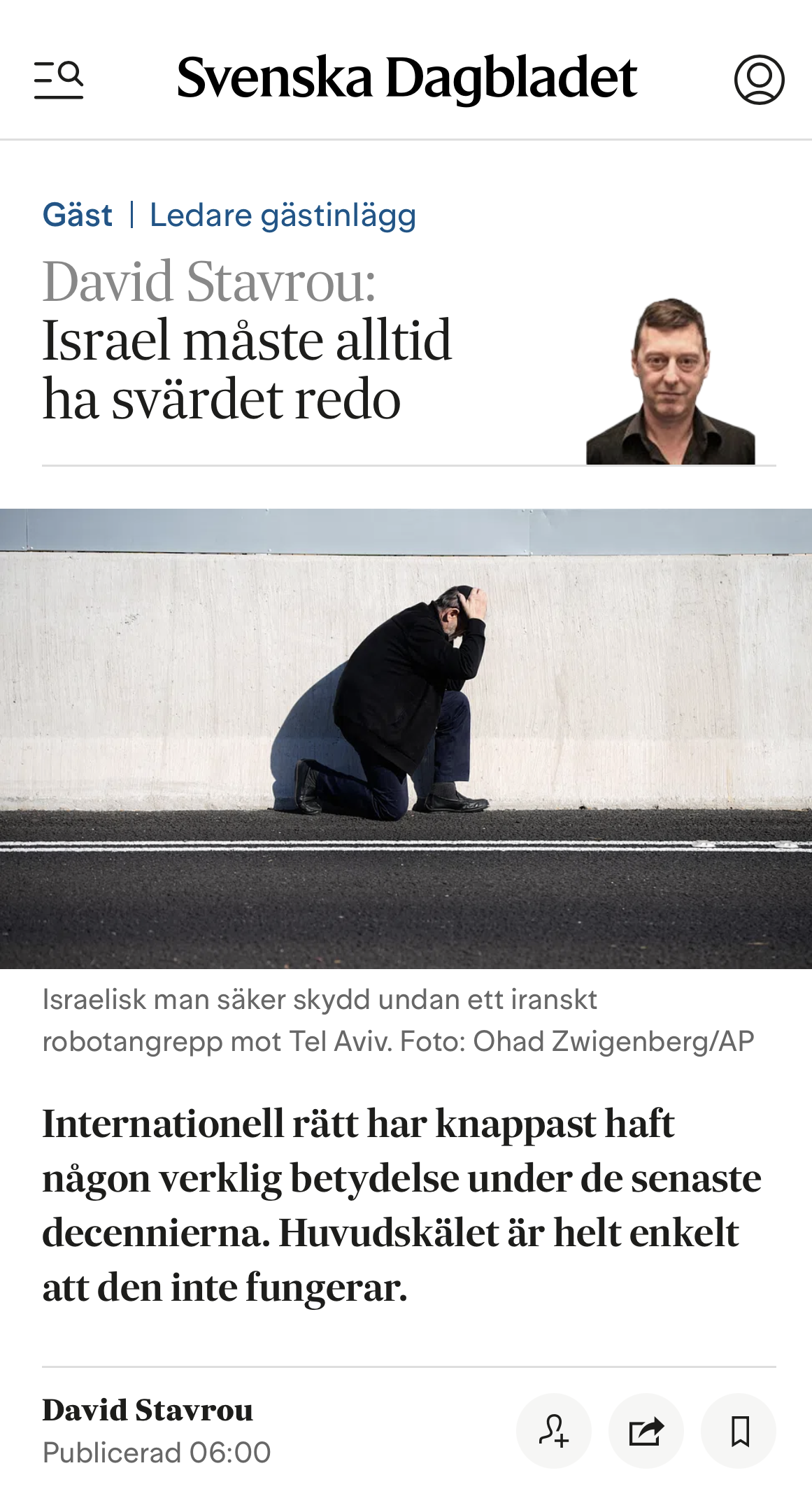
Published in Swedish Svenska Dagbladet: Israel måste alltid ha svärdet redo | David Stavrou | SvD Ledare

The Swedish discourse on the war in Iran has been dominated by the question of its legality. In recent weeks, international law scholars, academics, politicians, and columnists have explained why the American and Israeli attack is “illegal under international law.” There is much to say about this reasoning, but a reasonable question is what the point really is. In the real world, the legality of war matters very little, because international law, in general, has hardly had any real significance over the past decades.

The main reason is simply that it doesn't work. International law has been used by some of the world’s worst despots, from Gaddafi to Assad, to delay international action against their crimes, and when it was finally used for intervention—in many cases, it made the situation even worse and led to more violence and failed states.

International law has also given legitimacy to regimes such as Qatar and Somalia, which have gained seats on the UN Human Rights Council despite their total lack of such rights. Terrorist organizations have used it in their propaganda to avoid the consequences of their actions, and China’s and Russia’s veto rights in the UN Security Council ensure that aggressive dictators go unpunished.

“If the U.S. illegally invades other countries, Russia will do the same” is a common argument against the American offensive. But the truth is rather the opposite: Russia did not wait for the Americans to attack Georgia or Ukraine, and—like Turkey in Syria, Azerbaijan in Armenia, and Eritrea in Ethiopia—has ignored international law for decades. No country is waiting for Israel or the U.S. to legitimize their actions according to the “law of the jungle”.
For a country that has not been at war since 1814, the question of the legality of military interventions may seem like the most important one. Theoretically, even a superpower like the U.S. should be concerned with issues of limiting its global power. But for a country like Israel, which is constantly threatened by real enemies who want to annihilate it and kill its population, this question appears fairly academic.

There is, however, another question that from an Israeli perspective is extremely important. It is simple but crucial, and it should concern other countries as well—it is not whether the war is legal, but whether it is effective. Or more broadly: can military power by itself solve Israel’s problems with Iran and other enemies?

“When all you have is a hammer,” as the well-known saying goes, “every problem looks like a nail.” Israel undoubtedly has a powerful hammer. Could it be that the country has become accustomed to solving all its problems with it? Previously, Israel used many forms of power to strengthen its security and international standing. Diplomats engaged in creating complex alliances, its soft power included outstanding achievements in culture, art, agriculture, science, and technology, and governments were willing to participate in peace negotiations and consider compromises.

The Hamas massacre on October 7 and Iran’s persistence in combining nuclear ambitions with threats to wipe Israel off the map changed all of this. The Israeli foreign service has been marginalized; the country’s artists and scientists are boycotted around the world, and its enemies are blown to pieces rather than invited to ceremonies on the White House lawn. Considering that many of Israel’s enemies are ruthless killers, this is hardly surprising. Anyone who sees value in human life should not shed tears for people like Hassan Nasrallah, Yahya Sinwar, and Ali Khamenei. But do military operations improve reality if they are not accompanied by other measures such as diplomacy, economic development, and new creative political alliances? This is not only an Israeli question. A new world order is taking shape before our eyes, and if we are not heading toward total anarchy, the question of limiting military power and understanding what it can and cannot achieve is crucial.

One indication is the situation in Gaza. After more than two years of extensive military force and enormous destruction, the reality is that Hamas not only still exists, it is armed and controls many state functions. In Lebanon, Israel may have achieved significant military successes against Hezbollah, but the Israeli are still spending far too much time in bomb shelters, and despite everything, Hezbollah is still alive and kicking. Both militarily and politically.

Israelis are once again deprived of basic necessities—schools are closed, workplaces shut down, flights canceled, thousands have lost relatives, been forced from their homes, and suffered injuries and trauma. Not to mention that Israel is deeply divided on issues concerning its democracy, which can only be resolved when the shooting stops. Meanwhile, Israel has also, without justification, become the punching bag of the international community. All the world’s power seems to be of little use in solving this.

And then there is Iran. Now that the war has begun, it should, for the sake of both Iranians and Israelis, end with a regime change—and no regime change is possible without the use of force. The Iranian people themselves, who ultimately must liberate themselves, have asked for foreign intervention, and giving it to them is the right thing to do. But what then?

“From the moment we decided that only here, in the land of Israel, could the Jewish state arise, we accepted that more than a hundred million people from the Arab world, from the Arab nations, and from the Palestinians would be our neighbors,” said Israel’s former prime minister Yitzhak Rabin a few years before he was assassinated in 1995. “There are now only two possibilities: either a serious and determined effort is made to achieve peace—peace and security—or the sword will always rule.” In the 1990s, Rabin chose the first option, but since then, leaders across the region, including Israeli leaders, have developed a dependence on using force. Perhaps even an adiction.

When the war in Iran is over, Israel will face a choice. Previously, the country combined pragmatic diplomacy, careful alliance-building, and visionary openings toward the Arab world. In a region like the Middle East, this is risky. Israel will always need to keep a sword ready, but with security guarantees and economic support instead of anachronistic laws and self-righteous moralism from other countries, peace may once again become an option.
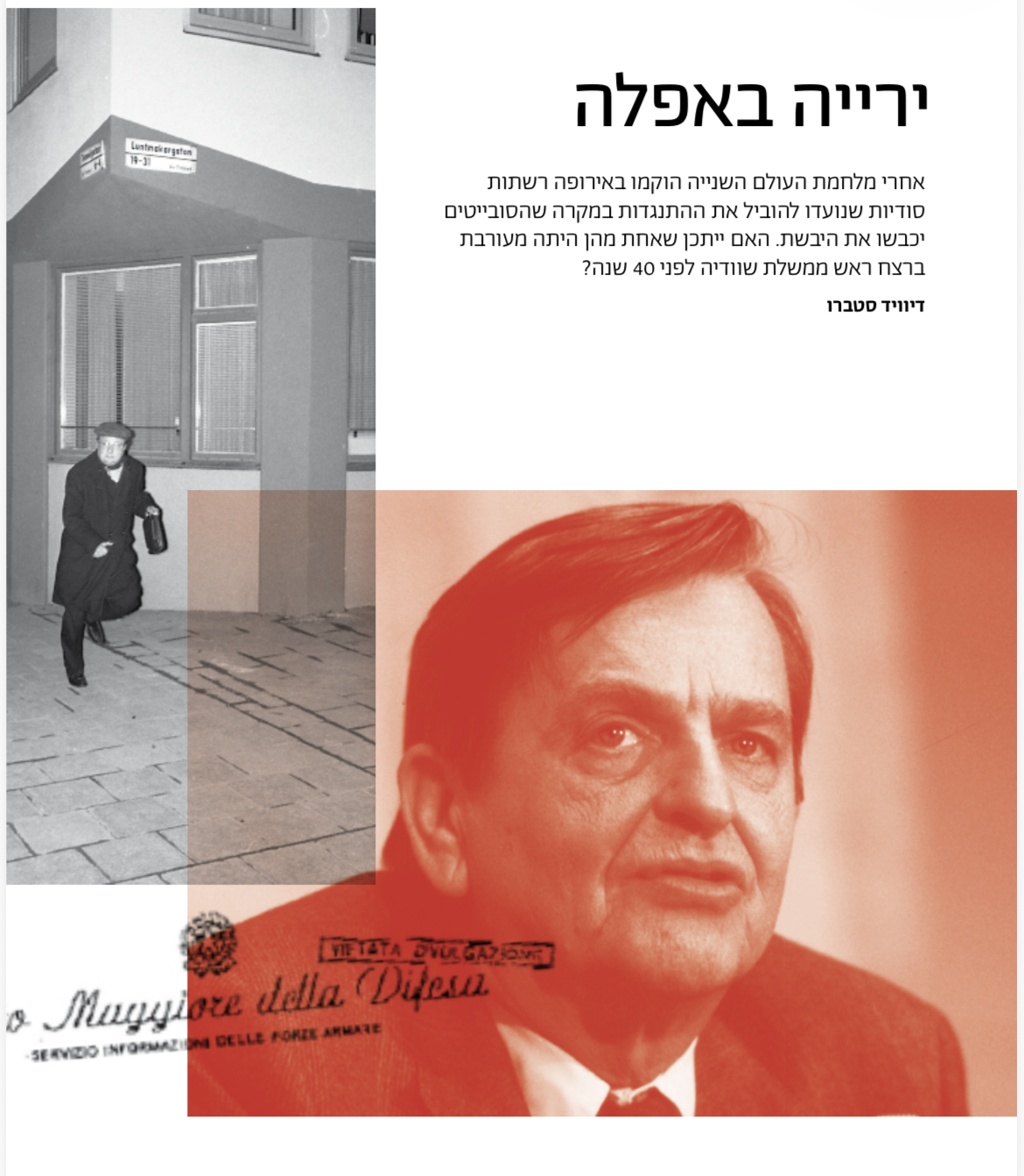
40 שנה לתעלומה: האם רשת סודית שפעלה באירופה מעורבת ברצח ראש ממשלת שוודיה?

אחרי מלחמת העולם השנייה הוקמו באירופה רשתות סודיות שנועדו להוביל את ההתנגדות במקרה שהסובייטים יכבשו את היבשת. כעת עולה הטענה שאחת מהן היתה מעורבת ברצח אולוף פלמה.

פורסם במוסף "הארץ": 40 שנה לתעלומה: האם רשת סודית שפעלה באירופה מעורבת ברצח ראש ממשלת שוודיה? – סוף שבוע – הארץ

בשישי בערב, 28 בפברואר 1986, יצא ראש ממשלת שוודיה אולוף פלמה עם רעייתו ליסבת לסרט קולנוע במרכז סטוקהולם. זה היה ערב חורפי קר בבירה הסקנדינבית, ופלמה שיחרר את מאבטחיו כפי שעשה פעמים רבות בעבר. בני הזוג נסעו שלוש תחנות ברכבת התחתית ומחוץ לקולנוע פגשו את בנם מורטן בן ה–25 ואת בת זוגו. הם קנו כרטיסים ונכנסו פנימה. זה היה הדבר האחרון שפלמה עשה בחייו.

מעט אחרי השעה 23:20, כשצעדו חזרה לביתם לאורך רחוב ראשי במרכז העיר, התקרב אליהם אדם מאחור וירה באקדח מטווח קצר. פלמה נפגע ונפל על המדרכה הקפואה. ירייה שנייה פצעה את אשתו. עוברי אורח ניסו להגיש עזרה אך ללא הועיל. פלמה מת במקום.

השעות שלאחר מכן היו דרמטיות. ידיעות על הרצח התפרסמו בתקשורת, המדינה נכנסה לכוננות, וסגן ראש הממשלה, אינגבר קארלסון, כינס את השרים. בהמשך, בחמש בבוקר, כונסה מסיבת עיתונאים, דגלים הורדו לחצי התורן, פרחים ונרות הונחו במקום הרצח ותחושה של אבל לאומי ומשבר עמוק התפשטה בשוודיה.

מבחינת חקירת הרצח נעשו כל הטעויות האפשריות. האדם שירה בפלמה נמלט מהמקום. המשטרה לא הקימה מחסומים ולא סגרה את האזור. התיאום בין הכוחות בשטח היה לקוי, לא הוקם מרכז בקרה וגביית העדויות לא היתה יסודית ושיטתית. את הטעויות האלו איש לא הצליח לתקן. למרות עשרות חשודים, חקירות מפותלות וחשוד אחד שהורשע וזוכה בערעור, הרצח נותר עד היום בלתי מפוענח. אבל כעת חוקרים ועיתונאים סבורים כי יש לחקור את האפשרות שמאחורי ההדק לא עמד אדם בודד, אלא ארגון מחתרתי שפעל בצללים עמוק בתוך החברה השוודית.

בשנים שאחרי הרצח הושקעו משאבים רבים בחקירתו. תחילה התמקדה החקירה בארגון ה–PKK הכורדי. לאחר מכן הועלו השערות לגבי מעורבות של מדינות שונות, בהן דרום אפריקה (פלמה פעל רבות נגד משטר האפרטהייד). נבדקה גם האפשרות שמדובר בארגוני טרור מהמזרח התיכון או ממזרח אירופה. ב–1988 הורשע ברצח עבריין מקומי בשם כריסטר פטרסון, בעיקר על בסיס זיהוי מעורר מחלוקת של ליסבת פלמה, אך הוא זוכה שנה לאחר מכן בערעור מחוסר ראיות.

ביוני 2020, 34 שנים אחרי הרצח, הודיעה התביעה שהחשוד ברצח הוא אדם בשם סטיג אנגסטרום, שנכח לכאורה בזירה בליל הירי והתראיין לתקשורת כעד לרצח. אנגסטרום מת בשנת 2000 ולכן לא ניתן היה להעמידו לדין. בדצמבר 2025 הודיעה התביעה שבחינה מחודשת של חומר החקירה הובילה למסקנה שאין די ראיות נגד אנגסטרום.

"החוקרים חשדו כל הזמן שאנגסטרום לא פעל לבדו", אומר גונאר ואל, עיתונאי וסופר שהקדיש שנים למחקר על הרצח וכתב כמה ספרים בנושא. ואל מבסס את דבריו על ראיונות שקיים עם החוקרים עצמם ועם עדים נוספים, ועל עיון במסמכים, דוחות וחומרי חקירה רבים. "ההשערה המרכזית שלהם היתה שפעילים של רשת שוודית סודית עמדו מאחורי הרצח והם ניסו לקשור את אנגסטרום לגורמים האלו", הוא אומר. "כשלא הצליחו לעשות זאת, הם זנחו את ההשערה בדבר קנוניה ואנגסטרום נותר החשוד היחיד. חמש שנים מאוחר יותר, כיוון שהראיות נגדו היו חלשות, זה הסתיים ללא הרשעה וללא חשוד".

ראיות חותכות שקושרות בין רשת סודית לרצח אמנם אין, אך קיומה של רשת חשאית שעשויה היתה לרצות במותו של פלמה נראה כיום כאפשרות סבירה. במשך עשורים, הרחק מעיני הציבור, פעלו בשוודיה ובמדינות אחרות רשתות סודיות שנקראו "Stay Behind". הרשתות האלו הוקמו בעקבות לקחי מלחמת העולם השנייה, מתוך מחשבה לאפשר למדינה שנכבשה להתנגד לכובש באמצעות פעילות מחתרתית, קיום קשר עם ממשלה גולה והתנגדות אקטיבית מבפנים.

השם Stay Behind הוא העיקרון המכונן — הישארות מאחורי קווי האויב ומאבק מתוך האזור הכבוש. הרשתות הללו חיברו בין כוחות צבא, משטרה, ארגוני מודיעין וחברה אזרחית. הכוונה הראשונית היתה להיערך לפלישה רוסית, אך עם השנים חלק מהרשתות החלו לקיים פעילות נוספת שחרגה מהסתרת נשק ואימוני גרילה. יש הטוענים שפעילות זו כללה גם פעילות בתוך המדינה נגד כוחות פרו־סובייטיים ואפילו פעילויות False Flag, כלומר ביצוע פעולה עוינת תוך הפללה של גורם אחר כדי להצדיק תגובה צבאית או פוליטית נגדו.

הדוגמה הידועה ביותר היא הרשת האיטלקית "גלאדיו", שנחשפה ב–1990 בנאום ראש ממשלת איטליה ג'וליו אנדראוטי בפרלמנט. ועדות חקירה פרלמנטריות בדקו את פעילות הרשת ואת קשריה עם שירותי מודיעין זרים כמו ה–CIA ונאט"ו. הוועדות חשפו שהרשת קיימה אימוני גרילה, בנתה תשתיות קשר, מודיעין וחבלה, איחסנה נשק ושיתפה פעולה עם ארגונים זרים. מעבר לכך עלה חשד שחלק מאנשי הרשת פעלו גם בזירה הפנימית, בין השאר במעורבות בפעולות טרור רבות נפגעים בשנות ה–70 וה–80 כדי לחזק את הימין האיטלקי ולהטיל את האשמה על השמאל.

רשתות דומות נחשפו גם בבלגיה ובשווייץ. בצרפת ובגרמניה נמצאו עדויות לקיומן של רשתות Stay Behind, אם כי לא הוכח כי נקטו פעולות אלימות כלשהן. גם ביוון ובטורקיה עלו השערות לגבי מעורבות של רשתות אלו בקשירת קשר להפיכות צבאיות ולאלימות פוליטית.

ביוני 2020, 34 שנים אחרי הרצח, הודיעה התביעה שהחשוד ברצח הוא אדם בשם סטיג אנגסטרום, שנכח לכאורה בזירה בליל הירי והתראיין לתקשורת כעד לרצח. אנגסטרום מת בשנת 2000 ולכן לא ניתן היה להעמידו לדין. בדצמבר 2025 הודיעה התביעה שבחינה מחודשת של חומר החקירה הובילה למסקנה שאין די ראיות נגד אנגסטרום.

בשוודיה עצמה, אחרי שנים של שמועות והכחשות רשמיות לגבי קיומה של הרשת, הופיע ב–2013 מאמר באחד העיתונים החשובים במדינה, "Dagens Nyheter", שכתבה אינגה־בריט אלניוס, עובדת ציבור שוודית ששירתה במשרד האוצר, במשרד הביקורת הלאומי ובאו"ם.

אלניוס ביקשה לשפוך אור על הרשת, שהוזכרה בעבר בשורה של מחקרים וטקסטים של עיתונאים והיסטוריונים. אחד החשובים שבהם הוא מיקאל הולמסטרום, עיתונאי בכיר שעוסק בענייני צבא, ביטחון ומודיעין, שחשף את קיומה של הרשת השוודית. פרטים נוספים הופיעו בממואר של ראש ממשלת שוודיה לשעבר טאגה ארלנדר. אולם לפי אלניוס, "חשיפת רשתות ה–Stay Behind עדיין מטופלת יותר כסיפור הרפתקאות רומנטי של סוכנים מאשר כעובדה היסטורית מבוססת". לכן, לדבריה, החליטה להביא לידיעת הציבור את קיומה של "תנועת התנגדות חשאית שהוקמה בשוודיה, תוך קשרים הדוקים עם המעצמות המערביות".

"הדבר לא נעשה ביוזמת הממשלה כמוסד רשמי", כתבה, "אך ככל הנראה ביוזמתו של ראש הממשלה טאגה ארלנדר (קודמו של אולוף פלמה — ד.ס), לצד כמה שרים נוספים. בראש הרשת עמד בתחילה אלוואר לינדנקרונה, שבחייו האזרחיים היה מנכ"ל חברת הביטוח Thule. תחתיו פעלו שלושה ראשי מחלקות וכמה תאים ברחבי המדינה. הפגישות של הרשת התקיימו בחדר סודי בביתו של לינדנקרונה, במשרד חשאי בבניין חברת הביטוח, או במקומות מסתור בבתי הקיץ של המנהיגים. המימון הגיע ממקורות חשאיים.

"בניגוד למקומות אחרים ולמרות שיתוף הפעולה עם גורמים אמריקאיים, הרשת השוודית היתה התארגנות מקומית", טוען ד"ר מאטס דלנד, היסטוריון באוניברסיטת מרכז שוודיה בסונדסוואל. "שוודיה לא השתתפה במלחמת העולם השנייה, והיא יכלה ללמוד מהפלישה הנאצית לנורבגיה ב–1940. הנורבגים הטביעו את הבליכר, אחת האוניות הגרמניות שהיו בדרכן לכיבוש הבירה הנורבגית. זה עיכב את הכובשים, גרם להם אבידות קשות ואיפשר לנורבגים לפנות את משפחות המלוכה והממשלה צפונה. בשוודיה למדו מהניסיון הנורבגי, והרעיון היה להקים ארגון שיוכל לפנות את משפחת המלוכה ואת הממשלה. הם למדו גם ממה שקרה ברוסיה כאשר אנשי ה–NKVD, שירות הביטחון הסובייטי בימי סטלין, הפכו לפרטיזנים באזורי הכיבוש הגרמני".

אם כך, במקרה השוודי, לא ניתן לדבר על שליטה של האמריקאים או של נאט"ו ברשת?

"נכון. האמריקאים הגיעו קצת אחרי שהרשת הוקמה, וגם אז הם לא השתלטו עליה, אלא שילבו את הצרכים שלהם שנבעו מהדוקטרינה של נאט"ו. הדוקטרינה התבססה על כך שבמקרה של פלישה סובייטית היה צורך שמטוסים אמריקאיים יטוסו מעל שוודיה. הרעיון היה, בדומה למחתרת הצרפתית — ובמידה מסוימת גם למחתרות הבלגית וההולנדית — ליצור נתיבי מילוט שיוכלו להבריח החוצה אנשי צוות שמטוסיהם הופלו. אבל ארה"ב לא הקימה את הרשת ולא ניהלה אותה. ייתכן שהדבר השתנה ב–1965 כאשר שירותי הביטחון השוודיים התארגנו מחדש, ייתכן שהמעורבות האמריקאית התגברה אז".

עד כמה נשלטה רשת Stay Behind השוודית על ידי המדינה ועד כמה התנהלה על ידי גורמים אזרחיים או צבאיים ללא ידיעה או שליטה של הדרג הפוליטי?

"בין 1947 ל–1951 היו ברשת הרבה מתנדבים, ביניהם אנשים ששירתו לצד הגרמנים במלחמת העולם השנייה, חלקם אנשים בעייתיים מאוד. בגלל הטיפוסים האלו, המשטרה החשאית (SÄPO) גילתה על קיום הרשת. רק המעורבים עצמם, ראש הממשלה ארלנדר ואנשים אחדים ממערכת הביטחון היו אמורים להיות שותפי סוד. בעקבות הגילוי הזה, שהכעיס מאוד את ארלנדר ומערכת הביטחון, היתה התארגנות מחדש, ובמקום הגורמים הבעייתיים הצטרפו לרשת אנשי האיגודים המקצועיים והמגזר העסקי. כך הובלה הרשת על ידי אנשים כמו מנהל חברת הביטוח אלוואר לינדנקרונה, איש עסקים בעל השקפות חברתיות פרוגרסיביות למדי לזמנו, וגויסו אליה כוחות מקרב האיגודים המקצועיים שתמיד היו קרובים למפלגת השלטון הסוציאל־דמוקרטית. בספר שיצא לאחרונה התפרסם מסמך מעניין —החלטת הממשלה משנות ה–50 שמצביעה על כך שהרשת היא חוקית ורשמית. גם היומנים של ראש הממשלה טאגה ארלנדר מצביעים על כך שהוא אישר את העניין כבר ב–1947".

הספר שדלנד מתייחס אליו הוא ספרו של יוהאן ונסטרום "Sveriges sak var vår: den hemliga svenska motståndsrörelsen" (עניינה של שוודיה היה ענייננו: תנועת ההתנגדות השוודית הסודית). ונסטרום קורא לארגון ה–Stay Behind השוודי "תנועת התנגדות", והוא מגלה שהשם האמיתי של הארגון, זה שהיה בשימוש של חבריו בזמן אמת, היה "מטרו".

על פי ונסטרום, מטרו לא הוקמה, לא נשלטה ולא עבדה עבור נאט"ו, אך הוא מאשר שהיה שיתוף פעולה עם ה–MI6 ובמידה מסוימת עם ה–CIA. בעיקר סביב תוכניות כמו פינוי מקבלי ההחלטות השוודים לאנגליה במקרה הצורך. על פי ונסטרום, הארגון כלל ככל הנראה כמה מאות אנשים וגם מעין "ארגון לוחם בלתי נראה" שיכול היה לכלול כ–3,000 בני אדם ושהתבסס על כך שחברי מטרו נדרשו במקרה הצורך לגייס חברים נוספים מסביבתם הקרובה.

ונסטרום מראה שמבנה הארגון היה קואופרטיבי למדי עם נציגות של מגזרים שונים של החברה השוודית, והפצת המידע בו היתה על בסיס "נדרש לדעת בלבד". הארגון הפך לרשמי עם החלטת הממשלה מ–1955 ופעילויותיו הטיפוסיות היו התארגנות להתנגדות והגנה אזרחית דוגמת מיפוי דרכי מילוט, היערכות לפיצוץ תשתיות מרכזיות, חילוץ אנשי ממשל ואחסון נשק. ונסטרום לא יודע לומר מתי הארגון הפסיק להתקיים ואם הוא קיים גם היום.

כאשר מדובר במדינות אחרות שהיו בהן רשתות Stay Behind, ברור גם מספרו של ונסטרום וגם ממקורות אחרים שהטרוגניות היא מילת המפתח. כל מדינה בנתה את הרשת שלה בצורה שונה בהתאם לתפיסת האיום, למערכת הפוליטית ולסטטוס הפוליטי שלה. גם במדינות שהיו חברות בנאט"ו, הרשתות לא היו בהכרח תחת שליטה מלאה של נאט"ו. הפיקוח הפרלמנטרי או הציבורי היה מינימלי בכל המדינות, וישנם סימני שאלה וחילוקי דעות לגבי המעורבות של הרשתות בפעילות פנימית שחורגת מהיערכות לפלישה סובייטית.

הסופר והחוקר השווייצרי דניאל גנסר חשף את הרשתות שפעלו ברחבי אירופה. בספרו מעורר המחלוקת מ–2005, "NATO's Secret Armies: Operation Gladio and Terrorism in Western Europe" (הצבאות הסודיים של נאט"ו: מבצע גלאדיו וטרור במערב אירופה), הוא עוסק ברשתות שקמו באיטליה, בלגיה, צרפת, גרמניה, שווייץ, הולנד וטורקיה. דלנד עבד יחד עם גנסר על הגרסה השוודית של ספרו, והגרסה כוללת גם פרק על הקשר האפשרי לרצח אולוף פלמה.

האם ראש הממשלה אולוף פלמה הכיר את הרשת?

דלנד: "אנחנו יודעים שהוא הכיר אותה בתקופתו של קודמו, טאגה ארלנדר, כי הוא עסק בזה כאחד מאנשיו של ארלנדר בשנות ה–50. מה הוא ידע אחר כך, אנחנו לא יודעים בוודאות. אפשר להניח שכל ראשי הממשלה הכירו את הרשת, אם כי אין מסמכים רשמיים בנושא".

מתי החלו החשדות בדבר קשר בין הרשת לבין רצח אולוף פלמה?

"אלו חשדות שעלו כבר בהתחלה. היה כיוון בדיקה כזה כחלק מהחקירה הרשמית והיו גם דיבורים על גורמים מתוך המשטרה בסטוקהולם שיכולים היו להיות מעורבים ברצח".

לעתים קשה לדעת אם עובדה שמתגלה בחקירה היא מפתח לפיצוח תעלומת רצח או סתם צירוף מקרים. החשוד האחרון ברצח אולוף פלמה, סטיג אנגסטרום, כונה "איש סקנדיה" מכיוון שעבד בבניין ששמו היה בניין סקנדיה. שם כזכור התקיימו גם פגישותיה של הרשת הסודית. האם זהו צירוף מקרים, והאם למרות שאין ראיות לכך שאנגסטרום קשור לרשת יש היגיון בטענה שהרשת עצמה קשורה לרצח פלמה?

ואל איננו חד־משמעי בעניין זה. אך הוא מצביע על נקודות מפתח היסטוריות שכדאי להביא בחשבון כשחושבים על סיבות לרצח של פלמה. "בזמן כהונתו השנייה של פלמה כראש ממשלה בשנות ה–80 היו כמה תקריות חדירה של צוללות, לכאורה סובייטיות, למים הטריטוריאליים של שוודיה", הוא אומר. "תקריות אלו עוררו משבר ביטחוני חמור והיו שטענו שאלו הכנות לפלישה ולהכנת תשתיות של ריגול. בממסד הביטחוני השוודי היו טענות על כך שפלמה לא לוקח את האיום ברצינות ושלכן הוא מהווה איום ביטחוני על שוודיה.

מעבר לכך, באפריל 1986 פלמה היה אמור לנסוע למוסקבה כדי להיפגש עם מנהיג ברה"מ, מיכאיל גורבצ'וב. פלמה צידד בפירוק נשק ובפירוז גרעיני ומתנגדיו טענו שהיו לו קשרים קרובים מדי עם ברית המועצות. הרצח ב–28 בפברואר 1986 גרם לכך שהמנהיג השוודי שפגש את גורבצ'וב היה מחליפו של פלמה, אינגבר קארלסון".

ואל מספר גם על עדויות של אנשים שטענו שקיבלו הצעה לרצוח את ראש הממשלה, ובכמה מקרים טענו ששירותי המודיעין השוודיים עמדו מאחוריהן. עם זאת, בידיו של ואל ישנם גם מסמכים רשמיים המעידים על כך שבליל הרצח נכחו בזירה אנשים עם מכשירי קשר שלא זכו ליחס רציני מצד החוקרים. הוא אינו טוען שיש הוכחות לכך שהרצח אורגן על ידי גורמים פוליטיים, אבל טוען שזה בהחלט נתיב ששווה חקירה רצינית.

והוא לא היחיד. לקראת יום השנה ה–40 לרצח עולים יותר ויותר קולות שדנים ברצינות באפשרות שכוחות שונים בשוודיה היו מעוניינים בהסתלקותו של פלמה מהזירה הפוליטית ויכולים היו להיות מעורבים ברצח. מאמרים בעיתונות, פודקאסטים וספרים חדשים מתפרסמים בנושא זה, ובניגוד לעבר, התזה על קשר אפשרי לרשת Stay Behind אינה נדחית אוטומטית כהזויה ומופרכת.

לאחרונה אף התפרסמה פנייה ציבורית המיועדת לעודד את ממשלת שוודיה ואת הפרלמנט להקים "ועדת אמת" בנושא שתפתור סוף־סוף את התעלומה. "ב–28 בפברואר 1986 נפל אולוף פלמה קורבן למתקפה ברוטלית ברחוב פתוח במרכז סטוקהולם", נאמר בפנייה. "הרצח של ראש ממשלת שוודיה היה התקפה ייחודית על הדמוקרטיה שלנו. במדינת חוק כמו שוודיה היה צריך לעשות הכל כדי לפתור את הרצח הזה. המצב שבו הרצח עדיין לא נפתר, 40 שנה לאחר מכן, הוא בלתי מקובל, במיוחד כאשר לא נבדקו כל האפשרויות למציאת פתרון בלתי מעורער ומוחלט".

בהמשך מצוינות בעיות שמונעות את גילוי האמת — ארכיונים חסויים, תשובות שקריות שניתנו לחוקרי הרצח על ידי אנשי השירותים החשאיים ותיקי חקירה שנעלמו. גם המעורבות האפשרית של רשת Stay Behind השוודית מוזכרת. "זהו הרצח היחיד של מנהיג פוליטי באירופה המודרנית שעלול להישאר לא מפוענח", נכתב בסיום הפנייה. "הבהרת כל הנסיבות סביב רצח אולוף פלמה תחזק את שוודיה".

Oslo Police Probe Blast Outside U.S. Embassy, Bolster Security at Jewish Sites

Norwegian police said they are searching for suspects and added that they were reinforcing security measures to protect both the Iranian diaspora and the Norway's Jewish communities

Pubished in Haaretz, with AP and Reuters: Oslo Police Probe Blast Outside U.S. Embassy, Bolster Security at Jewish Sites – Europe

The U.S. embassy in Oslo was hit by a loud explosion overnight into Sunday, causing minor damage but not injuries, Norwegian ‌police said, as the justice minister said a thorough investigation had been launched. The blast at the embassy compound in western Oslo occurred at around 1 A.M. local time, sending thick smoke into the street by the entrance of the consular section, eyewitnesses said.

The explosion was caused by some sort of incendiary device, Oslo police representative Frode Larsen said during a news conference Sunday. Investigators believe the embassy was the target and are searching for one or more potential perpetrators and their motive. Justice Minister Astri Aas-Hansen added they had deployed "considerable resources" to the investigation.

"One of our hypothesis is that this is terrorism, but we are also exploring other options," Larsen later told public broadcaster NRK. Police added that they were reinforcing security measures to protect both the Iranian diaspora and the country's Jewish communities. "This is an unacceptable incident that is being treated with the utmost seriousness," said Astri Aas-Hansen, Norway's justice and public security minister. "The police have stated that they are investigating the case with significant resources, and that nothing indicates the situation poses any danger to the public," she said.

PST, the Norwegian police security service, called in additional personnel following the incident but has not changed the country's terror threat level, according to communication adviser Martin Bernsen. The blast occurred at the entry to the consular section, Oslo police said, and witnesses said the entrance had been damaged.

"There was a very thick layer of smoke on the street," said ‌Sebastian ⁠Toerstad, 18, a high school student who drove past the embassy at the time of the explosion. "There was some damage to the entrance," he added. Police said no further explosive devices had been found in the area. "Investigations have been ⁠carried out at the scene with the aid of dogs, drones and a helicopter, searching for one or more potential perpetrators," the Oslo police department said in ⁠a statement.

The U.S. Embassy in Oslo referred media queries to the U.S. State Department, which did not immediately return a request for comment. Nor did Oslo police. Other details were not available.

Leif Knutsen, a Norwegian Jewish activist and chairman of the newly founded Jewish Community of Norway umbrella organization, said security around Jewish institutions across Norway has been elevated since October 7. Knutsen noted that armed police with assault rifles have been stationed around the synagogues in Oslo and Trondheim and near the Israeli embassy.

The local Jewish community generally trusts the Norwegian Police Security Service, known as PST, and cooperation between security services and Jewish institutions is strong, according to Knutsen. He said, however, that many people feel more vulnerable on their way to and from synagogues, when they "become visible" outside the protected perimeter.

He expressed that the broader concern is what the situation represents. "What's wrong with a society when its most heavily guarded and fortified installations are not government offices or military bases, but two synagogues and the embassy of a country that Norway is supposed to have a friendly relationship with?" Knutsen said, adding that the situation was "unsustainable" in the long term.

Oslo Accords Mediators Probed Over Epstein Ties Threaten Norway's Diplomatic Legacy

Norway's reputation as a peace-broker could be tarnished by the allegations against the country's elite.

Published in Haaretz: Oslo Accords Mediators Probed Over Epstein Ties Threaten Norway's Diplomatic Legacy – Europe

The release of court documents in the U.S on Jeffrey Epstein in February has sent political shockwaves far beyond Washington. From American power brokers to British royalty and European decision-makers, the files reference powerful figures across the globe. In Norway, the fallout has struck a blow to the country's self-image, as well as its image abroad.

Traditionally, Norway, which has one of the world's most comprehensive welfare state systems, has had a high level of trust in its public officials, and until recently the country was best-known internationally for the Nobel Peace Prize and for humanitarian and peacemaking efforts.

Now high-profile Norwegian public figures are facing criminal investigations as a result of their links to late convicted sex offender Epstein, and the country is reckoning with the fallout. The most high-profile Norwegian figures to be implicated in the files are Crown Princess Mette-Marit, who exchanged hundreds of emails with Epstein between 2011 and 2014 and stayed at his Palm Beach residence in 2013, and former Prime Minister and former Chair of the Nobel Committee Thorbjørn Jagland who has been charged with gross corruption as a result of his ties with Epstein.

But the files have also revealed that two members of Norway's diplomatic elite – married couple Terje Rød-Larsen and Mona Juul – had connections with Epstein. The couple were among a small group of diplomats who facilitated the back-channel negotiations between Israeli and the Palestine Liberation Organization representatives in the early 1990s which led to the Oslo Accords in 1993.

Norwegian authorities have now opened an investigations into Juul – who resigned as Norway's ambassador to Iraq and Jordan earlier this year – on suspicion of gross corruption and Rød-Larsen on suspicion of complicity in gross corruption in relation to gifts and favors the two received from Epstein. According to the released files, they maintained extensive personal and financial ties with Epstein over several years. They visited his private island, their two children were bequeathed $10 million by Epstein in his will, and Rød Larsen was appointed executer of the will (which was later revoked).

According to lawyers for Juul, who has also served as Norway's ambassador to Israel, the U.K. and the UN, she "does not recognize" the allegations against her. For his part, Rød-Larsen has acknowledged the relationship with Epstein but denies wrongdoing. He has not held a public role for over two decades and resigned from his position as president of New York-based think tank the International Peace Institute in 2020 following revelations about his ties to Epstein.

Norway's efforts to facilitate secret Israeli-Palestinian negotiations in the early 1990s leading to the Oslo Accords helped forge its identity as a peace-brokering power, and the current association of key figures from that legacy with Epstein has prompted a discourse in the country about political oversight and elite networks.

"Norwegian diplomats are loyal people, but if they were honest, they would say that the behavior of these two individuals has been an open secret for many years," Professor Torkel Brekke, an Oslo historian who works for the Norwegian think tank Civita and also studies Norway's relations with its Jewish minority and with Israel, tells Haaretz.

Brekke added that "People probably didn't know about the most serious part of the allegations, the ones concerning trafficking [the files show that in his capacity as president of IPI Rod-Larsen wrote recommendations letters for U.S. visas for young Eastern European women at Epstein's request], but the rest of it was known to many. They just didn't want to talk about it".

According to Brekke, Rød-Larsen, in particular, is well-known for his tendency to promote himself and there were many rumors within diplomatic circles of inappropriate conduct and inappropriate associations.

Beyond the personal allegations, what has this done to the political discourse in Norway?

"In Norway the concept of trust has been elevated and is almost sacred," Brekke said. "You always hear Norwegians speaking about trust being more important than oil and that it's what makes us special as a society. So, the question many people are asking now is if this is going to destroy trust in our society. I often personally think that the concept of trust is sometimes sprinkled as a kind of gold dust and that too much trust in government is probably not a good thing. We may need trust that's a bit more critical."

According to Brekke, political implications span the spectrum. While Jagland was a Labour party prime minister and Juul and Rød-Larsen served under Labor governments, former Conservative foreign minister Børge Brende also stepped down as president and CEO of the World Economic Forum following scrutiny of past interactions with Epstein.

"The Royal Family too is a great concern," Brekke adds. "Crown Princess Mette-Marit has been in close contact with Epstein. The communication between her and Epstein is hard to explain and combined with the court case against her son. [Marius Borg Høiby, the crown princess's son from a former relationship, is currently facing multiple criminal charges, including rape, which he denies.] It's concerning to many Norwegians. Even more concerning than party politics."

When it comes to the Israeli angle, does the fact that officials involved in the Oslo Accords are now implicated affect Norway's peacemaking legacy and relations with Israel?

"First, I think that although there were several hard-working, very decent diplomats who created the Israeli-Palestinian back channel, there were, at the same time, others who tried to make it into something a lot more important than it really was. Rød-Larsen tried to make himself seem much more important than he really was. When it comes to relations with Israel, I don't think there will be much of an impact, apart from maybe giving Israelis another reason to be critical of Norway [Many Israelis' resent Norway's criticism of Israeli conduct in the Gaza war which has also led to tension between the two countries' governments].

I'd expect some Israelis will feel some kind of schadenfreude after the recent souring of relations," he said. Two weeks after October 7, 2023, Norway condemned Israel's war in Gaza, and drew anger from Israel after deciding not to recognize Hamas as a terror organization. Oslo also continued funding UNRWA – and campaigned to defend it abroad – despite allegations some staff took part in the October 7 attacks.

"However, relations with Israel will probably only improve if there is a new government that will be able to set things back on track after the way things were handled from the Norwegian side after October 7."

The argument that Norway's role in the Oslo process was more facilitative than decisive is not a new one. Many analysts contend that the end of the Cold War and political shifts within Israel and the PLO were the primary drivers, and Norway's role was mainly to provide a discreet venue.

But while the Norwegians' influence over the content of the Oslo accords was limited, Rød-Larsen was influential in his role as the facilitator of the secret channel, and in that sense he and his wife had an important role in the Oslo story.

Continues: Oslo Accords Mediators Probed Over Epstein Ties Threaten Norway's Diplomatic Legacy – Europe

Can Swedish journalists understand the chaos, suffering, and fear of war

When two Israeli soldiers visited Stockholm, their story was misunderstood, writes Israeli journalist David Stavrou.

Published in Kvartal: https://kvartal.se/erikhogstrom/artiklar/svenska-journalister-forstar-inte-de-israeliska-soldaterna/cG9zdDo2MTgxMg

Two young Israeli soldiers recently visited Stockholm together with an activist from Breaking the Silence, an Israeli organization that collects and publishes testimonies from Israeli veterans and, in many cases, acts as a whistleblower by exposing alleged human rights violations and war crimes. The Swedish visit was organized in collaboration with the Christian aid organization Diakonia, which arranged interviews with the Swedish press (SVT, Dagens ETC, Dagens Arena, and Jewish Chronicle). In the interviews, the soldiers used pseudonyms, and their faces were not shown.

In some of the publications, the interviews were presented as evidence supporting the gravest accusations against Israel. For example, Dagens ETC wrote: “The serious allegations have been dismissed as Hamas propaganda by commentators like Alice Teodorescu Måwe. But everything is now confirmed by Israeli soldiers.”

In the interviews, the soldiers reportedly said things like, “we were ordered to shoot all Palestinians we considered ‘military-age men’” and “we used Palestinian men as human shields.” Other claims included that many buildings were destroyed in Gaza and that, during the first weeks of the war, there was a lack of rules of engagement. Later, the soldiers said, rules were introduced, but they were weak and not always applied. As a result, unarmed men were shot.

They also reported that journalists and healthcare workers were considered legitimate targets, even if they themselves did not participate in such incidents. The two soldiers also described a discourse that dehumanized Palestinians.


Many Israelis have strong objections to Breaking the Silence. They argue that this type of testimony contributes to hatred of Israel, causes the country to be treated unfairly, and that even if the reports are true, they should be discussed domestically rather than in a hostile international stage.

Of course, Swedish journalists do not need to concern themselves with this—but it can help to understand the context. Many Swedes would likely raise an eyebrow if Swedish organizations on the political fringe were setting the agenda for Sweden’s image abroad. In this case, the soldiers are telling an important story—the problem is that the Swedish press misunderstood it.

A key issue concerns how to distinguish between different types of armed forces. Traditionally, there is a difference between terrorists or non-state actors who use violence against civilians and state-controlled armies with formal military forces, command structures, and legal frameworks. That definition is largely irrelevant for Israelis because Hamas is a hybrid actor. Although the organization uses terrorist methods, its military branch—the al-Qassam Brigades—is structured like an army, with battalions and brigades, elite units, command chains, and modern weapons systems. During the war, this was also supported by high-tech disinformation campaigns, a financial empire of global investments, leaders living luxuriously outside the region, and alliances with some of the world’s most tyrannical regimes.

This paints the Israeli soldiers’ testimony in a very specific colour since Hamas, despite its military structure, is not bound by international law. Its militants can behead, rape, and execute civilians, burn people alive, and take children as hostages—with or without uniforms—while exploiting its other source of power – the power of sovereignty, and the civilian control the organisation holds in Gaza. Expecting Israel not to act against individuals simply because they are not in uniform in this asymmetric conflict may be understandable, but it is hardly surprising that the reality forces terrible dilemmas and tragic decisions.


The Israeli soldiers confirm that Israel, despite the genocidal nature of the Hamas attack against it, at least tried to maintain some form of legal framework. They say civilians were evacuated, leaflets were dropped as warnings, orders were given not to shoot women and children, and no-go zones were established in order to limit Israel's massive firepower. Using human shields is obviously illegal and should be punished. But the claim that journalists and healthcare workers are always protected in a reality where Hamas has been shown to use both journalistic and medical infrastructure for attacks on Israeli civilians is detached from reality.

Israel claims that intercepted communications show Hamas used ambulances to transport fighters, weapons, and equipment. Hamas also hid weapons and command centers in hospitals, schools, mosques, and private homes. The IDF has released images that allegedly confirm this. Furthermore, at least three civilian hostages—Almog Meir Jan, Andrey Kozlov, and Shlomi Ziv—were reportedly held in a family home in Gaza where the son was a journalist and the father a doctor. There are also allegations that so-called freelance journalists were embedded in Hamas units on October 7 and documented the massacre for propaganda purposes.

The fact that Hamas controlled the Gaza Strip with an iron grip for years means that almost everything in Gaza effectively became part of the effort to destroy Israel. When the soldiers say they were told “everything is a military target,” this is viewed as condemning evidence against Israel—but in reality, it is not far from the truth.


International law recognizes these complex circumstances. While it may seem unfair to those unaccustomed to war, under the Geneva Conventions civilian structures—including hospitals—can lose their protection if they are used for military purposes. Even unarmed combatants and civilians participating in hostilities can, under certain circumstances, be considered legitimate targets. This is not what Israel claims—it is how international law works.

The reality described by the Israeli soldiers is horrific. Some of it, such as the use of human shields, also appears illegal. It can and should be discussed. It can and should be used for journalistic purposes and, hopefully, ultimately, for reconciliation when the heartbreaking testimonies from both sides become part of a healing process. That said, nothing in what the soldiers said in Sweden confirms allegations of genocide or deliberate starvation of civilians. Using these stories to imply that these horrific accusations are true is an abuse of the witnesses and their experiences.

Finally, there is one more aspect to consider. Being scared, wanting revenge, and not adhering to strict moral ideals under fire is natural in armed conflict. So too are remorse and shame. The Israeli soldiers who came to Stockholm were brave enough to share this with the world. But a reasonable question to pose to Diakonia, which organized the visit, is: Where is the Palestinian Breaking the Silence? Where are the remorseful Hamas fighters? Where are the Islamic Jihad militants ashamed of massacring Israeli civilians and now revealing their actions as “deeply immoral and devastating to our neighbors,” as one of the Israeli activists put it? Are these ignored by Diakonia—or do they simply not exist?

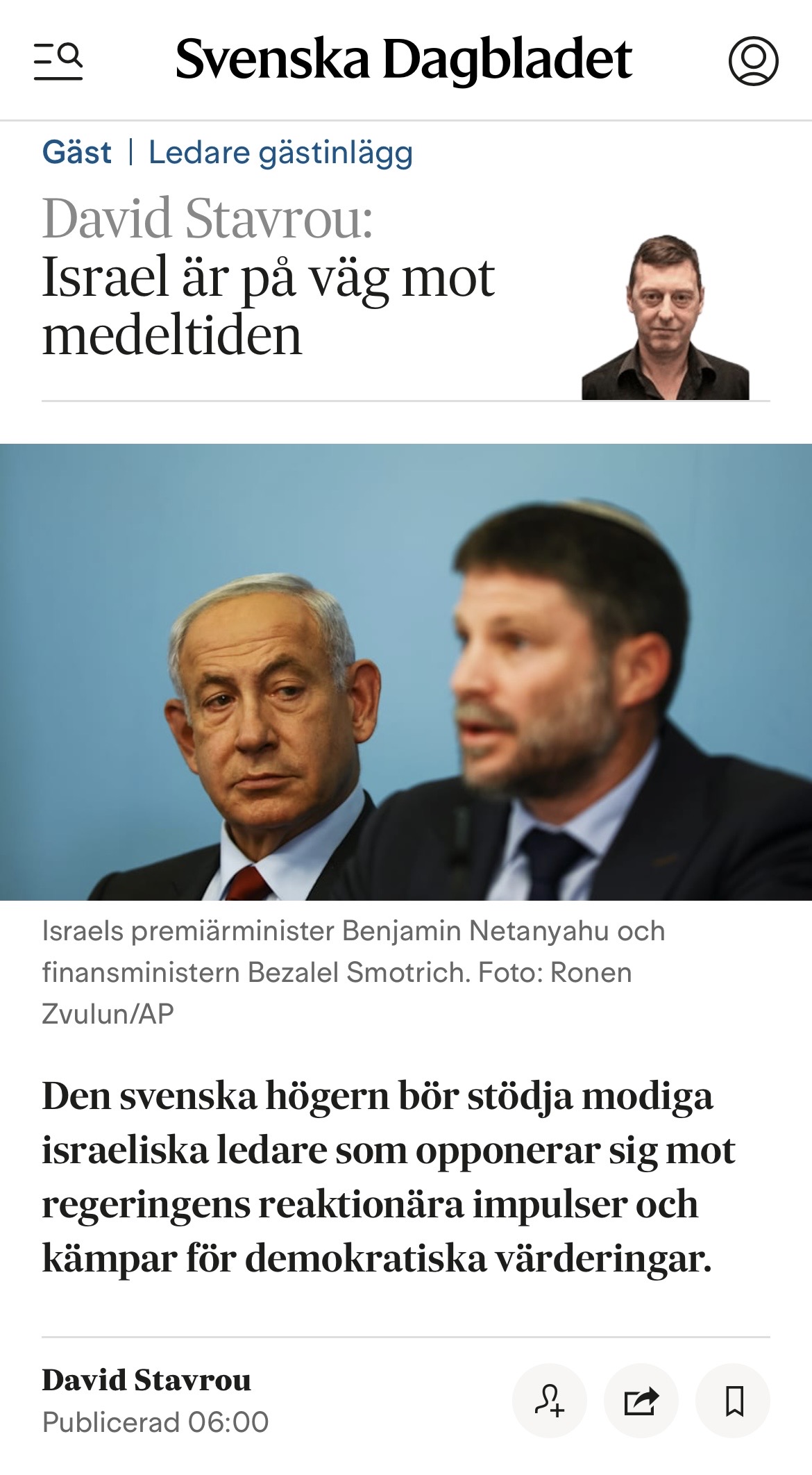
Is Israel on its way to the Middle Ages

The Swedish right should support courageous Israeli leaders who oppose the government’s reactionary impulses and fight for democratic values.

Published in Swedish daily Svenska Dagbladet: https://www.svd.se/a/wr8JEM/netanyahu-tar-israel-mot-medeltiden

The ceasefire which has been in effect in Gaza for several months has given Israelis and Palestinians an opportunity to reflect on their next steps, and to begin rebuilding and recovering after two of the most difficult years in the region’s history. Although Israel is slowly disappearing from the international headlines, it remains important to examine what is actually taking place in its political arena. If there's anything to learn from recent history it's that what happens there will influence global politics for many years to come.

One of the war’s results is that Prime Minister Benjamin Netanyahu, who is currently on trial for corruption, is doing everything he can to control the historical narrative of the war and avoid taking responsibility for Israel’s failure on October 7. Instead, he places the blame on the security services and his political opponents. He refuses to establish an independent official inquiry commission and is doing his utmost to replace Israel’s military and legal elite with loyal officials. These changes may help Netanyahu evade accountability for the charges against him. But for his coalition partners—far-right, fundamentalist, and ultranationalist parties—they are a means to a broader goal: undermining Israel’s liberal democracy.

For example, the Knesset, Israel’s parliament, is discussing a bill that would expand state control over the media. The proposal would replace existing regulatory bodies with a new authority whose members are appointed by the government—effectively enabling political control over broadcast content. The bill has drawn criticism from the government’s legal adviser, who warned that it threatens freedom of the press. It is hardly surprising that the same attorney general is among those the government is attempting to remove.

Screenshot

Because Israel is a democratic country, many Israelis are demonstrating against these proposals and other government measures. In recent months, however, many protesters have claimed that the police are acting in ways they did not previously. They report arbitrary arrests and increased use of force, including stun grenades and mounted riot police.

The minister responsible for this is Itamar Ben-Gvir, a far-right politician previously convicted of incitement and support for terrorism. While he is busy consolidating control over the police within Israel, another minister, Bezalel Smotrich, is consolidating control over the West Bank. Smotrich is laying the groundwork for potential annexation and is taking no action against the growing violence perpetrated by extremist settlers.

Netanyahu himself has recently reaffirmed his intention to continue pursuing the so-called judicial reform which many in Israel describe as a judicial overhaul, as it threatens the fundamental principles of the rule of law and the separation of powers, weakens the independence of the courts, and risks undermining democracy. The issue has now returned to the parliamentary agenda and in addition, efforts to limit the powers of the attorney general and the Supreme Court are being resumed. Another bill currently under discussion would introduce the death penalty for terrorist offenses—formally to prevent Hamas and other groups from taking Israelis hostage in order to exchange them for convicted terrorists, but there are also those motivated simply by revenge.

If the death penalty does not sound like a sufficiently reactionary reform, the Knesset has even discussed the conservative Jewish concept of shmirat negiah—the obligation for a man and a woman who are not married to each other to refrain from physical contact. It is not an official legislative proposal, at least not yet. But the mere fact that it is being discussed alarms liberal and secular Israelis—and rightly so.

Swedes have always had a deep interest in Israel. This can have both positive and negative effects. To understand whether Sweden’s voice can contribute something meaningful in this context, we should examine the country’s current discourse on Israel.

The political left in Sweden has unfortunately totaly lost its bearings. Many of its supporters have embraced Hamas’ narrative of the Israeli–Palestinian conflict. This does not necessarily mean they support terrorism, but the view of Israel as a settler-colonial project that should be boycotted and opposed regardless of its policies or leadership has spread from a radical minority into mainstream politics. Even established political parties have begun discussing the dangerous idea of a one-state solution.

A one-state solution would either mean the end of the Jewish state—which even the Swedish left previously supported—or plunge the entire region into an even worse bloodbath than what we have witnessed over the past two years.

Equally dangerous is the stance of Sweden’s populist right. Supporting Israel because its current leaders appear to use methods similar to those of authoritarian, illiberal regimes, or because they see Israel as a symbol of a struggle against Islam, is both misguided and harmful. It is also a betrayal of the Israelis who are fighting for a democratic, liberal, and peaceful future.

This year, both Swedes and Israelis are heading to the polls. If Sweden still wishes to exert a positive influence on Israel (and on the Palestinians, for that matter), Swedish supporters of the left should cooperate with Israeli artists, entrepreneurs, researchers, and academics who are independent and often in opposition to the government, rather than the easy and intellectually lazy solution of boycotting and margenelizing them.

The Swedish right should support courageous Israeli leaders who oppose the government’s reactionary impulses and fight for democratic values, rather than backing corrupt leaders and extremist parties that are dragging Israel back toward the Middle Ages. Any other approach amounts to rewarding both Hamas and Jewish extremists and for those who live in the region, it is yet another step on the road to hell.

Amid Tensions, Oscar-nominated Israeli Animation Sparks Dialogue Between Jews and Muslims in Sweden

Filmmaker Tal Kantor's Israeli-French coproduction, the animated short film 'Letter to a Pig,' exploring intergenerational trauma and its potential to lead to empathy, has received numerous accolades. Now, a rabbi in Sweden has shown the film to Jewish-Muslim audiences to encourage dialogue post October 7 and the Israel-Gaza war.

Published in Haaretz: https://www.haaretz.com/jewish/2025-12-11/ty-article-magazine/.premium/oscar-nominated-israeli-animation-sparks-dialogue-between-jews-and-muslims-in-sweden/0000019a-fd77-d2e4-a1ff-fff7ab270000

Israeli animation filmmaker and visual artist Tal Kantor, 37, has taken her film "Letter to a Pig" to more film festivals, master classes, school seminars, and public screenings than she can easily remember. These events have taken place all over the world since the film was first screened in 2022, and there are more to come. From Harvard University to the Sigmund Freud Museum in Vienna, from the Academy Museum of Motion Pictures in L.A. to the Museum of Contemporary Art in Zagreb, it seems like Kantor and her film have been everywhere.

The 17-minute piece of animated art has also won Kantor multiple prizes. These include the Ophir Award, known as "the Israeli Oscar," the Best Narrative Short at the Ottawa International Animation Festival, the Excellence Award at the Japan Media Arts Festival and prizes, and honorable mentions at animation festivals in Belgium and France, and even an Oscar nomination for Best Animated Short Film in 2024.

The film itself took about five years to complete because of the meticulous hand-drawn animation style, which is combined with live action and involves visionary techniques and imagery. It was produced by The Hive Studio in Israel and Miyu Productions in France. It is based on one of Kantor's real-life childhood memories, and it depicts the way pain and collective trauma are transmitted from one generation to another, and the role they play in human history, society, and identity.

The film's main character is a girl who, together with her classmates, listens to the testimony of a Holocaust survivor in an Israeli school. Part of the testimony is a letter that the survivor wrote to a pig which, as he remembers, saved his life while he was hiding from the Nazis in a pigsty. In the film, the young schoolgirl sinks into a disturbing surrealistic dream while listening to the testimony. During the dream, new perspectives of good and evil are created in the girl's mind, and these expose her and her fellow students to the results of violence, victimhood, and trauma.

The pig's role shifts from savior to monster to victim, while the young children also go through a transformation. They start out as passive listeners and gradually become a threatening mob. The Holocaust may be the film's starting point, but "Letter to a Pig" is not a "Holocaust film." It's about universal motifs such as violence and suffering created by intergenerational trauma, which develops into a siege mentality. But it's also about empathy and the possibility to recognize other narratives through dialogue.

For Rabbi Moshe David HaCohen, 46, the narratives of pain and suffering, leading to endless conflict, actually drew him to the piece. HaCohen has just started his second term as the rabbi of the small Jewish community in Sweden's third-largest city, Malmö. In 2017, at the beginning of his first term as Malmö's rabbi (which ended in 2022), HaCohen founded Amanah, an organization based on his cooperation with a local imam to counter discrimination and build trust between the city's Jewish and Muslim populations. For a few years this worked very well, but the organization gradually dissolved as a result of the October 7 massacre, the ensuing Israel-Gaza war and the polarization caused by these events.

HaCohen is now launching a new organization named B.R.I.T – an acronym for Building Resilience, Identity, and Trust, and a reference to the Hebrew word for "covenant." He says the organization will work to counter polarization and foster relations between Jews and Muslims in several European countries. "I saw how Tal took something which is seen as almost holy like the Holocaust, and I was impressed by the way she asked complex questions that society today has to deal with," HaCohen told Haaretz in an interview in Stockholm. "The most serious question is how do we dismantle this complex conflict and create trust. Telling stories, like Tal does in her film, is a way to reach the real issue and move forward to create that kind of trust. People need hope, and I thought that during this time of conflict it would be good to create a debate based on the film."

One of the side effects of the Israeli-Palestinian conflict is the conflict in many European countries over the last two years, between Jewish Israel supporters and Muslim Palestinian supporters, who are entangled in cycles of suspicion and hostility. Jews have experienced rising levels of antisemitism, aggressive demonstrations at which protestors declare support for Hamas, and accusations of being responsible for the situation in Gaza because of their support for Israel.

Many European Muslims have found themselves on the receiving end of traditional anti-immigration and xenophobic attitudes, which are now amplified in response to the actions of elements of the pro-Palestinian solidarity movement. Even though there is now a cease-fire in the Middle East, tensions between the pro-Israel and pro-Palestinian camps and their supporters in many European countries persist.

And so Rabbi HaCohen asked Kantor to bring her film to Sweden in November to try to create productive dialogue. Kantor says that the film has taken part in about 150 festivals so far, and she has attended many of them personally. Meeting audiences together with the international crew who worked with her on the film is always important to her. "The film started from a very personal experience, and it has now become universal. Meeting audiences …. means everything to me," she says. "After screenings, people open up to me; they talk about their own experiences and their own perspectives. Some of them cry and open their hearts while talking about the multi-generational trauma they see in the film."

Still, for Kantor this wasn't just another invitation to a European cultural event. Instead of festival curators and ceremony producers, the invitation came from a rabbi who wanted to show her film as a tool for creating change and providing hope. Kantor couldn't refuse.

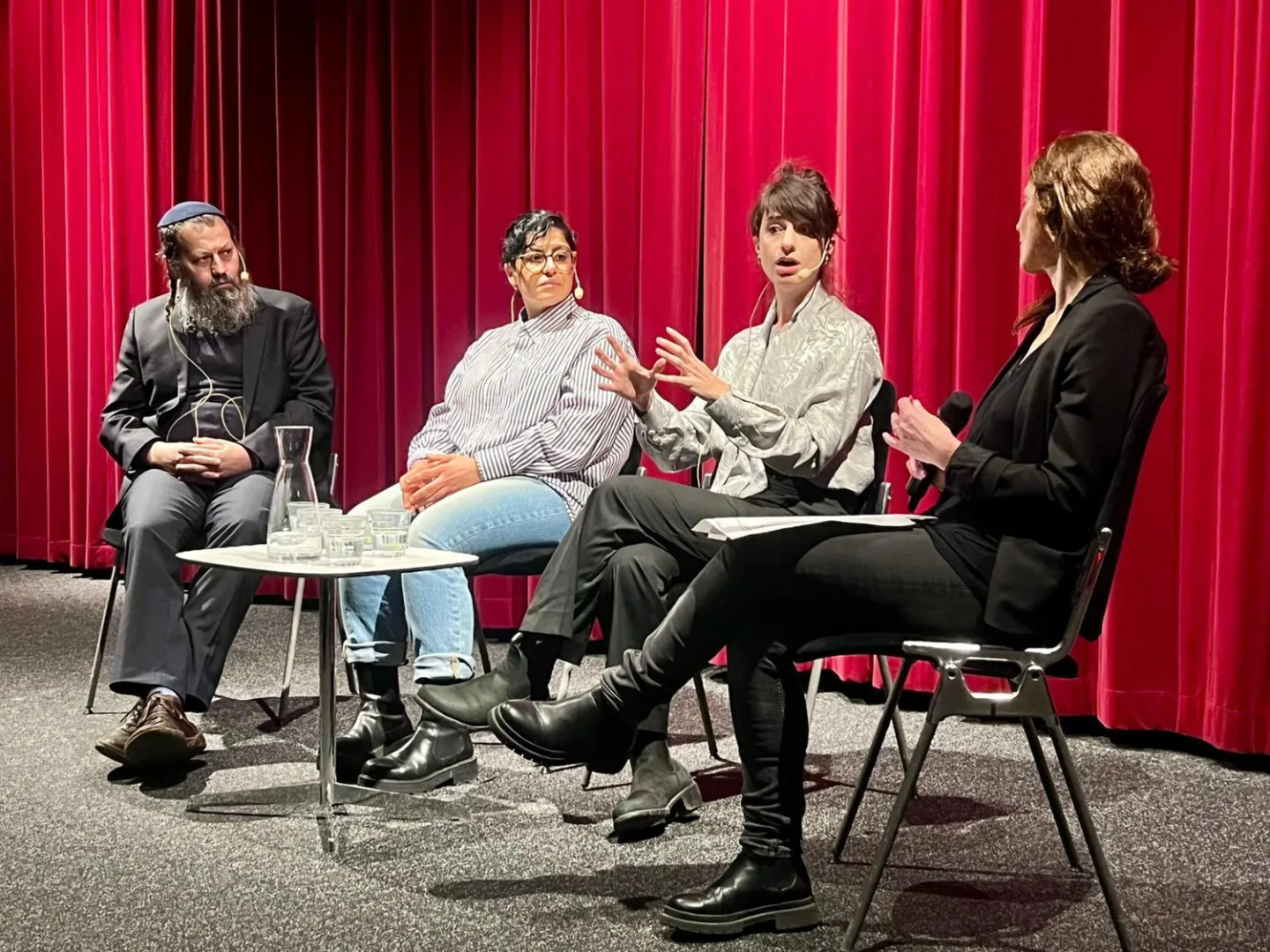
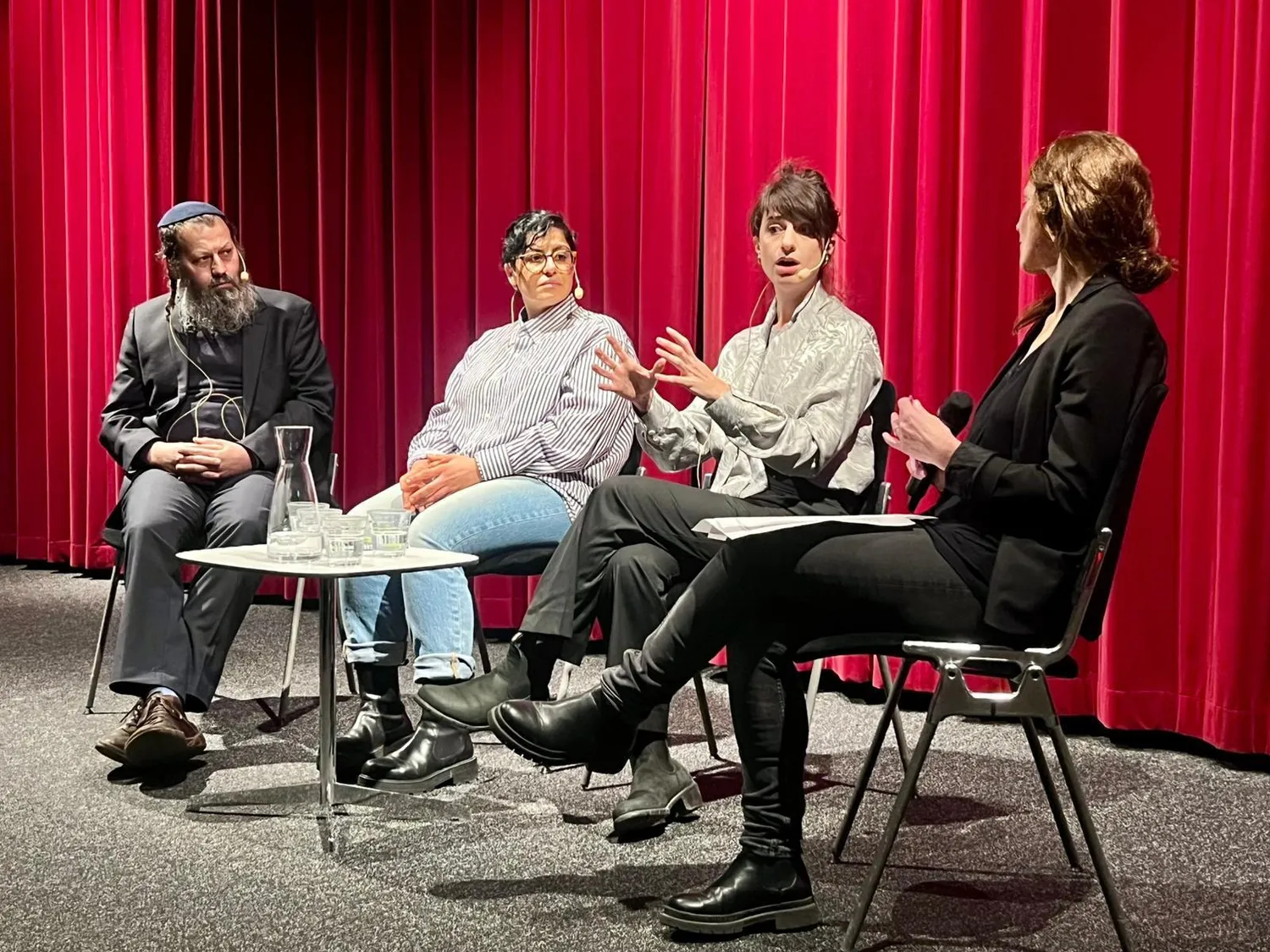
From right: Rabbi Moshe David HaCohen, Somar Al-Naher, Tal Kantor and Anneli Rådestad. Photo: Peter Lööv Roos

"Moshe David explained who he was and told me about what he does," Kantor told Haaretz in a local Stockholm café a day before she returned to Israel. "I immediately understood that he wasn't interested in the film because of its Oscar nomination or its international success. It was about the film's content…. The way he talked about it moved me deeply. He recognized its exploration of the danger of inherited trauma, fear, and narratives of cruelty, and how remaining in a place of victimhood can keep that cycle alive.

"He also saw how the film gestures toward compassion for all people [and towards] humanity and hope. It meant a great deal to me that he saw in the film a tool for opening a space for dialogue in such a polarized moment."

Rest of the article here: https://www.haaretz.com/jewish/2025-12-11/ty-article-magazine/.premium/oscar-nominated-israeli-animation-sparks-dialogue-between-jews-and-muslims-in-sweden/0000019a-fd77-d2e4-a1ff-fff7ab270000

הבחירה של טראמפ בגרינלנד תגלה את העתיד שארה"ב חותרת אליו בעולם כולו

בעבר, כל דיון בגרינלנד נתפש כעניין אזוטרי. האי הגדול בעולם הוא נידח, קפוא ודל אוכלוסין, קשה לגישה ונטול השפעה גיאו־פוליטית. בשנים האחרונות זה השתנה: שינויי האקלים פתחו נתיבי שיט ואפשרויות כרייה, התחזקותה של סין והאגרסיביות של רוסיה הציבו אותו בעמדת מפתח צבאית והאזור הארקטי כולו הפך לנכס אסטרטגי. כעת, בגלל מדיניות החוץ המהפכנית של דונלד טראמפ, עולה חשיבותה של גרינלנד והיא עשויה להוות מפתח להבנת הסדר העולמי החדש.

פורסם ב"הארץ": https://www.haaretz.co.il/opinions/2026-01-17/ty-article-opinion/.premium/0000019b-c1d6-d85c-a9fb-f1d7163a0000

למרות דבריו של טראמפ בדבר הצורך האמריקאי בריבונות על גרינלנד, לא ברור אילו צעדים קונקרטיים הוא מתכוון לנקוט. מה שכן ברור הוא שהצעד הבא שלו יהיה משמעותי, ולא רק לתושבי גרינלנד וליחסים בין וושינגטון לקופנהגן. עלולות להיות לו השלכות דרמטיות על יחסי ארה"ב־אירופה, על נאט"ו ועל שלום העולם כולו. גרינלנד עשויה לחשוף את כוונותיו האמיתיות של טראמפ וייתכן שנלמד על גורל העולם דווקא מדיון על אזור שעד לא מזמן איש לא הכיר וכמעט איש לא ביקר בו.

בפני הממשל האמריקאי עומדות שתי אפשרויות להשגת האינטרסים הביטחוניים והכלכליים שלו בגרינלנד. האחת היא משא ומתן בתום לב עם דנמרק ותושבי גרינלנד. השנייה היא השתלטות כוחנית באמצעות לחץ צבאי או כלכלי. זאת לא דילמה ייחודית, היא מלווה את האמריקאים גם באוקראינה, ונצואלה, איראן ועזה. מדיניותו של טראמפ אינה אחידה וארגז הכלים מגוון: מחטיפת נשיא מכהן, דרך הפגזת מתקנים צבאיים ועד שימוש ב"אמנות הדיל".

בניגוד לחזיתות אחרות, במקרה של גרינלנד קשה למצוא הצדקה לשימוש בכוח מכיוון שהאמריקאים יכולים להשיג את כל מבוקשם בדרכי שלום. השיחות על גרינלנד הרי לא יפוצצו בגלל קרטלי סמים או ארגוני ג'יהאד והאמריקאים לא ייתקלו בהתנגדות של אייתוללות, גנרלים מגלומנים או דיקטטורים מרקסיסטים. כאן האמריקאים מתמודדים עם דיפלומטים מנומסים, שמפגינים רצון טוב ומדברים אנגלית מצוינת. אחרי הכל, בגרינלנד חיים פחות מ–60 אלף תושבים, שאמנם סבלו בעבר מקולוניאליזם אירופי אבל אין להם צבא והם לא מונעים מסכסוך לאומי או דתי עתיק יומין.

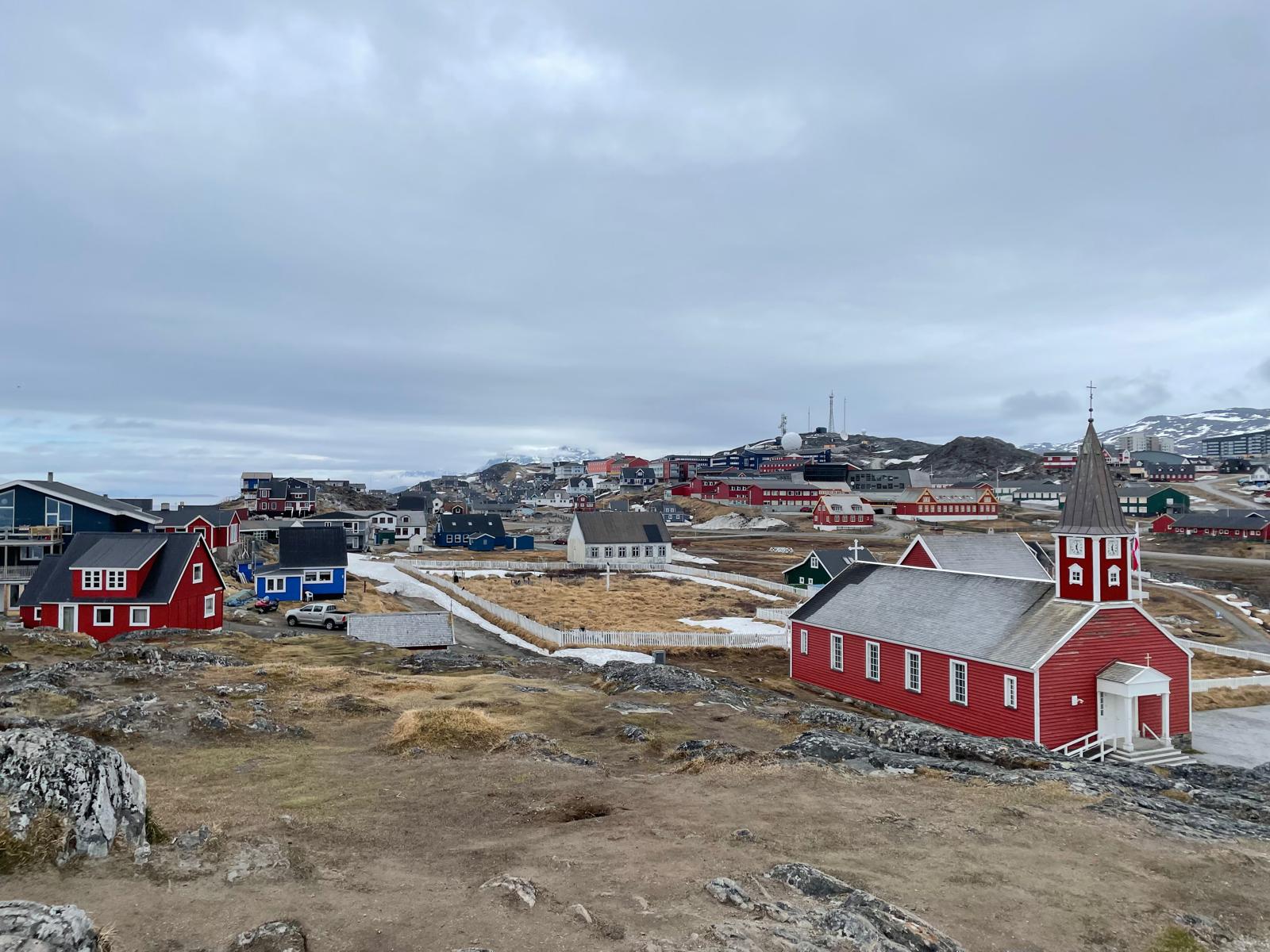
נוק, בירת גרינלנד, מאי 2025. צילום: דיויד סטברו.

אם טראמפ יבחר במהלך כוחני, יהיה בכך סימן שמדיניותו חורגת מאינטרסים כלכליים וצבאיים וודאי שתכליתה אינה יצירת קואליציה של דמוקרטיות מול רודנויות. זו תהיה דוקטרינת מונרו על סטרואידים: תפישה שלפיה חצי הכדור המערבי הוא אזור שליטה אמריקאי בלעדי, ושאר העולם מופקר לאזורי השפעה של מעצמות אחרות, לא דמוקרטיות. על פי תפישה זו אין חוק בינלאומי או מוסדות בינלאומיים ומותר לתפוס טריטוריות בכוח. תרחיש כזה עלול להצית תגובות שרשרת — מפירוק נאט"ו, דרך עידוד מהלכים סיניים בטייוואן ועד טלטלות במזרח התיכון.

לארה"ב יש אינטרסים לגיטימיים בגרינלנד. מבחינה צבאית, מיקומה הגיאוגרפי הופך אותה לנקודה קריטית למערכות התרעה מוקדמת מפני טילים בליסטיים, בקרת לוויינים, הגנה אווירית ותשתיות של נמלי מים עמוקים ומסלולי המראה ונחיתה. גרינלנד גם שולטת במעברים ימיים באזור הארקטי ובצפון האוקיינוס האטלנטי, שחיוניים לסחר הבינלאומי ולהתמודדות עם איום צוללות ופגיעה בקווי תקשורת.

לכך מתווסף פוטנציאל כלכלי: מתכות נדירות שנמצאות בה בשפע ושחיוניות לתעשיות ביטחוניות, לאלקטרוניקה וסוללות, לחלל ולרכב חשמלי, במיוחד על רקע הדומיננטיות של סין בתחום והמאמץ ליצור שרשרת ייצור שאינה תלויה בה. אבל האינטרסים הללו ניתנים למימוש ללא סיפוח. הדנים ותושבי גרינלנד אינם מתנגדים לנוכחות צבאית אמריקאית. להיפך, בסיס החלל האמריקאי באי פועל מאז מלחמת העולם השנייה ואיש לא התנגד להתרחבותו, להוספת בסיסים ולשיתוף פעולה בהגנה על נתיבי שיט. גם בתחום הכלכלי תושבי גרינלנד משתוקקים להשקעות זרות. מה שמעכב כרייה אמריקאית אינו התנגדות פוליטית, אלא חוסר כדאיות כלכלית: העדר תשתיות, תנאי אקלים קיצוניים, עלויות לוגיסטיות גבוהות ורווחיות נמוכה בטווח הקצר. גם אם לאוכלוסייה הילידית יש חששות סביבתיים ורגולציה מקומית עוצרת כיום כריית אורניום וקידוחי נפט, הגרינלנדים משוועים לפיתוח כלכלתם והם בוודאי יקבלו בברכה כסף אמריקאי.

נוק, בירת גרינלנד, מאי 2025, צילום: דיויד סטברו.

דילמת גרינלנד אינה חדשה. ארה"ב ניסתה לרכוש את האי כבר במאה ה–19 ושוב אחרי מלחמת העולם השנייה, ונענתה בשלילה. אך האינטרסים האמריקאיים מעולם לא הוזנחו. כשממשלת גרינלנד שקלה למסור חוזים לבנייה ותחזוקה של שדות תעופה לחברות סיניות, די היה בפנייה אמריקאית כדי לבלום את המהלך. כלומר, אין צורך בכוח.

אם טראמפ יבחר בכל זאת בהשתלטות בכוח, יעלו שאלות כמו מה ערכה של ברית נאט"ו אם חברה אחת יכולה לכבוש שטח של אחרת? האם אירופה תוכל להישאר מאוחדת כאשר מערבה נבגד על ידי האמריקאים ומזרחה תלוי בהם להגנה מפני הרוסים? ואם אי אפשר לבנות על הגנה כזו — מה יעלה בגורלן של בעלות ברית כמו ישראל, סעודיה וטייוואן? ערב הפסגה בין ארה"ב לדנמרק העולם כולו מחכה להכרעתו של טראמפ. אבל גרינלנד אינה רק שאלה — היא גם התשובה: הדרך שבה טראמפ יפעל בה תחשוף לאן פניה של ארה"ב ואיזה סדר עולמי מחכה לנו מעבר לאופק.

בצל האנטישמיות הגואה בשוודיה, סרט ישראלי על חזיר ניסה לגשר על הפערים

"מכתב לחזיר" חיבר בין השואה לטראומת הילדות של הבמאית טל קנטור. כעת הוא מפגיש רב מודאג וסופרת סורית.

פורסם ב"הארץ": https://www.haaretz.co.il/gallery/cinema/2025-12-30/ty-article-magazine/.premium/0000019b-69ea-d1d0-a9bf-efebe93d0000

יוצרת האנימציה והאמנית החזותית הישראלית טל קנטור השתתפה עם סרטה "מכתב לחזיר" בכל כך הרבה פסטיבלי קולנוע, כיתות אמן, סמינרים בבתי ספר והקרנות ציבוריות עד שאינה יכולה לזכור את כולם. האירועים הללו התקיימו בכל רחבי העולם מאז שהסרט הוקרן לראשונה ב–2022, והיד עוד נטויה. מאוניברסיטת הרווארד ועד מוזיאון זיגמונד פרויד בווינה, ממוזיאון האקדמיה בלוס אנג'לס ועד למוזיאון לאמנות עכשווית בזאגרב — נדמה שקנטור וסרטה היו בכל מקום.

סרט האנימציה בן 17 הדקות, הזמין לצפייה ביס, זיכה את קנטור בת ה–37 בפרסים רבים, בהם פרס אופיר, פרס הסרט הקצר הטוב ביותר בפסטיבל האנימציה הבינלאומי באוטווה, פרס המצוינות בפסטיבל אמנויות המדיה ביפן, ציונים לשבח בפסטיבלי האנימציה של בלגיה וצרפת ואפילו מועמדות לאוסקר של 2024, בקטגוריית סרט האנימציה הקצר הטוב ביותר.

הפקת הסרט ארכה כחמש שנים, בשל סגנון האנימציה המדוקדק, המשלב ציור ידני יחד עם צילום לייב־אקשן וטכניקות ויזואליות יוצאות דופן. הסרט, שהופק על ידי סטודיו The Hive בישראל ו־Miyu Productions בצרפת, מבוסס על זיכרון ילדות של קנטור ומתאר את הדרך שבה כאב וטראומה קולקטיבית עוברים מדור לדור, ואת התפקיד שהם ממלאים בהיסטוריה האנושית, בחברה ובעיצוב זהות.

גיבורת הסרט היא נערה, שמקשיבה יחד עם חברי כיתתה לעדותו של ניצול שואה בבית ספר ישראלי. חלק מסיפורו כולל מכתב שהניצול כתב לחזיר שהציל את חייו, כשנאלץ להסתתר מהנאצים בדיר חזירים. במהלך ההרצאה, הנערה שוקעת בחלום סוריאליסטי מטריד שיוצר פרספקטיבות חדשות על טוב ורע, החושפות אותה ואת חבריה לכיתה להשלכות של אלימות, קורבנוּת וטראומה.

מימין: ענלי רודסטד, טל קנטור, סומאר אל-נאהר והרב משה דוד הכהן. צילום: Peter Lööv Roos

תפקידו של החזיר בסיפור משתנה ממושיע למפלצת ולקורבן, במקביל לטרנספורמציה שהילדים בכיתה עוברים בעצמם: הם מתחילים כמאזינים פסיביים והופכים בהדרגה להמון מאיים. השואה היא אולי נקודת המוצא בסרט, אך "מכתב לחזיר" אינו "סרט שואה". הוא עוסק במוטיבים אוניברסליים של סבל הנובע מטראומה בין־דורית, המתפתחת למנטליות של מצור. הוא עוסק גם באמפתיה ובאפשרות להכיר בנרטיבים אחרים דרך דיאלוג.

עבור הרב משה דוד הכהן, בן 46, הנרטיבים של כאב וסבל המובילים לסכסוך אינסופי הם דווקא מה שמשך אותו ליצירה הקולנועית הזו. לאחרונה הוא החל את כהונתו השנייה כרב של הקהילה היהודית במאלמו, העיר השלישית בגודלה בשוודיה. בשנת 2017, במהלך כהונתו הראשונה, הקים הכהן את "אמנה" (Amanah), ארגון המבוסס על שיתוף פעולה בינו לבין אימאם מקומי, החותר למאבק באפליה וטיפוח אמון בין הקהילה היהודית והמוסלמית בעיר. הארגון פעל בהצלחה במשך כמה שנים, אך התפרק בהדרגה בעקבות הטבח ב–7 באוקטובר, המלחמה שבאה בעקבותיו והקיטוב החריף שנוצר בעקבות האירועים. כעת משיק הכהן ארגון חדש בשם B.R.I.T, ראשי תיבות של "בניית חוסן, זהות ואמון" באנגלית ובמקביל — המילה העברית ברית. לדבריו, הארגון יתמקד בהבניית אמון מחדש בחברה, דרך הפריזמה של יחסי יהודים ומוסלמים.

"ראיתי איך טל לקחה משהו כמעט מקודש כמו השואה, והתרשמתי מהדרך שבה היא שואלת שאלות מורכבות שהחברה כיום חייבת להתמודד איתן", סיפר הכהן. "השאלה הרצינית ביותר היא כיצד ניתן להתיר את הסכסוך המורכב הזה ולבנות אמון. לספר סיפור, כמו שטל עושה בסרטה, זו דרך להגיע לנושא האמיתי ולהתקדם הלאה בטיפוח אותה תחושת אמון. אנשים זקוקים לתקווה, וחשבתי שבתקופה זו של סכסוך, זה יהיה טוב לארגן דיון שיתבסס על הסרט".

אחת מתופעות הלוואי של הסכסוך הישראלי־פלסטיני בשנתיים האחרונות היא העימות באירופה בין יהודים תומכי ישראל למוסלמים שתומכים בפלסטינים. שני הצדדים נקלעו למעגל חוזר של גלי חשדנות ואיבה. האוכלוסייה היהודית חשופה לעלייה באנטישמיות והפגנות אגרסיביות שחלק ממשתתפיהן מכריזים על תמיכתם בחמאס; ביהודים גם מוטחות האשמות שהם אחראים למצב בעזה בשל תמיכתם בישראל. מנגד, מוסלמים רבים סובלים מיחס הנגוע בשנאת זרים והתנגדות מסורתית למהגרים, תפיסות הצוברות עוד יותר עוצמה בתגובה לפעולותיהם של גורמים שונים בתנועת הסולידריות עם הפלסטינים. אפילו לאחר שהושגה הפסקת אש במזרח התיכון, נמשכים המתחים בין מחנות תומכי ישראל והפלסטינים במדינות רבות באירופה.

מאלמו הופיעה לא פעם בתקשורת העולמית בשנים האחרונות כסמל לאנטישמיות ופעילות פרו־פלסטינית. בשנתיים האחרונות התקיימו בה אירועים רבים שנקשרו למלחמה במזה"ת, בהם הפגנת שמחה בערב 7 באוקטובר, שריפת דגל ישראל מול בית הכנסת המקומי והפגנות אנטי־ישראליות של אלפי אנשים בשנה שעברה, בעת שהתקיים בעיר האירוויזיון. "ממש ניכר כיצד המלחמה במזרח התיכון קורעת את החברה לגזרים גם כאן", אמר הכהן. "במקומות מסוימים עדיין קשה אפילו לדבר על כך בגלוי באירועים ציבוריים".

המשך הכתבה: https://www.haaretz.co.il/gallery/cinema/2025-12-30/ty-article-magazine/.premium/0000019b-69ea-d1d0-a9bf-efebe93d0000

Gaza War Has Halted, but Not the Protests Against an Israeli Artist's Work in Oslo

Noa Eshkol's 'Mourning Carpet' from 1974 was inspired by the Israelis who died in a Palestinian terror attack that year. Opposition to the showing of the work lays bare the unique enmity toward Israel

Published in Haaretz: https://www.haaretz.com/life/2025-11-09/ty-article-magazine/.premium/gaza-war-has-halted-but-not-the-protests-against-an-israeli-artists-work-in-oslo/0000019a-67e2-d0d0-a9db-67e7b8780000

The scene at Norway's National Museum a month ago was unusual, even for a protest in Oslo in a year of countless harsh demonstrations against Israel. In the "On the Barricades" room showing works with a political context, dozens of people sat on the floor and shouted "Remove the carpet!"

The participants, including artists and cultural figures, were protesting the showing of one of the works, 1974's "Mourning Carpet," a 174-by-160-centimeter (roughly 6-foot-by-5-foot) wall carpet by Israeli textile artist and choreographer Noa Eshkol. The piece features images of flowers in an array of colors. A YouTube video and media photos reveal the flavor of the protest. The chants filled the room, a Palestinian flag had been placed on the floor, and a few demonstrators wore kaffiyehs. Israel and Hamas' signing of a cease-fire agreement that day, October 9, didn't seem to register much.

A few days earlier an initiator of the protest, Norwegian artist Victor Lind, explained what was rousing the demonstrators' anger. "The National Museum has chosen to show a work that legitimizes the occupation of Palestine by the war criminal the State of Israel," he said in a panel discussion in Oslo in September. Lind also claimed that the work was "war propaganda" that legitimized genocide and fascism.

The call to remove Eshkol's work was also heard in letters, newspaper articles and social media posts; even employees of the museum joined in. But for now, the piece is still there and the museum hasn't voiced any intention to pull it. "The National Museum isn't supposed to be a political player," the museum's director, Ingrid Roynesdal, told Aftenposten, Norway's most popular daily. She added: "If we as a museum choose to become an active player in geopolitical debates, we're likely in the end to contribute to a narrowing of freedom of expression."

The demonstration at the museum joins a long list of protests and boycotts over the past two years against Israel and Israeli artists, scholars, athletes and businesses. But the battle surrounding Eshkol's work seems particularly strident. It reflects the depth of the crisis of Israel's international standing and the scale of the hatred for Israel in Europe, which goes far beyond opposition to the war in Gaza.

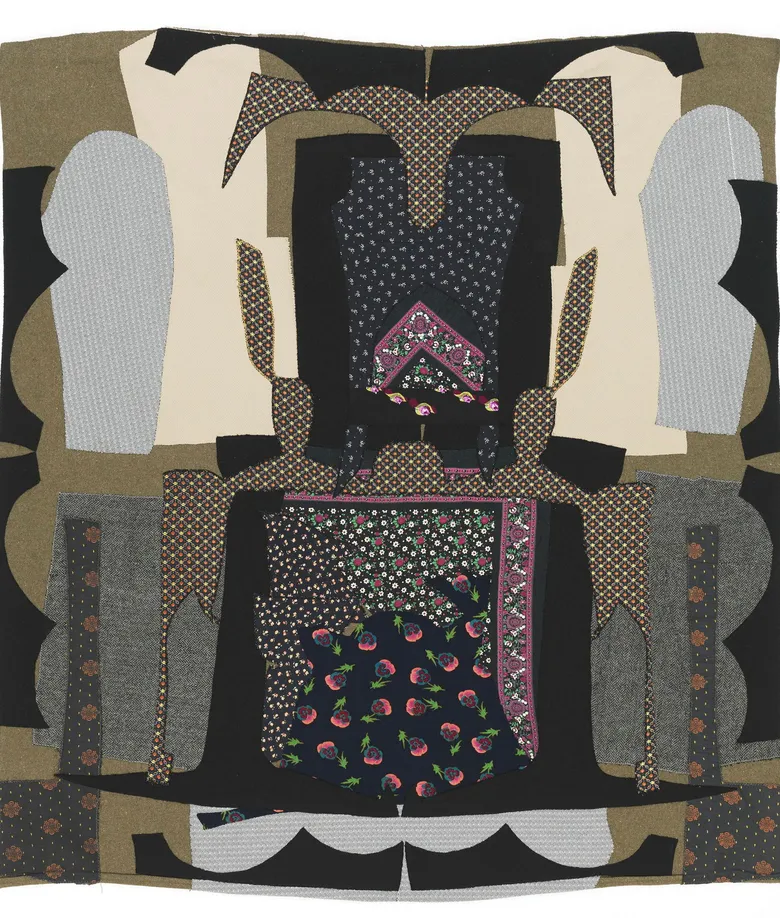
Noa Eshkol, "Mourning Carpet (Following the Massacre at the Ma'alot School). 
Credit: Jens Ziehe/Photographie/Neugerriemschneider Berlin

The story of the carpet begins with a national trauma in Israel. It was May 1974, slightly over six months since the Yom Kippur War and around two years since a string of terror attacks: the Munich Olympics massacre, the hijacking of a Sabena airliner that landed in Israel, and an assault at Israel's airport that killed 26 civilians. In May 1974, terrorists from the Democratic Front for the Liberation of Palestine infiltrated from Lebanon into Israel.

Over two days, with rifles, hand grenades and explosives, the DFLP terrorists killed and wounded Israelis in a series of attacks, the worst being the abduction of 85 Safed high school students who were staying at a school in another northern town, Ma'alot.

The students, some of whose teachers fled the building as the terrorists entered, served as bargaining chips for the gunmen, who sought the release of Palestinian prisoners. During negotiations, the government played for time as it planned a commando raid. The results were tragic in what is now known as the Ma'alot massacre. The storming of the building ended with the death of more than two dozen people, most of them students.

Like many Israelis, Noa Eshkol was shocked by the attack. Eshkol, who was born in 1924, is known for Eshkol-Wachman movement notation. She and her student Avraham Wachman created a system of symbols for describing movement; for example, in choreography. The work "Mourning Carpet," whose full name is "Mourning Carpet (After the Ma'alot School Massacre)," was the artist's response to the terror attack.

"This is one of the hundreds of carpets that Noa created in the final decades of her life," says Mooky Dagan, a human rights activist, musician and art curator who manages Eshkol's estate and heads the foundation established in her name. Dagan, who was a close friend of Eshkol's, adds: "It's one of her only carpets that can be connected to a specific event. That's why it was important to me to add the parenthetical information to the title."

Dagan says Eshkol created several mourning carpets after the Yom Kippur War. Another carpet, which was sold to the Pompidou Center in Paris, is called "Leaving Yamit," referring to an Israeli town in Egypt's Sinai Peninsula, before it was uprooted in 1982 as part of the Egyptian-Israeli peace deal. "Another one was named after Golda Meir, but these are the exceptions connected to a specific event or person," Dagan says. "She created over 1,000 carpets."

Dagan sees the irony in the fact that the carpet in Oslo is stirring such controversy. "The incident in Ma'alot shook the foundations," he says. "It was an event with hostages including many children, it launched a debate on surrendering to terrorists or taking military action, and it shook the country. It became a formative event, and it's symbolic in light of what's happening today in Israel and in Gaza." Dagan says the protest in Oslo has been the toughest challenge when it comes to Eshkol's work being shown abroad. He says his friend never wanted to display her carpets at all.

On a few rare occasions, he was able to convince her otherwise, but the international breakthrough came after her death in 2007, when he says she became a brand name and a raft of museums acquired her works. Solo exhibitions of her art have been staged in Germany, the Netherlands, Brazil, Sweden, Norway and Israel, and her works have taken part in group exhibitions in many other countries. "In the last years of her life she was drawn to creating the carpets in a way that she herself couldn't explain," Dagan says. "It became the most important thing in her life."

Would you say that these are political works? It's true that she was the daughter of Israel's third prime minister, Levi Eshkol, a fact that wasn't officially mentioned in the protest but came up in some of the online debates. But can she be linked to a specific political viewpoint?

"I can't speak in her name, and it's absurd to speak for people after their death. But I was very close to her and we became close friends already after the Six-Day War. When it came to the carpets, I shared the process of creation with her intimately. Noa was a political person, but her viewpoint wasn't linked to a party and she didn't intervene in specific political issues. Even though her father was the prime minister, and even though she was born on Kibbutz Degania and was thoroughly Israeli, she was totally antiestablishment. That was the paradox in her. Even though she breathed her Israeli identity, she created movement notation, which is the most universal thing possible. Her worldview was universal; she stressed this and even refused to patent her movement notation, so that the whole world could use it."

Dagan describes Eshkol as a dominant personality with solid opinions and clear thinking. She wouldn't take anything for granted, hated clichés and lived as a feminist. Surrounded by students, she detested titles and rebelled against every framework and consensus. She didn't want to be a candidate for the Israel Prize and convinced her friend Uri Zohar to turn down the 1976 prize for film because it was granted by the government. "Her attitude, spiritually and practically, was that of a rebel," Dagan says.

Just because of the protest against her work in Oslo, it would be interesting to know if she had clear opinions about the Israeli-Palestinian conflict.

"I can definitely attest that she was a person with a worldview that's now called leftist. Even though she detested labels of this kind, above all she had a humanistic outlook. She wasn't an activist, but the current situation would have clearly driven her crazy. Until her death she had the worldview of a pure dove."

***

Hawk or dove, it makes no difference to the demonstrators against the National Museum in Oslo, which bought Eshkol's work in 2022. In May this year the work was hung in Room 76, the space reserved for political art. When the director was asked by the online contemporary art magazine Kunstkritikk why she chose it, she said the museum switches works in its rooms so that all the works can be better preserved.

"Room 76 is devoted to political art, mainly from 1965 to 1980," she said. "This work was chosen according to the regular procedures. The room displays a variety of artistic expressions and strategies, and tries to reflect the art of the period when the works were created."

Lind, the Norwegian artist, said about the storm after the decision to display "Mourning Carpet": "We all see pictures from Gaza every day of child-size white body bags, small white cloth sacks tied with rope at the top and bottom. He said in the panel discussion: "The genocide being perpetrated by Israel against the Palestinians is intolerable. Little children, like our children, are dying of starvation. A mother who has no more milk because she herself is suffering from malnutrition. She was shot in the stomach by Israeli soldiers while waiting in line for food. There's a smell of gas in Gaza. I'm sorry that the situation requires such harsh language."

Lind, 84, was among political artists identified with the radical left in the early '70s. He also created works commemorating the Holocaust of Norway's Jews. Regarding "Mourning Carpet," he said that "the National Museum's choice to show this work during the ongoing genocide in Gaza infuriates me because of its curating decisions with a viewpoint of supporting the Israeli narrative. … The work depicts the Israelis as the victims of Palestinian terror.

"'Mourning Carpet' commemorates the Israelis who were killed during the Palestinian revolt against the Israeli occupation. The work reflects Israel's official narrative of the Israel-Palestinian conflict from 1948 until today, a narrative that sees Israel as the main victim throughout." Lind's protest included a complaint about the removal of Norwegian works in favor of the Israeli work. "Mourning Carpet" is displayed alongside pieces by Norwegian artists, including Lind himself, whose work is "art in favor of freedom and against occupation and oppression," he said.

Geir Egil Bergjord, chairman of the Association of Norwegian Visual Artists, wrote in Aftenposten: "The museum's decision to show this work now, during what many consider a genocide in Gaza, has given the work political significance. A national museum can't be neutral in every context. It must balance artistic freedom and the context in which the work is displayed.

"The museum has removed political works by Norwegian artists to make room for a work that supports the narrative of an occupier, Israel. The director must recognize that fact. Curating decisions require more than vague declarations of 'space for artistic expression.'"

The left-wing Norwegian newspaper Klassekampen examined the extent Norwegian museums took an interest in the war between Israel and Hamas. It found that museums in Bergen and Trondheim are showing works by Palestinian artists. It also found that the Nitja Center for Contemporary Art in Lillestrom has held an exhibition of video works by Palestinian artists, as well as an exhibition of posters for Palestine and works by Palestinian artist Hasan Daraghmeh. It has also shown aerial photographs by Norwegian photographer Hedevig Anker "filmed in Palestine before the establishment of the State of Israel."

Several employees took part in the protest at the National Museum. "We aren't neutral, we stand in solidarity with Palestine," curator Monica Holmen told Klassekampen. One complaint by the anti-Eshkol demonstrators was the listing of her place of birth as Israel, even though the artist was born 24 years before the state was established. The sign has been changed to "British Mandate Palestine (today's Israel)."

The original decision was to follow the museum's policy: The country of an artist's birth is noted in its modern version even if it had a different name during the artist's lifetime. Only after public pressure did the museum change tack, while creating the impression that it had made a technical error. (Though internal emails leaked to the Norwegian media show that the museum was well aware of the sensitivity of the subject.)

It was very difficult to speak to the protesters themselves and give them a chance to explain their viewpoint to Israeli readers. Lind declined to be interviewed by Haaretz. Requests to the Association of Norwegian Visual Artists were unsuccessful at first, but Egil Bergjord, the chairman, eventually agreed. He said in an English-language email: "I would like you to note that the Norwegian Visual Artists Association (NBK) has not asked the museum to remove the artwork. Rather, NBK has criticized the museum for displaying it without providing a proper contextualization." He said that if "our National Museum exhibits Eshkol's work without presenting alternative perspectives or critical discourse, the museum fails to acknowledge or critically engage with the political significance of its curatorial decisions."

The National Museum said it couldn't arrange an interview with the director or the person responsible for the exhibition. Later it said that these officials couldn't be interviewed due to the public debate about the museum's decision – precisely the debate that Haaretz wanted to discuss.

***

"Museums must of course listen to different opinions, but their job isn't to meet the demands of various groups," says Marianne Hultman, a Swedish curator and art historian who spent some of her childhood in Israel. She has worked in Norway for nearly 20 years, and four years ago, as director of the Oslo Kunstforening art gallery and society, she curated an Eshkol exhibition in cooperation with Sweden's Norrköping Art Museum and the organization Jewish Culture in Sweden.

Regarding Eshkol's controversial work, she says: "Eshkol often used tablecloths, curtains and blankets as a base for her textile collages. In this work she used one of the army blankets brought to her by one of her dancers after the Yom Kippur War. "In 'Mourning Carpet' the symbolically charged fabric is allowed to emerge and become an integral part of the image. With remnants from the clothing industry, the image bears traces of bodily forms and points to the absence of the body, pointing to the traces of human life.

"The military blanket functions concretely as a base for the pieces of fabric, and symbolically as a representation of the violence that marked the event. It's a work of mourning for all the lives lost in connection with the massacre. Today it perhaps also expresses grief over a conflict that continues to leave deep traces of suffering and death."

Hultman believes there is justification for including Eshkol's work in the political art space at the National Museum, and she's disappointed at the protest against it. "How would our museums look if every artwork had to meet the same demands that Noa Eshkol's 'Mourning Carpet' now faces?" she asks. "It would mean that all artists had to bear responsibility for their country's political, religious and military choices. And where would that leave artistic freedom?"